EP2636753A1 - Method and means for identification of animal species - Google Patents
Method and means for identification of animal species Download PDFInfo
- Publication number
- EP2636753A1 EP2636753A1 EP13156208.4A EP13156208A EP2636753A1 EP 2636753 A1 EP2636753 A1 EP 2636753A1 EP 13156208 A EP13156208 A EP 13156208A EP 2636753 A1 EP2636753 A1 EP 2636753A1
- Authority
- EP
- European Patent Office
- Prior art keywords
- dna
- sample
- probes
- species
- mammalian species
- Prior art date
- Legal status (The legal status is an assumption and is not a legal conclusion. Google has not performed a legal analysis and makes no representation as to the accuracy of the status listed.)
- Granted
Links
Images




Classifications
-
- C—CHEMISTRY; METALLURGY
- C12—BIOCHEMISTRY; BEER; SPIRITS; WINE; VINEGAR; MICROBIOLOGY; ENZYMOLOGY; MUTATION OR GENETIC ENGINEERING
- C12Q—MEASURING OR TESTING PROCESSES INVOLVING ENZYMES, NUCLEIC ACIDS OR MICROORGANISMS; COMPOSITIONS OR TEST PAPERS THEREFOR; PROCESSES OF PREPARING SUCH COMPOSITIONS; CONDITION-RESPONSIVE CONTROL IN MICROBIOLOGICAL OR ENZYMOLOGICAL PROCESSES
- C12Q1/00—Measuring or testing processes involving enzymes, nucleic acids or microorganisms; Compositions therefor; Processes of preparing such compositions
- C12Q1/68—Measuring or testing processes involving enzymes, nucleic acids or microorganisms; Compositions therefor; Processes of preparing such compositions involving nucleic acids
- C12Q1/6876—Nucleic acid products used in the analysis of nucleic acids, e.g. primers or probes
- C12Q1/6888—Nucleic acid products used in the analysis of nucleic acids, e.g. primers or probes for detection or identification of organisms
Definitions
- the present invention is concerned with a method of identification of species, and in particular a method of making relatively rapid identification of animal species including but not limited to Bos Taurus (cattle), Sus scrofa (pig), Ovis aries (sheep), Equus caballus (horse), Canis lupus (dog) and Mus musculus (mouse) and Felis Catus (cat).
- the present invention is also concerned with means for use in carrying out such method, and a method for engineering such means.
- the present invention seeks to address the aforementioned issues by providing a method which endeavors to balance different factors, or at least to provide an alternative balance, and means thereof. At least the present invention seeks to provide an alternative to the public for identifying an animal species sample, and means thereof.
- a method of rapid identification of a mammalian species origin or mammalian species origins of a sample comprising the steps of:
- a kit for use in rapid identification of mammalian species origin or mammalian species origins of a sample comprising a plurality of DNA probes derived from a number of different mammalian species, at least some of the DNA probes having DNA sequences with SEQ ID NOs. 1-241.
- the DNA probes may be immobilized on a suitable substrate, such as on a hybridization membrane or on a wall of a plastic(s) well.
- a method of engineering DNA probes for use in rapid identification of mammalian species origin or mammalian species origins of a sample comprising the steps of:-
- the delta G value may be larger than 1.
- the Tm may be substantially 79-83°C. With 50mmole of sodium chloride and without any organic solvent, the Thyb may be larger than 60°C, NaCl w/o any organic solvent.
- at least some of the DNA probes may have DNA sequences with SEQ ID NOs. 1-241.
- a method of engineering DNA probes for use in rapid identification of mammalian species origin or mammalian species origins of a sample comprising the steps of:-
- the delta G value may be larger than 1.
- the Tm may be substantially 79-83°C. With 50mmole of sodium chloride and without any organic solvent, the Thyb may be larger than 60°C, NaCl w/o any organic solvent.
- at least some of the DNA probes may have DNA sequences with SEQ ID NOs. 1-241.
- DNA probes or DNA oligo-nucleotides have been widely used for a vast range of applications.
- the requirements for a DNA probe or a group of DNA probes suitable for use in different applications can be rather different.
- the usefulness, accuracy and/or efficiency of the applications largely depend on the DNA probe sequence(s). While there has been numerous proposal of making or using DNA probes in different scenario, there is however, no one single principle that can be appropriate for use in all applications.
- One object of this present invention is to allow rapid identification of a mammalian species origin or a mammalian species origin in one experiment or simultaneously, and efficiently, without having to make use of costly equipment. Accordingly, in one embodiment of the present invention there is provided a method of rapid identification of a mammalian species origin or mammalian species origins of a sample, comprising the steps of a) gathering a sample to be tested, b) processing the sample for use for identification purpose, c) dividing the sample into a number of portions for situation in a multi-well container or containers; d) providing a plurality of DNA probes, at least some of the DNA probes having DNA sequences with SEQ ID NOs.
- the number of the sample portions is greater than the number of mammalian species types from which the DNA probes derives; e) selecting some or all of the DNA probes for hybridization with the sample portions; f) subjecting the sample portions for intended hybridization with the selected DNA probes simultaneously; g) detecting for positive hybridization results from the intended hybridization of the sample portions and the selected DNA probes; and i) assessing the mammalian species origin or origins of the sample according to positive hybridization results.
- step f) of subjecting the sample portions for intended hybridization with the selected DNA probes simultaneously multiple hybridizations can occur simultaneously in one experiment. This translates to efficiency in species origin identification, or rapid identification of species origin(s). If there is only one species origin, e.g. cattle, of the sample, then positive hybridization results will be detected from the hybridization(s) in which the DNA probe(s) is(are) designed from the DNA sequence of that particular species, i.e. cattle. On the other hand, if there are two species origins, e.g.
- the present invention allows identification of mammalian species in a mixed population of samples within a single experiment.
- the embodiment of the present invention provides a method engineering DNA probes for use in identification, but in the context of rapid identification of a mammalian species origin or mammalian species origins as explained above. The more detailed procedures for designing these DNA probes will then follow.
- the DNA sequences used to define those probes are required to possess sufficient differences to distinguish between different species.
- the COI gene of a number of mammalian species is utilized. Specifically, studies leading to the present invention have shown that the 48 th to 705 th bp of this gene can be used as the DNA barcode for species identification in animals.
- the region can be amplified by PCR with the use of universal primers cocktail, making it available to generate a large amount of amplicons for hybridization for identification. This embodiment of the present invention will thus make use of this region.
- those probes should have highly similar physical and chemical properties for hybridizing at the same environmental conditions. Moreover, other criteria are required to maximize the specificity of those probes. Therefore, in the present invention, criteria concerned for defining those probes include the length, guanine-cytosine (GC) content, delta G, melting temperature and hybridization temperature, and presence of secondary structure.
- GC guanine-cytosine
- Length generally is the first concerned criterion. In theory, and typically, longer probe will give higher specificity and more efficient during hybridization although longer and yet reliable probe would be more difficult to generate. For example, synthesizing longer oligonucleotides would require enzymatic ligation approach which is more complicated and costly, rendering synthesis of longer probes commercially not possible in companies with less financial resources. Setting aside cost, cross hybridization is also related to the length of the oligonucleotide and is not desirable. Shorter probe will be easier to generate although their specificity will be weaker.
- the length of DNA probes depend on the particular type of application, in the context of this invention, studies leading to the present invention in the present context have identified that a length from 50-80 bp will be able to achieve the identification satisfactorily. Studies have shown that DNA probes with this length provide the ability to resolve species satisfactorily. In an alternative embodiment, the length of the DNA probes is from 60-80bp. Based on the criteria discussed above, studies have shown that the present invention have defined probes within conventional DNA barcode region with length at 60, 70 and 80 bp for the mammalian species in Table 1.
- the next criterion is GC content, i.e. the percentage of nitrogenous bases, guanine and cytosine, in the target sequence.
- GC content i.e. the percentage of nitrogenous bases, guanine and cytosine, in the target sequence.
- the requirement on GC content differs, depending on the particular application.
- nitrogenous bases in DNA including guanine (G), cytosine (C), adenine (A) and thymine (T). This might be due to the fact that G and C bind each other by forming 3 hydrogen bonds while A and T form 2 hydrogen bonds, making a DNA sequence with higher GC content more stable, or there could be other reasons.
- Tm melting temperature
- T hyb hybridization temperature
- the third criterion is delta G which is the change in Gibbs Free Energy (in units of kcal/mole) between a system and the environment.
- delta G is the change in Gibbs Free Energy (in units of kcal/mole) between a system and the environment.
- a positive delta G at a given temperature indicates that the two strands tend to keep in single-stranded status while negative delta G indicates that the two stands tend to bind together to form a double-stranded structure.
- the DNA probes defined prefer to have positive delta G.
- the delta G used to define the probes at the hybridization temperature need larger than 1. Therefore, formation of hairpin structures due to self-binding of short complementary sequences within the probe sequence could be minimized.
- Tm Melting temperature
- T hyb hybridization temperature
- the Tm is greatly affected by the GC content, length of the sequence and chemistry conditions, such as salt concentration and presence of organic solvents. Accordingly, in this embodiment the hybridization temperature (Thyb) substantially 25°C below the melting temperature (Tm) is appropriate in allowing and enhancing the hybridization, and thus identification. (However, studies have shown that the hybridization temperature (T hyb ) may be from 15-25°C below the Tm.)
- the melting temperature for the probes with GC content at 50% to 52% is between 79°C to 83°C.
- the calculated T hyb of the defined probes require above 60°C with 50mmole of sodium chloride and without any organic solvent.
- SS secondary structure
- SS secondary structure
- SS secondary structure
- SS of a given single stranded DNA can be calculated and represented in SS value and number of SS. Probe with a SS value close to the number of SS indicates that there is a higher propensity for a nitrogenous base in the probe to be single stranded in all predicted SS.
- COI gene sequences data including all full, partial and fragment sequences, of the targeted species can be obtained from GenBank and BOLD databases.
- GenBank and BOLD databases When designing the DNA probes, duplicated sequence records between these two databases were removed. After alignment, the 48 th to 705 th bp fragment from 5' end of each record was extracted. For those species with reference sequence in GenBank database, that particular sequence was used as the template to define the species-specific probes. For those species without reference sequences in GenBank database, the most populated sequence in that species was used as the template to define the probes.
- Selected sequences were then passed to another online program, DNA-folding form, The Mfold web server for calculating the SS value and predicting the secondary structures at 25°C and 65°C. Those sequences with standard deviation smaller than 1 in the SS value and the number of secondary structure smaller than 3 were selected. If no sequence fulfilled these criteria, those DNA sequences with values closest to these two criteria could be accepted.
- the specificity of these selected sequences was verified within species and with other species.
- the selected sequences were compared with all COI genes of the same species obtained. Any different sequences found were also picked to undergo interspecific comparison. In such situation, a group of probes was defined for identifying that target species. If no difference was found, the sequences can be passed directly to interspecific comparison which was carried out by the BLAST system with GenBank database. In interspecific comparison, results are sorted according to the identity. Sequences that showed any result with identity higher than 97% to other species would not be used as species-specific probes.
- SOP standard operating procedure
- CFSAN Center for Food Safety and Applied Nutrition
- This SOP is intended to replace the LIB No. 4420 now.
- This conventional DNA barcoding method requires analyzing the sequence of whole barcode. Its application is limited by high operational cost due to the requirement of equipment and time for data analysis. Furthermore, additional costs and steps are required after PCR amplification if samples containing multiple species are examining. PCR amplified amplicons with different species cannot be sequenced in a single experiment. Amplicon separation of different species by bacterial cloning is required. Processes involve ligation, transformation, culture of bacterial colonies on agar plate. Extra step, including picking bacterial colonies, culture of bacterial in broth or even prepping the amplicon ligated plasmids is required if the biotechnology company have not provide those services. It will further increase 2 more days in overall process.
- the present invention defines species specific DNA sequences served as DNA probes for identifying multiple species in the same experiment through DNA hybridization.
- the target species involved in the present invention are mammalian species, including Bos taurus, Sus scrofa, Ovis aries, Equus caballus, Canis lupus and Mus musculus.
- probes with SEQ ID NOs. 7-11 shown in Appendix are all derived from different intra-species of the same inter-species. Accordingly, it is envisaged that the present invention would be capable of detecting not only the inter-species origin(s) of a sample, but also the intra-species origin(s) of a sample.
- a first experiment was conduct to test whether the engineered DNA probes were able to identify mammalian species samples with sufficient species specificity.
- the DNA used in each PCR is isolated or originates from a single species.
- PCR amplicons of each species were hybridized to all probes as indicated in Figure 1 .
- Hybridization temperature was 42°C. 10 min color development for signal detection was applied. Signal was detected after hybridization between species-specific probes.
- Figure 2 is a key showing which probes are located in which wells on the templates. The probes were immobilized on the membranes used in the experiments, results of which are shown in Figure , and Figures 3a to 3d . The following is also to be noted.
- probe P6 showed weak non-specific binding with Ovis aries (lamb) and Equus caballus (horse).
- Probes P1 to P4 showed weak non-specific signal against Ovis aries (lamb) and Canis lupus (dog).
- Probes P4a-4d, P5d, P6a-d and P7d in 60 bp length showed non-specific binding signal to Sus scrofa (pork).
- Probes P4b, P5b, P6b and P7b also showed non-specific binding signal to Felis catis and Mus musculus.
- the specific engineered probes are specific enough, although the working temperature for each species for optimal identification may vary. From all hybridization conditions, the hybridization temperature of about 45°C yields better specific signal for all species. Several probes can be selected at this condition and place in the same membrane for a multi-species detection. The duration for color development is between about 5 to 10 min.
- the present invention can be applied for multiple species detection simultaneously.
- Figure 5 there is shown a panel of species specific probes selected from each mammal species that are immobilized on the same membrane for multiple species detection. Please refer to Figure 2 for the locations of the different probes in the panel.
Landscapes
- Chemical & Material Sciences (AREA)
- Life Sciences & Earth Sciences (AREA)
- Analytical Chemistry (AREA)
- Proteomics, Peptides & Aminoacids (AREA)
- Organic Chemistry (AREA)
- Zoology (AREA)
- Wood Science & Technology (AREA)
- Health & Medical Sciences (AREA)
- Engineering & Computer Science (AREA)
- Microbiology (AREA)
- Immunology (AREA)
- Molecular Biology (AREA)
- Biotechnology (AREA)
- Biophysics (AREA)
- Physics & Mathematics (AREA)
- Biochemistry (AREA)
- Bioinformatics & Cheminformatics (AREA)
- General Engineering & Computer Science (AREA)
- General Health & Medical Sciences (AREA)
- Genetics & Genomics (AREA)
- Measuring Or Testing Involving Enzymes Or Micro-Organisms (AREA)
Abstract
Description
- This application claims priority from
US Patent Application Serial No. 61/608,824 filed on March 9, 2012 - The present invention is concerned with a method of identification of species, and in particular a method of making relatively rapid identification of animal species including but not limited to Bos Taurus (cattle), Sus scrofa (pig), Ovis aries (sheep), Equus caballus (horse), Canis lupus (dog) and Mus musculus (mouse) and Felis Catus (cat). The present invention is also concerned with means for use in carrying out such method, and a method for engineering such means.
- Due to a vast range of reasons, there has been a need of identifying animal species origin of a sample. For example, in the context of forensic investigation there is often the need of ascertaining the identity of an animal tissue sample in a crime scene. In the context of quality control of food manufacturing, there is a need to ascertain whether a food product claimed to contain certain type of animal meat is indeed what it claims to be. There are actually many other possible applications of using animal species origin or animal tissue identification methods, and one can also envisage that such applications can be very useful in medical science and pharmaceutical industry, and of course to address food safety issues as well.
- There have been many methodologies seeking to address the needs of identification of animal species. While many of these methodologies have their unique characteristics, they often suffer from drawbacks, and tend to address some issues but not others. For example, some methodologies tend to be fairly accurate in their identification but at the expense of tremendous complexity in procedures. Some other methodologies are relatively simple in terms of procedures but often involve using high end equipment which requires significant financial investment and specially trained personnel (e.g. high speed DNA sequencing). Yet some methodologies are easy to grasp but the time needed to conduct identification is too long and commercially unrealistic and thus virtually unusable. Yet further, some methodologies are not able to distinguish a specimen when the sample contains multiple sources of animal species tissues, or at least they are not able to distinguish a specimen in one experiment.
- The present invention seeks to address the aforementioned issues by providing a method which endeavors to balance different factors, or at least to provide an alternative balance, and means thereof. At least the present invention seeks to provide an alternative to the public for identifying an animal species sample, and means thereof.
- According to a first aspect of the present invention, there is provided a method of rapid identification of a mammalian species origin or mammalian species origins of a sample, comprising the steps of:
- a) gathering a sample to be tested;
- b) processing the sample for use for identification purpose;
- c) dividing the sample into a number of portions for situation in a multi-well container or containers;
- d) providing a plurality of DNA probes, at least some of the DNA probes having DNA sequences with SEQ ID NOs. 1-241 as shown in below Appendix and the accompanied Sequence Listing or at least 98% sequence identify of the DNA sequences thereof, wherein the number of the sample portions is greater than the number of mammalian species types from which the DNA probes derives;
- e) selecting some or all of the DNA probes for hybridization with the sample portions;
- f) subjecting the sample portions for intended hybridization with the selected DNA probes simultaneously;
- g) detecting for positive hybridization results from the intended hybridization of the sample portions and the selected DNA probes; and
- h) assessing the mammalian species origin or origins of the sample according to positive hybridization results.
- According to a second aspect of the present invention, there is provided a kit for use in rapid identification of mammalian species origin or mammalian species origins of a sample, comprising a plurality of DNA probes derived from a number of different mammalian species, at least some of the DNA probes having DNA sequences with SEQ ID NOs. 1-241. In an embodiment, the DNA probes may be immobilized on a suitable substrate, such as on a hybridization membrane or on a wall of a plastic(s) well.
- According to a third aspect of the present invention, there is provided a method of engineering DNA probes for use in rapid identification of mammalian species origin or mammalian species origins of a sample, comprising the steps of:-
- a) identifying regions of DNA sequence with a length from 60 to 80 bases from 48th to 705th bp of the COI gene of a first mammalian species, yielding a first group of DNA regions; and
- b) from the first group of DNA regions, identifying regions of DNA sequence meeting the following criteria:-
- i) with GC content from substantially 50 to 52%;
- ii) with a positive value of delta G, yielding a third group of DNA regions;
- iii) in which the hybridization temperature (Thyb) is from 15-25°C below the melting temperature (Tm); and
- iv) in which the difference between the number of secondary structures (SS) and the value of secondary structure (SS) is between 0 to 4; and
- c) engineering DNA probes based on the identified DNA regions from said step b).
- Preferably, the delta G value may be larger than 1. The Tm may be substantially 79-83°C. With 50mmole of sodium chloride and without any organic solvent, the Thyb may be larger than 60°C, NaCl w/o any organic solvent. In a specific embodiment, at least some of the DNA probes may have DNA sequences with SEQ ID NOs. 1-241.
- According to a fourth aspect of the present invention, there is provided a method of engineering DNA probes for use in rapid identification of mammalian species origin or mammalian species origins of a sample, comprising the steps of:-
- a) identifying regions of DNA sequence with a length from 60 to 80 bases from 48th to 705th bp of the COI gene of a first mammalian species, yielding a first group of DNA regions;
- b) from the first group of DNA regions, selecting regions of DNA sequence with GC content from substantially 50 to 52%, yielding a second group of DNA regions;
- c) from the second group of DNA regions, selecting regions of DNA sequence with a positive value of delta G, yielding a third group of DNA regions;
- d) from the third group of DNA regions, selecting regions of DNA sequence in which the hybridization temperature (Thyb) is from 15-25°C below the melting temperature (Tm), yielding a fourth group of DNA regions;
- e) from the fourth group of DNA regions, selecting regions of DNA sequence in which the difference between the number of secondary structures (SS) and the value of secondary structure (SS) is between 0 to 4; and
- f) engineering DNA probes based on the identified DNA regions from said step e).
- Preferably, the delta G value may be larger than 1. The Tm may be substantially 79-83°C. With 50mmole of sodium chloride and without any organic solvent, the Thyb may be larger than 60°C, NaCl w/o any organic solvent. In a specific embodiment, at least some of the DNA probes may have DNA sequences with SEQ ID NOs. 1-241.
- Some embodiments of the present invention will now be explained, with reference to the accompanied drawings, in which:-
-
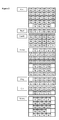
Figure 1 shows images illustrating specificity examination of species-specific probes of each listed mammal species according to an embodiment of the present invention; -
Figure 2 is a key showing the pattern of distribution of species specific probes immobilized on the membranes used in experiments, results of which are demonstrated inFigure 1 andFigures 3a to 3d ; -
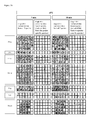
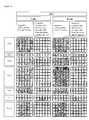
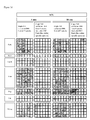
Figures 3a to 3d show the effect of hybridization temperature and/or time for hybridization according to an embodiment of the present invention; -
Figure 4 is a key showing the pattern of distribution of species specific probes immobilized on the membrane for multiple species detection in an experiment, results of which are demonstrated inFigure 5 ; and -
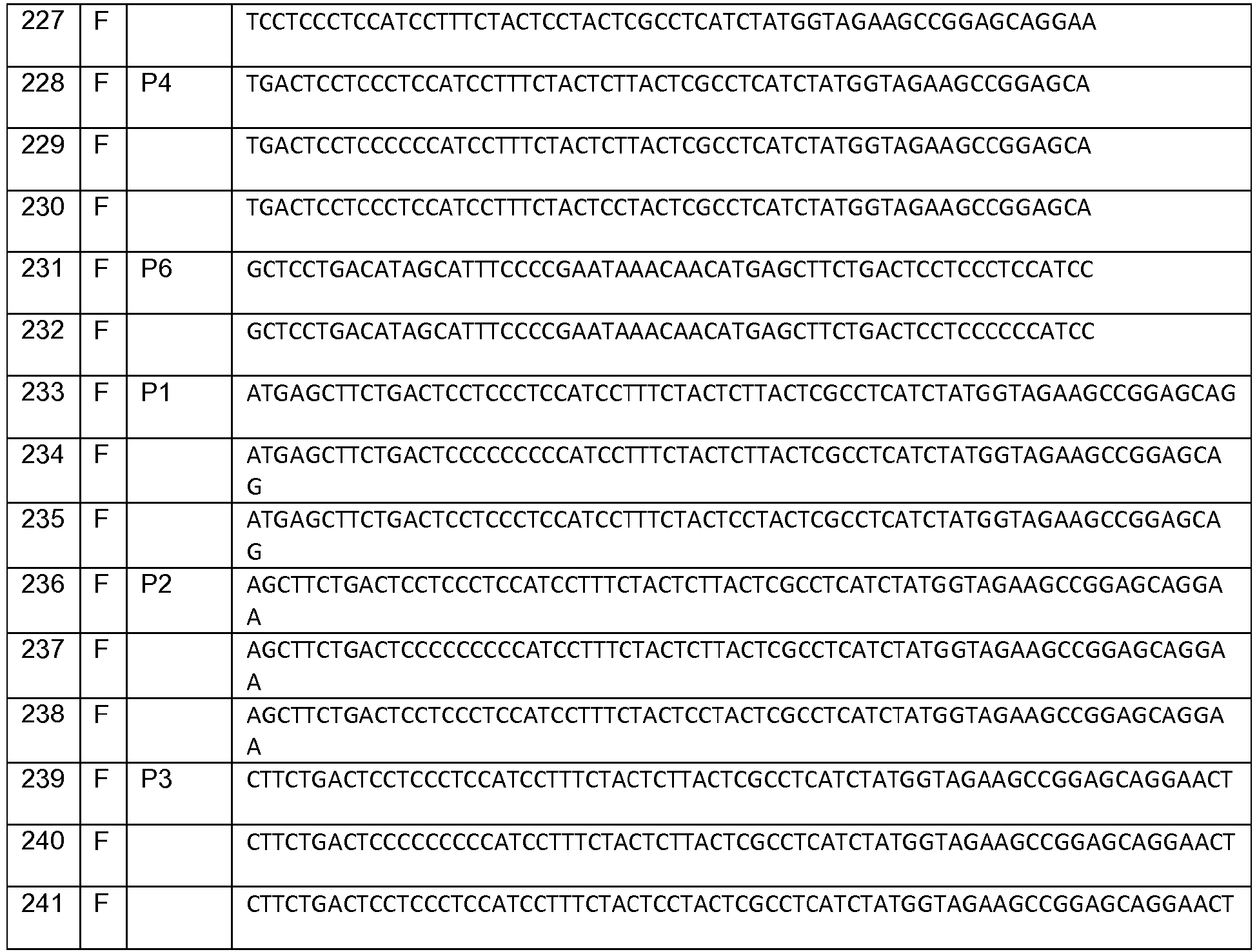
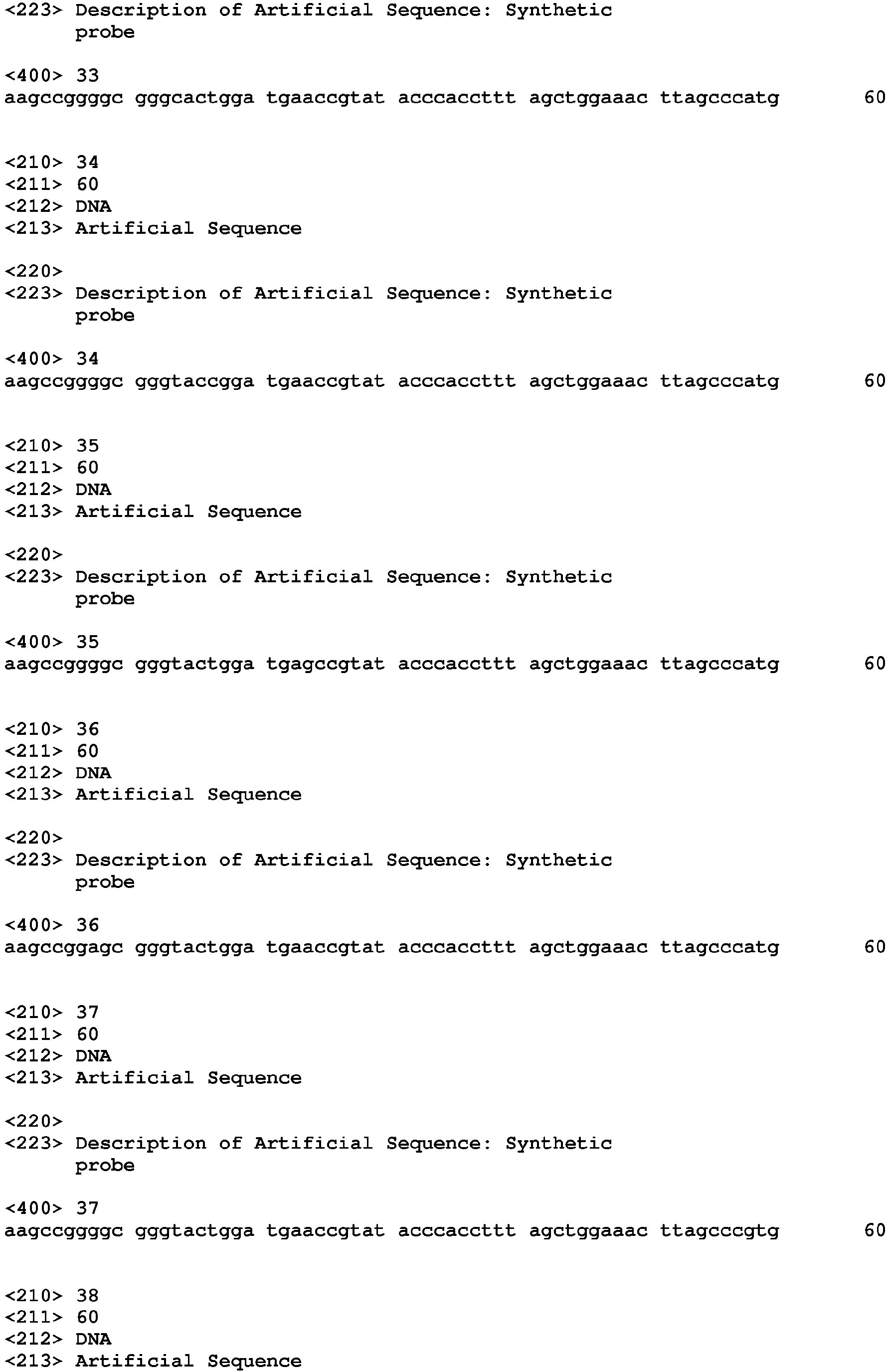
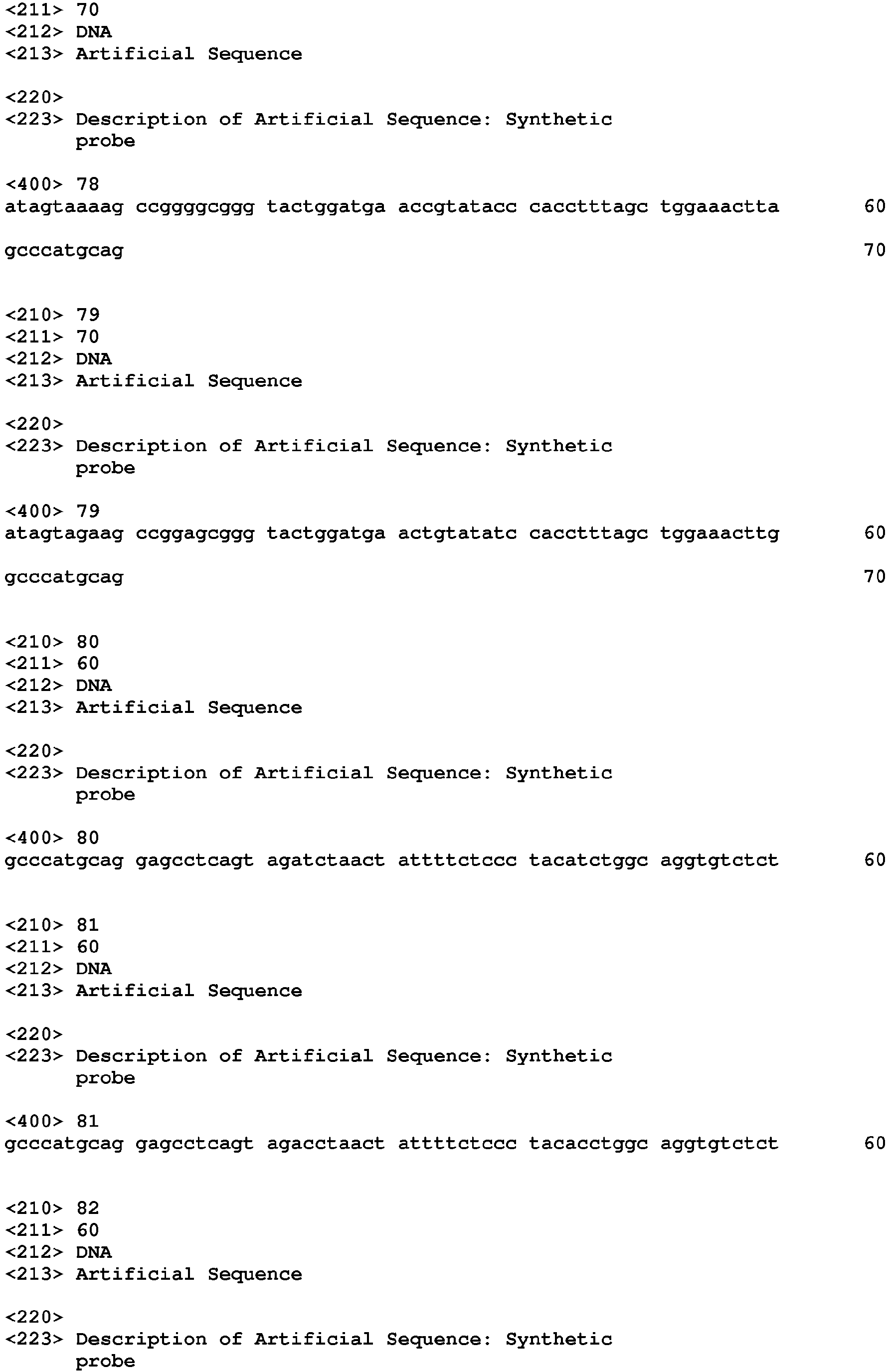
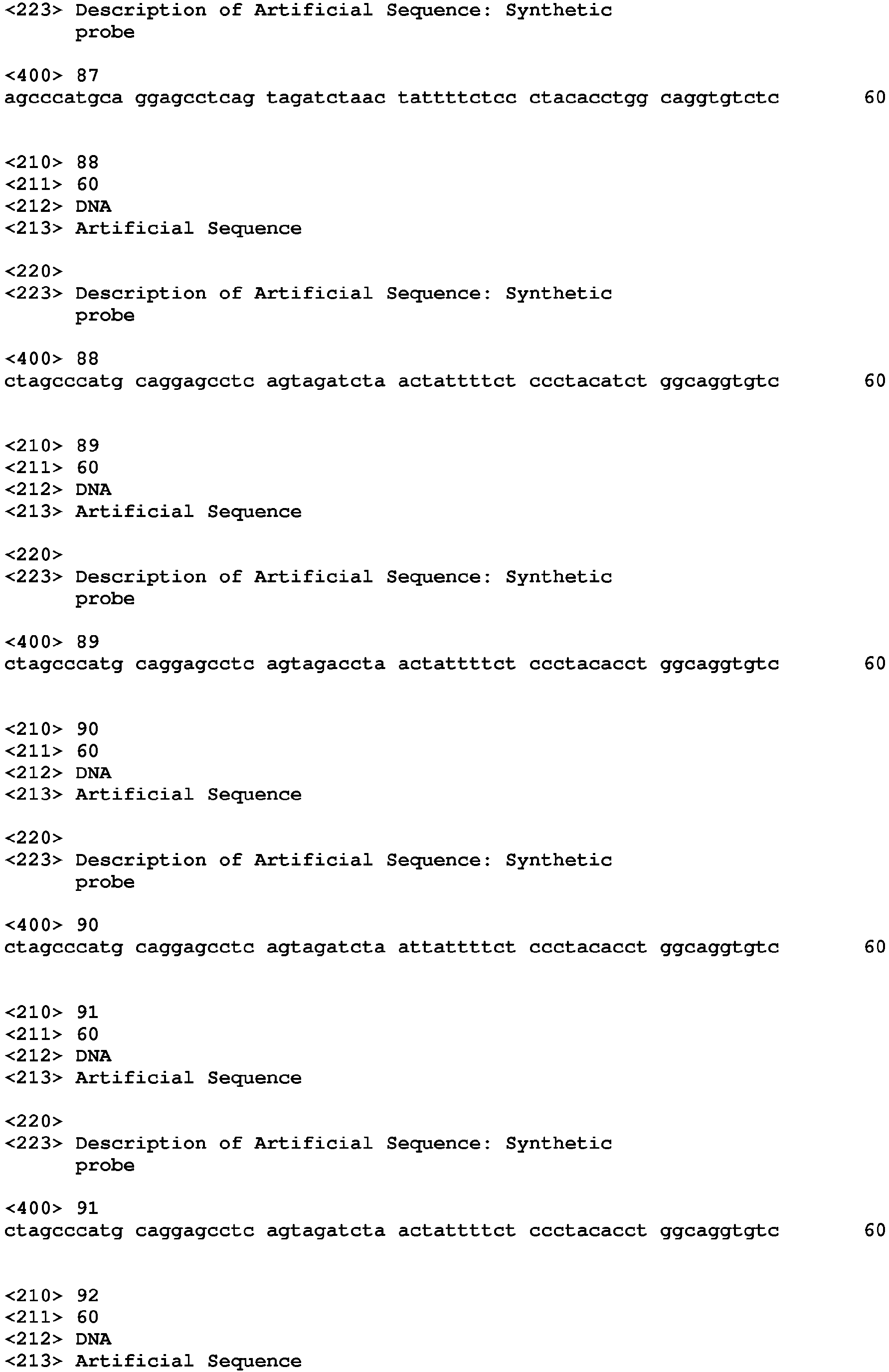
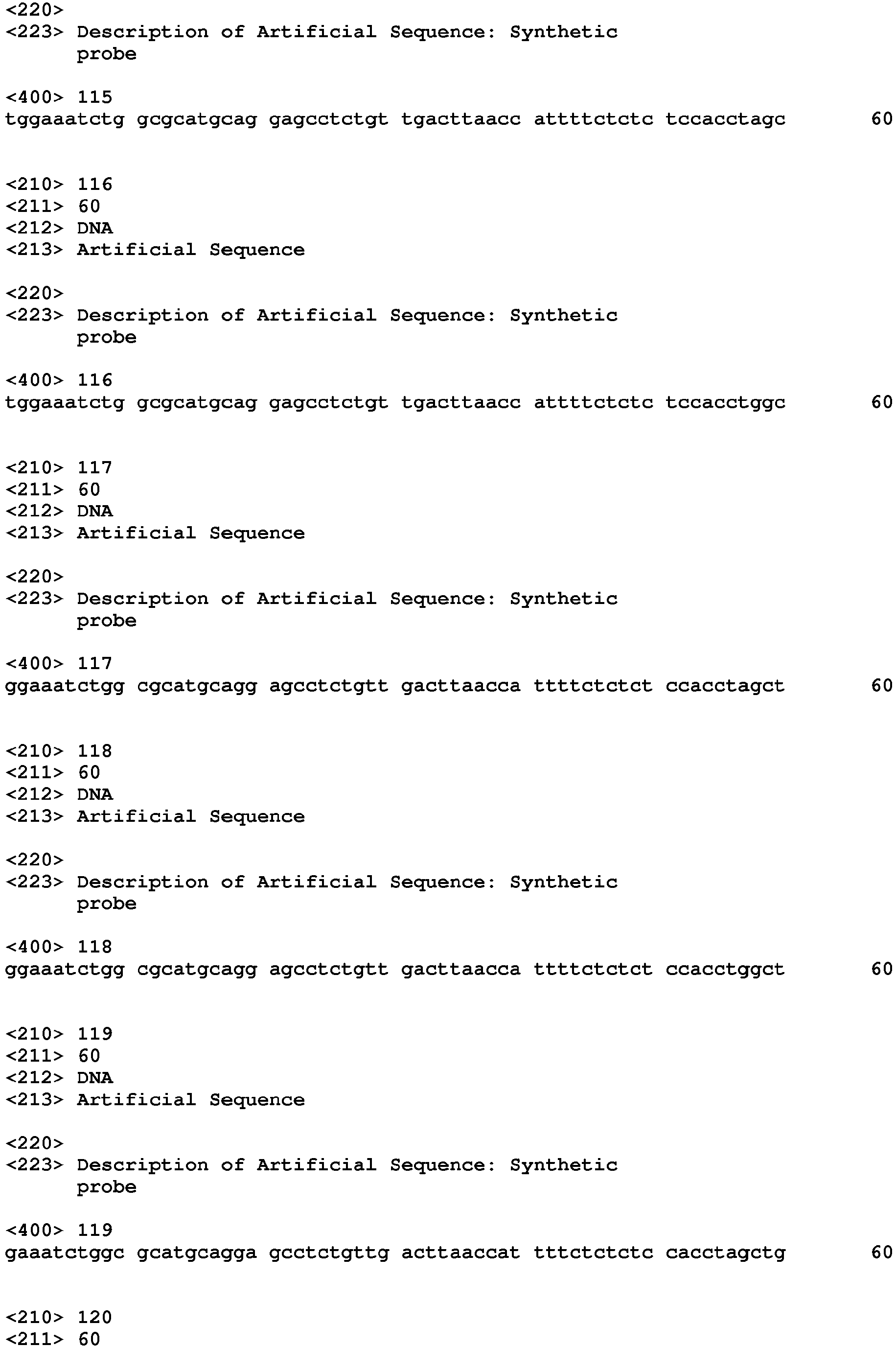
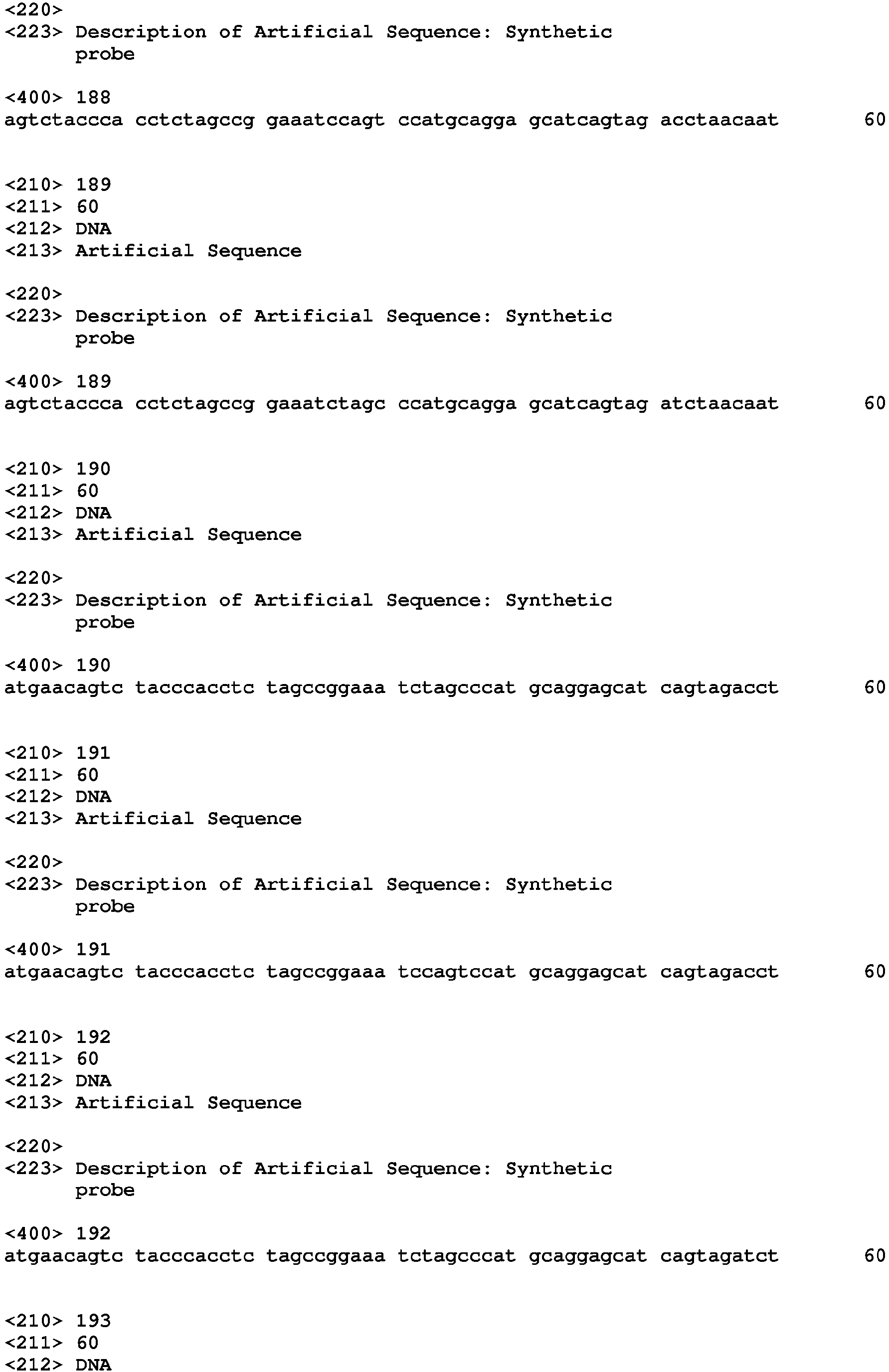
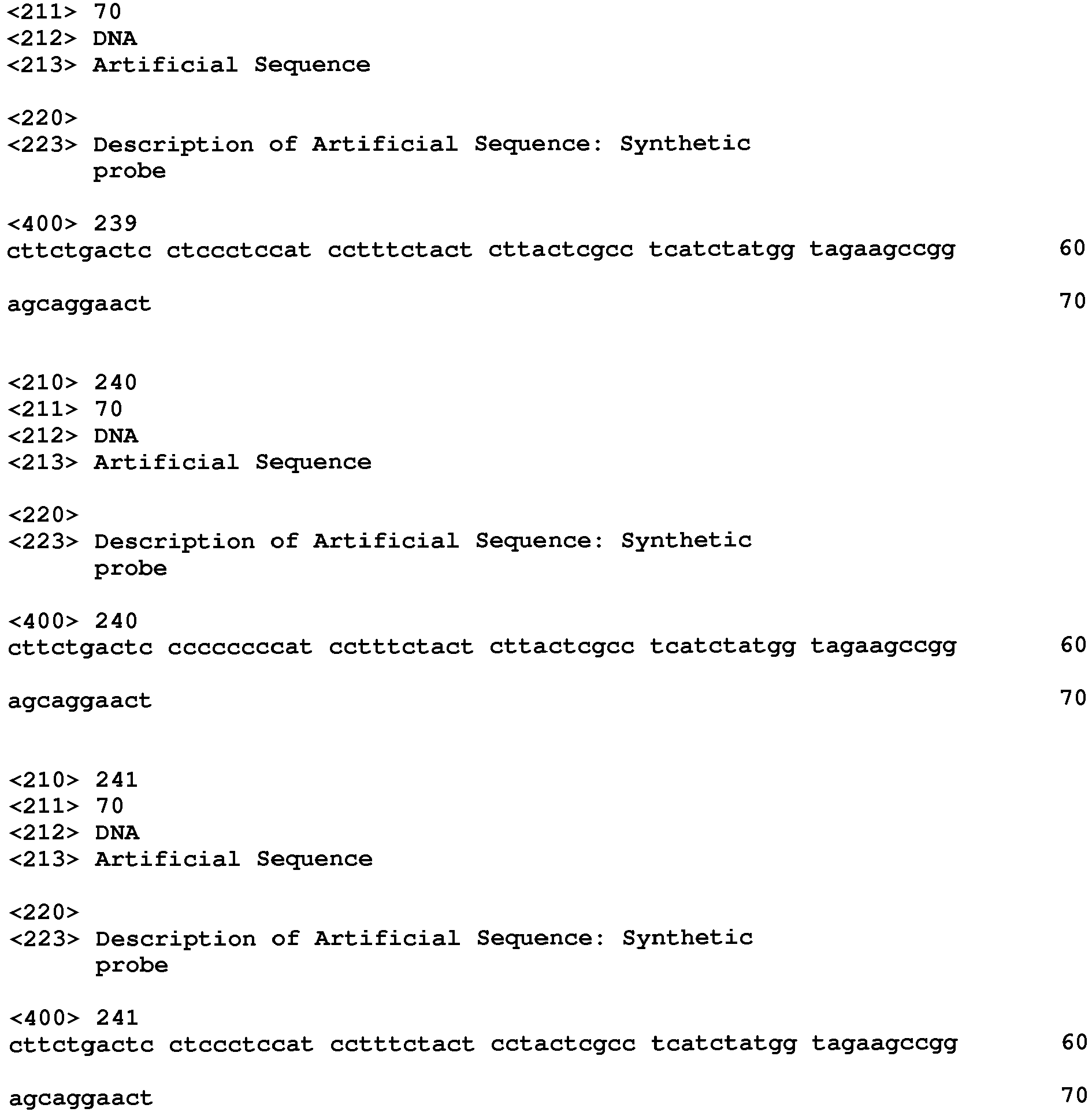
Figure 5 shows the effect of multiple species detection according to an embodiment of the present invention. - DNA probes or DNA oligo-nucleotides (or oligo-nucleotide sequences) have been widely used for a vast range of applications. The requirements for a DNA probe or a group of DNA probes suitable for use in different applications can be rather different. The usefulness, accuracy and/or efficiency of the applications largely depend on the DNA probe sequence(s). While there has been numerous proposal of making or using DNA probes in different scenario, there is however, no one single principle that can be appropriate for use in all applications. In this context, after much research and development, a number of DNA probes have been engineered, allowing identification of mammalian species including Bos Taurus (cattle), Sus scrofa (pig), Ovis aries (sheep), Equus caballus (horse), Canis lupus (dog) and Mus musculus (mouse) and Felis Catus (cat). Accordingly, in an embodiment of the present invention, there is provided a plurality of DNA probes having DNA sequences with SEQ ID NOs. 1-241, as shown in Appendix and the Sequence Listing submitted with this patent specification. It is to be noted that the Appendix shows sequences generally mirroring those in the Sequence Listing although in the Appendix further designations are provided for reference and illustration purposes.) Studies have shown that these particular sequences are sufficiently species specific and are able to detect the relevant species origin of a sample or multiple species origins of a sample, as the case may be. Studies have also shown that sequences having at least 98% sequence identify will likewise produce workable results.
- One object of this present invention is to allow rapid identification of a mammalian species origin or a mammalian species origin in one experiment or simultaneously, and efficiently, without having to make use of costly equipment. Accordingly, in one embodiment of the present invention there is provided a method of rapid identification of a mammalian species origin or mammalian species origins of a sample, comprising the steps of a) gathering a sample to be tested, b) processing the sample for use for identification purpose, c) dividing the sample into a number of portions for situation in a multi-well container or containers; d) providing a plurality of DNA probes, at least some of the DNA probes having DNA sequences with SEQ ID NOs. 1-241, wherein the number of the sample portions is greater than the number of mammalian species types from which the DNA probes derives; e) selecting some or all of the DNA probes for hybridization with the sample portions; f) subjecting the sample portions for intended hybridization with the selected DNA probes simultaneously; g) detecting for positive hybridization results from the intended hybridization of the sample portions and the selected DNA probes; and i) assessing the mammalian species origin or origins of the sample according to positive hybridization results.
- It is to be noted that with this embodiment, a skilled person would be able to conduct one experiment for detecting the species origin of a sample. Specifically, referring to step f) of subjecting the sample portions for intended hybridization with the selected DNA probes simultaneously, multiple hybridizations can occur simultaneously in one experiment. This translates to efficiency in species origin identification, or rapid identification of species origin(s). If there is only one species origin, e.g. cattle, of the sample, then positive hybridization results will be detected from the hybridization(s) in which the DNA probe(s) is(are) designed from the DNA sequence of that particular species, i.e. cattle. On the other hand, if there are two species origins, e.g. cattle and pig, then positive hybridization results will be detected from the hybridizations in which the DNA probes are designed from the DNA sequences of both the species of cattle and pig. This provides a further technical advantage of allowing rapid identification of multiple species origins in one step. In other words, the present invention allows identification of mammalian species in a mixed population of samples within a single experiment.
- As explained above, the usefulness of DNA probes will largely depend on the particular sequence thereof. The embodiment of the present invention provides a method engineering DNA probes for use in identification, but in the context of rapid identification of a mammalian species origin or mammalian species origins as explained above. The more detailed procedures for designing these DNA probes will then follow.
- The DNA sequences used to define those probes are required to possess sufficient differences to distinguish between different species. In a further embodiment, the COI gene of a number of mammalian species is utilized. Specifically, studies leading to the present invention have shown that the 48th to 705th bp of this gene can be used as the DNA barcode for species identification in animals. The region can be amplified by PCR with the use of universal primers cocktail, making it available to generate a large amount of amplicons for hybridization for identification. This embodiment of the present invention will thus make use of this region.
- Apart from the region of DNA sequence, to design species-specific DNA probes which are able to be used in a single experiment for identifying multiple species, those probes should have highly similar physical and chemical properties for hybridizing at the same environmental conditions. Moreover, other criteria are required to maximize the specificity of those probes. Therefore, in the present invention, criteria concerned for defining those probes include the length, guanine-cytosine (GC) content, delta G, melting temperature and hybridization temperature, and presence of secondary structure.
- There is however priority in these criteria when defining those probes. Length generally is the first concerned criterion. In theory, and typically, longer probe will give higher specificity and more efficient during hybridization although longer and yet reliable probe would be more difficult to generate. For example, synthesizing longer oligonucleotides would require enzymatic ligation approach which is more complicated and costly, rendering synthesis of longer probes commercially not possible in companies with less financial resources. Setting aside cost, cross hybridization is also related to the length of the oligonucleotide and is not desirable. Shorter probe will be easier to generate although their specificity will be weaker.
- Of course the length of DNA probes depend on the particular type of application, in the context of this invention, studies leading to the present invention in the present context have identified that a length from 50-80 bp will be able to achieve the identification satisfactorily. Studies have shown that DNA probes with this length provide the ability to resolve species satisfactorily. In an alternative embodiment, the length of the DNA probes is from 60-80bp. Based on the criteria discussed above, studies have shown that the present invention have defined probes within conventional DNA barcode region with length at 60, 70 and 80 bp for the mammalian species in Table 1.
- The next criterion is GC content, i.e. the percentage of nitrogenous bases, guanine and cytosine, in the target sequence. The requirement on GC content differs, depending on the particular application. There are four different nitrogenous bases in DNA, including guanine (G), cytosine (C), adenine (A) and thymine (T). This might be due to the fact that G and C bind each other by forming 3 hydrogen bonds while A and T form 2 hydrogen bonds, making a DNA sequence with higher GC content more stable, or there could be other reasons. As a result, a higher GC content requires higher melting temperature (Tm) to provide enough energy for denaturing the DNA sequence. Moreover, higher hybridization temperature (Thyb) for the DNA sequences is also resulted. While it has been suggested that the higher GC content increases the specificity in hybridization between oligonucleotide probe and complementary DNA, it does not mean the highest GC content of DNA probes will be suitable in the context of the present invention. If the GC content is too high, the DNA sequence could become undesirably coiled. Instead, according to the present invention, studies have shown that probes with GC content between 50% and 52% is appropriate for accuracy for the above listed mammalian species.
- The third criterion is delta G which is the change in Gibbs Free Energy (in units of kcal/mole) between a system and the environment. In DNA or oligonucleotide sequence, when there are two complementary strands presence, they have tendency to form a duplex structure. A positive delta G at a given temperature indicates that the two strands tend to keep in single-stranded status while negative delta G indicates that the two stands tend to bind together to form a double-stranded structure. In the present invention, the DNA probes defined prefer to have positive delta G. The delta G used to define the probes at the hybridization temperature need larger than 1. Therefore, formation of hairpin structures due to self-binding of short complementary sequences within the probe sequence could be minimized.
- Melting temperature (Tm) and hybridization temperature (Thyb) are the followed criteria. These two criteria are inter-related. It has been shown that at Tm, 50% of DNA exists in single-stranded status, and there is mathematical equation or simulation for Tm. Generally, the equation derived by thermodynamic basis sets for nearest neighbor interactions is commonly used. On the other hand, hybridization conditions are selected to favor the formation of DNA-probe duplex. Usually, or at least in this embodiment, the hybridization temperature (Thyb) is as much as 25°C below the Tm, hence allowing the defined probes to bind to their complementary region on the amplicons. Moreover, the Tm is greatly affected by the GC content, length of the sequence and chemistry conditions, such as salt concentration and presence of organic solvents. Accordingly, in this embodiment the hybridization temperature (Thyb) substantially 25°C below the melting temperature (Tm) is appropriate in allowing and enhancing the hybridization, and thus identification. (However, studies have shown that the hybridization temperature (Thyb) may be from 15-25°C below the Tm.) The melting temperature for the probes with GC content at 50% to 52% is between 79°C to 83°C. Together with the criterion of delta G, the calculated Thyb of the defined probes require above 60°C with 50mmole of sodium chloride and without any organic solvent.
- Another criterion concerned is the presence of secondary structure (SS). In single-stranded DNA, SS referred to the structures, hairpins as mentioned in the previous section, formed by self-binding of short complementary sequences within the probe. Secondary structures occurred in oligonucleotide probes will impair the performance of the probes by reducing hybridization efficiency and increasing probe to probe variability. SS of a given single stranded DNA can be calculated and represented in SS value and number of SS. Probe with a SS value close to the number of SS indicates that there is a higher propensity for a nitrogenous base in the probe to be single stranded in all predicted SS. In the present invention, studies have shown that the difference between the number of secondary structures (SS) and the value of secondary structure (SS) should be between 0 to 4. Preferably, the probes with smallest number of SS and SS value closest to the number of SS are taken into account.
Table 1: List of targeted species for defining species specific probes in the present invention Common Name Scientific Name Cattle Bos taurus Pig Sus scrofa Sheep Ovis aries Horse Equus caballus Dog Canis lupus Mouse Mus musculus - COI gene sequences data, including all full, partial and fragment sequences, of the targeted species can be obtained from GenBank and BOLD databases. When designing the DNA probes, duplicated sequence records between these two databases were removed. After alignment, the 48th to 705th bp fragment from 5' end of each record was extracted. For those species with reference sequence in GenBank database, that particular sequence was used as the template to define the species-specific probes. For those species without reference sequences in GenBank database, the most populated sequence in that species was used as the template to define the probes.
- The GC content and Tm of all possible sequences with length of 60, 70 and 80bp from the obtained template sequences were calculated. Those sequences with GC content between 50% and 52% were picked for next step. All delta Gs at 25°C and 65°C of these picked sequences were calculated with the use of online program, ZIPFOLD, DINAMELT server. Delta G value at 25°C and 65°C larger than -4kcal/mol and 1 kcal/mol respectively were selected for further step. At the 3' end, if sequences contained 3 or more contiguous G or C nucleotide within the last 5 nucleotides, those sequences were discarded. Selected sequences were then passed to another online program, DNA-folding form, The Mfold web server for calculating the SS value and predicting the secondary structures at 25°C and 65°C. Those sequences with standard deviation smaller than 1 in the SS value and the number of secondary structure smaller than 3 were selected. If no sequence fulfilled these criteria, those DNA sequences with values closest to these two criteria could be accepted.
- After passing the selection with those physical criteria, the specificity of these selected sequences was verified within species and with other species. For intraspecific comparison, the selected sequences were compared with all COI genes of the same species obtained. Any different sequences found were also picked to undergo interspecific comparison. In such situation, a group of probes was defined for identifying that target species. If no difference was found, the sequences can be passed directly to interspecific comparison which was carried out by the BLAST system with GenBank database. In interspecific comparison, results are sorted according to the identity. Sequences that showed any result with identity higher than 97% to other species would not be used as species-specific probes.
- Similar procedures described above can be applied for defining species specific probes for other organisms.
- In order to appreciate the above novel method for rapid identification of a mammalian species origin or mammalian species origins according to the present invention is to be contrasted with two main conventional approaches, as follows.
- This method was first introduced in 1985 for human identification and was subsequently applied to identification of other organisms. PCR amplification of short tandem repeat (STR) and variable number of tandem repeats (VNTR) had developed to improve the method. Endonucleases are used to cut the specific restriction sites on the PCR amplified amplicons, generating a number of small fragments at different sizes. The species specific pattern of different fragments can be observed on agarose gel after electrophoresis or DNA chips. These two detection methods had already applied to identify fish species. The problem is that with this approach, sophisticated procedure or expensive equipment is required, such as southern blotting or DNA chip analyzing machine. Moreover, incomplete digestion may occur and intraspecific variations could alter the number of restriction sites on the sequence. Besides, if the sample contained different species, RFLP cannot distinguish all species within one experiment since the fragment pattern generated is combined by several species specific patterns. Multiple experiment or further analysis to resolve the merged patterns is required.
- Due to the accumulation of mutation in the genome, particular genes or DNA regions have enough differences to serve as a marker for species identification. The differences can be notified by sequencing and comparing the target DNA region in different species. With PCR amplification technique, the PCR-sequencing method, which now is recognized as DNA-barcoding, has been applied in species identification for several years. A 658 base pairs (bp) sequence in mitochondrial gene, cytochrome c oxidase I (COI), have examined extensively to identify wild range of animal taxa, including insects, aquatic animals, and birds. U.S. Food and Drug Administration accepted COI-based barcoding as one of the species identification methods for fish. A standard operating procedure (SOP) had been published by FDA after a formal single laboratory validation at Center for Food Safety and Applied Nutrition (CFSAN), FDA). This SOP is intended to replace the LIB No. 4420 now. This conventional DNA barcoding method requires analyzing the sequence of whole barcode. Its application is limited by high operational cost due to the requirement of equipment and time for data analysis. Furthermore, additional costs and steps are required after PCR amplification if samples containing multiple species are examining. PCR amplified amplicons with different species cannot be sequenced in a single experiment. Amplicon separation of different species by bacterial cloning is required. Processes involve ligation, transformation, culture of bacterial colonies on agar plate. Extra step, including picking bacterial colonies, culture of bacterial in broth or even prepping the amplicon ligated plasmids is required if the biotechnology company have not provide those services. It will further increase 2 more days in overall process.
- In view of the conventional approaches, and to decrease the cost and shorten the time for species identification, and to further allow the identification of multiple species within one experiment, new identification approach is required. The present invention, as illustrated above, defines species specific DNA sequences served as DNA probes for identifying multiple species in the same experiment through DNA hybridization. The target species involved in the present invention are mammalian species, including Bos taurus, Sus scrofa, Ovis aries, Equus caballus, Canis lupus and Mus musculus.
- It is to be noted that more than one probe may be needed to ascertain whether a sample originates from a particular inter-species or not. This is because in certain region of the COI gene of a particular inter-species, the sequence thereof may differ among intra-species of that particular inter-species. To assess whether the sample originates from the inter-species or not, multiple probes derived from different intra-sequences of all of the known intra-species would be needed. For example, probes with SEQ ID NOs. 7-11 shown in Appendix are all derived from different intra-species of the same inter-species. Accordingly, it is envisaged that the present invention would be capable of detecting not only the inter-species origin(s) of a sample, but also the intra-species origin(s) of a sample.
- In order to more clearly illustrate the present invention, the following, with reference to the figures, will demonstrate the elements of the present invention by way of example.
- A first experiment was conduct to test whether the engineered DNA probes were able to identify mammalian species samples with sufficient species specificity. In this experiment, the DNA used in each PCR is isolated or originates from a single species. PCR amplicons of each species were hybridized to all probes as indicated in
Figure 1 . Hybridization temperature was 42°C. 10 min color development for signal detection was applied. Signal was detected after hybridization between species-specific probes. - A number of observations can be seen from
Figure 1 . Please however also refer toFigure 2 , Figure 6 and the Sequence Listing. Specifically,Figure 2 is a key showing which probes are located in which wells on the templates. The probes were immobilized on the membranes used in the experiments, results of which are shown in Figure , andFigures 3a to 3d . The following is also to be noted. - Ss: Sus scrofa (Pork)
- Bt: Bos taurus (Beef)
- Oa: Ovis aries (Lamb)
- Ec: Equus caballus (Horse)
- Cl: Canis lupus (Dog)
- Fc: Felis catus (Cat)
- Mm: Mus musculus (Mouse)
- For beef, probe P6 showed weak non-specific binding with Ovis aries (lamb) and Equus caballus (horse).
- For pork, weak non-specific binding signal to Bos taurus (beef) was found in some probes. Non-specific binding signal to Felis catus (cat) were also found in probe P10a (60bp), and probe P5a and P6a (70bp).
- For horse, Probes P1 to P4 showed weak non-specific signal against Ovis aries (lamb) and Canis lupus (dog).
- 70bp Weak non-specific binding signal were observed in P14 and P15 against Canis lupus.
- For cat, only probe P6 with 60 bp in length showed non-specific binding with Bos taurus.
- For dog, All probes are specific to Canis lupus.
- For mouse, All probes were specific to Mus musculus (mouse). Weak non-specific binding signal were found in probes with 70 bp length, P3 and P4, against Canis lupus.
- For lamb, Probes P4a-4d, P5d, P6a-d and P7d in 60 bp length showed non-specific binding signal to Sus scrofa (pork). Probes P4b, P5b, P6b and P7b also showed non-specific binding signal to Felis catis and Mus musculus.
- In another series of experiments, temperature for hybridization and time for hybridization for the identification of the species using the probes were studied.
- In
Figure 3a , it is shown that the temperature for hybridization was at 42°C. Some non-specific signal was found in pork, beef, horse, cat and mouse specific probes. However, at least 2 to 3 probes in each species were specific enough at these hybridization conditions. Stronger signal was found when color development time was increased from 5 min to 10 min. - In
Figure 3b , the temperature for hybridization was increased from 42°C to 45°C. Signal had become more specific. Nearly all probes were specific at 5 min color development time. Stronger signal were found when color development (hybridization) time was increased from 5 min to 10 min, but some non-specific signals were found in several mouse specific probes. - In
Figure 3c , signal became weaker when temperature was increased to 48°C. The cat specific probes nearly gave no signal. Apart from the cat specific probes, strong and specific signals were found in other species when color development time was increased to 10 min. - In
Figure 3d , signal became weak at 50°C. Nearly no signal could be detected for lamb and cat specific probes. However, most probes for pork, beef, horse, dog and mouse still gave specific signal. - In the experiments as shown in
Figures 3a to 3d , it can be seen that the specific engineered probes are specific enough, although the working temperature for each species for optimal identification may vary. From all hybridization conditions, the hybridization temperature of about 45°C yields better specific signal for all species. Several probes can be selected at this condition and place in the same membrane for a multi-species detection. The duration for color development is between about 5 to 10 min. - In another experiment, it is shown that the present invention can be applied for multiple species detection simultaneously. Referring to
Figure 5 , there is shown a panel of species specific probes selected from each mammal species that are immobilized on the same membrane for multiple species detection. Please refer toFigure 2 for the locations of the different probes in the panel. - Specific probes from each species were selected and immobilized on same membrane. The specificity of these probes in mixed samples was examined. For 5 min color development (hybridization time), it is shown that the engineered probes are specific to their own species. No non-specific signals were found when hybridized with PCR product amplified from DNA of other species. For 10 min of color development, signal was stronger but some non-specific signals were found although the identification was still satisfactory.
- It is to be noted that the following a skilled person in the art possess the skills disclosed in the following reference, which are incorporated in this description in their entirety.
- Gill, P., Jeffreys, A.J. and Werrett, D.J., (1985), Forensic application of DNA 'fingerprints'. Nature, 12-18; 318 (6046): p577-579.
- Lockley, A.K. and Bardsley, R.G., (2000), DNA-based methods for food authentication. Trends in Food Science and Technology, 11, p67-77.
- Handy, S.M., Deeds, J.R., Ivanova, N.V., Hebert, P.D.N., Hanner, R., Ormos, A., Weigt, L.A., Moore, M.M. and Yancy, H.F. (2011). A single laboratory validated method for the generation of DNA barcodes for the identification of fish for regulatory compliance. Journal of AOAC International. 94 (1), 201-210.
- Meusnier, I., Singer, G.A., Landry, J.F., Hickey, D.A., Hebert, P.D. and Hajibabaei, M., (2011), A universal DNA mini-barcode for biodiversity analysis, BMC Genomics, 9, p214.
- Shokralla, S., Zhou, X., Janzen, D.H., Hallwachs, W., Landry, J.F., Jacobus, L.M. and Hajibabaei, M., (2011), Pyrosequencing for mini-barcoding of fresh and old museum specimens, PLoS One, 6(7):e21252, Epub 2011 Jul 27.
- Chou, C.C., Chen, C.H., Lee, T.T. and Peck, K., (2004), Optimization of probe length and the number of probes per gene for optimal microarray analysis of gene expression, Nucleic Acids Research, 32(12), e99.
- Aquino de Muro, M., (2008), Probe Design, Production, and Applications, Molecular Biomethods Handbook, A, p41-53.
- It should be understood that the above only describes the preferred embodiments according to the present invention, and that modifications and alterations may be made thereto without departing from the spirit of the invention.













Claims (9)
- A method of rapid identification of a mammalian species origin or mammalian species origins of a sample, comprising the steps of:a) gathering a sample to be tested;b) processing the sample for use for identification purpose;c) dividing the sample into a number of portions for situation in a multi-well container or containers;d) providing a plurality of DNA probes, at least some of the DNA probes having DNA sequences with SEQ ID NOs. 1-241, wherein the number of the sample portions is greater than the number of mammalian species types from which the DNA probes derive;e) selecting some or all of the DNA probes for hybridization with the sample portions;f) subjecting the sample portions for intended hybridization with the selected DNA probes simultaneously;g) detecting for positive hybridization results from the intended hybridization of the sample portions and the selected DNA probes; andh) assessing the mammalian species origin or origins of the sample according to positive hybridization results.
- A method as claimed in Claim 1, wherein in step e) setting temperature for hybridization from 42-48°C.
- A kit for use in rapid identification of mammalian species origin or mammalian species origins of a sample, comprising a plurality of DNA probes derived from a number of different mammalian species, at least some of the DNA probes having DNA sequences with SEQ ID NOs. 1-241.
- A method of engineering DNA probes for use in rapid identification of mammalian species origin or mammalian species origins of a sample, comprising the steps of:-a) identifying regions of DNA sequence with a length from 60 to 80 bases from 48th to 705th bp of the COI gene of a first mammalian species, yielding a first group of DNA regions; andb) from the first group of DNA regions, identifying regions of DNA sequence meeting the following criteria:i) with GC content from substantially 50 to 52%;ii) with a positive value of delta G, yielding a third group of DNA regions;iii) in which the hybridization temperature (Thyb) is from 15-25°C below the melting temperature (Tm); andiv) in which the difference between the number of secondary structures (SS) and the value of secondary structure (SS) is between 0 to 4; andc) engineering DNA probes based on the identified DNA regions from said step b).
- A method as claimed in Claim 4, wherein the delta G value is larger than 1.
- A method as claimed in Claim 4 or 5, wherein the Tm is substantially 79-83°C.
- A method as claimed in one of Claims 4 to 6, wherein with 50 mmole of sodium chloride and without any organic solvent the Thyb is larger than 60°C.
- A method as claimed in one of Claims 4 to 7, wherein at least some of the DNA probes have DNA sequences with SEQ ID NOs. 1-241.
- A method as claimed in one of Claims 4 to 8, comprising carrying out said steps a), b)i), b)ii), b)iii), b)iv) and c) sequentially.
Applications Claiming Priority (1)
| Application Number | Priority Date | Filing Date | Title |
|---|---|---|---|
| US201261608824P | 2012-03-09 | 2012-03-09 |
Publications (2)
| Publication Number | Publication Date |
|---|---|
| EP2636753A1 true EP2636753A1 (en) | 2013-09-11 |
| EP2636753B1 EP2636753B1 (en) | 2018-07-25 |
Family
ID=47739158
Family Applications (1)
| Application Number | Title | Priority Date | Filing Date |
|---|---|---|---|
| EP13156208.4A Not-in-force EP2636753B1 (en) | 2012-03-09 | 2013-02-21 | Method and means for identification of animal species |
Country Status (3)
| Country | Link |
|---|---|
| US (1) | US20130237440A1 (en) |
| EP (1) | EP2636753B1 (en) |
| CN (1) | CN103305601B (en) |
Cited By (1)
| Publication number | Priority date | Publication date | Assignee | Title |
|---|---|---|---|---|
| CN108823317A (en) * | 2017-05-05 | 2018-11-16 | 深圳市华大海洋研究院 | A kind of DNA bar code and its application for the detection of Xu Shi tooth mudskipper |
Families Citing this family (3)
| Publication number | Priority date | Publication date | Assignee | Title |
|---|---|---|---|---|
| CN103695546A (en) * | 2013-12-18 | 2014-04-02 | 中国检验检疫科学研究院 | Deoxyribonucleic acid (DNA) sequence of narrow-headed vole |
| CN103695547A (en) * | 2013-12-18 | 2014-04-02 | 中国检验检疫科学研究院 | Deoxyribonucleic acid (DNA) sequence of cricetulus barabensis |
| CN103695545A (en) * | 2013-12-18 | 2014-04-02 | 中国检验检疫科学研究院 | DNA (Deoxyribonucleic Acid) sequence of meiiones unguiculataus |
Citations (4)
| Publication number | Priority date | Publication date | Assignee | Title |
|---|---|---|---|---|
| WO2003048723A2 (en) * | 2001-11-29 | 2003-06-12 | Wisconsin Alumni Research Foundation | Label-free detection of nucleic acids via surface plasmon resonance |
| US20060019295A1 (en) * | 2004-07-14 | 2006-01-26 | Presting Gernot G | Genomic barcoding for organism identification |
| WO2008056325A2 (en) * | 2006-11-06 | 2008-05-15 | Universidade Do Porto | Process for animal species identification in samples with genetic material based on mitochondrial dna size variation |
| JP2009195226A (en) * | 2008-01-25 | 2009-09-03 | Food & Agricultural Materials Inspection Center | Primer sequence for detecting animal-derived dna |
Family Cites Families (1)
| Publication number | Priority date | Publication date | Assignee | Title |
|---|---|---|---|---|
| CA2374878C (en) * | 1999-05-28 | 2014-10-14 | Innogenetics N.V. | Nucleic acid probes and methods for detecting clinically important fungal pathogens |
-
2013
- 2013-02-21 EP EP13156208.4A patent/EP2636753B1/en not_active Not-in-force
- 2013-02-26 US US13/777,308 patent/US20130237440A1/en not_active Abandoned
- 2013-02-27 CN CN201310062030.0A patent/CN103305601B/en not_active Expired - Fee Related
Patent Citations (4)
| Publication number | Priority date | Publication date | Assignee | Title |
|---|---|---|---|---|
| WO2003048723A2 (en) * | 2001-11-29 | 2003-06-12 | Wisconsin Alumni Research Foundation | Label-free detection of nucleic acids via surface plasmon resonance |
| US20060019295A1 (en) * | 2004-07-14 | 2006-01-26 | Presting Gernot G | Genomic barcoding for organism identification |
| WO2008056325A2 (en) * | 2006-11-06 | 2008-05-15 | Universidade Do Porto | Process for animal species identification in samples with genetic material based on mitochondrial dna size variation |
| JP2009195226A (en) * | 2008-01-25 | 2009-09-03 | Food & Agricultural Materials Inspection Center | Primer sequence for detecting animal-derived dna |
Non-Patent Citations (11)
| Title |
|---|
| AQUINO DE MURO, M.: "Molecular Biomethods Handbook, A", 2008, article "Probe Design, Production, and Applications", pages: 41 - 53 |
| CHOU, C.C.; CHEN, C.H.; LEE, T.T.; PECK, K.: "Optimization of probe length and the number of probes per gene for optimal microarray analysis of gene expression", NUCLEIC ACIDS RESEARCH, vol. 32, no. 12, 2004, pages E99, XP002401323 |
| GILL, P; JEFFREYS, A.J; WERRETT, D.J: "Forensic application of DNA'fingerprints", NATURE, vol. 318, no. 6046, 1985, pages 577 - 579 |
| HANDY SARA M ET AL: "A Single-Laboratory Validated Method for the Generation of DNA Barcodes for the Identification of Fish for Regulatory Compliance", JOURNAL OF AOAC INTERNATIONAL, vol. 94, no. 1, January 2011 (2011-01-01), pages 201 - 210, XP009169980, ISSN: 1060-3271 * |
| HANDY, S.M; DEEDS, J.R; IVANOVA, N.V; HEBERT, P.D.N; HANNER, R; ORMOS, A; WEIGT,L.A; MOORE, M.M; YANCY, H.F: "A single laboratory validated method forthe generation of DNA barcodes for the identification of fish for regulatorycompliance", JOURNAL OFAOAC INTERNATIONAL, vol. 94, no. 1, 2011, pages 201 - 210 |
| LOCKLEY A ET AL: "DNA-based methods for food authentication", TRENDS IN FOOD SCIENCE AND TECHNOLOGY, ELSEVIER SCIENCE PUBLISHERS, GB, vol. 11, no. 2, 1 February 2000 (2000-02-01), pages 67 - 77, XP027357258, ISSN: 0924-2244, [retrieved on 20000201] * |
| LOCKLEY, A.K; BARDSLEY, R.G: "DNA-based methods for food authentication.", TRENDS IN FOOD SCIENCE AND TECHNOLOGY, vol. 11, 2000, pages 67 - 77, XP027357258 |
| MEUSNIER ISABELLE ET AL: "A universal DNA mini-barcode for biodiversity analysis", BMC GENOMICS, BIOMED CENTRAL LTD, LONDON, UK, vol. 9, no. 1, 12 May 2008 (2008-05-12), pages 214, XP021032945, ISSN: 1471-2164 * |
| MEUSNIER, I; SINGER, G.A; LANDRY, J.F; HICKEY, D.A.; HEBERT, P.D; HAJIBABAEI, M: "A universal DNA mini-barcode for biodiversity analysis", BMC GENOMICS, vol. 9, 2011, pages 214 |
| SHADI SHOKRALLA ET AL: "Pyrosequencing for Mini-Barcoding of Fresh and Old Museum Specimens", PLOS ONE, vol. 6, no. 7, 27 July 2011 (2011-07-27), pages e21252, XP055064962, DOI: 10.1371/journal.pone.0021252 * |
| SHOKRALLA, S.; ZHOU, X.; JANZEN, D.H.; HALLWACHS, W.; LANDRY, J.F.; JACOBUS, L.M.; HAJIBABAEI, M.: "Pyrosequencing for mini-barcoding of fresh and old museum specimens", PLOS ONE, vol. 6, no. 7, 27 July 2011 (2011-07-27), pages E21252 |
Cited By (1)
| Publication number | Priority date | Publication date | Assignee | Title |
|---|---|---|---|---|
| CN108823317A (en) * | 2017-05-05 | 2018-11-16 | 深圳市华大海洋研究院 | A kind of DNA bar code and its application for the detection of Xu Shi tooth mudskipper |
Also Published As
| Publication number | Publication date |
|---|---|
| US20130237440A1 (en) | 2013-09-12 |
| CN103305601B (en) | 2019-12-06 |
| CN103305601A (en) | 2013-09-18 |
| EP2636753B1 (en) | 2018-07-25 |
Similar Documents
| Publication | Publication Date | Title |
|---|---|---|
| Negi et al. | Applications and challenges of microarray and RNA-sequencing | |
| Mamanova et al. | Target-enrichment strategies for next-generation sequencing | |
| US10619206B2 (en) | Sequential sequencing | |
| Suchan et al. | Hybridization capture using RAD probes (hyRAD), a new tool for performing genomic analyses on collection specimens | |
| Takahashi et al. | 5′ end–centered expression profiling using cap-analysis gene expression and next-generation sequencing | |
| Elshire et al. | A robust, simple genotyping-by-sequencing (GBS) approach for high diversity species | |
| Hudson | Sequencing breakthroughs for genomic ecology and evolutionary biology | |
| Van Dijk et al. | Ten years of next-generation sequencing technology | |
| RU2708337C2 (en) | Methods and compositions for dna profiling | |
| Lerner et al. | Prospects for the use of next-generation sequencing methods in ornithology | |
| CN103476946A (en) | Paired end random sequence based genotyping | |
| JP7485653B2 (en) | Method and system for detecting transplant rejection - Patents.com | |
| Kieser et al. | Reverse complement PCR: a novel one-step PCR system for typing highly degraded DNA for human identification | |
| KR20230141873A (en) | Sequencing process | |
| Matsumura et al. | SuperSAGE: powerful serial analysis of gene expression | |
| EP2636753B1 (en) | Method and means for identification of animal species | |
| EP4182468A1 (en) | Systems and methods for identifying cell-associated barcodes in multi-genomic feature data from single-cell partitions | |
| US10214780B2 (en) | Method and means for identification of animal species | |
| US12168801B1 (en) | Hybrid/capture probe designs for full-length cDNA | |
| EP3847276A2 (en) | Methods and systems for detecting allelic imbalance in cell-free nucleic acid samples | |
| US20230340609A1 (en) | Cancer detection, monitoring, and reporting from sequencing cell-free dna | |
| HK1187652A (en) | Method and means for identification of animal species | |
| KR102226281B1 (en) | Discrimination method for product traceability and identification of Felis catus using microsatellite DNA | |
| HK1187652B (en) | Method and means for identification of animal species | |
| JP2011239708A (en) | Design method for probe for nucleic acid standard substrate detection, probe for nucleic acid standard substrate detection and nucleic acid detecting system having the same |
Legal Events
| Date | Code | Title | Description |
|---|---|---|---|
| PUAI | Public reference made under article 153(3) epc to a published international application that has entered the european phase |
Free format text: ORIGINAL CODE: 0009012 |
|
| AK | Designated contracting states |
Kind code of ref document: A1 Designated state(s): AL AT BE BG CH CY CZ DE DK EE ES FI FR GB GR HR HU IE IS IT LI LT LU LV MC MK MT NL NO PL PT RO RS SE SI SK SM TR |
|
| AX | Request for extension of the european patent |
Extension state: BA ME |
|
| REG | Reference to a national code |
Ref country code: HK Ref legal event code: DE Ref document number: 1187652 Country of ref document: HK |
|
| 17P | Request for examination filed |
Effective date: 20140310 |
|
| RBV | Designated contracting states (corrected) |
Designated state(s): AL AT BE BG CH CY CZ DE DK EE ES FI FR GB GR HR HU IE IS IT LI LT LU LV MC MK MT NL NO PL PT RO RS SE SI SK SM TR |
|
| 17Q | First examination report despatched |
Effective date: 20160509 |
|
| STAA | Information on the status of an ep patent application or granted ep patent |
Free format text: STATUS: EXAMINATION IS IN PROGRESS |
|
| GRAP | Despatch of communication of intention to grant a patent |
Free format text: ORIGINAL CODE: EPIDOSNIGR1 |
|
| STAA | Information on the status of an ep patent application or granted ep patent |
Free format text: STATUS: GRANT OF PATENT IS INTENDED |
|
| INTG | Intention to grant announced |
Effective date: 20180214 |
|
| GRAS | Grant fee paid |
Free format text: ORIGINAL CODE: EPIDOSNIGR3 |
|
| GRAA | (expected) grant |
Free format text: ORIGINAL CODE: 0009210 |
|
| STAA | Information on the status of an ep patent application or granted ep patent |
Free format text: STATUS: THE PATENT HAS BEEN GRANTED |
|
| AK | Designated contracting states |
Kind code of ref document: B1 Designated state(s): AL AT BE BG CH CY CZ DE DK EE ES FI FR GB GR HR HU IE IS IT LI LT LU LV MC MK MT NL NO PL PT RO RS SE SI SK SM TR |
|
| REG | Reference to a national code |
Ref country code: GB Ref legal event code: FG4D |
|
| REG | Reference to a national code |
Ref country code: CH Ref legal event code: EP |
|
| REG | Reference to a national code |
Ref country code: AT Ref legal event code: REF Ref document number: 1021823 Country of ref document: AT Kind code of ref document: T Effective date: 20180815 |
|
| REG | Reference to a national code |
Ref country code: IE Ref legal event code: FG4D |
|
| REG | Reference to a national code |
Ref country code: DE Ref legal event code: R096 Ref document number: 602013040714 Country of ref document: DE |
|
| REG | Reference to a national code |
Ref country code: NL Ref legal event code: MP Effective date: 20180725 |
|
| REG | Reference to a national code |
Ref country code: LT Ref legal event code: MG4D |
|
| PG25 | Lapsed in a contracting state [announced via postgrant information from national office to epo] |
Ref country code: NL Free format text: LAPSE BECAUSE OF FAILURE TO SUBMIT A TRANSLATION OF THE DESCRIPTION OR TO PAY THE FEE WITHIN THE PRESCRIBED TIME-LIMIT Effective date: 20180725 |
|
| REG | Reference to a national code |
Ref country code: AT Ref legal event code: MK05 Ref document number: 1021823 Country of ref document: AT Kind code of ref document: T Effective date: 20180725 |
|
| PG25 | Lapsed in a contracting state [announced via postgrant information from national office to epo] |
Ref country code: GR Free format text: LAPSE BECAUSE OF FAILURE TO SUBMIT A TRANSLATION OF THE DESCRIPTION OR TO PAY THE FEE WITHIN THE PRESCRIBED TIME-LIMIT Effective date: 20181026 Ref country code: AT Free format text: LAPSE BECAUSE OF FAILURE TO SUBMIT A TRANSLATION OF THE DESCRIPTION OR TO PAY THE FEE WITHIN THE PRESCRIBED TIME-LIMIT Effective date: 20180725 Ref country code: IS Free format text: LAPSE BECAUSE OF FAILURE TO SUBMIT A TRANSLATION OF THE DESCRIPTION OR TO PAY THE FEE WITHIN THE PRESCRIBED TIME-LIMIT Effective date: 20181125 Ref country code: NO Free format text: LAPSE BECAUSE OF FAILURE TO SUBMIT A TRANSLATION OF THE DESCRIPTION OR TO PAY THE FEE WITHIN THE PRESCRIBED TIME-LIMIT Effective date: 20181025 Ref country code: PL Free format text: LAPSE BECAUSE OF FAILURE TO SUBMIT A TRANSLATION OF THE DESCRIPTION OR TO PAY THE FEE WITHIN THE PRESCRIBED TIME-LIMIT Effective date: 20180725 Ref country code: RS Free format text: LAPSE BECAUSE OF FAILURE TO SUBMIT A TRANSLATION OF THE DESCRIPTION OR TO PAY THE FEE WITHIN THE PRESCRIBED TIME-LIMIT Effective date: 20180725 Ref country code: SE Free format text: LAPSE BECAUSE OF FAILURE TO SUBMIT A TRANSLATION OF THE DESCRIPTION OR TO PAY THE FEE WITHIN THE PRESCRIBED TIME-LIMIT Effective date: 20180725 Ref country code: FI Free format text: LAPSE BECAUSE OF FAILURE TO SUBMIT A TRANSLATION OF THE DESCRIPTION OR TO PAY THE FEE WITHIN THE PRESCRIBED TIME-LIMIT Effective date: 20180725 Ref country code: LT Free format text: LAPSE BECAUSE OF FAILURE TO SUBMIT A TRANSLATION OF THE DESCRIPTION OR TO PAY THE FEE WITHIN THE PRESCRIBED TIME-LIMIT Effective date: 20180725 Ref country code: BG Free format text: LAPSE BECAUSE OF FAILURE TO SUBMIT A TRANSLATION OF THE DESCRIPTION OR TO PAY THE FEE WITHIN THE PRESCRIBED TIME-LIMIT Effective date: 20181025 |
|
| PG25 | Lapsed in a contracting state [announced via postgrant information from national office to epo] |
Ref country code: LV Free format text: LAPSE BECAUSE OF FAILURE TO SUBMIT A TRANSLATION OF THE DESCRIPTION OR TO PAY THE FEE WITHIN THE PRESCRIBED TIME-LIMIT Effective date: 20180725 Ref country code: AL Free format text: LAPSE BECAUSE OF FAILURE TO SUBMIT A TRANSLATION OF THE DESCRIPTION OR TO PAY THE FEE WITHIN THE PRESCRIBED TIME-LIMIT Effective date: 20180725 Ref country code: HR Free format text: LAPSE BECAUSE OF FAILURE TO SUBMIT A TRANSLATION OF THE DESCRIPTION OR TO PAY THE FEE WITHIN THE PRESCRIBED TIME-LIMIT Effective date: 20180725 |
|
| REG | Reference to a national code |
Ref country code: DE Ref legal event code: R097 Ref document number: 602013040714 Country of ref document: DE |
|
| PG25 | Lapsed in a contracting state [announced via postgrant information from national office to epo] |
Ref country code: EE Free format text: LAPSE BECAUSE OF FAILURE TO SUBMIT A TRANSLATION OF THE DESCRIPTION OR TO PAY THE FEE WITHIN THE PRESCRIBED TIME-LIMIT Effective date: 20180725 Ref country code: RO Free format text: LAPSE BECAUSE OF FAILURE TO SUBMIT A TRANSLATION OF THE DESCRIPTION OR TO PAY THE FEE WITHIN THE PRESCRIBED TIME-LIMIT Effective date: 20180725 Ref country code: ES Free format text: LAPSE BECAUSE OF FAILURE TO SUBMIT A TRANSLATION OF THE DESCRIPTION OR TO PAY THE FEE WITHIN THE PRESCRIBED TIME-LIMIT Effective date: 20180725 Ref country code: CZ Free format text: LAPSE BECAUSE OF FAILURE TO SUBMIT A TRANSLATION OF THE DESCRIPTION OR TO PAY THE FEE WITHIN THE PRESCRIBED TIME-LIMIT Effective date: 20180725 Ref country code: IT Free format text: LAPSE BECAUSE OF FAILURE TO SUBMIT A TRANSLATION OF THE DESCRIPTION OR TO PAY THE FEE WITHIN THE PRESCRIBED TIME-LIMIT Effective date: 20180725 |
|
| PG25 | Lapsed in a contracting state [announced via postgrant information from national office to epo] |
Ref country code: SK Free format text: LAPSE BECAUSE OF FAILURE TO SUBMIT A TRANSLATION OF THE DESCRIPTION OR TO PAY THE FEE WITHIN THE PRESCRIBED TIME-LIMIT Effective date: 20180725 Ref country code: DK Free format text: LAPSE BECAUSE OF FAILURE TO SUBMIT A TRANSLATION OF THE DESCRIPTION OR TO PAY THE FEE WITHIN THE PRESCRIBED TIME-LIMIT Effective date: 20180725 Ref country code: SM Free format text: LAPSE BECAUSE OF FAILURE TO SUBMIT A TRANSLATION OF THE DESCRIPTION OR TO PAY THE FEE WITHIN THE PRESCRIBED TIME-LIMIT Effective date: 20180725 |
|
| PLBE | No opposition filed within time limit |
Free format text: ORIGINAL CODE: 0009261 |
|
| STAA | Information on the status of an ep patent application or granted ep patent |
Free format text: STATUS: NO OPPOSITION FILED WITHIN TIME LIMIT |
|
| 26N | No opposition filed |
Effective date: 20190426 |
|
| PG25 | Lapsed in a contracting state [announced via postgrant information from national office to epo] |
Ref country code: SI Free format text: LAPSE BECAUSE OF FAILURE TO SUBMIT A TRANSLATION OF THE DESCRIPTION OR TO PAY THE FEE WITHIN THE PRESCRIBED TIME-LIMIT Effective date: 20180725 |
|
| REG | Reference to a national code |
Ref country code: CH Ref legal event code: PL |
|
| PG25 | Lapsed in a contracting state [announced via postgrant information from national office to epo] |
Ref country code: LU Free format text: LAPSE BECAUSE OF NON-PAYMENT OF DUE FEES Effective date: 20190221 Ref country code: MC Free format text: LAPSE BECAUSE OF FAILURE TO SUBMIT A TRANSLATION OF THE DESCRIPTION OR TO PAY THE FEE WITHIN THE PRESCRIBED TIME-LIMIT Effective date: 20180725 |
|
| REG | Reference to a national code |
Ref country code: BE Ref legal event code: MM Effective date: 20190228 |
|
| REG | Reference to a national code |
Ref country code: IE Ref legal event code: MM4A |
|
| PG25 | Lapsed in a contracting state [announced via postgrant information from national office to epo] |
Ref country code: LI Free format text: LAPSE BECAUSE OF NON-PAYMENT OF DUE FEES Effective date: 20190228 Ref country code: CH Free format text: LAPSE BECAUSE OF NON-PAYMENT OF DUE FEES Effective date: 20190228 |
|
| PG25 | Lapsed in a contracting state [announced via postgrant information from national office to epo] |
Ref country code: IE Free format text: LAPSE BECAUSE OF NON-PAYMENT OF DUE FEES Effective date: 20190221 |
|
| PG25 | Lapsed in a contracting state [announced via postgrant information from national office to epo] |
Ref country code: BE Free format text: LAPSE BECAUSE OF NON-PAYMENT OF DUE FEES Effective date: 20190228 |
|
| PG25 | Lapsed in a contracting state [announced via postgrant information from national office to epo] |
Ref country code: TR Free format text: LAPSE BECAUSE OF FAILURE TO SUBMIT A TRANSLATION OF THE DESCRIPTION OR TO PAY THE FEE WITHIN THE PRESCRIBED TIME-LIMIT Effective date: 20180725 |
|
| PG25 | Lapsed in a contracting state [announced via postgrant information from national office to epo] |
Ref country code: PT Free format text: LAPSE BECAUSE OF FAILURE TO SUBMIT A TRANSLATION OF THE DESCRIPTION OR TO PAY THE FEE WITHIN THE PRESCRIBED TIME-LIMIT Effective date: 20181125 Ref country code: MT Free format text: LAPSE BECAUSE OF NON-PAYMENT OF DUE FEES Effective date: 20190221 |
|
| PGFP | Annual fee paid to national office [announced via postgrant information from national office to epo] |
Ref country code: FR Payment date: 20210223 Year of fee payment: 9 |
|
| PG25 | Lapsed in a contracting state [announced via postgrant information from national office to epo] |
Ref country code: CY Free format text: LAPSE BECAUSE OF FAILURE TO SUBMIT A TRANSLATION OF THE DESCRIPTION OR TO PAY THE FEE WITHIN THE PRESCRIBED TIME-LIMIT Effective date: 20180725 |
|
| PGFP | Annual fee paid to national office [announced via postgrant information from national office to epo] |
Ref country code: GB Payment date: 20210225 Year of fee payment: 9 Ref country code: DE Payment date: 20210225 Year of fee payment: 9 |
|
| PG25 | Lapsed in a contracting state [announced via postgrant information from national office to epo] |
Ref country code: HU Free format text: LAPSE BECAUSE OF FAILURE TO SUBMIT A TRANSLATION OF THE DESCRIPTION OR TO PAY THE FEE WITHIN THE PRESCRIBED TIME-LIMIT; INVALID AB INITIO Effective date: 20130221 |
|
| PG25 | Lapsed in a contracting state [announced via postgrant information from national office to epo] |
Ref country code: MK Free format text: LAPSE BECAUSE OF FAILURE TO SUBMIT A TRANSLATION OF THE DESCRIPTION OR TO PAY THE FEE WITHIN THE PRESCRIBED TIME-LIMIT Effective date: 20180725 |
|
| REG | Reference to a national code |
Ref country code: DE Ref legal event code: R119 Ref document number: 602013040714 Country of ref document: DE |
|
| GBPC | Gb: european patent ceased through non-payment of renewal fee |
Effective date: 20220221 |
|
| PG25 | Lapsed in a contracting state [announced via postgrant information from national office to epo] |
Ref country code: FR Free format text: LAPSE BECAUSE OF NON-PAYMENT OF DUE FEES Effective date: 20220228 |
|
| PG25 | Lapsed in a contracting state [announced via postgrant information from national office to epo] |
Ref country code: GB Free format text: LAPSE BECAUSE OF NON-PAYMENT OF DUE FEES Effective date: 20220221 Ref country code: DE Free format text: LAPSE BECAUSE OF NON-PAYMENT OF DUE FEES Effective date: 20220901 |