EP2634180A1 - Enzymatic process for the preparation of butyrolactones - Google Patents
Enzymatic process for the preparation of butyrolactones Download PDFInfo
- Publication number
- EP2634180A1 EP2634180A1 EP12157752.2A EP12157752A EP2634180A1 EP 2634180 A1 EP2634180 A1 EP 2634180A1 EP 12157752 A EP12157752 A EP 12157752A EP 2634180 A1 EP2634180 A1 EP 2634180A1
- Authority
- EP
- European Patent Office
- Prior art keywords
- formula
- compound
- amino acid
- aldo
- acid residues
- Prior art date
- Legal status (The legal status is an assumption and is not a legal conclusion. Google has not performed a legal analysis and makes no representation as to the accuracy of the status listed.)
- Ceased
Links
- 238000000034 method Methods 0.000 title claims abstract description 41
- 230000008569 process Effects 0.000 title claims abstract description 33
- 238000002360 preparation method Methods 0.000 title claims abstract description 20
- YEJRWHAVMIAJKC-UHFFFAOYSA-N 4-Butyrolactone Chemical class O=C1CCCO1 YEJRWHAVMIAJKC-UHFFFAOYSA-N 0.000 title description 17
- 230000002255 enzymatic effect Effects 0.000 title description 8
- 229930188620 butyrolactone Natural products 0.000 title description 3
- 150000001875 compounds Chemical class 0.000 claims abstract description 117
- 102000005602 Aldo-Keto Reductases Human genes 0.000 claims abstract description 68
- 108010084469 Aldo-Keto Reductases Proteins 0.000 claims abstract description 68
- 108090000765 processed proteins & peptides Proteins 0.000 claims abstract description 64
- 102000004196 processed proteins & peptides Human genes 0.000 claims abstract description 63
- 229920001184 polypeptide Polymers 0.000 claims abstract description 61
- 230000000694 effects Effects 0.000 claims abstract description 52
- 230000036983 biotransformation Effects 0.000 claims abstract description 35
- 125000003435 aroyl group Chemical group 0.000 claims abstract description 30
- 125000003710 aryl alkyl group Chemical group 0.000 claims abstract description 29
- 125000003118 aryl group Chemical group 0.000 claims abstract description 28
- 229910052739 hydrogen Inorganic materials 0.000 claims abstract description 26
- 125000001072 heteroaryl group Chemical group 0.000 claims abstract description 25
- 244000005700 microbiome Species 0.000 claims abstract description 22
- 239000001257 hydrogen Substances 0.000 claims abstract description 20
- 125000004435 hydrogen atom Chemical group [H]* 0.000 claims abstract description 7
- -1 X10 is G Inorganic materials 0.000 claims description 73
- 125000000539 amino acid group Chemical group 0.000 claims description 48
- 125000003275 alpha amino acid group Chemical group 0.000 claims description 30
- 239000002253 acid Substances 0.000 claims description 18
- 229910052731 fluorine Inorganic materials 0.000 claims description 18
- 150000001413 amino acids Chemical class 0.000 claims description 17
- 229910052740 iodine Inorganic materials 0.000 claims description 16
- 230000009467 reduction Effects 0.000 claims description 16
- 229910052720 vanadium Inorganic materials 0.000 claims description 16
- 101100433693 Saccharomyces cerevisiae (strain ATCC 204508 / S288c) AAD14 gene Proteins 0.000 claims description 10
- 229910052799 carbon Inorganic materials 0.000 claims description 10
- 229910052987 metal hydride Inorganic materials 0.000 claims description 10
- 150000004681 metal hydrides Chemical class 0.000 claims description 10
- 229910052717 sulfur Inorganic materials 0.000 claims description 10
- 108091028043 Nucleic acid sequence Proteins 0.000 claims description 8
- 229910052700 potassium Inorganic materials 0.000 claims description 7
- 238000007363 ring formation reaction Methods 0.000 claims description 7
- 125000004178 (C1-C4) alkyl group Chemical group 0.000 claims description 6
- 240000004808 Saccharomyces cerevisiae Species 0.000 claims description 6
- 235000014680 Saccharomyces cerevisiae Nutrition 0.000 claims description 6
- 108010043325 Aryl-alcohol dehydrogenase Proteins 0.000 claims description 5
- 230000015572 biosynthetic process Effects 0.000 claims description 5
- 229910052727 yttrium Inorganic materials 0.000 claims description 5
- 229910052698 phosphorus Inorganic materials 0.000 claims description 4
- 102000004316 Oxidoreductases Human genes 0.000 claims description 3
- 108090000854 Oxidoreductases Proteins 0.000 claims description 3
- 239000012634 fragment Substances 0.000 claims description 3
- 238000005984 hydrogenation reaction Methods 0.000 claims description 3
- 229910052757 nitrogen Inorganic materials 0.000 claims description 3
- 241000235070 Saccharomyces Species 0.000 claims description 2
- 230000003301 hydrolyzing effect Effects 0.000 claims description 2
- 229910052721 tungsten Inorganic materials 0.000 claims description 2
- 230000000295 complement effect Effects 0.000 claims 2
- 108020004414 DNA Proteins 0.000 claims 1
- XEKOWRVHYACXOJ-UHFFFAOYSA-N Ethyl acetate Chemical compound CCOC(C)=O XEKOWRVHYACXOJ-UHFFFAOYSA-N 0.000 description 56
- 238000006243 chemical reaction Methods 0.000 description 45
- 125000003236 benzoyl group Chemical group [H]C1=C([H])C([H])=C(C([H])=C1[H])C(*)=O 0.000 description 37
- 102000004190 Enzymes Human genes 0.000 description 34
- 108090000790 Enzymes Proteins 0.000 description 34
- 229930027945 nicotinamide-adenine dinucleotide Natural products 0.000 description 31
- 125000001797 benzyl group Chemical group [H]C1=C([H])C([H])=C(C([H])=C1[H])C([H])([H])* 0.000 description 30
- LMBFAGIMSUYTBN-MPZNNTNKSA-N teixobactin Chemical compound C([C@H](C(=O)N[C@@H]([C@@H](C)CC)C(=O)N[C@@H](CO)C(=O)N[C@H](CCC(N)=O)C(=O)N[C@H]([C@@H](C)CC)C(=O)N[C@@H]([C@@H](C)CC)C(=O)N[C@@H](CO)C(=O)N[C@H]1C(N[C@@H](C)C(=O)N[C@@H](C[C@@H]2NC(=N)NC2)C(=O)N[C@H](C(=O)O[C@H]1C)[C@@H](C)CC)=O)NC)C1=CC=CC=C1 LMBFAGIMSUYTBN-MPZNNTNKSA-N 0.000 description 29
- 239000011541 reaction mixture Substances 0.000 description 26
- CSCPPACGZOOCGX-UHFFFAOYSA-N Acetone Chemical compound CC(C)=O CSCPPACGZOOCGX-UHFFFAOYSA-N 0.000 description 21
- XJLXINKUBYWONI-NNYOXOHSSA-N NADP zwitterion Chemical compound NC(=O)C1=CC=C[N+]([C@H]2[C@@H]([C@H](O)[C@@H](COP([O-])(=O)OP(O)(=O)OC[C@@H]3[C@H]([C@@H](OP(O)(O)=O)[C@@H](O3)N3C4=NC=NC(N)=C4N=C3)O)O2)O)=C1 XJLXINKUBYWONI-NNYOXOHSSA-N 0.000 description 21
- YXFVVABEGXRONW-UHFFFAOYSA-N Toluene Chemical compound CC1=CC=CC=C1 YXFVVABEGXRONW-UHFFFAOYSA-N 0.000 description 21
- 239000007787 solid Substances 0.000 description 20
- 235000019439 ethyl acetate Nutrition 0.000 description 19
- KDLHZDBZIXYQEI-UHFFFAOYSA-N palladium Substances [Pd] KDLHZDBZIXYQEI-UHFFFAOYSA-N 0.000 description 19
- WYURNTSHIVDZCO-UHFFFAOYSA-N Tetrahydrofuran Chemical group C1CCOC1 WYURNTSHIVDZCO-UHFFFAOYSA-N 0.000 description 18
- YMWUJEATGCHHMB-UHFFFAOYSA-N Dichloromethane Chemical compound ClCCl YMWUJEATGCHHMB-UHFFFAOYSA-N 0.000 description 17
- 235000001014 amino acid Nutrition 0.000 description 17
- 229940024606 amino acid Drugs 0.000 description 16
- VLKZOEOYAKHREP-UHFFFAOYSA-N n-Hexane Chemical class CCCCCC VLKZOEOYAKHREP-UHFFFAOYSA-N 0.000 description 16
- 239000000243 solution Substances 0.000 description 15
- 239000000203 mixture Substances 0.000 description 14
- 108010050375 Glucose 1-Dehydrogenase Proteins 0.000 description 11
- IMNFDUFMRHMDMM-UHFFFAOYSA-N N-Heptane Chemical compound CCCCCCC IMNFDUFMRHMDMM-UHFFFAOYSA-N 0.000 description 11
- BAWFJGJZGIEFAR-NNYOXOHSSA-N NAD zwitterion Chemical compound NC(=O)C1=CC=C[N+]([C@H]2[C@@H]([C@H](O)[C@@H](COP([O-])(=O)OP(O)(=O)OC[C@@H]3[C@H]([C@@H](O)[C@@H](O3)N3C4=NC=NC(N)=C4N=C3)O)O2)O)=C1 BAWFJGJZGIEFAR-NNYOXOHSSA-N 0.000 description 11
- VYPSYNLAJGMNEJ-UHFFFAOYSA-N Silicium dioxide Chemical compound O=[Si]=O VYPSYNLAJGMNEJ-UHFFFAOYSA-N 0.000 description 11
- 229950006238 nadide Drugs 0.000 description 11
- 150000002431 hydrogen Chemical group 0.000 description 10
- BOPGDPNILDQYTO-NNYOXOHSSA-N nicotinamide-adenine dinucleotide Chemical compound C1=CCC(C(=O)N)=CN1[C@H]1[C@H](O)[C@H](O)[C@@H](COP(O)(=O)OP(O)(=O)OC[C@@H]2[C@H]([C@@H](O)[C@@H](O2)N2C3=NC=NC(N)=C3N=C2)O)O1 BOPGDPNILDQYTO-NNYOXOHSSA-N 0.000 description 10
- 238000006467 substitution reaction Methods 0.000 description 10
- KVOQYGQWLFSQQV-UHFFFAOYSA-N 2,3-dihydrofuro[3,2-b]furan-5-ol Chemical compound O1CCC2=C1C=C(O)O2 KVOQYGQWLFSQQV-UHFFFAOYSA-N 0.000 description 9
- IAZDPXIOMUYVGZ-UHFFFAOYSA-N Dimethylsulphoxide Chemical compound CS(C)=O IAZDPXIOMUYVGZ-UHFFFAOYSA-N 0.000 description 9
- 210000004027 cell Anatomy 0.000 description 9
- YNESATAKKCNGOF-UHFFFAOYSA-N lithium bis(trimethylsilyl)amide Chemical group [Li+].C[Si](C)(C)[N-][Si](C)(C)C YNESATAKKCNGOF-UHFFFAOYSA-N 0.000 description 9
- 125000002496 methyl group Chemical group [H]C([H])([H])* 0.000 description 9
- 239000012044 organic layer Substances 0.000 description 9
- 230000008929 regeneration Effects 0.000 description 9
- 238000011069 regeneration method Methods 0.000 description 9
- YLQBMQCUIZJEEH-UHFFFAOYSA-N tetrahydrofuran Natural products C=1C=COC=1 YLQBMQCUIZJEEH-UHFFFAOYSA-N 0.000 description 9
- DTQVDTLACAAQTR-UHFFFAOYSA-N Trifluoroacetic acid Chemical compound OC(=O)C(F)(F)F DTQVDTLACAAQTR-UHFFFAOYSA-N 0.000 description 8
- 239000000706 filtrate Substances 0.000 description 7
- 239000002773 nucleotide Substances 0.000 description 7
- 125000003729 nucleotide group Chemical group 0.000 description 7
- 125000001997 phenyl group Chemical group [H]C1=C([H])C([H])=C(*)C([H])=C1[H] 0.000 description 7
- QTBSBXVTEAMEQO-UHFFFAOYSA-N Acetic acid Chemical compound CC(O)=O QTBSBXVTEAMEQO-UHFFFAOYSA-N 0.000 description 6
- OKKJLVBELUTLKV-UHFFFAOYSA-N Methanol Chemical compound OC OKKJLVBELUTLKV-UHFFFAOYSA-N 0.000 description 6
- ZMANZCXQSJIPKH-UHFFFAOYSA-N Triethylamine Chemical compound CCN(CC)CC ZMANZCXQSJIPKH-UHFFFAOYSA-N 0.000 description 6
- 210000004899 c-terminal region Anatomy 0.000 description 6
- 125000001495 ethyl group Chemical group [H]C([H])([H])C([H])([H])* 0.000 description 6
- 125000005843 halogen group Chemical group 0.000 description 6
- 125000002887 hydroxy group Chemical group [H]O* 0.000 description 6
- 230000001590 oxidative effect Effects 0.000 description 6
- BWHMMNNQKKPAPP-UHFFFAOYSA-L potassium carbonate Chemical compound [K+].[K+].[O-]C([O-])=O BWHMMNNQKKPAPP-UHFFFAOYSA-L 0.000 description 6
- 239000000047 product Substances 0.000 description 6
- 108090000623 proteins and genes Proteins 0.000 description 6
- 125000000008 (C1-C10) alkyl group Chemical group 0.000 description 5
- 108090000698 Formate Dehydrogenases Proteins 0.000 description 5
- WQZGKKKJIJFFOK-GASJEMHNSA-N Glucose Natural products OC[C@H]1OC(O)[C@H](O)[C@@H](O)[C@@H]1O WQZGKKKJIJFFOK-GASJEMHNSA-N 0.000 description 5
- 125000000217 alkyl group Chemical group 0.000 description 5
- 239000003054 catalyst Substances 0.000 description 5
- 239000008103 glucose Substances 0.000 description 5
- 230000036571 hydration Effects 0.000 description 5
- 238000006703 hydration reaction Methods 0.000 description 5
- 125000000959 isobutyl group Chemical group [H]C([H])([H])C([H])(C([H])([H])[H])C([H])([H])* 0.000 description 5
- 229910052751 metal Inorganic materials 0.000 description 5
- 239000002184 metal Substances 0.000 description 5
- 230000001172 regenerating effect Effects 0.000 description 5
- 239000007858 starting material Substances 0.000 description 5
- 239000000725 suspension Substances 0.000 description 5
- OKTJSMMVPCPJKN-UHFFFAOYSA-N Carbon Chemical compound [C] OKTJSMMVPCPJKN-UHFFFAOYSA-N 0.000 description 4
- VEXZGXHMUGYJMC-UHFFFAOYSA-N Hydrochloric acid Chemical compound Cl VEXZGXHMUGYJMC-UHFFFAOYSA-N 0.000 description 4
- UFHFLCQGNIYNRP-UHFFFAOYSA-N Hydrogen Chemical compound [H][H] UFHFLCQGNIYNRP-UHFFFAOYSA-N 0.000 description 4
- CDBYLPFSWZWCQE-UHFFFAOYSA-L Sodium Carbonate Chemical compound [Na+].[Na+].[O-]C([O-])=O CDBYLPFSWZWCQE-UHFFFAOYSA-L 0.000 description 4
- UIIMBOGNXHQVGW-UHFFFAOYSA-M Sodium bicarbonate Chemical compound [Na+].OC([O-])=O UIIMBOGNXHQVGW-UHFFFAOYSA-M 0.000 description 4
- GWEVSGVZZGPLCZ-UHFFFAOYSA-N Titan oxide Chemical compound O=[Ti]=O GWEVSGVZZGPLCZ-UHFFFAOYSA-N 0.000 description 4
- 229910052794 bromium Inorganic materials 0.000 description 4
- 125000002915 carbonyl group Chemical group [*:2]C([*:1])=O 0.000 description 4
- 229910052801 chlorine Inorganic materials 0.000 description 4
- UKJLNMAFNRKWGR-UHFFFAOYSA-N cyclohexatrienamine Chemical group NC1=CC=C=C[CH]1 UKJLNMAFNRKWGR-UHFFFAOYSA-N 0.000 description 4
- CJBJHOAVZSMMDJ-HEXNFIEUSA-N darunavir Chemical compound C([C@@H]([C@H](O)CN(CC(C)C)S(=O)(=O)C=1C=CC(N)=CC=1)NC(=O)O[C@@H]1[C@@H]2CCO[C@@H]2OC1)C1=CC=CC=C1 CJBJHOAVZSMMDJ-HEXNFIEUSA-N 0.000 description 4
- 229960005107 darunavir Drugs 0.000 description 4
- JXTHNDFMNIQAHM-UHFFFAOYSA-N dichloroacetic acid Chemical compound OC(=O)C(Cl)Cl JXTHNDFMNIQAHM-UHFFFAOYSA-N 0.000 description 4
- 239000013604 expression vector Substances 0.000 description 4
- 239000000284 extract Substances 0.000 description 4
- 238000003818 flash chromatography Methods 0.000 description 4
- 229910052736 halogen Inorganic materials 0.000 description 4
- 150000002367 halogens Chemical class 0.000 description 4
- 239000000543 intermediate Substances 0.000 description 4
- KFZMGEQAYNKOFK-UHFFFAOYSA-N isopropyl alcohol Natural products CC(C)O KFZMGEQAYNKOFK-UHFFFAOYSA-N 0.000 description 4
- 125000001449 isopropyl group Chemical group [H]C([H])([H])C([H])(*)C([H])([H])[H] 0.000 description 4
- 239000010410 layer Substances 0.000 description 4
- ZCSHNCUQKCANBX-UHFFFAOYSA-N lithium diisopropylamide Chemical compound [Li+].CC(C)[N-]C(C)C ZCSHNCUQKCANBX-UHFFFAOYSA-N 0.000 description 4
- 238000011068 loading method Methods 0.000 description 4
- 239000012299 nitrogen atmosphere Substances 0.000 description 4
- BASFCYQUMIYNBI-UHFFFAOYSA-N platinum Substances [Pt] BASFCYQUMIYNBI-UHFFFAOYSA-N 0.000 description 4
- 235000018102 proteins Nutrition 0.000 description 4
- 102000004169 proteins and genes Human genes 0.000 description 4
- 229910000033 sodium borohydride Inorganic materials 0.000 description 4
- 239000012279 sodium borohydride Substances 0.000 description 4
- 239000000758 substrate Substances 0.000 description 4
- XLYOFNOQVPJJNP-UHFFFAOYSA-N water Chemical compound O XLYOFNOQVPJJNP-UHFFFAOYSA-N 0.000 description 4
- 125000000229 (C1-C4)alkoxy group Chemical group 0.000 description 3
- 125000004209 (C1-C8) alkyl group Chemical group 0.000 description 3
- WFDIJRYMOXRFFG-UHFFFAOYSA-N Acetic anhydride Chemical compound CC(=O)OC(C)=O WFDIJRYMOXRFFG-UHFFFAOYSA-N 0.000 description 3
- WEVYAHXRMPXWCK-UHFFFAOYSA-N Acetonitrile Chemical compound CC#N WEVYAHXRMPXWCK-UHFFFAOYSA-N 0.000 description 3
- WVDDGKGOMKODPV-UHFFFAOYSA-N Benzyl alcohol Chemical compound OCC1=CC=CC=C1 WVDDGKGOMKODPV-UHFFFAOYSA-N 0.000 description 3
- QWOJMRHUQHTCJG-UHFFFAOYSA-N CC([CH2-])=O Chemical compound CC([CH2-])=O QWOJMRHUQHTCJG-UHFFFAOYSA-N 0.000 description 3
- 241000233866 Fungi Species 0.000 description 3
- DHMQDGOQFOQNFH-UHFFFAOYSA-N Glycine Chemical compound NCC(O)=O DHMQDGOQFOQNFH-UHFFFAOYSA-N 0.000 description 3
- DCXYFEDJOCDNAF-REOHCLBHSA-N L-asparagine Chemical compound OC(=O)[C@@H](N)CC(N)=O DCXYFEDJOCDNAF-REOHCLBHSA-N 0.000 description 3
- CKLJMWTZIZZHCS-REOHCLBHSA-N L-aspartic acid Chemical compound OC(=O)[C@@H](N)CC(O)=O CKLJMWTZIZZHCS-REOHCLBHSA-N 0.000 description 3
- WHUUTDBJXJRKMK-VKHMYHEASA-N L-glutamic acid Chemical compound OC(=O)[C@@H](N)CCC(O)=O WHUUTDBJXJRKMK-VKHMYHEASA-N 0.000 description 3
- ZDXPYRJPNDTMRX-VKHMYHEASA-N L-glutamine Chemical compound OC(=O)[C@@H](N)CCC(N)=O ZDXPYRJPNDTMRX-VKHMYHEASA-N 0.000 description 3
- KDXKERNSBIXSRK-YFKPBYRVSA-N L-lysine Chemical compound NCCCC[C@H](N)C(O)=O KDXKERNSBIXSRK-YFKPBYRVSA-N 0.000 description 3
- KDXKERNSBIXSRK-UHFFFAOYSA-N Lysine Natural products NCCCCC(N)C(O)=O KDXKERNSBIXSRK-UHFFFAOYSA-N 0.000 description 3
- ZMXDDKWLCZADIW-UHFFFAOYSA-N N,N-Dimethylformamide Chemical compound CN(C)C=O ZMXDDKWLCZADIW-UHFFFAOYSA-N 0.000 description 3
- 239000008186 active pharmaceutical agent Substances 0.000 description 3
- AZDRQVAHHNSJOQ-UHFFFAOYSA-N alumane Chemical compound [AlH3] AZDRQVAHHNSJOQ-UHFFFAOYSA-N 0.000 description 3
- JORVRJNILJXMMG-OLNQLETPSA-N brecanavir Chemical compound C([C@@H]([C@H](O)CN(CC(C)C)S(=O)(=O)C=1C=C2OCOC2=CC=1)NC(=O)O[C@@H]1[C@@H]2CCO[C@@H]2OC1)C(C=C1)=CC=C1OCC1=CSC(C)=N1 JORVRJNILJXMMG-OLNQLETPSA-N 0.000 description 3
- 125000004432 carbon atom Chemical group C* 0.000 description 3
- 125000000753 cycloalkyl group Chemical group 0.000 description 3
- 238000000605 extraction Methods 0.000 description 3
- 238000004519 manufacturing process Methods 0.000 description 3
- 150000007523 nucleic acids Chemical group 0.000 description 3
- 229910000027 potassium carbonate Inorganic materials 0.000 description 3
- 150000003839 salts Chemical class 0.000 description 3
- MTCFGRXMJLQNBG-REOHCLBHSA-N (2S)-2-Amino-3-hydroxypropansäure Chemical compound OC[C@H](N)C(O)=O MTCFGRXMJLQNBG-REOHCLBHSA-N 0.000 description 2
- 125000006552 (C3-C8) cycloalkyl group Chemical group 0.000 description 2
- HEWZVZIVELJPQZ-UHFFFAOYSA-N 2,2-dimethoxypropane Chemical compound COC(C)(C)OC HEWZVZIVELJPQZ-UHFFFAOYSA-N 0.000 description 2
- QEYMMOKECZBKAC-UHFFFAOYSA-N 3-chloropropanoic acid Chemical compound OC(=O)CCCl QEYMMOKECZBKAC-UHFFFAOYSA-N 0.000 description 2
- 240000005020 Acaciella glauca Species 0.000 description 2
- QTBSBXVTEAMEQO-UHFFFAOYSA-M Acetate Chemical compound CC([O-])=O QTBSBXVTEAMEQO-UHFFFAOYSA-M 0.000 description 2
- NLXLAEXVIDQMFP-UHFFFAOYSA-N Ammonia chloride Chemical compound [NH4+].[Cl-] NLXLAEXVIDQMFP-UHFFFAOYSA-N 0.000 description 2
- IJGRMHOSHXDMSA-UHFFFAOYSA-N Atomic nitrogen Chemical group N#N IJGRMHOSHXDMSA-UHFFFAOYSA-N 0.000 description 2
- CURLTUGMZLYLDI-UHFFFAOYSA-N Carbon dioxide Chemical compound O=C=O CURLTUGMZLYLDI-UHFFFAOYSA-N 0.000 description 2
- 238000003512 Claisen condensation reaction Methods 0.000 description 2
- 108091026890 Coding region Proteins 0.000 description 2
- 108020004705 Codon Proteins 0.000 description 2
- 229920000742 Cotton Polymers 0.000 description 2
- RGHNJXZEOKUKBD-SQOUGZDYSA-N D-gluconic acid Chemical compound OC[C@@H](O)[C@@H](O)[C@H](O)[C@@H](O)C(O)=O RGHNJXZEOKUKBD-SQOUGZDYSA-N 0.000 description 2
- 241001492222 Epicoccum Species 0.000 description 2
- LFQSCWFLJHTTHZ-UHFFFAOYSA-N Ethanol Chemical compound CCO LFQSCWFLJHTTHZ-UHFFFAOYSA-N 0.000 description 2
- AEMRFAOFKBGASW-UHFFFAOYSA-N Glycolic acid Chemical compound OCC(O)=O AEMRFAOFKBGASW-UHFFFAOYSA-N 0.000 description 2
- COLNVLDHVKWLRT-QMMMGPOBSA-N L-phenylalanine Chemical compound OC(=O)[C@@H](N)CC1=CC=CC=C1 COLNVLDHVKWLRT-QMMMGPOBSA-N 0.000 description 2
- AYFVYJQAPQTCCC-GBXIJSLDSA-N L-threonine Chemical compound C[C@@H](O)[C@H](N)C(O)=O AYFVYJQAPQTCCC-GBXIJSLDSA-N 0.000 description 2
- KZSNJWFQEVHDMF-BYPYZUCNSA-N L-valine Chemical compound CC(C)[C@H](N)C(O)=O KZSNJWFQEVHDMF-BYPYZUCNSA-N 0.000 description 2
- 239000004472 Lysine Substances 0.000 description 2
- CSNNHWWHGAXBCP-UHFFFAOYSA-L Magnesium sulfate Chemical compound [Mg+2].[O-][S+2]([O-])([O-])[O-] CSNNHWWHGAXBCP-UHFFFAOYSA-L 0.000 description 2
- BZLVMXJERCGZMT-UHFFFAOYSA-N Methyl tert-butyl ether Chemical compound COC(C)(C)C BZLVMXJERCGZMT-UHFFFAOYSA-N 0.000 description 2
- MZRVEZGGRBJDDB-UHFFFAOYSA-N N-Butyllithium Chemical compound [Li]CCCC MZRVEZGGRBJDDB-UHFFFAOYSA-N 0.000 description 2
- 241000187654 Nocardia Species 0.000 description 2
- 235000019502 Orange oil Nutrition 0.000 description 2
- 241000228143 Penicillium Species 0.000 description 2
- 241000589516 Pseudomonas Species 0.000 description 2
- JUJWROOIHBZHMG-UHFFFAOYSA-N Pyridine Chemical compound C1=CC=NC=C1 JUJWROOIHBZHMG-UHFFFAOYSA-N 0.000 description 2
- KZSNJWFQEVHDMF-UHFFFAOYSA-N Valine Natural products CC(C)C(N)C(O)=O KZSNJWFQEVHDMF-UHFFFAOYSA-N 0.000 description 2
- 230000002378 acidificating effect Effects 0.000 description 2
- 230000004913 activation Effects 0.000 description 2
- 230000010933 acylation Effects 0.000 description 2
- 238000005917 acylation reaction Methods 0.000 description 2
- 239000000010 aprotic solvent Substances 0.000 description 2
- WPYMKLBDIGXBTP-UHFFFAOYSA-N benzoic acid Chemical compound OC(=O)C1=CC=CC=C1 WPYMKLBDIGXBTP-UHFFFAOYSA-N 0.000 description 2
- HSDAJNMJOMSNEV-UHFFFAOYSA-N benzyl chloroformate Chemical compound ClC(=O)OCC1=CC=CC=C1 HSDAJNMJOMSNEV-UHFFFAOYSA-N 0.000 description 2
- WQZGKKKJIJFFOK-VFUOTHLCSA-N beta-D-glucose Chemical compound OC[C@H]1O[C@@H](O)[C@H](O)[C@@H](O)[C@@H]1O WQZGKKKJIJFFOK-VFUOTHLCSA-N 0.000 description 2
- 230000004071 biological effect Effects 0.000 description 2
- 229950009079 brecanavir Drugs 0.000 description 2
- 239000012267 brine Substances 0.000 description 2
- 125000005997 bromomethyl group Chemical group 0.000 description 2
- 239000000872 buffer Substances 0.000 description 2
- 239000007853 buffer solution Substances 0.000 description 2
- 125000000484 butyl group Chemical group [H]C([*])([H])C([H])([H])C([H])([H])C([H])([H])[H] 0.000 description 2
- 235000011089 carbon dioxide Nutrition 0.000 description 2
- 150000001244 carboxylic acid anhydrides Chemical class 0.000 description 2
- 239000000969 carrier Substances 0.000 description 2
- 239000006285 cell suspension Substances 0.000 description 2
- 239000003610 charcoal Substances 0.000 description 2
- 238000004296 chiral HPLC Methods 0.000 description 2
- FOCAUTSVDIKZOP-UHFFFAOYSA-N chloroacetic acid Chemical compound OC(=O)CCl FOCAUTSVDIKZOP-UHFFFAOYSA-N 0.000 description 2
- 125000004218 chloromethyl group Chemical group [H]C([H])(Cl)* 0.000 description 2
- 238000012217 deletion Methods 0.000 description 2
- 230000037430 deletion Effects 0.000 description 2
- 238000001514 detection method Methods 0.000 description 2
- 229960005215 dichloroacetic acid Drugs 0.000 description 2
- 125000004772 dichloromethyl group Chemical group [H]C(Cl)(Cl)* 0.000 description 2
- 125000001028 difluoromethyl group Chemical group [H]C(F)(F)* 0.000 description 2
- 238000011143 downstream manufacturing Methods 0.000 description 2
- 239000003814 drug Substances 0.000 description 2
- 239000003480 eluent Substances 0.000 description 2
- 238000010828 elution Methods 0.000 description 2
- PHSWWKXTGAJPCQ-UHFFFAOYSA-N ethyl 2-phenylmethoxyacetate Chemical compound CCOC(=O)COCC1=CC=CC=C1 PHSWWKXTGAJPCQ-UHFFFAOYSA-N 0.000 description 2
- 125000000816 ethylene group Chemical group [H]C([H])([*:1])C([H])([H])[*:2] 0.000 description 2
- 125000004216 fluoromethyl group Chemical group [H]C([H])(F)* 0.000 description 2
- 239000000174 gluconic acid Substances 0.000 description 2
- 229950006191 gluconic acid Drugs 0.000 description 2
- 125000001475 halogen functional group Chemical group 0.000 description 2
- 230000036541 health Effects 0.000 description 2
- FFUAGWLWBBFQJT-UHFFFAOYSA-N hexamethyldisilazane Chemical compound C[Si](C)(C)N[Si](C)(C)C FFUAGWLWBBFQJT-UHFFFAOYSA-N 0.000 description 2
- 238000004128 high performance liquid chromatography Methods 0.000 description 2
- 150000004678 hydrides Chemical class 0.000 description 2
- 238000011534 incubation Methods 0.000 description 2
- 229910052909 inorganic silicate Inorganic materials 0.000 description 2
- 229910003480 inorganic solid Inorganic materials 0.000 description 2
- 238000003780 insertion Methods 0.000 description 2
- 230000037431 insertion Effects 0.000 description 2
- 229910052741 iridium Inorganic materials 0.000 description 2
- GKOZUEZYRPOHIO-UHFFFAOYSA-N iridium atom Chemical compound [Ir] GKOZUEZYRPOHIO-UHFFFAOYSA-N 0.000 description 2
- ANYSGBYRTLOUPO-UHFFFAOYSA-N lithium tetramethylpiperidide Chemical compound [Li]N1C(C)(C)CCCC1(C)C ANYSGBYRTLOUPO-UHFFFAOYSA-N 0.000 description 2
- 239000006166 lysate Substances 0.000 description 2
- 230000014759 maintenance of location Effects 0.000 description 2
- 150000002739 metals Chemical class 0.000 description 2
- BDAGIHXWWSANSR-UHFFFAOYSA-N methanoic acid Natural products OC=O BDAGIHXWWSANSR-UHFFFAOYSA-N 0.000 description 2
- 125000000325 methylidene group Chemical group [H]C([H])=* 0.000 description 2
- 125000004108 n-butyl group Chemical group [H]C([H])([H])C([H])([H])C([H])([H])C([H])([H])* 0.000 description 2
- 230000000269 nucleophilic effect Effects 0.000 description 2
- 235000016709 nutrition Nutrition 0.000 description 2
- 230000035764 nutrition Effects 0.000 description 2
- 230000003287 optical effect Effects 0.000 description 2
- 239000010502 orange oil Substances 0.000 description 2
- 239000012074 organic phase Substances 0.000 description 2
- 239000003960 organic solvent Substances 0.000 description 2
- 229910052763 palladium Inorganic materials 0.000 description 2
- 125000005004 perfluoroethyl group Chemical group FC(F)(F)C(F)(F)* 0.000 description 2
- 239000008363 phosphate buffer Substances 0.000 description 2
- 229910052697 platinum Inorganic materials 0.000 description 2
- 239000011736 potassium bicarbonate Substances 0.000 description 2
- 229910000028 potassium bicarbonate Inorganic materials 0.000 description 2
- TYJJADVDDVDEDZ-UHFFFAOYSA-M potassium hydrogencarbonate Chemical compound [K+].OC([O-])=O TYJJADVDDVDEDZ-UHFFFAOYSA-M 0.000 description 2
- 125000001436 propyl group Chemical group [H]C([*])([H])C([H])([H])C([H])([H])[H] 0.000 description 2
- 235000003499 redwood Nutrition 0.000 description 2
- 229910052703 rhodium Inorganic materials 0.000 description 2
- MHOVAHRLVXNVSD-UHFFFAOYSA-N rhodium atom Chemical compound [Rh] MHOVAHRLVXNVSD-UHFFFAOYSA-N 0.000 description 2
- 238000012216 screening Methods 0.000 description 2
- 125000002914 sec-butyl group Chemical group [H]C([H])([H])C([H])([H])C([H])(*)C([H])([H])[H] 0.000 description 2
- 239000000741 silica gel Substances 0.000 description 2
- 229910002027 silica gel Inorganic materials 0.000 description 2
- 229910000030 sodium bicarbonate Inorganic materials 0.000 description 2
- 229910000029 sodium carbonate Inorganic materials 0.000 description 2
- MFRIHAYPQRLWNB-UHFFFAOYSA-N sodium tert-butoxide Chemical compound [Na+].CC(C)(C)[O-] MFRIHAYPQRLWNB-UHFFFAOYSA-N 0.000 description 2
- HPALAKNZSZLMCH-UHFFFAOYSA-M sodium;chloride;hydrate Chemical compound O.[Na+].[Cl-] HPALAKNZSZLMCH-UHFFFAOYSA-M 0.000 description 2
- 238000003756 stirring Methods 0.000 description 2
- 125000000999 tert-butyl group Chemical group [H]C([H])([H])C(*)(C([H])([H])[H])C([H])([H])[H] 0.000 description 2
- WROMPOXWARCANT-UHFFFAOYSA-N tfa trifluoroacetic acid Chemical compound OC(=O)C(F)(F)F.OC(=O)C(F)(F)F WROMPOXWARCANT-UHFFFAOYSA-N 0.000 description 2
- YNJBWRMUSHSURL-UHFFFAOYSA-N trichloroacetic acid Chemical compound OC(=O)C(Cl)(Cl)Cl YNJBWRMUSHSURL-UHFFFAOYSA-N 0.000 description 2
- 229960004319 trichloroacetic acid Drugs 0.000 description 2
- 125000002023 trifluoromethyl group Chemical group FC(F)(F)* 0.000 description 2
- 239000004474 valine Substances 0.000 description 2
- 239000010457 zeolite Substances 0.000 description 2
- SCMRFBUXJKBAHD-UHFFFAOYSA-N 1,1-dimethoxycycloheptane Chemical compound COC1(OC)CCCCCC1 SCMRFBUXJKBAHD-UHFFFAOYSA-N 0.000 description 1
- XPIJMQVLTXAGME-UHFFFAOYSA-N 1,1-dimethoxycyclohexane Chemical compound COC1(OC)CCCCC1 XPIJMQVLTXAGME-UHFFFAOYSA-N 0.000 description 1
- AGWFDZMDKNQQHG-UHFFFAOYSA-N 1,1-dimethoxycyclopentane Chemical compound COC1(OC)CCCC1 AGWFDZMDKNQQHG-UHFFFAOYSA-N 0.000 description 1
- YZUPZGFPHUVJKC-UHFFFAOYSA-N 1-bromo-2-methoxyethane Chemical compound COCCBr YZUPZGFPHUVJKC-UHFFFAOYSA-N 0.000 description 1
- UTQNKKSJPHTPBS-UHFFFAOYSA-N 2,2,2-trichloroethanone Chemical group ClC(Cl)(Cl)[C]=O UTQNKKSJPHTPBS-UHFFFAOYSA-N 0.000 description 1
- OTTXCOAOKOEENK-UHFFFAOYSA-N 2,2-difluoroethenone Chemical group FC(F)=C=O OTTXCOAOKOEENK-UHFFFAOYSA-N 0.000 description 1
- OXQHJIGWZNIQDS-UHFFFAOYSA-N 2,2-dimethoxybutane Chemical compound CCC(C)(OC)OC OXQHJIGWZNIQDS-UHFFFAOYSA-N 0.000 description 1
- ODSPNHGNZACTDA-UHFFFAOYSA-N 2,2-dimethoxyhexane Chemical compound CCCCC(C)(OC)OC ODSPNHGNZACTDA-UHFFFAOYSA-N 0.000 description 1
- IRAHAFAANXPSRY-UHFFFAOYSA-N 2,2-dimethoxypentane Chemical compound CCCC(C)(OC)OC IRAHAFAANXPSRY-UHFFFAOYSA-N 0.000 description 1
- 125000006183 2,4-dimethyl benzyl group Chemical group [H]C1=C(C([H])=C(C(=C1[H])C([H])([H])*)C([H])([H])[H])C([H])([H])[H] 0.000 description 1
- 125000002941 2-furyl group Chemical group O1C([*])=C([H])C([H])=C1[H] 0.000 description 1
- 125000006179 2-methyl benzyl group Chemical group [H]C1=C([H])C(=C(C([H])=C1[H])C([H])([H])*)C([H])([H])[H] 0.000 description 1
- DGMOBVGABMBZSB-UHFFFAOYSA-N 2-methylpropanoyl chloride Chemical compound CC(C)C(Cl)=O DGMOBVGABMBZSB-UHFFFAOYSA-N 0.000 description 1
- VMZCDNSFRSVYKQ-UHFFFAOYSA-N 2-phenylacetyl chloride Chemical compound ClC(=O)CC1=CC=CC=C1 VMZCDNSFRSVYKQ-UHFFFAOYSA-N 0.000 description 1
- 125000000175 2-thienyl group Chemical group S1C([*])=C([H])C([H])=C1[H] 0.000 description 1
- CHWKTSNJAGWUQR-UHFFFAOYSA-N 3,3-dimethoxyheptane Chemical compound CCCCC(CC)(OC)OC CHWKTSNJAGWUQR-UHFFFAOYSA-N 0.000 description 1
- KYKSUAPFGPQISC-UHFFFAOYSA-N 3,3-dimethoxyhexane Chemical compound CCCC(CC)(OC)OC KYKSUAPFGPQISC-UHFFFAOYSA-N 0.000 description 1
- SWEWXXSAFUVMNN-UHFFFAOYSA-N 3,3-dimethoxyoctane Chemical compound CCCCCC(CC)(OC)OC SWEWXXSAFUVMNN-UHFFFAOYSA-N 0.000 description 1
- FJQRXCXLFNBLDO-UHFFFAOYSA-N 3,3-dimethoxypentane Chemical compound CCC(CC)(OC)OC FJQRXCXLFNBLDO-UHFFFAOYSA-N 0.000 description 1
- 125000003682 3-furyl group Chemical group O1C([H])=C([*])C([H])=C1[H] 0.000 description 1
- 125000006180 3-methyl benzyl group Chemical group [H]C1=C([H])C(=C([H])C(=C1[H])C([H])([H])[H])C([H])([H])* 0.000 description 1
- 125000001541 3-thienyl group Chemical group S1C([H])=C([*])C([H])=C1[H] 0.000 description 1
- OUXRTCLRMHUZDS-UHFFFAOYSA-N 4,4-dimethoxyheptane Chemical compound CCCC(OC)(OC)CCC OUXRTCLRMHUZDS-UHFFFAOYSA-N 0.000 description 1
- OSWFIVFLDKOXQC-UHFFFAOYSA-N 4-(3-methoxyphenyl)aniline Chemical compound COC1=CC=CC(C=2C=CC(N)=CC=2)=C1 OSWFIVFLDKOXQC-UHFFFAOYSA-N 0.000 description 1
- 125000002672 4-bromobenzoyl group Chemical group BrC1=CC=C(C(=O)*)C=C1 0.000 description 1
- 125000006181 4-methyl benzyl group Chemical group [H]C1=C([H])C(=C([H])C([H])=C1C([H])([H])[H])C([H])([H])* 0.000 description 1
- 125000002373 5 membered heterocyclic group Chemical group 0.000 description 1
- HBLFGOQZEVMJKU-UHFFFAOYSA-N 5,5-dimethoxynonane Chemical compound CCCCC(OC)(OC)CCCC HBLFGOQZEVMJKU-UHFFFAOYSA-N 0.000 description 1
- UHPMCKVQTMMPCG-UHFFFAOYSA-N 5,8-dihydroxy-2-methoxy-6-methyl-7-(2-oxopropyl)naphthalene-1,4-dione Chemical compound CC1=C(CC(C)=O)C(O)=C2C(=O)C(OC)=CC(=O)C2=C1O UHPMCKVQTMMPCG-UHFFFAOYSA-N 0.000 description 1
- 125000003341 7 membered heterocyclic group Chemical group 0.000 description 1
- 208000030507 AIDS Diseases 0.000 description 1
- 241000235389 Absidia Species 0.000 description 1
- 241000590020 Achromobacter Species 0.000 description 1
- 241000726119 Acidovorax Species 0.000 description 1
- 241000589291 Acinetobacter Species 0.000 description 1
- 241001019659 Acremonium <Plectosphaerellaceae> Species 0.000 description 1
- 241000193798 Aerococcus Species 0.000 description 1
- 241000607534 Aeromonas Species 0.000 description 1
- 229920001817 Agar Polymers 0.000 description 1
- 241000589158 Agrobacterium Species 0.000 description 1
- 241000588986 Alcaligenes Species 0.000 description 1
- 102000005751 Alcohol Oxidoreductases Human genes 0.000 description 1
- 108010031132 Alcohol Oxidoreductases Proteins 0.000 description 1
- 108010021809 Alcohol dehydrogenase Proteins 0.000 description 1
- 241000223600 Alternaria Species 0.000 description 1
- 241000936849 Ammoniphilus Species 0.000 description 1
- 241001147782 Amphibacillus Species 0.000 description 1
- 241000187643 Amycolatopsis Species 0.000 description 1
- 241000726092 Aphanocladium Species 0.000 description 1
- 241001135699 Arcanobacterium Species 0.000 description 1
- 239000004475 Arginine Substances 0.000 description 1
- 241000171738 Arthrinium Species 0.000 description 1
- 241000186063 Arthrobacter Species 0.000 description 1
- 241000722808 Arthrobotrys Species 0.000 description 1
- 241000893451 Arthroderma Species 0.000 description 1
- 241000985243 Arthrographis Species 0.000 description 1
- 241001327423 Ascotricha Species 0.000 description 1
- DCXYFEDJOCDNAF-UHFFFAOYSA-N Asparagine Natural products OC(=O)C(N)CC(N)=O DCXYFEDJOCDNAF-UHFFFAOYSA-N 0.000 description 1
- 241000228212 Aspergillus Species 0.000 description 1
- 241000412617 Asteromyces Species 0.000 description 1
- 241000223651 Aureobasidium Species 0.000 description 1
- 241000193830 Bacillus <bacterium> Species 0.000 description 1
- 241000894006 Bacteria Species 0.000 description 1
- 241001277519 Balneatrix Species 0.000 description 1
- 241000030997 Basipetospora Species 0.000 description 1
- 241000223679 Beauveria Species 0.000 description 1
- 239000005711 Benzoic acid Substances 0.000 description 1
- 241000611351 Bergeyella Species 0.000 description 1
- 241001465178 Bipolaris Species 0.000 description 1
- 241000346770 Bispora Species 0.000 description 1
- 241001153761 Botryosporium Species 0.000 description 1
- 241001465180 Botrytis Species 0.000 description 1
- 241001236205 Brenneria Species 0.000 description 1
- 241000555281 Brevibacillus Species 0.000 description 1
- 241000186146 Brevibacterium Species 0.000 description 1
- 241000131407 Brevundimonas Species 0.000 description 1
- 241001622845 Budvicia Species 0.000 description 1
- 241001453380 Burkholderia Species 0.000 description 1
- 241001622847 Buttiauxella Species 0.000 description 1
- 241000228337 Byssochlamys Species 0.000 description 1
- 125000001433 C-terminal amino-acid group Chemical group 0.000 description 1
- DCERHCFNWRGHLK-UHFFFAOYSA-N C[Si](C)C Chemical compound C[Si](C)C DCERHCFNWRGHLK-UHFFFAOYSA-N 0.000 description 1
- 241001626339 Calcarisporium Species 0.000 description 1
- 241000046135 Cedecea Species 0.000 description 1
- 241000186321 Cellulomonas Species 0.000 description 1
- 241000040869 Cellulosimicrobium Species 0.000 description 1
- 241001301846 Cephaliophora Species 0.000 description 1
- 241000221866 Ceratocystis Species 0.000 description 1
- 241001157813 Cercospora Species 0.000 description 1
- VGCXGMAHQTYDJK-UHFFFAOYSA-N Chloroacetyl chloride Chemical compound ClCC(Cl)=O VGCXGMAHQTYDJK-UHFFFAOYSA-N 0.000 description 1
- 241000872913 Chromelosporium Species 0.000 description 1
- 241000588881 Chromobacterium Species 0.000 description 1
- 241000611330 Chryseobacterium Species 0.000 description 1
- 241000123346 Chrysosporium Species 0.000 description 1
- 241000588923 Citrobacter Species 0.000 description 1
- 241000222290 Cladosporium Species 0.000 description 1
- 241000589519 Comamonas Species 0.000 description 1
- 241001327444 Coniochaeta Species 0.000 description 1
- 241000186216 Corynebacterium Species 0.000 description 1
- 241000235555 Cunninghamella Species 0.000 description 1
- 241000203813 Curtobacterium Species 0.000 description 1
- 241000223208 Curvularia Species 0.000 description 1
- 241000371644 Curvularia ravenelii Species 0.000 description 1
- 241000723247 Cylindrocarpon Species 0.000 description 1
- 241000122173 Cylindrocladium Species 0.000 description 1
- RGHNJXZEOKUKBD-UHFFFAOYSA-N D-gluconic acid Natural products OCC(O)C(O)C(O)C(O)C(O)=O RGHNJXZEOKUKBD-UHFFFAOYSA-N 0.000 description 1
- 241001600129 Delftia Species 0.000 description 1
- 241001508502 Dermabacter Species 0.000 description 1
- 241000579717 Dermacoccus Species 0.000 description 1
- 241000959921 Dicyma Species 0.000 description 1
- ZAFNJMIOTHYJRJ-UHFFFAOYSA-N Diisopropyl ether Chemical compound CC(C)OC(C)C ZAFNJMIOTHYJRJ-UHFFFAOYSA-N 0.000 description 1
- 241000694878 Dolosicoccus Species 0.000 description 1
- 241000607473 Edwardsiella <enterobacteria> Species 0.000 description 1
- 241000228138 Emericella Species 0.000 description 1
- 241001262659 Emmonsia Species 0.000 description 1
- 241000611354 Empedobacter Species 0.000 description 1
- 241000588914 Enterobacter Species 0.000 description 1
- 241000194033 Enterococcus Species 0.000 description 1
- 241001480035 Epidermophyton Species 0.000 description 1
- 241000588698 Erwinia Species 0.000 description 1
- 241000186811 Erysipelothrix Species 0.000 description 1
- 241000588722 Escherichia Species 0.000 description 1
- 241001136487 Eurotium Species 0.000 description 1
- 241000131486 Ewingella Species 0.000 description 1
- 241001468125 Exiguobacterium Species 0.000 description 1
- 241000223682 Exophiala Species 0.000 description 1
- 241000936945 Facklamia Species 0.000 description 1
- 241000589565 Flavobacterium Species 0.000 description 1
- 241000223218 Fusarium Species 0.000 description 1
- 241000193789 Gemella Species 0.000 description 1
- 241000371440 Geomyces <Helotiales> Species 0.000 description 1
- 241000159512 Geotrichum Species 0.000 description 1
- 241000896533 Gliocladium Species 0.000 description 1
- 241000682923 Gliomastix Species 0.000 description 1
- 239000004471 Glycine Substances 0.000 description 1
- 241001346965 Gonatobotryum Species 0.000 description 1
- 241000235796 Granulicatella Species 0.000 description 1
- 241000190550 Graphium <Microascales incertae sedis> Species 0.000 description 1
- 241000588731 Hafnia Species 0.000 description 1
- 241000206596 Halomonas Species 0.000 description 1
- 241001609247 Hormographiella Species 0.000 description 1
- 241000223198 Humicola Species 0.000 description 1
- 241000029377 Hyalodendron Species 0.000 description 1
- 241000588748 Klebsiella Species 0.000 description 1
- 241000588752 Kluyvera Species 0.000 description 1
- 241000579722 Kocuria Species 0.000 description 1
- 241000579706 Kytococcus Species 0.000 description 1
- XUJNEKJLAYXESH-REOHCLBHSA-N L-Cysteine Chemical compound SC[C@H](N)C(O)=O XUJNEKJLAYXESH-REOHCLBHSA-N 0.000 description 1
- ONIBWKKTOPOVIA-BYPYZUCNSA-N L-Proline Chemical compound OC(=O)[C@@H]1CCCN1 ONIBWKKTOPOVIA-BYPYZUCNSA-N 0.000 description 1
- QNAYBMKLOCPYGJ-REOHCLBHSA-N L-alanine Chemical compound C[C@H](N)C(O)=O QNAYBMKLOCPYGJ-REOHCLBHSA-N 0.000 description 1
- ODKSFYDXXFIFQN-BYPYZUCNSA-P L-argininium(2+) Chemical compound NC(=[NH2+])NCCC[C@H]([NH3+])C(O)=O ODKSFYDXXFIFQN-BYPYZUCNSA-P 0.000 description 1
- LEVWYRKDKASIDU-IMJSIDKUSA-N L-cystine Chemical compound [O-]C(=O)[C@@H]([NH3+])CSSC[C@H]([NH3+])C([O-])=O LEVWYRKDKASIDU-IMJSIDKUSA-N 0.000 description 1
- HNDVDQJCIGZPNO-YFKPBYRVSA-N L-histidine Chemical compound OC(=O)[C@@H](N)CC1=CN=CN1 HNDVDQJCIGZPNO-YFKPBYRVSA-N 0.000 description 1
- AGPKZVBTJJNPAG-WHFBIAKZSA-N L-isoleucine Chemical compound CC[C@H](C)[C@H](N)C(O)=O AGPKZVBTJJNPAG-WHFBIAKZSA-N 0.000 description 1
- ROHFNLRQFUQHCH-YFKPBYRVSA-N L-leucine Chemical compound CC(C)C[C@H](N)C(O)=O ROHFNLRQFUQHCH-YFKPBYRVSA-N 0.000 description 1
- FFEARJCKVFRZRR-BYPYZUCNSA-N L-methionine Chemical compound CSCC[C@H](N)C(O)=O FFEARJCKVFRZRR-BYPYZUCNSA-N 0.000 description 1
- QIVBCDIJIAJPQS-VIFPVBQESA-N L-tryptophane Chemical compound C1=CC=C2C(C[C@H](N)C(O)=O)=CNC2=C1 QIVBCDIJIAJPQS-VIFPVBQESA-N 0.000 description 1
- OUYCCCASQSFEME-QMMMGPOBSA-N L-tyrosine Chemical compound OC(=O)[C@@H](N)CC1=CC=C(O)C=C1 OUYCCCASQSFEME-QMMMGPOBSA-N 0.000 description 1
- 241000194036 Lactococcus Species 0.000 description 1
- 241001647840 Leclercia Species 0.000 description 1
- 241000589248 Legionella Species 0.000 description 1
- 208000007764 Legionnaires' Disease Diseases 0.000 description 1
- 241000145066 Leifsonia Species 0.000 description 1
- 241001622839 Leminorella Species 0.000 description 1
- 241000382751 Leptographium Species 0.000 description 1
- 241000228456 Leptosphaeria Species 0.000 description 1
- 241000555723 Leptosphaerulina Species 0.000 description 1
- ROHFNLRQFUQHCH-UHFFFAOYSA-N Leucine Natural products CC(C)CC(N)C(O)=O ROHFNLRQFUQHCH-UHFFFAOYSA-N 0.000 description 1
- 241000192132 Leuconostoc Species 0.000 description 1
- 241000186781 Listeria Species 0.000 description 1
- 241000973040 Macrococcus Species 0.000 description 1
- 241000228423 Malbranchea Species 0.000 description 1
- 241001598064 Memnoniella Species 0.000 description 1
- 241000223201 Metarhizium Species 0.000 description 1
- 241000589323 Methylobacterium Species 0.000 description 1
- 241001467578 Microbacterium Species 0.000 description 1
- 241000192041 Micrococcus Species 0.000 description 1
- 241001236183 Monodictys Species 0.000 description 1
- 241000588621 Moraxella Species 0.000 description 1
- 241000588771 Morganella <proteobacterium> Species 0.000 description 1
- 241000235575 Mortierella Species 0.000 description 1
- 241000235395 Mucor Species 0.000 description 1
- 241000186359 Mycobacterium Species 0.000 description 1
- 241000223251 Myrothecium Species 0.000 description 1
- SUAKHGWARZSWIH-UHFFFAOYSA-N N,N‐diethylformamide Chemical compound CCN(CC)C=O SUAKHGWARZSWIH-UHFFFAOYSA-N 0.000 description 1
- SECXISVLQFMRJM-UHFFFAOYSA-N N-Methylpyrrolidone Chemical compound CN1CCCC1=O SECXISVLQFMRJM-UHFFFAOYSA-N 0.000 description 1
- 239000007832 Na2SO4 Substances 0.000 description 1
- 241001226034 Nectria <echinoderm> Species 0.000 description 1
- 241001507755 Neosartorya Species 0.000 description 1
- 241000189150 Nigrospora Species 0.000 description 1
- 241000203622 Nocardiopsis Species 0.000 description 1
- RCDXYCHYMULCDZ-HCWXCVPCSA-N O[C@@H]1[C@H](CCO2)[C@H]2OC1 Chemical compound O[C@@H]1[C@H](CCO2)[C@H]2OC1 RCDXYCHYMULCDZ-HCWXCVPCSA-N 0.000 description 1
- 241001622836 Obesumbacterium Species 0.000 description 1
- 241000305424 Ochroconis Species 0.000 description 1
- 241000016077 Oedocephalum Species 0.000 description 1
- 241000352063 Oerskovia Species 0.000 description 1
- 241001310945 Oidiodendron Species 0.000 description 1
- 241000221871 Ophiostoma Species 0.000 description 1
- 241001236817 Paecilomyces <Clavicipitaceae> Species 0.000 description 1
- 241000179039 Paenibacillus Species 0.000 description 1
- 241000520272 Pantoea Species 0.000 description 1
- 241000712655 Papulaspora Species 0.000 description 1
- 241000606860 Pasteurella Species 0.000 description 1
- 241000531155 Pectobacterium Species 0.000 description 1
- 241000192001 Pediococcus Species 0.000 description 1
- 241001660097 Pedobacter Species 0.000 description 1
- 241001616955 Phialocephala <Helotiales> Species 0.000 description 1
- 241001503951 Phoma Species 0.000 description 1
- YGYAWVDWMABLBF-UHFFFAOYSA-N Phosgene Chemical compound ClC(Cl)=O YGYAWVDWMABLBF-UHFFFAOYSA-N 0.000 description 1
- 241000305299 Pithomyces Species 0.000 description 1
- 241000607000 Plesiomonas Species 0.000 description 1
- 241000640172 Polypaecilum Species 0.000 description 1
- ZLMJMSJWJFRBEC-UHFFFAOYSA-N Potassium Chemical compound [K] ZLMJMSJWJFRBEC-UHFFFAOYSA-N 0.000 description 1
- 241001622832 Pragia Species 0.000 description 1
- ONIBWKKTOPOVIA-UHFFFAOYSA-N Proline Natural products OC(=O)C1CCCN1 ONIBWKKTOPOVIA-UHFFFAOYSA-N 0.000 description 1
- XBDQKXXYIPTUBI-UHFFFAOYSA-M Propionate Chemical compound CCC([O-])=O XBDQKXXYIPTUBI-UHFFFAOYSA-M 0.000 description 1
- 241000588769 Proteus <enterobacteria> Species 0.000 description 1
- 241000588768 Providencia Species 0.000 description 1
- 241001478280 Rahnella Species 0.000 description 1
- 241000232299 Ralstonia Species 0.000 description 1
- 241000223667 Rhinocladiella Species 0.000 description 1
- 241000589180 Rhizobium Species 0.000 description 1
- 241000235402 Rhizomucor Species 0.000 description 1
- 241000235527 Rhizopus Species 0.000 description 1
- 241000316848 Rhodococcus <scale insect> Species 0.000 description 1
- 241000223252 Rhodotorula Species 0.000 description 1
- 241000572738 Roseomonas Species 0.000 description 1
- 241001453443 Rothia <bacteria> Species 0.000 description 1
- 241000187792 Saccharomonospora Species 0.000 description 1
- 241000187560 Saccharopolyspora Species 0.000 description 1
- 241000607142 Salmonella Species 0.000 description 1
- 241001524057 Scolecobasidium Species 0.000 description 1
- 241000122799 Scopulariopsis Species 0.000 description 1
- 241000223255 Scytalidium Species 0.000 description 1
- 241001279813 Sepedonium Species 0.000 description 1
- MTCFGRXMJLQNBG-UHFFFAOYSA-N Serine Natural products OCC(N)C(O)=O MTCFGRXMJLQNBG-UHFFFAOYSA-N 0.000 description 1
- 241000607720 Serratia Species 0.000 description 1
- 241000863430 Shewanella Species 0.000 description 1
- 241001660101 Sodalis Species 0.000 description 1
- PMZURENOXWZQFD-UHFFFAOYSA-L Sodium Sulfate Chemical compound [Na+].[Na+].[O-]S([O-])(=O)=O PMZURENOXWZQFD-UHFFFAOYSA-L 0.000 description 1
- 241000221948 Sordaria Species 0.000 description 1
- 241000305302 Spegazzinia Species 0.000 description 1
- 241001136275 Sphingobacterium Species 0.000 description 1
- 241000736131 Sphingomonas Species 0.000 description 1
- 241000222068 Sporobolomyces <Sporidiobolaceae> Species 0.000 description 1
- 241001149962 Sporothrix Species 0.000 description 1
- 241001085826 Sporotrichum Species 0.000 description 1
- 241001279361 Stachybotrys Species 0.000 description 1
- 241000191940 Staphylococcus Species 0.000 description 1
- 241000101515 Staphylotrichum Species 0.000 description 1
- 108091081024 Start codon Proteins 0.000 description 1
- 241000371621 Stemphylium Species 0.000 description 1
- 241000122971 Stenotrophomonas Species 0.000 description 1
- 241000194017 Streptococcus Species 0.000 description 1
- 241000187747 Streptomyces Species 0.000 description 1
- NINIDFKCEFEMDL-UHFFFAOYSA-N Sulfur Chemical group [S] NINIDFKCEFEMDL-UHFFFAOYSA-N 0.000 description 1
- 241000736854 Syncephalastrum Species 0.000 description 1
- 241000951024 Taeniolella Species 0.000 description 1
- 241000228341 Talaromyces Species 0.000 description 1
- 241001622829 Tatumella Species 0.000 description 1
- 241001281307 Tetraploa Species 0.000 description 1
- 241001450872 Thamnidium Species 0.000 description 1
- 241000203775 Thermoactinomyces Species 0.000 description 1
- 241001291204 Thermobacillus Species 0.000 description 1
- AYFVYJQAPQTCCC-UHFFFAOYSA-N Threonine Natural products CC(O)C(N)C(O)=O AYFVYJQAPQTCCC-UHFFFAOYSA-N 0.000 description 1
- 239000004473 Threonine Substances 0.000 description 1
- 241000041658 Tilletiopsis Species 0.000 description 1
- 241000006364 Torula Species 0.000 description 1
- 241000043398 Trabulsiella Species 0.000 description 1
- 241000223259 Trichoderma Species 0.000 description 1
- 241001495012 Tritirachium <Pucciniomycotina> Species 0.000 description 1
- QIVBCDIJIAJPQS-UHFFFAOYSA-N Tryptophan Natural products C1=CC=C2C(CC(N)C(O)=O)=CNC2=C1 QIVBCDIJIAJPQS-UHFFFAOYSA-N 0.000 description 1
- 241000266300 Ulocladium Species 0.000 description 1
- 241000207194 Vagococcus Species 0.000 description 1
- 241000082085 Verticillium <Phyllachorales> Species 0.000 description 1
- 241001659629 Virgibacillus Species 0.000 description 1
- 241001339206 Wallemia Species 0.000 description 1
- 229930194204 Wallemia Natural products 0.000 description 1
- 241000190866 Weeksella Species 0.000 description 1
- 241000607757 Xenorhabdus Species 0.000 description 1
- 241000031022 Xeromyces Species 0.000 description 1
- 241000607734 Yersinia <bacteria> Species 0.000 description 1
- DFPAKSUCGFBDDF-ZQBYOMGUSA-N [14c]-nicotinamide Chemical compound N[14C](=O)C1=CC=CN=C1 DFPAKSUCGFBDDF-ZQBYOMGUSA-N 0.000 description 1
- KPCZJLGGXRGYIE-UHFFFAOYSA-N [C]1=CC=CN=C1 Chemical group [C]1=CC=CN=C1 KPCZJLGGXRGYIE-UHFFFAOYSA-N 0.000 description 1
- KXKVLQRXCPHEJC-UHFFFAOYSA-N acetic acid trimethyl ester Natural products COC(C)=O KXKVLQRXCPHEJC-UHFFFAOYSA-N 0.000 description 1
- WETWJCDKMRHUPV-UHFFFAOYSA-N acetyl chloride Chemical compound CC(Cl)=O WETWJCDKMRHUPV-UHFFFAOYSA-N 0.000 description 1
- 239000012346 acetyl chloride Substances 0.000 description 1
- 125000002777 acetyl group Chemical group [H]C([H])([H])C(*)=O 0.000 description 1
- 150000008065 acid anhydrides Chemical class 0.000 description 1
- 239000004480 active ingredient Substances 0.000 description 1
- 239000008272 agar Substances 0.000 description 1
- 235000004279 alanine Nutrition 0.000 description 1
- 125000003545 alkoxy group Chemical group 0.000 description 1
- 150000008064 anhydrides Chemical class 0.000 description 1
- 239000002259 anti human immunodeficiency virus agent Substances 0.000 description 1
- 238000011225 antiretroviral therapy Methods 0.000 description 1
- ODKSFYDXXFIFQN-UHFFFAOYSA-N arginine Natural products OC(=O)C(N)CCCNC(N)=N ODKSFYDXXFIFQN-UHFFFAOYSA-N 0.000 description 1
- 229960001230 asparagine Drugs 0.000 description 1
- 235000009582 asparagine Nutrition 0.000 description 1
- 229940009098 aspartate Drugs 0.000 description 1
- QVGXLLKOCUKJST-UHFFFAOYSA-N atomic oxygen Chemical group [O] QVGXLLKOCUKJST-UHFFFAOYSA-N 0.000 description 1
- 235000010233 benzoic acid Nutrition 0.000 description 1
- PASDCCFISLVPSO-UHFFFAOYSA-N benzoyl chloride Chemical compound ClC(=O)C1=CC=CC=C1 PASDCCFISLVPSO-UHFFFAOYSA-N 0.000 description 1
- 235000019445 benzyl alcohol Nutrition 0.000 description 1
- 230000002210 biocatalytic effect Effects 0.000 description 1
- YHASWHZGWUONAO-UHFFFAOYSA-N butanoyl butanoate Chemical compound CCCC(=O)OC(=O)CCC YHASWHZGWUONAO-UHFFFAOYSA-N 0.000 description 1
- DVECBJCOGJRVPX-UHFFFAOYSA-N butyryl chloride Chemical compound CCCC(Cl)=O DVECBJCOGJRVPX-UHFFFAOYSA-N 0.000 description 1
- 125000004063 butyryl group Chemical group O=C([*])C([H])([H])C([H])([H])C([H])([H])[H] 0.000 description 1
- 239000013592 cell lysate Substances 0.000 description 1
- 230000008859 change Effects 0.000 description 1
- 239000003153 chemical reaction reagent Substances 0.000 description 1
- 238000010367 cloning Methods 0.000 description 1
- 239000012230 colorless oil Substances 0.000 description 1
- 239000012043 crude product Substances 0.000 description 1
- 125000004093 cyano group Chemical group *C#N 0.000 description 1
- 125000001995 cyclobutyl group Chemical group [H]C1([H])C([H])([H])C([H])(*)C1([H])[H] 0.000 description 1
- 125000000582 cycloheptyl group Chemical group [H]C1([H])C([H])([H])C([H])([H])C([H])([H])C([H])(*)C([H])([H])C1([H])[H] 0.000 description 1
- 125000000113 cyclohexyl group Chemical group [H]C1([H])C([H])([H])C([H])([H])C([H])(*)C([H])([H])C1([H])[H] 0.000 description 1
- 125000000640 cyclooctyl group Chemical group [H]C1([H])C([H])([H])C([H])([H])C([H])([H])C([H])(*)C([H])([H])C([H])([H])C1([H])[H] 0.000 description 1
- 125000001511 cyclopentyl group Chemical group [H]C1([H])C([H])([H])C([H])([H])C([H])(*)C1([H])[H] 0.000 description 1
- 125000001559 cyclopropyl group Chemical group [H]C1([H])C([H])([H])C1([H])* 0.000 description 1
- 229960003067 cystine Drugs 0.000 description 1
- 125000002704 decyl group Chemical group [H]C([H])([H])C([H])([H])C([H])([H])C([H])([H])C([H])([H])C([H])([H])C([H])([H])C([H])([H])C([H])([H])C([H])([H])* 0.000 description 1
- 238000010511 deprotection reaction Methods 0.000 description 1
- 230000005595 deprotonation Effects 0.000 description 1
- 238000010537 deprotonation reaction Methods 0.000 description 1
- 229940079593 drug Drugs 0.000 description 1
- 230000008030 elimination Effects 0.000 description 1
- 238000003379 elimination reaction Methods 0.000 description 1
- 239000003797 essential amino acid Substances 0.000 description 1
- 235000020776 essential amino acid Nutrition 0.000 description 1
- PQJJJMRNHATNKG-UHFFFAOYSA-N ethyl bromoacetate Chemical compound CCOC(=O)CBr PQJJJMRNHATNKG-UHFFFAOYSA-N 0.000 description 1
- VEUUMBGHMNQHGO-UHFFFAOYSA-N ethyl chloroacetate Chemical compound CCOC(=O)CCl VEUUMBGHMNQHGO-UHFFFAOYSA-N 0.000 description 1
- 210000003527 eukaryotic cell Anatomy 0.000 description 1
- 238000001704 evaporation Methods 0.000 description 1
- 230000008020 evaporation Effects 0.000 description 1
- 239000012065 filter cake Substances 0.000 description 1
- 238000001914 filtration Methods 0.000 description 1
- 235000019253 formic acid Nutrition 0.000 description 1
- 238000009472 formulation Methods 0.000 description 1
- 230000002538 fungal effect Effects 0.000 description 1
- 239000000499 gel Substances 0.000 description 1
- 235000012208 gluconic acid Nutrition 0.000 description 1
- 229930195712 glutamate Natural products 0.000 description 1
- ZDXPYRJPNDTMRX-UHFFFAOYSA-N glutamine Natural products OC(=O)C(N)CCC(N)=O ZDXPYRJPNDTMRX-UHFFFAOYSA-N 0.000 description 1
- 229960002743 glutamine Drugs 0.000 description 1
- 229960002449 glycine Drugs 0.000 description 1
- CJNBYAVZURUTKZ-UHFFFAOYSA-N hafnium(IV) oxide Inorganic materials O=[Hf]=O CJNBYAVZURUTKZ-UHFFFAOYSA-N 0.000 description 1
- 125000006331 halo benzoyl group Chemical group 0.000 description 1
- 125000003187 heptyl group Chemical group [H]C([*])([H])C([H])([H])C([H])([H])C([H])([H])C([H])([H])C([H])([H])C([H])([H])[H] 0.000 description 1
- 125000005842 heteroatom Chemical group 0.000 description 1
- 125000004051 hexyl group Chemical group [H]C([H])([H])C([H])([H])C([H])([H])C([H])([H])C([H])([H])C([H])([H])* 0.000 description 1
- 125000004871 hexylcarbonyl group Chemical group C(CCCCC)C(=O)* 0.000 description 1
- HNDVDQJCIGZPNO-UHFFFAOYSA-N histidine Natural products OC(=O)C(N)CC1=CN=CN1 HNDVDQJCIGZPNO-UHFFFAOYSA-N 0.000 description 1
- 238000011065 in-situ storage Methods 0.000 description 1
- 230000006698 induction Effects 0.000 description 1
- 229960000310 isoleucine Drugs 0.000 description 1
- AGPKZVBTJJNPAG-UHFFFAOYSA-N isoleucine Natural products CCC(C)C(N)C(O)=O AGPKZVBTJJNPAG-UHFFFAOYSA-N 0.000 description 1
- 238000006317 isomerization reaction Methods 0.000 description 1
- 150000002596 lactones Chemical class 0.000 description 1
- 125000003588 lysine group Chemical group [H]N([H])C([H])([H])C([H])([H])C([H])([H])C([H])([H])C([H])(N([H])[H])C(*)=O 0.000 description 1
- 229910052943 magnesium sulfate Inorganic materials 0.000 description 1
- 229930182817 methionine Natural products 0.000 description 1
- 229960004452 methionine Drugs 0.000 description 1
- 125000001360 methionine group Chemical group N[C@@H](CCSC)C(=O)* 0.000 description 1
- YKYONYBAUNKHLG-UHFFFAOYSA-N n-Propyl acetate Natural products CCCOC(C)=O YKYONYBAUNKHLG-UHFFFAOYSA-N 0.000 description 1
- 125000001624 naphthyl group Chemical group 0.000 description 1
- 125000000449 nitro group Chemical group [O-][N+](*)=O 0.000 description 1
- 125000001400 nonyl group Chemical group [H]C([*])([H])C([H])([H])C([H])([H])C([H])([H])C([H])([H])C([H])([H])C([H])([H])C([H])([H])C([H])([H])[H] 0.000 description 1
- 108020004707 nucleic acids Proteins 0.000 description 1
- 102000039446 nucleic acids Human genes 0.000 description 1
- 125000002347 octyl group Chemical group [H]C([*])([H])C([H])([H])C([H])([H])C([H])([H])C([H])([H])C([H])([H])C([H])([H])C([H])([H])[H] 0.000 description 1
- 230000008520 organization Effects 0.000 description 1
- 229910052760 oxygen Inorganic materials 0.000 description 1
- 239000001301 oxygen Substances 0.000 description 1
- 125000004430 oxygen atom Chemical group O* 0.000 description 1
- 125000001147 pentyl group Chemical group C(CCCC)* 0.000 description 1
- 125000004675 pentylcarbonyl group Chemical group C(CCCC)C(=O)* 0.000 description 1
- 239000012071 phase Substances 0.000 description 1
- COLNVLDHVKWLRT-UHFFFAOYSA-N phenylalanine Natural products OC(=O)C(N)CC1=CC=CC=C1 COLNVLDHVKWLRT-UHFFFAOYSA-N 0.000 description 1
- 239000013612 plasmid Substances 0.000 description 1
- 230000008488 polyadenylation Effects 0.000 description 1
- 108091033319 polynucleotide Proteins 0.000 description 1
- 102000040430 polynucleotide Human genes 0.000 description 1
- 239000002157 polynucleotide Substances 0.000 description 1
- 210000004896 polypeptide structure Anatomy 0.000 description 1
- 239000011591 potassium Substances 0.000 description 1
- IUBQJLUDMLPAGT-UHFFFAOYSA-N potassium bis(trimethylsilyl)amide Chemical compound C[Si](C)(C)N([K])[Si](C)(C)C IUBQJLUDMLPAGT-UHFFFAOYSA-N 0.000 description 1
- 239000008057 potassium phosphate buffer Substances 0.000 description 1
- LPNYRYFBWFDTMA-UHFFFAOYSA-N potassium tert-butoxide Chemical compound [K+].CC(C)(C)[O-] LPNYRYFBWFDTMA-UHFFFAOYSA-N 0.000 description 1
- 238000001556 precipitation Methods 0.000 description 1
- 210000001236 prokaryotic cell Anatomy 0.000 description 1
- CAEWJEXPFKNBQL-UHFFFAOYSA-N prop-2-enyl carbonochloridate Chemical compound ClC(=O)OCC=C CAEWJEXPFKNBQL-UHFFFAOYSA-N 0.000 description 1
- RZWZRACFZGVKFM-UHFFFAOYSA-N propanoyl chloride Chemical compound CCC(Cl)=O RZWZRACFZGVKFM-UHFFFAOYSA-N 0.000 description 1
- WYVAMUWZEOHJOQ-UHFFFAOYSA-N propionic anhydride Chemical compound CCC(=O)OC(=O)CC WYVAMUWZEOHJOQ-UHFFFAOYSA-N 0.000 description 1
- 125000001501 propionyl group Chemical group O=C([*])C([H])([H])C([H])([H])[H] 0.000 description 1
- 229940090181 propyl acetate Drugs 0.000 description 1
- 238000001742 protein purification Methods 0.000 description 1
- 238000000746 purification Methods 0.000 description 1
- UMJSCPRVCHMLSP-UHFFFAOYSA-N pyridine Natural products COC1=CC=CN=C1 UMJSCPRVCHMLSP-UHFFFAOYSA-N 0.000 description 1
- 125000005344 pyridylmethyl group Chemical group [H]C1=C([H])C([H])=C([H])C(=N1)C([H])([H])* 0.000 description 1
- 108091008146 restriction endonucleases Proteins 0.000 description 1
- 239000012047 saturated solution Substances 0.000 description 1
- 229960001153 serine Drugs 0.000 description 1
- WRIKHQLVHPKCJU-UHFFFAOYSA-N sodium bis(trimethylsilyl)amide Chemical compound C[Si](C)(C)N([Na])[Si](C)(C)C WRIKHQLVHPKCJU-UHFFFAOYSA-N 0.000 description 1
- 229910052938 sodium sulfate Inorganic materials 0.000 description 1
- 239000002904 solvent Substances 0.000 description 1
- 125000001424 substituent group Chemical group 0.000 description 1
- 239000011593 sulfur Chemical group 0.000 description 1
- 230000009897 systematic effect Effects 0.000 description 1
- 125000004213 tert-butoxy group Chemical group [H]C([H])([H])C(O*)(C([H])([H])[H])C([H])([H])[H] 0.000 description 1
- DYHSDKLCOJIUFX-UHFFFAOYSA-N tert-butoxycarbonyl anhydride Chemical compound CC(C)(C)OC(=O)OC(=O)OC(C)(C)C DYHSDKLCOJIUFX-UHFFFAOYSA-N 0.000 description 1
- RMZJPEGRFQHGBT-UHFFFAOYSA-N tert-butyl carbonofluoridate Chemical compound CC(C)(C)OC(F)=O RMZJPEGRFQHGBT-UHFFFAOYSA-N 0.000 description 1
- 125000005302 thiazolylmethyl group Chemical group [H]C1=C([H])N=C(S1)C([H])([H])* 0.000 description 1
- 125000005301 thienylmethyl group Chemical group [H]C1=C([H])C([H])=C(S1)C([H])([H])* 0.000 description 1
- 229960002898 threonine Drugs 0.000 description 1
- 125000004044 trifluoroacetyl group Chemical group FC(C(=O)*)(F)F 0.000 description 1
- OUYCCCASQSFEME-UHFFFAOYSA-N tyrosine Natural products OC(=O)C(N)CC1=CC=C(O)C=C1 OUYCCCASQSFEME-UHFFFAOYSA-N 0.000 description 1
- 229960004441 tyrosine Drugs 0.000 description 1
- 238000005292 vacuum distillation Methods 0.000 description 1
- NQPDZGIKBAWPEJ-UHFFFAOYSA-N valeric acid Chemical compound CCCCC(O)=O NQPDZGIKBAWPEJ-UHFFFAOYSA-N 0.000 description 1
- 125000002987 valine group Chemical group [H]N([H])C([H])(C(*)=O)C([H])(C([H])([H])[H])C([H])([H])[H] 0.000 description 1
- 239000013598 vector Substances 0.000 description 1
- 238000010626 work up procedure Methods 0.000 description 1
Classifications
-
- C—CHEMISTRY; METALLURGY
- C07—ORGANIC CHEMISTRY
- C07D—HETEROCYCLIC COMPOUNDS
- C07D307/00—Heterocyclic compounds containing five-membered rings having one oxygen atom as the only ring hetero atom
- C07D307/02—Heterocyclic compounds containing five-membered rings having one oxygen atom as the only ring hetero atom not condensed with other rings
- C07D307/26—Heterocyclic compounds containing five-membered rings having one oxygen atom as the only ring hetero atom not condensed with other rings having one double bond between ring members or between a ring member and a non-ring member
- C07D307/30—Heterocyclic compounds containing five-membered rings having one oxygen atom as the only ring hetero atom not condensed with other rings having one double bond between ring members or between a ring member and a non-ring member with hetero atoms or with carbon atoms having three bonds to hetero atoms with at the most one bond to halogen, e.g. ester or nitrile radicals, directly attached to ring carbon atoms
- C07D307/32—Oxygen atoms
- C07D307/33—Oxygen atoms in position 2, the oxygen atom being in its keto or unsubstituted enol form
-
- C—CHEMISTRY; METALLURGY
- C07—ORGANIC CHEMISTRY
- C07D—HETEROCYCLIC COMPOUNDS
- C07D493/00—Heterocyclic compounds containing oxygen atoms as the only ring hetero atoms in the condensed system
- C07D493/02—Heterocyclic compounds containing oxygen atoms as the only ring hetero atoms in the condensed system in which the condensed system contains two hetero rings
- C07D493/04—Ortho-condensed systems
-
- C—CHEMISTRY; METALLURGY
- C12—BIOCHEMISTRY; BEER; SPIRITS; WINE; VINEGAR; MICROBIOLOGY; ENZYMOLOGY; MUTATION OR GENETIC ENGINEERING
- C12P—FERMENTATION OR ENZYME-USING PROCESSES TO SYNTHESISE A DESIRED CHEMICAL COMPOUND OR COMPOSITION OR TO SEPARATE OPTICAL ISOMERS FROM A RACEMIC MIXTURE
- C12P17/00—Preparation of heterocyclic carbon compounds with only O, N, S, Se or Te as ring hetero atoms
- C12P17/02—Oxygen as only ring hetero atoms
- C12P17/04—Oxygen as only ring hetero atoms containing a five-membered hetero ring, e.g. griseofulvin, vitamin C
Definitions
- the present invention relates to a process for the preparation of a compound of formula wherein R 1 is selected from the group consisting of hydrogen, C 2-11 -acyl, C 4-9 -cycloalcanoyl, aryl, aralkyl, aroyl, hetaryl, hetaralkyl and hetaroyl.
- the present invention also relates to a process for the preparation of a compound of formula more preferably of formula which may be obtained from the compound of formula I and which is an important intermediate in the production of pharmaceuticals such as the compound of the formula or the compound of formula derived therefrom, wherein Alk 1 is a linear or branched C 1-8 -alkyl group, Ph 1 is phenyl and Ph 2 is 4-amino-phenyl, or wherein Alk 1 is a linear or branched C 1-8 -alkyl group, Ph 1 is 4-[(2-methyl-1,3-thiazol-4-yl)methoxy]phenyl and Ph 2 is 1,3-benzodioxol-5-yl, or any physiologically acceptable salt thereof.
- Active pharmaceutical ingredients (API) of formula VIII (Darunavir or TMC-114, wherein Alk 1 is iso-butyl, Ph 1 is phenyl and Ph 2 is 4-amino-phenyl; Brecanavir or GW640385, wherein Alk 1 is iso-butyl, Ph 1 is 4-[(2-methyl-1,3-thiazol-4-yl)methoxy]phenyl and Ph 2 is 1,3-benzodioxol-5-yl) are powerful anti-HIV drugs prescribed for patients with drug-resistant AIDS and are part of the highly active antiretroviral therapy (HAART) recommended by the American National Institutes of Health (NIH) and World Health Organization (WHO).
- HAART highly active antiretroviral therapy
- downstream processes and examples starting with the compound of formula III to obtain pharmaceutically active compounds are disclosed in WO/2005/063209 , WO/2007/126812 and US2004/0127727 , which all are incorporated herein by reference regarding said downstream processes to obtain the API and respective formulations for administration to patients.
- EP-A 1532127 and EP-A 1589018 disclose different strategies to obtain a compound of formula III.
- EP-A 1589018 discloses a process for the preparation of a lactone of formula wherein P G is a hydroxyl protecting group, which is used to obtain a compound of formula wherein R 4 and R 5 are the same or different and each is a hydrogen atom, a lower alkyl group, a lower alkoxy group or a phenyl group. This compound is subjected to further reduction to obtain a compound of formula which after deprotection and cyclization gives the compound of formula III
- the object of the present invention was to provide a simple, low-cost and more economical process for preparing the compounds of formula I and III to provide optically pure intermediates without optical resolution, for example for the preparation of pharmaceutically active ingredients such as Darunavir.
- C n-m indicates a group comprising n to m carbon atoms.
- C 1-4 and C 2-11 refer to a group having 1 to 4, or 2 to 11 carbon atoms, respectively.
- C 1-10 -alkyl refers to a linear or branched alkyl group having 1 to 8 carbon atoms, optionally substituted with one or more halogen atoms.
- Halogen may be F, Cl, Br and I.
- Examples of C 1-10 -alkyl are methyl, ethyl, propyl, isopropyl, butyl, i.e.
- C 1-10 -alkyl is selected from C 1-4 -alkyl, i.e. methyl, ethyl, propyl, isopropyl, butyl, i.e.
- C 1-4 -alkoxy refers to a C 1-4 -alkyl group as defined above, which is attached via an oxygen atom.
- C 1-4 -alkoxy is selected from methoxy, ethoxy, propoxy, isopropoxy, butoxy, i.e. n -butoxy, sec-butoxy or tert -butoxy.
- C 2-11 -acyl refers to a linear or branched C 1-10 -alkyl group as defined above, which is attached via a carbonyl group, for example acetyl, propionyl, butyryl, pentylcarbonyl, hexylcarbonyl, heptylcarbonyl, octylcarbonyl, nonanylcarbonyl, decylcarbonyl, 2-bromoacetyl, 2-chloroacetyl, 2-fluoroacetyl, dibromoacetyl, dichloroacetyl, difluoroacetyl, tribromoacetyl, trichloroacetyl, trifluoroacetyl, 2-bromopropionyl, 3-bromopropionyl, 2-chloropropionyl, 3-chloropropionyl, 2-fluoropropionyl, 3-fluoropropionyl, 2,2-dibromopropiony
- C 4-9 -cycloalkanoyl refers to a C 3-8 -cycloalkyl group, for example cyclopropyl, cyclobutyl, cyclopentyl, cyclohexyl, cycloheptyl or cyclooctyl, which is attached via a carbonyl group.
- the cycloylkyl group may be unsubstituted or substituted by one or more halogen atoms.
- Halogen may be F, Cl, Br and I.
- Aryl means phenyl or naphthyl, optionally substituted with one to three substituents selected from halogen atoms, C 1-4 -alkyl as defined above, C 1-4 -alkoxy as defined above, cyano and nitro groups.
- Halogen may be F, Cl, Br or I.
- Examples of aryl are phenyl, 4-halophenyl, 3,4-dihalophenyl, 2,5-dihalophenyl, 4-C 1-4 -alkyl-phenyl, 3,4-di-C 1-4 -alkylphenyl or 3,5-di-C 1-4 -alkyl-phenyl.
- Aralkyl refers to aryl as defined above, which is attached via a methylene or ethylene group.
- aralkyl examples include benzyl, 2-phenethyl, 2-methylbenzyl, 3-methylbenzyl, 4-methylbenzyl, 2,4-dimethylbenzyl, 2-(4-ethylphenyl)ethyl, 1-naphthalenemethyl or 2-naphthalenemethyl.
- Aroyl refers to aryl as defined above, which is attached via a carbonyl group.
- Aroyl is for example benzoyl, halobenzoyl such as 4-bromobenzoyl or 4-chlorobenzyloxy, naphthalene-1-carbonyl, or halonaphthalene-1-carbonyl.
- Hetaryl means a 5- or 7-membered heterocyclic aromatic group having independently one to three heteroatoms selected from oxygen, nitrogen and sulfur in the ring.
- the ring may be either unsubstituted or substituted by one or more halogen atoms or one or more C 1-4 -alkyl groups as defined above.
- Halogen may be F, Cl, Br and I.
- Examples of hetaryl are 2-furanyl, 3-furanyl, 2-thienyl, 3-thienyl, 2-benzo[b]furanyl, 2-benzo[b]thienyl, 2-pyridinyl, 3-pyridinyl or 4-pyridinyl.
- Hetaralkyl refers to a hetaryl group as defined above, which is attached via a methylene or ethylene group.
- hetarylalkyl are furylmethyl, thienylmethyl, pyrazolylmethyl, imidazolylmethyl, 1,2,3- and 1,2,4-triazolylmethyl, isoxazolylmethyl, thiazolylmethyl, isothiazolylmethyl, 1,2,3-, 1,3,4-, 1,2,4- and 1,2,5-oxadiazolylmethyl, azepinylmethyl, pyrrolylmethyl, pyridylmethyl, pyridazinylmethyl, pyrimidinyl-methyl, pyrazinylmethyl, 1,3,5-, 1,2,4- and 1,2,3-triazinylmethyl, 1,2,4-, 1,3,2-, 1,3,6- and 1,2,6-oxazinylmethyl, oxepinylmethyl, thiepinylmethyl and 1,2,4-d
- Hetaroyl means hetaryl as defined above, which is attached via a carbonyl group. Suitable hetaroyl groups are for example 2- or 3-thenoyl, nicotinoyl, 2- or 3-furoyl.
- aldo-keto reductase refers to a polypeptide having the activity of an enzyme of the aldo-keto reductase superfamily. These polypeptides have been found to be capable of reducing ketolactones of the formula II to the corresponding hydroxylactones of formula I. Members of the aldo-keto reductase superfamily typically use cofactors NADH or NADPH as the hydride source.
- aldo-keto reductases useful in the process of the invention are polypeptides or enzymes comprising 271 to 426 amino acid residues.
- the enzymatic reduction of the compound of formula II to obtain a compound of formula I can be performed, for example, by use of a purified polypeptide having said aldo-keto reductase activity, a microorganism expressing a polypeptide having said aldo-keto reductase activity, preferably a microorganism which is able to utilize compounds of formula II as sole carbon source, or a cell free extract of a microorganism expressing said polypeptide having aldo-keto reductase activity.
- the polypeptide is used in isolated form, either free or immobilized on a carrier, as a cell free enzyme extract, for example prepared from crude lysate, as crude lysate from whole cell suspensions, or within a whole cell suspension.
- Polypeptides having aldo-keto reductase activity useful in the invention may be derived from prokaryotic as well as eukaryotic cells such as fungal cells, in particular yeasts. Examples thereof are disclosed, for example, in Jez, J.M. and Penning, T.M., Chem. Biol. Interact. 130-132, 2001, 499-525 , and Jez, J.M.; Flynn, T.G. and Penning, T.M., Biochem. Pharmacol. 54, 1997, 639-647 .
- aldo-keto reductase or "polypeptide having aldo-keto reductase activity” is intended to include variants or biologically active fragments of naturally occuring enzymes as long as they have said aldo-keto reductase activity.
- the polypeptides may be used in glycosylated or non-glycosylated form and may be produced recombinantly or non-recombinantly.
- Polypeptides having aldo-keto reductase activity capable of reducing a compound of formula II, wherein R is as defined above, to a compound of formula I can be obtained from bacteria of the genera selected from the group consisting of abitrophia, achromobacter, acidovorax, acinetobacter, aerococcus, aeromonas, agrobacterium, alcaligenes, alishwanella, alloicoccis, ammoniphilus, amphibacillus, amycolatopsis, aneurinbacillus, arcanobacterium, arthrobacter, bacillus, balneatrix, bergeyella, brenneria, brevibacillus, brevibacterium, brevundimonas, budvicia, burkholderia, buttiauxella, cedecea, cellulomonas, cellulosimicrobium, chromobacterium, chrysobacterium, citrobacter, com
- Microorganisms expressing polypeptides having aldo-keto reductase activity suitable for use in the process of the present invention can be obtained by contacting a candidate microorganism with a compound of formula II, wherein R 1 is selected from the group consisting of hydrogen, C 2-11 -acyl, C 4-9 -cycloalkanoyl, aryl, aralkyl, aroyl, hetaryl hetaralkyl and hetaroyl as defined above, optionally as a sole carbon source or as excess carbon source in the presence of normal nutrition buffers or bases such as nutrition agar gels, and using the enantiomeric excess of the formation of one of the diastereoisomers of the compound of formula I as a selection tool.
- R 1 is selected from the group consisting of hydrogen, C 2-11 -acyl, C 4-9 -cycloalkanoyl, aryl, aralkyl, aroyl, hetaryl hetaralky
- the aldo-keto reductase may be isolated from the microorganisms in a manner known in the art.
- the method of identifying microorganisms containing an aldo-keto reductase being capable of reducing a ketolactone of formula II also is subject of the present invention.
- SEQ ID NO 2 in the above sets of sequences has to its C-terminal end further attached the amino acid sequence XcK (SEQ ID NO 2-XcK), wherein Xc is an amino acid sequence of 10 to 40, preferably 20 to 32, and more preferably 26 amino acid residues as defined below.
- Xc is an amino acid sequence of 10 to 40, preferably 20 to 32, and more preferably 26 amino acid residues as defined below.
- Xc has the amino acid sequence
- the polypeptide used in the process of the invention may be obtained using an expression vector having inserted a nucleotide sequence encoding said polypeptide having aldo-keto reductase activity.
- a proper host cell such as a microorganism is transformed with said expression vector containing the coding sequence for the polypeptide and the host cell is cultured under conditions where the polypeptide is expressed and the polypeptide produced by the host cell is recovered.
- nucleotide sequence of a clone of YNL331C comprising 1170 base pairs can be used in an expression vector, wherein the native stop codon of the sequence encoding YNL331C is removed and the protein coding sequence is fused to a sequence encoding a C-terminal His-tag:
- alternate embodiments of the present invention include alternate DNA sequences encoding peptides containing the amino acid sequences as previously described.
- DNA sequences encoding peptides containing the claimed amino acid sequence include DNA sequences which encode any combination of the claimed sequence and other amino acids located at the N-terminal or C-terminal end of the present amino acid sequences.
- amino acid and nucleic acid sequences may include additional residues, particularly N- or C-terminal amino acids or 5' or 3' nucleotide sequences, and still be essentially as set forth in the sequences disclosed herein, as long as the sequence confers aldo-keto reductase activity upon the expressed polypeptide or protein.
- Additional nucleic acid bases may be added either 5' or 3' to the nucleotide sequence encoding the polypeptide having aldo-keto reductase activity, and may be combined with other DNA sequences, such as promoters, polyadenylation signals, additional restriction enzyme sites, multiple cloning sites, other coding segments, and the like. Therefore, overall length of such a polynucleotide may vary considerably.
- a "functionally equivalent variant" of a polypeptide is not completely identical to the native protein.
- a variant of a polypeptide having aldo-keto reductase activity can be obtained by altering the amino acid sequence by insertion, deletion or substitution of one or more amino acids.
- the amino acid sequence of the polypeptide or protein can be modified, for example, by substitution to create a polypeptide having substantially the same or improved qualities as compared to the native polypeptide. The substitution may be a conservative substitution.
- a "conservative substitution” is a substitution of an amino acid with another amino acid having a side chain that is similar in polar/nonpolar nature, charge, or size.
- the 20 essential amino acids can be grouped as those having nonpolar side chains (alanine, valine, leucine, isoleucine, proline, phenylalanine, and tryptophan), uncharged polar side chains (methionine, glycine, serine, threonine, cystine, tyrosine, asparagine and glutamine), acidic side chains (aspartate and glutamate), and basic side chains (lysine, arginine, and histidine).
- nonpolar side chains alanine, valine, leucine, isoleucine, proline, phenylalanine, and tryptophan
- uncharged polar side chains methionine, glycine, serine, threonine, cystine, tyrosine, asparagine and glutamine
- acidic side chains aspartate and glutamate
- basic side chains lysine, arginine, and histidine
- Conservative substitutions include, for example, N (Asp) to E, N or Q (Glu, Asn, or Gln); H (His) to K, R or F (Lys, Arg or Phe); N (Asn) to Q, N or E (Gln, Asp or Glu); and s (Ser) to c, Y or G (Cys, Thr or Gly).
- variant polypeptides can be obtained by substituting a first amino acid for a second amino acid at one or more positions in the polypeptide structure in order to affect biological activity.
- Amino acid substitutions may, for example, induce conformational changes in a polypeptide that result in increased biological activity.
- a skilled person may also make substitutions, deletions or insertions in the amino acid sequence based on the hydrophilicity index or hydropathic index of the amino acids.
- a variant amino acid molecule of the present invention therefore, has less than one hundred percent, but at least about fifty percent, and preferably at least about eighty to about ninety percent amino acid sequence homology or identity to the amino acid sequence of a polypeptide comprising the amino acid sequence of SEQ ID NO 7, SEQ ID NO 8, SEQ ID NO 10 or SEQ ID NO 11.
- amino acid residue as far as it refers to variants of polypeptides having aldo-keto reductase activity also is intended to include D-form amino acids and modified amino acids. These substitutions are known to a skilled person, using known structural similarities between the molecules.
- the provided amino acid sequences are also intended to include any polypeptide sequence that may include additional amino acids residues, either N-terminal or C-terminal to the listed sequences, or both.
- the biotransformation is carried out using whole microorganisms but using the enzyme as such, for example in the form of cell extracts, cell-free extracts or purified polypeptides (enzymes), the biotransformation is carried out in the presence of the cofactor required by the enzyme, typically NADH or NADPH, and, optionally, a cofactor regenerating system.
- the cofactor required by the enzyme typically NADH or NADPH, and, optionally, a cofactor regenerating system.
- the process for preparing the compound of formula I in a biotransformation by reacting a compound of formula II with an enzyme having aldo-keto reductase activity as mentioned above is carried out in the presence of a cofactor regenerating system such as the GDH system depicted in Scheme 1.
- a cofactor regenerating system such as the GDH system depicted in Scheme 1.
- the compound of formula la is obtained.
- the reduction of the compound of formula II to obtain the compound of formula I is carried out in the presence of nicotinamide adenine dinucleotide (NADH) or nicotinamide adenine dinucleotide phosphate (NADPH).
- NADH nicotinamide adenine dinucleotide
- NADPH nicotinamide adenine dinucleotide phosphate
- NAD(P)H is regenerated from NAD(P) and recycled in the process.
- the reaction is carried out in the presence of NAD(P)H and a cofactor regeneration system to regenerate NAD(P)H from NAD(P) as is commonly known by the skilled person.
- GDH glucose and glucose dehydrogenase
- FDH formate dehydrogenase
- chemically modified cofactor regeneration systems for example, light-driven cofactor regeneration systems, or immobilized forms of GDH and FDH as described by Wang et al., Biotechnol. Adv. 25, 2007, 369-384 , which is incorporated herein by reference regarding cofactor regeneration.
- the reactions when carried out in the presence of whole cells or cell lysates may not require the addition of cofactor and the regeneration system.
- the addition of cofactor and regeneration system may be necessary.
- said cofactor regenerating system for example for regenerating NAD(P)H from NAD(P), comprises an in-situ regenerating system selected from the group consisting of glucose dehydrogenase-glucose-gluconicacid (GDH) and formate-dehydrogenate (FDH) system.
- GDH glucose dehydrogenase-glucose-gluconicacid
- FDH formate-dehydrogenate
- Recombinant refers to a gene sequence that has been ligated in a vector (for example a plasmid) and has been introduced in a host cell system, which could be the parent strain or another suitable microorganism.
- a vector for example a plasmid
- a host cell system which could be the parent strain or another suitable microorganism.
- the enzymatic reduction is carried out in the range from pH 5 to 7, preferably in the range from pH 5.5 to 6.5, more preferred in the range from pH 5.8 to 6.2. Most preferred the reduction is carried out at pH 6.0.
- the biotransformation preferably is carried out at a temperature in the range from 20 to 45 °C, preferably in the range from 25 to 41 °C, more preferably in the range from 25 to 38 °C. Most preferred the biotransformation is carried out at about 31 °C.
- the present invention also provides a method of identifying and selecting a microorganism or fungus expressing a polypeptide having aldo-keto reductase activity as defined above and suitable to perform the biotransformation in the process of the invention.
- the method for identifying comprising that the microorganism or fungus is contacted with the compound of formula II, wherein R 1 is selected from the group consisting of hydrogen, C 1-10 -alkyl, C 2-11 -acyl, C 3-8 -cycloalkyl, C 4-9 -cycloalkanoyl, aryl, aralkyl, aroyl, hetaryl hetaralkyl and hetaroyl, wherein the compound of formula II preferably is the sole carbon source, and wherein the enantiomeric excess of the formation of the desired diastereoisomer of the compound of formula I is used as a selection tool.
- Growing, incubation, optionally activation can be performed to basic knowledge of a skilled person
- the product of the biotransformation is a compound of formula wherein R 1 is selected from hydrogen, C 2-11 -acyl, aryl, aralkyl, aroyl, hetaryl, hetaralkyl and hetaroyl.
- said complex metal hydride is selected from NaBH 4 , LiAIH 4 , or diisobutyllithium aluminum hydride (DIBAL).
- Said reaction with a complex metal hydride expediently is carried out in a polar aprotic organic solvent.
- organic solvent is selected from tetrahydrofuran (THF) and CH 2 Cl 2 .
- reaction with a complex metal hydride is carried out at low temperatures, expediently at -40 °C or below, more preferably at about -70 °C or even lower.
- the acid is a non-oxidizing acid which is preferably selected from HCl, acetic acid, monochloro acetic acid, dichloro acetic acid, trichloro acetic acid, trifluoro acetic acid (TFA) and 3-chloro propionic acid.
- HCl HCl
- TFA trifluoro acetic acid
- the acid is HCl or TFA.
- a compound of formula la wherein R 1 is selected from the group consisting of C 2-11 -acyl, C 4-9 -cycloalkanoyl, aroyl and hetaroyl is reacted with a complex metal hydride, and subsequently is worked up in the presence of an acid, preferably a non-oxidizing acid, to obtain a compound of formula of IIIa.
- the hydroxyl protecting group R 1 of the compound of formula I which is other than hydrogen, can be removed by reacting with hydrogen in the presence of a catalyst.
- said catalyst is a metal selected from the group consisting of Pd, Pt, Ir, Rh, and at least one of said metals is supported on a solid organic or inorganic carrier.
- said solid organic carrier is charcoal.
- a preferred catalyst is Pd/C, Pt/C, Ir/C, Rh/C, for example Pd/C with 5 or 10 wt-% Pd on charcoal.
- Suitable inorganic solid carriers are for example TiO 2 , SiO 4 , NaHCO 3 , Na 2 CO 3 , KHCO 3 , K 2 CO 3 or zeolites.
- Said conversion may be carried out without a conformational change.
- the compound of formula IV is selected from the group consisting of 2,2-dimethoxypropane, 2,2-dimethoxybutane, 2,2-dimethoxypentane, 3,3-dimethoxypentane, 2,2-dimethoxyhexane, 3,3-dimethoxyhexane, 3,3-dimethoxyheptane, 4,4-dimethoxyheptane, 3,3-dimethoxyoctane, 5,5-dimethoxynonane, 1,1-dimethoxycyclopentane, 1,1-dimethoxycyclohexane or 1,1-dimethoxycycloheptane
- the complex metal hydride in step (ii) above is selected from the group consisting of NaBH 4 , LiAIH 4 and diisobutyllithium aluminum hydride (DIBAL).
- the non-oxidizing acid in step (iii) above is selected from the group consisting of HCl, acetic acid, monochloro acetic acid, dichloro acetic acid, trichloro acetic acid, trifluoro acetic acid (TFA) and 3-chloro propionic acid.
- the acid is HCl or TFA.
- Alk 1 is iso-butyl
- Ph 1 is phenyl and Ph 2 is 4-amino-phenyl
- Alk 1 is iso- butyl
- Ph 1 is 4-[(2-methyl-1,3-thiazol-4-yl)methoxy]phenyl
- Ph 2 is 1,3-benzodioxol-5-yl, or a physiologically acceptable salt thereof.
- the starting compound of formula II wherein R 1 is selected from C 2-11 -acyl, C 4-9 -cycloalkanoyl, aryl, aralkyl, aroyl, hetaryl, hetaralkyl and hetaroyl, can be obtained for example by reacting a 2-halo acetate of formula wherein R 6 is selected from C 2-11 -acyl, C 4-9 -cycloalkanoyl, aryl, aralkyl, aroyl, hetaryl, hetaralkyl and hetaroyl, and Hal is a halogen atom, with a compound of formula HOR 1 X, wherein R 1 is selected from C 2-11 -acyl, C 4-9 -cycloalkanoyl, aryl, aralkyl, aroyl, hetaryl, hetaralkyl and hetaroyl, to obtain a compound of formula wherein R 1 and R 6 are as defined above
- the starting compound of formula II wherein R 1 is selected from C 2-11 -acyl, C 4-9 -cycloalkanoyl, aroyl and hetaroyl
- R 1 is selected from C 2-11 -acyl, C 4-9 -cycloalkanoyl, aroyl and hetaroyl
- R 6 is selected from C 2-11 -acyl, C 4-9 -cycloalkanoyl, aryl, aralkyl, aroyl, hetaryl, hetaralkyl and hetaroyl
- Hal is a halogen atom
- butyrolactone to obtain the compound of formula wherein Hal is as defined above
- said compound of formula XII is reacted with an acid of formula HOC(O)R 1 XIII, wherein R 1 is selected from C 2-11 -acyl, C 4-9 -cycloalkanoyl, aryl, aralkyl, aroyl, hetary
- a compound of formula XI wherein R 1 is selected from C 2-11 -acyl, C 4-9 -cycloalkanoyl, aroyl and hetaroyl and R 6 is as defined above, can be obtained by reacting a 2-hydroxy acetic acid ester of formula wherein R 6 is as defined above, with a suitable alkyl, cycloalkyl, aryl or hetaryl carbonyl halide or a carboxylic anhydride to obtain a compound of formula wherein R 1 is selected from C 2-11 -acyl, C 4-9 -cydoalkanoyl, aroyl and hetaroyl, and wherein Hal and R 6 are as defined above, and said compound of formula IX is reacted with ⁇ -butyrolactone.
- reaction with ⁇ -butyrolactone in each of the alternatives i.e. the reaction with a compound of formulae IX or XI is carried out in the presence of a strong non-nucleophilic base to avoid simple elimination instead of a Claisen condensation.
- Reacting a compound of formula IX with butyrolactone yields the compound of formula II, regardless whether R 1 is selected from C 2-11 -acyl, C 4-9 -cycloalkanoyl, aryl, aralkyl, aroyl, hetaryl, hetaralkyl or hetaroyl.
- a suitable non-nucleophilic base is lithium hexamethyldisilazide (LiHMDS, [(CH 3 ) 3 Si] 2 NLi).
- LiHMDS is commercially available but can also be freshly prepared for example by deprotonation of bis(trimethylsilyl)amine with butyl lithium.
- Other suitable bases other than LiHMDS are for example lithium diisopropylamide (LDA), NaHMDS, KHMDS, lithium tetramethylpiperidide (LiTMP), sodium tert-butoxide or potassium tert-butoxide.
- Claisen condensation is carried out at a temperature below 0 °C. More preferably at a temperature of blow -50 °C. Examples were carried out at -60 or -70 °C.
- alkyl, cycloalkyl, aryl or hetaryl carbonyl halides examples include acetyl chloride, chloroacetyl chloride, butyryl chloride, isobutyryl chloride, phenylacetyl chloride, benzyl chloroformate (Cbz-Cl), propionyl chloride, benzoyl chloride, allyl chloroformate or tert-butyloxycarbonyl fluoride.
- suitable carboxylic anhydrides are tert -butoxycarbonyl anhydride, butyric anhydride, acetic anhydride or propionic anhydride.
- acylation reaction with alkyl, cycloalkyl, aryl or hetaryl carbonyl halides or respective anhydrides
- aprotic solvents are diisopropyl ether, pyridine, acetonitrile, acetone, C 1-6 -alkyl acetates such as methyl acetate, ethyl acetate, or propyl acetate, dimethylformamide, diethylformamide, triethylamine, tetrahydrofuran, toluene, methylene chloride, N-methylpyrrolidone or mixtures thereof.
- the acylation is expediently carried out at a temperature from -80 to 50 °C, preferably from 0 to 25 °C.
- Examples 1 to 7 are directed to the preparation of starting materials of the biotransformation (enzymatic reduction).
- Examples 8 to 16 are directed to the biotransformation.
- Examples 17 to 25 are directed to the downstream chemistry to obtain the compound of formula IIIa.
- the reaction mixture was heated at 30 °C while stirring for 1 h.
- lithium hexamethyldisilazide LiHMDS, 1 M in toluene, 330 L, 0.33 mol
- anhydrous THF 400 mL
- the solution was cooled down to -70 °C.
- ⁇ -Butyrolactone 28.4 g, 0.33 mol
- the reaction mixture was stirred at -60 °C for 10 min.
- Example 2 The same reaction as in Example 2 was carried out using 1.28 equivalents of lithium hexamethyldisilazide (LiHMDS) to obtain a compound of formula II, wherein R 1 is benzyl, in 79% yield.
- LiHMDS lithium hexamethyldisilazide
- the reaction mixture was stirred at -70 °C for 1 h.
- the reaction mixture was quenched by addition of 2 M HCl (150 mL) at -25 °C while keeping temperature control of the receiving reaction flask at ⁇ -20 °C.
- This mixture was stirred at -20 °C for 10 min and diluted with 50 mL H 2 O and poured into separating funnel and extracted with EtOAc (2 ⁇ 100 mL). The combined organic layers were washed with brine (2 ⁇ 60 mL), and evaporated to dark orange oil 16.26 g (approx 80% purity).
- the four diastereoisomers where separated using a chiral HPLC column (Column: Chiralcel OD-H, 4.6 x 250 mm; Eluent: 90:10 n -heptane/ isopropyl alcohol; Flow: 1 mL/min, Detection: 215 nm, retention times: 16.29 min (syn diastereoisomer ( S , S )), 18.96 min (syn diastereoisomer ( R , R )), 21.52 min (desired anti diastereoisomer of formula la, ( S , R )), and 27.02 min (anti diastereoisomer, ( R , S )).
- 96 well plates were incubated at 30 °C for 26 h at 900 rpm.
- brackets ( R , R ) and ( S , S ) indicate the enantiomeric excess of the syn diastereomers, expressed in percent in terms of the major component ( R , R ) or ( S , S ) diastereomers, respectively, while the brackets ( R , S ) and ( S , R ) indicate the enantiomeric excess of the anti diastereomers, expressed in percent in terms of the major component ( R , S ) or ( S , R ) diastereomers, respecitively.
- the bracket (anti) indicates the ratio, expressed in percent, of anti diastereomers ( R , S + S , R ) over the syn diastereomers ( S , S + R,R ), while (syn) is the ratio, expressed in percent, of syn diastereomers ( R , R + S , S ) over the anti diastereomers ( R , S + S , R ).
- Aldo-keto reductase screening has been carried out with benzoyl ketolactone according to example 9.
- Example 11 Biotransformation of a compound of formula II, R 1 is benzyl
- Example 13 Biotransformation of a compound of formula II, R 1 is benzoyl
- Biotransformation of benzoyl ketolactone (compound of formula II, R 1 is benzoyl) has been carried out according to example 12 but with 250% enzyme loading corresponding to 1 mg (2.5 mg/mL) of enzyme in 0.4 mL reaction volume.
- Example 14 Biotransformation of a compound of formula II, R 1 is benzyl Biotransformation was carried out with enzyme YNL3331C (380 mg) and substrate benzyl ketolactone (compound of formula II, R 1 is benzyl, 760 mg, dissolved in 7.5 mL DMSO) in potassium buffer pH 6.0 in 150 mL reaction volume and incubated at 36 °C, 270 rpm for 2 h to reach 100% conversion. After extraction with MTBE (2 ⁇ 150 mL) 96% crude yield was obtained with 97.6% ee and 89.1% de , 17.9:1 dr.
- the reaction mixture was stirred at 120 rpm, 35 °C for 14 h (typical conversion >98%, monitored by HPLC).
- ethyl acetate (30 mL) was added and stirred at 35 °C for 10 min.
- the organic layer was collected.
- the aqueous layer was extracted with ethyl acetate (3 ⁇ 40 mL).
- the combined organic layers were stirred with celite ® (1 g) for 2 min and filtered through a celite ® bed.
- the solids were washed with ethyl acetate (10 mL).
- the filtrate was evaporated to approx. one-third of the original volume (40 mL) and the solution cooled down to 0 °C.
- phosphate buffer (92 mL, 10 mM, pH 6.0) was charged and warmed to 34 °C.
- the enzyme preparation as described in example 14 (4 mL), Glucose (1.46 g, 8.1 mmol), glucose dehydrogenase (GDH, 17 mg) and NADPH (12 mg, 0.01 mmol) were added to the buffer solution.
- the reaction mixture was stirred at 120 rpm, 35 °C for 14 h (typical conversion >98%, monitored by HPLC).
- Ethyl acetate (30 mL) was added to the reaction mixture and stirred at 35 °C for 10 min.
- the mixture was allowed to separate into two phases and the organic phase was collected.
- the aqueous layer was extracted with ethyl acetate (2 ⁇ 15 mL).
- the combined organic phases were stirred with celite ® (1 g) for 2 min and filtered through a celite ® bed.
- the solids were washed with ethyl acetate (5 mL).
- the filtrate was evaporated to approx. one-fourth of the original volume (approx.
- the quenched reaction mixture was treated with saturated NH 4 Cl (10 mL) and stirred for 30 min without control temperature (typically 5 °C). The mixture was filtered through celite ® . The solids were washed with CH 2 Cl 2 (20 mL). The organic layer was separated and dried with anhydrous Na 2 SO 4 (2 g) and filtered through cotton plug. The cotton plug was washed with CH 2 Cl 2 (5 mL).
Landscapes
- Organic Chemistry (AREA)
- Chemical & Material Sciences (AREA)
- Wood Science & Technology (AREA)
- Life Sciences & Earth Sciences (AREA)
- Engineering & Computer Science (AREA)
- Zoology (AREA)
- Biotechnology (AREA)
- Microbiology (AREA)
- General Chemical & Material Sciences (AREA)
- Chemical Kinetics & Catalysis (AREA)
- Health & Medical Sciences (AREA)
- Biochemistry (AREA)
- Bioinformatics & Cheminformatics (AREA)
- General Engineering & Computer Science (AREA)
- General Health & Medical Sciences (AREA)
- Genetics & Genomics (AREA)
- Enzymes And Modification Thereof (AREA)
Abstract
The invention relates to a process for the preparation of a compound of formula
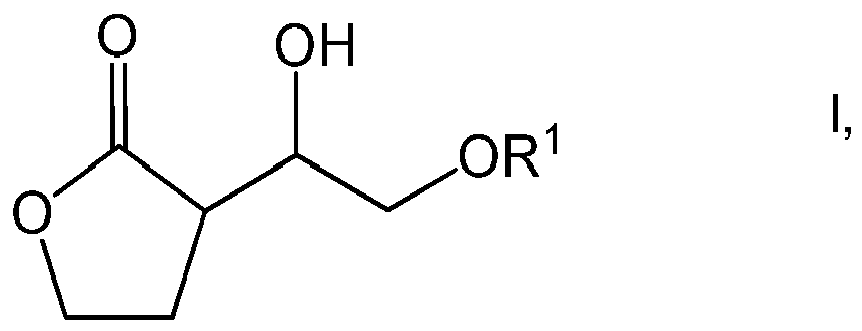
wherein R1 is selected from the group consisting of hydrogen, C2-11-acyl, C4-9-cycloalkanoyl, aryl, aralkyl, aroyl, hetaryl, hetaralkyl and hetaroyl, comprising a biotransformation of a compound of formula

wherein R1 is as defined above, wherein said biotransformation is carried out using a polypeptide having aldo-keto reductase activity or a microorganism containing same.
Description
- The present invention relates to a process for the preparation of a compound of formula

- The present invention also relates to a process for the preparation of a compound of formula


- Active pharmaceutical ingredients (API) of formula VIII


- The downstream processes and examples starting with the compound of formula III to obtain pharmaceutically active compounds are disclosed in
WO/2005/063209 ,WO/2007/126812 andUS2004/0127727 , which all are incorporated herein by reference regarding said downstream processes to obtain the API and respective formulations for administration to patients. -
EP-A 1532127 andEP-A 1589018 disclose different strategies to obtain a compound of formula III. - Among other methods,
EP-A 1589018 discloses a process for the preparation of a lactone of formula

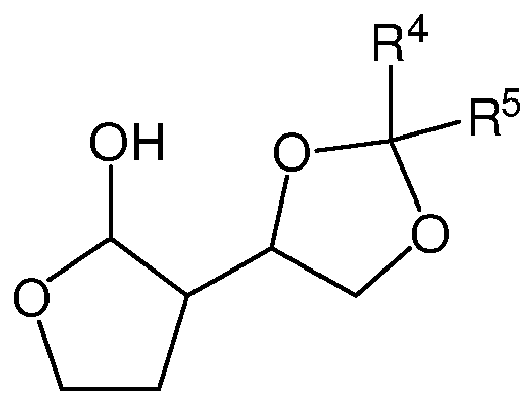

- In
EP-A 1589018 optical resolution of the racemic mixture of the compound of formula III is performed to obtain the compound of the formula
- The object of the present invention was to provide a simple, low-cost and more economical process for preparing the compounds of formula I and III to provide optically pure intermediates without optical resolution, for example for the preparation of pharmaceutically active ingredients such as Darunavir.
- (1)
- This object has been achieved by a process for the preparation of a compound of formula


- This object has been achieved by a process for the preparation of a compound of formula
- In the residue definitions, generally Cn-m indicates a group comprising n to m carbon atoms. For example C1-4 and C2-11 refer to a group having 1 to 4, or 2 to 11 carbon atoms, respectively.
- C1-10-alkyl refers to a linear or branched alkyl group having 1 to 8 carbon atoms, optionally substituted with one or more halogen atoms. Halogen may be F, Cl, Br and I. Examples of C1-10-alkyl are methyl, ethyl, propyl, isopropyl, butyl, i.e. n-butyl, sec-butyl, iso-butyl or tert-butyl; pentyl, hexyl, heptyl, octyl, nonyl, decyl, bromomethyl, chloromethyl, fluoromethyl, dibromomethyl, dichloromethyl, difluoromethyl, up to perfluoroalykl, such as perfluoromethyl or perfluoroethyl. Preferably C1-10-alkyl is selected from C1-4-alkyl, i.e. methyl, ethyl, propyl, isopropyl, butyl, i.e. n-butyl, sec-butyl, iso-bytyl, tert-butyl; bromomethyl, chloromethyl, fluoromethyl, dibromomethyl, dichloromethyl, difluoromethyl, perfluoromethyl or perfluoroethyl.
- C1-4-alkoxy refers to a C1-4-alkyl group as defined above, which is attached via an oxygen atom. Preferably C1-4-alkoxy is selected from methoxy, ethoxy, propoxy, isopropoxy, butoxy, i.e. n-butoxy, sec-butoxy or tert-butoxy.
- C2-11-acyl refers to a linear or branched C1-10-alkyl group as defined above, which is attached via a carbonyl group, for example acetyl, propionyl, butyryl, pentylcarbonyl, hexylcarbonyl, heptylcarbonyl, octylcarbonyl, nonanylcarbonyl, decylcarbonyl, 2-bromoacetyl, 2-chloroacetyl, 2-fluoroacetyl, dibromoacetyl, dichloroacetyl, difluoroacetyl, tribromoacetyl, trichloroacetyl, trifluoroacetyl, 2-bromopropionyl, 3-bromopropionyl, 2-chloropropionyl, 3-chloropropionyl, 2-fluoropropionyl, 3-fluoropropionyl, 2,2-dibromopropionyl, 2,3-dibromopropionyl, 2,2-dichloropropionyl, 2,3-dichloropropionyl, 2,2-difluoropropionyl, 2,3-difluoropropionyl, perbromopropionyl, perchloropropionyl or perfluoropropionyl.
- C4-9-cycloalkanoyl refers to a C3-8-cycloalkyl group, for example cyclopropyl, cyclobutyl, cyclopentyl, cyclohexyl, cycloheptyl or cyclooctyl, which is attached via a carbonyl group. The cycloylkyl group may be unsubstituted or substituted by one or more halogen atoms. Halogen may be F, Cl, Br and I.
- Aryl means phenyl or naphthyl, optionally substituted with one to three substituents selected from halogen atoms, C1-4-alkyl as defined above, C1-4-alkoxy as defined above, cyano and nitro groups. Halogen may be F, Cl, Br or I. Examples of aryl are phenyl, 4-halophenyl, 3,4-dihalophenyl, 2,5-dihalophenyl, 4-C1-4-alkyl-phenyl, 3,4-di-C1-4-alkylphenyl or 3,5-di-C1-4-alkyl-phenyl.
- Aralkyl refers to aryl as defined above, which is attached via a methylene or ethylene group. Examples for aralkyl are benzyl, 2-phenethyl, 2-methylbenzyl, 3-methylbenzyl, 4-methylbenzyl, 2,4-dimethylbenzyl, 2-(4-ethylphenyl)ethyl, 1-naphthalenemethyl or 2-naphthalenemethyl.
- Aroyl refers to aryl as defined above, which is attached via a carbonyl group. Aroyl is for example benzoyl, halobenzoyl such as 4-bromobenzoyl or 4-chlorobenzyloxy, naphthalene-1-carbonyl, or halonaphthalene-1-carbonyl.
- Hetaryl means a 5- or 7-membered heterocyclic aromatic group having independently one to three heteroatoms selected from oxygen, nitrogen and sulfur in the ring. The ring may be either unsubstituted or substituted by one or more halogen atoms or one or more C1-4-alkyl groups as defined above. Halogen may be F, Cl, Br and I. Examples of hetaryl are 2-furanyl, 3-furanyl, 2-thienyl, 3-thienyl, 2-benzo[b]furanyl, 2-benzo[b]thienyl, 2-pyridinyl, 3-pyridinyl or 4-pyridinyl.
- Hetaralkyl refers to a hetaryl group as defined above, which is attached via a methylene or ethylene group. Examples for hetarylalkyl are furylmethyl, thienylmethyl, pyrazolylmethyl, imidazolylmethyl, 1,2,3- and 1,2,4-triazolylmethyl, isoxazolylmethyl, thiazolylmethyl, isothiazolylmethyl, 1,2,3-, 1,3,4-, 1,2,4- and 1,2,5-oxadiazolylmethyl, azepinylmethyl, pyrrolylmethyl, pyridylmethyl, pyridazinylmethyl, pyrimidinyl-methyl, pyrazinylmethyl, 1,3,5-, 1,2,4- and 1,2,3-triazinylmethyl, 1,2,4-, 1,3,2-, 1,3,6- and 1,2,6-oxazinylmethyl, oxepinylmethyl, thiepinylmethyl and 1,2,4-diazepinylmethyl.
- Hetaroyl means hetaryl as defined above, which is attached via a carbonyl group. Suitable hetaroyl groups are for example 2- or 3-thenoyl, nicotinoyl, 2- or 3-furoyl.
- Chiral diastereoisomers obtainable from a biotransformation as outlined above are:
- the anti diastereoisomers (S,R and R,S) of formulae la and Ib:


- (2)
- Currently, the compound of formula la is the most preferred diastereoisomer. The present invention, therefore, also provides the process as defined above for the specific preparation of a compound of formula

- Currently, the compound of formula la is the most preferred diastereoisomer. The present invention, therefore, also provides the process as defined above for the specific preparation of a compound of formula
- The term polypeptide having aldo-keto reductase activity (hereinafter also referred to as aldo-keto reductase) refers to a polypeptide having the activity of an enzyme of the aldo-keto reductase superfamily. These polypeptides have been found to be capable of reducing ketolactones of the formula II to the corresponding hydroxylactones of formula I. Members of the aldo-keto reductase superfamily typically use cofactors NADH or NADPH as the hydride source. Typically, aldo-keto reductases useful in the process of the invention are polypeptides or enzymes comprising 271 to 426 amino acid residues.
- The enzymatic reduction of the compound of formula II to obtain a compound of formula I can be performed, for example, by use of a purified polypeptide having said aldo-keto reductase activity, a microorganism expressing a polypeptide having said aldo-keto reductase activity, preferably a microorganism which is able to utilize compounds of formula II as sole carbon source, or a cell free extract of a microorganism expressing said polypeptide having aldo-keto reductase activity. In a preferred embodiment of the invention, the polypeptide is used in isolated form, either free or immobilized on a carrier, as a cell free enzyme extract, for example prepared from crude lysate, as crude lysate from whole cell suspensions, or within a whole cell suspension.
- Polypeptides having aldo-keto reductase activity useful in the invention may be derived from prokaryotic as well as eukaryotic cells such as fungal cells, in particular yeasts. Examples thereof are disclosed, for example, in Jez, J.M. and Penning, T.M., Chem. Biol. Interact. 130-132, 2001, 499-525, and Jez, J.M.; Flynn, T.G. and Penning, T.M., Biochem. Pharmacol. 54, 1997, 639-647. The term "aldo-keto reductase or "polypeptide having aldo-keto reductase activity" is intended to include variants or biologically active fragments of naturally occuring enzymes as long as they have said aldo-keto reductase activity. The polypeptides may be used in glycosylated or non-glycosylated form and may be produced recombinantly or non-recombinantly.
- Polypeptides having aldo-keto reductase activity capable of reducing a compound of formula II, wherein R is as defined above, to a compound of formula I can be obtained from bacteria of the genera selected from the group consisting of abitrophia, achromobacter, acidovorax, acinetobacter, aerococcus, aeromonas, agrobacterium, alcaligenes, alishwanella, alloicoccis, ammoniphilus, amphibacillus, amycolatopsis, aneurinbacillus, arcanobacterium, arthrobacter, bacillus, balneatrix, bergeyella, brenneria, brevibacillus, brevibacterium, brevundimonas, budvicia, burkholderia, buttiauxella, cedecea, cellulomonas, cellulosimicrobium, chromobacterium, chrysobacterium, citrobacter, comamonas, corynebacterium, curtobacterium, delftia, dermabacter, dermacoccus, dolosicoccus, edwardsiella, empedobacter, enterobacter, enterococcus, erwinia, erysipelothrix, escherichia, ewingella, exiguobacterium, facklamia, flavimonas, flavobacterium, gemella, gallobicatella, granulicatella, hafnia, halomonas, helcoccus, klebsiella, kluyvera, kocuria, kytococcus, lactococcus, leclercia, legionella, leifsonia, leminorella, leuconostoc, listeria, macrococcus, methylobacterium, microbacterium, micrococcus, micropolyspora, moellerera, moraxella, morganella, mycobacterium, myoides, nresterenkonia, nocardia, nocardiopsis, obesumbacterium, ochromobacterium, oerskovia, olligella, paenibacillus, poandoraea, pantoea, pasteurella, pectobacterium, pediococcus, pedobacter, photohabdus, plesiomonas, pragia, proteus, providencia, pseudomonas, psychobacter, rahnella, ralstonia, raoutella, rhizobium, rhodococcus, roseomonas, rothia, saccharomonospora, saccharopolyspora, salmonella, serratia, shewanella, sphingobacterium, sphingomonas, sodalis, staphylococcus, stenotrophomonas, streptococcus, streptomyces, tatumella, thermoactinomyces, thermobacillus, trabulsiella, vagococcus, virgibacillus, weeksella, xenorhabdus, yersinia, and yonekella.
- Preferred yeasts and fungi from which polypeptides having aldo-keto reductase activity can be obtained from genera selected from the group consisting of absidia, acremonium, alternaria, amblysporium, aphanocladium, arthrinium, arthrobotrys, arthroderma, arthrographis, ascotricha, aspergillus, asteromyces, aureobasidium, basipetospora, beauveria, bipolaris, bispora, botryosporium, botrytis, byssochlamys, caldariomyces, calcarisporium, cephaliophora, ceratocystis, cerebella, cercospora, chaetmium, chromelosporium, chrysinilia, chrysosporium, cladiophialophora, cladosporium, collectrichum, cunninghamella, curvularia, cylindrocarpon, cylindrocladium, dicyma, dreschlera, echinobotryum, emericella, emmonsia, epicoccum, epidermophyton, eupenicillium, eurotium, exophiala, exserihilum, fusarium, geomyces, geotrichum, gliocladium (also referred as clonobotrys), gliomastix, gonatobotryum, graphium, helminthosporium, hormographiella, humicola, hyalodendron, lecythophora, leptographium, leptosphaeria, leptosphaerulina, malbranchea, memnoniella, metarhizium, microspaerospsis, microsporium, monodictys, mortierella, mucor, mycothypha, myrothecium, nectria, neosartorya, nigrospora, oedocephalum, oidiodendron, ophiostoma, paecilomyces, papulaspora, penicillium, pericornia, pestaliopsis, phialocephala, philophora, phoma, phragmopcephala, pithomyces, polypaecilum, polythricium, rhinocladiella, rhizomucor, rhizopus, rhodotorula, scolecobasidium (also referred as ochroconis), scopulariopsis, scytalidium, sepedonium, sordaria, spegazzinia, sporobolomyces, sporothrix, sporotrichum, stachybotrys, staphylotrichum, stemphylium, syncephalastrum, taeniolella, talaromyces, tetraploa, thamnidium, thysanospora, tilletiopsis, torula, torulomyces, trichiconiella, trichoderma, tricophyton, tricothecium, tritirachium, ulocladium, verticillium, verticicladiella, wallemia, and xeromyces.
- Microorganisms expressing polypeptides having aldo-keto reductase activity suitable for use in the process of the present invention can be obtained by contacting a candidate microorganism with a compound of formula II, wherein R1 is selected from the group consisting of hydrogen, C2-11-acyl, C4-9-cycloalkanoyl, aryl, aralkyl, aroyl, hetaryl hetaralkyl and hetaroyl as defined above, optionally as a sole carbon source or as excess carbon source in the presence of normal nutrition buffers or bases such as nutrition agar gels, and using the enantiomeric excess of the formation of one of the diastereoisomers of the compound of formula I as a selection tool. Growth, incubation, and optionally activation or induction may be performed according to basic knowledge of a skilled person. If desired, the aldo-keto reductase may be isolated from the microorganisms in a manner known in the art. The method of identifying microorganisms containing an aldo-keto reductase being capable of reducing a ketolactone of formula II also is subject of the present invention.
- (3)
- Polypeptides having aldo-keto reductase activity useful in the process of the invention typically comprise a set of the following sequences
- (i)
- SX1X2X3GX4X5X6SX7X8IX9G (SEQ ID NO 1),
- GX10X11X12X13DX14AX15X16Y (SEQ ID NO 2), and
- LX17X18X19X20X21X22X23X24X25DX26X27X28X29H (SEQ ID NO 3),
- (ii)
- LX1X2X3GX4X5X6PX7X8GX9G (SEQ ID NO 4),
- GX10X11X12X13DX14AX15X16Y (SEQ ID NO 2), and
- LX17X18X19X20X21X22X23X24X25DX26X27X28X29H (SEQ ID NO 3),
- X1 is K, P, S or G,
- X2 is T, Q, S, R, L, or K,
- X3 is A C, Q, S or T,
- X4 is I, L, V or T,
- X5 is R, H or K,
- X6 is V, A, I or T,
- X7 is P, C, V, or R,
- X8 is L or I,
- X9 is L, V, F or I,
- X10 is G, V, I, H or S,
- X11 is N, T or R,
- X12 is C, F, E, L or A,
- X13 is I, L, F or V,
- X14 is T or V,
- X15 is N, F, D or E,
- X16 is S, V, F, I or A
- X17 is R, Q, A, K, E or T,
- X18 is K, R or H,
- X19 is L or M
- X20 is deleted or R
- X21 is Q, R or D,
- X22 is T, C, M or L,
- X23 is D, S, D, P or E,
- X24 is W, Y, K or H,
- X25 is I, V, A or L,
- X26 is I, L or V
- X27 is L, F, Y or V,
- X2 is Y, Q, I or F,
- X29 is I, V, C, M or A,
- (i)
- Polypeptides having aldo-keto reductase activity useful in the process of the invention typically comprise a set of the following sequences
- Preferably, SEQ ID NO 2 in the above sets of sequences has to its C-terminal end further attached the amino acid sequence XcK (SEQ ID NO 2-XcK), wherein Xc is an amino acid sequence of 10 to 40, preferably 20 to 32, and more preferably 26 amino acid residues as defined below.
- For the skilled person it is clear, that up to 5 single amino acid residues denoted as X amino acids (i.e. X1 to X29) can be deleted or added to each of the sequences
- SEQ ID NO 1, SEQ ID NO 2, SEQ ID NO 3 and SEQ ID NO 4, to be still within the scope of the present invention. This applies to all sequences derived from sequences SEQ ID NO 1, SEQ ID NO 2, SEQ ID NO 3 and SEQ ID NO 4; as well as to respective changes of the corresponding polypeptide encoding nucleic acid sequences (for example SEQ ID NO 12 and SEQ ID NO 13) provided below.
- (4) According to the invention, the polypeptide having aldo-keto reductase activity may comprise a consecutive order of the sequences SEQ ID NO 1, SEQ ID NO 2 and SEQ ID NO 3, or SEQ ID NO 4, SEQ ID NO 2 and SEQ ID NO 3, respectively, which are linked by or contain the amino acid sequences Xa, Xb, Xc, Xd and Xe, or the amino acid sequences Xa, Xb, Xc, Xd, Xf and Xg as defined below. In particular, the polypeptide having aldo-keto reductase activity may comprise the sequences:
or


- wherein X1 to X29 are as defined above,
- Xa is a pattern of 10 to 30 amino acid residues, preferably 20 amino acid residues,
- Xb is a pattern of 20 to 40 amino acid residues, preferably 30 amino acid residues,
- Xc is a pattern of 10 to 40 amino acid residues, preferably 26 amino acid residues,
- Xd is a pattern of 10 to 45 amino acid residues, preferably 33 amino acid residues, and
- Xe is a pattern of 221 to 271 amino acid residues, preferably 238 amino acid residues.
- (5) Alternatively, the polypeptide having aldo-keto reductase activity may comprise one of the following sequences:
or


- wherein X1 to X29 are as defined above,
- Xa is a pattern of 10 to 30 amino acid residues, preferably 20 amino acid residues,
- Xb is a pattern of 20 to 40 amino acid residues, preferably 30 amino acid residues, Xc is a pattern of 10 to 40 amino acid residues, preferably 26 amino acid residues,
- Xd is a pattern of 10 to 45 amino acid residues, preferably 33 amino acid residues,
- Xf is a pattern of 70 to 100 amino acid residues, preferably 85 amino acid residues, and Xg is a pattern of 140 to 170 amino acid residues, preferably 152 amino acid residues.
- More preferably, Xc has the amino acid sequence
- QNEESEIWIGEWMASRKLRDQIVIAT (SEQ ID NO 9).
- Xa, thus, is an amino acid sequence attached to the N-terminus of SEQ ID NO:1 or SEQ ID NO:4 and preferably is the amino acid sequence between the methionine residue encoded by the start codon ATG of the sequence encoding the polypeptide having aldo-keto reductase activity and the N-terminus of SEQ ID NO:1 or SEQ ID NO:4, respectively.
- Xb is an amino acid sequence linking SEQ ID NO:1 or SEQ ID NO:4, respectively, with SEQ ID NO:2.
- Xc is an amino acid sequence linking SEQ ID NO:2 with the lysine (K) residue.
- Xd is an amino acid sequence following the Lysine residue attached to the C-terminal end of Xc and linking said amino acid with the N-terminus of SEQ ID NO:3.
- Xe is an amino acid sequence attached to the C-terminus of SEQ ID NO:3. This amino acid sequence optionally may comprise a protein-tag such as a polyhistidine-tag, for example a hexahistidine-tag, which is used for protein purification.
- Xf is an amino acid sequence attached to the C-terminus of SEQ ID NO:3 and linking SEQ ID NO:3 with the valine (V) residue.
- Xg is the amino acid sequence at the C-terminal end of the polypeptide having also-keto reductase activity following the valine residue attached to Xf. This amino acid sequence optionally may comprise a protein-tag such as a polyhistidine-tag, for example a hexahistidine-tag.
- The polypeptide used in the process of the invention may be obtained using an expression vector having inserted a nucleotide sequence encoding said polypeptide having aldo-keto reductase activity. A proper host cell such as a microorganism is transformed with said expression vector containing the coding sequence for the polypeptide and the host cell is cultured under conditions where the polypeptide is expressed and the polypeptide produced by the host cell is recovered.
- (6) For example, the nucleotide sequence encoding YNL331C comprising 1131 base pairs can be used in an expression vector:

- According to a further embodiment, the nucleotide sequence of a clone of YNL331C comprising 1170 base pairs can be used in an expression vector, wherein the native stop codon of the sequence encoding YNL331C is removed and the protein coding sequence is fused to a sequence encoding a C-terminal His-tag:

- It is well known in the art that a single amino acid may be encoded by more than one nucleotide codon, and that the nucleotide sequence may be modified to produce an alternate nucleotide sequence that encodes the same peptide. Therefore, alternate embodiments of the present invention include alternate DNA sequences encoding peptides containing the amino acid sequences as previously described. DNA sequences encoding peptides containing the claimed amino acid sequence include DNA sequences which encode any combination of the claimed sequence and other amino acids located at the N-terminal or C-terminal end of the present amino acid sequences. It is to be understood that amino acid and nucleic acid sequences may include additional residues, particularly N- or C-terminal amino acids or 5' or 3' nucleotide sequences, and still be essentially as set forth in the sequences disclosed herein, as long as the sequence confers aldo-keto reductase activity upon the expressed polypeptide or protein.
- Additional nucleic acid bases may be added either 5' or 3' to the nucleotide sequence encoding the polypeptide having aldo-keto reductase activity, and may be combined with other DNA sequences, such as promoters, polyadenylation signals, additional restriction enzyme sites, multiple cloning sites, other coding segments, and the like. Therefore, overall length of such a polynucleotide may vary considerably.
- Expediently suitable polypeptides are presented below.
- (7) More particularly, the polypeptide having aldo-keto reductase activity may comprise the following sequence:
 or a functionally equivalent variant thereof conferring aldo-keto reductase activity to the polypeptide used in the biotransformation.
- (8) For example, the polypeptide having aldo-keto reductase activity used in the process of the invention may comprise or consist of the sequence:
or a functionally equivalent variant thereof conferring aldo-keto reductase activity to the polypeptide used in the biotransformation, which comprises the known wild type sequence (wt) of YNL331C.

- (9) Preferred aldo-keto reductases useful in the process of the invention are alcohol oxidoreductases belonging to class EC 1.1, in particular class EC 1.1.1, for example classes EC 1.1.1.1 and EC 1.1.1.2 and functionally equivalent variants thereof having the aldo-keto reductase activity of these enzymes.
- (10) More preferred aldo-keto reductases are arylalcohol-dehydrogenases, in particular those from yeasts, for example from the genus Saccharomyces, or a functionally equivalent variant thereof.
- (11) More preferably, the polypeptide having aldo-keto reductase activity is the arylalcohol-dehydrogenase YNL331C from Saccharomyces cerevisiae or a functionally equivalent variant thereof.
- Further functionally equivalent variants of YNL331C suitable in the present process can be found by alignment to AKR9B1 (according to the nomenclature system of Jez and Penning, supra; systematic name YNL331C, standard name AAD14).
- It is to be understood that a "functionally equivalent variant" of a polypeptide is not completely identical to the native protein. A variant of a polypeptide having aldo-keto reductase activity, for example, can be obtained by altering the amino acid sequence by insertion, deletion or substitution of one or more amino acids. The amino acid sequence of the polypeptide or protein can be modified, for example, by substitution to create a polypeptide having substantially the same or improved qualities as compared to the native polypeptide. The substitution may be a conservative substitution. A "conservative substitution" is a substitution of an amino acid with another amino acid having a side chain that is similar in polar/nonpolar nature, charge, or size. The 20 essential amino acids can be grouped as those having nonpolar side chains (alanine, valine, leucine, isoleucine, proline, phenylalanine, and tryptophan), uncharged polar side chains (methionine, glycine, serine, threonine, cystine, tyrosine, asparagine and glutamine), acidic side chains (aspartate and glutamate), and basic side chains (lysine, arginine, and histidine). Conservative substitutions include, for example, N (Asp) to E, N or Q (Glu, Asn, or Gln); H (His) to K, R or F (Lys, Arg or Phe); N (Asn) to Q, N or E (Gln, Asp or Glu); and s (Ser) to c, Y or G (Cys, Thr or Gly).
- To those of skill in the art, variant polypeptides can be obtained by substituting a first amino acid for a second amino acid at one or more positions in the polypeptide structure in order to affect biological activity. Amino acid substitutions may, for example, induce conformational changes in a polypeptide that result in increased biological activity.
- A skilled person may also make substitutions, deletions or insertions in the amino acid sequence based on the hydrophilicity index or hydropathic index of the amino acids. A variant amino acid molecule of the present invention, therefore, has less than one hundred percent, but at least about fifty percent, and preferably at least about eighty to about ninety percent amino acid sequence homology or identity to the amino acid sequence of a polypeptide comprising the amino acid sequence of SEQ ID NO 7, SEQ ID NO 8, SEQ ID NO 10 or SEQ ID NO 11.
- The term "amino acid residue" as far as it refers to variants of polypeptides having aldo-keto reductase activity also is intended to include D-form amino acids and modified amino acids. These substitutions are known to a skilled person, using known structural similarities between the molecules. The provided amino acid sequences are also intended to include any polypeptide sequence that may include additional amino acids residues, either N-terminal or C-terminal to the listed sequences, or both.
- Typically, if the biotransformation is not carried out using whole microorganisms but using the enzyme as such, for example in the form of cell extracts, cell-free extracts or purified polypeptides (enzymes), the biotransformation is carried out in the presence of the cofactor required by the enzyme, typically NADH or NADPH, and, optionally, a cofactor regenerating system.
- Expediently, the process for preparing the compound of formula I in a biotransformation by reacting a compound of formula II with an enzyme having aldo-keto reductase activity as mentioned above is carried out in the presence of a cofactor regenerating system such as the GDH system depicted in Scheme 1. Preferably, in the biotransformation the compound of formula la is obtained.
- Scheme 1: Schematic reduction system with NAD(P)H regeneration, wherein R1 is as defined above)

- Thus, in a preferred embodiment the reduction of the compound of formula II to obtain the compound of formula I is carried out in the presence of nicotinamide adenine dinucleotide (NADH) or nicotinamide adenine dinucleotide phosphate (NADPH). Expediently, NAD(P)H is regenerated from NAD(P) and recycled in the process. Preferably the reaction is carried out in the presence of NAD(P)H and a cofactor regeneration system to regenerate NAD(P)H from NAD(P) as is commonly known by the skilled person. Several systems for regeneration of cofactors are known in the art for example, glucose and glucose dehydrogenase (GDH), formate dehydrogenase (FDH), chemically modified cofactor regeneration systems, light-driven cofactor regeneration systems, or immobilized forms of GDH and FDH as described by Wang et al., Biotechnol. Adv. 25, 2007, 369-384, which is incorporated herein by reference regarding cofactor regeneration.
- The reactions when carried out in the presence of whole cells or cell lysates may not require the addition of cofactor and the regeneration system. In purified systems the addition of cofactor and regeneration system may be necessary.
- Also expediently, said cofactor regenerating system, for example for regenerating NAD(P)H from NAD(P), comprises an in-situ regenerating system selected from the group consisting of glucose dehydrogenase-glucose-gluconicacid (GDH) and formate-dehydrogenate (FDH) system.
- Both preferred recycle systems, i.e. GDH and FDH may be used equivalently by the skilled person.
- Specific improvements can be obtained by mutating the enzymes that catalyzes the desired reaction, or using a microorganism comprising a recombinant gene as the source of the aldo-keto reductase. The present invention includes such improvements of the enzyme regarding for example temperature stability, pH stability, enzymatic activity or reduced cofactor requirement.
- Recombinant as mentioned above refers to a gene sequence that has been ligated in a vector (for example a plasmid) and has been introduced in a host cell system, which could be the parent strain or another suitable microorganism.
- Optionally the enzymatic reduction is carried out in the range from pH 5 to 7, preferably in the range from pH 5.5 to 6.5, more preferred in the range from pH 5.8 to 6.2. Most preferred the reduction is carried out at pH 6.0.
- Regarding the temperature, the biotransformation (enzymatic reduction) preferably is carried out at a temperature in the range from 20 to 45 °C, preferably in the range from 25 to 41 °C, more preferably in the range from 25 to 38 °C. Most preferred the biotransformation is carried out at about 31 °C.
- The present invention also provides a method of identifying and selecting a microorganism or fungus expressing a polypeptide having aldo-keto reductase activity as defined above and suitable to perform the biotransformation in the process of the invention. Preferably the method for identifying comprising that the microorganism or fungus is contacted with the compound of formula II, wherein R1 is selected from the group consisting of hydrogen, C1-10-alkyl, C2-11-acyl, C3-8-cycloalkyl, C4-9-cycloalkanoyl, aryl, aralkyl, aroyl, hetaryl hetaralkyl and hetaroyl, wherein the compound of formula II preferably is the sole carbon source, and wherein the enantiomeric excess of the formation of the desired diastereoisomer of the compound of formula I is used as a selection tool. Growing, incubation, optionally activation, can be performed to basic knowledge of a skilled person.
- In a preferred embodiment of the invention, the product of the biotransformation is a compound of formula

- (12) According to the invention, the compound of formula la, wherein R1 is selected from hydrogen, C2-11-acyl, C4-9-cycloalkanoyl,aryl, aralkyl, aroyl, hetaryl, hetaralkyl and hetaroyl, may be further subjected to downstream chemistry to obtain a compound of the formula

- (13) According to a further embodiment of the invention, a compound of formula I, for example of formula I, preferably la, wherein R1 is selected from the group consisting of C2-11-acyl, C4-9-cycloalkanoyl, aroyl and hetaroyl, is subjected to reduction by reaction with a complex metal hydride and subsequently is worked up in the presence of an acid, preferably a non-oxidizing acid, to obtain a compound of formula III, preferably IIIa.
- Thus, a compound of formula la will be reduced to obtain a compound of formula IIIa, while a compound of formula Ib will be reduced to obtain a compound of formula IIIb. Expediently, said complex metal hydride is selected from NaBH4, LiAIH4, or diisobutyllithium aluminum hydride (DIBAL).
- Said reaction with a complex metal hydride expediently is carried out in a polar aprotic organic solvent. Preferably said organic solvent is selected from tetrahydrofuran (THF) and CH2Cl2.
- To reduce isomerisation reactions, said reaction with a complex metal hydride is carried out at low temperatures, expediently at -40 °C or below, more preferably at about -70 °C or even lower.
- Expediently, the acid is a non-oxidizing acid which is preferably selected from HCl, acetic acid, monochloro acetic acid, dichloro acetic acid, trichloro acetic acid, trifluoro acetic acid (TFA) and 3-chloro propionic acid. Preferably the acid is HCl or TFA.
- In a most preferred embodiment, a compound of formula la, wherein R1 is selected from the group consisting of C2-11-acyl, C4-9-cycloalkanoyl, aroyl and hetaroyl is reacted with a complex metal hydride, and subsequently is worked up in the presence of an acid, preferably a non-oxidizing acid, to obtain a compound of formula of IIIa.
- (14) The present invention also provides for the preparation of a compound of formula

- (i) reacting a compound of formula


- (ii) reacting the compound of formula Va with a complex metal hydride to obtain
a compound of formula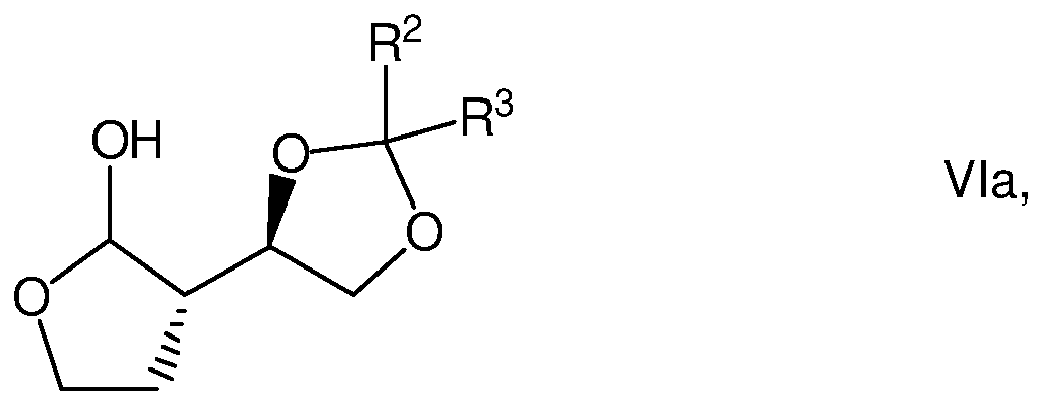
- (iii) hydrolyzing and cyclizing the compound of formula VIa in the presence of an acid preferably a non-oxidizing acid, to obtain the compound of formula IIIa.
- (i) reacting a compound of formula
- (15) The compound of formula

- Expediently, before cyclization the hydroxyl protecting group R1 of the compound of formula I, which is other than hydrogen, can be removed by reacting with hydrogen in the presence of a catalyst. Preferably, said catalyst is a metal selected from the group consisting of Pd, Pt, Ir, Rh, and at least one of said metals is supported on a solid organic or inorganic carrier. Expediently said solid organic carrier is charcoal. Thus, a preferred catalyst is Pd/C, Pt/C, Ir/C, Rh/C, for example Pd/C with 5 or 10 wt-% Pd on charcoal. Suitable inorganic solid carriers are for example TiO2, SiO4, NaHCO3, Na2CO3, KHCO3, K2CO3 or zeolites.
- Said conversion may be carried out without a conformational change.
- Expediently, the compound of formula IV is selected from the group consisting of 2,2-dimethoxypropane, 2,2-dimethoxybutane, 2,2-dimethoxypentane, 3,3-dimethoxypentane, 2,2-dimethoxyhexane, 3,3-dimethoxyhexane, 3,3-dimethoxyheptane, 4,4-dimethoxyheptane, 3,3-dimethoxyoctane, 5,5-dimethoxynonane, 1,1-dimethoxycyclopentane, 1,1-dimethoxycyclohexane or 1,1-dimethoxycycloheptane
- Expediently, the complex metal hydride in step (ii) above is selected from the group consisting of NaBH4, LiAIH4 and diisobutyllithium aluminum hydride (DIBAL).
- Also expediently, the non-oxidizing acid in step (iii) above is selected from the group consisting of HCl, acetic acid, monochloro acetic acid, dichloro acetic acid, trichloro acetic acid, trifluoro acetic acid (TFA) and 3-chloro propionic acid. Preferably the acid is HCl or TFA.
- (16) As mentioned above, provided is also a method of identifying a microorganism having aldo-keto reductase activity, said method comprising:
- a) contacting a candidate microorganism with a compound of formula

C4-9-cycloalcanoyl, aryl, aralkyl, aroyl, hetaryl, hetaralkyl and hetaroyl, and - b) identifying a microorganism having aldo-keto reductase activity, wherein aldo-keto reductase activity is indicated by the formation of an enantiomeric excess of one of the diastereoisomers of the corresponding hydroxylactone.
- a) contacting a candidate microorganism with a compound of formula
- Compounds of formula la or IIIa as they are obtained according to any of the processes referenced above, can be used for the preparation of a compound of formula


- Preferably, Alk1 is iso-butyl, Ph1 is phenyl and Ph2 is 4-amino-phenyl, or Alk1 is iso-butyl, Ph1 is 4-[(2-methyl-1,3-thiazol-4-yl)methoxy]phenyl and Ph2 is 1,3-benzodioxol-5-yl, or a physiologically acceptable salt thereof.
- The starting compound of formula II, wherein R1 is selected from C2-11-acyl, C4-9-cycloalkanoyl, aryl, aralkyl, aroyl, hetaryl, hetaralkyl and hetaroyl, can be obtained for example by reacting a 2-halo acetate of formula

HOR1 X,
wherein R1 is selected from C2-11-acyl, C4-9-cycloalkanoyl, aryl, aralkyl, aroyl, hetaryl, hetaralkyl and hetaroyl, to obtain a compound of formula
- Alternatively, the starting compound of formula II, wherein R1 is selected from C2-11-acyl, C4-9-cycloalkanoyl, aroyl and hetaroyl, can be obtained by reacting a 2-halo acetate of formula


HOC(O)R1 XIII,
wherein R1 is selected from C2-11-acyl, C4-9-cycloalkanoyl, aryl, aralkyl, aroyl, hetaryl, hetaralkyl and hetaroyl, or an acid anhydride of formula
R1C(O)-O-C(O)R1 XIV,
wherein R1 is selected from C2-11-acyl, C4-9-cycloalkanoyl, aryl, aralkyl, aroyl, hetaryl, hetaralkyl and hetaroyl. - In another alternative, a compound of formula XI, wherein R1 is selected from C2-11-acyl, C4-9-cycloalkanoyl, aroyl and hetaroyl and R6 is as defined above, can be obtained by reacting a 2-hydroxy acetic acid ester of formula


- Expediently the reaction with γ-butyrolactone in each of the alternatives, i.e. the reaction with a compound of formulae IX or XI is carried out in the presence of a strong non-nucleophilic base to avoid simple elimination instead of a Claisen condensation. Reacting a compound of formula IX with butyrolactone yields the compound of formula II, regardless whether R1 is selected from C2-11-acyl, C4-9-cycloalkanoyl, aryl, aralkyl, aroyl, hetaryl, hetaralkyl or hetaroyl. A suitable non-nucleophilic base is lithium hexamethyldisilazide (LiHMDS, [(CH3)3Si]2NLi). LiHMDS is commercially available but can also be freshly prepared for example by deprotonation of bis(trimethylsilyl)amine with butyl lithium. Other suitable bases other than LiHMDS are for example lithium diisopropylamide (LDA), NaHMDS, KHMDS, lithium tetramethylpiperidide (LiTMP), sodium tert-butoxide or potassium tert-butoxide.
- In a preferred embodiment said Claisen condensation is carried out at a temperature below 0 °C. More preferably at a temperature of blow -50 °C. Examples were carried out at -60 or -70 °C.
- Examples of suitable alkyl, cycloalkyl, aryl or hetaryl carbonyl halides are acetyl chloride, chloroacetyl chloride, butyryl chloride, isobutyryl chloride, phenylacetyl chloride, benzyl chloroformate (Cbz-Cl), propionyl chloride, benzoyl chloride, allyl chloroformate or tert-butyloxycarbonyl fluoride. Examples of suitable carboxylic anhydrides are tert-butoxycarbonyl anhydride, butyric anhydride, acetic anhydride or propionic anhydride.
- The acylation (reaction with alkyl, cycloalkyl, aryl or hetaryl carbonyl halides or respective anhydrides) is expediently carried out in an aprotic solvent. Examples of suitable aprotic solvents are diisopropyl ether, pyridine, acetonitrile, acetone, C1-6-alkyl acetates such as methyl acetate, ethyl acetate, or propyl acetate, dimethylformamide, diethylformamide, triethylamine, tetrahydrofuran, toluene, methylene chloride, N-methylpyrrolidone or mixtures thereof.
- The acylation is expediently carried out at a temperature from -80 to 50 °C, preferably from 0 to 25 °C.
- The examples are not suited to demonstrate a limiting factor although not all claimed embodiments have been carried out experimentally due to the sheer mass of examples. Nevertheless, the examples constitute suitable means to demonstrate how all claimed embodiments can be carried out.
- The examples are split up in three parts. Examples 1 to 7 are directed to the preparation of starting materials of the biotransformation (enzymatic reduction). Examples 8 to 16 are directed to the biotransformation. Examples 17 to 25 are directed to the downstream chemistry to obtain the compound of formula IIIa.
- In examples and tables "ee" refers to enantiomeric excess, "de" refers to diastereoisomeric excess, whierein "de" refers to the the simple diastereoisometric ratio in percent of the syn and anti diastereoisomeres.
- The enantiomeric excess is calculated by the following formulae:

- A reaction flask was charged with toluene (200 mL), followed by addition of NaH (70% purity, 105.4 g, 2.6 mol) and dropwise addition of benzyl alcohol (259 g, 2.4 mol, formula X, R1 = benzyl)) at room temperature. The reaction mixture was heated at 30 °C while stirring for 1 h. The reaction mixture was cooled down to -40 °C and ethyl bromoacetate (400 g, 2.4 mol, formula IX, wherein R6 = ethyl and Hal = Br) was added dropwise at a rate that the reaction temperature did not exceed -35 °C. After completion of the addition the reaction mixture was warmed to -30 °C over 2 h. Ice cold H2O (1.5 L) was added followed by addition of concentrated HCl until pH 6 was reached. The mixture was warmed to room temperature and the organic layer was collected. The aqueous layer was extracted with toluene (2×600 mL). The combined organic layers were evaporated. The residue was purified by vacuum distillation to afford 295.0 g of ethyl benzyloxyacetate (63% yield).
- In a reaction flask, lithium hexamethyldisilazide (LiHMDS, 1 M in toluene, 330 L, 0.33 mol) was charged followed by addition of anhydrous THF (400 mL). The solution was cooled down to -70 °C. γ-Butyrolactone (28.4 g, 0.33 mol) was added dropwise while the temperature of the reaction was kept at no more than 60 °C. Ethyl benzyloxyacetate (50.0 g, 0.26 mol, formula XI, R1 = benzyl, R6 = ethyl) was added dropwise. After the addition, the reaction mixture was stirred at -60 °C for 10 min. Ice-cold water (65 mL) was added, followed by addition of concentrated HCl to pH 3. The mixture was warmed to room temperature and the organic layer was collected. The aqueous layer was extracted with ethyl acetate (4×60 mL). The combined organic layers were evaporated and the residue was purified by flash column chromatography to afford 40.0 g (52% yield, based on γ-butyrolactone) of a compound of formula II, wherein R1 is benzyl.
- The same reaction as in Example 2 was carried out using 1.28 equivalents of lithium hexamethyldisilazide (LiHMDS) to obtain a compound of formula II, wherein R1 is benzyl, in 79% yield.
- THF (120 mL) was added to a three-neck reaction flask under N2 atmosphere and cooled down to -74 °C in an acetone/dry ice bath. LiHMDS (1 M solution in THF, 121 mL, 0.121 mol) was added to the solution in a fast stream. γ-Butyrolactone (8.5 mL, 0.11 mol) was added dropwise under temperature control (<-74 °C). The reaction mixture was stirred at -74 °C for 20 min. Ethyl chloroacetate (10.5 mL, 0.098 mol, formula IX, R6 = ethyl, Hal = Cl) was added dropwise under temperature control (<-74 °C). The reaction mixture was stirred at -70 °C for 1 h. The reaction mixture was quenched by addition of 2 M HCl (150 mL) at -25 °C while keeping temperature control of the receiving reaction flask at <-20 °C. This mixture was stirred at -20 °C for 10 min and diluted with 50 mL H2O and poured into separating funnel and extracted with EtOAc (2×100 mL). The combined organic layers were washed with brine (2×60 mL), and evaporated to dark orange oil 16.26 g (approx 80% purity). The crude product, of formula XII (Hal = Cl), was used in the next reaction without further purification.
- The crude chloroketone obtained in Example 4 (16.26 g, formula XII, wherein Hal = Cl) was placed in a 0.5 L reaction flask, dissolved with acetone (200 mL). Benzoic acid (18.11 g, 0.148 mol, formula XIII, R1 = benzoyl) was added to the mixture. The mixture was stirred until all reagents had dissolved (approx. 10 min). Triethylamine (21.2 mL, 0.152 mol) was added producing a mildly exothermic reaction. A condenser was adapted to the reaction flask and the reaction mixture was stirred at 40 °C under N2 atmosphere for 12 h. The reaction mixture was cooled down to room temperature and filtered through filter paper. The filter cake was washed with acetone (20 mL). The filtrate was evaporated to obtain an orange oil which was dissolved in ethyl acetate (100 mL). The ethyl acetate solution was washed with brine (2×30 mL), and evaporated to approx. half of the original volume (approx. 50 mL). To the light-brown solution, hexanes (20 mL) were added (turbidity was observed). The mixture was let stand at room temperature for 30 min and aged at 4 °C for 16 h. The suspension was filtered and the solids washed with hexanes (20 mL) at 4 °C. The solids were dried for 30 min to give 13.5 g of white solid (55.5% yield for two steps, examples 4 and 5).
- The racemic alcohol of formula I (R1 = benzyl) was obtained by subsequent reduction of the compound of formula II (R1 = benzyl) with sodium borohydride. The four diastereoisomers where separated using a chiral HPLC column (Column: Chiralcel OD-H, 4.6 x 250 mm; Eluent: 90:10 n-heptane/ isopropyl alcohol; Flow: 1 mL/min, Detection: 215 nm, retention times: 16.29 min (syn diastereoisomer (S,S)), 18.96 min (syn diastereoisomer (R,R)), 21.52 min (desired anti diastereoisomer of formula la, (S,R)), and 27.02 min (anti diastereoisomer, (R,S)).
- The racemic alcohol of formula I, wherein R1 is benzoyl was obtained by subsequent reduction of the compound of formula II (R1 = benzoyl) with sodium borohydride. The four diastereoisomers where separated using a chiral HPLC column (Column: Chiralpak AD, 4.6 x 250 mm; Eluent: 65:35 n-heptane/isopropyl alcohol; Flow: 0.6 mL/min, Detection: 210 nm, Retention times: 11.46 min (anti diastereomer (R,S)), 12.18 min (syn diastereomer (S,S)), 13.16 min (anti diastereomer (S,R)), and 14.12 min (syn diastereomer (R,R)).
- General description for the enzymatic reduction (biotransformation, biocatalytic reduction) of a compound of formula II, wherein R1 is defined in each example, using an aldo-keto reductase with GDH, glucose, gluconic acid cofactor regeneration system.
- Example 8:
- Aldo-keto reductase screening was carried out using benzyl ketolactone of formula II (R1 = benzyl, 100 mg/mL), potassium phosphate buffer (100 mM, pH 7.0, containing NADH (2.5 mg/mL), NAD(P)H (2.5 mg/mL), also-keto reductase (10 mg/mL). 96 well plates were incubated at 30 °C for 26 h at 900 rpm. The results of 16 different aldo-keto reductases (commercially available, for example, from Codexis Inc., 200 Penobscot Drive, Redwood City, CA 94063, USA) on benzyl ketolactone (formula II, R1 = benzyl) are displayed in Table 1, wherein the Enzyme indicates the Catalog-No under which the enzyme is available or, in case of YNL331C, the enzyme name:
Table 1 Enzyme Conversion (%) ee (syn) ee (anti) de (anti/syn) KRED-125 58 49 (S,S) 100 (R,S) 80 (anti) KRED-EXP-B1H-162 75 100 (S,S) 100 (S,R) 72 (anti) KRED-EXP-B1I 55 100 (S,S) 100 (S,R) 86 (anti) KRED-EXP-B1J-163 71 100 (S,S) 100 (S,R) 80 (anti) KRED-EXP-B1K-164 79 100 (S,S) 100 (S,R) 86 (anti) KRED-EXP-B1M-166 50 100 (S,S) 100 (S,R) 86 (anti) KRED-EXP-B1S-171 83 n.a. n.a. n.a. YSC2 88 16 (R,R) 94 (R,S) 87 (anti) 42.10 76 37 (R,R) 94 (S,R) 91 (anti) 51476 94 11 (R,R) 91 (R,S) 85 (anti) KRED-NADH-106 50 74 (S,S) 100 (S,R) 85 (anti) KRED-NADH-1112 64 64 (R,R) 100 (R,S) 68 (anti) KRED-NADH-120 87 16(S,S) 100 (S,R) 65 (anti) KRED-NADH124 70 100 (S,S) 100 (S,R) 70 (anti) YNL3331 c 46 31 (S,S) 94 (S,R) 83 (anti) KRED-243 85 100 (R,R) 68 (R,S) 93 (anti) - Values reported as percentage of area of the main peak; n.a. = data not available
- For ee: The brackets (R,R) and (S,S) indicate the enantiomeric excess of the syn diastereomers, expressed in percent in terms of the major component (R,R) or (S,S) diastereomers, respectively, while the brackets (R,S) and (S,R) indicate the enantiomeric excess of the anti diastereomers, expressed in percent in terms of the major component (R,S) or (S,R) diastereomers, respecitively.
- For de: The bracket (anti) indicates the ratio, expressed in percent, of anti diastereomers (R,S + S,R) over the syn diastereomers (S,S + R,R), while (syn) is the ratio, expressed in percent, of syn diastereomers (R,R + S,S) over the anti diastereomers (R,S + S,R).
- Aldo-keto reductase screening has been carried out with benzoyl ketolactone according to example 9. The results of 5 different aldo-ketoreductases (Codexis Inc., 200 Penobscot Drive, Redwood City, CA 94063, USA) reacting with benzoyl ketolactone (formula II, R1 = benzoyl) are displayed in Table 2.
Table 2 Enzyme conversion (%) ee (syn) ee (anti) de (anti/syn) KRED-125 -- 100 (S,S) 100 (S,R) 99 (syn) KRED-EXP-A1N-144 60 91 (R,R) 100 (S,R) 100 (syn) 42.10 67 90 (R,R) 46 (S,R) 97 (syn) KRED-NADH-106 50 64 (R,R) 75 (R,S) 90 (syn) YNL3331c 55 67 (R,R) 2 (R,S) 81 (syn) - Example 10: Biotransformation of a compound of formula II, R1 is benzyl Biotransformation of benzyl ketolactone (formula II, R1 = benzoyl) with 50% enzyme loading corresponding to 0.2 mg (0.5 mg/mL) of enzyme in 0.4 mL reaction volume. Results of obtained benzoyl hydroxylactone (formula I, R1 = benzoyl) are displayed in Table 3.
Table 3: Conversion in percent at a substrat:enzyme ratio of 1:0.5 Enzyme Cofactor 1 h 18 h 24 h KRED-EXP-B1I NADPH 1% 1% 2% KRED-EXP-B1J-163 NADPH 7% 8% 85% KRED-EXP-B1K-164 NADPH 15% 56% 56% KRED-EXP-B1M-166 NADPH 2% 8% 8% YNL3331c NADPH 28% 69% 69% 42.10 NADH 2% 18% 20% KRED-NADH-106 NADH 54% 93% 93% - Example 11: Biotransformation of a compound of formula II, R1 is benzyl Biotransformation of benzoyl ketolactone (formula II, R1 = benzyl) has been carried out according to example 9 but with 250% enzyme loading corresponding to 1 mg (2.5 mg/mL) of enzyme in 0.4 mL reaction volume. Results of obtained benzyl hydroxylactone (formula I, R1 = benzyl) are displayed in Table 4.
Table 4: Conversion in percent at a substrate:enzyme ratio of 1:2.5 Enzyme Cofactor 1 h 18 h 24 h KRED-EXP-B1I NADPH 3% 18% 19% KRED-EXP-B1J-163 NADPH 32% 34% 34% KRED-EXP-B1K-164 NADPH 61% 100% 100% KRED-EXP-B1M-166 NADPH 2% 40% 40% YNL3331c NADPH 96% 100% 100% 42.10 NADH 9% 73% 77% KRED-NADH-106 NADH 92% 96% 96% - Example 12: Biotransformation of a compound of formula II, R1 is benzoyl Biotransformation of benzoyl ketolactone (0.4 mg per well, 0.4 g/L concentration, formula II, R1 = benzoyl) with 50% enzyme loading corresponding to 0.2 mg (0.5 mg/mL) of enzyme in 0.4 mL reaction volume. Results of obtained benzoyl hydroxylactone (formula I, R1 = benzoyl) are displayed in Table 5.
Table 5: Conversion in percent at a substrate:enzyme ratio of 1:0.5 Enzyme Cofactor 2 h 4.5 h Extraction ee de KRED-125 NADPH 100 -- 100 100 (S,R) 98.9 (syn) KRED-EXPA1N-144 NADPH 98 100 100 98.8 (R,S) 98.2 (anti) YNL3331c NADPH 71 78 79 87 (R,S) 88.4 (anti) KRED-NADH-106 NADH 20 40 63 90 (R,S) 86 (anti) - Example 13: Biotransformation of a compound of formula II, R1 is benzoyl Biotransformation of benzoyl ketolactone (compound of formula II, R1 is benzoyl) has been carried out according to example 12 but with 250% enzyme loading corresponding to 1 mg (2.5 mg/mL) of enzyme in 0.4 mL reaction volume. Results of obtained benzoyl hydroxylactone (compound of formula I, R1 = benzoyl) are displayed in Table 6.
Table 6: Conversion in percent at a substrate:enzyme ratio of 1:2.5 Enzyme Enzyme Cofactor 2h 4.5h Extraction ee de KRED-125 KR-024 NADPH 100 -- 100 100 (S,R) 98.9 (syn) KRED-EXPA1N-144 KR-044 NADPH 100 -- 100 98.8 (R,S) 98.2 (anti) YNL3331c YNL3331 c NADPH 98 --- 99 87 (R,S) 88.4 (anti) KRED-NADH-106 KR-102 NADH 85 94 94 90 (R,S) 86 (anti) - Example 14: Biotransformation of a compound of formula II, R1 is benzyl Biotransformation was carried out with enzyme YNL3331C (380 mg) and substrate benzyl ketolactone (compound of formula II, R1 is benzyl, 760 mg, dissolved in 7.5 mL DMSO) in potassium buffer pH 6.0 in 150 mL reaction volume and incubated at 36 °C, 270 rpm for 2 h to reach 100% conversion. After extraction with MTBE (2×150 mL) 96% crude yield was obtained with 97.6% ee and 89.1% de, 17.9:1 dr.
- In a reaction flask equipped with pH-stat and thermocouple, 10 mM phosphate buffer pH 6.5 was charged (92 mL) and warmed to 34 °C. An aldo-keto reductase preparation of YNL3331C according to example 14 (16 mL), glucose (7.28 g), glucose dehydrogenase (GDH, 30 mg) and NAD(P)H (50 mg) were added to the buffer solution. Benzoyl ketolactone (compound of formula II, R1 = benzoyl, 10 g) was added as solution in DMSO (5 mL) resulting in a milky reaction mixture. The reaction mixture was stirred at 120 rpm, 35 °C for 14 h (typical conversion >98%, monitored by HPLC). To the reaction mixture ethyl acetate (30 mL) was added and stirred at 35 °C for 10 min. The organic layer was collected. The aqueous layer was extracted with ethyl acetate (3×40 mL). The combined organic layers were stirred with celite® (1 g) for 2 min and filtered through a celite® bed. The solids were washed with ethyl acetate (10 mL). The filtrate was evaporated to approx. one-third of the original volume (40 mL) and the solution cooled down to 0 °C. Hexanes (10 mL) were added to the concentrated ethyl acetate solution (precipitation was observed). The suspension was filtered through filter paper and the solids washed with hexanes (5 mL). The white solid was dried for 30 min to give 7.06 g of benzoyl hydroxy lactone (70% crude yield, compound of formula I, R1 = benzoyl).
- In a reaction flask equipped with pH-stat and thermocouple, phosphate buffer (92 mL, 10 mM, pH 6.0) was charged and warmed to 34 °C. The enzyme preparation as described in example 14 (4 mL), Glucose (1.46 g, 8.1 mmol), glucose dehydrogenase (GDH, 17 mg) and NADPH (12 mg, 0.01 mmol) were added to the buffer solution. Benzoyl ketolactone (compound of formula II, R1 = benzoyl, 1 g, 4.03 mmol) was added as solution in DMSO (4 mL) resulting in a milky reaction mixture. The reaction mixture was stirred at 120 rpm, 35 °C for 14 h (typical conversion >98%, monitored by HPLC). Ethyl acetate (30 mL) was added to the reaction mixture and stirred at 35 °C for 10 min. The mixture was allowed to separate into two phases and the organic phase was collected. The aqueous layer was extracted with ethyl acetate (2×15 mL). The combined organic phases were stirred with celite® (1 g) for 2 min and filtered through a celite® bed. The solids were washed with ethyl acetate (5 mL). The filtrate was evaporated to approx. one-fourth of the original volume (approx. 15 mL) and the solution cooled down to 0 °C. Hexanes (5 mL) were added to the concentrated ethyl acetate solution to precipitate the product. The suspension was filtered through filter paper and the solids washed with hexanes (5 mL). The white solid was dried for 30 min to give 830 mg of product (compound of formula I, R1 = benzoyl, 82% crude yield).
- Downstream chemistry (A) to (C) starting from compounds of general formula I obtained by the present biotransformation.
- (A) Direct cyclization:
- The route using direct cyclization of a compound of formula I in the presence of a complex metal hydride is particularly advantageous and only possible in case of using a starting compound of formula I, wherein R1 is selected from C2-11-acyl, C4-9-cycloalcanoyl, aroyl and hetaroyl, preferably wherein R1 is benzoyl.
- Reduction of the hydroxy lactone of formula la, wherein is R1 = benzoyl, with DIBAL-H (4 eq.) in CH2Cl2 at -78 °C, wherein the crude reaction was treated with drops of TFA afforded 6H-furofuranol of formula IIIa in 23% yield.
- Reduction of the hydroxy lactone of formula la, wherein is R1 = benzoyl, with DIBAL-H (3.3 eq.) in CH2Cl2 at -78 °C followed by acidic work-up with TFA afforded 6H-furofuranol of formula IIIa in 23-25% yield.
- To a stirred solution of benzoyl hydroxyactone of formula la (R1 = benzoyl, 401.9 mg, 1.61 mmol) in THF (20 mL) at -74 °C under nitrogen atmosphere, DIBAL-H (1 M soln. in CH2Cl2, 6.5 mL, 6.5 mmol) was slowly added under temperature control (<-70 °C). The reaction mixture was stirred at -74 °C for 1 h. The reaction mixture was quenched by addition of MeOH (0.5 mL) and stirred at -65 °C for 10 min. The quenched reaction mixture was treated with HCl (6 N, 5 mL) and stirred for 10 min at about 5 °C. This mixture was extracted with MTBE (3×25 mL). The combined organic layers were concentrated to approx. one-fourth of the original volume (approx. 7 mL) and treated with hexanes (5 mL). The solids were collected by filtration and washed with hexanes (82 mL) to give 104.7 mg (50% yield) of the 6H-furofuranol of formula IIIa.
- (B) Acetonide route:
- Preferably, the acetonide route is used for compounds of formula I wherein R1 is aralkyl or hetaralkyl, preferably benzyl or heteroarylmethyl, respectively.
- To a solution of the hydroxylactone of formula la (R1 = benzyl, 685 mg, 2.9 mmol) in acetone (15 mL), 2,2-dimethoxypropane (3.6 mL, formula IV, R2 = R3 = methyl) and Amberlyst 15® (dry type, 20 mg) were added at room temperature. Then, Pd/C (10% Pd on charcoal by weight, 120 mg) was added in one portion. The reaction was stirred at room temperature under hydrogen (1 bar) for 8 h. The suspension was filtered through a celite® pad and the solids were washed with acetone (15 mL). The filtrate was evaporated and placed in a high vacuum pump for 1 h. The residue was purified by flash column chromatography on a silica gel column. Elution with n-heptane/ethyl acetate (2:1, v:v) afforded a waxy solid (385 mg, 71 %) of acetonide lactone of formula Va (R2 = R3 = methyl). In samples during the reaction the compound of formula XVIa (i.e. compound of formula la with R1 = hydrogen) could be identified as intermediate between removal of R1 and before ketal formation with the compound of formula IV to obtain the compound of formula Va.
- In a reaction flask equipped with a thermocouple and under a stream of N2, acetonide lactone of formula Va (R2 = R3 = methyl) (370 mg, 1.99 mmol) was dissolved in toluene (3.6 mL). The flask was cooled down to -74 °C (dry ice/acetone). DIBAL-H (1 M in toluene, 2.19 mL, 1.1 eq.) was added dropwise over 15 min through a syringe while the temperature of the reaction was maintained at below -70 °C. The reaction mixture was stirred at -74 °C for 90 min. The reaction was quenched by addition of ethyl acetate (2 mL) followed by NH4Cl saturated solution (3 mL). The reaction mixture slowly warmed to 10 °C. Anhydrous MgSO4 (3 g), ethyl acetate (20 mL) and celite® (3 g) were added. This mixture was filtered through a celite® pad and the solids washed with ethyl acetate (60 mL). The filtrate was evaporated to give a residue (356 mg, 95% crude yield) of the acetonide lactol of formula VIa (R2 = R3 = methyl).
- The lactol of formula VIa (R2 = R3 = methyl) (343 mg, 1.82 mmol) was dissolved in THF (8 mL) in a reaction flask. HCl (6N, 5 drops) was added slowly over the solution under vigorous stirring at room temperature. The reaction mixture was stirred at room temperature for 23 hours. Then the reaction mixture was treated with K2CO3 (3.5 g) and further stirred for 20 min. The suspension was filtered through filter paper and the solids washed with THF (2×10 mL). The filtrate was evaporated until dryness. The residue was purified by flash column chromatography on a silica gel column. Elution with ethyl acetate/heptane (2:1, v:v), and evaporation of the fractions, gave afforded 6H-furofuranol of formula IIIa in 61% yield (145 mg).
- According to example 21, the compound of formula Ia, wherein R1 is benzyl was reacted with DIBAL-H to obtain the compound of formula IIa.
- (C) Double hydration route:
- Alternatively, the compound of formula I, wherein R1 is an aralkyl or hetaralkyl group, can be cyclized by a first hydration of the hydroxy lacton ring with a complex hydride as defined above to obtain the corresponding hydroxy lactol and a second hydration with hydrogen in the presence of a metal and an acid to remove the aralkyl or hetaralkyl group and to cyclize the product in the presence of an acid as mentioned above to obtain the respective compound of formula III. Preferably, said catalyst is a metal selected from the group consisting of Pd, Pt, Ir, Rh, and at least one of said metals is supported on a solid organic or inorganic carrier. Expediently said solid organic carrier is charcoal. Thus, a preferred catalyst is Pd/C, Pt/C, Ir/C, Rh/C, for example Pd/C with 5 or 10 wt-% Pd on charcoal. Suitable inorganic solid carriers are for example TiO2, SiO4, NaHCO3, Na2CO3, KHCO3, K2CO3 or zeolites. As mentioned above, preferably the acid is a non-oxidizing acid.
- The product of the first hydration of a compound of formula I (hydroxy lacton), wherein R1 is aralkyl or hetaralkyl, is a hydroxy lactol, i.e. a compound of formula


- To a stirred solution of benzyl hydroxylactone of formula la (R1 = benzyl, 7.06 g, 29.88 mmol) in CH2Cl2 (80 mL) at -74 °C under nitrogen atmosphere, diisobutyllithium aluminum hydride (DIBAL-H, 65 wt-% soln. in toluene, 13.67 mL, 44.82 mmol, 1.5 equivalents) was slowly added under temperature control (<70°C). The reaction mixture was stirred at -74 °C for 2 h. The reaction mixture was quenched by addition of MeOH (2 mL) and stirred at -65 °C for 10 min. The quenched reaction mixture was treated with saturated NH4Cl (10 mL) and stirred for 30 min without control temperature (typically 5 °C). The mixture was filtered through celite®. The solids were washed with CH2Cl2 (20 mL). The organic layer was separated and dried with anhydrous Na2SO4 (2 g) and filtered through cotton plug. The cotton plug was washed with CH2Cl2 (5 mL).
- The filtrate of example 23 comprising the compound of formula XVIIa (R1 = benzyl) was transferred to a hydrogenation vessel. Palladium on carbon (Pd/C, 10 wt-%, 100 mg) was added and formic acid (0.5 g) was added. The vessel was connected into the hydrogenator. The mixture was purged with N2 and then purged once with H2 and loaded with H2 at 2 bar. The reaction mixture was stirred at room temperature at 2 bar H2 pressure for 10 h. The crude was filtered through celite® and the solids washed with ethyl acetate (10 mL). The solvent was evaporated to give a colorless oil which was purified by flash column chromatography to give 2.33 g of a colorless compound of formula IIIa (60% for two steps, i.e. examples 24 and 25).


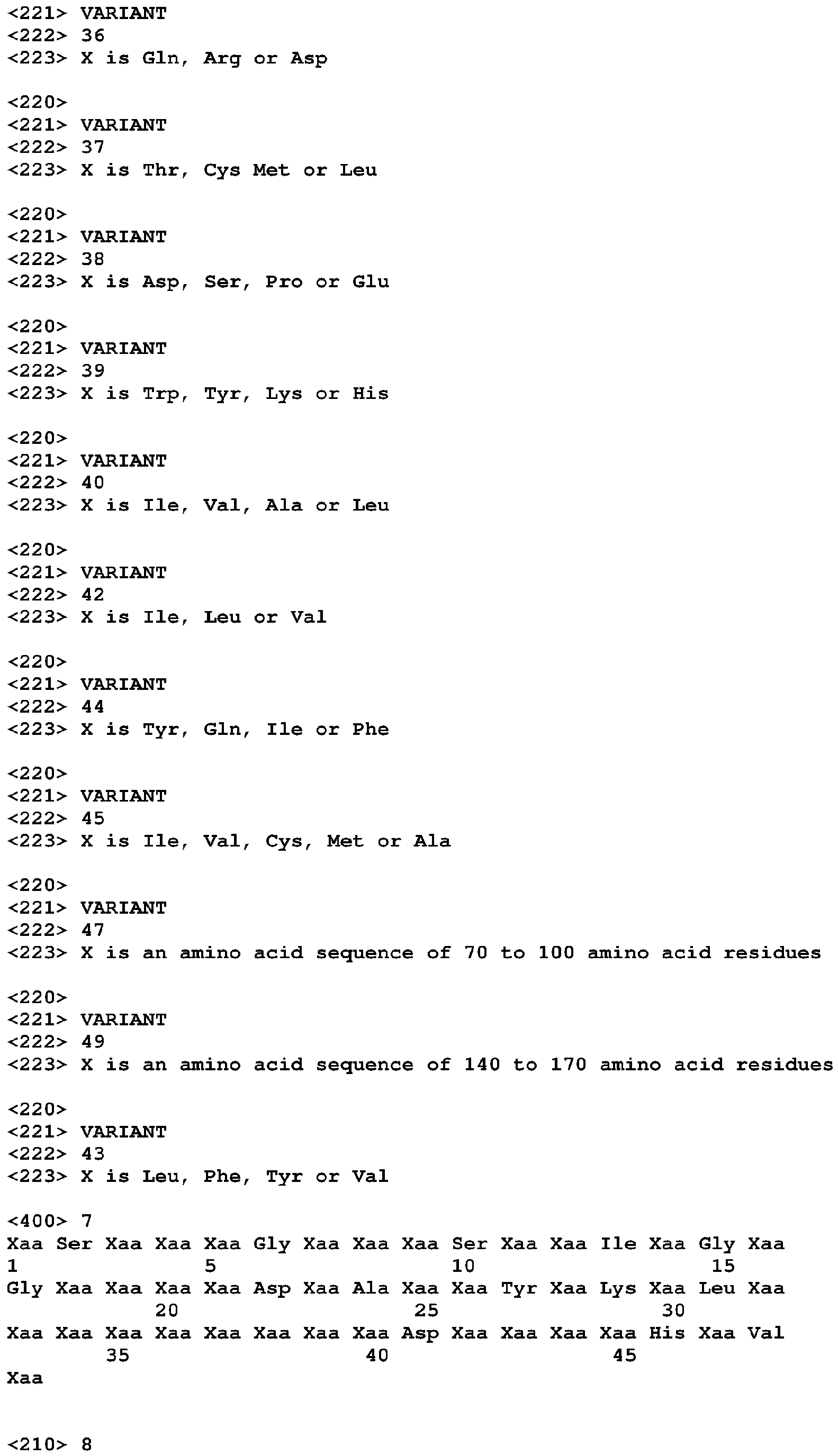


Claims (16)
- A process for the preparation of a compound of formula
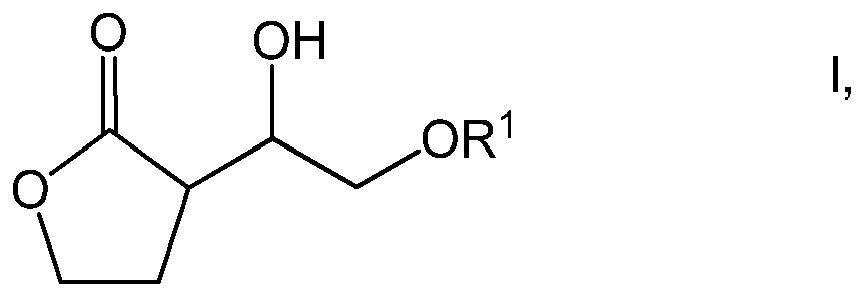

- The process of claim 1 for the preparation of the diastereoisomer of formula

- The process of claims 1 or 2, wherein the polypeptide having aldo-keto reductase activity comprises a set of the following sequences(i)SX1X2X3GX4X5X6SX7X8IX9G (SEQ ID NO 1),GX10X11X12X13DX14AX15X16Y (SEQ ID NO 2), andLX17X18X19X20X21X22X23X24X25DX26X27X28X29H (SEQ ID NO 3),or(ii)LX1X2X3GX4X5X6PX7X8GX9G (SEQ ID NO 4),GX10X11X12X13DX14AX15X16Y (SEQ ID NO 2), andLX17X18X19X20X21X22X23X24X25DX26X27X28X29H (SEQ ID NO 3),whereinX1 is K, P, S, or G,X2 is T, Q, S, R, L, or K,X3 is A, C, Q, S or T,X4 is I, L, V or T,X5 is R, H or K,X6 is V, A, I or T,X7 is P, C, V, or R,X8 is L or I,X9 is L, V, F or I,X10 is G, V, I, H or S,X11 is N, T or R,X12 is C, F, E, L or A,X13 is I, L, F or V,X14 is T or V,X15 is N, F, D or E,X16 is S, V, F, I or AX17 is R, Q, A, K, E or T,X18 is K, R or H,X19 is L or MX20 is deleted or RX21 is Q, R or D,X22 is T, C, M or L,X23 is D, S, D, P or E,X24 is W, Y, K or H,X25 is I, V, A or L,X26 is I, L or VX27 is L, F, Y or V,X28 is Y, Q, I or F,X29 is I, V, C, M or A, and wherein the sequences in each set (i) and (ii) are consecutively linked in the given order by an amino acid sequence having a length of at least 10 amino acids.
- The process of any one of claims 1 to 3, wherein the polypeptide having aldo-keto reductase activity comprises the following sequence:or
 wherein x1 to x29 are as defined above,
xa is a pattern of 10 to 30 amino acid residues, preferably 20 amino acid residues,
xb is a pattern of 20 to 40 amino acid residues, preferably 30 amino acid residues,
xc is a pattern of 10 to 40 amino acid residues, preferably 26 amino acid residues,
xd is a pattern of 10 to 45 amino acid residues, preferably 33 amino acid residues, and
xe is a pattern of 221 to 271 amino acid residues, preferably 238 amino acid residues.
xf is a pattern of 70 to 100 amino acid residues, preferably 85 amino acid residues, and xg is a pattern of 140 to 170 amino acid residues, preferably 152 amino acid residues. - The process of any one of claims 1 to 3, wherein the polypeptide having aldo-keto reductase activity comprises the following sequence:or
 wherein x1 to x29 are as defined above,
xa is a pattern of 10 to 30 amino acid residues, preferably 20 amino acid residues,
xb is a pattern of 20 to 40 amino acid residues, preferably 30 amino acid residues,
xc is a pattern of 10 to 40 amino acid residues, preferably 26 amino acid residues,
xd is a pattern of 10 to 45 amino acid residues, preferably 33 amino acid residues, - The process of any one of claims 1 to 5, wherein the polypeptide having aldo-keto reductase activity comprises an amino acid sequence encoded by a DNA sequence selected from the group consisting of:a) a DNA having the following sequence
 or a strand complementary to this sequence;
 b) DNA sequences which hybridize under stringent conditions to the DNA sequence defined in a) or a strand complementary thereto and being capable of expressing a polypeptide having aldo-keto reductase activity;
or a fragment or fragments of said amino acid sequences conferring aldo-keto reductase activity to said polypeptide. - The process of any one of claims 1 to 6, wherein the polypeptide having aldo-keto reductase activity comprises the following sequence:or a functionally equivalent variant thereof conferring aldo-keto reductase activity to the polypeptide used in the biotransformation.

- The process of any one of claims 1 to 7, wherein the polypeptide having aldo-keto reductase activity comprises or consists of the following sequence:or a functionally equivalent variant of this sequence having aldo-keto reductase activity.

- The process of any one of claims 1 to 8, wherein the polypeptide having aldo-keto reductase activity is an alcohol oxidoreductase belonging to class EC 1.1 or a functionally equivalent variant thereof.
- The process of claim 9, wherein the polypeptide having aldo-keto reductase activity is an arylalcohol-dehydrogenase, in particular an arylalcohol-dehydrogenase derived from yeast, preferably from the genus Saccharomyces, or a functionally equivalent variant thereof.
- The process of claim 9 or 10, wherein the polypeptide having aldo-keto reductase activity is arylalcohol-dehydrogenase YNL331C from Saccharomyces cerevisiae or a functionally equivalent variant thereof.
- The process of any one of claims 1 to 11, further comprising subjecting a compound of formula


- The process of any one of claims 1 to 11, further comprising subjecting a
compound of formula

- The process of any one of claims 1 to 11, further comprising the steps of(i) reacting a compound of formula XVIa (compound la wherein R1 is hydrogen)


to obtain a compound of formula (ii) reacting the compound of formula Va with a complex metal hydride to obtain a compound of formula
 (iii) hydrolyzing and cyclizing the compound of formula VIa in the presence of an acid to obtain the compound of formula
- The process of claim 14, wherein the compound of formula XVIa is obtained
by subjecting a compound of of formula
- A method of identifying a microorganism having aldo-keto reductase activity, said method comprising:a) contacting a candidate microorganism with a compound of formula

b) identifying a microorganism having aldo-keto reductase activity, wherein aldo-keto reductase activity is indicated by the formation of an enantiomeric excess of one of the diastereoisomers of the corresponding hydroxylactone.
Priority Applications (1)
| Application Number | Priority Date | Filing Date | Title |
|---|---|---|---|
| EP12157752.2A EP2634180A1 (en) | 2012-03-01 | 2012-03-01 | Enzymatic process for the preparation of butyrolactones |
Applications Claiming Priority (1)
| Application Number | Priority Date | Filing Date | Title |
|---|---|---|---|
| EP12157752.2A EP2634180A1 (en) | 2012-03-01 | 2012-03-01 | Enzymatic process for the preparation of butyrolactones |
Publications (1)
| Publication Number | Publication Date |
|---|---|
| EP2634180A1 true EP2634180A1 (en) | 2013-09-04 |
Family
ID=45774074
Family Applications (1)
| Application Number | Title | Priority Date | Filing Date |
|---|---|---|---|
| EP12157752.2A Ceased EP2634180A1 (en) | 2012-03-01 | 2012-03-01 | Enzymatic process for the preparation of butyrolactones |
Country Status (1)
| Country | Link |
|---|---|
| EP (1) | EP2634180A1 (en) |
Cited By (6)
| Publication number | Priority date | Publication date | Assignee | Title |
|---|---|---|---|---|
| CN103896886A (en) * | 2012-12-31 | 2014-07-02 | 上海迪赛诺化学制药有限公司 | Darunavir midbody as well as preparation method and application thereof |
| WO2019174176A1 (en) | 2018-03-16 | 2019-09-19 | 江苏瑞科医药科技有限公司 | Preparation method for hexahydrofuro-furan-ol derivative and intermediate of derivative and preparation method therefor |
| WO2019196263A1 (en) | 2018-04-12 | 2019-10-17 | 江苏瑞科医药科技有限公司 | Method for preparing hexahydrofuro-furanol derivative, intermediate thereof and preparation method therefor |
| CN110372532A (en) * | 2018-04-12 | 2019-10-25 | 江苏瑞科医药科技有限公司 | The preparation method of hexahydro furyl and furans 01 derivatives, wherein mesosome and preparation method thereof |
| CN112300186A (en) * | 2019-08-01 | 2021-02-02 | 浙江九洲药业股份有限公司 | Preparation method of hexahydrofuranofuran alcohol derivative, intermediate thereof and preparation method thereof |
| CN116948999A (en) * | 2023-09-20 | 2023-10-27 | 瑞博(苏州)制药有限公司 | Ketoreductase mutants, compositions thereof, biomaterials and applications |
Citations (6)
| Publication number | Priority date | Publication date | Assignee | Title |
|---|---|---|---|---|
| US20040127727A1 (en) | 2002-10-09 | 2004-07-01 | Ghosh Arun K. | Method of preparing (3R, 3aS, 6aR) -3-hydroxyhexahydrofuro [2,3,-b] furan and related compounds |
| US20040162340A1 (en) * | 2002-12-27 | 2004-08-19 | Sumika Fine Chemicals Co., Ltd. | Production method of hexahydrofurofuranol derivative, intermediate therefor and production method thereof |
| EP1532127A1 (en) | 2002-06-27 | 2005-05-25 | SmithKline Beecham Corporation | PREPARATION OF STEREOISOMERS OF (3ALPHA, 3ALPHA/BETA, 6ALPHA/BETA) HEXAHYDROFURO(2,3-b) FURAN-3-OL |
| WO2005063209A1 (en) | 2003-12-23 | 2005-07-14 | Tibotec Pharmaceuticals Ltd. | Self-microemulsifying drug delivery systems of a hiv protease inhibitor |
| WO2007126812A2 (en) | 2006-03-29 | 2007-11-08 | Gilead Sciences, Inc. | Process for preparation of hiv protease inhibitors |
| EP2348120A1 (en) * | 2009-12-30 | 2011-07-27 | Universität Wien | Enzymatic reduction of 1-phenylpropanone and derivatives thereof |
-
2012
- 2012-03-01 EP EP12157752.2A patent/EP2634180A1/en not_active Ceased
Patent Citations (7)
| Publication number | Priority date | Publication date | Assignee | Title |
|---|---|---|---|---|
| EP1532127A1 (en) | 2002-06-27 | 2005-05-25 | SmithKline Beecham Corporation | PREPARATION OF STEREOISOMERS OF (3ALPHA, 3ALPHA/BETA, 6ALPHA/BETA) HEXAHYDROFURO(2,3-b) FURAN-3-OL |
| US20040127727A1 (en) | 2002-10-09 | 2004-07-01 | Ghosh Arun K. | Method of preparing (3R, 3aS, 6aR) -3-hydroxyhexahydrofuro [2,3,-b] furan and related compounds |
| US20040162340A1 (en) * | 2002-12-27 | 2004-08-19 | Sumika Fine Chemicals Co., Ltd. | Production method of hexahydrofurofuranol derivative, intermediate therefor and production method thereof |
| EP1589018A1 (en) | 2002-12-27 | 2005-10-26 | Sumitomo Chemical Company, Limited | Process for producing hexahydrofurofuranol derivative, intermediate thereof and process for producing the same |
| WO2005063209A1 (en) | 2003-12-23 | 2005-07-14 | Tibotec Pharmaceuticals Ltd. | Self-microemulsifying drug delivery systems of a hiv protease inhibitor |
| WO2007126812A2 (en) | 2006-03-29 | 2007-11-08 | Gilead Sciences, Inc. | Process for preparation of hiv protease inhibitors |
| EP2348120A1 (en) * | 2009-12-30 | 2011-07-27 | Universität Wien | Enzymatic reduction of 1-phenylpropanone and derivatives thereof |
Non-Patent Citations (5)
| Title |
|---|
| JEZ, J.M.; FLYNN, T.G.; PENNING, T.M., BIOCHEM. PHARMACOL., vol. 54, 1997, pages 639 - 647 |
| JEZ, J.M.; PENNING, T.M., CHEM. BIOL. INTERACT., vol. 130-132, 2001, pages 499 - 525 |
| WANG ET AL., BIOTECHNOL. ADV., vol. 25, 2007, pages 369 - 384 |
| YAN NI ET AL: "Biocatalytic properties of a recombinant aldo-keto reductase with broad substrate spectrum and excellent stereoselectivity", APPLIED MICROBIOLOGY AND BIOTECHNOLOGY, SPRINGER, BERLIN, DE, vol. 89, no. 4, 28 October 2010 (2010-10-28), pages 1111 - 1118, XP019880527, ISSN: 1432-0614, DOI: 10.1007/S00253-010-2941-4 * |
| ZHANG J ET AL: "Efficient NADPH recycling in enantioselective bioreduction of a ketone with permeabilized cells of a microorganism containing a ketoreductase and a glucose 6-phosphate dehydrogenase", ADVANCED SYNTHESIS & CATALYSIS, WILEY VCH VERLAG, WEINHEIM, DE, vol. 348, no. 4, 1 January 2006 (2006-01-01), pages 429 - 433, XP002416331, ISSN: 1615-4150, DOI: 10.1002/ADSC.200505439 * |
Cited By (16)
| Publication number | Priority date | Publication date | Assignee | Title |
|---|---|---|---|---|
| CN103896886A (en) * | 2012-12-31 | 2014-07-02 | 上海迪赛诺化学制药有限公司 | Darunavir midbody as well as preparation method and application thereof |
| US11535601B2 (en) | 2018-03-16 | 2022-12-27 | Jiangsu Ruike Medical Science And Technology Co., Ltd. | Method for preparing hexahydrofuro-furanol derivative, intermediate thereof and preparation method thereof |
| WO2019174176A1 (en) | 2018-03-16 | 2019-09-19 | 江苏瑞科医药科技有限公司 | Preparation method for hexahydrofuro-furan-ol derivative and intermediate of derivative and preparation method therefor |
| CN110272398A (en) * | 2018-03-16 | 2019-09-24 | 江苏瑞科医药科技有限公司 | Preparation method of hexahydrofuranofuran alcohol derivative, intermediate thereof and preparation method thereof |
| KR20200131860A (en) * | 2018-03-16 | 2020-11-24 | 지앙수 루이케 메디컬 사이언스 앤드 테크놀로지 컴퍼니 리미티드 | Method for preparing hexahydrofuro-furanol derivatives, intermediates thereof, and methods for preparing the same |
| JP7489917B2 (en) | 2018-03-16 | 2024-05-24 | 江蘇瑞科医薬科技有限公司 | Method for preparing hexahydrofurofuranol derivatives, intermediates therefor, and method for preparing same |
| JP2021516248A (en) * | 2018-03-16 | 2021-07-01 | 江蘇瑞科医薬科技有限公司 | Method for preparing hexahydrofluorofuranol derivative, its intermediate, and method for preparing it. |
| WO2019196263A1 (en) | 2018-04-12 | 2019-10-17 | 江苏瑞科医药科技有限公司 | Method for preparing hexahydrofuro-furanol derivative, intermediate thereof and preparation method therefor |
| CN110372532A (en) * | 2018-04-12 | 2019-10-25 | 江苏瑞科医药科技有限公司 | The preparation method of hexahydro furyl and furans 01 derivatives, wherein mesosome and preparation method thereof |
| CN110372641A (en) * | 2018-04-12 | 2019-10-25 | 江苏瑞科医药科技有限公司 | The preparation method of hexahydro furyl and furans 01 derivatives, wherein mesosome and preparation method thereof |
| CN110372532B (en) * | 2018-04-12 | 2022-11-29 | 江苏瑞科医药科技有限公司 | Process for producing hexahydrofurofuranol derivative, intermediate therefor, and process for producing the intermediate |
| WO2021018085A1 (en) * | 2019-08-01 | 2021-02-04 | 浙江九洲药业股份有限公司 | Preparation method for hexahydrofurofuranol derivative, and intermediate of the derivative and preparation method therefor |
| CN112300186B (en) * | 2019-08-01 | 2024-04-30 | 浙江九洲药业股份有限公司 | Process for preparing hexahydrofurofuranol derivative, intermediate and process for preparing the same |
| CN112300186A (en) * | 2019-08-01 | 2021-02-02 | 浙江九洲药业股份有限公司 | Preparation method of hexahydrofuranofuran alcohol derivative, intermediate thereof and preparation method thereof |
| CN116948999A (en) * | 2023-09-20 | 2023-10-27 | 瑞博(苏州)制药有限公司 | Ketoreductase mutants, compositions thereof, biomaterials and applications |
| CN116948999B (en) * | 2023-09-20 | 2023-12-15 | 瑞博(苏州)制药有限公司 | Ketone reductase mutant, composition, biological material and application thereof |
Similar Documents
| Publication | Publication Date | Title |
|---|---|---|
| KR101946649B1 (en) | Polypeptides having oxidoreductase activity and their uses | |
| US12241093B2 (en) | Biocatalysts for the preparation of hydroxy substituted carbamates | |
| CN107384887A (en) | A kind of aminopherase, mutant and its application for preparing sitagliptin | |
| CN105018440B (en) | A kind of transaminase and its application in sitagliptin intermediate is synthesized | |
| CN102618513B (en) | Carbonyl reductase, gene and mutant and application thereof to asymmetrical reduced carbonyl compound | |
| CN105624125B (en) | Aldehyde ketone reductase and application thereof in synthesis of (2S,3R) -2-benzoyl aminomethyl-3-hydroxybutyrate | |
| CN111172124A (en) | Carbonyl reductase mutant and application thereof in preparation of (R) -4-chloro-3-hydroxy-butyrate | |
| CN110831618A (en) | Ketoreductase polypeptides and polynucleotides | |
| JP6511448B2 (en) | Process for the preparation of chiral 2-arylmorpholines | |
| CN113528592B (en) | Enzyme-catalyzed (2)S,3R) Synthesis method of (E) -2-substituted aminomethyl-3-hydroxybutyrate | |
| WO2008122511A2 (en) | Process for preparing 2-amino- [5-(1(s), 2-dihydroxyethyl) or - (ks) -hydroxy-2-haloethyl) ] -pyrazine derivatives by enzymatic reduction of the corresponding ketones | |
| JP6539212B2 (en) | Process for producing optically active cyclic imino acid | |
| CN116121216A (en) | Fusion enzyme of carbonyl reductase and glucose dehydrogenase, coding gene, engineering bacteria and application | |
| JP7489917B2 (en) | Method for preparing hexahydrofurofuranol derivatives, intermediates therefor, and method for preparing same | |
| WO2003093477A1 (en) | Novel carbonyl reductase, gene thereof and use of the same | |
| CN110945122A (en) | Fructose-6-phosphate aldolase variants for aldol carbon linkage | |
| CN121532499A (en) | Methods for reducing aromatic imines with new imine reductase (IRED) | |
| KR101479133B1 (en) | A novel D-sorbitol dehydrogenase and L-sorbose production using the said enzyme | |
| WO2011023706A1 (en) | Process for the preparation of a glucokinase activator compound | |
| CN107949556A (en) | Method for producing pitavastatin calcium | |
| US9783796B2 (en) | Amidase, gene for the same, vector, transformant, and method for production of optically active carboxylic acid amide and optically active carboxylic acid by using any one of those items | |
| CN116904413A (en) | Short-chain dehydrogenase, mutant and application thereof in preparation of chiral alcohol | |
| CN113249348A (en) | Carbonyl reductase, gene thereof, recombinant expression transformant containing gene and application of recombinant expression transformant | |
| JP5499350B2 (en) | Quinuclidinone reductase and method for producing optically active 3-quinuclidinol using the same | |
| CN112538468A (en) | Perakine reductase mutant and application thereof |
Legal Events
| Date | Code | Title | Description |
|---|---|---|---|
| PUAI | Public reference made under article 153(3) epc to a published international application that has entered the european phase |
Free format text: ORIGINAL CODE: 0009012 |
|
| AK | Designated contracting states |
Kind code of ref document: A1 Designated state(s): AL AT BE BG CH CY CZ DE DK EE ES FI FR GB GR HR HU IE IS IT LI LT LU LV MC MK MT NL NO PL PT RO RS SE SI SK SM TR |
|
| AX | Request for extension of the european patent |
Extension state: BA ME |
|
| STAA | Information on the status of an ep patent application or granted ep patent |
Free format text: STATUS: THE APPLICATION HAS BEEN REFUSED |
|
| 18R | Application refused |
Effective date: 20131018 |