EP2633889A2 - Stromsparendes Steuermodul für eine Körperübungsmaschine - Google Patents
Stromsparendes Steuermodul für eine Körperübungsmaschine Download PDFInfo
- Publication number
- EP2633889A2 EP2633889A2 EP13155642.5A EP13155642A EP2633889A2 EP 2633889 A2 EP2633889 A2 EP 2633889A2 EP 13155642 A EP13155642 A EP 13155642A EP 2633889 A2 EP2633889 A2 EP 2633889A2
- Authority
- EP
- European Patent Office
- Prior art keywords
- controller
- trigger signal
- training machine
- body training
- electric switch
- Prior art date
- Legal status (The legal status is an assumption and is not a legal conclusion. Google has not performed a legal analysis and makes no representation as to the accuracy of the status listed.)
- Withdrawn
Links
Images


Classifications
-
- A—HUMAN NECESSITIES
- A63—SPORTS; GAMES; AMUSEMENTS
- A63B—APPARATUS FOR PHYSICAL TRAINING, GYMNASTICS, SWIMMING, CLIMBING, OR FENCING; BALL GAMES; TRAINING EQUIPMENT
- A63B24/00—Electric or electronic controls for exercising apparatus of preceding groups; Controlling or monitoring of exercises, sportive games, training or athletic performances
- A63B24/0087—Electric or electronic controls for exercising apparatus of groups A63B21/00 - A63B23/00, e.g. controlling load
-
- H—ELECTRICITY
- H02—GENERATION; CONVERSION OR DISTRIBUTION OF ELECTRIC POWER
- H02J—ELECTRIC POWER NETWORKS; CIRCUIT ARRANGEMENTS OR SYSTEMS FOR SUPPLYING OR DISTRIBUTING ELECTRIC POWER; SYSTEMS FOR STORING ELECTRIC ENERGY
- H02J9/00—Circuit arrangements for emergency or stand-by power supply, e.g. for emergency lighting
- H02J9/005—Circuit arrangements for emergency or stand-by power supply, e.g. for emergency lighting using a power saving mode
-
- A—HUMAN NECESSITIES
- A63—SPORTS; GAMES; AMUSEMENTS
- A63B—APPARATUS FOR PHYSICAL TRAINING, GYMNASTICS, SWIMMING, CLIMBING, OR FENCING; BALL GAMES; TRAINING EQUIPMENT
- A63B71/00—Games or sports accessories not covered in groups A63B1/00 - A63B69/00
- A63B71/0054—Features for injury prevention on an apparatus, e.g. shock absorbers
- A63B2071/0081—Stopping the operation of the apparatus
-
- A—HUMAN NECESSITIES
- A63—SPORTS; GAMES; AMUSEMENTS
- A63B—APPARATUS FOR PHYSICAL TRAINING, GYMNASTICS, SWIMMING, CLIMBING, OR FENCING; BALL GAMES; TRAINING EQUIPMENT
- A63B21/00—Exercising apparatus for developing or strengthening the muscles or joints of the body by working against a counterforce, with or without measuring devices
- A63B21/005—Exercising apparatus for developing or strengthening the muscles or joints of the body by working against a counterforce, with or without measuring devices using electromagnetic or electric force-resisters
- A63B21/0058—Exercising apparatus for developing or strengthening the muscles or joints of the body by working against a counterforce, with or without measuring devices using electromagnetic or electric force-resisters using motors
-
- A—HUMAN NECESSITIES
- A63—SPORTS; GAMES; AMUSEMENTS
- A63B—APPARATUS FOR PHYSICAL TRAINING, GYMNASTICS, SWIMMING, CLIMBING, OR FENCING; BALL GAMES; TRAINING EQUIPMENT
- A63B2220/00—Measuring of physical parameters relating to sporting activity
- A63B2220/30—Speed
- A63B2220/34—Angular speed
-
- A—HUMAN NECESSITIES
- A63—SPORTS; GAMES; AMUSEMENTS
- A63B—APPARATUS FOR PHYSICAL TRAINING, GYMNASTICS, SWIMMING, CLIMBING, OR FENCING; BALL GAMES; TRAINING EQUIPMENT
- A63B2220/00—Measuring of physical parameters relating to sporting activity
- A63B2220/62—Time or time measurement used for time reference, time stamp, master time or clock signal
-
- A—HUMAN NECESSITIES
- A63—SPORTS; GAMES; AMUSEMENTS
- A63B—APPARATUS FOR PHYSICAL TRAINING, GYMNASTICS, SWIMMING, CLIMBING, OR FENCING; BALL GAMES; TRAINING EQUIPMENT
- A63B2220/00—Measuring of physical parameters relating to sporting activity
- A63B2220/80—Special sensors, transducers or devices therefor
- A63B2220/83—Special sensors, transducers or devices therefor characterised by the position of the sensor
- A63B2220/833—Sensors arranged on the exercise apparatus or sports implement
-
- A—HUMAN NECESSITIES
- A63—SPORTS; GAMES; AMUSEMENTS
- A63B—APPARATUS FOR PHYSICAL TRAINING, GYMNASTICS, SWIMMING, CLIMBING, OR FENCING; BALL GAMES; TRAINING EQUIPMENT
- A63B2225/00—Miscellaneous features of sport apparatus, devices or equipment
- A63B2225/30—Maintenance
-
- Y—GENERAL TAGGING OF NEW TECHNOLOGICAL DEVELOPMENTS; GENERAL TAGGING OF CROSS-SECTIONAL TECHNOLOGIES SPANNING OVER SEVERAL SECTIONS OF THE IPC; TECHNICAL SUBJECTS COVERED BY FORMER USPC CROSS-REFERENCE ART COLLECTIONS [XRACs] AND DIGESTS
- Y02—TECHNOLOGIES OR APPLICATIONS FOR MITIGATION OR ADAPTATION AGAINST CLIMATE CHANGE
- Y02B—CLIMATE CHANGE MITIGATION TECHNOLOGIES RELATED TO BUILDINGS, e.g. HOUSING, HOUSE APPLIANCES OR RELATED END-USER APPLICATIONS
- Y02B70/00—Technologies for an efficient end-user side electric power management and consumption
- Y02B70/30—Systems integrating technologies related to power network operation and communication or information technologies for improving the carbon footprint of the management of residential or tertiary loads, i.e. smart grids as climate change mitigation technology in the buildings sector, including also the last stages of power distribution and the control, monitoring or operating management systems at local level
-
- Y—GENERAL TAGGING OF NEW TECHNOLOGICAL DEVELOPMENTS; GENERAL TAGGING OF CROSS-SECTIONAL TECHNOLOGIES SPANNING OVER SEVERAL SECTIONS OF THE IPC; TECHNICAL SUBJECTS COVERED BY FORMER USPC CROSS-REFERENCE ART COLLECTIONS [XRACs] AND DIGESTS
- Y04—INFORMATION OR COMMUNICATION TECHNOLOGIES HAVING AN IMPACT ON OTHER TECHNOLOGY AREAS
- Y04S—SYSTEMS INTEGRATING TECHNOLOGIES RELATED TO POWER NETWORK OPERATION, COMMUNICATION OR INFORMATION TECHNOLOGIES FOR IMPROVING THE ELECTRICAL POWER GENERATION, TRANSMISSION, DISTRIBUTION, MANAGEMENT OR USAGE, i.e. SMART GRIDS
- Y04S20/00—Management or operation of end-user stationary applications or the last stages of power distribution; Controlling, monitoring or operating thereof
- Y04S20/20—End-user application control systems
Definitions
- the present invention relates to a power-saving control module, and more particularly to a power-saving control module for a body training machine.
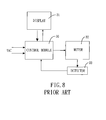
- a control module 30, a display 31, a motor 32, a detector 33, and so on When a user exercises on the body training machine, the control module 30 activates the motor 32. The operating of the body training machine is detected by the detector 33. The control module 30 is electrically connected to the detector 33 to calculate and convert the operating of the body training machine into operating information such as energy consumption (calorie).
- the display 31 is adapted to show the exercising states for the user.
- the electronic devices of the body training machine are useful and convenient.
- the electronic devices and the body training machine are driven by electrical power.
- power saving is a worldwide trend presently.
- the power consumption of the standby body training machine should be lower than 0.5W as regulated by European Union (EU). Therefore, when the body training machine is in a standby state, the power consumption of the body training machine should be as low as possible.
- EU European Union
- An objective of the present invention is to provide a power-saving control module for a body training machine.
- the control module of the invention can automatically shut down the body training machine. As a result, the power consumption of the standby body training machine is reduced to a minimum.
- the power-saving control module of the present invention comprises a controller, a first electric switch and a power supply.
- the controller has a timer and a time selector for setting a threshold time.
- the controller is electrically connected to the body training machine for receiving a first trigger signal.
- the controller reads the threshold time from the time selector and activates the timer to count time.
- the controller generates a turn-off signal when a counting time of the timer exceeds the threshold time and the controller still does not receive the first trigger signal.
- the first electric switch is electrically connected to the controller to disconnect the body training machine from a power source when the turn-off signal is received.
- the power supply is electrically connected to the controller and the first electric switch for providing a working voltage.
- the controller when the body training machine is in a standby state, the controller cannot receive the first trigger signal.
- the controller controls the first electric switch to disrupt the main power of the body training machine.
- the power-saving control module is able to determine if the standby time of the body training machine is too long and automatically shut down the body training machine. Hence, the power consumed by the body training machine is reduced.
- the body training machine can be an exercise bike, a treadmill or a vibration exercising machine.
- the body training machine mainly has an operation panel 10, a main control device 11, a detector 110 and an exercising device 12.
- the exercising device 12 can be a resistance system when the body training machine is an exercise bike.
- the exercising device 12 can be a motor when the body training machine is a vibration exercising machine or a treadmill.
- the motor is electrically connected to the main control device 11.
- the main control device 11 activates the motor to vibrate pedals of the vibration exercising machine or to push a treadmill tape of the treadmill.
- the detector 110 detects operating information, such as a rotational speed (RPM) of the resistance system or the motor, of the exercising device 12 to correspondingly generate a signal.
- the main control device 11 calculates exercising states of a user who is operating the body training machine according to the signal of the detector 110.
- the operation panel 10 shows the exercising states for the user.
- the main control device 11 is electrically connected to a power source (VAC) to receive a main power.
- VAC power source
- the power-saving control module 20 of the invention is electrically connected between the main control device 11 and the power source (VAC) in series.
- FIG. 2 a circuit block diagram of a first embodiment of the present invention is disclosed.
- the power-saving control module 20 of the invention comprises a controller 21, a first electric switch 22 and a power supply 23.
- the controller 21 has a timer 211 and a time selector 210 electrically connected to the timer 211.
- the timer 211 can be a built-in timer of the controller 21 or an external timer.
- the time selector 210 can be a dip switch for setting a threshold time.
- the controller 21 receives the signal from the detector 110 and defines the signal as a first trigger signal. Because the detector 110 generates the signal based on the operating information of the exercising device 12, the controller 21 determines whether the body training machine is in use according to the first trigger signal.
- the controller 21 can generate a turn-on signal or a turn-off signal to control the first electric switch 22.
- the controller 21 When the controller 21 does not receive the first trigger signal, which means the body training machine is in a standby state, the controller 21 then reads the threshold time from the time selector 210, activates the timer 211 to count time and determines whether a counting time of the timer 211 exceeds the threshold time or not.
- the controller 21 still does not receive the first trigger signal after the counting time exceeds the threshold time, the controller 21 generates the turn-off signal.
- the controller 21 receives the first trigger signal before the counting time exceeds the threshold time, which means the body training machine is again in use, the controller 21 generates the turn-on signal and resets the timer 211.
- the first electric switch 22 can be a relay and is electrically connected to a power path (AC_1 AC_2) of the body training machine in series.
- the first electric switch 22 is connected between the main control device 11 of the body training machine and the power source (VAC).
- the first electric switch 22 is electrically connected to the controller 21 to receive the turn-on signal or the turn-off signal from the controller 21.
- the first electric switch 22 connects the body training machine to the power source (VAC) according to the turn-on signal, and disconnects the body training machine from the power source (VAC) according to the turn-off signal.
- the power supply 23 is electrically connected to the power source (VAC) to receive the main power.
- the power supply 23 is also connected to the controller 21 and the first electric switch 22.
- the power supply 23 converts the main power to a DC working voltage for providing the controller 21 and the first electric switch 22.
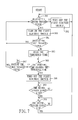
- the body training machine is an exercise bike as an example. After the exercise bike is turned on by the user, the controller 21 executes the following steps to reach a goal of power-saving.
- the controller 21 turns on the first electric switch 22 (step 101) to connect the main control device 11 to the power source (VAC).
- VAC power source
- the resistance system such as a flywheel
- the detector 110 detects a rotation speed of the resistance system and correspondingly generates an RPM signal.
- the main control device 11 then records the RPM signal and calculates exercising states of the user according to the RPM signal.
- the operation panel 10 displays the exercising states.
- the controller 21 determines whether the first trigger signal is received, wherein the first trigger signal is the RPM signal of the detector 110 (step 102). When the controller 21 receives the first trigger signal, which means the exercise bike is in use, the controller 21 returns to the step (102) until the controller 21 no longer receives the first trigger signal.
- the controller 21 determines the first trigger signal is not received, which means the exercise bike is in a standby state, the controller 21 then activates the timer 211, reads the counting time of the timer 211 and reads the threshold time from the time selector 210 (step 103).
- the controller 21 determines whether the counting time exceeds the threshold time (step 104).
- the controller 21 When the counting time does not exceed the threshold time, which means a standby time of the exercise bike is acceptable, the controller 21 then keeps determining whether the first trigger signal is received (step 105). If the controller 21 receives the first trigger signal before the counting time exceeds the threshold time, which means the exercise bike is in use again, the controller 21 will return to the step (102), reset the timer 211 and turn on the first electric switch 22. On the other hand, if the controller 21 does not receive the first trigger signal after the counting time exceeds the threshold time, which means the exercise bike is still in a standby state, the controller 21 will return to the step (104).
- the controller 21 determines the counting time exceeds the threshold time, which means the standby time of the exercise bike is too long to be acceptable, the controller 21 turns off the first electric switch 22 to disconnect the main control device 11 from the power source (VAC) (step 106). The exercise bike is then shut down. Meanwhile, the power supply 23 still provides the DC working voltage to the controller 21 and the first electric switch 22.
- the controller 21 again determines whether the first trigger signal is received (step 107). If the controller 21 receives the first trigger signal, which means the exercise bike is again in use, the controller 21 will return to the step (101). If the controller 21 does not receive the first trigger signal, which means the exercise bike is still in a standby state, the controller 21 will return to the step (107) until the controller 21 receives the first trigger signal.
- the controller 21 automatically shuts down the exercise bike.
- the operation panel 10 and the main control device 11 do not consume electrical power such that a goal of power-saving is achieved.
- the exercising device 12 can be a motor.
- the controller 21 executes the following steps to reach the goal of power-saving.
- the controller 21 turns on the first electric switch 22 (step 201) to connect the main control device 11 to the power source (VAC).
- VAC power source
- the motor of the vibration exercising machine is rotating.
- the detector 110 detects a rotation speed of the motor and correspondingly generates an RPM signal.
- the detector 110 also can detect other signals which are generated from the vibration exercising machine.
- the controller 21 determines whether the first trigger signal is received (step 202), wherein the first trigger signal can be the RPM signal of the detector 110 or other signals which are generated from the vibration exercising machine. If the controller 21 receives the first trigger signal, which means the vibration exercising machine is in use, the controller 21 will return to the step (202) until the controller 21 no longer receives the first trigger signal.
- the controller 21 determines the first trigger signal is not received, which means the vibration exercising machine is in a standby state, the controller 21 then activates the timer 211, reads the counting time of the timer 211 and reads the threshold time from the time selector 210 (step 203).
- the controller 21 determines whether the counting time exceeds the threshold time (step 204).
- the controller 21 determines whether the first trigger signal is received (step 205). If the controller 21 receives the first trigger signal before the counting time exceeds the threshold time, which means the vibration exercising machine is in use again, the controller 21 will return to the step (202), reset the timer 211 and turn on the first electric switch 22. On the other hand, if the controller 21 does not receive the first trigger signal after the counting time exceeds the threshold time, which means the vibration exercising machine is still in a standby state, the controller 21 will return to the step (204).
- the controller 21 determines the counting time exceeds the threshold time, which means the standby time of the vibration exercising machine is too long to be acceptable, the controller 21 turns off the first electric switch 22 to disconnect the main control device 11 from the power source (VAC) (step 206). The vibration exercising machine is then shut down.
- VAC power source
- the controller 21 automatically shuts down the vibration exercising machine. As a result, because the vibration exercising machine is shut down, the operation panel 10 and the main control device 11 do not consume electrical power such that the goal of power-saving is achieved.
- the power-saving control module 20 of the invention further comprises a second electric switch 24.
- the treadmill can be turned on only if the safety key is ON.
- the second electric switch 24 can be a relay.
- the safety key 13 is electrically connected to the controller 21 and the second electric switch 24.
- the second electric switch 24 is electrically connected to the first electric switch 22 and the power supply 23. If the safety key 13 is OFF, the second electric switch 24 disconnects the first electric switch 22 from the power supply 23. Afterward, the first electric switch 22 does not receive the DC working voltage to be turned off. On the other hand, if the safety key 13 is ON, the second electric switch 24 connects the first electric switch 22 to the power supply 23. Afterward, the first electric switch 22 can receive the DC working voltage to be controlled by the controller 21 to connect or disconnect the main control device 11 to or from the power source (VAC) according to the turn-on signal and a turn-off signal. Therefore, the treadmill is workable only when the safety key 13 is ON.
- VAC power source
- the controller 21 executes the following steps to reach the goal of power-saving.
- the controller 21 receives a second trigger signal and determines whether the second trigger signal is ON or OFF (step 301), wherein an ON/OFF state of the second trigger signal is defined by an ON/ OFF state of the safety key 13.
- the controller 21 turns off the first electric switch 22 to disconnect the main control device 11 from the power source (VAC) (step 302), such that the treadmill is shut down.
- VAC power source
- the controller 21 turns on the first electric switch 22 to connect the main control device 11 to the power source (VAC) (step 303), such that the main control device 11 can receive the main power.
- VAC power source
- the controller 21 determines whether a first trigger signal step is received (304), wherein the first trigger signal can be the RPM signal of the detector 110 or other signals which are generated from the treadmill. If the controller 21 receives the first trigger signal, which means the treadmill is in use, the controller 21 will return to the step (301) until the controller 21 no longer receives the first trigger signal. If the controller 21 determines the first trigger signal is not received, which means the treadmill is in a standby state, the controller 21 will activate the timer 211, read the counting time of the timer 211 and read the threshold time from the time selector 210 (step 305).
- the controller 21 determines whether the counting time exceeds the threshold time (step 306).
- the controller 21 keeps determining whether the first trigger signal is received (step 307). If the controller 21 receives the first trigger signal before the counting time exceeds the threshold time, which means the treadmill is in use again, the controller 21 will return to the step (301), reset the timer 211 and turn on the first electric switch 22. On the other hand, if the controller 21 does not receive the first trigger signal after the counting time exceeds the threshold time, which means the treadmill is in a standby state, the controller 21 will return to the step (306).
- the controller 21 will turn off the first electric switch 22 to disconnect the main control device 11 from the power source (VAC). The treadmill will then be shut down.
- the controller 21 determines whether the second trigger signal is OFF (step 309). If the second trigger signal is not OFF, the controller 21 will repeat the act of determining whether the second trigger signal is OFF until the second trigger signal is OFF.
- the controller 21 determines whether the second trigger signal is ON (step 310). If the second trigger signal is not ON, the controller 21 will repeat the act of determining whether the second trigger signal is ON until the second trigger signal is ON. On the other hand, if the second trigger signal is ON, the controller 21 will return to the step (301). Therefore, the controller 21 reboots the treadmill by the steps (309) and (310).
- the safety key 13 should be first turned OFF and then turned ON, such that the controller 21 can boot the treadmill again.
- the controller 21 automatically shuts down the treadmill. As a result, because the treadmill is shut down, the operation panel 10 and the main control device 11 do not consume electrical power such that the goal of power-saving is achieved.
- the power-saving control module of the present invention is adapted to be installed to any exercising machine including an exercise bike, a treadmill and a vibration exercising machine. Furthermore, the power-saving control module of the present invention can be directly connected to the operation panel, main control device and exercising device without greatly changing the original wire layout of the body training machine, such that the structure of the invention is easy to realize.
Landscapes
- Business, Economics & Management (AREA)
- Emergency Management (AREA)
- Engineering & Computer Science (AREA)
- Power Engineering (AREA)
- Health & Medical Sciences (AREA)
- General Health & Medical Sciences (AREA)
- Physical Education & Sports Medicine (AREA)
- Power Sources (AREA)
- Control Of Electric Motors In General (AREA)
Applications Claiming Priority (1)
| Application Number | Priority Date | Filing Date | Title |
|---|---|---|---|
| TW101203403U TWM431720U (en) | 2012-02-24 | 2012-02-24 | Energy-saving control module for body training machine |
Publications (2)
| Publication Number | Publication Date |
|---|---|
| EP2633889A2 true EP2633889A2 (de) | 2013-09-04 |
| EP2633889A3 EP2633889A3 (de) | 2014-03-05 |
Family
ID=46723525
Family Applications (1)
| Application Number | Title | Priority Date | Filing Date |
|---|---|---|---|
| EP13155642.5A Withdrawn EP2633889A3 (de) | 2012-02-24 | 2013-02-18 | Stromsparendes Steuermodul für eine Körperübungsmaschine |
Country Status (2)
| Country | Link |
|---|---|
| EP (1) | EP2633889A3 (de) |
| TW (1) | TWM431720U (de) |
Cited By (1)
| Publication number | Priority date | Publication date | Assignee | Title |
|---|---|---|---|---|
| US20220241649A1 (en) * | 2021-02-01 | 2022-08-04 | Ifit Inc. | Devices, systems, and methods for an exercise device automatic shut-off |
Families Citing this family (1)
| Publication number | Priority date | Publication date | Assignee | Title |
|---|---|---|---|---|
| CN104815421A (zh) * | 2015-04-06 | 2015-08-05 | 李久德 | 电力控制锻炼机 |
Family Cites Families (6)
| Publication number | Priority date | Publication date | Assignee | Title |
|---|---|---|---|---|
| US5368532A (en) * | 1993-02-03 | 1994-11-29 | Diversified Products Corporation | Treadmill having an automatic speed control system |
| US6575878B1 (en) * | 1998-11-19 | 2003-06-10 | Unisen, Inc. | Automatic safety shut-off switch for exercise equipment |
| CN2617429Y (zh) * | 2002-11-13 | 2004-05-26 | 李孝忠 | 受运动器材控制的电源控制装置 |
| US7507187B2 (en) * | 2004-04-06 | 2009-03-24 | Precor Incorporated | Parameter sensing system for an exercise device |
| KR20120096565A (ko) * | 2009-12-01 | 2012-08-30 | 인터네셔널 일렉트리컬 세이빙스 디벨롭먼트 엘엘씨 | 의사부하 감소 시스템 및 장치 |
| CN202538266U (zh) * | 2012-02-29 | 2012-11-21 | 期美科技股份有限公司 | 身体训练机的节能控制模块 |
-
2012
- 2012-02-24 TW TW101203403U patent/TWM431720U/zh not_active IP Right Cessation
-
2013
- 2013-02-18 EP EP13155642.5A patent/EP2633889A3/de not_active Withdrawn
Non-Patent Citations (1)
| Title |
|---|
| None |
Cited By (4)
| Publication number | Priority date | Publication date | Assignee | Title |
|---|---|---|---|---|
| US20220241649A1 (en) * | 2021-02-01 | 2022-08-04 | Ifit Inc. | Devices, systems, and methods for an exercise device automatic shut-off |
| WO2022165331A1 (en) * | 2021-02-01 | 2022-08-04 | Ifit Inc. | Devices, systems, and methods for an exercise device automatic shut-off |
| TWI795201B (zh) * | 2021-02-01 | 2023-03-01 | 美商愛康有限公司 | 用於運動裝置自動關閉的裝置、系統及方法 |
| CN116963804A (zh) * | 2021-02-01 | 2023-10-27 | 爱康有限公司 | 用于锻炼设备自动关闭的设备、系统和方法 |
Also Published As
| Publication number | Publication date |
|---|---|
| TWM431720U (en) | 2012-06-21 |
| EP2633889A3 (de) | 2014-03-05 |
Similar Documents
| Publication | Publication Date | Title |
|---|---|---|
| KR101341234B1 (ko) | 청소기 및 그 구동 방법 | |
| KR101452007B1 (ko) | 전원공급 제어장치 | |
| TW200732070A (en) | Portable drilling machine | |
| US8487577B2 (en) | Method and apparatus for motor control | |
| JP2001218897A5 (de) | ||
| CN105355511A (zh) | 一种双模独立高效智能化散热定时开关面板 | |
| KR20110080958A (ko) | 비주얼 디스플레이 기기의 대기 전력을 공급하기 위한 대기전력 공급방법, 대기 전력 공급장치, 배터리 충전 방법 및 이를 적용한 비주얼 디스플레이 기기 | |
| EP2633889A2 (de) | Stromsparendes Steuermodul für eine Körperübungsmaschine | |
| US20150204340A1 (en) | Brushless dc motor fan controlled either remotely or by conducting wire | |
| JP6507872B2 (ja) | 電源回路及び遊技機 | |
| CN111752365B (zh) | 联动开关机方法、电路、第一电子设备及第二电子设备 | |
| US20120161674A1 (en) | Dc motor speed controller of a range hood | |
| US20250328178A1 (en) | Startup method and pulling startup module for electric pull device, and pull device | |
| CN202538266U (zh) | 身体训练机的节能控制模块 | |
| KR101039435B1 (ko) | 전동기의 제어 장치 및 방법 | |
| KR101077974B1 (ko) | 선풍기 제어장치 | |
| JP2013165627A (ja) | 駆動装置 | |
| CN105336521A (zh) | 一种双模独立散热式定时开关面板 | |
| CN101794166B (zh) | 一种光驱及计算机 | |
| KR102656914B1 (ko) | 자가 유지 기능을 갖는 능동형 스마트 트레드밀 | |
| US20100013423A1 (en) | Control circuitry of ceiling fan for controlling rotation direction and speed | |
| CN202803335U (zh) | 一种碎纸速度恒定的碎纸机 | |
| CN104836454A (zh) | 一种带触摸屏的变频器 | |
| JP6507871B2 (ja) | 電源回路及び遊技機 | |
| JP2013062957A (ja) | 電源装置 |
Legal Events
| Date | Code | Title | Description |
|---|---|---|---|
| PUAI | Public reference made under article 153(3) epc to a published international application that has entered the european phase |
Free format text: ORIGINAL CODE: 0009012 |
|
| AK | Designated contracting states |
Kind code of ref document: A2 Designated state(s): AL AT BE BG CH CY CZ DE DK EE ES FI FR GB GR HR HU IE IS IT LI LT LU LV MC MK MT NL NO PL PT RO RS SE SI SK SM TR |
|
| AX | Request for extension of the european patent |
Extension state: BA ME |
|
| PUAL | Search report despatched |
Free format text: ORIGINAL CODE: 0009013 |
|
| AK | Designated contracting states |
Kind code of ref document: A3 Designated state(s): AL AT BE BG CH CY CZ DE DK EE ES FI FR GB GR HR HU IE IS IT LI LT LU LV MC MK MT NL NO PL PT RO RS SE SI SK SM TR |
|
| AX | Request for extension of the european patent |
Extension state: BA ME |
|
| RIC1 | Information provided on ipc code assigned before grant |
Ipc: A63B 24/00 20060101AFI20140127BHEP Ipc: H02J 9/00 20060101ALI20140127BHEP |
|
| STAA | Information on the status of an ep patent application or granted ep patent |
Free format text: STATUS: THE APPLICATION IS DEEMED TO BE WITHDRAWN |
|
| 18D | Application deemed to be withdrawn |
Effective date: 20140906 |