EP2633639B1 - Effiziente lieferung von strukturierten datenelementen - Google Patents
Effiziente lieferung von strukturierten datenelementen Download PDFInfo
- Publication number
- EP2633639B1 EP2633639B1 EP11781603.3A EP11781603A EP2633639B1 EP 2633639 B1 EP2633639 B1 EP 2633639B1 EP 11781603 A EP11781603 A EP 11781603A EP 2633639 B1 EP2633639 B1 EP 2633639B1
- Authority
- EP
- European Patent Office
- Prior art keywords
- seed
- crypto
- data item
- generator
- product
- Prior art date
- Legal status (The legal status is an assumption and is not a legal conclusion. Google has not performed a legal analysis and makes no representation as to the accuracy of the status listed.)
- Not-in-force
Links
Images


Classifications
-
- H—ELECTRICITY
- H04—ELECTRIC COMMUNICATION TECHNIQUE
- H04L—TRANSMISSION OF DIGITAL INFORMATION, e.g. TELEGRAPHIC COMMUNICATION
- H04L9/00—Cryptographic mechanisms or cryptographic arrangements for secret or secure communications; Network security protocols
- H04L9/06—Cryptographic mechanisms or cryptographic arrangements for secret or secure communications; Network security protocols the encryption apparatus using shift registers or memories for block-wise or stream coding, e.g. DES systems or RC4; Hash functions; Pseudorandom sequence generators
-
- H—ELECTRICITY
- H04—ELECTRIC COMMUNICATION TECHNIQUE
- H04L—TRANSMISSION OF DIGITAL INFORMATION, e.g. TELEGRAPHIC COMMUNICATION
- H04L9/00—Cryptographic mechanisms or cryptographic arrangements for secret or secure communications; Network security protocols
- H04L9/06—Cryptographic mechanisms or cryptographic arrangements for secret or secure communications; Network security protocols the encryption apparatus using shift registers or memories for block-wise or stream coding, e.g. DES systems or RC4; Hash functions; Pseudorandom sequence generators
- H04L9/065—Encryption by serially and continuously modifying data stream elements, e.g. stream cipher systems, RC4, SEAL or A5/3
- H04L9/0656—Pseudorandom key sequence combined element-for-element with data sequence, e.g. one-time-pad [OTP] or Vernam's cipher
- H04L9/0662—Pseudorandom key sequence combined element-for-element with data sequence, e.g. one-time-pad [OTP] or Vernam's cipher with particular pseudorandom sequence generator
-
- G—PHYSICS
- G06—COMPUTING OR CALCULATING; COUNTING
- G06F—ELECTRIC DIGITAL DATA PROCESSING
- G06F21/00—Security arrangements for protecting computers, components thereof, programs or data against unauthorised activity
- G06F21/10—Protecting distributed programs or content, e.g. vending or licensing of copyrighted material ; Digital rights management [DRM]
-
- H—ELECTRICITY
- H04—ELECTRIC COMMUNICATION TECHNIQUE
- H04L—TRANSMISSION OF DIGITAL INFORMATION, e.g. TELEGRAPHIC COMMUNICATION
- H04L9/00—Cryptographic mechanisms or cryptographic arrangements for secret or secure communications; Network security protocols
- H04L9/06—Cryptographic mechanisms or cryptographic arrangements for secret or secure communications; Network security protocols the encryption apparatus using shift registers or memories for block-wise or stream coding, e.g. DES systems or RC4; Hash functions; Pseudorandom sequence generators
- H04L9/0643—Hash functions, e.g. MD5, SHA, HMAC or f9 MAC
-
- H—ELECTRICITY
- H04—ELECTRIC COMMUNICATION TECHNIQUE
- H04L—TRANSMISSION OF DIGITAL INFORMATION, e.g. TELEGRAPHIC COMMUNICATION
- H04L9/00—Cryptographic mechanisms or cryptographic arrangements for secret or secure communications; Network security protocols
- H04L9/06—Cryptographic mechanisms or cryptographic arrangements for secret or secure communications; Network security protocols the encryption apparatus using shift registers or memories for block-wise or stream coding, e.g. DES systems or RC4; Hash functions; Pseudorandom sequence generators
- H04L9/065—Encryption by serially and continuously modifying data stream elements, e.g. stream cipher systems, RC4, SEAL or A5/3
-
- H—ELECTRICITY
- H04—ELECTRIC COMMUNICATION TECHNIQUE
- H04N—PICTORIAL COMMUNICATION, e.g. TELEVISION
- H04N7/00—Television systems
- H04N7/16—Analogue secrecy systems; Analogue subscription systems
- H04N7/167—Systems rendering the television signal unintelligible and subsequently intelligible
- H04N7/1675—Providing digital key or authorisation information for generation or regeneration of the scrambling sequence
-
- H—ELECTRICITY
- H04—ELECTRIC COMMUNICATION TECHNIQUE
- H04L—TRANSMISSION OF DIGITAL INFORMATION, e.g. TELEGRAPHIC COMMUNICATION
- H04L2209/00—Additional information or applications relating to cryptographic mechanisms or cryptographic arrangements for secret or secure communication H04L9/00
- H04L2209/08—Randomization, e.g. dummy operations or using noise
-
- H—ELECTRICITY
- H04—ELECTRIC COMMUNICATION TECHNIQUE
- H04L—TRANSMISSION OF DIGITAL INFORMATION, e.g. TELEGRAPHIC COMMUNICATION
- H04L2209/00—Additional information or applications relating to cryptographic mechanisms or cryptographic arrangements for secret or secure communication H04L9/00
- H04L2209/12—Details relating to cryptographic hardware or logic circuitry
-
- H—ELECTRICITY
- H04—ELECTRIC COMMUNICATION TECHNIQUE
- H04L—TRANSMISSION OF DIGITAL INFORMATION, e.g. TELEGRAPHIC COMMUNICATION
- H04L2209/00—Additional information or applications relating to cryptographic mechanisms or cryptographic arrangements for secret or secure communication H04L9/00
- H04L2209/26—Testing cryptographic entity, e.g. testing integrity of encryption key or encryption algorithm
-
- H—ELECTRICITY
- H04—ELECTRIC COMMUNICATION TECHNIQUE
- H04L—TRANSMISSION OF DIGITAL INFORMATION, e.g. TELEGRAPHIC COMMUNICATION
- H04L2209/00—Additional information or applications relating to cryptographic mechanisms or cryptographic arrangements for secret or secure communication H04L9/00
- H04L2209/60—Digital content management, e.g. content distribution
- H04L2209/603—Digital right managament [DRM]
Definitions
- the present invention in certain embodiments thereof, seeks to provide improved methods and a server for sending cryptographic data items to client devices according to independent claims 1 and 8 to 10.
- a configurable client device as defined in claim 1 hereinafter.
- a DRM server may need to send eight client-specific matrices of 2048*2048 bits to each of one million clients, requiring network usage of approximately four terabytes.
- cryptographic data structures e.g., matrices
- crypto products are denoted in the present specification and claims as "crypto products”.
- Crypto products can be sometimes divided into smaller data items which are denoted in the present specification and claims as "crypto data item parts" (CDIPs). This division is useful when the crypto product is used in the server or in the client one CDIP at a time. For example, matrices that are multiplied by a vector can be naturally divided into either rows or columns, depending on whether the multiplication is from the left or from the right.
- Fig. 1 is a simplified block diagram illustration of a system for efficient delivery of structured data items constructed and operative in accordance with an embodiment of the present invention. Reference is additionally made to Figs 2.
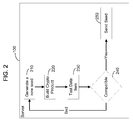
- Fig. 2 is a simplified block diagram illustration of the tester-builder architecture of the system of Fig. 1 .
- the system of Fig. 1 comprises a server 100 and a client 110.
- the server 100 comprises a server-side builder 120s and a tester 130.
- the client 110 comprises a client-side builder 120c.
- the client 110 may be a consumer device, such as, but not limited to, a cell-phone, an e-reader, a music-playing or video-displaying device, or other appropriate device.
- the client 110 also comprises a processor (not depicted) and other appropriate hardware and software, as is known in the art.
- the server 100 may be any one of a number of servers, including, but not limited to various multi-media servers, such as a streaming music server or an on-line book service or a cable television network.
- the server 100 typically implements some sort of a DRM or other licensing regime (such as a conditional access system) over content consumed at the client 110.
- a DRM or other licensing regime such as a conditional access system
- the server 100 comprises computational resources which are significantly greater than those of the client 110.
- the builder 120s, 120c comprise a Pseed (part seed) generator 140s, 140c and a part generator 150s, 150c.
- the pseed generator 140s, 140c receives a seed 125 from which a particular CDIP can be generated.
- the seed 125 comes from an application that uses the builder 120s, 120c, which, for the server side builder 120s, comprises the tester 130, and, for the client side builder 120c, comprises a cryptographic engine 170 (which is described below in greater detail).
- a typical Pseed generator 140s, 140c comprises a cryptographic hash function (one non-limiting example of which would be the well known SHA-256 hash function) which receives the seed and part number (a serial counter; for example, the first part is part number one, the second part is part number two, and so forth), hashes the received inputs, and outputs the Pseed.
- the output Pseed is input into the part generator 150s, 150c.
- the part generator 150s, 150c operates to generate a CDIP from the input Pseed.
- the part generator 150s, 150c typically comprises a pseudo-random number generator (PRNG) 155s, 155c.
- PRNGs are well known in the art, and any appropriate PRNG, such as, but not limited to the well known RC4 PRNG that is the base of the RC4 stream cipher,
- the output of the PRNG is a large number of pseudo-random bits that is sufficient for generation of the CDIP, for example and without limiting the generality of the foregoing, 100 pseudo-random bits can be used to generate a row of a 100x100 matrix by simply filling the row with the bits.
- both the server-side part generator 150s and the client-side part generator 150c comprise the same PRNG 155s, 155c when the server-side part generator 150s and the client-side part generator 150c are inputted with an identical pseed, then both the server-side part generator 150s and the client-side part generator 150c will output the same output (i.e. the same CDIP).
- the part generator 150s, 150c is operative to generate CDIPs (as noted above, crypto data item parts) of the crypto products as explained above.
- the part generator 150s, 150c may also receive a part number, such as a row number or a column number in the case of a matrix crypto product.
- the part generator 150s, 150c may also receive configuration data which comprises parameters for generation of the CDIPs, for example and without limiting the generality of the foregoing, a target portion of ones in the matrix-row or the matrix-column. From these inputs into the part generator 150s, 150c, a CDIP is generated.
- a matrix-row or a matrix-column with a portion of ones that is within a specific range For example and without limiting the generality of the foregoing, a matrix-row or a matrix-column with a portion of ones that is within a specific range.
- a matrix, a number, a vector, a table of permutations, or a look-up table herein denoted as crypto products.
- one cryptographic scheme may require a binary matrix populated with 40% ones and 60% zeros
- a second cryptographic scheme may require a binary matrix populated with exactly 50% zeros and 50% ones.
- a block cipher which employs a look-up table typically requires that the look-up table have no linear estimations (i.e. no linear function should be similar to the look-up table).
- Such a requirement can be evaluated using the Walsh Transform, as explained at www.ciphersbyritter.com/ARTS/ MEASNONL.HTM.
- the part generator 150s, 150c comprises a mathematical function which takes the input pseudo-random numbers and outputs the zeros and ones in the desired proportion.
- the part generator 150s, 150c may also receive an input configuration 155 which, inter-alia dictates the proportion of zero and ones in the CDIP outputted by the part generator 150s, 150c.
- the input configuration 155 may also define which CDIP type is to be generated when the system is operative to generate different CDIPs for different crypto products.
- the CDIP depicted in Fig. 1 as Crypto Product 1,2, ... 160 which is output by the server-side part generator 150s is input into the tester 130.
- the tester 130 aggregates the CDIP into a desired crypto product and then tests the crypto product.
- the tester 130 is programmed to verify that the crypto product under test has desired properties, for example good cryptographic properties.
- good cryptographic properties for linear items e.g. matrices
- avalanche property e.g. avalanche property
- a matrix under test is said to have bad cryptographic properties if, when, during the test, an input is changed slightly (for example, flipping a single bit) the output does not change significantly (e.g., half the output bits flip).
- S-boxes i.e. lookup tables
- S-boxes generated by the part generator 150s are said to have good cryptographic properties if the s-boxes are compliant with the avalanche property and the transformations represented by the s-boxes are properly distant from linear transformations.
- the discussion above of testing s-boxes using the Walsh Transform is relevant as well for determining the cryptographic properties of the s-boxes.
- P-boxes generated by the part generator 150s are said to have good cryptographic properties if the p-boxes result in cryptographically acceptable levels of spreading of bits.
- Tests and test modules for various cryptographic modules are well known to those skilled in the art, and are implementable utilizing the computation power available at the server, as discussed above.
- the builder can be inputted with a new input seed 125, and if the resultant crypto product also does not comply with the desired properties, a third seed 125 can be generated and so on until a proper crypto product that has the desired properties and passes the required tests is found, as is described below with reference to Fig. 2 .
- the seed 125 that was used to generate can then be transmitted to the client 110 as a compressed version of the crypto product, allowing the recovery of the crypto product in the client side builder.
- the transmission of the seed 125 can be performed using encrypted and/or authenticable communications.
- a new seed 125 is generated 210.
- the seed 125 may be a produced by a counter, and comprise a next, sequential number taken from the counter.
- the seed 125 may be taken from the least significant bits of the time on a server clock.
- the seed 125 may be generated by a true RNG or pseudo RNG.
- the seed 125 generated in step 210 is utilized, as described with reference to Fig. 1 , to generate/build the desired crypto product 160 (step 220).
- the built/generated crypto product 160 is input to the tester 130 for testing 230.
- the tester 130 tests to determine if the built crypto product 160 is compatible for use in the client 240, as described above. If the crypto product 160 is determined to be compatible for use in the client in step 240, then the seed 125 is sent to the client 110 (step 250).
- the client device 110 receives the seed. However, if the crypto product 160 is determined to not be compatible for use in the client in step 240, then a new seed 125 is generated again, and the system returns to step 210.
- the client device 110 comprises a builder 120c which is, by design, identical to the builder comprised at the server 100.
- a builder 120c which is, by design, identical to the builder comprised at the server 100.
- both the client-side builder 120c and the server side builder 120s will output a crypto product part 190 corresponding to the CDIP 160 for the each different part number and consequently will generate the same crypto product.
- the client-side part generator 150c also receives an identical input configuration 155 to that received by the server-side part generator 150s.
- the crypto product part 190 is integrated, by a cryptosystem integrator (not depicted), into a cryptographic engine 170, either at once as the entire crypto product or one CDIP at a time.
- the cryptographic engine 170 comprises a cryptographic algorithm that needs the crypto product as its auxiliary input. For example and without limiting the generality of the foregoing, most of the block ciphers (e.g., AES, DES) need s-box crypto products as part of their processing.
- the offset can also be sent, along with the seed 125 from the server 100 to the client 110.
- the client 110 can then build the data item by generating the certain number of bits (i.e. the offset), and not storing those bits. Afterwards, the next bits are used to populate the desired data item.
- the row number or column number can be sent from the server 100 to the client 110 as the offset.
- the description of the builder 120s, 120c hereinabove is one of many possible designs and embodiments.
- the builder might comprise a bitstream generator (such as a PRNG) which outputs a bitstream into a part generator.
- the part generator would generate zeros and ones as needed in order to build the desired crypto product or data item.
- Fig. 3 is a simplified block diagram illustration of the system of Fig. 1 in an embodiment where only a single CDIP is produced.
- the case where only one CDIP is produced is a special case, dealt with herein below.
- the server-side builder 320s receives the seed 125, as noted above.
- the seed 125 is input directly into a server-side PRNG 340s.
- the server-side PRNG 340s outputs, according to the seed 125, a bitstream 345, which is input into a server-side crypto product generator 350s.
- the crypto product generator 350s operates as does the part generator 150s described above.
- the crypto product 160 generated by the crypto product generator 350s is input into the tester 130. When a crypto product 160 is generator which is deemed acceptable by the tester 130, then, as above, the seed 125 and the configuration 155 are transmitted to the client 110.
- the seed 125 is input to a client side PRNG 340c.
- the client side PRNG 340c outputs, according to the seed 125, a bitstream 345, which is input into a client-side crypto product generator 350c.
- the crypto product generator 350c operates as does the part generator 150c described above.
- the crypto product 160 generated by the crypto product generator 350c is input into the cryptographic engine 170.
- the crypto product is integrated, by a cryptosystem integrator (not depicted), into the cryptographic engine 170.
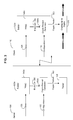
- Fig. 4 is a simplified flowchart diagram of preferred methods of operation of the system of Fig. 1 .
- the method of Fig. 4 is believed to be self explanatory in light of the above discussion.
- software components of the present invention may, if desired, be implemented in ROM (read only memory) form.
- the software components may, generally, be implemented in hardware, if desired, using conventional techniques. It is further appreciated that the software components may be instantiated, for example: as a computer program product; on a tangible medium; or as a signal interpretable by an appropriate computer.
Landscapes
- Engineering & Computer Science (AREA)
- Computer Security & Cryptography (AREA)
- Signal Processing (AREA)
- Computer Networks & Wireless Communication (AREA)
- Multimedia (AREA)
- Power Engineering (AREA)
- Software Systems (AREA)
- Theoretical Computer Science (AREA)
- Technology Law (AREA)
- Computer Hardware Design (AREA)
- Physics & Mathematics (AREA)
- General Engineering & Computer Science (AREA)
- General Physics & Mathematics (AREA)
- Management, Administration, Business Operations System, And Electronic Commerce (AREA)
- Storage Device Security (AREA)
Claims (10)
- Konfigurierbares Client-Gerät (110) zur Nutzung von digitalem Inhalt, wobei besagtes Gerät (110) Folgendes umfasst:einen Blockcode;einen Seed-Empfänger, der dazu dient, eine Seed (125) zu empfangen;einen Teilseed-Generator (140c) umfassend eine kryptographische Hash-Funktion zum Empfangen:einer Teilnummer; undder Seed (125) aus dem Seed-Empfänger, und zum Generieren einer Teilseed, als Ergebnis der kryptographischen Hash-Funktion, wobei die Teilseed, mindestens teilweise, auf der Seed (125) und der Teilnummer basiert;einen Teilgenerator (150c) umfassend einen Pseudo-Zufallszahlengenerator (155c), der dazu dient, die vom Teilseed-Generator (140c) erzeugte Teilseed zu empfangen, um ein Krypto-Datenelementteil mithilfe des Outputs des Pseudo-Zufallszahlengenerators (155c) zu erzeugen, wobei das Krypto-Datenelementteil, mindestens teilweise, auf der Teilseed basiert; undeinen Krypto-Systemintegrator, der dazu dient, das erzeugte Krypto-Datenelementteil (190) in den Blockcode zu integrieren, wodurch ein Kryptoprodukt erzeugt wird,worin der Blockcode dazu dient, das erzeugte Kryptoprodukt als einen Hilfsinput in einen kryptographischen Algorithmus, der zum Schutz des besagten digitalen Inhalts benutzt wird, zu benutzen.
- Gerät nach Anspruch 1 und worin die Teilnummer den Zählerwert eines seriellen Zählers umfasst.
- Gerät entweder nach Anspruch 1 oder Anspruch 2 und worin der Teilgenerator (150c) dazu dient, einen Krypto-Datenelementtyp zu empfangen, und das erzeugte Krypto-Datenelementteil, mindestens teilweise, sowohl auf der Teilseed als auch dem Krypto-Datenelementtyp basiert.
- Gerät nach irgendeinem der Ansprüche 1-3 und ferner umfassend den Teilseed-Generator (140c) zum Empfangen einer Konfigurationsdefinition, umfassend:eine Krypto-Datenelementtyp-Definition; undKrypto-Datenelement-Generierungsparameter.
- Gerät nach irgendeinem der Ansprüche 1-4 und außerdem umfassend:den Krypto-Systemintegrator, der ferner dazu dient, das Kryptoprodukt (160) zu empfangen und das Kryptoprodukt (160) in ein bestehendes Kryptosystem zu integrieren, wodurch ein neues Kryptosystem erzeugt wird.
- Gerät nach Anspruch 4 und worin die Konfigurationsdefinition (155) ein Offset beinhaltet, und einen Krypto-Datenelement-Generator, der dazu dient, das Kryptoprodukt (160) basierend, mindestens teilweise, auf einem vom Offset angezeigten Anteil der Teilseed zu erzeugen.
- Gerät nach irgendeinem der Ansprüche 1-6 und worin das Kryptoprodukt (160) eine aus einer Nachschlagetabelle; einer Matrix; und einer Permutationstabelle umfasst.
- Server (100) umfassend:einen Seed-Generator, der dazu dient, eine Seed (125) zu generieren;einen Teilseed-Generator (140s) umfassend eine kryptographische Hash-Funktion zum Empfangen:einer Teilnummer; undder Seed (125) aus einem Seed-Empfänger und zum Erzeugen einer Teilseed, als Ergebnis der kryptographischen Hash-Funktion, wobei die Teilseed, mindestens teilweise, auf der Seed (125) und der Teilnummer basiert;einen Teilgenerator (150s) umfassend einen Pseudo-Zufallszahlengenerator (155s), der dazu dient, die vom Teilseed-Generator (140s) erzeugte Teilseed zu empfangen, um ein Krypto-Datenelementteil mithilfe des Outputs des Pseudo-Zufallszahlengenerators (155s) zu erzeugen, wobei das Krypto-Datenelementteil, mindestens teilweise, auf einem Bitstream basiert;einen Tester (130), der dazu dient, ein Kryptoprodukt (160) aus einer Mehrzahl empfangener Krypto-Datenelementteile zu generieren und das erzeugte Kryptoprodukt (160) zu testen und zu verifizieren, dass das erzeugte Kryptoprodukt (160) gewünschte kryptographische Eigenschaften hat, worin das erzeugte Kryptoprodukt (160) verwendet wird, um ein Lizenzverfahren betreffend den in einem konfigurierbaren Gerät (110) genutzten Inhalt zu implementieren; undeinen Sender, der dazu dient, als Reaktion auf ein positives Ergebnis des Verifizierens, die Seed an das konfigurierbare Gerät (110) zu senden.
- Verfahren umfassend:Empfangen einer Seed (125) aus einem Server (100);Generieren einer Teilseed mithilfe eines Ergebnisses einer kryptographischen Hash-Funktion, wobei die Teilseed, mindestens teilweise, auf Folgendem basiert:einer Teilnummer; undder empfangenen Seed (125); undGenerieren eines Krypto-Datenelementteils (190) mithilfe des Outputs eines Pseudo-Zufallszahlengenerators (155c), wobei das Krypto-Datenelementteil, mindestens teilweise, auf der Teilseed basiert; undIntegrieren des generierten Krypto-Datenelementteils (190) in einen Blockcode, wodurch ein Kryptoprodukt erzeugt wird,worin der Blockcode das generierte Kryptoprodukt als einen Hilfsinput in einen kryptographischen Algorithmus, der zum Schutz des digitalen Inhalts benutzt wird, benutzt.
- Verfahren umfassend:Generieren einer Seed (125);Generieren einer Teilseed mithilfe eines Ergebnisses einer kryptographischen Hash-Funktion, wobei die Teilseed, mindestens teilweise, auf der Seed (125) und einer Teilnummer basiert; undGenerieren eines Krypto-Datenelementteils mithilfe des Outputs eines Pseudo-Zufallszahlengenerators (155s), wobei das Krypto-Datenelementteil, mindestens teilweise, auf der Teilseed basiert;Generieren eines Kryptoprodukts (160) aus einer Mehrzahl empfangener Krypto-Datenelementteile; und
Testen des generierten Kryptoprodukts (160) und Verifizieren dessen, dass das generierte Kryptoprodukt gewünschte kryptographische Eigenschaften hat, worin das generierte Kryptoprodukt (160) benutzt wird, um ein Lizenzverfahren betreffend den in einem konfigurierbaren Gerät (140) genutzten Inhalt zu implementieren; und
Übertragen der Seed (125) an das konfigurierbare Gerät (110) als Reaktion auf ein positives Ergebnis des Verifizierens.
Applications Claiming Priority (2)
| Application Number | Priority Date | Filing Date | Title |
|---|---|---|---|
| GB1018048.7A GB2484931B (en) | 2010-10-26 | 2010-10-26 | Efficient delivery of structured data items |
| PCT/IB2011/054172 WO2012056338A1 (en) | 2010-10-26 | 2011-09-22 | Efficient delivery of structured data items |
Publications (2)
| Publication Number | Publication Date |
|---|---|
| EP2633639A1 EP2633639A1 (de) | 2013-09-04 |
| EP2633639B1 true EP2633639B1 (de) | 2016-11-09 |
Family
ID=43365517
Family Applications (1)
| Application Number | Title | Priority Date | Filing Date |
|---|---|---|---|
| EP11781603.3A Not-in-force EP2633639B1 (de) | 2010-10-26 | 2011-09-22 | Effiziente lieferung von strukturierten datenelementen |
Country Status (4)
| Country | Link |
|---|---|
| US (1) | US20130246788A1 (de) |
| EP (1) | EP2633639B1 (de) |
| GB (1) | GB2484931B (de) |
| WO (1) | WO2012056338A1 (de) |
Family Cites Families (13)
| Publication number | Priority date | Publication date | Assignee | Title |
|---|---|---|---|---|
| US5282249A (en) * | 1989-11-14 | 1994-01-25 | Michael Cohen | System for controlling access to broadcast transmissions |
| US5381481A (en) * | 1993-08-04 | 1995-01-10 | Scientific-Atlanta, Inc. | Method and apparatus for uniquely encrypting a plurality of services at a transmission site |
| US5778069A (en) * | 1996-04-10 | 1998-07-07 | Microsoft Corporation | Non-biased pseudo random number generator |
| US6363485B1 (en) * | 1998-09-09 | 2002-03-26 | Entrust Technologies Limited | Multi-factor biometric authenticating device and method |
| EP1075108A1 (de) * | 1999-07-23 | 2001-02-07 | BRITISH TELECOMMUNICATIONS public limited company | Kryptographische Datenverteilung |
| WO2002006979A2 (en) | 2000-07-13 | 2002-01-24 | Nds Limited | Configurable hardware system |
| AU2002233609B2 (en) | 2001-03-28 | 2008-05-29 | Nds Limited | Digital rights management system and method |
| US7333611B1 (en) * | 2002-09-27 | 2008-02-19 | Northwestern University | Ultra-secure, ultra-efficient cryptographic system |
| US7895443B2 (en) * | 2002-11-05 | 2011-02-22 | Safenet, Inc. | Secure authentication using hardware token and computer fingerprint |
| US7725460B2 (en) * | 2003-12-08 | 2010-05-25 | Ebay Inc. | Method and system for a transparent application of multiple queries across multiple data sources |
| US8019802B2 (en) | 2005-08-24 | 2011-09-13 | Qualcomm Incorporated | Cryptographically secure pseudo-random number generator |
| US20080263117A1 (en) * | 2007-04-23 | 2008-10-23 | Gregory Gordon Rose | Initial seed management for pseudorandom number generator |
| US8588410B2 (en) * | 2009-04-06 | 2013-11-19 | Elster Electricity, Llc | Simplified secure symmetrical key management |
-
2010
- 2010-10-26 GB GB1018048.7A patent/GB2484931B/en not_active Expired - Fee Related
-
2011
- 2011-09-22 EP EP11781603.3A patent/EP2633639B1/de not_active Not-in-force
- 2011-09-22 WO PCT/IB2011/054172 patent/WO2012056338A1/en not_active Ceased
- 2011-09-22 US US13/880,132 patent/US20130246788A1/en not_active Abandoned
Non-Patent Citations (1)
| Title |
|---|
| None * |
Also Published As
| Publication number | Publication date |
|---|---|
| EP2633639A1 (de) | 2013-09-04 |
| US20130246788A1 (en) | 2013-09-19 |
| GB201018048D0 (en) | 2010-12-08 |
| GB2484931A (en) | 2012-05-02 |
| WO2012056338A1 (en) | 2012-05-03 |
| GB2484931B (en) | 2014-04-30 |
Similar Documents
| Publication | Publication Date | Title |
|---|---|---|
| US11722313B2 (en) | State synchronization for post-quantum signing facilities | |
| US11750403B2 (en) | Robust state synchronization for stateful hash-based signatures | |
| KR102616064B1 (ko) | 비트-믹서들로부터 안전한 해시 함수를 구성하는 방법 | |
| KR101829267B1 (ko) | 암호문의 크기가 감소되는 동형 암호화 방법 | |
| AU2016386405A1 (en) | Fast format-preserving encryption for variable length data | |
| CN114073037A (zh) | Rlwe明文的压缩和未察觉地扩展 | |
| US8122075B2 (en) | Pseudorandom number generator and encryption device using the same | |
| Günther et al. | {GPU-accelerated}{PIR} with {Client-Independent} preprocessing for {Large-Scale} applications | |
| Ksasy et al. | A new advanced cryptographic algorithm system for binary codes by means of mathematical equation | |
| US9696965B2 (en) | Input-dependent random number generation using memory arrays | |
| Hammood et al. | RC4 stream cipher with a random initial state | |
| US7929694B2 (en) | Variable length private key generator and method thereof | |
| US20130246788A1 (en) | Efficient Delivery of Structured Data Items | |
| Chandrasekaran et al. | Ensemble of chaotic and naive approaches for performance enhancement in video encryption | |
| US20240007267A1 (en) | Side-channel resistant bulk aes encryption | |
| Abdoun et al. | Hash function based on efficient chaotic neural network | |
| EP1875405B1 (de) | Verbessertes chiffre-system | |
| Aïssa et al. | Image encryption using stream cipher based on nonlinear combination generator with enhanced security | |
| Abbas et al. | Dictionary attack on truecrypt with rivyera s3-5000 | |
| KR101649996B1 (ko) | 임계클럭조절형 랜덤 암호 발생기 | |
| Khan et al. | A Cryptographically Secure Image Steganography Scheme Based On Arduino Microcontrollers | |
| Neelukumari et al. | Ravan 512–A Dynamic Polymorpic Crypto Engine | |
| Li et al. | AES Improvement Algorithm Based on the Chaotic System in IIOT | |
| Chugunkov et al. | The Construction of Contolled S-box | |
| Taghavi et al. | High-Performance Post-Quantum Cryptographic Engineering in Hardware |
Legal Events
| Date | Code | Title | Description |
|---|---|---|---|
| PUAI | Public reference made under article 153(3) epc to a published international application that has entered the european phase |
Free format text: ORIGINAL CODE: 0009012 |
|
| 17P | Request for examination filed |
Effective date: 20130425 |
|
| AK | Designated contracting states |
Kind code of ref document: A1 Designated state(s): AL AT BE BG CH CY CZ DE DK EE ES FI FR GB GR HR HU IE IS IT LI LT LU LV MC MK MT NL NO PL PT RO RS SE SI SK SM TR |
|
| DAX | Request for extension of the european patent (deleted) | ||
| 17Q | First examination report despatched |
Effective date: 20151118 |
|
| REG | Reference to a national code |
Ref country code: DE Ref legal event code: R079 Ref document number: 602011032251 Country of ref document: DE Free format text: PREVIOUS MAIN CLASS: H04L0009180000 Ipc: H04L0009060000 |
|
| GRAP | Despatch of communication of intention to grant a patent |
Free format text: ORIGINAL CODE: EPIDOSNIGR1 |
|
| RIC1 | Information provided on ipc code assigned before grant |
Ipc: H04L 9/06 20060101AFI20160517BHEP |
|
| INTG | Intention to grant announced |
Effective date: 20160607 |
|
| GRAJ | Information related to disapproval of communication of intention to grant by the applicant or resumption of examination proceedings by the epo deleted |
Free format text: ORIGINAL CODE: EPIDOSDIGR1 |
|
| GRAR | Information related to intention to grant a patent recorded |
Free format text: ORIGINAL CODE: EPIDOSNIGR71 |
|
| GRAS | Grant fee paid |
Free format text: ORIGINAL CODE: EPIDOSNIGR3 |
|
| INTC | Intention to grant announced (deleted) | ||
| GRAA | (expected) grant |
Free format text: ORIGINAL CODE: 0009210 |
|
| INTG | Intention to grant announced |
Effective date: 20160906 |
|
| RBV | Designated contracting states (corrected) |
Designated state(s): AL AT BE BG CH CY CZ DE DK EE ES FI FR GR HR HU IE IS IT LI LT LU LV MC MK MT NL NO PL PT RO RS SE SI SK SM TR |
|
| AK | Designated contracting states |
Kind code of ref document: B1 Designated state(s): AL AT BE BG CH CY CZ DE DK EE ES FI FR GR HR HU IE IS IT LI LT LU LV MC MK MT NL NO PL PT RO RS SE SI SK SM TR |
|
| REG | Reference to a national code |
Ref country code: AT Ref legal event code: REF Ref document number: 844803 Country of ref document: AT Kind code of ref document: T Effective date: 20161115 Ref country code: CH Ref legal event code: EP |
|
| REG | Reference to a national code |
Ref country code: IE Ref legal event code: FG4D |
|
| REG | Reference to a national code |
Ref country code: DE Ref legal event code: R096 Ref document number: 602011032251 Country of ref document: DE |
|
| PG25 | Lapsed in a contracting state [announced via postgrant information from national office to epo] |
Ref country code: LV Free format text: LAPSE BECAUSE OF FAILURE TO SUBMIT A TRANSLATION OF THE DESCRIPTION OR TO PAY THE FEE WITHIN THE PRESCRIBED TIME-LIMIT Effective date: 20161109 |
|
| REG | Reference to a national code |
Ref country code: LT Ref legal event code: MG4D |
|
| REG | Reference to a national code |
Ref country code: NL Ref legal event code: MP Effective date: 20161109 |
|
| REG | Reference to a national code |
Ref country code: AT Ref legal event code: MK05 Ref document number: 844803 Country of ref document: AT Kind code of ref document: T Effective date: 20161109 |
|
| PG25 | Lapsed in a contracting state [announced via postgrant information from national office to epo] |
Ref country code: SE Free format text: LAPSE BECAUSE OF FAILURE TO SUBMIT A TRANSLATION OF THE DESCRIPTION OR TO PAY THE FEE WITHIN THE PRESCRIBED TIME-LIMIT Effective date: 20161109 Ref country code: NO Free format text: LAPSE BECAUSE OF FAILURE TO SUBMIT A TRANSLATION OF THE DESCRIPTION OR TO PAY THE FEE WITHIN THE PRESCRIBED TIME-LIMIT Effective date: 20170209 Ref country code: NL Free format text: LAPSE BECAUSE OF FAILURE TO SUBMIT A TRANSLATION OF THE DESCRIPTION OR TO PAY THE FEE WITHIN THE PRESCRIBED TIME-LIMIT Effective date: 20161109 Ref country code: LT Free format text: LAPSE BECAUSE OF FAILURE TO SUBMIT A TRANSLATION OF THE DESCRIPTION OR TO PAY THE FEE WITHIN THE PRESCRIBED TIME-LIMIT Effective date: 20161109 Ref country code: GR Free format text: LAPSE BECAUSE OF FAILURE TO SUBMIT A TRANSLATION OF THE DESCRIPTION OR TO PAY THE FEE WITHIN THE PRESCRIBED TIME-LIMIT Effective date: 20170210 |
|
| PG25 | Lapsed in a contracting state [announced via postgrant information from national office to epo] |
Ref country code: PL Free format text: LAPSE BECAUSE OF FAILURE TO SUBMIT A TRANSLATION OF THE DESCRIPTION OR TO PAY THE FEE WITHIN THE PRESCRIBED TIME-LIMIT Effective date: 20161109 Ref country code: RS Free format text: LAPSE BECAUSE OF FAILURE TO SUBMIT A TRANSLATION OF THE DESCRIPTION OR TO PAY THE FEE WITHIN THE PRESCRIBED TIME-LIMIT Effective date: 20161109 Ref country code: FI Free format text: LAPSE BECAUSE OF FAILURE TO SUBMIT A TRANSLATION OF THE DESCRIPTION OR TO PAY THE FEE WITHIN THE PRESCRIBED TIME-LIMIT Effective date: 20161109 Ref country code: PT Free format text: LAPSE BECAUSE OF FAILURE TO SUBMIT A TRANSLATION OF THE DESCRIPTION OR TO PAY THE FEE WITHIN THE PRESCRIBED TIME-LIMIT Effective date: 20170309 Ref country code: ES Free format text: LAPSE BECAUSE OF FAILURE TO SUBMIT A TRANSLATION OF THE DESCRIPTION OR TO PAY THE FEE WITHIN THE PRESCRIBED TIME-LIMIT Effective date: 20161109 Ref country code: AT Free format text: LAPSE BECAUSE OF FAILURE TO SUBMIT A TRANSLATION OF THE DESCRIPTION OR TO PAY THE FEE WITHIN THE PRESCRIBED TIME-LIMIT Effective date: 20161109 Ref country code: HR Free format text: LAPSE BECAUSE OF FAILURE TO SUBMIT A TRANSLATION OF THE DESCRIPTION OR TO PAY THE FEE WITHIN THE PRESCRIBED TIME-LIMIT Effective date: 20161109 Ref country code: IS Free format text: LAPSE BECAUSE OF FAILURE TO SUBMIT A TRANSLATION OF THE DESCRIPTION OR TO PAY THE FEE WITHIN THE PRESCRIBED TIME-LIMIT Effective date: 20170309 |
|
| PG25 | Lapsed in a contracting state [announced via postgrant information from national office to epo] |
Ref country code: DK Free format text: LAPSE BECAUSE OF FAILURE TO SUBMIT A TRANSLATION OF THE DESCRIPTION OR TO PAY THE FEE WITHIN THE PRESCRIBED TIME-LIMIT Effective date: 20161109 Ref country code: CZ Free format text: LAPSE BECAUSE OF FAILURE TO SUBMIT A TRANSLATION OF THE DESCRIPTION OR TO PAY THE FEE WITHIN THE PRESCRIBED TIME-LIMIT Effective date: 20161109 Ref country code: RO Free format text: LAPSE BECAUSE OF FAILURE TO SUBMIT A TRANSLATION OF THE DESCRIPTION OR TO PAY THE FEE WITHIN THE PRESCRIBED TIME-LIMIT Effective date: 20161109 Ref country code: EE Free format text: LAPSE BECAUSE OF FAILURE TO SUBMIT A TRANSLATION OF THE DESCRIPTION OR TO PAY THE FEE WITHIN THE PRESCRIBED TIME-LIMIT Effective date: 20161109 Ref country code: SK Free format text: LAPSE BECAUSE OF FAILURE TO SUBMIT A TRANSLATION OF THE DESCRIPTION OR TO PAY THE FEE WITHIN THE PRESCRIBED TIME-LIMIT Effective date: 20161109 |
|
| REG | Reference to a national code |
Ref country code: DE Ref legal event code: R097 Ref document number: 602011032251 Country of ref document: DE |
|
| PG25 | Lapsed in a contracting state [announced via postgrant information from national office to epo] |
Ref country code: IT Free format text: LAPSE BECAUSE OF FAILURE TO SUBMIT A TRANSLATION OF THE DESCRIPTION OR TO PAY THE FEE WITHIN THE PRESCRIBED TIME-LIMIT Effective date: 20161109 Ref country code: SM Free format text: LAPSE BECAUSE OF FAILURE TO SUBMIT A TRANSLATION OF THE DESCRIPTION OR TO PAY THE FEE WITHIN THE PRESCRIBED TIME-LIMIT Effective date: 20161109 Ref country code: BG Free format text: LAPSE BECAUSE OF FAILURE TO SUBMIT A TRANSLATION OF THE DESCRIPTION OR TO PAY THE FEE WITHIN THE PRESCRIBED TIME-LIMIT Effective date: 20170209 Ref country code: BE Free format text: LAPSE BECAUSE OF FAILURE TO SUBMIT A TRANSLATION OF THE DESCRIPTION OR TO PAY THE FEE WITHIN THE PRESCRIBED TIME-LIMIT Effective date: 20161109 |
|
| PLBE | No opposition filed within time limit |
Free format text: ORIGINAL CODE: 0009261 |
|
| STAA | Information on the status of an ep patent application or granted ep patent |
Free format text: STATUS: NO OPPOSITION FILED WITHIN TIME LIMIT |
|
| REG | Reference to a national code |
Ref country code: FR Ref legal event code: PLFP Year of fee payment: 7 |
|
| 26N | No opposition filed |
Effective date: 20170810 |
|
| PG25 | Lapsed in a contracting state [announced via postgrant information from national office to epo] |
Ref country code: SI Free format text: LAPSE BECAUSE OF FAILURE TO SUBMIT A TRANSLATION OF THE DESCRIPTION OR TO PAY THE FEE WITHIN THE PRESCRIBED TIME-LIMIT Effective date: 20161109 |
|
| REG | Reference to a national code |
Ref country code: CH Ref legal event code: PL |
|
| PG25 | Lapsed in a contracting state [announced via postgrant information from national office to epo] |
Ref country code: MC Free format text: LAPSE BECAUSE OF FAILURE TO SUBMIT A TRANSLATION OF THE DESCRIPTION OR TO PAY THE FEE WITHIN THE PRESCRIBED TIME-LIMIT Effective date: 20161109 |
|
| REG | Reference to a national code |
Ref country code: IE Ref legal event code: MM4A |
|
| PG25 | Lapsed in a contracting state [announced via postgrant information from national office to epo] |
Ref country code: LU Free format text: LAPSE BECAUSE OF NON-PAYMENT OF DUE FEES Effective date: 20170922 |
|
| PG25 | Lapsed in a contracting state [announced via postgrant information from national office to epo] |
Ref country code: CH Free format text: LAPSE BECAUSE OF NON-PAYMENT OF DUE FEES Effective date: 20170930 Ref country code: LI Free format text: LAPSE BECAUSE OF NON-PAYMENT OF DUE FEES Effective date: 20170930 Ref country code: IE Free format text: LAPSE BECAUSE OF NON-PAYMENT OF DUE FEES Effective date: 20170922 |
|
| REG | Reference to a national code |
Ref country code: FR Ref legal event code: PLFP Year of fee payment: 8 |
|
| PG25 | Lapsed in a contracting state [announced via postgrant information from national office to epo] |
Ref country code: MT Free format text: LAPSE BECAUSE OF NON-PAYMENT OF DUE FEES Effective date: 20170922 |
|
| REG | Reference to a national code |
Ref country code: DE Ref legal event code: R082 Ref document number: 602011032251 Country of ref document: DE Representative=s name: BOEHMERT & BOEHMERT ANWALTSPARTNERSCHAFT MBB -, DE Ref country code: DE Ref legal event code: R081 Ref document number: 602011032251 Country of ref document: DE Owner name: ACANO (UK) LTD., GB Free format text: FORMER OWNER: NDS LTD., STAINES, MIDDLESEX, GB |
|
| PG25 | Lapsed in a contracting state [announced via postgrant information from national office to epo] |
Ref country code: HU Free format text: LAPSE BECAUSE OF FAILURE TO SUBMIT A TRANSLATION OF THE DESCRIPTION OR TO PAY THE FEE WITHIN THE PRESCRIBED TIME-LIMIT; INVALID AB INITIO Effective date: 20110922 |
|
| PG25 | Lapsed in a contracting state [announced via postgrant information from national office to epo] |
Ref country code: CY Free format text: LAPSE BECAUSE OF NON-PAYMENT OF DUE FEES Effective date: 20161109 |
|
| PGFP | Annual fee paid to national office [announced via postgrant information from national office to epo] |
Ref country code: FR Payment date: 20190925 Year of fee payment: 9 |
|
| PG25 | Lapsed in a contracting state [announced via postgrant information from national office to epo] |
Ref country code: MK Free format text: LAPSE BECAUSE OF FAILURE TO SUBMIT A TRANSLATION OF THE DESCRIPTION OR TO PAY THE FEE WITHIN THE PRESCRIBED TIME-LIMIT Effective date: 20161109 |
|
| PGFP | Annual fee paid to national office [announced via postgrant information from national office to epo] |
Ref country code: DE Payment date: 20190927 Year of fee payment: 9 |
|
| PG25 | Lapsed in a contracting state [announced via postgrant information from national office to epo] |
Ref country code: TR Free format text: LAPSE BECAUSE OF FAILURE TO SUBMIT A TRANSLATION OF THE DESCRIPTION OR TO PAY THE FEE WITHIN THE PRESCRIBED TIME-LIMIT Effective date: 20161109 |
|
| PG25 | Lapsed in a contracting state [announced via postgrant information from national office to epo] |
Ref country code: AL Free format text: LAPSE BECAUSE OF FAILURE TO SUBMIT A TRANSLATION OF THE DESCRIPTION OR TO PAY THE FEE WITHIN THE PRESCRIBED TIME-LIMIT Effective date: 20161109 |
|
| REG | Reference to a national code |
Ref country code: DE Ref legal event code: R119 Ref document number: 602011032251 Country of ref document: DE |
|
| PG25 | Lapsed in a contracting state [announced via postgrant information from national office to epo] |
Ref country code: DE Free format text: LAPSE BECAUSE OF NON-PAYMENT OF DUE FEES Effective date: 20210401 Ref country code: FR Free format text: LAPSE BECAUSE OF NON-PAYMENT OF DUE FEES Effective date: 20200930 |
|
| P01 | Opt-out of the competence of the unified patent court (upc) registered |
Effective date: 20230523 |