EP2626354A1 - Viral polymerase inhibitors - Google Patents
Viral polymerase inhibitors Download PDFInfo
- Publication number
- EP2626354A1 EP2626354A1 EP12196121.3A EP12196121A EP2626354A1 EP 2626354 A1 EP2626354 A1 EP 2626354A1 EP 12196121 A EP12196121 A EP 12196121A EP 2626354 A1 EP2626354 A1 EP 2626354A1
- Authority
- EP
- European Patent Office
- Prior art keywords
- alkyl
- independently selected
- optionally substituted
- het
- substituents
- Prior art date
- Legal status (The legal status is an assumption and is not a legal conclusion. Google has not performed a legal analysis and makes no representation as to the accuracy of the status listed.)
- Withdrawn
Links
- 239000003112 inhibitor Substances 0.000 title claims abstract description 79
- 230000003612 virological effect Effects 0.000 title description 6
- 150000001875 compounds Chemical class 0.000 claims abstract description 219
- 150000002148 esters Chemical class 0.000 claims abstract description 49
- 150000003839 salts Chemical class 0.000 claims abstract description 44
- 125000002496 methyl group Chemical group [H]C([H])([H])* 0.000 claims description 232
- 239000000203 mixture Substances 0.000 claims description 132
- -1 Het Chemical group 0.000 claims description 128
- 125000000217 alkyl group Chemical group 0.000 claims description 113
- 241000711549 Hepacivirus C Species 0.000 claims description 93
- 125000001424 substituent group Chemical group 0.000 claims description 92
- 238000000034 method Methods 0.000 claims description 90
- 229910052736 halogen Inorganic materials 0.000 claims description 66
- 150000002367 halogens Chemical class 0.000 claims description 64
- 125000001495 ethyl group Chemical group [H]C([H])([H])C([H])([H])* 0.000 claims description 60
- 239000003795 chemical substances by application Substances 0.000 claims description 59
- 125000004169 (C1-C6) alkyl group Chemical group 0.000 claims description 57
- 125000000753 cycloalkyl group Chemical group 0.000 claims description 50
- 125000001997 phenyl group Chemical group [H]C1=C([H])C([H])=C(*)C([H])=C1[H] 0.000 claims description 48
- BYNNMWGWFIGTIC-LLVKDONJSA-N (2r)-3-naphthalen-1-yloxypropane-1,2-diol Chemical compound C1=CC=C2C(OC[C@H](O)CO)=CC=CC2=C1 BYNNMWGWFIGTIC-LLVKDONJSA-N 0.000 claims description 47
- 125000000623 heterocyclic group Chemical group 0.000 claims description 43
- 229920006395 saturated elastomer Polymers 0.000 claims description 41
- 125000005842 heteroatom Chemical group 0.000 claims description 40
- 229910052760 oxygen Inorganic materials 0.000 claims description 40
- 125000003178 carboxy group Chemical group [H]OC(*)=O 0.000 claims description 39
- 125000001449 isopropyl group Chemical group [H]C([H])([H])C([H])(*)C([H])([H])[H] 0.000 claims description 39
- 125000003118 aryl group Chemical group 0.000 claims description 38
- 125000001436 propyl group Chemical group [H]C([*])([H])C([H])([H])C([H])([H])[H] 0.000 claims description 37
- 229910052717 sulfur Inorganic materials 0.000 claims description 37
- 229910052757 nitrogen Inorganic materials 0.000 claims description 32
- 125000004191 (C1-C6) alkoxy group Chemical group 0.000 claims description 31
- 125000004414 alkyl thio group Chemical group 0.000 claims description 31
- 241000124008 Mammalia Species 0.000 claims description 29
- 125000004432 carbon atom Chemical group C* 0.000 claims description 29
- 230000010076 replication Effects 0.000 claims description 28
- 108060004795 Methyltransferase Proteins 0.000 claims description 24
- 238000011282 treatment Methods 0.000 claims description 24
- 125000003545 alkoxy group Chemical group 0.000 claims description 23
- 239000000460 chlorine Substances 0.000 claims description 23
- 230000000694 effects Effects 0.000 claims description 23
- 125000005843 halogen group Chemical group 0.000 claims description 23
- 229910052801 chlorine Inorganic materials 0.000 claims description 21
- 101800001554 RNA-directed RNA polymerase Proteins 0.000 claims description 19
- 125000004178 (C1-C4) alkyl group Chemical group 0.000 claims description 17
- 229910052794 bromium Inorganic materials 0.000 claims description 17
- 125000000392 cycloalkenyl group Chemical group 0.000 claims description 17
- 125000001153 fluoro group Chemical group F* 0.000 claims description 17
- 208000015181 infectious disease Diseases 0.000 claims description 17
- 239000003443 antiviral agent Substances 0.000 claims description 15
- 229910052739 hydrogen Inorganic materials 0.000 claims description 15
- 125000006656 (C2-C4) alkenyl group Chemical group 0.000 claims description 12
- 125000003349 3-pyridyl group Chemical group N1=C([H])C([*])=C([H])C([H])=C1[H] 0.000 claims description 12
- 125000000339 4-pyridyl group Chemical group N1=C([H])C([H])=C([*])C([H])=C1[H] 0.000 claims description 12
- 125000000113 cyclohexyl group Chemical group [H]C1([H])C([H])([H])C([H])([H])C([H])(*)C([H])([H])C1([H])[H] 0.000 claims description 12
- 125000001511 cyclopentyl group Chemical group [H]C1([H])C([H])([H])C([H])([H])C([H])(*)C1([H])[H] 0.000 claims description 12
- 125000002950 monocyclic group Chemical group 0.000 claims description 12
- 125000004433 nitrogen atom Chemical group N* 0.000 claims description 12
- 230000002401 inhibitory effect Effects 0.000 claims description 11
- 125000000882 C2-C6 alkenyl group Chemical group 0.000 claims description 10
- 102000004190 Enzymes Human genes 0.000 claims description 10
- 108090000790 Enzymes Proteins 0.000 claims description 10
- 125000004093 cyano group Chemical group *C#N 0.000 claims description 10
- 125000000391 vinyl group Chemical group [H]C([*])=C([H])[H] 0.000 claims description 10
- 101800001838 Serine protease/helicase NS3 Proteins 0.000 claims description 9
- GDTBXPJZTBHREO-UHFFFAOYSA-N bromine Substances BrBr GDTBXPJZTBHREO-UHFFFAOYSA-N 0.000 claims description 9
- 125000001559 cyclopropyl group Chemical group [H]C1([H])C([H])([H])C1([H])* 0.000 claims description 9
- 230000002519 immonomodulatory effect Effects 0.000 claims description 9
- 239000008194 pharmaceutical composition Substances 0.000 claims description 9
- 230000002265 prevention Effects 0.000 claims description 9
- 125000006018 1-methyl-ethenyl group Chemical group 0.000 claims description 8
- WKBOTKDWSSQWDR-UHFFFAOYSA-N Bromine atom Chemical compound [Br] WKBOTKDWSSQWDR-UHFFFAOYSA-N 0.000 claims description 8
- HSFWRNGVRCDJHI-UHFFFAOYSA-N alpha-acetylene Natural products C#C HSFWRNGVRCDJHI-UHFFFAOYSA-N 0.000 claims description 8
- 239000003814 drug Substances 0.000 claims description 8
- 125000002534 ethynyl group Chemical group [H]C#C* 0.000 claims description 8
- 239000011737 fluorine Substances 0.000 claims description 8
- 229910052731 fluorine Inorganic materials 0.000 claims description 8
- 229940079322 interferon Drugs 0.000 claims description 8
- ZAMOUSCENKQFHK-UHFFFAOYSA-N Chlorine atom Chemical compound [Cl] ZAMOUSCENKQFHK-UHFFFAOYSA-N 0.000 claims description 7
- PXGOKWXKJXAPGV-UHFFFAOYSA-N Fluorine Chemical compound FF PXGOKWXKJXAPGV-UHFFFAOYSA-N 0.000 claims description 7
- IWUCXVSUMQZMFG-AFCXAGJDSA-N Ribavirin Chemical compound N1=C(C(=O)N)N=CN1[C@H]1[C@H](O)[C@H](O)[C@@H](CO)O1 IWUCXVSUMQZMFG-AFCXAGJDSA-N 0.000 claims description 7
- 125000000304 alkynyl group Chemical group 0.000 claims description 7
- 125000001995 cyclobutyl group Chemical group [H]C1([H])C([H])([H])C([H])(*)C1([H])[H] 0.000 claims description 7
- 125000004186 cyclopropylmethyl group Chemical group [H]C([H])(*)C1([H])C([H])([H])C1([H])[H] 0.000 claims description 7
- 125000000959 isobutyl group Chemical group [H]C([H])([H])C([H])(C([H])([H])[H])C([H])([H])* 0.000 claims description 7
- 229960000329 ribavirin Drugs 0.000 claims description 7
- HZCAHMRRMINHDJ-DBRKOABJSA-N ribavirin Natural products O[C@@H]1[C@H](O)[C@@H](CO)O[C@H]1N1N=CN=C1 HZCAHMRRMINHDJ-DBRKOABJSA-N 0.000 claims description 7
- 125000001462 1-pyrrolyl group Chemical group [*]N1C([H])=C([H])C([H])=C1[H] 0.000 claims description 6
- 125000004206 2,2,2-trifluoroethyl group Chemical group [H]C([H])(*)C(F)(F)F 0.000 claims description 6
- 125000004777 2-fluoroethyl group Chemical group [H]C([H])(F)C([H])([H])* 0.000 claims description 6
- 125000002941 2-furyl group Chemical group O1C([*])=C([H])C([H])=C1[H] 0.000 claims description 6
- 125000004200 2-methoxyethyl group Chemical group [H]C([H])([H])OC([H])([H])C([H])([H])* 0.000 claims description 6
- 125000004105 2-pyridyl group Chemical group N1=C([*])C([H])=C([H])C([H])=C1[H] 0.000 claims description 6
- 101800001014 Non-structural protein 5A Proteins 0.000 claims description 6
- 125000002887 hydroxy group Chemical group [H]O* 0.000 claims description 6
- 125000001972 isopentyl group Chemical group [H]C([H])([H])C([H])(C([H])([H])[H])C([H])([H])C([H])([H])* 0.000 claims description 6
- 125000002911 monocyclic heterocycle group Chemical group 0.000 claims description 6
- 125000004528 pyrimidin-5-yl group Chemical group N1=CN=CC(=C1)* 0.000 claims description 6
- 125000000229 (C1-C4)alkoxy group Chemical group 0.000 claims description 5
- 241000710781 Flaviviridae Species 0.000 claims description 5
- 108091005804 Peptidases Proteins 0.000 claims description 5
- 239000004365 Protease Substances 0.000 claims description 5
- 102100037486 Reverse transcriptase/ribonuclease H Human genes 0.000 claims description 5
- 125000003342 alkenyl group Chemical group 0.000 claims description 5
- DKNWSYNQZKUICI-UHFFFAOYSA-N amantadine Chemical compound C1C(C2)CC3CC2CC1(N)C3 DKNWSYNQZKUICI-UHFFFAOYSA-N 0.000 claims description 5
- 229960003805 amantadine Drugs 0.000 claims description 5
- 239000003937 drug carrier Substances 0.000 claims description 5
- 238000004519 manufacturing process Methods 0.000 claims description 5
- 125000001316 cycloalkyl alkyl group Chemical group 0.000 claims description 4
- 230000009385 viral infection Effects 0.000 claims description 3
- 208000036142 Viral infection Diseases 0.000 claims description 2
- 239000005022 packaging material Substances 0.000 claims description 2
- 125000000896 monocarboxylic acid group Chemical group 0.000 claims 18
- 108700008776 hepatitis C virus NS-5 Proteins 0.000 abstract description 3
- XEKOWRVHYACXOJ-UHFFFAOYSA-N Ethyl acetate Chemical compound CCOC(C)=O XEKOWRVHYACXOJ-UHFFFAOYSA-N 0.000 description 204
- 239000000243 solution Substances 0.000 description 120
- VLKZOEOYAKHREP-UHFFFAOYSA-N n-Hexane Chemical compound CCCCCC VLKZOEOYAKHREP-UHFFFAOYSA-N 0.000 description 114
- WYURNTSHIVDZCO-UHFFFAOYSA-N Tetrahydrofuran Chemical compound C1CCOC1 WYURNTSHIVDZCO-UHFFFAOYSA-N 0.000 description 106
- 239000007787 solid Substances 0.000 description 105
- CSNNHWWHGAXBCP-UHFFFAOYSA-L Magnesium sulfate Chemical compound [Mg+2].[O-][S+2]([O-])([O-])[O-] CSNNHWWHGAXBCP-UHFFFAOYSA-L 0.000 description 102
- 235000019439 ethyl acetate Nutrition 0.000 description 96
- 239000000543 intermediate Substances 0.000 description 92
- XLYOFNOQVPJJNP-UHFFFAOYSA-N water Substances O XLYOFNOQVPJJNP-UHFFFAOYSA-N 0.000 description 83
- IAZDPXIOMUYVGZ-UHFFFAOYSA-N Dimethylsulphoxide Chemical compound CS(C)=O IAZDPXIOMUYVGZ-UHFFFAOYSA-N 0.000 description 80
- OKKJLVBELUTLKV-UHFFFAOYSA-N Methanol Chemical compound OC OKKJLVBELUTLKV-UHFFFAOYSA-N 0.000 description 72
- 239000011541 reaction mixture Substances 0.000 description 58
- UIIMBOGNXHQVGW-UHFFFAOYSA-M Sodium bicarbonate Chemical compound [Na+].OC([O-])=O UIIMBOGNXHQVGW-UHFFFAOYSA-M 0.000 description 54
- 229910052943 magnesium sulfate Inorganic materials 0.000 description 51
- YMWUJEATGCHHMB-UHFFFAOYSA-N Dichloromethane Chemical compound ClCCl YMWUJEATGCHHMB-UHFFFAOYSA-N 0.000 description 48
- BAVYZALUXZFZLV-UHFFFAOYSA-N Methylamine Chemical compound NC BAVYZALUXZFZLV-UHFFFAOYSA-N 0.000 description 48
- LFQSCWFLJHTTHZ-UHFFFAOYSA-N Ethanol Chemical compound CCO LFQSCWFLJHTTHZ-UHFFFAOYSA-N 0.000 description 46
- 239000002904 solvent Substances 0.000 description 44
- ZMANZCXQSJIPKH-UHFFFAOYSA-N Triethylamine Chemical compound CCN(CC)CC ZMANZCXQSJIPKH-UHFFFAOYSA-N 0.000 description 43
- 150000001412 amines Chemical class 0.000 description 43
- 239000012267 brine Substances 0.000 description 43
- HPALAKNZSZLMCH-UHFFFAOYSA-M sodium;chloride;hydrate Chemical compound O.[Na+].[Cl-] HPALAKNZSZLMCH-UHFFFAOYSA-M 0.000 description 43
- QTBSBXVTEAMEQO-UHFFFAOYSA-N Acetic acid Chemical compound CC(O)=O QTBSBXVTEAMEQO-UHFFFAOYSA-N 0.000 description 42
- 239000012044 organic layer Substances 0.000 description 35
- 0 *Bc(cc1)c(*(*)II*)cc1C(NC(*)c1nc(c(*)c(*)c(*)c2I)c2[n]1)=O Chemical compound *Bc(cc1)c(*(*)II*)cc1C(NC(*)c1nc(c(*)c(*)c(*)c2I)c2[n]1)=O 0.000 description 33
- 238000006243 chemical reaction Methods 0.000 description 33
- 239000000047 product Substances 0.000 description 32
- HEMHJVSKTPXQMS-UHFFFAOYSA-M Sodium hydroxide Chemical compound [OH-].[Na+] HEMHJVSKTPXQMS-UHFFFAOYSA-M 0.000 description 30
- 238000003818 flash chromatography Methods 0.000 description 29
- 230000002829 reductive effect Effects 0.000 description 29
- 238000003756 stirring Methods 0.000 description 29
- ZMXDDKWLCZADIW-UHFFFAOYSA-N N,N-Dimethylformamide Chemical compound CN(C)C=O ZMXDDKWLCZADIW-UHFFFAOYSA-N 0.000 description 27
- 238000000746 purification Methods 0.000 description 27
- 150000004985 diamines Chemical class 0.000 description 25
- 150000004702 methyl esters Chemical class 0.000 description 25
- VEXZGXHMUGYJMC-UHFFFAOYSA-N Hydrochloric acid Chemical compound Cl VEXZGXHMUGYJMC-UHFFFAOYSA-N 0.000 description 24
- DTQVDTLACAAQTR-UHFFFAOYSA-N Trifluoroacetic acid Chemical compound OC(=O)C(F)(F)F DTQVDTLACAAQTR-UHFFFAOYSA-N 0.000 description 24
- WEVYAHXRMPXWCK-UHFFFAOYSA-N Acetonitrile Chemical compound CC#N WEVYAHXRMPXWCK-UHFFFAOYSA-N 0.000 description 23
- 229910000030 sodium bicarbonate Inorganic materials 0.000 description 22
- 229940047124 interferons Drugs 0.000 description 21
- 108010050904 Interferons Proteins 0.000 description 20
- 102000014150 Interferons Human genes 0.000 description 20
- 210000004027 cell Anatomy 0.000 description 19
- 239000000725 suspension Substances 0.000 description 19
- 150000003254 radicals Chemical class 0.000 description 18
- 125000000956 methoxy group Chemical group [H]C([H])([H])O* 0.000 description 17
- WFDIJRYMOXRFFG-UHFFFAOYSA-N Acetic anhydride Chemical compound CC(=O)OC(C)=O WFDIJRYMOXRFFG-UHFFFAOYSA-N 0.000 description 16
- 238000001914 filtration Methods 0.000 description 16
- BWHMMNNQKKPAPP-UHFFFAOYSA-L potassium carbonate Chemical compound [K+].[K+].[O-]C([O-])=O BWHMMNNQKKPAPP-UHFFFAOYSA-L 0.000 description 16
- RTZKZFJDLAIYFH-UHFFFAOYSA-N Diethyl ether Chemical compound CCOCC RTZKZFJDLAIYFH-UHFFFAOYSA-N 0.000 description 15
- QAOWNCQODCNURD-UHFFFAOYSA-N Sulfuric acid Chemical compound OS(O)(=O)=O QAOWNCQODCNURD-UHFFFAOYSA-N 0.000 description 15
- 238000002360 preparation method Methods 0.000 description 15
- 125000006239 protecting group Chemical group 0.000 description 15
- 238000003556 assay Methods 0.000 description 14
- 230000015572 biosynthetic process Effects 0.000 description 14
- 239000000284 extract Substances 0.000 description 14
- 108091032973 (ribonucleotides)n+m Proteins 0.000 description 13
- SIKJAQJRHWYJAI-UHFFFAOYSA-N Indole Chemical compound C1=CC=C2NC=CC2=C1 SIKJAQJRHWYJAI-UHFFFAOYSA-N 0.000 description 13
- 150000001732 carboxylic acid derivatives Chemical class 0.000 description 13
- 239000003480 eluent Substances 0.000 description 13
- 239000003039 volatile agent Substances 0.000 description 13
- RYHBNJHYFVUHQT-UHFFFAOYSA-N 1,4-Dioxane Chemical compound C1COCCO1 RYHBNJHYFVUHQT-UHFFFAOYSA-N 0.000 description 12
- 239000002253 acid Substances 0.000 description 12
- 150000001299 aldehydes Chemical class 0.000 description 12
- 239000003153 chemical reaction reagent Substances 0.000 description 12
- FGIUAXJPYTZDNR-UHFFFAOYSA-N potassium nitrate Chemical compound [K+].[O-][N+]([O-])=O FGIUAXJPYTZDNR-UHFFFAOYSA-N 0.000 description 12
- 239000002243 precursor Substances 0.000 description 12
- NKLCNNUWBJBICK-UHFFFAOYSA-N dess–martin periodinane Chemical compound C1=CC=C2I(OC(=O)C)(OC(C)=O)(OC(C)=O)OC(=O)C2=C1 NKLCNNUWBJBICK-UHFFFAOYSA-N 0.000 description 11
- 238000004128 high performance liquid chromatography Methods 0.000 description 11
- LMDZBCPBFSXMTL-UHFFFAOYSA-N 1-ethyl-3-(3-dimethylaminopropyl)carbodiimide Chemical compound CCN=C=NCCCN(C)C LMDZBCPBFSXMTL-UHFFFAOYSA-N 0.000 description 10
- BZLVMXJERCGZMT-UHFFFAOYSA-N Methyl tert-butyl ether Chemical compound COC(C)(C)C BZLVMXJERCGZMT-UHFFFAOYSA-N 0.000 description 10
- KDLHZDBZIXYQEI-UHFFFAOYSA-N Palladium Chemical compound [Pd] KDLHZDBZIXYQEI-UHFFFAOYSA-N 0.000 description 10
- 239000012074 organic phase Substances 0.000 description 10
- 238000010992 reflux Methods 0.000 description 10
- 238000005160 1H NMR spectroscopy Methods 0.000 description 9
- VYPSYNLAJGMNEJ-UHFFFAOYSA-N Silicium dioxide Chemical compound O=[Si]=O VYPSYNLAJGMNEJ-UHFFFAOYSA-N 0.000 description 9
- YXFVVABEGXRONW-UHFFFAOYSA-N Toluene Chemical compound CC1=CC=CC=C1 YXFVVABEGXRONW-UHFFFAOYSA-N 0.000 description 9
- 229960000583 acetic acid Drugs 0.000 description 9
- 230000006978 adaptation Effects 0.000 description 9
- 239000000706 filtrate Substances 0.000 description 9
- 239000002777 nucleoside Substances 0.000 description 9
- BWUIGISQVCIQBT-UHFFFAOYSA-N 3-fluoro-4-nitrobenzaldehyde Chemical compound [O-][N+](=O)C1=CC=C(C=O)C=C1F BWUIGISQVCIQBT-UHFFFAOYSA-N 0.000 description 8
- XKRFYHLGVUSROY-UHFFFAOYSA-N Argon Chemical compound [Ar] XKRFYHLGVUSROY-UHFFFAOYSA-N 0.000 description 8
- 239000007832 Na2SO4 Substances 0.000 description 8
- PMZURENOXWZQFD-UHFFFAOYSA-L Sodium Sulfate Chemical compound [Na+].[Na+].[O-]S([O-])(=O)=O PMZURENOXWZQFD-UHFFFAOYSA-L 0.000 description 8
- 239000012317 TBTU Substances 0.000 description 8
- CLZISMQKJZCZDN-UHFFFAOYSA-N [benzotriazol-1-yloxy(dimethylamino)methylidene]-dimethylazanium Chemical compound C1=CC=C2N(OC(N(C)C)=[N+](C)C)N=NC2=C1 CLZISMQKJZCZDN-UHFFFAOYSA-N 0.000 description 8
- 230000005764 inhibitory process Effects 0.000 description 8
- IJGRMHOSHXDMSA-UHFFFAOYSA-N nitrogen Substances N#N IJGRMHOSHXDMSA-UHFFFAOYSA-N 0.000 description 8
- 239000012071 phase Substances 0.000 description 8
- 229910000027 potassium carbonate Inorganic materials 0.000 description 8
- 239000002244 precipitate Substances 0.000 description 8
- 229910052938 sodium sulfate Inorganic materials 0.000 description 8
- 241000700605 Viruses Species 0.000 description 7
- 238000005859 coupling reaction Methods 0.000 description 7
- PZOUSPYUWWUPPK-UHFFFAOYSA-N indole Natural products CC1=CC=CC2=C1C=CN2 PZOUSPYUWWUPPK-UHFFFAOYSA-N 0.000 description 7
- RKJUIXBNRJVNHR-UHFFFAOYSA-N indolenine Natural products C1=CC=C2CC=NC2=C1 RKJUIXBNRJVNHR-UHFFFAOYSA-N 0.000 description 7
- NJCNKDNLFAKCGT-UHFFFAOYSA-N methyl 3,6-dimethyl-2-[1-[(2-methylpropan-2-yl)oxycarbonylamino]cyclobutyl]benzimidazole-5-carboxylate Chemical compound N=1C=2C=C(C)C(C(=O)OC)=CC=2N(C)C=1C1(NC(=O)OC(C)(C)C)CCC1 NJCNKDNLFAKCGT-UHFFFAOYSA-N 0.000 description 7
- 125000000250 methylamino group Chemical group [H]N(*)C([H])([H])[H] 0.000 description 7
- 150000003833 nucleoside derivatives Chemical class 0.000 description 7
- 238000004809 thin layer chromatography Methods 0.000 description 7
- RAXXELZNTBOGNW-UHFFFAOYSA-N 1H-imidazole Chemical compound C1=CNC=N1 RAXXELZNTBOGNW-UHFFFAOYSA-N 0.000 description 6
- FCUQXKYGQQOQGS-UHFFFAOYSA-N 4-imidazol-1-yl-2-n-methylbenzene-1,2-diamine Chemical compound C1=C(N)C(NC)=CC(N2C=NC=C2)=C1 FCUQXKYGQQOQGS-UHFFFAOYSA-N 0.000 description 6
- IAZDPXIOMUYVGZ-WFGJKAKNSA-N Dimethyl sulfoxide Chemical compound [2H]C([2H])([2H])S(=O)C([2H])([2H])[2H] IAZDPXIOMUYVGZ-WFGJKAKNSA-N 0.000 description 6
- 108020004684 Internal Ribosome Entry Sites Proteins 0.000 description 6
- AFVFQIVMOAPDHO-UHFFFAOYSA-N Methanesulfonic acid Chemical compound CS(O)(=O)=O AFVFQIVMOAPDHO-UHFFFAOYSA-N 0.000 description 6
- NQRYJNQNLNOLGT-UHFFFAOYSA-N Piperidine Chemical compound C1CCNCC1 NQRYJNQNLNOLGT-UHFFFAOYSA-N 0.000 description 6
- JUJWROOIHBZHMG-UHFFFAOYSA-N Pyridine Chemical compound C1=CC=NC=C1 JUJWROOIHBZHMG-UHFFFAOYSA-N 0.000 description 6
- 235000001014 amino acid Nutrition 0.000 description 6
- 239000012298 atmosphere Substances 0.000 description 6
- PFKFTWBEEFSNDU-UHFFFAOYSA-N carbonyldiimidazole Chemical compound C1=CN=CN1C(=O)N1C=CN=C1 PFKFTWBEEFSNDU-UHFFFAOYSA-N 0.000 description 6
- KRKNYBCHXYNGOX-UHFFFAOYSA-N citric acid Chemical compound OC(=O)CC(O)(C(O)=O)CC(O)=O KRKNYBCHXYNGOX-UHFFFAOYSA-N 0.000 description 6
- 239000002552 dosage form Substances 0.000 description 6
- 239000012091 fetal bovine serum Substances 0.000 description 6
- INQOMBQAUSQDDS-UHFFFAOYSA-N iodomethane Chemical compound IC INQOMBQAUSQDDS-UHFFFAOYSA-N 0.000 description 6
- 239000000463 material Substances 0.000 description 6
- 238000011894 semi-preparative HPLC Methods 0.000 description 6
- 239000000741 silica gel Substances 0.000 description 6
- 229910002027 silica gel Inorganic materials 0.000 description 6
- JVBXVOWTABLYPX-UHFFFAOYSA-L sodium dithionite Chemical compound [Na+].[Na+].[O-]S(=O)S([O-])=O JVBXVOWTABLYPX-UHFFFAOYSA-L 0.000 description 6
- 239000007858 starting material Substances 0.000 description 6
- JOXIMZWYDAKGHI-UHFFFAOYSA-N toluene-4-sulfonic acid Chemical compound CC1=CC=C(S(O)(=O)=O)C=C1 JOXIMZWYDAKGHI-UHFFFAOYSA-N 0.000 description 6
- 150000003852 triazoles Chemical class 0.000 description 6
- PVOAHINGSUIXLS-UHFFFAOYSA-N 1-Methylpiperazine Chemical compound CN1CCNCC1 PVOAHINGSUIXLS-UHFFFAOYSA-N 0.000 description 5
- ZPRQXVPYQGBZON-UHFFFAOYSA-N 2-bromo-1h-indole Chemical compound C1=CC=C2NC(Br)=CC2=C1 ZPRQXVPYQGBZON-UHFFFAOYSA-N 0.000 description 5
- QGUCLAVWOIABFB-UHFFFAOYSA-N 2-n-methyl-4-(4-methylpiperazin-1-yl)benzene-1,2-diamine Chemical compound C1=C(N)C(NC)=CC(N2CCN(C)CC2)=C1 QGUCLAVWOIABFB-UHFFFAOYSA-N 0.000 description 5
- PFYPDUUXDADWKC-UHFFFAOYSA-N CC(C)c1ncccc1 Chemical compound CC(C)c1ncccc1 PFYPDUUXDADWKC-UHFFFAOYSA-N 0.000 description 5
- 239000007821 HATU Substances 0.000 description 5
- 239000012911 assay medium Substances 0.000 description 5
- 239000003054 catalyst Substances 0.000 description 5
- 229940114081 cinnamate Drugs 0.000 description 5
- CSJLBAMHHLJAAS-UHFFFAOYSA-N diethylaminosulfur trifluoride Chemical compound CCN(CC)S(F)(F)F CSJLBAMHHLJAAS-UHFFFAOYSA-N 0.000 description 5
- VFRSADQPWYCXDG-LEUCUCNGSA-N ethyl (2s,5s)-5-methylpyrrolidine-2-carboxylate;2,2,2-trifluoroacetic acid Chemical compound OC(=O)C(F)(F)F.CCOC(=O)[C@@H]1CC[C@H](C)N1 VFRSADQPWYCXDG-LEUCUCNGSA-N 0.000 description 5
- 125000000524 functional group Chemical group 0.000 description 5
- 239000002609 medium Substances 0.000 description 5
- GNSTYRWMMNGMGF-FNORWQNLSA-N methyl (e)-3-[2-(1-aminocyclobutyl)-1-methylbenzimidazol-5-yl]prop-2-enoate Chemical compound N=1C2=CC(/C=C/C(=O)OC)=CC=C2N(C)C=1C1(N)CCC1 GNSTYRWMMNGMGF-FNORWQNLSA-N 0.000 description 5
- ZNJUYUCIQPRDQL-GQCTYLIASA-N methyl (e)-3-[3-amino-4-(methylamino)phenyl]prop-2-enoate Chemical compound CNC1=CC=C(\C=C\C(=O)OC)C=C1N ZNJUYUCIQPRDQL-GQCTYLIASA-N 0.000 description 5
- NSVKTIJASIDSFG-AATRIKPKSA-N methyl (e)-3-[5-amino-2-ethoxy-4-(methylamino)phenyl]prop-2-enoate Chemical compound CCOC1=CC(NC)=C(N)C=C1\C=C\C(=O)OC NSVKTIJASIDSFG-AATRIKPKSA-N 0.000 description 5
- GKUJLBPNBLCHBX-UHFFFAOYSA-N methyl 3-(3,3-difluorocyclopentyl)-1-methylindole-6-carboxylate Chemical compound C=1N(C)C2=CC(C(=O)OC)=CC=C2C=1C1CCC(F)(F)C1 GKUJLBPNBLCHBX-UHFFFAOYSA-N 0.000 description 5
- NDVRLGFQEHDHOL-UHFFFAOYSA-N methyl 4-amino-2-methoxy-5-(methylamino)benzoate Chemical compound CNC1=CC(C(=O)OC)=C(OC)C=C1N NDVRLGFQEHDHOL-UHFFFAOYSA-N 0.000 description 5
- XQLBCDRPZAMIGF-UHFFFAOYSA-N methyl 4-amino-2-methyl-5-(methylamino)benzoate Chemical compound CNC1=CC(C(=O)OC)=C(C)C=C1N XQLBCDRPZAMIGF-UHFFFAOYSA-N 0.000 description 5
- 239000012299 nitrogen atmosphere Substances 0.000 description 5
- 150000004885 piperazines Chemical class 0.000 description 5
- 229960005486 vaccine Drugs 0.000 description 5
- 230000008299 viral mechanism Effects 0.000 description 5
- YBJHBAHKTGYVGT-ZKWXMUAHSA-N (+)-Biotin Chemical compound N1C(=O)N[C@@H]2[C@H](CCCCC(=O)O)SC[C@@H]21 YBJHBAHKTGYVGT-ZKWXMUAHSA-N 0.000 description 4
- BUIBQZJBSWDGMD-UKTHLTGXSA-N (e)-3-[2-[1-[(3-cyclopentyl-1-methyl-2-pyrazin-2-ylindole-6-carbonyl)amino]cyclobutyl]-1-methylbenzimidazol-5-yl]prop-2-enoic acid Chemical compound N=1C2=CC(\C=C\C(O)=O)=CC=C2N(C)C=1C1(NC(=O)C=2C=C3N(C)C(C=4N=CC=NC=4)=C(C4CCCC4)C3=CC=2)CCC1 BUIBQZJBSWDGMD-UKTHLTGXSA-N 0.000 description 4
- HYZJCKYKOHLVJF-UHFFFAOYSA-N 1H-benzimidazole Chemical compound C1=CC=C2NC=NC2=C1 HYZJCKYKOHLVJF-UHFFFAOYSA-N 0.000 description 4
- HZAXFHJVJLSVMW-UHFFFAOYSA-N 2-Aminoethan-1-ol Chemical compound NCCO HZAXFHJVJLSVMW-UHFFFAOYSA-N 0.000 description 4
- WZMOWQCNPFDWPA-UHFFFAOYSA-N 2-fluoro-4-methyl-1-nitrobenzene Chemical compound CC1=CC=C([N+]([O-])=O)C(F)=C1 WZMOWQCNPFDWPA-UHFFFAOYSA-N 0.000 description 4
- HKYXNTVHMYVTIU-UHFFFAOYSA-N 2-n-methyl-4-(2h-triazol-4-yl)benzene-1,2-diamine Chemical compound C1=C(N)C(NC)=CC(C=2N=NNC=2)=C1 HKYXNTVHMYVTIU-UHFFFAOYSA-N 0.000 description 4
- HPPJXICMGHASCB-UHFFFAOYSA-N 4-(2-amino-1,3-thiazol-4-yl)-1-n-methylbenzene-1,2-diamine Chemical compound C1=C(N)C(NC)=CC=C1C1=CSC(N)=N1 HPPJXICMGHASCB-UHFFFAOYSA-N 0.000 description 4
- QGZKDVFQNNGYKY-UHFFFAOYSA-N Ammonia Chemical compound N QGZKDVFQNNGYKY-UHFFFAOYSA-N 0.000 description 4
- HEDRZPFGACZZDS-UHFFFAOYSA-N Chloroform Chemical compound ClC(Cl)Cl HEDRZPFGACZZDS-UHFFFAOYSA-N 0.000 description 4
- QOSSAOTZNIDXMA-UHFFFAOYSA-N Dicylcohexylcarbodiimide Chemical compound C1CCCCC1N=C=NC1CCCCC1 QOSSAOTZNIDXMA-UHFFFAOYSA-N 0.000 description 4
- UFHFLCQGNIYNRP-UHFFFAOYSA-N Hydrogen Chemical compound [H][H] UFHFLCQGNIYNRP-UHFFFAOYSA-N 0.000 description 4
- XEEYBQQBJWHFJM-UHFFFAOYSA-N Iron Chemical compound [Fe] XEEYBQQBJWHFJM-UHFFFAOYSA-N 0.000 description 4
- 238000005481 NMR spectroscopy Methods 0.000 description 4
- GLUUGHFHXGJENI-UHFFFAOYSA-N Piperazine Chemical compound C1CNCCN1 GLUUGHFHXGJENI-UHFFFAOYSA-N 0.000 description 4
- CDBYLPFSWZWCQE-UHFFFAOYSA-L Sodium Carbonate Chemical compound [Na+].[Na+].[O-]C([O-])=O CDBYLPFSWZWCQE-UHFFFAOYSA-L 0.000 description 4
- FAPWRFPIFSIZLT-UHFFFAOYSA-M Sodium chloride Chemical compound [Na+].[Cl-] FAPWRFPIFSIZLT-UHFFFAOYSA-M 0.000 description 4
- WGLPBDUCMAPZCE-UHFFFAOYSA-N Trioxochromium Chemical compound O=[Cr](=O)=O WGLPBDUCMAPZCE-UHFFFAOYSA-N 0.000 description 4
- 150000001345 alkine derivatives Chemical class 0.000 description 4
- 150000001413 amino acids Chemical class 0.000 description 4
- 229910052786 argon Inorganic materials 0.000 description 4
- 239000012300 argon atmosphere Substances 0.000 description 4
- 210000004899 c-terminal region Anatomy 0.000 description 4
- RYYVLZVUVIJVGH-UHFFFAOYSA-N caffeine Chemical compound CN1C(=O)N(C)C(=O)C2=C1N=CN2C RYYVLZVUVIJVGH-UHFFFAOYSA-N 0.000 description 4
- 230000008878 coupling Effects 0.000 description 4
- 238000010168 coupling process Methods 0.000 description 4
- BGTOWKSIORTVQH-UHFFFAOYSA-N cyclopentanone Chemical compound O=C1CCCC1 BGTOWKSIORTVQH-UHFFFAOYSA-N 0.000 description 4
- 208000037265 diseases, disorders, signs and symptoms Diseases 0.000 description 4
- LQBKKHZJOQSUNX-UKTHLTGXSA-N ethyl (e)-3-[2-(1-aminocyclobutyl)-3,6-dimethylbenzimidazol-5-yl]-2-methylprop-2-enoate Chemical compound N=1C=2C=C(C)C(/C=C(\C)C(=O)OCC)=CC=2N(C)C=1C1(N)CCC1 LQBKKHZJOQSUNX-UKTHLTGXSA-N 0.000 description 4
- 239000006260 foam Substances 0.000 description 4
- BRZYSWJRSDMWLG-CAXSIQPQSA-N geneticin Natural products O1C[C@@](O)(C)[C@H](NC)[C@@H](O)[C@H]1O[C@@H]1[C@@H](O)[C@H](O[C@@H]2[C@@H]([C@@H](O)[C@H](O)[C@@H](C(C)O)O2)N)[C@@H](N)C[C@H]1N BRZYSWJRSDMWLG-CAXSIQPQSA-N 0.000 description 4
- 238000010438 heat treatment Methods 0.000 description 4
- 229910052740 iodine Inorganic materials 0.000 description 4
- 150000002576 ketones Chemical class 0.000 description 4
- 239000010410 layer Substances 0.000 description 4
- KWGKDLIKAYFUFQ-UHFFFAOYSA-M lithium chloride Chemical compound [Li+].[Cl-] KWGKDLIKAYFUFQ-UHFFFAOYSA-M 0.000 description 4
- XXBXGPPYCCFJRX-UHFFFAOYSA-N methyl 4-amino-2-(9h-fluoren-9-ylmethoxycarbonylamino)-5-(methylamino)benzoate Chemical compound C1=C(N)C(NC)=CC(C(=O)OC)=C1NC(=O)OCC1C2=CC=CC=C2C2=CC=CC=C21 XXBXGPPYCCFJRX-UHFFFAOYSA-N 0.000 description 4
- XCQWRMHWLUCBTM-UHFFFAOYSA-N methyl 5-amino-2-methyl-4-(methylamino)benzoate Chemical compound CNC1=CC(C)=C(C(=O)OC)C=C1N XCQWRMHWLUCBTM-UHFFFAOYSA-N 0.000 description 4
- VBEGHXKAFSLLGE-UHFFFAOYSA-N n-phenylnitramide Chemical compound [O-][N+](=O)NC1=CC=CC=C1 VBEGHXKAFSLLGE-UHFFFAOYSA-N 0.000 description 4
- 239000004323 potassium nitrate Substances 0.000 description 4
- 235000010333 potassium nitrate Nutrition 0.000 description 4
- 239000000843 powder Substances 0.000 description 4
- 125000002924 primary amino group Chemical group [H]N([H])* 0.000 description 4
- 235000019419 proteases Nutrition 0.000 description 4
- 229910000104 sodium hydride Inorganic materials 0.000 description 4
- 208000024891 symptom Diseases 0.000 description 4
- 238000003786 synthesis reaction Methods 0.000 description 4
- DYHSDKLCOJIUFX-UHFFFAOYSA-N tert-butoxycarbonyl anhydride Chemical compound CC(C)(C)OC(=O)OC(=O)OC(C)(C)C DYHSDKLCOJIUFX-UHFFFAOYSA-N 0.000 description 4
- 125000000999 tert-butyl group Chemical group [H]C([H])([H])C(*)(C([H])([H])[H])C([H])([H])[H] 0.000 description 4
- 238000012360 testing method Methods 0.000 description 4
- UMGDCJDMYOKAJW-UHFFFAOYSA-N thiourea Chemical compound NC(N)=S UMGDCJDMYOKAJW-UHFFFAOYSA-N 0.000 description 4
- ITMCEJHCFYSIIV-UHFFFAOYSA-M triflate Chemical compound [O-]S(=O)(=O)C(F)(F)F ITMCEJHCFYSIIV-UHFFFAOYSA-M 0.000 description 4
- GETQZCLCWQTVFV-UHFFFAOYSA-N trimethylamine Chemical compound CN(C)C GETQZCLCWQTVFV-UHFFFAOYSA-N 0.000 description 4
- RIOQSEWOXXDEQQ-UHFFFAOYSA-N triphenylphosphine Chemical compound C1=CC=CC=C1P(C=1C=CC=CC=1)C1=CC=CC=C1 RIOQSEWOXXDEQQ-UHFFFAOYSA-N 0.000 description 4
- 239000003981 vehicle Substances 0.000 description 4
- GOGTVBULSJSZJV-FOWTUZBSSA-N (e)-3-[2-[1-[(3-cyclopentyl-1-methyl-2-pyridin-2-ylindole-6-carbonyl)amino]cyclobutyl]-1-methylbenzimidazol-5-yl]prop-2-enoic acid Chemical compound N=1C2=CC(\C=C\C(O)=O)=CC=C2N(C)C=1C1(NC(=O)C=2C=C3N(C)C(C=4N=CC=CC=4)=C(C4CCCC4)C3=CC=2)CCC1 GOGTVBULSJSZJV-FOWTUZBSSA-N 0.000 description 3
- BHNHHSOHWZKFOX-UHFFFAOYSA-N 2-methyl-1H-indole Chemical class C1=CC=C2NC(C)=CC2=C1 BHNHHSOHWZKFOX-UHFFFAOYSA-N 0.000 description 3
- ANLKJTVUTKDNOV-UHFFFAOYSA-N 2-prop-2-enyl-1h-indole Chemical compound C1=CC=C2NC(CC=C)=CC2=C1 ANLKJTVUTKDNOV-UHFFFAOYSA-N 0.000 description 3
- ZXVONLUNISGICL-UHFFFAOYSA-N 4,6-dinitro-o-cresol Chemical group CC1=CC([N+]([O-])=O)=CC([N+]([O-])=O)=C1O ZXVONLUNISGICL-UHFFFAOYSA-N 0.000 description 3
- QGMGHALXLXKCBD-UHFFFAOYSA-N 4-amino-n-(2-aminophenyl)benzamide Chemical compound C1=CC(N)=CC=C1C(=O)NC1=CC=CC=C1N QGMGHALXLXKCBD-UHFFFAOYSA-N 0.000 description 3
- CSCPPACGZOOCGX-UHFFFAOYSA-N Acetone Chemical compound CC(C)=O CSCPPACGZOOCGX-UHFFFAOYSA-N 0.000 description 3
- BGNWXRJWDQHCRB-UHFFFAOYSA-N CC(C)c1ncccn1 Chemical compound CC(C)c1ncccn1 BGNWXRJWDQHCRB-UHFFFAOYSA-N 0.000 description 3
- BNTXTEGZQSMDEK-UHFFFAOYSA-N CCOC1=CC([N+]([O-])=O)=CC=C1C=CC(O)=O Chemical compound CCOC1=CC([N+]([O-])=O)=CC=C1C=CC(O)=O BNTXTEGZQSMDEK-UHFFFAOYSA-N 0.000 description 3
- XBPCUCUWBYBCDP-UHFFFAOYSA-N Dicyclohexylamine Chemical compound C1CCCCC1NC1CCCCC1 XBPCUCUWBYBCDP-UHFFFAOYSA-N 0.000 description 3
- XQSPYNMVSIKCOC-NTSWFWBYSA-N Emtricitabine Chemical compound C1=C(F)C(N)=NC(=O)N1[C@H]1O[C@@H](CO)SC1 XQSPYNMVSIKCOC-NTSWFWBYSA-N 0.000 description 3
- 208000005176 Hepatitis C Diseases 0.000 description 3
- 241000764238 Isis Species 0.000 description 3
- 108060001084 Luciferase Proteins 0.000 description 3
- 239000005089 Luciferase Substances 0.000 description 3
- SJRJJKPEHAURKC-UHFFFAOYSA-N N-Methylmorpholine Chemical compound CN1CCOCC1 SJRJJKPEHAURKC-UHFFFAOYSA-N 0.000 description 3
- MUBZPKHOEPUJKR-UHFFFAOYSA-N Oxalic acid Chemical compound OC(=O)C(O)=O MUBZPKHOEPUJKR-UHFFFAOYSA-N 0.000 description 3
- 239000002033 PVDF binder Substances 0.000 description 3
- 108010076039 Polyproteins Proteins 0.000 description 3
- RWRDLPDLKQPQOW-UHFFFAOYSA-N Pyrrolidine Chemical compound C1CCNC1 RWRDLPDLKQPQOW-UHFFFAOYSA-N 0.000 description 3
- 229910021626 Tin(II) chloride Inorganic materials 0.000 description 3
- 125000002015 acyclic group Chemical group 0.000 description 3
- 150000001408 amides Chemical class 0.000 description 3
- 238000004458 analytical method Methods 0.000 description 3
- 239000008346 aqueous phase Substances 0.000 description 3
- 125000001797 benzyl group Chemical group [H]C1=C([H])C([H])=C(C([H])=C1[H])C([H])([H])* 0.000 description 3
- 210000004369 blood Anatomy 0.000 description 3
- 239000008280 blood Substances 0.000 description 3
- 230000037396 body weight Effects 0.000 description 3
- 230000005587 bubbling Effects 0.000 description 3
- 150000001735 carboxylic acids Chemical class 0.000 description 3
- 239000000969 carrier Substances 0.000 description 3
- 230000003197 catalytic effect Effects 0.000 description 3
- 238000003776 cleavage reaction Methods 0.000 description 3
- 238000001816 cooling Methods 0.000 description 3
- 238000010511 deprotection reaction Methods 0.000 description 3
- 201000010099 disease Diseases 0.000 description 3
- 125000001301 ethoxy group Chemical group [H]C([H])([H])C([H])([H])O* 0.000 description 3
- FTEVJCBFSOBDCR-FNORWQNLSA-N ethyl (e)-3-[4-amino-3-(methylamino)phenyl]prop-2-enoate Chemical compound CCOC(=O)\C=C\C1=CC=C(N)C(NC)=C1 FTEVJCBFSOBDCR-FNORWQNLSA-N 0.000 description 3
- 230000004927 fusion Effects 0.000 description 3
- 239000001257 hydrogen Substances 0.000 description 3
- 239000005457 ice water Substances 0.000 description 3
- 239000003446 ligand Substances 0.000 description 3
- 238000004020 luminiscence type Methods 0.000 description 3
- 230000014759 maintenance of location Effects 0.000 description 3
- MZRVEZGGRBJDDB-UHFFFAOYSA-N n-Butyllithium Substances [Li]CCCC MZRVEZGGRBJDDB-UHFFFAOYSA-N 0.000 description 3
- DJMSQXVWGAJUPG-UKTHLTGXSA-N n-[1-[5-[(e)-3-amino-3-oxoprop-1-enyl]-1-methylbenzimidazol-2-yl]cyclobutyl]-3-cyclopentyl-1-methyl-2-pyrazin-2-ylindole-6-carboxamide Chemical compound N=1C2=CC(\C=C\C(N)=O)=CC=C2N(C)C=1C1(NC(=O)C=2C=C3N(C)C(C=4N=CC=NC=4)=C(C4CCCC4)C3=CC=2)CCC1 DJMSQXVWGAJUPG-UKTHLTGXSA-N 0.000 description 3
- 229960004927 neomycin Drugs 0.000 description 3
- 150000002828 nitro derivatives Chemical class 0.000 description 3
- AAAUMZZBNYAFHL-UHFFFAOYSA-N nitro nitroformate Chemical compound [O-][N+](=O)OC(=O)[N+]([O-])=O AAAUMZZBNYAFHL-UHFFFAOYSA-N 0.000 description 3
- 229910052763 palladium Inorganic materials 0.000 description 3
- NXJCBFBQEVOTOW-UHFFFAOYSA-L palladium(2+);dihydroxide Chemical compound O[Pd]O NXJCBFBQEVOTOW-UHFFFAOYSA-L 0.000 description 3
- NFHFRUOZVGFOOS-UHFFFAOYSA-N palladium;triphenylphosphane Chemical compound [Pd].C1=CC=CC=C1P(C=1C=CC=CC=1)C1=CC=CC=C1.C1=CC=CC=C1P(C=1C=CC=CC=1)C1=CC=CC=C1.C1=CC=CC=C1P(C=1C=CC=CC=1)C1=CC=CC=C1.C1=CC=CC=C1P(C=1C=CC=CC=1)C1=CC=CC=C1 NFHFRUOZVGFOOS-UHFFFAOYSA-N 0.000 description 3
- 229920002981 polyvinylidene fluoride Polymers 0.000 description 3
- 102000004196 processed proteins & peptides Human genes 0.000 description 3
- 108090000765 processed proteins & peptides Proteins 0.000 description 3
- UMJSCPRVCHMLSP-UHFFFAOYSA-N pyridine Natural products COC1=CC=CN=C1 UMJSCPRVCHMLSP-UHFFFAOYSA-N 0.000 description 3
- 238000007127 saponification reaction Methods 0.000 description 3
- 230000007017 scission Effects 0.000 description 3
- MFRIHAYPQRLWNB-UHFFFAOYSA-N sodium tert-butoxide Chemical compound [Na+].CC(C)(C)[O-] MFRIHAYPQRLWNB-UHFFFAOYSA-N 0.000 description 3
- 238000010561 standard procedure Methods 0.000 description 3
- 150000003512 tertiary amines Chemical class 0.000 description 3
- YLQBMQCUIZJEEH-UHFFFAOYSA-N tetrahydrofuran Natural products C=1C=COC=1 YLQBMQCUIZJEEH-UHFFFAOYSA-N 0.000 description 3
- VNDYJBBGRKZCSX-UHFFFAOYSA-L zinc bromide Chemical compound Br[Zn]Br VNDYJBBGRKZCSX-UHFFFAOYSA-L 0.000 description 3
- 125000003088 (fluoren-9-ylmethoxy)carbonyl group Chemical group 0.000 description 2
- RAIPHJJURHTUIC-UHFFFAOYSA-N 1,3-thiazol-2-amine Chemical compound NC1=NC=CS1 RAIPHJJURHTUIC-UHFFFAOYSA-N 0.000 description 2
- ROVVUKFHORPDSM-UHFFFAOYSA-N 1-[(2-methylpropan-2-yl)oxycarbonylamino]cyclobutane-1-carboxylic acid Chemical compound CC(C)(C)OC(=O)NC1(C(O)=O)CCC1 ROVVUKFHORPDSM-UHFFFAOYSA-N 0.000 description 2
- FPIRBHDGWMWJEP-UHFFFAOYSA-N 1-hydroxy-7-azabenzotriazole Chemical compound C1=CN=C2N(O)N=NC2=C1 FPIRBHDGWMWJEP-UHFFFAOYSA-N 0.000 description 2
- BLRHMMGNCXNXJL-UHFFFAOYSA-N 1-methylindole Chemical compound C1=CC=C2N(C)C=CC2=C1 BLRHMMGNCXNXJL-UHFFFAOYSA-N 0.000 description 2
- PAMIQIKDUOTOBW-UHFFFAOYSA-N 1-methylpiperidine Chemical compound CN1CCCCC1 PAMIQIKDUOTOBW-UHFFFAOYSA-N 0.000 description 2
- LJCZNYWLQZZIOS-UHFFFAOYSA-N 2,2,2-trichlorethoxycarbonyl chloride Chemical compound ClC(=O)OCC(Cl)(Cl)Cl LJCZNYWLQZZIOS-UHFFFAOYSA-N 0.000 description 2
- QUIMTLZDMCNYGY-UHFFFAOYSA-N 2,4-dichloro-1-nitrobenzene Chemical compound [O-][N+](=O)C1=CC=C(Cl)C=C1Cl QUIMTLZDMCNYGY-UHFFFAOYSA-N 0.000 description 2
- BWNBLGQCCSCCHF-UHFFFAOYSA-N 2-ethyl-1h-indole Chemical class C1=CC=C2NC(CC)=CC2=C1 BWNBLGQCCSCCHF-UHFFFAOYSA-N 0.000 description 2
- YOETUEMZNOLGDB-UHFFFAOYSA-N 2-methylpropyl carbonochloridate Chemical compound CC(C)COC(Cl)=O YOETUEMZNOLGDB-UHFFFAOYSA-N 0.000 description 2
- LULAYUGMBFYYEX-UHFFFAOYSA-N 3-chlorobenzoic acid Chemical compound OC(=O)C1=CC=CC(Cl)=C1 LULAYUGMBFYYEX-UHFFFAOYSA-N 0.000 description 2
- WVOJTLCYJVZDQX-UHFFFAOYSA-N 3-cyclopentyl-1-methyl-2-pyrazin-2-ylindole-6-carboxylic acid Chemical compound C12=CC=C(C(O)=O)C=C2N(C)C(C=2N=CC=NC=2)=C1C1CCCC1 WVOJTLCYJVZDQX-UHFFFAOYSA-N 0.000 description 2
- WVZBIQSKLXJFNX-UHFFFAOYSA-N 3-fluoro-4-nitrobenzoic acid Chemical compound OC(=O)C1=CC=C([N+]([O-])=O)C(F)=C1 WVZBIQSKLXJFNX-UHFFFAOYSA-N 0.000 description 2
- XMIIGOLPHOKFCH-UHFFFAOYSA-N 3-phenylpropionic acid Chemical compound OC(=O)CCC1=CC=CC=C1 XMIIGOLPHOKFCH-UHFFFAOYSA-N 0.000 description 2
- ZZNAYFWAXZJITH-UHFFFAOYSA-N 4-amino-3-nitrobenzoic acid Chemical compound NC1=CC=C(C(O)=O)C=C1[N+]([O-])=O ZZNAYFWAXZJITH-UHFFFAOYSA-N 0.000 description 2
- HSBKFSPNDWWPSL-VDTYLAMSSA-N 4-amino-5-fluoro-1-[(2s,5r)-5-(hydroxymethyl)-2,5-dihydrofuran-2-yl]pyrimidin-2-one Chemical compound C1=C(F)C(N)=NC(=O)N1[C@@H]1C=C[C@H](CO)O1 HSBKFSPNDWWPSL-VDTYLAMSSA-N 0.000 description 2
- HVBSAKJJOYLTQU-UHFFFAOYSA-N 4-aminobenzenesulfonic acid Chemical compound NC1=CC=C(S(O)(=O)=O)C=C1 HVBSAKJJOYLTQU-UHFFFAOYSA-N 0.000 description 2
- PTCPUGKKWNMITF-UHFFFAOYSA-N 4-chloro-2-fluoro-1-nitrobenzene Chemical compound [O-][N+](=O)C1=CC=C(Cl)C=C1F PTCPUGKKWNMITF-UHFFFAOYSA-N 0.000 description 2
- ZEZKXPQIDURFKA-UHFFFAOYSA-N 5-bromo-2-iodopyrimidine Chemical compound BrC1=CN=C(I)N=C1 ZEZKXPQIDURFKA-UHFFFAOYSA-N 0.000 description 2
- NLXLAEXVIDQMFP-UHFFFAOYSA-N Ammonia chloride Chemical class [NH4+].[Cl-] NLXLAEXVIDQMFP-UHFFFAOYSA-N 0.000 description 2
- QGZKDVFQNNGYKY-UHFFFAOYSA-O Ammonium Chemical compound [NH4+] QGZKDVFQNNGYKY-UHFFFAOYSA-O 0.000 description 2
- PAYRUJLWNCNPSJ-UHFFFAOYSA-N Aniline Chemical compound NC1=CC=CC=C1 PAYRUJLWNCNPSJ-UHFFFAOYSA-N 0.000 description 2
- CIWBSHSKHKDKBQ-JLAZNSOCSA-N Ascorbic acid Chemical compound OC[C@H](O)[C@H]1OC(=O)C(O)=C1O CIWBSHSKHKDKBQ-JLAZNSOCSA-N 0.000 description 2
- 108091003079 Bovine Serum Albumin Proteins 0.000 description 2
- FERIUCNNQQJTOY-UHFFFAOYSA-N Butyric acid Chemical compound CCCC(O)=O FERIUCNNQQJTOY-UHFFFAOYSA-N 0.000 description 2
- AQLRZRAEKSQHCD-UHFFFAOYSA-N CC(C)c(nc1)ncc1Br Chemical compound CC(C)c(nc1)ncc1Br AQLRZRAEKSQHCD-UHFFFAOYSA-N 0.000 description 2
- PUACTIIESPYWSI-UHFFFAOYSA-N CC(C)c1cnccc1 Chemical compound CC(C)c1cnccc1 PUACTIIESPYWSI-UHFFFAOYSA-N 0.000 description 2
- BAUXVVCVEDWRGY-UHFFFAOYSA-N CC(C)c1cncnc1 Chemical compound CC(C)c1cncnc1 BAUXVVCVEDWRGY-UHFFFAOYSA-N 0.000 description 2
- OYPRJOBELJOOCE-UHFFFAOYSA-N Calcium Chemical compound [Ca] OYPRJOBELJOOCE-UHFFFAOYSA-N 0.000 description 2
- GVSNQMFKEPBIOY-UHFFFAOYSA-N Cc1c[nH]nn1 Chemical compound Cc1c[nH]nn1 GVSNQMFKEPBIOY-UHFFFAOYSA-N 0.000 description 2
- XKVUYEYANWFIJX-UHFFFAOYSA-N Cc1n[nH]cc1 Chemical compound Cc1n[nH]cc1 XKVUYEYANWFIJX-UHFFFAOYSA-N 0.000 description 2
- BZKFMUIJRXWWQK-UHFFFAOYSA-N Cyclopentenone Chemical compound O=C1CCC=C1 BZKFMUIJRXWWQK-UHFFFAOYSA-N 0.000 description 2
- 108010041986 DNA Vaccines Proteins 0.000 description 2
- 229940021995 DNA vaccine Drugs 0.000 description 2
- 102000016928 DNA-directed DNA polymerase Human genes 0.000 description 2
- YXHKONLOYHBTNS-UHFFFAOYSA-N Diazomethane Chemical compound C=[N+]=[N-] YXHKONLOYHBTNS-UHFFFAOYSA-N 0.000 description 2
- LCGLNKUTAGEVQW-UHFFFAOYSA-N Dimethyl ether Chemical compound COC LCGLNKUTAGEVQW-UHFFFAOYSA-N 0.000 description 2
- ROSDSFDQCJNGOL-UHFFFAOYSA-N Dimethylamine Chemical compound CNC ROSDSFDQCJNGOL-UHFFFAOYSA-N 0.000 description 2
- 241000991587 Enterovirus C Species 0.000 description 2
- QUSNBJAOOMFDIB-UHFFFAOYSA-N Ethylamine Chemical compound CCN QUSNBJAOOMFDIB-UHFFFAOYSA-N 0.000 description 2
- VZCYOOQTPOCHFL-OWOJBTEDSA-N Fumaric acid Chemical compound OC(=O)\C=C\C(O)=O VZCYOOQTPOCHFL-OWOJBTEDSA-N 0.000 description 2
- AEMRFAOFKBGASW-UHFFFAOYSA-N Glycolic acid Chemical compound OCC(O)=O AEMRFAOFKBGASW-UHFFFAOYSA-N 0.000 description 2
- 241000282412 Homo Species 0.000 description 2
- DGAQECJNVWCQMB-PUAWFVPOSA-M Ilexoside XXIX Chemical compound C[C@@H]1CC[C@@]2(CC[C@@]3(C(=CC[C@H]4[C@]3(CC[C@@H]5[C@@]4(CC[C@@H](C5(C)C)OS(=O)(=O)[O-])C)C)[C@@H]2[C@]1(C)O)C)C(=O)O[C@H]6[C@@H]([C@H]([C@@H]([C@H](O6)CO)O)O)O.[Na+] DGAQECJNVWCQMB-PUAWFVPOSA-M 0.000 description 2
- LPHGQDQBBGAPDZ-UHFFFAOYSA-N Isocaffeine Natural products CN1C(=O)N(C)C(=O)C2=C1N(C)C=N2 LPHGQDQBBGAPDZ-UHFFFAOYSA-N 0.000 description 2
- HNDVDQJCIGZPNO-YFKPBYRVSA-N L-histidine Chemical compound OC(=O)[C@@H](N)CC1=CN=CN1 HNDVDQJCIGZPNO-YFKPBYRVSA-N 0.000 description 2
- 239000012448 Lithium borohydride Substances 0.000 description 2
- TWRXJAOTZQYOKJ-UHFFFAOYSA-L Magnesium chloride Chemical compound [Mg+2].[Cl-].[Cl-] TWRXJAOTZQYOKJ-UHFFFAOYSA-L 0.000 description 2
- OFOBLEOULBTSOW-UHFFFAOYSA-N Malonic acid Chemical compound OC(=O)CC(O)=O OFOBLEOULBTSOW-UHFFFAOYSA-N 0.000 description 2
- JLTDJTHDQAWBAV-UHFFFAOYSA-N N,N-dimethylaniline Chemical compound CN(C)C1=CC=CC=C1 JLTDJTHDQAWBAV-UHFFFAOYSA-N 0.000 description 2
- FVYHUCXFOCOPAH-UHFFFAOYSA-N N1N=C(C=C1)C1(N=C2C=CC=CC2=C1)C(=O)O Chemical compound N1N=C(C=C1)C1(N=C2C=CC=CC2=C1)C(=O)O FVYHUCXFOCOPAH-UHFFFAOYSA-N 0.000 description 2
- 229910004878 Na2S2O4 Inorganic materials 0.000 description 2
- 229930193140 Neomycin Natural products 0.000 description 2
- PVNIIMVLHYAWGP-UHFFFAOYSA-N Niacin Chemical compound OC(=O)C1=CC=CN=C1 PVNIIMVLHYAWGP-UHFFFAOYSA-N 0.000 description 2
- 244000061176 Nicotiana tabacum Species 0.000 description 2
- 235000002637 Nicotiana tabacum Nutrition 0.000 description 2
- GRYLNZFGIOXLOG-UHFFFAOYSA-N Nitric acid Chemical compound O[N+]([O-])=O GRYLNZFGIOXLOG-UHFFFAOYSA-N 0.000 description 2
- 108700026244 Open Reading Frames Proteins 0.000 description 2
- NBIIXXVUZAFLBC-UHFFFAOYSA-N Phosphoric acid Chemical compound OP(O)(O)=O NBIIXXVUZAFLBC-UHFFFAOYSA-N 0.000 description 2
- 239000004743 Polypropylene Substances 0.000 description 2
- ZLMJMSJWJFRBEC-UHFFFAOYSA-N Potassium Chemical compound [K] ZLMJMSJWJFRBEC-UHFFFAOYSA-N 0.000 description 2
- WTKZEGDFNFYCGP-UHFFFAOYSA-N Pyrazole Chemical compound C=1C=NNC=1 WTKZEGDFNFYCGP-UHFFFAOYSA-N 0.000 description 2
- KAESVJOAVNADME-UHFFFAOYSA-N Pyrrole Chemical compound C=1C=CNC=1 KAESVJOAVNADME-UHFFFAOYSA-N 0.000 description 2
- LCTONWCANYUPML-UHFFFAOYSA-N Pyruvic acid Chemical compound CC(=O)C(O)=O LCTONWCANYUPML-UHFFFAOYSA-N 0.000 description 2
- SMWDFEZZVXVKRB-UHFFFAOYSA-N Quinoline Chemical compound N1=CC=CC2=CC=CC=C21 SMWDFEZZVXVKRB-UHFFFAOYSA-N 0.000 description 2
- 230000006819 RNA synthesis Effects 0.000 description 2
- YTPLMLYBLZKORZ-UHFFFAOYSA-N Thiophene Chemical compound C=1C=CSC=1 YTPLMLYBLZKORZ-UHFFFAOYSA-N 0.000 description 2
- 108010078233 Thymalfasin Proteins 0.000 description 2
- OKJPEAGHQZHRQV-UHFFFAOYSA-N Triiodomethane Natural products IC(I)I OKJPEAGHQZHRQV-UHFFFAOYSA-N 0.000 description 2
- 239000007983 Tris buffer Substances 0.000 description 2
- XSQUKJJJFZCRTK-UHFFFAOYSA-N Urea Natural products NC(N)=O XSQUKJJJFZCRTK-UHFFFAOYSA-N 0.000 description 2
- 108020005202 Viral DNA Proteins 0.000 description 2
- HCHKCACWOHOZIP-UHFFFAOYSA-N Zinc Chemical compound [Zn] HCHKCACWOHOZIP-UHFFFAOYSA-N 0.000 description 2
- JBPUGFODGPKTDW-SFHVURJKSA-N [(3s)-oxolan-3-yl] n-[[3-[[3-methoxy-4-(1,3-oxazol-5-yl)phenyl]carbamoylamino]phenyl]methyl]carbamate Chemical compound C=1C=C(C=2OC=NC=2)C(OC)=CC=1NC(=O)NC(C=1)=CC=CC=1CNC(=O)O[C@H]1CCOC1 JBPUGFODGPKTDW-SFHVURJKSA-N 0.000 description 2
- 230000002378 acidificating effect Effects 0.000 description 2
- 239000013543 active substance Substances 0.000 description 2
- WNLRTRBMVRJNCN-UHFFFAOYSA-N adipic acid Chemical compound OC(=O)CCCCC(O)=O WNLRTRBMVRJNCN-UHFFFAOYSA-N 0.000 description 2
- 125000004453 alkoxycarbonyl group Chemical group 0.000 description 2
- 125000005907 alkyl ester group Chemical group 0.000 description 2
- 229910021529 ammonia Inorganic materials 0.000 description 2
- 239000007864 aqueous solution Substances 0.000 description 2
- 125000003710 aryl alkyl group Chemical group 0.000 description 2
- 230000008901 benefit Effects 0.000 description 2
- 125000003785 benzimidazolyl group Chemical group N1=C(NC2=C1C=CC=C2)* 0.000 description 2
- WPYMKLBDIGXBTP-UHFFFAOYSA-N benzoic acid Chemical compound OC(=O)C1=CC=CC=C1 WPYMKLBDIGXBTP-UHFFFAOYSA-N 0.000 description 2
- 229960000074 biopharmaceutical Drugs 0.000 description 2
- 229960002685 biotin Drugs 0.000 description 2
- 235000020958 biotin Nutrition 0.000 description 2
- 239000011616 biotin Substances 0.000 description 2
- 229960001948 caffeine Drugs 0.000 description 2
- VJEONQKOZGKCAK-UHFFFAOYSA-N caffeine Natural products CN1C(=O)N(C)C(=O)C2=C1C=CN2C VJEONQKOZGKCAK-UHFFFAOYSA-N 0.000 description 2
- 239000011575 calcium Substances 0.000 description 2
- 229910052791 calcium Inorganic materials 0.000 description 2
- MOIPGXQKZSZOQX-UHFFFAOYSA-N carbonyl bromide Chemical compound BrC(Br)=O MOIPGXQKZSZOQX-UHFFFAOYSA-N 0.000 description 2
- 125000002843 carboxylic acid group Chemical group 0.000 description 2
- 238000004113 cell culture Methods 0.000 description 2
- OEYIOHPDSNJKLS-UHFFFAOYSA-N choline Chemical compound C[N+](C)(C)CCO OEYIOHPDSNJKLS-UHFFFAOYSA-N 0.000 description 2
- 229960001231 choline Drugs 0.000 description 2
- GBBJCSTXCAQSSJ-XQXXSGGOSA-N clevudine Chemical compound O=C1NC(=O)C(C)=CN1[C@@H]1[C@H](F)[C@@H](O)[C@H](CO)O1 GBBJCSTXCAQSSJ-XQXXSGGOSA-N 0.000 description 2
- 239000012043 crude product Substances 0.000 description 2
- 230000001419 dependent effect Effects 0.000 description 2
- HPNMFZURTQLUMO-UHFFFAOYSA-N diethylamine Chemical compound CCNCC HPNMFZURTQLUMO-UHFFFAOYSA-N 0.000 description 2
- XBDQKXXYIPTUBI-UHFFFAOYSA-N dimethylselenoniopropionate Natural products CCC(O)=O XBDQKXXYIPTUBI-UHFFFAOYSA-N 0.000 description 2
- 229940042399 direct acting antivirals protease inhibitors Drugs 0.000 description 2
- 239000006185 dispersion Substances 0.000 description 2
- 238000001035 drying Methods 0.000 description 2
- 238000002330 electrospray ionisation mass spectrometry Methods 0.000 description 2
- IFHBYIUMLMXXND-SOFGYWHQSA-N ethyl (e)-3-[2-(1-aminocyclobutyl)-1-methylbenzimidazol-5-yl]prop-2-enoate Chemical compound N=1C2=CC(/C=C/C(=O)OCC)=CC=C2N(C)C=1C1(N)CCC1 IFHBYIUMLMXXND-SOFGYWHQSA-N 0.000 description 2
- BVSRWCMAJISCTD-UHFFFAOYSA-N ethyl 2-diethoxyphosphorylpropanoate Chemical compound CCOC(=O)C(C)P(=O)(OCC)OCC BVSRWCMAJISCTD-UHFFFAOYSA-N 0.000 description 2
- 125000004494 ethyl ester group Chemical group 0.000 description 2
- 238000001704 evaporation Methods 0.000 description 2
- 230000008020 evaporation Effects 0.000 description 2
- 238000009472 formulation Methods 0.000 description 2
- KWIUHFFTVRNATP-UHFFFAOYSA-N glycine betaine Chemical compound C[N+](C)(C)CC([O-])=O KWIUHFFTVRNATP-UHFFFAOYSA-N 0.000 description 2
- HNDVDQJCIGZPNO-UHFFFAOYSA-N histidine Natural products OC(=O)C(N)CC1=CN=CN1 HNDVDQJCIGZPNO-UHFFFAOYSA-N 0.000 description 2
- IKDUDTNKRLTJSI-UHFFFAOYSA-N hydrazine hydrate Chemical compound O.NN IKDUDTNKRLTJSI-UHFFFAOYSA-N 0.000 description 2
- 125000004435 hydrogen atom Chemical group [H]* 0.000 description 2
- 238000001727 in vivo Methods 0.000 description 2
- 229940124524 integrase inhibitor Drugs 0.000 description 2
- 239000002850 integrase inhibitor Substances 0.000 description 2
- JJWLVOIRVHMVIS-UHFFFAOYSA-N isopropylamine Chemical compound CC(C)N JJWLVOIRVHMVIS-UHFFFAOYSA-N 0.000 description 2
- JVTAAEKCZFNVCJ-UHFFFAOYSA-N lactic acid Chemical compound CC(O)C(O)=O JVTAAEKCZFNVCJ-UHFFFAOYSA-N 0.000 description 2
- JTEGQNOMFQHVDC-NKWVEPMBSA-N lamivudine Chemical compound O=C1N=C(N)C=CN1[C@H]1O[C@@H](CO)SC1 JTEGQNOMFQHVDC-NKWVEPMBSA-N 0.000 description 2
- CFHGBZLNZZVTAY-UHFFFAOYSA-N lawesson's reagent Chemical compound C1=CC(OC)=CC=C1P1(=S)SP(=S)(C=2C=CC(OC)=CC=2)S1 CFHGBZLNZZVTAY-UHFFFAOYSA-N 0.000 description 2
- 229910052744 lithium Inorganic materials 0.000 description 2
- DLEDOFVPSDKWEF-UHFFFAOYSA-N lithium butane Chemical compound [Li+].CCC[CH2-] DLEDOFVPSDKWEF-UHFFFAOYSA-N 0.000 description 2
- 239000012139 lysis buffer Substances 0.000 description 2
- 108010026228 mRNA guanylyltransferase Proteins 0.000 description 2
- 238000005259 measurement Methods 0.000 description 2
- VNWKTOKETHGBQD-UHFFFAOYSA-N methane Natural products C VNWKTOKETHGBQD-UHFFFAOYSA-N 0.000 description 2
- BDAGIHXWWSANSR-UHFFFAOYSA-N methanoic acid Natural products OC=O BDAGIHXWWSANSR-UHFFFAOYSA-N 0.000 description 2
- SIGOIUCRXKUEIG-UHFFFAOYSA-N methyl 2-dimethoxyphosphorylacetate Chemical compound COC(=O)CP(=O)(OC)OC SIGOIUCRXKUEIG-UHFFFAOYSA-N 0.000 description 2
- 125000004108 n-butyl group Chemical group [H]C([H])([H])C([H])([H])C([H])([H])C([H])([H])* 0.000 description 2
- 125000004123 n-propyl group Chemical group [H]C([H])([H])C([H])([H])C([H])([H])* 0.000 description 2
- 229910017604 nitric acid Inorganic materials 0.000 description 2
- 125000000449 nitro group Chemical group [O-][N+](*)=O 0.000 description 2
- 231100000252 nontoxic Toxicity 0.000 description 2
- 230000003000 nontoxic effect Effects 0.000 description 2
- 125000003835 nucleoside group Chemical group 0.000 description 2
- 239000007800 oxidant agent Substances 0.000 description 2
- 230000003647 oxidation Effects 0.000 description 2
- 238000007254 oxidation reaction Methods 0.000 description 2
- 125000004430 oxygen atom Chemical group O* 0.000 description 2
- 239000000137 peptide hydrolase inhibitor Substances 0.000 description 2
- 229920001184 polypeptide Polymers 0.000 description 2
- 229920001155 polypropylene Polymers 0.000 description 2
- 239000011591 potassium Substances 0.000 description 2
- 229910052700 potassium Inorganic materials 0.000 description 2
- 150000003141 primary amines Chemical class 0.000 description 2
- 108090000623 proteins and genes Proteins 0.000 description 2
- BORWSEZUWHQTOK-UHFFFAOYSA-N robustaflavone Chemical compound C1=CC(O)=CC=C1C1=CC(=O)C2=C(O)C(C=3C(=CC=C(C=3)C=3OC4=CC(O)=CC(O)=C4C(=O)C=3)O)=C(O)C=C2O1 BORWSEZUWHQTOK-UHFFFAOYSA-N 0.000 description 2
- YGSDEFSMJLZEOE-UHFFFAOYSA-N salicylic acid Chemical compound OC(=O)C1=CC=CC=C1O YGSDEFSMJLZEOE-UHFFFAOYSA-N 0.000 description 2
- 150000003335 secondary amines Chemical class 0.000 description 2
- 239000011734 sodium Substances 0.000 description 2
- 229910052708 sodium Inorganic materials 0.000 description 2
- 229910000029 sodium carbonate Inorganic materials 0.000 description 2
- 239000011780 sodium chloride Substances 0.000 description 2
- 239000007921 spray Substances 0.000 description 2
- 238000003860 storage Methods 0.000 description 2
- YBBRCQOCSYXUOC-UHFFFAOYSA-N sulfuryl dichloride Chemical compound ClS(Cl)(=O)=O YBBRCQOCSYXUOC-UHFFFAOYSA-N 0.000 description 2
- 238000007910 systemic administration Methods 0.000 description 2
- 125000005931 tert-butyloxycarbonyl group Chemical group [H]C([H])([H])C(OC(*)=O)(C([H])([H])[H])C([H])([H])[H] 0.000 description 2
- 150000003536 tetrazoles Chemical class 0.000 description 2
- YAPQBXQYLJRXSA-UHFFFAOYSA-N theobromine Chemical compound CN1C(=O)NC(=O)C2=C1N=CN2C YAPQBXQYLJRXSA-UHFFFAOYSA-N 0.000 description 2
- 238000002560 therapeutic procedure Methods 0.000 description 2
- 125000003396 thiol group Chemical group [H]S* 0.000 description 2
- FYSNRJHAOHDILO-UHFFFAOYSA-N thionyl chloride Chemical compound ClS(Cl)=O FYSNRJHAOHDILO-UHFFFAOYSA-N 0.000 description 2
- NZVYCXVTEHPMHE-ZSUJOUNUSA-N thymalfasin Chemical compound CC(=O)N[C@@H](CO)C(=O)N[C@@H](CC(O)=O)C(=O)N[C@@H](C)C(=O)N[C@@H](C)C(=O)N[C@@H](C(C)C)C(=O)N[C@@H](CC(O)=O)C(=O)N[C@@H]([C@@H](C)O)C(=O)N[C@@H](CO)C(=O)N[C@@H](CO)C(=O)N[C@@H](CCC(O)=O)C(=O)N[C@@H]([C@@H](C)CC)C(=O)N[C@@H]([C@@H](C)O)C(=O)N[C@@H]([C@@H](C)O)C(=O)N[C@@H](CCCCN)C(=O)N[C@@H](CC(O)=O)C(=O)N[C@@H](CC(C)C)C(=O)N[C@@H](CCCCN)C(=O)N[C@@H](CCC(O)=O)C(=O)N[C@@H](CCCCN)C(=O)N[C@@H](CCCCN)C(=O)N[C@@H](CCC(O)=O)C(=O)N[C@@H](C(C)C)C(=O)N[C@@H](C(C)C)C(=O)N[C@@H](CCC(O)=O)C(=O)N[C@@H](CCC(O)=O)C(=O)N[C@@H](C)C(=O)N[C@@H](CCC(O)=O)C(=O)N[C@@H](CC(N)=O)C(O)=O NZVYCXVTEHPMHE-ZSUJOUNUSA-N 0.000 description 2
- 229960004231 thymalfasin Drugs 0.000 description 2
- GGUBFICZYGKNTD-UHFFFAOYSA-N triethyl phosphonoacetate Chemical compound CCOC(=O)CP(=O)(OCC)OCC GGUBFICZYGKNTD-UHFFFAOYSA-N 0.000 description 2
- LWIHDJKSTIGBAC-UHFFFAOYSA-K tripotassium phosphate Chemical compound [K+].[K+].[K+].[O-]P([O-])([O-])=O LWIHDJKSTIGBAC-UHFFFAOYSA-K 0.000 description 2
- 229910000404 tripotassium phosphate Inorganic materials 0.000 description 2
- ZDPHROOEEOARMN-UHFFFAOYSA-N undecanoic acid Chemical compound CCCCCCCCCCC(O)=O ZDPHROOEEOARMN-UHFFFAOYSA-N 0.000 description 2
- 239000011701 zinc Substances 0.000 description 2
- 229910052725 zinc Inorganic materials 0.000 description 2
- QBYIENPQHBMVBV-HFEGYEGKSA-N (2R)-2-hydroxy-2-phenylacetic acid Chemical compound O[C@@H](C(O)=O)c1ccccc1.O[C@@H](C(O)=O)c1ccccc1 QBYIENPQHBMVBV-HFEGYEGKSA-N 0.000 description 1
- HBZBAMXERPYTFS-SECBINFHSA-N (4S)-2-(6,7-dihydro-5H-pyrrolo[3,2-f][1,3]benzothiazol-2-yl)-4,5-dihydro-1,3-thiazole-4-carboxylic acid Chemical compound OC(=O)[C@H]1CSC(=N1)c1nc2cc3CCNc3cc2s1 HBZBAMXERPYTFS-SECBINFHSA-N 0.000 description 1
- MIOPJNTWMNEORI-GMSGAONNSA-N (S)-camphorsulfonic acid Chemical compound C1C[C@@]2(CS(O)(=O)=O)C(=O)C[C@@H]1C2(C)C MIOPJNTWMNEORI-GMSGAONNSA-N 0.000 description 1
- BJEPYKJPYRNKOW-REOHCLBHSA-N (S)-malic acid Chemical compound OC(=O)[C@@H](O)CC(O)=O BJEPYKJPYRNKOW-REOHCLBHSA-N 0.000 description 1
- UWYVPFMHMJIBHE-OWOJBTEDSA-N (e)-2-hydroxybut-2-enedioic acid Chemical compound OC(=O)\C=C(\O)C(O)=O UWYVPFMHMJIBHE-OWOJBTEDSA-N 0.000 description 1
- WBYWAXJHAXSJNI-VOTSOKGWSA-M .beta-Phenylacrylic acid Natural products [O-]C(=O)\C=C\C1=CC=CC=C1 WBYWAXJHAXSJNI-VOTSOKGWSA-M 0.000 description 1
- 125000004711 1,1-dimethylethylthio group Chemical group CC(C)(S*)C 0.000 description 1
- LRANPJDWHYRCER-UHFFFAOYSA-N 1,2-diazepine Chemical compound N1C=CC=CC=N1 LRANPJDWHYRCER-UHFFFAOYSA-N 0.000 description 1
- JSRLURSZEMLAFO-UHFFFAOYSA-N 1,3-dibromobenzene Chemical compound BrC1=CC=CC(Br)=C1 JSRLURSZEMLAFO-UHFFFAOYSA-N 0.000 description 1
- OGYGFUAIIOPWQD-UHFFFAOYSA-N 1,3-thiazolidine Chemical compound C1CSCN1 OGYGFUAIIOPWQD-UHFFFAOYSA-N 0.000 description 1
- FQUYSHZXSKYCSY-UHFFFAOYSA-N 1,4-diazepane Chemical compound C1CNCCNC1 FQUYSHZXSKYCSY-UHFFFAOYSA-N 0.000 description 1
- YEVPHFIFGUWSMG-UHFFFAOYSA-N 1-(4-chloro-3-nitrophenyl)ethanone Chemical compound CC(=O)C1=CC=C(Cl)C([N+]([O-])=O)=C1 YEVPHFIFGUWSMG-UHFFFAOYSA-N 0.000 description 1
- FVTVMQPGKVHSEY-UHFFFAOYSA-N 1-AMINOCYCLOBUTANE CARBOXYLIC ACID Chemical compound OC(=O)C1(N)CCC1 FVTVMQPGKVHSEY-UHFFFAOYSA-N 0.000 description 1
- ASOKPJOREAFHNY-UHFFFAOYSA-N 1-Hydroxybenzotriazole Chemical compound C1=CC=C2N(O)N=NC2=C1 ASOKPJOREAFHNY-UHFFFAOYSA-N 0.000 description 1
- PIGYMBULXKLTCJ-UHSSARMYSA-N 1-[(2r,3r,4s,5r)-3,4-dihydroxy-5-(hydroxymethyl)oxolan-2-yl]-1,2,4-triazole-3-carboximidamide;hydrochloride Chemical compound Cl.N1=C(C(=N)N)N=CN1[C@H]1[C@H](O)[C@H](O)[C@@H](CO)O1 PIGYMBULXKLTCJ-UHSSARMYSA-N 0.000 description 1
- IWUCXVSUMQZMFG-RGDLXGNYSA-N 1-[(2s,3s,4r,5s)-3,4-dihydroxy-5-(hydroxymethyl)oxolan-2-yl]-1,2,4-triazole-3-carboxamide Chemical compound N1=C(C(=O)N)N=CN1[C@@H]1[C@@H](O)[C@@H](O)[C@H](CO)O1 IWUCXVSUMQZMFG-RGDLXGNYSA-N 0.000 description 1
- GPXHSBSIVZUQME-UHFFFAOYSA-N 1-aminocyclobutane-1-carbonyl chloride;hydrochloride Chemical compound Cl.ClC(=O)C1(N)CCC1 GPXHSBSIVZUQME-UHFFFAOYSA-N 0.000 description 1
- 125000004973 1-butenyl group Chemical group C(=CCC)* 0.000 description 1
- 125000004972 1-butynyl group Chemical group [H]C([H])([H])C([H])([H])C#C* 0.000 description 1
- 125000004707 1-methylethylthio group Chemical group CC(C)S* 0.000 description 1
- 125000001637 1-naphthyl group Chemical group [H]C1=C([H])C([H])=C2C(*)=C([H])C([H])=C([H])C2=C1[H] 0.000 description 1
- 125000006017 1-propenyl group Chemical group 0.000 description 1
- 125000000530 1-propynyl group Chemical group [H]C([H])([H])C#C* 0.000 description 1
- DJRFJAVPROZZFL-UHFFFAOYSA-N 1975-52-6 Chemical compound CC1=CC=C([N+]([O-])=O)C=C1C(O)=O DJRFJAVPROZZFL-UHFFFAOYSA-N 0.000 description 1
- OTDNCSDKIMJHAS-UHFFFAOYSA-N 1H-indol-2-ylstannane Chemical compound C1=CC=C2NC([SnH3])=CC2=C1 OTDNCSDKIMJHAS-UHFFFAOYSA-N 0.000 description 1
- KJUGUADJHNHALS-UHFFFAOYSA-N 1H-tetrazole Substances C=1N=NNN=1 KJUGUADJHNHALS-UHFFFAOYSA-N 0.000 description 1
- GHTDODSYDCPOCW-UHFFFAOYSA-N 1h-indole-6-carboxylic acid Chemical compound OC(=O)C1=CC=C2C=CNC2=C1 GHTDODSYDCPOCW-UHFFFAOYSA-N 0.000 description 1
- LXFQSRIDYRFTJW-UHFFFAOYSA-N 2,4,6-trimethylbenzenesulfonic acid Chemical compound CC1=CC(C)=C(S(O)(=O)=O)C(C)=C1 LXFQSRIDYRFTJW-UHFFFAOYSA-N 0.000 description 1
- WEAFXGZRWPEEJR-UHFFFAOYSA-N 2-(5-bromopyrimidin-2-yl)-3-cyclopentyl-1-methylindole-6-carboxylic acid Chemical compound C12=CC=C(C(O)=O)C=C2N(C)C(C=2N=CC(Br)=CN=2)=C1C1CCCC1 WEAFXGZRWPEEJR-UHFFFAOYSA-N 0.000 description 1
- MSWZFWKMSRAUBD-IVMDWMLBSA-N 2-amino-2-deoxy-D-glucopyranose Chemical compound N[C@H]1C(O)O[C@H](CO)[C@@H](O)[C@@H]1O MSWZFWKMSRAUBD-IVMDWMLBSA-N 0.000 description 1
- PHMRPWPDDRGGGF-UHFFFAOYSA-N 2-bromoprop-1-ene Chemical compound CC(Br)=C PHMRPWPDDRGGGF-UHFFFAOYSA-N 0.000 description 1
- BFSVOASYOCHEOV-UHFFFAOYSA-N 2-diethylaminoethanol Chemical compound CCN(CC)CCO BFSVOASYOCHEOV-UHFFFAOYSA-N 0.000 description 1
- 229940013085 2-diethylaminoethanol Drugs 0.000 description 1
- BSIOETYGDXDWBR-UHFFFAOYSA-N 2-ethoxy-4-nitrobenzoic acid Chemical compound CCOC1=CC([N+]([O-])=O)=CC=C1C(O)=O BSIOETYGDXDWBR-UHFFFAOYSA-N 0.000 description 1
- QKRMFCXDTFLKKT-UHFFFAOYSA-N 2-hydroxyethanesulfonic acid Chemical compound OCCS(O)(=O)=O.OCCS(O)(=O)=O QKRMFCXDTFLKKT-UHFFFAOYSA-N 0.000 description 1
- RNTFKDBRMXYEPR-UHFFFAOYSA-N 2-methyl-4-nitrobenzonitrile Chemical compound CC1=CC([N+]([O-])=O)=CC=C1C#N RNTFKDBRMXYEPR-UHFFFAOYSA-N 0.000 description 1
- 125000001622 2-naphthyl group Chemical group [H]C1=C([H])C([H])=C2C([H])=C(*)C([H])=C([H])C2=C1[H] 0.000 description 1
- WLJVXDMOQOGPHL-PPJXEINESA-N 2-phenylacetic acid Chemical compound O[14C](=O)CC1=CC=CC=C1 WLJVXDMOQOGPHL-PPJXEINESA-N 0.000 description 1
- XSRLHGSAMGVDJU-UHFFFAOYSA-N 2-propan-2-yl-1h-indole Chemical class C1=CC=C2NC(C(C)C)=CC2=C1 XSRLHGSAMGVDJU-UHFFFAOYSA-N 0.000 description 1
- 125000003903 2-propenyl group Chemical group [H]C([*])([H])C([H])=C([H])[H] 0.000 description 1
- 125000001494 2-propynyl group Chemical group [H]C#CC([H])([H])* 0.000 description 1
- QBDALTIMHOITIU-DUXPYHPUSA-N 20797-48-2 Chemical compound OC(=O)\C=C\C1=CC=C(Cl)C([N+]([O-])=O)=C1 QBDALTIMHOITIU-DUXPYHPUSA-N 0.000 description 1
- GOLORTLGFDVFDW-UHFFFAOYSA-N 3-(1h-benzimidazol-2-yl)-7-(diethylamino)chromen-2-one Chemical compound C1=CC=C2NC(C3=CC4=CC=C(C=C4OC3=O)N(CC)CC)=NC2=C1 GOLORTLGFDVFDW-UHFFFAOYSA-N 0.000 description 1
- FPQQSJJWHUJYPU-UHFFFAOYSA-N 3-(dimethylamino)propyliminomethylidene-ethylazanium;chloride Chemical compound Cl.CCN=C=NCCCN(C)C FPQQSJJWHUJYPU-UHFFFAOYSA-N 0.000 description 1
- JWJZCYYXBNSIMF-UHFFFAOYSA-N 3-[4-(methylamino)-3-nitrophenyl]prop-2-enoic acid Chemical compound CNC1=CC=C(C=CC(O)=O)C=C1[N+]([O-])=O JWJZCYYXBNSIMF-UHFFFAOYSA-N 0.000 description 1
- BMYNFMYTOJXKLE-UHFFFAOYSA-N 3-azaniumyl-2-hydroxypropanoate Chemical compound NCC(O)C(O)=O BMYNFMYTOJXKLE-UHFFFAOYSA-N 0.000 description 1
- VIWZMWZXCDYWRM-UHFFFAOYSA-N 3-cyclopentyl-1,2-dimethylindole-6-carboxylic acid Chemical compound C12=CC=C(C(O)=O)C=C2N(C)C(C)=C1C1CCCC1 VIWZMWZXCDYWRM-UHFFFAOYSA-N 0.000 description 1
- OLRWQRMVZPIAHZ-UHFFFAOYSA-N 3-cyclopentyl-1-methyl-2-prop-2-enylindole-6-carboxylic acid Chemical compound C12=CC=C(C(O)=O)C=C2N(C)C(CC=C)=C1C1CCCC1 OLRWQRMVZPIAHZ-UHFFFAOYSA-N 0.000 description 1
- ZACYIHPNGMYENX-UHFFFAOYSA-N 3-cyclopentyl-1-methyl-2-propan-2-ylindole-6-carboxylic acid Chemical compound C12=CC=C(C(O)=O)C=C2N(C)C(C(C)C)=C1C1CCCC1 ZACYIHPNGMYENX-UHFFFAOYSA-N 0.000 description 1
- RRKUKCMQBPZROK-UHFFFAOYSA-N 3-cyclopentyl-1-methyl-2-pyrazol-1-ylindole-6-carboxylic acid Chemical compound C12=CC=C(C(O)=O)C=C2N(C)C(N2N=CC=C2)=C1C1CCCC1 RRKUKCMQBPZROK-UHFFFAOYSA-N 0.000 description 1
- GYCVMJQCOXVUNV-UHFFFAOYSA-N 3-cyclopentyl-1-methyl-2-pyridin-2-ylindole-6-carboxylic acid Chemical compound C12=CC=C(C(O)=O)C=C2N(C)C(C=2N=CC=CC=2)=C1C1CCCC1 GYCVMJQCOXVUNV-UHFFFAOYSA-N 0.000 description 1
- LQBBNEFVLWBVPN-UHFFFAOYSA-N 3-cyclopentyl-1-methyl-n-[1-[1-methyl-6-(1,3,4-oxadiazol-2-yl)benzimidazol-2-yl]cyclobutyl]-2-pyridin-2-ylindole-6-carboxamide Chemical compound C1=C2N(C)C(C3(CCC3)NC(=O)C=3C=C4N(C)C(C=5N=CC=CC=5)=C(C5CCCC5)C4=CC=3)=NC2=CC=C1C1=NN=CO1 LQBBNEFVLWBVPN-UHFFFAOYSA-N 0.000 description 1
- IJDUJDYWGGVAHD-UHFFFAOYSA-N 3-cyclopentyl-1-methyl-n-[1-[1-methyl-6-(2-oxo-3h-1,3,4-oxadiazol-5-yl)benzimidazol-2-yl]cyclobutyl]-2-pyridin-2-ylindole-6-carboxamide Chemical compound C1=C2N(C)C(C3(CCC3)NC(=O)C=3C=C4N(C)C(C=5N=CC=CC=5)=C(C5CCCC5)C4=CC=3)=NC2=CC=C1C1=NNC(=O)O1 IJDUJDYWGGVAHD-UHFFFAOYSA-N 0.000 description 1
- YETCCYOCDHHVAU-UHFFFAOYSA-N 3-cyclopentyl-2-(5-fluoropyridin-2-yl)-1-methyl-n-[1-[1-methyl-6-(2-oxo-3h-1,3,4-oxadiazol-5-yl)benzimidazol-2-yl]cyclobutyl]indole-6-carboxamide Chemical compound C1=C2N(C)C(C3(CCC3)NC(=O)C=3C=C4N(C)C(C=5N=CC(F)=CC=5)=C(C5CCCC5)C4=CC=3)=NC2=CC=C1C1=NNC(=O)O1 YETCCYOCDHHVAU-UHFFFAOYSA-N 0.000 description 1
- DAROEAMEBDZKKH-UHFFFAOYSA-N 3-cyclopentyl-2-cyclopropyl-1-methylindole-6-carboxylic acid Chemical compound C1CCCC1C=1C2=CC=C(C(O)=O)C=C2N(C)C=1C1CC1 DAROEAMEBDZKKH-UHFFFAOYSA-N 0.000 description 1
- FMCYDLWRYYDFIH-UHFFFAOYSA-N 3-cyclopentyl-2-ethenyl-1-methylindole-6-carboxylic acid Chemical compound C12=CC=C(C(O)=O)C=C2N(C)C(C=C)=C1C1CCCC1 FMCYDLWRYYDFIH-UHFFFAOYSA-N 0.000 description 1
- BIGPXTJZCVNUCB-UHFFFAOYSA-N 3-cyclopentyl-2-ethyl-1-methylindole-6-carboxylic acid Chemical compound C12=CC=C(C(O)=O)C=C2N(C)C(CC)=C1C1CCCC1 BIGPXTJZCVNUCB-UHFFFAOYSA-N 0.000 description 1
- MCSXGCZMEPXKIW-UHFFFAOYSA-N 3-hydroxy-4-[(4-methyl-2-nitrophenyl)diazenyl]-N-(3-nitrophenyl)naphthalene-2-carboxamide Chemical compound Cc1ccc(N=Nc2c(O)c(cc3ccccc23)C(=O)Nc2cccc(c2)[N+]([O-])=O)c(c1)[N+]([O-])=O MCSXGCZMEPXKIW-UHFFFAOYSA-N 0.000 description 1
- 201000002569 3-methylglutaconic aciduria type 5 Diseases 0.000 description 1
- LZPWAYBEOJRFAX-UHFFFAOYSA-N 4,4,5,5-tetramethyl-1,3,2$l^{2}-dioxaborolane Chemical compound CC1(C)O[B]OC1(C)C LZPWAYBEOJRFAX-UHFFFAOYSA-N 0.000 description 1
- UCFSYHMCKWNKAH-UHFFFAOYSA-N 4,4,5,5-tetramethyl-1,3,2-dioxaborolane Chemical compound CC1(C)OBOC1(C)C UCFSYHMCKWNKAH-UHFFFAOYSA-N 0.000 description 1
- OSWFIVFLDKOXQC-UHFFFAOYSA-N 4-(3-methoxyphenyl)aniline Chemical compound COC1=CC=CC(C=2C=CC(N)=CC=2)=C1 OSWFIVFLDKOXQC-UHFFFAOYSA-N 0.000 description 1
- NSIOTKYRKVHDJB-UHFFFAOYSA-N 5-[2-(1-aminocyclobutyl)-3-methylbenzimidazol-5-yl]-3-methyl-1,3,4-oxadiazol-2-one Chemical compound O1C(=O)N(C)N=C1C1=CC=C(N=C(N2C)C3(N)CCC3)C2=C1 NSIOTKYRKVHDJB-UHFFFAOYSA-N 0.000 description 1
- UBZKGKHPRLVORI-UHFFFAOYSA-N 5-[2-(1-aminocyclobutyl)-3-methylbenzimidazol-5-yl]-3h-1,3,4-oxadiazol-2-one Chemical compound C1=C2N(C)C(C3(N)CCC3)=NC2=CC=C1C1=NNC(=O)O1 UBZKGKHPRLVORI-UHFFFAOYSA-N 0.000 description 1
- GHDIPKWDWDPVEQ-UHFFFAOYSA-N 5-[2-(1-aminocyclobutyl)-3-methylbenzimidazol-5-yl]-3h-1,3,4-thiadiazol-2-one Chemical compound C1=C2N(C)C(C3(N)CCC3)=NC2=CC=C1C1=NNC(=O)S1 GHDIPKWDWDPVEQ-UHFFFAOYSA-N 0.000 description 1
- ZCYVEMRRCGMTRW-UHFFFAOYSA-N 7553-56-2 Chemical compound [I] ZCYVEMRRCGMTRW-UHFFFAOYSA-N 0.000 description 1
- ATRRKUHOCOJYRX-UHFFFAOYSA-N Ammonium bicarbonate Chemical compound [NH4+].OC([O-])=O ATRRKUHOCOJYRX-UHFFFAOYSA-N 0.000 description 1
- 229910000013 Ammonium bicarbonate Inorganic materials 0.000 description 1
- 229920000856 Amylose Polymers 0.000 description 1
- 239000004475 Arginine Substances 0.000 description 1
- 239000005711 Benzoic acid Substances 0.000 description 1
- BVKZGUZCCUSVTD-UHFFFAOYSA-M Bicarbonate Chemical compound OC([O-])=O BVKZGUZCCUSVTD-UHFFFAOYSA-M 0.000 description 1
- 241000283724 Bison bonasus Species 0.000 description 1
- 241000283690 Bos taurus Species 0.000 description 1
- 238000003737 Bright-Glo Luciferase Assay System Methods 0.000 description 1
- 238000006418 Brown reaction Methods 0.000 description 1
- WGFVJFXUJRVXLX-UHFFFAOYSA-N C1=C(O)N(C)N=C1C1=CC=C(N=C(N2C)C3(N)CCC3)C2=C1 Chemical compound C1=C(O)N(C)N=C1C1=CC=C(N=C(N2C)C3(N)CCC3)C2=C1 WGFVJFXUJRVXLX-UHFFFAOYSA-N 0.000 description 1
- MNJCZZUWUNZGLR-UHFFFAOYSA-N CC(C)C(N(C)C1)=CC=C1F Chemical compound CC(C)C(N(C)C1)=CC=C1F MNJCZZUWUNZGLR-UHFFFAOYSA-N 0.000 description 1
- OHKIEJLHMICUOP-UHFFFAOYSA-N CC(C)C1(CC=CC1)C(C)C Chemical compound CC(C)C1(CC=CC1)C(C)C OHKIEJLHMICUOP-UHFFFAOYSA-N 0.000 description 1
- LPGAIRFSPIYFTD-UHFFFAOYSA-N CC(C)C1=CC=CCN1 Chemical compound CC(C)C1=CC=CCN1 LPGAIRFSPIYFTD-UHFFFAOYSA-N 0.000 description 1
- CNCWUDHYUGKHTN-UHFFFAOYSA-N CC(C)C1=CNCN=C1 Chemical compound CC(C)C1=CNCN=C1 CNCWUDHYUGKHTN-UHFFFAOYSA-N 0.000 description 1
- OMPYYRPNIOTCAN-UHFFFAOYSA-N CC(C)C1=NC=CNC1 Chemical compound CC(C)C1=NC=CNC1 OMPYYRPNIOTCAN-UHFFFAOYSA-N 0.000 description 1
- DIHADIMTBGOTPM-UHFFFAOYSA-N CC(C)C1C=C2OCOC2=CC1 Chemical compound CC(C)C1C=C2OCOC2=CC1 DIHADIMTBGOTPM-UHFFFAOYSA-N 0.000 description 1
- QQUGWRSZAFCCHZ-UHFFFAOYSA-N CC(C)c([n-]c1)ccc1Cl Chemical compound CC(C)c([n-]c1)ccc1Cl QQUGWRSZAFCCHZ-UHFFFAOYSA-N 0.000 description 1
- WMCJVCGGOXJBGR-UHFFFAOYSA-N CC(C)c(cc1)cc(C)c1NC(C)=O Chemical compound CC(C)c(cc1)cc(C)c1NC(C)=O WMCJVCGGOXJBGR-UHFFFAOYSA-N 0.000 description 1
- BQZWLSZGPBNHDA-UHFFFAOYSA-N CC(C)c(cc1)ccc1NC(C)=O Chemical compound CC(C)c(cc1)ccc1NC(C)=O BQZWLSZGPBNHDA-UHFFFAOYSA-N 0.000 description 1
- NMJIACNUHDGPOP-UHFFFAOYSA-N CC(C)c(ccc(OC)c1)c1F Chemical compound CC(C)c(ccc(OC)c1)c1F NMJIACNUHDGPOP-UHFFFAOYSA-N 0.000 description 1
- YKOLZVXSPGIIBJ-UHFFFAOYSA-N CC(C)c(cccc1)c1N Chemical compound CC(C)c(cccc1)c1N YKOLZVXSPGIIBJ-UHFFFAOYSA-N 0.000 description 1
- SBKHPHGRNVBNHM-UHFFFAOYSA-N CC(C)c(cccn1)c1F Chemical compound CC(C)c(cccn1)c1F SBKHPHGRNVBNHM-UHFFFAOYSA-N 0.000 description 1
- DQTIPNUAOHPMAM-UHFFFAOYSA-N CC(C)c(cccn1)c1OC Chemical compound CC(C)c(cccn1)c1OC DQTIPNUAOHPMAM-UHFFFAOYSA-N 0.000 description 1
- DPVOWMBARIWBDB-UHFFFAOYSA-N CC(C)c(nc1)ncc1Cl Chemical compound CC(C)c(nc1)ncc1Cl DPVOWMBARIWBDB-UHFFFAOYSA-N 0.000 description 1
- XCCNRBCNYGWTQX-UHFFFAOYSA-N CC(C)c1cc(N)ccc1 Chemical compound CC(C)c1cc(N)ccc1 XCCNRBCNYGWTQX-UHFFFAOYSA-N 0.000 description 1
- VLJSLTNSFSOYQR-UHFFFAOYSA-N CC(C)c1cc(O)ccc1 Chemical compound CC(C)c1cc(O)ccc1 VLJSLTNSFSOYQR-UHFFFAOYSA-N 0.000 description 1
- WUAFLBBPGXBKCG-UHFFFAOYSA-N CC(C)c1ccc(cc[s]2)c2c1 Chemical compound CC(C)c1ccc(cc[s]2)c2c1 WUAFLBBPGXBKCG-UHFFFAOYSA-N 0.000 description 1
- JHUBNQSPUZXGKI-UHFFFAOYSA-N CC(C)c1ccc2OCOc2c1 Chemical compound CC(C)c1ccc2OCOc2c1 JHUBNQSPUZXGKI-UHFFFAOYSA-N 0.000 description 1
- RWGFKTVRMDUZSP-UHFFFAOYSA-N CC(C)c1ccccc1 Chemical compound CC(C)c1ccccc1 RWGFKTVRMDUZSP-UHFFFAOYSA-N 0.000 description 1
- HWNVOWVFGGSCGG-UHFFFAOYSA-N CC(C)c1ccccc1-[n]1cccc1 Chemical compound CC(C)c1ccccc1-[n]1cccc1 HWNVOWVFGGSCGG-UHFFFAOYSA-N 0.000 description 1
- IOAGYDXMJWZUJJ-UHFFFAOYSA-N CC(C)c1ccccc1N(C)C Chemical compound CC(C)c1ccccc1N(C)C IOAGYDXMJWZUJJ-UHFFFAOYSA-N 0.000 description 1
- NNZRVXTXKISCGS-UHFFFAOYSA-N CC(C)c1ccccc1OC Chemical compound CC(C)c1ccccc1OC NNZRVXTXKISCGS-UHFFFAOYSA-N 0.000 description 1
- OYWYZDGLSPHVTH-UHFFFAOYSA-N CC(C)c1cccnn1 Chemical compound CC(C)c1cccnn1 OYWYZDGLSPHVTH-UHFFFAOYSA-N 0.000 description 1
- FRGXNJWEDDQLFH-UHFFFAOYSA-N CC(C)c1ccncc1 Chemical compound CC(C)c1ccncc1 FRGXNJWEDDQLFH-UHFFFAOYSA-N 0.000 description 1
- HSXISMSEXWDZSA-UHFFFAOYSA-N CC(C)c1cncc(OC)c1 Chemical compound CC(C)c1cncc(OC)c1 HSXISMSEXWDZSA-UHFFFAOYSA-N 0.000 description 1
- GIMBKDZNMKTZMG-UHFFFAOYSA-N CC(C)c1cnccn1 Chemical compound CC(C)c1cnccn1 GIMBKDZNMKTZMG-UHFFFAOYSA-N 0.000 description 1
- UWLWJASBYKVUJR-UHFFFAOYSA-N CC(C)c1nc(C)ccc1 Chemical compound CC(C)c1nc(C)ccc1 UWLWJASBYKVUJR-UHFFFAOYSA-N 0.000 description 1
- PEXLLFPMMXQUNE-UHFFFAOYSA-N CC(C)c1nc(NC)ccc1 Chemical compound CC(C)c1nc(NC)ccc1 PEXLLFPMMXQUNE-UHFFFAOYSA-N 0.000 description 1
- XNDNTUOEUNAQAX-UHFFFAOYSA-N CC(C)c1nc(O)ccc1 Chemical compound CC(C)c1nc(O)ccc1 XNDNTUOEUNAQAX-UHFFFAOYSA-N 0.000 description 1
- BZFIPFGRXRRZSP-UHFFFAOYSA-N CC(C)c1ncc[s]1 Chemical compound CC(C)c1ncc[s]1 BZFIPFGRXRRZSP-UHFFFAOYSA-N 0.000 description 1
- LEBXSRJXGRZVLM-UHFFFAOYSA-N CC(C)c1nccc(OC)n1 Chemical compound CC(C)c1nccc(OC)n1 LEBXSRJXGRZVLM-UHFFFAOYSA-N 0.000 description 1
- KRNKNRPGDFPSFD-UHFFFAOYSA-N CC(C)c1ncncc1 Chemical compound CC(C)c1ncncc1 KRNKNRPGDFPSFD-UHFFFAOYSA-N 0.000 description 1
- VYRYKJRNZOJGCF-UHFFFAOYSA-N CC(O[N](C)(NC=C)O)=C Chemical compound CC(O[N](C)(NC=C)O)=C VYRYKJRNZOJGCF-UHFFFAOYSA-N 0.000 description 1
- MKCWACQDXXFPSM-UHFFFAOYSA-N CC(c(cc1)cc(N=O)c1NC)=O Chemical compound CC(c(cc1)cc(N=O)c1NC)=O MKCWACQDXXFPSM-UHFFFAOYSA-N 0.000 description 1
- YRBBMDOBWRUMEZ-UHFFFAOYSA-N CC(c1cc([N+]([O-])=O)c(C)cc1)=O Chemical compound CC(c1cc([N+]([O-])=O)c(C)cc1)=O YRBBMDOBWRUMEZ-UHFFFAOYSA-N 0.000 description 1
- NZANVMRIIZHYMD-UHFFFAOYSA-N CC1=NNCO1 Chemical compound CC1=NNCO1 NZANVMRIIZHYMD-UHFFFAOYSA-N 0.000 description 1
- XLMYEKRXECIUDQ-UHFFFAOYSA-N CC1=NNCS1 Chemical compound CC1=NNCS1 XLMYEKRXECIUDQ-UHFFFAOYSA-N 0.000 description 1
- MZPWIOTZGOYOPT-UHFFFAOYSA-N CC1C(c2ncccc2)=C(C2CCCC2)c(cc2)c1cc2C(NC1(CCC1)c([n](C)c1c2)nc1ccc2C(NNC(OC(C)(C)C)=O)=O)=O Chemical compound CC1C(c2ncccc2)=C(C2CCCC2)c(cc2)c1cc2C(NC1(CCC1)c([n](C)c1c2)nc1ccc2C(NNC(OC(C)(C)C)=O)=O)=O MZPWIOTZGOYOPT-UHFFFAOYSA-N 0.000 description 1
- OKEYKXVQIQLSTH-UHFFFAOYSA-N CC1CC(N)=C(C)C(C)=CC1 Chemical compound CC1CC(N)=C(C)C(C)=CC1 OKEYKXVQIQLSTH-UHFFFAOYSA-N 0.000 description 1
- KLINVAVURVQRHW-UHFFFAOYSA-N CCc(cc(C)cn1)c1F Chemical compound CCc(cc(C)cn1)c1F KLINVAVURVQRHW-UHFFFAOYSA-N 0.000 description 1
- UMAALFHXVULYAZ-UHFFFAOYSA-N CCc(cc1)cc2c1[s]cn2 Chemical compound CCc(cc1)cc2c1[s]cn2 UMAALFHXVULYAZ-UHFFFAOYSA-N 0.000 description 1
- LRCWHGGJMBLRRS-UHFFFAOYSA-N CN1C=CN(CC[n]2cncc2)CC1 Chemical compound CN1C=CN(CC[n]2cncc2)CC1 LRCWHGGJMBLRRS-UHFFFAOYSA-N 0.000 description 1
- MCTWTZJPVLRJOU-UHFFFAOYSA-N C[n]1cncc1 Chemical compound C[n]1cncc1 MCTWTZJPVLRJOU-UHFFFAOYSA-N 0.000 description 1
- UQFQONCQIQEYPJ-UHFFFAOYSA-N C[n]1nccc1 Chemical compound C[n]1nccc1 UQFQONCQIQEYPJ-UHFFFAOYSA-N 0.000 description 1
- LSPHULWDVZXLIL-UHFFFAOYSA-N Camphoric acid Natural products CC1(C)C(C(O)=O)CCC1(C)C(O)=O LSPHULWDVZXLIL-UHFFFAOYSA-N 0.000 description 1
- 102100029226 Cancer-related nucleoside-triphosphatase Human genes 0.000 description 1
- 241000282472 Canis lupus familiaris Species 0.000 description 1
- WWZKQHOCKIZLMA-UHFFFAOYSA-N Caprylic acid Natural products CCCCCCCC(O)=O WWZKQHOCKIZLMA-UHFFFAOYSA-N 0.000 description 1
- KXDHJXZQYSOELW-UHFFFAOYSA-N Carbamic acid Chemical group NC(O)=O KXDHJXZQYSOELW-UHFFFAOYSA-N 0.000 description 1
- BVKZGUZCCUSVTD-UHFFFAOYSA-L Carbonate Chemical compound [O-]C([O-])=O BVKZGUZCCUSVTD-UHFFFAOYSA-L 0.000 description 1
- JSMMZMYGEVUURX-UHFFFAOYSA-N Cc([s]1)ccc1Cl Chemical compound Cc([s]1)ccc1Cl JSMMZMYGEVUURX-UHFFFAOYSA-N 0.000 description 1
- LNOPMKHWHYFDAB-UHFFFAOYSA-N Cc(cc1)ccc1NI Chemical compound Cc(cc1)ccc1NI LNOPMKHWHYFDAB-UHFFFAOYSA-N 0.000 description 1
- RIKMMFOAQPJVMX-UHFFFAOYSA-N Cc1c[nH]nc1 Chemical compound Cc1c[nH]nc1 RIKMMFOAQPJVMX-UHFFFAOYSA-N 0.000 description 1
- SZQCPPRPWDXLMM-UHFFFAOYSA-N Cc1c[n](C)nc1 Chemical compound Cc1c[n](C)nc1 SZQCPPRPWDXLMM-UHFFFAOYSA-N 0.000 description 1
- JIWLOQDSZNVBRQ-UHFFFAOYSA-N Cc1c[s]c(-c2cncnc2)n1 Chemical compound Cc1c[s]c(-c2cncnc2)n1 JIWLOQDSZNVBRQ-UHFFFAOYSA-N 0.000 description 1
- LYIKYQQJTPZGDE-UHFFFAOYSA-N Cc1c[s]c(Nc2ccccn2)c1 Chemical compound Cc1c[s]c(Nc2ccccn2)c1 LYIKYQQJTPZGDE-UHFFFAOYSA-N 0.000 description 1
- WOPITYXIZJNTDJ-UHFFFAOYSA-N Cc1c[s]c(Nc2ccncc2)n1 Chemical compound Cc1c[s]c(Nc2ccncc2)n1 WOPITYXIZJNTDJ-UHFFFAOYSA-N 0.000 description 1
- QMHIMXFNBOYPND-UHFFFAOYSA-N Cc1c[s]cn1 Chemical compound Cc1c[s]cn1 QMHIMXFNBOYPND-UHFFFAOYSA-N 0.000 description 1
- VQKFNUFAXTZWDK-UHFFFAOYSA-N Cc1ccc[o]1 Chemical compound Cc1ccc[o]1 VQKFNUFAXTZWDK-UHFFFAOYSA-N 0.000 description 1
- MHZNCOBCMWBPPM-UHFFFAOYSA-N Cc1cnc(N)nc1 Chemical compound Cc1cnc(N)nc1 MHZNCOBCMWBPPM-UHFFFAOYSA-N 0.000 description 1
- RAECFQNUIFBPCT-UHFFFAOYSA-N Cc1n[n](C)c(O)c1 Chemical compound Cc1n[n](C)c(O)c1 RAECFQNUIFBPCT-UHFFFAOYSA-N 0.000 description 1
- VZWOXDYRBDIHMA-UHFFFAOYSA-N Cc1ncc[s]1 Chemical compound Cc1ncc[s]1 VZWOXDYRBDIHMA-UHFFFAOYSA-N 0.000 description 1
- LNJMHEJAYSYZKK-UHFFFAOYSA-N Cc1ncccn1 Chemical compound Cc1ncccn1 LNJMHEJAYSYZKK-UHFFFAOYSA-N 0.000 description 1
- ZMSIFDIKIXVLDF-UHFFFAOYSA-N Cc1nnc[o]1 Chemical compound Cc1nnc[o]1 ZMSIFDIKIXVLDF-UHFFFAOYSA-N 0.000 description 1
- VCBRBUKGTWLJOB-UHFFFAOYSA-N Chloranocryl Chemical compound CC(=C)C(=O)NC1=CC=C(Cl)C(Cl)=C1 VCBRBUKGTWLJOB-UHFFFAOYSA-N 0.000 description 1
- 206010057573 Chronic hepatic failure Diseases 0.000 description 1
- WBYWAXJHAXSJNI-SREVYHEPSA-N Cinnamic acid Chemical compound OC(=O)\C=C/C1=CC=CC=C1 WBYWAXJHAXSJNI-SREVYHEPSA-N 0.000 description 1
- 229940124901 Comvax Drugs 0.000 description 1
- RYGMFSIKBFXOCR-UHFFFAOYSA-N Copper Chemical compound [Cu] RYGMFSIKBFXOCR-UHFFFAOYSA-N 0.000 description 1
- 108020004414 DNA Proteins 0.000 description 1
- 108090000626 DNA-directed RNA polymerases Proteins 0.000 description 1
- 102000004163 DNA-directed RNA polymerases Human genes 0.000 description 1
- FEWJPZIEWOKRBE-JCYAYHJZSA-N Dextrotartaric acid Chemical compound OC(=O)[C@H](O)[C@@H](O)C(O)=O FEWJPZIEWOKRBE-JCYAYHJZSA-N 0.000 description 1
- BWLUMTFWVZZZND-UHFFFAOYSA-N Dibenzylamine Chemical compound C=1C=CC=CC=1CNCC1=CC=CC=C1 BWLUMTFWVZZZND-UHFFFAOYSA-N 0.000 description 1
- 208000010334 End Stage Liver Disease Diseases 0.000 description 1
- PIICEJLVQHRZGT-UHFFFAOYSA-N Ethylenediamine Chemical compound NCCN PIICEJLVQHRZGT-UHFFFAOYSA-N 0.000 description 1
- 241000400611 Eucalyptus deanei Species 0.000 description 1
- 241000282326 Felis catus Species 0.000 description 1
- 206010016654 Fibrosis Diseases 0.000 description 1
- 229940126656 GS-4224 Drugs 0.000 description 1
- WQZGKKKJIJFFOK-GASJEMHNSA-N Glucose Natural products OC[C@H]1OC(O)[C@H](O)[C@@H](O)[C@@H]1O WQZGKKKJIJFFOK-GASJEMHNSA-N 0.000 description 1
- WHUUTDBJXJRKMK-UHFFFAOYSA-N Glutamic acid Natural products OC(=O)C(N)CCC(O)=O WHUUTDBJXJRKMK-UHFFFAOYSA-N 0.000 description 1
- 229940124683 HCV polymerase inhibitor Drugs 0.000 description 1
- 229940124771 HCV-NS3 protease inhibitor Drugs 0.000 description 1
- 229940124914 Havrix Drugs 0.000 description 1
- 238000007341 Heck reaction Methods 0.000 description 1
- 241000711557 Hepacivirus Species 0.000 description 1
- 238000006546 Horner-Wadsworth-Emmons reaction Methods 0.000 description 1
- 102100040018 Interferon alpha-2 Human genes 0.000 description 1
- 108010079944 Interferon-alpha2b Proteins 0.000 description 1
- KFZMGEQAYNKOFK-UHFFFAOYSA-N Isopropanol Chemical compound CC(C)O KFZMGEQAYNKOFK-UHFFFAOYSA-N 0.000 description 1
- ODKSFYDXXFIFQN-BYPYZUCNSA-P L-argininium(2+) Chemical compound NC(=[NH2+])NCCC[C@H]([NH3+])C(O)=O ODKSFYDXXFIFQN-BYPYZUCNSA-P 0.000 description 1
- CKLJMWTZIZZHCS-REOHCLBHSA-N L-aspartic acid Chemical compound OC(=O)[C@@H](N)CC(O)=O CKLJMWTZIZZHCS-REOHCLBHSA-N 0.000 description 1
- WHUUTDBJXJRKMK-VKHMYHEASA-N L-glutamic acid Chemical compound OC(=O)[C@@H](N)CCC(O)=O WHUUTDBJXJRKMK-VKHMYHEASA-N 0.000 description 1
- KDXKERNSBIXSRK-YFKPBYRVSA-N L-lysine Chemical compound NCCCC[C@H](N)C(O)=O KDXKERNSBIXSRK-YFKPBYRVSA-N 0.000 description 1
- WHXSMMKQMYFTQS-UHFFFAOYSA-N Lithium Chemical compound [Li] WHXSMMKQMYFTQS-UHFFFAOYSA-N 0.000 description 1
- KDXKERNSBIXSRK-UHFFFAOYSA-N Lysine Natural products NCCCCC(N)C(O)=O KDXKERNSBIXSRK-UHFFFAOYSA-N 0.000 description 1
- 239000004472 Lysine Substances 0.000 description 1
- FYYHWMGAXLPEAU-UHFFFAOYSA-N Magnesium Chemical compound [Mg] FYYHWMGAXLPEAU-UHFFFAOYSA-N 0.000 description 1
- 241001465754 Metazoa Species 0.000 description 1
- 241000699670 Mus sp. Species 0.000 description 1
- GSCCALZHGUWNJW-UHFFFAOYSA-N N-Cyclohexyl-N-methylcyclohexanamine Chemical compound C1CCCCC1N(C)C1CCCCC1 GSCCALZHGUWNJW-UHFFFAOYSA-N 0.000 description 1
- UEEJHVSXFDXPFK-UHFFFAOYSA-N N-dimethylaminoethanol Chemical compound CN(C)CCO UEEJHVSXFDXPFK-UHFFFAOYSA-N 0.000 description 1
- HTLZVHNRZJPSMI-UHFFFAOYSA-N N-ethylpiperidine Chemical compound CCN1CCCCC1 HTLZVHNRZJPSMI-UHFFFAOYSA-N 0.000 description 1
- MBBZMMPHUWSWHV-BDVNFPICSA-N N-methylglucamine Chemical compound CNC[C@H](O)[C@@H](O)[C@H](O)[C@H](O)CO MBBZMMPHUWSWHV-BDVNFPICSA-N 0.000 description 1
- 108010012309 NS2-3 protease Proteins 0.000 description 1
- 101800001019 Non-structural protein 4B Proteins 0.000 description 1
- 108010075285 Nucleoside-Triphosphatase Proteins 0.000 description 1
- 241000283973 Oryctolagus cuniculus Species 0.000 description 1
- 208000037581 Persistent Infection Diseases 0.000 description 1
- 108010089430 Phosphoproteins Proteins 0.000 description 1
- 102000007982 Phosphoproteins Human genes 0.000 description 1
- 108091000080 Phosphotransferase Proteins 0.000 description 1
- 229910052777 Praseodymium Inorganic materials 0.000 description 1
- CZPWVGJYEJSRLH-UHFFFAOYSA-N Pyrimidine Chemical compound C1=CN=CN=C1 CZPWVGJYEJSRLH-UHFFFAOYSA-N 0.000 description 1
- IWYDHOAUDWTVEP-UHFFFAOYSA-N R-2-phenyl-2-hydroxyacetic acid Natural products OC(=O)C(O)C1=CC=CC=C1 IWYDHOAUDWTVEP-UHFFFAOYSA-N 0.000 description 1
- 102000009572 RNA Polymerase II Human genes 0.000 description 1
- 108010009460 RNA Polymerase II Proteins 0.000 description 1
- 230000004570 RNA-binding Effects 0.000 description 1
- 229940124942 Recombivax HB Drugs 0.000 description 1
- 108700033496 Recombivax HB Proteins 0.000 description 1
- 108700008625 Reporter Genes Proteins 0.000 description 1
- 108010022999 Serine Proteases Proteins 0.000 description 1
- 102000012479 Serine Proteases Human genes 0.000 description 1
- KEAYESYHFKHZAL-UHFFFAOYSA-N Sodium Chemical compound [Na] KEAYESYHFKHZAL-UHFFFAOYSA-N 0.000 description 1
- 235000021355 Stearic acid Nutrition 0.000 description 1
- 101710172711 Structural protein Proteins 0.000 description 1
- 108091027544 Subgenomic mRNA Proteins 0.000 description 1
- KDYFGRWQOYBRFD-UHFFFAOYSA-N Succinic acid Natural products OC(=O)CCC(O)=O KDYFGRWQOYBRFD-UHFFFAOYSA-N 0.000 description 1
- NINIDFKCEFEMDL-UHFFFAOYSA-N Sulfur Chemical group [S] NINIDFKCEFEMDL-UHFFFAOYSA-N 0.000 description 1
- 241000282898 Sus scrofa Species 0.000 description 1
- 238000006069 Suzuki reaction reaction Methods 0.000 description 1
- FEWJPZIEWOKRBE-UHFFFAOYSA-N Tartaric acid Natural products [H+].[H+].[O-]C(=O)C(O)C(O)C([O-])=O FEWJPZIEWOKRBE-UHFFFAOYSA-N 0.000 description 1
- FZWLAAWBMGSTSO-UHFFFAOYSA-N Thiazole Chemical compound C1=CSC=N1 FZWLAAWBMGSTSO-UHFFFAOYSA-N 0.000 description 1
- 102400000800 Thymosin alpha-1 Human genes 0.000 description 1
- 229940124922 Twinrix Drugs 0.000 description 1
- 229940124937 Vaqta Drugs 0.000 description 1
- 108700022715 Viral Proteases Proteins 0.000 description 1
- RLAHNGKRJJEIJL-RFZPGFLSSA-N [(2r,4r)-4-(2,6-diaminopurin-9-yl)-1,3-dioxolan-2-yl]methanol Chemical compound C12=NC(N)=NC(N)=C2N=CN1[C@H]1CO[C@@H](CO)O1 RLAHNGKRJJEIJL-RFZPGFLSSA-N 0.000 description 1
- VFCYZPOEGWLYRM-QCZKYFFMSA-N [(2s,3r,5s)-5-(4-amino-2-oxopyrimidin-1-yl)-2-(hydroxymethyl)oxolan-3-yl] (2s)-2-amino-3-methylbutanoate Chemical compound O1[C@@H](CO)[C@H](OC(=O)[C@@H](N)C(C)C)C[C@H]1N1C(=O)N=C(N)C=C1 VFCYZPOEGWLYRM-QCZKYFFMSA-N 0.000 description 1
- BBAWTPDTGRXPDG-UHFFFAOYSA-N [1,3]thiazolo[4,5-b]pyridine Chemical compound C1=CC=C2SC=NC2=N1 BBAWTPDTGRXPDG-UHFFFAOYSA-N 0.000 description 1
- WETWJCDKMRHUPV-UHFFFAOYSA-N acetyl chloride Chemical compound CC(Cl)=O WETWJCDKMRHUPV-UHFFFAOYSA-N 0.000 description 1
- 239000012346 acetyl chloride Substances 0.000 description 1
- 150000007513 acids Chemical class 0.000 description 1
- 230000004913 activation Effects 0.000 description 1
- 239000004480 active ingredient Substances 0.000 description 1
- WOZSCQDILHKSGG-UHFFFAOYSA-N adefovir depivoxil Chemical compound N1=CN=C2N(CCOCP(=O)(OCOC(=O)C(C)(C)C)OCOC(=O)C(C)(C)C)C=NC2=C1N WOZSCQDILHKSGG-UHFFFAOYSA-N 0.000 description 1
- 229960003205 adefovir dipivoxil Drugs 0.000 description 1
- 239000001361 adipic acid Substances 0.000 description 1
- 235000011037 adipic acid Nutrition 0.000 description 1
- 229960000250 adipic acid Drugs 0.000 description 1
- 125000004183 alkoxy alkyl group Chemical group 0.000 description 1
- 125000005256 alkoxyacyl group Chemical group 0.000 description 1
- 239000002168 alkylating agent Substances 0.000 description 1
- 229940100198 alkylating agent Drugs 0.000 description 1
- 230000029936 alkylation Effects 0.000 description 1
- 238000005804 alkylation reaction Methods 0.000 description 1
- 208000026935 allergic disease Diseases 0.000 description 1
- AWUCVROLDVIAJX-UHFFFAOYSA-N alpha-glycerophosphate Natural products OCC(O)COP(O)(O)=O AWUCVROLDVIAJX-UHFFFAOYSA-N 0.000 description 1
- BJEPYKJPYRNKOW-UHFFFAOYSA-N alpha-hydroxysuccinic acid Natural products OC(=O)C(O)CC(O)=O BJEPYKJPYRNKOW-UHFFFAOYSA-N 0.000 description 1
- 229910052782 aluminium Inorganic materials 0.000 description 1
- XAGFODPZIPBFFR-UHFFFAOYSA-N aluminium Chemical compound [Al] XAGFODPZIPBFFR-UHFFFAOYSA-N 0.000 description 1
- 229910000147 aluminium phosphate Inorganic materials 0.000 description 1
- 229950003476 aminothiazole Drugs 0.000 description 1
- 235000012538 ammonium bicarbonate Nutrition 0.000 description 1
- 239000001099 ammonium carbonate Substances 0.000 description 1
- 150000003931 anilides Chemical class 0.000 description 1
- 150000001448 anilines Chemical class 0.000 description 1
- 239000000427 antigen Substances 0.000 description 1
- 108091007433 antigens Proteins 0.000 description 1
- 102000036639 antigens Human genes 0.000 description 1
- 239000008135 aqueous vehicle Substances 0.000 description 1
- ODKSFYDXXFIFQN-UHFFFAOYSA-N arginine Natural products OC(=O)C(N)CCCNC(N)=N ODKSFYDXXFIFQN-UHFFFAOYSA-N 0.000 description 1
- 125000005160 aryl oxy alkyl group Chemical group 0.000 description 1
- 235000010323 ascorbic acid Nutrition 0.000 description 1
- 239000011668 ascorbic acid Substances 0.000 description 1
- 229960005070 ascorbic acid Drugs 0.000 description 1
- 235000003704 aspartic acid Nutrition 0.000 description 1
- 229960005261 aspartic acid Drugs 0.000 description 1
- 238000002820 assay format Methods 0.000 description 1
- 125000004429 atom Chemical group 0.000 description 1
- QVGXLLKOCUKJST-UHFFFAOYSA-N atomic oxygen Chemical group [O] QVGXLLKOCUKJST-UHFFFAOYSA-N 0.000 description 1
- ZSIQJIWKELUFRJ-UHFFFAOYSA-N azepane Chemical compound C1CCCNCC1 ZSIQJIWKELUFRJ-UHFFFAOYSA-N 0.000 description 1
- HONIICLYMWZJFZ-UHFFFAOYSA-N azetidine Chemical compound C1CNC1 HONIICLYMWZJFZ-UHFFFAOYSA-N 0.000 description 1
- 150000001540 azides Chemical class 0.000 description 1
- JUHORIMYRDESRB-UHFFFAOYSA-N benzathine Chemical compound C=1C=CC=CC=1CNCCNCC1=CC=CC=C1 JUHORIMYRDESRB-UHFFFAOYSA-N 0.000 description 1
- SRSXLGNVWSONIS-UHFFFAOYSA-N benzenesulfonic acid Chemical compound OS(=O)(=O)C1=CC=CC=C1 SRSXLGNVWSONIS-UHFFFAOYSA-N 0.000 description 1
- 229940092714 benzenesulfonic acid Drugs 0.000 description 1
- 150000001556 benzimidazoles Chemical class 0.000 description 1
- 235000010233 benzoic acid Nutrition 0.000 description 1
- 229960004365 benzoic acid Drugs 0.000 description 1
- 239000012965 benzophenone Substances 0.000 description 1
- 150000008366 benzophenones Chemical class 0.000 description 1
- GONOPSZTUGRENK-UHFFFAOYSA-N benzyl(trichloro)silane Chemical compound Cl[Si](Cl)(Cl)CC1=CC=CC=C1 GONOPSZTUGRENK-UHFFFAOYSA-N 0.000 description 1
- MSWZFWKMSRAUBD-UHFFFAOYSA-N beta-D-galactosamine Natural products NC1C(O)OC(CO)C(O)C1O MSWZFWKMSRAUBD-UHFFFAOYSA-N 0.000 description 1
- IQFYYKKMVGJFEH-UHFFFAOYSA-N beta-L-thymidine Natural products O=C1NC(=O)C(C)=CN1C1OC(CO)C(O)C1 IQFYYKKMVGJFEH-UHFFFAOYSA-N 0.000 description 1
- OQFSQFPPLPISGP-UHFFFAOYSA-N beta-carboxyaspartic acid Natural products OC(=O)C(N)C(C(O)=O)C(O)=O OQFSQFPPLPISGP-UHFFFAOYSA-N 0.000 description 1
- 229960003237 betaine Drugs 0.000 description 1
- 230000002051 biphasic effect Effects 0.000 description 1
- AZWXAPCAJCYGIA-UHFFFAOYSA-N bis(2-methylpropyl)alumane Chemical compound CC(C)C[AlH]CC(C)C AZWXAPCAJCYGIA-UHFFFAOYSA-N 0.000 description 1
- SIPUZPBQZHNSDW-UHFFFAOYSA-N bis(2-methylpropyl)aluminum Chemical compound CC(C)C[Al]CC(C)C SIPUZPBQZHNSDW-UHFFFAOYSA-N 0.000 description 1
- YNHIGQDRGKUECZ-UHFFFAOYSA-L bis(triphenylphosphine)palladium(ii) dichloride Chemical compound [Cl-].[Cl-].[Pd+2].C1=CC=CC=C1P(C=1C=CC=CC=1)C1=CC=CC=C1.C1=CC=CC=C1P(C=1C=CC=CC=1)C1=CC=CC=C1 YNHIGQDRGKUECZ-UHFFFAOYSA-L 0.000 description 1
- 238000009835 boiling Methods 0.000 description 1
- 125000005620 boronic acid group Chemical class 0.000 description 1
- LKXYJYDRLBPHRS-UHFFFAOYSA-N bromocyclopropane Chemical compound BrC1CC1 LKXYJYDRLBPHRS-UHFFFAOYSA-N 0.000 description 1
- 229940045348 brown mixture Drugs 0.000 description 1
- 239000000872 buffer Substances 0.000 description 1
- KDYFGRWQOYBRFD-NUQCWPJISA-N butanedioic acid Chemical compound O[14C](=O)CC[14C](O)=O KDYFGRWQOYBRFD-NUQCWPJISA-N 0.000 description 1
- CQEYYJKEWSMYFG-UHFFFAOYSA-N butyl acrylate Chemical compound CCCCOC(=O)C=C CQEYYJKEWSMYFG-UHFFFAOYSA-N 0.000 description 1
- 125000000484 butyl group Chemical group [H]C([*])([H])C([H])([H])C([H])([H])C([H])([H])[H] 0.000 description 1
- 239000006227 byproduct Substances 0.000 description 1
- 244000309466 calf Species 0.000 description 1
- LSPHULWDVZXLIL-QUBYGPBYSA-N camphoric acid Chemical compound CC1(C)[C@H](C(O)=O)CC[C@]1(C)C(O)=O LSPHULWDVZXLIL-QUBYGPBYSA-N 0.000 description 1
- 101150039352 can gene Proteins 0.000 description 1
- 239000002775 capsule Substances 0.000 description 1
- 229910052799 carbon Inorganic materials 0.000 description 1
- 238000009903 catalytic hydrogenation reaction Methods 0.000 description 1
- 150000001768 cations Chemical class 0.000 description 1
- 239000003610 charcoal Substances 0.000 description 1
- 239000003638 chemical reducing agent Substances 0.000 description 1
- 150000001805 chlorine compounds Chemical class 0.000 description 1
- 125000001309 chloro group Chemical group Cl* 0.000 description 1
- 238000004587 chromatography analysis Methods 0.000 description 1
- 208000020403 chronic hepatitis C virus infection Diseases 0.000 description 1
- 208000011444 chronic liver failure Diseases 0.000 description 1
- 235000013985 cinnamic acid Nutrition 0.000 description 1
- 229930016911 cinnamic acid Natural products 0.000 description 1
- 230000007882 cirrhosis Effects 0.000 description 1
- 208000019425 cirrhosis of liver Diseases 0.000 description 1
- 229960005338 clevudine Drugs 0.000 description 1
- 238000004440 column chromatography Methods 0.000 description 1
- 238000002648 combination therapy Methods 0.000 description 1
- 229910052802 copper Inorganic materials 0.000 description 1
- 239000010949 copper Substances 0.000 description 1
- 239000006071 cream Substances 0.000 description 1
- 239000013058 crude material Substances 0.000 description 1
- 125000004850 cyclobutylmethyl group Chemical group C1(CCC1)C* 0.000 description 1
- 125000000582 cycloheptyl group Chemical group [H]C1([H])C([H])([H])C([H])([H])C([H])([H])C([H])(*)C([H])([H])C1([H])[H] 0.000 description 1
- 125000000596 cyclohexenyl group Chemical group C1(=CCCCC1)* 0.000 description 1
- 125000004210 cyclohexylmethyl group Chemical group [H]C([H])(*)C1([H])C([H])([H])C([H])([H])C([H])([H])C([H])([H])C1([H])[H] 0.000 description 1
- 125000002433 cyclopentenyl group Chemical group C1(=CCCC1)* 0.000 description 1
- 125000004851 cyclopentylmethyl group Chemical group C1(CCCC1)C* 0.000 description 1
- 230000034994 death Effects 0.000 description 1
- 231100000517 death Toxicity 0.000 description 1
- 238000007872 degassing Methods 0.000 description 1
- BMAIGAHXAJEULY-UKTHLTGXSA-N deleobuvir Chemical compound C12=CC=C(C(=O)NC3(CCC3)C=3N(C4=CC(\C=C\C(O)=O)=CC=C4N=3)C)C=C2N(C)C(C=2N=CC(Br)=CN=2)=C1C1CCCC1 BMAIGAHXAJEULY-UKTHLTGXSA-N 0.000 description 1
- 230000002939 deleterious effect Effects 0.000 description 1
- 238000013461 design Methods 0.000 description 1
- 238000001514 detection method Methods 0.000 description 1
- 238000011161 development Methods 0.000 description 1
- FKGQRXQOODICAT-UHFFFAOYSA-N di(imidazol-1-yl)methanimine Chemical compound C1=CN=CN1C(=N)N1C=CN=C1 FKGQRXQOODICAT-UHFFFAOYSA-N 0.000 description 1
- WMKGGPCROCCUDY-PHEQNACWSA-N dibenzylideneacetone Chemical compound C=1C=CC=CC=1\C=C\C(=O)\C=C\C1=CC=CC=C1 WMKGGPCROCCUDY-PHEQNACWSA-N 0.000 description 1
- SPWVRYZQLGQKGK-UHFFFAOYSA-N dichloromethane;hexane Chemical compound ClCCl.CCCCCC SPWVRYZQLGQKGK-UHFFFAOYSA-N 0.000 description 1
- QVQGTNFYPJQJNM-UHFFFAOYSA-N dicyclohexylmethanamine Chemical compound C1CCCCC1C(N)C1CCCCC1 QVQGTNFYPJQJNM-UHFFFAOYSA-N 0.000 description 1
- ZBCBWPMODOFKDW-UHFFFAOYSA-N diethanolamine Chemical compound OCCNCCO ZBCBWPMODOFKDW-UHFFFAOYSA-N 0.000 description 1
- 238000010790 dilution Methods 0.000 description 1
- 239000012895 dilution Substances 0.000 description 1
- 230000003467 diminishing effect Effects 0.000 description 1
- 238000004090 dissolution Methods 0.000 description 1
- 231100000673 dose–response relationship Toxicity 0.000 description 1
- 229940079593 drug Drugs 0.000 description 1
- 238000009509 drug development Methods 0.000 description 1
- 241001493065 dsRNA viruses Species 0.000 description 1
- 238000010828 elution Methods 0.000 description 1
- 229960000366 emtricitabine Drugs 0.000 description 1
- 229960000980 entecavir Drugs 0.000 description 1
- YXPVEXCTPGULBZ-WQYNNSOESA-N entecavir hydrate Chemical compound O.C1=NC=2C(=O)NC(N)=NC=2N1[C@H]1C[C@H](O)[C@@H](CO)C1=C YXPVEXCTPGULBZ-WQYNNSOESA-N 0.000 description 1
- 230000002255 enzymatic effect Effects 0.000 description 1
- 229940074057 epivir hbv Drugs 0.000 description 1
- 125000004185 ester group Chemical group 0.000 description 1
- CCIVGXIOQKPBKL-UHFFFAOYSA-M ethanesulfonate Chemical compound CCS([O-])(=O)=O CCIVGXIOQKPBKL-UHFFFAOYSA-M 0.000 description 1
- IDGUHHHQCWSQLU-UHFFFAOYSA-N ethanol;hydrate Chemical compound O.CCO IDGUHHHQCWSQLU-UHFFFAOYSA-N 0.000 description 1
- 150000002170 ethers Chemical class 0.000 description 1
- VYSYZMNJHYOXGN-UHFFFAOYSA-N ethyl n-aminocarbamate Chemical compound CCOC(=O)NN VYSYZMNJHYOXGN-UHFFFAOYSA-N 0.000 description 1
- 229940012017 ethylenediamine Drugs 0.000 description 1
- 125000004705 ethylthio group Chemical group C(C)S* 0.000 description 1
- 238000000605 extraction Methods 0.000 description 1
- LLYJISDUHFXOHK-GOCONZMPSA-N ferroptocide Chemical compound C[C@@H]1CC[C@@]23C[C@@H](C(=O)[C@]2([C@@]1([C@@H](C[C@H]([C@@H]3C)C4=CCN5C(=O)N(C(=O)N5C4)C6=CC=CC=C6)OC(=O)CCl)C)O)O LLYJISDUHFXOHK-GOCONZMPSA-N 0.000 description 1
- IRXSLJNXXZKURP-UHFFFAOYSA-N fluorenylmethyloxycarbonyl chloride Chemical compound C1=CC=C2C(COC(=O)Cl)C3=CC=CC=C3C2=C1 IRXSLJNXXZKURP-UHFFFAOYSA-N 0.000 description 1
- 235000019253 formic acid Nutrition 0.000 description 1
- 239000001530 fumaric acid Substances 0.000 description 1
- 239000007789 gas Substances 0.000 description 1
- 239000012362 glacial acetic acid Substances 0.000 description 1
- 229960002442 glucosamine Drugs 0.000 description 1
- 239000008103 glucose Substances 0.000 description 1
- 239000004220 glutamic acid Substances 0.000 description 1
- 235000013922 glutamic acid Nutrition 0.000 description 1
- 229940093915 gynecological organic acid Drugs 0.000 description 1
- 208000005252 hepatitis A Diseases 0.000 description 1
- 208000002672 hepatitis B Diseases 0.000 description 1
- 206010073071 hepatocellular carcinoma Diseases 0.000 description 1
- 231100000844 hepatocellular carcinoma Toxicity 0.000 description 1
- 229960001340 histamine Drugs 0.000 description 1
- PPZMYIBUHIPZOS-UHFFFAOYSA-N histamine dihydrochloride Chemical compound Cl.Cl.NCCC1=CN=CN1 PPZMYIBUHIPZOS-UHFFFAOYSA-N 0.000 description 1
- 238000009396 hybridization Methods 0.000 description 1
- WJRBRSLFGCUECM-UHFFFAOYSA-N hydantoin Chemical compound O=C1CNC(=O)N1 WJRBRSLFGCUECM-UHFFFAOYSA-N 0.000 description 1
- 229940091173 hydantoin Drugs 0.000 description 1
- XGIHQYAWBCFNPY-AZOCGYLKSA-N hydrabamine Chemical compound C([C@@H]12)CC3=CC(C(C)C)=CC=C3[C@@]2(C)CCC[C@@]1(C)CNCCNC[C@@]1(C)[C@@H]2CCC3=CC(C(C)C)=CC=C3[C@@]2(C)CCC1 XGIHQYAWBCFNPY-AZOCGYLKSA-N 0.000 description 1
- 230000007062 hydrolysis Effects 0.000 description 1
- 238000006460 hydrolysis reaction Methods 0.000 description 1
- XLYOFNOQVPJJNP-UHFFFAOYSA-M hydroxide Chemical compound [OH-] XLYOFNOQVPJJNP-UHFFFAOYSA-M 0.000 description 1
- NPZTUJOABDZTLV-UHFFFAOYSA-N hydroxybenzotriazole Substances O=C1C=CC=C2NNN=C12 NPZTUJOABDZTLV-UHFFFAOYSA-N 0.000 description 1
- 150000002460 imidazoles Chemical class 0.000 description 1
- 150000003949 imides Chemical class 0.000 description 1
- 230000001900 immune effect Effects 0.000 description 1
- 230000000899 immune system response Effects 0.000 description 1
- 239000002955 immunomodulating agent Substances 0.000 description 1
- 229940121354 immunomodulator Drugs 0.000 description 1
- 230000002584 immunomodulator Effects 0.000 description 1
- 238000011534 incubation Methods 0.000 description 1
- 125000001041 indolyl group Chemical group 0.000 description 1
- 238000002347 injection Methods 0.000 description 1
- 239000007924 injection Substances 0.000 description 1
- 150000007529 inorganic bases Chemical class 0.000 description 1
- 238000010255 intramuscular injection Methods 0.000 description 1
- 239000007927 intramuscular injection Substances 0.000 description 1
- 238000010253 intravenous injection Methods 0.000 description 1
- 239000011630 iodine Substances 0.000 description 1
- 239000003456 ion exchange resin Substances 0.000 description 1
- 229920003303 ion-exchange polymer Polymers 0.000 description 1
- 229910052742 iron Inorganic materials 0.000 description 1
- 230000007794 irritation Effects 0.000 description 1
- 125000003253 isopropoxy group Chemical group [H]C([H])([H])C([H])(O*)C([H])([H])[H] 0.000 description 1
- CTAPFRYPJLPFDF-UHFFFAOYSA-N isoxazole Chemical compound C=1C=NOC=1 CTAPFRYPJLPFDF-UHFFFAOYSA-N 0.000 description 1
- 239000004310 lactic acid Substances 0.000 description 1
- 235000014655 lactic acid Nutrition 0.000 description 1
- 229960001627 lamivudine Drugs 0.000 description 1
- 230000000670 limiting effect Effects 0.000 description 1
- 210000004185 liver Anatomy 0.000 description 1
- 208000019423 liver disease Diseases 0.000 description 1
- 239000006210 lotion Substances 0.000 description 1
- 238000003670 luciferase enzyme activity assay Methods 0.000 description 1
- 239000011777 magnesium Substances 0.000 description 1
- 229910052749 magnesium Inorganic materials 0.000 description 1
- 229910001629 magnesium chloride Inorganic materials 0.000 description 1
- 159000000003 magnesium salts Chemical class 0.000 description 1
- 239000001630 malic acid Substances 0.000 description 1
- 235000011090 malic acid Nutrition 0.000 description 1
- 229960002510 mandelic acid Drugs 0.000 description 1
- WPBNNNQJVZRUHP-UHFFFAOYSA-L manganese(2+);methyl n-[[2-(methoxycarbonylcarbamothioylamino)phenyl]carbamothioyl]carbamate;n-[2-(sulfidocarbothioylamino)ethyl]carbamodithioate Chemical compound [Mn+2].[S-]C(=S)NCCNC([S-])=S.COC(=O)NC(=S)NC1=CC=CC=C1NC(=S)NC(=O)OC WPBNNNQJVZRUHP-UHFFFAOYSA-L 0.000 description 1
- 229950003168 merimepodib Drugs 0.000 description 1
- 229910052751 metal Inorganic materials 0.000 description 1
- 239000002184 metal Substances 0.000 description 1
- 229940098779 methanesulfonic acid Drugs 0.000 description 1
- HRDXJKGNWSUIBT-UHFFFAOYSA-N methoxybenzene Chemical group [CH2]OC1=CC=CC=C1 HRDXJKGNWSUIBT-UHFFFAOYSA-N 0.000 description 1
- 125000001160 methoxycarbonyl group Chemical group [H]C([H])([H])OC(*)=O 0.000 description 1
- 125000004184 methoxymethyl group Chemical group [H]C([H])([H])OC([H])([H])* 0.000 description 1
- GYRWUMQYHFESIU-SNAWJCMRSA-N methyl (e)-3-[2-(1-aminocyclobutyl)-7-chloro-3-methylbenzimidazol-5-yl]prop-2-enoate Chemical compound CN1C2=CC(/C=C/C(=O)OC)=CC(Cl)=C2N=C1C1(N)CCC1 GYRWUMQYHFESIU-SNAWJCMRSA-N 0.000 description 1
- DOBFJVVTBNTGCW-UHFFFAOYSA-N methyl 2-methoxy-5-nitrobenzoate Chemical compound COC(=O)C1=CC([N+]([O-])=O)=CC=C1OC DOBFJVVTBNTGCW-UHFFFAOYSA-N 0.000 description 1
- CCRCUPLGCSFEDV-UHFFFAOYSA-N methyl cinnamate Chemical class COC(=O)C=CC1=CC=CC=C1 CCRCUPLGCSFEDV-UHFFFAOYSA-N 0.000 description 1
- WBYWAXJHAXSJNI-UHFFFAOYSA-N methyl p-hydroxycinnamate Natural products OC(=O)C=CC1=CC=CC=C1 WBYWAXJHAXSJNI-UHFFFAOYSA-N 0.000 description 1
- NQMRYBIKMRVZLB-UHFFFAOYSA-N methylamine hydrochloride Chemical compound [Cl-].[NH3+]C NQMRYBIKMRVZLB-UHFFFAOYSA-N 0.000 description 1
- 125000002816 methylsulfanyl group Chemical group [H]C([H])([H])S[*] 0.000 description 1
- 150000007522 mineralic acids Chemical class 0.000 description 1
- 238000002156 mixing Methods 0.000 description 1
- 238000012986 modification Methods 0.000 description 1
- 230000004048 modification Effects 0.000 description 1
- HDZGCSFEDULWCS-UHFFFAOYSA-N monomethylhydrazine Chemical compound CNN HDZGCSFEDULWCS-UHFFFAOYSA-N 0.000 description 1
- 230000035772 mutation Effects 0.000 description 1
- LNOPIUAQISRISI-UHFFFAOYSA-N n'-hydroxy-2-propan-2-ylsulfonylethanimidamide Chemical compound CC(C)S(=O)(=O)CC(N)=NO LNOPIUAQISRISI-UHFFFAOYSA-N 0.000 description 1
- UQEIFYRRSNJVDO-UHFFFAOYSA-N n,n-dibenzyl-2-phenylethanamine Chemical compound C=1C=CC=CC=1CN(CC=1C=CC=CC=1)CCC1=CC=CC=C1 UQEIFYRRSNJVDO-UHFFFAOYSA-N 0.000 description 1
- ZNYNTHQYDIMFTB-UHFFFAOYSA-N n-[1-[6-(5-amino-1,3,4-oxadiazol-2-yl)-1-methylbenzimidazol-2-yl]cyclobutyl]-3-cyclopentyl-1-methyl-2-pyridin-2-ylindole-6-carboxamide Chemical compound C1=C2N(C)C(C3(CCC3)NC(=O)C=3C=C4N(C)C(C=5N=CC=CC=5)=C(C5CCCC5)C4=CC=3)=NC2=CC=C1C1=NN=C(N)O1 ZNYNTHQYDIMFTB-UHFFFAOYSA-N 0.000 description 1
- FUZZWVXGSFPDMH-UHFFFAOYSA-N n-hexanoic acid Natural products CCCCCC(O)=O FUZZWVXGSFPDMH-UHFFFAOYSA-N 0.000 description 1
- LZGUHMNOBNWABZ-UHFFFAOYSA-N n-nitro-n-phenylnitramide Chemical compound [O-][N+](=O)N([N+]([O-])=O)C1=CC=CC=C1 LZGUHMNOBNWABZ-UHFFFAOYSA-N 0.000 description 1
- 125000000740 n-pentyl group Chemical group [H]C([H])([H])C([H])([H])C([H])([H])C([H])([H])C([H])([H])* 0.000 description 1
- 125000003506 n-propoxy group Chemical group [H]C([H])([H])C([H])([H])C([H])([H])O* 0.000 description 1
- 125000004706 n-propylthio group Chemical group C(CC)S* 0.000 description 1
- 229940060932 nabi-hb Drugs 0.000 description 1
- PSZYNBSKGUBXEH-UHFFFAOYSA-N naphthalene-1-sulfonic acid Chemical compound C1=CC=C2C(S(=O)(=O)O)=CC=CC2=C1 PSZYNBSKGUBXEH-UHFFFAOYSA-N 0.000 description 1
- KVBGVZZKJNLNJU-UHFFFAOYSA-N naphthalene-2-sulfonic acid Chemical compound C1=CC=CC2=CC(S(=O)(=O)O)=CC=C21 KVBGVZZKJNLNJU-UHFFFAOYSA-N 0.000 description 1
- 230000009707 neogenesis Effects 0.000 description 1
- 239000011664 nicotinic acid Substances 0.000 description 1
- 235000001968 nicotinic acid Nutrition 0.000 description 1
- 229960003512 nicotinic acid Drugs 0.000 description 1
- QJGQUHMNIGDVPM-UHFFFAOYSA-N nitrogen group Chemical group [N] QJGQUHMNIGDVPM-UHFFFAOYSA-N 0.000 description 1
- 108020004707 nucleic acids Proteins 0.000 description 1
- 150000007523 nucleic acids Chemical class 0.000 description 1
- 102000039446 nucleic acids Human genes 0.000 description 1
- 230000000269 nucleophilic effect Effects 0.000 description 1
- 239000002773 nucleotide Substances 0.000 description 1
- 125000003729 nucleotide group Chemical group 0.000 description 1
- QIQXTHQIDYTFRH-UHFFFAOYSA-N octadecanoic acid Chemical compound CCCCCCCCCCCCCCCCCC(O)=O QIQXTHQIDYTFRH-UHFFFAOYSA-N 0.000 description 1
- OQCDKBAXFALNLD-UHFFFAOYSA-N octadecanoic acid Natural products CCCCCCCC(C)CCCCCCCCC(O)=O OQCDKBAXFALNLD-UHFFFAOYSA-N 0.000 description 1
- 150000007524 organic acids Chemical class 0.000 description 1
- 235000005985 organic acids Nutrition 0.000 description 1
- 239000003960 organic solvent Substances 0.000 description 1
- 235000006408 oxalic acid Nutrition 0.000 description 1
- 239000001301 oxygen Chemical group 0.000 description 1
- YJVFFLUZDVXJQI-UHFFFAOYSA-L palladium(ii) acetate Chemical compound [Pd+2].CC([O-])=O.CC([O-])=O YJVFFLUZDVXJQI-UHFFFAOYSA-L 0.000 description 1
- WLJNZVDCPSBLRP-UHFFFAOYSA-N pamoic acid Chemical compound C1=CC=C2C(CC=3C4=CC=CC=C4C=C(C=3O)C(=O)O)=C(O)C(C(O)=O)=CC2=C1 WLJNZVDCPSBLRP-UHFFFAOYSA-N 0.000 description 1
- FJKROLUGYXJWQN-UHFFFAOYSA-N papa-hydroxy-benzoic acid Natural products OC(=O)C1=CC=C(O)C=C1 FJKROLUGYXJWQN-UHFFFAOYSA-N 0.000 description 1
- 230000036961 partial effect Effects 0.000 description 1
- 229920003175 pectinic acid Polymers 0.000 description 1
- 239000008363 phosphate buffer Substances 0.000 description 1
- 150000003009 phosphonic acids Chemical class 0.000 description 1
- 102000020233 phosphotransferase Human genes 0.000 description 1
- 239000007856 photoaffinity label Substances 0.000 description 1
- IUGYQRQAERSCNH-UHFFFAOYSA-N pivalic acid Chemical compound CC(C)(C)C(O)=O IUGYQRQAERSCNH-UHFFFAOYSA-N 0.000 description 1
- 229920000724 poly(L-arginine) polymer Polymers 0.000 description 1
- 229920000768 polyamine Polymers 0.000 description 1
- 108010011110 polyarginine Proteins 0.000 description 1
- LJCNRYVRMXRIQR-OLXYHTOASA-L potassium sodium L-tartrate Chemical compound [Na+].[K+].[O-]C(=O)[C@H](O)[C@@H](O)C([O-])=O LJCNRYVRMXRIQR-OLXYHTOASA-L 0.000 description 1
- 229940074439 potassium sodium tartrate Drugs 0.000 description 1
- WVUCPRGADMCTBN-UHFFFAOYSA-M potassium;3-ethoxy-3-oxopropanoate Chemical compound [K+].CCOC(=O)CC([O-])=O WVUCPRGADMCTBN-UHFFFAOYSA-M 0.000 description 1
- 230000003389 potentiating effect Effects 0.000 description 1
- 238000001556 precipitation Methods 0.000 description 1
- 239000003755 preservative agent Substances 0.000 description 1
- 229940002612 prodrug Drugs 0.000 description 1
- 239000000651 prodrug Substances 0.000 description 1
- IVRIRQXJSNCSPQ-UHFFFAOYSA-N propan-2-yl carbonochloridate Chemical compound CC(C)OC(Cl)=O IVRIRQXJSNCSPQ-UHFFFAOYSA-N 0.000 description 1
- 230000000069 prophylactic effect Effects 0.000 description 1
- 235000019260 propionic acid Nutrition 0.000 description 1
- 229940095574 propionic acid Drugs 0.000 description 1
- 235000018102 proteins Nutrition 0.000 description 1
- 102000004169 proteins and genes Human genes 0.000 description 1
- 150000003212 purines Chemical class 0.000 description 1
- ILVXOBCQQYKLDS-UHFFFAOYSA-N pyridine N-oxide Chemical compound [O-][N+]1=CC=CC=C1 ILVXOBCQQYKLDS-UHFFFAOYSA-N 0.000 description 1
- 229940107700 pyruvic acid Drugs 0.000 description 1
- 238000010791 quenching Methods 0.000 description 1
- 230000000171 quenching effect Effects 0.000 description 1
- IUVKMZGDUIUOCP-BTNSXGMBSA-N quinbolone Chemical compound O([C@H]1CC[C@H]2[C@H]3[C@@H]([C@]4(C=CC(=O)C=C4CC3)C)CC[C@@]21C)C1=CCCC1 IUVKMZGDUIUOCP-BTNSXGMBSA-N 0.000 description 1
- 230000002285 radioactive effect Effects 0.000 description 1
- 230000009467 reduction Effects 0.000 description 1
- 239000011347 resin Substances 0.000 description 1
- 229920005989 resin Polymers 0.000 description 1
- 230000004044 response Effects 0.000 description 1
- 230000002441 reversible effect Effects 0.000 description 1
- 238000007363 ring formation reaction Methods 0.000 description 1
- 229960004889 salicylic acid Drugs 0.000 description 1
- 125000002914 sec-butyl group Chemical group [H]C([H])([H])C([H])([H])C([H])(*)C([H])([H])[H] 0.000 description 1
- 150000003333 secondary alcohols Chemical class 0.000 description 1
- 238000013207 serial dilution Methods 0.000 description 1
- 238000009097 single-agent therapy Methods 0.000 description 1
- AWUCVROLDVIAJX-GSVOUGTGSA-N sn-glycerol 3-phosphate Chemical compound OC[C@@H](O)COP(O)(O)=O AWUCVROLDVIAJX-GSVOUGTGSA-N 0.000 description 1
- 239000012312 sodium hydride Substances 0.000 description 1
- 235000011006 sodium potassium tartrate Nutrition 0.000 description 1
- AKHNMLFCWUSKQB-UHFFFAOYSA-L sodium thiosulfate Chemical compound [Na+].[Na+].[O-]S([O-])(=O)=S AKHNMLFCWUSKQB-UHFFFAOYSA-L 0.000 description 1
- 230000003595 spectral effect Effects 0.000 description 1
- 239000008117 stearic acid Substances 0.000 description 1
- 229960004274 stearic acid Drugs 0.000 description 1
- 238000010254 subcutaneous injection Methods 0.000 description 1
- 239000007929 subcutaneous injection Substances 0.000 description 1
- 239000000126 substance Substances 0.000 description 1
- 238000006467 substitution reaction Methods 0.000 description 1
- 229950000244 sulfanilic acid Drugs 0.000 description 1
- 150000003460 sulfonic acids Chemical class 0.000 description 1
- 239000011593 sulfur Chemical group 0.000 description 1
- 125000004434 sulfur atom Chemical group 0.000 description 1
- 230000002459 sustained effect Effects 0.000 description 1
- 229940066771 systemic antihistamines piperazine derivative Drugs 0.000 description 1
- 229950006081 taribavirin Drugs 0.000 description 1
- 235000002906 tartaric acid Nutrition 0.000 description 1
- 239000011975 tartaric acid Substances 0.000 description 1
- 229960001367 tartaric acid Drugs 0.000 description 1
- 229960005311 telbivudine Drugs 0.000 description 1
- IQFYYKKMVGJFEH-CSMHCCOUSA-N telbivudine Chemical compound O=C1NC(=O)C(C)=CN1[C@H]1O[C@@H](CO)[C@H](O)C1 IQFYYKKMVGJFEH-CSMHCCOUSA-N 0.000 description 1
- 125000004213 tert-butoxy group Chemical group [H]C([H])([H])C(O*)(C([H])([H])[H])C([H])([H])[H] 0.000 description 1
- XHRHKAZPVFELJD-UHFFFAOYSA-N tert-butyl n-[1-(1-methyl-6-pyrimidin-2-ylbenzimidazol-2-yl)cyclobutyl]carbamate Chemical compound C1=C2N(C)C(C3(CCC3)NC(=O)OC(C)(C)C)=NC2=CC=C1C1=NC=CC=N1 XHRHKAZPVFELJD-UHFFFAOYSA-N 0.000 description 1
- DKACXUFSLUYRFU-UHFFFAOYSA-N tert-butyl n-aminocarbamate Chemical compound CC(C)(C)OC(=O)NN DKACXUFSLUYRFU-UHFFFAOYSA-N 0.000 description 1
- CBXCPBUEXACCNR-UHFFFAOYSA-N tetraethylammonium Chemical class CC[N+](CC)(CC)CC CBXCPBUEXACCNR-UHFFFAOYSA-N 0.000 description 1
- QEMXHQIAXOOASZ-UHFFFAOYSA-N tetramethylammonium Chemical class C[N+](C)(C)C QEMXHQIAXOOASZ-UHFFFAOYSA-N 0.000 description 1
- 229960004559 theobromine Drugs 0.000 description 1
- 230000001225 therapeutic effect Effects 0.000 description 1
- 150000003568 thioethers Chemical class 0.000 description 1
- BRNULMACUQOKMR-UHFFFAOYSA-N thiomorpholine Chemical compound C1CSCCN1 BRNULMACUQOKMR-UHFFFAOYSA-N 0.000 description 1
- 229930192474 thiophene Natural products 0.000 description 1
- 210000001541 thymus gland Anatomy 0.000 description 1
- 210000001519 tissue Anatomy 0.000 description 1
- 238000011200 topical administration Methods 0.000 description 1
- 231100000419 toxicity Toxicity 0.000 description 1
- 230000001988 toxicity Effects 0.000 description 1
- VZCYOOQTPOCHFL-UHFFFAOYSA-N trans-butenedioic acid Natural products OC(=O)C=CC(O)=O VZCYOOQTPOCHFL-UHFFFAOYSA-N 0.000 description 1
- 230000009466 transformation Effects 0.000 description 1
- 230000014621 translational initiation Effects 0.000 description 1
- 238000002054 transplantation Methods 0.000 description 1
- QIWRFOJWQSSRJZ-UHFFFAOYSA-N tributyl(ethenyl)stannane Chemical compound CCCC[Sn](CCCC)(CCCC)C=C QIWRFOJWQSSRJZ-UHFFFAOYSA-N 0.000 description 1
- WTFFOOAJSDVASL-UHFFFAOYSA-N tributyl(pyrimidin-2-yl)stannane Chemical compound CCCC[Sn](CCCC)(CCCC)C1=NC=CC=N1 WTFFOOAJSDVASL-UHFFFAOYSA-N 0.000 description 1
- IMFACGCPASFAPR-UHFFFAOYSA-N tributylamine Chemical compound CCCCN(CCCC)CCCC IMFACGCPASFAPR-UHFFFAOYSA-N 0.000 description 1
- 125000006000 trichloroethyl group Chemical group 0.000 description 1
- GKASDNZWUGIAMG-UHFFFAOYSA-N triethyl orthoformate Chemical compound CCOC(OCC)OCC GKASDNZWUGIAMG-UHFFFAOYSA-N 0.000 description 1
- ITMCEJHCFYSIIV-UHFFFAOYSA-N triflic acid Chemical compound OS(=O)(=O)C(F)(F)F ITMCEJHCFYSIIV-UHFFFAOYSA-N 0.000 description 1
- AHZJKOKFZJYCLG-UHFFFAOYSA-K trifluoromethanesulfonate;ytterbium(3+) Chemical compound [Yb+3].[O-]S(=O)(=O)C(F)(F)F.[O-]S(=O)(=O)C(F)(F)F.[O-]S(=O)(=O)C(F)(F)F AHZJKOKFZJYCLG-UHFFFAOYSA-K 0.000 description 1
- 125000002023 trifluoromethyl group Chemical group FC(F)(F)* 0.000 description 1
- 125000001889 triflyl group Chemical group FC(F)(F)S(*)(=O)=O 0.000 description 1
- SEDZOYHHAIAQIW-UHFFFAOYSA-N trimethylsilyl azide Chemical compound C[Si](C)(C)N=[N+]=[N-] SEDZOYHHAIAQIW-UHFFFAOYSA-N 0.000 description 1
- 125000000026 trimethylsilyl group Chemical group [H]C([H])([H])[Si]([*])(C([H])([H])[H])C([H])([H])[H] 0.000 description 1
- ONDSBJMLAHVLMI-UHFFFAOYSA-N trimethylsilyldiazomethane Chemical compound C[Si](C)(C)[CH-][N+]#N ONDSBJMLAHVLMI-UHFFFAOYSA-N 0.000 description 1
- IIHPVYJPDKJYOU-UHFFFAOYSA-N triphenylcarbethoxymethylenephosphorane Chemical compound C=1C=CC=CC=1P(C=1C=CC=CC=1)(=CC(=O)OCC)C1=CC=CC=C1 IIHPVYJPDKJYOU-UHFFFAOYSA-N 0.000 description 1
- YFTHZRPMJXBUME-UHFFFAOYSA-N tripropylamine Chemical compound CCCN(CCC)CCC YFTHZRPMJXBUME-UHFFFAOYSA-N 0.000 description 1
- DLQYXUGCCKQSRJ-UHFFFAOYSA-N tris(furan-2-yl)phosphane Chemical compound C1=COC(P(C=2OC=CC=2)C=2OC=CC=2)=C1 DLQYXUGCCKQSRJ-UHFFFAOYSA-N 0.000 description 1
- 108010087967 type I signal peptidase Proteins 0.000 description 1
- 229950002819 valtorcitabine Drugs 0.000 description 1
- 229920002554 vinyl polymer Polymers 0.000 description 1
- 230000029812 viral genome replication Effects 0.000 description 1
- 238000005406 washing Methods 0.000 description 1
- 150000003751 zinc Chemical class 0.000 description 1
Classifications
-
- C—CHEMISTRY; METALLURGY
- C07—ORGANIC CHEMISTRY
- C07D—HETEROCYCLIC COMPOUNDS
- C07D487/00—Heterocyclic compounds containing nitrogen atoms as the only ring hetero atoms in the condensed system, not provided for by groups C07D451/00 - C07D477/00
- C07D487/02—Heterocyclic compounds containing nitrogen atoms as the only ring hetero atoms in the condensed system, not provided for by groups C07D451/00 - C07D477/00 in which the condensed system contains two hetero rings
- C07D487/04—Ortho-condensed systems
-
- A—HUMAN NECESSITIES
- A61—MEDICAL OR VETERINARY SCIENCE; HYGIENE
- A61P—SPECIFIC THERAPEUTIC ACTIVITY OF CHEMICAL COMPOUNDS OR MEDICINAL PREPARATIONS
- A61P31/00—Antiinfectives, i.e. antibiotics, antiseptics, chemotherapeutics
- A61P31/12—Antivirals
-
- A—HUMAN NECESSITIES
- A61—MEDICAL OR VETERINARY SCIENCE; HYGIENE
- A61P—SPECIFIC THERAPEUTIC ACTIVITY OF CHEMICAL COMPOUNDS OR MEDICINAL PREPARATIONS
- A61P31/00—Antiinfectives, i.e. antibiotics, antiseptics, chemotherapeutics
- A61P31/12—Antivirals
- A61P31/14—Antivirals for RNA viruses
-
- A—HUMAN NECESSITIES
- A61—MEDICAL OR VETERINARY SCIENCE; HYGIENE
- A61P—SPECIFIC THERAPEUTIC ACTIVITY OF CHEMICAL COMPOUNDS OR MEDICINAL PREPARATIONS
- A61P31/00—Antiinfectives, i.e. antibiotics, antiseptics, chemotherapeutics
- A61P31/12—Antivirals
- A61P31/14—Antivirals for RNA viruses
- A61P31/18—Antivirals for RNA viruses for HIV
-
- A—HUMAN NECESSITIES
- A61—MEDICAL OR VETERINARY SCIENCE; HYGIENE
- A61P—SPECIFIC THERAPEUTIC ACTIVITY OF CHEMICAL COMPOUNDS OR MEDICINAL PREPARATIONS
- A61P31/00—Antiinfectives, i.e. antibiotics, antiseptics, chemotherapeutics
- A61P31/12—Antivirals
- A61P31/20—Antivirals for DNA viruses
-
- A—HUMAN NECESSITIES
- A61—MEDICAL OR VETERINARY SCIENCE; HYGIENE
- A61P—SPECIFIC THERAPEUTIC ACTIVITY OF CHEMICAL COMPOUNDS OR MEDICINAL PREPARATIONS
- A61P43/00—Drugs for specific purposes, not provided for in groups A61P1/00-A61P41/00
-
- C—CHEMISTRY; METALLURGY
- C07—ORGANIC CHEMISTRY
- C07D—HETEROCYCLIC COMPOUNDS
- C07D401/00—Heterocyclic compounds containing two or more hetero rings, having nitrogen atoms as the only ring hetero atoms, at least one ring being a six-membered ring with only one nitrogen atom
- C07D401/14—Heterocyclic compounds containing two or more hetero rings, having nitrogen atoms as the only ring hetero atoms, at least one ring being a six-membered ring with only one nitrogen atom containing three or more hetero rings
-
- C—CHEMISTRY; METALLURGY
- C07—ORGANIC CHEMISTRY
- C07D—HETEROCYCLIC COMPOUNDS
- C07D403/00—Heterocyclic compounds containing two or more hetero rings, having nitrogen atoms as the only ring hetero atoms, not provided for by group C07D401/00
- C07D403/02—Heterocyclic compounds containing two or more hetero rings, having nitrogen atoms as the only ring hetero atoms, not provided for by group C07D401/00 containing two hetero rings
- C07D403/12—Heterocyclic compounds containing two or more hetero rings, having nitrogen atoms as the only ring hetero atoms, not provided for by group C07D401/00 containing two hetero rings linked by a chain containing hetero atoms as chain links
-
- C—CHEMISTRY; METALLURGY
- C07—ORGANIC CHEMISTRY
- C07D—HETEROCYCLIC COMPOUNDS
- C07D403/00—Heterocyclic compounds containing two or more hetero rings, having nitrogen atoms as the only ring hetero atoms, not provided for by group C07D401/00
- C07D403/14—Heterocyclic compounds containing two or more hetero rings, having nitrogen atoms as the only ring hetero atoms, not provided for by group C07D401/00 containing three or more hetero rings
-
- C—CHEMISTRY; METALLURGY
- C07—ORGANIC CHEMISTRY
- C07D—HETEROCYCLIC COMPOUNDS
- C07D405/00—Heterocyclic compounds containing both one or more hetero rings having oxygen atoms as the only ring hetero atoms, and one or more rings having nitrogen as the only ring hetero atom
- C07D405/14—Heterocyclic compounds containing both one or more hetero rings having oxygen atoms as the only ring hetero atoms, and one or more rings having nitrogen as the only ring hetero atom containing three or more hetero rings
-
- C—CHEMISTRY; METALLURGY
- C07—ORGANIC CHEMISTRY
- C07D—HETEROCYCLIC COMPOUNDS
- C07D409/00—Heterocyclic compounds containing two or more hetero rings, at least one ring having sulfur atoms as the only ring hetero atoms
- C07D409/14—Heterocyclic compounds containing two or more hetero rings, at least one ring having sulfur atoms as the only ring hetero atoms containing three or more hetero rings
-
- C—CHEMISTRY; METALLURGY
- C07—ORGANIC CHEMISTRY
- C07D—HETEROCYCLIC COMPOUNDS
- C07D413/00—Heterocyclic compounds containing two or more hetero rings, at least one ring having nitrogen and oxygen atoms as the only ring hetero atoms
- C07D413/14—Heterocyclic compounds containing two or more hetero rings, at least one ring having nitrogen and oxygen atoms as the only ring hetero atoms containing three or more hetero rings
-
- C—CHEMISTRY; METALLURGY
- C07—ORGANIC CHEMISTRY
- C07D—HETEROCYCLIC COMPOUNDS
- C07D417/00—Heterocyclic compounds containing two or more hetero rings, at least one ring having nitrogen and sulfur atoms as the only ring hetero atoms, not provided for by group C07D415/00
- C07D417/14—Heterocyclic compounds containing two or more hetero rings, at least one ring having nitrogen and sulfur atoms as the only ring hetero atoms, not provided for by group C07D415/00 containing three or more hetero rings
-
- C—CHEMISTRY; METALLURGY
- C07—ORGANIC CHEMISTRY
- C07D—HETEROCYCLIC COMPOUNDS
- C07D471/00—Heterocyclic compounds containing nitrogen atoms as the only ring hetero atoms in the condensed system, at least one ring being a six-membered ring with one nitrogen atom, not provided for by groups C07D451/00 - C07D463/00
- C07D471/02—Heterocyclic compounds containing nitrogen atoms as the only ring hetero atoms in the condensed system, at least one ring being a six-membered ring with one nitrogen atom, not provided for by groups C07D451/00 - C07D463/00 in which the condensed system contains two hetero rings
- C07D471/04—Ortho-condensed systems
Definitions
- the invention relates to inhibitors of RNA dependent RNA polymerases, particularly those viral polymerases within the Flaviviridae family, more particularly to HCV polymerase.
- HCV hepatitis C virus
- HCV-associated end-stage liver disease is now the leading cause of liver transplantation.
- hepatitis C is responsible for 8,000 to 10,000 deaths annually. Without effective intervention, the number is expected to triple in the next 10 to 20 years. There is no vaccine to prevent HCV infection.
- HCV belongs to the family Flaviviridae, genus hepacivirus, which comprises three genera of small enveloped positive-strand RNA viruses ( Rice, C.M.; 1996; "Flaviviridae: the viruses and their replication"; pp. 931-960 in Fields Virology; Fields, B.N.; Knipe, D.M.; Howley, P.M. (eds.); Lippincott-Raven Publishers, Philadelphia Pa .).
- the 9.6 kb genome of HCV consists of a long open reading frame (ORF) flanked by 5' and 3' non-translated regions (NTR's).
- the HCV 5' NTR is 341 nucleotides in length and functions as an internal ribosome entry site for cap-independent translation initiation ( Lemon, S.H.; Honda, M.; 1997; Semin. Virol. 8: 274-288 ).
- the HCV polyprotein is cleaved co- and post-translationally into at least 10 individual polypeptides ( Reed, K.E.; Rice, C.M.; 1999; Curr. Top. Microbiol. Immunol 242: 55-84 ).
- the structural proteins result from signal peptidases in the N-terminal portion of the polyprotein. Two viral proteases mediate downstream cleavages to produce non-structural (NS) proteins that function as components of the HCV RNA replicase.
- NS non-structural
- the NS2-3 protease spans the C-terminal half of the NS2 and the N-terminal one-third of NS3 and catalyses cis cleavage of the NS2/3 site.
- the same portion of NS3 also encodes the catalytic domain of the NS3-4A serine protease that cleaves at four downstream sites.
- the C-terminal two-thirds of NS3 is highly conserved amongst HCV isolates, with RNA-binding, RNA-stimulated NTPase, and RNA unwinding activities.
- NS4B and the NS5A phosphoprotein are also likely components of the replicase, their specific roles are unknown.
- the C-terminal polyprotein cleavage product, NS5B is the elongation subunit of the HCV replicase possessing RNA-dependent RNA polymerase (RdRp) activity ( Behrens, S.E.; Tomei, L.; DeFrancesco, R.; 1996; EMBO J. 15: 12-22 ; and Lohmann, V.; Körner, F.; Herian, U.; Bartenschlager, R.; 1997; J. Virol. 71: 8416-8428 ).
- RdRp RNA-dependent RNA polymerase
- RNA dependent RNA polymerases in mammals, and the fact that this enzyme appears to be essential to viral replication, would suggest that the NS5B polymerase is an ideal target for anti-HCV therapeutics.
- WO 01/47883 WO 02/04425 , WO 03/000254 , WO 03/007945 , WO 03/010140 , WO 03/026587 , WO 03/101993 , WO 04/005286 , WO 2004/064925 , WO 2004/065367 and WO 2004/087714 report inhibitors of NS5B proposed for treatment of HCV.
- Indole inhibitors of the NS5B polymerase of HCV are disclosed in WO 03/010141 .
- the inhibitors of the invention differ from those disclosed in WO 03/010141 in that they exhibit unexpectedly good activity in a cell-based HCV RNA replication assay.
- the present invention provides a novel series of compounds having good to very good inhibitory activity against HCV polymerase and/or unexpectedly good activity in a cell-based HCV RNA replication assay.
- a compound represented by formula I, or an enantiomer, diastereoisomer or tautomer thereof, including a salt or ester thereof: wherein:
- the compounds according to this invention generally show an inhibitory activity against HCV polymerase.
- compounds according to this invention inhibit RNA synthesis by the RNA dependent RNA polymerase of HCV, especially of the enzyme NS5B encoded by HCV.
- compounds according to this invention show an unexpectedly good activity in a cell-based HCV RNA replication assay.
- a further advantage of compounds provided by this invention is their low to very low or even non-significant activity against other polymerases.
- a compound of formula I according to this invention or a pharmaceutically acceptable salt or ester thereof, or a composition thereof, as an HCV polymerase inhibitor, preferably as an inhibitor of RNA dependent RNA polymerase activity of the enzyme NS5B, encoded by HCV.
- a compound of the formula I according to this invention or a pharmaceutically acceptable salt or ester thereof, or a composition thereof, as an inhibitor of HCV replication.
- a compound of the formula I according to this invention or a pharmaceutically acceptable salt or ester thereof, or a composition thereof, for the treatment or prevention of HCV infection in a mammal.
- a method of inhibiting the RNA-dependent RNA polymerase activity of the enzyme NS5B, encoded by HCV comprising exposing the enzyme NS5B to an effective amount of a compound of formula I under conditions where the RNA-dependent RNA polymerase activity of the enzyme NS5B is inhibited.
- a method of inhibiting HCV replication comprising exposing a cell infected with HCV to an effective amount of a compound of formula I under conditions where replication of HCV is inhibited.
- a method of treating or preventing HCV infection in a mammal comprising administering to the mammal an effective amount of a compound of formula I according to this invention, or a pharmaceutically acceptable salt or ester thereof, or a composition thereof.
- a method of treating or preventing HCV infection in a mammal comprising administering to the mammal an effective amount of a compound of formula I, or a pharmaceutically acceptable salt or ester thereof, or a composition thereof, in combination with at least one other antiviral agent.
- a pharmaceutical composition for the treatment or prevention of HCV infection comprising an effective amount of a compound of formula I according to this invention, or a pharmaceutically acceptable salt or ester thereof, and a pharmaceutically acceptable carrier.
- the pharmaceutical composition of this invention additionally comprises a therapeutically effective amount of one or more antiviral agents.
- antiviral agents include, but are not limited to, ribavirin and amantadine.
- the pharmaceutical composition of this invention additionally comprises at least one other anti-HCV agent as an antiviral agent.
- the pharmaceutical composition of this invention comprises an additional immunomodulatory agent as an other anti-HCV agent.
- additional immunomodulatory agents include but are not limited to, ⁇ -, ⁇ -, ⁇ - ⁇ -, ⁇ - and ⁇ -interferons and pegylated forms thereof.
- the pharmaceutical composition of this invention additionally comprises at least one other inhibitor of HCV polymerase as an other anti-HCV agent.
- the pharmaceutical composition of this invention additionally comprises at least one inhibitor of HCV NS3 protease as an other anti-HCV agent.
- the pharmaceutical composition of this invention additionally comprises at least one inhibitor of another target in the HCV life cycle as an other anti-HCV agent.
- inhibitors of other targets include, but are not limited to, agents that inhibit a target selected from HCV helicase, HCV NS2/3 protease and HCV IRES and agents that interfere with the function of other viral targets including but not limited to an NS5A protein.
- An eleventh aspect of this invention refers to an article of manufacture comprising a composition effective to treat or prevent an HCV infection or to inhibit the NS5B polymerase of HCV and packaging material comprising a label which indicates that the composition can be used to treat infection by the hepatitis C virus, wherein said composition comprises a compound of formula (I) according to this invention or a pharmaceutically acceptable salt or ester thereof.
- an alkyl group is substituted by halogen, it is preferably mono-, di- or trisubstituted with fluorine or monosubstituted by chlorine or bromine.
- (C 2-n )alkenyl wherein n is an integer, either alone or in combination with another radical, is intended to mean an unsaturated, acyclic straight or branched chain radical containing two to n carbon atoms, at least two of which are bonded to each other by a double bond.
- examples of such radicals include, but are not limited to, ethenyl (vinyl), 1-propenyl, 2-propenyl, 1-butenyl, etc..
- the cis and trans isomers, and mixtures thereof, of the (C 2-n )alkenyl radical are encompassed by the term.
- a (C 2-n )alkenyl radical may be substituted on any of the carbon atoms thereof which would otherwise bear a hydrogen atom.
- (C 2-n )alkynyl wherein n is an integer, either alone or in combination with another radical, means an acyclic, straight or branched chain radical containing from 2 to n carbon atoms, at least two of which are linked by a triple bond.
- examples of such radicals include, but are not limited to, ethynyl, 1-propynyl, 2-propynyl, and 1-butynyl.
- a (C 2-n )alkynyl radical may be substituted on any of the carbon atoms thereof which would otherwise bear a hydrogen atom.
- (C 3-n )cycloalkyl wherein n is an integer, either alone or in combination with another radical, means a cycloalkyl radical containing from three to n carbon atoms.
- examples of such radicals include, but are not limited to, cyclopropyl, cyclobutyl, cyclopentyl, cyclohexyl and cycloheptyl.
- (C 5-n )cycloalkenyl wherein n is an integer, either alone or in combination with another radical, means an unsaturated cyclic radical containing five to n carbon atoms. Examples include, but are not limited to, cyclopentenyl and cyclohexenyl.
- (C 3-m )cycloalkyl-(C 1-n )alkyl- wherein n and m are integers, either alone or in combination with another radical, means a branched or straight chain alkyl radical having 1 to n carbon atoms to which a cycloalkyl radical containing from three to m carbon atoms is covalently bonded.
- Examples of (C 3-7 )cycloalkyl-(C 1-6 )alkyl- include, but are not limited to, cyclopropylmethyl, cyclobutylmethyl, cyclopentylmethyl, cyclohexylmethyl, 1-cyclopropylethyl, 2-cyclopropylethyl, 1-cyclobutylethyl, 2-cyclobutylethyl, 1-cyclopentylethyl, 2-cyclopentylethyl, 1-cyclohexylethyl, 2-cyclohexylethyl, etc..
- protecting group defines protecting groups that can be used during synthetic transformation, examples of which are listed in Greene, “Protective Groups in Organic Chemistry", John Wiley & Sons, New York (1981 ) and “ The Peptides: Analysis, Synthesis, Biology", Vol. 3, Academic Press, New York (1981 ).
- a carboxyl group is usually protected as an ester that can be cleaved to give the carboxylic acid.
- Protecting groups that can be used include, but are not limited to,: 1) alkyl esters such as methyl, ethyl, trimethylsilylethyl and tert -butyl, 2) aralkyl esters such as benzyl and substituted benzyl, or 3) esters that can be cleaved by mild base treatment or mild reductive means such as trichloroethyl and phenacyl esters.
- aryl either alone or in combination with another radical means a 6- or 10-membered aryl, i.e. an aromatic radical containing six or ten carbon atoms. Examples include, but are not limited to, phenyl, 1-naphthyl or 2-naphthyl.
- Het defines a 4-, 5-, 6- or 7-membered heterocycle having 1 to 4 heteroatoms each independently selected from O, N and S, which may be saturated, unsaturated or aromatic, or a 8-, 9-, 10- or 11-membered heterobicycle having 1 to 5 heteroatoms wherever possible, each independently selected from O, N and S, which may be saturated, unsaturated or aromatic, unless specified otherwise.
- heteroatom means O, S or N.
- heterocycle either alone or in combination with another radical, means a monovalent radical derived by removal of a hydrogen from a five-, six-, or seven-membered saturated or unsaturated (including aromatic) heterocycle containing from one to four heteroatoms selected from nitrogen, oxygen and sulfur.
- heterocycles include, but are not limited to, azetidine, pyrrolidine, tetrahydrofuran, thiazolidine, pyrrole, thiophene, hydantoin, diazepine, 1H-imidazole, isoxazole, thiazole, tetrazole, piperidine, piperazine, homopiperidine, homopiperazine, 1,4-dioxane, 4-morpholine, 4-thiomorpholine, pyridine, pyridine-N-oxide or pyrimidine, or the following heterocycles:
- the term "9- or 10-membered heterobicycle” or “heterobicycle” either alone or in combination with another radical means a heterocycle as defined above fused to one or more other cycle, be it a heterocycle or any other cycle.
- heterobicycles include, but are not limited to, indole, benzimidazole, thiazolo[4,5-b]-pyridine, quinoline, or coumarin, or the following:
- halo or halogen means a halogen atom and includes fluorine, chlorine, bromine and iodine.
- OH refers to a hydroxyl group. It is well known to one skilled in the art that hydroxyl groups may be substituted by functional group equivalents. Examples of such functional group equivalents that are contemplated by this invention include, but are not limited to, ethers, sulfhydryls, thioethers and primary, secondary or tertiary amines.
- SH refers to a sulfhydryl group. It is intended within the scope of the present invention that, whenever a “SH” or “S R " group is present, it can also be substituted by any other appropriate oxidation state such as SO R , SO 2 R , or SO 3 R .
- (C 1-n )alkoxy refers to an oxygen atom further bonded to an (C 1-n )alkyl radical.
- Examples of (C 1-6 )alkoxy include, but are not limited to, methoxy (CH 3 O-), ethoxy (CH 3 CH 2 O-), n -propoxy (CH 3 CH 2 CH 2 O-), 1-methylethoxy ( iso- propoxy; (CH 3 ) 2 CHO-), 1,1-dimethylethoxy ( tert -butoxy; (CH 3 ) 3 CO-), etc.
- a (C 1-n )alkoxy group is substituted, it is understood to be substituted on the (C 1-n )alkyl portion thereof.
- (C 1-n )alkylthio refers to a sulfur atom further bonded to an (C 1-n )alkyl radical.
- Examples of (C 1-6 )alkylthio include, but are not limited to, methylthio (CH 3 S-), ethylthio (CH 3 CH 2 S-), n-propylthio (CH 3 CH 2 CH 2 S-), 1-methylethylthio (iso-propylthio; (CH 3 ) 2 CHS-), 1,1-dimethylethylthio ( tert -butylthio (CH 3 ) 3 CS-), etc.
- a (C 1-n )alkylthio group is substituted, it is understood to be substituted on the (C 1-n )alkyl portion thereof.
- COOH refers to a carboxylic acid group. It is well known to one skilled in the art that carboxylic acid groups may be substituted by functional group equivalents. Examples of such functional group equivalents that are contemplated by this invention include, but are not limited to, esters, amides, imides, boronic acids, phosphonic acids, sulfonic acids, tetrazoles, triazoles, N-acylsulfonyldiamides (RCONHSO 2 NR 2 ), and N-acylsulfonamides (RCONHSO 2 R).
- the term "functional group equivalent” is intended to mean an element or group or a substituted derivative thereof, that is replaceable by another element or group that has similar electronic, hybridization or bonding properties.
- the term "detectable label” means any group that may be linked to the polymerase or to a compound of the present invention such that when the compound is associated with the polymerase target, such label allows recognition either directly or indirectly of the compound such that it can be detected, measured and quantified.
- labels are intended to include, but are not limited to, fluorescent labels, chemiluminescent labels, colorimetric labels, enzymatic markers, radioactive isotopes and affinity tags such as biotin. Such labels are attached to the compound or to the polymerase by well known methods.
- affinity tag means a ligand (that may be linked to the polymerase or to a compound of the present invention) whose strong affinity for a receptor can be used to extract from a solution the entity to which the ligand is attached.
- ligands include, but are not limited to, biotin or a derivative thereof, a histidine polypeptide, a polyarginine, an amylose sugar moiety or a defined epitope recognizable by a specific antibody.
- affinity tags are attached to the compound or to the polymerase by well-known methods.
- photoreactive group means a group that is transformed, upon activation by light, from an inert group to a reactive species, such as a free radical. Such a group may be used as, for example, a photoaffinity label. Examples of such groups include, but are not limited to, benzophenones, azides, and the like.
- salt thereof means any acid and/or base addition salt of a compound according to the invention; preferably a pharmaceutically acceptable salt thereof.
- pharmaceutically acceptable salt means a salt of a compound of formula (I) which is, within the scope of sound medical judgment, suitable for use in contact with the tissues of humans and lower animals without undue toxicity, irritation, allergic response, and the like, commensurate with a reasonable benefit/risk ratio, generally water or oil-soluble or dispersible, and effective for their intended use.
- pharmaceutically-acceptable acid addition salts and pharmaceutically-acceptable base addition salts. Examples of suitable salts are found in, e.g., S.M. Birge et al., J. Pharm. Sci., 1977, 66, pp. 1-19 .
- pharmaceutically-acceptable acid addition salt means those salts which retain the biological effectiveness and properties of the free bases and which are not biologically or otherwise undesirable, formed with inorganic acids such as hydrochloric acid, hydrobromic acid, sulfuric acid, sulfamic acid, nitric acid, phosphoric acid, and the like, and organic acids such as acetic acid, trifluoroacetic acid, adipic acid, ascorbic acid, aspartic acid, benzenesulfonic acid, benzoic acid, butyric acid, camphoric acid, camphorsulfonic acid, cinnamic acid, citric acid, digluconic acid, ethanesulfonic acid, glutamic acid, glycolic acid, glycerophosphoric acid, hemisulfic acid, hexanoic acid, formic acid, fumaric acid, 2-hydroxyethanesulfonic acid (isethionic acid), lactic acid, hydroxymaleic acid, malic acid, malonic acid
- pharmaceutically-acceptable base addition salt means those salts which retain the biological effectiveness and properties of the free acids and which are not biologically or otherwise undesirable, formed with inorganic bases such as ammonia or hydroxide, carbonate, or bicarbonate of ammonium or a metal cation such as sodium, potassium, lithium, calcium, magnesium, iron, zinc, copper, manganese, aluminum, and the like. Particularly preferred are the ammonium, potassium, sodium, calcium, and magnesium salts.
- Salts derived from pharmaceutically-acceptable organic nontoxic bases include salts of primary, secondary, and tertiary amines, quaternary amine compounds, substituted amines including naturally occurring substituted amines, cyclic amines and basic ion-exchange resins, such as methylamine, dimethylamine, trimethylamine, ethylamine, diethylamine, triethylamine, isopropylamine, tripropylamine, tributylamine, ethanolamine, diethanolamine, 2-dimethylaminoethanol, 2-diethylaminoethanol, dicyclohexylamine, lysine, arginine, histidine, caffeine, hydrabamine, choline, betaine, ethylenediamine, glucosamine, methylglucamine, theobromine, purines, piperazine, piperidine, N-ethylpiperidine, tetramethylammonium compounds, tetraethylammonium
- esters thereof means any ester of a compound in which any of the carboxyl functions of the molecule is replaced by an alkoxycarbonyl function, including but not limited to pharmaceutically acceptable esters thereof.
- esters can be found in Design of prodrugs, Bundgaard, H. Ed. Elsevier (1985 ). Such pharmaceutically acceptable esters are usually hydrolyzed in vivo when injected in a mammal and transformed into the acid form of the compound of formula (I). With regard to the esters described above, unless otherwise specified, any alkyl moiety present advantageously contains 1 to 16 carbon atoms, particularly 1 to 6 carbon atoms. Any aryl moiety present in such esters advantageously comprises a phenyl group.
- esters may be a (C 1-16 )alkyl ester, an unsubstituted benzyl ester or a benzyl ester substituted with at least one halogen, (C 1-6 )alkyl, (C 1-6 )alkoxy, nitro or trifluoromethyl.
- antiviral agent means an agent (compound or biological) that is effective to inhibit the formation and/or replication of a virus in a mammal. This includes agents that interfere with either host or viral mechanisms necessary for the formation and/or replication of a virus in a mammal.
- Antiviral agents include, but are not limited to, ribavirin, amantadine, VX-497 (merimepodib, Vertex Pharmaceuticals), VX-498 (Vertex Pharmaceuticals), Levovirin, Viramidine, Ceplene (maxamine), XTL-001 and XTL-002 (XTL Biopharmaceuticals).
- other anti-HCV agent means those agents that are effective for diminishing or preventing the progression of hepatitis C related symptoms of disease.
- agents can be selected from: immunomodulatory agents, inhibitors of HCV NS3 protease, other inhibitors of HCV polymerase or inhibitors of another target in the HCV life cycle.
- immunomodulatory agent means those agents (compounds or biologicals) that are effective to enhance or potentiate the immune system response in a mammal.
- Immunomodulatory agents include, but are not limited to, class I interferons (such as ⁇ -, ⁇ -, ⁇ - and ⁇ interferons, ⁇ -interferons, consensus interferons and asialo-interferons), class II interferons (such as ⁇ -interferons) and pegylated forms thereof.
- inhibitor of HCV NS3 protease means an agent (compound or biological) that is effective to inhibit the function of HCV NS3 protease in a mammal.
- Inhibitors of HCV NS3 protease include, but are not limited to, those compounds described in WO 99/07733 , WO 99/07734 , WO 00/09558 , WO 00/09543 , WO 00/59929 , WO 02/060926 , US 2002/0177725 , WO 03/053349 , WO 03/062265 , WO 03/064416 , WO 03/064455 , WO 03/064456 , WO 03/099316 , WO 03/099274 , WO 2004/032827 , WO 2004/037855 , WO 2004/043339 , WO 2004/072243 , WO 2004/093798 , WO 2004/
- other inhibitor of HCV polymerase means an agent (compound or biological) that is effective to inhibit the function of HCV polymerase in a mammal, whereby this agent has a structure different from the compounds according to this invention and preferably binds to a site of the HCV polymerase different from the site targeted by the compounds according to this invention.
- HCV polymerase inhibitors include non-nucleosides, for example, those compounds described in : WO 2004/087714 (IRBM), WO 04/005286 (Gilead), WO 04/002977 (Pharmacia), WO 04/002944 (Pharmacia), WO 04/002940 (Pharmacia), WO 03/101993 (Neogenesis), WO 03/099824 (Wyeth), WO 03/099275 (Wyeth), WO 03/099801 (GSK)), WO 03/097646 (GSK), WO 03/095441 (Pfizer), WO 03/090674 (Viropharma), WO 03/084953 (B&C Biopharm), WO 03/082265 (Fujisawa), WO 03/082848 (Pfizer), WO 03/062211 (Merck), WO 03/059356 (GSK), EP 1321463 (Shire), WO 03/040112 (R
- inhibitors of HCV polymerase also include nucleoside analogs, for example, those compounds described in: WO 04/007512 (Merck/Isis), WO 04/003000 (Idenix), WO 04/002999 (Idenix), WO 04/0002422 (Idenix), WO 04/003138 (Merck), WO 03/105770 (Merck), WO 03/105770 (Merck), WO 03/093290 (Genelabs), WO 03/087298 (Biocryst), WO 03/062256 (Ribapharm), WO 03/062255 (Ribapharm), WO 03/061385 (Ribapharm), WO 03/026675 (Idenix), WO 03/026589 (Idenix), WO 03/020222 (Merck), WO 03/000713 (Glaxo), WO 02/100415 (Hoffmann-La Roche), WO 02/1094289 (Hoffmann-
- inhibitor of another target in the HCV life cycle means an agent (compound or biological) that is effective to inhibit the formation and/or replication of HCV in a mammal other than by inhibiting the RNA dependent RNA polymerase of HCV. This includes agents that interfere with either host or HCV viral mechanisms necessary for the formation and/or replication of HCV in a mammal.
- Inhibitors of another target in the HCV life cycle include, but are not limited to, agents that inhibit a target selected from a HCV helicase, HCV NS2/3 protease and HCV IRES and agents that interfere with the function of other viral targets including but not limited to an NS5A protein.
- HIV inhibitor means an agent (compound or biological) that is effective to inhibit the formation and/or replication of HIV in a mammal. This includes agents that interfere with either host or viral mechanisms necessary for the formation and/or replication of HIV in a mammal. HIV inhibitors include, but are not limited to, nucleoside inhibitors, non-nucleoside inhibitors, protease inhibitors, fusion inhibitors and integrase inhibitors.
- HAV inhibitor means an agent (compound or biological) that is effective to inhibit the formation and/or replication of HAV in a mammal. This includes agents that interfere with either host or viral mechanisms necessary for the formation and/or replication of HAV in a mammal.
- HAV inhibitors include, but are not limited to, Hepatitis A vaccines, for example, Havrix ® (GlaxoSmithKline), VAQTA ® (Merck) and Avaxim ® (Aventis Pasteur).
- HBV inhibitor means an agent (compound or biological) that is effective to inhibit the formation and/or replication of HBV in a mammal. This includes agents that interfere with either host or viral mechanisms necessary for the formation and/or replication of HBV in a mammal. HBV inhibitors include agents that inhibit HBV viral DNA polymerase or HBV vaccines.
- HBV inhibitors include, but are not limited to, Lamivudine (Epivir-HBV ® ), Adefovir Dipivoxil, Entecavir, FTC (Coviracil ® ), DAPD (DXG), L-FMAU (Clevudine ® ), AM365 (Amrad), Ldt (Telbivudine), monoval-LdC (Valtorcitabine), ACH-126,443 (L-Fd4C) (Achillion), MCC478 (Eli Lilly), Racivir (RCV), Fluoro-L and D nucleosides, Robustaflavone, ICN 2001-3 (ICN), Bam 205 (Novelos), XTL-001 (XTL), Imino-Sugars (Nonyl-DNJ) (Synergy), HepBzyme; and immunomodulator products such as: interferon alpha 2b, HE2000 (Hollis-Eden, F
- class I interferon means an interferon selected from a group of interferons that all bind to receptor type I. This includes both naturally and synthetically produced class I interferons. Examples of class I interferons include, but are not limited to, ⁇ -, ⁇ -, ⁇ -, w- interferons, ⁇ -interferons, consensus interferons, asialo-interferons and pegylated forms thereof.
- class II interferon as used herein means an interferon selected from a group of interferons that all bind to receptor type II.
- Examples of class II interferons include, but are not limited to, ⁇ -interferons and pegylated forms thereof.
- combination therapy is contemplated wherein a compound of formula (I), or a pharmaceutically acceptable salt or ester thereof, is co-administered with at least one additional agent selected from: an antiviral agent, an immunomodulatory agent, an inhibitor of HCV NS3 protease, another inhibitor of HCV polymerase, an inhibitor of another target in the HCV life cycle, an HIV inhibitor, an HAV inhibitor and an HBV inhibitor.
- additional agent selected from: an antiviral agent, an immunomodulatory agent, an inhibitor of HCV NS3 protease, another inhibitor of HCV polymerase, an inhibitor of another target in the HCV life cycle, an HIV inhibitor, an HAV inhibitor and an HBV inhibitor.
- treatment means the administration of a compound or composition according to the present invention to alleviate or eliminate symptoms of the hepatitis C disease and/or to reduce viral load in a patient.
- prevention means the administration of a compound or composition according to the present invention post-exposure of the individual to the virus but before the appearance of symptoms of the disease, and/or prior to the detection of the virus in the blood, to prevent the appearance of symptoms of the disease and/or to prevent the virus from reaching detectible levels in the blood.
- This invention comprises compounds of the formula la:
- this invention comprises compounds of the formula Ib:
- R' is selected from the group consisting of H, methyl and ethyl. More preferably, R' is methyl.
- R 2 is selected from halogen, cyano, (C 1-4 )alkyl, (C 2-4 )alkenyl, (C 2-4 )alkynyl, (C 3-6 )cycloalkyl, phenyl and Het selected from the group of formulas: wherein said phenyl and Het are unsubstituted or substituted with R 21 , wherein R 21 is as defined herein.
- R 2 is selected from Br, Cl, cyano, methyl, ethyl, propyl, 1-methylethyl, ethenyl, 1-methylethenyl, ethynyl, cyclopropyl, phenyl and Het selected from the group of formulas: wherein said phenyl and Het are unsubstituted or substituted with R 21 , wherein R 21 is as defined herein.
- R 21 is 1, 2 or 3 substituents each independently selected from:
- R 21 is 1, 2 or 3 substituents each independently selected from:
- R 2 is selected from Br, Cl, cyano, methyl, ethyl, propyl, 1-methylethyl, cyclopropyl, ethenyl, 1-methylethenyl, ethynyl,
- R 2 is selected from cyclopropyl, ethenyl, 1-methylethenyl,
- R 2 is selected from:
- R 2 is selected from:
- R 3 is cyclopentyl, or cyclohexyl, each being optionally substituted with one or two fluorine atoms.
- R 3 is cyclopentyl or cyclohexyl.
- R 4 is H or halogen and R 7 is H. More preferably, R 4 is H or Cl and R 7 is H. Most preferably, R 4 and R 7 are both H.
- one of R 6 and R 6 is selected from:
- R 5 and R 6 are selected from:
- one of R 5 and R 6 is selected from:
- one of R 5 and R 6 is selected from -COOH, and the other of R 5 and R 6 is selected from H, methyl, methoxy, ethoxy, -NH 2 and -NHCO-OCH(CH 3 ) 2 .
- R 5 and R 6 are and the other of R 5 and R 6 is H.
- one of R 5 and R 6 is selected from: and and the other of R 5 and R 6 is H.
- R 8 is selected from (C 1-5 )alkyl, (C 4-6 )cycloalkyl, and (C 3-4 )cycloalkyl-(C 1-3 )alkyl, wherein the (C 1-5 )alkyl is optionally substituted with (C 1-3 )alkoxy or from one to three fluoro atoms.
- R 8 is selected from methyl, ethyl, propyl, 1-methylethyl, 2-methylpropyl, 3-methylbutyl, cyclobutyl, cyclopropylmethyl, 2-fluoroethyl, 2,2,2-trifluoroethyl and 2-methoxyethyl.
- R 8 is methyl
- R 9 and R 10 are each independently selected from (C 1-3 )alkyl or R 9 and R 1 0 are linked, together with the C atom to which they are attached, to form (C 3-6 )cycloalkyl, (C 5-6 )cycloalkenyl or a 5- or 6-membered monocyclic heterocycle having from 1 to 2 heteroatoms each independently selected from O and N; wherein said cycloalkyl, cycloalkenyl or heterocycle is each optionally substituted with (C 1-4 )alkyl.
- the group is selected from:
- the group is selected from:
- the ability of the compounds of formula (I) to inhibit RNA synthesis by the RNA dependent RNA polymerase of HCV can be demonstrated by any assay capable of measuring HCV RNA dependent RNA polymerase activity.
- a suitable assay is described in the examples.
- the compounds of the invention act by specific inhibition of HCV polymerase, the compounds may be tested for inhibitory activity in an assay measuring the activity of an RNA-dependent RNA polymerase other than HCV polymerase or in a DNA dependent RNA polymerase assay.
- the ability of the compounds of the invention to inhibit the replication of HCV RNA in cells may be demonstrated by testing the compounds for inhibitory activity in a cell-based HCV RNA replication assay.
- a suitable assay is described in the examples.
- a compound of formula (I), or one of its therapeutically acceptable salts When a compound of formula (I), or one of its therapeutically acceptable salts, is employed as an antiviral agent, it can be administered orally, topically or systemically to mammals, including, but not limited to, humans, cattle, pig, dogs, cats, rabbits or mice, in a vehicle comprising one or more pharmaceutically acceptable carriers, the proportion of which is determined by the solubility and chemical nature of the compound, chosen route of administration and standard biological practice.
- the compound or a therapeutically acceptable salt thereof can be formulated in unit dosage forms such as capsules or tablets each containing a predetermined amount of the active ingredient, ranging from about 1 to about 500 mg, in a pharmaceutically acceptable carrier.
- the compound can be formulated in pharmaceutically accepted vehicles containing about 0.1 to about 5 percent, preferably about 0.5 to about 5 percent, of the active agent.
- Such formulations can be in the form of a solution, cream or lotion.
- the compound of formula (I) can be administered by either intravenous, subcutaneous or intramuscular injection, in compositions with pharmaceutically acceptable vehicles or carriers.
- pharmaceutically acceptable vehicles or carriers for administration by injection, it is preferred to use the compounds in solution in a sterile aqueous vehicle which may also contain other solutes such as buffers or preservatives as well as sufficient quantities of pharmaceutically acceptable salts or of glucose to make the solution isotonic.
- Suitable vehicles or carriers which may be used for the above noted formulations are described in pharmaceutical texts, e.g. in “ Remington's The Science and Practice of Pharmacy", 19th ed., Mack Publishing Company, Easton, Penn., 1995 , or in “ Pharmaceutical Dosage Forms And Drugs Delivery Systems", 6th ed., H.C. Ansel et al., Eds., Williams & Wilkins, Baltimore, Maryland, 1995 .
- the dosage of the compound will vary with the form of administration and the particular active agent chosen. Furthermore, it will vary with the particular host under treatment. Generally, treatment is initiated with small increments until the optimum effect under the circumstance is reached. In general, the compound of formula I is most desirably administered at a concentration level that will generally afford antivirally effective results without causing any harmful or deleterious side effects.
- the compound or a therapeutically acceptable salt can be administered in the range of about 0.01 to about 200 mg per kilogram of body weight per day, with a preferred range of about 0.05 to about 100 mg per kilogram.
- the compound of formula (I) can be administered at a dosage of about 0.01 mg to about 100 mg per kilogram of body weight per day, although the aforementioned variations will occur.
- a dosage level that is in the range of from about about 0.05 mg to about 50 mg per kilogram of body weight per day is most desirably employed in order to achieve effective results.
- compositions of this invention comprise a combination of a compound of formula I and one or more additional therapeutic or prophylactic agent
- both the compound and the additional agent should be present at dosage levels of between about 10 to 100%, and more preferably between about 10 and 80% of the dosage normally administered in a monotherapy regimen.
- the resulting composition may be administered in vivo to mammals, such as man, to inhibit HCV polymerase or to treat or prevent HCV virus infection.
- agents which include, but are not limited to: immunomodulatory agents, including but not limited to ⁇ -, ⁇ -, ⁇ - ⁇ -, ⁇ - and ⁇ -interferons or pegylated forms thereof; other antiviral agents such as ribavirin, amantadine; other inhibitors of HCV NS5B polymerase; inhibitors of other targets in the HCV life cycle, which include but are not limited to, agents that inhibit a target including, but not limited to, a HCV helicase, HCV NS2/3 protease, HCV NS3 protease and HCV IRES and agents that interfere with the function of other viral targets including but not limited to an NS5A protein; or combinations thereof.
- immunomodulatory agents including but not limited to ⁇ -, ⁇ -, ⁇ - ⁇ -, ⁇ - and ⁇ -interferon
- Intermediate carboxylic acids of formula II may be prepared by procedures described in WO 03/010141 , or by procedures described in the examples below.
- Intermediate amines of formula III may be prepared according to the general procedures outlined in Schemes 2 and 3 below.
- Amine intermediates of general formula III in Scheme 1 may be prepared from the corresponding diamine precursors of general formula IV by coupling with the appropriate ⁇ , ⁇ -disubstituted amino acid chloride hydrochlorides.
- Preparation of the appropriate ⁇ , ⁇ -disubstituted amino acid chloride hydrochlorides from the corresponding ⁇ , ⁇ -disubstituted amino acids may be carried out as described in WO 03/007945 or WO 03/010141 , or by using the procedure, or an adaptation thereof, described by E. S. Uffelman et al. (Org. Lett. 1999, 1, 1157 ).
- the amide intermediate formed in the coupling reaction is then cyclized by heating with acetic acid, to provide amine intermediates of general formula III.
- amine intermediates of general formula III in Scheme 1 may be prepared from the corresponding diamine precursors of general formula IV by coupling with the appropriate Boc-protected ⁇ , ⁇ -disubstituted amino acid as illustrated in Scheme 3, using coupling reagents well known to one skilled in the art, such as TBTU, HATU, BOP, BrOP, EDAC, DCC, isobutyl chloroformate and the like.
- Boc-protected ⁇ , ⁇ -disubstituted amino acids may be prepared from the free ⁇ , ⁇ -disubstituted amino acids, using standard conditions well known to one skilled in the art, such as reaction with Boc 2 O (di- tert -butyldicarbonate) in the presence of a tertiary amine such as triethylamine, and the like.
- the amide intermediate formed in the coupling reaction is then cyclized by heating with acetic acid.
- Deprotection of the Boc group to provide the amine intermediate of general formula III in Scheme 1 is carried out using standard reagents well known to one skilled in the art.
- Such reagents include, but are not limited to, trifluoroacetic acid, a solution of HCl in dioxane and the like.
- a suitably protected amine intermediate of general formula IIIa in scheme 4 above may be converted to an alcohol intermediate of general formula IIIb by treatment with a suitable reducing agent such as DIBAL-H and the like.
- suitable protecting groups (PG) include, but are not limited to, carbamate protecting groups, such as Boc ( tert- butyloxycarbonyl) and the like.
- Preparation of protected amine intermediates of general formula IIIa from amine intermediates of general formula III in Scheme 1 above may be carried out by standard procedures well-known to one skilled in the art.
- the alcohol intermediate IIIb may be converted to the aldehyde intermediate IIIc, using standard oxidizing agents well-known to one skilled in the art, such as 1,1,1-tris(acetyloxy-1,1-dihydro-1,2-benziodoxol-3-(1H)-one (also known as Dess-Martin periodinane) and the like.
- the aldehyde intermediate IIIc may be converted to an amine intermediate of general formula IIId using a standard Horner-Emmons procedure, or related procedures such as Wittig procedures or the like, well known to a person skilled in the art, followed by deprotection of the PG group using well-known standard procedures.
- the PG group is Boc
- such procedures include, but are not limited to, treatment with acidic conditions such as trifluoroacetic acid, HCl dissolved in dioxane and the like.
- the aldehyde intermediate IIIc (from Scheme 4) may be converted to a ketone of general formula IIIf by alkylation with a suitable nucleophilic alkylating agent, well known to those skilled in the art, such as an alkyl lithium or the like, followed by oxidation of the intermediate secondary alcohol to the ketone, using oxidizing agents well known to one skilled in the art, such as 1,1,1-tris(acetyloxy)-1,1-dihydro-1,2-benziodoxol-3-(1 H)-one (also known as Dess-Martin periodinane) and the like.
- a suitable nucleophilic alkylating agent well known to those skilled in the art, such as an alkyl lithium or the like
- oxidizing agents well known to one skilled in the art, such as 1,1,1-tris(acetyloxy)-1,1-dihydro-1,2-benziodoxol-3-(1 H)-one (also known as Dess-Martin periodinane)
- the ketone IIIf may then be converted to an amine intermediate of general formula IIId using a standard Homer-Emmons procedure, or related procedures such as Wittig procedures or the like, well known to a person skilled in the art, followed by deprotection of the PG group using well-known standard procedures.
- a standard Homer-Emmons procedure or related procedures such as Wittig procedures or the like, well known to a person skilled in the art, followed by deprotection of the PG group using well-known standard procedures.
- the PG group is Boc
- such procedures include, but are not limited to, treatment with acidic conditions such as trifluoroacetic acid, HCl dissolved in dioxane and the like.
- the N-methylindole internediate 1-4 from step 3 (1.4 g, 5.16 mmol) and DAST (2.7 mL, 20.6 mmol) were dissolved in CH 2 Cl 2 (50 mL) and stirred at reflux for 3 days.
- the mixture was poured slowly into aqueous saturated NaHCO 3 ( ⁇ 50 mL) and once the evolution of CO 2 had stopped, the mixture was extracted with CH 2 Cl 2 (2x 100 mL). The combined organic layers were washed with brine (50 mL), dried over anhydrous MgSO 4 and concentrated to dryness.
- 3-(3,3-Difluorocyclopentyl)-1-methyl-1H-indole-6-carboxylic acid methyl ester 1-5 is converted to carboxylic acid intermediates of formula IIa, wherein R 2 is defined as hereinbefore, using procedures described in WO 03/010141 .
- These intermediates may be converted to compounds of general formula I using procedures illustrated in Scheme 1 above and described in WO 03/010141 .
- reaction mixture was neutralized with the addition of a few drops of acetic acid, and purified on a reversed phase C 18 , semi-preparative HPLC column (using a solvent gradient from 5% to 100% MeCN in H 2 O (all solvents contain 0.1% trifluoroacetic acid)) to isolate the inhibitor 3-cyclopentyl-1-methyl-2-pyrazin-2-yl-1 H -indole-6-carboxylic acid ⁇ 1-[5-((E)-2-carbamoylethenyl)-1-methyl-1 H- benzoimidazol-2-yl]cyclobutyl ⁇ amide 5-3 (compound 1005, Table 1) as a pale yellow amorphous solid in >95% homogeneity (17 mg, 34% yield).
- reaction mixture was concentrated to dryness, and the residue was re-dissolved in AcOH (10.0 mL) and stirred at 70°C for 2 h to achieve cyclization of the benzimidazole ring.
- the reaction mixture was concentrated to dryness and the residue was dissolved in EtOAc ( ⁇ 250 mL), extracted with aqueous saturated NaHCO 3 (2x 100 mL) and brine (100 mL). The organic layer was dried over anhydrous MgSO 4 and evaporated to dryness.
- 2-(1- tert -Butoxycarbonylaminocyclobutyl)-3,6-dimethyl- 3H -benzoimidazole-5-carboxylic acid methyl ester 7-1 may be converted to an amine intermediate of general formula III in Scheme 1 using standard reagents well known to one skilled in the art. Such reagents include, but are not limited to, trifluoroacetic acid, a solution of HCl in dioxane, and the like. The corresponding amine intermediate of general formula III in Scheme 1 may be further elaborated to inhibitors of general formula I in Scheme 1 using the procedure of Example 4.
- the diacetate 9-2 from step 1 (1.0 g, 3.7 mmol) was dissolved in glacial acetic acid (10.0 mL), followed by addition of H 2 O (1.0 mL) and concentrated HCl (1.0 mL). The resulting partially soluble mixture was heated at 115°C for 45 min. Most of the solvents were removed under vacuum to give a gummy residue, the remaining acid and H 2 O was azeotroped twice with CH 2 Cl 2 -hexane to give the desired semi-pure 3-fluoro-4-nitrobenzaldehyde 9-3 as a yellow solid (600 mg). This compound was further purified by flash column chromatography (using 20% EtOAc in hexanes as the eluent) to remove small amounts of unreacted 2-fluoro-4-methyl-1-nitrobenzene 9-1 ( ⁇ 35% overall yield).
- analogues bearing various substituents on the cinnamate double bond may be prepared by replacing the triethyl phosphonoacetate used in this procedure with appropriately substituted derivatives or by replacing the aldehyde 9-3 with an appropriate ketone.
- cinnamate methyl esters can also be prepared in an analogous fashion using the appropriate reagent.
- the 3-methylamino-4-nitrocinnamate ester 10-2 from step 2 (2-2, ⁇ 150 mg) and SnCl 2 dihydrate (950 mg, 4.2 mmol) were dissolved in ethanol (10 mL) and the mixture was stirred at 80° C for 20 hours. The mixture was cooled to room temperature and concentrated to dryness. The residue was dissolved in ethyl acetate (100 mL) and was slowly added to an aqueous solution of saturated NaHCO 3 and stirred for 30 min. The organic layer was then extracted with ice cold brine, dried over anhydrous MgSO 4 and the solvent was removed under reduced pressure.
- (E)-3-(4-Amino-3-(methylamino)phenyl)acrylic acid ethyl ester may be converted into amine derivatives of general formula III in Scheme 1 following the procedures of Examples 3 or 7, and further elaborated to inhibitors of general formula I in Scheme 1 using the procedure of Example 4.
- the ester 12-2 from step 1 (1.60 g; 7.10 mmol) was dissolved in dry toluene and the solution cooled to -78°C under a nitrogen atmosphere. A solution of diisobutylaluminum hydride in tetrahydrofuran (1M; 8 mL; 8 mmol) was added and the reaction mixture allowed to warm to ambient temperature. Two additional portions of DIBAL-H were added in this way (7 and 10 mL) after 1 h and a further 1.5 h. 0.5 h after the last addition, the reaction was cooled to 0°C and 1 N HCl (25 mL) was slowly added and the mixture stirred vigorously for 0.5 h.
- the 4-nitro-2-ethoxycinnamate 12-5 from step 4 (303 mg, 1.206 mmol), was dissolved in concentrated sulfuric acid (3 mL) and the solution cooled to 0°C. Potassium nitrate (128 mg, 1.27 mmol) was added and the mixture stirred for 3.5 h at room temperature. After completion, the reaction mixture was poured over ice and the precipitated solid was collected by filtration. The crude product 12-6 was washed with water, dried under vacuum and used without purification in step 6 (390 mg).
- the dinitro derivative 12-6 from step 5 (390 mg) was dissolved in THF (3 mL) and methylamine in THF (3.02 mL of a 2M solution in THF) was added. After stirring for 30 min, volatiles were removed under reduced pressure and the orange solid 12-7 used as such in step 7.
- the nitro arene 12-7 from step 6 was suspended in a mixture of EtOH (12 mL) and water (12 mL) and K 2 CO 3 (1.00 g, 6 equivalents) was added followed by sodium hydrosulfite (1.26 g, 6 equivalents). The mixture was stirred for 4 h at room temperature and EtOH was removed under reduced pressure. The residue was extracted with EtOAc and the organic phase washed with brine and dried (MgSO 4 ). Removal of the solvent and purification of the residue by flash chromatography (50 to 75% EtOAc in hexane) gave (E)-3-(5-amino-2-ethoxy-4-(methylamino)phenyl)acrylic acid methyl ester 12-8 (162 mg).
- Methyl 2-methoxy-5-nitrobenzoate 13-1 (6.21 g, 29.4 mmol) was suspended in MeOH (100 mL) and 20% Pd(OH) 2 /C (500 mg) was added. The mixture was stirred under a hydrogen atmosphere (1 atm) for 18 h. The catalyst was removed by filtration and the solvent evaporated under reduced pressure to give a residue of compound 13-2 (5.256 g), which was used as such in step 2.
- the aniline 13-2 from step 1 (5.23 g) was dissolved in THF (50 mL) and acetic anhydride (2.984 g) was added. The mixture was stirred overnight at room temperature. The white suspension was concentrated under reduced pressure to a white paste, tert- butylmethyl ether (TBME, 20 mL) was added and while stirring, hexane (100 mL) was added slowly. The suspension was then stirred for an additional 2h and the solid collected by filtration. The product 13-3 was washed with hexane and dried in air (6.372 g).
- TME tert- butylmethyl ether
- Nitric acid (9 mL) was diluted with water (9 mL) and cooled to 0°C.
- the anilide 13-3 from step 2 (5.905 g) was added in one portion and the mixture stirred for 30 min in the ice-water bath.
- the reaction mixture was then added dropwise to ice-water (700 mL) and the precipitated yellow solid was collected by filtration, washed with water and dried in air.
- the orange solid (5.907 g) was shown by 1 H NMR to consist of a 2:1 mixture of compounds.
- the nitroanilide 13-4 from step 3 (3.580 g) was dissolved in THF (50 mL) and the solution cooled in ice. Iodomethane (4.155 mL, 66.7 mmol, 5 equivalents) and sodium tert-butoxide (6.414 g, 66.7 mmol, 5 equivalents) were added in two portions at a 3.5 h interval. Stirring at room temperature was continued for an additional 20 h after the second addition. THF was evaporated under reduced pressure and water (100 mL) was added. The deep red solution was washed with TBME (100 mL). The aqueous phase was acidified with conc. HCl and extracted with EtOAc (2 x 100 mL). The combined organic extracts were dried and concentrated to give compound 13-5 as a dark red powder (3.78 g) that was used directly in step 5.
- Step 5
- step 4 The free carboxylic acid 13-5 from step 4 (3.75 g) was suspended in 8M HCl (100 mL) and the mixture stirred at 100°C for 8 h. After cooling to room temperature, volatiles were evaporated under vacuum and the residue was co-evaporated 3 times with MeOH.
- step 5 The residue from step 5 was suspended again in MeOH (100 mL) and cooled in ice-water. Thionyl chloride (5.10 mL, 5 equivalents) was added dropwise and the suspension stirred at 65°C for 4 h. Volatiles were removed under reduced pressure and the residue 13-6 co-evaporated twice with MeOH (100 mL) and then toluene (2 x 100 mL).
- step 6 The residue 13-6 from step 6 was then dissolved in MeOH (200 mL), 20% Pd(OH) 2 / C (500 mg) was added and the mixture stirred overnight under 1 atm of hydrogen gas. The catalyst was then removed by filtration and the solution evaporated to dryness. The residue was dissolved in EtOAc and the solution washed with aqueous NaHCO 3 and dried (MgSO 4 ). Removal of solvents gave a solid that was suspended in TBME (50 mL) and heated to 60°C for 30 min.
- Example 13 may be applied to compound 12-2 from Example 12, or to its analogue wherein the ethoxy group has been replaced by a methoxy group, to produce diamine precursors of general formula IV in Scheme 2 or 3, wherein R 6 is OCH 3 or OEt.
- diamine precursors may also be converted to amine intermediates of general formula III in Scheme 1 following the procedures of Examples 3 or 7, and further elaborated to inhibitors of general formula I in Scheme 1, using the procedure of Example 4.
- the alkyne 14-2 from step 2 (260 mg, 1.48 mmol) was dissolved in dry DMSO (6.0 mL) and TMS-azide (0.392 mL, 2.96 mmol) was added. The reaction was heated to 140°C for 2 h, then cooled and extracted with EtOAc (50 mL) and washed with brine (2x 50 mL). The organic layer was dried over anhydrous MgSO 4 and evaporated to obtain the crude triazole 14-3 as a yellow-brown solid which was used in step 4 without further purification.
- N 2 -Methyl-4-(4-methylpiperazin-1-yl)benzene-1,2-diamine 15-4 was converted, without further purification, into the corresponding amine intermediates of general formula III in Scheme 1 following the procedures of Examples 3 or 7, and further elaborated to inhibitors of general formula I in Scheme 1, using the procedure of Example 4.
- 4-Imidazol-1-yl- N 2 -methylbenzene-1,2-diamine 16-1 was prepared using the procedure of Example 15, except that imidazole was used instead of N- methylpiperazine in step 2.
- 4-Imidazol-1-yl- N 2 -methylbenzene-1,2-diamine 16-1 may be converted into the corresponding amine intermediates of general formula III in Scheme 1 following the procedures of Examples 3 or 7, and further elaborated to inhibitors of general formula I in Scheme 1, using the procedure of Example 4.
- the free amino moiety of the aminothiazole substituent of an inhibitor of general formula I in Scheme 1, or a suitable intermediate in its preparation may be alkylated by using procedures well known to those skilled in the art, or acetylated by using procedures well known to those skilled in the art, such as treatment with acetic anhydride, acetyl chloride, or the like.
- replacing thiourea in step 3 above with a suitably N-substituted thiourea will give intermediates wherein the free amino moiety has been substituted.
- the doubly protected (Troc- and Fmoc-protected) trianinile derivative 18-7 (100 mg, ⁇ 0.17 mmol) was dissolved in THF (1 mL) and acetic acid (0.25 mL) followed by freshly activated zinc (20.0 mg, 0.31 mmol) were added.
- the reaction mixture was stirred vigorously at RT under nitrogen for 2h.
- the evolution of reaction was monitored by HPLC and after 2 h only ⁇ 30 % conversion was observed, therefore, more zinc (15 mg) was added and stirring was continued at 60°C for 4 h.
- reaction mixture was diluted with EtOAc (30 mL), filtered over Celite and the filtrate was cooled in an ice bath and washed with 5% aqueous NaHCO 3 (20 mL); care must be taken to prevent build-up of excessive pressure.
- the organic layer was washed with brine, dried over anhydrous MgSO 4 , and the solvent was evaporated to give the mono-protected intermediate 4-amino-2-(9H-fluoren-9-ylmethoxycarbonylamino)-5-(methylamino)benzoic acid methyl ester 18-8 as a white crystalline solid (68 mg, 96 % yield).
- removal of the Fmoc protecting group may be carried out by treatment with piperidine, as is well known to one skilled in the art, and saponification of the ester group may be carried out under basic conditions (following protocols well known to those skilled in the art) to give inhibitors such as compounds 1032 (Table 1) and 3060 (Table 3).
- the free amine moiety of these inhibitors can be further reacted with reagents commonly known to those skilled in the art, such as isopropyl chloroformate and the like, to form inhibitors such as compound 1033 (Table 1).
- the bromoindole 19-1 (prepared as described in Example 12 of WO 03/010141 ) (3.0 g, 8.9 mmol, 1 equiv.) was dissolved in anhydrous DME (20 mL) and tri-(2-furyl)phosphine (260 mg, 1.1 mmol, 0.12 equiv.), triethylamine (3.0 mL, 21.5 mmol, 2.4 equiv.) and Pd(OAc) 2 (65 mg, 0.28 mmol, 0.03 equiv.) were added.
- the addition of K 3 PO 4 may precede the addition of 5-bromo-2-iodopyrimidine.
- the dark brown reaction mixture was then heated to 80°C under argon for 24 h.
- the reaction mixture was cooled to RT and poured into 10% aqueous NaCl (100 mL).
- the brown suspension was extracted with EtOAc (150 mL).
- the extract was washed with water (2 x 50 mL) and brine (100 mL), dried and concentrated to 50 mL. Cooling 2 h in the fridge gave a beige precipitate that was collected by filtration, washed with a small amount of EtOAc and dried.
- the ester 19-2 (300 mg, 0.72 mmol) was suspended in DMSO (10 mL) and the suspension warmed gently to dissolve the solid. The slightly cloudy yellow solution was cooled and stirred while 2.5 N NaOH (2.0 mL, 5.0 mmol, 8.6 equiv.) was added and stirring was continued for 4 h at RT. The mixture was slowly poured into 0.5 N HCl (200 mL). The yellow precipitate was collected by filtration, washed with water and dried to give compound 19-3 (273 mg, 94% yield, 100% homogeneity).
- the 2-bromoindole derivative 19-1 (1.009 g, 3.00 mmol, prepared as described in Example 12 of WO 03/010141 ) was dissolved in anhydrous THF (25 mL) under an argon atmosphere and the solution cooled to -78°C.
- n-BuLi 2.0 M in hexane, 1.60 mL, 3.20 mmol
- Mel (0.37 mL, 2.00 mmol) was added and stirring was continued for an additional 30 min.
- the reaction mixture was then warmed up to RT and volatiles removed under reduced pressure.
- the residue was dissolved in TBME (100 mL) and the solution washed with brine (2 x 25 mL).
- the extract was dried (MgSO 4 ), concentrated under reduced pressure and the residue purified by flash chromatography using 0 - 15 % EtOAc in hexane as eluent.
- the desired 2-methylindole derivative 20-1 was obtained as a waxy solid (0.658 g, 80 % yield): MS-ES mlz 272.1 (MH + ).
- the methyl ester 20-1 was saponified in the usual way (NaOH / DMSO) to give the corresponding carboxylic acid 20-2 in 96 % yield: MS-ES m / z 258.1 (MH + ).
- the 2-bromoindole 19-1 (prepared as described in Example 12 of WO 03/010141 ) (5.000 g, 14.87 mmol) was dissolved in dry dioxane (50 mL) and vinyltributyltin (4.82 mL, 16.50 mmol) was added. The solution was degassed by bubbling N 2 through for 15 min. Bis(triphenylphosphine)palladium(II) chloride (0.350 g, 0.50 mmol) was added and the mixture heated to 100°C overnight under a nitrogen atmosphere. Additional catalyst (0.350 g, 0.50 mmol) was added and heating resumed for an additional 48 h, at which point TLC analysis indicated the reaction was almost complete.
- the reaction mixture was cooled to RT and filtered through a small pad of silica gel using THF for washings. The filtrate was concentrated under reduced pressure and the residue purified by flash chromatography using 5 - 15 % EtOAc in hexane as eluent.
- the desired 2-vinylindole ester 21-1 was obtained as a brownish solid (2.92 g, 69 % yield): MS-ES m / z 284.1 (MH + ).
- the methyl ester 21-1 was saponified in the usual way (NaOH / DMSO) to give the corresponding carboxylic acid 21-2 in 93 % yield: MS-ES m / z 270.1 (MH + ).
- the 2-stannylindole 23-1 (1.280 g, 2.34 mmol; prepared using methods described in WO 03/010141 ), triphenylphosphine (0.065 g, 0.25 mmol), Cul (0.045 g, 0.24 mmol), LiCl (0.200 g, 4.72 mmol) and 2-bromopropene (0.444 mL, 5.00 mmol) were dissolved in DMF (6 mL) and the suspension degassed by bubbling Ar for 20 min. Pd 2 (dba) 3 (0.035 g, 0.034 mmol) was added and after degassing for an additional 10 min, the reaction mixture was heated to 100°C overnight.
- Cyclopropyl bromide (0.471 g, 3.90 mmol) was dissolved in anhydrous THF (20 mL) and the solution cooled to -78°C under an Ar atmosphere. nBuLi (1.0 M in hexane, 3.60 mL, 3.60 mmol) was added and the mixture stirred for 15 min. ZnBr 2 (0.878 g, 3.90 mmol) in THF (15 mL) was then added, the mixture allowed to warm up to RT and the reaction stirred for 15 min.
- the 2-bromoindole 19-1 (prepared as described in Example 12 of WO 03/010141 ) (1.009 g, 3.00 mmol) in THF (15 mL) was added followed by tetrakis(triphenylphosphine)palladium(0) (0.289 g, 0.25 mmol). The mixture was stirred 24 h at reflux, at which point starting material was still present, but the reaction was quenched by addition of AcOH (2 mL). Volatiles were removed under reduced pressure and the residue taken up in TBME (100 mL). The extract was washed with saturated aqueous NaHCO 3 and dried (MgSO 4 ).
- the 2-bromoindole 19-1 (prepared as described in Example 12 of WO 03/010141 ) (1.00 g, 2.97 mmol) and pyrazole (2.00 g, 20.4 mmol, 9.9 equiv.) were charged in a sealed tube and the mixture heated to 160°C for 72 h. The reaction mixture was then cooled to RT and charged on a flash chromatography column. The product was eluted with 40 - 100 % EtOAc in hexane as eluents. The recovered material (1.60 g) which was contaminated with pyrazole, was dissolved in a mixture of THF / MeOH / water and basified with 1 N NaOH. Organics were then evaporated under reduced pressure and the residue treated with conc. HCl to precipitate the desired 2-pyrazolylindole carboxylic acid 26-1 (0.400 g, 43 % yield).
- the solid residue was removed by filtration of the mixture through a silica gel pad and it was washed with ethyl acetate (700 mL). The filtrate was concentrated in vacuo and co-evaporated with hexane three times. The red solid was then stirred with hexanes (40 mL) at 60°C. The mixture was cooled to 0°C for 15 minutes and the red solid was collected by filtration and washed with hexanes, and was further dried under high vacuum (3.4 g, 81% yield). The product 27-3 was about 90% pure by NMR. Additional product can be obtained from the filtrate by purification on flash column.
- 4-Amino-3-nitrobenzoic acid 28-1 (15.00 g, 82 mmol) was dissolved in AcOH (200 mL) and sulfuryl chloride (6.62 mL, 82 mmol) was added. The mixture was stirred for 2 h at RT, after which additional sulfuryl chloride (1.5 mL) was added to complete the reaction. After stirring for an additional 1 h at RT, the reaction mixture was poured over ice and the precipitated solid collected by filtration. The product 28-2 was washed with water, air dried and used directly in the next step.
- the diamine 28-4 (1.00 g, 5.0 mmol), N-Boc-1-aminocyclobutanecarboxylic acid (1.07 g, 5.0 mmol), HATU (2.20 g, 5.8 mmol) and Et 3 N (2.10 mL, 15.0 mmol) were dissolved in DMF (30 mL) and the mixture stirred for 2 days at RT.
- the reaction mixture was poured onto ice and the precipitated solid collected by filtration. The material was washed with water, dissolved in EtOAc and the extract washed with brine. The solution was then dried (Na 2 SO 4 ) and concentrated under reduced pressure. The residue was dissolved in AcOH and heated to 80 °C for 3 h.
- the methyl ester 28-6 (1.22 g, 3.10 mmol) was dissolved in THF (30 mL) and LiBH 4 (0.243 g, 11.14 mmol) was added in small portions at RT. The mixture was then stirred at 40°C for 16 h. Since conversion was still not complete, additional LiBH 4 (0.100 g, 4.6 mmol) was added and the mixture stirred for an additional 3 h at 70°C. The reaction mixture was cooled to RT and the residue diluted with EtOAc. Water was carefully added and the organic phase separated. The extract was washed with water and brine, and dried (MgSO 4 ). The crude alcohol 28-7 (961 mg) was combined with other batches and purified by flash chromatography.
- Methylamine (80 mL of a 2N solution in THF) was added dropwise to a solution of compound 29-2 (10 g, 50.2 mmol) in 100 mL THF at 0 °C. The mixture was further stirred at 0°C for 20 min., then at room temperature for 15 h. The volatiles were then evaporated, and the residue was diluted with EtOAc, and the organic phase was washed with 2 X water, saturated aqueous NaHCO 3 , dried (MgSO 4 ), filtered and evaporated to give 10.21 g (96 % yield) of comound 29-3 as an orange solid. The compound was used as such for the next reaction.
- Triethylamine (190 ⁇ L, 1.36 mmol) was added to a solution of compound 29-6 (350 mg, 0.97 mmol) and 1,1'-Carbonyl diimidazole (190 mg, 1.17 mmol) in THF (5 mL). The mixture was stirred at room temperature for 15 h. Volatiles were removed, and the residue was diluted with EtOAc, washed with water, brine, and the organic layer was dried (Na 2 SO 4 ), filtered and evaporated to yield 318 mg (85% yield) of compound 29-7 as a waxy white solid that was used as such in the next step.
- 1,1'-carbonyldiimidazole (702 mg, 4.33 mmol) was added to a solution of compound 31-1 (1 g, 2.90 mmol) in THF (24 mL). The solution was stirred for 15 h and was then added dropwise to a solution of the malonate anion (prepared via the addition of Et 3 N (0.81 mL, 5.80 mmol) and MgCl 2 (690 mg, 7.25 mmol) to a solution of potassium monoethylmalonate (1 g, 5.96 mmol) in acetonitrile (10 mL) followed by stirring at room temperature for 2.5 h) at 0°C.
- the malonate anion prepared via the addition of Et 3 N (0.81 mL, 5.80 mmol
- MgCl 2 (690 mg, 7.25 mmol)
- potassium monoethylmalonate (1 g, 5.96 mmol
- acetonitrile 10 mL
- Lawesson Reagent (70 mg, 0.17 mmol) was added to a solution of compound 32-1 (150 mg, 0.35 mmol) in dioxane (10 mL) at 100°C. The resulting mixture was stirred at 100°C for 8 h. and then 140°C for 4 h. The mixture was then cooled to 100°C, and an additional portion of Lawesson Reagent (70 mg, 0.17 mmol) was added. The solution was then heated at 100°C for 15 h. The mixture was concentrated to dryness, and the solid residue was triturated with EtOAc, and filtered.
- 1,3-dibromobenzene 33-1 (4.1 mL, 33.9 mmol) was dissolved in concentrated sulfuric acid (35 mL) which was cooled in an ice-bath. Potassium nitrate (3.4 g, 33.9 mmol) was added slowly (in small portions) so as to maintain the internal reaction temperature below 10°C. The reaction mixture was stirred for an additional 30 min and then poured into 1 L of ice. The yellow precipitate formed (33-2) was filtered and washed with water, dried under reduced pressure and used directly in the following step.
- the dianiline 33-5 was converted to compound 33-6, using the method described in Example 7.
- Compound 33-7 may be deprotected using standard conditions as described in Example 29, step 7, and the resulting amine coupled to indole intermediates of generatl formula II to give compounds of formula I, using the procedures of Examples 4 and 34, step 1.
- Step 5 the coupling reaction of Step 5 may be carried out using the conditions typical of the well-known Suzuki reaction ( A. Suzuki, Pure Appl. Chem. (1994) 66, 213 ; N. Miyaura and A. Suzuki, Chem. Rev. (1995) 95, 2457 .).
- 1,1'-Carbonyl diimidazole (25 mg, 0.15 mmol) was added in one portion to a solution of compound 35-3 (100 mg, 0.13 mmol) and triethylamine (80 ⁇ L, 0.57 mmol) in 2 mL THF, and the resulting solution was stirred at room temperature for 4 h. The mixture was then concentrated under reduced pressure, diluted with 4 mL DMSO, and directly purified on a reversed phase C 18 , semi-preparative HPLC column (using a solvent gradient from 5% H 2 O in MeCN to 100% MeCN) to isolate compound 35-4 (compound 1128, Table 1) as a yellow amorphous solid in >95% homogeneity (29 mg, 39% yield).
- the compounds of the invention were tested for inhibitory activity against the hepatitis C virus RNA dependent polymerase (NS5B), according to protocol described in WO 03/010141 .
- the compounds of the invention were tested for inhibitory activity against polio virus RNA dependent RNA polymerase in the format that is described for the HCV polymerase, with the exception that poliovirus polymerase was used in place of the HCV NS5B polymerase, as is described in WO 03/010141 .
- the compounds were also profiled for inhibition of the calf thymus DNA dependent RNA polymerase II in a previously described assay format ( McKercher et al., 2004 Nucleic Acids Res. 32: 422-431 ).
- Huh-7 cells with a stable subgenomic HCV replicon that encodes a modified luciferase reporter gene (expressed as a luciferase-FMDV2A-neomycin phosphotransferase fusion gene) were established as previously described ( Lohman et al., 1999. Science 285: 110-113 ; Vroljik et al., 2003 J.Virol Methods 110:201-209 .), with the exception that replicon cells were selected with 0.25 mg/mL G418. The amount of luciferase expressed by selected cells directly correlates with the level of HCV replication.
- MP-1 cells are maintained in Dulbecco's Modified Earle Medium (DMEM) supplemented with 10% FBS and 0.25 mg/mL neomycin (standard medium). The cells are passaged by trypsinization and frozen in 90% FBS/10% DMSO. During the assay, DMEM medium supplemented with 10% FBS, containing 0.5% DMSO and lacking neomycin, was used (Assay medium). The day of the assay, MP-1 cells were trypsinized and diluted to 100 000 cells/mL in assay medium. 100 ⁇ L is distributed into each well of a black 96-well ViewPlateTM (Packard). The plate was then incubated at 37°C with 5% CO 2 for two hours.
- DMEM Dulbecco's Modified Earle Medium
- standard medium 0.25 mg/mL neomycin
- test compound in 100% DMSO was first diluted in assay medium to a final DMSO concentration of 0.5%.
- the solution was sonicated for 15 min and filtered through a 0.22 ⁇ M Millipore Filter unit.
- the appropriate volume is transferred into assay medium to obtain the starting concentration (2x) to be tested.
- columns 2 and 4 to 12 add 200 ⁇ L of assay medium (containing 0.5% DMSO).
- Serial dilutions (1/2) are prepared by transferring 200 ⁇ L from column 3 to column 4, then from column 4 to column 5, serially through to column 11.
- Columns 2 and 12 are the no inhibition controls.
- a volume of 100 ⁇ L from each well of the compound dilution plate was transferred to a corresponding well of the Cell Plate (Two columns will be used as the "No inhibition control"; ten [10] columns are used for the dose response).
- the cell culture plate was incubated at 37°C with 5% CO 2 for 72 hours.
- the medium was aspirated from the 96-well assay plate and a volume of 100 ⁇ L of 1X Glo Lysis Buffer (Promega) previously warmed to room temperature was added to each well.
- the plate was incubated at room temperature for 10 min with occasional shaking. A black tape was put at the bottom of the plate. 100 ⁇ L of Bright-Glo luciferase substrate (Promega) previously warmed to room temperature was added to each well followed by gentle mixing.
- the luminescence was determined on a Packard Topcount instrument using the Data Mode Luminescence (CPS) with a count delay of 1 min and a count time of 2 sec.
- CPS Data Mode Luminescence
- the luminescence determination (CPS) in each well of the culture plate was a measure of the amount of HCV RNA replication in the presence of various concentrations of inhibitor.
- Retention times (t R ) for each compound were measured using the standard analytical HPLC conditions described in the Examples.
- retention time values are sensitive to the specific measurement conditions. Therefore, even if identical conditions of solvent, flow rate, linear gradient, and the like are used, the retention time values may vary when measured, for example, on different HPLC instruments. Even when measured on the same instrument, the values may vary when measured, for example, using different individual HPLC columns, or, when measured on the same instrument and the same individual column, the values may vary, for example, between individual measurements taken on different occasions.
- TABLE 1 wherein R 2 , R 3 , R 6 , R 6 , R 9 , and R 10 are given in the table. Cpd.
Landscapes
- Organic Chemistry (AREA)
- Chemical & Material Sciences (AREA)
- Health & Medical Sciences (AREA)
- Life Sciences & Earth Sciences (AREA)
- Virology (AREA)
- Animal Behavior & Ethology (AREA)
- Pharmacology & Pharmacy (AREA)
- General Health & Medical Sciences (AREA)
- Public Health (AREA)
- Chemical Kinetics & Catalysis (AREA)
- General Chemical & Material Sciences (AREA)
- Medicinal Chemistry (AREA)
- Nuclear Medicine, Radiotherapy & Molecular Imaging (AREA)
- Veterinary Medicine (AREA)
- Oncology (AREA)
- Communicable Diseases (AREA)
- Molecular Biology (AREA)
- Engineering & Computer Science (AREA)
- Biotechnology (AREA)
- AIDS & HIV (AREA)
- Bioinformatics & Cheminformatics (AREA)
- Tropical Medicine & Parasitology (AREA)
- Pharmaceuticals Containing Other Organic And Inorganic Compounds (AREA)
- Medicines That Contain Protein Lipid Enzymes And Other Medicines (AREA)
- Plural Heterocyclic Compounds (AREA)
- Nitrogen Condensed Heterocyclic Rings (AREA)
- Acyclic And Carbocyclic Compounds In Medicinal Compositions (AREA)
- Nitrogen And Oxygen Or Sulfur-Condensed Heterocyclic Ring Systems (AREA)
Abstract
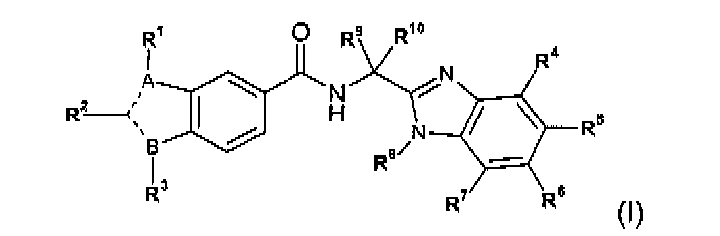
Description
- The invention relates to inhibitors of RNA dependent RNA polymerases, particularly those viral polymerases within the Flaviviridae family, more particularly to HCV polymerase.
- About 30,000 new cases of hepatitis C virus (HCV) infection are estimated to occur in the United States each year (Kolykhalov, A.A.; Mihalik, K.; Feinstone, S.M.; Rice, C.M.; 2000; J. Virol. 74: 2046-2051). HCV is not easily cleared by the hosts' immunological defences; as many as 85% of the people infected with HCV become chronically infected. Many of these persistent infections result in chronic liver disease, including cirrhosis and hepatocellular carcinoma (Hoofnagle, J.H.; 1997; Hepatology 26: 15S-20S). There are an estimated 170 million HCV carriers worldwide, and HCV-associated end-stage liver disease is now the leading cause of liver transplantation. In the United States alone, hepatitis C is responsible for 8,000 to 10,000 deaths annually. Without effective intervention, the number is expected to triple in the next 10 to 20 years. There is no vaccine to prevent HCV infection.
- Currently, the only approved therapy for patients chronically infected with HCV is treatment with interferon or a combination of interferon and ribavirin. Recently, pegylated versions of interferon (peginterferon alpha-2a (Pegasys™, Roche) and peginterferon alpha-2b (PEG-Intron™, Schering)) have been approved for marketing in some countries for treatment of chronic hepatitis C infection, both alone and in combination with ribavirin. However, it has been reported that these therapies achieve a sustained response in fewer than 60% of cases.
- HCV belongs to the family Flaviviridae, genus hepacivirus, which comprises three genera of small enveloped positive-strand RNA viruses (Rice, C.M.; 1996; "Flaviviridae: the viruses and their replication"; pp. 931-960 in Fields Virology; Fields, B.N.; Knipe, D.M.; Howley, P.M. (eds.); Lippincott-Raven Publishers, Philadelphia Pa.). The 9.6 kb genome of HCV consists of a long open reading frame (ORF) flanked by 5' and 3' non-translated regions (NTR's). The HCV 5' NTR is 341 nucleotides in length and functions as an internal ribosome entry site for cap-independent translation initiation (Lemon, S.H.; Honda, M.; 1997; Semin. Virol. 8: 274-288). The HCV polyprotein is cleaved co- and post-translationally into at least 10 individual polypeptides (Reed, K.E.; Rice, C.M.; 1999; Curr. Top. Microbiol. Immunol 242: 55-84). The structural proteins result from signal peptidases in the N-terminal portion of the polyprotein. Two viral proteases mediate downstream cleavages to produce non-structural (NS) proteins that function as components of the HCV RNA replicase. The NS2-3 protease spans the C-terminal half of the NS2 and the N-terminal one-third of NS3 and catalyses cis cleavage of the NS2/3 site. The same portion of NS3 also encodes the catalytic domain of the NS3-4A serine protease that cleaves at four downstream sites. The C-terminal two-thirds of NS3 is highly conserved amongst HCV isolates, with RNA-binding, RNA-stimulated NTPase, and RNA unwinding activities. Although NS4B and the NS5A phosphoprotein are also likely components of the replicase, their specific roles are unknown. The C-terminal polyprotein cleavage product, NS5B, is the elongation subunit of the HCV replicase possessing RNA-dependent RNA polymerase (RdRp) activity (Behrens, S.E.; Tomei, L.; DeFrancesco, R.; 1996; EMBO J. 15: 12-22; and Lohmann, V.; Körner, F.; Herian, U.; Bartenschlager, R.; 1997; J. Virol. 71: 8416-8428). It has been recently demonstrated that mutations destroying NS5B activity abolish infectivity of RNA in a chimp model (Kolykhalov, A.A.; Mihalik, K.; Feinstone, S.M.; Rice, C.M.; 2000; J. Virol. 74: 2046-2051).
- The development of new and specific anti-HCV treatments is a high priority, and virus-specific functions essential for replication are the most attractive targets for drug development. The absence of RNA dependent RNA polymerases in mammals, and the fact that this enzyme appears to be essential to viral replication, would suggest that the NS5B polymerase is an ideal target for anti-HCV therapeutics.
WO 01/47883 WO 02/04425 WO 03/000254 WO 03/007945 WO 03/010140 WO 03/026587 WO 03/101993 WO 04/005286 WO 2004/064925 ,WO 2004/065367 andWO 2004/087714 report inhibitors of NS5B proposed for treatment of HCV. - Indole inhibitors of the NS5B polymerase of HCV are disclosed in
WO 03/010141 WO 03/010141 - The present invention provides a novel series of compounds having good to very good inhibitory activity against HCV polymerase and/or unexpectedly good activity in a cell-based HCV RNA replication assay.
- Further objects of this invention arise for the one skilled in the art from the following description and the examples.
- In a first aspect of the invention, there is provided a compound, represented by formula I, or an enantiomer, diastereoisomer or tautomer thereof, including a salt or ester thereof:

- either A or B is N and the other B or A is C, wherein ----- between two C-atoms represents a double bond and ----- between a C-atom and a N-atom represents a single bond;
- R1 is H or (C1-6)alkyl;
- R2 is selected from halogen, cyano, (C1-6)alkyl, (C2-6)alkenyl, (C2-6)alkynyl, (C3-7)cycloalkyl, aryl and Het; said aryl and Het being optionally substituted with R21;
- wherein R21 is one, two or three substituents each independently selected from -OH, -CN, -N(RN2)RN1 , halogen, (C1-6)alkyl, (C1-6)alkoxy, (C1-6)alkylthio, Het and -CO-N(RN2 )RN1 ;
- wherein said (C1-6)alkyl, (C1-6)alkoxy and (C1-6)alkylthio are each
- optionally substituted with one, two or three halogen atoms;
- wherein R21 is one, two or three substituents each independently selected from -OH, -CN, -N(RN2)RN1 , halogen, (C1-6)alkyl, (C1-6)alkoxy, (C1-6)alkylthio, Het and -CO-N(RN2 )RN1 ;
- R3 is (C5-6)cycloalkyl, optionally substituted with from one to four halogen atoms;
- R4 and R7 are each independently selected from H, (C1-6)alkyl, (C1-6)alkoxy, (C1-6)alkylthio, -NH2, -NH(C1-6)alkyl, -N((C1-6)alkyl)2 and halogen;
- One of R6 and R6 is selected from COOH, -CO-N(RN2)RN1, aryl, Het and (C2-6)alkenyl, wherein aryl, Het, (C2-6)alkenyl and RN1 or any heterocycle formed between RN2 and
- RN1 are each optionally substituted with R50;
- wherein R50 is one, two or three substituents each independently selected from (C1-6)alkyl, -COOH, -OH, oxo, -N(RN2)RN1 , -CO-N(RN2 )RN1 and halogen,
- wherein the (C1-6)alkyl is optionally substituted with aryl or -N(RN2)RN1;
- R8 is (C1-6)alkyl, (C3-7)cycloalkyl or (C3-7)cycloalkyl-(C1-6)alkyl-;
wherein said alkyl, cycloalkyl and cycloalkyl-alkyl are each optionally substituted with one, two or three substituents each independently selected from halogen, (C1-6)alkoxy and (C1-6)alkylthio; - R9 and R10 are each independently selected from (C1-6)alkyl; or R9 and R10 are linked, together with the C atom to which they are attached, to form (C3-7)cycloalkyl, (C5-7)cycloalkenyl or a 4-, 5- or 6-membered heterocycle having from 1 to 3 heteroatoms each independently selected from O, N, and S;
wherein said cycloalkyl, cycloalkenyl or heterocycle is in each case optionally substituted with (C1-4)alkyl; - RN1 is selected from H, (C1-6)alkyl, (C3-7)cycloalkyl, (C3-7)cycloalkyl-(C1-6)alkyl-, -CO-(C1-6)alkyl, -CO-O-(C1-6)alkyl and Het;
wherein the alkyl and cycloalkyl portions of each of said (C1-6)alkyl, (C3-7)cycloalkyl, (C3-7)cycloalkyl-(C1-6)alkyl-, -CO-(C1-6)alkyl and -CO-O-(C1-6)alkyl are each optionally substituted with one, two or three substituents each independently selected from halogen, (C1-6)alkoxy and (C1-6)alkylthio; and - RN2 is H or (C1-6)alkyl, or
- RN2 and RN1 may be linked, together with the N atom to which they are attached, to form a 4-, 5-, 6- or 7-membered saturated, unsaturated or aromatic N-containing heterocycle or a 8-, 9-, 10- or 11-membered N-containing saturated, unsaturated or aromatic heterobicycle, each optionally having additionally from 1 to 3 heteroatoms each independently selected from O, N, and S;
wherein the heterocycle or heterobicycle formed by RN2 and RN1 is optionally substituted with one, two or three substituents each independently selected from halogen, (C1-6)alkyl, (C1-6)alkoxy and (C1-6)alkylthio; - wherein Het is defined as a 4-, 5-, 6- or 7-membered heterocycle having 1 to 4 heteroatoms each independently selected from O, N and S, which may be saturated, unsaturated or aromatic, or a 8-, 9-, 10- or 11-membered heterobicycle having 1 to 5 heteroatoms wherever possible, each independently selected from O, N and S, which may be saturated, unsaturated or aromatic.
- Included within the scope of this invention are compounds of the formula (I) as described hereinbefore, to which at least one of a "detectable label", an "affinity tag" and a "photoreactive group" is linked.
- The compounds according to this invention generally show an inhibitory activity against HCV polymerase. In particular compounds according to this invention inhibit RNA synthesis by the RNA dependent RNA polymerase of HCV, especially of the enzyme NS5B encoded by HCV. Furthermore, compounds according to this invention show an unexpectedly good activity in a cell-based HCV RNA replication assay. A further advantage of compounds provided by this invention is their low to very low or even non-significant activity against other polymerases.
- In a second aspect of the invention, there is provided a use of a compound of formula I according to this invention, or a pharmaceutically acceptable salt or ester thereof, or a composition thereof, as an HCV polymerase inhibitor, preferably as an inhibitor of RNA dependent RNA polymerase activity of the enzyme NS5B, encoded by HCV.
- In a third aspect of the invention, there is provided a use of a compound of the formula I according to this invention, or a pharmaceutically acceptable salt or ester thereof, or a composition thereof, as an inhibitor of HCV replication.
- In a fourth aspect of the invention, there is provided a use of a compound of the formula I according to this invention, or a pharmaceutically acceptable salt or ester thereof, or a composition thereof, for the treatment or prevention of HCV infection in a mammal.
- In a fifth aspect of the invention, there is provided a method of inhibiting the RNA-dependent RNA polymerase activity of the enzyme NS5B, encoded by HCV, comprising exposing the enzyme NS5B to an effective amount of a compound of formula I under conditions where the RNA-dependent RNA polymerase activity of the enzyme NS5B is inhibited.
- In a sixth aspect of the invention, there is provided a method of inhibiting HCV replication, comprising exposing a cell infected with HCV to an effective amount of a compound of formula I under conditions where replication of HCV is inhibited.
- In a seventh aspect of the invention, there is provided a method of treating or preventing HCV infection in a mammal, comprising administering to the mammal an effective amount of a compound of formula I according to this invention, or a pharmaceutically acceptable salt or ester thereof, or a composition thereof.
- In a eighth aspect of the invention, there is provided a method of treating or preventing HCV infection in a mammal, comprising administering to the mammal an effective amount of a compound of formula I, or a pharmaceutically acceptable salt or ester thereof, or a composition thereof, in combination with at least one other antiviral agent.
- In a ninth aspect of the invention, there is provided a pharmaceutical composition for the treatment or prevention of HCV infection, comprising an effective amount of a compound of formula I according to this invention, or a pharmaceutically acceptable salt or ester thereof, and a pharmaceutically acceptable carrier.
- According to a specific embodiment, the pharmaceutical composition of this invention additionally comprises a therapeutically effective amount of one or more antiviral agents. Examples of antiviral agents include, but are not limited to, ribavirin and amantadine.
- According to a further specific embodiment, the pharmaceutical composition of this invention additionally comprises at least one other anti-HCV agent as an antiviral agent.
- According to a more specific embodiment, the pharmaceutical composition of this invention comprises an additional immunomodulatory agent as an other anti-HCV agent. Examples of additional immunomodulatory agents include but are not limited to, α-, β-, δ- γ-, τ- and ω-interferons and pegylated forms thereof.
- According to another more specific embodiment, the pharmaceutical composition of this invention additionally comprises at least one other inhibitor of HCV polymerase as an other anti-HCV agent.
- According to another more specific embodiment, the pharmaceutical composition of this invention additionally comprises at least one inhibitor of HCV NS3 protease as an other anti-HCV agent.
- According to yet another more specific embodiment, the pharmaceutical composition of this invention additionally comprises at least one inhibitor of another target in the HCV life cycle as an other anti-HCV agent. Examples of such inhibitors of other targets include, but are not limited to, agents that inhibit a target selected from HCV helicase, HCV NS2/3 protease and HCV IRES and agents that interfere with the function of other viral targets including but not limited to an NS5A protein.
- In an tenth aspect of the invention, there is provided a use of a compound of formula I according to this invention, or of a pharmaceutically acceptable salt or ester thereof, or a composition thereof, for the manufacture of a medicament for the treatment and/or the prevention of a Flaviviridae viral infection, preferably an HCV infection.
- An eleventh aspect of this invention refers to an article of manufacture comprising a composition effective to treat or prevent an HCV infection or to inhibit the NS5B polymerase of HCV and packaging material comprising a label which indicates that the composition can be used to treat infection by the hepatitis C virus, wherein said composition comprises a compound of formula (I) according to this invention or a pharmaceutically acceptable salt or ester thereof.
- The following definitions apply unless otherwise noted:
- As used herein, the term "(C1-n)alkyl", wherein n is an integer, either alone or in combination with another radical, is intended to mean acyclic straight or branched chain alkyl radicals containing 1 to n carbon atoms respectively. Examples of such radicals include, but are not limited to, methyl, ethyl, n-propyl, 1-methylethyl (iso-propyl), n-butyl, 1-methylpropyl, 2-methylpropyl, 1,1-dimethylethyl (tert-butyl), n-pentyl, etc.. In the following, the term Me denotes a methyl group.
- If an alkyl group is substituted by halogen, it is preferably mono-, di- or trisubstituted with fluorine or monosubstituted by chlorine or bromine.
- As used herein, the term "(C2-n)alkenyl", wherein n is an integer, either alone or in combination with another radical, is intended to mean an unsaturated, acyclic straight or branched chain radical containing two to n carbon atoms, at least two of which are bonded to each other by a double bond. Examples of such radicals include, but are not limited to, ethenyl (vinyl), 1-propenyl, 2-propenyl, 1-butenyl, etc.. The cis and trans isomers, and mixtures thereof, of the (C2-n)alkenyl radical are encompassed by the term. A (C2-n)alkenyl radical may be substituted on any of the carbon atoms thereof which would otherwise bear a hydrogen atom.
- As used herein, the term "(C2-n)alkynyl", wherein n is an integer, either alone or in combination with another radical, means an acyclic, straight or branched chain radical containing from 2 to n carbon atoms, at least two of which are linked by a triple bond. Examples of such radicals include, but are not limited to, ethynyl, 1-propynyl, 2-propynyl, and 1-butynyl. A (C2-n)alkynyl radical may be substituted on any of the carbon atoms thereof which would otherwise bear a hydrogen atom.
- As used herein, the term "(C3-n)cycloalkyl", wherein n is an integer, either alone or in combination with another radical, means a cycloalkyl radical containing from three to n carbon atoms. Examples of such radicals include, but are not limited to, cyclopropyl, cyclobutyl, cyclopentyl, cyclohexyl and cycloheptyl.
- As used herein, the term "(C5-n)cycloalkenyl", wherein n is an integer, either alone or in combination with another radical, means an unsaturated cyclic radical containing five to n carbon atoms. Examples include, but are not limited to, cyclopentenyl and cyclohexenyl.
- As used herein the term "(C3-m)cycloalkyl-(C1-n)alkyl-", wherein n and m are integers, either alone or in combination with another radical, means a branched or straight chain alkyl radical having 1 to n carbon atoms to which a cycloalkyl radical containing from three to m carbon atoms is covalently bonded. Examples of (C3-7)cycloalkyl-(C1-6)alkyl- include, but are not limited to, cyclopropylmethyl, cyclobutylmethyl, cyclopentylmethyl, cyclohexylmethyl, 1-cyclopropylethyl, 2-cyclopropylethyl, 1-cyclobutylethyl, 2-cyclobutylethyl, 1-cyclopentylethyl, 2-cyclopentylethyl, 1-cyclohexylethyl, 2-cyclohexylethyl, etc..
- As used herein, the term "protecting group" defines protecting groups that can be used during synthetic transformation, examples of which are listed in Greene, "Protective Groups in Organic Chemistry", John Wiley & Sons, New York (1981) and "The Peptides: Analysis, Synthesis, Biology", Vol. 3, Academic Press, New York (1981).
- A carboxyl group is usually protected as an ester that can be cleaved to give the carboxylic acid. Protecting groups that can be used include, but are not limited to,: 1) alkyl esters such as methyl, ethyl, trimethylsilylethyl and tert-butyl, 2) aralkyl esters such as benzyl and substituted benzyl, or 3) esters that can be cleaved by mild base treatment or mild reductive means such as trichloroethyl and phenacyl esters.
- As used herein, the term "aryl" either alone or in combination with another radical means a 6- or 10-membered aryl, i.e. an aromatic radical containing six or ten carbon atoms. Examples include, but are not limited to, phenyl, 1-naphthyl or 2-naphthyl.
- As used herein, the term "Het" defines a 4-, 5-, 6- or 7-membered heterocycle having 1 to 4 heteroatoms each independently selected from O, N and S, which may be saturated, unsaturated or aromatic, or a 8-, 9-, 10- or 11-membered heterobicycle having 1 to 5 heteroatoms wherever possible, each independently selected from O, N and S, which may be saturated, unsaturated or aromatic, unless specified otherwise.
- As used herein the term "heteroatom" means O, S or N.
- As used herein, the term "heterocycle", either alone or in combination with another radical, means a monovalent radical derived by removal of a hydrogen from a five-, six-, or seven-membered saturated or unsaturated (including aromatic) heterocycle containing from one to four heteroatoms selected from nitrogen, oxygen and sulfur. Examples of such heterocycles include, but are not limited to, azetidine, pyrrolidine, tetrahydrofuran, thiazolidine, pyrrole, thiophene, hydantoin, diazepine, 1H-imidazole, isoxazole, thiazole, tetrazole, piperidine, piperazine, homopiperidine, homopiperazine, 1,4-dioxane, 4-morpholine, 4-thiomorpholine, pyridine, pyridine-N-oxide or pyrimidine, or the following heterocycles:

- As used herein, the term "9- or 10-membered heterobicycle" or "heterobicycle" either alone or in combination with another radical, means a heterocycle as defined above fused to one or more other cycle, be it a heterocycle or any other cycle. Examples of such heterobicycles include, but are not limited to, indole, benzimidazole, thiazolo[4,5-b]-pyridine, quinoline, or coumarin, or the following:

- As used herein, the term "halo" or "halogen" means a halogen atom and includes fluorine, chlorine, bromine and iodine.
- As used herein, the term "OH" refers to a hydroxyl group. It is well known to one skilled in the art that hydroxyl groups may be substituted by functional group equivalents. Examples of such functional group equivalents that are contemplated by this invention include, but are not limited to, ethers, sulfhydryls, thioethers and primary, secondary or tertiary amines.
- As used herein, the term "SH" refers to a sulfhydryl group. It is intended within the scope of the present invention that, whenever a "SH" or "SR" group is present, it can also be substituted by any other appropriate oxidation state such as SOR, SO2 R, or SO3 R.
- As used herein, the term "(C1-n)alkoxy" refers to an oxygen atom further bonded to an (C1-n)alkyl radical. Examples of (C1-6)alkoxy include, but are not limited to, methoxy (CH3O-), ethoxy (CH3CH2O-), n-propoxy (CH3CH2CH2O-), 1-methylethoxy (iso-propoxy; (CH3)2CHO-), 1,1-dimethylethoxy (tert-butoxy; (CH3)3CO-), etc.. When a (C1-n)alkoxy group is substituted, it is understood to be substituted on the (C1-n)alkyl portion thereof.
- As used herein, the term "(C1-n)alkylthio" refers to a sulfur atom further bonded to an (C1-n)alkyl radical. Examples of (C1-6)alkylthio include, but are not limited to, methylthio (CH3S-), ethylthio (CH3CH2S-), n-propylthio (CH3CH2CH2S-), 1-methylethylthio (iso-propylthio; (CH3)2CHS-), 1,1-dimethylethylthio (tert-butylthio (CH3)3CS-), etc.. When a (C1-n)alkylthio group is substituted, it is understood to be substituted on the (C1-n)alkyl portion thereof.
- The term "oxo" as used herein means an oxygen atom attached to a carbon atom as a substituent by a double bond (=O).
- It is intended that when the term "substituted" is applied in conjunction with a radical having more than one moiety such as (C3-7)cycloalkyl-(C1-6)alkyl-, such substitution applies to both moieties i.e. either or both of the alkyl and cycloalkyl moieties can be substituted with the defined substituents.
- As used herein, the term "COOH" refers to a carboxylic acid group. It is well known to one skilled in the art that carboxylic acid groups may be substituted by functional group equivalents. Examples of such functional group equivalents that are contemplated by this invention include, but are not limited to, esters, amides, imides, boronic acids, phosphonic acids, sulfonic acids, tetrazoles, triazoles, N-acylsulfonyldiamides (RCONHSO2NR2), and N-acylsulfonamides (RCONHSO2R).
- As used herein, the term "functional group equivalent" is intended to mean an element or group or a substituted derivative thereof, that is replaceable by another element or group that has similar electronic, hybridization or bonding properties.
- The following signs ---- andare used interchangeably in subformulas to indicate the bond, or in the case of a spirocyclic group the atom, which is bonded to the rest of the molecule as defined.

- As used herein, the term "detectable label" means any group that may be linked to the polymerase or to a compound of the present invention such that when the compound is associated with the polymerase target, such label allows recognition either directly or indirectly of the compound such that it can be detected, measured and quantified. Examples of such "labels" are intended to include, but are not limited to, fluorescent labels, chemiluminescent labels, colorimetric labels, enzymatic markers, radioactive isotopes and affinity tags such as biotin. Such labels are attached to the compound or to the polymerase by well known methods.
- As used herein, the term "affinity tag" means a ligand (that may be linked to the polymerase or to a compound of the present invention) whose strong affinity for a receptor can be used to extract from a solution the entity to which the ligand is attached. Examples of such ligands include, but are not limited to, biotin or a derivative thereof, a histidine polypeptide, a polyarginine, an amylose sugar moiety or a defined epitope recognizable by a specific antibody. Such affinity tags are attached to the compound or to the polymerase by well-known methods.
- As used herein, the term "photoreactive group" means a group that is transformed, upon activation by light, from an inert group to a reactive species, such as a free radical. Such a group may be used as, for example, a photoaffinity label. Examples of such groups include, but are not limited to, benzophenones, azides, and the like.
- The term "salt thereof means any acid and/or base addition salt of a compound according to the invention; preferably a pharmaceutically acceptable salt thereof.
- The term "pharmaceutically acceptable salt" means a salt of a compound of formula (I) which is, within the scope of sound medical judgment, suitable for use in contact with the tissues of humans and lower animals without undue toxicity, irritation, allergic response, and the like, commensurate with a reasonable benefit/risk ratio, generally water or oil-soluble or dispersible, and effective for their intended use. The term includes pharmaceutically-acceptable acid addition salts and pharmaceutically-acceptable base addition salts. Examples of suitable salts are found in, e.g., S.M. Birge et al., J. Pharm. Sci., 1977, 66, pp. 1-19.
- The term "pharmaceutically-acceptable acid addition salt" means those salts which retain the biological effectiveness and properties of the free bases and which are not biologically or otherwise undesirable, formed with inorganic acids such as hydrochloric acid, hydrobromic acid, sulfuric acid, sulfamic acid, nitric acid, phosphoric acid, and the like, and organic acids such as acetic acid, trifluoroacetic acid, adipic acid, ascorbic acid, aspartic acid, benzenesulfonic acid, benzoic acid, butyric acid, camphoric acid, camphorsulfonic acid, cinnamic acid, citric acid, digluconic acid, ethanesulfonic acid, glutamic acid, glycolic acid, glycerophosphoric acid, hemisulfic acid, hexanoic acid, formic acid, fumaric acid, 2-hydroxyethanesulfonic acid (isethionic acid), lactic acid, hydroxymaleic acid, malic acid, malonic acid, mandelic acid, mesitylenesulfonic acid, methanesulfonic acid, naphthalenesulfonic acid, nicotinic acid, 2-naphthalenesulfonic acid, oxalic acid, pamoic acid, pectinic acid, phenylacetic acid, 3-phenylpropionic acid, pivalic acid, propionic acid, pyruvic acid, salicylic acid, stearic acid, succinic acid, sulfanilic acid, tartaric acid, p-toluenesulfonic acid, undecanoic acid, and the like.
- The term "pharmaceutically-acceptable base addition salt" means those salts which retain the biological effectiveness and properties of the free acids and which are not biologically or otherwise undesirable, formed with inorganic bases such as ammonia or hydroxide, carbonate, or bicarbonate of ammonium or a metal cation such as sodium, potassium, lithium, calcium, magnesium, iron, zinc, copper, manganese, aluminum, and the like. Particularly preferred are the ammonium, potassium, sodium, calcium, and magnesium salts. Salts derived from pharmaceutically-acceptable organic nontoxic bases include salts of primary, secondary, and tertiary amines, quaternary amine compounds, substituted amines including naturally occurring substituted amines, cyclic amines and basic ion-exchange resins, such as methylamine, dimethylamine, trimethylamine, ethylamine, diethylamine, triethylamine, isopropylamine, tripropylamine, tributylamine, ethanolamine, diethanolamine, 2-dimethylaminoethanol, 2-diethylaminoethanol, dicyclohexylamine, lysine, arginine, histidine, caffeine, hydrabamine, choline, betaine, ethylenediamine, glucosamine, methylglucamine, theobromine, purines, piperazine, piperidine, N-ethylpiperidine, tetramethylammonium compounds, tetraethylammonium compounds, pyridine, N,N-dimethylaniline, N-methylpiperidine, N-methylmorpholine, dicyclohexylamine, dibenzylamine, N,N-dibenzylphenethylamine, 1-ephenamine, N,N'-dibenzylethylenediamine, polyamine resins, and the like. Particularly preferred organic nontoxic bases are isopropylamine, diethylamine, ethanolamine, trimethylamine, dicyclohexylamine, choline, and caffeine.
- The term "ester thereof" means any ester of a compound in which any of the carboxyl functions of the molecule is replaced by an alkoxycarbonyl function, including but not limited to pharmaceutically acceptable esters thereof.
- The term "pharmaceutically acceptable ester" as used herein, either alone or in combination with another substituent, means esters of the compound of formula (I) in which any of the carboxyl functions of the molecule, but preferably the carboxy terminus, is replaced by an alkoxycarbonyl function:

- The term "antiviral agent" as used herein means an agent (compound or biological) that is effective to inhibit the formation and/or replication of a virus in a mammal. This includes agents that interfere with either host or viral mechanisms necessary for the formation and/or replication of a virus in a mammal. Antiviral agents include, but are not limited to, ribavirin, amantadine, VX-497 (merimepodib, Vertex Pharmaceuticals), VX-498 (Vertex Pharmaceuticals), Levovirin, Viramidine, Ceplene (maxamine), XTL-001 and XTL-002 (XTL Biopharmaceuticals).
- The term "other anti-HCV agent" as used herein means those agents that are effective for diminishing or preventing the progression of hepatitis C related symptoms of disease. Such agents can be selected from: immunomodulatory agents, inhibitors of HCV NS3 protease, other inhibitors of HCV polymerase or inhibitors of another target in the HCV life cycle.
- The term "immunomodulatory agent" as used herein means those agents (compounds or biologicals) that are effective to enhance or potentiate the immune system response in a mammal. Immunomodulatory agents include, but are not limited to, class I interferons (such as α-, β-, δ- and ω interferons, τ-interferons, consensus interferons and asialo-interferons), class II interferons (such as γ-interferons) and pegylated forms thereof.
- The term "inhibitor of HCV NS3 protease" as used herein means an agent (compound or biological) that is effective to inhibit the function of HCV NS3 protease in a mammal. Inhibitors of HCV NS3 protease include, but are not limited to, those compounds described in
WO 99/07733 WO 99/07734 WO 00/09558 WO 00/09543 WO 00/59929 WO 02/060926 US 2002/0177725 ,WO 03/053349 WO 03/062265 WO 03/064416 WO 03/064455 WO 03/064456 WO 03/099316 WO 03/099274 WO 2004/032827 ,WO 2004/037855 ,WO 2004/043339 ,WO 2004/072243 ,WO 2004/093798 ,WO 2004/094452 ,WO 2004/101602 ,WO 2004/101605 .WO 2004/103996 , the Boehringer Ingelheim clinical candidate identified as BILN 2061and the Vertex clinical candidate identified as VX-950. - The term "other inhibitor of HCV polymerase" as used herein means an agent (compound or biological) that is effective to inhibit the function of HCV polymerase in a mammal, whereby this agent has a structure different from the compounds according to this invention and preferably binds to a site of the HCV polymerase different from the site targeted by the compounds according to this invention. Other inhibitors of HCV polymerase include non-nucleosides, for example, those compounds described in :
WO 2004/087714 (IRBM),WO 04/005286 WO 04/002977 WO 04/002944 WO 04/002940 WO 03/101993 WO 03/099824 WO 03/099275 WO 03/099801 WO 03/097646 WO 03/095441 WO 03/090674 WO 03/084953 WO 03/082265 WO 03/082848 WO 03/062211 WO 03/059356 EP 1321463 (Shire),WO 03/040112 WO 03/037893 WO 03/037894 WO 03/037262 WO 03/037895 WO 03/026587 WO 03/002518 WO 03/000254 WO 02/100846 A1 WO 02/100851 A2 WO 02/098424 A1 WO 02/079187 WO 03/02/20497 WO 02/06246 WO 01/47883 WO 01/85172 A1 WO 01/85720 WO 01/77091 WO 00/18231 WO 00/13708 WO 01/10573 WO 00/06529 EP 1 256 628 A2 (Agouron),WO 02/04425 WO 03/007945 WO 03/010140 WO 03/010141 WO 2004/064925 (Boehringer Ingelheim) andWO 2004/065367 (Boehringer Ingelheim). Furthermore other inhibitors of HCV polymerase also include nucleoside analogs, for example, those compounds described in:WO 04/007512 WO 04/003000 WO 04/002999 WO 04/0002422 WO 04/003138 WO 03/105770 WO 03/105770 WO 03/093290 WO 03/087298 WO 03/062256 WO 03/062255 WO 03/061385 WO 03/026675 WO 03/026589 WO 03/020222 WO 03/000713 WO 02/100415 WO 02/1094289 WO 02/051425 WO 02/18404 WO 02/069903 WO 02/057287 WO 02/057425 WO 01/90121 WO 01/60315 WO 01/32153 - The term "inhibitor of another target in the HCV life cycle" as used herein means an agent (compound or biological) that is effective to inhibit the formation and/or replication of HCV in a mammal other than by inhibiting the RNA dependent RNA polymerase of HCV. This includes agents that interfere with either host or HCV viral mechanisms necessary for the formation and/or replication of HCV in a mammal. Inhibitors of another target in the HCV life cycle include, but are not limited to, agents that inhibit a target selected from a HCV helicase, HCV NS2/3 protease and HCV IRES and agents that interfere with the function of other viral targets including but not limited to an NS5A protein.
- The term "HIV inhibitor" as used herein means an agent (compound or biological) that is effective to inhibit the formation and/or replication of HIV in a mammal. This includes agents that interfere with either host or viral mechanisms necessary for the formation and/or replication of HIV in a mammal. HIV inhibitors include, but are not limited to, nucleoside inhibitors, non-nucleoside inhibitors, protease inhibitors, fusion inhibitors and integrase inhibitors.
- The term "HAV inhibitor" as used herein means an agent (compound or biological) that is effective to inhibit the formation and/or replication of HAV in a mammal. This includes agents that interfere with either host or viral mechanisms necessary for the formation and/or replication of HAV in a mammal. HAV inhibitors include, but are not limited to, Hepatitis A vaccines, for example, Havrix® (GlaxoSmithKline), VAQTA® (Merck) and Avaxim® (Aventis Pasteur).
- The term "HBV inhibitor" as used herein means an agent (compound or biological) that is effective to inhibit the formation and/or replication of HBV in a mammal. This includes agents that interfere with either host or viral mechanisms necessary for the formation and/or replication of HBV in a mammal. HBV inhibitors include agents that inhibit HBV viral DNA polymerase or HBV vaccines. Specific examples of HBV inhibitors include, but are not limited to, Lamivudine (Epivir-HBV®), Adefovir Dipivoxil, Entecavir, FTC (Coviracil®), DAPD (DXG), L-FMAU (Clevudine®), AM365 (Amrad), Ldt (Telbivudine), monoval-LdC (Valtorcitabine), ACH-126,443 (L-Fd4C) (Achillion), MCC478 (Eli Lilly), Racivir (RCV), Fluoro-L and D nucleosides, Robustaflavone, ICN 2001-3 (ICN), Bam 205 (Novelos), XTL-001 (XTL), Imino-Sugars (Nonyl-DNJ) (Synergy), HepBzyme; and immunomodulator products such as: interferon alpha 2b, HE2000 (Hollis-Eden), Theradigm (Epimmune), EHT899 (Enzo Biochem), Thymosin alpha-1 (Zadaxin®), HBV DNA vaccine (PowderJect), HBV DNA vaccine (Jefferon Center), HBV antigen (OraGen), BayHep B® (Bayer), Nabi-HB® (Nabi) and Anti-hepatitis B (Cangene); and HBV vaccine products such as the following: Engerix B, Recombivax HB, GenHevac B, Hepacare, Bio-Hep B, TwinRix, Comvax, Hexavac.
- The term "class I interferon" as used herein means an interferon selected from a group of interferons that all bind to receptor type I. This includes both naturally and synthetically produced class I interferons. Examples of class I interferons include, but are not limited to, α-, β-, δ-, w- interferons, τ-interferons, consensus interferons, asialo-interferons and pegylated forms thereof.
- The term "class II interferon" as used herein means an interferon selected from a group of interferons that all bind to receptor type II. Examples of class II interferons include, but are not limited to, γ-interferons and pegylated forms thereof.
- As discussed above, combination therapy is contemplated wherein a compound of formula (I), or a pharmaceutically acceptable salt or ester thereof, is co-administered with at least one additional agent selected from: an antiviral agent, an immunomodulatory agent, an inhibitor of HCV NS3 protease, another inhibitor of HCV polymerase, an inhibitor of another target in the HCV life cycle, an HIV inhibitor, an HAV inhibitor and an HBV inhibitor. Examples of such agents are provided in the Definitions section above. Specific preferred examples of such agents are listed below:
- ■ antiviral agents: ribavirin or amantadine;
- ■ immunomodulatory agents: class I interferons, class II interferons or pegylated forms thereof;
- ■ HCV NS3 protease inhibitors;
- ■ other inhibitors of the HCV polymerase: nucleoside or non-nucleoside inhibitors;
- ■ an inhibitor of another target in the HCV life cycle that inhibits a target selected from: NS3 helicase, HCV NS2/3 protease and internal ribosome entry site (IRES) or an agent that interferes with the function of an NS5A protein;
- ■ HIV inhibitors: nucleoside inhibitors, non-nucleoside inhibitors, protease inhibitors, fusion inhibitors or integrase inhibitors; or
- ■ HBV inhibitors: agents that inhibit HBV viral DNA polymerase or an agent that is an HBV vaccine.
- As used herein, the term "treatment" means the administration of a compound or composition according to the present invention to alleviate or eliminate symptoms of the hepatitis C disease and/or to reduce viral load in a patient.
- As used herein, the term "prevention" means the administration of a compound or composition according to the present invention post-exposure of the individual to the virus but before the appearance of symptoms of the disease, and/or prior to the detection of the virus in the blood, to prevent the appearance of symptoms of the disease and/or to prevent the virus from reaching detectible levels in the blood.
- Unless stated otherwise, all groups and substituents, including but not limited to R1, R2, R3, R4, R5, R6, R7, R8, R9, R10, R21, R50, RN1, RN2, A, B, and Het, have the definitions as defined hereinbefore and hereinafter. In the following, the preferred embodiments, groups and substituents according to this invention are described.
- This invention comprises compounds of the formula la:

- Alternatively, this invention comprises compounds of the formula Ib:

- According to a preferred embodiment of this invention R' is selected from the group consisting of H, methyl and ethyl.
More preferably, R' is methyl. - Preferably R2 is selected from halogen, cyano, (C1-4)alkyl, (C2-4)alkenyl, (C2-4)alkynyl, (C3-6)cycloalkyl, phenyl and Het selected from the group of formulas:




- More preferably, R2 is selected from Br, Cl, cyano, methyl, ethyl, propyl, 1-methylethyl, ethenyl, 1-methylethenyl, ethynyl, cyclopropyl, phenyl and Het selected from the group of formulas:


- Preferably, R21 is 1, 2 or 3 substituents each independently selected from:
- 1 to 3 substituents each independently selected from halogen; and
- 1 to 2 substituents each independently selected from:
- a) hydroxy, (C1-4)alkyl or (C1-4)alkoxy; wherein said alkyl and alkoxy are each optionally substituted with one, two or three halogen atoms;
- b) -NRN2RN1 wherein
RN1 is selected from H, (C1-3)alkyl, -CO-(C1-3)alkyl, -CO-O-(C1-3)alkyl and Het; wherein the alkyl portions of each of said (C1-3)alkyl, -CO-(C1-3)alkyl, and -CO-O-(C1-3)alkyl are optionally substituted with one, two or three substituents selected from halogen and (C1-6)alkoxy; and wherein said Het is a 5- or 6-membered monocyclic saturated, unsaturated or aromatic heterocycle having 1 or 2 heteroatoms, each independently selected from N, O and S; and
RN2 is H or (C1-3)alkyl; - c) -CONRN2RN1 , wherein RN2 and RN1 are each independently selected from H and (C1-3)alkyl; and
- d) Het, wherein said Het is a 5- or 6-membered monocyclic heterocycle having 1, 2 or 3 heteroatoms, each independently selected from N, O and S.
- More preferably, R21 is 1, 2 or 3 substituents each independently selected from:
- 1 to 2 substituents each independently selected from fluorine, chlorine and bromine; and
- 1 to 2 substituents each independently selected from:
- a) hydroxy, methyl, ethyl, propyl, 1-methylethyl, methoxy, ethoxy, propoxy or 1-methylethoxy; wherein said methyl, ethyl, propyl, 1-methylethyl, methoxy, ethoxy, propoxy and 1-methylethoxy are each optionally substituted with one, two or three halogen atoms;
- b) -N(CH3)2 or -NHRN1 wherein
RN1 is selected from H, methyl, ethyl, propyl, 1-methylethyl, -CO-CH3, 2-pyridyl, 3-pyridyl and 4-pyridyl;
wherein said methyl, ethyl, propyl and 1-methylethyl are each optionally substituted with one, two or three substituents selected from halogen and (C1-3)alkoxy; - c) -CONH2; and
- d) 3-pyridyl, 4-pyridyl, 5-pyrimidinyl, 2-furyl, 1-pyrrolyl and 1-morpholino.
- Therefore preferably, R2 is selected from Br, Cl, cyano, methyl, ethyl, propyl, 1-methylethyl, cyclopropyl, ethenyl, 1-methylethenyl, ethynyl,




- More preferably, R2 is selected from cyclopropyl, ethenyl, 1-methylethenyl,



- Even more preferably, R2 is selected from:


- Most preferably, R2 is selected from:
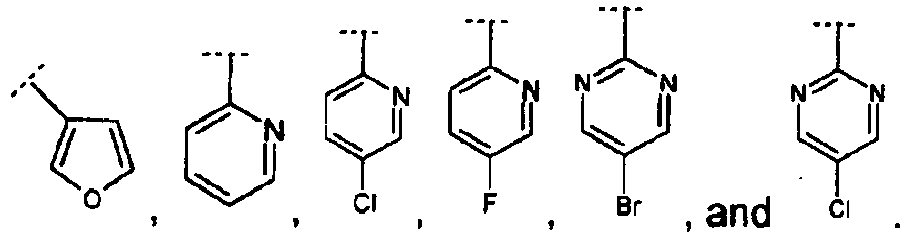
- Preferably, R3 is cyclopentyl, or cyclohexyl, each being optionally substituted with one or two fluorine atoms.
- More preferably, R3 is cyclopentyl or cyclohexyl.
- Preferably R4 is H or halogen and R7 is H.
More preferably, R4 is H or Cl and R7 is H.
Most preferably, R4 and R7 are both H. - Preferably, one of R6 and R6 is selected from:
- a) (C2-4)alkenyl substituted with COOH or CONHRN1 , wherein RN1 is selected from H and (C1-3)alkyl, said alkenyl being optionally further substituted with one or two substituents each independently selected from (C1-3)alkyl and halogen;
- b) phenyl or Het, each being optionally substituted with one or two substituents each independently selected from:
- i. -OH, oxo, COOH;
- ii. (C1-3)alkyl optionally substituted with phenyl or -N(RN2 )RN1 , wherein RN1 and RN2 are each independently selected from H and (C1-3)alkyl or RN1 and RN2 are linked, together with the N atom to which they are attached, to form a 5- or 6-membered monocyclic, saturated, unsaturated or aromatic N-containing heterocycle, optionally having additionally one or two heteroatoms each independently selected from N, O and S; and
- iii. -N(RN2)RN1; wherein RN1 is selected from H, (C1-3)alkyl and -CO(C1-3)alkyl and RN2 is H or (C1-3)alkyl;
- c) COOH;
- More preferably, one of R5 and R6 is selected from:
- a) (C2-4)alkenyl substituted with COOH or -CONH2, and optionally further substituted with one or two substituents selected from (C1-3)alkyl and halogen; and
- b) phenyl or Het, each being optionally substituted with one or two substituents each independently selected from:
- i. -OH, oxo, COOH;
- ii. (C1-3)alkyl optionally substituted with phenyl, -N(CH3)2, or

- iii. -NH2, -N(CH3)2 and -NHCOCH3;


- c) COOH;
- Even more preferably, one of R5 and R6 is selected from:
- a) -CH=CH-COOH or -CH=CH-CONH2, each optionally substituted with one or two substituents selected from methyl, ethyl and fluoro; and
- b) phenyl optionally substituted with NH2 or
Het optionally substituted with one or two substituents each independently selected from:- i. -OH, oxo, COOH;
- ii. methyl or ethyl, each optionally substituted with phenyl, -N(CH3)2, or
;and - iii. -NH2, -N(CH3)2 and -NHCOCH3;


- c) COOH;
- Yet more preferably, one of R5 and R6 is selected from -COOH,


- Most preferably, one of R5 and R6 is

- Alternatively most preferably, one of R5 and R6 is selected from:


- Preferably, R8 is selected from (C1-5)alkyl, (C4-6)cycloalkyl, and
(C3-4)cycloalkyl-(C1-3)alkyl, wherein the (C1-5)alkyl is optionally substituted with (C1-3)alkoxy or from one to three fluoro atoms. - More preferably, R8 is selected from methyl, ethyl, propyl, 1-methylethyl, 2-methylpropyl, 3-methylbutyl, cyclobutyl, cyclopropylmethyl, 2-fluoroethyl, 2,2,2-trifluoroethyl and 2-methoxyethyl.
- Most preferably R8 is methyl.
- Preferably, R9 and R10 are each independently selected from (C1-3)alkyl or R9 and R 10 are linked, together with the C atom to which they are attached, to form (C3-6)cycloalkyl, (C5-6)cycloalkenyl or a 5- or 6-membered monocyclic heterocycle having from 1 to 2 heteroatoms each independently selected from O and N; wherein said cycloalkyl, cycloalkenyl or heterocycle is each optionally substituted with (C1-4)alkyl.
- More preferably, the group


- Even more preferably, the group


- Most preferably, the group

- Encompassed within the scope of the present invention are compounds of formula I:

- either A or B is N and the other B or A is C, wherein ----- between two C-atoms represents a double bond and ----- between a C-atom and a N-atom represents a single bond;
- R1 is H or (C1-6)alkyl;
- R2 is halogen, aryl or Het; said aryl and Het being optionally substituted with R21 ;
- wherein R21 is one, two or three substituents each independently selected from -OH, -CN, -N(RN2)RN1 , halogen, (C1-6)alkyl, (C1-6)alkoxy, (C1-6)alkylthio, Het and -CO-N(RN2)RN1 ;
- wherein said alkyl, alkoxy and alkylthio are each optionally substituted with one, two or three halogen atoms;
- wherein R21 is one, two or three substituents each independently selected from -OH, -CN, -N(RN2)RN1 , halogen, (C1-6)alkyl, (C1-6)alkoxy, (C1-6)alkylthio, Het and -CO-N(RN2)RN1 ;
- R3 is (C5-6)cycloalkyl, optionally substituted with from one to four halogen atoms;
- R4 and R7 are each independently selected from H, (C1-6)alkyl, (C1-6)alkoxy, (C1-6)alkylthio, -NH2, -NH(C1-6)alkyl, -N((C1-6)alkyl)2 and halogen;
- one of R5 and R6 is selected from COOH, -CO-N(RN2)RN1 , Het and (C2-6)alkenyl, wherein Het, (C2-6)alkenyl and RN1 or any heterocycle formed between RN2 and RN1 are each optionally substituted with R50;
- wherein R50 is one, two or three substituents each independently selected from (C1-6)alkyl, -COOH, -N(RN2)RN1, -CO-N(RN2)RN1 , and halogen;
- R8 is (C1-6)alkyl, (C3-7)cycloalkyl or (C3-7)cycloalkyl-(C1-6)alkyl-;
wherein said alkyl, cycloalkyl and cycloalkyl-alkyl are each optionally substituted with one, two or three substituents each independently selected from halogen, (C1-6)alkoxy and (C1-6)alkylthio; - R9 and R10 are each independently selected from (C1-6)alkyl; or R9 and R10 are linked together with the C atom to which they are attached, to form (C3-7)cycloalkyl, (C5-7)cycloalkenyl or a 4-, 5- or 6-membered heterocycle having from 1 to 3 heteroatoms each independently selected from O, N, and S;
wherein said cycloalkyl, cycloalkenyl or heterocycle are each optionally substituted with (C1-4)alkyl; - RN1 is selected from H, (C1-6)alkyl, (C3-7)cycloalkyl, (C3-7)cycloalkyl-(C1-6)alkyl-, -CO-(C1-6)alkyl, -CO-O-(C1-6)alkyl and Het; wherein all of said alkyl and cycloalkyl is optionally substituted with one, two or three substituents each independently selected from halogen, (C1-6)alkoxy and (C1-6)alkylthio; and
- RN2 is H or (C1-6)alkyl, or
- RN2 and RN1 may be linked, together with the N atom to which they are attached, to form a 4-, 5-, 6- or 7-membered saturated or unsaturated N-containing heterocycle or a 8-, 9-, 10- or 11-membered N-containing heterobicycle, each having additionally from 1 to 3 heteroatoms each independently selected from O, N, and S;
wherein the heterocycle or heterobicycle formed by RN2 and RN1 is optionally substituted with one, two or three substituents each independently selected from halogen, (C1-6)alkyl, (C1-6)alkoxy and (C1-6)alkylthio; - Also encompassed within the scope of the present invention are compounds of formula I, in particular of the formula Ia or Ib, wherein:
- R1 is selected from the group consisting of H, methyl and ethyl;
- R2 is selected from halogen, cyano, (C1-4)alkyl, (C2-4)alkenyl, (C2-4)alkynyl,
- (C3-6)cycloalkyl, phenyl and Het selected from the group of formulas:


- 1, 2 or 3 substituents each independently selected from halogen; and
- 1 or 2 substituents each independently selected from:
- a) hydroxy, (C1-4)alkyl or (C1-4)alkoxy; wherein said alkyl and alkoxy are each optionally substituted with one, two or three halogen atoms;
- b) -NRN2RN1 wherein
RN1 is selected from H, (C1-3)alkyl, -CO-(C1-3)alkyl, -CO-O-(C1-3)alkyl and Het; wherein the alkyl portions of each of said (C1-3)alkyl, -CO-(C1-3)alkyl, and -CO-O-(C1-3)alkyl are optionally substituted with one, two or three substituents selected from halogen and (C1-6)alkoxy; and wherein said Het is a 5- or 6-membered monocyclic saturated, unsaturated or aromatic heterocycle having 1 or 2 heteroatoms, each independently selected from N, O and S; and RN2 is H or (C1-3)alkyl; - c) -CONRN2RN1 , wherein RN2 and RN1 are each independently selected from H and (C1-3)alkyl; and
- d) Het, wherein said Het is a 5- or 6-membered monocyclic heterocycle having 1, 2 or 3 heteroatoms, each independently selected from N, O and S;
- R3 is cyclopentyl or cyclohexyl, each optionally substituted with one to four fluorine atoms;
- R4 is H or halogen and R7 is H;
- one of R5 and R6 is selected from:
- a) (C2-4)alkenyl substituted with COOH or CONHRN1 , wherein RN1 is selected from H and (C1-3)alkyl, said alkenyl being optionally further substituted with one or two substituents each independently selected from (C1-3)alkyl and halogen;
- b) phenyl or Het, each being optionally substituted with one or two substituents each independently selected from:
- i. -OH, oxo, COOH;
- ii. (C1-3)alkyl optionally substituted with phenyl or -N(RN2)RN1, wherein RN1 and RN2 are each independently selected from H and (C1-3)alkyl or RN1 and RN2 are linked, together with the N atom to which they are attached, to form a 5- or 6-membered monocyclic, saturated, unsaturated or aromatic N-containing heterocycle, optionally having additionally one or two heteroatoms each independently selected from N, O and S; and
- iii. -N(RN2)RN1 ; wherein RN1 is selected from H, (C1-3)alkyl and -CO(C1-3)alkyl and RN2 is H or (C1-3)alkyl;
- c) COOH;
- R8 is selected from (C1-5)alkyl, (C4-6)cycloalkyl, and (C3-4)cycloalkyl-(C1-3)alkyl, wherein the (C1-5)alkyl is optionally substituted with (C1-3)alkoxy or from one to three fluoro atoms; and
- R9 and R10 are each independently selected from (C1-3)alkyl or R9 and R10 are linked, together with the C atom to which they are attached, to form (C3-6)cycloalkyl, (C5-6)cycloalkenyl or a 5- or 6-membered heterocycle having from 1 to 2 heteroatoms selected from O and N; wherein said cycloalkyl, cycloalkenyl or heterocycle is optionally substituted with (C1-4)alkyl.
- More preferably,
- R1 is selected from the group consisting of H, methyl and ethyl;
- R2 is selected from Br, Cl, cyano, methyl, ethyl, propyl, 1-methylethyl, ethenyl, 1-methylethenyl, ethynyl, cyclopropyl, phenyl and Het selected from the group of formulas:


- 1 to 2 substituents each independently selected from fluorine; chlorine and bromine; and
- 1 to 2 substituents each independently selected from:
- a) hydroxy, methyl, ethyl, propyl, 1-methylethyl, methoxy, ethoxy, propoxy or 1-methylethoxy; wherein said methyl, ethyl, propyl, 1-methylethyl, methoxy, ethoxy, propoxy and 1-methylethoxy are each optionally substituted with one, two or three halogen atoms;
- b) -N(CH3)2 or -NHRN1 wherein
- RN1 is selected from H, methyl, ethyl, propyl, 1-methylethyl, -CO-CH3, 2-pyridyl, 3-pyridyl and 4-pyridyl;
- wherein said methyl, ethyl, propyl and 1-methylethyl are each optionally substituted with one, two or three substituents selected from halogen and (C1-3)alkoxy;
- c) -CONH2; and
- d) 3-pyridyl, 4-pyridyl, 5-pyrimidinyl, 2-furyl, 1-pyrrolyl and 1-morpholino;
- R3 is cyclopentyl or cyclohexyl, each optionally substituted with one or two fluorine atoms;
- R4 is H or halogen and R7 is H;
- one of R5 and R6 is selected from:
- a) (C2-4)alkenyl substituted with COOH or -CONH2, and optionally further substituted with one or two substituents selected from (C1-3)alkyl and halogen; and
- b) phenyl or Het, each being optionally substituted with one or two substituents each independently selected from:
- i. -OH, oxo, COOH;
- ii. (C1-3)alkyl optionally substituted with phenyl, -N(CH3)2, or

- iii. -NH2, -N(CH3)2 and -NHCOCH3;


- c) COOH;
- R8 is selected from methyl, ethyl, propyl, 1-methylethyl, 2-methylpropyl, 3-methylbutyl, cyclobutyl, cyclopropylmethyl, 2-fluoroethyl, 2,2,2-trifluoroethyl and 2-methoxyethyl;
and
the group


- Even more preferably
- R1 is selected from the group consisting of H, methyl and ethyl;
- R2 is selected from Br, Cl, cyano, methyl, ethyl, propyl, 1-methylethyl, ethenyl, 1-methylethenyl, ethynyl, cyclopropyl, phenyl and Het selected from the group of formulas:


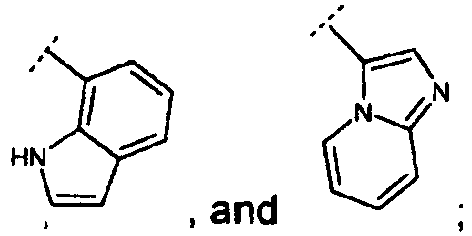
- 1 to 2 substituents each independently selected from fluorine; chlorine and bromine;
and - 1 to 2 substituents each independently selected from:
- a) hydroxy, methyl, ethyl, propyl, 1-methylethyl, methoxy, ethoxy, propoxy or 1-methylethoxy; wherein said methyl, ethyl, propyl, 1-methylethyl, methoxy, ethoxy, propoxy and 1-methylethoxy are each optionally substituted with one, two or three halogen atoms;
- b) -N(CH3)2 or -NHRN1 wherein
- RN1 is selected from H, methyl, ethyl, propyl, 1-methylethyl, -CO-CH3, 2-pyridyl, 3-pyridyl and 4-pyridyl;
- wherein said methyl, ethyl, propyl and 1-methylethyl are each optionally substituted with one, two or three substituents selected from halogen and (C1-3)alkoxy:
- c) -CONH2; and
- d) 3-pyridyl, 4-pyridyl, 5-pyrimidinyl, 2-furyl, 1-pyrrolyl and 1-morpholino;
- 1 to 2 substituents each independently selected from fluorine; chlorine and bromine;
- R3 is cyclopentyl or cyclohexyl, each optionally substituted with one or two fluorine atoms;
- R4 is H or Cl and and R7 is H;
- one of R5 and R6 is selected from:
- a) -CH=CH-COOH or -CH=CH-CONH2, each optionally substituted with one or two substituents selected from methyl, ethyl and fluoro; and
- b) phenyl optionally substituted with NH2 or
- Het optionally substituted with one or two substituents each independently selected from:
- i. -OH, oxo, COOH;
- ii. methyl or ethyl, each optionally substituted with phenyl, -N(CH3)2, or

- iii. -NH2, -N(CH3)2 and -NHCOCH3;


- Het optionally substituted with one or two substituents each independently selected from:
- c) COOH;
- R8 is selected from methyl, ethyl, propyl, 1-methylethyl, 2-methylpropyl, 3-methylbutyl, cyclobutyl, cyclopropylmethyl, 2-fluoroethyl, 2,2,2-trifluoroethyl and 2-methoxyethyl;
and
the group


- Most preferably,
- R1 is methyl;
- R2 is selected from:


- R3 is cyclopentyl or cyclohexyl;
- R4 and R7 are both H;
- one of R5 and R6 is

- R8 is methyl; and
the group
- Alternatively most preferably,
- R1 is methyl;
- R2 is selected from:

- R3 is cyclopentyl or cyclohexyl;
- R 4 and R7 are both H;
- one of R5 and R6 is


- R8 is methyl; and
- the group

- Included within the scope of this invention is each single compound of formula I as presented in Tables 1 to 4.
- The ability of the compounds of formula (I) to inhibit RNA synthesis by the RNA dependent RNA polymerase of HCV can be demonstrated by any assay capable of measuring HCV RNA dependent RNA polymerase activity. A suitable assay is described in the examples.
- To demonstrate that the compounds of the invention act by specific inhibition of HCV polymerase, the compounds may be tested for inhibitory activity in an assay measuring the activity of an RNA-dependent RNA polymerase other than HCV polymerase or in a DNA dependent RNA polymerase assay.
- The ability of the compounds of the invention to inhibit the replication of HCV RNA in cells may be demonstrated by testing the compounds for inhibitory activity in a cell-based HCV RNA replication assay. A suitable assay is described in the examples.
- When a compound of formula (I), or one of its therapeutically acceptable salts, is employed as an antiviral agent, it can be administered orally, topically or systemically to mammals, including, but not limited to, humans, cattle, pig, dogs, cats, rabbits or mice, in a vehicle comprising one or more pharmaceutically acceptable carriers, the proportion of which is determined by the solubility and chemical nature of the compound, chosen route of administration and standard biological practice.
- For oral administration, the compound or a therapeutically acceptable salt thereof can be formulated in unit dosage forms such as capsules or tablets each containing a predetermined amount of the active ingredient, ranging from about 1 to about 500 mg, in a pharmaceutically acceptable carrier.
- For topical administration, the compound can be formulated in pharmaceutically accepted vehicles containing about 0.1 to about 5 percent, preferably about 0.5 to about 5 percent, of the active agent. Such formulations can be in the form of a solution, cream or lotion.
- For systemic administration, the compound of formula (I) can be administered by either intravenous, subcutaneous or intramuscular injection, in compositions with pharmaceutically acceptable vehicles or carriers. For administration by injection, it is preferred to use the compounds in solution in a sterile aqueous vehicle which may also contain other solutes such as buffers or preservatives as well as sufficient quantities of pharmaceutically acceptable salts or of glucose to make the solution isotonic.
- Suitable vehicles or carriers which may be used for the above noted formulations are described in pharmaceutical texts, e.g. in "Remington's The Science and Practice of Pharmacy", 19th ed., Mack Publishing Company, Easton, Penn., 1995, or in "Pharmaceutical Dosage Forms And Drugs Delivery Systems", 6th ed., H.C. Ansel et al., Eds., Williams & Wilkins, Baltimore, Maryland, 1995.
- The dosage of the compound will vary with the form of administration and the particular active agent chosen. Furthermore, it will vary with the particular host under treatment. Generally, treatment is initiated with small increments until the optimum effect under the circumstance is reached. In general, the compound of formula I is most desirably administered at a concentration level that will generally afford antivirally effective results without causing any harmful or deleterious side effects.
- For oral administration, the compound or a therapeutically acceptable salt can be administered in the range of about 0.01 to about 200 mg per kilogram of body weight per day, with a preferred range of about 0.05 to about 100 mg per kilogram.
- For systemic administration, the compound of formula (I) can be administered at a dosage of about 0.01 mg to about 100 mg per kilogram of body weight per day, although the aforementioned variations will occur. A dosage level that is in the range of from about about 0.05 mg to about 50 mg per kilogram of body weight per day is most desirably employed in order to achieve effective results.
- When the compositions of this invention comprise a combination of a compound of formula I and one or more additional therapeutic or prophylactic agent, both the compound and the additional agent should be present at dosage levels of between about 10 to 100%, and more preferably between about 10 and 80% of the dosage normally administered in a monotherapy regimen.
- When these compounds or their pharmaceutically acceptable salts are formulated together with a pharmaceutically acceptable carrier, the resulting composition may be administered in vivo to mammals, such as man, to inhibit HCV polymerase or to treat or prevent HCV virus infection. Such treatment may also be achieved using the compounds of this invention in combination with agents which include, but are not limited to: immunomodulatory agents, including but not limited to α-, β-, δ- γ-, τ- and ω-interferons or pegylated forms thereof; other antiviral agents such as ribavirin, amantadine; other inhibitors of HCV NS5B polymerase; inhibitors of other targets in the HCV life cycle, which include but are not limited to, agents that inhibit a target including, but not limited to, a HCV helicase, HCV NS2/3 protease, HCV NS3 protease and HCV IRES and agents that interfere with the function of other viral targets including but not limited to an NS5A protein; or combinations thereof. The additional agents may be combined with the compounds of this invention to create a single dosage form. Alternatively these additional agents may be separately administered to a mammal as part of a multiple dosage form.
- The synthesis of compounds according to this invention is preferably accomplished following the general procedure outlined in Scheme 1 below.

- Compounds of formula I, wherein R1, R2, R3, R4, R5, R6, R7 , R8, R9 and R10 are defined as hereinbefore, are preferably prepared by coupling carboxylic acids of general formula II with amines of general formula III, as illustrated in Scheme 1 above, using carboxyl-activating reagents well known by those skilled in the art. Such reagents include, but are not limited to, TBTU, HATU, BOP, BrOP, EDAC, DCC, isobutyl chloroformate and the like. Alternatively, carboxylic acids of general formula II may be converted to the corresponding acid chlorides using standard reagents, then coupled with amine derivatives of the general formula III. In the cases where either R5 or R6 contain an ester-protected carboxylic acid moiety, a saponification reaction is carried out (using protocols well known by those skilled in the art) to obtain the final inhibitor product as the free carboxylic acid.
- Intermediate carboxylic acids of formula II may be prepared by procedures described in
WO 03/010141 
- Amine intermediates of general formula III in Scheme 1 may be prepared from the corresponding diamine precursors of general formula IV by coupling with the appropriate α,α-disubstituted amino acid chloride hydrochlorides. Preparation of the appropriate α,α-disubstituted amino acid chloride hydrochlorides from the corresponding α,α-disubstituted amino acids may be carried out as described in
WO 03/007945 WO 03/010141 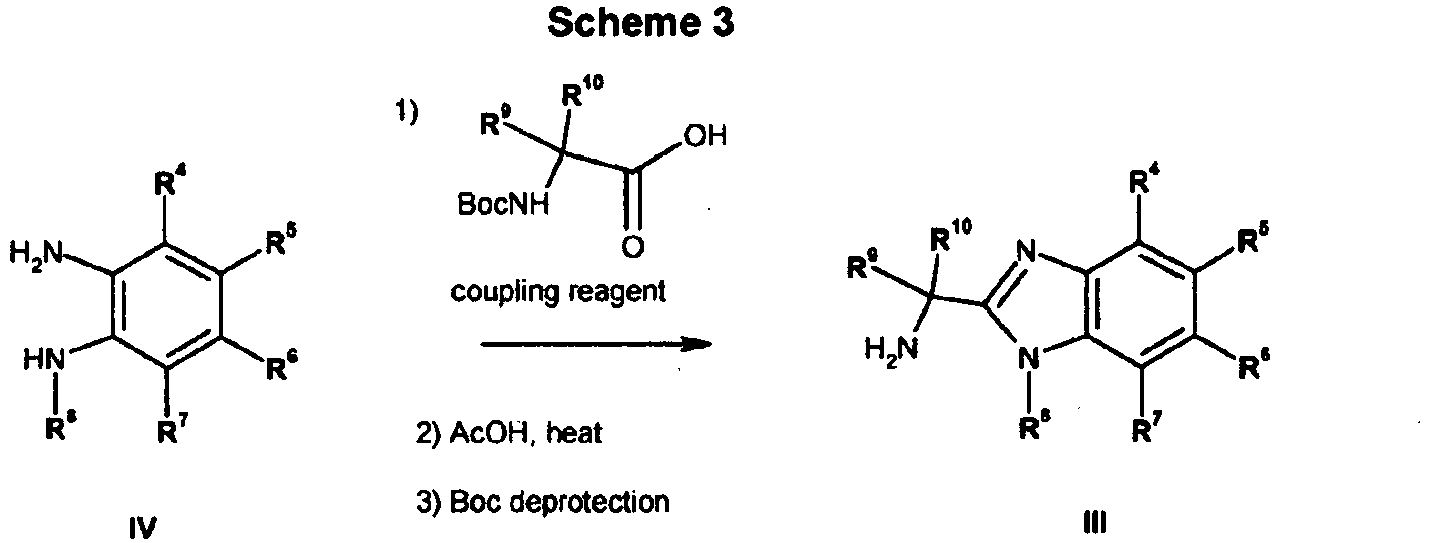
- Alternatively, amine intermediates of general formula III in Scheme 1 may be prepared from the corresponding diamine precursors of general formula IV by coupling with the appropriate Boc-protected α,α-disubstituted amino acid as illustrated in Scheme 3, using coupling reagents well known to one skilled in the art, such as TBTU, HATU, BOP, BrOP, EDAC, DCC, isobutyl chloroformate and the like. Appropriate Boc-protected α,α-disubstituted amino acids may be prepared from the free α,α-disubstituted amino acids, using standard conditions well known to one skilled in the art, such as reaction with Boc2O (di-tert-butyldicarbonate) in the presence of a tertiary amine such as triethylamine, and the like. The amide intermediate formed in the coupling reaction is then cyclized by heating with acetic acid. Deprotection of the Boc group to provide the amine intermediate of general formula III in Scheme 1 is carried out using standard reagents well known to one skilled in the art. Such reagents include, but are not limited to, trifluoroacetic acid, a solution of HCl in dioxane and the like.
- Preparation of the diamine precursors of general formula IV in Schemes 2 and 3 is preferably carried out by applying the procedures as outlined in the examples, including any adaptation of these procedures, and/or applying additional synthetic steps known to the person skilled in the art.
- Amine intermediates of general formula III in Scheme 1 wherein one of R5 and R6 is - CH=C(R50a )-COOR, wherein R50a is selected from H, (C1-6)alkyl and halogen and wherein R is, for example, methyl or ethyl, may be prepared from the corresponding amine intermediates of general formula III, or suitably protected derivatives thereof, wherein one of R5 and R6 is -COOR, wherein R is, for example, methyl or ethyl, by applying the procedures of Scheme 4 below. While Scheme 4 specifically illustrates the preparation of amine intermediates of general formula III wherein R5 is -CH=C(R50a )-COOR, it is understood by the person skilled in the art that when R6 is -COOR, the illustrated procedures, or adaptations thereof, will result in a product wherein R6 is -CH=C(R50a )-COOR. Also, it is understood by the person skilled in the art that the procedures of Scheme 4, or adaptations thereof, may also be used when converting a diamine precursor of general formula IV in Schemes 2 and 3 above, or a suitably protected derivative thereof, or a suitable intermediate in its preparation, wherein one of R5 and R6 is -COOR, to a diamine precursor of general formula IV, or a suitably protected derivative thereof, or a suitable intermediate in its preparation wherein one of R5 and R6 is -CH=C(R50a )-COOR, wherein R50a and R defined as hereinbefore.

- A suitably protected amine intermediate of general formula IIIa in scheme 4 above may be converted to an alcohol intermediate of general formula IIIb by treatment with a suitable reducing agent such as DIBAL-H and the like. Suitable protecting groups (PG) include, but are not limited to, carbamate protecting groups, such as Boc (tert-butyloxycarbonyl) and the like. Preparation of protected amine intermediates of general formula IIIa from amine intermediates of general formula III in Scheme 1 above may be carried out by standard procedures well-known to one skilled in the art. The alcohol intermediate IIIb may be converted to the aldehyde intermediate IIIc, using standard oxidizing agents well-known to one skilled in the art, such as 1,1,1-tris(acetyloxy-1,1-dihydro-1,2-benziodoxol-3-(1H)-one (also known as Dess-Martin periodinane) and the like.
The aldehyde intermediate IIIc may be converted to an amine intermediate of general formula IIId using a standard Horner-Emmons procedure, or related procedures such as Wittig procedures or the like, well known to a person skilled in the art, followed by deprotection of the PG group using well-known standard procedures. In the case where the PG group is Boc, such procedures include, but are not limited to, treatment with acidic conditions such as trifluoroacetic acid, HCl dissolved in dioxane and the like. - Amine intermediates of general formula III in Scheme 1 wherein one of R5 and R6 is - C(R50 )=CH-COOR, wherein R50 is (C1-6)alkyl and wherein R is, for example, methyl or ethyl, may be prepared from intermediate IIIc in Scheme 4 above by applying the procedures of Scheme 5 below. While Scheme 5 specifically illustrates the preparation of amine intermediates of general formula III wherein R5 is -C(R50 )=CH-COOR, it is understood by the person skilled in the art that when R6 is -CHO, the illustrated procedures, or adaptations thereof, will result in a product wherein R6 is -C(R50 )=CH-COOR. Also, it is understood by the person skilled in the art that the procedures of Scheme 5, or adaptations thereof, may also be used when converting a diamine precursor of general formula IV in Schemes 2 and 3 above, or a suitably protected derivative thereof, or a suitable intermediate in its preparation, wherein one of R5 and R6 is -CHO, to a diamine precursor of general formula IV, or a suitably protected derivative thereof, or a suitable intermediate in its preparation wherein one of R5 and R6 is -C(R50 )=CH-COOR, wherein R50 and R defined as hereinbefore.

- The aldehyde intermediate IIIc (from Scheme 4) may be converted to a ketone of general formula IIIf by alkylation with a suitable nucleophilic alkylating agent, well known to those skilled in the art, such as an alkyl lithium or the like, followed by oxidation of the intermediate secondary alcohol to the ketone, using oxidizing agents well known to one skilled in the art, such as 1,1,1-tris(acetyloxy)-1,1-dihydro-1,2-benziodoxol-3-(1 H)-one (also known as Dess-Martin periodinane) and the like. The ketone IIIf may then be converted to an amine intermediate of general formula IIId using a standard Homer-Emmons procedure, or related procedures such as Wittig procedures or the like, well known to a person skilled in the art, followed by deprotection of the PG group using well-known standard procedures. In the case where the PG group is Boc, such procedures include, but are not limited to, treatment with acidic conditions such as trifluoroacetic acid, HCl dissolved in dioxane and the like.
- Alternatively, amine intermediates of general formula III in Scheme 1 wherein one of R 5 and R 6 is -CH=C(R50a )-COOR, wherein R 50a is selected from H, (C1-6)alkyl and halogen and wherein R is (C1-6)alkyl, may be prepared from the corresponding amine intermediates of general formula III, or suitably protected derivatives thereof, wherein one of R5 and R6 is X, wherein X is a leaving group such as a halogen atom, a sulfonate ester, and the like, by applying the typical conditions of the Heck reaction, as presented in Scheme 6 and further described in the examples below. While Scheme 6 specifically illustrates the preparation of amine intermediates of general formula III wherein R5 is -CH=C(R 50a )-COOR, it is understood by the person skilled in the art that when R6 is X, the illustrated procedures, or adaptations thereof, will result in a product wherein R 6 is -CH=C(R50a )-COOR. Also, it is understood by the person skilled in the art that the procedures of Scheme 6, or adaptations thereof, may also be used when converting a diamine precursor of general formula IV in Schemes 2 and 3 above, or a suitably protected derivative thereof, or a suitable intermediate in its preparation, wherein one of R5 and R6 is X, to a diamine precursor of general formula IV, or a suitably protected derivative thereof, or a suitable intermediate in its preparation wherein one of R6 and R6 is -CH=C(R50a )-COOR, wherein R 50a and R defined as hereinbefore.

- The present invention is illustrated in further detail by the following non-limiting examples. As is well known by a person skilled in the art, reactions are performed in a nitrogen or argon atmosphere where necessary to protect reaction components from air or moisture. Temperatures are given in degrees Celsius. Flash chromatography is performed on silica gel. Solution percentages or ratios express a volume to volume relationship, unless stated otherwise. Mass spectral analyses are recorded using electrospray mass spectrometry. Analytical HPLC was carried out under standard conditions using a Combiscreen ODS-AQ C18 reverse phase column, YMC, 50 x 4.6 mm i.d., 5 µM, 120 A at 220 nM, elution with a linear gradient as described in the following table (Solvent A is 0.1% TFA in H2O; solvent B is 0.1% TFA in CH3CN):
Time (min) Flow (mL/min) Solvent A (%) Solvent B (%) 0 3.0 95 5 0.5 3.0 95 5 6.0 3.0 50 50 10.5 3.5 0 100 - Hereinbefore and hereinafter the following abbreviations or symbols are used:
- AcOH: acetic acid;
- Ac2O: acetic anhydride;
- BOC or Boc: tert-butyloxycarbonyl;
- BOP: benzotriazole-1-yloxy-tris(dimethylamino)phosphonium hexafluorophosphate;
- BroP: Bromo tris(dimethylamino)phosphonium hexafluorophosphate;
- Bu: butyl;
- CPS: counts per second;
- DAST: (diethylamino)sulfur trifluoride;
- dba: dibenzylideneacetone;
- DCC: 1,3-Dicyclohexyl carbodiimide;
- DCM: dichloromethane;
- DCMA: dicyclohexylmethylamine;
- DIBAL-H: di-iso-butylaluminum hydride
- DMEM: Dulbecco's Modified Earle Medium;
- DMF: N,N-dimethylformamide;
- DMSO: dimethylsulfoxide;
- EC50: 50% effective concentration;
- EDAC: see EDC;
- EDC: 1-(3-dimethylaminopropyl)-3-ethyl carbodiimide hydrochloride;
- ES-: electro spray (negative ionization);
- ES+: electro spray (positive ionization);
- Et: ethyl;
- Et2O: diethyl ether;
- EtOAc: ethyl acetate;
- EtOH: ethanol ;
- FBS: fetal bovine serum ;
- Fmoc: 9-fluorenylmethoxycarbonyl ;
- HATU: O-(7-azabenzotriazol-1-yl)-N,N,N',N'-tetramethyluronium hexafluorophosphate;
- HBTU: O-Benzotriazol-1-yl-N,N,N',N'-tetramethyluronium hexafluorophosphate;
- HOAT: 1-hydroxy-7-azabenzotriazole;
- HOBt: 1-Hydroxybenzotriazole;
- HPLC: high performance liquid chromatography;
- i Pr or i-Pr: iso-propyl ;
- Me: methyl;
- MeCN: acetonitrile;
- MeOH: methanol;
- MS (ES): electrospray mass spectrometry;
- NMR: nuclear magnetic resonance spectroscopy;
- PBS: phosphate buffer saline;
- Ph: phenyl;
- PG: protecting group;
- PVDF: polyvinylidene fluoride;
- RT: room temperature (approximately 25°C);
- TBME: tert-butylmethyl ether;
- TBTU: 2-(1H-benzotriazol-1-yl)-N,N,N',N'-tetramethyluronium tetrafluoroborate;
- tBu: tert.-butyl;
- Tf: trifluoromethylsulfonyl;
- TfO: trifluoromethylsulfonate;
- TFA: trifluoroacetic acid;
- THF: tetrahydrofuran;
- TLC: thin layer chromatography;
- TMS: trimethylsilyl;
- Troc: trichloroethoxycarbonyl.
-

- Indole-6-carboxylic acid 1-1 (5.0 g, 31.0 mmol) was dissolved in MeOH (100 mL), a catalytic amount of H2SO4 (1.0 mL) was added and the reaction mixture was stirred at reflux for 16 h. A small amount of solid K2CO3 was added, in order to neutralize the excess H2SO4, and stirring was continued at RT for 1h. The reaction mixture was concentrated under vacuum to remove the MeOH, diluted with saturated aqueous NaHCO3 (~50 mL) and extracted with EtOAc (~200 mL). The organic layer was washed with brine (100 mL), dried over anhydrous MgSO4 and concentrated to dryness. The resulting residue was purified by flash column chromatography, using 30% EtOAc in hexane as the eluent, to obtain the pure methyl ester 1-2 (4.78 g, 88% yield).
- The methyl ester 1-2 from step 1 (3.31 g, 18.9 mmol) was dissolved in MeCN (50 mL) and a catalytic amount of Yb(OTf)3 (586 mg, 0.95 mmol) was added. 2-Cyclopenten-1-one (7.76 mL, 94.5 mmol) was added and the reaction mixture was stirred at reflux for 16 h. The MeCN solvent was removed under vacuum, the residue was re-dissolved in EtOAc (~200 mL) and extracted with aqueous saturated NaHCO3 (~100 mL), H2O (50 mL) and brine (50 mL). The organic layer was dried over anhydrous MgSO4 and concentrated to dryness under vacuum. After purification of the residue by flash column chromatography, using 40% EtOAc in hexane as the solvent gradient, the desired cyclopentanone adduct 1-3 was isolated as isolated as a beige-colored powder (3.4 g, 70% yield).
- To a solution of the cyclopentanone adduct intermediate 1-3 from step 2 (3.81 g, 14.8 mmol) in anhydrous DMF (150 mL) at 0°C, NaH (60% dispersion in oil, 770 mg, 19.2 mmol) was added slowly. The reaction mixture was stirred at 0°C for 5 min, then Mel (1.2 mL, 19.2 mmol) was added drop-wise and stirring was continued at 0°C for 3 h. The mixture was allowed to warm-up to RT and was quenched by the addition of aqueous saturated NH4Cl (200 mL). The mixture was extracted with EtOAc (2x 500 mL) and the organic layer was washed with aqueous saturated NH4Cl (2x 200 mL) H2O (200 mL) and brine (200 mL). The combined organic layers were dried over anhydrous MgSO4, evaporated to dryness and the residue was purified by flash column chromatography (using 30% EtOAc in hexane as the eluent) to isolate the N-methylindole intermediate 1-4 as a beige solid (3.1 g, 77% yield).
- In a sealed tube, the N-methylindole internediate 1-4 from step 3 (1.4 g, 5.16 mmol) and DAST (2.7 mL, 20.6 mmol) were dissolved in CH2Cl2 (50 mL) and stirred at reflux for 3 days. The mixture was poured slowly into aqueous saturated NaHCO3 (~50 mL) and once the evolution of CO2 had stopped, the mixture was extracted with CH2Cl2 (2x 100 mL). The combined organic layers were washed with brine (50 mL), dried over anhydrous MgSO4 and concentrated to dryness. The residue was purified by flash column chromatography (using a solvent gradient from 10% to 20% EtOAc in hexane) to isolate 3-(3,3-difluorocyclopentyl)-1-methyl-1H-indole-6-carboxylic acid methyl ester 1-5 (750 mg, 50% yield).
- 3-(3,3-Difluorocyclopentyl)-1-methyl-1H-indole-6-carboxylic acid methyl ester 1-5 is converted to carboxylic acid intermediates of formula IIa, wherein R2 is defined as hereinbefore, using procedures described in
WO 03/010141 WO 03/010141 -

- A mixture of 4-chloro-3-nitrocinnamic acid 2-1 (500 mg, 2.2 mmol) and a solution of methylamine in THF (2M, 8 mL, 16 mmol) were heated in a sealed tube at 80°C for 20 hours. The mixture was then cooled to room temperature and concentrated to an orange solid 2-2 that was used in the following step without further purification.
- It will be apparent to the person skilled in the art that other diamine intermediates of general formula IV in Schemes 2 and 3 above, where R 8 is other than methyl, may be prepared by replacing methylamine (CH3NH2) in step 1 above with the appropriate R8 -NH2.
- The crude 4-methylamino-3-nitrocinnamic acid intermediate 2-2 from step1 (488 mg, 2.2 mmol) was dissolved in methanol (20 mL) and an ether solution of diazomethane was added until HPLC analysis indicated complete conversion of the acid to the methyl ester. The solution was concentrated to dryness to obtain 540 mg of the methyl ester 2-3 as an orange solid which was used in step 3 without further purification.
- The crude methyl ester 2-3 from step 2 (540 mg, ~2.2 mmol) and SnCl2 dihydrate (2.25 g, 10 mmol) were dissolved in ethanol (20 mL) and the mixture was stirred at 80°C for 4 hours. After that period, the mixture was cooled to room temperature and was slowly added to aqueous solution of saturated NaHCO3. The reaction mixture was extracted with ethyl acetate (100 mL), the organic layer was dried over anhydrous MgSO4 and the solvent was removed under reduced pressure. The residue was purified by flash column chromatography, using a gradient of hexane in ethyl acetate (from 50 % to 30 %) to give(E)-3-(3-amino-4-methylaminophenyl)acrylic acid methyl ester 2-4 as a yellow solid (245 mg).
-

- (E)-3-(3-Amino-4-methylaminophenyl)acrylic acid methyl ester 2-4 from Example 2 (40 mg, 0.194 mmol) was suspended in CH2Cl2 (3 mL) and 1-aminocyclobutanecarboxylic acid chloride hydrochloride, prepared from 1-aminocyclobutanecarboxylic acid following an adaptation of the procedure described by E. S. Uffelman et al. (Org. Lett. 1999, 1, 1157), (31 mg, 0.18 mmol) was added. The reaction mixture was stirred at room temperature for 2 hours and then concentrated to obtain a white solid. The solid was then dissolved in acetic acid (5 mL) and heated to 60°C for 20 hours. The reaction crude was diluted with aqueous saturated NaHCO3, extracted with CH2Cl2 (2x50 mL) and brine, the organic layer was dried over anhydrous MgSO4 and the solvent was removed under reduced pressure to give (E)-3-[2-(1-aminocyclobutyl)-1-methyl-1H-benzoimidazol-5-yl]acrylic acid methyl ester 3-1 as a light brown foam (53 mg).
-

- A solution of 3-cyclopentyl-1-methyl-2-pyridin-2-yl-1 H-indole-6-carboxylic acid 4-1, prepared using procedures described in
WO 03/010141
1H NMR (400 MHz, DMSO): δ 1.48-1.58 (m, 2H), 1.75-1.85 (m, 6H), 1.85-1.95 (m, 1H), 2.05-2.15 (m, 1H), 2.69-2.76 (m, 2H), 2.98-3.10 (m, 3H), 3.63 (s, 3H), 3.82 (s, 3H), 6.59 (d, J = 16 Hz, 1H), 7.42 (dd, J = 0.8 & 5.7 Hz, 1 H), 7.51 (d, J = 7.7 Hz, 1 H), 7.53 (d, J = 8.5 Hz, 1H), 7.65 (d, J = 8.5 Hz, 1H), 7.71 (d, J = 8.4 Hz, 1 H), 7.76 (d, J = 16 Hz, 1H), 7.82 (d, J = 8.4 Hz, 1 H), 7.92 (ddd, J = 1.6 & 7.8 Hz, 1H), 8.01 (s, 1 H), 8.04 (s, 1 H), 8.73 (d, J = 4.1 Hz, 1 H), 9.45 (s, 1 H). -

- 3-cyclopentyl-1-methyl-2-pyrazin-2-yl-1H-indole-6-carboxylic acid 5-1 (prepared using procedures described in
WO 03/010141
1H NMR (400 MHz, DMSO-d6): δ 1.50-1.58 (m, 2H), 1.78-1.20 (m, 7H), 2.05-2.15 (m, 1H), 2.65-2.75 (m, 2H), 2.97-3.10 (m, 3H), 3.66 (s, 3H), 3.81 (s, 3H), 6.57 (d, J = 16.0 Hz, 1H), 7.55 (dd, J = 1.0 & 8.4 Hz, 1 H), 7.68 (2d, J = 8.4 Hz, 2H), 7.75 (d, J = 16.0 Hz, 1 H), 7.78 (d, J = 11.0 Hz, 1 H), 8.00 (s, 1 H), 8.07 (s, 1 H), 8.68 (d, J = 2.3 Hz, 1 H), 8.78 (d, J=1.2 Hz, 1H), 8.82 (dd, J = 0.8 & 2.2, 1 H), 9.44 (brs, 1H). - A solution of (E)-3-(2-{1-[(3-cyclopentyl-1-methyl-2-pyrazin-2-yl-1H-indole-6-carbonyl)amino]cyclobutyl}-1-methyl-1H-benzimidazol-5-yl)acrylic acid 5-2 (compound 4003,Table 4; 60 mg, 0.087 mmol), TBTU (68 mg, 0.18 mmol), ammonium hydrogen carbonate (20 mg, 0.26 mmol) and Et3N (36 µL, 0.26 mmol) in DMSO (3 mL) was stirred at RT for 3 h. The reaction mixture was neutralized with the addition of a few drops of acetic acid, and purified on a reversed phase C18, semi-preparative HPLC column (using a solvent gradient from 5% to 100% MeCN in H2O (all solvents contain 0.1% trifluoroacetic acid)) to isolate the inhibitor 3-cyclopentyl-1-methyl-2-pyrazin-2-yl-1H-indole-6-carboxylic acid {1-[5-((E)-2-carbamoylethenyl)-1-methyl-1H-benzoimidazol-2-yl]cyclobutyl}amide 5-3 (compound 1005, Table 1) as a pale yellow amorphous solid in >95% homogeneity (17 mg, 34% yield).
1H NMR (400 MHz, DMSO-d6): δ 1.65-1.75 (m, 2H), 1.92-2.15 (m, 8H), 2.73-2.82 (m, 2H), 3.04-3.10 (m, 2H), 3.15-3.25 (m, 1H), 3.79 (s, 3H), 3.81 (s, 3H), 6.65 (d, J = 15.8 Hz, 1H), 7.06 (brs, 1 H), 7.53 (brs, 3H), 7.61 (d, J = 15.7 Hz, 1H), 7.68 (dd, J = 1.0 & 8.4 Hz, 1H), 7.80 (d, J = 8.4 Hz, 1H), 7.90 (s, 1H), 8.20 (s, 1H), 8.80 (d, J = 2.5 Hz, 1 H), 8.91 (d, J = 1.2 Hz, 1 H), 8.95 (dd, J = 2.1 & 3.7, 1 H), 9.23 (s, 1 H). -

- A solution of 2-methyl-5-nitrobenzoic acid 6-1 (10.0 g, 55.2 mmol) in MeOH (200 mL) and H2SO4 (1.0 mL) was heated to reflux while stirring for ~3 days. The solvent was evaporated under vacuum and the residue was re-dissolved in EtOAc (~200 mL), washed with cold H2O (~50 mL), cold saturated aqueous NaHCO3 (~50 mL) and cold brine (~50 mL). The organic layer was then dried over anhydrous MgSO4 and concentrated to dryness to give the methyl ester 6-2 as a white solid, which was used without purification in step 2.
- To a solution of the crude methyl ester 6-2 from step 1 (~55.2 mmol) in MeOH (200 mL), Pearlman's catalyst (20% palladium hydroxide on carbon, 1.0 g) was added and the mixture was stirred under an atmosphere of H2 for 20 h at RT. The mixture was filtered through Celite and concentrated to dryness. The residue was re-dissolved in THF (200 mL), Ac2O (6.2 mL, 66 mmol) was added and the solution was stirred at RT for 3 h. The reaction mixture was concentrated to dryness under vacuum and the residue was re-dissolved in minimum volume of t-Bu methyl ether (~150 mL). The ether suspension was stirred at RT for 1 h before hexane (~100 mL) was added to precipitate the desired acetylated intermediate as a white solid. The solid was washed with hexane and dried to give the acetylated compound 6-3 in high purity (10.1 g, 88% yield).
- A solution of the acetylated ester 6-3 from step 2 (8.42 g, 40.6 mmol) and potassium nitrate (5.0 g, 50 mmol) in AcOH:H2SO4 (1:1 ratio, 200 mL) was stirred at RT for 2 h and at 40°C for a further two hours. The crude reaction mixture was then poured slowly on ice (~1 L) and mixed for 20 min. The precipitate formed was filtered and washed several times with H2O to give a mixture of mainly two products, the desired 4-nitro isomer 6-4 and the undesired 6-nitro isomer 6-5 (1:2 ratio) which were separated after flash column chromatography using 30% EtOAc in hexane as the eluent. The pure 4-nitro isomer 6-4 was isolated as a yellow solid (2.05 g, 20% yield).
- The 4-nitro Intermediate 6-4 from step 3 (2.05 g, 8.13 mmol) was dissolved in THF (50 mL) and the solution was cooled to 0°C before Mel (2.51 mL, 40.6 mmol) and t-BuONa (4.46 g, 46.4 mmol) were added slowly. The reaction mixture was stirred at RT for 15 h, H2O (~50 mL) was added and the aqueous mixture was washed with t-butyl methyl ether (~20 mL). The aqueous layer was acidified to pH 3 with 1 N HCl and then extracted with EtOAc (~100mL). The organic layer was washed with brine (~50 mL), dried over anhydrous MgSO4 and concentrated to dryness to give the N-methylated compound 6-6 as a gummy foam which was used directly in step 5 without purification.
- It will be apparent to the person skilled in the art that other diamine intermediates of general formula IV in Schemes 2 and 3 above, wherein R8 is other than methyl, may be prepared by replacing methyl iodide (CH3I) in step 4 above with the appropriate R8 -X, wherein X is a leaving group such as Cl, Br, I, methanesulfonate (mesylate), p-toluenesulfonate (tosylate), trifluoromethanesulfonate (triflate), and the like.
- A solution of the methylated derivative 6-6 from step 4 (~8 mmol) in MeOH (10 mL) and HCl (8N, 15 mL) was stirred at 70°C for 20 h. The solvent was evaporated under vacuum and the residue was partitioned between saturated aqueous NaHCO3 (20 mL) and EtOAc (50 mL). The organic layer was washed with brine, dried over anhydrous MgSO4 and concentrated to give the methyl ester 6-7 as an orange solid (1.54 g), which was used in step 6 without purification.
- A solution of the crude methyl ester 6-7 from step 5 (1.54 g, 6.7 mmol) in MeOH (30 mL) was treated under catalytic hydrogenation conditions using Pd/C (10%, 150 mg) under an atmosphere of H2 at RT for 2 h. The reaction mixture was filtered through Celite and concentrated to give 4-amino-2-methyl-5-(methylamino)benzoic acid methyl ester 6-8 as a purple solid (1.33 g) which was sufficiently pure (confirmed by NMR) to be used without further purification.
-

- 1-((1,1-Dimethylethoxycarbonyl)amino)cyclobutanecarboxylic acid (1.40 g, 6.5 mmol) was dissolved in CH2Cl2 (45 mL) and reacted with TBTU in the presence of Et3N for a period of 30 min to pre-activate the acid. A solution of 4-amino-2-methyl-5-(methylamino)benzoic acid methyl ester 6-8 from Example 6 (1.33 g, 6.85 mmol) in CH2Cl2 (10 mL) was added slowly over a period of 30 min and stirring of the reaction mixture was continued for 20 h. The reaction mixture was concentrated to dryness, and the residue was re-dissolved in AcOH (10.0 mL) and stirred at 70°C for 2 h to achieve cyclization of the benzimidazole ring. The reaction mixture was concentrated to dryness and the residue was dissolved in EtOAc (~250 mL), extracted with aqueous saturated NaHCO3 (2x 100 mL) and brine (100 mL). The organic layer was dried over anhydrous MgSO4 and evaporated to dryness. The residue was purified by flash column chromatography (using a solvent gradient from 40% to 50% EtOAc in hexane) to obtain the pure 2-(1-tert-butoxycarbonylaminocyclobutyl)-3,6-dimethyl-3H-benzoimidazole-5-carboxylic acid methyl ester 7-1 as a beige solid (1.41 g, 55% yield) and recover some of the unreacted diamino starting material.
- 2-(1-tert-Butoxycarbonylaminocyclobutyl)-3,6-dimethyl-3H-benzoimidazole-5-carboxylic acid methyl ester 7-1 may be converted to an amine intermediate of general formula III in Scheme 1 using standard reagents well known to one skilled in the art. Such reagents include, but are not limited to, trifluoroacetic acid, a solution of HCl in dioxane, and the like. The corresponding amine intermediate of general formula III in Scheme 1 may be further elaborated to inhibitors of general formula I in Scheme 1 using the procedure of Example 4.
-

- 2-(1-tert-Butoxycarbonylaminocyclobutyl)-3,6-dimethyl-3H-benzoimidazole-5-carboxylic acid methyl ester 7-1 from Example 7 (1.41 g, 3.8 mmol) was dissolved in THF (40 mL) and the solution was cooled to 0°C. A solution of DIBAL-H (18 mL, 1 M in THF, 18 mmol) was added slowly and the reaction mixture was stirred at 0°C for 1 h and then at 50°C for 4 h. The reaction mixture was cooled to RT, a solution of potassium sodium tartrate (1M, 50 mL) was added very slowly and stirring was continued for 1 h at RT. The solution was concentrated under vacuum in order to remove most of the THF and the extracted with EtOAc (~200 mL). The organic layer was washed with saturated aqueous NaHCO3 (50 mL) and brine (50 mL), dried over anhydrous MgSO4 and concentrated to dryness. The residue was purified by flash column chromatography, using a solvent gradient from 50% EtOAc in hexane to pure EtOAc and then to 3% MeOH in EtOAc, to obtain the pure alcohol 8-1 as a yellow solid (1.09 g, 84% yield).
- A solution of the alcohol 8-1 from step 1 (1.09 g, 3.16 mmol) and Dess-Martin periodinane (1.70 g, 4.0 mmol) in CH2Cl2 (40 mL) was stirred at RT for 2 h. The solvent was evaporated under vacuum and the residue was purified by flash column chromatography, using EtOAc: hexane (1:1 ratio), to obtain the pure aldehyde 8-2 (605 mg, 56% yield).
- A solution of triethyl-2-phosphonopropionate (0.228 mL, 1.06 mmol) in THF (5.4 mL) was cooled to 0°C and NaH (42.5 mg, 60% in oil, 1.06 mmol) was added. The mixture was stirred at 0°C for 30 min before a solution of the aldehyde 8-2 from step 2 (300 mg in 3 mL of THF, 0.874 mmol) was slowly added and stirring was continued at RT for 20 h. The mixture was diluted with EtOAc (~100 mL) and washed with saturated aqueous NaHCO3 (2x 30 mL) and brine (30 mL). The organic layer was dried over anhydrous MgSO4, and concentrated to a brown residue which was subsequently purified by flash column chromatography, using a solvent gradient from 40% to 60% EtOAc in hexane, to give the N-Boc-protected ester 8-3 as a yellow foam (85 mg, 23% yield).
- Hydrolysis of the Boc protecting group was achieved quantitatively by adding 4N HCl in dioxane (2 mL) and stirring the solution at RT for 1 h. After evaporation of the solvent under vacuum, (E)-3-[2-(1-aminocyclobutyl)-3,6-dimethyl-3H-benzoimidazol-5-yl]-2-methylacrylic acid ethyl ester 8-4 was isolated pure as a yellow solid (79 mg).
- It will be apparent to the person skilled in the art that the triethyl-2-phosphonopropionate used in step 3 of this procedure can be replaced by appropriately substituted derivatives to prepare analogues of the general formula IIIe in the scheme above, wherein R50 is defined as hereinbefore. In addition, methyl esters can also be prepared in an analogous fashion using the appropriate reagent. Compound 8-4 and its analogues of general formula IIIe above may be further elaborated to inhibitors of general formula I in Scheme 1 using the procedure of Example 4.
-

- A two-necked flask (equipped with an internal thermometer) was charged with glacial AcOH (252 mL), acetic anhydride (252.0 mL) and 2-fluoro-4-methyl-1-nitrobenzene 9-1 (25.0 g, 161 mmol) at -10°C. To the cooled solution, concentrated sulfuric acid (40 mL) was added drop-wise over a period of 5 min, followed by the very slow addition of chromium (VI) oxide (45 g, 450 mmol); the rate of addition must be very slow (~1.5 h) in order to maintain the temperature below 10 °C.
- Upon addition of the CrO3, the clear colorless solution becomes amber and finally dark brown at the end of the addition. After completion of the addition, the reaction was stirred for an additional 45 min (HPLC analysis indicated ~70% completion of the reaction). The tar-like partial suspension was poured on ice (1.6 L), and the resulting slush was diluted with H2O up to a total of 3 L, at which point the product began to precipitate. After filtration, the beige solid was washed with cold H2O to obtain a white solid. The solid was then suspended in cold 2% NaHCO3 (250 mL), filtered and washed again with cold H2O to give the diacetate 9-2 (22 g, containing some of the unreacted starting material) as a white solid which was used as such in step 2.
- In a screw-cap vial, the diacetate 9-2 from step 1 (1.0 g, 3.7 mmol) was dissolved in glacial acetic acid (10.0 mL), followed by addition of H2O (1.0 mL) and concentrated HCl (1.0 mL). The resulting partially soluble mixture was heated at 115°C for 45 min. Most of the solvents were removed under vacuum to give a gummy residue, the remaining acid and H2O was azeotroped twice with CH2Cl2-hexane to give the desired semi-pure 3-fluoro-4-nitrobenzaldehyde 9-3 as a yellow solid (600 mg). This compound was further purified by flash column chromatography (using 20% EtOAc in hexanes as the eluent) to remove small amounts of unreacted 2-fluoro-4-methyl-1-nitrobenzene 9-1 (~35% overall yield).
-

- To a solution of triethyl phosphonoacetate (1.37 mL, 6.90 mmol) in THF (13 mL) at 0°C, NaH (60% dispersion in oil, 314 mg, 7.84 mmol) was added and the mixture was stirred for 30 min. After that period, 3-fluoro-4-nitrobenzaldehyde 9-3 from Example 9 (1.06 g, 6.27 mmol) was added and stirring was continued at RT for 16 h. The reaction was quenched by the addition of H2O (20 mL) and the product was extracted into EtOAc (2x 100 mL). The combined organic layers were washed with brine, dried over anhydrous MgSO4 and concentrated to give the cinnamate ester 10-1 as a light orange solid which was used in step 2 without purification.
- It will be apparent to the person skilled in the art that analogues bearing various substituents on the cinnamate double bond may be prepared by replacing the triethyl phosphonoacetate used in this procedure with appropriately substituted derivatives or by replacing the aldehyde 9-3 with an appropriate ketone. In addition, cinnamate methyl esters can also be prepared in an analogous fashion using the appropriate reagent.
- The cinnamate ester 10-1 from step 1 (~6.27 mmol) and methylamine (2M in THF, 6.3 mL, 12.5 mmol) were dissolved in DMSO (6 mL) and the reaction mixture was stirred at RT for 2 h. After that period, the mixture was diluted with EtOAc (100 mL) and the organic layer was washed with H2O (3x 30 mL) and brine (50 mL), dried over anhydrous MgSO4 and concentrated to give the crude methylamino intermediate 10-2 as an orange solid. This product was used in step 3 without purification.
- It will be apparent to the person skilled in the art that other diamine intermediates of general formula IV in Schemes 2 and 3 above, where R8 is other than methyl, may be prepared by replacing methylamine (CH3NH2) in step 2 above with the appropriate R8 -NH2.
- The 3-methylamino-4-nitrocinnamate ester 10-2 from step 2 (2-2, ~150 mg) and SnCl2 dihydrate (950 mg, 4.2 mmol) were dissolved in ethanol (10 mL) and the mixture was stirred at 80° C for 20 hours. The mixture was cooled to room temperature and concentrated to dryness. The residue was dissolved in ethyl acetate (100 mL) and was slowly added to an aqueous solution of saturated NaHCO3 and stirred for 30 min. The organic layer was then extracted with ice cold brine, dried over anhydrous MgSO4 and the solvent was removed under reduced pressure. The residue was purified by flash column chromatography (using a gradient from 70 % to 60 % of hexane in ethyl acetate) to give (E)-3-(4-amino-3-(methylamino)phenyl)acrylic acid ethyl ester 10-3 as a yellow solid (100 mg).
- (E)-3-(4-Amino-3-(methylamino)phenyl)acrylic acid ethyl ester may be converted into amine derivatives of general formula III in Scheme 1 following the procedures of Examples 3 or 7, and further elaborated to inhibitors of general formula I in Scheme 1 using the procedure of Example 4.
-

- A solution of 2-methyl-4-nitrobenzonitrile 11-1 (2.53 g, 15.6 mmol) in aqueous NaOH (10%, 31.0 mL) and aqueous H2O2 (10%, 16 mL) was stirred at reflux for 2.5 h. The water circulation in the cooling condenser was halted for 5-10 min (to allow removal of the dissolved ammonia), and then the water flow was restored and reflux continued for an additional 1.5 h. The reaction mixture was cooled to RT, HCl (concentrated) was added drop-by-drop until the pH was -3, at which point the carboxylic acid 11-2 precipitated as an orange-color solid (3.60 g). The carboxylic acid was used in step 2 without purification.
- A solution of the acid 11-2 from step 1 (3.60 g, 15.6 mmol) in MeOH (30 mL) and HCl (4N HCl in dioxane, 2.0 mL) was heated to reflux for 48 h. The solvent was evaporated to dryness under vacuum and the residue obtained was re-dissolved in EtOAc (200 mL). The solution was washed with aqueous saturated NaHCO3 (100 mL) and brine (100 mL), dried over anhydrous MgSO4 and evaporated to dryness to give the ester intermediate 11-3 as a yellow-colored solid (2.38 g). This material was used in step 3 without purification.
- To a solution of the ester 11-3 from step 2 (1.27 g, 6.5 mmol) in H2SO4 (conc., 13.0 mL), pre-cooled to 0°C, KNO3 (760 mg, 7.5 mmol) was added very slowly. After a few min of stirring, the ice bath was removed and the reaction mixture was stirred at RT for 20 h. The reaction mixture was then poured slowly on ice (~50 mL) and stirred until the ice had melted, and the desired dinitro product 11-4 was precipitated and filtered (~1.55 g of light yellow and slightly wet solid). The compound was used as such in step 4.
- To a solution of the dinitro intermediate 11-4 from step 3 (1.55 g, 6.45 mmol) in THF (15.0 mL) at 0°C, a solution of methylamine (2M in THF, 15.2 mL, 32.3 mmol) was added, the ice-bath was removed and the reaction mixture was stirred at RT for 1.5 h. The solution was concentrated to remove some of the THF and then diluted with EtOAc (~100 mL). The organic layer was washed with H2O (~50 mL) and brine (~50 mL), dried over anhydrous MgSO4 and concentrated to give the methylamino intermediate 11-5 as an orange solid (1.26 g). The compound was used in step 5 without further purification.
- It will be apparent to the person skilled in the art that other diamine intermediates of general formula IV in Schemes 2 and 3 above, where R 8 is other than methyl, may be prepared by replacing methylamine (CH3NH2) in step 4 above with the appropriate R8-NH2.
- To a solution of the methylamino derivative 11-5 from step 4 (1.25 g, 5.58 mmol) in EtOH-H2O (110 mL, 1:1 ratio), K2CO3 (4.62 g, 33.5 mmol) and Na2S2O4 were added and the mixture was stirred at RT for 3 h. More H2O (~30 mL) was added and the mixture was concentrated under vacuum to remove most of the EtOH. The reaction mixture was then diluted with EtOAc (~200 mL) and the organic layer was separated and extracted with brine. The organic layer was dried over anhydrous MgSO4 and concentrated under vacuum to give 5-amino-2-methyl-4-(methylamino)benzoic acid methyl ester 11-6 (927 mg, 86% yield) as a brown-colored solid.
- Compound 11-6 may be converted into the corresponding amine intermediates of general formula III in Scheme 1, wherein R6 is CH3 and R5 is -COOCH3, following the procedures of Examples 3 or 7. These amine intermediates may be further converted into amine intermediates of general formula III in Scheme 1, wherein R6 is CH3 and R5 is -CH=C(R50 )-COOR, by following the procedure of Example 8. All these amine intermediates of general formula III in Scheme 1 may be further elaborated to inhibitors of general formula I in Scheme 1 using the procedure of Example 4.
-

- 2-Ethoxy-4-nitrobenzoic acid 12-1 (1.56 g; 7.38 mmol) was dissolved in methanol (15 mL) and the resulting solution stirred at 0°C. A solution of diazomethane in ethyl ether was slowly added until the yellow color persisted and was stirred for a further 20 min. The solvents were evaporated to afford the methyl ester 12-2 as a pale yellow solid (1.66 g, quant.) which was used in step 2 without further purification.
- The ester 12-2 from step 1 (1.60 g; 7.10 mmol) was dissolved in dry toluene and the solution cooled to -78°C under a nitrogen atmosphere. A solution of diisobutylaluminum hydride in tetrahydrofuran (1M; 8 mL; 8 mmol) was added and the reaction mixture allowed to warm to ambient temperature. Two additional portions of DIBAL-H were added in this way (7 and 10 mL) after 1 h and a further 1.5 h. 0.5 h after the last addition, the reaction was cooled to 0°C and 1 N HCl (25 mL) was slowly added and the mixture stirred vigorously for 0.5 h. The organic solvents were then evaporated and the aqueous residue was extracted with ethyl acetate (2 x 50 mL) and washed with water (50 mL) and brine (50 mL). The combined extracts were then dried over MgSO4 and evaporated to afford the alcohol 12-3 as a pale yellow, fibrous solid (1.40 g; quant.) which was used as such in step 3.
- A turbid solution of 1,1,1-tris(acetyloxy-1,1-dihydro-1,2-benziodoxol-3-(1H)-one (Dess-Martin periodinane) (2.32 g; 5.47 mmol) in dichloromethane (40 mL + 5 mL rinse) was added to a stirred solution of the alcohol 12-3 from step 2 (0.98 g; 4.97 mmol) in DCM (40 mL) and the reaction stirred at ambient temperature under a nitrogen atmosphere. After 4 h, saturated NaHCO3/10 % Na2S2O3 (1:1, 160 mL) was added and the mixture stirred vigorously until the phases were clear (ca. 0.5 h). The organic phase was separated and the aqueous phase was extracted with dichloromethane (50 mL) and washed with saturated NaHCO3 (2 x 150 mL). The combined organic phases were then dried over MgSO4 and evaporated to yield the aldehyde 12-4 as a pale yellow solid (960 mg; 99 %) which was used as such in step 4.
- Sodium hydride (95% dry powder; 158 mg; 6.25 mmol) was suspended in anhydrous THF (10 mL) and trimethyl phosphonoacetate (0.945 mL; 5.84 mmol) added dropwise at 0°C under a nitrogen atmosphere resulting in a solid white mass which could not be stirred. A solution of the aldehyde 12-4 from step 3 (950 mg; 4.87 mmol) in THF (7 mL + 3 mL rinse) was then added dropwise resulting in a yellow colour and slow dissolution of the white solid mass. After the addition, the reaction was allowed to warm to ambient temperature. After 15 h, the cloudy reaction mixture was evaporated to a pale yellow solid which was extracted with ethyl acetate (2 x 50 mL) and washed with saturated NaHCO3 (3 x 75 mL). The combined extracts were dried over MgSO4 and evaporated to afford the cinnamate ester 12-5 as pale yellow solid (1.212 g; 99 %) which was used in step 5 without further purification.
- It will be apparent to the person skilled in the art that the trimethyl phosphonoacetate used in this procedure can be replaced by appropriately substituted derivatives to prepare analogues bearing various substituents on the cinnamate double bond.
- The 4-nitro-2-ethoxycinnamate 12-5 from step 4 (303 mg, 1.206 mmol), was dissolved in concentrated sulfuric acid (3 mL) and the solution cooled to 0°C. Potassium nitrate (128 mg, 1.27 mmol) was added and the mixture stirred for 3.5 h at room temperature. After completion, the reaction mixture was poured over ice and the precipitated solid was collected by filtration. The crude product 12-6 was washed with water, dried under vacuum and used without purification in step 6 (390 mg).
- The dinitro derivative 12-6 from step 5 (390 mg) was dissolved in THF (3 mL) and methylamine in THF (3.02 mL of a 2M solution in THF) was added. After stirring for 30 min, volatiles were removed under reduced pressure and the orange solid 12-7 used as such in step 7.
- It will be apparent to the person skilled in the art that other diamine intermediates of general formula IV in Schemes 2 and 3 above, where R 8 is other than methyl, may be prepared by replacing methylamine (CH3NH2) in step 6 above with the appropriate R8 -NH2.
- The nitro arene 12-7 from step 6 was suspended in a mixture of EtOH (12 mL) and water (12 mL) and K2CO3 (1.00 g, 6 equivalents) was added followed by sodium hydrosulfite (1.26 g, 6 equivalents). The mixture was stirred for 4 h at room temperature and EtOH was removed under reduced pressure. The residue was extracted with EtOAc and the organic phase washed with brine and dried (MgSO4). Removal of the solvent and purification of the residue by flash chromatography (50 to 75% EtOAc in hexane) gave (E)-3-(5-amino-2-ethoxy-4-(methylamino)phenyl)acrylic acid methyl ester 12-8 (162 mg).
- (E)-3-(5-Amino-2-ethoxy-4-(methylamino)phenyl)acrylic acid methyl ester 12-8 may be converted to amine intermediates of general formula III in Example 1 using the procedures described in Examples 3 or 7 and further elaborated to inhibitors of general formula I in Scheme 1 using the procedure of Example 4.
- It will also be apparent to one skilled in the art that inhibitors of general formula I in Scheme I wherein R6 is -OCH3 and R5 is -CH=C(R50 )-COOR may be prepared using the procedure of Example 12 but starting from a precursor identical to compound 12-1, except wherein the ethoxy group has been replaced with a methoxy group.
-

- Methyl 2-methoxy-5-nitrobenzoate 13-1 (6.21 g, 29.4 mmol) was suspended in MeOH (100 mL) and 20% Pd(OH)2/C (500 mg) was added. The mixture was stirred under a hydrogen atmosphere (1 atm) for 18 h. The catalyst was removed by filtration and the solvent evaporated under reduced pressure to give a residue of compound 13-2 (5.256 g), which was used as such in step 2.
- The aniline 13-2 from step 1 (5.23 g) was dissolved in THF (50 mL) and acetic anhydride (2.984 g) was added. The mixture was stirred overnight at room temperature. The white suspension was concentrated under reduced pressure to a white paste, tert-butylmethyl ether (TBME, 20 mL) was added and while stirring, hexane (100 mL) was added slowly. The suspension was then stirred for an additional 2h and the solid collected by filtration. The product 13-3 was washed with hexane and dried in air (6.372 g).
- 90% Nitric acid (9 mL) was diluted with water (9 mL) and cooled to 0°C. The anilide 13-3 from step 2 (5.905 g) was added in one portion and the mixture stirred for 30 min in the ice-water bath. The reaction mixture was then added dropwise to ice-water (700 mL) and the precipitated yellow solid was collected by filtration, washed with water and dried in air. The orange solid (5.907 g) was shown by 1H NMR to consist of a 2:1 mixture of compounds. Extraction of the aqueous filtrate from above with EtOAc gave an additional 1g of material that was combined with the first crop and purified by flash chromatography on silica gel using 015% EtOAc in CHCl3 as eluent. An orange solid 13-4 (4.11 g) was obtained (one isomer).
- The nitroanilide 13-4 from step 3 (3.580 g) was dissolved in THF (50 mL) and the solution cooled in ice. Iodomethane (4.155 mL, 66.7 mmol, 5 equivalents) and sodium tert-butoxide (6.414 g, 66.7 mmol, 5 equivalents) were added in two portions at a 3.5 h interval. Stirring at room temperature was continued for an additional 20 h after the second addition. THF was evaporated under reduced pressure and water (100 mL) was added. The deep red solution was washed with TBME (100 mL). The aqueous phase was acidified with conc. HCl and extracted with EtOAc (2 x 100 mL). The combined organic extracts were dried and concentrated to give compound 13-5 as a dark red powder (3.78 g) that was used directly in step 5.
- It will be apparent to the person skilled in the art that other diamine intermediates of general formula IV in Schemes 2 and 3 above, wherein R 8 is other than methyl, may be prepared by replacing methyl iodide (CH3I) in step 4 above with the appropriate R8 -X, wherein X is a leaving group such as Cl, Br, I, methanesulfonate (mesylate), p-toluenesulfonate (tosylate), trifluoromethanesulfonate (triflate), and the like.
- The free carboxylic acid 13-5 from step 4 (3.75 g) was suspended in 8M HCl (100 mL) and the mixture stirred at 100°C for 8 h. After cooling to room temperature, volatiles were evaporated under vacuum and the residue was co-evaporated 3 times with MeOH.
- The residue from step 5 was suspended again in MeOH (100 mL) and cooled in ice-water. Thionyl chloride (5.10 mL, 5 equivalents) was added dropwise and the suspension stirred at 65°C for 4 h. Volatiles were removed under reduced pressure and the residue 13-6 co-evaporated twice with MeOH (100 mL) and then toluene (2 x 100 mL).
- The residue 13-6 from step 6 was then dissolved in MeOH (200 mL), 20% Pd(OH)2/ C (500 mg) was added and the mixture stirred overnight under 1 atm of hydrogen gas. The catalyst was then removed by filtration and the solution evaporated to dryness. The residue was dissolved in EtOAc and the solution washed with aqueous NaHCO3 and dried (MgSO4). Removal of solvents gave a solid that was suspended in TBME (50 mL) and heated to 60°C for 30 min. An equal volume of hexane was then slowly added to the hot solution and the precipitated 4-amino-2-methoxy-5-(methylamino)benzoic acid methyl ester 13-7 was collected by filtration, washed with TBME-hexane and dried (2.00 g).
- 4-Amino-2-methoxy-5-(methylamino)benzoic acid methyl ester 13-7 may be converted into the corresponding amine intermediates of general formula III in Scheme 1 following the procedures of Examples 3 or 7. These amine intermediates may be further converted into amine intermediates of general formula III in Scheme 1, wherein R6 is -OCH3 and R6 is -CH=C(R50 )-COOR, by following the procedure of Example 8. All these amine intermediates of general formula III in Scheme 1 may be further elaborated to inhibitors of general formula I in Scheme 1 using the procedure of Example 4.
- It will be apparent to one skilled in the art that the procedure of Example 13 may be applied to compound 12-2 from Example 12, or to its analogue wherein the ethoxy group has been replaced by a methoxy group, to produce diamine precursors of general formula IV in Scheme 2 or 3, wherein R6 is OCH3 or OEt. Such diamine precursors may also be converted to amine intermediates of general formula III in Scheme 1 following the procedures of Examples 3 or 7, and further elaborated to inhibitors of general formula I in Scheme 1, using the procedure of Example 4.
-

- 3-Fluoro-4-nitrobenzaldehyde 9-3 from Example 9 (2.0 g, 11.8 mmol) was dissolved in THF (30 mL) and excess methylamine (2M in THF, -21 mL, 42 mmol) was added. The reaction mixture was stirred at RT until complete conversion was confirmed by HPLC (~2-3 h). The turbid solution was then evaporated to an orange solid which was extracted with ethyl acetate (2x 50 mL) and washed with 1 N HCl (shaken until the deep burgundy colour dissipated; 100 mL), water (100 mL) and brine (60 mL). The combined extracts were dried over anhydrous MgSO4 and evaporated to give the methylamino intermediate 14-1 as an orange powder which was used in step 2 without any purification.
- It will be apparent to the person skilled in the art that other diamine intermediates of general formula IV in Schemes 2 and 3 above, where R8 is other than methyl, may be prepared by replacing methylamine (CH3NH2) in step 1 above with the appropriate R8 -NH2.
- A solution of n-BuLi (2.5 M in THF, 14.4 mL, 36.0 mmol) in anhydrous THF (60 mL) was added slowly to a solution of TMS-diazomethane (10% in hexane, 18 mL, 36.0 mmol) at -78°C. The mixture was stirred at -78°C for 30 min, before a solution of the methylamino intermediate 14-1 from step 1 (2.16 g, 12.0 mmol, dissolved in 2 mL THF) was added slowly. The reaction mixture was stirred at -78°C for 1 h, and then allowed to warm up to RT and to stir for an additional 3 h before quenching by addition of H2O. The crude mixture was partitioned between saturated aqueous NaHCO3 (30 mL) and EtOAc (60 mL), the aqueous layer was extracted again with EtOAc (2x 60 mL) and the combined organic layers were washed with brine, dried over anhydrous MgSO4 and concentrated to dryness. The residue was purified by flash column chromatography (using 20% EtOAc in hexane as the eluent) to give the desired alkyne 14-2 as a light brown solid (445 mg, ~21% yield).
- In a thick-walled pressure tube, the alkyne 14-2 from step 2 (260 mg, 1.48 mmol) was dissolved in dry DMSO (6.0 mL) and TMS-azide (0.392 mL, 2.96 mmol) was added. The reaction was heated to 140°C for 2 h, then cooled and extracted with EtOAc (50 mL) and washed with brine (2x 50 mL). The organic layer was dried over anhydrous MgSO4 and evaporated to obtain the crude triazole 14-3 as a yellow-brown solid which was used in step 4 without further purification.
- The crude triazole intermediate 14-3 from step 3 (~1.10 mmol) was dissolved in EtOH (10 mL) and H2O (6 mL) which resulted in some precipitation of the starting material, K2CO3 (0.91 g, 6.58 mmol) and sodium hydrosulfite (1.15 g, 6.58 mmol) were added and the reaction mixture was stirred for 2 h at RT. The reaction mixture was then extracted with EtOAc (50 mL), the organic layer was washed with H2O (50 mL) and brine (30 mL), dried over anhydrous MgSO4 and evaporated to a brown gum which contained N2 -methyl-4-(1H-[1,2,3]triazol-4-yl)benzene-1,2-diamine 14-4 (amongst other minor products).
- The crude N2 -methyl-4-(1H-[1,2,3]triazol-4-yl)benzene-1,2-diamine may be converted, without further purification, into the corresponding amine intermediates of general formula III in Scheme 1 following the procedures of Examples 3 or 7, and further elaborated to inhibitors of general formula I in Scheme 1, using the procedure of Example 4.
-

- To a solution of 4-chloro-2-fluoro-1-nitrobenzene 15-1 (1.18 g, 6.72 mmol) in DMSO (7 mL), a solution of methylamine (2M in THF, 13.6 mL, 26.9 mmol) was added and the reaction mixture was stirred at RT for 24 h. The solution was diluted with EtOAc (~300 mL), the organic layer was washed with H2O (3x 50 mL) and brine (50 mL), dried over anhydrous MgSO4 and concentrated under vacuum to give the methylamino derivative 15-2 as a yellow solid (1.19 g). The crude material was used in step 2 without purification.
- It will be apparent to the person skilled in the art that other diamine intermediates of general formula IV in Schemes 2 and 3 above, where R8 is other than methyl, may be prepared by replacing methylamine (CH3NH2) in step 1 above with the appropriate R8 -NH2.
- A mixture of the methylamino derivative 15-2 from step 1 (105 mg, 0.56 mmol) and N-methylpiperazine (0.5 mL) was heated to 90°C while stirring for 3 h and then at RT for an additional 15 h. The reaction mixture was diluted with EtOAc (~50 mL) and the organic layer was washed with H2O (3x 10 mL) and brine (20 mL), dried over anhydrous MgSO4 and concentrated under vacuum to give the piperazine derivative 15-3 as a yellow solid (140 mg) which was used in step 3 without purification.
- One skilled in the art will readily see that piperazine derivatives bearing other substituents may be readily used in place of N-methylpiperazine in Step 2 above to prepare intermediates leading to other compounds of formula (I).
- To a solution of the piperazine derivative 15-3 from step 2 (140 mg) in EtOH (6 mL), Pd/C (10%, 25 mg) was added and the mixture was stirred under an atmosphere of H2 at RT for 15 h. The reaction mixture was filtered and the solvent evaporated to give a fairly pure sample of the desired product, N2-methyl-4-(4-methylpiperazin-1-yl)benzene-1,2-diamine 15-4, as a purple colored oil (133 mg).
- N2 -Methyl-4-(4-methylpiperazin-1-yl)benzene-1,2-diamine 15-4 was converted, without further purification, into the corresponding amine intermediates of general formula III in Scheme 1 following the procedures of Examples 3 or 7, and further elaborated to inhibitors of general formula I in Scheme 1, using the procedure of Example 4.
-

- 4-Imidazol-1-yl-N2 -methylbenzene-1,2-diamine 16-1 was prepared using the procedure of Example 15, except that imidazole was used instead of N-methylpiperazine in step 2. 4-Imidazol-1-yl-N2 -methylbenzene-1,2-diamine 16-1 may be converted into the corresponding amine intermediates of general formula III in Scheme 1 following the procedures of Examples 3 or 7, and further elaborated to inhibitors of general formula I in Scheme 1, using the procedure of Example 4.
-
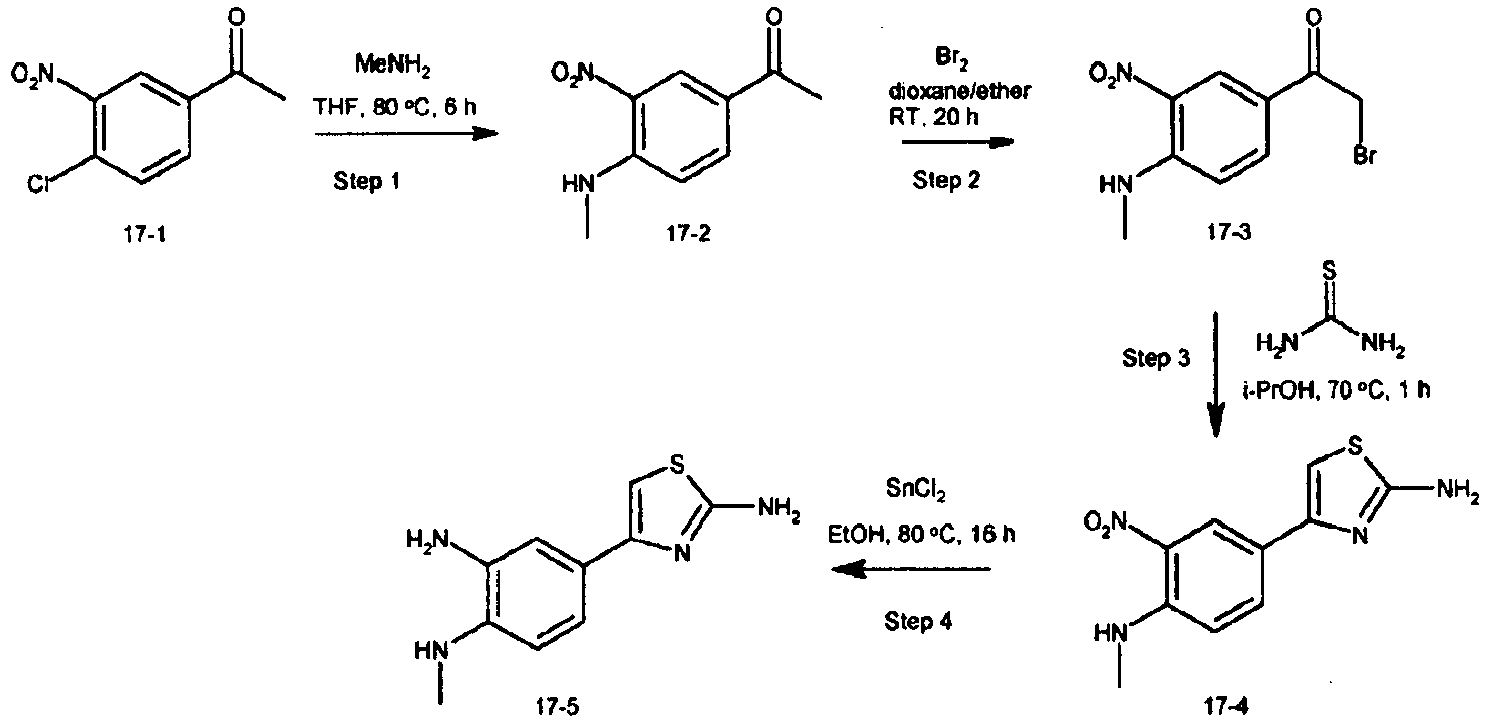
- A mixture of 4-chloro-3-nitroacetophenone 17-1 (3.00 g, 15.0 mmol) and methylamine (15.0 mL, 2M in THF, 30.0 mmol) were placed in a sealed pressure tube and stirred at 80°C for 6 h and at RT for 20 h. The reaction mixture was concentrated to dryness and the residue was purified by flash column chromatography (using 20-30% hexane in EtOAc) to isolate the desired pure product 17-2 as an orange solid (980 mg, 34% yield).
- It will be apparent to the person skilled in the art that other diamine intermediates of general formula IV in Schemes 2 and 3 above, where R8 is other than methyl, may be prepared by replacing methylamine (CH3NH2) in step 1 above with the appropriate R8 -NH2.
- To a solution of the 4-methylamino-3-nitroacetophenone intermediate 17-2 from step 1 (700 mg, 3.6 mmol) in dioxane:ether (10 mL, 1:1 ratio), Br2 (0.20 mL, 3.96 mmol) was added slowly and the reaction mixture was stirred at RT for 20 h. The reaction mixture was concentrated to dryness and the residue was re-dissolved in EtOAc (200 mL). The solution was washed with saturated aqueous NaHCO3 (2x 100 mL) and brine (100 mL), dried over anhydrous MgSO4 and concentrated to dryness to give the crude bromoketone intermediate 17-3 (1.0 g) which was used in step 3 without purification.
- A solution of the bromoketone intermediate 17-3 from step 2 (1.0 g) and thiourea (548 mg, 7.2 mmol) in i-PrOH (30 mL) was stirred at 70°C for 1 h. The mixture was cooled to RT, and the precipitate formed was filtered, washed with diethyl ether and dried to give the desired aminothiazole intermediate 17-4 as an orange solid (~ 1.0 g). This compound was used in step 4 without purification.
- A solution of the nitro intermediate 17-4 from step 3 (500 mg, ~2 mmol) and SnCl2 dihydrate (2.25 g, 10 mmol) in EtOH (15 mL) was stirred at 80°C for 16 h. The mixture was poured slowly on NaHCO3 and stirred vigorously for 30 min. The mixture was extracted with CH2Cl2 (2x 200 mL) and the combined organic layers were dried over anhydrous Na2SO4 and concentrated to dryness. The residue was purified by flash column chromatography (using a solvent gradient from 30% hexane in EtOAc to 100% EtOAc and then to 3% MeOH in EtOAc) to recover some unreacted starting material and the pure diamine product, 4-(2-aminothiazol-4-yl)-N 1-methylbenzene-1,2-diamine 17-5, (167 mg, 38% yield).
- 4-(2-Aminothiazol-4-yl)-N 1-methylbenzene-1,2-diamine 17-5 was converted into the corresponding amine intermediates of general formula III in Scheme 1 following the procedures of Examples 3 or 7, and further elaborated to inhibitors of general formula I in Scheme 1, using the procedure of Example 4.
- The free amino moiety of the aminothiazole substituent of an inhibitor of general formula I in Scheme 1, or a suitable intermediate in its preparation, may be alkylated by using procedures well known to those skilled in the art, or acetylated by using procedures well known to those skilled in the art, such as treatment with acetic anhydride, acetyl chloride, or the like. Alternatively, replacing thiourea in step 3 above with a suitably N-substituted thiourea will give intermediates wherein the free amino moiety has been substituted.
-

- To a solution of m-chlorobenzoic acid 18-1 (12.5 g, 79.8 mmol) in sulfuric acid (100 mL) at 40°C, potassium nitrate (approximately half of the total amount; 22.0 g, 218 mmol) was added slowly, portion-wise, with stirring, (temperature maintained below 70°C). The solution was then heated slowly to 105°C, the remaining KNO3 was slowly added (temperature maintained below 110°C), and finally the solution was heated to 130°C for 15 min, allowed to cool back to RT, and poured on ice (~ 500 mL). The yellow solid formed was filtered, washed with water (50 mL), air dried for 2 h to yield 13.25 g (67%) of a 2:1 mixture of the desired product 18-2 and an unknown side-product. The mixture was used as such in step 2.
- The crude dinitro carboxylic acid 18-2 (~13 g) from step 1 was dissolved in methanol (100 mL) and sulfuric acid (13.0 mL) was added very slowly as the reaction is very exothermic. The reaction mixture was stirred at reflux for 18 h. The solution was poured on ice (~500 mL), and the product was extracted with EtOAc (2x 100 mL). The organic layers were washed with 5% aqueous NaHCO3 (3x 100 mL), dried over anhydrous MgSO4 and evaporated to give the desired dinitro methyl ester intermediate 18-3 (9.54 g, 69% yield).
- To a solution of the above dinitro arylchloride 18-3 (9.5 g, 36.5 mmol) in DMF (20 mL) at 0°, methylamine (2M in THF, 39.2 mL, 74.7 mmol) was added with stirring. After a few minutes a crystalline solid was formed, the suspension was allowed to warm-up to RT and stirring was continued for 2 h. The reaction mixture was partitioned between H2O (200 mL) and EtOAc (100 mL). The organic solution was washed with 5% aqueous NaHCO3 (100 mL), brine (3x 100 mL), dried over anhydrous MgSO4 and the solvent was evaporated to dryness to give the desired product 18-4 as a yellow-orange solid (7.09 g,76% yield).
- It will be apparent to the person skilled in the art that other diamine intermediates of general formula IV in Schemes 2 and 3 above, where R8 is other than methyl, may be prepared by replacing methylamine (CH3NH2) in step 3 above with the appropriate R8 -NH2.
- To a EtOH /H2O (100 mL, 1:1 ratio) suspension of the above dinitro aniline intermediate 18-4, K2CO3 (10.3 g, 74.5 mmol) was added with vigourous stirring, followed by the portion-wise addition of sodium hydrosulfite (13.0 g, 74.5 mmol). The yellow suspension turned blood red then black, became more homogeneous (slightly exothermic), then biphasic and a white precipitate was formed. After 30 minutes of stirring at RT, the EtOH was partly evaporated and the residue was diluted with H2O (100 mL). The reaction mixture was extracted with EtOAc (2x 75 mL), the combined organic layers were dried over anhydrous MgSO4 and evaporated to yield a black amorphous solid 18-5 (1.26 g, 55%) which was used as such in step 5.
- To a stirred, ice cold solution of the above trianiline 18-5 (400 mg, 2.05 mmol) in acetonitrile (5 mL) under nitrogen, triethylamine (0.57 mL) was added, followed by the drop-wise addition of TrocCl (0.282 mL, 2.05 mmol). The deep purple solution was stirred and allowed to warm-up to RT over 2 h. The solvent was evaporated, the residue taken into EtOAc (30 mL), washed with 5% aqueous NaHCO3 (2 x 20 mL) and brine (20 mL), dried over anhydrous MgSO4, and the solvent evaporated to dryness. The residue was purified by flash chromatography (using TLC grade silica gel and a solvent gradient from 30% to 60% EtOAc in hexane) to give the desired product 18-6 as a beige amorphous solid (459 mg, 60% yield).
- To a stirred solution of above Troc-protected aniline derivative 18-6 (100 mg, 0.27 mmol) in CH2Cl2 (1 mL), pyridine (0.032 mL, 0.4 mmol) followed by Fmoc-Cl (80 mg, 0.31 mmol) were added. The reaction mixture was stirred at RT for 2 h. The mixture was diluted with EtOAc (30 mL), the suspension was washed with 5% aqueous NaHCO3 (2 X 10 mL), dried over anhydrous MgSO4 and evaporated to dryness. The residue was purified by flash chromatography (using TLC grade silica gel and eluting with a solvent gradient from 20% to 30% EtOAc in hexane) to give two samples of the desired Fmoc-protected product 18-7; 47 mg of very pure product and 100 mg of slightly lower purity.
- The doubly protected (Troc- and Fmoc-protected) trianinile derivative 18-7 (100 mg, ~0.17 mmol) was dissolved in THF (1 mL) and acetic acid (0.25 mL) followed by freshly activated zinc (20.0 mg, 0.31 mmol) were added. The reaction mixture was stirred vigorously at RT under nitrogen for 2h. The evolution of reaction was monitored by HPLC and after 2 h only ~30 % conversion was observed, therefore, more zinc (15 mg) was added and stirring was continued at 60°C for 4 h. The reaction mixture was diluted with EtOAc (30 mL), filtered over Celite and the filtrate was cooled in an ice bath and washed with 5% aqueous NaHCO3 (20 mL); care must be taken to prevent build-up of excessive pressure. The organic layer was washed with brine, dried over anhydrous MgSO4, and the solvent was evaporated to give the mono-protected intermediate 4-amino-2-(9H-fluoren-9-ylmethoxycarbonylamino)-5-(methylamino)benzoic acid methyl ester 18-8 as a white crystalline solid (68 mg, 96 % yield).
- Compound 18-8 was converted into the corresponding Fmoc-protected amine intermediates of general formula III in Scheme 1 following the procedures of Examples 3 or 7, and further elaborated to Fmoc-protected inhibitors of general formula Ic above, using the procedure of Example 4. These Fmoc-protected inhibitors of general formula Ic, or appropriate Fmoc-protected amine intermediates in their synthesis, may also be converted to Fmoc-protected inhibitors of general formula Id above, using the procedures of steps 1, 2 and 3 of Example 8. In both cases, removal of the Fmoc protecting group may be carried out by treatment with piperidine, as is well known to one skilled in the art, and saponification of the ester group may be carried out under basic conditions (following protocols well known to those skilled in the art) to give inhibitors such as compounds 1032 (Table 1) and 3060 (Table 3). The free amine moiety of these inhibitors can be further reacted with reagents commonly known to those skilled in the art, such as isopropyl chloroformate and the like, to form inhibitors such as compound 1033 (Table 1).
-

- The bromoindole 19-1 (prepared as described in Example 12 of
WO 03/010141 - The ester 19-2 (300 mg, 0.72 mmol) was suspended in DMSO (10 mL) and the suspension warmed gently to dissolve the solid. The slightly cloudy yellow solution was cooled and stirred while 2.5 N NaOH (2.0 mL, 5.0 mmol, 8.6 equiv.) was added and stirring was continued for 4 h at RT. The mixture was slowly poured into 0.5 N HCl (200 mL). The yellow precipitate was collected by filtration, washed with water and dried to give compound 19-3 (273 mg, 94% yield, 100% homogeneity).
-

- The 2-bromoindole derivative 19-1 (1.009 g, 3.00 mmol, prepared as described in Example 12 of
WO 03/010141 -

- The 2-bromoindole 19-1 (prepared as described in Example 12 of
WO 03/010141 -

- The 2-vinylindole ester 21-1 (Example 21) (0.250 g, 0.88 mmol) was dissolved in MeOH (15 mL) and the solution hydrogenated (1 atm H2 gas) over 10% Pd(OH)2 / C (50 mg) for18 h. The catalyst was then removed by filtration and the filtrate evaporated under reduced pressure to give crude ester 22-1. The residue was dissolved in DMSO and saponified with NaOH in the usual manner to give the desired 2-ethylindole derivative 22-2 as a white solid (0.211 g, 88 % yield): MS-ES m/z 272.1 (MH+).
-

- The 2-stannylindole 23-1 (1.280 g, 2.34 mmol; prepared using methods described in
WO 03/010141 -

- Following a similar procedure to that described in Example 22 for the 2-ethyl analog, the 2-isopropylindole derivative 24-2 was obtained as a white solid (88 % yield): MS-ES mlz 286.1 (MH+).
-

- Cyclopropyl bromide (0.471 g, 3.90 mmol) was dissolved in anhydrous THF (20 mL) and the solution cooled to -78°C under an Ar atmosphere. nBuLi (1.0 M in hexane, 3.60 mL, 3.60 mmol) was added and the mixture stirred for 15 min. ZnBr2 (0.878 g, 3.90 mmol) in THF (15 mL) was then added, the mixture allowed to warm up to RT and the reaction stirred for 15 min. The 2-bromoindole 19-1 (prepared as described in Example 12 of
WO 03/010141 -

- The 2-bromoindole 19-1 (prepared as described in Example 12 of
WO 03/010141 - Analogs containing other N-linked heterocyclic substituents at C-2 of the indole ring were prepared in a similar fashion, starting with nitrogen-based heterocycles such as imidazoles and triazoles.
-

- 2,4-Dichloronitrobenzene (27-1) (61 g, 0.32 mol), triethylamine (68 mL, 0.48 mol), and 2.0 M methylamine in THF (500 mL, 1.0 mol) were mixed in a 3-L round bottom flask equipped with a Graham condenser under argon pressure. The solution was then heated at 40°C with stirring and a white solid started to form (Et3NH+Cl-). After heating for ~6 hrs, TLC (in 20% ethyl acetate in hexane) showed that the reaction was ~60% complete. Another two equivalents of the methylamine solution in THF (330 mL) was added and the mixture was heated at 40°C with stirring for another 16 hours. TLC showed that all starting material was consumed. The reaction mixture was allowed to cool down to room temperature and the white solid was removed by filtration and washed thoroughly with THF. The filtrate was concentrated under reduced pressure and re-dissolved in 800 mL of dichloromethane, washed with water and brine, and dried over Na2SO4. The solvents were removed in vacuo to give compound 27-2 as an orange solid (59.5 g, quantitative), which was pure enough to use in next step.
- To a dry pressure tube was added compound 27-2 (2.88 g, 15 mmol), Pd2(dba)3(414 mg, 0.45 mmol), P(t-Bu)3 (0.1 M solution in dioxane, 18 mL, 1.8 mmol), and N,N-dicyclohexylmethylamine (3.6 mL, 16.5 mmol) under argon atmosphere. n-Butyl acrylate (2.4 mL, 16.5 mmol) was degassed with argon for 35 minutes before being added to the mixture. The tube was then sealed and the mixture was heated at 110°C with stirring over the weekend. The reaction was cooled to ambient temperature and diluted with ethyl acetate (200 mL). The solid residue was removed by filtration of the mixture through a silica gel pad and it was washed with ethyl acetate (700 mL). The filtrate was concentrated in vacuo and co-evaporated with hexane three times. The red solid was then stirred with hexanes (40 mL) at 60°C. The mixture was cooled to 0°C for 15 minutes and the red solid was collected by filtration and washed with hexanes, and was further dried under high vacuum (3.4 g, 81% yield). The product 27-3 was about 90% pure by NMR. Additional product can be obtained from the filtrate by purification on flash column.
- Compound 27-3 was converted to compound 27-4 using the method of Example 11, step 5.
- Compound 27-4 was converted to compound 27-5 using the method of Example 3.
-

- 4-Amino-3-nitrobenzoic acid 28-1 (15.00 g, 82 mmol) was dissolved in AcOH (200 mL) and sulfuryl chloride (6.62 mL, 82 mmol) was added. The mixture was stirred for 2 h at RT, after which additional sulfuryl chloride (1.5 mL) was added to complete the reaction. After stirring for an additional 1 h at RT, the reaction mixture was poured over ice and the precipitated solid collected by filtration. The product 28-2 was washed with water, air dried and used directly in the next step.
- The crude product 28-2 was dissolved in MeOH (300 mL) and conc. H2SO4 (1 mL) was added. The mixture was refluxed for 2 days after which point the conversion was -75 % complete. Volatiles were removed under reduced pressure and the residue was partitioned between EtOAc and water. The mixture was basified by slow addition of saturated aqueous Na2CO3 and the organic phase separated. The extract was washed with brine, dried (Na2SO4) and concentrated to give 28-3 as a beige solid (12.32 g) that was used directly in the next step.
- The nitroaniline 28-3(11.32 g, 49 mmol), sodium hydrosulfite (35.54 g, 204 mmol) and NaHCO3 (17.15 g, 204 mmol) were dissolved in 3:2 EtOH - water (600mL). The orange mixture was stirred for 20 h at RT. EtOH was then removed under reduced pressure and the product extracted with EtOAc. The extract was washed with water and brine, dried (Na2SO4) and evaporated to give compound 28-4 a brown solid (4.60 g, 46 % yield) that was used without purification in the next step.
- The diamine 28-4 (1.00 g, 5.0 mmol), N-Boc-1-aminocyclobutanecarboxylic acid (1.07 g, 5.0 mmol), HATU (2.20 g, 5.8 mmol) and Et3N (2.10 mL, 15.0 mmol) were dissolved in DMF (30 mL) and the mixture stirred for 2 days at RT. The reaction mixture was poured onto ice and the precipitated solid collected by filtration. The material was washed with water, dissolved in EtOAc and the extract washed with brine. The solution was then dried (Na2SO4) and concentrated under reduced pressure. The residue was dissolved in AcOH and heated to 80 °C for 3 h. HPLC analysis indicated complete conversion to the desired benzimidazole derivative. AcOH was removed under reduced pressure, the residue taken up in EtOAc and the solution washed with aqueous NaHCO3 and brine. After drying (MgSO4), removal of solvent gave compound 28-5 as an orange solid (563 mg) that was used directly in the next step.
- The benzimidazole 28-5 (1.63 g, 4.29 mmol) and K2CO3 (2.96 g, 21.45 mmol) were suspended in DMF (10 mL) and iodomethane (0.27 mL, 4.30 mmol) was added. The mixture was stirred for 3 h at RT. The reaction mixture was then poured over ice and the precipitated solid was collected by filtration. The material was washed with water, dissolved in EtOAc, and the solution washed twice with 5 % aqueous citric acid and brine. After drying (MgSO4) and removal of volatiles under reduced pressure, compound 28-6 was obtained as a brown solid (1.44 g) that was used directly in the next step.
- The methyl ester 28-6 (1.22 g, 3.10 mmol) was dissolved in THF (30 mL) and LiBH4 (0.243 g, 11.14 mmol) was added in small portions at RT. The mixture was then stirred at 40°C for 16 h. Since conversion was still not complete, additional LiBH4 (0.100 g, 4.6 mmol) was added and the mixture stirred for an additional 3 h at 70°C. The reaction mixture was cooled to RT and the residue diluted with EtOAc. Water was carefully added and the organic phase separated. The extract was washed with water and brine, and dried (MgSO4). The crude alcohol 28-7 (961 mg) was combined with other batches and purified by flash chromatography.
- Purified alcohol 28-7 from above (0.450 g, 1.02 mmol) was dissolved in DCM (20 mL) and Dess-Martin periodinane (0.551 g, 1.30 mmol) was added. The mixture was stirred for 2 h at RT. (Carbethoxymethylene)triphenylphosphorane (0.550 g, 1.58 mmol) was then added and the mixture was refluxed for 20 h. Volatiles were then removed under reduced pressure and the residue dissolved in 1:1 TFA- DCM to effect removal of the Boc protecting group. After stirring for 1 h at RT, volatiles were removed under reduced pressure and the residue was partitioned between EtOAc and 1 N HCl. The aqueous phase containing the product was separated, neutralized with 2M Na2CO3 and extracted 2 X with EtOAc. The extract was dried (Na2SO4) and concentrated to give compound 28-8 as a white foam (212 mg) that was purified by flash chromatography using 80 - 100 % EtOAc in hexane as eluents. The desired benzimidazole fragment was obtained as a white solid (66 mg).
-

- 10 N HCl (2 mL) was added to a solution of 3-fluoro-4-nitro-benzoic acid (29-1) (10 g, 54.0 mmol) in 300 mL of MeOH and the solution was refluxed for 15 h. The mixture was then concentrated, the residue was diluted with EtOAc, and the organic phase was washed with 2 X water and saturated aqueous NaHCO3, dried (MgSO4), filtered and evaporated to give 10.45 g (97 % yield) of compound 29-2 as a white solid. The compound was used as such for the next reaction.
- Methylamine (80 mL of a 2N solution in THF) was added dropwise to a solution of compound 29-2 (10 g, 50.2 mmol) in 100 mL THF at 0 °C. The mixture was further stirred at 0°C for 20 min., then at room temperature for 15 h. The volatiles were then evaporated, and the residue was diluted with EtOAc, and the organic phase was washed with 2 X water, saturated aqueous NaHCO3, dried (MgSO4), filtered and evaporated to give 10.21 g (96 % yield) of comound 29-3 as an orange solid. The compound was used as such for the next reaction.
- Palladium (10% on charcoal, 1 g) was added to a solution of compund 29-3 (10 g, 47.6 mmol) in 400 mL of a 1/1 mixture of THF-absolute EtOH. The mixture was stirred under hydrogen atmosphere for 16 h, then the solution was filtered to remove the catalyst and concentrated to give 8.5 g (99 % yield) of compound 29-4 as an off-white solid. The compound was used as such for the next reaction.
- Compound 29-4 was converted to compound 29-5 using the method of Example 7.
- A mixture of compound 29-5 (730 mg, 2.03 mmol) and hydrazine monohydrate (500 µL, 10.3 mmol) in 5 mL ethanol was heated in a screw-cap vial at 85°C for 72 h. The solution was then concentrated, diluted with CH2Cl2 and the organic layer was washed with water. The organic layer was dried (Na2SO4), filtered, and evaporated to yield 642 mg (88%) of compound 29-6 as a grey-white solid that was used as such in the following step.
- Triethylamine (190 µL, 1.36 mmol) was added to a solution of compound 29-6 (350 mg, 0.97 mmol) and 1,1'-Carbonyl diimidazole (190 mg, 1.17 mmol) in THF (5 mL). The mixture was stirred at room temperature for 15 h. Volatiles were removed, and the residue was diluted with EtOAc, washed with water, brine, and the organic layer was dried (Na2SO4), filtered and evaporated to yield 318 mg (85% yield) of compound 29-7 as a waxy white solid that was used as such in the next step.
- TFA (3 mL) was added dropwise to a suspension of compound 29-7 (150 mg, 0.39 mmol) in dichloromethane (10 mL) and the resulting solution was stirred for 1 h. The volatiles were evaporated to yield 150 mg (quant. yield) of the trifluoroacetate salt of the desired compound 29-8 as a beige solid.
-

- Potassium carbonate (32 mg, 0.23 mmol) was added to a solution of compound 29.7 (80 mg. 0.21 mmol) in DMF (1 mL). The suspension was stirred at room temperature for 15 min. lodomethane (12.5 µL, 0.2 mmol) was then added and the mixture was stirred for 3 h at room temperature. The mixture was diluted with EtOAc, washed with water (3 X), brine, then the organic phase was dried (MgSO4), filtered and evaporated to yield 67 mg (81% yield) of a beige solid. Treatment with TFA as described in Example 29, step 7 gave 57 mg (quant. yield) of the trifluoroacetate salt of the desired compound 30-1 as a beige solid.
Compound 30-1 may be coupled to indole intermediates of general formula II to give compounds of formula I, using the procedures of Examples 4 and 34, step 1. -

- NaOH (10N ,11 mL, 110 mmol) was added to a solution of compound 29-5 (5.0 g, 13.9 mmol) in a 3:2:1 mixture of THF, MeOH and water (180 mL) and the solution was stirred overnight at room temperature. The mixture was then concentrated, the pH was adjusted to 4 using 1 N HCl, and the mixture was extracted with EtOAc. The organic layer was washed with brine, dried (MgSO4), filtered and evaporated to give compound 31-1 (3.94g, 82% yield) as a white solid. The compound was used as such for the next reaction.
- 1,1'-carbonyldiimidazole (702 mg, 4.33 mmol) was added to a solution of compound 31-1 (1 g, 2.90 mmol) in THF (24 mL). The solution was stirred for 15 h and was then added dropwise to a solution of the malonate anion (prepared via the addition of Et3N (0.81 mL, 5.80 mmol) and MgCl2 (690 mg, 7.25 mmol) to a solution of potassium monoethylmalonate (1 g, 5.96 mmol) in acetonitrile (10 mL) followed by stirring at room temperature for 2.5 h) at 0°C. The resulting mixture was then warmed slowly to room temperature and stirred for a total of 48 h. The mixture was concentrated and toluene was added. The mixture was cooled to 10-15°C and hydrolyzed slowly via the addition of 1 M HCl until the pH reached 3-4. The layers were then separated and the organic layer was diluted with EtOAc, washed with water, dried and evaporated to give a yellow oil. The product was purified by flash chromatography (Eluent: Hexane: AcOEt 4:6 to give 885 mg (74% yield) of compound 31-2 as a white solid.
- Methylhydrazine (29 µL, 0.55 mmol) was added to a solution of compound 31-2 (100 mg, 0.24 mmol) in EtOH (2.5 mL). The mixture was stirred at 80°C for 15 hrs. The mixture was then concentrated and water was added, followed by the addition of 1 N HCl to adjust the pH to 6-7. The aqueous layer was extracted 3 times with EtOAc, and the organic phase was dried (MgSO4) and concentrated to give 94 mg (98% yield) of a pale yellow solid. Treatment with TFA in dichloromethane as described in Example 29, step 7, gave 93 mg (quant. yield) of the trifluoroacetate salt of compound 31-3.
Compound 31-3 may be coupled to indole intermediates of general formula II to give compounds of formula I, using the procedures of Examples 4 and 34, step 1. -

- TBTU (380 mg, 1.18 mmol) and triethylamine (380 µL, 380 2.73 mmol) were added to a solution of compound 31-1 (350 mg, 1.01 mmol) and ethyl carbazate (120 mg, 1.15 mmol) in DMF (5 mL). The mixture was stirred for 15 h at room temperature and then diluted with EtOAc. The resulting organic suspension was washed with 2 X water and 1 X NaHCO3(aq.) sat. THF was then added to the organic layer to obtain a solution that was dried (MgSO4), filtered and concentrated. The residue was triturated with EtOAc to give 290 mg (66 %) of compound 32-1 as a beige solid. The compound was used as such for the next reaction.
- Lawesson Reagent (70 mg, 0.17 mmol) was added to a solution of compound 32-1 (150 mg, 0.35 mmol) in dioxane (10 mL) at 100°C. The resulting mixture was stirred at 100°C for 8 h. and then 140°C for 4 h. The mixture was then cooled to 100°C, and an additional portion of Lawesson Reagent (70 mg, 0.17 mmol) was added. The solution was then heated at 100°C for 15 h. The mixture was concentrated to dryness, and the solid residue was triturated with EtOAc, and filtered. The resulting beige solid (100 mg) was treated with TFA as described in Example 29, step 7, to give 93 mg of the trifluoroacetate salt of compound 32-2.
Compound 32-2 may be coupled to indole intermediates of general formula II to give compounds of formula I, using the procedures of Examples 4 and 34, step 1. -

- Commercially available 1,3-dibromobenzene 33-1 (4.1 mL, 33.9 mmol) was dissolved in concentrated sulfuric acid (35 mL) which was cooled in an ice-bath. Potassium nitrate (3.4 g, 33.9 mmol) was added slowly (in small portions) so as to maintain the internal reaction temperature below 10°C. The reaction mixture was stirred for an additional 30 min and then poured into 1 L of ice. The yellow precipitate formed (33-2) was filtered and washed with water, dried under reduced pressure and used directly in the following step.
- A mixture of compound 33-2 (6.3 g, 22.4 mmol) and methylamine hydrochloride (3.0 g, 44.8 mmol) in DMF (50 mL) and cooled to 0°C. Triethylamine (9.4 mL, 67 mmol) was added and the mixture was allowed to stir at RT for 3.5 h, then heated at 70°C overnight. The mixture was poured into water and the resulting precipitate was filtered. The filtrate was extracted with EtOAc (3X) and the extract was washed with water (3X) and saturated NaCl, dried (MgSO4), filtered and concentrated to give a mixture of compounds 33-3 and 33-4 as an orange solid (4.8 g), which was used as is in the next step.
- Reduction of the nitro compound 33-3 with Na2S2O4/K2CO3 was carried out using the method described in Example 11, step 5. Compound 33-5 (1.5 g, -20 % yield over the 3 steps) was isolated from the reaction mixture after column chromatography, using a solvent gradient of EtOAc in hexanes from 17% to 25%.
- The dianiline 33-5 was converted to compound 33-6, using the method described in Example 7.
- Argon was bubbled through a mixture of compound 33-6 (300 mg, 0.79 mmol), lithium chloride (67 mg, 1.6 mmol), PPh3 (31 mg, 0.12 mmol) and 2-tributylstannanylpyrimidine (365 mg, 0.99 mmol) in DMF (6.0 mL) for 15 minutes. Pd(PPh3)4 (91 mg, 0.079 mmol) and Cul (15 mg, 0.079 mmol) were added and the mixture was heated at 100°C for 24 h. The mixture was diluted with EtOAc and the organic phase was washed with water and brine, then dried (MgSO4) and concentrated to give a yellow oil which was purified by flash chromatography (hexane: EtOAc 3:7 to 2:8) to give compound 33-7 as a yellow solid (100 mg, 24%).
- Compound 33-7 may be deprotected using standard conditions as described in Example 29, step 7, and the resulting amine coupled to indole intermediates of generatl formula II to give compounds of formula I, using the procedures of Examples 4 and 34, step 1.
- It will be apparent to one skilled in the art that the preparation of analogous intermediates bearing similar heterocyclic or aromatic moieties can be carried out using this procedure or modifications thereof. Alternatively, the coupling reaction of Step 5 may be carried out using the conditions typical of the well-known Suzuki reaction (A. Suzuki, Pure Appl. Chem. (1994) 66, 213; N. Miyaura and A. Suzuki, Chem. Rev. (1995) 95, 2457.).
-

- Compound 19-3 (Example 19) and compound 34-1 (prepared from compound 10-2 using the procedure of Example 3) were coupled using the method of Example 4 to give compound 34-2 (compound 3085, Table 3) as a dark yellow solid (9.3%).
1H NMR (400 MHz, DMSO-d6), δ 1.63 (bs, 2H), 1.80-1.95 (m, 6H), 1.95-2.10 (m, 2H), 2.70 (ddd, J = 9.3 & 10.6 Hz, 2H), 2.99 (m, 2H), 3.65-3.75 (m, 1H), 3.76 (s, 3H), 3.85 (s, 3H), 6.54 (d, J = 15.6 Hz, 1H), 7.52 (d, J = 8.4 Hz, 1 H), 7.59 (d, J = 8.4 Hz, 1H), 7.64 (d, J = 8.2 Hz, 1H), 7.70 (d, J = 15.9 Hz, 1H), 7.74 (d, J = 8.4 Hz, 1 H), 7.86 (s, 1H), 8.12 (s, 1 H), 9.18 (s, 2H), 9.20 (s, 1 H), 12.25 (s, 1 H). -

- TBTU (350 mg, 1.09 mmol) and triethylamine (380 mL, 2.73 mmol) were added to a solution of compound 35-1 (compound 1025, Table 1) (487 mg, 0.89 mmol) and tert-butyl carbazate (130 mg, 0.98 mmol) in DMF (8 mL). The mixture was stirred for 2 h at room temperature and then diluted with EtOAc. The resulting organic suspension was washed with 2 X water and 1 X saturated aqueous NaHCO3. THF was then added to the organic layer and the resulting solution was dried (MgSO4), filtered and concentrated. The residue was triturated with EtOAc to give 421 mg (72 %) of compound 35-2 as a beige solid. The compound was used as such for the next reaction.
- TFA (3 mL) was added dropwise to a solution of of compound 35-2 (200 mg, 0.3 mmol) in dichloromethane (3 mL) and the resulting solution was stirred for 2 h. The volatiles were evaporated to yield 170 mg (quant. yield) of the trifluoroacetate salt of compound 35-3 which was used without further purification.
- 1,1'-Carbonyl diimidazole (25 mg, 0.15 mmol) was added in one portion to a solution of compound 35-3 (100 mg, 0.13 mmol) and triethylamine (80 µL, 0.57 mmol) in 2 mL THF, and the resulting solution was stirred at room temperature for 4 h. The mixture was then concentrated under reduced pressure, diluted with 4 mL DMSO, and directly purified on a reversed phase C18, semi-preparative HPLC column (using a solvent gradient from 5% H2O in MeCN to 100% MeCN) to isolate compound 35-4 (compound 1128, Table 1) as a yellow amorphous solid in >95% homogeneity (29 mg, 39% yield). 1H NMR (400 MHz, DMSO): δ 1.54-1.68 (m, 2H), 1.79-1.93 (m, 6H), 1.94-2.05 (m, 1 H), 2.09-2.21 (m, 1H), 2.75-2.85 (m, 2H), 3.05-3.25 (m, 3H), 3.69 (s, 3H), 3.90 (s, 3H), 7.49 (m, 1H), 7.57-7.72 (m, 3H), 7.82-7.92 (m, 2H), 7.94-8.02 (m, 1H), 8.06-8.15 (m, 2H), 8.78 (d, J = 3.9 Hz, 1 H), 9.45 (s, 1 H), 12.62 (s, 1 H).
-

- C-(Di-imidazol-1-yl)-methyleneamine (25 mg, 0.16 mmol) was added in a single portion to a solution of compound 35-3 (Example 35) (80 mg, 0.14 mmol) in THF (4 mL). The resulting solution was heated to 70°C for 16 h, after which time a white precipitate was observed. The reaction was then concentrated under reduced pressure, dissolved in 4 mL DMSO and directly purified on a reversed phase C18, semi-preparative HPLC column (using a solvent gradient from 5% H2O in MeCN to 100% MeCN) to isolate compound 36-1 (compound 1129, Table 1) as a yellow amorphous solid in >95% homogeneity (19 mg, 23% yield).
1H NMR (400 MHz, DMSO): δ 1.54-1.67 (m, 2H), 1.79-1.94 (m, 6H), 1.95-2.06 (m, 1H), 2.11-2.23 (m, 1 H), 2.74-2.84 (m, 2H), 3.19-3.05 (m, 3H), 3.69 (s, 3H), 3.91 (s, 3H), 7.49 (dd, J = 1.8 & 5.7 Hz, 1 H), 7.59-7.71 (m, 3H), 7.86-7.92 (m, 2H) 7.96-8.01 (m, 1H), 8.06-8.10 (m, 1H), 8.10 (s, 1 H), 8.78 (d, J = 4.3 Hz, 1 H), 9.51 (s, 1H). -

- A suspension of compound 35-3 (Example 27) (50 mg, 0.09 mmol) and triethylorthoformate (1 mL, 6 mmol) in dioxane (3 mL) was heated at reflux for 18 h. The resulting almost clear solution was evaporated to dryness, and the residue was dissolved in DMSO (1 mL) and purified on a reversed phase C18, semi-preparative HPLC column (using a solvent gradient from 5% H2O in MeCN to 100% MeCN) to isolate compound 37-1 (compound 1130, Table 1) as a yellow amorphous solid in >95% homogeneity (27 mg, 53% yield).
1H NMR (400 MHz, DMSO): δ 1.55-1.68 (m, 2H), 1.79-1.93 (m, 6H), 1.95-2.04 (m, 1H), 2.12-2.20 (m, 1H), 2.82-2.74 (m, 2H), 3.15-3.05 (m, 3H), 3.69 (s, 3H), 3.92 (s, 3H), 7.49 (dd, J = 2.2 & 5.3 Hz, 1H), 7.56-7.73 (m, 3H), 7.93-8.05 (m, 3H), 8.11 (s, 1 H), 8.33 (s, 1 H), 8.79 (d, J = 4.3 Hz, 1 H), 9.37 (s, 1 H), 9.44 (s, 1 H). -

- TBTU (45 mg, 0.14 mmol) and triethylamine (49 mL, 0.35 mmol) were added to a solution of compound 38-1 (prepared using procedures described in
WO 03/010141
1H NMR (400 MHz, DMSO): δ 1.54-1.68 (m, 2H), 1.79-1.93 (m, 6H), 1.93-2.04 (m, 1H), 2.07-2.20 (m, 1H), 2.72-2.82 (m, 2H), 3.00-3.15 (m, 3H), 3.67 (s, 3H), 3.89 (s, 3H), 7.57-7.72 (m, 3H), 7.79-7.95 (m, 3H), 8.10 (s, 2H), 8.80 (d, J = 2.9 Hz, 1H), 9.45 (s, 1 H), 12.63 (s, 1H). - The compounds of the invention were tested for inhibitory activity against the hepatitis C virus RNA dependent polymerase (NS5B), according to protocol described in
WO 03/010141 - The compounds of the invention were tested for inhibitory activity against polio virus RNA dependent RNA polymerase in the format that is described for the HCV polymerase, with the exception that poliovirus polymerase was used in place of the HCV NS5B polymerase, as is described in
WO 03/010141 - Huh-7 cells with a stable subgenomic HCV replicon that encodes a modified luciferase reporter gene (expressed as a luciferase-FMDV2A-neomycin phosphotransferase fusion gene) were established as previously described (Lohman et al., 1999. Science 285: 110-113; Vroljik et al., 2003 J.Virol Methods 110:201-209.), with the exception that replicon cells were selected with 0.25 mg/mL G418. The amount of luciferase expressed by selected cells directly correlates with the level of HCV replication. These cells, designated as MP-1 cells, are maintained in Dulbecco's Modified Earle Medium (DMEM) supplemented with 10% FBS and 0.25 mg/mL neomycin (standard medium). The cells are passaged by trypsinization and frozen in 90% FBS/10% DMSO. During the assay, DMEM medium supplemented with 10% FBS, containing 0.5% DMSO and lacking neomycin, was used (Assay medium). The day of the assay, MP-1 cells were trypsinized and diluted to 100 000 cells/mL in assay medium. 100 µL is distributed into each well of a black 96-well ViewPlate™ (Packard). The plate was then incubated at 37°C with 5% CO2 for two hours.
Reagents and Materials: Product Company Catalog # Storage DMEM Wisent Inc. 10013CV 4°C DMSO Sigma D-2650 RT Dulbecco's PBS Gibco-BRL 14190-136 RT Fetal Bovine Serum Bio-Whittaker 14-901 F -20°C/4°C Geneticin (G418) Gibco-BRL 10131-027 -20°C/4°C Trypsin-EDTA Gibco-BRL 25300-054 -20°C/4°C ViewPlate™-96, Black Packard 6005182 RT Backing tape, Black Packard 6005189 RT PVDF 0.22µm Filter Unit Millipore SLGV025LS RT Deep-Well Titer Plate Polypropylene Beckman 267007 RT - The test compound in 100% DMSO was first diluted in assay medium to a final DMSO concentration of 0.5%. The solution was sonicated for 15 min and filtered through a 0.22 µM Millipore Filter unit. Into column 3 of a Polypropylene Deep-Well Titer Plate, the appropriate volume is transferred into assay medium to obtain the starting concentration (2x) to be tested. In columns 2 and 4 to 12, add 200 µL of assay medium (containing 0.5% DMSO). Serial dilutions (1/2) are prepared by transferring 200 µL from column 3 to column 4, then from column 4 to column 5, serially through to column 11. Columns 2 and 12 are the no inhibition controls.
- A volume of 100µL from each well of the compound dilution plate was transferred to a corresponding well of the Cell Plate (Two columns will be used as the "No inhibition control"; ten [10] columns are used for the dose response). The cell culture plate was incubated at 37°C with 5% CO2 for 72 hours.
- Following the 72 h incubation period, the medium was aspirated from the 96-well assay plate and a volume of 100 µL of 1X Glo Lysis Buffer (Promega) previously warmed to room temperature was added to each well. The plate was incubated at room temperature for 10 min with occasional shaking. A black tape was put at the bottom of the plate. 100 µL of Bright-Glo luciferase substrate (Promega) previously warmed to room temperature was added to each well followed by gentle mixing. The luminescence was determined on a Packard Topcount instrument using the Data Mode Luminescence (CPS) with a count delay of 1 min and a count time of 2 sec.
Product Company Catalog # Storage Glo Lysis Buffer Promega E266A 4°C Bright-Glo Luciferase Assay System Promega E2620 -20°C - The luminescence determination (CPS) in each well of the culture plate was a measure of the amount of HCV RNA replication in the presence of various concentrations of inhibitor. The % inhibition was calculated with the following equation:

- A non-linear curve fit with the Hill model was applied to the inhibition-concentration data, and the 50% effective concentration (EC50) was calculated by the use of SAS software (Statistical Software; SAS Institute, Inc. Cary, N.C.).
- All compounds listed in Tables 1 to 4 below were found to have unexpectedly good activity in the cell-based HCV RNA replication assay described in Example 41.
- Retention times (tR) for each compound were measured using the standard analytical HPLC conditions described in the Examples. As is well known to one skilled in the art, retention time values are sensitive to the specific measurement conditions. Therefore, even if identical conditions of solvent, flow rate, linear gradient, and the like are used, the retention time values may vary when measured, for example, on different HPLC instruments. Even when measured on the same instrument, the values may vary when measured, for example, using different individual HPLC columns, or, when measured on the same instrument and the same individual column, the values may vary, for example, between individual measurements taken on different occasions.
TABLE 1 
wherein R2, R3, R6, R6, R9 , and R10 are given in the table. Cpd. # R2 R3 R5 R6 
tR (min) MS (M+H)+ 1001 

H 

6.6 640.3 1002 

H 
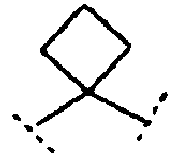
5.2 638.2 1003 

H 

5.3 636.2 1004 


H 
5.1 617.3 1005 


H 
5.5 574.3 1006 


H 
4.6 602.3 Cpd. # R 2 R3 R5 R6 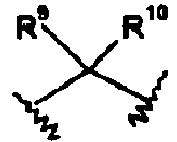
tR (min) MS (M+H)+ 1007 


H 
5.6 590.4 1008 


H 
5.0 576.3 1009 


H 
5.1 603.3 1010 


H 
4.9 588.3 1011 


H 
4.8 586.3 1012 


H 
5.7 645.2 1013 

H 

4.9 588.3 1014 


H 
4.6 603.3 1015 


H 
6.5 577.2 1016 


H 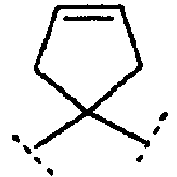
4.5 601.3 1017 


H 
6.4 575.3 1018 


H 
5.5 587.2 1019 


H 
6.2 551.2 1020 

H 

6.0 577.2 1021 

H 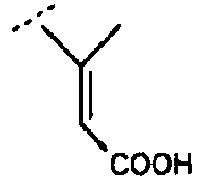

4.7 588.3 1022 

H 

4.8 588.3 1023 

H 
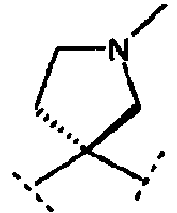
4.7 617.4 1024 

H 

4.0 570.3 1025 

H COOH 
4.4 548.2 1026 


H 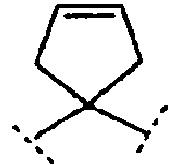
6.4 621.3 1027 

H 

6.1 622.3 1028 

H 

5.8 606.3 1029 

COOH 

6.0 581.2 1030 

COOH H 
5.9 537.3 1031 

COOH H 
5.5 566.3 1032 

NH2 COOH 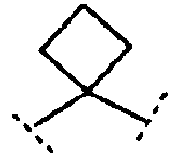
6.3 552.2 1033 


COOH 
7.2 638.3 1034 

H 

5.3 594.2 1035 

H 

4.2 603.3 1036 

COOH CH3 
5.9 551.3 1037 

-OCH3 COOH 
6.3 567.3 1038 

H 

4.4 571.2 1039 

H 

5.0 630.3 1040 

H 

6.0 617.2 1041 

H 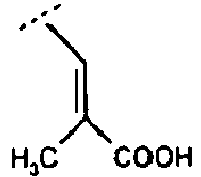

6.4 601.2 1042 

H 

6.2 623.2 1043 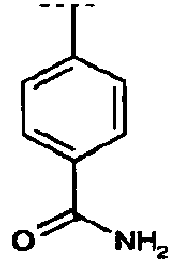

H 

4.5 630.3 1044 

H 

6.0 617.2 1045 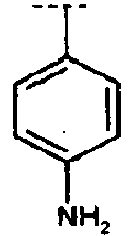

H 
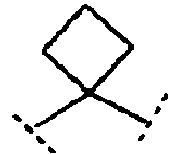
4.1 602.2 1046 

H 

6.0 617.2 1047 

H 

3.6 616.3 1048 

H 

6.0 631.2 1049 

H 

6.0 635.2 1050 

H 

4.9 644.2 1051 

H 

5.5 620.2 1052 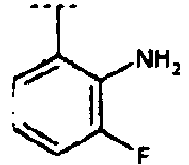

H 

5.8 620.2 1053 

H 

4.2 618.2 1054 

H 

5.6 622.2 1055 

H 
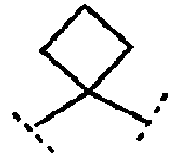
5.3 618.2 1056 

H 

5.9 636.2 1057 

H 

5.2 606.2 1058 

H 

5.6 618.2 1059 

H 
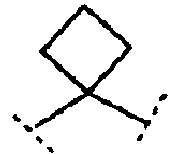
5.6 620.2 1060 

H 

6.2 607.2 1061 

H 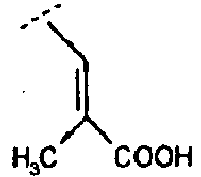

6.2 627.2 1062 

H 

6.6 627.1 1063 

H 

4.7 589.2 1064 

H 

6.5 621.2 1065 

H 

4.9 658.3 1066 

H 

4.2 638.2 1067 

H 

5.4 602.2 1068 

H 

6.2 626.2 1069 

H 
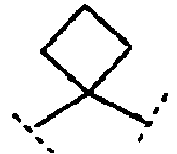
5.6 618.2 1070 

H 

4.7 638.2 1071 

H 

3.8 588.2 1072 

H 

5.9 593.2 1073 

H 
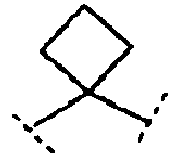
6.0 593.2 1074 

H 

5.7 577.2 1075 

H 

6.0 587.2 1076 

H 

5.7 622.2 1077 

H 

6.5 619.2 1078 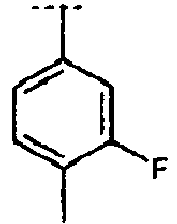

H 

6.4 619.2 1079 

H 

3.6 627.2 1080 

H 

6.3 619.2 1081 

H 

6.3 619.2 1082 

H 

6.0 635.2 1083 

H 

6.2 653.2 1084 

H 

6.0 653.2 1085 
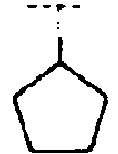
H 

6.0 653.2 1086 

H 
6.1 635.2 1087 

H 
6.2 653.2 1088 

H 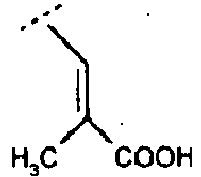
6.3 653.2 1089 

H 

6.5 669.2 1090 

COOH 

5.7 567.1 1091 

-OCH3 

6.3 636.3 1092 

H 

5.9 620.3 1093 

H 

3.8 602.3 1094 

H 

6.2 700.3 1095 

H 

5.9 589.3 1096 

H 

4.5 592.3 1097 
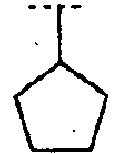
CH3 

5.7 620.3 1098 

H 

6.2 610.3 1099 

H 
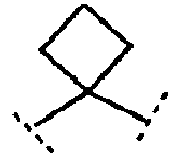
5.4 604.3 1100 

H 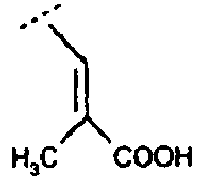

5.9 667.2 1101 

H 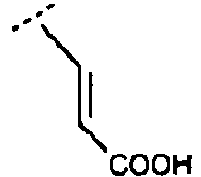

5.4 604.3 1102 

H 

5.9 632.4 1103 

H 

5.7 620.3 1104 

H 

4.8 620.2 1105 

H 

4.3 591.3 1106 

H 

6.0 565.2 1107 

H 

5.7 594.3 1108 

H 

6.0 610.2 1109 

H 

5.1 696.3 1110 

H 

5.0 589.2 1111 

H 

6.1 525.3 1112 

H 

6.4 539.3 1113 

H 

6.6 553.3 1114 Br 
H 

5.8 589.2 591.2 1115 

H 

5.4 613.3 1116 

H 

6.0 591.3 1117 Br 
H 

6.1 605.2 603.2 1118 

H 

5.6 627.3 1119 

H 

5.6 627.4 1120 

H 

5.5 632.3 1121 

H 

5.3 656.4 1122 

H 

5.0 615.3 1123 CH3 
H 

5.0 534.3 1124 

H 

5.4 600.3 1125 

H 

5.9 642.3 1126 

H 

4.9 645.3 1127 

H 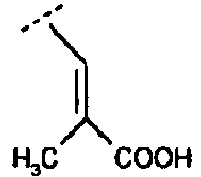

5.7 643.2 1128 

H 

4.7 588.3 1129 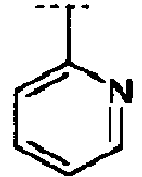

H 

4.4 587.3 1130 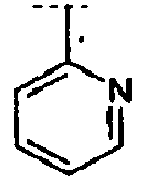

H 

4.6 572.3 1131 

H 

5.7 719.2 1132 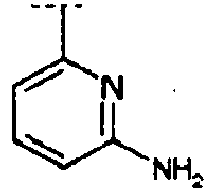

H 

4.0 653.3 1133 

H 

6.6 618.2 1134 

H 

6.4 623.3 1135 
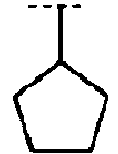
H 

6.3 600.4 1136 

H 

5.2 632.4 1137 

H 

4.9 613.4 1138 

H 

5.3 676.3 678.3 1139 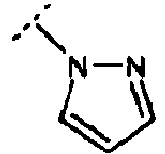

H 

5.0 585.5 1140 

H 

6.3 667.3 669.3 1141 

H 

5.7 618.5 1142 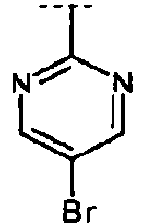

H 

6.1 679.4 681.4 1143 

H 

5.8 606.4 1144 

H 
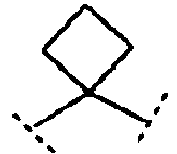
6.5 681.4 683.4 1145 

H 

6.1 620.5 1146 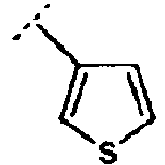

H 

7.0 607.5 1147 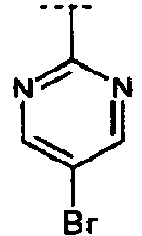

H 

6.4 683.3 685.3 1148 

H 

5.2 586.4 1149 

H 

5.4 586.4 1150 

H 

5.8 726.3 728.3 1151 

H 

6.4 650.0 652.0 1152 

H 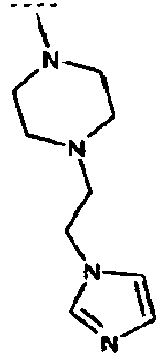

4.8 700.2 1153 

H 

6.1 654.2 TABLE2 
wherein R2, R3, R5, R6, R9, and R10 are given in the table. Cpd. # R2 R3 R5 R6 
tR (min) MS (M+H)+ 2001 


H 
4.3 574.3 2002 

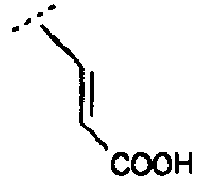
H 
6.2 563.1 2003 

H 

6.5 563.2 2004 

H 

4.2 574.3 2005 

H 

6.1 575.3 2006 


H 
6.2 575.3 2007 


H 
4.5 588.4 2008 

H 

4.5 588.4 2009 

H 
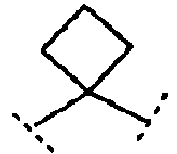
5.3 589.4 2010 


H 
5.4 589.4 2011 

H 

6.2 577.4 2012 


H 
6.2 577.4 2013 

H 

4.6 600.3 2014 

H 

6.2 589.3 2015 

H 

6.4 622.3 2016 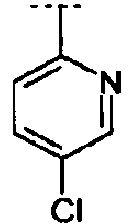


H 
6.4 622.3 2017 
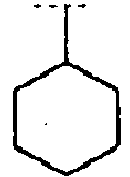
H 

5.6 606.3 2018 


H 
6.0 606.3 2019 


H 
5.5 592.3 2020 

H 

5.4 592.3 2021 
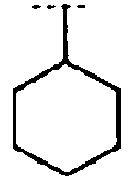
H 

4.5 602.3 2022 

H 

6.2 636.3 2023 

H 

5.9 620.3 2024 

H 

6.1 591.2 2025 

H 

5.0 618.3 2026 


CH3 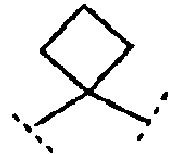
5.9 620.3 2027 

H 

6.0 603.3 2028 

CH3 

4.5 602.3 2029 

CH3 

5.7 620.3 2030 

H 

5.8 619.3 2031 

CH3 

5.8 634.4 2032 

H 

6.3 618.3 2033 

H 

6.4 624.4 2034 

H 

5.2 606.3 2035 

H 

6.1 587.3 2036 

H 

6.3 601.3 2037 

H 

5.2 594.3 2038 

H 

5.4 608.3 2039 

H 

6.0 593.3 2040 
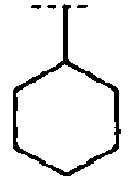
H 

6.2 607.3 2041 

H 

6.1 607.3 2042 

H 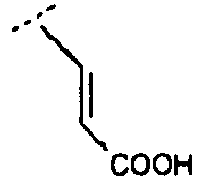

5.9 631.3 2043 

H 

6.1 645.3 2044 

H 

5.8 667.2 2045 

H 

6.0 681.2 2046 

H 

5.5 618.3 2047 

H 

5.4 620.3 2048 
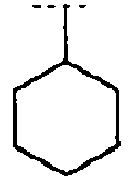
H 

5.9 634.3 2049 

H 

6.2 610.3 612.3 2050 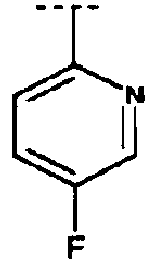

H 

5.7 594.3 2051 
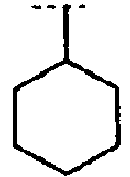
H 

6.0 565.3 2052 

H 

4.0 622.3 2053 

H 

3.8 622.3 2054 

H 

2.8 616.3 2055 

H 

3.2 621.3 2056 

H 

4.2 620.4 2057 

H 

4.0 620.4 2058 

H 

5.7 551.1 2059 

H 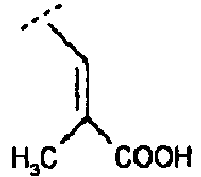
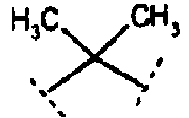
5.9 608.3 2060 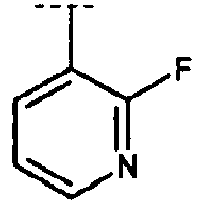

H 

5.2 606.2 2061 

H 

5.6 606.2 2062 

H 

6.4 575.3 2063 
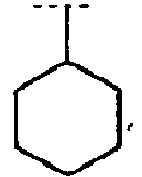
H 

6.3 581.3 2064 

H 

6.0 593.3 2065 

H 

5.8 577.3 2066 
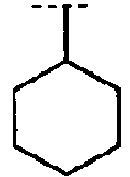
H 

6.4 539.3 2067 

H 

6.7 553.3 2068 
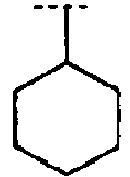
H 

4.6 574.3 2069 

H 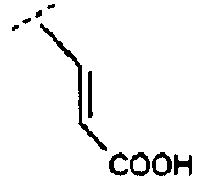

6.2 592.3 2070 

H 

5.9 578.3 2071 

-OCH3 

6.0 622.3 2072 

-OCH3 

6.3 636.4 2073 

H 

5.6 591.3 16.7 2074 

H 

6.5 623.4 12.3 625.4 TABLE 3 
wherein R2, R4, R6, R8, R9, and R10 are given in the table. Cpd. # R2 R4 R6 R8 
tR (min) MS (M+H)+ 3001 
H H 

5.8 629.3 3002 
H H CH3 
5.4 625.4 3003 
H H CH3 
4.9 574.3 3004 
H H CH3 
5.2 575.2 3005 
H H 

5.0 588.3 3006 
H H 

4.9 602.2 3007 
H H CH3 
4.7 562.4 3008 
H H CH3 
4.2 589.2 3009 
H H CH3 
4.9 588.4 3010 
H H CH3 
5.1 580.2 3011 
H H CH3 
6.0 563.2 3012 
H H CH3 
5.6 592.2 3013 
H H CH3 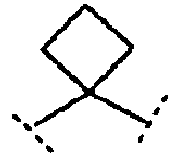
4.4 588.3 3014 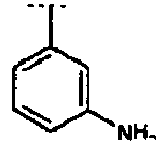
H H CH3 
4.6 588.3 3015 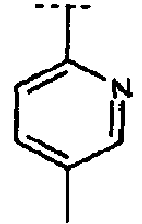
H H CH3 
4.8 588.3 3016 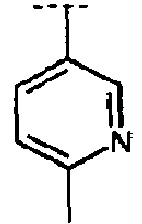
H H CH3 
4.2 588.3 3017 
H H CH3 
5.5 589.2 3018 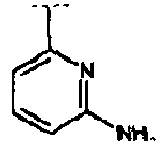
H H CH3 
4.2 577.2 3019 
H H CH3 
6.1 551.2 3020 
H H CH3 
6.3 577.2 3021 
H H CH3 
4.7 586.2 3022 
H H CH3 
5.4 587.2 3023 
H H CH3 
6.3 575.3 3024 
H H CH3 
4.6 606.2 3025 
H H 

5.1 614.2 3026 
H H 

4.9 606.2 3027 
H H 

5.0 618.2 3028 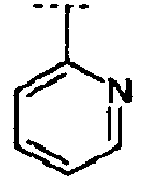
H H 

5.2 614.2 3029 
H H 

5.7 615.2 3030 
H H 

5.5 603.2 3031 
H H 

5.4 589.2 3032 
H H 

5.7 615.2 3033 
H H 

5.5 603.3 3034 
H H 

6.7 603.3 3035 
H H 

6.5 591.3 3036 
H H 

7.2 631.2 3037 
H H 

6.8 605.3 3038 
H H 

6.4 595.2 3039 
H H 

6.4 607.2 3040 
H H 

7.0 619.3 3041 
H H 

6.4 577.2 3042 
H H 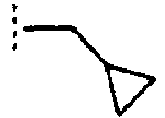

6.6 603.3 3043 
H H 

5.4 628.3 3044 
H H 

5.1 620.3 3045 
H H 
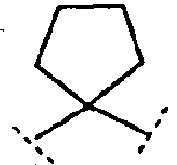
5.1 602.3 3046 
H H CH3 
5.7 592.3 3047 
H H 

6.4 589.3 3048 
H H 

6.3 619.3 3049 
H H 

6.4 607.3 3050 
H H CH3 
4.4 603.3 3051 
H -OCH3 CH3 
5.3 605.3 3052 
H H CH3 
5.7 592.3 3053 
H H CH3 
5.5 637.3 3054 
H H CH3 
6.4 620.3 3055 
H H CH3 
6.3 608.3 3056 
H H CH3 
6.2 577.1 3057 
H H CH3 
5.9 604.3 3068 
H H CH3 
6.9 604.3 3059 
H H CH3 
4.0 574.3 3060 
H -NH2 CH3 
6.3 578.3 3061 
H H CH3 
4.2 574.3 3062 
H H CH3 
5.9 604.2 3063 
H H CH3 
6.2 579.3 3064 
H H CH3 
4.2 595.2 3065 
H H CH3 
5.6 594.2 3066 
H H CH3 
5.9 677.2 3067 
H H CH3 
5.9 579.2 3068 
H -OCH3 CH3 
6.6 593.3 3069 
H -OCH3 CH3 
5.0 604.3 3070 
H H CH3 
5.1 657.2 3071 
H H CH3 
4.7 657.1 3072 
H H CH3 
6.1 658.1 3073 
H H CH3 
6.5 646.1 3074 
H H CH3 
5.2 672.2 3075 
H H CH3 
4.8 672.2 3076 
H H CH3 
4.7 672.2 3077 
H H CH3 
4.6 653.3 3078 
H -OCH3 CH3 
6.2 622.2 3079 
H H CH3 
5.8 605.3 3080 
H CH3 CH3 
4.6 588.3 3081 
H CH3 CH3 
5.6 606.3 3082 
H H CH3 
6.0 573.3 3083 
H H CH3 
5.2 592.3 3084 
H H CH3 
5.9 617.3 3085 
H H CH3 
5.7 653.2 3086 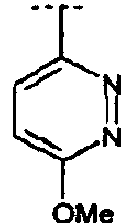
H H CH3 
5.3 605.3 3087 
H H CH3 
6.0 596.3 3088 
H H CH3 
5.6 580.2 3089 CH3 H H CH3 
6.0 511.2 3090 
H H CH3 
6.3 523.2 3091 
H H CH3 
6.4 525.2 3092 
H H CH3 
6.6 537.2 3093 
H H CH3 
6.6 539.2 3094 
H H CH3 
5.0 590.2 3095 
H H CH3 
4.8 590.2 3096 Cl H H CH3 
6.0 531.1 533.1 3097 -C≡CH H H CH3 
5.8 521.1 3098 -C=N H H CH3 
5.5 522.1 3099 
H H CH3 
6.3 561.3 3100 
H H CH3 
6.2 605.3 3101 
H H CH3 
6.2 567.2 3102 
H H CH3 
6.3 567.2 3103 
H H CH3 
5.6 563.3 3104 
H H CH3 
5.4 567.3 3105 
H H CH3 
4.5 590.3 3106 
H H CH3 
6.2 629.3 3107 
H H CH3 
6.2 638.4 3108 
H H CH3 
6.4 638.4 . 3109 
H H CH3 
5.4 619.4 3110 
H H CH3 
3.4 -- 3111 
H H CH3 
6.3 643.4 3112 
H H CH3 
5.7 644.4 3113 
H H CH3 
5.4 658.4 3114 
H H CH3 
5.4 658.5 3115 
H H CH3 
5.3 563.3 3116 
H H CH3 
6.6 539.3 3117 
H H CH3 
5.6 560.3 3118 
H H CH3 
6.4 537.3 3119 
H H CH3 
6.1 578.2 3120 
H H CH3 
6.4 549.2 3121 
H H CH3 
5.4 561.3 3122 
H H CH3 
4.4 575.3 3123 
H H CH3 
6.5 594.2 596.2 3124 
H -OCH3 CH3 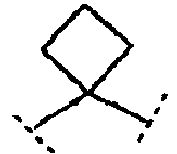
6.6 683.3 685.3 3125 
H H CH3 
5.8 577.3 3126 
H H CH3 
6.2 609.2 3127 
H -OCH3 CH3 
6.5 639.3 3128 
H H CH3 
5.6 577.3 3129 
H H CH3 
5.7 605.4 3130 
CI H CH3 
5.4 608.3 610.3 3131 
Cl H CH3 
7.1 689.3 687.6 3132 
H H CH3 
5.2 575.3 TABLE4 
wherein R1, R2, R3, R5, R8, R9, and R10 are given in the table. Cpd. # R1 R2 R3 R5 R6 
tR (min) MS (MH)+ 4001 CH3 


H 
4.7 574.3 4002 CH3 


H 
4.4 589.4 4003 CH3 


H 
5.4 575.4 4004 CH3 

H 

5.4 588.3 4005 CH3 

H 

5.8 589.3 4006 CH3 


H 
3.3 563.1 4007 


H 

6.6 591.4 4008 H 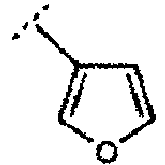

H 

6.1 563.3 4009 H 

H 

5.9 549.3 4010 H 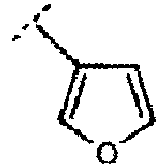


H 
5.8 549.3 4011 CH3 

H 

6.4 577.4 4012 CH3 


H 
6.5 577.4 4013 CH3 


OCH3 
5.4 605.3 4014 H 

H 

4.8 574.3 4015 H 


H 
4.9 574.3 4016 H 


H 
6.2 561.3 4017 H 

H 
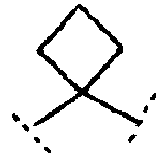
4.4 560.3 4018 H 


H 
4.5 560.3 4019 CH3 


H 
5.6 580.2 4020 CH3 


H 
6.3 608.2 4021 CH3 

H 
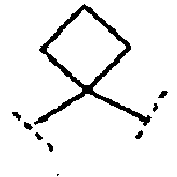
6.5 622.3 4022 CH3 


H 
7.0 604.3 4023 CH3 


5.1 618.3 4024 CH3 


6.1 636.3 4025 CH3 


6.3 607.3 4026 CH3 


H 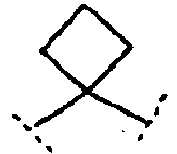
6.0 604.3 4027 CH3 


H 
4.2 574.3 4028 CH3 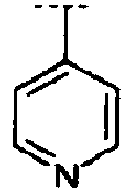
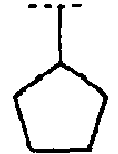

H 
4.1 574.3 4029 CH3 


CH3 
5.8 606.3 4030 CH3 

H 

5.7 606.4 4031 CH3 

H 

3.8 610.3 4032 CH3 

H 

5.4 599.3 4033 H Br 
H 

6.1 575.2 577.2 4034 CH3 

H 

5.2 642.3 4035 H 
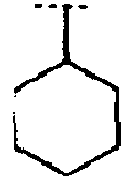
H 

6.4 592.3 4036 H 

H 

6.4 578.2 4037 CH3 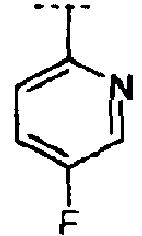

H 

6.3 592.2 4038 CH3 

H 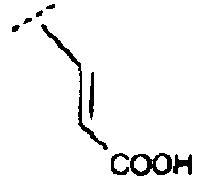

5.4 613.2 4039 CH3 

H 

6.7 667.2 669.2 4040 CH3 

H 

5.6 629.3 4041 CH3 

H 

6.2 703.3 4042 CH3 

H 

3.9 639.3 4043 CH3 

H 

6.9 593.4 4044 CH3 


H 
6.4 609.4
or a salt thereof.
Claims (43)
- A compound, represented by formula I, or an enantiomer, diastereoisomer or tautomer thereof, including a salt or ester thereof:
 either A or B is N and the other B or A is C, wherein ---- between two C-atoms represents a double bond and ---- between a C-atom and a N-atom represents a single bond;R1 is H or (C1-6)alkyl;R2 is selected from halogen, cyano, (C1-6)alkyl, (C2-6)alkenyl, (C2-6)alkynyl, (C3-7)cycloalkyl, aryl and Het; said aryl and Het being optionally substituted with R21;wherein R21 is one, two or three substituents each independently selected from -OH, -CN, -N(RN2 )RN1 , halogen, (C1-6)alkyl, (C1-6)alkoxy, (C1-6)alkylthio, Het and -CO-N(RN2 )RN1 ;wherein said (C1-6)alkyl, (C1-6)alkoxy and (C1-6)alkylthio are each optionally substituted with one, two or three halogen atoms;R3 is (C5-6)cycloalkyl, optionally substituted with from one to four halogen atoms;R4 and R7 are each independently selected from H, (C1-6)alkyl, (C1-8)alkoxy, (C1-8)alkylthio, -NH2, -NH(C1-6)alkyl, -N((C1-6)alkyl)2 and halogen;One of R5 and R6 is selected from COOH, -CO-N(RN2 )RN1 , aryl, Het and (C2-6)alkenyl, wherein aryl, Het, (C2-6)alkenyl and RN1 or any heterocycle formed between RN2 andRN1 are each optionally substituted with R50;
wherein R50 is one, two or three substituents each independently selected from (C1-6)alkyl, -COOH, -OH, oxo, -N(RN2 )RN1 , -CO-N(RN2 )RN1 and halogen, wherein the (C1-6)alkyl is optionally substituted with aryl or -N(RN2 )RN1 ;and the other of R5 and R6 is selected from H, (C1-6)alkyl, (C1-6)alkoxy, (C1-6)alkylthio, and N(RN2 )RN1 ;R8 is (C1-6)alkyl, (C3-7)cycloalkyl or (C3-7)cycloalkyl-(C1-6)alkyl-;
wherein said alkyl, cycloalkyl and cycloalkyl-alkyl are each optionally substituted with one, two or three substituents each independently selected from halogen, (C1-6)alkoxy and (C1-6)alkylthio;R9 and R10 are each independently selected from (C1-6)alkyl; or R9 and R10 are linked, together with the C atom to which they are attached, to form (C3-7)cycloalkyl, (C5-7)cycloalkenyl or a 4-, 5- or 6-membered heterocycle having from 1 to 3 heteroatoms each independently selected from O, N, and S;
wherein said cycloalkyl, cycloalkenyl or heterocycle is in each case optionally substituted with (C1-4)alkyl;RN1 is selected from H, (C1-6)alkyl, (C3-7)cycloalkyl, (C3-7)cycloalkyl-(C1-6)alkyl-, -CO-(C1-6)alkyl, -CO-O-(C1-6)alkyl and Het;
wherein the alkyl and cycloalkyl portions of each of said (C1-6)alkyl, (C3-7)cycloalkyl, (C3-7)cycloalkyl-(C1-6)alkyl-, -CO-(C1-6)alkyl and -CO-O-(C1-6)alkyl are each optionally substituted with one, two or three substituents each independently selected from halogen, (C1-6)alkoxy and (C1-6)alkylthio; andRN2 is H or (C1-6)alkyl, orRN2 and RN1 may be linked, together with the N atom to which they are attached, to form a 4-, 5-, 6- or 7-membered saturated, unsaturated or aromatic N-containing heterocycle or a 8-, 9-, 10- or 11-membered saturated, unsaturated or aromatic N-containing heterobicycle, each optionally having additionally from 1 to 3 heteroatoms each independently selected from O, N, and S;
wherein the heterocycle or heterobicycle formed by RN2 and RN1 is optionally substituted with one, two or three substituents each independently selected from halogen, (C1-6)alkyl, (C1-6)alkoxy and (C1-6)alkylthio;wherein Het is defined as a 4-, 5-, 6- or 7-membered heterocycle having 1 to 4 heteroatoms each independently selected from O, N and S, which may be saturated, unsaturated or aromatic, or a 8-, 9-, 10- or 11-membered heterobicycle having 1 to 5 heteroatoms wherever possible, each independently selected from O, N and S, which may be saturated, unsaturated or aromatic. - The compound according to claim 1 of formula (la):

- The compound according to claim 1 of formula (lb):

- The compound according to one or more of the above claims wherein R1 is selected from the group consisting of H, methyl and ethyl.
- The compound according to one or more of the above claims wherein R2 is selected from halogen, cyano, (C1-4)alkyl, (C2-4)alkenyl, (C2-4)alkynyl, (C3-6)cycloalkyl, phenyl and Het selected from the group of formulas:


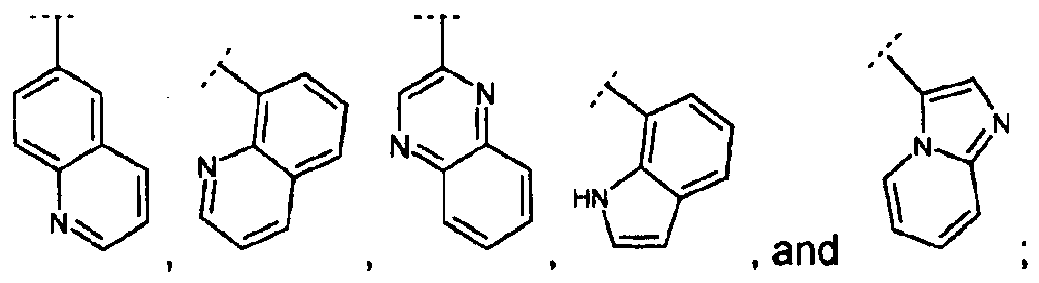
- The compound according to claim 5 wherein R2 is selected from Br, Cl, cyano, methyl, ethyl, propyl, 1-methylethyl, ethenyl, 1-methylethenyl, ethynyl, cyclopropyl, phenyl and Het selected from the group of formulas:


- The compound according to one or more of the above claims wherein R21 is 1, 2 or 3 substituents each independently selected from:- 1 to 3 substituents each independently selected from halogen; and- 1 to 2 substituents each independently selected from:a) hydroxy, (C1-4)alkyl or (C1-4)alkoxy; wherein said alkyl and alkoxy are each optionally substituted with one, two or three halogen atoms;b) -NRN2RN1 wherein
RN1 is selected from H, (C1-3)alkyl, -CO-(C1-3)alkyl, -CO-O-(C1-3)alkyl and Het;
wherein the alkyl portions of each of said (C1-3)alkyl, -CO-(C1-3)alkyl, and -CO-O-(C1-3)alkyl are optionally substituted with one, two or three substituents selected from halogen and (C1-6)alkoxy; and wherein said Het is a 5- or 6-membered monocyclic saturated, unsaturated or aromatic heterocycle having 1 or 2 heteroatoms, each independently selected from N, O and S; and
RN2 is H or (C1-3)alkyl;c) -CONRN2RN1 , wherein RN2 and RN1 are each independently selected from H and (C1-3)alkyl; andd) Het, wherein said Het is a 5- or 6-membered monocyclic heterocycle having 1, 2 or 3 heteroatoms, each independently selected from N, O and S. - The compound according to claim 7 wherein R21 is 1, 2 or 3 substituents each independently selected from:- 1 to 2 substituents each independently selected from fluorine, chlorine and bromine; and- 1 to 2 substituents each independently selected from:a) hydroxy, methyl, ethyl, propyl, 1-methylethyl, methoxy, ethoxy, propoxy or 1-methylethoxy; wherein said methyl, ethyl, propyl, 1-methylethyl, methoxy, ethoxy, propoxy and 1-methylethoxy are each optionally substituted with one, two or three halogen atoms;b) -N(CH3)2 or -NHRN1 wherein
RN1 is selected from H, methyl, ethyl, propyl, 1-methylethyl, -CO-CH3, 2-pyridyl, 3-pyridyl and 4-pyridyl;
wherein said methyl, ethyl, propyl and 1-methylethyl are each optionally substituted with one, two or three substituents selected from halogen and (C1-3)alkoxy;c) -CONH2; andd) 3-pyridyl, 4-pyridyl, 5-pyrimidinyl, 2-furyl, 1-pyrrolyl and 1-morpholino. - The compound according to one or more of the above claims wherein R3 is cyclopentyl or cyclohexyl, each being optionally substituted with one or two fluorine atoms.
- The compound according to one or more of the above claims wherein R4 is H or halogen and R7 is H.
- The compound according to claim 10 wherein R4 is H or Cl and R7 is H.
- The compound according to one or more of the above claims wherein one of R5 and R6 is selected from:a) (C2-4)alkenyl substituted with COOH or CONHRN1 , wherein RN1 is selected from H and (C1-3)alkyl, said alkenyl being optionally further substituted with one or two substituents each independently selected from (C1-3)alkyl and halogen;b) phenyl or Het, each being optionally substituted with one or two substituents each independently selected from:i. -OH, oxo, COOH;ii. (C1-3)alkyl optionally substituted with phenyl or -N(RN2)RN1, wherein RN1 and RN2 are each independently selected from H and (C1-3)alkyl or RN1 and RN2 are linked, together with the N atom to which they are attached, to form a 5- or 6-membered monocyclic, saturated, unsaturated or aromatic N-containing heterocycle, optionally having additionally one or two heteroatoms each independently selected from N, O and S; andiii. -N(RN2 )RN1 ; wherein RN1 is selected from H, (C1-3)alkyl and -CO(C1-3)alkyl and RN2 is H or (C1-3)alkyl;wherein Het is a 5- or 6-membered monocyclic saturated, unsaturated or aromatic heterocycle having from 1 to 3 heteroatoms, each independently selected from O, N and S; andc) COOH;
and the other of R6 and R6 is selected from H, NHRN1 , (C1-3)alkyl, and (C1-3)alkoxy, wherein RN1 is selected from H and-CO-O-(C1-6)alkyl. - The compound according to claim 12 wherein one of R5 and R6 is selected from:a) (C2-4)alkenyl substituted with COOH or -CONH2, and optionally further substituted with one or two substituents selected from (C1-3)alkyl and halogen; andb) phenyl or Het, each being optionally substituted with one or two substituents each independently selected from:i. -OH, oxo, COOH;ii. (C1-3)alkyl optionally substituted with phenyl, -N(CH3)2, or
 iii. -NH2, -N(CH3)2 and -NHCOCH3;
wherein Het is selected from the formulas:
 c) COOH;and the other of R5 and R6 is selected from H, methyl, methoxy, ethoxy, -NH2 and -NHCO-OCH(CH3)2.
 - The compound according to claim 13 wherein one of R5 and R6 is selected from:a) -CH=CH-COOH or -CH=CH-CONH2, each optionally substituted with one or two substituents selected from methyl, ethyl and fluoro; andb) phenyl optionally substituted with NH2 or
Het optionally substituted with one or two substituents each independently selected from:i. -OH, oxo, COOH;ii. methyl or ethyl, each optionally substituted with phenyl, -N(CH3)2, or iii. -NH2, -N(CH3)2 and -NHCOCH3;wherein Het is selected from the formulas:
 c) COOH;and the other of R5 and R6 is selected from H, methyl, methoxy, ethoxy, -NH2 and -NHCO-OCH(CH3)2.
 - The compound according to one or more of the above claims wherein R8 is selected from (C1-5)alkyl, (C4-6)cycloalkyl, and (C3-4)cycloalkyl-(C1-3)alkyl, wherein the (C1-5)alkyl is optionally substituted with (C1-3)alkoxy or from one to three fluoro atoms.
- The compound according to claim 15 wherein R8 is selected from methyl, ethyl, propyl, 1-methylethyl, 2-methylpropyl, 3-methylbutyl, cyclobutyl, cyclopropylmethyl, 2-fluoroethyl, 2,2,2-trifluoroethyl and 2-methoxyethyl.
- The compound according to one or more of the above claims wherein R9 and R10 are each independently selected from (C1-3)alkyl or R9 and R10 are linked, together with the C atom to which they are attached, to form (C3-6)cycloalkyl, (C5-6)cycloalkenyl or a 5- or 6-membered monocyclic heterocycle having from 1 to 2 heteroatoms each independently selected from O and N; wherein said cycloalkyl, cycloalkenyl or heterocycle is each optionally substituted with (C1-4)alkyl.
- The compound according to claim 17 wherein the group


- The compound according to claim 1 of formula (I) whereineither A or B is N and the other B or A is C, wherein ---- between two C-atoms represents a double bond and ----- between a C-atom and a N-atom represents a single bond;R1 is H or (C1-6)alkyl;R2 is halogen, aryl or Het; said aryl and Het being optionally substituted with R21 ;wherein R21 is one, two or three substituents each independently selected from -OH, -CN, -N(RN2 )RN1 , halogen, (C1-6)alkyl, (C1-6)alkoxy, (C1-6)alkylthio, Het and -CO-N(RN2 )RN1 ;wherein said alkyl, alkoxy and alkylthio are each optionally substituted with one, two or three halogen atoms;R3 is (C5-6)cycloalkyl, optionally substituted with from one to four halogen atoms;R4 and R7 are each independently selected from H, (C1-6)alkyl, (C1-6)alkoxy, (C1-6)alkylthio, -NH2, -NH(C1-6)alkyl, -N((C1-6)alkyl)2 and halogen;one of R5 and R6 is selected from COOH, -CO-N(RN2 )RN1 , Het and (C2-6)alkenyl, wherein Het, (C2-6)alkenyl and RN1 or any heterocycle formed between RN2 and RN1 are each optionally substituted with R50;
wherein R50 is one, two or three substituents each independently selected from (C1-6)alkyl, -COOH, -N(RN2 )RN1 , -CO-N(RN2 )RN1 , and halogen;and the other of R5 and R6 is selected from H, (C1-6)alkyl, (C1-6)alkoxy, (C1-6)alkylthio, and N(RN2 )RN1 ;R8 is (C1-6)alkyl, (C3-7)cycloalkyl or (C3-7)cycloalkyl-(C1-6)alkyl-;
wherein said alkyl, cycloalkyl and cycloalkyl-alkyl are each optionally substituted with one, two or three substituents each independently selected from halogen, (C1-6)alkoxy and (C1-6)alkylthio;R9 and R10 are each independently selected from (C1-6)alkyl; or R9 and R10 arelinked together with the C atom to which they are attached, to form (C3-7)cycloalkyl, (C5-7)cycloalkenyl or a 4-, 5- or 6-membered heterocycle having from 1 to 3 heteroatoms each independently selected from O, N, and S;wherein said cycloalkyl, cycloalkenyl or heterocycle are each optionally substituted with (C1-4)alkyl;RN1 is selected from H, (C1-6)alkyl, (C3-7)cycloalkyl, (C3-7)cycloalkyl-(C1-6)alkyl-, -CO-(C1-6)alkyl, -CO-O-(C1-6)alkyl and Het;
wherein all of said alkyl and cycloalkyl is optionally substituted with one, two or three substituents each independently selected from halogen, (C1-6)alkoxy and (C1-6)alkylthio; andRN2 is H or (C1-6)alkyl, orRN2 and RN1 may be linked, together with the N atom to which they are attached, to form a 4-, 5-, 6- or 7-membered saturated or unsaturated N-containing heterocycle or a 8-, 9-, 10- or 11-membered N-containing heterobicycle, each having additionally from 1 to 3 heteroatoms each independently selected from O, N, and S;wherein Het is defined as a 4-, 5-, 6- or 7-membered heterocycle having 1 to 4 heteroatoms each independently selected from O, N and S, which may be saturated, unsaturated or aromatic, or a 8-, 9-, 10- or 11-membered heterobicycle having 1 to 5 heteroatoms wherever possible, each independently selected from O, N and S, which may be saturated, unsaturated or aromatic;
wherein the heterocycle or heterobicycle formed by RN2 and RN1 is optionally substituted with one, two or three substituents each independently selected from halogen, (C1-6)alkyl, (C1-6)alkoxy and (C1-6)alkylthio; - The compound according to claim 1 of formula (I) whereinR1 is selected from the group consisting of H, methyl and ethyl;R2 is selected from halogen, cyano, (C1-4)alkyl, (C2-4)alkenyl, (C2-4)alkynyl, (C3-6)cycloalkyl, phenyl and Het selected from the group of formulas:


 wherein said phenyl and Het are unsubstituted or substituted with R21 , whereinR21 is 1, 2 or 3 substituents each independently selected from:- 1, 2 or 3 substituents each independently selected from halogen; and- 1 or 2 substituents each independently selected from:a) hydroxy, (C1-4)alkyl or (C1-4)alkoxy; wherein said alkyl and alkoxy are each optionally substituted with one, two or three halogen atoms;b) -NRN2RN1 whereinRN1 is selected from H, (C1-3)alkyl, -CO-(C1-3)alkyl, -CO-O-(C1-3)alkyl and Het;wherein the alkyl portions of each of said (C1-3)alkyl, -CO-(C1-3)alkyl, and -CO-O-(C1-3)alkyl are optionally substituted with one, two or three substituents selected from halogen and (C1-6)alkoxy; and wherein said Het is a 5- or 6-membered monocyclic saturated, unsaturated or aromatic heterocycle having 1 or 2 heteroatoms, each independently selected from N, O and S; andRN2 is H or (C1-3)alkyl;c) -CONRN2RN1 , wherein RN2 and RN1 are each independently selected from H and (C1-3)alkyl; andd) Het, wherein said Het is a 5- or 6-membered monocyclic heterocycle having 1, 2 or 3 heteroatoms, each independently selected from N, O and S;R3 is cyclopentyl or cyclohexyl, each optionally substituted with one to four fluorine atoms;R4 is H or halogen and R7 is H;one of R5 and R6 is selected from:a) (C2-4)alkenyl substituted with COOH or CONHRN1 , wherein RN1 is selected from H and (C1-3)alkyl, said alkenyl being optionally further substituted with one or two substituents each independently selected from (C1-3)alkyl and halogen;b) phenyl or Het, each being optionally substituted with one or two substituents each independently selected from:i. -OH, oxo, COOH;ii. (C1-3)alkyl optionally substituted with phenyl or -N(RN2 )RN1 , wherein RN1 and RN2 are each independently selected from H and (C1-3)alkyl or RN1 and RN2 are linked, together with the N atom to which they are attached, to form a 5- or 6-membered monocyclic, saturated, unsaturated or aromatic N-containing heterocycle, optionally having additionally one or two heteroatoms each independently selected from N, O and S; andiii. -N(RN2 )RN1 ; wherein RN1 is selected from H, (C1-3)alkyl and -CO(C1-3)alkyl and RN2 is H or (C1-3)alkyl;wherein Het is a 5- or 6-membered monocyclic saturated, unsaturated or aromatic heterocycle having from 1 to 3 heteroatoms, each independently selected from O, N and S; andc) COOH;and the other of R5 and R6 is selected from H, NHRN1 (C1-3)alkyl, and (C1-3)alkoxy,
wherein RN1 is selected from H and -CO-O-(C1-6)alkyl;R8 is selected from (C1-5)alkyl, (C4-6)cycloalkyl, and (C3-4)cycloalkyl-(C1-3)alkyl, wherein the (C1-5)alkyl is optionally substituted with (C1-3)alkoxy or from one to three fluoro atoms; andR9 and R10 are each independently selected from (C1-3)alkyl or R9 and R10 are linked, together with the C atom to which they are attached, to form (C3-6)cycloalkyl, (C5-6)cycloalkenyl or a 5- or 6-membered heterocycle having from 1 to 2 heteroatoms selected from O and N; wherein said cycloalkyl, cycloalkenyl or heterocycle is optionally substituted with (C1-4)alkyl. - The compound according to claim 1 of formula (I) whereinR1 is selected from the group consisting of H, methyl and ethyl;R2 is selected from Br, Cl, cyano, methyl, ethyl, propyl, 1-methylethyl, ethenyl, 1-methylethenyl, ethynyl, cyclopropyl, phenyl and Het selected from the group of formulas:



 wherein said phenyl and Het are unsubstituted or substituted with R21, whereinR21 is 1, 2 or 3 substituents each independently selected from:- 1 to 2 substituents each independently selected from fluorine; chlorine and bromine; and- 1 to 2 substituents each independently selected from:a) hydroxy, methyl, ethyl, propyl, 1-methylethyl, methoxy, ethoxy, propoxy or 1-methylethoxy; wherein said methyl, ethyl, propyl, 1-methylethyl, methoxy, ethoxy, propoxy and 1-methylethoxy are each optionally substituted with one, two or three halogen atoms;b) -N(CH3)2 or -NHRN1 wherein
RN1 is selected from H, methyl, ethyl, propyl, 1-methylethyl, -CO-CH3, 2-pyridyl, 3-pyridyl and 4-pyridyl;
wherein said methyl, ethyl, propyl and 1-methylethyl are each optionally substituted with one, two or three substituents selected from halogen and (C1-3)alkoxy;c) -CONH2; andd) 3-pyridyl, 4-pyridyl, 5-pyrimidinyl, 2-furyl, 1-pyrrolyl and 1-morpholino;R3 is cyclopentyl or cyclohexyl, each optionally substituted with one or two fluorine atoms;R4 is H or halogen and R7 is H;one of R5 and R6 is selected from:a) (C2-4)alkenyl substituted with COOH or -CONH2, and optionally further substituted with one or two substituents selected from (C1-3)alkyl and halogen; andb) phenyl or Het, each being optionally substituted with one or two substituents each independently selected from:i. -OH, oxo, COOH;ii. (C1-3)alkyl optionally substituted with phenyl, -N(CH3)2, or iii. -NH2, -N(CH3)2 and -NHCOCH3;wherein Het is selected from the formulas:
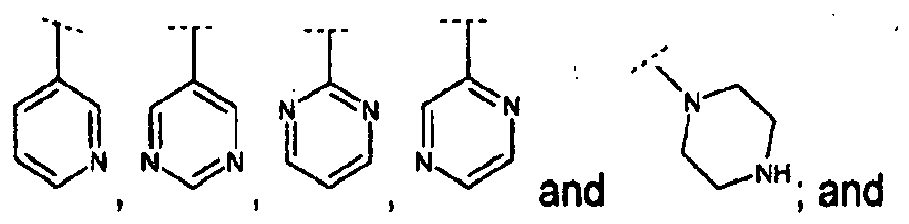 c) COOH;and the other of R5 and R6 is selected from H, methyl, methoxy, ethoxy, -NH2 and -NHCO-OCH(CH3)2;R8 is selected from methyl, ethyl, propyl, 1-methylethyl, 2-methylpropyl, 3-methylbutyl, cyclobutyl, cyclopropylmethyl, 2-fluoroethyl, 2,2,2-trifluoroethyl and 2-methoxyethyl; andthe group


- The compound according to claim 1 of formula (I) whereinR1 is selected from the group consisting of H, methyl and ethyl;R2 is selected from Br, Cl, cyano, methyl, ethyl, propyl, 1-methylethyl, ethenyl, 1-methylethenyl, ethynyl, cyclopropyl, phenyl and Het selected from the group of formulas:



 wherein said phenyl and Het are unsubstituted or substituted with R21, whereinR21 is 1, 2 or 3 substituents each independently selected from:- 1 to 2 substituents each independently selected from fluorine; chlorine and bromine; and- 1 to 2 substituent each independently selected from:a) hydroxy, methyl, ethyl, propyl, 1-methylethyl, methoxy, ethoxy, propoxy or 1-methylethoxy; wherein said methyl, ethyl, propyl, 1-methylethyl, methoxy, ethoxy, propoxy and 1-methylethoxy are each optionally substituted with one, two or three halogen atoms;b) -N(CH3)2 or -NHRN1 whereinRN1 is selected from H, methyl, ethyl, propyl, 1-methylethyl, -CO-CH3, 2-pyridyl, 3-pyridyl and 4-pyridyl;wherein said methyl, ethyl, propyl and 1-methylethyl are each optionally substituted with one, two or three substituents selected from halogen and (C1-3)alkoxy;c) -CONH2; andd) 3-pyridyl, 4-pyridyl, 5-pyrimidinyl, 2-furyl, 1-pyrrolyl and 1-morpholino;R3 is cyclopentyl or cyclohexyl, each optionally substituted with one or two fluorine atoms;R4 is H or Cl and and R7 is H;one of R5 and R6 is selected from:a) -CH=CH-COOH or -CH=CH-CONH2, each optionally substituted with one or two substituents selected from methyl, ethyl and fluoro; andb) phenyl optionally substituted with NH2 or
Het optionally substituted with one or two substituents each independently selected from:i. -OH, oxo, COOH;ii. methyl or ethyl, each optionally substituted with phenyl, -N(CH3)2,
or iii. -NH2, -N(CH3)2 and -NHCOCH3;wherein Het is selected from the formulas:
 c) COOH;and the other of R5 and R6 is selected from H, methyl, methoxy, ethoxy, -NH2 and -NHCO-OCH(CH3)2;R8 is selected from methyl, ethyl, propyl, 1-methylethyl, 2-methylpropyl, 3-methylbutyl, cyclobutyl, cyclopropylmethyl, 2-fluoroethyl, 2,2,2-trifluoroethyl and 2-methoxyethyl; and
the group


- A pharmaceutical composition for the treatment or prevention of HCV infection, comprising an effective amount of a compound according to one or more of the claims 1 to 22, or a pharmaceutically acceptable salt or ester thereof, and a pharmaceutically acceptable carrier.
- The composition according to claim 23 further comprising a therapeutically effective amount of one or more antiviral agents.
- The composition according to claim 24, wherein said antiviral agent is selected from: ribavirin and amantadine.
- The composition according to claim 24 wherein the antiviral agent is an other anti-HCV agent.
- The pharmaceutical composition according to claim 26, wherein the other anti-HCV agent is an immunomodulatory agent selected from α-, β-, δ- γ-, τ- and ω-interferon and pegylated forms thereof.
- The composition according to claim 26, wherein the other anti-HCV agent is another inhibitor of HCV polymerase.
- The composition according to claim 26, wherein the other anti-HCV agent is an inhibitor of HCV NS3 protease.
- The composition according to claim 26, wherein the other anti-HCV agent is an inhibitor of another target in the HCV life cycle.
- The composition according to claim 30, wherein said inhibitor of another target in the HCV life cycle is selected from an agent that inhibits a target selected from HCV helicase, HCV NS2/3 protease and HCV IRES, and an agent that interferes with the function of an NS5A protein.
- Use of a compound according to one or more of the claims 1 to 22, or a pharmaceutically acceptable salt or ester thereof, or a composition thereof, as an inhibitor of HCV polymerase.
- Use of a compound according to one or more of the claims 1 to 22, or a pharmaceutically acceptable salt or ester thereof, or a composition thereof, as an inhibitor of RNA dependent RNA polymerase activity of the enzyme NS5B, encoded by HCV.
- Use of a compound according to one or more of the claims 1 to 22, or a pharmaceutically acceptable salt or ester thereof, or a composition thereof, as an inhibitor of HCV replication.
- Use of a compound according to one or more of the claims 1 to 22, or a pharmaceutically acceptable salt or ester thereof, or a composition thereof, for the treatment or prevention of HCV infection in a mammal.
- Use of a compound according to one or more of the claims 1 to 22, or a pharmaceutically acceptable salt or ester thereof, or a composition thereof, for the treatment or prevention of HCV infection in a mammal, in combination with another antiviral agent.
- A method of inhibiting the RNA-dependent RNA polymerase activity of the enzyme NS5B, encoded by HCV, comprising exposing the enzyme NS5B to an effective amount of a compound according to one or more of the claims 1 to 22 under conditions where the RNA-dependent RNA polymerase activity of the enzyme NS5B is inhibited.
- A method of inhibiting HCV replication, comprising exposing a cell infected with HCV to an effective amount of a compound according to one or more of the claims 1 to 22 under conditions where replication of HCV is inhibited.
- A method of treating or preventing HCV infection in a mammal, comprising administering to the mammal an effective amount of a compound according to one or more of the claims 1 to 22, or a pharmaceutically acceptable salt or ester thereof, or a composition thereof.
- A method of treating or preventing HCV infection in a mammal, comprising administering to the mammal an effective amount of a compound according to one or more of the claims 1 to 22, or a pharmaceutically acceptable salt or ester thereof, or a composition thereof, in combination with another antiviral agent.
- Use of a compound according to one or more of the claims 1 to 22, or of a pharmaceutically acceptable salt or ester thereof, or a composition thereof, for the manufacture of a medicament for the treatment and/or the prevention of a Flaviviridae viral infection.
- Use of a compound according to one or more of the claims 1 to 22, or a pharmaceutically acceptable salt or ester thereof, or a composition thereof, for the manufacture of a medicament for the treatment and/or the prevention of an HCV infection.
- An article of manufacture comprising
a composition effective to treat an HCV infection or to inhibit the NS5B polymerase of HCV and
packaging material comprising a label which indicates that the composition can be used to treat infection by the hepatitis C virus,
wherein said composition comprises a compound according to one or more of claims 1 to 22 or a pharmaceutically acceptable salt or ester thereof.
Applications Claiming Priority (2)
| Application Number | Priority Date | Filing Date | Title |
|---|---|---|---|
| US54621304P | 2004-02-20 | 2004-02-20 | |
| EP05714457.8A EP1718608B1 (en) | 2004-02-20 | 2005-02-18 | Viral polymerase inhibitors |
Related Parent Applications (2)
| Application Number | Title | Priority Date | Filing Date |
|---|---|---|---|
| EP05714457.8 Division | 2005-02-18 | ||
| WOPCT/CA2005/000208 Previously-Filed-Application | 2005-02-18 |
Publications (1)
| Publication Number | Publication Date |
|---|---|
| EP2626354A1 true EP2626354A1 (en) | 2013-08-14 |
Family
ID=34886250
Family Applications (2)
| Application Number | Title | Priority Date | Filing Date |
|---|---|---|---|
| EP05714457.8A Expired - Lifetime EP1718608B1 (en) | 2004-02-20 | 2005-02-18 | Viral polymerase inhibitors |
| EP12196121.3A Withdrawn EP2626354A1 (en) | 2004-02-20 | 2005-02-18 | Viral polymerase inhibitors |
Family Applications Before (1)
| Application Number | Title | Priority Date | Filing Date |
|---|---|---|---|
| EP05714457.8A Expired - Lifetime EP1718608B1 (en) | 2004-02-20 | 2005-02-18 | Viral polymerase inhibitors |
Country Status (30)
| Country | Link |
|---|---|
| US (3) | US7582770B2 (en) |
| EP (2) | EP1718608B1 (en) |
| JP (4) | JP4648333B2 (en) |
| KR (2) | KR101320907B1 (en) |
| CN (6) | CN102911161A (en) |
| AR (2) | AR047706A1 (en) |
| AU (1) | AU2005215829C1 (en) |
| BR (1) | BRPI0507861A (en) |
| CA (1) | CA2553879C (en) |
| DK (1) | DK1718608T3 (en) |
| EA (3) | EA200901463A1 (en) |
| EC (1) | ECSP066780A (en) |
| ES (1) | ES2431314T3 (en) |
| HR (1) | HRP20130971T1 (en) |
| IL (2) | IL177537A (en) |
| IN (1) | IN2012DN04853A (en) |
| MY (1) | MY144718A (en) |
| NO (1) | NO20064004L (en) |
| NZ (1) | NZ549079A (en) |
| PE (1) | PE20051141A1 (en) |
| PL (1) | PL1718608T3 (en) |
| PT (1) | PT1718608E (en) |
| RS (1) | RS52931B (en) |
| SG (2) | SG150511A1 (en) |
| SI (1) | SI1718608T1 (en) |
| TW (2) | TWI368508B (en) |
| UA (2) | UA86962C2 (en) |
| UY (1) | UY28758A1 (en) |
| WO (1) | WO2005080388A1 (en) |
| ZA (1) | ZA200605151B (en) |
Families Citing this family (85)
| Publication number | Priority date | Publication date | Assignee | Title |
|---|---|---|---|---|
| KR100509388B1 (en) | 1996-10-18 | 2005-08-23 | 버텍스 파마슈티칼스 인코포레이티드 | Inhibitors Of Serine Proteases, Particularly Hepatitis C Virus NS3 Protease |
| SV2003000617A (en) | 2000-08-31 | 2003-01-13 | Lilly Co Eli | INHIBITORS OF PROTEASA PEPTIDOMIMETICA REF. X-14912M |
| EP2335700A1 (en) | 2001-07-25 | 2011-06-22 | Boehringer Ingelheim (Canada) Ltd. | Hepatitis C virus polymerase inhibitors with a heterobicylic structure |
| US20050075279A1 (en) * | 2002-10-25 | 2005-04-07 | Boehringer Ingelheim International Gmbh | Macrocyclic peptides active against the hepatitis C virus |
| US7098231B2 (en) * | 2003-01-22 | 2006-08-29 | Boehringer Ingelheim International Gmbh | Viral polymerase inhibitors |
| US7223785B2 (en) * | 2003-01-22 | 2007-05-29 | Boehringer Ingelheim International Gmbh | Viral polymerase inhibitors |
| TWI359147B (en) | 2003-09-05 | 2012-03-01 | Vertex Pharma | Inhibitors of serine proteases, particularly hcv n |
| CN102911161A (en) * | 2004-02-20 | 2013-02-06 | 贝林格尔.英格海姆国际有限公司 | Viral polymerase inhibitors |
| US7781478B2 (en) | 2004-07-14 | 2010-08-24 | Ptc Therapeutics, Inc. | Methods for treating hepatitis C |
| WO2006019831A1 (en) | 2004-07-14 | 2006-02-23 | Ptc Therapeutics, Inc. | Methods for treating hepatitis c |
| US7868037B2 (en) | 2004-07-14 | 2011-01-11 | Ptc Therapeutics, Inc. | Methods for treating hepatitis C |
| US7772271B2 (en) | 2004-07-14 | 2010-08-10 | Ptc Therapeutics, Inc. | Methods for treating hepatitis C |
| WO2006019832A1 (en) | 2004-07-22 | 2006-02-23 | Ptc Therapeutics, Inc. | Thienopyridines for treating hepatitis c |
| US7153848B2 (en) | 2004-08-09 | 2006-12-26 | Bristol-Myers Squibb Company | Inhibitors of HCV replication |
| TW201424733A (en) | 2004-10-29 | 2014-07-01 | Vertex Pharma | Dose forms |
| MX2007009689A (en) * | 2005-02-11 | 2007-09-13 | Boehringer Ingelheim Int | Process for preparing 2,3-disubstituted indoles. |
| US8076365B2 (en) * | 2005-08-12 | 2011-12-13 | Boehringer Ingelheim International Gmbh | Viral polymerase inhibitors |
| US7964624B1 (en) | 2005-08-26 | 2011-06-21 | Vertex Pharmaceuticals Incorporated | Inhibitors of serine proteases |
| AR055395A1 (en) | 2005-08-26 | 2007-08-22 | Vertex Pharma | INHIBITING COMPOUNDS OF THE ACTIVITY OF SERINA PROTEASA NS3-NS4A OF HEPATITIS C VIRUS |
| US7816348B2 (en) | 2006-02-03 | 2010-10-19 | Boehringer Ingelheim International Gmbh | Viral polymerase inhibitors |
| EP1991229A2 (en) | 2006-02-27 | 2008-11-19 | Vertex Pharmaceuticals Incorporated | Co-crystals and pharmaceutical compositions comprising the same |
| EP1993994A2 (en) | 2006-03-16 | 2008-11-26 | Vertex Pharmceuticals Incorporated | Deuterated hepatitis c protease inhibitors |
| GB0608928D0 (en) | 2006-05-08 | 2006-06-14 | Angeletti P Ist Richerche Bio | Therapeutic agents |
| JP2010500978A (en) | 2006-08-17 | 2010-01-14 | ベーリンガー インゲルハイム インターナショナル ゲゼルシャフト ミット ベシュレンクテル ハフツング | Viral polymerase inhibitor |
| EP2120952A4 (en) * | 2007-01-15 | 2011-09-21 | Us Of America As Represented By The Secretary Of The Army On Behalf Of The U S Army Res Inst Of Infe | ANTIVIRAL COMPOUNDS AND METHOD FOR THEIR USE |
| DK2114924T3 (en) | 2007-02-27 | 2012-04-10 | Vertex Pharma | CO CRYSTALS AND PHARMACEUTICAL COMPOSITIONS COMPREHENSIVE THESE |
| JP2010519329A (en) | 2007-02-27 | 2010-06-03 | バーテックス ファーマシューティカルズ インコーポレイテッド | Serine protease inhibitor |
| EP2142215B1 (en) | 2007-05-04 | 2012-03-07 | Vertex Pharmceuticals Incorporated | Combination therapy for the treatment of hcv infection |
| AU2008277440A1 (en) | 2007-07-17 | 2009-01-22 | Istituto Di Ricerche Di Biologia Molecolare P. Angeletti Spa | Macrocyclic indole derivatives for the treatment of hepatitis C infections |
| CA2693997C (en) | 2007-08-03 | 2013-01-15 | Pierre L. Beaulieu | Viral polymerase inhibitors |
| CN101835774B (en) | 2007-08-30 | 2014-09-17 | 弗特克斯药品有限公司 | Co-crystals and pharmaceutical compositions comprising the same |
| MX2010006210A (en) | 2007-12-05 | 2010-08-10 | Enanta Pharm Inc | Fluorinated tripeptide hcv serine protease inhibitors. |
| CN101903351B (en) | 2007-12-19 | 2014-09-10 | 贝林格尔.英格海姆国际有限公司 | Viral polymerase inhibitors |
| AR072297A1 (en) | 2008-06-27 | 2010-08-18 | Novartis Ag | DERIVATIVES OF INDOL-2-IL-PIRIDIN-3-ILO, PHARMACEUTICAL COMPOSITION THAT INCLUDES THEM AND ITS USE IN MEDICINES FOR THE TREATMENT OF DISEASES MEDIATED BY THE SYNTHESIS ALDOSTERONE. |
| BRPI0917458A2 (en) | 2008-08-11 | 2015-12-01 | Glaxosmithkline Llc | compound, method of treating disease and conditions, pharmaceutical composition, method for treating or preventing disease, and use of a compound |
| BRPI0917013A2 (en) | 2008-08-11 | 2016-02-16 | Glaxosmithkline Llc | methods for treating allergic diseases and other inflammatory conditions, and for treating or preventing disease, compound, pharmaceutical composition, and use of a compound |
| UA103195C2 (en) | 2008-08-11 | 2013-09-25 | Глаксосмитклайн Ллк | PURCHASE DERIVATIVES FOR THE APPLICATION IN THE TREATMENT OF ALLERGIES, INFLAMMATORY AND INFECTIOUS DISEASES |
| CA2737376A1 (en) * | 2008-09-17 | 2010-03-25 | Boehringer Ingelheim International Gmbh | Combination of hcv ns3 protease inhibitor with interferon and ribavirin |
| JP2012051803A (en) * | 2008-12-25 | 2012-03-15 | Kyorin Pharmaceutical Co Ltd | Production method of cyclic aminobenzoic acid ester derivative |
| JP2012514605A (en) | 2009-01-07 | 2012-06-28 | サイネクシス,インコーポレーテッド | Cyclosporine derivatives for use in the treatment of HCV and HIV infection |
| WO2010093843A2 (en) | 2009-02-12 | 2010-08-19 | Vertex Pharmaceuticals Incorporated | Hcv combination therapies |
| AU2010232729A1 (en) | 2009-03-31 | 2011-10-20 | Arqule, Inc. | Substituted indolo-pyridinone compounds |
| EP2429568B1 (en) | 2009-05-13 | 2016-08-17 | Enanta Pharmaceuticals, Inc. | Macrocyclic compounds as hepatitis c virus inhibitors |
| EA020031B1 (en) * | 2009-06-11 | 2014-08-29 | Эббви Бахамаз Лтд. | Anti-viral compounds |
| US8937150B2 (en) * | 2009-06-11 | 2015-01-20 | Abbvie Inc. | Anti-viral compounds |
| WO2010149359A1 (en) * | 2009-06-26 | 2010-12-29 | Lonza Ltd | Process and intermediates for the preparation of benzimidazolecarboxylic acids |
| AU2010274001A1 (en) * | 2009-07-16 | 2012-02-23 | Vertex Pharmaceuticals Incorporated | Benzimidazole analogues for the treatment or prevention of Flavivirus infections |
| EA201200650A1 (en) | 2009-10-30 | 2012-12-28 | Бёрингер Ингельхайм Интернациональ Гмбх | COMBINED TREATMENTS OF HEPATITIS C VIRUS, INCLUDING BI201335, INTERFERON-ALPHA AND RIBAVIRIN COURSES |
| RU2012136824A (en) | 2010-01-29 | 2014-03-10 | Вертекс Фармасьютикалз Инкорпорейтед | METHODS FOR TREATING HEPATITIS C VIRAL INFECTION |
| WO2011098451A1 (en) | 2010-02-10 | 2011-08-18 | Glaxosmithkline Llc | Purine derivatives and their pharmaceutical uses |
| DK2534149T3 (en) | 2010-02-10 | 2015-01-05 | Glaxosmithkline Llc | 6-AMINO-2- {[(1S) -1-METHYLBUTYL] OXY} -9- [5- (1-PIPERIDINYL) PENTYL] -7,9-DIHYDRO-8H-PURIN-8-ON MALEATE |
| WO2011156545A1 (en) | 2010-06-09 | 2011-12-15 | Vertex Pharmaceuticals Incorporated | Viral dynamic model for hcv combination therapy |
| US20120014912A1 (en) | 2010-07-14 | 2012-01-19 | Vertex Pharmaceuticals Incorporated | Palatable pharmaceutical composition |
| JP5857053B2 (en) | 2010-09-21 | 2016-02-10 | エナンタ ファーマシューティカルズ インコーポレイテッド | Macrocyclic proline-derived HCV serine protease inhibitor |
| CA2813093A1 (en) * | 2010-09-30 | 2012-04-05 | Boehringer Ingelheim International Gmbh | Combination therapy for treating hcv infection |
| AU2011307346A1 (en) * | 2010-09-30 | 2013-02-21 | Boehringer Ingelheim International Gmbh | Solid state forms of a potent HCV inhibitor |
| WO2012109646A1 (en) | 2011-02-11 | 2012-08-16 | Vertex Pharmaceuticals Incorporated | Treatment of hcv in hiv infection patients |
| US20130195797A1 (en) | 2012-01-31 | 2013-08-01 | Vertex Pharmaceuticals Incorporated | High potency formulations of vx-950 |
| WO2013147749A1 (en) | 2012-03-27 | 2013-10-03 | Boehringer Ingelheim International Gmbh | Oral combination therapy for treating hcv infection in specific patient subgenotype populations |
| WO2013147750A1 (en) | 2012-03-27 | 2013-10-03 | Boehringer Ingelheim International Gmbh | Oral combination therapy for treating hcv infection in specific patient sub-population |
| US20130261134A1 (en) | 2012-03-30 | 2013-10-03 | Boehringer Ingelheim International Gmbh | Mesylate salt forms of a potent hcv inhibitor |
| WO2014138374A1 (en) | 2013-03-08 | 2014-09-12 | Boehringer Ingelheim International Gmbh | Oral combination therapy for treating hcv infection in specific patient sub-population |
| CN103408430B (en) * | 2013-08-30 | 2014-09-17 | 南京理工大学 | Synthesis method of 2-methyl-4-nitrobenzoic acid |
| KR20160124157A (en) | 2014-02-20 | 2016-10-26 | 글락소스미스클라인 인털렉츄얼 프로퍼티 (넘버 2) 리미티드 | Pyrrolo[3,2] pyrimidine derivatives as inducers of human interferon |
| CN104130143B (en) * | 2014-08-06 | 2017-02-15 | 江苏鼎龙科技有限公司 | Method for preparing 3-methylamino-4-nitrophenoxyethanol |
| MX2017006302A (en) | 2014-11-13 | 2018-02-16 | Glaxosmithkline Biologicals Sa | Adenine derivatives which are useful in the treatment of allergic diseases or other inflammatory conditions. |
| CN107849084B (en) | 2015-12-03 | 2021-09-14 | 葛兰素史密斯克莱知识产权发展有限公司 | Cyclic purine dinucleotides as STING modulators |
| PT3440076T (en) | 2016-04-07 | 2022-07-29 | Glaxosmithkline Ip Dev Ltd | HETEROCYCLIC AMIDES USEFUL AS PROTEIN MODELING |
| JP2019510802A (en) | 2016-04-07 | 2019-04-18 | グラクソスミスクライン、インテレクチュアル、プロパティー、ディベロップメント、リミテッドGlaxosmithkline Intellectual Property Development Limited | Heterocyclic amides useful as protein modulators |
| CN105884627A (en) * | 2016-04-22 | 2016-08-24 | 成都东电艾尔科技有限公司 | Synthetic method of oxprenolol drug intermediate ortho-aminophenol |
| EP3241830A1 (en) | 2016-05-04 | 2017-11-08 | Bayer CropScience Aktiengesellschaft | Condensed bicyclic heterocyclic derivatives as pesticides |
| MX2019001918A (en) | 2016-08-15 | 2019-09-06 | Bayer Cropscience Ag | Condensed bicyclic heterocycle derivatives as pest control agents. |
| JOP20190024A1 (en) * | 2016-08-26 | 2019-02-19 | Gilead Sciences Inc | Substituted pyrrolizine compounds and uses thereof |
| JOP20190188A1 (en) * | 2017-02-01 | 2019-08-01 | Rempex Pharmaceuticals Inc | Apparatus and continuous flow process for production of boronic acid derivative |
| AU2018344902B2 (en) | 2017-10-05 | 2021-06-03 | Glaxosmithkline Intellectual Property Development Limited | Modulators of stimulator of interferon genes (STING) useful in treating HIV |
| CA3077337A1 (en) | 2017-10-05 | 2019-04-11 | Glaxosmithkline Intellectual Property Development Limited | Modulators of stimulator of interferon genes (sting) |
| US11019821B2 (en) | 2018-02-21 | 2021-06-01 | Bayer Aktiengesellschaft | Fused bicyclic heterocycle derivatives as pesticides |
| GB201807924D0 (en) | 2018-05-16 | 2018-06-27 | Ctxt Pty Ltd | Compounds |
| US20220227761A1 (en) | 2019-05-16 | 2022-07-21 | Stingthera, Inc. | Oxoacridinyl acetic acid derivatives and methods of use |
| WO2020232378A1 (en) | 2019-05-16 | 2020-11-19 | Silicon Swat, Inc. | Benzo[b][1,8]naphthyridine acetic acid derivatives and methods of use |
| GB201910305D0 (en) | 2019-07-18 | 2019-09-04 | Ctxt Pty Ltd | Compounds |
| GB201910304D0 (en) | 2019-07-18 | 2019-09-04 | Ctxt Pty Ltd | Compounds |
| EP4077318B1 (en) | 2019-12-18 | 2025-10-15 | Ctxt Pty Ltd | Benzimidazole dimers as modulators of sting |
| US20230357125A1 (en) * | 2022-05-06 | 2023-11-09 | AMPAC Fine Chemicals | Process for Catalytic Reduction of Nitro Compounds to Amines |
| CN115304584B (en) * | 2022-07-25 | 2023-05-26 | 云南大学 | 3-thiomethyl- (5' -aryl-1H-pyrazole) -indole compound and preparation method and application thereof |
Citations (92)
| Publication number | Priority date | Publication date | Assignee | Title |
|---|---|---|---|---|
| WO1999007733A2 (en) | 1997-08-11 | 1999-02-18 | Boehringer Ingelheim (Canada) Ltd. | Hepatitis c inhibitor peptides |
| WO1999007734A2 (en) | 1997-08-11 | 1999-02-18 | Boehringer Ingelheim (Canada) Ltd. | Hepatitis c inhibitor peptide analogues |
| WO2000006529A1 (en) | 1998-07-27 | 2000-02-10 | Istituto Di Ricerche Di Biologia Molecolare P Angeletti S.P.A. | Diketoacid-derivatives as inhibitors of polymerases |
| WO2000009558A1 (en) | 1998-08-10 | 2000-02-24 | Boehringer Ingelheim (Canada) Ltd. | Hepatitis c inhibitor peptides |
| WO2000009543A2 (en) | 1998-08-10 | 2000-02-24 | Boehringer Ingelheim (Canada) Ltd. | Hepatitis c inhibitor tri-peptides |
| WO2000013708A1 (en) | 1998-09-04 | 2000-03-16 | Viropharma Incorporated | Methods for treating or preventing viral infections and associated diseases |
| WO2000018231A1 (en) | 1998-09-25 | 2000-04-06 | Viropharma Incorporated | Methods for treating or preventing viral infections and associated diseases |
| WO2000059929A1 (en) | 1999-04-06 | 2000-10-12 | Boehringer Ingelheim (Canada) Ltd. | Macrocyclic peptides active against the hepatitis c virus |
| WO2001010573A2 (en) | 1999-08-06 | 2001-02-15 | Engelhard Corporation | System for catalytic coating of a substrate |
| WO2001032153A2 (en) | 1999-11-04 | 2001-05-10 | Shire Biochem Inc. | Method for the treatment or prevention of flaviviridae viral infection using nucleoside analogues |
| WO2001047883A1 (en) | 1999-12-27 | 2001-07-05 | Japan Tobacco Inc. | Fused-ring compounds and use thereof as drugs |
| WO2001060315A2 (en) | 2000-02-18 | 2001-08-23 | Shire Biochem Inc. | Method for the treatment or prevention of flavivirus infections using nucleoside analogues |
| WO2001077091A2 (en) | 2000-04-05 | 2001-10-18 | Tularik Inc. | Ns5b hcv polymerase inhibitors |
| WO2001085720A1 (en) | 2000-05-05 | 2001-11-15 | Smithkline Beecham Corporation | Novel anti-infectives |
| WO2001085172A1 (en) | 2000-05-10 | 2001-11-15 | Smithkline Beecham Corporation | Novel anti-infectives |
| WO2001090121A2 (en) | 2000-05-23 | 2001-11-29 | Idenix (Cayman) Limited | Methods and compositions for treating hepatitis c virus |
| WO2002004425A2 (en) | 2000-07-06 | 2002-01-17 | Boehringer Ingelheim (Canada) Ltd. | Viral polymerase inhibitors |
| WO2002006246A1 (en) | 2000-07-19 | 2002-01-24 | Istituto Di Ricerche Di Biologia Molecolare P. Angeletti S.P.A. | Dihydroxypyrimidine carboxylic acids as viral polymerase inhibitors |
| WO2002018404A2 (en) | 2000-08-30 | 2002-03-07 | F. Hoffmann-La Roche Ag | Nucleoside derivatives for the treatment of hepatitis c |
| WO2002020497A1 (en) | 2000-09-01 | 2002-03-14 | Shionogi & Co., Ltd. | Compounds having anti-hepatitis c virus effect |
| WO2002051425A1 (en) | 2000-12-26 | 2002-07-04 | Mitsubishi Pharma Corporation | Remedies for hepatitis c |
| WO2002057287A2 (en) | 2001-01-22 | 2002-07-25 | Merck & Co., Inc. | Nucleoside derivatives as inhibitors of rna-dependent rna viral polymerase |
| WO2002060926A2 (en) | 2000-11-20 | 2002-08-08 | Bristol-Myers Squibb Company | Hepatitis c tripeptide inhibitors |
| WO2002069903A2 (en) | 2001-03-06 | 2002-09-12 | Biocryst Pharmaceuticals, Inc. | Nucleosides, preparation thereof and use as inhibitors of rna viral polymerases |
| WO2002079187A1 (en) | 2001-03-31 | 2002-10-10 | Dong Wha Pharm. Ind. Co., Ltd | Methoxy-1,3,5-triazine derivatives as antiviral agents |
| EP1256628A2 (en) | 2001-05-10 | 2002-11-13 | Agouron Pharmaceuticals, Inc. | Hepatitis c virus (hcv) ns5b rna polymerase and mutants thereof |
| US20020177725A1 (en) | 2000-10-23 | 2002-11-28 | Priestley E. Scott | Peptide inhibitors of hepatitis C virus NS3 protein |
| WO2002094289A1 (en) | 2001-05-23 | 2002-11-28 | F. Hoffmann-La Roche Ag | Antiviral nucleoside derivatives |
| WO2002098424A1 (en) | 2001-06-07 | 2002-12-12 | Smithkline Beecham Corporation | Novel anti-infectives |
| WO2002100851A2 (en) | 2001-06-11 | 2002-12-19 | Shire Biochem Inc. | Thiophene derivatives as antiviral agents for flavivirus infection |
| WO2002100415A2 (en) | 2001-06-12 | 2002-12-19 | F. Hoffmann-La Roche Ag | 4'-substituted nucleosides for the treatment of diseases mediated by the hepatitis c virus |
| WO2002100846A1 (en) | 2001-06-11 | 2002-12-19 | Shire Biochem Inc. | Compounds and methods for the treatment or prevention of flavivirus infections |
| WO2003000254A1 (en) | 2001-06-26 | 2003-01-03 | Japan Tobacco Inc. | Fused cyclic compounds and medicinal use thereof |
| WO2003000713A1 (en) | 2001-06-21 | 2003-01-03 | Glaxo Group Limited | Nucleoside compounds in hcv |
| WO2003002518A1 (en) | 2001-06-28 | 2003-01-09 | Dong Hwa Pharm. Ind. Co., Ltd. | Novel 2,4-difluorobenzamide derivatives as antiviral agents |
| WO2003007945A1 (en) | 2001-07-20 | 2003-01-30 | Boehringer Ingelheim (Canada) Ltd. | Viral polymerase inhibitors |
| WO2003010141A2 (en) | 2001-07-25 | 2003-02-06 | Boehringer Ingelheim (Canada) Ltd. | Hepatitis c virus polymerase inhibitors with a heterobicyclic structure |
| WO2003020222A2 (en) | 2001-09-04 | 2003-03-13 | Merck & Co., Inc. | PYRROLO[2,3-d]PYRIMIDINES FOR INHIBITING RNA-DEPENDENT RNA VIRAL POLYMERASE |
| WO2003026589A2 (en) | 2001-09-28 | 2003-04-03 | Idenix (Cayman) Limited | Methods and compositions for treating hepatitis c virus using 4'-modified nucleosides |
| WO2003026587A2 (en) | 2001-09-26 | 2003-04-03 | Bristol-Myers Squibb Company | Compounds useful for treating hepatitus c virus |
| WO2003026675A1 (en) | 2001-09-28 | 2003-04-03 | Idenix (Cayman) Limited | Methods and compositions for treating flaviviruses and pestiviruses using 4'-modified nucleoside |
| WO2003037893A1 (en) | 2001-11-02 | 2003-05-08 | Glaxo Group Limited | Acyl dihydro pyrrole derivatives as hcv inhibitors |
| WO2003037262A2 (en) | 2001-10-29 | 2003-05-08 | Smithkline Beecham Corporation | Novel anit-infectives |
| WO2003037894A1 (en) | 2001-11-02 | 2003-05-08 | Glaxo Group Limited | 4-(5-membered)-heteroaryl acyl pyrrolidine derivatives as hcv inhibitors |
| WO2003037895A1 (en) | 2001-11-02 | 2003-05-08 | Glaxo Group Limited | 4-(6-membered)-heteroaryl acyl pyrrolidine derivatives as hcv inhibitors |
| WO2003040112A1 (en) | 2001-11-02 | 2003-05-15 | Rigel Pharmaceuticals, Inc. | Substituted diphenyl heterocycles useful for treating hcv infection |
| WO2003042265A1 (en) | 2001-11-13 | 2003-05-22 | Toray Industries, Inc. | Polymer and ophthalmic lenses made by using the same |
| EP1321463A1 (en) | 2001-12-21 | 2003-06-25 | Shire Biochem Inc. | Thiazole derivatives and their use for the treatment or prevention of Flavivirus infections |
| WO2003053349A2 (en) | 2001-12-20 | 2003-07-03 | Bristol-Myers Squibb Company | Inhibitors of hepatitis c virus |
| WO2003059356A2 (en) | 2001-10-30 | 2003-07-24 | Smithkline Beecham Corporation | Novel anti-infectives |
| WO2003062255A2 (en) | 2002-01-17 | 2003-07-31 | Ribapharm Inc. | Sugar modified nucleosides as viral replication inhibitors |
| WO2003061385A1 (en) | 2002-01-17 | 2003-07-31 | Ribapharm Inc. | Tricyclic nucleoside library compounds, synthesis, and use as antiviral agents |
| WO2003062211A1 (en) | 2002-01-18 | 2003-07-31 | Istituto Di Ricerche Di Biologia Molecolare P. Angeletti Spa | Pyrimidinone viral polymerase inhibitors |
| WO2003062256A1 (en) | 2002-01-17 | 2003-07-31 | Ribapharm Inc. | 2'-beta-modified-6-substituted adenosine analogs and their use as antiviral agents |
| WO2003062265A2 (en) | 2002-01-18 | 2003-07-31 | Schering Corporation | Novel peptides as ns3-serine protease inhibitors of hepatitis c virus |
| WO2003064456A1 (en) | 2002-02-01 | 2003-08-07 | Boehringer Ingelheim International Gmbh | Tripeptides having a hydroxyproline ether of a substituted quinoline for the inhibition of ns3 (hepatitis c) |
| WO2003064416A1 (en) | 2002-02-01 | 2003-08-07 | Boehringer Ingelheim International Gmbh | Heterocyclic tripeptides as hepatitis c inhibitors |
| WO2003064455A2 (en) | 2002-01-30 | 2003-08-07 | Boehringer Ingelheim (Canada) Ltd. | Macrocyclic peptides active against the hepatitis c virus |
| WO2003082848A1 (en) | 2002-04-01 | 2003-10-09 | Pfizer Inc. | Pyranon and pyrandion inhibitors of hepatitis c virus rna-dependent rna polymerase |
| WO2003084953A1 (en) | 2002-04-04 | 2003-10-16 | B & C Biopharm | 6-(4-substituted-anilino)pyrimidine derivatives, method for the preparation thereof and antiviral pharmaceutical composition comprising the same |
| WO2003087298A2 (en) | 2001-11-14 | 2003-10-23 | Biocryst Pharmaceuticals, Inc. | Nucleosides preparation thereof and use as inhibitors of rna viral polymerases |
| WO2003090674A2 (en) | 2002-04-23 | 2003-11-06 | Viropharma Incorporated | Compounds, compositions and methods for treating or preventing viral infections and associated diseases |
| WO2003093290A2 (en) | 2002-05-06 | 2003-11-13 | Genelabs Technologies, Inc. | Nucleoside derivatives for treating hepatitis c virus infection |
| WO2003095441A1 (en) | 2002-05-10 | 2003-11-20 | Pfizer Inc. | Inhibitors of hepatitis c virus rna-dependent rna polymerase, and compositions and treatments using the same |
| WO2003097646A1 (en) | 2002-05-17 | 2003-11-27 | Glaxo Group Limited | Acyl bicyclix derivatives of pyrrol |
| WO2003099824A1 (en) | 2002-05-21 | 2003-12-04 | Wyeth | R-enantiomers of pyranoindole derivatives against hepatitis c |
| WO2003099275A1 (en) | 2002-05-21 | 2003-12-04 | Wyeth | Method for the use of pyranoindole derivatives to treat infection with hepatitis c virus |
| WO2003099801A1 (en) | 2002-05-24 | 2003-12-04 | Smithkline Beecham Corporation | Novel anti-infectives |
| WO2003099274A1 (en) | 2002-05-20 | 2003-12-04 | Bristol-Myers Squibb Company | Hepatitis c virus inhibitors |
| WO2003099316A1 (en) | 2002-05-20 | 2003-12-04 | Bristol-Myers Squibb Company | Heterocyclicsulfonamide hepatitis c virus inhibitors |
| WO2003101993A1 (en) | 2002-06-04 | 2003-12-11 | Neogenesis Pharmaceuticals, Inc. | Pyrazolo` 1,5a! pyrimidine compounds as antiviral agents |
| WO2003105770A2 (en) | 2002-06-17 | 2003-12-24 | Merck & Co., Inc. | Carbocyclic nucleoside derivatives as inhibitors of rna-dependent rna viral polymerase |
| WO2004000242A1 (en) | 2002-06-25 | 2003-12-31 | Cosmeceutic Solutions Pty Ltd | Topical cosmetic compositions |
| WO2004003138A2 (en) | 2002-06-27 | 2004-01-08 | Merck & Co., Inc. | Nucleoside derivatives as inhibitors of rna-dependent rna viral polymerase |
| WO2004002999A2 (en) | 2002-06-28 | 2004-01-08 | Idenix (Cayman) Limited | Modified 2' and 3' -nucleoside produgs for treating flaviridae infections |
| WO2004002940A1 (en) | 2002-07-01 | 2004-01-08 | Pharmacia & Upjohn Company | Inhibitors of hcv ns5b polymerase |
| WO2004002977A1 (en) | 2002-07-01 | 2004-01-08 | Pharmacia & Upjohn Company Llc | Inhibitors of hcv ns5b polymerase |
| WO2004003000A2 (en) | 2002-06-28 | 2004-01-08 | Idenix (Cayman) Limited | 1’-, 2'- and 3'- modified nucleoside derivatives for treating flaviviridae infections |
| WO2004005286A2 (en) | 2002-07-03 | 2004-01-15 | K.U.Leuven Research & Development | Viral inhibitors |
| WO2004007512A2 (en) | 2002-07-16 | 2004-01-22 | Merck & Co., Inc. | Nucleoside derivatives as inhibitors of rna-dependent rna viral polymerase |
| WO2004032827A2 (en) | 2002-05-20 | 2004-04-22 | Bristol-Myers Squibb Company | Hepatitis c virus inhibitors |
| WO2004037855A1 (en) | 2002-10-25 | 2004-05-06 | Boehringer Ingelheim International Gmbh | Macrocyclic peptides active against the hepatitis c virus |
| WO2004043339A2 (en) | 2002-05-20 | 2004-05-27 | Bristol-Myers Squibb Company | Substituted cycloalkyl p1' hepatitis c virus inhibitors |
| WO2004065367A1 (en) | 2003-01-22 | 2004-08-05 | Boehringer Ingelheim International Gmbh | Viral polymerase inhibitors |
| WO2004064925A1 (en) | 2003-01-22 | 2004-08-05 | Boehringer Ingelheim International Gmbh | Viral polymerase inhibitors |
| WO2004072243A2 (en) | 2003-02-07 | 2004-08-26 | Enanta Pharmaceuticals, Inc. | Macrocyclic hepatitis c serine protease inhibitors |
| WO2004087714A1 (en) | 2003-04-04 | 2004-10-14 | Istituto Di Ricerche Di Biologia Molecolare P Angeletti Spa | Indole acetamides as inhibitors of the hepatitis c virus ns5b polymerase |
| WO2004093798A2 (en) | 2003-04-18 | 2004-11-04 | Enanta Pharmaceuticals, Inc. | Quinoxalinyl macrocyclic hepatitis c serine protease inhibitors |
| WO2004094452A2 (en) | 2003-04-16 | 2004-11-04 | Bristol-Myers Squibb Company | Macrocyclic isoquinoline peptide inhibitors of hepatitis c virus |
| WO2004101606A2 (en) | 2003-05-12 | 2004-11-25 | Affymax, Inc. | Novel peptides that bind to the erythropoietin receptor |
| WO2004101602A2 (en) | 2003-03-05 | 2004-11-25 | Boehringer Ingelheim International Gmbh | Hepatitis c inhibitor peptide analogs |
| WO2004103996A1 (en) | 2003-05-21 | 2004-12-02 | Boehringer Ingelheim International Gmbh | Hepatitis c inhibitor compounds |
Family Cites Families (123)
| Publication number | Priority date | Publication date | Assignee | Title |
|---|---|---|---|---|
| GB1094903A (en) | 1964-03-26 | 1967-12-13 | Smith Kline French Lab | Improvements in or relating to nitrofuran derivatives |
| FR1604809A (en) | 1965-11-26 | 1972-04-17 | Thiazolyl benzimidazoles - animal feed additives | |
| GB1186504A (en) | 1966-10-15 | 1970-04-02 | Fisons Pest Control Ltd | Substituted Heterocyclic Compounds |
| NL6917115A (en) | 1968-11-22 | 1970-05-26 | ||
| US3565912A (en) | 1969-01-27 | 1971-02-23 | Upjohn Co | 5-lower-alkanoyl-2,3-bis(p-methoxyphenyl)indoles |
| DE2346316C2 (en) | 1973-09-14 | 1985-02-14 | Bayer Ag, 5090 Leverkusen | Process for the preparation of 2-furylbenzimidazoles |
| GB1509527A (en) | 1974-06-05 | 1978-05-04 | Ici Ltd | 1-(aryl-or heteroaryl)oxy-3-(substituted-amino)propan-2-ol derivatives processes for their manufacture and pharmaceutical compositions containing them |
| FR2291749A1 (en) | 1974-11-20 | 1976-06-18 | Delalande Sa | 5-carboxyalkyl-benzimidazole derivs - with analgesic, sedative, hypertensive or hypotensive, bronchodilatory, anticholinergic and vasodilatory activity |
| US4003908A (en) | 1976-03-11 | 1977-01-18 | E. R. Squibb & Sons, Inc. | Derivatives of imidazo(4,5-b)pyridines |
| CH632628B (en) | 1976-07-26 | Ciba Geigy Ag | PROCESS FOR THE PREPARATION OF BENZOFURANYL-BENZIMIDAZOLES AND THEIR USE AS OPTICAL BRIGHTENERS. | |
| DE2641060A1 (en) | 1976-09-11 | 1978-03-16 | Hoechst Ag | Penicillanic acid and cephalosporanic acid derivs. - are antibiotics esp. effective against Gram negative microorganisms e.g. Pseudomonas and Proteus |
| US4264325A (en) | 1977-02-22 | 1981-04-28 | Ciba-Geigy Corporation | Phenyl-benzimidazolyl-furanes for optical brightening of organic materials |
| DE2720111A1 (en) | 1977-05-05 | 1978-11-16 | Agfa Gevaert Ag | CORROSION PROTECTION AGENT FOR TWO BATHROOM STABILIZER BATHS |
| EP0010063B1 (en) | 1978-10-04 | 1982-12-29 | Ciba-Geigy Ag | Process for the preparation of furanyl-benzazoles |
| ZA795239B (en) | 1978-10-12 | 1980-11-26 | Glaxo Group Ltd | Heterocyclic compounds |
| DE2852531A1 (en) | 1978-12-05 | 1980-06-19 | Bayer Ag | BENZOFURANYL-BENZIMIDAZOLES |
| DE2853765A1 (en) | 1978-12-13 | 1980-06-26 | Bayer Ag | METHOD FOR PRODUCING BENZIMIDAZOLYLBENZOFURANES |
| DE2904829A1 (en) | 1979-02-08 | 1980-08-14 | Bayer Ag | METHOD FOR PRODUCING BENZIMIDAZOLYLBENZOFURANE |
| US4384121A (en) | 1979-11-01 | 1983-05-17 | Ciba-Geigy Corporation | Cationic fluorescent whitening agents |
| GR75101B (en) | 1980-10-23 | 1984-07-13 | Pfizer | |
| GB8707798D0 (en) | 1987-04-01 | 1987-05-07 | Ici Plc | Recovery of metals |
| ZA825413B (en) | 1981-08-26 | 1983-06-29 | Pfizer | Thromboxane synthetase inhibitors, processes for their production, and pharmaceutical compositions comprising them |
| GB2118552A (en) | 1982-04-15 | 1983-11-02 | Pfizer Ltd | Thromboxane synthetase inhibitors |
| JPS60149502A (en) | 1984-01-12 | 1985-08-07 | Kuraray Co Ltd | Indole-type agricultural and horticultural fungicide |
| LU85544A1 (en) | 1984-09-19 | 1986-04-03 | Cird | AROMATIC HETEROCYCLIC DERIVATIVES, THEIR PREPARATION PROCESS AND THEIR APPLICATION IN THE THERAPEUTIC AND COSMETIC FIELDS |
| DE3522230A1 (en) | 1985-06-21 | 1987-01-02 | Thomae Gmbh Dr K | NEW 2-ARYLIMIDAZOLES, MEDICINAL PRODUCTS CONTAINING THESE COMPOUNDS, AND METHOD FOR THE PRODUCTION THEREOF |
| GB8707051D0 (en) | 1986-04-15 | 1987-04-29 | Ici America Inc | Heterocyclic carboxamides |
| GB8609175D0 (en) | 1986-04-15 | 1986-05-21 | Ici America Inc | Heterocyclic carboxamides |
| US4859684A (en) | 1986-09-15 | 1989-08-22 | Janssen Pharmaceutica N.V. | (1H-imidazol-1-ylmethyl) substituted benzimidazole derivatives and use thereof in treating androgen dependent disorders |
| US4957932A (en) | 1987-11-25 | 1990-09-18 | Merck Frosst Canada, Inc. | Benzoheterazoles |
| JP2700475B2 (en) | 1988-07-30 | 1998-01-21 | コニカ株式会社 | Nonlinear optical materials and elements |
| JPH03157646A (en) | 1989-11-15 | 1991-07-05 | Konica Corp | Silver halide photographic sensitive material |
| JPH03219232A (en) | 1990-01-24 | 1991-09-26 | Konica Corp | Spectrally sensitized silver halide photographic sensitive material |
| CA2077897A1 (en) | 1990-04-13 | 1991-10-14 | Robert G. Franz | Substituted benzimidazoles |
| JP2909645B2 (en) | 1990-05-28 | 1999-06-23 | コニカ株式会社 | Silver halide color photographic materials |
| US5110494A (en) | 1990-08-24 | 1992-05-05 | Man-Gill Chemical Company | Alkaline cleaner and process for reducing stain on aluminum surfaces |
| KR100222252B1 (en) | 1990-12-14 | 1999-10-01 | 스튜어트 알. 수터 | Angiotensin II Receptor Blocking Composition |
| US5527819A (en) | 1991-09-06 | 1996-06-18 | Merck & Co., Inc. | Inhibitors of HIV reverse transcriptase |
| PT100905A (en) | 1991-09-30 | 1994-02-28 | Eisai Co Ltd | BICYCLE HYGIENEOUS HETEROCYCLIC COMPOUNDS CONTAINING BENZENE, CYCLOHEXAN OR PYRIDINE AND PYRIMIDINE, PYRIDINE OR IMIDAZOLE SUBSTITUTES AND PHARMACEUTICAL COMPOSITIONS CONTAINING THEM |
| GB9121463D0 (en) | 1991-10-10 | 1991-11-27 | Smithkline Beecham Corp | Medicament |
| GB9122590D0 (en) | 1991-10-24 | 1991-12-04 | Lilly Industries Ltd | Pharmaceutical compounds |
| JPH05165163A (en) | 1991-12-11 | 1993-06-29 | Konica Corp | Dye image forming method |
| JP3013124B2 (en) | 1991-12-26 | 2000-02-28 | コニカ株式会社 | Color image forming method |
| US5216003A (en) | 1992-01-02 | 1993-06-01 | G. D. Searle & Co. | Diacid-containing benzimidazole compounds for treatment of neurotoxic injury |
| US5314796A (en) | 1992-04-02 | 1994-05-24 | Konica Corporation | Silver halide color photographic light sensitive material |
| US5387600A (en) | 1992-07-30 | 1995-02-07 | Fuji Photo Film Co., Ltd. | Treating arteriosclerosis using benzimidazole compositions |
| DE4237557A1 (en) | 1992-11-06 | 1994-05-11 | Bayer Ag | Substituted benzimidazoles |
| DE4237617A1 (en) | 1992-11-06 | 1994-05-11 | Bayer Ag | Use of substituted benzimidazoles |
| NZ257955A (en) | 1992-12-02 | 1996-05-28 | Pfizer | Catechol diethers pharmaceutical compositions |
| JP3213426B2 (en) | 1993-02-19 | 2001-10-02 | エーザイ株式会社 | 6,7-dihydro-5H-cyclopenta [d] pyrimidine derivative |
| EP0615159B1 (en) | 1993-03-04 | 2004-09-22 | Fuji Photo Film Co., Ltd. | Silver halide photographic material |
| DE4309969A1 (en) | 1993-03-26 | 1994-09-29 | Bayer Ag | Substituted hetero-fused imidazoles |
| US6169107B1 (en) | 1993-04-28 | 2001-01-02 | Sumitomo Pharmaceutical Co., Ltd. | Indoloylguanidine derivatives |
| JP3156444B2 (en) | 1993-06-02 | 2001-04-16 | 松下電器産業株式会社 | Short wavelength laser light source and method of manufacturing the same |
| DE4330959A1 (en) | 1993-09-09 | 1995-03-16 | Schering Ag | New benzimidazole derivatives, processes for their preparation and their pharmaceutical use |
| ES2157268T5 (en) | 1994-02-24 | 2004-12-01 | SYMRISE GMBH & CO KG | COSMETIC AND DERMATOLOGICAL PREPARATIONS CONTAINING PHENYLENE-1,4-BISBENCIMIDAZOLSULFONIC ACIDS. |
| CA2124169A1 (en) | 1994-05-24 | 1995-11-25 | Richard Mcculloch Keenan | Chemical compounds |
| DE69530081T2 (en) | 1994-05-27 | 2003-12-24 | James Black Foundation Ltd., London | GASTRIN AND CCK ANTAGONISTS |
| DE69521529T2 (en) | 1994-11-29 | 2001-10-11 | Dainippon Pharmaceutical Co., Ltd. | INDOLDER DERIVATIVE |
| EP0717143A1 (en) | 1994-12-16 | 1996-06-19 | Lignozym GmbH | Multicomponents system for modifying decomposing or bleaching of lignin or materials containing it or similar components and the way to use it |
| DE19507913C2 (en) | 1995-03-07 | 1998-04-16 | Agfa Gevaert Ag | Color photographic silver halide material |
| CA2217707A1 (en) | 1995-04-10 | 1996-10-17 | Fujisawa Pharmaceutial Co., Ltd. | Indole derivatives as cgmp-pde inhibitors |
| US6444694B1 (en) | 1995-06-06 | 2002-09-03 | Wyeth | Styryl benzimidazole derivatives |
| JP3544245B2 (en) | 1995-06-09 | 2004-07-21 | 富士写真フイルム株式会社 | Processing method of silver halide color photographic light-sensitive material |
| KR100231956B1 (en) | 1995-08-04 | 1999-12-01 | 오쯔까 유우지로 | Indole-2-carboxylic ester derivatives and agricultural and horticultural bacteriocides containing the same as the active ingredient |
| AU6966696A (en) | 1995-10-05 | 1997-04-28 | Warner-Lambert Company | Method for treating and preventing inflammation and atherosclerosis |
| DK0866059T3 (en) | 1995-10-05 | 2002-03-25 | Kyoto Pharma Ind | New heterocyclic derivatives and their medical use |
| JPH09124632A (en) | 1995-10-31 | 1997-05-13 | Sankyo Co Ltd | Benzo-heterocyclic derivative |
| CA2241186C (en) | 1995-12-28 | 2006-02-14 | Fujisawa Pharmaceutical Co., Ltd. | Benzimidazole derivatives |
| GB9610811D0 (en) | 1996-05-23 | 1996-07-31 | Pharmacia Spa | Combinatorial solid phase synthesis of a library of indole derivatives |
| JP4373497B2 (en) | 1996-06-19 | 2009-11-25 | ローン−プーラン・ロレ・リミテツド | Substituted azabicyclo compounds and their use as inhibitors of TNF and cyclic AMP phosphodiesterase production |
| GB9614347D0 (en) | 1996-07-09 | 1996-09-04 | Smithkline Beecham Spa | Novel compounds |
| AUPO118896A0 (en) | 1996-07-23 | 1996-08-15 | Fujisawa Pharmaceutical Co., Ltd. | New use |
| JP3621706B2 (en) | 1996-08-28 | 2005-02-16 | ファイザー・インク | Substituted 6,5-hetero-bicyclic derivatives |
| JPH10114654A (en) | 1996-10-09 | 1998-05-06 | Fujisawa Pharmaceut Co Ltd | New use |
| WO1998029408A1 (en) | 1996-12-26 | 1998-07-09 | Nikken Chemicals Co., Ltd. | N-hydroxyurea derivatives and medicinal compositions containing the same |
| JPH10204059A (en) | 1997-01-22 | 1998-08-04 | Ono Pharmaceut Co Ltd | Phenylsulfonamide derivative |
| GB2338957B (en) | 1997-02-19 | 2001-08-01 | Berlex Lab | N-heterocyclic derivatives as nos inhibitors |
| AU6229298A (en) | 1997-02-20 | 1998-09-09 | Shionogi & Co., Ltd. | Indole dicarboxylic acid derivatives |
| US5932743A (en) | 1997-08-21 | 1999-08-03 | American Home Products Corporation | Methods for the solid phase synthesis of substituted indole compounds |
| DE19753522A1 (en) | 1997-12-03 | 1999-06-10 | Boehringer Ingelheim Pharma | Substituted indoles, their preparation and their use as pharmaceuticals |
| SE9704545D0 (en) | 1997-12-05 | 1997-12-05 | Astra Pharma Prod | Novel compounds |
| SE9704544D0 (en) | 1997-12-05 | 1997-12-05 | Astra Pharma Prod | Novel compounds |
| JPH11177218A (en) | 1997-12-12 | 1999-07-02 | Tamura Kaken Co Ltd | Component equipped with metal surface for electronic circuit, and surface protecting agent therefor |
| BR9910642A (en) | 1998-05-22 | 2001-10-09 | Avanir Pharmaceuticals | Benzimidazole analogs as ige descending regulators |
| US6232320B1 (en) | 1998-06-04 | 2001-05-15 | Abbott Laboratories | Cell adhesion-inhibiting antiinflammatory compounds |
| JP2002518381A (en) | 1998-06-18 | 2002-06-25 | ノバルテイス・アクチエンゲゼルシヤフト | Benzazole compounds and uses thereof |
| US7223879B2 (en) | 1998-07-10 | 2007-05-29 | Massachusetts Institute Of Technology | Ligands for metals and improved metal-catalyzed processes based thereon |
| US6445525B1 (en) * | 1998-07-16 | 2002-09-03 | Seagate Technology Llc | Disc drive performance by reducing areal data storage density |
| WO2000006556A1 (en) | 1998-07-27 | 2000-02-10 | Abbott Laboratories | Substituted oxazolines as antiproliferative agents |
| US6228868B1 (en) | 1998-07-27 | 2001-05-08 | Abbott Laboratories | Oxazoline antiproliferative agents |
| GB9816654D0 (en) | 1998-07-30 | 1998-09-30 | Zeneca Ltd | Chemical compounds |
| WO2000010573A1 (en) | 1998-08-21 | 2000-03-02 | Viropharma Incorporated | Compounds, compositions and methods for treating or preventing viral infections and associated diseases |
| GB9823871D0 (en) | 1998-10-30 | 1998-12-23 | Pharmacia & Upjohn Spa | 2-Amino-thiazole derivatives, process for their preparation, and their use as antitumour agents |
| US6531475B1 (en) | 1998-11-12 | 2003-03-11 | Neurocrine Biosciences, Inc. | CRF receptor antagonists and methods relating thereto |
| ES2180338T3 (en) | 1998-11-12 | 2003-02-01 | Neurocrine Biosciences Inc | CRF RECEIVER ANTAGONISTS AND RELATED METHODS. |
| US6358992B1 (en) | 1998-11-25 | 2002-03-19 | Cell Pathways, Inc. | Method of inhibiting neoplastic cells with indole derivatives |
| WO2000039099A1 (en) | 1998-12-24 | 2000-07-06 | Fujisawa Pharmaceutical Co., Ltd. | Benzimidazole derivatives |
| EP1175419B1 (en) | 1999-04-02 | 2003-05-28 | Bristol-Myers Squibb Pharma Company | Aryl sulfonyls as factor xa inhibitors |
| DE19951360A1 (en) | 1999-10-26 | 2001-05-03 | Aventis Pharma Gmbh | Substituted indoles |
| JP2001122855A (en) | 1999-10-27 | 2001-05-08 | Japan Tobacco Inc | Indole compound and its pharmaceutical use |
| EP1140798B1 (en) | 1999-10-28 | 2003-05-14 | Eoc Surfactants NV | Process for the preparation of flowable concentrated betaine solution |
| US6455525B1 (en) | 1999-11-04 | 2002-09-24 | Cephalon, Inc. | Heterocyclic substituted pyrazolones |
| WO2001047922A2 (en) | 1999-12-24 | 2001-07-05 | Aventis Pharma Limited | Azaindoles |
| US6770666B2 (en) | 1999-12-27 | 2004-08-03 | Japan Tobacco Inc. | Fused-ring compounds and use thereof as drugs |
| YU41202A (en) | 1999-12-28 | 2005-03-15 | Pfizer Products Inc. | Non-peptidyl inhibitors of vla-4 dependent cell binding useful in treating inflammatory, autoimmune and respiratory diseases |
| GB0003397D0 (en) | 2000-02-14 | 2000-04-05 | Merck Sharp & Dohme | Therapeutic agents |
| KR100372218B1 (en) | 2000-06-29 | 2003-02-14 | 바이오인포메틱스 주식회사 | Organic Acid Producing Microorganism and Process for Preparing Organic Acids Employing the Same |
| GB0102109D0 (en) | 2001-01-26 | 2001-03-14 | Syngenta Ltd | Chemical process |
| JP2004520839A (en) | 2001-03-08 | 2004-07-15 | ベーリンガー インゲルハイム (カナダ) リミテッド | Analytical method for identifying inhibitors of HCV RNA-dependent RNA polymerase (NS5B) |
| GB0115109D0 (en) | 2001-06-21 | 2001-08-15 | Aventis Pharma Ltd | Chemical compounds |
| US7294457B2 (en) | 2001-08-07 | 2007-11-13 | Boehringer Ingelheim (Canada) Ltd. | Direct binding assay for identifying inhibitors of HCV polymerase |
| JP2005503393A (en) | 2001-08-22 | 2005-02-03 | チバ スペシャルティ ケミカルズ ホールディング インコーポレーテッド | Method for producing indole derivatives |
| CN1678326A (en) | 2002-06-28 | 2005-10-05 | 埃迪尼克斯(开曼)有限公司 | 2'-C-methyl-3'-O-L-valine ester ribofuranocytidine for the treatment of flavivirus infection |
| CA2516016C (en) | 2003-03-05 | 2012-05-29 | Boehringer Ingelheim International Gmbh | Hepatitis c inhibiting compounds |
| EP1493440A1 (en) * | 2003-07-03 | 2005-01-05 | Rinoru Oil Mills Co., Ltd. | Prophylactic agent of hypertension containing a conjugated fatty acid as an effective ingredient and the use thereof |
| JP2007501189A (en) | 2003-08-01 | 2007-01-25 | ジェネラブス テクノロジーズ,インコーポレイテッド | Bicyclic imidazole derivatives for Flaviviridae |
| WO2005014543A1 (en) | 2003-08-06 | 2005-02-17 | Japan Tobacco Inc. | Condensed ring compound and use thereof as hcv polymerase inhibitor |
| CN102911161A (en) * | 2004-02-20 | 2013-02-06 | 贝林格尔.英格海姆国际有限公司 | Viral polymerase inhibitors |
| RU2430916C2 (en) | 2004-03-08 | 2011-10-10 | Бёрингер Ингельхайм Фармасьютиклз, Инк. | Indole cross-coupling method |
| US7126009B2 (en) | 2004-03-16 | 2006-10-24 | Boehringer Ingelheim International, Gmbh | Palladium catalyzed indolization of 2-bromo or chloroanilines |
| PE20060569A1 (en) | 2004-07-16 | 2006-06-22 | Boehringer Ingelheim Int | INDOL CARBONYLAMINE COMPOUNDS AS INHIBITORS OF HCV POLYMERASE NE5B |
| MX2007009689A (en) | 2005-02-11 | 2007-09-13 | Boehringer Ingelheim Int | Process for preparing 2,3-disubstituted indoles. |
-
2005
- 2005-02-18 CN CN2012102883700A patent/CN102911161A/en active Pending
- 2005-02-18 CA CA2553879A patent/CA2553879C/en not_active Expired - Fee Related
- 2005-02-18 EA EA200901463A patent/EA200901463A1/en unknown
- 2005-02-18 CN CN200910166725A patent/CN101648944A/en active Pending
- 2005-02-18 EP EP05714457.8A patent/EP1718608B1/en not_active Expired - Lifetime
- 2005-02-18 HR HRP20130971TT patent/HRP20130971T1/en unknown
- 2005-02-18 US US11/062,305 patent/US7582770B2/en active Active
- 2005-02-18 AU AU2005215829A patent/AU2005215829C1/en not_active Ceased
- 2005-02-18 TW TW100123245A patent/TWI368508B/en not_active IP Right Cessation
- 2005-02-18 PT PT57144578T patent/PT1718608E/en unknown
- 2005-02-18 CN CN2013102406104A patent/CN103333162A/en active Pending
- 2005-02-18 EA EA201301284A patent/EA201301284A1/en unknown
- 2005-02-18 SI SI200531780T patent/SI1718608T1/en unknown
- 2005-02-18 WO PCT/CA2005/000208 patent/WO2005080388A1/en not_active Ceased
- 2005-02-18 PE PE2005000193A patent/PE20051141A1/en not_active Application Discontinuation
- 2005-02-18 SG SG200900989-5A patent/SG150511A1/en unknown
- 2005-02-18 SG SG2012059374A patent/SG184700A1/en unknown
- 2005-02-18 KR KR1020067019382A patent/KR101320907B1/en not_active Expired - Fee Related
- 2005-02-18 EA EA200601457A patent/EA013207B1/en not_active IP Right Cessation
- 2005-02-18 BR BRPI0507861-0A patent/BRPI0507861A/en not_active IP Right Cessation
- 2005-02-18 IN IN4853DEN2012 patent/IN2012DN04853A/en unknown
- 2005-02-18 UA UAA200609971A patent/UA86962C2/en unknown
- 2005-02-18 UA UAA200811052A patent/UA94602C2/en unknown
- 2005-02-18 RS RS20130350A patent/RS52931B/en unknown
- 2005-02-18 KR KR1020127014204A patent/KR20120091276A/en not_active Abandoned
- 2005-02-18 JP JP2006553400A patent/JP4648333B2/en not_active Expired - Fee Related
- 2005-02-18 PL PL05714457T patent/PL1718608T3/en unknown
- 2005-02-18 UY UY28758A patent/UY28758A1/en not_active Application Discontinuation
- 2005-02-18 MY MYPI20050612A patent/MY144718A/en unknown
- 2005-02-18 TW TW094104764A patent/TWI368507B/en not_active IP Right Cessation
- 2005-02-18 CN CNA2005800055395A patent/CN1922174A/en active Pending
- 2005-02-18 ES ES05714457T patent/ES2431314T3/en not_active Expired - Lifetime
- 2005-02-18 CN CN2013102311710A patent/CN103304541A/en active Pending
- 2005-02-18 CN CN201310230892XA patent/CN103319464A/en active Pending
- 2005-02-18 EP EP12196121.3A patent/EP2626354A1/en not_active Withdrawn
- 2005-02-18 DK DK05714457.8T patent/DK1718608T3/en active
- 2005-02-18 NZ NZ549079A patent/NZ549079A/en not_active IP Right Cessation
- 2005-02-18 AR ARP050100580A patent/AR047706A1/en not_active Application Discontinuation
-
2006
- 2006-06-22 ZA ZA200605151A patent/ZA200605151B/en unknown
- 2006-08-17 IL IL177537A patent/IL177537A/en not_active IP Right Cessation
- 2006-08-21 EC EC2006006780A patent/ECSP066780A/en unknown
- 2006-09-06 NO NO20064004A patent/NO20064004L/en not_active Application Discontinuation
-
2009
- 2009-02-17 US US12/372,533 patent/US7879851B2/en not_active Expired - Lifetime
-
2010
- 2010-05-10 JP JP2010108526A patent/JP5394978B2/en not_active Expired - Fee Related
- 2010-09-27 US US12/891,112 patent/US8030309B2/en not_active Expired - Lifetime
- 2010-09-30 JP JP2010221765A patent/JP2010280740A/en not_active Withdrawn
-
2012
- 2012-04-15 IL IL219150A patent/IL219150A0/en unknown
-
2013
- 2013-09-02 JP JP2013181619A patent/JP2013237708A/en not_active Withdrawn
- 2013-10-25 AR ARP130103893A patent/AR093144A2/en unknown
Patent Citations (96)
| Publication number | Priority date | Publication date | Assignee | Title |
|---|---|---|---|---|
| WO1999007733A2 (en) | 1997-08-11 | 1999-02-18 | Boehringer Ingelheim (Canada) Ltd. | Hepatitis c inhibitor peptides |
| WO1999007734A2 (en) | 1997-08-11 | 1999-02-18 | Boehringer Ingelheim (Canada) Ltd. | Hepatitis c inhibitor peptide analogues |
| WO2000006529A1 (en) | 1998-07-27 | 2000-02-10 | Istituto Di Ricerche Di Biologia Molecolare P Angeletti S.P.A. | Diketoacid-derivatives as inhibitors of polymerases |
| WO2000009558A1 (en) | 1998-08-10 | 2000-02-24 | Boehringer Ingelheim (Canada) Ltd. | Hepatitis c inhibitor peptides |
| WO2000009543A2 (en) | 1998-08-10 | 2000-02-24 | Boehringer Ingelheim (Canada) Ltd. | Hepatitis c inhibitor tri-peptides |
| WO2000013708A1 (en) | 1998-09-04 | 2000-03-16 | Viropharma Incorporated | Methods for treating or preventing viral infections and associated diseases |
| WO2000018231A1 (en) | 1998-09-25 | 2000-04-06 | Viropharma Incorporated | Methods for treating or preventing viral infections and associated diseases |
| WO2000059929A1 (en) | 1999-04-06 | 2000-10-12 | Boehringer Ingelheim (Canada) Ltd. | Macrocyclic peptides active against the hepatitis c virus |
| WO2001010573A2 (en) | 1999-08-06 | 2001-02-15 | Engelhard Corporation | System for catalytic coating of a substrate |
| WO2001032153A2 (en) | 1999-11-04 | 2001-05-10 | Shire Biochem Inc. | Method for the treatment or prevention of flaviviridae viral infection using nucleoside analogues |
| WO2001047883A1 (en) | 1999-12-27 | 2001-07-05 | Japan Tobacco Inc. | Fused-ring compounds and use thereof as drugs |
| CA2363274A1 (en) * | 1999-12-27 | 2001-07-05 | Japan Tobacco Inc. | Fused-ring compounds and use thereof as drugs for hepatitis c |
| WO2001060315A2 (en) | 2000-02-18 | 2001-08-23 | Shire Biochem Inc. | Method for the treatment or prevention of flavivirus infections using nucleoside analogues |
| WO2001077091A2 (en) | 2000-04-05 | 2001-10-18 | Tularik Inc. | Ns5b hcv polymerase inhibitors |
| WO2001085720A1 (en) | 2000-05-05 | 2001-11-15 | Smithkline Beecham Corporation | Novel anti-infectives |
| WO2001085172A1 (en) | 2000-05-10 | 2001-11-15 | Smithkline Beecham Corporation | Novel anti-infectives |
| WO2001090121A2 (en) | 2000-05-23 | 2001-11-29 | Idenix (Cayman) Limited | Methods and compositions for treating hepatitis c virus |
| WO2002004425A2 (en) | 2000-07-06 | 2002-01-17 | Boehringer Ingelheim (Canada) Ltd. | Viral polymerase inhibitors |
| WO2002006246A1 (en) | 2000-07-19 | 2002-01-24 | Istituto Di Ricerche Di Biologia Molecolare P. Angeletti S.P.A. | Dihydroxypyrimidine carboxylic acids as viral polymerase inhibitors |
| WO2002018404A2 (en) | 2000-08-30 | 2002-03-07 | F. Hoffmann-La Roche Ag | Nucleoside derivatives for the treatment of hepatitis c |
| WO2002020497A1 (en) | 2000-09-01 | 2002-03-14 | Shionogi & Co., Ltd. | Compounds having anti-hepatitis c virus effect |
| US20020177725A1 (en) | 2000-10-23 | 2002-11-28 | Priestley E. Scott | Peptide inhibitors of hepatitis C virus NS3 protein |
| WO2002060926A2 (en) | 2000-11-20 | 2002-08-08 | Bristol-Myers Squibb Company | Hepatitis c tripeptide inhibitors |
| WO2002051425A1 (en) | 2000-12-26 | 2002-07-04 | Mitsubishi Pharma Corporation | Remedies for hepatitis c |
| WO2002057287A2 (en) | 2001-01-22 | 2002-07-25 | Merck & Co., Inc. | Nucleoside derivatives as inhibitors of rna-dependent rna viral polymerase |
| WO2002057425A2 (en) | 2001-01-22 | 2002-07-25 | Merck & Co., Inc. | Nucleoside derivatives as inhibitors of rna-dependent rna viral polymerase |
| WO2002069903A2 (en) | 2001-03-06 | 2002-09-12 | Biocryst Pharmaceuticals, Inc. | Nucleosides, preparation thereof and use as inhibitors of rna viral polymerases |
| WO2002079187A1 (en) | 2001-03-31 | 2002-10-10 | Dong Wha Pharm. Ind. Co., Ltd | Methoxy-1,3,5-triazine derivatives as antiviral agents |
| EP1256628A2 (en) | 2001-05-10 | 2002-11-13 | Agouron Pharmaceuticals, Inc. | Hepatitis c virus (hcv) ns5b rna polymerase and mutants thereof |
| WO2002094289A1 (en) | 2001-05-23 | 2002-11-28 | F. Hoffmann-La Roche Ag | Antiviral nucleoside derivatives |
| WO2002098424A1 (en) | 2001-06-07 | 2002-12-12 | Smithkline Beecham Corporation | Novel anti-infectives |
| WO2002100851A2 (en) | 2001-06-11 | 2002-12-19 | Shire Biochem Inc. | Thiophene derivatives as antiviral agents for flavivirus infection |
| WO2002100846A1 (en) | 2001-06-11 | 2002-12-19 | Shire Biochem Inc. | Compounds and methods for the treatment or prevention of flavivirus infections |
| WO2002100415A2 (en) | 2001-06-12 | 2002-12-19 | F. Hoffmann-La Roche Ag | 4'-substituted nucleosides for the treatment of diseases mediated by the hepatitis c virus |
| WO2003000713A1 (en) | 2001-06-21 | 2003-01-03 | Glaxo Group Limited | Nucleoside compounds in hcv |
| WO2003000254A1 (en) | 2001-06-26 | 2003-01-03 | Japan Tobacco Inc. | Fused cyclic compounds and medicinal use thereof |
| WO2003002518A1 (en) | 2001-06-28 | 2003-01-09 | Dong Hwa Pharm. Ind. Co., Ltd. | Novel 2,4-difluorobenzamide derivatives as antiviral agents |
| WO2003007945A1 (en) | 2001-07-20 | 2003-01-30 | Boehringer Ingelheim (Canada) Ltd. | Viral polymerase inhibitors |
| WO2003010141A2 (en) | 2001-07-25 | 2003-02-06 | Boehringer Ingelheim (Canada) Ltd. | Hepatitis c virus polymerase inhibitors with a heterobicyclic structure |
| WO2003010140A2 (en) | 2001-07-25 | 2003-02-06 | Boehringer Ingelheim (Canada) Ltd. | Hepatitis c virus polymerase inhibitors with heterobicyclic structure |
| WO2003020222A2 (en) | 2001-09-04 | 2003-03-13 | Merck & Co., Inc. | PYRROLO[2,3-d]PYRIMIDINES FOR INHIBITING RNA-DEPENDENT RNA VIRAL POLYMERASE |
| WO2003026587A2 (en) | 2001-09-26 | 2003-04-03 | Bristol-Myers Squibb Company | Compounds useful for treating hepatitus c virus |
| WO2003026589A2 (en) | 2001-09-28 | 2003-04-03 | Idenix (Cayman) Limited | Methods and compositions for treating hepatitis c virus using 4'-modified nucleosides |
| WO2003026675A1 (en) | 2001-09-28 | 2003-04-03 | Idenix (Cayman) Limited | Methods and compositions for treating flaviviruses and pestiviruses using 4'-modified nucleoside |
| WO2003037262A2 (en) | 2001-10-29 | 2003-05-08 | Smithkline Beecham Corporation | Novel anit-infectives |
| WO2003059356A2 (en) | 2001-10-30 | 2003-07-24 | Smithkline Beecham Corporation | Novel anti-infectives |
| WO2003040112A1 (en) | 2001-11-02 | 2003-05-15 | Rigel Pharmaceuticals, Inc. | Substituted diphenyl heterocycles useful for treating hcv infection |
| WO2003037895A1 (en) | 2001-11-02 | 2003-05-08 | Glaxo Group Limited | 4-(6-membered)-heteroaryl acyl pyrrolidine derivatives as hcv inhibitors |
| WO2003037894A1 (en) | 2001-11-02 | 2003-05-08 | Glaxo Group Limited | 4-(5-membered)-heteroaryl acyl pyrrolidine derivatives as hcv inhibitors |
| WO2003037893A1 (en) | 2001-11-02 | 2003-05-08 | Glaxo Group Limited | Acyl dihydro pyrrole derivatives as hcv inhibitors |
| WO2003042265A1 (en) | 2001-11-13 | 2003-05-22 | Toray Industries, Inc. | Polymer and ophthalmic lenses made by using the same |
| WO2003087298A2 (en) | 2001-11-14 | 2003-10-23 | Biocryst Pharmaceuticals, Inc. | Nucleosides preparation thereof and use as inhibitors of rna viral polymerases |
| WO2003053349A2 (en) | 2001-12-20 | 2003-07-03 | Bristol-Myers Squibb Company | Inhibitors of hepatitis c virus |
| EP1321463A1 (en) | 2001-12-21 | 2003-06-25 | Shire Biochem Inc. | Thiazole derivatives and their use for the treatment or prevention of Flavivirus infections |
| WO2003062255A2 (en) | 2002-01-17 | 2003-07-31 | Ribapharm Inc. | Sugar modified nucleosides as viral replication inhibitors |
| WO2003061385A1 (en) | 2002-01-17 | 2003-07-31 | Ribapharm Inc. | Tricyclic nucleoside library compounds, synthesis, and use as antiviral agents |
| WO2003062256A1 (en) | 2002-01-17 | 2003-07-31 | Ribapharm Inc. | 2'-beta-modified-6-substituted adenosine analogs and their use as antiviral agents |
| WO2003062265A2 (en) | 2002-01-18 | 2003-07-31 | Schering Corporation | Novel peptides as ns3-serine protease inhibitors of hepatitis c virus |
| WO2003062211A1 (en) | 2002-01-18 | 2003-07-31 | Istituto Di Ricerche Di Biologia Molecolare P. Angeletti Spa | Pyrimidinone viral polymerase inhibitors |
| WO2003064455A2 (en) | 2002-01-30 | 2003-08-07 | Boehringer Ingelheim (Canada) Ltd. | Macrocyclic peptides active against the hepatitis c virus |
| WO2003064456A1 (en) | 2002-02-01 | 2003-08-07 | Boehringer Ingelheim International Gmbh | Tripeptides having a hydroxyproline ether of a substituted quinoline for the inhibition of ns3 (hepatitis c) |
| WO2003064416A1 (en) | 2002-02-01 | 2003-08-07 | Boehringer Ingelheim International Gmbh | Heterocyclic tripeptides as hepatitis c inhibitors |
| WO2003082848A1 (en) | 2002-04-01 | 2003-10-09 | Pfizer Inc. | Pyranon and pyrandion inhibitors of hepatitis c virus rna-dependent rna polymerase |
| WO2003084953A1 (en) | 2002-04-04 | 2003-10-16 | B & C Biopharm | 6-(4-substituted-anilino)pyrimidine derivatives, method for the preparation thereof and antiviral pharmaceutical composition comprising the same |
| WO2003090674A2 (en) | 2002-04-23 | 2003-11-06 | Viropharma Incorporated | Compounds, compositions and methods for treating or preventing viral infections and associated diseases |
| WO2003093290A2 (en) | 2002-05-06 | 2003-11-13 | Genelabs Technologies, Inc. | Nucleoside derivatives for treating hepatitis c virus infection |
| WO2003095441A1 (en) | 2002-05-10 | 2003-11-20 | Pfizer Inc. | Inhibitors of hepatitis c virus rna-dependent rna polymerase, and compositions and treatments using the same |
| WO2003097646A1 (en) | 2002-05-17 | 2003-11-27 | Glaxo Group Limited | Acyl bicyclix derivatives of pyrrol |
| WO2003099274A1 (en) | 2002-05-20 | 2003-12-04 | Bristol-Myers Squibb Company | Hepatitis c virus inhibitors |
| WO2003099316A1 (en) | 2002-05-20 | 2003-12-04 | Bristol-Myers Squibb Company | Heterocyclicsulfonamide hepatitis c virus inhibitors |
| WO2004043339A2 (en) | 2002-05-20 | 2004-05-27 | Bristol-Myers Squibb Company | Substituted cycloalkyl p1' hepatitis c virus inhibitors |
| WO2004032827A2 (en) | 2002-05-20 | 2004-04-22 | Bristol-Myers Squibb Company | Hepatitis c virus inhibitors |
| WO2003099275A1 (en) | 2002-05-21 | 2003-12-04 | Wyeth | Method for the use of pyranoindole derivatives to treat infection with hepatitis c virus |
| WO2003099824A1 (en) | 2002-05-21 | 2003-12-04 | Wyeth | R-enantiomers of pyranoindole derivatives against hepatitis c |
| WO2003099801A1 (en) | 2002-05-24 | 2003-12-04 | Smithkline Beecham Corporation | Novel anti-infectives |
| WO2003101993A1 (en) | 2002-06-04 | 2003-12-11 | Neogenesis Pharmaceuticals, Inc. | Pyrazolo` 1,5a! pyrimidine compounds as antiviral agents |
| WO2003105770A2 (en) | 2002-06-17 | 2003-12-24 | Merck & Co., Inc. | Carbocyclic nucleoside derivatives as inhibitors of rna-dependent rna viral polymerase |
| WO2004000242A1 (en) | 2002-06-25 | 2003-12-31 | Cosmeceutic Solutions Pty Ltd | Topical cosmetic compositions |
| WO2004003138A2 (en) | 2002-06-27 | 2004-01-08 | Merck & Co., Inc. | Nucleoside derivatives as inhibitors of rna-dependent rna viral polymerase |
| WO2004002999A2 (en) | 2002-06-28 | 2004-01-08 | Idenix (Cayman) Limited | Modified 2' and 3' -nucleoside produgs for treating flaviridae infections |
| WO2004003000A2 (en) | 2002-06-28 | 2004-01-08 | Idenix (Cayman) Limited | 1’-, 2'- and 3'- modified nucleoside derivatives for treating flaviviridae infections |
| WO2004002944A1 (en) | 2002-07-01 | 2004-01-08 | Pharmacia & Upjohn Company | Inhibitors of hcv ns5b polymerase |
| WO2004002977A1 (en) | 2002-07-01 | 2004-01-08 | Pharmacia & Upjohn Company Llc | Inhibitors of hcv ns5b polymerase |
| WO2004002940A1 (en) | 2002-07-01 | 2004-01-08 | Pharmacia & Upjohn Company | Inhibitors of hcv ns5b polymerase |
| WO2004005286A2 (en) | 2002-07-03 | 2004-01-15 | K.U.Leuven Research & Development | Viral inhibitors |
| WO2004007512A2 (en) | 2002-07-16 | 2004-01-22 | Merck & Co., Inc. | Nucleoside derivatives as inhibitors of rna-dependent rna viral polymerase |
| WO2004037855A1 (en) | 2002-10-25 | 2004-05-06 | Boehringer Ingelheim International Gmbh | Macrocyclic peptides active against the hepatitis c virus |
| WO2004064925A1 (en) | 2003-01-22 | 2004-08-05 | Boehringer Ingelheim International Gmbh | Viral polymerase inhibitors |
| WO2004065367A1 (en) | 2003-01-22 | 2004-08-05 | Boehringer Ingelheim International Gmbh | Viral polymerase inhibitors |
| WO2004072243A2 (en) | 2003-02-07 | 2004-08-26 | Enanta Pharmaceuticals, Inc. | Macrocyclic hepatitis c serine protease inhibitors |
| WO2004101602A2 (en) | 2003-03-05 | 2004-11-25 | Boehringer Ingelheim International Gmbh | Hepatitis c inhibitor peptide analogs |
| WO2004087714A1 (en) | 2003-04-04 | 2004-10-14 | Istituto Di Ricerche Di Biologia Molecolare P Angeletti Spa | Indole acetamides as inhibitors of the hepatitis c virus ns5b polymerase |
| WO2004094452A2 (en) | 2003-04-16 | 2004-11-04 | Bristol-Myers Squibb Company | Macrocyclic isoquinoline peptide inhibitors of hepatitis c virus |
| WO2004093798A2 (en) | 2003-04-18 | 2004-11-04 | Enanta Pharmaceuticals, Inc. | Quinoxalinyl macrocyclic hepatitis c serine protease inhibitors |
| WO2004101606A2 (en) | 2003-05-12 | 2004-11-25 | Affymax, Inc. | Novel peptides that bind to the erythropoietin receptor |
| WO2004103996A1 (en) | 2003-05-21 | 2004-12-02 | Boehringer Ingelheim International Gmbh | Hepatitis c inhibitor compounds |
Non-Patent Citations (21)
| Title |
|---|
| "Protective Groups in Organic Chemistry", 1981, JOHN WILEY & SONS |
| "Remington's The Science and Practice of Pharmacy, 19th ed.,", 1995, MACK PUBLISHING COMPANY |
| "The Peptides: Analysis, Synthesis, Biology", vol. 3, 1981, ACADEMIC PRESS |
| A. SUZUKI, PURE APPL. CHEM., vol. 66, 1994, pages 213 |
| BEHRENS, S.E.; TOMEI, L.; DEFRANCESCO, R., EMBO J., vol. 15, 1996, pages 12 - 22 |
| BUNDGAARD, H.: "Design of prodrugs", 1985, ELSEVIER |
| E. S. UFFELMAN ET AL., ORG. LETT., vol. 1, 1999, pages 1157 |
| H.C. ANSEL ET AL.,: "Pharmaceutical Dosage Forms And Drugs Delivery Systems, 6th ed.", 1995, WILLIAMS & WILKINS |
| HOOFNAGLE, J.H., HEPATOLOGY, vol. 26, 1997, pages 15S - 20S |
| KOLYKHALOV, A.A.; MIHALIK, K.; FEINSTONE, S.M.; RICE, C.M., J. VIROL., vol. 74, 2000, pages 2046 - 2051 |
| LAMARRE D ET AL: "An NS3 protease inhibitor with antiviral effects in humans infected with hepatitis C virus", NATURE: INTERNATIONAL WEEKLY JOURNAL OF SCIENCE, NATURE PUBLISHING GROUP, UNITED KINGDOM, vol. 426, no. 6963, 13 November 2003 (2003-11-13), pages 186 - 189, XP002278991, ISSN: 0028-0836, DOI: 10.1038/NATURE02099 * |
| LEMON, S.H.; HONDA, M., SEMIN. VIROL., vol. 8, 1997, pages 274 - 288 |
| LOHMAN ET AL., SCIENCE, vol. 285, 1999, pages 110 - 113 |
| LOHMANN, V.; KORNER, F.; HERIAN, U.; BARTENSCHLAGER, R., J. VIROL., vol. 71, 1997, pages 8416 - 8428 |
| MCKERCHER ET AL., NUCLEIC ACIDS RES., vol. 32, 2004, pages 422 - 431 |
| N. MIYAURA; A. SUZUKI, CHEM. REV., vol. 95, 1995, pages 2457 |
| REED, K.E.; RICE, C.M., CUFF. TOP. MICROBIOL. LMMUNOL, vol. 242, 1999, pages 55 - 84 |
| RICE, C.M.: "Fields Virology", 1996, LIPPINCOTT-RAVEN PUBLISHERS, article "Flaviviridae: the viruses and their replication", pages: 931 - 960 |
| S.M. BIRGE ET AL., J. PHARM. SCI., vol. 66, 1977, pages 1 - 19 |
| VROLJIK ET AL., J.VIROL METHODS, vol. 110, 2003, pages 201 - 209 |
| WANG W ET AL: "Hepatitis C viral IRES inhibition by phenazine and phenazine-like molecules", BIOORGANIC & MEDICINAL CHEMISTRY LETTERS, PERGAMON, ELSEVIER SCIENCE, GB, vol. 10, no. 11, 1 June 2000 (2000-06-01), pages 1151 - 1154, XP004200544, ISSN: 0960-894X, DOI: 10.1016/S0960-894X(00)00217-1 * |
Also Published As
Similar Documents
| Publication | Publication Date | Title |
|---|---|---|
| EP1718608B1 (en) | Viral polymerase inhibitors | |
| US7241801B2 (en) | Viral polymerase inhibitors | |
| AU2012202711A1 (en) | Viral polymerase inhibitors | |
| HK1181390A (en) | Viral polymerase inhibitors | |
| HK1189577A (en) | Viral polymerase inhibitors | |
| HK1141021A (en) | Viral polymerase inhibitors | |
| HK1189576A (en) | Viral polymerase inhibitors | |
| HK1189889A (en) | Viral polymerase inhibitors | |
| MXPA06009292A (en) | Viral polymerase inhibitors |
Legal Events
| Date | Code | Title | Description |
|---|---|---|---|
| PUAI | Public reference made under article 153(3) epc to a published international application that has entered the european phase |
Free format text: ORIGINAL CODE: 0009012 |
|
| AC | Divisional application: reference to earlier application |
Ref document number: 1718608 Country of ref document: EP Kind code of ref document: P |
|
| AK | Designated contracting states |
Kind code of ref document: A1 Designated state(s): AT BE BG CH CY CZ DE DK EE ES FI FR GB GR HU IE IS IT LI LT LU MC NL PL PT RO SE SI SK TR |
|
| AX | Request for extension of the european patent |
Extension state: BA HR LV YU |
|
| 17P | Request for examination filed |
Effective date: 20140214 |
|
| RAX | Requested extension states of the european patent have changed |
Extension state: LV Payment date: 20140214 Extension state: HR Payment date: 20140214 Extension state: YU Payment date: 20140214 Extension state: BA Payment date: 20140214 |
|
| RBV | Designated contracting states (corrected) |
Designated state(s): AT BE BG CH CY CZ DE DK EE ES FI FR GB GR HU IE IS IT LI LT LU MC NL PL PT RO SE SI SK TR |
|
| 17Q | First examination report despatched |
Effective date: 20140312 |
|
| STAA | Information on the status of an ep patent application or granted ep patent |
Free format text: STATUS: THE APPLICATION IS DEEMED TO BE WITHDRAWN |
|
| 18D | Application deemed to be withdrawn |
Effective date: 20140923 |