EP2625320B1 - High-throughput single cell barcoding - Google Patents
High-throughput single cell barcoding Download PDFInfo
- Publication number
- EP2625320B1 EP2625320B1 EP11831761.9A EP11831761A EP2625320B1 EP 2625320 B1 EP2625320 B1 EP 2625320B1 EP 11831761 A EP11831761 A EP 11831761A EP 2625320 B1 EP2625320 B1 EP 2625320B1
- Authority
- EP
- European Patent Office
- Prior art keywords
- cell
- bead
- barcode
- nucleic acid
- single cell
- Prior art date
- Legal status (The legal status is an assumption and is not a legal conclusion. Google has not performed a legal analysis and makes no representation as to the accuracy of the status listed.)
- Revoked
Links
Images





Classifications
-
- C—CHEMISTRY; METALLURGY
- C40—COMBINATORIAL TECHNOLOGY
- C40B—COMBINATORIAL CHEMISTRY; LIBRARIES, e.g. CHEMICAL LIBRARIES
- C40B40/00—Libraries per se, e.g. arrays, mixtures
- C40B40/04—Libraries containing only organic compounds
- C40B40/06—Libraries containing nucleotides or polynucleotides, or derivatives thereof
-
- C—CHEMISTRY; METALLURGY
- C12—BIOCHEMISTRY; BEER; SPIRITS; WINE; VINEGAR; MICROBIOLOGY; ENZYMOLOGY; MUTATION OR GENETIC ENGINEERING
- C12N—MICROORGANISMS OR ENZYMES; COMPOSITIONS THEREOF; PROPAGATING, PRESERVING, OR MAINTAINING MICROORGANISMS; MUTATION OR GENETIC ENGINEERING; CULTURE MEDIA
- C12N15/00—Mutation or genetic engineering; DNA or RNA concerning genetic engineering, vectors, e.g. plasmids, or their isolation, preparation or purification; Use of hosts therefor
- C12N15/09—Recombinant DNA-technology
- C12N15/10—Processes for the isolation, preparation or purification of DNA or RNA
- C12N15/1034—Isolating an individual clone by screening libraries
- C12N15/1065—Preparation or screening of tagged libraries, e.g. tagged microorganisms by STM-mutagenesis, tagged polynucleotides, gene tags
-
- C—CHEMISTRY; METALLURGY
- C07—ORGANIC CHEMISTRY
- C07H—SUGARS; DERIVATIVES THEREOF; NUCLEOSIDES; NUCLEOTIDES; NUCLEIC ACIDS
- C07H21/00—Compounds containing two or more mononucleotide units having separate phosphate or polyphosphate groups linked by saccharide radicals of nucleoside groups, e.g. nucleic acids
- C07H21/04—Compounds containing two or more mononucleotide units having separate phosphate or polyphosphate groups linked by saccharide radicals of nucleoside groups, e.g. nucleic acids with deoxyribosyl as saccharide radical
-
- C—CHEMISTRY; METALLURGY
- C12—BIOCHEMISTRY; BEER; SPIRITS; WINE; VINEGAR; MICROBIOLOGY; ENZYMOLOGY; MUTATION OR GENETIC ENGINEERING
- C12Q—MEASURING OR TESTING PROCESSES INVOLVING ENZYMES, NUCLEIC ACIDS OR MICROORGANISMS; COMPOSITIONS OR TEST PAPERS THEREFOR; PROCESSES OF PREPARING SUCH COMPOSITIONS; CONDITION-RESPONSIVE CONTROL IN MICROBIOLOGICAL OR ENZYMOLOGICAL PROCESSES
- C12Q1/00—Measuring or testing processes involving enzymes, nucleic acids or microorganisms; Compositions therefor; Processes of preparing such compositions
- C12Q1/68—Measuring or testing processes involving enzymes, nucleic acids or microorganisms; Compositions therefor; Processes of preparing such compositions involving nucleic acids
- C12Q1/6806—Preparing nucleic acids for analysis, e.g. for polymerase chain reaction [PCR] assay
-
- C—CHEMISTRY; METALLURGY
- C12—BIOCHEMISTRY; BEER; SPIRITS; WINE; VINEGAR; MICROBIOLOGY; ENZYMOLOGY; MUTATION OR GENETIC ENGINEERING
- C12Q—MEASURING OR TESTING PROCESSES INVOLVING ENZYMES, NUCLEIC ACIDS OR MICROORGANISMS; COMPOSITIONS OR TEST PAPERS THEREFOR; PROCESSES OF PREPARING SUCH COMPOSITIONS; CONDITION-RESPONSIVE CONTROL IN MICROBIOLOGICAL OR ENZYMOLOGICAL PROCESSES
- C12Q1/00—Measuring or testing processes involving enzymes, nucleic acids or microorganisms; Compositions therefor; Processes of preparing such compositions
- C12Q1/68—Measuring or testing processes involving enzymes, nucleic acids or microorganisms; Compositions therefor; Processes of preparing such compositions involving nucleic acids
- C12Q1/6811—Selection methods for production or design of target specific oligonucleotides or binding molecules
-
- C—CHEMISTRY; METALLURGY
- C12—BIOCHEMISTRY; BEER; SPIRITS; WINE; VINEGAR; MICROBIOLOGY; ENZYMOLOGY; MUTATION OR GENETIC ENGINEERING
- C12Q—MEASURING OR TESTING PROCESSES INVOLVING ENZYMES, NUCLEIC ACIDS OR MICROORGANISMS; COMPOSITIONS OR TEST PAPERS THEREFOR; PROCESSES OF PREPARING SUCH COMPOSITIONS; CONDITION-RESPONSIVE CONTROL IN MICROBIOLOGICAL OR ENZYMOLOGICAL PROCESSES
- C12Q1/00—Measuring or testing processes involving enzymes, nucleic acids or microorganisms; Compositions therefor; Processes of preparing such compositions
- C12Q1/68—Measuring or testing processes involving enzymes, nucleic acids or microorganisms; Compositions therefor; Processes of preparing such compositions involving nucleic acids
- C12Q1/6813—Hybridisation assays
- C12Q1/6834—Enzymatic or biochemical coupling of nucleic acids to a solid phase
- C12Q1/6837—Enzymatic or biochemical coupling of nucleic acids to a solid phase using probe arrays or probe chips
-
- C—CHEMISTRY; METALLURGY
- C12—BIOCHEMISTRY; BEER; SPIRITS; WINE; VINEGAR; MICROBIOLOGY; ENZYMOLOGY; MUTATION OR GENETIC ENGINEERING
- C12Q—MEASURING OR TESTING PROCESSES INVOLVING ENZYMES, NUCLEIC ACIDS OR MICROORGANISMS; COMPOSITIONS OR TEST PAPERS THEREFOR; PROCESSES OF PREPARING SUCH COMPOSITIONS; CONDITION-RESPONSIVE CONTROL IN MICROBIOLOGICAL OR ENZYMOLOGICAL PROCESSES
- C12Q1/00—Measuring or testing processes involving enzymes, nucleic acids or microorganisms; Compositions therefor; Processes of preparing such compositions
- C12Q1/68—Measuring or testing processes involving enzymes, nucleic acids or microorganisms; Compositions therefor; Processes of preparing such compositions involving nucleic acids
- C12Q1/6869—Methods for sequencing
-
- C—CHEMISTRY; METALLURGY
- C40—COMBINATORIAL TECHNOLOGY
- C40B—COMBINATORIAL CHEMISTRY; LIBRARIES, e.g. CHEMICAL LIBRARIES
- C40B20/00—Methods specially adapted for identifying library members
- C40B20/04—Identifying library members by means of a tag, label, or other readable or detectable entity associated with the library members, e.g. decoding processes
-
- C—CHEMISTRY; METALLURGY
- C40—COMBINATORIAL TECHNOLOGY
- C40B—COMBINATORIAL CHEMISTRY; LIBRARIES, e.g. CHEMICAL LIBRARIES
- C40B50/00—Methods of creating libraries, e.g. combinatorial synthesis
- C40B50/14—Solid phase synthesis, i.e. wherein one or more library building blocks are bound to a solid support during library creation; Particular methods of cleavage from the solid support
-
- C—CHEMISTRY; METALLURGY
- C40—COMBINATORIAL TECHNOLOGY
- C40B—COMBINATORIAL CHEMISTRY; LIBRARIES, e.g. CHEMICAL LIBRARIES
- C40B50/00—Methods of creating libraries, e.g. combinatorial synthesis
- C40B50/14—Solid phase synthesis, i.e. wherein one or more library building blocks are bound to a solid support during library creation; Particular methods of cleavage from the solid support
- C40B50/16—Solid phase synthesis, i.e. wherein one or more library building blocks are bound to a solid support during library creation; Particular methods of cleavage from the solid support involving encoding steps
-
- B—PERFORMING OPERATIONS; TRANSPORTING
- B01—PHYSICAL OR CHEMICAL PROCESSES OR APPARATUS IN GENERAL
- B01J—CHEMICAL OR PHYSICAL PROCESSES, e.g. CATALYSIS OR COLLOID CHEMISTRY; THEIR RELEVANT APPARATUS
- B01J2219/00—Chemical, physical or physico-chemical processes in general; Their relevant apparatus
- B01J2219/00274—Sequential or parallel reactions; Apparatus and devices for combinatorial chemistry or for making arrays; Chemical library technology
- B01J2219/00277—Apparatus
- B01J2219/0054—Means for coding or tagging the apparatus or the reagents
- B01J2219/00547—Bar codes
-
- B—PERFORMING OPERATIONS; TRANSPORTING
- B01—PHYSICAL OR CHEMICAL PROCESSES OR APPARATUS IN GENERAL
- B01J—CHEMICAL OR PHYSICAL PROCESSES, e.g. CATALYSIS OR COLLOID CHEMISTRY; THEIR RELEVANT APPARATUS
- B01J2219/00—Chemical, physical or physico-chemical processes in general; Their relevant apparatus
- B01J2219/00274—Sequential or parallel reactions; Apparatus and devices for combinatorial chemistry or for making arrays; Chemical library technology
- B01J2219/00277—Apparatus
- B01J2219/0054—Means for coding or tagging the apparatus or the reagents
- B01J2219/00572—Chemical means
- B01J2219/00576—Chemical means fluorophore
-
- B—PERFORMING OPERATIONS; TRANSPORTING
- B01—PHYSICAL OR CHEMICAL PROCESSES OR APPARATUS IN GENERAL
- B01J—CHEMICAL OR PHYSICAL PROCESSES, e.g. CATALYSIS OR COLLOID CHEMISTRY; THEIR RELEVANT APPARATUS
- B01J2219/00—Chemical, physical or physico-chemical processes in general; Their relevant apparatus
- B01J2219/00274—Sequential or parallel reactions; Apparatus and devices for combinatorial chemistry or for making arrays; Chemical library technology
- B01J2219/00718—Type of compounds synthesised
- B01J2219/0072—Organic compounds
- B01J2219/00722—Nucleotides
-
- C—CHEMISTRY; METALLURGY
- C12—BIOCHEMISTRY; BEER; SPIRITS; WINE; VINEGAR; MICROBIOLOGY; ENZYMOLOGY; MUTATION OR GENETIC ENGINEERING
- C12Q—MEASURING OR TESTING PROCESSES INVOLVING ENZYMES, NUCLEIC ACIDS OR MICROORGANISMS; COMPOSITIONS OR TEST PAPERS THEREFOR; PROCESSES OF PREPARING SUCH COMPOSITIONS; CONDITION-RESPONSIVE CONTROL IN MICROBIOLOGICAL OR ENZYMOLOGICAL PROCESSES
- C12Q2600/00—Oligonucleotides characterized by their use
- C12Q2600/172—Haplotypes
Definitions
- the present invention relates to methods and compositions for obtaining and analyzing nucleic acid sequences derived from many single cells at once.
- Classical single cell analysis is performed by isolating a single cell into a single well of a processing plate from which DNA and/or RNA can be amplified or where the cell can be subculture into a larger population, with both approaches performed until enough genomic material is achieved for subsequent downstream processing.
- a limitation of such approaches is that it is not always possible to isolate single cells from a tissue section or a complex cellular mixture or population.
- the transcriptomic information is variable from one cell to another.
- culturing cells modifies their expression patterns, so it is often preferable to capture the transcriptomic information when the cells are in their original environment.
- Beads with an internal dye gradient core can be used in application where the overall bead bar-code signal is used. While that approach is acceptable when an average signal intensity is desired, it is inadequate where the downstream use of these molecules requires unique identification of the cell. Also “luminex beads” can only be generated in a limited amount which result in limited capability for probing more then a few hundreds of cells.
- the present approach offers particular advantages over earlier approaches such as split pooled DNA synthesis on bead.
- the present approach efficiently produces bar-coded beads coated with clonal copies of the bar-coded oligonucleotides having the correct sequence. Moreover, the speed, ease and cost of production is also advantageous. And, unlike split pooled DNA synthesis on beads, millions of uniquely bar-coded beads can be generated for single cell analysis.
- the invention consists of an approach for bar-coding many single cells in a complex mixtures of cells.
- Each cell is provided with a unique individual bar-code for each cell.
- the unique bar-code allows each cell's nucleic acids (genome or transcriptome) to be associated with the original cell.
- nucleic acids gene or transcriptome
- the unique bar-code is inserted into each individual cell in a way that each cell receives one unique bar-code and is present in a large enough amount to allow subsequent genomic or transcriptomic targeting. Once the bar-code is inserted, downstream manipulations are conducted to capture and then sequence all these unique bar-codes and the genome or transcriptome sequences of interest in one simultaneous reaction.
- the present approach when coupled with high-throughput sequencing technology allows analyzing a large number of single cells and achieving the analysis in one single reaction assay. In principle, one can sequence any number of cells and any number of targeted regions per cell. The number of single cells that can be processed is limited only by practical constraints, such as the speed of high throughput sequencing; for example.
- high-throughput sequencing technologies are used, such as the ones conducted of sequencing platform such as Illumina HiSeq or genome analyzer, Roche 454, Pacific Bioscience, Ion Torrents, Harvard Polonator, ABI Solid or other similar instruments in the field.
- Classic sequencing approaches such as Sanger sequencing can be used; however, the true power in the technology is to be able to sequence a larger number of sequences from single cells simultaneously.
- High-throughput sequencing platforms are thus better-suited for most embodiments. If a sequencing platform generates 10 million reads per run, then one can sequence one unique transcript across 1 million cells to achieved a 10x coverage.
- a partial transcriptome for example targeting 10,000 unique transcripts, requires only 100 cells to be targeted for capture and sequencing.
- full or targeted transcriptome RNA analysis is performed.
- only selected transcripts may be sequenced.
- all or substantially all transcripts may be captured and sequenced.
- full or partial genomic DNA analysis is performed.
- Analyses of multiple cells in heterogeneous cell populations is particularly useful when studying complex samples or mixtures.
- Complex samples or cell mixtures include, for example, metagenomic samples, normal and cancerous tissue sections, embryonic and stem cell colonies.
- Genome and transcriptome sequencing is desirable where sequences are highly divergent; for example, in certain cell types or in cells at certain stages.
- Particularly suitable applications include molecular haplotyping, HLA typing, and T- and B- cell receptor profiling.
- Metagenomic samples refers to samples containing genomes from multiple origins, such as species.
- the present approach may be applied to mixtures of bacterial species to allow sequencing of nucleic acids from multiple bacteria in one assay followed by correlating the sequences to the same bacterial cell.
- nucleic acid sequences of foreign cells living in the mouth can be determined and correlated to the same cell.
- the methods and compositions described herein are useful for single cells analysis, such as, e.g., for the study of genomes, transcriptomes, proteomes, metabolic pathways and the like of complex cell samples.
- the methods and compositions described herein can be used for antibody discovery by pairing heavy and light chain in single B and T cells, as well as for HLA typing, and long range haplotyping.
- the methods and compositions described herein can be used to monitor the impact of small molecule and drugs and their effect in complex normal or cancerous samples for the discovery of new drugs.
- the methods and composition can be used to detect and analyze pathogens such as bacteria or viruses in biological samples.
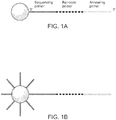
- a plurality of unique nucleic acid sequences comprising a degenerate barcode are amplified on a support (e.g., a bead) such that each discrete area of the support (e.g., each bead) will be coated with clonal copy of a starting nucleic acid sequence ( Figure 1 ). Accordingly, each discrete area of a support; bead, for example, will be uniquely barcoded with a plurality of targeting barcode oligonucleotides.
- emulsion PCR is performed, wherein degenerate oligonucleotide sequences are attached to a bead using a dilution equivalent maximum of one molecule per bead.
- the bar-code oligonucleotide length is related to cell sample size of interest. Generally, bar-codes are at least 3 nucleotides long. Often, they are about 20 nucleotides.
- a support-attached oligonucleotide having a total length of about 50-60 nucleotides includes nucleotides encoding a sequencing primer, 20 nucleotides for the bar-code, and an annealing primer.
- the support is a bead.
- the initial template oligonucleotide loaded on the beads has a sequencing primer region (which will be used to facilitate sequencing of the bar-code), a degenerate region (the actual bar-code) and an annealing primer region, which has a sequence complementary to the target nucleic acid sequence or sequences of interest.
- the annealing primer can be DNA or RNA ( Figure 1A ).
- Some beads may contain oligonucleotides that bind to more than one target nucleic acid of interest.
- the beads are then saturated with an anchor primer.
- the anchor primer has the same sequence as the sequencing primer region of the template oligonucleotide.
- the anchor primer serves as the second PCR priming end, which allows attachment of the product generated during emulsion PCR to the beads.
- the beads are then amplified in emulsion PCR ( Figure 1C ) using a primer complementary to the annealing section of the starting molecule.
- emulsion PCR is complete, the anchor primer is extended and contains a copy of the bar-code and the annealing primer.
- the bead can subsequently be purified from the emulsions and used in downstream applications.
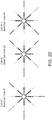
- the bar-coded beads are prepared, they are used in a second emulsion PCR in the presence of a single cell.
- the cell is contained within its own unique emulsion, allowing simultaneous PCR in a single assay that contains many cells.
- the beads and cells may be introduced to each other in any suitable way. For example, by transfection using liposomes, or by emulsification. Samples containing multiple beads and multiple cells are diluted to achieve a maximum of one bead and one cell per emulsion PCR reaction. In Figure 2 , an example of one bead-cell event is shown.
- thousands to millions of the events shown in Figure 2 may be performed in a single assay, such as one assay performed in a single well.
- Each single cell is sequestered into its own unique emulsion in the presence of one bar-coded beads.
- the multiple reaction are in the same reaction volume for all the cells. Because so many cells are analyzed in a single assay, the approach is equivalent to mixing millions of wells of PCR plates. Therefore a single assay is not limited in the amount of single cells to target, or the amount of transcript to target per single cells, provided each cell is uniquely bar-coded in either single emulsion per cell or through liposome transfection of a single bead or bar-code system. See Figure 2A . Millions of emulsions can be present in a single assay; i.e in a single well.
- the nucleic acid target of interest is annealed to the complementary sequences on the bar-coded bead template.
- Figure 2B Reverse transcription, for a RNA target, or primer extension, for a DNA target, is performed, and appends a bar-code to the cell RNA or DNA target.
- Figure 2D Within one cell, the same bar-code is added to all the target sequences. Thus, as shown in Figure 2D , Cell number 1, bead bar code number 1 has captured four examples of the target sequence (green, yellow, purple, and red). Each independent cell in the reaction has a different bar code.
- Figure 2D .
- DNA from Beads with bar-coded fragments of interest are recovered and processed in downstream assays.
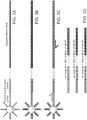
- cDNA synthesis is performed, followed by PCR amplification using gene specific primer (or restriction cleavage, and/or adapter ligation, follow by PCR) similarly to what has been described previously ( Kim et al. (2007) Science 316:1481 ). See Figure 3 .
- Sequencing of DNA using high-throughput technology is then performed.
- the sequencing primer is used to sequence the bar-code, through the annealing primer into the target sequence.
- the target sequencing conveys transcript identity and expression levels, or other genomic or transcriptomic sequence of interest.
- the bar-code sequence allows each target sequence to be correlated to the single cell from which the sequences originated.
- each transcript originating from one cell will have the same bar-code sequence, variation in genomic or transcriptomic information across the cell population is determined by assaying many single cells at the same time. Because each single cell contains a unique bar-code different from the other single cells, the identified sequences having the same bar-code can be correlated to the same originating cell.
- multiple mRNAs from each single cell can be obtained and analyzed.
- oligo-dT or similar primers
- the oligo-dT sequence anneals to mRNA polyA tails and thus capture simultaneously multiple messenger RNAs from a single cell. This allows for complete or substantially complete transcriptome analysis of multiple single cells in a complex mixture. Characterizing the transcriptomes of multiple cells on a per-cell basis has particular application in studies investigating which cells are malignant than others cancer samples.
- the present approach provides for monitoring mutation of each cell's genome and transcriptome before and after treatment; for example with a drug, or following surgery.
- the EGFR inhibitor Erbitux® cetuximab
- the present approach can be used diagnostically to determine, down to the single cell level, how many cells in a tumor sample carry the mutations that make the cells Erbitux® resistant. Information regarding the nucleic acid sequences of multiple proteins in each tumor cell is valuable in determining whether to continue or stop treatment with a given drug or switch to an alternative drug.
- At least two oligonucleotides having different annealing primers are attached to the same bead, which allows several target nucleic acids in the same cell to be captured and sequenced.
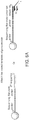
- a universal sequence is attached downstream of the bar-code primer. See Figures 6A and 6B .
- the universal sequence is complementary to an overhang region on a second primer that contains the annealing primer, which targets the gene of interest. Multiple annealing primers, each targeting a different gene of interest, may be used.
- the universal sequence, common to the overhangs of all the annealing primers allows incorporation of the multiple annealing primer sequences onto the beads by PCR. See Figures 6A and 6B .
- Beads with multiple annealing primers targeting different nucleic acids of interest have particular use in immune cell applications.
- specific sets of targeting oligonucleotides complementary to the heavy and light chains of the B cell antibody coding gene or its RNA are used to capture the pairing of each unique single cell's heavy and light chains that define each specific antibody.
- sequences encoding T cell receptor components may be targeted and sequenced. See ( Embleton et al. (1992) Nucleic Acids Res. 20(15):3831 ; Chapal et al. (1997) Biotechniques 23(3):518 ).
- annealing primers are selected for analyzing small nucleotide polymorphisms (SNPs), and for long range haplotyping ( Zhang et al., "Long-range polony haplotyping of individual human chromosome molecules,” Nat Genet. 2006 Mar;38(3):382-7 ). These approaches provide specific information for each cell in multiple-cell biological samples.
- bar-coding is not necessary if one uses strategies to attach the heavy and light chain prior to PCR or cleavage of the molecules from the beads, such as ligation, of CRE-LOX coupling or fragments of each unique bead, as described by Embleton et al. (1992) Nucleic Acids Res. 20(15):3831 ; Chapal et al. (1997) Biotechniques 23(3):518 , but in such way that many single cell at once can be treated as described in the current invention.
- barcode refers to a unique oligonucleotide sequence that allows a corresponding nucleic acid base and/or nucleic acid sequence to be identified.
- the nucleic acid base and/or nucleic acid sequence is located at a specific position on a larger polynucleotide sequence (e.g., a polynucleotide covalently attached to a bead).
- barcodes can each have a length within a range of from 4 to 36 nucleotides, or from 6 to 30 nucleotides, or from 8 to 20 nucleotides.
- the melting temperatures of barcodes within a set are within 10 °C of one another, within 5 °C of one another, or within 2 °C of one another.
- barcodes are members of a minimally cross-hybridizing set. That is, the nucleotide sequence of each member of such a set is sufficiently different from that of every other member of the set that no member can form a stable duplex with the complement of any other member under stringent hybridization conditions. In one aspect, the nucleotide sequence of each member of a minimally cross-hybridizing set differs from those of every other member by at least two nucleotides. Barcode technologies are known in the art and are described in Winzeler et al.
- Complementary or “substantially complementary” refers to the hybridization or base pairing or the formation of a duplex between nucleotides or nucleic acids, such as, for instance, between the two strands of a double stranded DNA molecule or between an oligonucleotide primer and a primer binding site on a single stranded nucleic acid.
- Complementary nucleotides are, generally, A and T/U, or C and G.
- Two single-stranded RNA or DNA molecules are said to be substantially complementary when the nucleotides of one strand, optimally aligned and compared and with appropriate nucleotide insertions or deletions, pair with at least about 80% of the nucleotides of the other strand, usually at least about 90% to 95%, and more preferably from about 98 to 100%.
- substantial complementarity exists when an RNA or DNA strand will hybridize under selective hybridization conditions to its complement.
- selective hybridization will occur when there is at least about 65% complementary over a stretch of at least 14 to 25 nucleotides, at least about 75%, or at least about 90% complementary. See Kanehisa (1984) Nucl. Acids Res. 12:203 .
- hybridization refers to the process in which two single-stranded polynucleotides bind non-covalently to form a stable double-stranded polynucleotide.
- the term “hybridization” may also refer to triple-stranded hybridization.
- the resulting (usually) double-stranded polynucleotide is a “hybrid” or “duplex.”
- “Hybridization conditions” will typically include salt concentrations of less than about 1 M, more usually less than about 500 mM and even more usually less than about 200 mM.
- Hybridization temperatures can be as low as 5 °C, but are typically greater than 22 °C, more typically greater than about 30 °C, and often in excess of about 37 °C.
- Hybridizations are usually performed under stringent conditions, i.e., conditions under which a probe will hybridize to its target subsequence. Stringent conditions are sequence-dependent and are different in different circumstances. Longer fragments may require higher hybridization temperatures for specific hybridization. As other factors may affect the stringency of hybridization, including base composition and length of the complementary strands, presence of organic solvents and extent of base mismatching, the combination of parameters is more important than the absolute measure of any one alone.
- stringent conditions are selected to be about 5 °C lower than the T m for the specific sequence at s defined ionic strength and pH.
- Exemplary stringent conditions include salt concentration of at least 0.01 M to no more than 1 M Na ion concentration (or other salts) at a pH 7.0 to 8.3 and a temperature of at least 25 °C.
- conditions of 5XSSPE 750 mM NaCl, 50 mM Na phosphate, 5 mM EDTA, pH 7.4
- a temperature of 25-30 °C are suitable for allele-specific probe hybridizations.
- stringent conditions see for example, Sambrook, Fritsche and Maniatis, Molecular Cloning A Laboratory Manual, 2nd Ed.
- Hybridizing specifically to or “specifically hybridizing to” or like expressions refer to the binding, duplexing, or hybridizing of a molecule substantially to or only to a particular nucleotide sequence or sequences under stringent conditions when that sequence is present in a complex mixture (e.g., total cellular) DNA or RNA.
- Nucleoside as used herein includes the natural nucleosides, including 2'-deoxy and 2'-hydroxyl forms, e.g. as described in Komberg and Baker, DNA Replication, 2nd Ed. (Freeman, San Francisco, 1992 ).
- "Analogs" in reference to nucleosides includes synthetic nucleosides having modified base moieties and/or modified sugar moieties, e.g., described by Scheit, Nucleotide Analogs (John Wiley, New York, 1980 ); Uhlman and Peyman, Chemical Reviews, 90:543-584 (1990 ), or the like, with the proviso that they are capable of specific hybridization.
- Such analogs include synthetic nucleosides designed to enhance binding properties, reduce complexity, increase specificity, and the like.
- Polynucleotides comprising analogs with enhanced hybridization or nuclease resistance properties are described in Uhlman and Peyman (cited above); Crooke et al., Exp. Opin. Ther. Patents, 6: 855-870 (1996 ); Mesmaeker et al., Current Opinion in Structural Biology, 5:343-355 (1995 ); and the like.
- Exemplary types of polynucleotides that are capable of enhancing duplex stability include oligonucleotide phosphoramidates (referred to herein as “amidates”), peptide nucleic acids (referred to herein as “PNAs”), oligo-2'-O-alkylribonucleotides, polynucleotides containing C-5 propynylpyrimidines, locked nucleic acids (LNAs), and like compounds.
- oligonucleotides are either available commercially or may be synthesized using methods described in the literature.
- nucleic acid molecule As used herein, the terms “nucleic acid molecule,” “nucleic acid sequence,” “nucleic acid fragment,” “oligonucleotide,” “oligonucleotide fragment” and “polynucleotide” are used interchangeably and are intended to include, but are not limited to, a polymeric form of nucleotides that may have various lengths, either deoxyribonucleotides or ribonucleotides, or analogs thereof. Nucleic acid molecules include single stranded DNA (ssDNA), double stranded DNA (dsDNA), single stranded RNA (ssRNA) and double stranded RNA (dsRNA).
- ssDNA single stranded DNA
- dsDNA double stranded DNA
- ssRNA single stranded RNA
- dsRNA double stranded RNA
- nucleic acid molecules may have different three-dimensional structures, and may perform various functions, known or unknown.
- Nonlimiting examples of nucleic acid molecules include a gene, a gene fragment, a genomic gap, an exon, an intron, intergenic DNA (including, without limitation, heterochromatic DNA), messenger RNA (mRNA), transfer RNA, ribosomal RNA, ribozymes, small interfering RNA (siRNA), miRNA, small nucleolar RNA (snoRNA), cDNA, recombinant polynucleotides, branched polynucleotides, plasmids, vectors, isolated DNA of a sequence, isolated RNA of a sequence, nucleic acid probes, and primers.
- Nucleic acid molecules useful in the methods described herein may comprise natural nucleic acid sequences and variants thereof, artificial nucleic acid sequences, or a combination of such sequences.
- oligonucleotide sequence refers to a linear polymer of natural or modified nucleosidic monomers linked by phosphodiester bonds or analogs thereof.
- the term “oligonucleotide” usually refers to a shorter polymer, e.g., comprising from about 3 to about 100 monomers, and the term “polynucleotide” usually refers to longer polymers, e.g., comprising from about 100 monomers to many thousands of monomers, e.g., 10,000 monomers, or more
- An "oligonucleotide fragment” refers to an oligonucleotide sequence that has been cleaved into two or more smaller oligonucleotide sequences.
- Oligonucleotides comprising probes or primers usually have lengths in the range of from 12 to 60 nucleotides, and more usually, from 18 to 40 nucleotides. Oligonucleotides and polynucleotides may be natural or synthetic.
- Oligonucleotides and polynucleotides include deoxyribonucleosides, ribonucleosides, and non-natural analogs thereof, such as anomeric forms thereof, peptide nucleic acids (PNAs), and the like, provided that they are capable of specifically binding to a target genome by way of a regular pattern of monomer-to-monomer interactions, such as Watson-Crick type of base pairing, base stacking, Hoogsteen or reverse Hoogsteen types of base pairing, or the like.
- PNAs peptide nucleic acids
- nucleosidic monomers are linked by phosphodiester bonds.
- ATGCCTG an oligonucleotide
- A denotes deoxyadenosine
- C denotes deoxycytidine
- G denotes deoxyguanosine
- T denotes deoxythymidine
- U denotes the ribonucleoside, uridine, unless otherwise noted.
- oligonucleotides comprise the four natural deoxynucleotides; however, they may also comprise ribonucleosides or non-natural nucleotide analogs. It is clear to those skilled in the art when oligonucleotides having natural or non-natural nucleotides may be employed in methods and processes described herein. For example, where processing by an enzyme is called for, usually oligonucleotides consisting solely of natural nucleotides are required.
- an enzyme has specific oligonucleotide or polynucleotide substrate requirements for activity, e.g., single stranded DNA, RNA/DNA duplex, or the like
- selection of appropriate composition for the oligonucleotide or polynucleotide substrates is well within the knowledge of one of ordinary skill, especially with guidance from treatises, such as Sambrook et al., Molecular Cloning, Second Edition (Cold Spring Harbor Laboratory, New York, 1989 ), and like references.
- Oligonucleotides and polynucleotides may be single stranded or double stranded.
- Nucleic acid molecules may optionally include one or more non-standard nucleotide(s), nucleotide analog(s) and/or modified nucleotides.
- modified nucleotides include, but are not limited to diaminopurine, S 2 T, 5-fluorouracil, 5-bromouracil, 5-chlorouracil, 5-iodouracil, hypoxanthine, xantine, 4-acetylcytosine, 5-(carboxyhydroxylmethyl)uracil, 5-carboxymethylaminomethyl-2-thiouridine, 5-carboxymethylaminomethyluracil, dihydrouracil, beta-D-galactosylqueosine, inosine, N6-isopentenyladenine, 1-methylguanine, 1-methylinosine, 2,2-dimethylguanine, 2-methyladenine, 2-methylguanine, 3-methylcytosine, 5-methylcytosine, N6-adenine, 7-methylguanine, 5-
- Nucleic acid molecules may also be modified at the base moiety (e.g., at one or more atoms that typically are available to form a hydrogen bond with a complementary nucleotide and/or at one or more atoms that are not typically capable of forming a hydrogen bond with a complementary nucleotide), sugar moiety or phosphate backbone.
- large polynucleotides are provided.
- isolation techniques that maximize the lengths of polynucleotides (e.g., DNA molecules) obtained are used.
- polynucleotides e.g., DNA molecules
- in situ lysis or deproteinization e.g., with EDTA, detergent, protease, any combinations thereof and the like
- agarose embedding as routinely performed for pulsed field gel electrophoresis
- Nucleic acid molecules may be isolated from natural sources or purchased from commercial sources. Oligonucleotide sequences may also be prepared by any suitable method, e.g., standard phosphoramidite methods such as those described by Beaucage and Carruthers ((1981) Tetrahedron Lett. 22: 1859 ) or the triester method according to Matteucci et al. (1981) J. Am. Chem. Soc. 103:3185 ), or by other chemical methods using either a commercial automated oligonucleotide synthesizer or high-throughput, high-density array methods known in the art (see U.S. Patent Nos.
- Pre-synthesized oligonucleotides may also be obtained commercially from a variety of vendors.
- Nucleic acid molecules may be obtained from one or more biological samples.
- a biological sample may be a single cell or many cells.
- a biological sample may comprise a single cell type or a combination of two or more cell types.
- a biological sample further includes a collection of cells that perform a similar function such as those found, for example, in a tissue. Accordingly, certain aspects of the invention are directed to biological samples containing one or more tissues.
- a tissue includes, but is not limited to, epithelial tissue (e.g., skin, the lining of glands, bowel, skin and organs such as the liver, lung, kidney), endothelium (e.g., the lining of blood and lymphatic vessels), mesothelium (e.g., the lining of pleural, peritoneal and pericardial spaces), mesenchyme (e.g., cells filling the spaces between the organs, including fat, muscle, bone, cartilage and tendon cells), blood cells (e.g.
- epithelial tissue e.g., skin, the lining of glands, bowel, skin and organs such as the liver, lung, kidney
- endothelium e.g., the lining of blood and lymphatic vessels
- mesothelium e.g., the lining of pleural, peritoneal and pericardial spaces
- mesenchyme e.g., cells filling the spaces between the organs
- a tissue sample includes microscopic samples as well as macroscopic samples.
- a sample can be obtained from one or more of single cells in culture, metagenomic samples, embryonic stem cells, induced pluripotent stem cells, cancer samples, tissue sections, biopsies and the like, and any combinations of these.
- nucleic acid sequences derived or obtained from one or more organisms are provided.
- the term "organism” includes, but is not limited to, a human, a non-human primate, a cow, a horse, a sheep, a goat, a pig, a dog, a cat, a rabbit, a mouse, a rat, a gerbil, a frog, a toad, a fish (e.g., Danio rerio ) a roundworm (e.g., C. elegans ) and any transgenic species thereof.
- the term "organism” further includes, but is not limited to, a yeast (e.g., S . cerevisiae ) cell, a yeast tetrad, a yeast colony, a bacterium, a bacterial colony, a virion, virosome, virus-like particle and/or cultures thereof, and the like.
- Isolation, extraction or derivation of nucleic acid sequences may be carried out by any suitable method.
- Isolating nucleic acid sequences from a biological sample generally includes treating a biological sample in such a manner that nucleic acid sequences present in the sample are extracted and made available for analysis. Any isolation method that results in extracted nucleic acid sequences may be used in the practice of the present invention. It will be understood that the particular method used to extract nucleic acid sequences will depend on the nature of the source.
- kits are commercially available for extracting DNA from biological samples (e.g., BD Biosciences Clontech (Palo Alto, CA): Epicentre Technologies (Madison, WI); Gentra Systems, Inc. (Minneapolis, MN); MicroProbe Corp. (Bothell, WA); Organon Teknika (Durham, NC); and Qiagen Inc. (Valencia, CA)).
- RNA extraction is also well known in the art (see, for example, J. Sambrook et al., "Molecular Cloning: A Laboratory Manual” 1989, 2nd Ed., Cold Spring Harbour Laboratory Press: New York ) and several kits for RNA extraction from bodily fluids are commercially available (e.g., Ambion, Inc. (Austin, TX); Amersham Biosciences (Piscataway, NJ); BD Biosciences Clontech (Palo Alto, CA); BioRad Laboratories (Hercules, CA); Dynal Biotech Inc. (Lake Success, NY); Epicentre Technologies (Madison, WI); Gentra Systems, Inc.
- oligonucleotide sequences are immobilized on a solid support.
- the support can be simple square grids, checkerboard (e.g., offset) grids, hexagonal arrays and the like.
- Suitable supports include, but are not limited to, slides, beads, chips, particles, strands, gels, sheets, tubing, spheres, containers, capillaries, pads, slices, films, culture dishes, plates (e.g., 96-well, 48-well, 24-well, 12-well, eight-well, six-well, four-well, single-well and the like), cell surfaces (e.g., S. aureus cells) and the like.
- a solid support may be biological, non-biological, organic, inorganic, or any combination thereof.
- beads and bead-based arrays are provided.
- the term "bead” refers to a discrete particle that may be spherical (e.g., microspheres) or have an irregular shape. Beads may be as small as approximately 0.1 ⁇ m in diameter or as large approximately several millimeters in diameter. Beads may comprise a variety of materials including, but not limited to, paramagnetic materials, ceramic, plastic, glass, polystyrene, methylstyrene, acrylic polymers, titanium, latex, sepharose, cellulose, nylon and the like.
- a support e.g., a bead
- a support may have functional groups attached to its surface which can be used to bind one or more reagents described herein to the bead.
- One or more reagents can be attached to a support (e.g., a bead) by hybridization, covalent attachment, magnetic attachment, affinity attachment and the like.
- Beads coated with a variety of attaachments are commercially available (Dynabeads, Invitrogen).
- Supports e.g., beads
- a covalent interaction is a chemical linkage between two atoms or radicals formed by the sharing of a pair of electrons (i.e., a single bond), two pairs of electrons (i.e., a double bond) or three pairs of electrons (i.e., a triple bond).
- Covalent interactions are also known in the art as electron pair interactions or electron pair bonds.
- Noncovalent interactions include, but are not limited to, van der Waals interactions, hydrogen bonds, weak chemical bonds (i.e., via short-range noncovalent forces), hydrophobic interactions, ionic bonds and the like.
- PCR polymerase chain reaction
- RACE ligation chain reaction
- LCR ligation chain reaction
- PCR Polymerase chain reaction
- PCR is a reaction for making multiple copies or replicates of a target nucleic acid flanked by primer binding sites, such reaction comprising one or more repetitions of the following steps: (i) denaturing the target nucleic acid, (ii) annealing primers to the primer binding sites, and (iii) extending the primers by a nucleic acid polymerase in the presence of nucleoside triphosphates.
- the reaction is cycled through different temperatures optimized for each step in a thermal cycler instrument.
- a double stranded target nucleic acid may be denatured at a temperature greater than 90 °C, primers annealed at a temperature in the range 50-75 °C, and primers extended at a temperature in the range 72-78 °C.
- PCR encompasses derivative forms of the reaction, including but not limited to, RT-PCR, real-time PCR, nested PCR, quantitative PCR, multiplexed PCR, assembly PCR and the like. Reaction volumes range from a few hundred nanoliters, e.g., 200 nL, to a few hundred microliters, e.g., 200 microliters.
- Reverse transcription PCR or "RT-PCR,” means a PCR that is preceded by a reverse transcription reaction that converts a target RNA to a complementary single stranded DNA, which is then amplified, e.g., Tecott et al., U.S. Patent No. 5,168,038 .
- Real-time PCR means a PCR for which the amount of reaction product, i.e., amplicon, is monitored as the reaction proceeds.
- Nested PCR means a two-stage PCR wherein the amplicon of a first PCR becomes the sample for a second PCR using a new set of primers, at least one of which binds to an interior location of the first amplicon.
- initial primers in reference to a nested amplification reaction mean the primers used to generate a first amplicon
- secondary primers mean the one or more primers used to generate a second, or nested, amplicon.
- Multiplexed PCR means a PCR wherein multiple target sequences (or a single target sequence and one or more reference sequences) are simultaneously carried out in the same reaction mixture, e.g. Bernard et al. (1999) Anal. Biochem., 273:221-228 (two-color real-time PCR). Usually, distinct sets of primers are employed for each sequence being amplified.
- Quantitative PCR means a PCR designed to measure the abundance of one or more specific target sequences in a sample or specimen.
- methods of determining the sequence identities of nucleic acid sequences are provided. Determination of the sequence of a nucleic acid sequence of interest (e.g., immune cell nucleic acid sequences) can be performed using variety of sequencing methods known in the art including, but not limited to, sequencing by hybridization (SBH), sequencing by ligation (SBL), quantitative incremental fluorescent nucleotide addition sequencing (QIFNAS), stepwise ligation and cleavage, fluorescence resonance energy transfer (FRET), molecular beacons, TaqMan reporter probe digestion, pyrosequencing, fluorescent in situ sequencing (FISSEQ), FISSEQ beads ( U.S. Pat. No.
- allele-specific oligo ligation assays e.g., oligo ligation assay (OLA), single template molecule OLA using a ligated linear probe and a rolling circle amplification (RCA) readout, ligated padlock probes, and/or single template molecule OLA using a ligated circular padlock probe and a rolling circle amplification (RCA) readout
- OLA oligo ligation assay
- RCA rolling circle amplification
- ligated padlock probes single template molecule OLA using a ligated circular padlock probe and a rolling circle amplification (RCA) readout
- High-throughput sequencing methods e.g., on cyclic array sequencing using platforms such as Roche 454, Illumina Solexa, ABI-SOLiD, ION Torrents, Complete Genomics, Pacific Bioscience, Helicos, Polonator platforms (Worldwide Web Site: Polonator.org), and the like, can also be utilized. High-throughput sequencing methods are described in U.S. Serial No. 61/162,913, filed March 24, 2009 . A variety of light-based sequencing technologies are known in the art ( Landegren et al. (1998) Genome Res. 8:769-76 ; Kwok (2000) Pharmocogenomics 1:95-100 ; and Shi (2001) Clin. Chem. 47:164-172 ).
- Infectious agents include, but are not limited to, viruses, bacteria, fungi, parasites, infectious proteins and the like.
- RNA viruses include, but are not limited to, DNA or RNA animal viruses.
- RNA viruses include, but are not limited to, virus families such as Picornaviridae (e.g., polioviruses), Reoviridae (e.g., rotaviruses), Togaviridae (e.g., encephalitis viruses, yellow fever virus, rubella virus), Orthomyxoviridae (e.g., influenza viruses), Paramyxoviridae (e.g., respiratory syncytial virus, measles virus, mumps virus, parainfluenza virus), Rhabdoviridae (e.g., rabies virus), Coronaviridae, Bunyaviridae, Flaviviridae, Filoviridae, Arenaviridae, Bunyaviridae and Retroviridae (e.g., human T cell lymphotropic viruses (HTLV), human immunodeficiency viruses (HIV)).
- Picornaviridae e
- DNA viruses include, but are not limited to, virus families such as Papovaviridae (e.g., papilloma viruses), Adenoviridae (e.g., adenovirus), Herpesviridae (e.g., herpes simplex viruses), and Poxviridae (e.g., variola viruses).
- Papovaviridae e.g., papilloma viruses
- Adenoviridae e.g., adenovirus
- Herpesviridae e.g., herpes simplex viruses
- Poxviridae e.g., variola viruses
- Bacteria include, but are not limited to, gram positive bacteria, gram negative bacteria, acid-fast bacteria and the like.
- gram positive bacteria include, but are not limited to, Actinomedurae, Actinomyces israelii, Bacillus anthracis, Bacillus cereus, Clostridium botulinum, Clostridium difficile, Clostridium perfringens, Clostridium tetani, Corynebacterium, Enterococcus faecalis, Listeria monocytogenes, Nocardia, Propionibacterium acnes, Staphylococcus aureus, Staphylococcus epiderm, Streptococcus mutans, Streptococcus pneumoniae and the like.
- acid-fast bacteria include, but are not limited to, Myobacterium avium, Myobacterium leprae, Myobacterium tuberculosis and the like.
- fungi include, but are not limited to, Aspergilli, Candidae, Candida albicans, Coccidioides immitis, Cryptococci, and combinations thereof.
- parasitic microbes include, but are not limited to, Balantidium coli, Cryptosporidium parvum, Cyclospora cayatanensis, Encephalitozoa, Entamoeba histolytica, Enterocytozoon bieneusi, Giardia lamblia, Leishmaniae, Plasmodii, Toxoplasma gondii, Trypanosomae, trapezoidal amoeba and the like.
- infectious proteins include prions.
- disorders caused by prions include, but are not limited to, human disorders such as Creutzfeldt-Jakob disease (CJD) (including, e.g., iatrogenic Creutzfeldt-Jakob disease (iCJD), variant Creutzfeldt-Jakob disease (vCJD), familial Creutzfeldt-Jakob disease (fCJD), and sporadic Creutzfeldt-Jakob disease (sCJD)), Gerstmann-Straussler-Scheinker syndrome (GSS), fatal familial insomnia (fFI), sporadic fatal insomnia (sFI), kuru, and the like, as well as disorders in animals such as scrapie (sheep and goats), bovine spongiform encephalopathy (BSE) (cattle), transmissible mink encephalopathy (TME) (mink), chronic wasting disease (CWD) (elk, mule deer), feline spong
- treatment of cellular proliferative disorders is intended to include the prevention of the induction, onset, establishment or growth of neoplasms in a subject or a reduction in the growth of pre-existing neoplasms in a subject.
- the language also can describe inhibition of the invasion of neoplastic cells into neighboring tissues or the metastasis of a neoplasm from one site to another.
- Cellular proliferative disorders can further include disorders associated with hyperproliferation of vascular smooth muscle cells such as proliferative cardiovascular disorders, e.g., atherosclerosis and restenosis.
- Cellular proliferation disorders can also include disorders such as proliferative skin disorders, e.g., X-linked ichthyosis, psoriasis, atopic dermatitis, allergic contact dermatitis, epidermolytic hyperkeratosis, and seborrheic dermatitis.
- Cellular proliferative disorders can further include disorders such as autosomal dominant polycystic kidney disease (ADPKD), mastocystosis, and cellular proliferation disorders caused by infectious agents such as viruses.
- ADPKD autosomal dominant polycystic kidney disease
- mastocystosis cellular proliferation disorders caused by infectious agents such as viruses.
- autoimmune disorder is a disease or disorder caused by a subject producing an inappropriate immune response against its own tissues.
- an autoimmune disorder includes, but is not limited to, disorders such as Addison's disease, alopecia areata, ankylosing spondylitis, antiphospholipid sundrome, autoimmune hemolytic anemia, autoimmune hepatitis, autoimmune inner ear disease (AIED), autoimmune lymphoproliferative syndrome (ALPS), autoimmune thrombocytopenic purpura (ATP), Balo disease, Bechet disease, bullous pemphigoid, cardiomyopathy, celiac sprue-dermatitis herpetiformis, chronic fatigue immune dysfunction syndrome (CFIDS), chronic inflammatory demyelinating polyneuropathy, cicatricial pemphigoid, cold agglutinin disease, CREST syndrome,
- CIDS chronic fatigue immune dysfunction syndrome
- oligo dT bar-code template oligonucleotide (HSCT_BC_anchor1) were added at the concentrations as shown in Table 1.
- Table 1 Tube Primer Stock Concentration Primer volume ( ⁇ l) 1 100 pM 80 2 10 pM 80 3 1 pM 80 4 0.1 pN 80
- the template oligonucleotide and beads were incubated on a rotator for 20 minutes, then washed twice with 200 ⁇ l of 1x B&W then resuspended in 100 ⁇ l of 2x B&W.
- the beads pre-loaded with the template oligonucleotide as in Example 1(a) above, were incubated on a rotator for 20 minutes with Anchor primer mix (1mM HSCT_Bead_anchor1 and 1x B&W buffer) to coat the beads with the anchor primer then washed twice with 200 ⁇ l of 1x B&W, once in 200 ⁇ l of TE, then resuspended in 100 ⁇ l of TE.
- the anchor primer has a 5' biotin which binds to the streptavidin coated beads. Typically, 30% of the beads have an oligonucleotide. On those beads 100% or substantially all of the anchor primers are typically extended.
- Aqueous Mix and Oil Mix were prepared as described in Table 2. Table 2.
- the emulsions were made by adding 800 ⁇ l PCR mix, 100 ⁇ l Enzymatics Taq (5U/ ⁇ l), quickly vortexing and spinning, then immediately adding 60 ml of bar-code anchored beads, followed by vortex and spinning.
- the 960 ml mix was transferred to a tube of oil and vortexed for 2.25 min at 2200 rpm, which was followed by emulsion PCR using the following PCR protocol steps:
- aqueous mix was vortexed, then 0.6ml of mix was added per 1.5 ml tube (Ambion; non-stick). 50 ⁇ l of M280 HSCT Anchor bead was added per tube, then the tubes were sonicated for 3 cycles of 10 seconds. After sonication, the tubes were placed on ice, and 80 ⁇ l of Taq Polymerase (5U/ ⁇ l) was added per tube. The tubes were again vortexed and placed on ice. 800 ⁇ l of the mixture was added to the oil phase, the tubes were vortexed and PCR was performed as described in Example 1 part c. In similar experiments 96 well/plates were used. Each well contained 55 ⁇ l/well of the mixture.
- Table 4 shows the sequences used in Example 1.
- the final sequence attached to the bead in Example 1 is shown in SEQ ID NO:9.
- the bead is connected 5' to 3' to the oligonucleotide which encodes the anchor primer sequence, the bar code (N20) and an oligo dT primer.
- Figure 4 demonstrates introduction of beads carrying unique bar-coded oligonucleotides into individual cells.
- beads post-emulsion PCR are sequenced for one base of their bar-code to show that each beads have a unique bar-code and demonstrate clonality.
- Each nucleotide is queried by a different fluorophores as describe previously ( Porreca et al. (2006) Curr. Protoc. Mol. Biol. Chapter 7:Unit 78 ).
- Cy 5 shows presence of an adenine nucleotide at position one of the bar-code.
- Cy3 the shows presence of a thymine nucleotide at position one of the bar-code
- Texas Red (Txred) shows the presence of a cytosine nucleotide at position one of the bar-code.
- Fluorescein isothiocyanate (FITC) shows the presence of a guanine at position one of the bar-code.
- the image overlay of all four fluorophores for a single position on the bar-codes is shown and demonstrates clonality. Clonality refers to each single bead harboring one unique bar-code, which has been successfully amplified onto the bead.
- the overlay would have demonstrated more than one fluorophore color per bead when querying a single position on the bar-code during sequencing.
- Complete sequencing of the bar-code which allows correlation to the cell, is by multiple successive round of sequencing for each nucleotide position.
- White light microscopy analysis of the beads and emulsion reaction shows that the starting template and the bead in emulsion were correctly diluted to achieve a maximum of one bead or less per emulsion and one template or less per bead.
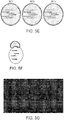
- FIG. 5 shows the query of the Rolony (similar to the query of the bar-coded beads, but ordered on a grid) to demonstrate efficiency at generating uniquely bar-coded clonal Rolony.
- Figure 5 demonstrates the rolony are clonally amplified, because for each query of a single position only one fluorophore overlays for that position. Subsequent sequencing of the other nucleotide positions can be performed to identify the complete bar-codes (used to correlated to the single originating cell) and to identify the captured transcripts.
Landscapes
- Chemical & Material Sciences (AREA)
- Life Sciences & Earth Sciences (AREA)
- Organic Chemistry (AREA)
- Health & Medical Sciences (AREA)
- Engineering & Computer Science (AREA)
- Zoology (AREA)
- Wood Science & Technology (AREA)
- Genetics & Genomics (AREA)
- Proteomics, Peptides & Aminoacids (AREA)
- Molecular Biology (AREA)
- Biochemistry (AREA)
- Biotechnology (AREA)
- Bioinformatics & Cheminformatics (AREA)
- General Engineering & Computer Science (AREA)
- General Health & Medical Sciences (AREA)
- Microbiology (AREA)
- Physics & Mathematics (AREA)
- Analytical Chemistry (AREA)
- Biophysics (AREA)
- Immunology (AREA)
- Chemical Kinetics & Catalysis (AREA)
- Medicinal Chemistry (AREA)
- General Chemical & Material Sciences (AREA)
- Biomedical Technology (AREA)
- Structural Engineering (AREA)
- Bioinformatics & Computational Biology (AREA)
- Crystallography & Structural Chemistry (AREA)
- Plant Pathology (AREA)
- Measuring Or Testing Involving Enzymes Or Micro-Organisms (AREA)
- Nanotechnology (AREA)
Description
- The present invention relates to methods and compositions for obtaining and analyzing nucleic acid sequences derived from many single cells at once.
- Classical single cell analysis is performed by isolating a single cell into a single well of a processing plate from which DNA and/or RNA can be amplified or where the cell can be subculture into a larger population, with both approaches performed until enough genomic material is achieved for subsequent downstream processing. A limitation of such approaches is that it is not always possible to isolate single cells from a tissue section or a complex cellular mixture or population. Furthermore, in a clonally amplified cell population in culture, even if the cells should present the exact same genome, which they should in theory, the transcriptomic information is variable from one cell to another. Also, culturing cells modifies their expression patterns, so it is often preferable to capture the transcriptomic information when the cells are in their original environment. In addition, the extreme low amounts of DNA and/or RNA obtained when isolating a single cell makes downstream processing steps quite challenging. Moreover, the processes by which DNA and/or RNA are amplified to large enough amounts to allow such analysis causes significant bias in the resulting material and, therefore, is not representative of the nucleic acids in the cell. Finally, classical approaches are limited in the amount of single cells that can be assayed in one analysis. For example, a complex population of 10,000 cells is to be studied, 10,000 cells would need to be sorted and separated (using, e.g., approximately 100 x 96 well plates), which requires substantial investment in costly automation equipment as well as significant processing time and additional costs.
- Early approaches included split pooled DNA synthesis. While split pooled DNA synthesis on beads can potentially be used to achieve uniquely bar-coded beads (Brenner et al. (2000) Proc. Natl. Acad. Sci. USA 97:1665), the technical difficulties associated with such an approach and the incorporation inefficiency of nucleotide during chemical synthesis of the sequence, results in beads having very few oligonucleotide sequences with correct sequences and/or length. Even when nucleotide synthesis chemistry is quite efficient, there is, on average, 1% non-incorporation at each nucleotide cycle. Consequently, attempts to synthesize a clonal bar-code on beads of proper length split pooled DNA synthesis were unsuccessful. For example, for a typical oligonucleotide of 50-60 nucleotides this error rate would result in less than 40% of the oligos on the beads having the correct sequence. Moreover, because the oligonucleotides are synthesized on a solid support it is impossible to identify the correct one, using purification approaches such as with HPLC purification or PAGE. Split pool synthesis was originally developed by Linx Therapeutics, who was acquired by Solexa who was acquired by Illumina based on the early work on split pool synthesis, but the technology was abandoned because of these issues. Thus, the efficient use of bar-coded beads has not been achieved. Beads with an internal dye gradient core (such as the one used by Luminex Corporation) can be used in application where the overall bead bar-code signal is used. While that approach is acceptable when an average signal intensity is desired, it is inadequate where the downstream use of these molecules requires unique identification of the cell. Also "luminex beads" can only be generated in a limited amount which result in limited capability for probing more then a few hundreds of cells.
- The present approach offers particular advantages over earlier approaches such as split pooled DNA synthesis on bead.
- The present approach efficiently produces bar-coded beads coated with clonal copies of the bar-coded oligonucleotides having the correct sequence. Moreover, the speed, ease and cost of production is also advantageous. And, unlike split pooled DNA synthesis on beads, millions of uniquely bar-coded beads can be generated for single cell analysis.
- In one aspect, the invention consists of an approach for bar-coding many single cells in a complex mixtures of cells. Each cell is provided with a unique individual bar-code for each cell. The unique bar-code allows each cell's nucleic acids (genome or transcriptome) to be associated with the original cell. Thus, for any given individual cell multiple different genes and transcripts can be identified and correlated to the same cell because the sequences share the same unique bar code.
- The unique bar-code is inserted into each individual cell in a way that each cell receives one unique bar-code and is present in a large enough amount to allow subsequent genomic or transcriptomic targeting. Once the bar-code is inserted, downstream manipulations are conducted to capture and then sequence all these unique bar-codes and the genome or transcriptome sequences of interest in one simultaneous reaction. The present approach, when coupled with high-throughput sequencing technology allows analyzing a large number of single cells and achieving the analysis in one single reaction assay. In principle, one can sequence any number of cells and any number of targeted regions per cell. The number of single cells that can be processed is limited only by practical constraints, such as the speed of high throughput sequencing; for example. In some embodiments, high-throughput sequencing technologies are used, such as the ones conducted of sequencing platform such as Illumina HiSeq or genome analyzer, Roche 454, Pacific Bioscience, Ion Torrents, Harvard Polonator, ABI Solid or other similar instruments in the field. Classic sequencing approaches, such as Sanger sequencing can be used; however, the true power in the technology is to be able to sequence a larger number of sequences from single cells simultaneously. High-throughput sequencing platforms are thus better-suited for most embodiments. If a sequencing platform generates 10 million reads per run, then one can sequence one unique transcript across 1 million cells to achieved a 10x coverage. In other embodiments, a partial transcriptome, for example targeting 10,000 unique transcripts, requires only 100 cells to be targeted for capture and sequencing.
- In some embodiments, full or targeted transcriptome RNA analysis is performed. Thus, in a single cell, only selected transcripts may be sequenced. In other applications, all or substantially all transcripts may be captured and sequenced. In yet other embodiments, full or partial genomic DNA analysis is performed.
- Analyses of multiple cells in heterogeneous cell populations is particularly useful when studying complex samples or mixtures. Complex samples or cell mixtures include, for example, metagenomic samples, normal and cancerous tissue sections, embryonic and stem cell colonies. Genome and transcriptome sequencing is desirable where sequences are highly divergent; for example, in certain cell types or in cells at certain stages. Particularly suitable applications include molecular haplotyping, HLA typing, and T- and B- cell receptor profiling. Metagenomic samples refers to samples containing genomes from multiple origins, such as species. For example, the present approach may be applied to mixtures of bacterial species to allow sequencing of nucleic acids from multiple bacteria in one assay followed by correlating the sequences to the same bacterial cell. Similarly, nucleic acid sequences of foreign cells living in the mouth can be determined and correlated to the same cell.
- Further features and advantages of certain embodiments of the present invention will become more fully apparent in the following description of the embodiments and drawings thereof, and from the claims.
- The patent or application file contains at least one drawing executed in color. Copies of this patent or patent application publication with color drawing(s) will be provided by the Office upon request and payment of the necessary fee. The foregoing and other features and advantages of the present invention will be more fully understood from the following detailed description of illustrative embodiments taken in conjunction with the accompanying drawings in which:
-
Figures 1A-1E schematically depict a method of amplifying each unique molecule composed of a degenerate barcode on a bead according to certain aspects of the invention. (A) Attach barcoded template oligonucleotide. (B) saturate solid support with anchor primer. (C) Perform emulsion PCR. (D) Emulsion PCR completed. (E) Barcoded beads are recovered. -
Figures 2A-2D schematically depict emulsion PCR of a single cell. (A) Capture of cell and barcoded bead in an emulsion. (B) Lyse cell. (C) Anneal DNA and/or RNA to barcoded bead followed by primer extension and/or reverse transcription. -
Figures 3A-3D schematically depict downstream processing of recovered beads bound to barcoded fragments. (A) Example of one RNA template. (B) Second strand synthesis. (C) Gene specific primer, restriction digest or universal adapter ligation. (D) Recovered barcoded DNA, ready for high-throughput sequencing. -
Figure 4 depicts beads according to certain aspects of the invention.Cy 5 shows presence of an adenine nucleotide at position one of the bar-code. Cy3 the shows presence of a thymine nucleotide at position one of the bar-code Texas Red (TxRed) shows the presence of a cytosine nucleotide at position one of the bar-code. Fluorescein isothiocyanate (FITC) shows the presence of a guanine at position one of the bar-code. Sequentially sequencing each position of the bar-code provides the unique bar-code identifier. Each transcript captured by the beads can be correlated to a unique starting cell because each cell is represented by a unique bar-code. -
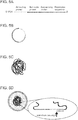
Figures 5A-5G depicts a method to generate multiple copies of a uniquely degenerate barcode for single cell analysis according to certain aspects of the invention. (A) Reverse DNA (i.e., starting) template. (B) Circularizing by ligation. (C) Rolling circle amplification using strand displacing polymerase and complementary primer. (D) Inserting into liposome or emulsion with restriction complementary sequence and restriction enzyme. (E) Resulting barcoded oligonucleotides. Each liposome or emulsion contains a unique, degenerate barcode. (F) Each liposome can be fused directly with a single cell (or each barcoded emulsion can be fused with one cell in emulsion). (G) Sequencing query of the barcode region of rolling circle amplification (Rolony) demonstrated clonality. Rolonies were ordered on a grid of 250 nanometer size features. -
Figures 6A-6B depicts a method to generate multiple copies of a uniquely degenerate barcode for single cell analysis according to certain aspects of the invention relating to targeting more than one nucleic acid sequence of interest. The left panel inFigures 6A and6B shows an oligo-dT sequence annealing primer, which can target polyA tails of mRNAs found in a cell. The right panel inFigures 6A and6B demonstrates using a "universal sequence" primer, which has a sequence complementary to an overhang common to several annealing primer sequences, to generate a bead having oligonucleotides that anneal to multiple different nucleic acid targets of interest (shown in red and blue at the 3' end of the oligonucleotide.) -
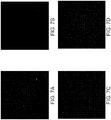
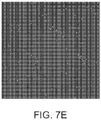
Figures 7A-7E show bead clonality using different concentrations of primer. (Fig. 7A : 0.1 pM;Fig. 7B : 1pM,Fig. 7C : 10 pM, andFig. 7D : 100 pM).Figure 7E shows the 100 pM sample overlaid with beads. See Example 1. -
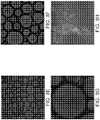
Figures 8A-8H shows bead clonality in emulsions.Fig. 8A shows overlay of uniquely bar-coded beads over white light, showing clonality of beads with an optimal amount of starting template.Fig. 8B shows one cycle sequencing of the bar-code on the fluorescence channels only.Fig. 8C shows white light only.Fig. 8D shows single bead capture in emulsion.Fig 8E shows bar-coded beads in presence of lysed cells in emulsion post-amplification.Fig. 8F and G are magnifications ofFig, 8E. Fig 8H shows introduction of fluorescent bar-codes in single cells -
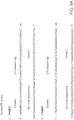
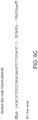
Figures 9A-9C shows sequences used in aspects of the invention.Fig. 9A shows 5' and 3' sequences of a primer (SEQ ID NO:1) used in the Illumina system.Figure 9B shows 5' and 3' sequence of a primer (SEQ ID NO:2) used in aspects of the invention, including anchor sequence primer, 20-nucleotide bar-code position (--BC(N20)--), and oligo dT sequence. The cluster sequences facilitate sequencing in the Illumina system.Figure 9C shows a sample oligonucleotide attached to a bead having an anchor sequence primer, 20-nucleotide bar-code (--BC(N20)--), and oligo dT sequence (SEQ ID NO:3). - In certain aspects, the methods and compositions described herein are useful for single cells analysis, such as, e.g., for the study of genomes, transcriptomes, proteomes, metabolic pathways and the like of complex cell samples. In other aspects, the methods and compositions described herein can be used for antibody discovery by pairing heavy and light chain in single B and T cells, as well as for HLA typing, and long range haplotyping. In still other aspects, the methods and compositions described herein can be used to monitor the impact of small molecule and drugs and their effect in complex normal or cancerous samples for the discovery of new drugs. In yet other aspect, the methods and composition can be used to detect and analyze pathogens such as bacteria or viruses in biological samples.
- In certain exemplary embodiments, methods are provided for creating clonal copies of barcode sequences (e.g., degenerate barcodes) and delivering the barcode sequences into a plurality of single cells. According to one aspect of the invention, a plurality of unique nucleic acid sequences comprising a degenerate barcode are amplified on a support (e.g., a bead) such that each discrete area of the support (e.g., each bead) will be coated with clonal copy of a starting nucleic acid sequence (
Figure 1 ). Accordingly, each discrete area of a support; bead, for example, will be uniquely barcoded with a plurality of targeting barcode oligonucleotides. In certain exemplary embodiments, emulsion PCR is performed, wherein degenerate oligonucleotide sequences are attached to a bead using a dilution equivalent maximum of one molecule per bead. The bar-code oligonucleotide length is related to cell sample size of interest. Generally, bar-codes are at least 3 nucleotides long. Often, they are about 20 nucleotides. Thus, for example, a support-attached oligonucleotide having a total length of about 50-60 nucleotides, includes nucleotides encoding a sequencing primer, 20 nucleotides for the bar-code, and an annealing primer. - In some embodiments, the support is a bead. The initial template oligonucleotide loaded on the beads has a sequencing primer region (which will be used to facilitate sequencing of the bar-code), a degenerate region (the actual bar-code) and an annealing primer region, which has a sequence complementary to the target nucleic acid sequence or sequences of interest. The annealing primer can be DNA or RNA (
Figure 1A ). Some beads may contain oligonucleotides that bind to more than one target nucleic acid of interest. - The beads are then saturated with an anchor primer. (Figure IB). The anchor primer has the same sequence as the sequencing primer region of the template oligonucleotide. The anchor primer serves as the second PCR priming end, which allows attachment of the product generated during emulsion PCR to the beads. The beads are then amplified in emulsion PCR (
Figure 1C ) using a primer complementary to the annealing section of the starting molecule. When emulsion PCR is complete, the anchor primer is extended and contains a copy of the bar-code and the annealing primer. The bead can subsequently be purified from the emulsions and used in downstream applications. - Once the bar-coded beads are prepared, they are used in a second emulsion PCR in the presence of a single cell. The cell is contained within its own unique emulsion, allowing simultaneous PCR in a single assay that contains many cells. (
Figure 2 ). The beads and cells may be introduced to each other in any suitable way. For example, by transfection using liposomes, or by emulsification. Samples containing multiple beads and multiple cells are diluted to achieve a maximum of one bead and one cell per emulsion PCR reaction. InFigure 2 , an example of one bead-cell event is shown. - In some embodiments, thousands to millions of the events shown in
Figure 2 may be performed in a single assay, such as one assay performed in a single well. Each single cell is sequestered into its own unique emulsion in the presence of one bar-coded beads. The multiple reaction are in the same reaction volume for all the cells. Because so many cells are analyzed in a single assay, the approach is equivalent to mixing millions of wells of PCR plates. Therefore a single assay is not limited in the amount of single cells to target, or the amount of transcript to target per single cells, provided each cell is uniquely bar-coded in either single emulsion per cell or through liposome transfection of a single bead or bar-code system. SeeFigure 2A . Millions of emulsions can be present in a single assay; i.e in a single well. - Upon cell lysis, the nucleic acid target of interest is annealed to the complementary sequences on the bar-coded bead template.
Figure 2B . Reverse transcription, for a RNA target, or primer extension, for a DNA target, is performed, and appends a bar-code to the cell RNA or DNA target.Figure 2D . Within one cell, the same bar-code is added to all the target sequences. Thus, as shown inFigure 2D ,Cell number 1, beadbar code number 1 has captured four examples of the target sequence (green, yellow, purple, and red). Each independent cell in the reaction has a different bar code.Figure 2D . - DNA from Beads with bar-coded fragments of interest are recovered and processed in downstream assays. When the bead has RNA attached, cDNA synthesis is performed, followed by PCR amplification using gene specific primer (or restriction cleavage, and/or adapter ligation, follow by PCR) similarly to what has been described previously (Kim et al. (2007) Science 316:1481). See
Figure 3 . Sequencing of DNA using high-throughput technology is then performed. The sequencing primer is used to sequence the bar-code, through the annealing primer into the target sequence. The target sequencing conveys transcript identity and expression levels, or other genomic or transcriptomic sequence of interest. The bar-code sequence allows each target sequence to be correlated to the single cell from which the sequences originated. While each transcript originating from one cell will have the same bar-code sequence, variation in genomic or transcriptomic information across the cell population is determined by assaying many single cells at the same time. Because each single cell contains a unique bar-code different from the other single cells, the identified sequences having the same bar-code can be correlated to the same originating cell. - In certain embodiments, multiple mRNAs from each single cell can be obtained and analyzed. For example, oligo-dT (or similar primers) may be used as the annealing primer. See
Figures 6A and6B . The oligo-dT sequence anneals to mRNA polyA tails and thus capture simultaneously multiple messenger RNAs from a single cell. This allows for complete or substantially complete transcriptome analysis of multiple single cells in a complex mixture. Characterizing the transcriptomes of multiple cells on a per-cell basis has particular application in studies investigating which cells are malignant than others cancer samples. Moreover, in patients undergoing cancer therapy, the present approach provides for monitoring mutation of each cell's genome and transcriptome before and after treatment; for example with a drug, or following surgery. This information is particularly useful when coupled with medicines known to be affected by the sequence of a protein. For example, the EGFR inhibitor Erbitux® (cetuximab) is ineffective when used with certain mutations of K-ras. The present approach can be used diagnostically to determine, down to the single cell level, how many cells in a tumor sample carry the mutations that make the cells Erbitux® resistant. Information regarding the nucleic acid sequences of multiple proteins in each tumor cell is valuable in determining whether to continue or stop treatment with a given drug or switch to an alternative drug. - In another embodiment, at least two oligonucleotides having different annealing primers are attached to the same bead, which allows several target nucleic acids in the same cell to be captured and sequenced. To produce beads containing different annealing primers a universal sequence is attached downstream of the bar-code primer. See
Figures 6A and6B . The universal sequence is complementary to an overhang region on a second primer that contains the annealing primer, which targets the gene of interest. Multiple annealing primers, each targeting a different gene of interest, may be used. The universal sequence, common to the overhangs of all the annealing primers allows incorporation of the multiple annealing primer sequences onto the beads by PCR. SeeFigures 6A and6B . - Beads with multiple annealing primers targeting different nucleic acids of interest have particular use in immune cell applications. In one embodiment, specific sets of targeting oligonucleotides complementary to the heavy and light chains of the B cell antibody coding gene or its RNA are used to capture the pairing of each unique single cell's heavy and light chains that define each specific antibody. In another embodiment, sequences encoding T cell receptor components may be targeted and sequenced. See (Embleton et al. (1992) Nucleic Acids Res. 20(15):3831; Chapal et al. (1997) Biotechniques 23(3):518).
- In yet other embodiments, annealing primers are selected for analyzing small nucleotide polymorphisms (SNPs), and for long range haplotyping (Zhang et al., "Long-range polony haplotyping of individual human chromosome molecules," Nat Genet. 2006 Mar;38(3):382-7). These approaches provide specific information for each cell in multiple-cell biological samples.
- In certain immune related examples, bar-coding is not necessary if one uses strategies to attach the heavy and light chain prior to PCR or cleavage of the molecules from the beads, such as ligation, of CRE-LOX coupling or fragments of each unique bead, as described by Embleton et al. (1992) Nucleic Acids Res. 20(15):3831; Chapal et al. (1997) Biotechniques 23(3):518, but in such way that many single cell at once can be treated as described in the current invention.
- As used herein, the term "barcode" refers to a unique oligonucleotide sequence that allows a corresponding nucleic acid base and/or nucleic acid sequence to be identified. In certain aspects, the nucleic acid base and/or nucleic acid sequence is located at a specific position on a larger polynucleotide sequence (e.g., a polynucleotide covalently attached to a bead). In certain embodiments, barcodes can each have a length within a range of from 4 to 36 nucleotides, or from 6 to 30 nucleotides, or from 8 to 20 nucleotides. In certain aspects, the melting temperatures of barcodes within a set are within 10 °C of one another, within 5 °C of one another, or within 2 °C of one another. In other aspects, barcodes are members of a minimally cross-hybridizing set. That is, the nucleotide sequence of each member of such a set is sufficiently different from that of every other member of the set that no member can form a stable duplex with the complement of any other member under stringent hybridization conditions. In one aspect, the nucleotide sequence of each member of a minimally cross-hybridizing set differs from those of every other member by at least two nucleotides. Barcode technologies are known in the art and are described in Winzeler et al. (1999) Science 285:901; Brenner (2000) Genome Biol. 1:1 Kumar et al. (2001) Nature Rev. 2:302; Giaever et al. (2004) Proc. Natl. Acad. Sci. USA 101:793; Eason et al. (2004) Proc. Natl. Acad. Sci. USA 101:11046; and Brenner (2004) Genome Biol. 5:240.
- "Complementary" or "substantially complementary" refers to the hybridization or base pairing or the formation of a duplex between nucleotides or nucleic acids, such as, for instance, between the two strands of a double stranded DNA molecule or between an oligonucleotide primer and a primer binding site on a single stranded nucleic acid. Complementary nucleotides are, generally, A and T/U, or C and G. Two single-stranded RNA or DNA molecules are said to be substantially complementary when the nucleotides of one strand, optimally aligned and compared and with appropriate nucleotide insertions or deletions, pair with at least about 80% of the nucleotides of the other strand, usually at least about 90% to 95%, and more preferably from about 98 to 100%. Alternatively, substantial complementarity exists when an RNA or DNA strand will hybridize under selective hybridization conditions to its complement. Typically, selective hybridization will occur when there is at least about 65% complementary over a stretch of at least 14 to 25 nucleotides, at least about 75%, or at least about 90% complementary. See Kanehisa (1984) Nucl. Acids Res. 12:203.
- As used herein, the term "hybridization" refers to the process in which two single-stranded polynucleotides bind non-covalently to form a stable double-stranded polynucleotide. The term "hybridization" may also refer to triple-stranded hybridization. The resulting (usually) double-stranded polynucleotide is a "hybrid" or "duplex." "Hybridization conditions" will typically include salt concentrations of less than about 1 M, more usually less than about 500 mM and even more usually less than about 200 mM. Hybridization temperatures can be as low as 5 °C, but are typically greater than 22 °C, more typically greater than about 30 °C, and often in excess of about 37 °C. Hybridizations are usually performed under stringent conditions, i.e., conditions under which a probe will hybridize to its target subsequence. Stringent conditions are sequence-dependent and are different in different circumstances. Longer fragments may require higher hybridization temperatures for specific hybridization. As other factors may affect the stringency of hybridization, including base composition and length of the complementary strands, presence of organic solvents and extent of base mismatching, the combination of parameters is more important than the absolute measure of any one alone. Generally, stringent conditions are selected to be about 5 °C lower than the Tm for the specific sequence at s defined ionic strength and pH. Exemplary stringent conditions include salt concentration of at least 0.01 M to no more than 1 M Na ion concentration (or other salts) at a pH 7.0 to 8.3 and a temperature of at least 25 °C. For example, conditions of 5XSSPE (750 mM NaCl, 50 mM Na phosphate, 5 mM EDTA, pH 7.4) and a temperature of 25-30 °C are suitable for allele-specific probe hybridizations. For stringent conditions, see for example, Sambrook, Fritsche and Maniatis, Molecular Cloning A Laboratory Manual, 2nd Ed. Cold Spring Harbor Press (1989) and Anderson Nucleic Acid Hybridization, 1st Ed., BIOS Scientific Publishers Limited (1999). "Hybridizing specifically to" or "specifically hybridizing to" or like expressions refer to the binding, duplexing, or hybridizing of a molecule substantially to or only to a particular nucleotide sequence or sequences under stringent conditions when that sequence is present in a complex mixture (e.g., total cellular) DNA or RNA.
- "Nucleoside" as used herein includes the natural nucleosides, including 2'-deoxy and 2'-hydroxyl forms, e.g. as described in Komberg and Baker, DNA Replication, 2nd Ed. (Freeman, San Francisco, 1992). "Analogs" in reference to nucleosides includes synthetic nucleosides having modified base moieties and/or modified sugar moieties, e.g., described by Scheit, Nucleotide Analogs (John Wiley, New York, 1980); Uhlman and Peyman, Chemical Reviews, 90:543-584 (1990), or the like, with the proviso that they are capable of specific hybridization. Such analogs include synthetic nucleosides designed to enhance binding properties, reduce complexity, increase specificity, and the like. Polynucleotides comprising analogs with enhanced hybridization or nuclease resistance properties are described in Uhlman and Peyman (cited above); Crooke et al., Exp. Opin. Ther. Patents, 6: 855-870 (1996); Mesmaeker et al., Current Opinion in Structural Biology, 5:343-355 (1995); and the like. Exemplary types of polynucleotides that are capable of enhancing duplex stability include oligonucleotide phosphoramidates (referred to herein as "amidates"), peptide nucleic acids (referred to herein as "PNAs"), oligo-2'-O-alkylribonucleotides, polynucleotides containing C-5 propynylpyrimidines, locked nucleic acids (LNAs), and like compounds. Such oligonucleotides are either available commercially or may be synthesized using methods described in the literature.
- As used herein, the terms "nucleic acid molecule," "nucleic acid sequence," "nucleic acid fragment," "oligonucleotide," "oligonucleotide fragment" and "polynucleotide" are used interchangeably and are intended to include, but are not limited to, a polymeric form of nucleotides that may have various lengths, either deoxyribonucleotides or ribonucleotides, or analogs thereof. Nucleic acid molecules include single stranded DNA (ssDNA), double stranded DNA (dsDNA), single stranded RNA (ssRNA) and double stranded RNA (dsRNA). Different nucleic acid molecules may have different three-dimensional structures, and may perform various functions, known or unknown. Nonlimiting examples of nucleic acid molecules include a gene, a gene fragment, a genomic gap, an exon, an intron, intergenic DNA (including, without limitation, heterochromatic DNA), messenger RNA (mRNA), transfer RNA, ribosomal RNA, ribozymes, small interfering RNA (siRNA), miRNA, small nucleolar RNA (snoRNA), cDNA, recombinant polynucleotides, branched polynucleotides, plasmids, vectors, isolated DNA of a sequence, isolated RNA of a sequence, nucleic acid probes, and primers. Nucleic acid molecules useful in the methods described herein may comprise natural nucleic acid sequences and variants thereof, artificial nucleic acid sequences, or a combination of such sequences.
- An oligonucleotide sequence refers to a linear polymer of natural or modified nucleosidic monomers linked by phosphodiester bonds or analogs thereof. The term "oligonucleotide" usually refers to a shorter polymer, e.g., comprising from about 3 to about 100 monomers, and the term "polynucleotide" usually refers to longer polymers, e.g., comprising from about 100 monomers to many thousands of monomers, e.g., 10,000 monomers, or more An "oligonucleotide fragment" refers to an oligonucleotide sequence that has been cleaved into two or more smaller oligonucleotide sequences. Oligonucleotides comprising probes or primers usually have lengths in the range of from 12 to 60 nucleotides, and more usually, from 18 to 40 nucleotides. Oligonucleotides and polynucleotides may be natural or synthetic. Oligonucleotides and polynucleotides include deoxyribonucleosides, ribonucleosides, and non-natural analogs thereof, such as anomeric forms thereof, peptide nucleic acids (PNAs), and the like, provided that they are capable of specifically binding to a target genome by way of a regular pattern of monomer-to-monomer interactions, such as Watson-Crick type of base pairing, base stacking, Hoogsteen or reverse Hoogsteen types of base pairing, or the like.
- Usually nucleosidic monomers are linked by phosphodiester bonds. Whenever an oligonucleotide is represented by a sequence of letters, such as "ATGCCTG," it will be understood that the nucleotides are in 5' to 3' order from left to right and that "A" denotes deoxyadenosine, "C" denotes deoxycytidine, "G" denotes deoxyguanosine, "T" denotes deoxythymidine, and "U" denotes the ribonucleoside, uridine, unless otherwise noted. Usually oligonucleotides comprise the four natural deoxynucleotides; however, they may also comprise ribonucleosides or non-natural nucleotide analogs. It is clear to those skilled in the art when oligonucleotides having natural or non-natural nucleotides may be employed in methods and processes described herein. For example, where processing by an enzyme is called for, usually oligonucleotides consisting solely of natural nucleotides are required. Likewise, where an enzyme has specific oligonucleotide or polynucleotide substrate requirements for activity, e.g., single stranded DNA, RNA/DNA duplex, or the like, then selection of appropriate composition for the oligonucleotide or polynucleotide substrates is well within the knowledge of one of ordinary skill, especially with guidance from treatises, such as Sambrook et al., Molecular Cloning, Second Edition (Cold Spring Harbor Laboratory, New York, 1989), and like references. Oligonucleotides and polynucleotides may be single stranded or double stranded.
- Nucleic acid molecules may optionally include one or more non-standard nucleotide(s), nucleotide analog(s) and/or modified nucleotides. Examples of modified nucleotides include, but are not limited to diaminopurine, S2T, 5-fluorouracil, 5-bromouracil, 5-chlorouracil, 5-iodouracil, hypoxanthine, xantine, 4-acetylcytosine, 5-(carboxyhydroxylmethyl)uracil, 5-carboxymethylaminomethyl-2-thiouridine, 5-carboxymethylaminomethyluracil, dihydrouracil, beta-D-galactosylqueosine, inosine, N6-isopentenyladenine, 1-methylguanine, 1-methylinosine, 2,2-dimethylguanine, 2-methyladenine, 2-methylguanine, 3-methylcytosine, 5-methylcytosine, N6-adenine, 7-methylguanine, 5-methylaminomethyluracil, 5-methoxyaminomethyl-2-thiouracil, beta-D-mannosylqueosine, 5'-methoxycarboxymethyluracil, 5-methoxyuracil, 2-methylthio-D46-isopentenyladenine, uracil-5-oxyacetic acid (v), wybutoxosine, pseudouracil, queosine, 2-thiocytosine, 5-methyl-2-thiouracil, 2-thiouracil, 4-thiouracil, 5-methyluracil, uracil-5-oxyacetic acid methylester, uracil-5-oxyacetic acid (v), 5-methyl-2-thiouracil, 3-(3-amino-3-N-2-carboxypropyl) uracil, (acp3)w, 2,6-diaminopurine and the like. Nucleic acid molecules may also be modified at the base moiety (e.g., at one or more atoms that typically are available to form a hydrogen bond with a complementary nucleotide and/or at one or more atoms that are not typically capable of forming a hydrogen bond with a complementary nucleotide), sugar moiety or phosphate backbone.
- In certain exemplary embodiments, large polynucleotides are provided. In certain aspects, isolation techniques that maximize the lengths of polynucleotides (e.g., DNA molecules) obtained are used. For example, in situ lysis or deproteinization (e.g., with EDTA, detergent, protease, any combinations thereof and the like) after agarose embedding (as routinely performed for pulsed field gel electrophoresis) can be used to obtain polynucleotides.
- Nucleic acid molecules may be isolated from natural sources or purchased from commercial sources. Oligonucleotide sequences may also be prepared by any suitable method, e.g., standard phosphoramidite methods such as those described by Beaucage and Carruthers ((1981) Tetrahedron Lett. 22: 1859) or the triester method according to Matteucci et al. (1981) J. Am. Chem. Soc. 103:3185), or by other chemical methods using either a commercial automated oligonucleotide synthesizer or high-throughput, high-density array methods known in the art (see
U.S. Patent Nos. 5,602,244 ,5,574,146 ,5,554,744 ,5,428,148 ,5,264,566 ,5,141,813 ,5,959,463 ,4,861,571 and4,659,774 ,). Pre-synthesized oligonucleotides may also be obtained commercially from a variety of vendors. - Nucleic acid molecules may be obtained from one or more biological samples. As used herein, a "biological sample" may be a single cell or many cells. A biological sample may comprise a single cell type or a combination of two or more cell types. A biological sample further includes a collection of cells that perform a similar function such as those found, for example, in a tissue. Accordingly, certain aspects of the invention are directed to biological samples containing one or more tissues. As used herein, a tissue includes, but is not limited to, epithelial tissue (e.g., skin, the lining of glands, bowel, skin and organs such as the liver, lung, kidney), endothelium (e.g., the lining of blood and lymphatic vessels), mesothelium (e.g., the lining of pleural, peritoneal and pericardial spaces), mesenchyme (e.g., cells filling the spaces between the organs, including fat, muscle, bone, cartilage and tendon cells), blood cells (e.g. erythrocytes, granulocytes, neutrophils, eosinophils, basophils, monocytes, T-lymphocytes (also known as T-cells), B-lymphocytes (also known as B-cells), plasma cells, megakaryocytes and the like), neurons, germ cells (e.g., spermatozoa, oocytes), amniotic fluid cells, placenta, stem cells and the like. A tissue sample includes microscopic samples as well as macroscopic samples. In certain aspects, a sample can be obtained from one or more of single cells in culture, metagenomic samples, embryonic stem cells, induced pluripotent stem cells, cancer samples, tissue sections, biopsies and the like, and any combinations of these.
- In certain aspects, nucleic acid sequences derived or obtained from one or more organisms are provided. As used herein, the term "organism" includes, but is not limited to, a human, a non-human primate, a cow, a horse, a sheep, a goat, a pig, a dog, a cat, a rabbit, a mouse, a rat, a gerbil, a frog, a toad, a fish (e.g., Danio rerio) a roundworm (e.g., C. elegans) and any transgenic species thereof. The term "organism" further includes, but is not limited to, a yeast (e.g., S. cerevisiae) cell, a yeast tetrad, a yeast colony, a bacterium, a bacterial colony, a virion, virosome, virus-like particle and/or cultures thereof, and the like.
- Isolation, extraction or derivation of nucleic acid sequences may be carried out by any suitable method. Isolating nucleic acid sequences from a biological sample generally includes treating a biological sample in such a manner that nucleic acid sequences present in the sample are extracted and made available for analysis. Any isolation method that results in extracted nucleic acid sequences may be used in the practice of the present invention. It will be understood that the particular method used to extract nucleic acid sequences will depend on the nature of the source.
- Methods of DNA extraction are well-known in the art. A classical DNA isolation protocol is based on extraction using organic solvents such as a mixture of phenol and chloroform, followed by precipitation with ethanol (J. Sambrook et al., "Molecular Cloning: A Laboratory Manual," 1989, 2nd Ed., Cold Spring Harbour Laboratory Press: New York, N.Y.). Other methods include: salting out DNA extraction (P. Sunnucks et al., Genetics, 1996, 144: 747-756; S. M. Aljanabi and I. Martinez, Nucl. Acids Res. 1997, 25: 4692-4693), trimethylammonium bromide salts DNA extraction (S. Gustincich et al., BioTechniques, 1991, 11: 298-302) and guanidinium thiocyanate DNA extraction (J. B. W. Hammond et al., Biochemistry, 1996, 240: 298-300). A variety of kits are commercially available for extracting DNA from biological samples (e.g., BD Biosciences Clontech (Palo Alto, CA): Epicentre Technologies (Madison, WI); Gentra Systems, Inc. (Minneapolis, MN); MicroProbe Corp. (Bothell, WA); Organon Teknika (Durham, NC); and Qiagen Inc. (Valencia, CA)).
- Methods of RNA extraction are also well known in the art (see, for example, J. Sambrook et al., "Molecular Cloning: A Laboratory Manual" 1989, 2nd Ed., Cold Spring Harbour Laboratory Press: New York) and several kits for RNA extraction from bodily fluids are commercially available (e.g., Ambion, Inc. (Austin, TX); Amersham Biosciences (Piscataway, NJ); BD Biosciences Clontech (Palo Alto, CA); BioRad Laboratories (Hercules, CA); Dynal Biotech Inc. (Lake Success, NY); Epicentre Technologies (Madison, WI); Gentra Systems, Inc. (Minneapolis, MN); GIBCO BRL (Gaithersburg, MD); Invitrogen Life Technologies (Carlsbad, CA); MicroProbe Corp. (Bothell, WA); Organon Teknika (Durham, NC); Promega, Inc. (Madison, WI); and Qiagen Inc. (Valencia, CA)).
- In certain exemplary embodiments, oligonucleotide sequences are immobilized on a solid support. The support can be simple square grids, checkerboard (e.g., offset) grids, hexagonal arrays and the like. Suitable supports include, but are not limited to, slides, beads, chips, particles, strands, gels, sheets, tubing, spheres, containers, capillaries, pads, slices, films, culture dishes, plates (e.g., 96-well, 48-well, 24-well, 12-well, eight-well, six-well, four-well, single-well and the like), cell surfaces (e.g., S. aureus cells) and the like. In various embodiments, a solid support may be biological, non-biological, organic, inorganic, or any combination thereof.
- In certain exemplary embodiments, beads and bead-based arrays are provided. As used herein, the term "bead" refers to a discrete particle that may be spherical (e.g., microspheres) or have an irregular shape. Beads may be as small as approximately 0.1 µm in diameter or as large approximately several millimeters in diameter. Beads may comprise a variety of materials including, but not limited to, paramagnetic materials, ceramic, plastic, glass, polystyrene, methylstyrene, acrylic polymers, titanium, latex, sepharose, cellulose, nylon and the like.
- In accordance with certain examples, a support (e.g., a bead) may have functional groups attached to its surface which can be used to bind one or more reagents described herein to the bead. One or more reagents can be attached to a support (e.g., a bead) by hybridization, covalent attachment, magnetic attachment, affinity attachment and the like. Beads coated with a variety of attaachments are commercially available (Dynabeads, Invitrogen). Supports (e.g., beads) may also be functionalized using, for example, solid-phase chemistries known in the art (see, e.g.,
U.S. Pat. No. 5,919,523 ). - As used herein, the term "attach" refers to both covalent interactions and noncovalent interactions. A covalent interaction is a chemical linkage between two atoms or radicals formed by the sharing of a pair of electrons (i.e., a single bond), two pairs of electrons (i.e., a double bond) or three pairs of electrons (i.e., a triple bond). Covalent interactions are also known in the art as electron pair interactions or electron pair bonds. Noncovalent interactions include, but are not limited to, van der Waals interactions, hydrogen bonds, weak chemical bonds (i.e., via short-range noncovalent forces), hydrophobic interactions, ionic bonds and the like. A review of noncovalent interactions can be found in Alberts et al., in Molecular Biology of the Cell, 3d edition, Garland Publishing, 1994.
- In certain exemplary embodiments, methods for amplifying nucleic acid sequences are provided. Exemplary methods for amplifying nucleic acids include the polymerase chain reaction (PCR) (see, e.g., Mullis et al. (1986) Cold Spring Harb. Symp. Quant. Biol. 51 Pt 1:263 and Cleary et al. (2004) Nature Methods 1:241; and
U.S. Patent Nos. 4,683,195 and4,683,202 ), anchor PCR, RACE PCR, ligation chain reaction (LCR) (see, e.g., Landegran et al. (1988) Science 241:1077-1080; and Nakazawa et al. (1994) Proc. Natl. Acad. Sci. U.S.A. 91:360-364), self sustained sequence replication (Guatelli et al. (1990) Proc. Natl. Acad. Sci. U.S.A. 87:1874), transcriptional amplification system (Kwoh et al. (1989) Proc. Natl. Acad. Sci. U.S.A. 86:1173), Q-Beta Replicase (Lizardi et al. (1988) BioTechnology 6:1197), recursive PCR (Jaffe et al. (2000) J. Biol. Chem. 275:2619; and Williams et al. (2002) J. Biol. Chem. 277:7790), the amplification methods described inU.S. Patent Nos. 6,391,544 ,6,365,375 ,6,294,323 ,6,261,797 ,6,124,090 and5,612,199 , isothermal amplification (e.g., rolling circle amplification (RCA), hyperbranched rolling circle amplification (HRCA), strand displacement amplification (SDA), helicase-dependent amplification (HDA), PWGA) or any other nucleic acid amplification method using techniques well known to those of skill in the art. - "Polymerase chain reaction," or "PCR," refers to a reaction for the in vitro amplification of specific DNA sequences by the simultaneous primer extension of complementary strands of DNA. In other words, PCR is a reaction for making multiple copies or replicates of a target nucleic acid flanked by primer binding sites, such reaction comprising one or more repetitions of the following steps: (i) denaturing the target nucleic acid, (ii) annealing primers to the primer binding sites, and (iii) extending the primers by a nucleic acid polymerase in the presence of nucleoside triphosphates. Usually, the reaction is cycled through different temperatures optimized for each step in a thermal cycler instrument. Particular temperatures, durations at each step, and rates of change between steps depend on many factors well-known to those of ordinary skill in the art, e.g., exemplified by the references: McPherson et al., editors, PCR: A Practical Approach and PCR2: A Practical Approach (IRL Press, Oxford, 1991 and 1995, respectively). For example, in a conventional PCR using Taq DNA polymerase, a double stranded target nucleic acid may be denatured at a temperature greater than 90 °C, primers annealed at a temperature in the range 50-75 °C, and primers extended at a temperature in the range 72-78 °C.
- The term "PCR" encompasses derivative forms of the reaction, including but not limited to, RT-PCR, real-time PCR, nested PCR, quantitative PCR, multiplexed PCR, assembly PCR and the like. Reaction volumes range from a few hundred nanoliters, e.g., 200 nL, to a few hundred microliters, e.g., 200 microliters. "Reverse transcription PCR," or "RT-PCR," means a PCR that is preceded by a reverse transcription reaction that converts a target RNA to a complementary single stranded DNA, which is then amplified, e.g.,
Tecott et al., U.S. Patent No. 5,168,038 . "Real-time PCR" means a PCR for which the amount of reaction product, i.e., amplicon, is monitored as the reaction proceeds. There are many forms of real-time PCR that differ mainly in the detection chemistries used for monitoring the reaction product, e.g.,Gelfand et al., U.S. Patent No. 5,210,015 ("Taqman");Wittwer et al., U.S. Patent Nos. 6,174,670 and6,569,627 (intercalating dyes);Tyagi et al., U.S. Patent No. 5,925,517 (molecular beacons). Detection chemistries for real-time PCR are reviewed in Mackay et al., Nucleic Acids Research, 30:1292-1305 (2002). "Nested PCR" means a two-stage PCR wherein the amplicon of a first PCR becomes the sample for a second PCR using a new set of primers, at least one of which binds to an interior location of the first amplicon. As used herein, "initial primers" in reference to a nested amplification reaction mean the primers used to generate a first amplicon, and "secondary primers" mean the one or more primers used to generate a second, or nested, amplicon. "Multiplexed PCR" means a PCR wherein multiple target sequences (or a single target sequence and one or more reference sequences) are simultaneously carried out in the same reaction mixture, e.g. Bernard et al. (1999) Anal. Biochem., 273:221-228 (two-color real-time PCR). Usually, distinct sets of primers are employed for each sequence being amplified. "Quantitative PCR" means a PCR designed to measure the abundance of one or more specific target sequences in a sample or specimen. Techniques for quantitative PCR are well-known to those of ordinary skill in the art, as exemplified in the following references: Freeman et al., Biotechniques, 26:112-126 (1999); Becker-Andre et al., Nucleic Acids Research, 17:9437-9447 (1989); Zimmerman et al., Biotechniques, 21:268-279 (1996); Diviacco et al., Gene, 122:3013-3020 (1992); Becker-Andre et al., Nucleic Acids Research, 17:9437-9446 (1989); and the like. - In certain exemplary embodiments, methods of determining the sequence identities of nucleic acid sequences are provided. Determination of the sequence of a nucleic acid sequence of interest (e.g., immune cell nucleic acid sequences) can be performed using variety of sequencing methods known in the art including, but not limited to, sequencing by hybridization (SBH), sequencing by ligation (SBL), quantitative incremental fluorescent nucleotide addition sequencing (QIFNAS), stepwise ligation and cleavage, fluorescence resonance energy transfer (FRET), molecular beacons, TaqMan reporter probe digestion, pyrosequencing, fluorescent in situ sequencing (FISSEQ), FISSEQ beads (
U.S. Pat. No. 7,425,431 ), wobble sequencing (PCT/US05/27695 ), multiplex sequencing (U.S. Serial No. 12/027,039, filed February 6, 2008 U.S. Patent Nos. 6,432,360 ,6,485,944 and6,511,803 , andPCT/US05/06425 ); nanogrid rolling circle sequencing (ROLONY) (U.S. Serial No. 12/120,541, filed May 14, 2008 U.S. Serial No. 61/162,913, filed March 24, 2009 - In certain exemplary embodiments, methods of prognosing, diagnosing and/or monitoring one or more disorders or diseases associated with an infectious agent are provided. Infectious agents include, but are not limited to, viruses, bacteria, fungi, parasites, infectious proteins and the like.
- Viruses include, but are not limited to, DNA or RNA animal viruses. As used herein, RNA viruses include, but are not limited to, virus families such as Picornaviridae (e.g., polioviruses), Reoviridae (e.g., rotaviruses), Togaviridae (e.g., encephalitis viruses, yellow fever virus, rubella virus), Orthomyxoviridae (e.g., influenza viruses), Paramyxoviridae (e.g., respiratory syncytial virus, measles virus, mumps virus, parainfluenza virus), Rhabdoviridae (e.g., rabies virus), Coronaviridae, Bunyaviridae, Flaviviridae, Filoviridae, Arenaviridae, Bunyaviridae and Retroviridae (e.g., human T cell lymphotropic viruses (HTLV), human immunodeficiency viruses (HIV)). As used herein, DNA viruses include, but are not limited to, virus families such as Papovaviridae (e.g., papilloma viruses), Adenoviridae (e.g., adenovirus), Herpesviridae (e.g., herpes simplex viruses), and Poxviridae (e.g., variola viruses).
- Bacteria include, but are not limited to, gram positive bacteria, gram negative bacteria, acid-fast bacteria and the like.
- As used herein, gram positive bacteria include, but are not limited to, Actinomedurae, Actinomyces israelii, Bacillus anthracis, Bacillus cereus, Clostridium botulinum, Clostridium difficile, Clostridium perfringens, Clostridium tetani, Corynebacterium, Enterococcus faecalis, Listeria monocytogenes, Nocardia, Propionibacterium acnes, Staphylococcus aureus, Staphylococcus epiderm, Streptococcus mutans, Streptococcus pneumoniae and the like.
- As used herein, gram negative bacteria include, but are not limited to, Afipia felis, Bacteriodes, Bartonella bacilliformis, Bortadella pertussis, Borrelia burgdorferi, Borrelia recurrentis, Brucella, Calymmatobacterium granulomatis, Campylobacter, Escherichia coli, Francisella tularensis, Gardnerella vaginalis, Haemophilius aegyptius, Haemophilius ducreyi, Haemophilius influenziae, Heliobacter pylori, Legionella pneumophila, Leptospira interrogans, Neisseria meningitidia, Porphyromonas gingivalis, Providencia sturti, Pseudomonas aeruginosa, Salmonella enteridis, Salmonella typhi, Serratia marcescens, Shigella boydii, Streptobacillus moniliformis, Streptococcus pyogenes, Treponema pallidum, Vibrio cholerae, Yersinia enterocolitica, Yersinia pestis and the like.
- As used herein, acid-fast bacteria include, but are not limited to, Myobacterium avium, Myobacterium leprae, Myobacterium tuberculosis and the like.
- As used herein, other bacteria not falling into the other three categories include, but are not limited to, Bartonella henseiae, Chlamydia psittaci, Chlamydia trachomatis, Coxiella burnetii, Mycoplasma pneumoniae, Rickettsia akari, Rickettsia prowazekii, Rickettsia rickettsii, Rickettsia tsutsugamushi, Rickettsia typhi, Ureaplasma urealyticum, Diplococcus pneumoniae, Ehrlichia chafensis, Enterococcus faecium, Meningococci and the like.
- As used herein, fungi include, but are not limited to, Aspergilli, Candidae, Candida albicans, Coccidioides immitis, Cryptococci, and combinations thereof.
- As used herein, parasitic microbes include, but are not limited to, Balantidium coli, Cryptosporidium parvum, Cyclospora cayatanensis, Encephalitozoa, Entamoeba histolytica, Enterocytozoon bieneusi, Giardia lamblia, Leishmaniae, Plasmodii, Toxoplasma gondii, Trypanosomae, trapezoidal amoeba and the like.
- As used herein, parasites include worms (e.g., helminthes), particularly parasitic worms including, but not limited to, Nematoda (roundworms, e.g., whipworms, hookworms, pinworms, ascarids, filarids and the like), Cestoda (e.g., tapeworms)
- As used herein, infectious proteins include prions. Disorders caused by prions include, but are not limited to, human disorders such as Creutzfeldt-Jakob disease (CJD) (including, e.g., iatrogenic Creutzfeldt-Jakob disease (iCJD), variant Creutzfeldt-Jakob disease (vCJD), familial Creutzfeldt-Jakob disease (fCJD), and sporadic Creutzfeldt-Jakob disease (sCJD)), Gerstmann-Straussler-Scheinker syndrome (GSS), fatal familial insomnia (fFI), sporadic fatal insomnia (sFI), kuru, and the like, as well as disorders in animals such as scrapie (sheep and goats), bovine spongiform encephalopathy (BSE) (cattle), transmissible mink encephalopathy (TME) (mink), chronic wasting disease (CWD) (elk, mule deer), feline spongiform encephalopathy (cats), exotic ungulate encephalopathy (EUE) (nyala, oryx, greater kudu), spongiform encephalopathy of the ostrich and the like.
- In certain exemplary embodiments, methods of prognosing, diagnosing and/or monitoring one or more cellular proliferative disorders are provided. Cellular proliferative disorders are intended to include disorders associated with rapid proliferation. As used herein, the term "cellular proliferative disorder" includes disorders characterized by undesirable or inappropriate proliferation of one or more subset(s) of cells in a multicellular organism. The term "cancer" refers to various types of malignant neoplasms, most of which can invade surrounding tissues, and may metastasize to different sites (see, for example, PDR Medical Dictionary 1st edition (1995). The terms "neoplasm" and "tumor" refer to an abnormal tissue that grows by cellular proliferation more rapidly than normal. Id. Such abnormal tissue shows partial or complete lack of structural organization and functional coordination with the normal tissue which may be either benign (i.e., benign tumor) or malignant (i.e., malignant tumor).
- The language "treatment of cellular proliferative disorders" is intended to include the prevention of the induction, onset, establishment or growth of neoplasms in a subject or a reduction in the growth of pre-existing neoplasms in a subject. The language also can describe inhibition of the invasion of neoplastic cells into neighboring tissues or the metastasis of a neoplasm from one site to another. Examples of the types of neoplasms intended to be encompassed by the present invention include but are not limited to those neoplasms associated with cancers of the breast, skin, bone, prostate, ovaries, uterus, cervix, liver, lung, brain, larynx, gallbladder, pancreas, rectum, parathyroid, thyroid, adrenal gland, immune system, neural tissue, head and neck, colon, stomach, bronchi, and/or kidneys.
- Cellular proliferative disorders can further include disorders associated with hyperproliferation of vascular smooth muscle cells such as proliferative cardiovascular disorders, e.g., atherosclerosis and restenosis. Cellular proliferation disorders can also include disorders such as proliferative skin disorders, e.g., X-linked ichthyosis, psoriasis, atopic dermatitis, allergic contact dermatitis, epidermolytic hyperkeratosis, and seborrheic dermatitis. Cellular proliferative disorders can further include disorders such as autosomal dominant polycystic kidney disease (ADPKD), mastocystosis, and cellular proliferation disorders caused by infectious agents such as viruses.
- In certain exemplary embodiments, methods of prognosing, diagnosing and/or monitoring one or more autoimmune disorders are provided. As used herein, the term "autoimmune disorder" is a disease or disorder caused by a subject producing an inappropriate immune response against its own tissues. As used herein, an autoimmune disorder includes, but is not limited to, disorders such as Addison's disease, alopecia areata, ankylosing spondylitis, antiphospholipid sundrome, autoimmune hemolytic anemia, autoimmune hepatitis, autoimmune inner ear disease (AIED), autoimmune lymphoproliferative syndrome (ALPS), autoimmune thrombocytopenic purpura (ATP), Balo disease, Bechet disease, bullous pemphigoid, cardiomyopathy, celiac sprue-dermatitis herpetiformis, chronic fatigue immune dysfunction syndrome (CFIDS), chronic inflammatory demyelinating polyneuropathy, cicatricial pemphigoid, cold agglutinin disease, CREST syndrome, Crohn's disease, Degos disease, dermatomyositis, dermatomyositis-juvenile, discoid lupus, essential mixed cryoglobulinemia, fibromyalgia-fibromyositis, Graves disease, Guillain-Barre, Hashimoto thyroiditis, idiopathic pulmonary fibrosis, idiopathic thrombocytopenia purpura (ITP), IgA nephropathy, insulin-dependent diabetes, juvenile arthritis, lichen planus, lupus, Ménière disease, mixed connective tissue disease, multiple sclerosis, myasthemia gravis, pemphigus vulgaris, pernicious anemia, polyarteritis nodosa, polychondritis, polyglandular syndromes, polymyalgia rheumatica, polymyositis and dermatomyositis, primary agammaglobulinemia, primary biliary cirrhosis, psoriasis, Raynaud phenomenon, Reiter syndrome, rheumatic fever, rheumatoid arthritis, sarcoidosis, scleroderma, Sjögren syndrome, stiff-person syndrome, Takayasu arthritis, temporal arteritis/giant cell arteritis, ulcerative colitis, vasculitis, vitiligo, Wegener granulomatosis and the like (See the American Autoimmune Related Diseases Association, Inc. website: aarda.org).
- It is to be understood that the embodiments of the present invention which have been described are merely illustrative of some of the applications of the principles of the present invention. Numerous modifications may be made by those skilled in the art based upon the teachings presented herein without departing from the true spirit and scope of the invention.
- Beads (1 µM; C1 carboxylic 1 micron beads) were resuspended by vortexing and transferred in a volume of 80 µl to a 1.5 ml silicon tube (Ambion). The beads were washed twice with 2X (Bind and Wash Buffer contains 10 mM Tris-HCl ph7.5, 1 mM EDTA, 2M NaCl; "B&W"). Beads were isolated using magnets between washes. Nucleotide sequences are listed in Table 4. The washed beads were resuspended in 100 µl B&W to which oligo dT bar-code template oligonucleotide (HSCT_BC_anchor1) were added at the concentrations as shown in Table 1.
Table 1. Tube Primer Stock Concentration Primer volume (µl) 1 100 pM 80 2 10 pM 80 3 1 pM 80 4 0.1 pN 80 - The template oligonucleotide and beads were incubated on a rotator for 20 minutes, then washed twice with 200 µl of 1x B&W then resuspended in 100 µl of 2x B&W.
- The beads, pre-loaded with the template oligonucleotide as in Example 1(a) above, were incubated on a rotator for 20 minutes with Anchor primer mix (1mM HSCT_Bead_anchor1 and 1x B&W buffer) to coat the beads with the anchor primer then washed twice with 200 µl of 1x B&W, once in 200 µl of TE, then resuspended in 100 µl of TE. The anchor primer has a 5' biotin which binds to the streptavidin coated beads. Typically, 30% of the beads have an oligonucleotide. On those beads 100% or substantially all of the anchor primers are typically extended.
- Aqueous Mix and Oil Mix were prepared as described in Table 2.
Table 2. AQUEOUS MIX Component Volume for 1 tube (µl) Volume for 4.5 tubes(µl) 10 x PCR buffer (Enymatics) 96 432 50 mM MgCl2 242 1089 25 mM dNTP mix 135 607 2 mM HSCT_dA-rev_emulsion primer 6 27 OIL MIX Component Volume for 1 tube (µl) Volume for 4.5 tubes(µl) Tegosoft DEC 4.4 19.8 Mineral oil 1.2 5.4 ABIL WE09 425 1.9 - Both solutions are mixed by vortexing. The oil mix is allowed to degass then 5.5 ml portions were placed in 50 ml Teflon-coated aluminum test tubes.
- The emulsions were made by adding 800 µl PCR mix, 100 µl Enzymatics Taq (5U/µl), quickly vortexing and spinning, then immediately adding 60 ml of bar-code anchored beads, followed by vortex and spinning. The 960 ml mix was transferred to a tube of oil and vortexed for 2.25 min at 2200 rpm, which was followed by emulsion PCR using the following PCR protocol steps:
- a. 94 °C for 5 min
- b. 94 °C for 15 sec
- c. 58 °C for 30 sec
- d. 70 °C for 75 sec
- e. Cycle to step b 119 times
- f. 72 °C for 2 min
- g. Incubate at ∼ 10 °C until ready to use.
- Formation of an emulsion was confirmed by verifying under a microscope that a creamy white consistency was obtained when an emulsifier/oil mixture (240 µl emulsifier: 960µl oil, or 480µl emulsifier: 720µl oil) was added to an aqueous layer (384 µl) and vortexed at 4°C for 5 minutes. Results are show in
Figures 7A-7E . - In a similar experiment, Dynal M270 3-micron beads were used under similar conditions and similar results were achieved.
- Bar-coding was also achieved as follows.
Table 3. AQUEOUS MIX Component Final concentration Volume per tube(µl) dH20 - 520.4 10 x PCR buffer (Enymatics) 1x 80 25 mM dNTP mix 2mM 64 2 mM HSCT_dA-rev_emulsion primer 10 µM 4 30% (w/v) BSA (Sigma) 0.06 1.6 OIL MIX Component Volume for 1 tube (µl) Volume for 4.5 tubes(µl) Tegosoft DEC 4.4 19.8 Mineral oil 1.2 5.4 ABIL WE09 425 1.9 - The aqueous mix was vortexed, then 0.6ml of mix was added per 1.5 ml tube (Ambion; non-stick). 50 µl of M280 HSCT Anchor bead was added per tube, then the tubes were sonicated for 3 cycles of 10 seconds. After sonication, the tubes were placed on ice, and 80 µl of Taq Polymerase (5U/ µl) was added per tube. The tubes were again vortexed and placed on ice. 800 µl of the mixture was added to the oil phase, the tubes were vortexed and PCR was performed as described in Example 1 part c. In similar experiments 96 well/plates were used. Each well contained 55 µl/well of the mixture.
Sequence Name SEQ ID NO: Sequence HSCT_BC_anchor1 4 /52-Bio/ACA CTC TTT CCC TAC ACG ACG CTC TTC CGA TCT NNN NNN NNN NNN NNN NNN NNC AGC TTT TTT TTT TTT TTT TTT TTT TTT T HSCT_Bead_anchor 1 5 /52-Bio/ACA CTC TTT CCC TAC ACG ACG CTC TTC CGA TCT HSCT_clonaltest_B C_seq 6 /5Phos/AGA TCG GAA GAG CGT CGT GTA HSCT_dA_rev_emulsion primer 7 AAA AAA AAA AAA AAA AAA AAA AAA ACG AC HSCT_BC_anchor_r ev(no-bio) 8 
Bead attached to Bar-coded Oligonucleotide 9 BEAD/52-Bio/ACACTCTTTCCCT ACACGACGCTCTTCCGA TCT NNN NNN NNN NNN NNN NNN NNC AGC TTT TTT TTT TTT TTT TTT TTT TTT T ATGTGCTGCGAGAAGGCTAGA/5Phos/ - Table 4 shows the sequences used in Example 1.
- The final sequence attached to the bead in Example 1 is shown in SEQ ID NO:9. The bead is connected 5' to 3' to the oligonucleotide which encodes the anchor primer sequence, the bar code (N20) and an oligo dT primer.
-
Figure 4 demonstrates introduction of beads carrying unique bar-coded oligonucleotides into individual cells. Here, beads post-emulsion PCR are sequenced for one base of their bar-code to show that each beads have a unique bar-code and demonstrate clonality. Each nucleotide is queried by a different fluorophores as describe previously (Porreca et al. (2006) Curr. Protoc. Mol. Biol. Chapter 7:Unit 78).Cy 5 shows presence of an adenine nucleotide at position one of the bar-code. Cy3 the shows presence of a thymine nucleotide at position one of the bar-code Texas Red (Txred) shows the presence of a cytosine nucleotide at position one of the bar-code. Fluorescein isothiocyanate (FITC) shows the presence of a guanine at position one of the bar-code. The image overlay of all four fluorophores for a single position on the bar-codes is shown and demonstrates clonality. Clonality refers to each single bead harboring one unique bar-code, which has been successfully amplified onto the bead. If the beads had contained multiple bar-codes; that is, had been non-clonal (for example, having multiple bar-code templates loaded on the bead by accident), the overlay would have demonstrated more than one fluorophore color per bead when querying a single position on the bar-code during sequencing. Complete sequencing of the bar-code, which allows correlation to the cell, is by multiple successive round of sequencing for each nucleotide position. - White light microscopy analysis of the beads and emulsion reaction shows that the starting template and the bead in emulsion were correctly diluted to achieve a maximum of one bead or less per emulsion and one template or less per bead.
- Multiple copies of the same unique bar-code for single cell analysis were made by rolling circle amplification (RCA) product (Rolony) from a circularized starting bar-code unique oligonucleotide (
Figure 5 ). SeeU.S. Published Application No. 20090018024 . The uniquely bar-coded Rolony is cleaved into targeting bar-coded oligonucleotides when incubated in presence of a complementary restriction compatible DNA fragment and restriction enzyme. Cleavage may also be performed for example, in liposomes or inside emulsions. Liposomes containing bar-coded oligonucleotides were then fused to cells, allowing the annealing primer to anneal to the target nucleic acid of interest in each cell, as described in the bead-based approach.Figure 5 shows the query of the Rolony (similar to the query of the bar-coded beads, but ordered on a grid) to demonstrate efficiency at generating uniquely bar-coded clonal Rolony.Figure 5 demonstrates the rolony are clonally amplified, because for each query of a single position only one fluorophore overlays for that position. Subsequent sequencing of the other nucleotide positions can be performed to identify the complete bar-codes (used to correlated to the single originating cell) and to identify the captured transcripts.
Claims (17)
- A method of analyzing one or more target nucleic acid sequences of a single cell comprising:delivering a bead using an emulsion or liposomes to a single cell,wherein the bead comprises an oligonucleotide attached thereto, the oligonucleotide comprising a sequencing primer region, a barcode, and an annealing primer region,wherein the barcode in the oligonucleotide is unique for the single cell, andwherein the annealing primer region comprises a sequence complementary to a target nucleic acid sequence and anneals to the target nucleic acid sequence of the single cell.
- The method of claim 1, wherein the annealing primer region comprises an oligo-d(t) sequence.
- The method of claim 1 or 2, wherein the annealing primer region further comprises a universal binding sequence.
- The method of any one of claims 1-3, wherein in the oligonucleotide, the sequencing primer region is 5' to the barcode and the annealing primer region is 3' to the barcode.
- The method of any one of the preceding claims, wherein the barcode comprises from 4 nucleotides to 36 nucleotides, preferably from 8 to 20 nucleotides.
- The method of any one of the preceding claims, wherein the bead is isolated with the single cell, and wherein the isolated single cell is a B-cell, a T-cell or a bacterial cell.
- The method of claim 6, wherein the single cell is an immune cell, a cell from a tumor, or a cell from a subject with a tumor.
- The method of any one of the preceding claims, wherein the bead and the single cell are isolated in an oil and water emulsion, preferably wherein the single cell is lysed after isolation in the oil and water emulsion.
- The method of any one of the preceding claims, further comprising reverse transcribing or extending the annealed one or more target nucleic acid sequences to produce complementary strands including the barcode.
- The method of claim 9, further comprising amplifying the complementary strands including the barcode.
- The method of claim 10, comprising amplifying and sequencing the complementary strands including the barcode.
- The method of claim 11, wherein the sequencing is performed on the complementary strands including the barcode from a plurality of single cells, the plurality ranging from thousands of cells to millions of cells.
- The method of claim 12, further comprising correlating at least one of the sequenced strands including the barcode to a single cell.
- The method of any one of the preceding claims, wherein the one or more target nucleic acid sequences comprise mRNA, a polynucleotide encoding a T cell receptor component, a polynucleotide having an immune cell nucleic acid sequence, a polynucleotide encoding an HLA component, a polynucleotide comprising a sequence indicative of haplotype, a polynucleotide encoding a B cell receptor component, a heavy chain polynucleotide or a light chain polynucleotide.
- The method of any one of the preceding claims, comprising analyzing a plurality of cells, with each cell of the plurality being a single cell sequestered with one bead.
- The method of claim 15, wherein each cell of the plurality is a single cell sequestered with one bead having a unique barcode.
- The method of any one of the preceding claims, wherein the bead comprises a plurality of oligonucleotides attached thereto.
Priority Applications (1)
| Application Number | Priority Date | Filing Date | Title |
|---|---|---|---|
| EP19165267.6A EP3561159B1 (en) | 2010-10-08 | 2011-10-11 | High-throughput single cell barcoding |
Applications Claiming Priority (2)
| Application Number | Priority Date | Filing Date | Title |
|---|---|---|---|
| US39136410P | 2010-10-08 | 2010-10-08 | |
| PCT/US2011/055803 WO2012048341A1 (en) | 2010-10-08 | 2011-10-11 | High-throughput single cell barcoding |
Related Child Applications (1)
| Application Number | Title | Priority Date | Filing Date |
|---|---|---|---|
| EP19165267.6A Division EP3561159B1 (en) | 2010-10-08 | 2011-10-11 | High-throughput single cell barcoding |
Publications (3)
| Publication Number | Publication Date |
|---|---|
| EP2625320A1 EP2625320A1 (en) | 2013-08-14 |
| EP2625320A4 EP2625320A4 (en) | 2014-04-02 |
| EP2625320B1 true EP2625320B1 (en) | 2019-03-27 |
Family
ID=45928151
Family Applications (2)
| Application Number | Title | Priority Date | Filing Date |
|---|---|---|---|
| EP11831761.9A Revoked EP2625320B1 (en) | 2010-10-08 | 2011-10-11 | High-throughput single cell barcoding |
| EP19165267.6A Active EP3561159B1 (en) | 2010-10-08 | 2011-10-11 | High-throughput single cell barcoding |
Family Applications After (1)
| Application Number | Title | Priority Date | Filing Date |
|---|---|---|---|
| EP19165267.6A Active EP3561159B1 (en) | 2010-10-08 | 2011-10-11 | High-throughput single cell barcoding |
Country Status (7)
| Country | Link |
|---|---|
| US (4) | US9902950B2 (en) |
| EP (2) | EP2625320B1 (en) |
| CA (1) | CA2814049C (en) |
| DK (1) | DK2625320T3 (en) |
| ES (2) | ES2966040T3 (en) |
| GB (2) | GB2512213B (en) |
| WO (1) | WO2012048341A1 (en) |
Families Citing this family (350)
| Publication number | Priority date | Publication date | Assignee | Title |
|---|---|---|---|---|
| JP2006507921A (en) | 2002-06-28 | 2006-03-09 | プレジデント・アンド・フェロウズ・オブ・ハーバード・カレッジ | Method and apparatus for fluid dispersion |
| EP2127736A1 (en) | 2003-04-10 | 2009-12-02 | The President and Fellows of Harvard College | Formation and control of fluidic species |
| CN104069784B (en) | 2003-08-27 | 2017-01-11 | 哈佛大学 | electronic control of fluidic species |
| US7968287B2 (en) | 2004-10-08 | 2011-06-28 | Medical Research Council Harvard University | In vitro evolution in microfluidic systems |
| EP2248578B1 (en) | 2005-03-04 | 2012-06-06 | President and Fellows of Harvard College | Method for forming multiple emulsions |
| JP2009536313A (en) | 2006-01-11 | 2009-10-08 | レインダンス テクノロジーズ, インコーポレイテッド | Microfluidic devices and methods for use in nanoreactor formation and control |
| US9562837B2 (en) | 2006-05-11 | 2017-02-07 | Raindance Technologies, Inc. | Systems for handling microfludic droplets |
| ATE540750T1 (en) | 2006-05-11 | 2012-01-15 | Raindance Technologies Inc | MICROFLUIDIC DEVICE AND METHOD |
| US8772046B2 (en) | 2007-02-06 | 2014-07-08 | Brandeis University | Manipulation of fluids and reactions in microfluidic systems |
| WO2008109176A2 (en) | 2007-03-07 | 2008-09-12 | President And Fellows Of Harvard College | Assays and other reactions involving droplets |
| US8592221B2 (en) | 2007-04-19 | 2013-11-26 | Brandeis University | Manipulation of fluids, fluid components and reactions in microfluidic systems |
| JP5738597B2 (en) | 2007-12-21 | 2015-06-24 | プレジデント アンド フェローズ オブ ハーバード カレッジ | Systems and methods for nucleic acid sequencing |
| EP2315629B1 (en) | 2008-07-18 | 2021-12-15 | Bio-Rad Laboratories, Inc. | Droplet libraries |
| US12038438B2 (en) | 2008-07-18 | 2024-07-16 | Bio-Rad Laboratories, Inc. | Enzyme quantification |
| US20110218123A1 (en) | 2008-09-19 | 2011-09-08 | President And Fellows Of Harvard College | Creation of libraries of droplets and related species |
| US9528160B2 (en) | 2008-11-07 | 2016-12-27 | Adaptive Biotechnolgies Corp. | Rare clonotypes and uses thereof |
| US9365901B2 (en) | 2008-11-07 | 2016-06-14 | Adaptive Biotechnologies Corp. | Monitoring immunoglobulin heavy chain evolution in B-cell acute lymphoblastic leukemia |
| US9506119B2 (en) | 2008-11-07 | 2016-11-29 | Adaptive Biotechnologies Corp. | Method of sequence determination using sequence tags |
| US8748103B2 (en) | 2008-11-07 | 2014-06-10 | Sequenta, Inc. | Monitoring health and disease status using clonotype profiles |
| CN104195227B (en) | 2008-11-07 | 2017-04-12 | 适应生物技术公司 | Methods of monitoring conditions by sequence analysis |
| US8628927B2 (en) | 2008-11-07 | 2014-01-14 | Sequenta, Inc. | Monitoring health and disease status using clonotype profiles |
| WO2010080134A1 (en) | 2008-12-19 | 2010-07-15 | President And Fellows Of Harvard College | Particle-assisted nucleic acid sequencing |
| EP2387627B1 (en) | 2009-01-15 | 2016-03-30 | Adaptive Biotechnologies Corporation | Adaptive immunity profiling and methods for generation of monoclonal antibodies |
| WO2010104597A2 (en) | 2009-03-13 | 2010-09-16 | President And Fellows Of Harvard College | Scale-up of microfluidic devices |
| EP3415235B1 (en) | 2009-03-23 | 2025-11-12 | Bio-Rad Laboratories, Inc. | Manipulation of microfluidic droplets |
| KR101829182B1 (en) | 2009-04-02 | 2018-03-29 | 플루이다임 코포레이션 | Multi-primer amplification method for barcoding of target nucleic acids |
| CN102459643B (en) | 2009-06-25 | 2016-06-01 | 弗雷德哈钦森癌症研究中心 | Methods for Detecting Acquired Immunity |
| US20120211084A1 (en) | 2009-09-02 | 2012-08-23 | President And Fellows Of Harvard College | Multiple emulsions created using jetting and other techniques |
| CN102648053B (en) | 2009-10-27 | 2016-04-27 | 哈佛学院院长等 | Drop formation technology |
| US9315857B2 (en) | 2009-12-15 | 2016-04-19 | Cellular Research, Inc. | Digital counting of individual molecules by stochastic attachment of diverse label-tags |
| US8835358B2 (en) | 2009-12-15 | 2014-09-16 | Cellular Research, Inc. | Digital counting of individual molecules by stochastic attachment of diverse labels |
| US9399797B2 (en) | 2010-02-12 | 2016-07-26 | Raindance Technologies, Inc. | Digital analyte analysis |
| CA2789425C (en) | 2010-02-12 | 2020-04-28 | Raindance Technologies, Inc. | Digital analyte analysis with polymerase error correction |
| US10351905B2 (en) | 2010-02-12 | 2019-07-16 | Bio-Rad Laboratories, Inc. | Digital analyte analysis |
| US9366632B2 (en) | 2010-02-12 | 2016-06-14 | Raindance Technologies, Inc. | Digital analyte analysis |
| US20190300945A1 (en) | 2010-04-05 | 2019-10-03 | Prognosys Biosciences, Inc. | Spatially Encoded Biological Assays |
| HRP20151294T1 (en) | 2010-04-05 | 2016-03-11 | Prognosys Biosciences, Inc. | Spatially encoded biological assays |
| US10787701B2 (en) | 2010-04-05 | 2020-09-29 | Prognosys Biosciences, Inc. | Spatially encoded biological assays |
| CA2811185C (en) | 2010-09-21 | 2020-09-22 | Population Genetics Technologies Ltd. | Increasing confidence of allele calls with molecular counting |
| WO2012045012A2 (en) | 2010-09-30 | 2012-04-05 | Raindance Technologies, Inc. | Sandwich assays in droplets |
| US9074251B2 (en) | 2011-02-10 | 2015-07-07 | Illumina, Inc. | Linking sequence reads using paired code tags |
| WO2012083225A2 (en) | 2010-12-16 | 2012-06-21 | Gigagen, Inc. | System and methods for massively parallel analysis of nycleic acids in single cells |
| JP6069224B2 (en) | 2011-01-31 | 2017-02-01 | アプライズ バイオ, インコーポレイテッド | Methods for identifying multiple epitopes in a cell |
| US10457936B2 (en) | 2011-02-02 | 2019-10-29 | University Of Washington Through Its Center For Commercialization | Massively parallel contiguity mapping |
| EP3859011A1 (en) | 2011-02-11 | 2021-08-04 | Bio-Rad Laboratories, Inc. | Methods for forming mixed droplets |
| EP3736281A1 (en) | 2011-02-18 | 2020-11-11 | Bio-Rad Laboratories, Inc. | Compositions and methods for molecular labeling |
| US9260753B2 (en) | 2011-03-24 | 2016-02-16 | President And Fellows Of Harvard College | Single cell nucleic acid detection and analysis |
| GB201106254D0 (en) * | 2011-04-13 | 2011-05-25 | Frisen Jonas | Method and product |
| SG10201605049QA (en) * | 2011-05-20 | 2016-07-28 | Fluidigm Corp | Nucleic acid encoding reactions |
| EP2714254B1 (en) | 2011-05-23 | 2017-09-06 | President and Fellows of Harvard College | Control of emulsions, including multiple emulsions |
| EP3709018A1 (en) | 2011-06-02 | 2020-09-16 | Bio-Rad Laboratories, Inc. | Microfluidic apparatus for identifying components of a chemical reaction |
| BR112014000141A2 (en) | 2011-07-06 | 2017-06-13 | Harvard College | Multiple emulsions and techniques for forming multiple emulsions |
| US8658430B2 (en) | 2011-07-20 | 2014-02-25 | Raindance Technologies, Inc. | Manipulating droplet size |
| US10385475B2 (en) | 2011-09-12 | 2019-08-20 | Adaptive Biotechnologies Corp. | Random array sequencing of low-complexity libraries |
| EP2768982A4 (en) | 2011-10-21 | 2015-06-03 | Adaptive Biotechnologies Corp | QUANTIFICATION OF GENOMES OF ADAPTIVE IMMUNE CELLS IN A COMPLEX MIXTURE OF CELLS |
| US9824179B2 (en) | 2011-12-09 | 2017-11-21 | Adaptive Biotechnologies Corp. | Diagnosis of lymphoid malignancies and minimal residual disease detection |
| US9499865B2 (en) | 2011-12-13 | 2016-11-22 | Adaptive Biotechnologies Corp. | Detection and measurement of tissue-infiltrating lymphocytes |
| CA2856868C (en) * | 2011-12-13 | 2020-07-07 | Single Cell Technology, Inc. | Method of screening a plurality of single secreting cells for functional activity |
| EP2817418B1 (en) * | 2012-02-24 | 2017-10-11 | Raindance Technologies, Inc. | Labeling and sample preparation for sequencing |
| US10941396B2 (en) * | 2012-02-27 | 2021-03-09 | Becton, Dickinson And Company | Compositions and kits for molecular counting |
| EP2820174B1 (en) | 2012-02-27 | 2019-12-25 | The University of North Carolina at Chapel Hill | Methods and uses for molecular tags |
| US9670529B2 (en) | 2012-02-28 | 2017-06-06 | Population Genetics Technologies Ltd. | Method for attaching a counter sequence to a nucleic acid sample |
| DK2823060T3 (en) | 2012-03-05 | 2018-05-28 | Adaptive Biotechnologies Corp | Determination of associated immune receptor chains from frequency-matched subunits |
| WO2013134261A1 (en) | 2012-03-05 | 2013-09-12 | President And Fellows Of Harvard College | Systems and methods for epigenetic sequencing |
| CA2872468C (en) | 2012-05-08 | 2020-10-27 | Adaptive Biotechnologies Corporation | Compositions and methods for measuring and calibrating amplification bias in multiplexed pcr reactions |
| EP2877604A1 (en) * | 2012-07-24 | 2015-06-03 | Sequenta, Inc. | Single cell analysis using sequence tags |
| EP2882868B1 (en) * | 2012-08-08 | 2019-07-31 | H. Hoffnabb-La Roche Ag | Increasing dynamic range for identifying multiple epitopes in cells |
| AU2013302867A1 (en) | 2012-08-13 | 2015-02-26 | The Regents Of The University Of California | Methods and systems for detecting biological components |
| US10323279B2 (en) | 2012-08-14 | 2019-06-18 | 10X Genomics, Inc. | Methods and systems for processing polynucleotides |
| US10584381B2 (en) | 2012-08-14 | 2020-03-10 | 10X Genomics, Inc. | Methods and systems for processing polynucleotides |
| US9701998B2 (en) | 2012-12-14 | 2017-07-11 | 10X Genomics, Inc. | Methods and systems for processing polynucleotides |
| CA3216609C (en) * | 2012-08-14 | 2024-05-14 | 10X Genomics, Inc. | Microcapsule compositions and methods |
| US10273541B2 (en) | 2012-08-14 | 2019-04-30 | 10X Genomics, Inc. | Methods and systems for processing polynucleotides |
| US9951386B2 (en) | 2014-06-26 | 2018-04-24 | 10X Genomics, Inc. | Methods and systems for processing polynucleotides |
| US10221442B2 (en) | 2012-08-14 | 2019-03-05 | 10X Genomics, Inc. | Compositions and methods for sample processing |
| US11591637B2 (en) | 2012-08-14 | 2023-02-28 | 10X Genomics, Inc. | Compositions and methods for sample processing |
| US20240376519A1 (en) * | 2012-08-14 | 2024-11-14 | 10X Genomics, Inc. | Compositions and methods for sample processing |
| US10752949B2 (en) | 2012-08-14 | 2020-08-25 | 10X Genomics, Inc. | Methods and systems for processing polynucleotides |
| US20160040229A1 (en) | 2013-08-16 | 2016-02-11 | Guardant Health, Inc. | Systems and methods to detect rare mutations and copy number variation |
| US11913065B2 (en) | 2012-09-04 | 2024-02-27 | Guardent Health, Inc. | Systems and methods to detect rare mutations and copy number variation |
| US10876152B2 (en) | 2012-09-04 | 2020-12-29 | Guardant Health, Inc. | Systems and methods to detect rare mutations and copy number variation |
| GB2533006B (en) | 2012-09-04 | 2017-06-07 | Guardant Health Inc | Systems and methods to detect copy number variation |
| EP2898096B1 (en) | 2012-09-21 | 2024-02-14 | The Broad Institute, Inc. | Methods for labeling of rnas |
| DE112013004650T5 (en) * | 2012-09-24 | 2015-06-18 | Cb Biotechnologies, Inc. | Multiplex pyrosequencing using non-interfering, noise-blocking polynucleotide identification tags |
| JP6449160B2 (en) | 2012-10-01 | 2019-01-09 | アダプティブ バイオテクノロジーズ コーポレイション | Cross-reference of applications related to immune competence assessment by adaptive immune receptor diversity and clonal characterization |
| WO2014060483A1 (en) | 2012-10-17 | 2014-04-24 | Spatial Transcriptomics Ab | Methods and product for optimising localised or spatial detection of gene expression in a tissue sample |
| US10150996B2 (en) | 2012-10-19 | 2018-12-11 | Adaptive Biotechnologies Corp. | Quantification of adaptive immune cell genomes in a complex mixture of cells |
| WO2014093676A1 (en) | 2012-12-14 | 2014-06-19 | 10X Technologies, Inc. | Methods and systems for processing polynucleotides |
| US10533221B2 (en) | 2012-12-14 | 2020-01-14 | 10X Genomics, Inc. | Methods and systems for processing polynucleotides |
| AU2014214682B2 (en) | 2013-02-08 | 2018-07-26 | 10X Genomics, Inc. | Polynucleotide barcode generation |
| WO2014142850A1 (en) | 2013-03-13 | 2014-09-18 | Illumina, Inc. | Methods and compositions for nucleic acid sequencing |
| CN105189749B (en) * | 2013-03-15 | 2020-08-11 | 血统生物科学公司 | Methods and compositions for labeling and analyzing samples |
| US10119134B2 (en) | 2013-03-15 | 2018-11-06 | Abvitro Llc | Single cell bar-coding for antibody discovery |
| EP3013983B1 (en) | 2013-06-25 | 2023-02-15 | Prognosys Biosciences, Inc. | Spatially encoded biological assays using a microfluidic device |
| BR112015032512A8 (en) * | 2013-06-27 | 2020-01-07 | 10X Genomics Inc | barcode implementation method of sample materials |
| US9708657B2 (en) | 2013-07-01 | 2017-07-18 | Adaptive Biotechnologies Corp. | Method for generating clonotype profiles using sequence tags |
| ES2711168T3 (en) | 2013-08-28 | 2019-04-30 | Becton Dickinson Co | Massive parallel analysis of individual cells |
| US10395758B2 (en) | 2013-08-30 | 2019-08-27 | 10X Genomics, Inc. | Sequencing methods |
| CN105745334B (en) | 2013-09-30 | 2019-12-10 | 吴迪 | Method for profiling molecular complexes by using proximity barcoding |
| GB201317301D0 (en) * | 2013-09-30 | 2013-11-13 | Linnarsson Sten | Method for capturing and encoding nucleic acid from a plurality of single cells |
| US11901041B2 (en) | 2013-10-04 | 2024-02-13 | Bio-Rad Laboratories, Inc. | Digital analysis of nucleic acid modification |
| US9582877B2 (en) | 2013-10-07 | 2017-02-28 | Cellular Research, Inc. | Methods and systems for digitally counting features on arrays |
| WO2015061719A1 (en) * | 2013-10-25 | 2015-04-30 | Massachusetts Institute Of Technology | Method and apparatus for tracking cell identity |
| EP3065712A4 (en) | 2013-11-08 | 2017-06-21 | President and Fellows of Harvard College | Microparticles, methods for their preparation and use |
| US9944977B2 (en) | 2013-12-12 | 2018-04-17 | Raindance Technologies, Inc. | Distinguishing rare variations in a nucleic acid sequence from a sample |
| US9824068B2 (en) | 2013-12-16 | 2017-11-21 | 10X Genomics, Inc. | Methods and apparatus for sorting data |
| CN106414765A (en) | 2013-12-20 | 2017-02-15 | Illumina公司 | Preserve genomic junction information in fragmented genomic DNA samples |
| ES2660989T3 (en) | 2013-12-28 | 2018-03-27 | Guardant Health, Inc. | Methods and systems to detect genetic variants |
| CA2935122C (en) * | 2013-12-30 | 2023-09-19 | Atreca, Inc. | Analysis of nucleic acids associated with single cells using nucleic acid barcodes |
| WO2015118551A1 (en) | 2014-02-10 | 2015-08-13 | Technion Research & Development Foundation Limited. | Method and apparatus for cell isolation, growth, replication, manipulation, and analysis |
| ES2819277T3 (en) | 2014-02-11 | 2021-04-15 | Hoffmann La Roche | Directed Sequencing and UID Filtering |
| WO2015134787A2 (en) | 2014-03-05 | 2015-09-11 | Adaptive Biotechnologies Corporation | Methods using randomer-containing synthetic molecules |
| US10066265B2 (en) | 2014-04-01 | 2018-09-04 | Adaptive Biotechnologies Corp. | Determining antigen-specific t-cells |
| WO2015157567A1 (en) | 2014-04-10 | 2015-10-15 | 10X Genomics, Inc. | Fluidic devices, systems, and methods for encapsulating and partitioning reagents, and applications of same |
| WO2015164212A1 (en) * | 2014-04-21 | 2015-10-29 | President And Fellows Of Harvard College | Systems and methods for barcoding nucleic acids |
| US20150298091A1 (en) | 2014-04-21 | 2015-10-22 | President And Fellows Of Harvard College | Systems and methods for barcoding nucleic acids |
| SG11201609053YA (en) | 2014-04-29 | 2016-11-29 | Illumina Inc | Multiplexed single cell gene expression analysis using template switch and tagmentation |
| JP6593710B2 (en) * | 2014-05-02 | 2019-10-23 | Idacセラノスティクス株式会社 | Method for analyzing nucleic acid derived from a single cell |
| EP3155426B1 (en) | 2014-06-13 | 2023-07-19 | Immudex ApS | General detection and isolation of specific cells by binding of labeled molecules |
| CN114214314A (en) * | 2014-06-24 | 2022-03-22 | 生物辐射实验室股份有限公司 | Digital PCR barcoding |
| CN113249435B (en) | 2014-06-26 | 2024-09-03 | 10X基因组学有限公司 | Method for analyzing nucleic acid from single cell or cell population |
| MX2016016904A (en) | 2014-06-26 | 2017-03-27 | 10X Genomics Inc | NUCLEIC ACID SEQUENCE ANALYSIS. |
| JP2017526046A (en) | 2014-06-26 | 2017-09-07 | 10エックス ゲノミクス,インコーポレイテッド | Nucleic acid sequence assembly process and system |
| US12312640B2 (en) | 2014-06-26 | 2025-05-27 | 10X Genomics, Inc. | Analysis of nucleic acid sequences |
| US10697007B2 (en) | 2014-06-27 | 2020-06-30 | The Regents Of The University Of California | PCR-activated sorting (PAS) |
| GB201414464D0 (en) * | 2014-08-14 | 2014-10-01 | Technion Res & Dev Foundation | Compositions and methods for therapeutics prescreening |
| CN107873054B (en) * | 2014-09-09 | 2022-07-12 | 博德研究所 | Droplet-based methods and apparatus for multiplexed single-cell nucleic acid analysis |
| ES2895750T3 (en) * | 2014-09-15 | 2022-02-22 | Abvitro Llc | High-throughput sequencing of nucleotide libraries |
| CN114045282B (en) * | 2014-10-17 | 2025-03-07 | 伊卢米纳剑桥有限公司 | proximity-conservative transposition |
| US11873480B2 (en) | 2014-10-17 | 2024-01-16 | Illumina Cambridge Limited | Contiguity preserving transposition |
| US10434507B2 (en) * | 2014-10-22 | 2019-10-08 | The Regents Of The University Of California | High definition microdroplet printer |
| CA2966201A1 (en) | 2014-10-29 | 2016-05-06 | Adaptive Biotechnologies Corp. | Highly-multiplexed simultaneous detection of nucleic acids encoding paired adaptive immune receptor heterodimers from many samples |
| MX2017005267A (en) | 2014-10-29 | 2017-07-26 | 10X Genomics Inc | Methods and compositions for targeted nucleic acid sequencing. |
| US9975122B2 (en) | 2014-11-05 | 2018-05-22 | 10X Genomics, Inc. | Instrument systems for integrated sample processing |
| US10246701B2 (en) | 2014-11-14 | 2019-04-02 | Adaptive Biotechnologies Corp. | Multiplexed digital quantitation of rearranged lymphoid receptors in a complex mixture |
| US10900065B2 (en) | 2014-11-14 | 2021-01-26 | University Of Washington | Methods and kits for labeling cellular molecules |
| WO2016086029A1 (en) | 2014-11-25 | 2016-06-02 | Adaptive Biotechnologies Corporation | Characterization of adaptive immune response to vaccination or infection using immune repertoire sequencing |
| CN112782140A (en) | 2014-12-03 | 2021-05-11 | 伊索普莱西斯公司 | Analysis and screening of cellular secretion characteristics |
| SG11201705615UA (en) | 2015-01-12 | 2017-08-30 | 10X Genomics Inc | Processes and systems for preparing nucleic acid sequencing libraries and libraries prepared using same |
| EP3245605B1 (en) | 2015-01-13 | 2022-04-20 | 10X Genomics, Inc. | Systems and methods for visualizing structural variation and phasing information |
| CN115011670A (en) | 2015-02-04 | 2022-09-06 | 加利福尼亚大学董事会 | Sequencing nucleic acids by barcoding in discrete entities |
| GB201501907D0 (en) * | 2015-02-05 | 2015-03-25 | Technion Res & Dev Foundation | System and method for single cell genetic analysis |
| WO2016130578A1 (en) | 2015-02-09 | 2016-08-18 | 10X Genomics, Inc. | Systems and methods for determining structural variation and phasing using variant call data |
| SG10202104816QA (en) * | 2015-02-10 | 2021-06-29 | Illumina Inc | Methods and compositions for analyzing cellular components |
| EP3256624A4 (en) * | 2015-02-13 | 2018-07-25 | Vaccine Research Institute of San Diego | Materials and methods to analyze rna isoforms in transcriptomes |
| US10697010B2 (en) | 2015-02-19 | 2020-06-30 | Becton, Dickinson And Company | High-throughput single-cell analysis combining proteomic and genomic information |
| EP4286516A3 (en) | 2015-02-24 | 2024-03-06 | 10X Genomics, Inc. | Partition processing methods and systems |
| CA2976580A1 (en) | 2015-02-24 | 2016-09-01 | Adaptive Biotechnologies Corp. | Methods for diagnosing infectious disease and determining hla status using immune repertoire sequencing |
| BR112017018054A2 (en) | 2015-02-24 | 2018-07-24 | 10X Genomics Inc | Methods for Covering Targeted Nucleic Acid Sequences |
| WO2016138496A1 (en) * | 2015-02-27 | 2016-09-01 | Cellular Research, Inc. | Spatially addressable molecular barcoding |
| EP3268462B1 (en) | 2015-03-11 | 2021-08-11 | The Broad Institute, Inc. | Genotype and phenotype coupling |
| CN116064731A (en) * | 2015-03-13 | 2023-05-05 | 哈佛学院院长及董事 | Determining Cells Using Expansion |
| WO2016160844A2 (en) * | 2015-03-30 | 2016-10-06 | Cellular Research, Inc. | Methods and compositions for combinatorial barcoding |
| AU2016242967B2 (en) | 2015-04-01 | 2021-07-01 | Adaptive Biotechnologies Corp. | Method of identifying human compatible T cell receptors specific for an antigenic target |
| US10774374B2 (en) | 2015-04-10 | 2020-09-15 | Spatial Transcriptomics AB and Illumina, Inc. | Spatially distinguished, multiplex nucleic acid analysis of biological specimens |
| US20180057873A1 (en) * | 2015-04-17 | 2018-03-01 | Centrillion Technology Holdings Corporation | Methods for performing spatial profiling of biological materials |
| WO2016168584A1 (en) | 2015-04-17 | 2016-10-20 | President And Fellows Of Harvard College | Barcoding systems and methods for gene sequencing and other applications |
| CN107580632B (en) | 2015-04-23 | 2021-12-28 | 贝克顿迪金森公司 | Methods and compositions for whole transcriptome amplification |
| WO2016196229A1 (en) | 2015-06-01 | 2016-12-08 | Cellular Research, Inc. | Methods for rna quantification |
| ES2888626T3 (en) * | 2015-07-27 | 2022-01-05 | Illumina Inc | Spatial mapping of nucleic acid sequence information |
| EP4368715A3 (en) | 2015-08-28 | 2024-07-24 | Illumina, Inc. | Nucleic acid sequence analysis from single cells |
| US10647981B1 (en) | 2015-09-08 | 2020-05-12 | Bio-Rad Laboratories, Inc. | Nucleic acid library generation methods and compositions |
| CN108026524A (en) | 2015-09-11 | 2018-05-11 | 赛卢拉研究公司 | Method and composition for nucleic acid library standardization |
| KR20180085717A (en) * | 2015-09-24 | 2018-07-27 | 에이비비트로, 엘엘씨 | Affinity-oligonucleotide conjugates and their use |
| AU2016326738B2 (en) | 2015-09-24 | 2023-08-31 | Abvitro Llc | HIV antibody compositions and methods of use |
| CA3001679A1 (en) | 2015-10-13 | 2017-04-20 | President And Fellows Of Harvard College | Systems and methods for making and using gel microspheres |
| US11207393B2 (en) | 2015-10-16 | 2021-12-28 | President And Fellows Of Harvard College | Regulatory T cell PD-1 modulation for regulating T cell effector immune responses |
| US11092607B2 (en) | 2015-10-28 | 2021-08-17 | The Board Institute, Inc. | Multiplex analysis of single cell constituents |
| WO2017075297A1 (en) | 2015-10-28 | 2017-05-04 | The Broad Institute Inc. | High-throughput dynamic reagent delivery system |
| SG11201803646YA (en) * | 2015-11-04 | 2018-05-30 | Atreca Inc | Combinatorial sets of nucleic acid barcodes for analysis of nucleic acids associated with single cells |
| US11371094B2 (en) | 2015-11-19 | 2022-06-28 | 10X Genomics, Inc. | Systems and methods for nucleic acid processing using degenerate nucleotides |
| SG11201804086VA (en) | 2015-12-04 | 2018-06-28 | 10X Genomics Inc | Methods and compositions for nucleic acid analysis |
| WO2017106777A1 (en) | 2015-12-16 | 2017-06-22 | Fluidigm Corporation | High-level multiplex amplification |
| WO2017106768A1 (en) | 2015-12-17 | 2017-06-22 | Guardant Health, Inc. | Methods to determine tumor gene copy number by analysis of cell-free dna |
| WO2017120531A1 (en) | 2016-01-08 | 2017-07-13 | Bio-Rad Laboratories, Inc. | Multiple beads per droplet resolution |
| WO2017124101A2 (en) | 2016-01-15 | 2017-07-20 | The Broad Institute Inc. | Semi-permeable arrays for analyzing biological systems and methods of using same |
| JP6735348B2 (en) | 2016-02-11 | 2020-08-05 | 10エックス ジェノミクス, インコーポレイテッド | Systems, methods and media for de novo assembly of whole genome sequence data |
| US10633648B2 (en) | 2016-02-12 | 2020-04-28 | University Of Washington | Combinatorial photo-controlled spatial sequencing and labeling |
| JP2019512271A (en) | 2016-03-21 | 2019-05-16 | デイナ ファーバー キャンサー インスティチュート,インコーポレイテッド | T cell exhaustion state specific gene expression regulator and use thereof |
| JP2019515674A (en) | 2016-04-19 | 2019-06-13 | プレジデント アンド フェローズ オブ ハーバード カレッジ | Immobilization-based systems and methods for genetic analysis and other applications |
| ES2956757T3 (en) | 2016-05-02 | 2023-12-27 | Becton Dickinson Co | Accurate molecular barcode coding |
| WO2017197343A2 (en) | 2016-05-12 | 2017-11-16 | 10X Genomics, Inc. | Microfluidic on-chip filters |
| WO2017197338A1 (en) | 2016-05-13 | 2017-11-16 | 10X Genomics, Inc. | Microfluidic systems and methods of use |
| US10301677B2 (en) | 2016-05-25 | 2019-05-28 | Cellular Research, Inc. | Normalization of nucleic acid libraries |
| EP3465502B1 (en) | 2016-05-26 | 2024-04-10 | Becton, Dickinson and Company | Molecular label counting adjustment methods |
| US10640763B2 (en) | 2016-05-31 | 2020-05-05 | Cellular Research, Inc. | Molecular indexing of internal sequences |
| US10202641B2 (en) | 2016-05-31 | 2019-02-12 | Cellular Research, Inc. | Error correction in amplification of samples |
| US11306356B2 (en) | 2016-06-01 | 2022-04-19 | Roche Sequencing Solutions, Inc. | Immuno-PETE |
| US10465242B2 (en) | 2016-07-14 | 2019-11-05 | University Of Utah Research Foundation | Multi-sequence capture system |
| CN110088290A (en) | 2016-08-10 | 2019-08-02 | 加利福尼亚大学董事会 | Multiple displacement amplification and PCR are combined in lotion droplet |
| EP3510398B1 (en) | 2016-09-12 | 2026-02-25 | Isoplexis Corporation | System and methods for multiplexed analysis of cellular and other immunotherapeutics |
| US10428325B1 (en) | 2016-09-21 | 2019-10-01 | Adaptive Biotechnologies Corporation | Identification of antigen-specific B cell receptors |
| CA3034924C (en) | 2016-09-26 | 2025-11-18 | Becton, Dickinson And Company | Measurement of protein expression using reagents with barcoded oligonucleotide sequences |
| CN110139873A (en) | 2016-10-03 | 2019-08-16 | 朱诺治疗学股份有限公司 | HPV specific binding molecules |
| IL266197B2 (en) | 2016-10-24 | 2024-03-01 | Geneinfosec Inc | Concealing information present within nucleic acids |
| CN117056774B (en) | 2016-11-08 | 2026-01-27 | 贝克顿迪金森公司 | Methods for cell marker classification |
| CN109952612B (en) | 2016-11-08 | 2023-12-01 | 贝克顿迪金森公司 | Methods for expression profile classification |
| EP4036578A1 (en) | 2016-11-11 | 2022-08-03 | Isoplexis Corporation | Compositions and methods for the simultaneous genomic, transcriptomic and proteomic analysis of single cells |
| KR102313431B1 (en) | 2016-11-21 | 2021-10-18 | 나노스트링 테크놀로지스, 인크. | Chemical compositions and methods of using same |
| CN110226084A (en) | 2016-11-22 | 2019-09-10 | 伊索普莱克西斯公司 | Systems, devices and methods for cell capture, and methods of manufacture thereof |
| CA3047328A1 (en) | 2016-12-21 | 2018-06-28 | The Regents Of The University Of California | Single cell genomic sequencing using hydrogel based droplets |
| US10815525B2 (en) | 2016-12-22 | 2020-10-27 | 10X Genomics, Inc. | Methods and systems for processing polynucleotides |
| US10550429B2 (en) | 2016-12-22 | 2020-02-04 | 10X Genomics, Inc. | Methods and systems for processing polynucleotides |
| US10011872B1 (en) | 2016-12-22 | 2018-07-03 | 10X Genomics, Inc. | Methods and systems for processing polynucleotides |
| AU2017386533B2 (en) | 2016-12-29 | 2024-05-09 | Illumina, Inc. | Analysis system for orthogonal access to and tagging of biomolecules in cellular compartments |
| CN110573253B (en) | 2017-01-13 | 2021-11-02 | 赛卢拉研究公司 | Hydrophilic coating for fluid channels |
| CN110214186B (en) | 2017-01-30 | 2023-11-24 | 10X基因组学有限公司 | Methods and systems for droplet-based single cell barcoding |
| US12264411B2 (en) | 2017-01-30 | 2025-04-01 | 10X Genomics, Inc. | Methods and systems for analysis |
| CN110382708A (en) | 2017-02-01 | 2019-10-25 | 赛卢拉研究公司 | Selective amplification using blocking oligonucleotides |
| US10995333B2 (en) | 2017-02-06 | 2021-05-04 | 10X Genomics, Inc. | Systems and methods for nucleic acid preparation |
| US11072816B2 (en) | 2017-05-03 | 2021-07-27 | The Broad Institute, Inc. | Single-cell proteomic assay using aptamers |
| KR20200004335A (en) * | 2017-05-05 | 2020-01-13 | 스키피오 바이오사이언스 | How to trap and barcode separate biological units in a hydrogel |
| EP3625715A4 (en) | 2017-05-19 | 2021-03-17 | 10X Genomics, Inc. | SYSTEMS AND PROCEDURES FOR THE ANALYSIS OF DATA SETS |
| ES2926722T3 (en) | 2017-05-26 | 2022-10-27 | Abvitro Llc | High-throughput sequencing of polynucleotide library and transcriptome analysis |
| CN109526228B (en) | 2017-05-26 | 2022-11-25 | 10X基因组学有限公司 | Single cell analysis of transposase accessible chromatin |
| US10844372B2 (en) | 2017-05-26 | 2020-11-24 | 10X Genomics, Inc. | Single cell analysis of transposase accessible chromatin |
| WO2018226546A1 (en) | 2017-06-05 | 2018-12-13 | 10X Genomics, Inc. | Gaskets for the distribution of pressures in a microfluidic system |
| JP7536450B2 (en) | 2017-06-05 | 2024-08-20 | ベクトン・ディキンソン・アンド・カンパニー | Single cell sample indexing |
| CN111263641B (en) | 2017-08-09 | 2025-10-31 | 朱诺治疗学股份有限公司 | Methods and compositions for preparing genetically engineered cells |
| WO2019032760A1 (en) | 2017-08-10 | 2019-02-14 | Rootpath Genomics, Inc. | Improved method to analyze nucleic acid contents from multiple biological particles |
| WO2019032762A1 (en) | 2017-08-10 | 2019-02-14 | Rootpath Genomics, Inc. | Methods to improve the sequencing of polynucleotides with barcodes using circularisation and truncation of template |
| WO2019046783A1 (en) * | 2017-08-31 | 2019-03-07 | Ohio State Innovation Foundation | Methods of making and using tandem, twin barcode molecules |
| EP3679370A1 (en) | 2017-09-07 | 2020-07-15 | Juno Therapeutics, Inc. | Methods of identifying cellular attributes related to outcomes associated with cell therapy |
| CN111386351A (en) | 2017-09-22 | 2020-07-07 | 华盛顿大学 | In situ combinatorial labeling of cellular molecules |
| WO2019060830A1 (en) * | 2017-09-25 | 2019-03-28 | Plexium, Inc. | Oligonucleotide encoded chemical libraries |
| BR112020006643A2 (en) | 2017-10-03 | 2020-09-24 | Juno Therapeutics Inc | hpv-specific binding molecules |
| US10837047B2 (en) | 2017-10-04 | 2020-11-17 | 10X Genomics, Inc. | Compositions, methods, and systems for bead formation using improved polymers |
| US10590244B2 (en) | 2017-10-04 | 2020-03-17 | 10X Genomics, Inc. | Compositions, methods, and systems for bead formation using improved polymers |
| US10501739B2 (en) | 2017-10-18 | 2019-12-10 | Mission Bio, Inc. | Method, systems and apparatus for single cell analysis |
| WO2019084043A1 (en) | 2017-10-26 | 2019-05-02 | 10X Genomics, Inc. | Methods and systems for nuclecic acid preparation and chromatin analysis |
| CN114525273B (en) | 2017-10-27 | 2025-01-28 | 10X基因组学有限公司 | Methods and systems for sample preparation and analysis |
| EP3954782A1 (en) * | 2017-11-15 | 2022-02-16 | 10X Genomics, Inc. | Functionalized gel beads |
| US10829815B2 (en) | 2017-11-17 | 2020-11-10 | 10X Genomics, Inc. | Methods and systems for associating physical and genetic properties of biological particles |
| US11254980B1 (en) | 2017-11-29 | 2022-02-22 | Adaptive Biotechnologies Corporation | Methods of profiling targeted polynucleotides while mitigating sequencing depth requirements |
| WO2019108851A1 (en) | 2017-11-30 | 2019-06-06 | 10X Genomics, Inc. | Systems and methods for nucleic acid preparation and analysis |
| WO2019113457A1 (en) | 2017-12-07 | 2019-06-13 | Massachusetts Institute Of Technology | Single cell analyses |
| CN118818037A (en) | 2017-12-12 | 2024-10-22 | 10X基因组学有限公司 | Systems and methods for single cell processing |
| CN111492068B (en) | 2017-12-19 | 2025-03-21 | 贝克顿迪金森公司 | Oligonucleotide-associated particles |
| CN118547046A (en) | 2017-12-22 | 2024-08-27 | 10X基因组学有限公司 | Systems and methods for processing nucleic acid molecules from one or more cells |
| EA202091673A1 (en) | 2018-01-29 | 2021-02-03 | Ст. Джуд Чилдрен'С Рисерч Хоспитал, Инк. | METHOD FOR AMPLIFICATION OF NUCLEIC ACIDS |
| WO2019157529A1 (en) | 2018-02-12 | 2019-08-15 | 10X Genomics, Inc. | Methods characterizing multiple analytes from individual cells or cell populations |
| US11639928B2 (en) | 2018-02-22 | 2023-05-02 | 10X Genomics, Inc. | Methods and systems for characterizing analytes from individual cells or cell populations |
| WO2019169028A1 (en) | 2018-02-28 | 2019-09-06 | 10X Genomics, Inc. | Transcriptome sequencing through random ligation |
| US11525164B2 (en) | 2018-03-27 | 2022-12-13 | The Trustees Of Columbia University In The City Of New York | Spatial metagenomic characterization of microbial biogeography |
| AU2019249209A1 (en) | 2018-04-05 | 2020-10-15 | Juno Therapeutics, Inc. | T cell receptors and engineered cells expressing same |
| CN112262218B (en) | 2018-04-06 | 2024-11-08 | 10X基因组学有限公司 | Systems and methods for quality control in single cell processing |
| US12385033B2 (en) | 2018-05-02 | 2025-08-12 | The General Hospital Corporation | High-resolution spatial macromolecule abundance assessment |
| CA3097976A1 (en) | 2018-05-03 | 2019-11-07 | Becton, Dickinson And Company | High throughput multiomics sample analysis |
| EP3788170B1 (en) | 2018-05-03 | 2025-01-01 | Becton, Dickinson and Company | Molecular barcoding on opposite transcript ends |
| WO2019217758A1 (en) | 2018-05-10 | 2019-11-14 | 10X Genomics, Inc. | Methods and systems for molecular library generation |
| AU2019271028B2 (en) | 2018-05-14 | 2025-09-18 | Bruker Spatial Biology, Inc. | Chemical compositions and methods of using same |
| US11254975B2 (en) * | 2018-05-24 | 2022-02-22 | National Center For Child Health And Development | Method of amplifying a polynucleotide of interest |
| US11932899B2 (en) | 2018-06-07 | 2024-03-19 | 10X Genomics, Inc. | Methods and systems for characterizing nucleic acid molecules |
| US11703427B2 (en) | 2018-06-25 | 2023-07-18 | 10X Genomics, Inc. | Methods and systems for cell and bead processing |
| US12188014B1 (en) | 2018-07-25 | 2025-01-07 | 10X Genomics, Inc. | Compositions and methods for nucleic acid processing using blocking agents |
| US20200032335A1 (en) | 2018-07-27 | 2020-01-30 | 10X Genomics, Inc. | Systems and methods for metabolome analysis |
| EP3830289B1 (en) | 2018-08-03 | 2026-02-11 | 10X Genomics, Inc. | Methods to minimize barcode exchange |
| AU2019320771B2 (en) | 2018-08-15 | 2025-12-18 | Illumina Cambridge Limited | Compositions and methods for improving library enrichment |
| EP3837545A1 (en) | 2018-08-17 | 2021-06-23 | F. Hoffmann-La Roche AG | In vitro transcytosis assay |
| WO2020036926A1 (en) * | 2018-08-17 | 2020-02-20 | Cellecta, Inc. | Multiplex preparation of barcoded gene specific dna fragments |
| WO2020041148A1 (en) | 2018-08-20 | 2020-02-27 | 10X Genomics, Inc. | Methods and systems for detection of protein-dna interactions using proximity ligation |
| US12065688B2 (en) | 2018-08-20 | 2024-08-20 | 10X Genomics, Inc. | Compositions and methods for cellular processing |
| CN112912513A (en) * | 2018-08-28 | 2021-06-04 | 贝克顿迪金森公司 | Sample multiplexing using carbohydrate binding reagents and membrane permeability reagents |
| ES2992135T3 (en) | 2018-10-01 | 2024-12-09 | Becton Dickinson Co | Determine 5 transcription sequences |
| WO2020086510A1 (en) * | 2018-10-22 | 2020-04-30 | The General Hospital Corporation | Multiplexed single-cell analysis using optically-encoded rna capture particles |
| JP7618548B2 (en) | 2018-11-08 | 2025-01-21 | ベクトン・ディキンソン・アンド・カンパニー | Whole-transcriptome analysis of single cells using random priming |
| US11459607B1 (en) | 2018-12-10 | 2022-10-04 | 10X Genomics, Inc. | Systems and methods for processing-nucleic acid molecules from a single cell using sequential co-partitioning and composite barcodes |
| SG11202105441WA (en) | 2018-12-13 | 2021-06-29 | Dna Script | Direct oligonucleotide synthesis on cells and biomolecules |
| US11492660B2 (en) | 2018-12-13 | 2022-11-08 | Becton, Dickinson And Company | Selective extension in single cell whole transcriptome analysis |
| US12169198B2 (en) | 2019-01-08 | 2024-12-17 | 10X Genomics, Inc. | Systems and methods for sample analysis |
| US11845983B1 (en) | 2019-01-09 | 2023-12-19 | 10X Genomics, Inc. | Methods and systems for multiplexing of droplet based assays |
| US11371076B2 (en) | 2019-01-16 | 2022-06-28 | Becton, Dickinson And Company | Polymerase chain reaction normalization through primer titration |
| EP4242322B1 (en) | 2019-01-23 | 2024-08-21 | Becton, Dickinson and Company | Oligonucleotides associated with antibodies |
| CA3123303A1 (en) | 2019-01-29 | 2020-08-06 | Juno Therapeutics, Inc. | Antibodies and chimeric antigen receptors specific for receptor tyrosine kinase like orphan receptor 1 (ror1) |
| US12275993B2 (en) | 2019-02-12 | 2025-04-15 | 10X Genomics, Inc. | Analysis of nucleic acid sequences |
| WO2020167862A1 (en) | 2019-02-12 | 2020-08-20 | 10X Genomics, Inc. | Systems and methods for transfer of reagents between droplets |
| WO2020167866A1 (en) | 2019-02-12 | 2020-08-20 | 10X Genomics, Inc. | Systems and methods for transposon loading |
| US11851683B1 (en) | 2019-02-12 | 2023-12-26 | 10X Genomics, Inc. | Methods and systems for selective analysis of cellular samples |
| US11467153B2 (en) | 2019-02-12 | 2022-10-11 | 10X Genomics, Inc. | Methods for processing nucleic acid molecules |
| US12305239B2 (en) | 2019-02-12 | 2025-05-20 | 10X Genomics, Inc. | Analysis of nucleic acid sequences |
| SG11202108788TA (en) | 2019-02-12 | 2021-09-29 | 10X Genomics Inc | Methods for processing nucleic acid molecules |
| CN113454234B (en) | 2019-02-14 | 2025-03-18 | 贝克顿迪金森公司 | Heterozygote targeted and whole transcriptome amplification |
| US11655499B1 (en) | 2019-02-25 | 2023-05-23 | 10X Genomics, Inc. | Detection of sequence elements in nucleic acid molecules |
| CA3113841A1 (en) | 2019-03-01 | 2020-09-10 | Illumina, Inc. | High-throughput single-nuclei and single-cell libraries and methods of making and of using |
| WO2020180659A1 (en) * | 2019-03-01 | 2020-09-10 | 1Cellbio Inc. | Nucleic acid labeling methods and composition |
| CN113767178A (en) | 2019-03-11 | 2021-12-07 | 10X基因组学有限公司 | Systems and methods for processing optically labeled beads |
| WO2020186094A1 (en) * | 2019-03-12 | 2020-09-17 | Universal Sequencing Technology | Methods for single cell intracellular capture and its applications |
| CN113811619A (en) | 2019-03-27 | 2021-12-17 | 10X基因组学有限公司 | Systems and methods for processing RNA from cells |
| WO2020214642A1 (en) | 2019-04-19 | 2020-10-22 | Becton, Dickinson And Company | Methods of associating phenotypical data and single cell sequencing data |
| CA3138806A1 (en) | 2019-05-22 | 2020-11-26 | Dalia Dhingra | Method and apparatus for simultaneous targeted sequencing of dna, rna and protein |
| US20220235406A1 (en) * | 2019-05-28 | 2022-07-28 | Chan Zuckerberg Biohub, Inc. | Methods and compositions for multiple-parameter single-cell analysis using spectrally encoded microbeads |
| WO2021003255A1 (en) | 2019-07-01 | 2021-01-07 | Mission Bio | Method and apparatus to normalize quantitative readouts in single-cell experiments |
| CN120099137A (en) | 2019-07-22 | 2025-06-06 | 贝克顿迪金森公司 | Single-cell chromatin immunoprecipitation sequencing assay |
| CA3149610A1 (en) | 2019-07-31 | 2021-02-04 | BioSkryb Genomics, Inc. | Single cell analysis |
| US12235262B1 (en) | 2019-09-09 | 2025-02-25 | 10X Genomics, Inc. | Methods and systems for single cell protein analysis |
| US20220404340A1 (en) * | 2019-10-25 | 2022-12-22 | Massachusetts Institute Of Technology | Methods and compositions for high-throughput compressed screening for therapeutics |
| JP7522189B2 (en) | 2019-11-08 | 2024-07-24 | ベクトン・ディキンソン・アンド・カンパニー | Use of Random Priming to Obtain Full-Length V(D)J Information for Immune Repertoire Sequencing |
| US12163189B2 (en) | 2019-11-27 | 2024-12-10 | University Of Washington | Method for preparation and high-throughput microbial single-cell RNA sequencing of bacteria |
| CN115135984B (en) | 2019-12-23 | 2025-12-23 | 10X基因组学有限公司 | Reversible fixation reagents and their usage |
| WO2021133849A1 (en) | 2019-12-23 | 2021-07-01 | 10X Genomics, Inc. | Methods for spatial analysis using rna-templated ligation |
| PH12021553295A1 (en) * | 2019-12-23 | 2022-08-01 | Illumina Cambridge Ltd | Nanoparticle with single site for template polynucleotide attachment |
| EP4081656A1 (en) | 2019-12-23 | 2022-11-02 | 10X Genomics, Inc. | Compositions and methods for using fixed biological samples in partition-based assays |
| EP4090764A1 (en) | 2020-01-13 | 2022-11-23 | Becton, Dickinson and Company | Cell capture using du-containing oligonucleotides |
| US11649497B2 (en) | 2020-01-13 | 2023-05-16 | Becton, Dickinson And Company | Methods and compositions for quantitation of proteins and RNA |
| US11732299B2 (en) | 2020-01-21 | 2023-08-22 | 10X Genomics, Inc. | Spatial assays with perturbed cells |
| US11702693B2 (en) | 2020-01-21 | 2023-07-18 | 10X Genomics, Inc. | Methods for printing cells and generating arrays of barcoded cells |
| US20210230681A1 (en) | 2020-01-24 | 2021-07-29 | 10X Genomics, Inc. | Methods for spatial analysis using proximity ligation |
| US12577702B2 (en) | 2020-01-28 | 2026-03-17 | Plexium, Inc. | Oligonucleotide encoded chemical libraries, related systems, devices, and methods for detecting, analyzing, quantifying, and testing biologics/genetics |
| WO2021155057A1 (en) | 2020-01-29 | 2021-08-05 | Becton, Dickinson And Company | Barcoded wells for spatial mapping of single cells through sequencing |
| US11835462B2 (en) | 2020-02-11 | 2023-12-05 | 10X Genomics, Inc. | Methods and compositions for partitioning a biological sample |
| US12449419B1 (en) | 2020-02-12 | 2025-10-21 | 10X Genomics, Inc. | Methods for detecting binding of peptide-MHC monomers to T cells |
| CN115428088A (en) | 2020-02-13 | 2022-12-02 | 10X基因组学有限公司 | Systems and methods for joint interactive visualization of gene expression and DNA chromatin accessibility |
| EP4111168A1 (en) | 2020-02-25 | 2023-01-04 | Becton Dickinson and Company | Bi-specific probes to enable the use of single-cell samples as single color compensation control |
| US11926863B1 (en) | 2020-02-27 | 2024-03-12 | 10X Genomics, Inc. | Solid state single cell method for analyzing fixed biological cells |
| WO2021195277A1 (en) * | 2020-03-24 | 2021-09-30 | President And Fellows Of Harvard College | Multiplexed methods for detecting target rnas |
| JP2023521687A (en) * | 2020-04-07 | 2023-05-25 | パーソナル ゲノム ダイアグノスティクス インコーポレイテッド | floating barcode |
| JP7727662B2 (en) | 2020-05-13 | 2025-08-21 | ジュノー セラピューティクス インコーポレイテッド | Methods for identifying features associated with clinical response and uses thereof |
| US11851700B1 (en) | 2020-05-13 | 2023-12-26 | 10X Genomics, Inc. | Methods, kits, and compositions for processing extracellular molecules |
| EP4150118A1 (en) | 2020-05-14 | 2023-03-22 | Becton Dickinson and Company | Primers for immune repertoire profiling |
| EP4153775B1 (en) | 2020-05-22 | 2024-07-24 | 10X Genomics, Inc. | Simultaneous spatio-temporal measurement of gene expression and cellular activity |
| US12157913B2 (en) | 2020-06-02 | 2024-12-03 | Becton, Dickinson And Company | Oligonucleotides and beads for 5 prime gene expression assay |
| US12265079B1 (en) | 2020-06-02 | 2025-04-01 | 10X Genomics, Inc. | Systems and methods for detecting analytes from captured single biological particles |
| CA3181004A1 (en) | 2020-06-03 | 2021-12-09 | Weiyang SHI | Method for analyzing target nucleic acid from cell |
| WO2021252617A1 (en) | 2020-06-09 | 2021-12-16 | Illumina, Inc. | Methods for increasing yield of sequencing libraries |
| US11932901B2 (en) | 2020-07-13 | 2024-03-19 | Becton, Dickinson And Company | Target enrichment using nucleic acid probes for scRNAseq |
| WO2022026909A1 (en) | 2020-07-31 | 2022-02-03 | Becton, Dickinson And Company | Single cell assay for transposase-accessible chromatin |
| US12480158B1 (en) | 2020-11-05 | 2025-11-25 | 10X Genomics, Inc. | Methods and systems for processing polynucleotides |
| US12084715B1 (en) | 2020-11-05 | 2024-09-10 | 10X Genomics, Inc. | Methods and systems for reducing artifactual antisense products |
| US11739443B2 (en) | 2020-11-20 | 2023-08-29 | Becton, Dickinson And Company | Profiling of highly expressed and lowly expressed proteins |
| EP4263859A1 (en) | 2020-12-15 | 2023-10-25 | Becton, Dickinson and Company | Single cell secretome analysis |
| US12398262B1 (en) | 2021-01-22 | 2025-08-26 | 10X Genomics, Inc. | Triblock copolymer-based cell stabilization and fixation system and methods of use thereof |
| CN120158497A (en) | 2021-02-23 | 2025-06-17 | 10X基因组学有限公司 | Probe-based nucleic acid and protein analysis |
| CN117337334A (en) | 2021-05-21 | 2024-01-02 | 上海绾塍生物科技有限公司 | Compositions and methods for analyzing target molecules from samples |
| US11795500B2 (en) | 2021-08-19 | 2023-10-24 | Eclipse Bioinnovations, Inc. | Methods for detecting RNA binding protein complexes |
| EP4430206A1 (en) | 2021-11-10 | 2024-09-18 | Encodia, Inc. | Methods for barcoding macromolecules in individual cells |
| WO2023150764A1 (en) * | 2022-02-07 | 2023-08-10 | Becton, Dickinson And Company | Sorting of mrna and abseq containing barcoded beads by flow |
| CN119053701A (en) | 2022-04-07 | 2024-11-29 | 因美纳有限公司 | Modified cytidine deaminase and methods of use |
| CN114920791B (en) * | 2022-04-28 | 2024-06-18 | 康龙化成(宁波)科技发展有限公司 | A method for synthesizing oligonucleic acid-succinimide compound |
| EP4594481A1 (en) | 2022-09-30 | 2025-08-06 | Illumina, Inc. | Helicase-cytidine deaminase complexes and methods of use |
| WO2024073047A1 (en) | 2022-09-30 | 2024-04-04 | Illumina, Inc. | Cytidine deaminases and methods of use in mapping modified cytosine nucleotides |
| WO2024073043A1 (en) | 2022-09-30 | 2024-04-04 | Illumina, Inc. | Methods of using cpg binding proteins in mapping modified cytosine nucleotides |
| WO2024102283A1 (en) | 2022-11-09 | 2024-05-16 | Illumina, Inc. | Methods for sequencing long polynucleotides |
| JP2026510460A (en) | 2023-03-13 | 2026-04-06 | エイチ.リー モフィット キャンサー センター アンド リサーチ インスティテュート インコーポレイテッド | Composition of selected tumor-infiltrating lymphocytes and related methods for their production and use. |
| WO2025072793A1 (en) | 2023-09-28 | 2025-04-03 | Illumina, Inc. | Altered cytidine deaminases and methods of use |
| WO2025080865A1 (en) | 2023-10-11 | 2025-04-17 | Turnstone Biologics Corp. | Combination of tumor infiltrating lymphocytes (til) and low dose radiation |
| WO2025081064A2 (en) | 2023-10-11 | 2025-04-17 | Illumina, Inc. | Thermophilic deaminase and methods for identifying modified cytosine |
| WO2025096638A2 (en) | 2023-10-30 | 2025-05-08 | Turnstone Biologics Corp. | Genetically modified tumor infilitrating lymphocytes and methods of producing and using the same |
| WO2025137222A1 (en) | 2023-12-19 | 2025-06-26 | Illumina, Inc. | Methylation detection assay |
| WO2026006774A1 (en) | 2024-06-28 | 2026-01-02 | Illumina, Inc. | Altered cytidine deaminases and methods of use |
| WO2026015513A1 (en) | 2024-07-08 | 2026-01-15 | Cornell University | Joint analysis of dna damage and rna expression in single cells |
Citations (7)
| Publication number | Priority date | Publication date | Assignee | Title |
|---|---|---|---|---|
| US20080108804A1 (en) | 2006-11-02 | 2008-05-08 | Kabushiki Kaisha Dnaform | Method for modifying RNAS and preparing DNAS from RNAS |
| US20080241820A1 (en) * | 2007-02-16 | 2008-10-02 | Krutzik Peter O | Multiplex cellular assays using detectable cell barcodes |
| US20080269068A1 (en) | 2007-02-06 | 2008-10-30 | President And Fellows Of Harvard College | Multiplex decoding of sequence tags in barcodes |
| WO2009076485A2 (en) | 2007-12-10 | 2009-06-18 | Xiaolian Gao | Sequencing of nucleic acids |
| EP2224015A1 (en) | 2009-02-25 | 2010-09-01 | Roche Diagnostics GmbH | Beads for high-throughput nucleic acid analysis |
| WO2010115154A1 (en) | 2009-04-02 | 2010-10-07 | Fluidigm Corporation | Multi-primer amplification method for barcoding of target nucleic acids |
| WO2010117620A2 (en) | 2009-03-30 | 2010-10-14 | Illumina, Inc. | Gene expression analysis in single cells |
Family Cites Families (48)
| Publication number | Priority date | Publication date | Assignee | Title |
|---|---|---|---|---|
| US2703908A (en) | 1954-05-12 | 1955-03-15 | Joseph J Stracker | Heat deflector for pot handle |
| US4683202A (en) | 1985-03-28 | 1987-07-28 | Cetus Corporation | Process for amplifying nucleic acid sequences |
| US4683195A (en) | 1986-01-30 | 1987-07-28 | Cetus Corporation | Process for amplifying, detecting, and/or-cloning nucleic acid sequences |
| JPH0672011B2 (en) | 1985-09-20 | 1994-09-14 | 東ソー株式会社 | Method for producing synthetic mordenite compact |
| US4959463A (en) | 1985-10-15 | 1990-09-25 | Genentech, Inc. | Intermediates |
| US4659774A (en) | 1985-11-01 | 1987-04-21 | American Hoechst Corporation | Support for solid-phase oligonucleotide synthesis |
| US5602244A (en) | 1988-05-26 | 1997-02-11 | Competitive Technologies, Inc. | Polynucleotide phosphorodithioate compounds |
| US5168038A (en) | 1988-06-17 | 1992-12-01 | The Board Of Trustees Of The Leland Stanford Junior University | In situ transcription in cells and tissues |
| ATE142272T1 (en) | 1989-01-19 | 1996-09-15 | Behringwerke Ag | NUCLEIC ACID AMPLIFICATION USING A SINGLE PRIMER |
| US5141813A (en) | 1989-08-28 | 1992-08-25 | Clontech Laboratories, Inc. | Multifunctional controlled pore glass reagent for solid phase oligonucleotide synthesis |
| US5210015A (en) | 1990-08-06 | 1993-05-11 | Hoffman-La Roche Inc. | Homogeneous assay system using the nuclease activity of a nucleic acid polymerase |
| US5612199A (en) | 1991-10-11 | 1997-03-18 | Behringwerke Ag | Method for producing a polynucleotide for use in single primer amplification |
| US5428148A (en) | 1992-04-24 | 1995-06-27 | Beckman Instruments, Inc. | N4 - acylated cytidinyl compounds useful in oligonucleotide synthesis |
| US6294323B1 (en) | 1993-04-14 | 2001-09-25 | Behringwerke Ag | Self initiating single primer amplification of nucleic acids |
| US5925517A (en) | 1993-11-12 | 1999-07-20 | The Public Health Research Institute Of The City Of New York, Inc. | Detectably labeled dual conformation oligonucleotide probes, assays and kits |
| US5574146A (en) | 1994-08-30 | 1996-11-12 | Beckman Instruments, Inc. | Oligonucleotide synthesis with substituted aryl carboxylic acids as activators |
| US5554744A (en) | 1994-09-23 | 1996-09-10 | Hybridon, Inc. | Method for loading solid supports for nucleic acid synthesis |
| US5624711A (en) | 1995-04-27 | 1997-04-29 | Affymax Technologies, N.V. | Derivatization of solid supports and methods for oligomer synthesis |
| US6261797B1 (en) | 1996-01-29 | 2001-07-17 | Stratagene | Primer-mediated polynucleotide synthesis and manipulation techniques |
| EP1033411B1 (en) | 1996-06-04 | 2006-02-22 | University of Utah Research Foundation | Fluorescent donor-acceptor pair |
| JPH10253701A (en) | 1997-03-10 | 1998-09-25 | Mitsubishi Electric Corp | Semiconductor test equipment |
| JP2002503954A (en) * | 1997-04-01 | 2002-02-05 | グラクソ、グループ、リミテッド | Nucleic acid amplification method |
| US6974669B2 (en) | 2000-03-28 | 2005-12-13 | Nanosphere, Inc. | Bio-barcodes based on oligonucleotide-modified nanoparticles |
| US6485944B1 (en) | 1997-10-10 | 2002-11-26 | President And Fellows Of Harvard College | Replica amplification of nucleic acid arrays |
| US6511803B1 (en) | 1997-10-10 | 2003-01-28 | President And Fellows Of Harvard College | Replica amplification of nucleic acid arrays |
| US6432360B1 (en) | 1997-10-10 | 2002-08-13 | President And Fellows Of Harvard College | Replica amplification of nucleic acid arrays |
| DE19813317A1 (en) | 1998-03-26 | 1999-09-30 | Roche Diagnostics Gmbh | Improved procedure for primer extension pre-amplification PCR |
| US6391544B1 (en) | 1998-05-15 | 2002-05-21 | Abbott Laboratories | Method for using unequal primer concentrations for generating nucleic acid amplification products |
| US6300070B1 (en) | 1999-06-04 | 2001-10-09 | Mosaic Technologies, Inc. | Solid phase methods for amplifying multiple nucleic acids |
| WO2001062982A2 (en) | 2000-02-25 | 2001-08-30 | Mosaic Technologies, Inc. | Methods for multi-stage solid phase amplification of nucleic acids |
| EP1546397A4 (en) * | 2002-09-27 | 2007-10-31 | Cold Spring Harbor Lab | CELL-BASED RNA INTERFERENCE AND METHODS AND COMPOSITIONS RELATING THERETO |
| WO2005003375A2 (en) | 2003-01-29 | 2005-01-13 | 454 Corporation | Methods of amplifying and sequencing nucleic acids |
| AU2008200151B2 (en) | 2003-01-29 | 2011-08-25 | 454 Life Sciences Corporation | Bead Emulsion Nucleic Acid Amplification |
| JP2007526772A (en) | 2004-02-27 | 2007-09-20 | プレジデント・アンド・フェロウズ・オブ・ハーバード・カレッジ | Polony fluorescent beads for in situ sequencing |
| US7622281B2 (en) | 2004-05-20 | 2009-11-24 | The Board Of Trustees Of The Leland Stanford Junior University | Methods and compositions for clonal amplification of nucleic acid |
| WO2007120208A2 (en) | 2005-11-14 | 2007-10-25 | President And Fellows Of Harvard College | Nanogrid rolling circle dna sequencing |
| WO2007107710A1 (en) * | 2006-03-17 | 2007-09-27 | Solexa Limited | Isothermal methods for creating clonal single molecule arrays |
| US20080090239A1 (en) * | 2006-06-14 | 2008-04-17 | Daniel Shoemaker | Rare cell analysis using sample splitting and dna tags |
| WO2008076842A2 (en) * | 2006-12-14 | 2008-06-26 | Applied Biosystems Inc. | Sequencing methods |
| US8268564B2 (en) * | 2007-09-26 | 2012-09-18 | President And Fellows Of Harvard College | Methods and applications for stitched DNA barcodes |
| JP2010539982A (en) * | 2007-10-01 | 2010-12-24 | アプライド バイオシステムズ, エルエルシー | Chase ligation sequencing |
| US9184629B2 (en) | 2007-12-10 | 2015-11-10 | Clevx, Llc | Stored-power system including power management |
| US20090163366A1 (en) * | 2007-12-24 | 2009-06-25 | Helicos Biosciences Corporation | Two-primer sequencing for high-throughput expression analysis |
| WO2009123756A1 (en) * | 2008-04-05 | 2009-10-08 | Single Cell Technology, Inc. | Multi-well system |
| US8198028B2 (en) * | 2008-07-02 | 2012-06-12 | Illumina Cambridge Limited | Using populations of beads for the fabrication of arrays on surfaces |
| US20100062494A1 (en) * | 2008-08-08 | 2010-03-11 | President And Fellows Of Harvard College | Enzymatic oligonucleotide pre-adenylation |
| US9701998B2 (en) * | 2012-12-14 | 2017-07-11 | 10X Genomics, Inc. | Methods and systems for processing polynucleotides |
| DE102018221710A1 (en) | 2018-12-13 | 2020-06-18 | Volkswagen Aktiengesellschaft | Roof console for a vehicle |
-
2011
- 2011-10-11 EP EP11831761.9A patent/EP2625320B1/en not_active Revoked
- 2011-10-11 DK DK11831761.9T patent/DK2625320T3/en active
- 2011-10-11 US US13/878,406 patent/US9902950B2/en active Active
- 2011-10-11 ES ES19165267T patent/ES2966040T3/en active Active
- 2011-10-11 WO PCT/US2011/055803 patent/WO2012048341A1/en not_active Ceased
- 2011-10-11 EP EP19165267.6A patent/EP3561159B1/en active Active
- 2011-10-11 GB GB1405780.6A patent/GB2512213B/en active Active
- 2011-10-11 CA CA2814049A patent/CA2814049C/en active Active
- 2011-10-11 ES ES11831761T patent/ES2731460T3/en active Active
- 2011-10-11 GB GB1308241.7A patent/GB2497912B/en active Active
-
2018
- 2018-01-18 US US15/874,137 patent/US10246703B2/en active Active
-
2019
- 2019-02-08 US US16/270,941 patent/US10752895B2/en active Active
-
2020
- 2020-07-21 US US16/934,251 patent/US11396651B2/en active Active
Patent Citations (7)
| Publication number | Priority date | Publication date | Assignee | Title |
|---|---|---|---|---|
| US20080108804A1 (en) | 2006-11-02 | 2008-05-08 | Kabushiki Kaisha Dnaform | Method for modifying RNAS and preparing DNAS from RNAS |
| US20080269068A1 (en) | 2007-02-06 | 2008-10-30 | President And Fellows Of Harvard College | Multiplex decoding of sequence tags in barcodes |
| US20080241820A1 (en) * | 2007-02-16 | 2008-10-02 | Krutzik Peter O | Multiplex cellular assays using detectable cell barcodes |
| WO2009076485A2 (en) | 2007-12-10 | 2009-06-18 | Xiaolian Gao | Sequencing of nucleic acids |
| EP2224015A1 (en) | 2009-02-25 | 2010-09-01 | Roche Diagnostics GmbH | Beads for high-throughput nucleic acid analysis |
| WO2010117620A2 (en) | 2009-03-30 | 2010-10-14 | Illumina, Inc. | Gene expression analysis in single cells |
| WO2010115154A1 (en) | 2009-04-02 | 2010-10-07 | Fluidigm Corporation | Multi-primer amplification method for barcoding of target nucleic acids |
Non-Patent Citations (8)
| Title |
|---|
| D. WANG ET AL.: "Single cell analysis: the new frontier in ' omics", TRENDS BIOTECHNOL., vol. 28, no. 6, 29 April 2010 (2010-04-29), pages 281 - 290, XP027059906 |
| F. TANG ET AL.: "RNA-Seq analysis to capture the transcriptome landscape of a single cell", NAT. PROTOC., vol. 5, no. 3, 2010, pages 516 - 535, XP009162232, DOI: 10.1038/nprot.2009.236 |
| K. WADA ET AL.: "A molecular neuroethological approach for identifying and characterizing a cascade of behaviorally regulated genes", PNAS, vol. 103, no. 41, 2006, pages 15212 - 15217, XP055623865, DOI: 10.1073/pnas.0607098103 |
| P. KUMARESAN ET AL.: "High-throughput single copy DNA amplification and cell analysis in engineered nanoliter droplets", ANAL. CHEM., vol. 80, no. 10, 2008, pages 3522 - 3529, XP055019414, DOI: 10.1021/ac800327d |
| P. PARAMESWARAN ET AL.: "A pyrosequencing-tailored nucleotide barcode design unveils opportunities for large-scale sample multiplexing", NUCLEIC ACIDS RESEARCH, vol. 35, no. 19, 2007, pages e130, XP055107889, DOI: 10.1093/nar/gkm760 |
| SAIFUL ISLAM ET AL: "Characterization of the single-cell transcriptional landscape by highly multiplex RNA-seq", vol. 21, no. 7, 1 July 2011 (2011-07-01), pages 1160 - 1167, XP002682367, ISSN: 1088-9051, Retrieved from the Internet <URL:http://genome.cshlp.org/content/21/7/1160> [retrieved on 20110504], DOI: 10.1101/GR.110882.110 * |
| T. KOJIMA ET AL.: "PCR amplification from single DNA molecules on magnetic beads in emulsion: application for high-throughput screening of transcription factor targets", NUCLEIC ACIDS RESEARCH, vol. 33, no. 17, 2005, pages e150, XP055034481, DOI: 10.1093/nar/gni143 |
| TRAVIS ZACK: "Studying heterogeneity in a cancer population using primary tumor sectioning and single cell PCR", PROCEEDING PAPER, 16 April 2010 (2010-04-16), pages 1 - 8, XP055662233 |
Also Published As
| Publication number | Publication date |
|---|---|
| GB2497912A (en) | 2013-06-26 |
| US20190161750A1 (en) | 2019-05-30 |
| CA2814049C (en) | 2021-07-13 |
| EP2625320A1 (en) | 2013-08-14 |
| WO2012048341A1 (en) | 2012-04-12 |
| GB2497912B (en) | 2014-06-04 |
| EP3561159A1 (en) | 2019-10-30 |
| GB2512213B (en) | 2015-02-11 |
| GB2512213A (en) | 2014-09-24 |
| US11396651B2 (en) | 2022-07-26 |
| US10246703B2 (en) | 2019-04-02 |
| US9902950B2 (en) | 2018-02-27 |
| GB201308241D0 (en) | 2013-06-12 |
| US20180148715A1 (en) | 2018-05-31 |
| ES2966040T3 (en) | 2024-04-18 |
| GB201405780D0 (en) | 2014-05-14 |
| DK2625320T3 (en) | 2019-07-01 |
| EP2625320A4 (en) | 2014-04-02 |
| US20130274117A1 (en) | 2013-10-17 |
| US10752895B2 (en) | 2020-08-25 |
| ES2731460T3 (en) | 2019-11-15 |
| EP3561159B1 (en) | 2023-09-20 |
| CA2814049A1 (en) | 2012-04-12 |
| US20200347381A1 (en) | 2020-11-05 |
Similar Documents
| Publication | Publication Date | Title |
|---|---|---|
| US11396651B2 (en) | High-throughput single cell barcoding | |
| US11473139B2 (en) | Spatial sequencing of nucleic acids using DNA origami probes | |
| ES2937927T3 (en) | Method for nucleic acid amplification | |
| US10102337B2 (en) | Digital measurements from targeted sequencing | |
| US20120058521A1 (en) | Enzymatic oligonucleotide pre-adenylation | |
| US20130224729A1 (en) | Biodetection Methods and Compositions | |
| CN103492588A (en) | Methods and systems for haplotype determination | |
| US9752178B2 (en) | Methods for sequencing nucleic acid molecules | |
| JP2017504346A (en) | Isothermal methods and related compositions for preparing nucleic acids | |
| AU2021411520A9 (en) | Methods and compositions for sequencing library preparation | |
| US10385391B2 (en) | Entangled mate sequencing | |
| HK40016307A (en) | High-throughput single cell barcoding | |
| WO2025240731A1 (en) | Methods and compositions to enrich target rnas for perturb-seq | |
| JP2022521209A (en) | Improved Nucleic Acid Target Concentration and Related Methods |
Legal Events
| Date | Code | Title | Description |
|---|---|---|---|
| PUAI | Public reference made under article 153(3) epc to a published international application that has entered the european phase |
Free format text: ORIGINAL CODE: 0009012 |
|
| 17P | Request for examination filed |
Effective date: 20130508 |
|
| AK | Designated contracting states |
Kind code of ref document: A1 Designated state(s): AL AT BE BG CH CY CZ DE DK EE ES FI FR GB GR HR HU IE IS IT LI LT LU LV MC MK MT NL NO PL PT RO RS SE SI SK SM TR |
|
| DAX | Request for extension of the european patent (deleted) | ||
| RIC1 | Information provided on ipc code assigned before grant |
Ipc: C40B 20/04 20060101AFI20140220BHEP Ipc: C07H 21/04 20060101ALI20140220BHEP |
|
| A4 | Supplementary search report drawn up and despatched |
Effective date: 20140303 |
|
| STAA | Information on the status of an ep patent application or granted ep patent |
Free format text: STATUS: EXAMINATION IS IN PROGRESS |
|
| 17Q | First examination report despatched |
Effective date: 20161213 |
|
| GRAP | Despatch of communication of intention to grant a patent |
Free format text: ORIGINAL CODE: EPIDOSNIGR1 |
|
| STAA | Information on the status of an ep patent application or granted ep patent |
Free format text: STATUS: GRANT OF PATENT IS INTENDED |
|
| INTG | Intention to grant announced |
Effective date: 20180925 |
|
| GRAS | Grant fee paid |
Free format text: ORIGINAL CODE: EPIDOSNIGR3 |
|
| GRAJ | Information related to disapproval of communication of intention to grant by the applicant or resumption of examination proceedings by the epo deleted |
Free format text: ORIGINAL CODE: EPIDOSDIGR1 |
|
| GRAL | Information related to payment of fee for publishing/printing deleted |
Free format text: ORIGINAL CODE: EPIDOSDIGR3 |
|
| STAA | Information on the status of an ep patent application or granted ep patent |
Free format text: STATUS: EXAMINATION IS IN PROGRESS |
|
| GRAR | Information related to intention to grant a patent recorded |
Free format text: ORIGINAL CODE: EPIDOSNIGR71 |
|
| STAA | Information on the status of an ep patent application or granted ep patent |
Free format text: STATUS: GRANT OF PATENT IS INTENDED |
|
| GRAA | (expected) grant |
Free format text: ORIGINAL CODE: 0009210 |
|
| STAA | Information on the status of an ep patent application or granted ep patent |
Free format text: STATUS: THE PATENT HAS BEEN GRANTED |
|
| INTC | Intention to grant announced (deleted) | ||
| INTG | Intention to grant announced |
Effective date: 20190214 |
|
| AK | Designated contracting states |
Kind code of ref document: B1 Designated state(s): AL AT BE BG CH CY CZ DE DK EE ES FI FR GB GR HR HU IE IS IT LI LT LU LV MC MK MT NL NO PL PT RO RS SE SI SK SM TR |
|
| REG | Reference to a national code |
Ref country code: GB Ref legal event code: FG4D |
|
| REG | Reference to a national code |
Ref country code: CH Ref legal event code: EP |
|
| REG | Reference to a national code |
Ref country code: AT Ref legal event code: REF Ref document number: 1113210 Country of ref document: AT Kind code of ref document: T Effective date: 20190415 |
|
| REG | Reference to a national code |
Ref country code: IE Ref legal event code: FG4D |
|
| REG | Reference to a national code |
Ref country code: DE Ref legal event code: R096 Ref document number: 602011057615 Country of ref document: DE |
|
| REG | Reference to a national code |
Ref country code: DK Ref legal event code: T3 Effective date: 20190624 |
|
| REG | Reference to a national code |
Ref country code: NL Ref legal event code: FP |
|
| REG | Reference to a national code |
Ref country code: SE Ref legal event code: TRGR |
|
| PG25 | Lapsed in a contracting state [announced via postgrant information from national office to epo] |
Ref country code: FI Free format text: LAPSE BECAUSE OF FAILURE TO SUBMIT A TRANSLATION OF THE DESCRIPTION OR TO PAY THE FEE WITHIN THE PRESCRIBED TIME-LIMIT Effective date: 20190327 Ref country code: LT Free format text: LAPSE BECAUSE OF FAILURE TO SUBMIT A TRANSLATION OF THE DESCRIPTION OR TO PAY THE FEE WITHIN THE PRESCRIBED TIME-LIMIT Effective date: 20190327 |
|
| PG25 | Lapsed in a contracting state [announced via postgrant information from national office to epo] |
Ref country code: GR Free format text: LAPSE BECAUSE OF FAILURE TO SUBMIT A TRANSLATION OF THE DESCRIPTION OR TO PAY THE FEE WITHIN THE PRESCRIBED TIME-LIMIT Effective date: 20190628 Ref country code: HR Free format text: LAPSE BECAUSE OF FAILURE TO SUBMIT A TRANSLATION OF THE DESCRIPTION OR TO PAY THE FEE WITHIN THE PRESCRIBED TIME-LIMIT Effective date: 20190327 Ref country code: LV Free format text: LAPSE BECAUSE OF FAILURE TO SUBMIT A TRANSLATION OF THE DESCRIPTION OR TO PAY THE FEE WITHIN THE PRESCRIBED TIME-LIMIT Effective date: 20190327 Ref country code: RS Free format text: LAPSE BECAUSE OF FAILURE TO SUBMIT A TRANSLATION OF THE DESCRIPTION OR TO PAY THE FEE WITHIN THE PRESCRIBED TIME-LIMIT Effective date: 20190327 Ref country code: BG Free format text: LAPSE BECAUSE OF FAILURE TO SUBMIT A TRANSLATION OF THE DESCRIPTION OR TO PAY THE FEE WITHIN THE PRESCRIBED TIME-LIMIT Effective date: 20190627 |
|
| REG | Reference to a national code |
Ref country code: NO Ref legal event code: T2 Effective date: 20190327 |
|
| PG25 | Lapsed in a contracting state [announced via postgrant information from national office to epo] |
Ref country code: RO Free format text: LAPSE BECAUSE OF FAILURE TO SUBMIT A TRANSLATION OF THE DESCRIPTION OR TO PAY THE FEE WITHIN THE PRESCRIBED TIME-LIMIT Effective date: 20190327 Ref country code: EE Free format text: LAPSE BECAUSE OF FAILURE TO SUBMIT A TRANSLATION OF THE DESCRIPTION OR TO PAY THE FEE WITHIN THE PRESCRIBED TIME-LIMIT Effective date: 20190327 Ref country code: PT Free format text: LAPSE BECAUSE OF FAILURE TO SUBMIT A TRANSLATION OF THE DESCRIPTION OR TO PAY THE FEE WITHIN THE PRESCRIBED TIME-LIMIT Effective date: 20190727 Ref country code: AL Free format text: LAPSE BECAUSE OF FAILURE TO SUBMIT A TRANSLATION OF THE DESCRIPTION OR TO PAY THE FEE WITHIN THE PRESCRIBED TIME-LIMIT Effective date: 20190327 Ref country code: SK Free format text: LAPSE BECAUSE OF FAILURE TO SUBMIT A TRANSLATION OF THE DESCRIPTION OR TO PAY THE FEE WITHIN THE PRESCRIBED TIME-LIMIT Effective date: 20190327 |
|
| PG25 | Lapsed in a contracting state [announced via postgrant information from national office to epo] |
Ref country code: PL Free format text: LAPSE BECAUSE OF FAILURE TO SUBMIT A TRANSLATION OF THE DESCRIPTION OR TO PAY THE FEE WITHIN THE PRESCRIBED TIME-LIMIT Effective date: 20190327 Ref country code: SM Free format text: LAPSE BECAUSE OF FAILURE TO SUBMIT A TRANSLATION OF THE DESCRIPTION OR TO PAY THE FEE WITHIN THE PRESCRIBED TIME-LIMIT Effective date: 20190327 |
|
| REG | Reference to a national code |
Ref country code: DE Ref legal event code: R026 Ref document number: 602011057615 Country of ref document: DE |
|
| PLBI | Opposition filed |
Free format text: ORIGINAL CODE: 0009260 |
|
| PLAX | Notice of opposition and request to file observation + time limit sent |
Free format text: ORIGINAL CODE: EPIDOSNOBS2 |
|
| 26 | Opposition filed |
Opponent name: KILGER, CHRISTIAN Effective date: 20191213 |
|
| PG25 | Lapsed in a contracting state [announced via postgrant information from national office to epo] |
Ref country code: SI Free format text: LAPSE BECAUSE OF FAILURE TO SUBMIT A TRANSLATION OF THE DESCRIPTION OR TO PAY THE FEE WITHIN THE PRESCRIBED TIME-LIMIT Effective date: 20190327 |
|
| PG25 | Lapsed in a contracting state [announced via postgrant information from national office to epo] |
Ref country code: TR Free format text: LAPSE BECAUSE OF FAILURE TO SUBMIT A TRANSLATION OF THE DESCRIPTION OR TO PAY THE FEE WITHIN THE PRESCRIBED TIME-LIMIT Effective date: 20190327 |
|
| PG25 | Lapsed in a contracting state [announced via postgrant information from national office to epo] |
Ref country code: MC Free format text: LAPSE BECAUSE OF FAILURE TO SUBMIT A TRANSLATION OF THE DESCRIPTION OR TO PAY THE FEE WITHIN THE PRESCRIBED TIME-LIMIT Effective date: 20190327 |
|
| PLBB | Reply of patent proprietor to notice(s) of opposition received |
Free format text: ORIGINAL CODE: EPIDOSNOBS3 |
|
| PG25 | Lapsed in a contracting state [announced via postgrant information from national office to epo] |
Ref country code: LU Free format text: LAPSE BECAUSE OF NON-PAYMENT OF DUE FEES Effective date: 20191011 |
|
| REG | Reference to a national code |
Ref country code: BE Ref legal event code: MM Effective date: 20191031 |
|
| PG25 | Lapsed in a contracting state [announced via postgrant information from national office to epo] |
Ref country code: BE Free format text: LAPSE BECAUSE OF NON-PAYMENT OF DUE FEES Effective date: 20191031 |
|
| PG25 | Lapsed in a contracting state [announced via postgrant information from national office to epo] |
Ref country code: CY Free format text: LAPSE BECAUSE OF FAILURE TO SUBMIT A TRANSLATION OF THE DESCRIPTION OR TO PAY THE FEE WITHIN THE PRESCRIBED TIME-LIMIT Effective date: 20190327 |
|
| PG25 | Lapsed in a contracting state [announced via postgrant information from national office to epo] |
Ref country code: MT Free format text: LAPSE BECAUSE OF FAILURE TO SUBMIT A TRANSLATION OF THE DESCRIPTION OR TO PAY THE FEE WITHIN THE PRESCRIBED TIME-LIMIT Effective date: 20190327 Ref country code: HU Free format text: LAPSE BECAUSE OF FAILURE TO SUBMIT A TRANSLATION OF THE DESCRIPTION OR TO PAY THE FEE WITHIN THE PRESCRIBED TIME-LIMIT; INVALID AB INITIO Effective date: 20111011 |
|
| REG | Reference to a national code |
Ref country code: AT Ref legal event code: UEP Ref document number: 1113210 Country of ref document: AT Kind code of ref document: T Effective date: 20190327 |
|
| PG25 | Lapsed in a contracting state [announced via postgrant information from national office to epo] |
Ref country code: MK Free format text: LAPSE BECAUSE OF FAILURE TO SUBMIT A TRANSLATION OF THE DESCRIPTION OR TO PAY THE FEE WITHIN THE PRESCRIBED TIME-LIMIT Effective date: 20190327 |
|
| APAH | Appeal reference modified |
Free format text: ORIGINAL CODE: EPIDOSCREFNO |
|
| APBM | Appeal reference recorded |
Free format text: ORIGINAL CODE: EPIDOSNREFNO |
|
| APBP | Date of receipt of notice of appeal recorded |
Free format text: ORIGINAL CODE: EPIDOSNNOA2O |
|
| APBQ | Date of receipt of statement of grounds of appeal recorded |
Free format text: ORIGINAL CODE: EPIDOSNNOA3O |
|
| P01 | Opt-out of the competence of the unified patent court (upc) registered |
Effective date: 20230505 |
|
| PGFP | Annual fee paid to national office [announced via postgrant information from national office to epo] |
Ref country code: CZ Payment date: 20230925 Year of fee payment: 13 |
|
| PGFP | Annual fee paid to national office [announced via postgrant information from national office to epo] |
Ref country code: NL Payment date: 20231026 Year of fee payment: 13 |
|
| PGFP | Annual fee paid to national office [announced via postgrant information from national office to epo] |
Ref country code: ES Payment date: 20231102 Year of fee payment: 13 |
|
| PGFP | Annual fee paid to national office [announced via postgrant information from national office to epo] |
Ref country code: IS Payment date: 20231011 Year of fee payment: 13 |
|
| PGFP | Annual fee paid to national office [announced via postgrant information from national office to epo] |
Ref country code: SE Payment date: 20231027 Year of fee payment: 13 Ref country code: IT Payment date: 20231023 Year of fee payment: 13 Ref country code: IE Payment date: 20231027 Year of fee payment: 13 Ref country code: DK Payment date: 20231027 Year of fee payment: 13 Ref country code: CH Payment date: 20231102 Year of fee payment: 13 Ref country code: AT Payment date: 20230920 Year of fee payment: 13 |
|
| PGFP | Annual fee paid to national office [announced via postgrant information from national office to epo] |
Ref country code: DE Payment date: 20241029 Year of fee payment: 14 |
|
| PGFP | Annual fee paid to national office [announced via postgrant information from national office to epo] |
Ref country code: GB Payment date: 20241028 Year of fee payment: 14 |
|
| PGFP | Annual fee paid to national office [announced via postgrant information from national office to epo] |
Ref country code: FR Payment date: 20241025 Year of fee payment: 14 |
|
| APBU | Appeal procedure closed |
Free format text: ORIGINAL CODE: EPIDOSNNOA9O |
|
| REG | Reference to a national code |
Ref country code: DE Ref legal event code: R103 Ref document number: 602011057615 Country of ref document: DE Ref country code: DE Ref legal event code: R064 Ref document number: 602011057615 Country of ref document: DE |
|
| RDAD | Information modified related to despatch of communication that patent is revoked |
Free format text: ORIGINAL CODE: EPIDOSCREV1 |
|
| RDAF | Communication despatched that patent is revoked |
Free format text: ORIGINAL CODE: EPIDOSNREV1 |
|
| RDAG | Patent revoked |
Free format text: ORIGINAL CODE: 0009271 |
|
| STAA | Information on the status of an ep patent application or granted ep patent |
Free format text: STATUS: PATENT REVOKED |
|
| REG | Reference to a national code |
Ref country code: CH Ref legal event code: PL |
|
| 27W | Patent revoked |
Effective date: 20250205 |
|
| GBPR | Gb: patent revoked under art. 102 of the ep convention designating the uk as contracting state |
Effective date: 20250205 |
|
| PG25 | Lapsed in a contracting state [announced via postgrant information from national office to epo] |
Ref country code: FR Free format text: LAPSE BECAUSE OF NON-PAYMENT OF DUE FEES Effective date: 20250205 |
|
| REG | Reference to a national code |
Ref country code: AT Ref legal event code: MA03 Ref document number: 1113210 Country of ref document: AT Kind code of ref document: T Effective date: 20250205 |
|
| REG | Reference to a national code |
Ref country code: SE Ref legal event code: ECNC |
|
| PG25 | Lapsed in a contracting state [announced via postgrant information from national office to epo] |
Ref country code: CZ Free format text: LAPSE BECAUSE OF NON-PAYMENT OF DUE FEES Effective date: 20241011 |
|
| PGFP | Annual fee paid to national office [announced via postgrant information from national office to epo] |
Ref country code: NO Payment date: 20241027 Year of fee payment: 14 |