EP2618541B1 - Kommunikationsvorrichtung zum Drosseln übermittelter Daten - Google Patents
Kommunikationsvorrichtung zum Drosseln übermittelter Daten Download PDFInfo
- Publication number
- EP2618541B1 EP2618541B1 EP12151916.9A EP12151916A EP2618541B1 EP 2618541 B1 EP2618541 B1 EP 2618541B1 EP 12151916 A EP12151916 A EP 12151916A EP 2618541 B1 EP2618541 B1 EP 2618541B1
- Authority
- EP
- European Patent Office
- Prior art keywords
- token
- data
- application
- parameters
- further applications
- Prior art date
- Legal status (The legal status is an assumption and is not a legal conclusion. Google has not performed a legal analysis and makes no representation as to the accuracy of the status listed.)
- Active
Links
Images





Classifications
-
- H—ELECTRICITY
- H04—ELECTRIC COMMUNICATION TECHNIQUE
- H04L—TRANSMISSION OF DIGITAL INFORMATION, e.g. TELEGRAPHIC COMMUNICATION
- H04L47/00—Traffic control in data switching networks
- H04L47/10—Flow control; Congestion control
- H04L47/24—Traffic characterised by specific attributes, e.g. priority or QoS
- H04L47/2475—Traffic characterised by specific attributes, e.g. priority or QoS for supporting traffic characterised by the type of applications
-
- H—ELECTRICITY
- H04—ELECTRIC COMMUNICATION TECHNIQUE
- H04L—TRANSMISSION OF DIGITAL INFORMATION, e.g. TELEGRAPHIC COMMUNICATION
- H04L47/00—Traffic control in data switching networks
- H04L47/10—Flow control; Congestion control
- H04L47/215—Flow control; Congestion control using token-bucket
Definitions
- the specification relates generally to communication devices, and specifically to a communication device for throttling transmitted data and a method therefor.
- US 2008/025214 discloses a multilevel coupled policer configured to police packets using at least two policing levels, including a first-level of class policers and a second-level aggregate policer.
- the multilevel coupled policer is configured to share bandwidth of the aggregate policer among packet traffic corresponding to the class policers based on the packet traffic.
- the multilevel coupled policer is configured to apply the second-level aggregate policer to the particular packet based on an identified the tentative policing action and a result of a comparison operation of the number of tokens in one or more token buckets associated with the second-level aggregate policer and the length of the particular packet in order to determine a final policing action for marking and/or applying to the particular packet.
- US 2011/083175 discloses methods and apparatus for policing and prioritizing of data services.
- Each packet in a data stream is directed to a substream policer of a plurality of substream policers.
- Each packet is allowed through the sub stream policer based on rate parameters associated with the substream policer.
- the packets allowed by the sub stream policer are directed to an aggregate policer.
- Each packet allowed through the sub stream policer is allowed through the aggregate policer based on rate parameters associated with the aggregate policer.
- the substream policer and the aggregate policer are charged for each packet allowed by both the substream policer and the aggregate policer.
- the sub stream policer and the aggregate policer are not charged for each packet not allowed by either the substream policer or the aggregate police.
- An aspect of the specification provides a communication device comprising: a processor, and a communication interface, the processor enabled to: distribute token parameters of an aggregate token bucket, associated with a communication application, to respective application token buckets associated with at least two further applications, the communication application enabled to receive respective data from the at least two further applications for transmission to a network via the communication interface; determine respective weights, associated with each of the respective application token buckets, from respective data rates associated with each of the at least two further applications, such that the token parameters associated with the aggregate token bucket are distributed to each of the respective application token buckets according to the respective weights; throttle the respective data received from the at least two further applications via the respective application token buckets; and, redistribute the distributed token parameters among the respective application token buckets associated with active applications when at least one of: one or more of the at least two further applications becomes inactive; and one or more additional further applications become active.
- the token parameters can comprise: a maximum token bucket size for controlling bursts of the data; and a refresh rate, wherein respective maximum token buckets sizes and respective refresh rates are determined for each of the respective application token buckets such that a respective maximum token bucket size sum is approximately the maximum token bucket size, and a respective refresh rate sum is approximately the refresh rate.
- the token bucket parameters can be scaled periodically according to scaling data received from a remote computing device.
- the scaling data can comprise time of day network usage probabilities.
- the scaling data can be based on historical network usage.
- the scaling data can be one of: for a plurality of communication devices, including the communication device, such that transmitted data is similarly scaled for each of the plurality of devices; and, specific to the communication device such that transmission of the data at the communication device is scaled independent of the other of the plurality of devices,
- At least one set of respective token parameters can be associated with a respective application token bucket adjusted according to respective scaling parameters received from a remote computing device.
- Another aspect of the specification provides a method comprising: distributing, at a processor of a computing device, token parameters of an aggregate token bucket, associated with a communication application, to respective application token buckets associated with at least two further applications, the communication application enabled to receive respective data from the at least two further applications for transmission to a network via a communication interface; determining, at the processor, respective weights associated with each of the respective application token buckets from respective data rates associated with each of the at least two further applications, such that the token parameters associated with the aggregate token bucket are distributed to each of the respective application token buckets according to the respective weights; throttling, at the processor, the respective data received from the at least two further applications via the respective application token buckets; and, redistributing, at the processor, the distributed token parameters among the respective application token buckets associated with active applications when at least one of: one or more of the at least two further applications becomes inactive; and one or more additional further applications become active.
- the token parameters can comprise: a maximum token bucket size for controlling bursts of the data; and a refresh rate, wherein respective maximum token buckets sizes and respective refresh rates are determined for each of the respective application token buckets such that a respective maximum token bucket size sum is approximately the maximum token bucket size, and a respective refresh rate sum is approximately the refresh rate.
- the token bucket parameters can be scaled periodically according to scaling data received from a remote computing device.
- the scaling data can comprise time of day network usage probabilities.
- the scaling data can be based on historical network usage.
- the scaling data can be one of: for a plurality of communication devices, including the communication device, such that transmitted data is similarly scaled for each of the plurality of devices; and, specific to the communication device such that transmission of the data at the communication device is scaled independent of the other of the plurality of devices.
- At least one set of respective token parameters can be associated with a respective application token bucket adjusted according to respective scaling parameters received from a remote computing device.
- a further aspect of the specification provides a computer program product, comprising a computer usable medium having a computer readable program code adapted to be executed to implement a method comprising: distributing, at a processor of a computing device, token parameters of an aggregate token bucket, associated with a communication application, to respective application token buckets associated with at least two further applications, the communication application enabled to receive respective data from the at least two further applications for transmission to a network via a communication interface of the computing device; determining, at the processor, respective weights associated with each of the respective application token buckets from respective data rates associated with each of the at least two further applications, such that the token parameters associated with the aggregate token bucket are distributed to each of the respective application token buckets according to the respective weights; throttling, at the processor, the respective data received from the at least two further applications via the respective application token buckets; and, redistributing, at the processor, the distributed token parameters among the respective application token buckets associated with active applications when at least one of: one or more of the at least two further applications becomes inactive; and
- Fig. 1 depicts a system 100 comprising a communication device 101 enabled to transmit data 102-1, 102-2, 102-3 with one or more of a plurality of remote communication devices 103-1, 103-2 via a communication network 105 (also referred to hereafter as network 105), according to non-limiting implementations.
- Communication device 101 will be also referred to hereafter as device 101
- plurality of remote communication devices 103-1, 103-2 will also be referred to hereafter generically as a device 103, and collectively as devices 103. This convention will be used elsewhere in the present specification.
- Each of device 101 and device 103 are linked to communication network 105 via a respective link 106, 108-1, 108-2.
- System 100 further comprises a server 120 for providing token parameters 122 to device 101 linked to communication network 105 via link 108-3.
- Device 101 can be any type of electronic device that can be used in a self-contained manner and to interact with network 105 via link 106. Interaction includes displaying of information at device 101 as well as to receive input at device 101 that can in turn be sent one or more of devices 103 via link 106.
- device 101 comprises any suitable communication device for communicating with network 105, including but not limited to any suitable combination of computing devices, personal computers, laptop computers, portable electronic devices, mobile computing device, portable computing devices, tablet computing devices, laptop computing devices, PDAs (personal digital assistants), cellphones, smartphones and the like.
- Other suitable communication devices are within the scope of present implementations.
- Each device 103 can be similar to or different from device 101 and can include but are limited to any suitable combination of computing devices, personal computers, laptop computers, portable electronic devices, mobile computing device, portable computing devices, tablet computing devices, laptop computing devices, PDAs (personal digital assistants), cellphones, smartphones and the like. Other suitable communication devices are within the scope of present implementations. Further, while two devices 103 are depicted in Fig. 1 , it is appreciated that system 100 can comprise any suitable number of devices 103, which can be more or less than two.
- Each link 106, 108 comprises any suitable link with network 105, including any suitable combination of wired and/or wireless links, wired and/or wireless devices and/or wired and/or wireless networks, including but not limited to any suitable combination of USB (universal serial bus) cables, serial cables, wireless links, cell-phone links, cellular network links (including but not limited to 2G, 2,5G, 3G, 4G+, and the like) wireless data, Bluetooth links, NFC (near field communication) links, WiFi links, WiMax links, packet based links, the Internet, analog networks, the PSTN (public switched telephone network), access points, and the like, and/or a combination.
- USB universal serial bus
- serial cables serial cables
- wireless links cell-phone links
- cellular network links including but not limited to 2G, 2,5G, 3G, 4G+, and the like
- Bluetooth links including but not limited to 2G, 2,5G, 3G, 4G+, and the like
- NFC near field communication
- WiFi links Wireless Fidelity
- Network 105 can comprise any suitable combination of wired and/or wireless networks as desired, including but not limited to the Internet, the PSTN (public switched telephone network), analog networks, packet switched networks, WiFi networks, WiMax networks, and the like.
- Server 120 can be based on any well-known server environment including a module that houses one or more central processing units, volatile memory (e.g. random access memory), persistent memory (e.g. hard disk devices) and network interfaces to allow server 120 to communicate over link 108-2.
- server 120 can be a Sun Fire V480 running a UNIX operating system, from Sun Microsystems, Inc. of Palo Alto Calif., and having four central processing units each operating at about nine-hundred megahertz and having about sixteen gigabytes of random access memory.
- this particular server is merely exemplary, and a vast array of other types of computing environments for servers 120, 130 are contemplated.
- server 120 can comprise any suitable number of servers that can perform different functionality of server implementations described herein. Functionality of server 120 will be described in further detail below.
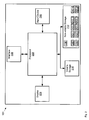
- FIG. 2 depicts a schematic diagram of device 101 according to non-limiting implementations. It should be emphasized that the structure in Figure 2 is purely exemplary, and contemplates a device that can be used for both wireless voice (e.g. telephony) and wireless data (e.g. email, web browsing, text) communications.
- Device 101 comprises at least one input device 200 generally enabled to receive input data, and can comprise any suitable combination of input devices, including but not limited to a keyboard, a keypad, a pointing device, a mouse, a track wheel, a trackball, a touchpad, a touch screen and the like. Other suitable input devices are within the scope of present implementations.
- processor 208 which can be implemented as a plurality of processors.
- Processor 208 is configured to communicate with a non-volatile storage unit 212 (e.g. Erasable Electronic Programmable Read Only Memory (“EEPROM”), Flash Memory) and a volatile storage unit 216 (e.g. random access memory (“RAM”).
- EEPROM Erasable Electronic Programmable Read Only Memory
- RAM random access memory
- Programming instructions that implement the functional teachings of device 101 as described herein are typically maintained, persistently, in non-volatile storage unit 212 and used by processor 208 which makes appropriate utilization of volatile storage 216 during the execution of such programming instructions.
- non-volatile storage unit 212 and volatile storage 216 are examples of computer readable media that can store programming instructions executable on processor 208.
- non-volatile storage unit 212 and volatile storage 216 are also examples of memory units and/or memory modules.
- Display 224 comprises any suitable one of or combination of CRT (cathode ray tube) and/or flat panel displays (e.g. LCD (liquid crystal display), plasma, OLED (organic light emitting diode), capacitive or resistive touchscreens, and the like).
- CTR cathode ray tube
- flat panel displays e.g. LCD (liquid crystal display), plasma, OLED (organic light emitting diode), capacitive or resistive touchscreens, and the like.
- input device 200 and display 224 are external to device 101, with processor 208 in communication with each of input device 200 and display 224 via a suitable connection and/or link.
- Processor 208 also connects to a network communication interface 228, which can be implemented in some implementations as radios configured to communicate over respective links 105.
- interface 228 is configured to correspond with the network architecture that is used to implement link 106.
- a plurality of links with different protocols can be employed and thus interface 228 can comprise a plurality of interfaces to support each link. It should be understood that in general a wide variety of configurations for device 101 are contemplated.
- non-volatile storage 212 can store an application 236 for throttling transmission of data to network 105, which can be processed by processor 208.
- non-volatile storage 212 also stores a communication application 240 and a plurality of further applications 242-1, 242-2, 242-3...242-n.
- Non-volatile storage 212 further stores an aggregate token bucket 250 associated with communication application 240, and respective application token buckets 252-1, 252-2, 252-3...252-n associated with respective further applications 242-1, 242-2, 242-3...242-n. It is further appreciated that while four applications 242 are depicted in Fig. 2 , any suitable number of applications 242 can be stored at device 101, and can be more or less than four.
- each of applications 240, 242 and token buckets 250, 252 can be processed by processor 208 along with application 236 to throttle data from device 101.
- Fig. 3 depicts a schematic diagram of relationships between applications 240, 242, and when processed by processor 208, as well relationships between application 240 and interface 228.
- application 240 comprises a communication application that transmits data 102 to network 105 via interface 228.
- application 240 can comprise a messaging application, including but not limited to chat applications; indeed, it is appreciated that while messaging and/or chat applications are nominally used to transmit and receive text data, such messaging and/or chat applications can be enabled to transmit and receive any other type of suitable data, such as multimedia data, video data, music data, image data, and the like, as well as any suitable file transfer data, including but not limited to a URL link.
- Each of Application 242 can comprise any suitable application for generating and/or processing data 102, including but not limited to multimedia data, video data, music data, image data and the like, though it is appreciated that any type of suitable data is within the scope of present implementations. However, applications 242 are generally appreciated to have limited or no messaging functionality. Hence, in present implementations, applications 240, 242 can be enabled to interact with each other such that data generated at one or more of applications 242 can be transmitted to network 105 via application 240.
- applications 242 can comprise an application associated with application 240.
- application 242-1 can comprise an application for generating message data and/or chat data while application 240 can comprise an associated client for transmitting data generated by application 242-1.
- active applications 242 can become inactive, while inactive applications 242 can become active, for example by respectively closing and opening given applications 242.
- inactive applications 242 can become active, for example by respectively closing and opening given applications 242.
- any of the inactive applications 242 can become active at any time and/or any of active applications 242 can become inactive at any given time.
- token buckets 250, 252 are provided; aggregate token bucket 250 throttle data transmission from application 240, while application token buckets 252 throttles transmission of data from respective applications 242.
- the associations between each token bucket 250, 252 and its respective application 240, 242 are depicted in Fig. 3 via stippled lines there between.
- aggregate token bucket 250 can be provided with token parameters 122 for throttling transmission of data from device 101.
- token parameters 122 can be provided to device 101 from server 120: in these implementations, server 120 is associated with a service provider and/or network operator which determines token parameters 122 for device 101, and indeed determines respective token parameters for each device associated with the service provider and/or network operator; in some implementations, the token parameters can be the same for each device associated with the service provider and/or network operator, however it is appreciated that token parameters can be determined on a device by device basis.
- Non-limiting examples of token parameters can include but are not limited to a maximum token bucket size, also referred to hereafter as TB size, and a token bucket refresh rate, also referred to hereafter as refresh rate.
- TB size comprises a maximum amount of data that can be transmitted by application 240, for example 1000 kB (kilobytes); and the refresh rate can comprise a rate at which token bucket 250 is refreshed, for example 100 kB/minute (kBm).
- the initial size of token bucket 250 is 1000 kB, such that application 240 can transmit up to 1000 kB without restriction, and the token bucket 250 is refreshed at a rate of 100 kBm.
- application 240 can transmit bursts of data 102 up to 1000 kBm, but if the transmit rate of data 102 exceeds the refresh rate of 100kBm, the transmit rate of data 102 will shortly be limited to 100 kBm once the 1000 kB in token bucket 150 is used up.
- the maximum total bucket size (i.e. a suitable allowable data burst) can be determined from a total capacity of network 105 optionally combined with a probability of reaching a total network capacity (e.g. if all devices on network 105 were to simultaneously burst the maximum total bucket size).
- refresh rates for devices can be determined from data usage associated with network 105, including but not limited to average traffic parameters associated with network 105 divided by the number of devices on network 105, however any other suitable type of data usage parameter is within the scope of present implementations. For example, other data usage parameters other than average data usage are within the scope of present implementations.
- token parameters can be distributed to the respective application token buckets 252 to throttle data 102 from each application 242, for example by processing application 236.
- processor 220 distributes token parameters 122 to token buckets 252 upon processing application 236.
- Fig. 4 depicts a method 400 for enabling access of a first mobile electronic device to at least one network accessible by a second mobile electronic device.
- method 400 is performed using system 100.
- system 100 and/or method 400 can be varied, and need not work exactly as discussed herein in conjunction with each other, and that such variations are within the scope of present implementations. It is appreciated that method 400 can be specifically implemented in system 100 by device 101 processing application 236.
- method 400 assumes that token parameters 122 have been received at aggregate token bucket 250 as described above.
- token parameters 122 of aggregate token bucket 240 are distributed to respective application token buckets 252 associated with at least two further applications 242, the communication application 240 enabled to receive respective data 102 from the at least two further applications 242 for transmission to network 105 via the communication interface 228.
- respective data 102 received from the at least two further applications 242 is throttled via the respective application token buckets 252.
- Token parameters 122 comprise a maximum aggregate token bucket size, T, and refresh rate R.
- Each of TB size T and refresh rate R is distributed between token buckets 252 by distributing each of TB size T and refresh rate R into portions, for example respective TB sizes b1, b2, b3...bn, and respective refresh rates r1, r2, r3...rn, where the sum of all the respective TB sizes b1, b2, b3...bn add up to TB size T, and the sum of all the respective refresh rates r1, r2, r3...rn add up to refresh rate R.
- token parameters 122 are distributed between token buckets 252 associated with active applications 242.
- Fig. 5 it is assumed that applications 242-1, 242-2, 242-3 are activated as in Fig. 4 , and hence TB size T and refresh rate R is distributed among associated token buckets 252-1, 252-2. 252-3 via respective token bucket sizes b1, b2, b3 and respective refresh rates r1, r2, r3.
- application 242-1 is throttled to TB size b1 and refresh rate r1 via token bucket 252-1
- application 242-2 is throttled to TB size b2 and refresh rate r2 via token bucket 252-2
- application 242-3 is throttled to TB size b3 and refresh rate r3 r2 via token bucket 252-3.
- b1+b2+b3 T
- r1+r2+r3 R.
- token parameters 122 comprise: a maximum token bucket size T for controlling bursts of data 102; and a refresh rate, R wherein respective maximum token buckets sizes b and respective refresh rates r are determined for each of the respective application token buckets 252 such that a respective maximum token bucket size sum is approximately the maximum token bucket size, and a respective refresh rate sum is approximately the refresh rate.
- a respective maximum token bucket size sum can be approximately the maximum token bucket size
- a respective refresh rate sum can be approximately the refresh rate.
- the respective maximum token bucket size sum can be within a first given range and/or a first given percentage of the maximum token bucket size
- a respective refresh rate sum can be within a second given range and/or a second given percentage the refresh rate.
- token parameters 122 are distributed to other token buckets 252, such as token bucket 252-n.
- token parameters 122 can be distributed between token buckets 252 associated with both active applications 242 and at least one inactive application 242.
- token parameters 122 can be distributed to a token bucket associated with an inactive application 242 whose probability of being activated within a given time period is above a threshold value, the probability of being activated based on historical usage or any other suitable method; when the inactive application 242 does not become inactive within the given time period, token parameters 122 can be redistributed among token buckets 252 associated with active applications 242.
- a probability factor can be used to determine token parameters 122 for aggregate TB based on historical usage data of any and/or all applications 242 during a given time period; in some implementations, token parameters 122 of the aggregate TB can then be redistributed among active applications 242 during the same given time period.
- each application 242-1, 242-2, 242-3...242-n can be associated with respective weights W1, W2, W3...W n .
- weights W can be determined from data rates associated with each active application 242.
- Data rates w1, w2, w3...w n in any suitable manner including but not limited to being determined from one or more of a data rate associated with each application 242, an application developer requested data rate associated with each application 242, historical data rates associated with each application 242, test data rates associated with each application 242 and the like.
- a data rate parameter when each application 242 is installed, can be provided as part of the installation data received from an applications server (not depicted).
- the data rate associated with the application 242 can change via update data received from an update server (not depicted) and/or an applications server.
- An application developer requested data rate associated with each application 242 can be determined by receiving data from a developer of a given application 242 indicating a preferred data rate at which the given application 242 will optimally perform.
- An historical data rate of a given application 242 can be determined by storing data rates that the given application 242 uses when active and determining an average historical data rate there from.
- a test data rate of a given application 242 can be determined from test data associated with the given application 242 to determine a data rate at which the given application will optimally perform.
- one or more data rates w1, w2, w3...w n can be received along with token parameters 122, and/or from any other suitable remote computing device.
- device 101 e.g. via processor 220 can determine respective weights associated with each of the respective application token buckets 252 such that token parameters 122 associated with aggregate token bucket 250 are distributed to each of the respective application token buckets 252 according to the respective weights.
- each of the respective weights are determined from respective data rates associated with each of active applications 242.
- weights W1, W2, W3 associated with active applications 242-1, 242-2, 242-3 are determined by processor 220, as depicted in Fig.
- W ⁇ 1 w ⁇ 1 / w ⁇ 1 + w ⁇ 2 + w ⁇ 3 ;
- W ⁇ 2 w ⁇ 2 / w ⁇ 1 + w ⁇ 2 + w ⁇ 3 ;
- W ⁇ 3 w ⁇ 3 / w ⁇ 1 + w ⁇ 2 + w ⁇ 3 .
- each application token bucket size b1, b2, b3 can be determined by multiplying the aggregate TB size T by the respective weight w1, w2, w3.
- each application refresh rate r1, r2, r3 can be determined by multiplying the aggregate refresh rate R by the respective weight w1, w2, w3.
- method 400 can be repeated to redistribute token parameters 122 among the respective application token buckets 252 associated with active applications 242 when at least one of: one or more of applications 242 becomes inactive; and one or more of applications 242 become active. Hence, data 102 from each active application 242 is throttled accordingly.
- At least one of applications 242 can remain unthrottled.
- one more of applications 242 can comprise an application associated with application 240 (such as application 242-1 comprising an application for generating message data and/or chat data while application 240 can comprise an associated client for transmitting data generated by application 242-1)
- the one or more applications 242 associated with application 240 can remain unthrottled.
- token bucket 250 can be used to throttle data for application 220, except for data 102-1 originating from application 242-1. Hence, data 102-1 is not throttled, and further there is no application token buckets 252-1 associated therewith.
- token parameters 122 are distributed only between application token buckets 252-2....252-n, to throttle associated applications 242-2...242-n.
- data 102 from the unthrottled application 242 can be assigned transmission priority. In this way, data 102 from an application 242 associated with communications application 242 can be unaffected by throttling, and further third party applications using communications application 240 to transmit data can be throttled and/or controlled.
- server 120a is further enabled as a communications server.
- server 120a can be associated with communication application 240a such that all communications between communication application 240a data and other devices 103a pass through server 120a.
- server 120a is depicted as in communication with network 105a, in other implementations, server 120a can be an element of network 105a such that data 102a received from application 240a is routed to server 120a before being transmitted by server 120a to a respective device 103a. It is further appreciated that otherwise server 120a can be similar to server 120.
- server 120a is generally enabled to determine scaling data 832 by analyzing traffic there through to determine loads on server 120a and/or any associated network, such as network 105a, as well as transmit scaling data 832 to device 101a to periodically scale token parameters 122a of token bucket 250a.
- scaled token parameters can be distributed to application token buckets 252 as described above. It is appreciated that scaling data 832 can be transmitted periodically and/or on demand and/or as loads on server 120a and/or an associated network change.
- server 120a can determine time of day network usage probabilities which can be normalized and thereafter provided as a table in scaling data 832. For example, in some implementations, an average network usage can be determined by averaging network usage over a given time period and/or by determining a sample period mean. Further, network usage can be provided for predetermined units of time, such as every hour. Hourly network usage can then be scaled by dividing the hourly network usage by the average network usage, such that a value of a normalized network usage probability of "1" indicates that network usage is average at a given hour. Similarly, a normalized network usage probability of "1.1" indicates that network usage is 10% above average at another given hour.
- scaling data 832 can comprise a table of normalized network usage probabilities, each of which can be used as scaling factor for token parameters 122a.
- Table 1 Tuesday Time Scaling Factor 20:00 1.2 21:00 1.1 22:00 1.0 23:00 1.0 24:00 0.9 Wednesday 00:00 0.8 01:00 0.7
- scaling data 832 can comprise any suitable format. Further, in these implementations, scaling data 832 comprises hourly times (e.g. 20:00, 21:00, etc.) for given days (e.g. Tuesday and Wednesday) and scaling factors associated with each hour, the scaling factors determined as described above.
- D time of day
- the TOD scaling factor, D could be normalized to any other suitable scaling factor other than "1”
- FIG. 10 depicts a table 1000 of scaling factors D (e.g. for Monday: D0mon, D1mon....etc.) arranged by rows corresponding to days of the week and columns corresponding to hours of the day.
- a method 1100 of determining TOD distribution/ scaling factors D is depicted in Fig. 11 :
- Hourly usage data is collected for the global population of devices on network 105 implementing communications application 240a and third party application usage (i.e. applications 242a).
- Mean usage is determined for given sample periods (e.g. over a day, week, month).
- scaling data 832 is based on historical network usage.
- D could be normalized to any other suitable scaling factor other than "1”, and further could be based on any suitable time period, other than a 24 hour period, and that the above calculation is provided as an example only, and not to be considered unduly limiting.
- token parameters 122a are scaled periodically according to scaling data 832 as will be described hereafter.
- processor 220a via processing of application 236a, recalculates aggregate TB size Ba, and token refresh rate Ra using D values for that hour.
- data for each respective application 242a can be collected.
- data collection counters can be set to zero each hour and data collected for each respective application 242a and transmitted to server 120a, either periodically, e.g. hourly, or at any other suitable time.
- collected data can be transmitted to server 120a as part of a parameter change request to change ToD D scaling factors/parameters.
- token parameters 122a are redistributed as described above.
- scaling data 832 can either be the same for all devices interacting with server 120a and/or network 105a.
- server 120a can be enabled to provide communications and/or analysis for the plurality of communication devices, including device 101a, and determine scaling data for each of the plurality of communication devices and transmit scaling data to each of the plurality of communication devices.
- scaling data transmitted to all of the plurality of communication devices can be the same scaling data, such as scaling data 832 such that transmitted data is similarly scaled for each of the plurality of communication devices;.
- scaling data can be specific to one or more of the plurality of the communication device such that transmission of data at the one or more of the plurality of communication devices is scaled independent of the others of the plurality of communication devices.
- transmission of data 102a from device 101a can be controlled independently of any other devices using network 105a and/or server 120a. For example, consider that device 101a is associated with a rogue user who has caused one or more of applications 240a, 242a to transmit large amounts of data 102a such that a larger than allotted amount of bandwidth of network 105a is being used by device 101a.
- Server 120a can determine that device 101a is transmitting large amounts of data 102a and transmit scaling data 832 to device 101a comprising scaling values (i.e. TOD D scaling factors/parameters) that cause the amount of data 102a to be transmitted to be severely throttled, such as TOD D scaling factors of approximately 0.1-0.3, or any other suitable scaling factors.
- scaling values i.e. TOD D scaling factors/parameters
- scaling data 832 can include weighting data for a given application 242a to cause the given application 242a to be throttled in a specific manner. For example, consider when the given application 242a is upgraded and bandwidth usage is thereby increased, that can be larger than an acceptable threshold value. To address this problem, at least one set of respective token parameters associated with a respective application token bucket 252a is adjusted according to respective scaling parameters received from a remote computing device such as server 120a, such that transmission of data 102 is throttled to acceptable levels and/or to punitive levels.
- system 100b further comprises a control server 1220 in communication with server 120b via a link 180b-4 and in communication with device 101b via a link 180b-5, each of links 180b-4 and 180b-5 being similar or different to other links 180 and/or link 106b.
- server 1220 can be similar to server 120b, but enabled to analyze statistics received from device 101b and trigger server 120b to transmit data 832b to device 101b.
- processor 208b of device 101b is further enabled to collect statistics on data usage and/or transmission by applications 242 and transmit a statistics log 1230 to control server 1220 periodically (e.g. once every 24 hours) and/or at any other suitable time. It is furthermore appreciated that data collection at device 101b for log 1230 can be implemented on a periodic basis; for example, statistics can be collected for data usage/transmission on an hourly basis. Log 1230 can be processed by server 1220 and when it is determined that scaling data 832b should be updated at device 101b, server 1220 transmit a parameter change request 1240 to server 120b to cause/trigger server 120b to transmit scaling data 832b. In this manner, scaling data 832b can be updated based on data usage by applications 242b at device 101b.
- devices 101, 101a, 101b, server 120, 120a, 120b, and control server 1220 can be implemented using pre-programmed hardware or firmware elements (e.g., application specific integrated circuits (ASICs), electrically erasable programmable readonly memories (EEPROMs), etc.), or other related components.
- ASICs application specific integrated circuits
- EEPROMs electrically erasable programmable readonly memories
- the functionality of devices 101, 101a, 101b, server 120, 120a, 120b, and control server 1220 can be achieved using a computing apparatus that has access to a code memory (not shown) which stores computer-readable program code for operation of the computing apparatus.
- the computer-readable program code could be stored on a computer readable storage medium which is fixed, tangible and readable directly by these components, (e.g., removable diskette, CD-ROM, ROM, fixed disk, USB drive). Furthermore, it is appreciated that the computer-readable program can be stored as a computer program product comprising a computer usable medium. Further, a persistent storage device can comprise the computer readable program code. It is yet further appreciated that the computer-readable program code and/or computer usable medium can comprise a non-transitory computer-readable program code and/or non-transitory computer usable medium. Alternatively, the computer-readable program code could be stored remotely but transmittable to these components via a modem or other interface device connected to a network (including, without limitation, the Internet) over a transmission medium.
- the transmission medium can be either a non-mobile medium (e.g., optical and/or digital and/or analog communications lines) or a mobile medium (e.g., microwave, infrared, free-space optical or other transmission schemes) or a
Landscapes
- Engineering & Computer Science (AREA)
- Computer Networks & Wireless Communication (AREA)
- Signal Processing (AREA)
- Computer And Data Communications (AREA)
Claims (9)
- Eine Kommunikationsvorrichtung (101, 101a, 101b), die aufweist:einen Prozessor (208, 208a, 208b) und eine Kommunikationsschnittstelle (228, 228a, 228b), wobei der Prozessor (208, 208a, 208b) befähigt ist zum:Verteilen von Token-Parametern eines Sammel-Token-Buckets, der mit einer Kommunikationsanwendung assoziiert ist, an jeweilige Anwendungs-Token-Buckets, die mit zumindest zwei weiteren Anwendungen assoziiert sind, wobei die Kommunikationsanwendung befähigt ist, jeweilige Daten von den zumindest zwei weiteren Anwendungen zu empfangen zur Übertragung an ein Netzwerk über die Kommunikationsschnittstelle (228, 228a, 228b);Bestimmen jeweiliger Gewichtungen, die mit jedem der jeweiligen Anwendungs-Token-Buckets assoziiert sind, aus jeweiligen Datenraten, die mit jeder der zumindest zwei weiteren Anwendungen assoziiert sind, derart, dass die Token-Parameter, die mit dem Sammel-Token-Bucket assoziiert sind, an jeden der jeweiligen Anwendungs-Token-Buckets gemäß den jeweiligen Gewichtungen verteilt werden;Drosseln der jeweiligen Daten, die von den zumindest zwei weiteren Anwendungen empfangen werden, über die jeweiligen Anwendungs-Token-Buckets; underneutes Verteilen der verteilten Token-Parameter unter den jeweiligen Anwendungs-Token-Buckets, die mit aktiven Anwendungen assoziiert sind, wenn zumindest eines aus:eine oder mehrere der zumindest zwei weiteren Anwendungen inaktiv wird/werden; undeine oder mehrere zusätzliche weitere Anwendung(en) aktiv wird/werden.
- Die Computervorrichtung gemäß Anspruch 1, wobei die Token-Parameter aufweisen:eine maximale Token-Bucket-Größe zum Steuern von Bursts der Daten; und eine Wiederholrate,wobei jeweilige maximale Token-Bucket-Größen und jeweilige Wiederholraten für jeden der jeweiligen Anwendungs-Token-Buckets bestimmt werden derart, dass eine jeweilige Summe der maximalen Token-Bucket-Größe ungefähr die maximale Token-Bucket-Größe ist und eine jeweilige Wiederholrate-Summe ungefähr die Wiederholrate ist.
- Die Computervorrichtung gemäß einem vorhergehenden Anspruch, wobei die Token-Bucket-Parameter regelmäßig gemäß Skalierungsdaten skaliert werden, die von einer entfernten Computervorrichtung empfangen werden.
- Die Computervorrichtung gemäß Anspruch 3, wobei die Skalierungsdaten eines oder mehrere sind aus:weisen Tageszeit-Netzwerknutzungs-Wahrscheinlichkeiten auf;basieren auf historischer Netzwerknutzung; undsind eines aus:für eine Vielzahl von Kommunikationsvorrichtung (101, 101a, 101b), einschließlich der Kommunikationsvorrichtung (101, 101a, 101b), derart, dass übertragene Daten ähnlich für jede der Vielzahl von Vorrichtungen skaliert werden; undspezifisch für die Kommunikationsvorrichtung (101, 101a, 101b) derart, dass eine Übertragung der Daten an der Kommunikationsvorrichtung (101, 101a, 101b) unabhängig von der anderen der Vielzahl von Vorrichtungen skaliert wird.
- Ein Verfahren, das aufweist:Verteilen, an einem Prozessor (208, 208a, 208b) einer Computervorrichtung, von Token-Parametern eines Sammel-Token-Buckets, der mit einer Kommunikationsanwendung assoziiert ist, an jeweilige Anwendungs-Token-Buckets, die mit zumindest zwei weiteren Anwendungen assoziiert sind, wobei die Kommunikationsanwendung befähigt ist, jeweilige Daten von den zumindest zwei weiteren Anwendungen zu empfangen zur Übertragung an ein Netzwerk über eine Kommunikationsschnittstelle (228, 228a, 228b);Bestimmen, an dem Prozessor (208, 208a, 208b), jeweiliger Gewichtungen, die mit jedem der jeweiligen Anwendungs-Token-Buckets assoziiert sind, aus jeweiligen Datenraten, die mit jeder der zumindest zwei weiteren Anwendungen assoziiert sind, derart, dass die Token-Parameter, die mit dem Sammel-Token-Bucket assoziiert sind, an jeden der jeweiligen Anwendungs-Token-Buckets gemäß den jeweiligen Gewichtungen verteilt werden;Drosseln, an dem Prozessor (208, 208a, 208b), der jeweiligen Daten, die von den zumindest zwei weiteren Anwendungen empfangen werden, über die jeweiligen Anwendungs-Token-Buckets; underneutes Verteilen, an dem Prozessor (208, 208a, 208b), der verteilten Token-Parameter unter den jeweiligen Anwendungs-Token-Buckets, die mit aktiven Anwendungen assoziiert sind, wenn zumindest eines aus:eine oder mehrere der zumindest zwei weiteren Anwendungen inaktiv wird/werden; undeine oder mehrere zusätzliche weitere Anwendung(en) aktiv wird/werden.
- Das Verfahren gemäß Anspruch 5, wobei die Token-Parameter aufweisen:eine maximale Tokeri-Bucket-Größe zum Steuern von Bursts der Daten; und eine Wiederholrate,wobei jeweilige maximale Token-Bucket-Größen und jeweilige Wiederholraten für jeden der jeweiligen Anwendungs-Token-Buckets bestimmt werden derart, dass eine jeweilige Summe der maximalen Token-Bucket-Größe ungefähr die maximale Token-Bucket-Größe ist und eine jeweilige Wiederholrate-Summe ungefähr die Wiederholrate ist.
- Das Verfahren gemäß einem der Ansprüche 5 bis 6, wobei die Token-Bucket-Parameter regelmäßig gemäß Skalierungsdaten skaliert werden, die von einer entfernten Computervorrichtung empfangen werden.
- Das Verfahren gemäß Anspruch 7, wobei die Skalierungsdaten eines oder mehrere sind aus:weisen Tageszeit-Netzwerknutzungs-Wahrscheinlichkeiten auf;basieren auf historischer Netzwerknutzung; undsind eines aus:für eine Vielzahl von Kommunikationsvorrichtung (101, 101a, 101b), einschließlich der Kommunikationsvorrichtung (101, 101a, 101b), derart, dass übertragene Daten ähnlich für jede der Vielzahl von Vorrichtungen skaliert werden; undspezifisch für die Kommunikationsvorrichtung (101, 101a, 101b) derart, dass eine Übertragung der Daten an der Kommunikationsvorrichtung (101, 101a, 101b) unabhängig von der anderen der Vielzahl von Vorrichtungen skaliert wird.
- Ein Computerprogrammprodukt, das ein computerverwendbares Medium mit einem computerlesbaren Programmcode aufweist, der ausgebildet ist, ausgeführt zu werden zum Implementieren eines Verfahrens, das aufweist:Verteilen, an einem Prozessor (208, 208a, 208b) einer Computervorrichtung, von Token-Parametern eines Sammel-Token-Buckets, der mit einer Kommunikationsanwendung assoziiert ist, an jeweilige Anwendungs-Token-Buckets, die mit zumindest zwei weiteren Anwendungen assoziiert sind, wobei die Kommunikationsanwendung befähigt ist, jeweilige Daten von den zumindest zwei weiteren Anwendungen zu empfangen zur Übertragung an ein Netzwerk über eine Kommunikationsschnittstelle (228, 228a, 228b);Bestimmen, an dem Prozessor (208, 208a, 208b), jeweiliger Gewichtungen, die mit jedem der jeweiligen Anwendungs-Token-Buckets assoziiert sind, aus jeweiligen Datenraten, die mit jeder der zumindest zwei weiteren Anwendungen assoziiert sind, derart, dass die Token-Parameter, die mit dem Sammel-Token-Bucket assoziiert sind, an jeden der jeweiligen Anwendungs-Token-Buckets gemäß den jeweiligen Gewichtungen verteilt werden;Drosseln, an dem Prozessor (208, 208a, 208b), der jeweiligen Daten, die von den zumindest zwei weiteren Anwendungen empfangen werden, über die jeweiligen Anwendungs-Token-Buckets; underneutes Verteilen, an dem Prozessor (208, 208a, 208b), der verteilten Token-Parameter unter den jeweiligen Anwendungs-Token-Buckets, die mit aktiven Anwendungen assoziiert sind, wenn zumindest eines aus:eine oder mehrere der zumindest zwei weiteren Anwendungen inaktiv wird/werden; undeine oder mehrere zusätzliche weitere Anwendung(en) aktiv wird/werden.
Priority Applications (2)
| Application Number | Priority Date | Filing Date | Title |
|---|---|---|---|
| EP12151916.9A EP2618541B1 (de) | 2012-01-20 | 2012-01-20 | Kommunikationsvorrichtung zum Drosseln übermittelter Daten |
| CA2798845A CA2798845C (en) | 2012-01-20 | 2012-12-13 | A communication device for throttling transmitted data |
Applications Claiming Priority (1)
| Application Number | Priority Date | Filing Date | Title |
|---|---|---|---|
| EP12151916.9A EP2618541B1 (de) | 2012-01-20 | 2012-01-20 | Kommunikationsvorrichtung zum Drosseln übermittelter Daten |
Publications (2)
| Publication Number | Publication Date |
|---|---|
| EP2618541A1 EP2618541A1 (de) | 2013-07-24 |
| EP2618541B1 true EP2618541B1 (de) | 2014-04-09 |
Family
ID=45509303
Family Applications (1)
| Application Number | Title | Priority Date | Filing Date |
|---|---|---|---|
| EP12151916.9A Active EP2618541B1 (de) | 2012-01-20 | 2012-01-20 | Kommunikationsvorrichtung zum Drosseln übermittelter Daten |
Country Status (2)
| Country | Link |
|---|---|
| EP (1) | EP2618541B1 (de) |
| CA (1) | CA2798845C (de) |
Cited By (1)
| Publication number | Priority date | Publication date | Assignee | Title |
|---|---|---|---|---|
| WO2017210103A1 (en) * | 2016-05-30 | 2017-12-07 | Wal-Mart Stores, Inc. | Federated scheme for coordinating throttled network data transfer in a multi-host scenario |
Families Citing this family (2)
| Publication number | Priority date | Publication date | Assignee | Title |
|---|---|---|---|---|
| US20170208120A1 (en) * | 2016-01-15 | 2017-07-20 | Google Inc. | Probabilistic throttling |
| US11599644B2 (en) | 2019-05-17 | 2023-03-07 | Walmart Apollo, Llc | Blocking insecure code with locking |
Family Cites Families (2)
| Publication number | Priority date | Publication date | Assignee | Title |
|---|---|---|---|---|
| US8077611B2 (en) * | 2006-07-27 | 2011-12-13 | Cisco Technology, Inc. | Multilevel coupled policer |
| US20110083175A1 (en) * | 2009-10-06 | 2011-04-07 | Sonus Networks, Inc. | Methods and Apparatuses for Policing and Prioritizing of Data Services |
-
2012
- 2012-01-20 EP EP12151916.9A patent/EP2618541B1/de active Active
- 2012-12-13 CA CA2798845A patent/CA2798845C/en active Active
Cited By (1)
| Publication number | Priority date | Publication date | Assignee | Title |
|---|---|---|---|---|
| WO2017210103A1 (en) * | 2016-05-30 | 2017-12-07 | Wal-Mart Stores, Inc. | Federated scheme for coordinating throttled network data transfer in a multi-host scenario |
Also Published As
| Publication number | Publication date |
|---|---|
| CA2798845C (en) | 2017-01-17 |
| EP2618541A1 (de) | 2013-07-24 |
| CA2798845A1 (en) | 2013-07-20 |
Similar Documents
| Publication | Publication Date | Title |
|---|---|---|
| US9100448B2 (en) | Communication device for throttling transmitted data | |
| CN1658557B (zh) | 控制由并发客户机对服务的访问的架构 | |
| US8335161B2 (en) | Systems and methods for network congestion management using radio access network congestion indicators | |
| US9320006B2 (en) | Categorized location identification based on historical locations of a user device | |
| US8843606B2 (en) | Method, system and apparatus for managing load in a server | |
| US20130066674A1 (en) | Marketplace for timely event data distribution | |
| US8914786B2 (en) | Systems and methods for controlling application updates across a wireless interface | |
| Liu et al. | HGL: A hybrid global-local load balancing routing scheme for the Internet of Things through satellite networks | |
| US8595322B2 (en) | Target subscription for a notification distribution system | |
| US20130188525A1 (en) | System and method for managing bandwidth based on a time of day | |
| US20150172207A1 (en) | Determining rules for partitioning internet connection bandwidth | |
| US10212194B2 (en) | Server controlled throttling of client to server requests | |
| US9210600B1 (en) | Wireless network performance analysis system and method | |
| CA2798845C (en) | A communication device for throttling transmitted data | |
| CN102037764B (zh) | 基站装置及方法 | |
| EP2381643A1 (de) | Verfahren, System und Vorrichtung zur Lastverwaltung in einem Server | |
| Liang et al. | Optimal services for content delivery based on business priority | |
| EP3381228A1 (de) | Unternehmensbasierte netzwerkauswahl | |
| CN115333982B (zh) | 流量监控方法、装置、设备及计算机可读存储介质 | |
| CN114978998B (zh) | 一种流量控制方法、装置、终端及存储介质 | |
| JP4938621B2 (ja) | 端末装置およびメモリ不足判定方法 | |
| US7974634B2 (en) | Content forwarding for bandwidth conservation | |
| US20250126458A1 (en) | Monitoring bandwidth utilization on an international mobile subscriber identity (imsi) basis | |
| WO2025189784A9 (zh) | 业务级别的调整方法、系统、装置、通信设备和存储介质 | |
| CN119045982A (zh) | 业务请求处理方法、设备、存储介质及程序产品 |
Legal Events
| Date | Code | Title | Description |
|---|---|---|---|
| PUAI | Public reference made under article 153(3) epc to a published international application that has entered the european phase |
Free format text: ORIGINAL CODE: 0009012 |
|
| 17P | Request for examination filed |
Effective date: 20120120 |
|
| AK | Designated contracting states |
Kind code of ref document: A1 Designated state(s): AL AT BE BG CH CY CZ DE DK EE ES FI FR GB GR HR HU IE IS IT LI LT LU LV MC MK MT NL NO PL PT RO RS SE SI SK SM TR |
|
| AX | Request for extension of the european patent |
Extension state: BA ME |
|
| RAP1 | Party data changed (applicant data changed or rights of an application transferred) |
Owner name: BLACKBERRY LIMITED |
|
| GRAP | Despatch of communication of intention to grant a patent |
Free format text: ORIGINAL CODE: EPIDOSNIGR1 |
|
| INTG | Intention to grant announced |
Effective date: 20131030 |
|
| RAP1 | Party data changed (applicant data changed or rights of an application transferred) |
Owner name: BLACKBERRY LIMITED |
|
| GRAS | Grant fee paid |
Free format text: ORIGINAL CODE: EPIDOSNIGR3 |
|
| GRAA | (expected) grant |
Free format text: ORIGINAL CODE: 0009210 |
|
| AK | Designated contracting states |
Kind code of ref document: B1 Designated state(s): AL AT BE BG CH CY CZ DE DK EE ES FI FR GB GR HR HU IE IS IT LI LT LU LV MC MK MT NL NO PL PT RO RS SE SI SK SM TR |
|
| REG | Reference to a national code |
Ref country code: GB Ref legal event code: FG4D |
|
| REG | Reference to a national code |
Ref country code: AT Ref legal event code: REF Ref document number: 661872 Country of ref document: AT Kind code of ref document: T Effective date: 20140415 Ref country code: CH Ref legal event code: EP |
|
| REG | Reference to a national code |
Ref country code: IE Ref legal event code: FG4D |
|
| REG | Reference to a national code |
Ref country code: DE Ref legal event code: R096 Ref document number: 602012001320 Country of ref document: DE Effective date: 20140522 |
|
| REG | Reference to a national code |
Ref country code: AT Ref legal event code: MK05 Ref document number: 661872 Country of ref document: AT Kind code of ref document: T Effective date: 20140409 |
|
| REG | Reference to a national code |
Ref country code: NL Ref legal event code: VDEP Effective date: 20140409 |
|
| REG | Reference to a national code |
Ref country code: LT Ref legal event code: MG4D |
|
| PG25 | Lapsed in a contracting state [announced via postgrant information from national office to epo] |
Ref country code: LT Free format text: LAPSE BECAUSE OF FAILURE TO SUBMIT A TRANSLATION OF THE DESCRIPTION OR TO PAY THE FEE WITHIN THE PRESCRIBED TIME-LIMIT Effective date: 20140409 Ref country code: NL Free format text: LAPSE BECAUSE OF FAILURE TO SUBMIT A TRANSLATION OF THE DESCRIPTION OR TO PAY THE FEE WITHIN THE PRESCRIBED TIME-LIMIT Effective date: 20140409 Ref country code: NO Free format text: LAPSE BECAUSE OF FAILURE TO SUBMIT A TRANSLATION OF THE DESCRIPTION OR TO PAY THE FEE WITHIN THE PRESCRIBED TIME-LIMIT Effective date: 20140709 Ref country code: BG Free format text: LAPSE BECAUSE OF FAILURE TO SUBMIT A TRANSLATION OF THE DESCRIPTION OR TO PAY THE FEE WITHIN THE PRESCRIBED TIME-LIMIT Effective date: 20140709 Ref country code: GR Free format text: LAPSE BECAUSE OF FAILURE TO SUBMIT A TRANSLATION OF THE DESCRIPTION OR TO PAY THE FEE WITHIN THE PRESCRIBED TIME-LIMIT Effective date: 20140710 Ref country code: FI Free format text: LAPSE BECAUSE OF FAILURE TO SUBMIT A TRANSLATION OF THE DESCRIPTION OR TO PAY THE FEE WITHIN THE PRESCRIBED TIME-LIMIT Effective date: 20140409 Ref country code: IS Free format text: LAPSE BECAUSE OF FAILURE TO SUBMIT A TRANSLATION OF THE DESCRIPTION OR TO PAY THE FEE WITHIN THE PRESCRIBED TIME-LIMIT Effective date: 20140809 |
|
| PG25 | Lapsed in a contracting state [announced via postgrant information from national office to epo] |
Ref country code: AT Free format text: LAPSE BECAUSE OF FAILURE TO SUBMIT A TRANSLATION OF THE DESCRIPTION OR TO PAY THE FEE WITHIN THE PRESCRIBED TIME-LIMIT Effective date: 20140409 Ref country code: PL Free format text: LAPSE BECAUSE OF FAILURE TO SUBMIT A TRANSLATION OF THE DESCRIPTION OR TO PAY THE FEE WITHIN THE PRESCRIBED TIME-LIMIT Effective date: 20140409 Ref country code: RS Free format text: LAPSE BECAUSE OF FAILURE TO SUBMIT A TRANSLATION OF THE DESCRIPTION OR TO PAY THE FEE WITHIN THE PRESCRIBED TIME-LIMIT Effective date: 20140409 Ref country code: SE Free format text: LAPSE BECAUSE OF FAILURE TO SUBMIT A TRANSLATION OF THE DESCRIPTION OR TO PAY THE FEE WITHIN THE PRESCRIBED TIME-LIMIT Effective date: 20140409 Ref country code: LV Free format text: LAPSE BECAUSE OF FAILURE TO SUBMIT A TRANSLATION OF THE DESCRIPTION OR TO PAY THE FEE WITHIN THE PRESCRIBED TIME-LIMIT Effective date: 20140409 Ref country code: HR Free format text: LAPSE BECAUSE OF FAILURE TO SUBMIT A TRANSLATION OF THE DESCRIPTION OR TO PAY THE FEE WITHIN THE PRESCRIBED TIME-LIMIT Effective date: 20140409 Ref country code: ES Free format text: LAPSE BECAUSE OF FAILURE TO SUBMIT A TRANSLATION OF THE DESCRIPTION OR TO PAY THE FEE WITHIN THE PRESCRIBED TIME-LIMIT Effective date: 20140409 |
|
| PG25 | Lapsed in a contracting state [announced via postgrant information from national office to epo] |
Ref country code: PT Free format text: LAPSE BECAUSE OF FAILURE TO SUBMIT A TRANSLATION OF THE DESCRIPTION OR TO PAY THE FEE WITHIN THE PRESCRIBED TIME-LIMIT Effective date: 20140811 |
|
| REG | Reference to a national code |
Ref country code: DE Ref legal event code: R097 Ref document number: 602012001320 Country of ref document: DE |
|
| PG25 | Lapsed in a contracting state [announced via postgrant information from national office to epo] |
Ref country code: BE Free format text: LAPSE BECAUSE OF FAILURE TO SUBMIT A TRANSLATION OF THE DESCRIPTION OR TO PAY THE FEE WITHIN THE PRESCRIBED TIME-LIMIT Effective date: 20140409 Ref country code: RO Free format text: LAPSE BECAUSE OF FAILURE TO SUBMIT A TRANSLATION OF THE DESCRIPTION OR TO PAY THE FEE WITHIN THE PRESCRIBED TIME-LIMIT Effective date: 20140409 Ref country code: CZ Free format text: LAPSE BECAUSE OF FAILURE TO SUBMIT A TRANSLATION OF THE DESCRIPTION OR TO PAY THE FEE WITHIN THE PRESCRIBED TIME-LIMIT Effective date: 20140409 Ref country code: EE Free format text: LAPSE BECAUSE OF FAILURE TO SUBMIT A TRANSLATION OF THE DESCRIPTION OR TO PAY THE FEE WITHIN THE PRESCRIBED TIME-LIMIT Effective date: 20140409 Ref country code: SK Free format text: LAPSE BECAUSE OF FAILURE TO SUBMIT A TRANSLATION OF THE DESCRIPTION OR TO PAY THE FEE WITHIN THE PRESCRIBED TIME-LIMIT Effective date: 20140409 Ref country code: DK Free format text: LAPSE BECAUSE OF FAILURE TO SUBMIT A TRANSLATION OF THE DESCRIPTION OR TO PAY THE FEE WITHIN THE PRESCRIBED TIME-LIMIT Effective date: 20140409 |
|
| PLBE | No opposition filed within time limit |
Free format text: ORIGINAL CODE: 0009261 |
|
| STAA | Information on the status of an ep patent application or granted ep patent |
Free format text: STATUS: NO OPPOSITION FILED WITHIN TIME LIMIT |
|
| 26N | No opposition filed |
Effective date: 20150112 |
|
| PG25 | Lapsed in a contracting state [announced via postgrant information from national office to epo] |
Ref country code: IT Free format text: LAPSE BECAUSE OF FAILURE TO SUBMIT A TRANSLATION OF THE DESCRIPTION OR TO PAY THE FEE WITHIN THE PRESCRIBED TIME-LIMIT Effective date: 20140409 |
|
| REG | Reference to a national code |
Ref country code: DE Ref legal event code: R097 Ref document number: 602012001320 Country of ref document: DE Effective date: 20150112 |
|
| PG25 | Lapsed in a contracting state [announced via postgrant information from national office to epo] |
Ref country code: SI Free format text: LAPSE BECAUSE OF FAILURE TO SUBMIT A TRANSLATION OF THE DESCRIPTION OR TO PAY THE FEE WITHIN THE PRESCRIBED TIME-LIMIT Effective date: 20140409 |
|
| REG | Reference to a national code |
Ref country code: CH Ref legal event code: PL |
|
| PG25 | Lapsed in a contracting state [announced via postgrant information from national office to epo] |
Ref country code: LU Free format text: LAPSE BECAUSE OF FAILURE TO SUBMIT A TRANSLATION OF THE DESCRIPTION OR TO PAY THE FEE WITHIN THE PRESCRIBED TIME-LIMIT Effective date: 20150120 |
|
| PG25 | Lapsed in a contracting state [announced via postgrant information from national office to epo] |
Ref country code: MC Free format text: LAPSE BECAUSE OF FAILURE TO SUBMIT A TRANSLATION OF THE DESCRIPTION OR TO PAY THE FEE WITHIN THE PRESCRIBED TIME-LIMIT Effective date: 20140409 |
|
| PG25 | Lapsed in a contracting state [announced via postgrant information from national office to epo] |
Ref country code: LI Free format text: LAPSE BECAUSE OF NON-PAYMENT OF DUE FEES Effective date: 20150131 Ref country code: CH Free format text: LAPSE BECAUSE OF NON-PAYMENT OF DUE FEES Effective date: 20150131 |
|
| REG | Reference to a national code |
Ref country code: IE Ref legal event code: MM4A |
|
| REG | Reference to a national code |
Ref country code: FR Ref legal event code: PLFP Year of fee payment: 5 |
|
| PG25 | Lapsed in a contracting state [announced via postgrant information from national office to epo] |
Ref country code: IE Free format text: LAPSE BECAUSE OF NON-PAYMENT OF DUE FEES Effective date: 20150120 |
|
| PG25 | Lapsed in a contracting state [announced via postgrant information from national office to epo] |
Ref country code: MT Free format text: LAPSE BECAUSE OF FAILURE TO SUBMIT A TRANSLATION OF THE DESCRIPTION OR TO PAY THE FEE WITHIN THE PRESCRIBED TIME-LIMIT Effective date: 20140409 |
|
| REG | Reference to a national code |
Ref country code: FR Ref legal event code: PLFP Year of fee payment: 6 |
|
| PG25 | Lapsed in a contracting state [announced via postgrant information from national office to epo] |
Ref country code: SM Free format text: LAPSE BECAUSE OF FAILURE TO SUBMIT A TRANSLATION OF THE DESCRIPTION OR TO PAY THE FEE WITHIN THE PRESCRIBED TIME-LIMIT Effective date: 20140409 Ref country code: HU Free format text: LAPSE BECAUSE OF FAILURE TO SUBMIT A TRANSLATION OF THE DESCRIPTION OR TO PAY THE FEE WITHIN THE PRESCRIBED TIME-LIMIT; INVALID AB INITIO Effective date: 20120120 |
|
| PG25 | Lapsed in a contracting state [announced via postgrant information from national office to epo] |
Ref country code: CY Free format text: LAPSE BECAUSE OF FAILURE TO SUBMIT A TRANSLATION OF THE DESCRIPTION OR TO PAY THE FEE WITHIN THE PRESCRIBED TIME-LIMIT Effective date: 20140409 |
|
| PG25 | Lapsed in a contracting state [announced via postgrant information from national office to epo] |
Ref country code: TR Free format text: LAPSE BECAUSE OF FAILURE TO SUBMIT A TRANSLATION OF THE DESCRIPTION OR TO PAY THE FEE WITHIN THE PRESCRIBED TIME-LIMIT Effective date: 20140409 |
|
| REG | Reference to a national code |
Ref country code: FR Ref legal event code: PLFP Year of fee payment: 7 |
|
| PG25 | Lapsed in a contracting state [announced via postgrant information from national office to epo] |
Ref country code: MK Free format text: LAPSE BECAUSE OF FAILURE TO SUBMIT A TRANSLATION OF THE DESCRIPTION OR TO PAY THE FEE WITHIN THE PRESCRIBED TIME-LIMIT Effective date: 20140409 |
|
| PG25 | Lapsed in a contracting state [announced via postgrant information from national office to epo] |
Ref country code: AL Free format text: LAPSE BECAUSE OF FAILURE TO SUBMIT A TRANSLATION OF THE DESCRIPTION OR TO PAY THE FEE WITHIN THE PRESCRIBED TIME-LIMIT Effective date: 20140409 |
|
| REG | Reference to a national code |
Ref country code: DE Ref legal event code: R079 Ref document number: 602012001320 Country of ref document: DE Free format text: PREVIOUS MAIN CLASS: H04L0029080000 Ipc: H04L0065000000 |
|
| REG | Reference to a national code |
Ref country code: DE Ref legal event code: R082 Ref document number: 602012001320 Country of ref document: DE Ref country code: DE Ref legal event code: R081 Ref document number: 602012001320 Country of ref document: DE Owner name: MALIKIE INNOVATIONS LTD., IE Free format text: FORMER OWNER: BLACKBERRY LIMITED, WATERLOO, ONTARIO, CA |
|
| REG | Reference to a national code |
Ref country code: GB Ref legal event code: 732E Free format text: REGISTERED BETWEEN 20240620 AND 20240627 |
|
| PGFP | Annual fee paid to national office [announced via postgrant information from national office to epo] |
Ref country code: GB Payment date: 20260126 Year of fee payment: 15 |
|
| PGFP | Annual fee paid to national office [announced via postgrant information from national office to epo] |
Ref country code: DE Payment date: 20260127 Year of fee payment: 15 |
|
| PGFP | Annual fee paid to national office [announced via postgrant information from national office to epo] |
Ref country code: FR Payment date: 20260126 Year of fee payment: 15 |