EP2614857A1 - Method and device for prevention or treatment of atopic dermatitis - Google Patents
Method and device for prevention or treatment of atopic dermatitis Download PDFInfo
- Publication number
- EP2614857A1 EP2614857A1 EP11823356.8A EP11823356A EP2614857A1 EP 2614857 A1 EP2614857 A1 EP 2614857A1 EP 11823356 A EP11823356 A EP 11823356A EP 2614857 A1 EP2614857 A1 EP 2614857A1
- Authority
- EP
- European Patent Office
- Prior art keywords
- patient
- group
- ions
- atopic dermatitis
- integer
- Prior art date
- Legal status (The legal status is an assumption and is not a legal conclusion. Google has not performed a legal analysis and makes no representation as to the accuracy of the status listed.)
- Granted
Links
Images






Classifications
-
- A—HUMAN NECESSITIES
- A61—MEDICAL OR VETERINARY SCIENCE; HYGIENE
- A61L—METHODS OR APPARATUS FOR STERILISING MATERIALS OR OBJECTS IN GENERAL; DISINFECTION, STERILISATION OR DEODORISATION OF AIR; CHEMICAL ASPECTS OF BANDAGES, DRESSINGS, ABSORBENT PADS OR SURGICAL ARTICLES; MATERIALS FOR BANDAGES, DRESSINGS, ABSORBENT PADS OR SURGICAL ARTICLES
- A61L2/00—Disinfection or sterilisation of materials or objects, in general; Accessories therefor
- A61L2/02—Disinfection or sterilisation of materials or objects, in general; Accessories therefor using physical processes
- A61L2/14—Plasma, i.e. ionised gases
-
- A—HUMAN NECESSITIES
- A61—MEDICAL OR VETERINARY SCIENCE; HYGIENE
- A61N—ELECTROTHERAPY; MAGNETOTHERAPY; RADIATION THERAPY; ULTRASOUND THERAPY
- A61N5/00—Radiation therapy
- A61N5/10—X-ray therapy; Gamma-ray therapy; Particle-irradiation therapy
- A61N5/1001—X-ray therapy; Gamma-ray therapy; Particle-irradiation therapy using radiation sources introduced into or applied onto the body; brachytherapy
- A61N5/1028—X-ray therapy; Gamma-ray therapy; Particle-irradiation therapy using radiation sources introduced into or applied onto the body; brachytherapy using radiation sources applied onto the body
-
- A—HUMAN NECESSITIES
- A61—MEDICAL OR VETERINARY SCIENCE; HYGIENE
- A61N—ELECTROTHERAPY; MAGNETOTHERAPY; RADIATION THERAPY; ULTRASOUND THERAPY
- A61N1/00—Electrotherapy; Circuits therefor
- A61N1/44—Applying ionised fluids
-
- B—PERFORMING OPERATIONS; TRANSPORTING
- B62—LAND VEHICLES FOR TRAVELLING OTHERWISE THAN ON RAILS
- B62B—HAND-PROPELLED VEHICLES, e.g. HAND CARTS OR PERAMBULATORS; SLEDGES
- B62B9/00—Accessories or details specially adapted for children's carriages or perambulators
-
- B—PERFORMING OPERATIONS; TRANSPORTING
- B62—LAND VEHICLES FOR TRAVELLING OTHERWISE THAN ON RAILS
- B62B—HAND-PROPELLED VEHICLES, e.g. HAND CARTS OR PERAMBULATORS; SLEDGES
- B62B9/00—Accessories or details specially adapted for children's carriages or perambulators
- B62B9/10—Perambulator bodies; Equipment therefor
- B62B9/14—Equipment protecting from environmental influences, e.g. Hoods; Weather screens; Cat nets
-
- H—ELECTRICITY
- H01—ELECTRIC ELEMENTS
- H01T—SPARK GAPS; OVERVOLTAGE ARRESTERS USING SPARK GAPS; SPARKING PLUGS; CORONA DEVICES; GENERATING IONS TO BE INTRODUCED INTO NON-ENCLOSED GASES
- H01T23/00—Apparatus for generating ions to be introduced into non-enclosed gases, e.g. into the atmosphere
Definitions
- the present invention relates to a method for preventing or treating crisis of atopic dermatitis and a device for preventing or treating crisis of atopic dermatitis.
- a symptom of atopic dermatitis is represented by eczema with strong itching.
- a method for treating atopic dermatitis is mostly represented by use of such a drug as external steroid or antihistamine.
- Such treatment temporarily ameliorates the symptom, however, there are many cases that, as soon as the treatment is stopped, the symptom becomes worse than before. Therefore, the drug should continually be administered, and in addition, in the case of the external steroid, administration per se for a long term has been difficult because of its side effects from prolonged administration.
- Japanese Patent Laying-Open No. 2009-028681 discloses an air cleaner for taking in such antigenic substances (allergen) as house dust and trapping the same with a filter.
- Japanese Patent Laying-Open No. 2004-268014 discloses a method of deactivating an antigenic substance floating in the air by using positive ions and negative ions.
- Atopic dermatitis is also caused by a factor other than an environmental factor, such as a genetic factor. Therefore, though there may be a case that a symptom of atopic dermatitis is effectively mitigated by removing or deactivating an antigenic substance in an indoor space, such an effect is not absolute.
- the drug should continually be administered.
- the external steroid has a side effect caused by prolonged administration, administration per se for a long term is difficult.
- the antihistamine also causes such a side effect as arrhythmia, depending on a patient.
- the present invention was made to solve the problems above, and an object thereof is to provide a method and a device for preventing or treating crisis of atopic dermatitis without using a drug.
- a method according to the present invention is characterized by preventing or treating atopic dermatitis of a patient by covering the patient itself or a patient's area affected by atopic dermatitis, filling a covered space with positive ions composed of H + (H 2 O) m (m being any integer) and negative ions composed of O 2 - (H 2 O) n (n being any integer) which are generated as a result of discharge in an atmosphere, and bringing the positive ions and the negative ions into contact with a skin surface of the patient.
- respective concentrations of the positive ions and the negative ions generated as a result of discharge are not less than 200000/cm 3 .
- a medical device is characterized by preventing or treating atopic dermatitis by covering a patient itself or an affected area, filling a covered space with positive ions composed of H + (H 2 O) m (m being any integer) and negative ions composed of O 2 - (H 2 O) n (n being any integer) which are generated as a result of discharge in an atmosphere, and bringing the positive ions and the negative ions into contact with a skin surface.
- respective concentrations of the positive ions and the negative ions generated as a result of discharge are not less than 200000/cm 3 .
- respective concentrations of the positive ions and the negative ions generated as a result of discharge are not less than 200000/cm 3 .
- the medical device preferably includes a casing provided with a cavity for passage of an arm or a leg of a human therethrough and an ion generating element provided in the casing, for blowing ions into the cavity, the casing has an opening communicating with the cavity at each of opposing ends, and the opening has a sealing member for filling a gap between the arm or the leg of the human and the opening.
- the casing has a bendable portion between the openings at the respective opposing ends.
- the patient may be a non-human mammal or a human.
- the present invention also provides a hooded stroller including a hood and an ion generating element within the hood, and the hooded stroller serves for preventing or treating atopic dermatitis by filling a space covered with the hood with positive ions composed of H + (H 2 O) m (m being any integer) and negative ions composed of O 2 - (H 2 O) n (n being any integer) which are generated by the ion generating element and bringing the positive ions and the negative ions into contact with a skin surface of a baby or a toddler in the stroller.
- positive ions composed of H + (H 2 O) m (m being any integer)
- negative ions composed of O 2 - (H 2 O) n (n being any integer) which are generated by the ion generating element and bringing the positive ions and the negative ions into contact with a skin surface of a baby or a toddler in the stroller.
- crisis of atopic dermatitis can be prevented or treated without using a drug.
- the method for preventing or treating atopic dermatitis prevents or treats atopic dermatitis by covering a patient itself or a patient's area affected by atopic dermatitis, filling a covered space with positive ions composed of H + (H 2 O) m (m being any integer) and negative ions composed of O 2 - (H 2 O) n (n being any integer) which are generated as a result of discharge in an atmosphere, and bringing the positive ions and the negative ions into contact with a skin surface of the patient.
- Japanese Patent Laying-Open No. 2006-075358 (PTL 3) describes a sterilization method characterized by releasing positive ions and negative ions onto a damaged, affected area or mucosal area of an animal and fragmenting proteins contained in microorganisms or viruses on condition that nucleic acids contained in the microorganisms or viruses present in the affected area or mucosal area are not disrupted.
- the method disclosed in this PTL 3 sterilizes microorganisms or viruses attached to a skin or to a mucosal area, and does not directly act on an animal's skin.
- the method according to the present invention does not prevent or treat atopic dermatitis by sterilizing microorganisms or viruses attached to a skin but prevents or treats atopic dermatitis by causing high-concentration positive ions and negative ions to directly act on the skin.
- the method according to the present invention is completely different in technical concept from the method disclosed in PTL 3.
- a patient of interest of treatment or prevention in the method according to the present invention may be any of a human and a mammal other than human (a non-human mammal).
- the non-human mammals include dogs, bovine, cats, pigs, monkeys, rabbits, and rats.
- examples of areas affected by atopic dermatitis include skins of a hand and a leg (limbs), a body, and a face, and a scalp.
- Positive ions composed H + (H 2 O) m (m being any integer) and negative ions O 2 - (H 2 O) n (n being any integer) can be generated, for example, in such a manner that molecules of oxygen (O 2 ), water (H 2 O), and the like in air receive energy through a discharge phenomenon at an ion generating element, and usually, positive ions and negative ions can simultaneously be generated and emitted into air by alternately applying positive and negative voltages.
- the method for generating positive ions and negative ions employed in the present invention is not limited thereto, and only any of a positive voltage and a negative voltage can be applied to generate only any of positive ions and negative ions, and thereafter a reverse voltage can be applied to generate ions charged oppositely to already emitted ions. It is noted that an applied voltage necessary for generating these positive ions and negative ions is preferably in a range from 1.1 kV to 2.0 kV, although depending on a structure of an electrode.
- composition of positive ions and negative ions generated through the discharge phenomenon with oxygen molecules and/or water molecules present on a surface of a discharge element serving as source materials mainly as positive ions
- water molecules in air are electrolytically dissociated through plasma discharge to generate hydrogen ions H + , which cluster together with water molecules in air owing to solvation energy to thereby form H + (H 2 O) m (m being any integer).
- oxygen molecules or water molecules in air are electrolytically dissociated through plasma discharge to generate oxygen ions O 2 - , which cluster together with water molecules in air owing to solvation energy to thereby form O 2 - (H 2 O) n (n being any integer).
- more active active species such as hydrogen peroxide H 2 O 2 , hydrogen dioxide O 2 H, or hydroxyl radicals •OH can readily be generated.
- respective concentrations of the positive ions and the negative ions generated as a result of discharge are not less than 200000/cm 3 . This is because, in the case where respective concentrations of the positive ions and the negative ions are less than 200000/cm 3 , an effect of prevention and treatment of atopy tends to be low. It is noted that, with regard to definition of the number of ions, small ions were counted and critical mobility in air was assumed as 1 cm 2 /V•second.
- Whether or not air contains such positive ions and negative ions can be determined by examining gas composition through gas mass spectroscopy, a gas concentration test, a color change test, an odor test, a light emission test, a generated sound test, or the like.
- Gas mass spectroscopy can make use of a conventionally known mass spectroscope, and in a gas concentration test, measurement can be conducted by making use of gas chromatography or an ion counter.
- a color change test or an odor test a sensory test such as visual inspection or olfactometry can be conducted, and in addition, a color difference meter, an odor sensor, or the like can also be made use of.
- a sensory test such as visual inspection or an auditory test can again be conducted, and in addition, an absorptiometer, a spectroscope, an optical sensor, an illuminometer, a microphone, or the like can be made use of.
- the present invention also provides a medical device for preventing or treating atopic dermatitis by covering a patient itself or an affected area, filling a covered space with positive ions composed of H + (H 2 O) m (m being any integer) and negative ions composed of O 2 - (H 2 O) n (n being any integer) which are generated as a result of discharge in an atmosphere, and bringing the positive ions and the negative ions into contact with a skin surface of the patient.
- Details of the device according to the present invention are also the same as described above in connection with the method according to the present invention, and respective concentrations of the positive ions and the negative ions generated as a result of discharge are preferably not less than 200000/cm 3 .
- a patient of interest of prevention or treatment by the medical device according to the present invention may be any of a human and a non-human mammal.
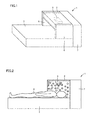
- Fig. 1 is a diagram schematically showing a device 1 for preventing or treating atopic dermatitis representing one preferred example of the present invention
- Fig. 2 is a cross-sectional view thereof in a case where it is applied to a human (patient) 4.
- a side panel 6 is placed at an end portion on each of opposing sides where a head side of human 4 lying on a bed 5 is located, and a cover 2 is placed as being fixed to each side panel 6 such that the cover is located above the head when the human lies on bed 5.
- a vertical distance between cover 2 and bed 5 is set such that a gap sufficient for human 4 lying on bed 5 to be able to turn over is provided.
- a head-side side panel 7 is provided at an end portion in a longitudinal direction on the head side of bed 5 when human 4 lies thereon, so that a space covered with cover 2, side panels 6, and head-side side panel 7 is formed.
- an ion generating element 3 is placed on a space side of cover 2, and by driving this ion generating element 3, the space can be filled with positive ions composed of H + (H 2 O) m (m being any integer) and negative ions O 2 - (H 2 O) n (n being any integer) at high concentration.
- such device 1 can cover a human lying on bed 5 from his/her head portion approximately to a chest portion.
- atopic dermatitis in the head portion, a neck portion, or the like can be prevented or treated.
- Fig. 3 is a diagram schematically showing a device 11 for preventing or treating atopic dermatitis representing another preferred example of the present invention and Fig. 4 is a cross-sectional view thereof.
- Fig. 5 is a diagram schematically showing a case where device 11 is attached to an arm of a human.
- the present invention also provides a device characterized by including a casing provided with a cavity for passage of an arm or a leg of a human therethrough and an ion generating element provided in the casing, for blowing ions into the cavity, the casing having an opening communicating with the cavity at each of opposing ends, and the opening having a sealing member for filling a gap between the arm or the leg of the human and the opening.
- a casing 12 has a substantially cylindrical shape and has an opening 13 at each of opposing ends thereof. Opening 13 is provided with a ring-shaped sealing member 14.
- Sealing member 14 is made of urethane having cushioning properties, which is externally covered with cloth (not shown). Sealing member 14 can be replaced with one having a size optimal to an arm or a leg of a user. It is noted that sealing member 14 does not necessarily have to completely fill a gap, and a slight gap may be acceptable so long as a space between an arm or a leg and the opening is approximately covered.
- casing 12 preferably includes a portion which can be bent (a bendable portion) 15 between openings 13 at the opposing ends.
- Bendable portion 15 is formed, for example, from a bellows pipe made of urethane, and one end of casing 12 can be bent with respect to the other end.
- An operation portion 16 is provided on a surface of casing 12. Operation portion 16 is provided, for example, with a switch 17 for turning ON/OFF power and an LED 18 for checking a power ON/OFF state (for example, which is turned on in a power ON state and turned off in a power OFF state).
- ion generating element 3 is provided in casing 12 so as to be able to emit ions into a cavity in the inside of casing 12.
- a drive circuit for controlling drive of ion generating element 3 is provided in the vicinity of ion generating element 3.
- the drive circuit is connected to operation portion 16 and ion generating element 3, and it is implemented to be able to control drive of ion generating element 3 through operation of switch 17 in operation portion 16.
- Fig. 6 is a diagram schematically showing one example of ion generating element 3 suitably employed in the present invention.
- Ion generating element 3 holds two ion generating portions 21, 22 with a holder, for example, as in the example shown in Fig. 6 .
- a power feed portion for supplying a voltage to ion generating portions 21, 22 is provided in the drive circuit. As the voltage is supplied from the power feed portion to ion generating portions 21, 22, ion generating portions 21, 22 generate ions.
- Ion generating portions 21, 22 have needle-shaped discharge electrodes 2 1 a, 22a and induction electrode rings 21 b, 22b surrounding discharge electrodes 21 a, 22a, respectively. Discharge electrodes 21 a, 22a are arranged in central portions of induction electrode rings 21b, 22b, respectively. As described below, one ion generating portion 21 is configured to generate positive ions and the other ion generating portion 22 is configured to generate negative ions. Polarity of ions generated from ion generating portions 21, 22 may be switched every prescribed time.
- a positive voltage is applied to one ion generating portion 21, so that water molecules in air are electrolyzed in a plasma region resulting from discharge to thereby mainly generate hydrogen ions H + . Then, water molecules in air aggregate around generated hydrogen ions so that positive cluster ions H + (H 2 O) m (m being any integer) are formed.
- a negative voltage is applied to the other ion generating portion 22, so that oxygen molecules in air are electrolyzed in a plasma region resulting from discharge to thereby mainly generate oxygen ions O 2 - . Then, water molecules in air aggregate around generated oxygen ions so that negative cluster ions O 2 - (H 2 O) n (n being any integer) are formed.
- device 11 in the example shown in Figs. 3 to 5 is provided with a small vent 19 connecting the cavity in casing 12 to the outside of casing 12.
- vent 19 in casing 12 moisture in the cavity can escape during a period in which an amount of perspiration is great, such as during summer.
- an arm passes through openings 13 at the opposing ends of casing 12 and bendable portion 15 formed from the bellows pipe is set at a position of an elbow.
- bendable portion 15 formed from the bellows pipe is set at a position of an elbow.
- a user can freely move an arm joint even in such a state that device 11 is attached to his/her arm.
- the bellows pipe can freely extend and contract, attachment to an arm is easy.
- FIG. 5 shows an example of attachment to an arm
- attachment also to a leg is possible.
- such attachment that the bellows pipe is set at a knee joint portion will allow movement of a knee joint with device 11 being attached.
- Ion generation device 1 in the present example can be used for preventing or treating such atopic dermatitis as developing in the inner elbow or behind the knee.
- a narrow shielded space is formed around the arm or the leg.
- positive ions composed of H + (H 2 O) m (m being any integer) and negative ions composed of O 2 - (H 2 O) n (n being any integer) into this narrow shielded space, concentration of the positive ions and concentration of the negative ions become very high in the shielded space. Therefore, by attaching device 11 to an arm or a leg during sleeping or the like, prevention or treatment of atopic dermatitis can effectively be achieved.
- device 11 in the example shown in Figs. 3 to 5 is provided with small vent 19 in casing 12 and thus the cavity and the outside air are not completely shielded from each other. An amount of ions which escape through this vent 19 to the outside air, however, is small, and hence creation of a space filled with positive ions/negative ions at high concentration is not much affected.
- Device 11 may naturally be driven by a battery (not shown) contained in casing 12, so that it can be used also in a daily life in a house or the like.
- hooded stroller 31 for preventing or treating atopic dermatitis.
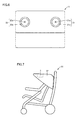
- Fig. 7 is a diagram schematically showing a hooded stroller 31 for preventing or treating atopic dermatitis representing one preferred example of the present invention.
- hooded stroller 31 according to the present invention is a stroller including a hood 32 and ion generating element 3 in the inside of hood 32.
- Hooded stroller 31 can cover a toddler or a child with hood 32 when hood 32 is extended, and it prevents or treats atopic dermatitis by filling hood 32 with positive ions composed of H + (H 2 O) m (m being any integer) and negative ions composed of O 2 - (H 2 O) n (n being any integer) by using ion generating element 3 placed in hood 32 and bringing the positive ions and the negative ions into contact with a skin surface of the toddler or the child in the hooded stroller.
- positive ions composed of H + (H 2 O) m (m being any integer) and negative ions composed of O 2 - (H 2 O) n (n being any integer) by using ion generating element 3 placed in hood 32 and bringing the positive ions and the negative ions into contact with a skin surface of the toddler or the child in the hooded stroller.
- Hooded stroller 31 may incorporate, for example, a chargeable battery as a power supply for driving ion generating element 3.
- a chargeable battery as a power supply for driving ion generating element 3.
- it may be implemented to include a solar cell panel on the outside of hood 32. By doing so, the ion generating element can also be driven without separately placing a power supply.
- NC/Nga mice spontaneously developing atopic dermatitis were used to conduct a test below.
- the NC/Nga mice are species widely recognized as a model animal of atopic dermatitis.
- the symptom is represented by cutaneous inflammation accompanying itch, and it is characterized by noticeable increase in plasma IgE during crisis.
- the present mice develop atopic dermatitis owing to a mite antigen. Since no crisis of atopic dermatitis is seen in mice kept under SPF (Specific Pathogen Free) conditions, an SPF animal was used as a control group.
- SPF Specific Pathogen Free
- mice were grouped such that an average value of weight is substantially the same, and each group was kept in an individual cage. In addition, a tail of a mouse was marked for individual identification in the group. Table 1 shows details of grouping. Table 1 Group Group Name SPF/Conventional The Number of Samples Group 1 Non-Treated Group SPF 6 Group 2 Non-Treated Group Conventional 10 Group 3 Plasma Cluster Installation Group SPF 6 Group 4 Plasma Cluster Installation Group Conventional 10 Group 5 Air Cleaner Installation Group SPF 6 Group 6 Air Cleaner Installation Group Conventional 10
- Group 1 to group 6 grouping into group 1 to group 6 was made.
- Group 1 and group 2 each contained 6 SPF mice, and group 2, group 4, and group 6 contained 10 Conventional (normally kept) mice.
- Group 1 and group 2 were defined as no-installation groups for which neither of an air cleaner and an ion generator was installed.
- Group 3 and group 4 were defined as PCI (plasma cluster ion) installation groups for which an ion generator for generating positive ions composed of H + (H 2 O) m (m being any integer) and negative ions composed of O 2 - (H 2 O) n (n being any integer) was installed.
- Group 5 and group 6 were defined as air cleaner installation groups for which an air cleaner was installed.
- mice in each of these grouped groups were transferred to a rearing cage placed in an individual testing room with 8 tatami mats (approximately 13.26 m 2 ) and kept for 3 weeks.
- a temperature in the testing room was kept at 23 ⁇ 1°C and a humidity was kept at 50 ⁇ 10%, and mice were kept under such conditions as continuous ventilation and bright and dark cycles of 12 hours.
- Drinking water was automatically fed and feed ingestion was automatic (ordinary pellets for rodents from Oriental Yeast Co., Ltd.).
- ion generating elements 53 (SHARP IG-B200) were installed in a testing room 51 and a plurality of ion generating elements were separately installed in a rearing cage 52, so that concentration of positive ions and concentration of negative ions in rearing cage 52 were adjusted to 200 thousand/cm 3 (ion concentration was measured, with an inlet port of an ion counter being directed to a feeding portion of the cage and with an appropriate range being set).
- one air cleaner 54 (SHARP FU-Y53CX) was installed in testing room 51 and mice were kept in rearing cage 52 while air cleaner 54 was being operated. It is noted that the air cleaner was set not to generate ions.
- the air cleaner is provided with a HEPA filter and it can trap and remove an antigenic substance.
- mice a cutaneous symptom of the mice was observed when the test was started (day 0), and on day 7, day 14, and day 21.
- Fig. 9 shows a photograph of a cutaneous symptom of the mice in group 1, group 3, and group 5.
- Fig. 10 shows a photograph of a cutaneous symptom of the mice in group 2, group 4, and group 6.
- Fig. 11 shows an atopy score of the mice again in group 2, group 4, and group 6.
- cutaneous reaction was found in the mice in group 1, group 3, and group 5 kept under the SPF conditions.
- Fig. 10 cutaneous reaction was found in the Conventional mice.
- the no-installation group exhibited the highest atopy score.
- the PCI installation group and the air cleaner installation group exhibited a significantly decreased atopy score as compared with the no-installation group.
- the PCI installation group exhibited the atopy score significantly lower than that of the air cleaner installation group.
- Figs. 12 , 13 , and 14 show the results, respectively.
- the content of IgE in plasma exhibited increase, however, no great difference was seen among the groups.
- the content of IFN- ⁇ and IL-10 in plasma exhibited increase, and in the PCI installation group and the air cleaner installation group, the content of IL-10 significantly decreased.
- the PCI installation group exhibited a value significantly lower than that of the air cleaner installation group.
- the content of IFN- ⁇ exhibited a significantly low value only in the PCI installation group.
- IgE, IFN- ⁇ , and IL-10 in plasma and the atopy score were each shown as an average value ⁇ a standard deviation.
- a test of significant difference was conducted in a t-test among the no-installation group, the PCI installation group, and the air cleaner installation group. It is noted that the test employed statistical analysis software (ANOVA) and a case where a level of significance was less than 5% was defined as significantly different.
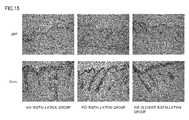
- Fig. 15 shows the results.
- significant thickening of a skin in particular, epidermis
- edema and infiltration of inflammatory cells were observed.
- thickening of epidermis was lighter in the PCI installation group than in the air cleaner installation group, and infiltration of inflammatory cells was also less.
- mice in the PCI installation group in which the ion generator for generating positive ions composed of H + (H 2 O) m , (m being any integer) and negative ions composed of O 2 - (H 2 O) n (n being any integer) was installed were found to achieve effectively suppressed crisis of atopic dermatitis as compared with the mice in the air cleaner installation group where only the air cleaner not generating ions was installed.
- the PCI installation group and the air cleaner installation group can deactivate and remove an antigenic substance in air, there is a significant difference between the PCI installation group and the air cleaner installation group.
- NC/Nga mice spontaneously developing atopic dermatitis were used, the mice were grouped into three based on a degree of cutaneous reaction in order to observe a treatment effect, each group was further grouped into two (a PCI installation group, a no-installation group) based on presence/absence of PCI, and a test was conducted in 6 groups in total.
- Figs. 16 and 17 show graphs of results in Experimental Example 2.
- Fig. 16 and 17 show graphs of results in Experimental Example 2.
- FIG. 16 shows an average of a survival rate in each of the PCI installation group and the no-installation group and Fig. 17 shows a survival rate in each group resulting from grouping based on a degree of cutaneous reaction in the PCI installation group and the no-installation group. It is noted that, in Figs. 16 and 17 , the ordinate represents a survival rate (%) and the abscissa represents weeks. In addition, Figs. 18 and 19 show graphs of results in Experimental Example 2. Fig. 18 shows a total average of an atopy score for each initial atopic symptom in the PCI installation group and the no-installation group and Fig. 19 shows an atopy score for each initial atopic symptom in the PCI installation group and the no-installation group.
- a numeric value in parentheses (2, 0.6, 0.5, or 0) in the PCI installation group and the no-installation group shown in Figs. 17 and 19 show the atopy score above at the time point of start of the experiment.
- the atopy scores show as an initial atopic symptom of the mice, none with 0, slight with 0.5 (the no-installation group) or 0.6 (the PCI installation group), and severe with 2 (the PCI installation group, the no-installation group), respectively.
- mice in the PCI installation group to which plasma cluster ions (positive ions composed of H + (H 2 O) m (m being any integer) and negative ions composed of O 2 - (H 2 O) n (n being any integer)) were applied exhibited the survival rate of 100% regardless of a degree of atopy-like cutaneous reaction.
- plasma cluster ions positive ions composed of H + (H 2 O) m (m being any integer) and negative ions composed of O 2 - (H 2 O) n (n being any integer)
- mice could be treated in a space filled with plasma cluster ions (positive ions composed of H + (H 2 O) m (m being any integer) and negative ions composed of O 2 - (H 2 O) n (n being any integer)).
- 1,11 device for preventing or treating atopic dermatitis 2 cover; 3 ion generating element; 4 human; 5 bed; 6 side panel; 7 head-side side panel; 12 casing; 13 opening; 14 sealing member; 15 bendable portion; 16 operation portion; 17 switch; 18 LED; 19 vent; 21, 22 ion generating portion; 21 a, 22a discharge electrode; 21 b, 22b induction electrode ring; 31 hooded stroller; and 32 hood.
Landscapes
- Health & Medical Sciences (AREA)
- Engineering & Computer Science (AREA)
- General Health & Medical Sciences (AREA)
- Veterinary Medicine (AREA)
- Public Health (AREA)
- Life Sciences & Earth Sciences (AREA)
- Animal Behavior & Ethology (AREA)
- Biomedical Technology (AREA)
- Nuclear Medicine, Radiotherapy & Molecular Imaging (AREA)
- Radiology & Medical Imaging (AREA)
- Physics & Mathematics (AREA)
- Plasma & Fusion (AREA)
- Epidemiology (AREA)
- Pathology (AREA)
- Pharmaceuticals Containing Other Organic And Inorganic Compounds (AREA)
- Electrotherapy Devices (AREA)
Abstract
Description
- The present invention relates to a method for preventing or treating crisis of atopic dermatitis and a device for preventing or treating crisis of atopic dermatitis.
- The number of patients suffering from chronic atopic dermatitis has recently abruptly increased. A symptom of atopic dermatitis is represented by eczema with strong itching. At present, a method for treating atopic dermatitis is mostly represented by use of such a drug as external steroid or antihistamine. Such treatment temporarily ameliorates the symptom, however, there are many cases that, as soon as the treatment is stopped, the symptom becomes worse than before. Therefore, the drug should continually be administered, and in addition, in the case of the external steroid, administration per se for a long term has been difficult because of its side effects from prolonged administration.
- Since atopic dermatitis is one type of allergic dermatitis, removal of an antigenic substance in an indoor space is also considered as one of methods for preventing or treating atopic dermatitis. Japanese Patent Laying-Open No.
2009-028681 2004-268014 - Atopic dermatitis, however, is also caused by a factor other than an environmental factor, such as a genetic factor. Therefore, though there may be a case that a symptom of atopic dermatitis is effectively mitigated by removing or deactivating an antigenic substance in an indoor space, such an effect is not absolute.
-
- PTL 1: Japanese Patent Laying-Open No.
2009-028681 - PTL 2: Japanese Patent Laying-Open No.
2004-268014 - PTL 3: Japanese Patent Laying-Open No.
2006-075358 - As described above, in the method for treating atopic dermatitis by using such a drug as external steroid or antihistamine, the drug should continually be administered. In addition, since the external steroid has a side effect caused by prolonged administration, administration per se for a long term is difficult. The antihistamine also causes such a side effect as arrhythmia, depending on a patient.
- The present invention was made to solve the problems above, and an object thereof is to provide a method and a device for preventing or treating crisis of atopic dermatitis without using a drug.
- A method according to the present invention is characterized by preventing or treating atopic dermatitis of a patient by covering the patient itself or a patient's area affected by atopic dermatitis, filling a covered space with positive ions composed of H+(H2O)m (m being any integer) and negative ions composed of O2 -(H2O)n (n being any integer) which are generated as a result of discharge in an atmosphere, and bringing the positive ions and the negative ions into contact with a skin surface of the patient.
- In the method according to the present invention, preferably, respective concentrations of the positive ions and the negative ions generated as a result of discharge are not less than 200000/cm3.
- A medical device according to the present invention is characterized by preventing or treating atopic dermatitis by covering a patient itself or an affected area, filling a covered space with positive ions composed of H+(H2O)m (m being any integer) and negative ions composed of O2 -(H2O)n (n being any integer) which are generated as a result of discharge in an atmosphere, and bringing the positive ions and the negative ions into contact with a skin surface.
- In the medical device according to the present invention, preferably, respective concentrations of the positive ions and the negative ions generated as a result of discharge are not less than 200000/cm3.
- In the medical device according to the present invention, preferably, respective concentrations of the positive ions and the negative ions generated as a result of discharge are not less than 200000/cm3.
- The medical device according to the present invention preferably includes a casing provided with a cavity for passage of an arm or a leg of a human therethrough and an ion generating element provided in the casing, for blowing ions into the cavity, the casing has an opening communicating with the cavity at each of opposing ends, and the opening has a sealing member for filling a gap between the arm or the leg of the human and the opening.
- In the medical device according to the present invention, preferably, the casing has a bendable portion between the openings at the respective opposing ends.
- In the method and the medical device according to the present invention described above, the patient may be a non-human mammal or a human.
- The present invention also provides a hooded stroller including a hood and an ion generating element within the hood, and the hooded stroller serves for preventing or treating atopic dermatitis by filling a space covered with the hood with positive ions composed of H+(H2O)m (m being any integer) and negative ions composed of O2 -(H2O)n (n being any integer) which are generated by the ion generating element and bringing the positive ions and the negative ions into contact with a skin surface of a baby or a toddler in the stroller.
- According to the present invention, crisis of atopic dermatitis can be prevented or treated without using a drug.
-
-
Fig. 1 is a diagram schematically showing adevice 1 for preventing or treating atopic dermatitis representing one preferred example of the present invention. -
Fig. 2 is a cross-sectional view in a case wheredevice 1 shown inFig. 1 is applied to a human. -
Fig. 3 is a diagram schematically showing adevice 11 for preventing or treating atopic dermatitis representing another preferred example of the present invention. -
Fig. 4 is a cross-sectional view ofdevice 11 shown inFig. 3 . -
Fig. 5 is a diagram schematically showing a case wheredevice 11 shown inFig. 3 is attached to an arm of a human. -
Fig. 6 is a diagram schematically showing one example of an ion generating element suitably employed in the present invention. -
Fig. 7 is a diagram schematically showing ahooded stroller 31 for preventing or treating atopic dermatitis representing one preferred example of the present invention. -
Fig. 8 is a diagram schematically showing arrangement of a rearing cage placed in a testing room in Experimental Example 1, with (a) showing a PCI installation group and (b) showing an air cleaner installation group. -
Fig. 9 shows a photograph of a cutaneous symptom of mice ingroup 1,group 3, andgroup 5 in Experimental Example 1. -
Fig. 10 shows a photograph of a cutaneous symptom of mice ingroup 2,group 4, andgroup 6 in Experimental Example 1. -
Fig. 11 shows a graph of an atopy score of the mice ingroup 2,group 4, andgroup 6. -
Fig. 12 shows a graph of results of analysis with ELISA, of IgE in plasma in each group after the test ended in Experimental Example 1. -
Fig. 13 shows a graph of results of analysis with ELISA, of IFN-γ in plasma in each group after the test ended in Experimental Example 1. -
Fig. 14 shows a graph of results of analysis with ELISA, of IL-10 in plasma in each group after the test ended in Experimental Example 1. -
Fig. 15 shows a photograph of inflammatory cells in each group at the time when the test ended in Experimental Example 1. -
Fig. 16 shows a graph of results in Experimental Example 2, showing an average of a survival rate in each of a PCI installation group and a no-installation group. -
Fig. 17 shows a graph of results in Experimental Example 2, showing a survival rate in each group resulting from grouping based on a degree of cutaneous reaction in the PCI installation group and the no-installation group. -
Fig. 18 shows a graph of results in Experimental Example 2, showing a total average of the atopy score for each initial atopic symptom in the PCI installation group and the no-installation group. -
Fig. 19 shows a graph of results in Experimental Example 2, showing an atopy score for each initial atopic symptom in the PCI installation group and the no-installation group. - The method for preventing or treating atopic dermatitis according to the present invention prevents or treats atopic dermatitis by covering a patient itself or a patient's area affected by atopic dermatitis, filling a covered space with positive ions composed of H+(H2O)m (m being any integer) and negative ions composed of O2 -(H2O)n (n being any integer) which are generated as a result of discharge in an atmosphere, and bringing the positive ions and the negative ions into contact with a skin surface of the patient.
- Here, Japanese Patent Laying-Open No.
2006-075358 PTL 3 sterilizes microorganisms or viruses attached to a skin or to a mucosal area, and does not directly act on an animal's skin. - In contrast, the method according to the present invention does not prevent or treat atopic dermatitis by sterilizing microorganisms or viruses attached to a skin but prevents or treats atopic dermatitis by causing high-concentration positive ions and negative ions to directly act on the skin. Thus, the method according to the present invention is completely different in technical concept from the method disclosed in
PTL 3. - A patient of interest of treatment or prevention in the method according to the present invention may be any of a human and a mammal other than human (a non-human mammal). Examples of the non-human mammals include dogs, bovine, cats, pigs, monkeys, rabbits, and rats. In addition, examples of areas affected by atopic dermatitis include skins of a hand and a leg (limbs), a body, and a face, and a scalp.
- Positive ions composed H+(H2O)m (m being any integer) and negative ions O2 -(H2O)n (n being any integer) can be generated, for example, in such a manner that molecules of oxygen (O2), water (H2O), and the like in air receive energy through a discharge phenomenon at an ion generating element, and usually, positive ions and negative ions can simultaneously be generated and emitted into air by alternately applying positive and negative voltages. The method for generating positive ions and negative ions employed in the present invention, however, is not limited thereto, and only any of a positive voltage and a negative voltage can be applied to generate only any of positive ions and negative ions, and thereafter a reverse voltage can be applied to generate ions charged oppositely to already emitted ions. It is noted that an applied voltage necessary for generating these positive ions and negative ions is preferably in a range from 1.1 kV to 2.0 kV, although depending on a structure of an electrode.
- With regard to composition of positive ions and negative ions generated through the discharge phenomenon with oxygen molecules and/or water molecules present on a surface of a discharge element serving as source materials, mainly as positive ions, water molecules in air are electrolytically dissociated through plasma discharge to generate hydrogen ions H+, which cluster together with water molecules in air owing to solvation energy to thereby form H+(H2O)m (m being any integer). Meanwhile, with regard to negative ions, oxygen molecules or water molecules in air are electrolytically dissociated through plasma discharge to generate oxygen ions O2 -, which cluster together with water molecules in air owing to solvation energy to thereby form O2 -(H2O)n (n being any integer). In addition, as a result of reaction between both of them, more active active species such as hydrogen peroxide H2O2, hydrogen dioxide O2H, or hydroxyl radicals •OH can readily be generated.
- In the present invention, preferably, respective concentrations of the positive ions and the negative ions generated as a result of discharge are not less than 200000/cm3. This is because, in the case where respective concentrations of the positive ions and the negative ions are less than 200000/cm3, an effect of prevention and treatment of atopy tends to be low. It is noted that, with regard to definition of the number of ions, small ions were counted and critical mobility in air was assumed as 1 cm2/V•second.
- Whether or not air contains such positive ions and negative ions can be determined by examining gas composition through gas mass spectroscopy, a gas concentration test, a color change test, an odor test, a light emission test, a generated sound test, or the like. Gas mass spectroscopy can make use of a conventionally known mass spectroscope, and in a gas concentration test, measurement can be conducted by making use of gas chromatography or an ion counter. In a color change test or an odor test, a sensory test such as visual inspection or olfactometry can be conducted, and in addition, a color difference meter, an odor sensor, or the like can also be made use of. Moreover, in a light emission test or a generated sound test, a sensory test such as visual inspection or an auditory test can again be conducted, and in addition, an absorptiometer, a spectroscope, an optical sensor, an illuminometer, a microphone, or the like can be made use of.
- The present invention also provides a medical device for preventing or treating atopic dermatitis by covering a patient itself or an affected area, filling a covered space with positive ions composed of H+(H2O)m (m being any integer) and negative ions composed of O2 -(H2O)n (n being any integer) which are generated as a result of discharge in an atmosphere, and bringing the positive ions and the negative ions into contact with a skin surface of the patient. Details of the device according to the present invention are also the same as described above in connection with the method according to the present invention, and respective concentrations of the positive ions and the negative ions generated as a result of discharge are preferably not less than 200000/cm3. As in the method according to the present invention described above, a patient of interest of prevention or treatment by the medical device according to the present invention may be any of a human and a non-human mammal.
-
Fig. 1 is a diagram schematically showing adevice 1 for preventing or treating atopic dermatitis representing one preferred example of the present invention andFig. 2 is a cross-sectional view thereof in a case where it is applied to a human (patient) 4. Indevice 1 in the example shown inFigs. 1 and 2 , aside panel 6 is placed at an end portion on each of opposing sides where a head side ofhuman 4 lying on abed 5 is located, and acover 2 is placed as being fixed to eachside panel 6 such that the cover is located above the head when the human lies onbed 5. A vertical distance betweencover 2 andbed 5 is set such that a gap sufficient forhuman 4 lying onbed 5 to be able to turn over is provided. In addition, a head-side side panel 7 is provided at an end portion in a longitudinal direction on the head side ofbed 5 when human 4 lies thereon, so that a space covered withcover 2,side panels 6, and head-side side panel 7 is formed. - In the example shown in
Figs. 1 and 2 , anion generating element 3 is placed on a space side ofcover 2, and by driving thision generating element 3, the space can be filled with positive ions composed of H+(H2O)m (m being any integer) and negative ions O2 -(H2O)n (n being any integer) at high concentration. In the example shown inFig. 2 ,such device 1 can cover a human lying onbed 5 from his/her head portion approximately to a chest portion. Thus, by usingdevice 1 during sleeping, atopic dermatitis in the head portion, a neck portion, or the like can be prevented or treated. -
Fig. 3 is a diagram schematically showing adevice 11 for preventing or treating atopic dermatitis representing another preferred example of the present invention andFig. 4 is a cross-sectional view thereof. In addition,Fig. 5 is a diagram schematically showing a case wheredevice 11 is attached to an arm of a human. The present invention also provides a device characterized by including a casing provided with a cavity for passage of an arm or a leg of a human therethrough and an ion generating element provided in the casing, for blowing ions into the cavity, the casing having an opening communicating with the cavity at each of opposing ends, and the opening having a sealing member for filling a gap between the arm or the leg of the human and the opening. - In the example shown in
Figs. 3 to 5 , acasing 12 has a substantially cylindrical shape and has anopening 13 at each of opposing ends thereof.Opening 13 is provided with a ring-shaped sealingmember 14. Sealingmember 14 is made of urethane having cushioning properties, which is externally covered with cloth (not shown). Sealingmember 14 can be replaced with one having a size optimal to an arm or a leg of a user. It is noted that sealingmember 14 does not necessarily have to completely fill a gap, and a slight gap may be acceptable so long as a space between an arm or a leg and the opening is approximately covered. - As in the example shown in
Figs. 3 to 5 , casing 12 preferably includes a portion which can be bent (a bendable portion) 15 betweenopenings 13 at the opposing ends.Bendable portion 15 is formed, for example, from a bellows pipe made of urethane, and one end of casing 12 can be bent with respect to the other end. Anoperation portion 16 is provided on a surface ofcasing 12.Operation portion 16 is provided, for example, with aswitch 17 for turning ON/OFF power and anLED 18 for checking a power ON/OFF state (for example, which is turned on in a power ON state and turned off in a power OFF state). - In addition,
ion generating element 3 is provided incasing 12 so as to be able to emit ions into a cavity in the inside ofcasing 12. A drive circuit for controlling drive ofion generating element 3 is provided in the vicinity ofion generating element 3. The drive circuit is connected tooperation portion 16 andion generating element 3, and it is implemented to be able to control drive ofion generating element 3 through operation ofswitch 17 inoperation portion 16. - Here,
Fig. 6 is a diagram schematically showing one example ofion generating element 3 suitably employed in the present invention.Ion generating element 3 holds twoion generating portions Fig. 6 . A power feed portion for supplying a voltage toion generating portions ion generating portions ion generating portions -
Ion generating portions discharge electrodes 2 1 a, 22a and induction electrode rings 21 b, 22b surroundingdischarge electrodes Discharge electrodes ion generating portion 21 is configured to generate positive ions and the otherion generating portion 22 is configured to generate negative ions. Polarity of ions generated fromion generating portions - A positive voltage is applied to one
ion generating portion 21, so that water molecules in air are electrolyzed in a plasma region resulting from discharge to thereby mainly generate hydrogen ions H+. Then, water molecules in air aggregate around generated hydrogen ions so that positive cluster ions H+(H2O)m (m being any integer) are formed. A negative voltage is applied to the otherion generating portion 22, so that oxygen molecules in air are electrolyzed in a plasma region resulting from discharge to thereby mainly generate oxygen ions O2 -. Then, water molecules in air aggregate around generated oxygen ions so that negative cluster ions O2 -(H2O)n (n being any integer) are formed. - In addition,
device 11 in the example shown inFigs. 3 to 5 is provided with asmall vent 19 connecting the cavity in casing 12 to the outside ofcasing 12. By providingvent 19 incasing 12, moisture in the cavity can escape during a period in which an amount of perspiration is great, such as during summer. - In using
device 11, as shown inFig. 5 , an arm passes throughopenings 13 at the opposing ends ofcasing 12 andbendable portion 15 formed from the bellows pipe is set at a position of an elbow. As the bellows pipe ofcasing 12 is bent, a user can freely move an arm joint even in such a state thatdevice 11 is attached to his/her arm. In addition, since the bellows pipe can freely extend and contract, attachment to an arm is easy. - Though
Fig. 5 shows an example of attachment to an arm, attachment also to a leg is possible. In this case, such attachment that the bellows pipe is set at a knee joint portion will allow movement of a knee joint withdevice 11 being attached. - In general, in many cases, atopic dermatitis develops in an inner elbow or behind a knee.
Ion generation device 1 in the present example can be used for preventing or treating such atopic dermatitis as developing in the inner elbow or behind the knee. - As an arm or a leg passes through the cavity in
device 11, a narrow shielded space is formed around the arm or the leg. By emitting positive ions composed of H+(H2O)m (m being any integer) and negative ions composed of O2 -(H2O)n (n being any integer) into this narrow shielded space, concentration of the positive ions and concentration of the negative ions become very high in the shielded space. Therefore, by attachingdevice 11 to an arm or a leg during sleeping or the like, prevention or treatment of atopic dermatitis can effectively be achieved. - It is noted that
device 11 in the example shown inFigs. 3 to 5 is provided withsmall vent 19 incasing 12 and thus the cavity and the outside air are not completely shielded from each other. An amount of ions which escape through thisvent 19 to the outside air, however, is small, and hence creation of a space filled with positive ions/negative ions at high concentration is not much affected. - As
switch 17 is turned ON,LED 18 is turned on,ion generating element 3 is driven by the drive circuit, and positive ions and negative ions are emitted.Device 11 may naturally be driven by a battery (not shown) contained incasing 12, so that it can be used also in a daily life in a house or the like. - The present invention also provides a hooded stroller for preventing or treating atopic dermatitis.
Fig. 7 is a diagram schematically showing ahooded stroller 31 for preventing or treating atopic dermatitis representing one preferred example of the present invention. As in the example shown inFig. 7 ,hooded stroller 31 according to the present invention is a stroller including ahood 32 andion generating element 3 in the inside ofhood 32.Hooded stroller 31 can cover a toddler or a child withhood 32 whenhood 32 is extended, and it prevents or treats atopic dermatitis by fillinghood 32 with positive ions composed of H+(H2O)m (m being any integer) and negative ions composed of O2 -(H2O)n (n being any integer) by usingion generating element 3 placed inhood 32 and bringing the positive ions and the negative ions into contact with a skin surface of the toddler or the child in the hooded stroller. -
Hooded stroller 31 may incorporate, for example, a chargeable battery as a power supply for drivingion generating element 3. Alternatively, it may be implemented to include a solar cell panel on the outside ofhood 32. By doing so, the ion generating element can also be driven without separately placing a power supply. - Though the present invention will be described below in further detail with reference to experimental examples, the present invention is not limited thereto.
- NC/Nga mice spontaneously developing atopic dermatitis were used to conduct a test below. The NC/Nga mice are species widely recognized as a model animal of atopic dermatitis. The symptom is represented by cutaneous inflammation accompanying itch, and it is characterized by noticeable increase in plasma IgE during crisis. In addition, the present mice develop atopic dermatitis owing to a mite antigen. Since no crisis of atopic dermatitis is seen in mice kept under SPF (Specific Pathogen Free) conditions, an SPF animal was used as a control group.
- These mice were grouped such that an average value of weight is substantially the same, and each group was kept in an individual cage. In addition, a tail of a mouse was marked for individual identification in the group. Table 1 shows details of grouping.
Table 1 Group Group Name SPF/Conventional The Number of Samples Group 1 Non-Treated Group SPF 6 Group 2Non-Treated Group Conventional 10 Group 3Plasma Cluster Installation Group SPF 6 Group 4Plasma Cluster Installation Group Conventional 10 Group 5Air Cleaner Installation Group SPF 6 Group 6Air Cleaner Installation Group Conventional 10 - As shown in Table 1, grouping into
group 1 togroup 6 was made.Group 1,group 3, andgroup 5 each contained 6 SPF mice, andgroup 2,group 4, andgroup 6 contained 10 Conventional (normally kept) mice.Group 1 andgroup 2 were defined as no-installation groups for which neither of an air cleaner and an ion generator was installed.Group 3 andgroup 4 were defined as PCI (plasma cluster ion) installation groups for which an ion generator for generating positive ions composed of H+(H2O)m (m being any integer) and negative ions composed of O2 -(H2O)n (n being any integer) was installed.Group 5 andgroup 6 were defined as air cleaner installation groups for which an air cleaner was installed. - Mice in each of these grouped groups were transferred to a rearing cage placed in an individual testing room with 8 tatami mats (approximately 13.26 m2) and kept for 3 weeks. A temperature in the testing room was kept at 23±1°C and a humidity was kept at 50±10%, and mice were kept under such conditions as continuous ventilation and bright and dark cycles of 12 hours. Drinking water was automatically fed and feed ingestion was automatic (ordinary pellets for rodents from Oriental Yeast Co., Ltd.).
- For the PCI installation group, as shown in
Fig. 8 (a) , three ion generating elements 53 (SHARP IG-B200) were installed in atesting room 51 and a plurality of ion generating elements were separately installed in a rearingcage 52, so that concentration of positive ions and concentration of negative ions in rearingcage 52 were adjusted to 200 thousand/cm3 (ion concentration was measured, with an inlet port of an ion counter being directed to a feeding portion of the cage and with an appropriate range being set). - For the air cleaner installation group, as shown in
Fig. 8 (b) , one air cleaner 54 (SHARP FU-Y53CX) was installed intesting room 51 and mice were kept in rearingcage 52 whileair cleaner 54 was being operated. It is noted that the air cleaner was set not to generate ions. The air cleaner is provided with a HEPA filter and it can trap and remove an antigenic substance. - In each group, a cutaneous symptom of the mice was observed when the test was started (day 0), and on
day 7,day 14, andday 21. The cutaneous symptom was determined by photographing and an atopy score (a degree of edema and erythema: 0=None; 1=Slight; 2=Moderate; 3=Severe). -
Fig. 9 shows a photograph of a cutaneous symptom of the mice ingroup 1,group 3, andgroup 5. In addition,Fig. 10 shows a photograph of a cutaneous symptom of the mice ingroup 2,group 4, andgroup 6.Fig. 11 shows an atopy score of the mice again ingroup 2,group 4, andgroup 6. - As shown in
Fig. 9 , no cutaneous reaction was found in the mice ingroup 1,group 3, andgroup 5 kept under the SPF conditions. On the other hand, as shown inFig. 10 , cutaneous reaction was found in the Conventional mice. Among them, the no-installation group exhibited the highest atopy score. The PCI installation group and the air cleaner installation group exhibited a significantly decreased atopy score as compared with the no-installation group. In addition, in comparison between the PCI installation group and the air cleaner installation group, the PCI installation group exhibited the atopy score significantly lower than that of the air cleaner installation group. - In addition, in each group, blood was taken at the time when the test ended (day 21) and plasma was separated. Thereafter, IgE, IFN-γ (interferon-gamma), and IL-10 in plasma were measured with ELISA.
Figs. 12 ,13 , and14 show the results, respectively. - In the Conventional mice, the content of IgE in plasma exhibited increase, however, no great difference was seen among the groups. In the Conventional mice, the content of IFN-γ and IL-10 in plasma exhibited increase, and in the PCI installation group and the air cleaner installation group, the content of IL-10 significantly decreased. Furthermore, in comparison between the PCI installation group and the air cleaner installation group, the PCI installation group exhibited a value significantly lower than that of the air cleaner installation group. The content of IFN-γ exhibited a significantly low value only in the PCI installation group.
- It is noted that IgE, IFN-γ, and IL-10 in plasma and the atopy score were each shown as an average value ± a standard deviation. A test of significant difference was conducted in a t-test among the no-installation group, the PCI installation group, and the air cleaner installation group. It is noted that the test employed statistical analysis software (ANOVA) and a case where a level of significance was less than 5% was defined as significantly different.
- A dorsoanterior portion was taken when the test ended (day 21), HE stain was conducted, and a microscope was used to observe inflammatory cells.
Fig. 15 shows the results. Onday 21, significant thickening of a skin (in particular, epidermis) was observed in the Conventional no-installation group. In addition, edema and infiltration of inflammatory cells were observed. In the PCI installation group and the air cleaner installation group, as compared with the no-installation group, decrease in thickening of epidermis and infiltration of inflammatory cells were seen. In comparison between the PCI installation group and the air cleaner installation group, thickening of the epidermis was lighter in the PCI installation group than in the air cleaner installation group, and infiltration of inflammatory cells was also less. - From the foregoing, the mice in the PCI installation group in which the ion generator for generating positive ions composed of H+(H2O)m, (m being any integer) and negative ions composed of O2 -(H2O)n (n being any integer) was installed were found to achieve effectively suppressed crisis of atopic dermatitis as compared with the mice in the air cleaner installation group where only the air cleaner not generating ions was installed. In spite of the fact that the PCI installation group and the air cleaner installation group can deactivate and remove an antigenic substance in air, there is a significant difference between the PCI installation group and the air cleaner installation group. Thus, it can be seen that positive ions composed of H+(H2O)m (m being any integer) and negative ions composed of O2 -(H2O)n (n being any integer) directly act on a living body itself and can suppress crisis of atopic dermatitis.
- NC/Nga mice spontaneously developing atopic dermatitis were used, the mice were grouped into three based on a degree of cutaneous reaction in order to observe a treatment effect, each group was further grouped into two (a PCI installation group, a no-installation group) based on presence/absence of PCI, and a test was conducted in 6 groups in total. A degree of reaction was determined based on an atopy score (a degree of edema and erythema: 0=None; 1=Slight; 2=Moderate; 3=Severe) and an average was calculated.
Figs. 16 and 17 show graphs of results in Experimental Example 2.Fig. 16 shows an average of a survival rate in each of the PCI installation group and the no-installation group andFig. 17 shows a survival rate in each group resulting from grouping based on a degree of cutaneous reaction in the PCI installation group and the no-installation group. It is noted that, inFigs. 16 and 17 , the ordinate represents a survival rate (%) and the abscissa represents weeks. In addition,Figs. 18 and 19 show graphs of results in Experimental Example 2.Fig. 18 shows a total average of an atopy score for each initial atopic symptom in the PCI installation group and the no-installation group andFig. 19 shows an atopy score for each initial atopic symptom in the PCI installation group and the no-installation group. It is noted that a numeric value in parentheses (2, 0.6, 0.5, or 0) in the PCI installation group and the no-installation group shown inFigs. 17 and19 show the atopy score above at the time point of start of the experiment. The atopy scores show as an initial atopic symptom of the mice, none with 0, slight with 0.5 (the no-installation group) or 0.6 (the PCI installation group), and severe with 2 (the PCI installation group, the no-installation group), respectively. - As shown in
Fig. 17 , the mice in the PCI installation group to which plasma cluster ions (positive ions composed of H+(H2O)m (m being any integer) and negative ions composed of O2 -(H2O)n (n being any integer)) were applied exhibited the survival rate of 100% regardless of a degree of atopy-like cutaneous reaction. In contrast, in the no-installation group, such a result was obtained that, after the 19th week since start of the test, all the mice died in the following 3 weeks. - In addition, as shown in
Fig. 19 , in the case where the initial atopic symptom was 2 indicating severe, even the PCI installation group to which the plasma cluster ions were applied exhibited 3 which is the highest value for the atopy score in the 15th week since start of the test. On the other hand, in the case where the initial atopic symptom was 0.6 indicating slight, in the PCI installation group to which the plasma cluster ions were applied, the atopy score was slightly higher than 1 from the 5th week to the 13th week since start of the test, whereas a tendency of gradual amelioration from the 17th week is seen. Furthermore, in the PCI installation group where the plasma cluster ions were applied even to asymptomatic mice, it can be seen that the atopy score temporarily increases, however, a tendency of amelioration is observed. - From Experimental Example 2 above, it was found that atopic dermatitis of mice could be treated in a space filled with plasma cluster ions (positive ions composed of H+(H2O)m (m being any integer) and negative ions composed of O2 -(H2O)n (n being any integer)).
- It should be understood that the embodiments and the examples disclosed herein are illustrative and non-restrictive in every respect. The scope of the present invention is defined by the terms of the claims, rather than the description above, and is intended to include any modifications within the scope and meaning equivalent to the terms of the claims.
- 1,11 device for preventing or treating atopic dermatitis; 2 cover; 3 ion generating element; 4 human; 5 bed; 6 side panel; 7 head-side side panel; 12 casing; 13 opening; 14 sealing member; 15 bendable portion; 16 operation portion; 17 switch; 18 LED; 19 vent; 21, 22 ion generating portion; 21 a, 22a discharge electrode; 21 b, 22b induction electrode ring; 31 hooded stroller; and 32 hood.
Claims (11)
- A method for preventing or treating atopic dermatitis of a patient, by covering the patient itself or a patient's area affected by atopic dermatitis, filling a covered space with positive ions composed of H+(H2O)m (m being any integer) and negative ions composed of O2 -(H2O)n (n being any integer) which are generated as a result of discharge in an atmosphere, and bringing said positive ions and said negative ions into contact with a skin surface of the patient.
- The method according to claim 1, wherein
the patient is a non-human mammal. - The method according to claim 1, wherein
the patient is a human. - The method according to claim 1, wherein
respective concentrations of said positive ions and said negative ions generated as a result of discharge are not less than 200000/cm3. - A medical device for preventing or treating atopic dermatitis, by covering a patient itself or an affected area, filling a covered space with positive ions composed of H+(H2O)m (m being any integer) and negative ions composed of O2(H2O)n (n being any integer) which are generated as a result of discharge in an atmosphere, and bringing said positive ions and said negative ions into contact with a skin surface of the patient.
- The device according to claim 5, wherein
the patient is a non-human mammal. - The device according to claim 5, wherein
the patient is a human. - The device according to claim 5, wherein
respective concentrations of said positive ions and said negative ions generated as a result of discharge are not less than 200000/cm3. - The device according to claim 7, comprising:a casing provided with a cavity for passage of an arm or a leg of a human therethrough; andan ion generating element provided in the casing, for blowing ions into said cavity, whereinsaid casing has an opening communicating with said cavity at each of opposing ends, and said opening has a sealing member for filling a gap between the arm or the leg of the human and said opening.
- The device according to claim 9, wherein
said casing has a bendable portion between the openings at the respective opposing ends. - A hooded stroller, comprising:a hood; andan ion generating element within said hood,the hooded stroller serving for preventing or treating atopic dermatitis by filling a space covered with said hood with positive ions composed of H+(H2O)m (m being any integer) and negative ions composed of O2 -(H2O)n (n being any integer) which are generated by said ion generating element and bringing said positive ions and said negative ions into contact with a skin surface of a baby or a toddler in the stroller.
Applications Claiming Priority (3)
| Application Number | Priority Date | Filing Date | Title |
|---|---|---|---|
| JP2010198998 | 2010-09-06 | ||
| JP2011152728A JP5265737B2 (en) | 2010-09-06 | 2011-07-11 | Method and apparatus for preventing or treating atopic dermatitis |
| PCT/JP2011/067442 WO2012032877A1 (en) | 2010-09-06 | 2011-07-29 | Method and device for prevention or treatment of atopic dermatitis |
Publications (3)
| Publication Number | Publication Date |
|---|---|
| EP2614857A1 true EP2614857A1 (en) | 2013-07-17 |
| EP2614857A4 EP2614857A4 (en) | 2014-01-29 |
| EP2614857B1 EP2614857B1 (en) | 2020-06-03 |
Family
ID=45810480
Family Applications (1)
| Application Number | Title | Priority Date | Filing Date |
|---|---|---|---|
| EP11823356.8A Active EP2614857B1 (en) | 2010-09-06 | 2011-07-29 | Device for prevention or treatment of atopic dermatitis |
Country Status (5)
| Country | Link |
|---|---|
| US (1) | US20130158337A1 (en) |
| EP (1) | EP2614857B1 (en) |
| JP (1) | JP5265737B2 (en) |
| CN (1) | CN103079639B (en) |
| WO (1) | WO2012032877A1 (en) |
Families Citing this family (7)
| Publication number | Priority date | Publication date | Assignee | Title |
|---|---|---|---|---|
| JP2014014644A (en) * | 2012-06-13 | 2014-01-30 | Sharp Corp | Moisturizer, electrical equipment equipped with the same, and moisturizing method |
| GB2548557B (en) * | 2016-03-16 | 2019-08-14 | Fourth State Medicine Ltd | Wound dressing |
| CN108321679A (en) * | 2017-01-16 | 2018-07-24 | 巽晨国际股份有限公司 | Device capable of intensively generating superoxide anions |
| CN107662632B (en) * | 2017-08-20 | 2020-06-02 | 长沙新气象自动化技术有限公司 | Absorption type filtering baby carriage with traditional Chinese medicine health care function |
| JP2020146164A (en) * | 2019-03-12 | 2020-09-17 | シャープ株式会社 | Electrical equipment and facial equipment |
| CN109780650A (en) * | 2019-03-22 | 2019-05-21 | 深圳立泰触控显示科技有限公司 | A set of air cleaning system for infanette |
| JP7615033B2 (en) * | 2019-09-05 | 2025-01-16 | シャープ株式会社 | Inhibition of the onset of cataracts and its device |
Family Cites Families (19)
| Publication number | Priority date | Publication date | Assignee | Title |
|---|---|---|---|---|
| JPH06210A (en) * | 1992-06-20 | 1994-01-11 | Mihama Seisakusho:Kk | Treatment device using ozone gas |
| US5578022A (en) * | 1995-04-12 | 1996-11-26 | Scherson; Daniel A. | Oxygen producing bandage and method |
| JPH10286316A (en) * | 1997-04-15 | 1998-10-27 | Mecs:Kk | Skin tissue improving device which irradiates gas which is changed into plasma |
| AU2002222328A1 (en) * | 2000-10-18 | 2002-04-29 | Gian Franco Bernabei | Method and apparatus for plasma skin resurfacing |
| US8133991B2 (en) * | 2002-07-03 | 2012-03-13 | Kao Corporation | Allergen inactivating agent |
| JP2004268014A (en) | 2003-02-18 | 2004-09-30 | Sharp Corp | Method and apparatus for inactivating antigenic substances |
| JP2004321535A (en) * | 2003-04-25 | 2004-11-18 | Yamamoto Kogaku Co Ltd | Protector for passenger |
| JP2006026022A (en) * | 2004-07-14 | 2006-02-02 | Aglex Inc | Steam generator for beauty art |
| JP4467389B2 (en) | 2004-09-09 | 2010-05-26 | シャープ株式会社 | Sterilization method and sterilization apparatus |
| JP4828868B2 (en) * | 2005-06-07 | 2011-11-30 | シャープ株式会社 | Positive / negative ion generator and air purifier equipped with the same |
| JP2007283904A (en) * | 2006-04-17 | 2007-11-01 | Sekisui Jushi Co Ltd | Stroller |
| JP4118316B1 (en) | 2007-07-30 | 2008-07-16 | シャープ株式会社 | Air cleaner |
| JP5222620B2 (en) * | 2008-01-15 | 2013-06-26 | 有限会社アミューズカンパニー | Carbon dioxide transdermal device |
| CN101496935A (en) * | 2008-01-31 | 2009-08-05 | 易智强 | Physiotherapy equipment with composite efficacy |
| CN101513552A (en) * | 2008-02-19 | 2009-08-26 | 易智强 | Energy accumulating, regulating and guiding device for physiotherapy instrument |
| JP4573900B2 (en) * | 2008-08-26 | 2010-11-04 | シャープ株式会社 | How to clean the room |
| CN101745182A (en) * | 2008-12-12 | 2010-06-23 | 三星电子株式会社 | Device for improving action of head and device for preventing skin aging |
| JP4474483B1 (en) * | 2009-02-06 | 2010-06-02 | シャープ株式会社 | Hand dryer |
| US20110040239A1 (en) * | 2009-08-11 | 2011-02-17 | Hans-Georg Schneider | Apparatus for the production of ionized oxygen and ozone from pure oxygen and methods for using same in medical applications |
-
2011
- 2011-07-11 JP JP2011152728A patent/JP5265737B2/en active Active
- 2011-07-29 CN CN201180042625.9A patent/CN103079639B/en active Active
- 2011-07-29 US US13/819,463 patent/US20130158337A1/en not_active Abandoned
- 2011-07-29 EP EP11823356.8A patent/EP2614857B1/en active Active
- 2011-07-29 WO PCT/JP2011/067442 patent/WO2012032877A1/en not_active Ceased
Also Published As
| Publication number | Publication date |
|---|---|
| CN103079639A (en) | 2013-05-01 |
| WO2012032877A1 (en) | 2012-03-15 |
| US20130158337A1 (en) | 2013-06-20 |
| EP2614857A4 (en) | 2014-01-29 |
| CN103079639B (en) | 2016-01-20 |
| EP2614857B1 (en) | 2020-06-03 |
| JP5265737B2 (en) | 2013-08-14 |
| JP2012075856A (en) | 2012-04-19 |
Similar Documents
| Publication | Publication Date | Title |
|---|---|---|
| EP2614857B1 (en) | Device for prevention or treatment of atopic dermatitis | |
| KR101978055B1 (en) | Soft Plasma Skin-care Device | |
| CN104436273A (en) | Air purifying and disinfecting machine and purifying and disinfecting method thereof | |
| GB2432532A (en) | Sterilization method and sterilization apparatus | |
| JP2001157707A (en) | Deodorant device | |
| JP2004099205A (en) | Elevator equipment | |
| CN105977793B (en) | Separate type negative oxygen ion generating device | |
| CN208398229U (en) | A kind of integrated form negative oxygen ion cabin | |
| WO2018042698A1 (en) | Scalp environment improvement device and scalp environment improvement method | |
| CN212409016U (en) | Portable anion air sterilizer | |
| Cai et al. | Damage effects induced by electrically generated negative air ions in Caenorhabditis elegans | |
| CN1023546C (en) | Burns and scald therapeutic instrument using dispersed ion flow | |
| KR101028300B1 (en) | Shoes with anion generator | |
| BG3838U1 (en) | Device for biological decontamination of air from viruses and bacteria | |
| KR200289829Y1 (en) | A equipment for circulation of blood on sticking a zenith | |
| US5456700A (en) | Therapeutic device utilizing infrared radiation and electrostatic field | |
| CN205842879U (en) | A kind of use in toilet air cleaner | |
| CN208464543U (en) | A kind of blood collecting table with sterilizing function | |
| CN206228771U (en) | A kind of Medical negative-ion storehouse | |
| CN112066483A (en) | Portable anion air sterilizer | |
| CN118845374B (en) | Medicine gasification plasma physiotherapy equipment | |
| CN215132208U (en) | Horizontal negative oxygen ion system cabin | |
| Goldstein et al. | Is Atmospheric Superoxide Essential? Accelerated Death of Animals in a Quasi-Neutral Electric Atmosphere | |
| EP4026524A1 (en) | Method and device for prevention or treatment of cataract | |
| CN107320848A (en) | A kind of negative oxygen ion imports ecosystem cure room |
Legal Events
| Date | Code | Title | Description |
|---|---|---|---|
| PUAI | Public reference made under article 153(3) epc to a published international application that has entered the european phase |
Free format text: ORIGINAL CODE: 0009012 |
|
| 17P | Request for examination filed |
Effective date: 20130325 |
|
| AK | Designated contracting states |
Kind code of ref document: A1 Designated state(s): AL AT BE BG CH CY CZ DE DK EE ES FI FR GB GR HR HU IE IS IT LI LT LU LV MC MK MT NL NO PL PT RO RS SE SI SK SM TR |
|
| DAX | Request for extension of the european patent (deleted) | ||
| A4 | Supplementary search report drawn up and despatched |
Effective date: 20140108 |
|
| RIC1 | Information provided on ipc code assigned before grant |
Ipc: B62B 9/10 20060101ALI20131220BHEP Ipc: A61N 1/44 20060101AFI20131220BHEP Ipc: B62B 9/14 20060101ALI20131220BHEP Ipc: H01T 23/00 20060101ALI20131220BHEP |
|
| STAA | Information on the status of an ep patent application or granted ep patent |
Free format text: STATUS: EXAMINATION IS IN PROGRESS |
|
| 17Q | First examination report despatched |
Effective date: 20180803 |
|
| GRAP | Despatch of communication of intention to grant a patent |
Free format text: ORIGINAL CODE: EPIDOSNIGR1 |
|
| STAA | Information on the status of an ep patent application or granted ep patent |
Free format text: STATUS: GRANT OF PATENT IS INTENDED |
|
| INTG | Intention to grant announced |
Effective date: 20191218 |
|
| RIN1 | Information on inventor provided before grant (corrected) |
Inventor name: OKANO, HIROAKI |
|
| GRAS | Grant fee paid |
Free format text: ORIGINAL CODE: EPIDOSNIGR3 |
|
| GRAA | (expected) grant |
Free format text: ORIGINAL CODE: 0009210 |
|
| STAA | Information on the status of an ep patent application or granted ep patent |
Free format text: STATUS: THE PATENT HAS BEEN GRANTED |
|
| RAP1 | Party data changed (applicant data changed or rights of an application transferred) |
Owner name: SHARP KABUSHIKI KAISHA |
|
| RIN1 | Information on inventor provided before grant (corrected) |
Inventor name: OKANO, HIROAKI |
|
| AK | Designated contracting states |
Kind code of ref document: B1 Designated state(s): AL AT BE BG CH CY CZ DE DK EE ES FI FR GB GR HR HU IE IS IT LI LT LU LV MC MK MT NL NO PL PT RO RS SE SI SK SM TR |
|
| REG | Reference to a national code |
Ref country code: GB Ref legal event code: FG4D |
|
| REG | Reference to a national code |
Ref country code: CH Ref legal event code: EP Ref country code: AT Ref legal event code: REF Ref document number: 1276371 Country of ref document: AT Kind code of ref document: T Effective date: 20200615 |
|
| REG | Reference to a national code |
Ref country code: DE Ref legal event code: R096 Ref document number: 602011067178 Country of ref document: DE |
|
| REG | Reference to a national code |
Ref country code: LT Ref legal event code: MG4D |
|
| PG25 | Lapsed in a contracting state [announced via postgrant information from national office to epo] |
Ref country code: NO Free format text: LAPSE BECAUSE OF FAILURE TO SUBMIT A TRANSLATION OF THE DESCRIPTION OR TO PAY THE FEE WITHIN THE PRESCRIBED TIME-LIMIT Effective date: 20200903 Ref country code: FI Free format text: LAPSE BECAUSE OF FAILURE TO SUBMIT A TRANSLATION OF THE DESCRIPTION OR TO PAY THE FEE WITHIN THE PRESCRIBED TIME-LIMIT Effective date: 20200603 Ref country code: GR Free format text: LAPSE BECAUSE OF FAILURE TO SUBMIT A TRANSLATION OF THE DESCRIPTION OR TO PAY THE FEE WITHIN THE PRESCRIBED TIME-LIMIT Effective date: 20200904 Ref country code: LT Free format text: LAPSE BECAUSE OF FAILURE TO SUBMIT A TRANSLATION OF THE DESCRIPTION OR TO PAY THE FEE WITHIN THE PRESCRIBED TIME-LIMIT Effective date: 20200603 Ref country code: SE Free format text: LAPSE BECAUSE OF FAILURE TO SUBMIT A TRANSLATION OF THE DESCRIPTION OR TO PAY THE FEE WITHIN THE PRESCRIBED TIME-LIMIT Effective date: 20200603 |
|
| REG | Reference to a national code |
Ref country code: NL Ref legal event code: MP Effective date: 20200603 |
|
| PG25 | Lapsed in a contracting state [announced via postgrant information from national office to epo] |
Ref country code: BG Free format text: LAPSE BECAUSE OF FAILURE TO SUBMIT A TRANSLATION OF THE DESCRIPTION OR TO PAY THE FEE WITHIN THE PRESCRIBED TIME-LIMIT Effective date: 20200903 Ref country code: RS Free format text: LAPSE BECAUSE OF FAILURE TO SUBMIT A TRANSLATION OF THE DESCRIPTION OR TO PAY THE FEE WITHIN THE PRESCRIBED TIME-LIMIT Effective date: 20200603 Ref country code: LV Free format text: LAPSE BECAUSE OF FAILURE TO SUBMIT A TRANSLATION OF THE DESCRIPTION OR TO PAY THE FEE WITHIN THE PRESCRIBED TIME-LIMIT Effective date: 20200603 Ref country code: HR Free format text: LAPSE BECAUSE OF FAILURE TO SUBMIT A TRANSLATION OF THE DESCRIPTION OR TO PAY THE FEE WITHIN THE PRESCRIBED TIME-LIMIT Effective date: 20200603 |
|
| REG | Reference to a national code |
Ref country code: AT Ref legal event code: MK05 Ref document number: 1276371 Country of ref document: AT Kind code of ref document: T Effective date: 20200603 |
|
| PG25 | Lapsed in a contracting state [announced via postgrant information from national office to epo] |
Ref country code: AL Free format text: LAPSE BECAUSE OF FAILURE TO SUBMIT A TRANSLATION OF THE DESCRIPTION OR TO PAY THE FEE WITHIN THE PRESCRIBED TIME-LIMIT Effective date: 20200603 Ref country code: NL Free format text: LAPSE BECAUSE OF FAILURE TO SUBMIT A TRANSLATION OF THE DESCRIPTION OR TO PAY THE FEE WITHIN THE PRESCRIBED TIME-LIMIT Effective date: 20200603 |
|
| PG25 | Lapsed in a contracting state [announced via postgrant information from national office to epo] |
Ref country code: ES Free format text: LAPSE BECAUSE OF FAILURE TO SUBMIT A TRANSLATION OF THE DESCRIPTION OR TO PAY THE FEE WITHIN THE PRESCRIBED TIME-LIMIT Effective date: 20200603 Ref country code: CZ Free format text: LAPSE BECAUSE OF FAILURE TO SUBMIT A TRANSLATION OF THE DESCRIPTION OR TO PAY THE FEE WITHIN THE PRESCRIBED TIME-LIMIT Effective date: 20200603 Ref country code: EE Free format text: LAPSE BECAUSE OF FAILURE TO SUBMIT A TRANSLATION OF THE DESCRIPTION OR TO PAY THE FEE WITHIN THE PRESCRIBED TIME-LIMIT Effective date: 20200603 Ref country code: AT Free format text: LAPSE BECAUSE OF FAILURE TO SUBMIT A TRANSLATION OF THE DESCRIPTION OR TO PAY THE FEE WITHIN THE PRESCRIBED TIME-LIMIT Effective date: 20200603 Ref country code: RO Free format text: LAPSE BECAUSE OF FAILURE TO SUBMIT A TRANSLATION OF THE DESCRIPTION OR TO PAY THE FEE WITHIN THE PRESCRIBED TIME-LIMIT Effective date: 20200603 Ref country code: IT Free format text: LAPSE BECAUSE OF FAILURE TO SUBMIT A TRANSLATION OF THE DESCRIPTION OR TO PAY THE FEE WITHIN THE PRESCRIBED TIME-LIMIT Effective date: 20200603 Ref country code: SM Free format text: LAPSE BECAUSE OF FAILURE TO SUBMIT A TRANSLATION OF THE DESCRIPTION OR TO PAY THE FEE WITHIN THE PRESCRIBED TIME-LIMIT Effective date: 20200603 Ref country code: PT Free format text: LAPSE BECAUSE OF FAILURE TO SUBMIT A TRANSLATION OF THE DESCRIPTION OR TO PAY THE FEE WITHIN THE PRESCRIBED TIME-LIMIT Effective date: 20201006 |
|
| PG25 | Lapsed in a contracting state [announced via postgrant information from national office to epo] |
Ref country code: SK Free format text: LAPSE BECAUSE OF FAILURE TO SUBMIT A TRANSLATION OF THE DESCRIPTION OR TO PAY THE FEE WITHIN THE PRESCRIBED TIME-LIMIT Effective date: 20200603 Ref country code: PL Free format text: LAPSE BECAUSE OF FAILURE TO SUBMIT A TRANSLATION OF THE DESCRIPTION OR TO PAY THE FEE WITHIN THE PRESCRIBED TIME-LIMIT Effective date: 20200603 Ref country code: IS Free format text: LAPSE BECAUSE OF FAILURE TO SUBMIT A TRANSLATION OF THE DESCRIPTION OR TO PAY THE FEE WITHIN THE PRESCRIBED TIME-LIMIT Effective date: 20201003 |
|
| REG | Reference to a national code |
Ref country code: CH Ref legal event code: PL |
|
| REG | Reference to a national code |
Ref country code: DE Ref legal event code: R097 Ref document number: 602011067178 Country of ref document: DE |
|
| PG25 | Lapsed in a contracting state [announced via postgrant information from national office to epo] |
Ref country code: MC Free format text: LAPSE BECAUSE OF FAILURE TO SUBMIT A TRANSLATION OF THE DESCRIPTION OR TO PAY THE FEE WITHIN THE PRESCRIBED TIME-LIMIT Effective date: 20200603 |
|
| PLBE | No opposition filed within time limit |
Free format text: ORIGINAL CODE: 0009261 |
|
| STAA | Information on the status of an ep patent application or granted ep patent |
Free format text: STATUS: NO OPPOSITION FILED WITHIN TIME LIMIT |
|
| REG | Reference to a national code |
Ref country code: BE Ref legal event code: MM Effective date: 20200731 |
|
| PG25 | Lapsed in a contracting state [announced via postgrant information from national office to epo] |
Ref country code: DK Free format text: LAPSE BECAUSE OF FAILURE TO SUBMIT A TRANSLATION OF THE DESCRIPTION OR TO PAY THE FEE WITHIN THE PRESCRIBED TIME-LIMIT Effective date: 20200603 Ref country code: CH Free format text: LAPSE BECAUSE OF NON-PAYMENT OF DUE FEES Effective date: 20200731 Ref country code: LI Free format text: LAPSE BECAUSE OF NON-PAYMENT OF DUE FEES Effective date: 20200731 Ref country code: FR Free format text: LAPSE BECAUSE OF NON-PAYMENT OF DUE FEES Effective date: 20200803 Ref country code: LU Free format text: LAPSE BECAUSE OF NON-PAYMENT OF DUE FEES Effective date: 20200729 |
|
| 26N | No opposition filed |
Effective date: 20210304 |
|
| GBPC | Gb: european patent ceased through non-payment of renewal fee |
Effective date: 20200903 |
|
| PG25 | Lapsed in a contracting state [announced via postgrant information from national office to epo] |
Ref country code: BE Free format text: LAPSE BECAUSE OF NON-PAYMENT OF DUE FEES Effective date: 20200731 Ref country code: SI Free format text: LAPSE BECAUSE OF FAILURE TO SUBMIT A TRANSLATION OF THE DESCRIPTION OR TO PAY THE FEE WITHIN THE PRESCRIBED TIME-LIMIT Effective date: 20200603 |
|
| PG25 | Lapsed in a contracting state [announced via postgrant information from national office to epo] |
Ref country code: IE Free format text: LAPSE BECAUSE OF NON-PAYMENT OF DUE FEES Effective date: 20200729 Ref country code: GB Free format text: LAPSE BECAUSE OF NON-PAYMENT OF DUE FEES Effective date: 20200903 |
|
| PG25 | Lapsed in a contracting state [announced via postgrant information from national office to epo] |
Ref country code: TR Free format text: LAPSE BECAUSE OF FAILURE TO SUBMIT A TRANSLATION OF THE DESCRIPTION OR TO PAY THE FEE WITHIN THE PRESCRIBED TIME-LIMIT Effective date: 20200603 Ref country code: MT Free format text: LAPSE BECAUSE OF FAILURE TO SUBMIT A TRANSLATION OF THE DESCRIPTION OR TO PAY THE FEE WITHIN THE PRESCRIBED TIME-LIMIT Effective date: 20200603 Ref country code: CY Free format text: LAPSE BECAUSE OF FAILURE TO SUBMIT A TRANSLATION OF THE DESCRIPTION OR TO PAY THE FEE WITHIN THE PRESCRIBED TIME-LIMIT Effective date: 20200603 |
|
| PG25 | Lapsed in a contracting state [announced via postgrant information from national office to epo] |
Ref country code: MK Free format text: LAPSE BECAUSE OF FAILURE TO SUBMIT A TRANSLATION OF THE DESCRIPTION OR TO PAY THE FEE WITHIN THE PRESCRIBED TIME-LIMIT Effective date: 20200603 |
|
| PGFP | Annual fee paid to national office [announced via postgrant information from national office to epo] |
Ref country code: DE Payment date: 20250722 Year of fee payment: 15 |