EP2613388A1 - Positive electrode material for lithium battery, postitive electrode prepared from the positive material, and lithium battery including the positive electrode - Google Patents
Positive electrode material for lithium battery, postitive electrode prepared from the positive material, and lithium battery including the positive electrode Download PDFInfo
- Publication number
- EP2613388A1 EP2613388A1 EP13150300.5A EP13150300A EP2613388A1 EP 2613388 A1 EP2613388 A1 EP 2613388A1 EP 13150300 A EP13150300 A EP 13150300A EP 2613388 A1 EP2613388 A1 EP 2613388A1
- Authority
- EP
- European Patent Office
- Prior art keywords
- positive electrode
- positive
- electrode material
- lithium battery
- lithium
- Prior art date
- Legal status (The legal status is an assumption and is not a legal conclusion. Google has not performed a legal analysis and makes no representation as to the accuracy of the status listed.)
- Granted
Links
Images

Classifications
-
- H—ELECTRICITY
- H01—ELECTRIC ELEMENTS
- H01M—PROCESSES OR MEANS, e.g. BATTERIES, FOR THE DIRECT CONVERSION OF CHEMICAL ENERGY INTO ELECTRICAL ENERGY
- H01M10/00—Secondary cells; Manufacture thereof
- H01M10/05—Accumulators with non-aqueous electrolyte
- H01M10/052—Li-accumulators
-
- H—ELECTRICITY
- H01—ELECTRIC ELEMENTS
- H01M—PROCESSES OR MEANS, e.g. BATTERIES, FOR THE DIRECT CONVERSION OF CHEMICAL ENERGY INTO ELECTRICAL ENERGY
- H01M10/00—Secondary cells; Manufacture thereof
- H01M10/05—Accumulators with non-aqueous electrolyte
- H01M10/052—Li-accumulators
- H01M10/0525—Rocking-chair batteries, i.e. batteries with lithium insertion or intercalation in both electrodes; Lithium-ion batteries
-
- H—ELECTRICITY
- H01—ELECTRIC ELEMENTS
- H01M—PROCESSES OR MEANS, e.g. BATTERIES, FOR THE DIRECT CONVERSION OF CHEMICAL ENERGY INTO ELECTRICAL ENERGY
- H01M4/00—Electrodes
- H01M4/02—Electrodes composed of, or comprising, active material
- H01M4/13—Electrodes for accumulators with non-aqueous electrolyte, e.g. for lithium-accumulators; Processes of manufacture thereof
- H01M4/131—Electrodes based on mixed oxides or hydroxides, or on mixtures of oxides or hydroxides, e.g. LiCoOx
-
- H—ELECTRICITY
- H01—ELECTRIC ELEMENTS
- H01M—PROCESSES OR MEANS, e.g. BATTERIES, FOR THE DIRECT CONVERSION OF CHEMICAL ENERGY INTO ELECTRICAL ENERGY
- H01M4/00—Electrodes
- H01M4/02—Electrodes composed of, or comprising, active material
- H01M4/36—Selection of substances as active materials, active masses, active liquids
- H01M4/362—Composites
- H01M4/364—Composites as mixtures
-
- H—ELECTRICITY
- H01—ELECTRIC ELEMENTS
- H01M—PROCESSES OR MEANS, e.g. BATTERIES, FOR THE DIRECT CONVERSION OF CHEMICAL ENERGY INTO ELECTRICAL ENERGY
- H01M4/00—Electrodes
- H01M4/02—Electrodes composed of, or comprising, active material
- H01M4/36—Selection of substances as active materials, active masses, active liquids
- H01M4/48—Selection of substances as active materials, active masses, active liquids of inorganic oxides or hydroxides
- H01M4/50—Selection of substances as active materials, active masses, active liquids of inorganic oxides or hydroxides of manganese
- H01M4/505—Selection of substances as active materials, active masses, active liquids of inorganic oxides or hydroxides of manganese of mixed oxides or hydroxides containing manganese for inserting or intercalating light metals, e.g. LiMn2O4 or LiMn2OxFy
-
- H—ELECTRICITY
- H01—ELECTRIC ELEMENTS
- H01M—PROCESSES OR MEANS, e.g. BATTERIES, FOR THE DIRECT CONVERSION OF CHEMICAL ENERGY INTO ELECTRICAL ENERGY
- H01M4/00—Electrodes
- H01M4/02—Electrodes composed of, or comprising, active material
- H01M4/36—Selection of substances as active materials, active masses, active liquids
- H01M4/48—Selection of substances as active materials, active masses, active liquids of inorganic oxides or hydroxides
- H01M4/52—Selection of substances as active materials, active masses, active liquids of inorganic oxides or hydroxides of nickel, cobalt or iron
- H01M4/525—Selection of substances as active materials, active masses, active liquids of inorganic oxides or hydroxides of nickel, cobalt or iron of mixed oxides or hydroxides containing iron, cobalt or nickel for inserting or intercalating light metals, e.g. LiNiO2, LiCoO2 or LiCoOxFy
-
- H—ELECTRICITY
- H01—ELECTRIC ELEMENTS
- H01M—PROCESSES OR MEANS, e.g. BATTERIES, FOR THE DIRECT CONVERSION OF CHEMICAL ENERGY INTO ELECTRICAL ENERGY
- H01M4/00—Electrodes
- H01M4/02—Electrodes composed of, or comprising, active material
- H01M4/62—Selection of inactive substances as ingredients for active masses, e.g. binders, fillers
- H01M4/628—Inhibitors, e.g. gassing inhibitors, corrosion inhibitors
-
- H—ELECTRICITY
- H01—ELECTRIC ELEMENTS
- H01M—PROCESSES OR MEANS, e.g. BATTERIES, FOR THE DIRECT CONVERSION OF CHEMICAL ENERGY INTO ELECTRICAL ENERGY
- H01M4/00—Electrodes
- H01M4/02—Electrodes composed of, or comprising, active material
- H01M4/64—Carriers or collectors
- H01M4/66—Selection of materials
- H01M4/661—Metal or alloys, e.g. alloy coatings
-
- H—ELECTRICITY
- H01—ELECTRIC ELEMENTS
- H01M—PROCESSES OR MEANS, e.g. BATTERIES, FOR THE DIRECT CONVERSION OF CHEMICAL ENERGY INTO ELECTRICAL ENERGY
- H01M4/00—Electrodes
- H01M4/02—Electrodes composed of, or comprising, active material
- H01M2004/026—Electrodes composed of, or comprising, active material characterised by the polarity
- H01M2004/028—Positive electrodes
-
- H—ELECTRICITY
- H01—ELECTRIC ELEMENTS
- H01M—PROCESSES OR MEANS, e.g. BATTERIES, FOR THE DIRECT CONVERSION OF CHEMICAL ENERGY INTO ELECTRICAL ENERGY
- H01M4/00—Electrodes
- H01M4/02—Electrodes composed of, or comprising, active material
- H01M4/62—Selection of inactive substances as ingredients for active masses, e.g. binders, fillers
- H01M4/621—Binders
-
- H—ELECTRICITY
- H01—ELECTRIC ELEMENTS
- H01M—PROCESSES OR MEANS, e.g. BATTERIES, FOR THE DIRECT CONVERSION OF CHEMICAL ENERGY INTO ELECTRICAL ENERGY
- H01M4/00—Electrodes
- H01M4/02—Electrodes composed of, or comprising, active material
- H01M4/62—Selection of inactive substances as ingredients for active masses, e.g. binders, fillers
- H01M4/621—Binders
- H01M4/622—Binders being polymers
-
- H—ELECTRICITY
- H01—ELECTRIC ELEMENTS
- H01M—PROCESSES OR MEANS, e.g. BATTERIES, FOR THE DIRECT CONVERSION OF CHEMICAL ENERGY INTO ELECTRICAL ENERGY
- H01M4/00—Electrodes
- H01M4/02—Electrodes composed of, or comprising, active material
- H01M4/62—Selection of inactive substances as ingredients for active masses, e.g. binders, fillers
- H01M4/624—Electric conductive fillers
- H01M4/625—Carbon or graphite
-
- Y—GENERAL TAGGING OF NEW TECHNOLOGICAL DEVELOPMENTS; GENERAL TAGGING OF CROSS-SECTIONAL TECHNOLOGIES SPANNING OVER SEVERAL SECTIONS OF THE IPC; TECHNICAL SUBJECTS COVERED BY FORMER USPC CROSS-REFERENCE ART COLLECTIONS [XRACs] AND DIGESTS
- Y02—TECHNOLOGIES OR APPLICATIONS FOR MITIGATION OR ADAPTATION AGAINST CLIMATE CHANGE
- Y02E—REDUCTION OF GREENHOUSE GAS [GHG] EMISSIONS, RELATED TO ENERGY GENERATION, TRANSMISSION OR DISTRIBUTION
- Y02E60/00—Enabling technologies; Technologies with a potential or indirect contribution to GHG emissions mitigation
- Y02E60/10—Energy storage using batteries
-
- Y—GENERAL TAGGING OF NEW TECHNOLOGICAL DEVELOPMENTS; GENERAL TAGGING OF CROSS-SECTIONAL TECHNOLOGIES SPANNING OVER SEVERAL SECTIONS OF THE IPC; TECHNICAL SUBJECTS COVERED BY FORMER USPC CROSS-REFERENCE ART COLLECTIONS [XRACs] AND DIGESTS
- Y02—TECHNOLOGIES OR APPLICATIONS FOR MITIGATION OR ADAPTATION AGAINST CLIMATE CHANGE
- Y02T—CLIMATE CHANGE MITIGATION TECHNOLOGIES RELATED TO TRANSPORTATION
- Y02T10/00—Road transport of goods or passengers
- Y02T10/60—Other road transportation technologies with climate change mitigation effect
- Y02T10/70—Energy storage systems for electromobility, e.g. batteries
Definitions
- One or more embodiments of the present invention relate to a positive electrode material for a lithium battery, a positive electrode prepared from the positive electrode material, and a lithium battery including the positive electrode.
- Secondary lithium batteries produce electric energy due to oxidation and reduction reactions occurring when lithium ions are intercalated into or deintercalated from a positive electrode and a negative electrode.
- Each of the positive and negative electrodes includes an active material that enables the intercalation and deintercalation of the lithium ions.
- An organic electrolytic solution or a polymer electrolytic solution is positioned between the positive electrode and the negative electrode.
- an oxide that has a structure that enables the intercalation of lithium ions and includes lithium and a transition metal may be used.
- the oxide are lithium cobalt oxide (LiCoO 2 ), lithium nickel oxide (LiNiO 2 ), and lithium nickel cobalt manganese oxide (Li[NiCoMn]O 2 , Li[Ni 1-x-y Co x Mn y ]O 2 ).
- a positive electrode plate includes a positive active material for a secondary lithium battery and an aqueous binder (i.e. a water soluble binder), alkali metal ions in the positive active material that do not react or that are dissolved in water may contribute to a substantial increase in the pH of the prepared positive active material slurry.
- the positive active material slurry is strongly basic.
- the aluminum electrode substrate When the aqueous positive active material slurry is coated on an aluminum electrode substrate, however, due to its high pH, the aluminum electrode substrate corrodes, generating H 2 gas, and many pin holes are formed on the electrode plate, thereby increasing the internal resistance of the positive electrode plate.
- a positive electrode material for a lithium battery substantially prevents the corrosion of a metal substrate (e.g., an aluminum substrate) that is susceptible to corrosion by a strong alkali.
- a positive electrode includes the positive electrode material.
- a lithium battery includes the positive electrode.
- a positive electrode material for a lithium battery includes: a positive active material; an aqueous binder; and tungsten trioxide (WO 3 ).
- an average particle diameter of the tungsten trioxide (WO 3 ) may be about 10 nm to about 5 ⁇ m.
- an amount of the tungsten trioxide (WO 3 ) may be about 0.001 to about 50 parts by weight based on 100 parts by weight of the positive active material.
- the positive active material may include at least one of a lithium cobalt-based oxide, a lithium nickel cobalt manganese-based oxide, and a lithium nickel cobalt aluminum-based oxide.
- the aqueous binder may include at least one of carboxymethylcellulose, hydroxyethylcellulose, hydroxypropylcellulose, hydroxypropylmethylcellulose, polyvinylidenefluoride, polytetrafluoroethylene, polyethylene, polypropylene, polybutadiene, butyl rubber, fluorine rubber, polyethyleneoxide, polyvinylalcohol, polyacrylic acid or a salt thereof, polyvinylpyrrolidone, polyepichlorohydrin, polyphosphazene, polyacrylonitrile, polystyrene, polyvinylpyridine, chlorosulfonated polyethylene, latex, a polyester resin, an acryl resin, a phenol resin, an epoxy resin, a polymer of propylene and an olefin having 2 to 8 carbon atoms, and a copolymer of (meth)acrylic acid and (meth)acrylic acid alkyl ester.
- an amount of the aqueous binder may be about 0.1 to about 10 parts by weight based on 100 parts by weight of the positive active material.
- the positive electrode material may further include a conductive agent.
- the conductive agent may include at least one of natural graphite, artificial graphite, carbon black, acetylene black, Ketjen black, carbon fiber, carbon nanotube, metal powder, metal fiber, and a conductive polymer.
- a positive electrode for a lithium battery includes: a metal substrate that is corroded by a strong alkali; and a positive electrode layer including the positive electrode material on at least one surface of the metal substrate.
- a lithium battery includes: the positive electrode; a negative electrode including a negative active material disposed facing the positive electrode; and an electrolyte between the positive electrode and the negative electrode.
- a positive electrode material for a lithium battery as set out in claim 1.
- Preferred features of this aspect are set out in claims 2 to 8.
- a positive electrode for a lithium battery as set out in claim 9. Preferred features of this aspect are set out in claim 10.
- a lithium battery as set out in claim 11.
- a positive electrode material for a lithium battery includes a positive active material, an aqueous binder, and tungsten trioxide (WO 3 ).
- the positive electrode material may be an aqueous positive electrode material that includes water as a solvent.
- an aluminum substrate (which is used as a current collector in a positive electrode of a lithium battery) has a thin oxide film formed of Al 2 O 3 at its surface.
- the thin oxide film prevents aluminum metal from reacting with water.
- Reaction Scheme 1 a hydrogen generation reaction according to Reaction Scheme 1 below does not occur.
- Reaction Scheme 2 Al 2 O 3 + H 2 O + 2OH- -> 2AlO 2 + 2H 2 O
- Reaction Scheme 3 2Al + 60H- + 6H 2 O -> 2[Al(OH) 6 ] 3- + 3H 2 ⁇
- the positive electrode material includes tungsten trioxide (WO 3 ), which is a strong oxidizer. Due to the inclusion of tungsten trioxide, the reaction according to Reaction Scheme 3 is suppressed and an alumina film may be formed according to Reaction Scheme 4 below. (Reaction Scheme 4) 2Al + 3WO 3 ⁇ Al 2 O 3 + 3WO 2
- the corrosion of aluminum is substantially prevented due to the tungsten trioxide (WO 3 ) so that the formation of pin holes on the electrode plate is substantially prevented, thereby substantially preventing an increase in the resistance of the electrode.
- the tungsten trioxide (WO 3 ) has an electrical resistivity as low as 19.25 n ⁇ m. Due to such low electrical resistivity, the tungsten trioxide (WO 3 ) may provide good electric conductivity characteristics to the positive electrode material, thereby decreasing the resistance of the electrode plate and yielding a lithium battery having high rate characteristics and good lifespan characteristics.
- the particle size of the tungsten trioxide can vary in different embodiments of the invention.
- an average particle diameter of the tungsten trioxide may be about 10nm to about 5 ⁇ m.
- the tungsten trioxide particles may be inserted into apertures between the positive active material particles, thereby increasing the density of the entire electrode plate.
- the average particle size of the tungsten trioxide is about 10 nm or greater, the tungsten trioxide may be highly dispersible using physical dispersion methods.
- the average particle size of the tungsten trioxide may be, for example, about 5 nm to about 1 ⁇ m, for example, about 10 nm to about 100 nm.
- the present invention is not limited thereto, and other embodiments of the invention could use other particle sizes for the tungsten trioxide.
- the term "average particle diameter” means “D50", that is a cumulative average particle diameter corresponding to 50 volume% in a cumulative particle size distribution curve based on a total volume of 100%.
- the D50 may be measured using one of various known methods in the art, for example, a particle size analyzer, or from a transmission electron microscopic (TEM) image or a scanning electron microscopic (SEM) image. Also, the D50 may be easily measured by analyzing data measured by a measuring device using a dynamic light-scattering method to count the number of particles for each particle size range and calculating an average value thereof.
- the amount of the tungsten trioxide in the positive electrode material can vary in different embodiments of the invention. However, if the amount of the tungsten trioxide is too small, corrosion of the aluminum current collector may not be substantially prevented. On the other hand, if the amount of the tungsten trioxide is too large, the ratio of the positive active material in the electrode plate is reduced, and thus the capacity of the formed electrode may be reduced. Accordingly, these issues need to be taken into consideration in determining the amount of the tungsten trioxide. According to an embodiment of the present invention, the amount of the tungsten trioxide may be about 0.001 to about 50 parts by weight based on 100 parts by weight of the positive active material.
- the amount of the tungsten trioxide may be about 0.001 to about 30 parts by weight, about 0.01 to about 20 parts by weight, about 0.1 to about 10 parts by weight, about 1 to about 10 parts by weight, about 1 to about 5 parts by weight, or about 1 to about 3 parts by weight, based on 100 parts by weight of the positive active material.
- the present invention is not limited thereto, and other embodiments of the invention could use other amounts of the tungsten trioxide.
- the positive active material included in the positive electrode material may be any one of various positive active materials that are not susceptible to the aqueous binder or the aqueous solvent, and that does not release metal ions.
- the positive active material may include at least one of a lithium cobalt-based oxide, a lithium nickel cobalt-based manganese oxide, and a lithium nickel cobalt aluminum-based oxide, but embodiments of the invention are not limited thereto.
- the positive active material may be doped with one or more different elements depending on the desired purpose.
- Nonlimiting examples of the positive active material include the following compounds:
- an average particle size of the positive active material may be, for example, about 10 ⁇ m to about 50 ⁇ m.
- the coating layer may include a coating element compound, such as an oxide of a coating element, a hydroxide of a coating element, an oxyhydroxide of a coating element, an oxycarbonate of a coating element, or a hydroxycarbonate of a coating element.
- the compounds of the coating layer may be amorphous or crystalline.
- a coating element included in the coating layer may be magnesium (Mg), aluminum (Al), cobalt (Co), potassium (K), sodium (Na), calcium (Ca), silicon (Si), titanium (Ti), vanadium (V), tin (Sn), germanium (Ge), gallium (Ga), boron (B), arsenic (As), zirconium (Zr), or a mixture thereof.
- the coating layer may be formed by any coating method that does not adversely affect the properties of the positive active material (for example, evaporation, spray coating, or precipitation may be used.) These methods are known to those of ordinary skill in the art.
- LiNiO 2 , LiCoO 2 , LiNi 1-x Mn x O 2 (0 ⁇ x ⁇ 1), LiNi 1-x-y Co x Mn y O 2 (0 ⁇ x ⁇ 0.5 and 0 ⁇ y ⁇ 0.5), LiFeO 2 , V 2 O 5 , TiS, MoS, or the like may be used.
- the positive electrode material is an aqueous system and thus uses an aqueous binder in which water is used as a solvent.
- the aqueous binder (unlike a non-aqueous binder such as N-methyl-pyrrolidone (NMP)) is available even in the presence of humidity, and thus, a dry room and recycling process are not needed.
- NMP N-methyl-pyrrolidone
- the aqueous binder is environmentally friendly and its use may contribute to the simplification of mass-production equipment.
- the aqueous binder has a binding mechanism that is not significantly affected by the specific surface area of the electrode material. Due to this binding mechanism, the aqueous binder is used in various materials having large specific surface areas.
- the aqueous binder has low reactivity with respect to the electrolytic solution, and due to this low reactivity, the aqueous binder is appropriate for use in lithium batteries where is yields high stability (heat dissipation).
- Nonlimiting examples of the aqueous binder include carboxymethylcellulose, hydroxyethylcellulose, hydroxypropylcellulose, hydroxypropylmethylcellulose, polyvinylidenefluoride, polytetrafluoroethylene, polyethylene, polypropylene, polybutadiene, butyl rubber, fluorine rubber, polyethyleneoxide, polyvinylalcohol, polyacrylic acid and salts thereof, polyvinylpyrrolidone, polyepichlorohydrin, polyphosphazene, polyacrylonitrile, polystyrene, polyvinylpyridine, chlorosulfonated polyethylene, latex, polyester resins, acryl resins, phenol resins, epoxy resins, polymers of propylene and an olefin having 2 to 8 carbon atoms, and copolymers of (meth)acrylic acid and (meth)acrylic acid alkyl ester, and combinations thereof.
- any one of various aqueous binders that are used in the art
- the aqueous binder may be used in an amount appropriate to provide a binding force between dispersed positive active material particles and between positive active material particles and the current collector.
- the amount of the aqueous binder can vary in different embodiments of the invention.
- an amount of the aqueous binder may be about 0.1 to about 10 parts by weight based on 100 parts by weight of the positive active material.
- the amount of the aqueous binder may be about 0.5 to about 5 parts by weight, for example, about 1 to about 3 parts by weight, based on 100 parts by weight of the positive active material.
- the present invention is not limited thereto, and other embodiments of the invention could use other amounts of the aqueous binder.
- the positive electrode material may further include a conductive agent.
- the conductive agent may increase the conductivity of the positive electrode material.
- the conductive agent may include, for example, at least one of natural graphite, artificial graphite, carbon black, acetylene black, ketjen black, carbon fiber, carbon nanotube, metal powder, metal fiber, and a conductive polymer. These conductive agents may be used alone or in combination. However, other embodiments of the invention may use any one of various conductive agents that are used in the art.
- the positive electrode material described above substantially prevents corrosion of the current collector (e.g., an aluminum substrate), and provides high electric conductivity, thereby reducing the resistance of the electrode plate and yielding a lithium battery having high rate characteristics and good lifespan characteristics.
- a positive electrode for a lithium battery includes a metal substrate that is susceptible to corrosion by a strong alkali, and a positive electrode layer including the positive electrode material disposed on at least one surface of the metal substrate.
- the metal substrate included in the positive electrode may be any one of various substrates that function as a current collector, that do not cause any chemical change in the formed battery, and that have high conductivity.
- Nonlimiting examples of the metal substrate include stainless steel, aluminum, nickel, titanium, calcined carbon, and aluminum or stainless steel that has been surface-treated with carbon, nickel, titanium, silver, or the like.
- One particular example of a metal substrate that is corroded by a strong alkali is an aluminum substrate. In this case, the corrosion of the aluminum substrate may be effectively prevented by using the above-described positive electrode material.
- the thickness of the metal substrate may be about 3 to about 500 ⁇ m, but embodiments of the invention are not limited thereto.
- the positive electrode may be formed by, for example, forming a slurry composition including the positive electrode material into a predetermined shape, or coating the slurry composition on an aluminum foil (as the metal substrate).
- a slurry composition including the positive electrode material may be directly coated on the metal substrate, followed by drying, to form a positive electrode layer.
- the slurry composition may be cast on a separate support to form a film, and then the film may be separated from the support and laminated on the metal substrate to form the positive electrode layer.
- the positive electrode may be formed using other methods.
- a lithium battery according to an embodiment of the present invention includes the positive electrode.
- the lithium battery may include: a positive electrode including the positive electrode material; a negative electrode including a negative active material disposed facing the positive electrode; and an electrolyte between the positive electrode and the negative electrode.
- An example of a method of manufacturing the lithium battery is described in detail below.
- the positive electrode is manufactured in the same manner as described above.
- the negative electrode may be formed as follows: a negative active material, a binder, and optionally, a conductive agent are mixed in a solvent to prepare a negative electrode slurry composition. Then, the negative electrode slurry composition is formed into the desired shape, or the negative electrode slurry composition is directly coated on a metal current collector (such as a copper foil), followed by drying, to form a negative electrode plate. Alternatively, the negative electrode slurry composition is cast on a separate support to form a film, and then the film is separated from the support and laminated on the metal current collector to manufacture the negative electrode plate.
- the negative active material may be any one of various negative active materials that intercalate and deintercalate lithium that are used in the art.
- lithium metal lithium alloy, metals that are alloyable with lithium or oxides thereof, transition metal oxides, carbonaceous materials, graphite, and mixtures thereof may be used.
- the transition metal oxide may be vanadium oxide, lithium vanadium oxide, or the like.
- the metal that is alloyable with lithium or an oxide thereof may be Si, SiO x (0 ⁇ x ⁇ 2), an Si-Y alloy (where Y is an alkali metal, alkali earth metal, a Group 13 element, a Group 14 element, transition metal, a rare earth element, or a combination thereof, and is not Si), Sn, SnO 2 , or Sn-Y (where Y is an alkali metal, alkali earth metal, a Group 13 element, a Group 14 element, transition metal, a rare earth element, or a combination thereof, and is not Sn). Also, at least one of these may be mixed with SiO 2 .
- the element Y may be Mg, Ca, Sr, Ba, Ra, Sc, Y, Ti, Zr, Hf, Rf, V, Nb, Ta, Db, Cr, Mo, W, Sg, Tc, Re, Bh, Fe, Pb, Ru, Os, Hs, Rh, Ir, Pd, Pt, Cu, Ag, Au, Zn, Cd, B, Al, Ga, Sn, In, Ti, Ge, P, As, Sb, Bi, S, Se, Te, Po, or a combination thereof.
- the carbonaceous material and/or graphite may be crystalline carbon, amorphous carbon, or a mixture thereof.
- the crystalline carbon may be, for example, natural or artificial graphite that is amorphous, tubular-shaped, flake-shaped, spherical, or fibrous-shaped, and examples of the amorphous carbon include soft carbon (cold calcined carbon) or hard carbon, mesophase pitch carbide, and calcined coke.
- the conductive agent, the binder, and the solvent used in the negative electrode slurry composition may be the same as or different from those of the positive electrode slurry composition.
- the solvent may be water or an organic solvent.
- the binder may be an aqueous or a non-aqueous binder.
- Nonlimiting examples of the binder included in the negative electrode slurry composition include styrene-butadiene rubber, acrylated styrene-butadiene rubber, acrylonitrile-butadiene rubber, acrylonitrile-butadiene-styrene rubber, carboxymethylcellulose, hydroxyethylcellulose, hydroxypropylcellulose, hydroxypropylmethylcellulose, polyvinylidenefluoride, polytetrafluoroethylene, polyethylene, polypropylene, polybutadiene, butyl rubber, fluorine rubber, polyethyleneoxide, polyvinylalcohol, polyacrylic acid and salts thereof, polyvinylpyrrolidone, polyepichlorohydrin, polyphosphazene, polyacrylonitrile, polystyrene, polyvinylpyridine, chlorosulfonated polyethylene, latex, polyester resin, acryl resins, phenol resins, epoxy resins, polymers of propylene and an
- the solvent N-methylpyrrolidone, acetone, or water may be used.
- the solvent may be any one of various materials that are used in the art.
- Amounts of the negative active material, the conductive agent, the binder, and the solvent are the same as the levels that are conventionally used in lithium batteries. According to the purpose or structure of the lithium battery, at least one of the conductive agent, the binder, and the solvent may be omitted.
- the positive electrode and the negative electrode may be separated from each other by a separator, and any separator that is conventionally used in lithium batteries may be used herein.
- a separator that has a low resistance to the migration of the ions of an electrolyte and an good electrolytic solution-retaining ability may be used.
- the separator may be selected from glass fiber, polyester, Teflon, polyethylene, polypropylene, polytetrafluoroethylene (PTFE), and combinations thereof, each of which may be nonwoven or woven.
- a separator for use in a lithium ion battery may be a foldable separator formed of polyethylene or polypropylene, and a separator for use in a lithium ion polymer battery may be a separator having good organic electrolytic solution-retaining capability.
- An example of a method of manufacturing the separator is now described in detail below.
- the separator may have a pore diameter of about 0.01 to about 10 ⁇ m, and a thickness of about 5 to about 300 ⁇ m.
- a separator composition may be prepared by mixing a polymer resin, a filler, and a solvent.
- the separator composition may be directly coated and dried on an electrode to complete the preparation of the separator.
- the separator composition may be cast and dried on a support to form a film which is then separated from the support and laminated on an electrode to complete the preparation of the separator.
- a polymer resin that may be used to produce the separator may be any material that is used in the binder of an electrode plate.
- the polymer resin may be a vinylidenefluoride/hexafluoropropylene copolymer, polyvinylidenefluoride (PVDF), polyacrylonitrile, polymethylmethcrylate, or a mixture thereof.
- the electrolyte between the positive electrode and the negative electrode may be a non-aqueous electrolyte that contains a lithium salt.
- the non-aqueous electrolyte may be a non-aqueous electrolytic solution, a solid electrolyte, or an inorganic solid electrolyte.
- the non-aqueous electrolytic solution may include, for example, an aprotic organic solvent (nonlimiting examples of which include N-methyl-2-pyrrolidone, propylene carbonate, ethylene carbonate, butylene carbonate, dimethyl carbonate, diethyl carbonate, gamma-butyrolactone, 1,2-dimethoxy ethane, tetrahydrofuran, 2-methyl tetrahydrofuran, dimethylsulfoxide, 1,3-dioxolane, formamide, dimethylformamide, acetonitrile, nitromethane, methyl formic acid, methyl acetic acid, phosphoric acid triester, trimethoxy methane, dioxolane derivatives, sulfolanes, methyl sulfolanes, 1,3-dimethyl-2-imidazolidinone, propylene carbonate derivatives, tetrahydrofuran derivatives, ethers, methyl propionic acid, and eth
- the organic solid electrolyte may be, for example, a polyethylene derivative, a polyethylene oxide derivative, a polypropylene oxide derivative, an ester phosphate polymer, poly agitation lysine, polyester sulfide, polyvinyl alcohol, polyvinylidenefluoride, or a polymer including an ionic dissociable group.
- the inorganic solid electrolyte may be, for example, a nitride, halide, or sulfate of Li, such as Li 3 N, LiI, Li 5 NI 2 , Li 3 N-LiI-LiOH, LiSiO 4 , LiSiO 4 -LiI-LiOH, Li 2 SiS 3 , Li 4 SiO 4 , Li 4 SiO 4 -LiI-LiOH, or Li 3 PO 4 -Li 2 S-SiS 2 .
- Li 3 N, LiI, Li 5 NI 2 Li 3 N-LiI-LiOH, LiSiO 4 , LiSiO 4 -LiI-LiOH, Li 2 SiS 3 , Li 4 SiO 4 , Li 4 SiO 4 -LiI-LiOH, or Li 3 PO 4 -Li 2 S-SiS 2 .
- the lithium salt may be any one of various materials that are conventionally used in lithium batteries.
- a material that is easily dissolved in the non-aqueous electrolyte for example, at least one of LiCl, LiBr, LiI, LiClO 4 , LiBF 4 , LiB 10 Cl 10 , LiPF 6 , LiCF 3 SO 3 , LiCF 3 CO 2 , LiAsF 6 , LiSbF 6 , LiAlCl 4 , CH 3 SO 3 Li, CF 3 SO 3 Li, (CF 3 SO 2 ) 2 NLi, lithium chloroborate, lithium lower aliphatic carbonic acid, lithium 4 phenyl borate, and imide may be used.
- Lithium batteries can be categorized as lithium ion batteries, lithium ion polymer batteries, and lithium polymer batteries, depending on the composition of the separator and the electrolyte. Also, lithium batteries can be categorized as cylindrical batteries, rectangular batteries, coin-type batteries, and pouch-type batteries, depending on the shape. Additionally, lithium batteries can be categorized as bulk batteries and thin film batteries, depending on the size. Also, lithium batteries may be primary lithium batteries or secondary lithium batteries.
- FIG. 1 is a schematic cross-sectional view of a lithium battery 30 according to an embodiment of the present invention.
- the lithium battery 30 includes a positive electrode 23, a negative electrode 22, and a separator 24 between the positive electrode 23 and the negative electrode 22.
- the positive electrode 23, the negative electrode 22, and the separator 24 are wound or folded and placed in a battery case 25. Subsequently, an electrolyte is injected into the battery case 25, followed by sealing with a sealing member 26, thereby completing the manufacture of the lithium battery 30.
- the battery case 25 may be cylindrical, rectangular, or thin film-shaped.
- the lithium battery may be a lithium ion battery.
- the lithium battery may be used in a mobile phone or a portable computer, as well as in an electric vehicle, which is an application that requires high capacity, high output, and high-temperature driving. Also, a combination of the lithium battery with existing internal combustion engines, fuel batteries, or super capacitors may be used to power a hybrid vehicle. Also, the lithium battery may be used in various other applications that require high power output, high voltage, and high-temperature driving.
- the positive electrode slurry composition was coated to a thickness of 110 ⁇ m on an aluminum substrate having a thickness of 15 ⁇ m using a bar coater, and then dried in an oven at a temperature of 110°C for 10 minutes to complete the manufacture of a positive electrode.
- a positive electrode slurry composition and a positive electrode were manufactured in the same manner as in Example 1, except that 2.4 g of WO 3 was used.
- a positive electrode slurry composition and a positive electrode were manufactured in the same manner as in Example 1, except that 4.8 g of WO 3 was used.
- a positive electrode slurry composition and a positive electrode were manufactured in the same manner as in Example 1, except that 14.4 g of WO 3 was used.
- a positive electrode slurry composition and a positive electrode were manufactured in the same manner as in Example 1, except that 48 g of WO 3 was used.
- a positive electrode slurry composition and a positive electrode were manufactured in the same manner as in Example 1, except that WO 3 was not used.
- a positive electrode slurry composition and a positive electrode were manufactured in the same manner as in Example 1, except that 4.8 g of MoO 3 was used instead of WO 3 .
- a positive electrode slurry composition and a positive electrode were manufactured in the same manner as in Example 1, except that 24 g of MoO 3 was used instead of WO 3 .
- a positive electrode slurry composition and a positive electrode were manufactured in the same manner as in Example 1, except that 48 g of MoO 3 was used instead of WO 3 .
- a coin cell (CR2032 type) having a diameter of 20 mm was manufactured using the positive electrode plate manufactured according to Example 1.
- lithium metal was used as the reference electrode, and as the electrolyte, a mixed solvent of ethylene carbonate (EC) and diethyl carbonate (DEC) (volumetric ratio of 3:7) in which 1.3M LiPF 6 was dissolved was used.
- EC ethylene carbonate
- DEC diethyl carbonate
- a coin cell was manufactured in the same manner as in Example 6, except that the positive electrode plate manufactured according to Example 2 was used.
- a coin cell was manufactured in the same manner as in Example 6, except that the positive electrode plate manufactured according to Example 3 was used.
- a coin cell was manufactured in the same manner as in Example 6, except that the positive electrode plate manufactured according to Example 4 was used.
- a coin cell was manufactured in the same manner as in Example 6, except that the positive electrode plate manufactured according to Example 5 was used.
- a coin cell was manufactured in the same manner as in Example 6, except that the positive electrode plate manufactured according to Comparative Example 1 was used.
- a coin cell was manufactured in the same manner as in Example 6, except that the positive electrode plate manufactured according to Comparative Example 2 was used.
- a coin cell was manufactured in the same manner as in Example 6, except that the positive electrode plate manufactured according to Comparative Example 3 was used.
- a coin cell was manufactured in the same manner as in Example 6, except that the positive electrode plate manufactured according to Comparative Example 4 was used.
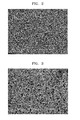
- FIGS. 2 and 3 are scanning electron microscope (SEM) images of the surfaces of the positive electrode plates manufactured according to Example 3 and Comparative Example 1.
- the surface of the positive electrode plate of Example 3 did not have pores or cracks. However, as shown in FIG. 3 , the surface of the positive electrode plate of Comparative Example 1 had pores and cracks.
- Resistivity of the positive electrode plates manufactured according to Examples 1 to 5 and Comparative Examples 1 to 4 was measured in a thickness direction using a resistivity measurement device (CIS Company). The measurement results are shown in Table 1 below.
- the thickness of the current collector of each of the positive electrode plates was 15 ⁇ m, and the thickness of the positive active material layer of each of the positive electrode plates was about 60 to about 180 ⁇ m. That is, the total thickness of each of the positive electrode plates was about 75 to about 195 ⁇ m.
- the positive electrode plates were each prepared as a round sample having an area of 3.14 cm 2 and a radius of 1 cm. Table 1 Resistivity [ ⁇ m] Example 1 46.4 Example 2 40.8 Example 3 19.6 Example 4 24.3 Example 5 37.1 Comparative Example 1 62.7 Comparative Example 2 48.1 Comparative Example 3 27.9 Comparative Example 4 34.4
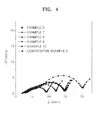
- Impedance of the coin cells manufactured according to Examples 6 to 10 and Comparative Example 5 were measured using an impedance analyzer (Material Mates 7260) according to a 2-probe method.
- the frequency range was about 100 kHz to about 10 mHz
- the Va sinus amplitude
- the Pw period before the measurement at each frequency
- the impedance of each of the coin cells manufactured according to Examples 6 to 10 was lower than the impedance of the coin cell manufactured according to Comparative Example 5.
- the impedance of each of the coin cells manufactured according to Examples 8 to 9 was substantially lower than the impedance of the coin cell manufactured according to Comparative Example 5.
- the coin cells manufactured according to Examples 6 to 10 showed improved cycle characteristics (capacity retention rate) over the coin cells manufactured according to Comparative Examples 5-8.
- the positive electrode materials for a lithium battery have high electric conductivity and substantially prevent the corrosion of an aluminum substrate. Accordingly, due to the inclusion of a positive electrode including the positive electrode materials, the resulting lithium battery has decreased resistance of the electrode plate, high rate characteristics, and good lifespan characteristics.
Landscapes
- Chemical & Material Sciences (AREA)
- Chemical Kinetics & Catalysis (AREA)
- Electrochemistry (AREA)
- General Chemical & Material Sciences (AREA)
- Engineering & Computer Science (AREA)
- Materials Engineering (AREA)
- Inorganic Chemistry (AREA)
- Composite Materials (AREA)
- Manufacturing & Machinery (AREA)
- Battery Electrode And Active Subsutance (AREA)
- Secondary Cells (AREA)
- Cell Electrode Carriers And Collectors (AREA)
Abstract
Description
- One or more embodiments of the present invention relate to a positive electrode material for a lithium battery, a positive electrode prepared from the positive electrode material, and a lithium battery including the positive electrode.
- Secondary lithium batteries produce electric energy due to oxidation and reduction reactions occurring when lithium ions are intercalated into or deintercalated from a positive electrode and a negative electrode. Each of the positive and negative electrodes includes an active material that enables the intercalation and deintercalation of the lithium ions. An organic electrolytic solution or a polymer electrolytic solution is positioned between the positive electrode and the negative electrode.
- As a positive active material for a secondary lithium battery, for example, an oxide that has a structure that enables the intercalation of lithium ions and includes lithium and a transition metal may be used. Examples of the oxide are lithium cobalt oxide (LiCoO2), lithium nickel oxide (LiNiO2), and lithium nickel cobalt manganese oxide (Li[NiCoMn]O2, Li[Ni1-x-yCoxMny]O2).
- If a positive electrode plate includes a positive active material for a secondary lithium battery and an aqueous binder (i.e. a water soluble binder), alkali metal ions in the positive active material that do not react or that are dissolved in water may contribute to a substantial increase in the pH of the prepared positive active material slurry. Thus, the positive active material slurry is strongly basic.
- When the aqueous positive active material slurry is coated on an aluminum electrode substrate, however, due to its high pH, the aluminum electrode substrate corrodes, generating H2 gas, and many pin holes are formed on the electrode plate, thereby increasing the internal resistance of the positive electrode plate.
- According to one or more embodiments of the present invention, a positive electrode material for a lithium battery substantially prevents the corrosion of a metal substrate (e.g., an aluminum substrate) that is susceptible to corrosion by a strong alkali.
- In one or more embodiments of the present invention, a positive electrode includes the positive electrode material.
- According to one or more embodiments of the present invention, a lithium battery includes the positive electrode.
- Additional aspects will be set forth in part in the description which follows and, in part, will be apparent from the description, or may be learned by practice of the presented embodiments.
- According to one or more embodiments of the present invention, a positive electrode material for a lithium battery includes: a positive active material; an aqueous binder; and tungsten trioxide (WO3).
- According to an embodiment of the present invention, an average particle diameter of the tungsten trioxide (WO3) may be about 10 nm to about 5 µm.
- According to an embodiment of the present invention, an amount of the tungsten trioxide (WO3) may be about 0.001 to about 50 parts by weight based on 100 parts by weight of the positive active material.
- According to an embodiment of the present invention, the positive active material may include at least one of a lithium cobalt-based oxide, a lithium nickel cobalt manganese-based oxide, and a lithium nickel cobalt aluminum-based oxide.
- According to an embodiment of the present invention, the aqueous binder may include at least one of carboxymethylcellulose, hydroxyethylcellulose, hydroxypropylcellulose, hydroxypropylmethylcellulose, polyvinylidenefluoride, polytetrafluoroethylene, polyethylene, polypropylene, polybutadiene, butyl rubber, fluorine rubber, polyethyleneoxide, polyvinylalcohol, polyacrylic acid or a salt thereof, polyvinylpyrrolidone, polyepichlorohydrin, polyphosphazene, polyacrylonitrile, polystyrene, polyvinylpyridine, chlorosulfonated polyethylene, latex, a polyester resin, an acryl resin, a phenol resin, an epoxy resin, a polymer of propylene and an olefin having 2 to 8 carbon atoms, and a copolymer of (meth)acrylic acid and (meth)acrylic acid alkyl ester.
- According to an embodiment of the present invention, an amount of the aqueous binder may be about 0.1 to about 10 parts by weight based on 100 parts by weight of the positive active material.
- According to an embodiment of the present invention, the positive electrode material may further include a conductive agent. In this regard, the conductive agent may include at least one of natural graphite, artificial graphite, carbon black, acetylene black, Ketjen black, carbon fiber, carbon nanotube, metal powder, metal fiber, and a conductive polymer.
- According to one or more embodiments of the present invention, a positive electrode for a lithium battery includes: a metal substrate that is corroded by a strong alkali; and a positive electrode layer including the positive electrode material on at least one surface of the metal substrate.
- According to one or more embodiments of the present invention, a lithium battery includes: the positive electrode; a negative electrode including a negative active material disposed facing the positive electrode; and an electrolyte between the positive electrode and the negative electrode.
- According to a first aspect of the invention, there is provided a positive electrode material for a lithium battery as set out in claim 1. Preferred features of this aspect are set out in claims 2 to 8.
- According to a second aspect of the invention, there is provided a positive electrode for a lithium battery as set out in
claim 9. Preferred features of this aspect are set out inclaim 10. - According to a third aspect of the invention, there is provided a lithium battery as set out in claim 11.
- These and/or other aspects will become apparent and more readily appreciated from the following detailed description when considered in conjunction with the accompanying drawings in which:
-
FIG. 1 is a schematic cross-sectional view of a lithium battery according to an embodiment of the present invention; -
FIG. 2 is a scanning electron microscope (SEM) image of the surface of a positive electrode plate manufactured according to Example 3; -
FIG. 3 is an SEM image of the surface of a positive electrode plate manufactured according to Comparative Example 1; and -
FIG. 4 is a graph comparing the impedance measurement results of the lithium batteries manufactured according to Examples 6 to 10 and Comparative Example 5. - Certain exemplary embodiments will now be described in connection with the accompanying drawings, wherein like reference numerals refer to like elements throughout. As would be understood by those of ordinary skill in the art, the described embodiments may be modified in different ways, and therefore are not be construed as limited to the descriptions set forth herein. Accordingly, the exemplary embodiments are described with reference to the figures in order to explain the aspects of the present description.
- Expressions such as "at least one of," when preceding a list of elements, modify the entire list of elements and do not modify the individual elements of the list.
- Hereinafter, one or more embodiments of the present invention are described in detail.
- A positive electrode material for a lithium battery, according to an embodiment of the present invention, includes a positive active material, an aqueous binder, and tungsten trioxide (WO3). The positive electrode material may be an aqueous positive electrode material that includes water as a solvent.
- Typically, an aluminum substrate (which is used as a current collector in a positive electrode of a lithium battery) has a thin oxide film formed of Al2O3 at its surface. In a neutral aqueous solution, the thin oxide film prevents aluminum metal from reacting with water. Thus, a hydrogen generation reaction according to Reaction Scheme 1 below does not occur.
(Reaction Scheme 1) 2Al + 3H2O -> Al2O3 + 3H2↑
- However, in an alkaline aqueous solution, according to Reaction Scheme 2 below, aluminate ions elute into the solution from the alumina film, and thus, a reaction according to Reaction Scheme 3 below may occur at the surface of the aluminum substrate. Due to hydrogen gas produced at this time, pin holes are formed in the surface of the formed electrode.
(Reaction Scheme 2) Al2O3 + H2O + 2OH- -> 2AlO2 + 2H2O
(Reaction Scheme 3) 2Al + 60H- + 6H2O -> 2[Al(OH)6]3- + 3H2↑
- The positive electrode material includes tungsten trioxide (WO3), which is a strong oxidizer. Due to the inclusion of tungsten trioxide, the reaction according to Reaction Scheme 3 is suppressed and an alumina film may be formed according to Reaction Scheme 4 below.
(Reaction Scheme 4) 2Al + 3WO3 → Al2O3 + 3WO2
- As described above, the corrosion of aluminum is substantially prevented due to the tungsten trioxide (WO3) so that the formation of pin holes on the electrode plate is substantially prevented, thereby substantially preventing an increase in the resistance of the electrode. Also, the tungsten trioxide (WO3) has an electrical resistivity as low as 19.25 nΩm. Due to such low electrical resistivity, the tungsten trioxide (WO3) may provide good electric conductivity characteristics to the positive electrode material, thereby decreasing the resistance of the electrode plate and yielding a lithium battery having high rate characteristics and good lifespan characteristics.
- The particle size of the tungsten trioxide can vary in different embodiments of the invention. In some embodiments, an average particle diameter of the tungsten trioxide may be about 10nm to about 5 µm. When the average particle diameter of the tungsten trioxide is about 5 µm or less, the tungsten trioxide particles may be inserted into apertures between the positive active material particles, thereby increasing the density of the entire electrode plate. When the average particle size of the tungsten trioxide is about 10 nm or greater, the tungsten trioxide may be highly dispersible using physical dispersion methods. In some embodiments, the average particle size of the tungsten trioxide may be, for example, about 5 nm to about 1 µm, for example, about 10 nm to about 100 nm. However, the present invention is not limited thereto, and other embodiments of the invention could use other particle sizes for the tungsten trioxide.
- As used herein, the term "average particle diameter" means "D50", that is a cumulative average particle diameter corresponding to 50 volume% in a cumulative particle size distribution curve based on a total volume of 100%. The D50 may be measured using one of various known methods in the art, for example, a particle size analyzer, or from a transmission electron microscopic (TEM) image or a scanning electron microscopic (SEM) image. Also, the D50 may be easily measured by analyzing data measured by a measuring device using a dynamic light-scattering method to count the number of particles for each particle size range and calculating an average value thereof.
- The amount of the tungsten trioxide in the positive electrode material can vary in different embodiments of the invention. However, if the amount of the tungsten trioxide is too small, corrosion of the aluminum current collector may not be substantially prevented. On the other hand, if the amount of the tungsten trioxide is too large, the ratio of the positive active material in the electrode plate is reduced, and thus the capacity of the formed electrode may be reduced. Accordingly, these issues need to be taken into consideration in determining the amount of the tungsten trioxide. According to an embodiment of the present invention, the amount of the tungsten trioxide may be about 0.001 to about 50 parts by weight based on 100 parts by weight of the positive active material. For example, the amount of the tungsten trioxide may be about 0.001 to about 30 parts by weight, about 0.01 to about 20 parts by weight, about 0.1 to about 10 parts by weight, about 1 to about 10 parts by weight, about 1 to about 5 parts by weight, or about 1 to about 3 parts by weight, based on 100 parts by weight of the positive active material. However, the present invention is not limited thereto, and other embodiments of the invention could use other amounts of the tungsten trioxide.
- The positive active material included in the positive electrode material may be any one of various positive active materials that are not susceptible to the aqueous binder or the aqueous solvent, and that does not release metal ions. For example, the positive active material may include at least one of a lithium cobalt-based oxide, a lithium nickel cobalt-based manganese oxide, and a lithium nickel cobalt aluminum-based oxide, but embodiments of the invention are not limited thereto. Also, the positive active material may be doped with one or more different elements depending on the desired purpose.
- Nonlimiting examples of the positive active material include the following compounds:
- LiaA1-bBbD2 (where 0.90 ≤ a ≤ 1.8, and 0 ≤ b ≤ 0.5)
- LiaE1-bBbO2-cDc (where 0.90 ≤ a ≤ 1.8, 0 ≤ b ≤ 0.5, and 0 ≤ c ≤ 0.05)
- LiE2-bBbO4-cDc (where 0 ≤ b ≤ 0.5, and 0 ≤ c ≤ 0.05)
- LiaNi1-b-cCobBcDα (where 0.90 ≤ a ≤ 1.8, 0 ≤ b ≤ 0.5, 0 ≤ c ≤ 0.05, and 0 < α ≤ 2)
- LiaNi1-b-cCobBc02-αFα (where 0.90 ≤ a ≤ 1.8, 0 ≤ b ≤ 0.5, 0 ≤ c ≤ 0.05, and 0 < α < 2)
- LiaNi1-b-cCobBcO2-αF2 (where 0.90 ≤ a ≤ 1.8, 0 ≤ b ≤ 0.5, 0 ≤ c ≤ 0.05, and 0 < α < 2)
- LiaNi1-b-cMnbBcDα (where 0.90 ≤ a ≤ 1.8, 0 ≤ b ≤ 0.5, 0 ≤ c ≤ 0.05, and 0 < α ≤ 2)
- LiaNi1-b-cMnbBcO2-αFα (where 0.90 ≤ a ≤ 1.8, 0 ≤ b ≤ 0.5, 0 ≤ c ≤ 0.05, and 0 < α < 2)
- LiaNi1-b-cMnbBc02-αF2 (where 0.90 ≤ a ≤ 1.8, 0 ≤ b ≤ 0.5, 0 ≤ c ≤ 0.05, and 0 < α < 2)
- LiaNibEcGdO2 (where 0.90 ≤ a ≤ 1.8, 0 ≤ b ≤ 0.9, 0 ≤ c ≤ 0.5, and 0.001 ≤ d ≤ 0.1)
- LiaNibCocMndGe02 (0.90≤a≤1.8, 0≤b≤0.9, 0≤c≤0.5, 0≤d≤0.5, and 0.001≤e≤0.1)
- LiaNiGbO2 (where 0.90 ≤ a ≤ 1.8 and 0.001 ≤ b ≤ 0.1)
- LiaCoGbO2 (where 0.90 ≤ a ≤ 1.8 and 0.001 ≤ b ≤ 0.1)
- QO2
- QS2
- LiQS2
- V2O5
- LiV2O5
- LiIO2
- LiNiVO4
- Li(3-f)J2(PO4)3 (0 ≤ f ≤ 2)
- In the chemical formulae above, A may be Ni, Co, or a combination thereof; B may be Al, Ni, Co, Mn, Cr, Fe, Mg, Sr, V, a rare earth element, or a combination thereof; D may be O, F, S, P, or a combination thereof; E may be Co, Mn, or a combination thereof; F may be F, S, P, or a combination thereof; G may be Al, Cr, Mn, Fe, Mg, La, Ce, Sr, V, or a combination thereof; Q may be Ti, Mo, Mn, or a combination thereof; I may be Cr, V, Fe, Sc, Y, or a combination thereof; and J may be V, Cr, Mn, Co, Ni, Cu, or a combination thereof.
- In some embodiments, an average particle size of the positive active material may be, for example, about 10 µm to about 50 µm.
- These compounds may each have a coating layer on their surfaces, or may be mixed with a compound having a coating layer. The coating layer may include a coating element compound, such as an oxide of a coating element, a hydroxide of a coating element, an oxyhydroxide of a coating element, an oxycarbonate of a coating element, or a hydroxycarbonate of a coating element. The compounds of the coating layer may be amorphous or crystalline. A coating element included in the coating layer may be magnesium (Mg), aluminum (Al), cobalt (Co), potassium (K), sodium (Na), calcium (Ca), silicon (Si), titanium (Ti), vanadium (V), tin (Sn), germanium (Ge), gallium (Ga), boron (B), arsenic (As), zirconium (Zr), or a mixture thereof. The coating layer may be formed by any coating method that does not adversely affect the properties of the positive active material (for example, evaporation, spray coating, or precipitation may be used.) These methods are known to those of ordinary skill in the art.
- For example, LiNiO2, LiCoO2, LiNi1-xMnxO2(0<x<1), LiNi1-x-yCoxMnyO2 (0≤x≤0.5 and 0≤y≤0.5), LiFeO2, V2O5, TiS, MoS, or the like may be used.
- The positive electrode material is an aqueous system and thus uses an aqueous binder in which water is used as a solvent. The aqueous binder (unlike a non-aqueous binder such as N-methyl-pyrrolidone (NMP)) is available even in the presence of humidity, and thus, a dry room and recycling process are not needed. Thus, the aqueous binder is environmentally friendly and its use may contribute to the simplification of mass-production equipment. Also, the aqueous binder has a binding mechanism that is not significantly affected by the specific surface area of the electrode material. Due to this binding mechanism, the aqueous binder is used in various materials having large specific surface areas. Also, the aqueous binder has low reactivity with respect to the electrolytic solution, and due to this low reactivity, the aqueous binder is appropriate for use in lithium batteries where is yields high stability (heat dissipation).
- Nonlimiting examples of the aqueous binder include carboxymethylcellulose, hydroxyethylcellulose, hydroxypropylcellulose, hydroxypropylmethylcellulose, polyvinylidenefluoride, polytetrafluoroethylene, polyethylene, polypropylene, polybutadiene, butyl rubber, fluorine rubber, polyethyleneoxide, polyvinylalcohol, polyacrylic acid and salts thereof, polyvinylpyrrolidone, polyepichlorohydrin, polyphosphazene, polyacrylonitrile, polystyrene, polyvinylpyridine, chlorosulfonated polyethylene, latex, polyester resins, acryl resins, phenol resins, epoxy resins, polymers of propylene and an olefin having 2 to 8 carbon atoms, and copolymers of (meth)acrylic acid and (meth)acrylic acid alkyl ester, and combinations thereof. For example, any one of various aqueous binders that are used in the art may be used as the aqueous binder.
- The aqueous binder may be used in an amount appropriate to provide a binding force between dispersed positive active material particles and between positive active material particles and the current collector. The amount of the aqueous binder can vary in different embodiments of the invention. For example, an amount of the aqueous binder may be about 0.1 to about 10 parts by weight based on 100 parts by weight of the positive active material. In another example, the amount of the aqueous binder may be about 0.5 to about 5 parts by weight, for example, about 1 to about 3 parts by weight, based on 100 parts by weight of the positive active material. However, the present invention is not limited thereto, and other embodiments of the invention could use other amounts of the aqueous binder.
- The positive electrode material may further include a conductive agent. The conductive agent may increase the conductivity of the positive electrode material. The conductive agent may include, for example, at least one of natural graphite, artificial graphite, carbon black, acetylene black, ketjen black, carbon fiber, carbon nanotube, metal powder, metal fiber, and a conductive polymer. These conductive agents may be used alone or in combination. However, other embodiments of the invention may use any one of various conductive agents that are used in the art.
- The positive electrode material described above substantially prevents corrosion of the current collector (e.g., an aluminum substrate), and provides high electric conductivity, thereby reducing the resistance of the electrode plate and yielding a lithium battery having high rate characteristics and good lifespan characteristics.
- A positive electrode for a lithium battery, according to an embodiment of the present invention, includes a metal substrate that is susceptible to corrosion by a strong alkali, and a positive electrode layer including the positive electrode material disposed on at least one surface of the metal substrate.
- The metal substrate included in the positive electrode may be any one of various substrates that function as a current collector, that do not cause any chemical change in the formed battery, and that have high conductivity. Nonlimiting examples of the metal substrate include stainless steel, aluminum, nickel, titanium, calcined carbon, and aluminum or stainless steel that has been surface-treated with carbon, nickel, titanium, silver, or the like. One particular example of a metal substrate that is corroded by a strong alkali is an aluminum substrate. In this case, the corrosion of the aluminum substrate may be effectively prevented by using the above-described positive electrode material. The thickness of the metal substrate may be about 3 to about 500 µm, but embodiments of the invention are not limited thereto.
- The positive electrode may be formed by, for example, forming a slurry composition including the positive electrode material into a predetermined shape, or coating the slurry composition on an aluminum foil (as the metal substrate).
- In more detail, a slurry composition including the positive electrode material may be directly coated on the metal substrate, followed by drying, to form a positive electrode layer. Alternatively, the slurry composition may be cast on a separate support to form a film, and then the film may be separated from the support and laminated on the metal substrate to form the positive electrode layer. In other embodiments, the positive electrode may be formed using other methods.
- A lithium battery according to an embodiment of the present invention includes the positive electrode. For example, the lithium battery may include: a positive electrode including the positive electrode material; a negative electrode including a negative active material disposed facing the positive electrode; and an electrolyte between the positive electrode and the negative electrode. An example of a method of manufacturing the lithium battery is described in detail below.
- First, the positive electrode is manufactured in the same manner as described above.
- The negative electrode may be formed as follows: a negative active material, a binder, and optionally, a conductive agent are mixed in a solvent to prepare a negative electrode slurry composition. Then, the negative electrode slurry composition is formed into the desired shape, or the negative electrode slurry composition is directly coated on a metal current collector (such as a copper foil), followed by drying, to form a negative electrode plate. Alternatively, the negative electrode slurry composition is cast on a separate support to form a film, and then the film is separated from the support and laminated on the metal current collector to manufacture the negative electrode plate.
- The negative active material may be any one of various negative active materials that intercalate and deintercalate lithium that are used in the art. For example, lithium metal, lithium alloy, metals that are alloyable with lithium or oxides thereof, transition metal oxides, carbonaceous materials, graphite, and mixtures thereof may be used.
- For example, the transition metal oxide may be vanadium oxide, lithium vanadium oxide, or the like.
- For example, the metal that is alloyable with lithium or an oxide thereof may be Si, SiOx(0<x≤2), an Si-Y alloy (where Y is an alkali metal, alkali earth metal, a Group 13 element, a Group 14 element, transition metal, a rare earth element, or a combination thereof, and is not Si), Sn, SnO2, or Sn-Y (where Y is an alkali metal, alkali earth metal, a Group 13 element, a Group 14 element, transition metal, a rare earth element, or a combination thereof, and is not Sn). Also, at least one of these may be mixed with SiO2. In some embodiments, the element Y may be Mg, Ca, Sr, Ba, Ra, Sc, Y, Ti, Zr, Hf, Rf, V, Nb, Ta, Db, Cr, Mo, W, Sg, Tc, Re, Bh, Fe, Pb, Ru, Os, Hs, Rh, Ir, Pd, Pt, Cu, Ag, Au, Zn, Cd, B, Al, Ga, Sn, In, Ti, Ge, P, As, Sb, Bi, S, Se, Te, Po, or a combination thereof.
- For example, the carbonaceous material and/or graphite may be crystalline carbon, amorphous carbon, or a mixture thereof. The crystalline carbon may be, for example, natural or artificial graphite that is amorphous, tubular-shaped, flake-shaped, spherical, or fibrous-shaped, and examples of the amorphous carbon include soft carbon (cold calcined carbon) or hard carbon, mesophase pitch carbide, and calcined coke.
- The conductive agent, the binder, and the solvent used in the negative electrode slurry composition may be the same as or different from those of the positive electrode slurry composition. The solvent may be water or an organic solvent. The binder may be an aqueous or a non-aqueous binder.
- Nonlimiting examples of the binder included in the negative electrode slurry composition include styrene-butadiene rubber, acrylated styrene-butadiene rubber, acrylonitrile-butadiene rubber, acrylonitrile-butadiene-styrene rubber, carboxymethylcellulose, hydroxyethylcellulose, hydroxypropylcellulose, hydroxypropylmethylcellulose, polyvinylidenefluoride, polytetrafluoroethylene, polyethylene, polypropylene, polybutadiene, butyl rubber, fluorine rubber, polyethyleneoxide, polyvinylalcohol, polyacrylic acid and salts thereof, polyvinylpyrrolidone, polyepichlorohydrin, polyphosphazene, polyacrylonitrile, polystyrene, polyvinylpyridine, chlorosulfonated polyethylene, latex, polyester resin, acryl resins, phenol resins, epoxy resins, polymers of propylene and an olefin having 2 to 8 carbon atoms, copolymers of (meth)acrylic acid and (meth)acrylic acid alkyl ester, vinylidene fluoride/hexafluoropropylene copolymers, polymethylmethcrylate, and combinations thereof. However, the in other embodiments of the invention, the binder may be any one of various materials that are used as a binder in the art.
- As the solvent, N-methylpyrrolidone, acetone, or water may be used. However, in other embodiments of the invention, the solvent may be any one of various materials that are used in the art.
- Amounts of the negative active material, the conductive agent, the binder, and the solvent are the same as the levels that are conventionally used in lithium batteries. According to the purpose or structure of the lithium battery, at least one of the conductive agent, the binder, and the solvent may be omitted.
- The positive electrode and the negative electrode may be separated from each other by a separator, and any separator that is conventionally used in lithium batteries may be used herein. For example, a separator that has a low resistance to the migration of the ions of an electrolyte and an good electrolytic solution-retaining ability may be used. For example, the separator may be selected from glass fiber, polyester, Teflon, polyethylene, polypropylene, polytetrafluoroethylene (PTFE), and combinations thereof, each of which may be nonwoven or woven. For example, a separator for use in a lithium ion battery may be a foldable separator formed of polyethylene or polypropylene, and a separator for use in a lithium ion polymer battery may be a separator having good organic electrolytic solution-retaining capability. An example of a method of manufacturing the separator is now described in detail below. The separator may have a pore diameter of about 0.01 to about 10 µm, and a thickness of about 5 to about 300 µm.
- A separator composition may be prepared by mixing a polymer resin, a filler, and a solvent. The separator composition may be directly coated and dried on an electrode to complete the preparation of the separator. Alternatively, the separator composition may be cast and dried on a support to form a film which is then separated from the support and laminated on an electrode to complete the preparation of the separator.
- A polymer resin that may be used to produce the separator may be any material that is used in the binder of an electrode plate. For example, the polymer resin may be a vinylidenefluoride/hexafluoropropylene copolymer, polyvinylidenefluoride (PVDF), polyacrylonitrile, polymethylmethcrylate, or a mixture thereof.
- The electrolyte between the positive electrode and the negative electrode may be a non-aqueous electrolyte that contains a lithium salt. The non-aqueous electrolyte may be a non-aqueous electrolytic solution, a solid electrolyte, or an inorganic solid electrolyte.
- The non-aqueous electrolytic solution may include, for example, an aprotic organic solvent (nonlimiting examples of which include N-methyl-2-pyrrolidone, propylene carbonate, ethylene carbonate, butylene carbonate, dimethyl carbonate, diethyl carbonate, gamma-butyrolactone, 1,2-dimethoxy ethane, tetrahydrofuran, 2-methyl tetrahydrofuran, dimethylsulfoxide, 1,3-dioxolane, formamide, dimethylformamide, acetonitrile, nitromethane, methyl formic acid, methyl acetic acid, phosphoric acid triester, trimethoxy methane, dioxolane derivatives, sulfolanes, methyl sulfolanes, 1,3-dimethyl-2-imidazolidinone, propylene carbonate derivatives, tetrahydrofuran derivatives, ethers, methyl propionic acid, and ethyl propionic acid).
- The organic solid electrolyte may be, for example, a polyethylene derivative, a polyethylene oxide derivative, a polypropylene oxide derivative, an ester phosphate polymer, poly agitation lysine, polyester sulfide, polyvinyl alcohol, polyvinylidenefluoride, or a polymer including an ionic dissociable group.
- The inorganic solid electrolyte may be, for example, a nitride, halide, or sulfate of Li, such as Li3N, LiI, Li5NI2, Li3N-LiI-LiOH, LiSiO4, LiSiO4-LiI-LiOH, Li2SiS3, Li4SiO4, Li4SiO4-LiI-LiOH, or Li3PO4-Li2S-SiS2.
- The lithium salt may be any one of various materials that are conventionally used in lithium batteries. As a material that is easily dissolved in the non-aqueous electrolyte, for example, at least one of LiCl, LiBr, LiI, LiClO4, LiBF4, LiB10Cl10, LiPF6, LiCF3SO3, LiCF3CO2, LiAsF6, LiSbF6, LiAlCl4, CH3SO3Li, CF3SO3Li, (CF3SO2)2NLi, lithium chloroborate, lithium lower aliphatic carbonic acid, lithium 4 phenyl borate, and imide may be used.
- Lithium batteries can be categorized as lithium ion batteries, lithium ion polymer batteries, and lithium polymer batteries, depending on the composition of the separator and the electrolyte. Also, lithium batteries can be categorized as cylindrical batteries, rectangular batteries, coin-type batteries, and pouch-type batteries, depending on the shape. Additionally, lithium batteries can be categorized as bulk batteries and thin film batteries, depending on the size. Also, lithium batteries may be primary lithium batteries or secondary lithium batteries.
- Methods of making these batteries are known in the art.
-
FIG. 1 is a schematic cross-sectional view of alithium battery 30 according to an embodiment of the present invention. - Referring to
FIG. 1 , thelithium battery 30 includes apositive electrode 23, anegative electrode 22, and aseparator 24 between thepositive electrode 23 and thenegative electrode 22. Thepositive electrode 23, thenegative electrode 22, and theseparator 24 are wound or folded and placed in abattery case 25. Subsequently, an electrolyte is injected into thebattery case 25, followed by sealing with a sealingmember 26, thereby completing the manufacture of thelithium battery 30. Thebattery case 25 may be cylindrical, rectangular, or thin film-shaped. The lithium battery may be a lithium ion battery. - The lithium battery may be used in a mobile phone or a portable computer, as well as in an electric vehicle, which is an application that requires high capacity, high output, and high-temperature driving. Also, a combination of the lithium battery with existing internal combustion engines, fuel batteries, or super capacitors may be used to power a hybrid vehicle. Also, the lithium battery may be used in various other applications that require high power output, high voltage, and high-temperature driving.
- The above one or more embodiments of the present invention are further described below with reference to certain examples. These examples, however, are presented for illustrative purposes only and do not restrict the scope of the present invention.
- 480 g of Li[Ni1/3Co1/3Mn1/3]O2 powder, 10 g of acetylene black, 5 g of carboxymethylcellulose, 0.48 g of WO3 nanopowder having an average particle diameter of about 90 nm, and 90 g of water were loaded into a mixer and mixed to prepare a mixture. Then, 210 g of water and 12.5 g of acryl-based copolymer emulsion (Japan, Xeon Company, AX-4069) were added to the mixture to complete the preparation of a positive electrode slurry composition.
- The positive electrode slurry composition was coated to a thickness of 110µm on an aluminum substrate having a thickness of 15 µm using a bar coater, and then dried in an oven at a temperature of 110°C for 10 minutes to complete the manufacture of a positive electrode.
- A positive electrode slurry composition and a positive electrode were manufactured in the same manner as in Example 1, except that 2.4 g of WO3 was used.
- A positive electrode slurry composition and a positive electrode were manufactured in the same manner as in Example 1, except that 4.8 g of WO3 was used.
- A positive electrode slurry composition and a positive electrode were manufactured in the same manner as in Example 1, except that 14.4 g of WO3 was used.
- A positive electrode slurry composition and a positive electrode were manufactured in the same manner as in Example 1, except that 48 g of WO3 was used.
- A positive electrode slurry composition and a positive electrode were manufactured in the same manner as in Example 1, except that WO3 was not used.
- A positive electrode slurry composition and a positive electrode were manufactured in the same manner as in Example 1, except that 4.8 g of MoO3 was used instead of WO3.
- A positive electrode slurry composition and a positive electrode were manufactured in the same manner as in Example 1, except that 24 g of MoO3 was used instead of WO3.
- A positive electrode slurry composition and a positive electrode were manufactured in the same manner as in Example 1, except that 48 g of MoO3 was used instead of WO3.
- A coin cell (CR2032 type) having a diameter of 20 mm was manufactured using the positive electrode plate manufactured according to Example 1.
In manufacturing the coin cell, lithium metal was used as the reference electrode, and as the electrolyte, a mixed solvent of ethylene carbonate (EC) and diethyl carbonate (DEC) (volumetric ratio of 3:7) in which 1.3M LiPF6 was dissolved was used. - A coin cell was manufactured in the same manner as in Example 6, except that the positive electrode plate manufactured according to Example 2 was used.
- A coin cell was manufactured in the same manner as in Example 6, except that the positive electrode plate manufactured according to Example 3 was used.
- A coin cell was manufactured in the same manner as in Example 6, except that the positive electrode plate manufactured according to Example 4 was used.
- A coin cell was manufactured in the same manner as in Example 6, except that the positive electrode plate manufactured according to Example 5 was used.
- A coin cell was manufactured in the same manner as in Example 6, except that the positive electrode plate manufactured according to Comparative Example 1 was used.
- A coin cell was manufactured in the same manner as in Example 6, except that the positive electrode plate manufactured according to Comparative Example 2 was used.
- A coin cell was manufactured in the same manner as in Example 6, except that the positive electrode plate manufactured according to Comparative Example 3 was used.
- A coin cell was manufactured in the same manner as in Example 6, except that the positive electrode plate manufactured according to Comparative Example 4 was used.
- Appearance evaluation on surfaces of positive electrode plates
FIGS. 2 and 3 are scanning electron microscope (SEM) images of the surfaces of the positive electrode plates manufactured according to Example 3 and Comparative Example 1. - As shown in
FIG. 2 , the surface of the positive electrode plate of Example 3 did not have pores or cracks. However, as shown inFIG. 3 , the surface of the positive electrode plate of Comparative Example 1 had pores and cracks. - From these results, it was confirmed that the corrosion of aluminum was suppressed due to the inclusion of WO3.
- Resistivity of the positive electrode plates manufactured according to Examples 1 to 5 and Comparative Examples 1 to 4 was measured in a thickness direction using a resistivity measurement device (CIS Company). The measurement results are shown in Table 1 below.
- The thickness of the current collector of each of the positive electrode plates was 15 µm, and the thickness of the positive active material layer of each of the positive electrode plates was about 60 to about 180 µm. That is, the total thickness of each of the positive electrode plates was about 75 to about 195 µm. The positive electrode plates were each prepared as a round sample having an area of 3.14 cm2and a radius of 1 cm.
Table 1 Resistivity [Ω·m] Example 1 46.4 Example 2 40.8 Example 3 19.6 Example 4 24.3 Example 5 37.1 Comparative Example 1 62.7 Comparative Example 2 48.1 Comparative Example 3 27.9 Comparative Example 4 34.4 - As shown in Table 1, the resistivity of the positive electrode plates of each of Examples 1 to 5 was reduced compared to the resistivity of the positive electrode plate of Comparative Example 1. From these results, it was confirmed that the presence of WO3 contributed to a decrease in the resistivity of the positive electrode plates of Examples 1-5. That is, the positive electrode plates including WO3 showed higher electric conductivity than the positive electrode plate that did not include WO3.
- Also, regarding the positive electrode plates of Comparative Examples 2-4 including MoO3, an amount of MoO3 needed to prevent the corrosion was greater (i.e., 5 times greater) than that of WO3, and also, when MoO3 was used, resistance was increased compared to when WO3 was used.
- Impedance of the coin cells manufactured according to Examples 6 to 10 and Comparative Example 5 were measured using an impedance analyzer (Material Mates 7260) according to a 2-probe method. The frequency range was about 100 kHz to about 10 mHz, the Va (sinus amplitude) was 10 mV, and the Pw (period before the measurement at each frequency) was 0.1. The measurement results are shown in
FIG. 4 . - As shown in
FIG. 4 , the impedance of each of the coin cells manufactured according to Examples 6 to 10 was lower than the impedance of the coin cell manufactured according to Comparative Example 5. In particular, the impedance of each of the coin cells manufactured according to Examples 8 to 9 was substantially lower than the impedance of the coin cell manufactured according to Comparative Example 5. - The coin cells manufactured according to Examples 6 to 10 and Comparative Examples 5-8 were charged and discharged 100 times with a constant current of 4.4 mA/g(1.0C rate) within a voltage range of about 3.0 to about 4.2V at a temperature of 25°C. Lithium metal was used as the reference electrode. The charging and discharging results obtained at room temperature are shown in Table 2 below. The capacity retention rate is calculated according to Equation 1 below.

Table 2 Capacity retention rate [%] Example 6 81.4 Example 7 85.6 Example 8 94.3 Example 9 90.9 Example 10 87.0 Comparative Example 5 78.9 Comparative Example 6 80.7 Comparative Example 7 85.4 Comparative Example 8 78.1 - As shown in Table 2, the coin cells manufactured according to Examples 6 to 10 showed improved cycle characteristics (capacity retention rate) over the coin cells manufactured according to Comparative Examples 5-8.
- As described above, the positive electrode materials for a lithium battery, according to embodiments of the present invention, have high electric conductivity and substantially prevent the corrosion of an aluminum substrate. Accordingly, due to the inclusion of a positive electrode including the positive electrode materials, the resulting lithium battery has decreased resistance of the electrode plate, high rate characteristics, and good lifespan characteristics.
- While the present invention has been described in connection with certain exemplary embodiments, it is understood by those of ordinary skill in the art that various modification can be made to the described embodiments without departing from the scope of the present invention as defined in the attached claims.
Claims (11)
- A positive electrode material for a lithium battery, the positive electrode material comprising: a positive active material; an aqueous binder; and tungsten trioxide, WO3,.
- The positive electrode material of claim 1, wherein an average particle diameter of the tungsten trioxide, WO3, is about 10 nm to about 5 µm, optionally wherein the average particle diameter of the tungsten trioxide, WO3, is about 10 nm to about 100 nm.
- The positive electrode material of claim 1 or 2, wherein the tungsten trioxide, WO3, is present in the positive electrode material in an amount of about 0.001 to about 50 parts by weight based on 100 parts by weight of the positive active material, optionally wherein the tungsten trioxide, WO3, is present in the positive electrode material in an amount of about 0.1 to about 10 parts by weight based on 100 parts by weight of the positive active material.
- The positive electrode material of any one of claims 1 to 3, wherein the positive active material comprises at least one of lithium cobalt-based oxide, lithium nickel cobalt manganese-based oxide, or lithium nickel cobalt aluminum-based oxide.
- The positive electrode material of any one of claims 1 to 4, wherein the aqueous binder comprises a material selected from the group consisting of carboxymethylcellulose, hydroxyethylcellulose, hydroxypropylcellulose, hydroxypropylmethylcellulose, polyvinylidenefluoride, polytetrafluoroethylene, polyethylene, polypropylene, polybutadiene, butyl rubber, fluorine rubber, polyethyleneoxide, polyvinylalcohol, polyacrylic acid and salts thereof, polyvinylpyrrolidone, polyepichlorohydrin, polyphosphazene, polyacrylonitrile, polystyrene, polyvinylpyridine, chlorosulfonated polyethylene, latex, polyester resins, acryl resins, phenol resins, epoxy resins, polymers of propylene and an olefin having 2 to 8 carbon atoms, copolymers of (meth)acrylic acid and (meth)acrylic acid alkyl ester, and combinations thereof.
- The positive electrode material of any one of claims 1 to 5, wherein the aqueous binder is present in the positive electrode material in an amount of about 0.1 to about 10 parts by weight based on 100 parts by weight of the positive active material.
- The positive electrode material of any one of claims 1 to 6, further comprising a conductive agent.
- The positive electrode material of claim 7, wherein the conductive agent comprises at least one of natural graphite, artificial graphite, carbon black, acetylene black, Ketjen black, carbon fiber, carbon nanotube, metal powder, metal fiber, or a conductive polymer.
- A positive electrode for a lithium battery, the positive electrode comprising:a metal substrate that is capable of being corroded by a strong alkali; anda positive electrode layer on at least one surface of the metal substrate, the positive electrode layer comprising the positive electrode material of any one of claims 1 to 8.
- The positive electrode of claim 9, wherein the metal substrate is an aluminum substrate.
- A lithium battery comprising:the positive electrode of claim 9 or 10;a negative electrode facing the positive electrode and comprising a negative active material; andan electrolyte between the positive electrode and the negative electrode.
Applications Claiming Priority (1)
| Application Number | Priority Date | Filing Date | Title |
|---|---|---|---|
| KR1020120002019A KR20130081055A (en) | 2012-01-06 | 2012-01-06 | Positive electrode material for lithium battery, positive material prepared from the material, and lithium battery including the positive electrode |
Publications (2)
| Publication Number | Publication Date |
|---|---|
| EP2613388A1 true EP2613388A1 (en) | 2013-07-10 |
| EP2613388B1 EP2613388B1 (en) | 2021-10-27 |
Family
ID=47435852
Family Applications (1)
| Application Number | Title | Priority Date | Filing Date |
|---|---|---|---|
| EP13150300.5A Active EP2613388B1 (en) | 2012-01-06 | 2013-01-04 | Positive electrode slurry for lithium battery, postitive electrode prepared from the positive electrode slurry, and lithium battery including the positive electrode |
Country Status (5)
| Country | Link |
|---|---|
| US (1) | US9214670B2 (en) |
| EP (1) | EP2613388B1 (en) |
| JP (1) | JP6207153B2 (en) |
| KR (1) | KR20130081055A (en) |
| CN (1) | CN103199233B (en) |
Cited By (1)
| Publication number | Priority date | Publication date | Assignee | Title |
|---|---|---|---|---|
| CN115232488A (en) * | 2022-07-21 | 2022-10-25 | 中山大学 | A kind of preparation method of energy storage type tungsten trioxide/titanium dioxide coating |
Families Citing this family (23)
| Publication number | Priority date | Publication date | Assignee | Title |
|---|---|---|---|---|
| KR101775548B1 (en) * | 2012-08-01 | 2017-09-06 | 삼성에스디아이 주식회사 | Positive active material composition for lithium secondary battery and lithium secondary battery |
| AU2014336895B2 (en) * | 2013-10-16 | 2016-11-24 | Suzhou Hans Energy Storage Technology Co., Ltd. | Tungsten-based material super battery and supercapacitor |
| US11270850B2 (en) | 2013-12-20 | 2022-03-08 | Fastcap Systems Corporation | Ultracapacitors with high frequency response |
| JP6392897B2 (en) | 2014-05-19 | 2018-09-19 | ダウ グローバル テクノロジーズ エルエルシー | Lithium ion battery electrode composition |
| TW201613159A (en) * | 2014-06-26 | 2016-04-01 | Toda Kogyo Corp | Positive electrode active substance particle powder for non-aqueous electrolyte secondary battery, production method therefor, and non-aqueous electrolyte secondary battery |
| CN113539696B (en) | 2014-10-09 | 2024-12-03 | 快帽系统公司 | Nanostructured electrodes for energy storage devices |
| WO2016080181A1 (en) * | 2014-11-18 | 2016-05-26 | 株式会社村田製作所 | Positive electrode for lithium ion secondary batteries, and lithium ion secondary battery using same |
| WO2016121350A1 (en) * | 2015-01-30 | 2016-08-04 | 三洋電機株式会社 | Non-aqueous electrolyte secondary battery positive electrode and non-aqueous electrolyte secondary battery |
| CN107251302B (en) * | 2015-02-25 | 2019-07-30 | 三洋电机株式会社 | Non-aqueous electrolyte secondary battery |
| JP6998107B2 (en) * | 2015-05-29 | 2022-01-18 | 住友金属鉱山株式会社 | Positive electrode material for non-aqueous electrolyte secondary battery, positive electrode mixture, and non-aqueous electrolyte secondary battery using each |
| CN106654274A (en) * | 2015-11-03 | 2017-05-10 | 苏州宝时得电动工具有限公司 | Battery, battery pack and uninterruptible power supply |
| US11411214B2 (en) * | 2015-10-28 | 2022-08-09 | Sumitomo Metal Mining Co., Ltd. | Positive electrode active material for nonaqueous electrolyte secondary batteries, production method thereof, positive electrode mixture material paste for nonaqueous electrolyte secondary batteries, and nonaqueous electrolyte secondary battery |
| JP6430472B2 (en) * | 2016-01-15 | 2018-11-28 | 関西ペイント株式会社 | Conductive paste for lithium ion battery positive electrode and composite paste for lithium ion battery positive electrode |
| WO2018102652A1 (en) | 2016-12-02 | 2018-06-07 | Fastcap Systems Corporation | Composite electrode |
| CN107579253A (en) * | 2017-09-13 | 2018-01-12 | 江西理工大学 | A high-rate lithium-ion battery |
| CN108281553B (en) * | 2018-01-10 | 2021-08-06 | 苏州大学 | Tungsten oxide nanorod coated with poly (3, 4-ethylenedioxythiophene), and preparation method and application thereof |
| JPWO2020066263A1 (en) * | 2018-09-27 | 2021-08-30 | パナソニックIpマネジメント株式会社 | Positive electrode active material for secondary batteries and secondary batteries |
| US11557765B2 (en) | 2019-07-05 | 2023-01-17 | Fastcap Systems Corporation | Electrodes for energy storage devices |
| CN112216822B (en) * | 2019-07-10 | 2021-10-01 | 宁德时代新能源科技股份有限公司 | A kind of lithium ion secondary battery and preparation method thereof |
| CN111916730A (en) * | 2020-08-10 | 2020-11-10 | 贵州梅岭电源有限公司 | Preparation method of WO3 modified nickel-rich ternary lithium ion battery positive electrode material |
| JP2024526225A (en) * | 2021-11-23 | 2024-07-17 | 珠海冠宇電池股分有限公司 | battery |
| CN114551794B (en) * | 2021-12-17 | 2023-08-25 | 远景动力技术(江苏)有限公司 | Positive electrode active material, positive electrode, preparation method and lithium ion battery |
| CN115939396B (en) * | 2022-12-21 | 2025-07-01 | 湖北亿纬动力有限公司 | A ternary mixed positive electrode material and its preparation method and battery |
Citations (2)
| Publication number | Priority date | Publication date | Assignee | Title |
|---|---|---|---|---|
| US20090087739A1 (en) * | 2006-01-25 | 2009-04-02 | Tadayoshi Takahashi | Non-aqueous electrolyte secondary battery, method for producing the same, and method for mounting the same |
| US20110315918A1 (en) * | 2010-06-22 | 2011-12-29 | Nichia Corporation | Positive Electrode Composition for Nonaqueous Electrolyte Secondary Battery, And Method For Producing Positive Electrode Slurry Using The Positive Electrode Composition |
Family Cites Families (11)
| Publication number | Priority date | Publication date | Assignee | Title |
|---|---|---|---|---|
| US3873369A (en) * | 1973-05-14 | 1975-03-25 | Du Pont | Tungsten oxide-containing cathode for non-aqueous galvanic cell |
| JP4114247B2 (en) | 1998-09-30 | 2008-07-09 | 松下電器産業株式会社 | Non-aqueous electrolyte secondary battery |
| FR2790330B1 (en) | 1999-02-25 | 2001-05-04 | Cit Alcatel | LITHIUM RECHARGEABLE ELECTROCHEMICAL GENERATOR POSITIVE ELECTRODE WITH ALUMINUM CURRENT COLLECTOR |
| JP2001093582A (en) * | 1999-09-28 | 2001-04-06 | Kyocera Corp | Lithium secondary battery |
| KR100551007B1 (en) | 2003-10-23 | 2006-02-13 | 삼성에스디아이 주식회사 | Lithium secondary battery |
| JP5154104B2 (en) | 2007-03-09 | 2013-02-27 | パナソニック株式会社 | Lithium ion secondary battery and method of manufacturing positive electrode plate thereof |
| JP4730405B2 (en) | 2008-07-11 | 2011-07-20 | トヨタ自動車株式会社 | Battery electrode foil used for positive electrode plate of lithium ion battery, positive electrode plate for lithium ion battery, lithium ion battery, vehicle, battery-equipped device, method for producing battery electrode foil used for positive electrode plate of lithium ion battery, And method for producing positive electrode plate for lithium ion battery |
| CN101877422B (en) * | 2009-04-30 | 2013-04-10 | 比亚迪股份有限公司 | Method for preparing lithium-ion secondary battery |
| JPWO2011078263A1 (en) * | 2009-12-24 | 2013-05-09 | 日本ゼオン株式会社 | Secondary battery electrode and secondary battery |
| JP5818150B2 (en) * | 2010-11-05 | 2015-11-18 | 株式会社Gsユアサ | Electrode for power storage element, power storage element using the same, and method for manufacturing electrode for power storage element |
| US20130330615A1 (en) * | 2011-02-16 | 2013-12-12 | Masahiro Morita | Lithium-ion secondary battery and method for manufacturing the same |
-
2012
- 2012-01-06 KR KR1020120002019A patent/KR20130081055A/en not_active Ceased
- 2012-08-01 US US13/564,489 patent/US9214670B2/en active Active
- 2012-12-27 JP JP2012285787A patent/JP6207153B2/en active Active
-
2013
- 2013-01-04 EP EP13150300.5A patent/EP2613388B1/en active Active
- 2013-01-06 CN CN201310003042.6A patent/CN103199233B/en active Active
Patent Citations (2)
| Publication number | Priority date | Publication date | Assignee | Title |
|---|---|---|---|---|
| US20090087739A1 (en) * | 2006-01-25 | 2009-04-02 | Tadayoshi Takahashi | Non-aqueous electrolyte secondary battery, method for producing the same, and method for mounting the same |
| US20110315918A1 (en) * | 2010-06-22 | 2011-12-29 | Nichia Corporation | Positive Electrode Composition for Nonaqueous Electrolyte Secondary Battery, And Method For Producing Positive Electrode Slurry Using The Positive Electrode Composition |
Cited By (1)
| Publication number | Priority date | Publication date | Assignee | Title |
|---|---|---|---|---|
| CN115232488A (en) * | 2022-07-21 | 2022-10-25 | 中山大学 | A kind of preparation method of energy storage type tungsten trioxide/titanium dioxide coating |
Also Published As
| Publication number | Publication date |
|---|---|
| JP2013143380A (en) | 2013-07-22 |
| EP2613388B1 (en) | 2021-10-27 |
| CN103199233A (en) | 2013-07-10 |
| US9214670B2 (en) | 2015-12-15 |
| JP6207153B2 (en) | 2017-10-04 |
| CN103199233B (en) | 2019-10-11 |
| KR20130081055A (en) | 2013-07-16 |
| US20130177812A1 (en) | 2013-07-11 |
Similar Documents
| Publication | Publication Date | Title |
|---|---|---|
| EP2613388B1 (en) | Positive electrode slurry for lithium battery, postitive electrode prepared from the positive electrode slurry, and lithium battery including the positive electrode | |
| EP3503267B1 (en) | Negative electrode active material for lithium secondary battery, negative electrode including the same, and lithium secondary battery including the negative electrode | |
| KR102183996B1 (en) | Positive active material and manufacturing method thereof, positive electrode and lithium battery containing the material | |
| US7838152B2 (en) | Conductive agent-positive active material composite for lithium secondary battery, method of preparing the same, and positive electrode and lithium secondary battery comprising the same | |
| US9859555B2 (en) | Positive active material, positive electrode, lithium battery including the same, and method of manufacturing thereof | |
| US9577252B2 (en) | Negative active material and negative electrode and lithium battery containing the material, and method of manufacturing the same | |
| US10593935B2 (en) | Positive active material including a shell including a metalcation, manufacturing method thereof, and positive electrode and lithium battery including the positive active material | |
| US9601753B2 (en) | Negative active materials, lithium ion batteries, and methods thereof | |
| US20120231341A1 (en) | Positive active material, and electrode and lithium battery containing the positive active material | |
| US10930921B2 (en) | Negative active material having a silicon alloy core and a shell including a metal oxide, negative electrode and lithium secondary battery including the same, and method of preparing the negative active material | |
| KR20140018628A (en) | Positive active material, and positive electrode and lithium battery containing the material | |
| KR20150093542A (en) | Positive active material, positive electrode and lithium battery containing the same, and manufacturing method thereof | |
| US20240258563A1 (en) | All solid-state battery | |
| EP2916375B1 (en) | Negative active material, negative electrode and lithium battery including the negative active material, and method of manufacturing the negative active material | |
| KR20170080104A (en) | Positive active material, and positive electrode and lithium battery containing the material | |
| US20130011731A1 (en) | Cathode slurry composition, cathode prepared from the same, and lithium battery comprising the cathode | |
| US10693133B2 (en) | Method of manufacturing positive material | |
| US9716264B2 (en) | Electrode for lithium secondary battery, method of manufacturing the electrode, and lithium secondary battery including the electrode | |
| EP4439734A1 (en) | Negative electrode and lithium battery including the same | |
| EP4362133A1 (en) | Negative electrode active material, method for preparing same, and lithium secondary battery comprising same | |
| US20240379946A1 (en) | Negative electrode active material, method for preparing same, and lithium secondary battery comprising same | |
| JP2023532683A (en) | Positive electrode for lithium secondary battery and lithium secondary battery including the same | |
| CN116979130A (en) | Secondary battery and electronic device |
Legal Events
| Date | Code | Title | Description |
|---|---|---|---|
| PUAI | Public reference made under article 153(3) epc to a published international application that has entered the european phase |
Free format text: ORIGINAL CODE: 0009012 |
|
| AK | Designated contracting states |
Kind code of ref document: A1 Designated state(s): AL AT BE BG CH CY CZ DE DK EE ES FI FR GB GR HR HU IE IS IT LI LT LU LV MC MK MT NL NO PL PT RO RS SE SI SK SM TR |
|
| AX | Request for extension of the european patent |
Extension state: BA ME |
|
| 17P | Request for examination filed |
Effective date: 20140110 |
|
| RBV | Designated contracting states (corrected) |
Designated state(s): AL AT BE BG CH CY CZ DE DK EE ES FI FR GB GR HR HU IE IS IT LI LT LU LV MC MK MT NL NO PL PT RO RS SE SI SK SM TR |
|
| STAA | Information on the status of an ep patent application or granted ep patent |
Free format text: STATUS: EXAMINATION IS IN PROGRESS |
|
| 17Q | First examination report despatched |
Effective date: 20170811 |
|
| REG | Reference to a national code |
Ref country code: DE Ref legal event code: R079 Ref document number: 602013079777 Country of ref document: DE Free format text: PREVIOUS MAIN CLASS: H01M0004660000 Ipc: H01M0004131000 |
|
| RIC1 | Information provided on ipc code assigned before grant |
Ipc: H01M 4/525 20100101ALI20180126BHEP Ipc: H01M 4/36 20060101ALI20180126BHEP Ipc: H01M 4/02 20060101ALI20180126BHEP Ipc: H01M 4/62 20060101ALI20180126BHEP Ipc: H01M 10/0525 20100101ALI20180126BHEP Ipc: H01M 4/131 20100101AFI20180126BHEP Ipc: H01M 4/505 20100101ALI20180126BHEP Ipc: H01M 4/66 20060101ALI20180126BHEP |
|
| GRAP | Despatch of communication of intention to grant a patent |
Free format text: ORIGINAL CODE: EPIDOSNIGR1 |
|
| STAA | Information on the status of an ep patent application or granted ep patent |
Free format text: STATUS: GRANT OF PATENT IS INTENDED |
|
| INTG | Intention to grant announced |
Effective date: 20210510 |
|
| GRAS | Grant fee paid |
Free format text: ORIGINAL CODE: EPIDOSNIGR3 |
|
| GRAA | (expected) grant |
Free format text: ORIGINAL CODE: 0009210 |
|
| STAA | Information on the status of an ep patent application or granted ep patent |
Free format text: STATUS: THE PATENT HAS BEEN GRANTED |
|
| AK | Designated contracting states |
Kind code of ref document: B1 Designated state(s): AL AT BE BG CH CY CZ DE DK EE ES FI FR GB GR HR HU IE IS IT LI LT LU LV MC MK MT NL NO PL PT RO RS SE SI SK SM TR |
|
| REG | Reference to a national code |
Ref country code: GB Ref legal event code: FG4D |
|
| REG | Reference to a national code |
Ref country code: CH Ref legal event code: EP |
|
| REG | Reference to a national code |
Ref country code: AT Ref legal event code: REF Ref document number: 1442637 Country of ref document: AT Kind code of ref document: T Effective date: 20211115 |
|
| REG | Reference to a national code |
Ref country code: DE Ref legal event code: R096 Ref document number: 602013079777 Country of ref document: DE |
|
| REG | Reference to a national code |
Ref country code: IE Ref legal event code: FG4D |
|
| REG | Reference to a national code |
Ref country code: LT Ref legal event code: MG9D |
|
| REG | Reference to a national code |
Ref country code: NL Ref legal event code: MP Effective date: 20211027 |
|
| REG | Reference to a national code |
Ref country code: AT Ref legal event code: MK05 Ref document number: 1442637 Country of ref document: AT Kind code of ref document: T Effective date: 20211027 |
|
| PG25 | Lapsed in a contracting state [announced via postgrant information from national office to epo] |
Ref country code: RS Free format text: LAPSE BECAUSE OF FAILURE TO SUBMIT A TRANSLATION OF THE DESCRIPTION OR TO PAY THE FEE WITHIN THE PRESCRIBED TIME-LIMIT Effective date: 20211027 Ref country code: LT Free format text: LAPSE BECAUSE OF FAILURE TO SUBMIT A TRANSLATION OF THE DESCRIPTION OR TO PAY THE FEE WITHIN THE PRESCRIBED TIME-LIMIT Effective date: 20211027 Ref country code: FI Free format text: LAPSE BECAUSE OF FAILURE TO SUBMIT A TRANSLATION OF THE DESCRIPTION OR TO PAY THE FEE WITHIN THE PRESCRIBED TIME-LIMIT Effective date: 20211027 Ref country code: BG Free format text: LAPSE BECAUSE OF FAILURE TO SUBMIT A TRANSLATION OF THE DESCRIPTION OR TO PAY THE FEE WITHIN THE PRESCRIBED TIME-LIMIT Effective date: 20220127 Ref country code: AT Free format text: LAPSE BECAUSE OF FAILURE TO SUBMIT A TRANSLATION OF THE DESCRIPTION OR TO PAY THE FEE WITHIN THE PRESCRIBED TIME-LIMIT Effective date: 20211027 |
|
| PG25 | Lapsed in a contracting state [announced via postgrant information from national office to epo] |
Ref country code: IS Free format text: LAPSE BECAUSE OF FAILURE TO SUBMIT A TRANSLATION OF THE DESCRIPTION OR TO PAY THE FEE WITHIN THE PRESCRIBED TIME-LIMIT Effective date: 20220227 Ref country code: SE Free format text: LAPSE BECAUSE OF FAILURE TO SUBMIT A TRANSLATION OF THE DESCRIPTION OR TO PAY THE FEE WITHIN THE PRESCRIBED TIME-LIMIT Effective date: 20211027 Ref country code: PT Free format text: LAPSE BECAUSE OF FAILURE TO SUBMIT A TRANSLATION OF THE DESCRIPTION OR TO PAY THE FEE WITHIN THE PRESCRIBED TIME-LIMIT Effective date: 20220228 Ref country code: PL Free format text: LAPSE BECAUSE OF FAILURE TO SUBMIT A TRANSLATION OF THE DESCRIPTION OR TO PAY THE FEE WITHIN THE PRESCRIBED TIME-LIMIT Effective date: 20211027 Ref country code: NO Free format text: LAPSE BECAUSE OF FAILURE TO SUBMIT A TRANSLATION OF THE DESCRIPTION OR TO PAY THE FEE WITHIN THE PRESCRIBED TIME-LIMIT Effective date: 20220127 Ref country code: NL Free format text: LAPSE BECAUSE OF FAILURE TO SUBMIT A TRANSLATION OF THE DESCRIPTION OR TO PAY THE FEE WITHIN THE PRESCRIBED TIME-LIMIT Effective date: 20211027 Ref country code: LV Free format text: LAPSE BECAUSE OF FAILURE TO SUBMIT A TRANSLATION OF THE DESCRIPTION OR TO PAY THE FEE WITHIN THE PRESCRIBED TIME-LIMIT Effective date: 20211027 Ref country code: HR Free format text: LAPSE BECAUSE OF FAILURE TO SUBMIT A TRANSLATION OF THE DESCRIPTION OR TO PAY THE FEE WITHIN THE PRESCRIBED TIME-LIMIT Effective date: 20211027 Ref country code: GR Free format text: LAPSE BECAUSE OF FAILURE TO SUBMIT A TRANSLATION OF THE DESCRIPTION OR TO PAY THE FEE WITHIN THE PRESCRIBED TIME-LIMIT Effective date: 20220128 Ref country code: ES Free format text: LAPSE BECAUSE OF FAILURE TO SUBMIT A TRANSLATION OF THE DESCRIPTION OR TO PAY THE FEE WITHIN THE PRESCRIBED TIME-LIMIT Effective date: 20211027 |
|
| REG | Reference to a national code |
Ref country code: DE Ref legal event code: R097 Ref document number: 602013079777 Country of ref document: DE |
|
| PG25 | Lapsed in a contracting state [announced via postgrant information from national office to epo] |
Ref country code: SM Free format text: LAPSE BECAUSE OF FAILURE TO SUBMIT A TRANSLATION OF THE DESCRIPTION OR TO PAY THE FEE WITHIN THE PRESCRIBED TIME-LIMIT Effective date: 20211027 Ref country code: SK Free format text: LAPSE BECAUSE OF FAILURE TO SUBMIT A TRANSLATION OF THE DESCRIPTION OR TO PAY THE FEE WITHIN THE PRESCRIBED TIME-LIMIT Effective date: 20211027 Ref country code: RO Free format text: LAPSE BECAUSE OF FAILURE TO SUBMIT A TRANSLATION OF THE DESCRIPTION OR TO PAY THE FEE WITHIN THE PRESCRIBED TIME-LIMIT Effective date: 20211027 Ref country code: EE Free format text: LAPSE BECAUSE OF FAILURE TO SUBMIT A TRANSLATION OF THE DESCRIPTION OR TO PAY THE FEE WITHIN THE PRESCRIBED TIME-LIMIT Effective date: 20211027 Ref country code: DK Free format text: LAPSE BECAUSE OF FAILURE TO SUBMIT A TRANSLATION OF THE DESCRIPTION OR TO PAY THE FEE WITHIN THE PRESCRIBED TIME-LIMIT Effective date: 20211027 Ref country code: CZ Free format text: LAPSE BECAUSE OF FAILURE TO SUBMIT A TRANSLATION OF THE DESCRIPTION OR TO PAY THE FEE WITHIN THE PRESCRIBED TIME-LIMIT Effective date: 20211027 |
|
| PG25 | Lapsed in a contracting state [announced via postgrant information from national office to epo] |
Ref country code: MC Free format text: LAPSE BECAUSE OF FAILURE TO SUBMIT A TRANSLATION OF THE DESCRIPTION OR TO PAY THE FEE WITHIN THE PRESCRIBED TIME-LIMIT Effective date: 20211027 |
|
| REG | Reference to a national code |
Ref country code: CH Ref legal event code: PL |
|
| PLBE | No opposition filed within time limit |
Free format text: ORIGINAL CODE: 0009261 |
|
| STAA | Information on the status of an ep patent application or granted ep patent |
Free format text: STATUS: NO OPPOSITION FILED WITHIN TIME LIMIT |
|
| REG | Reference to a national code |
Ref country code: BE Ref legal event code: MM Effective date: 20220131 |
|
| 26N | No opposition filed |
Effective date: 20220728 |
|
| PG25 | Lapsed in a contracting state [announced via postgrant information from national office to epo] |
Ref country code: LU Free format text: LAPSE BECAUSE OF NON-PAYMENT OF DUE FEES Effective date: 20220104 Ref country code: AL Free format text: LAPSE BECAUSE OF FAILURE TO SUBMIT A TRANSLATION OF THE DESCRIPTION OR TO PAY THE FEE WITHIN THE PRESCRIBED TIME-LIMIT Effective date: 20211027 |
|
| PG25 | Lapsed in a contracting state [announced via postgrant information from national office to epo] |
Ref country code: SI Free format text: LAPSE BECAUSE OF FAILURE TO SUBMIT A TRANSLATION OF THE DESCRIPTION OR TO PAY THE FEE WITHIN THE PRESCRIBED TIME-LIMIT Effective date: 20211027 Ref country code: BE Free format text: LAPSE BECAUSE OF NON-PAYMENT OF DUE FEES Effective date: 20220131 |
|
| PG25 | Lapsed in a contracting state [announced via postgrant information from national office to epo] |
Ref country code: LI Free format text: LAPSE BECAUSE OF NON-PAYMENT OF DUE FEES Effective date: 20220131 Ref country code: CH Free format text: LAPSE BECAUSE OF NON-PAYMENT OF DUE FEES Effective date: 20220131 |
|
| PG25 | Lapsed in a contracting state [announced via postgrant information from national office to epo] |
Ref country code: IE Free format text: LAPSE BECAUSE OF NON-PAYMENT OF DUE FEES Effective date: 20220104 |
|
| PG25 | Lapsed in a contracting state [announced via postgrant information from national office to epo] |
Ref country code: IT Free format text: LAPSE BECAUSE OF FAILURE TO SUBMIT A TRANSLATION OF THE DESCRIPTION OR TO PAY THE FEE WITHIN THE PRESCRIBED TIME-LIMIT Effective date: 20211027 |
|
| P01 | Opt-out of the competence of the unified patent court (upc) registered |
Effective date: 20230528 |
|
| PG25 | Lapsed in a contracting state [announced via postgrant information from national office to epo] |
Ref country code: HU Free format text: LAPSE BECAUSE OF FAILURE TO SUBMIT A TRANSLATION OF THE DESCRIPTION OR TO PAY THE FEE WITHIN THE PRESCRIBED TIME-LIMIT; INVALID AB INITIO Effective date: 20130104 |
|
| PG25 | Lapsed in a contracting state [announced via postgrant information from national office to epo] |
Ref country code: MK Free format text: LAPSE BECAUSE OF FAILURE TO SUBMIT A TRANSLATION OF THE DESCRIPTION OR TO PAY THE FEE WITHIN THE PRESCRIBED TIME-LIMIT Effective date: 20211027 Ref country code: CY Free format text: LAPSE BECAUSE OF FAILURE TO SUBMIT A TRANSLATION OF THE DESCRIPTION OR TO PAY THE FEE WITHIN THE PRESCRIBED TIME-LIMIT Effective date: 20211027 |
|
| PG25 | Lapsed in a contracting state [announced via postgrant information from national office to epo] |
Ref country code: TR Free format text: LAPSE BECAUSE OF FAILURE TO SUBMIT A TRANSLATION OF THE DESCRIPTION OR TO PAY THE FEE WITHIN THE PRESCRIBED TIME-LIMIT Effective date: 20211027 |
|
| PG25 | Lapsed in a contracting state [announced via postgrant information from national office to epo] |
Ref country code: MT Free format text: LAPSE BECAUSE OF FAILURE TO SUBMIT A TRANSLATION OF THE DESCRIPTION OR TO PAY THE FEE WITHIN THE PRESCRIBED TIME-LIMIT Effective date: 20211027 |
|
| PGFP | Annual fee paid to national office [announced via postgrant information from national office to epo] |
Ref country code: FR Payment date: 20251231 Year of fee payment: 14 |
|
| PGFP | Annual fee paid to national office [announced via postgrant information from national office to epo] |
Ref country code: GB Payment date: 20260106 Year of fee payment: 14 |
|
| PGFP | Annual fee paid to national office [announced via postgrant information from national office to epo] |
Ref country code: DE Payment date: 20251230 Year of fee payment: 14 |