EP2610824A1 - Carte bancaire et procédé de réponse à une demande de transaction - Google Patents
Carte bancaire et procédé de réponse à une demande de transaction Download PDFInfo
- Publication number
- EP2610824A1 EP2610824A1 EP12198857.0A EP12198857A EP2610824A1 EP 2610824 A1 EP2610824 A1 EP 2610824A1 EP 12198857 A EP12198857 A EP 12198857A EP 2610824 A1 EP2610824 A1 EP 2610824A1
- Authority
- EP
- European Patent Office
- Prior art keywords
- card
- transaction
- information
- pictogram
- response
- Prior art date
- Legal status (The legal status is an assumption and is not a legal conclusion. Google has not performed a legal analysis and makes no representation as to the accuracy of the status listed.)
- Ceased
Links
Images


Classifications
-
- G—PHYSICS
- G06—COMPUTING OR CALCULATING; COUNTING
- G06Q—INFORMATION AND COMMUNICATION TECHNOLOGY [ICT] SPECIALLY ADAPTED FOR ADMINISTRATIVE, COMMERCIAL, FINANCIAL, MANAGERIAL OR SUPERVISORY PURPOSES; SYSTEMS OR METHODS SPECIALLY ADAPTED FOR ADMINISTRATIVE, COMMERCIAL, FINANCIAL, MANAGERIAL OR SUPERVISORY PURPOSES, NOT OTHERWISE PROVIDED FOR
- G06Q20/00—Payment architectures, schemes or protocols
- G06Q20/30—Payment architectures, schemes or protocols characterised by the use of specific devices or networks
- G06Q20/32—Payment architectures, schemes or protocols characterised by the use of specific devices or networks using wireless devices
- G06Q20/327—Short range or proximity payments by means of M-devices
- G06Q20/3274—Short range or proximity payments by means of M-devices using a pictured code, e.g. barcode or QR-code, being displayed on the M-device
-
- G—PHYSICS
- G06—COMPUTING OR CALCULATING; COUNTING
- G06Q—INFORMATION AND COMMUNICATION TECHNOLOGY [ICT] SPECIALLY ADAPTED FOR ADMINISTRATIVE, COMMERCIAL, FINANCIAL, MANAGERIAL OR SUPERVISORY PURPOSES; SYSTEMS OR METHODS SPECIALLY ADAPTED FOR ADMINISTRATIVE, COMMERCIAL, FINANCIAL, MANAGERIAL OR SUPERVISORY PURPOSES, NOT OTHERWISE PROVIDED FOR
- G06Q20/00—Payment architectures, schemes or protocols
- G06Q20/38—Payment protocols; Details thereof
- G06Q20/40—Authorisation, e.g. identification of payer or payee, verification of customer or shop credentials; Review and approval of payers, e.g. check credit lines or negative lists
- G06Q20/401—Transaction verification
- G06Q20/4014—Identity check for transactions
-
- G—PHYSICS
- G06—COMPUTING OR CALCULATING; COUNTING
- G06K—GRAPHICAL DATA READING; PRESENTATION OF DATA; RECORD CARRIERS; HANDLING RECORD CARRIERS
- G06K19/00—Record carriers for use with machines and with at least a part designed to carry digital markings
- G06K19/06—Record carriers for use with machines and with at least a part designed to carry digital markings characterised by the kind of the digital marking, e.g. shape, nature, code
- G06K19/06009—Record carriers for use with machines and with at least a part designed to carry digital markings characterised by the kind of the digital marking, e.g. shape, nature, code with optically detectable marking
-
- G—PHYSICS
- G06—COMPUTING OR CALCULATING; COUNTING
- G06K—GRAPHICAL DATA READING; PRESENTATION OF DATA; RECORD CARRIERS; HANDLING RECORD CARRIERS
- G06K19/00—Record carriers for use with machines and with at least a part designed to carry digital markings
- G06K19/06—Record carriers for use with machines and with at least a part designed to carry digital markings characterised by the kind of the digital marking, e.g. shape, nature, code
- G06K19/06009—Record carriers for use with machines and with at least a part designed to carry digital markings characterised by the kind of the digital marking, e.g. shape, nature, code with optically detectable marking
- G06K19/06018—Record carriers for use with machines and with at least a part designed to carry digital markings characterised by the kind of the digital marking, e.g. shape, nature, code with optically detectable marking one-dimensional coding
- G06K19/06028—Record carriers for use with machines and with at least a part designed to carry digital markings characterised by the kind of the digital marking, e.g. shape, nature, code with optically detectable marking one-dimensional coding using bar codes
-
- G—PHYSICS
- G06—COMPUTING OR CALCULATING; COUNTING
- G06K—GRAPHICAL DATA READING; PRESENTATION OF DATA; RECORD CARRIERS; HANDLING RECORD CARRIERS
- G06K19/00—Record carriers for use with machines and with at least a part designed to carry digital markings
- G06K19/06—Record carriers for use with machines and with at least a part designed to carry digital markings characterised by the kind of the digital marking, e.g. shape, nature, code
- G06K19/06009—Record carriers for use with machines and with at least a part designed to carry digital markings characterised by the kind of the digital marking, e.g. shape, nature, code with optically detectable marking
- G06K19/06037—Record carriers for use with machines and with at least a part designed to carry digital markings characterised by the kind of the digital marking, e.g. shape, nature, code with optically detectable marking multi-dimensional coding
-
- G—PHYSICS
- G06—COMPUTING OR CALCULATING; COUNTING
- G06K—GRAPHICAL DATA READING; PRESENTATION OF DATA; RECORD CARRIERS; HANDLING RECORD CARRIERS
- G06K5/00—Methods or arrangements for verifying the correctness of markings on a record carrier; Column detection devices
-
- G—PHYSICS
- G06—COMPUTING OR CALCULATING; COUNTING
- G06Q—INFORMATION AND COMMUNICATION TECHNOLOGY [ICT] SPECIALLY ADAPTED FOR ADMINISTRATIVE, COMMERCIAL, FINANCIAL, MANAGERIAL OR SUPERVISORY PURPOSES; SYSTEMS OR METHODS SPECIALLY ADAPTED FOR ADMINISTRATIVE, COMMERCIAL, FINANCIAL, MANAGERIAL OR SUPERVISORY PURPOSES, NOT OTHERWISE PROVIDED FOR
- G06Q20/00—Payment architectures, schemes or protocols
- G06Q20/30—Payment architectures, schemes or protocols characterised by the use of specific devices or networks
- G06Q20/32—Payment architectures, schemes or protocols characterised by the use of specific devices or networks using wireless devices
- G06Q20/322—Aspects of commerce using mobile devices [M-devices]
- G06Q20/3223—Realising banking transactions through M-devices
-
- G—PHYSICS
- G06—COMPUTING OR CALCULATING; COUNTING
- G06Q—INFORMATION AND COMMUNICATION TECHNOLOGY [ICT] SPECIALLY ADAPTED FOR ADMINISTRATIVE, COMMERCIAL, FINANCIAL, MANAGERIAL OR SUPERVISORY PURPOSES; SYSTEMS OR METHODS SPECIALLY ADAPTED FOR ADMINISTRATIVE, COMMERCIAL, FINANCIAL, MANAGERIAL OR SUPERVISORY PURPOSES, NOT OTHERWISE PROVIDED FOR
- G06Q20/00—Payment architectures, schemes or protocols
- G06Q20/30—Payment architectures, schemes or protocols characterised by the use of specific devices or networks
- G06Q20/34—Payment architectures, schemes or protocols characterised by the use of specific devices or networks using cards, e.g. integrated circuit [IC] cards or magnetic cards
-
- G—PHYSICS
- G06—COMPUTING OR CALCULATING; COUNTING
- G06Q—INFORMATION AND COMMUNICATION TECHNOLOGY [ICT] SPECIALLY ADAPTED FOR ADMINISTRATIVE, COMMERCIAL, FINANCIAL, MANAGERIAL OR SUPERVISORY PURPOSES; SYSTEMS OR METHODS SPECIALLY ADAPTED FOR ADMINISTRATIVE, COMMERCIAL, FINANCIAL, MANAGERIAL OR SUPERVISORY PURPOSES, NOT OTHERWISE PROVIDED FOR
- G06Q20/00—Payment architectures, schemes or protocols
- G06Q20/30—Payment architectures, schemes or protocols characterised by the use of specific devices or networks
- G06Q20/34—Payment architectures, schemes or protocols characterised by the use of specific devices or networks using cards, e.g. integrated circuit [IC] cards or magnetic cards
- G06Q20/342—Cards defining paid or billed services or quantities
-
- G—PHYSICS
- G07—CHECKING-DEVICES
- G07F—COIN-FREED OR LIKE APPARATUS
- G07F7/00—Mechanisms actuated by objects other than coins to free or to actuate vending, hiring, coin or paper currency dispensing or refunding apparatus
- G07F7/02—Mechanisms actuated by objects other than coins to free or to actuate vending, hiring, coin or paper currency dispensing or refunding apparatus by keys or other credit registering devices
- G07F7/025—Mechanisms actuated by objects other than coins to free or to actuate vending, hiring, coin or paper currency dispensing or refunding apparatus by keys or other credit registering devices by means, e.g. cards, providing billing information at the time of purchase, e.g. identification of seller or purchaser, quantity of goods delivered or to be delivered
-
- G—PHYSICS
- G07—CHECKING-DEVICES
- G07F—COIN-FREED OR LIKE APPARATUS
- G07F7/00—Mechanisms actuated by objects other than coins to free or to actuate vending, hiring, coin or paper currency dispensing or refunding apparatus
- G07F7/08—Mechanisms actuated by objects other than coins to free or to actuate vending, hiring, coin or paper currency dispensing or refunding apparatus by coded identity card or credit card or other personal identification means
- G07F7/0806—Details of the card
- G07F7/0846—On-card display means
-
- G—PHYSICS
- G06—COMPUTING OR CALCULATING; COUNTING
- G06Q—INFORMATION AND COMMUNICATION TECHNOLOGY [ICT] SPECIALLY ADAPTED FOR ADMINISTRATIVE, COMMERCIAL, FINANCIAL, MANAGERIAL OR SUPERVISORY PURPOSES; SYSTEMS OR METHODS SPECIALLY ADAPTED FOR ADMINISTRATIVE, COMMERCIAL, FINANCIAL, MANAGERIAL OR SUPERVISORY PURPOSES, NOT OTHERWISE PROVIDED FOR
- G06Q20/00—Payment architectures, schemes or protocols
- G06Q20/30—Payment architectures, schemes or protocols characterised by the use of specific devices or networks
- G06Q20/32—Payment architectures, schemes or protocols characterised by the use of specific devices or networks using wireless devices
- G06Q20/327—Short range or proximity payments by means of M-devices
- G06Q20/3276—Short range or proximity payments by means of M-devices using a pictured code, e.g. barcode or QR-code, being read by the M-device
Definitions
- the invention is in the field of secure payment means, such as bank cards, including microcircuit bank cards.
- a payment card provided with an ultrasound transducer communicating with any device equipped with a microphone and / or speakers, so as to allow secure authentication of the card in the absence of a card reader.
- a barcode reader is also provided with such a transducer and communicates in the same way. It is used to read barcodes of goods in a store and connect to the merchandise manufacturer's website, so as to request the benefit of promotional offers.
- the invention consists of a bank card including a presentation surface of a pictogram coding at least one information for the realization of a transaction.
- This information may be a card number, a date of validity of the card, a name or first name of a card holder, a category identifier of a card issuer, an identifier of a transmitter of the card. card, a card security code, or a one-time password.
- the pictogram is a barcode, for example a 2D code, for example a QR code (" Quick Response "), or also a dynamic pictogram.
- the card comprises a controller for generating a single-use pictogram for a transaction.
- the surface is an LCD screen, or a layer of printed or engraved synthetic material, included in the card body or reported for example by gluing.
- the pictogram encodes an address of a transaction server.
- the invention also consists in a method for responding to a transaction request comprising the steps of receiving a transaction request comprising a pictogram coding at least one information for carrying out a transaction and information complementary, extract the pictogram said information for the realization of a transaction, and based on said information for the realization of a transaction and additional information, and predefined authorization rules, issue an authorization or refusal in response to the transaction request.
- the method is at least partially implemented by a server connected to an extended telecommunications network, or by a payment terminal having a keyboard and a camera, or by a portable electronic entity having a keyboard and of a camera.
- the method further comprises displaying on a screen an input box for an alphanumeric string constituting the complementary information.
- the predefined authorization rules comprise a rule according to which the authorization is given according to a result of a comparison test applied to the complementary information.
- the method comprises sending a message to a messenger of a holder of a payment means comprising a single-use identification element, and then receiving an item of payment. identification provided by a requestor of the transaction request and the comparison of the one-time identification element and the provided identification element.
- the method may also include sending at least one characteristic of the transaction to a messenger of a holder of a means of payment, and then receiving a purchase order signed by an applicant of the request of transaction and the authentication of a signature of the purchase order.
- said information for carrying out a transaction is a one-time password.
- the invention makes it possible to lower the cost of deploying a contactless payment payment solution thanks to the information acquisition and processing equipment already widely deployed among the user devices or individual equipment.
- the general public mobile phones, computers, tablets equipped with cameras).
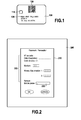
- FIG 1 there is shown a bank card 100 according to the invention. It is a map of dimensions 54 x 85.6 x 0.76 mm, but other dimensions can be used. It comprises a microcircuit 110 including a controller and a memory in a secure set with flush contacts.
- the card furthermore has, on one of its surfaces, here the surface on which the contacts of microcircuit 110 are flush, a two-dimensional bar code 120, corresponding to the QR standard (for " Quick Response ").
- a two-dimensional bar code 120 corresponding to the QR standard (for " Quick Response ").
- Other two-dimensional bar code standards could be used, and a one-dimensional bar code is also a possible variant.
- a pictogram that responds to other coding conventions may also be used, provided that it permits the encoding of information for a transaction.
- This bar code 120 is affixed to the surface of the card via an attached sticker, an ink printing on the upper layer of the card, an etching of the upper layer by laser, or a laser treatment of a photosensitive layer. covered with a protective layer or other physical action that makes it possible to form a visible drawing by a reading tool (for example a camera) external to the card.
- the barcode 120 may be affixed to any one of the faces of the card, for example on the front face near banking elements presented in alphanumeric form, or on the rear face near banking elements presented under the form of a magnetic tape.
- the card may have, in some embodiments, in alphanumeric form and on the same surface or on its other surface the card number according to ISO / IEV 7812. This is a succession of 16 digits (each between 0 and 9), grouped in blocks of 4 digits.
- the card may also show the expiration month and the identity of the holder, in the form first name and then name. These different elements constitute banking elements presented in alphanumeric form 130.
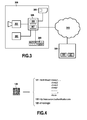
- the barcode 120 can be scanned by a barcode reader connected to a suitable software. It encodes, in one embodiment, the information presented in figure 4 .
- the bar code 120 encodes a command html 121 (html stands for " hypertext markup language ”) describing a frame 210 represented in figure 2 and pre-filled information 220 to be displayed in frame 210.
- Pre-filled information 220 may be explicitly indicated in the html command 121 or, alternatively, only a memory address where to remove them may be indicated in the command.
- the bar code 120 may also encode an address 122 identifying a server 320 on a network (represented in FIG. figure 3 ). This is an address on the Internet, but it could also be a telephone link to an audio-phone identification service, or a telephone link to an SMS server.
- bar code 120 also encodes, in some embodiments, encrypted information 123 useful for a local control operation, which will be presented later.
- the structure of frame 210 is presented in figure 2 .
- the frame 210 is displayed on a screen 200 of a terminal used for a transaction. It presents various pre-filled information such as the card number, its expiry date, the card security code (three-digit code often affixed to the back of the bank cards), as well as amounts corresponding to two different levels of authorization.
- the first is a maximum transaction amount that does not require a particular control operation (called authorization level 1), and the second is a maximum level beyond which no transaction is allowed with the card 100 (called the level of authorization).
- authorization level 1 a maximum transaction amount that does not require a particular control operation
- authorization level 2 a maximum level beyond which no transaction is allowed with the card 100
- authorization level 3 a maximum level beyond which no transaction is allowed with the card 100
- authorization level 2 a maximum transaction amount that does not require a particular control operation
- authorization 2 is a maximum level beyond which no transaction is allowed with the card 100 (called the level of authorization).
- authorization 2 The frame 210 also presents the name of the bank issuing the card 100 and a dialog box (entry box 230) for the entry of a password.
- the frame includes two OK and CANCEL buttons (or "chord” and "cancel").
- the amount of the transaction is either to be completed by the user in a dialog box, or pre-filled, as shown on the figure 2 because the html code of the frame 210 provides for obtaining this amount of a memory of the terminal serving for the transaction.
- FIG 3 There is shown a read terminal 300, serving for the transaction, and which is connected by a network 310 to a server 320.
- the reading terminal 300 comprises a keyboard 280 (or at least a human-machine interface for entering an alphanumeric string), a camera 302 for reading 2D barcodes, a SIM card (for " Subscriber Identification Module “ 309) and a control unit 305, comprising in particular local software 307 for the processing of transaction requests.
- a transaction counter 308 is also present in the control unit 305 or, alternatively, in the SIM card 309 for greater security (alternative not shown).
- the SIM card is included in the control unit 305.
- the screen 200 is part of the read reading terminal 300.
- the server 320 may include in a memory a reference password 325 associated with the card holder 100 and an e-mail address 327 associated with the cardholder 100.
- the figure 5 presents the message transfers between the control unit 305 (or the SIM card 309), the server 320 and a message box 500 of the cardholder 100.
- This messaging is for example displayed on the screen of a mobile phone 510 represented in figure 6 . It can be an SMS or MMS message messaging on the GSM network, or an email-type messenger viewable on a mobile phone or a personal computer connected to the Internet, by a wired or cellular connection.
- the control unit 305 performs, using cryptographic means present in the SIM card 309, a signature step 409 of a request 410 which is sent to the server 320, whose address 122 is known by reading 120.
- the solicitation 410 includes the amount of the transaction.
- the signature 409 is based on the value of the transaction counter 308, which is also sent unencrypted in the solicitation.
- the server 320 checks whether the signature of the solicitation is authentic. Then, if this is the case and if the amount of the transaction exceeds the maximum transaction amount that does not require a particular control operation (authorization level 1), the server 320 sends a message 420 to the messenger's mailbox.
- the card 100 (whose address 327 is known to the server 320), requesting a confirmation and comprising a token, which can be encoded.
- the token is decoded if necessary by the microcircuit card 515 (SIM card) of the mobile terminal 510, and displayed on the screen thereof. It may consist of an alphanumeric string.
- the control unit 305 is further prevented from sending a token by the server 320 during a step 430 constituting a first response from the server.
- the holder of the message is then able to submit the token in the control unit 305, for example via the keyboard 280.
- the token submitted is then transmitted by the control unit 305 to the server 320, during a step 440. If the server 320 finds that this token submitted is identical to that previously transmitted to the mail 500, it validates the transaction and informs the control unit 305 during a step 450 constituting a second response from the server.
- the transaction does not exceed the maximum transaction amount that does not require a particular control operation (authorization level 1), it is simply performed a response step 430 from the server to the control unit 305, indicating that the transaction has been processed.
- the process according to this embodiment is represented in figure 7 , from the point of view of the user.
- this process it is first of all proceeded to the determination of the transaction during a step 700, using the reading terminal 300.
- This determination can be made by selecting and validating an online purchase on Internet (use presented in Figures 8 and 9 ), or the use of an application dedicated to purchases in a store (supermarket or network of stores equipped with codes readable by camera, as is presented in figure 11 ), or by a merchant with a payment terminal (use presented in figure 10 ).
- the information obtained is stored in a memory of the control unit 305.
- the holder of the bank card 100 then scans the barcode 120 with the camera 302 during a step 710.
- the control unit 305 then extracts the code 121 from the frame 210 and the latter is displayed on the screen 200 by using for certain pre-filled fields the information set during the transaction determining step 700, retrieved from the memory of the read reading terminal 300.
- a local control of the identity of the user is further implemented via an applet in a security element ("secure element ").
- secure element This is a step 720, during which the user is prompted to enter his password in the entry box 230.
- the user then gives his agreement to the transaction using the "OK" button, after having checked the pre-filled information 220.
- the password entered in the input box 230 is compared to that contained in the encrypted information 123.
- password verification instead of password verification, other secure solutions can be implemented, such as a biometric verification, a PIN code, or a list of choices offered on a human-machine interface. information being present in the encrypted information set 123.
- the control can also be performed remotely by the server 320, having the reference password 325.
- the solicitation 410 comprises the transfer of the password typed by the user in the dialog box.
- the left branch then corresponds to a scenario without implementation of the particular verification operation, and the right one to a scenario with the particular verification operation.
- the additional steps in this branch are those presented in dotted lines on the figure 5 .
- a test 730 is performed to determine whether the transaction amount exceeds the authorization level 1. This test is carried out either by the control unit 305 (in which case the result of the test is included in the solicitation 410 ) or by the server 320 (in which case the server 320 previously stores the authorization level associated with each card 100). If the amount of the transaction exceeds the authorization level 1, the step 420 of sending a message to the mailbox of the holder is implemented by the server 320. The user then consults his mailbox 500 during a step 740, discovers the token and copies it to the reading terminal 300 using the keyboard 280, during a step 750.
- control unit 305 performs, using cryptographic means present in the SIM card 309, a signature step 1409 of a solicitation 1410 which is sent to the server 320, the solicitation comprising the amount of the transaction.
- the server verifies the authenticity of the signature. Then, if the amount of the transaction exceeds the maximum transaction amount that does not require a particular verification operation (authorization level 1), the server 320 sends a message 1420 to the cardholder's messaging machine 100 (of which address 327 is known to the server), requesting confirmation.
- This message includes at least one characteristic of the contemplated transaction, and preferably includes the nature of the good or service purchased, the quantity, the unit price and the total price.
- the holder of the messaging system responds by entering his password or a previously agreed response code and by sending by the messaging service a response 1430 including the password or the code, as well as the characteristics of the transaction, taken from the user. the previous message.
- This response constitutes a signed Purchase Order . If the signature of the purchase order (here, the password) is authenticated by the server 320, it responds by sending a message 1440 acceptance of the response to the control unit 305 .
- the server 320 If the amount of the transaction does not exceed the authorization level 1, the server 320 immediately transmits the acceptance message 1140.
- a first mode of use is a purchase using a mobile phone with a camera and connected to the Internet, constituting the reading terminal 300. This is represented in figure 8 where the user of the telephone scans the barcode of the card 100 with the camera. A password is then requested in the entry box 230 of the frame 210. If the password is correctly entered by the user and that the amount of the transaction is less than authorization level 1, the transaction is finalized on this basis without further verification.
- a second mode of use is a purchase using a fixed terminal (typically a computer), or a touch pad, constituting the reading terminal 300 (represented in FIG. figure 9 ) with a webcam and Internet access.
- the reading terminal 300 does not include a SIM card 309, and the solicitation 410 or 1410 is not signed.
- a third mode of use is a purchase in a point of sale having a conventional payment terminal for microcircuit and contact-based bank cards.
- a terminal includes a keyboard and screen set 9100 adapted to enter a PIN.
- a camera 9200 for scanning the barcode.
- the entire conventional terminal and the camera, as well as the appropriate software application is the reading terminal 300.
- the function of the conventional terminal 9100 contact reading of the microcircuit is not used .
- a fourth mode of use is a purchase in a store or restaurant.
- the seller here a restaurant
- the mobile telephone serving as terminal 300 is then used to scan the bar code 120 of the card 100.
- An application 350 recorded in the mobile phone makes it possible to link the two identifiers and to organize the transaction.
- the bar code 120 is presented on a liquid crystal display included in the card body.
- the barcode can be a dynamic code, generated according to logical rules implemented by a controller included in the card, and preferably in a secure circuit of the card, such as the microcircuit 110.
- the barcode then represents one-time passwords, issued for each transaction attempt.
- the server 320 verifies the password either by verifying it on the basis of transmitted data, or on the basis of a prerecorded list.
- the dynamic code can be generated from the transaction counter 308.
Landscapes
- Engineering & Computer Science (AREA)
- Business, Economics & Management (AREA)
- Physics & Mathematics (AREA)
- General Physics & Mathematics (AREA)
- Theoretical Computer Science (AREA)
- Accounting & Taxation (AREA)
- Strategic Management (AREA)
- General Business, Economics & Management (AREA)
- Computer Networks & Wireless Communication (AREA)
- Microelectronics & Electronic Packaging (AREA)
- Computer Security & Cryptography (AREA)
- Finance (AREA)
- Financial Or Insurance-Related Operations Such As Payment And Settlement (AREA)
- Telephone Function (AREA)
Abstract
Description
- L'invention s'inscrit dans le domaine des moyens de paiement sécurisé, comme par exemple les cartes bancaires, notamment les cartes bancaires à microcircuit.
- Quand une transaction est effectuée en l'absence de terminal de paiement capable de lire par lui-même la carte, le détenteur de la carte doit saisir son numéro de carte sur un clavier, ainsi souvent que le numéro de sécurité de la carte et la date de validité de celle-ci. Cette opération est fastidieuse, et nécessite que l'utilisateur se concentre pour ne pas se tromper dans la saisie des numéros, qui sont longs.
- On connait du document
US2010/0008535 un dispositif électronique portable pour encaisser un paiement par carte bancaire de manière simple par lecture optique de la surface de la carte. Le dispositif peut être un téléphone portable et utilise la reconnaissance des caractères imprimés sur la carte à l'aide d'une caméra, d'une application de segmentation de la surface de la carte et de reconnaissance des caractères sur les différents segments. - On connait aussi du document
WO01/58080 - Ces différentes solutions présentent l'inconvénient, pour la première d'être faiblement sécurisée et difficile à utiliser pour un utilisateur pressé, qui est obligé de positionner finement sa carte devant la caméra, et, pour la seconde, de nécessiter un équipement spécifique. Il existe donc un besoin pour des solutions de paiement à distance sécurisées, faciles à utiliser et rapides. Pour cela il est proposé une carte selon la revendication 1 et un procédé selon la revendication 8.
- L'invention consiste en une carte bancaire comportant une surface de présentation d'un pictogramme codant au moins une information pour la réalisation d'une transaction. Cette information peut être un numéro de la carte, une date de validité de la carte, un nom ou prénom d'un titulaire de la carte, un identifiant de catégorie d'un émetteur de la carte, un identifiant d'un émetteur de la carte, un code de sécurité de la carte, ou un mot de passe à usage unique.
- Selon une caractéristique particulière, le pictogramme est un code-barres, par exemple un code 2D, par exemple un code QR (« Quick Response »), ou également un pictogramme dynamique.
- Selon une caractéristique avantageuse, la carte comprend un contrôleur pour générer un pictogramme à usage unique pour une transaction.
- Selon diverses mises en oeuvre de l'invention, la surface est un écran LCD, ou une couche de matière synthétique imprimée ou gravée, incluse dans le corps de carte ou rapportée par exemple par collage.
- Préférentiellement, le pictogramme code une adresse d'un serveur de transaction.
- L'invention consiste aussi en un procédé de réponse à une demande de transaction comprenant des étapes consistant à recevoir une demande de transaction comprenant un pictogramme codant au moins une information pour la réalisation d'une transaction et une information complémentaire, extraire du pictogramme ladite information pour la réalisation d'une transaction, et en fonction de ladite information pour la réalisation d'une transaction et de l'information complémentaire, ainsi que de règles d'autorisation prédéfinies, émettre une autorisation ou un refus en réponse à la demande de transaction.
- Le procédé est au moins partiellement mis en oeuvre par un serveur relié à un réseau de télécommunications étendu, ou par un terminal de paiement disposant d'un clavier et d'une caméra, ou encore par une entité électronique portable disposant d'un clavier et d'une caméra.
- Selon un mode de réalisation, le procédé comprend de plus l'affichage sur un écran d'une boîte d'entrée pour une chaîne alphanumérique constituant l'information complémentaire.
- Dans une variante, les règles d'autorisation prédéfinies comprennent une règle selon laquelle l'autorisation est donnée en fonction d'un résultat d'un test de comparaison appliqué à l'information complémentaire.
- Selon un mode particulier, le procédé comprend l'envoi d'un message à destination d'une messagerie d'un titulaire d'un moyen de paiement comprenant un élément d'identification à usage unique, puis la réception d'un élément d'identification fourni par un demandeur de la demande de transaction et la comparaison de l'élément d'identification à usage unique et de l'élément d'identification fourni.
- Le procédé peut aussi comprendre l'envoi d'au moins une caractéristique de la transaction à destination d'une messagerie d'un titulaire d'un moyen de paiement, puis la réception d'un bon de commande signé par un demandeur de la demande de transaction et l'authentification d'une signature du bon de commande.
- Enfin, dans un mode de réalisation, ladite information pour la réalisation d'une transaction est un mot de passe à usage unique.
- Ainsi, entre autres avantages cités à titre non limitatif, l'invention permet à moindre coût le déploiement d'une solution de paiement bancaire sans contact grâce aux équipements de saisie et de traitement d'information déjà largement déployés parmi les dispositifs utilisateurs ou équipements individuels du grand public (téléphones portables, ordinateurs, tablettes équipés de caméra).
- Elle permet également de mettre en oeuvre une solution de paiement sécurisée, sans contact et rapide à l'utilisation lors d'une transaction bancaire. L'utilisateur évite l'étape fastidieuse de saisie des informations bancaires, ou des informations pour la réalisation d'une transaction. Il est également protégé contre une possible copie frauduleuse des informations bancaires présentes sous forme alphanumérique sur la carte et, qui, en l'absence d'un pictogramme les codant, doivent être recopiées lors de l'utilisation de celle-ci dans un commerce.
-
- La
figure 1 présente une carte selon un mode de réalisation de l'invention. - La
figure 2 présente un élément généré lors de l'utilisation d'une carte comme celle présentée enfigure 1 . - La
figure 3 présente un agencement utilisé pour mettre en oeuvre un procédé selon un mode de réalisation, et coopérant avec un carte telle que présentée enfigure 1 . - La
figure 4 présente un détail de la carte de lafigure 1 . - La
figure 5 présente un aspect d'un procédé de réponse selon un mode de réalisation de l'invention - La
figure 6 présente une entité électronique portable utilisée pour mettre en oeuvre un procédé selon un mode de réalisation. - La
figure 7 présente le mode d'utilisation de l'invention par le titulaire de la carte de lafigure 1 . - Les
figures 8 à 11 présentent des scénarios d'utilisation de l'invention. - La
figure 12 présente une alternative au mode de réalisation présenté enfigure 5 . - En
figure 1 , on a représenté un carte bancaire 100 selon l'invention. Il s'agit d'une carte de dimensions 54 x 85,6 x 0.76 mm, mais d'autres dimensions peuvent être utilisées. Elle comprend un microcircuit 110 incluant un contrôleur et une mémoire dans un ensemble sécurisé à contacts affleurants. - La carte présente de plus, sur l'une de ses surfaces, ici la surface sur laquelle les contacts du microcircuit 110 affleurent, un code-barres 120 à deux dimensions, répondant à la norme QR (pour « Quick Response »). D'autres normes de code-barres à deux dimensions pourraient être utilisées, et un code-barres à une seule dimension est également une variante possible. Un pictogramme répondant à d'autres conventions de codage peut également être utilisé, pourvu qu'il permette de coder des informations pour une transaction.
- Ce code-barres 120 est apposé sur la surface de la carte via un autocollant rapporté, une impression à l'encre sur la couche supérieure de la carte, une gravure de la couche supérieure par laser, ou un traitement laser d'une couche photosensible recouverte d'une couche de protection ou une autre action physique qui permet de former un dessin visible par un outil de lecture (par exemple une caméra) extérieur à la carte. Le code-barres 120 peut être apposé sur l'une quelconque des faces de la carte, par exemple sur la face avant à proximité d'éléments bancaires présentés sous forme alphanumérique, ou sur la face arrière à proximité d'éléments bancaires présentés sous la forme d'une bande magnétique.
- La carte peut présenter, dans certains modes de réalisation, sous une forme alphanumérique et sur cette même surface ou sur son autre surface le numéro de la carte selon la norme ISO/IEV 7812. Il s'agit d'une succession de 16 chiffres (compris chacun entre 0 et 9), groupés par blocs de 4 chiffres. La carte peut présenter également le mois d'expiration et l'identité du titulaire, sous la forme prénom puis nom. Ces différents éléments constituent des éléments bancaires présentés sous forme alphanumérique 130.
- Le code-barres 120 peut être scanné par un lecteur de codes-barres relié à un logiciel adapté. Il code, dans un mode de réalisation, les informations présentées en
figure 4 . - Tout d'abord le code-barres 120 code une commande html 121 (html signifie « hypertext markup language ») décrivant un cadre 210 représenté en
figure 2 , et des informations pré-remplies 220 à afficher dans le cadre 210. Les informations pré-remplies 220 peuvent être indiquées explicitement dans la commande html 121 ou, dans une alternative, seule une adresse mémoire où les retirer peut être indiquée dans la commande. - Le code-barres 120 peut coder aussi une adresse 122 identifiant un serveur 320 sur un réseau (représenté en
figure 3 ). Il s'agit ici d'une adresse sur le réseau Internet, mais il pourrait aussi s'agir d'un lien téléphonique vers un service audio-téléphonique d'identification, ou un lien téléphonique vers un serveur de SMS. - Enfin, le code-barres 120 code aussi, dans certains modes de réalisation, des informations cryptées 123 utiles pour une opération de contrôle local, qui sera présentée plus loin.
- La structure du cadre 210 est présentée en
figure 2 . Le cadre 210 s'affiche sur un écran 200 d'un terminal servant pour une transaction. Il présente différentes informations 220 pré-remplies, telles que le numéro de la carte, sa date d'expiration, le code de sécurité de la carte (code en trois chiffres souvent apposé à l'arrière des cartes bancaires), ainsi que des montants correspondant à deux niveaux d'autorisation différents. - Le premier est un montant maximum de transaction ne nécessitant pas une opération de contrôle particulière (appelé niveau d'autorisation 1), et le deuxième est un niveau maximum au-delà duquel aucune transaction n'est autorisée avec la carte 100 (appelé niveau d'autorisation 2). Le cadre 210 présente aussi le nom de la banque émettrice de la carte 100 et une boîte de dialogue (boîte de saisie 230) pour l'entrée d'un mot de passe. Enfin, le cadre inclut deux boutons OK et CANCEL (ou « accord » et « annulation »).
- Le montant de la transaction est soit à remplir par l'utilisateur dans une boite de dialogue, soit pré-rempli, comme cela est représenté sur la
figure 2 , car le code html du cadre 210 prévoit l'obtention de ce montant d'une mémoire du terminal servant pour la transaction. - En
figure 3 , on a représenté un terminal de lecture 300, servant pour la transaction, et qui est relié par un réseau 310 à un serveur 320. - Le terminal de lecture 300 comprend un clavier 280 (ou du moins une interface homme-machine permettant de saisir une chaîne alphanumérique), une caméra 302 pour lire des codes-barres 2D, une carte SIM (pour « Subscriber Identification Module » 309) et une unité de contrôle 305, comprenant notamment un logiciel local 307 pour le traitement de demandes de transaction. Un compteur de transaction 308 est également présent, dans l'unité de contrôle 305 ou, dans une alternative, dans la carte SIM 309 pour une plus grande sécurité (alternative non représentée). Dans une variante, la carte SIM est incluse dans l'unité de contrôle 305. L'écran 200 fait partie du terminal de lecture de lecture 300.
- Le serveur 320 peut comprendre dans une mémoire un mot de passe de référence 325 associé au titulaire de la carte 100 et une adresse de messagerie 327 associée au titulaire de la carte 100.
- La
figure 5 présente les transferts de messages entre l'unité de contrôle 305 (ou la carte SIM 309), le serveur 320 et une messagerie 500 du titulaire de la carte 100. Cette messagerie est par exemple visualisée sur l'écran d'un téléphone portable 510 représenté enfigure 6 . Il peut s'agir d'une messagerie de messages SMS ou MMS sur le réseau GSM, ou une messagerie de type email consultable sur un téléphone portable ou un ordinateur personnel relié à Internet, par une connexion filaire ou cellulaire. - L'unité de contrôle 305 effectue, à l'aide de moyens cryptographiques présents dans la carte SIM 309, à une étape de signature 409 d'une sollicitation 410 qui est envoyée au serveur 320, dont l'adresse 122 est connue par la lecture du code-barres 120. La sollicitation 410 comprend le montant de la transaction. La signature 409 est basée sur la valeur du compteur de transactions 308, qui est aussi envoyée de manière non cryptée dans la sollicitation.
- Le serveur 320 vérifie si la signature de la sollicitation est authentique. Puis, si c'est le cas et si le montant de la transaction excède le montant maximum de transaction ne nécessitant pas une opération de contrôle particulière (niveau d'autorisation 1), le serveur 320 envoie un message 420 à la messagerie du titulaire de la carte 100 (dont l'adresse 327 est connue du serveur 320), demandant une confirmation et comprenant un jeton, qui peut être codé. Le jeton est décodé si nécessaire par la carte à microcircuit 515 (carte SIM) du terminal mobile 510, et affiché sur l'écran de celui-ci. Il peut être constitué d'une chaîne alphanumérique.
- L'unité de contrôle 305 est de plus prévenue de l'envoi d'un jeton par le serveur 320 au cours d'une étape 430 constituant une première réponse du serveur. Le titulaire de la messagerie est alors en mesure de soumettre le jeton dans l'unité de contrôle 305, par exemple via le clavier 280. Le jeton soumis est alors transmis par l'unité de contrôle 305 au serveur 320, au cours d'une étape 440. Si le serveur 320 constate que ce jeton soumis est identique à celui précédemment transmis à la messagerie 500, il valide la transaction et en informe l'unité de contrôle 305 au cours d'une étape 450 constituant une deuxième réponse du serveur.
- Si la transaction n'excède pas le montant maximum de transaction ne nécessitant pas une opération de contrôle particulière (niveau d'autorisation 1), il est simplement procédé à une étape de réponse 430 du serveur à l'unité de contrôle 305, indiquant que la transaction a été traitée.
- Le processus selon ce mode de réalisation est représenté en
figure 7 , du point de vue de l'utilisateur. Dans ce processus, il est tout d'abord procédé à la détermination de la transaction au cours d'une étape 700, utilisant le terminal de lecture 300. Cette détermination peut être faite par la sélection et la validation d'un achat en ligne sur Internet (utilisation présentée enfigures 8 et 9 ), ou l'utilisation d'une application dédiée à des achats dans un magasin (supermarché ou réseau de magasins équipés de codes lisibles par caméra, comme cela est présenté enfigure 11 ), ou par un commerçant disposant d'un terminal de paiement (utilisation présentée enfigure 10 ). Les informations obtenues sont mémorisées dans une mémoire de l'unité de contrôle 305. - Le détenteur de la carte bancaire 100 scanne alors le code-barres 120 avec la caméra 302 au cours d'une étape 710. L'unité de contrôle 305 extrait alors le code 121 du cadre 210 et celui-ci est affiché sur l'écran 200 en utilisant pour certains champs pré-remplis les informations fixées lors de l'étape de détermination de la transaction 700, récupérées dans la mémoire du terminal de lecture de lecture 300.
- Un contrôle local de l'identité de l'utilisateur est de plus mis en oeuvre via une applet dans un élément de sécurité (« secure element »). Cela constitue une étape 720, au cours de laquelle l'utilisateur est invité à entrer son mot de passe dans la boîte de saisie 230. L'utilisateur donne ensuite son accord à la transaction en utilisant le bouton « OK », après avoir vérifié les informations pré-remplies 220. Le mot de passe entré dans la boîte de saisie 230 est comparé à celui contenu dans les informations cryptées 123.
- A la place de la vérification d'un mot de passe d'autres solutions sécurisées peuvent être mises en oeuvre, comme une vérification de données biométriques, d'un code PIN, ou une liste de choix proposée sur une interface homme-machine, ces informations étant présentes dans l'ensemble d'informations cryptées 123.
- Le contrôle peut aussi être effectué de manière distante par le serveur 320, disposant du mot de passe de référence 325. Dans ce cas, la sollicitation 410 comprend le transfert du mot de passe tapé par l'utilisateur dans la boîte de dialogue.
- En
figure 7 , la branche de gauche correspond ensuite à un scénario sans mise en oeuvre de l'opération de vérification particulière, et celle de droite à un scénario avec l'opération de vérification particulière. Les étapes supplémentaires dans cette branche sont celles présentées en pointillés sur lafigure 5 . - Il est procédé à un test 730 pour déterminer si le montant de la transaction excède le niveau d'autorisation 1. Ce test est mis en oeuvre soit par l'unité de contrôle 305 (auquel cas le résultat du test est inclus dans la sollicitation 410) ou par le serveur 320 (auquel cas le serveur 320 mémorise préalablement le niveau d'autorisation associé à chaque carte 100). Si le montant de la transaction excède le niveau d'autorisation 1, l'étape 420 d'envoi d'un message à la messagerie du titulaire est mise en oeuvre par le serveur 320. L'utilisateur consulte alors sa messagerie 500 au cours d'une étape 740, y découvre le jeton et recopie celui-ci dans le terminal de lecture 300 à l'aide du clavier 280, au cours d'une étape 750.
- Dans une variante représentée en
figure 12 , l'unité de contrôle 305 effectue, à l'aide de moyens cryptographiques présents dans la carte SIM 309, une étape de signature 1409 d'une sollicitation 1410 qui est envoyée au serveur 320, la sollicitation comprenant le montant de la transaction. - Le serveur vérifie l'authenticité de la signature. Ensuite, si le montant de la transaction excède le montant maximum de transaction ne nécessitant pas une opération de vérification particulière (niveau d'autorisation 1), le serveur 320 envoie un message 1420 à la messagerie du titulaire de la carte 100 (dont l'adresse 327 est connue du serveur), demandant une confirmation. Ce message comprend au moins une caractéristique de la transaction envisagée, et de préférence, comprend la nature du bien ou service acheté, la quantité, le prix unitaire et le prix total.
- Le titulaire de la messagerie y répond en saisissant son mot de passe ou un code de réponse préalablement convenu et en adressant par le service de messagerie une réponse 1430 incluant le mot de passe ou le code, ainsi que les caractéristiques de la transaction, reprises du le message précédent. Cette réponse constitue un bon de commande signé (« Purchase order »). Si la signature du bon de commande (ici, le mot de passe) est authentifiée par le serveur 320, celui-ci réagit par l'envoi d'un message 1440 d'acceptation de la réponse à destination de l'unité de contrôle 305.
- Si le montant de la transaction n'excède pas le niveau d'autorisation 1, le serveur 320 émet d'emblée le message 1140 d'acceptation.
- En
figures 8 à 11 , on a représenté des modes d'utilisation de l'invention. - Un premier mode d'utilisation est un achat à l'aide d'un téléphone mobile disposant d'une caméra et relié à Internet, constituant le terminal de lecture 300. Cela est représenté en
figure 8 , où l'utilisateur du téléphone scanne avec la caméra le code-barres de la carte 100. Un mot de passe lui est alors demandé dans la boîte de saisie 230 du cadre 210. Si le mot de passe est entré correctement par l'utilisateur et que le montant de la transaction est inférieur au niveau d'autorisation 1, la transaction est finalisée sur cette base, sans autre vérification. - Un deuxième mode d'utilisation est un achat à l'aide d'un terminal fixe (typiquement un ordinateur), ou une tablette tactile, constituant le terminal de lecture 300 (représentée en
figure 9 ) disposant d'une webcam et d'un accès à Internet. Dans ce mode de réalisation, le terminal de lecture 300 n'inclut pas de carte SIM 309, et la sollicitation 410 ou 1410 n'est pas signée. - Un troisième mode d'utilisation, représenté en
figure 10 , est un achat dans un point de vente disposant d'un terminal conventionnel de paiement pour cartes bancaires à microcircuit et fonctionnant par contact. Un tel terminal inclut un ensemble clavier et écran 9100 adapté pour saisir un code PIN. Il y est ajouté, selon l'invention, une caméra 9200 pour scanner le code-barres. L'ensemble du terminal conventionnel et de la caméra, ainsi que de l'application logicielle adéquate constitue le terminal de lecture 300. Dans ce mode d'utilisation, la fonction du terminal conventionnel 9100 de lecture par contact du microcircuit n'est pas utilisée. - Un quatrième mode d'utilisation, représenté en
figure 11 , est un achat dans un magasin ou un restaurant. Le vendeur (ici un restaurant) est identifié par un code-barres qui est scanné par la caméra d'un téléphone mobile constituant le terminal de lecture 300. Le téléphone mobile servant de terminal 300 est ensuite utilisé pour scanner le code-barres 120 de la carte 100. Une application 350 enregistrée dans le téléphone mobile permet de faire le lien entre les deux identifiants et d'organiser la transaction. - Dans un autre mode de réalisation, le code-barres 120 est présenté sur un écran à cristaux liquides inclus dans le corps de carte. Le code-barres peut être un code dynamique, généré suivant des règles logiques mises en oeuvre par un contrôleur compris dans la carte, et de préférence dans un circuit sécurisé de la carte, tel que le microcircuit 110. Le code-barres représente alors des mots de passe à usage unique, délivré à chaque tentative de transaction. Le serveur 320 vérifie le mot de passe soit en le vérifiant sur la base de données transmises, soit sur la base d'une liste préenregistrée. Le code dynamique peut être généré à partir du compteur de transaction 308.
- L'invention ne se limite pas aux modes particuliers de réalisation présentés, mais s'étend à toutes les variantes dans le cadre de la portée des revendications.
Claims (16)
- Carte bancaire (100) comportant une surface de présentation d'un pictogramme (120) codant au moins une information (121, 122, 123) pour la réalisation d'une transaction.
- Carte bancaire (100) selon la revendication précédente, dans laquelle la au moins une information est un numéro de la carte, une date de validité de la carte, un nom ou prénom d'un titulaire de la carte, un identifiant de catégorie d'un émetteur de la carte, un identifiant d'un émetteur de la carte, un code de sécurité de la carte, ou un mot de passe à usage unique.
- Carte bancaire (100) selon l'une des revendications précédentes, dans laquelle le pictogramme est un code-barres, par exemple un code 2D, par exemple un code QR.
- Carte bancaire (100) selon la revendication précédente, dans laquelle le pictogramme est un pictogramme dynamique.
- Carte bancaire (100) selon l'une des revendications précédentes, dans laquelle la carte comprend un contrôleur pour générer un pictogramme à usage unique pour une transaction.
- Carte bancaire (100) selon l'une des revendications précédentes, dans laquelle la surface est un écran LCD, ou une couche de matière synthétique imprimée ou gravée, incluse dans le corps de carte ou rapportée par exemple par collage.
- Carte bancaire (100) selon l'une des revendications précédentes, dans laquelle le pictogramme code une adresse (122) d'un serveur de transaction (320).
- Procédé de réponse à une demande de transaction comprenant des étapes consistant à recevoir une demande de transaction comprenant un pictogramme (120) codant au moins une information (121, 122, 123) pour la réalisation d'une transaction et une information complémentaire (230), extraire du pictogramme ladite information pour la réalisation d'une transaction, et en fonction de ladite information pour la réalisation d'une transaction et de l'information complémentaire, ainsi que de règles d'autorisation prédéfinies, émettre une autorisation ou un refus en réponse à la demande de transaction.
- Procédé de réponse selon la revendication précédente, dans lequel le procédé est au moins partiellement mis en oeuvre par un serveur (320) relié à un réseau de télécommunications étendu (310).
- Procédé de réponse selon l'une des revendications de procédé précédentes, dans lequel le procédé est au moins partiellement mis en oeuvre par un terminal de paiement (300) disposant d'un clavier (280) et d'une caméra (302).
- Procédé de réponse selon l'une des revendications de procédé précédentes, dans lequel le procédé est au moins partiellement mis en oeuvre par une entité électronique portable (fig 8) disposant d'un clavier et d'une caméra.
- Procédé de réponse selon l'une des revendications de procédé précédentes, dans lequel le procédé comprend de plus l'affichage sur un écran d'une boîte d'entrée (230) pour une chaîne alphanumérique constituant l'information complémentaire.
- Procédé de réponse selon l'une des revendications de procédé précédentes, dans lequel les règles d'autorisation prédéfinies comprennent une règle selon laquelle l'autorisation est donnée en fonction d'un résultat d'un test de comparaison appliqué à l'information complémentaire.
- Procédé de réponse selon l'une des revendications de procédé précédentes, dans lequel le procédé comprend l'envoi d'un message (420) à destination d'une messagerie (500) d'un titulaire d'un moyen de paiement comprenant un élément d'identification à usage unique, puis la réception (440) d'un élément d'identification fourni par un demandeur de la demande de transaction et la comparaison de l'élément d'identification à usage unique et de l'élément d'identification fourni.
- Procédé de réponse selon l'une des revendications de procédé précédentes, dans lequel le procédé comprend l'envoi d'au moins une caractéristique de la transaction (1420) à destination d'une messagerie (500) d'un titulaire d'un moyen de paiement, puis la réception (1430) d'un bon de commande signé par un demandeur de la demande de transaction et l'authentification d'une signature du bon de commande.
- Procédé de réponse selon l'une des revendications de procédé précédentes, dans lequel ladite information est un mot de passe à usage unique.
Applications Claiming Priority (1)
| Application Number | Priority Date | Filing Date | Title |
|---|---|---|---|
| FR1162591A FR2985344B1 (fr) | 2011-12-30 | 2011-12-30 | Carte bancaire et procede de reponse a une demande de transaction. |
Publications (1)
| Publication Number | Publication Date |
|---|---|
| EP2610824A1 true EP2610824A1 (fr) | 2013-07-03 |
Family
ID=47358418
Family Applications (1)
| Application Number | Title | Priority Date | Filing Date |
|---|---|---|---|
| EP12198857.0A Ceased EP2610824A1 (fr) | 2011-12-30 | 2012-12-21 | Carte bancaire et procédé de réponse à une demande de transaction |
Country Status (3)
| Country | Link |
|---|---|
| US (2) | US20130173405A1 (fr) |
| EP (1) | EP2610824A1 (fr) |
| FR (1) | FR2985344B1 (fr) |
Cited By (4)
| Publication number | Priority date | Publication date | Assignee | Title |
|---|---|---|---|---|
| CN104464117A (zh) * | 2014-12-29 | 2015-03-25 | 通邮信息技术有限公司 | 基于动态二维码银行自动柜员机取款方法及系统 |
| CN104504560A (zh) * | 2014-12-17 | 2015-04-08 | 张家港保税区润桐电子技术研发有限公司 | 一种基于二维码的工资卡转账方法 |
| CN104599408A (zh) * | 2014-12-29 | 2015-05-06 | 通邮信息技术有限公司 | 基于动态二维码的第三方账户自动柜员机取款方法及系统 |
| FR3120149A1 (fr) * | 2021-02-24 | 2022-08-26 | Ccs12 | Carte de paiement, procédé d’authentification et utilisation pour un paiement à distance |
Families Citing this family (22)
| Publication number | Priority date | Publication date | Assignee | Title |
|---|---|---|---|---|
| WO2015067725A1 (fr) | 2013-11-07 | 2015-05-14 | Scantrust Sa | Code à barres bidimensionnel et son procédé d'authentification |
| US9378502B2 (en) | 2014-09-23 | 2016-06-28 | Sony Corporation | Using biometrics to recover password in customer mobile device |
| US9202212B1 (en) | 2014-09-23 | 2015-12-01 | Sony Corporation | Using mobile device to monitor for electronic bank card communication |
| US9558488B2 (en) | 2014-09-23 | 2017-01-31 | Sony Corporation | Customer's CE device interrogating customer's e-card for transaction information |
| US9317847B2 (en) | 2014-09-23 | 2016-04-19 | Sony Corporation | E-card transaction authorization based on geographic location |
| US9367845B2 (en) | 2014-09-23 | 2016-06-14 | Sony Corporation | Messaging customer mobile device when electronic bank card used |
| US9292875B1 (en) | 2014-09-23 | 2016-03-22 | Sony Corporation | Using CE device record of E-card transactions to reconcile bank record |
| US9355424B2 (en) | 2014-09-23 | 2016-05-31 | Sony Corporation | Analyzing hack attempts of E-cards |
| US9646307B2 (en) | 2014-09-23 | 2017-05-09 | Sony Corporation | Receiving fingerprints through touch screen of CE device |
| US10262316B2 (en) | 2014-09-23 | 2019-04-16 | Sony Corporation | Automatic notification of transaction by bank card to customer device |
| US9953323B2 (en) | 2014-09-23 | 2018-04-24 | Sony Corporation | Limiting e-card transactions based on lack of proximity to associated CE device |
| US10740735B2 (en) | 2016-03-09 | 2020-08-11 | Mastercard International Incorporated | Systems and methods for use in transferring funds between payment accounts |
| US11948133B2 (en) | 2016-03-09 | 2024-04-02 | Mastercard International Incorporated | Systems and methods for use in transferring funds between payment accounts |
| US9830756B1 (en) * | 2016-05-25 | 2017-11-28 | Bank Of America Corporation | Resolving card malfunctions using card information access control |
| WO2019173667A1 (fr) | 2018-03-08 | 2019-09-12 | Mastercard International Incorporated | Procédés de transaction de paiement activé par code et demande de transfert |
| US10733645B2 (en) | 2018-10-02 | 2020-08-04 | Capital One Services, Llc | Systems and methods for establishing identity for order pick up |
| FR3092414B1 (fr) * | 2019-02-01 | 2021-01-08 | Idemia Identity & Security France | Procédé d’authentification, serveur et dispositif électronique d’identité |
| US11210676B2 (en) | 2019-07-01 | 2021-12-28 | Capital One Services, Llc | System and method for augmented reality display of account information |
| CN115315924A (zh) * | 2020-03-05 | 2022-11-08 | 维萨国际服务协会 | 使用移动装置在访问控制服务器处进行用户认证 |
| US11151541B1 (en) | 2020-04-21 | 2021-10-19 | VocaLink Limited | Peer-to-peer prepaid card management system |
| US11295311B2 (en) | 2020-06-29 | 2022-04-05 | Capital One Services, Llc | System and method for handling point of sale card rejections |
| US12166750B2 (en) | 2022-02-08 | 2024-12-10 | Capital One Services, Llc | Systems and methods for secure access of storage |
Citations (9)
| Publication number | Priority date | Publication date | Assignee | Title |
|---|---|---|---|---|
| WO1995006371A1 (fr) * | 1993-08-26 | 1995-03-02 | At & T Corp. | Carte d'authentification a sequence de code a barres changeante |
| WO2001058080A1 (fr) | 2000-02-07 | 2001-08-09 | Beepcard Incorporated | Systeme d'authentification numerique de presence physique (transactions et authentification) |
| US20050103837A1 (en) * | 2003-11-13 | 2005-05-19 | Boyer Charles E. | High-security card and system |
| WO2006044940A2 (fr) * | 2004-10-19 | 2006-04-27 | Veritec, Inc. | Cartes securisees et procedes associes |
| US20080296367A1 (en) * | 2007-05-31 | 2008-12-04 | Red Hat, Inc. | Electronic ink for identity card |
| US20090194599A1 (en) * | 2008-02-01 | 2009-08-06 | Barclays Bank Delaware | Systems and methods for encrypted bar code generation |
| US20090300106A1 (en) * | 2008-04-24 | 2009-12-03 | Semacode Corporation | Mobile book-marking and transaction system and method |
| US20100008535A1 (en) | 2008-07-14 | 2010-01-14 | Abulafia David | Mobile Phone Payment System using Integrated Camera Credit Card Reader |
| US20110101085A1 (en) * | 2006-01-03 | 2011-05-05 | Katsuya Nakagawa | Remote code reader system, local code reader, host computer, advertisement support method, input device, and recording medium |
Family Cites Families (4)
| Publication number | Priority date | Publication date | Assignee | Title |
|---|---|---|---|---|
| EP2070040A4 (fr) * | 2006-10-03 | 2012-08-01 | Mastercard International Inc | Procédés et appareil d'authentification de serveur mandataire |
| EP2199965A1 (fr) * | 2009-04-22 | 2010-06-23 | Euro-Wallet B.V. | Client, serveur et système de transaction de paiement |
| US20110238473A1 (en) * | 2010-03-23 | 2011-09-29 | Sanjay Dattatreya Sankolli | Alternate mobile payment service |
| US10102591B2 (en) * | 2011-01-21 | 2018-10-16 | Livingsocial, Inc. | Systems and methods to implement point of sale (POS) terminals, process orders and manage order fulfillment |
-
2011
- 2011-12-30 FR FR1162591A patent/FR2985344B1/fr not_active Expired - Fee Related
-
2012
- 2012-12-21 EP EP12198857.0A patent/EP2610824A1/fr not_active Ceased
- 2012-12-28 US US13/730,389 patent/US20130173405A1/en not_active Abandoned
-
2017
- 2017-02-10 US US15/429,647 patent/US10580003B2/en not_active Expired - Fee Related
Patent Citations (10)
| Publication number | Priority date | Publication date | Assignee | Title |
|---|---|---|---|---|
| WO1995006371A1 (fr) * | 1993-08-26 | 1995-03-02 | At & T Corp. | Carte d'authentification a sequence de code a barres changeante |
| WO2001058080A1 (fr) | 2000-02-07 | 2001-08-09 | Beepcard Incorporated | Systeme d'authentification numerique de presence physique (transactions et authentification) |
| WO2001057625A2 (fr) * | 2000-02-07 | 2001-08-09 | Comsense Technologies, Ltd. | Systeme d'authentification numerique de presence physique (de dispositif a dispositif) |
| US20050103837A1 (en) * | 2003-11-13 | 2005-05-19 | Boyer Charles E. | High-security card and system |
| WO2006044940A2 (fr) * | 2004-10-19 | 2006-04-27 | Veritec, Inc. | Cartes securisees et procedes associes |
| US20110101085A1 (en) * | 2006-01-03 | 2011-05-05 | Katsuya Nakagawa | Remote code reader system, local code reader, host computer, advertisement support method, input device, and recording medium |
| US20080296367A1 (en) * | 2007-05-31 | 2008-12-04 | Red Hat, Inc. | Electronic ink for identity card |
| US20090194599A1 (en) * | 2008-02-01 | 2009-08-06 | Barclays Bank Delaware | Systems and methods for encrypted bar code generation |
| US20090300106A1 (en) * | 2008-04-24 | 2009-12-03 | Semacode Corporation | Mobile book-marking and transaction system and method |
| US20100008535A1 (en) | 2008-07-14 | 2010-01-14 | Abulafia David | Mobile Phone Payment System using Integrated Camera Credit Card Reader |
Cited By (6)
| Publication number | Priority date | Publication date | Assignee | Title |
|---|---|---|---|---|
| CN104504560A (zh) * | 2014-12-17 | 2015-04-08 | 张家港保税区润桐电子技术研发有限公司 | 一种基于二维码的工资卡转账方法 |
| CN104464117A (zh) * | 2014-12-29 | 2015-03-25 | 通邮信息技术有限公司 | 基于动态二维码银行自动柜员机取款方法及系统 |
| CN104599408A (zh) * | 2014-12-29 | 2015-05-06 | 通邮信息技术有限公司 | 基于动态二维码的第三方账户自动柜员机取款方法及系统 |
| CN104599408B (zh) * | 2014-12-29 | 2017-08-01 | 通邮信息技术有限公司 | 基于动态二维码的第三方账户自动柜员机取款方法及系统 |
| FR3120149A1 (fr) * | 2021-02-24 | 2022-08-26 | Ccs12 | Carte de paiement, procédé d’authentification et utilisation pour un paiement à distance |
| WO2022179986A1 (fr) * | 2021-02-24 | 2022-09-01 | Ccs12 | Carte de paiement, procédé d'authentification et utilisation pour un paiement à distance |
Also Published As
| Publication number | Publication date |
|---|---|
| US20130173405A1 (en) | 2013-07-04 |
| FR2985344A1 (fr) | 2013-07-05 |
| FR2985344B1 (fr) | 2019-06-21 |
| US20170154335A1 (en) | 2017-06-01 |
| US10580003B2 (en) | 2020-03-03 |
Similar Documents
| Publication | Publication Date | Title |
|---|---|---|
| FR2985344B1 (fr) | Carte bancaire et procede de reponse a une demande de transaction. | |
| TWI511518B (zh) | 多功能驗證系統之改良 | |
| US10853809B2 (en) | System and method for conducting secure electronic transactions | |
| US20190073674A1 (en) | Systems and methods for item-based transaction authentication | |
| US9785935B2 (en) | Split mobile payment system | |
| US20140100973A1 (en) | Smartphone virtual payment card | |
| CN106688004B (zh) | 一种交易认证方法、装置、移动终端、pos终端及服务器 | |
| US20110251910A1 (en) | Mobile Phone as a Switch | |
| CN107408170B (zh) | 认证激活的增强现实显示装置 | |
| EP3756116B1 (fr) | Auto-inscription biométrique efficace | |
| WO2011130422A2 (fr) | Téléphone mobile en tant que commutateur | |
| CN101990676A (zh) | 移动电话交易系统和方法 | |
| JP2009533781A (ja) | 電子装置を用いた安全な商取引のための方法及びシステム | |
| WO2012151685A1 (fr) | Système de paiement mobile dissocié | |
| JP2010510609A (ja) | 磁気帯エミュレータおよび生体認証付き販売時点取引用装置 | |
| KR20040088587A (ko) | 캐시리스 자동판매시스템, 방법, 자동판매기 및 센터장치 | |
| EP3252692A1 (fr) | Procédé de fourniture de données relatives à une transaction de paiement, dispositif et programme correspondant | |
| US8905304B1 (en) | System and method for processing certified or registered mail | |
| GB2506421A (en) | Electronic receipt | |
| EP3384449A1 (fr) | Methode de paiement et dispositif utilisant cette methode | |
| EP4298580A1 (fr) | Carte de paiement, procédé d'authentification et utilisation pour un paiement à distance | |
| MX2013013166A (es) | Sistema de pago movil dividido. | |
| JP2007241913A (ja) | 商品受け渡しシステム | |
| WO2002046984A1 (fr) | Procede securise de transaction entre un acheteur et un vendeur | |
| JP2006318099A (ja) | 領収証発行システム |
Legal Events
| Date | Code | Title | Description |
|---|---|---|---|
| PUAI | Public reference made under article 153(3) epc to a published international application that has entered the european phase |
Free format text: ORIGINAL CODE: 0009012 |
|
| AK | Designated contracting states |
Kind code of ref document: A1 Designated state(s): AL AT BE BG CH CY CZ DE DK EE ES FI FR GB GR HR HU IE IS IT LI LT LU LV MC MK MT NL NO PL PT RO RS SE SI SK SM TR |
|
| AX | Request for extension of the european patent |
Extension state: BA ME |
|
| 17P | Request for examination filed |
Effective date: 20131226 |
|
| RBV | Designated contracting states (corrected) |
Designated state(s): AL AT BE BG CH CY CZ DE DK EE ES FI FR GB GR HR HU IE IS IT LI LT LU LV MC MK MT NL NO PL PT RO RS SE SI SK SM TR |
|
| STAA | Information on the status of an ep patent application or granted ep patent |
Free format text: STATUS: EXAMINATION IS IN PROGRESS |
|
| 17Q | First examination report despatched |
Effective date: 20170425 |
|
| RAP1 | Party data changed (applicant data changed or rights of an application transferred) |
Owner name: IDEMIA FRANCE |
|
| STAA | Information on the status of an ep patent application or granted ep patent |
Free format text: STATUS: THE APPLICATION HAS BEEN REFUSED |
|
| 18R | Application refused |
Effective date: 20200620 |