EP2606131B1 - Use of glycoside hydrolase 61 family proteins in processing of cellulose - Google Patents
Use of glycoside hydrolase 61 family proteins in processing of cellulose Download PDFInfo
- Publication number
- EP2606131B1 EP2606131B1 EP11818904.2A EP11818904A EP2606131B1 EP 2606131 B1 EP2606131 B1 EP 2606131B1 EP 11818904 A EP11818904 A EP 11818904A EP 2606131 B1 EP2606131 B1 EP 2606131B1
- Authority
- EP
- European Patent Office
- Prior art keywords
- protein
- seq
- cellulase
- proteins
- sequence
- Prior art date
- Legal status (The legal status is an assumption and is not a legal conclusion. Google has not performed a legal analysis and makes no representation as to the accuracy of the status listed.)
- Not-in-force
Links
Images


Classifications
-
- C—CHEMISTRY; METALLURGY
- C12—BIOCHEMISTRY; BEER; SPIRITS; WINE; VINEGAR; MICROBIOLOGY; ENZYMOLOGY; MUTATION OR GENETIC ENGINEERING
- C12P—FERMENTATION OR ENZYME-USING PROCESSES TO SYNTHESISE A DESIRED CHEMICAL COMPOUND OR COMPOSITION OR TO SEPARATE OPTICAL ISOMERS FROM A RACEMIC MIXTURE
- C12P19/00—Preparation of compounds containing saccharide radicals
- C12P19/02—Monosaccharides
-
- C—CHEMISTRY; METALLURGY
- C12—BIOCHEMISTRY; BEER; SPIRITS; WINE; VINEGAR; MICROBIOLOGY; ENZYMOLOGY; MUTATION OR GENETIC ENGINEERING
- C12N—MICROORGANISMS OR ENZYMES; COMPOSITIONS THEREOF; PROPAGATING, PRESERVING, OR MAINTAINING MICROORGANISMS; MUTATION OR GENETIC ENGINEERING; CULTURE MEDIA
- C12N9/00—Enzymes; Proenzymes; Compositions thereof; Processes for preparing, activating, inhibiting, separating or purifying enzymes
- C12N9/14—Hydrolases (3)
- C12N9/24—Hydrolases (3) acting on glycosyl compounds (3.2)
- C12N9/2402—Hydrolases (3) acting on glycosyl compounds (3.2) hydrolysing O- and S- glycosyl compounds (3.2.1)
- C12N9/2405—Glucanases
- C12N9/2408—Glucanases acting on alpha -1,4-glucosidic bonds
- C12N9/2411—Amylases
- C12N9/2414—Alpha-amylase (3.2.1.1.)
- C12N9/2417—Alpha-amylase (3.2.1.1.) from microbiological source
- C12N9/242—Fungal source
-
- C—CHEMISTRY; METALLURGY
- C12—BIOCHEMISTRY; BEER; SPIRITS; WINE; VINEGAR; MICROBIOLOGY; ENZYMOLOGY; MUTATION OR GENETIC ENGINEERING
- C12N—MICROORGANISMS OR ENZYMES; COMPOSITIONS THEREOF; PROPAGATING, PRESERVING, OR MAINTAINING MICROORGANISMS; MUTATION OR GENETIC ENGINEERING; CULTURE MEDIA
- C12N9/00—Enzymes; Proenzymes; Compositions thereof; Processes for preparing, activating, inhibiting, separating or purifying enzymes
- C12N9/14—Hydrolases (3)
- C12N9/24—Hydrolases (3) acting on glycosyl compounds (3.2)
- C12N9/2402—Hydrolases (3) acting on glycosyl compounds (3.2) hydrolysing O- and S- glycosyl compounds (3.2.1)
- C12N9/2405—Glucanases
- C12N9/2434—Glucanases acting on beta-1,4-glucosidic bonds
-
- C—CHEMISTRY; METALLURGY
- C12—BIOCHEMISTRY; BEER; SPIRITS; WINE; VINEGAR; MICROBIOLOGY; ENZYMOLOGY; MUTATION OR GENETIC ENGINEERING
- C12P—FERMENTATION OR ENZYME-USING PROCESSES TO SYNTHESISE A DESIRED CHEMICAL COMPOUND OR COMPOSITION OR TO SEPARATE OPTICAL ISOMERS FROM A RACEMIC MIXTURE
- C12P19/00—Preparation of compounds containing saccharide radicals
- C12P19/14—Preparation of compounds containing saccharide radicals produced by the action of a carbohydrase (EC 3.2.x), e.g. by alpha-amylase, e.g. by cellulase, hemicellulase
-
- C—CHEMISTRY; METALLURGY
- C12—BIOCHEMISTRY; BEER; SPIRITS; WINE; VINEGAR; MICROBIOLOGY; ENZYMOLOGY; MUTATION OR GENETIC ENGINEERING
- C12P—FERMENTATION OR ENZYME-USING PROCESSES TO SYNTHESISE A DESIRED CHEMICAL COMPOUND OR COMPOSITION OR TO SEPARATE OPTICAL ISOMERS FROM A RACEMIC MIXTURE
- C12P7/00—Preparation of oxygen-containing organic compounds
- C12P7/02—Preparation of oxygen-containing organic compounds containing a hydroxy group
- C12P7/04—Preparation of oxygen-containing organic compounds containing a hydroxy group acyclic
- C12P7/06—Ethanol, i.e. non-beverage
- C12P7/08—Ethanol, i.e. non-beverage produced as by-product or from waste or cellulosic material substrate
- C12P7/10—Ethanol, i.e. non-beverage produced as by-product or from waste or cellulosic material substrate substrate containing cellulosic material
-
- C—CHEMISTRY; METALLURGY
- C12—BIOCHEMISTRY; BEER; SPIRITS; WINE; VINEGAR; MICROBIOLOGY; ENZYMOLOGY; MUTATION OR GENETIC ENGINEERING
- C12P—FERMENTATION OR ENZYME-USING PROCESSES TO SYNTHESISE A DESIRED CHEMICAL COMPOUND OR COMPOSITION OR TO SEPARATE OPTICAL ISOMERS FROM A RACEMIC MIXTURE
- C12P7/00—Preparation of oxygen-containing organic compounds
- C12P7/02—Preparation of oxygen-containing organic compounds containing a hydroxy group
- C12P7/04—Preparation of oxygen-containing organic compounds containing a hydroxy group acyclic
- C12P7/06—Ethanol, i.e. non-beverage
- C12P7/14—Multiple stages of fermentation; Multiple types of microorganisms or re-use of microorganisms
-
- Y—GENERAL TAGGING OF NEW TECHNOLOGICAL DEVELOPMENTS; GENERAL TAGGING OF CROSS-SECTIONAL TECHNOLOGIES SPANNING OVER SEVERAL SECTIONS OF THE IPC; TECHNICAL SUBJECTS COVERED BY FORMER USPC CROSS-REFERENCE ART COLLECTIONS [XRACs] AND DIGESTS
- Y02—TECHNOLOGIES OR APPLICATIONS FOR MITIGATION OR ADAPTATION AGAINST CLIMATE CHANGE
- Y02E—REDUCTION OF GREENHOUSE GAS [GHG] EMISSIONS, RELATED TO ENERGY GENERATION, TRANSMISSION OR DISTRIBUTION
- Y02E50/00—Technologies for the production of fuel of non-fossil origin
- Y02E50/10—Biofuels, e.g. bio-diesel
-
- Y—GENERAL TAGGING OF NEW TECHNOLOGICAL DEVELOPMENTS; GENERAL TAGGING OF CROSS-SECTIONAL TECHNOLOGIES SPANNING OVER SEVERAL SECTIONS OF THE IPC; TECHNICAL SUBJECTS COVERED BY FORMER USPC CROSS-REFERENCE ART COLLECTIONS [XRACs] AND DIGESTS
- Y02—TECHNOLOGIES OR APPLICATIONS FOR MITIGATION OR ADAPTATION AGAINST CLIMATE CHANGE
- Y02P—CLIMATE CHANGE MITIGATION TECHNOLOGIES IN THE PRODUCTION OR PROCESSING OF GOODS
- Y02P20/00—Technologies relating to chemical industry
- Y02P20/50—Improvements relating to the production of bulk chemicals
- Y02P20/52—Improvements relating to the production of bulk chemicals using catalysts, e.g. selective catalysts
Definitions
- the disclosure relates generally to the field of glycolytic enzymes and their use. More specifically, it provides GH61 proteins from Myceliophtora thermophila, and the use of such proteins in production of fermentable sugars and ethanol from cellulosic biomass.
- Cellulosic biomass is a significant renewable resource for the generation of fermentable sugars. These sugars can be used as substrates for fermentation and other metabolic processes to produce biofuels, chemical compounds and other commercially valuable end-products. While the fermentation of sugars such as glucose to ethanol is relatively straightforward, efficient conversion of cellulosic biomass to fermentable sugars is challenging. Ladisch et al., 1983, Enzyme Microb. Technol. 5:82 .
- the conversion of cellulosic biomass to fermentable sugars may begin with chemical, mechanical, enzymatic or other pretreatments to increase the susceptibility of cellulose to hydrolysis. Such pretreatment may be followed by the enzymatic conversion of cellulose to cellobiose, cello-oligosaccharides, glucose, and other sugars and sugar polymers, using enzymes that break down cellulose. These enzymes are collectively referred to as "cellulases” and include endoglucanases, ⁇ -glucosidases and cellobiohydrolases.
- WO 2009/033071 discloses SEQ ID NO: 44 which shares 100% identity with the Myceliophthora thermophila GH61 enzyme of SEQ ID NO: 2 as disclosed herein.
- WO 2009/085935 discloses two GH61 enzymes from Myceliophthora thermophila (SEQ ID NOs: 2 and 4) and enzyme mixtures.
- the invention provides a composition
- a composition comprising: a) a recombinantly produced GH61 protein that comprises an amino acid sequence that is at least 80% identical to SEQ ID NO:2 or fragments of SEQ ID NO:2 that have GH61 activity; and b) cellulase enzymes including at least one endoglucanase (EG), at least one ⁇ glucosidase (BGL), at least one Type 1 cellobiohydrolase (CBH1), and at least one Type 2 cellobiohydrolase (CBH2).
- EG endoglucanase
- BGL ⁇ glucosidase
- CBH1 Type 1 cellobiohydrolase
- CBH2 Type 2 cellobiohydrolase
- the invention also provides a method of producing fermentable sugars from a cellulosic biomass comprising contacting a cellulosic substrate with a composition, culture medium or cell lysate containing a GH61 protein and cellulase enzymes, wherein: a) the GH61 protein comprises an amino acid sequence that is at least 80% identical to SEQ ID NO:2 or a biologically active fragment thereof; and b) the cellulase enzymes include at least one endoglucanase (EG), at least one ⁇ -glucosidase (BGL), at least one Type 1 cellobiohydrolase (CBH1), and at least one Type 2 cellobiohydrolase (CBH2).
- EG endoglucanase
- BGL ⁇ -glucosidase
- CBH1 Type 1 cellobiohydrolase
- CBH2 Type 2 cellobiohydrolase
- the invention further provides a method of producing an end product from a cellulosic substrate, comprising: a) contacting the cellulosic substrate with a composition of the invention whereby fermentable sugars are produced from the substrate; and b) contacting the fermentable sugars with a microorganism in a fermentation to produce an end product.
- the invention also provides a method of producing an end product from a cellulosic substrate, comprising: a) obtaining fermentable sugars produced according to a method of the invention; and b) contacting the fermentable sugars with a microorganism in a fermentation to produce an end product.
- GH61 Glycoside Hydrolase 61 Family proteins obtained from Myceliophtora thermophila, and nucleic acids that encode such proteins.
- the disclosure also provides isolated and purified GH61 proteins from M . thermophila culture broth. These proteins can be used to increase yield of products from reactions in which a cellulose-containing substrate undergoes saccharification by one or a combination of cellulase enzymes, such as endoglucanases, ⁇ -glucosidases, and cellobiohydrolases.
- the addition or presence of recombinant or isolated GH61 protein may increase yield of product from cellulase enzymes by, for example, at least 20%, 30%, 50%, 70%, 2-fold, 3-fold or more.
- the disclosure provides a composition comprising an isolated or recombinant GH61 protein, and a method for preparing such a composition.
- the protein may be isolated from M . thermophila, or it may be obtained by recombinant production.
- Amino acid sequences of twenty-four full-length M. thermophila GH61 proteins are provided.
- the GH61 proteins disclosed include proteins that comprise an amino acid sequence that is at least about 60%, about 70%, about 80%, about 85%, about 90%, about 92%, about 93%, about 94%, about 95%, about 96%, about 97% about 98% or about 99% identical to any one of the listed proteins (SEQ ID NOS:1-30) or a biologically active fragment thereof.
- An exemplary GH61 protein is GH61a (SEQ ID NO:2).
- Other exemplary GH61 proteins include GH61o, GH61v, GH61x, GH61b, and GH61e (SEQ ID NOs:6, 13, 15, 16, 19, 30).
- Other exemplary GH61 proteins include GH61f, GH61v, GH61p, GH61g, and GH61i (SEQ ID NOs:7, 13, 20, 21, 23, 26).
- the composition prepared according to the method of this invention comprises an isolated or recombinant GH61 protein and one or more cellulase enzymes listed in this disclosure, including but not limited to cellulase enzymes selected from endoglucanases (EG), ⁇ -glucosidases (BGL), Type 1 cellobiohydrolases (CBH1), and Type 2 cellobiohydrolases (CBH2).
- cellulase enzymes selected from endoglucanases (EG), ⁇ -glucosidases (BGL), Type 1 cellobiohydrolases (CBH1), and Type 2 cellobiohydrolases (CBH2).
- the GH61 protein and cellulase enzymes may be obtained from the same or different host cell types.
- Another embodiment of the disclosure is a method for producing a fermentable sugar from a cellulosic substrate.
- a slurry comprising the substrate is contacted with a composition comprising a GH61 protein so as to produce fermentable sugars such as glucose and xylose from the substrate.
- the composition may also contain one or more enzymes selected from cellulase proteins (endoglucanases, ⁇ -glucosidases, Type 1 cellobiohydrolases, and Type 2 cellobiohydrolases), esterases, xylanases, hemicellulases, lipases, proteases, amylases, and glucoamylases.
- the substrate may be derived from, for example, wheat, wheat straw, sorghum, corn, rice, barley, sugar cane bagasse, grasses, switchgrass, corn grain, corn cobs, corn fiber, or a combination thereof, exemplified by pretreated wheat straw.
- the fermentable sugar can be recovered and used to produce an end product such as an alcohol (such as ethanol or butanol), a sugar alcohol (such as sorbitol), an organic acid (such as lactic acid, acrylic acid, acetic acid, succinic acid, glutamic acid, citric acid, or propionic acid), an amino acid (such as glycine, lysine, or asparatic acid, an organic acid, an alkane, an alkene, a diol, or glycerol.
- an alcohol such as ethanol or butanol
- a sugar alcohol such as sorbitol
- an organic acid such as lactic acid, acrylic acid, acetic acid, succinic acid, glutamic acid, citric acid, or propionic acid
- an amino acid such as glycine, lysine, or asparatic acid
- Another embodiment of the disclosure is a method for increasing yield of fermentable sugars in a saccharification reaction by one or more cellulase enzymes, by conducting the reaction in the presence of a GH61 protein as referred to above.
- the disclosure provides is a method of hydrolyzing a cellulose substrate.
- the substrate is contacted with a composition comprising one or more recombinant GH61 proteins, one or more ⁇ -glucosidases (BGL), and one or more cellobiohydrolases (CBH).
- the enzyme composition is substantially free of endoglucanase (EG).
- the hydrolyzing may result in a glucose yield that is at least 20%, 30%, 50%, 70%, 2-fold, 3-fold or more than the yield of the same reaction conducted in the absence of said GH61 protein.
- Another embodiment of the disclosure is a method of producing an end product from a cellulosic substrate.
- the substrate is contacted with a composition containing GH61 protein as already referred to under conditions whereby fermentable sugars are produced.
- the fermentable sugars are then contacted with a microorganism in a fermentation to produce an end product such as those listed above.
- This method is suitable for preparing an alcohol, particularly ethanol, wherein the microorganism is a yeast.
- inventions of the disclosure include: a) the recombinant GH61 proteins already referred to, optionally produced with a heterologous signal peptide; b) a nucleic acid sequence encoding the GH61 protein which may be operably linked to a heterologous promoter; c) a host cell producing such recombinant GH61 proteins, exemplified by M. thermophila, yeast, a Chaetomium, a Thielavia, an Acremonium, a Myceliophthora, an Aspergillus, or a Trichoderma host cell.
- the disclosure further embodies the use of a recombinantly produced GH61 protein in the production of ethanol.
- the GH61 protein comprises an amino acid sequence that is at least 60%, about 70%, about 80%, about 85%, about 90%, about 92%, about 93%, about 94%, about 95%, about 96%, about 97% about 98% or about 99% identical to any one of the listed proteins or a fragment thereof having GH61 activity.
- a nucleic acid encoding a GH61 protein Described herein is a nucleic acid encoding a GH61 protein.
- the disclosure also provides a cell containing a recombinant nucleic acid sequence encoding a protein sequence of this invention (SEQ ID NOs:1 to 30) operably-linked to a heterologous promoter.
- Host cells may be (for example) M. thermophila cells or yeast cells.
- the recombinant nucleic acid sequence may include SEQ ID NO:31; or any one of SEQ ID NOs:32 to 59.
- the cell may also express at least one recombinant cellulase protein selected from an endoglucanase (EG), a ⁇ -glucosidase (BGL), a Type 1 cellobiohydrolase (CBH1), and/or a Type 2 cellobiohydrolase (CBH2).
- the cell may express the GH61 protein and at least one, at least two, or at least three recombinant cellulase proteins selected from an endoglucanase (EG), a ⁇ -glucosidase (BGL1 a Type 1 cellobiohydrolase (CBH1), and/or a Type 2 cellobiohydrolase (CBH2), and/or variants of said cellulase proteins.
- the invention provides a composition containing a GH61 protein (e.g., SEQ ID NO:2), an endoglucanase (EG), a ⁇ -glucosidase (BGL), a Type 1 cellobiohydrolase (CBH1), and a Type 2 cellobiohydrolase (CBH2), where the combined mass of the GH61 protein, EG, BGL, CBH1 and CBH2 is at least about 20%, 40%, 60%, 70%, 80%, 90%, 95%, or substantially all of the total cell-free protein in the composition.
- a GH61 protein e.g., SEQ ID NO:2
- EG endoglucanase
- BGL ⁇ -glucosidase
- CBH1 Type 1 cellobiohydrolase
- CBH2 Type 2 cellobiohydrolase
- One, two, three, or all four of the CBH1, CBH2, EG and BGL enzymes that may be present in the composition can be variants derived from naturally occurring cellulase proteins.
- the composition may also be a cell culture broth containing cellulase proteins.
- a GH61 protein comprising any of SEQ ID NOs:3 to 30 or a secreted fragment thereof.
- the protein comprises the secreted fragment and the corresponding signal peptide sequence, if present.
- the disclosure provides a GH61 protein variant with at least about 60%, at least about 70%, at least about 75%, at least about 80%, at least about 85%, at least about 90%, at least about 91%, at least about 92%, at least about 93%, at least about 94%, at least about 95%, at least about 96%, at least about 97%, at least about 98%, or at least about 99% sequence identity to a polypeptide or biologically fragment provided herein.
- Described herein is a recombinant nucleic acid sequence encoding a protein described above, which may have the sequence of the naturally occurring gene or fragment thereof.
- the protein-encoding sequence of the nucleic acid may be operably linked to a heterologous signal sequence.
- the recombinant nucleic acid sequence is operably linked to a heterologous promoter.
- a host cell containing a recombinant nucleic acid of the disclosure is disclosed.
- the cell may express at least one, two, three or four recombinant cellulase proteins selected from endoglucanases (EG), ⁇ -glucosidases (BGL), Type 1 cellobiohydrolases (CBH1), and/or Type 2 cellobiohydrolases (CBH2).
- EG endoglucanases
- BGL ⁇ -glucosidases
- CBH1 Type 1 cellobiohydrolases
- CBH2 Type 2 cellobiohydrolases
- compositions containing at least one isolated protein comprising a sequence selected from the secreted portion of SEQ ID NOs:1 to 30, and or at least one biologically active fragment thereof.
- the composition may also contain at least one endoglucanase (EG), ⁇ -glucosidase (BGL), Type 1 cellobiohydrolase (CBH1), and/or Type 2 cellobiohydrolase (CBH2), where the combined mass of the GH61 protein, EG, BGL, CBH1 and/or CBH2 is at least about 70% of the total cell-free protein in the composition.
- EG endoglucanase
- BGL ⁇ -glucosidase
- CBH1 Type 1 cellobiohydrolase
- CBH2 Type 2 cellobiohydrolase
- the disclosure provides methods for saccharification by (a) culturing a cell of the invention under conditions in which at least one GH61 protein is secreted into the culture broth, and (b) combining the broth and a cellulosic biomass under conditions in which saccharification occurs, where (a) may take place before or simultaneously with (b).
- the disclosure provides a method of hydrolyzing a starch, comprising contacting the starch with a composition comprising one or more recombinant GH61 proteins and one or more amylase(s).
- GH61 proteins increase yield of fermentable sugars when a cellulose-containing substrate undergoes saccharification by one or more cellulase enzymes. Fermentable sugars produced by saccharification may be used, among other uses, in fermentation reactions to produce end-products, such as, but not limited to ethanol.
- GH61 proteins can be isolated from M . thermophila cells. GH61 proteins can also be produced recombinantly by expressing a nucleic acid that encodes any of the GH61 protein sequences provided in this disclosure, including wild-type sequences and variants and fragments of wild-type sequences. Preparation and use of GH61 proteins, and compositions of the invention are described in more detail in the sections that follow.
- nucleic acids are written left to right in 5' to 3' orientation; amino acid sequences are written left to right in amino to carboxy orientation, respectively.
- the headings provided herein are not limitations of the various aspects or embodiments that can be had by reference to the specification as a whole. Accordingly, the terms defined below are more fully defined by reference to the specification as a whole.
- GH61 protein is a protein with GH61 (or “cellulase enhancing") activity.
- a "GH61 protein” or GH61 polypeptide may have a sequence of a naturally occurring (wild-type) protein or may comprise variations relative to a wild-type protein.
- GH61 protein sequences shown in Tables 1 and 2 are considered wild-type sequences.
- a protein has "GH61 activity” or “cellulase enhancing activity” or is “biologically active” if, when included in a saccharification reaction (e.g., carried out using an endoglucanase, a ⁇ -glucosidase and Type 1 and Type 2 cellobiohydrolases) results in a greater amount (i.e., greater yield) of one or more soluble sugars (e.g., glucose) than the saccharification reaction carried out under the same conditions in the absence of the GH61 protein.
- a “biologically active variant” is a variant or fragment that retains at least some (e.g., at least 10%) of the GH61 activity of the wild-type protein.
- a "variant" GH61 protein is a GH61 protein comprising one or more modifications relative to wild-type GH61 (or the wild-type polynucleotide encoding GH61). Modifications include substitutions, insertions, deletions, and/or amino or carboxy truncations of one or more amino acid residues (or of one or more nucleotides or codons in the polynucleotide).
- a variant comprising a deletion relative to wild-type protein may be referred to as a "fragment.”
- a "fragment" of a GH61 protein is (a) a polypeptide with a wild-type sequence but comprising a deletion relative to SEQ ID NOS:1-30 or (b) a GH61 variant comprising a deletion relative to a polypeptide of SEQ ID NOS:1-30.
- amino acid substitution in a protein sequence is replacement of a single amino acid within that sequence with another amino acid.
- An amino acid substitution may be a "conservative" substitution, in which case the substituted amino acid that shares one or more chemical property with the amino acid it is replacing.
- Shared properties include the following: Basic amino acids: arginine (R), lysine (K), histidine (H); acidic amino acids: glutamic acid (E) and aspartic acid (D); uncharged polar amino acids: glutamine (Q) and asparagine (N); hydrophobic amino acids: leucine (L), isoleucine (I), valine (V); aromatic amino acids: phenylalanine (F), tryptophan (W), and tyrosine (Y); sulphur-containing amino acids: cysteine (C), methionine (M); small amino acids: glycine (G), alanine (A), serine (S), threonine (T), proline (P), cysteine (C), and methionine (M).
- pre-protein has its standard meaning in the art and refers to a polypeptide including an amino-terminal signal peptide (or leader sequence) region attached.
- the signal peptide is cleaved from the pre-protein by a signal peptidase concomitant with secretion of the protein.
- the secreted portion of the protein may be referred to as the "mature” protein or "secreted” protein.
- an amino acid sequence of a pre-protein the sequence will comprise a signal peptide portion and a secreted (mature) portion.
- signal peptide has its usual meaning in the art and refers to a amino acid sequence linked to the amino terminus of a polypeptide, which directs the encoded polypeptide into a cell's secretory pathway.
- “Saccharification” refers to an enzyme-catalyzed reaction that results in hydrolysis of a complex carbohydrate to fermentable sugar(s) (e.g., monosaccharides such as glucose or xylose).
- the enzymes may be cellulase enzyme(s) such as endoglucanases, ⁇ -glucosidases, Type 1 and/or Type 2 cellobiohydrolases, and combinations of such cellulase enzymes.
- the cellulase enzymes may be from a culture broth from a wild-type or cellulase-engineered organism that produces cellulase enzymes (e.g., a fungus such as M . thermophila or yeast).
- “Hydrolyzing” cellulose or another polysaccharide occurs when glycosidic bonds between at least some of the adjacent monosaccharides are hydrolyzed, thereby separating previously bonded monomer pairs from each other.
- Increasing" yield of a product (such as a fermentable sugar) from a reaction occurs when a particular component present during the reaction (such as a GH61 protein) causes more product to be produced, compared with a reaction conducted under the same conditions with the same substrate and other substituents, but in the absence of the component of interest.
- Improved refers to a GH61 variant polypeptide that exhibits an improvement in a property or properties as compared to the wild-type GH61 (e.g., SEQ ID NO:2) or a specified reference polypeptide.
- Improved properties may include, but are not limited to increased protein expression, increased thermoactivity, increased thermostability, increased pH activity, increased stability ( e . g ., increased pH stability), increased product specificity, increased specific activity, increased substrate specificity, increased resistance to substrate or end-product inhibition, increased chemical stability, reduced inhibition by glucose, increased resistance to inhibitors ( e . g ., acetic acid, lectins, tannic acids, and phenolic compounds), and altered pH/temperature profile.
- cellulase broadly refers to enzymes that catalyze the hydrolysis of cellulose ⁇ -1,4-glycosidic linkages to shorter cellulose chains, oligosaccharides, cellobiose and/or glucose, e.g., endoglucanases, ⁇ -glucosidases, and cellobiohydrolases.
- polynucleotide refers to a polymer of deoxyribonucleotides or ribonucleotides in either single- or double-stranded form, and complements thereof.
- a "gene” is a nucleic acid sequence that encodes a protein.
- the nucleic acid may or may not have any introns, may or may not be recombinant, and may or may not further comprise elements that affect transcription or translation.
- a cDNA sequence encoding a protein can sometimes be referred to as a "gene”.
- recombinant nucleic acid has its conventional meaning.
- a recombinant nucleic acid, or equivalently, “polynucleotide,” is one that is inserted into a heterologous location such that it is not associated with nucleotide sequences that normally flank the nucleic acid as it is found in nature (for example, a nucleic acid inserted into a vector or a genome of a heterologous organism).
- a nucleic acid sequence that does not appear in nature for example a variant of a naturally occurring gene, is recombinant.
- a cell containing a recombinant nucleic acid, or protein expressed in vitro or in vivo from a recombinant nucleic acid are also "recombinant.”
- recombinant nucleic acids include a protein-encoding DNA sequence that is (i) operably linked to a heterologous promoter and/or (ii) encodes a fusion polypeptide with a protein sequence and a heterologous signal peptide sequence.
- low to very high stringency conditions are defined as follows: prehybridization and hybridization at 42°C in 5xSSPE, 0.3% SDS, 200 ⁇ g/ml sheared and denatured salmon sperm DNA, and either 25% formamide for low stringencies, 35% formamide for medium and medium-high stringencies, or 50% formamide for high and very high stringencies, following standard Southern blotting procedures.
- the carrier material is finally washed three times each for 15 minutes using 2xSSC, 0.2% SDS 50°C (low stringency), at 55°C (medium stringency), at 60°C (medium-high stringency), at 65°C (high stringency), or at 70°C (very high stringency).
- expression vector refers to a DNA molecule, linear or circular, that comprises a segment encoding a polypeptide of the disclosure, and which is operably linked to additional segments that provide for its transcription (e.g., a promoter, a transcription terminator sequence, enhancers) and optionally a selectable marker.
- a promoter is “heterologous” to a gene sequence if the promoter is not associated in nature with the gene.
- a signal peptide is “heterologous” to a protein sequence when the signal peptide sequence is not associated with the protein in nature.
- operably linked refers to a configuration in which a regulatory sequence is located at a position relative to a polypeptide encoding sequence such that the regulatory sequence influences the expression of the polypeptide.
- operably linked refers to a configuration in which the signal sequence encodes an amino-terminal signal peptide fused to the polypeptide, such that expression of the gene produces a pre-protein.
- peptide As used herein, the terms “peptide,” “polypeptide,” and “protein” are used interchangeably herein to refer to a polymer of amino acid residues.
- amino acid refers to naturally occurring and synthetic amino acids, as well as amino acid analogs.
- biomass materials that contain cellulose.
- biomass substrate materials that can be acted on by cellulases (with GH61 proteins optionally present), typically after pretreatment, to produce fermentable sugars.
- cellulosic substrates include, but are not limited to, biomass such as wood, wood pulp, paper pulp, corn fiber, corn grain, corn cobs, crop residues such as corn husks, corn stover, grasses, wheat, wheat straw, barley, barley straw, hay, rice straw, switchgrass, waste paper, paper and pulp processing waste, woody or herbaceous plants, fruit or vegetable pulp, distillers grain, rice hulls, cotton, hemp, flax, sisal, sugar cane bagasse, sorghum, soy, components obtained from milling of grains, trees, branches, roots, leaves, wood chips, sawdust, shrubs and bushes, vegetables, fruits, and flowers and mixtures thereof.
- biomass such as wood, wood pulp, paper pulp, corn fiber, corn grain, corn cobs
- crop residues such as corn husks, corn stover, grasses, wheat, wheat straw, barley, barley straw, hay, rice straw, switchgrass, waste paper, paper and pulp processing waste, woody or herbaceous plants
- the cellulosic material is "pretreated,” or treated using methods known in the art, such as chemical pretreatment (e . g ., ammonia pretreatment, dilute acid pretreatment, dilute alkali pretreatment, or solvent exposure), physical pretreatment (e . g ., steam explosion or irradiation), mechanical pretreatment ( e . g ., grinding or milling) and biological pretreatment (e . g ., application of lignin-solubilizing microorganisms) and combinations thereof, to increase the susceptibility of cellulose to hydrolysis.
- chemical pretreatment e . g ., ammonia pretreatment, dilute acid pretreatment, dilute alkali pretreatment, or solvent exposure
- physical pretreatment e . g ., steam explosion or irradiation
- mechanical pretreatment e . g ., grinding or milling
- biological pretreatment e . g ., application of lignin-solubilizing microorganisms
- a cellulosic substrate is "derived from" a specific source (such as corn or wheat) by a process that comprises obtaining the source or a physical part of the source (such as a corn cob or wheat straw), and then optionally pretreating the source or part.
- a specific source such as corn or wheat
- a cellulase protein sequence (i.e., a cellulose variant) is "derived from" a wild-type cellulase sequence when it is produced by introducing variations into a wild-type sequence using in vitro mutageneisis or molecular evolution methods.
- the protein sequence will be at least 70% about 75%, about 80%, about 85%, about 90%, about 91%, about 92%, about 93%, about 94%, about 95% to the wild-type sequence.
- a cellulosic substrate is said to be "pretreated” when it has been processed by some physical and/or chemical means to facilitate saccharification.
- Fermentable sugars refers to simple sugars (monosaccharides, disaccharides and short oligosaccharides) such as but not limited to glucose, xylose, galactose, arabinose, mannose and sucrose. Fermentable sugar is any sugar that a microorganism can utilize or ferment.
- transform or “transformation,” as used in reference to a cell, means a cell has a non-native nucleic acid sequence integrated into its genome or as an episome ( e . g ., plasmid) that is maintained through multiple generations.
- introduction means conjugated, transfected, transduced or transformed (collectively “transformed") or otherwise incorporated into the genome of, or maintained as an episome in, the cell.
- a “cellulase-engineered” cell is a cell comprising at least one, at least two, at least three, or at least four recombinant sequences encoding a cellulase or cellulase variant, and in which expression of the cellulase(s) or cellulase variant(s) has been modified relative to the wild-type form.
- Expression of a cellulase is "modified” when a non-naturally occurring cellulase variant is expressed or when a naturally occurring cellulase is over-expressed.
- One way to over-express a cellulase is to operably link a strong (optionally constitutive) promoter to the cellulase encoding sequence.
- the cellulase-engineered cell may be a fungal cell, such as a yeast cell or a filamentous fungal cell (e.g., Acidothermus cellulolyticus, Thermobifida fusca, Humicola grisea, Myceliophthora thermophila, Chaetomium thermophilum, Acremonium sp., Thielavia sp, Trichoderma reesei, Aspergillus sp.).
- the cellulase-engineered cell is a M . thermophila cell.
- culture refers to growing a population of microbial (e.g., fungal) cells under in a liquid or solid culture medium.
- Some cultured cells express and secrete proteins, such as for example, GH61 proteins or cellulase proteins.
- proteins may be secreted into the medium, which is referred to by various terms, including cell culture medium, cell culture supernatant, and cell broth.
- the term “recovering” refers to the harvesting, isolating, collecting or separating a protein, sugar, cell or end product (e.g., alcohol) from a cell broth or, alternatively, solid culture medium.
- isolated refers to a nucleic acid, polypeptide, or other component that is partially or completely separated from components with which it is normally associated in nature (such as other proteins, nucleic acids, or cells).
- a product that has been "purified” is a product that has been enriched from the source from which it is obtained by at least 10-fold, and optionally by at least 100-fold, or at least 1000-fold.
- a protein that is obtained from a culture broth in which it represents 0.1 % of the total protein may be purified so that it is 1%, 2.5%, 10%, 25%, 50%, 80%, 95% or 100% (wt/wt) of the protein in the preparation.
- a product that is "partly purified” has been enriched from the source from which it is produced by at least 2-fold, or least 5-fold, but still contains at least 50%, and sometimes at least 90% (wt/wt) unrelated components other than the solvent.
- Fractionating a liquid product such as a culture broth means applying a separation process (such as salt precipitin, column chromatography, size exclusion, and filtration) or a combination of such processes so as to obtain a solution in which a desired protein (such as a GH61 protein, a cellulase enzyme, or a combination thereof) is a greater percentage of total protein in the solution than in the initial liquid product.
- a separation process such as salt precipitin, column chromatography, size exclusion, and filtration
- a desired protein such as a GH61 protein, a cellulase enzyme, or a combination thereof
- a “slurry” is an aqueous solution in which are dispersed one or more solid components, such as a cellulosic substrate.
- compositions comprising one or more proteins may be, for example, a cell free composition comprising the protein(s), a cell lysate, a cell broth comprising the protein(s), e.g., in secreted form; a cell comprising the protein(s), such as a recombinant cell expressing the protein(s); a mixture of two or more cell populations that express different proteins (e.g., one cell expressing a recombinant GH61 protein and a second cell expressing cellulase protein).
- cell-free composition refers to a protein-containing composition in which cells and cellular debris have been removed, such as a purified cellulase mixture or a cell-incubation broth containing secreted protein, from which cells and insoluble material have been removed.
- percent identity refers to a comparison of two optimally aligned sequences over a comparison window.
- the comparison window may include additions or deletions in either sequence to optimize alignment.
- optimal alignment and scoring can be accomplished manually, the process can be facilitated by using a computer-implemented alignment algorithm. Examples are the BLAST and BLAST 2.0 algorithms, described in Altschul et al., 1990, J. Mol. Biol. 215: 403-410 and Altschul et al., 1977, Nucleic Acids Res. 3389-3402 .
- the degree of identity between two amino acid sequences can be determined using the Needleman-Wunsch algorithm ( Needleman and Wunsch, 1970, J. Mol. Biol.
- Needle program of the EMBOSS package EMBOSS: The European Molecular Biology Open Software Suite, Rice et al., 2000, Trends in Genetics 16: 276-77 ), preferably version 3.0.0 or later.
- the optional parameters used are gap open penalty of 10, gap extension penalty of 0.5, and the EBLOSUM62 (EMBOSS version of BLOSUM62) substitution matrix.
- the output of Needle labeled "longest identity" (obtained using the-nobrief option) is used as the percent identity and is calculated as follows: (Identical Residues x 100) ⁇ (Length of Alignment - Total Number of Gaps in Alignment).
- GH61 proteins endogenous to Myceliophthora thermophila were identified as described in Example 1. See TABLE 1 and TABLE 2 below. As shown in the Examples 2 and 3, a particular M. thermophila GH61 protein with the designation GH61a (SEQ ID NO:2) was shown to enhance saccharification reactions in the presence of cellulases. Similarly, other GH61 proteins (SEQ ID NOs:3 to 30) may be used to enhance cellulase activity.
- GH61 pre-protein SEQ ID NO:1
- Sequence ID NO:2 is 323 amino acids in length. It is contemplated that certain GH61a protein variants will comprise residues 11-323 of SEQ ID NO:2 (including, but not limited to, amino-terminal truncated fragments), or will have at least: about 70%, about 75%, about 80%, about 85%, about 90%, about 91%, about 92%, about 93%, about 94%, about 95%, about 96%, about 97%, about 98%, or about 99% sequence identity to residues 11-323 of SEQ ID NO:2. In some embodiments the GH61s protein variant will have at least 90% identity to residues 11-323 of SEQ ID NO:2 and will be at least 315 residues long.
- TABLE 2 provides 28 GH61 pre-protein sequences, with the predicted native signal peptide underlined. GH61t and GH61n are not predicted to have signal peptides. Except where otherwise specified or clear from context, reference to one or more sequences listed in TABLE 2 is intended to encompass either or both of the pre-protein form and secreted form (i.e., a protein comprising the entire sequence, and a protein not including the underlined sequence).
- certain GH61 proteins will comprise residues 11 to the C-terminus of the sequences shown in Table 2 (including, but not limited to, amino-terminal truncated fragments), or will have at least: about 70%, about 75%, about 80%, about 85%, about 90%, about 91%, about 92%, about 93%, about 94%, about 95%, about 96%, about 97%, about 98%, or about 99% sequence identity to residues 11 to C-terminus of these sequences.
- B SEQ ID NO.
- Signal peptide boundaries in TABLE 1 and TABLE 2 are predicted based on analysis of the primary sequence. It is possible that the actual cleavage site differs by from the predicted site by up to several residues (e.g., 1-10, e.g., up to 1, 2, 3, 4, 5, 6, 7, 8, 9 or 10). The presence of a heterologous signal peptide can also affect the cleavage site.
- a signal peptide cleavage site can be determined by expressing the full-length sequence, and identifying the amino terminal residues of the secreted GH61 protein. Addition or deletion of several residues at the amino terminus of the mature protein is expected to may have little or no effect on the activity of the secreted protein.
- the disclosure provides recombinant nucleic acids that comprise protein sequences set forth in TABLE 1 or TABLE 2 and variants (e.g., biologically active variants) thereof.
- the disclosure also provides expression vectors containing the recombinant nucleic acids, cells that comprise a recombinant nucleic acid or vector, recombinant proteins produced by such cells, and methods of using the cells and proteins.
- the disclosure provides a recombinant nucleic acid sequence encoding a pre-protein comprising SEQ ID NO:1-30, the mature (secreted) protein encoded in SEQ ID NO: 1-30, or an amino-terminal truncated fragment of SEQ ID NO:1-30.
- the disclosure provides a recombinant, isolated or purified GH61 protein having a sequence comprising SEQ ID NO:1-30, the mature (secreted) protein encoded in SEQ ID NO: 1-30, or an amino-terminal truncated fragment of SEQ ID NO:1-30.
- the disclosure provides a recombinant nucleic acid sequence encoding a GH61 protein with at least about 70%, at least about 75%, about 80%, about 85%, about 90%, about 91 %, about 92%, about 93%, about 94%, about 95%, about 96%, about 97%, about 98%, or about 99% sequence identity to a sequence comprising SEQ ID NO:1-30, the mature (secreted) protein encoded in SEQ ID NO: 1-30, or an amino-terminal truncated fragment of SEQ ID NO:1-30.
- the disclosure provides a recombinant, isolated or purified GH61 protein having a sequence as set forth above. In some cases, a conservative amino acid substitution may be preferred over other types of substitutions.
- GH61 proteins may be endogenous proteins isolated from fungal (e.g., M. thermophila ) cells or may be recombinantly produced.
- GH61 proteins may comprise a endogenous or heterologous signal peptide.
- a nucleic acid encoding a GH61 protein may be operably linked to a promoter, such as a heterologous promoter.
- the disclosure provides a recombinant nucleic acid sequence comprising a sequence selected from SEQ ID NOS:31-59.
- the nucleic acid sequence used to express a GH61 protein may be a native sequence obtained from M. thermophila that encodes the respective protein, or portion thereof that encodes the mature protein. Exemplary GH61 encoding sequences from M . thermophila are shown in SEQ ID NOs:31 to 59. Alternatively, numerous nucleic acid sequences that encode a specified protein may be designed by reference to the genetic code. In some embodiments, a sequence can be codon-optimized for a host cell other than M . thermophila is used (e.g., yeast cells). See GCG CodonPreference, Genetics Computer Group Wisconsin Package; Codon W, John Peden, University of Nottingh am; McInerney, J. O, 1998, Bioinformatics 14:372-73 , in which case the nucleic acid sequence is other than the naturally occurring sequence.
- GH61 proteins of the disclosure are biologically active, i.e., have GH61 activity.
- GH61 activity can be measured using art-known methods, including methods described hereinbelow.
- Polypeptides lacking GH61 activity also find a variety of uses, including use for generation of antibodies for purification of GH61 proteins.
- reference herein to a GH61 protein refers to proteins with GH61 activity.
- GH61 proteins that are variants of SEQ ID NOS:1-30 have at least 10% of the activity of the same molar amount of the wild-type protein from which they are derived. They may have at least 20%, at least 30%, at least 40%, at least 50%, at least 60%, at least 70%, at least 80%, at least 90%, at least 95%, or at least 99% of the activity of the wild-type protein.
- GH61 proteins of that are variants of SEQ ID NOS:1-30 may be shorter than the wild-type protein by about 2%, about 3%, about 4%, about 5%, about 6%, about 7%, about 8%, about 9%, about 10%, about 15%, about 20%, about 25%, about 30%, about 35%, about 40%, about 45%, or about 50%, or about 60%, or about 70%, or about 80% compared with the reference (wild-type) sequence and/or part of a fusion protein in which a GH61 protein portion is joined to one or more other sequences.
- variants may have at least about 70%, at least about 75%, about 80%, about 85%, about 90%, about 91%, about 92%, about 93%, about 94%, about 95%, about 96%, about 97%, about 98%, or about 99% sequence identity to a sequence comprising SEQ ID NO:1-30, the mature (secreted) protein encoded in SEQ ID NO: 1-30, or an amino-terminal truncated fragment of SEQ ID NO:1-30.
- the GH61 proteins may have an internal deletion, or a deletion at the amino- or carboxy-terminus relative to a wild-type sequence.
- GH61 proteins may comprise an amino-terminal and/or carboxy-terminal deletion and/or internal deletion, but where the remaining amino acid sequence is at least about 60%, 70%, 75%, 80%, 85%, 90%, 92%, 93%, 94%, 95%, 96%, 97%, 98%, 99%, or 100% identical to the corresponding positions in the sequence to which it is being compared (e.g., a full-length GH61 variant of the disclosure).
- a Chitin Binding domain, or GH61 domain is removed.
- the protein retains substantially all of the activity of the full-length polypeptide.
- a mature GH61 protein may have at least 70%, 80%, 90%, or 95% sequence identity to a wild-type sequence, and is substantially full length (at least 90% of the length of the wild-type sequence).
- the disclosure also provides a recombinant GH61 nucleic acid sequences and protein expressed therefrom, wherein the protein has the sequence of GH61f, GH61a, GH61v, GH61p, GH61g, and GH61 i (SEQ ID NOs:2, 7, 13, 20, 21, 23, 26), or a secreted fragment thereof; as well as variants at least about 70%, at least about 75%, about 80%, about 85%, about 90%, at least about 91%, at least about 92%, at least about 93%, at least about 94%, at least about 95%, at least about 96%, at least about 97%, at least about 98%, or at least about 99% identical to any one GH61f, GH61 v, GH61 p, GH61g, and GH61i (SEQ ID NOs:7, 13, 20, 21, 23, 26); or to any one of GH61a, GH61o, GH61v, GH61x, GH61b, and GH61e (SEQ
- hydrolysis of sugar polymers e.g., cellulose substrates
- hydrolysis of sugar polymers produces more product over a particular time period, proceeds more rapidly, or goes further to completion when the GH61 protein is present, compared with a similar reaction under the same conditions in which the GH61 protein is absent.
- GH61 proteins of this disclosure having cellulase-enhancing activity can be identified using standard methods for mapping function within a polypeptide, as known in the art. For example, a truncated variant may be expressed and then tested in a GH61 activity assay. Additional truncations can be introduced until activity is lost, at which point the minimum functional unit of the protein would be identified. Fragments containing any portion of the protein down to the identified size would typically be functional, as would be fusion constructs containing at least the functional core of the protein.
- substitutions may be introduced into the protein sequence and the expressed protein tested for retention of activity.
- a random or semirandom mutation strategy may be used to generate a large collection of active variants.
- PROTOCOLS IN MOLECULAR BIOLOGY Ausubel et al. eds .
- MOLECULAR CLONING A LABORATORY MANUAL
- Other efficient methods include the E. coli mutator strains of Stratagene ( Greener et al., Methods Mol.
- kits may be used to obtain variants, including the GeneTailorTM Site-Directed Mutagenesis System sold by InVitrogenTM Life Technologies; the BD DiversifyTM PCR Random Mutagenesis KitTM, sold by BD Biosciences/Clontech; the Template Generation SystemTM, sold by MJ Research Inc., the XL1-RedTM mutator strain of E. coli, sold by Stratagene; and the GeneMorph® Random Mutagenesis Kit, also sold by Stratagene.
- variants can be generated and tested in a high throughput manner.
- the user may employ a strategy of directed evolution. See, for example, U.S. Patent 7,981,614 : Methods For Generating Polynucleotides Having Desired Characteristics; US 2011/0034342 A1 : Method Of Generating An Optimized, Diverse Population Of Variants; U.S. Patent 7,795,030 : Methods And Compositions For Cellular And Metabolic Engineering; U.S. Patent 7,647,184 : High Throughput Directed Evolution By Rational Mutagenesis; U.S. Patent 6,939,689 : Exonuclease-Mediated Nucleic Acid Reassembly In Directed Evolution; and U.S.
- Patent 6,773,900 End Selection In Directed Evolution. Mutagenesis may be performed in accordance with any of the techniques known in the art, including random and site-specific mutagenesis. Directed evolution can be performed with any of the techniques known in the art to screen for production of variants including shuffling.
- a GH61 protein of the disclosure has an amino acid sequence that is encoded by a nucleic acid that hybridizes under stringent conditions (i.e., medium-high, high, or very high stringency) to the complement of SEQ ID NO:31-59 and comprises GH61 activity.
- the cellulase enhancing activity of GH61 proteins of the disclosure can be determined using any suitable GH61 activity assay. For example, a purified or recombinant GH61 protein of this disclosure is obtained, and then assayed for GH61 activity by combining it with cellulase enzymes in a saccharification reaction, and determining if there is an increase in glucose yield, as compared to the same saccharification reaction conducted without the GH61.
- GH61 activity can be assayed by combining a cellulosic substrate with cellulase enzymes (e.g., 5-10 mg total weight of cellulase enzymes per gram of substrate) in the presence and absence of GH61 protein.
- cellulase enzymes are a defined set of recombinant cellulase enzymes from M . thermophila.
- broth from a culture of wild-type M . thermophila is used (with and without supplementation by the GH61 protein).
- GH61 activity is evidenced by enhanced glucose yield in the presence of exogenous GH61 (i.e., beyond any enhancement resulting from endogenous GH61 in the broth).
- Suitable enzymes include isolated recombinant enzymes cloned from M . thermophila, such as endoglucanase (EG), ⁇ -glucosidase (BGL), Type 1 cellobiohydrolase (CBH1), and/or Type 2 cellobiohydrolase (CBH2) in any combination suitable for the chosen substrate to yield a measurable product.
- exemplary cellulase enzymes that may be used to assay for GH61 activity may have amino acid sequences selected from any of SEQ ID NOs:61 to 68.
- thermophila derived GH61 proteins and variant proteins the cellulase enzymes used are M . thermophila BGL1 (SEQ ID NO:66; Badhan et al., Bioresour Technol. 2007 Feb;98(3):504-10 ); M . thermophila CBH1 (SEQ ID NO:67; Park JI et al., Badhan et al., Bioresour Technol. 2007 Feb;98(3):504-10 ); and M . thermophila CBH2 (SEQ ID NO:68).
- endoglucanase is also used: M. thermophila EG2 (SEQ ID NO:65; Rosgaard L. et al., Prog. 2006;22(2):493-8 ; Badhan et al., supra).
- cellulase enzymes such as LaminexTM and Sp'ezymeTM from Genencor International, RohamentTM from Rohm GmbH, and CelluzymeTM, CerefloTM and UltrafloTM from Novozymes Inc.
- Assays with cellulose enzymes are typically done at 50°C, but may also be carried out at 35, 45, 55, 60, or 65°C.
- the GH61 protein and enzymes are combined with the substrate and incubated so as to produce fermentable sugars.
- the sugars are then recovered and quantitated for yield of glucose.
- One suitable substrate is wheat straw (e.g., pre-treated wheat straw).
- Other cellulosic substrates listed in this disclosure may be used as an alternative, including corn stover pretreated with sulfuric acid (see U.S. Patent 7,868,227 ), and other substrates described in Section XIII below.
- the cellulosic substrate is PCS (corn stover pretreated with heat and dilute sulfuric acid; WO 2005/074647 ); a cellulose enzyme mixture is Cellulcast®, a blend of cellulase enzymes from the fungus Trichoderma reesei, available from Sigma-Aldrich.
- Hydrolysis of PCS is conducted in a total reaction volume of 1.0 mL and a PCS concentration of 50 mg/mL in 1 mM manganese sulfate, 50 mM sodium acetate buffer pH 5.0.
- the test protein is combined with the base cellulase mixture at relative concentrations between 0 and 100% total protein.
- the protein composition is incubated with the PCS at 65°C. for 7 days. Combined yield of glucose and cellobiose may be measured by refractive index detection.
- GH61 activity is calculated as an increase in glucose production from the substrate by the cellulase(s) in the presence of GH61 protein, in comparison with the same reaction mixture in the absence of GH61 protein. Typically, the increase is dose-dependent within at least a 3-fold range of concentrations. GH61 activity can be expressed as a degree of "synergy" as discussed in Example 8.
- recombinant or isolated GH61 protein may increase yield of product from cellulase enzymes by, for example, at least 1%, at least 5%, at least 10%, at least 20%, 30%, 50%, 70%, 2-fold, 3-fold or more.
- GH61 proteins Cell culture, recombinant genetics, protein engineering and fermentation technologies that may be employed in the expression, production and use of the GH61 proteins, compositions, and other products of this disclosure are known in the art. For convenience, certain aspects are described briefly below. Although described primarily in the context of expression of GH61 proteins, it will be appreciated that the same methods, cells, etc. may be used to express cellulase proteins and other proteins so as, but not limited to, those described elsewhere herein.
- the construct further comprises regulatory sequences, including, for example, a promoter, operably linked to the protein encoding sequence.
- regulatory sequences including, for example, a promoter, operably linked to the protein encoding sequence.
- a GH61 protein may include a signal peptide, so that when expressed in a host cell, the mature form (e.g., SEQ ID NO:2) is secreted into a cell culture broth.
- the GH61 protein (or variant) may include its corresponding native signal peptide as shown in TABLES 1 and 2.
- a recombinant nucleic acid sequence encoding a protein comprising SEQ ID NO:2, or the secreted portion of any one of SEQ ID NOs:3 to 30, an amino terminal truncated portion of any one of SEQ ID NOs:2 to 30, or a variant thereof may have a heterologous signal peptide fused to the N-terminus.
- signal peptides may be used, depending on the host cell and other factors.
- Useful signal peptides for filamentous fungal host cells include the signal peptides obtained from Aspergillus oryzae TAKA amylase, Aspergillus niger neutral amylase, Aspergillus niger glucoamylase, Rhizomucor miehei aspartic proteinase, Humicola insolens cellulase, Humicola lanuginosa lipase, and T. reesei cellobiohydrolase II (TrCBH2).
- Useful signal peptides for bacterial host cells are the signal peptides obtained from the genes for Bacillus NCIB 11837 maltogenic amylase, Bacillus stearothermophilus ⁇ -amylase, Bacillus licheniformis subtilisin, Bacillus licheniformis ⁇ -lactamase, Bacillus stearothermophilus neutral proteases (nprT, nprS, nprM), and Bacillus subtilis prsA. Further signal peptides are described by Simonen and Palva, 1993, Microbiol Rev 57:109-137 .
- Useful signal peptides for yeast host cells also include those from the genes for Saccharomyces cerevisiae alpha-factor, Saccharomyces cerevisiae SUC2 invertase (see Taussig and Carlson, 1983, Nucleic Acids Res 11:1943-54 ; SwissProt Accession No. P00724), and others. Romanos et al., 1992, Yeast 8:423-488 . Variants of these signal peptides and other signal peptides are suitable.
- recombinant proteins comprising a signal peptide shown Table 1 or Table 2 fused to amino terminus of a heterologous protein (i.e., a protein with which it is not associated in nature, which may be a protein other than a GH61 protein).
- a heterologous protein i.e., a protein with which it is not associated in nature, which may be a protein other than a GH61 protein.
- signal peptides shown in Tables 1 and 2 may be used to cause secretion of a recombinantly expressed heterologous protein expressed in a host cell.
- the host cell is Myceliophthora thermophila.
- a promoter sequence may be operably linked to the 5' region of the GH61 coding sequence using routine methods.
- Examples of useful promoters for expression of GH61s include promoters from fungi.
- a promoter sequence that drives expression of a gene other than a GH61 gene in a fungal strain may be used.
- a fungal promoter from a gene encoding an endoglucanase may be used.
- a promoter sequence that drives the expression of a GH61 gene in a fungal strain other than the fungal strain from which the GH61 variant was derived may be used.
- a promoter from a T a promoter from a T.
- reesei GH61 gene may be used or a promoter as described in WO 2010107303, such as but not limited to the sequences identified as SEQ ID NO:25, SEQ ID NO:26, SEQ ID NO:27, SEQ ID NO:28, or SEQ ID NO:29 in WO 2010107303 .
- useful promoters can be from the genes for Saccharomyces cerevisiae enolase ( eno-1 ), Saccharomyces cerevisiae galactokinase ( gal1 ), Saccharomyces cerevisiae alcohol dehydrogenase/glyceraldehyde-3-phosphate dehydrogenase ( ADH2 / GAP ), and S . cerevisiae 3-phosphoglycerate kinase.
- yeast host cells are described by Romanos et al., 1992, Yeast 8:423-488 . Promoters associated with chitinase production in fungi may be used. See, e . g ., Blaiseau and Lafay, 1992, Gene 120243-248 (filamentous fungus Aphanocladium album ); Limon et al., 1995, Curr. Genet, 28:478-83 ( Trichoderma harzianum ).
- Promoters known to control expression of genes in prokaryotic or eukaryotic cells or their viruses and which can be used in some embodiments of the invention include SV40 promoter, E. coli lac or trp promoter, phage lambda P L promoter, tac promoter, T7 promoter, and the like.
- suitable promoters include the promoters obtained from the E .
- coli lac operon Streptomyces coelicolor agarase gene ( dag A), Bacillus subtilis levansucranse gene ( sa cB), Bacillus licheniformis ⁇ -amylase gene (amyl), Bacillus stearothermophilus maltogenic amylase gene ( amy M), Bacillus amyloliquefaciens ⁇ -amylase gene ( amy Q), Bacillus subtilis xy / A and xy /B genes and prokaryotic ⁇ -lactamase gene.
- Any other promoter sequence that drives expression in a suitable host cell may be used. Suitable promoter sequences can be identified using well known methods. In one approach, a putative promoter sequence is linked 5' to a sequence encoding a reporter protein, the construct is transfected into the host cell (e.g., C1) and the level of expression of the reporter is measured. Expression of the reporter can be determined by measuring, for example, mRNA levels of the reporter sequence, an enzymatic activity of the reporter protein, or the amount of reporter protein produced.
- promoter activity may be determined by using the green fluorescent protein as coding sequence ( Henriksen et al, 1999, Microbiology 145:729-34 ) or a lacZ reporter gene ( Punt et al, 1997, Gene, 197:189-93 ).
- Functional promoters may be derived from naturally occurring promoter sequences by directed evolution methods. See, e.g. Wright et al., 2005, Human Gene Therapy, 16:881-892 .
- Additional promoters include those from M . thermophila, provided in US Patent Appln. No. 13/214,406 filed August 22, 2010 , as well as WO 2010/107303 .
- Nucleic acid constructs of the present disclosure comprise a vector, such as, a plasmid, a cosmid, a phage, a virus, a bacterial artificial chromosome (BAC), a yeast artificial chromosome (YAC), and the like, into which a nucleic acid sequence of the disclosure has been inserted.
- Polynucleotides of the present disclosure can be incorporated into any one of a variety of expression vectors suitable for expressing a polypeptide. Suitable vectors include chromosomal, nonchromosomal and synthetic DNA sequences, e .
- SV40 derivatives of SV40; bacterial plasmids; phage DNA; baculovirus; yeast plasmids; vectors derived from combinations of plasmids and phage DNA, viral DNA such as vaccinia, adenovirus, fowl pox virus, pseudorabies, adenovirus, adeno-associated virus, retroviruses and many others.
- viral DNA such as vaccinia, adenovirus, fowl pox virus, pseudorabies, adenovirus, adeno-associated virus, retroviruses and many others.
- Any vector that transduces genetic material into a cell, and, if replication is desired, which is replicable and viable in the relevant host can be used.
- the disclosure provides expression vectors for causing a GH61 protein to be produced from a suitable host cell, which may be a fungus (e.g., M. thermophila or yeast).
- a suitable host cell which may be a fungus (e.g., M. thermophila or yeast).
- a vector may be selected from but are not limited to derivatives of viral vectors; bacterial plasmids; phage DNA; baculovirus; yeast plasmids; vectors derived from combinations of plasmids and phage DNA, and recombinant shuttle vectors.
- the vector may be introduced into a host cell with a GH61-encoding polynucleotide so that it is operably linked to a promoter that is active in the host cell.
- the vector is selected to express the encoded protein, and may replicate as an episome in the intended host cell, or integrate into the host cell's genome.
- the present disclosure provides an expression vector comprising a GH61 polynucleotide operably linked to a heterologous promoter.
- Expression vectors of the present disclosure may be used to transform an appropriate host cell to permit the host to express the GH61 protein.
- Methods for recombinant expression of proteins in fungi and other organisms are well known in the art, and a number expression vectors are available or can be constructed using routine methods. See, e.g., Tkacz and Lange, 2004, ADVANCES IN FUNGAL BIOTECHNOLOGY FOR INDUSTRY, AGRICULTURE, AND MEDICINE, KLUWER ACADEMIC/PLENUM UBLISHERS. New York ; Zhu et al., 2009, Construction of two Gateway vectors for gene expression in fungi Plasmid 6:128-33 ; Kavanagh, K. 2005, FUNGI: BIOLOGY AND APPLICATIONS Wiley .
- the GH61 proteins of the disclosure can be expressed in a host cell comprising a recombinant nucleic acid encoding the GH61 protein.
- the host cell may also express other proteins of interest, particularly one or more cellulase enzymes that work in concert with the GH61 protein in the process of saccharification.
- the host cell is a cellulase-engineered cell.
- the cellulase enzymes may be endogenously expressed by the host cell, or they may be expressed from other nucleic acids.
- two or more populations of host cells each expressing a different protein or set of proteins (e.g., a GH61 protein and a cellulase) may be cultured together.
- the two host cells may be the same or different cell species.
- Cells expressing GH61 protein and cells expressing cellulase enzymes can be combined and cultured together to produce compositions of this invention containing both GH61 proteins and cellulase enzymes.
- the culture broth from each cell population can be collected separately, optionally fractionated to enrich for the respective activities, and then mixed together to produce the desired combination.
- Suitable fungal host cells include, but are not limited to Ascomycota, Basidiomycota, Deuteromycota, Zygomycota, Fungi imperfecti.
- preferred fungal host cells are yeast cells, and filamentous fungal cells, including all filamentous forms of the subdivision Eumycotina and Oomycota. Hawksworth et al., In Ainsworth and Bisby's DICTIONARY OF THE FUNGI, 8th edition, 1995, CAB International, University Press, Cambridge, UK .
- Filamentous fungi are characterized by a vegetative mycelium with a cell wall composed of chitin, cellulose and other complex polysaccharides, and are morphologically distinct from yeast.
- Trichoderma may also be a source of one or more cellulases for use in combination with GH61 proteins.
- the host cell may be a species of Achlya, Acremonium, Aspergillus, Aureobasidium, Azospirillum, Bjerkandera, Cellulomonas, Cephalosporium, Ceriporiopsis, Chrysosporium, Clostridium, Coccidioides, Cochliobolus, Coprinus, Coriolus, Corynascus, Cryphonectria, Cryptococcus, Dictyostelium, Diplodia, Elizabethkingia, Endothia, Erwinia, Escherichia, Fusarium, Gibberella, Gliocladium, Gluconacetobacter, Humicola, Hypocrea, Kuraishia, Mucor, Myceliophthora, Neurospora, Nicotiana, Paenibacillus, Penicillium, Periconia, Phaeosphaeria, Phlebia, Piromyces, Podospora, Prevotella, Pyricularia,
- yeast An exemplary host cell is yeast.
- yeast examples are Candida, Hansenula, Saccharomyces, Schizosaccharomyces, Pichia, Kluyveromyces, or Yarrowia.
- the yeast cell may be Hansenula polymorpha, Saccharomyces cerevisiae, Saccharomyces carlsbergensis, Saccharomyces diastaticus, Saccharomyces norbensis, Saccharomyces kluyveri, Schizosaccharomyces pombe, Pichia pastoris, Pichia finlandica, Pichia trehalophila, Pichia kodamae, Pichia membranaefaciens, Pichia opuntiae, Pichia thermotolerans, Pichia salictaria, Pichia quercuum, Pichia pijperi, Pichia stipitis, Pichia methanolica, Pichia angusta, Kluyveromyces lact
- An exemplary cell may be Myceliophthora thermophila, sometimes referred to as "C1".
- C1 refers to Myceliophthora thermophila, including a fungal strain described by Garg (See, Garg, Mycopathol., 30: 3-4 [1966 ]).
- Garg See, Garg, Mycopathol., 30: 3-4 [1966 ]
- “Chrysosporium lucknowense” includes the strains described in U.S. Pat. Nos. 6,015,707 , 5,811,381 and 6,573,086 ; US Pat. Pub. Nos. 2007/0238155 , US 2008/0194005 , US 2009/0099079 ; International Pat. Pub.
- WO 2008/073914 and WO 98/15633 include, without limitation, Chrysosporium lucknowense Garg 27K, VKM-F 3500 D (Accession No. VKM F-3500-D), C1 strain UV13-6 (Accession No. VKM F-3632 D), C1 strain NG7C-19 (Accession No. VKM F-3633 D), and C1 strain UV18-25 (VKM F-3631 D), all of which have been deposited at the All-Russian Collection of Microorganisms of Russian Academy of Sciences (VKM), Bakhurhina St. 8, Moscow, Russia, 113184, and any derivatives thereof.
- C1 may currently be considered a strain of Myceliophthora thermophila.
- Other C1 strains include cells deposited under accession numbers ATCC 44006, CBS (Centraalbureau voor Schimmelcultures) 122188, CBS 251.72, CBS 143.77, CBS 272.77, CBS122190, CBS122189, and VKM F-3500D.
- Exemplary C1 derivatives include modified organisms in which one or more endogenous genes or sequences have been deleted or modified and/or one or more heterologous genes or sequences have been introduced.
- Derivatives include, but are not limited to UV18#100f ⁇ alpl, UV18#100f ⁇ pyr5 ⁇ alp1, UV18#100.f ⁇ alp1 ⁇ pep4 ⁇ alp2, UV18#100.f ⁇ pyr5 ⁇ alp1 ⁇ pep4 ⁇ alp2 and UV18#100.f ⁇ pyr4 ⁇ pyr5 ⁇ alp1 ⁇ pep4 ⁇ alp2, as described in WO 2008073914 and WO 2010107303 .
- the host cell may be of the Trichoderma species, such as T. longibrachiatum, T. viride, Hypocrea jecorina or T. reesei, T. koningii, and T. harzianum.
- the host cell is of the Aspergillus species, such as A. awamori, A. funigatus, A. japonicus, A. nidulans, A. niger, A. aculeatus, A. foetidus, A. oryzae, A. sojae, and A. kawachi.
- the host cell is of the Fusarium species, such as F. bactridioides, F. cerealis, F. crookwellense, F. culmorum, F. graminearum, F. graminum. F. oxysporum, F. roseum, and F. venenatum.
- the host cell may also be of the Neurospora species, such as N. crassa.
- the host cell is of the Humicola species, such as H. insolens, H. grisea, and H. lanuginosa.
- the host cell is of the Mucor species, such as M . miehei and M . circinelloides.
- the host cell may be of the Rhizopus species, such as R . oryzae and R. niveus.
- the host cell is of the Penicillum species, such as P. purpurogenum, P. chrysogenum, and P . verruculosum.
- the host cell is of the Thielavia species, such as T. terrestris.
- the host cell is of the Tolypocladium species, such as T. inflatum and T. geodes.
- the host cell is of the Trametes species, such as T. villosa and T. versicolor.
- the host cell is of the Chrysosporium species, such as C . lucknowense, C. keratinophilum, C. tropicum, C. merdarium, C. inops, C. pannicola, and C . zonatum.
- the host is C . lucknowense.
- the host cell is an algae such as Chlamydomonas (such as C . reinhardtii ) and Phormidium (P. sp. ATCC29409).
- the host cell is a prokaryotic cell.
- Suitable prokaryotic cells include Gram-positive, Gram-negative and Gram-variable bacterial cells.
- bacterial host cells include Bacillus (such as B. subtilis, B. licheniformis, B. megaterium, B. stearothermophilus and B. amyloliquefaciens ), Streptomyces (e.g., S . ambofaciens, S. achromogenes, S. avermitilis, S. coelicolor, S. aureofaciens, S . aureus, S. fungicidicus, S. griseus, and S . lividans ), and Streptococcus (such as S . equisimiles, S. pyogenes, and S . uberis ) species.
- Bacillus such as B. subtilis, B. licheniformis, B. megaterium, B. stearother
- Non-limiting examples of the cell types in this section include Aspergillus aculeatus, Azospirillum irakense KBC1, Bacillus sp. GL1, Cellulomonas biazotea, Clostridium thermocellum, Thermoanaerobacter brockii, Coccidioides posadasii, Dictyostelium discoideum, Elizabethkingia meningoseptica, Erwinia chrysanthemi, Escherichia coli, Gluconacetobacter xylinus, Hypocrea jecorina, Kuraishia capsulata, Nicotiana tabacum, Paenibacillus sp.
- Strains that may be used in the practice of the invention may be obtained from any suitable source, including but not limited to the American Type Culture Collection (ATCC), or other biological depositories such as Deutsche Sammlung von Mikroorganismen und Zellkulturen GmbH (DSM), Centraalbureau Voor Schimmelcultures (CBS), and the Agricultural Research Service Patent Culture Collection, Northern Regional Research Center (NRRL).
- ATCC American Type Culture Collection
- DSM Deutsche Sammlung von Mikroorganismen und Zellkulturen GmbH
- CBS Centraalbureau Voor Schimmelcultures
- NRRL Northern Regional Research Center
- Host cells may be genetically modified to have characteristics that improve genetic manipulation, protein secretion, protein stability or other properties desirable for expression or secretion of protein. For example, knock-out of Alp1 function results in a cell that is protease deficient. Knock-out of pyr5 function results in a cell with a pyrimidine deficient phenotype.
- Host cells may be modified to delete endogenous cellulase protein-encoding sequences or otherwise eliminate expression of one or more endogenous cellulases. Expression of one or more unwanted endogenous cellulases may be inhibited to increase the proportion of cellulases of interest, for example, by chemical or UV mutagenesis and subsequent selection. Homologous recombination can be used to induce targeted gene modifications by specifically targeting a gene in vivo to suppress expression of the encoded protein.
- Polynucleotides of the disclosure may be introduced into host cells for expression.
- the polynucleotide may be introduced into the cell as a self-replicating episome (e.g., expression vector) or may be stably integrated into the host cell DNA.
- Introduction of a vector or a DNA construct into a host cell can be effected by any suitable method, including but not limited to calcium phosphate transfection, DEAE-Dextran mediated transfection, electroporation, or other common techniques (See Davis et al., 1986, BASIC METHODS IN MOLECULAR BIOLOGY ; Sambrook et al (2001) Molecular Cloning: A Laboratory Manual, 3rd ed., Cold Spring Harbor Laboratory Press, New York ; " Guide to Yeast Genetics and Molecular Biology," C. Guthrie and G. Fink, Eds., Methods in Enzymology 350 (Academic Press, San Diego, 2002 ).
- the polynucleotide that is introduced into the host cell remains in the genome or on a plasmid or other stably maintained vector in the cell and is capable of being inherited by the progeny thereof.
- Stable transformation is typically accomplished by transforming the host cell with an expression vector comprising the polynucleotide of interest along with a selectable marker gene (e.g., a gene that confers resistance to an antibiotic). Only those host cells which have integrated the polynucleotide sequences of the expression vector into their genome will survive selection with the marker (e.g., antibiotic). These stably transformed host cells can then be propagated according to known methods in the art.
- Engineered host cells can be cultured in conventional nutrient media modified as appropriate for activating promoters, selecting transformants, or amplifying the GH61 polynucleotide.
- General references on cell culture techniques and nutrient media include GENE MANIPULATIONS IN FUNGI, Bennett, J.W. et al., Ed., Academic Press, 1985 ; MORE GENE MANIPULATIONS IN FuNGI, Bennett, J.W. et al., Ed., Academic Press, 1991 ; and THE HANDBOOK OF MICROBIOLOGICAL MEDIA, CRC Press, Boca Raton, FL, 1993 .
- Culture conditions for C1 host cells are described in US 2008/0194005 , US 2003/0187243 , WO 2008/073914 and WO 01/79507 .
- Culture conditions such as temperature, pH and the like, are those previously used with the host cell selected for expression, and will be apparent to those skilled in the art.
- many references are available describing the culture and production of many cells, including cells of bacterial, plant, animal (especially mammalian) and archebacterial origin. Atlas and Parks (eds.) The Handbook of Microbiological Media (1993) CRC Press, Boca Raton, FL .
- An expressed polypeptide can be recovered from cells or broth.
- a protein can be enriched for (e.g., purified or partially purified) using methods well known in the art.
- the polypeptide may be isolated from the nutrient medium by conventional procedures including, but not limited to, centrifugation, filtration, extraction, spray-drying, evaporation, chromatography (e . g ., ion exchange, solid phase binding, affinity, hydrophobic interaction, chromatofocusing, and size exclusion chromatography) and/or filtration, or precipitation. Protein refolding steps can be used, as desired, in completing the configuration of the mature protein. Finally, high performance liquid chromatography (HPLC) can be employed in the final purification steps.
- HPLC high performance liquid chromatography
- Polynucleotides encoding GH61 proteins and other proteins can be prepared, for example, by chemical synthesis using the classical phosphoramidite method described by Beaucage, et al., 1981, Tetrahedron Letters, 22:1859-69 , or the method described by Matthes, et al., 1984, EMBO J. 3:801-05 . Oligonucleotides of up to about 40 bases are individually synthesized, then joined (e.g., by enzymatic or chemical ligation methods, or polymerase-mediated methods) to form essentially any desired continuous sequence.
- secreted GH61 proteins can be fractionated from the culture broth of Myceliophthora thermophila that produce and secrete one or more endogenous proteins with GH61 activity.
- non-secreted endogenous GH61 can be recovered by lysis of M . thermophila cells.
- GH61 proteins of this disclosure can be obtained from cells that express GH61 proteins using standard protein separation techniques, such as described hereinabove, and following GH61 activity during fractionation with a suitable GH61 activity assay.
- GH61 activity has been fractionated from a suitable source, the fractions can be recombined with each other and/or with recombinant GH61 proteins in any combination (see Examples). Such fractions or combinations can then be used to promote activity of one or more cellulases, as described herein.
- Purified or recombinant GH61 proteins of this disclosure may cause an increase in the rate cellulase activity for conversion of cellulosic biomass or other substrate to fermentable sugars by at least about 1%, 5%, 10%, 15%, 20%, at least about 25%, at least about 30%, at least about 35%, at least about 40%, at least about 45%, at least about 50%, at least about 55%, at least about 60%, at least about 65%, at least about 75%, at least about 80%, at least about 2-fold, at least about 4-fold, or more.
- the GH61 proteins of this disclosure are useful for increasing the yield of fermentable sugars in a saccharification reaction with one or more cellulase enzymes.
- the GH61 protein and cellulase enzymes can be produced in the same cell or in different cells. In either case, the cellulase enzymes can be expressed from a recombinant encoding region or from a constitutive gene.
- the cellulase enzymes can be provided in the form of a culture broth or supernatant, or purified to any extent desired.
- Cellulases for use in the present invention may be derived from any organism that produces cellulases, and may be expressed in, for illustration and not limitation, any host cell described herein.
- cellulases are derived from and/or expressed in a filamentous fungus (e.g., Myceliophthora, Aspergillus Azospirillum, and Trichoderma species) or yeast cell.
- cellulases derived from any of the following cells may be used: For example, many fungi (including but not limited to Thielavia, Humicola, Chaetomium, Neurospora, Chaetomidium, Botryosphaeria, Trichophaea, Aspergillus, Schizophyllum, Agaricus, Sporotrichium, Corynascus, Myceliophthora, Acremonium, Thermoascus, Alternaria, Botryotinia, Phanerochaete, Claviceps, Cochliobolus, Cryphonectria, Emericella, Fusarium, Gibberella, Hypocrea, Irpex, Magnaporthe, Nectria, Neosartorya, Penicillium, Phanerochaete, Pleurotus, Podospora, Polyporus, Sclerotinia, Sordaria, Talaromyces, Trichoderma, and Vol
- thermophilum Acremonium thermophilum; Agaricus bisporus; Alternaria alternate; Aspergillus aculeatus; Aspergillus clavatus; Aspergillus flavus; Aspergillus fumigatus; Aspergillus nidulans; Aspergillus niger; Aspergillus oryzae; Aspergillus terreus; Botryotinia fuckeliana; Chaetomium thermophilum; Phanerochaete Chrysosporium; Claviceps purpurea; Cochliobolus carbonum; Cryphonectria parasitica; Emericella nidulans ; Fusarium oxysporum; Fusarium poae ; Fusarium venenatum ; Gibberella avenacea ; Gibberella pulicaris ; Gibberella zeae ; Humicola grisea ; Hypocrea koningii; Hypocrea
- the cell is M. thermophila.
- the disclosure provides a cell expressing a GH61 protein in combination with a recombinant endoglucanase.
- EG endoglucanase
- EG cellulase enzymes classified as E.C. 3.2.1.4. These enzymes catalyze the hydrolysis of internal ⁇ -1,4 glycosidic bonds of cellulose.
- the cell may contain a recombinant polynucleotide sequence encoding the EG protein.
- the EG polynucleotide sequence may be operably linked to a heterologous promoter and/or the EG polypeptide sequence comprises a signal sequence.
- the EG protein may be expressed as a pre-protein, which is secreted from the cell with concomitant loss of the signal peptide.
- the EG may comprise an endogenous M . thermophila endoglucanase such as M . thermophila EG2a (see WO 2007/109441 ) or a variant thereof.
- the EG may be from S . avermitilis, having a sequence set forth in GenBank accession NP_821730, or a variant such as described in US 2010/0267089 A1 .
- the EG may be a Thermoascus aurantiacus EG, or an endogenous EG from a bacteria, a yeast, or a filamentous fungus other than M. thermophila. Indeed, it is contemplated that any suitable EG will find use in combination with the GH61 proteins provided herein. It is not intended that the present invention be limited to any specific EG.
- the disclosure provides a cell expressing a GH61 protein in combination with a recombinant ⁇ -glucosidase.
- ⁇ -glucosidase refers to a group of cellulase enzymes classified as E.C. 3.2.1.21. These enzymes hydrolyze cellobiose to glucose.
- the cell may contain a recombinant polynucleotide sequence encoding the BGL protein, where the polynucleotide sequence is operably linked to a heterologous promoter and/or signal sequence.
- the BGL protein may be expressed as a pre-protein, which is secreted from the cell with concomitant loss of the signal peptide.
- the BGL may be a M . thermophila BGL1 or variant thereof.
- the BGL1 may comprise the sequence set forth in SEQ ID NO:60 or SEQ ID NO:66, or is a variant thereof, or a variant described in US 2011/0129881 A1 .
- the BGL is from Thermoascus aurantiacus (TaBGL), having a sequence set forth as SEQ ID NO:61, or is a variant thereof, or a variant such as those described in US 2011/0124058 A1 .
- the BGL is from Azospirillum irakense (CelA), having a sequence set forth as SEQ ID NO:62, or is a variant thereof, or a variant described in US 2011/0114744 A1 .
- the BGL is described in TABLE 14 of PCT application No. PCT/US2010/038902 .
- the BGL is an endogenous BGL from a bacteria, a yeast, or a filamentous fungus other than M. thermophila.
- any suitable BGL will find use in combination with the GH61 proteins provided herein. It is not intended that the present invention be limited to any specific BGL.
- the disclosure provides a cell expressing a GH61 protein in combination with a recombinant Type 1 cellobiohydrolase.
- the terms "cellobiohydrolase”, “exoglucanase”, “exo-cellobiohydrolase” or “CBH” refer to a group of cellulase enzymes classified as E.C. 3.2.1.91.
- Type 1 cellobiohydrolases (CBH1) hydrolyze cellobiose processively from the reducing end of cellulose chains.
- Type 2 cellobiohydrolases (CBH2) hydrolyze cellobiose processively from the nonreducing end of cellulose chains.
- the cell may contain a recombinant polynucleotide sequence encoding the CBH protein, where the polynucleotide sequence is operably linked to a heterologous promoter and/or signal peptide sequence.
- the CBH protein may be expressed as a pre-protein, which is secreted from the cell with concomitant loss of the signal peptide.
- the cell may be a M . thermophila cell, and may be an endogenous cellobiohydrolase, such as CBH1a, having a sequence set forth in SEQ ID NO:63 or 67 or is a variant thereof.
- the CBH1 is an endogenous CBH1 from a bacteria, a yeast, or a filamentous fungus other than M. thermophila, or a variant of such naturally occurring CBH1s.
- any suitable CBHs will find use in combination with the GH61 proteins provided herein. It is not intended that the present invention be limited to any specific CBHs.
- the disclosure provides a composition comprising at least one GH61 protein described herein (e.g., comprising a sequence of SEQ ID NO:1-30, comprising a secreted portion of the GH61 protein, comprising a amino-terminal truncated portion of the GH61 protein, and biologically active variants thereof), in combination with at least one, at least two, at least three or more cellulases selected from EGs, BGLs, CBH1s, and/or CBH2s, where the combined mass of the GH61, EG, BGL, CBH1 and/or CBH2 is at least about 50%, at least about 60%, or at least about 70% of the total cell-free protein in the composition.
- the GH61 protein (whether in broth or in partially purified form) can be combined with cellulases from M . thermophila or from other cellulase-producing organisms (including, for example, organisms listed below).
- the GH61 protein comprises SEQ ID NO:2; and (a) the CBH1 is a M . thermophila CBH1a variant with at least about 80%, at least about 85%, sometimes at least about 90%, and sometimes at least about 95% sequence identity to SEQ ID NO:63 or 67; and/or (b) the CBH2 is a M . thermophila CBH2b variant with at least about 80%, at least about 85%, sometimes at least about 90%, and sometimes at least about 95% sequence identity to SEQ ID NO:64 or 68; and/or (c) the BGL is a M . thermophila BGL1 variant with at least about 80%, at least about 85%, sometimes at least about 90%, and sometimes at least about 95% sequence identity to SEQ ID NO:60 or 66.
- the composition may also be a cell culture medium (i.e., culture broth) that contains secreted recombinant GH61 and cellulase proteins.
- a cell culture medium i.e., culture broth
- Such media may be produced by culturing recombinant cells described hereinabove under conditions in which a combination of enzymes (e.g., GH61, EG, CBH and/or BGL proteins) are expressed and secreted.
- the cell culture medium can be essentially free of cells, for example, by removing them by centrifugation or filtration.
- a composition for degrading cellulose can be produced by culturing recombinant cells described above under conditions in which the enzymes (e.g., GH61, EG, CBH and/or BGL proteins) are expressed and secreted, optionally removing the cells from the medium, and optionally enriching the medium to increase the concentration of proteins.
- the enzymes e.g., GH61, EG, CBH and/or BGL proteins
- Saccharification reactions may be carried out by exposing a cellulosic substrate (e.g., pretreated biomass) to a GH61 protein and cellulases, which work in concert to hydrolyze cellulose and produce fermentable sugars.
- a cellulosic substrate e.g., pretreated biomass
- GH61 protein and cellulases which work in concert to hydrolyze cellulose and produce fermentable sugars.
- the cellulases include at least one endoglucanase (EG), at least one ⁇ -glucosidase (BGL), at least one Type 1 cellobiohydrolase (CBH1), and/or at least one Type 2 cellobiohydrolase (CBH2).
- EG endoglucanase
- BGL ⁇ -glucosidase
- CBH1 Type 1 cellobiohydrolase
- CBH2 Type 2 cellobiohydrolase
- the cells and compositions of the invention may be used in the production of fermentable sugars from cellulosic biomass.
- the biomass substrate may be converted to a fermentable sugar by (a) optionally pretreating a cellulosic substrate to increase its susceptibility to hydrolysis; (b) contacting the optionally pretreated cellulosic substrate of step (a) with a composition, culture medium or cell lysate containing GH61 protein and cellulases under conditions suitable for the production of cellobiose and fermentable sugars (e.g., glucose).
- a composition, culture medium or cell lysate containing GH61 protein and cellulases under conditions suitable for the production of cellobiose and fermentable sugars (e.g., glucose).
- each of the GH61 proteins and cellulase enzymes referred to above may be partially or substantially purified, and the purified proteins are combined with the cellulosic substrate.
- the various individual proteins are recombinantly expressed in different cells, and the media containing the secreted proteins are added to the biomass.
- compositions may be reacted with the substrate at a temperature in the range of about 25°C to about 110°C, about 30°C to about 90°C, about 30°C to about 80°C, about 40°C to about 80°C, about 35°C to about 75°C, about 55°C to 100°C or to about 90°C.
- the process may be carried out at a pH in a range from about pH 3.0 to about 8.5, about pH 3.5 to about 8.5, about pH 4.0 to about 7.5, about pH 4.0 to about 7.0 and about pH 4.0 to about 6.5.
- the reaction times for converting a particular biomass substrate to a fermentable sugar may vary but the optimal reaction time can be readily determined.
- Exemplary reaction times may be in the range of from about 1 to about 240 hours, from about 5 to about 180 hours and from about 10 to about 150 hours.
- the incubation time may be at least 1 hr, at least 5 h, at least 10 h, at least 15 h, at least 25 h, at least 50 h, at least 100 h, or at least 180 h.
- GH61 polypeptides of the present disclosure is used in combination with other optional ingredients such as at least one buffer or surfactant.
- at least one buffer is used with the GH61 polypeptide of the present disclosure (optionally combined with other enzymes) to maintain a desired pH within the solution in which the GH61 is employed. Suitable buffers are well known in the art.
- at least one surfactant is used in with the GH61 of the present disclosure.
- Divalent metal cations e.g., Cu ++ , Mn ++ , Co ++ , Mg ++ , and Ca ++ at concentrations of 0.001 to 50 mM, 5 ⁇ M to 1 mM, 10-50 ⁇ M or 10-20 ⁇ M
- Divalent metal cations e.g., Cu ++ , Mn ++ , Co ++ , Mg ++ , and Ca ++ at concentrations of 0.001 to 50 mM, 5 ⁇ M to 1 mM, 10-50 ⁇ M or 10-20 ⁇ M
- Exemplary combinations of GH61 protein and cellulases include: GH61 protein with one or more endoglucanase (EG); GH61 protein with one or more ⁇ -glucosidase (BGL); GH61 protein with one or more Type 1 cellobiohydrolase (CBH1); or GH61 protein with one or more Type 2 cellobiohydrolase (CBH2).
- Other combinations are GH61 protein with EG and BGL; GH61 protein with EG and CBH1; GH61 protein with EG and CBH2; GH61 protein with BGL and CBH1; GH61 protein with BGL and CBH2, or GH61 protein with CBH1 and CBH2.
- GH61 protein with EG, BGL, and CBH1 GH61 protein with EG, BGL, and CBH2
- GH61 protein with EG, CBH1, CBH2 GH61 protein with BGL, CBH1, and CBH2
- Other enzymes listed in this disclosure may be included in any one or more of these combinations.
- the enzyme mixture comprises an isolated GH61 as provided herein and at least one or more of an isolated cellobiohydrolase type 1a such as a CBH1a, an isolated CBH2b, an isolated endoglucanase (EG) such as a type 2 endoglucanase (EG2) or a type 1 endoglucanase (EG1), and/or an isolated ⁇ -glucosidase (BGL).
- an isolated cellobiohydrolase type 1a such as a CBH1a, an isolated CBH2b
- an isolated endoglucanase (EG) such as a type 2 endoglucanase (EG2) or a type 1 endoglucanase (EG1)
- BGL isolated ⁇ -glucosidase
- at least 5%, at least 10%, at last 15%, at least 20%, at least 25%, at least 30%, at least 35%, at least 40%, at least 45%, or at least 50% of the enzyme mixture is GH61.
- the enzyme mixture further comprises a cellobiohydrolase type 1a (e . g ., CBH1a), and GH61, wherein the enzymes together comprise at least 25%, at least 30%, at least 35%, at least 40%, at least 45%, at least 50%, at least 55%, at least 60%, at least 65%, at least 70%, at least 75%, or at least 80% of the enzyme mixture.
- a cellobiohydrolase type 1a e . g ., CBH1a
- GH61 cellobiohydrolase type 1a
- the enzymes together comprise at least 25%, at least 30%, at least 35%, at least 40%, at least 45%, at least 50%, at least 55%, at least 60%, at least 65%, at least 70%, at least 75%, or at least 80% of the enzyme mixture.
- the enzyme mixture further comprises a ⁇ -glucosidase (BGL), GH61, CBH2b, wherein the three enzymes together comprise at least 30%, at least 35%, at least 40%, at least 45%, at least 50%, at least 55%, at least 60%, at least 65%, at least 70%, at least 75%, at least 80%, or at least 85% of the enzyme mixture.
- BGL ⁇ -glucosidase
- GH61 GH61
- CBH2b ⁇ -glucosidase
- the enzyme mixture further comprises an endoglucanase (EG), GH61, CBH2b, CBH1a, BGL, wherein the five enzymes together comprise at least 35%, at least 40%, at least 45%, at least 50%, at least 55%, at least 60%, at least 65%, at least 70%, at least 75%, at least 80%, at least 85%, or at least 90% of the enzyme mixture.
- the enzyme mixture comprises GH61, CBH2b, CBH1, BGL, and at least one EG, in any suitable proportion for the desired reaction.
- the enzyme mixture composition comprises isolated cellulases in the following proportions by weight (wherein the total weight of the cellulases is 100%): about 20%-10% of BGL, about 30%-25% of CBH1a, about 10%-30% of GH61, about 20%-10% of EG1b, and about 20%-25% of CBH2b.
- the enzyme mixture composition comprises isolated cellulases in the following proportions by weight: about 20%-10% of GH61, about 25%-15% of BGL, about 20%-30% of CBH1a, about 10%-15% of EG, and about 25%-30% of CBH2b.
- the enzyme mixture composition comprises isolated cellulases in the following proportions by weight: about 30%-20% of GH61, about 15%-10% of BGL, about 25%-10% of CBH1a, about 25%-10% of CBH2b, about 15%-10% of EG. In some embodiments, the enzyme mixture composition comprises isolated cellulases in the following proportions by weight: about 40-30% of GH61, about 15%-10% of BGL, about 20%-10% of CBH1a, about 20%-10% of CBH2b, and about 15%-10% of EG.
- the enzyme mixture composition comprises isolated cellulases in the following proportions by weight: about 50-40% of GH61, about 15%-10% of BGL, about 20%-10% of CBH1a, about 15%-10% of CBH2b, and about 10%-5% of EG. In some embodiments, the enzyme mixture composition comprises isolated cellulases in the following proportions by weight: about 10%-15% of GH61, about 20%-25% of BGL, about 30%-20% of CBH1a, about 15%-5% of EG, and about 25%-35% of CBH2b.
- the enzyme mixture composition comprises isolated cellulases in the following proportions by weight: about 15%-5% of GH61, about 15%-10% of BGL, about 45%-30% of CBH1a, about 25%-5% of EG1b, and about 40%-10% of CBH2b. In some embodiments, the enzyme mixture composition comprises isolated cellulases in the following proportions by weight: about 10% of GH61, about 15% of BGL, about 40% of CBH1a, about 25% of EG, and about 10% of CBH2b.
- the enzyme component comprises more than one CBH2b, CBH1a, EG, BGL, and/or GH61 enzyme (e . g ., 2, 3 or 4 different enzymes), in any suitable combination.
- an enzyme mixture composition of the invention further comprises at least one additional protein and/or enzyme.
- enzyme mixture compositions of the present invention further comprise at least one additional enzyme other than the GH61, BGL, CBH1a, GH61, and/or CBH.
- the enzyme mixture compositions of the invention further comprise at least one additional cellulase, other than the GH61, BGL, CBH1a, GH61, and/or CBH variant recited herein.
- the GH61 polypeptide of the invention is also present in mixtures with non-cellulase enzymes that degrade cellulose, hemicellulose, pectin, and/or lignocellulose, and/or other enzymes described hereinbelow.
- thermophila cell that expresses a recombinant protein comprising SEQ ID NO:1-30, comprising a secreted portion of the GH61 protein, comprising a amino-terminal truncated portion of the GH61 protein, and biologically active variants thereof.
- the cell expresses a GH61 selected from SEQ. ID NOs:3 to 12 or the corresponding secreted protein, or a GH61 selected from SEQ ID NOs:13 to 25 or the corresponding secreted protein.
- the disclosure provides a cell that comprises a recombinant nucleic acid sequence encoding a GH61 protein
- the disclosure provides a cell that comprises a recombinant nucleic acid sequence encoding a protein with at least about 70%, at least about 75%, at least about 80%, at least about 85%, at least about 90%, at least about 91 %, at least about 92%, at least about 93%, at least about 94%, at least about 95%, at least about 96%, at lease about 97%, at least about 98%, or at least about 99% sequence identity to SEQ ID NO:2, or at least about 70%, at least about 75%, at least about 80%, at least about 85%, at least about 90%, at least about 91%, at least about 92%, at least about 93%, at least about 94%, at least about 95%, at least about 96%, at lease about 97%, at least about 98%, or at least about 99% sequence identity to the secreted portion of any one of SEQ ID NOs:1
- the recombinant nucleic acid sequence may encode a protein with at least about 70%, at least about 75%, at least about 80%, at least about 85%, at least about 90%, at least about 91%, at least about 92%, at least about 93%, at least about 94%, at least about 95%, at least about 96%, at lease about 97%, at least about 98%, or at least about 99% sequence identity to a GH61 protein listed in TABLE 1 or TABLE 2.
- the nucleic acid may comprise the nucleotide sequence shown in any of SEQ. ID NOs:31 to 59, or a fragment thereof, or a nucleic acid that hybridizes to SEQ ID NOS:31-59 (or the exactly complementary sequence) under stringent conditions (i.e., medium-high, high, or very high stringency) conditions, and which encodes a polypeptide with GH61 activity.
- the nucleic acid may encode a polynucleotide that is at least about 70%, at least about 80%, at least about 90%, or at least about 95%, or at least 99% identical to any of such sequences or fragments, wherein the nucleic acid encodes and can be expressed to provide a polypeptide with GH61 activity.
- such nucleic acid sequences may be codon optimized for expression in a particular species, such as a yeast, as described elsewhere in this disclosure.
- a host cell expresses at least one recombinant GH61 comprising any one of SEQ ID NOs:1 to 30, and/or at least one recombinant GH61 protein having at least about 70%, at least about 75%, at least about 80%, at least about 85%, at least about 90%, at least about 91%, at least about 92%, at least about 93%, at least about 94%, at least about 95%, at least about 96%, at lease about 97%, at least about 98%, or at least about 99% sequence identity to SEQ ID NOS:1 to 25; and also expresses:
- the cell expresses at least one, at least two, at least three (e.g., b-d) or all four of (a), (b), (c), and (d).
- the disclosure provides a method of hydrolyzing a cellulosic substrate comprising combining a GH61 protein with ⁇ -glucosidase (BGL) and cellobiohydrolase (CBH) enzymes, in a composition substantially fee of endoglucanase (EG).
- BGL ⁇ -glucosidase
- CBH cellobiohydrolase
- EG-like activity contributed by a GH61 protein is not considered an endoglucanase.
- a saccharification reaction may be carried out in the presence of GH61 protein, a ⁇ -glucosidase, and one or more cellobiohydrolase enzymes, without recombinant EG, or without added EG, or substantially free of EG. Either Type I or Type II cellobiohydrolase or both may be present.
- GH61 can increase the yield of a saccharification reaction by BGL and a single CBH by over 1.5- or 1.7-fold.
- a reaction is said to be "substantially free" of endoglucanase, if (a) there is no detectable endoglucanase activity in the reaction, or (b) the amount of that EG enzyme present is less than 2%, often less than 1%, often less than 0.5%, often less than 0.2%, and often less than 0.1 % (wt/wt) of the amount of BGL present, or (c) the amount of that EG enzyme present is less than 2%, often less than 1%, often less than 0.5%, often less than 0.2%, and often less than 0.1% (wt/wt) of the amount of CBH present, or (d) the amount of that EG enzyme present is less than 2%, often less than 1%, often less than 0.5%, often less than 0.2%, and often less than 0.1 % (wt/wt) of the amount of GH61 present, or (e) or (d) the amount of that EG enzyme present is less than 2%, often less than 1 %, often less than 0.5%,
- Additional enzymes that can act in concert to hydrolyze a cellulosic substrate (such as cellulose or a starch-containing substrate) in the saccharification process may be included in the compositions of or incorporated in the methods of, this invention.
- Such enzymes include, but are not limited to xylanases hemicellulases, amylases, esterases, and cellulases, ⁇ -glucosidases, aminopeptidases, carbohydrases, carboxypeptidases, catalases, chitinases, cutinases, cyclodextrin glycosyltransferases, deoxyribonucleases, ⁇ -galactosidases, ⁇ -galactosidases, glucoamylases, glucocerebrosidases, invertases, laccases, lipases, mannosidases, mutanases, oxidases, pectinolytic enzymes,
- Cellulase mixtures for efficient enzymatic hydrolysis of cellulose are known (See e.g., Viikari et al., 2007, Adv. Biochem. Eng. Biotechnol., 108:121-45 ; and US Pat. Publns. 2009/0061484 ; US 2008/0057541 ; and US 2009/0209009 ).
- mixtures of purified naturally occurring or recombinant enzymes are combined with cellulosic feedstock or a product of cellulose hydrolysis.
- one or more cell populations, each producing one or more naturally occurring or recombinant cellulases are combined with cellulosic feedstock or a product of cellulose hydrolysis.
- the present disclosure provides at least one GH61 and at least one endoxylanase.
- Endoxylanases (EC 3.2.1.8) catalyze the endohydrolysis of 1,4- ⁇ -D-xylosidic linkages in xylans.
- This enzyme may also be referred to as endo-1,4- ⁇ -xylanase or 1,4- ⁇ -D-xylan xylanohydrolase.
- an alternative is EC 3.2.1.136, a glucuronoarabinoxylan endoxylanase, an enzyme that is able to hydrolyze 1,4 xylosidic linkages in glucuronoarabinoxylans.
- the present disclosure provides at least one GH61 and at least one ⁇ -xylosidase.
- ⁇ -xylosidases (EC 3.2.1.37) catalyze the hydrolysis of 1,4- ⁇ -D-xylans, to remove successive D-xylose residues from the non-reducing termini.
- This enzyme may also be referred to as xylan 1,4- ⁇ -xylosidase, 1,4- ⁇ -D-xylan xylohydrolase, exo-1,4- ⁇ -xylosidase or xylobiase.
- the present disclosure provides at least one GH61 and at least one ⁇ -L-arabinofuranosidase.
- ⁇ -L-arabinofuranosidases (EC 3.2.1.55) catalyze the hydrolysis of terminal non-reducing alpha-L-arabinofuranoside residues in alpha-L-arabinosides.
- the enzyme acts on alpha-L-arabinofuranosides, alpha-L-arabinans containing (1,3)- and/or (1,5)-linkages, arabinoxylans, and arabinogalactans.
- Alpha-L-arabinofuranosidase is also known as arabinosidase, alpha-arabinosidase, alpha-L-arabinosidase, alpha-arabinofuranosidase, arabinofuranosidase, polysaccharide alpha-L-arabinofuranosidase, alpha-L-arabinofuranoside hydrolase, L-arabinosidase and alpha-L-arabinanase.
- the present disclosure provides at least one GH61 and at least one alpha-glucuronidase.
- Alpha-glucuronidases (EC 3.2.1.139) catalyze the hydrolysis of an alpha-D-glucuronoside to D-glucuronate and an alcohol.
- the present disclosure provides at least one GH61 and at least one acetylxylanesterase.
- Acetylxylanesterases (EC 3.1.1.72) catalyze the hydrolysis of acetyl groups from polymeric xylan, acetylated xylose, acetylated glucose, alpha-napthyl acetate, and p-nitrophenyl acetate.
- the present disclosure provides at least one GH61 and at least one feruloyl esterase.
- Feruloyl esterases (EC 3.1.1.73) have 4-hydroxy-3-methoxycinnamoyl-sugar hydrolase activity (EC 3.1.1.73) that catalyzes the hydrolysis of the 4-hydroxy-3-methoxycinnamoyl (feruloyl) group from an esterified sugar, which is usually arabinose in "natural” substrates, to produce ferulate (4-hydroxy-3-methoxycinnamate).
- Feruloyl esterase is also known as ferulic acid esterase, hydroxycinnamoyl esterase, FAE-III, cinnamoyl ester hydrolase, FAEA, cinnAE, FAE-I, or FAE-II.
- the present disclosure provides at least one GH61 and at least one coumaroyl esterase.
- the saccharide is an oligosaccharide or a polysaccharide.
- This enzyme may also be referred to as trans-4-coumaroyl esterase, trans-p-coumaroyl esterase, p-coumaroyl esterase or p-coumaric acid esterase.
- the enzyme also falls within EC 3.1.1.73 so may also be referred to as a feruloyl esterase.
- the present disclosure provides at least one GH61 and at least one alpha-galactosidase.
- Alpha-galactosidases (EC 3.2.1.22) catalyze the hydrolysis of terminal, non-reducing ⁇ -D-galactose residues in ⁇ -D- galactosides, including galactose oligosaccharides, galactomannans, galactans and arabinogalactans. This enzyme may also be referred to as melibiase.
- the present disclosure provides at least one GH61 and at least one beta-galactosidase.
- Beta-galactosidases (EC 3.2.1.23) catalyze the hydrolysis of terminal non-reducing ⁇ -D-galactose residues in ⁇ -D- galactosides.
- the polypeptide is also capable of hydrolyzing ⁇ -L-arabinosides. This enzyme may also be referred to as exo-(1->4)- ⁇ -D-galactanase or lactase.
- the present disclosure provides at least one GH61 and at least one beta-mannanase.
- Beta-mannanases (EC 3.2.1.78) catalyze the random hydrolysis of 1,4- ⁇ -D-mannosidic linkages in mannans, galactomannans and glucomannans. This enzyme may also be referred to as mannan endo-1,4- ⁇ -mannosidase or endo-1,4-mannanase.
- the present disclosure provides at least one GH61 and at least one beta-mannosidase.
- Beta-mannosidases (EC 3.2.1.25) catalyze the hydrolysis of terminal, non-reducing ⁇ -D-mannose residues in ⁇ -D- mannosides. This enzyme may also be referred to as mannanase or mannase.
- the present disclosure provides at least one GH61 and at least one glucoamylase.
- Glucoamylases (EC 3.2.1.3) catalyzes the release of D-glucose from non-reducing ends of oligo- and poly-saccharide molecules.
- Glucoamylase is also generally considered a type of amylase known as amylo-glucosidase.
- the present disclosure provides at least one GH61 and at least one amylase.
- Amylases (EC 3.2.1.1) are starch cleaving enzymes that degrade starch and related compounds by hydrolyzing the ⁇ -1,4 and/or ⁇ -1,6 glucosidic linkages in an endo- or an exo-acting fashion.
- Amylases include ⁇ -amylases (EC 3.2.1.1 ⁇ -amylases (3.2.1.2), amylo-amylases (EC 3.2.1.3), ⁇ -glucosidases (EC 3.2.1.20), pullulanases (EC 3.2.1.41 and isoamylases (EC 3.2.1.68).
- the amylase is an ⁇ -amylase.
- one or more enzymes that degrade pectin are included in enzyme mixtures that comprise GH61 of the present disclosure.
- a pectinase catalyzes the hydrolysis of pectin into smaller units such as oligosaccharide or monomeric saccharides.
- the enzyme mixtures comprise any pectinase, for example an endo- polygalacturonase, a pectin methyl esterase, an endo-galactanase, a pectin acetyl esterase, an endo-pectin lyase, pectate lyase, alpha rhamnosidase, an exo-galacturonase, an exopolygalacturonate lyase, a rhamnogalacturonan hydrolase, a rhamnogalacturonan lyase, a rhamnogalacturonan acetyl esterase, a rhamnogalacturonan galacturonohydrolase and/or a xylogalacturonase.
- pectinase for example an endo- polygalacturonase, a pectin methyl esterase, an endo-galactan
- the present disclosure provides at least one GH61 and at least one endo-polygalacturonase.
- Endo-polygalacturonases (EC 3.2.1.15) catalyze the random hydrolysis of 1,4- ⁇ -D-galactosiduronic linkages in pectate and other galacturonans.
- This enzyme may also be referred to as polygalacturonase pectin depolymerase, pectinase, endopolygalacturonase, pectolase, pectin hydrolase, pectin polygalacturonase, poly- ⁇ -1,4-galacturonide glycanohydrolase, endogalacturonase; endo-D-galacturonase or poly(1,4- ⁇ -D-galacturonide) glycanohydrolase.
- the present disclosure provides at least one GH61 and at least one pectin methyl esterase.
- the enzyme may also been known as pectinesterase, pectin demethoxylase, pectin methoxylase, pectin methylesterase, pectase, pectinoesterase or pectin pectylhydrolase.
- the present disclosure provides at least one GH61 and at least one endo-galactanase.
- Endo-galactanases (EC 3.2.1.89) catalyze the endohydrolysis of 1,4- ⁇ -D-galactosidic linkages in arabinogalactans.
- the enzyme may also be known as arabinogalactan endo-1,4- ⁇ -galactosidase, endo-1,4- ⁇ - galactanase, galactanase, arabinogalactanase or arabinogalactan 4- ⁇ -D- galactanohydrolase.
- the present disclosure provides at least one GH61 and at least one pectin acetyl esterase.
- Pectin acetyl esterases catalyze the deacetylation of the acetyl groups at the hydroxyl groups of GalUA residues of pectin.
- the present disclosure provides at least one GH61 and at least one endo-pectin lyase.
- Endo-pectin lyases (EC 4.2.2.10) catalyze the eliminative cleavage of (1 ⁇ 4)- ⁇ -D-galacturonan methyl ester to give oligosaccharides with 4-deoxy-6-O-methyl- ⁇ -D-galact-4-enuronosyl groups at their non- reducing ends.
- the enzyme may also be known as pectin lyase, pectin trans-eliminase; endo-pectin lyase, polymethylgalacturonic transeliminase, pectin methyltranseliminase, pectolyase, PL, PNL or PMGL or (1 ⁇ 4)-6-O-methyl- ⁇ -O-galacturonan lyase.
- the present disclosure provides at least one GH61 and at least one pectate lyase.
- Pectate lyases (EC 4.2.2.2) catalyze the eliminative cleavage of (1 ⁇ 4)- ⁇ -D-galacturonan to give oligosaccharides with 4-deoxy- ⁇ -D-galact-4-enuronosyl groups at their non-reducing ends.
- the enzyme may also be known polygalacturonic transeliminase, pectic acid transeliminase, polygalacturonate lyase, endopectin methyltranseliminase, pectate transeliminase, endogalacturonate transeliminase, pectic acid lyase, pectic lyase, ⁇ -1,4-D-endopolygalacturonic acid lyase, PGA lyase, PPase-N, endo- ⁇ -1,4-polygalacturonic acid lyase, polygalacturonic acid lyase, pectin trans-eliminase, polygalacturonic acid trans-eliminase or (1 ⁇ 4)- ⁇ -D- galacturonan lyase.
- the present disclosure provides at least one GH61 and at least one alpha-rhamnosidase.
- Alpha-rhamnosidases (EC 3.2.1.40) catalyze the hydrolysis of terminal non-reducing ⁇ -L-rhamnose residues in ⁇ -L-rhamnosides or alternatively in rhamnogalacturonan. This enzyme may also be known as ⁇ -L-rhamnosidase T, ⁇ -L-rhamnosidase N or ⁇ -L-rhamnoside rhamnohydrolase.
- the present disclosure provides at least one GH61 and at least one exo-galacturonase.
- Exo-galacturonases (EC 3.2.1.82) hydrolyze pectic acid from the non-reducing end, releasing digalacturonate.
- the enzyme may also be known as exo-poly- ⁇ -galacturonosidase, exopolygalacturonosidase or exopolygalacturanosidase.
- the present disclosure provides at least one GH61 and at least one galacturan 1,4-alpha galacturonidase.
- the enzyme may also be known as poly [1->4) alpha-D-galacturonide] galacturonohydrolase, exopolygalacturonase, poly(galacturonate) hydrolase, exo-D-galacturonase, exo-D-galacturonanase, exopoly-D-galacturonase or poly(1,4- ⁇ -D-galacturonide) galacturonohydrolase.
- the present disclosure provides at least one GH61 and at least one exopolygalacturonate lyase.
- Exopolygalacturonate lyases (EC 4.2.2.9) catalyze eliminative cleavage of 4-(4-deoxy- ⁇ -D-galact-4-enuronosyl)-D-galacturonate from the reducing end of pectate ( i.e . deesterified pectin).
- This enzyme may be known as pectate disaccharide-lyase, pectate exo-lyase, exopectic acid transeliminase, exopectate lyase, exopolygalacturonic acid-trans-eliminase, PATE, exo-PATE, exo-PGL or (1 ⁇ 4)- ⁇ -D-galacturonan reducing-end-disaccharide-lyase.
- the present disclosure provides at least one GH61 and at least one rhamnogalacturonanase.
- Rhamnogalacturonanases hydrolyze the linkage between galactosyluronic acid and rhamnopyranosyl in an endo-fashion in strictly alternating rhamnogalacturonan structures, consisting of the disaccharide [(1,2-alpha-L-rhamnoyl-(1,4)-alpha-galactosyluronic acid].
- the present disclosure provides at least one GH61 and at least one rhamnogalacturonan lyase.
- Rhamnogalacturonan lyases cleave ⁇ -L-Rhap-(1 ⁇ 4)- ⁇ -D-GalpA linkages in an endo-fashion in rhamnogalacturonan by beta-elimination.
- the present disclosure provides at least one GH61 and at least one rhamnogalacturonan acetyl esterase.
- Rhamnogalacturonan acetyl esterases catalyze the deacetylation of the backbone of alternating rhamnose and galacturonic acid residues in rhamnogalacturonan.
- the present disclosure provides at least one GH61 and at least one rhamnogalacturonan galacturonohydrolase.
- Rhamnogalacturonan galacturonohydrolases hydrolyze galacturonic acid from the non-reducing end of strictly alternating rhamnogalacturonan structures in an exo-fashion. This enzyme may also be known as xylogalacturonan hydrolase.
- the present disclosure provides at least one GH61 and at least one endo-arabinanase.
- Endo-arabinanases (EC 3.2.1.99) catalyze endohydrolysis of 1,5- ⁇ -arabinofuranosidic linkages in 1,5-arabinans.
- the enzyme may also be known as endo-arabinase, arabinan endo-1,5- ⁇ -L-arabinosidase, endo-1,5- ⁇ -L-arabinanase, endo- ⁇ -1,5-arabanase; endo-arabanase or 1,5- ⁇ -L-arabinan 1,5- ⁇ -L-arabinanohydrolase.
- the present disclosure provides at least one GH61 and at least one enzyme that participates in lignin degradation in an enzyme mixture.
- Enzymatic lignin depolymerization can be accomplished by lignin peroxidases, manganese peroxidases, laccases and cellobiose dehydrogenases (CDH), often working in synergy. These extracellular enzymes are often referred to as "lignin-modifying enzymes" or "LMEs.”
- LIP lignin peroxidase
- MNP Mn-dependent peroxidase
- LCC copper-containing phenoloxidase laccase
- the present disclosure provides at least one GH61 and at least one laccase.
- Laccases are copper containing oxidase enzymes that are found in many plants, fungi and microorganisms. Laccases are enzymatically active on phenols and similar molecules and perform a one electron oxidation. Laccases can be polymeric and the enzymatically active form can be a dimer or trimer.
- the present disclosure provides at least one GH61 and at least one Mn-dependent peroxidase.
- MnP Mn-dependent peroxidase
- MnP Mn-dependent peroxidase
- the present disclosure provides at least one GH61 and at least one lignin peroxidase.
- Lignin peroxidase is an extracellular heme that catalyses the oxidative depolymerization of dilute solutions of polymeric lignin in vitro.
- Some of the substrates of LiP most notably 3,4-dimethoxybenzyl alcohol (veratryl alcohol, VA), are active redox compounds that have been shown to act as redox mediators.
- VA is a secondary metabolite produced at the same time as LiP by ligninolytic cultures of P .
- the present disclosure provides at least one GH61 and at least one protease, amylase, glucoamylase, and/or a lipase that participates in cellulose degradation.
- proteases includes enzymes that hydrolyze peptide bonds (peptidases), as well as enzymes that hydrolyze bonds between peptides and other moieties, such as sugars (glycopeptidases). Many proteases are characterized under EC 3.4, and are suitable for use in the invention. Some specific types of proteases include, cysteine proteases including pepsin, papain and serine proteases including chymotrypsins, carboxypeptidases and metalloendopeptidases.
- lipase includes enzymes that hydrolyze lipids, fatty acids, and acylglycerides, including phospoglycerides, lipoproteins, diacylglycerols, and the like. In plants, lipids are used as structural components to limit water loss and pathogen infection. These lipids include waxes derived from fatty acids, as well as cutin and suberin.
- the present disclosure provides at least one GH61 and at least one expansin or expansin-like protein, such as a swollenin ( See e.g., Salheimo et al., Eur. J. Biochem., 269:4202-4211 [2002 ]) or a swollenin-like protein.
- Expansins are implicated in loosening of the cell wall structure during plant cell growth. Expansins have been proposed to disrupt hydrogen bonding between cellulose and other cell wall polysaccharides without having hydrolytic activity. In this way, they are thought to allow the sliding of cellulose fibers and enlargement of the cell wall.
- an expansin-like protein contains an N-terminal Carbohydrate Binding Module Family 1 domain (CBD) and a C-terminal expansin-like domain.
- CBD Carbohydrate Binding Module Family 1 domain
- an expansin-like protein or swollenin-like protein comprises one or both of such domains and/or disrupts the structure of cell walls (such as disrupting cellulose structure), optionally without producing detectable amounts of reducing sugars.
- the present disclosure provides at least one GH61 and at least one polypeptide product of a cellulose integrating protein, scaffoldin or a scaffoldin-like protein, for example CipA or CipC from Clostridium thermocellum or Clostridium cellulolyticum respectively.
- Scaffoldins and cellulose integrating proteins are multi-functional integrating subunits which may organize cellulolytic subunits into a multi-enzyme complex. This is accomplished by the interaction of two complementary classes of domain (i.e . a cohesion domain on scaffoldin and a dockerin domain on each enzymatic unit).
- the scaffoldin subunit also bears a cellulose-binding module that mediates attachment of the cellulosome to its substrate.
- a scaffoldin or cellulose integrating protein for the purposes of this invention may comprise one or both of such domains.
- the present disclosure provides at least one GH61 and at least one cellulose-induced protein or modulating protein, for example as encoded by cip1 or cip2 gene or similar genes from Trichoderma reesei ( See e.g., Foreman et al., J. Biol. Chem., 278:31988-31997 [2003 ]).
- the present disclosure provides at least one GH61 and at least one member of each of the classes of the polypeptides described above, several members of one polypeptide class, or any combination of these polypeptide classes to provide enzyme mixtures suitable for various uses.
- the enzyme mixture comprises other types of cellulases, selected from but not limited to cellobiohydrolase, endoglucanase, ⁇ -glucosidase, and glycoside hydrolase 61 protein (GH61) cellulases. These enzymes may be wild-type or recombinant enzymes.
- the cellobiohydrolase is a type 1 cellobiohydrolase (e.g ., a T. reesei cellobiohydrolase I).
- the endoglucanase comprises a catalytic domain derived from the catalytic domain of a Streptomyces avermitilis endoglucanase ( See e.g., US Pat. Appln. Pub. No. 2010/0267089 ).
- the at least one cellulase is derived from Acidothermus cellulolyticus, Thermobifida fusca, Humicola grisea, Myceliophthora thermophila, Chaetomium thermophilum, Acremonium sp., Thielavia sp, Trichoderma reesei, Aspergillus sp., or a Chrysosporium sp.
- Cellulase enzymes of the cellulase mixture work together resulting in decrystallization and hydrolysis of the cellulose from a biomass substrate to yield fermentable sugars, such as but not limited to glucose.
- Some cellulase mixtures for efficient enzymatic hydrolysis of cellulose are known (see e.g., Viikari et al., Adv. Biochem. Eng. Biotechnol., 108:121-45 [2007 ]; and US Pat. Appln. Publn. Nos. US 2009/0061484 , US 2008/0057541 , and US 2009/0209009 ).
- mixtures of purified naturally occurring or recombinant enzymes are combined with cellulosic feedstock or a product of cellulose hydrolysis.
- one or more cell populations, each producing one or more naturally occurring or recombinant cellulases are combined with cellulosic feedstock or a product of cellulose hydrolysis.
- the enzyme mixture comprises commercially available purified cellulases.
- Commercial cellulases are known and available (e.g ., C2730 cellulase from Trichoderma reesei ATCC No. 25921 available from Sigma-Aldrich, Inc.; and C9870 ACCELLERASE® 1500, available from Genencor).
- Cellulosic substrates may be derived from any cellulose containing material, such as biomass derived from plants, animals, or microorganisms, and may include agricultural, industrial, and forestry residues, industrial and municipal wastes, and terrestrial and aquatic crops grown for energy purposes.
- Cellulosic substrates broadly encompasses any living or dead biological material that contains a polysaccharide substrate, including but not limited to cellulose, starch, other forms of longchain carbohydrate polymers, and mixtures of such sources. It may or may not be assembled entirely or primarily from glucose or xylose, and may optionally also contain various other pentose or hexose monomers.
- Xylose is an aldopentose containing five carbon atoms and an aldehyde group. It is the precursor to hemicellulose, and is often a main constituent of biomass.
- lignocellulosic feedstock refers to any type of plant biomass such as, but not limited to cultivated crops (e.g ., grasses, including C4 grasses, such as switch grass, cord grass, rye grass, miscanthus, reed canary grass, or any combination thereof), sugar processing residues, for example, but not limited to, baggase ( e.g ., sugar cane bagasse, beet pulp, or a combination thereof), agricultural residues ( e.g ., soybean stover, corn stover, corn fiber, rice straw, sugar cane straw, rice, rice hulls, barley straw, corn cobs, wheat straw, canola straw, oat straw, oat hulls, corn fiber, hemp, flax, sisal, cotton, or any combination thereof), fruit pulp, vegetable pulp, distillers' grains
- cultivated crops e.g ., grasses, including C4 grasses, such as switch grass, cord grass, rye grass, miscanthus,
- the lignocellulosic feedstock comprises cellulosic waste material and/or forestry waste materials, including but not limited to, paper and pulp processing waste, newsprint, cardboard and the like.
- the biomass may also comprise transgenic plants that express ligninase and/or cellulase enzymes ( US 2008/0104724 A1 ).
- the lignocellulosic feedstock comprises one species of fiber, while in some alternative embodiments, the lignocellulosic feedstock comprises a mixture of fibers that originate from different lignocellulosic feedstocks. In some other embodiments, the lignocellulosic feedstock comprises fresh lignocellulosic feedstock, partially dried lignocellulosic feedstock, fully dried lignocellulosic feedstock, and/or any combination thereof. In some embodiments, lignocellulosic feedstocks comprise cellulose in an amount greater than about 20%, more preferably greater than about 30%, more preferably greater than about 40% (w/w).
- the lignocellulosic material comprises from about 20% to about 90% (w/w) cellulose, or any amount therebetween, although in some embodiments, the lignocellulosic material comprises less than about 19%, less than about 18%, less than about 17%, less than about 16%, less than about 15%, less than about 14%, less than about 13%, less than about 12%, less than about 11%, less than about 10%, less than about 9%, less than about 8%,less than about 7%, less than about 6%, or less than about 5% cellulose (w/w).
- the lignocellulosic feedstock comprises lignin in an amount greater than about 10%, more typically in an amount greater than about 15% (w/w). In some embodiments, the lignocellulosic feedstock comprises small amounts of sucrose, fructose and/or starch.
- the lignocellulosic feedstock is generally first subjected to size reduction by methods including, but not limited to, milling, grinding, agitation, shredding, compression/expansion, or other types of mechanical action.
- Size reduction by mechanical action can be performed by any type of equipment adapted for the purpose, for example, but not limited to, hammer mills, tub-grinders, roll presses, refiners and hydrapulpers.
- at least 90% by weight of the particles produced from the size reduction have lengths less than between about 1/16 and about 4 in (the measurement may be a volume or a weight average length).
- the equipment used to reduce the particle size reduction is a hammer mill or shredder.
- the feedstock is typically slurried in water, as this facilitates pumping of the feedstock.
- lignocellulosic feedstocks of particle size less than about 6 inches do not require size reduction.
- the biomass may optionally be pretreated to increase the susceptibility of cellulose to hydrolysis by chemical, physical and biological pretreatments (such as steam explosion, pulping, grinding, acid hydrolysis, solvent exposure, and the like, as well as combinations thereof).
- the feedstock is slurried prior to pretreatment.
- the consistency of the feedstock slurry is between about 2% and about 30% and more typically between about 4% and about 15%.
- the slurry is subjected to a water and/or acid soaking operation prior to pretreatment.
- the slurry is dewatered using any suitable method to reduce steam and chemical usage prior to pretreatment. Examples of dewatering devices include, but are not limited to pressurized screw presses ( See e.g., WO 2010/022511 ) pressurized filters and extruders.
- pretreated lignocellulosic feedstock and “pretreated lignocellulose,” refer to lignocellulosic feedstocks that have been subjected to physical and/or chemical processes to make the fiber more accessible and/or receptive to the actions of cellulolytic enzymes.
- pretreatment is carried out to hydrolyze hemicellulose, and/or a portion thereof present in the lignocellulosic feedstock to monomeric pentose and hexose sugars ( e.g ., xylose, arabinose, mannose, galactose, and/or any combination thereof).
- pretreatment is carried out so that nearly complete hydrolysis of the hemicellulose and a small amount of conversion of cellulose to glucose occurs.
- an acid concentration in the aqueous slurry from about 0.02% (w/w) to about 2% (w/w), or any amount therebetween, is typically used for the treatment of the lignocellulosic feedstock.
- Any suitable acid finds use in these methods, including but not limited to, hydrochloric acid, nitric acid, and/or sulfuric acid.
- the acid used during pretreatment is sulfuric acid.
- Steam explosion is one method of performing acid pretreatment of feedstock ( See e.g., U.S. Patent No. 4,461,648 ).
- Another method of pretreating the feedstock slurry involves continuous pretreatment (i.e ., the lignocellulosic feedstock is pumped though a reactor continuously). This methods are well-known to those skilled in the art ( See e.g., U.S. Patent No. 7,754,457 ).
- alkali is used in the pretreatment.
- pretreatment with alkali may not hydrolyze the hemicellulose component of the feedstock. Rather, the alkali reacts with acidic groups present on the hemicellulose to open up the surface of the substrate.
- the addition of alkali alters the crystal structure of the cellulose so that it is more amenable to hydrolysis. Examples of alkali that find use in the pretreatment include, but are not limited to ammonia, ammonium hydroxide, potassium hydroxide, and sodium hydroxide.
- AFEX Ammonia Freeze Explosion, Ammonia Fiber Explosion or Ammonia Fiber Expansion
- AFEX Ammonia Freeze Explosion, Ammonia Fiber Explosion or Ammonia Fiber Expansion
- U.S. Patent Nos. 5,171,592 ; 5,037,663 ; 4,600,590 ; 6,106,888 ; 4,356,196 ; 5,939,544 ; 6,176,176 ; 5,037,663 and 5,171,592 the lignocellulosic feedstock is contacted with ammonia or ammonium hydroxide in a pressure vessel for a sufficient time to enable the ammonia or ammonium hydroxide to alter the crystal structure of the cellulose fibers.
- the pressure is then rapidly reduced, which allows the ammonia to flash or boil and explode the cellulose fiber structure.
- the flashed ammonia is then recovered using methods known in the art.
- dilute ammonia pretreatment is utilized.
- the dilute ammonia pretreatment method utilizes more dilute solutions of ammonia or ammonium hydroxide than AFEX ( See e.g., WO 2009/045651 and US 2007/0031953 ). This pretreatment process may or may not produce any monosaccharides.
- An additional pretreatment process for use in the present invention includes chemical treatment of the feedstock with organic solvents, in methods such as those utilizing organic liquids in pretreatment systems ( See e.g., U.S. Patent No. 4,556,430 ). These methods have the advantage that the low boiling point liquids easily can be recovered and reused. Other pretreatments, such as the OrganosolvTM process, also use organic liquids ( See e.g., U.S. Patent No. 7,465,791 ). Subjecting the feedstock to pressurized water may also be a suitable pretreatment method ( See e.g., Weil et al. (1997) Appl. Biochem. Biotechnol., 68(1-2): 21-40 ).
- the pretreated lignocellulosic feedstock is processed after pretreatment by any of several steps, such as dilution with water, washing with water, buffering, filtration, or centrifugation, or any combination of these processes, prior to enzymatic hydrolysis, as is familiar to those skilled in the art.
- the pretreatment produces a pretreated feedstock composition (e.g., a "pretreated feedstock slurry") that contains a soluble component including the sugars resulting from hydrolysis of the hemicellulose, optionally acetic acid and other inhibitors, and solids including unhydrolyzed feedstock and lignin.
- the soluble components of the pretreated feedstock composition are separated from the solids to produce a soluble fraction.
- the soluble fraction including the sugars released during pretreatment and other soluble components (e.g., inhibitors), is then sent to fermentation.
- additional steps e.g., a further hydrolysis step(s) and/or enzymatic treatment step(s) and/or further alkali and/or acid treatment
- the separation is carried out by washing the pretreated feedstock composition with an aqueous solution to produce a wash stream and a solids stream comprising the unhydrolyzed, pretreated feedstock.
- the soluble component is separated from the solids by subjecting the pretreated feedstock composition to a solids-liquid separation, using any suitable method (e.g., centrifugation, microfiltration, plate and frame filtration, cross-flow filtration, pressure filtration, vacuum filtration, etc.).
- a washing step is incorporated into the solids-liquids separation.
- the separated solids containing cellulose then undergo enzymatic hydrolysis with cellulase enzymes in order to convert the cellulose to glucose.
- the pretreated feedstock composition is fed into the fermentation process without separation of the solids contained therein.
- the unhydrolyzed solids are subjected to enzymatic hydrolysis with cellulase enzymes to convert the cellulose to glucose after the fermentation process.
- the pretreated lignocellulose is subjected to enzymatic hydrolysis with cellulase enzymes.
- the pretreatment produces a pretreated feedstock composition (e.g., a pretreated feedstock slurry) that contains a soluble component including the sugars resulting from hydrolysis of the hemicellulose, optionally acetic acid and other inhibitors, and solids including unhydrolyzed feedstock and lignin.
- a pretreated feedstock composition e.g., a pretreated feedstock slurry
- a soluble component including the sugars resulting from hydrolysis of the hemicellulose, optionally acetic acid and other inhibitors, and solids including unhydrolyzed feedstock and lignin.
- the soluble components of the pretreated feedstock composition may be separated from the solids to produce a soluble fraction for use in a saccharification reaction.
- the separation may be carried out by washing the pretreated feedstock composition with an aqueous solution to produce a wash stream, and a solids stream comprising the unhydrolyzed, pretreated feedstock.
- the soluble component is separated from the solids by subjecting the pretreated feedstock composition to a solids-liquid separation, using methods such as centrifugation, microfiltration, plate and frame filtration, cross-flow filtration, pressure filtration, and/or vacuum filtration.
- a washing step may be incorporated into the solids-liquids separation.
- the separated solids containing cellulose may then be subjected to enzymatic hydrolysis with cellulase enzymes for conversion to glucose.
- Suitably prepared lignocellulose can be subjected to enzymatic hydrolysis using one or more cellulase enzymes in the presence of one or more GH61 proteins or preparations according to this invention.
- Hydrolysis of the hemicellulose and cellulose components of a lignocellulosic feedstock yields a lignocellulosic hydrolysate comprising xylose and glucose.
- Other sugars typically present include galactose, mannose, arabinose, fucose, rhamnose, or a combination thereof.
- the xylose and glucose generally make up a large proportion of the sugars present.
- xylose will be the predominant sugar and lesser amounts of glucose will be present, because a modest amount of cellulose hydrolysis typically occurs during pretreatment.
- the xylose can make up between about 50 and about 90 wt % of the total carbohydrate content of the lignocellulosic hydrolysate.
- the xylose can make up between about 30 and about 50 wt % of the total carbohydrate content.
- the relative amount of xylose present in the lignocellulosic hydrolysate will depend on the feedstock and the pretreatment that is employed.
- the soluble components of the hydrolyzed substrate may be separated from the solids to produce a soluble fraction.
- the soluble fraction (including sugars released during hydrolysis, and sometimes inhibitors) may then be used for fermentation. If the hemicellulose is not effectively hydrolyzed during the pretreatment, it may be desirable to include a further hydrolysis step or steps with enzymes or further alkali or acid treatment to produce fermentable sugars.
- Fementable sugars produced in saccharification reactions using GH61 proteins of the disclosure can be used to produce various end-products of interest.
- the sugars are used in a fermentation process to produce end-products.
- the term "fermentation” is used broadly to refer to the cultivation of a microorganism or a culture of microorganisms that use simple sugars, such as fermentable sugars, as an energy source to obtain a desired product.
- a cellulosic biomass may be treated with a composition of this invention to prepare an animal feed.
- End-products include alcohols (e.g., ethanol, butanol), acetone, amino acids (e.g., glycine and lysine), organic acids (e.g., lactic acid, acetic acid, formic acid, citric acid, oxalic acid, 3-hydroxypropionic acid, acrylic acid, succinic acid, malic acid, fumaric acid or uric acid), glycerol, diols (such as 1,3 propanediol or butanediol), hydrocarbon with 1-20 carbon atoms (e.g., long chain esters), sugar alcohols (e.g., xylitol), fatty alcohols, a ⁇ -lactam, and other end-products.
- alcohols e.g., ethanol, butanol
- acetone amino acids
- amino acids e.g., glycine and lysine
- organic acids e.g., lactic acid, acetic acid, formic
- Any suitable micro-organism may be used to convert sugar in the sugar hydrolysate to ethanol or other fermentation products.
- yeast from the genera Saccharomyces, Hansenula, Pichia, Kluyveromyces and Candida.
- Commercially available yeasts may be used, such as Turbo yeast, Ethanol Red® Safdistil®, Thermosacc®, Fermiol®, Fermivin® or SuperstartTM.
- the yeast may be genetically engineered to ferment both hexose and pentose sugars to an end-product, including but not limited to ethanol.
- the yeast may be a strain that has been made capable of xylose and glucose fermentation by one or more non-recombinant methods, such as adaptive evolution or random mutagenesis and selection.
- the fermentation may be performed with recombinant Saccharomyces yeast.
- the recombinant yeast may be a strain that has been made capable of xylose fermentation by recombinant incorporation of genes encoding xylose reductase (XR) and xylitol dehydrogenase (XDH) ( U.S.
- Patents 5,789,210 , 5,866,382 , 6,582,944 and 7,527,927 and EP 450 530 ) and/or gene(s) encoding one or more xylose isomerase (XI) U.S. Patents 6,475,768 and 7,622,284 ).
- the modified yeast strain may overexpress an endogenous or heterologous gene encoding xylulokinase (XK).
- Other yeast can ferment hexose and pentose sugars to at least one end-product, including but not limited to ethanol, such as yeast of the genera Hansenula, Pichia, Kluyveromyces and Candida ( WO 2008/130603 ).
- a typical temperature range for the fermentation of a sugar to ethanol using Saccharomyces spp. is between about 25°C to about 37°C, although the temperature may be higher (up to 55°C) if the yeast is naturally or genetically modified to be thermostable.
- the pH of a typical fermentation employing Saccharomyces spp. is between about 3 and about 6, depending on the pH optimum of the fermentation microorganism.
- the sugar hydrolysate may also be supplemented with additional nutrients required for growth and fermentation performance of the fermentation microorganism.
- yeast extract specific amino acids, phosphate, nitrogen sources, salts, trace elements and vitamins
- Verduyn et al., 1992, Yeast 8(7):501-170 , J ⁇ rgensen, 2009, Appl Biochem Biotechnol, 153:44-57 and Zhao et al., 2009, Journal of Biotechnology, 139:55-60 Typically the fermentation is conducted under anaerobic conditions, although aerobic or microaerobic conditions may also be used.
- the invention provides processes for producing a fermentation product, wherein the method comprises: providing the recombinant host cells as provided herein, a fermentation medium comprising fermentable sugars such as glucose and/or xylose; and contacting the fermentation medium with the recombinant fungal host cells under conditions suitable for generating the fermentation product.
- the processes further comprise the step of recovering the fermentation product.
- the fermenting step is carried out under microaerobic or aerobic conditions.
- the fermenting step is carried out under anaerobic conditions.
- the fermentation medium comprises product from a saccharification process.
- the GH61 proteins and cellulases of the present disclosure may be utilized in any method used to generate alcohols or other biofuels from cellulose, and are not limited necessarily to those described herein. Two methods commonly employed are the separate saccharification and fermentation (SHF) method (see, Wilke et al., Biotechnol. Bioengin. 6:155-75 (1976 )) or the simultaneous saccharification and fermentation (SSF) method disclosed for example in U.S. Pat. Nos. 3,990,944 and 3,990,945 .
- SHF separate saccharification and fermentation
- SSF simultaneous saccharification and fermentation
- the SHF method of saccharification of the present invention comprises the steps of contacting a GH61 protein cellulase with a cellulose containing substrate to enzymatically break down cellulose into fermentable sugars (e.g., monosaccharides such as glucose), contacting the fermentable sugars with an alcohol-producing microorganism to produce alcohol (e.g., ethanol or butanol) and recovering the alcohol.
- fermentable sugars e.g., monosaccharides such as glucose
- alcohol e.g., ethanol or butanol
- the method of consolidated bioprocessing (CBP) can be used, where the cellulase production from the host is simultaneous with saccharification and fermentation either from one host or from a mixed cultivation.
- SSF methods In addition to SHF methods, a SSF method may be used. In some cases, SSF methods result in a higher efficiency of alcohol production than is afforded by the SHF method ( Drissen et al., Biocatalysis and Biotransformation 27:27-35 (2009 ).
- One disadvantage of SSF over SHF is that higher temperatures are required for SSF than for SHF.
- the present invention uses cellulase polypeptides that have higher thermostability than a wild-type cellulases.
- the genomic sequence of a M . thermophila wild-type fungal strain was obtained. The entire genome was analyzed to identify and evaluate protein coding regions. Twenty four proteins endogenous to the M. thermophila strain were selected based on factors including the presence of glycohydrolase family 61 (GH61) sequence motifs (Pfam domains). Pfam domains were identified using the software algorithm "PFAM v.24", developed by the Wellcome Trust Sanger Institute ( Henrissat et al., 1995, Proc Natl Acad Sci USA 92:7090-94 ).
- TABLE 1 provides the sequence of a GH61 pre-protein (SEQ ID NO:1) and the predicted secreted (mature) form (SEQ ID NO:2). The mature protein was designated "GH61a”.
- TABLE 2 provides the sequences of other GH61 pre-proteins, with the predicted native signal peptide underlined. Two of the proteins in TABLE 2 are not predicted to have signal peptides.
- SEQ ID NO:7 has a second GH61 domain (GH61-GH61)
- SEQ ID NOs:1,20,21 have the structure GH61-CBM1 (where "CBM1" is carbohydrate-binding module 1)
- SEQ ID NO:6 has the structure GH61-GH61-CBM1
- SEQ ID NOs:4, 5, 8-19, and 22-25 have the structure GH61
- SEQ ID NO:3 has the structure Chitin_bind_3-GH61 (where "Chitin_bind_3" is chitin-binding module 3).
- SEQ ID NOS:26-30 are alternative sequences corresponding to the genes encoding SEQ ID NOS:7-9, 11 and 19, respectively.
- Example 1 Amongst the GH61 proteins identified in Example 1, certain exemplars were selected for expression based on predicted structural and functional aspects, such as whether a protein would be secreted from the cell, and its domain structure.
- GH61 proteins listed in the following table each were cloned into an expression vector under the control of a CHl promoter (constitutive to the target cell) and transformed into a M . thermophila strain designated "CF-405" that has been adapted so as to be deficient in production of endogenous cellulases.
- CF-405 thermophila strain designated "CF-405" that has been adapted so as to be deficient in production of endogenous cellulases.
- TABLE 4 Recombinantly expressed GH61 proteins Laboratory designation Protein SEQ ID NO GH61a 2 GH61o 6 GH61v 13 GH61x 15 GH61b 16 GH61e 19, 30
- Transformed cells expressing the recombinant GH61 protein were selected and seed cultures were prepared.
- the progeny cells were cultured for 5 days, and broth containing the secreted GH61 protein was collected ("GH61 broth").
- Broth from cells expressing the recombinant GH61 protein comprising SEQ ID NO:2 was collected (Example 2), and the level of recombinant GH61 was quantitated by SDS-PAGE.
- Cellulase assays were conducted to determine whether addition of the GH61 protein enhanced hydrolysis of cellulosic material by cellulase enzymes.
- Culture broth was collected from a culture of an M . thermophila strain designated "CF-402" that overexpresses ⁇ -glucosidase.
- Cellulose digestion assays were carried out using the broth with or without added GH61. Reactions were run in Costar 96 deep well plates in a total reaction volume of about 80 microliters. The reactions were run at 55°C using as the cellulose-containing substrate preparations of wheat straw that had been pretreated under acid conditions (hereinafter referred to as "pretreated wheat straw”). 8.1 mg broth protein per gram substrate (0.81%) was added to each sample.
- samples had 0 (control), 0.22%, 0.44% or 0.66% GH61 broth protein added (final total broth protein concentration 0.81%, 1.03%, 1.25% or 1.47%).
- control wells with no added GH61 broth water was used to adjust volume so that the substrate load was equal in all wells.
- 6-10 mg broth protein per gram of substrate (0.6-1 %) was added to each sample, to a final total broth protein concentration of 0.6-1.7%.
- FIGURE 1 shows additional glucose yield over the control (broth without added GH61) after 48 hours of incubation.
- FIGURE 1(A) the percentage of improved yield over the control is shown.
- FIGURE 1(B) the data are plotted to show total glucose production.
- Genomic DNA was isolated from the M . thermophila strain designated "CF-409". This strain endogenously produce endoglucanase, ⁇ -glucosidases, Type 1 cellobiohydrolase, and Type 2 cellobiohydrolase. The procedure was as follows. Hyphal inoculum was seeded into a growth medium and allowed to grow for 72 hours at 35°C. The mycelial mat was collected by centrifugation, washed, and 50 ⁇ L DNA extraction buffer (200 M Tris pH 8.0; 250 mM NaCl; 125 mM EDTA; 0.5% SDS) was added. The mycelia were ground with conical grinder, re-extracted with 250 ⁇ L extraction buffer, and the suspension was centrifuged. The supernatant was transferred to a new tube containing 300 ⁇ L isopropanol. DNA was collected by centrifugation, washed twice with 70% ethanol, and re-dissolved in 100 ⁇ L of deionized water.
- the GH61a DNA sequence was amplified from CF-409 cells using primers PchiC1GH61a_F and TcbhC1GH61a_R. PCR reaction was performed by using the Phusion Polymerase, for 98°C for 30", followed by 35 cycles of 98°C for 10", 72°C for 1' and final extension at 72°C for 5'.
- the resulting product was cloned into pC1DX20PhR vector 3' to the chi1 promoter to create an expression vector that expressed the GH61a protein transcript under the control of the chi1 promoter (pC1DX20PhR-GH61a) using In-fusion cloning technique (In-Fusion AdvantageTM PCR cloning kit with cloning enhancer, Clontech Cat. No. 639617 according to the manufacturer's instructions).
- In-fusion cloning technique In-Fusion AdvantageTM PCR cloning kit with cloning enhancer, Clontech Cat. No. 639617 according to the manufacturer's instructions.
- thermophila cells (“CF-405", an Alp1 deleted-strain) were inoculated into 100 mL growth medium in an 500 mL Erlenmeyer flask using 10 6 spores/mL. The culture was incubated for 24 hours at 35°C, 250 rpm. To harvest the mycelium, the culture was filtered over a sterile MyraclothTM filter (Calbiochem) and washed with 100 mL 1700 mosmol NaCl/CaCl 2 solution (0.6 M NaCl, 0.27 M CaCl 2 ⁇ H 2 O). The washed mycelia were transferred into a 50 mL tube and weighed.
- CF-405" an Alp1 deleted-strain
- Caylase (20 mg/gram mycelia) was dissolved in 1700 mosmol NaCl/CaCl 2 and UV-sterilized for 90 sec. 3 ml of sterile Caylase solution was added into the washed mycelia containing tube and mixed. Further 15 mL of 1700 mosmol NaCl/CaCl 2 solution was added into the tube and mixed.
- the mycelium/Caylase suspension was incubated at 30°C, 70 rpm for 2 hours.
- Protoplasts were harvested by filtering through a sterile Myracloth filter into a sterile 50 mL tube.
- 25 mL cold STC was added to the flow through and spun down at 2720 rpm for 10 min at 4°C.
- the pellet was re-suspended in 50 mL STC (1.2 M sorbitol, 50 mM CaCl 2 ⁇ H 2 O, 35 mM NaCl, 10 mM Tris-HCl) and centrifuged again. After the washing steps, the pellet was re-suspended in 1 mL STC.
- plasmid DNA was pipetted and 1 ⁇ L aurintricarboxylic acid and 100 ⁇ L protoplast were added. The content was mixed and the protoplast with the DNA were incubated at room temperature for 25 min.
- 1.7 mL PEG4000 solution (60% PEG4000 [polyethylene glycol, average molecular weight 4000 Daltons], 50 mM CaCl 2 ⁇ H 2 O, 35 mM NaCl, 10 mM Tris-HCl) was added and mixed thoroughly. The solution was kept at room temperature for 20 min. The tube was filled with STC, mixed and centrifuged at 2500 rpm for 10 min at 4°C.
- the STC was poured off and the pellet was re-suspended in the remaining STC and plated on minimal media plates. The plates were incubated for 5 days at 35°C. Colonies were re-streaked and checked for the presence of the integrated plasmid. Several isolates were selected and tested for the expression of GH61a.
- Transformation was carried out in CF405 strains. GH61a transformants were tested for GH61a over-expression on SDS-PAGE for the presence of the extra band which was confirmed by MS-MS analysis.
- GH61 protein activity was fractionated from the culture supernatant of an M. thermophila strain desingated "CF-401".
- CF-401 is a derivative of CDXF that has a deletion of CDH1 and CDH2 genes. This strain endogenously produces endoglucanase, ⁇ -glucosidases, Type 1 cellobiohydrolase, and Type 2 cellobiohydrolase.
- the CF-401whole cellulase supernatant was clarified by centrifugation at 12,000 rpm for 35 minutes. The supernatant was further filtered through 0.22 ⁇ m PESTM membrane, which was then concentrated and buffer-exchanged into 25 mM bis-tris buffer, pH 5.7. Saturated ammonium sulfate in 25 mM bis-tris was added to a final concentration of ⁇ 50 g/L protein in 0.9 M ammonium sulfate and 20-25 mM bis-tris.
- each pool was concentrated down to ⁇ 150 mL using a tangential flow filtration unit equipped with 5 kDa MWCO PESTM membranes. The volume of the protein solution was then brought up to 500 mL with DI water, and concentrated back again to ⁇ 150 mL; this step was repeated 5 x and effectively buffer-exchanged the solution.
- Each of the 11 CF-401-derived pools was further fractionated with a Q column (quaternary ammonium ion exchange resin). After quantitation of total protein using a BCA (bicinnchroninic acid) assay, solutions of 50 g/L protein in 10 mM bis-tris pH 7.5 buffer were prepared for each pool. After application to the column, the resin was washed with 10 mM bis-tris, pH 7.5 until A 280 dropped to near baseline. Bound protein was then eluted with 1 M NaCl in 10 mM Bis-Tris, pH 7.5 using a stepwise gradient (5% over 10 minutes) and held at that concentration until the protein peak began to steadily drop. To analyze, an SDS-PAGE gel of each fraction was run, and fractions with similar compositions were pooled. Each of these second stage pools were then desalted/concentrated with tangential flow filtration.
- BCA bisinnchroninic acid
- each the total protein for each pool was measured using the BCA protein assay.
- GH61 enzymes fractionated according to the previous example were tested in saccharification in the presence of whole cellulase system obtained from a cell strain designated "CF-404". These cells were derived from the CF-401 strain and overexpress ⁇ -glucosidase. As a control experiment, 0.21% (generally 0.1-0.4%) of CF-404 was added to 0.61% (generally 0.6-1.5%) of CF-401. Thus, the total protein load was equal across all reactions. These mixtures are then incubated with 110 g/L glucan (pretreated wheat straw) at 55°C, pH 4.6-5, for 53 h. At the completion of the experiment, reactions were quenched by addition of 10 mM sulfuric acid.
- the samples were analyzed using an Agilent HPLC 1200 equipped with HPX-87H Ion exclusion column (300 mM x 7.8 mM) with 5 mM H2SO4 as a mobile phase at a flow rate of 0.6 mL/min at 65°C.
- the retention time of the glucose was 9.1 minutes.
- thermophila genome sequence (Example 1) by using BIFX alignment software available through the Bioinformatics Organization, Hudson MA. Concordance with the known M . thermophila sequences is shown in the table above.
- Example 7 Minimum protein combination to convert cellulose to glucose
- thermophila enzymes CBH1 and CBH2 were combined with various combinations of the GH61 proteins; GH61a, GH61f, and GH61 p, and assayed at various relative concentrations for the ability to convert glucan to glucose.
- Culture supernatant from the strain CF-401 (which comprises both cellulases and GH61 proteins) was also assayed for comparison. For 110 g/L glucan, maximum possible glucose yields are approximately 135 to 145 g/L.
- the saccharification reactions were carried out at 110 g/L glucan load of pretreated wheat straw at pH 5.0 at a temperature of 55°C at 950 rpm in a total volume of 95 ⁇ L in high throughput (HTP) 96 deep well plates. 81 g/L xylose and 128 mM acetate were added to the pretreated wheat straw. Excess (in relation to glucan) ⁇ -glucosidase was also supplemented to relieve product inhibition from cellobiose. The whole cellulase (broth from CP-401 cells), as well as the individual enzymes were characterized by standard BCA assays for total protein quantification.
- FIGURE 2 shows the results.
- Cellulase enzymes CBH1 and CHB2 were combined with various GH61 proteins.
- the control experiment (dotted line) was culture supernatant from CF-401 cells which contains a plurality of cellulase enzymes and endogenous GH61 activity. Total protein load was added in the ratios specified on the figure.
- a minimal enzyme set is able to achieve similar glucose levels as the control: specifically, the cellulases CBH1 and CBH2, combined with one or more of GH61f, GH61p, and GH61a. All combinations generated higher glucose yields than CP-401 culture broth. Hence, it is possible to achieve maximum theoretical conversions using a minimal set of enzymes. This also demonstrates that the minimal enzyme mixture used here has all the components required for complete conversion of cellulose to glucose. However, it is contemplated that additional enzyme combinations will find use in saccharification processes.
- thermophila -derived enzymes like CBH1a, CBH2b, and EG2.
- Saccharification reactions were carried out at 110 g/L glucan load of pretreated wheat straw at pH 5.0 at a temperature of 55°C at 950 rpm in a total volume of 95 ⁇ L in high throughput (HTP) 96 deep well plates. 81 g/L xylose and 128 mM acetate were added to the pretreated wheat straw. Excess ⁇ -glucosidase (wt / wt glucan) was also supplemented to relieve product inhibition from cellobiose. The whole cellulase as well as the individual enzymes was characterized by standard BCA assays for total protein quantification. TABLE 6: Synergy of GH61a with M.
- thermophila -derived enzymes and enzyme mixtures Enzymes supplemented with GH61a CBH1a% CBH2b% GH61a% EG2% Protein load (wt total protein added / wt glucan) Glucose yield (g/L) Degree of Synergy CBH1a 0.39% - 0.18% - 0.57% >15 >1.6 CBH2b 0.30% 0.18% - 0.48% >35 >1.3 EG2 - 0.18% 0.20% 0.38% >25 >1.2 CBH1a + CBH2b 0.39% 0.30% 0.18% - 0.87% >75 >1.7 CBH2b + EG2 0.30% 0.18% 0.20% 0.68% >40 >1.1 0.39% 0.30% 0.18% 0.20% 1.07% >75 >1.4 CBH1a + CBH2b 0.68% - 0.37% 0.20% 1.25% >75 >1.7 + EG2 1.35% 1.20% 0.37% 0.20% 3.12% >125 >1.6 1.3
- the glucose yield shown in the table is the yield obtained from the combination of GH61 and the enzymes. This is divided by the yield of glucose measured separately for GH61 and the enzyme mixture (not shown) to quantitate the synergy between the two.
- GH61a is synergistic with all M. thermophila -derived enzyme systems tested. For complete conversion of cellulose to glucose, the presence of GH61a is beneficial.
- Example 9 Using GH61a to reduce viscosity of pretreated wheat straw
- thermophila Purified GH61a from M . thermophila was evaluated to determine the enzyme function and to evaluate any endo-glucanase type activity for reduction in cellulose chain length, thereby enabling a reduction in viscosity.
- GH61a alone and in combination with EG2 were tested for viscosity reduction on pretreated wheat straw at glucan load of 75 g/L glucan and at pH 5.0, 50°C.
- the viscosity reduction tests were carried out in a (30 minute run at 80 RPM) in a RVA-super4 viscometer (Newport Scientific, Australia) in a total weight of 21 g.
- FIGURE 3 shows the results. Addition of 0.02% GH61a in relation to glucan exhibited approximately 2-3% viscosity reduction at pH 5, 50°C. In comparison, addition of 0.01% M. thermophila EG2 in relation to glucan exhibited approximately 19% viscosity reduction under the same conditions. With a combination of 0.02% GH61a and 0.01% EG2, the overall viscosity reduction was approximately 21%.
- GH61 proteins are not intended to be limited in any way by theory as to their mode of action.
- the yield of product may be increased by action of the GH61 protein on the substrate, by interaction of the GH61 protein directly with any one or more of the cellulase enzyme(s) in a mixture, by lowering viscosity of the reaction mixture, or by any other mechanism.
- GH61 activity may be followed in an empirical fashion using assay methods described in this disclosure, without knowing the mechanism of operation of the GH61 protein being used.
Landscapes
- Chemical & Material Sciences (AREA)
- Life Sciences & Earth Sciences (AREA)
- Organic Chemistry (AREA)
- Engineering & Computer Science (AREA)
- Zoology (AREA)
- Wood Science & Technology (AREA)
- Health & Medical Sciences (AREA)
- Bioinformatics & Cheminformatics (AREA)
- Genetics & Genomics (AREA)
- Biotechnology (AREA)
- Biochemistry (AREA)
- Microbiology (AREA)
- General Health & Medical Sciences (AREA)
- General Engineering & Computer Science (AREA)
- General Chemical & Material Sciences (AREA)
- Chemical Kinetics & Catalysis (AREA)
- Biomedical Technology (AREA)
- Molecular Biology (AREA)
- Medicinal Chemistry (AREA)
- Mycology (AREA)
- Preparation Of Compounds By Using Micro-Organisms (AREA)
- Enzymes And Modification Thereof (AREA)
- Micro-Organisms Or Cultivation Processes Thereof (AREA)
Description
- The disclosure relates generally to the field of glycolytic enzymes and their use. More specifically, it provides GH61 proteins from Myceliophtora thermophila, and the use of such proteins in production of fermentable sugars and ethanol from cellulosic biomass.
- Cellulosic biomass is a significant renewable resource for the generation of fermentable sugars. These sugars can be used as substrates for fermentation and other metabolic processes to produce biofuels, chemical compounds and other commercially valuable end-products. While the fermentation of sugars such as glucose to ethanol is relatively straightforward, efficient conversion of cellulosic biomass to fermentable sugars is challenging. Ladisch et al., 1983, Enzyme Microb. Technol. 5:82.
- The conversion of cellulosic biomass to fermentable sugars may begin with chemical, mechanical, enzymatic or other pretreatments to increase the susceptibility of cellulose to hydrolysis. Such pretreatment may be followed by the enzymatic conversion of cellulose to cellobiose, cello-oligosaccharides, glucose, and other sugars and sugar polymers, using enzymes that break down cellulose. These enzymes are collectively referred to as "cellulases" and include endoglucanases, β-glucosidases and cellobiohydrolases.
-
WO 2009/033071 discloses SEQ ID NO: 44 which shares 100% identity with the Myceliophthora thermophila GH61 enzyme of SEQ ID NO: 2 as disclosed herein. -
WO 2009/085935 discloses two GH61 enzymes from Myceliophthora thermophila (SEQ ID NOs: 2 and 4) and enzyme mixtures. - The invention provides a composition comprising: a) a recombinantly produced GH61 protein that comprises an amino acid sequence that is at least 80% identical to SEQ ID NO:2 or fragments of SEQ ID NO:2 that have GH61 activity; and b) cellulase enzymes including at least one endoglucanase (EG), at least one β glucosidase (BGL), at least one Type 1 cellobiohydrolase (CBH1), and at least one Type 2 cellobiohydrolase (CBH2).
- The invention also provides a method of producing fermentable sugars from a cellulosic biomass comprising contacting a cellulosic substrate with a composition, culture medium or cell lysate containing a GH61 protein and cellulase enzymes, wherein: a) the GH61 protein comprises an amino acid sequence that is at least 80% identical to SEQ ID NO:2 or a biologically active fragment thereof; and b) the cellulase enzymes include at least one endoglucanase (EG), at least one β-glucosidase (BGL), at least one Type 1 cellobiohydrolase (CBH1), and at least one Type 2 cellobiohydrolase (CBH2).
- The invention further provides a method of producing an end product from a cellulosic substrate, comprising: a) contacting the cellulosic substrate with a composition of the invention whereby fermentable sugars are produced from the substrate; and b) contacting the fermentable sugars with a microorganism in a fermentation to produce an end product.
- The invention also provides a method of producing an end product from a cellulosic substrate, comprising: a) obtaining fermentable sugars produced according to a method of the invention; and b) contacting the fermentable sugars with a microorganism in a fermentation to produce an end product.
- Disclosed herein are recombinant Glycoside Hydrolase 61 Family (GH61) proteins obtained from Myceliophtora thermophila, and nucleic acids that encode such proteins. The disclosure also provides isolated and purified GH61 proteins from M. thermophila culture broth. These proteins can be used to increase yield of products from reactions in which a cellulose-containing substrate undergoes saccharification by one or a combination of cellulase enzymes, such as endoglucanases, β-glucosidases, and cellobiohydrolases. The addition or presence of recombinant or isolated GH61 protein may increase yield of product from cellulase enzymes by, for example, at least 20%, 30%, 50%, 70%, 2-fold, 3-fold or more.
- The disclosure provides a composition comprising an isolated or recombinant GH61 protein, and a method for preparing such a composition. The protein may be isolated from M. thermophila, or it may be obtained by recombinant production. Amino acid sequences of twenty-four full-length M. thermophila GH61 proteins are provided. The GH61 proteins disclosed include proteins that comprise an amino acid sequence that is at least about 60%, about 70%, about 80%, about 85%, about 90%, about 92%, about 93%, about 94%, about 95%, about 96%, about 97% about 98% or about 99% identical to any one of the listed proteins (SEQ ID NOS:1-30) or a biologically active fragment thereof. An exemplary GH61 protein is GH61a (SEQ ID NO:2). Other exemplary GH61 proteins include GH61o, GH61v, GH61x, GH61b, and GH61e (SEQ ID NOs:6, 13, 15, 16, 19, 30). Other exemplary GH61 proteins include GH61f, GH61v, GH61p, GH61g, and GH61i (SEQ ID NOs:7, 13, 20, 21, 23, 26).
- In one aspect of the disclosure, the composition prepared according to the method of this invention comprises an isolated or recombinant GH61 protein and one or more cellulase enzymes listed in this disclosure, including but not limited to cellulase enzymes selected from endoglucanases (EG), β-glucosidases (BGL), Type 1 cellobiohydrolases (CBH1), and Type 2 cellobiohydrolases (CBH2). The GH61 protein and cellulase enzymes may be obtained from the same or different host cell types.
- Another embodiment of the disclosure is a method for producing a fermentable sugar from a cellulosic substrate. A slurry comprising the substrate is contacted with a composition comprising a GH61 protein so as to produce fermentable sugars such as glucose and xylose from the substrate. The composition may also contain one or more enzymes selected from cellulase proteins (endoglucanases, β-glucosidases, Type 1 cellobiohydrolases, and Type 2 cellobiohydrolases), esterases, xylanases, hemicellulases, lipases, proteases, amylases, and glucoamylases. The substrate may be derived from, for example, wheat, wheat straw, sorghum, corn, rice, barley, sugar cane bagasse, grasses, switchgrass, corn grain, corn cobs, corn fiber, or a combination thereof, exemplified by pretreated wheat straw.
- The fermentable sugar can be recovered and used to produce an end product such as an alcohol (such as ethanol or butanol), a sugar alcohol (such as sorbitol), an organic acid (such as lactic acid, acrylic acid, acetic acid, succinic acid, glutamic acid, citric acid, or propionic acid), an amino acid (such as glycine, lysine, or asparatic acid, an organic acid, an alkane, an alkene, a diol, or glycerol.
- Another embodiment of the disclosure is a method for increasing yield of fermentable sugars in a saccharification reaction by one or more cellulase enzymes, by conducting the reaction in the presence of a GH61 protein as referred to above.
- In another aspect, the disclosure provides is a method of hydrolyzing a cellulose substrate. The substrate is contacted with a composition comprising one or more recombinant GH61 proteins, one or more β-glucosidases (BGL), and one or more cellobiohydrolases (CBH). In some embodiments of the disclosure, the enzyme composition is substantially free of endoglucanase (EG). The hydrolyzing may result in a glucose yield that is at least 20%, 30%, 50%, 70%, 2-fold, 3-fold or more than the yield of the same reaction conducted in the absence of said GH61 protein.
- Another embodiment of the disclosure is a method of producing an end product from a cellulosic substrate. The substrate is contacted with a composition containing GH61 protein as already referred to under conditions whereby fermentable sugars are produced. The fermentable sugars are then contacted with a microorganism in a fermentation to produce an end product such as those listed above. This method is suitable for preparing an alcohol, particularly ethanol, wherein the microorganism is a yeast.
- Other embodiments of the disclosure include: a) the recombinant GH61 proteins already referred to, optionally produced with a heterologous signal peptide; b) a nucleic acid sequence encoding the GH61 protein which may be operably linked to a heterologous promoter; c) a host cell producing such recombinant GH61 proteins, exemplified by M. thermophila, yeast, a Chaetomium, a Thielavia, an Acremonium, a Myceliophthora, an Aspergillus, or a Trichoderma host cell.
- The disclosure further embodies the use of a recombinantly produced GH61 protein in the production of ethanol. The GH61 protein comprises an amino acid sequence that is at least 60%, about 70%, about 80%, about 85%, about 90%, about 92%, about 93%, about 94%, about 95%, about 96%, about 97% about 98% or about 99% identical to any one of the listed proteins or a fragment thereof having GH61 activity.
- Described herein is a nucleic acid encoding a GH61 protein. The disclosure also provides a cell containing a recombinant nucleic acid sequence encoding a protein sequence of this invention (SEQ ID NOs:1 to 30) operably-linked to a heterologous promoter. Host cells may be (for example) M. thermophila cells or yeast cells. The recombinant nucleic acid sequence may include SEQ ID NO:31; or any one of SEQ ID NOs:32 to 59. The cell may also express at least one recombinant cellulase protein selected from an endoglucanase (EG), a β-glucosidase (BGL), a Type 1 cellobiohydrolase (CBH1), and/or a Type 2 cellobiohydrolase (CBH2). The cell may express the GH61 protein and at least one, at least two, or at least three recombinant cellulase proteins selected from an endoglucanase (EG), a β-glucosidase (BGL1 a Type 1 cellobiohydrolase (CBH1), and/or a Type 2 cellobiohydrolase (CBH2), and/or variants of said cellulase proteins.
- In an aspect, the invention provides a composition containing a GH61 protein (e.g., SEQ ID NO:2), an endoglucanase (EG), a β-glucosidase (BGL), a Type 1 cellobiohydrolase (CBH1), and a Type 2 cellobiohydrolase (CBH2), where the combined mass of the GH61 protein, EG, BGL, CBH1 and CBH2 is at least about 20%, 40%, 60%, 70%, 80%, 90%, 95%, or substantially all of the total cell-free protein in the composition. One, two, three, or all four of the CBH1, CBH2, EG and BGL enzymes that may be present in the composition can be variants derived from naturally occurring cellulase proteins. The composition may also be a cell culture broth containing cellulase proteins.
- Described herein is a GH61 protein comprising any of SEQ ID NOs:3 to 30 or a secreted fragment thereof. Optionally, the protein comprises the secreted fragment and the corresponding signal peptide sequence, if present. In a related aspect the disclosure provides a GH61 protein variant with at least about 60%, at least about 70%, at least about 75%, at least about 80%, at least about 85%, at least about 90%, at least about 91%, at least about 92%, at least about 93%, at least about 94%, at least about 95%, at least about 96%, at least about 97%, at least about 98%, or at least about 99% sequence identity to a polypeptide or biologically fragment provided herein.
- Described herein is a recombinant nucleic acid sequence encoding a protein described above, which may have the sequence of the naturally occurring gene or fragment thereof. The protein-encoding sequence of the nucleic acid may be operably linked to a heterologous signal sequence. Typically, the recombinant nucleic acid sequence is operably linked to a heterologous promoter. A host cell containing a recombinant nucleic acid of the disclosure is disclosed. The cell may express at least one, two, three or four recombinant cellulase proteins selected from endoglucanases (EG), β-glucosidases (BGL), Type 1 cellobiohydrolases (CBH1), and/or Type 2 cellobiohydrolases (CBH2).
- Described herein is a composition containing at least one isolated protein comprising a sequence selected from the secreted portion of SEQ ID NOs:1 to 30, and or at least one biologically active fragment thereof. The composition may also contain at least one endoglucanase (EG), β-glucosidase (BGL), Type 1 cellobiohydrolase (CBH1), and/or Type 2 cellobiohydrolase (CBH2), where the combined mass of the GH61 protein, EG, BGL, CBH1 and/or CBH2 is at least about 70% of the total cell-free protein in the composition.
- In an aspect, the disclosure provides methods for saccharification by (a) culturing a cell of the invention under conditions in which at least one GH61 protein is secreted into the culture broth, and (b) combining the broth and a cellulosic biomass under conditions in which saccharification occurs, where (a) may take place before or simultaneously with (b).
- In one aspect, the disclosure provides a method of hydrolyzing a starch, comprising contacting the starch with a composition comprising one or more recombinant GH61 proteins and one or more amylase(s).
-
-
FIGURE 1 is taken from an experiment using recombinantly produced GH61a protein from Myceliophtora thermophila. The protein was tested for cellulase enhancing activity using cellulase enzymes from a culture broth of M. thermophila.FIGURE 1(A) shows the percentage of improved yield from a saccharification reaction conducted in the presence of GH61a, compared with the same reaction in the absence of GH61a. InFIGURE 1(B) , the data are plotted to show total glucose production. -
FIGURE 2 is taken from an experiment using GH61 containing fractions isolated from culture broth of M. thermophila. GH61 proteins GH61f, GH61p, and/or GH61a were combined with CBH1a and CBH2b. These results demonstrate that an enzyme mixture comprising these components has sufficient enzyme activity for conversion of a cellulose substrate to glucose. -
FIGURE 3 shows the effect of GH61a protein on viscosity of cellulosic biomass. - It was determined that the filamentous fungus Myceliophthora thermophila produces GH61 proteins. GH61 proteins increase yield of fermentable sugars when a cellulose-containing substrate undergoes saccharification by one or more cellulase enzymes. Fermentable sugars produced by saccharification may be used, among other uses, in fermentation reactions to produce end-products, such as, but not limited to ethanol.
- GH61 proteins can be isolated from M. thermophila cells. GH61 proteins can also be produced recombinantly by expressing a nucleic acid that encodes any of the GH61 protein sequences provided in this disclosure, including wild-type sequences and variants and fragments of wild-type sequences. Preparation and use of GH61 proteins, and compositions of the invention are described in more detail in the sections that follow.
- Unless otherwise indicated, the practice of the present invention involves conventional techniques commonly used in molecular biology, fermentation, microbiology, and related fields, which are known to those of skill in the art. Unless defined otherwise herein, all technical and scientific terms used herein have the same meaning as commonly understood by one of ordinary skill in the art to which this invention belongs. Although any methods and materials similar or equivalent to those described herein can be used in the practice or testing of the present invention, the preferred methods and materials are described. Indeed, it is intended that the present invention not be limited to the particular methodology, protocols, and reagents described herein, as these may vary, depending upon the context in which they are used. The headings provided herein are not limitations of the various aspects or embodiments.
- Nonetheless, in order to facilitate understanding of the present invention, a number of terms are defined below. Numeric ranges are inclusive of the numbers defining the range. Thus, every numerical range disclosed herein is intended to encompass every narrower numerical range that falls within such broader numerical range, as if such narrower numerical ranges were all expressly written herein. It is also intended that every maximum (or minimum) numerical limitation disclosed herein includes every lower (or higher) numerical limitation, as if such lower (or higher) numerical limitations were expressly written herein.
- As used herein, the term "comprising" and its cognates are used in their inclusive sense (i.e., equivalent to the term "including" and its corresponding cognates).
- As used herein and in the appended claims, the singular "a", "an" and "the" include the plural reference unless the context clearly dictates otherwise. Thus, for example, reference to a "host cell" includes a plurality of such host cells.
- Unless otherwise indicated, nucleic acids are written left to right in 5' to 3' orientation; amino acid sequences are written left to right in amino to carboxy orientation, respectively. The headings provided herein are not limitations of the various aspects or embodiments that can be had by reference to the specification as a whole. Accordingly, the terms defined below are more fully defined by reference to the specification as a whole.
- As used herein, a "GH61 protein" is a protein with GH61 (or "cellulase enhancing") activity. A "GH61 protein" or GH61 polypeptide may have a sequence of a naturally occurring (wild-type) protein or may comprise variations relative to a wild-type protein.
- As used herein the GH61 protein sequences shown in Tables 1 and 2 (SEQ ID NOS:1-30) are considered wild-type sequences.
- A protein has "GH61 activity" or "cellulase enhancing activity" or is "biologically active" if, when included in a saccharification reaction (e.g., carried out using an endoglucanase, a β-glucosidase and Type 1 and Type 2 cellobiohydrolases) results in a greater amount (i.e., greater yield) of one or more soluble sugars (e.g., glucose) than the saccharification reaction carried out under the same conditions in the absence of the GH61 protein. A "biologically active variant" is a variant or fragment that retains at least some (e.g., at least 10%) of the GH61 activity of the wild-type protein.
- As used herein, a "variant" GH61 protein (or polynucleotide encoding a GH61 protein) is a GH61 protein comprising one or more modifications relative to wild-type GH61 (or the wild-type polynucleotide encoding GH61). Modifications include substitutions, insertions, deletions, and/or amino or carboxy truncations of one or more amino acid residues (or of one or more nucleotides or codons in the polynucleotide). A variant comprising a deletion relative to wild-type protein may be referred to as a "fragment."
- As used herein, a "fragment" of a GH61 protein is (a) a polypeptide with a wild-type sequence but comprising a deletion relative to SEQ ID NOS:1-30 or (b) a GH61 variant comprising a deletion relative to a polypeptide of SEQ ID NOS:1-30.
- An amino acid "substitution" in a protein sequence is replacement of a single amino acid within that sequence with another amino acid.
- An amino acid substitution may be a "conservative" substitution, in which case the substituted amino acid that shares one or more chemical property with the amino acid it is replacing. Shared properties include the following: Basic amino acids: arginine (R), lysine (K), histidine (H); acidic amino acids: glutamic acid (E) and aspartic acid (D); uncharged polar amino acids: glutamine (Q) and asparagine (N); hydrophobic amino acids: leucine (L), isoleucine (I), valine (V); aromatic amino acids: phenylalanine (F), tryptophan (W), and tyrosine (Y); sulphur-containing amino acids: cysteine (C), methionine (M); small amino acids: glycine (G), alanine (A), serine (S), threonine (T), proline (P), cysteine (C), and methionine (M).
- The term "pre-protein" has its standard meaning in the art and refers to a polypeptide including an amino-terminal signal peptide (or leader sequence) region attached. The signal peptide is cleaved from the pre-protein by a signal peptidase concomitant with secretion of the protein. The secreted portion of the protein may be referred to as the "mature" protein or "secreted" protein. Thus, an amino acid sequence of a pre-protein, the sequence will comprise a signal peptide portion and a secreted (mature) portion.
- As used herein the term "signal peptide" has its usual meaning in the art and refers to a amino acid sequence linked to the amino terminus of a polypeptide, which directs the encoded polypeptide into a cell's secretory pathway.
- "Saccharification" refers to an enzyme-catalyzed reaction that results in hydrolysis of a complex carbohydrate to fermentable sugar(s) (e.g., monosaccharides such as glucose or xylose). The enzymes may be cellulase enzyme(s) such as endoglucanases, β-glucosidases, Type 1 and/or Type 2 cellobiohydrolases, and combinations of such cellulase enzymes. The cellulase enzymes may be from a culture broth from a wild-type or cellulase-engineered organism that produces cellulase enzymes (e.g., a fungus such as M. thermophila or yeast).
- "Hydrolyzing" cellulose or another polysaccharide (e.g., starch) occurs when glycosidic bonds between at least some of the adjacent monosaccharides are hydrolyzed, thereby separating previously bonded monomer pairs from each other.
- "Increasing" yield of a product (such as a fermentable sugar) from a reaction occurs when a particular component present during the reaction (such as a GH61 protein) causes more product to be produced, compared with a reaction conducted under the same conditions with the same substrate and other substituents, but in the absence of the component of interest.
- The terms "improved" or "improved properties," as used in the context of describing the properties of a GH61 variant, refers to a GH61 variant polypeptide that exhibits an improvement in a property or properties as compared to the wild-type GH61 (e.g., SEQ ID NO:2) or a specified reference polypeptide. Improved properties may include, but are not limited to increased protein expression, increased thermoactivity, increased thermostability, increased pH activity, increased stability (e.g., increased pH stability), increased product specificity, increased specific activity, increased substrate specificity, increased resistance to substrate or end-product inhibition, increased chemical stability, reduced inhibition by glucose, increased resistance to inhibitors (e.g., acetic acid, lectins, tannic acids, and phenolic compounds), and altered pH/temperature profile.
- The term "cellulase" (or "cellulase enzyme") broadly refers to enzymes that catalyze the hydrolysis of cellulose β-1,4-glycosidic linkages to shorter cellulose chains, oligosaccharides, cellobiose and/or glucose, e.g., endoglucanases, β-glucosidases, and cellobiohydrolases.
- As used herein, the term "polynucleotide" refers to a polymer of deoxyribonucleotides or ribonucleotides in either single- or double-stranded form, and complements thereof.
- As used herein, a "gene" is a nucleic acid sequence that encodes a protein. The nucleic acid may or may not have any introns, may or may not be recombinant, and may or may not further comprise elements that affect transcription or translation. For purposes of this description, a cDNA sequence encoding a protein can sometimes be referred to as a "gene".
- The term "recombinant nucleic acid" has its conventional meaning. A recombinant nucleic acid, or equivalently, "polynucleotide," is one that is inserted into a heterologous location such that it is not associated with nucleotide sequences that normally flank the nucleic acid as it is found in nature (for example, a nucleic acid inserted into a vector or a genome of a heterologous organism). Likewise, a nucleic acid sequence that does not appear in nature, for example a variant of a naturally occurring gene, is recombinant. A cell containing a recombinant nucleic acid, or protein expressed in vitro or in vivo from a recombinant nucleic acid are also "recombinant." Examples of recombinant nucleic acids include a protein-encoding DNA sequence that is (i) operably linked to a heterologous promoter and/or (ii) encodes a fusion polypeptide with a protein sequence and a heterologous signal peptide sequence.
- Nucleic acids "hybridize" when they associate, typically in solution. Nucleic acids hybridize due to a variety of well-characterized physico-chemical forces, such as hydrogen bonding, solvent exclusion, base stacking and the like. As used herein, the term "stringent hybridization wash conditions" in the context of nucleic acid hybridization experiments, such as Southern and Northern hybridizations, are sequence dependent, and are different under different environmental parameters. An extensive guide to the hybridization of nucleic acids is found in Tijssen, 1993, "Laboratory Techniques in Biochemistry and Molecular Biology-Hybridization with Nucleic Acid Probes," Part I, Chapter 2 (Elsevier, New York). For polynucleotides of at least 100 nucleotides in length, low to very high stringency conditions are defined as follows: prehybridization and hybridization at 42°C in 5xSSPE, 0.3% SDS, 200 µg/ml sheared and denatured salmon sperm DNA, and either 25% formamide for low stringencies, 35% formamide for medium and medium-high stringencies, or 50% formamide for high and very high stringencies, following standard Southern blotting procedures. For polynucleotides of at least 100 nucleotides in length, the carrier material is finally washed three times each for 15 minutes using 2xSSC, 0.2
% SDS 50°C (low stringency), at 55°C (medium stringency), at 60°C (medium-high stringency), at 65°C (high stringency), or at 70°C (very high stringency). - The term "expression vector" refers to a DNA molecule, linear or circular, that comprises a segment encoding a polypeptide of the disclosure, and which is operably linked to additional segments that provide for its transcription (e.g., a promoter, a transcription terminator sequence, enhancers) and optionally a selectable marker.
- For purposes of this disclosure, a promoter is "heterologous" to a gene sequence if the promoter is not associated in nature with the gene. A signal peptide is "heterologous" to a protein sequence when the signal peptide sequence is not associated with the protein in nature.
- In relation to regulatory sequences (e.g., promoters), the term "operably linked" refers to a configuration in which a regulatory sequence is located at a position relative to a polypeptide encoding sequence such that the regulatory sequence influences the expression of the polypeptide. In relation to a signal sequence, the term "operably linked" refers to a configuration in which the signal sequence encodes an amino-terminal signal peptide fused to the polypeptide, such that expression of the gene produces a pre-protein.
- As used herein, the terms "peptide," "polypeptide," and "protein" are used interchangeably herein to refer to a polymer of amino acid residues.
- As used herein, the term "amino acid" refers to naturally occurring and synthetic amino acids, as well as amino acid analogs.
- The terms "biomass," "biomass substrate," "cellulosic biomass," "cellulosic feedstock," "lignocellulosic feedstock" and "cellulosic substrate," all refer to materials that contain cellulose. For simplicity the term "cellulosic substrate" is used herein to refer to cellulose-containing materials that can be acted on by cellulases (with GH61 proteins optionally present), typically after pretreatment, to produce fermentable sugars. Examples of cellulosic substrates include, but are not limited to, biomass such as wood, wood pulp, paper pulp, corn fiber, corn grain, corn cobs, crop residues such as corn husks, corn stover, grasses, wheat, wheat straw, barley, barley straw, hay, rice straw, switchgrass, waste paper, paper and pulp processing waste, woody or herbaceous plants, fruit or vegetable pulp, distillers grain, rice hulls, cotton, hemp, flax, sisal, sugar cane bagasse, sorghum, soy, components obtained from milling of grains, trees, branches, roots, leaves, wood chips, sawdust, shrubs and bushes, vegetables, fruits, and flowers and mixtures thereof. In some embodiments, the cellulosic material is "pretreated," or treated using methods known in the art, such as chemical pretreatment (e.g., ammonia pretreatment, dilute acid pretreatment, dilute alkali pretreatment, or solvent exposure), physical pretreatment (e.g., steam explosion or irradiation), mechanical pretreatment (e.g., grinding or milling) and biological pretreatment (e.g., application of lignin-solubilizing microorganisms) and combinations thereof, to increase the susceptibility of cellulose to hydrolysis. Cellulosic substrates and their processing are described in greater detail hereinbelow.
- A cellulosic substrate is "derived from" a specific source (such as corn or wheat) by a process that comprises obtaining the source or a physical part of the source (such as a corn cob or wheat straw), and then optionally pretreating the source or part.
- A cellulase protein sequence (i.e., a cellulose variant) is "derived from" a wild-type cellulase sequence when it is produced by introducing variations into a wild-type sequence using in vitro mutageneisis or molecular evolution methods. Typically the protein sequence will be at least 70% about 75%, about 80%, about 85%, about 90%, about 91%, about 92%, about 93%, about 94%, about 95% to the wild-type sequence.
- A cellulosic substrate is said to be "pretreated" when it has been processed by some physical and/or chemical means to facilitate saccharification.
- "Fermentable sugars" refers to simple sugars (monosaccharides, disaccharides and short oligosaccharides) such as but not limited to glucose, xylose, galactose, arabinose, mannose and sucrose. Fermentable sugar is any sugar that a microorganism can utilize or ferment.
- The terms "transform" or "transformation," as used in reference to a cell, means a cell has a non-native nucleic acid sequence integrated into its genome or as an episome (e.g., plasmid) that is maintained through multiple generations.
- The term "introduced," as used in the context of inserting a nucleic acid sequence into a cell, means conjugated, transfected, transduced or transformed (collectively "transformed") or otherwise incorporated into the genome of, or maintained as an episome in, the cell.
- A "cellulase-engineered" cell is a cell comprising at least one, at least two, at least three, or at least four recombinant sequences encoding a cellulase or cellulase variant, and in which expression of the cellulase(s) or cellulase variant(s) has been modified relative to the wild-type form. Expression of a cellulase is "modified" when a non-naturally occurring cellulase variant is expressed or when a naturally occurring cellulase is over-expressed. One way to over-express a cellulase is to operably link a strong (optionally constitutive) promoter to the cellulase encoding sequence. Another way to over-express a cellulase is to increase the copy number of a heterologous, variant, or endogenous cellulase gene. The cellulase-engineered cell may be a fungal cell, such as a yeast cell or a filamentous fungal cell (e.g., Acidothermus cellulolyticus, Thermobifida fusca, Humicola grisea, Myceliophthora thermophila, Chaetomium thermophilum, Acremonium sp., Thielavia sp, Trichoderma reesei, Aspergillus sp.). In some embodiments the cellulase-engineered cell is a M. thermophila cell.
- The term "culturing" refers to growing a population of microbial (e.g., fungal) cells under in a liquid or solid culture medium. Some cultured cells express and secrete proteins, such as for example, GH61 proteins or cellulase proteins. When cells are grown in a liquid medium proteins may be secreted into the medium, which is referred to by various terms, including cell culture medium, cell culture supernatant, and cell broth.
- As used herein, the term "recovering" refers to the harvesting, isolating, collecting or separating a protein, sugar, cell or end product (e.g., alcohol) from a cell broth or, alternatively, solid culture medium.
- As used herein, the term "isolated" refers to a nucleic acid, polypeptide, or other component that is partially or completely separated from components with which it is normally associated in nature (such as other proteins, nucleic acids, or cells).
- A product that has been "purified" is a product that has been enriched from the source from which it is obtained by at least 10-fold, and optionally by at least 100-fold, or at least 1000-fold. For example, a protein that is obtained from a culture broth in which it represents 0.1 % of the total protein may be purified so that it is 1%, 2.5%, 10%, 25%, 50%, 80%, 95% or 100% (wt/wt) of the protein in the preparation. A product that is "partly purified" has been enriched from the source from which it is produced by at least 2-fold, or least 5-fold, but still contains at least 50%, and sometimes at least 90% (wt/wt) unrelated components other than the solvent.
- "Fractionating" a liquid product such as a culture broth means applying a separation process (such as salt precipitin, column chromatography, size exclusion, and filtration) or a combination of such processes so as to obtain a solution in which a desired protein (such as a GH61 protein, a cellulase enzyme, or a combination thereof) is a greater percentage of total protein in the solution than in the initial liquid product.
- A "slurry" is an aqueous solution in which are dispersed one or more solid components, such as a cellulosic substrate.
- As used herein a "composition" comprising one or more proteins may be, for example, a cell free composition comprising the protein(s), a cell lysate, a cell broth comprising the protein(s), e.g., in secreted form; a cell comprising the protein(s), such as a recombinant cell expressing the protein(s); a mixture of two or more cell populations that express different proteins (e.g., one cell expressing a recombinant GH61 protein and a second cell expressing cellulase protein).
- The term "cell-free composition" refers to a protein-containing composition in which cells and cellular debris have been removed, such as a purified cellulase mixture or a cell-incubation broth containing secreted protein, from which cells and insoluble material have been removed.
- The terms "percent identity," "% identity", "percent identical", and "% identical" are used interchangeably to refer to a comparison of two optimally aligned sequences over a comparison window. The comparison window may include additions or deletions in either sequence to optimize alignment. The percentage of identity is the number of positions that are identical between the sequences, divided by the total number of positions in the comparison window (including positions where one of the sequences has a gap). For example, a protein with an amino acid sequence that matches at 310 positions a sequence of GH61a (which has 323 amino acids in the secreted form), would have 310/323 = 95.9% identity to the reference. Similarly, a protein variant that has 300 residues (i.e., less than full-length) and matches the reference sequence at 280 positions would have 280/300 = 93.3% identity. While optimal alignment and scoring can be accomplished manually, the process can be facilitated by using a computer-implemented alignment algorithm. Examples are the BLAST and BLAST 2.0 algorithms, described in Altschul et al., 1990, J. Mol. Biol. 215: 403-410 and Altschul et al., 1977, Nucleic Acids Res. 3389-3402. Alternatively, the degree of identity between two amino acid sequences can be determined using the Needleman-Wunsch algorithm (Needleman and Wunsch, 1970, J. Mol. Biol. 48: 443-53), which has been implemented in the Needle program of the EMBOSS package (EMBOSS: The European Molecular Biology Open Software Suite, Rice et al., 2000, Trends in Genetics 16: 276-77), preferably version 3.0.0 or later. The optional parameters used are gap open penalty of 10, gap extension penalty of 0.5, and the EBLOSUM62 (EMBOSS version of BLOSUM62) substitution matrix. The output of Needle labeled "longest identity" (obtained using the-nobrief option) is used as the percent identity and is calculated as follows: (Identical Residues x 100) ÷ (Length of Alignment - Total Number of Gaps in Alignment).
- Twenty four GH61 proteins endogenous to Myceliophthora thermophila were identified as described in Example 1. See TABLE 1 and TABLE 2 below. As shown in the Examples 2 and 3, a particular M. thermophila GH61 protein with the designation GH61a (SEQ ID NO:2) was shown to enhance saccharification reactions in the presence of cellulases. Similarly, other GH61 proteins (SEQ ID NOs:3 to 30) may be used to enhance cellulase activity.
- TABLE 1 provides the sequence of a GH61 pre-protein (SEQ ID NO:1), showing the predicted native signal peptide underlined, and the predicted secreted (mature) form (SEQ ID NO:2). Sequence ID NO:2 is 323 amino acids in length. It is contemplated that certain GH61a protein variants will comprise residues 11-323 of SEQ ID NO:2 (including, but not limited to, amino-terminal truncated fragments), or will have at least: about 70%, about 75%, about 80%, about 85%, about 90%, about 91%, about 92%, about 93%, about 94%, about 95%, about 96%, about 97%, about 98%, or about 99% sequence identity to residues 11-323 of SEQ ID NO:2. In some embodiments the GH61s protein variant will have at least 90% identity to residues 11-323 of SEQ ID NO:2 and will be at least 315 residues long.
- TABLE 2 provides 28 GH61 pre-protein sequences, with the predicted native signal peptide underlined. GH61t and GH61n are not predicted to have signal peptides. Except where otherwise specified or clear from context, reference to one or more sequences listed in TABLE 2 is intended to encompass either or both of the pre-protein form and secreted form (i.e., a protein comprising the entire sequence, and a protein not including the underlined sequence). It is also contemplated that that certain GH61 proteins will comprise residues 11 to the C-terminus of the sequences shown in Table 2 (including, but not limited to, amino-terminal truncated fragments), or will have at least: about 70%, about 75%, about 80%, about 85%, about 90%, about 91%, about 92%, about 93%, about 94%, about 95%, about 96%, about 97%, about 98%, or about 99% sequence identity to residues 11 to C-terminus of these sequences. In Table 2 the following designations may be used: B = SEQ ID NO. of full length protein (including signal peptide); C = Signal Peptide (Underlined); D = Mature Protein (Not Underlined); E = Portion of D commencing at residue 11 of the secreted portion (i.e., between the last gap and the C-terminus, an amino terminal truncated portion).
- Signal peptide boundaries in TABLE 1 and TABLE 2 are predicted based on analysis of the primary sequence. It is possible that the actual cleavage site differs by from the predicted site by up to several residues (e.g., 1-10, e.g., up to 1, 2, 3, 4, 5, 6, 7, 8, 9 or 10). The presence of a heterologous signal peptide can also affect the cleavage site. A signal peptide cleavage site can be determined by expressing the full-length sequence, and identifying the amino terminal residues of the secreted GH61 protein. Addition or deletion of several residues at the amino terminus of the mature protein is expected to may have little or no effect on the activity of the secreted protein.
TABLE 1 Glycoside Hydrolase 61 protein GH61a SEQ. ID NO: Designation 1 GH61a Pre-Protein: 
2 GH61a Mature Protein: 
TABLE 2 Glycoside Hydrolase 61 Proteins B Designation Sequence (Putative Signal Peptide Sequence is Underlined) 3 GH61l 
4 GH61m 
5 GH61n 
6 GH61o 
7 GH61p 
8 GH61q 
9 GH61r 
10 GH61s 
11 GH61t 
12 GH61u 
13 GH61v 
14 GH61w 
15 GH61x 
B Designation Sequence (Putative Signal Peptide Sequence is Underlined) 16 GH61b 
17 GH61c 
18 GH61d 
19 GH61e 
20 GH61f 
21 GH61g 
22 GH61h 
23 GH61i 
24 GH61j 
25 GH61k 
26 GH61p2 
27 GH61q2 
28 GH61r2 
29 GH61t2 
30 GH61e2 
- In one aspect, the disclosure provides recombinant nucleic acids that comprise protein sequences set forth in TABLE 1 or TABLE 2 and variants (e.g., biologically active variants) thereof. The disclosure also provides expression vectors containing the recombinant nucleic acids, cells that comprise a recombinant nucleic acid or vector, recombinant proteins produced by such cells, and methods of using the cells and proteins.
- In one aspect, the disclosure provides a recombinant nucleic acid sequence encoding a pre-protein comprising SEQ ID NO:1-30, the mature (secreted) protein encoded in SEQ ID NO: 1-30, or an amino-terminal truncated fragment of SEQ ID NO:1-30.
- In one aspect the disclosure provides a recombinant, isolated or purified GH61 protein having a sequence comprising SEQ ID NO:1-30, the mature (secreted) protein encoded in SEQ ID NO: 1-30, or an amino-terminal truncated fragment of SEQ ID NO:1-30.
- In one aspect the disclosure provides a recombinant nucleic acid sequence encoding a GH61 protein with at least about 70%, at least about 75%, about 80%, about 85%, about 90%, about 91 %, about 92%, about 93%, about 94%, about 95%, about 96%, about 97%, about 98%, or about 99% sequence identity to a sequence comprising SEQ ID NO:1-30, the mature (secreted) protein encoded in SEQ ID NO: 1-30, or an amino-terminal truncated fragment of SEQ ID NO:1-30. In a related aspect, the disclosure provides a recombinant, isolated or purified GH61 protein having a sequence as set forth above. In some cases, a conservative amino acid substitution may be preferred over other types of substitutions.
- GH61 proteins may be endogenous proteins isolated from fungal (e.g., M. thermophila) cells or may be recombinantly produced.
- As discussed in detail below, GH61 proteins may comprise a endogenous or heterologous signal peptide. As discussed in detail below, a nucleic acid encoding a GH61 protein may be operably linked to a promoter, such as a heterologous promoter.
- In one embodiment the disclosure provides a recombinant nucleic acid sequence comprising a sequence selected from SEQ ID NOS:31-59.
- The nucleic acid sequence used to express a GH61 protein may be a native sequence obtained from M. thermophila that encodes the respective protein, or portion thereof that encodes the mature protein. Exemplary GH61 encoding sequences from M. thermophila are shown in SEQ ID NOs:31 to 59. Alternatively, numerous nucleic acid sequences that encode a specified protein may be designed by reference to the genetic code. In some embodiments, a sequence can be codon-optimized for a host cell other than M. thermophila is used (e.g., yeast cells). See GCG CodonPreference, Genetics Computer Group Wisconsin Package; Codon W, John Peden, University of Nottingham; McInerney, J. O, 1998, Bioinformatics 14:372-73, in which case the nucleic acid sequence is other than the naturally occurring sequence.
- In some embodiments, GH61 proteins of the disclosure are biologically active, i.e., have GH61 activity. GH61 activity can be measured using art-known methods, including methods described hereinbelow. Polypeptides lacking GH61 activity also find a variety of uses, including use for generation of antibodies for purification of GH61 proteins. Except where clear from context, reference herein to a GH61 protein (including variants) refers to proteins with GH61 activity.
- It is preferred that GH61 proteins that are variants of SEQ ID NOS:1-30 have at least 10% of the activity of the same molar amount of the wild-type protein from which they are derived. They may have at least 20%, at least 30%, at least 40%, at least 50%, at least 60%, at least 70%, at least 80%, at least 90%, at least 95%, or at least 99% of the activity of the wild-type protein.
- GH61 proteins of that are variants of SEQ ID NOS:1-30 may be shorter than the wild-type protein by about 2%, about 3%, about 4%, about 5%, about 6%, about 7%, about 8%, about 9%, about 10%, about 15%, about 20%, about 25%, about 30%, about 35%, about 40%, about 45%, or about 50%, or about 60%, or about 70%, or about 80% compared with the reference (wild-type) sequence and/or part of a fusion protein in which a GH61 protein portion is joined to one or more other sequences. These variants may have at least about 70%, at least about 75%, about 80%, about 85%, about 90%, about 91%, about 92%, about 93%, about 94%, about 95%, about 96%, about 97%, about 98%, or about 99% sequence identity to a sequence comprising SEQ ID NO:1-30, the mature (secreted) protein encoded in SEQ ID NO: 1-30, or an amino-terminal truncated fragment of SEQ ID NO:1-30. The GH61 proteins may have an internal deletion, or a deletion at the amino- or carboxy-terminus relative to a wild-type sequence.
- GH61 proteins may comprise an amino-terminal and/or carboxy-terminal deletion and/or internal deletion, but where the remaining amino acid sequence is at least about 60%, 70%, 75%, 80%, 85%, 90%, 92%, 93%, 94%, 95%, 96%, 97%, 98%, 99%, or 100% identical to the corresponding positions in the sequence to which it is being compared (e.g., a full-length GH61 variant of the disclosure). In some embodiments a Chitin Binding domain, or GH61 domain, is removed. In some embodiments the protein retains substantially all of the activity of the full-length polypeptide.
- A mature GH61 protein may have at least 70%, 80%, 90%, or 95% sequence identity to a wild-type sequence, and is substantially full length (at least 90% of the length of the wild-type sequence).
- The disclosure also provides a recombinant GH61 nucleic acid sequences and protein expressed therefrom, wherein the protein has the sequence of GH61f, GH61a, GH61v, GH61p, GH61g, and GH61 i (SEQ ID NOs:2, 7, 13, 20, 21, 23, 26), or a secreted fragment thereof; as well as variants at least about 70%, at least about 75%, about 80%, about 85%, about 90%, at least about 91%, at least about 92%, at least about 93%, at least about 94%, at least about 95%, at least about 96%, at least about 97%, at least about 98%, or at least about 99% identical to any one GH61f, GH61 v, GH61 p, GH61g, and GH61i (SEQ ID NOs:7, 13, 20, 21, 23, 26); or to any one of GH61a, GH61o, GH61v, GH61x, GH61b, and GH61e (SEQ ID NOs:2, 6, 13, 15, 16, 19, 30), fragments and variants thereof, and nucleic acids encoding such proteins, The disclosure also includes expression vectors comprising any one of the aforementioned nucleic acid sequences, cells comprising such expression vectors, and isolated GH61 proteins produced by the cells. Preferably, the variant GH61 protein has cellulase-enhancing activity. The protein encoding sequences may include a heterologous signal peptide and/or may be operably linked to a heterologous promoter.
- Without intending to be bound by a particular mechanism of action, in the presence of GH61, hydrolysis of sugar polymers (e.g., cellulose substrates) by the enzymes produces more product over a particular time period, proceeds more rapidly, or goes further to completion when the GH61 protein is present, compared with a similar reaction under the same conditions in which the GH61 protein is absent.
- GH61 proteins of this disclosure having cellulase-enhancing activity can be identified using standard methods for mapping function within a polypeptide, as known in the art. For example, a truncated variant may be expressed and then tested in a GH61 activity assay. Additional truncations can be introduced until activity is lost, at which point the minimum functional unit of the protein would be identified. Fragments containing any portion of the protein down to the identified size would typically be functional, as would be fusion constructs containing at least the functional core of the protein.
- To generate biologically active variants that incorporate one or more amino acid changes in a GH61 encoding sequence (any of SEQ ID NOs:1 to 30), substitutions may be introduced into the protein sequence and the expressed protein tested for retention of activity.
- A random or semirandom mutation strategy may be used to generate a large collection of active variants. The standard texts PROTOCOLS IN MOLECULAR BIOLOGY (Ausubel et al. eds.) and MOLECULAR CLONING: A LABORATORY MANUAL (Sambrook et al. eds.) describe techniques employing chemical mutagenesis, cassette mutagenesis, degenerate oligonucleotides, mutually priming oligonucleotides, linker-scanning mutagenesis, alanine-scanning mutagenesis, and error-prone PCR. Other efficient methods include the E. coli mutator strains of Stratagene (Greener et al., Methods Mol. Biol. 57:375, 1996) and the DNA shuffling technique of Maxygen (Patten et al., Curr. Opin. Biotechnol. 8:724, 1997; Harayama, Trends Biotechnol. 16:76, 1998;
U.S. Patents. 5,605,793 and6,132,970 ). To increase variation, a technology can be used that generates more abrupt changes, such as the DNA shuffling technique. - Commercially available kits may be used to obtain variants, including the GeneTailor™ Site-Directed Mutagenesis System sold by InVitrogen™ Life Technologies; the BD Diversify™ PCR Random Mutagenesis Kit™, sold by BD Biosciences/Clontech; the Template Generation System™, sold by MJ Research Inc., the XL1-Red™ mutator strain of E. coli, sold by Stratagene; and the GeneMorph® Random Mutagenesis Kit, also sold by Stratagene. By employing any of these systems in conjunction with a suitable GH61 activity assay, variants can be generated and tested in a high throughput manner.
- Alternatively or in addition, the user may employ a strategy of directed evolution. See, for example,
U.S. Patent 7,981,614 : Methods For Generating Polynucleotides Having Desired Characteristics;US 2011/0034342 A1 : Method Of Generating An Optimized, Diverse Population Of Variants;U.S. Patent 7,795,030 : Methods And Compositions For Cellular And Metabolic Engineering;U.S. Patent 7,647,184 : High Throughput Directed Evolution By Rational Mutagenesis;U.S. Patent 6,939,689 : Exonuclease-Mediated Nucleic Acid Reassembly In Directed Evolution; andU.S. Patent 6,773,900 : End Selection In Directed Evolution. Mutagenesis may be performed in accordance with any of the techniques known in the art, including random and site-specific mutagenesis. Directed evolution can be performed with any of the techniques known in the art to screen for production of variants including shuffling. - Mutagenesis and directed evolution methods are well known in the art. See e.g.,
US Patent Nos. 5,605,793 ,5,830,721 ,6,132,970 ,6,420,175 ,6,277,638 ,6,365,408 ,6,602,986 ,7,288,375 ,6,287,861 ,6,297,053 ,6,576,467 ,6,444,468 ,5,811238 ,6,117,679 ,6,165,793 ,6,180,406 ,6,291,242 ,6,995,017 ,6,395,547 ,6,506,602 ,6,519,065 ,6,506,603 ,6,413,774 ,6,573,098 ,6,323,030 ,6,344,356 ,6,372,497 ,7,868,138 ,5,834,252 ,5,928,905 ,6,489,146 ,6,096,548 ,6,387,702 ,6,391,552 ,6,358,742 ,6,482,647 ,6,335,160 ,6,653,072 ,6,355,484 ,6,03,344 ,6,319,713 ,6,613,514 ,6,455,253 ,6,579,678 ,6,586,182 ,6,406,855 ,6,946,296 ,7,534,564 ,7,776,598 ,5,837,458 ,6,391,640 ,6,309,883 ,7,105,297 ,7,795,030 ,6,326,204 ,6,251,674 ,6,716,631 ,6,528,311 ,6,287,862 ,6,335,198 ,6,352,859 ,6,379,964 ,7,148,054 ,7,629,170 ,7,620,500 ,6,365,377 ,6,358,740 ,6,406,910 ,6,413,745 ,6,436,675 ,6,961,664 ,7,430,477 ,7,873,499 ,7,702,464 ,7,783,428 ,7,747,391 ,7,747,393 ,7,751,986 ,6,376,246 ,6,426,224 ,6,423,542 ,6,479,652 ,6,319,714 ,6,521,453 ,6,368,861 ,7,421,347 ,7,058,515 ,7,024,312 ,7,620,502 ,7,853,410 ,7,957,912 ,7,904,249 , and all related non-US counterparts; Ling et al., Anal. Biochem., 254(2):157-78 [1997]; Dale et al., Meth. Mol. Biol., 57:369-74 [1996]; Smith, Ann. Rev. Genet., 19:423-462 [1985]; Botstein et al., Science, 229:1193-1201 [1985]; Carter, Biochem. J., 237:1-7 [1986]; Kramer et al., Cell, 38:879-887 [1984]; Wells et al., Gene, 34:315-323 [1985]; Minshull et al., Curr. Op. Chem. Biol., 3:284-290 [1999]; Christians et al., Nat. Biotechnol., 17:259-264 [1999]; Crameri et al., Nature, 391:288-291 [1998]; Crameri et al., Nat. Biotechnol., 15:436-438 [1997]; Zhang et al., Proc. Nat. Acad. Sci. U.S.A., 94:4504-4509 [1997]; Crameri et al., Nat. Biotechnol., 14:315-319 [1996]; Stemmer, Nature, 370:389-391 [1994]; Stemmer, Proc. Nat. Acad. Sci. USA, 91:10747-10751 [1994];WO 95/22625 WO 97/0078 WO 97/35966 WO 98/27230 WO 00/42651 WO 01/75767 WO 2009/152336 . - In some embodiments, a GH61 protein of the disclosure has an amino acid sequence that is encoded by a nucleic acid that hybridizes under stringent conditions (i.e., medium-high, high, or very high stringency) to the complement of SEQ ID NO:31-59 and comprises GH61 activity.
- The cellulase enhancing activity of GH61 proteins of the disclosure can be determined using any suitable GH61 activity assay. For example, a purified or recombinant GH61 protein of this disclosure is obtained, and then assayed for GH61 activity by combining it with cellulase enzymes in a saccharification reaction, and determining if there is an increase in glucose yield, as compared to the same saccharification reaction conducted without the GH61.
- In one approach, GH61 activity can be assayed by combining a cellulosic substrate with cellulase enzymes (e.g., 5-10 mg total weight of cellulase enzymes per gram of substrate) in the presence and absence of GH61 protein. In some embodiments the cellulase enzymes are a defined set of recombinant cellulase enzymes from M. thermophila.
- In another approach, broth from a culture of wild-type M. thermophila is used (with and without supplementation by the GH61 protein). GH61 activity is evidenced by enhanced glucose yield in the presence of exogenous GH61 (i.e., beyond any enhancement resulting from endogenous GH61 in the broth).
- It is also possible to use a broth supplemented with one or more purified enzymes.
- Suitable enzymes include isolated recombinant enzymes cloned from M. thermophila, such as endoglucanase (EG), β-glucosidase (BGL), Type 1 cellobiohydrolase (CBH1), and/or Type 2 cellobiohydrolase (CBH2) in any combination suitable for the chosen substrate to yield a measurable product. Exemplary cellulase enzymes that may be used to assay for GH61 activity may have amino acid sequences selected from any of SEQ ID NOs:61 to 68.
- In one exemplary assay for measuring GH61 activity from M. thermophila derived GH61 proteins and variant proteins, the cellulase enzymes used are M. thermophila BGL1 (SEQ ID NO:66; Badhan et al., Bioresour Technol. 2007 Feb;98(3):504-10); M. thermophila CBH1 (SEQ ID NO:67; Park JI et al., Badhan et al., Bioresour Technol. 2007 Feb;98(3):504-10); and M. thermophila CBH2 (SEQ ID NO:68). In some embodiments, endoglucanase is also used: M. thermophila EG2 (SEQ ID NO:65; Rosgaard L. et al., Prog. 2006;22(2):493-8; Badhan et al., supra).
- Alternatively, commercially available preparations comprising a mixture of cellulase enzymes may be used, such as Laminex™ and Sp'ezyme™ from Genencor International, Rohament™ from Rohm GmbH, and Celluzyme™, Cereflo™ and Ultraflo™ from Novozymes Inc.
- Assays with cellulose enzymes are typically done at 50°C, but may also be carried out at 35, 45, 55, 60, or 65°C. The GH61 protein and enzymes are combined with the substrate and incubated so as to produce fermentable sugars. The sugars are then recovered and quantitated for yield of glucose. One suitable substrate is wheat straw (e.g., pre-treated wheat straw). Other cellulosic substrates listed in this disclosure may be used as an alternative, including corn stover pretreated with sulfuric acid (see
U.S. Patent 7,868,227 ), and other substrates described in Section XIII below. - An assay method is provided by Harris et al., 2010, Biochemistry 49:3305-3316, may also be used. In this method, corn stover is pretreated with sulfuric acid, washed, incubated with cellulase enzymes and GH61 for several days, and then the yield of sugars was quantitated by refraction.
- Another assay method is provided in
U.S. Patent 7,868,227 . In this method, the cellulosic substrate is PCS (corn stover pretreated with heat and dilute sulfuric acid;WO 2005/074647 ); a cellulose enzyme mixture is Cellulcast®, a blend of cellulase enzymes from the fungus Trichoderma reesei, available from Sigma-Aldrich. Hydrolysis of PCS is conducted in a total reaction volume of 1.0 mL and a PCS concentration of 50 mg/mL in 1 mM manganese sulfate, 50 mM sodium acetate buffer pH 5.0. The test protein is combined with the base cellulase mixture at relative concentrations between 0 and 100% total protein. The protein composition is incubated with the PCS at 65°C. for 7 days. Combined yield of glucose and cellobiose may be measured by refractive index detection. - GH61 activity is calculated as an increase in glucose production from the substrate by the cellulase(s) in the presence of GH61 protein, in comparison with the same reaction mixture in the absence of GH61 protein. Typically, the increase is dose-dependent within at least a 3-fold range of concentrations. GH61 activity can be expressed as a degree of "synergy" as discussed in Example 8.
- The addition or presence of recombinant or isolated GH61 protein may increase yield of product from cellulase enzymes by, for example, at least 1%, at least 5%, at least 10%, at least 20%, 30%, 50%, 70%, 2-fold, 3-fold or more.
- Cell culture, recombinant genetics, protein engineering and fermentation technologies that may be employed in the expression, production and use of the GH61 proteins, compositions, and other products of this disclosure are known in the art. For convenience, certain aspects are described briefly below. Although described primarily in the context of expression of GH61 proteins, it will be appreciated that the same methods, cells, etc. may be used to express cellulase proteins and other proteins so as, but not limited to, those described elsewhere herein.
- In some embodiments of the disclosure, the construct further comprises regulatory sequences, including, for example, a promoter, operably linked to the protein encoding sequence. Large numbers of suitable vectors and promoters are known to those of skill in the art.
- In some embodiments of the disclosure, a GH61 protein may include a signal peptide, so that when expressed in a host cell, the mature form (e.g., SEQ ID NO:2) is secreted into a cell culture broth. The GH61 protein (or variant) may include its corresponding native signal peptide as shown in TABLES 1 and 2. Alternatively, a recombinant nucleic acid sequence encoding a protein comprising SEQ ID NO:2, or the secreted portion of any one of SEQ ID NOs:3 to 30, an amino terminal truncated portion of any one of SEQ ID NOs:2 to 30, or a variant thereof may have a heterologous signal peptide fused to the N-terminus.
- Various signal peptides may be used, depending on the host cell and other factors. Useful signal peptides for filamentous fungal host cells include the signal peptides obtained from Aspergillus oryzae TAKA amylase, Aspergillus niger neutral amylase, Aspergillus niger glucoamylase, Rhizomucor miehei aspartic proteinase, Humicola insolens cellulase, Humicola lanuginosa lipase, and T. reesei cellobiohydrolase II (TrCBH2).
- Useful signal peptides for bacterial host cells are the signal peptides obtained from the genes for Bacillus NCIB 11837 maltogenic amylase, Bacillus stearothermophilus α-amylase, Bacillus licheniformis subtilisin, Bacillus licheniformis β-lactamase, Bacillus stearothermophilus neutral proteases (nprT, nprS, nprM), and Bacillus subtilis prsA. Further signal peptides are described by Simonen and Palva, 1993, Microbiol Rev 57:109-137.
- Useful signal peptides for yeast host cells also include those from the genes for Saccharomyces cerevisiae alpha-factor, Saccharomyces cerevisiae SUC2 invertase (see Taussig and Carlson, 1983, Nucleic Acids Res 11:1943-54; SwissProt Accession No. P00724), and others. Romanos et al., 1992, Yeast 8:423-488. Variants of these signal peptides and other signal peptides are suitable.
- Also provided by the disclosure are recombinant proteins comprising a signal peptide shown Table 1 or Table 2 fused to amino terminus of a heterologous protein (i.e., a protein with which it is not associated in nature, which may be a protein other than a GH61 protein). Thus, signal peptides shown in Tables 1 and 2 may be used to cause secretion of a recombinantly expressed heterologous protein expressed in a host cell. In some embodiments the host cell is Myceliophthora thermophila.
- In order to obtain high levels of expression in a particular host it is often useful to express the GH61 variant of the present disclosure under the control of a heterologous promoter. A promoter sequence may be operably linked to the 5' region of the GH61 coding sequence using routine methods.
- Examples of useful promoters for expression of GH61s include promoters from fungi. In some embodiments, a promoter sequence that drives expression of a gene other than a GH61 gene in a fungal strain may be used. As a non-limiting example, a fungal promoter from a gene encoding an endoglucanase may be used. In some embodiments, a promoter sequence that drives the expression of a GH61 gene in a fungal strain other than the fungal strain from which the GH61 variant was derived may be used. As a non-limiting example, if the GH61 variant is derived from C1, a promoter from a T. reesei GH61 gene may be used or a promoter as described in WO 2010107303, such as but not limited to the sequences identified as SEQ ID NO:25, SEQ ID NO:26, SEQ ID NO:27, SEQ ID NO:28, or SEQ ID NO:29 in
WO 2010107303 . - Examples of other suitable promoters useful for directing the transcription of the nucleotide constructs of the present disclosure in a filamentous fungal host cell are promoters obtained from the genes for Aspergillus oryzae TAKA amylase, Rhizomucor miehei aspartic proteinase, Aspergillus niger neutral alpha-amylase, Aspergillus niger acid stable alpha-amylase, Aspergillus niger or Aspergillus awamori glucoamylase (glaA), Rhizomucor miehei lipase, Aspergillus oryzae alkaline protease, Aspergillus oryzae triose phosphate isomerase, Aspergillus nidulans acetamidase, and Fusarium oxysporum trypsin-like protease (
WO 96/00787 EPA 137280 - Promoters known to control expression of genes in prokaryotic or eukaryotic cells or their viruses and which can be used in some embodiments of the invention include SV40 promoter, E. coli lac or trp promoter, phage lambda PL promoter, tac promoter, T7 promoter, and the like. In bacterial host cells, suitable promoters include the promoters obtained from the E. coli lac operon, Streptomyces coelicolor agarase gene (dagA), Bacillus subtilis levansucranse gene (sacB), Bacillus licheniformis α-amylase gene (amyl), Bacillus stearothermophilus maltogenic amylase gene (amyM), Bacillus amyloliquefaciens α-amylase gene (amyQ), Bacillus subtilis xy/A and xy/B genes and prokaryotic β-lactamase gene.
- Any other promoter sequence that drives expression in a suitable host cell may be used. Suitable promoter sequences can be identified using well known methods. In one approach, a putative promoter sequence is linked 5' to a sequence encoding a reporter protein, the construct is transfected into the host cell (e.g., C1) and the level of expression of the reporter is measured. Expression of the reporter can be determined by measuring, for example, mRNA levels of the reporter sequence, an enzymatic activity of the reporter protein, or the amount of reporter protein produced. For example, promoter activity may be determined by using the green fluorescent protein as coding sequence (Henriksen et al, 1999, Microbiology 145:729-34) or a lacZ reporter gene (Punt et al, 1997, Gene, 197:189-93). Functional promoters may be derived from naturally occurring promoter sequences by directed evolution methods. See, e.g. Wright et al., 2005, Human Gene Therapy, 16:881-892.
- Additional promoters include those from M. thermophila, provided in
US Patent Appln. No. 13/214,406 filed August 22, 2010 WO 2010/107303 . - The present invention makes use of recombinant constructs comprising a sequence encoding a GH61 as described above. Nucleic acid constructs of the present disclosure comprise a vector, such as, a plasmid, a cosmid, a phage, a virus, a bacterial artificial chromosome (BAC), a yeast artificial chromosome (YAC), and the like, into which a nucleic acid sequence of the disclosure has been inserted. Polynucleotides of the present disclosure can be incorporated into any one of a variety of expression vectors suitable for expressing a polypeptide. Suitable vectors include chromosomal, nonchromosomal and synthetic DNA sequences, e.g., derivatives of SV40; bacterial plasmids; phage DNA; baculovirus; yeast plasmids; vectors derived from combinations of plasmids and phage DNA, viral DNA such as vaccinia, adenovirus, fowl pox virus, pseudorabies, adenovirus, adeno-associated virus, retroviruses and many others. Any vector that transduces genetic material into a cell, and, if replication is desired, which is replicable and viable in the relevant host can be used.
- The disclosure provides expression vectors for causing a GH61 protein to be produced from a suitable host cell, which may be a fungus (e.g., M. thermophila or yeast). Such a vector may be selected from but are not limited to derivatives of viral vectors; bacterial plasmids; phage DNA; baculovirus; yeast plasmids; vectors derived from combinations of plasmids and phage DNA, and recombinant shuttle vectors. The vector may be introduced into a host cell with a GH61-encoding polynucleotide so that it is operably linked to a promoter that is active in the host cell. The vector is selected to express the encoded protein, and may replicate as an episome in the intended host cell, or integrate into the host cell's genome.
- In a particular aspect the present disclosure provides an expression vector comprising a GH61 polynucleotide operably linked to a heterologous promoter. Expression vectors of the present disclosure may be used to transform an appropriate host cell to permit the host to express the GH61 protein. Methods for recombinant expression of proteins in fungi and other organisms are well known in the art, and a number expression vectors are available or can be constructed using routine methods. See, e.g., Tkacz and Lange, 2004, ADVANCES IN FUNGAL BIOTECHNOLOGY FOR INDUSTRY, AGRICULTURE, AND MEDICINE, KLUWER ACADEMIC/PLENUM UBLISHERS. New York; Zhu et al., 2009, Construction of two Gateway vectors for gene expression in fungi Plasmid 6:128-33; Kavanagh, K. 2005, FUNGI: BIOLOGY AND APPLICATIONS Wiley.
- The GH61 proteins of the disclosure can be expressed in a host cell comprising a recombinant nucleic acid encoding the GH61 protein. The host cell may also express other proteins of interest, particularly one or more cellulase enzymes that work in concert with the GH61 protein in the process of saccharification. In one embodiment the host cell is a cellulase-engineered cell. Thus, the cellulase enzymes may be endogenously expressed by the host cell, or they may be expressed from other nucleic acids.
- In another approach, two or more populations of host cells, each expressing a different protein or set of proteins (e.g., a GH61 protein and a cellulase) may be cultured together. The two host cells may be the same or different cell species. Cells expressing GH61 protein and cells expressing cellulase enzymes can be combined and cultured together to produce compositions of this invention containing both GH61 proteins and cellulase enzymes. Alternatively, the culture broth from each cell population can be collected separately, optionally fractionated to enrich for the respective activities, and then mixed together to produce the desired combination.
- Suitable fungal host cells include, but are not limited to Ascomycota, Basidiomycota, Deuteromycota, Zygomycota, Fungi imperfecti. In some embodiments, preferred fungal host cells are yeast cells, and filamentous fungal cells, including all filamentous forms of the subdivision Eumycotina and Oomycota. Hawksworth et al., In Ainsworth and Bisby's DICTIONARY OF THE FUNGI, 8th edition, 1995, CAB International, University Press, Cambridge, UK. Filamentous fungi are characterized by a vegetative mycelium with a cell wall composed of chitin, cellulose and other complex polysaccharides, and are morphologically distinct from yeast. Trichoderma may also be a source of one or more cellulases for use in combination with GH61 proteins.
- The host cell may be a species of Achlya, Acremonium, Aspergillus, Aureobasidium, Azospirillum, Bjerkandera, Cellulomonas, Cephalosporium, Ceriporiopsis, Chrysosporium, Clostridium, Coccidioides, Cochliobolus, Coprinus, Coriolus, Corynascus, Cryphonectria, Cryptococcus, Dictyostelium, Diplodia, Elizabethkingia, Endothia, Erwinia, Escherichia, Fusarium, Gibberella, Gliocladium, Gluconacetobacter, Humicola, Hypocrea, Kuraishia, Mucor, Myceliophthora, Neurospora, Nicotiana, Paenibacillus, Penicillium, Periconia, Phaeosphaeria, Phlebia, Piromyces, Podospora, Prevotella, Pyricularia, Rhizobium, Rhizomucor, Rhizopus, Ruminococcus, Saccharomycopsis, Salmonella, Schizophyllum, Scytalidium, Septoria, Sporotrichum, Streptomyces, Talaromyces, Thermoanaerobacter, Thermoascus, Thermotoga, Thielavia, Tolypocladium, Trametes, Trichoderma, Tropaeolum, Uromyces, Verticillium, Volvariella, Wickerhamomyces, or corresponding teleomorphs, or anamorphs, and synonyms or taxonomic equivalents thereof.
- An exemplary host cell is yeast. Examples are Candida, Hansenula, Saccharomyces, Schizosaccharomyces, Pichia, Kluyveromyces, or Yarrowia. The yeast cell may be Hansenula polymorpha, Saccharomyces cerevisiae, Saccharomyces carlsbergensis, Saccharomyces diastaticus, Saccharomyces norbensis, Saccharomyces kluyveri, Schizosaccharomyces pombe, Pichia pastoris, Pichia finlandica, Pichia trehalophila, Pichia kodamae, Pichia membranaefaciens, Pichia opuntiae, Pichia thermotolerans, Pichia salictaria, Pichia quercuum, Pichia pijperi, Pichia stipitis, Pichia methanolica, Pichia angusta, Kluyveromyces lactis, Candida albicans, or Yarrowia lipolytica.
- An exemplary cell may be Myceliophthora thermophila, sometimes referred to as "C1". As used herein, the term "C1" refers to Myceliophthora thermophila, including a fungal strain described by Garg (See, Garg, Mycopathol., 30: 3-4 [1966]). As used herein, "Chrysosporium lucknowense" includes the strains described in
U.S. Pat. Nos. 6,015,707 ,5,811,381 and6,573,086 ;US Pat. Pub. Nos. 2007/0238155 ,US 2008/0194005 ,US 2009/0099079 ; International Pat. Pub. Nos.,WO 2008/073914 andWO 98/15633 WO 2008073914 andWO 2010107303 . - In some embodiments the host cell may be of the Trichoderma species, such as T. longibrachiatum, T. viride, Hypocrea jecorina or T. reesei, T. koningii, and T. harzianum. Alternatively, the host cell is of the Aspergillus species, such as A. awamori, A. funigatus, A. japonicus, A. nidulans, A. niger, A. aculeatus, A. foetidus, A. oryzae, A. sojae, and A. kawachi. Alternatively, the host cell is of the Fusarium species, such as F. bactridioides, F. cerealis, F. crookwellense, F. culmorum, F. graminearum, F. graminum. F. oxysporum, F. roseum, and F. venenatum.
- The host cell may also be of the Neurospora species, such as N. crassa. Alternatively, the host cell is of the Humicola species, such as H. insolens, H. grisea, and H. lanuginosa. Alternatively, the host cell is of the Mucor species, such as M. miehei and M. circinelloides. The host cell may be of the Rhizopus species, such as R. oryzae and R. niveus. Alternatively, the host cell is of the Penicillum species, such as P. purpurogenum, P. chrysogenum, and P. verruculosum.
- Alternatively, the host cell is of the Thielavia species, such as T. terrestris. Alternatively, the host cell is of the Tolypocladium species, such as T. inflatum and T. geodes. Alternatively, the host cell is of the Trametes species, such as T. villosa and T. versicolor. Alternatively, the host cell is of the Chrysosporium species, such as C. lucknowense, C. keratinophilum, C. tropicum, C. merdarium, C. inops, C. pannicola, and C. zonatum. In a particular embodiment the host is C. lucknowense.
- Alternatively, the host cell is an algae such as Chlamydomonas (such as C. reinhardtii) and Phormidium (P. sp. ATCC29409).
- Alternatively, the host cell is a prokaryotic cell. Suitable prokaryotic cells include Gram-positive, Gram-negative and Gram-variable bacterial cells. Examples of bacterial host cells include Bacillus (such as B. subtilis, B. licheniformis, B. megaterium, B. stearothermophilus and B. amyloliquefaciens), Streptomyces (e.g., S. ambofaciens, S. achromogenes, S. avermitilis, S. coelicolor, S. aureofaciens, S. aureus, S. fungicidicus, S. griseus, and S. lividans), and Streptococcus (such as S. equisimiles, S. pyogenes, and S. uberis) species.
- Non-limiting examples of the cell types in this section include Aspergillus aculeatus, Azospirillum irakense KBC1, Bacillus sp. GL1, Cellulomonas biazotea, Clostridium thermocellum, Thermoanaerobacter brockii, Coccidioides posadasii, Dictyostelium discoideum, Elizabethkingia meningoseptica, Erwinia chrysanthemi, Escherichia coli, Gluconacetobacter xylinus, Hypocrea jecorina, Kuraishia capsulata, Nicotiana tabacum, Paenibacillus sp. C7, Penicillium brasilianum, Periconia sp. BCC 2871, Phaeosphaeria avenaria, Prevotella albensis, Rhizobium leguminosarum, Rhizomucor miehei, Ruminococcus albus, Saccharomycopsis fibuligera, Salmonella typhimurium, Septoria lycopersici, Streptomyces coelicolor, Talaromyces emersonii, Thermotoga maritima, Tropaeolum majus, Uromyces viciae-fabae, and Wickerhamomyces anomalus.
- Strains that may be used in the practice of the invention (both prokaryotic and eukaryotic strains) may be obtained from any suitable source, including but not limited to the American Type Culture Collection (ATCC), or other biological depositories such as Deutsche Sammlung von Mikroorganismen und Zellkulturen GmbH (DSM), Centraalbureau Voor Schimmelcultures (CBS), and the Agricultural Research Service Patent Culture Collection, Northern Regional Research Center (NRRL).
- Host cells may be genetically modified to have characteristics that improve genetic manipulation, protein secretion, protein stability or other properties desirable for expression or secretion of protein. For example, knock-out of Alp1 function results in a cell that is protease deficient. Knock-out of pyr5 function results in a cell with a pyrimidine deficient phenotype. Host cells may be modified to delete endogenous cellulase protein-encoding sequences or otherwise eliminate expression of one or more endogenous cellulases. Expression of one or more unwanted endogenous cellulases may be inhibited to increase the proportion of cellulases of interest, for example, by chemical or UV mutagenesis and subsequent selection. Homologous recombination can be used to induce targeted gene modifications by specifically targeting a gene in vivo to suppress expression of the encoded protein.
- Polynucleotides of the disclosure, encoding GH61 proteins, cellulase proteins or other proteins, may be introduced into host cells for expression. The polynucleotide may be introduced into the cell as a self-replicating episome (e.g., expression vector) or may be stably integrated into the host cell DNA.
- Introduction of a vector or a DNA construct into a host cell can be effected by any suitable method, including but not limited to calcium phosphate transfection, DEAE-Dextran mediated transfection, electroporation, or other common techniques (See Davis et al., 1986, BASIC METHODS IN MOLECULAR BIOLOGY; Sambrook et al (2001) Molecular Cloning: A Laboratory Manual, 3rd ed., Cold Spring Harbor Laboratory Press, New York; "Guide to Yeast Genetics and Molecular Biology," C. Guthrie and G. Fink, Eds., Methods in Enzymology 350 (Academic Press, San Diego, 2002). In some embodiments, the polynucleotide that is introduced into the host cell remains in the genome or on a plasmid or other stably maintained vector in the cell and is capable of being inherited by the progeny thereof. Stable transformation is typically accomplished by transforming the host cell with an expression vector comprising the polynucleotide of interest along with a selectable marker gene (e.g., a gene that confers resistance to an antibiotic). Only those host cells which have integrated the polynucleotide sequences of the expression vector into their genome will survive selection with the marker (e.g., antibiotic). These stably transformed host cells can then be propagated according to known methods in the art.
- Engineered host cells can be cultured in conventional nutrient media modified as appropriate for activating promoters, selecting transformants, or amplifying the GH61 polynucleotide. General references on cell culture techniques and nutrient media include GENE MANIPULATIONS IN FUNGI, Bennett, J.W. et al., Ed., Academic Press, 1985; MORE GENE MANIPULATIONS IN FuNGI, Bennett, J.W. et al., Ed., Academic Press, 1991; and THE HANDBOOK OF MICROBIOLOGICAL MEDIA, CRC Press, Boca Raton, FL, 1993. Culture conditions for C1 host cells are described in
US 2008/0194005 ,US 2003/0187243 ,WO 2008/073914 andWO 01/79507 - An expressed polypeptide can be recovered from cells or broth. Optionally a protein can be enriched for (e.g., purified or partially purified) using methods well known in the art. For example, the polypeptide may be isolated from the nutrient medium by conventional procedures including, but not limited to, centrifugation, filtration, extraction, spray-drying, evaporation, chromatography (e.g., ion exchange, solid phase binding, affinity, hydrophobic interaction, chromatofocusing, and size exclusion chromatography) and/or filtration, or precipitation. Protein refolding steps can be used, as desired, in completing the configuration of the mature protein. Finally, high performance liquid chromatography (HPLC) can be employed in the final purification steps. See, for example, Parry et al., 2001, Biochem. J. 353:117, and Hong et al., 2007, Appl. Microbiol. Biotechnol. 73:1331. Other purification methods well known in the art include those set forth in Sandana (1997) Bioseparation of Proteins, Academic Press, Inc.; Bollag et al. (1996) Protein Methods, 2nd Edition, Wiley-Liss, NY; Walker (1996) The Protein Protocols Handbook Humana Press, NJ; Harris and Angal (1990) Protein Purification Applications: A Practical Approach, IRL Press at Oxford, Oxford, England; Harris and Angal Protein Purification Methods: A Practical Approach, IRL Press at Oxford, Oxford, England; Scopes (1993) Protein Purification: Principles and Practice 3rd Edition, Springer Verlag, NY; Janson and Ryden (1998) Protein Purification: Principles, High Resolution Methods and Applications, Second Edition, Wiley-VCH, NY; and Walker (1998) Protein Protocols on CD-ROM, Humana Press, NJ, PROTEIN PURIFICATION: PRINCIPLES, HIGH RESOLUTION METHODS, AND APPLICATIONS, J.C. Janson (Ed.), Wiley 2011; HIGH THROUGHPUT PROTEIN EXPRESSION AND PURIFICATION: METHODS AND PROTOCOLS, S.A. Doyle (Ed.), Humana Press 2009.
- Polynucleotides encoding GH61 proteins and other proteins can be prepared, for example, by chemical synthesis using the classical phosphoramidite method described by Beaucage, et al., 1981, Tetrahedron Letters, 22:1859-69, or the method described by Matthes, et al., 1984, EMBO J. 3:801-05. Oligonucleotides of up to about 40 bases are individually synthesized, then joined (e.g., by enzymatic or chemical ligation methods, or polymerase-mediated methods) to form essentially any desired continuous sequence.
- General texts that describe molecular biological techniques including the use of vectors, promoters, in vitro amplification methods including the polymerase chain reaction (PCR) and the ligase chain reaction (LCR) are Berger and Kimmel, GUIDE TO MOLECULAR CLONING TECHNIQUES, METHODS IN ENZYMOLOGY volume 152 Academic Press, Inc., San Diego, CA (Berger); Sambrook et al., MOLECULAR CLONING-A LABORATORY MANUAL (2nd Ed.), Vol. 1-3, Cold Spring Harbor Laboratory, Cold Spring Harbor, New York, 1989 and CURRENT PROTOCOLS IN MOLECULAR BIOLOGY, F.M. Ausubel et al., eds., Current Protocols (as supplemented through 2009).
- As an alternative to recombinant expression of GH61 proteins of this disclosure, secreted GH61 proteins can be fractionated from the culture broth of Myceliophthora thermophila that produce and secrete one or more endogenous proteins with GH61 activity. Likewise, non-secreted endogenous GH61 can be recovered by lysis of M. thermophila cells.
- GH61 proteins of this disclosure can be obtained from cells that express GH61 proteins using standard protein separation techniques, such as described hereinabove, and following GH61 activity during fractionation with a suitable GH61 activity assay.
- As illustrated in the Examples, when isolating protein from M. thermophila culture broth, an effective combination is chromatography on a phenyl group presenting resin, followed by anion exchange chromatography. As a result of the separation techniques, specific activity of the GH61 protein (the activity observed in an activity assay per unit total protein) may be increased by about 10-, about 25-, about 100-, about 250-, about 1000-fold, or more.
- Once GH61 activity has been fractionated from a suitable source, the fractions can be recombined with each other and/or with recombinant GH61 proteins in any combination (see Examples). Such fractions or combinations can then be used to promote activity of one or more cellulases, as described herein. Purified or recombinant GH61 proteins of this disclosure, and combinations thereof, may cause an increase in the rate cellulase activity for conversion of cellulosic biomass or other substrate to fermentable sugars by at least about 1%, 5%, 10%, 15%, 20%, at least about 25%, at least about 30%, at least about 35%, at least about 40%, at least about 45%, at least about 50%, at least about 55%, at least about 60%, at least about 65%, at least about 75%, at least about 80%, at least about 2-fold, at least about 4-fold, or more.
- By using such protein separation techniques in combination with a GH61 activity assay, it has been determined that protein fractions having complete or partial sequence data corresponding to GH61f, GH61a, GH61v, GH61p, GH61g, and GH61i (SEQ ID NOs:2, 7, 13, 20, 21, 23, 26) have the ability to enhance cellulase activity in accordance with their classification as a GH61 protein (See Examples).
- The GH61 proteins of this disclosure are useful for increasing the yield of fermentable sugars in a saccharification reaction with one or more cellulase enzymes. The GH61 protein and cellulase enzymes can be produced in the same cell or in different cells. In either case, the cellulase enzymes can be expressed from a recombinant encoding region or from a constitutive gene. The cellulase enzymes can be provided in the form of a culture broth or supernatant, or purified to any extent desired.
- Cellulases for use in the present invention may be derived from any organism that produces cellulases, and may be expressed in, for illustration and not limitation, any host cell described herein. In some embodiments cellulases are derived from and/or expressed in a filamentous fungus (e.g., Myceliophthora, Aspergillus Azospirillum, and Trichoderma species) or yeast cell. For illustration, cellulases derived from any of the following cells may be used: For example, many fungi (including but not limited to Thielavia, Humicola, Chaetomium, Neurospora, Chaetomidium, Botryosphaeria, Trichophaea, Aspergillus, Schizophyllum, Agaricus, Sporotrichium, Corynascus, Myceliophthora, Acremonium, Thermoascus, Alternaria, Botryotinia, Phanerochaete, Claviceps, Cochliobolus, Cryphonectria, Emericella, Fusarium, Gibberella, Hypocrea, Irpex, Magnaporthe, Nectria, Neosartorya, Penicillium, Phanerochaete, Pleurotus, Podospora, Polyporus, Sclerotinia, Sordaria, Talaromyces, Trichoderma, and Volvariella species. For example, Acremonium thermophilum; Agaricus bisporus; Alternaria alternate; Aspergillus aculeatus; Aspergillus clavatus; Aspergillus flavus; Aspergillus fumigatus; Aspergillus nidulans; Aspergillus niger; Aspergillus oryzae; Aspergillus terreus; Botryotinia fuckeliana; Chaetomium thermophilum; Phanerochaete Chrysosporium; Claviceps purpurea; Cochliobolus carbonum; Cryphonectria parasitica; Emericella nidulans; Fusarium oxysporum; Fusarium poae; Fusarium venenatum; Gibberella avenacea; Gibberella pulicaris; Gibberella zeae; Humicola grisea; Hypocrea koningii; Hypocrea lixii; Hypocrea virens; Irpex lacteus; Magnaporthe grisea; Nectria haematococca; Neosartorya fischeri; Neurospora crassa; Penicillium chrysogenum; Penicillium decumbens; Penicillium funiculosum; Penicillium janthinellum; Penicillium marneffei; Penicillium occitanis; Penicillium oxalicum; Phanerochaete chrysosporium; Pleurotus sp. 'Florida'; Podospora anserine; Polyporus arcularius; Sclerotinia sclerotiorum; Sordaria macrospora; Talaromyces emersonii; Talaromyces stipitatus; Thermoascus aurantiacus; Trichoderma sp.; Trichoderma viride; Trichoderma reseipdb; Volvariella volvacea. In one embodiment the cell is M. thermophila.
- The disclosure provides a cell expressing a GH61 protein in combination with a recombinant endoglucanase. The terms "endoglucanase" or "EG" refer to a group of cellulase enzymes classified as E.C. 3.2.1.4. These enzymes catalyze the hydrolysis of internal β-1,4 glycosidic bonds of cellulose.
- For example, the cell may contain a recombinant polynucleotide sequence encoding the EG protein. The EG polynucleotide sequence may be operably linked to a heterologous promoter and/or the EG polypeptide sequence comprises a signal sequence. The EG protein may be expressed as a pre-protein, which is secreted from the cell with concomitant loss of the signal peptide.
- The EG may comprise an endogenous M. thermophila endoglucanase such as M. thermophila EG2a (see
WO 2007/109441 ) or a variant thereof. The EG may be from S. avermitilis, having a sequence set forth in GenBank accession NP_821730, or a variant such as described inUS 2010/0267089 A1 . The EG may be a Thermoascus aurantiacus EG, or an endogenous EG from a bacteria, a yeast, or a filamentous fungus other than M. thermophila. Indeed, it is contemplated that any suitable EG will find use in combination with the GH61 proteins provided herein. It is not intended that the present invention be limited to any specific EG. - The disclosure provides a cell expressing a GH61 protein in combination with a recombinant β-glucosidase. The terms "β-glucosidase", "cellobiase" or "BGL" refer to a group of cellulase enzymes classified as E.C. 3.2.1.21. These enzymes hydrolyze cellobiose to glucose.
- For example, the cell may contain a recombinant polynucleotide sequence encoding the BGL protein, where the polynucleotide sequence is operably linked to a heterologous promoter and/or signal sequence. The BGL protein may be expressed as a pre-protein, which is secreted from the cell with concomitant loss of the signal peptide.
- The BGL may be a M. thermophila BGL1 or variant thereof. The BGL1 may comprise the sequence set forth in SEQ ID NO:60 or SEQ ID NO:66, or is a variant thereof, or a variant described in
US 2011/0129881 A1 . Alternatively, the BGL is from Thermoascus aurantiacus (TaBGL), having a sequence set forth as SEQ ID NO:61, or is a variant thereof, or a variant such as those described inUS 2011/0124058 A1 . - Alternatively, the BGL is from Azospirillum irakense (CelA), having a sequence set forth as SEQ ID NO:62, or is a variant thereof, or a variant described in
US 2011/0114744 A1 . Alternatively, the BGL is described in TABLE 14 of PCT application No.PCT/US2010/038902 . Alternatively, the BGL is an endogenous BGL from a bacteria, a yeast, or a filamentous fungus other than M. thermophila. Also contemplated is use of variants of such naturally occurring BGLs. Indeed, it is contemplated that any suitable BGL will find use in combination with the GH61 proteins provided herein. It is not intended that the present invention be limited to any specific BGL. - The disclosure provides a cell expressing a GH61 protein in combination with a recombinant Type 1 cellobiohydrolase. The terms "cellobiohydrolase", "exoglucanase", "exo-cellobiohydrolase" or "CBH" refer to a group of cellulase enzymes classified as E.C. 3.2.1.91. Type 1 cellobiohydrolases (CBH1) hydrolyze cellobiose processively from the reducing end of cellulose chains. Type 2 cellobiohydrolases (CBH2) hydrolyze cellobiose processively from the nonreducing end of cellulose chains.
- For example, the cell may contain a recombinant polynucleotide sequence encoding the CBH protein, where the polynucleotide sequence is operably linked to a heterologous promoter and/or signal peptide sequence. The CBH protein may be expressed as a pre-protein, which is secreted from the cell with concomitant loss of the signal peptide.
- The cell may be a M. thermophila cell, and may be an endogenous cellobiohydrolase, such as CBH1a, having a sequence set forth in SEQ ID NO:63 or 67 or is a variant thereof. Alternatively, the CBH1 is an endogenous CBH1 from a bacteria, a yeast, or a filamentous fungus other than M. thermophila, or a variant of such naturally occurring CBH1s. Indeed, it is contemplated that any suitable CBHs will find use in combination with the GH61 proteins provided herein. It is not intended that the present invention be limited to any specific CBHs.
- In one aspect, the disclosure provides a composition comprising at least one GH61 protein described herein (e.g., comprising a sequence of SEQ ID NO:1-30, comprising a secreted portion of the GH61 protein, comprising a amino-terminal truncated portion of the GH61 protein, and biologically active variants thereof), in combination with at least one, at least two, at least three or more cellulases selected from EGs, BGLs, CBH1s, and/or CBH2s, where the combined mass of the GH61, EG, BGL, CBH1 and/or CBH2 is at least about 50%, at least about 60%, or at least about 70% of the total cell-free protein in the composition. The GH61 protein (whether in broth or in partially purified form) can be combined with cellulases from M. thermophila or from other cellulase-producing organisms (including, for example, organisms listed below).
- In some compositions of the invention, the GH61 protein comprises SEQ ID NO:2; and (a) the CBH1 is a M. thermophila CBH1a variant with at least about 80%, at least about 85%, sometimes at least about 90%, and sometimes at least about 95% sequence identity to SEQ ID NO:63 or 67; and/or (b) the CBH2 is a M. thermophila CBH2b variant with at least about 80%, at least about 85%, sometimes at least about 90%, and sometimes at least about 95% sequence identity to SEQ ID NO:64 or 68; and/or (c) the BGL is a M. thermophila BGL1 variant with at least about 80%, at least about 85%, sometimes at least about 90%, and sometimes at least about 95% sequence identity to SEQ ID NO:60 or 66.
- The composition may also be a cell culture medium (i.e., culture broth) that contains secreted recombinant GH61 and cellulase proteins. Such media may be produced by culturing recombinant cells described hereinabove under conditions in which a combination of enzymes (e.g., GH61, EG, CBH and/or BGL proteins) are expressed and secreted. The cell culture medium can be essentially free of cells, for example, by removing them by centrifugation or filtration. A composition for degrading cellulose can be produced by culturing recombinant cells described above under conditions in which the enzymes (e.g., GH61, EG, CBH and/or BGL proteins) are expressed and secreted, optionally removing the cells from the medium, and optionally enriching the medium to increase the concentration of proteins.
- Saccharification reactions may be carried out by exposing a cellulosic substrate (e.g., pretreated biomass) to a GH61 protein and cellulases, which work in concert to hydrolyze cellulose and produce fermentable sugars.
- Typically, the cellulases include at least one endoglucanase (EG), at least one β-glucosidase (BGL), at least one Type 1 cellobiohydrolase (CBH1), and/or at least one Type 2 cellobiohydrolase (CBH2).
- The cells and compositions of the invention (including culture broth or cell lysates) may be used in the production of fermentable sugars from cellulosic biomass. The biomass substrate may be converted to a fermentable sugar by (a) optionally pretreating a cellulosic substrate to increase its susceptibility to hydrolysis; (b) contacting the optionally pretreated cellulosic substrate of step (a) with a composition, culture medium or cell lysate containing GH61 protein and cellulases under conditions suitable for the production of cellobiose and fermentable sugars (e.g., glucose).
- In one embodiment, to carry out a saccharification reaction, each of the GH61 proteins and cellulase enzymes referred to above may be partially or substantially purified, and the purified proteins are combined with the cellulosic substrate. In another embodiment the various individual proteins are recombinantly expressed in different cells, and the media containing the secreted proteins are added to the biomass.
- The compositions may be reacted with the substrate at a temperature in the range of about 25°C to about 110°C, about 30°C to about 90°C, about 30°C to about 80°C, about 40°C to about 80°C, about 35°C to about 75°C, about 55°C to 100°C or to about 90°C. The process may be carried out at a pH in a range from about pH 3.0 to about 8.5, about pH 3.5 to about 8.5, about pH 4.0 to about 7.5, about pH 4.0 to about 7.0 and about pH 4.0 to about 6.5. The reaction times for converting a particular biomass substrate to a fermentable sugar may vary but the optimal reaction time can be readily determined. Exemplary reaction times may be in the range of from about 1 to about 240 hours, from about 5 to about 180 hours and from about 10 to about 150 hours. For example, the incubation time may be at least 1 hr, at least 5 h, at least 10 h, at least 15 h, at least 25 h, at least 50 h, at least 100 h, or at least 180 h.
- In some embodiments, GH61 polypeptides of the present disclosure is used in combination with other optional ingredients such as at least one buffer or surfactant. In some embodiments, at least one buffer is used with the GH61 polypeptide of the present disclosure (optionally combined with other enzymes) to maintain a desired pH within the solution in which the GH61 is employed. Suitable buffers are well known in the art. In some embodiments, at least one surfactant is used in with the GH61 of the present disclosure. Divalent metal cations (e.g., Cu++, Mn++, Co++, Mg++, and Ca++ at concentrations of 0.001 to 50 mM, 5 µM to 1 mM, 10-50 µM or 10-20 µM) may be included in the reaction.
- Exemplary combinations of GH61 protein and cellulases include: GH61 protein with one or more endoglucanase (EG); GH61 protein with one or more β-glucosidase (BGL); GH61 protein with one or more Type 1 cellobiohydrolase (CBH1); or GH61 protein with one or more Type 2 cellobiohydrolase (CBH2). Other combinations are GH61 protein with EG and BGL; GH61 protein with EG and CBH1; GH61 protein with EG and CBH2; GH61 protein with BGL and CBH1; GH61 protein with BGL and CBH2, or GH61 protein with CBH1 and CBH2. Other combinations are GH61 protein with EG, BGL, and CBH1; GH61 protein with EG, BGL, and CBH2; GH61 protein with EG, CBH1, CBH2; GH61 protein with BGL, CBH1, and CBH2; and GH61 protein with all of EG, BGL, CBH1, and CBH2. Other enzymes listed in this disclosure may be included in any one or more of these combinations.
- In some embodiments of the disclosure, the enzyme mixture comprises an isolated GH61 as provided herein and at least one or more of an isolated cellobiohydrolase type 1a such as a CBH1a, an isolated CBH2b, an isolated endoglucanase (EG) such as a type 2 endoglucanase (EG2) or a type 1 endoglucanase (EG1), and/or an isolated β-glucosidase (BGL). In some embodiments, at least 5%, at least 10%, at last 15%, at least 20%, at least 25%, at least 30%, at least 35%, at least 40%, at least 45%, or at least 50% of the enzyme mixture is GH61. In some embodiments, the enzyme mixture further comprises a cellobiohydrolase type 1a (e.g., CBH1a), and GH61, wherein the enzymes together comprise at least 25%, at least 30%, at least 35%, at least 40%, at least 45%, at least 50%, at least 55%, at least 60%, at least 65%, at least 70%, at least 75%, or at least 80% of the enzyme mixture. In some embodiments, the enzyme mixture further comprises a β-glucosidase (BGL), GH61, CBH2b, wherein the three enzymes together comprise at least 30%, at least 35%, at least 40%, at least 45%, at least 50%, at least 55%, at least 60%, at least 65%, at least 70%, at least 75%, at least 80%, or at least 85% of the enzyme mixture. In some embodiments, the enzyme mixture further comprises an endoglucanase (EG), GH61, CBH2b, CBH1a, BGL, wherein the five enzymes together comprise at least 35%, at least 40%, at least 45%, at least 50%, at least 55%, at least 60%, at least 65%, at least 70%, at least 75%, at least 80%, at least 85%, or at least 90% of the enzyme mixture. In some embodiments, the enzyme mixture comprises GH61, CBH2b, CBH1, BGL, and at least one EG, in any suitable proportion for the desired reaction.
- In some embodiments, the enzyme mixture composition comprises isolated cellulases in the following proportions by weight (wherein the total weight of the cellulases is 100%): about 20%-10% of BGL, about 30%-25% of CBH1a, about 10%-30% of GH61, about 20%-10% of EG1b, and about 20%-25% of CBH2b. In some embodiments, the enzyme mixture composition comprises isolated cellulases in the following proportions by weight: about 20%-10% of GH61, about 25%-15% of BGL, about 20%-30% of CBH1a, about 10%-15% of EG, and about 25%-30% of CBH2b. In some embodiments, the enzyme mixture composition comprises isolated cellulases in the following proportions by weight: about 30%-20% of GH61, about 15%-10% of BGL, about 25%-10% of CBH1a, about 25%-10% of CBH2b, about 15%-10% of EG. In some embodiments, the enzyme mixture composition comprises isolated cellulases in the following proportions by weight: about 40-30% of GH61, about 15%-10% of BGL, about 20%-10% of CBH1a, about 20%-10% of CBH2b, and about 15%-10% of EG.
- In some embodiments, the enzyme mixture composition comprises isolated cellulases in the following proportions by weight: about 50-40% of GH61, about 15%-10% of BGL, about 20%-10% of CBH1a, about 15%-10% of CBH2b, and about 10%-5% of EG. In some embodiments, the enzyme mixture composition comprises isolated cellulases in the following proportions by weight: about 10%-15% of GH61, about 20%-25% of BGL, about 30%-20% of CBH1a, about 15%-5% of EG, and about 25%-35% of CBH2b. In some embodiments, the enzyme mixture composition comprises isolated cellulases in the following proportions by weight: about 15%-5% of GH61, about 15%-10% of BGL, about 45%-30% of CBH1a, about 25%-5% of EG1b, and about 40%-10% of CBH2b. In some embodiments, the enzyme mixture composition comprises isolated cellulases in the following proportions by weight: about 10% of GH61, about 15% of BGL, about 40% of CBH1a, about 25% of EG, and about 10% of CBH2b.
- In some embodiments, the enzyme component comprises more than one CBH2b, CBH1a, EG, BGL, and/or GH61 enzyme (e.g., 2, 3 or 4 different enzymes), in any suitable combination. In some embodiments, an enzyme mixture composition of the invention further comprises at least one additional protein and/or enzyme. In some embodiments, enzyme mixture compositions of the present invention further comprise at least one additional enzyme other than the GH61, BGL, CBH1a, GH61, and/or CBH. In some embodiments, the enzyme mixture compositions of the invention further comprise at least one additional cellulase, other than the GH61, BGL, CBH1a, GH61, and/or CBH variant recited herein. In some embodiments, the GH61 polypeptide of the invention is also present in mixtures with non-cellulase enzymes that degrade cellulose, hemicellulose, pectin, and/or lignocellulose, and/or other enzymes described hereinbelow.
- For illustration and not limitation, the following exemplary embodiments are provided:
- One embodiment of the disclosure is a host cell which is a M. thermophila cell that expresses a recombinant protein comprising SEQ ID NO:1-30, comprising a secreted portion of the GH61 protein, comprising a amino-terminal truncated portion of the GH61 protein, and biologically active variants thereof. In some cases the cell expresses a GH61 selected from SEQ. ID NOs:3 to 12 or the corresponding secreted protein, or a GH61 selected from SEQ ID NOs:13 to 25 or the corresponding secreted protein.
- The disclosure provides a cell that comprises a recombinant nucleic acid sequence encoding a GH61 protein In some aspects, the disclosure provides a cell that comprises a recombinant nucleic acid sequence encoding a protein with at least about 70%, at least about 75%, at least about 80%, at least about 85%, at least about 90%, at least about 91 %, at least about 92%, at least about 93%, at least about 94%, at least about 95%, at least about 96%, at lease about 97%, at least about 98%, or at least about 99% sequence identity to SEQ ID NO:2, or at least about 70%, at least about 75%, at least about 80%, at least about 85%, at least about 90%, at least about 91%, at least about 92%, at least about 93%, at least about 94%, at least about 95%, at least about 96%, at lease about 97%, at least about 98%, or at least about 99% sequence identity to the secreted portion of any one of SEQ ID NOs:1 to 30, comprising a secreted portion of the GH61 protein (e.g., SEQ ID NO:2), comprising a amino-terminal truncated portion of the GH61 protein, and biologically active variants thereof. The recombinant nucleic acid sequence may encode a protein with at least about 70%, at least about 75%, at least about 80%, at least about 85%, at least about 90%, at least about 91%, at least about 92%, at least about 93%, at least about 94%, at least about 95%, at least about 96%, at lease about 97%, at least about 98%, or at least about 99% sequence identity to a GH61 protein listed in TABLE 1 or TABLE 2.
- The nucleic acid may comprise the nucleotide sequence shown in any of SEQ. ID NOs:31 to 59, or a fragment thereof, or a nucleic acid that hybridizes to SEQ ID NOS:31-59 (or the exactly complementary sequence) under stringent conditions (i.e., medium-high, high, or very high stringency) conditions, and which encodes a polypeptide with GH61 activity. Alternatively, the nucleic acid may encode a polynucleotide that is at least about 70%, at least about 80%, at least about 90%, or at least about 95%, or at least 99% identical to any of such sequences or fragments, wherein the nucleic acid encodes and can be expressed to provide a polypeptide with GH61 activity. Optionally, such nucleic acid sequences may be codon optimized for expression in a particular species, such as a yeast, as described elsewhere in this disclosure.
- In one embodiment of the disclosure, a host cell expresses at least one recombinant GH61 comprising any one of SEQ ID NOs:1 to 30, and/or at least one recombinant GH61 protein having at least about 70%, at least about 75%, at least about 80%, at least about 85%, at least about 90%, at least about 91%, at least about 92%, at least about 93%, at least about 94%, at least about 95%, at least about 96%, at lease about 97%, at least about 98%, or at least about 99% sequence identity to SEQ ID NOS:1 to 25; and also expresses:
- a) a recombinant EG protein with at least about 70%, at least about 75%, at least about 80%, at least about 85%, sometimes at least about 90%, and sometimes at least about 95% sequence identity to M. thermophila EG2a (SEQ ID NO: 65); and/or
- b) a recombinant CBH1a protein with at least about 70%, at least about 75%, at least about 80%, at least about 85%, sometimes at least about 90%, and sometimes at least about 95% sequence identity to SEQ ID NO:63 or 67; and/or
- c) a recombinant CBH2b protein with at least about 70%, at least about 75%, at least about 80%, at least about 85%, sometimes at least about 90%, and sometimes at least about 95% sequence identity to SEQ ID NO:64 or 68; and/or
- d) a recombinant BGL protein with at least about 70%, at least about 75%, at least about 80%, at least about 85%, sometimes at least about 90%, and sometimes at least about 95% sequence identity to SEQ ID NO:60, 61, 62, or 66.
- In certain embodiments of the disclosure, the cell expresses at least one, at least two, at least three (e.g., b-d) or all four of (a), (b), (c), and (d).
- In one aspect, the disclosure provides a method of hydrolyzing a cellulosic substrate comprising combining a GH61 protein with β-glucosidase (BGL) and cellobiohydrolase (CBH) enzymes, in a composition substantially fee of endoglucanase (EG). It will be appreciated that EG-like activity contributed by a GH61 protein is not considered an endoglucanase. As illustrated in the example below, a saccharification reaction may be carried out in the presence of GH61 protein, a β-glucosidase, and one or more cellobiohydrolase enzymes, without recombinant EG, or without added EG, or substantially free of EG. Either Type I or Type II cellobiohydrolase or both may be present. In the absence of EG, GH61 can increase the yield of a saccharification reaction by BGL and a single CBH by over 1.5- or 1.7-fold.
- A reaction is said to be "substantially free" of endoglucanase, if (a) there is no detectable endoglucanase activity in the reaction, or (b) the amount of that EG enzyme present is less than 2%, often less than 1%, often less than 0.5%, often less than 0.2%, and often less than 0.1 % (wt/wt) of the amount of BGL present, or (c) the amount of that EG enzyme present is less than 2%, often less than 1%, often less than 0.5%, often less than 0.2%, and often less than 0.1% (wt/wt) of the amount of CBH present, or (d) the amount of that EG enzyme present is less than 2%, often less than 1%, often less than 0.5%, often less than 0.2%, and often less than 0.1 % (wt/wt) of the amount of GH61 present, or (e) or (d) the amount of that EG enzyme present is less than 2%, often less than 1 %, often less than 0.5%, often less than 0.2%, and often less than 0.1% (wt/wt) of the amount of total cellulase present.
- Additional enzymes that can act in concert to hydrolyze a cellulosic substrate (such as cellulose or a starch-containing substrate) in the saccharification process may be included in the compositions of or incorporated in the methods of, this invention. Such enzymes include, but are not limited to xylanases hemicellulases, amylases, esterases, and cellulases, α-glucosidases, aminopeptidases, carbohydrases, carboxypeptidases, catalases, chitinases, cutinases, cyclodextrin glycosyltransferases, deoxyribonucleases, α-galactosidases, β-galactosidases, glucoamylases, glucocerebrosidases, invertases, laccases, lipases, mannosidases, mutanases, oxidases, pectinolytic enzymes, peroxidases, phospholipases, phytases, polyphenoloxidases, ribonucleases, and trans-glutaminases, as well as other cellulases (e.g., type 1 and type 2 cellobiohydrolases, endoglucanses, and β-glucosidases). Cellulase mixtures for efficient enzymatic hydrolysis of cellulose are known (See e.g., Viikari et al., 2007, Adv. Biochem. Eng. Biotechnol., 108:121-45; and
US Pat. Publns. 2009/0061484 ;US 2008/0057541 ; andUS 2009/0209009 ). In some embodiments, mixtures of purified naturally occurring or recombinant enzymes are combined with cellulosic feedstock or a product of cellulose hydrolysis. In some embodiments, one or more cell populations, each producing one or more naturally occurring or recombinant cellulases, are combined with cellulosic feedstock or a product of cellulose hydrolysis. - In some additional embodiments, the present disclosure provides at least one GH61 and at least one endoxylanase. Endoxylanases (EC 3.2.1.8) catalyze the endohydrolysis of 1,4-β-D-xylosidic linkages in xylans. This enzyme may also be referred to as endo-1,4-β-xylanase or 1,4-β-D-xylan xylanohydrolase. In some embodiments, an alternative is EC 3.2.1.136, a glucuronoarabinoxylan endoxylanase, an enzyme that is able to hydrolyze 1,4 xylosidic linkages in glucuronoarabinoxylans.
- In some additional embodiments, the present disclosure provides at least one GH61 and at least one β-xylosidase. β-xylosidases (EC 3.2.1.37) catalyze the hydrolysis of 1,4-β-D-xylans, to remove successive D-xylose residues from the non-reducing termini. This enzyme may also be referred to as xylan 1,4-β-xylosidase, 1,4-β-D-xylan xylohydrolase, exo-1,4-β-xylosidase or xylobiase.
- In some additional embodiments, the present disclosure provides at least one GH61 and at least one α-L-arabinofuranosidase. α-L-arabinofuranosidases (EC 3.2.1.55) catalyze the hydrolysis of terminal non-reducing alpha-L-arabinofuranoside residues in alpha-L-arabinosides. The enzyme acts on alpha-L-arabinofuranosides, alpha-L-arabinans containing (1,3)- and/or (1,5)-linkages, arabinoxylans, and arabinogalactans. Alpha-L-arabinofuranosidase is also known as arabinosidase, alpha-arabinosidase, alpha-L-arabinosidase, alpha-arabinofuranosidase, arabinofuranosidase, polysaccharide alpha-L-arabinofuranosidase, alpha-L-arabinofuranoside hydrolase, L-arabinosidase and alpha-L-arabinanase.
- In some additional embodiments, the present disclosure provides at least one GH61 and at least one alpha-glucuronidase. Alpha-glucuronidases (EC 3.2.1.139) catalyze the hydrolysis of an alpha-D-glucuronoside to D-glucuronate and an alcohol.
- In some additional embodiments, the present disclosure provides at least one GH61 and at least one acetylxylanesterase. Acetylxylanesterases (EC 3.1.1.72) catalyze the hydrolysis of acetyl groups from polymeric xylan, acetylated xylose, acetylated glucose, alpha-napthyl acetate, and p-nitrophenyl acetate.
- In some additional embodiments, the present disclosure provides at least one GH61 and at least one feruloyl esterase. Feruloyl esterases (EC 3.1.1.73) have 4-hydroxy-3-methoxycinnamoyl-sugar hydrolase activity (EC 3.1.1.73) that catalyzes the hydrolysis of the 4-hydroxy-3-methoxycinnamoyl (feruloyl) group from an esterified sugar, which is usually arabinose in "natural" substrates, to produce ferulate (4-hydroxy-3-methoxycinnamate). Feruloyl esterase is also known as ferulic acid esterase, hydroxycinnamoyl esterase, FAE-III, cinnamoyl ester hydrolase, FAEA, cinnAE, FAE-I, or FAE-II.
- In some additional embodiments, the present disclosure provides at least one GH61 and at least one coumaroyl esterase. Coumaroyl esterases (EC 3.1.1.73) catalyze a reaction of the form: coumaroyl-saccharide + H2O = coumarate + saccharide. In some embodiments, the saccharide is an oligosaccharide or a polysaccharide. This enzyme may also be referred to as trans-4-coumaroyl esterase, trans-p-coumaroyl esterase, p-coumaroyl esterase or p-coumaric acid esterase. The enzyme also falls within EC 3.1.1.73 so may also be referred to as a feruloyl esterase.
- In some additional embodiments, the present disclosure provides at least one GH61 and at least one alpha-galactosidase. Alpha-galactosidases (EC 3.2.1.22) catalyze the hydrolysis of terminal, non-reducing α-D-galactose residues in α-D- galactosides, including galactose oligosaccharides, galactomannans, galactans and arabinogalactans. This enzyme may also be referred to as melibiase.
- In some additional embodiments, the present disclosure provides at least one GH61 and at least one beta-galactosidase. Beta-galactosidases (EC 3.2.1.23) catalyze the hydrolysis of terminal non-reducing β-D-galactose residues in β-D- galactosides. In some embodiments, the polypeptide is also capable of hydrolyzing α-L-arabinosides. This enzyme may also be referred to as exo-(1->4)-β-D-galactanase or lactase.
- In some additional embodiments, the present disclosure provides at least one GH61 and at least one beta-mannanase. Beta-mannanases (EC 3.2.1.78) catalyze the random hydrolysis of 1,4-β-D-mannosidic linkages in mannans, galactomannans and glucomannans. This enzyme may also be referred to as mannan endo-1,4-β-mannosidase or endo-1,4-mannanase.
- In some additional embodiments, the present disclosure provides at least one GH61 and at least one beta-mannosidase. Beta-mannosidases (EC 3.2.1.25) catalyze the hydrolysis of terminal, non-reducing β-D-mannose residues in β-D- mannosides. This enzyme may also be referred to as mannanase or mannase.
- In some additional embodiments, the present disclosure provides at least one GH61 and at least one glucoamylase. Glucoamylases (EC 3.2.1.3) catalyzes the release of D-glucose from non-reducing ends of oligo- and poly-saccharide molecules. Glucoamylase is also generally considered a type of amylase known as amylo-glucosidase.
- In some additional embodiments, the present disclosure provides at least one GH61 and at least one amylase. Amylases (EC 3.2.1.1) are starch cleaving enzymes that degrade starch and related compounds by hydrolyzing the α-1,4 and/or α-1,6 glucosidic linkages in an endo- or an exo-acting fashion. Amylases include α-amylases (EC 3.2.1.1 β-amylases (3.2.1.2), amylo-amylases (EC 3.2.1.3), α-glucosidases (EC 3.2.1.20), pullulanases (EC 3.2.1.41 and isoamylases (EC 3.2.1.68). In some embodiments, the amylase is an α-amylase. In some embodiments one or more enzymes that degrade pectin are included in enzyme mixtures that comprise GH61 of the present disclosure. A pectinase catalyzes the hydrolysis of pectin into smaller units such as oligosaccharide or monomeric saccharides. In some embodiments, the enzyme mixtures comprise any pectinase, for example an endo- polygalacturonase, a pectin methyl esterase, an endo-galactanase, a pectin acetyl esterase, an endo-pectin lyase, pectate lyase, alpha rhamnosidase, an exo-galacturonase, an exopolygalacturonate lyase, a rhamnogalacturonan hydrolase, a rhamnogalacturonan lyase, a rhamnogalacturonan acetyl esterase, a rhamnogalacturonan galacturonohydrolase and/or a xylogalacturonase.
- In some additional embodiments, the present disclosure provides at least one GH61 and at least one endo-polygalacturonase. Endo-polygalacturonases (EC 3.2.1.15) catalyze the random hydrolysis of 1,4-α-D-galactosiduronic linkages in pectate and other galacturonans. This enzyme may also be referred to as polygalacturonase pectin depolymerase, pectinase, endopolygalacturonase, pectolase, pectin hydrolase, pectin polygalacturonase, poly-α-1,4-galacturonide glycanohydrolase, endogalacturonase; endo-D-galacturonase or poly(1,4-α-D-galacturonide) glycanohydrolase.
- In some additional embodiments, the present disclosure provides at least one GH61 and at least one pectin methyl esterase. Pectin methyl esterases (EC 3.1.1.11) catalyze the reaction: pectin + n H2O = n methanol + pectate. The enzyme may also been known as pectinesterase, pectin demethoxylase, pectin methoxylase, pectin methylesterase, pectase, pectinoesterase or pectin pectylhydrolase.
- In some additional embodiments, the present disclosure provides at least one GH61 and at least one endo-galactanase. Endo-galactanases (EC 3.2.1.89) catalyze the endohydrolysis of 1,4-β-D-galactosidic linkages in arabinogalactans. The enzyme may also be known as arabinogalactan endo-1,4-β-galactosidase, endo-1,4-β- galactanase, galactanase, arabinogalactanase or arabinogalactan 4-β-D- galactanohydrolase.
- In some additional embodiments, the present disclosure provides at least one GH61 and at least one pectin acetyl esterase. Pectin acetyl esterases catalyze the deacetylation of the acetyl groups at the hydroxyl groups of GalUA residues of pectin.
- In some additional embodiments, the present disclosure provides at least one GH61 and at least one endo-pectin lyase. Endo-pectin lyases (EC 4.2.2.10) catalyze the eliminative cleavage of (1→4)-α-D-galacturonan methyl ester to give oligosaccharides with 4-deoxy-6-O-methyl-α-D-galact-4-enuronosyl groups at their non- reducing ends. The enzyme may also be known as pectin lyase, pectin trans-eliminase; endo-pectin lyase, polymethylgalacturonic transeliminase, pectin methyltranseliminase, pectolyase, PL, PNL or PMGL or (1→4)-6-O-methyl-α-O-galacturonan lyase.
- In some additional embodiments, the present disclosure provides at least one GH61 and at least one pectate lyase. Pectate lyases (EC 4.2.2.2) catalyze the eliminative cleavage of (1→4)-α-D-galacturonan to give oligosaccharides with 4-deoxy-α-D-galact-4-enuronosyl groups at their non-reducing ends. The enzyme may also be known polygalacturonic transeliminase, pectic acid transeliminase, polygalacturonate lyase, endopectin methyltranseliminase, pectate transeliminase, endogalacturonate transeliminase, pectic acid lyase, pectic lyase, α-1,4-D-endopolygalacturonic acid lyase, PGA lyase, PPase-N, endo-α-1,4-polygalacturonic acid lyase, polygalacturonic acid lyase, pectin trans-eliminase, polygalacturonic acid trans-eliminase or (1→4)-α-D- galacturonan lyase.
- In some additional embodiments, the present disclosure provides at least one GH61 and at least one alpha-rhamnosidase. Alpha-rhamnosidases (EC 3.2.1.40) catalyze the hydrolysis of terminal non-reducing α-L-rhamnose residues in α-L-rhamnosides or alternatively in rhamnogalacturonan. This enzyme may also be known as α-L-rhamnosidase T, α-L-rhamnosidase N or α-L-rhamnoside rhamnohydrolase.
- In some additional embodiments, the present disclosure provides at least one GH61 and at least one exo-galacturonase. Exo-galacturonases (EC 3.2.1.82) hydrolyze pectic acid from the non-reducing end, releasing digalacturonate. The enzyme may also be known as exo-poly-α-galacturonosidase, exopolygalacturonosidase or exopolygalacturanosidase.
- In some additional embodiments, the present disclosure provides at least one GH61 and at least one galacturan 1,4-alpha galacturonidase. Galacturan 1,4-alpha galacturonidases (EC 3.2.1.67) catalyze a reaction of the following type: (1,4-α-D-galacturonide)n + H2O = (1,4-α-D-galacturonide)n-i + D-galacturonate. The enzyme may also be known as poly [1->4) alpha-D-galacturonide] galacturonohydrolase, exopolygalacturonase, poly(galacturonate) hydrolase, exo-D-galacturonase, exo-D-galacturonanase, exopoly-D-galacturonase or poly(1,4-α-D-galacturonide) galacturonohydrolase.
- In some additional embodiments, the present disclosure provides at least one GH61 and at least one exopolygalacturonate lyase. Exopolygalacturonate lyases (EC 4.2.2.9) catalyze eliminative cleavage of 4-(4-deoxy-α-D-galact-4-enuronosyl)-D-galacturonate from the reducing end of pectate (i.e. deesterified pectin). This enzyme may be known as pectate disaccharide-lyase, pectate exo-lyase, exopectic acid transeliminase, exopectate lyase, exopolygalacturonic acid-trans-eliminase, PATE, exo-PATE, exo-PGL or (1→4)-α-D-galacturonan reducing-end-disaccharide-lyase.
- In some additional embodiments, the present disclosure provides at least one GH61 and at least one rhamnogalacturonanase. Rhamnogalacturonanases hydrolyze the linkage between galactosyluronic acid and rhamnopyranosyl in an endo-fashion in strictly alternating rhamnogalacturonan structures, consisting of the disaccharide [(1,2-alpha-L-rhamnoyl-(1,4)-alpha-galactosyluronic acid].
- In some additional embodiments, the present disclosure provides at least one GH61 and at least one rhamnogalacturonan lyase. Rhamnogalacturonan lyases cleave α-L-Rhap-(1→4)-α-D-GalpA linkages in an endo-fashion in rhamnogalacturonan by beta-elimination.
- In some additional embodiments, the present disclosure provides at least one GH61 and at least one rhamnogalacturonan acetyl esterase. Rhamnogalacturonan acetyl esterases catalyze the deacetylation of the backbone of alternating rhamnose and galacturonic acid residues in rhamnogalacturonan.
- In some additional embodiments, the present disclosure provides at least one GH61 and at least one rhamnogalacturonan galacturonohydrolase. Rhamnogalacturonan galacturonohydrolases hydrolyze galacturonic acid from the non-reducing end of strictly alternating rhamnogalacturonan structures in an exo-fashion. This enzyme may also be known as xylogalacturonan hydrolase.
- In some additional embodiments, the present disclosure provides at least one GH61 and at least one endo-arabinanase. Endo-arabinanases (EC 3.2.1.99) catalyze endohydrolysis of 1,5-α-arabinofuranosidic linkages in 1,5-arabinans. The enzyme may also be known as endo-arabinase, arabinan endo-1,5-α-L-arabinosidase, endo-1,5-α-L-arabinanase, endo-α-1,5-arabanase; endo-arabanase or 1,5-α-L-arabinan 1,5-α-L-arabinanohydrolase.
- In some additional embodiments, the present disclosure provides at least one GH61 and at least one enzyme that participates in lignin degradation in an enzyme mixture. Enzymatic lignin depolymerization can be accomplished by lignin peroxidases, manganese peroxidases, laccases and cellobiose dehydrogenases (CDH), often working in synergy. These extracellular enzymes are often referred to as "lignin-modifying enzymes" or "LMEs." Three of these enzymes comprise two glycosylated heme-containing peroxidases: lignin peroxidase (LIP); Mn-dependent peroxidase (MNP); and, a copper-containing phenoloxidase laccase (LCC).
- In some additional embodiments, the present disclosure provides at least one GH61 and at least one laccase. Laccases are copper containing oxidase enzymes that are found in many plants, fungi and microorganisms. Laccases are enzymatically active on phenols and similar molecules and perform a one electron oxidation. Laccases can be polymeric and the enzymatically active form can be a dimer or trimer.
- In some additional embodiments, the present disclosure provides at least one GH61 and at least one Mn-dependent peroxidase. The enzymatic activity of Mn-dependent peroxidase (MnP) in is dependent on Mn2+. Without being bound by theory, it has been suggested that the main role of this enzyme is to oxidize Mn2+ to Mn3+ (See e.g., Glenn et al., Arch. Biochem. Biophys., 251:688-696 [1986]). Subsequently, phenolic substrates are oxidized by the Mn3+ generated.
- In some additional embodiments, the present disclosure provides at least one GH61 and at least one lignin peroxidase. Lignin peroxidase is an extracellular heme that catalyses the oxidative depolymerization of dilute solutions of polymeric lignin in vitro. Some of the substrates of LiP, most notably 3,4-dimethoxybenzyl alcohol (veratryl alcohol, VA), are active redox compounds that have been shown to act as redox mediators. VA is a secondary metabolite produced at the same time as LiP by ligninolytic cultures of P. chrysosporium and without being bound by theory, has been proposed to function as a physiological redox mediator in the LiP-catalyzed oxidation of lignin in vivo (See e.g., Harvey, et al., FEBS Lett., 195:242-246 [1986]).
- In some additional embodiments, the present disclosure provides at least one GH61 and at least one protease, amylase, glucoamylase, and/or a lipase that participates in cellulose degradation.
- As used herein, the term "protease" includes enzymes that hydrolyze peptide bonds (peptidases), as well as enzymes that hydrolyze bonds between peptides and other moieties, such as sugars (glycopeptidases). Many proteases are characterized under EC 3.4, and are suitable for use in the invention. Some specific types of proteases include, cysteine proteases including pepsin, papain and serine proteases including chymotrypsins, carboxypeptidases and metalloendopeptidases.
- As used herein, the term "lipase" includes enzymes that hydrolyze lipids, fatty acids, and acylglycerides, including phospoglycerides, lipoproteins, diacylglycerols, and the like. In plants, lipids are used as structural components to limit water loss and pathogen infection. These lipids include waxes derived from fatty acids, as well as cutin and suberin.
- In some additional embodiments, the present disclosure provides at least one GH61 and at least one expansin or expansin-like protein, such as a swollenin (See e.g., Salheimo et al., Eur. J. Biochem., 269:4202-4211 [2002]) or a swollenin-like protein. Expansins are implicated in loosening of the cell wall structure during plant cell growth. Expansins have been proposed to disrupt hydrogen bonding between cellulose and other cell wall polysaccharides without having hydrolytic activity. In this way, they are thought to allow the sliding of cellulose fibers and enlargement of the cell wall. Swollenin, an expansin-like protein contains an N-terminal Carbohydrate Binding Module Family 1 domain (CBD) and a C-terminal expansin-like domain. In some embodiments, an expansin-like protein or swollenin-like protein comprises one or both of such domains and/or disrupts the structure of cell walls (such as disrupting cellulose structure), optionally without producing detectable amounts of reducing sugars.
- In some additional embodiments, the present disclosure provides at least one GH61 and at least one polypeptide product of a cellulose integrating protein, scaffoldin or a scaffoldin-like protein, for example CipA or CipC from Clostridium thermocellum or Clostridium cellulolyticum respectively. Scaffoldins and cellulose integrating proteins are multi-functional integrating subunits which may organize cellulolytic subunits into a multi-enzyme complex. This is accomplished by the interaction of two complementary classes of domain (i.e. a cohesion domain on scaffoldin and a dockerin domain on each enzymatic unit). The scaffoldin subunit also bears a cellulose-binding module that mediates attachment of the cellulosome to its substrate. A scaffoldin or cellulose integrating protein for the purposes of this invention may comprise one or both of such domains.
- In some additional embodiments, the present disclosure provides at least one GH61 and at least one cellulose-induced protein or modulating protein, for example as encoded by cip1 or cip2 gene or similar genes from Trichoderma reesei (See e.g., Foreman et al., J. Biol. Chem., 278:31988-31997 [2003]).
- In some additional embodiments, the present disclosure provides at least one GH61 and at least one member of each of the classes of the polypeptides described above, several members of one polypeptide class, or any combination of these polypeptide classes to provide enzyme mixtures suitable for various uses.
- In some embodiments of the disclosure, the enzyme mixture comprises other types of cellulases, selected from but not limited to cellobiohydrolase, endoglucanase, β-glucosidase, and glycoside hydrolase 61 protein (GH61) cellulases. These enzymes may be wild-type or recombinant enzymes. In some embodiments, the cellobiohydrolase is a type 1 cellobiohydrolase (e.g., a T. reesei cellobiohydrolase I). In some embodiments, the endoglucanase comprises a catalytic domain derived from the catalytic domain of a Streptomyces avermitilis endoglucanase (See e.g.,
US Pat. Appln. Pub. No. 2010/0267089 ). In some embodiments, the at least one cellulase is derived from Acidothermus cellulolyticus, Thermobifida fusca, Humicola grisea, Myceliophthora thermophila, Chaetomium thermophilum, Acremonium sp., Thielavia sp, Trichoderma reesei, Aspergillus sp., or a Chrysosporium sp. Cellulase enzymes of the cellulase mixture work together resulting in decrystallization and hydrolysis of the cellulose from a biomass substrate to yield fermentable sugars, such as but not limited to glucose. - Some cellulase mixtures for efficient enzymatic hydrolysis of cellulose are known (See e.g., Viikari et al., Adv. Biochem. Eng. Biotechnol., 108:121-45 [2007]; and US Pat. Appln. Publn. Nos.
US 2009/0061484 ,US 2008/0057541 , andUS 2009/0209009 ). In some embodiments, mixtures of purified naturally occurring or recombinant enzymes are combined with cellulosic feedstock or a product of cellulose hydrolysis. Alternatively or in addition, one or more cell populations, each producing one or more naturally occurring or recombinant cellulases, are combined with cellulosic feedstock or a product of cellulose hydrolysis. - In some embodiments, the enzyme mixture comprises commercially available purified cellulases. Commercial cellulases are known and available (e.g., C2730 cellulase from Trichoderma reesei ATCC No. 25921 available from Sigma-Aldrich, Inc.; and C9870 ACCELLERASE® 1500, available from Genencor).
- Cellulosic substrates may be derived from any cellulose containing material, such as biomass derived from plants, animals, or microorganisms, and may include agricultural, industrial, and forestry residues, industrial and municipal wastes, and terrestrial and aquatic crops grown for energy purposes. "Cellulosic substrates" broadly encompasses any living or dead biological material that contains a polysaccharide substrate, including but not limited to cellulose, starch, other forms of longchain carbohydrate polymers, and mixtures of such sources. It may or may not be assembled entirely or primarily from glucose or xylose, and may optionally also contain various other pentose or hexose monomers. Xylose is an aldopentose containing five carbon atoms and an aldehyde group. It is the precursor to hemicellulose, and is often a main constituent of biomass.
- Cellulosic substrates are often provided as lignocellulose feedstocks which may be processed prior to hydrolysis by cellulases. As used herein, the term "lignocellulosic feedstock" refers to any type of plant biomass such as, but not limited to cultivated crops (e.g., grasses, including C4 grasses, such as switch grass, cord grass, rye grass, miscanthus, reed canary grass, or any combination thereof), sugar processing residues, for example, but not limited to, baggase (e.g., sugar cane bagasse, beet pulp, or a combination thereof), agricultural residues (e.g., soybean stover, corn stover, corn fiber, rice straw, sugar cane straw, rice, rice hulls, barley straw, corn cobs, wheat straw, canola straw, oat straw, oat hulls, corn fiber, hemp, flax, sisal, cotton, or any combination thereof), fruit pulp, vegetable pulp, distillers' grains, forestry biomass (e.g., wood, wood pulp, paper pulp, recycled wood pulp fiber, sawdust, hardwood, such as aspen wood, softwood, or a combination thereof). Furthermore, in some embodiments, the lignocellulosic feedstock comprises cellulosic waste material and/or forestry waste materials, including but not limited to, paper and pulp processing waste, newsprint, cardboard and the like. The biomass may also comprise transgenic plants that express ligninase and/or cellulase enzymes (
US 2008/0104724 A1 ). - In some embodiments, the lignocellulosic feedstock comprises one species of fiber, while in some alternative embodiments, the lignocellulosic feedstock comprises a mixture of fibers that originate from different lignocellulosic feedstocks. In some other embodiments, the lignocellulosic feedstock comprises fresh lignocellulosic feedstock, partially dried lignocellulosic feedstock, fully dried lignocellulosic feedstock, and/or any combination thereof. In some embodiments, lignocellulosic feedstocks comprise cellulose in an amount greater than about 20%, more preferably greater than about 30%, more preferably greater than about 40% (w/w). For example, in some embodiments, the lignocellulosic material comprises from about 20% to about 90% (w/w) cellulose, or any amount therebetween, although in some embodiments, the lignocellulosic material comprises less than about 19%, less than about 18%, less than about 17%, less than about 16%, less than about 15%, less than about 14%, less than about 13%, less than about 12%, less than about 11%, less than about 10%, less than about 9%, less than about 8%,less than about 7%, less than about 6%, or less than about 5% cellulose (w/w). Furthermore, in some embodiments, the lignocellulosic feedstock comprises lignin in an amount greater than about 10%, more typically in an amount greater than about 15% (w/w). In some embodiments, the lignocellulosic feedstock comprises small amounts of sucrose, fructose and/or starch.
- The lignocellulosic feedstock is generally first subjected to size reduction by methods including, but not limited to, milling, grinding, agitation, shredding, compression/expansion, or other types of mechanical action. Size reduction by mechanical action can be performed by any type of equipment adapted for the purpose, for example, but not limited to, hammer mills, tub-grinders, roll presses, refiners and hydrapulpers. In some embodiments, at least 90% by weight of the particles produced from the size reduction have lengths less than between about 1/16 and about 4 in (the measurement may be a volume or a weight average length). In some embodiments, the equipment used to reduce the particle size reduction is a hammer mill or shredder. Subsequent to size reduction, the feedstock is typically slurried in water, as this facilitates pumping of the feedstock. In some embodiments, lignocellulosic feedstocks of particle size less than about 6 inches do not require size reduction. The biomass may optionally be pretreated to increase the susceptibility of cellulose to hydrolysis by chemical, physical and biological pretreatments (such as steam explosion, pulping, grinding, acid hydrolysis, solvent exposure, and the like, as well as combinations thereof).
- In some embodiments, the feedstock is slurried prior to pretreatment. In some embodiments, the consistency of the feedstock slurry is between about 2% and about 30% and more typically between about 4% and about 15%. In some embodiments, the slurry is subjected to a water and/or acid soaking operation prior to pretreatment. In some embodiments, the slurry is dewatered using any suitable method to reduce steam and chemical usage prior to pretreatment. Examples of dewatering devices include, but are not limited to pressurized screw presses (See e.g.,
WO 2010/022511 ) pressurized filters and extruders. - As used herein, the terms "pretreated lignocellulosic feedstock," and "pretreated lignocellulose," refer to lignocellulosic feedstocks that have been subjected to physical and/or chemical processes to make the fiber more accessible and/or receptive to the actions of cellulolytic enzymes. Thus, "pretreated lignocellulosic feedstock," is an example of a "pretreated cellulosic substrate." In some embodiments, the pretreatment is carried out to hydrolyze hemicellulose, and/or a portion thereof present in the lignocellulosic feedstock to monomeric pentose and hexose sugars (e.g., xylose, arabinose, mannose, galactose, and/or any combination thereof). In some embodiments, the pretreatment is carried out so that nearly complete hydrolysis of the hemicellulose and a small amount of conversion of cellulose to glucose occurs. In some embodiments, an acid concentration in the aqueous slurry from about 0.02% (w/w) to about 2% (w/w), or any amount therebetween, is typically used for the treatment of the lignocellulosic feedstock. Any suitable acid finds use in these methods, including but not limited to, hydrochloric acid, nitric acid, and/or sulfuric acid. In some embodiments, the acid used during pretreatment is sulfuric acid. Steam explosion is one method of performing acid pretreatment of feedstock (See e.g.,
U.S. Patent No. 4,461,648 ). Another method of pretreating the feedstock slurry involves continuous pretreatment (i.e., the lignocellulosic feedstock is pumped though a reactor continuously). This methods are well-known to those skilled in the art (See e.g.,U.S. Patent No. 7,754,457 ). - In some embodiments, alkali is used in the pretreatment. In contrast to acid pretreatment, pretreatment with alkali may not hydrolyze the hemicellulose component of the feedstock. Rather, the alkali reacts with acidic groups present on the hemicellulose to open up the surface of the substrate. In some embodiments, the addition of alkali alters the crystal structure of the cellulose so that it is more amenable to hydrolysis. Examples of alkali that find use in the pretreatment include, but are not limited to ammonia, ammonium hydroxide, potassium hydroxide, and sodium hydroxide. One method of alkali pretreatment is Ammonia Freeze Explosion, Ammonia Fiber Explosion or Ammonia Fiber Expansion ("AFEX" process; See e.g.,
U.S. Patent Nos. 5,171,592 ;5,037,663 ;4,600,590 ;6,106,888 ;4,356,196 ;5,939,544 ;6,176,176 ;5,037,663 and5,171,592 ). During this process, the lignocellulosic feedstock is contacted with ammonia or ammonium hydroxide in a pressure vessel for a sufficient time to enable the ammonia or ammonium hydroxide to alter the crystal structure of the cellulose fibers. The pressure is then rapidly reduced, which allows the ammonia to flash or boil and explode the cellulose fiber structure. In some embodiments, the flashed ammonia is then recovered using methods known in the art. In alternative method, dilute ammonia pretreatment is utilized. The dilute ammonia pretreatment method utilizes more dilute solutions of ammonia or ammonium hydroxide than AFEX (See e.g.,WO 2009/045651 andUS 2007/0031953 ). This pretreatment process may or may not produce any monosaccharides. - An additional pretreatment process for use in the present invention includes chemical treatment of the feedstock with organic solvents, in methods such as those utilizing organic liquids in pretreatment systems (See e.g.,
U.S. Patent No. 4,556,430 ). These methods have the advantage that the low boiling point liquids easily can be recovered and reused. Other pretreatments, such as the Organosolv™ process, also use organic liquids (See e.g.,U.S. Patent No. 7,465,791 ). Subjecting the feedstock to pressurized water may also be a suitable pretreatment method (See e.g., Weil et al. (1997) Appl. Biochem. Biotechnol., 68(1-2): 21-40). - In some embodiments, the pretreated lignocellulosic feedstock is processed after pretreatment by any of several steps, such as dilution with water, washing with water, buffering, filtration, or centrifugation, or any combination of these processes, prior to enzymatic hydrolysis, as is familiar to those skilled in the art. The pretreatment produces a pretreated feedstock composition (e.g., a "pretreated feedstock slurry") that contains a soluble component including the sugars resulting from hydrolysis of the hemicellulose, optionally acetic acid and other inhibitors, and solids including unhydrolyzed feedstock and lignin. In some embodiments, the soluble components of the pretreated feedstock composition are separated from the solids to produce a soluble fraction. In some embodiments, the soluble fraction, including the sugars released during pretreatment and other soluble components (e.g., inhibitors), is then sent to fermentation. However, in some embodiments in which the hemicellulose is not effectively hydrolyzed during the pretreatment one or more additional steps are included (e.g., a further hydrolysis step(s) and/or enzymatic treatment step(s) and/or further alkali and/or acid treatment) to produce fermentable sugars. In some embodiments, the separation is carried out by washing the pretreated feedstock composition with an aqueous solution to produce a wash stream and a solids stream comprising the unhydrolyzed, pretreated feedstock.
- Alternatively, the soluble component is separated from the solids by subjecting the pretreated feedstock composition to a solids-liquid separation, using any suitable method (e.g., centrifugation, microfiltration, plate and frame filtration, cross-flow filtration, pressure filtration, vacuum filtration, etc.). Optionally, in some embodiments, a washing step is incorporated into the solids-liquids separation. In some embodiments, the separated solids containing cellulose, then undergo enzymatic hydrolysis with cellulase enzymes in order to convert the cellulose to glucose. In some embodiments, the pretreated feedstock composition is fed into the fermentation process without separation of the solids contained therein. In some embodiments, the unhydrolyzed solids are subjected to enzymatic hydrolysis with cellulase enzymes to convert the cellulose to glucose after the fermentation process. The pretreated lignocellulose is subjected to enzymatic hydrolysis with cellulase enzymes.
- The pretreatment produces a pretreated feedstock composition (e.g., a pretreated feedstock slurry) that contains a soluble component including the sugars resulting from hydrolysis of the hemicellulose, optionally acetic acid and other inhibitors, and solids including unhydrolyzed feedstock and lignin.
- The soluble components of the pretreated feedstock composition may be separated from the solids to produce a soluble fraction for use in a saccharification reaction.
- The separation may be carried out by washing the pretreated feedstock composition with an aqueous solution to produce a wash stream, and a solids stream comprising the unhydrolyzed, pretreated feedstock. Alternatively, the soluble component is separated from the solids by subjecting the pretreated feedstock composition to a solids-liquid separation, using methods such as centrifugation, microfiltration, plate and frame filtration, cross-flow filtration, pressure filtration, and/or vacuum filtration. Optionally, a washing step may be incorporated into the solids-liquids separation. The separated solids containing cellulose may then be subjected to enzymatic hydrolysis with cellulase enzymes for conversion to glucose.
- Suitably prepared lignocellulose can be subjected to enzymatic hydrolysis using one or more cellulase enzymes in the presence of one or more GH61 proteins or preparations according to this invention.
- Hydrolysis of the hemicellulose and cellulose components of a lignocellulosic feedstock yields a lignocellulosic hydrolysate comprising xylose and glucose. Other sugars typically present include galactose, mannose, arabinose, fucose, rhamnose, or a combination thereof. Regardless of the means of hydrolyzing the lignocellulosic feedstock (full acid hydrolysis or chemical pretreatment with or without subsequent enzymatic hydrolysis), the xylose and glucose generally make up a large proportion of the sugars present.
- If the lignocellulosic hydrolysate is a hemicellulose hydrolysate resulting from acid pretreatment, xylose will be the predominant sugar and lesser amounts of glucose will be present, because a modest amount of cellulose hydrolysis typically occurs during pretreatment. In this case, the xylose can make up between about 50 and about 90 wt % of the total carbohydrate content of the lignocellulosic hydrolysate. If the lignocellulosic hydrolysate results from sequential pretreatment and enzymatic hydrolysis of the lignocellulosic feedstock (i.e., without a solids separation step after pretreatment), the xylose can make up between about 30 and about 50 wt % of the total carbohydrate content. The relative amount of xylose present in the lignocellulosic hydrolysate will depend on the feedstock and the pretreatment that is employed.
- The soluble components of the hydrolyzed substrate may be separated from the solids to produce a soluble fraction. The soluble fraction (including sugars released during hydrolysis, and sometimes inhibitors) may then be used for fermentation. If the hemicellulose is not effectively hydrolyzed during the pretreatment, it may be desirable to include a further hydrolysis step or steps with enzymes or further alkali or acid treatment to produce fermentable sugars.
- Fementable sugars produced in saccharification reactions using GH61 proteins of the disclosure can be used to produce various end-products of interest.
- In some embodiments, the sugars are used in a fermentation process to produce end-products. The term "fermentation" is used broadly to refer to the cultivation of a microorganism or a culture of microorganisms that use simple sugars, such as fermentable sugars, as an energy source to obtain a desired product. In a different embodiment, a cellulosic biomass may be treated with a composition of this invention to prepare an animal feed.
- End-products include alcohols (e.g., ethanol, butanol), acetone, amino acids (e.g., glycine and lysine), organic acids (e.g., lactic acid, acetic acid, formic acid, citric acid, oxalic acid, 3-hydroxypropionic acid, acrylic acid, succinic acid, malic acid, fumaric acid or uric acid), glycerol, diols (such as 1,3 propanediol or butanediol), hydrocarbon with 1-20 carbon atoms (e.g., long chain esters), sugar alcohols (e.g., xylitol), fatty alcohols, a β-lactam, and other end-products.
- Any suitable micro-organism may be used to convert sugar in the sugar hydrolysate to ethanol or other fermentation products. These include yeast from the genera Saccharomyces, Hansenula, Pichia, Kluyveromyces and Candida. Commercially available yeasts may be used, such as Turbo yeast, Ethanol Red® Safdistil®, Thermosacc®, Fermiol®, Fermivin® or Superstart™.
- The yeast may be genetically engineered to ferment both hexose and pentose sugars to an end-product, including but not limited to ethanol. Alternatively, the yeast may be a strain that has been made capable of xylose and glucose fermentation by one or more non-recombinant methods, such as adaptive evolution or random mutagenesis and selection. For example, the fermentation may be performed with recombinant Saccharomyces yeast. The recombinant yeast may be a strain that has been made capable of xylose fermentation by recombinant incorporation of genes encoding xylose reductase (XR) and xylitol dehydrogenase (XDH) (
U.S. Patents 5,789,210 ,5,866,382 ,6,582,944 and7,527,927 andEP 450 530 U.S. Patents 6,475,768 and7,622,284 ). In addition, the modified yeast strain may overexpress an endogenous or heterologous gene encoding xylulokinase (XK). Other yeast can ferment hexose and pentose sugars to at least one end-product, including but not limited to ethanol, such as yeast of the genera Hansenula, Pichia, Kluyveromyces and Candida (WO 2008/130603 ). - A typical temperature range for the fermentation of a sugar to ethanol using Saccharomyces spp. is between about 25°C to about 37°C, although the temperature may be higher (up to 55°C) if the yeast is naturally or genetically modified to be thermostable. The pH of a typical fermentation employing Saccharomyces spp. is between about 3 and about 6, depending on the pH optimum of the fermentation microorganism. The sugar hydrolysate may also be supplemented with additional nutrients required for growth and fermentation performance of the fermentation microorganism. For example, yeast extract, specific amino acids, phosphate, nitrogen sources, salts, trace elements and vitamins (Verduyn et al., 1992, Yeast 8(7):501-170, Jørgensen, 2009, Appl Biochem Biotechnol, 153:44-57 and Zhao et al., 2009, Journal of Biotechnology, 139:55-60). Typically the fermentation is conducted under anaerobic conditions, although aerobic or microaerobic conditions may also be used.
- Thus, the invention provides processes for producing a fermentation product, wherein the method comprises: providing the recombinant host cells as provided herein, a fermentation medium comprising fermentable sugars such as glucose and/or xylose; and contacting the fermentation medium with the recombinant fungal host cells under conditions suitable for generating the fermentation product. In some embodiments, the processes further comprise the step of recovering the fermentation product. In some further embodiments, the fermenting step is carried out under microaerobic or aerobic conditions. In some embodiments, the fermenting step is carried out under anaerobic conditions. In some embodiments, the fermentation medium comprises product from a saccharification process.
- The GH61 proteins and cellulases of the present disclosure may be utilized in any method used to generate alcohols or other biofuels from cellulose, and are not limited necessarily to those described herein. Two methods commonly employed are the separate saccharification and fermentation (SHF) method (see, Wilke et al., Biotechnol. Bioengin. 6:155-75 (1976)) or the simultaneous saccharification and fermentation (SSF) method disclosed for example in
U.S. Pat. Nos. 3,990,944 and3,990,945 . - The SHF method of saccharification of the present invention comprises the steps of contacting a GH61 protein cellulase with a cellulose containing substrate to enzymatically break down cellulose into fermentable sugars (e.g., monosaccharides such as glucose), contacting the fermentable sugars with an alcohol-producing microorganism to produce alcohol (e.g., ethanol or butanol) and recovering the alcohol. In some embodiments, the method of consolidated bioprocessing (CBP) can be used, where the cellulase production from the host is simultaneous with saccharification and fermentation either from one host or from a mixed cultivation.
- In addition to SHF methods, a SSF method may be used. In some cases, SSF methods result in a higher efficiency of alcohol production than is afforded by the SHF method (Drissen et al., Biocatalysis and Biotransformation 27:27-35 (2009). One disadvantage of SSF over SHF is that higher temperatures are required for SSF than for SHF.
- In one embodiment, the present invention uses cellulase polypeptides that have higher thermostability than a wild-type cellulases.
- The genomic sequence of a M. thermophila wild-type fungal strain was obtained. The entire genome was analyzed to identify and evaluate protein coding regions. Twenty four proteins endogenous to the M. thermophila strain were selected based on factors including the presence of glycohydrolase family 61 (GH61) sequence motifs (Pfam domains). Pfam domains were identified using the software algorithm "PFAM v.24", developed by the Wellcome Trust Sanger Institute (Henrissat et al., 1995, Proc Natl Acad Sci USA 92:7090-94).
- TABLE 1 provides the sequence of a GH61 pre-protein (SEQ ID NO:1) and the predicted secreted (mature) form (SEQ ID NO:2). The mature protein was designated "GH61a". TABLE 2 provides the sequences of other GH61 pre-proteins, with the predicted native signal peptide underlined. Two of the proteins in TABLE 2 are not predicted to have signal peptides.
- Corresponding polynucleotide sequence numbering and domain structure analysis is shown in TABLE 3, below.
TABLE 3: Sequence Numbering and Domain Analysis Laboratory Designation Protein SEQ ID NO Nucleic Acid SEQ ID NO Protein PFAM Domain GH61a 1 31 GH61--CBM_1 GH61l 3 32 Chitin_bind_3--GH61 GH61m 4 33 GH61 GH61n 5 34 GH61 GH61o 6 35 GH61--GH61--CBM_1 GH61p 7 36 GH61--GH61 GH61q 8 37 GH61 GH61r 9 38 GH61 GH61s 10 39 GH61 GH61t 11 40 GH61 GH61u 12 41 GH61 GH61v 13 42 GH61 GH61w 14 43 GH61 GH61x 15 44 GH61 GH61b 16 45 GH61 GH61c 17 46 GH61 GH61d 18 47 GH61 GH61e 19 48 GH61 GH61f 20 49 GH61--CBM_1 GH61g 21 50 GH61--CBM_1 GH61h 22 51 GH61 GH61i 23 52 GH61 GH61j 24 53 GH61 GH61k 25 54 GH61 GH61p2 26 55 GH61 GH61q2 27 56 GH61--GH61 GH61r2 28 57 GH61 GH61t2 29 58 GH61 GH61e2 30 59 GH61 - SEQ ID NO:7 has a second GH61 domain (GH61-GH61), SEQ ID NOs:1,20,21 have the structure GH61-CBM1 (where "CBM1" is carbohydrate-binding module 1), SEQ ID NO:6 has the structure GH61-GH61-CBM1, SEQ ID NOs:4, 5, 8-19, and 22-25 have the structure GH61, SEQ ID NO:3 has the structure Chitin_bind_3-GH61 (where "Chitin_bind_3" is chitin-binding module 3). SEQ ID NOS:26-30 are alternative sequences corresponding to the genes encoding SEQ ID NOS:7-9, 11 and 19, respectively.
- Amongst the GH61 proteins identified in Example 1, certain exemplars were selected for expression based on predicted structural and functional aspects, such as whether a protein would be secreted from the cell, and its domain structure.
- The six GH61 proteins listed in the following table each were cloned into an expression vector under the control of a CHl promoter (constitutive to the target cell) and transformed into a M. thermophila strain designated "CF-405" that has been adapted so as to be deficient in production of endogenous cellulases.
TABLE 4: Recombinantly expressed GH61 proteins Laboratory designation Protein SEQ ID NO GH61a 2 GH61o 6 GH61v 13 GH61x 15 GH61b 16 GH61e 19, 30 - Transformed cells expressing the recombinant GH61 protein were selected and seed cultures were prepared. The progeny cells were cultured for 5 days, and broth containing the secreted GH61 protein was collected ("GH61 broth").
- Broth from cells expressing the recombinant GH61 protein comprising SEQ ID NO:2 was collected (Example 2), and the level of recombinant GH61 was quantitated by SDS-PAGE. Cellulase assays were conducted to determine whether addition of the GH61 protein enhanced hydrolysis of cellulosic material by cellulase enzymes.
- Culture broth was collected from a culture of an M. thermophila strain designated "CF-402" that overexpresses β-glucosidase. Cellulose digestion assays were carried out using the broth with or without added GH61. Reactions were run in Costar 96 deep well plates in a total reaction volume of about 80 microliters. The reactions were run at 55°C using as the cellulose-containing substrate preparations of wheat straw that had been pretreated under acid conditions (hereinafter referred to as "pretreated wheat straw"). 8.1 mg broth protein per gram substrate (0.81%) was added to each sample. In addition, samples had 0 (control), 0.22%, 0.44% or 0.66% GH61 broth protein added (final total broth protein concentration 0.81%, 1.03%, 1.25% or 1.47%). In control wells with no added GH61 broth, water was used to adjust volume so that the substrate load was equal in all wells. In other experiments, 6-10 mg broth protein per gram of substrate (0.6-1 %) was added to each sample, to a final total broth protein concentration of 0.6-1.7%.
-
FIGURE 1 shows additional glucose yield over the control (broth without added GH61) after 48 hours of incubation. InFIGURE 1(A) , the percentage of improved yield over the control is shown. InFIGURE 1(B) , the data are plotted to show total glucose production. - Genomic DNA was isolated from the M. thermophila strain designated "CF-409". This strain endogenously produce endoglucanase, β-glucosidases, Type 1 cellobiohydrolase, and Type 2 cellobiohydrolase. The procedure was as follows. Hyphal inoculum was seeded into a growth medium and allowed to grow for 72 hours at 35°C. The mycelial mat was collected by centrifugation, washed, and 50 µL DNA extraction buffer (200 M Tris pH 8.0; 250 mM NaCl; 125 mM EDTA; 0.5% SDS) was added. The mycelia were ground with conical grinder, re-extracted with 250 µL extraction buffer, and the suspension was centrifuged. The supernatant was transferred to a new tube containing 300 µL isopropanol. DNA was collected by centrifugation, washed twice with 70% ethanol, and re-dissolved in 100 µL of deionized water.
- The GH61a DNA sequence was amplified from CF-409 cells using primers PchiC1GH61a_F and TcbhC1GH61a_R. PCR reaction was performed by using the Phusion Polymerase, for 98°C for 30", followed by 35 cycles of 98°C for 10", 72°C for 1' and final extension at 72°C for 5'. The resulting product was cloned into pC1DX20PhR vector 3' to the chi1 promoter to create an expression vector that expressed the GH61a protein transcript under the control of the chi1 promoter (pC1DX20PhR-GH61a) using In-fusion cloning technique (In-Fusion Advantage™ PCR cloning kit with cloning enhancer, Clontech Cat. No. 639617 according to the manufacturer's instructions).
PchiC1GH61a_F tacttcttctccaccATGTCCAAGGCCTCTGCTCT SEQ ID NO:69 TcbhC1GH61a_R ggatccgaattcttaTTACAAACACTGGGAGTACCA SEQ ID NO:70 - M. thermophila cells ("CF-405", an Alp1 deleted-strain) were inoculated into 100 mL growth medium in an 500 mL Erlenmeyer flask using 106 spores/mL. The culture was incubated for 24 hours at 35°C, 250 rpm. To harvest the mycelium, the culture was filtered over a sterile Myracloth™ filter (Calbiochem) and washed with 100 mL 1700 mosmol NaCl/CaCl2 solution (0.6 M NaCl, 0.27 M CaCl2·H2O). The washed mycelia were transferred into a 50 mL tube and weighed. Caylase (20 mg/gram mycelia) was dissolved in 1700 mosmol NaCl/CaCl2 and UV-sterilized for 90 sec. 3 ml of sterile Caylase solution was added into the washed mycelia containing tube and mixed. Further 15 mL of 1700 mosmol NaCl/CaCl2 solution was added into the tube and mixed.
- The mycelium/Caylase suspension was incubated at 30°C, 70 rpm for 2 hours. Protoplasts were harvested by filtering through a sterile Myracloth filter into a sterile 50 mL tube. 25 mL cold STC was added to the flow through and spun down at 2720 rpm for 10 min at 4°C. The pellet was re-suspended in 50 mL STC (1.2 M sorbitol, 50 mM CaCl2·H2O, 35 mM NaCl, 10 mM Tris-HCl) and centrifuged again. After the washing steps, the pellet was re-suspended in 1 mL STC.
- Into the bottom of a 15 mL sterile tube 2 µg plasmid DNA was pipetted and 1 µL aurintricarboxylic acid and 100 µL protoplast were added. The content was mixed and the protoplast with the DNA were incubated at room temperature for 25 min. 1.7 mL PEG4000 solution (60% PEG4000 [polyethylene glycol, average molecular weight 4000 Daltons], 50 mM CaCl2·H2O, 35 mM NaCl, 10 mM Tris-HCl) was added and mixed thoroughly. The solution was kept at room temperature for 20 min. The tube was filled with STC, mixed and centrifuged at 2500 rpm for 10 min at 4°C. The STC was poured off and the pellet was re-suspended in the remaining STC and plated on minimal media plates. The plates were incubated for 5 days at 35°C. Colonies were re-streaked and checked for the presence of the integrated plasmid. Several isolates were selected and tested for the expression of GH61a.
- Transformation was carried out in CF405 strains. GH61a transformants were tested for GH61a over-expression on SDS-PAGE for the presence of the extra band which was confirmed by MS-MS analysis.
- In this experiment, GH61 protein activity was fractionated from the culture supernatant of an M. thermophila strain desingated "CF-401". CF-401 is a derivative of CDXF that has a deletion of CDH1 and CDH2 genes. This strain endogenously produces endoglucanase, β-glucosidases, Type 1 cellobiohydrolase, and Type 2 cellobiohydrolase.
- To prepare for chromatography, the CF-401whole cellulase supernatant was clarified by centrifugation at 12,000 rpm for 35 minutes. The supernatant was further filtered through 0.22 µm PES™ membrane, which was then concentrated and buffer-exchanged into 25 mM bis-tris buffer, pH 5.7. Saturated ammonium sulfate in 25 mM bis-tris was added to a final concentration of ∼50 g/L protein in 0.9 M ammonium sulfate and 20-25 mM bis-tris. This solution was immediately loaded onto a Phenyl (High Sub) FF column (a fast-flow column packed with Phenyl-Sepharose™) and rinsed with 0.9 M ammonium sulfate in 25 mM bis-tris until the A280 dropped to near baseline. Protein was eluted with a gradient of 0.9 M ammonium sulfate in 25 mM bis-tris to 0 M ammonium sulfate in 25 mM bis-tris, over about 10 column volumes. Fractions were collected (25 in this case) according to chromatogram peaks (A280). To inhibit contaminant growth, NaN3 was added to all fractions to a final concentration of 0.05%. After running an SDS-PAGE gel of each fraction, similar fractions were combined to create pools with a minimal set of components. Here, of the 25 fractions produced, 11 pools resulted. To prepare for the next column, each pool was concentrated down to ∼150 mL using a tangential flow filtration unit equipped with 5 kDa MWCO PES™ membranes. The volume of the protein solution was then brought up to 500 mL with DI water, and concentrated back again to ∼150 mL; this step was repeated 5 x and effectively buffer-exchanged the solution.
- Each of the 11 CF-401-derived pools was further fractionated with a Q column (quaternary ammonium ion exchange resin). After quantitation of total protein using a BCA (bicinnchroninic acid) assay, solutions of 50 g/L protein in 10 mM bis-tris pH 7.5 buffer were prepared for each pool. After application to the column, the resin was washed with 10 mM bis-tris, pH 7.5 until A280 dropped to near baseline. Bound protein was then eluted with 1 M NaCl in 10 mM Bis-Tris, pH 7.5 using a stepwise gradient (5% over 10 minutes) and held at that concentration until the protein peak began to steadily drop. To analyze, an SDS-PAGE gel of each fraction was run, and fractions with similar compositions were pooled. Each of these second stage pools were then desalted/concentrated with tangential flow filtration.
- In total, 79 pools of CF-401-derived enzymes were prepared in this way. To aid in loading in the saccharification assay, each the total protein for each pool was measured using the BCA protein assay.
- GH61 enzymes fractionated according to the previous example were tested in saccharification in the presence of whole cellulase system obtained from a cell strain designated "CF-404". These cells were derived from the CF-401 strain and overexpress β-glucosidase. As a control experiment, 0.21% (generally 0.1-0.4%) of CF-404 was added to 0.61% (generally 0.6-1.5%) of CF-401. Thus, the total protein load was equal across all reactions. These mixtures are then incubated with 110 g/L glucan (pretreated wheat straw) at 55°C, pH 4.6-5, for 53 h. At the completion of the experiment, reactions were quenched by addition of 10 mM sulfuric acid. For glucose analysis, the samples were analyzed using an Agilent HPLC 1200 equipped with HPX-87H Ion exclusion column (300 mM x 7.8 mM) with 5 mM H2SO4 as a mobile phase at a flow rate of 0.6 mL/min at 65°C. The retention time of the glucose was 9.1 minutes.
- One example demonstrating improved glucose yield is shown in Table 5.
TABLE 5: Enhanced saccharification using GH61 fractions 0.21% GH61 supplementing 0.61% CF-404 Glucose produced (g/L) Corresponding SEQ ID NO: GH61f >30 20 GH61a >35 2 GH61v >35 13 GH61p >30 7 GH61g >30 21,26 GH61i >35 23 Control (CF-404) 28.9 ± 0.66 - Partial protein sequence was obtained from mass spectrometry and compared with protein encoding sequences identified in the M. thermophila genome sequence (Example 1) by using BIFX alignment software available through the Bioinformatics Organization, Hudson MA. Concordance with the known M. thermophila sequences is shown in the table above.
- The M. thermophila enzymes, CBH1 and CBH2 were combined with various combinations of the GH61 proteins; GH61a, GH61f, and GH61 p, and assayed at various relative concentrations for the ability to convert glucan to glucose. Culture supernatant from the strain CF-401 (which comprises both cellulases and GH61 proteins) was also assayed for comparison. For 110 g/L glucan, maximum possible glucose yields are approximately 135 to 145 g/L.
- The saccharification reactions were carried out at 110 g/L glucan load of pretreated wheat straw at pH 5.0 at a temperature of 55°C at 950 rpm in a total volume of 95 µL in high throughput (HTP) 96 deep well plates. 81 g/L xylose and 128 mM acetate were added to the pretreated wheat straw. Excess (in relation to glucan) β-glucosidase was also supplemented to relieve product inhibition from cellobiose. The whole cellulase (broth from CP-401 cells), as well as the individual enzymes were characterized by standard BCA assays for total protein quantification. Dose responses of the enzyme mixes were conducted by adding known total protein (calculated as wt of protein added / wt glucan). The total protein levels tested were 0.73, 1 and 3% (wt added protein / wt glucan). A dose response was measured at pH 5.0 and 55°C for 72 hrs. The following combinations of the enzymes were used (in combination with BGL1):
- a. CF-401 culture supernatant (Control; contains all 4 enzymes + GH61 proteins)
- b. 50%(CBH1a+ CBH2b) + 50% GH61f
- c. 50%(CBH1a+ CBH2b) + 50% GH61p
- d. 50%(CBH1a+ CBH2b) + 25% GH61f + 25%GH61p
- e. 50%(CBH1a+ CBH2b) + 16.6% GH61a+16.6% GH61f+16.6% GH61p
- Reactions were quenched at 72 h by addition of 10 mM sulfuric acid. For glucose analysis, the samples were analyzed using an Agilent HPLC 1200 equipped with HPX-87H Ion exclusion column (300 mM x 7.8 mM) with 5 mM H2SO4 as a mobile phase at a flow rate of 0.6 mL/min at 65°C. The retention time of the glucose was 9.1 minutes.
-
FIGURE 2 shows the results. Cellulase enzymes CBH1 and CHB2 were combined with various GH61 proteins. The control experiment (dotted line) was culture supernatant from CF-401 cells which contains a plurality of cellulase enzymes and endogenous GH61 activity. Total protein load was added in the ratios specified on the figure. - These results establish that a minimal enzyme set is able to achieve similar glucose levels as the control: specifically, the cellulases CBH1 and CBH2, combined with one or more of GH61f, GH61p, and GH61a. All combinations generated higher glucose yields than CP-401 culture broth. Hence, it is possible to achieve maximum theoretical conversions using a minimal set of enzymes. This also demonstrates that the minimal enzyme mixture used here has all the components required for complete conversion of cellulose to glucose. However, it is contemplated that additional enzyme combinations will find use in saccharification processes.
- This example describes an evaluation of GH61a for synergy with other M. thermophila-derived enzymes like CBH1a, CBH2b, and EG2.
- Saccharification reactions were carried out at 110 g/L glucan load of pretreated wheat straw at pH 5.0 at a temperature of 55°C at 950 rpm in a total volume of 95 µL in high throughput (HTP) 96 deep well plates. 81 g/L xylose and 128 mM acetate were added to the pretreated wheat straw. Excess β-glucosidase (wt / wt glucan) was also supplemented to relieve product inhibition from cellobiose. The whole cellulase as well as the individual enzymes was characterized by standard BCA assays for total protein quantification.
TABLE 6: Synergy of GH61a with M. thermophila -derived enzymes and enzyme mixtures Enzymes supplemented with GH61a CBH1a% CBH2b% GH61a% EG2% Protein load (wt total protein added / wt glucan) Glucose yield (g/L) Degree of Synergy CBH1a 0.39% - 0.18% - 0.57% >15 >1.6 CBH2b 0.30% 0.18% - 0.48% >35 >1.3 EG2 - 0.18% 0.20% 0.38% >25 >1.2 CBH1a + CBH2b 0.39% 0.30% 0.18% - 0.87% >75 >1.7 CBH2b + EG2 0.30% 0.18% 0.20% 0.68% >40 >1.1 0.39% 0.30% 0.18% 0.20% 1.07% >75 >1.4 CBH1a + CBH2b 0.68% - 0.37% 0.20% 1.25% >75 >1.7 + EG2 1.35% 1.20% 0.37% 0.20% 3.12% >125 >1.6 1.35% 1.20% 0.74% 0.20% 3.49% >125 >1.5 - For an enzyme system comprising of two enzymes A and B, the degree of synergy was calculated by the following formula:

- The glucose yield shown in the table is the yield obtained from the combination of GH61 and the enzymes. This is divided by the yield of glucose measured separately for GH61 and the enzyme mixture (not shown) to quantitate the synergy between the two.
- The results show that GH61a is synergistic with all M. thermophila-derived enzyme systems tested. For complete conversion of cellulose to glucose, the presence of GH61a is beneficial.
- Purified GH61a from M. thermophila was evaluated to determine the enzyme function and to evaluate any endo-glucanase type activity for reduction in cellulose chain length, thereby enabling a reduction in viscosity.
- GH61a alone and in combination with EG2 were tested for viscosity reduction on pretreated wheat straw at glucan load of 75 g/L glucan and at pH 5.0, 50°C. The viscosity reduction tests were carried out in a (30 minute run at 80 RPM) in a RVA-super4 viscometer (Newport Scientific, Australia) in a total weight of 21 g.
-
FIGURE 3 shows the results. Addition of 0.02% GH61a in relation to glucan exhibited approximately 2-3% viscosity reduction atpH 5, 50°C. In comparison, addition of 0.01% M. thermophila EG2 in relation to glucan exhibited approximately 19% viscosity reduction under the same conditions. With a combination of 0.02% GH61a and 0.01% EG2, the overall viscosity reduction was approximately 21%. -
- C1 BGL1 precursor: SEQ ID NO:60

- TaBGL precursor (Thermoascus aurantiacus): SEQ ID NO:61

- CelA BGL precursor (Azospirillum irakense): SEQ ID NO:62

- C1 CBH1a: SEQ ID NO:63

- C1 CBH2a precursor: SEQ ID NO:64

- M. thermophila Endoglucanase 2 (EG2): SEQ ID NO:65

- M. thermophila Beta-glucosidase (BG): SEQ ID NO:66

- M. thermophila Cellobiohydrolase Type 1a (Cbh1a): SEQ ID NO:67

- M. thermophila Cellobiohydrolase Type 2b (CBH2b): SEQ ID NO:68

- GH61a Encoding Sequence SEQ ID NO:31
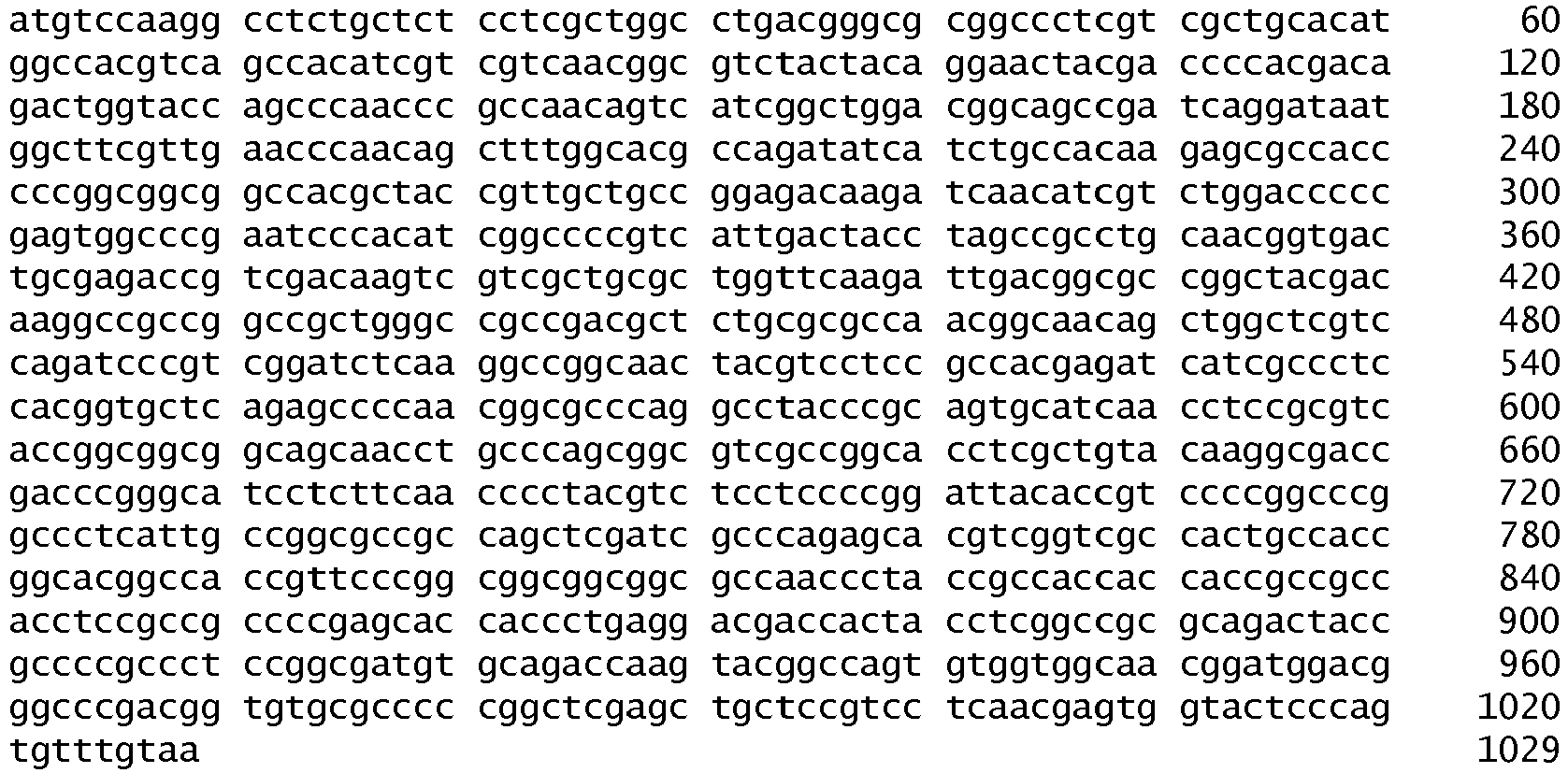
- SEQ ID NOs:32 to 59 appear in the formal Sequence Listing for this disclosure.
- The use of GH61 proteins is not intended to be limited in any way by theory as to their mode of action. Theoretically, the yield of product may be increased by action of the GH61 protein on the substrate, by interaction of the GH61 protein directly with any one or more of the cellulase enzyme(s) in a mixture, by lowering viscosity of the reaction mixture, or by any other mechanism. GH61 activity may be followed in an empirical fashion using assay methods described in this disclosure, without knowing the mechanism of operation of the GH61 protein being used.
-
- <110> Codexis, Inc.
Rao, Kripa
Clark, Louis
Campopianio, Onorato
Szabo, Lorand
Torok, Janos
Baidyaroy, Dipnath - <120> Use of Proteins of the GH61 Glycoside Hydrolase Family To
Facilitate Processing of Cellulose - <130> 90834-818317
- <150>
US 61/375,788
<151> 2010-08-20 - <160> 70
- <170> PatentIn version 3.5
- <210> 1
<211> 342
<212> PRT
<213> Myceliophthora thermophila - <400> 1
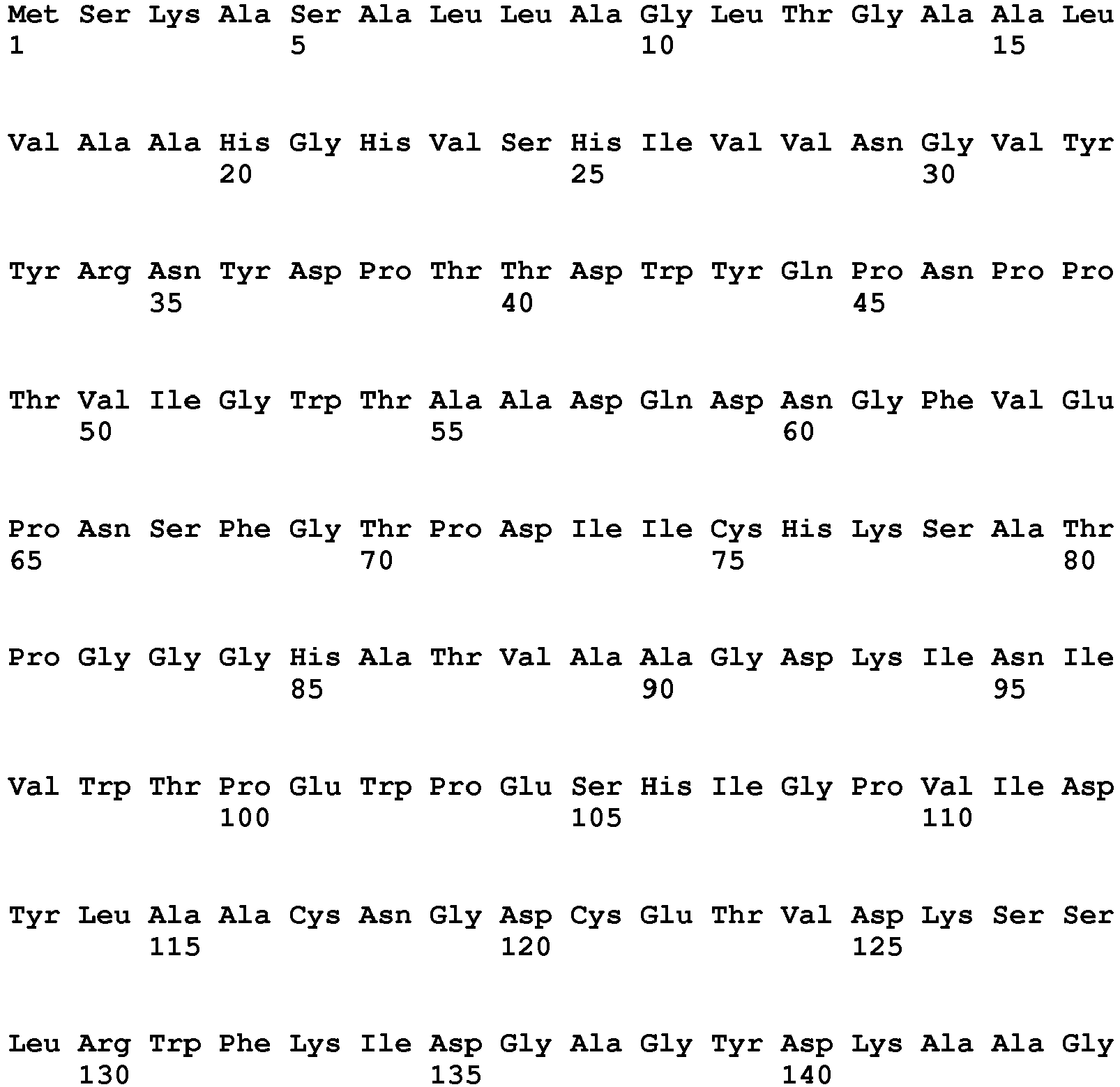

- <210> 2
<211> 323
<212> PRT
<213> Myceliophthora thermophila - <400> 2


- <210> 3
<211> 278
<212> PRT
<213> Myceliophthora thermophila - <400> 3


- <210> 4
<211> 223
<212> PRT
<213> Myceliophthora thermophila - <400> 4

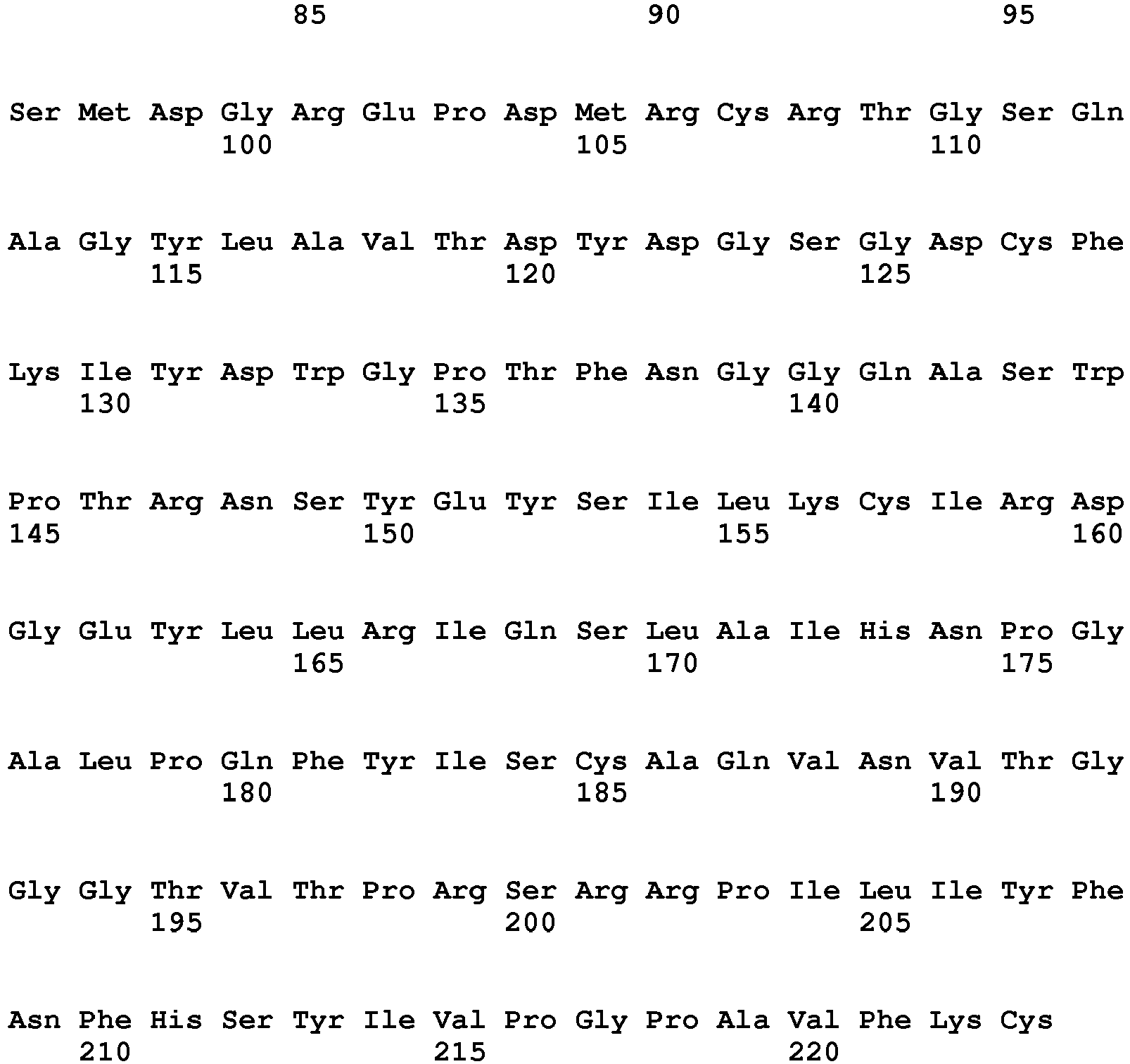
- <210> 5
<211> 192
<212> PRT
<213> Myceliophthora thermophila - <400> 5


- <210> 6
<211> 283
<212> PRT
<213> Myceliophthora thermophila - <400> 6


- <210> 7
<211> 212
<212> PRT
<213> Myceliophthora thermophila - <400> 7

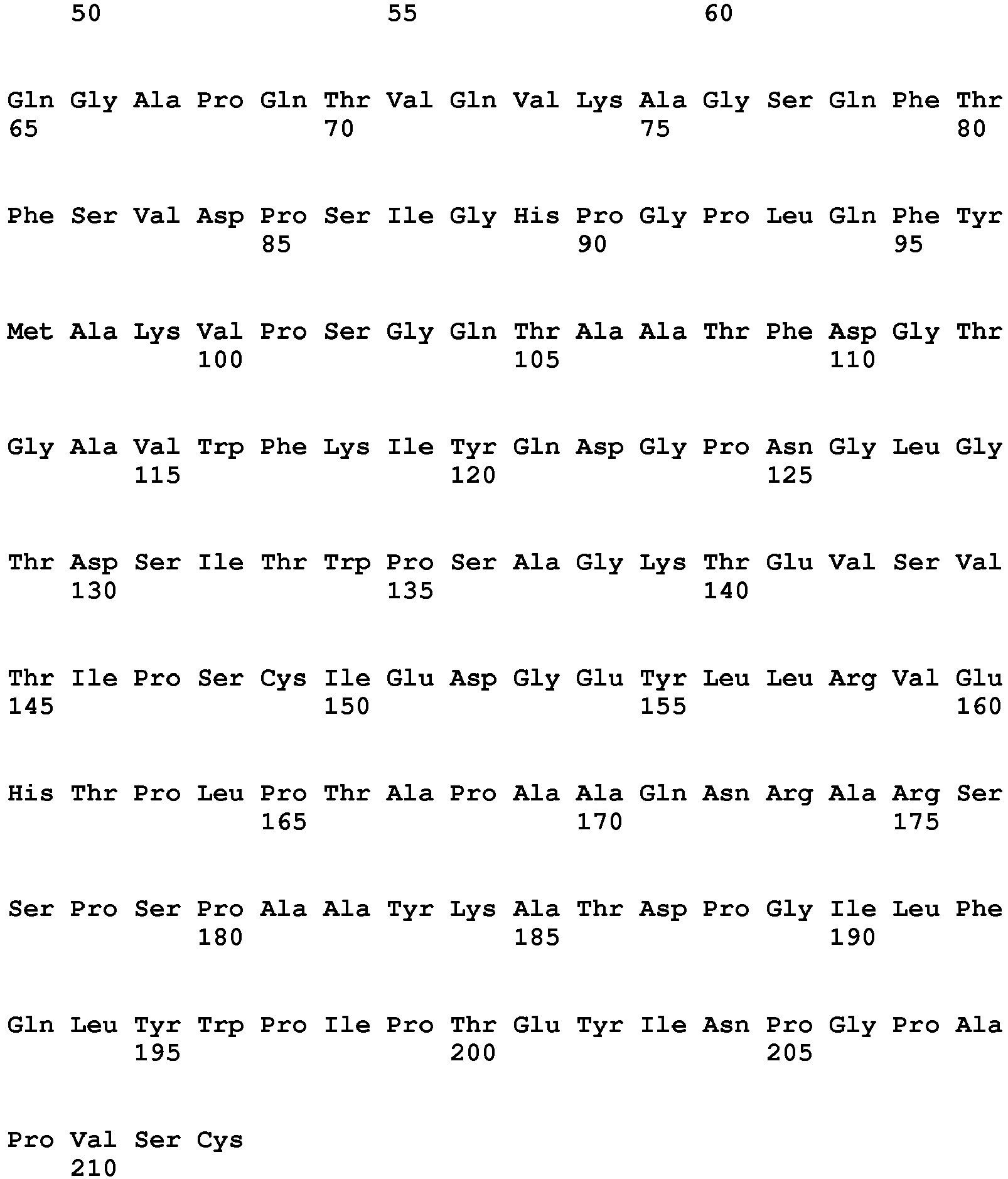
- <210> 8
<211> 149
<212> PRT
<213> Myceliophthora thermophila - <400> 8


- <210> 9
<211> 151
<212> PRT
<213> Myceliophthora thermophila - <400> 9

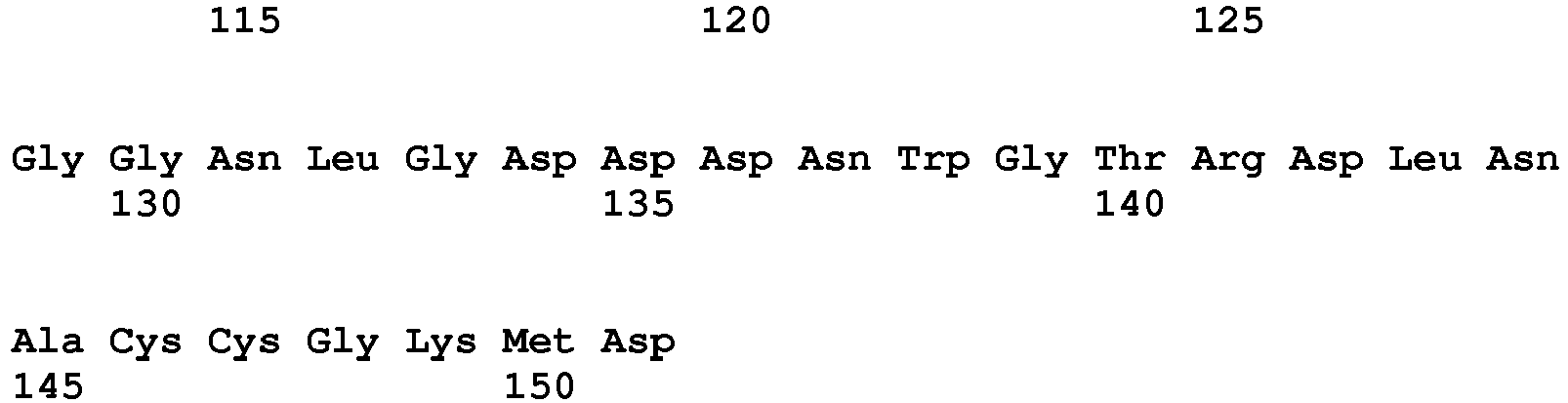
- <210> 10
<211> 245
<212> PRT
<213> Myceliophthora thermophila - <400> 10


- <210> 11
<211> 199
<212> PRT
<213> Myceliophthora thermophila - <400> 11


- <210> 12
<211> 227
<212> PRT
<213> Myceliophthora thermophila - <400> 12


- <210> 13
<211> 255
<212> PRT
<213> Myceliophthora thermophila - <400> 13
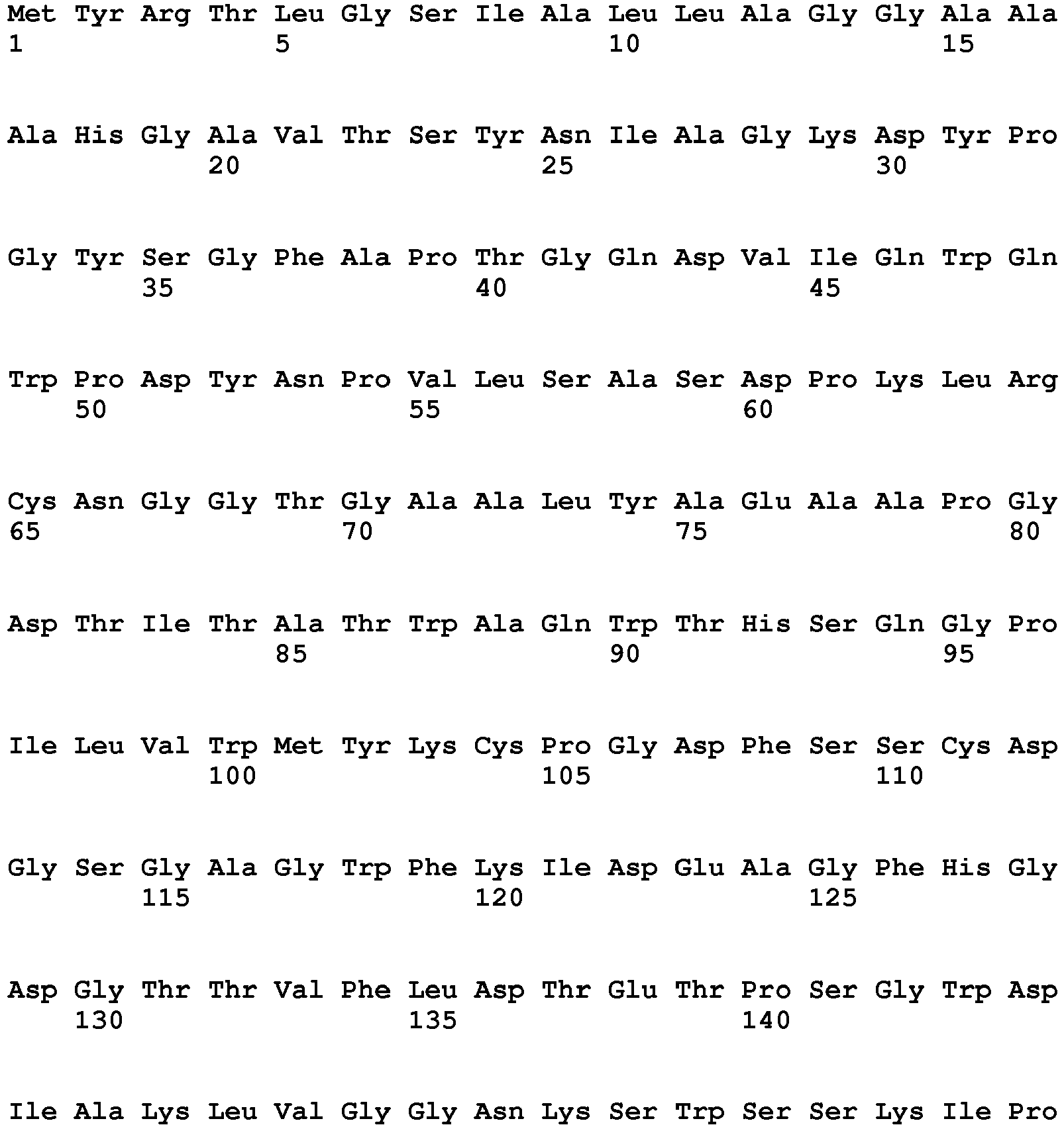

- <210> 14
<211> 225
<212> PRT
<213> Myceliophthora thermophila - <400> 14


- <210> 15
<211> 237
<212> PRT
<213> Myceliophthora thermophila - <400> 15


- <210> 16
<211> 246
<212> PRT
<213> Myceliophthora thermophila - <400> 16


- <210> 17
<211> 254
<212> PRT
<213> Myceliophthora thermophila - <400> 17


- <210> 18
<211> 235
<212> PRT
<213> Myceliophthora thermophila - <400> 18


- <210> 19
<211> 304
<212> PRT
<213> Myceliophthora thermophila - <400> 19



- <210> 20
<211> 323
<212> PRT
<213> Myceliophthora thermophila - <400> 20


- <210> 21
<211> 289
<212> PRT
<213> Myceliophthora thermophila - <400> 21


- <210> 22
<211> 346
<212> PRT
<213> Myceliophthora thermophila - <400> 22


- <210> 23
<211> 237
<212> PRT
<213> Myceliophthora thermophila - <400> 23


- <210> 24
<211> 225
<212> PRT
<213> Myceliophthora thermophila - <400> 24


- <210> 25
<211> 444
<212> PRT
<213> Myceliophthora thermophila - <400> 25


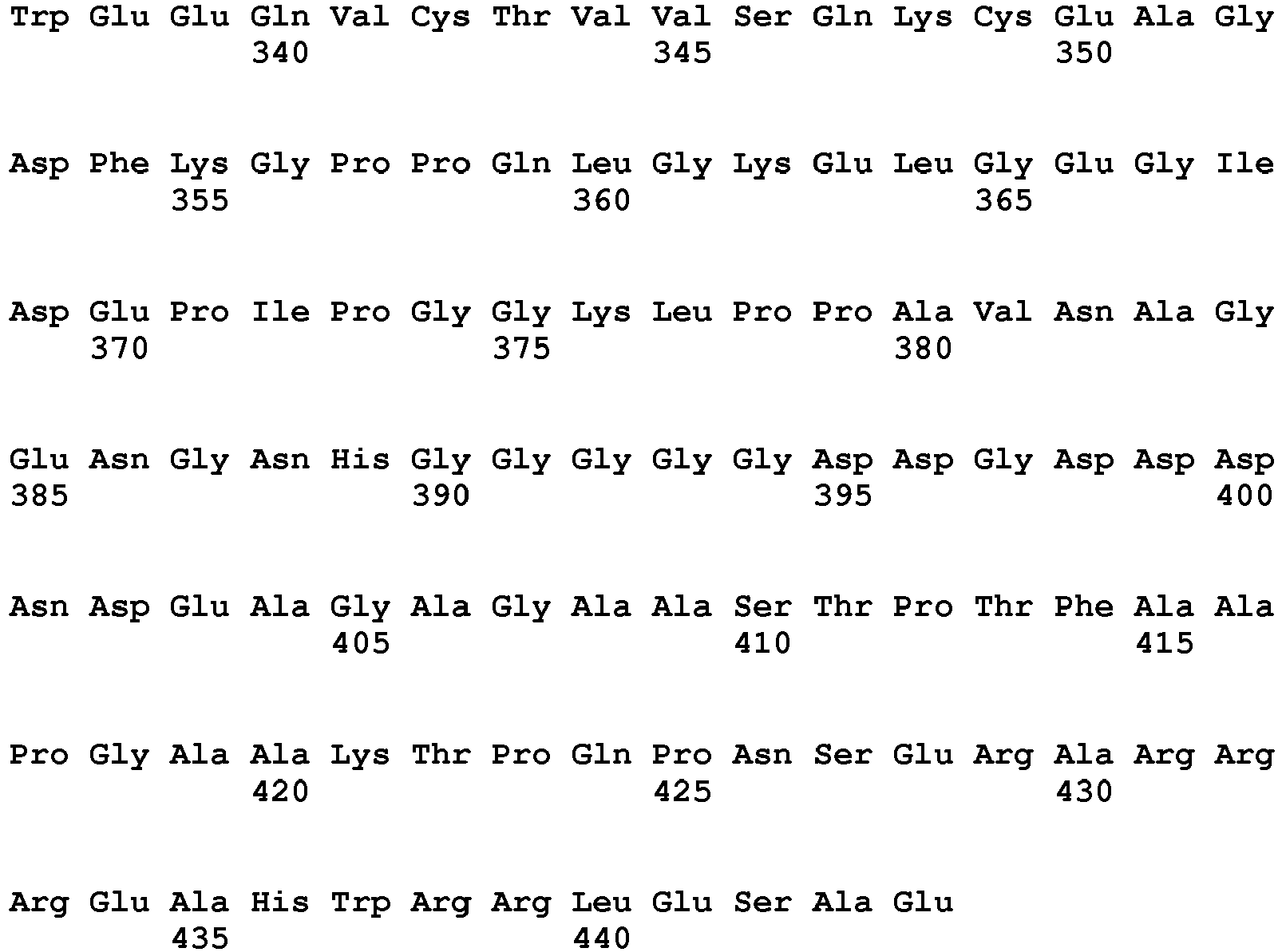
- <210> 26
<211> 232
<212> PRT
<213> Myceliophthora thermophila - <400> 26
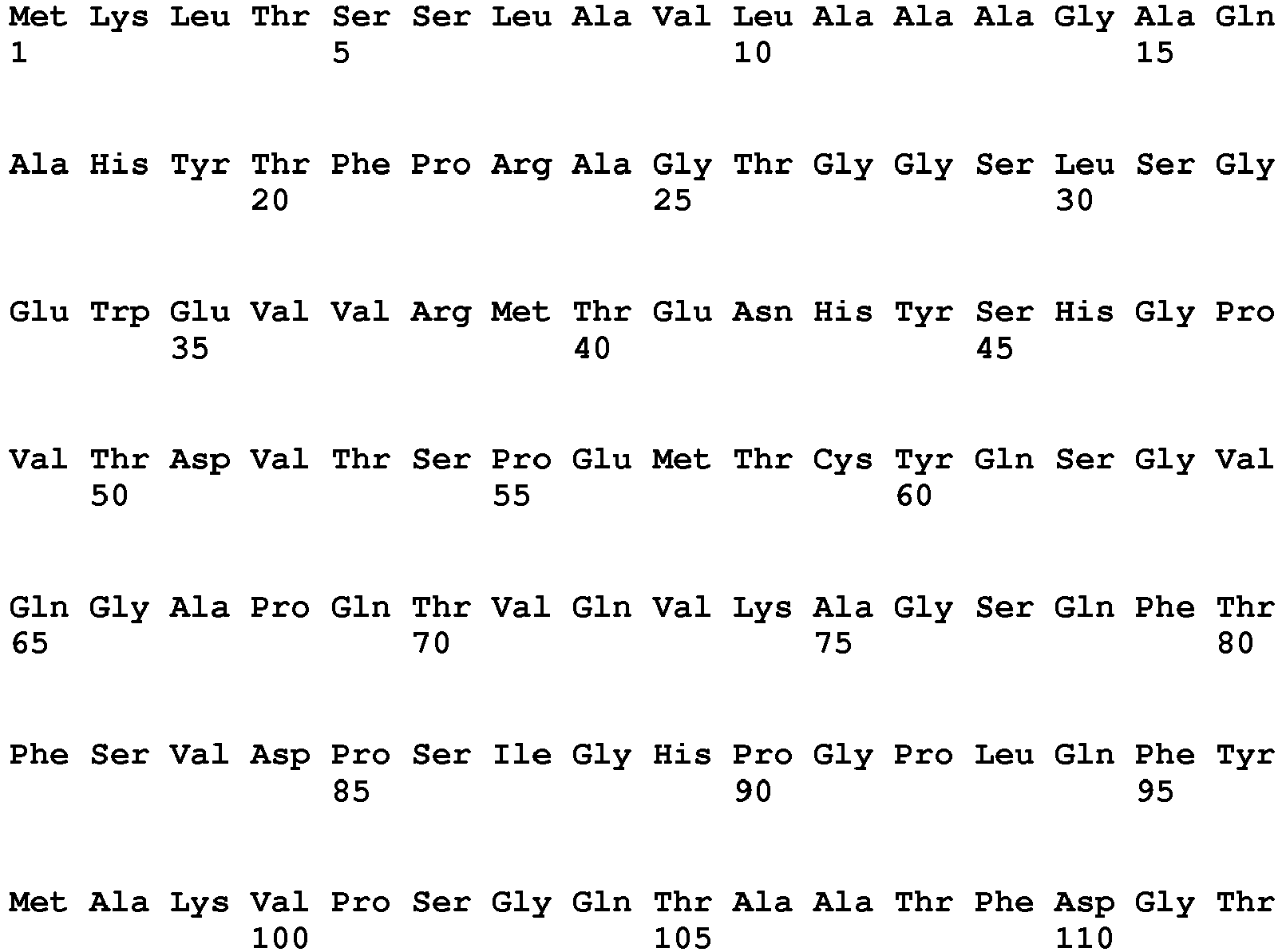
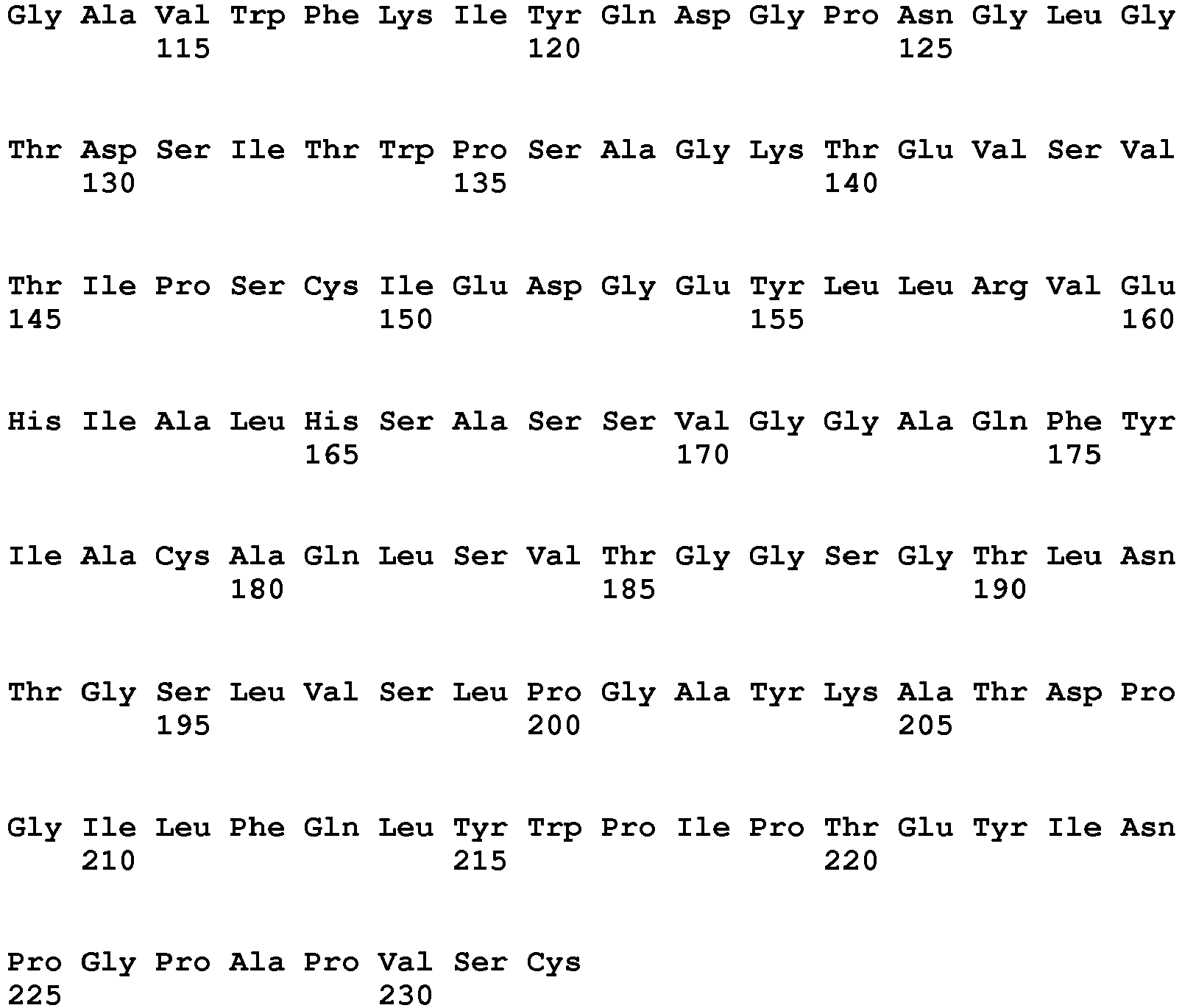
- <210> 27
<211> 392
<212> PRT
<213> Myceliophthora thermophila - <400> 27


- <210> 28
<211> 279
<212> PRT
<213> Myceliophthora thermophila - <400> 28


- <210> 29
<211> 231
<212> PRT
<213> Myceliophthora thermophila - <400> 29
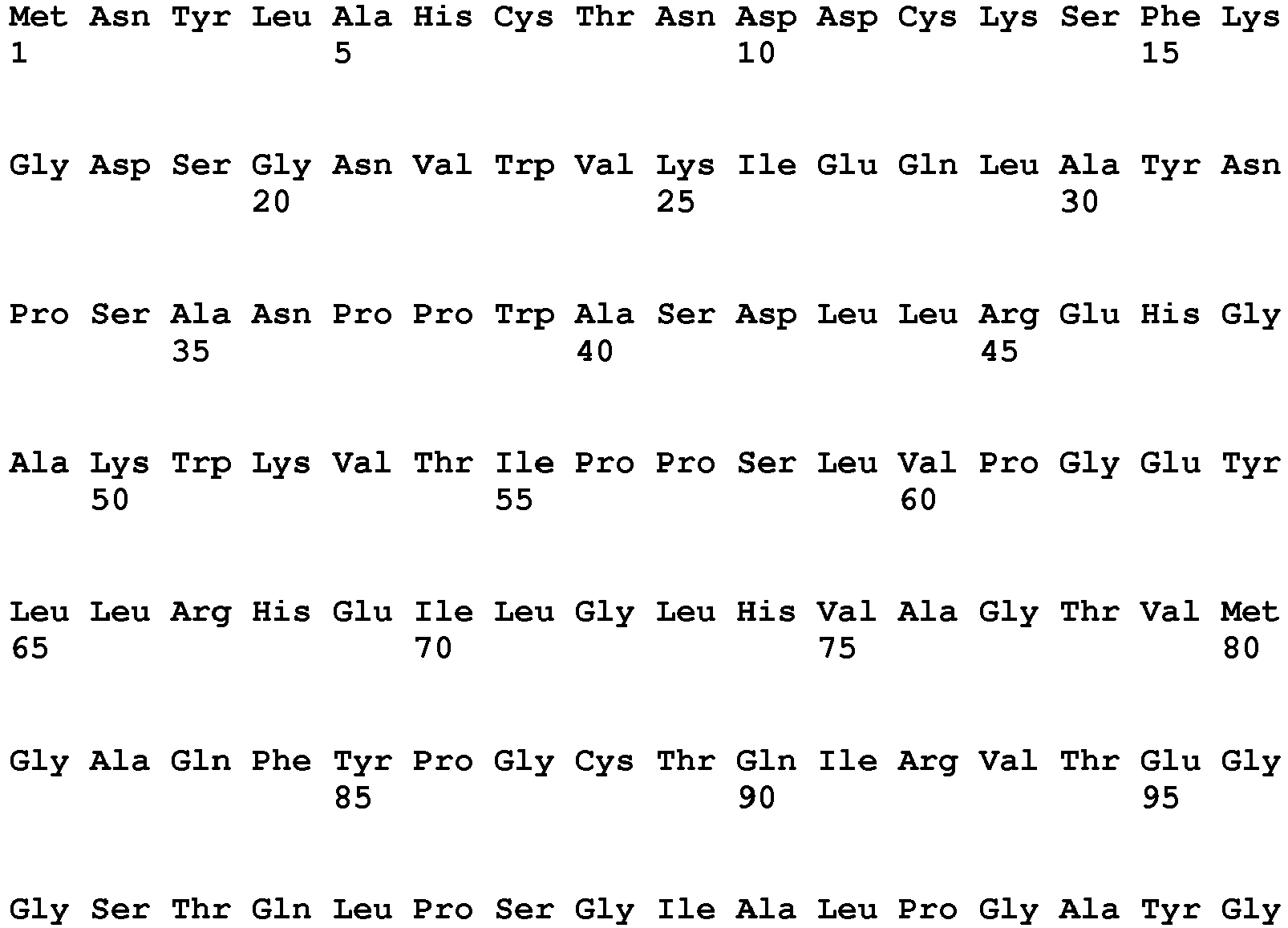

- <210> 30
<211> 242
<212> PRT
<213> Myceliophthora thermophila - <400> 30


- <210> 31
<211> 1029
<212> DNA
<213> Myceliophthora thermophila - <400> 31


- <210> 32
<211> 837
<212> DNA
<213> Myceliophthora thermophila - <400> 32

- <210> 33
<211> 672
<212> DNA
<213> Myceliophthora thermophila - <400> 33
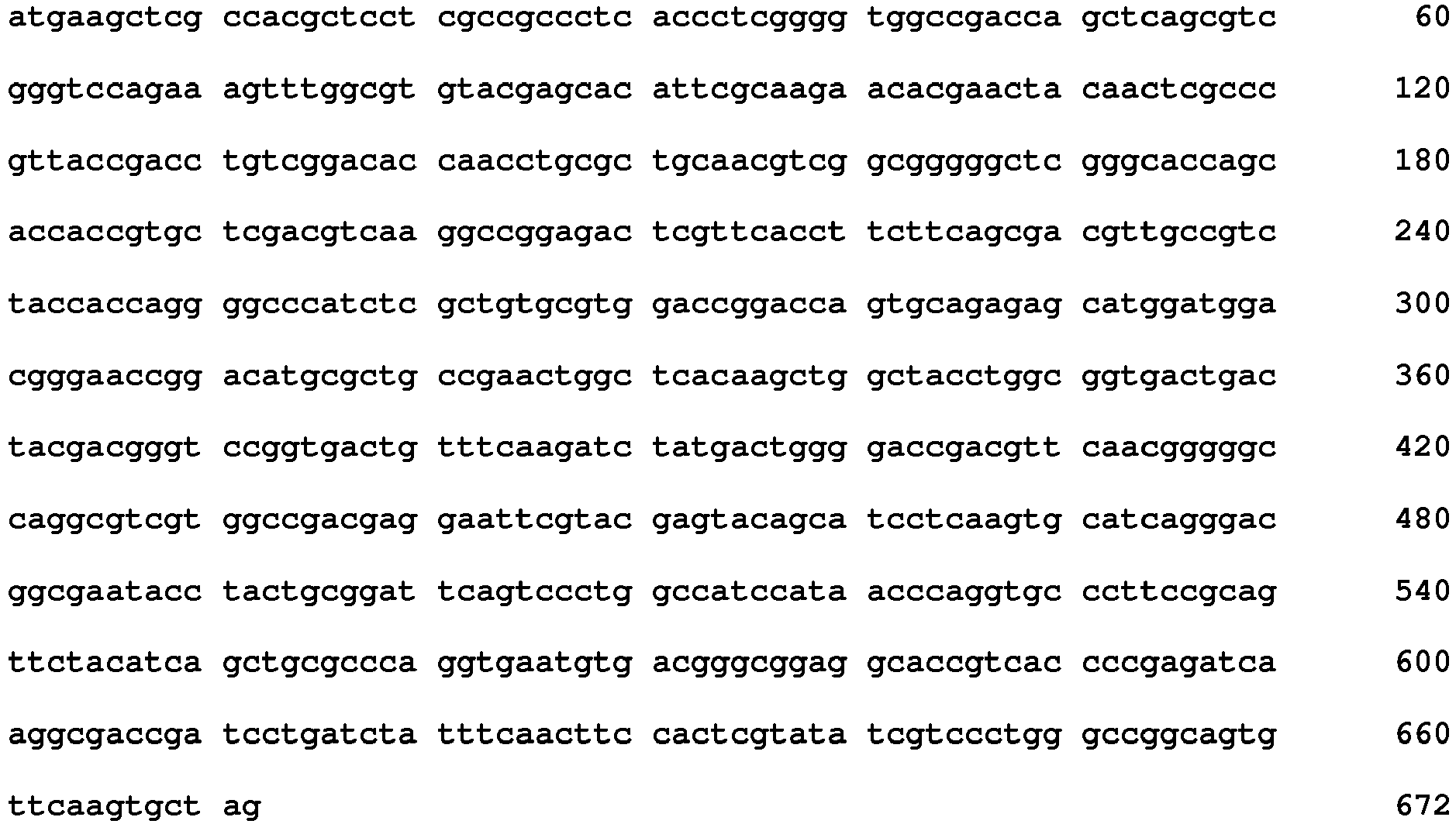
- <210> 34
<211> 579
<212> DNA
<213> Myceliophthora thermophila - <400> 34

- <210> 35
<211> 852
<212> DNA
<213> Myceliophthora thermophila - <400> 35


- <210> 36
<211> 639
<212> DNA
<213> Myceliophthora thermophila - <400> 36

- <210> 37
<211> 447
<212> DNA
<213> Myceliophthora thermophila - <400> 37


- <210> 38
<211> 453
<212> DNA
<213> Myceliophthora thermophila - <400> 38

- <210> 39
<211> 738
<212> DNA
<213> Myceliophthora thermophila - <400> 39


- <210> 40
<211> 600
<212> DNA
<213> Myceliophthora thermophila - <400> 40

- <210> 41
<211> 684
<212> DNA
<213> Myceliophthora thermophila - <400> 41


- <210> 42
<211> 768
<212> DNA
<213> Myceliophthora thermophila - <400> 42

- <210> 43
<211> 678
<212> DNA
<213> Myceliophthora thermophila - <400> 43


- <210> 44
<211> 714
<212> DNA
<213> Myceliophthora thermophila - <400> 44

- <210> 45
<211> 741
<212> DNA
<213> Myceliophthora thermophila - <400> 45


- <210> 46
<211> 765
<212> DNA
<213> Myceliophthora thermophila - <400> 46

- <210> 47
<211> 708
<212> DNA
<213> Myceliophthora thermophila - <400> 47


- <210> 48
<211> 915
<212> DNA
<213> Myceliophthora thermophila - <400> 48

- <210> 49
<211> 972
<212> DNA
<213> Myceliophthora thermophila - <400> 49


- <210> 50
<211> 870
<212> DNA
<213> Myceliophthora thermophila - <400> 50

- <210> 51
<211> 1041
<212> DNA
<213> Myceliophthora thermophila - <400> 51

- <210> 52
<211> 714
<212> DNA
<213> Myceliophthora thermophila - <400> 52


- <210> 53
<211> 678
<212> DNA
<213> Myceliophthora thermophila - <400> 53

- <210> 54
<211> 1335
<212> DNA
<213> Myceliophthora thermophila - <400> 54


- <210> 55
<211> 696
<212> DNA
<213> Myceliophthora thermophila - <400> 55

- <210> 56
<211> 1176
<212> DNA
<213> Myceliophthora thermophila - <400> 56
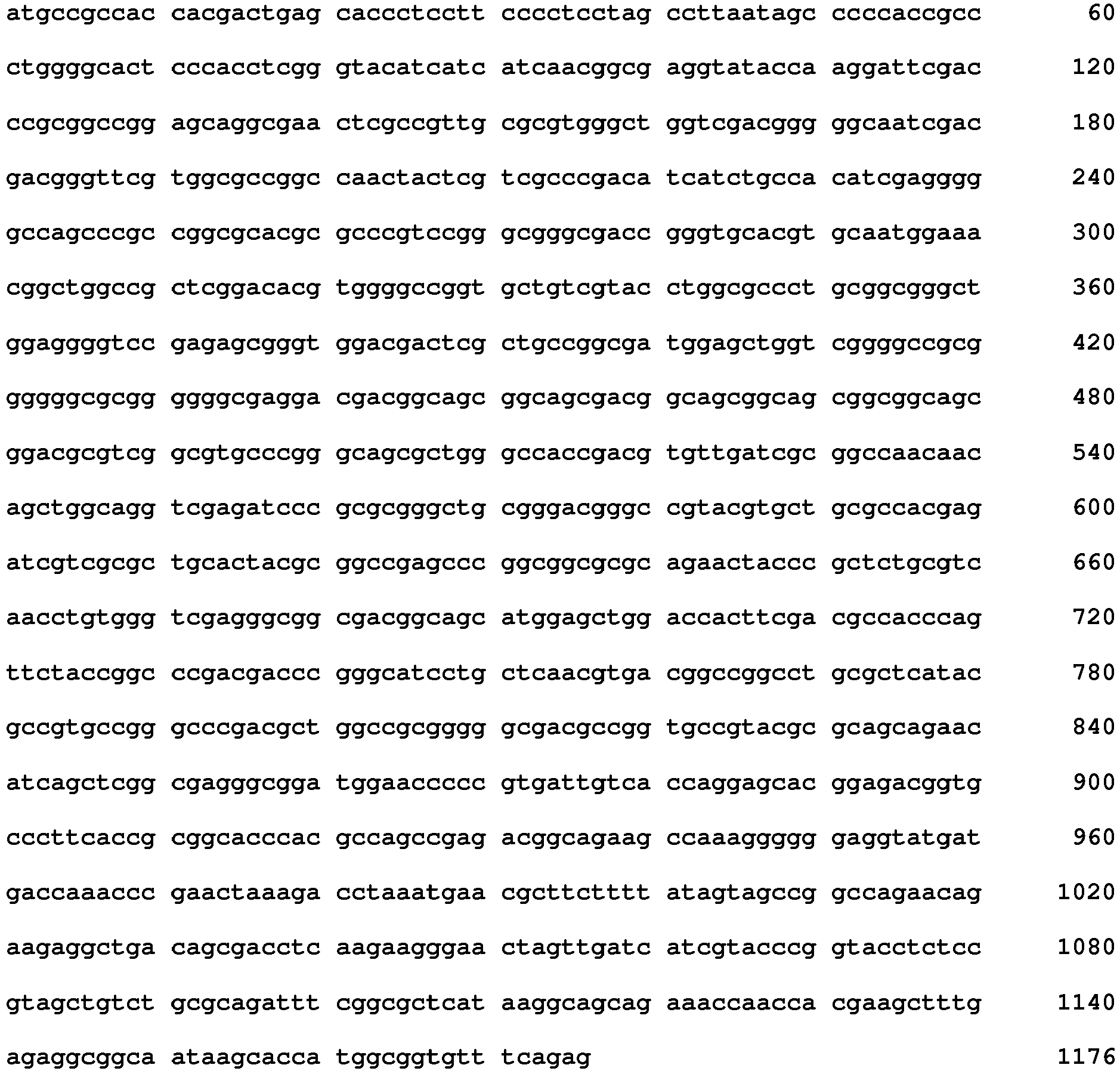
- <210> 57
<211> 837
<212> DNA
<213> Myceliophthora thermophila - <400> 57


- <210> 58
<211> 693
<212> DNA
<213> Myceliophthora thermophila - <400> 58

- <210> 59
<211> 726
<212> DNA
<213> Myceliophthora thermophila - <400> 59

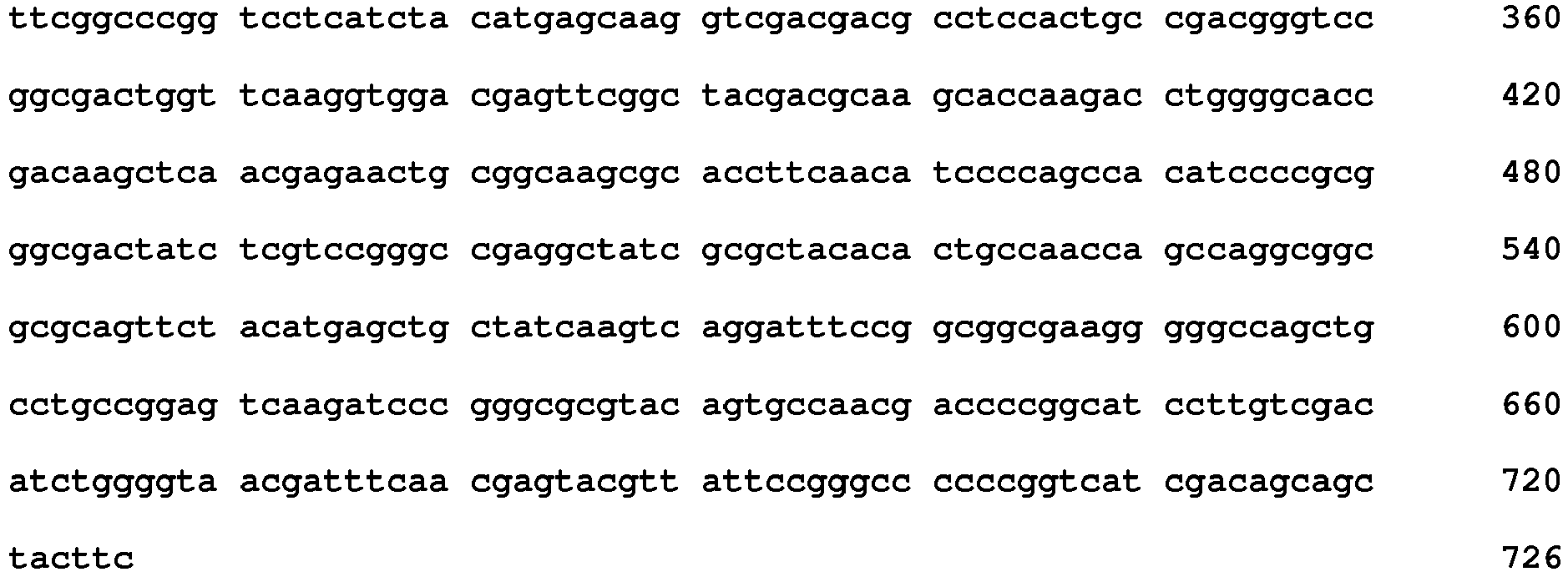
- <210> 60
<211> 870
<212> PRT
<213> Myceliophthora thermophila - <400> 60


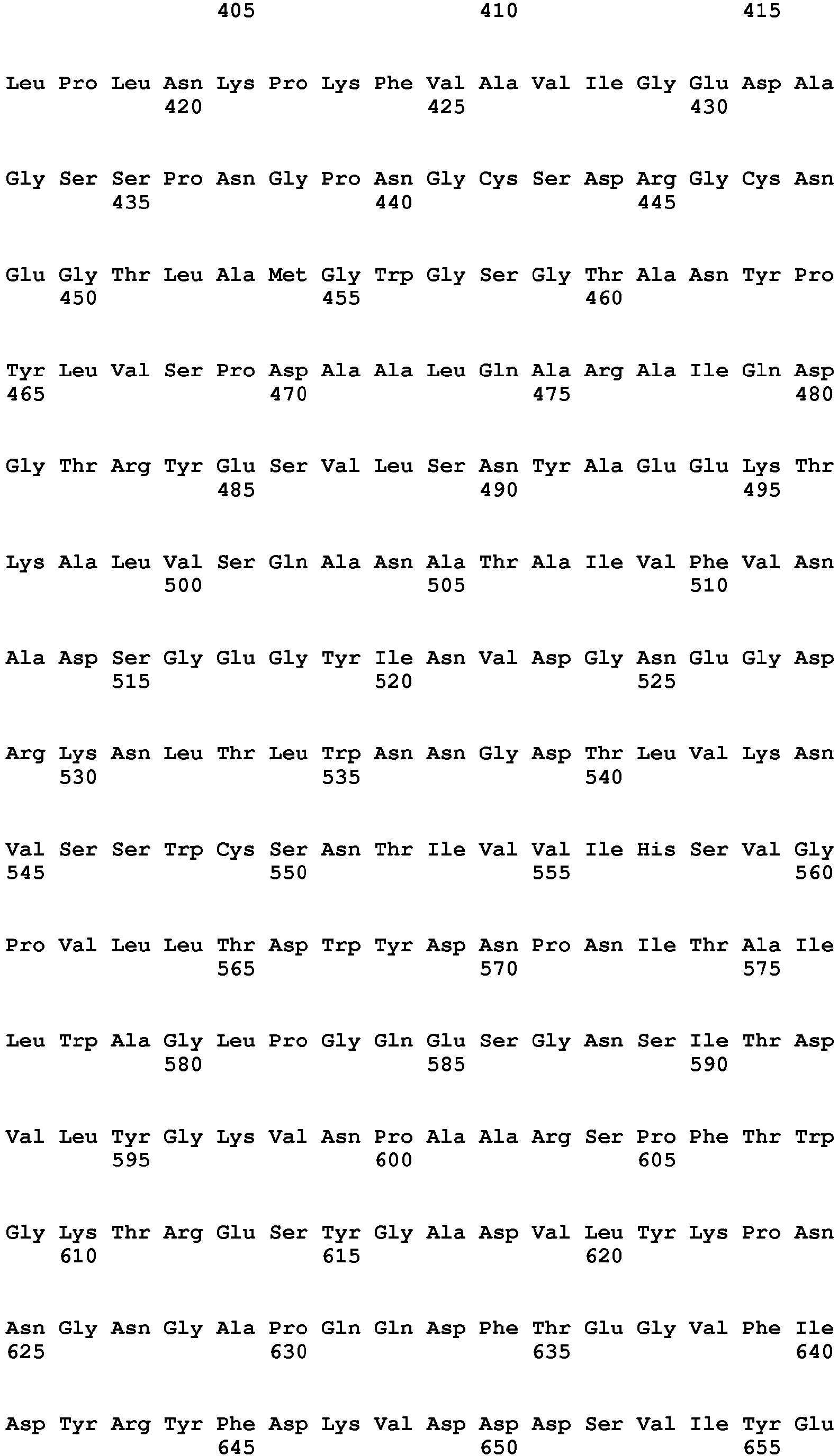

- <210> 61
<211> 861
<212> PRT
<213> Thermoascus aurantiacus - <400> 61


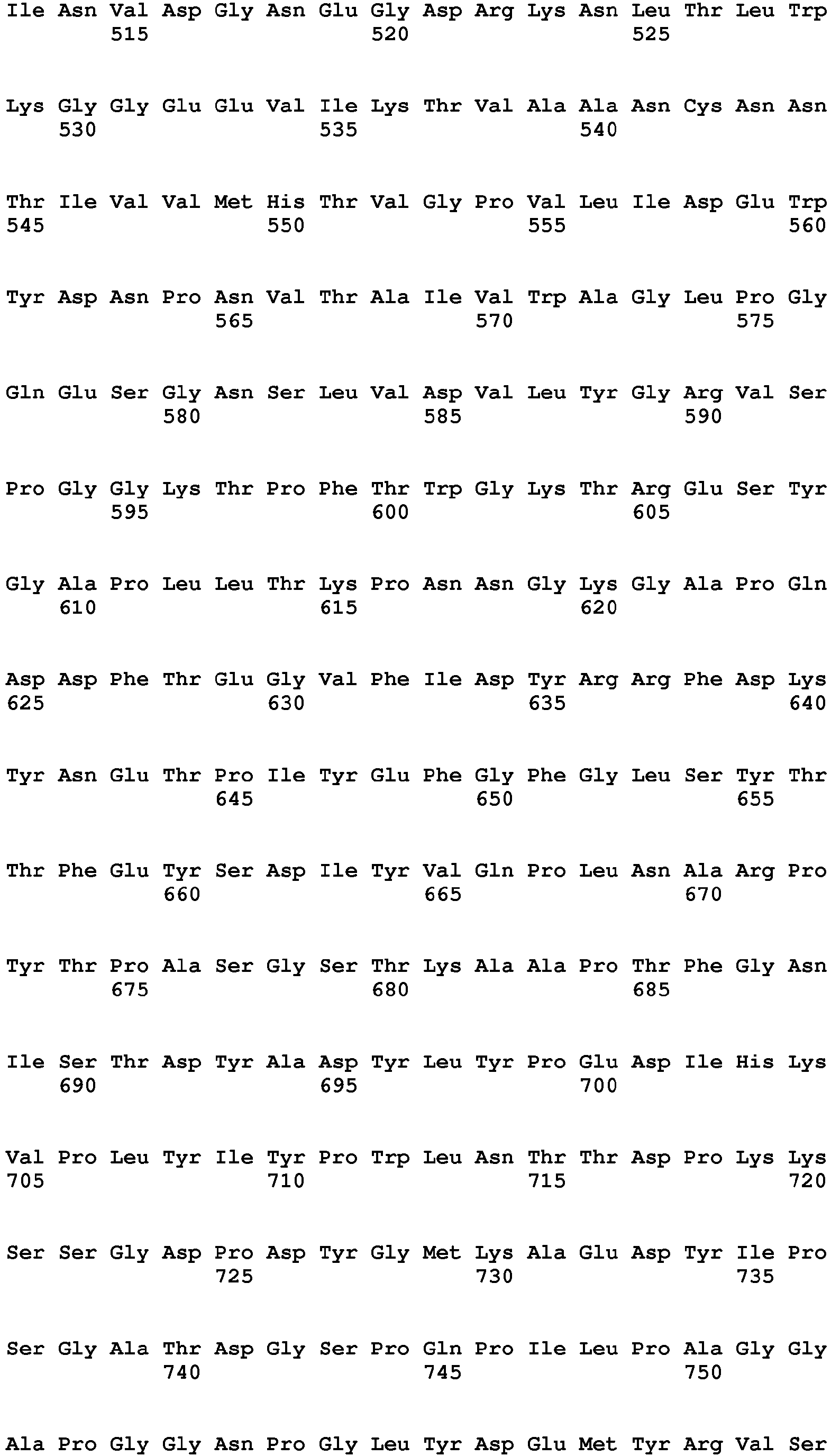

- <210> 62
<211> 685
<212> PRT
<213> Azospirillum irakense - <400> 62


- <210> 63
<211> 509
<212> PRT
<213> Myceliophthora thermophila - <400> 63


- <210> 64
<211> 395
<212> PRT
<213> Myceliophthora thermophila - <400> 64



- <210> 65
<211> 373
<212> PRT
<213> Myceliophthora thermophila - <400> 65


- <210> 66
<211> 851
<212> PRT
<213> Myceliophthora thermophila - <400> 66

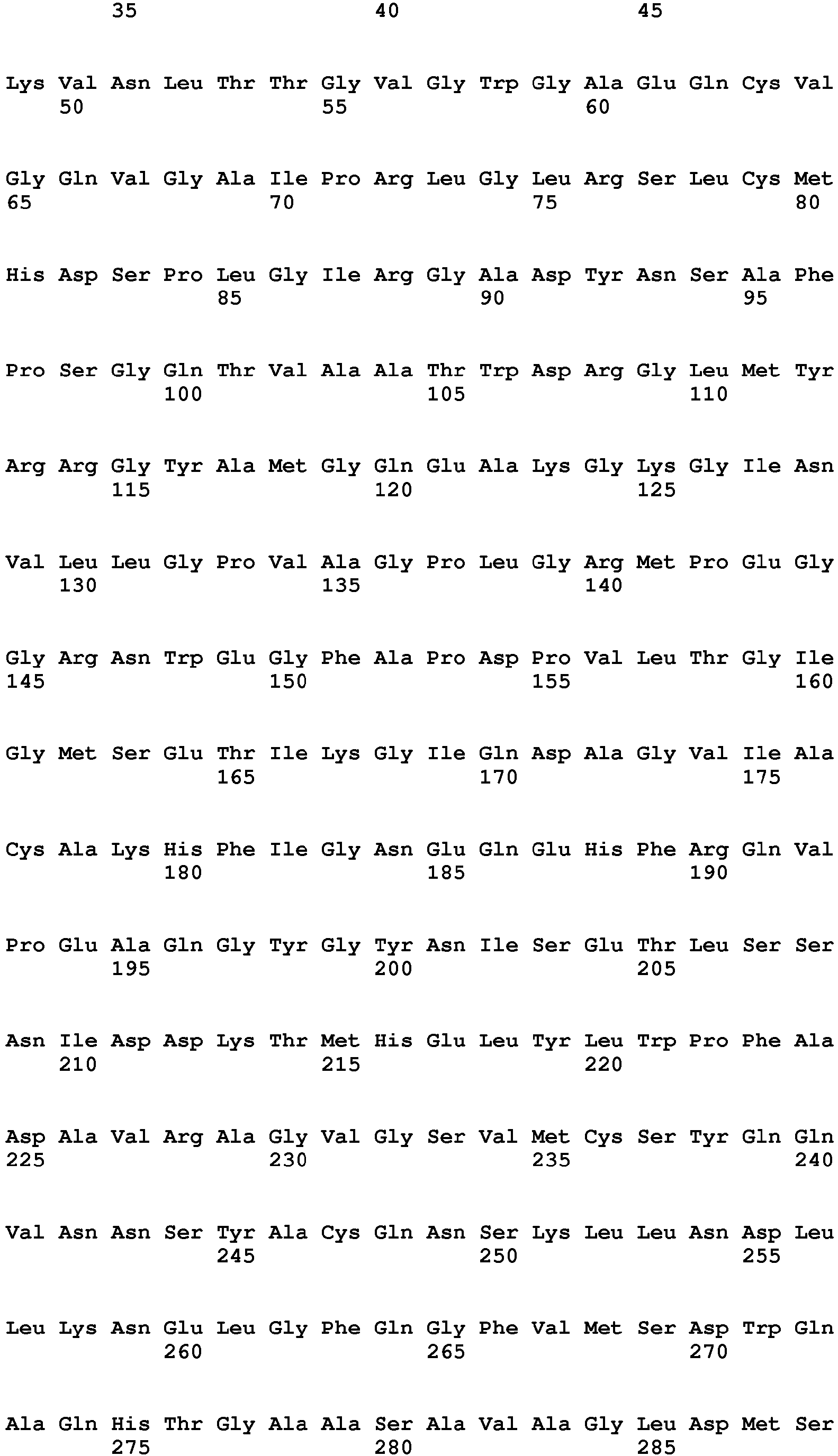
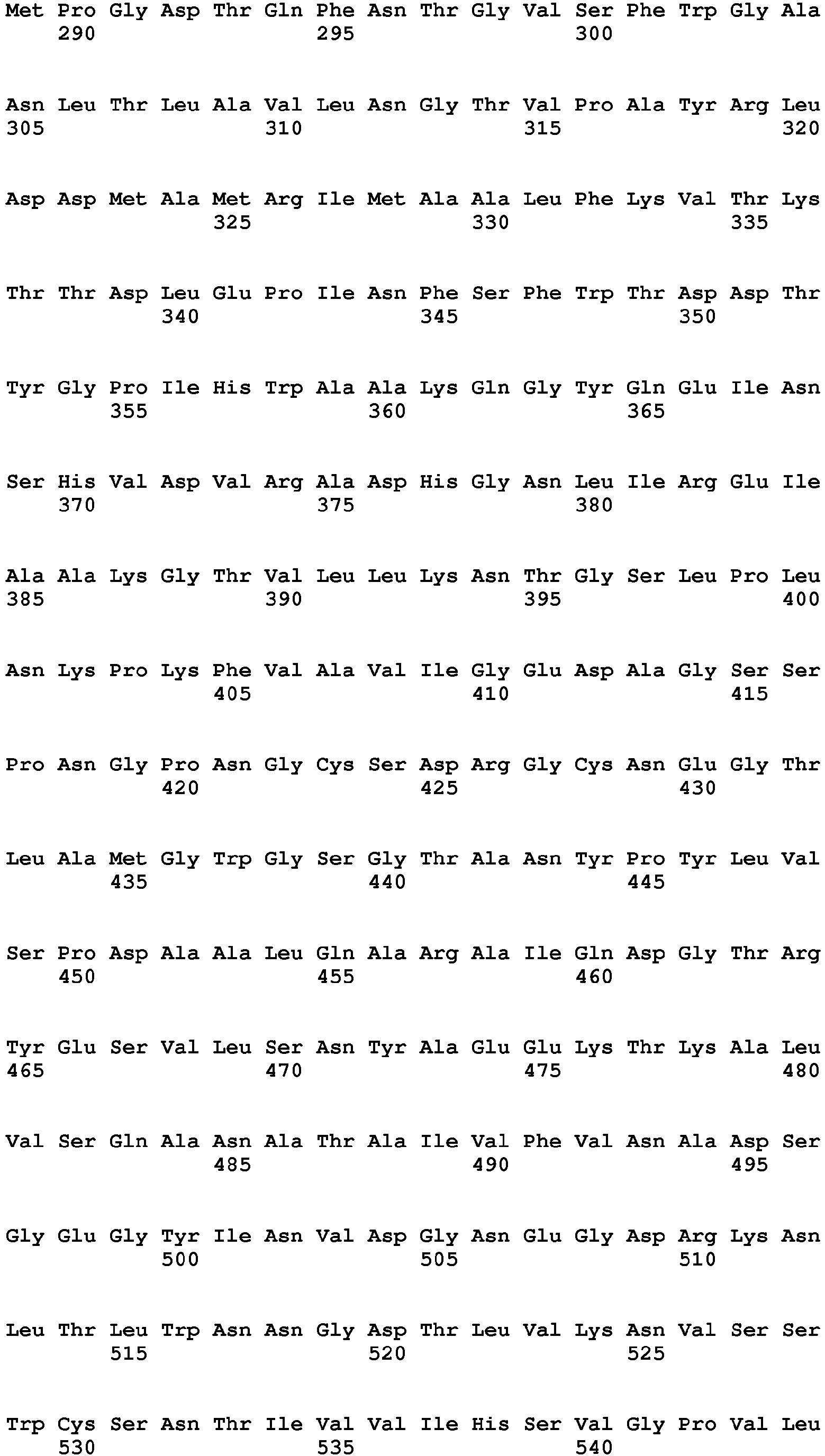


- <210> 67
<211> 509
<212> PRT
<213> Myceliophthora thermophila - <400> 67


- <210> 68
<211> 465
<212> PRT
<213> Myceliophthora thermophila - <400> 68


- <210> 69
<211> 35
<212> DNA
<213> Artificial sequence - <220>
<223> Synthetic DNA forward primer - <400> 69
tacttcttct ccaccatgtc caaggcctct gctct 35 - <210> 70
<211> 36
<212> DNA
<213> Artificial sequence - <220>
<223> Synthetic DNA reverse primer - <400> 70
ggatccgaat tcttattaca aacactggga gtacca 36
Claims (15)
- A composition comprising:a) a recombinantly produced GH61 protein that comprises an amino acid sequence that is at least 80% identical to SEQ ID NO:2 or fragments of SEQ ID NO:2 that have GH61 activity; andb) cellulase enzymes including at least one endoglucanase (EG), at least one β glucosidase (BGL), at least one Type 1 cellobiohydrolase (CBH1), and at least one Type 2 cellobiohydrolase (CBH2).
- The composition of claim 1, wherein the GH61 protein:a) increases the yield of glucose by at least 20% in a reaction where cellulose undergoes saccharification by an enzyme combination comprising EG, BGL, CBH1, and CBH2, compared with the same reaction in the absence of the GH61 protein;b) comprises an amino acid sequence that is at least 85%, 90%, 95%, 97% or 99% identical to SEQ ID NO:2, or a fragment thereof that has GH61 activity; orc) comprises SEQ ID NO:2; or a fragment thereof that has GH61 activity.
- The composition of claim 1 or 2, wherein the cellulase enzymes are:a) recombinant;b) fungal enzymes; and/orc) from M. thermophila.
- The composition of any of claims 1 to 3, wherein the composition is obtained by:a) expressing a gene encoding the GH61 protein in one host cell population, and expressing at least one gene encoding a cellulase enzyme in another host cell population; orb) expressing a gene encoding the GH61 protein and at least one gene encoding a cellulase enzyme in the same host cell type.
- The composition of claim 4, wherein the gene encodes a GH61 protein comprising a heterologous signal peptide.
- A method of producing fermentable sugars from a cellulosic biomass comprising contacting a cellulosic substrate with a composition, culture medium or cell lysate containing a GH61 protein and cellulase enzymes, wherein:a) the GH61 protein comprises an amino acid sequence that is at least 80% identical to SEQ ID NO:2 or a biologically active fragment thereof; andb) the cellulase enzymes include at least one endoglucanase (EG), at least one β-glucosidase (BGL), at least one Type 1 cellobiohydrolase (CBH1), and at least one Type 2 cellobiohydrolase (CBH2).
- The method of claim 6, wherein:a) prior to said contacting, the substrate is pretreated;b) the composition, culture medium or cell lysate further comprises one or more enzymes selected from esterases, xylanases, hemicellulases, lipases, proteases, amylases, glucoamylases, and combinations thereof;c) the cellulosic substrate is derived from wheat, wheat straw, sorghum, corn, rice, barley, sugar cane bagasse, grasses, switchgrass, corn grain, corn cobs, corn fiber, or a combination thereof, and wherein the substrate is optionally derived wheat straw; and/ord) the fermentable sugar comprises glucose.
- The method of claim 6 or 7, wherein the composition, culture medium or cell lysate comprises an isolated GH61 and at least one or more of an isolated endoglucanase (EG), an isolated β-glucosidase (BGL), an isolated Type 1 cellobiohydrolase (CBH1), and/or an isolated Type 2 cellobiohydrolase (CBH2).
- A method of producing an end product from a cellulosic substrate, comprising:a) contacting the cellulosic substrate with a composition according to any of claims 1 to 5, whereby fermentable sugars are produced from the substrate; andb) contacting the fermentable sugars with a microorganism in a fermentation to produce an end product.
- The method of claim 9, which is a simultaneous saccharification and fermentation process.
- The method of claim 9, wherein saccharification of the cellulosic substrate and said fermentation occur consecutively.
- A method of producing an end product from a cellulosic substrate, comprising:a) obtaining fermentable sugars produced according to the method of any one of claims 6-8; andb) contacting the fermentable sugars with a microorganism in a fermentation to produce an end product.
- The method of any of claims 9 to 12, wherein the end product is an alcohol.
- The method of claim 13, wherein the alcohol is ethanol.
- The method of any of claims 9 to 15, wherein the microorganism is a yeast.
Applications Claiming Priority (2)
| Application Number | Priority Date | Filing Date | Title |
|---|---|---|---|
| US37578810P | 2010-08-20 | 2010-08-20 | |
| PCT/US2011/048700 WO2012024698A1 (en) | 2010-08-20 | 2011-08-22 | Use of glycoside hydrolase 61 family proteins in processing of cellulose |
Publications (3)
| Publication Number | Publication Date |
|---|---|
| EP2606131A1 EP2606131A1 (en) | 2013-06-26 |
| EP2606131A4 EP2606131A4 (en) | 2014-07-23 |
| EP2606131B1 true EP2606131B1 (en) | 2017-03-08 |
Family
ID=45605460
Family Applications (1)
| Application Number | Title | Priority Date | Filing Date |
|---|---|---|---|
| EP11818904.2A Not-in-force EP2606131B1 (en) | 2010-08-20 | 2011-08-22 | Use of glycoside hydrolase 61 family proteins in processing of cellulose |
Country Status (9)
| Country | Link |
|---|---|
| US (2) | US8298795B2 (en) |
| EP (1) | EP2606131B1 (en) |
| CN (1) | CN103080306B (en) |
| BR (1) | BR112013003906A2 (en) |
| CA (1) | CA2807702C (en) |
| DK (1) | DK2606131T3 (en) |
| ES (1) | ES2623288T3 (en) |
| HU (1) | HUE033334T2 (en) |
| WO (1) | WO2012024698A1 (en) |
Families Citing this family (48)
| Publication number | Priority date | Publication date | Assignee | Title |
|---|---|---|---|---|
| CN103080306B (en) | 2010-08-20 | 2015-02-18 | 科德克希思公司 | Application of Glycoside Hydrolase 61 Family Protein in Cellulose Processing |
| HUE031303T2 (en) * | 2010-11-02 | 2017-07-28 | Codexis Inc | Improved fungal strains |
| EP2683830A1 (en) * | 2011-03-09 | 2014-01-15 | Novozymes A/S | Methods of increasing the cellulolytic enhancing activity of a polypeptide |
| WO2012159009A1 (en) * | 2011-05-19 | 2012-11-22 | Novozymes, Inc. | Methods for enhancing the degradation of cellulosic material with chitin binding proteins |
| BR112013033614A2 (en) | 2011-06-30 | 2018-05-29 | Codexis Inc | pentose fermentation by recombinant microorganism |
| DK2748317T3 (en) | 2011-08-22 | 2017-07-17 | Codexis Inc | GH61 glycoside hydrolase protein variants and cofactors that enhance GH61 activity |
| EP2756091A1 (en) | 2011-09-13 | 2014-07-23 | Novozymes North America, Inc. | Methods of hydrolyzing and fermenting cellulosic material |
| US20140308705A1 (en) * | 2011-09-20 | 2014-10-16 | Novozymes A/S | Polypeptides Having Cellulolytic Enhancing Activity And Polynucleotides Encoding Same |
| US20150010958A1 (en) * | 2012-01-29 | 2015-01-08 | Novoztmes A/S | Methods for Degrading or Converting Cellulosic Material |
| FI124477B (en) * | 2012-06-07 | 2014-09-15 | Roal Oy | New proteins for cellulosic material processing |
| US9458440B2 (en) * | 2012-06-07 | 2016-10-04 | Roal Oy | Proteins for the treatment of cellulosic material |
| DK2859099T3 (en) | 2012-06-11 | 2019-07-29 | Codexis Inc | MUSHROOMS-BETA-xylosidase VERSIONS |
| GB2503939A (en) * | 2012-07-13 | 2014-01-15 | Kind Consumer Ltd | Products derived from tobaccco biomass |
| EP2898068A2 (en) * | 2012-09-19 | 2015-07-29 | Novozymes, Inc. | Methods for enhancing the degradation or conversion of cellulosic material |
| EP2922953A4 (en) | 2012-11-20 | 2016-11-09 | Shell Int Research | FERMENTATION OF PENTOSIS BY A RECOMBINANT MICROORGANISM |
| BR112015016329A2 (en) * | 2013-01-11 | 2017-07-11 | Codexis Inc | methods for producing at least one enzyme, an enzyme mixture, fermentable sugars and at least one end product from at least one cellulosic substrate |
| BR112015019997B1 (en) | 2013-02-21 | 2022-12-20 | Novozymes A/S | METHODS OF SACHARIFYING AND FERMENTATING A CELLULOSIC MATERIAL |
| WO2014140171A1 (en) * | 2013-03-14 | 2014-09-18 | Dsm Ip Assets B.V. | Novel cell wall deconstruction enzymes of thielavia australiensis and uses thereof |
| US9850512B2 (en) | 2013-03-15 | 2017-12-26 | The Research Foundation For The State University Of New York | Hydrolysis of cellulosic fines in primary clarified sludge of paper mills and the addition of a surfactant to increase the yield |
| CN103275956B (en) * | 2013-05-26 | 2014-12-10 | 山东隆科特酶制剂有限公司 | Cellulase CelH61 with lignin degradation synergistic effect as well as gene and application thereof |
| CN103320415B (en) * | 2013-06-02 | 2014-11-26 | 武汉新华扬生物股份有限公司 | Heatproof neutral cellulase Cel 61 and its gene and application |
| CN105916981A (en) | 2013-07-29 | 2016-08-31 | 丹尼斯科美国公司 | Variant enzymes |
| CN104342425B (en) * | 2013-07-29 | 2017-11-28 | 瑞辰星生物技术(广州)有限公司 | For improving fiber oxidation enzymatic compositions and papermaking process and the application of Paper White Degree |
| WO2015042543A2 (en) * | 2013-09-20 | 2015-03-26 | The Trustees Of Columbia University In The City Of New York | Biofuel production enzymes and uses thereof |
| US9938552B2 (en) | 2013-11-01 | 2018-04-10 | Novozymes A/S | Methods of saccharifying and fermenting a cellulosic material |
| ES2542621B1 (en) * | 2014-02-07 | 2016-08-16 | Abengoa Bioenergía Nuevas Tecnologías, S.A. | Polypeptides with monooxygenase polysaccharide activity and their use for the production of fermentable sugars |
| US9951363B2 (en) | 2014-03-14 | 2018-04-24 | The Research Foundation for the State University of New York College of Environmental Science and Forestry | Enzymatic hydrolysis of old corrugated cardboard (OCC) fines from recycled linerboard mill waste rejects |
| JP6364662B2 (en) * | 2014-09-17 | 2018-08-01 | 本田技研工業株式会社 | Thermostable β-xylosidase belonging to GH family 3 |
| CN104498456B (en) * | 2014-12-01 | 2017-03-29 | 中国农业科学院饲料研究所 | A kind of acidic beta glucosidase Bgl3B and its gene and application |
| CN106148209B (en) * | 2015-03-23 | 2020-11-20 | 中国科学院天津工业生物技术研究所 | Novel binary organic acid producing strain and its preparation and application |
| CN106148208B (en) * | 2015-03-23 | 2020-12-18 | 中国科学院天津工业生物技术研究所 | Novel binary organic acid producing strain and its preparation and application |
| CN105039287B (en) * | 2015-05-21 | 2018-06-19 | 中国科学院天津工业生物技术研究所 | GH61 families glycoside hydrolysis enzyme gene PpGH61 and application thereof |
| US10626381B2 (en) * | 2015-06-23 | 2020-04-21 | Abengoa Bioenergía Nuevas Tecnologías, S. A. | Cellulolytic compositions comprising monooxygenase polysaccharide enzymes with improved activity |
| CN105949735B (en) * | 2016-06-14 | 2018-05-25 | 江门市扬帆实业有限公司 | A kind of modified lignin resin polylactic acid plastic haveing excellent performance |
| CN109957571A (en) * | 2017-12-14 | 2019-07-02 | 中国科学院大连化学物理研究所 | A kind of polysaccharide cleavage monooxygenase encoding gene and enzyme and preparation and application |
| CN109929855B (en) * | 2017-12-15 | 2022-12-13 | 中国科学院大连化学物理研究所 | Polysaccharide cleavage monooxygenase LPMO 9D coding gene and enzyme, preparation and application |
| CN108796026A (en) * | 2018-06-29 | 2018-11-13 | 齐齐哈尔龙江阜丰生物科技有限公司 | Production, extraction and the purifying process of lysine |
| CN111850004B (en) * | 2020-07-27 | 2022-04-22 | 齐鲁工业大学 | A cellulosome docking protein mutant 36740 with improved activity and applications |
| CN112782032A (en) * | 2020-12-30 | 2021-05-11 | 华南理工大学 | Method for quickly detecting physical property parameters of raw materials after acidic blasting pretreatment of cellulose and ethanol prepared from wood fiber raw materials and application |
| CN113584002B (en) * | 2021-01-07 | 2024-05-28 | 北京化工大学 | Alpha-L-rhamnosidase and preparation method and application thereof |
| CN113584000B (en) * | 2021-01-07 | 2024-05-28 | 北京化工大学 | Alpha-L-rhamnosidase, preparation method and application thereof |
| CN115612705A (en) * | 2021-07-13 | 2023-01-17 | 中国石油天然气股份有限公司 | Application of a protein that can destroy cellulose structure in promoting enzymatic hydrolysis of cellulose raw materials |
| CN116396868B (en) * | 2021-11-23 | 2023-09-22 | 北京工商大学 | A microbial inoculant for preparing high-quality dietary fiber by fermenting peanut shells and its method |
| CN114107257B (en) * | 2021-11-24 | 2023-08-08 | 广东省科学院微生物研究所(广东省微生物分析检测中心) | A kind of glycoside hydrolase and its application |
| CN114107139B (en) * | 2021-12-31 | 2023-11-17 | 武汉工程大学 | Smoke tube bacterium F21 and application thereof in cellulase production |
| CN116376707B (en) * | 2022-10-18 | 2024-06-14 | 南京灿辰微生物科技有限公司 | Penicillium oxalicum 0710-26 and application thereof |
| CN117343950B (en) * | 2023-12-06 | 2024-02-06 | 中国农业科学院北京畜牧兽医研究所 | A method for improving the expression level of foreign proteins expressed in Trichoderma reesei |
| WO2026015965A1 (en) * | 2024-07-19 | 2026-01-22 | Centro Nacional De Pesquisa Em Energia E Materiais | Enzyme cocktail, method for the deconstruction of lignocellulosic biomass, and genetically modified microorganism for producing the cocktail |
Family Cites Families (109)
| Publication number | Priority date | Publication date | Assignee | Title |
|---|---|---|---|---|
| JPS5839517B2 (en) | 1974-09-20 | 1983-08-30 | カブシキガイシヤ バイオリサ−チセンタ− | Cellulose Scala Alcohol |
| US3990945A (en) | 1975-04-28 | 1976-11-09 | Bio Research Center Company Limited | Enzymatic hydrolysis of cellulose |
| US4461648A (en) | 1980-07-11 | 1984-07-24 | Patrick Foody | Method for increasing the accessibility of cellulose in lignocellulosic materials, particularly hardwoods agricultural residues and the like |
| US4356196A (en) | 1980-10-20 | 1982-10-26 | Hultquist Joe H | Process for treating alfalfa and other cellulosic agricultural crops |
| US5037663A (en) | 1981-10-14 | 1991-08-06 | Colorado State University Research Foundation | Process for increasing the reactivity of cellulose-containing materials |
| US4600590A (en) | 1981-10-14 | 1986-07-15 | Colorado State University Research Foundation | Method for increasing the reactivity and digestibility of cellulose with ammonia |
| US4556430A (en) | 1982-09-20 | 1985-12-03 | Trustees Of Dartmouth College | Process for hydrolysis of biomass |
| CA1338400C (en) | 1983-08-31 | 1996-06-18 | David H. Gelfand | Recombinant fungal cellulases |
| US5171592A (en) | 1990-03-02 | 1992-12-15 | Afex Corporation | Biomass refining process |
| DE4009676A1 (en) | 1990-03-26 | 1991-10-02 | Rhein Biotech Proz & Prod Gmbh | DNA SEQUENCE, COMPREHENSIVE STRUCTURAL GENERATING FOR XYLOSE REDUCTASE AND / OR XYLITOLDEHYDROGENASE |
| JP2858706B2 (en) | 1990-03-31 | 1999-02-17 | マツダ株式会社 | V-type engine intake system |
| US5866382A (en) | 1990-04-06 | 1999-02-02 | Xyrofin Oy | Xylose utilization by recombinant yeasts |
| US5789210A (en) | 1993-11-08 | 1998-08-04 | Purdue Research Foundation | Recombinant yeasts for effective fermentation of glucose and xylose |
| US6335160B1 (en) | 1995-02-17 | 2002-01-01 | Maxygen, Inc. | Methods and compositions for polypeptide engineering |
| US5605793A (en) | 1994-02-17 | 1997-02-25 | Affymax Technologies N.V. | Methods for in vitro recombination |
| US5837458A (en) | 1994-02-17 | 1998-11-17 | Maxygen, Inc. | Methods and compositions for cellular and metabolic engineering |
| US6309883B1 (en) | 1994-02-17 | 2001-10-30 | Maxygen, Inc. | Methods and compositions for cellular and metabolic engineering |
| US5928905A (en) | 1995-04-18 | 1999-07-27 | Glaxo Group Limited | End-complementary polymerase reaction |
| US6395547B1 (en) | 1994-02-17 | 2002-05-28 | Maxygen, Inc. | Methods for generating polynucleotides having desired characteristics by iterative selection and recombination |
| US6995017B1 (en) | 1994-02-17 | 2006-02-07 | Maxygen, Inc. | Methods for generating polynucleotides having desired characteristics by iterative selection and recombination |
| US6117679A (en) | 1994-02-17 | 2000-09-12 | Maxygen, Inc. | Methods for generating polynucleotides having desired characteristics by iterative selection and recombination |
| US6406855B1 (en) | 1994-02-17 | 2002-06-18 | Maxygen, Inc. | Methods and compositions for polypeptide engineering |
| US6165793A (en) | 1996-03-25 | 2000-12-26 | Maxygen, Inc. | Methods for generating polynucleotides having desired characteristics by iterative selection and recombination |
| US20060257890A1 (en) | 1996-05-20 | 2006-11-16 | Maxygen, Inc. | Methods and compositions for cellular and metabolic engineering |
| US5834252A (en) | 1995-04-18 | 1998-11-10 | Glaxo Group Limited | End-complementary polymerase reaction |
| ATE294871T1 (en) | 1994-06-30 | 2005-05-15 | Novozymes Biotech Inc | NON-TOXIC, NON-TOXIGEN, NON-PATHOGENIC FUSARIUM EXPRESSION SYSTEM AND PROMOTORS AND TERMINATORS FOR USE THEREIN |
| HUP9802337A3 (en) | 1995-03-25 | 1999-03-29 | Rhodia Ag Rhone Poulenc | Process for activating polysaccharides, polysaccharides produced by this process, and use thereof |
| FI104465B (en) | 1995-06-14 | 2000-02-15 | Valio Oy | Protein hydrolyzates for the treatment and prevention of allergies and their preparation and use |
| US6740506B2 (en) | 1995-12-07 | 2004-05-25 | Diversa Corporation | End selection in directed evolution |
| US6939689B2 (en) | 1995-12-07 | 2005-09-06 | Diversa Corporation | Exonuclease-mediated nucleic acid reassembly in directed evolution |
| US6096548A (en) | 1996-03-25 | 2000-08-01 | Maxygen, Inc. | Method for directing evolution of a virus |
| US6506602B1 (en) | 1996-03-25 | 2003-01-14 | Maxygen, Inc. | Methods for generating polynucleotides having desired characteristics by iterative selection and recombination |
| IN191596B (en) | 1996-05-06 | 2003-12-06 | Purdue Research Foundation | |
| WO2000020555A2 (en) | 1998-10-06 | 2000-04-13 | Aarl Inc | Transformation system in the field of filamentous fungal hosts: in chrysosporium |
| US7883872B2 (en) | 1996-10-10 | 2011-02-08 | Dyadic International (Usa), Inc. | Construction of highly efficient cellulase compositions for enzymatic hydrolysis of cellulose |
| US5811381A (en) | 1996-10-10 | 1998-09-22 | Mark A. Emalfarb | Cellulase compositions and methods of use |
| US7148054B2 (en) | 1997-01-17 | 2006-12-12 | Maxygen, Inc. | Evolution of whole cells and organisms by recursive sequence recombination |
| US6326204B1 (en) | 1997-01-17 | 2001-12-04 | Maxygen, Inc. | Evolution of whole cells and organisms by recursive sequence recombination |
| AU743305C (en) | 1997-01-17 | 2006-03-30 | Maxygen, Inc. | Evolution of whole cells and organisms by recursive sequence recombination |
| US6176176B1 (en) | 1998-04-30 | 2001-01-23 | Board Of Trustees Operating Michigan State University | Apparatus for treating cellulosic materials |
| US6365408B1 (en) | 1998-06-19 | 2002-04-02 | Maxygen, Inc. | Methods of evolving a polynucleotides by mutagenesis and recombination |
| JP4221100B2 (en) | 1999-01-13 | 2009-02-12 | エルピーダメモリ株式会社 | Semiconductor device |
| US6917882B2 (en) | 1999-01-19 | 2005-07-12 | Maxygen, Inc. | Methods for making character strings, polynucleotides and polypeptides having desired characteristics |
| US6368861B1 (en) | 1999-01-19 | 2002-04-09 | Maxygen, Inc. | Oligonucleotide mediated nucleic acid recombination |
| US6436675B1 (en) | 1999-09-28 | 2002-08-20 | Maxygen, Inc. | Use of codon-varied oligonucleotide synthesis for synthetic shuffling |
| US6376246B1 (en) | 1999-02-05 | 2002-04-23 | Maxygen, Inc. | Oligonucleotide mediated nucleic acid recombination |
| WO2000042560A2 (en) | 1999-01-19 | 2000-07-20 | Maxygen, Inc. | Methods for making character strings, polynucleotides and polypeptides |
| US7702464B1 (en) | 2001-08-21 | 2010-04-20 | Maxygen, Inc. | Method and apparatus for codon determining |
| US7024312B1 (en) | 1999-01-19 | 2006-04-04 | Maxygen, Inc. | Methods for making character strings, polynucleotides and polypeptides having desired characteristics |
| US6961664B2 (en) | 1999-01-19 | 2005-11-01 | Maxygen | Methods of populating data structures for use in evolutionary simulations |
| CA2362737A1 (en) | 1999-03-05 | 2000-09-08 | Maxygen, Inc. | Recombination of insertion modified nucleic acids |
| SE9901298D0 (en) | 1999-04-09 | 1999-04-09 | Forskarpatent I Syd Ab | Xylose isomerase with improved kinetic properties |
| US7430477B2 (en) | 1999-10-12 | 2008-09-30 | Maxygen, Inc. | Methods of populating data structures for use in evolutionary simulations |
| US6519065B1 (en) | 1999-11-05 | 2003-02-11 | Jds Fitel Inc. | Chromatic dispersion compensation device |
| AU4964101A (en) | 2000-03-30 | 2001-10-15 | Maxygen Inc | In silico cross-over site selection |
| DE60127661T2 (en) | 2000-04-13 | 2007-12-06 | Mark Aaron Jupiter Emalfarb | EXPRESSION REGULATING SEQUENCES OF MOLDED FUNGI CHRYSOSPORIUM |
| WO2002034926A2 (en) | 2000-10-20 | 2002-05-02 | Michigan State University | Transgenic plants containing ligninase and cellulase which degrade lignin and cellulose to fermentable sugars |
| US7647184B2 (en) | 2001-08-27 | 2010-01-12 | Hanall Pharmaceuticals, Co. Ltd | High throughput directed evolution by rational mutagenesis |
| ATE418616T2 (en) | 2002-01-23 | 2009-01-15 | Royal Nedalco B V | FERMENTATION OF PENTOSE SUGAR |
| US7747391B2 (en) | 2002-03-01 | 2010-06-29 | Maxygen, Inc. | Methods, systems, and software for identifying functional biomolecules |
| US20050084907A1 (en) | 2002-03-01 | 2005-04-21 | Maxygen, Inc. | Methods, systems, and software for identifying functional biomolecules |
| WO2003075129A2 (en) | 2002-03-01 | 2003-09-12 | Maxygen, Inc. | Methods, systems, and software for identifying functional bio-molecules |
| US7620500B2 (en) | 2002-03-09 | 2009-11-17 | Maxygen, Inc. | Optimization of crossover points for directed evolution |
| US7273738B2 (en) | 2002-10-01 | 2007-09-25 | Novozymes A/S | Family GH-61 polypeptides |
| WO2005047647A1 (en) * | 2003-11-10 | 2005-05-26 | Baker Hughes Incorporated | A method and apparatus for a downhole spectrometer based on electronically tunable optical filters |
| ES2468366T3 (en) | 2004-01-30 | 2014-06-16 | Novozymes Inc. | Polypeptides with cellulolytic enhancement activity and polynucleotides that encode them |
| ES2389442T3 (en) | 2004-02-06 | 2012-10-26 | Novozymes Inc. | Polypeptides with cellulolytic augmentation activity and polynucleotides that encode them |
| JP4991700B2 (en) | 2005-04-12 | 2012-08-01 | イー・アイ・デュポン・ドウ・ヌムール・アンド・カンパニー | Systems and methods for biomass processing |
| EP1885864A4 (en) | 2005-06-03 | 2011-04-13 | Iogen Energy Corp | Method of continuous processing of lignocellulosic feedstocks |
| US8177142B2 (en) | 2005-08-26 | 2012-05-15 | Ricciardi Jonathan J | Method and apparatus for an improved aerosol generator and associated uses and equipment |
| CN101454444A (en) | 2006-03-20 | 2009-06-10 | 诺维信股份有限公司 | Polypeptides having endoglucanase activity and polynucleotides encoding same |
| CA2655645A1 (en) | 2006-06-22 | 2007-12-27 | Iogen Energy Corporation | Enzyme compositions for the improved enzymatic hydrolysis of cellulose and methods of using same |
| US8017373B2 (en) | 2006-08-31 | 2011-09-13 | Iogen Energy Corporation | Process for enzymatic hydrolysis of pretreated lignocellulosic feedstocks |
| US8680252B2 (en) | 2006-12-10 | 2014-03-25 | Dyadic International (Usa), Inc. | Expression and high-throughput screening of complex expressed DNA libraries in filamentous fungi |
| US8071298B2 (en) | 2007-04-16 | 2011-12-06 | Archer Daniels Midland Company | Increased ethanol production from xylose |
| US20080295980A1 (en) | 2007-05-31 | 2008-12-04 | Lignol Innovations Ltd. | Continuous counter-current organosolv processing of lignocellulosic feedstocks |
| US7807419B2 (en) | 2007-08-22 | 2010-10-05 | E. I. Du Pont De Nemours And Company | Process for concentrated biomass saccharification |
| BRPI0816177B1 (en) | 2007-08-30 | 2018-07-17 | Iogen Energy Corp | process for converting a pretreated lignocellulosic feedstock into soluble sugars |
| CA2736661A1 (en) | 2007-09-07 | 2009-03-12 | Dyadic International, Inc. | Novel fungal enzymes |
| AU2008343105A1 (en) | 2007-12-19 | 2009-07-09 | Novozymes A/S | Polypeptides having cellulolytic enhancing activity and polynucleotides encoding same |
| CN101970471A (en) * | 2007-12-19 | 2011-02-09 | 诺维信公司 | Polypeptides having cellulolytic enhancing activity and polynucleotides encoding same |
| US8575426B2 (en) | 2007-12-19 | 2013-11-05 | Novozymes, Inc. | Polypeptides having cellulolytic enhancing activity and polynucleotides encoding same |
| BRPI0822031A2 (en) | 2007-12-19 | 2017-06-13 | Novozymes As | isolated polypeptide and polynicleotide, nucleic acid construct, recombinant host cell, methods for producing the polypeptide, a precursor cell mutant, a protein and a fermentation product, to inhibit expression of a polypeptide, to degrade or convert a cellulosic material , and to ferment a cellulosic material, transgenic plant, plant part or plant cell, and inhibitory rna molecule |
| EP2250594B1 (en) | 2008-02-12 | 2017-04-19 | Codexis, Inc. | Method of generating an optimized, diverse population of variants |
| CA2716806A1 (en) * | 2008-02-29 | 2009-09-03 | University Of Central Florida Research Foundation, Inc. | Production and use of plant degrading materials |
| EP2285958B1 (en) | 2008-06-13 | 2016-03-09 | Codexis, Inc. | Method of synthesizing polynucleotide variants |
| US20090312196A1 (en) | 2008-06-13 | 2009-12-17 | Codexis, Inc. | Method of synthesizing polynucleotide variants |
| US8328947B2 (en) | 2008-08-29 | 2012-12-11 | Iogen Energy Corporation | Method for low water hydrolysis or pretreatment of polysaccharides in a lignocellulosic feedstock |
| WO2010059424A2 (en) | 2008-11-18 | 2010-05-27 | Novozymes, Inc. | Methods and compositions for degrading cellulosic material |
| WO2010065830A1 (en) | 2008-12-04 | 2010-06-10 | Novozymes, Inc. | Polypeptides having cellulolytic enhancing activity and polynucleotides encoding same |
| US8338121B2 (en) | 2008-12-19 | 2012-12-25 | Novozymes, Inc. | Methods for determining cellulolytic enhancing activity of a polypeptide |
| ES2678450T3 (en) | 2009-03-16 | 2018-08-10 | Danisco Us Inc. | Protein production system in Chrysosporium lucknowense |
| WO2010120557A1 (en) | 2009-03-31 | 2010-10-21 | Codexis, Inc. | Improved endoglucanases |
| WO2010138754A1 (en) | 2009-05-29 | 2010-12-02 | Novozymes, Inc. | Methods for enhancing the degradation or conversion of cellulosic material |
| WO2010148148A2 (en) | 2009-06-16 | 2010-12-23 | Codexis, Inc. | β-GLUCOSIDASE VARIANTS |
| EP2443139B1 (en) | 2009-06-16 | 2016-08-10 | Codexis, Inc. | Beta-glucosidase variant enzymes and related polynucleotides |
| ES2538396T3 (en) | 2009-09-30 | 2015-06-19 | Codexis, Inc. | Recombinant C1-glucosidase for the production of sugars from cellulosic biomass |
| CA2776336A1 (en) | 2009-10-29 | 2011-05-19 | Novozymes, Inc. | Polypeptides having cellobiohydrolase activity and polynucleotides encoding same |
| EP2504431A4 (en) | 2009-11-25 | 2013-10-16 | Codexis Inc | Recombinant thermoascus aurantiacus beta-glucosidase variants for production of fermentable sugars from cellulosic biomass |
| CN102740868B (en) | 2009-11-25 | 2016-01-20 | 科德克希思公司 | Recombinant beta-glucosidase variants for the production of soluble sugars from cellulosic biomass |
| CN103124783A (en) | 2010-06-03 | 2013-05-29 | 马斯科马公司 | Yeast expressing saccharolytic enzymes for combined bioprocessing using starch and cellulose |
| US9322027B2 (en) | 2010-08-20 | 2016-04-26 | Shell Oil Company | Expression constructs comprising fungal promoters |
| CN103080306B (en) | 2010-08-20 | 2015-02-18 | 科德克希思公司 | Application of Glycoside Hydrolase 61 Family Protein in Cellulose Processing |
| WO2012027374A2 (en) * | 2010-08-23 | 2012-03-01 | Dyadic International (Usa) Inc. | Novel fungal carbohydrate hydrolases |
| WO2012044835A1 (en) | 2010-09-30 | 2012-04-05 | Novozymes, Inc. | Variants of polypeptides having cellulolytic enhancing activity and polynucleotides encoding same |
| CN103189516A (en) | 2010-11-02 | 2013-07-03 | 科德克希思公司 | Compositions and methods for production of fermentable sugars |
| US8906689B2 (en) | 2010-12-21 | 2014-12-09 | Codexis, Inc. | Endoglucanase variants |
| MX2013010512A (en) * | 2011-03-17 | 2013-10-07 | Danisco Inc | Method for reducing viscosity in saccharification process. |
| US20120276594A1 (en) | 2011-04-27 | 2012-11-01 | Codexis, Inc. | Cellobiohydrolase variants |
-
2011
- 2011-08-22 CN CN201180040308.3A patent/CN103080306B/en not_active Expired - Fee Related
- 2011-08-22 WO PCT/US2011/048700 patent/WO2012024698A1/en not_active Ceased
- 2011-08-22 US US13/215,193 patent/US8298795B2/en not_active Expired - Fee Related
- 2011-08-22 US US13/640,471 patent/US9493802B2/en not_active Expired - Fee Related
- 2011-08-22 EP EP11818904.2A patent/EP2606131B1/en not_active Not-in-force
- 2011-08-22 BR BR112013003906A patent/BR112013003906A2/en not_active Application Discontinuation
- 2011-08-22 HU HUE11818904A patent/HUE033334T2/en unknown
- 2011-08-22 CA CA2807702A patent/CA2807702C/en not_active Expired - Fee Related
- 2011-08-22 ES ES11818904.2T patent/ES2623288T3/en active Active
- 2011-08-22 DK DK11818904.2T patent/DK2606131T3/en active
Non-Patent Citations (1)
| Title |
|---|
| None * |
Also Published As
| Publication number | Publication date |
|---|---|
| DK2606131T3 (en) | 2017-06-19 |
| US20120083019A1 (en) | 2012-04-05 |
| CA2807702A1 (en) | 2012-02-22 |
| CN103080306A (en) | 2013-05-01 |
| CA2807702C (en) | 2018-07-24 |
| CN103080306B (en) | 2015-02-18 |
| EP2606131A1 (en) | 2013-06-26 |
| WO2012024698A1 (en) | 2012-02-23 |
| ES2623288T3 (en) | 2017-07-10 |
| BR112013003906A2 (en) | 2018-07-17 |
| US20140186896A1 (en) | 2014-07-03 |
| HUE033334T2 (en) | 2017-11-28 |
| US8298795B2 (en) | 2012-10-30 |
| US9493802B2 (en) | 2016-11-15 |
| EP2606131A4 (en) | 2014-07-23 |
Similar Documents
| Publication | Publication Date | Title |
|---|---|---|
| US9493802B2 (en) | Use of glycohydrolase 61 protein variants with improved thermostability for processing cellulose | |
| US8877474B2 (en) | GH61 glycoside hydrolase protein variants and cofactors that enhance GH61 activity | |
| US9260705B2 (en) | Cellobiohydrolase variants | |
| US20120276594A1 (en) | Cellobiohydrolase variants | |
| US9476077B2 (en) | Fungal beta-xylosidase variants | |
| EP2825644A1 (en) | Cbh1a variants | |
| US9611462B2 (en) | Endoglucanase 1B (EG1B) variants | |
| US20140356914A1 (en) | Endoglucanase 1b |
Legal Events
| Date | Code | Title | Description |
|---|---|---|---|
| PUAI | Public reference made under article 153(3) epc to a published international application that has entered the european phase |
Free format text: ORIGINAL CODE: 0009012 |
|
| 17P | Request for examination filed |
Effective date: 20130320 |
|
| AK | Designated contracting states |
Kind code of ref document: A1 Designated state(s): AL AT BE BG CH CY CZ DE DK EE ES FI FR GB GR HR HU IE IS IT LI LT LU LV MC MK MT NL NO PL PT RO RS SE SI SK SM TR |
|
| DAX | Request for extension of the european patent (deleted) | ||
| A4 | Supplementary search report drawn up and despatched |
Effective date: 20140620 |
|
| RIC1 | Information provided on ipc code assigned before grant |
Ipc: C12P 19/14 20060101ALI20140613BHEP Ipc: C12N 9/24 20060101AFI20140613BHEP Ipc: C12P 7/10 20060101ALI20140613BHEP |
|
| 17Q | First examination report despatched |
Effective date: 20150731 |
|
| REG | Reference to a national code |
Ref country code: DE Ref legal event code: R079 Ref document number: 602011035792 Country of ref document: DE Free format text: PREVIOUS MAIN CLASS: C12N0009240000 Ipc: C12N0009300000 |
|
| RIC1 | Information provided on ipc code assigned before grant |
Ipc: C12P 7/10 20060101ALI20160811BHEP Ipc: C12P 19/02 20060101ALI20160811BHEP Ipc: C12N 9/42 20060101ALI20160811BHEP Ipc: C12P 7/14 20060101ALI20160811BHEP Ipc: C12N 9/30 20060101AFI20160811BHEP Ipc: C12P 19/14 20060101ALI20160811BHEP |
|
| GRAP | Despatch of communication of intention to grant a patent |
Free format text: ORIGINAL CODE: EPIDOSNIGR1 |
|
| INTG | Intention to grant announced |
Effective date: 20160916 |
|
| RIN1 | Information on inventor provided before grant (corrected) |
Inventor name: CAMPOPIANO, ONORATO Inventor name: RAO, KRIPA Inventor name: YANG, JIE Inventor name: SZABO, LORAND Inventor name: TOROK, JANOS Inventor name: BAIDYAROY, DIPNATH Inventor name: CLARK, LOUIS |
|
| GRAS | Grant fee paid |
Free format text: ORIGINAL CODE: EPIDOSNIGR3 |
|
| GRAA | (expected) grant |
Free format text: ORIGINAL CODE: 0009210 |
|
| AK | Designated contracting states |
Kind code of ref document: B1 Designated state(s): AL AT BE BG CH CY CZ DE DK EE ES FI FR GB GR HR HU IE IS IT LI LT LU LV MC MK MT NL NO PL PT RO RS SE SI SK SM TR |
|
| REG | Reference to a national code |
Ref country code: GB Ref legal event code: FG4D |
|
| REG | Reference to a national code |
Ref country code: AT Ref legal event code: REF Ref document number: 873537 Country of ref document: AT Kind code of ref document: T Effective date: 20170315 Ref country code: CH Ref legal event code: NV Representative=s name: E. BLUM AND CO. AG PATENT- UND MARKENANWAELTE , CH Ref country code: CH Ref legal event code: EP |
|
| REG | Reference to a national code |
Ref country code: IE Ref legal event code: FG4D |
|
| REG | Reference to a national code |
Ref country code: DE Ref legal event code: R096 Ref document number: 602011035792 Country of ref document: DE |
|
| REG | Reference to a national code |
Ref country code: NL Ref legal event code: FP |
|
| REG | Reference to a national code |
Ref country code: DK Ref legal event code: T3 Effective date: 20170613 |
|
| REG | Reference to a national code |
Ref country code: LT Ref legal event code: MG4D Ref country code: ES Ref legal event code: FG2A Ref document number: 2623288 Country of ref document: ES Kind code of ref document: T3 Effective date: 20170710 |
|
| PG25 | Lapsed in a contracting state [announced via postgrant information from national office to epo] |
Ref country code: HR Free format text: LAPSE BECAUSE OF FAILURE TO SUBMIT A TRANSLATION OF THE DESCRIPTION OR TO PAY THE FEE WITHIN THE PRESCRIBED TIME-LIMIT Effective date: 20170308 Ref country code: FI Free format text: LAPSE BECAUSE OF FAILURE TO SUBMIT A TRANSLATION OF THE DESCRIPTION OR TO PAY THE FEE WITHIN THE PRESCRIBED TIME-LIMIT Effective date: 20170308 Ref country code: NO Free format text: LAPSE BECAUSE OF FAILURE TO SUBMIT A TRANSLATION OF THE DESCRIPTION OR TO PAY THE FEE WITHIN THE PRESCRIBED TIME-LIMIT Effective date: 20170608 Ref country code: GR Free format text: LAPSE BECAUSE OF FAILURE TO SUBMIT A TRANSLATION OF THE DESCRIPTION OR TO PAY THE FEE WITHIN THE PRESCRIBED TIME-LIMIT Effective date: 20170609 Ref country code: LT Free format text: LAPSE BECAUSE OF FAILURE TO SUBMIT A TRANSLATION OF THE DESCRIPTION OR TO PAY THE FEE WITHIN THE PRESCRIBED TIME-LIMIT Effective date: 20170308 |
|
| REG | Reference to a national code |
Ref country code: AT Ref legal event code: MK05 Ref document number: 873537 Country of ref document: AT Kind code of ref document: T Effective date: 20170308 |
|
| REG | Reference to a national code |
Ref country code: FR Ref legal event code: PLFP Year of fee payment: 7 |
|
| PG25 | Lapsed in a contracting state [announced via postgrant information from national office to epo] |
Ref country code: LV Free format text: LAPSE BECAUSE OF FAILURE TO SUBMIT A TRANSLATION OF THE DESCRIPTION OR TO PAY THE FEE WITHIN THE PRESCRIBED TIME-LIMIT Effective date: 20170308 Ref country code: SE Free format text: LAPSE BECAUSE OF FAILURE TO SUBMIT A TRANSLATION OF THE DESCRIPTION OR TO PAY THE FEE WITHIN THE PRESCRIBED TIME-LIMIT Effective date: 20170308 Ref country code: BG Free format text: LAPSE BECAUSE OF FAILURE TO SUBMIT A TRANSLATION OF THE DESCRIPTION OR TO PAY THE FEE WITHIN THE PRESCRIBED TIME-LIMIT Effective date: 20170608 Ref country code: RS Free format text: LAPSE BECAUSE OF FAILURE TO SUBMIT A TRANSLATION OF THE DESCRIPTION OR TO PAY THE FEE WITHIN THE PRESCRIBED TIME-LIMIT Effective date: 20170308 |
|
| PG25 | Lapsed in a contracting state [announced via postgrant information from national office to epo] |
Ref country code: AT Free format text: LAPSE BECAUSE OF FAILURE TO SUBMIT A TRANSLATION OF THE DESCRIPTION OR TO PAY THE FEE WITHIN THE PRESCRIBED TIME-LIMIT Effective date: 20170308 Ref country code: IT Free format text: LAPSE BECAUSE OF FAILURE TO SUBMIT A TRANSLATION OF THE DESCRIPTION OR TO PAY THE FEE WITHIN THE PRESCRIBED TIME-LIMIT Effective date: 20170308 Ref country code: RO Free format text: LAPSE BECAUSE OF FAILURE TO SUBMIT A TRANSLATION OF THE DESCRIPTION OR TO PAY THE FEE WITHIN THE PRESCRIBED TIME-LIMIT Effective date: 20170308 Ref country code: CZ Free format text: LAPSE BECAUSE OF FAILURE TO SUBMIT A TRANSLATION OF THE DESCRIPTION OR TO PAY THE FEE WITHIN THE PRESCRIBED TIME-LIMIT Effective date: 20170308 Ref country code: EE Free format text: LAPSE BECAUSE OF FAILURE TO SUBMIT A TRANSLATION OF THE DESCRIPTION OR TO PAY THE FEE WITHIN THE PRESCRIBED TIME-LIMIT Effective date: 20170308 Ref country code: SK Free format text: LAPSE BECAUSE OF FAILURE TO SUBMIT A TRANSLATION OF THE DESCRIPTION OR TO PAY THE FEE WITHIN THE PRESCRIBED TIME-LIMIT Effective date: 20170308 |
|
| REG | Reference to a national code |
Ref country code: HU Ref legal event code: AG4A Ref document number: E033334 Country of ref document: HU |
|
| PG25 | Lapsed in a contracting state [announced via postgrant information from national office to epo] |
Ref country code: PT Free format text: LAPSE BECAUSE OF FAILURE TO SUBMIT A TRANSLATION OF THE DESCRIPTION OR TO PAY THE FEE WITHIN THE PRESCRIBED TIME-LIMIT Effective date: 20170710 Ref country code: PL Free format text: LAPSE BECAUSE OF FAILURE TO SUBMIT A TRANSLATION OF THE DESCRIPTION OR TO PAY THE FEE WITHIN THE PRESCRIBED TIME-LIMIT Effective date: 20170308 Ref country code: IS Free format text: LAPSE BECAUSE OF FAILURE TO SUBMIT A TRANSLATION OF THE DESCRIPTION OR TO PAY THE FEE WITHIN THE PRESCRIBED TIME-LIMIT Effective date: 20170708 Ref country code: SM Free format text: LAPSE BECAUSE OF FAILURE TO SUBMIT A TRANSLATION OF THE DESCRIPTION OR TO PAY THE FEE WITHIN THE PRESCRIBED TIME-LIMIT Effective date: 20170308 |
|
| REG | Reference to a national code |
Ref country code: DE Ref legal event code: R097 Ref document number: 602011035792 Country of ref document: DE |
|
| PLBE | No opposition filed within time limit |
Free format text: ORIGINAL CODE: 0009261 |
|
| STAA | Information on the status of an ep patent application or granted ep patent |
Free format text: STATUS: NO OPPOSITION FILED WITHIN TIME LIMIT |
|
| 26N | No opposition filed |
Effective date: 20171211 |
|
| PG25 | Lapsed in a contracting state [announced via postgrant information from national office to epo] |
Ref country code: SI Free format text: LAPSE BECAUSE OF FAILURE TO SUBMIT A TRANSLATION OF THE DESCRIPTION OR TO PAY THE FEE WITHIN THE PRESCRIBED TIME-LIMIT Effective date: 20170308 |
|
| PG25 | Lapsed in a contracting state [announced via postgrant information from national office to epo] |
Ref country code: MC Free format text: LAPSE BECAUSE OF FAILURE TO SUBMIT A TRANSLATION OF THE DESCRIPTION OR TO PAY THE FEE WITHIN THE PRESCRIBED TIME-LIMIT Effective date: 20170308 |
|
| REG | Reference to a national code |
Ref country code: BE Ref legal event code: MM Effective date: 20170831 |
|
| PG25 | Lapsed in a contracting state [announced via postgrant information from national office to epo] |
Ref country code: LU Free format text: LAPSE BECAUSE OF NON-PAYMENT OF DUE FEES Effective date: 20170822 |
|
| REG | Reference to a national code |
Ref country code: FR Ref legal event code: PLFP Year of fee payment: 8 |
|
| PG25 | Lapsed in a contracting state [announced via postgrant information from national office to epo] |
Ref country code: BE Free format text: LAPSE BECAUSE OF NON-PAYMENT OF DUE FEES Effective date: 20170831 |
|
| PG25 | Lapsed in a contracting state [announced via postgrant information from national office to epo] |
Ref country code: MT Free format text: LAPSE BECAUSE OF NON-PAYMENT OF DUE FEES Effective date: 20170822 |
|
| PG25 | Lapsed in a contracting state [announced via postgrant information from national office to epo] |
Ref country code: CY Free format text: LAPSE BECAUSE OF NON-PAYMENT OF DUE FEES Effective date: 20170308 |
|
| PGFP | Annual fee paid to national office [announced via postgrant information from national office to epo] |
Ref country code: DE Payment date: 20190828 Year of fee payment: 9 Ref country code: IE Payment date: 20190827 Year of fee payment: 9 Ref country code: FR Payment date: 20190826 Year of fee payment: 9 Ref country code: ES Payment date: 20190902 Year of fee payment: 9 |
|
| PG25 | Lapsed in a contracting state [announced via postgrant information from national office to epo] |
Ref country code: MK Free format text: LAPSE BECAUSE OF FAILURE TO SUBMIT A TRANSLATION OF THE DESCRIPTION OR TO PAY THE FEE WITHIN THE PRESCRIBED TIME-LIMIT Effective date: 20170308 |
|
| PGFP | Annual fee paid to national office [announced via postgrant information from national office to epo] |
Ref country code: GB Payment date: 20190827 Year of fee payment: 9 |
|
| PGFP | Annual fee paid to national office [announced via postgrant information from national office to epo] |
Ref country code: CH Payment date: 20190903 Year of fee payment: 9 |
|
| PG25 | Lapsed in a contracting state [announced via postgrant information from national office to epo] |
Ref country code: TR Free format text: LAPSE BECAUSE OF FAILURE TO SUBMIT A TRANSLATION OF THE DESCRIPTION OR TO PAY THE FEE WITHIN THE PRESCRIBED TIME-LIMIT Effective date: 20170308 |
|
| PG25 | Lapsed in a contracting state [announced via postgrant information from national office to epo] |
Ref country code: AL Free format text: LAPSE BECAUSE OF FAILURE TO SUBMIT A TRANSLATION OF THE DESCRIPTION OR TO PAY THE FEE WITHIN THE PRESCRIBED TIME-LIMIT Effective date: 20170308 |
|
| REG | Reference to a national code |
Ref country code: DE Ref legal event code: R119 Ref document number: 602011035792 Country of ref document: DE |
|
| REG | Reference to a national code |
Ref country code: CH Ref legal event code: PL |
|
| GBPC | Gb: european patent ceased through non-payment of renewal fee |
Effective date: 20200822 |
|
| PG25 | Lapsed in a contracting state [announced via postgrant information from national office to epo] |
Ref country code: LI Free format text: LAPSE BECAUSE OF NON-PAYMENT OF DUE FEES Effective date: 20200831 Ref country code: CH Free format text: LAPSE BECAUSE OF NON-PAYMENT OF DUE FEES Effective date: 20200831 |
|
| PG25 | Lapsed in a contracting state [announced via postgrant information from national office to epo] |
Ref country code: FR Free format text: LAPSE BECAUSE OF NON-PAYMENT OF DUE FEES Effective date: 20200831 Ref country code: DE Free format text: LAPSE BECAUSE OF NON-PAYMENT OF DUE FEES Effective date: 20210302 |
|
| PG25 | Lapsed in a contracting state [announced via postgrant information from national office to epo] |
Ref country code: IE Free format text: LAPSE BECAUSE OF NON-PAYMENT OF DUE FEES Effective date: 20200822 Ref country code: GB Free format text: LAPSE BECAUSE OF NON-PAYMENT OF DUE FEES Effective date: 20200822 |
|
| REG | Reference to a national code |
Ref country code: ES Ref legal event code: FD2A Effective date: 20220110 |
|
| PG25 | Lapsed in a contracting state [announced via postgrant information from national office to epo] |
Ref country code: ES Free format text: LAPSE BECAUSE OF NON-PAYMENT OF DUE FEES Effective date: 20200823 |
|
| PGFP | Annual fee paid to national office [announced via postgrant information from national office to epo] |
Ref country code: NL Payment date: 20220826 Year of fee payment: 12 |
|
| PGFP | Annual fee paid to national office [announced via postgrant information from national office to epo] |
Ref country code: DK Payment date: 20220829 Year of fee payment: 12 |
|
| PGFP | Annual fee paid to national office [announced via postgrant information from national office to epo] |
Ref country code: HU Payment date: 20220810 Year of fee payment: 12 |
|
| P01 | Opt-out of the competence of the unified patent court (upc) registered |
Effective date: 20230527 |
|
| REG | Reference to a national code |
Ref country code: DK Ref legal event code: EBP Effective date: 20230831 |
|
| REG | Reference to a national code |
Ref country code: NL Ref legal event code: MM Effective date: 20230901 |
|
| PG25 | Lapsed in a contracting state [announced via postgrant information from national office to epo] |
Ref country code: HU Free format text: LAPSE BECAUSE OF NON-PAYMENT OF DUE FEES Effective date: 20230823 |
|
| PG25 | Lapsed in a contracting state [announced via postgrant information from national office to epo] |
Ref country code: NL Free format text: LAPSE BECAUSE OF NON-PAYMENT OF DUE FEES Effective date: 20230901 |
|
| PG25 | Lapsed in a contracting state [announced via postgrant information from national office to epo] |
Ref country code: NL Free format text: LAPSE BECAUSE OF NON-PAYMENT OF DUE FEES Effective date: 20230901 |
|
| PG25 | Lapsed in a contracting state [announced via postgrant information from national office to epo] |
Ref country code: DK Free format text: LAPSE BECAUSE OF NON-PAYMENT OF DUE FEES Effective date: 20230831 |
|
| PG25 | Lapsed in a contracting state [announced via postgrant information from national office to epo] |
Ref country code: DK Free format text: LAPSE BECAUSE OF NON-PAYMENT OF DUE FEES Effective date: 20230831 |