EP2605325A2 - Cathode current collector coated with a primer and magnesium secondary battery including same - Google Patents
Cathode current collector coated with a primer and magnesium secondary battery including same Download PDFInfo
- Publication number
- EP2605325A2 EP2605325A2 EP11816558.8A EP11816558A EP2605325A2 EP 2605325 A2 EP2605325 A2 EP 2605325A2 EP 11816558 A EP11816558 A EP 11816558A EP 2605325 A2 EP2605325 A2 EP 2605325A2
- Authority
- EP
- European Patent Office
- Prior art keywords
- secondary battery
- magnesium
- magnesium secondary
- battery according
- cathode
- Prior art date
- Legal status (The legal status is an assumption and is not a legal conclusion. Google has not performed a legal analysis and makes no representation as to the accuracy of the status listed.)
- Granted
Links
Images


Classifications
-
- H—ELECTRICITY
- H01—ELECTRIC ELEMENTS
- H01M—PROCESSES OR MEANS, e.g. BATTERIES, FOR THE DIRECT CONVERSION OF CHEMICAL ENERGY INTO ELECTRICAL ENERGY
- H01M4/00—Electrodes
- H01M4/02—Electrodes composed of, or comprising, active material
- H01M4/64—Carriers or collectors
- H01M4/66—Selection of materials
- H01M4/665—Composites
- H01M4/667—Composites in the form of layers, e.g. coatings
-
- H—ELECTRICITY
- H01—ELECTRIC ELEMENTS
- H01M—PROCESSES OR MEANS, e.g. BATTERIES, FOR THE DIRECT CONVERSION OF CHEMICAL ENERGY INTO ELECTRICAL ENERGY
- H01M10/00—Secondary cells; Manufacture thereof
- H01M10/36—Accumulators not provided for in groups H01M10/05-H01M10/34
-
- H—ELECTRICITY
- H01—ELECTRIC ELEMENTS
- H01B—CABLES; CONDUCTORS; INSULATORS; SELECTION OF MATERIALS FOR THEIR CONDUCTIVE, INSULATING OR DIELECTRIC PROPERTIES
- H01B1/00—Conductors or conductive bodies characterised by the conductive materials; Selection of materials as conductors
- H01B1/06—Conductors or conductive bodies characterised by the conductive materials; Selection of materials as conductors mainly consisting of other non-metallic substances
-
- H—ELECTRICITY
- H01—ELECTRIC ELEMENTS
- H01B—CABLES; CONDUCTORS; INSULATORS; SELECTION OF MATERIALS FOR THEIR CONDUCTIVE, INSULATING OR DIELECTRIC PROPERTIES
- H01B1/00—Conductors or conductive bodies characterised by the conductive materials; Selection of materials as conductors
- H01B1/06—Conductors or conductive bodies characterised by the conductive materials; Selection of materials as conductors mainly consisting of other non-metallic substances
- H01B1/12—Conductors or conductive bodies characterised by the conductive materials; Selection of materials as conductors mainly consisting of other non-metallic substances organic substances
- H01B1/122—Ionic conductors
-
- H—ELECTRICITY
- H01—ELECTRIC ELEMENTS
- H01M—PROCESSES OR MEANS, e.g. BATTERIES, FOR THE DIRECT CONVERSION OF CHEMICAL ENERGY INTO ELECTRICAL ENERGY
- H01M10/00—Secondary cells; Manufacture thereof
- H01M10/05—Accumulators with non-aqueous electrolyte
- H01M10/054—Accumulators with insertion or intercalation of metals other than lithium, e.g. with magnesium or aluminium
-
- H—ELECTRICITY
- H01—ELECTRIC ELEMENTS
- H01M—PROCESSES OR MEANS, e.g. BATTERIES, FOR THE DIRECT CONVERSION OF CHEMICAL ENERGY INTO ELECTRICAL ENERGY
- H01M4/00—Electrodes
- H01M4/02—Electrodes composed of, or comprising, active material
- H01M4/13—Electrodes for accumulators with non-aqueous electrolyte, e.g. for lithium-accumulators; Processes of manufacture thereof
- H01M4/136—Electrodes based on inorganic compounds other than oxides or hydroxides, e.g. sulfides, selenides, tellurides, halogenides or LiCoFy
-
- H—ELECTRICITY
- H01—ELECTRIC ELEMENTS
- H01M—PROCESSES OR MEANS, e.g. BATTERIES, FOR THE DIRECT CONVERSION OF CHEMICAL ENERGY INTO ELECTRICAL ENERGY
- H01M4/00—Electrodes
- H01M4/02—Electrodes composed of, or comprising, active material
- H01M4/36—Selection of substances as active materials, active masses, active liquids
- H01M4/58—Selection of substances as active materials, active masses, active liquids of inorganic compounds other than oxides or hydroxides, e.g. sulfides, selenides, tellurides, halogenides or LiCoFy; of polyanionic structures, e.g. phosphates, silicates or borates
-
- H—ELECTRICITY
- H01—ELECTRIC ELEMENTS
- H01M—PROCESSES OR MEANS, e.g. BATTERIES, FOR THE DIRECT CONVERSION OF CHEMICAL ENERGY INTO ELECTRICAL ENERGY
- H01M4/00—Electrodes
- H01M4/02—Electrodes composed of, or comprising, active material
- H01M4/36—Selection of substances as active materials, active masses, active liquids
- H01M4/58—Selection of substances as active materials, active masses, active liquids of inorganic compounds other than oxides or hydroxides, e.g. sulfides, selenides, tellurides, halogenides or LiCoFy; of polyanionic structures, e.g. phosphates, silicates or borates
- H01M4/581—Chalcogenides or intercalation compounds thereof
- H01M4/5815—Sulfides
-
- H—ELECTRICITY
- H01—ELECTRIC ELEMENTS
- H01M—PROCESSES OR MEANS, e.g. BATTERIES, FOR THE DIRECT CONVERSION OF CHEMICAL ENERGY INTO ELECTRICAL ENERGY
- H01M4/00—Electrodes
- H01M4/02—Electrodes composed of, or comprising, active material
- H01M4/64—Carriers or collectors
- H01M4/66—Selection of materials
-
- H—ELECTRICITY
- H01—ELECTRIC ELEMENTS
- H01M—PROCESSES OR MEANS, e.g. BATTERIES, FOR THE DIRECT CONVERSION OF CHEMICAL ENERGY INTO ELECTRICAL ENERGY
- H01M4/00—Electrodes
- H01M4/02—Electrodes composed of, or comprising, active material
- H01M4/64—Carriers or collectors
- H01M4/66—Selection of materials
- H01M4/661—Metal or alloys, e.g. alloy coatings
- H01M4/662—Alloys
-
- H—ELECTRICITY
- H01—ELECTRIC ELEMENTS
- H01M—PROCESSES OR MEANS, e.g. BATTERIES, FOR THE DIRECT CONVERSION OF CHEMICAL ENERGY INTO ELECTRICAL ENERGY
- H01M4/00—Electrodes
- H01M4/02—Electrodes composed of, or comprising, active material
- H01M4/64—Carriers or collectors
- H01M4/66—Selection of materials
- H01M4/668—Composites of electroconductive material and synthetic resins
-
- Y—GENERAL TAGGING OF NEW TECHNOLOGICAL DEVELOPMENTS; GENERAL TAGGING OF CROSS-SECTIONAL TECHNOLOGIES SPANNING OVER SEVERAL SECTIONS OF THE IPC; TECHNICAL SUBJECTS COVERED BY FORMER USPC CROSS-REFERENCE ART COLLECTIONS [XRACs] AND DIGESTS
- Y02—TECHNOLOGIES OR APPLICATIONS FOR MITIGATION OR ADAPTATION AGAINST CLIMATE CHANGE
- Y02E—REDUCTION OF GREENHOUSE GAS [GHG] EMISSIONS, RELATED TO ENERGY GENERATION, TRANSMISSION OR DISTRIBUTION
- Y02E60/00—Enabling technologies; Technologies with a potential or indirect contribution to GHG emissions mitigation
- Y02E60/10—Energy storage using batteries
Definitions
- the present invention relates to a cathode current collector coated with a primer and a magnesium secondary battery including the same, and more particularly, to a cathode current collector capable of improving performance of a battery by inhibiting delamination of a cathode active material from a cathode current collect at an operating voltage of a magnesium secondary battery of 0.3 to 1.0 V by coating the cathode current collector with a primer including a conductive material and a polymer material, and a magnesium secondary battery including the same.
- Lithium secondary batteries are commercially available and widely used.
- lithium ion batteries Despite the outstanding performance of lithium ion batteries, a manufacturing cost per unit cell is high, there is a risk of explosion, and depletion of lithium resources is of concern. In recent years, diverse research into magnesium batteries has been performed as an alternative to lithium ion batteries.
- Magnesium batteries are secondary batteries capable of magnesium ion intercalation into and deintercalation from a cathode material using magnesium metal as an anode, thereby enabling charging and discharging.
- Magnesium batteries theoretically have more than twice the energy density of lithium ion batteries and are less expensive and more stable in air than lithium ion batteries.
- magnesium secondary batteries have drawn much attention as next-generation secondary batteries.
- many difficulties have been experienced in the development of magnesium batteries including a cathode material with higher energy density than lithium ion batteries and an electrolytic solution with a wide potential range. Only a magnesium battery using Mo 6 S 8 as a cathode material and using Mg(AlCl 2 BuEt) 2 /THF as an electrolytic solution has been reported so far.
- a cathode current collector needs to be improved. If an aluminum foil is used as a cathode current collector and a copper foil is used as an anode current collector as in lithium ion batteries, the aluminum foil may react with Mg(AlCl 2 BuEt) 2 /THF, an electrolytic solution, and the copper foil may participate in an electrochemical reaction at a voltage higher than an operating voltage of magnesium by 1.5 V or more. Owing to these problems, a cathode prepared by coating a cathode material-binder-conductive agent mixture on a current collector formed of stainless steel foil or mesh is currently used in the magnesium battery.
- the stainless steel is stable in an electric potential range of the magnesium battery of 0.3 V to 1.9 V and formed as a thin foil such as aluminum foil and copper foil or a grid-shaped mesh.
- a thin foil such as aluminum foil and copper foil or a grid-shaped mesh.
- adhesive strength between the active material and the foil is reduced during rolling in processing of a battery.
- the inventors of the present invention have discovered stainless steel coated with a primer and including a conductive material and a polymer material as a current collector of a magnesium battery and confirmed that the stainless steel coated with the primer, as a current collector of a magnesium battery, solves various problems encountered in conventional stainless foil current collectors.
- the present invention has been completed, based on this discovery.
- a magnesium secondary battery including a cathode including a cathode active material capable of intercalating and deintercalating magnesium ions, an anode including an anode active material capable of intercalating and deintercalating magnesium ions, a separator interposed between the cathode and the anode, and an electrolytic solution including magnesium ions.
- the cathode includes a current collector formed by coating a primer including a conductive material and a polymer material on a metallic base and a cathode active material coated on the current collector.
- the current collector should be stable without causing adverse electrochemical changes in the fabricated battery. If the current collector is corroded, the battery may not have sufficient current collecting capabilities with repeated cycling of the battery, resulting in reduced battery lifespan.
- metallic materials such as stainless steel are widely known in the art. However, as described above, metallic materials do not have sufficient adhesive strength with the cathode active material.
- a current collector prepared by coating a primer including a conductive material and a polymer material on a metallic base.
- Any metal may be used without particular limitation as the metallic base so long as it is stable at an electric potential of the magnesium secondary battery and supplies and transmits electrons.
- suitable metals include stainless steel, nickel, and titanium, preferably stainless steel.
- the metallic base has a thickness of about 1 ⁇ m to about 150 ⁇ m and may be formed in various forms including foils, films, sheets, nets, porous structures, foams, and the like, preferably foils.
- the primer suppresses an increase of internal resistance as much as possible and increases adhesive strength of the cathode active material to the metallic base.
- the weight ratio of the conductive material to the polymer material may be in the range of 1:10 to 10:1.
- the content of the conductive material is too low, internal resistance increases, resulting in deteriorated operating characteristics of the battery.
- the weight ratio of the conductive material to the polymer material may be selected within the range described above, preferably in the range of 3:7 to 7:3.
- suitable conductive materials include at least one material selected from the group consisting of graphite, carbon black, acetylene black, Ketjen black, channel black, furnace black, lamp black, thermal black, carbon fiber, and carbon fluoride, but are not limited thereto.
- the conductive material is carbon black.
- the conductive material may have a particle diameter of 10 to 100 nm.
- the primer layer may be fabricated to provide an average surface roughness of 0.3 ⁇ m to 20 ⁇ m, preferably 0.3 ⁇ m to 5 ⁇ m, and more preferably 0.3 ⁇ m to 1 ⁇ m, which may be determined by a particle diameter of the conductive material.
- Most magnesium-based cathode active materials have a particle size of dozens of nm to hundreds of nm. Thus, if a suitable surface roughness of the primer layer is not secured, it may be difficult to provide a desired adhesive strength. High surface roughness may be obtained, preferably by cluster-type coating that will be described later.
- a primer layer formed of a conductive polymer alone may also be used. In this case, however, the surface roughness as described above cannot be obtained, thereby failing to obtain a desired level of adhesive strength.
- polymer material examples include at least one selected from the group consisting of polyimide copolymers, acrylate copolymers, polyvinylidene fluoride, polyvinyl alcohol, carboxymethyl cellulose (CMC), starch, hydroxypropyl cellulose, regenerated cellulose, polyvinyl pyrrolidone, tetrafluoroethylene, polyethylene, polypropylene, ethylene-propylene-diene terpolymer (EPDM), sulfonated EPDM, styrene-butadiene rubbers, and fluororubbers, but are not limited thereto. More preferably, polyimide copolymers are used.
- the primer layer may have a thickness of 100 nm to 1 ⁇ m and may be a film-type layer with a uniform thickness or a cluster-type layer without having a uniform thickness.
- the cluster-type primer layer since the cluster-type primer layer has high specific surface area, it provides better adhesive strength than the film-type primer layer when the cathode active material is attached thereto, so that the cluster-type layer is more suitable. If the cluster-type primer layer is formed, stainless steel is preferably used as the metallic base.
- the primer may be coated on one or both surfaces of the current collector, preferably on both surfaces thereof.
- the primer may be applied to the surface of the current collector using, for example, a method including preparing a coating solution by adding the conductive material and the polymer material to a predetermined volatile solvent, coating the solution on the current collector, and removing the solvent.
- the volatile solvent include, NMP, water, methyl isobutyl ketone (MIBK), and isopropanol, but are not limited thereto.
- the present invention also provides a magnesium secondary battery using the cathode current collector as described above as a component of the cathode.
- Methods of manufacturing a magnesium secondary battery including a cathode, an anode, a separator, and a magnesium salt-containing non-aqueous electrolyte using the cathode current collector according to the present invention are well known in the art.
- the cathode may be prepared by coating a mixture of a cathode active material, a conductive agent, and a binder on the cathode current collector and drying the coating. If required, the mixture may further include a filler.
- the cathode active material may be an Mo-based compound or alloy, for example, Mo 6 S 8 .
- the conductive agent is generally added in an amount of 1 to 30% by weight, based on the total weight of the mixture including the cathode active material.
- Any conductive agent may be used without particular limitation so long as it has suitable conductivity without causing adverse chemical changes in the fabricated battery.
- suitable conductive agents include graphite such natural graphite and artificial graphite; carbon black such as acetylene black, Ketjen black, channel black, furnace black, lamp black and thermal black; conductive fiber such as carbon fiber and metallic fiber; metallic powder such as carbon fluoride powder, aluminum powder, and nickel powder; conductive whisker such as zinc oxide and potassium titanate; conductive metal oxides such as titanium oxide; and conductive materials such as polyphenylene derivatives.
- the binder is a component which enhances binding of an active material to a conductive agent and a current collector.
- the binder is generally added in an amount of 1 to 30% by weight based on the total weight of the mixture including the cathode active material.
- examples of the binder include polyvinylidene fluoride, polyvinyl alcohol, and carboxymethyl cellulose (CMC).
- the anode may be magnesium metal with a thickness of 3 ⁇ m to 500 ⁇ m and may be formed in various forms including films, sheets, foils, nets, porous structures, foams, and non-woven fabrics.
- the separator is interposed between the cathode and the anode.
- an insulating thin film having high ion permeability and mechanical strength is used.
- the separator typically has a pore diameter of 0.01 to 10 ⁇ m and a thickness of 5 to 300 ⁇ m.
- sheets or non-woven fabrics made of an olefin polymer such as polypropylene, glass fiber such as glass filter, or polyethylene, which have chemical resistance and hydrophobicity, are used.
- a solid electrolyte such as a polymer
- the solid electrolyte may also serve as both the separator and electrolyte.
- the magnesium salt-containing non-aqueous electrolyte includes magnesium and a non-aqueous electrolytic solution, preferably includes a magnesium organometallic compound, for example, Mg(AlCl 2 BuEt) 2 /THF.
- a magnesium secondary battery according to the present invention may be applied not only to battery cells used as power sources for small devices, but also to medium and large battery packs including a plurality of battery cells used as power sources for medium and large devices.
- Examples of the medium and large device include electric cars such as electric vehicles (EVs), hybrid electric vehicles (HEV), and plug-in hybrid electric vehicles (PHEV); electric motorcycles such as electric bikes (E-bikes) and electric scooters (E-scooters); power tools; power storage devices; and the like, but are not limited thereto.
- electric cars such as electric vehicles (EVs), hybrid electric vehicles (HEV), and plug-in hybrid electric vehicles (PHEV); electric motorcycles such as electric bikes (E-bikes) and electric scooters (E-scooters); power tools; power storage devices; and the like, but are not limited thereto.
- the components of the magnesium secondary battery including the cathode current collector have been described above. If required, some of the components can be removed or replaced, or another component can be added thereto.
- FIG. 1 it can be seen that the surface is clean even after drying and rolling when the active material is coated on the primer-coated stainless steel foil. This is because adhesive strength between the stainless steel foil current collector and the active material is improved as described above.
- a cathode for a magnesium secondary battery was prepared in the same manner as in Example 1, except that a stainless foil with an average surface roughness of 0.1 ⁇ m or less was used alone as a cathode current collector.
- the active material is separated from the current collector at edges after drying and rolling when the active material is coated on the stainless steel foil. This is because adhesive strength between the current collector and the active material is reduced due to high surface smoothness, mechanical strength, ductility, and malleability of the stainless steel foil.
- a cathode for a magnesium secondary battery was prepared in the same manner as in Example 1, except that a conductive polymer-coated stainless steel providing an average surface roughness of 0.2 ⁇ m was used as a cathode current collector.
- Coin-type magnesium secondary batteries were fabricated by interposing a glass filter, as a separator, between one of the cathodes for magnesium secondary batteries prepared respectively in Example I and Comparative Example 1 and a magnesium foil, as an anode, and injecting 0.25 M Mg(AlCl 2 BuEt) 2 in THF thereinto as an electrolytic solution.
- the magnesium secondary batteries according to Example 1 and Comparative Example 1 were stable in a typical operating voltage range, i.e., in the range of 0.3 to 1.9 V, of magnesium. This is because, electrochemical reactions do not occur between materials used as the current collector in Example 1 and Comparative Example 1 and Mg(AlCl 2 BuEt) 2 /THF of the electrolyte.
- the magnesium secondary battery according to Example 1 showed less capacity reduction rates than the magnesium secondary battery according to Comparative Example 1 under both 0.1 C and 5 C conditions. Particularly, it was identified that the magnesium secondary battery according to Example 1 showed far better characteristics than the magnesium secondary battery according to Comparative Example 1 during discharging at the high-rate of 5C.
- Coin-type magnesium secondary batteries were fabricated by interposing a glass filter, as a separator, between one of the cathodes for magnesium secondary batteries prepared respectively in Example 1 and Comparative Examples 1 and 2 and a magnesium foil, as an anode, and injecting 0.25 M Mg(AlCl 2 BuEt) 2 in THF thereinto as an electrolytic solution.
- Example 1 As shown in Table 2, the battery fabricated according to Example 1 has far greater high-rate discharge characteristics than the batteries prepared according to Comparative Examples 1 and 2.
- the cathode current collector according to the present invention includes stainless steel coated with the primer including a conductive material and a polymer material.
- the primer including a conductive material and a polymer material.
Landscapes
- Chemical & Material Sciences (AREA)
- Chemical Kinetics & Catalysis (AREA)
- Electrochemistry (AREA)
- General Chemical & Material Sciences (AREA)
- Engineering & Computer Science (AREA)
- Materials Engineering (AREA)
- Inorganic Chemistry (AREA)
- Composite Materials (AREA)
- Manufacturing & Machinery (AREA)
- Physics & Mathematics (AREA)
- Spectroscopy & Molecular Physics (AREA)
- Cell Electrode Carriers And Collectors (AREA)
- Secondary Cells (AREA)
- Battery Electrode And Active Subsutance (AREA)
Abstract
Description
- The present invention relates to a cathode current collector coated with a primer and a magnesium secondary battery including the same, and more particularly, to a cathode current collector capable of improving performance of a battery by inhibiting delamination of a cathode active material from a cathode current collect at an operating voltage of a magnesium secondary battery of 0.3 to 1.0 V by coating the cathode current collector with a primer including a conductive material and a polymer material, and a magnesium secondary battery including the same.
- The development of techniques associated with mobile devices and increase in demand therefor have brought about rapid increase in the demand for secondary batteries as energy sources. Among secondary batteries, much research into lithium secondary batteries with high energy density and high discharge voltage has been conducted. Lithium secondary batteries are commercially available and widely used.
- Despite the outstanding performance of lithium ion batteries, a manufacturing cost per unit cell is high, there is a risk of explosion, and depletion of lithium resources is of concern. In recent years, diverse research into magnesium batteries has been performed as an alternative to lithium ion batteries.
- Magnesium batteries are secondary batteries capable of magnesium ion intercalation into and deintercalation from a cathode material using magnesium metal as an anode, thereby enabling charging and discharging. Magnesium batteries theoretically have more than twice the energy density of lithium ion batteries and are less expensive and more stable in air than lithium ion batteries. Thus, magnesium secondary batteries have drawn much attention as next-generation secondary batteries. However, many difficulties have been experienced in the development of magnesium batteries including a cathode material with higher energy density than lithium ion batteries and an electrolytic solution with a wide potential range. Only a magnesium battery using Mo6S8 as a cathode material and using Mg(AlCl2BuEt)2/THF as an electrolytic solution has been reported so far.
- However, such a magnesium battery needs to be considerably improved before commercial application becomes viable. For example, a cathode current collector needs to be improved. If an aluminum foil is used as a cathode current collector and a copper foil is used as an anode current collector as in lithium ion batteries, the aluminum foil may react with Mg(AlCl2BuEt)2/THF, an electrolytic solution, and the copper foil may participate in an electrochemical reaction at a voltage higher than an operating voltage of magnesium by 1.5 V or more. Owing to these problems, a cathode prepared by coating a cathode material-binder-conductive agent mixture on a current collector formed of stainless steel foil or mesh is currently used in the magnesium battery.
- The stainless steel is stable in an electric potential range of the magnesium battery of 0.3 V to 1.9 V and formed as a thin foil such as aluminum foil and copper foil or a grid-shaped mesh. However, due to high surface smoothness, mechanical strength, ductility, and malleability, adhesive strength between the active material and the foil is reduced during rolling in processing of a battery.
- Therefore, there is still a need to develop technology to overcome these drawbacks.
- Therefore, the present invention has been made to solve the above and other technical problems that have yet to be resolved.
- As a result of a variety of extensive and intensive studies and experiments to solve the problems as described above, the inventors of the present invention have discovered stainless steel coated with a primer and including a conductive material and a polymer material as a current collector of a magnesium battery and confirmed that the stainless steel coated with the primer, as a current collector of a magnesium battery, solves various problems encountered in conventional stainless foil current collectors. The present invention has been completed, based on this discovery.
- In accordance with one aspect of the present invention, provided is a magnesium secondary battery including a cathode including a cathode active material capable of intercalating and deintercalating magnesium ions, an anode including an anode active material capable of intercalating and deintercalating magnesium ions, a separator interposed between the cathode and the anode, and an electrolytic solution including magnesium ions. The cathode includes a current collector formed by coating a primer including a conductive material and a polymer material on a metallic base and a cathode active material coated on the current collector.
- The current collector should be stable without causing adverse electrochemical changes in the fabricated battery. If the current collector is corroded, the battery may not have sufficient current collecting capabilities with repeated cycling of the battery, resulting in reduced battery lifespan.
- As a metal for forming the cathode current collector in magnesium secondary batteries, metallic materials such as stainless steel are widely known in the art. However, as described above, metallic materials do not have sufficient adhesive strength with the cathode active material.
- However, these problems are overcome according to the present invention by using a current collector prepared by coating a primer including a conductive material and a polymer material on a metallic base.
- Any metal may be used without particular limitation as the metallic base so long as it is stable at an electric potential of the magnesium secondary battery and supplies and transmits electrons. Examples of suitable metals include stainless steel, nickel, and titanium, preferably stainless steel.
- The metallic base has a thickness of about 1 µm to about 150 µm and may be formed in various forms including foils, films, sheets, nets, porous structures, foams, and the like, preferably foils.
- The primer suppresses an increase of internal resistance as much as possible and increases adhesive strength of the cathode active material to the metallic base. Preferably, the weight ratio of the conductive material to the polymer material may be in the range of 1:10 to 10:1. When the content of the conductive material is too low, internal resistance increases, resulting in deteriorated operating characteristics of the battery. When the content of the polymer material is too low, desired adhesive strength cannot be obtained. Thus, the weight ratio of the conductive material to the polymer material may be selected within the range described above, preferably in the range of 3:7 to 7:3.
- Examples of suitable conductive materials include at least one material selected from the group consisting of graphite, carbon black, acetylene black, Ketjen black, channel black, furnace black, lamp black, thermal black, carbon fiber, and carbon fluoride, but are not limited thereto. Preferably, the conductive material is carbon black. The conductive material may have a particle diameter of 10 to 100 nm.
- In an example, the primer layer may be fabricated to provide an average surface roughness of 0.3 µm to 20 µm, preferably 0.3 µm to 5 µm, and more preferably 0.3 µm to 1 µm, which may be determined by a particle diameter of the conductive material. Most magnesium-based cathode active materials have a particle size of dozens of nm to hundreds of nm. Thus, if a suitable surface roughness of the primer layer is not secured, it may be difficult to provide a desired adhesive strength. High surface roughness may be obtained, preferably by cluster-type coating that will be described later.
- A primer layer formed of a conductive polymer alone may also be used. In this case, however, the surface roughness as described above cannot be obtained, thereby failing to obtain a desired level of adhesive strength.
- Examples of the polymer material include at least one selected from the group consisting of polyimide copolymers, acrylate copolymers, polyvinylidene fluoride, polyvinyl alcohol, carboxymethyl cellulose (CMC), starch, hydroxypropyl cellulose, regenerated cellulose, polyvinyl pyrrolidone, tetrafluoroethylene, polyethylene, polypropylene, ethylene-propylene-diene terpolymer (EPDM), sulfonated EPDM, styrene-butadiene rubbers, and fluororubbers, but are not limited thereto. More preferably, polyimide copolymers are used.
- The primer layer may have a thickness of 100 nm to 1 µm and may be a film-type layer with a uniform thickness or a cluster-type layer without having a uniform thickness. Particularly, since the cluster-type primer layer has high specific surface area, it provides better adhesive strength than the film-type primer layer when the cathode active material is attached thereto, so that the cluster-type layer is more suitable. If the cluster-type primer layer is formed, stainless steel is preferably used as the metallic base.
- The primer may be coated on one or both surfaces of the current collector, preferably on both surfaces thereof.
- The primer may be applied to the surface of the current collector using, for example, a method including preparing a coating solution by adding the conductive material and the polymer material to a predetermined volatile solvent, coating the solution on the current collector, and removing the solvent. Examples of the volatile solvent include, NMP, water, methyl isobutyl ketone (MIBK), and isopropanol, but are not limited thereto.
- The present invention also provides a magnesium secondary battery using the cathode current collector as described above as a component of the cathode.
- Methods of manufacturing a magnesium secondary battery including a cathode, an anode, a separator, and a magnesium salt-containing non-aqueous electrolyte using the cathode current collector according to the present invention are well known in the art.
- For example, the cathode may be prepared by coating a mixture of a cathode active material, a conductive agent, and a binder on the cathode current collector and drying the coating. If required, the mixture may further include a filler.
- The cathode active material may be an Mo-based compound or alloy, for example, Mo6S8.
- The conductive agent is generally added in an amount of 1 to 30% by weight, based on the total weight of the mixture including the cathode active material. Any conductive agent may be used without particular limitation so long as it has suitable conductivity without causing adverse chemical changes in the fabricated battery. Examples of suitable conductive agents include graphite such natural graphite and artificial graphite; carbon black such as acetylene black, Ketjen black, channel black, furnace black, lamp black and thermal black; conductive fiber such as carbon fiber and metallic fiber; metallic powder such as carbon fluoride powder, aluminum powder, and nickel powder; conductive whisker such as zinc oxide and potassium titanate; conductive metal oxides such as titanium oxide; and conductive materials such as polyphenylene derivatives.
- The binder is a component which enhances binding of an active material to a conductive agent and a current collector. The binder is generally added in an amount of 1 to 30% by weight based on the total weight of the mixture including the cathode active material. Examples of the binder include polyvinylidene fluoride, polyvinyl alcohol, and carboxymethyl cellulose (CMC).
- The anode may be magnesium metal with a thickness of 3 µm to 500 µm and may be formed in various forms including films, sheets, foils, nets, porous structures, foams, and non-woven fabrics.
- The separator is interposed between the cathode and the anode. As the separator, an insulating thin film having high ion permeability and mechanical strength is used. The separator typically has a pore diameter of 0.01 to 10 µm and a thickness of 5 to 300 µm. As the separator, sheets or non-woven fabrics made of an olefin polymer such as polypropylene, glass fiber such as glass filter, or polyethylene, which have chemical resistance and hydrophobicity, are used. When a solid electrolyte such as a polymer is employed as the electrolyte, the solid electrolyte may also serve as both the separator and electrolyte.
- The magnesium salt-containing non-aqueous electrolyte includes magnesium and a non-aqueous electrolytic solution, preferably includes a magnesium organometallic compound, for example, Mg(AlCl2BuEt)2/THF.
- A magnesium secondary battery according to the present invention may be applied not only to battery cells used as power sources for small devices, but also to medium and large battery packs including a plurality of battery cells used as power sources for medium and large devices.
- Examples of the medium and large device include electric cars such as electric vehicles (EVs), hybrid electric vehicles (HEV), and plug-in hybrid electric vehicles (PHEV); electric motorcycles such as electric bikes (E-bikes) and electric scooters (E-scooters); power tools; power storage devices; and the like, but are not limited thereto.
- The components of the magnesium secondary battery including the cathode current collector have been described above. If required, some of the components can be removed or replaced, or another component can be added thereto.
- The above and other objects, features and other advantages of the present invention will be more clearly understood from the following detailed description taken in conjunction with the accompanying drawings, in which:
-
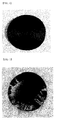
FIGS. 1 and 2 are photographs of cathodes of coin-type magnesium secondary batteries prepared in Example 1 and Comparative Example 1 after rolling; -
FIG. 3 is a graph illustrating cyclic voltammetry results of magnesium secondary batteries including cathodes prepared in Example 1 and Comparative Example 1 and fabricated in Test Example 1; -
FIG. 4 is a graph illustrating cyclic voltammetry results of a magnesium secondary battery including a cathode prepared in Example 1 and fabricated in Test Example 1; -
FIG. 5 is a graph illustrating capacity change of a magnesium secondary battery including a cathode prepared in Example 1 and fabricated in Test Example 1 with respect to the number of charge/discharge cycles at 1C charge and 1C discharge; and -
FIG. 6 is a graph illustrating discharge test results of magnesium secondary batteries respectively including cathodes prepared in Example 1 and Comparative Example 1 and fabricated in Test Example 1 at 0.1C and 5C. - Now, the present invention will be described in more detail with reference to the following examples. These examples are provided only to illustrate the present invention and should not be construed as limiting the scope and spirit of the present invention.
- 50% by weight of carbon black, as a conductive material, having a particle diameter distribution of 20 nm to 80 nm and 50% by weight of polyimide were added to NMP to prepare a coating solution, followed by coating the coating solution on a stainless steel foil to have a thickness of 1 µm and an average surface roughness of 0.3 µm and drying the coating to prepare a cathode current collector. A cathode slurry prepared by adding 80% by weight of Mo6S8, 10% by weight of PVDF, and 10% by weight of Denka Black to NMP was coated on the cathode current collector to a thickness of 70 µm, and the resultant was dried and rolled to prepare a cathode for a magnesium secondary battery.
- Referring to
FIG. 1 , it can be seen that the surface is clean even after drying and rolling when the active material is coated on the primer-coated stainless steel foil. This is because adhesive strength between the stainless steel foil current collector and the active material is improved as described above. - A cathode for a magnesium secondary battery was prepared in the same manner as in Example 1, except that a stainless foil with an average surface roughness of 0.1 µm or less was used alone as a cathode current collector.
- Referring to
FIG. 2 , it can be seen that the active material is separated from the current collector at edges after drying and rolling when the active material is coated on the stainless steel foil. This is because adhesive strength between the current collector and the active material is reduced due to high surface smoothness, mechanical strength, ductility, and malleability of the stainless steel foil. - A cathode for a magnesium secondary battery was prepared in the same manner as in Example 1, except that a conductive polymer-coated stainless steel providing an average surface roughness of 0.2 µm was used as a cathode current collector.
- Coin-type magnesium secondary batteries were fabricated by interposing a glass filter, as a separator, between one of the cathodes for magnesium secondary batteries prepared respectively in Example I and Comparative Example 1 and a magnesium foil, as an anode, and injecting 0.25 M Mg(AlCl2BuEt)2 in THF thereinto as an electrolytic solution.
- With respect to the fabricated coin-type magnesium secondary batteries, various tests were performed. The results are shown in
FIGS. 3 to 6 and will be described below. - First, referring to
FIG. 3 , it can be seen that the magnesium secondary batteries according to Example 1 and Comparative Example 1 were stable in a typical operating voltage range, i.e., in the range of 0.3 to 1.9 V, of magnesium. This is because, electrochemical reactions do not occur between materials used as the current collector in Example 1 and Comparative Example 1 and Mg(AlCl2BuEt)2/THF of the electrolyte. - In addition, referring to
FIG. 4 , intercalation and deintercalation peaks of magnesium were observed in a voltage range of 0.3 to 1.8 V in the magnesium secondary battery according to Example 1. Referring toFIG. 5 , stable charging and discharging behavior were observed at about 200 cycles, and there was no capacity reduction. - Meanwhile, referring to
FIG. 6 , the magnesium secondary battery according to Example 1 showed less capacity reduction rates than the magnesium secondary battery according to Comparative Example 1 under both 0.1 C and 5 C conditions. Particularly, it was identified that the magnesium secondary battery according to Example 1 showed far better characteristics than the magnesium secondary battery according to Comparative Example 1 during discharging at the high-rate of 5C. - Peel strength of the cathodes for magnesium secondary batteries respectively prepared in Example 1 and Comparative Examples 1 and 2 was measured. Particularly, the surface of the fabricated cathodes was cut and fixed to a slide glass, and then peel strength was measured while a strip of the current collector was peeled at 180°. The results are shown in Table 1 below. An average obtained from three measured peel strengths was used for evaluation.
<Table 1 > Adhesive strength (g) Example 1 20 Comparative Example 1 2 Comparative Example 2 10 - As shown in Table 1, adhesive strength according to Example 1 was far greater than that according to Comparative Examples 1 and 2.
- Coin-type magnesium secondary batteries were fabricated by interposing a glass filter, as a separator, between one of the cathodes for magnesium secondary batteries prepared respectively in Example 1 and Comparative Examples 1 and 2 and a magnesium foil, as an anode, and injecting 0.25 M Mg(AlCl2BuEt)2 in THF thereinto as an electrolytic solution.
- High-rate discharge characteristics of the fabricated magnesium secondary batteries were measured, and the results are shown in Table 2 below.
<Table 2> High-rate discharge characteristics (discharge capacity percentage at 10 C compared to discharge capacity at 0.3 C) Example 1 93% Comparative Example 1 75% Comparative Example 2 86% - As shown in Table 2, the battery fabricated according to Example 1 has far greater high-rate discharge characteristics than the batteries prepared according to Comparative Examples 1 and 2.
- As apparent from the afore-going, the cathode current collector according to the present invention includes stainless steel coated with the primer including a conductive material and a polymer material. Thus, increase in peeling resistance of the cathode active material occurring in conventional cathode current collectors including stainless steel not coated with the primer may be inhibited. Therefore, excellent electrical characteristics can be maintained in the magnesium batteries.
- Although the preferred embodiments of the present invention have been disclosed for illustrative purposes, those skilled in the art will appreciate that various modifications, additions and substitutions are possible, without departing from the scope and spirit of the invention as disclosed in the accompanying claims.
Claims (15)
- A magnesium secondary battery comprising:a cathode comprising a cathode active material capable of intercalating and deintercalating magnesium ions;an anode comprising an anode active material capable of intercalating and deintercalating magnesium ions;a separator interposed between the cathode and the anode; andan electrolytic solution comprising magnesium ions,wherein the cathode comprises a current collector formed by coating a primer comprising a conductive material and a polymer material on a metallic base and the cathode active material coated on the current collector.
- The magnesium secondary battery according to claim 1, wherein the metallic base comprises a metal foil.
- The magnesium secondary battery according to claim 1, wherein the metallic base comprises stainless steel.
- The magnesium secondary battery according to claim 1, wherein the metallic base has a thickness of 3 µm to 150 µm, and the primer coating has a thickness of 100 nm to 1 µm.
- The magnesium secondary battery according to claim 1, wherein the mixing ratio of the conductive material and the polymer material in the primer is in the range of 1:10 to 10:1 on a weight ratio basis.
- The magnesium secondary battery according to claim 1, wherein the conductive material comprises at least one material selected from the group consisting of graphite, carbon black, acetylene black, Ketjen black, channel black, furnace black, lamp black, thermal black, carbon fiber, and carbon fluoride.
- The magnesium secondary battery according to claim 1, wherein the polymer material comprises at least one material selected from the group consisting of polyvinylidene fluoride, polyvinyl alcohol, carboxymethyl cellulose (CMC), starch, hydroxypropyl cellulose, regenerated cellulose, polyvinyl pyrrolidone, tetrafluoroethylene, polyethylene, polypropylene, ethylene-propylene-diene terpolymer (EPDM), sulfonated EPDM, styrene-butadiene rubbers, and fluororubbers.
- The magnesium secondary battery according to claim 1, wherein the primer coating layer has an average surface roughness of 0.3 µm to 20 µm.
- The magnesium secondary battery according to claim 1, wherein the primer coating layer has an average surface roughness of 0.3 µm to 5 µm.
- The magnesium secondary battery according to claim 1, wherein the cathode active material comprises an Mo-based compound or alloy.
- The magnesium secondary battery according to claim 10, wherein the cathode active material comprises Mo6S8.
- The magnesium secondary battery according to claim 1, wherein the anode active material comprises magnesium or a magnesium compound.
- The magnesium secondary battery according to claim 1, wherein the electrolytic solution comprises a magnesium organometallic compound.
- A battery pack comprising a magnesium secondary battery according to any one of claims 1 to 13 as a unit battery.
- The battery pack according to claim 14, the battery pack is a battery pack for a power source of electric vehicles, hybrid electric vehicles, power tools, or power storage devices.
Applications Claiming Priority (2)
| Application Number | Priority Date | Filing Date | Title |
|---|---|---|---|
| KR20100076204 | 2010-08-09 | ||
| PCT/KR2011/005681 WO2012020942A2 (en) | 2010-08-09 | 2011-08-02 | Cathode current collector coated with a primer and magnesium secondary battery including same |
Publications (3)
| Publication Number | Publication Date |
|---|---|
| EP2605325A2 true EP2605325A2 (en) | 2013-06-19 |
| EP2605325A4 EP2605325A4 (en) | 2014-07-23 |
| EP2605325B1 EP2605325B1 (en) | 2015-11-18 |
Family
ID=45568013
Family Applications (1)
| Application Number | Title | Priority Date | Filing Date |
|---|---|---|---|
| EP11816558.8A Active EP2605325B1 (en) | 2010-08-09 | 2011-08-02 | Cathode current collector coated with a primer and magnesium secondary battery including same |
Country Status (6)
| Country | Link |
|---|---|
| US (1) | US9379387B2 (en) |
| EP (1) | EP2605325B1 (en) |
| JP (1) | JP5977236B2 (en) |
| KR (1) | KR101326623B1 (en) |
| CN (1) | CN103053063B (en) |
| WO (1) | WO2012020942A2 (en) |
Cited By (1)
| Publication number | Priority date | Publication date | Assignee | Title |
|---|---|---|---|---|
| WO2012122080A1 (en) | 2011-03-08 | 2012-09-13 | Pellion Technologies Inc. | Rechargeable magnesium ion cell components and assembly |
Families Citing this family (35)
| Publication number | Priority date | Publication date | Assignee | Title |
|---|---|---|---|---|
| JP6233688B2 (en) * | 2012-09-13 | 2017-11-22 | 株式会社Gsユアサ | Electrode body, method for producing electrode body, and power storage device including electrode body |
| JP2014116164A (en) * | 2012-12-07 | 2014-06-26 | Samsung R&D Institute Japan Co Ltd | Solid-state battery |
| WO2014098898A1 (en) | 2012-12-21 | 2014-06-26 | Pellion Technologies, Inc. | Rechargeable magnesium ion cell components and assembly |
| KR101470554B1 (en) | 2013-04-29 | 2014-12-10 | 주식회사 엘지화학 | Packaging for a cable-type secondary battery and cable-type secondary battery including the same |
| KR101470556B1 (en) * | 2013-05-07 | 2014-12-10 | 주식회사 엘지화학 | Electrode for a secondary battery, preparation method thereof, secondary battery and cable-type secondary battery including the same |
| WO2014182063A1 (en) | 2013-05-07 | 2014-11-13 | 주식회사 엘지화학 | Electrode for secondary battery, method for manufacturing same, and secondary battery and cable-type secondary battery comprising same |
| KR101465164B1 (en) | 2013-05-07 | 2014-11-25 | 주식회사 엘지화학 | Cable-Type Secondary Battery |
| CN204375843U (en) * | 2013-05-07 | 2015-06-03 | 株式会社Lg化学 | Electrode for secondary battery, secondary battery and cable-type secondary battery including same |
| BR112014017443B8 (en) | 2013-05-07 | 2023-03-21 | Lg Chemical Ltd | CABLE TYPE SECONDARY BATTERY |
| CN204441379U (en) * | 2013-05-07 | 2015-07-01 | 株式会社Lg化学 | Electrode for secondary battery, and secondary battery and cable-type secondary battery comprising same |
| WO2014182064A1 (en) | 2013-05-07 | 2014-11-13 | 주식회사 엘지화학 | Electrode for secondary battery, method for manufacturing same, and secondary battery and cable-type secondary battery including same |
| KR101465166B1 (en) | 2013-05-07 | 2014-11-25 | 주식회사 엘지화학 | Cable-type secondary battery and preparation method thereof |
| KR101503879B1 (en) * | 2013-05-24 | 2015-03-20 | 한국과학기술연구원 | Magnesium hybrid battery and its fabrication method |
| JP6350150B2 (en) * | 2013-09-30 | 2018-07-04 | 株式会社Gsユアサ | Electricity storage element |
| JP2015097173A (en) * | 2013-11-15 | 2015-05-21 | 株式会社豊田自動織機 | Collector, electrode and power storage device |
| KR101752373B1 (en) | 2014-10-31 | 2017-06-29 | 주식회사 엘지화학 | Electrode composite, secondary battery and cable type secondary battery including the same |
| US20160294028A1 (en) * | 2015-04-03 | 2016-10-06 | Yan Ye | Solid state battery cells and methods for making and using same |
| KR102014115B1 (en) * | 2015-07-09 | 2019-08-26 | 주식회사 엘지화학 | Negative electrode for secondary battery and secondary battery comprising the same |
| WO2017206063A1 (en) * | 2016-05-31 | 2017-12-07 | 深圳先进技术研究院 | Magnesium ion battery and preparation method therefor |
| US10516154B2 (en) * | 2016-07-01 | 2019-12-24 | Lg Chem, Ltd. | Positive electrode for lithium secondary battery and method for preparing the same |
| KR102207524B1 (en) | 2016-09-01 | 2021-01-26 | 주식회사 엘지화학 | Methode of preparing electrodes for lithium secondary battery and the electrodes for lithium secondary battery manufactured by the same |
| WO2018044112A2 (en) * | 2016-09-01 | 2018-03-08 | 주식회사 엘지화학 | Method for manufacturing electrode for lithium secondary battery, and electrode for lithium secondary battery manufactured thereby |
| KR102122467B1 (en) * | 2016-09-09 | 2020-06-12 | 주식회사 엘지화학 | Electrode for lithium secondary battery and lithium secondary battery comprising the same |
| KR102358448B1 (en) | 2017-11-21 | 2022-02-04 | 주식회사 엘지에너지솔루션 | Negative electrode for lithium secondary battery and preparing method thereof |
| CN112189273B (en) | 2018-05-31 | 2024-03-08 | 富士胶片株式会社 | Current collectors with easy-adhesion layers, electrodes, all-solid-state secondary batteries, electronic equipment and electric vehicles, and methods for manufacturing the first three |
| FR3083649B1 (en) * | 2018-07-05 | 2020-06-26 | Armor | GRID CURRENT COLLECTOR AND RELATED DEVICES AND METHODS |
| KR102364463B1 (en) | 2018-08-08 | 2022-02-16 | 주식회사 엘지에너지솔루션 | Electrode for lithium secondary battery and lithium secondary battery including the same |
| US20220344672A1 (en) * | 2020-08-28 | 2022-10-27 | Lg Energy Solution, Ltd. | Current collector comprising primer coating layer having improved adhesive strength, and manufacturing method for same |
| WO2022164120A1 (en) * | 2021-01-27 | 2022-08-04 | 주식회사 엘지에너지솔루션 | Free-standing film for dry electrode, manufacturing apparatus thereof, dry electrode including same, and secondary battery |
| KR102593771B1 (en) | 2021-09-06 | 2023-10-24 | 주식회사 한화 | Primer coating apparatus for storage battery and chamber for primer coating |
| KR102837701B1 (en) * | 2021-10-20 | 2025-07-22 | 주식회사 엘지에너지솔루션 | Positive electrode for lithium secondary battery and lithium secondary battery comprising the same |
| KR102839917B1 (en) * | 2022-01-14 | 2025-07-29 | 주식회사 엘지화학 | Adhesion reinforcing composition, current collector comrising same, positive electrode comprising the current collector, method for preparing the positive electrode and lithium secondary battery comprising the positive electrode |
| KR102456715B1 (en) | 2022-02-07 | 2022-10-20 | 주식회사 이디에스 | Apparatus for coating porous electrode thin film for secondary battery |
| WO2023238155A1 (en) * | 2022-06-08 | 2023-12-14 | Kaushik Palicha | ALL SOLID-STATE Mg-BATTERY (SSMgB) EMPLOYING ELECTROLYTE ENCOMPASSING IRON RICH MATERIAL ENRICHED WITH MAGNESIUM |
| US12176482B1 (en) * | 2023-12-20 | 2024-12-24 | Lg Energy Solution, Ltd. | Solid electrolyte membrane, method for manufacturing the same, and all-solid-state battery comprising the same |
Family Cites Families (27)
| Publication number | Priority date | Publication date | Assignee | Title |
|---|---|---|---|---|
| US5447809A (en) * | 1984-08-21 | 1995-09-05 | Rayovac Corporation | Alkaline primary battery containing coated current collector |
| JPH07302586A (en) * | 1994-05-09 | 1995-11-14 | Ricoh Co Ltd | Battery electrode and manufacturing method thereof |
| US5478676A (en) * | 1994-08-02 | 1995-12-26 | Rexam Graphics | Current collector having a conductive primer layer |
| US5578396A (en) * | 1994-10-19 | 1996-11-26 | Arthur D. Little, Inc. | Current collector device |
| JPH08329928A (en) * | 1995-05-31 | 1996-12-13 | Hitachi Maxell Ltd | Lithium secondary battery |
| JP3039456B2 (en) | 1997-06-16 | 2000-05-08 | 日本電気株式会社 | Task management system, task management method, and storage medium storing task management program |
| JPH1173947A (en) * | 1997-08-29 | 1999-03-16 | Ricoh Co Ltd | Battery electrode and method of manufacturing the same |
| JPH11185733A (en) * | 1997-12-22 | 1999-07-09 | Mitsubishi Chemical Corp | Method for manufacturing lithium polymer secondary battery |
| US6316141B1 (en) * | 1999-10-18 | 2001-11-13 | Bar Ilan University | High-energy, rechargeable, electrochemical cells with non-aqueous electrolytes |
| US6713212B2 (en) * | 1999-10-18 | 2004-03-30 | Bar-Ilan University | High-energy, rechargeable electrochemical cells |
| US6544688B1 (en) | 2000-09-20 | 2003-04-08 | Moltech Corporation | Cathode current collector for electrochemical cells |
| JP3832252B2 (en) * | 2001-02-16 | 2006-10-11 | 三菱化学株式会社 | Lithium secondary battery housing member and secondary battery pack using the same |
| JP3737729B2 (en) * | 2001-09-26 | 2006-01-25 | 株式会社東芝 | Non-aqueous electrolyte battery and non-aqueous electrolyte |
| JP3624205B2 (en) * | 2002-02-01 | 2005-03-02 | 株式会社産学連携機構九州 | Electrode active material for non-aqueous electrolyte secondary battery, electrode and battery including the same |
| AU2003274763A1 (en) * | 2002-10-29 | 2004-05-25 | Sony Corporation | Rechargeable electrochemical cell |
| CN1170328C (en) * | 2002-11-01 | 2004-10-06 | 南开大学 | Rechargeable Magnesium Battery |
| JP2004259650A (en) * | 2003-02-27 | 2004-09-16 | Kanegafuchi Chem Ind Co Ltd | Magnesium secondary battery |
| KR100669335B1 (en) * | 2005-08-19 | 2007-01-16 | 삼성에스디아이 주식회사 | Anode for a lithium secondary battery and a lithium secondary battery comprising the same |
| JP4455461B2 (en) * | 2005-09-12 | 2010-04-21 | 株式会社東芝 | Power storage system |
| JP5162822B2 (en) * | 2005-12-02 | 2013-03-13 | ソニー株式会社 | Electrochemical devices |
| JP2007280627A (en) | 2006-04-03 | 2007-10-25 | Matsushita Electric Ind Co Ltd | Magnesium secondary battery |
| CN100427527C (en) * | 2006-06-08 | 2008-10-22 | 上海交通大学 | Application of organosulfur polymers in cathode materials for secondary magnesium batteries |
| US9012072B2 (en) * | 2007-01-25 | 2015-04-21 | Bar-Ilan University | Rechargeable magnesium battery |
| US7976976B2 (en) * | 2007-02-07 | 2011-07-12 | Rosecreek Technologies Inc. | Composite current collector |
| JP5245108B2 (en) * | 2007-07-11 | 2013-07-24 | ソニー株式会社 | Magnesium ion-containing non-aqueous electrolyte, method for producing the same, and electrochemical device |
| US9123940B2 (en) * | 2008-06-02 | 2015-09-01 | Dainichiseika Color & Chemicals Mfg. Co, Ltd. | Coating liquid, coating liquid for manufacturing electrode plate, undercoating agent, and use thereof |
| JP5334156B2 (en) * | 2008-06-06 | 2013-11-06 | Necエナジーデバイス株式会社 | Method for producing non-aqueous electrolyte secondary battery |
-
2011
- 2011-08-02 WO PCT/KR2011/005681 patent/WO2012020942A2/en not_active Ceased
- 2011-08-02 KR KR1020110076940A patent/KR101326623B1/en active Active
- 2011-08-02 JP JP2013524032A patent/JP5977236B2/en active Active
- 2011-08-02 EP EP11816558.8A patent/EP2605325B1/en active Active
- 2011-08-02 CN CN201180038278.2A patent/CN103053063B/en active Active
-
2013
- 2013-01-29 US US13/752,739 patent/US9379387B2/en active Active
Cited By (2)
| Publication number | Priority date | Publication date | Assignee | Title |
|---|---|---|---|---|
| WO2012122080A1 (en) | 2011-03-08 | 2012-09-13 | Pellion Technologies Inc. | Rechargeable magnesium ion cell components and assembly |
| EP2684240A4 (en) * | 2011-03-08 | 2014-11-12 | Pellion Technologies Inc | Rechargeable magnesium ion cell components and assembly |
Also Published As
| Publication number | Publication date |
|---|---|
| KR101326623B1 (en) | 2013-11-07 |
| WO2012020942A2 (en) | 2012-02-16 |
| WO2012020942A3 (en) | 2012-05-03 |
| EP2605325A4 (en) | 2014-07-23 |
| EP2605325B1 (en) | 2015-11-18 |
| CN103053063A (en) | 2013-04-17 |
| US20130143126A1 (en) | 2013-06-06 |
| JP5977236B2 (en) | 2016-08-24 |
| US9379387B2 (en) | 2016-06-28 |
| CN103053063B (en) | 2016-08-03 |
| JP2013533601A (en) | 2013-08-22 |
| KR20120014542A (en) | 2012-02-17 |
Similar Documents
| Publication | Publication Date | Title |
|---|---|---|
| US9379387B2 (en) | Cathode current collector coated with primer and magnesium secondary battery comprising the same | |
| CN111048747A (en) | Method of making silicon-containing composite electrodes for lithium-based batteries | |
| JP5260887B2 (en) | Nonaqueous electrolyte secondary battery | |
| EP3510654B1 (en) | Porous silicon materials and conductive polymer binder electrodes | |
| CN107004827A (en) | Composite electrode, lithium ion battery pack comprising composite electrode, and preparation method of composite electrode | |
| EP2660919B1 (en) | Integrated electrode assembly and secondary battery using same | |
| CN111146410A (en) | Negative electrode active material and battery | |
| EP2677588B1 (en) | Integrated electrode assembly and secondary battery using same | |
| JP2013164939A (en) | Collector and electrode, and power storage element using the same | |
| EP3790078B1 (en) | Functional separator, manufacturing method therefor, and lithium secondary battery comprising same | |
| KR20240032689A (en) | Anode and secondary battery comprising the same | |
| JP2013165250A (en) | Collector and electrode, and power storage element using the same | |
| JP4775621B2 (en) | Nonaqueous electrolyte secondary battery | |
| US11545722B2 (en) | Separators for electrochemical cells and methods of making the same | |
| JP2024502518A (en) | Negative electrode active materials and their preparation methods, secondary batteries, battery modules, battery packs, electrical devices | |
| JP4929763B2 (en) | Lithium secondary battery | |
| EP4345928A2 (en) | Anode for secondary battery and secondary battery comprising the same | |
| KR101353257B1 (en) | Positive Current Collector Comprising Carbon-based Material and Magnesium Secondary Battery Comprising the Same | |
| CN119812237A (en) | Negative electrode active material for secondary battery, negative electrode for secondary battery, and method for producing negative electrode for secondary battery | |
| CN120955085A (en) | Negative electrode and secondary battery |
Legal Events
| Date | Code | Title | Description |
|---|---|---|---|
| PUAI | Public reference made under article 153(3) epc to a published international application that has entered the european phase |
Free format text: ORIGINAL CODE: 0009012 |
|
| 17P | Request for examination filed |
Effective date: 20130201 |
|
| AK | Designated contracting states |
Kind code of ref document: A2 Designated state(s): AL AT BE BG CH CY CZ DE DK EE ES FI FR GB GR HR HU IE IS IT LI LT LU LV MC MK MT NL NO PL PT RO RS SE SI SK SM TR |
|
| DAX | Request for extension of the european patent (deleted) | ||
| A4 | Supplementary search report drawn up and despatched |
Effective date: 20140620 |
|
| RIC1 | Information provided on ipc code assigned before grant |
Ipc: H01M 4/66 20060101AFI20140613BHEP Ipc: H01M 4/58 20100101ALI20140613BHEP Ipc: H01M 4/62 20060101ALI20140613BHEP Ipc: H01B 1/12 20060101ALI20140613BHEP Ipc: H01M 10/054 20100101ALI20140613BHEP |
|
| 17Q | First examination report despatched |
Effective date: 20150109 |
|
| REG | Reference to a national code |
Ref country code: DE Ref legal event code: R079 Ref document number: 602011021496 Country of ref document: DE Free format text: PREVIOUS MAIN CLASS: H01M0010360000 Ipc: H01M0004660000 |
|
| GRAP | Despatch of communication of intention to grant a patent |
Free format text: ORIGINAL CODE: EPIDOSNIGR1 |
|
| RIC1 | Information provided on ipc code assigned before grant |
Ipc: H01M 4/58 20100101ALI20150513BHEP Ipc: H01M 4/66 20060101AFI20150513BHEP Ipc: H01M 4/62 20060101ALI20150513BHEP Ipc: H01B 1/12 20060101ALI20150513BHEP Ipc: H01M 4/136 20100101ALI20150513BHEP Ipc: H01M 10/054 20100101ALI20150513BHEP |
|
| INTG | Intention to grant announced |
Effective date: 20150618 |
|
| GRAS | Grant fee paid |
Free format text: ORIGINAL CODE: EPIDOSNIGR3 |
|
| GRAA | (expected) grant |
Free format text: ORIGINAL CODE: 0009210 |
|
| AK | Designated contracting states |
Kind code of ref document: B1 Designated state(s): AL AT BE BG CH CY CZ DE DK EE ES FI FR GB GR HR HU IE IS IT LI LT LU LV MC MK MT NL NO PL PT RO RS SE SI SK SM TR |
|
| REG | Reference to a national code |
Ref country code: GB Ref legal event code: FG4D |
|
| REG | Reference to a national code |
Ref country code: CH Ref legal event code: EP |
|
| REG | Reference to a national code |
Ref country code: AT Ref legal event code: REF Ref document number: 761950 Country of ref document: AT Kind code of ref document: T Effective date: 20151215 |
|
| REG | Reference to a national code |
Ref country code: IE Ref legal event code: FG4D |
|
| REG | Reference to a national code |
Ref country code: DE Ref legal event code: R096 Ref document number: 602011021496 Country of ref document: DE |
|
| REG | Reference to a national code |
Ref country code: NL Ref legal event code: MP Effective date: 20160218 |
|
| REG | Reference to a national code |
Ref country code: LT Ref legal event code: MG4D |
|
| REG | Reference to a national code |
Ref country code: AT Ref legal event code: MK05 Ref document number: 761950 Country of ref document: AT Kind code of ref document: T Effective date: 20151118 |
|
| PG25 | Lapsed in a contracting state [announced via postgrant information from national office to epo] |
Ref country code: IS Free format text: LAPSE BECAUSE OF FAILURE TO SUBMIT A TRANSLATION OF THE DESCRIPTION OR TO PAY THE FEE WITHIN THE PRESCRIBED TIME-LIMIT Effective date: 20160318 Ref country code: LT Free format text: LAPSE BECAUSE OF FAILURE TO SUBMIT A TRANSLATION OF THE DESCRIPTION OR TO PAY THE FEE WITHIN THE PRESCRIBED TIME-LIMIT Effective date: 20151118 Ref country code: NL Free format text: LAPSE BECAUSE OF FAILURE TO SUBMIT A TRANSLATION OF THE DESCRIPTION OR TO PAY THE FEE WITHIN THE PRESCRIBED TIME-LIMIT Effective date: 20151118 Ref country code: NO Free format text: LAPSE BECAUSE OF FAILURE TO SUBMIT A TRANSLATION OF THE DESCRIPTION OR TO PAY THE FEE WITHIN THE PRESCRIBED TIME-LIMIT Effective date: 20160218 Ref country code: ES Free format text: LAPSE BECAUSE OF FAILURE TO SUBMIT A TRANSLATION OF THE DESCRIPTION OR TO PAY THE FEE WITHIN THE PRESCRIBED TIME-LIMIT Effective date: 20151118 Ref country code: HR Free format text: LAPSE BECAUSE OF FAILURE TO SUBMIT A TRANSLATION OF THE DESCRIPTION OR TO PAY THE FEE WITHIN THE PRESCRIBED TIME-LIMIT Effective date: 20151118 Ref country code: IT Free format text: LAPSE BECAUSE OF FAILURE TO SUBMIT A TRANSLATION OF THE DESCRIPTION OR TO PAY THE FEE WITHIN THE PRESCRIBED TIME-LIMIT Effective date: 20151118 |
|
| PG25 | Lapsed in a contracting state [announced via postgrant information from national office to epo] |
Ref country code: LV Free format text: LAPSE BECAUSE OF FAILURE TO SUBMIT A TRANSLATION OF THE DESCRIPTION OR TO PAY THE FEE WITHIN THE PRESCRIBED TIME-LIMIT Effective date: 20151118 Ref country code: AT Free format text: LAPSE BECAUSE OF FAILURE TO SUBMIT A TRANSLATION OF THE DESCRIPTION OR TO PAY THE FEE WITHIN THE PRESCRIBED TIME-LIMIT Effective date: 20151118 Ref country code: PT Free format text: LAPSE BECAUSE OF FAILURE TO SUBMIT A TRANSLATION OF THE DESCRIPTION OR TO PAY THE FEE WITHIN THE PRESCRIBED TIME-LIMIT Effective date: 20160318 Ref country code: SE Free format text: LAPSE BECAUSE OF FAILURE TO SUBMIT A TRANSLATION OF THE DESCRIPTION OR TO PAY THE FEE WITHIN THE PRESCRIBED TIME-LIMIT Effective date: 20151118 Ref country code: PL Free format text: LAPSE BECAUSE OF FAILURE TO SUBMIT A TRANSLATION OF THE DESCRIPTION OR TO PAY THE FEE WITHIN THE PRESCRIBED TIME-LIMIT Effective date: 20151118 Ref country code: RS Free format text: LAPSE BECAUSE OF FAILURE TO SUBMIT A TRANSLATION OF THE DESCRIPTION OR TO PAY THE FEE WITHIN THE PRESCRIBED TIME-LIMIT Effective date: 20151118 Ref country code: FI Free format text: LAPSE BECAUSE OF FAILURE TO SUBMIT A TRANSLATION OF THE DESCRIPTION OR TO PAY THE FEE WITHIN THE PRESCRIBED TIME-LIMIT Effective date: 20151118 Ref country code: GR Free format text: LAPSE BECAUSE OF FAILURE TO SUBMIT A TRANSLATION OF THE DESCRIPTION OR TO PAY THE FEE WITHIN THE PRESCRIBED TIME-LIMIT Effective date: 20160219 |
|
| REG | Reference to a national code |
Ref country code: FR Ref legal event code: PLFP Year of fee payment: 6 |
|
| PG25 | Lapsed in a contracting state [announced via postgrant information from national office to epo] |
Ref country code: CZ Free format text: LAPSE BECAUSE OF FAILURE TO SUBMIT A TRANSLATION OF THE DESCRIPTION OR TO PAY THE FEE WITHIN THE PRESCRIBED TIME-LIMIT Effective date: 20151118 |
|
| REG | Reference to a national code |
Ref country code: DE Ref legal event code: R097 Ref document number: 602011021496 Country of ref document: DE |
|
| PG25 | Lapsed in a contracting state [announced via postgrant information from national office to epo] |
Ref country code: EE Free format text: LAPSE BECAUSE OF FAILURE TO SUBMIT A TRANSLATION OF THE DESCRIPTION OR TO PAY THE FEE WITHIN THE PRESCRIBED TIME-LIMIT Effective date: 20151118 Ref country code: DK Free format text: LAPSE BECAUSE OF FAILURE TO SUBMIT A TRANSLATION OF THE DESCRIPTION OR TO PAY THE FEE WITHIN THE PRESCRIBED TIME-LIMIT Effective date: 20151118 Ref country code: SK Free format text: LAPSE BECAUSE OF FAILURE TO SUBMIT A TRANSLATION OF THE DESCRIPTION OR TO PAY THE FEE WITHIN THE PRESCRIBED TIME-LIMIT Effective date: 20151118 Ref country code: RO Free format text: LAPSE BECAUSE OF FAILURE TO SUBMIT A TRANSLATION OF THE DESCRIPTION OR TO PAY THE FEE WITHIN THE PRESCRIBED TIME-LIMIT Effective date: 20151118 Ref country code: SM Free format text: LAPSE BECAUSE OF FAILURE TO SUBMIT A TRANSLATION OF THE DESCRIPTION OR TO PAY THE FEE WITHIN THE PRESCRIBED TIME-LIMIT Effective date: 20151118 |
|
| PLBE | No opposition filed within time limit |
Free format text: ORIGINAL CODE: 0009261 |
|
| STAA | Information on the status of an ep patent application or granted ep patent |
Free format text: STATUS: NO OPPOSITION FILED WITHIN TIME LIMIT |
|
| 26N | No opposition filed |
Effective date: 20160819 |
|
| PG25 | Lapsed in a contracting state [announced via postgrant information from national office to epo] |
Ref country code: SI Free format text: LAPSE BECAUSE OF FAILURE TO SUBMIT A TRANSLATION OF THE DESCRIPTION OR TO PAY THE FEE WITHIN THE PRESCRIBED TIME-LIMIT Effective date: 20151118 |
|
| PG25 | Lapsed in a contracting state [announced via postgrant information from national office to epo] |
Ref country code: BE Free format text: LAPSE BECAUSE OF FAILURE TO SUBMIT A TRANSLATION OF THE DESCRIPTION OR TO PAY THE FEE WITHIN THE PRESCRIBED TIME-LIMIT Effective date: 20151118 |
|
| PG25 | Lapsed in a contracting state [announced via postgrant information from national office to epo] |
Ref country code: MC Free format text: LAPSE BECAUSE OF FAILURE TO SUBMIT A TRANSLATION OF THE DESCRIPTION OR TO PAY THE FEE WITHIN THE PRESCRIBED TIME-LIMIT Effective date: 20151118 |
|
| REG | Reference to a national code |
Ref country code: CH Ref legal event code: PL |
|
| PG25 | Lapsed in a contracting state [announced via postgrant information from national office to epo] |
Ref country code: LI Free format text: LAPSE BECAUSE OF NON-PAYMENT OF DUE FEES Effective date: 20160831 Ref country code: CH Free format text: LAPSE BECAUSE OF NON-PAYMENT OF DUE FEES Effective date: 20160831 |
|
| REG | Reference to a national code |
Ref country code: IE Ref legal event code: MM4A |
|
| PG25 | Lapsed in a contracting state [announced via postgrant information from national office to epo] |
Ref country code: IE Free format text: LAPSE BECAUSE OF NON-PAYMENT OF DUE FEES Effective date: 20160802 |
|
| REG | Reference to a national code |
Ref country code: FR Ref legal event code: PLFP Year of fee payment: 7 |
|
| PG25 | Lapsed in a contracting state [announced via postgrant information from national office to epo] |
Ref country code: LU Free format text: LAPSE BECAUSE OF NON-PAYMENT OF DUE FEES Effective date: 20160802 |
|
| PG25 | Lapsed in a contracting state [announced via postgrant information from national office to epo] |
Ref country code: CY Free format text: LAPSE BECAUSE OF FAILURE TO SUBMIT A TRANSLATION OF THE DESCRIPTION OR TO PAY THE FEE WITHIN THE PRESCRIBED TIME-LIMIT Effective date: 20151118 Ref country code: HU Free format text: LAPSE BECAUSE OF FAILURE TO SUBMIT A TRANSLATION OF THE DESCRIPTION OR TO PAY THE FEE WITHIN THE PRESCRIBED TIME-LIMIT; INVALID AB INITIO Effective date: 20110802 |
|
| PG25 | Lapsed in a contracting state [announced via postgrant information from national office to epo] |
Ref country code: MT Free format text: LAPSE BECAUSE OF NON-PAYMENT OF DUE FEES Effective date: 20160831 Ref country code: TR Free format text: LAPSE BECAUSE OF FAILURE TO SUBMIT A TRANSLATION OF THE DESCRIPTION OR TO PAY THE FEE WITHIN THE PRESCRIBED TIME-LIMIT Effective date: 20151118 Ref country code: MK Free format text: LAPSE BECAUSE OF FAILURE TO SUBMIT A TRANSLATION OF THE DESCRIPTION OR TO PAY THE FEE WITHIN THE PRESCRIBED TIME-LIMIT Effective date: 20151118 |
|
| REG | Reference to a national code |
Ref country code: FR Ref legal event code: PLFP Year of fee payment: 8 |
|
| PG25 | Lapsed in a contracting state [announced via postgrant information from national office to epo] |
Ref country code: BG Free format text: LAPSE BECAUSE OF FAILURE TO SUBMIT A TRANSLATION OF THE DESCRIPTION OR TO PAY THE FEE WITHIN THE PRESCRIBED TIME-LIMIT Effective date: 20151118 |
|
| PG25 | Lapsed in a contracting state [announced via postgrant information from national office to epo] |
Ref country code: AL Free format text: LAPSE BECAUSE OF FAILURE TO SUBMIT A TRANSLATION OF THE DESCRIPTION OR TO PAY THE FEE WITHIN THE PRESCRIBED TIME-LIMIT Effective date: 20151118 |
|
| REG | Reference to a national code |
Ref country code: DE Ref legal event code: R081 Ref document number: 602011021496 Country of ref document: DE Owner name: LG ENERGY SOLUTION LTD., KR Free format text: FORMER OWNER: LG CHEM. LTD., SEOUL, KR Ref country code: DE Ref legal event code: R081 Ref document number: 602011021496 Country of ref document: DE Owner name: LG ENERGY SOLUTION, LTD., KR Free format text: FORMER OWNER: LG CHEM. LTD., SEOUL, KR |
|
| P01 | Opt-out of the competence of the unified patent court (upc) registered |
Effective date: 20230408 |
|
| REG | Reference to a national code |
Ref country code: GB Ref legal event code: 732E Free format text: REGISTERED BETWEEN 20230824 AND 20230831 |
|
| REG | Reference to a national code |
Ref country code: DE Ref legal event code: R081 Ref document number: 602011021496 Country of ref document: DE Owner name: LG ENERGY SOLUTION, LTD., KR Free format text: FORMER OWNER: LG ENERGY SOLUTION LTD., SEOUL, KR |
|
| PGFP | Annual fee paid to national office [announced via postgrant information from national office to epo] |
Ref country code: DE Payment date: 20250721 Year of fee payment: 15 |
|
| PGFP | Annual fee paid to national office [announced via postgrant information from national office to epo] |
Ref country code: GB Payment date: 20250722 Year of fee payment: 15 |
|
| PGFP | Annual fee paid to national office [announced via postgrant information from national office to epo] |
Ref country code: FR Payment date: 20250725 Year of fee payment: 15 |