EP2600435A1 - Electrical component, nonaqueous-electrolyte cell, and lead wire and sealable container both for use therein - Google Patents
Electrical component, nonaqueous-electrolyte cell, and lead wire and sealable container both for use therein Download PDFInfo
- Publication number
- EP2600435A1 EP2600435A1 EP11812328.0A EP11812328A EP2600435A1 EP 2600435 A1 EP2600435 A1 EP 2600435A1 EP 11812328 A EP11812328 A EP 11812328A EP 2600435 A1 EP2600435 A1 EP 2600435A1
- Authority
- EP
- European Patent Office
- Prior art keywords
- lead conductor
- sealable container
- layer
- polyallylamine
- thermal adhesive
- Prior art date
- Legal status (The legal status is an assumption and is not a legal conclusion. Google has not performed a legal analysis and makes no representation as to the accuracy of the status listed.)
- Granted
Links
Images

Classifications
-
- H—ELECTRICITY
- H01—ELECTRIC ELEMENTS
- H01G—CAPACITORS; CAPACITORS, RECTIFIERS, DETECTORS, SWITCHING DEVICES, LIGHT-SENSITIVE OR TEMPERATURE-SENSITIVE DEVICES OF THE ELECTROLYTIC TYPE
- H01G9/00—Electrolytic capacitors, rectifiers, detectors, switching devices, light-sensitive or temperature-sensitive devices; Processes of their manufacture
- H01G9/004—Details
- H01G9/08—Housing; Encapsulation
- H01G9/10—Sealing, e.g. of lead-in wires
-
- H—ELECTRICITY
- H01—ELECTRIC ELEMENTS
- H01M—PROCESSES OR MEANS, e.g. BATTERIES, FOR THE DIRECT CONVERSION OF CHEMICAL ENERGY INTO ELECTRICAL ENERGY
- H01M50/00—Constructional details or processes of manufacture of the non-active parts of electrochemical cells other than fuel cells, e.g. hybrid cells
- H01M50/50—Current conducting connections for cells or batteries
- H01M50/543—Terminals
-
- C—CHEMISTRY; METALLURGY
- C08—ORGANIC MACROMOLECULAR COMPOUNDS; THEIR PREPARATION OR CHEMICAL WORKING-UP; COMPOSITIONS BASED THEREON
- C08L—COMPOSITIONS OF MACROMOLECULAR COMPOUNDS
- C08L39/00—Compositions of homopolymers or copolymers of compounds having one or more unsaturated aliphatic radicals, each having only one carbon-to-carbon double bond, and at least one being terminated by a single or double bond to nitrogen or by a heterocyclic ring containing nitrogen; Compositions of derivatives of such polymers
- C08L39/02—Homopolymers or copolymers of vinylamine
-
- H—ELECTRICITY
- H01—ELECTRIC ELEMENTS
- H01M—PROCESSES OR MEANS, e.g. BATTERIES, FOR THE DIRECT CONVERSION OF CHEMICAL ENERGY INTO ELECTRICAL ENERGY
- H01M50/00—Constructional details or processes of manufacture of the non-active parts of electrochemical cells other than fuel cells, e.g. hybrid cells
- H01M50/10—Primary casings; Jackets or wrappings
- H01M50/116—Primary casings; Jackets or wrappings characterised by the material
- H01M50/124—Primary casings; Jackets or wrappings characterised by the material having a layered structure
-
- H—ELECTRICITY
- H01—ELECTRIC ELEMENTS
- H01M—PROCESSES OR MEANS, e.g. BATTERIES, FOR THE DIRECT CONVERSION OF CHEMICAL ENERGY INTO ELECTRICAL ENERGY
- H01M50/00—Constructional details or processes of manufacture of the non-active parts of electrochemical cells other than fuel cells, e.g. hybrid cells
- H01M50/10—Primary casings; Jackets or wrappings
- H01M50/172—Arrangements of electric connectors penetrating the casing
- H01M50/174—Arrangements of electric connectors penetrating the casing adapted for the shape of the cells
- H01M50/176—Arrangements of electric connectors penetrating the casing adapted for the shape of the cells for prismatic or rectangular cells
-
- H—ELECTRICITY
- H01—ELECTRIC ELEMENTS
- H01M—PROCESSES OR MEANS, e.g. BATTERIES, FOR THE DIRECT CONVERSION OF CHEMICAL ENERGY INTO ELECTRICAL ENERGY
- H01M50/00—Constructional details or processes of manufacture of the non-active parts of electrochemical cells other than fuel cells, e.g. hybrid cells
- H01M50/10—Primary casings; Jackets or wrappings
- H01M50/183—Sealing members
- H01M50/19—Sealing members characterised by the material
- H01M50/193—Organic material
-
- H—ELECTRICITY
- H01—ELECTRIC ELEMENTS
- H01M—PROCESSES OR MEANS, e.g. BATTERIES, FOR THE DIRECT CONVERSION OF CHEMICAL ENERGY INTO ELECTRICAL ENERGY
- H01M50/00—Constructional details or processes of manufacture of the non-active parts of electrochemical cells other than fuel cells, e.g. hybrid cells
- H01M50/50—Current conducting connections for cells or batteries
- H01M50/543—Terminals
- H01M50/547—Terminals characterised by the disposition of the terminals on the cells
- H01M50/55—Terminals characterised by the disposition of the terminals on the cells on the same side of the cell
-
- H—ELECTRICITY
- H01—ELECTRIC ELEMENTS
- H01M—PROCESSES OR MEANS, e.g. BATTERIES, FOR THE DIRECT CONVERSION OF CHEMICAL ENERGY INTO ELECTRICAL ENERGY
- H01M50/00—Constructional details or processes of manufacture of the non-active parts of electrochemical cells other than fuel cells, e.g. hybrid cells
- H01M50/50—Current conducting connections for cells or batteries
- H01M50/543—Terminals
- H01M50/552—Terminals characterised by their shape
- H01M50/553—Terminals adapted for prismatic, pouch or rectangular cells
- H01M50/557—Plate-shaped terminals
-
- H—ELECTRICITY
- H01—ELECTRIC ELEMENTS
- H01M—PROCESSES OR MEANS, e.g. BATTERIES, FOR THE DIRECT CONVERSION OF CHEMICAL ENERGY INTO ELECTRICAL ENERGY
- H01M50/00—Constructional details or processes of manufacture of the non-active parts of electrochemical cells other than fuel cells, e.g. hybrid cells
- H01M50/50—Current conducting connections for cells or batteries
- H01M50/543—Terminals
- H01M50/562—Terminals characterised by the material
-
- H—ELECTRICITY
- H01—ELECTRIC ELEMENTS
- H01M—PROCESSES OR MEANS, e.g. BATTERIES, FOR THE DIRECT CONVERSION OF CHEMICAL ENERGY INTO ELECTRICAL ENERGY
- H01M50/00—Constructional details or processes of manufacture of the non-active parts of electrochemical cells other than fuel cells, e.g. hybrid cells
- H01M50/50—Current conducting connections for cells or batteries
- H01M50/571—Methods or arrangements for affording protection against corrosion; Selection of materials therefor
-
- H—ELECTRICITY
- H01—ELECTRIC ELEMENTS
- H01G—CAPACITORS; CAPACITORS, RECTIFIERS, DETECTORS, SWITCHING DEVICES, LIGHT-SENSITIVE OR TEMPERATURE-SENSITIVE DEVICES OF THE ELECTROLYTIC TYPE
- H01G2/00—Details of capacitors not covered by a single one of groups H01G4/00-H01G11/00
- H01G2/10—Housing; Encapsulation
- H01G2/103—Sealings, e.g. for lead-in wires; Covers
-
- H—ELECTRICITY
- H01—ELECTRIC ELEMENTS
- H01G—CAPACITORS; CAPACITORS, RECTIFIERS, DETECTORS, SWITCHING DEVICES, LIGHT-SENSITIVE OR TEMPERATURE-SENSITIVE DEVICES OF THE ELECTROLYTIC TYPE
- H01G4/00—Fixed capacitors; Processes of their manufacture
- H01G4/002—Details
- H01G4/224—Housing; Encapsulation
-
- H—ELECTRICITY
- H05—ELECTRIC TECHNIQUES NOT OTHERWISE PROVIDED FOR
- H05K—PRINTED CIRCUITS; CASINGS OR CONSTRUCTIONAL DETAILS OF ELECTRIC APPARATUS; MANUFACTURE OF ASSEMBLAGES OF ELECTRICAL COMPONENTS
- H05K3/00—Apparatus or processes for manufacturing printed circuits
- H05K3/38—Improvement of the adhesion between the insulating substrate and the metal
- H05K3/386—Improvement of the adhesion between the insulating substrate and the metal by the use of an organic polymeric bonding layer, e.g. adhesive
-
- Y—GENERAL TAGGING OF NEW TECHNOLOGICAL DEVELOPMENTS; GENERAL TAGGING OF CROSS-SECTIONAL TECHNOLOGIES SPANNING OVER SEVERAL SECTIONS OF THE IPC; TECHNICAL SUBJECTS COVERED BY FORMER USPC CROSS-REFERENCE ART COLLECTIONS [XRACs] AND DIGESTS
- Y02—TECHNOLOGIES OR APPLICATIONS FOR MITIGATION OR ADAPTATION AGAINST CLIMATE CHANGE
- Y02E—REDUCTION OF GREENHOUSE GAS [GHG] EMISSIONS, RELATED TO ENERGY GENERATION, TRANSMISSION OR DISTRIBUTION
- Y02E60/00—Enabling technologies; Technologies with a potential or indirect contribution to GHG emissions mitigation
- Y02E60/10—Energy storage using batteries
Definitions
- the present invention relates to an electrical part and a nonaqueous electrolyte cell each used as an electric power supply for a small electronic device or the like, and also relates to a lead wire and a sealable container which are components thereof.
- a nonaqueous electrolyte cell has been employed in which a bag body is used as a sealable container, and a nonaqueous electrolyte (electrolytic solution), a positive electrode, and a negative electrode are enclosed therein.
- a nonaqueous electrolyte an electrolytic solution prepared by dissolving a fluorine-containing lithium salt, such as LiPF 6 or LiBF 4 , in propylene carbonate, ethylene carbonate, dimethyl carbonate, ethyl methyl carbonate, or the like is used.
- Such a sealable container is required to have properties of preventing permeation of an electrolytic solution and gas therethrough and infiltration of moisture from the outside. Therefore, a laminate film including a metal layer, such as an aluminum foil, coated with a resin is used as a material for a sealable container. By fusion-bonding the edges of two laminate films, a sealable container is formed.
- An opening portion is provided on one end of the sealable container, and a nonaqueous electrolyte, a positive electrode plate, a negative electrode plate, a separator, and the like are enclosed therein. Furthermore, a lead conductor having one end thereof connected to the positive electrode plate and a lead conductor having one end thereof connected to the negative electrode plate are arranged so as to extend from the inside to the outside of the sealable container. Lastly, by heat-sealing (fusion-bonding) the opening portion, the opening portion of the sealable container is closed, and the sealable container and each of the lead conductors are bonded together to seal the opening portion.
- the portion that is heat-sealed last is referred to as a sealing portion.
- the sealable container and each of the lead conductors are bonded (fusion-bonded) together through a thermal adhesive layer.
- the thermal adhesive layer is provided in advance on a part of the lead conductor corresponding to the sealing portion, or provided in advance on a part of the sealable container corresponding to the sealing portion so that it can be interposed between the metal layer of the sealable container and the lead conductor.
- the thermal adhesive layer has high fluidity at the time of heat-sealing, adhesiveness between the sealable container and the lead conductor can be enhanced.
- the sealing portion is required to have a characteristic of being capable of maintaining adhesion and sealing properties without causing short-circuiting between the metal layer and the lead conductor.
- Patent Literature 1 discloses a sealing bag for a battery and a lead wire which are used for such a nonaqueous electrolyte cell, and describes that the sealing property of a sealing portion can be enhanced by providing a maleic modified polyolefin layer, which serves as a thermal adhesive layer, directly on the conductor of a lead conductor.
- a sealing portion adhesion and sealing properties between a sealable container and a lead conductor are required. Even when the adhesion property immediately after sealing is sufficient, the adhesiveness gradually decreases with time, resulting in occurrence of detachment at the interface with a metal layer or a lead conductor, which is a problem. The reason for this is that, as time passes, moisture permeates through the sealing portion, and the electrolyte enclosed in the sealable container reacts with water to produce hydrofluoric acid, resulting in corrosion of the lead conductor (metal).
- electrical parts in automobile applications need to be used for a long period of time, and it is required to further improve resistance to an electrolyte in fusion-bonding portions.
- detachment is likely to occur at the interface with nickel or a nickel plated layer used as a lead conductor for a negative electrode, and improvement in resistance to an electrolyte is desired.
- Patent Literature 2 discloses a battery tab in which a composite film layer composed of an aminated phenol polymer, a chromium [III] compound, and a phosphorus compound is formed on the surface and sides of a lead conductor having a nickel surface. It is stated that, by forming the composite film layer, the nickel layer is prevented from being corroded by hydrofluoric acid generated from the electrolyte and moisture, and the nickel layer is prevented from being dissolved. However, since chromium, which is a heavy metal, is used, this method is not environmentally desirable.
- the present invention provides an electrical part including a sealable container having a metal layer, and a lead conductor extending from the inside to the outside of the sealable container, the sealable container and the lead conductor being fusion-bonded at a sealing portion, characterized in that the sealing portion at least partially has a layer composed of a polyallylamine at a part between the metal layer and the lead conductor and in contact with the lead conductor (first invention of the present application).
- the sealable container and the lead conductor are fusion-bonded together through a thermal adhesive layer, and by further providing the layer composed of a polyallylamine at the part in contact with the lead conductor, resistance to an electrolyte is improved.
- a polyallylamine is a polymer obtained by polymerizing at least one type of allylamine.
- a polyallylamine having sulfur dioxide in its molecular structure such as a copolymer of allylamine and sulfur dioxide, is used, adhesiveness to metal is improved, which is preferable (second invention of the present application).
- the polyallylamine includes diallylamine as a polymerizable component
- corrosion prevention capability is improved, which is preferable (third invention of the present application).
- diallylamine is included as a polymerizable component, a secondary or higher amine group exists in the polymer, and therefore, corrosion prevention capability is enhanced.
- a diallylamine polymer obtained by polymerizing diallylamine only may be used, or a diallylamine copolymer obtained by polymerizing diallylamine with another copolymerizable component may be used.
- the present invention provides a nonaqueous electrolyte cell including a sealable container having a metal layer, a lead conductor extending from the inside to the outside of the sealable container, a nonaqueous electrolyte enclosed inside the sealable container, and an electrode enclosed inside the sealable container and connected to an end of the lead conductor, the sealable container and the lead conductor being fusion-bonded at a sealing portion, characterized in that the sealing portion at least partially has a layer composed of a polyallylamine at a part between the metal layer and the lead conductor and in contact with the lead conductor (fourth invention of the present application).
- the sealing portion has high adhesion and sealing properties and high resistance to an electrolyte, and therefore, adhesion and sealing properties can be maintained even if used over a long period of time.
- the present invention provides a lead wire to be used in the electrical part or the nonaqueous electrolyte cell, the lead wire including a lead conductor, a thermal adhesive layer which covers a part corresponding to at least the sealing portion of the lead conductor, and a layer composed of a polyallylamine provided between the thermal adhesive layer and the lead conductor (fifth invention of the present application).
- the part corresponding to the sealing portion of the lead conductor is a part at which the lead conductor and the sealable container (metal layer) are bonded together.
- the layer composed of a polyallylamine comes into contact with the lead conductor.
- the present invention provides a sealable container to be used in the electrical part or the nonaqueous electrolyte cell, the sealable container including a metal layer, a thermal adhesive layer which covers a part corresponding to at least the sealing portion of the metal layer, and a layer composed of a polyallylamine provided on a surface of the thermal adhesive layer at a part in contact with the lead conductor (seventh invention of the present application).
- the part corresponding to the sealing portion of the metal layer is a part at which the lead conductor and the sealable container (metal layer) are bonded together.
- the sealable container is composed of a laminate film generally including a metal layer and a resin layer which covers the entire surface of the metal layer.
- a thermal adhesive layer may be provided on the surface of the resin layer at a part corresponding to the sealing portion, and a layer composed of a polyallylamine may be provided on the surface of the thermal adhesive layer.
- the resin may be entirely or partially replaced with a thermal adhesive layer, and a layer composed of a polyallylamine may be provided on the surface of the thermal adhesive layer at a part corresponding to the sealing portion.
- the sealable container having such a structure By using the sealable container having such a structure, it is possible to obtain an electrical part and a nonaqueous electrolyte cell in which the sealing portion has high adhesion and sealing properties, and adhesion and sealing properties can be maintained even if used over a long period of time.
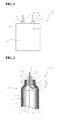
- FIG. 1 is a front view schematically showing a nonaqueous electrolyte cell, such as a lithium-ion battery, according to an embodiment
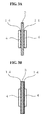
- Fig. 2 is a partial cross-sectional view taken along the line A-A' of Fig. 1 .
- a nonaqueous electrolyte cell 1 includes a substantially rectangular sealable container 2 and lead conductors 3 extending from the inside to the outside of the sealable container 2.
- the sealable container 2 is composed of a three-layered laminate film 8 including a metal layer 5, and a resin layer 6 and a resin layer 7 which cover the metal layer 5.
- the metal layer 5 is composed of a metal, such as an aluminum foil.
- a polyamide resin such as Nylon 6,6 or Nylon 6, a polyester resin, a polyimide resin, or the like can be used.
- an insulating resin which is not dissolved in a nonaqueous electrolyte and which is melted by heating is preferably used.
- the sealable container 2 is formed by overlaying two laminate films 8, and heat-sealing three sides other than a side through which the lead conductors passes. In the outer periphery of the sealable container, two metal layers 5 are bonded together through the resin layers 7.
- the lead conductor 3 is bonded (fusion-bonded) to the sealable container (laminate film 8) through a thermal adhesive layer 4.
- a layer 14 composed of a polyallylamine is provided at a part in contact with the lead conductor 3 on the inner side of the thermal adhesive layer 4.
- a current collector for a positive electrode 10 and a current collector for a negative electrode 11 connected to the ends of the respective lead conductors, a nonaqueous electrolyte 13, and a separator 12 are further enclosed inside the nonaqueous electrolyte cell.
- the thermal adhesive layer 4 As a material constituting the thermal adhesive layer 4, it is possible to use any resin which is melted by heat during heat-sealing so that the sealable container and the lead conductor can be bonded together.
- a polyolefin resin, an acid-modified polyolefin resin, an acid-modified styrene elastomer, or the like may be used.
- various additives, such as a flame retardant, an ultraviolet absorber, a light stabilizer, a heat stabilizer, a lubricant, and a coloring agent can be mixed into the thermal adhesive layer.
- the resin material and additives are mixed using a known mixer, such as an open roll mixer, a pressure kneader, a single screw mixer, or a twin screw mixer, and then a film-shaped thermal adhesive layer is formed by extrusion forming or the like.
- a known mixer such as an open roll mixer, a pressure kneader, a single screw mixer, or a twin screw mixer
- the thickness of the thermal adhesive layer which depends on the thickness of the lead conductor, is preferably 30 to 200 ⁇ m.
- the thermal adhesive layer may also be crosslinked, before use, with ionizing radiation, such as accelerated electron beams or gamma rays. Heat resistance can be enhanced by crosslinking, and it is possible to prevent reduction in adhesiveness or short-circuiting between the lead conductor and the metal layer when the temperature during use is increased.
- the entire thermal adhesive layer may be crosslinked, or the thermal adhesive layer may be formed so as to have a multilayer structure in which a non-crosslinked layer and a crosslinked layer are stacked on each other.
- the layer composed of a polyallylamine may be formed, for example, by applying a solution prepared by dissolving a polyallylamine in a solvent to the surface of the thermal adhesive layer, followed by drying.
- a solution prepared by dissolving a polyallylamine in a solvent to the surface of the thermal adhesive layer, followed by drying.
- the solvent water, methanol, ethanol, propylene glycol monomethyl ether, or the like can be used.
- the layer composed of a polyallylamine preferably has a thickness of 10 nm to 0.1 ⁇ m.
- a polyallylamine is a polymer obtained by polymerizing at least one type of allylamine.
- a homopolymer of allylamine, a homopolymer of diallylamine, a copolymer of allylamine and diallylamine, a copolymer of allylamine or diallylamine, sulfur dioxide, and maleic acid, or the like can be used as the polyallylamine.
- a polyallylamine having the amine moiety thereof neutralized, such as an acetate or a hydrochloride, can also be used.
- the thermal adhesive layer 4 and the layer 14 composed of a polyallylamine may be provided in advance so as to cover a part corresponding to the sealing portion of the lead conductor 3.
- Such a structure is defined as a lead wire.
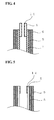
- Figures 3A and 3B are each a schematic cross-sectional view of a lead wire. Both surfaces of the lead wire are covered with a layer 14 composed of a polyallylamine and a thermal adhesive layer 4.
- the layer 14 composed of a polyallylamine may be provided only on the surface of the thermal adhesive layer as shown in Fig. 3A , or may be provided so as to entirely cover the lead conductor as shown in Fig. 3B .
- a lead wire having the structure shown in Fig. 3A may be fabricated by forming a layer 14 composed of a polyallylamine by applying a polyallylamine solution onto the surface of a thermal adhesive layer 4, and bonding the resulting body to the lead conductor such that the layer composed of a polyallylamine is in contact with the lead conductor.
- a lead wire having the structure shown in Fig. 3A may be fabricated by forming a layer 14 composed of a polyallylamine by applying a polyallylamine solution onto the surface of a lead conductor, and then bonding a thermal adhesive layer thereto. Note that the lead wire may be referred to as the "tab lead" in some cases.
- a metal such as aluminum, nickel, copper, or nickel plated copper, is used.
- aluminum is used as a positive electrode
- nickel or nickel plated copper is used as a negative electrode in many cases.
- a thermal adhesive layer 4 and a layer 14 composed of a polyallylamine may be provided on a sealable container in advance.
- a sealable container in advance, at least a part corresponding to a sealing portion of a laminate film is covered with a thermal adhesive layer 4, and a layer composed of a polyallylamine is provided on the surface of the thermal adhesive layer.
- Examples of such a sealable container include a configuration in which a thermal adhesive layer 4 and a layer 14 composed of a polyallylamine are provided on the inner side of a resin layer 7 ( Fig.
- the lithium-ion battery has been described as an example.
- the electrical part and the nonaqueous electrolyte cell according to the present invention are not limited to this form.
- a lead conductor composed of nickel plated copper with a thickness of 0.1 mm, a width of 20 mm, and a length of 40 mm was prepared.
- the lead conductor was immersed in the type of polyallylamine solution shown in Table I, followed by drying at 100°C to form a layer composed of polyallylamine on the surface of the lead conductor.
- a thermal adhesive layer with a thickness of 100 ⁇ m was formed by extrusion forming of maleic anhydride-modified polypropylene. Both surfaces of the lead conductor were covered with the thermal adhesive layer, and bonding was performed by pressing at 180°C for 5 seconds. Thereby, a lead wire was fabricated.
- each lead conductor for a negative electrode a lead conductor composed of nickel plated copper with a thickness of 0.1 mm, a width of 20 mm, and a length of 40 mm was prepared.
- a thermal adhesive layer with a thickness of 100 ⁇ m was formed by extrusion forming of maleic anhydride-modified polypropylene.
- the type of polyallylamine solution shown in Table I was applied to the surface of the resulting thermal adhesive layer, followed by drying at 100°C. Thereby, an insulating film in which a layer composed of a polyallylamine was disposed on the surface of the thermal adhesive layer was obtained. Both surfaces of the lead conductor were covered with the insulating film such that the layer composed of a polyallylamine was in contact with the conductor, and bonding was performed by pressing at 180°C for 5 seconds. Thereby, a lead wire was fabricated.
- a lead conductor for a negative electrode a lead conductor composed of nickel plated copper with a thickness of 0.1 mm, a width of 20 mm, and a length of 40 mm was prepared.
- a thermal adhesive layer with a thickness of 100 ⁇ m was formed by extrusion forming of maleic anhydride-modified polypropylene. Both surfaces of the lead conductor were covered with the thermal adhesive layer, and bonding was performed by pressing at 180°C for 5 seconds. Thereby, a lead wire was fabricated.
- Ethylene carbonate (EC), diethyl carbonate (DEC), and dimethyl carbonate (DMC) were mixed at a volume ratio of 1:1:1, and 1.0 mol/l of lithium hexafluorophosphate (LiPF 6 ) as an electrolyte was dissolved therein to prepare an electrolytic solution.
- the lead wires of Examples 1 to 7 and Comparative Example 1 were each immersed in the electrolytic solution, and with the moisture percentage in the electrolytic solution being adjusted to 100 to 200 ppm, left to stand in a constant temperature bath at 65°C for two weeks and for four weeks. Then, occurrence of detachment between the thermal adhesive layer and the lead conductor was visually observed, and adhesiveness was evaluated by a 180° peeling test. The results are shown in Table I.
- the term "materials fracture” means that adhesiveness was unmeasurable because the adhesiveness was very high and the peeled thermal adhesive layer was fractured.
- Example 3 the copolymer of diallylamine acetate and sulfur dioxide is used as the treatment liquid.
- adhesiveness to the conductor both after being immersed in the electrolytic solution for two weeks and after being immersed in the electrolytic solution for four weeks, is very high, and adhesiveness and resistance to an electrolyte are very good.
- Example 4 in which the allylamine polymer is used as the treatment liquid, it is evident that, in Examples 1 to 3 and 5 to 7 in which other treatment liquids are used, both adhesiveness after two weeks and adhesiveness after four weeks are high, and adhesiveness and resistance to an electrolyte are high.
- the electrical part includes a sealable container having a metal layer, and a lead conductor extending from the inside to the outside of the sealable container, the sealable container and the lead conductor being fusion-bonded at a sealing portion, in which the sealing portion at least partially has a layer composed of a polyallylamine at a part between the metal layer and the lead conductor and in contact with the lead conductor, and therefore, adhesion and sealing properties can be enhanced in the initial state and in a state of being in contact with an electrolytic solution.
Landscapes
- Chemical & Material Sciences (AREA)
- Chemical Kinetics & Catalysis (AREA)
- General Chemical & Material Sciences (AREA)
- Electrochemistry (AREA)
- Power Engineering (AREA)
- Engineering & Computer Science (AREA)
- Microelectronics & Electronic Packaging (AREA)
- Health & Medical Sciences (AREA)
- Medicinal Chemistry (AREA)
- Polymers & Plastics (AREA)
- Organic Chemistry (AREA)
- Sealing Battery Cases Or Jackets (AREA)
- Connection Of Batteries Or Terminals (AREA)
Abstract
Description
- The present invention relates to an electrical part and a nonaqueous electrolyte cell each used as an electric power supply for a small electronic device or the like, and also relates to a lead wire and a sealable container which are components thereof.
- With reduction in size and weight of electronic devices, electrical parts used in electronic devices, such as cells and capacitors, have also been required to be reduced in size and weight. Consequently, for example, a nonaqueous electrolyte cell has been employed in which a bag body is used as a sealable container, and a nonaqueous electrolyte (electrolytic solution), a positive electrode, and a negative electrode are enclosed therein. As the nonaqueous electrolyte, an electrolytic solution prepared by dissolving a fluorine-containing lithium salt, such as LiPF6 or LiBF4, in propylene carbonate, ethylene carbonate, dimethyl carbonate, ethyl methyl carbonate, or the like is used.
- Such a sealable container is required to have properties of preventing permeation of an electrolytic solution and gas therethrough and infiltration of moisture from the outside. Therefore, a laminate film including a metal layer, such as an aluminum foil, coated with a resin is used as a material for a sealable container. By fusion-bonding the edges of two laminate films, a sealable container is formed.
- An opening portion is provided on one end of the sealable container, and a nonaqueous electrolyte, a positive electrode plate, a negative electrode plate, a separator, and the like are enclosed therein. Furthermore, a lead conductor having one end thereof connected to the positive electrode plate and a lead conductor having one end thereof connected to the negative electrode plate are arranged so as to extend from the inside to the outside of the sealable container. Lastly, by heat-sealing (fusion-bonding) the opening portion, the opening portion of the sealable container is closed, and the sealable container and each of the lead conductors are bonded together to seal the opening portion. The portion that is heat-sealed last is referred to as a sealing portion.
- In this process, the sealable container and each of the lead conductors are bonded (fusion-bonded) together through a thermal adhesive layer. The thermal adhesive layer is provided in advance on a part of the lead conductor corresponding to the sealing portion, or provided in advance on a part of the sealable container corresponding to the sealing portion so that it can be interposed between the metal layer of the sealable container and the lead conductor. When the thermal adhesive layer has high fluidity at the time of heat-sealing, adhesiveness between the sealable container and the lead conductor can be enhanced. However, when fluidity is excessively high at the time of fusion-bonding, short-circuiting may occur between the metal layer and the lead conductor. Therefore, the sealing portion is required to have a characteristic of being capable of maintaining adhesion and sealing properties without causing short-circuiting between the metal layer and the lead conductor.
-
Patent Literature 1 discloses a sealing bag for a battery and a lead wire which are used for such a nonaqueous electrolyte cell, and describes that the sealing property of a sealing portion can be enhanced by providing a maleic modified polyolefin layer, which serves as a thermal adhesive layer, directly on the conductor of a lead conductor. -
- PTL 1: Japanese Patent No.
3562129 - PTL 2: Japanese Unexamined Patent Application Publication No.
2009-99527 - In a sealing portion, adhesion and sealing properties between a sealable container and a lead conductor are required. Even when the adhesion property immediately after sealing is sufficient, the adhesiveness gradually decreases with time, resulting in occurrence of detachment at the interface with a metal layer or a lead conductor, which is a problem. The reason for this is that, as time passes, moisture permeates through the sealing portion, and the electrolyte enclosed in the sealable container reacts with water to produce hydrofluoric acid, resulting in corrosion of the lead conductor (metal). In particular, electrical parts in automobile applications need to be used for a long period of time, and it is required to further improve resistance to an electrolyte in fusion-bonding portions. In particular, detachment is likely to occur at the interface with nickel or a nickel plated layer used as a lead conductor for a negative electrode, and improvement in resistance to an electrolyte is desired.
- In order to improve resistance to an electrolyte,
Patent Literature 2 discloses a battery tab in which a composite film layer composed of an aminated phenol polymer, a chromium [III] compound, and a phosphorus compound is formed on the surface and sides of a lead conductor having a nickel surface. It is stated that, by forming the composite film layer, the nickel layer is prevented from being corroded by hydrofluoric acid generated from the electrolyte and moisture, and the nickel layer is prevented from being dissolved. However, since chromium, which is a heavy metal, is used, this method is not environmentally desirable. - In consideration of the problems described above, it is an object of the present invention to provide an electrical part and a nonaqueous electrolyte cell, in which adhesion and sealing properties can be enhanced in the initial state and in a state of being in contact with an electrolytic solution, and also to provide a lead wire and a sealable container which are used therein.
- The present invention provides an electrical part including a sealable container having a metal layer, and a lead conductor extending from the inside to the outside of the sealable container, the sealable container and the lead conductor being fusion-bonded at a sealing portion, characterized in that the sealing portion at least partially has a layer composed of a polyallylamine at a part between the metal layer and the lead conductor and in contact with the lead conductor (first invention of the present application). The sealable container and the lead conductor are fusion-bonded together through a thermal adhesive layer, and by further providing the layer composed of a polyallylamine at the part in contact with the lead conductor, resistance to an electrolyte is improved.
- A polyallylamine is a polymer obtained by polymerizing at least one type of allylamine. When a polyallylamine having sulfur dioxide in its molecular structure, such as a copolymer of allylamine and sulfur dioxide, is used, adhesiveness to metal is improved, which is preferable (second invention of the present application).
- Furthermore, when the polyallylamine includes diallylamine as a polymerizable component, corrosion prevention capability is improved, which is preferable (third invention of the present application). When diallylamine is included as a polymerizable component, a secondary or higher amine group exists in the polymer, and therefore, corrosion prevention capability is enhanced. In this case, a diallylamine polymer obtained by polymerizing diallylamine only may be used, or a diallylamine copolymer obtained by polymerizing diallylamine with another copolymerizable component may be used.
- Furthermore, the present invention provides a nonaqueous electrolyte cell including a sealable container having a metal layer, a lead conductor extending from the inside to the outside of the sealable container, a nonaqueous electrolyte enclosed inside the sealable container, and an electrode enclosed inside the sealable container and connected to an end of the lead conductor, the sealable container and the lead conductor being fusion-bonded at a sealing portion, characterized in that the sealing portion at least partially has a layer composed of a polyallylamine at a part between the metal layer and the lead conductor and in contact with the lead conductor (fourth invention of the present application). In the nonaqueous electrolyte cell having such a structure, the sealing portion has high adhesion and sealing properties and high resistance to an electrolyte, and therefore, adhesion and sealing properties can be maintained even if used over a long period of time.
- Furthermore, the present invention provides a lead wire to be used in the electrical part or the nonaqueous electrolyte cell, the lead wire including a lead conductor, a thermal adhesive layer which covers a part corresponding to at least the sealing portion of the lead conductor, and a layer composed of a polyallylamine provided between the thermal adhesive layer and the lead conductor (fifth invention of the present application).
- The part corresponding to the sealing portion of the lead conductor is a part at which the lead conductor and the sealable container (metal layer) are bonded together. When one surface or both surfaces of the lead conductor corresponding to this part are covered with the thermal adhesive layer and the layer composed of a polyallylamine is provided between the thermal adhesive layer and the lead conductor, the layer composed of a polyallylamine comes into contact with the lead conductor. By using the lead wire having such a structure, it is possible to obtain an electrical part and a nonaqueous electrolyte cell in which the sealing portion has high adhesion and sealing properties, and adhesion and sealing properties can be maintained even if used over a long period of time. When the lead conductor is composed of nickel or a metal whose surface is plated with nickel, in particular, the effect of improving resistance to an electrolyte is increased (sixth invention of the present application).
- Furthermore, the present invention provides a sealable container to be used in the electrical part or the nonaqueous electrolyte cell, the sealable container including a metal layer, a thermal adhesive layer which covers a part corresponding to at least the sealing portion of the metal layer, and a layer composed of a polyallylamine provided on a surface of the thermal adhesive layer at a part in contact with the lead conductor (seventh invention of the present application).
- The part corresponding to the sealing portion of the metal layer is a part at which the lead conductor and the sealable container (metal layer) are bonded together. The sealable container is composed of a laminate film generally including a metal layer and a resin layer which covers the entire surface of the metal layer. A thermal adhesive layer may be provided on the surface of the resin layer at a part corresponding to the sealing portion, and a layer composed of a polyallylamine may be provided on the surface of the thermal adhesive layer. Alternatively, the resin may be entirely or partially replaced with a thermal adhesive layer, and a layer composed of a polyallylamine may be provided on the surface of the thermal adhesive layer at a part corresponding to the sealing portion. By using the sealable container having such a structure, it is possible to obtain an electrical part and a nonaqueous electrolyte cell in which the sealing portion has high adhesion and sealing properties, and adhesion and sealing properties can be maintained even if used over a long period of time.
- According to the present invention, it is possible to provide an electrical part and a nonaqueous electrolyte cell, in which adhesion and sealing properties can be enhanced in the initial state and in a state of being in contact with an electrolytic solution, and also to provide a lead wire and a sealable container which are used therein. Brief Description of Drawings
-
- [
Fig. 1] Figure 1 is a front view of a nonaqueous electrolyte cell according to an embodiment of the present invention. - [
Fig. 2] Figure 2 is a partial cross-sectional view of a nonaqueous electrolyte cell according to an embodiment of the present invention. - [
Fig. 3A] Figure 3A is a partial cross-sectional view of a lead wire according to an embodiment of the present invention, in which a layer composed of a polyallylamine is provided only on the surface of a thermal adhesive layer. - [
Fig. 3B] Figure 3B is a partial cross-sectional view of a lead wire according to an embodiment of the present invention, in which a layer composed of a polyallylamine is provided so as to entirely cover a lead conductor. - [
Fig. 4] Figure 4 is a partial cross-sectional view of a sealable container according to an embodiment of the present invention. - [
Fig. 5] Figure 5 is a partial cross-sectional view of a sealable container according to an embodiment of the present invention. - [
Fig. 6] Figure 6 is a partial cross-sectional view of a sealable container according to an embodiment of the present invention. - The structure of an electrical part of the present invention will be described below with reference to the drawings. In the drawings, the same reference signs denote the same or corresponding portions, and a repeated description thereof will be omitted. Furthermore, dimensional ratios in the drawings do not always coincide with those in the description.
Figure 1 is a front view schematically showing a nonaqueous electrolyte cell, such as a lithium-ion battery, according to an embodiment, andFig. 2 is a partial cross-sectional view taken along the line A-A' ofFig. 1 . Anonaqueous electrolyte cell 1 includes a substantially rectangularsealable container 2 and leadconductors 3 extending from the inside to the outside of thesealable container 2. - As shown in
Fig. 2 , thesealable container 2 is composed of a three-layeredlaminate film 8 including ametal layer 5, and aresin layer 6 and aresin layer 7 which cover themetal layer 5. Themetal layer 5 is composed of a metal, such as an aluminum foil. As theresin layer 6 located on the outer side of the sealable container, a polyamide resin, such asNylon Nylon 6, a polyester resin, a polyimide resin, or the like can be used. Furthermore, as theresin layer 7 located on the inner side of thesealable container 2, an insulating resin which is not dissolved in a nonaqueous electrolyte and which is melted by heating is preferably used. Examples thereof include a polyolefin resin, an acid-modified polyolefin resin, and an acid-modified styrene elastomer. Thesealable container 2 is formed by overlaying twolaminate films 8, and heat-sealing three sides other than a side through which the lead conductors passes. In the outer periphery of the sealable container, twometal layers 5 are bonded together through the resin layers 7. - At a sealing
portion 9, thelead conductor 3 is bonded (fusion-bonded) to the sealable container (laminate film 8) through a thermaladhesive layer 4. Alayer 14 composed of a polyallylamine is provided at a part in contact with thelead conductor 3 on the inner side of the thermaladhesive layer 4. - A current collector for a
positive electrode 10 and a current collector for a negative electrode 11 connected to the ends of the respective lead conductors, a nonaqueous electrolyte 13, and a separator 12 are further enclosed inside the nonaqueous electrolyte cell. - As a material constituting the thermal
adhesive layer 4, it is possible to use any resin which is melted by heat during heat-sealing so that the sealable container and the lead conductor can be bonded together. For example, a polyolefin resin, an acid-modified polyolefin resin, an acid-modified styrene elastomer, or the like may be used. In addition to these resins, various additives, such as a flame retardant, an ultraviolet absorber, a light stabilizer, a heat stabilizer, a lubricant, and a coloring agent, can be mixed into the thermal adhesive layer. The resin material and additives are mixed using a known mixer, such as an open roll mixer, a pressure kneader, a single screw mixer, or a twin screw mixer, and then a film-shaped thermal adhesive layer is formed by extrusion forming or the like. The thickness of the thermal adhesive layer, which depends on the thickness of the lead conductor, is preferably 30 to 200 µm. - The thermal adhesive layer may also be crosslinked, before use, with ionizing radiation, such as accelerated electron beams or gamma rays. Heat resistance can be enhanced by crosslinking, and it is possible to prevent reduction in adhesiveness or short-circuiting between the lead conductor and the metal layer when the temperature during use is increased. The entire thermal adhesive layer may be crosslinked, or the thermal adhesive layer may be formed so as to have a multilayer structure in which a non-crosslinked layer and a crosslinked layer are stacked on each other.
- The layer composed of a polyallylamine may be formed, for example, by applying a solution prepared by dissolving a polyallylamine in a solvent to the surface of the thermal adhesive layer, followed by drying. As the solvent, water, methanol, ethanol, propylene glycol monomethyl ether, or the like can be used. The layer composed of a polyallylamine preferably has a thickness of 10 nm to 0.1 µm.
- A polyallylamine is a polymer obtained by polymerizing at least one type of allylamine. A homopolymer of allylamine, a homopolymer of diallylamine, a copolymer of allylamine and diallylamine, a copolymer of allylamine or diallylamine, sulfur dioxide, and maleic acid, or the like can be used as the polyallylamine. A polyallylamine having the amine moiety thereof neutralized, such as an acetate or a hydrochloride, can also be used.
- The thermal
adhesive layer 4 and thelayer 14 composed of a polyallylamine may be provided in advance so as to cover a part corresponding to the sealing portion of thelead conductor 3. Such a structure is defined as a lead wire.Figures 3A and 3B are each a schematic cross-sectional view of a lead wire. Both surfaces of the lead wire are covered with alayer 14 composed of a polyallylamine and a thermaladhesive layer 4. Thelayer 14 composed of a polyallylamine may be provided only on the surface of the thermal adhesive layer as shown inFig. 3A , or may be provided so as to entirely cover the lead conductor as shown inFig. 3B . For example, a lead wire having the structure shown inFig. 3A may be fabricated by forming alayer 14 composed of a polyallylamine by applying a polyallylamine solution onto the surface of a thermaladhesive layer 4, and bonding the resulting body to the lead conductor such that the layer composed of a polyallylamine is in contact with the lead conductor. Alternatively, a lead wire having the structure shown inFig. 3A may be fabricated by forming alayer 14 composed of a polyallylamine by applying a polyallylamine solution onto the surface of a lead conductor, and then bonding a thermal adhesive layer thereto. Note that the lead wire may be referred to as the "tab lead" in some cases. - As the
lead conductor 3, a metal, such as aluminum, nickel, copper, or nickel plated copper, is used. In the case of a lithium-ion battery, aluminum is used as a positive electrode, and nickel or nickel plated copper is used as a negative electrode in many cases. - A
thermal adhesive layer 4 and alayer 14 composed of a polyallylamine may be provided on a sealable container in advance. In this case, at least a part corresponding to a sealing portion of a laminate film is covered with a thermaladhesive layer 4, and a layer composed of a polyallylamine is provided on the surface of the thermal adhesive layer. Examples of such a sealable container include a configuration in which a thermaladhesive layer 4 and alayer 14 composed of a polyallylamine are provided on the inner side of a resin layer 7 (Fig. 4 ), a configuration in which an insulatingresin layer 7 is entirely replaced with a thermaladhesive layer 4, and a layer composed of a polyallylamine is provided on the surface of the thermal adhesive layer at a part corresponding to the sealing portion (Fig. 5 ), and a configuration in which a part of an insulating resin layer 7 (a part corresponding to the sealing portion) is replaced with a thermaladhesive layer 4, and a layer composed of a polyallylamine is provided on the surface of the thermal adhesive layer 4 (Fig. 6 ). Furthermore, when the lead conductor and the sealable container are sealed (fusion-bonded) together, an adhesive member in which a layer composed of a polyallylamine is provided on the surface of a thermal adhesive layer may be inserted between the lead conductor and the sealable container. - In this embodiment, the lithium-ion battery has been described as an example. However, the electrical part and the nonaqueous electrolyte cell according to the present invention are not limited to this form.
- The present invention will be described more in detail on the basis of examples. It is to be understood that the examples do not limit the scope of the present invention.
- As each lead conductor for a negative electrode, a lead conductor composed of nickel plated copper with a thickness of 0.1 mm, a width of 20 mm, and a length of 40 mm was prepared. The lead conductor was immersed in the type of polyallylamine solution shown in Table I, followed by drying at 100°C to form a layer composed of polyallylamine on the surface of the lead conductor. A thermal adhesive layer with a thickness of 100 µm was formed by extrusion forming of maleic anhydride-modified polypropylene. Both surfaces of the lead conductor were covered with the thermal adhesive layer, and bonding was performed by pressing at 180°C for 5 seconds. Thereby, a lead wire was fabricated.
- As each lead conductor for a negative electrode, a lead conductor composed of nickel plated copper with a thickness of 0.1 mm, a width of 20 mm, and a length of 40 mm was prepared. A thermal adhesive layer with a thickness of 100 µm was formed by extrusion forming of maleic anhydride-modified polypropylene. The type of polyallylamine solution shown in Table I was applied to the surface of the resulting thermal adhesive layer, followed by drying at 100°C. Thereby, an insulating film in which a layer composed of a polyallylamine was disposed on the surface of the thermal adhesive layer was obtained. Both surfaces of the lead conductor were covered with the insulating film such that the layer composed of a polyallylamine was in contact with the conductor, and bonding was performed by pressing at 180°C for 5 seconds. Thereby, a lead wire was fabricated.
- As a lead conductor for a negative electrode, a lead conductor composed of nickel plated copper with a thickness of 0.1 mm, a width of 20 mm, and a length of 40 mm was prepared. A thermal adhesive layer with a thickness of 100 µm was formed by extrusion forming of maleic anhydride-modified polypropylene. Both surfaces of the lead conductor were covered with the thermal adhesive layer, and bonding was performed by pressing at 180°C for 5 seconds. Thereby, a lead wire was fabricated.
- Ethylene carbonate (EC), diethyl carbonate (DEC), and dimethyl carbonate (DMC) were mixed at a volume ratio of 1:1:1, and 1.0 mol/l of lithium hexafluorophosphate (LiPF6) as an electrolyte was dissolved therein to prepare an electrolytic solution. The lead wires of Examples 1 to 7 and Comparative Example 1 were each immersed in the electrolytic solution, and with the moisture percentage in the electrolytic solution being adjusted to 100 to 200 ppm, left to stand in a constant temperature bath at 65°C for two weeks and for four weeks. Then, occurrence of detachment between the thermal adhesive layer and the lead conductor was visually observed, and adhesiveness was evaluated by a 180° peeling test. The results are shown in Table I. The term "materials fracture" means that adhesiveness was unmeasurable because the adhesiveness was very high and the peeled thermal adhesive layer was fractured.
-
[Table I] Example 1 Example 2 Example 3 Example 4 Example 5 Example 6 Example 7 Comparative Example Solution Treatment liquid 1 Treatment liquid 2Treatment liquid 3Treatment liquid 4Treatment liquid 5Treatment liquid 1Treatment liquid 3Untreated Treated object Conductor Conductor Conductor Conductor Conductor Thermal adhesive layer Thermal adhesive layer Thermal adhesive layer Adhesiveness after 2 weeks (N/cm) 16 8 Materials fracture 3 4 10 13 - Appearance after 2 weeks ○ ○ ○ ○ ○ ○ ○ × Adhesiveness after 4 weeks (N/cm) 5 8 Materials fracture 1 4 4 11 - Appearance after 4 weeks ○ ○ ○ ○ ○ ○ ○ × - (Footnotes)
- (*1) Allylamine polymer partially containing urea (PAA-N5000 manufactured by Nitto Boseki Co., Ltd.)
Water/methanol solution (concentration 1.5%) - (*2) Diallylamine polymer (PAS-21 manufactured by Nitto Boseki Co., Ltd.)
Water/propylene glycol monomethyl ether solution (concentration 2.5%) - (*3) Copolymer of diallylamine acetate and sulfur dioxide (PAS-92A manufactured by Nitto Boseki Co., Ltd.)
Water/propylene glycol monomethyl ether solution (concentration 10%) - (*4) Allylamine polymer (PAA-03 manufactured by Nitto Boseki Co., Ltd.)
Water/methanol solution (concentration 2%) - (*5) Diallyl dimethyl ammonium chloride copolymer (PAS-H-5L manufactured by Nitto Boseki Co., Ltd.)
Water/methanol solution (concentration 3%) - In Examples 1 to 7 in which a layer composed of a polyallylamine was formed at a part in contact with the conductor, no detachment occurred even after being immersed in the electrolytic solution for four weeks, thus exhibiting good resistance to immersion in an electrolyte. In contrast, in Comparative Example 1 in which a polyallylamine was not used, detachment occurred about one week after being immersed in the electrolytic solution.
- In Examples 3 and 7, the copolymer of diallylamine acetate and sulfur dioxide is used as the treatment liquid. In these examples, adhesiveness to the conductor, both after being immersed in the electrolytic solution for two weeks and after being immersed in the electrolytic solution for four weeks, is very high, and adhesiveness and resistance to an electrolyte are very good. Furthermore, compared with Example 4 in which the allylamine polymer is used as the treatment liquid, it is evident that, in Examples 1 to 3 and 5 to 7 in which other treatment liquids are used, both adhesiveness after two weeks and adhesiveness after four weeks are high, and adhesiveness and resistance to an electrolyte are high.
- As described above, according to the present invention, it is possible to provide an electrical part, a nonaqueous electrolyte cell, and a lead wire and a sealable container which are used therein. The electrical part includes a sealable container having a metal layer, and a lead conductor extending from the inside to the outside of the sealable container, the sealable container and the lead conductor being fusion-bonded at a sealing portion, in which the sealing portion at least partially has a layer composed of a polyallylamine at a part between the metal layer and the lead conductor and in contact with the lead conductor, and therefore, adhesion and sealing properties can be enhanced in the initial state and in a state of being in contact with an electrolytic solution. Reference Signs List
-
- 1
- nonaqueous electrolyte cell
- 2
- sealable container
- 3
- lead conductor
- 4
- thermal adhesive layer
- 5
- metal layer
- 6
- resin layer
- 7
- resin layer
- 8
- laminate film
- 9
- sealing portion
- 10
- current collector for positive electrode
- 11
- current collector for negative electrode
- 12
- separator
- 13
- nonaqueous electrolyte
- 14
- layer composed of a polyallylamine
Claims (7)
- An electrical part comprising:a sealable container having a metal layer; anda lead conductor extending from the inside to the outside of the sealable container, the sealable container and the lead conductor being fusion-bonded at a sealing portion,the electrical part being characterized in that the sealing portion at least partially has a layer composed of a polyallylamine at a part between the metal layer and the lead conductor and in contact with the lead conductor.
- The electrical part according to Claim 1, characterized in that the polyallylamine has sulfur dioxide in its molecular structure.
- The electrical part according to Claim 1 or 2, characterized in that the polyallylamine includes diallylamine as a polymerizable component.
- A nonaqueous electrolyte cell comprising:a sealable container having a metal layer;a lead conductor extending from the inside to the outside of the sealable container;a nonaqueous electrolyte enclosed inside the sealable container; andan electrode enclosed inside the sealable container and connected to an end of the lead conductor, the sealable container and the lead conductor being fusion-bonded at a sealing portion,the nonaqueous electrolyte cell being characterized in that the sealing portion at least partially has a layer composed of a polyallylamine at a part between the metal layer and the lead conductor and in contact with the lead conductor.
- A lead wire to be used in the electrical part according any one of Claims 1 to 3 or the nonaqueous electrolyte cell according to Claim 4, the lead wire comprising:a lead conductor;a thermal adhesive layer which covers a part corresponding to at least the sealing portion of the lead conductor; anda layer composed of a polyallylamine provided between the thermal adhesive layer and the lead conductor.
- The lead wire according to Claim 5, wherein the lead conductor is composed of nickel or a metal whose surface is plated with nickel.
- A sealable container to be used in the electrical part according any one of Claims 1 to 3 or the nonaqueous electrolyte cell according to Claim 4, the sealable container comprising:a metal layer;a thermal adhesive layer which covers a part corresponding to at least the sealing portion of the metal layer; anda layer composed of a polyallylamine provided on a surface of the thermal adhesive layer at a part in contact with the lead conductor.
Applications Claiming Priority (2)
| Application Number | Priority Date | Filing Date | Title |
|---|---|---|---|
| JP2010167770A JP5540967B2 (en) | 2010-07-27 | 2010-07-27 | Electrical parts, non-aqueous electrolyte batteries, lead wires and enclosures used therefor |
| PCT/JP2011/066402 WO2012014737A1 (en) | 2010-07-27 | 2011-07-20 | Electrical component, nonaqueous-electrolyte cell, and lead wire and sealable container both for use therein |
Publications (3)
| Publication Number | Publication Date |
|---|---|
| EP2600435A1 true EP2600435A1 (en) | 2013-06-05 |
| EP2600435A4 EP2600435A4 (en) | 2014-05-21 |
| EP2600435B1 EP2600435B1 (en) | 2015-08-19 |
Family
ID=45529952
Family Applications (1)
| Application Number | Title | Priority Date | Filing Date |
|---|---|---|---|
| EP11812328.0A Active EP2600435B1 (en) | 2010-07-27 | 2011-07-20 | Electrical component, nonaqueous-electrolyte cell, and lead wire and sealable container both for use therein |
Country Status (7)
| Country | Link |
|---|---|
| US (1) | US8859138B2 (en) |
| EP (1) | EP2600435B1 (en) |
| JP (1) | JP5540967B2 (en) |
| KR (1) | KR101396635B1 (en) |
| CN (1) | CN102986056B (en) |
| TW (1) | TWI548134B (en) |
| WO (1) | WO2012014737A1 (en) |
Cited By (1)
| Publication number | Priority date | Publication date | Assignee | Title |
|---|---|---|---|---|
| EP2423996B1 (en) * | 2010-08-30 | 2020-02-26 | Samsung SDI Co., Ltd. | Secondary battery |
Families Citing this family (17)
| Publication number | Priority date | Publication date | Assignee | Title |
|---|---|---|---|---|
| JP2015103291A (en) * | 2013-11-21 | 2015-06-04 | 株式会社デンソー | Laminate battery |
| JP6273461B2 (en) * | 2014-02-19 | 2018-02-07 | パナソニックIpマネジメント株式会社 | Film capacitor and manufacturing method thereof |
| US9634301B2 (en) | 2015-01-05 | 2017-04-25 | Johnson Controls Technology Company | Lithium ion battery cell with secondary seal |
| USD773390S1 (en) | 2015-02-27 | 2016-12-06 | Johnson Controls Technology Company | Lithium ion battery cell |
| WO2017201173A1 (en) | 2016-05-20 | 2017-11-23 | Avx Corporation | Nonaqueous electrolyte for an ultracapacitor |
| JP7061971B2 (en) * | 2016-05-20 | 2022-05-02 | キョーセラ・エイブイエックス・コンポーネンツ・コーポレーション | Multicell ultracapacitor |
| CN108292733B (en) * | 2016-10-17 | 2021-01-12 | 住友电气工业株式会社 | Lead for nonaqueous electrolyte battery, and nonaqueous electrolyte battery comprising same |
| JP6759970B2 (en) * | 2016-10-24 | 2020-09-23 | 住友電気工業株式会社 | Lead member |
| JP6747237B2 (en) * | 2016-10-24 | 2020-08-26 | 住友電気工業株式会社 | Battery packaging materials and batteries |
| CN110809809B (en) * | 2017-07-12 | 2022-05-03 | 松下知识产权经营株式会社 | Capacitor with a capacitor element |
| WO2019111592A1 (en) * | 2017-12-07 | 2019-06-13 | 住友電気工業株式会社 | Lead wire for non-aqueous electrolyte battery and non-aqueous electrolyte battery provided with same |
| JP7392643B2 (en) * | 2018-04-06 | 2023-12-06 | 日産化学株式会社 | Coating film forming composition and method for manufacturing semiconductor device |
| JP7212774B2 (en) * | 2019-05-21 | 2023-01-25 | シャープ株式会社 | metal air battery |
| JP7306279B2 (en) * | 2020-01-24 | 2023-07-11 | 株式会社デンソー | Capacitor module and power converter |
| WO2021153777A1 (en) * | 2020-01-31 | 2021-08-05 | 住友電気工業株式会社 | Tab lead for batteries |
| US11267620B1 (en) | 2021-07-15 | 2022-03-08 | Ningbo Halson Import & Export Co., Ltd. | Press type sealable container |
| WO2025046646A1 (en) * | 2023-08-25 | 2025-03-06 | 住友電気工業株式会社 | Lead wire and power storage device |
Family Cites Families (14)
| Publication number | Priority date | Publication date | Assignee | Title |
|---|---|---|---|---|
| JP2692938B2 (en) * | 1989-03-07 | 1997-12-17 | 株式会社東芝 | Flow control device |
| JP3562129B2 (en) | 1996-04-19 | 2004-09-08 | 住友電気工業株式会社 | Encapsulation bags and lead wires for non-aqueous electrolyte batteries |
| JPH09288998A (en) * | 1996-04-23 | 1997-11-04 | Sumitomo Electric Ind Ltd | Non-aqueous electrolyte battery |
| SG85658A1 (en) | 1998-07-02 | 2002-01-15 | Nat Starch Chem Invest | Package encapsulants prepared from allylated amide compounds |
| JP4116223B2 (en) * | 2000-03-17 | 2008-07-09 | Tdk株式会社 | Lithium ion secondary battery |
| JP2002019021A (en) | 2000-06-30 | 2002-01-22 | Nippon Denkai Kk | Copper foil having polyallylamine coating layer and copper-clad laminated plate for printed wiring board using the copper foil |
| JP2002226793A (en) | 2001-01-31 | 2002-08-14 | Nitto Denko Corp | Adhesive tape for connecting electronic components |
| JP5108228B2 (en) | 2006-01-10 | 2012-12-26 | 住友電気工業株式会社 | Electrical component, non-aqueous electrolyte battery, lead conductor with insulating coating layer and enclosure used for them |
| EP2034542B1 (en) | 2006-06-27 | 2015-06-03 | Kao Corporation | Composite positive electrode material for lithium ion battery and battery using the same |
| JP5211622B2 (en) * | 2007-01-31 | 2013-06-12 | 凸版印刷株式会社 | Lithium battery packaging material and method for producing the same |
| ES2424766T3 (en) | 2007-09-26 | 2013-10-08 | Toppan Printing Co., Ltd. | Packaging material for a lithium battery and its manufacturing method |
| JP5292914B2 (en) | 2007-09-28 | 2013-09-18 | 大日本印刷株式会社 | Battery tab and lithium ion battery using the same |
| JP2010033888A (en) * | 2008-07-29 | 2010-02-12 | Sumitomo Electric Ind Ltd | Lead wire for nonaqueous electrolyte battery and nonaqueous electrolyte battery |
| JP5584970B2 (en) * | 2008-10-23 | 2014-09-10 | 凸版印刷株式会社 | Lithium battery exterior materials |
-
2010
- 2010-07-27 JP JP2010167770A patent/JP5540967B2/en active Active
-
2011
- 2011-07-20 EP EP11812328.0A patent/EP2600435B1/en active Active
- 2011-07-20 WO PCT/JP2011/066402 patent/WO2012014737A1/en not_active Ceased
- 2011-07-20 US US13/806,978 patent/US8859138B2/en active Active
- 2011-07-20 CN CN201180034393.2A patent/CN102986056B/en active Active
- 2011-07-20 KR KR1020137001900A patent/KR101396635B1/en active Active
- 2011-07-22 TW TW100125952A patent/TWI548134B/en active
Cited By (1)
| Publication number | Priority date | Publication date | Assignee | Title |
|---|---|---|---|---|
| EP2423996B1 (en) * | 2010-08-30 | 2020-02-26 | Samsung SDI Co., Ltd. | Secondary battery |
Also Published As
| Publication number | Publication date |
|---|---|
| TWI548134B (en) | 2016-09-01 |
| KR20130033414A (en) | 2013-04-03 |
| KR101396635B1 (en) | 2014-05-16 |
| EP2600435A4 (en) | 2014-05-21 |
| WO2012014737A1 (en) | 2012-02-02 |
| US8859138B2 (en) | 2014-10-14 |
| US20130108915A1 (en) | 2013-05-02 |
| EP2600435B1 (en) | 2015-08-19 |
| TW201222933A (en) | 2012-06-01 |
| CN102986056A (en) | 2013-03-20 |
| CN102986056B (en) | 2016-08-10 |
| JP5540967B2 (en) | 2014-07-02 |
| JP2012028237A (en) | 2012-02-09 |
Similar Documents
| Publication | Publication Date | Title |
|---|---|---|
| EP2600435B1 (en) | Electrical component, nonaqueous-electrolyte cell, and lead wire and sealable container both for use therein | |
| US10930897B2 (en) | Battery and battery pack | |
| US10608211B2 (en) | Outer casing material for battery and lithium secondary battery | |
| US8871383B2 (en) | Cell | |
| KR101280798B1 (en) | Electrochemical device and process of manufacturing same | |
| US9450215B2 (en) | Outer casing material for battery and lithium secondary battery | |
| JP6003170B2 (en) | Secondary battery | |
| US9585276B2 (en) | Electrical part, nonaqueous electrolyte cell, and lead wire and sealable container for use therein | |
| EP1184914A1 (en) | Package for material containing nonaqueous solvent and cell comprising the same | |
| CN101252209A (en) | Lithium rechargeable batteries using laminated outer packaging materials | |
| JP2009087628A (en) | Flat type electrochemical cell metal terminal sealing adhesive sheet | |
| JP6171294B2 (en) | Exterior material for lithium ion battery and lithium ion battery using the same | |
| EP1414083A1 (en) | Power storage device | |
| CN115428237A (en) | Secondary battery and method for repairing same | |
| JP3562129B2 (en) | Encapsulation bags and lead wires for non-aqueous electrolyte batteries | |
| JP6593078B2 (en) | Lead member and power storage device | |
| EP1182714A1 (en) | Package for material containing nonaqueous solvent and cell comprising the same | |
| KR20250099032A (en) | Adhesive film for secondary battery and lithium secondary battery comprising the same | |
| JP2009110779A (en) | Electrical parts, non-aqueous electrolyte batteries, and lead wires and enclosures used for them | |
| KR20050036632A (en) | Method of fabricating pouch type lithium secondary battery | |
| JP2003297336A (en) | Positive electrode lead and power storage device using the same | |
| KR20260006996A (en) | Pouch film lamination, pouch-type battery case and pouch-type secondary battery | |
| JP6019593B2 (en) | Non-aqueous electrolyte battery lead wire and non-aqueous electrolyte battery using the same |
Legal Events
| Date | Code | Title | Description |
|---|---|---|---|
| PUAI | Public reference made under article 153(3) epc to a published international application that has entered the european phase |
Free format text: ORIGINAL CODE: 0009012 |
|
| 17P | Request for examination filed |
Effective date: 20130110 |
|
| AK | Designated contracting states |
Kind code of ref document: A1 Designated state(s): AL AT BE BG CH CY CZ DE DK EE ES FI FR GB GR HR HU IE IS IT LI LT LU LV MC MK MT NL NO PL PT RO RS SE SI SK SM TR |
|
| DAX | Request for extension of the european patent (deleted) | ||
| A4 | Supplementary search report drawn up and despatched |
Effective date: 20140417 |
|
| RIC1 | Information provided on ipc code assigned before grant |
Ipc: H01M 2/26 20060101ALI20140411BHEP Ipc: H05K 3/38 20060101ALN20140411BHEP Ipc: C09J 179/02 20060101ALN20140411BHEP Ipc: H01G 9/10 20060101ALI20140411BHEP Ipc: H01G 2/10 20060101ALN20140411BHEP Ipc: H01M 2/06 20060101AFI20140411BHEP Ipc: H01M 2/30 20060101ALI20140411BHEP Ipc: H01M 2/08 20060101ALI20140411BHEP Ipc: H01G 4/224 20060101ALN20140411BHEP Ipc: H01M 2/02 20060101ALI20140411BHEP |
|
| 17Q | First examination report despatched |
Effective date: 20141001 |
|
| RIC1 | Information provided on ipc code assigned before grant |
Ipc: H01M 2/30 20060101ALI20150105BHEP Ipc: H01M 2/02 20060101ALI20150105BHEP Ipc: H01M 2/08 20060101ALI20150105BHEP Ipc: H05K 3/38 20060101ALN20150105BHEP Ipc: H01M 2/26 20060101ALI20150105BHEP Ipc: H01G 4/224 20060101ALN20150105BHEP Ipc: C09J 179/02 20060101ALN20150105BHEP Ipc: H01M 2/06 20060101AFI20150105BHEP Ipc: H01G 2/10 20060101ALN20150105BHEP Ipc: H01G 9/10 20060101ALI20150105BHEP |
|
| GRAP | Despatch of communication of intention to grant a patent |
Free format text: ORIGINAL CODE: EPIDOSNIGR1 |
|
| INTG | Intention to grant announced |
Effective date: 20150304 |
|
| GRAS | Grant fee paid |
Free format text: ORIGINAL CODE: EPIDOSNIGR3 |
|
| GRAA | (expected) grant |
Free format text: ORIGINAL CODE: 0009210 |
|
| AK | Designated contracting states |
Kind code of ref document: B1 Designated state(s): AL AT BE BG CH CY CZ DE DK EE ES FI FR GB GR HR HU IE IS IT LI LT LU LV MC MK MT NL NO PL PT RO RS SE SI SK SM TR |
|
| REG | Reference to a national code |
Ref country code: GB Ref legal event code: FG4D |
|
| REG | Reference to a national code |
Ref country code: CH Ref legal event code: EP |
|
| REG | Reference to a national code |
Ref country code: IE Ref legal event code: FG4D |
|
| REG | Reference to a national code |
Ref country code: AT Ref legal event code: REF Ref document number: 744352 Country of ref document: AT Kind code of ref document: T Effective date: 20150915 |
|
| REG | Reference to a national code |
Ref country code: DE Ref legal event code: R096 Ref document number: 602011019012 Country of ref document: DE |
|
| REG | Reference to a national code |
Ref country code: AT Ref legal event code: MK05 Ref document number: 744352 Country of ref document: AT Kind code of ref document: T Effective date: 20150819 |
|
| REG | Reference to a national code |
Ref country code: LT Ref legal event code: MG4D |
|
| REG | Reference to a national code |
Ref country code: NL Ref legal event code: MP Effective date: 20150819 |
|
| PG25 | Lapsed in a contracting state [announced via postgrant information from national office to epo] |
Ref country code: LT Free format text: LAPSE BECAUSE OF FAILURE TO SUBMIT A TRANSLATION OF THE DESCRIPTION OR TO PAY THE FEE WITHIN THE PRESCRIBED TIME-LIMIT Effective date: 20150819 Ref country code: FI Free format text: LAPSE BECAUSE OF FAILURE TO SUBMIT A TRANSLATION OF THE DESCRIPTION OR TO PAY THE FEE WITHIN THE PRESCRIBED TIME-LIMIT Effective date: 20150819 Ref country code: GR Free format text: LAPSE BECAUSE OF FAILURE TO SUBMIT A TRANSLATION OF THE DESCRIPTION OR TO PAY THE FEE WITHIN THE PRESCRIBED TIME-LIMIT Effective date: 20151120 Ref country code: LV Free format text: LAPSE BECAUSE OF FAILURE TO SUBMIT A TRANSLATION OF THE DESCRIPTION OR TO PAY THE FEE WITHIN THE PRESCRIBED TIME-LIMIT Effective date: 20150819 Ref country code: NO Free format text: LAPSE BECAUSE OF FAILURE TO SUBMIT A TRANSLATION OF THE DESCRIPTION OR TO PAY THE FEE WITHIN THE PRESCRIBED TIME-LIMIT Effective date: 20151119 |
|
| PG25 | Lapsed in a contracting state [announced via postgrant information from national office to epo] |
Ref country code: IS Free format text: LAPSE BECAUSE OF FAILURE TO SUBMIT A TRANSLATION OF THE DESCRIPTION OR TO PAY THE FEE WITHIN THE PRESCRIBED TIME-LIMIT Effective date: 20151219 Ref country code: ES Free format text: LAPSE BECAUSE OF FAILURE TO SUBMIT A TRANSLATION OF THE DESCRIPTION OR TO PAY THE FEE WITHIN THE PRESCRIBED TIME-LIMIT Effective date: 20150819 Ref country code: RS Free format text: LAPSE BECAUSE OF FAILURE TO SUBMIT A TRANSLATION OF THE DESCRIPTION OR TO PAY THE FEE WITHIN THE PRESCRIBED TIME-LIMIT Effective date: 20150819 Ref country code: PL Free format text: LAPSE BECAUSE OF FAILURE TO SUBMIT A TRANSLATION OF THE DESCRIPTION OR TO PAY THE FEE WITHIN THE PRESCRIBED TIME-LIMIT Effective date: 20150819 Ref country code: PT Free format text: LAPSE BECAUSE OF FAILURE TO SUBMIT A TRANSLATION OF THE DESCRIPTION OR TO PAY THE FEE WITHIN THE PRESCRIBED TIME-LIMIT Effective date: 20151221 Ref country code: AT Free format text: LAPSE BECAUSE OF FAILURE TO SUBMIT A TRANSLATION OF THE DESCRIPTION OR TO PAY THE FEE WITHIN THE PRESCRIBED TIME-LIMIT Effective date: 20150819 Ref country code: SE Free format text: LAPSE BECAUSE OF FAILURE TO SUBMIT A TRANSLATION OF THE DESCRIPTION OR TO PAY THE FEE WITHIN THE PRESCRIBED TIME-LIMIT Effective date: 20150819 |
|
| PG25 | Lapsed in a contracting state [announced via postgrant information from national office to epo] |
Ref country code: NL Free format text: LAPSE BECAUSE OF FAILURE TO SUBMIT A TRANSLATION OF THE DESCRIPTION OR TO PAY THE FEE WITHIN THE PRESCRIBED TIME-LIMIT Effective date: 20150819 |
|
| PG25 | Lapsed in a contracting state [announced via postgrant information from national office to epo] |
Ref country code: SK Free format text: LAPSE BECAUSE OF FAILURE TO SUBMIT A TRANSLATION OF THE DESCRIPTION OR TO PAY THE FEE WITHIN THE PRESCRIBED TIME-LIMIT Effective date: 20150819 Ref country code: EE Free format text: LAPSE BECAUSE OF FAILURE TO SUBMIT A TRANSLATION OF THE DESCRIPTION OR TO PAY THE FEE WITHIN THE PRESCRIBED TIME-LIMIT Effective date: 20150819 Ref country code: IT Free format text: LAPSE BECAUSE OF FAILURE TO SUBMIT A TRANSLATION OF THE DESCRIPTION OR TO PAY THE FEE WITHIN THE PRESCRIBED TIME-LIMIT Effective date: 20150819 Ref country code: CZ Free format text: LAPSE BECAUSE OF FAILURE TO SUBMIT A TRANSLATION OF THE DESCRIPTION OR TO PAY THE FEE WITHIN THE PRESCRIBED TIME-LIMIT Effective date: 20150819 Ref country code: DK Free format text: LAPSE BECAUSE OF FAILURE TO SUBMIT A TRANSLATION OF THE DESCRIPTION OR TO PAY THE FEE WITHIN THE PRESCRIBED TIME-LIMIT Effective date: 20150819 |
|
| REG | Reference to a national code |
Ref country code: DE Ref legal event code: R097 Ref document number: 602011019012 Country of ref document: DE |
|
| PG25 | Lapsed in a contracting state [announced via postgrant information from national office to epo] |
Ref country code: RO Free format text: LAPSE BECAUSE OF FAILURE TO SUBMIT A TRANSLATION OF THE DESCRIPTION OR TO PAY THE FEE WITHIN THE PRESCRIBED TIME-LIMIT Effective date: 20150819 |
|
| REG | Reference to a national code |
Ref country code: FR Ref legal event code: PLFP Year of fee payment: 6 |
|
| PLBE | No opposition filed within time limit |
Free format text: ORIGINAL CODE: 0009261 |
|
| STAA | Information on the status of an ep patent application or granted ep patent |
Free format text: STATUS: NO OPPOSITION FILED WITHIN TIME LIMIT |
|
| 26N | No opposition filed |
Effective date: 20160520 |
|
| PG25 | Lapsed in a contracting state [announced via postgrant information from national office to epo] |
Ref country code: SI Free format text: LAPSE BECAUSE OF FAILURE TO SUBMIT A TRANSLATION OF THE DESCRIPTION OR TO PAY THE FEE WITHIN THE PRESCRIBED TIME-LIMIT Effective date: 20150819 |
|
| PG25 | Lapsed in a contracting state [announced via postgrant information from national office to epo] |
Ref country code: BE Free format text: LAPSE BECAUSE OF FAILURE TO SUBMIT A TRANSLATION OF THE DESCRIPTION OR TO PAY THE FEE WITHIN THE PRESCRIBED TIME-LIMIT Effective date: 20150819 |
|
| REG | Reference to a national code |
Ref country code: CH Ref legal event code: PL |
|
| GBPC | Gb: european patent ceased through non-payment of renewal fee |
Effective date: 20160720 |
|
| PG25 | Lapsed in a contracting state [announced via postgrant information from national office to epo] |
Ref country code: MC Free format text: LAPSE BECAUSE OF FAILURE TO SUBMIT A TRANSLATION OF THE DESCRIPTION OR TO PAY THE FEE WITHIN THE PRESCRIBED TIME-LIMIT Effective date: 20150819 |
|
| PG25 | Lapsed in a contracting state [announced via postgrant information from national office to epo] |
Ref country code: LI Free format text: LAPSE BECAUSE OF NON-PAYMENT OF DUE FEES Effective date: 20160731 Ref country code: CH Free format text: LAPSE BECAUSE OF NON-PAYMENT OF DUE FEES Effective date: 20160731 |
|
| REG | Reference to a national code |
Ref country code: IE Ref legal event code: MM4A |
|
| PG25 | Lapsed in a contracting state [announced via postgrant information from national office to epo] |
Ref country code: GB Free format text: LAPSE BECAUSE OF NON-PAYMENT OF DUE FEES Effective date: 20160720 |
|
| REG | Reference to a national code |
Ref country code: FR Ref legal event code: PLFP Year of fee payment: 7 |
|
| PG25 | Lapsed in a contracting state [announced via postgrant information from national office to epo] |
Ref country code: IE Free format text: LAPSE BECAUSE OF NON-PAYMENT OF DUE FEES Effective date: 20160720 |
|
| PG25 | Lapsed in a contracting state [announced via postgrant information from national office to epo] |
Ref country code: LU Free format text: LAPSE BECAUSE OF NON-PAYMENT OF DUE FEES Effective date: 20160720 |
|
| PG25 | Lapsed in a contracting state [announced via postgrant information from national office to epo] |
Ref country code: CY Free format text: LAPSE BECAUSE OF FAILURE TO SUBMIT A TRANSLATION OF THE DESCRIPTION OR TO PAY THE FEE WITHIN THE PRESCRIBED TIME-LIMIT Effective date: 20150819 Ref country code: HU Free format text: LAPSE BECAUSE OF FAILURE TO SUBMIT A TRANSLATION OF THE DESCRIPTION OR TO PAY THE FEE WITHIN THE PRESCRIBED TIME-LIMIT; INVALID AB INITIO Effective date: 20110720 Ref country code: SM Free format text: LAPSE BECAUSE OF FAILURE TO SUBMIT A TRANSLATION OF THE DESCRIPTION OR TO PAY THE FEE WITHIN THE PRESCRIBED TIME-LIMIT Effective date: 20150819 |
|
| REG | Reference to a national code |
Ref country code: FR Ref legal event code: PLFP Year of fee payment: 8 |
|
| PG25 | Lapsed in a contracting state [announced via postgrant information from national office to epo] |
Ref country code: MT Free format text: LAPSE BECAUSE OF NON-PAYMENT OF DUE FEES Effective date: 20160731 Ref country code: HR Free format text: LAPSE BECAUSE OF FAILURE TO SUBMIT A TRANSLATION OF THE DESCRIPTION OR TO PAY THE FEE WITHIN THE PRESCRIBED TIME-LIMIT Effective date: 20150819 Ref country code: TR Free format text: LAPSE BECAUSE OF FAILURE TO SUBMIT A TRANSLATION OF THE DESCRIPTION OR TO PAY THE FEE WITHIN THE PRESCRIBED TIME-LIMIT Effective date: 20150819 Ref country code: MK Free format text: LAPSE BECAUSE OF FAILURE TO SUBMIT A TRANSLATION OF THE DESCRIPTION OR TO PAY THE FEE WITHIN THE PRESCRIBED TIME-LIMIT Effective date: 20150819 |
|
| PG25 | Lapsed in a contracting state [announced via postgrant information from national office to epo] |
Ref country code: BG Free format text: LAPSE BECAUSE OF FAILURE TO SUBMIT A TRANSLATION OF THE DESCRIPTION OR TO PAY THE FEE WITHIN THE PRESCRIBED TIME-LIMIT Effective date: 20150819 |
|
| PG25 | Lapsed in a contracting state [announced via postgrant information from national office to epo] |
Ref country code: AL Free format text: LAPSE BECAUSE OF FAILURE TO SUBMIT A TRANSLATION OF THE DESCRIPTION OR TO PAY THE FEE WITHIN THE PRESCRIBED TIME-LIMIT Effective date: 20150819 |
|
| REG | Reference to a national code |
Ref country code: DE Ref legal event code: R079 Ref document number: 602011019012 Country of ref document: DE Free format text: PREVIOUS MAIN CLASS: H01M0002060000 Ipc: H01M0050172000 |
|
| P01 | Opt-out of the competence of the unified patent court (upc) registered |
Effective date: 20230515 |
|
| PGFP | Annual fee paid to national office [announced via postgrant information from national office to epo] |
Ref country code: FR Payment date: 20250610 Year of fee payment: 15 |
|
| PGFP | Annual fee paid to national office [announced via postgrant information from national office to epo] |
Ref country code: DE Payment date: 20250528 Year of fee payment: 15 |