EP2597126B1 - Method of inhibiting salt precipitation from aqueous streams - Google Patents
Method of inhibiting salt precipitation from aqueous streams Download PDFInfo
- Publication number
- EP2597126B1 EP2597126B1 EP12197574.2A EP12197574A EP2597126B1 EP 2597126 B1 EP2597126 B1 EP 2597126B1 EP 12197574 A EP12197574 A EP 12197574A EP 2597126 B1 EP2597126 B1 EP 2597126B1
- Authority
- EP
- European Patent Office
- Prior art keywords
- salt
- acid
- aqueous stream
- ppm
- lead
- Prior art date
- Legal status (The legal status is an assumption and is not a legal conclusion. Google has not performed a legal analysis and makes no representation as to the accuracy of the status listed.)
- Not-in-force
Links
- 150000003839 salts Chemical class 0.000 title claims abstract description 119
- 238000000034 method Methods 0.000 title claims abstract description 26
- 238000001556 precipitation Methods 0.000 title description 21
- 230000002401 inhibitory effect Effects 0.000 title description 12
- 239000003112 inhibitor Substances 0.000 claims abstract description 52
- 150000001875 compounds Chemical class 0.000 claims abstract description 8
- XLYOFNOQVPJJNP-UHFFFAOYSA-N water Substances O XLYOFNOQVPJJNP-UHFFFAOYSA-N 0.000 claims abstract description 8
- 230000008021 deposition Effects 0.000 claims abstract description 7
- 235000002639 sodium chloride Nutrition 0.000 claims description 124
- FAPWRFPIFSIZLT-UHFFFAOYSA-M Sodium chloride Chemical compound [Na+].[Cl-] FAPWRFPIFSIZLT-UHFFFAOYSA-M 0.000 claims description 21
- 239000011780 sodium chloride Substances 0.000 claims description 10
- 238000002425 crystallisation Methods 0.000 claims description 7
- 230000008025 crystallization Effects 0.000 claims description 7
- YKYOUMDCQGMQQO-UHFFFAOYSA-L cadmium dichloride Chemical compound Cl[Cd]Cl YKYOUMDCQGMQQO-UHFFFAOYSA-L 0.000 claims description 6
- RLJMLMKIBZAXJO-UHFFFAOYSA-N lead nitrate Chemical compound [O-][N+](=O)O[Pb]O[N+]([O-])=O RLJMLMKIBZAXJO-UHFFFAOYSA-N 0.000 claims description 6
- YDONNITUKPKTIG-UHFFFAOYSA-N [Nitrilotris(methylene)]trisphosphonic acid Chemical compound OP(O)(=O)CN(CP(O)(O)=O)CP(O)(O)=O YDONNITUKPKTIG-UHFFFAOYSA-N 0.000 claims description 5
- XPPKVPWEQAFLFU-UHFFFAOYSA-N diphosphoric acid Chemical compound OP(O)(=O)OP(O)(O)=O XPPKVPWEQAFLFU-UHFFFAOYSA-N 0.000 claims description 5
- DUYCTCQXNHFCSJ-UHFFFAOYSA-N dtpmp Chemical compound OP(=O)(O)CN(CP(O)(O)=O)CCN(CP(O)(=O)O)CCN(CP(O)(O)=O)CP(O)(O)=O DUYCTCQXNHFCSJ-UHFFFAOYSA-N 0.000 claims description 5
- FKKCPZSMQFVXFV-UHFFFAOYSA-N phosphonooxymethyl dihydrogen phosphate Chemical compound OP(O)(=O)OCOP(O)(O)=O FKKCPZSMQFVXFV-UHFFFAOYSA-N 0.000 claims description 5
- 229940005657 pyrophosphoric acid Drugs 0.000 claims description 5
- XTWYTFMLZFPYCI-KQYNXXCUSA-N 5'-adenylphosphoric acid Chemical compound C1=NC=2C(N)=NC=NC=2N1[C@@H]1O[C@H](COP(O)(=O)OP(O)(O)=O)[C@@H](O)[C@H]1O XTWYTFMLZFPYCI-KQYNXXCUSA-N 0.000 claims description 4
- ZKHQWZAMYRWXGA-KQYNXXCUSA-J ATP(4-) Chemical compound C1=NC=2C(N)=NC=NC=2N1[C@@H]1O[C@H](COP([O-])(=O)OP([O-])(=O)OP([O-])([O-])=O)[C@@H](O)[C@H]1O ZKHQWZAMYRWXGA-KQYNXXCUSA-J 0.000 claims description 4
- XTWYTFMLZFPYCI-UHFFFAOYSA-N Adenosine diphosphate Natural products C1=NC=2C(N)=NC=NC=2N1C1OC(COP(O)(=O)OP(O)(O)=O)C(O)C1O XTWYTFMLZFPYCI-UHFFFAOYSA-N 0.000 claims description 4
- ZKHQWZAMYRWXGA-UHFFFAOYSA-N Adenosine triphosphate Natural products C1=NC=2C(N)=NC=NC=2N1C1OC(COP(O)(=O)OP(O)(=O)OP(O)(O)=O)C(O)C1O ZKHQWZAMYRWXGA-UHFFFAOYSA-N 0.000 claims description 4
- KCXVZYZYPLLWCC-UHFFFAOYSA-N EDTA Chemical compound OC(=O)CN(CC(O)=O)CCN(CC(O)=O)CC(O)=O KCXVZYZYPLLWCC-UHFFFAOYSA-N 0.000 claims description 4
- OFOBLEOULBTSOW-UHFFFAOYSA-N Malonic acid Chemical compound OC(=O)CC(O)=O OFOBLEOULBTSOW-UHFFFAOYSA-N 0.000 claims description 4
- NBIIXXVUZAFLBC-UHFFFAOYSA-N Phosphoric acid Chemical compound OP(O)(O)=O NBIIXXVUZAFLBC-UHFFFAOYSA-N 0.000 claims description 4
- KPWJBEFBFLRCLH-UHFFFAOYSA-L cadmium bromide Chemical compound Br[Cd]Br KPWJBEFBFLRCLH-UHFFFAOYSA-L 0.000 claims description 4
- OKIIEJOIXGHUKX-UHFFFAOYSA-L cadmium iodide Chemical compound [Cd+2].[I-].[I-] OKIIEJOIXGHUKX-UHFFFAOYSA-L 0.000 claims description 4
- 229960001484 edetic acid Drugs 0.000 claims description 4
- HWSZZLVAJGOAAY-UHFFFAOYSA-L lead(II) chloride Chemical compound Cl[Pb]Cl HWSZZLVAJGOAAY-UHFFFAOYSA-L 0.000 claims description 4
- QDHGQJQZPJPKJK-UHFFFAOYSA-N 2-[carboxymethyl-(2,4,6-trioxo-1,3-diazinan-5-yl)amino]acetic acid Chemical compound OC(=O)CN(CC(O)=O)C1C(=O)NC(=O)NC1=O QDHGQJQZPJPKJK-UHFFFAOYSA-N 0.000 claims description 3
- 229920000137 polyphosphoric acid Polymers 0.000 claims description 3
- BJEPYKJPYRNKOW-REOHCLBHSA-N (S)-malic acid Chemical compound OC(=O)[C@@H](O)CC(O)=O BJEPYKJPYRNKOW-REOHCLBHSA-N 0.000 claims description 2
- XWNSFEAWWGGSKJ-UHFFFAOYSA-N 4-acetyl-4-methylheptanedinitrile Chemical compound N#CCCC(C)(C(=O)C)CCC#N XWNSFEAWWGGSKJ-UHFFFAOYSA-N 0.000 claims description 2
- 239000004153 Potassium bromate Substances 0.000 claims description 2
- 239000000654 additive Substances 0.000 claims description 2
- BJEPYKJPYRNKOW-UHFFFAOYSA-N alpha-hydroxysuccinic acid Natural products OC(=O)C(O)CC(O)=O BJEPYKJPYRNKOW-UHFFFAOYSA-N 0.000 claims description 2
- 229910000147 aluminium phosphate Inorganic materials 0.000 claims description 2
- LVEULQCPJDDSLD-UHFFFAOYSA-L cadmium fluoride Chemical compound F[Cd]F LVEULQCPJDDSLD-UHFFFAOYSA-L 0.000 claims description 2
- 229940075417 cadmium iodide Drugs 0.000 claims description 2
- VVOUQFXJSCDIAO-UHFFFAOYSA-L lead(2+);dinitrite Chemical compound [Pb+2].[O-]N=O.[O-]N=O VVOUQFXJSCDIAO-UHFFFAOYSA-L 0.000 claims description 2
- 239000001630 malic acid Substances 0.000 claims description 2
- 235000011090 malic acid Nutrition 0.000 claims description 2
- 229940094037 potassium bromate Drugs 0.000 claims description 2
- 235000019396 potassium bromate Nutrition 0.000 claims description 2
- 239000000276 potassium ferrocyanide Substances 0.000 claims description 2
- JLKDVMWYMMLWTI-UHFFFAOYSA-M potassium iodate Chemical compound [K+].[O-]I(=O)=O JLKDVMWYMMLWTI-UHFFFAOYSA-M 0.000 claims description 2
- 239000001230 potassium iodate Substances 0.000 claims description 2
- 235000006666 potassium iodate Nutrition 0.000 claims description 2
- 229940093930 potassium iodate Drugs 0.000 claims description 2
- XOGGUFAVLNCTRS-UHFFFAOYSA-N tetrapotassium;iron(2+);hexacyanide Chemical compound [K+].[K+].[K+].[K+].[Fe+2].N#[C-].N#[C-].N#[C-].N#[C-].N#[C-].N#[C-] XOGGUFAVLNCTRS-UHFFFAOYSA-N 0.000 claims description 2
- TWRXJAOTZQYOKJ-UHFFFAOYSA-L Magnesium chloride Chemical compound [Mg+2].[Cl-].[Cl-] TWRXJAOTZQYOKJ-UHFFFAOYSA-L 0.000 claims 2
- WCUXLLCKKVVCTQ-UHFFFAOYSA-M Potassium chloride Chemical compound [Cl-].[K+] WCUXLLCKKVVCTQ-UHFFFAOYSA-M 0.000 claims 2
- UXVMQQNJUSDDNG-UHFFFAOYSA-L Calcium chloride Chemical compound [Cl-].[Cl-].[Ca+2] UXVMQQNJUSDDNG-UHFFFAOYSA-L 0.000 claims 1
- 230000000996 additive effect Effects 0.000 claims 1
- 239000001110 calcium chloride Substances 0.000 claims 1
- 229910001628 calcium chloride Inorganic materials 0.000 claims 1
- ZASWJUOMEGBQCQ-UHFFFAOYSA-L dibromolead Chemical compound Br[Pb]Br ZASWJUOMEGBQCQ-UHFFFAOYSA-L 0.000 claims 1
- XMBWDFGMSWQBCA-UHFFFAOYSA-N hydrogen iodide Chemical compound I XMBWDFGMSWQBCA-UHFFFAOYSA-N 0.000 claims 1
- YAFKGUAJYKXPDI-UHFFFAOYSA-J lead tetrafluoride Chemical compound F[Pb](F)(F)F YAFKGUAJYKXPDI-UHFFFAOYSA-J 0.000 claims 1
- 229910001629 magnesium chloride Inorganic materials 0.000 claims 1
- 239000001103 potassium chloride Substances 0.000 claims 1
- 235000011164 potassium chloride Nutrition 0.000 claims 1
- 238000012360 testing method Methods 0.000 abstract description 22
- 125000000524 functional group Chemical group 0.000 abstract description 7
- 229910052751 metal Inorganic materials 0.000 abstract description 7
- 239000002184 metal Substances 0.000 abstract description 7
- 229910052760 oxygen Inorganic materials 0.000 abstract description 2
- 229910052717 sulfur Inorganic materials 0.000 abstract description 2
- -1 acetamido, acetoacetyl Chemical group 0.000 description 45
- 239000012267 brine Substances 0.000 description 37
- HPALAKNZSZLMCH-UHFFFAOYSA-M sodium;chloride;hydrate Chemical compound O.[Na+].[Cl-] HPALAKNZSZLMCH-UHFFFAOYSA-M 0.000 description 37
- 239000000243 solution Substances 0.000 description 30
- 238000001179 sorption measurement Methods 0.000 description 25
- 239000013078 crystal Substances 0.000 description 24
- 230000002378 acidificating effect Effects 0.000 description 14
- 238000002203 pretreatment Methods 0.000 description 14
- 238000010899 nucleation Methods 0.000 description 11
- 230000006911 nucleation Effects 0.000 description 11
- 239000011435 rock Substances 0.000 description 11
- 239000012266 salt solution Substances 0.000 description 11
- 230000015572 biosynthetic process Effects 0.000 description 10
- 238000005755 formation reaction Methods 0.000 description 10
- 239000000203 mixture Substances 0.000 description 10
- 239000007864 aqueous solution Substances 0.000 description 9
- 239000003795 chemical substances by application Substances 0.000 description 8
- 238000011282 treatment Methods 0.000 description 8
- MUBZPKHOEPUJKR-UHFFFAOYSA-N Oxalic acid Chemical compound OC(=O)C(O)=O MUBZPKHOEPUJKR-UHFFFAOYSA-N 0.000 description 7
- 238000004519 manufacturing process Methods 0.000 description 7
- 239000000463 material Substances 0.000 description 7
- 230000008569 process Effects 0.000 description 6
- 230000003068 static effect Effects 0.000 description 6
- 239000000126 substance Substances 0.000 description 6
- 239000003643 water by type Substances 0.000 description 6
- VEXZGXHMUGYJMC-UHFFFAOYSA-N Hydrochloric acid Chemical compound Cl VEXZGXHMUGYJMC-UHFFFAOYSA-N 0.000 description 5
- 239000002253 acid Substances 0.000 description 5
- 239000003921 oil Substances 0.000 description 5
- 239000011148 porous material Substances 0.000 description 5
- 229920006395 saturated elastomer Polymers 0.000 description 5
- NLXLAEXVIDQMFP-UHFFFAOYSA-N Ammonia chloride Chemical compound [NH4+].[Cl-] NLXLAEXVIDQMFP-UHFFFAOYSA-N 0.000 description 4
- 230000002349 favourable effect Effects 0.000 description 4
- 238000011010 flushing procedure Methods 0.000 description 4
- 239000002244 precipitate Substances 0.000 description 4
- 239000012047 saturated solution Substances 0.000 description 4
- ABLZXFCXXLZCGV-UHFFFAOYSA-N Phosphorous acid Chemical compound OP(O)=O ABLZXFCXXLZCGV-UHFFFAOYSA-N 0.000 description 3
- 150000001450 anions Chemical class 0.000 description 3
- 150000001768 cations Chemical class 0.000 description 3
- KRKNYBCHXYNGOX-UHFFFAOYSA-N citric acid Chemical compound OC(=O)CC(O)(C(O)=O)CC(O)=O KRKNYBCHXYNGOX-UHFFFAOYSA-N 0.000 description 3
- 238000002474 experimental method Methods 0.000 description 3
- 230000005764 inhibitory process Effects 0.000 description 3
- 239000007787 solid Substances 0.000 description 3
- XEEYBQQBJWHFJM-UHFFFAOYSA-N Iron Chemical compound [Fe] XEEYBQQBJWHFJM-UHFFFAOYSA-N 0.000 description 2
- 229910019142 PO4 Inorganic materials 0.000 description 2
- 229920002125 Sokalan® Polymers 0.000 description 2
- XSQUKJJJFZCRTK-UHFFFAOYSA-N Urea Chemical compound NC(N)=O XSQUKJJJFZCRTK-UHFFFAOYSA-N 0.000 description 2
- 150000007513 acids Chemical class 0.000 description 2
- 235000019270 ammonium chloride Nutrition 0.000 description 2
- 230000009286 beneficial effect Effects 0.000 description 2
- 230000008901 benefit Effects 0.000 description 2
- 239000004202 carbamide Substances 0.000 description 2
- 125000003917 carbamoyl group Chemical group [H]N([H])C(*)=O 0.000 description 2
- 125000004432 carbon atom Chemical group C* 0.000 description 2
- 150000001805 chlorine compounds Chemical class 0.000 description 2
- 238000001816 cooling Methods 0.000 description 2
- 230000007797 corrosion Effects 0.000 description 2
- 238000005260 corrosion Methods 0.000 description 2
- 125000004122 cyclic group Chemical group 0.000 description 2
- 230000002708 enhancing effect Effects 0.000 description 2
- 230000008020 evaporation Effects 0.000 description 2
- 238000001704 evaporation Methods 0.000 description 2
- 229930195733 hydrocarbon Natural products 0.000 description 2
- 150000002430 hydrocarbons Chemical class 0.000 description 2
- 125000001183 hydrocarbyl group Chemical group 0.000 description 2
- 239000001257 hydrogen Substances 0.000 description 2
- 229910052739 hydrogen Inorganic materials 0.000 description 2
- 125000004435 hydrogen atom Chemical class [H]* 0.000 description 2
- 125000002887 hydroxy group Chemical group [H]O* 0.000 description 2
- 239000012535 impurity Substances 0.000 description 2
- 238000010348 incorporation Methods 0.000 description 2
- 230000003993 interaction Effects 0.000 description 2
- 230000014759 maintenance of location Effects 0.000 description 2
- 230000007246 mechanism Effects 0.000 description 2
- 150000002894 organic compounds Chemical class 0.000 description 2
- 235000006408 oxalic acid Nutrition 0.000 description 2
- 235000021317 phosphate Nutrition 0.000 description 2
- 150000003013 phosphoric acid derivatives Chemical class 0.000 description 2
- 230000002829 reductive effect Effects 0.000 description 2
- 230000000246 remedial effect Effects 0.000 description 2
- VWDWKYIASSYTQR-UHFFFAOYSA-N sodium nitrate Chemical compound [Na+].[O-][N+]([O-])=O VWDWKYIASSYTQR-UHFFFAOYSA-N 0.000 description 2
- ZNCPFRVNHGOPAG-UHFFFAOYSA-L sodium oxalate Chemical class [Na+].[Na+].[O-]C(=O)C([O-])=O ZNCPFRVNHGOPAG-UHFFFAOYSA-L 0.000 description 2
- 239000002195 soluble material Substances 0.000 description 2
- 230000002269 spontaneous effect Effects 0.000 description 2
- 125000001424 substituent group Chemical group 0.000 description 2
- 125000000383 tetramethylene group Chemical group [H]C([H])([*:1])C([H])([H])C([H])([H])C([H])([H])[*:2] 0.000 description 2
- 125000000391 vinyl group Chemical group [H]C([*])=C([H])[H] 0.000 description 2
- 125000000094 2-phenylethyl group Chemical group [H]C1=C([H])C([H])=C(C([H])=C1[H])C([H])([H])C([H])([H])* 0.000 description 1
- VHUUQVKOLVNVRT-UHFFFAOYSA-N Ammonium hydroxide Chemical compound [NH4+].[OH-] VHUUQVKOLVNVRT-UHFFFAOYSA-N 0.000 description 1
- WKBOTKDWSSQWDR-UHFFFAOYSA-N Bromine atom Chemical class [Br] WKBOTKDWSSQWDR-UHFFFAOYSA-N 0.000 description 1
- OYPRJOBELJOOCE-UHFFFAOYSA-N Calcium Chemical compound [Ca] OYPRJOBELJOOCE-UHFFFAOYSA-N 0.000 description 1
- 239000004215 Carbon black (E152) Substances 0.000 description 1
- XTEGARKTQYYJKE-UHFFFAOYSA-M Chlorate Chemical class [O-]Cl(=O)=O XTEGARKTQYYJKE-UHFFFAOYSA-M 0.000 description 1
- 239000004593 Epoxy Substances 0.000 description 1
- VQTUBCCKSQIDNK-UHFFFAOYSA-N Isobutene Chemical group CC(C)=C VQTUBCCKSQIDNK-UHFFFAOYSA-N 0.000 description 1
- FYYHWMGAXLPEAU-UHFFFAOYSA-N Magnesium Chemical compound [Mg] FYYHWMGAXLPEAU-UHFFFAOYSA-N 0.000 description 1
- 229910002651 NO3 Inorganic materials 0.000 description 1
- NHNBFGGVMKEFGY-UHFFFAOYSA-N Nitrate Chemical compound [O-][N+]([O-])=O NHNBFGGVMKEFGY-UHFFFAOYSA-N 0.000 description 1
- ZLMJMSJWJFRBEC-UHFFFAOYSA-N Potassium Chemical compound [K] ZLMJMSJWJFRBEC-UHFFFAOYSA-N 0.000 description 1
- BUGBHKTXTAQXES-UHFFFAOYSA-N Selenium Chemical compound [Se] BUGBHKTXTAQXES-UHFFFAOYSA-N 0.000 description 1
- XUIMIQQOPSSXEZ-UHFFFAOYSA-N Silicon Chemical compound [Si] XUIMIQQOPSSXEZ-UHFFFAOYSA-N 0.000 description 1
- NINIDFKCEFEMDL-UHFFFAOYSA-N Sulfur Chemical compound [S] NINIDFKCEFEMDL-UHFFFAOYSA-N 0.000 description 1
- 125000001539 acetonyl group Chemical group [H]C([H])([H])C(=O)C([H])([H])* 0.000 description 1
- 125000002777 acetyl group Chemical group [H]C([H])([H])C(*)=O 0.000 description 1
- 125000001980 alanyl group Chemical group 0.000 description 1
- 125000001931 aliphatic group Chemical group 0.000 description 1
- 229910052783 alkali metal Inorganic materials 0.000 description 1
- 150000001340 alkali metals Chemical class 0.000 description 1
- 125000003302 alkenyloxy group Chemical group 0.000 description 1
- 125000003545 alkoxy group Chemical group 0.000 description 1
- 125000002877 alkyl aryl group Chemical group 0.000 description 1
- 125000000217 alkyl group Chemical group 0.000 description 1
- 125000002947 alkylene group Chemical group 0.000 description 1
- 125000003368 amide group Chemical group 0.000 description 1
- 150000001408 amides Chemical class 0.000 description 1
- 150000001412 amines Chemical class 0.000 description 1
- 125000004397 aminosulfonyl group Chemical group NS(=O)(=O)* 0.000 description 1
- 239000000908 ammonium hydroxide Substances 0.000 description 1
- 125000005018 aryl alkenyl group Chemical group 0.000 description 1
- 125000003710 aryl alkyl group Chemical group 0.000 description 1
- 125000002102 aryl alkyloxo group Chemical group 0.000 description 1
- 125000003118 aryl group Chemical group 0.000 description 1
- 125000004104 aryloxy group Chemical group 0.000 description 1
- 125000004429 atom Chemical group 0.000 description 1
- QVGXLLKOCUKJST-UHFFFAOYSA-N atomic oxygen Chemical compound [O] QVGXLLKOCUKJST-UHFFFAOYSA-N 0.000 description 1
- 125000002648 azanetriyl group Chemical group *N(*)* 0.000 description 1
- VLCKYVBNCHSKIQ-UHFFFAOYSA-M azanium sodium dichloride hydrate Chemical compound [NH4+].O.[Na+].[Cl-].[Cl-] VLCKYVBNCHSKIQ-UHFFFAOYSA-M 0.000 description 1
- 125000000852 azido group Chemical group *N=[N+]=[N-] 0.000 description 1
- 125000005337 azoxy group Chemical group [N+]([O-])(=N*)* 0.000 description 1
- 229910052788 barium Inorganic materials 0.000 description 1
- DSAJWYNOEDNPEQ-UHFFFAOYSA-N barium atom Chemical compound [Ba] DSAJWYNOEDNPEQ-UHFFFAOYSA-N 0.000 description 1
- 239000002585 base Substances 0.000 description 1
- 125000000043 benzamido group Chemical group [H]N([*])C(=O)C1=C([H])C([H])=C([H])C([H])=C1[H] 0.000 description 1
- HUTDDBSSHVOYJR-UHFFFAOYSA-H bis[(2-oxo-1,3,2$l^{5},4$l^{2}-dioxaphosphaplumbetan-2-yl)oxy]lead Chemical compound [Pb+2].[Pb+2].[Pb+2].[O-]P([O-])([O-])=O.[O-]P([O-])([O-])=O HUTDDBSSHVOYJR-UHFFFAOYSA-H 0.000 description 1
- 230000000903 blocking effect Effects 0.000 description 1
- SXDBWCPKPHAZSM-UHFFFAOYSA-M bromate Chemical class [O-]Br(=O)=O SXDBWCPKPHAZSM-UHFFFAOYSA-M 0.000 description 1
- GDTBXPJZTBHREO-UHFFFAOYSA-N bromine Substances BrBr GDTBXPJZTBHREO-UHFFFAOYSA-N 0.000 description 1
- 229910052794 bromium Inorganic materials 0.000 description 1
- NRGIRRZWCDKDMV-UHFFFAOYSA-H cadmium(2+);diphosphate Chemical compound [Cd+2].[Cd+2].[Cd+2].[O-]P([O-])([O-])=O.[O-]P([O-])([O-])=O NRGIRRZWCDKDMV-UHFFFAOYSA-H 0.000 description 1
- 229910052791 calcium Inorganic materials 0.000 description 1
- 239000011575 calcium Substances 0.000 description 1
- 229910052800 carbon group element Inorganic materials 0.000 description 1
- 125000002915 carbonyl group Chemical group [*:2]C([*:1])=O 0.000 description 1
- 125000001721 carboxyacetyl group Chemical group 0.000 description 1
- 238000012512 characterization method Methods 0.000 description 1
- 238000012993 chemical processing Methods 0.000 description 1
- 238000004140 cleaning Methods 0.000 description 1
- 150000003983 crown ethers Chemical class 0.000 description 1
- 239000010779 crude oil Substances 0.000 description 1
- 125000001651 cyanato group Chemical group [*]OC#N 0.000 description 1
- 125000000000 cycloalkoxy group Chemical group 0.000 description 1
- 125000000753 cycloalkyl group Chemical group 0.000 description 1
- 230000007423 decrease Effects 0.000 description 1
- 230000007547 defect Effects 0.000 description 1
- 150000001991 dicarboxylic acids Chemical class 0.000 description 1
- 150000001993 dienes Chemical class 0.000 description 1
- 238000004090 dissolution Methods 0.000 description 1
- 230000000459 effect on growth Effects 0.000 description 1
- 230000000694 effects Effects 0.000 description 1
- 150000002170 ethers Chemical class 0.000 description 1
- 239000000706 filtrate Substances 0.000 description 1
- 238000001914 filtration Methods 0.000 description 1
- 150000003948 formamides Chemical class 0.000 description 1
- 239000013505 freshwater Substances 0.000 description 1
- 125000002541 furyl group Chemical group 0.000 description 1
- 239000007789 gas Substances 0.000 description 1
- 238000007429 general method Methods 0.000 description 1
- 125000003055 glycidyl group Chemical group C(C1CO1)* 0.000 description 1
- 125000000350 glycoloyl group Chemical group O=C([*])C([H])([H])O[H] 0.000 description 1
- 125000003630 glycyl group Chemical group [H]N([H])C([H])([H])C(*)=O 0.000 description 1
- 239000010442 halite Substances 0.000 description 1
- 229910001385 heavy metal Inorganic materials 0.000 description 1
- 125000005842 heteroatom Chemical group 0.000 description 1
- 230000036571 hydration Effects 0.000 description 1
- 238000006703 hydration reaction Methods 0.000 description 1
- BHEPBYXIRTUNPN-UHFFFAOYSA-N hydridophosphorus(.) (triplet) Chemical compound [PH] BHEPBYXIRTUNPN-UHFFFAOYSA-N 0.000 description 1
- 229910010272 inorganic material Inorganic materials 0.000 description 1
- 239000011147 inorganic material Substances 0.000 description 1
- 239000002198 insoluble material Substances 0.000 description 1
- 230000009878 intermolecular interaction Effects 0.000 description 1
- ICIWUVCWSCSTAQ-UHFFFAOYSA-N iodic acid Chemical class OI(=O)=O ICIWUVCWSCSTAQ-UHFFFAOYSA-N 0.000 description 1
- 229910052742 iron Inorganic materials 0.000 description 1
- 230000000670 limiting effect Effects 0.000 description 1
- 239000007788 liquid Substances 0.000 description 1
- 229910052749 magnesium Inorganic materials 0.000 description 1
- 239000011777 magnesium Substances 0.000 description 1
- 210000001161 mammalian embryo Anatomy 0.000 description 1
- 125000000628 margaroyl group Chemical group O=C([*])C([H])([H])C([H])([H])C([H])([H])C([H])([H])C([H])([H])C([H])([H])C([H])([H])C([H])([H])C([H])([H])C([H])([H])C([H])([H])C([H])([H])C([H])([H])C([H])([H])C([H])([H])C([H])([H])[H] 0.000 description 1
- 229910021645 metal ion Inorganic materials 0.000 description 1
- 230000004660 morphological change Effects 0.000 description 1
- 125000001624 naphthyl group Chemical group 0.000 description 1
- 230000007935 neutral effect Effects 0.000 description 1
- 125000000449 nitro group Chemical group [O-][N+](*)=O 0.000 description 1
- 239000003129 oil well Substances 0.000 description 1
- 239000011368 organic material Substances 0.000 description 1
- 150000003891 oxalate salts Chemical class 0.000 description 1
- 125000001820 oxy group Chemical group [*:1]O[*:2] 0.000 description 1
- 239000001301 oxygen Substances 0.000 description 1
- 238000010979 pH adjustment Methods 0.000 description 1
- 230000036961 partial effect Effects 0.000 description 1
- 230000000737 periodic effect Effects 0.000 description 1
- 125000000864 peroxy group Chemical group O(O*)* 0.000 description 1
- 238000004391 petroleum recovery Methods 0.000 description 1
- 125000000843 phenylene group Chemical group C1(=C(C=CC=C1)*)* 0.000 description 1
- HKOOXMFOFWEVGF-UHFFFAOYSA-N phenylhydrazine Chemical compound NNC1=CC=CC=C1 HKOOXMFOFWEVGF-UHFFFAOYSA-N 0.000 description 1
- 239000005365 phosphate glass Substances 0.000 description 1
- 150000003003 phosphines Chemical class 0.000 description 1
- 125000005328 phosphinyl group Chemical group [PH2](=O)* 0.000 description 1
- 150000003014 phosphoric acid esters Chemical class 0.000 description 1
- 230000000704 physical effect Effects 0.000 description 1
- 229920002401 polyacrylamide Polymers 0.000 description 1
- 239000004584 polyacrylic acid Substances 0.000 description 1
- 229910052700 potassium Inorganic materials 0.000 description 1
- 239000011591 potassium Substances 0.000 description 1
- 230000001376 precipitating effect Effects 0.000 description 1
- 238000010903 primary nucleation Methods 0.000 description 1
- 239000000047 product Substances 0.000 description 1
- QQONPFPTGQHPMA-UHFFFAOYSA-N propylene Natural products CC=C QQONPFPTGQHPMA-UHFFFAOYSA-N 0.000 description 1
- 125000004805 propylene group Chemical group [H]C([H])([H])C([H])([*:1])C([H])([H])[*:2] 0.000 description 1
- OSFBJERFMQCEQY-UHFFFAOYSA-N propylidene Chemical group [CH]CC OSFBJERFMQCEQY-UHFFFAOYSA-N 0.000 description 1
- 230000009467 reduction Effects 0.000 description 1
- 239000002455 scale inhibitor Substances 0.000 description 1
- 229910052711 selenium Inorganic materials 0.000 description 1
- 239000011669 selenium Substances 0.000 description 1
- JPJALAQPGMAKDF-UHFFFAOYSA-N selenium dioxide Chemical group O=[Se]=O JPJALAQPGMAKDF-UHFFFAOYSA-N 0.000 description 1
- ZIJTYIRGFVHPHZ-UHFFFAOYSA-N selenium oxide(seo) Chemical group [Se]=O ZIJTYIRGFVHPHZ-UHFFFAOYSA-N 0.000 description 1
- 229910052710 silicon Inorganic materials 0.000 description 1
- 239000010703 silicon Substances 0.000 description 1
- 125000004469 siloxy group Chemical group [SiH3]O* 0.000 description 1
- 239000002356 single layer Substances 0.000 description 1
- 239000004317 sodium nitrate Substances 0.000 description 1
- 235000010344 sodium nitrate Nutrition 0.000 description 1
- 229940039790 sodium oxalate Drugs 0.000 description 1
- 229910000144 sodium(I) superoxide Inorganic materials 0.000 description 1
- UJRAXLUXHBUNDO-UHFFFAOYSA-M sodium;hydron;oxalate Chemical compound [Na+].OC(=O)C([O-])=O UJRAXLUXHBUNDO-UHFFFAOYSA-M 0.000 description 1
- 239000002904 solvent Substances 0.000 description 1
- 229910052712 strontium Inorganic materials 0.000 description 1
- CIOAGBVUUVVLOB-UHFFFAOYSA-N strontium atom Chemical compound [Sr] CIOAGBVUUVVLOB-UHFFFAOYSA-N 0.000 description 1
- 125000000475 sulfinyl group Chemical group [*:2]S([*:1])=O 0.000 description 1
- 239000011593 sulfur Substances 0.000 description 1
- 150000000000 tetracarboxylic acids Chemical class 0.000 description 1
- 125000001544 thienyl group Chemical group 0.000 description 1
- 125000002813 thiocarbonyl group Chemical group *C(*)=S 0.000 description 1
- 125000005300 thiocarboxy group Chemical group C(=S)(O)* 0.000 description 1
- 125000000101 thioether group Chemical group 0.000 description 1
- 150000003568 thioethers Chemical class 0.000 description 1
- KUAZQDVKQLNFPE-UHFFFAOYSA-N thiram Chemical compound CN(C)C(=S)SSC(=S)N(C)C KUAZQDVKQLNFPE-UHFFFAOYSA-N 0.000 description 1
- 229960002447 thiram Drugs 0.000 description 1
- 125000005425 toluyl group Chemical group 0.000 description 1
- 125000003944 tolyl group Chemical group 0.000 description 1
- 125000005628 tolylene group Chemical group 0.000 description 1
- 125000002088 tosyl group Chemical group [H]C1=C([H])C(=C([H])C([H])=C1C([H])([H])[H])S(*)(=O)=O 0.000 description 1
- 238000012546 transfer Methods 0.000 description 1
- 125000003258 trimethylene group Chemical group [H]C([H])([*:2])C([H])([H])C([H])([H])[*:1] 0.000 description 1
- HRXKRNGNAMMEHJ-UHFFFAOYSA-K trisodium citrate Chemical compound [Na+].[Na+].[Na+].[O-]C(=O)CC(O)(CC([O-])=O)C([O-])=O HRXKRNGNAMMEHJ-UHFFFAOYSA-K 0.000 description 1
- 125000002221 trityl group Chemical group [H]C1=C([H])C([H])=C([H])C([H])=C1C([*])(C1=C(C(=C(C(=C1[H])[H])[H])[H])[H])C1=C([H])C([H])=C([H])C([H])=C1[H] 0.000 description 1
- 150000003672 ureas Chemical class 0.000 description 1
- 229920002554 vinyl polymer Polymers 0.000 description 1
- 125000005023 xylyl group Chemical group 0.000 description 1
- 125000006839 xylylene group Chemical group 0.000 description 1
Images
Classifications
-
- C—CHEMISTRY; METALLURGY
- C09—DYES; PAINTS; POLISHES; NATURAL RESINS; ADHESIVES; COMPOSITIONS NOT OTHERWISE PROVIDED FOR; APPLICATIONS OF MATERIALS NOT OTHERWISE PROVIDED FOR
- C09K—MATERIALS FOR MISCELLANEOUS APPLICATIONS, NOT PROVIDED FOR ELSEWHERE
- C09K8/00—Compositions for drilling of boreholes or wells; Compositions for treating boreholes or wells, e.g. for completion or for remedial operations
- C09K8/54—Compositions for in situ inhibition of corrosion in boreholes or wells
-
- C—CHEMISTRY; METALLURGY
- C09—DYES; PAINTS; POLISHES; NATURAL RESINS; ADHESIVES; COMPOSITIONS NOT OTHERWISE PROVIDED FOR; APPLICATIONS OF MATERIALS NOT OTHERWISE PROVIDED FOR
- C09K—MATERIALS FOR MISCELLANEOUS APPLICATIONS, NOT PROVIDED FOR ELSEWHERE
- C09K8/00—Compositions for drilling of boreholes or wells; Compositions for treating boreholes or wells, e.g. for completion or for remedial operations
- C09K8/52—Compositions for preventing, limiting or eliminating depositions, e.g. for cleaning
- C09K8/528—Compositions for preventing, limiting or eliminating depositions, e.g. for cleaning inorganic depositions, e.g. sulfates or carbonates
-
- C—CHEMISTRY; METALLURGY
- C02—TREATMENT OF WATER, WASTE WATER, SEWAGE, OR SLUDGE
- C02F—TREATMENT OF WATER, WASTE WATER, SEWAGE, OR SLUDGE
- C02F2103/00—Nature of the water, waste water, sewage or sludge to be treated
- C02F2103/10—Nature of the water, waste water, sewage or sludge to be treated from quarries or from mining activities
-
- C—CHEMISTRY; METALLURGY
- C02—TREATMENT OF WATER, WASTE WATER, SEWAGE, OR SLUDGE
- C02F—TREATMENT OF WATER, WASTE WATER, SEWAGE, OR SLUDGE
- C02F5/00—Softening water; Preventing scale; Adding scale preventatives or scale removers to water, e.g. adding sequestering agents
- C02F5/08—Treatment of water with complexing chemicals or other solubilising agents for softening, scale prevention or scale removal, e.g. adding sequestering agents
Definitions
- Embodiments disclosed herein relate generally to methods of inhibiting the deposition and/or crystallization of salt. More specifically, embodiments disclosed herein related to inhibiting the deposition or crystallization of particular sodium chloride salts from brine solutions. Also described are methods of enhancing the adsorption and retention of the salt inhibitors, for prolonging the lifetime following a salt inhibitor squeeze treatment.
- Aqueous streams comprising salt are produced and/or treated in a number of industrial processes. Such aqueous streams are often referred to as brine, which are solutions essentially saturated with various salts. Brines commonly include sodium chloride and chlorides of potassium, calcium, and magnesium, along with smaller quantities of salts comprising barium, strontium, iron and lead, all of which are collectively referred to herein merely as salt.
- Oil reservoirs often contain high salinity brines in the form of connate waters contained within porous rock formations. These brines are produced along with hydrocarbon liquids and gasses. Such brines may cause production problems when they precipitate solid salt materials that can block pores and accumulate in and on pipes and other production equipment.
- the relative amounts of the salts vary with the mineralogy of the formation rocks that the connate waters have contacted. These brines may also be saturated and/or supersaturated at temperatures above surface temperatures. As brines are brought to the surface, the cooling of these brines and/or the evaporation of water from these brines as a result of oilfield production operations can cause the dissolved salts to crystallize from solution and deposit as solids.
- the concentrated brines in underground strata are usually saturated solutions at elevated temperatures, i.e. in the neighborhood of 90 to 300 degrees Fahrenheit.
- the temperature of the brine is reduced as it moves toward the earth's surface in the petroleum recovery process.
- the dissolved salts of the brine tend to come out of solution, usually in the form of crystals on the inner surface of the well bore and associated piping, pumps, rods, and the like. It is not unusual in certain geographic areas for salt deposits to interfere with pump operations or to completely block the flow of oil and brine within a relatively short time, which may lead to a given well becoming an economic failure due to the high cost of "down time" necessary for cleaning and removing the solid deposits.
- Sodium chloride is the most common of the products which deposit from brines. In addition to oil field applications, brines are also used as heat transfer mediums, in geothermal wells, and numerous other uses. Regardless of the use, when brines saturated at a particular temperature subsequently cool, salt precipitation occurs.
- US 3,341,453 describes a method of treating brine to inhibit the deposition of a salt by addition of lead or cadmium phosphate glass.
- US 3,654,993 describes a corrosion inhibiting composition containing a corrosion inhibitor, a second material which may be a polyacrylic acid salt, optionally a lead salt, and at least one acid component. This document also describes methods for treating a subterranean geologic formation by injecting this composition into the formation and raising the pH of the composition to form a precipitate.
- EP 0 459 171 describes a method for inhibiting scale and a scale inhibiting composition which comprises a scale inhibitor, multivalent metal ions, and a heat sensitive pH-increasing substance which decomposes at elevated temperatures.
- US 3,827,977 describes a composition for inhibiting scale formation in oil well brines including metal salts of low molecular weight polyacrylic acids or hydrolysed polyacrylamides.
- the metal salts include lead salts.
- the present invention generally provides the use of novel and non-obvious chemicals and combination of chemicals that provide salt crystallization inhibition at low concentrations.
- the salt inhibitors of the instant disclosure are effective at inhibiting at least some salt precipitation from saturated solutions at concentrations below about 200 ppm, and therefore represent improvements in the art in terms of chemical usage, cost and extended life of squeeze treatments and other types of treatments known in the art.
- the low concentration salt inhibitors of the present invention enhance the squeeze lifetime by boosting the adsorption and retention of salt inhibitor using favorable pre-flush solutions during a squeeze treatment.
- concentrations may be expressed as ppm (parts per million) and/or by a percentage of the material in the total composition. Unless otherwise stated, all percents express a weight percent (wt%), based on the amount of the material or component at issue in the total composition.
- ranges For brevity, upper and lower limitations on physical properties and process conditions may be expressed as ranges. However, it is to be understood that such ranges may comprise any combination of those upper and lower limits recited in any combination herein for a particular component, compound, composition, and/or process. While embodiments may be expressed as comprising a particular limitation, it is to be understood for use herein that such compositions may also consist of and/or consist essentially of the same limitations referred to herein as comprising a particular limitation.
- hydrocarbyl C 1-20 straight, branched and cyclic alkyl radicals, C 6-20 aromatic radicals, C 7-20 alkyl-substituted aromatic radicals, C 7-20 aryl-substituted alkyl radicals, halogenated radicals, various hydrocarbyl substituents, and the like.
- two or more such radicals may together form a fused ring system, including partially or fully hydrogenated fused ring systems, or they may form a metallocycle with a metal.
- Suitable hydrocarbyl-substituted radicals include mono-, di- and tri-substituted functional groups, also referred to herein as radicals, comprising a Group 14 element, wherein each of the hydrocarbyl groups contains from 1 to 20 carbon atoms.
- Examples of the various hydrocarbyl substituents include substituents comprising Group 15 and/or Group 16 heteroatoms. Examples include amines, phosphines, ethers, thioethers and/or derivatives thereof, e. g. amides, phosphides, per-ethers and/or thioether groups.
- Suitable for use as substituents include organic and inorganic radicals, wherein each of the functional groups comprises hydrogen, and atoms from Groups 13, 14, 15, 16, and/or 17, preferably 1 to 20 carbon atoms, oxygen, sulfur, phosphorous, silicon, selenium, or a combination thereof.
- functional groups may include one or more functional group substituted with one or more additional functional groups.
- Examples of functional group radicals include: hydrogen, hydroxyl, alkyl, alkyloxy, alkenyloxy, aryl, aryloxy, aralkyl, aralkyloxy, alkaryl, arylalkenyl, cycloalkyl, cycloalkyloxy, aliphatic, hydroxyl, alkanol, alkanolamine, oxy, acetyl, acetamido, acetoacetyl, acetonyl, acetonylidene, acrylyl, alanyl, allophanoyl, anisyl, benzamido, butryl, carbonyl, carboxy, carbazoyl, caproyl, capryl, caprylrl, carbamido, carbamoyl, carbamyl, carbazoyl, chromyl, cinnamoyl, crotoxyl, cyanato, decanoly, disiloxanoxy, epoxy, formamido,
- salt inhibitor refers to a material, which when present in a solution that contains salt at a first temperature (e.g. above 25°C), prevents at least some of the salt from precipitating from the solution when the solution is cooled to a second temperature (e.g., less than or equal to about 25°C), relative to an identical solution under identical conditions which does not include the salt inhibitor.
- nucleation inhibitor means an agent or a combination of agents that are efficient at blocking crystalline growth sites such that the initial nucleation of the crystals is inhibited. Nucleation inhibitors are extremely useful in preventing the type of salt precipitation problems experienced in oilfield operations.
- the salt inhibitor of the instant disclosure includes an at least partially water soluble compound comprising a Group 3, 4, 5, 6, 7, 8, 9, 10, 11, 12, 13, 14, or 15 metal.
- the salt may further comprise waters of hydration, conjugates, cations and/or anions, and the like.
- the salt inhibitor comprises cadmium chloride, cadmium fluoride, cadmium bromide, cadmium iodide, or a combination thereof.
- the salt inhibitor comprises lead nitrate, lead nitrite, or a combination thereof.
- the salt inhibitor is not a partial salt of the phosphoric acid ester of an oxyalklyated urea wherein said oxyalkylated urea was prepared by reacting from two to about twenty moles of alkylene oxide per mole of urea.
- the instant salt inhibitor may further be used in combination with other salt inhibitors.
- other salt inhibitors include salts of bromine; salts of alkali metals including phosphates, chlorates, bromates, iodates, ferrocyanides, chlorides and the like; and organic compounds including crown ethers, dicarboxylic acids, tetracarboxylic acids, diphosphoric acids, diphosphonic acids, polyphosphoric acids, phosphates, formamides and the like; and combinations including one or more of the foregoing.
- Specific compounds found useful include potassium bromate, potassium ferrocyanide, ethylene diamine tetra-acetic acid (EDTA), phosphoric acid, malonic acid, malic acid, potassium iodate, adenosine triphosphate (ATP), adenosine diphosphate (ADP), 5-amino-2,4,6-trioxo-1,3-perhydrodizine-N,N-diacetic acid (uramil-N,N-diacetic acid), polyphosphoric acid (poly PA), 1-hydroxyethlidene-1,1-diphosphonic acid (HEDP), diethylene triamine penta (methylene phosphonic acid) (DTPMP), amino tri(methylene phosphonic acid) (ATMP), pyrophosphoric acid (PPA), methylene diphosphoric acid (MDPA), and combinations thereof.
- EDTA ethylene diamine tetra-acetic acid
- phosphoric acid malonic acid
- malic acid potassium iodate
- ATP a
- Preferred additives include uramil N,N-diacetic acid, HEDP, DTPMP, ATMP, PPA, MDPA, the trisodium salt of the phosphonic acid known under the trade name "Dequest 2066A, (available from Solutia, Inc., St. Louis, MO.) and combinations thereof.
- the instant salt inhibitor is added to the aqueous salt solution (i.e., the brine) at a concentration of less than about 1000 ppm (i.e., less than 0.1wt%), preferably less than about 900 ppm, preferably less than about 800 ppm, preferably less than about 700 ppm, preferably less than about 600 ppm, preferably less than about 500 ppm, preferably less than about 400 ppm, preferably less than about 300 ppm, preferably less than about 200 ppm, preferably less than about 150 ppm, more preferably less than about 100 ppm, more preferably less than about 90 ppm, more preferably less than about 80 ppm, more preferably less than about 70 ppm, more preferably less than about 60 ppm, more preferably less than about 50 ppm, more preferably less than about 40 ppm, more preferably less than about 30 ppm, more preferably less than about 20 ppm, more preferably less than about 10 ppm, more preferably
- the instant salt inhibitor is added to the aqueous salt solution (i.e., the brine) at a concentration of greater than about 0.1 ppm (i.e., greater than 0.00001wt%), preferably greater than about 0.5 ppm, preferably greater than about 1 ppm, preferably greater than about 2 ppm, preferably greater than about 3 ppm, preferably greater than about 4 ppm, preferably greater than or equal to about 5 ppm.
- the instant salt inhibitor is thought to effect nucleation of the indigenous salt and/or distort the crystal growth of the salt in the aqueous salt solution (e.g., brine), especially when salt may have already started to crystallize and/or i.e., precipitate from the brine, and/or have formed nuclei before contacting the salt inhibitor.
- aqueous salt solution e.g., brine
- the aqueous salt solution e.g., the brine
- the salt inhibitor may be contacted with the salt inhibitor, and then subsequently reinjected back into the reservoir.
- This embodiment may be especially beneficial in instances wherein the Group 3-15 metal of the salt inhibitor is a naturally occurring component of the brine.
- components designed to purposely cause precipitation of the salt, and/or of salt components may be added to the brine once recovered.
- the salt contained in the brine is then removed, and the treated brine, now with a reduced salt concentration may be reinjected back into the well or reservoir to reduce the salinity of the connate brine.
- precipitation agents are contacted with essentially saturated brines to produce a treated brine, wherein the precipitation agent encourages dissolved salt in the brine to drop out of solution.
- the precipitated salt is then removed before the treated brine is re-injected into the reservoir.
- the treated brines may be held in a tank or other suitable structure on the surface, where they are encouraged to precipitate out dissolved salt before the brines are re-injected into the reservoir to maintain reservoir pressure.
- the pH of the solution may be adjusted, either prior to, during, and/or after contacting with the precipitation agent to further encourage precipitation of the salt from the brine.
- the pH may be lowered, (i.e., the solution acidified), the pH may be raised (i.e., the addition of a base), and/or buffered to a particular pH range to facilitate precipitation of the salt from the treated brine.
- the treated brine now has the advantage of being under-saturated with respect to dissolved salt, so that the brine has a lessened and/or essentially absent potential to precipitate salt itself.
- the treated brine can lower the potential for precipitation of connate brines upon contact of the treated brine with connate waters and/or other aqueous salt solutions.
- the precipitated salt and/or other material may be recovered, and the precipitation agent regenerated for subsequent use.
- Suitable precipitation agents include both organic and inorganic materials, which combine with cations, anions, and/or both of the salts to produce compounds that are insoluble in the treated brine solution.
- precipitation agents include C 2 - C 20 di-acids, tri-acids, salts thereof, and/or the like, such as oxalic acid and/or citric acid.
- oxalic acid when contacted with an acidified brine comprising sodium chloride, results in the precipitation of sparingly soluble sodium oxalate salts. These salts settle and may be removed by filtration, settling, and/or the like. The filtrate (i.e., the treated brine) may then be re-injected back into the reservoir whilst the oxalic acid salt can be recovered by further chemical processing.
- the sodium hydrogen oxalate can react with more sodium chloride to form sodium oxalate.
- solubility of these oxalate salts is limited at low temperature particularly in high salinity brine and the presence of hydrochloric acid, which decreases the solubility of sodium chloride in solution.
- various metal salts may be added to the recovered brine to form both an insoluble precipitate, and a soluble material.
- lead nitrate may be added to the brine, with or without pH adjustment, to form an insoluble material e.g., lead chloride, and the very water soluble material, e.g., sodium nitrate (92.1 g soluble in 100mls at 0°C and 180g soluble in 100mls at 100°C, which may be compared to NaCl which has a solubility of only 35.7g at 0°C and 39.12g of NaCl at 100°C).
- the lead chloride may be isolated and the solution treated to recover the nitrate for re-use.
- a solubility/supersolubility plot of concentration of a solute verse temperature comprises three zones; 1) a stable zone of undersaturated solution, here no nucleation or crystal growth is possible and existing crystals dissolve; 2) the supersaturated metastable zone where growth can occur but spontaneous nucleation does not; and 3) the labile supersaturated zone of spontaneous and rapid nucleation, wherein precipitation of the salt from the solution occurs.
- Supersaturation of a salt solution can occur through cooling of the saturated solution, concentrating the saturated solution by evaporation of solvent, and/or a combination thereof.
- the primary nucleation is the first stage in the crystallization process where a new crystal is born.
- the process is believed to be initiated in a series of bimolecular collisions that form an aggregate of embryonic molecular clusters.
- the growth units diffuse from the supersaturated solution to the surface of the nuclei and incorporate into the lattice resulting in crystal growth.
- the adsorption of the crystal element on the surface structure of the growing crystal may occur at three possible sites:
- Crystal forming elements with the highest co-ordination number are bound most strongly to the surface, incorporation at a "kink site" is the most energetically favorable. Furthermore, incorporation at a kink site provides a new kink site such that the formation of the crystal becomes a process of repeatable steps.
- the crystal growth can follow two possible mechanisms known as spiral growth at screw dislocations, or a two-dimensional nucleation.
- a monolayer island nucleus called a two-dimensional nucleus must form before growth can occur.
- This island becomes the source of new steps and kink sites at which additional units can join the surface.
- the preferred kink site step growth advances until a plane is completed and a new island has to form for further growth to occur.
- This two dimensional growth only occurs at relatively higher super saturations since it is difficult to generate a nucleus on an already flat crystal surface.
- Screw dislocations are characterized by low super saturation growth, and occur along screw dislocations. This model is based on a defect in the structure of the crystal lattice formed by the stress inside the crystal lattice which produces spiraling mounds. These steps of monomolecular height provide energetically favorable positions for further deposition like in the kink sites of the two dimensional model.
- the screw dislocations are a continuous source of new steps providing a mechanism for uninterrupted growth and a lower degree of super saturation required than for the two-dimensional model.
- the crystal habit also referred to as the morphology of the crystal, is a characterization of the shape of a crystal, which is governed by the different rates of growth of the various crystal faces. Crystals such as halite grow nearly uniformly in all three dimensions and thus will become cubic. The introduction of chemical impurities can have a profound effect on growth rate of one or more of the faces even at very low concentrations. Connate waters may include such impurities, which may be provided in the formation as a complex mixture of many different anions and cations, and may include trace amounts of heavy metals and/or organic compounds from crude oil that have some water solubility. It would be beneficial if a particular brine could be tested to determine the ideal concentration of crystal inhibitors to be added to the brine to prevent precipitation of the salts from the aqueous salt solutions.
- salt inhibitors are deliberately added to the aqueous salt solution (e.g., a brine) to produce a desired morphological change. By absorbing on specific faces, these inhibitors can retard and eventually even stop growth of crystals from an aqueous salt solution.
- aqueous salt solution e.g., a brine
- Preparing the wellbore region with a pre-flush treatment may result in enhanced adsorption of the salt inhibitor to the wellbore region. It is believed that the adsorption is enhanced by modifying the surface charges of the wellbore region, such that there is more favorable interaction between the salt inhibitor and the wellbore region.
- preconditioning the wellbore region means treating the wellbore region with a pre-flush treatment, such that the surface charges of the wellbore region are modified. Preconditioning the wellbore region can be achieved by pre-flushing acidic or alkaline aqueous solutions into the wellbore region. A pre-flush solution may be injected into the wellbore region prior to injecting the salt inhibitor.
- the acidic aqueous solution may be comprised of acidic aqueous salt solution(s). In an embodiment, the acidic aqueous solution is 5-20% by volume hydrochloric acid in an ammonium chloride solution.
- preconditioning of the wellbore region may occur by pre-flushing the wellbore region with alkaline aqueous solutions.
- the alkaline aqueous solution may be comprised of alkaline aqueous salt solution(s). In an embodiment, the alkaline aqueous solution is 5-50% by volume ammonium hydroxide in an ammonium chloride solution.
- the preconditioning of the wellbore may be optimized by shutting in the pre-flush solution for a period of time prior to emplacing the salt inhibitor into the wellbore region.
- the pre-flush solution may be shut in to the wellbore region from about 0.1 hours to about 10.0 hours. In other embodiments, the pre-flush solution may be shut in to the wellbore region from about 0.5 hours to about 4.0 hours.
- the salt inhibitor may be emplaced into the wellbore region and shut in for a period of time.
- the shut in time will vary depending upon the particular application.
- the salt inhibitor is shut in for a period of time sufficient to initiate adsorption of the salt inhibitor onto the wellbore region. More particularly, the period of time for shutting in the salt inhibitor is in the range of about 0.5 hours to about 20 hours.
- the concentration of the salt inhibitor is in the range of about 5% to about 20% by volume, in an ammonium chloride brine.
- Table 1 is a tabulated representation of the amount of static adsorption of salt inhibitor onto sandstone surfaces under reservoir condition at different pH values.
- Table 2 is a tabulated representation of the amount of static adsorption of salt inhibitor onto sandstone surfaces under reservoir condition using and acidic pre-treatment technique.
- the amount of adsorption (in mg per g of rock) on sandstone surfaces was calculated for each test.
- the control test (test without a acidic pre-treatment stage) shows the lowest adsorption value (0.533 mg per g of rock), while duplicated tests using an acidic pre-treatment technique show much higher amount of adsorption than that of the control test.
- Table 3 is a tabulated representation of the amount of static adsorption of salt inhibitor onto sandstone surfaces under reservoir condition using alkaline pre-treatment technique.
- the amount of adsorption (in mg per g of rock) on sandstone surfaces was calculated for each test.
- the control test (test without an alkaline pre-treatment stage) shows the lowest adsorption value (0.533 mg per g of rock), while duplicated tests using an alkaline pre-treatment technique show higher amount of adsorption than that of the control test.
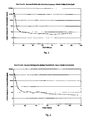
- Figure 1 is a graphical representation of salt inhibitor return profiles from laboratory core flood using acidic pre-flushed squeeze package.
- concentration of the active component (in ppm) in the core flood post flush samples were measured and plotted against the pore volume following the core flood using a squeeze package containing an acidic pre-treatment stage. Result shows that, for over 1200 pore volumes of post flush, the concentration of the active inhibiting component in the effluent samples still remains above 50ppm. This value is well above the field MIC.
- This core flood result indicates an excellent squeeze life by using this squeeze package.
- Figure 2 is a graphical representation of salt inhibitor return profiles from laboratory core flood using alkaline pre-flushed squeeze package.
- concentration of the active component (in ppm) in the core flood post flush samples were measured and plotted against the pore volume following the core flood using a squeeze package containing an alkaline pre-treatment stage. Result shows that, for over 1139 pore volumes of post flush, the concentration of the active inhibiting component in the effluent samples still remains above 33ppm, which is also above the field MIC.
- This core flood result indicates an excellent squeeze life by using this squeeze package.
Landscapes
- Chemical & Material Sciences (AREA)
- General Life Sciences & Earth Sciences (AREA)
- Life Sciences & Earth Sciences (AREA)
- Organic Chemistry (AREA)
- Engineering & Computer Science (AREA)
- Materials Engineering (AREA)
- Inorganic Chemistry (AREA)
- Organic Low-Molecular-Weight Compounds And Preparation Thereof (AREA)
- Solid-Sorbent Or Filter-Aiding Compositions (AREA)
- Agricultural Chemicals And Associated Chemicals (AREA)
- Production Of Liquid Hydrocarbon Mixture For Refining Petroleum (AREA)
- Nitrogen Condensed Heterocyclic Rings (AREA)
- Investigating Or Analyzing Non-Biological Materials By The Use Of Chemical Means (AREA)
- Preventing Corrosion Or Incrustation Of Metals (AREA)
- Saccharide Compounds (AREA)
Applications Claiming Priority (3)
| Application Number | Priority Date | Filing Date | Title |
|---|---|---|---|
| US98004007P | 2007-10-15 | 2007-10-15 | |
| US1229207P | 2007-12-07 | 2007-12-07 | |
| EP08839707A EP2217672A2 (en) | 2007-10-15 | 2008-10-15 | Method of inhibiting salt precipitation from aqueous streams |
Related Parent Applications (2)
| Application Number | Title | Priority Date | Filing Date |
|---|---|---|---|
| EP08839707A Division EP2217672A2 (en) | 2007-10-15 | 2008-10-15 | Method of inhibiting salt precipitation from aqueous streams |
| EP08839707.0 Division | 2008-10-15 |
Publications (3)
| Publication Number | Publication Date |
|---|---|
| EP2597126A2 EP2597126A2 (en) | 2013-05-29 |
| EP2597126A3 EP2597126A3 (en) | 2013-10-02 |
| EP2597126B1 true EP2597126B1 (en) | 2015-05-27 |
Family
ID=40470615
Family Applications (3)
| Application Number | Title | Priority Date | Filing Date |
|---|---|---|---|
| EP12197574.2A Not-in-force EP2597126B1 (en) | 2007-10-15 | 2008-10-15 | Method of inhibiting salt precipitation from aqueous streams |
| EP08839707A Withdrawn EP2217672A2 (en) | 2007-10-15 | 2008-10-15 | Method of inhibiting salt precipitation from aqueous streams |
| EP08840483A Ceased EP2217671B8 (en) | 2007-10-15 | 2008-10-15 | Method of enhancing adsorption of an inhibitor onto a wellbore region |
Family Applications After (2)
| Application Number | Title | Priority Date | Filing Date |
|---|---|---|---|
| EP08839707A Withdrawn EP2217672A2 (en) | 2007-10-15 | 2008-10-15 | Method of inhibiting salt precipitation from aqueous streams |
| EP08840483A Ceased EP2217671B8 (en) | 2007-10-15 | 2008-10-15 | Method of enhancing adsorption of an inhibitor onto a wellbore region |
Country Status (9)
| Country | Link |
|---|---|
| US (2) | US8381811B2 (https=) |
| EP (3) | EP2597126B1 (https=) |
| AT (1) | ATE544829T1 (https=) |
| BR (2) | BRPI0818074A8 (https=) |
| CA (2) | CA2702693C (https=) |
| EA (2) | EA018054B1 (https=) |
| EG (1) | EG26115A (https=) |
| MX (2) | MX2010004066A (https=) |
| WO (2) | WO2009050562A2 (https=) |
Families Citing this family (16)
| Publication number | Priority date | Publication date | Assignee | Title |
|---|---|---|---|---|
| GB201210034D0 (en) | 2012-06-07 | 2012-07-18 | Univ Leeds | A method of inhibiting scale in a geological formation |
| GB2535080B (en) | 2013-12-13 | 2021-01-06 | Halliburton Energy Services Inc | Methods and systems for acidizing subterranean formations |
| US10005950B2 (en) | 2013-12-13 | 2018-06-26 | Halliburton Energy Services, Inc. | Methods and systems for removing geothermal scale |
| US20150175880A1 (en) * | 2013-12-20 | 2015-06-25 | Schlumberger Technology Corporation | Method of viscosity reduction in the presence of fully coordinated compounds |
| US20150368544A1 (en) * | 2014-06-24 | 2015-12-24 | Schlumberger Norge As | Methods of inhibiting salt precipitation and corrosion |
| US10475626B2 (en) * | 2015-03-17 | 2019-11-12 | Applied Materials, Inc. | Ion-ion plasma atomic layer etch process and reactor |
| US10081758B2 (en) | 2015-12-04 | 2018-09-25 | Ecolab Usa Inc. | Controlled release solid scale inhibitors |
| CA3024478A1 (en) | 2016-05-16 | 2017-11-23 | Ecolab Usa Inc. | Slow-release scale inhibiting compositions |
| EP3299436A1 (en) | 2016-09-26 | 2018-03-28 | Nederlandse Organisatie voor toegepast- natuurwetenschappelijk onderzoek TNO | Underground halite mitigation |
| AR110540A1 (es) | 2016-12-23 | 2019-04-10 | Ecolab Usa Inc | Inhibidores de incrustaciones sólidas de liberación controlada |
| CN110643333B (zh) * | 2019-08-30 | 2021-08-06 | 成都理工大学 | 一种油井中防止氯化钠结晶的盐结晶抑制剂及其制备方法 |
| US11447705B2 (en) | 2019-09-30 | 2022-09-20 | Halliburton Energy Services, Inc. | Means and methods for managing ammonia, amine and normal salt fouling in oil production and refining |
| DE102021114229A1 (de) | 2021-06-01 | 2022-12-01 | EnBW Energie Baden-Württemberg AG | Verfahren zum Freimachen einer durch ein Adsorbens zugesetzten Tiefbohrung |
| CN114316136B (zh) * | 2022-01-13 | 2023-01-31 | 西华师范大学 | 一种氢键增强型水合物抑制剂及其制备方法 |
| US11905459B2 (en) | 2022-05-26 | 2024-02-20 | Baker Hughes Oilfield Operations Llc | Method to mitigate halite scale |
| US20250346801A1 (en) * | 2024-05-10 | 2025-11-13 | Cameron International Corporation | Method for Removing Metal Contaminants |
Citations (1)
| Publication number | Priority date | Publication date | Assignee | Title |
|---|---|---|---|---|
| US3827977A (en) * | 1969-11-25 | 1974-08-06 | Atlantic Richfield Co | Composition for inhibiting scale formation in oil well brines |
Family Cites Families (25)
| Publication number | Priority date | Publication date | Assignee | Title |
|---|---|---|---|---|
| US3341453A (en) * | 1964-06-10 | 1967-09-12 | Calgon Corp | Inhibiting salt deposition |
| US3367416A (en) * | 1965-03-31 | 1968-02-06 | Calgon Corp | Inhibiting salt deposition |
| US3481400A (en) * | 1967-04-03 | 1969-12-02 | Exxon Production Research Co | Treatment of solids plugged wells with reversibly adsorbable inhibitor |
| US3378489A (en) * | 1967-05-09 | 1968-04-16 | Halliburton Co | Process for treating a sodium chloride brine to inhibit precipitation of sodium chloride from said brine |
| US3654993A (en) * | 1970-04-06 | 1972-04-11 | Atlantic Richfield Co | Method for inhibiting corrosion in a well |
| US4200154A (en) * | 1976-12-22 | 1980-04-29 | Texaco Inc. | Composition and method for stimulating well production |
| US4357248A (en) * | 1980-05-16 | 1982-11-02 | Shell Oil Company | Treating wells with self-precipitating scale inhibitor |
| US4284140A (en) * | 1980-06-30 | 1981-08-18 | Marathon Oil Co. | Use of potassium hydroxide solutions in a well bore |
| US4485874A (en) * | 1983-10-14 | 1984-12-04 | Atlantic Richfield Company | Method for scale removal and scale inhibition in a well penetrating a subterranean formation |
| US4708805A (en) * | 1986-11-24 | 1987-11-24 | Muhala Thomas F D | Barium sulfate removal and anti-deposition compositions and process of use therefor |
| US4894169A (en) * | 1988-04-04 | 1990-01-16 | Merck & Co., Inc. | Method of inhibiting iron salt deposition in aqueous systems using urea salts |
| US5399270A (en) * | 1990-05-31 | 1995-03-21 | Mobil Oil Corporation | Inhibition of scale formation from oil well brines utilizing a slow release composition |
| AU653518B2 (en) | 1990-05-31 | 1994-10-06 | Mobil Oil Corporation | Inhibition of scale formation from oil well brines utilising a slow release composition |
| US5141655A (en) * | 1990-05-31 | 1992-08-25 | Mobil Oil Corporation | Inhibition of scale formation from oil well brines utilizing a slow release |
| ATE129989T1 (de) * | 1990-10-04 | 1995-11-15 | Britoil Plc | Verfahren zur bekämpfung der kesselsteinbildung. |
| US5409614A (en) * | 1991-06-19 | 1995-04-25 | Union Oil Company Of California | Control of scale deposition in geothermal operations |
| US5211237A (en) * | 1992-01-31 | 1993-05-18 | Shell Oil Company | Precipitation of scale inhibitors |
| US5346010A (en) * | 1993-03-31 | 1994-09-13 | Shell Oil Company | Precipitation of scale inhibitors in subterranean formations |
| US5604185A (en) * | 1995-03-27 | 1997-02-18 | Mobil Oil Corporation | Inhibition of scale from oil well brines utilizing a slow release composition and a preflush and/or after flush |
| US5665242A (en) * | 1995-08-25 | 1997-09-09 | Union Oil Company Of California | Inhibition of silica precipitation |
| BR9506108A (pt) * | 1995-12-28 | 1997-12-23 | Petroleo Brasileiro Sa | Processo de fixação controlada de inibidor de incrustação em formações substerrâneas |
| US5874386A (en) * | 1998-02-13 | 1999-02-23 | Atlantic Richfield Company | Method for cleaning drilling fluid solids from a wellbore using a surfactant composition |
| GB0217736D0 (en) * | 2002-07-31 | 2002-09-11 | Champion Servo | Method of controlling scale formation |
| EP1620192A1 (en) * | 2003-04-29 | 2006-02-01 | Akzo Nobel N.V. | Processes involving the use of antisolvent crystallisation |
| US7475730B2 (en) * | 2007-03-06 | 2009-01-13 | Bj Services Company | Method of treating well with foamed composition |
-
2008
- 2008-10-15 EP EP12197574.2A patent/EP2597126B1/en not_active Not-in-force
- 2008-10-15 WO PCT/IB2008/002729 patent/WO2009050562A2/en not_active Ceased
- 2008-10-15 CA CA2702693A patent/CA2702693C/en not_active Expired - Fee Related
- 2008-10-15 AT AT08840483T patent/ATE544829T1/de active
- 2008-10-15 BR BRPI0818074A patent/BRPI0818074A8/pt not_active IP Right Cessation
- 2008-10-15 MX MX2010004066A patent/MX2010004066A/es active IP Right Grant
- 2008-10-15 EP EP08839707A patent/EP2217672A2/en not_active Withdrawn
- 2008-10-15 EP EP08840483A patent/EP2217671B8/en not_active Ceased
- 2008-10-15 US US12/682,950 patent/US8381811B2/en not_active Expired - Fee Related
- 2008-10-15 BR BRPI0818075A patent/BRPI0818075A8/pt not_active IP Right Cessation
- 2008-10-15 EA EA201070473A patent/EA018054B1/ru not_active IP Right Cessation
- 2008-10-15 WO PCT/IB2008/002728 patent/WO2009050561A2/en not_active Ceased
- 2008-10-15 US US12/738,195 patent/US20110024366A1/en not_active Abandoned
- 2008-10-15 EA EA201070474A patent/EA024146B1/ru not_active IP Right Cessation
- 2008-10-15 MX MX2010004068A patent/MX2010004068A/es active IP Right Grant
- 2008-10-15 CA CA2702702A patent/CA2702702A1/en not_active Abandoned
-
2010
- 2010-04-14 EG EG2010040605A patent/EG26115A/en active
Patent Citations (1)
| Publication number | Priority date | Publication date | Assignee | Title |
|---|---|---|---|---|
| US3827977A (en) * | 1969-11-25 | 1974-08-06 | Atlantic Richfield Co | Composition for inhibiting scale formation in oil well brines |
Also Published As
| Publication number | Publication date |
|---|---|
| US20110017460A1 (en) | 2011-01-27 |
| EP2217672A2 (en) | 2010-08-18 |
| US20110024366A1 (en) | 2011-02-03 |
| WO2009050561A3 (en) | 2009-06-04 |
| BRPI0818075A2 (https=) | 2017-08-08 |
| ATE544829T1 (de) | 2012-02-15 |
| BRPI0818074A2 (pt) | 2015-03-31 |
| WO2009050562A3 (en) | 2009-06-04 |
| US8381811B2 (en) | 2013-02-26 |
| MX2010004068A (es) | 2010-08-09 |
| EP2597126A2 (en) | 2013-05-29 |
| CA2702693C (en) | 2015-03-17 |
| EP2217671A2 (en) | 2010-08-18 |
| EA018054B1 (ru) | 2013-05-30 |
| EP2217671B1 (en) | 2012-02-08 |
| CA2702693A1 (en) | 2009-04-23 |
| BRPI0818074A8 (pt) | 2016-01-12 |
| EG26115A (en) | 2013-02-27 |
| EA201070474A1 (ru) | 2010-10-29 |
| WO2009050562A2 (en) | 2009-04-23 |
| EA024146B1 (ru) | 2016-08-31 |
| WO2009050561A2 (en) | 2009-04-23 |
| BRPI0818075A8 (pt) | 2017-10-03 |
| MX2010004066A (es) | 2010-08-23 |
| EP2597126A3 (en) | 2013-10-02 |
| EP2217671B8 (en) | 2012-03-28 |
| EA201070473A1 (ru) | 2010-10-29 |
| CA2702702A1 (en) | 2009-04-23 |
Similar Documents
| Publication | Publication Date | Title |
|---|---|---|
| EP2597126B1 (en) | Method of inhibiting salt precipitation from aqueous streams | |
| EP2737002B1 (en) | Well servicing fluid and method of servicing a well with the fluid | |
| US8236734B1 (en) | Method for preventing scale formation in the presence of dissolved iron | |
| US4572296A (en) | Steam injection method | |
| US8822390B2 (en) | Scale inhibitor | |
| AU2008322980A1 (en) | Methods of minimizing sulfate scale in oil field | |
| US20160369155A1 (en) | Methods of inhibiting salt precipitation and corrosion | |
| US11286187B2 (en) | Iron sulfide scale inhibition in an oil production system | |
| Wang et al. | Antiscalants and their compatibility with corrosion inhibitors | |
| US3367416A (en) | Inhibiting salt deposition | |
| WO2023205672A1 (en) | Scale inhibitor fluid and method for inhibiting scale formation | |
| US20140345868A1 (en) | Method of maintaining oil reservoir pressure | |
| US20240218239A1 (en) | Calcium sulfate scale control for disposal wells | |
| MAHAT et al. | Green silicate scale inhibitors performance using dynamic tube blocking test | |
| US20190218447A1 (en) | Underground halite mitigation | |
| NZ620018B2 (en) | Well servicing fluid and method of servicing a well with the fluid |
Legal Events
| Date | Code | Title | Description |
|---|---|---|---|
| PUAI | Public reference made under article 153(3) epc to a published international application that has entered the european phase |
Free format text: ORIGINAL CODE: 0009012 |
|
| AC | Divisional application: reference to earlier application |
Ref document number: 2217672 Country of ref document: EP Kind code of ref document: P |
|
| AK | Designated contracting states |
Kind code of ref document: A2 Designated state(s): AT BE BG CH CY CZ DE DK EE ES FI FR GB GR HR HU IE IS IT LI LT LU LV MC MT NL NO PL PT RO SE SI SK TR |
|
| RIN1 | Information on inventor provided before grant (corrected) |
Inventor name: KEATCH, RICHARD Inventor name: GUAN, HUA |
|
| RIC1 | Information provided on ipc code assigned before grant |
Ipc: C09K 8/528 20060101ALI20130712BHEP Ipc: C09K 8/54 20060101AFI20130712BHEP |
|
| PUAL | Search report despatched |
Free format text: ORIGINAL CODE: 0009013 |
|
| AK | Designated contracting states |
Kind code of ref document: A3 Designated state(s): AT BE BG CH CY CZ DE DK EE ES FI FR GB GR HR HU IE IS IT LI LT LU LV MC MT NL NO PL PT RO SE SI SK TR |
|
| RIC1 | Information provided on ipc code assigned before grant |
Ipc: C09K 8/54 20060101AFI20130828BHEP Ipc: C09K 8/528 20060101ALI20130828BHEP Ipc: C02F 5/08 20060101ALI20130828BHEP Ipc: C02F 103/10 20060101ALI20130828BHEP |
|
| 17P | Request for examination filed |
Effective date: 20140402 |
|
| RBV | Designated contracting states (corrected) |
Designated state(s): AT BE BG CH CY CZ DE DK EE ES FI FR GB GR HR HU IE IS IT LI LT LU LV MC MT NL NO PL PT RO SE SI SK TR |
|
| 17Q | First examination report despatched |
Effective date: 20140707 |
|
| GRAP | Despatch of communication of intention to grant a patent |
Free format text: ORIGINAL CODE: EPIDOSNIGR1 |
|
| INTG | Intention to grant announced |
Effective date: 20141209 |
|
| GRAS | Grant fee paid |
Free format text: ORIGINAL CODE: EPIDOSNIGR3 |
|
| GRAA | (expected) grant |
Free format text: ORIGINAL CODE: 0009210 |
|
| AC | Divisional application: reference to earlier application |
Ref document number: 2217672 Country of ref document: EP Kind code of ref document: P |
|
| AK | Designated contracting states |
Kind code of ref document: B1 Designated state(s): AT BE BG CH CY CZ DE DK EE ES FI FR GB GR HR HU IE IS IT LI LT LU LV MC MT NL NO PL PT RO SE SI SK TR |
|
| REG | Reference to a national code |
Ref country code: GB Ref legal event code: FG4D |
|
| REG | Reference to a national code |
Ref country code: CH Ref legal event code: EP |
|
| REG | Reference to a national code |
Ref country code: AT Ref legal event code: REF Ref document number: 728853 Country of ref document: AT Kind code of ref document: T Effective date: 20150615 |
|
| REG | Reference to a national code |
Ref country code: IE Ref legal event code: FG4D |
|
| REG | Reference to a national code |
Ref country code: DE Ref legal event code: R096 Ref document number: 602008038385 Country of ref document: DE |
|
| REG | Reference to a national code |
Ref country code: AT Ref legal event code: MK05 Ref document number: 728853 Country of ref document: AT Kind code of ref document: T Effective date: 20150527 |
|
| REG | Reference to a national code |
Ref country code: LT Ref legal event code: MG4D |
|
| PG25 | Lapsed in a contracting state [announced via postgrant information from national office to epo] |
Ref country code: NO Free format text: LAPSE BECAUSE OF FAILURE TO SUBMIT A TRANSLATION OF THE DESCRIPTION OR TO PAY THE FEE WITHIN THE PRESCRIBED TIME-LIMIT Effective date: 20150827 Ref country code: HR Free format text: LAPSE BECAUSE OF FAILURE TO SUBMIT A TRANSLATION OF THE DESCRIPTION OR TO PAY THE FEE WITHIN THE PRESCRIBED TIME-LIMIT Effective date: 20150527 Ref country code: ES Free format text: LAPSE BECAUSE OF FAILURE TO SUBMIT A TRANSLATION OF THE DESCRIPTION OR TO PAY THE FEE WITHIN THE PRESCRIBED TIME-LIMIT Effective date: 20150527 Ref country code: FI Free format text: LAPSE BECAUSE OF FAILURE TO SUBMIT A TRANSLATION OF THE DESCRIPTION OR TO PAY THE FEE WITHIN THE PRESCRIBED TIME-LIMIT Effective date: 20150527 Ref country code: PT Free format text: LAPSE BECAUSE OF FAILURE TO SUBMIT A TRANSLATION OF THE DESCRIPTION OR TO PAY THE FEE WITHIN THE PRESCRIBED TIME-LIMIT Effective date: 20150928 Ref country code: LT Free format text: LAPSE BECAUSE OF FAILURE TO SUBMIT A TRANSLATION OF THE DESCRIPTION OR TO PAY THE FEE WITHIN THE PRESCRIBED TIME-LIMIT Effective date: 20150527 |
|
| REG | Reference to a national code |
Ref country code: NL Ref legal event code: MP Effective date: 20150527 |
|
| PG25 | Lapsed in a contracting state [announced via postgrant information from national office to epo] |
Ref country code: IS Free format text: LAPSE BECAUSE OF FAILURE TO SUBMIT A TRANSLATION OF THE DESCRIPTION OR TO PAY THE FEE WITHIN THE PRESCRIBED TIME-LIMIT Effective date: 20150927 Ref country code: BG Free format text: LAPSE BECAUSE OF FAILURE TO SUBMIT A TRANSLATION OF THE DESCRIPTION OR TO PAY THE FEE WITHIN THE PRESCRIBED TIME-LIMIT Effective date: 20150827 Ref country code: AT Free format text: LAPSE BECAUSE OF FAILURE TO SUBMIT A TRANSLATION OF THE DESCRIPTION OR TO PAY THE FEE WITHIN THE PRESCRIBED TIME-LIMIT Effective date: 20150527 Ref country code: GR Free format text: LAPSE BECAUSE OF FAILURE TO SUBMIT A TRANSLATION OF THE DESCRIPTION OR TO PAY THE FEE WITHIN THE PRESCRIBED TIME-LIMIT Effective date: 20150828 Ref country code: LV Free format text: LAPSE BECAUSE OF FAILURE TO SUBMIT A TRANSLATION OF THE DESCRIPTION OR TO PAY THE FEE WITHIN THE PRESCRIBED TIME-LIMIT Effective date: 20150527 |
|
| PG25 | Lapsed in a contracting state [announced via postgrant information from national office to epo] |
Ref country code: DK Free format text: LAPSE BECAUSE OF FAILURE TO SUBMIT A TRANSLATION OF THE DESCRIPTION OR TO PAY THE FEE WITHIN THE PRESCRIBED TIME-LIMIT Effective date: 20150527 Ref country code: EE Free format text: LAPSE BECAUSE OF FAILURE TO SUBMIT A TRANSLATION OF THE DESCRIPTION OR TO PAY THE FEE WITHIN THE PRESCRIBED TIME-LIMIT Effective date: 20150527 |
|
| PG25 | Lapsed in a contracting state [announced via postgrant information from national office to epo] |
Ref country code: CZ Free format text: LAPSE BECAUSE OF FAILURE TO SUBMIT A TRANSLATION OF THE DESCRIPTION OR TO PAY THE FEE WITHIN THE PRESCRIBED TIME-LIMIT Effective date: 20150527 Ref country code: RO Free format text: LAPSE BECAUSE OF NON-PAYMENT OF DUE FEES Effective date: 20150527 Ref country code: PL Free format text: LAPSE BECAUSE OF FAILURE TO SUBMIT A TRANSLATION OF THE DESCRIPTION OR TO PAY THE FEE WITHIN THE PRESCRIBED TIME-LIMIT Effective date: 20150527 Ref country code: SK Free format text: LAPSE BECAUSE OF FAILURE TO SUBMIT A TRANSLATION OF THE DESCRIPTION OR TO PAY THE FEE WITHIN THE PRESCRIBED TIME-LIMIT Effective date: 20150527 |
|
| REG | Reference to a national code |
Ref country code: DE Ref legal event code: R097 Ref document number: 602008038385 Country of ref document: DE |
|
| PLBE | No opposition filed within time limit |
Free format text: ORIGINAL CODE: 0009261 |
|
| STAA | Information on the status of an ep patent application or granted ep patent |
Free format text: STATUS: NO OPPOSITION FILED WITHIN TIME LIMIT |
|
| PG25 | Lapsed in a contracting state [announced via postgrant information from national office to epo] |
Ref country code: IT Free format text: LAPSE BECAUSE OF FAILURE TO SUBMIT A TRANSLATION OF THE DESCRIPTION OR TO PAY THE FEE WITHIN THE PRESCRIBED TIME-LIMIT Effective date: 20150527 |
|
| REG | Reference to a national code |
Ref country code: DE Ref legal event code: R119 Ref document number: 602008038385 Country of ref document: DE |
|
| 26N | No opposition filed |
Effective date: 20160301 |
|
| PG25 | Lapsed in a contracting state [announced via postgrant information from national office to epo] |
Ref country code: SI Free format text: LAPSE BECAUSE OF FAILURE TO SUBMIT A TRANSLATION OF THE DESCRIPTION OR TO PAY THE FEE WITHIN THE PRESCRIBED TIME-LIMIT Effective date: 20150527 Ref country code: LU Free format text: LAPSE BECAUSE OF FAILURE TO SUBMIT A TRANSLATION OF THE DESCRIPTION OR TO PAY THE FEE WITHIN THE PRESCRIBED TIME-LIMIT Effective date: 20151015 |
|
| REG | Reference to a national code |
Ref country code: CH Ref legal event code: PL |
|
| GBPC | Gb: european patent ceased through non-payment of renewal fee |
Effective date: 20151015 |
|
| PG25 | Lapsed in a contracting state [announced via postgrant information from national office to epo] |
Ref country code: MC Free format text: LAPSE BECAUSE OF FAILURE TO SUBMIT A TRANSLATION OF THE DESCRIPTION OR TO PAY THE FEE WITHIN THE PRESCRIBED TIME-LIMIT Effective date: 20150527 |
|
| REG | Reference to a national code |
Ref country code: IE Ref legal event code: MM4A |
|
| PG25 | Lapsed in a contracting state [announced via postgrant information from national office to epo] |
Ref country code: DE Free format text: LAPSE BECAUSE OF NON-PAYMENT OF DUE FEES Effective date: 20160503 Ref country code: LI Free format text: LAPSE BECAUSE OF NON-PAYMENT OF DUE FEES Effective date: 20151031 Ref country code: GB Free format text: LAPSE BECAUSE OF NON-PAYMENT OF DUE FEES Effective date: 20151015 Ref country code: CH Free format text: LAPSE BECAUSE OF NON-PAYMENT OF DUE FEES Effective date: 20151031 |
|
| REG | Reference to a national code |
Ref country code: FR Ref legal event code: ST Effective date: 20160630 |
|
| PG25 | Lapsed in a contracting state [announced via postgrant information from national office to epo] |
Ref country code: BE Free format text: LAPSE BECAUSE OF FAILURE TO SUBMIT A TRANSLATION OF THE DESCRIPTION OR TO PAY THE FEE WITHIN THE PRESCRIBED TIME-LIMIT Effective date: 20150527 Ref country code: FR Free format text: LAPSE BECAUSE OF NON-PAYMENT OF DUE FEES Effective date: 20151102 |
|
| PG25 | Lapsed in a contracting state [announced via postgrant information from national office to epo] |
Ref country code: IE Free format text: LAPSE BECAUSE OF NON-PAYMENT OF DUE FEES Effective date: 20151015 |
|
| PG25 | Lapsed in a contracting state [announced via postgrant information from national office to epo] |
Ref country code: HU Free format text: LAPSE BECAUSE OF FAILURE TO SUBMIT A TRANSLATION OF THE DESCRIPTION OR TO PAY THE FEE WITHIN THE PRESCRIBED TIME-LIMIT; INVALID AB INITIO Effective date: 20081015 |
|
| PG25 | Lapsed in a contracting state [announced via postgrant information from national office to epo] |
Ref country code: CY Free format text: LAPSE BECAUSE OF FAILURE TO SUBMIT A TRANSLATION OF THE DESCRIPTION OR TO PAY THE FEE WITHIN THE PRESCRIBED TIME-LIMIT Effective date: 20150527 Ref country code: NL Free format text: LAPSE BECAUSE OF FAILURE TO SUBMIT A TRANSLATION OF THE DESCRIPTION OR TO PAY THE FEE WITHIN THE PRESCRIBED TIME-LIMIT Effective date: 20150527 Ref country code: SE Free format text: LAPSE BECAUSE OF FAILURE TO SUBMIT A TRANSLATION OF THE DESCRIPTION OR TO PAY THE FEE WITHIN THE PRESCRIBED TIME-LIMIT Effective date: 20150527 |
|
| PG25 | Lapsed in a contracting state [announced via postgrant information from national office to epo] |
Ref country code: MT Free format text: LAPSE BECAUSE OF FAILURE TO SUBMIT A TRANSLATION OF THE DESCRIPTION OR TO PAY THE FEE WITHIN THE PRESCRIBED TIME-LIMIT Effective date: 20150527 |
|
| PG25 | Lapsed in a contracting state [announced via postgrant information from national office to epo] |
Ref country code: TR Free format text: LAPSE BECAUSE OF FAILURE TO SUBMIT A TRANSLATION OF THE DESCRIPTION OR TO PAY THE FEE WITHIN THE PRESCRIBED TIME-LIMIT Effective date: 20150527 |