EP2592084B1 - Process for producing pyripyropene derivatives and intermediates for the production thereof. - Google Patents
Process for producing pyripyropene derivatives and intermediates for the production thereof. Download PDFInfo
- Publication number
- EP2592084B1 EP2592084B1 EP13154660.8A EP13154660A EP2592084B1 EP 2592084 B1 EP2592084 B1 EP 2592084B1 EP 13154660 A EP13154660 A EP 13154660A EP 2592084 B1 EP2592084 B1 EP 2592084B1
- Authority
- EP
- European Patent Office
- Prior art keywords
- alkyl
- optionally substituted
- compound
- group
- halogen atom
- Prior art date
- Legal status (The legal status is an assumption and is not a legal conclusion. Google has not performed a legal analysis and makes no representation as to the accuracy of the status listed.)
- Active
Links
- 0 C[C@](C(C[C@]1O*)[C@](C)(CC2)C([C@]3O)[C@]1(C)OC(C=C(c1cccnc1)O1)=C3C1=O)[C@]2O Chemical compound C[C@](C(C[C@]1O*)[C@](C)(CC2)C([C@]3O)[C@]1(C)OC(C=C(c1cccnc1)O1)=C3C1=O)[C@]2O 0.000 description 5
Classifications
-
- C—CHEMISTRY; METALLURGY
- C07—ORGANIC CHEMISTRY
- C07D—HETEROCYCLIC COMPOUNDS
- C07D493/00—Heterocyclic compounds containing oxygen atoms as the only ring hetero atoms in the condensed system
- C07D493/02—Heterocyclic compounds containing oxygen atoms as the only ring hetero atoms in the condensed system in which the condensed system contains two hetero rings
- C07D493/04—Ortho-condensed systems
-
- Y—GENERAL TAGGING OF NEW TECHNOLOGICAL DEVELOPMENTS; GENERAL TAGGING OF CROSS-SECTIONAL TECHNOLOGIES SPANNING OVER SEVERAL SECTIONS OF THE IPC; TECHNICAL SUBJECTS COVERED BY FORMER USPC CROSS-REFERENCE ART COLLECTIONS [XRACs] AND DIGESTS
- Y02—TECHNOLOGIES OR APPLICATIONS FOR MITIGATION OR ADAPTATION AGAINST CLIMATE CHANGE
- Y02P—CLIMATE CHANGE MITIGATION TECHNOLOGIES IN THE PRODUCTION OR PROCESSING OF GOODS
- Y02P20/00—Technologies relating to chemical industry
- Y02P20/50—Improvements relating to the production of bulk chemicals
- Y02P20/55—Design of synthesis routes, e.g. reducing the use of auxiliary or protecting groups
Definitions
- the present invention relates to a process for producing pyripyropene derivatives useful as pest control agents and more specifically relates to a process for producing pyripyropene derivatives that have acyloxy groups at the 1- and 11-positions and a hydroxyl group at the 7-position thereof.
- Pyripyropene derivatives having acyloxy at 1- and 11-positions and hydroxyl at the 7-position thereof are compounds that have control effects against pests, as described in WO 2006/129714 .
- WO 2006/129714 and Japanese Patent Application Laid-Open No. 259569/1996 disclose a process for producing pyripyropene derivatives having acyloxy at 1- and 11-positions and hydroxyl at the 7-position thereof. According to the production process, the pyripyropene derivatives are purified or isolated from a plurality of products produced by nonselective hydrolysis of acyloxy using a 1,7,11-triacyloxy compound as a starting compound. This production process, however, suffers from problems such as low yield and unsuitability for quantity synthesis.
- Japanese Patent Application Laid-Open No. 259569/1996 describes the use of a combination of protective groups for the synthesis of pyripyropene derivatives
- Journal of Antibiotics Vol. 49, No. 11, p. 1149, 1996 , Bioorganic Medicinal Chemistry Letter Vol. 5, No. 22, p. 2683, 1995 , Japanese Patent Application Laid-Open No. 269065/1996 , and WO 2008/013336 disclose a synthesis example that introduces acyl into the 7-position by utilizing a protective group.
- These documents do not disclose a specific process that utilizes a protective group in the production of pyripyropene derivatives that have acyloxy at the 1- and 11-positions and hydroxyl at the 7-position thereof.
- pyripyropene derivatives having acyloxy groups at the 1- and 11-positions and a hydroxyl group at the 7-position thereof can be produced at high yield from pyripyropene A (Japanese Patent Application Laid-Open No. 259569/1996 ; Bioorganic Medicinal Chemistry Letter Vol. 5, No. 22, p. 2683, 1995 ; and WO2004/060065 ) which is obtained as a naturally occurring substance, by using a proper protective group.
- the present invention has been made based on such finding.
- an object of the present invention is to provide a process for producing pyripyropene derivatives useful as pest control agents and to provide compounds as intermediates for the production of pyripyropene derivatives.
- a compound that has acyloxy at the 1- and 11-positions and hydroxyl at the 7-position and is useful as an intermediate for the production of pyripyropene derivatives is represented by formula B2b: wherein R 1b is as defined above; and R' represents cyclic C 3-6 alkylcarbonyl.
- the present invention allows for producing pyripyropene derivatives that have acyloxy groups at the 1- and 11-positions and a hydroxyl group at the 7-position and are useful as pest control agents at high yield.
- halogen as used herein means fluorine, chlorine, bromine, or iodine.
- alkyl alkenyl
- alkynyl alkynyl as used herein as a substituent or a part of a substituent mean alkyl, alkenyl, or alkynyl that is of a straight chain, branched chain, or cyclic type or a type of a combination thereof unless otherwise specified.
- C a-b attached to a substituent as used herein means that the number of carbon atoms contained in the substituent as used herein is a to b.
- C a-b in “C a-b alkylcarbonyl” means that the number of carbon atoms in the alkyl moiety excluding the carbon atoms in the carbonyl moiety is a to b.
- haloalkyl as used herein means alkyl substituted by at least one halogen atom.
- haloalkyloxy means alkyloxy substituted by at least one halogen atom, alkylcarbonyl substituted by at least one halogen atom, and alkylcarbonyloxy substituted by at least one halogen atom.
- a specific example of the cyclic C 3-6 alkylcarbonyl group represented by R' is cyclopropanecarbonyl.
- R 3 , R 4 , and R 5 each independently represent straight chain or branched chain C 1-6 alkyl or phenyl, represented by R 1b include trimethylsilyl, triethylsilyl, triisopropylsilyl, tert-butyldimethylsilyl, and tert-butyldiphenylsilyl.
- the group - SiR 3 R 4 R 5 is optionally substituted, and such substituents include halogen atoms.
- R 3 , R 4 , and R 5 represent straight chain or branched chain C 1-6 alkyl, that is, the group -SiR 3 R 4 R 5 is preferably alkyl silyl, more preferably tert-butyldimethylsilyl.
- R 1b Specific examples of the straight chain, branched chain, or cyclic C 1-4 alkyl group, represented by R 1b , wherein, when alkyl in the C 1-4 alkyl group is of a branched chain or cyclic type, the alkyl group is C 3-4 alkyl, include methyl, ethyl, propyl, i-propyl, cyclopropyl, n-butyl, i-butyl, and tert-butyl.
- the alkyl group is optionally substituted, and such substituents include halogen atoms.
- C 2-6 alkenyl group represented by R 1b examples include vinyl, (1- or 2-)propenyl, (1-, 2-, or 3-)butenyl, (1-, 2-, 3-, or 4-)pentenyl, and (1-, 2-, 3-, 4-, or 5-)hexenyl.
- the alkenyl group is optionally substituted, and such substituents include halogen atoms.
- C 2-6 alkynyl group represented by R 1b examples include ethynyl, (1- or 2-)propynyl, (1-, 2-, or 3-)butynyl, (1-, 2-, 3-, or 4-)pentynyl, and (1-, 2-, 3-, 4-, or 5-)hexynyl.
- the alkynyl group is optionally substituted, and such substituents include halogen atoms.
- saturated or unsaturated five- or six-membered heterocyclic group represented by R 1b include tetrahydropyranyl, tetrahydrothiopyranyl, tetrahydrofuranyl, and tetrahydrothiofuranyl.
- the heterocyclic group is optionally substituted, and such substituents include halogen atoms, C 1-4 alkyl, C 1-4 alkyloxy, C 1-4 haloalkyloxy, C 1-4 alkylthio, C 1-4 haloalkyl, C 1-4 alkylcarbonyl, C 1-4 haloalkylcarbonyl, C 1-4 alkylcarbonyloxy, C 1-4 haloalkylcarbonyloxy, nitro, and cyano.
- the heterocyclic group is preferably tetrahydropyranyl.
- straight chain C 1-4 alkylcarbonyl group represented by R 1b include acetyl, propionyl, propylcarbonyl, and n-butylcarbonyl.
- the alkylcarbonyl group is optionally substituted, and such substituents include halogen atoms, C 1-4 alkyloxy, C 1-4 haloalkyloxy, C 1-4 alkylcarbonyl, C 1-4 haloalkylcarbonyl, C 1-4 alkylcarbonyloxy, and C 1-4 haloalkylcarbonyloxy.
- the C 1-6 alkyloxy-C 1-6 alkyl group represented by R 1b is optionally substituted, and such substituents include halogen atoms.
- the C 1-6 alkylthio-C 1-6 alkyl group represented by R 1b is optionally substituted, and such substituents include halogen atoms.
- the benzyl group represented by R 1b is optionally substituted, and such substituents include halogen atoms, C 1-4 alkyl, C 1-4 alkyloxy, C 1-4 haloalkyloxy, C 1-4 alkylthio, C 1-4 haloalkyl, C 1-4 alkylcarbonyl, C 1-4 haloalkylcarbonyl, C 1-4 alkylcarbonyloxy, C 1-4 haloalkylcarbonyloxy, nitro, and cyano.
- R 1b represents acetyl, chloroacetyl, an optionally substituted saturated or unsaturated five- or six-membered heterocyclic group, or group -SiR 3 R 4 R 5 optionally substituted by halogen atom wherein R 3 , R 4 , and R 5 each independently represent straight chain or branched chain C 1-6 alkyl or phenyl, more preferably acetyl, chloroacetyl, or group - SiR 3 R 4 R 5 optionally substituted by halogen atom wherein R 3 , R 4 , and R 5 each independently represent straight chain or branched chain C 1-6 alkyl or phenyl, still more preferably acetyl, chloroacetyl, or tert-butyldimethylsilyl, most preferably acetyl or chloroacetyl.
- the substituent represented by combining two R 2 s together is preferably a group represented by formula D-1 or D-2: wherein Y 1 represents a hydrogen atom or C 1-4 alkyl; Xs, which may be the same or different, represent a hydrogen atom, C 1-4 alkoxy, or nitro; and n is 0 to 5, more preferably isopropylidene, benzylidene, or p-methoxybenzylidene. According to another embodiment, the substituent represented by combining two R 2 s together is preferably D-1, more preferably isopropylidene.
- a 1 , A 7 , and A 11 each represent acetyl.
- R' in formulae B2b, and C represents cyclopropanecarbonyl.
- the contemplated compound is produced through compound Fb wherein R 1b in formula E, Fb, or B2b represents acetyl, chloroacetyl, or optionally substituted straight chain or branched chain alkylsilyl.
- the contemplated compound in the process, is produced through compound Fb wherein R 2 in formula D or E is a group represented by formula D-3.
- the contemplated compound is produced through compounds D, E, Fb, and B2b wherein R 2 in formula D or E represents a group represented by formula D-3; R 1b in formula E, Fb, or B2b represents acetyl, chloroacetyl, or optionally substituted straight chain or branched chain alkylsilyl; and R' in formulae B2b and C represents cyclopropanecarbonyl.
- the product in each step may be used in a next step without post treatment.
- Compound A1 can be produced by processes described, for example, in Japanese Patent Application Laid-Open No. 184158/1994 , WO2004/060065 , Japanese Patent Application Laid-Open No. 259569/1996 , or Bioorganic Medicinal Chemistry Letter Vol. 5, No. 22, p. 2683 .
- Solvents usable in the step of producing compound A3 from compound A1 include alcohol solvents having 1 to 4 carbon atoms such as methanol, ether solvents such as diethyl ether, diisopropyl ether, tetrahydrofuran, and dioxane, aprotic polar organic solvents such as N,N-dimethylformamide, dimethylsulfoxide, N,N-dimethylacetamide, and acetonitrile, halogenated solvents such as dichloromethane and chloroform, or water, and mixed solvents composed of two or more of these solvents.
- alcohol solvents having 1 to 4 carbon atoms such as methanol
- ether solvents such as diethyl ether, diisopropyl ether, tetrahydrofuran, and dioxane
- aprotic polar organic solvents such as N,N-dimethylformamide, dimethylsulfoxide, N,N-dimethylacetamide, and
- Bases usable herein include inorganic bases such as sodium carbonate, potassium carbonate, sodium hydrogen carbonate, potassium hydrogen carbonate, sodium hydroxide, potassium hydroxide, sodium hydride, potassium hydride, sodium cyanide, potassium cyanide, magnesium hydroxide, calcium hydroxide, lithium hydroxide, and barium hydroxide, alkali metals such as sodium methoxide, sodium ethoxide, and potassium tert-butoxide, alkoxides of alkaline earth metals, or organic bases such as 1,8-diazabicyclo[5.4.0]undeca-7-ene, 1,5-diazabicyclo[4.3.0]nona-5-ene, triethylamine, diisopropylethylamine, pyridine, hydrazine, and guanidine.
- inorganic bases such as sodium carbonate, potassium carbonate, sodium hydrogen carbonate, potassium hydrogen carbonate, sodium hydroxide, potassium hydroxide, sodium hydride, potassium hydride, sodium
- 1,8-diazabicyclo[5.4.0]undeca-7-ene 1,8-diazabicyclo[5.4.0]undeca-7-ene, 1,5-diazabicyclo[4.3.0]nona-5-ene, sodium carbonate, potassium carbonate, sodium hydrogen carbonate, potassium hydrogen carbonate, sodium hydroxide, potassium hydroxide, sodium methoxide, and potassium tert-butoxide.
- Particularly preferred are 1,8-diazabicyclo[5.4.0]undeca-7-ene and potassium tert-butoxide.
- the amount of the base used is preferably 0.01 to 1.2 equivalents based on the amount of compound A1.
- the reaction temperature is preferably -20°C to 50°C.
- the reaction time is preferably 0.5 hr to seven days.
- hydroxyl at the 7-position can be protected by using a halide of R 1a represented by R 1a -Hal, wherein Hal represents halogen atom, an acid anhydride of R 1a , or a mixed acid anhydride of R 1a , corresponding to contemplated R 1a , or 3,4-dihydropyran in the presence of a base, in the presence of an acid, or in the absence of a base and an acid, or using a condensing agent such as dicyclohexylcarbodiimide, 1-ethyl-3-(3-dimethylaminopropyl)carbodiimide hydrochloride, carbonyldiimidazole, dipyridyl disulfide, diimidazoyl disulfide, 1,3,5-trichlorobenzoyl chloride, 1,3,5-trichlorobenzoyl anhydride, PyBop, or PyBrop.
- Hal represents halogen atom, an acid an
- Solvents usable herein include ketone solvents such as acetone and diethyl ketone, ether solvents such as diethyl ether, diisopropyl ether, and tetrahydrofuran, ester solvents such as ethyl acetate and butyl acetate, aprotic polar organic solvents such as N,N-dimethylformamide, N,N-dimethylacetamide, dimethylsulfoxide, and acetonitrile, polar organic solvents such as pyridine, halogenated hydrocarbon solvents such as dichloromethane and chloroform, or aromatic hydrocarbon solvents such as toluene, and mixed solvents composed of two or more of these solvents.
- ketone solvents such as acetone and diethyl ketone
- ether solvents such as diethyl ether, diisopropyl ether, and tetrahydrofuran
- ester solvents such as ethyl
- Bases usable herein include, for example, sodium carbonate, potassium carbonate, sodium hydride, potassium tert-butoxide, sodium methoxide, sodium ethoxide, pyridine, dimethylaminopyridine, imidazole, 1,8-diazabicyclo[5.4.0]undeca-7-ene, 1,5-diazabicyclo[4.3.0]nona-5-ene, triethylamine, or diisopropylethylamine.
- Acids usable herein include, for example, p-toluenesulfonic acid, p-toluenesulfonic acid monohydrate, pyridinium p-toluenesulfonate, 10-camphorsulfonic acid, hydrochloric acid, or sulfuric acid.
- the reaction temperature is preferably -20°C to 50°C.
- the reaction time is preferably 0.5 hr to four days.
- Solvents usable in the step of producing compound Fa from compound B1 include alcohol solvents having 1 to 4 carbon atoms such as methanol, ether solvents such as diethyl ether, diisopropyl ether, tetrahydrofuran, and dioxane, aprotic polar organic solvents such as N,N-dimethylformamide, dimethylsulfoxide, N,N-dimethylacetamide, and acetonitrile, halogenated solvents such as dichloromethane and chloroform, or water, and mixed solvents composed of two or more of these solvents.
- alcohol solvents having 1 to 4 carbon atoms such as methanol
- ether solvents such as diethyl ether, diisopropyl ether, tetrahydrofuran, and dioxane
- aprotic polar organic solvents such as N,N-dimethylformamide, dimethylsulfoxide, N,N-dimethylacetamide, and
- Bases usable herein include inorganic bases such as sodium carbonate, potassium carbonate, sodium hydrogen carbonate, potassium hydrogen carbonate, sodium hydroxide, potassium hydroxide, sodium hydride, potassium hydride, sodium cyanide, potassium cyanide, magnesium hydroxide, calcium hydroxide, lithium hydroxide, and barium hydroxide, alkali metals such as sodium methoxide, sodium ethoxide, and potassium tert-butoxide, alkoxides of alkaline earth metals, or organic bases such as 1,8-diazabicyclo[5.4.0]undeca-7-ene, 1,5-diazabicyclo[4.3.0]nona-5-ene, triethylamine, diisopropylethylamine, pyridine, hydrazine, and guanidine.
- inorganic bases such as sodium carbonate, potassium carbonate, sodium hydrogen carbonate, potassium hydrogen carbonate, sodium hydroxide, potassium hydroxide, sodium hydride, potassium hydride, sodium
- the amount of the base used is preferably 0.01 to 10 equivalents based on the amount of compound B1.
- the reaction temperature is preferably -20°C to 50°C.
- the reaction time is preferably 0.5 to 48 hr.
- Compound A4 and compound A4' may be naturally occurring substances obtained by processes described, for example, in Japanese Patent Application Laid-Open No. 184158/1994 , WO94/09147 , and Japanese Patent Application Laid-Open No. 239385/1996 .
- derivatives obtained by a process described, for example, in Japanese Patent Application Laid-Open No. 259569/1996 may be naturally occurring substances obtained by processes described, for example, in Japanese Patent Application Laid-Open No. 184158/1994 , WO94/09147 , and Japanese Patent Application Laid-Open No. 239385/1996 .
- derivatives obtained by a process described, for example, in Japanese Patent Application Laid-Open No. 259569/1996 may be naturally occurring substances obtained by processes described, for example, in Japanese Patent Application Laid-Open No. 184158/1994 , WO94/09147 , and Japanese Patent Application Laid-Open No. 239385/1996 .
- Solvents usable in the step of producing compound A2 from compound A4 include alcohol solvents having 1 to 4 carbon atoms such as methanol, ether solvents such as diethyl ether, diisopropyl ether, tetrahydrofuran, and dioxane, aprotic polar organic solvents such as N,N-dimethylformamide, dimethylsulfoxide, N,N-dimethylacetamide, and acetonitrile, halogenated solvents such as dichloromethane and chloroform, or water, and mixed solvents composed of two or more of these solvents.
- alcohol solvents having 1 to 4 carbon atoms such as methanol
- ether solvents such as diethyl ether, diisopropyl ether, tetrahydrofuran, and dioxane
- aprotic polar organic solvents such as N,N-dimethylformamide, dimethylsulfoxide, N,N-dimethylacetamide, and
- Bases usable herein include inorganic bases such as sodium carbonate, potassium carbonate, sodium hydrogen carbonate, potassium hydrogen carbonate, sodium hydroxide, potassium hydroxide, sodium hydride, potassium hydride, sodium cyanide, potassium cyanide, magnesium hydroxide, calcium hydroxide, lithium hydroxide, and barium hydroxide, alkali metals such as sodium methoxide, sodium ethoxide, and potassium tert-butoxide, alkoxides of alkaline earth metals, or organic bases such as 1,8-diazabicyclo[5.4.0]undeca-7-ene, 1,5-diazabicyclo[4.3.0]nona-5-ene, triethylamine, diisopropylethylamine, pyridine, hydrazine, and guanidine.
- inorganic bases such as sodium carbonate, potassium carbonate, sodium hydrogen carbonate, potassium hydrogen carbonate, sodium hydroxide, potassium hydroxide, sodium hydride, potassium hydride, sodium
- the amount of the base used is preferably 0.01 to 10 equivalents based on the amount of compound A4.
- the reaction temperature is preferably -20°C to 50°C.
- the reaction time is preferably 0.5 to 48 hr.
- compound A2 can be likewise produced from compound A1 or compound A4' (compounds which are the same as compound A4, except that A 1 , A 7 , and A 11 in compound A4 are A 1 ', A 7 ', and A 11 ', respectively).
- Solvents usable in the step of producing compound D from compound A2 include ketone solvents such as acetone and diethyl ketone, ether solvents such as diethyl ether, diisopropyl ether, dioxane, and tetrahydrofuran, ester solvents such as ethyl acetate and butyl acetate, aprotic polar organic solvents such as N,N-dimethylformamide, N,N-dimethylacetamide, dimethylsulfoxide, and acetonitrile, halogenated hydrocarbon solvents such as dichloromethane and chloroform, or aromatic hydrocarbon solvents such as toluene, and mixed solvents composed of two or more of these solvents.
- ketone solvents such as acetone and diethyl ketone
- ether solvents such as diethyl ether, diisopropyl ether, dioxane, and tetrahydrofuran
- Hydroxyl at 1- and 11-positions can be protected by using, for example, dimethoxypropane, acetone, optionally substituted benzaldehyde or a dimethyl acetal form thereof, 2-methoxypropene, 2-ethoxypropene, phosgene, triphosgene, trichloroacetyl chloride, p-nitrobenzyloxycarbonyl chloride, or carbonyldiimidazole corresponding to contemplated R 2 .
- an acid catalyst such as p-toluenesulfonic acid, p-toluenesulfonic acid monohydrate, pyridinium p-toluenesulfonate, 10-camphorsulfonic acid, hydrogen fluoride, hydrochloric acid, hydrogen bromide, sulfuric acid, iodine, iron chloride, tin chloride, zinc chloride, aluminum chloride, trimethylchlorosilane, trimethylsilyltriflate, or 2,3-dichloro-5,6-dicyano-1,4-benzoquinone (preferably pyridinium p-toluenesulfonate and p-toluenesulfonic acid) is used in an amount of 0.001 to 20 equivalents, more preferably 0.01 to 5 equivalents, still more preferably 0.01 to 0.04 equivalent, based on compound A2.
- an acid catalyst such as p-toluenesulfonic acid, p-toluen
- the reaction temperature is preferably -20°C to 50°C, more preferably room temperature to 50°C.
- the reaction time is preferably 0.5 to 48 hr.
- compounds D and E which are compounds wherein R 2 represents D-1 can be produced by allowing a reaction to proceed using a protective group introducing reagent such as dimethoxypropane, 2-methoxypropene, or 2-ethoxypropene in the presence of an acid catalyst such as p-toluenesulfonic acid, p-toluenesulfonic acid monohydrate, pyridinium p-toluenesulfonate, or 10-camphorsulfonic acid in an amount of 0.001 to 20 equivalents, preferably 0.01 to 5 equivalents, more preferably 0.01 to 0.04 equivalent based on compound A2, or by allowing a reaction to proceed using p-toluenesulfonic acid, pyridinium p-toluenesulfonate, sulfuric acid, or copper sulfate in an amount of 0.001 to 20 equivalents based on compound A2 in an acetone solvent.
- an acid catalyst such as p-tol
- Compounds D and E which are compounds wherein R 2 represents D-2 can be produced by allowing a reaction to proceed using an optionally substituted benzaldehyde or a dimethyl acetal form thereof in the presence of an acid catalyst such as p-toluenesulfonic acid, p-toluenesulfonic acid monohydrate, pyridinium p-toluenesulfonate, or zinc chloride in an amount of 0.001 to 20 equivalents based on compound A2.
- an acid catalyst such as p-toluenesulfonic acid, p-toluenesulfonic acid monohydrate, pyridinium p-toluenesulfonate, or zinc chloride in an amount of 0.001 to 20 equivalents based on compound A2.
- solvents usable herein include ketone solvents such as acetone, diethyl ketone, ether solvents such as diethyl ether, diisopropyl ether, dioxane, and tetrahydrofuran, ester solvents such as ethyl acetate and butyl acetate, aprotic polar organic solvents such as N,N-dimethylformamide, dimethylsulfoxide, N,N-dimethylacetamide, and acetonitrile, polar organic solvents such as pyridine, halogenated hydrocarbon solvents such as dichloromethane and chloroform, or aromatic hydrocarbon solvents such as toluene, and mixed solvents composed of two or more of these solvents.
- ketone solvents such as acetone, diethyl ketone
- ether solvents such as diethyl ether, diisopropyl ether, dioxane, and tetrahydrofuran
- a protective group corresponding to R 1b can be introduced into hydroxyl at the 7-position by using a halide of R 1b represented by R 1b -Hal, R 1b OH, R 1b Cl, (R 1b ) 2 O, a mixed acid anhydride of R 1b , or 3,4-dihydropyran in the presence of a base, in the presence of an acid, or in the absence of a base and an acid, or using a condensing agent such as dicyclohexylcarbodiimide, 1-ethyl-3-(3-dimethylaminopropyl)carbodiimide hydrochloride, carbonyldiimidazole, dipyridyl disulfide, diimidazoyl disulfide, 1,3,5-trichlorobenzoyl chloride, 1,3,5-trichlorobenzoyl anhydride, PyBop, or PyBrop.
- a condensing agent such as dicyclohex
- Bases usable herein include, for example, sodium carbonate, potassium carbonate, sodium hydride, potassium tert-butoxide, sodium methoxide, sodium ethoxide, pyridine, dimethylaminopyridine, imidazole, 1,8-diazabicyclo[5.4.0]undeca-7-ene, 1,5-diazabicyclo[4.3.0]nona-5-ene, triethylamine, or diisopropylethylamine.
- Acids usable herein include, for example, p-toluenesulfonic acid, p-toluenesulfonic acid monohydrate, pyridinium p-toluenesulfonate, 10-camphorsulfonic acid, hydrochloric acid, or sulfuric acid.
- the reaction temperature is preferably -20°C to 50°C.
- the reaction time is preferably 0.5 hr to seven days.
- a compound wherein R 1b represents straight chain C 1-4 alkylcarbonyl optionally substituted by halogen atom for example, acetyl or chloroacetyl
- R 1b Cl or (R 1b ) 2 O in an amount of 1 to 20 equivalents based on compound D and pyridine, dimethylaminopyridine, or triethylamine as a base in an amount of 0.1 to 20 equivalents based on compound D in the absence of a solvent or in tetrahydrofuran, dichloromethane, N,N-dimethylformamide, or pyridine or in a mixed solvent composed of two or more of these solvents at -20°C to 50°C.
- a compound wherein R 1b represents group -SiR 3 R 4 R 5 optionally substituted by halogen atom wherein R 3 , R 4 , and R 5 each independently represent straight chain or branched chain C 1-6 alkyl or phenyl can be produced by allowing a reaction to proceed using a halide of R 1b in an amount of 1 to 10 equivalents based on compound D and imidazole as a base in an amount of 1 to 10 equivalents based on compound D in dichloromethane, chloroform, N,N-dimethylformamide, N,N-dimethylacetamide, or a mixed solvent composed of two or more of these solvents at -20°C to 50°C.
- Solvents usable in the step of producing compound Fb from compound E include alcohol solvents having 1 to 4 carbon atoms such as methanol, ketone solvents such as acetone and diethyl ketone, ether solvents such as diethyl ether, diisopropyl ether, tetrahydrofuran, and dioxane, aprotic polar organic solvents such as N,N-dimethylformamide, dimethylsulfoxide, N,N-dimethylacetamide, and acetonitrile, halogenated solvents such as dichloromethane and chloroform, or water, and mixed solvents composed of two or more of these solvents.
- alcohol solvents having 1 to 4 carbon atoms such as methanol
- ketone solvents such as acetone and diethyl ketone
- ether solvents such as diethyl ether, diisopropyl ether, tetrahydrofuran, and dioxane
- an organic acid such as acetic acid, trifluoroacetic acid, trifluoroacetic anhydride, hydrogen fluoride, hydrochloric acid, hydrogen bromide, sulfuric acid, p-toluenesulfonic acid, p-toluenesulfonic acid monohydrate, pyridinium p-toluenesulfonate, or 10-camphorsulfonic acid, or a hydrogenation catalyst such as boron chloride, magnesium bromide, dinitro zinc, bismuth chloride, cerium chloride, iron chloride, tin chloride, zinc chloride, aluminum chloride, palladium-carbon, or palladium hydroxide can be used, depending upon the type of the protective group, in an amount of 0.01 to 20 equivalents based on compound E.
- a hydrogenation catalyst such as boron chloride, magnesium bromide, dinitro zinc, bismuth chloride, cerium chloride, iron chloride, tin chloride, zinc chloride, aluminum chloride,
- the reaction temperature is preferably -20°C to 50°C.
- the reaction time is preferably 0.5 to 48 hr.
- compound Fb can be produced by allowing a reaction to proceed using 0.01 to 20 equivalents, based on compound E, of hydrochloric acid, acetic acid, p-toluenesulfonic acid, p-toluenesulfonic acid monohydrate, pyridinium p-toluenesulfonate, or dinitro zinc, bismuth chloride (preferably hydrochloric acid, acetic acid, or pyridinium p-toluenesulfonate) in water, methanol, tetrahydrofuran, dichloromethane, chloroform, N,N-dimethylformamide, acetonitrile, or acetic acid or a mixed solvent composed of two or more of these solvents at -20°C to 50°C, preferably at room temperature to 40°C.
- bismuth chloride preferably hydrochloric acid, acetic acid, or pyridinium p-toluenesulfonate
- compound Fb can be produced by allowing a reaction to proceed using 0.01 to 20 equivalents, based on compound E, of 10-camphorsulfonic acid in water, methanol, tetrahydrofuran, or chloroform or a mixed solvent composed of two or more of these solvents at -20°C to 50°C, preferably at room temperature to 40°C.
- the step of producing compound B2a from compound Fa and the step of producing compound B2b from compound Fb can be carried out in the absence or presence of a solvent.
- Solvents usable herein include ketone solvents such as acetone and diethyl ketone, ether solvents such as diethyl ether, diisopropyl ether, and tetrahydrofuran, ester solvents such as ethyl acetate and butyl acetate, aprotic polar organic solvents such as N,N-dimethylformamide, N,N-dimethylacetamide, dimethylsulfoxide, and acetonitrile, halogenated hydrocarbon solvents such as dichloromethane and chloroform, or aromatic hydrocarbon solvents such as toluene, and mixed solvents composed of two or more of these solvents.
- Group R' can be introduced into the 1- and 11-position by using R'OH, R'Cl, (R') 2 O, or a mixed acid anhydride corresponding to contemplated R' in the presence or absence of a base or using a condensing agent such as dicyclohexylcarbodiimide, 1-ethyl-3-(3-dimethylaminopropyl)carbodiimide hydrochloride, carbonyldiimidazole, dipyridyl disulfide, diimidazoyl disulfide, 1,3,5-trichlorobenzoyl chloride, 1,3,5-trichlorobenzoyl anhydride, PyBop, or PyBrop.
- a condensing agent such as dicyclohexylcarbodiimide, 1-ethyl-3-(3-dimethylaminopropyl)carbodiimide hydrochloride, carbonyldiimidazole, dipyridyl disulf
- Bases usable herein include, for example, sodium carbonate, potassium carbonate, sodium hydride, potassium tert-butoxide, sodium methoxide, sodium ethoxide, pyridine, 4-dimethylaminopyridine, imidazole, 1,8-diazabicyclo[5.4.0]undeca-7-ene, 1,5-diazabicyclo[4.3.0]nona-5-ene, triethylamine, and diisopropylethylamine (preferably pyridine).
- the reaction temperature is preferably -20°C to 50°C, more preferably 0°C to 30°C.
- the reaction time is preferably 0.5 to 48 hr.
- Solvents usable in the step of producing compound C from compound B2a or B2b include alcohol solvents having 1 to 4 carbon atoms such as methanol, ether solvents such as diethyl ether, diisopropyl ether, tetrahydrofuran, and dioxane, aprotic polar organic solvents such as N,N-dimethylformamide, N,N-dimethylacetamide, dimethylsulfoxide, and acetonitrile, halogenated hydrocarbon solvents such as dichloromethane and chloroform, aromatic hydrocarbon solvents such as toluene, or water, and mixed solvents composed of two or more of these solvents.
- alcohol solvents having 1 to 4 carbon atoms such as methanol
- ether solvents such as diethyl ether, diisopropyl ether, tetrahydrofuran, and dioxane
- aprotic polar organic solvents such as N,N-dimethylformamide,
- R 1b in compound B2b can be carried out depending upon the type of the protective group.
- an inorganic base such as sodium carbonate, potassium carbonate, sodium hydrogen carbonate, potassium hydrogen carbonate, sodium hydroxide, potassium hydroxide, sodium hydride, potassium hydride, sodium cyanide, potassium cyanide, magnesium hydroxide, calcium hydroxide, lithium hydroxide, or barium hydroxide, an alkali metal such as sodium methoxide, sodium ethoxide, or potassium tert-butoxide, an alkoxide of an alkaline earth metal, an organic base such as 1,8-diazabicyclo[5.4.0]undeca-7-ene, 1,5-diazabicyclo[4.3.0]nona-5-ene, triethylamine, diisopropylethylamine, pyridine, hydrazine, or guan
- R 1b represents C 1-6 alkyloxy-C 1-6 alkyl optionally substituted by halogen atom, C 1-6 alkylthio-C 1-6 alkyl optionally substituted by halogen atom, straight chain, branched chain, or cyclic C 1-4 alkyl optionally substituted by halogen atom, C 2-6 alkenyl optionally substituted by halogen atom, C 2-6 alkynyl optionally substituted by halogen atom, an optionally substituted saturated or unsaturated five- or six-membered heterocyclic ring, optionally substituted benzyl, or group - SiR 3 R 4 R 5 optionally substituted by halogen atom, for example, an organic acid such as p-toluenesulfonic acid, p-toluenesulfonic acid monohydrate, pyridinium p-toluenesulfonate, hydrogen fluoride-pyridine, trihydrogen fluoride-triethylamine
- the reaction temperature is preferably -20°C to 50°C, more preferably 0°C to room temperature.
- the reaction time is preferably 0.5 hr to seven days.
- compound C can be likewise produced from compound B2a.
- 1,7,11-Trideacetyl-7-O-tetrahydropyranylpyripyropene A (450 mg) synthesized by the process described in Example 7 was dissolved in N,N-dimethylformamide (6 mL). Pyridine (3 mL) was added to the solution at 0°C, and the mixture was stirred at that temperature for 10 min. Cyclopropanecarbonyl chloride (525 mg) was added thereto. The mixture was stirred at that temperature for one hr. The reaction solution was then poured into water and was extracted with chloroform.
- 1,7,11-Trideacetylpyripyropene A (200 mg) synthesized by the process described in Example 10 was dissolved in N,N-dimethylformamide (2 mL). Acetone dimethyl acetal (456 mg) and pyridinium p-toluenesulfonate (550 mg) were added to the solution. The mixture was stirred at room temperature for 25.5 hr. The reaction solution was then poured into water and was extracted with chloroform. The chloroform layer was washed with a saturated aqueous sodium hydrogen carbonate solution and saturated brine and was dried over anhydrous sodium sulfate.
- 1,7,11-Trideacetyl-1,11-O-isopropylidenepyripyropene A (168 mg) synthesized by the process described in Example 11 was dissolved in N,N-dimethylformamide (2 mL). Imidazole (92 mg) and tert-butyldimethylchlorosilane (204 mg) were added to the solution. The mixture was stirred at room temperature for 22 hr, and the reaction solution was then poured into water and was extracted with chloroform. The chloroform layer was washed with saturated brine and was dried over anhydrous sodium sulfate.
- 1,7,11-Trideacetyl-1,11-O-isopropylidenepyripyropene A (100 mg) synthesized by the process described in Example 11 was dissolved in dichloromethane (2 mL). Triethylamine (61 mg), 4-dimethylaminopyridine (7 mg), and acetic anhydride (26 mg) were added to the solution. The mixture was stirred at room temperature for 4 hr. The reaction solution was then poured into water and was extracted with chloroform.
- 1,11-Dideacetyl-1,11-O-isopropylidenepyripyropene A (99 mg) synthesized by the process described in Example 14 was dissolved in tetrahydrofuran (1.2 mL) and methanol (2.4 mL), and pyridinium p-toluenesulfonate (185 mg) was added to the solution. The mixture was stirred at room temperature for 30 hr, triethylamine was then added thereto, and the solvent was removed by evaporation under the reduced pressure. Chloroform and water were added to the residue, and the mixture was extracted with chloroform.
- the chloroform layer was washed with saturated brine and was dried over anhydrous sodium sulfate, and the solvent was removed by evaporation under the reduced pressure to give a crude product (85 mg) of 1,11-dideacetylpyripyropene A.
- the results of measurement by ESI-MS and 1 H-NMR showed that the compound was PR-5 described in Japanese Patent Application Laid-Open No. 259569/1996 .
- 1,7,11-Trideacetylpyripyropene A (9.67 g) was suspended in N,N-dimethylformamide (48 mL).
- Acetone dimethyl acetal (6.61 g) and p-toluenesulfonic acid monohydrate (0.08 g) were added to the suspension, and the mixture was stirred at 38 to 41°C for 4 hr.
- 4-Dimethylaminopyridine (0.08 g) was added thereto, and the mixture was removed by evaporation under the reduced pressure for 1.5 hr. The residue was cooled to 0°C.
- Triethylamine (2.57 g) and acetic anhydride (2.37 g) were added to the cooled solution, and the mixture was stirred at that temperature for 16 hr.
- Water (96 g) was then added to the reaction solution, and the mixture was adjusted to pH 7.17 by the addition of 5% hydrochloric acid.
- the precipitated light yellow powder was collected by filtration and was washed twice with water (20 g).
- the crude product thus obtained was suspended with methanol (48 mL), 15% hydrochloric acid (4.7 g) was added to the suspension, and the mixture was stirred at 25 to 27°C for 2 hr.
- 1,11-Dideacetylpyripyropene A (61 mg) synthesized by the process described in Example 15 was dissolved in N,N-dimethylformamide (1.2 mL). Pyridine (0.3 mL) was added to the solution at 0°C, the mixture was stirred at that temperature for 10 min, cyclopropanecarbonyl chloride (77 mg) was added thereto, and the mixture was stirred at that temperature for 1.5 hr. The reaction solution was then poured into water and was extracted with chloroform. The chloroform layer was washed with saturated brine and was dried over anhydrous magnesium sulfate.
- 1,11-Dideacetylpyripyropene A (25.76 g) was suspended in ethyl acetate (130 mL), pyridine (15.84 g) was added to the suspension. The mixture was cooled to 10 to 15°C. Cyclopropanecarbonyl chloride (15.70 g) was added dropwise thereto, and the mixture was stirred at 25 to 30°C for 3 hr. The reaction solution was again cooled to 10 to 15°C, and water (50 mL) was added dropwise thereto. The mixture was adjusted to pH 2.59 by the addition of 5 N-hydrochloric acid, followed by separation.
- 1,11-O-dicyclopropanecarbonyl-1,11-dideacetylpyripyropene A (67 mg) synthesized by the process described in Example 16 was dissolved in a 95% aqueous methanol solution (0.07 mL). Sodium carbonate (22 mg) was added to the solution at 0°C. The mixture was stirred at that temperature for 4 days. Acetic acid was then added thereto. Methanol was removed by evaporation under the reduced pressure, and the residue was extracted with chloroform. The chloroform layer was washed with saturated brine and was dried over anhydrous sodium sulfate.
- 1,11-O-dicyclopropanecarbonyl-1,11-dideacetylpyripyropene A (30.00 g) was suspended in a mixed liquid composed of water (20 mL) and methanol (190 mL), and the mixture was cooled to 0 to 5°C.
- a 1 M methanol solution (4.49 mL) of sodium methoxide was added thereto, and the mixture was stirred at that temperature for 23 hr.
- 1.2% hydrochloric acid (20 mL) was added to the reaction solution, and the mixture was filtered through a 0.5- ⁇ m filter, followed by evaporation under the reduced pressure to adjust the liquid volume to about 90 mL.
- the precipitated light yellow powder was collected by filtration, was washed twice with a 30% aqueous methanol solution (50 mL), and was dried at 40°C for 22 hr to give 23.82 g of 1,11-O-dicyclopropanecarbonyl-1,7,11-trideacetylpyripyropene A.
- the results of measurement by 1 H-NMR showed that the 1 H-NMR data were in agreement with those of the compound produced in Example 17.
- 1,7,11-Trideacetyl-1,11-O-isopropylidenepyripyropene A (100 mg) synthesized by the process described in Example 11 was dissolved in tetrahydrofuran (2 mL), and triethylamine (61 mg) and chloroacetic anhydride (103 mg) were added to the solution. The mixture was stirred at room temperature for 3.5 hr, and the reaction solution was then poured into water and was extracted with chloroform. The chloroform layer was washed with saturated brine and was dried over anhydrous sodium sulfate.
- 1,7,11-Trideacetylpyripyropene A (1.0 g) synthesized by the process described in Example 10 was dissolved in N,N-dimethylformamide (10 mL). Pyridinium p-toluenesulfonate (2.75 g) and benzaldehyde dimethyl acetal (3.3 g) were added to the solution. The mixture was stirred at room temperature for 5 hr. The reaction solution was then poured into water, and the mixture was extracted with ethyl acetate.
- 1,11-O-benzylidene-1,7,11-trideacetylpyripyropene A (1.0 g) synthesized by the process described in Example 22 was dissolved in pyridine (2.5 mL). Chloroacetic anhydride (206 mg) was added to the solution at 0°C. The mixture was stirred at that temperature for 1.5 hr, and the reaction solution was then poured into water. The mixture was extracted with ethyl acetate. The ethyl acetate layer was washed with saturated brine and was dried over anhydrous sodium sulfate.
- 1,11-O-benzylidene-7-O-chloroacetyl-1,7,11-trideacetylpyripyropene A (10 mg) synthesized by the process described in Example 23 was dissolved in chloroform (1 mL) and methanol (9 mL), and 10-camphorsulfonic acid (3 mg) was added to the solution. The mixture was stirred at room temperature for 5 days. The reaction solution was then poured into water, and the mixture was extracted with chloroform. The chloroform layer was washed with saturated brine and was dried over anhydrous sodium sulfate.
- 1,7,11-Trideacetylpyripyropene A (1.0 g) synthesized by the process described in Example 10 was dissolved in N,N-dimethylformamide (22 mL). Pyridinium p-toluenesulfonate (2.76 g) and p-methoxybenzaldehyde dimethyl acetal (0.4 g) were added to the solution. The mixture was stirred at room temperature for 4 hr. The reaction solution was then poured into water, and the mixture was extracted with ethyl acetate. The ethyl acetate layer was washed with saturated brine and was dried over anhydrous sodium sulfate.
- 1,7,11-Trideacetyl-1,11-O-p-methoxybenzylidene-pyripyropene A (100 mg) synthesized by the process described in Example 25 was dissolved in tetrahydrofuran (2 mL). Triethylamine (50 mg) and chloroacetic anhydride (60 mg) were added to the solution. The mixture was stirred at room temperature for 2.5 hr, and the reaction solution was then poured into water and was extracted with chloroform. The chloroform layer was washed with saturated brine and was dried over anhydrous sodium sulfate.
Landscapes
- Chemical & Material Sciences (AREA)
- Organic Chemistry (AREA)
- Heterocyclic Carbon Compounds Containing A Hetero Ring Having Oxygen Or Sulfur (AREA)
- Organic Low-Molecular-Weight Compounds And Preparation Thereof (AREA)
- Plural Heterocyclic Compounds (AREA)
- Pharmaceuticals Containing Other Organic And Inorganic Compounds (AREA)
- Agricultural Chemicals And Associated Chemicals (AREA)
Description
- The present invention relates to a process for producing pyripyropene derivatives useful as pest control agents and more specifically relates to a process for producing pyripyropene derivatives that have acyloxy groups at the 1- and 11-positions and a hydroxyl group at the 7-position thereof.
- Pyripyropene derivatives having acyloxy at 1- and 11-positions and hydroxyl at the 7-position thereof are compounds that have control effects against pests, as described in
WO 2006/129714 . -
WO 2006/129714 and Japanese Patent Application Laid-Open No.259569/1996 - Further, Japanese Patent Application Laid-Open No.
259569/1996 269065/1996 WO 2008/013336 disclose a synthesis example that introduces acyl into the 7-position by utilizing a protective group. These documents, however, do not disclose a specific process that utilizes a protective group in the production of pyripyropene derivatives that have acyloxy at the 1- and 11-positions and hydroxyl at the 7-position thereof. - The present inventors have found that pyripyropene derivatives having acyloxy groups at the 1- and 11-positions and a hydroxyl group at the 7-position thereof can be produced at high yield from pyripyropene A (Japanese Patent Application Laid-Open No.
259569/1996 WO2004/060065 ) which is obtained as a naturally occurring substance, by using a proper protective group. The present invention has been made based on such finding. - Accordingly, an object of the present invention is to provide a process for producing pyripyropene derivatives useful as pest control agents and to provide compounds as intermediates for the production of pyripyropene derivatives.
- According to a first aspect of the present invention, there is provided a process for producing compound C represented by formula C:

- acylating hydroxyl at the 1- and 11-positions of compound Fb represented by formula Fb:

- R1b represents formyl; optionally substituted straight chain C1-4 alkylcarbonyl; optionally substituted benzyl; group -SiR3R4R5 optionally substituted by halogen atom wherein R3, R4, and R5 each independently represent straight chain or branched chain C1-6 alkyl or phenyl; C1-6 alkyloxy-C1-6 alkyl optionally substituted by halogen atom; C1-6 alkylthio-C1-6 alkyl optionally substituted by halogen atom; straight chain, branched chain, or cyclic C1-4 alkyl optionally substituted by halogen atom, provided that, when alkyl in the C1-4 alkyl group is of a branched chain or cyclic type, the alkyl group is C3-4 alkyl; C2-6 alkenyl optionally substituted by halogen atom; C2-6 alkynyl optionally substituted by halogen atom; or an optionally substituted saturated or unsaturated five- or six-membered heterocyclic group,
- wherein, in R1b, the substituent optionally possessed by alkylcarbonyl is selected from the group consisting of halogen atoms, C1-4 alkyloxy, C1-4 haloalkyloxy, C1-4 alkylcarbonyl, C1-4 haloalkylcarbonyl, C1-4 alkylcarbonyloxy, and C1-4 haloalkylcarbonyloxy, and the substituent optionally possessed by the heterocyclic group and benzyl is selected from the group consisting of halogen atoms, C1-4 alkyl, C1-4 alkyloxy, C1-4 haloalkyloxy, C1-4 alkylthio, C1-4 haloalkyl, C1-4 alkylcarbonyl, C14 haloalkylcarbonyl, C1-4 alkylcarbonyloxy, C1-4 haloalkylcarbonyloxy, nitro, and cyano,
- According to a second aspect of the present invention, there is provided above process further comprising, before acylation of hydroxyl at the 1- and 11-positions of compound Fb, the steps of:
- hydrolyzing acyl at the 1-, 7-, and 11-positions of compound A4 represented by formula A4:

- wherein A1, A7, and A11, which may be the same or different, represent acetyl or propionyl,
- with a base to deacylate compound A4, then protecting hydroxyl at the 1- and 11-positions to give compound D represented by formula D:

- wherein two R2s together represent a group selected from groups represented by formulae D-1, D-2, D-3, and D-4:
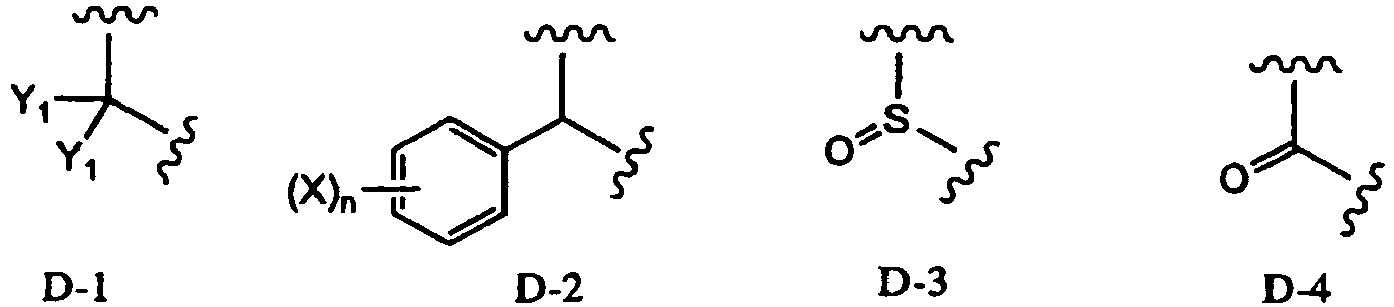
- wherein Y1 represents a hydrogen atom or C1-4 alkyl; Xs, which may be the same or different, represent a hydrogen atom, C1-4 alkoxy, or nitro; and n is 0 to 5,
- then protecting hydroxyl at the 7-position of compound D to give compound E represented by formula E:

- R1b represents formyl; optionally substituted straight chain C1-4 alkylcarbonyl; optionally substituted benzyl; group - SiR3R4R5 optionally substituted by halogen atom wherein R3, R4, and R5 each independently represent straight chain or branched chain C1-6 alkyl or phenyl; C1-6 alkyloxy-C1-6 alkyl optionally substituted by halogen atom; C1-6 alkylthio-C1-6 alkyl optionally substituted by halogen atom; straight chain, branched chain, or cyclic C1-4 alkyl optionally substituted by halogen atom, provided that, when alkyl in the C1-4 alkyl group is of a branched chain or cyclic type, the alkyl group is C3-4 alkyl; C2-6 alkenyl optionally substituted by halogen atom; C2-6 alkynyl optionally substituted by halogen atom; or an optionally substituted saturated or unsaturated five- or six-membered heterocyclic group,
- wherein, in R1b, the substituent optionally possessed by alkylcarbonyl is selected from the group consisting of halogen atoms, C1-4 alkyloxy, C1-4 haloalkyloxy, C14 alkylcarbonyl, C1-4 haloalkylcarbonyl, C1-4 alkylcarbonyloxy, and C1-4 haloalkylcarbonyloxy, and the substituent optionally possessed by the heterocyclic group and benzyl is selected from the group consisting of halogen atoms, C1-4 alkyl, C1-4 alkyloxy, C1-4 haloalkyloxy, C1-4 alkylthio, C1-4 haloalkyl, C1-4 alkylcarbonyl, C1-4 haloalkylcarbonyl, C1-4 alkylcarbonyloxy, C1-4 haloalkylcarbonyloxy, nitro, and cyano, and
- R2 is as defined above,
- and further removing the protective groups at the 1- and 11-positions of compound E to give compound Fb represented by formula Fb:

- wherein R1b is as defined above.
- According to a third aspect of the present invention, there is provided a compound that has acyloxy at the 1- and 11-positions and hydroxyl at the 7-position and is useful as an intermediate for the production of pyripyropene derivatives. The compound is represented by formula B2b:

- The present invention allows for producing pyripyropene derivatives that have acyloxy groups at the 1- and 11-positions and a hydroxyl group at the 7-position and are useful as pest control agents at high yield.
- The term "halogen" as used herein means fluorine, chlorine, bromine, or iodine.
- The terms "alkyl," "alkenyl," or "alkynyl" as used herein as a substituent or a part of a substituent mean alkyl, alkenyl, or alkynyl that is of a straight chain, branched chain, or cyclic type or a type of a combination thereof unless otherwise specified.
- The symbol "Ca-b" attached to a substituent as used herein means that the number of carbon atoms contained in the substituent as used herein is a to b. Further, "Ca-b" in "Ca-b alkylcarbonyl" means that the number of carbon atoms in the alkyl moiety excluding the carbon atoms in the carbonyl moiety is a to b.
- The term "haloalkyl" as used herein means alkyl substituted by at least one halogen atom. Likewise, the terms "haloalkyloxy," "haloalkylcarbonyl," and "haloalkylcarbonyloxy" respectively mean alkyloxy substituted by at least one halogen atom, alkylcarbonyl substituted by at least one halogen atom, and alkylcarbonyloxy substituted by at least one halogen atom.
- A specific example of the cyclic C3-6 alkylcarbonyl group represented by R' is cyclopropanecarbonyl.
- Specific examples of the group -SiR3R4R5, wherein R3, R4, and R5 each independently represent straight chain or branched chain C1-6 alkyl or phenyl, represented by R1b include trimethylsilyl, triethylsilyl, triisopropylsilyl, tert-butyldimethylsilyl, and tert-butyldiphenylsilyl. The group - SiR3R4R5 is optionally substituted, and such substituents include halogen atoms. In the group -SiR3R4R5, preferably, all of R3, R4, and R5 represent straight chain or branched chain C1-6 alkyl, that is, the group -SiR3R4R5 is preferably alkyl silyl, more preferably tert-butyldimethylsilyl.
- Specific examples of the straight chain, branched chain, or cyclic C1-4 alkyl group, represented by R1b, wherein, when alkyl in the C1-4 alkyl group is of a branched chain or cyclic type, the alkyl group is C3-4 alkyl, include methyl, ethyl, propyl, i-propyl, cyclopropyl, n-butyl, i-butyl, and tert-butyl. The alkyl group is optionally substituted, and such substituents include halogen atoms.
- Specific examples of the C2-6 alkenyl group represented by R1b include vinyl, (1- or 2-)propenyl, (1-, 2-, or 3-)butenyl, (1-, 2-, 3-, or 4-)pentenyl, and (1-, 2-, 3-, 4-, or 5-)hexenyl. The alkenyl group is optionally substituted, and such substituents include halogen atoms.
- Specific examples of the C2-6 alkynyl group represented by R1b include ethynyl, (1- or 2-)propynyl, (1-, 2-, or 3-)butynyl, (1-, 2-, 3-, or 4-)pentynyl, and (1-, 2-, 3-, 4-, or 5-)hexynyl. The alkynyl group is optionally substituted, and such substituents include halogen atoms.
- Specific examples of the saturated or unsaturated five- or six-membered heterocyclic group represented by R1b include tetrahydropyranyl, tetrahydrothiopyranyl, tetrahydrofuranyl, and tetrahydrothiofuranyl. The heterocyclic group is optionally substituted, and such substituents include halogen atoms, C1-4 alkyl, C1-4 alkyloxy, C1-4 haloalkyloxy, C1-4 alkylthio, C1-4 haloalkyl, C1-4 alkylcarbonyl, C1-4 haloalkylcarbonyl, C1-4 alkylcarbonyloxy, C1-4 haloalkylcarbonyloxy, nitro, and cyano. The heterocyclic group is preferably tetrahydropyranyl.
- Specific examples of the straight chain C1-4 alkylcarbonyl group represented by R1b include acetyl, propionyl, propylcarbonyl, and n-butylcarbonyl. The alkylcarbonyl group is optionally substituted, and such substituents include halogen atoms, C1-4 alkyloxy, C1-4 haloalkyloxy, C1-4 alkylcarbonyl, C1-4 haloalkylcarbonyl, C1-4 alkylcarbonyloxy, and C1-4 haloalkylcarbonyloxy.
- The C1-6 alkyloxy-C1-6 alkyl group represented by R1b is optionally substituted, and such substituents include halogen atoms.
- The C1-6 alkylthio-C1-6 alkyl group represented by R1b is optionally substituted, and such substituents include halogen atoms.
- The benzyl group represented by R1b is optionally substituted, and such substituents include halogen atoms, C1-4 alkyl, C1-4 alkyloxy, C1-4 haloalkyloxy, C1-4 alkylthio, C1-4 haloalkyl, C1-4 alkylcarbonyl, C1-4 haloalkylcarbonyl, C1-4 alkylcarbonyloxy, C1-4 haloalkylcarbonyloxy, nitro, and cyano.
- Preferably, R1b represents acetyl, chloroacetyl, an optionally substituted saturated or unsaturated five- or six-membered heterocyclic group, or group -SiR3R4R5 optionally substituted by halogen atom wherein R3, R4, and R5 each independently represent straight chain or branched chain C1-6 alkyl or phenyl, more preferably acetyl, chloroacetyl, or group - SiR3R4R5 optionally substituted by halogen atom wherein R3, R4, and R5 each independently represent straight chain or branched chain C1-6 alkyl or phenyl, still more preferably acetyl, chloroacetyl, or tert-butyldimethylsilyl, most preferably acetyl or chloroacetyl.
- The substituent represented by combining two R2s together is preferably a group represented by formula D-1 or D-2:

- Preferably, A1, A7, and A11 each represent acetyl.
- According to a preferred embodiment of the present invention, in the process, R' in formulae B2b, and C represents cyclopropanecarbonyl.
- According to a further preferred embodiment of the present invention, in the process, the contemplated compound is produced through compound Fb wherein R1b in formula E, Fb, or B2b represents acetyl, chloroacetyl, or optionally substituted straight chain or branched chain alkylsilyl.
- According to another preferred embodiment of the present invention, in the process, the contemplated compound is produced through compound Fb wherein R2 in formula D or E is a group represented by formula D-3.
- According to a more preferred embodiment of the present invention, the contemplated compound is produced through compounds D, E, Fb, and B2b wherein R2 in formula D or E represents a group represented by formula D-3; R1b in formula E, Fb, or B2b represents acetyl, chloroacetyl, or optionally substituted straight chain or branched chain alkylsilyl; and R' in formulae B2b and C represents cyclopropanecarbonyl.
- According to another aspect of the present invention, there is provided a process for producing compound C represented by formula C:

- hydrolyzing acyl at the 1-, 7-, and 11-positions of compound A4 represented by formula A4:

- wherein A1, A7, and A11, which may be the same or different, represent acetyl or propionyl
- with a base to deacylate compound A4, then protecting hydroxyl at the 1- and 11-positions to give compound D represented by formula D:

- wherein two R2s together represent a group represented by formula D-1:

- wherein Y1 represents a hydrogen atom or C1-4 alkyl,
- then protecting hydroxyl at the 7-position of compound D to give compound E represented by formula E:

- wherein R1b represents acetyl or chloroacetyl and R2 is as defined above,
- further removing the protective groups at the 1- and 11-positions of compound E to give compound Fb represented by formula Fb:

- then acylating hydroxyl at the 1- and 11-positions of compound Fb with an acylating agent corresponding to R' to give compound B2b represented by formula B2b:
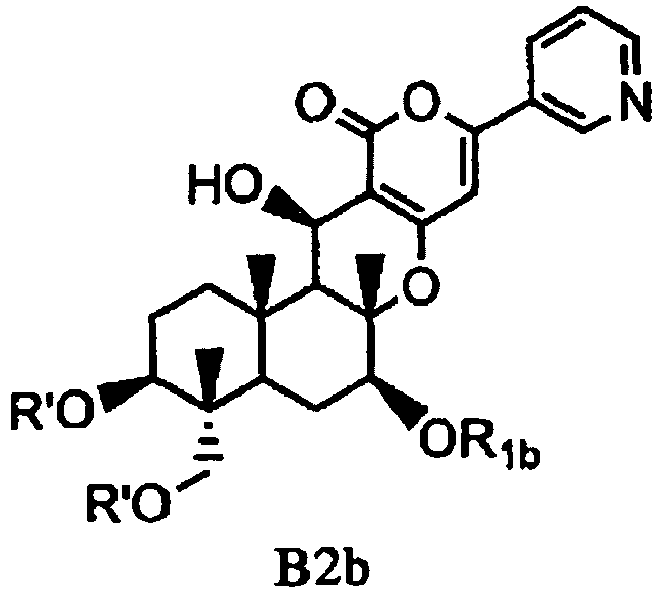
- wherein R1b and R' are as defined above,
- and then removing the protective group at the 7-position of compound B2b.
- The present invention will be described in detail according to the following scheme.

- The product in each step may be used in a next step without post treatment.
- Compound A1 can be produced by processes described, for example, in Japanese Patent Application Laid-Open No.
184158/1994 WO2004/060065 , Japanese Patent Application Laid-Open No.259569/1996 - Solvents usable in the step of producing compound A3 from compound A1 include alcohol solvents having 1 to 4 carbon atoms such as methanol, ether solvents such as diethyl ether, diisopropyl ether, tetrahydrofuran, and dioxane, aprotic polar organic solvents such as N,N-dimethylformamide, dimethylsulfoxide, N,N-dimethylacetamide, and acetonitrile, halogenated solvents such as dichloromethane and chloroform, or water, and mixed solvents composed of two or more of these solvents.
- Bases usable herein include inorganic bases such as sodium carbonate, potassium carbonate, sodium hydrogen carbonate, potassium hydrogen carbonate, sodium hydroxide, potassium hydroxide, sodium hydride, potassium hydride, sodium cyanide, potassium cyanide, magnesium hydroxide, calcium hydroxide, lithium hydroxide, and barium hydroxide, alkali metals such as sodium methoxide, sodium ethoxide, and potassium tert-butoxide, alkoxides of alkaline earth metals, or organic bases such as 1,8-diazabicyclo[5.4.0]undeca-7-ene, 1,5-diazabicyclo[4.3.0]nona-5-ene, triethylamine, diisopropylethylamine, pyridine, hydrazine, and guanidine. Preferred are 1,8-diazabicyclo[5.4.0]undeca-7-ene, 1,5-diazabicyclo[4.3.0]nona-5-ene, sodium carbonate, potassium carbonate, sodium hydrogen carbonate, potassium hydrogen carbonate, sodium hydroxide, potassium hydroxide, sodium methoxide, and potassium tert-butoxide. Particularly preferred are 1,8-diazabicyclo[5.4.0]undeca-7-ene and potassium tert-butoxide.
- The amount of the base used is preferably 0.01 to 1.2 equivalents based on the amount of compound A1. The reaction temperature is preferably -20°C to 50°C. The reaction time is preferably 0.5 hr to seven days.
- In the step of producing compound B1 from compound A3, hydroxyl at the 7-position can be protected by using a halide of R1a represented by R1a-Hal, wherein Hal represents halogen atom, an acid anhydride of R1a, or a mixed acid anhydride of R1a, corresponding to contemplated R1a, or 3,4-dihydropyran in the presence of a base, in the presence of an acid, or in the absence of a base and an acid, or using a condensing agent such as dicyclohexylcarbodiimide, 1-ethyl-3-(3-dimethylaminopropyl)carbodiimide hydrochloride, carbonyldiimidazole, dipyridyl disulfide, diimidazoyl disulfide, 1,3,5-trichlorobenzoyl chloride, 1,3,5-trichlorobenzoyl anhydride, PyBop, or PyBrop.
- This step may be carried out in the absence or presence of a solvent. Solvents usable herein include ketone solvents such as acetone and diethyl ketone, ether solvents such as diethyl ether, diisopropyl ether, and tetrahydrofuran, ester solvents such as ethyl acetate and butyl acetate, aprotic polar organic solvents such as N,N-dimethylformamide, N,N-dimethylacetamide, dimethylsulfoxide, and acetonitrile, polar organic solvents such as pyridine, halogenated hydrocarbon solvents such as dichloromethane and chloroform, or aromatic hydrocarbon solvents such as toluene, and mixed solvents composed of two or more of these solvents.
- Bases usable herein include, for example, sodium carbonate, potassium carbonate, sodium hydride, potassium tert-butoxide, sodium methoxide, sodium ethoxide, pyridine, dimethylaminopyridine, imidazole, 1,8-diazabicyclo[5.4.0]undeca-7-ene, 1,5-diazabicyclo[4.3.0]nona-5-ene, triethylamine, or diisopropylethylamine.
- Acids usable herein include, for example, p-toluenesulfonic acid, p-toluenesulfonic acid monohydrate, pyridinium p-toluenesulfonate, 10-camphorsulfonic acid, hydrochloric acid, or sulfuric acid.
- The reaction temperature is preferably -20°C to 50°C. The reaction time is preferably 0.5 hr to four days.
- Solvents usable in the step of producing compound Fa from compound B1 include alcohol solvents having 1 to 4 carbon atoms such as methanol, ether solvents such as diethyl ether, diisopropyl ether, tetrahydrofuran, and dioxane, aprotic polar organic solvents such as N,N-dimethylformamide, dimethylsulfoxide, N,N-dimethylacetamide, and acetonitrile, halogenated solvents such as dichloromethane and chloroform, or water, and mixed solvents composed of two or more of these solvents.
- Bases usable herein include inorganic bases such as sodium carbonate, potassium carbonate, sodium hydrogen carbonate, potassium hydrogen carbonate, sodium hydroxide, potassium hydroxide, sodium hydride, potassium hydride, sodium cyanide, potassium cyanide, magnesium hydroxide, calcium hydroxide, lithium hydroxide, and barium hydroxide, alkali metals such as sodium methoxide, sodium ethoxide, and potassium tert-butoxide, alkoxides of alkaline earth metals, or organic bases such as 1,8-diazabicyclo[5.4.0]undeca-7-ene, 1,5-diazabicyclo[4.3.0]nona-5-ene, triethylamine, diisopropylethylamine, pyridine, hydrazine, and guanidine. Preferred are 1,8-diazabicyclo[5.4.0]undeca-7-ene, 1,5-diazabicyclo[4.3.0]nona-5-ene, sodium carbonate, potassium carbonate, sodium hydrogen carbonate, potassium hydrogen carbonate, sodium hydroxide, and potassium hydroxide. Particularly preferred is potassium carbonate.
- The amount of the base used is preferably 0.01 to 10 equivalents based on the amount of compound B1. The reaction temperature is preferably -20°C to 50°C. The reaction time is preferably 0.5 to 48 hr.
- Compound A4 and compound A4' may be naturally occurring substances obtained by processes described, for example, in Japanese Patent Application Laid-Open No.
184158/1994 WO94/09147 239385/1996 259569/1996 - Solvents usable in the step of producing compound A2 from compound A4 include alcohol solvents having 1 to 4 carbon atoms such as methanol, ether solvents such as diethyl ether, diisopropyl ether, tetrahydrofuran, and dioxane, aprotic polar organic solvents such as N,N-dimethylformamide, dimethylsulfoxide, N,N-dimethylacetamide, and acetonitrile, halogenated solvents such as dichloromethane and chloroform, or water, and mixed solvents composed of two or more of these solvents.
- Bases usable herein include inorganic bases such as sodium carbonate, potassium carbonate, sodium hydrogen carbonate, potassium hydrogen carbonate, sodium hydroxide, potassium hydroxide, sodium hydride, potassium hydride, sodium cyanide, potassium cyanide, magnesium hydroxide, calcium hydroxide, lithium hydroxide, and barium hydroxide, alkali metals such as sodium methoxide, sodium ethoxide, and potassium tert-butoxide, alkoxides of alkaline earth metals, or organic bases such as 1,8-diazabicyclo[5.4.0]undeca-7-ene, 1,5-diazabicyclo[4.3.0]nona-5-ene, triethylamine, diisopropylethylamine, pyridine, hydrazine, and guanidine. Preferred are 1,8-diazabicyclo[5.4.0]undeca-7-ene, 1,5-diazabicyclo[4.3.0]nona-5-ene, sodium carbonate, potassium carbonate, sodium hydrogen carbonate, potassium hydrogen carbonate, sodium hydroxide, and potassium hydroxide. Particularly preferred is potassium carbonate.
- The amount of the base used is preferably 0.01 to 10 equivalents based on the amount of compound A4. The reaction temperature is preferably -20°C to 50°C. The reaction time is preferably 0.5 to 48 hr.
- According to this step, compound A2 can be likewise produced from compound A1 or compound A4' (compounds which are the same as compound A4, except that A1, A7, and A11 in compound A4 are A1', A7', and A11', respectively).
- Solvents usable in the step of producing compound D from compound A2 include ketone solvents such as acetone and diethyl ketone, ether solvents such as diethyl ether, diisopropyl ether, dioxane, and tetrahydrofuran, ester solvents such as ethyl acetate and butyl acetate, aprotic polar organic solvents such as N,N-dimethylformamide, N,N-dimethylacetamide, dimethylsulfoxide, and acetonitrile, halogenated hydrocarbon solvents such as dichloromethane and chloroform, or aromatic hydrocarbon solvents such as toluene, and mixed solvents composed of two or more of these solvents.
- Hydroxyl at 1- and 11-positions can be protected by using, for example, dimethoxypropane, acetone, optionally substituted benzaldehyde or a dimethyl acetal form thereof, 2-methoxypropene, 2-ethoxypropene, phosgene, triphosgene, trichloroacetyl chloride, p-nitrobenzyloxycarbonyl chloride, or carbonyldiimidazole corresponding to contemplated R2. Further, preferably, an acid catalyst such as p-toluenesulfonic acid, p-toluenesulfonic acid monohydrate, pyridinium p-toluenesulfonate, 10-camphorsulfonic acid, hydrogen fluoride, hydrochloric acid, hydrogen bromide, sulfuric acid, iodine, iron chloride, tin chloride, zinc chloride, aluminum chloride, trimethylchlorosilane, trimethylsilyltriflate, or 2,3-dichloro-5,6-dicyano-1,4-benzoquinone (preferably pyridinium p-toluenesulfonate and p-toluenesulfonic acid) is used in an amount of 0.001 to 20 equivalents, more preferably 0.01 to 5 equivalents, still more preferably 0.01 to 0.04 equivalent, based on compound A2.
- The reaction temperature is preferably -20°C to 50°C, more preferably room temperature to 50°C. The reaction time is preferably 0.5 to 48 hr.
- More specifically, for example, compounds D and E which are compounds wherein R2 represents D-1 can be produced by allowing a reaction to proceed using a protective group introducing reagent such as dimethoxypropane, 2-methoxypropene, or 2-ethoxypropene in the presence of an acid catalyst such as p-toluenesulfonic acid, p-toluenesulfonic acid monohydrate, pyridinium p-toluenesulfonate, or 10-camphorsulfonic acid in an amount of 0.001 to 20 equivalents, preferably 0.01 to 5 equivalents, more preferably 0.01 to 0.04 equivalent based on compound A2, or by allowing a reaction to proceed using p-toluenesulfonic acid, pyridinium p-toluenesulfonate, sulfuric acid, or copper sulfate in an amount of 0.001 to 20 equivalents based on compound A2 in an acetone solvent.
- Compounds D and E which are compounds wherein R2 represents D-2 can be produced by allowing a reaction to proceed using an optionally substituted benzaldehyde or a dimethyl acetal form thereof in the presence of an acid catalyst such as p-toluenesulfonic acid, p-toluenesulfonic acid monohydrate, pyridinium p-toluenesulfonate, or zinc chloride in an amount of 0.001 to 20 equivalents based on compound A2.
- Next, the step of producing compound E from compound D can be carried out in the absence or presence of a solvent. Solvents usable herein include ketone solvents such as acetone, diethyl ketone, ether solvents such as diethyl ether, diisopropyl ether, dioxane, and tetrahydrofuran, ester solvents such as ethyl acetate and butyl acetate, aprotic polar organic solvents such as N,N-dimethylformamide, dimethylsulfoxide, N,N-dimethylacetamide, and acetonitrile, polar organic solvents such as pyridine, halogenated hydrocarbon solvents such as dichloromethane and chloroform, or aromatic hydrocarbon solvents such as toluene, and mixed solvents composed of two or more of these solvents.
- A protective group corresponding to R1b can be introduced into hydroxyl at the 7-position by using a halide of R1b represented by R1b-Hal, R1bOH, R1bCl, (R1b)2O, a mixed acid anhydride of R1b, or 3,4-dihydropyran in the presence of a base, in the presence of an acid, or in the absence of a base and an acid, or using a condensing agent such as dicyclohexylcarbodiimide, 1-ethyl-3-(3-dimethylaminopropyl)carbodiimide hydrochloride, carbonyldiimidazole, dipyridyl disulfide, diimidazoyl disulfide, 1,3,5-trichlorobenzoyl chloride, 1,3,5-trichlorobenzoyl anhydride, PyBop, or PyBrop.
- Bases usable herein include, for example, sodium carbonate, potassium carbonate, sodium hydride, potassium tert-butoxide, sodium methoxide, sodium ethoxide, pyridine, dimethylaminopyridine, imidazole, 1,8-diazabicyclo[5.4.0]undeca-7-ene, 1,5-diazabicyclo[4.3.0]nona-5-ene, triethylamine, or diisopropylethylamine.
- Acids usable herein include, for example, p-toluenesulfonic acid, p-toluenesulfonic acid monohydrate, pyridinium p-toluenesulfonate, 10-camphorsulfonic acid, hydrochloric acid, or sulfuric acid.
- The reaction temperature is preferably -20°C to 50°C. The reaction time is preferably 0.5 hr to seven days.
- More specifically, for example, a compound wherein R1b represents straight chain C1-4 alkylcarbonyl optionally substituted by halogen atom, for example, acetyl or chloroacetyl can be produced by allowing a reaction to proceed using R1bCl or (R1b)2O in an amount of 1 to 20 equivalents based on compound D and pyridine, dimethylaminopyridine, or triethylamine as a base in an amount of 0.1 to 20 equivalents based on compound D in the absence of a solvent or in tetrahydrofuran, dichloromethane, N,N-dimethylformamide, or pyridine or in a mixed solvent composed of two or more of these solvents at -20°C to 50°C.
- A compound wherein R1b represents group -SiR3R4R5 optionally substituted by halogen atom wherein R3, R4, and R5 each independently represent straight chain or branched chain C1-6 alkyl or phenyl can be produced by allowing a reaction to proceed using a halide of R1b in an amount of 1 to 10 equivalents based on compound D and imidazole as a base in an amount of 1 to 10 equivalents based on compound D in dichloromethane, chloroform, N,N-dimethylformamide, N,N-dimethylacetamide, or a mixed solvent composed of two or more of these solvents at -20°C to 50°C.
- Solvents usable in the step of producing compound Fb from compound E include alcohol solvents having 1 to 4 carbon atoms such as methanol, ketone solvents such as acetone and diethyl ketone, ether solvents such as diethyl ether, diisopropyl ether, tetrahydrofuran, and dioxane, aprotic polar organic solvents such as N,N-dimethylformamide, dimethylsulfoxide, N,N-dimethylacetamide, and acetonitrile, halogenated solvents such as dichloromethane and chloroform, or water, and mixed solvents composed of two or more of these solvents.
- In the deprotection of the R2 moiety, an organic acid such as acetic acid, trifluoroacetic acid, trifluoroacetic anhydride, hydrogen fluoride, hydrochloric acid, hydrogen bromide, sulfuric acid, p-toluenesulfonic acid, p-toluenesulfonic acid monohydrate, pyridinium p-toluenesulfonate, or 10-camphorsulfonic acid, or a hydrogenation catalyst such as boron chloride, magnesium bromide, dinitro zinc, bismuth chloride, cerium chloride, iron chloride, tin chloride, zinc chloride, aluminum chloride, palladium-carbon, or palladium hydroxide can be used, depending upon the type of the protective group, in an amount of 0.01 to 20 equivalents based on compound E.
- The reaction temperature is preferably -20°C to 50°C. The reaction time is preferably 0.5 to 48 hr.
- More specifically, for example, when R2 in compound E represents D-1, compound Fb can be produced by allowing a reaction to proceed using 0.01 to 20 equivalents, based on compound E, of hydrochloric acid, acetic acid, p-toluenesulfonic acid, p-toluenesulfonic acid monohydrate, pyridinium p-toluenesulfonate, or dinitro zinc, bismuth chloride (preferably hydrochloric acid, acetic acid, or pyridinium p-toluenesulfonate) in water, methanol, tetrahydrofuran, dichloromethane, chloroform, N,N-dimethylformamide, acetonitrile, or acetic acid or a mixed solvent composed of two or more of these solvents at -20°C to 50°C, preferably at room temperature to 40°C.
- When R2 represents D-2, compound Fb can be produced by allowing a reaction to proceed using 0.01 to 20 equivalents, based on compound E, of 10-camphorsulfonic acid in water, methanol, tetrahydrofuran, or chloroform or a mixed solvent composed of two or more of these solvents at -20°C to 50°C, preferably at room temperature to 40°C.
- The step of producing compound B2a from compound Fa and the step of producing compound B2b from compound Fb can be carried out in the absence or presence of a solvent. Solvents usable herein include ketone solvents such as acetone and diethyl ketone, ether solvents such as diethyl ether, diisopropyl ether, and tetrahydrofuran, ester solvents such as ethyl acetate and butyl acetate, aprotic polar organic solvents such as N,N-dimethylformamide, N,N-dimethylacetamide, dimethylsulfoxide, and acetonitrile, halogenated hydrocarbon solvents such as dichloromethane and chloroform, or aromatic hydrocarbon solvents such as toluene, and mixed solvents composed of two or more of these solvents.
- Group R' can be introduced into the 1- and 11-position by using R'OH, R'Cl, (R')2O, or a mixed acid anhydride corresponding to contemplated R' in the presence or absence of a base or using a condensing agent such as dicyclohexylcarbodiimide, 1-ethyl-3-(3-dimethylaminopropyl)carbodiimide hydrochloride, carbonyldiimidazole, dipyridyl disulfide, diimidazoyl disulfide, 1,3,5-trichlorobenzoyl chloride, 1,3,5-trichlorobenzoyl anhydride, PyBop, or PyBrop.
- Bases usable herein include, for example, sodium carbonate, potassium carbonate, sodium hydride, potassium tert-butoxide, sodium methoxide, sodium ethoxide, pyridine, 4-dimethylaminopyridine, imidazole, 1,8-diazabicyclo[5.4.0]undeca-7-ene, 1,5-diazabicyclo[4.3.0]nona-5-ene, triethylamine, and diisopropylethylamine (preferably pyridine).
- The reaction temperature is preferably -20°C to 50°C, more preferably 0°C to 30°C. The reaction time is preferably 0.5 to 48 hr.
- Solvents usable in the step of producing compound C from compound B2a or B2b include alcohol solvents having 1 to 4 carbon atoms such as methanol, ether solvents such as diethyl ether, diisopropyl ether, tetrahydrofuran, and dioxane, aprotic polar organic solvents such as N,N-dimethylformamide, N,N-dimethylacetamide, dimethylsulfoxide, and acetonitrile, halogenated hydrocarbon solvents such as dichloromethane and chloroform, aromatic hydrocarbon solvents such as toluene, or water, and mixed solvents composed of two or more of these solvents.
- The deprotection of R1b in compound B2b can be carried out depending upon the type of the protective group. For example, when R1b represents formyl, acetyl, or chloroacetyl, for example, an inorganic base such as sodium carbonate, potassium carbonate, sodium hydrogen carbonate, potassium hydrogen carbonate, sodium hydroxide, potassium hydroxide, sodium hydride, potassium hydride, sodium cyanide, potassium cyanide, magnesium hydroxide, calcium hydroxide, lithium hydroxide, or barium hydroxide, an alkali metal such as sodium methoxide, sodium ethoxide, or potassium tert-butoxide, an alkoxide of an alkaline earth metal, an organic base such as 1,8-diazabicyclo[5.4.0]undeca-7-ene, 1,5-diazabicyclo[4.3.0]nona-5-ene, triethylamine, diisopropylethylamine, pyridine, hydrazine, or guanidine, preferably sodium methoxide, sodium hydroxide, sodium carbonate, or sodium hydrogen carbonate can be used as a base in an amount of 0.01 to 10 equivalents, preferably 0.1 to 2 equivalents, based on compound B2b.
- When R1b represents C1-6 alkyloxy-C1-6 alkyl optionally substituted by halogen atom, C1-6 alkylthio-C1-6 alkyl optionally substituted by halogen atom, straight chain, branched chain, or cyclic C1-4 alkyl optionally substituted by halogen atom, C2-6 alkenyl optionally substituted by halogen atom, C2-6 alkynyl optionally substituted by halogen atom, an optionally substituted saturated or unsaturated five- or six-membered heterocyclic ring, optionally substituted benzyl, or group - SiR3R4R5 optionally substituted by halogen atom, for example, an organic acid such as p-toluenesulfonic acid, p-toluenesulfonic acid monohydrate, pyridinium p-toluenesulfonate, hydrogen fluoride-pyridine, trihydrogen fluoride-triethylamine, acetic acid, acetic acid chloride, trifluoroacetic acid, trifluoroacetic anhydride, hydrogen fluoride, hydrochloric acid, hydrogen bromide, sulfuric acid, thiophenol, or 10-camphorsulfonic acid, a hydrogenation catalyst such as boron chloride, boron bromide, magnesium bromide, cerium chloride, copper chloride, copper sulfate, lithium chloride, iron chloride, tin chloride, zinc chloride, zinc bromide, aluminum chloride, titanium chloride, palladium-carbon, palladium hydroxide, or palladium chloride, trimethylchlorosilane, trimethyliodosilane, trimethylsilyltriflate, or 2,3-dichloro-5,6-dicyano-1,4-benzoquinone may be used in an amount of 0.1 to 10 equivalents based on compound B2b.
- The reaction temperature is preferably -20°C to 50°C, more preferably 0°C to room temperature. The reaction time is preferably 0.5 hr to seven days.
- According to this step, compound C can be likewise produced from compound B2a.
- The present processes are further illustrated by the following Examples.
- Pyripyropene A (30 mg) was dissolved in an 80% aqueous methanol solution (2 mL). 1,8-Diazabicyclo[5.4.0]-undeca-7-ene (9 mg) was added to the solution, and the mixture was stirred at room temperature for 1.5 hr. Acetic acid was added to the reaction solution to stop the reaction. The solvent was then removed by evaporation under the reduced pressure, water was added to the residue, and the mixture was extracted with ethyl acetate. The ethyl acetate layer was washed with saturated brine and was dried over anhydrous magnesium sulfate. The solvent was then removed by evaporation under the reduced pressure to give a crude product of 7-deacetylpyripyropene A. The crude product was purified by preparative thin-layer column chromatography (Merck silica gel 60F254 0.5 mm, acetone : hexane = 1 : 1) to give 7-deacetylpyripyropene A (17 mg, yield 61%). The results of measurement by ESI-MS and 1H-NMR showed that the compound was PR-7 described in Japanese Patent Application Laid-Open No.
259569/1996 - 7-Deacetylpyripyropene A (30 mg) synthesized by the process described in Example 1 was dissolved in N,N-dimethylformamide (5 mL), and imidazole (113 mg) and tert-butyldimethylchlorosilane (250 mg) were added to the solution. The mixture was stirred at room temperature for 24 hr. The reaction solution was then poured into water, and the mixture was extracted with ethyl acetate. The ethyl acetate layer was washed with saturated brine and was dried over anhydrous magnesium sulfate, and the solvent was then removed by evaporation under the reduced pressure to give a crude product of 7-O-tert-butyldimethylsilyl-7-deacetylpyripyropene A (470 mg).
ESI-MS: m/z 656 (M+H)+;
1H-NMR (CDCl3): δ 0.11 (3H, s), 0.16 (3H, s), 0.90 (3H, s), 0.96 (9H, s), 1.30-1.38 (1H, m), 1.32-1.37 (1H, m), 1.41 (3H, s), 1.60 (3H, s), 1.61-1.69 (2H, m), 1.77-1.92 (1H, m), 2.05 (6H, s), 2.15 (1H, m), 2.89 (1H, d, J = 2.4 Hz), 3.64-3.70 (2H, m), 3.73 (1H, d, J = 11.6 Hz), 3.83 (1H, d, J = 11.6 Hz), 4.78 (1H, dd, J = 4.8, 11.2 Hz), 4.99 (1H, m), 6.36 (1H, s), 7.42 (1H, dd, J = 4.8, 8.0 Hz), 8.11 (1H, d, J = 8.0 Hz), 8.70 (1H, d, J = 4.4 Hz), 9.00 (1H, d, J = 2.0 Hz). - 7-O-tert-butyldimethylsilyl-7-deacetylpyripyropene A (470 mg) produced in Example 2 was dissolved in an 88% aqueous methanol solution (40 mL). Potassium carbonate (307 mg) was added to the solution, and the mixture was stirred at room temperature for 19.5 hr. The solvent was removed by evaporation under the reduced pressure. Water and ethyl acetate were added to the residue. The solid remaining undissolved was collected by filtration to give 7-O-tert-butyldimethylsilyl-1,7,11-trideacetylpyripyropene A (65 mg). The mother liquid was extracted with ethyl acetate. The ethyl acetate layer was then washed with saturated brine and was dried over anhydrous magnesium sulfate. The solvent was removed by evaporation under the reduced pressure to give 7-O-tert-butyldimethylsilyl-1,7,11-trideacetylpyripyropene A (235 mg). Thus, 300 mg in total (yield in two stages from Example 2: 95%) of 7-O-tert-butyldimethylsilyl-1,7,11-trideacetylpyripyropene A was obtained.
ESI-MS: m/z 572 (M+H)+;
1H-NMR (CD3OD): δ 0.08 (3H, s), 0.13 (3H, s), 0.64 (3H, s), 0.90 (9H, s), 1.19 (1H, dt, J = 3.6, 12.8 Hz), 1.31 (3H, s), 1.33-1.36 (2H, m), 1.48 (1H, t, J = 12.0 Hz), 1.53 (3H, s), 1.62-1.80 (3H, m), 1.99-2.03 (1H, m), 3.16 (1H, d, J = 10.8 Hz), 3.44 (1H, d, J = 10.8 Hz), 3.56 (1H, dd, J = 4.8, 11.6 Hz), 3.76 (1H, dd, J = 5.2, 11.2 Hz), 4.86 (1H, d, J = 3.2 Hz), 6.47 (1H, s), 7.47 (1H, ddd, J = 0.8, 4.8, 8.0 Hz), 8.17 (1H, dt, J = 2.0, 8.4 Hz), 8.55 (1H, dd, J = 2.0, 4.8 Hz), 8.91 (1H, dd, J = 0.8, 2.4 Hz). - 7-O-tert-butyldimethylsilyl-1,7,11-trideacetylpyripyropene A (57 mg) synthesized by the process described in Example 3 was dissolved in N,N-dimethylformamide (2 mL). Pyridine (0.5 mL) was added to the solution at 0°C, the mixture was stirred at that temperature for 30 min, and cyclopropanecarbonyl chloride (62 mg) was added thereto. The mixture was stirred at that temperature for 3 hr, and the reaction solution was then poured into water and was extracted with chloroform. The chloroform layer was washed with saturated brine and was dried over anhydrous sodium sulfate, and the solvent was then removed by evaporation under the reduced pressure to give a crude product (87 mg) of 7-O-tert-butyldimethylsilyl-1,11-O-dicyclopropanecarbonyl-1,7,11-trideacetylpyripyropene A. The crude product was purified by preparative thin-layer column chromatography (Merck silica gel 60F254 0.5 mm, chloroform : methanol = 30 : 1) to give 7-0-tert-butyldimethylsilyl-1,11-O-dicyclopropanecarbonyl-1,7,11-trideacetylpyripyropene A (67 mg, yield 95%).
ESI-MS: m/z 708 (M+H)+;
1H-NMR (CDCl3): δ 0.11 (3H, s), 0.15 (3H, s), 0.85-0.88 (4H, m), 0.91 (3H, s), 0.96 (9H, s), 0.92-1.01 (4H, m), 1.25-1.36 (1H, m), 1.42 (3H, s), 1.45-1.47 (1H, m), 1.53-1.65 (5H, m), 1.58 (3H, s), 1.80-1.93 (2H, m), 2.12-2.16 (1H, m), 2.81 (1H, d, J = 2.0 Hz), 3.65 (1H, d, J = 12.0 Hz), 3.70 (1H, m), 3.91 (1H, d, J = 11.6 Hz), 4.81 (1H, dd, J = 4.8, 11.6 Hz), 4.98 (1H, m),6.36 (1H, s), 7.41 (1H, dd, J = 4.8, 8.0 Hz), 8.10 (1H, dt, J = 2.0, 8.4 Hz), 8.69 (1H, dd, J = 1.6, 4.8 Hz), 9.00 (1H, d, J = 2.0 Hz). - 7-O-tert-butyldimethylsilyl-1,11-O-dicyclopropanecarbonyl-1,7,11-trideacetylpyripyropene A (100 mg) synthesized by the process described in Example 4 was dissolved in tetrahydrofuran (1.5 mL). Pyridine (0.6 mL) and hydrogen fluoride/pyridine (0.9 mL) were added to the solution at 0°C. The mixture was stirred at that temperature for 4 days, an aqueous sodium hydrogen carbonate solution was then added thereto, and the mixture was extracted with chloroform. The chloroform layer was washed with saturated brine and was dried over anhydrous sodium sulfate. The solvent was then removed by evaporation under the reduced pressure to give a crude product (92 mg) of 1,11-O-dicyclopropanecarbonyl-1,7,11-trideacetylpyripyropene A. The crude product was purified by preparative thin-layer column chromatography (Merck silica gel 60F254 0.5 mm, chloroform : methanol = 20 : 1) to give 1,11-O-dicyclopropanecarbonyl-1,7,11-trideacetylpyripyropene A (79 mg, yield 95%).
ESI-MS: m/z 594 (M+H)+;
1H-NMR (CDCl3): δ 0.85-0.88 (4H, m), 0.92 (3H, s), 0.96-1.01 (4H, m), 1.35 (1H, dt, J = 4.0, 12.6 Hz), 1.42 (3H, s), 1.45-1.50 (2H, m), 1.56-1.63 (3H, m), 1.66 (3H, s), 1.79-1.93 (3H, m), 2.14 (1H, m), 2.17 (1H, d, J = 3.6 Hz), 2.85 (1H, d, J = 2.0 Hz), 3.74 (1H, d, J = 12.0 Hz), 3.78-3.82 (1H, m), 3.86 (1H, d, J = 11.6 Hz), 4.82 (1H, dd, J = 5.2, 11.6 Hz), 4.99 (1H, m), 6.52 (1H, s), 7.42 (1H, dd, J = 4.8, 8.0 Hz), 8.11 (1H, dt, J = 1.9, 8.1 Hz), 8.70 (1H, dd, J = 1.6, 4.8 Hz), 9.00 (1H, d, J = 2.0 Hz). - 7-Deacetylpyripyropene A (500 mg) produced by the process described in Example 1 was dissolved in dichloromethane (10 mL), and 3,4-dihydropyran (372 mg) and pyridinium p-toluenesulfonate (348 mg) were added to the solution. The mixture was stirred at room temperature for 73.5 hr. The reaction solution was then poured into water and was extracted with chloroform. The chloroform layer was washed with saturated brine and was dried over anhydrous magnesium sulfate. The solvent was then removed by evaporation under the reduced pressure to give a crude product (742 mg) of 7-deacetyl-7-O-tetrahydropyranylpyripyropene A. The results of measurement by ESI-MS and 1H-NMR showed that the compound was PR-44 described in Japanese Patent Application Laid-Open No.
259569/1996 - 7-Deacetyl-7-O-tetrahydropyranylpyripyropene A (742 mg) produced in Example 6 was dissolved in a 66% aqueous methanol solution (9 mL). Potassium carbonate (511 mg) was added to the solution, and the mixture was stirred at room temperature for 4 hr. Water was added thereto, and the solid remaining undissolved was collected by filtration to give 1,7,11-trideacetyl-7-O-tetrahydropyranylpyripyropene A (453 mg, yield in two stages from Example 6: 90%).
ESI-MS: m/z 542 (M+H)+. - 1,7,11-Trideacetyl-7-O-tetrahydropyranylpyripyropene A (450 mg) synthesized by the process described in Example 7 was dissolved in N,N-dimethylformamide (6 mL). Pyridine (3 mL) was added to the solution at 0°C, and the mixture was stirred at that temperature for 10 min. Cyclopropanecarbonyl chloride (525 mg) was added thereto. The mixture was stirred at that temperature for one hr. The reaction solution was then poured into water and was extracted with chloroform. The chloroform layer was washed with saturated brine and was dried over anhydrous magnesium sulfate, and the solvent was then removed by evaporation under the reduced pressure to give a crude product (800 mg) of 1,11-O-dicyclopropanecarbonyl-1,7,11-trideacetyl-7-O-tetrahydropyranylpyripyropene A.
ESI-MS: m/z 678 (M+H)+. - 1,11-O-dicyclopropanecarbonyl-1,7,11-trideacetyl-7-O-tetrahydropyranylpyripyropene A (800 mg) produced in Example 8 was dissolved in methanol (8 mL), and p-toluenesulfonic acid monohydrate (142 mg) was added to the solution at 0°C. The mixture was stirred at that temperature for 21.5 hr. An aqueous sodium hydrogen carbonate solution was then added thereto. Methanol was removed by evaporation under the reduced pressure, and the residue was extracted with ethyl acetate. The ethyl acetate layer was washed with saturated brine and was dried over anhydrous magnesium sulfate. The solvent was then removed by evaporation under the reduced pressure to give a crude product (570 mg) of 1,11-O-dicyclopropanecarbonyl-1,7,11-trideacetylpyripyropene A. The crude product was purified by chromatography on silica gel (Mega Bond Elut (Varian), acetone : hexane = 3 : 5) to give 1,11-O-dicyclopropanecarbonyl-1,7,11-trideacetylpyripyropene A (346 mg, yield in two stages from Example 8: 70%). ESI-MS data and 1H-NMR data of the compound were in agreement with those in Example 5.
- Pyripyropene A (1 g) was dissolved in a 66% aqueous methanol solution (15 mL). Potassium carbonate (355 mg) was added to the solution, and the mixture was stirred at room temperature for 20 hr. The solvent was removed by evaporation under the reduced pressure. Ethyl acetate and water were added thereto, and crystals remaining undisssolved were collected by filtration to give 1,7,11-trideacetylpyripyropene A (737 mg, yield 94%). The results of measurement by ESI-MS and 1H-NMR showed that the compound was PR-3 described in Japanese Patent Application Laid-Open No.
259569/1996 - 1,7,11-Trideacetylpyripyropene A (200 mg) synthesized by the process described in Example 10 was dissolved in N,N-dimethylformamide (2 mL). Acetone dimethyl acetal (456 mg) and pyridinium p-toluenesulfonate (550 mg) were added to the solution. The mixture was stirred at room temperature for 25.5 hr. The reaction solution was then poured into water and was extracted with chloroform. The chloroform layer was washed with a saturated aqueous sodium hydrogen carbonate solution and saturated brine and was dried over anhydrous sodium sulfate. The solvent was then removed by evaporation under the reduced pressure to give a crude product of 1,7,11-trideacetyl-1,11-O-isopropylidenepyripyropene A. The crude product was purified by preparative thin-layer column chromatography (Merck silica gel 60F254 0.5 mm, chloroform : methanol = 10 : 1) to give 1,7,11-trideacetyl-1,11-O-isopropylidenepyripyropene A (171 mg, yield 79%). The results of measurement by ESI-MS and 1H-NMR showed that the compound was PR-16 described in Japanese Patent Application Laid-Open No.
269065/1996 - 1,7,11-Trideacetyl-1,11-O-isopropylidenepyripyropene A (168 mg) synthesized by the process described in Example 11 was dissolved in N,N-dimethylformamide (2 mL). Imidazole (92 mg) and tert-butyldimethylchlorosilane (204 mg) were added to the solution. The mixture was stirred at room temperature for 22 hr, and the reaction solution was then poured into water and was extracted with chloroform. The chloroform layer was washed with saturated brine and was dried over anhydrous sodium sulfate. The solvent was then removed by evaporation under the reduced pressure to give a crude product (193 mg) of 7-O-tert-butyldimethylsilyl-1,7,11-trideacetyl-1,11-O-isopropylidenepyripyropene A. The crude product was purified by preparative thin-layer column chromatography (Merck silica gel 60F254 0.5 mm, chloroform : methanol = 20 : 1) to give 7-O-tert-butyldimethylsilyl-1,7,11-trideacetyl-1,11-O-isopropylidenepyripyropene A (187 mg, yield 90%).
ESI-MS: m/z 612 (M+H)+;
1H-NMR (CDCl3): δ 0.11 (3H, s), 0.16 (3H, s), 0.96 (9H, s), 1.03 (1H, m), 1.10 (3H, s), 1.33 (1H, dt, J = 3.6, 12.8 Hz), 1.40 (3H, s), 1.43 (3H, s), 1.44 (3H, s), 1.39-1.44 (1H, m), 1.55-1.58 (2H, m), 1.58 (3H, s), 1.64 (1H, q, J = 12.0 Hz), 1.81 (1H, dq, J = 3.6, 12.8 Hz), 2.20 (1H, dt, J = 3.2, 12.8 Hz), 2.81 (1H, d, J = 1.6 Hz), 3.42 (1H, d, J = 10.8 Hz), 3.51 (1H, d, J = 10.4 Hz), 3.50-3.53 (1H, m), 3.72 (1H, dd, J = 4.8, 11.2 Hz), 4.97 (1H, m), 6.35 (1H, s), 7.41 (1H, dd, J = 4.8, 8.0 Hz), 8.10 (1H, dt, J = 1.6, 8.0 Hz), 8.69 (1H, dd, J = 1.6,4.8 Hz), 9.00 (1H, d, J = 2.0 Hz). - 7-O-tert-butyldimethylsilyl-1,7,11-trideacetyl-1,11-O-isopropylidenepyripyropene A (116 mg) synthesized by the process described in Example 12 was dissolved in tetrahydrofuran (1 mL), and 63% acetic acid (4 mL) was added to the solution at 0°C. The mixture was stirred at room temperature for 24 hr. An aqueous sodium hydrogen carbonate solution was added thereto, and the mixture was extracted with chloroform. The chloroform layer was washed with a saturated aqueous sodium hydrogen carbonate solution and saturated brine and was dried over anhydrous sodium sulfate. The solvent was then removed by evaporation under the reduced pressure to give a crude product (101 mg) of 7-O-tert-butyldimethylsilyl-1,7,11-trideacetylpyripyropene A. The crude product was purified by preparative thin-layer column chromatography (Merck silica gel 60F254 0.5 mm, chloroform : methanol = 10 : 1) to give 7-O-tert-butyldimethylsilyl-1,7,11-trideacetylpyripyropene A (91 mg, yield 84%).
ESI-MS: m/z 572 (M+H)+;
1H-NMR (CD3OD): δ 0.08 (3H, s), 0.13 (3H, s), 0.64 (3H, s), 0.90 (9H, s), 1.19 (1H, dt, J = 3.6, 12.8 Hz), 1.31 (3H, s), 1.33-1.36 (2H, m), 1.48 (1H, t, J = 12.0 Hz), 1.53 (3H, s), 1.62-1.80 (3H, m), 1.99-2.03 (1H, m), 3.16 (1H, d, J = 10.8 Hz), 3.44 (1H, d, J = 10.8 Hz), 3.56 (1H, dd, J = 4.8, 11.6 Hz), 3.76 (1H, dd, J = 5.2, 11.2 Hz), 4.86 (1H, d, J = 3.2 Hz), 6.47 (1H, s), 7.47 (1H, ddd, J = 0.8, 4.8, 8.0 Hz), 8.17 (1H, dt, J = 2.0, 8.4 Hz), 8.55 (1H, dd, J = 2.0, 4.8 Hz), 8.91 (1H, dd, J = 0.8, 2.4 Hz). - 1,7,11-Trideacetyl-1,11-O-isopropylidenepyripyropene A (100 mg) synthesized by the process described in Example 11 was dissolved in dichloromethane (2 mL). Triethylamine (61 mg), 4-dimethylaminopyridine (7 mg), and acetic anhydride (26 mg) were added to the solution. The mixture was stirred at room temperature for 4 hr. The reaction solution was then poured into water and was extracted with chloroform. The chloroform layer was washed with saturated brine and was dried over anhydrous sodium sulfate, and the solvent was then removed by evaporation under the reduced pressure to give a crude product (120 mg) of 1,11-dideacetyl-1,11-O-isopropylidenepyripyropene A. The crude product was purified by preparative thin-layer column chromatography (Merck silica gel 60F254 0.5 mm, chloroform : methanol = 20 : 1) to give 1,11-dideacetyl-1,11-O-isopropylidenepyripyropene A (103 mg, yield 95%). The results of measurement by ESI-MS and 1H-NMR showed that the compound was PR-43 described in
Japanese Patent Application Laid-Open No. 269065/1996 - 1,11-Dideacetyl-1,11-O-isopropylidenepyripyropene A (99 mg) synthesized by the process described in Example 14 was dissolved in tetrahydrofuran (1.2 mL) and methanol (2.4 mL), and pyridinium p-toluenesulfonate (185 mg) was added to the solution. The mixture was stirred at room temperature for 30 hr, triethylamine was then added thereto, and the solvent was removed by evaporation under the reduced pressure. Chloroform and water were added to the residue, and the mixture was extracted with chloroform. The chloroform layer was washed with saturated brine and was dried over anhydrous sodium sulfate, and the solvent was removed by evaporation under the reduced pressure to give a crude product (85 mg) of 1,11-dideacetylpyripyropene A. The crude product was purified by preparative thin-layer column chromatography (Merck silica gel 60F254 0.5 mm, chloroform : methanol = 60 : 1) to give 1,11-dideacetylpyripyropene A (64 mg, yield 72%). The results of measurement by ESI-MS and 1H-NMR showed that the compound was PR-5 described in Japanese Patent Application Laid-Open No.
259569/1996 - 1,7,11-Trideacetylpyripyropene A (9.67 g) was suspended in N,N-dimethylformamide (48 mL). Acetone dimethyl acetal (6.61 g) and p-toluenesulfonic acid monohydrate (0.08 g) were added to the suspension, and the mixture was stirred at 38 to 41°C for 4 hr. 4-Dimethylaminopyridine (0.08 g) was added thereto, and the mixture was removed by evaporation under the reduced pressure for 1.5 hr. The residue was cooled to 0°C. Triethylamine (2.57 g) and acetic anhydride (2.37 g) were added to the cooled solution, and the mixture was stirred at that temperature for 16 hr. Water (96 g) was then added to the reaction solution, and the mixture was adjusted to pH 7.17 by the addition of 5% hydrochloric acid. The precipitated light yellow powder was collected by filtration and was washed twice with water (20 g). The crude product thus obtained was suspended with methanol (48 mL), 15% hydrochloric acid (4.7 g) was added to the suspension, and the mixture was stirred at 25 to 27°C for 2 hr. Water (33 mL) was added thereto, and the insolubles were filtered, followed by adjustment of pH to 4.41 by the addition of a 5% aqueous sodium hydroxide solution. Further, water (31 mL) was added thereto. The precipitated light yellow powder was collected by filtration and was washed twice with a 30% aqueous methanol solution (20 mL). The washed powder was dried at 40°C for 23 hr to give 8.62 g of 1,11-dideacetylpyripyropene A. The results of measurement by
1H-NMR showed that the 1H-NMR data were in agreement with those of the compound produced in Example 15. - 1,11-Dideacetylpyripyropene A (61 mg) synthesized by the process described in Example 15 was dissolved in N,N-dimethylformamide (1.2 mL). Pyridine (0.3 mL) was added to the solution at 0°C, the mixture was stirred at that temperature for 10 min, cyclopropanecarbonyl chloride (77 mg) was added thereto, and the mixture was stirred at that temperature for 1.5 hr. The reaction solution was then poured into water and was extracted with chloroform. The chloroform layer was washed with saturated brine and was dried over anhydrous magnesium sulfate. The solvent was then removed by evaporation under the reduced pressure to give a crude product (97 mg) of 1,11-O-dicyclopropanecarbonyl-1,11-dideacetylpyripyropene A. The crude product was purified by preparative thin-layer column chromatography (Merck silica gel 60F254 0.5 mm, chloroform : methanol = 20 : 1) to give 1,11-O-dicyclopropanecarbonyl-1,11-dideacetylpyripyropene A (73 mg, yield 93%).
ESI-MS: m/z 636 (M+H)+;
1H-NMR (CDCl3): δ 0.84-0.89 (4H, m), 0.89 (3H, s), 0.90-1.06 (4H, m), 1.37 (1H, dt, J = 3.8, 13.2 Hz), 1.45 (3H, s), 1.53 (1H, d, J = 4.0 Hz), 1.55-1.67 (4H, m), 1.70 (3H, s), 1.79-1.87 (2H, m), 1.89-1.94 (2H, m), 2.14-2.18 (1H, m), 2.16 (3H, s), 2.97 (1H, d, J = 2.0 Hz), 3.77 (2H, s), 4.81 (1H, dd, J = 4.8, 11.7 Hz), 5.00 (1H, m), 5.02 (1H, dd, J = 5.0, 11.4 Hz), 6.46 (1H, s), 7.40 (1H, dd, J = 4.9, 8.0 Hz), 8.09 (1H, dt, J = 1.9, 8.1 Hz), 8.68 (1H, dd, J = 1.6, 4.8 Hz), 9.00 (1H, d, J = 2.0 Hz). - 1,11-Dideacetylpyripyropene A (25.76 g) was suspended in ethyl acetate (130 mL), pyridine (15.84 g) was added to the suspension. The mixture was cooled to 10 to 15°C. Cyclopropanecarbonyl chloride (15.70 g) was added dropwise thereto, and the mixture was stirred at 25 to 30°C for 3 hr. The reaction solution was again cooled to 10 to 15°C, and water (50 mL) was added dropwise thereto. The mixture was adjusted to pH 2.59 by the addition of 5 N-hydrochloric acid, followed by separation. The organic layer was washed with 5% sodium bicarbonate water (50 mL) and 10% brine (50 mL) in that order. The ethyl acetate solution thus obtained was removed by evaporation under the reduced pressure and was further replaced with methanol to adjust the liquid volume to about 130 mL. Water (130 mL) was added dropwise thereto. The precipitated light yellow powder was collected by filtration, was washed twice with a 50% aqueous methanol solution (40 mL), and was dried at 40°C for 23 hr to give 30.80 g of 1,11-O-dicyclopropanecarbonyl-1,11-dideacetylpyripyropene A. The results of measurement by 1H-NMR showed that the 1H-NMR data were in agreement with those of the compound produced in Example 16.
- 1,11-O-dicyclopropanecarbonyl-1,11-dideacetylpyripyropene A (67 mg) synthesized by the process described in Example 16 was dissolved in a 95% aqueous methanol solution (0.07 mL). Sodium carbonate (22 mg) was added to the solution at 0°C. The mixture was stirred at that temperature for 4 days. Acetic acid was then added thereto. Methanol was removed by evaporation under the reduced pressure, and the residue was extracted with chloroform. The chloroform layer was washed with saturated brine and was dried over anhydrous sodium sulfate. The solvent was then removed by evaporation under the reduced pressure to give a crude product (74 mg) of 1,11-O-dicyclopropanecarbonyl-1,7,11-trideacetylpyripyropene A. The crude product was purified by preparative thin-layer column chromatography (Merck silica gel 60F254 0.5 mm, chloroform : methanol = 10 : 1) to give 1,11-O-dicyclopropanecarbonyl-1,7,11-trideacetylpyripyropene A (47 mg, yield 76%). ESI-MS data and 1H-NMR data of the compound were in agreement with those of the compound produced in Example 5.
- 1,11-O-dicyclopropanecarbonyl-1,11-dideacetylpyripyropene A (30.00 g) was suspended in a mixed liquid composed of water (20 mL) and methanol (190 mL), and the mixture was cooled to 0 to 5°C. A 1 M methanol solution (4.49 mL) of sodium methoxide was added thereto, and the mixture was stirred at that temperature for 23 hr. 1.2% hydrochloric acid (20 mL) was added to the reaction solution, and the mixture was filtered through a 0.5-µm filter, followed by evaporation under the reduced pressure to adjust the liquid volume to about 90 mL. A mixed liquid (120 mL) of methanol/water = 2/1 was added to the residue to adjust the liquid volume to about 150 mL. Further, a mixed liquid (120 mL) of methanol/water = 2/1 was added thereto to adjust the liquid volume to about 180 mL. The mixture was stirred at room temperature for one hr, was then cooled to 5°C, and was stirred for 17 hr. The precipitated light yellow powder was collected by filtration, was washed twice with a 30% aqueous methanol solution (50 mL), and was dried at 40°C for 22 hr to give 23.82 g of 1,11-O-dicyclopropanecarbonyl-1,7,11-trideacetylpyripyropene A. The results of measurement by 1H-NMR showed that the 1H-NMR data were in agreement with those of the compound produced in Example 17.
- 1,7,11-Trideacetyl-1,11-O-isopropylidenepyripyropene A (100 mg) synthesized by the process described in Example 11 was dissolved in tetrahydrofuran (2 mL), and triethylamine (61 mg) and chloroacetic anhydride (103 mg) were added to the solution. The mixture was stirred at room temperature for 3.5 hr, and the reaction solution was then poured into water and was extracted with chloroform. The chloroform layer was washed with saturated brine and was dried over anhydrous sodium sulfate. The solvent was then removed by evaporation under the reduced pressure to give a crude product (118 mg) of 7-O-chloroacetyl-1,7,11-trideacetyl-1,11-O-isopropylidenepyripyropene A. The crude product was purified by preparative thin-layer column chromatography (Merck silica gel 60F254 0.5 mm, chloroform : methanol = 20 : 1) to give 7-O-chloroacetyl-1,7,11-trideacetyl-1,11-O-isopropylidenepyripyropene A (80 mg, yield 70%).
ESI-MS: m/z 574 (M+H)+;
1H-NMR (CDCl3): δ 1.11 (3H, s), 1.16 (1H, dd, J = 2.4, 12.6 Hz), 1.33-1.41 (1H, m), 1.44 (3H, s), 1.45 (3H, s), 1.52 (1H, d, J = 4.0 Hz), 1.58-1.65 (1H, m), 1.62 (3H, s), 1.70 (3H, s), 1.66-1.75 (2H, m), 1.77-1.86 (1H, m), 2.22 (1H, m), 2.90 (1H, d, J = 2.0 Hz), 3.48 (2H, s), 3.54 (1H, dd, J = 3.6, 12.0 Hz), 4.19 (2H, d, J = 4.0 Hz), 5.00 (1H, m), 5.09 (1H, dd, J = 5.6, 11.6 Hz), 6.45 (1H, s), 7.41 (1H, dd, J = 4.8, 8.0 Hz), 8.10 (1H, dt, J = 1.6, 8.0 Hz), 8.70 (1H, dd, J = 1.6, 4.8 Hz), 9.02 (1H, d, J = 1.6 Hz). - 7-O-chloroacetyl-1,7,11-trideacetyl-1,11-O-isopropylidenepyripyropene A (35 mg) synthesized by the process described in Example 18 was dissolved in tetrahydrofuran (0.6 mL) and methanol (1.2 mL), and pyridinium p-toluenesulfonate (61 mg) was added to the solution. The mixture was stirred at room temperature for 31 hr, and the reaction solution was then poured into water and was extracted with chloroform. The chloroform layer was washed with saturated brine and was dried over anhydrous sodium sulfate. The solvent was then removed by evaporation under the reduced pressure to give a crude product (30 mg) of 7-O-chloroacetyl-1,7,11-trideacetylpyripyropene A. The crude product was purified by preparative thin-layer column chromatography (Merck silica gel 60F254 0.5 mm, chloroform : methanol = 10 : 1) to give 7-O-chloroacetyl-1,7,11-trideacetylpyripyropene A (24 mg, yield 74%).
ESI-MS: m/z 534 (M+H)+;
1H-NMR (CD3OD): δ 0.74 (3H, s), 1.32 (1H, m), 1.44 (3H, s), 1.54 (2H, m), 1.69-1.75 (2H, m), 1.75 (3H, s), 1.79-1.86 (1H, m), 1.91-1.94 (1H, m), 2.12 (1H, m), 3.26 (1H, d, J = 11.6 Hz), 3.52 (1H, d, J = 10.8 Hz), 3.67 (1H, dd, J = 5.2, 11.6 Hz), 4.33 (2H, d, J = 2.4 Hz), 4.98 (1H, m), 5.15 (1H, dd, J = 5.2, 11.6 Hz), 6.79 (1H, s), 7.55 (1H, dd, J = 4.8, 8.0 Hz), 8.28 (1H, dt, J = 2.4, 8.0 Hz), 8.62 (1H, dd, J = 1.6, 4.8 Hz), 9.02 (1H, d, J = 2.4 Hz). - 7-O-chloroacetyl-1,7,11-trideacetylpyripyropene A (21 mg) synthesized by the process described in Example 19 was dissolved in N,N-dimethylformamide (1.2 mL), and pyridine (0.3 mL) and cyclopropanecarbonyl chloride (25 mg) were added to the solution at 0°C. The mixture was stirred at that temperature for 2.5 hr. The reaction solution was then poured into water, and the mixture was extracted with chloroform. The chloroform layer was washed with saturated brine and was dried over anhydrous magnesium sulfate. The solvent was then removed by evaporation under the reduced pressure to give a crude product (37 mg) of 7-O-chloroacetyl-1,11-O-dicyclopropanecarbonyl-1,7,11-trideacetylpyripyropene A. The crude product was purified by preparative thin-layer column chromatography (Merck silica gel 60F254 0.5 mm, chloroform : methanol = 30 : 1) to give 7-O-chloroacetyl-1,11-O-dicyclopropanecarbonyl-1,7,11-trideacetylpyripyropene A (16 mg, yield 58%).
ESI-MS: m/z 670 (M+H)+;
1H-NMR (CDCl3): δ 0.85-0.90 (4H, m), 0.91 (3H, s), 0.96-1.08 (4H, m), 1.38 (1H, dt, J = 4.0, 12.6 Hz), 1.45 (3H, s), 1.54-1.67 (5H, m),1.72 (3H, s), 1.81-1.95 (3H, m), 2.17 (1H, m), 2.89 (1H, d, J = 1.6 Hz), 3.78 (2H, s), 4.17 (2H, d, J = 2.8 Hz), 4.82 (1H, dd, J = 4.8, 11.6 Hz), 5.01 (1H, m), 5.09 (1H, dd, J = 5.2, 11.6 Hz), 6.45 (1H, s), 7.41 (1H, dd, J = 4.8, 8.0 Hz), 8.10 (1H, dt, J = 1.6, 8.0 Hz), 8.69 (1H, dd, J = 1.6, 4.8 Hz), 9.02 (1H, d, J = 1.6 Hz). - 7-O-chloroacetyl-1,11-O-dicyclopropanecarbonyl-1,7,11-trideacetylpyripyropene A (14 mg) synthesized by the process described in Example 20 was dissolved in a 95% aqueous methanol solution (1.4 mL). Sodium hydrogen carbonate (1.9 mg) was then added to the solution. The mixture was stirred at room temperature for 3 hr. Acetic acid was added thereto, and methanol was then removed by evaporation under the reduced pressure to give a crude product of 1,11-O-dicyclopropanecarbonyl-1,7,11-trideacetylpyripyropene A. The crude product was purified by preparative thin-layer column chromatography (Merck silica gel 60F254 0.5 mm, chloroform : methanol = 10 : 1) to give 1,11-O-dicyclopropanecarbonyl-1,7,11-trideacetylpyripyropene A (12 mg, yield 94%). ESI-MS data and 1H-NMR data of the compound were in agreement with those of the compound produced in Example 5.
- 1,7,11-Trideacetylpyripyropene A (1.0 g) synthesized by the process described in Example 10 was dissolved in N,N-dimethylformamide (10 mL). Pyridinium p-toluenesulfonate (2.75 g) and benzaldehyde dimethyl acetal (3.3 g) were added to the solution. The mixture was stirred at room temperature for 5 hr. The reaction solution was then poured into water, and the mixture was extracted with ethyl acetate. The ethyl acetate layer was washed with saturated brine and was dried over anhydrous sodium sulfate, and the solvent was then removed by evaporation under the reduced pressure to give a crude product of 1,11-O-benzylidene-1,7,11-trideacetylpyripyropene A. The crude product was purified by chromatography on silica gel (Mega Bond Elut (Varian), acetone : chloroform = 1 : 10) to give 1,11-O-benzylidene-1,7,11-trideacetylpyripyropene A (887 mg, yield 74%). The results of measurement by ESI-MS and 1H-NMR showed that the compound was PR-93 described in Japanese Patent Application Laid-Open No.
269065/1996 - 1,11-O-benzylidene-1,7,11-trideacetylpyripyropene A (1.0 g) synthesized by the process described in Example 22 was dissolved in pyridine (2.5 mL). Chloroacetic anhydride (206 mg) was added to the solution at 0°C. The mixture was stirred at that temperature for 1.5 hr, and the reaction solution was then poured into water. The mixture was extracted with ethyl acetate. The ethyl acetate layer was washed with saturated brine and was dried over anhydrous sodium sulfate. The solvent was then removed by evaporation under the reduced pressure to give a crude product of 1,11-O-benzylidene-7-O-chloroacetyl-1,7,11-trideacetylpyripyropene A. The crude product was purified by chromatography on silica gel (Mega Bond Elut (Varian), acetone : hexane = 1 : 100) to give 1,11-O-benzylidene-7-O-chloroacetyl-1,7,11-trideacetylpyripyropene A (359 mg, yield 72%).
ESI-MS: m/z 622 (M+H)+;
1H-NMR (CDCl3): δ 1.19-1.22 (1H, m), 1.25 (3H, s), 1.41 (1H, m), 1.48 (3H, s), 1.53-1.56 (1H, m), 1.70 (3H, s), 1.70-1.84 (3H, m), 1.95 (1H, m), 2.27 (1H, m), 2.88 (1H, d, J = 1.6 Hz), 3.49 (1H, d, J = 10.4 Hz), 3.50-3.53 (1H, m), 3.89 (1H, d, J = 10.4 Hz), 4.20 (2H, d, J = 3.2 Hz), 5.02 (1H, m), 5.12 (1H, dd, J = 5.2, 11.6 Hz), 5.54 (1H, s), 6.46 (1H, s), 7.33-7.43 (4H, m), 7.51 (2H, dd, J = 1.6, 8.0 Hz), 8.11 (1H, dt, J = 2.0, 8.0 Hz), 8.70 (1H, dd, J = 1.6, 4.8 Hz), 9.02 (1H, d, J = 2.0 Hz). - 1,11-O-benzylidene-7-O-chloroacetyl-1,7,11-trideacetylpyripyropene A (10 mg) synthesized by the process described in Example 23 was dissolved in chloroform (1 mL) and methanol (9 mL), and 10-camphorsulfonic acid (3 mg) was added to the solution. The mixture was stirred at room temperature for 5 days. The reaction solution was then poured into water, and the mixture was extracted with chloroform. The chloroform layer was washed with saturated brine and was dried over anhydrous sodium sulfate. The solvent was then removed by evaporation under the reduced pressure to give a crude product of 7-O-chloroacetyl-1,7,11-trideacetylpyripyropene A. The crude product was purified by chromatography on silica gel (Mega Bond Elut (Varian), acetone : chloroform = 1 : 10) to give 7-O-chloroacetyl-1,7,11-trideacetylpyripyropene A (8 mg, yield 100%). ESI-MS data and 1H-NMR data of the compound were in agreement with those of the compound produced in Example 19.
- 1,7,11-Trideacetylpyripyropene A (1.0 g) synthesized by the process described in Example 10 was dissolved in N,N-dimethylformamide (22 mL). Pyridinium p-toluenesulfonate (2.76 g) and p-methoxybenzaldehyde dimethyl acetal (0.4 g) were added to the solution. The mixture was stirred at room temperature for 4 hr. The reaction solution was then poured into water, and the mixture was extracted with ethyl acetate. The ethyl acetate layer was washed with saturated brine and was dried over anhydrous sodium sulfate. The solvent was removed by evaporation under the reduced pressure to give a crude product of 1,7,11-trideacetyl-1,11-O-p-methoxybenzylidenepyripyropene A. The crude product was purified by chromatography on silica gel (Mega Bond Elut (Varian), acetone : chloroform = 1 : 10) to give 1,7,11-trideacetyl-1,11-O-p-methoxybenzylidenepyripyropene A (520 mg, yield 41%). The results of measurement by ESI-MS and 1H-NMR showed that the compound was PR-124 described in Japanese Patent Application Laid-Open No.
269065/1996 - 1,7,11-Trideacetyl-1,11-O-p-methoxybenzylidene-pyripyropene A (100 mg) synthesized by the process described in Example 25 was dissolved in tetrahydrofuran (2 mL). Triethylamine (50 mg) and chloroacetic anhydride (60 mg) were added to the solution. The mixture was stirred at room temperature for 2.5 hr, and the reaction solution was then poured into water and was extracted with chloroform. The chloroform layer was washed with saturated brine and was dried over anhydrous sodium sulfate. The solvent was then removed by evaporation under the reduced pressure to give a crude product of 7-O-chloroacetyl-1,7,11-trideacetyl-1,11-O-p-methoxybenzylidene-pyripyropene A. The crude product was recrystallied from methanol and ethyl acetate, and the recrystallized product was further purified by chromatography on silica gel (Mega Bond Elut (Varian), acetone : chloroform = 1 : 30) to give 7-O-chloroacetyl-1,7,11-trideacetyl-1,11-O-p-methoxybenzylidenepyripyropene A (83 mg, yield 75%).
ESI-MS: m/z 652 (M+H)+;
1H-NMR (CDCl3): δ 1.20 (1H, m), 1.24 (3H, s), 1.40 (1H, m), 1.47 (3H, s), 1.54 (1H, d, J = 3.6 Hz), 1.72 (3H, s), 1.66-1.80 (3H, m), 1.93 (1H, m), 2.26 (1H, m), 2.87 (1H, d, J = 2.0 Hz), 3.47 (1H, d, J = 10.0 Hz), 3.47-3.51 (1H, m), 3.80 (3H, s), 3.87 (1H, d, J = 10.4 Hz), 4.20 (2H, d, J = 3.2 Hz), 5.01 (1H, m), 5.12 (1H, dd, J = 5.6, 11.6 Hz), 5.50 (1H, s), 6.46 (1H, s), 6.90 (2H, d, J = 8.8 Hz), 7.41 (1H, dd, J = 4.8, 12.0 Hz), 7.43 (2H, d, J = 8.8 Hz), 8.10 (1H, dt, J = 2.0, 8.4 Hz), 8.70 (1H, dd, J = 2.4, 4.8 Hz), 9.02 (1H, d, J = 2.0 Hz). - 7-O-chloroacetyl-1,7,11-trideacetyl-1,11-O-p-methoxybenzylidenepyripyropene A (30 mg) synthesized by the process described in Example 26 was dissolved in chloroform (5 mL) and methanol (1 mL), and 10-camphorsulfonic acid (3 mg) was added to the solution. The mixture was stirred at room temperature for 5 days, and the reaction solution was then poured into water and was extracted with chloroform. The chloroform layer was washed with saturated brine and was dried over anhydrous sodium sulfate. The solvent was then removed by evaporation under the reduced pressure to give a crude product of 7-O-chloroacetyl-1,7,11-trideacetylpyripyropene A. The crude product was purified by chromatography on silica gel (Mega Bond Elut (Varian), acetone : chloroform = 1 : 5) to give 7-O-chloroacetyl-1,7,11-trideacetylpyripyropene A (14 mg, yield 69%). ESI-MS data and 1H-NMR data of the compound were in agreement with those of the compound produced in Example 19.

and then removing the protective group at the 7-position of compound B2b.
Claims (5)
- A process for producing compound C represented by formula C:
 acylating hydroxyl at the 1- and 11-positions of compound Fb represented by formula Fb:
 R1b represents formyl; optionally substituted straight chain C1-4 alkylcarbonyl; optionally substituted benzyl; group -SiR3R4R5 optionally substituted by halogen atom wherein R3, R4, and R5 each independently represent straight chain or branched chain C1-6 alkyl or phenyl; C1-6 alkyloxy-C1-6 alkyl optionally substituted by halogen atom; C1-6 alkylthio-C1-6 alkyl optionally substituted by halogen atom; straight chain, branched chain, or cyclic C1-4 alkyl optionally substituted by halogen atom, provided that, when alkyl in the C1-4 alkyl group is of a branched chain or cyclic type, the alkyl group is C3-4 alkyl; C2-6 alkenyl optionally substituted by halogen atom; C2-6 alkynyl optionally substituted by halogen atom; or an optionally substituted saturated or unsaturated five- or six-membered heterocyclic group,wherein, in R1b, the substituent optionally possessed by alkylcarbonyl is selected from the group consisting of halogen atoms, C1-4 alkyloxy, C1-4 haloalkyloxy, C1-4 alkylcarbonyl, C1-4 haloalkylcarbonyl, C1-4 alkylcarbonyloxy, and C1-4 haloalkylcarbonyloxy, and the substituent optionally possessed by the heterocyclic group and benzyl is selected from the group consisting of halogen atoms, C1-4 alkyl, C1-4 alkyloxy, C1-4 haloalkyloxy, C1-4 alkylthio, C1-4 haloalkyl, C1-4 alkylcarbonyl, C14 haloalkylcarbonyl, C1-4 alkylcarbonyloxy, C1-4 haloalkylcarbonyloxy, nitro, and cyano,
with an acylating agent corresponding to R' to give compound B2b represented by formula B2b: wherein R1b and R' are as defined above,and then removing the protective group at the 7-position of compound B2b.
 - The process according to claim 1, further comprising, before acylation of hydroxyl at the 1- and 11-positions of compound Fb, the steps of:hydrolyzing acyl at the 1-, 7-, and 11-positions of compound A4 represented by formula A4:
 wherein A1, A7, and A11, which may be the same or different, represent acetyl or propionyl,with a base to deacylate compound A4, then protecting hydroxyl at the 1- and 11-positions to give compound D represented by formula D:
 wherein two R2s together represent a group selected from groups represented by formulae D-1, D-2, D-3, and D-4:
 wherein Y1 represents a hydrogen atom or C1-4 alkyl; Xs, which may be the same or different, represent a hydrogen atom, C1-4 alkoxy, or nitro; and n is 0 to 5,then protecting hydroxyl at the 7-position of compound D to give compound E represented by formula E:
 R1b represents formyl; optionally substituted straight chain C1-4 alkylcarbonyl; optionally substituted benzyl; group -SiR3R4R5 optionally substituted by halogen atom wherein R3, R4, and R5 each independently represent straight chain or branched chain C1-6 alkyl or phenyl; C1-6 alkyloxy-C1-6 alkyl optionally substituted by halogen atom; C1-6 alkylthio-C1-6 alkyl optionally substituted by halogen atom; straight chain, branched chain, or cyclic C1-4 alkyl optionally substituted by halogen atom, provided that, when alkyl in the C1-4 alkyl group is of a branched chain or cyclic type, the alkyl group is C3-4 alkyl; C2-6 alkenyl optionally substituted by halogen atom; C2-6 alkynyl optionally substituted by halogen atom; or an optionally substituted saturated or unsaturated five- or six-membered heterocyclic group,wherein, in R1b, the substituent optionally possessed by alkylcarbonyl is selected from the group consisting of halogen atoms, C1-4 alkyloxy, C1-4 haloalkyloxy, C14 alkylcarbonyl, C1-4 haloalkylcarbonyl, C1-4 alkylcarbonyloxy, and C1-4 haloalkylcarbonyloxy, and the substituent optionally possessed by the heterocyclic group and benzyl is selected from the group consisting of halogen atoms, C1-4 alkyl, C1-4 alkyloxy, C1-4 haloalkyloxy, C1-4 alkylthio, C1-4 haloalkyl, C1-4 alkylcarbonyl, C1-4 haloalkylcarbonyl, C1-4 alkylcarbonyloxy, C1-4 haloalkylcarbonyloxy, nitro, and cyano, andR2 is as defined above,and further removing the protective groups at the 1- and 11-positions of compound E to give compound Fb represented by formula Fb:
- The process according to claim 2, wherein R1b represents acetyl; chloroacetyl; or group -SiR3R4R5 optionally substituted by halogen atom wherein R3, R4, and R5 each independently represent straight chain or branched chain C1-6 alkyl or phenyl, and
wherein two R2s together represent a group represented by formula D-1 or D-2:
- A compound represented by formula B2b:
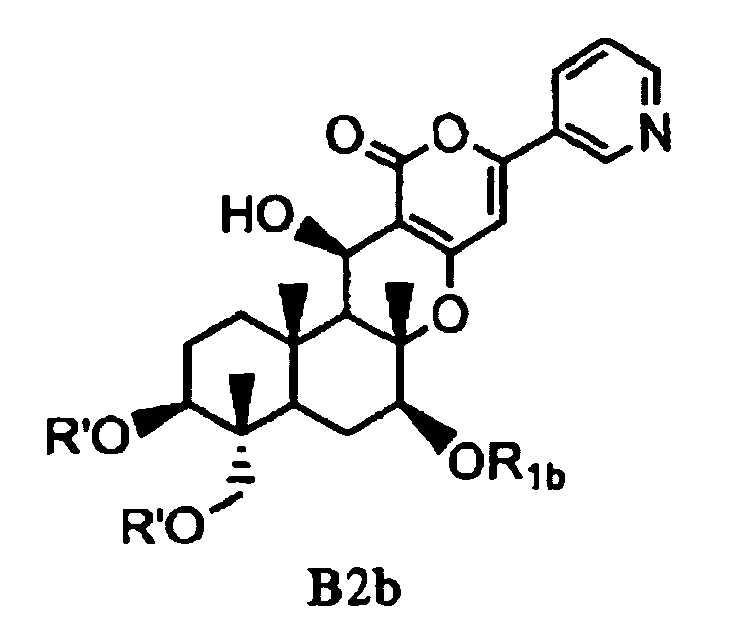 R1b represents formyl; optionally substituted straight chain C1-4 alkylcarbonyl; optionally substituted benzyl; group - SiR3R4R5 optionally substituted by halogen atom wherein R3, R4, and R5 each independently represent straight chain or branched chain C1-6 alkyl or phenyl; C1-6 alkyloxy-C1-6 alkyl optionally substituted by halogen atom; C1-6 alkylthio-C1-6 alkyl optionally substituted by halogen atom; straight chain, branched chain, or cyclic C1-4 alkyl optionally substituted by halogen atom, provided that, when alkyl in the C1-4 alkyl group is of a branched chain or cyclic type, the alkyl group is C3-4 alkyl; C2-6 alkenyl optionally substituted by halogen atom; C2-6 alkynyl optionally substituted by halogen atom; or an optionally substituted saturated or unsaturated five- or six-membered heterocyclic group,wherein, in R1b, the substituent optionally possessed by alkylcarbonyl is selected from the group consisting of halogen atoms, C1-4 alkyloxy, C1-4 haloalkyloxy, C1-4 alkylcarbonyl, C1-4 haloalkylcarbonyl, C1-4 alkylcarbonyloxy, and C1-4 haloalkylcarbonyloxy, and the substituent optionally possessed by the heterocyclic group and benzyl is selected from the group consisting of halogen atoms, C1-4 alkyl, C1-4 alkyloxy, C1-4 haloalkyloxy, C1-4 alkylthio, C1-4 haloalkyl, C1-4 alkylcarbonyl, C1-4 haloalkylcarbonyl, C1-4 alkylcarbonyloxy, C1-4 haloalkylcarbonyloxy, nitro, and cyano, andR' represents (cyclic C3-6 alkyl)carbonyl.
 - The compound according to claim 4, wherein R1b represents acetyl; chloroacetyl; group -SiR3R4R5 optionally substituted by halogen atom wherein R3, R4, and R5 each independently represent straight chain or branched chain C1-6 alkyl or phenyl; or an optionally substituted saturated or unsaturated five- or six-membered heterocyclic group, and R' represents cyclic C3-6 alkylcarbonyl.
Applications Claiming Priority (2)
| Application Number | Priority Date | Filing Date | Title |
|---|---|---|---|
| JP2007210804 | 2007-08-13 | ||
| EP08827512A EP2186815A4 (en) | 2007-08-13 | 2008-08-13 | PROCESS FOR PRODUCING PYRIPYROPENE DERIVATIVES AND INTERMEDIATE PRODUCTION PRODUCTS THEREOF |
Related Parent Applications (2)
| Application Number | Title | Priority Date | Filing Date |
|---|---|---|---|
| EP08827512A Division EP2186815A4 (en) | 2007-08-13 | 2008-08-13 | PROCESS FOR PRODUCING PYRIPYROPENE DERIVATIVES AND INTERMEDIATE PRODUCTION PRODUCTS THEREOF |
| EP08827512.8 Division | 2008-08-13 |
Publications (3)
| Publication Number | Publication Date |
|---|---|
| EP2592084A1 EP2592084A1 (en) | 2013-05-15 |
| EP2592084B1 true EP2592084B1 (en) | 2014-07-09 |
| EP2592084B8 EP2592084B8 (en) | 2014-08-27 |
Family
ID=40350754
Family Applications (2)
| Application Number | Title | Priority Date | Filing Date |
|---|---|---|---|
| EP08827512A Withdrawn EP2186815A4 (en) | 2007-08-13 | 2008-08-13 | PROCESS FOR PRODUCING PYRIPYROPENE DERIVATIVES AND INTERMEDIATE PRODUCTION PRODUCTS THEREOF |
| EP13154660.8A Active EP2592084B8 (en) | 2007-08-13 | 2008-08-13 | Process for producing pyripyropene derivatives and intermediates for the production thereof. |
Family Applications Before (1)
| Application Number | Title | Priority Date | Filing Date |
|---|---|---|---|
| EP08827512A Withdrawn EP2186815A4 (en) | 2007-08-13 | 2008-08-13 | PROCESS FOR PRODUCING PYRIPYROPENE DERIVATIVES AND INTERMEDIATE PRODUCTION PRODUCTS THEREOF |
Country Status (16)
| Country | Link |
|---|---|
| US (2) | US8263778B2 (en) |
| EP (2) | EP2186815A4 (en) |
| JP (1) | JP5544553B2 (en) |
| KR (1) | KR101570887B1 (en) |
| CN (1) | CN101821272B (en) |
| AU (1) | AU2008287799B2 (en) |
| BR (1) | BRPI0814980B1 (en) |
| CA (1) | CA2696039C (en) |
| EC (1) | ECSP10010019A (en) |
| IL (1) | IL203698B (en) |
| MX (1) | MX2010001609A (en) |
| NZ (1) | NZ583710A (en) |
| RU (1) | RU2494101C2 (en) |
| TW (1) | TWI422333B (en) |
| WO (1) | WO2009022702A1 (en) |
| ZA (1) | ZA201001744B (en) |
Families Citing this family (24)
| Publication number | Priority date | Publication date | Assignee | Title |
|---|---|---|---|---|
| BRPI0916355B8 (en) | 2008-07-24 | 2022-12-13 | Meiji Seika Kaisha | Recombinant vector comprising an isolated polynucleotide, and method of producing a pyripyropene precursor at |
| PL2426124T3 (en) * | 2009-05-13 | 2013-12-31 | Meiji Seika Pharma Co Ltd | Process for producing pyripyropene derivative |
| WO2010150739A1 (en) * | 2009-06-23 | 2010-12-29 | 学校法人北里研究所 | Hydroxyl-containing pyripyropene derivatives exhibiting acat2-inhibitory activity |
| AU2011210967B2 (en) * | 2010-01-26 | 2016-06-23 | Mitsui Chemicals Crop & Life Solutions, Inc. | Method for manufacturing a pyripyropene |
| CN102791871A (en) * | 2010-01-26 | 2012-11-21 | 明治制果药业株式会社 | Method for producing pyripyropene derivative by enzymatic process |
| CA2788080C (en) | 2010-01-26 | 2018-04-17 | Meiji Seika Pharma Co., Ltd. | Nucleic acid construct comprising pyripyropene biosynthetic gene cluster and marker gene |
| UA111151C2 (en) * | 2010-03-01 | 2016-04-11 | Мейдзі Сейка Фарма Ко., Лтд. | METHOD OF PREPARATION OF PYRIPYROPENE DERIVATIVES |
| BR112012028760A2 (en) * | 2010-05-24 | 2018-02-06 | Meiji Seika Pharma Co Ltd | harmful organism control agent |
| KR101861868B1 (en) | 2010-05-28 | 2018-05-28 | 바스프 에스이 | Pesticidal mixtures |
| CN102905528B (en) | 2010-05-28 | 2015-07-22 | 巴斯夫欧洲公司 | Pesticidal mixtures |
| JP2013166704A (en) * | 2010-06-16 | 2013-08-29 | Meiji Seikaファルマ株式会社 | Novel insecticide |
| WO2011161132A1 (en) | 2010-06-25 | 2011-12-29 | Basf Se | Pesticidal mixtures |
| WO2011161131A1 (en) | 2010-06-25 | 2011-12-29 | Basf Se | Herbicidal mixtures |
| JP5877202B2 (en) | 2010-09-14 | 2016-03-02 | ビーエーエスエフ ソシエタス・ヨーロピアBasf Se | Composition comprising a pyripyropene insecticide and a base |
| AU2011303970B2 (en) | 2010-09-14 | 2015-08-13 | Basf Se | Composition containing a pyripyropene insecticide and an adjuvant |
| KR102056608B1 (en) * | 2012-03-12 | 2019-12-17 | 바스프 에스이 | Method for producing an aqueous suspension concentrate formulation of a pyripyropene insecticide |
| KR102055551B1 (en) | 2012-03-12 | 2019-12-13 | 바스프 에스이 | Liquid concentrate formulation containing a pyripyropene insecticide i |
| US9924712B2 (en) | 2012-03-12 | 2018-03-27 | Basf Se | Liquid concentrate formulation containing a pyripyropene insecticide II |
| JP6088552B2 (en) | 2012-03-13 | 2017-03-01 | ビーエーエスエフ ソシエタス・ヨーロピアBasf Se | Liquid concentrate containing pyripyropene insecticide III |
| KR102163826B1 (en) * | 2013-01-16 | 2020-10-12 | 바스프 에스이 | Method for producing a liquid emulsifiable formulation comprising a pyripyropene pesticide |
| WO2014111398A1 (en) | 2013-01-16 | 2014-07-24 | Basf Se | Method for preparing a pyripyropene compound |
| US10004224B2 (en) | 2013-01-25 | 2018-06-26 | Base Se | Method for producing aqueous suspension concentrate formulations |
| CN105102625A (en) * | 2013-03-28 | 2015-11-25 | 巴斯夫欧洲公司 | Preparation of pyripyroprine from dried biomass |
| CN113735924A (en) * | 2021-09-01 | 2021-12-03 | 河北威远生物化工有限公司 | Preparation method of 23-ketone avermectin B2a/B2B derivative |
Family Cites Families (10)
| Publication number | Priority date | Publication date | Assignee | Title |
|---|---|---|---|---|
| JPS5111171B1 (en) * | 1971-06-28 | 1976-04-09 | Sumitomo Chemical Co | |
| JP3233476B2 (en) * | 1992-10-22 | 2001-11-26 | 社団法人北里研究所 | FO-1289 substance and method for producing the same |
| JPH08239385A (en) | 1995-03-03 | 1996-09-17 | Kitasato Inst:The | FO-1289 substance and its production method |
| JP3725198B2 (en) * | 1995-03-27 | 2005-12-07 | 社団法人北里研究所 | Pyripyropene derivative |
| JPH08269065A (en) * | 1995-04-03 | 1996-10-15 | Kitasato Inst:The | Pyripyropene derivative |
| KR100522446B1 (en) | 2003-01-07 | 2005-10-18 | 한국생명공학연구원 | AGENT FOR KILLING INSECTS COMPRISING COMPOUNDS HAVING ACYL CoA:CHOLESTEROL ACYLTRANSFERASE INHIBITORY OR SALT THEREOF |
| TWI388282B (en) * | 2005-06-01 | 2013-03-11 | Meiji Seika Pharma Co Ltd | Pest control agents |
| US7491738B2 (en) * | 2005-06-01 | 2009-02-17 | Meiji Seika Kaisha, Ltd. | Pest control agents |
| KR100943983B1 (en) | 2006-07-27 | 2010-02-26 | 한국생명공학연구원 | Pyripyrophene Derivatives and Insecticide Compositions Comprising the Same |
| ES2379928T3 (en) * | 2006-11-30 | 2012-05-07 | Meiji Seika Kaisha Ltd. | Pest Control Agent |
-
2008
- 2008-08-13 KR KR1020107005415A patent/KR101570887B1/en active Active
- 2008-08-13 NZ NZ583710A patent/NZ583710A/en not_active IP Right Cessation
- 2008-08-13 RU RU2010109368/04A patent/RU2494101C2/en not_active IP Right Cessation
- 2008-08-13 MX MX2010001609A patent/MX2010001609A/en active IP Right Grant
- 2008-08-13 EP EP08827512A patent/EP2186815A4/en not_active Withdrawn
- 2008-08-13 CA CA2696039A patent/CA2696039C/en active Active
- 2008-08-13 CN CN2008801111451A patent/CN101821272B/en active Active
- 2008-08-13 US US12/733,113 patent/US8263778B2/en active Active
- 2008-08-13 TW TW097130831A patent/TWI422333B/en active
- 2008-08-13 AU AU2008287799A patent/AU2008287799B2/en not_active Ceased
- 2008-08-13 WO PCT/JP2008/064520 patent/WO2009022702A1/en not_active Ceased
- 2008-08-13 JP JP2009528134A patent/JP5544553B2/en active Active
- 2008-08-13 BR BRPI0814980-1A patent/BRPI0814980B1/en active IP Right Grant
- 2008-08-13 EP EP13154660.8A patent/EP2592084B8/en active Active
-
2010
- 2010-02-03 IL IL203698A patent/IL203698B/en active IP Right Grant
- 2010-03-08 EC EC2010010019A patent/ECSP10010019A/en unknown
- 2010-03-11 ZA ZA2010/01744A patent/ZA201001744B/en unknown
-
2012
- 2012-08-13 US US13/572,971 patent/US8759529B2/en active Active
Also Published As
| Publication number | Publication date |
|---|---|
| CN101821272A (en) | 2010-09-01 |
| ECSP10010019A (en) | 2010-06-29 |
| CN101821272B (en) | 2013-03-27 |
| RU2010109368A (en) | 2011-09-20 |
| KR20100051857A (en) | 2010-05-18 |
| RU2494101C2 (en) | 2013-09-27 |
| AU2008287799A1 (en) | 2009-02-19 |
| BRPI0814980B1 (en) | 2022-05-31 |
| JPWO2009022702A1 (en) | 2010-11-18 |
| TW200915987A (en) | 2009-04-16 |
| US8759529B2 (en) | 2014-06-24 |
| US8263778B2 (en) | 2012-09-11 |
| US20100160640A1 (en) | 2010-06-24 |
| AU2008287799B2 (en) | 2013-10-31 |
| BRPI0814980A2 (en) | 2015-02-03 |
| EP2186815A1 (en) | 2010-05-19 |
| TWI422333B (en) | 2014-01-11 |
| NZ583710A (en) | 2012-03-30 |
| WO2009022702A1 (en) | 2009-02-19 |
| EP2592084B8 (en) | 2014-08-27 |
| KR101570887B1 (en) | 2015-11-20 |
| IL203698B (en) | 2018-04-30 |
| MX2010001609A (en) | 2010-03-15 |
| CA2696039C (en) | 2015-11-24 |
| JP5544553B2 (en) | 2014-07-09 |
| CA2696039A1 (en) | 2009-02-19 |
| US20120330021A1 (en) | 2012-12-27 |
| ZA201001744B (en) | 2011-06-29 |
| EP2592084A1 (en) | 2013-05-15 |
| BRPI0814980A8 (en) | 2016-07-26 |
| EP2186815A4 (en) | 2012-01-25 |
Similar Documents
| Publication | Publication Date | Title |
|---|---|---|
| US8759529B2 (en) | Process for producing pyripyropene derivatives and intermediates for the production thereof | |
| WO2017218580A1 (en) | Synthetic methods for the preparation of nicotinamide riboside and related compounds | |
| JP2000109497A (en) | Spirocyclic C-glycoside | |
| SG171963A1 (en) | Novel intermediate and process for preparing entecavir using same | |
| US8853413B2 (en) | Process for producing pyripyropene derivatives | |
| US8853414B2 (en) | Process for producing pyripyropene derivatives | |
| Wang et al. | Synthesis and antitumor activity of 20-O-linked nitrogen-based camptothecin ester derivatives | |
| WO2018029264A1 (en) | Process for preparation of dapagliflozin and intermediates thereof | |
| RU2738408C1 (en) | Methods for selective introduction of protective groups into resorcinol derivatives | |
| AU2010347354B9 (en) | Process for producing pyripyropene derivatives | |
| WO2001009133A1 (en) | NEW CYTOTOXIC PYRIDO[2,3,4-kl]ACRIDINE DERIVATIVES, THEIR PREPARATION AND THEIR THERAPEUTIC USE | |
| JPH02275894A (en) | 3-deoxymycaminosyl-tylonolide compound | |
| Tanimori et al. | Synthesis of (±)-(2 RS, 3 SR)-2-Hydroxyethyl-3-[(1 RS)-1-hydroxy-ethyl] cyclopentanone Derivatives, Potential Intermediates in the Synthesis of Thienamycin | |
| JPH07291990A (en) | Production of alpha-2'-deoxynucleoside derivative | |
| JP2003252891A (en) | Cytosaminomycin synthesis intermediate and method for producing the same |
Legal Events
| Date | Code | Title | Description |
|---|---|---|---|
| PUAI | Public reference made under article 153(3) epc to a published international application that has entered the european phase |
Free format text: ORIGINAL CODE: 0009012 |
|
| 17P | Request for examination filed |
Effective date: 20130208 |
|
| AC | Divisional application: reference to earlier application |
Ref document number: 2186815 Country of ref document: EP Kind code of ref document: P |
|
| AK | Designated contracting states |
Kind code of ref document: A1 Designated state(s): AT BE BG CH CY CZ DE DK EE ES FI FR GB GR HR HU IE IS IT LI LT LU LV MC MT NL NO PL PT RO SE SI SK TR |
|
| AX | Request for extension of the european patent |
Extension state: AL BA MK RS |
|
| GRAP | Despatch of communication of intention to grant a patent |
Free format text: ORIGINAL CODE: EPIDOSNIGR1 |
|
| INTG | Intention to grant announced |
Effective date: 20140120 |
|
| RIN1 | Information on inventor provided before grant (corrected) |
Inventor name: TAKASHI, ANDO Inventor name: GOTO, KIMIHIKO Inventor name: YAMAMOTO, KAZUMI Inventor name: MITOMI, MASAAKI Inventor name: SAKAI, MASAYO |
|
| GRAS | Grant fee paid |
Free format text: ORIGINAL CODE: EPIDOSNIGR3 |
|
| GRAA | (expected) grant |
Free format text: ORIGINAL CODE: 0009210 |
|
| AC | Divisional application: reference to earlier application |
Ref document number: 2186815 Country of ref document: EP Kind code of ref document: P |
|
| AK | Designated contracting states |
Kind code of ref document: B1 Designated state(s): AT BE BG CH CY CZ DE DK EE ES FI FR GB GR HR HU IE IS IT LI LT LU LV MC MT NL NO PL PT RO SE SI SK TR |
|
| AX | Request for extension of the european patent |
Extension state: AL BA MK RS |
|
| REG | Reference to a national code |
Ref country code: GB Ref legal event code: FG4D |
|
| REG | Reference to a national code |
Ref country code: CH Ref legal event code: EP Ref country code: AT Ref legal event code: REF Ref document number: 676547 Country of ref document: AT Kind code of ref document: T Effective date: 20140715 |
|
| REG | Reference to a national code |
Ref country code: IE Ref legal event code: FG4D |
|
| RAP2 | Party data changed (patent owner data changed or rights of a patent transferred) |
Owner name: BASF SE |
|
| REG | Reference to a national code |
Ref country code: DE Ref legal event code: R096 Ref document number: 602008033260 Country of ref document: DE Effective date: 20140821 |
|
| REG | Reference to a national code |
Ref country code: CH Ref legal event code: NV Representative=s name: SCHNEIDER FELDMANN AG PATENT- UND MARKENANWAEL, CH |
|
| REG | Reference to a national code |
Ref country code: AT Ref legal event code: MK05 Ref document number: 676547 Country of ref document: AT Kind code of ref document: T Effective date: 20140709 |
|
| REG | Reference to a national code |
Ref country code: NL Ref legal event code: VDEP Effective date: 20140709 |
|
| REG | Reference to a national code |
Ref country code: LT Ref legal event code: MG4D |
|
| PG25 | Lapsed in a contracting state [announced via postgrant information from national office to epo] |
Ref country code: ES Free format text: LAPSE BECAUSE OF FAILURE TO SUBMIT A TRANSLATION OF THE DESCRIPTION OR TO PAY THE FEE WITHIN THE PRESCRIBED TIME-LIMIT Effective date: 20140709 Ref country code: BG Free format text: LAPSE BECAUSE OF FAILURE TO SUBMIT A TRANSLATION OF THE DESCRIPTION OR TO PAY THE FEE WITHIN THE PRESCRIBED TIME-LIMIT Effective date: 20141009 Ref country code: SE Free format text: LAPSE BECAUSE OF FAILURE TO SUBMIT A TRANSLATION OF THE DESCRIPTION OR TO PAY THE FEE WITHIN THE PRESCRIBED TIME-LIMIT Effective date: 20140709 Ref country code: GR Free format text: LAPSE BECAUSE OF FAILURE TO SUBMIT A TRANSLATION OF THE DESCRIPTION OR TO PAY THE FEE WITHIN THE PRESCRIBED TIME-LIMIT Effective date: 20141010 Ref country code: LT Free format text: LAPSE BECAUSE OF FAILURE TO SUBMIT A TRANSLATION OF THE DESCRIPTION OR TO PAY THE FEE WITHIN THE PRESCRIBED TIME-LIMIT Effective date: 20140709 Ref country code: PT Free format text: LAPSE BECAUSE OF FAILURE TO SUBMIT A TRANSLATION OF THE DESCRIPTION OR TO PAY THE FEE WITHIN THE PRESCRIBED TIME-LIMIT Effective date: 20141110 Ref country code: FI Free format text: LAPSE BECAUSE OF FAILURE TO SUBMIT A TRANSLATION OF THE DESCRIPTION OR TO PAY THE FEE WITHIN THE PRESCRIBED TIME-LIMIT Effective date: 20140709 Ref country code: NO Free format text: LAPSE BECAUSE OF FAILURE TO SUBMIT A TRANSLATION OF THE DESCRIPTION OR TO PAY THE FEE WITHIN THE PRESCRIBED TIME-LIMIT Effective date: 20141009 |
|
| PG25 | Lapsed in a contracting state [announced via postgrant information from national office to epo] |
Ref country code: NL Free format text: LAPSE BECAUSE OF FAILURE TO SUBMIT A TRANSLATION OF THE DESCRIPTION OR TO PAY THE FEE WITHIN THE PRESCRIBED TIME-LIMIT Effective date: 20140709 Ref country code: AT Free format text: LAPSE BECAUSE OF FAILURE TO SUBMIT A TRANSLATION OF THE DESCRIPTION OR TO PAY THE FEE WITHIN THE PRESCRIBED TIME-LIMIT Effective date: 20140709 Ref country code: IS Free format text: LAPSE BECAUSE OF FAILURE TO SUBMIT A TRANSLATION OF THE DESCRIPTION OR TO PAY THE FEE WITHIN THE PRESCRIBED TIME-LIMIT Effective date: 20141109 Ref country code: CY Free format text: LAPSE BECAUSE OF FAILURE TO SUBMIT A TRANSLATION OF THE DESCRIPTION OR TO PAY THE FEE WITHIN THE PRESCRIBED TIME-LIMIT Effective date: 20140709 Ref country code: PL Free format text: LAPSE BECAUSE OF FAILURE TO SUBMIT A TRANSLATION OF THE DESCRIPTION OR TO PAY THE FEE WITHIN THE PRESCRIBED TIME-LIMIT Effective date: 20140709 Ref country code: HR Free format text: LAPSE BECAUSE OF FAILURE TO SUBMIT A TRANSLATION OF THE DESCRIPTION OR TO PAY THE FEE WITHIN THE PRESCRIBED TIME-LIMIT Effective date: 20140709 Ref country code: LV Free format text: LAPSE BECAUSE OF FAILURE TO SUBMIT A TRANSLATION OF THE DESCRIPTION OR TO PAY THE FEE WITHIN THE PRESCRIBED TIME-LIMIT Effective date: 20140709 |
|
| REG | Reference to a national code |
Ref country code: DE Ref legal event code: R097 Ref document number: 602008033260 Country of ref document: DE |
|
| PG25 | Lapsed in a contracting state [announced via postgrant information from national office to epo] |
Ref country code: BE Free format text: LAPSE BECAUSE OF NON-PAYMENT OF DUE FEES Effective date: 20140831 Ref country code: CZ Free format text: LAPSE BECAUSE OF FAILURE TO SUBMIT A TRANSLATION OF THE DESCRIPTION OR TO PAY THE FEE WITHIN THE PRESCRIBED TIME-LIMIT Effective date: 20140709 Ref country code: IT Free format text: LAPSE BECAUSE OF FAILURE TO SUBMIT A TRANSLATION OF THE DESCRIPTION OR TO PAY THE FEE WITHIN THE PRESCRIBED TIME-LIMIT Effective date: 20140709 Ref country code: SK Free format text: LAPSE BECAUSE OF FAILURE TO SUBMIT A TRANSLATION OF THE DESCRIPTION OR TO PAY THE FEE WITHIN THE PRESCRIBED TIME-LIMIT Effective date: 20140709 Ref country code: DK Free format text: LAPSE BECAUSE OF FAILURE TO SUBMIT A TRANSLATION OF THE DESCRIPTION OR TO PAY THE FEE WITHIN THE PRESCRIBED TIME-LIMIT Effective date: 20140709 Ref country code: MC Free format text: LAPSE BECAUSE OF FAILURE TO SUBMIT A TRANSLATION OF THE DESCRIPTION OR TO PAY THE FEE WITHIN THE PRESCRIBED TIME-LIMIT Effective date: 20140709 Ref country code: EE Free format text: LAPSE BECAUSE OF FAILURE TO SUBMIT A TRANSLATION OF THE DESCRIPTION OR TO PAY THE FEE WITHIN THE PRESCRIBED TIME-LIMIT Effective date: 20140709 |
|
| PLBE | No opposition filed within time limit |
Free format text: ORIGINAL CODE: 0009261 |
|
| STAA | Information on the status of an ep patent application or granted ep patent |
Free format text: STATUS: NO OPPOSITION FILED WITHIN TIME LIMIT |
|
| REG | Reference to a national code |
Ref country code: IE Ref legal event code: MM4A |
|
| 26N | No opposition filed |
Effective date: 20150410 |
|
| PG25 | Lapsed in a contracting state [announced via postgrant information from national office to epo] |
Ref country code: IE Free format text: LAPSE BECAUSE OF NON-PAYMENT OF DUE FEES Effective date: 20140813 |
|
| PG25 | Lapsed in a contracting state [announced via postgrant information from national office to epo] |
Ref country code: SI Free format text: LAPSE BECAUSE OF FAILURE TO SUBMIT A TRANSLATION OF THE DESCRIPTION OR TO PAY THE FEE WITHIN THE PRESCRIBED TIME-LIMIT Effective date: 20140709 |
|
| PG25 | Lapsed in a contracting state [announced via postgrant information from national office to epo] |
Ref country code: RO Free format text: LAPSE BECAUSE OF FAILURE TO SUBMIT A TRANSLATION OF THE DESCRIPTION OR TO PAY THE FEE WITHIN THE PRESCRIBED TIME-LIMIT Effective date: 20140709 |
|
| PG25 | Lapsed in a contracting state [announced via postgrant information from national office to epo] |
Ref country code: MT Free format text: LAPSE BECAUSE OF FAILURE TO SUBMIT A TRANSLATION OF THE DESCRIPTION OR TO PAY THE FEE WITHIN THE PRESCRIBED TIME-LIMIT Effective date: 20140709 |
|
| PG25 | Lapsed in a contracting state [announced via postgrant information from national office to epo] |
Ref country code: TR Free format text: LAPSE BECAUSE OF FAILURE TO SUBMIT A TRANSLATION OF THE DESCRIPTION OR TO PAY THE FEE WITHIN THE PRESCRIBED TIME-LIMIT Effective date: 20140709 Ref country code: HU Free format text: LAPSE BECAUSE OF FAILURE TO SUBMIT A TRANSLATION OF THE DESCRIPTION OR TO PAY THE FEE WITHIN THE PRESCRIBED TIME-LIMIT; INVALID AB INITIO Effective date: 20080813 Ref country code: LU Free format text: LAPSE BECAUSE OF NON-PAYMENT OF DUE FEES Effective date: 20140813 Ref country code: BE Free format text: LAPSE BECAUSE OF FAILURE TO SUBMIT A TRANSLATION OF THE DESCRIPTION OR TO PAY THE FEE WITHIN THE PRESCRIBED TIME-LIMIT Effective date: 20140709 |
|
| REG | Reference to a national code |
Ref country code: FR Ref legal event code: PLFP Year of fee payment: 9 |
|
| REG | Reference to a national code |
Ref country code: FR Ref legal event code: PLFP Year of fee payment: 10 |
|
| REG | Reference to a national code |
Ref country code: FR Ref legal event code: PLFP Year of fee payment: 11 |
|
| REG | Reference to a national code |
Ref country code: CH Ref legal event code: PFA Owner name: BASF SE, DE Free format text: FORMER OWNER: BASF SE, DE |
|
| P01 | Opt-out of the competence of the unified patent court (upc) registered |
Effective date: 20230404 |
|
| PGFP | Annual fee paid to national office [announced via postgrant information from national office to epo] |
Ref country code: DE Payment date: 20250827 Year of fee payment: 18 |
|
| PGFP | Annual fee paid to national office [announced via postgrant information from national office to epo] |
Ref country code: GB Payment date: 20250826 Year of fee payment: 18 |
|
| PGFP | Annual fee paid to national office [announced via postgrant information from national office to epo] |
Ref country code: FR Payment date: 20250825 Year of fee payment: 18 |
|
| PGFP | Annual fee paid to national office [announced via postgrant information from national office to epo] |
Ref country code: CH Payment date: 20250901 Year of fee payment: 18 |