EP2590472B1 - WiFi-Vorrichtung für drahtloses Internet und drahtloses Internetsystem damit - Google Patents
WiFi-Vorrichtung für drahtloses Internet und drahtloses Internetsystem damit Download PDFInfo
- Publication number
- EP2590472B1 EP2590472B1 EP12166571.5A EP12166571A EP2590472B1 EP 2590472 B1 EP2590472 B1 EP 2590472B1 EP 12166571 A EP12166571 A EP 12166571A EP 2590472 B1 EP2590472 B1 EP 2590472B1
- Authority
- EP
- European Patent Office
- Prior art keywords
- signal
- wifi
- signals
- mobile communication
- unit
- Prior art date
- Legal status (The legal status is an assumption and is not a legal conclusion. Google has not performed a legal analysis and makes no representation as to the accuracy of the status listed.)
- Not-in-force
Links
- 238000010295 mobile communication Methods 0.000 claims description 93
- 230000008878 coupling Effects 0.000 claims description 31
- 238000010168 coupling process Methods 0.000 claims description 31
- 238000005859 coupling reaction Methods 0.000 claims description 31
- 230000003287 optical effect Effects 0.000 claims description 5
- 230000009977 dual effect Effects 0.000 description 44
- 238000009434 installation Methods 0.000 description 11
- 230000005540 biological transmission Effects 0.000 description 6
- 238000010586 diagram Methods 0.000 description 6
- 238000012423 maintenance Methods 0.000 description 6
- 238000004891 communication Methods 0.000 description 5
- 238000007726 management method Methods 0.000 description 5
- 230000000644 propagated effect Effects 0.000 description 3
- 230000003247 decreasing effect Effects 0.000 description 1
- 238000005516 engineering process Methods 0.000 description 1
- 235000013410 fast food Nutrition 0.000 description 1
- 230000032258 transport Effects 0.000 description 1
Images


Classifications
-
- H—ELECTRICITY
- H04—ELECTRIC COMMUNICATION TECHNIQUE
- H04W—WIRELESS COMMUNICATION NETWORKS
- H04W92/00—Interfaces specially adapted for wireless communication networks
- H04W92/02—Inter-networking arrangements
-
- H—ELECTRICITY
- H04—ELECTRIC COMMUNICATION TECHNIQUE
- H04W—WIRELESS COMMUNICATION NETWORKS
- H04W88/00—Devices specially adapted for wireless communication networks, e.g. terminals, base stations or access point devices
- H04W88/08—Access point devices
- H04W88/10—Access point devices adapted for operation in multiple networks, e.g. multi-mode access points
-
- H—ELECTRICITY
- H04—ELECTRIC COMMUNICATION TECHNIQUE
- H04W—WIRELESS COMMUNICATION NETWORKS
- H04W88/00—Devices specially adapted for wireless communication networks, e.g. terminals, base stations or access point devices
- H04W88/08—Access point devices
-
- H—ELECTRICITY
- H04—ELECTRIC COMMUNICATION TECHNIQUE
- H04W—WIRELESS COMMUNICATION NETWORKS
- H04W84/00—Network topologies
- H04W84/02—Hierarchically pre-organised networks, e.g. paging networks, cellular networks, WLAN [Wireless Local Area Network] or WLL [Wireless Local Loop]
- H04W84/10—Small scale networks; Flat hierarchical networks
- H04W84/12—WLAN [Wireless Local Area Networks]
Definitions
- the present invention relates to a wireless Internet system, and more particularly, to a wireless fidelity (WiFi) apparatus for wireless Internet that may perform installation, maintenance, management, or the like by using a mobile communication relay system more efficiently, and a wireless Internet system using the WiFi apparatus for wireless Internet.
- WiFi wireless fidelity
- wireless Internet service includes a wireless local area network (LAN), wireless broadband (Wibro) as portable Internet, evolution data optimized CDMA2000 (EV-DO), and the like.
- LAN wireless local area network
- Wibro wireless broadband
- EV-DO evolution data optimized CDMA2000
- US2011/0047583 discloses an integrated wireless mobile multi-media system comprising a WiFi router for routing mobile input signals and an input Ethernet signal to respective antennas for output.
- a wireless LAN among them is called a wireless fidelity (WiFi) or wireless LAN that complies with the Institute of Electrical and Electronic Engineers (IEEE) 802.11x 1999 standards.
- WiFi wireless fidelity
- IEEE Institute of Electrical and Electronic Engineers
- the IEEE 802 standards refer to a series of LAN connections developed by the IEEE 802 committee that promote standardization of a computer communication network and protocols defined in the IEEE 802 standards.
- a reference model of the protocols defined in the IEEE 802 standards is based on a hierarchy concept of an open system interconnection (OSI) reference model, and two lower layers among 7 layers of the OSI reference model are usually standardized.
- OSI open system interconnection
- Wireless LAN service uses an industrial scientific and medical equipment (ISM) band (unpermitted band) of 2.400 to 2.483 GHz that complies with the IEEE 802.11b/g international standards; thus, wireless LAN service has frequency interference with other communication service and a narrow coverage due to low output.
- ISM industrial scientific and medical equipment
- wireless LAN service having a 2.4 GHz band is localized indoors and at a hotspot with a narrow coverage
- such wireless LAN systems may be easily interlocked with the Internet and are produced and supplied with a system specification that complies with the international standards.
- the use of wireless LAN systems has been spread owing to advantages of low price, high-speed data transmission, and the like, and at present, the IEEE 802.11g standards and the IEEE 802.11 n standards have been proposed for higher speed data transmission.
- IEEE 802.11 a there are the IEEE 802.11 a standards that use a 5 GHz band and have a transmission speed of 54 Mbps. That is, in the wireless LAN connection using a 2.4 GHz band, high-speed data transmission can be performed using an industrial, scientific and medical (ISM) band. However, for example, a service area is limited to indoors and the hotspot due to a narrow coverage of several tens of meter radius and frequency interference. In addition, in portable Internet, Wibro service having a 2.3 GHz band uses a permitted band; thus, high-speed data transmission can be performed while maintaining a wider coverage without some frequency interference and output limitations.
- ISM industrial, scientific and medical
- Such wireless LAN service is mainly provided in large-scaled book stores, fast food stores, coffee shops, airports, universities, and the like.
- WiFi uses a common frequency and thus has output limitations, and the number of smart phone subscribers increases, and more WiFi installations are provided, which cause difficulties in maintenance, management, and installation.
- a wireless Internet system that can perform WiFi AP installation, maintenance, management, and the like more efficiently by using a mobile communication relay system has been developed.
- separate signals are outputted from a plurality of ports at an AP, and signals outputted from the plurality of ports have different coverages so that a hidden node may occur due to collision with subscribers that are using the wireless Internet system.
- the present invention provides a wireless fidelity (WiFi) apparatus as defined in independent claim 1 for wireless Internet that may perform installation, maintenance, management, or the like of a WiFi access point (AP) by using a mobile communication relay system more efficiently and may solve a problem relating to a hidden node, and a wireless Internet system using the WiFi apparatus for wireless Internet.
- WiFi wireless fidelity
- a wireless fidelity (WiFi) apparatus configured or use with wireless Internet
- the WiFi apparatus including: a signal inputting unit comprising a plurality of input ports for inputting a plurality of mobile communication signals, respectively, and an input port for inputting an Ethernet signal; a signal converting unit for converting the inputted Ethernet signal into a plurality of WiFi signals; a signal coupling unit for coupling the plurality of inputted mobile communication signals to the plurality of WiFi signals converted by the signal converting unit, respectively; a signal outputting unit for outputting a plurality of coupled signals coupled by the signal coupling unit through a plurality of output ports, respectively; and a coupler configured to split each of coupled signals outputted from the signal outputting unit into at least two signals having a predetermined phase difference from each other and to output the split signals, wherein the coupler outputs a split signal that is split from one coupled signal outputted from the signal outputting unit together with a split signal that is split from another coupled signal outputted from the signal outputting
- Each of the plurality of mobile communication signals may include at least one selected from the group consisting of a second generation (2G) mobile communication signal, a third generation (3G) mobile communication signal, and a fourth generation (4G) mobile communication signal.
- 2G second generation
- 3G third generation
- 4G fourth generation
- a wireless Internet system as defined in independent claim 7 using a wireless fidelity (WiFi) apparatus for wireless Internet
- the wireless Internet system including: the WiFi apparatus including a signal inputting unit including a plurality of input ports for inputting a plurality of mobile communication signals outputted from a divider of a mobile communication relay device, respectively, and an input port for inputting an Ethernet signal, a signal converting unit for converting the inputted Ethernet signal into at least a plurality of WiFi signals, a signal coupling unit for coupling the plurality of inputted mobile communication signals to the plurality of WiFi signals converted by the signal converting unit, respectively, and a signal outputting unit for outputting a plurality of coupled signals coupled by the signal coupling unit through a plurality of output ports, respectively; a coupler configured to split each of coupled signals outputted from the signal outputting unit into at least two signals having a predetermined phase difference from each other and to output the split signals; a coaxial cable having a predetermined length for transmitting a signal
- Each of the plurality of mobile communication signals may include at least one selected from the group consisting of a second generation (2G) mobile communication signal, a third generation (3G) mobile communication signal, and a fourth generation (4G) mobile communication signal.
- 2G second generation
- 3G third generation
- 4G fourth generation
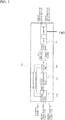
- FIG. 1 is a block diagram of a structure of a dual wireless fidelity (WiFi) apparatus for wireless Internet according to an embodiment of the present invention.
- the dual WiFi apparatus for wireless Internet may include a signal inputting unit 110, a signal converting unit 130, a signal coupling unit 150, a signal outputting unit 170, and a coupler 190.
- the dual WiFi apparatus is illustrated as an example of a WiFi apparatus for wireless Internet, the WiFi apparatus is not limited to dual outputs or inputs, and two or more outputs or inputs may be implemented.
- the signal inputting unit 110 may include a first input port 111 for inputting a first mobile communication signal, a second input port 112 for inputting a second mobile communication signal, and a third input port 113 for inputting an Ethernet signal.
- the signal inputting unit 110 includes two input ports 111 and 112 for inputting mobile communication signals.
- aspects of the present invention are not limited thereto, and the signal inputting unit 110 may include a plurality of input ports for inputting a plurality of mobile communication signals, respectively.
- the first mobile communication signal and the second mobile communication signal are coexistent, different generation signals, for example.
- the first mobile communication signal may be a second generation (2G) signal
- the second mobile communication signal may be a third generation (3G) signal, or a fourth generation (4G) signal.
- the first mobile communication signal and the second mobile communication signal as the same signal split by a divider 330 of a mobile communication relay device 310 may be a single signal having the same generation, for example, one signal among a 2G signal, a 3G signal, and a 4G signal, or a coupled signal between different generations, for example, a 2G+3G signal, a 2G+4G signal, or the like.
- the first mobile communication signal and the second mobile communication signal as the same signal are a 2G+4G signal.
- the signal converting unit 130 converts the Ethernet signal inputted through the third input port 113 of the signal inputting unit 110 into at least two WiFi signals, for example, to convert the Ethernet signal into a WiFi signal to output at least two WiFi signals and may include one WiFi module or one or more coupled WiFi modules having multiple input, multiple output (MIMO) in accordance with the IEEE 802.11n standards.
- the signal converting unit 130 may include one WiFi module in accordance with the IEEE 802.11 n standards.
- the signal coupling unit 150 couples a plurality of mobile communication signals inputted by the signal inputting unit 110 to a plurality of WiFi signals converted by the signal converting unit 130, respectively, in order to generate and output a plurality of coupled signals.
- the signal coupling unit 150 couples the first and second mobile communication signals inputted through the first input port 111 and the second input port 112 of the signal inputting unit 110 to two WiFi signals converted by the signal converting unit 130 in order to generate two 2G+4G+WiFi coupled signals, for example.
- the signal outputting unit 170 outputs the plurality of coupled signals coupled by the signal coupling unit 150 through a plurality of output ports, respectively.
- the signal outputting unit 170 may output two 2G+4G+WiFi coupled signals coupled by the signal coupling unit 150 through two, first and second output ports 171 and 172, respectively.
- the coupler 190 splits a signal outputted through the output ports into signals having a predetermined phase difference to each other and outputs the split signals in order to solve a problem relating to a hidden node that occurs in the WiFi apparatus.
- the coupler 190 may split each of the two 2G+4G+WiFi coupled signals (outputted from the signal coupling unit 150) into two signals having a 90 degree of phase difference from each other and may output the split signals through two output ports.
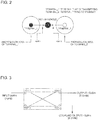
- FIG. 2 is a view for explaining a hidden node that occurs in a WiFi apparatus according to the related art.
- a signal outputted through each of a plurality of ports of the WiFi apparatus is transmitted using an existing mobile communication relay system installed in a building so that service areas in which the signal outputted through each port is propagated may not overlay each other according to the configuration of the mobile communication relay system.
- terminal 1 communicates with the WiFi apparatus in an area in which a signal outputted from port 1 of the WiFi apparatus is propagated.
- the problem relating to the hidden node refers to a phenomenon that, when a plurality of terminal devices connected to the same WiFi apparatus is in an area where the plurality of terminal devices cannot detect signals, a particular terminal device occupies a wireless LAN resource and affects the quality of service of another terminal device.
- the problem relating to the hidden node may be solved by performing signal coupling using a hybrid coupler.
- FIG. 3 is a view for explaining the principle of a coupler used in the dual WiFi apparatus for wireless Internet illustrated in FIG. 1 .
- a hybrid coupler 190 including four terminals with a 90 degree of phase difference may be used in solving the conventional problem relating to the hidden node.
- the hybrid coupler 190 may be installed in the dual WiFi apparatus for wireless Internet, as illustrated in FIG. 1 , or may be installed independently from the dual WiFi apparatus for wireless Internet.
- a 3dB directional coupler including two output terminals with a 90 degree of phase difference in the form of microstrip or strip line may be implemented in a narrow space.
- the coupler 190 includes impedance-matched terminals, and port 1 is divided into two output terminals with a 90 degree of phase difference, i.e., port 2 and port 3, and a power may not be applied to a terminal disposed at port 4.
- a two-terminal MIMO signal is connected to port 1 and port 4, respectively, and an output terminal of each of port 2 and port 3 is connected to a mobile communication network by using the coupler 190 having this shape, a signal inputted from port 1 is outputted to port 2 and port 3 with a 90 degree of phase difference, and a signal inputted from port 4 is outputted to port 2 and port 3 with a 90 degree of phase difference.
- output port 2 may output one split signal that is split from input signal of input port 1 together with one split signal that is split from input signal of input port 4 with a 90 degree of phase difference to each other
- output port 3 may output the other split signal that is split from input signal of input port 1 together with the other split signal that is split from input signal of input port 4 with a 90 degree of phase difference to each other.
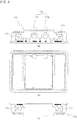
- FIGS. 4A through 4C are perspective views of an external structure of the dual WiFi apparatus 100 for wireless Internet illustrated in FIG. 1 .
- FIG. 4A is one side view of the dual WiFi apparatus 100 illustrated in FIG. 1
- FIG. 4B is a plane view of the dual WiFi apparatus 100 illustrated in FIG. 1
- FIG. 4C is the other side view of the dual WiFi apparatus 100 illustrated in FIG. 1 .
- the first input port 111, the second input port 112, and the third input port 113 for inputting an Ethernet signal of the signal inputting unit 110 are disposed on one side of the dual WiFi apparatus 100.
- the third input port 113 may include an input port 113a for inputting a power + Ethernet signal and an input port 113b for inputting the Ethernet signal.
- a first output port 171 and a second output port 172 connected to the signal outputting unit 170 or output terminals of the coupler 190 are disposed.
- the signal outputting unit 170 may receive at least one of a WiFi signal and a mobile communication signal from the coupler 190, and when the inputted signal is a WiFi + mobile communication coupled signal, the signal coupling unit 150 may split the inputted signal into the WiFi signal and the mobile communication signal, and the signal converting unit 130 may convert the split WiFi signal into the Ethernet signal, and the signal inputting unit 110 may output the converted Ethernet signal and the split mobile communication signal through the first through third input ports 111, 112, and 113.
- the signal converting unit 130 converts the inputted Ethernet signal into the WiFi signal and outputs at least two, first and second WiFi signals.
- the signal coupling unit 150 couples the first and second WiFi signals outputted from the signal converting unit 130 to the first and second 2G+4G mobile communication signals inputted by the signal inputting unit 110 in order to generate first and second 2G+4G+WiFi coupled signals, and the signal outputting unit 170 outputs the first and second 2G+4G+WiFi coupled signals to the first and second output ports 171 and 172, respectively.
- the coupler 190 splits each of the first and second 2G+4G+WiFi coupled signals outputted from the signal outputting unit 170 into two signals having a predetermined phase difference from each other and to output the split signals.
- FIG. 5 is a block diagram of a structure of a wireless Internet system using a dual WiFi apparatus for wireless Internet, according to an embodiment of the present invention.
- the wireless Internet system may include a mobile communication relay device 310, a divider 330, a dual WiFi apparatus 200, a coupler 190, a divider 350, a coaxial cable 370, and an antenna 390.
- the mobile communication relay device 310 is a device for increasing a coverage of a base station of a mobile communication network and is the same as an existing mobile communication relay device and thus, the detailed description thereof will be omitted.
- the divider 330 splits a mobile communication signal outputted from the mobile communication relay device 310 into a plurality of mobile communication signals.
- the divider 330 splits the mobile communication signal outputted from the mobile communication relay device 310 into first and second mobile communication signals.
- the dual WiFi apparatus 200 is a device configured by separating the coupler 190 from the dual WiFi apparatus 100 illustrated in FIG. 1 .
- the dual WiFi apparatus 200 may include a signal inputting unit 110 including first and second input ports 111 and 112 for inputting first and second mobile communication signals outputted from the divider 330 of the mobile communication relay device 310, respectively, and a third input port 113 for inputting an Ethernet signal via unshielded twisted pair (UTP) cables of the LAN, a signal converting unit 130 for converting the Ethernet signal inputted through the third input port 113 into at least two WiFi signals, a signal coupling unit 150 for coupling the first and second mobile communication signals inputted through the first and second input ports 111 and 112 to two WiFi signals converted by the signal converting unit 130, and a signal outputting unit 170 for outputting two coupled signals coupled by the signal coupling unit 150 to two, first and second output ports 171 and 172.
- the more detailed description thereof will be referred to FIGS. 1 and 4A through 4C described
- the coupler 190 allows each of signals outputted from the signal outputting unit 170 of the dual WiFi apparatus 200 to be split into two signals with different phase differences and to be outputted through two output ports.
- the divider 350 may include two dividers 351 and 352 for inputting two mobile communication+WiFi coupled signals outputted from the coupler 190, respectively, and the dividers 351 and 352 each split each inputted mobile communication+WiFi coupled signal into a plurality of signals and outputs the signals.
- the two mobile communication+WiFi coupled signals outputted from each of output ports of the coupler 190 have a 90 degree of phase difference from each other.
- the coaxial cable 370 includes a plurality of cables that extend a plurality of mobile communication+WiFi coupled signals outputted from the dividers 351 and 352 by a predetermined length and transmit the plurality of communication+WiFi coupled signals.
- the antenna 390 is installed at an end of each coaxial cable 370 and radiates the plurality of mobile communication+WiFi coupled signals transmitted via the plurality of coaxial cables 370 to the outside.
- the divider 350 may be detached from the wireless Internet system, and two mobile communication+WiFi coupled signals outputted from the dual WiFi apparatus 200 may be extended by a predetermined length via each coaxial cable 370 and may be radiated via each antenna 390 to the outside.
- the elements 310, 330, 200, 190, 350, 370, and 390 of the wireless Internet system illustrated in FIG. 5 have been described for forward, i.e., a direction towards a terminal from a communication system
- a 2G+4G mobile communication signal for example, outputted from the mobile communication relay device 310 is split by the divider 330 into a plurality of mobile communication signals, for example, a first 2G+4G mobile communication signal and a second 2G+4G mobile communication signal.
- the dual WiFi apparatus 200 converts the inputted Ethernet signal into a plurality of WiFi signals, for example, first and second WiFi signals, and couples the converted first and second WiFi signals to the inputted first and second 2G+4G mobile communication signals, respectively, to generate and output first and second 2G+4G+WiFi coupled signals.
- the dividers 351 and 352 each split the first and second 2G+4G+WiFi coupled signals outputted from the dual WiFi apparatus 200 into a plurality of 2G+4G+WiFi coupled signals, and each of the 2G+4G+WiFi coupled signals is transmitted to a coverage area via each coaxial cable 370 and then is radiated from each antenna 390.
- FIG. 6 is a block diagram of a structure of a dual WiFi apparatus 400 for wireless Internet according to another embodiment of the present invention.
- the dual WiFi apparatus 400 for wireless Internet may include a coupler 190 embedded in the dual WiFi apparatus 400. That is, the dual WiFi apparatus 400 for wireless Internet may include the coupler 190, a signal inputting unit 410, a signal converting unit 430, signal coupling units 451 and 452, and a signal outputting unit 470.
- the coupler 190 inputs each of signals coupled from the signal coupling units 451 and 452 through port 1 and port 4 and splits each of the inputted signals into two signals having a 90 degree of phase difference from each other, and outputs the split signals through port 2 and port 3.
- the coupler 190 has a function that is the same as or similar to the function of the coupler of FIG. 3 .
- the signal inputting unit 410 may include first and second input ports 411 and 412 for inputting first and second 2G/3G/4G mobile communication signals, a third input port 413 for inputting an Ethernet signal Ethernet_1, a fourth input port 414 for inputting an optical Ethernet signal through connection to optical cables, and an output port 415 for outputting an Ethernet signal Ethernet_2.
- the signal inputting unit 410 further includes the fourth input port 414 and the output port 415, unlike in the signal inputting unit 110 of FIG. 1 .
- the output port 415 as an Ethernet signal outputting unit transports the Ethernet signal Ethernet_1 inputted through the third input port 413 or the optical Ethernet signal inputted through the fourth input port 414 for cascade connection, to another place.
- 2G/3G/4G represents a mobile communication signal obtained by coupling one or more 2G, 3G, and 4G signals.
- the signal converting unit 430 includes one WiFi module (WiFi 2x2 802.11 n) having MIMO in accordance with the IEEE 802.11 n standards and has a function that is the same as or similar to the function of the signal converting unit 130 of FIG. 1 .
- WiFi 2x2 802.11 n WiFi 2x2 802.11 n
- the signal coupling units 451 and 452 each couple the first and second 2G/3G/4G mobile communication signals inputted through the first and second input ports 411 and 412 to two 2.4 GHz WiFi signals outputted from the signal converting unit 430 to generate two 2G/3G/4G+WiFi coupled signals and may include a band pass filter (BPF) and a diplexer, for example.
- BPF band pass filter
- the signal outputting unit 470 includes first and second output ports 471 and 472 for outputting two 2G/3G/4G+WiFi coupled signals coupled by the signal coupling units 451 and 452, respectively.
- the dual WiFi apparatus 400 of FIG. 6 may be replaced with the dual WiFi apparatus 200 and the coupler 190 in the wireless Internet system using the dual WiFi apparatus of FIG. 5 .
- the input ports of the signal inputting units 110, 410 and the output ports of the signal outputting units 170, 470 are respectively disposed on two opposite sides of the dual WiFi apparatus 100, 200, or 400 according to embodiments of the present invention.
- WiFi signals may be easily transmitted using an existing mobile communication network.
- a user uses an allocated frequency in a mobile communication relay device, there are no limitations in output of the mobile communication relay device.
- a dual WiFi apparatus with two allowed maximum outputs is installed after a divider of an output of the mobile communication relay device so that an installation point of WiFi may be minimized.
- WiFi signals are transmitted together with mobile communication signals by utilizing a coaxial cable of an existing mobile communication relay system so that installation of UTP cables may be minimized and installation, maintenance, and management, or the like of a WiFi AP (or WiFi module) may be more efficiently performed.
- signals outputted from the dual WiFi apparatus with maximum outputs are split with different phase differences and are outputted so that a problem relating to a hidden node that occurs when an MIMO signal is isolated from a plurality of terminal devices may be solved.
Landscapes
- Engineering & Computer Science (AREA)
- Computer Networks & Wireless Communication (AREA)
- Signal Processing (AREA)
- Mobile Radio Communication Systems (AREA)
- Cable Transmission Systems, Equalization Of Radio And Reduction Of Echo (AREA)
Claims (13)
- Wireless fidelity, WiFi,-Vorrichtung (100) zur Verwendung mit drahtlosem Internet, wobei die WiFi-Vorrichtung umfasst:eine Signaleingabeeinheit (110) mit einer Vielzahl von Eingabe-Ports (111, 112) zur Eingabe einer Vielzahl von jeweiligen Mobilfunksignalen und einem Eingabe-Port (113) zur Eingabe eines Ethernet-Signals; undeine Signalumwandlungseinheit (130) zur Umwandlung des eingegebenen Ethernet-Signals in eine Vielzahl von WiFi-Signalen;dadurch gekennzeichnet, dass sie ferner umfasst:eine Signalkoppeleinheit (150) zum Koppeln der Vielzahl von eingegebenen Mobilfunksignalen mit der Vielzahl von jeweiligen WiFi-Signalen, die von der Signalumwandlungseinheit umgewandelt sind;eine Signalausgabeeinheit (170) zur Ausgabe einer Vielzahl von gekoppelten Signalen, die von der Signalkoppeleinheit (150) gekoppelt sind, über eine Vielzahl von jeweiligen Ausgabe-Ports (171, 172); undeinen Koppler (190), der konfiguriert ist, um jedes von gekoppelten Signalen, die von der Signalausgabeeinheit (170) ausgegeben sind, in mindestens zwei Signale mit einer vorab festgelegten Phasendifferenz zueinander aufzuteilen und die aufgeteilten Signale auszugeben,wobei der Koppler (190) gestaltet ist, um ein aufgeteiltes Signal, das von einem gekoppelten Signal, das von der Signalausgabeeinheit (170) ausgegeben ist, abgetrennt ist, gemeinsam mit einem aufgeteilten Signal, das von einem anderen gekoppelten Signal, das von der Signalausgabeeinheit (170) ausgegeben ist, abgetrennt ist, mit der vorab festgelegten Phasendifferenz zueinander über den selben Port auszugeben.
- WiFi-Vorrichtung nach Anspruch 1, wobei die Signalumwandlungseinheit mindestens ein WiFi-Modul mit Multiple Input, Multiple Output, MIMO, entsprechend den IEEE 802.1 In-Standards aufweist.
- WiFi-Vorrichtung nach Anspruch 1, wobei jedes der Vielzahl von Mobilfunksignalen mindestens eines aufweist, das aus der Gruppe ausgewählt ist, die aus einem Second Generation, 2G,-Mobilfunksignal, einem Third Generation, 3G,-Mobilfunksignal und einem Fourth Generation, 4G,-Mobilfunksignals besteht.
- WiFi-Vorrichtung nach Anspruch 1, wobei die Signaleingabeeinheit ferner einen Eingabe-Port zur Eingabe eines optischen Ethernet-Signals aufweist.
- WiFi-Vorrichtung nach Anspruch 4, wobei die Signaleingabeeinheit ferner einen Ausgabe-Port zur Ausgabe des eingegebenen Ethernet-Signals aufweist.
- WiFi-Vorrichtung nach Anspruch 1, wobei die Signaleingabeeinheit zwei Eingabe-Ports zur Eingabe einer Vielzahl von Mobilfunksignalen aufweist und die Signalausgabeeinheit zwei Ausgabe-Ports aufweist und jeder der Eingabe-Ports und der Ausgabe-Ports auf zwei gegenüberliegenden Seiten der WiFi-Vorrichtung angeordnet ist.
- Drahtloses Internetsystem mit einer WiFi-Vorrichtung zur Verwendung mit drahtlosem Internet, wobei das drahtlose Internetsystem umfasst:die WiFi-Vorrichtung mit einer Signaleingabeeinheit, die eine Vielzahl von Eingabe-Ports zur Eingabe einer Vielzahl von jeweiligen Mobilfunksignalen, die von einem Teiler einer Mobilfunk-Relais-Einrichtung ausgegeben sind, und einen Eingabe-Port zur Eingabe eines Ethernet-Signals, eine Signalumwandlungseinheit zur Umwandlung des eingegebenen Ethernet-Signals in mindestens eine Vielzahl von WiFi-Signalen, eine Signalkopplungseinheit zum Koppeln der Vielzahl von eingegebenen Mobilfunksignalen mit der Vielzahl von jeweiligen WiFi-Signalen, die von der Signalumwandlungseinheit umgewandelt sind, und eine Signalausgabeeinheit zur Ausgabe einer Vielzahl von gekoppelten Signalen, die von der Signalkoppeleinheit gekoppelt sind, über eine Vielzahl von jeweiligen Ausgabe-Ports aufweist;einen Koppler, der konfiguriert ist, um jedes von gekoppelten Signalen, die von der Signalausgabeeinheit ausgegeben sind, in mindestens zwei Signale mit einer vorab festgelegten Phasendifferenz zueinander aufzuteilen und die aufgeteilten Signale auszugeben;ein Koaxialkabel mit einer vorab festgelegten Länge zum Übertragen eines von dem Koppler ausgegebenen Signals; undeine Antenne, die an einem Ende des Koaxialkabels installiert ist und zum Abstrahlen des gekoppelten Signals dient, wobei der Koppler gestaltet ist, um ein aufgeteiltes Signal, das von einem gekoppelten Signal, das von der Signalausgabeeinheit (170) ausgegeben ist, abgetrennt ist, gemeinsam mit einem aufgeteilten Signal, das von einem anderen gekoppelten Signal, das von der Signalausgabeeinheit (170) ausgegeben ist, abgetrennt ist, mit der vorab festgelegten Phasendifferenz zueinander über denselben Port auszugeben.
- Drahtloses Internetsystem nach Anspruch 7, ferner umfassend einen Teiler zum Aufteilen eines gekoppelten Signals, das von jedem der Vielzahl von Ausgabe-Ports ausgegeben ist, in eine Vielzahl von gekoppelten Signalen, wobei das Koaxialkabel eine Vielzahl von Koaxialkabeln entsprechend der Anzahl von gekoppelten Signalen aufweist.
- Drahtloses Internetsystem nach Anspruch 7, wobei die Signalumwandlungseinheit der WiFi-Vorrichtung mindestens ein WiFi-Modul mit MIMO entsprechend den IEEE 802.11n-Standards aufweist.
- Drahtloses Internetsystem nach Anspruch 7, wobei jedes der Vielzahl von Mobilfunksignalen mindestens eines aufweist, das aus der Gruppe ausgewählt ist, die aus einem 2G-Mobilfunksignal, einem 3G-Mobilfunksignal und einem 4G-Mobilfunksignal besteht.
- Drahtloses Internetsystem nach Anspruch 7, wobei die Signaleingabeeinheit der WiFi-Vorrichtung ferner einen Eingabe-Port zum Eingeben eines optischen Ethernet-Signals aufweist.
- Drahtloses Internetsystem nach Anspruch 7, wobei die Signaleingabeeinheit der WiFi-Vorrichtung ferner einen Ausgabe-Port zur Ausgabe des eingegebenen Ethernet-Signals aufweist.
- Drahtloses Internetsystem nach Anspruch 7, wobei die Signaleingabeeinheit der WiFi-Vorrichtung zwei Eingabe-Ports zur Eingabe einer Vielzahl von Mobilfunksignalen aufweist und die Signalausgabeeinheit der WiFi-Vorrichtmg zwei Ausgabe-Ports aufweist und jeder der Eingabe-Ports und der Ausgabe-Ports auf zwei gegenüberliegenden Seiten der WiFi-Vorrichtung angeordnet ist.
Applications Claiming Priority (1)
| Application Number | Priority Date | Filing Date | Title |
|---|---|---|---|
| KR1020110114173A KR101208851B1 (ko) | 2011-11-03 | 2011-11-03 | 무선 인터넷용 와이파이 장치 및 그 장치를 이용한 무선 인터넷 시스템 |
Publications (2)
| Publication Number | Publication Date |
|---|---|
| EP2590472A1 EP2590472A1 (de) | 2013-05-08 |
| EP2590472B1 true EP2590472B1 (de) | 2016-12-07 |
Family
ID=46087494
Family Applications (1)
| Application Number | Title | Priority Date | Filing Date |
|---|---|---|---|
| EP12166571.5A Not-in-force EP2590472B1 (de) | 2011-11-03 | 2012-05-03 | WiFi-Vorrichtung für drahtloses Internet und drahtloses Internetsystem damit |
Country Status (5)
| Country | Link |
|---|---|
| US (1) | US8693498B2 (de) |
| EP (1) | EP2590472B1 (de) |
| JP (1) | JP5368603B2 (de) |
| KR (1) | KR101208851B1 (de) |
| CN (1) | CN103096511B (de) |
Families Citing this family (3)
| Publication number | Priority date | Publication date | Assignee | Title |
|---|---|---|---|---|
| CN106325084A (zh) * | 2015-06-25 | 2017-01-11 | 中兴通讯股份有限公司 | 智能家居中央控制器、终端、系统及控制方法 |
| CN114204697B (zh) * | 2021-12-16 | 2023-10-03 | 沈阳工业大学 | 一种基于pt对称原理的无线能量传输系统及控制方法 |
| CN114928708B (zh) * | 2022-03-08 | 2024-10-22 | 平湖新纳通信技术股份有限公司 | 一种基于同轴网线进行大范围覆盖的WiFi电视实现方法 |
Family Cites Families (22)
| Publication number | Priority date | Publication date | Assignee | Title |
|---|---|---|---|---|
| US20050034159A1 (en) * | 2002-12-20 | 2005-02-10 | Texas Instruments Incorporated | Implementing a hybrid wireless and coaxial cable network |
| US8010061B2 (en) * | 2002-12-24 | 2011-08-30 | Agere Systems, Inc. | Combining multimedia signaling and wireless network signaling on a common communication medium |
| US8331907B2 (en) * | 2003-02-18 | 2012-12-11 | Roamware, Inc. | Integrating GSM and WiFi service in mobile communication devices |
| US7433342B2 (en) * | 2003-08-07 | 2008-10-07 | Cisco Technology, Inc. | Wireless-aware network switch and switch ASIC |
| US7966012B2 (en) * | 2004-09-09 | 2011-06-21 | Parkervision, Inc. | Wireless protocol converter |
| TW200633528A (en) * | 2005-03-09 | 2006-09-16 | Interepoch Tech Inc | Dual-function transmitting system |
| US7813451B2 (en) * | 2006-01-11 | 2010-10-12 | Mobileaccess Networks Ltd. | Apparatus and method for frequency shifting of a wireless signal and systems using frequency shifting |
| CN101034922B (zh) * | 2007-04-19 | 2010-07-07 | 华为技术有限公司 | 信号合路的方法、装置及异系统同频段共天馈的系统 |
| KR20100028570A (ko) * | 2007-06-22 | 2010-03-12 | 클래리톤 네트웍스, 엘티디. | 케이블 텔레비전, 직접 방송 위성, 수동형 광가입자망 기반으로 와이맥스를 제공하기 위한 장치 및 방법 |
| US8175459B2 (en) * | 2007-10-12 | 2012-05-08 | Corning Cable Systems Llc | Hybrid wireless/wired RoF transponder and hybrid RoF communication system using same |
| FR2926942A1 (fr) * | 2008-01-24 | 2009-07-31 | Herve Michel Eric Breton | Point d'acces reseau unifie |
| US20110047583A1 (en) * | 2008-02-25 | 2011-02-24 | Internet Connectivity Group, Inc. | Integrated wireless mobilemedia system |
| US8204544B2 (en) * | 2008-03-27 | 2012-06-19 | Rockstar Bidco, LP | Agile remote radio head |
| KR100997740B1 (ko) * | 2008-05-08 | 2010-12-01 | 유파인테크놀러지스 주식회사 | 분산형 다중 무선통신 중계시스템 |
| KR101007009B1 (ko) * | 2008-09-19 | 2011-01-12 | (주)인터브로 | 신호간섭 없는 무선 인터넷 접속 중계기 |
| US8583067B2 (en) * | 2008-09-24 | 2013-11-12 | Honeywell International Inc. | Apparatus and method for improved wireless communication reliability and performance in process control systems |
| US8705417B2 (en) * | 2009-07-06 | 2014-04-22 | Cisco Technology, Inc. | In-network home gateway for hybrid fiber-coax network |
| US8428081B2 (en) * | 2010-04-06 | 2013-04-23 | Broadcom Corporation | Method and system for connector and/or cable with configurable antenna for ethernet and wireless applications |
| KR100970671B1 (ko) | 2010-05-03 | 2010-07-21 | 주식회사 해일 | 이동 통신 및 유무선 인터넷 통합 중계 장치 |
| KR101226617B1 (ko) * | 2010-05-03 | 2013-01-28 | 주식회사 케이티 | 다양한 유형의 통신 신호를 통합 중계하는 통합 중계기 및 통합 중계 시스템 |
| US8923225B2 (en) * | 2011-04-05 | 2014-12-30 | Her Majesty The Queen In Right Of Canada, As Represented By The Minister Of Industry, Through The Communications Research Centre Canada | Cognitive WiFi radio network |
| KR20130004964A (ko) * | 2011-07-05 | 2013-01-15 | 주식회사 엘지유플러스 | 무선 인터넷용 듀얼 와이파이 장치 및 그 장치를 이용한 무선 인터넷 시스템 |
-
2011
- 2011-11-03 KR KR1020110114173A patent/KR101208851B1/ko active Active
-
2012
- 2012-05-03 EP EP12166571.5A patent/EP2590472B1/de not_active Not-in-force
- 2012-05-11 US US13/469,285 patent/US8693498B2/en active Active
- 2012-05-21 JP JP2012115644A patent/JP5368603B2/ja not_active Expired - Fee Related
- 2012-08-14 CN CN201210289306.4A patent/CN103096511B/zh not_active Expired - Fee Related
Non-Patent Citations (1)
| Title |
|---|
| None * |
Also Published As
| Publication number | Publication date |
|---|---|
| KR101208851B1 (ko) | 2012-12-05 |
| CN103096511B (zh) | 2016-03-02 |
| JP5368603B2 (ja) | 2013-12-18 |
| JP2013098975A (ja) | 2013-05-20 |
| CN103096511A (zh) | 2013-05-08 |
| EP2590472A1 (de) | 2013-05-08 |
| US20130114585A1 (en) | 2013-05-09 |
| US8693498B2 (en) | 2014-04-08 |
Similar Documents
| Publication | Publication Date | Title |
|---|---|---|
| EP2544505B1 (de) | Duale WiFi-Vorrichtung für drahtloses Internet und diese nutzendes drahtloses Internetsystem | |
| US11570688B2 (en) | Single channel deployment over wireless network topologies | |
| AU2019373420B2 (en) | Integrated leaky feeder and mesh network system | |
| CN104067534A (zh) | 无线通讯网络 | |
| US11206714B2 (en) | Hybrid channel wireless devices and systems | |
| CN102917374B (zh) | 根据802.11规范运行的扇区化的无线通信网络 | |
| EP2590472B1 (de) | WiFi-Vorrichtung für drahtloses Internet und drahtloses Internetsystem damit | |
| US20180131401A1 (en) | Wireless sfp module | |
| KR20150060152A (ko) | 와이파이 기능을 갖는 전원 콘센트 장치 | |
| KR101730614B1 (ko) | 광대역 결합기를 이용한 인빌딩 서비스 방법과 그를 위한 인빌딩 시스템 및 광대역 결합기 | |
| KR101718582B1 (ko) | 무선 인터넷용 듀얼 와이파이 장치 및 그 장치를 이용한 무선 인터넷 시스템 | |
| US20230144370A1 (en) | Leap frog techniques for transmitting back haul data in a mesh wireless local area network and related access points | |
| KR20130110670A (ko) | 무선 인터넷용 와이파이 장치 및 그 장치를 이용한 무선 인터넷 시스템 | |
| KR101273785B1 (ko) | 빌딩 내에서 mimo 환경을 구현하는 mimo 서비스 시스템, mimo장치 및 커플러 | |
| CN116801266B (zh) | 无线网络覆盖系统及ap设备 | |
| CN112073309A (zh) | IoT网络架构及其波分IoT网关 | |
| CN108271170B (zh) | 分布式天线系统、多路信号传输系统及方法 | |
| KR100936000B1 (ko) | 다중입력 다중출력 기반의 인-빌딩 rf 시스템 및 방법,그리고 이에 적용되는 장치 | |
| CN119543983A (zh) | 一种通信装置、微波通信设备及系统 | |
| Depani et al. | Gi-Fi Technology: A Review | |
| KR20170006873A (ko) | 멀티스몰셀 멀티밴드 분산 안테나 시스템 |
Legal Events
| Date | Code | Title | Description |
|---|---|---|---|
| PUAI | Public reference made under article 153(3) epc to a published international application that has entered the european phase |
Free format text: ORIGINAL CODE: 0009012 |
|
| 17P | Request for examination filed |
Effective date: 20120503 |
|
| AK | Designated contracting states |
Kind code of ref document: A1 Designated state(s): AL AT BE BG CH CY CZ DE DK EE ES FI FR GB GR HR HU IE IS IT LI LT LU LV MC MK MT NL NO PL PT RO RS SE SI SK SM TR |
|
| AX | Request for extension of the european patent |
Extension state: BA ME |
|
| RBV | Designated contracting states (corrected) |
Designated state(s): AL AT BE BG CH CY CZ DE DK EE ES FI FR GB GR HR HU IE IS IT LI LT LU LV MC MK MT NL NO PL PT RO RS SE SI SK SM TR |
|
| RAP1 | Party data changed (applicant data changed or rights of an application transferred) |
Owner name: LG UPLUS CORP. |
|
| RIC1 | Information provided on ipc code assigned before grant |
Ipc: H04W 88/10 20090101AFI20160506BHEP Ipc: H04W 92/02 20090101ALI20160506BHEP |
|
| GRAP | Despatch of communication of intention to grant a patent |
Free format text: ORIGINAL CODE: EPIDOSNIGR1 |
|
| INTG | Intention to grant announced |
Effective date: 20160708 |
|
| GRAS | Grant fee paid |
Free format text: ORIGINAL CODE: EPIDOSNIGR3 |
|
| GRAA | (expected) grant |
Free format text: ORIGINAL CODE: 0009210 |
|
| AK | Designated contracting states |
Kind code of ref document: B1 Designated state(s): AL AT BE BG CH CY CZ DE DK EE ES FI FR GB GR HR HU IE IS IT LI LT LU LV MC MK MT NL NO PL PT RO RS SE SI SK SM TR |
|
| REG | Reference to a national code |
Ref country code: GB Ref legal event code: FG4D |
|
| REG | Reference to a national code |
Ref country code: CH Ref legal event code: EP Ref country code: AT Ref legal event code: REF Ref document number: 852682 Country of ref document: AT Kind code of ref document: T Effective date: 20161215 |
|
| REG | Reference to a national code |
Ref country code: IE Ref legal event code: FG4D |
|
| REG | Reference to a national code |
Ref country code: DE Ref legal event code: R096 Ref document number: 602012026230 Country of ref document: DE |
|
| PG25 | Lapsed in a contracting state [announced via postgrant information from national office to epo] |
Ref country code: LV Free format text: LAPSE BECAUSE OF FAILURE TO SUBMIT A TRANSLATION OF THE DESCRIPTION OR TO PAY THE FEE WITHIN THE PRESCRIBED TIME-LIMIT Effective date: 20161207 |
|
| REG | Reference to a national code |
Ref country code: LT Ref legal event code: MG4D |
|
| REG | Reference to a national code |
Ref country code: NL Ref legal event code: MP Effective date: 20161207 |
|
| PG25 | Lapsed in a contracting state [announced via postgrant information from national office to epo] |
Ref country code: NO Free format text: LAPSE BECAUSE OF FAILURE TO SUBMIT A TRANSLATION OF THE DESCRIPTION OR TO PAY THE FEE WITHIN THE PRESCRIBED TIME-LIMIT Effective date: 20170307 Ref country code: LT Free format text: LAPSE BECAUSE OF FAILURE TO SUBMIT A TRANSLATION OF THE DESCRIPTION OR TO PAY THE FEE WITHIN THE PRESCRIBED TIME-LIMIT Effective date: 20161207 Ref country code: GR Free format text: LAPSE BECAUSE OF FAILURE TO SUBMIT A TRANSLATION OF THE DESCRIPTION OR TO PAY THE FEE WITHIN THE PRESCRIBED TIME-LIMIT Effective date: 20170308 Ref country code: SE Free format text: LAPSE BECAUSE OF FAILURE TO SUBMIT A TRANSLATION OF THE DESCRIPTION OR TO PAY THE FEE WITHIN THE PRESCRIBED TIME-LIMIT Effective date: 20161207 |
|
| REG | Reference to a national code |
Ref country code: AT Ref legal event code: MK05 Ref document number: 852682 Country of ref document: AT Kind code of ref document: T Effective date: 20161207 |
|
| PG25 | Lapsed in a contracting state [announced via postgrant information from national office to epo] |
Ref country code: FI Free format text: LAPSE BECAUSE OF FAILURE TO SUBMIT A TRANSLATION OF THE DESCRIPTION OR TO PAY THE FEE WITHIN THE PRESCRIBED TIME-LIMIT Effective date: 20161207 Ref country code: ES Free format text: LAPSE BECAUSE OF FAILURE TO SUBMIT A TRANSLATION OF THE DESCRIPTION OR TO PAY THE FEE WITHIN THE PRESCRIBED TIME-LIMIT Effective date: 20161207 Ref country code: HR Free format text: LAPSE BECAUSE OF FAILURE TO SUBMIT A TRANSLATION OF THE DESCRIPTION OR TO PAY THE FEE WITHIN THE PRESCRIBED TIME-LIMIT Effective date: 20161207 Ref country code: RS Free format text: LAPSE BECAUSE OF FAILURE TO SUBMIT A TRANSLATION OF THE DESCRIPTION OR TO PAY THE FEE WITHIN THE PRESCRIBED TIME-LIMIT Effective date: 20161207 |
|
| PG25 | Lapsed in a contracting state [announced via postgrant information from national office to epo] |
Ref country code: NL Free format text: LAPSE BECAUSE OF FAILURE TO SUBMIT A TRANSLATION OF THE DESCRIPTION OR TO PAY THE FEE WITHIN THE PRESCRIBED TIME-LIMIT Effective date: 20161207 |
|
| PG25 | Lapsed in a contracting state [announced via postgrant information from national office to epo] |
Ref country code: RO Free format text: LAPSE BECAUSE OF FAILURE TO SUBMIT A TRANSLATION OF THE DESCRIPTION OR TO PAY THE FEE WITHIN THE PRESCRIBED TIME-LIMIT Effective date: 20161207 Ref country code: SK Free format text: LAPSE BECAUSE OF FAILURE TO SUBMIT A TRANSLATION OF THE DESCRIPTION OR TO PAY THE FEE WITHIN THE PRESCRIBED TIME-LIMIT Effective date: 20161207 Ref country code: CZ Free format text: LAPSE BECAUSE OF FAILURE TO SUBMIT A TRANSLATION OF THE DESCRIPTION OR TO PAY THE FEE WITHIN THE PRESCRIBED TIME-LIMIT Effective date: 20161207 Ref country code: EE Free format text: LAPSE BECAUSE OF FAILURE TO SUBMIT A TRANSLATION OF THE DESCRIPTION OR TO PAY THE FEE WITHIN THE PRESCRIBED TIME-LIMIT Effective date: 20161207 Ref country code: IS Free format text: LAPSE BECAUSE OF FAILURE TO SUBMIT A TRANSLATION OF THE DESCRIPTION OR TO PAY THE FEE WITHIN THE PRESCRIBED TIME-LIMIT Effective date: 20170407 |
|
| PG25 | Lapsed in a contracting state [announced via postgrant information from national office to epo] |
Ref country code: AT Free format text: LAPSE BECAUSE OF FAILURE TO SUBMIT A TRANSLATION OF THE DESCRIPTION OR TO PAY THE FEE WITHIN THE PRESCRIBED TIME-LIMIT Effective date: 20161207 Ref country code: IT Free format text: LAPSE BECAUSE OF FAILURE TO SUBMIT A TRANSLATION OF THE DESCRIPTION OR TO PAY THE FEE WITHIN THE PRESCRIBED TIME-LIMIT Effective date: 20161207 Ref country code: BE Free format text: LAPSE BECAUSE OF FAILURE TO SUBMIT A TRANSLATION OF THE DESCRIPTION OR TO PAY THE FEE WITHIN THE PRESCRIBED TIME-LIMIT Effective date: 20161207 Ref country code: LU Free format text: LAPSE BECAUSE OF NON-PAYMENT OF DUE FEES Effective date: 20170531 Ref country code: BG Free format text: LAPSE BECAUSE OF FAILURE TO SUBMIT A TRANSLATION OF THE DESCRIPTION OR TO PAY THE FEE WITHIN THE PRESCRIBED TIME-LIMIT Effective date: 20170307 Ref country code: PL Free format text: LAPSE BECAUSE OF FAILURE TO SUBMIT A TRANSLATION OF THE DESCRIPTION OR TO PAY THE FEE WITHIN THE PRESCRIBED TIME-LIMIT Effective date: 20161207 Ref country code: SM Free format text: LAPSE BECAUSE OF FAILURE TO SUBMIT A TRANSLATION OF THE DESCRIPTION OR TO PAY THE FEE WITHIN THE PRESCRIBED TIME-LIMIT Effective date: 20161207 Ref country code: PT Free format text: LAPSE BECAUSE OF FAILURE TO SUBMIT A TRANSLATION OF THE DESCRIPTION OR TO PAY THE FEE WITHIN THE PRESCRIBED TIME-LIMIT Effective date: 20170407 |
|
| REG | Reference to a national code |
Ref country code: DE Ref legal event code: R097 Ref document number: 602012026230 Country of ref document: DE |
|
| PLBE | No opposition filed within time limit |
Free format text: ORIGINAL CODE: 0009261 |
|
| STAA | Information on the status of an ep patent application or granted ep patent |
Free format text: STATUS: NO OPPOSITION FILED WITHIN TIME LIMIT |
|
| 26N | No opposition filed |
Effective date: 20170908 |
|
| REG | Reference to a national code |
Ref country code: FR Ref legal event code: PLFP Year of fee payment: 6 |
|
| PG25 | Lapsed in a contracting state [announced via postgrant information from national office to epo] |
Ref country code: DK Free format text: LAPSE BECAUSE OF FAILURE TO SUBMIT A TRANSLATION OF THE DESCRIPTION OR TO PAY THE FEE WITHIN THE PRESCRIBED TIME-LIMIT Effective date: 20161207 Ref country code: SI Free format text: LAPSE BECAUSE OF FAILURE TO SUBMIT A TRANSLATION OF THE DESCRIPTION OR TO PAY THE FEE WITHIN THE PRESCRIBED TIME-LIMIT Effective date: 20161207 |
|
| REG | Reference to a national code |
Ref country code: CH Ref legal event code: PL |
|
| PG25 | Lapsed in a contracting state [announced via postgrant information from national office to epo] |
Ref country code: MC Free format text: LAPSE BECAUSE OF FAILURE TO SUBMIT A TRANSLATION OF THE DESCRIPTION OR TO PAY THE FEE WITHIN THE PRESCRIBED TIME-LIMIT Effective date: 20161207 |
|
| REG | Reference to a national code |
Ref country code: IE Ref legal event code: MM4A |
|
| PG25 | Lapsed in a contracting state [announced via postgrant information from national office to epo] |
Ref country code: LI Free format text: LAPSE BECAUSE OF NON-PAYMENT OF DUE FEES Effective date: 20170531 Ref country code: CH Free format text: LAPSE BECAUSE OF NON-PAYMENT OF DUE FEES Effective date: 20170531 |
|
| PG25 | Lapsed in a contracting state [announced via postgrant information from national office to epo] |
Ref country code: LU Free format text: LAPSE BECAUSE OF NON-PAYMENT OF DUE FEES Effective date: 20170503 |
|
| PG25 | Lapsed in a contracting state [announced via postgrant information from national office to epo] |
Ref country code: IE Free format text: LAPSE BECAUSE OF NON-PAYMENT OF DUE FEES Effective date: 20170503 |
|
| REG | Reference to a national code |
Ref country code: FR Ref legal event code: PLFP Year of fee payment: 7 |
|
| PG25 | Lapsed in a contracting state [announced via postgrant information from national office to epo] |
Ref country code: MT Free format text: LAPSE BECAUSE OF NON-PAYMENT OF DUE FEES Effective date: 20170503 |
|
| PG25 | Lapsed in a contracting state [announced via postgrant information from national office to epo] |
Ref country code: HU Free format text: LAPSE BECAUSE OF FAILURE TO SUBMIT A TRANSLATION OF THE DESCRIPTION OR TO PAY THE FEE WITHIN THE PRESCRIBED TIME-LIMIT; INVALID AB INITIO Effective date: 20120503 |
|
| PG25 | Lapsed in a contracting state [announced via postgrant information from national office to epo] |
Ref country code: CY Free format text: LAPSE BECAUSE OF NON-PAYMENT OF DUE FEES Effective date: 20161207 |
|
| PG25 | Lapsed in a contracting state [announced via postgrant information from national office to epo] |
Ref country code: MK Free format text: LAPSE BECAUSE OF FAILURE TO SUBMIT A TRANSLATION OF THE DESCRIPTION OR TO PAY THE FEE WITHIN THE PRESCRIBED TIME-LIMIT Effective date: 20161207 |
|
| PG25 | Lapsed in a contracting state [announced via postgrant information from national office to epo] |
Ref country code: TR Free format text: LAPSE BECAUSE OF FAILURE TO SUBMIT A TRANSLATION OF THE DESCRIPTION OR TO PAY THE FEE WITHIN THE PRESCRIBED TIME-LIMIT Effective date: 20161207 |
|
| PG25 | Lapsed in a contracting state [announced via postgrant information from national office to epo] |
Ref country code: AL Free format text: LAPSE BECAUSE OF FAILURE TO SUBMIT A TRANSLATION OF THE DESCRIPTION OR TO PAY THE FEE WITHIN THE PRESCRIBED TIME-LIMIT Effective date: 20161207 |
|
| PGFP | Annual fee paid to national office [announced via postgrant information from national office to epo] |
Ref country code: FR Payment date: 20230526 Year of fee payment: 12 Ref country code: DE Payment date: 20230530 Year of fee payment: 12 |
|
| PGFP | Annual fee paid to national office [announced via postgrant information from national office to epo] |
Ref country code: GB Payment date: 20230529 Year of fee payment: 12 |
|
| REG | Reference to a national code |
Ref country code: DE Ref legal event code: R119 Ref document number: 602012026230 Country of ref document: DE |
|
| GBPC | Gb: european patent ceased through non-payment of renewal fee |
Effective date: 20240503 |
|
| PG25 | Lapsed in a contracting state [announced via postgrant information from national office to epo] |
Ref country code: DE Free format text: LAPSE BECAUSE OF NON-PAYMENT OF DUE FEES Effective date: 20241203 |
|
| PG25 | Lapsed in a contracting state [announced via postgrant information from national office to epo] |
Ref country code: FR Free format text: LAPSE BECAUSE OF NON-PAYMENT OF DUE FEES Effective date: 20240531 |
|
| PG25 | Lapsed in a contracting state [announced via postgrant information from national office to epo] |
Ref country code: GB Free format text: LAPSE BECAUSE OF NON-PAYMENT OF DUE FEES Effective date: 20240503 |