EP2587724B1 - Schnellwarnung über einen Fehler eines Netzwerkzellenrouters - Google Patents
Schnellwarnung über einen Fehler eines Netzwerkzellenrouters Download PDFInfo
- Publication number
- EP2587724B1 EP2587724B1 EP11187338.6A EP11187338A EP2587724B1 EP 2587724 B1 EP2587724 B1 EP 2587724B1 EP 11187338 A EP11187338 A EP 11187338A EP 2587724 B1 EP2587724 B1 EP 2587724B1
- Authority
- EP
- European Patent Office
- Prior art keywords
- cellular router
- failure
- cellular
- router
- node
- Prior art date
- Legal status (The legal status is an assumption and is not a legal conclusion. Google has not performed a legal analysis and makes no representation as to the accuracy of the status listed.)
- Not-in-force
Links
- 230000001413 cellular effect Effects 0.000 title claims description 188
- 238000000034 method Methods 0.000 claims description 48
- 230000006870 function Effects 0.000 claims description 31
- 230000005540 biological transmission Effects 0.000 claims description 17
- 238000004891 communication Methods 0.000 claims description 17
- 208000024891 symptom Diseases 0.000 claims description 14
- 230000004044 response Effects 0.000 claims description 9
- 230000006399 behavior Effects 0.000 claims description 7
- 238000012360 testing method Methods 0.000 claims description 2
- 230000008569 process Effects 0.000 description 12
- 238000010586 diagram Methods 0.000 description 8
- 238000001514 detection method Methods 0.000 description 3
- 238000005516 engineering process Methods 0.000 description 3
- 238000012545 processing Methods 0.000 description 2
- 238000011084 recovery Methods 0.000 description 2
- 238000012546 transfer Methods 0.000 description 2
- XLYOFNOQVPJJNP-UHFFFAOYSA-N water Substances O XLYOFNOQVPJJNP-UHFFFAOYSA-N 0.000 description 2
- 230000002159 abnormal effect Effects 0.000 description 1
- 230000009118 appropriate response Effects 0.000 description 1
- 230000001419 dependent effect Effects 0.000 description 1
- 238000013461 design Methods 0.000 description 1
- 238000002405 diagnostic procedure Methods 0.000 description 1
- 230000005611 electricity Effects 0.000 description 1
- 230000007246 mechanism Effects 0.000 description 1
- 230000003287 optical effect Effects 0.000 description 1
- 238000005086 pumping Methods 0.000 description 1
- 230000008521 reorganization Effects 0.000 description 1
- 230000004043 responsiveness Effects 0.000 description 1
- 238000004092 self-diagnosis Methods 0.000 description 1
Images



Classifications
-
- H—ELECTRICITY
- H04—ELECTRIC COMMUNICATION TECHNIQUE
- H04L—TRANSMISSION OF DIGITAL INFORMATION, e.g. TELEGRAPHIC COMMUNICATION
- H04L45/00—Routing or path finding of packets in data switching networks
- H04L45/28—Routing or path finding of packets in data switching networks using route fault recovery
-
- H—ELECTRICITY
- H04—ELECTRIC COMMUNICATION TECHNIQUE
- H04L—TRANSMISSION OF DIGITAL INFORMATION, e.g. TELEGRAPHIC COMMUNICATION
- H04L41/00—Arrangements for maintenance, administration or management of data switching networks, e.g. of packet switching networks
- H04L41/06—Management of faults, events, alarms or notifications
-
- H—ELECTRICITY
- H04—ELECTRIC COMMUNICATION TECHNIQUE
- H04W—WIRELESS COMMUNICATION NETWORKS
- H04W40/00—Communication routing or communication path finding
Definitions
- a mesh network can include a plurality of nodes, wherein each node is in communication within at least one other node. Information may be transferred from node to node, and ultimately to a cellular router, from which it is transmitted to the Internet, a server or other location.
- a number of nodes within a cell i.e., an "autonomous routing area" or other region
- the nodes may not begin to look for a new cell and a new cellular router immediately upon failure of the cellular router in their cell.
- the nodes will be unreachable by many entities. And further, any data the nodes transmit will be directed toward a failed cellular router.
- US 2009/0278708 A1 describes a power outage management system in which a node can detect when it has become stranded, such that it can no longer communicate with its assigned central node via its assigned communication path, and can then transmit a stranding notification.
- EP 1492279 A1 describes a communications system which includes a wireless gateway acting as a bridge between a wired network and a wireless network, for exchange of data packets. If one of the applications that implement the various components of the wireless gateway fails, alternative routes may be found for incoming data packets, in order to minimize "lost" messages.
- US 2006/0062199 A1 describes a communication network including routers which may exchange data packets. If a pre-determined path for a data packet fails, a router can calculate an alternate path for routing the packet.
- the disclosure describes techniques for quick advertisement indicating a problem with, or failure of, a network cellular router.
- the advertisement may be sent to nodes in a cell of the cellular router.
- problems with a cellular router in a network are recognized.
- the problems may be recognized by the cellular router itself and/or by a node in communication with the cellular router.
- one or more cellular router failure notification packets are sent, announcing the failure.
- the packets may be sent by the cellular router prior to failure and/or by one or more nodes within a cell served by the failing cellular router. Packets sent by the cellular router may indicate a problem with the cellular router.
- Packets sent by nodes served by the failing cellular router may report a problem with the cellular router or the failure of the cellular router.
- the packets may be transmitted using a randomization function, to reduce collisions between the packets.
- the cellular router failure notification packets may start a discovery process in each node, wherein an attempt is made to discover a new cellular router.
- the discussion herein includes several sections. Each section is intended to be non-limiting. More particularly, the description is intended to illustrate components and/or techniques which may be utilized in advertising a problem and/or failure of a cellular router in a network and in associating nodes with a new cell and cellular router, but not components and/or techniques which are necessarily required.
- the discussion begins with a section entitled “Cellular Router Failure and Recovery,” which describes one environment that may implement the techniques described herein, and which shows operation of the components and techniques discussed herein.
- Example Network Device illustrates and describes aspects of a generic network device, including a node, a cellular router or other network device.
- Example Processes and “Example Cellular Router Failure Advertisement” illustrate and describe techniques that may be used to advertise a problem and/or failure of a cellular router in a network and to associate nodes with a new cellular router.
- FIG. 1 is a diagram showing a network 100 having three cells 102, 104, and 106 and a plurality of network devices.
- a network device can be a cellular router, a node, or other device in communication with the network.
- each cell 102-106 is served by a cellular router 108, 110, and 112, respectively.
- a plurality of nodes e.g., nodes 114, 116, and 118.
- the nodes within the cells 102-106 may be configured as a mesh network. Accordingly, each node 114-118 may communicate with at least one other node by means of radio frequency (RF) links 120, 122, and 124.
- RF radio frequency
- the cellular routers 108-112 may communicate over one or more cellular networks 126, 128, and130, to reach the Internet 132, a server or central office, or network suitable for data transmission.
- cellular router 110 is experiencing a problem and/or failure.
- the cellular routers 108-112 and the nodes within cells 102-106 are configured with components and/or techniques which may be utilized in advertising the problem and/or failure, the nodes are able to associate into new cell(s) with new cellular router(s).
- FIG. 2 is a diagram of the network 100 of FIG. 1 , showing its configuration after the cellular router 110 (as seen in FIG. 1 ) has encountered problems and/or failed.
- the nodes within cell 104 (as seen in FIG 1 ) have therefore sought out, and found, new cell(s) and cellular router(s).
- FIGS. 1 and 2 an example of the components and/or techniques characteristic of quick advertisement of failure of a network cellular router is illustrated.
- one or more network devices have recognized a problem or failure of the cellular router 110.
- the one or more network devices have advertised the problem and/or failure of the cellular router 110 (seen in FIG.
- the advertising may be performed by the cellular router itself, if it is able to recognize its own problem. Alternatively and/or additionally, the advertising may be performed by node(s) or other network device(s) that recognized or were informed of the problem and/or failure of the cellular router 110.
- cellular router failure notification packet(s) are configured to notify network devices of the past or pending failure or problem of the cellular router. The cellular router failure notification packet(s) are then transmitted widely within the cell 104 (as seen in FIG. 1 ) to nodes within the cell served by the failed cellular router. The transmission of packets may be according to a randomized function, to reduce collisions of the packets.
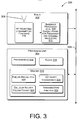
- FIG. 3 a diagram showing an example of a network work device 300.
- network devices include a cellular router (e.g., cellular router 108-112 of FIG. 1 ) or a node (e.g., nodes 114-118 of FIG. 1 ).
- Nodes 114-118 are representative of any network device, including meters (e.g., electric, gas and water consumption meters for homes, businesses and organizations), transformers, control boxes, servers, sensors, generators, substations, switches, valves, pumping stations, etc.
- meters e.g., electric, gas and water consumption meters for homes, businesses and organizations
- transformers e.g., control boxes, servers, sensors, generators, substations, switches, valves, pumping stations, etc.
- the example network device 300 of FIG. 3 includes a radio 302 and a processing unit 304 in communication over a bus 306.
- the radio 302 includes an antenna 308 providing input to a radio frequency (RF) front end 310.
- the RF front end 310 may provide transmitting and receiving functions.
- the RF front end 310 may include high-frequency analog and/or hardware components that provide functionality such tuning and attenuating signals provided by the antenna 308 and obtained from nodes within the network.
- the RF front end 310 may provide data that is generally in the form of an analog or digitized baseband signal sent to a baseband processor 312.
- the output of the RF front end 310 may include a stream of one's and zero's representing data and/or packet(s).
- All or part of the baseband processor 312 may be configured as a software (SW) defined radio.
- the baseband processor 312 provides frequency and/or channel selection functionality to the radio 302.
- the software-defined radio may include components that might alternatively be implemented using analog components.
- the SW defined radio may include mixers, filters, amplifiers, modulators and/or demodulators, detectors, etc., implemented in software executed by a processor or application specific integrated circuit (ASIC) or other embedded computing device(s).
- ASIC application specific integrated circuit
- the software-defined radio may utilize processor 314 and software defined or stored in memory 316. Accordingly, a balance may be made between functionality performed by the RF front end 310 and functionality performed by the baseband processor 312, which may include a software defined radio.
- the processing unit 304 may include one or more processors 314 in communication with one or more memory devices 316.
- a clock 318 may be configured to maintain some time information, possibly including the time of day and the date.
- the clock may also be configured to provide one or more count-up or count-down timers. Such timers may be used to time periods of time used by the randomization function, system timers and/or the like.
- a failure recognition function 320 may be provided on the network device.
- the failure recognition function 320 may include components and/or techniques configured to recognize problems, impending failure or failure of a cellular router. If the network device 300 is a cellular router, then the failure recognition function 320 may be configured for self-diagnosis. If the network device 300 is a node, such as within a mesh network of a cell of a cellular router, then the failure recognition function 320 may be configured to recognize a problem and/or failure of a cellular router by observing network characteristics, traffic, messages or the like.
- the failure recognition function 320 may be a self-test, self-diagnostic or the like.
- the failure recognition function 320 may be configured to perform diagnostics on circuitry, battery power, network connectivity, etc., to determine if the cellular router is fully functional. If the cellular router has partially failed, it may be possible for the failure recognition function 320 to recognize a problem and/or failure mode. Accordingly, the cellular router may recognize its own problem or failure, prior to that failure.
- the failure recognition function 320 may be configured to detect signs or evidence of problematic and/or atypical behavior of the cellular router. Examples of such behavior may include non-responsiveness. For example, the node may notice that the requests sent to the cellular router, such as for a beacon or in related to RTS/CTS handshaking, etc., may not result in an appropriate response. Similarly, the cellular router may fail to receive and transfer data from one or more nodes, due to the problem and/or failure of the cellular router. And further, the node may compare a current behavior of the cellular router to a historical pattern of behavior for the cellular router or other cellular routers.
- the node may consider abnormal conditions at the cellular router (e.g., over temp, higher than normal humidity/resistance, etc. Thus, the failure recognition module 320 on the node attempting to transfer the data may recognize that there is a problem with the cellular router.
- An input/output module 322 may be configured for packet transmission, such as of a specialized cellular router failure packet 324. Upon recognition of a problem and/or failure of the cellular router, the input/output module 322 may transmit the cellular router failure packet 324 to at least one node.
- the cellular router failure packet 324 may indicate that the cellular router associated with a particular cell has failed. Nodes receiving the cellular router failure packet 324 may go into a "discovery mode," wherein they attempt to find a replacement cellular router.
- a randomization function 326 may be used to create random times for transmission of the cellular router failure packets 324.
- the use of random times to transmit the copies reduces the collisions of the packets on channels and/or frequencies used for the broadcasts. For example, if a single control channel is used, the randomization function 326 may reduce packet collisions and assist one or more nodes to more quickly find a new cell, mesh network and/or cellular router.
- FIGS. 4A and 4B can be understood in part by reference to the configurations of FIGS. 1-3 .
- FIGS. 4A and 4B have general applicability, and are not limited by other drawing figures and/or prior discussion.
- Each process described herein is illustrated as a collection of acts, blocks or operations in a logical flow graph, which represent a sequence of operations that can be implemented in hardware, software, or a combination thereof.
- the processes may include storing, in a memory communicatively coupled to a processor, computer-executable instructions for performing a method, such as detecting failure of a cellular router, and then executing the instructions on the processor.
- the operations represent computer-executable instructions stored on one or more computer-readable storage media that, when executed by one or more processors, perform the recited operations.
- Such storage media, processors and computer-readable instructions can be located within a system (e.g., node 300 of FIG. 3 ) according to a desired design or implementation.
- the storage media 316 seen in FIG. 3 is representative of storage media generally, both removable and non-removable, and of any technology.
- the recited operations represent actions, such as those described in FIGS. 4A and 4B , and are taken under control of one or more processors configured with executable instructions to perform actions indicated.
- computer-executable instructions include routines, programs, objects, components, data structures, and the like that perform particular functions or implement particular abstract data types.
- routines programs, objects, components, data structures, and the like that perform particular functions or implement particular abstract data types.
- the order in which the operations are described is not intended to be construed as a limitation, and any number of the described operations can be combined in any order and/or in parallel to implement the process.
- the above discussion may apply to other processes described herein.
- Computer storage media and/or memory includes volatile and nonvolatile, removable and non-removable media implemented in any method or technology for storage of information such as computer readable instructions, data structures, program modules, or other data.
- Computer storage media includes, but is not limited to, random access memory (RAM), read only memory (ROM), electrically erasable programmable read only memory (EEPROM), flash memory or other memory technology, compact disk-read only memory (CD-ROM), digital versatile disks (DVD) or other optical storage, magnetic cassettes, magnetic tape, magnetic disk storage or other magnetic storage devices, or any other non-transmission medium that can be used to store information for access by a computing device. Any such computer storage media may be part of the system 300.
- the computer-readable media may include computer-executable instructions that, when executed by the processor(s) 314, perform various functions and/or operations described herein.
- a computer readable media may include all or part of an application specific integrated circuit (ASIC) or other hardware device.
- ASIC application specific integrated circuit
- Such a hardware device may be configured to include other functionality, including functions performed in synchronizing nodes in a network.
- processors are configured with executable instructions, which may be defined by logic, transistors or other components, or on-board memory.
- communication media may embody computer-readable instructions, data structures, program modules, or other data in a modulated data signal, such as a carrier wave, or other transmission mechanism.
- computer storage media does not include communication media and/or carrier waves, data signals, or other transitory media.
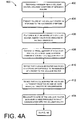
- FIGS. 4A and 4B are flow diagrams illustrating an example process 400 by which failure of a cellular router may be detected and then advertised.
- the process 400 may be performed by network device, such as a cellular router, a node or other device configured for operation on a network.
- a node may include utility meters, such as to measure consumption of electricity, gas, water and/or sewer use.
- Nodes may include other network-attached and/or operated devices, such as transformers, substations, switches, valves, pumps, storage facilities, anti-theft devices and other devices having some network and/or control functionality.
- the process may include recognition of a cellular router problem and/or failure, followed by advertisement of that problem and/or failure to network devices (e.g., nodes) on the network.
- the advertisement is made to nodes in a cell defined by the failed cellular router.
- advertisement to a router and/or nodes in physically adjacent cells may be helpful, as this may assist nodes associated with the failed cellular router in a "discovery mode," to discover a new cellular router.
- FIG. 4A shows that at operation 402, problems with a cellular router are recognized, including symptoms of impending failure.
- a node may recognize symptoms of impending failure of a cellular router, including one or more instances of failure by the cellular router to send packets expected by a node, or other behavior.
- failure of the cellular router is predicted in response to recognized symptoms.
- a failure recognition function may include a self-diagnostic test.
- a self-diagnostic may check functions including circuit integrity, network connectivity and battery availability. Problem(s) may be indicated by the self-diagnostic, which may indicate a possible failure of the cellular router.
- a failure recognition function is operating on a node distinct from the cellular router, such as a utility consumption meter, it may be configured to recognize atypical behavior of the cellular router.
- a node may notice that a cellular router has failed to respond appropriately to transmission of a packet to the cellular router.
- the cellular router may have failed to transmit packet(s) to one or more nodes, which would be expected by circumstances.
- the cellular router may have failed to respond to any of a predetermined number of packets. The predetermined number of packets may be selected to be one or more.
- the predetermined number of packets to which the cellular router failed to respond may be based on historical performance, traffic on the network and other factors, singly or in combination.
- packet transmission failure is particularly noticeable to nodes previously in direct communication with the cellular router, but may also be noticeable to nodes communicating with the cellular router through a chain of other nodes.
- a cellular router failure packet is configured, indicating failure or predicted failure of the cellular router.
- the cellular router failure packet may be configured by the cellular router itself, if it anticipates its own failure, or by a node in the network, if it predicts or recognizes failure of the cellular router.
- the cellular router failure packets may be addressed to nodes downstream from an addressing and/or sending network device, where downstream is travel in the direction of the root to a leaf.
- the network device cellular router or node, etc.
- the cellular router failure packets may be sent to nodes adjacent to a transmitting node.
- the times for transmission of the cellular router failure packets are randomized. Randomized transmission times may reduce collisions of packets transmitted.
- packets may be transmitted according to the randomized schedule. Transmission according to the random schedule may be particularly important if a control channel is used, and a number of nodes are operating on that channel.
- copies of the cellular router failure packet may be broadcast to network nodes, particularly using RF transmission to nodes in a vicinity of the broadcasting node.
- a discover mode function is performed by nodes within the cell of the failed and/or failing cellular router.
- each node attempts to discover one or more chains or paths through other nodes that leads to a new cellular router. Thus, the nodes attempt to find a new cell to join.
- nodes within the network receive an indication of a new cellular router.
- the discover mode function of operation 426 successfully finds a new cellular router for each of the nodes previously within the cell of the failed cellular router.
- nodes previously in a cell of the failed cellular router join a new cell with a different cellular router.
- a method of advertising a failure of a cellular router within a network comprising:
- the method is performed by a node in the network, and the symptoms of impending failure of the cellular router are recognized by the node, and include one or more failures by the cellular router to transmit packets expected by the node.
- the method is performed by the cellular router, and the symptoms of impending failure of the cellular router are recognized by the cellular router while performing a self-diagnostic.
- sending the cellular router failure notification packet comprises:
- the method additionally comprises:
- the method additionally comprises:
Landscapes
- Engineering & Computer Science (AREA)
- Computer Networks & Wireless Communication (AREA)
- Signal Processing (AREA)
- Mobile Radio Communication Systems (AREA)
- Telephonic Communication Services (AREA)
- Maintenance And Management Of Digital Transmission (AREA)
- Monitoring And Testing Of Transmission In General (AREA)
- Data Exchanges In Wide-Area Networks (AREA)
Claims (12)
- Verfahren zum Anzeigen eines Problems mit einem Mobilfunkrouter (108, 110, 112) in einem Netzwerk (100), wobei das Verfahren durch mindestens einen von einem Knoten (114, 116, 118) oder dem Mobilfunkrouter (108, 110, 112) im Netzwerk durchgeführt wird und Folgendes umfasst:unter der Steuerung durch einen oder mehrere Prozessoren, die mit ausführbaren Anweisungen konfiguriert sind:Erkennen von Symptomen eines bevorstehenden Fehlers des Mobilfunkrouters (108, 110, 112);Vorhersagen eines Fehlers des Mobilfunkrouters (108, 110, 112) als Reaktion auf die erkannten Symptome;Konfigurieren eines Benachrichtigungspakets (324) über einen Mobilfunkrouterfehler, das den vorhergesagten Fehler des Mobilfunkrouters (108, 110, 112) anzeigt; undSenden des Benachrichtigungspakets (324) über den Mobilfunkrouterfehler an mindestens einen Knoten im Netzwerk (100), als Reaktion auf das Vorhersagen des Fehlers des Mobilfunkrouters (108, 110, 112), wobei das Senden des Benachrichtigungspakets (324) über den Mobilfunkrouterfehler Folgendes umfasst:Zufallsgenerieren von Zeiten für eine Paketübertragung; undSenden einer Mehrzahl von Benachrichtigungspaketen über den Mobilfunkrouterfehler zu den zufallsgenerierten Zeiten.
- Verfahren nach Anspruch 1, wobei das Verfahren durch den Mobilfunkrouter (108, 110, 112) durchgeführt wird, und die Symptome des bevorstehenden Fehlers des Mobilfunkrouters durch den Mobilfunkrouter während des Durchführens einer Selbstdiagnose erkannt werden.
- Verfahren nach Anspruch 1, wobei das Verfahren durch den Mobilfunkrouter (108, 110, 112) durchgeführt wird und zusätzlich Folgendes umfasst:Durchführen einer Selbstdiagnose am Mobilfunkrouter;Identifizieren des Problems, das durch die Selbstdiagnose angezeigt wird; undBenachrichtigen eines zweiten Mobilfunkrouters im Netzwerk (100) über das Problem mit dem Mobilfunkrouter.
- Verfahren nach Anspruch 1, wobei das Verfahren durch einen Knoten (114, 116, 118) im Netzwerk (100) durchgeführt wird, und das Erkennen der Symptome des bevorstehenden Fehlers durch den Mobilfunkrouter (108, 110, 112) das Erkennen atypischen Verhaltens durch den Mobilfunkrouter umfasst.
- Verfahren nach Anspruch 1, wobei das Konfigurieren des Benachrichtigungspakets (324) über den Mobilfunkrouterfehler Folgendes umfasst:Adressieren des Benachrichtigungspakets (324) über den Mobilfunkrouterfehler an einen Knoten stromabwärts von einer Netzwerkvorrichtung, die das Benachrichtigungspaket über den Mobilfunkrouterfehler adressiert, wobei die stromabwärtige Richtung eine Richtung vom Mobilfunkrouter (108, 110, 112) zu Blattknoten des Netzwerks (100) ist.
- Verfahren nach Anspruch 1, wobei das Verfahren durch einen Knoten (114, 116, 118) im Netzwerk (100) durchgeführt wird, und die Symptome des bevorstehenden Fehlers des Mobilfunkrouters (108, 110, 112) durch den Knoten erkannt werden und einen oder mehrere Fehler des Mobilfunkrouters zum Übertragen von Paketen beinhalten, die vom Knoten erwartet werden.
- Verfahren nach Anspruch 1, wobei das Verfahren durch einen Knoten (114, 116, 118) im Netzwerk (100) durchgeführt wird und zusätzlich Folgendes umfasst:Feststellen, dass der Mobilfunkrouter (108, 110, 112) nicht angemessen auf die Übertragung eines Pakets an den Mobilfunkrouter reagiert hat.
- Verfahren nach Anspruch 1, wobei das Verfahren durch einen Knoten (114, 116, 118) im Netzwerk (100) durchgeführt wird und zusätzlich Folgendes umfasst:Durchführen einer Entdeckungsmodusfunktion, die das Suchen nach einer neuen Funkzelle oder einem Mobilfunkrouter als Reaktion auf das Erkennen des Problems beinhaltet.
- Verfahren nach Anspruch 1, zusätzlich umfassend:Erkennen des Fehlers des Mobilfunkrouters (108, 110, 112), wobei das Erkennen durch einen Knoten durchgeführt wird, der zuvor in direkter Kommunikation mit dem Mobilfunkrouter gestanden ist; undAussenden von Kopien des Benachrichtigungspakets (324) über den Mobilfunkrouterfehler an Knoten in einer Nähe des Knotens, der zuvor in direkter Kommunikation mit dem Mobilfunkrouter gestanden ist.
- Verfahren nach Anspruch 1, zusätzlich umfassend:Durchführen einer Entdeckungsmodusfunktion in Knoten in einer Funkzelle (102, 104, 106) des Mobilfunkrouters (108, 110, 112), wobei die Entdeckungsmodusfunktion das Suchen nach einem neuen Mobilfunkrouter beinhaltet.
- Mobilfunkrouter (108, 110, 112), umfassend:einen Prozessor (314);einen Speicher (316) in Kommunikation mit dem Prozessor;eine Fehlererkennungsfunktion (320), definiert im Speicher und ausführbar durch den Prozessor und konfiguriert zum Durchführen eines Selbsttests des Mobilfunkrouters, um Symptome eines bevorstehenden Problems zu erkennen und einen Fehler des Mobilfunkrouters als Reaktion auf die erkannten Symptome vorherzusagen;ein Benachrichtigungspaket (324) über einen Mobilfunkrouterfehler, definiert im Speicher und konfiguriert, den vorhergesagten Fehler des Mobilfunkrouters anzuzeigen; undeine Eingangs-/Ausgangsfunktion (322), konfiguriert zum Senden des Benachrichtigungspakets (324) über den Mobilfunkrouterfehler als Reaktion auf eine Anzeige eines Problems von der Fehlererkennungsfunktion, wobei die Eingangs-/Ausgangsfunktion (322) konfiguriert ist, das Benachrichtigungspaket (324) über den Mobilfunkrouterfehler durch Folgendes zu senden:Zufallsgenerieren von Zeiten für eine Paketübertragung; undSenden einer Mehrzahl von Benachrichtigungspaketen über den Mobilfunkrouterfehler zu den zufallsgenerierten Zeiten.
- Computerlesbares Speichermedium, das von einem Computer ausführbare Anweisungen enthält, die beim Ausführen durch einen oder mehrere Prozessoren das Verfahren nach einem der Ansprüche 1 bis 10 durchführen.
Priority Applications (9)
| Application Number | Priority Date | Filing Date | Title |
|---|---|---|---|
| EP11187338.6A EP2587724B1 (de) | 2011-10-31 | 2011-10-31 | Schnellwarnung über einen Fehler eines Netzwerkzellenrouters |
| ES11187338.6T ES2528954T3 (es) | 2011-10-31 | 2011-10-31 | Anuncio rápido de un fallo de un router celular de red |
| PCT/US2012/023116 WO2013066378A1 (en) | 2011-10-31 | 2012-01-30 | Quick advertisement of a failure of a network cellular router |
| JP2014538778A JP5938478B2 (ja) | 2011-10-31 | 2012-01-30 | Lipaモビリティをサポートするための方法および装置 |
| SG11201401402WA SG11201401402WA (en) | 2011-10-31 | 2012-01-30 | Quick advertisement of a failure of a network cellular router |
| CA2851505A CA2851505C (en) | 2011-10-31 | 2012-01-30 | Quick advertisement of a failure of a network cellular router |
| AU2012333232A AU2012333232B2 (en) | 2011-10-31 | 2012-01-30 | Quick advertisement of a failure of a network cellular router |
| US13/365,142 US9007923B2 (en) | 2011-10-31 | 2012-02-02 | Quick advertisement of a failure of a network cellular router |
| ZA2014/02714A ZA201402714B (en) | 2011-10-31 | 2014-04-14 | Quick advertisement of a failure of a network cellular router |
Applications Claiming Priority (1)
| Application Number | Priority Date | Filing Date | Title |
|---|---|---|---|
| EP11187338.6A EP2587724B1 (de) | 2011-10-31 | 2011-10-31 | Schnellwarnung über einen Fehler eines Netzwerkzellenrouters |
Publications (2)
| Publication Number | Publication Date |
|---|---|
| EP2587724A1 EP2587724A1 (de) | 2013-05-01 |
| EP2587724B1 true EP2587724B1 (de) | 2014-11-26 |
Family
ID=45315448
Family Applications (1)
| Application Number | Title | Priority Date | Filing Date |
|---|---|---|---|
| EP11187338.6A Not-in-force EP2587724B1 (de) | 2011-10-31 | 2011-10-31 | Schnellwarnung über einen Fehler eines Netzwerkzellenrouters |
Country Status (8)
| Country | Link |
|---|---|
| EP (1) | EP2587724B1 (de) |
| JP (1) | JP5938478B2 (de) |
| AU (1) | AU2012333232B2 (de) |
| CA (1) | CA2851505C (de) |
| ES (1) | ES2528954T3 (de) |
| SG (1) | SG11201401402WA (de) |
| WO (1) | WO2013066378A1 (de) |
| ZA (1) | ZA201402714B (de) |
Families Citing this family (1)
| Publication number | Priority date | Publication date | Assignee | Title |
|---|---|---|---|---|
| JP6614652B2 (ja) * | 2015-11-06 | 2019-12-04 | 矢崎総業株式会社 | 通信機 |
Citations (2)
| Publication number | Priority date | Publication date | Assignee | Title |
|---|---|---|---|---|
| EP1492279A1 (de) * | 2003-06-24 | 2004-12-29 | Research In Motion Limited | Serialisierung von eine Verteiltenapplikation einer Router |
| US20060062199A1 (en) * | 2004-09-23 | 2006-03-23 | Motorola, Inc. | Dynamic reduction of route reconvergence time |
Family Cites Families (7)
| Publication number | Priority date | Publication date | Assignee | Title |
|---|---|---|---|---|
| JP3858506B2 (ja) * | 1999-03-10 | 2006-12-13 | トヨタ自動車株式会社 | 路車間通信用の車載通信装置 |
| US7035202B2 (en) * | 2001-03-16 | 2006-04-25 | Juniper Networks, Inc. | Network routing using link failure information |
| US7453864B2 (en) * | 2003-04-30 | 2008-11-18 | Harris Corporation | Predictive route maintenance in a mobile ad hoc network |
| US8774790B2 (en) * | 2006-02-15 | 2014-07-08 | Alcatel Lucent | Method and apparatus for improving wireless network reliability |
| US20090092054A1 (en) * | 2007-10-09 | 2009-04-09 | Compton Matthew C | Method for providing notifications of a failing node to other nodes within a computer network |
| US7940679B2 (en) * | 2008-05-08 | 2011-05-10 | Elster Electricity, Llc | Power outage management and power support restoration for devices in a wireless network |
| US7957297B2 (en) * | 2008-07-14 | 2011-06-07 | Cisco Technology, Inc. | Termination message for wireless wide area network routers |
-
2011
- 2011-10-31 EP EP11187338.6A patent/EP2587724B1/de not_active Not-in-force
- 2011-10-31 ES ES11187338.6T patent/ES2528954T3/es active Active
-
2012
- 2012-01-30 JP JP2014538778A patent/JP5938478B2/ja not_active Expired - Fee Related
- 2012-01-30 CA CA2851505A patent/CA2851505C/en active Active
- 2012-01-30 WO PCT/US2012/023116 patent/WO2013066378A1/en not_active Ceased
- 2012-01-30 AU AU2012333232A patent/AU2012333232B2/en active Active
- 2012-01-30 SG SG11201401402WA patent/SG11201401402WA/en unknown
-
2014
- 2014-04-14 ZA ZA2014/02714A patent/ZA201402714B/en unknown
Patent Citations (2)
| Publication number | Priority date | Publication date | Assignee | Title |
|---|---|---|---|---|
| EP1492279A1 (de) * | 2003-06-24 | 2004-12-29 | Research In Motion Limited | Serialisierung von eine Verteiltenapplikation einer Router |
| US20060062199A1 (en) * | 2004-09-23 | 2006-03-23 | Motorola, Inc. | Dynamic reduction of route reconvergence time |
Also Published As
| Publication number | Publication date |
|---|---|
| CA2851505A1 (en) | 2013-05-10 |
| JP5938478B2 (ja) | 2016-06-22 |
| WO2013066378A1 (en) | 2013-05-10 |
| SG11201401402WA (en) | 2014-09-26 |
| ES2528954T3 (es) | 2015-02-13 |
| EP2587724A1 (de) | 2013-05-01 |
| AU2012333232B2 (en) | 2016-10-27 |
| JP2015501597A (ja) | 2015-01-15 |
| AU2012333232A1 (en) | 2014-04-24 |
| ZA201402714B (en) | 2015-11-25 |
| CA2851505C (en) | 2018-04-10 |
Similar Documents
| Publication | Publication Date | Title |
|---|---|---|
| US8451739B2 (en) | Method and system for detecting failures of network nodes | |
| EP2412130B1 (de) | Aktualisieren von routing- und ausfallinformationen in einem kommunikationsnetz | |
| EP2661050B1 (de) | Wirksames firmware-update in einem system mit niedriger bandbreite | |
| CN114175593B (zh) | 一种用于检测节点中断的方法、节点和系统 | |
| CN112887000B (zh) | 信息反馈方法、装置及系统 | |
| CN102769564A (zh) | 具有按需分优先级路由协议的多径无线电传输输入/输出设备、网络、系统和方法 | |
| CN106105106A (zh) | 用于收集和分析通过多个通道从相邻节点接收的通知的技术 | |
| EP2272218B1 (de) | Aktualisieren von routing- und ausfallinformationen in einem kommunikationsnetz | |
| EP3850793B1 (de) | Verfahren und vorrichtung zum melden von stromausfallereignissen in einem netzwerkknoten ohne reserveenergiespeichervorrichtung | |
| US9007923B2 (en) | Quick advertisement of a failure of a network cellular router | |
| CA2851505C (en) | Quick advertisement of a failure of a network cellular router | |
| CN112312555A (zh) | 一种终端能力的处理方法、装置及设备 | |
| US20250193066A1 (en) | Systems and methods for managing a wireless network based on user equipment data | |
| US20190335378A1 (en) | Access point connectivity | |
| US20220006742A1 (en) | Regulation method intended for reducing congestion on a mesh powerline communication network | |
| CN103002487A (zh) | 一种应用于自组织网络的故障修复方法及网络节点 | |
| Rajeswari et al. | Cluster based fault tolerance using genetic algorithm in wireless sensor network | |
| US11805466B2 (en) | Method and device for notifying an electricity disconnection | |
| US20230308887A1 (en) | Wireless Mesh System and Method Supporting Local Emergency Network Access | |
| HK40086059A (zh) | 一种用於检测节点中断的方法、节点和系统 | |
| HK1151657B (en) | Updating routing and outage information in a communications network |
Legal Events
| Date | Code | Title | Description |
|---|---|---|---|
| PUAI | Public reference made under article 153(3) epc to a published international application that has entered the european phase |
Free format text: ORIGINAL CODE: 0009012 |
|
| 17P | Request for examination filed |
Effective date: 20111031 |
|
| AK | Designated contracting states |
Kind code of ref document: A1 Designated state(s): AL AT BE BG CH CY CZ DE DK EE ES FI FR GB GR HR HU IE IS IT LI LT LU LV MC MK MT NL NO PL PT RO RS SE SI SK SM TR |
|
| AX | Request for extension of the european patent |
Extension state: BA ME |
|
| 17Q | First examination report despatched |
Effective date: 20131211 |
|
| GRAP | Despatch of communication of intention to grant a patent |
Free format text: ORIGINAL CODE: EPIDOSNIGR1 |
|
| INTG | Intention to grant announced |
Effective date: 20140703 |
|
| RAP1 | Party data changed (applicant data changed or rights of an application transferred) |
Owner name: ITRON, INC. |
|
| GRAS | Grant fee paid |
Free format text: ORIGINAL CODE: EPIDOSNIGR3 |
|
| GRAA | (expected) grant |
Free format text: ORIGINAL CODE: 0009210 |
|
| AK | Designated contracting states |
Kind code of ref document: B1 Designated state(s): AL AT BE BG CH CY CZ DE DK EE ES FI FR GB GR HR HU IE IS IT LI LT LU LV MC MK MT NL NO PL PT RO RS SE SI SK SM TR |
|
| REG | Reference to a national code |
Ref country code: GB Ref legal event code: FG4D |
|
| REG | Reference to a national code |
Ref country code: CH Ref legal event code: EP |
|
| REG | Reference to a national code |
Ref country code: AT Ref legal event code: REF Ref document number: 698712 Country of ref document: AT Kind code of ref document: T Effective date: 20141215 |
|
| REG | Reference to a national code |
Ref country code: IE Ref legal event code: FG4D |
|
| REG | Reference to a national code |
Ref country code: DE Ref legal event code: R096 Ref document number: 602011011693 Country of ref document: DE Effective date: 20150108 |
|
| REG | Reference to a national code |
Ref country code: ES Ref legal event code: FG2A Ref document number: 2528954 Country of ref document: ES Kind code of ref document: T3 Effective date: 20150213 |
|
| REG | Reference to a national code |
Ref country code: NL Ref legal event code: VDEP Effective date: 20141126 |
|
| REG | Reference to a national code |
Ref country code: AT Ref legal event code: MK05 Ref document number: 698712 Country of ref document: AT Kind code of ref document: T Effective date: 20141126 |
|
| REG | Reference to a national code |
Ref country code: LT Ref legal event code: MG4D |
|
| PG25 | Lapsed in a contracting state [announced via postgrant information from national office to epo] |
Ref country code: NL Free format text: LAPSE BECAUSE OF FAILURE TO SUBMIT A TRANSLATION OF THE DESCRIPTION OR TO PAY THE FEE WITHIN THE PRESCRIBED TIME-LIMIT Effective date: 20141126 Ref country code: FI Free format text: LAPSE BECAUSE OF FAILURE TO SUBMIT A TRANSLATION OF THE DESCRIPTION OR TO PAY THE FEE WITHIN THE PRESCRIBED TIME-LIMIT Effective date: 20141126 Ref country code: NO Free format text: LAPSE BECAUSE OF FAILURE TO SUBMIT A TRANSLATION OF THE DESCRIPTION OR TO PAY THE FEE WITHIN THE PRESCRIBED TIME-LIMIT Effective date: 20150226 Ref country code: PT Free format text: LAPSE BECAUSE OF FAILURE TO SUBMIT A TRANSLATION OF THE DESCRIPTION OR TO PAY THE FEE WITHIN THE PRESCRIBED TIME-LIMIT Effective date: 20150326 Ref country code: LT Free format text: LAPSE BECAUSE OF FAILURE TO SUBMIT A TRANSLATION OF THE DESCRIPTION OR TO PAY THE FEE WITHIN THE PRESCRIBED TIME-LIMIT Effective date: 20141126 Ref country code: IS Free format text: LAPSE BECAUSE OF FAILURE TO SUBMIT A TRANSLATION OF THE DESCRIPTION OR TO PAY THE FEE WITHIN THE PRESCRIBED TIME-LIMIT Effective date: 20150326 |
|
| PG25 | Lapsed in a contracting state [announced via postgrant information from national office to epo] |
Ref country code: LV Free format text: LAPSE BECAUSE OF FAILURE TO SUBMIT A TRANSLATION OF THE DESCRIPTION OR TO PAY THE FEE WITHIN THE PRESCRIBED TIME-LIMIT Effective date: 20141126 Ref country code: SE Free format text: LAPSE BECAUSE OF FAILURE TO SUBMIT A TRANSLATION OF THE DESCRIPTION OR TO PAY THE FEE WITHIN THE PRESCRIBED TIME-LIMIT Effective date: 20141126 Ref country code: CY Free format text: LAPSE BECAUSE OF FAILURE TO SUBMIT A TRANSLATION OF THE DESCRIPTION OR TO PAY THE FEE WITHIN THE PRESCRIBED TIME-LIMIT Effective date: 20141126 Ref country code: RS Free format text: LAPSE BECAUSE OF FAILURE TO SUBMIT A TRANSLATION OF THE DESCRIPTION OR TO PAY THE FEE WITHIN THE PRESCRIBED TIME-LIMIT Effective date: 20141126 Ref country code: GR Free format text: LAPSE BECAUSE OF FAILURE TO SUBMIT A TRANSLATION OF THE DESCRIPTION OR TO PAY THE FEE WITHIN THE PRESCRIBED TIME-LIMIT Effective date: 20150227 Ref country code: HR Free format text: LAPSE BECAUSE OF FAILURE TO SUBMIT A TRANSLATION OF THE DESCRIPTION OR TO PAY THE FEE WITHIN THE PRESCRIBED TIME-LIMIT Effective date: 20141126 Ref country code: AT Free format text: LAPSE BECAUSE OF FAILURE TO SUBMIT A TRANSLATION OF THE DESCRIPTION OR TO PAY THE FEE WITHIN THE PRESCRIBED TIME-LIMIT Effective date: 20141126 |
|
| PG25 | Lapsed in a contracting state [announced via postgrant information from national office to epo] |
Ref country code: CZ Free format text: LAPSE BECAUSE OF FAILURE TO SUBMIT A TRANSLATION OF THE DESCRIPTION OR TO PAY THE FEE WITHIN THE PRESCRIBED TIME-LIMIT Effective date: 20141126 Ref country code: SK Free format text: LAPSE BECAUSE OF FAILURE TO SUBMIT A TRANSLATION OF THE DESCRIPTION OR TO PAY THE FEE WITHIN THE PRESCRIBED TIME-LIMIT Effective date: 20141126 Ref country code: EE Free format text: LAPSE BECAUSE OF FAILURE TO SUBMIT A TRANSLATION OF THE DESCRIPTION OR TO PAY THE FEE WITHIN THE PRESCRIBED TIME-LIMIT Effective date: 20141126 Ref country code: DK Free format text: LAPSE BECAUSE OF FAILURE TO SUBMIT A TRANSLATION OF THE DESCRIPTION OR TO PAY THE FEE WITHIN THE PRESCRIBED TIME-LIMIT Effective date: 20141126 Ref country code: RO Free format text: LAPSE BECAUSE OF FAILURE TO SUBMIT A TRANSLATION OF THE DESCRIPTION OR TO PAY THE FEE WITHIN THE PRESCRIBED TIME-LIMIT Effective date: 20141126 |
|
| REG | Reference to a national code |
Ref country code: DE Ref legal event code: R097 Ref document number: 602011011693 Country of ref document: DE |
|
| PG25 | Lapsed in a contracting state [announced via postgrant information from national office to epo] |
Ref country code: PL Free format text: LAPSE BECAUSE OF FAILURE TO SUBMIT A TRANSLATION OF THE DESCRIPTION OR TO PAY THE FEE WITHIN THE PRESCRIBED TIME-LIMIT Effective date: 20141126 |
|
| PLBE | No opposition filed within time limit |
Free format text: ORIGINAL CODE: 0009261 |
|
| STAA | Information on the status of an ep patent application or granted ep patent |
Free format text: STATUS: NO OPPOSITION FILED WITHIN TIME LIMIT |
|
| 26N | No opposition filed |
Effective date: 20150827 |
|
| PG25 | Lapsed in a contracting state [announced via postgrant information from national office to epo] |
Ref country code: SI Free format text: LAPSE BECAUSE OF FAILURE TO SUBMIT A TRANSLATION OF THE DESCRIPTION OR TO PAY THE FEE WITHIN THE PRESCRIBED TIME-LIMIT Effective date: 20141126 |
|
| PG25 | Lapsed in a contracting state [announced via postgrant information from national office to epo] |
Ref country code: LU Free format text: LAPSE BECAUSE OF FAILURE TO SUBMIT A TRANSLATION OF THE DESCRIPTION OR TO PAY THE FEE WITHIN THE PRESCRIBED TIME-LIMIT Effective date: 20151031 |
|
| REG | Reference to a national code |
Ref country code: CH Ref legal event code: PL |
|
| PG25 | Lapsed in a contracting state [announced via postgrant information from national office to epo] |
Ref country code: MC Free format text: LAPSE BECAUSE OF FAILURE TO SUBMIT A TRANSLATION OF THE DESCRIPTION OR TO PAY THE FEE WITHIN THE PRESCRIBED TIME-LIMIT Effective date: 20141126 |
|
| REG | Reference to a national code |
Ref country code: IE Ref legal event code: MM4A |
|
| PG25 | Lapsed in a contracting state [announced via postgrant information from national office to epo] |
Ref country code: CH Free format text: LAPSE BECAUSE OF NON-PAYMENT OF DUE FEES Effective date: 20151031 Ref country code: LI Free format text: LAPSE BECAUSE OF NON-PAYMENT OF DUE FEES Effective date: 20151031 |
|
| REG | Reference to a national code |
Ref country code: FR Ref legal event code: PLFP Year of fee payment: 6 |
|
| PG25 | Lapsed in a contracting state [announced via postgrant information from national office to epo] |
Ref country code: IE Free format text: LAPSE BECAUSE OF NON-PAYMENT OF DUE FEES Effective date: 20151031 |
|
| REG | Reference to a national code |
Ref country code: DE Ref legal event code: R082 Ref document number: 602011011693 Country of ref document: DE Representative=s name: BOCKHORNI & KOLLEGEN PATENT- UND RECHTSANWAELT, DE Ref country code: DE Ref legal event code: R081 Ref document number: 602011011693 Country of ref document: DE Owner name: ITRON GLOBAL SARL, LIBERTY LAKE, US Free format text: FORMER OWNER: ITRON, INC., LIBERTY LAKE, WASH., US Ref country code: DE Ref legal event code: R082 Ref document number: 602011011693 Country of ref document: DE Representative=s name: BOCKHORNI & BRUENTJEN PARTNERSCHAFT PATENTANWA, DE |
|
| REG | Reference to a national code |
Ref country code: ES Ref legal event code: PC2A Owner name: ITRON GLOBAL SARL Effective date: 20170203 |
|
| PG25 | Lapsed in a contracting state [announced via postgrant information from national office to epo] |
Ref country code: SM Free format text: LAPSE BECAUSE OF FAILURE TO SUBMIT A TRANSLATION OF THE DESCRIPTION OR TO PAY THE FEE WITHIN THE PRESCRIBED TIME-LIMIT Effective date: 20141126 Ref country code: HU Free format text: LAPSE BECAUSE OF FAILURE TO SUBMIT A TRANSLATION OF THE DESCRIPTION OR TO PAY THE FEE WITHIN THE PRESCRIBED TIME-LIMIT; INVALID AB INITIO Effective date: 20111031 Ref country code: BG Free format text: LAPSE BECAUSE OF FAILURE TO SUBMIT A TRANSLATION OF THE DESCRIPTION OR TO PAY THE FEE WITHIN THE PRESCRIBED TIME-LIMIT Effective date: 20141126 |
|
| REG | Reference to a national code |
Ref country code: FR Ref legal event code: TP Owner name: ITRON GLOBAL SARL, US Effective date: 20170601 |
|
| REG | Reference to a national code |
Ref country code: GB Ref legal event code: 732E Free format text: REGISTERED BETWEEN 20170622 AND 20170628 |
|
| PG25 | Lapsed in a contracting state [announced via postgrant information from national office to epo] |
Ref country code: MT Free format text: LAPSE BECAUSE OF FAILURE TO SUBMIT A TRANSLATION OF THE DESCRIPTION OR TO PAY THE FEE WITHIN THE PRESCRIBED TIME-LIMIT Effective date: 20141126 |
|
| REG | Reference to a national code |
Ref country code: FR Ref legal event code: PLFP Year of fee payment: 7 |
|
| PG25 | Lapsed in a contracting state [announced via postgrant information from national office to epo] |
Ref country code: BE Free format text: LAPSE BECAUSE OF FAILURE TO SUBMIT A TRANSLATION OF THE DESCRIPTION OR TO PAY THE FEE WITHIN THE PRESCRIBED TIME-LIMIT Effective date: 20141126 |
|
| PG25 | Lapsed in a contracting state [announced via postgrant information from national office to epo] |
Ref country code: TR Free format text: LAPSE BECAUSE OF FAILURE TO SUBMIT A TRANSLATION OF THE DESCRIPTION OR TO PAY THE FEE WITHIN THE PRESCRIBED TIME-LIMIT Effective date: 20141126 Ref country code: MK Free format text: LAPSE BECAUSE OF FAILURE TO SUBMIT A TRANSLATION OF THE DESCRIPTION OR TO PAY THE FEE WITHIN THE PRESCRIBED TIME-LIMIT Effective date: 20141126 |
|
| REG | Reference to a national code |
Ref country code: FR Ref legal event code: PLFP Year of fee payment: 8 |
|
| PG25 | Lapsed in a contracting state [announced via postgrant information from national office to epo] |
Ref country code: AL Free format text: LAPSE BECAUSE OF FAILURE TO SUBMIT A TRANSLATION OF THE DESCRIPTION OR TO PAY THE FEE WITHIN THE PRESCRIBED TIME-LIMIT Effective date: 20141126 |
|
| PGFP | Annual fee paid to national office [announced via postgrant information from national office to epo] |
Ref country code: IT Payment date: 20210910 Year of fee payment: 11 Ref country code: FR Payment date: 20210917 Year of fee payment: 11 |
|
| REG | Reference to a national code |
Ref country code: DE Ref legal event code: R079 Ref document number: 602011011693 Country of ref document: DE Free format text: PREVIOUS MAIN CLASS: H04L0012240000 Ipc: H04L0041000000 |
|
| PGFP | Annual fee paid to national office [announced via postgrant information from national office to epo] |
Ref country code: GB Payment date: 20210922 Year of fee payment: 11 |
|
| PGFP | Annual fee paid to national office [announced via postgrant information from national office to epo] |
Ref country code: ES Payment date: 20211108 Year of fee payment: 11 Ref country code: DE Payment date: 20210923 Year of fee payment: 11 |
|
| REG | Reference to a national code |
Ref country code: DE Ref legal event code: R119 Ref document number: 602011011693 Country of ref document: DE |
|
| GBPC | Gb: european patent ceased through non-payment of renewal fee |
Effective date: 20221031 |
|
| PG25 | Lapsed in a contracting state [announced via postgrant information from national office to epo] |
Ref country code: FR Free format text: LAPSE BECAUSE OF NON-PAYMENT OF DUE FEES Effective date: 20221031 Ref country code: DE Free format text: LAPSE BECAUSE OF NON-PAYMENT OF DUE FEES Effective date: 20230503 |
|
| PG25 | Lapsed in a contracting state [announced via postgrant information from national office to epo] |
Ref country code: IT Free format text: LAPSE BECAUSE OF NON-PAYMENT OF DUE FEES Effective date: 20221031 Ref country code: GB Free format text: LAPSE BECAUSE OF NON-PAYMENT OF DUE FEES Effective date: 20221031 |
|
| REG | Reference to a national code |
Ref country code: ES Ref legal event code: FD2A Effective date: 20231204 |
|
| PG25 | Lapsed in a contracting state [announced via postgrant information from national office to epo] |
Ref country code: ES Free format text: LAPSE BECAUSE OF NON-PAYMENT OF DUE FEES Effective date: 20221101 |
|
| PG25 | Lapsed in a contracting state [announced via postgrant information from national office to epo] |
Ref country code: ES Free format text: LAPSE BECAUSE OF NON-PAYMENT OF DUE FEES Effective date: 20221101 |