EP2584787A2 - Stereoskopische Anzeige für sichere Anzeigedarstellung - Google Patents
Stereoskopische Anzeige für sichere Anzeigedarstellung Download PDFInfo
- Publication number
- EP2584787A2 EP2584787A2 EP12006106.4A EP12006106A EP2584787A2 EP 2584787 A2 EP2584787 A2 EP 2584787A2 EP 12006106 A EP12006106 A EP 12006106A EP 2584787 A2 EP2584787 A2 EP 2584787A2
- Authority
- EP
- European Patent Office
- Prior art keywords
- secured
- image
- stereoscopic
- image component
- unsecured
- Prior art date
- Legal status (The legal status is an assumption and is not a legal conclusion. Google has not performed a legal analysis and makes no representation as to the accuracy of the status listed.)
- Ceased
Links
- 238000009877 rendering Methods 0.000 title description 2
- 239000000463 material Substances 0.000 claims description 52
- 230000008707 rearrangement Effects 0.000 claims description 23
- 238000000034 method Methods 0.000 claims description 17
- 239000000758 substrate Substances 0.000 claims description 11
- 230000001131 transforming effect Effects 0.000 claims description 2
- 238000010586 diagram Methods 0.000 description 8
- 230000001225 therapeutic effect Effects 0.000 description 7
- 210000004556 brain Anatomy 0.000 description 6
- 239000011521 glass Substances 0.000 description 4
- 230000010287 polarization Effects 0.000 description 4
- 238000012015 optical character recognition Methods 0.000 description 3
- 230000003287 optical effect Effects 0.000 description 3
- 229920000642 polymer Polymers 0.000 description 3
- 238000001514 detection method Methods 0.000 description 2
- 230000000694 effects Effects 0.000 description 2
- 238000001914 filtration Methods 0.000 description 2
- 230000006870 function Effects 0.000 description 2
- 230000004048 modification Effects 0.000 description 2
- 238000012986 modification Methods 0.000 description 2
- 230000035772 mutation Effects 0.000 description 2
- 230000002085 persistent effect Effects 0.000 description 2
- 230000008569 process Effects 0.000 description 2
- 230000000007 visual effect Effects 0.000 description 2
- 230000004308 accommodation Effects 0.000 description 1
- 230000006978 adaptation Effects 0.000 description 1
- 239000000853 adhesive Substances 0.000 description 1
- 230000001070 adhesive effect Effects 0.000 description 1
- 230000004888 barrier function Effects 0.000 description 1
- 230000008901 benefit Effects 0.000 description 1
- 238000003384 imaging method Methods 0.000 description 1
- 239000004973 liquid crystal related substance Substances 0.000 description 1
- 230000007246 mechanism Effects 0.000 description 1
- 238000003825 pressing Methods 0.000 description 1
- 230000000644 propagated effect Effects 0.000 description 1
- 230000004044 response Effects 0.000 description 1
- 230000003068 static effect Effects 0.000 description 1
Images


Classifications
-
- G—PHYSICS
- G09—EDUCATION; CRYPTOGRAPHY; DISPLAY; ADVERTISING; SEALS
- G09C—CIPHERING OR DECIPHERING APPARATUS FOR CRYPTOGRAPHIC OR OTHER PURPOSES INVOLVING THE NEED FOR SECRECY
- G09C5/00—Ciphering apparatus or methods not provided for in the preceding groups, e.g. involving the concealment or deformation of graphic data such as designs, written or printed messages
-
- H—ELECTRICITY
- H04—ELECTRIC COMMUNICATION TECHNIQUE
- H04N—PICTORIAL COMMUNICATION, e.g. TELEVISION
- H04N1/00—Scanning, transmission or reproduction of documents or the like, e.g. facsimile transmission; Details thereof
- H04N1/44—Secrecy systems
- H04N1/448—Rendering the image unintelligible, e.g. scrambling
- H04N1/4493—Subsequently rendering the image intelligible using a co-operating image, mask or the like
-
- H—ELECTRICITY
- H04—ELECTRIC COMMUNICATION TECHNIQUE
- H04N—PICTORIAL COMMUNICATION, e.g. TELEVISION
- H04N13/00—Stereoscopic video systems; Multi-view video systems; Details thereof
-
- H—ELECTRICITY
- H04—ELECTRIC COMMUNICATION TECHNIQUE
- H04N—PICTORIAL COMMUNICATION, e.g. TELEVISION
- H04N13/00—Stereoscopic video systems; Multi-view video systems; Details thereof
- H04N13/30—Image reproducers
- H04N13/302—Image reproducers for viewing without the aid of special glasses, i.e. using autostereoscopic displays
- H04N13/305—Image reproducers for viewing without the aid of special glasses, i.e. using autostereoscopic displays using lenticular lenses, e.g. arrangements of cylindrical lenses
Definitions
- the invention relates generally to the field of stereoscopic displays.
- Some displays are dynamic, such as televisions or monitors and may display a variety of different stereoscopic images.
- Other displays are static, such as printed materials, and thus, may only display one stereoscopic image.
- Many stereoscopic displays require the use of specialized glasses in order to view the stereoscopic image.
- some stereoscopic displays such as autostereoscopic displays, do not require the use of specialized glasses.
- a secured stereoscopic device comprises:
- the unsecured image is rendered in a graphics subsystem.
- the secured stereoscopic device further comprises a printer configured to printing the secured stereoscopic image using autostereoscopic printing.
- the stereoscopic rearranger is further configured to:
- the one or more portions of the unsecured image contain one or more characters.
- the stereoscopic rearranger is further configured to randomly split each of the plurality of pixels of a portion of the unsecured image between the first secured image component and the second secured image component.
- the stereoscopic rearranger is configured to rearrange a portion of the unsecured image into a first secured image component and a second secured image component, wherein the first secured image component and the second secured image component each display an indecipherable image.
- a method for securing information on a steroscopic display comprising:
- the input device comprises a graphics subsystem configured to render the unsecured image.
- the stereoscopic output device is an autostereoscopic display.
- rearranging the unsecured image into a first secured image component and a second secured image component comprises:
- rearranging the unsecured image into a first secured image component and a second secured image component comprises:
- the one or more portions of the unsecured image contain one or more characters.
- a secured printed material comprises:
- FIG. 1 is a diagram of a secured stereoscopic display environment, according to an exemplary embodiment.
- FIG. 2 is a block diagram of an exemplary secured stereoscopic device, according to an exemplary embodiment.
- FIG. 3 is a perspective diagram of a secured printed material, according to an exemplary embodiment.
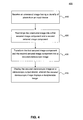
- FIG. 4 is a flow diagram of a method for securing an image, according to an exemplary embodiment.
- Embodiments of the invention may be implemented in hardware, firmware, software, or any combination thereof. Embodiments of the invention may also be implemented as instructions stored on a machine-readable medium, which may be read and executed by one or more processors.
- a machine-readable medium may include any mechanism for storing or transmitting information in a form readable by a machine (e.g., a computing device).
- a machine-readable medium may include read only memory (ROM); random access memory (RAM); magnetic disk storage media; optical storage media; flash memory devices; electrical, optical, acoustical or other forms of propagated signals (e.g., carrier waves, infrared signals, digital signals, etc.), and others.
- firmware, software, routines, instructions may be described herein as performing certain actions. However, it should be appreciated that such descriptions are merely for convenience and that such actions in fact result from computing devices, processors, controllers, or other devices executing the firmware, software, routines, instructions, etc.
- FIG. 1 is a diagram of a secured stereoscopic display environment 100, according to an exemplary embodiment.
- Secured stereoscopic display environment 100 includes an authorized user 102, an unauthorized recording device 104, and a secured stereoscopic display 106.
- Secured stereoscopic display 106 may be any type of stereoscopic display capable of displaying two or more images at separate viewing angles.
- secured stereoscopic display 106 may be an autostereoscopic display, and thus may be viewed without the use of glasses.
- stereoscopic display 106 may be a computer monitor or television.
- stereoscopic display 106 may also be printed material, such as a lenticular material, according to an exemplary embodiment.
- a stereoscopic image includes two or more image components displayed at a variety of viewing angles. For example, two image components may be displayed individually to respective eyes of a viewer. Due to the natural visual processing of the human brain, the image components, when viewed simultaneously may naturally be combined or overlaid.
- the image components may represent a scene.
- the scene is a snapshot of the graphical or textual information that is conveyed by the stereoscopic image at a moment in time.
- the scene may depict a single frame of a video, a picture, graphical user interface, a textual document, or any other type of image.
- the image components when viewed simultaneously, and directed to each respective eye, may simulate 3D.
- a stereoscopic image may be either 2D or 3D.
- Unauthorized recording device 104 may be any type of recording device capable of recording an image from a single perspective or angle. Unauthorized recording device 104 may view secured stereoscopic display 106 from viewing angle 112. However, secured stereoscopic display 106 may display a secured stereoscopic image such that unauthorized recording device 104 may not be able to effectively record the scene which is displayed.
- each of the image components of the secured stereoscopic image may depict an indecipherable image. For example, if either of the image components were viewed individually they would not convey decipherable information. In some cases, they may even convey incorrect information.
- Unauthorized recording device 104 may be recording the secured stereoscopic display 106 from only one viewing angle, such as viewing angle 112. Accordingly, unauthorized recording device 104 may at most see only one image component, and thus not record a decipherable image. For example, from viewing angle 112, unauthorized recording device 104, may at most only view the image component projected from viewing angle 108. However, the images projected from both viewing angles 108 and 110 may need to be seen simultaneously in order to decipher the secured stereoscopic image. Accordingly, since neither image component individually depicts a decipherable scene, unauthorized recording device 104 may not be able to decipher the scene.
- FIG. 2 is a block diagram of an exemplary secured stereoscopic device 200, according to an exemplary embodiment.
- Secured stereoscopic device 200 may be implemented as a standalone device, or components of secured stereoscopic device 200 may be implemented in other devices.
- Secured stereoscopic device 200 may be a dedicated device or a general computing device, including but not limited to, a personal computer, laptop, server, gaming device, or a mobile device.
- Secured stereoscopic device 200 includes a processor 202 and a memory 204.
- Processor 202 may be configured to execute instructions stored on memory 204.
- Processor 202 may be a general purpose processor or a special purpose processor.
- Memory 204 may be any type of persistent or non-persistent computer readable storage medium including but not limited to, RAM, ROM, EPROM, EEPROM, flash memory, a magnetic storage medium, or an optical storage medium.
- Processor 202 may communicate with memory 204 over communications bus 206. Communications bus 206 may allow for both parallel and serial connections between devices and modules connected to communications bus 206.
- Processor 202 may also communicate with stereoscopic control module 208, stereoscopic rearranger 210, and graphics subsystem 216.
- Stereoscopic control module 208, stereoscopic rearranger 210, and graphics subsystem 216 may each be implemented in-part or in-whole in hardware, software or a combination of both. If implemented in software, each of the stereoscopic control module 208, stereoscopic rearranger 210, and graphics subsystem 216 may comprise instructions stored on memory 204. In an exemplary embodiment, graphics subsystem 216 may be stored on a separate memory (not shown). Accordingly, each of the stereoscopic control module 208, stereoscopic rearranger 210, and graphics subsystem 216 may perform their own native processing or communicate instructions to processor 202.
- stereoscopic display 222 may be an autostereoscopic display.
- An autostereoscopic display may be viewed without the assistance of specialized glasses.
- stereoscopic display 222 may use one or more lenticular lenses, parallax barriers, movement parallaxes, eye/face tracking, or any other technique for displaying autostereoscopic images.
- stereoscopic display 222 may also be dual-mode. Accordingly, stereoscopic display 222 may be capable of displaying a stereoscopic image in one mode, but a non-stereoscopic image in another. This may be controlled automatically, based upon the type of images sent to stereoscopic display 222 or may be controlled manually by a user by pressing a hardware button or through the use of a software control.
- Secured stereoscopic device 200 includes graphics subsystem 216.
- Graphics subsystem 216 may be configured to render images in real-time that are intended to be displayed on stereoscopic display 222.
- unsecured image 226 may be the particular image that is displayed on display 222 at a particular moment in time.
- unsecured image 226 may be a frame of a video, or a snapshot of a graphical user interface (GUI) or a textual document.
- GUI graphical user interface
- unsecured image 226 may be non-stereoscopic.
- graphics subsystem 216 may also be configured to directly render unsecured stereoscopic images too. Rendering is the act of creating and organizing an image or frame prior to outputting the image or frame to a display.
- graphics subsystem 216 may render unsecured image 226.
- Graphics subsystem 216 may include a specialized processor (not shown), such as a graphics processing unit (GPU). Graphics subsystem 216 may also be configured for shared graphics. Accordingly, graphics subsystem 216 may use memory 204 for part or all of its operations. However, graphics subsystem 216 may also be configured to use dedicated memory (not shown) for part or all of its operations.
- secured stereoscopic device 200 includes stereoscopic rearranger 210.
- Stereoscopic rearranger 210 may be configured to create secured stereoscopic image components 218.1 and 218.2 from unsecured image 226.
- Stereoscopic rearranger 210 may split unsecured image 226 into secured image components 218.1 and 218.2.
- Secured image components 218.1 and 218.2 may each display indecipherable content alone. However, when secured image components 218.1 and 218.2 are overlaid they may display decipherable content. This process may occur naturally when an image is viewed stereoscopically by a human.
- stereoscopic rearranger 210 may rearrange a portion or all of unsecured image 226.
- unsecured image 226 may contain textual content.
- stereoscopic rearranger 210 may be configured to recognize individual characters and/or words using optical character recognition (OCR). Accordingly, stereoscopic rearranger 210 may be configured to automatically split characters within detected words randomly between secured image components 218.1 and 218.2.
- the letters “d” and “g” may be randomly determined to be displayed in secured image component 218.1 and the letter “o” may be randomly determined to be displayed in secured image component 218.2.
- the letters may also be split non-randomly. For example odd letters may be displayed in secured image component 218.1 and even letters may be displayed in secured image component 218.2.
- Stereoscopic rearranger 210 may also be configured to split characters within words using a predetermined dictionary.
- the predetermined dictionary may provide rearrangements that are more likely to cause confusion when split. For example, a word that conveys a negative meaning may be changed to convey a positive meaning, such as splitting the word "incorrect” into “in” and correct.
- the pixels representing the individual letters may be located and split between secured image components 218.1 and 218.2. For example, if the letters "in” are to be placed in secured image component 218.1, then the pixels representing the letters "in” may be placed in secured image component 218.1 in a corresponding position to their position in unsecured image 226. Likewise, the pixels representing the letters "correct” may be placed in secured image component 218.2 in a corresponding location to their position in unsecured image 226.
- Stereoscopic rearranger 210 may also be configured to split between secured image components 218.1 and 218.2 individual characters using predetermined rearrangements for each type of recognized character. These rearrangements may cause the character to appear totally unrecognizable or may cause the character to appear as a different character. For example, stereoscopic rearranger 210 may split the pixels representing the letter "T” such that the "T” appears as a different letter, such as "I” in a particular secured image component. In particular, these rearrangements may split the pixels of a character in such a manner, such that the indecipherability of each of the secured image components 218.1 and 218.2 is maximized.
- Stereoscopic rearranger 210 may also be configured with predetermined rearrangements for images, such as logos.
- stereoscopic rearranger 210 may detect a company logo within unsecured image 226.
- stereoscopic rearranger 210 may be configured to split the pixels of the logo, using a predetermined rearrangement, between secured image components 218.1 and 218.2 such that the logo is indecipherable in each of the image components.
- stereoscopic rearranger 210 may randomly split parts of the original image on a pixel by pixel basis to each of the secured image components 218.1 and 218.2.
- Stereoscopic rearranger 210 may also be configured to randomly split all of unsecured image 226 on a pixel by pixel basis between secured image components 218.1 and 218.2.
- random mutations may also be introduced in the cases where stereoscopic rearranger uses predetermined patterns.
- stereoscopic rearranger 210 may have predetermined rearrangements for recognized characters, words, or images.
- the patterns may be randomly mutated in order to further thwart detection when an unauthorized user or device, such as unauthorized device 112 of FIG. 1 may have the ability to monitor secured stereoscopic device 200 for a long period of time or over multiple sessions.
- stereoscopic rearranger 210 may be configured to randomly decide to place a pixel that was predetermined to be in secured image component 218.1 to be in secured image component 218.2 in order to thwart detection.
- Stereoscopic rearranger 210 may also be configured to secure only portions of unsecured image 226. For example, if unsecured image 226 displays a login window only the username and password portions of the login window may be desired to be secured. Stereoscopic rearranger 210 may then be configured to secure only the desired portions of unsecured image 226. In particular, the portions that remain unsecured may be displayed in both secured image components 218.1 and 218.2, while the secured portions may be split between secured image components 218.1 and 218.2. The particular portion that may be secured may be selected automatically or selected by a user. For example, secured stereoscopic device 200 may be configured to automatically determine when sensitive materials are being displayed and their respective locations within unsecured image 226.
- a user may also manually select portions of unsecured image 226 that may need to be secured. This may occur by drawing a box, or other shape around the particular area that a user desires to secure, or by enabling the entirety of stereoscopic display 222 to be secured.
- Providing a common anchor between secured image components 218.1 and 218.2 may also be desirable in some circumstances.
- a common anchor such as a border, may ease the natural combination of secured image components 218.1 and 218.2 by a human.
- stereoscopic rearranger 210 may also be configured to leave such a common anchor portion unsecured.
- Stereoscopic rearranger 210 may also be configured to secure images using colorized pixels.
- a pixel may store color information related to the color in which the pixel is to be displayed.
- the pixel may store this information using an RGB color model.
- the pixels may store information related to each of their red, green, or blue color components. However, they may also store color information using other models, including, but not limited to, CMYK or YUV.
- Stereoscopic rearranger 210 may then be configured to split pixels based upon their color components.
- secured stereoscopic image 214 may be configured to display decipherable information in a desired output color, such as purple.
- stereoscopic rearranger 210 may randomly output color components of an output color to secured image components 218.1 and 218.2. For example, if the desired output color is purple, stereoscopic rearranger may output red pixels to secured image component 218.1 and blue pixels to secured image component 218.2. Each of the secured image components 218.1 and 218.2, when viewed individually, may appear as random red or blue pixels. However, when secured image components 218.1 and 218.2 are viewed stereoscopically, decipherable information may be conveyed in purple. In particular, the decipherable information may be located where the red pixels overlap with blue pixels within secured image components 218.1 and 218.2. Accordingly, secured image components 218.1 and 218.2, when viewed stereoscopically, may appear to display randomly located red and blue pixels with purple pixels displaying a decipherable message.
- Secured stereoscopic device 200 also includes a stereoscopic control module 208.
- Stereoscopic control module 208 may be configured to create a secured stereoscopic image 214 from secured image components 218.1 and 218.2.
- Secured stereoscopic image 214 is an image that may be displayed by stereoscopic output device, such as stereoscopic display 222. However, secured stereoscopic image 214 may also be displayed on a secured printed material 224.
- Secured stereoscopic image 214 may include secured image components 218.1 and 218.2. In particular, secured image components 218.1 and 218.2 may be interlaced on secured stereoscopic image 214. Each interlaced set of images may then be directed to a particular eye when displayed.
- secured stereoscopic image 214 may include two or more stripes, with each stripe representing a portion of either secured image component 218.1 and 218.2.
- the odd stripes may contain portions of secured image component 218.1 and the even stripes may contain portions of secured image component 218.2.
- the odd stripes may be directed to the left eye of a viewer and the even stripes may be directed to the right eye. Accordingly, the left eye may see secured image component 218.1 and the right eye may see secured image component 218.2.
- the secured image components may be overlaid, and thus deciphered by a person.
- other types of processing may be required depending on the particular type of display device.
- other types of display devices may require processing, such as any combination of linear polarization, circular polarization, color filtering, or alternating image components.
- Unsecured image 226 may also be stored as a file on secured stereoscopic device 200.
- unsecured image 226 may have been created in imaging editing software instead of graphics subsystem 216.
- secured stereoscopic device 200 may also be optionally connected to a printer 220.
- secured stereoscopic device 200 may not include stereoscopic display 222 or may include a non-stereoscopic display.
- Printer 220 may be connected to secured stereoscopic device 200 via interface 212.
- printer 220 may be connected externally to secured stereoscopic device 200.
- printer 220 and secured stereoscopic device 200 may also be integrated into a single device.
- Printer 220 may be capable of printing secured printed material 224.
- Secured printed material 224 may be any type of printed material capable of displaying secured stereoscopic image 214.
- the secured printed material may be produced using autostereoscopic printing.
- Autostereoscopic printing includes techniques for printing two or more images such that they are displayed at a variety of viewing angles. When viewed by a human, the images may be naturally combined.
- one technique of autostereoscopic printing is lenticular printing. Lenticular printing is a process for printing two or more images combined with a lenticular material.
- FIG. 3 is a perspective diagram of a secured printed material 300, according to an exemplary embodiment.
- Secured printed material 300 includes a substrate material 302, a secured stereoscopic image 304, and a lenticular material 306.
- Secured printed material 300 may be configured to display a stereoscopic image, for example, secured stereoscopic image 304.
- Substrate material 302 may be any type of backing material.
- substrate material 302 may be a polymer or a paper based material.
- substrate material 302 may be a cardboard.
- Lenticular material 306 may include two or more lenticular lenses.
- a lenticular lens is a type of lens that magnifies different images when viewed from different angles. Accordingly, the lenticular lenses 308.1 and 308.2 may allow for the component images of secured stereoscopic image 304 to be directed to each eye of a viewer.
- Lenticular material 306 may be a polymer-based material.
- Lenticular material 306 also includes lenticular lenses 308.1-308.4. Lenticular material 306 may be bonded or fused to substrate material 302, for example by using a transparent adhesive.
- secured stereoscopic image 304 is printed directly on lenticular material 306.
- secured stereoscopic image 304 may also be printed directly on substrate material 302, according to an exemplary embodiment.
- Secured stereoscopic image 304 may also be printed on a separate material, such as a paper or polymer based material and bonded in between substrate material 302 and lenticular material 306.
- Secured stereoscopic image 304 may be created using secured stereoscopic device 200.
- secured stereoscopic image 304 may be printed using secured printed material 224.
- Secured stereoscopic image 304 includes secured image components 310.1 and 310.2.
- Secured image components 310.2 and 310.2 may individually display an indecipherable image, however when secured printed material is viewed stereoscopically, a decipherable image may be displayed.
- Each of the secured image components 310.1 and 310.2 may be interlaced within secured stereoscopic image 304.
- each of the secured image components 310.1 and 310.2 may be split into stripes and the stripes may be interlaced within secured stereoscopic image 304. The odd stripes may be portions of secured image component 310.1.
- the even stripes may be portions of secured image component 310.2.
- Each stripe aligns with a lenticular lens in lenticular lenses 308.1-308.4.
- the lenticular lenses may then direct the odd stripes to the left eye of a viewer (as represented by the "L” in secured stereoscopic image 304) and the even stripes may be directed to the right eye of viewer (as represented by the "R” in secured stereoscopic image 304).
- lenticular lenses 308.1 are coupled with secured stereoscopic image 304 and aligned respectively to each interlaced stripe
- each of secured image components 310.1 and 310.2 are directed to each eye of a viewer, and secured printed material 300 may be viewed stereoscopically.
- secured printed material 300 when each of secured image components 310.1 and 310.2 are directed to each eye of a viewer simultaneously, they are naturally overlaid, thus, permitting the secured printed material 300 to display a decipherable image. Accordingly, if secured printed material 300 is recorded or viewed from a single angle or perspective, secured printed material 300 may only display at most one of secured image component 310.1 or secured image component 310.2.
- FIG. 4 is a flow diagram of a method 400 for securing an image, according to an exemplary embodiment.
- the unsecured image is rearranged into a first secured image component and a second secured image component.
- the unsecured image is rearranged such that the first secured image component and the second secured image component each convey indecipherable images individually.
- the unsecured image may be rearranged using a stereoscopic rearranger, such as stereoscopic rearranger 210.
- the particular technique that may be used to rearrange the unsecured image may depend on the particular type of unsecured image. For example in some cases only portions of the unsecured image may be rearranger.
- Optical character recognition may be performed on the unsecured image in order to detect one or more characters. Each of the one or more characters may then be rearranged using preconfigured rearrangements based upon the detected words.
- individual characters in words may be split randomly between the first and second secured image components. For example, if the word “dog” were desired to be displayed securely, the letters “d” and “g” may be displayed in a first secured image component and the letter “o” may be displayed in the second secured image component.
- the characters may also be split in other ways, such as all of the even letters are displayed in the first secured image component and all of the odd letters are displayed in the second image component.
- a predetermined dictionary may also be used in order to determine rearrangements for words. In particular, the predetermined dictionary may provide rearrangements that are more likely to cause confusion when split. For example, a word that conveys a negative meaning may be changed to convey a positive meaning, such as splitting the word "incorrect” into “in” and correct.
- the individual recognized characters themselves may also be split such that they appear unrecognizable or as a different character.
- the letter "T" may be split such that it appears as the letter "I”.
- images may also be recognized and split between the secured image components using configured rearrangements.
- a company logo may be recognized and split using a preconfigured rearrangement. If a character or image is not recognized the character or image may be randomly split on a pixel by pixel basis between the secured image components. The entirety of the unsecured image may also be randomly split between the secured image components. Random mutations may also be introduced in order to prevent decoding based upon viewing the secured image components over a long period of time.
- the secured image components may also be rearranged at random or predetermined intervals.
- only portions of the unsecured image may be secured.
- the stereoscopic rearranger may be configured to only secure the desired portions of unsecured image.
- the portions that remain unsecured may be displayed in both of the secured image components, while the secured portions may be split between the secured image components.
- the portion to be secured may be automatically selected or manually selected. For example, a user may manually select a portion of the unsecured image, by drawing a box or other shape around the section desired to be secured.
- Providing a common anchor between the secured image components may also be desirable in some circumstances.
- a common anchor such as a border, may ease the natural combination of the secured image components by a human.
- stereoscopic rearranger may also be configured to leave such a common anchor portion unsecured.
- the unsecured image may also be rearranged based upon color components.
- the secured stereoscopic image may display decipherable information in a first color.
- the first and second secured image components may contain pixels that are color components of the first color. A portion of the pixels of the first and second image components may overlap to form the decipherable content. For example, red pixels may be outputted to a first secured image component and blue pixels may be outputted to a second secured image components.
- decipherable information may be conveyed in purple.
- the decipherable information may be located where the red pixels overlap with blue pixels within the first and second secured image components. Accordingly, secured image components 218.1 and 218.2, when viewed stereoscopically, may appear to display randomly located red and blue pixels with purple pixels displaying a decipherable message.
- the first secured image component and the second secured image component are transformed into a secured stereoscopic image.
- the particular technique that is used to transform the first secured image component and the second secured image component into a secured stereoscopic image may depend on the particular type of stereoscopic output device. For example, if the stereoscopic output device is an autostereoscopic device, the first image component and the second secured image component may be interlaced together in order to create the secured stereoscopic image. Other types of displays may require different types of processing, such as any combination of linear polarization, circular polarization, color filtering, or alternating image components.
- the secured stereoscopic image is displayed on a stereoscopic output device.
- the secured stereoscopic image may be displayed on stereoscopic display 222 or secured printed material 300.
- the secured stereoscopic image may be displayed at two separate viewing angles that are aligned to a viewer's eyes. At each of the separate angles a secured image component may be displayed. Accordingly, each of the secured image components may be projected to a viewer's eyes, respectively.
- each secured image component is individually indecipherable, however when combined using the natural processing power of the human brain they combined or overlaid image may be decipherable.
- the methods and systems disclosed herein may also be adapted to therapeutic purposes.
- the stereoscopic image may be displayed in such a manner that it has a therapeutic effect on the viewer.
- the image may be displayed on stereoscopic display 222 or secured printed material 300.
- a first image component of the stereoscopic image may contain a therapeutic image.
- a therapeutic image when viewed, may generate a desired response by the viewer of the therapeutic image.
- the image may have a soothing effect when viewed.
- the stereoscopic image may be a combination of the first image component and a plurality of other image components.
- the stereoscopic image may be non-therapeutic.
- the stereoscopic image may also be a different therapeutic image then the first image component.
- the stereoscopic image may be indecipherable or may contain an unrelated scene to the first image component. Accordingly, while the viewer may be only aware of the stereoscopic image, the first image component may be naturally processed by the viewer.
Landscapes
- Engineering & Computer Science (AREA)
- Multimedia (AREA)
- Signal Processing (AREA)
- Physics & Mathematics (AREA)
- General Physics & Mathematics (AREA)
- Theoretical Computer Science (AREA)
- Testing, Inspecting, Measuring Of Stereoscopic Televisions And Televisions (AREA)
- Image Generation (AREA)
Applications Claiming Priority (2)
| Application Number | Priority Date | Filing Date | Title |
|---|---|---|---|
| US201161549495P | 2011-10-20 | 2011-10-20 | |
| US13/434,615 US20130100243A1 (en) | 2011-10-20 | 2012-03-29 | Secure Stereoscopic Display |
Publications (2)
| Publication Number | Publication Date |
|---|---|
| EP2584787A2 true EP2584787A2 (de) | 2013-04-24 |
| EP2584787A3 EP2584787A3 (de) | 2013-08-14 |
Family
ID=47115112
Family Applications (1)
| Application Number | Title | Priority Date | Filing Date |
|---|---|---|---|
| EP12006106.4A Ceased EP2584787A3 (de) | 2011-10-20 | 2012-08-28 | Stereoskopische Anzeige für sichere Anzeigedarstellung |
Country Status (5)
| Country | Link |
|---|---|
| US (1) | US20130100243A1 (de) |
| EP (1) | EP2584787A3 (de) |
| KR (1) | KR101428636B1 (de) |
| CN (1) | CN103067731A (de) |
| TW (1) | TW201334511A (de) |
Families Citing this family (1)
| Publication number | Priority date | Publication date | Assignee | Title |
|---|---|---|---|---|
| KR102257304B1 (ko) | 2014-10-20 | 2021-05-27 | 삼성전자주식회사 | 디스플레이 보안 방법 및 장치 |
Citations (3)
| Publication number | Priority date | Publication date | Assignee | Title |
|---|---|---|---|---|
| WO2010064118A1 (en) * | 2008-12-01 | 2010-06-10 | Imax Corporation | Methods and systems for presenting three-dimensional motion pictures with content adaptive information |
| EP2247116A2 (de) * | 2009-04-27 | 2010-11-03 | Mitsubishi Electric Corporation | Stereoskopisches Video- und Audioaufzeichnungsverfahren, stereoskopisches Video- und Audiowiedergabeverfahren, stereoskopische Video- und Audioaufzeichnungsvorrichtung, stereoskopische Video- und Audiowiedergabevorrichtung und stereoskopisches Video- und Audioaufzeichnungsmedium |
| EP2290996A1 (de) * | 2008-09-29 | 2011-03-02 | Panasonic Corporation | Videosignal-verarbeitungseinrichtung |
Family Cites Families (9)
| Publication number | Priority date | Publication date | Assignee | Title |
|---|---|---|---|---|
| AUPN003894A0 (en) * | 1994-12-13 | 1995-01-12 | Xenotech Research Pty Ltd | Head tracking system for stereoscopic display apparatus |
| GB2321330A (en) * | 1997-01-15 | 1998-07-22 | Peter Mcduffie White | Display apparatus using a lenticular screen and a single sheet of interlaced images |
| KR19990024950A (ko) * | 1997-09-09 | 1999-04-06 | 조영선 | 퍼즐식 화상 정보 보안시스템 및 지원장치 |
| US20040070588A1 (en) * | 2002-10-09 | 2004-04-15 | Xerox Corporation | Systems for spectral multiplexing of source images including a stereogram source image to provide a composite image, for rendering the composite image, and for spectral demultiplexing of the composite image |
| US20060023197A1 (en) * | 2004-07-27 | 2006-02-02 | Joel Andrew H | Method and system for automated production of autostereoscopic and animated prints and transparencies from digital and non-digital media |
| WO2008053545A1 (fr) * | 2006-10-31 | 2008-05-08 | Fujitsu Limited | Dispositif de chiffrage/déchiffrage d'images, procédé et programme |
| KR100880243B1 (ko) * | 2007-07-30 | 2009-01-23 | 주식회사 골드엔키 | 이미지 퍼즐형 암호화이미지를 이용한 원본이미지암호화시스템 |
| CN101990764A (zh) * | 2007-10-01 | 2011-03-23 | 双镜头公司 | 全色视差立体图三维显示 |
| US9524700B2 (en) * | 2009-05-14 | 2016-12-20 | Pure Depth Limited | Method and system for displaying images of various formats on a single display |
-
2012
- 2012-03-29 US US13/434,615 patent/US20130100243A1/en not_active Abandoned
- 2012-08-28 EP EP12006106.4A patent/EP2584787A3/de not_active Ceased
- 2012-09-14 TW TW101133675A patent/TW201334511A/zh unknown
- 2012-09-17 KR KR1020120102896A patent/KR101428636B1/ko not_active Expired - Fee Related
- 2012-09-28 CN CN2012103717002A patent/CN103067731A/zh active Pending
Patent Citations (3)
| Publication number | Priority date | Publication date | Assignee | Title |
|---|---|---|---|---|
| EP2290996A1 (de) * | 2008-09-29 | 2011-03-02 | Panasonic Corporation | Videosignal-verarbeitungseinrichtung |
| WO2010064118A1 (en) * | 2008-12-01 | 2010-06-10 | Imax Corporation | Methods and systems for presenting three-dimensional motion pictures with content adaptive information |
| EP2247116A2 (de) * | 2009-04-27 | 2010-11-03 | Mitsubishi Electric Corporation | Stereoskopisches Video- und Audioaufzeichnungsverfahren, stereoskopisches Video- und Audiowiedergabeverfahren, stereoskopische Video- und Audioaufzeichnungsvorrichtung, stereoskopische Video- und Audiowiedergabevorrichtung und stereoskopisches Video- und Audioaufzeichnungsmedium |
Non-Patent Citations (3)
| Title |
|---|
| KIYOUNG LEE: "Software-based realization of secure stereoscopic HD video delivery over IP networks", PROCEEDINGS OF SPIE, vol. 6016, 1 January 2005 (2005-01-01), pages 601604, XP055022561, ISSN: 0277-786X, DOI: 10.1117/12.630151 * |
| NTALIANIS K S ET AL: "Chaotic Video Objects Encryption Based on Mixed Feedback, Multiresolution Decomposition and Time-Variant S-Boxes", IMAGE PROCESSING, 2005. ICIP 2005. IEEE INTERNATIONAL CONFERENCE ON, IEEE, PISCATAWAY, NJ, USA,IEEE, vol. 2, 11 September 2005 (2005-09-11), pages 1110 - 1113, XP010851252, ISBN: 978-0-7803-9134-5, DOI: 10.1109/ICIP.2005.1530254 * |
| YUPU DONG ET AL: "Image encryption algorithm based on chaotic mapping", COMPUTER SCIENCE AND INFORMATION TECHNOLOGY (ICCSIT), 2010 3RD IEEE INTERNATIONAL CONFERENCE ON, IEEE, PISCATAWAY, NJ, USA, 9 July 2010 (2010-07-09), pages 289 - 291, XP031748332, ISBN: 978-1-4244-5537-9 * |
Also Published As
| Publication number | Publication date |
|---|---|
| CN103067731A (zh) | 2013-04-24 |
| US20130100243A1 (en) | 2013-04-25 |
| TW201334511A (zh) | 2013-08-16 |
| KR20130043573A (ko) | 2013-04-30 |
| KR101428636B1 (ko) | 2014-08-08 |
| EP2584787A3 (de) | 2013-08-14 |
Similar Documents
| Publication | Publication Date | Title |
|---|---|---|
| US8750558B2 (en) | Electronic device and method for viewing electronic confidential document | |
| US9495795B2 (en) | Image recording device, three-dimensional image reproducing device, image recording method, and three-dimensional image reproducing method | |
| EP2905960A1 (de) | Anzeigevorrichtung und Steuerungsverfahren dafür | |
| US20130027389A1 (en) | Making a two-dimensional image into three dimensions | |
| EP2528337A1 (de) | Dual-Ansicht-Anzeigeverfahren und Dual-Ansicht-Ansteuerungsverfahren um mehrere Bilder für mehrere Benutzer bereitzustellen und Anzeigevorrichtung und Dual-Ansicht-Brille zur Nutzung dieser Verfahren | |
| CN102802014A (zh) | 一种多人跟踪功能的裸眼立体显示器 | |
| EP2387245A2 (de) | 3D-Bildanzeigevorrichtung und Verfahren zu ihrer Ansteuerung | |
| CN108076208B (zh) | 一种显示处理方法及装置、终端 | |
| US20120120190A1 (en) | Display device for use in a frame sequential 3d display system and related 3d display system | |
| US20050012814A1 (en) | Method for displaying multiple-view stereoscopic images | |
| US20140210695A1 (en) | Securing information | |
| CN104866267B (zh) | 基于时空心理视觉调制的即插即用安全显示处理模块 | |
| JP4787369B1 (ja) | 画像処理装置および方法並びにプログラム | |
| US8400493B2 (en) | Virtual stereoscopic camera | |
| US20120120191A1 (en) | Image processor for use in a frame sequential 3d display system and related 3d display system | |
| EP2584787A2 (de) | Stereoskopische Anzeige für sichere Anzeigedarstellung | |
| CN115836522A (zh) | 具有用于校正伪立体效果的处理器的3d显示设备 | |
| HK1180504A (en) | Secure stereoscopic display | |
| US9964772B2 (en) | Three-dimensional image display apparatus, methods and systems | |
| KR101567710B1 (ko) | 특수 안경을 착용한 관찰자만 정보를 볼 수 있는 디스플레이 시스템 | |
| KR20110092629A (ko) | 적절한 시청 위치 알림 방법 및 이를 위한 무안경 방식 3차원 디스플레이 장치 | |
| JP3831853B2 (ja) | 立体映像表示装置 | |
| KR102092242B1 (ko) | 항공기 시뮬레이션용 디스플레이 장치 | |
| CN117640913A (zh) | 多视角3d显示装置 | |
| US9678354B2 (en) | Glassless multi-view display apparatus and control method thereof |
Legal Events
| Date | Code | Title | Description |
|---|---|---|---|
| PUAI | Public reference made under article 153(3) epc to a published international application that has entered the european phase |
Free format text: ORIGINAL CODE: 0009012 |
|
| 17P | Request for examination filed |
Effective date: 20120828 |
|
| AK | Designated contracting states |
Kind code of ref document: A2 Designated state(s): AL AT BE BG CH CY CZ DE DK EE ES FI FR GB GR HR HU IE IS IT LI LT LU LV MC MK MT NL NO PL PT RO RS SE SI SK SM TR |
|
| AX | Request for extension of the european patent |
Extension state: BA ME |
|
| PUAL | Search report despatched |
Free format text: ORIGINAL CODE: 0009013 |
|
| AK | Designated contracting states |
Kind code of ref document: A3 Designated state(s): AL AT BE BG CH CY CZ DE DK EE ES FI FR GB GR HR HU IE IS IT LI LT LU LV MC MK MT NL NO PL PT RO RS SE SI SK SM TR |
|
| AX | Request for extension of the european patent |
Extension state: BA ME |
|
| RIC1 | Information provided on ipc code assigned before grant |
Ipc: H04N 1/00 20060101ALI20130709BHEP Ipc: H04N 13/04 20060101AFI20130709BHEP Ipc: H04N 1/32 20060101ALI20130709BHEP Ipc: G02B 27/22 20060101ALI20130709BHEP |
|
| 17Q | First examination report despatched |
Effective date: 20130724 |
|
| RBV | Designated contracting states (corrected) |
Designated state(s): AL AT BE BG CH CY CZ DE DK EE ES FI FR GB GR HR HU IE IS IT LI LT LU LV MC MK MT NL NO PL PT RO RS SE SI SK SM TR |
|
| STAA | Information on the status of an ep patent application or granted ep patent |
Free format text: STATUS: THE APPLICATION HAS BEEN REFUSED |
|
| 18R | Application refused |
Effective date: 20141125 |