EP2582076A2 - Mobilkommunikationssystem und paketsteuerungsverfahren in diesem mobilkommunikationssystem - Google Patents
Mobilkommunikationssystem und paketsteuerungsverfahren in diesem mobilkommunikationssystem Download PDFInfo
- Publication number
- EP2582076A2 EP2582076A2 EP11792695.6A EP11792695A EP2582076A2 EP 2582076 A2 EP2582076 A2 EP 2582076A2 EP 11792695 A EP11792695 A EP 11792695A EP 2582076 A2 EP2582076 A2 EP 2582076A2
- Authority
- EP
- European Patent Office
- Prior art keywords
- packet
- segment
- mac
- timer
- pdu
- Prior art date
- Legal status (The legal status is an assumption and is not a legal conclusion. Google has not performed a legal analysis and makes no representation as to the accuracy of the status listed.)
- Withdrawn
Links
Images







Classifications
-
- H—ELECTRICITY
- H04—ELECTRIC COMMUNICATION TECHNIQUE
- H04L—TRANSMISSION OF DIGITAL INFORMATION, e.g. TELEGRAPHIC COMMUNICATION
- H04L1/00—Arrangements for detecting or preventing errors in the information received
- H04L1/12—Arrangements for detecting or preventing errors in the information received by using return channel
- H04L1/16—Arrangements for detecting or preventing errors in the information received by using return channel in which the return channel carries supervisory signals, e.g. repetition request signals
- H04L1/1607—Details of the supervisory signal
-
- H—ELECTRICITY
- H04—ELECTRIC COMMUNICATION TECHNIQUE
- H04L—TRANSMISSION OF DIGITAL INFORMATION, e.g. TELEGRAPHIC COMMUNICATION
- H04L5/00—Arrangements affording multiple use of the transmission path
- H04L5/0001—Arrangements for dividing the transmission path
- H04L5/0003—Two-dimensional division
- H04L5/0005—Time-frequency
- H04L5/0007—Time-frequency the frequencies being orthogonal, e.g. OFDM(A) or DMT
- H04L5/001—Time-frequency the frequencies being orthogonal, e.g. OFDM(A) or DMT the frequencies being arranged in component carriers
-
- H—ELECTRICITY
- H04—ELECTRIC COMMUNICATION TECHNIQUE
- H04L—TRANSMISSION OF DIGITAL INFORMATION, e.g. TELEGRAPHIC COMMUNICATION
- H04L5/00—Arrangements affording multiple use of the transmission path
- H04L5/003—Arrangements for allocating sub-channels of the transmission path
- H04L5/0032—Distributed allocation, i.e. involving a plurality of allocating devices, each making partial allocation
-
- H—ELECTRICITY
- H04—ELECTRIC COMMUNICATION TECHNIQUE
- H04L—TRANSMISSION OF DIGITAL INFORMATION, e.g. TELEGRAPHIC COMMUNICATION
- H04L5/00—Arrangements affording multiple use of the transmission path
- H04L5/003—Arrangements for allocating sub-channels of the transmission path
- H04L5/0053—Allocation of signalling, i.e. of overhead other than pilot signals
- H04L5/0055—Physical resource allocation for ACK/NACK
-
- H—ELECTRICITY
- H04—ELECTRIC COMMUNICATION TECHNIQUE
- H04W—WIRELESS COMMUNICATION NETWORKS
- H04W28/00—Network traffic management; Network resource management
- H04W28/02—Traffic management, e.g. flow control or congestion control
- H04W28/0231—Traffic management, e.g. flow control or congestion control based on communication conditions
-
- H—ELECTRICITY
- H04—ELECTRIC COMMUNICATION TECHNIQUE
- H04W—WIRELESS COMMUNICATION NETWORKS
- H04W36/00—Hand-off or reselection arrangements
- H04W36/0005—Control or signalling for completing the hand-off
- H04W36/0055—Transmission or use of information for re-establishing the radio link
- H04W36/0069—Transmission or use of information for re-establishing the radio link in case of dual connectivity, e.g. decoupled uplink/downlink
- H04W36/00692—Transmission or use of information for re-establishing the radio link in case of dual connectivity, e.g. decoupled uplink/downlink using simultaneous multiple data streams, e.g. cooperative multipoint [CoMP], carrier aggregation [CA] or multiple input multiple output [MIMO]
-
- H—ELECTRICITY
- H04—ELECTRIC COMMUNICATION TECHNIQUE
- H04W—WIRELESS COMMUNICATION NETWORKS
- H04W8/00—Network data management
- H04W8/02—Processing of mobility data, e.g. registration information at HLR [Home Location Register] or VLR [Visitor Location Register]; Transfer of mobility data, e.g. between HLR, VLR or external networks
- H04W8/08—Mobility data transfer
-
- H—ELECTRICITY
- H04—ELECTRIC COMMUNICATION TECHNIQUE
- H04W—WIRELESS COMMUNICATION NETWORKS
- H04W80/00—Wireless network protocols or protocol adaptations to wireless operation
- H04W80/02—Data link layer protocols
-
- H—ELECTRICITY
- H04—ELECTRIC COMMUNICATION TECHNIQUE
- H04L—TRANSMISSION OF DIGITAL INFORMATION, e.g. TELEGRAPHIC COMMUNICATION
- H04L1/00—Arrangements for detecting or preventing errors in the information received
- H04L1/12—Arrangements for detecting or preventing errors in the information received by using return channel
- H04L1/16—Arrangements for detecting or preventing errors in the information received by using return channel in which the return channel carries supervisory signals, e.g. repetition request signals
- H04L1/18—Automatic repetition systems, e.g. Van Duuren systems
- H04L1/1829—Arrangements specially adapted for the receiver end
- H04L1/1848—Time-out mechanisms
Definitions
- the present invention relates to a protocol structure and packet segmentation and NACK information feedback mechanism for efficient data transmission in a mobile communication in which a terminal receives data on the multiple carriers from multiple base stations.
- the present invention proposes a protocol structure for a mobile communication system supporting inter-eNB carrier aggregation and packet segmentation and efficient NACK information feedback method appropriate for the protocol structure.
- LTE-A Long Term Evolution-Advanced
- 3GPP 3 rd Generation Partnership Project
- CA Carrier Aggregation
- the inter-eNB CA if the transmission nodes are located at different positions, the nodes may experience different channel conditions. Accordingly, there is a need of a method for managing the packets transmitted to the UE in accordance with the channel conditions of the respective eNBs.
- the inter-eNB CA is also influencing the NACK information feedback mechanism. That is, the packets are transmitted by two eNBs, the reception delay may occur more frequently and become longer. There is therefore a need of a NACK information transmission method for use in association with the inter-eNB CA.
- the present invention aims to propose a protocol structure for supporting inter-eNB CA and provide a packet segmentation and NACK transmission method and apparatus appropriate for the protocol structure.
- a packet control method of a mobile communication system includes transmitting, at a Mobility Management Entity (MME), packets to a first base station; delivering, at the first base station, a part of the packets received from the MME to a terminal and rest packet to a second base station; forwarding, at the second base station, the packets which are segmented into segments having a predetermined size and to which segmented Media Access Control Control-Element (seg MAC CE) is added to the terminal; and feeding back, at the terminal, Non-Acknowledge (NACK) information corresponding to the packets to the first and second base stations.
- MME Mobility Management Entity
- NACK Non-Acknowledge
- forwarding includes adding an seg MAC CE sub-header indicating the seg MAC CE to a MAC sub-header.
- the seg MAC CE includes a sequence number, a first segment indicator, and a last segment indicator.
- adding the seg MAC CE includes determining whether a segment is a first segment of the packet and setting, when the segment is determined as the first segment, the first segment indicator to 1; and determining whether the segment is a last segment of the packet and setting, when the segment is determined as the last segment, the last segment indicator to 1.
- feeding back includes updating a received state variable (VR(R)) and a highest received state variable (VR(H)) using the received packet; controlling operation of a timer for transmitting the NACK information according to the VR(R) and the VR(H); and transmitting the NACK information according to the control of the timer operation.
- VR(R) received state variable
- VR(H) highest received state variable
- controlling operation of a timer includes stopping, when the VR(R) and VR(H) are not equal to each other, the timer.
- controlling operation of a timer includes determining, when the VR(R) and VR(H) are equal to each other, whether the timer is running; and starting, when the timer is not running, the timer according to the VR(R).
- feeding back includes generating a STATUS Packet Data Unit (PDU) including the NACK information using the received packet and comparing the STATUS PDU with a previously generated STATUS PDU; and discarding, when the generated STATUS PDU is identical with the previously generated STATUS PDU, the generated STATUS PDU.
- PDU STATUS Packet Data Unit
- feeding back includes transmitting, when the generated STATUS PDU is not identical with the previously generated STATUS PDU, the generated STATUS PDU.
- a packet management mobile communication system includes a Mobility Management Entity (MME) which transmits packets; a first base station which transmits the packets received from the MME to a second base station and a terminal; a second base station which segments the packets into segments having a predetermined size, adds a segmented Media Access Control Control-Element (seg MAC CE) to the segmented packets, and transmits the segmented packets to the terminal; and a terminal which feeds back Non-Acknowledge (NACK) information corresponding to the packets received from the first and second base station.
- MME Mobility Management Entity
- the seg MAC CE comprises a sequence number, a first segment indicator, and a last segment indicator.
- the second base station determines whether a segment is a first segment of the packet and sets, when the segment is determined as the first segment, the first segment indicator to 1, determines whether the segment is a last segment of the packet and sets, when the segment is determined as the last segment, the last segment indicator to 1.
- the terminal updates a received state variable (VR(R)) and a highest received state variable (VR(H)) using the received packet, determines whether the VR(R) and VR(H) are equal to each other, controls operation of a timer for transmitting the NACK information, and transmits the NACK information according to the control of the timer operation.
- VR(R) received state variable
- VR(H) highest received state variable
- the terminal stops, when the VR(R) and VR(H) are not equal to each other, the timer.
- the terminal determines, when the VR(R) and VR(H) are equal to each other, whether the timer is running and starts, when the timer is not running, the timer according to the VR(R).
- an eNB is capable of forwarding data to another eNB, and each eNB may segment the packets depending on the channel condition. Since the data are received from a plurality of eNBs, it is possible to avoid unnecessary NACK information feedbacks occurring frequently.
- FIG. 1 is a conceptual diagram illustrating inter-eNB CA data transmission according to the present invention
- FIG. 2 is a diagram illustrating a protocol structure of the eNB according to the present invention.
- FIG. 3 is a diagram illustrating packet segmentation and assembly in the LTE protocol structure according to the present invention.
- FIG. 4 is a diagram illustrating a protocol structure for supporting the inter-eNB CA according to an embodiment of the present invention
- FIG. 5 is a diagram illustrating the packet segmentation operation of the RLC layer according to an embodiment of the present invention.
- FIG. 6 is a diagram illustrating the MAC PDU configuration in the lower MAC layer of the target eNB according to an embodiment of the present invention
- FIG. 7 is a flowchart illustrating the eNB procedure for configuring MAC PDU on the lower MAC layer of the target eNB
- FIG. 8 is a flowchart illustrating a UE procedure for the RLC PDU reassembly according to an embodiment of the present invention
- FIG. 9 is a block diagram illustrating the configuration of an eNB for generating the MAC PDU according to an embodiment of the present invention.
- FIG. 10 is a block diagram illustrating the configuration of a UE for assembling the RLC PDUs according to an embodiment of the present invention
- FIG. 11 is a flowchart illustrating the UE procedure according to the first embodiment of the present invention.
- FIG. 12 is a flowchart illustrating the UE procedure according to the second embodiment of the present invention.
- FIG. 13 is a diagram illustrating a separated protocol structure for supporting the inter-eNB CA according to another embodiment of the present invention.
- the present invention proposes a protocol structure for efficient data transmission in a mobile communication system in which a UE receives data from multiple eNBs through multiple carriers.
- FIG. 1 is a conceptual diagram illustrating inter-eNB CA data transmission according to the present invention.
- the entity 105 is a Mobility Management Entity (MME) responsible for controlling eNBs, i.e. the Source eNB 115 as the first eNB and the Target eNB 120 as the second eNB.
- MME Mobility Management Entity
- the entity 110 is the serving gateway (S-GW) responsible for delivering packets to the eNB. Since it is difficult for the S-GW 110 to transmit packets to both the source eNB 115 and the target eNB 120 simultaneously, it sends the packets to only the source eNB 115.
- the source eNB 115 sorts packets per target eNB.
- the source eNB 115 delivers a part of the received packets to the target eNB 120 and the rest to the UE 125. Also, the target eNB 120 transmits the packets received from the source eNB 115 to the UE 125.
- FIG. 2 is a diagram illustrating a protocol structure of the eNB according to the present invention.
- the eNB of an LTE system includes a Packet Data Convergence Protocol (PDCP) layer 205, Radio Link Control (RLC) layer 210, a Media Access Control (MAC) layer 215, and a Physical (PHY) layer 220.
- PDCP Packet Data Convergence Protocol
- RLC Radio Link Control
- MAC Media Access Control
- PHY Physical
- the MAC layer 215 notifies the RLC layer 210 of the size of the packet to be transmitted by the MAC layer 215 in consideration of the channel condition.
- the RLC layer 210 segments or assembles the packets received from the PDCP layer 205 according to the packet size notified by the MAC layer 215 and then delivers the packets to the MAC layer 215.
- the MAC layer 215 assembles the single or multiple packets received from the RLC layer 210, adds a MAC subheader to the assembled packet, and delivers the packet to the PHY layer 220.
- the PHY layer 220 transmits the packet over radio channel 225.
- FIG. 3 is a diagram illustrating packet segmentation and assembly in the LTE protocol structure according to the present invention.
- the Packet Data Convergence Protocol Service Data Unit (PDCP SDU) 305 is an IP packet or a Radio Resource Control (RRC) message received from the S-GW 110 or the MME 105.
- the PDCP layer performs head compression 310, ciphering 315, and PDCP header insertion 320 to generate a PDCP Packet Data Unit (PDU).
- the PDCP PDU is delivered to the RLC layer.
- the PDCP PDU is equal to the RLC SDU 325, and the RLC PDU is generated by segmenting or assembling the RLC SDU 335 according to the packet size informed by the MAC layer as denoted by reference number 330.
- the generated RLC PDU is delivered to the MAC layer.
- the RLC PDU is equal to the MAC SDU, and the MAC PDU is generated by combining the MAC header, MAC Control Element, and RLC SDU.
- the MAC header is composed of the MAC Control Element and the sub-headers 345 for indicating the RLC SDUs.
- the channel conditions of the respective eNBs differ from each other.
- the packet segmentation and assembly scheme has to be determined depending on whether each eNB operates with separate RLC layer 210 and MAC layer 215 or only with the MAC layer 215.
- the MAC layer 215 is divided into at least two sub-layers, and the packet segmentation function of the RLC layer 210 is performed at on the MAC layer 215. As a consequence, it is possible to solve the problem such as packet transmission delay and complexity.
- FIG. 4 is a diagram illustrating a protocol structure for supporting the inter-eNB CA according to an embodiment of the present invention.
- the source eNB 405 connects to the S-GW and receives the packet to be delivered to the UE 450.
- the target eNB 410 receives predetermined amount of the packets from the source eNB 405 and delivers the received packets to the UE.
- the source eNB 405 consists of a PDCP layer 415, an RLC layer 420, a higher MAC layer 425, a lower MAC layer 430, and a PHY layer 435.
- the target eNB 410 is provided with only the MAC layer 440 and the PHY layer 445 to support the inter-eNB CA. Accordingly, the legacy eNB and the inter-eNB CA-capable eNB 450 has different protocol structures.
- the MAC layers 425 and 430 requests the RLC layer 420 for the size of the packet to be delivered to the MAC layers 425 and 430 to fit for generating the MAC PDU in consideration of the channel condition.
- the packets received from the PDCP layer 415 are segmented or assembled according to the packet size and then delivered to the MAC layers 425 and 430.
- the channel conditions of the nodes may differ from each other. This may causes the complexity of the process for the RLC layer 420 to receive the information on the packet size from the MAC layers 425 and 430. Also, the packet size may become invalid due to the time delay between timings of the request from the target eNB 410 and the application of the packet size.
- the present invention aims to solve the time delay complexity caused by consigning the packet segmentation function of the RLC layer 420 to the MAC layer 440 in the target eNB 410 by dividing the MAC layer into the higher MAC layer 425 and the lower MAC layer 430.
- FIG. 5 is a diagram illustrating the packet segmentation operation of the RLC layer according to an embodiment of the present invention.
- the RLC layer of the source eNB receives the PDCP PDUs 505 from the PDCP layer.
- the higher MAC layer of the source eNB informs the RLC layer of the size of the packets to be transmitted.
- the higher MAC layer requests the RLC layer for the packet size as predetermined or determined randomly.
- the RLC PDUs 510 and 530 to be transmitted to the source eNB may have different sizes determined in consideration of the channel condition of the source eNB.
- the packets 515, 520, 525, 535, and 540 to be transmitted to the target eNB are segmented or assembled into a predetermined size to be delivered to the lower MAC layer of the target eNB.
- the lower MAC layer of the source eNB generates the MAC PDUs to the PHY layer.
- the packet transmitted by the source eNB has not the size requested, by the lower MAC layer of the target eNB, to fit for generating MAC PDU. Accordingly, there is a need for the lower MAC layer of the target eNB to generating the MAC PDU efficiently. Since the data are transmitted by the eNBs located at different positions, the packets are likely to arrive out of order due to the different propagation delays. This is likely to cause frequent NACK transmission. Accordingly, there is a need to compensate the NACK transmission method in the conventional LTE system.
- the first embodiment proposes a MAC PDU configuration method
- the second embodiment proposes a NACK information transmission method.
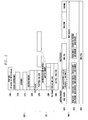
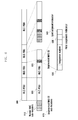
- FIG. 6 is a diagram illustrating the MAC PDU configuration in the lower MAC layer of the target eNB according to an embodiment of the present invention.
- the RLC PDUs 605 transmitted by the source eNB do not have the packet size requested by the lower MAC layer of the target eNB. Accordingly, it is impossible to fill the MAC PDU 610 with the RLC PDU 605 precisely. Furthermore, in order to avoid redundant padding, the RLC PDU 605 is transmitted as segmented. At this time, the MAC layer of the UE has to know about the segmentation process to assemble the RLC PDUs and recover the original RLC PDU.
- a segment MAC Control Element (seg MAC CE) 625 is added to the head of the segmented RLC PDU 605.
- the seg MAC CE 625 includes s Sequence number (SN) 630, a first segment indicator 635, and a last segment indicator 640.
- the SN 630 increases in proportion to the number of the segmented RLC PDUs. If a segment is the first segment of the RLC PDU, the segment indicator is set to 1 as the first segment indicator and, otherwise, 0. If a segment is the last segment of the RLC PDU, the segment indicator is set to 1 as the last segment indicator and, otherwise, 0.
- the seg MAC CE sub-header 615 is added to the MAC sub-header.
- the UE is capable of checking the number of RLC PDU segments contained in the corresponding MAC PDU based on the seg MAC CE sub-header.
- the UE is capable of recovering the RLC PDU 605 from the received MAC PDUs using the first segment indicator 635 and the last segment indicator 640.
- every RLC PDU 650 is assigned a sequence number always regardless of the segmentation/assembly of the contained payload. This is because the RLC layer is responsible for the reordering function as well as the segmentation/assembly function.
- the lower MAC layer has not reordering function.
- the segmentation/assembly of the payload does not occurs always but only when the data amount scheduled by the eNB differs from the size of the RLC PDU to be transmitted. Accordingly, it is inefficient to assign the redundant information such as sequence number (SN) always.
- the present invention proposes inserting sequence number (SN)/first segment indicator/last segment indicator as the seg MAC CE only when the RLC PDU is segmented. That is, the seg MAC CE 625 is added not to all of the RLC PDUs (or MAC SDUs) but the segmented RLC SDUs, and when the seg MAC CE exists is indicated in the seg MAC CE sub-header 615.
- FIG. 7 is a flowchart illustrating the eNB procedure for configuring MAC PDU on the lower MAC layer of the target eNB.
- the target eNB receives the RLC PDUs from the source eNB at step 710.
- the target eNB configures the MAC PDUs with the MAC sub-headers at step 715.
- target eNB determines whether it is necessary to segment the RLC PDUs to generate the MAC PDUs at step 720.
- the target eNB is capable of determining whether to perform RLC PDU segmentation according to the size of the packet transmitted at the lower MAC layer.
- the target eNB segments the RLC PDU at step 725.
- the target eNB adds the seg MAC CE to the individual segmented RLC PDUs at step 730.
- the target eNB numbers the segmented PDUs with the SN of the segmented RLC PDUs.
- the target eNB numbers the segmented RLC PDUs in the segmented order.
- the target eNB determines whether each segment the first segment of the RLC PDU at step 740. If the segment is the first segment, the target eNB sets the first segment indicator of the first seg MAC CE to 1 at step 745.
- the target eNB determines whether the segment is the last segment of the RLC PDU at step 750. If the segment is the last segment, the target eNB sets the last segment indicator of the last seg MAC CE to 1.
- the target eNB sets both the first and last segment indicators to 0 at step 760. After setting the segment indicators, the target eNB adds a seg MAC CE sub-header indicating the seg MAC CE to the MAC server-header at step 765.
- FIG. 8 is a flowchart illustrating a UE procedure for the RLC PDU reassembly according to an embodiment of the present invention.
- the UE receives a MAC PDU from the eNB at step 810.
- the UE analyzes the sub-header of the received MAC PDU to determine whether a segmented RLC PDU is included at step 815. That is, the UE determines whether the sub-header of the MAC PDU includes the seg MAC CE sub-header.
- the UE saves the segmented RLC PDU in a buffer at step 820.
- the terminal checks the seg MAC CE sub-header in the MAC PDU sub-header.
- the UE references the MAC CE in the seg MAC CE sub-header to check the sequence number/first segment indicator/last segment indicator of the segmented RLC PDU.
- the UE determines the MAC SDU following the seg MAC CE as the segmented RLC PDU and saves the segmented RLC PDU in the buffer.
- the UE determines whether the saved RLC PDUs can be assembled at step 825. That is, the UE determines all of the segmented RLC PDUs are received. For this purpose, the UE checks the sequence number of the seg MAC CE, sequence number of the segmented RLC PDU, the first segment indicator, and the last segment indicator that are added to the head of the segmented RLC PDU.
- the UE waits until all of the segmented RLC PDUs are received at step 830. Otherwise, if all of the segmented RLC PDUs are received, the UE assembles the segmented RLC PDUs into the original RLC PDU at step 835. Finally, the UE delivers the RLC PDU to the higher layer at step 840.
- FIG. 9 is a block diagram illustrating the configuration of an eNB for generating the MAC PDU according to an embodiment of the present invention.
- the target eNB includes a buffer 905, a controller 910, a segmentation unit 915, and a transmitter 920.
- the buffer 905 saves the RLC PDU received from the source eNB under the control of the controller 910.
- the controller 910 compares the packet size determined according to the channel condition at the MAC layer and the size of the RLC PDU saved in the buffer 905 to determine whether to segment the RLC PDU.
- the segmentation unit 915 segments the RLC PDU under the control of the controller 910. At this time, the segmentation unit 915 adds the seg MAC CE sequence number, the segmented RLC PDU sequence number, the first segment indicator, and the last segment indicator to the segmented RLC PDUs.
- the transmitter 920 transmits the segmented RLC PDUs to the UE in the MAC PDU under the control of the controller 910.
- FIG. 10 is a block diagram illustrating the configuration of a UE for assembling the RLC PDUs according to an embodiment of the present invention.
- the UE includes a receiver 1005, a buffer 1010, a controller 1015, and a reassembler 1020.
- the receiver 1005 receives the MAC PDUs transmitted by the eNB.
- the buffer 1010 saves the received MAC PDUs under the control of the controller 1015.
- the controller 1015 determines whether reassembly is necessary. At this time, the controller 1015 uses the seg MAC CE SN, the segmented RLC PDU SN, the first segment indicator, and the last segment indicator.
- the reassembler 1020 assembles the segmented RLC PDUs using the seg MAC CE SN under the control of the controller 1015.
- the reassembled RLC PDU is delivered to the higher layer.
- the UE transmits a STATUS PDU including Non-Acknowledge (NACK) information about lost packet to the eNB.
- NACK Non-Acknowledge
- the eNB performs Automatic Repeat reQuest (ARQ) on the RLC layer based on the NACK information transmitted by the UE.
- ARQ Automatic Repeat reQuest
- the VR(R) is a Receive state variable indicating that the RLC PDUs having the Sequence Numbers (SN) subsequent to it have been received successfully.
- the VR(H) is a Highest received state variable indicating the value obtained by adding 1 to the highest one of the SNs of the received RLC PDUs. If the VR(R) and VR(H) have different values, this means that the there is any lost RLC PDU in the order.
- the STATUS PDU can be requested by the transmitter in a polling mechanism according to a predetermined rule.
- the VR(R) and VR(H) are the variables defined in the standard TS 36.322.
- a part of the RLC PDUs generated by the source eNB and addressed to the UE is transmitted via the target eNB. Accordingly, the RLC PDUs transmitted via the target eNB arrives at the UE later than the RLC PDUs transmitted directly from the source eNB to the UE. Accordingly, the VR(R) and VR(H) indicating success or failure of reception have different values.
- the t-Reordering timer starts such that the STATUS PDU is transmitted at the expiry of the t-Reordering timer. This may cause generating STATUS PDU frequently.
- the source eNB and the target eNB transmit the RLC PDUs as follows.
- the numbers denote the SN values of the RLC PDUs.
- Source eNB 0. 1, 3, 6, 7, 9, 10, 11
- Target eNB 2, 4, 5, 8, 12, 13, 14
- Congestion occurs at the target eNB such that the UE receives the RLC PDUs in the following order.
- Reception order of RLC PDUs 0, 1, 3, 6, 7, 9, 10, 2, 4, 5, 12, 13, ...
- the STATUS PDU report is not triggered for 0, 1, 12, and 13 where the VR(R) and VR(H) are equal to each other but is triggered for 3, 6, 9, 10, 2, 4, 5, 8, ... where the VR(R) and VR(H) differ from each other.
- Such frequent STATUS PDU transmission causes resource waste and thus there is a need of a method for suppressing this.
- the present invention proposes two methods.
- the first method is to stop the t-Reordering timer according to the VR(R).
- the UE stops t-Reordering timer.
- the UE stops the t-Reordering timer. If the SN of the received RLC PDU is equal to the VR(R) or if the VR(R) is updated after the receipt of the RLC PDU, this means that the received RLC PDU fills the space for a missing RLC PDU.
- the t-Reordering timer starts if the VR(R) and VR(H) mismatch.
- the t-Reordering timer stops running. This makes it possible to avoid triggering unnecessary STATUS PDU.
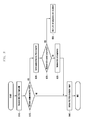
- FIG. 11 is a flowchart illustrating the UE procedure according to the first embodiment of the present invention.
- the UE compares the sequence number of the received RLC PDU and state variables such as VR(R) and VR(H) to update the state variables such as VR(R) and VR(H) to appropriate values at step 1110.
- the state variable update method is specified in the section 5.1.3.2.2 of TS 36.322 and thus detailed description thereof is omitted herein.
- the UE compares the updated VR(R) and VR(H) at step 1115. If the VR(R) and VR(H) mismatch, the procedure goes to step 1120 and, otherwise, step 1125.
- the UE determines whether the t-Reordering timer is running at step 1120. Otherwise, if the VR(R) and VR(H) mismatch, the UE stops the t-Reordering timer and waits until a new RLC PDU arrives at step 1125.
- the UE determines whether the t-Reordering timer is running already. If the t-Reordering timer is running, the UE waits until a new RLC PDU arrives at step 1130.
- the UE determines whether the VR(R) has been updated as compared to the previous VR(R) at step 1135. If the VR(R) has been updated, the UE waits until the a new RLC PDU arrives at step 1130. If the VR(R) has been updated, this means that a newly received RLC PDU fills the space of the missing PDU. Accordingly, the UE does not starts the t-Reordering timer and the procedure goes to step 1130. Otherwise, if the VR(R) has not been updated, the UE starts the t-Reordering timer at step 1140 and then the procedure goes to step 1130.
- the description is directed to the method for the UE to determine based on the VR(R) whether to start the t-Reordering timer, the present invention is not limited thereto. That is, the UE is capable of determining whether to start the t-Reordering timer based on the VR(H).
- the UE may check whether the VR(H), other than VR(R), has been updated. If the VR(H) has not been updated after the state variable has been updated with the receipt of a certain RLC PDU, this means that the sequence number of the newly received RLC PDU is lower than that of the VR(H) of the previously received RLC PDU. That is, this means that the new missing RLC PDU is detected due to the newly received RLC PDU. This means that the newly received RLC PDU fills the space for the previous missing PDU. In this case, it is preferred to do not start the t-Reordering timer.
- the UE If the VR(H) has been updated at step 1135, i.e. if the VR(H) of the newly received RLC PDU mismatches with that of the previously received RLC PDU, the UE starts the t-Reordering timer at step 1140. Otherwise, if the VR(H) has not been updated, i.e. if the VR(H) of the newly received RLC PDU matches with that of the previously received RLC PDU, the UE waits until a new PDU arrives without starting the t-Reordering timer at step 1130.
- the second method is to filter the STATUS PDU determined, by the UE, unnecessary to skip transmission.
- the UE compares the generated STATUS PDU with the previously transmitted STATUS PDU. If the updated NACK information is not included, the UE skips transmitting the STATUS PDU. A more detailed description is made with reference to FIG. 12 .
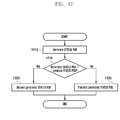
- FIG. 12 is a flowchart illustrating the UE procedure according to the second embodiment of the present invention.
- the UE if the VR(R) and VR(H) have different values, the UE generates a STATUS PDU at step 1210. Next, the UE determines whether the generated STATUS PDU is identical with the previously transmitted STATUS PDU at step 1215. If the generated STATUS PDU is identical with the previously transmitted STATUS PDU, the UE discards the generated STATUS PDU at step 1220. Otherwise, if the generated STATUS PDU differs from the previously transmitted STATUS PDU, the UE transmits the generated STATUS PDU at step 1225.
- FIG. 13 is a diagram illustrating a separated protocol structure for supporting the inter-eNB CA according to another embodiment of the present invention.
- the source eNB and target eNB may have separated RLC, MAC, and PHY protocol structure.
- RLC Radio Link Control
- MAC Medium Access Control
- PHY Packet Control Protocol
- several functions has to be added to the PDCP layer 1305 of the source eNB.
- the extended PDCP layer 1305 includes a segmentation block 1315, a re-ordering block 1320, and a buffer 1325, in addition to the legacy block 1310.
- the PDCP PDUs output by the legacy block 1310 that are addressed to the UE 1365 are sorted into the PDCP PDUs to be transmitted by the source and target eNBs.
- the segmentation block 1315 divides the PDCP PDUs input sequentially into a source eNB-transmitted and a target eNB-transmitted PDCP PDUs rather than segment a signal PDCP PDU.
- the PDCP PDUs transmitted to the RLC layers 1330 and 1350 of the source and target eNBs are processed according to the convention procedure.
- the packets transmitted by the U E may be received through the source and target eNBs.
- the RLC PDUs are delivered to the PDCP 1305 of the source eNB through different paths.
- the PDCP 1305 of the source eNB saves the RLC SDUs received form the respective RLC layers into the buffer 1325. If the collected RLC SDUs is over a predetermined amount, the RLC PDUs are reordered by the reordering block 1320 and then delivered to the legacy PDCP block.
Landscapes
- Engineering & Computer Science (AREA)
- Signal Processing (AREA)
- Computer Networks & Wireless Communication (AREA)
- Databases & Information Systems (AREA)
- Mobile Radio Communication Systems (AREA)
Applications Claiming Priority (2)
| Application Number | Priority Date | Filing Date | Title |
|---|---|---|---|
| KR20100054583 | 2010-06-09 | ||
| PCT/KR2011/004242 WO2011155784A2 (ko) | 2010-06-09 | 2011-06-09 | 이동 통신 시스템 및 그 이동 통신 시스템에서 패킷 제어 방법 |
Publications (2)
| Publication Number | Publication Date |
|---|---|
| EP2582076A2 true EP2582076A2 (de) | 2013-04-17 |
| EP2582076A4 EP2582076A4 (de) | 2015-10-28 |
Family
ID=45098544
Family Applications (1)
| Application Number | Title | Priority Date | Filing Date |
|---|---|---|---|
| EP11792695.6A Withdrawn EP2582076A4 (de) | 2010-06-09 | 2011-06-09 | Mobilkommunikationssystem und paketsteuerungsverfahren in diesem mobilkommunikationssystem |
Country Status (6)
| Country | Link |
|---|---|
| US (1) | US10404427B2 (de) |
| EP (1) | EP2582076A4 (de) |
| KR (2) | KR101898026B1 (de) |
| CN (2) | CN102939729B (de) |
| AU (1) | AU2011262653B2 (de) |
| WO (1) | WO2011155784A2 (de) |
Cited By (6)
| Publication number | Priority date | Publication date | Assignee | Title |
|---|---|---|---|---|
| EP2991418A4 (de) * | 2013-04-26 | 2016-04-27 | Huawei Tech Co Ltd | Datenübertragungsverfahren, basisstation und drahtloskommunikationsvorrichtung |
| US20170006587A1 (en) | 2012-05-09 | 2017-01-05 | Samsung Electronics Co., Ltd. | Method and apparatus for transceiving data using plurality of carriers in mobile communication system |
| US10349463B2 (en) | 2012-08-23 | 2019-07-09 | Interdigital Patent Holdings, Inc. | Operating with multiple schedulers in a wireless system |
| US10560944B2 (en) | 2010-12-03 | 2020-02-11 | Interdigital Patent Holdings, Inc. | Methods, apparatus and systems for performing multi-radio access technology carrier aggregation |
| EP2534875B1 (de) * | 2010-02-12 | 2021-12-08 | InterDigital Technology Corporation | Datenaufteilung zwischen mehreren orten |
| US11838849B2 (en) | 2011-07-29 | 2023-12-05 | Interdigital Patent Holdings, Inc. | Methods and apparatus for radio resources management in multi-radio access technology wireless systems |
Families Citing this family (30)
| Publication number | Priority date | Publication date | Assignee | Title |
|---|---|---|---|---|
| WO2013027969A2 (en) | 2011-08-22 | 2013-02-28 | Samsung Electronics Co., Ltd. | Method and apparatus for supporting multiple frequency bands in mobile communication system |
| KR102092579B1 (ko) | 2011-08-22 | 2020-03-24 | 삼성전자 주식회사 | 이동통신 시스템에서 복수 개의 주파수 밴드 지원 방법 및 장치 |
| US20130088960A1 (en) * | 2011-10-07 | 2013-04-11 | Futurewei Technologies, Inc. | System and Method for Information Delivery with Multiple Point Transmission |
| CN103988455B (zh) | 2011-10-12 | 2017-08-25 | 三星电子株式会社 | 移动通信系统中用于发送反向控制信号的方法和设备 |
| CN104137600B (zh) | 2012-01-09 | 2018-10-12 | 三星电子株式会社 | 用于记录的方法和装置 |
| WO2013112021A1 (ko) | 2012-01-27 | 2013-08-01 | 삼성전자 주식회사 | 이동통신 시스템에서 복수의 캐리어를 이용해서 데이터를 송수신하는 방법 및 장치 |
| US9083623B2 (en) * | 2012-03-12 | 2015-07-14 | Texas Instruments Incorporated | Inserting source, sequence numbers into data stream from separate sources |
| KR102064377B1 (ko) | 2012-05-09 | 2020-02-12 | 삼성전자 주식회사 | 이동 통신 시스템에서 측정 정보 송수신 방법 및 장치 |
| EP2849357B1 (de) | 2012-05-09 | 2021-09-08 | Samsung Electronics Co., Ltd. | Verfahren und vorrichtung zum übertragen und empfangen von daten mithilfe mehrerer träger in einem mobilkommunikationssystem |
| WO2013176473A1 (ko) | 2012-05-21 | 2013-11-28 | 삼성전자 주식회사 | 이동통신 시스템에서 데이터를 송수신하는 방법 및 장치 |
| CN103888215B (zh) * | 2012-12-21 | 2017-11-28 | 华为技术有限公司 | 数据传输方法、装置及通信系统 |
| WO2014110800A1 (zh) | 2013-01-18 | 2014-07-24 | 华为技术有限公司 | 数据传输方法、基站和用户设备 |
| WO2014172892A1 (zh) * | 2013-04-26 | 2014-10-30 | 华为技术有限公司 | 业务分流方法、装置及系统 |
| KR102164988B1 (ko) * | 2013-04-30 | 2020-10-13 | 한국전자통신연구원 | 단말의 데이터 수신 방법 |
| CN104641719B (zh) | 2013-05-20 | 2018-07-03 | 华为技术有限公司 | 一种确认报文发送方法及其设备 |
| KR102148243B1 (ko) * | 2013-07-12 | 2020-08-26 | 팬텍 주식회사 | 이중 연결을 지원하는 무선 통신 시스템에서 무선 링크 제어 계층에서의 데이터 제어 방법 및 그 장치 |
| JP6230859B2 (ja) | 2013-09-26 | 2017-11-15 | 株式会社Nttドコモ | 移動通信システム及び無線基地局 |
| EP3063896A2 (de) * | 2013-10-30 | 2016-09-07 | Interdigital Patent Holdings, Inc. | Trägeraggregationskonfiguration in drahtlosen systemen |
| US11637763B2 (en) | 2013-10-30 | 2023-04-25 | Interdigital Patent Holdings, Inc. | Connectivity robustness in wireless systems |
| CN104602294B (zh) * | 2013-11-01 | 2018-08-21 | 上海诺基亚贝尔股份有限公司 | 双连接通信系统中用于传输rlc状态pdu的方法 |
| CN109348508B (zh) | 2013-11-11 | 2022-04-12 | 华为技术有限公司 | 数据传输方法及装置 |
| CN106105308B (zh) * | 2014-03-20 | 2019-12-20 | 富士通株式会社 | 无线通信装置及无线通信方法 |
| WO2015174658A1 (en) * | 2014-05-13 | 2015-11-19 | Lg Electronics Inc. | Method for reordering a packet data convergence protocol packet data unit at a user equipment in a dual connectivity system and device therefor |
| WO2015178630A1 (ko) | 2014-05-21 | 2015-11-26 | 엘지전자 주식회사 | 단말간 직접 통신을 지원하는 통신 시스템에서 송수신 단말간 통신을 위한 자원할당 방법 및 이를 위한 장치 |
| WO2018068310A1 (zh) * | 2016-10-14 | 2018-04-19 | 富士通株式会社 | 数据处理方法、装置以及通信系统 |
| WO2018127982A1 (ja) * | 2017-01-06 | 2018-07-12 | 富士通株式会社 | 無線通信装置、無線通信システム、および無線通信方法 |
| WO2018138410A1 (en) * | 2017-01-24 | 2018-08-02 | Nokia Technologies Oy | Sequence numbering on demand for segmentation |
| CN108809542B (zh) * | 2017-05-05 | 2021-04-20 | 华为技术有限公司 | 一种数据传输的处理方法和装置 |
| WO2021251772A1 (en) * | 2020-06-12 | 2021-12-16 | Samsung Electronics Co., Ltd. | System and method for concatenation and preprocessing in data plane |
| US12069510B2 (en) * | 2021-11-05 | 2024-08-20 | Qualcomm Incorporated | Traffic and feedback management based on frame decoding |
Family Cites Families (27)
| Publication number | Priority date | Publication date | Assignee | Title |
|---|---|---|---|---|
| ATE412289T1 (de) * | 1998-10-30 | 2008-11-15 | Broadcom Corp | Kabelmodemsystem |
| US6130376A (en) * | 1999-04-03 | 2000-10-10 | Shun-Hwa Chang | Ligature for reed instruments |
| KR100765123B1 (ko) * | 2002-02-16 | 2007-10-11 | 엘지전자 주식회사 | Srns 재할당 방법 |
| US20060182030A1 (en) * | 2003-05-05 | 2006-08-17 | Harris John M | Method and apparatus for transmitting data in a packet data communication |
| KR100713394B1 (ko) | 2004-06-16 | 2007-05-04 | 삼성전자주식회사 | 이동통신 시스템에서 전송일련번호와 타임스탬프를 이용한 상향링크 데이터 패킷들의 재정렬 방법 및 장치 |
| US7525908B2 (en) * | 2004-09-24 | 2009-04-28 | M-Stack Limited | Data unit management in communications |
| US20060072504A1 (en) * | 2004-09-30 | 2006-04-06 | Lucent Technologies, Inc. | Reordering of data packets during soft hand offs in a wireless system |
| US7667277B2 (en) * | 2005-01-13 | 2010-02-23 | International Business Machines Corporation | TiC as a thermally stable p-metal carbide on high k SiO2 gate stacks |
| WO2007045280A1 (en) * | 2005-10-17 | 2007-04-26 | Telefonaktiebolaget Lm Ericsson (Publ.) | Method for performing handoff in a packet-switched cellular communications system |
| JP4791863B2 (ja) * | 2006-03-20 | 2011-10-12 | 富士通株式会社 | 無線ネットワーク制御装置及びその装置によるチャネル割当方法 |
| TW200746864A (en) * | 2006-05-01 | 2007-12-16 | Interdigital Tech Corp | Method and apparatus for facilitating lossless handover in 3GPP long term evolution systems |
| EP2034752A4 (de) * | 2006-06-20 | 2013-01-02 | Ntt Docomo Inc | Benutzereinrichtung, basisstation und verfahren für ein mobilkommunikationssystem |
| KR101369135B1 (ko) * | 2006-06-21 | 2014-03-05 | 엘지전자 주식회사 | 이동통신 시스템에서의 멀티미디어 및 방송서비스의 품질보장 방법 및 그 단말 |
| WO2008076073A1 (en) * | 2006-12-19 | 2008-06-26 | Telefonaktiebolaget Lm Ericsson (Publ) | Transfer of buffered data from a source base station to a target base station |
| CN101663864B (zh) | 2007-03-22 | 2012-08-22 | 艾利森电话股份有限公司 | 用于在用户设备(ue)中配置链路最大传输单元(mtu)的方法 |
| KR20090122986A (ko) * | 2007-04-06 | 2009-12-01 | 가부시키가이샤 엔티티 도코모 | 패킷통신방법 및 수신측 장치 |
| CN101373998B (zh) * | 2007-08-20 | 2012-07-25 | 上海贝尔阿尔卡特股份有限公司 | 低信息交互的多基站协作mimo及其调度方法和装置 |
| EP2670205B1 (de) * | 2008-02-01 | 2019-01-02 | Interdigital Patent Holdings, Inc. | Verfahren und Vorrichtung zur Priorisierung von logischen Kanälen |
| CN101557249B (zh) * | 2008-04-07 | 2012-11-07 | 上海贝尔阿尔卡特股份有限公司 | 无线通信系统中控制协作传输下行信号的方法和装置 |
| CN101588652B (zh) * | 2008-05-23 | 2011-06-01 | 上海贝尔阿尔卡特股份有限公司 | 用于网络或协作mimo系统中的基站及其harq方法 |
| CN101394378B (zh) * | 2008-10-10 | 2011-06-08 | 安徽创毅通信科技有限公司 | 多基站协作组信道质量反馈方法及装置、用户终端 |
| US8279818B2 (en) * | 2008-10-31 | 2012-10-02 | Htc Corporation | Methods of packet element transmission in wireless communications system |
| US9554417B2 (en) * | 2008-12-24 | 2017-01-24 | Qualcomm Incorporated | Optimized header for efficient processing of data packets |
| CN101515842B (zh) * | 2009-04-03 | 2011-10-26 | 北京理工大学 | 一种基于喷泉编码的部分协作信息传输方法 |
| CN101631353B (zh) * | 2009-08-21 | 2011-08-10 | 普天信息技术研究院有限公司 | 一种状态分组数据单元的管理方法和装置 |
| US9392515B2 (en) * | 2010-02-12 | 2016-07-12 | Interdigital Technology Corporation | Data split between multiple sites |
| US8498666B2 (en) * | 2010-05-05 | 2013-07-30 | Nokia Siemens Networks Oy | Carrier aggregation for two radio systems |
-
2011
- 2011-06-09 AU AU2011262653A patent/AU2011262653B2/en not_active Ceased
- 2011-06-09 CN CN201180027870.2A patent/CN102939729B/zh not_active Expired - Fee Related
- 2011-06-09 US US13/699,123 patent/US10404427B2/en not_active Expired - Fee Related
- 2011-06-09 CN CN201510404776.4A patent/CN104967507B/zh not_active Expired - Fee Related
- 2011-06-09 WO PCT/KR2011/004242 patent/WO2011155784A2/ko not_active Ceased
- 2011-06-09 KR KR1020187009591A patent/KR101898026B1/ko not_active Expired - Fee Related
- 2011-06-09 KR KR1020127029138A patent/KR101847582B1/ko not_active Expired - Fee Related
- 2011-06-09 EP EP11792695.6A patent/EP2582076A4/de not_active Withdrawn
Cited By (15)
| Publication number | Priority date | Publication date | Assignee | Title |
|---|---|---|---|---|
| EP2534875B1 (de) * | 2010-02-12 | 2021-12-08 | InterDigital Technology Corporation | Datenaufteilung zwischen mehreren orten |
| US11871391B2 (en) | 2010-12-03 | 2024-01-09 | Interdigital Patent Holdings, Inc. | Methods, apparatus and systems for performing multi-radio access technology carrier aggregation |
| US12581471B2 (en) | 2010-12-03 | 2026-03-17 | Interdigital Patent Holdings, Inc. | Methods, apparatus and systems for performing multi-radio access technology carrier aggregation |
| US10560944B2 (en) | 2010-12-03 | 2020-02-11 | Interdigital Patent Holdings, Inc. | Methods, apparatus and systems for performing multi-radio access technology carrier aggregation |
| US11363597B2 (en) | 2010-12-03 | 2022-06-14 | Interdigital Patent Holdings, Inc. | Methods, apparatus and systems for performing multi-radio access technology carrier aggregation |
| US12167316B2 (en) | 2011-07-29 | 2024-12-10 | Interdigital Patent Holdings, Inc. | Methods and apparatus for radio resources management in multi-radio access technology wireless systems |
| US11838849B2 (en) | 2011-07-29 | 2023-12-05 | Interdigital Patent Holdings, Inc. | Methods and apparatus for radio resources management in multi-radio access technology wireless systems |
| US20170006587A1 (en) | 2012-05-09 | 2017-01-05 | Samsung Electronics Co., Ltd. | Method and apparatus for transceiving data using plurality of carriers in mobile communication system |
| US10187193B2 (en) | 2012-05-09 | 2019-01-22 | Samsung Electronics Co., Ltd. | Method and apparatus for transceiving data using plurality of carriers in mobile communication system |
| US10349463B2 (en) | 2012-08-23 | 2019-07-09 | Interdigital Patent Holdings, Inc. | Operating with multiple schedulers in a wireless system |
| US11184942B2 (en) | 2012-08-23 | 2021-11-23 | Interdigital Patent Holdings, Inc. | Operating with multiple schedulers in a wireless system |
| US11716781B2 (en) | 2012-08-23 | 2023-08-01 | Interdigital Patent Holdings, Inc. | Operating with multiple schedulers in a wireless system |
| US10341900B2 (en) | 2013-04-26 | 2019-07-02 | Huawei Technologies Co., Ltd. | Data transmission method, base station, and wireless communications device |
| US11129048B2 (en) | 2013-04-26 | 2021-09-21 | Huawei Technologies Co., Ltd. | Data transmission method, base station, and wireless communications device |
| EP2991418A4 (de) * | 2013-04-26 | 2016-04-27 | Huawei Tech Co Ltd | Datenübertragungsverfahren, basisstation und drahtloskommunikationsvorrichtung |
Also Published As
| Publication number | Publication date |
|---|---|
| WO2011155784A3 (ko) | 2012-03-29 |
| KR20180038068A (ko) | 2018-04-13 |
| WO2011155784A2 (ko) | 2011-12-15 |
| EP2582076A4 (de) | 2015-10-28 |
| KR101898026B1 (ko) | 2018-09-12 |
| CN102939729B (zh) | 2017-06-09 |
| CN104967507B (zh) | 2019-03-08 |
| KR20130100674A (ko) | 2013-09-11 |
| AU2011262653A1 (en) | 2012-12-20 |
| AU2011262653B2 (en) | 2016-06-16 |
| CN104967507A (zh) | 2015-10-07 |
| KR101847582B1 (ko) | 2018-04-10 |
| US10404427B2 (en) | 2019-09-03 |
| US20130070682A1 (en) | 2013-03-21 |
| CN102939729A (zh) | 2013-02-20 |
Similar Documents
| Publication | Publication Date | Title |
|---|---|---|
| US10404427B2 (en) | Mobile communication system and packet control method in the mobile communication system | |
| JP6631961B2 (ja) | スモールセル配備時の効率的な破棄メカニズム | |
| US10917815B2 (en) | Method and apparatus for processing a packet in a wireless communication system | |
| US10129795B2 (en) | Data transfer management in a radio communications network | |
| EP2290866B1 (de) | Verfahren zur Verschiebung eines Empfangsfensters in einem Funkzugangsnetz | |
| US7957349B2 (en) | Handover method and apparatus in a mobile communication system | |
| JP5281700B2 (ja) | 無線装置とネットワーク間のデータユニットのシーケンスの送信のための無線通信方法 | |
| EP2369795B1 (de) | Verfahren und Vorrichtung zum Ausführen eines Handovers durch Neuanordnung eines Paketdatenkonvergenzprotokolls (PDCP) in einem mobilen Kommunikationssystem | |
| EP1683282B1 (de) | Aktualisierung des als nächstes erwarteten tsn und empfängerfensters zur vermeidung von stehenbleibe-zuständen | |
| JP5174922B2 (ja) | 移動通信システムにおけるハンドオーバのための方法及び装置 | |
| US20070091810A1 (en) | Method and apparatus for transmitting and receiving status report comprising received status of packet data in a mobile communication system | |
| US8498260B2 (en) | Methods of packet element transmission in wireless communications system | |
| KR20070077798A (ko) | 이동통신 시스템에서 재전송 제어를 위한 상태보고의요청/전송 방법 및 장치 | |
| CN102119511B (zh) | 用于在网络中通信的方法及用于其的次站和系统 | |
| KR102156191B1 (ko) | 이중연결 시스템에서 멀티 플로우를 고려한 pdcp 재배열 방법 및 장치 |
Legal Events
| Date | Code | Title | Description |
|---|---|---|---|
| PUAI | Public reference made under article 153(3) epc to a published international application that has entered the european phase |
Free format text: ORIGINAL CODE: 0009012 |
|
| 17P | Request for examination filed |
Effective date: 20121116 |
|
| AK | Designated contracting states |
Kind code of ref document: A2 Designated state(s): AL AT BE BG CH CY CZ DE DK EE ES FI FR GB GR HR HU IE IS IT LI LT LU LV MC MK MT NL NO PL PT RO RS SE SI SK SM TR |
|
| DAX | Request for extension of the european patent (deleted) | ||
| RIC1 | Information provided on ipc code assigned before grant |
Ipc: H04W 36/00 20090101ALI20150601BHEP Ipc: H04L 1/00 20060101ALI20150601BHEP Ipc: H04L 1/16 20060101ALI20150601BHEP Ipc: H04L 1/18 20060101ALI20150601BHEP Ipc: H04J 11/00 20060101AFI20150601BHEP Ipc: H04L 5/00 20060101ALI20150601BHEP Ipc: H04W 80/02 20090101ALI20150601BHEP Ipc: H04B 7/26 20060101ALI20150601BHEP |
|
| A4 | Supplementary search report drawn up and despatched |
Effective date: 20150929 |
|
| RIC1 | Information provided on ipc code assigned before grant |
Ipc: H04W 36/00 20090101ALI20150923BHEP Ipc: H04W 80/02 20090101ALI20150923BHEP Ipc: H04J 11/00 20060101AFI20150923BHEP Ipc: H04L 1/16 20060101ALI20150923BHEP Ipc: H04L 1/00 20060101ALI20150923BHEP Ipc: H04L 1/18 20060101ALI20150923BHEP Ipc: H04L 5/00 20060101ALI20150923BHEP Ipc: H04B 7/26 20060101ALI20150923BHEP |
|
| STAA | Information on the status of an ep patent application or granted ep patent |
Free format text: STATUS: EXAMINATION IS IN PROGRESS |
|
| 17Q | First examination report despatched |
Effective date: 20190328 |
|
| GRAP | Despatch of communication of intention to grant a patent |
Free format text: ORIGINAL CODE: EPIDOSNIGR1 |
|
| STAA | Information on the status of an ep patent application or granted ep patent |
Free format text: STATUS: GRANT OF PATENT IS INTENDED |
|
| INTG | Intention to grant announced |
Effective date: 20220525 |
|
| STAA | Information on the status of an ep patent application or granted ep patent |
Free format text: STATUS: THE APPLICATION IS DEEMED TO BE WITHDRAWN |
|
| 18D | Application deemed to be withdrawn |
Effective date: 20221005 |