EP2577508B1 - Systems and methods for providing multilingual support for data used with a business intelligence server - Google Patents
Systems and methods for providing multilingual support for data used with a business intelligence server Download PDFInfo
- Publication number
- EP2577508B1 EP2577508B1 EP11722660.5A EP11722660A EP2577508B1 EP 2577508 B1 EP2577508 B1 EP 2577508B1 EP 11722660 A EP11722660 A EP 11722660A EP 2577508 B1 EP2577508 B1 EP 2577508B1
- Authority
- EP
- European Patent Office
- Prior art keywords
- lookup
- lookup table
- base
- base table
- language
- Prior art date
- Legal status (The legal status is an assumption and is not a legal conclusion. Google has not performed a legal analysis and makes no representation as to the accuracy of the status listed.)
- Active
Links
Images


Classifications
-
- G—PHYSICS
- G06—COMPUTING OR CALCULATING; COUNTING
- G06F—ELECTRIC DIGITAL DATA PROCESSING
- G06F16/00—Information retrieval; Database structures therefor; File system structures therefor
- G06F16/20—Information retrieval; Database structures therefor; File system structures therefor of structured data, e.g. relational data
- G06F16/24—Querying
- G06F16/245—Query processing
Definitions
- the current invention relates generally to business intelligence and in particular to providing multilingual support for data in the business intelligence server.
- business intelligence software has become increasingly utilized by large business enterprises and other organizations.
- Business intelligence provides current and historical views of business operations by analyzing internal, structured data and business processes of the organization. It is often used to create future models and predictions in order to support better business decision making. As such, business intelligence tools can lead to decreased costs and increased efficiency, productivity and profit margins for many companies.
- Business intelligence is usually implemented as software and/or hardware tools that are used to collect and analyze data and to transform the raw data into meaningful and useful information used to enable more effective strategic, tactical, and operational insights and decision-making.
- a typical business intelligence server relies on data that may reside in a variety of places, including but not limited to relational databases, online analytical processing (OLAP) tools, repositories and content management systems, application servers, as well as a number of other sources.
- OLAP online analytical processing
- a typical business intelligence (BI) server data is collected from all (or some) of these data sources and placed into a (virtual or physical) data warehouse or data mart, where it can then be modeled and analyzed before being presented to the user.
- a physical layer within the business intelligence server, where data is modeled as a consolidated table that mirrors objects in the data source layer.
- An application developer can assemble these compound objects by hand, using a subset of the entities relevant to the domain; the synthesized objects can subsequently be imported into the business intelligence server's metadata and decomposed into dimensions and facts.
- US 2008/0249998 discloses a method and system for providing natural language support for users running queries against a multilingual database.
- a number limitations and potential areas of improvement still exist in the field of modeling data within business intelligence servers. For example, it is frequently useful for users to work with queries across different languages. A user that is logging into the BI server in Japanese may have trouble specifying the filters for a query if the data columns are stored in English. In addition, columns that store certain large object types are often unsupported by databases in "group by" query clauses. Accordingly, it is desirable for a BI server to be able to support schemas containing multilingual data and to simplify the administration and improve query performance of multilingual lookup tables.
- multilingual double column support is provided for the BI server.
- the multilingual support allows the BI server to use a lookup table for storing translations of values stored in a base table. Queries that require multilingual data can then join the base table and the lookup table to obtain these translations.
- the BI server enables multilingual support by implementing a lookup table along with an associated lookup function that allows users to work with queries that use different languages.
- a session object is created for the user, which maintains the state information for the user's session.
- One of such session's variables specifies the language currently being used by the user.
- BI server can inspect this session variable to determine the language of the user and perform the lookup translations as necessary. For example, if the language used by the session is different from the language of the base table storing the necessary information, the BI server can perform a translation by invoking a lookup function.
- the execution of the lookup can include performing a join operation of the base table with the lookup table to yield a translated value requested by the query.
- a business intelligence (BI) server is extended with multilingual support for data queries.
- the multilingual support feature allows the BI server to address these needs.
- the BI server enables multilingual support by implementing a lookup table along with an associated lookup function that allows users to work with queries that use different languages.
- a session object is created for the user, which maintains the state information for the user's session.
- One of such session's variables specifies the language currently being used by the user.
- BI server can inspect this session variable to determine the language of the user and perform the lookup translations as necessary. For example, if the language used by the session is different from the language of the base table storing the necessary information, the BI server can perform a translation by invoking a lookup function. If, on the other hand, the language of the session is the same as the language of the base table, then no translation is necessary and the query can be answered directly without any lookups.
- the lookup table includes at least one value column, which is the column containing the actual translation value of a column in a base table used to store the data.
- the lookup table has a lookup key (e.g. primary key) which will be used to perform the lookup.
- the lookup function includes a set of parameters that will be used to obtain the translation of a particular piece of data.
- the lookup function includes a parameter specifying the value column of the lookup table that will contain the translation.
- the lookup function includes a parameter to specify the identifier of the data item and a parameter identifying the particular language needed for the translation (this can be obtained from the session variable).
- the lookup function may also include a parameter to specify the column of the base table that stores the value in the base language for needed piece of data, as will be described in further detail below.
- the BI server rewrites the lookup function into an appropriate structured query language (SQL) statement that will be used to perform a join operation of the base table with the lookup table.
- SQL structured query language
- the join operation yields a translated value (in the user's session language) for the row of the base table that is requested by the query.
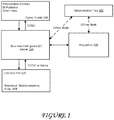
- FIGURE 1 is an illustration of the BI server in accordance with various embodiments of the invention.
- this diagram depicts components as logically separate, such depiction is merely for illustrative purposes. It will be apparent to those skilled in the art that the components portrayed in this figure can be combined or divided into separate software, firmware and/or hardware. Furthermore, it will also be apparent to those skilled in the art that such components, regardless of how they are combined or divided, can execute on the same computing device or can be distributed among different computing devices connected by one or more networks or other suitable communication means.
- the BI server 104 and the BI repository 108 provide a layer of abstraction that lets users 100 send simple logical structured query language (SQL) queries against complex federated data sources 106.
- the BI server 104 processes user requests and queries underlying data sources.
- the BI server can maintain a logical data model and provide client access to this model through open database connectivity (ODBC).
- ODBC open database connectivity
- the BI server uses the metadata in the repository 108 to perform two tasks (1) to interpret logical SQL queries and write corresponding physical queries against the appropriate data sources 106; and (2) to transform and combine the physical result sets and perform final calculations.
- the BI server can connect to the underlying data source through either ODBC or over a native application programming interface (API) of the data source.
- API application programming interface
- the administration tool 102 is an application that can be used to create and edit the BI repository 108.
- the admin tool can connect to the repository in offline mode, or it can connect to the repository through the BI server (online mode).
- the additional functionality provided by the BI server can be made available in the online mode.
- FIGURE 2 is an illustration of a query traversing the layers of the BI repository in accordance with various embodiments of the invention.
- this diagram depicts components as logically separate, such depiction is merely for illustrative purposes. It will be apparent to those skilled in the art that the components portrayed in this figure can be combined or divided into separate software, firmware and/or hardware. Furthermore, it will also be apparent to those skilled in the art that such components, regardless of how they are combined or divided, can execute on the same computing device or can be distributed among different computing devices connected by one or more networks or other suitable communication means.
- the BI server can process incoming client requests 200 that are sent against complex federated data sources.
- the BI repository is comprised of three layers: the physical layer 206, the logical mapping layer 204 and the presentation layer 202.
- the physical layer 206 defines the objects and relationships the BI server needs to write native queries against each physical data source 208.
- a user or administrator creates this layer by importing tables, cubes and flat files from the data sources.
- some of the formats and schemas used in the physical layer can include stars and snowflakes 214, normalized 216 and de-normalized 218 data, extensible markup language (XML) and file storage data 220, multi-dimensional data 222, application development framework (ADF) data 224 and other formats.
- Separating the logical behavior of the application from the physical model provides the ability to federate multiple physical data sources to the same logical object, enabling aggregate navigation and partitioning, as well as dimension conformance and isolation from changes in the physical sources. This separation also enables the creation of portable BI applications.
- the logical business model and mapping layer 204 defines the business or logical model of the data and specifies the mapping between the business model and the physical schemas. This layer also determines the analytic behavior seen by users, and defines the superset of objects and relationships available to the users. It also hides the complexity of the source data models.
- the presentation layer 202 provides a way to present customized, secure, role-based views 210 of a business model to users. It adds a level of abstraction over the business model and mapping layer 204 and provides the view of the data seen by users building requests in the presentation services and other clients 200.
- a typical order for an enterprise to constructs a BI repository is to create the physical layer objects firs, the logical model and mapping layer objects next and the presentation layer objects last.
- the user can work on each layer at any stage.
- a dimension represents a hierarchical organization of logical columns (attributes).
- One or more logical dimension tables can be associated with at most one dimension. Examples of common dimensions are time periods, products, markets, customers, suppliers, promotion conditions, raw materials, manufacturing plants, transportation methods, media types and time of day.
- dimensions exist in the logical model and mapping layer 204 and in the presentation layer 202.
- attributes can be organized into hierarchical levels. These logical levels represent the organizational rules and reporting needs required by the business of the organization deploying the BI server. They provide the structure (metadata) that the BI server uses to drill into and across dimensions to get more detailed views of data.
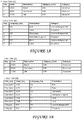
- FIGURE 3A is an illustration of one lookup table implementation, in accordance with various embodiments of the invention. It should be noted that the embodiments described herein are not necessarily limited to this particular implementation and that other implementations are possible within the scope of the present invention. In particular, this figure illustrates a design of the lookup table where one lookup table is maintained for each base table. In an alternative design illustrated in FIGURE 3B , one lookup table can be maintained per each field of the base table, as will be described in further detail below.
- the lookup table contains a foreign key reference to records in the base table and contains the values for each translated field in a separate column. Assuming a completely dense lookup table, the number of rows in the lookup table for a particular language is equal to the number of rows in the base table. In the example illustrated in FIGURE 3A , each record in the lookup table 302 matches only one row in the base table 300.
- FIGURE 3B is an illustration of another lookup table implementation, in accordance with various embodiments of the invention.
- the embodiments described herein are not necessarily limited to this particular implementation and that other implementations of the lookup table are also possible.
- an alternative design is to implement a separate lookup table 306 per each translated field of the base table 302.
- getting the translated value of each field would then require a separate join to a lookup table.
- the BI server can support both lookup table designs illustrated in FIGURE 3A and FIGURE 3B .
- both sparse and dense lookup tables can be supported by the BI server.
- the lookup tables are sparse containing translations for only some of the records in the base tables.
- a sparse lookup table requires an outer join with the base table so that rows from the base table are preserved.
- the base translation should be substituted in place of a NULL value.
- a dense lookup table contains translations in all languages for every record in the base table. Since dense lookup tables contain a matching record for every base record, the lookup table can be inner joined with the base table, thereby avoiding the overhead of outer joins and base language substitution.
- a lookup table can be both dense and sparse.
- the lookup table in FIGURE 3B may contain complete translation for 'Description' field but partial translation for 'Category' field.
- the BI server treats "dense" and "sparse" as the property of lookup operation instead of being a property of the table.
- a sparse lookup will connect the base table with translation table with outer join, while a dense lookup will result in inner join between base table and translation table.
- descriptor columns can be supported by the BI server.
- Descriptor columns are columns that provide a textual description for some key column where there is a one-to-one relationship between the descriptor column and the key column. In practice the one-to-one relationship may often be not enforced, but for query purposes the columns can be treated as if there is such a one-to-one relationship.
- An example of a descriptor column might be Product_Name, which provides textual descriptions for a Product_Key column. Although it is possible for two products to have the same name in many cases, this is not likely to occur, and even if there are products with the same name, the products can still be treated as separate entities in aggregations and filters.
- one reason for creating descriptor columns is to aid in defining language independent filters.
- the query tool displays a list of values to the user that are selected the descriptor column.
- the BI server can also store the key column as hidden field in the LOV.
- the tool replaces the selected descriptor values in the filter with the hidden key values and rewrites the filter in terms of the key column. Since the filter is converted to a form that only references the non-translated key column, the filter is language independent and can be shared with users of other languages.
- descriptor columns are often translated in to multiple languages, this is not necessarily required.
- a descriptor column may provide descriptions in just one language.
- the same filter conversion to key values described above applies equally to non-translated descriptor columns. This can ensure that rows that have different key values but that share the same textual description are treated separately when aggregating and filtering.
- this descriptor column technique is also useful when dealing with queries that involve large object (LOB) data types such as character large objects (CLOBs), binary large objects (BLOBs) and aggregate functions such as COUNT() or SUM().
- LOB large object
- CLOBs character large objects
- BLOBs binary large objects
- COUNT() COUNT()
- SUM() aggregate functions
- FIGURE 4 is an illustration of a business intelligence server employing the lookup table to perform translation of a query, in accordance with various embodiments of the invention.
- this diagram depicts components as logically separate, such depiction is merely for illustrative purposes. It will be apparent to those skilled in the art that the components portrayed in this figure can be combined or divided into separate software, firmware and/or hardware. Furthermore, it will also be apparent to those skilled in the art that such components, regardless of how they are combined or divided, can execute on the same computing device or can be distributed among different computing devices connected by one or more networks or other suitable communication means.
- the user 400 can issue a logical SQL query 402 against the BI server 404.
- the BI server can inspect the session 424 to determine the language of the user's session. If the language is different from the language used to store data in the base table 416, a lookup function 414 can be invoked to translate the values in the base table 416 into the corresponding language of the session.
- the BI server can generate a physical SQL statement 412 that will be executed to obtain the translated value of the data stored in the base table.
- this physical SQL statement 412 can perform a join operation of the base table with the lookup table to obtain the translation.
- the SQL generated by the BI server first performs (step one) a calculation of the Sum(QtySold) 408 and then in step two, joins the lookup table with the result of step one.
- the BI server can support translated lookup tables.
- an analytics administrator of the BI server can create a business model on top of a schema that contains data translated into multiple languages. Depending on which language the user specifies when logging in, the user should see query results in his language. If the user logs using a different language and runs the same query again, he should see translated data for the current language.
- the schema may contain a Product table that contains descriptions in English.
- the Product table can also contain a language independent code for each language dependent column.
- the Category column has a corresponding Category_Code column.
- Product_Table Product_Key Product_Code Description Category_Code Category 1 A123 Bread D45 Groceries 2 B234 Marmalade D45 Groceries 3 C345 Milk D45 Groceries
- the BI server can support language session variables.
- a system defined session variable called WEBLANGUAGE can be provided that contains a two-digit ISO language code with an optional two-digit country code in some cases (e.g. zh-tw.) This session variable can be set based on the language selected when the user logs on.
- the language codes used in the language lookup tables can be different from the values stored in the WEBLANGUAGE session variable.
- the administrators can create a new session variable to map the ISO language codes in the WEBLANGUAGE variable to whatever language codes are used in the schema. The administrator would then reference this new session variable when filtering the translation lookup tables.
- the base language is the default language of a given schema. Frequently, translations in the base language are stored in a different table than the rest of the translations.
- the BI server optimizes queries depending on whether the base language is requested. For instance, if the user's current language is the base language and the base language translations are stored in the base table, then the server should not generate unnecessary joins to the lookup table. On the other hand if the user's current language is not the base language, then the server has no choice but to join to the lookup table to get the translations in the user's language.
- the BI server allows users to create filters on translated columns.
- any filter on a translated column will be evaluated before aggregation. This means that the translation lookup join would be performed before aggregation.
- the filter may not be evaluated on translated columns before aggregation. Instead, server can try to convert the filter into a subquery.
- a lookup table object can be defined by an administrator in the business model of the BI server, which will define the necessary metadata for a translation lookup table.
- the lookup table is a logical table with the following special properties:
- the lookup function can be used in the business mapping layer as part of the expressions of translated logical table columns.
- the syntax of the lookup function can be as follows:
- the lookup function has the following properties:
- the BI server can rewrite the invocation of a lookup function in the late stage of the logical request generation.
- the table below illustrates one possible but non-limiting SQL generation approach:
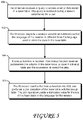
- FIGURE 5 is a flow chart illustration of the multilingual support used in a business intelligence server, in accordance with various embodiments of the invention.
- this figure depicts functional steps in a particular sequence for purposes of illustration, the process is not necessarily limited to this particular order or steps.
- One skilled in the art will appreciate that the various steps portrayed in this figure can be changed, rearranged, performed in parallel or adapted in various ways. Furthermore, it is to be understood that certain steps or sequences of steps can be added to or omitted from this process.
- the BI server receives a query to access a set of data stored in a base table.
- the query is received during a session established for a user.
- the BI server inspects a session variable and determines that the language of the session is different from the language used to store the data in the base table. If the language is the same as the language used in the base table, no translation or lookup is necessary. If the language is different, however, the lookup function is invoked in step 504.
- the lookup function takes as parameters the column of the base table, a value in a lookup table and the expression to select the data.
- the BI server rewrites the lookup function into SQL and performs a join operation of the base table with the lookup table. The join operation yields a translated value for the row of the base table in the language for the session.
- the embodiments of the invention further encompass computer apparatus, computing systems and machine-readable media configured to carry out the foregoing systems and methods.
- the present invention may be conveniently implemented using a conventional general purpose or a specialized digital computer or microprocessor programmed according to the teachings of the present disclosure, as will be apparent to those skilled in the computer art.
- the various embodiments include computer program product which is a storage medium (media) having instructions stored thereon/in which can be used to program a general purpose or specialized computing processor(s)/device(s) to perform any of the features presented herein.
- the storage medium can include, but is not limited to, one or more of the following: any type of physical media including floppy disks, optical discs, DVDs, CD-ROMs, microdrives, magneto-optical disks, holographic storage, ROMs, RAMs, PRAMS, EPROMs, EEPROMs, DRAMs, VRAMs, flash memory devices, magnetic or optical cards, nanosystems (including molecular memory ICs); and any type of media or device suitable for storing instructions and/or information.
- the computer program product can be transmitted in whole or in parts and over one or more public and/or private networks wherein the transmission includes instructions which can be used by one or more processors to perform any of the features presented herein.
- the transmission may include a plurality of separate transmissions.
- the computer readable storage medium is non-transitory.
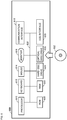
- FIGURE 6 is an illustration of a computing device that can be used to execute the various embodiments of the present invention described herein.
- a computer 600 can include one or more hardware processors 610 and physical memory including but not limited to Read Only Memory (ROM) 620, Random Access Memory (RAM) 622, hard disk drive(s) 624, optical disk drives 626, 632 and universal serial bus (USB) interface(s) 628 to external storage.
- the computer 600 can also utilize input means, such as keyboard 612 and mouse 614 combinations, and a display device such as a monitor 616.
- the computer 610 can communicate with other computers and similar devices by way of a communications interface 618 such as a modem, Ethernet card or other communication device.
- a communications interface 618 such as a modem, Ethernet card or other communication device.
Landscapes
- Engineering & Computer Science (AREA)
- Theoretical Computer Science (AREA)
- Computational Linguistics (AREA)
- Data Mining & Analysis (AREA)
- Databases & Information Systems (AREA)
- Physics & Mathematics (AREA)
- General Engineering & Computer Science (AREA)
- General Physics & Mathematics (AREA)
- Information Retrieval, Db Structures And Fs Structures Therefor (AREA)
- Machine Translation (AREA)
Applications Claiming Priority (3)
| Application Number | Priority Date | Filing Date | Title |
|---|---|---|---|
| US34975410P | 2010-05-28 | 2010-05-28 | |
| US13/038,252 US11100098B2 (en) | 2010-05-28 | 2011-03-01 | Systems and methods for providing multilingual support for data used with a business intelligence server |
| PCT/US2011/036294 WO2011149681A1 (en) | 2010-05-28 | 2011-05-12 | Systems and methods for providing multilingual support for data used with a business intelligence server |
Publications (2)
| Publication Number | Publication Date |
|---|---|
| EP2577508A1 EP2577508A1 (en) | 2013-04-10 |
| EP2577508B1 true EP2577508B1 (en) | 2019-05-01 |
Family
ID=44121224
Family Applications (1)
| Application Number | Title | Priority Date | Filing Date |
|---|---|---|---|
| EP11722660.5A Active EP2577508B1 (en) | 2010-05-28 | 2011-05-12 | Systems and methods for providing multilingual support for data used with a business intelligence server |
Country Status (5)
| Country | Link |
|---|---|
| US (1) | US11100098B2 (https=) |
| EP (1) | EP2577508B1 (https=) |
| JP (1) | JP5873078B2 (https=) |
| CN (1) | CN102918531B (https=) |
| WO (1) | WO2011149681A1 (https=) |
Families Citing this family (11)
| Publication number | Priority date | Publication date | Assignee | Title |
|---|---|---|---|---|
| CN103218691B (zh) * | 2013-04-26 | 2016-09-07 | 吉林市赢科信息技术有限责任公司 | 一种嵌入式商业智能信息管理系统及管理方法 |
| CN105183735B (zh) * | 2014-06-18 | 2019-02-19 | 阿里巴巴集团控股有限公司 | 数据的查询方法及查询装置 |
| JP5847344B1 (ja) * | 2015-03-24 | 2016-01-20 | 株式会社ギックス | データ処理システム、データ処理方法、プログラム及びコンピュータ記憶媒体 |
| US20180293091A1 (en) * | 2015-07-15 | 2018-10-11 | Mitsubishi Electric Corporation | Display control apparatus and display control method |
| US10460277B2 (en) * | 2016-12-14 | 2019-10-29 | Business Objects Software Limited | Business intelligence language macros |
| US11036730B2 (en) * | 2016-12-19 | 2021-06-15 | Business Objects Software Limited | Business intelligence language type representing result structure |
| CN110245267B (zh) * | 2019-05-17 | 2023-08-11 | 天津大学 | 多用户视频流深度学习共享计算复用方法 |
| CN111966727A (zh) * | 2020-08-12 | 2020-11-20 | 北京海致网聚信息技术有限公司 | 基于Spark和Hive的分布式OLAP即席查询方法 |
| CN113626465B (zh) * | 2021-08-09 | 2023-06-20 | 瀚高基础软件股份有限公司 | 数据库及在postgresql数据库中实现会话级变量的方法 |
| US20240211436A1 (en) * | 2022-04-24 | 2024-06-27 | Morgan Stanley Services Group Inc. | Distributed query execution and aggregation with custom code execution |
| US12360990B2 (en) * | 2022-11-03 | 2025-07-15 | Bank Of America Corporation | Transliteration of machine interpretable languages for enhanced compaction |
Citations (1)
| Publication number | Priority date | Publication date | Assignee | Title |
|---|---|---|---|---|
| US20070244853A1 (en) * | 2002-06-14 | 2007-10-18 | Stacey Schneider | Method and computer for responding to a query |
Family Cites Families (28)
| Publication number | Priority date | Publication date | Assignee | Title |
|---|---|---|---|---|
| US5477451A (en) * | 1991-07-25 | 1995-12-19 | International Business Machines Corp. | Method and system for natural language translation |
| JPH05233696A (ja) | 1992-02-19 | 1993-09-10 | Nippon Telegr & Teleph Corp <Ntt> | データベース検索方法 |
| US5528491A (en) | 1992-08-31 | 1996-06-18 | Language Engineering Corporation | Apparatus and method for automated natural language translation |
| US5442782A (en) * | 1993-08-13 | 1995-08-15 | Peoplesoft, Inc. | Providing information from a multilingual database of language-independent and language-dependent items |
| US5787410A (en) * | 1996-02-20 | 1998-07-28 | Oracle Corporation | Method and apparatus for storing and retrieving data in multiple languages simultaneously using a fully-populated sub-table |
| US5956740A (en) | 1996-10-23 | 1999-09-21 | Iti, Inc. | Document searching system for multilingual documents |
| US6018742A (en) * | 1998-07-07 | 2000-01-25 | Perigis Corporation | Constructing a bifurcated database of context-dependent and context-independent data items |
| US7013289B2 (en) * | 2001-02-21 | 2006-03-14 | Michel Horn | Global electronic commerce system |
| US20030056192A1 (en) | 2001-05-24 | 2003-03-20 | Burgess Allen G. | Source code analysis system and method |
| US6952691B2 (en) * | 2002-02-01 | 2005-10-04 | International Business Machines Corporation | Method and system for searching a multi-lingual database |
| JP4355138B2 (ja) * | 2002-12-13 | 2009-10-28 | インターナショナル・ビジネス・マシーンズ・コーポレーション | 翻訳サーバ、コラボレーションサーバ及びプログラム |
| US7151438B1 (en) | 2003-08-06 | 2006-12-19 | Unisys Corporation | System and wireless device for providing real-time alerts in response to changes in business operational data |
| US20050044065A1 (en) * | 2003-08-21 | 2005-02-24 | International Business Machines Corporation | Method and apparatus for enabling national language support of a database engine |
| US7444342B1 (en) | 2004-08-06 | 2008-10-28 | Unisys Corporation | System for accessing and transforming data, information and data relational rules in a multi-dimensional database |
| US7440888B2 (en) * | 2004-09-02 | 2008-10-21 | International Business Machines Corporation | Methods, systems and computer program products for national language support using a multi-language property file |
| US7373341B2 (en) * | 2004-12-30 | 2008-05-13 | Business Objects, S.A. | Computer readable medium, method and apparatus for preserving filtering conditions to query multilingual data sources at various locales when regenerating a report |
| US7757227B2 (en) * | 2005-03-18 | 2010-07-13 | Microsoft Corporation | Dynamic multilingual resource support for applications |
| US7853555B2 (en) * | 2006-04-19 | 2010-12-14 | Raytheon Company | Enhancing multilingual data querying |
| US7991608B2 (en) * | 2006-04-19 | 2011-08-02 | Raytheon Company | Multilingual data querying |
| WO2007133625A2 (en) * | 2006-05-12 | 2007-11-22 | Eij Group Llc | Multi-lingual information retrieval |
| US7783724B2 (en) | 2006-06-23 | 2010-08-24 | International Business Machines Corporation | System and method for delivering business intelligence data in a client/server architecture |
| US20080059412A1 (en) * | 2006-08-31 | 2008-03-06 | Tarin Stephen A | Value-instance connectivity computer-implemented database |
| CA2576703C (en) | 2007-02-02 | 2014-08-12 | Cognos Incorporated | System and method for optimizing business intelligence data queries within a client-server architecture |
| US7680780B2 (en) * | 2007-04-06 | 2010-03-16 | International Business Machines Corporation | Techniques for processing data from a multilingual database |
| US7698264B2 (en) | 2007-05-14 | 2010-04-13 | International Business Machines Corporation | System and method for sparsity removal |
| US8234298B2 (en) | 2007-07-25 | 2012-07-31 | International Business Machines Corporation | System and method for determining driving factor in a data cube |
| US8200618B2 (en) | 2007-11-02 | 2012-06-12 | International Business Machines Corporation | System and method for analyzing data in a report |
| US8078612B2 (en) * | 2008-04-07 | 2011-12-13 | Microsoft Corporation | Providing data based on language choice |
-
2011
- 2011-03-01 US US13/038,252 patent/US11100098B2/en active Active
- 2011-05-12 EP EP11722660.5A patent/EP2577508B1/en active Active
- 2011-05-12 CN CN201180026349.7A patent/CN102918531B/zh active Active
- 2011-05-12 JP JP2013512647A patent/JP5873078B2/ja active Active
- 2011-05-12 WO PCT/US2011/036294 patent/WO2011149681A1/en not_active Ceased
Patent Citations (1)
| Publication number | Priority date | Publication date | Assignee | Title |
|---|---|---|---|---|
| US20070244853A1 (en) * | 2002-06-14 | 2007-10-18 | Stacey Schneider | Method and computer for responding to a query |
Non-Patent Citations (1)
| Title |
|---|
| ORACLE: "Oracle Database SQL Reference 10g - Joins", 1 December 2005 (2005-12-01), XP055483308, Retrieved from the Internet <URL:https://docs.oracle.com/cd/B19306_01/server.102/b14200/queries006.htm#sthref3176> [retrieved on 20180612] * |
Also Published As
| Publication number | Publication date |
|---|---|
| EP2577508A1 (en) | 2013-04-10 |
| JP2013527540A (ja) | 2013-06-27 |
| US11100098B2 (en) | 2021-08-24 |
| CN102918531B (zh) | 2016-11-16 |
| JP5873078B2 (ja) | 2016-03-01 |
| US20110295837A1 (en) | 2011-12-01 |
| WO2011149681A1 (en) | 2011-12-01 |
| CN102918531A (zh) | 2013-02-06 |
Similar Documents
| Publication | Publication Date | Title |
|---|---|---|
| EP2577508B1 (en) | Systems and methods for providing multilingual support for data used with a business intelligence server | |
| US7716233B2 (en) | System and method for processing queries for combined hierarchical dimensions | |
| US9727628B2 (en) | System and method of applying globally unique identifiers to relate distributed data sources | |
| US10872162B2 (en) | Role-based security policy for an object-oriented database system | |
| US10515094B2 (en) | System and method for analyzing and reporting extensible data from multiple sources in multiple formats | |
| US10545981B2 (en) | Virtual repository management | |
| US8326857B2 (en) | Systems and methods for providing value hierarchies, ragged hierarchies and skip-level hierarchies in a business intelligence server | |
| US7899837B2 (en) | Apparatus and method for generating queries and reports | |
| US8452808B2 (en) | Automatic generation of virtual database schemas | |
| EP2116954A1 (en) | Apparatus and method for accessing data in a multi-tenant database according to a trust hierarchy | |
| KR20090100425A (ko) | 데이터베이스 관리 시스템에서 데이터 및 관련 온톨로지를 질의하는 방법, 장치 및 컴퓨터 프로그램 제품 | |
| US7099727B2 (en) | Knowledge repository system for computing devices | |
| GB2555087A (en) | System and method for retrieving data from server computers | |
| US8438141B2 (en) | System and method for providing secure access to data with user defined table functions | |
| US8639717B2 (en) | Providing access to data with user defined table functions | |
| US20080016048A1 (en) | Intelligent condition pruning for size minimization of dynamic, just in time tables | |
| US7555786B2 (en) | Method for providing security mechanisms for data warehousing and analysis | |
| EP4334827A1 (en) | Efficient storage and query of schemaless data | |
| EP2544104A1 (en) | Database consistent sample data extraction | |
| US8204895B2 (en) | Apparatus and method for receiving a report | |
| CA2465642A1 (en) | System and method for providing security mechanisms for data warehousing and analysis |
Legal Events
| Date | Code | Title | Description |
|---|---|---|---|
| PUAI | Public reference made under article 153(3) epc to a published international application that has entered the european phase |
Free format text: ORIGINAL CODE: 0009012 |
|
| 17P | Request for examination filed |
Effective date: 20121123 |
|
| AK | Designated contracting states |
Kind code of ref document: A1 Designated state(s): AL AT BE BG CH CY CZ DE DK EE ES FI FR GB GR HR HU IE IS IT LI LT LU LV MC MK MT NL NO PL PT RO RS SE SI SK SM TR |
|
| DAX | Request for extension of the european patent (deleted) | ||
| STAA | Information on the status of an ep patent application or granted ep patent |
Free format text: STATUS: EXAMINATION IS IN PROGRESS |
|
| 17Q | First examination report despatched |
Effective date: 20170817 |
|
| GRAP | Despatch of communication of intention to grant a patent |
Free format text: ORIGINAL CODE: EPIDOSNIGR1 |
|
| STAA | Information on the status of an ep patent application or granted ep patent |
Free format text: STATUS: GRANT OF PATENT IS INTENDED |
|
| INTG | Intention to grant announced |
Effective date: 20181119 |
|
| GRAS | Grant fee paid |
Free format text: ORIGINAL CODE: EPIDOSNIGR3 |
|
| GRAA | (expected) grant |
Free format text: ORIGINAL CODE: 0009210 |
|
| STAA | Information on the status of an ep patent application or granted ep patent |
Free format text: STATUS: THE PATENT HAS BEEN GRANTED |
|
| AK | Designated contracting states |
Kind code of ref document: B1 Designated state(s): AL AT BE BG CH CY CZ DE DK EE ES FI FR GB GR HR HU IE IS IT LI LT LU LV MC MK MT NL NO PL PT RO RS SE SI SK SM TR |
|
| REG | Reference to a national code |
Ref country code: GB Ref legal event code: FG4D |
|
| REG | Reference to a national code |
Ref country code: CH Ref legal event code: EP Ref country code: AT Ref legal event code: REF Ref document number: 1127862 Country of ref document: AT Kind code of ref document: T Effective date: 20190515 |
|
| REG | Reference to a national code |
Ref country code: DE Ref legal event code: R096 Ref document number: 602011058490 Country of ref document: DE |
|
| REG | Reference to a national code |
Ref country code: IE Ref legal event code: FG4D |
|
| REG | Reference to a national code |
Ref country code: NL Ref legal event code: MP Effective date: 20190501 |
|
| REG | Reference to a national code |
Ref country code: LT Ref legal event code: MG4D |
|
| PG25 | Lapsed in a contracting state [announced via postgrant information from national office to epo] |
Ref country code: HR Free format text: LAPSE BECAUSE OF FAILURE TO SUBMIT A TRANSLATION OF THE DESCRIPTION OR TO PAY THE FEE WITHIN THE PRESCRIBED TIME-LIMIT Effective date: 20190501 Ref country code: LT Free format text: LAPSE BECAUSE OF FAILURE TO SUBMIT A TRANSLATION OF THE DESCRIPTION OR TO PAY THE FEE WITHIN THE PRESCRIBED TIME-LIMIT Effective date: 20190501 Ref country code: SE Free format text: LAPSE BECAUSE OF FAILURE TO SUBMIT A TRANSLATION OF THE DESCRIPTION OR TO PAY THE FEE WITHIN THE PRESCRIBED TIME-LIMIT Effective date: 20190501 Ref country code: NL Free format text: LAPSE BECAUSE OF FAILURE TO SUBMIT A TRANSLATION OF THE DESCRIPTION OR TO PAY THE FEE WITHIN THE PRESCRIBED TIME-LIMIT Effective date: 20190501 Ref country code: ES Free format text: LAPSE BECAUSE OF FAILURE TO SUBMIT A TRANSLATION OF THE DESCRIPTION OR TO PAY THE FEE WITHIN THE PRESCRIBED TIME-LIMIT Effective date: 20190501 Ref country code: PT Free format text: LAPSE BECAUSE OF FAILURE TO SUBMIT A TRANSLATION OF THE DESCRIPTION OR TO PAY THE FEE WITHIN THE PRESCRIBED TIME-LIMIT Effective date: 20190901 Ref country code: NO Free format text: LAPSE BECAUSE OF FAILURE TO SUBMIT A TRANSLATION OF THE DESCRIPTION OR TO PAY THE FEE WITHIN THE PRESCRIBED TIME-LIMIT Effective date: 20190801 Ref country code: AL Free format text: LAPSE BECAUSE OF FAILURE TO SUBMIT A TRANSLATION OF THE DESCRIPTION OR TO PAY THE FEE WITHIN THE PRESCRIBED TIME-LIMIT Effective date: 20190501 Ref country code: FI Free format text: LAPSE BECAUSE OF FAILURE TO SUBMIT A TRANSLATION OF THE DESCRIPTION OR TO PAY THE FEE WITHIN THE PRESCRIBED TIME-LIMIT Effective date: 20190501 |
|
| PG25 | Lapsed in a contracting state [announced via postgrant information from national office to epo] |
Ref country code: BG Free format text: LAPSE BECAUSE OF FAILURE TO SUBMIT A TRANSLATION OF THE DESCRIPTION OR TO PAY THE FEE WITHIN THE PRESCRIBED TIME-LIMIT Effective date: 20190801 Ref country code: GR Free format text: LAPSE BECAUSE OF FAILURE TO SUBMIT A TRANSLATION OF THE DESCRIPTION OR TO PAY THE FEE WITHIN THE PRESCRIBED TIME-LIMIT Effective date: 20190802 Ref country code: RS Free format text: LAPSE BECAUSE OF FAILURE TO SUBMIT A TRANSLATION OF THE DESCRIPTION OR TO PAY THE FEE WITHIN THE PRESCRIBED TIME-LIMIT Effective date: 20190501 Ref country code: LV Free format text: LAPSE BECAUSE OF FAILURE TO SUBMIT A TRANSLATION OF THE DESCRIPTION OR TO PAY THE FEE WITHIN THE PRESCRIBED TIME-LIMIT Effective date: 20190501 |
|
| REG | Reference to a national code |
Ref country code: AT Ref legal event code: MK05 Ref document number: 1127862 Country of ref document: AT Kind code of ref document: T Effective date: 20190501 |
|
| REG | Reference to a national code |
Ref country code: CH Ref legal event code: PL |
|
| PG25 | Lapsed in a contracting state [announced via postgrant information from national office to epo] |
Ref country code: IS Free format text: LAPSE BECAUSE OF FAILURE TO SUBMIT A TRANSLATION OF THE DESCRIPTION OR TO PAY THE FEE WITHIN THE PRESCRIBED TIME-LIMIT Effective date: 20190901 |
|
| PG25 | Lapsed in a contracting state [announced via postgrant information from national office to epo] |
Ref country code: CH Free format text: LAPSE BECAUSE OF NON-PAYMENT OF DUE FEES Effective date: 20190531 Ref country code: EE Free format text: LAPSE BECAUSE OF FAILURE TO SUBMIT A TRANSLATION OF THE DESCRIPTION OR TO PAY THE FEE WITHIN THE PRESCRIBED TIME-LIMIT Effective date: 20190501 Ref country code: DK Free format text: LAPSE BECAUSE OF FAILURE TO SUBMIT A TRANSLATION OF THE DESCRIPTION OR TO PAY THE FEE WITHIN THE PRESCRIBED TIME-LIMIT Effective date: 20190501 Ref country code: LI Free format text: LAPSE BECAUSE OF NON-PAYMENT OF DUE FEES Effective date: 20190531 Ref country code: MC Free format text: LAPSE BECAUSE OF FAILURE TO SUBMIT A TRANSLATION OF THE DESCRIPTION OR TO PAY THE FEE WITHIN THE PRESCRIBED TIME-LIMIT Effective date: 20190501 Ref country code: SK Free format text: LAPSE BECAUSE OF FAILURE TO SUBMIT A TRANSLATION OF THE DESCRIPTION OR TO PAY THE FEE WITHIN THE PRESCRIBED TIME-LIMIT Effective date: 20190501 Ref country code: AT Free format text: LAPSE BECAUSE OF FAILURE TO SUBMIT A TRANSLATION OF THE DESCRIPTION OR TO PAY THE FEE WITHIN THE PRESCRIBED TIME-LIMIT Effective date: 20190501 Ref country code: CZ Free format text: LAPSE BECAUSE OF FAILURE TO SUBMIT A TRANSLATION OF THE DESCRIPTION OR TO PAY THE FEE WITHIN THE PRESCRIBED TIME-LIMIT Effective date: 20190501 Ref country code: RO Free format text: LAPSE BECAUSE OF FAILURE TO SUBMIT A TRANSLATION OF THE DESCRIPTION OR TO PAY THE FEE WITHIN THE PRESCRIBED TIME-LIMIT Effective date: 20190501 |
|
| REG | Reference to a national code |
Ref country code: DE Ref legal event code: R097 Ref document number: 602011058490 Country of ref document: DE |
|
| REG | Reference to a national code |
Ref country code: BE Ref legal event code: MM Effective date: 20190531 |
|
| PG25 | Lapsed in a contracting state [announced via postgrant information from national office to epo] |
Ref country code: LU Free format text: LAPSE BECAUSE OF NON-PAYMENT OF DUE FEES Effective date: 20190512 Ref country code: SM Free format text: LAPSE BECAUSE OF FAILURE TO SUBMIT A TRANSLATION OF THE DESCRIPTION OR TO PAY THE FEE WITHIN THE PRESCRIBED TIME-LIMIT Effective date: 20190501 Ref country code: IT Free format text: LAPSE BECAUSE OF FAILURE TO SUBMIT A TRANSLATION OF THE DESCRIPTION OR TO PAY THE FEE WITHIN THE PRESCRIBED TIME-LIMIT Effective date: 20190501 |
|
| PLBE | No opposition filed within time limit |
Free format text: ORIGINAL CODE: 0009261 |
|
| STAA | Information on the status of an ep patent application or granted ep patent |
Free format text: STATUS: NO OPPOSITION FILED WITHIN TIME LIMIT |
|
| PG25 | Lapsed in a contracting state [announced via postgrant information from national office to epo] |
Ref country code: TR Free format text: LAPSE BECAUSE OF FAILURE TO SUBMIT A TRANSLATION OF THE DESCRIPTION OR TO PAY THE FEE WITHIN THE PRESCRIBED TIME-LIMIT Effective date: 20190501 |
|
| 26N | No opposition filed |
Effective date: 20200204 |
|
| PG25 | Lapsed in a contracting state [announced via postgrant information from national office to epo] |
Ref country code: PL Free format text: LAPSE BECAUSE OF FAILURE TO SUBMIT A TRANSLATION OF THE DESCRIPTION OR TO PAY THE FEE WITHIN THE PRESCRIBED TIME-LIMIT Effective date: 20190501 Ref country code: IE Free format text: LAPSE BECAUSE OF NON-PAYMENT OF DUE FEES Effective date: 20190512 |
|
| PG25 | Lapsed in a contracting state [announced via postgrant information from national office to epo] |
Ref country code: BE Free format text: LAPSE BECAUSE OF NON-PAYMENT OF DUE FEES Effective date: 20190531 Ref country code: SI Free format text: LAPSE BECAUSE OF FAILURE TO SUBMIT A TRANSLATION OF THE DESCRIPTION OR TO PAY THE FEE WITHIN THE PRESCRIBED TIME-LIMIT Effective date: 20190501 |
|
| PG25 | Lapsed in a contracting state [announced via postgrant information from national office to epo] |
Ref country code: FR Free format text: LAPSE BECAUSE OF NON-PAYMENT OF DUE FEES Effective date: 20190701 |
|
| PG25 | Lapsed in a contracting state [announced via postgrant information from national office to epo] |
Ref country code: CY Free format text: LAPSE BECAUSE OF FAILURE TO SUBMIT A TRANSLATION OF THE DESCRIPTION OR TO PAY THE FEE WITHIN THE PRESCRIBED TIME-LIMIT Effective date: 20190501 |
|
| PG25 | Lapsed in a contracting state [announced via postgrant information from national office to epo] |
Ref country code: HU Free format text: LAPSE BECAUSE OF FAILURE TO SUBMIT A TRANSLATION OF THE DESCRIPTION OR TO PAY THE FEE WITHIN THE PRESCRIBED TIME-LIMIT; INVALID AB INITIO Effective date: 20110512 Ref country code: MT Free format text: LAPSE BECAUSE OF FAILURE TO SUBMIT A TRANSLATION OF THE DESCRIPTION OR TO PAY THE FEE WITHIN THE PRESCRIBED TIME-LIMIT Effective date: 20190501 |
|
| PG25 | Lapsed in a contracting state [announced via postgrant information from national office to epo] |
Ref country code: MK Free format text: LAPSE BECAUSE OF FAILURE TO SUBMIT A TRANSLATION OF THE DESCRIPTION OR TO PAY THE FEE WITHIN THE PRESCRIBED TIME-LIMIT Effective date: 20190501 |
|
| P01 | Opt-out of the competence of the unified patent court (upc) registered |
Effective date: 20230522 |
|
| PGFP | Annual fee paid to national office [announced via postgrant information from national office to epo] |
Ref country code: DE Payment date: 20250402 Year of fee payment: 15 |
|
| PGFP | Annual fee paid to national office [announced via postgrant information from national office to epo] |
Ref country code: GB Payment date: 20250401 Year of fee payment: 15 |