EP2575288B1 - Passwortschutz - Google Patents
Passwortschutz Download PDFInfo
- Publication number
- EP2575288B1 EP2575288B1 EP12199134.3A EP12199134A EP2575288B1 EP 2575288 B1 EP2575288 B1 EP 2575288B1 EP 12199134 A EP12199134 A EP 12199134A EP 2575288 B1 EP2575288 B1 EP 2575288B1
- Authority
- EP
- European Patent Office
- Prior art keywords
- value
- password
- pattern
- storage
- authentication
- Prior art date
- Legal status (The legal status is an assumption and is not a legal conclusion. Google has not performed a legal analysis and makes no representation as to the accuracy of the status listed.)
- Not-in-force
Links
Images



Classifications
-
- H—ELECTRICITY
- H04—ELECTRIC COMMUNICATION TECHNIQUE
- H04L—TRANSMISSION OF DIGITAL INFORMATION, e.g. TELEGRAPHIC COMMUNICATION
- H04L9/00—Cryptographic mechanisms or cryptographic arrangements for secret or secure communications; Network security protocols
- H04L9/32—Cryptographic mechanisms or cryptographic arrangements for secret or secure communications; Network security protocols including means for verifying the identity or authority of a user of the system or for message authentication, e.g. authorization, entity authentication, data integrity or data verification, non-repudiation, key authentication or verification of credentials
- H04L9/3226—Cryptographic mechanisms or cryptographic arrangements for secret or secure communications; Network security protocols including means for verifying the identity or authority of a user of the system or for message authentication, e.g. authorization, entity authentication, data integrity or data verification, non-repudiation, key authentication or verification of credentials using a predetermined code, e.g. password, passphrase or PIN
-
- G—PHYSICS
- G06—COMPUTING OR CALCULATING; COUNTING
- G06F—ELECTRIC DIGITAL DATA PROCESSING
- G06F21/00—Security arrangements for protecting computers, components thereof, programs or data against unauthorised activity
- G06F21/30—Authentication, i.e. establishing the identity or authorisation of security principals
- G06F21/31—User authentication
-
- H—ELECTRICITY
- H04—ELECTRIC COMMUNICATION TECHNIQUE
- H04L—TRANSMISSION OF DIGITAL INFORMATION, e.g. TELEGRAPHIC COMMUNICATION
- H04L9/00—Cryptographic mechanisms or cryptographic arrangements for secret or secure communications; Network security protocols
- H04L9/32—Cryptographic mechanisms or cryptographic arrangements for secret or secure communications; Network security protocols including means for verifying the identity or authority of a user of the system or for message authentication, e.g. authorization, entity authentication, data integrity or data verification, non-repudiation, key authentication or verification of credentials
- H04L9/3236—Cryptographic mechanisms or cryptographic arrangements for secret or secure communications; Network security protocols including means for verifying the identity or authority of a user of the system or for message authentication, e.g. authorization, entity authentication, data integrity or data verification, non-repudiation, key authentication or verification of credentials using cryptographic hash functions
-
- H—ELECTRICITY
- H04—ELECTRIC COMMUNICATION TECHNIQUE
- H04L—TRANSMISSION OF DIGITAL INFORMATION, e.g. TELEGRAPHIC COMMUNICATION
- H04L2209/00—Additional information or applications relating to cryptographic mechanisms or cryptographic arrangements for secret or secure communication H04L9/00
- H04L2209/30—Compression, e.g. Merkle-Damgard construction
-
- H—ELECTRICITY
- H04—ELECTRIC COMMUNICATION TECHNIQUE
- H04L—TRANSMISSION OF DIGITAL INFORMATION, e.g. TELEGRAPHIC COMMUNICATION
- H04L2209/00—Additional information or applications relating to cryptographic mechanisms or cryptographic arrangements for secret or secure communication H04L9/00
- H04L2209/80—Wireless
- H04L2209/805—Lightweight hardware, e.g. radio-frequency identification [RFID] or sensor
Definitions
- the present invention relates to password protection, and in particular relates to password protection using one-way functions.
- secure systems typically use passwords (textual and/or binary) to control access to system resources.
- the password is typically stored in the system for authenticating a candidate password by comparing the received candidate password against the stored password.
- a vulnerability of the basic system is that an attacker who obtains access to the system can find the stored password and use it at a later point to access the system.
- a common solution to the above problem is to calculate a hash value of the password using a hash function and then store the hash value.
- a candidate password received by the system is first processed by the hash function giving an output value.
- the output value is then compared to the stored hash value. Therefore, an attacker that penetrates the system will only find the hash value which cannot be used as the access password.
- the stored hash value is preferably stored in non-volatile memory (NVM) for example, but not limited to, fuses and OTP (one-time programmable) memory.
- NVM non-volatile memory
- fuses and OTP (one-time programmable) memory.
- OTP one-time programmable memory
- the available NVM is typically limited and therefore it is desirable to keep the amount of storage space used for the stored hash value as small as possible.
- reducing the size of the stored hash value normally means reducing the security level provided by the hash value, as will be explained below.
- the security of the system is proportional to the number of bits of the hash value. For example, if the hash value has 32 bits, then on average it takes 2 32 (approximately 4 billion) trials in order to find a password (which is not necessarily the original password) that maps to the hash value using the hash function.
- US 2006/020796 discloses strengthening one-way hash functions using a hash extension technique.
- the present invention seeks to provide an improved password protection system using one-way functions.
- the system of the present invention provides password authentication using a one-way function, for example, but not limited to, a cryptographic hash function, such as SHA-1 or MD5.
- a cryptographic hash function such as SHA-1 or MD5.
- a one-way function is a function that is quicker to compute in the forward direction (from input to output) than in the inverse direction (from output to input).
- the term one-way function as used in the specification and claims is defined as a mathematical function which is at least 1000 times quicker to compute in the forward direction than in the inverse direction.
- a one-way function is used which is at least a million times quicker to compute in the forward direction than in the inverse direction.
- the one-way function preferably has a plurality of input values and a plurality of output values.
- An input value of the one-way function is typically selected such that an output value of the one-way function has a predetermined pattern.
- the output value can generally be reconstructed from only part of the information of the output value and knowledge of the pattern. Therefore, in order to use the output value as a check value in password authentication against a candidate password, only part of the information of the output value typically needs to be stored.
- the part of the information, which needs to be stored is preferably stored in a storage value.
- the storage value optionally includes an indicator of the pattern used in reconstructing the check value.
- the storage value preferably only has y bits, wherein x is greater than y, preferably x is at least 20 bits longer than y. For example, if the check value has 64 bits offering 64 bit security and the pattern has 32 bits, then the storage value may only need 32 bits. Therefore, 64 bits of security is obtained with 32 bits of storage.
- a hidden cost of the preferred embodiment of the present invention is preprocessing in order to find the password. In the above example, it will take approximately 2 32 (approximately 4 billion) trials in order to find a password such that the output value includes the 32 bit pattern. However, where storage is limited and/or expensive, preprocessing is generally considered to be relatively cheap.
- the pattern is based on a value already being used by the system for non-password use, for example, but not limited to, a chip serial number, an RFID serial number and/or configuration bits of one-time programmable (OTP) memory.
- a value already being used by the system for non-password use for example, but not limited to, a chip serial number, an RFID serial number and/or configuration bits of one-time programmable (OTP) memory.
- OTP one-time programmable
- the password only storage cost is reduced by using part of the check value for a non-password use, for example, but not limited to, a definable identification number such as a chip serial number which can be defined by a chip manufacturer.
- the system of the present invention in preferred embodiments thereof, is generally suitable for use with binary passwords and/or with systems having fixed passwords, for example, but not limited to, test mode passwords and diagnostic passwords typically having fixed check values written to OTP or read-only memory (ROM).
- the system of the present invention in preferred embodiments thereof, is generally, but not exclusively, suitable for passwords not requiring human memorization.
- system of the present invention in preferred embodiments thereof, is also generally very useful for low resource hardware, for example, but not limited to radio frequency identification (RFID) tags and chips for Integrated Receiver-Decoders (IRDs).
- RFID radio frequency identification
- IRDs Integrated Receiver-Decoders
- an authentication system including a pattern module to provide a pattern, a function module to provide a one-way function having a plurality of input values and a plurality of output values, a function processor to find one of the input values for the one-way function such that a corresponding one of the output values has the pattern, a password module to provide the one input value as a password for use in password authentication against the one output value, the one output value being a check value, the check value having a length, a compression module to determine a storage value such that the check value can be reconstructed from the storage value and the pattern, and the storage value has a length which is shorter than the length of the check value, and a storage module to store the storage value in a storage medium for later retrieval.
- the storage value includes an indicator of the pattern.
- the pattern includes a string of predefined values in a predefined order.
- the storage value is void of the complete string.
- the string has a non-password use.
- non-password use is for identification.
- the string forms at least half of a chip serial number.
- the string forms at least part of a serial number of an RFID tag.
- the string forms at least part of a set of configuration bits.
- At least part of the storage value has a non-password use.
- non-password use is for identification.
- the at least part of the storage value forms at least half of a chip serial number.
- the system includes a password receiver to receive a candidate password, the function processor being operative to determine one of the output values, with the candidate password as a corresponding one of the input values, using the one-way function, a retrieval module to retrieve the storage value from the storage medium, and an authentication module to compare the one output value for the candidate password to the storage value taking the pattern into account.
- the system includes a reconstruction module to reconstruct the check value from the storage value and the pattern, wherein the authentication module is operative to compare the one output value for the candidate password to the check value.
- the compression module is operative to compress the one output value yielding a compressed value which is void of the pattern, the authentication module being operative to compare the compressed value to the storage value.
- the storage value includes an indicator of the pattern.
- the pattern includes a string of predefined values in a predefined order.
- the storage value is void of the complete string.
- the string has a non-password use.
- non-password use is for identification.
- the string forms at least half of a chip serial number.
- the string forms at least part of a serial number of an RFID tag.
- the string forms at least part of a set of configuration bits.
- At least part of the storage value has a non-password use.
- non-password use is for identification.
- the at least part of the storage value forms at least half of a chip serial number.
- an authentication system including a function module to provide a one-way function having a plurality of input values and a plurality of output values, a password module to provide one of the input values as a password for use in password authentication against a corresponding one of the output values, the one output value being a check value, a function processor to determine the check value for the password using the one-way function, and a storage module to store the check value in a storage medium for later retrieval, wherein at least part of the stored check value has a non-password use.
- non-password use is for identification.
- the at least part of the check value forms at least half of a chip serial number.
- the system includes a password receiver to receive a candidate password, a retrieval module to retrieve the check value from the storage medium, the function processor being operative to determine one of the output values, with the candidate password as a corresponding one of the input values, using the one-way function, and an authentication module to compare the one output value for the candidate password to the check value.
- non-password use is for identification.
- the at least part of the check value forms at least half of a chip serial number.
- an authentication system including a storage medium to store a storage value for use in password authentication, a password receiver to receive a candidate password for checking against a check value in the password authentication, a retrieval module to retrieve the storage value from the storage medium, a pattern module to provide a pattern, a function module to provide a one-way function having a plurality of input values and a plurality of output values, a function processor to determine one of the output values, with the candidate password as a corresponding one of the input values, using the one-way function, and an authentication module to compare the one output value for the candidate password to the storage value taking the pattern into account.
- the system includes a reconstruction module to reconstruct the check value from the storage value and the pattern, wherein the authentication module is operative to compare the one output value for the candidate password to the check value.
- the system includes a compression module to compress the one output value yielding a compressed value which is void of the pattern, wherein the authentication module is operative to compare the compressed value to the storage value.
- the storage value includes an indicator of the pattern.
- the pattern includes a string of predefined values in a predefined order.
- the storage value is void of the complete string.
- the string has a non-password use.
- non-password use is for identification.
- the string forms at least half of a chip serial number.
- the string forms at least part of a serial number of an RFID tag.
- the string forms at least part of a set of configuration bits.
- At least part of the storage value has a non-password use.
- non-password use is for identification.
- the at least part of the storage value forms at least half of a chip serial number.
- an authentication system including a storage medium to store a check value for use in password authentication, wherein at least part of the stored check value has a non-password use, a password receiver to receive a candidate password for checking against the check value in the password authentication, a retrieval module to retrieve the check value from the storage medium, a function module to provide a one-way function having a plurality of input values and a plurality of output values, a function processor to determine one of the output values, with the candidate password as a corresponding one of the input values, using the one-way function, and an authentication module to compare the one output value for the candidate password to the check value.
- non-password use is for identification.
- the at least part of the check value forms at least half of a chip serial number.
- the one-way is a cryptographic hash function and wherein the output values are hash values.
- a password generation method including providing a pattern, providing a one-way function having a plurality of input values and a plurality of output values, determining one of the input values for the one-way function such that a corresponding one of the output values has the pattern, providing the one input value as a password for use in password authentication against the one output value, the one output value being a check value, the check value having a length, determining a storage value such that the check value can be reconstructed from the storage value and the pattern, and the storage value has a length which is shorter than the length of the check value, and storing the storage value in a storage medium for later retrieval.
- a authentication method including providing a one-way function having a plurality of input values and a plurality of output values, providing one of the input values as a password for use in password authentication against a corresponding one of the output values, the one output value being a check value, determining the check value for the password using the one-way function, and storing the check value in a storage medium for later retrieval, wherein at least part of the stored check value has a non-password use.
- a authentication method including storing a storage value for use in password authentication, receiving a candidate password for checking against a check value in the password authentication, providing a one-way function having a plurality of input values and a plurality of output values, determining one of the output values, with the candidate password as a corresponding one of the input values, using the one-way function, retrieving the storage value from the storage medium, providing a pattern, and comparing the one output value for the candidate password to the storage value taking the pattern into account.
- a authentication method including storing a check value for use in password authentication, wherein at least part of the stored check value has a non-password use, receiving a candidate password for checking against the check value in the password authentication, retrieving the check value from the storage medium, providing a one-way function having a plurality of input values and a plurality of output values, determining one of the output values, with the candidate password as a corresponding one of the input values, using the one-way function, and comparing the one output value for the candidate password to the check value.
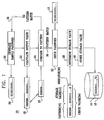
- FIG. 1 is a partly pictorial, partly block diagram view of an authentication system 10 constructed and operative in accordance with a preferred embodiment of the present invention determining a password 12 and an associated storage value 14 based on a pattern 16.
- a sample password 26 is provided (block 20) typically by a pseudo-random number generator (not shown).
- the password 26 is preferably processed by a one-way function producing an output value 18 (block 22).
- the one-way function preferably has a plurality of input values and output values.
- the one-way function is preferably a cryptographic hash function for example, but not limited to SHA-1 or MD5, the output values being hash values.
- the one-way function can be any suitable one-way function complying with the definition of a one-way function described in the summary of the invention section.
- the one-way function may be implemented in one of the following ways.
- a first option is to encrypt the sample password 26 and then perform an exclusive-OR operation with the output of the encryption operation and the sample password 26.
- a second option is to encrypt a constant value (for example, but not limited to, zero) with the sample password 26 as the encryption key.
- a third option is to encrypt a constant value (for example, but not limited to, zero) with the sample password 26 as the encryption key and then perform an exclusive-OR operation with the output of the encryption operation and the sample password 26.
- a constant value for example, but not limited to, zero
- Y is equal to concatenating 2 copies of X.
- Y ⁇ Y XOR Y ⁇ ⁇ 5 AND Y ⁇ ⁇ 36 XOR Y ⁇ ⁇ 14 OR Y ⁇ ⁇ 45 ,
- the 64 bit output Z is given by Y final [0..63] XOR Y final [ 6 4..127].
- the 64 bit output Z is given by performing an XOR operation with the first 64 bits of Y final and the last 64 bits of Y final .
- the output value 18 is then typically compared with the pattern 16 to determine if the output value 18 has the pattern 16 (block 24).
- the sample password 26 is preferably designated as the password 12 for issuing for use in password authentication (block 32) against the output value 18.
- the output value 18 is typically defined as a check value 34.
- part of the output value 18 includes pattern 16, such that the output value 18 typically includes specific values in a predefined order, as defined by the pattern 16.
- the pattern 16 defines a pattern that the output value 18 should follow, for example, the first half of the output value 18 should equal the second half of the output value 18, or that the first half of the output value 18 is an inverse of the second half of the output value 18, or the first half of the output value 18 is a function of the second half of the output value 18. It will be appreciated by those ordinarily skilled in the art that the pattern 16 can define any suitable pattern for the output value 18.
- the storage value 14 is preferably determined such that the check value 34 can be reconstructed from the storage value 14 and the pattern 16 (block 38).
- the storage value 14 is therefore a compressed version of the check value 34.
- the first half of the check value 34 includes the pattern 16, then typically only the second half of the check value 34 needs to be stored in the storage value 14.
- the first half of the check value 34 is equal to the second half of the check value 34, then typically only one half of the check value 34 needs to be stored.
- the storage value 14 optionally includes an indicator 36 which provides an indication of the pattern 16.
- the storage value 14 has a length which is preferably shorter than a length of the check value 34.
- the storage value 14 is typically stored in a storage medium 40 for later retrieval (block 42).
- the check value 34 has 64 bits, the pattern 16 has 32 bits and the storage value 14 has 32 bits (plus one or more optional bits for the indicator 36), then the check value 34 provides 64 bit security whereas the storage value 14 is only 32 bits long plus the indicator 36.
- There is a preprocessing cost to find the password 12 such that the output value 18 includes the pattern 16. On average is will take 2 32 (about 4 billion) trials to find the password 12 given the pattern 16.
- the preprocessing requirement is generally proportional to the size and/or complexity of the pattern 16.
- the size chosen for the check value 34 and the pattern 16 generally depends on various factors, including, by way of example only, the speed of the state of the art processors, the speed of the preprocessing device(s), the speed of the authenticating device(s), as well as the processing time and the strength of the one-way function.
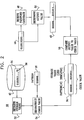
- Fig. 2 is a partly pictorial, partly block diagram view of the authentication system 10 of Fig. 1 authenticating a candidate password 44 using the pattern 16 of Fig.1 .
- the method for authenticating the candidate password 44 is now described in more detail.
- the candidate password 44 for checking against the check value 34 during password authentication is received (block 46).
- An output value 48 is preferably determined, using the one-way function with the candidate password 44 as an input value to the one-way function (block 50).
- the storage value 14 is typically retrieved from the storage medium 40 (block 52).
- the check value 34 is generally reconstructed from the storage value 14 and the pattern 16 (block 54).
- the storage value 14 is a compressed version of the check value 34.
- the indicator 36 is preferably used to determine one or more aspects of the pattern 16.
- the indicator 36 is generally not included in the reconstructed check value 34.
- the output value 48 for the candidate password 44 is preferably compared to the reconstructed check value 34 (block 56).
- the result of the password authentication is then typically sent to the device requesting authentication.
- the check value 34 is not reconstructed from the storage value 14.
- the output value 48 is compared to the storage value 14 taking into account the pattern 16 using the indicator 36 (if appropriate). For example, the output value 48 is checked to ensure that the output value 48 has the pattern 16 using the indicator (if appropriate).
- the output value 48 is then compressed to yield a compressed value which is void of the pattern 16. The compressed value is then compared to the storage value 14.
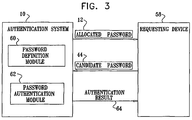
- FIG. 3 is a block diagram view of the authentication system 10 of Fig. 1 operating in a preferred mode of operation with a requesting device 58.
- the authentication system 10 preferably includes a password definition module 60 and a password authentication module 62.
- the password definition module 60 typically performs the steps described with reference to the blocks 20-42 ( Fig. 1 ).
- the password authentication module 62 generally performs the steps described with reference to the blocks 44-56 ( Fig. 2 ).
- the authentication system 10 After the password 12 has been determined by the password definition module 60, the authentication system 10 preferably sends the allocated password 12 to the requesting device 58.
- the requesting device 58 typically sends the candidate password 44 to the authentication system 10 for authentication.
- the password authentication module 62 of the authentication system 10 preferably processes the authentication request of the requesting device 58 and then generally informs the requesting device 58 of the result of the authentication (arrow 64).
- a password definition module and a password authentication module including substantially the same functionality as the password definition module 60 and the password authentication module 62, are described in more detail with reference to Figs. 9 and 10 , respectively.
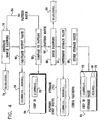
- FIG. 4 is a partly pictorial, partly block diagram view of an authentication system 66 constructed and operative in accordance with an alternative preferred embodiment of the present invention determining a password 68 and an associated storage value 70 based on a chip serial number 72 of a chip 94.
- chip serial number as used in the specification and claims, is defined to include the use of any suitable characters, including alphanumeric and non-alphanumeric characters, for identifying a chip.
- chip serial number is sometimes known as a "chip ID”.
- the authentication system 66 is substantially the same as the authentication system 10 of Figs. 1-3 except that with the authentication system 66, the password 68 is preferably determined by a pattern which is defined by the chip serial number 72.
- the complete chip serial number 72 is typically used as the pattern.
- a part of the chip serial number 72 can be used to define the pattern, for example half of the chip serial number 72.
- the chip serial number 72 is an example of where the pattern has a non-password use, for example, but not limited to, identification. It will be appreciated by those ordinarily skilled in the art that any suitable string of predefined values in a predefined order can be used as at least part of the pattern, for example, but not limited to, an RFID serial number (described in more detail with reference to Fig. 13 ) or configuration bits (described in more detail with reference to Fig. 15 ).
- a sample password 74 is preferably provided (block 76) typically by a pseudo-random number generator (not shown).
- the password 74 is typically processed by a one-way function producing an output value 78 (block 80).
- the output value 78 is then preferably compared with the chip serial number 72 to determine if the output value 78 includes the chip serial number 72 in the appropriate section of the output value 78 (block 82). It should be noted that inclusion of the chip serial number 72 preferably needs to be limited to a section of the output value 78, for example, but not limited to, the beginning of the output value 78, the end of the output value 78 or at some other suitable predefined point in the output value 78.
- the sample password 74 is preferably designated as the password 68 for issuing for use in password authentication (block 88) against the output value 78.
- the output value 78 is preferably designated as a check value 90.
- the storage value 70 is preferably determined such that the check value 90 can be reconstructed from the storage value 70 and the chip serial number 72 (block 92).
- the storage value 70 typically includes the data of the check value 90, but the storage value 70 is generally void of the complete string of data of the chip serial number 72. Therefore, the storage value 70 is generally shorter than the check value 90.
- the storage value 70 is preferably stored in a storage medium 96 of the chip 94 for later retrieval (block 98).
- Fig. 5 is a partly pictorial, partly block diagram view of the authentication system 66 of Fig. 4 determining passwords and associated storage values for a plurality of chip serial numbers 100.
- a preprocessing cost associated with determining a password such that the output value has a predetermined pattern.
- the preprocessing cost typically becomes more significant when passwords are determined in large numbers, for example, for a large of chips where each chip has a unique chip serial number.
- preprocessing can generally be performed more efficiently by determining passwords on a batch basis as will be described below.
- a sample password 102 is preferably generated (block 104), typically using a pseudo-random number generator (not shown).
- the sample password 102 is typically processed by the one-way function producing an output value 106 (block 108).
- the output value 106 is then generally compared with the chip serial numbers 100 stored in a table 110 to determine if the output value 106 includes any of the chip serial numbers 100 in the appropriate section of the output value 106 (block 112).
- the sample password 102 is typically designated as a password 118 for use in password authentication against the output value 106 for the matching chip serial number 100.
- the password 118 is preferably written to the table 110 such that the password 118 is associated with the matching chip serial number 100 (block 120).
- a storage value 122 is typically determined such that a check value (identical to the output value 106) can be reconstructed from the storage value 122 and the matching chip serial number 100 (block 124).
- the storage value 122 is preferably written to the table 110 (block 126).
- the steps 104-126 are generally repeated (arrow 128) until each of the chip serial numbers 100 in the table 110 are assigned a storage value and a password.
- Fig. 6 is a partly pictorial, partly block diagram view of the authentication system 66 of Fig. 4 writing a plurality of storage values 130 to a plurality of chips 132.
- the storage values 130 are preferably written to the respective chips 132, so that each chip 132 receives the storage value 130 associated with the chip serial number 100 of the chip 132 (block 134).
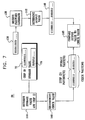
- Fig. 7 is a partly pictorial, partly block diagram view of the authentication system 66 of Fig. 4 authenticating a candidate password 136 using the chip serial number 72 of Fig. 4 .
- the candidate password 136 for checking against the check value 90 in the password authentication is received (block 138).
- An output value 140 is preferably determined using the one-way function with the candidate password 136 as an input value to the one-way function (block 142).
- the storage value 70 and the chip serial number 72 are typically retrieved from the storage medium 96 of the chip 94 (block 144).
- the check value 90 is generally reconstructed from the storage value 70 and the chip serial number 72 (block 146), by concatenating the storage value 70 and the chip serial number 72 in the example of Fig. 7 .
- the output value 140 for the candidate password 136 is preferably compared to the reconstructed check value 90 (block 148).
- the check value 90 is not reconstructed from the storage value 70 and the chip serial number 72.
- the output value 140 is compared to the storage value 70 and the chip serial number 72.
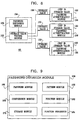
- Fig. 8 is a block diagram view showing the arrangement of the modules of the authentication system 66 of Fig. 4 .
- the authentication system 66 typically includes a password definition module 150 and a storage value writing module 152.
- the password definition module 150 and the storage value writing module 152 are typically disposed in a single device 154. However, it will be appreciated by those ordinarily skilled in the art that the password definition module 150 and the storage value writing module 152 can be disposed in separate devices.
- the password definition module 150 preferably performs the steps described with reference to the blocks 76-98 of Fig. 4 and/or the blocks 104-126 of Fig. 5 .
- the storage value writing module 152 preferably performs the step described with reference to the block 134 of Fig. 6 for writing the storage values 130 to the chips 132.
- the authentication system 66 also typically includes a plurality of password authentication modules 156. Each password authentication module 156 is preferably disposed in one of the chips 132. Each password authentication module 156 generally performs the steps described with reference to the blocks 138-148 of Fig. 7 .
- a password definition module and a password authentication module including substantially the same functionality as the password definition module 150 and the password authentication module 156, are described in more detail with reference to Figs. 9 and 10 , respectively.
- Fig. 9 is a block diagram view of a password definition module 158 for use with the authentication system 10 of Fig. 1 or the authentication system 66 of Fig. 4 .
- the password definition module 158 preferably includes a pattern module 160, a function module 162, a function processor 164, a password module 166, a compression module 168 and a storage module 170.
- the pattern module 160 is typically operative to provide a pattern.
- the function module 162 is generally operative to provide a one-way function having a plurality of input values and a plurality of output values.
- the one-way function has been defined hereinabove.
- the one-way function is typically a cryptographic hash function, for example, but not limited to, SHA-1 or MD5 or any other suitable function, for example, but not limited to the functions described with reference to Fig. 1 .
- the function processor 164 is preferably operative to find an input value for the one-way function such that a corresponding output value has the pattern.
- the function processor 164 typically determines the input value by a repetitive process including, generating a sample password, generally calculating an output value for the sample password and preferably comparing the output value with the pattern, as described with reference to Figs. 1 and 4 .
- the password module 166 is typically operative to provide the input value determined by the function processor 164 as a password for use in password authentication against the output value (designated as a check value) determined by the function processor 164.
- the compression module 168 is generally operative to determine a storage value such that: the check value can be reconstructed from the storage value and the pattern; and the length of the storage value is shorter that of the check value.
- the storage module 170 is preferably operative to store the storage value in the storage medium 40 ( Fig. 1 ) or the storage medium 96 ( Fig. 4 ) for later retrieval.
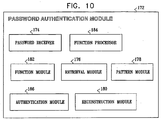
- Fig. 10 is a block diagram view of a password authentication module 172 for use with the authentication system 10 of Fig. 1 or the authentication system 66 of Fig. 4 .
- the password authentication module 172 preferably includes a password receiver 174, a retrieval module 176, a pattern module 178, a reconstruction module 180, a function module 182, a function processor 184 and an authentication module 186.
- the password receiver 174 is typically operative to receive a candidate password for checking against a check value in password authentication.
- the retrieval module 176 is generally operative to retrieve a storage value from the storage medium 40 ( Fig. 1 ) or the storage medium 96 ( Fig. 4 ).
- the pattern module 178 is preferably operative to provide a pattern.
- the reconstruction module 180 is typically operative to reconstruct the check value from the storage value and the pattern.
- the function module 182 is generally operative to provide a one-way function having a plurality of input values and a plurality of output values.
- the function processor 184 is preferably operative to determine an output value, with the candidate password as the corresponding input value, using the one-way function.
- the authentication module 186 is typically operative to compare the output value for the candidate password to the check value.
- the check value is not reconstructed from the storage value; the authentication module 186 is operative to compare the output value for the candidate password with the check value taking into account the pattern based on the indicator, if appropriate, such that the reconstruction module 180 is not generally required. For example, the output value is checked to ensure that the output value has the pattern using the indicator (if appropriate). The output value is then compressed to yield a compressed value which is void of the pattern, typically by a compression module, such as the compression module 168. The compressed value is then compared to the storage value 14 by the authentication module 186.
- the pattern module 178 and the pattern module 160 are typically combined into a single unit; the function module 182 and the function module 162 ( Fig. 9 ) are typically combined into a single unit; and the function processor 184 and the function processor 164 are typically combined into a single unit.
- the embodiments described with reference to Figs. 1-10 assume that part of the check value has a predetermined pattern with or without a non-password use.
- the embodiments described with reference to Figs. 11 and 12 assume that the check value is typically not restricted by a predetermined pattern. Nevertheless, in both Figs. 11 and 12 at least part of the check value has a non-password use.
- the check value is preferably determined by processing a password through a one-way function. Part of the check value is then typically used for a non-password use, such as a chip serial number.
- the entire check value is preferably used for a non-password use.
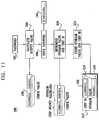
- FIG. 11 is a partly pictorial, partly block diagram view of an authentication system 188 constructed and operative in accordance with another alternative preferred embodiment of the present invention determining a storage value 190 and a chip serial number 192 based on a password 196.
- the password 196 is typically provided by a pseudo-random number generator (not shown).
- the password 196 is preferably provided as input to a one-way function, thereby yielding a corresponding output value for use as a check value 198 against the password 196 in password authentication (block 200).
- the password 196 is then preferably issued to a device (not shown) for later use (block 206).
- the check value 198 is typically divided into a storage value 190 and the chip serial number 192 (block 208).
- the first half of the check value 198 is designated as the chip serial number 192 and the second half of the check value 198 is designated as the storage value 190. Therefore, in the example of Fig. 11 , half of the check value 198 has a non-password use (identification) in the form of the chip serial number 192.
- the check value 198 is preferably stored, in a storage medium 210 of a chip 212, as the storage value 190 and the chip serial number 192, for later retrieval (block 214).
- the check value 198 is preferably not stored in the storage medium 210 as a single value.
- the chip 212 typically receives a candidate password.
- the authentication of the candidate password is substantially the same as the authentication process described with reference to Fig. 7 .
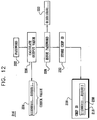
- FIG. 12 is partly pictorial, partly block diagram view of an authentication system 216 constructed and operative in accordance with yet another alternative preferred embodiment of the present invention determining a chip serial number 218 for a chip 220 based on a password 222.
- the password 222 is typically provided by a pseudo-random number generator (not shown).
- the password 222 is preferably provided as input to a one-way function, thereby yielding a corresponding output value for use as a check value 224 against the password 222 in password authentication (block 226).
- the password 222 is then generally issued to a device (not shown) for later use (block 228).
- the chip serial number 218 is preferably assigned the value of the check value 224.
- the chip serial number 218 is typically stored, in a storage medium 230 of the chip 220, for later retrieval during password authentication (block 232). Therefore, in the example of Fig. 12 , the whole check value 198 has a non-password use (for identification) in the form of the chip serial number 224.
- the chip 220 preferably receives a candidate password which is processed by the one-way function thereby producing a corresponding output value.
- the output value associated with the candidate password is then typically compared with the chip serial number 218 which is the check value 224.
- the functions of the authentication system 188 ( Fig. 11 ) and the authentication system 216 ( Fig. 12 ) can be performed by one or more of the elements of the password definition module 158 and the password authentication module 172 of Figs. 9 and 10 , respectively.
- the function processor 164 is preferably operative to determine the check value for the password using the one-way function without reference to a pattern.
- Fig. 13 is a schematic view of a check value 234 determined by the authentication system 10 of Fig. 1 or by the authentication system 66 of Fig. 4 .
- the check value 234 is preferably formed from a fixed pattern 236 which includes a string of predetermined characters in a predetermined order and a free-value 240 which is determined by the preprocessing of the authentication system 10 or the authentication system 66.
- the string of the fixed pattern 236 is based on a serial number of an RFID tag.
- the fixed pattern 236 can be any suitable fixed pattern.
- RFID radio frequency identification
- An RFID tag is an object that can be attached to, or incorporated into, a product, animal, or person.
- RFID tags typically contain silicon chips and an antenna to enable the tags to receive and respond to radio-frequency queries from an RFID transceiver.
- Passive tags typically require no internal power source, whereas active tags require a power source.
- RFID tags preferably include a password protected "kill" switch so the tag can be destroyed, or made non-operational, for example, for later transitioning to a new chip.
- RFID chips including 24 bit and 32 bit kill and access passwords are commercially available from Impinj Inc. of 701 N. 34th Street, Suite 300, Seattle, WA 98103 US.
- a 32 bit password is generally not very secure.
- most inexpensive RFID tags have very limited storage space. Therefore, increasing the length of the password is typically very difficult.
- the teachings of the present invention can be applied to provide a longer check value, for example, but not limited to, a 64 bit check value.
- the check value 234 is preferably formed from the storage value 240 of 32 bits (free value) and a fixed pattern 236 formed from a 32 bit RFID serial number. As the RFID already includes the RFID serial number, the extra 32 bits of security provided by using the RFID serial number in the check value 234 does not require any additional storage space in the RFID. Therefore, a secure password can make use of the RFID serial number in order to increase security of the kill password or any other password in the RFID tag.
- Fig. 14 is a schematic view of a check value 238 determined by the authentication system 10 of Fig. 1 or by the authentication system 66 of Fig. 4 .
- the check value 238 is preferably formed from two free values 242.
- the free values 242 are typically determined by the authentication system 10 or the authentication system 66 such that the free values 242 are related to each other as defined by a pattern.
- the free values 242 can be equal to each other, the free values 242 can be opposite to each other or the free values 242 may be related through any suitable function.
- the check value 244 generally includes two fixed patterns, a pattern 246 and a pattern 248 and a free-value 250.
- the pattern 246 and the pattern 248 can include any suitable fixed pattern.
- the pattern 246 includes twenty zeros and/or ones (20 bits) and the pattern 248 includes a string that forms at least part of a set of configuration bits (12 bits by way of example only).
- the configuration bits typically form part of the one-time programmable (OTP) memory of a chip.
- the free-value 250 is determined by the authentication system 10 or by the authentication system 66 based on the pattern 246 and the pattern 248.
- the free-value 250 has 32 bits. Therefore, the check value 244 has 64 bits.
- Fig. 16 is a schematic view of a check value 252 determined by the authentication system 10 of Fig. 1 or by the authentication system 66 of Fig. 4 .
- the check value 252 typically includes two fixed patterns, a fixed pattern 254 and a fixed pattern 256 as well as a free value 258.
- the fixed pattern 254 and the fixed pattern 256 are typically located either side of the free value 258 in the check value 252.
- the fixed pattern 254 and the fixed pattern 256 can include any suitable fixed pattern.
- the fixed pattern 254 includes 16 zeros and/or ones (16 bits) and the fixed pattern 256 includes a string that forms at least part of a chip serial number (16 bits).
- the free-value 258 is preferably determined by the authentication system 10 or by the authentication system 66 based on the fixed pattern 254 and the fixed pattern 256.
- the free-value 258 has 40 bits. Therefore, the check value 252 has 72 bits.
- Fig. 17 is a schematic view of a check value 260 determined by the authentication system 10 of Fig. 1 or by the authentication system 66 of Fig. 4 .
- the check value 260 preferably includes a fixed pattern 262, a free value 264 and a free value 266.
- the fixed pattern 262 can be any suitable fixed pattern, for example, but not limited to, a predetermined string of zeros and/or ones.
- the free value 264 and the free value 266 are typically determined by the authentication system 10 or by the authentication system 66 based on the fixed pattern 262. In the example of Fig.
- the free value 264 is only used for password authentication, whereas the free value 266 has a non-password use, for example, but not limited to, for identification, such as a chip serial number.
- the length of the check value 260 is preferably greater than 64 bits and the length of the fixed pattern 262 is preferably less than 48 bits. If the fixed pattern 262 is too large the preprocessing stage generally takes too long. If the check value 260 is too short, security may be compromised.
- software components of the present invention may, if desired, be implemented in ROM (read only memory) form.
- the software components may, generally, be implemented in hardware, if desired, using conventional techniques.
Landscapes
- Engineering & Computer Science (AREA)
- Computer Security & Cryptography (AREA)
- Computer Networks & Wireless Communication (AREA)
- Signal Processing (AREA)
- Theoretical Computer Science (AREA)
- Computer Hardware Design (AREA)
- Software Systems (AREA)
- Physics & Mathematics (AREA)
- General Engineering & Computer Science (AREA)
- General Physics & Mathematics (AREA)
- Storage Device Security (AREA)
Claims (13)
- Authentifizierungssystem, umfassend:ein Mittel (40) zum Speichern eines Speicherwerts zur Verwendung bei der Passwortauthentifizierung;ein Mittel (174) zum Entgegennehmen eines Kandidatenpassworts zur Passwortauthentifizierung;ein Mittel (176) zum Abrufen des Speicherwerts aus dem Speichermedium;ein Mittel (178) zum Bereitstellen eines Musters;ein Mittel (182) zum Bereitstellen einer Einwegfunktion mit einer Mehrzahl von Eingabewerten und einer Mehrzahl von Ausgabewerten;ein Mittel (184) zum Bestimmen eines der Ausgabewerte, mit dem Kandidatenpasswort als einem entsprechenden der Eingabewerte, mithilfe der Einwegfunktion; undein Mittel (186) zum Vergleichen des einen Ausgabewerts für das Kandidatenpasswort mit dem Speicherwert unter Berücksichtigung des Musters, darunter:ein Mittel (180) zum Rekonstruieren eines Prüfwerts aus dem Speicherwert und dem Muster und zum Vergleichen des einen Ausgabewerts für das Kandidatenpasswort mit dem Prüfwert; oderein Mittel (168) zum Komprimieren des einen Ausgabewerts ergebend einen komprimierten Wert, der nicht das Muster aufweist, und zum Vergleichen des komprimierten Werts mit dem Speicherwert.
- System nach Anspruch 1, worin der Speicherwert einen Indikator des Musters beinhaltet.
- System nach Anspruch 1, worin das Muster einen String von vordefinierten Werten in einer vordefinierten Reihenfolge beinhaltet.
- System nach Anspruch 3, worin der Speicherwert nicht den vollständigen String aufweist.
- System nach Anspruch 3, worin der String eine nicht passwortbasierte Verwendung aufweist.
- System nach Anspruch 5, worin die nicht passwortbasierte Verwendung der Identifikation dient.
- System nach Anspruch 6, worin der String mindestens die Hälfte einer Chip-Seriennummer bildet.
- System nach Anspruch 6, worin der String mindestens einen Teil einer Seriennummer eines RFID-Tags bildet.
- System nach Anspruch 5, worin der String mindestens einen Teil eines Satzes Konfigurationsbits bildet.
- System nach Anspruch 1, worin mindestens ein Teil des Speicherwerts eine nicht passwortbasierte Verwendung aufweist.
- System nach Anspruch 10, worin die nicht passwortbasierte Verwendung der Identifikation dient.
- System nach Anspruch 11, worin mindestens der Teil des Speicherwerts mindestens eine Hälfte einer Chip-Seriennummer bildet.
- Authentifizierungsverfahren, umfassend:Speichern eines Speicherwerts zur Verwendung bei der Passwortauthentifizierung;Entgegennehmen eines Kandidatenpassworts zur Passwortauthentifizierung;Bereitstellen einer Einwegfunktion mit einer Mehrzahl von Eingabewerten und einer Mehrzahl von Ausgabewerten;Bestimmen eines der Ausgabewerte, mit dem Kandidatenpasswort als einem entsprechenden der Eingabewerte, mithilfe der Einwegfunktion;Abrufen des Speicherwerts aus dem Speichermedium;Bereitstellen eines Musters; undVergleichen des einen Ausgabewerts für das Kandidatenpasswort mit dem Speicherwert unter Berücksichtigung des Musters, darunter:Rekonstruieren eines Prüfwerts aus dem Speicherwert und dem Muster und Vergleichen des einen Ausgabewerts für das Kandidatenpasswort mit dem Prüfwert; oderKomprimieren des eines Ausgabewerts ergebend einen komprimierten Wert, der nicht das Muster aufweist, und Vergleichen des komprimierten Werts mit dem Speicherwert.
Applications Claiming Priority (2)
| Application Number | Priority Date | Filing Date | Title |
|---|---|---|---|
| IL174619A IL174619A (en) | 2006-03-29 | 2006-03-29 | Password protection |
| EP06796146.6A EP1999885B1 (de) | 2006-03-29 | 2006-10-03 | Passwortschutz |
Related Parent Applications (2)
| Application Number | Title | Priority Date | Filing Date |
|---|---|---|---|
| EP06796146.6 Division | 2006-10-03 | ||
| EP06796146.6A Division EP1999885B1 (de) | 2006-03-29 | 2006-10-03 | Passwortschutz |
Publications (2)
| Publication Number | Publication Date |
|---|---|
| EP2575288A1 EP2575288A1 (de) | 2013-04-03 |
| EP2575288B1 true EP2575288B1 (de) | 2016-04-06 |
Family
ID=39930409
Family Applications (2)
| Application Number | Title | Priority Date | Filing Date |
|---|---|---|---|
| EP06796146.6A Active EP1999885B1 (de) | 2006-03-29 | 2006-10-03 | Passwortschutz |
| EP12199134.3A Not-in-force EP2575288B1 (de) | 2006-03-29 | 2006-10-03 | Passwortschutz |
Family Applications Before (1)
| Application Number | Title | Priority Date | Filing Date |
|---|---|---|---|
| EP06796146.6A Active EP1999885B1 (de) | 2006-03-29 | 2006-10-03 | Passwortschutz |
Country Status (5)
| Country | Link |
|---|---|
| US (1) | US8566604B2 (de) |
| EP (2) | EP1999885B1 (de) |
| CN (1) | CN101401351B (de) |
| IL (1) | IL174619A (de) |
| WO (1) | WO2007110853A1 (de) |
Families Citing this family (7)
| Publication number | Priority date | Publication date | Assignee | Title |
|---|---|---|---|---|
| US8234502B2 (en) | 2008-08-29 | 2012-07-31 | International Business Machines Corporation | Automated password authentication |
| US8892897B2 (en) | 2011-08-24 | 2014-11-18 | Microsoft Corporation | Method for generating and detecting auditable passwords |
| EP3021518B1 (de) * | 2013-08-22 | 2018-04-18 | Nippon Telegraph And Telephone Corporation | Sicheres mehrteilnehmer-authentifizierungssystem, authentifizierungsserver, zwischenserver, sicheres mehrteilnehmer-authentifizierungsverfahren und programm |
| CN103488940A (zh) * | 2013-09-11 | 2014-01-01 | 昆山富泰科电脑有限公司 | 智能设备应用程序的密码保护系统与方法 |
| US9569610B2 (en) | 2014-03-28 | 2017-02-14 | International Business Machines Corporation | Managing a password |
| CN105303078A (zh) * | 2014-06-28 | 2016-02-03 | 侯名能 | 一种家庭用电子留言机 |
| US9600179B2 (en) * | 2014-07-30 | 2017-03-21 | Arm Limited | Access suppression in a memory device |
Family Cites Families (16)
| Publication number | Priority date | Publication date | Assignee | Title |
|---|---|---|---|---|
| US5394471A (en) * | 1993-09-17 | 1995-02-28 | Bell Atlantic Network Services, Inc. | Method and system for proactive password validation |
| DK172392B1 (da) * | 1993-09-22 | 1998-05-18 | Lego As | Sadel til en legetøjshest |
| US6079021A (en) | 1997-06-02 | 2000-06-20 | Digital Equipment Corporation | Method and apparatus for strengthening passwords for protection of computer systems |
| US6687836B1 (en) * | 1999-11-26 | 2004-02-03 | Hewlett-Packard Development Company, L.P. | Method and apparatus which enable a computer user to verify whether they have correctly input their password into a computer |
| US6996718B1 (en) * | 2000-04-21 | 2006-02-07 | At&T Corp. | System and method for providing access to multiple user accounts via a common password |
| US6959394B1 (en) * | 2000-09-29 | 2005-10-25 | Intel Corporation | Splitting knowledge of a password |
| CA2759020C (en) * | 2002-02-13 | 2016-05-17 | Hideharu Ogawa | User verification method and user verification system |
| US7221935B2 (en) * | 2002-02-28 | 2007-05-22 | Telefonaktiebolaget Lm Ericsson (Publ) | System, method and apparatus for federated single sign-on services |
| EP1416666A1 (de) * | 2002-10-28 | 2004-05-06 | Abb Research Ltd. | Verfahren zur vereinfachten Verwaltung und zur Steigerung der Sicherheit von Passworten |
| US7194626B2 (en) * | 2002-11-21 | 2007-03-20 | International Business Machines Corporation | Hardware-based secure code authentication |
| US7290149B2 (en) * | 2003-03-03 | 2007-10-30 | Microsoft Corporation | Verbose hardware identification for binding a software package to a computer system having tolerance for hardware changes |
| US7610487B2 (en) * | 2003-03-27 | 2009-10-27 | Microsoft Corporation | Human input security codes |
| WO2005083610A1 (en) * | 2004-02-23 | 2005-09-09 | Verisign, Inc. | Token authentication system and method |
| CA2530944C (en) * | 2004-05-04 | 2010-03-16 | Research In Motion Limited | Challenge response system and method |
| US7694147B2 (en) * | 2006-01-03 | 2010-04-06 | International Business Machines Corporation | Hashing method and system |
| JP3939736B1 (ja) * | 2006-03-27 | 2007-07-04 | 株式会社シー・エス・イー | ユーザ認証システム、およびその方法 |
-
2006
- 2006-03-29 IL IL174619A patent/IL174619A/en unknown
- 2006-10-03 EP EP06796146.6A patent/EP1999885B1/de active Active
- 2006-10-03 WO PCT/IL2006/001153 patent/WO2007110853A1/en not_active Ceased
- 2006-10-03 CN CN2006800538624A patent/CN101401351B/zh not_active Expired - Fee Related
- 2006-10-03 EP EP12199134.3A patent/EP2575288B1/de not_active Not-in-force
-
2008
- 2008-08-14 US US12/228,610 patent/US8566604B2/en not_active Expired - Fee Related
Also Published As
| Publication number | Publication date |
|---|---|
| CN101401351A (zh) | 2009-04-01 |
| CN101401351B (zh) | 2012-02-01 |
| EP1999885A1 (de) | 2008-12-10 |
| US8566604B2 (en) | 2013-10-22 |
| IL174619A (en) | 2013-12-31 |
| EP2575288A1 (de) | 2013-04-03 |
| IL174619A0 (en) | 2006-12-10 |
| HK1129505A1 (en) | 2009-11-27 |
| WO2007110853A1 (en) | 2007-10-04 |
| US20090019540A1 (en) | 2009-01-15 |
| EP1999885A4 (de) | 2011-12-14 |
| EP1999885B1 (de) | 2013-07-31 |
Similar Documents
| Publication | Publication Date | Title |
|---|---|---|
| EP2323308B1 (de) | Verfahren für die Zuweisung eines Geheimnisses auf ein Sicherheitstoken, Verfahren zum Betreiben eines Sicherheitstoken, Speichermedium und Sicherheitstoken | |
| US8566604B2 (en) | Password protection | |
| EP2728509B1 (de) | Halbleitervorrichtung und Verschlüsselungsschlüsselschreibverfahren | |
| KR101460627B1 (ko) | 인증 디바이스 및 방법 | |
| EP2202912A1 (de) | Verfahren und Vorrichtung zur Tarnung von Daten, Information und funktionalen Transformationen | |
| JPH10511778A (ja) | 2つの処理装置の間における秘密鍵による通信プロトコルの実行方法 | |
| US20120036368A1 (en) | Data Processing System for Providing Authorization Keys | |
| JP4651212B2 (ja) | 携帯可能情報記憶媒体およびその認証方法 | |
| US20090225985A1 (en) | Method, apparatus and product for rfid authentication | |
| KR20100021446A (ko) | 물리적 복제 방지 기능을 이용한 전자 장치의 전자 보안 방법 및 시스템 | |
| US8990578B2 (en) | Password authentication circuit and method | |
| US9886597B2 (en) | Method for encoding data on a chip card by means of constant-weight codes | |
| EP3623980B1 (de) | Bestimmung des ransomware-verschlüsselungsalgorithmus | |
| EP3721577A1 (de) | Verbesserungen an und im zusammenhang mit fernauthentifizierungsvorrichtungen | |
| CN115391846A (zh) | Puf密钥传输 | |
| US8311212B2 (en) | Method of processing data protected against attacks by generating errors and associated device | |
| EP2124172A1 (de) | Ic-karte und verfahren zur authentifizierung einer ic-karte | |
| EP3937419A1 (de) | Elektronische vorrichtung mit homomorpher verschlüsselung und verschlüsseltes datenverarbeitungsverfahren dafür | |
| EP3188403B1 (de) | Verfahren zur steuerung der fehlerrate vorrichtungsspezifischer informationen und programm zur steuerung der fehlerrate vorrichtungsspezifischer informationen | |
| US20050010624A1 (en) | Method and system for making secure a pseudo-random generator | |
| CN106295759A (zh) | 验证方法和装置、二维码生成方法和装置及验证系统 | |
| JP2011514060A (ja) | 移動式読み書きメモリを経由した少なくとも2つのデータ担体間における制御されたデータ交換のためのシステム | |
| US11757646B2 (en) | Methods for generating an encrypted signal simulation with a cryptographic interface card (GCIC) and devices thereof | |
| HK1129505B (en) | Password protection | |
| Khozaimi et al. | Improve the performance and security of medical records using fingerprint and advance encryption standart |
Legal Events
| Date | Code | Title | Description |
|---|---|---|---|
| PUAI | Public reference made under article 153(3) epc to a published international application that has entered the european phase |
Free format text: ORIGINAL CODE: 0009012 |
|
| AC | Divisional application: reference to earlier application |
Ref document number: 1999885 Country of ref document: EP Kind code of ref document: P |
|
| AK | Designated contracting states |
Kind code of ref document: A1 Designated state(s): AT BE BG CH CY CZ DE DK EE ES FI FR GB GR HU IE IS IT LI LT LU LV MC NL PL PT RO SE SI SK TR |
|
| 17P | Request for examination filed |
Effective date: 20130422 |
|
| GRAP | Despatch of communication of intention to grant a patent |
Free format text: ORIGINAL CODE: EPIDOSNIGR1 |
|
| INTG | Intention to grant announced |
Effective date: 20151105 |
|
| GRAS | Grant fee paid |
Free format text: ORIGINAL CODE: EPIDOSNIGR3 |
|
| GRAA | (expected) grant |
Free format text: ORIGINAL CODE: 0009210 |
|
| AC | Divisional application: reference to earlier application |
Ref document number: 1999885 Country of ref document: EP Kind code of ref document: P |
|
| AK | Designated contracting states |
Kind code of ref document: B1 Designated state(s): AT BE BG CH CY CZ DE DK EE ES FI FR GB GR HU IE IS IT LI LT LU LV MC NL PL PT RO SE SI SK TR |
|
| REG | Reference to a national code |
Ref country code: GB Ref legal event code: FG4D |
|
| REG | Reference to a national code |
Ref country code: AT Ref legal event code: REF Ref document number: 788815 Country of ref document: AT Kind code of ref document: T Effective date: 20160415 Ref country code: CH Ref legal event code: EP |
|
| REG | Reference to a national code |
Ref country code: IE Ref legal event code: FG4D |
|
| REG | Reference to a national code |
Ref country code: DE Ref legal event code: R096 Ref document number: 602006048580 Country of ref document: DE |
|
| REG | Reference to a national code |
Ref country code: LT Ref legal event code: MG4D Ref country code: NL Ref legal event code: MP Effective date: 20160406 |
|
| REG | Reference to a national code |
Ref country code: AT Ref legal event code: MK05 Ref document number: 788815 Country of ref document: AT Kind code of ref document: T Effective date: 20160406 |
|
| PG25 | Lapsed in a contracting state [announced via postgrant information from national office to epo] |
Ref country code: NL Free format text: LAPSE BECAUSE OF FAILURE TO SUBMIT A TRANSLATION OF THE DESCRIPTION OR TO PAY THE FEE WITHIN THE PRESCRIBED TIME-LIMIT Effective date: 20160406 |
|
| REG | Reference to a national code |
Ref country code: FR Ref legal event code: PLFP Year of fee payment: 11 |
|
| PG25 | Lapsed in a contracting state [announced via postgrant information from national office to epo] |
Ref country code: IS Free format text: LAPSE BECAUSE OF FAILURE TO SUBMIT A TRANSLATION OF THE DESCRIPTION OR TO PAY THE FEE WITHIN THE PRESCRIBED TIME-LIMIT Effective date: 20160806 Ref country code: LT Free format text: LAPSE BECAUSE OF FAILURE TO SUBMIT A TRANSLATION OF THE DESCRIPTION OR TO PAY THE FEE WITHIN THE PRESCRIBED TIME-LIMIT Effective date: 20160406 Ref country code: FI Free format text: LAPSE BECAUSE OF FAILURE TO SUBMIT A TRANSLATION OF THE DESCRIPTION OR TO PAY THE FEE WITHIN THE PRESCRIBED TIME-LIMIT Effective date: 20160406 Ref country code: PL Free format text: LAPSE BECAUSE OF FAILURE TO SUBMIT A TRANSLATION OF THE DESCRIPTION OR TO PAY THE FEE WITHIN THE PRESCRIBED TIME-LIMIT Effective date: 20160406 |
|
| PG25 | Lapsed in a contracting state [announced via postgrant information from national office to epo] |
Ref country code: GR Free format text: LAPSE BECAUSE OF FAILURE TO SUBMIT A TRANSLATION OF THE DESCRIPTION OR TO PAY THE FEE WITHIN THE PRESCRIBED TIME-LIMIT Effective date: 20160707 Ref country code: ES Free format text: LAPSE BECAUSE OF FAILURE TO SUBMIT A TRANSLATION OF THE DESCRIPTION OR TO PAY THE FEE WITHIN THE PRESCRIBED TIME-LIMIT Effective date: 20160406 Ref country code: LV Free format text: LAPSE BECAUSE OF FAILURE TO SUBMIT A TRANSLATION OF THE DESCRIPTION OR TO PAY THE FEE WITHIN THE PRESCRIBED TIME-LIMIT Effective date: 20160406 Ref country code: SE Free format text: LAPSE BECAUSE OF FAILURE TO SUBMIT A TRANSLATION OF THE DESCRIPTION OR TO PAY THE FEE WITHIN THE PRESCRIBED TIME-LIMIT Effective date: 20160406 Ref country code: PT Free format text: LAPSE BECAUSE OF FAILURE TO SUBMIT A TRANSLATION OF THE DESCRIPTION OR TO PAY THE FEE WITHIN THE PRESCRIBED TIME-LIMIT Effective date: 20160808 Ref country code: AT Free format text: LAPSE BECAUSE OF FAILURE TO SUBMIT A TRANSLATION OF THE DESCRIPTION OR TO PAY THE FEE WITHIN THE PRESCRIBED TIME-LIMIT Effective date: 20160406 |
|
| PG25 | Lapsed in a contracting state [announced via postgrant information from national office to epo] |
Ref country code: BE Free format text: LAPSE BECAUSE OF FAILURE TO SUBMIT A TRANSLATION OF THE DESCRIPTION OR TO PAY THE FEE WITHIN THE PRESCRIBED TIME-LIMIT Effective date: 20160406 Ref country code: IT Free format text: LAPSE BECAUSE OF FAILURE TO SUBMIT A TRANSLATION OF THE DESCRIPTION OR TO PAY THE FEE WITHIN THE PRESCRIBED TIME-LIMIT Effective date: 20160406 |
|
| REG | Reference to a national code |
Ref country code: DE Ref legal event code: R097 Ref document number: 602006048580 Country of ref document: DE |
|
| PG25 | Lapsed in a contracting state [announced via postgrant information from national office to epo] |
Ref country code: SK Free format text: LAPSE BECAUSE OF FAILURE TO SUBMIT A TRANSLATION OF THE DESCRIPTION OR TO PAY THE FEE WITHIN THE PRESCRIBED TIME-LIMIT Effective date: 20160406 Ref country code: EE Free format text: LAPSE BECAUSE OF FAILURE TO SUBMIT A TRANSLATION OF THE DESCRIPTION OR TO PAY THE FEE WITHIN THE PRESCRIBED TIME-LIMIT Effective date: 20160406 Ref country code: CZ Free format text: LAPSE BECAUSE OF FAILURE TO SUBMIT A TRANSLATION OF THE DESCRIPTION OR TO PAY THE FEE WITHIN THE PRESCRIBED TIME-LIMIT Effective date: 20160406 Ref country code: DK Free format text: LAPSE BECAUSE OF FAILURE TO SUBMIT A TRANSLATION OF THE DESCRIPTION OR TO PAY THE FEE WITHIN THE PRESCRIBED TIME-LIMIT Effective date: 20160406 Ref country code: RO Free format text: LAPSE BECAUSE OF FAILURE TO SUBMIT A TRANSLATION OF THE DESCRIPTION OR TO PAY THE FEE WITHIN THE PRESCRIBED TIME-LIMIT Effective date: 20160406 |
|
| PLBE | No opposition filed within time limit |
Free format text: ORIGINAL CODE: 0009261 |
|
| STAA | Information on the status of an ep patent application or granted ep patent |
Free format text: STATUS: NO OPPOSITION FILED WITHIN TIME LIMIT |
|
| 26N | No opposition filed |
Effective date: 20170110 |
|
| PG25 | Lapsed in a contracting state [announced via postgrant information from national office to epo] |
Ref country code: SI Free format text: LAPSE BECAUSE OF FAILURE TO SUBMIT A TRANSLATION OF THE DESCRIPTION OR TO PAY THE FEE WITHIN THE PRESCRIBED TIME-LIMIT Effective date: 20160406 |
|
| REG | Reference to a national code |
Ref country code: CH Ref legal event code: PL |
|
| REG | Reference to a national code |
Ref country code: IE Ref legal event code: MM4A |
|
| PG25 | Lapsed in a contracting state [announced via postgrant information from national office to epo] |
Ref country code: CH Free format text: LAPSE BECAUSE OF NON-PAYMENT OF DUE FEES Effective date: 20161031 Ref country code: LI Free format text: LAPSE BECAUSE OF NON-PAYMENT OF DUE FEES Effective date: 20161031 |
|
| PG25 | Lapsed in a contracting state [announced via postgrant information from national office to epo] |
Ref country code: LU Free format text: LAPSE BECAUSE OF NON-PAYMENT OF DUE FEES Effective date: 20161003 |
|
| REG | Reference to a national code |
Ref country code: FR Ref legal event code: PLFP Year of fee payment: 12 |
|
| PG25 | Lapsed in a contracting state [announced via postgrant information from national office to epo] |
Ref country code: IE Free format text: LAPSE BECAUSE OF NON-PAYMENT OF DUE FEES Effective date: 20161003 |
|
| PG25 | Lapsed in a contracting state [announced via postgrant information from national office to epo] |
Ref country code: CY Free format text: LAPSE BECAUSE OF FAILURE TO SUBMIT A TRANSLATION OF THE DESCRIPTION OR TO PAY THE FEE WITHIN THE PRESCRIBED TIME-LIMIT Effective date: 20160406 Ref country code: HU Free format text: LAPSE BECAUSE OF FAILURE TO SUBMIT A TRANSLATION OF THE DESCRIPTION OR TO PAY THE FEE WITHIN THE PRESCRIBED TIME-LIMIT; INVALID AB INITIO Effective date: 20061003 |
|
| PG25 | Lapsed in a contracting state [announced via postgrant information from national office to epo] |
Ref country code: MC Free format text: LAPSE BECAUSE OF FAILURE TO SUBMIT A TRANSLATION OF THE DESCRIPTION OR TO PAY THE FEE WITHIN THE PRESCRIBED TIME-LIMIT Effective date: 20160406 Ref country code: TR Free format text: LAPSE BECAUSE OF FAILURE TO SUBMIT A TRANSLATION OF THE DESCRIPTION OR TO PAY THE FEE WITHIN THE PRESCRIBED TIME-LIMIT Effective date: 20160406 |
|
| PG25 | Lapsed in a contracting state [announced via postgrant information from national office to epo] |
Ref country code: BG Free format text: LAPSE BECAUSE OF FAILURE TO SUBMIT A TRANSLATION OF THE DESCRIPTION OR TO PAY THE FEE WITHIN THE PRESCRIBED TIME-LIMIT Effective date: 20160406 |
|
| REG | Reference to a national code |
Ref country code: GB Ref legal event code: 732E Free format text: REGISTERED BETWEEN 20180809 AND 20180815 |
|
| REG | Reference to a national code |
Ref country code: FR Ref legal event code: PLFP Year of fee payment: 13 |
|
| REG | Reference to a national code |
Ref country code: DE Ref legal event code: R082 Ref document number: 602006048580 Country of ref document: DE Representative=s name: BOEHMERT & BOEHMERT ANWALTSPARTNERSCHAFT MBB -, DE Ref country code: DE Ref legal event code: R081 Ref document number: 602006048580 Country of ref document: DE Owner name: ACANO (UK) LTD., GB Free format text: FORMER OWNER: NDS LIMITED, STAINES, MIDDLESEX, GB |
|
| P01 | Opt-out of the competence of the unified patent court (upc) registered |
Effective date: 20230523 |
|
| PGFP | Annual fee paid to national office [announced via postgrant information from national office to epo] |
Ref country code: GB Payment date: 20231025 Year of fee payment: 18 |
|
| PGFP | Annual fee paid to national office [announced via postgrant information from national office to epo] |
Ref country code: FR Payment date: 20231027 Year of fee payment: 18 Ref country code: DE Payment date: 20231026 Year of fee payment: 18 |
|
| REG | Reference to a national code |
Ref country code: DE Ref legal event code: R119 Ref document number: 602006048580 Country of ref document: DE |
|
| GBPC | Gb: european patent ceased through non-payment of renewal fee |
Effective date: 20241003 |
|
| PG25 | Lapsed in a contracting state [announced via postgrant information from national office to epo] |
Ref country code: DE Free format text: LAPSE BECAUSE OF NON-PAYMENT OF DUE FEES Effective date: 20250501 |
|
| PG25 | Lapsed in a contracting state [announced via postgrant information from national office to epo] |
Ref country code: GB Free format text: LAPSE BECAUSE OF NON-PAYMENT OF DUE FEES Effective date: 20241003 |
|
| PG25 | Lapsed in a contracting state [announced via postgrant information from national office to epo] |
Ref country code: FR Free format text: LAPSE BECAUSE OF NON-PAYMENT OF DUE FEES Effective date: 20241031 |