EP2575123A1 - Benutzerdefinierte Fragenpapiererzeugung - Google Patents
Benutzerdefinierte Fragenpapiererzeugung Download PDFInfo
- Publication number
- EP2575123A1 EP2575123A1 EP12160891.3A EP12160891A EP2575123A1 EP 2575123 A1 EP2575123 A1 EP 2575123A1 EP 12160891 A EP12160891 A EP 12160891A EP 2575123 A1 EP2575123 A1 EP 2575123A1
- Authority
- EP
- European Patent Office
- Prior art keywords
- question
- questions
- question paper
- paper
- rules
- Prior art date
- Legal status (The legal status is an assumption and is not a legal conclusion. Google has not performed a legal analysis and makes no representation as to the accuracy of the status listed.)
- Ceased
Links
- 238000000034 method Methods 0.000 claims abstract description 43
- 238000005303 weighing Methods 0.000 claims description 14
- 230000003068 static effect Effects 0.000 claims description 13
- 230000015654 memory Effects 0.000 claims description 11
- 238000004590 computer program Methods 0.000 claims 1
- 238000009826 distribution Methods 0.000 description 8
- 238000004891 communication Methods 0.000 description 6
- 238000012360 testing method Methods 0.000 description 6
- 238000012545 processing Methods 0.000 description 5
- 238000010295 mobile communication Methods 0.000 description 4
- 238000005516 engineering process Methods 0.000 description 3
- 230000006870 function Effects 0.000 description 3
- 238000010200 validation analysis Methods 0.000 description 3
- 238000011161 development Methods 0.000 description 2
- 230000018109 developmental process Effects 0.000 description 2
- 238000012552 review Methods 0.000 description 2
- 230000005540 biological transmission Effects 0.000 description 1
- 230000001413 cellular effect Effects 0.000 description 1
- 238000007796 conventional method Methods 0.000 description 1
- 238000013500 data storage Methods 0.000 description 1
- 230000000694 effects Effects 0.000 description 1
- 238000012854 evaluation process Methods 0.000 description 1
- 238000004519 manufacturing process Methods 0.000 description 1
- 230000003287 optical effect Effects 0.000 description 1
- 230000002093 peripheral effect Effects 0.000 description 1
- 229920001690 polydopamine Polymers 0.000 description 1
- 238000007639 printing Methods 0.000 description 1
- 239000013589 supplement Substances 0.000 description 1
- 238000012546 transfer Methods 0.000 description 1
Images
Classifications
-
- G—PHYSICS
- G09—EDUCATION; CRYPTOGRAPHY; DISPLAY; ADVERTISING; SEALS
- G09B—EDUCATIONAL OR DEMONSTRATION APPLIANCES; APPLIANCES FOR TEACHING, OR COMMUNICATING WITH, THE BLIND, DEAF OR MUTE; MODELS; PLANETARIA; GLOBES; MAPS; DIAGRAMS
- G09B7/00—Electrically-operated teaching apparatus or devices working with questions and answers
- G09B7/02—Electrically-operated teaching apparatus or devices working with questions and answers of the type wherein the student is expected to construct an answer to the question which is presented or wherein the machine gives an answer to the question presented by a student
Definitions
- the present subject matter is related, in general to content generation and, particularly but not exclusively, to a method and system to generate a customized question paper.
- the computing systems have been used as content generation systems to generate content which may be used for imparting education to an end user.
- the content generation systems may also be used to develop assessment tests to measure the knowledge level, expertise, and skill of an end user.
- a method to generate a customized question paper includes assigning at least one key value to each of a plurality of questions, and storing the questions along with the at least one associated key value in a question bank.
- the method further includes fetching the stored questions based on rules in a question paper template, where the rules are based on the at least one key value.
- the method includes validating the fetched questions based on at least one constraint and generating the question paper based on the validation.
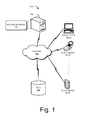
- Fig. 1 illustrates a network environment implementing a customized question paper generation system, in accordance with an implementation of the present subject matter.
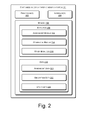
- Fig. 2 illustrates a computing system for customized question paper generation, in accordance with an implementation of the present subject matter.
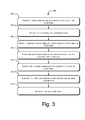
- Fig. 3 illustrates a method for generating a customized question paper in accordance with an implementation of the present subject matter.
- Systems and methods for generating a customized question paper are described herein.
- the systems and methods can be implemented in a variety of computing devices, such as, laptops, desktops, workstations, tablet-PCs, smart phones, notebooks or portable computers, tablet computers, mainframe computers, mobile computing devices, entertainment devices, computing platforms, internet appliances and similar systems.
- computing devices such as, laptops, desktops, workstations, tablet-PCs, smart phones, notebooks or portable computers, tablet computers, mainframe computers, mobile computing devices, entertainment devices, computing platforms, internet appliances and similar systems.
- a person skilled in the art will comprehend that the embodiments of the present subject matter are not limited to any particular computing system, architecture or application device, as it may be adapted to take advantage of new computing system and platform as they become accessible.
- Examinations are important activities organized by educational institutions to evaluate student performance. Generally, for standardized tests and examinations, questions are accumulated over a period of time and stored in a question bank. The question papers are then generated, for example, by an instructor, by manually compiling a question paper template and populating said template with questions selected from a question bank. One or more templates for a particular examination may be created, printed and eventually distributed at the time of the examination. Usually, the instructors maintain their own question bank in some form to help them prepare question papers for future examinations. Current technologies help the instructors to store the questions in computer databases. The issue arises as to how the current technologies could also help the instructors to automatically generate different sets of questions from time to time without concern for repetition and/or duplication of questions in the question paper while the question bank grows. Due to the ever increasing demand for dynamic teaching methodologies and the increasing number of students taking examinations, automated systems for generating question papers are conventionally used.
- Conventional automated systems rely on fetching questions from question banks based on one or more fixed criteria.
- the questions may be initially classified based on their category, such as number of marks and a chapter of study.
- the questions are then selected based on these fixed criteria and compiled to form a question paper.
- Some conventional systems provide different question papers for a similar or same event in order to introduce a fair evaluation process.
- the unique question papers are generated using a randomization technique, such as a shuffling algorithm. It is desired to bring about a dynamic and adaptable question paper generation system, which can cater to the ever growing education industry in order to provide suitable question papers for a variety of examinations.
- the present subject matter describes systems and methods for generating a customized question paper.
- one or more keys and associated key value pairs can be associated with a plurality of questions and stored in a question bank or data repository.
- the questions thus stored may be accumulated from various sources, such as educational institutions, researchers, and academicians.
- the key values are used to categorize each of the questions such that the questions are easily selected during generation of the question paper.
- a key value pair may be understood as a parameter that is indicative of a characteristic or property of a question.
- the key values are selected from a group consisting of a chapter, topology, topic, subject, difficulty, class, section, and term.
- the key values associated with a set of questions are flexible, that is, the end user can select from among a set of predefined key values or create a set of key values that can be associated with one or more of the questions. Each of the key values is explained at a later stage in the description.
- a question paper template may be created by a user, for example, a developer or system administrator.
- the question paper template may be created during an implementation stage and stored in the system.
- the question paper templates stored thus may be readily accessed by the end user of the system to generate a question paper.
- the question paper template may be created by an end user, such as an instructor of an educational institution or a board of education.
- the question paper template may include static text portions and dynamic text portions.
- the static text portions are those portions of the question paper that contain fixed text, such as, exam paper instructions and other such standard text portions of a question paper.
- the dynamic text portions may be the text portions that change with each question paper, such as the questions.
- the dynamic text portions include rules to fetch the questions from the question bank based on the one or more key values associated with each of the questions.
- the rules may be defined by the user to include one or a combination of the key values in order to identify and fetch the questions from the question bank.
- the questions thus fetched from the question bank are used to populate the dynamic text portions in the question paper template.
- the rule relates to a dynamic search query, which utilizes the key values in a search string to map onto a corresponding key value associated with a question in the question bank.
- the fetched questions are validated and filtered.
- the constraint may include a uniqueness factor, a weighing factor, or a combination of both.
- the user may specify a requirement for each of the questions populated in the question paper template to be from a different chapter from the syllabus. Therefore, by specifying the chapter to be the uniqueness factor, the constraint may be applied and a best fit may be facilitated for selecting questions in the question paper.
- the user may specify a weight distribution for the question paper.
- the user may specify a percentage distribution of questions, such as easy questions - 30 %, medium questions - 50 %, and hard questions - 20 %. Therefore, by applying this weighing factor constraint, the questions are distributed as per the specified constraint.
- a final version of the question paper is generated.
- the system may be configured to provide the final version of the question paper over a network, such as in the form of email.
- the question paper may be printed and hard copies may be sent to the user.
- the system may be configured to provide a web based interface, such as a webpage, where the question paper may be accessed over the network via client devices.
- client devices such as a laptop, or a mobile communication device
- the client device such as a laptop, or a mobile communication device
- the user may provide answers to the question paper through the mobile communication device.
- Fig. 1 illustrates a network environment 100 implementing a system for customized question paper generation, according to an implementation of the present subject matter.
- the system for customized question paper generation may be referred to as a customized question paper generation system 101.
- the customized question paper generation system 101 is connected to a network 103.
- data 105, and one or more client devices 107-1, 107-2...107-N, collectively referred to as client devices 107 are also connected to the network 103.
- the customized question paper generation system 101 can be implemented as any computing device connected to the network 103.
- the customized question paper generation system 101 may be implemented as mainframe computers, workstations, personal computers, desktop computers, multiprocessor systems, laptops, network computers, minicomputers, servers and the like.
- the customized question paper generation system 101 may include multiple servers to perform mirrored tasks for users, thereby relieving congestion or minimizing traffic.
- the customized question paper generation system 101 is connected to the client devices 107 through the network 103.
- client devices 107 include, but are not limited to personal computers, desktop computers, smart phones, PDAs, and laptops.
- Communication links between the client devices 107 and the customized question paper generation system 101 are enabled through a desired form of connections, for example, via dial-up modem connections, cable links, digital subscriber lines (DSL), wireless or satellite links, or any other suitable form of communication.
- DSL digital subscriber lines
- the network 103 may be a wireless network, a wired network, or a combination thereof.
- the network 103 can also be an individual network or a collection of many such individual networks interconnected with each other and functioning as a single large network, e.g., the internet or an intranet.
- the network 103 can be implemented as one of the different types of networks, such as intranet, local area network (LAN), wide area network (WAN), the internet and such.
- the network 103 may either be a dedicated network or a shared network, which represents an association of the different types of networks that use a variety of protocols, for example, Hypertext Transfer Protocol (HTTP), Transmission Control Protocol/Internet Protocol (TCP/IP), etc., to communicate with each other.
- HTTP Hypertext Transfer Protocol
- TCP/IP Transmission Control Protocol/Internet Protocol
- the network 103 may include network devices, such as network switches, hubs, routers, host bus adapters (HBAs), for providing a link between the customized question paper generation system 101 and the client devices 107.
- the network devices within the network 103 may interact with the customized question paper generation system 101 and the client devices 107 through communication links.
- HBAs host bus adapters
- the customized question paper generation system 101 includes an assessment module 112.
- the assessment module 112 assesses rules that may be specified by a user
- the question bank may be an externally hosted data repository such as data 105, or may be stored within the customized question paper generation system 101.
- the user may utilize the client device 107 to specify the rules to fetch the questions to the customized question paper generation system 101 via the network 103.
- the user may upload a question paper template via the network 103.
- the question paper template may include rules to fetch the questions from the question bank. The questions thus fetched may be used to populate the question paper template to generate the question paper.
- the assessment module 112 may be configured to fetch the questions from the question bank, such as a data repository, to generate a question paper in accordance with the rules. Further, the assessment module 112 may be configured to validate said question paper against one or more constraints or constraint factors. On said validation, the customized question paper generation system 101 generates the question paper, which may be then forwarded to the user.
- the question paper may be provided to the user via the client devices 107. In another example, the question paper may be printed and hard copies may be provided to the user(s).
- the question paper thus generated would be customized based on the rules specified by the user, making it easier for the user to associate with the context of the question paper. This would lead to personalized question papers for an effective assessment of a student's skill and knowledge development.
- the manner in which the customized question paper generation system 101 generates said question papers are further described in conjunction with fig. 2 .
- Fig. 2 illustrates the customized question paper generation system 101, in accordance with an implementation of the present subj ect matter.
- the customized question paper generation system 101 includes one or more processor(s) 202, interface(s) 204, and a memory 206 coupled to the processor 202.
- the processor 202 can be a single processing unit or a number of units, all of which could also include multiple computing units.
- the processor 202 may be implemented as one or more microprocessors, microcomputers, microcontrollers, digital signal processors, central processing units, state machines, logic circuitries, and/or any devices that manipulate signals based on operational instructions.
- the processor 202 is configured to fetch and execute computer-readable instructions and data stored in the memory 206.
- the interfaces 204 may include a variety of software and hardware interfaces, for example, interface for peripheral device(s), such as a keyboard, a mouse, an external memory, and a printer. Further, the interfaces 204 may enable the computing system 100 to communicate with other computing devices, such as web servers and external data repositories in the communication network (not shown in the figure). The interfaces 204 may facilitate multiple communications within a wide variety of protocols and networks, such as a network, including wired networks, e.g., LAN, cable, etc., and wireless networks, e.g., WLAN, cellular, satellite, etc. The interfaces 204 may include one or more ports for connecting the customized question generation system 101 to a number of computing devices.
- peripheral device(s) such as a keyboard, a mouse, an external memory, and a printer.
- the interfaces 204 may enable the computing system 100 to communicate with other computing devices, such as web servers and external data repositories in the communication network (not shown in the figure).
- the interfaces 204 may
- the memory 206 may include any computer-readable medium known in the art including, for example, volatile memory such as static random access memory (SRAM) and dynamic random access memory (DRAM), and/or non-volatile memory, such as read only memory (ROM), erasable programmable ROM, flash memories, hard disks, optical disks, and magnetic tapes.
- volatile memory such as static random access memory (SRAM) and dynamic random access memory (DRAM)
- non-volatile memory such as read only memory (ROM), erasable programmable ROM, flash memories, hard disks, optical disks, and magnetic tapes.
- ROM read only memory
- erasable programmable ROM erasable programmable ROM
- the module(s) 208 include routines, programs, objects, components, data structures, etc., which perform particular tasks or implement particular abstract data types.
- the module(s) 208 includes the assessment module 112, a question paper (QP) generation module 214, hereinafter referred to simply as the generation module 214 for simplicity, and other module(s) 216.
- the other module(s) 216 may include programs or coded instructions that supplement applications and functions of the customized question paper generation system 101.
- the data 210 serves as a repository for storing data processed, received, and generated by one or more of the module(s) 208.
- the data 210 includes for example, assessment data 220, generation data 222, and other data 224.
- the other data 224 includes data generated as a result of the execution of one or more modules in the module(s) 208.
- the data 105 may be included in the data 210.
- the customized question paper generation system 101 generates a question paper based on inputs from a user.
- the inputs may be in the form of one or more rules included in a question paper template (described at a later stage), the rules being specified by the user based on a desired structure of the question paper.
- the one or more rules are simply referred to as the rules hereinafter.
- the assessment module 112 assigns at least one key value pair to a question, which may be uploaded to a data repository, such as a question bank. Several such questions may be assigned with one or more of the key value pairs in order to categorize the question in the question bank.
- the user may create one or more key value pairs in order to categorize a question before uploading it to the question bank.
- the user may specify 3 key value pairs to be assigned by the assessment module 112 to a question.
- the question may be categorized based on one or more keys, such as, chapter, topology, topic, subject, difficulty, class, section, and term.
- a key value may be assigned correspondingly to the key in the following manner:
- Key 1 chapter, value.
- the key value here may be a chapter number that is selected based on the chapter from which the question originates, such as, chapter 1, chapter 2, chapter 3, and so forth.
- Key 2 topology, value.
- the key value here may be selected as a topology of the question, such as, poem, reading, writing, and so forth.
- Key 3 subject, value.
- the key value here may be a subject ID that is selected based on the subject of the question, such as, English, History, Math, and so forth. In this manner, the key values may be utilized to categorize the question.
- the key values determined in the manner described above, are stored in the assessment data 220.
- the user may create the question paper template.
- the assessment module 112 is configured to receive the question paper template from the user for further processing.
- the user can send the question paper template via the network 103 from any of the client devices 107.
- a group of educational institutions and/or subject experts such as researchers and academicians may compile the question bank.
- the educational institutions and/or the subject experts may also create the question paper template.
- these question paper templates may be stored in the data 210 and used at a later stage at the time of the generation of the question paper.
- the question paper template may be created at a time of examination, in order to increase security of the examination process.
- the question paper template may be submitted to the customized question paper generation system 101 on the day of the examination, where the assessment module 112 can be configured to receive said question paper template. Subsequently, the question paper template may be generated based on the same and the question paper may be downloaded and printed from the customized question paper generation system 101.
- the customized question paper generation system 101 can initiate further processing as described below.
- the question paper template may be a document consisting of static text portions and dynamic text portions.
- the static text portions may refer to portions of text that remain fixed through various question paper templates.
- the static text portions may be standard instructions, statistics such as page numbers, examination codes, etc.
- the dynamic text portions may be the text portions of the question paper template, namely the questions, which are to be populated based on rules.
- the rules may be specified by the user based on the key values as described earlier.
- the rules may be in the form of a dynamic search query.
- the search query may be mapped to corresponding key values that were initially mapped to question.
- the different key values may be defined in a manner as described earlier.
- the rule may be saved in terms of Boolean operators and brackets, such as:
- this rule specifies that the question that will be fetched from the question bank is from the subject of history, from chapter 1 or chapter 2, and a writing style question.
- various combinations of rules may be defined by the user, using one or more of the key values separated by Boolean separators and brackets.
- the brackets may be provided to define an order of operation of the rule.
- the rules may be provided in the question paper template in the dynamic text portions in order to fetch and populate questions from the question bank therein.
- the rules created in the manner described above may be stored in the assessment data 220.
- the assessment module 112 may be configured to interrupt the execution of the rules and provide an error message notifying the user of the failure. In such an event, the user may edit the rule accordingly to address the failure.
- the customized question paper generation system 101 may include templates of question papers. These question paper templates may be created based on popular question papers such as board exam question papers and other standardized tests. In said example, the user may specify which of the templates he wishes to utilize for a particular examination and make changes if he feels necessary before the question paper is generated. In said example, the assessment module 112 is configured to utilize the selected question paper template in order to generate the question paper.
- the user may define one or more constraints in order to filter the questions, or provide a best fit of the questions populated in the question paper template.
- the assessment module 112 is configured to validate the populated questions based on said constraints.
- the constraints may be a uniqueness factor, or a weighing factor, or a combination of both.
- rule 1 defines that two questions are to be fetched from the question bank, where the questions relate to the subject 'history', from chapter 1, or 2, the questions will be a writing style question, and the questions may carry a weight of 3 marks each.
- Rule 2 provides a definition similar to rule 1, except that the question is a reading style question, and will be of 10 marks each.
- the rule 3 defines the question similar to the rules 1 and 2, except that only one 5 mark short answer style question will be fetched from chapter 3.
- the user may define a uniqueness factor to be Key 1, or 'chapter'.
- the assessment module 112 ensures that the value of 'chapter' will be unique for all the questions fetched from running the above three rules.
- the assessment module 112 in the above example may be configured to ensure that if the question fetched in rule 1 is from chapter 2, then in rule 2 and rule 3, the assessment module 112 will not fetch a question from chapter 2 again.
- rules may be provided as follows:
- the assessment module 112 can be configured to provide a best fit.
- the best fit may be considered to be a best suitable option fulfilling the constraints.
- the assessment module 112 can be configured to fetch the questions sequentially from the top.
- question 1 may be fetched from chapter 1
- question 2 may be fetched from chapter 2
- question 3 may be fetched from either chapter 1 or 2, based on the least usage of the question. Furthermore, in the event that more than one question meets requirements set out in a rule, the least usage count may be utilized to fetch the question.
- data relating to a number of times a particular question has been fetched i.e. the least usage count may be stored in the assessment data 220.
- the user may define another constraint, such as a weighing factor.
- the weighing factor may be utilized to enable a best fit for the fetched questions by distributing the fetched questions according to a specified weight distribution.
- the user may define the weighing factor to be based on difficulty as follows:
- the assessment module 112 can ensure that the fetched questions are best fit to the above weight distribution.
- the user may define the weighing factor to be a weight distribution of any of the key values and the assessment module 112 can ensure a best fit for the fetched questions.
- the constraints such as the uniqueness factor and the weighing factor may be stored in the assessment data 220.
- an examination board may provide the rules, based on the various types of examinations to be conducted, to a service provider implementing the customized question paper generation system 101 to provide services, such as providing customized question papers to various educational institutes affiliated to the examination board.
- the service provider may subsequently run the customized question paper generation system 101 to generate question papers based on the rules provided by the examination board and provide the question papers either to the educational institutes or to the examination board for further distribution to the educational institutes.
- the examination board may subsequently review and iterate the question paper.
- the examination board may provide feedback in the form of revised constraints, such as the uniqueness factor and the weighing factor.
- the assessment module 112 of the customized question paper generation system 101 may be configured to receive such revised rules and generate a new question paper.
- education board personnel may use a client device 107 to provide inputs relating to the revised rules over the network 103. In such a manner, a dynamic and adaptable question paper generation system is provided by the present subject matter.
- a final version of the question paper may be generated by the generation module 214.
- the generation module 214 may be interfaced with a printing device (not shown) to generate hard copies of the question paper.
- the generation module 214 can be configured to transmit the generated question paper to an educational institution over a network and a staff thereof uses a client to print the question paper in order to distribute the question paper at the time of examination to students.
- the generation module 214 can be configured to display an intermediate question paper to the user through a user interface (not shown).
- the intermediate question paper may be reviewed and any further changes or iterations to the intermediate question paper can be made prior to publishing the final version of the question paper.
- the rules based on which the intermediate question paper is generated can be stored in the generation data 222.
- the customized question paper generation system 101 may be configured to provide a web based interface, such as a webpage, where the question paper may be accessed over the network 103 via the client devices 107.
- the client device 107 such as a laptop, or a mobile communication device, may be provided through a suitable user interface in order to interact with the webpage to access the question paper.
- the user such as a student in one example, may provide answers to the question paper through the client device 107.
- the assessment module 112 can be configured to receive the answers from the mobile communication device. Furthermore, the answers may be stored in the assessment data 220.
- the customized question paper generation system 101 can provide a plurality of unique question papers for a single event, such as for an examination.
- a target group of assessees or students may be mapped to the question paper template based on their profile.
- the profile may be categorized for example, as an age group of the students, or class of study.
- the assessment module 112 can be configured to fetch the least used question for each of the question papers generated from the question paper template for the examination. As one question is fetched, the least usage count for that question is increased and another question may be fetched for the next question paper.
- the weighing factor constraint may be kept constant for said implementation, so that according to the present subject matter, each of the plurality of question papers, even though unique, will still be at a substantially similar level of difficulty. In this manner, uniformity of assessment may be maintained across the examination.
- Fig. 3 illustrates a method 300 for customized question paper generation, according to one embodiment of the present subject matter.
- the method 300 may be implemented in a variety of computing systems, mentioned in description of figs. 1 and 2 , in several different ways.
- the method 300, described herein may be implemented using the customized question paper generation system 101, as described above.
- the method 300 may be described in the general context of computer executable instructions.
- computer executable instructions can include routines, programs, objects, components, data structures, procedures, modules, functions, etc., that perform particular functions or implement particular abstract data types.
- steps of the method can be performed by programmed computers.
- program storage devices e.g., digital data storage media, which are machine or computer readable and encode machine-executable or computer-executable programs of instructions, wherein said instructions perform some or all of the steps of the described method 300.
- At block 302 at least one key value pair may be assigned to each of a plurality of questions.
- the key value pairs can be a value that is indicative of a character or property of a question based on a variety of categories. Examples of key values can be, but are not limited to, chapter, topology, topic, difficulty, marks, class, section, and term. Therefore, the questions may be categorized based on one of more of these key value pairs.
- any number of key values may be assigned to a question in order to effectively classify it.
- the questions along with the associated key values are uploaded onto a data repository such as a question bank.
- the question bank may be stored on servers, such as web servers and external data servers.
- a question paper template is obtained.
- the question paper template may be received from a user.
- the question paper template as described earlier, is a set of rules defining the manner in which each of the questions should be fetched from the question bank.
- the portions of the question paper template where the questions are populated are referred to as dynamic text portions since they are customizable.
- the dynamic text portions may have placeholders or bookmarks, which serve as locations for questions to be populated in the question paper template.
- the question paper template may also include static text portions.
- the static text portions refer to those text portions of a question paper, which contain statutory text.
- static text can include, but is not limited to, examination instructions, student information forms, examination codes, and procedural instructions. These static text portions may be populated and provided along with the question paper template.
- ready-made templates based on popular or standardized test/examination formats may be available in the customized question paper generation system 101, and may be provided to the user for selection.
- the user may select a suitable question paper template based on their requirements.
- any changes to the template are further possible if necessary.
- the question paper template thus edited by the user can be obtained at the block 306.
- the question paper template includes rules, based on which questions from the question bank are fetched.
- the rules may be specified by the user based on the key values as described earlier.
- the rules may be in the form of a dynamic search query.
- the search query may be mapped to corresponding key values that were initially mapped to question.
- the rules may consist of a combination of multiple key value pairs that facilitate the selection of a particular type of question.
- the rules may be provided in the placeholders or bookmarks of the dynamic text portions of the question paper template.
- the questions may be fetched from the question bank.
- the question paper template may be populated. Therefore, the question paper template now consists of the static text portions, and the dynamic text portions now populated with questions fetched from the question bank, based on the rules.
- one or more constraints may be defined in order to validate the fetched questions.
- the user may define the constraints, such as a uniqueness factor, or a weighing factor, or a combination of various constraints, in a manner as described earlier.
- the questions as populated in the question paper template thereupon filtered to provide a best fit or best suitable solution for the question paper requirements. For example, for a general knowledge quiz, a uniqueness factor for the key value 'subject' may be defined. Therefore, the questions can be filtered such that each of the populated questions is from a different subject. Similarly, the uniqueness factor may be applied to any of the key values, resulting in that key value being populated only once in the question paper template.
- the weighing factor may be applied as a constraint for the validation of the question paper template in a manner as described earlier.
- the user may specify a weight distribution of any of the key values, such that the questions may be populated in that manner.
- the question paper template provided will contain half the questions from questions having a 'history' subject key value, and the other half will contain questions from questions having a 'civics' subject key value.
- weight distribution may be applied as a constraint for any of the key values as described earlier.
- a final version of the question paper may be generated.
- the user may verify and modify the question paper accordingly, such as by changing the constraints.
- the question paper may be made available for use.
- a group of institutions may contribute to accumulating a substantially large question pool.
- school teachers across the group of institutions may collaborate to provide examination questions across a plethora of subjects. These questions may methodically be associated with key values and stored in a question bank in a manner as described earlier.
- an education board such as the Central Board of Secondary Education (CBSE), International Baccalaureate (IB), and the Indian Certificate of Secondary Education (ICSE)
- the board may provide a question paper template for each of the different subjects for different levels of examinations.
- rules may be specified to fetch questions in the question paper templates and validated based on the constraints as required.
- a subsequent review may take place of the question papers generated from this process and finalized question papers may be created and stored for future examinations.
- efforts of thousands of educational institutions may be quantified and used to impart education effectively and ubiquitously.
- the question banks created thus may be securely stored and maintained over the years as syllabi is revised and amended, and the effort to create question papers may be considerably reduced during examination periods at any class level, or for any subject or board of education.
Landscapes
- Engineering & Computer Science (AREA)
- Theoretical Computer Science (AREA)
- Business, Economics & Management (AREA)
- Physics & Mathematics (AREA)
- Educational Administration (AREA)
- Educational Technology (AREA)
- General Physics & Mathematics (AREA)
- Document Processing Apparatus (AREA)
- Management, Administration, Business Operations System, And Electronic Commerce (AREA)
Applications Claiming Priority (1)
| Application Number | Priority Date | Filing Date | Title |
|---|---|---|---|
| IN2811MU2011 | 2011-09-30 |
Publications (1)
| Publication Number | Publication Date |
|---|---|
| EP2575123A1 true EP2575123A1 (de) | 2013-04-03 |
Family
ID=45936887
Family Applications (1)
| Application Number | Title | Priority Date | Filing Date |
|---|---|---|---|
| EP12160891.3A Ceased EP2575123A1 (de) | 2011-09-30 | 2012-03-22 | Benutzerdefinierte Fragenpapiererzeugung |
Country Status (2)
| Country | Link |
|---|---|
| US (1) | US20130084554A1 (de) |
| EP (1) | EP2575123A1 (de) |
Cited By (9)
| Publication number | Priority date | Publication date | Assignee | Title |
|---|---|---|---|---|
| CN105118348A (zh) * | 2015-08-20 | 2015-12-02 | 浙江通关教育科技有限公司 | 一种基于知识点体系的选题方法 |
| US9418566B2 (en) | 2014-01-02 | 2016-08-16 | International Business Machines Corporation | Determining comprehensiveness of question paper given syllabus |
| CN109471940A (zh) * | 2018-11-02 | 2019-03-15 | 福建书香伟业教育科技有限公司 | 一种pk赛题库的生成方法以及计算机可读存储介质 |
| CN110413973A (zh) * | 2019-07-26 | 2019-11-05 | 浙江蓝鸽科技有限公司 | 计算机自动生成套卷的方法及其系统 |
| CN110765752A (zh) * | 2019-10-29 | 2020-02-07 | 北京字节跳动网络技术有限公司 | 试题的生成方法、装置、电子设备及计算机可读存储介质 |
| US10720071B2 (en) | 2013-12-23 | 2020-07-21 | International Business Machines Corporation | Dynamic identification and validation of test questions from a corpus |
| CN113408880A (zh) * | 2021-06-08 | 2021-09-17 | 北京捷通华声科技股份有限公司 | 试卷生成方法、装置以及智能考试系统 |
| CN114780679A (zh) * | 2022-04-08 | 2022-07-22 | 北京华航唯实机器人科技股份有限公司 | 生成试卷的方法及装置 |
| EP4379571A1 (de) * | 2022-12-01 | 2024-06-05 | Tata Consultancy Services Limited | Verfahren und system zur dynamischen artikelerzeugung durch generatorfunktion zur beurteilung in einer kandidatenkonsole |
Families Citing this family (19)
| Publication number | Priority date | Publication date | Assignee | Title |
|---|---|---|---|---|
| US20140156590A1 (en) | 2012-12-05 | 2014-06-05 | Chegg, Inc. | Producing automated terms listings in html document publishing with enhanced terms definitions |
| US9858828B1 (en) | 2013-03-15 | 2018-01-02 | Querium Corporation | Expert systems and methods for dynamic assessment and assessment authoring |
| US9082309B1 (en) * | 2013-03-15 | 2015-07-14 | Querium Corporation | Dynamic question template system and architecture |
| US20150086960A1 (en) * | 2013-03-27 | 2015-03-26 | Sri International | Guiding construction and validation of assessment items |
| US20170278416A1 (en) * | 2014-09-24 | 2017-09-28 | Hewlett-Packard Development Company, L.P. | Select a question to associate with a passage |
| US20160133148A1 (en) * | 2014-11-06 | 2016-05-12 | PrepFlash LLC | Intelligent content analysis and creation |
| US10325511B2 (en) * | 2015-01-30 | 2019-06-18 | Conduent Business Services, Llc | Method and system to attribute metadata to preexisting documents |
| GB2543479A (en) * | 2015-09-24 | 2017-04-26 | Wernham Brian | Rating multimedia content |
| CN107357909B (zh) * | 2017-07-17 | 2020-06-02 | 重庆邮电大学 | 高效多背包容器组卷系统及其组卷方法 |
| US11682474B2 (en) | 2018-12-12 | 2023-06-20 | International Business Machines Corporation | Enhanced user screening for sensitive services |
| US11393354B2 (en) | 2019-03-28 | 2022-07-19 | Indiavidual Learning Private Limited | System and method for generating an assessment paper and measuring the quality thereof |
| CN110377689A (zh) * | 2019-06-17 | 2019-10-25 | 深圳壹账通智能科技有限公司 | 试卷智能生成方法、装置、计算机设备及存储介质 |
| CN112905782B (zh) * | 2019-12-03 | 2022-04-19 | 北京新唐思创教育科技有限公司 | 组卷方法、装置、设备及存储介质 |
| CN111427925B (zh) * | 2020-03-20 | 2022-08-12 | 北京易真学思教育科技有限公司 | 组卷方法、装置、设备及存储介质 |
| CN111597787A (zh) * | 2020-05-14 | 2020-08-28 | 广东小天才科技有限公司 | 一种试题生成的方法和系统 |
| CN112732908B (zh) * | 2020-12-28 | 2023-12-01 | 科大讯飞股份有限公司 | 试题新颖度评估方法、装置、电子设备和存储介质 |
| CN112818025B (zh) * | 2021-02-20 | 2022-05-13 | 胡润宇 | 试题生成方法、装置和系统、计算机存储介质和程序产品 |
| CN113448567B (zh) * | 2021-06-09 | 2024-05-17 | 心医国际数字医疗系统(大连)有限公司 | 一种生成随访表单的方法及装置 |
| CN113704455B (zh) * | 2021-09-08 | 2023-07-18 | 北京大学第三医院(北京大学第三临床医学院) | 药学标准试题库构建方法及装置 |
Citations (2)
| Publication number | Priority date | Publication date | Assignee | Title |
|---|---|---|---|---|
| US20030198934A1 (en) * | 2002-03-29 | 2003-10-23 | Nachi Sendowski | Branching script engine |
| US20060265348A1 (en) * | 2005-05-17 | 2006-11-23 | The Rand Corporation | Computer assisted data collection for surveys and the like |
Family Cites Families (13)
| Publication number | Priority date | Publication date | Assignee | Title |
|---|---|---|---|---|
| US6431875B1 (en) * | 1999-08-12 | 2002-08-13 | Test And Evaluation Software Technologies | Method for developing and administering tests over a network |
| US20050287510A1 (en) * | 2000-11-10 | 2005-12-29 | Sumrall Kenneth A | Integrated instructional management system and method |
| US20020119433A1 (en) * | 2000-12-15 | 2002-08-29 | Callender Thomas J. | Process and system for creating and administering interview or test |
| US20020182578A1 (en) * | 2001-06-01 | 2002-12-05 | Rachman Bruce A. | Online course support method and system |
| US7516180B2 (en) * | 2003-01-28 | 2009-04-07 | Lacy Donald D | System and method for providing instructor services using a plurality of client workstations connected to a central control station |
| CA2427786A1 (en) * | 2003-05-02 | 2004-11-02 | Auckland Uniservices Limited | System, method and computer program for student assessment |
| GB2405727A (en) * | 2003-09-03 | 2005-03-09 | Business Integrity Ltd | Dynamic questionnaire generation |
| US8540514B2 (en) * | 2003-12-16 | 2013-09-24 | Martin Gosling | System and method to give a true indication of respondent satisfaction to an electronic questionnaire survey |
| US7335028B2 (en) * | 2004-12-08 | 2008-02-26 | Charles Sun | System and method for creating an individualized exam practice question set |
| US20100255453A1 (en) * | 2009-04-02 | 2010-10-07 | Chincarini Ludwig B | Method and computer system of creating, storing, producing, and distributing examinations |
| US20100255455A1 (en) * | 2009-04-03 | 2010-10-07 | Velozo Steven C | Adaptive Assessment |
| US9384678B2 (en) * | 2010-04-14 | 2016-07-05 | Thinkmap, Inc. | System and method for generating questions and multiple choice answers to adaptively aid in word comprehension |
| US20130006701A1 (en) * | 2011-07-01 | 2013-01-03 | International Business Machines Corporation | Assessing and managing risks of service related changes based on dynamic context information |
-
2012
- 2012-03-21 US US13/426,578 patent/US20130084554A1/en not_active Abandoned
- 2012-03-22 EP EP12160891.3A patent/EP2575123A1/de not_active Ceased
Patent Citations (2)
| Publication number | Priority date | Publication date | Assignee | Title |
|---|---|---|---|---|
| US20030198934A1 (en) * | 2002-03-29 | 2003-10-23 | Nachi Sendowski | Branching script engine |
| US20060265348A1 (en) * | 2005-05-17 | 2006-11-23 | The Rand Corporation | Computer assisted data collection for surveys and the like |
Cited By (15)
| Publication number | Priority date | Publication date | Assignee | Title |
|---|---|---|---|---|
| US10720071B2 (en) | 2013-12-23 | 2020-07-21 | International Business Machines Corporation | Dynamic identification and validation of test questions from a corpus |
| US9418566B2 (en) | 2014-01-02 | 2016-08-16 | International Business Machines Corporation | Determining comprehensiveness of question paper given syllabus |
| US9430952B2 (en) | 2014-01-02 | 2016-08-30 | International Business Machines Corporation | Determining comprehensiveness of question paper given syllabus |
| US10558931B2 (en) | 2014-01-02 | 2020-02-11 | International Business Machines Corporation | Determining comprehensiveness of question paper given syllabus |
| CN105118348B (zh) * | 2015-08-20 | 2017-10-03 | 浙江通关教育科技有限公司 | 基于知识点体系的学科选题方法 |
| CN105118348A (zh) * | 2015-08-20 | 2015-12-02 | 浙江通关教育科技有限公司 | 一种基于知识点体系的选题方法 |
| CN109471940A (zh) * | 2018-11-02 | 2019-03-15 | 福建书香伟业教育科技有限公司 | 一种pk赛题库的生成方法以及计算机可读存储介质 |
| CN110413973B (zh) * | 2019-07-26 | 2023-04-18 | 浙江蓝鸽科技有限公司 | 计算机自动生成套卷的方法及其系统 |
| CN110413973A (zh) * | 2019-07-26 | 2019-11-05 | 浙江蓝鸽科技有限公司 | 计算机自动生成套卷的方法及其系统 |
| CN110765752A (zh) * | 2019-10-29 | 2020-02-07 | 北京字节跳动网络技术有限公司 | 试题的生成方法、装置、电子设备及计算机可读存储介质 |
| CN110765752B (zh) * | 2019-10-29 | 2023-09-01 | 抖音视界有限公司 | 试题的生成方法、装置、电子设备及计算机可读存储介质 |
| CN113408880A (zh) * | 2021-06-08 | 2021-09-17 | 北京捷通华声科技股份有限公司 | 试卷生成方法、装置以及智能考试系统 |
| CN114780679A (zh) * | 2022-04-08 | 2022-07-22 | 北京华航唯实机器人科技股份有限公司 | 生成试卷的方法及装置 |
| CN114780679B (zh) * | 2022-04-08 | 2024-05-14 | 北京华航唯实机器人科技股份有限公司 | 生成试卷的方法及装置 |
| EP4379571A1 (de) * | 2022-12-01 | 2024-06-05 | Tata Consultancy Services Limited | Verfahren und system zur dynamischen artikelerzeugung durch generatorfunktion zur beurteilung in einer kandidatenkonsole |
Also Published As
| Publication number | Publication date |
|---|---|
| US20130084554A1 (en) | 2013-04-04 |
Similar Documents
| Publication | Publication Date | Title |
|---|---|---|
| EP2575123A1 (de) | Benutzerdefinierte Fragenpapiererzeugung | |
| Conijn et al. | The effects of explanations in automated essay scoring systems on student trust and motivation | |
| Kortemeyer | Performance of the pre-trained large language model GPT-4 on automated short answer grading | |
| US10535277B2 (en) | Automated test generator and evaluator | |
| Kaya et al. | Integrating an online compiler and a plagiarism detection tool into the Moodle distance education system for easy assessment of programming assignments | |
| JP2024509391A (ja) | 試験問題生成方法、装置及びシステム、コンピュータ記憶媒体及びプログラム製品 | |
| US20250348966A1 (en) | System and Method for Transformer-based Student Performance Prediction and Reasoning-Enhanced Intervention Planning for Objective Assessment of Learning Outcomes | |
| US10373512B2 (en) | Mathematical language processing: automatic grading and feedback for open response mathematical questions | |
| CN114662676A (zh) | 模型优化方法、装置、电子设备和计算机可读存储介质 | |
| Almoubayyed et al. | Rewriting math word problems to improve learning outcomes for emerging readers: A randomized field trial in Carnegie Learning’s MATHia | |
| Gorard | How prepared do newly-qualified teachers feel? Differences between routes and settings | |
| Kearns | How small policy changes can transform the implementation of physical activity minutes in Kentucky public schools: A white paper | |
| KR20210001700A (ko) | 학습 데이터 분석 서비스를 운영하는 방법과 시스템 및 이 방법을 기록한 컴퓨터로 읽을 수 있는 기록 매체 | |
| Gomez et al. | A framework to support interoperable Game‐based Assessments as a Service (GBAaaS): Design, development, and use cases | |
| Sauder et al. | Applying a multiple comparison control to IRT item-fit testing | |
| Hernández‐Del‐Olmo et al. | Autotest: An educational software application to support teachers in creating tests | |
| Tang | A simple introduction to programming and statistics with decision trees in R | |
| Chance et al. | Simulation-Based Inference: Random Sampling vs. Random Assignment? What Instructors Should Know | |
| Poon et al. | Automatic assessment via intelligent analysis of students’ program output patterns | |
| WO2023150281A1 (en) | Systems and methods of predicting student retention rates | |
| CN117153005A (zh) | 基于英语单词教学平台的教学方法、装置、计算机设备及存储介质 | |
| KR101245824B1 (ko) | 학습 정보를 제공하기 위한 방법, 시스템 및 컴퓨터 판독 가능한 기록 매체 | |
| Bisdorff | Algorithmic Decision Making with Python Resources | |
| Thomas | Investigations into ChatGPT using first-level programming MCQs | |
| Abah | Conceptual foundation for ethnomathematics instructional design in mathematics teacher preparation |
Legal Events
| Date | Code | Title | Description |
|---|---|---|---|
| PUAI | Public reference made under article 153(3) epc to a published international application that has entered the european phase |
Free format text: ORIGINAL CODE: 0009012 |
|
| AK | Designated contracting states |
Kind code of ref document: A1 Designated state(s): AL AT BE BG CH CY CZ DE DK EE ES FI FR GB GR HR HU IE IS IT LI LT LU LV MC MK MT NL NO PL PT RO RS SE SI SK SM TR |
|
| AX | Request for extension of the european patent |
Extension state: BA ME |
|
| 17P | Request for examination filed |
Effective date: 20130924 |
|
| RBV | Designated contracting states (corrected) |
Designated state(s): AL AT BE BG CH CY CZ DE DK EE ES FI FR GB GR HR HU IE IS IT LI LT LU LV MC MK MT NL NO PL PT RO RS SE SI SK SM TR |
|
| 17Q | First examination report despatched |
Effective date: 20140205 |
|
| STAA | Information on the status of an ep patent application or granted ep patent |
Free format text: STATUS: THE APPLICATION HAS BEEN REFUSED |
|
| 18R | Application refused |
Effective date: 20150724 |
|
| RAP3 | Party data changed (applicant data changed or rights of an application transferred) |
Owner name: TATA CONSULTANCY SERVICES LIMITED |