EP2573214A1 - Protection of magnesium alloys by aluminum plating from ionic liquids - Google Patents
Protection of magnesium alloys by aluminum plating from ionic liquids Download PDFInfo
- Publication number
- EP2573214A1 EP2573214A1 EP20120185345 EP12185345A EP2573214A1 EP 2573214 A1 EP2573214 A1 EP 2573214A1 EP 20120185345 EP20120185345 EP 20120185345 EP 12185345 A EP12185345 A EP 12185345A EP 2573214 A1 EP2573214 A1 EP 2573214A1
- Authority
- EP
- European Patent Office
- Prior art keywords
- magnesium alloy
- ionic liquid
- subjecting
- aluminum
- aluminum metal
- Prior art date
- Legal status (The legal status is an assumption and is not a legal conclusion. Google has not performed a legal analysis and makes no representation as to the accuracy of the status listed.)
- Granted
Links
Images

Classifications
-
- C—CHEMISTRY; METALLURGY
- C25—ELECTROLYTIC OR ELECTROPHORETIC PROCESSES; APPARATUS THEREFOR
- C25D—PROCESSES FOR THE ELECTROLYTIC OR ELECTROPHORETIC PRODUCTION OF COATINGS; ELECTROFORMING; APPARATUS THEREFOR
- C25D3/00—Electroplating: Baths therefor
- C25D3/66—Electroplating: Baths therefor from melts
- C25D3/665—Electroplating: Baths therefor from melts from ionic liquids
-
- C—CHEMISTRY; METALLURGY
- C23—COATING METALLIC MATERIAL; COATING MATERIAL WITH METALLIC MATERIAL; CHEMICAL SURFACE TREATMENT; DIFFUSION TREATMENT OF METALLIC MATERIAL; COATING BY VACUUM EVAPORATION, BY SPUTTERING, BY ION IMPLANTATION OR BY CHEMICAL VAPOUR DEPOSITION, IN GENERAL; INHIBITING CORROSION OF METALLIC MATERIAL OR INCRUSTATION IN GENERAL
- C23C—COATING METALLIC MATERIAL; COATING MATERIAL WITH METALLIC MATERIAL; SURFACE TREATMENT OF METALLIC MATERIAL BY DIFFUSION INTO THE SURFACE, BY CHEMICAL CONVERSION OR SUBSTITUTION; COATING BY VACUUM EVAPORATION, BY SPUTTERING, BY ION IMPLANTATION OR BY CHEMICAL VAPOUR DEPOSITION, IN GENERAL
- C23C22/00—Chemical surface treatment of metallic material by reaction of the surface with a reactive liquid, leaving reaction products of surface material in the coating, e.g. conversion coatings, passivation of metals
- C23C22/05—Chemical surface treatment of metallic material by reaction of the surface with a reactive liquid, leaving reaction products of surface material in the coating, e.g. conversion coatings, passivation of metals using aqueous solutions
- C23C22/06—Chemical surface treatment of metallic material by reaction of the surface with a reactive liquid, leaving reaction products of surface material in the coating, e.g. conversion coatings, passivation of metals using aqueous solutions using aqueous acidic solutions with pH less than 6
- C23C22/07—Chemical surface treatment of metallic material by reaction of the surface with a reactive liquid, leaving reaction products of surface material in the coating, e.g. conversion coatings, passivation of metals using aqueous solutions using aqueous acidic solutions with pH less than 6 containing phosphates
- C23C22/08—Orthophosphates
-
- C—CHEMISTRY; METALLURGY
- C23—COATING METALLIC MATERIAL; COATING MATERIAL WITH METALLIC MATERIAL; CHEMICAL SURFACE TREATMENT; DIFFUSION TREATMENT OF METALLIC MATERIAL; COATING BY VACUUM EVAPORATION, BY SPUTTERING, BY ION IMPLANTATION OR BY CHEMICAL VAPOUR DEPOSITION, IN GENERAL; INHIBITING CORROSION OF METALLIC MATERIAL OR INCRUSTATION IN GENERAL
- C23C—COATING METALLIC MATERIAL; COATING MATERIAL WITH METALLIC MATERIAL; SURFACE TREATMENT OF METALLIC MATERIAL BY DIFFUSION INTO THE SURFACE, BY CHEMICAL CONVERSION OR SUBSTITUTION; COATING BY VACUUM EVAPORATION, BY SPUTTERING, BY ION IMPLANTATION OR BY CHEMICAL VAPOUR DEPOSITION, IN GENERAL
- C23C22/00—Chemical surface treatment of metallic material by reaction of the surface with a reactive liquid, leaving reaction products of surface material in the coating, e.g. conversion coatings, passivation of metals
- C23C22/05—Chemical surface treatment of metallic material by reaction of the surface with a reactive liquid, leaving reaction products of surface material in the coating, e.g. conversion coatings, passivation of metals using aqueous solutions
- C23C22/06—Chemical surface treatment of metallic material by reaction of the surface with a reactive liquid, leaving reaction products of surface material in the coating, e.g. conversion coatings, passivation of metals using aqueous solutions using aqueous acidic solutions with pH less than 6
- C23C22/34—Chemical surface treatment of metallic material by reaction of the surface with a reactive liquid, leaving reaction products of surface material in the coating, e.g. conversion coatings, passivation of metals using aqueous solutions using aqueous acidic solutions with pH less than 6 containing fluorides or complex fluorides
-
- C—CHEMISTRY; METALLURGY
- C25—ELECTROLYTIC OR ELECTROPHORETIC PROCESSES; APPARATUS THEREFOR
- C25D—PROCESSES FOR THE ELECTROLYTIC OR ELECTROPHORETIC PRODUCTION OF COATINGS; ELECTROFORMING; APPARATUS THEREFOR
- C25D3/00—Electroplating: Baths therefor
- C25D3/02—Electroplating: Baths therefor from solutions
- C25D3/42—Electroplating: Baths therefor from solutions of light metals
- C25D3/44—Aluminium
-
- C—CHEMISTRY; METALLURGY
- C25—ELECTROLYTIC OR ELECTROPHORETIC PROCESSES; APPARATUS THEREFOR
- C25D—PROCESSES FOR THE ELECTROLYTIC OR ELECTROPHORETIC PRODUCTION OF COATINGS; ELECTROFORMING; APPARATUS THEREFOR
- C25D5/00—Electroplating characterised by the process; Pretreatment or after-treatment of workpieces
- C25D5/34—Pretreatment of metallic surfaces to be electroplated
- C25D5/42—Pretreatment of metallic surfaces to be electroplated of light metals
-
- C—CHEMISTRY; METALLURGY
- C25—ELECTROLYTIC OR ELECTROPHORETIC PROCESSES; APPARATUS THEREFOR
- C25D—PROCESSES FOR THE ELECTROLYTIC OR ELECTROPHORETIC PRODUCTION OF COATINGS; ELECTROFORMING; APPARATUS THEREFOR
- C25D5/00—Electroplating characterised by the process; Pretreatment or after-treatment of workpieces
- C25D5/48—After-treatment of electroplated surfaces
-
- C—CHEMISTRY; METALLURGY
- C25—ELECTROLYTIC OR ELECTROPHORETIC PROCESSES; APPARATUS THEREFOR
- C25D—PROCESSES FOR THE ELECTROLYTIC OR ELECTROPHORETIC PRODUCTION OF COATINGS; ELECTROFORMING; APPARATUS THEREFOR
- C25D7/00—Electroplating characterised by the article coated
-
- C—CHEMISTRY; METALLURGY
- C23—COATING METALLIC MATERIAL; COATING MATERIAL WITH METALLIC MATERIAL; CHEMICAL SURFACE TREATMENT; DIFFUSION TREATMENT OF METALLIC MATERIAL; COATING BY VACUUM EVAPORATION, BY SPUTTERING, BY ION IMPLANTATION OR BY CHEMICAL VAPOUR DEPOSITION, IN GENERAL; INHIBITING CORROSION OF METALLIC MATERIAL OR INCRUSTATION IN GENERAL
- C23C—COATING METALLIC MATERIAL; COATING MATERIAL WITH METALLIC MATERIAL; SURFACE TREATMENT OF METALLIC MATERIAL BY DIFFUSION INTO THE SURFACE, BY CHEMICAL CONVERSION OR SUBSTITUTION; COATING BY VACUUM EVAPORATION, BY SPUTTERING, BY ION IMPLANTATION OR BY CHEMICAL VAPOUR DEPOSITION, IN GENERAL
- C23C28/00—Coating for obtaining at least two superposed coatings either by methods not provided for in a single one of groups C23C2/00 - C23C26/00 or by combinations of methods provided for in subclasses C23C and C25C or C25D
- C23C28/30—Coatings combining at least one metallic layer and at least one inorganic non-metallic layer
-
- C—CHEMISTRY; METALLURGY
- C25—ELECTROLYTIC OR ELECTROPHORETIC PROCESSES; APPARATUS THEREFOR
- C25F—PROCESSES FOR THE ELECTROLYTIC REMOVAL OF MATERIALS FROM OBJECTS; APPARATUS THEREFOR
- C25F1/00—Electrolytic cleaning, degreasing, pickling or descaling
- C25F1/02—Pickling; Descaling
- C25F1/12—Pickling; Descaling in melts
Definitions
- the subject matter disclosed herein relates generally to the field of electrochemical deposition of aluminum, and more particularly, to electroplating aluminum on magnesium alloys from ionic liquids using combinations of surface treatments and coatings to provide an adherent multi-layered coating providing substantial corrosion resistance.
- Magnesium alloys are mixtures of magnesium with other metals (called an alloy), often aluminum, zinc, manganese, silicon, copper, rare earths and zirconium. Magnesium alloys have an extremely low density and high strength to weight ratio relative to other structural materials such as steel and aluminum. Due to these excellent mechanical properties, magnesium alloys are cast and used extensively in the aerospace industry.
- multi-layer coatings including an aluminum coating are applied through conventional methods across the magnesium cast alloy in an attempt to seal the surface from the corrosive environment.
- multilayer non-metallic coatings a cold spray process or a High-Velocity Oxygen Fuel thermal spray (HVOF) process to apply the aluminum coating may be utilized.
- HVOF High-Velocity Oxygen Fuel thermal spray
- ionic liquids have been used in electrochemical deposition processes for coatings.
- An ionic liquid is a liquid salt in which the ions are highly unsymmetrical resulting in low lattice energy and low melting point normally below 100 degree Celsius. Many are liquid even at room temperature. Ionic liquids generally have negligible vapor pressure and thus, in contrast to many conventional solvents, produce virtually no hazardous vapors. This makes the ionic liquid an environmentally benign alternative to the conventional hazardous multi-layer coating processes.
- the fundamental benefits of employing ionic liquids as the electrolyte for electrodeposition are its wide electrochemical window and its reasonably high electrical conductivity. The wide electrochemical window enables electrodeposition of many metals, e.g. aluminum, which cannot be electrodeposited from aqueous based conventional electrolyte due to their more negative redox potential compared to that of hydrogen be possible.
- a method for electroplating aluminum metal on a magnesium alloy includes providing a Lewis acidic ionic liquid having dissolved species of an aluminum metal salt; subjecting a surface of the magnesium alloy to a pre-treatment process including reverse current etching the surface of the magnesium alloy in the ionic liquid; electroplating the aluminum metal on the surface using the ionic liquid as the electrolyte; and subjecting the surface of the aluminum coated magnesium alloy to a post-treatment including neutralization rinsing in a solvent solution.
- a method for electroplating aluminum metal on a magnesium alloy includes providing a Lewis acid ionic liquid having dissolved species of an aluminum metal salt; subjecting the magnesium alloy to a conversion treatment bath to form a conversion coating containing magnesium fluoride on the surface; subjecting a surface of the magnesium alloy to a reverse current etching in the ionic liquid; hot-dipping the magnesium alloy in the ionic liquid following the subjecting in the conversion treatment bath; electroplating the aluminum metal on the surface using the ionic liquid as the electrolyte; and subjecting the surface of the magnesium alloy to a post-treatment step including rinsing in a solvent solution to neutralize the ionic liquid on the surface.
- Embodiments of a method for electroprocessing magnesium alloys including electroplating in a Lewis acidic ionic liquid (IL) and neutralization rinsing in a post-treatment process to remove IL remnants that may produce corrosion damage in the presence of moisture.
- the method relates to electroplating aluminum on a magnesium alloy from ionic liquids including a surface pre-treatment of the magnesium alloy and a surface post-treatment of the aluminum coated magnesium alloy to remove residual traces of ionic liquids.
- the surface pre-treatment includes at least one step to ensure that the surface of the magnesium alloy is clean and free of residues and foreign materials.
- the plating process enables a dense and thick aluminum film to be uniformly coated on the magnesium alloy substrate using an ionic liquid as an electrolyte.
- the post-treatment of the magnesium alloy surface includes rinsing, stabilization of the surface, followed by drying the surface of the magnesium alloy.
- the magnesium alloy in embodiments is a magnesium cast alloy containing zinc, rare earths, and zirconium such as, for example, ZE41A.
- ZE41A zirconium
- other non-exemplary cast alloys like AZ91, AM60, ZK51, or ZK61, or wrought alloys such as AZ31, AZ61, or ZK60 may be utilized without departing from the scope of the invention.
- FIG. 1 illustrates an exemplary process 10 to electroplate/electrodeposit a magnesium alloy substrate (or substrate) with aluminum (Al) using an ionic liquid (IL) composition.
- the exemplary process is initiated by magnesium alloy surface pre-treatment 12 during which the surface undergoes various treatments to yield a clean surface character suitable for a subsequent electroplating operation and for control of nucleation and adhesion.
- the magnesium alloy surface preparation includes a mechanical polishing and buffing of the magnesium alloy surface to a smooth finish.
- any grease, buffing compounds or organic contaminants are removed by a suitable technique such as solvent rinsing, vapor degreasing using trichloroethylene or other suitable chlorinated solvents, solvent emulsion cleaning or the like.
- a suitable technique such as solvent rinsing, vapor degreasing using trichloroethylene or other suitable chlorinated solvents, solvent emulsion cleaning or the like.
- an aqueous alkaline solution containing surfactant may be utilized in the degreasing bath.
- the composition of the degreasing bath is not critical as long as the bath can remove organic contaminants.
- a reverse current etching process is performed in an ionic liquid (IL) or in an IL bath having an additive.
- the reverse current etching may be performed in an environment using an inert gas or being blanketed by a liquid of lower density (i.e., mineral oil).
- the IL reverse etch process is performed to etch the alloy surface and remove any magnesium oxide (MgO) layers that will inhibit good adhesion of the aluminum metal to the surface of the substrate as well as to remove any other foreign contaminants including other surface oxide layers, mold release agents, or other alloying component segregation layers that are present.
- MgO magnesium oxide
- a salt of dialkylimidazolium chloride such as 1-ethyl-3-methylimidazolium chloride with aluminum chloride is used as the IL bath.
- Reverse current etching involves applying a positive current to the substrate in the IL solution in order to dissolve a thin layer of the magnesium alloy from its surface.
- reverse current etching can be applied at various current densities, and as direct current (DC), alternating current (AC), or pulsed current.
- reverse current etching is performed with a direct current (DC) in the range of 1-500 ma/cm 2 , preferably with DC at 5-50 mA/cm 2 .
- DC direct current
- alternating or pulsed DC reverse current may be applied.
- the magnesium alloy is brought into contact with an aqueous solution containing a phosphoric acid-type compound or sulphuric acid in order to perform a chemical etch prior to reverse current etching.
- the phosphoric acid may induce the formation of a magnesium phosphate film while at the same time cleaning the magnesium alloy surface. Since the surface of magnesium alloys is chemically heterogeneous, the magnesium phosphate coating will more readily form in the chemically active regions of the magnesium alloy surface. More specifically, this coating will more readily form in regions where the aluminum and zinc alloying components have segregated in relatively high concentrations and in regions that lack a relatively thick oxide coating.
- the magnesium alloy is rinsed by soaking in an neutralizing cleaner containing caustic soda, non aqueous amines & hydroxide donor compounds, aqueous amines, hydroxides, or other similar cleaners and subjected to a conversion treatment process.
- the conversion treatment process is carried out prior to the reverse current etching by bringing the magnesium alloy into contact with a conversion treatment bath.
- the chemically etched magnesium alloy is immersed in a bath containing an alkali metal fluoride or hydrofluoric acid in sufficient concentrations to develop a surface layer of magnesium fluoride (MgF 2 ).
- the pretreated and dried magnesium alloy is dipped in an ionic liquid containing, for example, 1-ethyl-3-methylimidazolium chloride with aluminum chloride in order to coat the alloy with aluminum.
- the IL is used in a protective dry environment, as the IL is sensitive to moisture. As will be appreciated by those of skill in the art, these surface preparation procedures are susceptible to a wide array of alternatives.
- the magnesium alloy treatment process includes chemical etching, followed by a conversion coating process, dried in dry nitrogen gas (N 2 ), followed by reverse current etching, and hot-dipping in an ionic liquid for electroplating. Lastly, the magnesium alloy surface is dried with an inert gas/vacuum drying after the surface pretreatment and before being dipped into the plating bath.
- the magnesium alloy is thereafter subjected to an aluminum electroplating process 14 in an IL or IL plating bath.
- the electroplating process includes a power supply or rectifier, which is connected to at least two electrodes (an anode and cathode) that are immersed in an electrolytic bath containing an electrolyte suitable for magnesium substrates.
- the electrolyte utilized is dialkylimidazolium chloride such as aluminum chloride (AlCl 3 )-1-ethyl-3-methylimidazolium chloride (EMIM-Cl) ionic liquid and includes a nucleation aid additive such as surfactant.
- the AlCl 3 -EMIM-Cl ionic liquid has a molar ratio of AlCl 3 to EMIM-Cl that is greater than 1:1, with a preferable molar ratio of 1.5:1.
- the AlCl 3 composition is greater than 50% w/w relative to the ionic liquid (dialkylimidazolium chloride) composition.
- the additives may account for about 10% w/w for the electrolyte solution. In another embodiment, the additive may account for about 0.5 -15% w/w.
- the magnesium alloy is electroplated in the electrolytic bath at a temperature of about room temperature to 90 degrees Celsius in order to enable a dense and thick aluminum film to be uniformly coated on the magnesium alloy substrate, as is illustrated in FIG. 2A-2B .
- the use of aluminum cations supplied to the bath is not limited to aluminum chloride and another salt species such as AlF x compound may be used (with x an integer of 3 in one embodiment) without departing from the scope of the invention.
- the additives facilitate modification of the nucleation and growth of the coating as well as facilitate the package and final finish of the coating
- the aluminum coated magnesium alloy surface is subjected to a surface post-treatment process 16 to terminate any remaining surface reactions that may continue without post-treatment, stabilize the aluminum coated magnesium alloy, and obtain a good final coating for the aluminum.
- a surface post-treatment process 16 includes one or more processes to ensure that all of the plating electrolyte and materials other than aluminum plating are effectively removed from the magnesium alloy substrate and no further reactions occur on the alloy. If not completely removed, the residual ionic liquid electrolyte will react with water once exposed to air to form hydrochloric acid. The hydrochloric acid will react with the magnesium alloy substrate and destroy the coating. Additionally, the remaining chloride on the alloy surface may continue with the corrosive effects if not removed during the post treatment process.
- the post-treatment process 16 includes neutralization rinsing (non aqueous amines & hydroxide donor compounds, aqueous amines, hydroxides etc), agitation (for example, high shear rinsing or ultrasonic processing), and blow-drying.
- the post-treatment process 16 includes solvent rinsing under high agitation followed by blow-drying.
- Exemplary post treatment rinsing solutions include 0.5 - 2% ethyl amine in acetone, 0.5 - 5% ammonium hydroxide in water, or other similar types of rinsing solutions. It is to be appreciated that the post-treatment process 16 facilitates the removal of any IL that may be present on the surface of the coated magnesium alloy as remnants of the IL may react with water and create hydrochloric acid, which could damage the magnesium alloy or the surface aluminum coating.
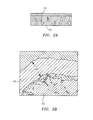
- FIGS. 2A-2B are presented as an aid to understanding the relative positional relationship of the aluminum layer 40 in the illustrated exemplary construction.
- a base of magnesium alloy 42 is coated with a layer of aluminum 40 according to the aforementioned processed shown and described in FIG. 1 .
- the layer of aluminum 40 on the magnesium alloy 42 may have a thickness 44 of about 70 micrometer.
- the technical effects and benefits of exemplary embodiments include a method for corrosion protection of magnesium alloy by providing a dense and thick Al film uniformly coated on a magnesium alloy substrate using an ionic liquid.
Landscapes
- Chemical & Material Sciences (AREA)
- Engineering & Computer Science (AREA)
- Chemical Kinetics & Catalysis (AREA)
- Materials Engineering (AREA)
- Metallurgy (AREA)
- Organic Chemistry (AREA)
- Electrochemistry (AREA)
- General Chemical & Material Sciences (AREA)
- Mechanical Engineering (AREA)
- Electroplating Methods And Accessories (AREA)
Abstract
Description
- The subject matter disclosed herein relates generally to the field of electrochemical deposition of aluminum, and more particularly, to electroplating aluminum on magnesium alloys from ionic liquids using combinations of surface treatments and coatings to provide an adherent multi-layered coating providing substantial corrosion resistance.
- Magnesium alloys are mixtures of magnesium with other metals (called an alloy), often aluminum, zinc, manganese, silicon, copper, rare earths and zirconium. Magnesium alloys have an extremely low density and high strength to weight ratio relative to other structural materials such as steel and aluminum. Due to these excellent mechanical properties, magnesium alloys are cast and used extensively in the aerospace industry.
- However, magnesium alloys have a relatively high susceptibility to corrosion. To address the issue, multi-layer coatings including an aluminum coating are applied through conventional methods across the magnesium cast alloy in an attempt to seal the surface from the corrosive environment. Typically, multilayer non-metallic coatings, a cold spray process or a High-Velocity Oxygen Fuel thermal spray (HVOF) process to apply the aluminum coating may be utilized. However, the processes for application of multi-layer coatings are potentially hazardous to the environment, they do not providing satisfactory protection against corrosion and the aluminum coating methods have non-line-of-sight limitations.
- Recently, ionic liquids have been used in electrochemical deposition processes for coatings. An ionic liquid is a liquid salt in which the ions are highly unsymmetrical resulting in low lattice energy and low melting point normally below 100 degree Celsius. Many are liquid even at room temperature. Ionic liquids generally have negligible vapor pressure and thus, in contrast to many conventional solvents, produce virtually no hazardous vapors. This makes the ionic liquid an environmentally benign alternative to the conventional hazardous multi-layer coating processes. The fundamental benefits of employing ionic liquids as the electrolyte for electrodeposition are its wide electrochemical window and its reasonably high electrical conductivity. The wide electrochemical window enables electrodeposition of many metals, e.g. aluminum, which cannot be electrodeposited from aqueous based conventional electrolyte due to their more negative redox potential compared to that of hydrogen be possible.
- According to one aspect of the invention, a method for electroplating aluminum metal on a magnesium alloy includes providing a Lewis acidic ionic liquid having dissolved species of an aluminum metal salt; subjecting a surface of the magnesium alloy to a pre-treatment process including reverse current etching the surface of the magnesium alloy in the ionic liquid; electroplating the aluminum metal on the surface using the ionic liquid as the electrolyte; and subjecting the surface of the aluminum coated magnesium alloy to a post-treatment including neutralization rinsing in a solvent solution.
- According to another aspect of the invention, a method for electroplating aluminum metal on a magnesium alloy includes providing a Lewis acid ionic liquid having dissolved species of an aluminum metal salt; subjecting the magnesium alloy to a conversion treatment bath to form a conversion coating containing magnesium fluoride on the surface; subjecting a surface of the magnesium alloy to a reverse current etching in the ionic liquid; hot-dipping the magnesium alloy in the ionic liquid following the subjecting in the conversion treatment bath; electroplating the aluminum metal on the surface using the ionic liquid as the electrolyte; and subjecting the surface of the magnesium alloy to a post-treatment step including rinsing in a solvent solution to neutralize the ionic liquid on the surface.
- Further embodiments of the invention are set out in the following numbered paragraphs:
- 1. A method for electroplating aluminum metal on a magnesium alloy comprising: providing a Lewis acidic ionic liquid having dissolved species of an aluminum metal salt; subjecting a surface of the magnesium alloy to a pre-treatment process including reverse current etching the surface of the magnesium alloy in the ionic liquid; electroplating the aluminum metal on the surface using the ionic liquid as the electrolyte; and subjecting the surface of the aluminum coated magnesium alloy to a post-treatment including neutralization rinsing in a solvent solution.
- 2. The method of paragraph 1, wherein the pre-treatment process further comprises subjecting the magnesium alloy to a conversion treatment bath to form a conversion coating containing magnesium fluoride on the surface.
- 3. The method of paragraph 2, further comprising hot-dipping the magnesium alloy in the ionic liquid following the subjecting in the conversion treatment bath.
- 4. The method of paragraph 2 or 3, wherein the pre-treatment process further comprises chemically etching the surface of the magnesium alloy with an aqueous solution containing an acid prior to the subjecting in the conversion treatment bath.
- 5. The method of any of paragraphs 1 to 4, wherein the molar ratio of the aluminum metal salt to the ionic liquid is greater than 1:1.
- 6. The method of any of paragraphs 1 to 5, wherein the molar ratio of the aluminum metal salt to the ionic liquid is greater than 1.5:1.
- 7. The method of any of paragraphs 1 to 6, wherein the reverse current etching is provided with a direct current in the range of about 5 to 50 mA/cm2.
- 8. The method of any of paragraphs 1 to 7, wherein the ionic liquid includes a surfactant as a coating nucleation and growth aid.
- 9. The method of any of paragraphs 1 to 8, wherein the solvent solution is selected from non aqueous amines and hydroxide donor compounds, aqueous amines and hydroxides.
- 10. The method of any of paragraphs 1 to 9, wherein the post-treatment further comprises blow-drying the magnesium alloy in air.
- 11. The method of
paragraph 9 or 10, wherein the solvent solution is selected from 0.5 - 2% ethyl amine in acetone or 0.5 - 5% ammonium hydroxide in water. - 12. A method for electroplating aluminum metal on a magnesium alloy comprising: providing a Lewis acid ionic liquid having dissolved species of an aluminum metal salt; subjecting the magnesium alloy to a conversion treatment bath to form a conversion coating containing magnesium fluoride on the surface; subjecting a surface of the magnesium alloy to a reverse current etching in the ionic liquid; hot-dipping the magnesium alloy in the ionic liquid following the subjecting in the conversion treatment bath; electroplating the aluminum metal on the surface using the ionic liquid as the electrolyte; and subjecting the surface of the magnesium alloy to a post-treatment step including rinsing in a solvent solution to neutralize the ionic liquid on the surface.
- 13. The method of
paragraph 12, wherein the molar ratio of the aluminum metal salt to the ionic liquid is greater than 1:1. - 14. The method of
paragraph 12 or 13, wherein the molar ratio of the aluminum metal salt to the ionic liquid is greater than 1.5:1. - 15. The method of any of
paragraphs 12 to 14, wherein the reverse current etching is provided with a direct current in the range of about 5 mA/cm2 to about 50 mA/cm2. - 16. The method of any of
paragraphs 12 to 15, wherein the ionic liquid includes a surfactant as a coating nucleation and growth aid. - 17. The method of any of
paragraphs 12 to 16, wherein the post-treatment step further comprises blow-drying the magnesium alloy in air. - 18. The method of any of
paragraphs 12 to 17, further comprising chemically etching the surface of the magnesium alloy with an aqueous solution containing an acid. - 19. The method of any of
paragraphs 12 to 18, wherein the solvent solution is selected from non aqueous amines and hydroxide donor compounds, aqueous amines and hydroxides. - 20. The method of paragraph 19, wherein the solvent solution is selected from 0.5 - 2% ethyl amine in acetone or 0.5 - 5% ammonium hydroxide in water.
- Other aspects, features, and techniques of the invention will become more apparent from the following description taken in conjunction with the drawings.
- The subject matter which is regarded as the invention is particularly pointed out and distinctly claimed in the claims at the conclusion of the specification. The foregoing and other features, and advantages of the invention are apparent from the following detailed description taken in conjunction with the accompanying drawings in which:
-
FIG. 1 illustrates a flow chart for an exemplary process for aluminum plating a magnesium alloy from an ionic liquid according to an embodiment of the invention; -
FIG. 2A illustrates a schematic view of an exemplary arrangement of aluminum layers across a magnesium alloy substrate according to an embodiment of the invention; and -
FIG. 2B illustrates surface features of aluminum coated on magnesium alloy as determined from SEM images according to an embodiment of the invention. - The present invention is more particularly described in the following description and examples are intended to be illustrative only since numerous modification and variations therein will be apparent to those skilled in the art. As used in the specification and in the claims, the singular form "a", "an," and "the" may include plural referents unless the context clearly dictates otherwise. Also, all ranges disclosed herein are inclusive of the endpoints and are independently combinable.
- Embodiments of a method for electroprocessing magnesium alloys including electroplating in a Lewis acidic ionic liquid (IL) and neutralization rinsing in a post-treatment process to remove IL remnants that may produce corrosion damage in the presence of moisture. Particularly, the method relates to electroplating aluminum on a magnesium alloy from ionic liquids including a surface pre-treatment of the magnesium alloy and a surface post-treatment of the aluminum coated magnesium alloy to remove residual traces of ionic liquids. The surface pre-treatment includes at least one step to ensure that the surface of the magnesium alloy is clean and free of residues and foreign materials. The plating process enables a dense and thick aluminum film to be uniformly coated on the magnesium alloy substrate using an ionic liquid as an electrolyte. The post-treatment of the magnesium alloy surface includes rinsing, stabilization of the surface, followed by drying the surface of the magnesium alloy. The magnesium alloy in embodiments is a magnesium cast alloy containing zinc, rare earths, and zirconium such as, for example, ZE41A. However, other non-exemplary cast alloys like AZ91, AM60, ZK51, or ZK61, or wrought alloys such as AZ31, AZ61, or ZK60 may be utilized without departing from the scope of the invention.
- Referring now to the drawings,
FIG. 1 illustrates anexemplary process 10 to electroplate/electrodeposit a magnesium alloy substrate (or substrate) with aluminum (Al) using an ionic liquid (IL) composition. As shown, the exemplary process is initiated by magnesiumalloy surface pre-treatment 12 during which the surface undergoes various treatments to yield a clean surface character suitable for a subsequent electroplating operation and for control of nucleation and adhesion. According to one exemplary process, the magnesium alloy surface preparation includes a mechanical polishing and buffing of the magnesium alloy surface to a smooth finish. Thereafter, any grease, buffing compounds or organic contaminants are removed by a suitable technique such as solvent rinsing, vapor degreasing using trichloroethylene or other suitable chlorinated solvents, solvent emulsion cleaning or the like. In one exemplary embodiment, an aqueous alkaline solution containing surfactant may be utilized in the degreasing bath. The composition of the degreasing bath is not critical as long as the bath can remove organic contaminants. - Following mechanical polishing and degreasing, a reverse current etching process is performed in an ionic liquid (IL) or in an IL bath having an additive. In embodiments, the reverse current etching may be performed in an environment using an inert gas or being blanketed by a liquid of lower density (i.e., mineral oil). The IL reverse etch process is performed to etch the alloy surface and remove any magnesium oxide (MgO) layers that will inhibit good adhesion of the aluminum metal to the surface of the substrate as well as to remove any other foreign contaminants including other surface oxide layers, mold release agents, or other alloying component segregation layers that are present. Preferably, a salt of dialkylimidazolium chloride such as 1-ethyl-3-methylimidazolium chloride with aluminum chloride is used as the IL bath. Reverse current etching involves applying a positive current to the substrate in the IL solution in order to dissolve a thin layer of the magnesium alloy from its surface. In some embodiments, reverse current etching can be applied at various current densities, and as direct current (DC), alternating current (AC), or pulsed current. In one embodiment, reverse current etching is performed with a direct current (DC) in the range of 1-500 ma/cm2, preferably with DC at 5-50 mA/cm2. To reduce cycle time or enhance cleaning performance, alternating or pulsed DC reverse current may be applied.
- In an exemplary embodiment, following alkaline cleaning, the magnesium alloy is brought into contact with an aqueous solution containing a phosphoric acid-type compound or sulphuric acid in order to perform a chemical etch prior to reverse current etching. The phosphoric acid may induce the formation of a magnesium phosphate film while at the same time cleaning the magnesium alloy surface. Since the surface of magnesium alloys is chemically heterogeneous, the magnesium phosphate coating will more readily form in the chemically active regions of the magnesium alloy surface. More specifically, this coating will more readily form in regions where the aluminum and zinc alloying components have segregated in relatively high concentrations and in regions that lack a relatively thick oxide coating. Once the surface of the magnesium alloy has been cleaned and coated with a magnesium phosphate coating, the magnesium alloy is rinsed by soaking in an neutralizing cleaner containing caustic soda, non aqueous amines & hydroxide donor compounds, aqueous amines, hydroxides, or other similar cleaners and subjected to a conversion treatment process.
- The conversion treatment process is carried out prior to the reverse current etching by bringing the magnesium alloy into contact with a conversion treatment bath. The chemically etched magnesium alloy is immersed in a bath containing an alkali metal fluoride or hydrofluoric acid in sufficient concentrations to develop a surface layer of magnesium fluoride (MgF2). Thereafter, in one exemplary embodiment, the pretreated and dried magnesium alloy is dipped in an ionic liquid containing, for example, 1-ethyl-3-methylimidazolium chloride with aluminum chloride in order to coat the alloy with aluminum. The IL is used in a protective dry environment, as the IL is sensitive to moisture. As will be appreciated by those of skill in the art, these surface preparation procedures are susceptible to a wide array of alternatives. Thus, it is contemplated that any number of other procedures and practices may likewise be utilized to perform the pre-treatment process of the magnesium alloy. In one embodiment, the magnesium alloy treatment process includes chemical etching, followed by a conversion coating process, dried in dry nitrogen gas (N2), followed by reverse current etching, and hot-dipping in an ionic liquid for electroplating. Lastly, the magnesium alloy surface is dried with an inert gas/vacuum drying after the surface pretreatment and before being dipped into the plating bath.
- Once the magnesium alloy has undergone surface pre-treatment, it is thereafter subjected to an
aluminum electroplating process 14 in an IL or IL plating bath. As will be recognized by those of skill in the art, the electroplating process includes a power supply or rectifier, which is connected to at least two electrodes (an anode and cathode) that are immersed in an electrolytic bath containing an electrolyte suitable for magnesium substrates. In one exemplary embodiment, the electrolyte utilized is dialkylimidazolium chloride such as aluminum chloride (AlCl3)-1-ethyl-3-methylimidazolium chloride (EMIM-Cl) ionic liquid and includes a nucleation aid additive such as surfactant. In the exemplary embodiment, the AlCl3-EMIM-Cl ionic liquid has a molar ratio of AlCl3 to EMIM-Cl that is greater than 1:1, with a preferable molar ratio of 1.5:1. In another exemplary embodiment, the AlCl3 composition is greater than 50% w/w relative to the ionic liquid (dialkylimidazolium chloride) composition. Additionally, the additives may account for about 10% w/w for the electrolyte solution. In another embodiment, the additive may account for about 0.5 -15% w/w. The magnesium alloy is electroplated in the electrolytic bath at a temperature of about room temperature to 90 degrees Celsius in order to enable a dense and thick aluminum film to be uniformly coated on the magnesium alloy substrate, as is illustrated inFIG. 2A-2B . It is to be appreciated that, the use of aluminum cations supplied to the bath is not limited to aluminum chloride and another salt species such as AlFx compound may be used (with x an integer of 3 in one embodiment) without departing from the scope of the invention. It is also to be appreciated that the additives facilitate modification of the nucleation and growth of the coating as well as facilitate the package and final finish of the coating - Following the
aluminum electroplating process 14, the aluminum coated magnesium alloy surface is subjected to a surfacepost-treatment process 16 to terminate any remaining surface reactions that may continue without post-treatment, stabilize the aluminum coated magnesium alloy, and obtain a good final coating for the aluminum. This includes one or more processes to ensure that all of the plating electrolyte and materials other than aluminum plating are effectively removed from the magnesium alloy substrate and no further reactions occur on the alloy. If not completely removed, the residual ionic liquid electrolyte will react with water once exposed to air to form hydrochloric acid. The hydrochloric acid will react with the magnesium alloy substrate and destroy the coating. Additionally, the remaining chloride on the alloy surface may continue with the corrosive effects if not removed during the post treatment process. In one exemplary embodiment, thepost-treatment process 16 includes neutralization rinsing (non aqueous amines & hydroxide donor compounds, aqueous amines, hydroxides etc), agitation (for example, high shear rinsing or ultrasonic processing), and blow-drying. In another exemplary embodiment, thepost-treatment process 16 includes solvent rinsing under high agitation followed by blow-drying. Exemplary post treatment rinsing solutions include 0.5 - 2% ethyl amine in acetone, 0.5 - 5% ammonium hydroxide in water, or other similar types of rinsing solutions. It is to be appreciated that thepost-treatment process 16 facilitates the removal of any IL that may be present on the surface of the coated magnesium alloy as remnants of the IL may react with water and create hydrochloric acid, which could damage the magnesium alloy or the surface aluminum coating. - With reference to
FIG. 2A-2B , an exemplary view of the layers on the magnesium alloy is presented. In this regard,FIGS. 2A-2B are presented as an aid to understanding the relative positional relationship of thealuminum layer 40 in the illustrated exemplary construction. In the exemplary construction shown inFIG. 2A , a base ofmagnesium alloy 42 is coated with a layer ofaluminum 40 according to the aforementioned processed shown and described inFIG. 1 . In another exemplary embodiment taken from a scanning electron microscope combined with X-ray dispersion (SEM/EDX) and shown inFIG. 2B , the layer ofaluminum 40 on themagnesium alloy 42 may have a thickness 44 of about 70 micrometer. - The technical effects and benefits of exemplary embodiments include a method for corrosion protection of magnesium alloy by providing a dense and thick Al film uniformly coated on a magnesium alloy substrate using an ionic liquid.
- The terminology used herein is for the purpose of describing particular embodiments only and is not intended to be limiting of the invention. While the description of the present invention has been presented for purposes of illustration and description, it is not intended to be exhaustive or limited to the invention in the form disclosed. Many modifications, variations, alterations, substitutions, or equivalent arrangement not hereto described will be apparent to those of ordinary skill in the art without departing from the scope and spirit of the invention. Additionally, while various embodiment of the invention have been described, it is to be understood that aspects of the invention may include only some of the described embodiments. Accordingly, the invention is not to be seen as limited by the foregoing description, but is only limited by the scope of the appended claims.
Claims (11)
- A method for electroplating aluminum metal on a magnesium alloy comprising:providing a Lewis acidic ionic liquid having dissolved species of an aluminum metal salt;subjecting a surface of the magnesium alloy to a pre-treatment process including reverse current etching the surface of the magnesium alloy in the ionic liquid;electroplating the aluminum metal on the surface using the ionic liquid as the electrolyte; andsubjecting the surface of the aluminum coated magnesium alloy to a post-treatment including neutralization rinsing in a solvent solution.
- The method of claim 1, wherein the pre-treatment process further comprises subjecting the magnesium alloy to a conversion treatment bath to form a conversion coating containing magnesium fluoride on the surface.
- The method of claim 2, further comprising hot-dipping the magnesium alloy in the ionic liquid following the subjecting in the conversion treatment bath.
- The method of claim 2 or 3, wherein the pre-treatment process further comprises chemically etching the surface of the magnesium alloy with an aqueous solution containing an acid prior to the subjecting in the conversion treatment bath.
- The method of any of claims 1 to 4, wherein the molar ratio of the aluminum metal salt to the ionic liquid is greater than 1:1.
- The method of any of claims 1 to 5, wherein the molar ratio of the aluminum metal salt to the ionic liquid is greater than 1.5:1.
- The method of any of claims 1 to 6, wherein the reverse current etching is provided with a direct current in the range of about 5 to 50 mA/cm2.
- The method of any of claims 1 to 7, wherein the ionic liquid includes a surfactant as a coating nucleation and growth aid.
- The method of any of claims 1 to 8, wherein the solvent solution is selected from non aqueous amines and hydroxide donor compounds, aqueous amines and hydroxides.
- The method of any of claims 1 to 9, wherein the post-treatment further comprises blow-drying the magnesium alloy in air.
- The method of claim 9 or 10, wherein the solvent solution is selected from 0.5 - 2% ethyl amine in acetone or 0.5 - 5% ammonium hydroxide in water.
Applications Claiming Priority (1)
| Application Number | Priority Date | Filing Date | Title |
|---|---|---|---|
| US13/240,021 US8778163B2 (en) | 2011-09-22 | 2011-09-22 | Protection of magnesium alloys by aluminum plating from ionic liquids |
Publications (2)
| Publication Number | Publication Date |
|---|---|
| EP2573214A1 true EP2573214A1 (en) | 2013-03-27 |
| EP2573214B1 EP2573214B1 (en) | 2014-04-23 |
Family
ID=47018802
Family Applications (1)
| Application Number | Title | Priority Date | Filing Date |
|---|---|---|---|
| EP20120185345 Active EP2573214B1 (en) | 2011-09-22 | 2012-09-21 | Protection of magnesium alloys by aluminum plating from ionic liquids |
Country Status (2)
| Country | Link |
|---|---|
| US (1) | US8778163B2 (en) |
| EP (1) | EP2573214B1 (en) |
Cited By (2)
| Publication number | Priority date | Publication date | Assignee | Title |
|---|---|---|---|---|
| WO2019209342A1 (en) * | 2018-04-27 | 2019-10-31 | Hewlett-Packard Development Company, L.P. | Waterborne emulsion based electroplating of magnesium substrates |
| CN110699719A (en) * | 2019-11-08 | 2020-01-17 | 哈尔滨工程大学 | Method for preparing compact electrophoretic coating on surface of magnesium alloy |
Families Citing this family (9)
| Publication number | Priority date | Publication date | Assignee | Title |
|---|---|---|---|---|
| US20140178710A1 (en) * | 2012-12-20 | 2014-06-26 | United Technologies Corporation | Alloying interlayer for electroplated aluminum on aluminum alloys |
| US20150101935A1 (en) * | 2013-10-14 | 2015-04-16 | United Technologies Corporation | Apparatus and method for ionic liquid electroplating |
| US9903034B2 (en) | 2013-11-22 | 2018-02-27 | Sikorsky Aircraft Corporation | Methods and materials for electroplating aluminum in ionic liquids |
| US9758888B2 (en) * | 2014-05-06 | 2017-09-12 | Apple Inc. | Preparation of metal substrate surfaces for electroplating in ionic liquids |
| US10208391B2 (en) | 2014-10-17 | 2019-02-19 | Ut-Battelle, Llc | Aluminum trihalide-neutral ligand ionic liquids and their use in aluminum deposition |
| US20180155846A1 (en) * | 2015-07-28 | 2018-06-07 | Hewlett-Packard Development Company, L.P. | Magnesium Alloy Substrate |
| US10392948B2 (en) | 2016-04-26 | 2019-08-27 | Honeywell International Inc. | Methods and articles relating to ionic liquid bath plating of aluminum-containing layers utilizing shaped consumable aluminum anodes |
| US11001908B1 (en) * | 2020-02-28 | 2021-05-11 | Wade T. Conner | System and method for cleaning magnesium scrap for re-melting with reduced environmental impact |
| CN114855231A (en) * | 2022-05-27 | 2022-08-05 | 江西思远再生资源有限公司 | Method for plating niobium on magnesium and magnesium alloy |
Citations (3)
| Publication number | Priority date | Publication date | Assignee | Title |
|---|---|---|---|---|
| DE1129801B (en) * | 1956-07-12 | 1962-05-17 | Knapsack Ag | Process for compressing surface-treated workpieces made of light metals and light metal alloys to improve corrosion resistance and wear resistance |
| DE10025643A1 (en) * | 2000-05-24 | 2001-12-06 | Ozf Oberflaechenbeschichtungsz | Process for coating aluminum and magnesium die casting bodies comprises electrolytically degreasing the body in an alkaline aqueous cleaner, descaling, forming a conversion layer, cataphoretically dip coating, rinsing in water, and curing |
| US20040140220A1 (en) * | 2002-04-30 | 2004-07-22 | Fischer Juergen K S | Aluminium electroplating formulations |
Family Cites Families (13)
| Publication number | Priority date | Publication date | Assignee | Title |
|---|---|---|---|---|
| US4412892A (en) * | 1981-07-13 | 1983-11-01 | The United States Of America As Represented By The Secretary Of The Army | Pretreatment of superalloys and stainless steels for electroplating |
| JP2662635B2 (en) | 1988-04-26 | 1997-10-15 | 日新製鋼株式会社 | Electric aluminum plating bath and plating method using the bath |
| US5041194A (en) | 1989-05-18 | 1991-08-20 | Mitsubishi Petrochemical Co., Ltd. | Aluminum electroplating method |
| US7135404B2 (en) * | 2002-01-10 | 2006-11-14 | Semitool, Inc. | Method for applying metal features onto barrier layers using electrochemical deposition |
| JP4157308B2 (en) * | 2001-06-27 | 2008-10-01 | シャープ株式会社 | Method for forming plating film and electronic component on which plating film is formed by the method |
| JP2004315889A (en) * | 2003-04-16 | 2004-11-11 | Ebara Corp | Plating method of semiconductor substrate |
| EP1984541A2 (en) * | 2006-02-15 | 2008-10-29 | Akzo Nobel N.V. | Method to electrodeposit metals using ionic liquids |
| KR100917233B1 (en) * | 2007-07-26 | 2009-09-16 | 한국전자통신연구원 | Surface-coated polymer actuator and its manufacturing method |
| CN101638790A (en) * | 2008-07-30 | 2010-02-03 | 深圳富泰宏精密工业有限公司 | Plating method of magnesium and magnesium alloy |
| BRPI1010877B1 (en) | 2009-06-08 | 2020-09-15 | Modumetal, Inc | CORROSION RESISTANT MULTILAYER COATING AND ELECTRODEPOSITION METHOD |
| DE102009035660A1 (en) | 2009-07-30 | 2011-02-03 | Ewald Dörken Ag | Process for the electrochemical coating of a workpiece |
| US9303322B2 (en) * | 2010-05-24 | 2016-04-05 | Integran Technologies Inc. | Metallic articles with hydrophobic surfaces |
| US20120052324A1 (en) * | 2010-08-30 | 2012-03-01 | Honda Motor Co., Ltd. | Electric Al-Zr-Mn Alloy-Plating Bath Using Room Temperature Molten Salt Bath, Plating Method Using the Same and Al-Zr-Mn Alloy-Plated Film |
-
2011
- 2011-09-22 US US13/240,021 patent/US8778163B2/en not_active Expired - Fee Related
-
2012
- 2012-09-21 EP EP20120185345 patent/EP2573214B1/en active Active
Patent Citations (3)
| Publication number | Priority date | Publication date | Assignee | Title |
|---|---|---|---|---|
| DE1129801B (en) * | 1956-07-12 | 1962-05-17 | Knapsack Ag | Process for compressing surface-treated workpieces made of light metals and light metal alloys to improve corrosion resistance and wear resistance |
| DE10025643A1 (en) * | 2000-05-24 | 2001-12-06 | Ozf Oberflaechenbeschichtungsz | Process for coating aluminum and magnesium die casting bodies comprises electrolytically degreasing the body in an alkaline aqueous cleaner, descaling, forming a conversion layer, cataphoretically dip coating, rinsing in water, and curing |
| US20040140220A1 (en) * | 2002-04-30 | 2004-07-22 | Fischer Juergen K S | Aluminium electroplating formulations |
Non-Patent Citations (2)
| Title |
|---|
| CHANG ET AL: "Electrodeposition of aluminum on magnesium alloy in aluminum chloride (AlCl3)-1-ethyl-3-methylimidazolium chloride (EMIC) ionic liquid and its corrosion behavior", ELECTROCHEMISTRY COMMUNICATIONS, ELSEVIER, AMSTERDAM, NL, vol. 9, no. 7, 15 June 2007 (2007-06-15), pages 1602 - 1606, XP022118593, ISSN: 1388-2481, DOI: 10.1016/J.ELECOM.2007.03.009 * |
| YANG H ET AL: "Electrodeposition of chemically and mechanically protective Al-coatings on AZ91D Mg alloy", CORROSION SCIENCE, OXFORD, GB, vol. 53, no. 1, 1 January 2011 (2011-01-01), pages 381 - 387, XP027484686, ISSN: 0010-938X, [retrieved on 20100922], DOI: 10.1016/J.CORSCI.2010.09.047 * |
Cited By (3)
| Publication number | Priority date | Publication date | Assignee | Title |
|---|---|---|---|---|
| WO2019209342A1 (en) * | 2018-04-27 | 2019-10-31 | Hewlett-Packard Development Company, L.P. | Waterborne emulsion based electroplating of magnesium substrates |
| CN110699719A (en) * | 2019-11-08 | 2020-01-17 | 哈尔滨工程大学 | Method for preparing compact electrophoretic coating on surface of magnesium alloy |
| CN110699719B (en) * | 2019-11-08 | 2021-10-26 | 哈尔滨工程大学 | Method for preparing compact electrophoretic coating on surface of magnesium alloy |
Also Published As
| Publication number | Publication date |
|---|---|
| US8778163B2 (en) | 2014-07-15 |
| US20130075271A1 (en) | 2013-03-28 |
| EP2573214B1 (en) | 2014-04-23 |
Similar Documents
| Publication | Publication Date | Title |
|---|---|---|
| US8778163B2 (en) | Protection of magnesium alloys by aluminum plating from ionic liquids | |
| US11401619B2 (en) | Sacrificial coating and procedure for electroplating aluminum on aluminum alloys | |
| US4938850A (en) | Method for plating on titanium | |
| KR101067743B1 (en) | Anodizing Surface Treatment of Magnesium or Magnesium Alloy | |
| US10214823B2 (en) | Bimetallic zincating processing for enhanced adhesion of aluminum on aluminum alloys | |
| KR20170029545A (en) | Electroceramic coating for magnesium alloys | |
| CN105200468A (en) | Bolt surface corrosion prevention method | |
| EP3080321B1 (en) | Method for electrodepositing a nickel-chromium alloy | |
| KR960006592B1 (en) | Iron Plating Aluminum Alloy Parts And Its Plating Methods | |
| CA1132087A (en) | Plating on aluminum alloys | |
| JP4417106B2 (en) | Magnesium anodizing system and method | |
| US20240133073A1 (en) | A process to protect light metal substrates | |
| US20220389604A1 (en) | Method to create functional coatings on magnesium | |
| US5368719A (en) | Method for direct plating of iron on aluminum | |
| EP3059335B1 (en) | Surface modifiers for ionic liquid aluminum electroplating solutions, processes for electroplating aluminum therefrom, and methods for producing an aluminum coating using the same | |
| JP5827792B2 (en) | Chemically treated iron-based materials | |
| US3725217A (en) | Plating titanium and zirconium and their alloys with nickel,chromium and other heavy metals | |
| JP3426800B2 (en) | Pretreatment method for plating aluminum alloy material | |
| KR102475525B1 (en) | Surface Treatment Method of Magnesium Alloy using Plasma Electrolytic Oxidation in the High Voltage | |
| JP6274556B2 (en) | Electrolytic plating method | |
| JP2011105977A (en) | Zinc plating solution | |
| JP2012057224A (en) | Method for pre-plating treatment | |
| KR20080105291A (en) | Building Magnesium Exterior |
Legal Events
| Date | Code | Title | Description |
|---|---|---|---|
| PUAI | Public reference made under article 153(3) epc to a published international application that has entered the european phase |
Free format text: ORIGINAL CODE: 0009012 |
|
| AK | Designated contracting states |
Kind code of ref document: A1 Designated state(s): AL AT BE BG CH CY CZ DE DK EE ES FI FR GB GR HR HU IE IS IT LI LT LU LV MC MK MT NL NO PL PT RO RS SE SI SK SM TR |
|
| AX | Request for extension of the european patent |
Extension state: BA ME |
|
| 17P | Request for examination filed |
Effective date: 20130926 |
|
| RBV | Designated contracting states (corrected) |
Designated state(s): AL AT BE BG CH CY CZ DE DK EE ES FI FR GB GR HR HU IE IS IT LI LT LU LV MC MK MT NL NO PL PT RO RS SE SI SK SM TR |
|
| GRAP | Despatch of communication of intention to grant a patent |
Free format text: ORIGINAL CODE: EPIDOSNIGR1 |
|
| RIC1 | Information provided on ipc code assigned before grant |
Ipc: C25D 3/44 20060101AFI20131018BHEP Ipc: C23C 22/34 20060101ALI20131018BHEP Ipc: C23C 28/00 20060101ALI20131018BHEP Ipc: C23C 22/78 20060101ALI20131018BHEP Ipc: C25F 1/14 20060101ALI20131018BHEP Ipc: C25F 3/04 20060101ALI20131018BHEP Ipc: C25D 5/48 20060101ALN20131018BHEP Ipc: C23C 22/83 20060101ALI20131018BHEP Ipc: C25D 3/66 20060101ALI20131018BHEP Ipc: C25D 5/42 20060101ALI20131018BHEP |
|
| INTG | Intention to grant announced |
Effective date: 20131108 |
|
| GRAS | Grant fee paid |
Free format text: ORIGINAL CODE: EPIDOSNIGR3 |
|
| GRAA | (expected) grant |
Free format text: ORIGINAL CODE: 0009210 |
|
| AK | Designated contracting states |
Kind code of ref document: B1 Designated state(s): AL AT BE BG CH CY CZ DE DK EE ES FI FR GB GR HR HU IE IS IT LI LT LU LV MC MK MT NL NO PL PT RO RS SE SI SK SM TR |
|
| REG | Reference to a national code |
Ref country code: GB Ref legal event code: FG4D |
|
| REG | Reference to a national code |
Ref country code: CH Ref legal event code: EP |
|
| REG | Reference to a national code |
Ref country code: AT Ref legal event code: REF Ref document number: 663942 Country of ref document: AT Kind code of ref document: T Effective date: 20140515 |
|
| REG | Reference to a national code |
Ref country code: IE Ref legal event code: FG4D |
|
| REG | Reference to a national code |
Ref country code: DE Ref legal event code: R096 Ref document number: 602012001486 Country of ref document: DE Effective date: 20140605 |
|
| REG | Reference to a national code |
Ref country code: AT Ref legal event code: MK05 Ref document number: 663942 Country of ref document: AT Kind code of ref document: T Effective date: 20140423 |
|
| REG | Reference to a national code |
Ref country code: NL Ref legal event code: VDEP Effective date: 20140423 |
|
| REG | Reference to a national code |
Ref country code: LT Ref legal event code: MG4D |
|
| PG25 | Lapsed in a contracting state [announced via postgrant information from national office to epo] |
Ref country code: FI Free format text: LAPSE BECAUSE OF FAILURE TO SUBMIT A TRANSLATION OF THE DESCRIPTION OR TO PAY THE FEE WITHIN THE PRESCRIBED TIME-LIMIT Effective date: 20140423 Ref country code: CY Free format text: LAPSE BECAUSE OF FAILURE TO SUBMIT A TRANSLATION OF THE DESCRIPTION OR TO PAY THE FEE WITHIN THE PRESCRIBED TIME-LIMIT Effective date: 20140423 Ref country code: IS Free format text: LAPSE BECAUSE OF FAILURE TO SUBMIT A TRANSLATION OF THE DESCRIPTION OR TO PAY THE FEE WITHIN THE PRESCRIBED TIME-LIMIT Effective date: 20140823 Ref country code: NL Free format text: LAPSE BECAUSE OF FAILURE TO SUBMIT A TRANSLATION OF THE DESCRIPTION OR TO PAY THE FEE WITHIN THE PRESCRIBED TIME-LIMIT Effective date: 20140423 Ref country code: BG Free format text: LAPSE BECAUSE OF FAILURE TO SUBMIT A TRANSLATION OF THE DESCRIPTION OR TO PAY THE FEE WITHIN THE PRESCRIBED TIME-LIMIT Effective date: 20140723 Ref country code: NO Free format text: LAPSE BECAUSE OF FAILURE TO SUBMIT A TRANSLATION OF THE DESCRIPTION OR TO PAY THE FEE WITHIN THE PRESCRIBED TIME-LIMIT Effective date: 20140723 Ref country code: LT Free format text: LAPSE BECAUSE OF FAILURE TO SUBMIT A TRANSLATION OF THE DESCRIPTION OR TO PAY THE FEE WITHIN THE PRESCRIBED TIME-LIMIT Effective date: 20140423 Ref country code: GR Free format text: LAPSE BECAUSE OF FAILURE TO SUBMIT A TRANSLATION OF THE DESCRIPTION OR TO PAY THE FEE WITHIN THE PRESCRIBED TIME-LIMIT Effective date: 20140724 |
|
| PG25 | Lapsed in a contracting state [announced via postgrant information from national office to epo] |
Ref country code: AT Free format text: LAPSE BECAUSE OF FAILURE TO SUBMIT A TRANSLATION OF THE DESCRIPTION OR TO PAY THE FEE WITHIN THE PRESCRIBED TIME-LIMIT Effective date: 20140423 Ref country code: ES Free format text: LAPSE BECAUSE OF FAILURE TO SUBMIT A TRANSLATION OF THE DESCRIPTION OR TO PAY THE FEE WITHIN THE PRESCRIBED TIME-LIMIT Effective date: 20140423 Ref country code: RS Free format text: LAPSE BECAUSE OF FAILURE TO SUBMIT A TRANSLATION OF THE DESCRIPTION OR TO PAY THE FEE WITHIN THE PRESCRIBED TIME-LIMIT Effective date: 20140423 Ref country code: PL Free format text: LAPSE BECAUSE OF FAILURE TO SUBMIT A TRANSLATION OF THE DESCRIPTION OR TO PAY THE FEE WITHIN THE PRESCRIBED TIME-LIMIT Effective date: 20140423 Ref country code: SE Free format text: LAPSE BECAUSE OF FAILURE TO SUBMIT A TRANSLATION OF THE DESCRIPTION OR TO PAY THE FEE WITHIN THE PRESCRIBED TIME-LIMIT Effective date: 20140423 Ref country code: LV Free format text: LAPSE BECAUSE OF FAILURE TO SUBMIT A TRANSLATION OF THE DESCRIPTION OR TO PAY THE FEE WITHIN THE PRESCRIBED TIME-LIMIT Effective date: 20140423 Ref country code: HR Free format text: LAPSE BECAUSE OF FAILURE TO SUBMIT A TRANSLATION OF THE DESCRIPTION OR TO PAY THE FEE WITHIN THE PRESCRIBED TIME-LIMIT Effective date: 20140423 |
|
| PG25 | Lapsed in a contracting state [announced via postgrant information from national office to epo] |
Ref country code: PT Free format text: LAPSE BECAUSE OF FAILURE TO SUBMIT A TRANSLATION OF THE DESCRIPTION OR TO PAY THE FEE WITHIN THE PRESCRIBED TIME-LIMIT Effective date: 20140825 |
|
| REG | Reference to a national code |
Ref country code: DE Ref legal event code: R097 Ref document number: 602012001486 Country of ref document: DE |
|
| PG25 | Lapsed in a contracting state [announced via postgrant information from national office to epo] |
Ref country code: BE Free format text: LAPSE BECAUSE OF FAILURE TO SUBMIT A TRANSLATION OF THE DESCRIPTION OR TO PAY THE FEE WITHIN THE PRESCRIBED TIME-LIMIT Effective date: 20140423 Ref country code: EE Free format text: LAPSE BECAUSE OF FAILURE TO SUBMIT A TRANSLATION OF THE DESCRIPTION OR TO PAY THE FEE WITHIN THE PRESCRIBED TIME-LIMIT Effective date: 20140423 Ref country code: CZ Free format text: LAPSE BECAUSE OF FAILURE TO SUBMIT A TRANSLATION OF THE DESCRIPTION OR TO PAY THE FEE WITHIN THE PRESCRIBED TIME-LIMIT Effective date: 20140423 Ref country code: DK Free format text: LAPSE BECAUSE OF FAILURE TO SUBMIT A TRANSLATION OF THE DESCRIPTION OR TO PAY THE FEE WITHIN THE PRESCRIBED TIME-LIMIT Effective date: 20140423 Ref country code: SK Free format text: LAPSE BECAUSE OF FAILURE TO SUBMIT A TRANSLATION OF THE DESCRIPTION OR TO PAY THE FEE WITHIN THE PRESCRIBED TIME-LIMIT Effective date: 20140423 Ref country code: RO Free format text: LAPSE BECAUSE OF FAILURE TO SUBMIT A TRANSLATION OF THE DESCRIPTION OR TO PAY THE FEE WITHIN THE PRESCRIBED TIME-LIMIT Effective date: 20140423 |
|
| PLBE | No opposition filed within time limit |
Free format text: ORIGINAL CODE: 0009261 |
|
| STAA | Information on the status of an ep patent application or granted ep patent |
Free format text: STATUS: NO OPPOSITION FILED WITHIN TIME LIMIT |
|
| PG25 | Lapsed in a contracting state [announced via postgrant information from national office to epo] |
Ref country code: IT Free format text: LAPSE BECAUSE OF FAILURE TO SUBMIT A TRANSLATION OF THE DESCRIPTION OR TO PAY THE FEE WITHIN THE PRESCRIBED TIME-LIMIT Effective date: 20140423 |
|
| 26N | No opposition filed |
Effective date: 20150126 |
|
| PG25 | Lapsed in a contracting state [announced via postgrant information from national office to epo] |
Ref country code: LU Free format text: LAPSE BECAUSE OF FAILURE TO SUBMIT A TRANSLATION OF THE DESCRIPTION OR TO PAY THE FEE WITHIN THE PRESCRIBED TIME-LIMIT Effective date: 20140921 Ref country code: MC Free format text: LAPSE BECAUSE OF FAILURE TO SUBMIT A TRANSLATION OF THE DESCRIPTION OR TO PAY THE FEE WITHIN THE PRESCRIBED TIME-LIMIT Effective date: 20140423 |
|
| REG | Reference to a national code |
Ref country code: DE Ref legal event code: R097 Ref document number: 602012001486 Country of ref document: DE Effective date: 20150126 |
|
| REG | Reference to a national code |
Ref country code: IE Ref legal event code: MM4A |
|
| PG25 | Lapsed in a contracting state [announced via postgrant information from national office to epo] |
Ref country code: SI Free format text: LAPSE BECAUSE OF FAILURE TO SUBMIT A TRANSLATION OF THE DESCRIPTION OR TO PAY THE FEE WITHIN THE PRESCRIBED TIME-LIMIT Effective date: 20140423 |
|
| REG | Reference to a national code |
Ref country code: FR Ref legal event code: PLFP Year of fee payment: 4 |
|
| PG25 | Lapsed in a contracting state [announced via postgrant information from national office to epo] |
Ref country code: IE Free format text: LAPSE BECAUSE OF NON-PAYMENT OF DUE FEES Effective date: 20140921 |
|
| REG | Reference to a national code |
Ref country code: CH Ref legal event code: PL |
|
| PG25 | Lapsed in a contracting state [announced via postgrant information from national office to epo] |
Ref country code: SM Free format text: LAPSE BECAUSE OF FAILURE TO SUBMIT A TRANSLATION OF THE DESCRIPTION OR TO PAY THE FEE WITHIN THE PRESCRIBED TIME-LIMIT Effective date: 20140423 |
|
| PG25 | Lapsed in a contracting state [announced via postgrant information from national office to epo] |
Ref country code: MT Free format text: LAPSE BECAUSE OF FAILURE TO SUBMIT A TRANSLATION OF THE DESCRIPTION OR TO PAY THE FEE WITHIN THE PRESCRIBED TIME-LIMIT Effective date: 20140423 |
|
| PG25 | Lapsed in a contracting state [announced via postgrant information from national office to epo] |
Ref country code: HU Free format text: LAPSE BECAUSE OF FAILURE TO SUBMIT A TRANSLATION OF THE DESCRIPTION OR TO PAY THE FEE WITHIN THE PRESCRIBED TIME-LIMIT; INVALID AB INITIO Effective date: 20120921 Ref country code: LI Free format text: LAPSE BECAUSE OF NON-PAYMENT OF DUE FEES Effective date: 20150930 Ref country code: TR Free format text: LAPSE BECAUSE OF FAILURE TO SUBMIT A TRANSLATION OF THE DESCRIPTION OR TO PAY THE FEE WITHIN THE PRESCRIBED TIME-LIMIT Effective date: 20140423 Ref country code: CH Free format text: LAPSE BECAUSE OF NON-PAYMENT OF DUE FEES Effective date: 20150930 |
|
| REG | Reference to a national code |
Ref country code: FR Ref legal event code: PLFP Year of fee payment: 5 |
|
| REG | Reference to a national code |
Ref country code: DE Ref legal event code: R082 Ref document number: 602012001486 Country of ref document: DE Representative=s name: SCHMITT-NILSON SCHRAUD WAIBEL WOHLFROM PATENTA, DE |
|
| REG | Reference to a national code |
Ref country code: FR Ref legal event code: PLFP Year of fee payment: 6 |
|
| PG25 | Lapsed in a contracting state [announced via postgrant information from national office to epo] |
Ref country code: MK Free format text: LAPSE BECAUSE OF FAILURE TO SUBMIT A TRANSLATION OF THE DESCRIPTION OR TO PAY THE FEE WITHIN THE PRESCRIBED TIME-LIMIT Effective date: 20140423 |
|
| REG | Reference to a national code |
Ref country code: FR Ref legal event code: PLFP Year of fee payment: 7 |
|
| PG25 | Lapsed in a contracting state [announced via postgrant information from national office to epo] |
Ref country code: AL Free format text: LAPSE BECAUSE OF FAILURE TO SUBMIT A TRANSLATION OF THE DESCRIPTION OR TO PAY THE FEE WITHIN THE PRESCRIBED TIME-LIMIT Effective date: 20140423 |
|
| P01 | Opt-out of the competence of the unified patent court (upc) registered |
Effective date: 20230520 |
|
| PGFP | Annual fee paid to national office [announced via postgrant information from national office to epo] |
Ref country code: DE Payment date: 20250929 Year of fee payment: 14 |
|
| PGFP | Annual fee paid to national office [announced via postgrant information from national office to epo] |
Ref country code: GB Payment date: 20250929 Year of fee payment: 14 |
|
| PGFP | Annual fee paid to national office [announced via postgrant information from national office to epo] |
Ref country code: FR Payment date: 20250925 Year of fee payment: 14 |