EP2562212A1 - Hydrogel - Google Patents
Hydrogel Download PDFInfo
- Publication number
- EP2562212A1 EP2562212A1 EP11772131A EP11772131A EP2562212A1 EP 2562212 A1 EP2562212 A1 EP 2562212A1 EP 11772131 A EP11772131 A EP 11772131A EP 11772131 A EP11772131 A EP 11772131A EP 2562212 A1 EP2562212 A1 EP 2562212A1
- Authority
- EP
- European Patent Office
- Prior art keywords
- hydrogel
- particle diameter
- less
- hydrogel according
- average particle
- Prior art date
- Legal status (The legal status is an assumption and is not a legal conclusion. Google has not performed a legal analysis and makes no representation as to the accuracy of the status listed.)
- Withdrawn
Links
- 239000000017 hydrogel Substances 0.000 title claims abstract description 115
- 229920001282 polysaccharide Polymers 0.000 claims abstract description 82
- 239000005017 polysaccharide Substances 0.000 claims abstract description 82
- 239000002245 particle Substances 0.000 claims abstract description 56
- 239000000243 solution Substances 0.000 claims abstract description 48
- 238000010438 heat treatment Methods 0.000 claims abstract description 27
- 239000000203 mixture Substances 0.000 claims abstract description 21
- 238000004519 manufacturing process Methods 0.000 claims abstract description 18
- 239000011148 porous material Substances 0.000 claims abstract description 16
- 238000000034 method Methods 0.000 claims abstract description 14
- 239000012266 salt solution Substances 0.000 claims abstract description 13
- 125000001165 hydrophobic group Chemical group 0.000 claims abstract description 11
- 150000003839 salts Chemical class 0.000 claims abstract description 10
- 150000004676 glycans Chemical class 0.000 claims abstract 8
- 238000001914 filtration Methods 0.000 claims description 44
- FAPWRFPIFSIZLT-UHFFFAOYSA-M Sodium chloride Chemical compound [Na+].[Cl-] FAPWRFPIFSIZLT-UHFFFAOYSA-M 0.000 claims description 26
- 229910019142 PO4 Inorganic materials 0.000 claims description 13
- 239000010452 phosphate Substances 0.000 claims description 13
- 239000002504 physiological saline solution Substances 0.000 claims description 13
- 239000011780 sodium chloride Substances 0.000 claims description 13
- 239000001768 carboxy methyl cellulose Substances 0.000 claims description 8
- 239000002904 solvent Substances 0.000 claims description 8
- 229920002134 Carboxymethyl cellulose Polymers 0.000 claims description 7
- 235000010948 carboxy methyl cellulose Nutrition 0.000 claims description 7
- 239000008112 carboxymethyl-cellulose Substances 0.000 claims description 7
- 125000003342 alkenyl group Chemical group 0.000 claims description 6
- 125000004432 carbon atom Chemical group C* 0.000 claims description 6
- 229910052751 metal Inorganic materials 0.000 claims description 5
- 239000002184 metal Substances 0.000 claims description 5
- 125000000217 alkyl group Chemical group 0.000 claims description 4
- 125000002057 carboxymethyl group Chemical group [H]OC(=O)C([H])([H])[*] 0.000 claims description 4
- 125000004435 hydrogen atom Chemical group [H]* 0.000 claims description 4
- 125000001095 phosphatidyl group Chemical group 0.000 claims description 2
- 125000002467 phosphate group Chemical group [H]OP(=O)(O[H])O[*] 0.000 claims 1
- 230000007774 longterm Effects 0.000 abstract description 17
- 150000004804 polysaccharides Chemical class 0.000 description 73
- 238000005259 measurement Methods 0.000 description 38
- LFQSCWFLJHTTHZ-UHFFFAOYSA-N Ethanol Chemical compound CCO LFQSCWFLJHTTHZ-UHFFFAOYSA-N 0.000 description 24
- 238000002360 preparation method Methods 0.000 description 21
- WYURNTSHIVDZCO-UHFFFAOYSA-N Tetrahydrofuran Chemical compound C1CCOC1 WYURNTSHIVDZCO-UHFFFAOYSA-N 0.000 description 16
- 239000002994 raw material Substances 0.000 description 16
- 238000006467 substitution reaction Methods 0.000 description 16
- 230000008859 change Effects 0.000 description 15
- XLYOFNOQVPJJNP-UHFFFAOYSA-N water Substances O XLYOFNOQVPJJNP-UHFFFAOYSA-N 0.000 description 14
- 230000000052 comparative effect Effects 0.000 description 13
- 239000000499 gel Substances 0.000 description 12
- 238000003860 storage Methods 0.000 description 11
- 238000006243 chemical reaction Methods 0.000 description 10
- NBIIXXVUZAFLBC-UHFFFAOYSA-K phosphate Chemical compound [O-]P([O-])([O-])=O NBIIXXVUZAFLBC-UHFFFAOYSA-K 0.000 description 10
- 239000002033 PVDF binder Substances 0.000 description 9
- 238000010586 diagram Methods 0.000 description 9
- 229920002981 polyvinylidene fluoride Polymers 0.000 description 9
- 239000000126 substance Substances 0.000 description 9
- JKMHFZQWWAIEOD-UHFFFAOYSA-N 2-[4-(2-hydroxyethyl)piperazin-1-yl]ethanesulfonic acid Chemical compound OCC[NH+]1CCN(CCS([O-])(=O)=O)CC1 JKMHFZQWWAIEOD-UHFFFAOYSA-N 0.000 description 8
- FPQQSJJWHUJYPU-UHFFFAOYSA-N 3-(dimethylamino)propyliminomethylidene-ethylazanium;chloride Chemical compound Cl.CCN=C=NCCCN(C)C FPQQSJJWHUJYPU-UHFFFAOYSA-N 0.000 description 8
- 239000007995 HEPES buffer Substances 0.000 description 7
- 230000015572 biosynthetic process Effects 0.000 description 7
- YLQBMQCUIZJEEH-UHFFFAOYSA-N tetrahydrofuran Natural products C=1C=COC=1 YLQBMQCUIZJEEH-UHFFFAOYSA-N 0.000 description 7
- KIUKXJAPPMFGSW-DNGZLQJQSA-N (2S,3S,4S,5R,6R)-6-[(2S,3R,4R,5S,6R)-3-Acetamido-2-[(2S,3S,4R,5R,6R)-6-[(2R,3R,4R,5S,6R)-3-acetamido-2,5-dihydroxy-6-(hydroxymethyl)oxan-4-yl]oxy-2-carboxy-4,5-dihydroxyoxan-3-yl]oxy-5-hydroxy-6-(hydroxymethyl)oxan-4-yl]oxy-3,4,5-trihydroxyoxane-2-carboxylic acid Chemical compound CC(=O)N[C@H]1[C@H](O)O[C@H](CO)[C@@H](O)[C@@H]1O[C@H]1[C@H](O)[C@@H](O)[C@H](O[C@H]2[C@@H]([C@@H](O[C@H]3[C@@H]([C@@H](O)[C@H](O)[C@H](O3)C(O)=O)O)[C@H](O)[C@@H](CO)O2)NC(C)=O)[C@@H](C(O)=O)O1 KIUKXJAPPMFGSW-DNGZLQJQSA-N 0.000 description 6
- CLCPDSJUXHDRGX-UHFFFAOYSA-N 6-(1,3-dihydroxyisobutyl)thymine Chemical compound CC1=C(CC(CO)CO)NC(=O)NC1=O CLCPDSJUXHDRGX-UHFFFAOYSA-N 0.000 description 6
- 230000004888 barrier function Effects 0.000 description 6
- 238000010790 dilution Methods 0.000 description 6
- 239000012895 dilution Substances 0.000 description 6
- 239000012046 mixed solvent Substances 0.000 description 6
- 239000008363 phosphate buffer Substances 0.000 description 6
- 239000002244 precipitate Substances 0.000 description 6
- 239000011541 reaction mixture Substances 0.000 description 6
- 239000007787 solid Substances 0.000 description 6
- JZNWSCPGTDBMEW-UHFFFAOYSA-N Glycerophosphorylethanolamin Natural products NCCOP(O)(=O)OCC(O)CO JZNWSCPGTDBMEW-UHFFFAOYSA-N 0.000 description 5
- 239000000463 material Substances 0.000 description 5
- 150000008104 phosphatidylethanolamines Chemical class 0.000 description 5
- 239000000047 product Substances 0.000 description 5
- 238000013112 stability test Methods 0.000 description 5
- 238000003786 synthesis reaction Methods 0.000 description 5
- 238000004458 analytical method Methods 0.000 description 4
- 239000007864 aqueous solution Substances 0.000 description 4
- 238000009826 distribution Methods 0.000 description 4
- 229920002674 hyaluronan Polymers 0.000 description 4
- 229960003160 hyaluronic acid Drugs 0.000 description 4
- 230000002209 hydrophobic effect Effects 0.000 description 4
- 230000003993 interaction Effects 0.000 description 4
- NQTADLQHYWFPDB-UHFFFAOYSA-N N-Hydroxysuccinimide Chemical compound ON1C(=O)CCC1=O NQTADLQHYWFPDB-UHFFFAOYSA-N 0.000 description 3
- 238000004220 aggregation Methods 0.000 description 3
- 230000002776 aggregation Effects 0.000 description 3
- 238000002296 dynamic light scattering Methods 0.000 description 3
- 125000002887 hydroxy group Chemical class [H]O* 0.000 description 3
- AJPJDKMHJJGVTQ-UHFFFAOYSA-M sodium dihydrogen phosphate Chemical compound [Na+].OP(O)([O-])=O AJPJDKMHJJGVTQ-UHFFFAOYSA-M 0.000 description 3
- 125000001424 substituent group Chemical group 0.000 description 3
- DGAQECJNVWCQMB-PUAWFVPOSA-M Ilexoside XXIX Chemical compound C[C@@H]1CC[C@@]2(CC[C@@]3(C(=CC[C@H]4[C@]3(CC[C@@H]5[C@@]4(CC[C@@H](C5(C)C)OS(=O)(=O)[O-])C)C)[C@@H]2[C@]1(C)O)C)C(=O)O[C@H]6[C@@H]([C@H]([C@@H]([C@H](O6)CO)O)O)O.[Na+] DGAQECJNVWCQMB-PUAWFVPOSA-M 0.000 description 2
- DPXJVFZANSGRMM-UHFFFAOYSA-N acetic acid;2,3,4,5,6-pentahydroxyhexanal;sodium Chemical compound [Na].CC(O)=O.OCC(O)C(O)C(O)C(O)C=O DPXJVFZANSGRMM-UHFFFAOYSA-N 0.000 description 2
- 230000000181 anti-adherent effect Effects 0.000 description 2
- 238000004113 cell culture Methods 0.000 description 2
- 239000002537 cosmetic Substances 0.000 description 2
- 230000007423 decrease Effects 0.000 description 2
- 238000001514 detection method Methods 0.000 description 2
- LVXHNCUCBXIIPE-UHFFFAOYSA-L disodium;hydrogen phosphate;hydrate Chemical compound O.[Na+].[Na+].OP([O-])([O-])=O LVXHNCUCBXIIPE-UHFFFAOYSA-L 0.000 description 2
- 238000012377 drug delivery Methods 0.000 description 2
- 230000000694 effects Effects 0.000 description 2
- 238000011049 filling Methods 0.000 description 2
- 229940102223 injectable solution Drugs 0.000 description 2
- 229910021645 metal ion Inorganic materials 0.000 description 2
- 229910000403 monosodium phosphate Inorganic materials 0.000 description 2
- 235000019799 monosodium phosphate Nutrition 0.000 description 2
- 229920000642 polymer Polymers 0.000 description 2
- 239000011734 sodium Substances 0.000 description 2
- 229910052708 sodium Inorganic materials 0.000 description 2
- 235000019812 sodium carboxymethyl cellulose Nutrition 0.000 description 2
- LMDZBCPBFSXMTL-UHFFFAOYSA-N 1-Ethyl-3-(3-dimethylaminopropyl)carbodiimide Substances CCN=C=NCCCN(C)C LMDZBCPBFSXMTL-UHFFFAOYSA-N 0.000 description 1
- MYKOKMFESWKQRX-UHFFFAOYSA-N 10h-anthracen-9-one;sulfuric acid Chemical compound OS(O)(=O)=O.C1=CC=C2C(=O)C3=CC=CC=C3CC2=C1 MYKOKMFESWKQRX-UHFFFAOYSA-N 0.000 description 1
- HJBLUNHMOKFZQX-UHFFFAOYSA-N 3-hydroxy-1,2,3-benzotriazin-4-one Chemical compound C1=CC=C2C(=O)N(O)N=NC2=C1 HJBLUNHMOKFZQX-UHFFFAOYSA-N 0.000 description 1
- SQDAZGGFXASXDW-UHFFFAOYSA-N 5-bromo-2-(trifluoromethoxy)pyridine Chemical compound FC(F)(F)OC1=CC=C(Br)C=N1 SQDAZGGFXASXDW-UHFFFAOYSA-N 0.000 description 1
- HRPVXLWXLXDGHG-UHFFFAOYSA-N Acrylamide Chemical compound NC(=O)C=C HRPVXLWXLXDGHG-UHFFFAOYSA-N 0.000 description 1
- 229920000936 Agarose Polymers 0.000 description 1
- QGZKDVFQNNGYKY-UHFFFAOYSA-O Ammonium Chemical compound [NH4+] QGZKDVFQNNGYKY-UHFFFAOYSA-O 0.000 description 1
- OYPRJOBELJOOCE-UHFFFAOYSA-N Calcium Chemical compound [Ca] OYPRJOBELJOOCE-UHFFFAOYSA-N 0.000 description 1
- 229920001287 Chondroitin sulfate Polymers 0.000 description 1
- 229920000045 Dermatan sulfate Polymers 0.000 description 1
- 108010010803 Gelatin Proteins 0.000 description 1
- 229920002971 Heparan sulfate Polymers 0.000 description 1
- HTTJABKRGRZYRN-UHFFFAOYSA-N Heparin Chemical compound OC1C(NC(=O)C)C(O)OC(COS(O)(=O)=O)C1OC1C(OS(O)(=O)=O)C(O)C(OC2C(C(OS(O)(=O)=O)C(OC3C(C(O)C(O)C(O3)C(O)=O)OS(O)(=O)=O)C(CO)O2)NS(O)(=O)=O)C(C(O)=O)O1 HTTJABKRGRZYRN-UHFFFAOYSA-N 0.000 description 1
- WHXSMMKQMYFTQS-UHFFFAOYSA-N Lithium Chemical compound [Li] WHXSMMKQMYFTQS-UHFFFAOYSA-N 0.000 description 1
- FYYHWMGAXLPEAU-UHFFFAOYSA-N Magnesium Chemical compound [Mg] FYYHWMGAXLPEAU-UHFFFAOYSA-N 0.000 description 1
- 229920002201 Oxidized cellulose Polymers 0.000 description 1
- 229920002230 Pectic acid Polymers 0.000 description 1
- 229920003171 Poly (ethylene oxide) Polymers 0.000 description 1
- ZLMJMSJWJFRBEC-UHFFFAOYSA-N Potassium Chemical compound [K] ZLMJMSJWJFRBEC-UHFFFAOYSA-N 0.000 description 1
- 208000031737 Tissue Adhesions Diseases 0.000 description 1
- 239000000783 alginic acid Substances 0.000 description 1
- 235000010443 alginic acid Nutrition 0.000 description 1
- 229920000615 alginic acid Polymers 0.000 description 1
- 229960001126 alginic acid Drugs 0.000 description 1
- 150000004781 alginic acids Chemical class 0.000 description 1
- 239000012670 alkaline solution Substances 0.000 description 1
- 238000009835 boiling Methods 0.000 description 1
- 239000007853 buffer solution Substances 0.000 description 1
- 239000011575 calcium Substances 0.000 description 1
- 229910052791 calcium Inorganic materials 0.000 description 1
- -1 carboxyalkyl polysaccharides Chemical class 0.000 description 1
- 229920003064 carboxyethyl cellulose Polymers 0.000 description 1
- 150000001768 cations Chemical class 0.000 description 1
- 239000003795 chemical substances by application Substances 0.000 description 1
- 229940059329 chondroitin sulfate Drugs 0.000 description 1
- 150000001875 compounds Chemical class 0.000 description 1
- 238000004132 cross linking Methods 0.000 description 1
- 230000003247 decreasing effect Effects 0.000 description 1
- AVJBPWGFOQAPRH-FWMKGIEWSA-L dermatan sulfate Chemical compound CC(=O)N[C@H]1[C@H](O)O[C@H](CO)[C@H](OS([O-])(=O)=O)[C@@H]1O[C@H]1[C@H](O)[C@@H](O)[C@H](O)[C@H](C([O-])=O)O1 AVJBPWGFOQAPRH-FWMKGIEWSA-L 0.000 description 1
- 229940051593 dermatan sulfate Drugs 0.000 description 1
- LOKCTEFSRHRXRJ-UHFFFAOYSA-I dipotassium trisodium dihydrogen phosphate hydrogen phosphate dichloride Chemical compound P(=O)(O)(O)[O-].[K+].P(=O)(O)([O-])[O-].[Na+].[Na+].[Cl-].[K+].[Cl-].[Na+] LOKCTEFSRHRXRJ-UHFFFAOYSA-I 0.000 description 1
- BNIILDVGGAEEIG-UHFFFAOYSA-L disodium hydrogen phosphate Chemical compound [Na+].[Na+].OP([O-])([O-])=O BNIILDVGGAEEIG-UHFFFAOYSA-L 0.000 description 1
- 229910000397 disodium phosphate Inorganic materials 0.000 description 1
- 238000002674 endoscopic surgery Methods 0.000 description 1
- 239000000835 fiber Substances 0.000 description 1
- 235000013305 food Nutrition 0.000 description 1
- 229920000159 gelatin Polymers 0.000 description 1
- 239000008273 gelatin Substances 0.000 description 1
- 235000019322 gelatine Nutrition 0.000 description 1
- 235000011852 gelatine desserts Nutrition 0.000 description 1
- XLYOFNOQVPJJNP-ZSJDYOACSA-N heavy water Substances [2H]O[2H] XLYOFNOQVPJJNP-ZSJDYOACSA-N 0.000 description 1
- 229920000669 heparin Polymers 0.000 description 1
- 229960002897 heparin Drugs 0.000 description 1
- 230000010354 integration Effects 0.000 description 1
- 238000011835 investigation Methods 0.000 description 1
- 239000007788 liquid Substances 0.000 description 1
- 229910052744 lithium Inorganic materials 0.000 description 1
- 229920002521 macromolecule Polymers 0.000 description 1
- 239000011777 magnesium Substances 0.000 description 1
- 229910052749 magnesium Inorganic materials 0.000 description 1
- 239000012567 medical material Substances 0.000 description 1
- 238000002156 mixing Methods 0.000 description 1
- 230000003020 moisturizing effect Effects 0.000 description 1
- 230000007935 neutral effect Effects 0.000 description 1
- 239000012434 nucleophilic reagent Substances 0.000 description 1
- 230000003287 optical effect Effects 0.000 description 1
- 150000002892 organic cations Chemical class 0.000 description 1
- 229940107304 oxidized cellulose Drugs 0.000 description 1
- 239000001254 oxidized starch Substances 0.000 description 1
- 235000013808 oxidized starch Nutrition 0.000 description 1
- 239000001814 pectin Substances 0.000 description 1
- 235000010987 pectin Nutrition 0.000 description 1
- 229920001277 pectin Polymers 0.000 description 1
- 229960000292 pectin Drugs 0.000 description 1
- 239000002953 phosphate buffered saline Substances 0.000 description 1
- 230000000704 physical effect Effects 0.000 description 1
- 239000010318 polygalacturonic acid Substances 0.000 description 1
- 229910052700 potassium Inorganic materials 0.000 description 1
- 239000011591 potassium Substances 0.000 description 1
- 230000008569 process Effects 0.000 description 1
- 238000000425 proton nuclear magnetic resonance spectrum Methods 0.000 description 1
- 238000005185 salting out Methods 0.000 description 1
- 229920001027 sodium carboxymethylcellulose Polymers 0.000 description 1
- 229910000162 sodium phosphate Inorganic materials 0.000 description 1
- QAOWNCQODCNURD-UHFFFAOYSA-L sulfate group Chemical group S(=O)(=O)([O-])[O-] QAOWNCQODCNURD-UHFFFAOYSA-L 0.000 description 1
- 238000012360 testing method Methods 0.000 description 1
- 238000005979 thermal decomposition reaction Methods 0.000 description 1
Images


Classifications
-
- A—HUMAN NECESSITIES
- A61—MEDICAL OR VETERINARY SCIENCE; HYGIENE
- A61L—METHODS OR APPARATUS FOR STERILISING MATERIALS OR OBJECTS IN GENERAL; DISINFECTION, STERILISATION OR DEODORISATION OF AIR; CHEMICAL ASPECTS OF BANDAGES, DRESSINGS, ABSORBENT PADS OR SURGICAL ARTICLES; MATERIALS FOR BANDAGES, DRESSINGS, ABSORBENT PADS OR SURGICAL ARTICLES
- A61L27/00—Materials for grafts or prostheses or for coating grafts or prostheses
- A61L27/50—Materials characterised by their function or physical properties, e.g. injectable or lubricating compositions, shape-memory materials, surface modified materials
- A61L27/52—Hydrogels or hydrocolloids
-
- C—CHEMISTRY; METALLURGY
- C08—ORGANIC MACROMOLECULAR COMPOUNDS; THEIR PREPARATION OR CHEMICAL WORKING-UP; COMPOSITIONS BASED THEREON
- C08L—COMPOSITIONS OF MACROMOLECULAR COMPOUNDS
- C08L1/00—Compositions of cellulose, modified cellulose or cellulose derivatives
- C08L1/08—Cellulose derivatives
-
- A—HUMAN NECESSITIES
- A61—MEDICAL OR VETERINARY SCIENCE; HYGIENE
- A61K—PREPARATIONS FOR MEDICAL, DENTAL OR TOILETRY PURPOSES
- A61K8/00—Cosmetics or similar toiletry preparations
- A61K8/18—Cosmetics or similar toiletry preparations characterised by the composition
- A61K8/72—Cosmetics or similar toiletry preparations characterised by the composition containing organic macromolecular compounds
- A61K8/73—Polysaccharides
-
- A—HUMAN NECESSITIES
- A61—MEDICAL OR VETERINARY SCIENCE; HYGIENE
- A61L—METHODS OR APPARATUS FOR STERILISING MATERIALS OR OBJECTS IN GENERAL; DISINFECTION, STERILISATION OR DEODORISATION OF AIR; CHEMICAL ASPECTS OF BANDAGES, DRESSINGS, ABSORBENT PADS OR SURGICAL ARTICLES; MATERIALS FOR BANDAGES, DRESSINGS, ABSORBENT PADS OR SURGICAL ARTICLES
- A61L15/00—Chemical aspects of, or use of materials for, bandages, dressings or absorbent pads
- A61L15/16—Bandages, dressings or absorbent pads for physiological fluids such as urine or blood, e.g. sanitary towels, tampons
- A61L15/22—Bandages, dressings or absorbent pads for physiological fluids such as urine or blood, e.g. sanitary towels, tampons containing macromolecular materials
- A61L15/28—Polysaccharides or their derivatives
-
- A—HUMAN NECESSITIES
- A61—MEDICAL OR VETERINARY SCIENCE; HYGIENE
- A61L—METHODS OR APPARATUS FOR STERILISING MATERIALS OR OBJECTS IN GENERAL; DISINFECTION, STERILISATION OR DEODORISATION OF AIR; CHEMICAL ASPECTS OF BANDAGES, DRESSINGS, ABSORBENT PADS OR SURGICAL ARTICLES; MATERIALS FOR BANDAGES, DRESSINGS, ABSORBENT PADS OR SURGICAL ARTICLES
- A61L15/00—Chemical aspects of, or use of materials for, bandages, dressings or absorbent pads
- A61L15/16—Bandages, dressings or absorbent pads for physiological fluids such as urine or blood, e.g. sanitary towels, tampons
- A61L15/42—Use of materials characterised by their function or physical properties
- A61L15/60—Liquid-swellable gel-forming materials, e.g. super-absorbents
-
- A—HUMAN NECESSITIES
- A61—MEDICAL OR VETERINARY SCIENCE; HYGIENE
- A61L—METHODS OR APPARATUS FOR STERILISING MATERIALS OR OBJECTS IN GENERAL; DISINFECTION, STERILISATION OR DEODORISATION OF AIR; CHEMICAL ASPECTS OF BANDAGES, DRESSINGS, ABSORBENT PADS OR SURGICAL ARTICLES; MATERIALS FOR BANDAGES, DRESSINGS, ABSORBENT PADS OR SURGICAL ARTICLES
- A61L27/00—Materials for grafts or prostheses or for coating grafts or prostheses
- A61L27/14—Macromolecular materials
- A61L27/20—Polysaccharides
-
- A—HUMAN NECESSITIES
- A61—MEDICAL OR VETERINARY SCIENCE; HYGIENE
- A61L—METHODS OR APPARATUS FOR STERILISING MATERIALS OR OBJECTS IN GENERAL; DISINFECTION, STERILISATION OR DEODORISATION OF AIR; CHEMICAL ASPECTS OF BANDAGES, DRESSINGS, ABSORBENT PADS OR SURGICAL ARTICLES; MATERIALS FOR BANDAGES, DRESSINGS, ABSORBENT PADS OR SURGICAL ARTICLES
- A61L31/00—Materials for other surgical articles, e.g. stents, stent-grafts, shunts, surgical drapes, guide wires, materials for adhesion prevention, occluding devices, surgical gloves, tissue fixation devices
-
- A—HUMAN NECESSITIES
- A61—MEDICAL OR VETERINARY SCIENCE; HYGIENE
- A61L—METHODS OR APPARATUS FOR STERILISING MATERIALS OR OBJECTS IN GENERAL; DISINFECTION, STERILISATION OR DEODORISATION OF AIR; CHEMICAL ASPECTS OF BANDAGES, DRESSINGS, ABSORBENT PADS OR SURGICAL ARTICLES; MATERIALS FOR BANDAGES, DRESSINGS, ABSORBENT PADS OR SURGICAL ARTICLES
- A61L31/00—Materials for other surgical articles, e.g. stents, stent-grafts, shunts, surgical drapes, guide wires, materials for adhesion prevention, occluding devices, surgical gloves, tissue fixation devices
- A61L31/04—Macromolecular materials
- A61L31/042—Polysaccharides
-
- A—HUMAN NECESSITIES
- A61—MEDICAL OR VETERINARY SCIENCE; HYGIENE
- A61L—METHODS OR APPARATUS FOR STERILISING MATERIALS OR OBJECTS IN GENERAL; DISINFECTION, STERILISATION OR DEODORISATION OF AIR; CHEMICAL ASPECTS OF BANDAGES, DRESSINGS, ABSORBENT PADS OR SURGICAL ARTICLES; MATERIALS FOR BANDAGES, DRESSINGS, ABSORBENT PADS OR SURGICAL ARTICLES
- A61L31/00—Materials for other surgical articles, e.g. stents, stent-grafts, shunts, surgical drapes, guide wires, materials for adhesion prevention, occluding devices, surgical gloves, tissue fixation devices
- A61L31/14—Materials characterised by their function or physical properties, e.g. injectable or lubricating compositions, shape-memory materials, surface modified materials
- A61L31/145—Hydrogels or hydrocolloids
-
- C—CHEMISTRY; METALLURGY
- C08—ORGANIC MACROMOLECULAR COMPOUNDS; THEIR PREPARATION OR CHEMICAL WORKING-UP; COMPOSITIONS BASED THEREON
- C08B—POLYSACCHARIDES; DERIVATIVES THEREOF
- C08B11/00—Preparation of cellulose ethers
- C08B11/20—Post-etherification treatments of chemical or physical type, e.g. mixed etherification in two steps, including purification
-
- C—CHEMISTRY; METALLURGY
- C08—ORGANIC MACROMOLECULAR COMPOUNDS; THEIR PREPARATION OR CHEMICAL WORKING-UP; COMPOSITIONS BASED THEREON
- C08B—POLYSACCHARIDES; DERIVATIVES THEREOF
- C08B15/00—Preparation of other cellulose derivatives or modified cellulose, e.g. complexes
- C08B15/05—Derivatives containing elements other than carbon, hydrogen, oxygen, halogens or sulfur
- C08B15/06—Derivatives containing elements other than carbon, hydrogen, oxygen, halogens or sulfur containing nitrogen, e.g. carbamates
-
- C—CHEMISTRY; METALLURGY
- C08—ORGANIC MACROMOLECULAR COMPOUNDS; THEIR PREPARATION OR CHEMICAL WORKING-UP; COMPOSITIONS BASED THEREON
- C08J—WORKING-UP; GENERAL PROCESSES OF COMPOUNDING; AFTER-TREATMENT NOT COVERED BY SUBCLASSES C08B, C08C, C08F, C08G or C08H
- C08J3/00—Processes of treating or compounding macromolecular substances
- C08J3/02—Making solutions, dispersions, lattices or gels by other methods than by solution, emulsion or suspension polymerisation techniques
- C08J3/03—Making solutions, dispersions, lattices or gels by other methods than by solution, emulsion or suspension polymerisation techniques in aqueous media
- C08J3/075—Macromolecular gels
-
- C—CHEMISTRY; METALLURGY
- C08—ORGANIC MACROMOLECULAR COMPOUNDS; THEIR PREPARATION OR CHEMICAL WORKING-UP; COMPOSITIONS BASED THEREON
- C08L—COMPOSITIONS OF MACROMOLECULAR COMPOUNDS
- C08L1/00—Compositions of cellulose, modified cellulose or cellulose derivatives
- C08L1/08—Cellulose derivatives
- C08L1/26—Cellulose ethers
- C08L1/28—Alkyl ethers
- C08L1/286—Alkyl ethers substituted with acid radicals, e.g. carboxymethyl cellulose [CMC]
-
- C—CHEMISTRY; METALLURGY
- C08—ORGANIC MACROMOLECULAR COMPOUNDS; THEIR PREPARATION OR CHEMICAL WORKING-UP; COMPOSITIONS BASED THEREON
- C08J—WORKING-UP; GENERAL PROCESSES OF COMPOUNDING; AFTER-TREATMENT NOT COVERED BY SUBCLASSES C08B, C08C, C08F, C08G or C08H
- C08J2301/00—Characterised by the use of cellulose, modified cellulose or cellulose derivatives
- C08J2301/08—Cellulose derivatives
- C08J2301/26—Cellulose ethers
- C08J2301/28—Alkyl ethers
Definitions
- the present invention relates to a hydrogel composed of polysaccharide derivatives having a long-term stability by virtue of formation of a specific aggregate structure and a manufacturing method thereof.
- Chemically modified polysaccharides are used widely for foods, daily use articles, cosmetics, etc., as well as in medical field, by virtue of their hydrogel forming property, biocompatibility, and so on.
- hydrogel composed of polysaccharide derivatives is expected to be widely applied in the medical field, such as for wound dressing to keep the wound site in wet state, filling material for tissue restoration, post-surgical adhesion barrier, medium for cell culture, carrier for drug delivery system, etc.
- injectable gel having fluidity is desired as the safe and easy-to-handle hydrogel.
- Injectable gel having fluidity may be injected into a body through a syringe and the like and has a potential to be a medical material for less invasive endoscopic surgery.
- hydrogels should have a constant quality for a long term during transportation and storage after manufacturing.
- the hydrogel is injected through a syringe, it is desirable that the similar quality to the injectable solution for medical use be secured.
- the number of insoluble particles of a diameter of 10 ⁇ m or more is specified by US Pharmacopeia, European Pharmacopeia and Japanese Pharmacopeia. Also from a viewpoint of safety, it is required that the particles of a diameter of 10 ⁇ m or more be removed by filtration.
- Japanese Patent Application Laid-Open Publication No. 2006-296916 describes an antiadhesive material composed of a product of a reaction between hyaluronic acid and phosphatidyl ethanolamine.
- International Publication WO2007/015579 describes an adhesion barrier composed of a product of a reaction between carboxymethylcellulose and phosphatidyl ethanolamine.
- International Publication WO1996/03751 describes an adhesion barrier composed of a hyaluronic acid derivative.
- International Publication WO2010/016611 describes a highly viscoelastic hydrogel obtained by dissolving the product of the reaction between carboxymethylcellulose and phosphatidyl ethanolamine to physiological saline.
- USP 6869938 describes a technique to filter a solution containing carboxymethylcellulose and polyethylene oxide using a filter during the process to prepare an aqueous adhesion barrier, although this is not a hydrogel.
- the filter used in this specification has a pore diameter of 30 ⁇ m or more, which is much larger than the filter to be mentioned later. Therefore, foreign matters with a diameter of several ⁇ m cannot be removed.
- Japanese Patent Application Laid-Open Publication No. 2004-18750 describes that an aqueous solution of a hyaluronic acid derivative prepared by bonding "a nucleophilic reagent which may bond to carboxylic group" to hyaluronic acid was able to pass a porous filter (pore diameter 0.45 ⁇ m) by an alkaline treatment of the reaction solution, although it was not able to pass the filter before the alkaline treatment.
- this technique is not applicable to unstable compounds because this technique is performed under an alkaline condition.
- the alkaline solution should be neutralized in order to obtain an aqueous solution with a neutral pH.
- the specification neither describes nor suggests the enhancement of filterability by the heat treatment disclosed in the present specification.
- the problem to be solved by the present invention is to provide a hydrogel composed of polysaccharide derivatives having a long-term stability.
- the present invention provides a hydrogel composed of a polyanionic polysaccharide derivative having a hydrophobic group introduced by covalent bonding and a salt solution with a salt concentration of 50 mM or more and 200 mM or less, the hydrogel having an aggregate structure with an average particle diameter of 100 to 2000 nm in the diluted solution.
- the present invention provides a method for manufacturing the hydrogel, specifically a method for manufacturing the hydrogel comprising the steps of preparing a mixture containing a polyanionic polysaccharide derivative having a hydrophobic group introduced and a salt solution having a salt concentration of 50 mM or more and 200 mM or less and subjecting the mixture to heat treatment.
- the hydrogel of the present invention has a long-term stability. Therefore, it has become possible to provide an article having a quality stable for a long term.
- the hydrogel of the present invention may be filtered using a filter. Therefore, it has become possible to provide a hydrogel having a high safety by virtue of removal of foreign matters.
- the hydrogel of the present invention is characterized in that it can be diluted in a solution state while maintaining the aggregate structure, because the hydrogel is formed by aggregation based on hydrophobic interaction, whereas the conventional hydrogel such as acrylamide gel, agarose, gelatin, etc. has a characteristic that the shape does not change unless temperature or pH is changed. Therefore, the aggregate structure of the hydrogel of the present invention may be determined by DLS measurement of the particle diameter of the aggregate in the diluted solution. As a result, it has been found that the long-term stability and filterability depend on the particle diameter of the aggregate.
- a phrase "having an aggregate structure with an average particle diameter of 100 to 2000 nm in the diluted solution” means that the particle diameter of the aggregate in the diluted solution measured by DLS is 100 to 2000 nm.
- the left-hand side of Fig. 1 is a schematic diagram of the conventional hydrogel.
- the right-hand side of Fig. 1 shows a state after dilution for the purpose of analysis.
- the network structure does not change by dilution due to the hydrogel's property that the shape does not change unless temperature or pH changes.
- the hydrogel cannot be filtered at all.
- the left-hand side of Fig. 2 is a schematic diagram of a gel-like solution formed by physical entanglement of the molecular chain.
- the right-hand side of Fig. 2 shows a state after dilution for the purpose of analysis.
- the network structure has been disintegrated by dilution and the gel has become a solution state without formation of aggregate.
- Such gel-like solution has a problem of long-term stability.
- Fig. 3 is a schematic diagram of the hydrogel similar to the hydrogel of the present invention in that it has been formed by aggregation based on hydrophobic interaction, although the aggregate structure is not homogeneous. Such aggregate structure may be determined by DLS measurement of the particle diameter of the aggregate in the diluted solution.
- the right-hand side of Fig. 3 shows a state after dilution for the purpose of analysis. Particle diameter of the aggregate in the diluted solution is not homogeneous.
- Fig. 4 is a schematic diagram of the hydrogel of the present invention.
- the aggregate structure of such hydrogel is homogeneous and stable, thereby providing the excellent filterability and long-term stability.
- the right-hand side of Fig. 4 shows a state after dilution for the purpose of analysis of the aggregate structure. Particle diameter of the aggregate is homogeneous.
- polysaccharides used as the raw material for the polysaccharide derivatives are not particularly limited so long as they are polyanionic polysaccharide.
- examples include natural polysaccharides such as hyaluronic acid, alginic acid, pectin, polygalacturonic acid, etc.; carboxyalkyl polysaccharides such as carboxymethylpullulan, carboxymethylchitin, carboxymethylchitosan, carboxymethylmannan, carboxymethylstarch, carboxymethyldextran, carboxyethylcellulose, carboxymethylcellulose, etc.; oxidized polysaccharides such as oxidized cellulose, oxidized starch, etc.; and sulfate group-containing polysaccharides such as chondroitin sulfate, dermatan sulfate, heparin, heparan sulfate, etc.
- carboxymethylcellulose and hyaluronic acid are prefer
- weight average molecular weight of the raw material polysaccharides is not particularly limited, it is preferably 50,000 Da or more and 1,000,000 Da or less, more preferably 50,000 Da or more and 500,000 Da or less.
- cations forming a salt with these polyanionic polysaccharides are not particularly limited, proton and metal ions, specifically metal ions such as sodium, potassium, lithium, calcium, magnesium, etc. and organic cations such as organic ammonium are exemplified. Among them, sodium salt of carboxymethylcellulose is preferable by virtue of its intended effect.
- hydrophobic group to be introduced to the polyanionic polysaccharides is not particularly limited, one having a phosphate ester structure is preferable, one having a phosphatidyl group represented by the following formula (I) being more preferable.
- X is hydrogen atom or alkaline metal.
- R 1 and R 2 are each independently a linear or branched chain alkyl group or alkenyl group having 9 to 21 carbon atoms.
- An example of the preferable polysaccharide derivatives is one having the repeat unit of the following formula (2).
- R 3 , R 4 and R 5 are each independently selected from the group consisting of the following formula (1-a), (1-b) and (1-c). -H (1-a) -CH 2 COOX (1 - b)
- X is hydrogen atom or alkaline metal.
- R 6 and R 7 are each independently a linear or branched chain alkyl group or alkenyl group having 9 to 21 carbon atoms.
- the equivalency of the substituent represented by formula (1-a) and the equivalency of the substituent represented by formula (1-b) are not particularly limited, it is preferable that the equivalency allows the polyanionic polysaccharide derivatives to dissolve in a salt solution containing 50 mM or more and 200 mM or less of sodium chloride.
- the equivalency of the substituent represented by formula (1-c) is preferably 0.25 to 5.0 mol%/sugar residue.
- X in formula (1-b) and formula (1-c) is hydrogen atom or alkaline metal, preferably alkaline metal from a viewpoint of solubility. More preferably, X is sodium considering the safety in the living body.
- R 6 and R 7 in formula (1-c) are each independently a linear or branched chain alkyl group or alkenyl group having 9 to 21 carbon atoms, preferably an alkenyl group having 9 to 21 carbon atoms from a viewpoint of solubility, more preferably an alkenyl group having 17 carbon atoms.
- hydrogel The above-mentioned polysaccharide derivatives may be used to form a hydrogel by mixing them with a salt solution under a specific condition followed by heating (Hereinafter, such hydrogel may be briefly denoted as "hydrogel").
- the salt solution to be used has a salt concentration of 50 mM or more and 200 mM or less, preferably is a salt solution containing 50 mM or more and 200 mM or less of sodium chloride, more preferably is a buffer solution containing 120 mM or more and 180 mM or less of sodium chloride with a pH adjusted to 6.5 or more and 7.5 or less, most preferably is a phosphate-buffered physiological saline.
- the solubility of macromolecules decreases with increase of salt strength due to the salting-out effect, it is possible to obtain the necessary strength by dissolving the polysaccharide derivatives to a phosphate-buffered physiological saline using the method of the present invention.
- hydrogel having appropriate viscoelasticity may be obtained with the polysaccharide derivatives used in the present invention in the amount of 0.1 to 5.0 weight parts, preferably 0.3 to 3.0 weight parts relative to 100 weight parts of water.
- the hydrogel of the present invention may be obtained with a sufficient gel viscoelasticity even at a polymer concentration as low as 5 wt% or less relative to water.
- Specifically preferable physical properties of the hydrogel are represented by the viscoelasticity such that the hydrogel does not flow down when the vessel containing the hydrogel is tilted.
- Such hydrogel readily deforms when touched with a spatula and the like and may be readily applied to the affected area.
- Such hydrogel may also be injected using a device having a cannula such as a syringe.
- absolute viscosity when measured with a dynamic viscoelasticity measurement apparatus called rheometer under conditions of temperature of 37°C and angular velocity of 10 rad/sec is 0.5 to 100 Pa ⁇ sec, more preferably 2 to 30 Pa ⁇ sec.
- this range is suitable to simultaneously satisfy the handling property as the injectable gel and the retaining property in the body, this range may be changed as needed depending on the purpose of usage.
- the average particle diameter measured using a dynamic light scattering photometer under conditions of temperature of 20°C, measurement wavelength of 532.0 nm, concentration of the polysaccharide derivative of 0.3 wt%, and detection angle of 90.0° is preferably 100 to 2000 nm, more preferably 120 to 1500 nm, even more preferably 150 to 1200 nm, most preferably 200 to 1000 nm. This range is suitable to satisfy the handling property as the injectable gel and the retaining property in the body, as well as the long-term stability and filterability.
- Heating temperature for manufacturing the hydrogel of the present invention is 70°C or higher and 140°C or lower, preferably 100°C or higher and 135°C or lower.
- the heating time for manufacturing the hydrogel of the present invention is not particularly limited so long as it is longer than the shortest time required for the hydrogel to become filterable depending on the heating temperature, it is preferably 1 minute or longer and 3 hours or shorter, considering the thermal decomposition of the polysaccharide derivatives. Although the particle diameter distribution of the aggregate of such hydrogel shifts toward the smaller direction as the heat treatment proceeds, it will converge in a certain range over time.
- the pressure during heating for manufacturing the hydrogel of the present invention is not particularly limited, so long as water does not reach the boiling point depending on the heating temperature, it is preferably atmospheric pressure to 10 atm.
- the hydrogel of the present invention is filterable. More specifically, the hydrogel may be filtered with a porous filter having a pore diameter of 5 ⁇ m or more. Presumably this is because the average particle diameter of the aggregate of the polysaccharide derivative molecules in the hydrogel becomes smaller by heat treatment.
- the manufacturing method of the present invention is a method for manufacturing a hydrogel comprising the steps of preparing a mixture containing a polyanionic polysaccharide derivative having a hydrophobic group introduced and a salt solution with a salt concentration of 50 mM or more and 200 mM or less and subjecting this mixture to heat treatment, it is preferable that the manufacturing method of the present invention further comprise a step of filtering the mixture with a porous filter having a pore diameter of 5 ⁇ m or more after the heat treatment.
- the hydrogel of the present invention may be applied to an adhesion barrier, medical use other than the adhesion barrier (wound dressing, filling material, medium for cell culture, carrier for drug delivery system, etc.), daily use products such as hair care products and moisturizing agent for skin, cosmetic use, and so on.
- medical use other than the adhesion barrier wound dressing, filling material, medium for cell culture, carrier for drug delivery system, etc.
- daily use products such as hair care products and moisturizing agent for skin, cosmetic use, and so on.
- a polysaccharide derivative having a degree of substitution of 1.07 mol%/sugar was synthesized.
- (2) Preparation of hydrogel To 1980 mg of phosphate-buffered physiological saline, 20 mg of the polysaccharide derivatives synthesized in (1) was dissolved to prepare a solution at a concentration of 1.0 wt%. The mixture was heated for 5 minutes at 121°C and filtered with a PVDF filter (pore diameter 5 ⁇ m). (3) Measurement of sugar concentration before and after filtration and average particle diameter Sugar concentration of the samples prepared in (2) was measured before and after filtration. There was no change in sugar concentration before and after filtration. Results are shown in Table 2.
- Average particle diameter of the diluted solution of these samples was 224 nm for the sample with degree of substitution of DOPE of 1.07 mol%/sugar residue and 648nm for the sample with degree of substitution of 1.57 mol%.
- Table 2 Change of sugar concentration before and after filtration in Example 6 PE Degree of substitution [mol%/sugar] Sugar concentration after filtration/before filtration 1.07 1.03 1.57 0.97
- Average particle diameter of the diluted solution of this sample was measured to be 887 nm.
- Viscoelasticity of the sample prepared in (2) was measured just after preparation and after storage at 40°C for one month. Absolute viscosity measured at an angular velocity of 10 rad/sec was not changed. Results are shown in Table 3.
- the hydrogel of the present invention may be used, for example, as medical articles such as antiadhesive material, a DDS carrier, etc.
Landscapes
- Health & Medical Sciences (AREA)
- Chemical & Material Sciences (AREA)
- Life Sciences & Earth Sciences (AREA)
- Veterinary Medicine (AREA)
- Medicinal Chemistry (AREA)
- Epidemiology (AREA)
- Animal Behavior & Ethology (AREA)
- General Health & Medical Sciences (AREA)
- Public Health (AREA)
- Dispersion Chemistry (AREA)
- Chemical Kinetics & Catalysis (AREA)
- Polymers & Plastics (AREA)
- Organic Chemistry (AREA)
- Engineering & Computer Science (AREA)
- Materials Engineering (AREA)
- Vascular Medicine (AREA)
- Surgery (AREA)
- Heart & Thoracic Surgery (AREA)
- Biochemistry (AREA)
- Dermatology (AREA)
- Oral & Maxillofacial Surgery (AREA)
- Transplantation (AREA)
- Hematology (AREA)
- Birds (AREA)
- Materials For Medical Uses (AREA)
- Polysaccharides And Polysaccharide Derivatives (AREA)
- Compositions Of Macromolecular Compounds (AREA)
- Solid-Sorbent Or Filter-Aiding Compositions (AREA)
- Processes Of Treating Macromolecular Substances (AREA)
- Manufacture Of Porous Articles, And Recovery And Treatment Of Waste Products (AREA)
- Medicinal Preparation (AREA)
- Colloid Chemistry (AREA)
Abstract
Description
- The present invention relates to a hydrogel composed of polysaccharide derivatives having a long-term stability by virtue of formation of a specific aggregate structure and a manufacturing method thereof.
- Chemically modified polysaccharides are used widely for foods, daily use articles, cosmetics, etc., as well as in medical field, by virtue of their hydrogel forming property, biocompatibility, and so on. Among them, hydrogel composed of polysaccharide derivatives is expected to be widely applied in the medical field, such as for wound dressing to keep the wound site in wet state, filling material for tissue restoration, post-surgical adhesion barrier, medium for cell culture, carrier for drug delivery system, etc.
- Among the hydrogel for medical use, injectable gel having fluidity is desired as the safe and easy-to-handle hydrogel. Injectable gel having fluidity may be injected into a body through a syringe and the like and has a potential to be a medical material for less invasive endoscopic surgery.
- These hydrogels should have a constant quality for a long term during transportation and storage after manufacturing. However, there is no known method to maintain the stability for some gel composed of polysaccharide derivatives known so far.
- In the case that the hydrogel is injected through a syringe, it is desirable that the similar quality to the injectable solution for medical use be secured. For the injectable solution for medical use, the number of insoluble particles of a diameter of 10 µm or more is specified by US Pharmacopeia, European Pharmacopeia and Japanese Pharmacopeia. Also from a viewpoint of safety, it is required that the particles of a diameter of 10 µm or more be removed by filtration. However, it was difficult to remove insoluble particles from the injectable gel composed of polysaccharide derivatives known so far, because its solubility to water is low or its viscosity is high.
- Japanese Patent Application Laid-Open Publication No.
2006-296916 WO2007/015579 describes an adhesion barrier composed of a product of a reaction between carboxymethylcellulose and phosphatidyl ethanolamine. International PublicationWO1996/03751 WO2010/016611 describes a highly viscoelastic hydrogel obtained by dissolving the product of the reaction between carboxymethylcellulose and phosphatidyl ethanolamine to physiological saline. - However, long-term storage stability is not considered in any of the documents and there is no description or suggestion regarding the gel with high storage stability. In addition, there is no description or suggestion regarding the presence of foreign matters to be referred to later and the method to reduce them.
-
USP 6869938 describes a technique to filter a solution containing carboxymethylcellulose and polyethylene oxide using a filter during the process to prepare an aqueous adhesion barrier, although this is not a hydrogel. However, the filter used in this specification has a pore diameter of 30 µm or more, which is much larger than the filter to be mentioned later. Therefore, foreign matters with a diameter of several µm cannot be removed. - Japanese Patent Application Laid-Open Publication No.
2004-18750 - The problem to be solved by the present invention is to provide a hydrogel composed of polysaccharide derivatives having a long-term stability.
- As a result of the extensive investigation for the above-mentioned purpose, the present inventors have found that a hydrogel having a specific aggregate structure has a long-term stability and a good filterability and completed the present invention.
- Thus, the present invention provides a hydrogel composed of a polyanionic polysaccharide derivative having a hydrophobic group introduced by covalent bonding and a salt solution with a salt concentration of 50 mM or more and 200 mM or less, the hydrogel having an aggregate structure with an average particle diameter of 100 to 2000 nm in the diluted solution.
- Furthermore, the present invention provides a method for manufacturing the hydrogel, specifically a method for manufacturing the hydrogel comprising the steps of preparing a mixture containing a polyanionic polysaccharide derivative having a hydrophobic group introduced and a salt solution having a salt concentration of 50 mM or more and 200 mM or less and subjecting the mixture to heat treatment.
- The hydrogel of the present invention has a long-term stability. Therefore, it has become possible to provide an article having a quality stable for a long term.
- Furthermore, the hydrogel of the present invention may be filtered using a filter. Therefore, it has become possible to provide a hydrogel having a high safety by virtue of removal of foreign matters.
- Furthermore, the hydrogel of the present invention is characterized in that it can be diluted in a solution state while maintaining the aggregate structure, because the hydrogel is formed by aggregation based on hydrophobic interaction, whereas the conventional hydrogel such as acrylamide gel, agarose, gelatin, etc. has a characteristic that the shape does not change unless temperature or pH is changed. Therefore, the aggregate structure of the hydrogel of the present invention may be determined by DLS measurement of the particle diameter of the aggregate in the diluted solution. As a result, it has been found that the long-term stability and filterability depend on the particle diameter of the aggregate.
- In the present invention, a phrase "having an aggregate structure with an average particle diameter of 100 to 2000 nm in the diluted solution" means that the particle diameter of the aggregate in the diluted solution measured by DLS is 100 to 2000 nm.
- Hereinafter, the structural difference between the conventional hydrogel and the hydrogel of the present invention will be discussed using schematic diagrams.
- The left-hand side of
Fig. 1 is a schematic diagram of the conventional hydrogel. The right-hand side ofFig. 1 shows a state after dilution for the purpose of analysis. The network structure does not change by dilution due to the hydrogel's property that the shape does not change unless temperature or pH changes. The hydrogel cannot be filtered at all. The left-hand side ofFig. 2 is a schematic diagram of a gel-like solution formed by physical entanglement of the molecular chain. The right-hand side ofFig. 2 shows a state after dilution for the purpose of analysis. The network structure has been disintegrated by dilution and the gel has become a solution state without formation of aggregate. Such gel-like solution has a problem of long-term stability. - The left-hand side of
Fig. 3 is a schematic diagram of the hydrogel similar to the hydrogel of the present invention in that it has been formed by aggregation based on hydrophobic interaction, although the aggregate structure is not homogeneous. Such aggregate structure may be determined by DLS measurement of the particle diameter of the aggregate in the diluted solution. The right-hand side ofFig. 3 shows a state after dilution for the purpose of analysis. Particle diameter of the aggregate in the diluted solution is not homogeneous. - The left-hand side of
Fig. 4 is a schematic diagram of the hydrogel of the present invention. The aggregate structure of such hydrogel is homogeneous and stable, thereby providing the excellent filterability and long-term stability. The right-hand side ofFig. 4 shows a state after dilution for the purpose of analysis of the aggregate structure. Particle diameter of the aggregate is homogeneous. -
-
Fig. 1 is a schematic diagram showing the structure of the conventional hydrogel obtained by crosslinking based on chemical bond. -
Fig. 2 is a schematic diagram showing the structure of the conventional hydrogel formed by physical entanglement of the molecular chain. -
Fig. 3 is a schematic diagram showing the structure of the conventional hydrogel formed by aggregation based on hydrophobic interaction. -
Fig. 4 is a schematic diagram showing the structure of the hydrogel of the present invention having a homogeneous aggregate structure formed by hydrophobic interaction. -
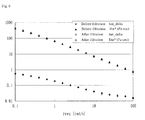
Fig. 5 shows the viscosity change (angular velocity 10 rad/sec) after the storage for one month at 40°C in Example 3 and Comparative Example 2. -
Fig. 6 shows the result of viscoelasticity measurement before and after filtration in Example 4. -
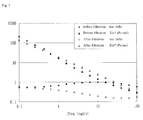
Fig. 7 shows the result of viscoelasticity measurement before and after filtration in Comparative Example 3. -
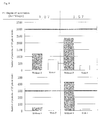
Fig. 8 shows the change of the number of insoluble particles (per 1 ml of sample) before and after filtration in Example 7. -
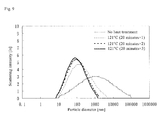
Fig. 9 shows the result of DLS measurement in Reference Example 1. - In the hydrogel of the present invention and the manufacturing method thereof, polysaccharides used as the raw material for the polysaccharide derivatives are not particularly limited so long as they are polyanionic polysaccharide. Examples include natural polysaccharides such as hyaluronic acid, alginic acid, pectin, polygalacturonic acid, etc.; carboxyalkyl polysaccharides such as carboxymethylpullulan, carboxymethylchitin, carboxymethylchitosan, carboxymethylmannan, carboxymethylstarch, carboxymethyldextran, carboxyethylcellulose, carboxymethylcellulose, etc.; oxidized polysaccharides such as oxidized cellulose, oxidized starch, etc.; and sulfate group-containing polysaccharides such as chondroitin sulfate, dermatan sulfate, heparin, heparan sulfate, etc. Among them, carboxymethylcellulose and hyaluronic acid are preferable, carboxymethylcellulose being especially preferable.
- Although weight average molecular weight of the raw material polysaccharides is not particularly limited, it is preferably 50,000 Da or more and 1,000,000 Da or less, more preferably 50,000 Da or more and 500,000 Da or less.
- Although cations forming a salt with these polyanionic polysaccharides are not particularly limited, proton and metal ions, specifically metal ions such as sodium, potassium, lithium, calcium, magnesium, etc. and organic cations such as organic ammonium are exemplified. Among them, sodium salt of carboxymethylcellulose is preferable by virtue of its intended effect.
- Although the hydrophobic group to be introduced to the polyanionic polysaccharides is not particularly limited, one having a phosphate ester structure is preferable, one having a phosphatidyl group represented by the following formula (I) being more preferable.

- In formula (1), X is hydrogen atom or alkaline metal. R1 and R2 are each independently a linear or branched chain alkyl group or alkenyl group having 9 to 21 carbon atoms.
- An example of the preferable polysaccharide derivatives is one having the repeat unit of the following formula (2).

- In formula (2), R3, R4 and R5 are each independently selected from the group consisting of the following formula (1-a), (1-b) and (1-c).
-H (1-a)
-CH2COOX (1 - b)

- In formula (1-b) and formula (1-c), X is hydrogen atom or alkaline metal. In formula (1-c), R6 and R7 are each independently a linear or branched chain alkyl group or alkenyl group having 9 to 21 carbon atoms.
- Although the equivalency of the substituent represented by formula (1-a) and the equivalency of the substituent represented by formula (1-b) are not particularly limited, it is preferable that the equivalency allows the polyanionic polysaccharide derivatives to dissolve in a salt solution containing 50 mM or more and 200 mM or less of sodium chloride. The equivalency of the substituent represented by formula (1-c) is preferably 0.25 to 5.0 mol%/sugar residue.
- X in formula (1-b) and formula (1-c) is hydrogen atom or alkaline metal, preferably alkaline metal from a viewpoint of solubility. More preferably, X is sodium considering the safety in the living body.
- R6 and R7 in formula (1-c) are each independently a linear or branched chain alkyl group or alkenyl group having 9 to 21 carbon atoms, preferably an alkenyl group having 9 to 21 carbon atoms from a viewpoint of solubility, more preferably an alkenyl group having 17 carbon atoms.
- The above-mentioned polysaccharide derivatives may be used to form a hydrogel by mixing them with a salt solution under a specific condition followed by heating (Hereinafter, such hydrogel may be briefly denoted as "hydrogel").
- The salt solution to be used has a salt concentration of 50 mM or more and 200 mM or less, preferably is a salt solution containing 50 mM or more and 200 mM or less of sodium chloride, more preferably is a buffer solution containing 120 mM or more and 180 mM or less of sodium chloride with a pH adjusted to 6.5 or more and 7.5 or less, most preferably is a phosphate-buffered physiological saline. Although the solubility of macromolecules decreases with increase of salt strength due to the salting-out effect, it is possible to obtain the necessary strength by dissolving the polysaccharide derivatives to a phosphate-buffered physiological saline using the method of the present invention.
- As for the concentration of the polysaccharide derivatives, hydrogel having appropriate viscoelasticity may be obtained with the polysaccharide derivatives used in the present invention in the amount of 0.1 to 5.0 weight parts, preferably 0.3 to 3.0 weight parts relative to 100 weight parts of water.
- While usually any hydrogel may be obtained with the desired gel strength by increasing the polymer concentration, the hydrogel of the present invention may be obtained with a sufficient gel viscoelasticity even at a polymer concentration as low as 5 wt% or less relative to water. Specifically preferable physical properties of the hydrogel are represented by the viscoelasticity such that the hydrogel does not flow down when the vessel containing the hydrogel is tilted. Such hydrogel readily deforms when touched with a spatula and the like and may be readily applied to the affected area. Such hydrogel may also be injected using a device having a cannula such as a syringe.
- As for the preferable viscoelasticity of the hydrogel, absolute viscosity when measured with a dynamic viscoelasticity measurement apparatus called rheometer under conditions of temperature of 37°C and angular velocity of 10 rad/sec is 0.5 to 100 Pa·sec, more preferably 2 to 30 Pa·sec. Although this range is suitable to simultaneously satisfy the handling property as the injectable gel and the retaining property in the body, this range may be changed as needed depending on the purpose of usage.
- As for the aggregate particle diameter of the hydrogel of the present invention, the average particle diameter measured using a dynamic light scattering photometer under conditions of temperature of 20°C, measurement wavelength of 532.0 nm, concentration of the polysaccharide derivative of 0.3 wt%, and detection angle of 90.0° is preferably 100 to 2000 nm, more preferably 120 to 1500 nm, even more preferably 150 to 1200 nm, most preferably 200 to 1000 nm. This range is suitable to satisfy the handling property as the injectable gel and the retaining property in the body, as well as the long-term stability and filterability.
- Heating temperature for manufacturing the hydrogel of the present invention is 70°C or higher and 140°C or lower, preferably 100°C or higher and 135°C or lower.
- Although the heating time for manufacturing the hydrogel of the present invention is not particularly limited so long as it is longer than the shortest time required for the hydrogel to become filterable depending on the heating temperature, it is preferably 1 minute or longer and 3 hours or shorter, considering the thermal decomposition of the polysaccharide derivatives. Although the particle diameter distribution of the aggregate of such hydrogel shifts toward the smaller direction as the heat treatment proceeds, it will converge in a certain range over time.
- Although the pressure during heating for manufacturing the hydrogel of the present invention is not particularly limited, so long as water does not reach the boiling point depending on the heating temperature, it is preferably atmospheric pressure to 10 atm.
- The hydrogel of the present invention is filterable. More specifically, the hydrogel may be filtered with a porous filter having a pore diameter of 5 µm or more. Presumably this is because the average particle diameter of the aggregate of the polysaccharide derivative molecules in the hydrogel becomes smaller by heat treatment.
- On the other hand, it has been confirmed that the average molecular weight of the polysaccharide derivatives in the hydrogel of the present invention did not decrease even by heat treatment.
- Although the manufacturing method of the present invention is a method for manufacturing a hydrogel comprising the steps of preparing a mixture containing a polyanionic polysaccharide derivative having a hydrophobic group introduced and a salt solution with a salt concentration of 50 mM or more and 200 mM or less and subjecting this mixture to heat treatment, it is preferable that the manufacturing method of the present invention further comprise a step of filtering the mixture with a porous filter having a pore diameter of 5 µm or more after the heat treatment.
- The hydrogel of the present invention may be applied to an adhesion barrier, medical use other than the adhesion barrier (wound dressing, filling material, medium for cell culture, carrier for drug delivery system, etc.), daily use products such as hair care products and moisturizing agent for skin, cosmetic use, and so on.
-
- (1) The materials used for the Examples and Comparative Examples are as follows.
- (i) Sodium carboxymethylcellulose (CMCNa: made by Dai-ichi Kogyo Seiyaku Co., Ltd.); P603A (Degree of substitution of hydroxyl group to carboxymethyl group 0.7, weight average molecular weight 250,000 Da), PRS (Degree of substitution of hydroxyl group to carboxymethyl group 0.8, weight average molecular weight 230,000 Da), PM250-L (Degree of substitution of hydroxyl group to carboxymethyl group 0.7, viscosity average molecular weight 540,000 Da)
- (ii) Tetrahydrofuran (THF: made by Wako Pure Chemical Industries, Ltd.)
- (iii) L-α-dioleoylphophatidylethanolamine (DOPE: made by NOF Corporation)
- (iv) 1-ethyl-3-(3-dimethylaminopropyl)carbodiimide hydrochloride (WSC·HCl: made by Osaka Synthetic Chemical Laboratories, Inc.)
- (v) 3,4-dihydro-3-hydroxy-4-oxo-1,2,3-benzotriazine (DHBT: made by Wako Pure Chemical Industries, Ltd.)
- (vi) N-hydroxysuccinimide (HOSu: made by Wako Pure Chemical Industries, Ltd.)
- (vii) Phosphate-buffered physiological saline;
Sodium chloride (NaCl: made by Wako Pure Chemical Industries, Ltd.) 136.9 mM, Sodium dihydrogenphosphate (NaH2PO4·2H2O: made by Wako Pure Chemical Industries, Ltd.) 2.92 mM, Sodium hydrogenphosphate hydrate (Na2HPO4·12H2O: made by Wako Pure Chemical Industries, Ltd.) 9.02 mM - (viii) Phosphate buffer;
Sodium dihydrogenphosphate 2.92 mM, Sodium hydrogenphosphate hydrate 9.02 mM - (ix) HEPES buffer;
2-[4-(2-hydroxyethyl)-1-piperazinyl]ethanesulfonic acid (HEPES: made by GIBCO) 50 mM
- (2) Measurement of phosphatidylethanolamine content in polysaccharide derivatives
Content of phosphatidylethanolamine in polysaccharide derivatives was calculated from integral ratio of the peaks of 1H-NMR spectra. - (3) Long-term stability test of the hydrogel
Accelerated test was performed at 40°C. Viscosity of the hydrogel was measured just after preparation and after storage at 40°C using a viscoelasticity measurement apparatus RFSIII (made by TA Instruments, Japan). - (4) Measurement of viscosity before and after filtration
The hydrogel filled in a syringe with a PVDF filter (porediameter 5 µm) attached at the end was filtered by manual pushing at 25°C. Viscosity was measured using a viscoelasticity measurement apparatus RFSIII (made by TA Instruments, Japan) before and after filtration. - (5) Measurement of particle diameter by dynamic light scattering method
Particle diameter distribution was measured using a fiber optical dynamic light scattering photometer FDLS-3000 (made by Otsuka Electronics Co., Ltd.) under the following conditions.
Measurement conditions:Measurement temperature 20°C, Measurement wavelength 532.0 nm, Measurement concentration 0.3 wt%, Detection angle 90.0°, Number ofintegration cycles 100, Pretreatment: filtered with a PVDF filter (porediameter 5 µm) - (6) Measurement of sugar concentration before and after filtration
The hydrogel filled in a syringe with a PVDF filter (pore diameter 5µm) attached at the end was filtered by manual pushing at 25°C. Sugar concentration was measured by sulfuric acid anthrone method before and after filtration. - (7) Measurement of the number of insoluble particles before and after filtration
The hydrogel filled in a syringe with a PVDF filter (pore diameter 5µm) attached at the end was filtered by manual pushing at 25°C. The number of insoluble particles was measured using an automatic particle counter for liquid System 9703-150 (made by HIAC) before and after filtration. - (8) Measurement of molecular weight of polysaccharide derivatives
CMCNa was dissolved in 100 mM sodium chloride aqueous solution at a concentration of 0.02 to 0.05 wt% and its intrinsic viscosity was measured using an Ubbelohde viscometer to calculate the viscosity average molecular weight. -
- (1) Synthesis of raw material
To a mixed solvent of water and tetrahydrofuran 1:1 (volume ratio), 3000 mg of CMCNa (PRS) was dissolved. To this solution was added 349 mg (0.50 mmol) of DOPE, 143 mg (0.74 mmol) of WSC·HCl, and 324 mg (1.98 mmol) of DHBT. After the reaction was completed, the polysaccharide derivative was obtained by filtering out a precipitate formed by adding the reaction mixture to ethanol. The solid obtained was washed with ethanol and dried under reduced pressure. Degree of substitution of the polysaccharide derivative obtained with DOPE was 1.47 mol%/sugar residue. - (2) Preparation of hydrogel
To 1980 mg of phosphate-buffered physiological saline, 20 mg of the polysaccharide derivative synthesized in (1) was dissolved to prepare a solution at a concentration of 1.0 wt%. The mixture was heated for 20 minutes at 121°C. - (3) Measurement of viscosity and average particle diameter of the hydrogel
Viscosity of the sample prepared in (2) was measured at an angular velocity of 10 rad/sec. Absolute viscosity was about 7.1 Pa·sec, showing that a hydrogel with high viscosity was prepared. This hydrogel is referred to asSample 1. Average particle diameter of a diluted solution of this sample was measured to be 580 nm. -
- (1) Synthesis of raw material
To a mixed solvent of water and tetrahydrofuran 1:1 (volume ratio), 3000 mg of CMCNa (PM250-L) was dissolved. To this solution was added 384 mg (0.52 mmol) of DOPE, 99 mg (0.52 mmol) of WSC·HCl, and 337 mg (2.06 mmol) of DHBT. After the reaction was completed, the polysaccharide derivative was obtained by filtering out a precipitate formed by adding the reaction mixture to ethanol. The solid obtained was washed with ethanol and dried under reduced pressure. Degree of substitution of the polysaccharide derivative obtained with DOPE was 0.76 mol%/sugar residue. - (2) Preparation of hydrogel
To 1980 mg of phosphate-buffered physiological saline, 20 mg of the polysaccharide derivatives synthesized in (1) was dissolved to prepare a solution at a concentration of 1.0 wt%. The mixture was heated for 20 minutes at 121°C. - (3) Measurement of viscosity and average particle diameter
Viscosity of the sample prepared in (2) was measured at an angular velocity of 10 rad/sec. Absolute viscosity was about 13.1 Pa·sec, showing that a hydrogel with high viscosity was prepared. This hydrogel is referred to asSample 2. Average particle diameter of a diluted solution of this sample was measured to be 1789 nm. -
- (1) Raw material
The polysaccharide derivatives synthesized in Example 1 and Example 2 were used. - (2) Preparation of hydrogel (prepared using water as a solvent)
To 1980 mg of water, 20 mg each of the polysaccharide derivatives synthesized in Example 1 and Example 2 was dissolved to prepare a solution at a concentration of 1.0 wt%. The mixture was heated for 20 minutes at 121°C. - (3) Measurement of viscosity and average particle diameter
Viscosity of the samples prepared was measured at an angular velocity of 10 rad/sec. Absolute viscosity was 0.1 Pa·sec or less for the sample made using the polysaccharide derivative synthesized in Example 1 and about 0.3 Pa·sec for the sample made using the polysaccharide derivative synthesized in Example 2, showing that neither samples were gelled. Measurement of average particle diameter for the diluted solutions of these samples showed that the scattering intensity was insufficient and that the aggregate was not formed. -
- (1) Raw material
The polysaccharide derivatives synthesized in Example 1 and Example 2 were used. - (2) Preparation of hydrogel
To 1980 mg of phosphate-buffered physiological saline, 20 mg each of the polysaccharide derivatives synthesized in Example 1 and Example 2 was dissolved to prepare a solution at a concentration of 1.0 wt%. The mixture was heated for 20 minutes at 121°C. - (3) Long-term stability test
Viscosity of the samples prepared in (2) was measured just after preparation and after storage at 40°C for one month. Absolute viscosity of both samples measured at an angular velocity of 10 rad/sec was not changed. Results are shown inFig. 5 . -
- (1) Raw material
To a mixed solvent of water and tetrahydrofuran 1:1 (volume ratio), 3000 mg of CMCNa (PM250-L) was dissolved. To this solution was added 351 mg (0.47 mmol) of DOPE, 399 mg (2.08 mmol) of WSC·HCl, and 239 mg (2.08 mmol) of HOSu. After the reaction was completed, the polysaccharide derivative was obtained by filtering out a precipitate formed by adding the reaction mixture to ethanol. The solid obtained was washed with ethanol and dried under reduced pressure. Degree of substitution of the polysaccharide derivative obtained with DOPE was 2.39 mol%/sugar residue. In addition, a polysaccharide derivative having a degree of substitution with DOPE of 2.79 mol%/sugar residue was similarly synthesized. - (2) Preparation of hydrogel (prepared using water as a solvent)
To 1980 mg of water, 20 mg of the polysaccharide derivatives synthesized in (1) was dissolved to prepares solution at a concentration of 1.0 wt%. The mixture was heated for 20 minutes at 121°C. - (3) Long-term stability test and measurement of average particle diameter
Viscoelasticity of the samples prepared in (2) was measured just after preparation and after storage at 40°C for one month. Absolute viscosity measured at an angular velocity of 10 rad/sec was significantly changed. The results withSample 3, which was a hydrogel prepared using the polysaccharide derivative having a degree of substitution with DOPE of 2.39 mol%/sugar residue, andSample 4, which was a hydrogel prepared using the polysaccharide derivative having a degree of substitution with DOPE of 2.79 mol%/sugar residue, are shown inFig. 5 . Measurement of average particle diameter for the diluted solutions of these samples just after preparation showed that the scattering intensity was insufficient and that the aggregate was not formed. -
- (1) Synthesis of raw material
To a mixed solvent of water and tetrahydrofuran 1:1 (volume ratio), 3000 mg of CMCNa (P603A) was dissolved. To this solution was added 384 mg (0.52 mmol) of DOPE, 247 mg (1.29 mmol) of WSC·HCl, and 337 mg (2.06 mmol) of DHBT. After the reaction was completed, the polysaccharide derivative was obtained by filtering out a precipitate formed by adding the reaction mixture to ethanol. The solid obtained was washed with ethanol and dried under reduced pressure. Degree of substitution of the polysaccharide derivative obtained with DOPE was 1.30 mol%/sugar residue. - (2) Preparation of hydrogel
To 1980 mg of phosphate-buffered physiological saline, 20 mg of the polysaccharide derivative synthesized in (1) was dissolved to prepare a solution at a concentration of 1.0 wt%. The mixture was heated for 5 minutes at 121°C. - (3) Measurement of viscosity before and after filtration and average particle diameter
Viscoelasticity of the sample prepared in (2) was measured before and after filtration. There was no change in viscoelasticity after filtration. Results are shown inFig. 6 and Table 1. Average particle diameter of the diluted solution of this sample was measured to be 446 nm. -
(1) Raw material
The polysaccharide derivative synthesized in Example 4 was used.
(2) Preparation of hydrogel (prepared without heat treatment)
To 1980 mg of phosphate-buffered saline, 20 mg of the above-mentioned polysaccharide derivative was dissolved to prepare a hydrogel at a concentration of 1.0 wt%.
(3) Measurement of viscosity before and after filtration and average particle diameter
Viscoelasticity of the sample prepared in (2) was measured before and after filtration. There was a significant change in viscoelasticity before and after filtration. Results are shown inFig. 7 and Table 1.
Average particle diameter of the diluted solution of this sample was measured to be 2820 nm.[Table 1] Change in viscoelasticity before and after filtration in Example 4 and Comparative Example 3 ( Angular velocity 10 rad/sec)Example 4 Comparative Example 3 Eta* [Pa·sec] tan Δ Eta* [Pa·sec] tan Δ Before filtration 7.63 0.04 1.45 0.98 After filtration 7.20 0.04 2.49 0.19 -
- (1) Raw material
CMCNa (P603A) was used. - (2) Preparation of hydrogel diluted solution
To 1980 mg of phosphate-buffered physiological saline, 20 mg of CMCNa (P603A) was dissolved to prepare a solution at a concentration of 1.0 wt%. This solution was divided into two aliquots, one with a heat treatment at 121°C for 20 minutes and one without the heat treatment. Each solution was diluted with 100 mM sodium chloride aqueous solution to prepare solutions at a concentration of 0.05 to 0.02 wt%. - (3) Measurement of molecular weight of polysaccharide derivatives
Viscosity average molecular weight was measured from intrinsic viscosity for the samples with and without heat treatment. The viscosity average molecular weight of the sample with heat treatment and the sample without heat treatment was 105,000 Da and 115,000Da, respectively. Since the viscosity average molecular weight of these samples is similar, it was confirmed that the molecular weight of the polysaccharide derivatives did not change with heat treatment. -
(1) Synthesis of raw material
To a mixed solvent of water and tetrahydrofuran 1:1 (volume ratio), 3000 mg of CMCNa (PRS) was dissolved. To this solution was added 349 mg (0.47 mmol) of DOPE, 99 mg (0.52 mmol) of WSC·HCl, and 337 mg (2.06 mmol) of DHBT. After the reaction was completed, the polysaccharide derivative was obtained by filtering out a precipitate formed by adding the reaction mixture to ethanol. The solid obtained was washed with ethanol and dried under reduced pressure. Degree of substitution of the polysaccharide derivative obtained with DOPE was 1.57 mol%/sugar residue. Similarly, a polysaccharide derivative having a degree of substitution of 1.07 mol%/sugar was synthesized.
(2) Preparation of hydrogel
To 1980 mg of phosphate-buffered physiological saline, 20 mg of the polysaccharide derivatives synthesized in (1) was dissolved to prepare a solution at a concentration of 1.0 wt%. The mixture was heated for 5 minutes at 121°C and filtered with a PVDF filter (pore diameter 5µm).
(3) Measurement of sugar concentration before and after filtration and average particle diameter
Sugar concentration of the samples prepared in (2) was measured before and after filtration. There was no change in sugar concentration before and after filtration. Results are shown in Table 2. Average particle diameter of the diluted solution of these samples was 224 nm for the sample with degree of substitution of DOPE of 1.07 mol%/sugar residue and 648nm for the sample with degree of substitution of 1.57 mol%.[Table 2] Change of sugar concentration before and after filtration in Example 6 PE Degree of substitution [mol%/sugar] Sugar concentration after filtration/before filtration 1.07 1.03 1.57 0.97 -
- (1) Hydrogel
The samples prepared in Example 6 were used. - (2) Measurement of the number of insoluble particles before and after filtration
The number of insoluble particles of a diameter of 10 µm or more and 25 µm or more was measured for 1 mL of the samples from (1) before and after filtration. As a result, the number of insoluble particles of a diameter of 10 µm or more and 25 µm or of the samples decreased by one-half to one-twentieth compared to the control substance. Results are shown inFig. 8 . -
- (1) Synthesis of raw material
To a mixed solvent of water and tetrahydrofuran 1:1 (volume ratio), 3000 mg of CMCNa (PRS) was dissolved. To this solution was added 349 mg (0.50 mmol) of DOPE, 143 mg (0.74 mmol) of WSC·HCl, and 324 mg (1.98 mmol) of DHBT. After the reaction was completed, the polysaccharide derivative was obtained by filtering out a precipitate formed by adding the reaction mixture to ethanol. The solid obtained was washed with ethanol and dried under reduced pressure. Degree of substitution of the polysaccharide derivative obtained with DOPE was 1.44 mol%/sugar residue. - (2) Preparation of hydrogel
To 1980 mg of a phosphate buffer containing 200 mM sodium chloride, 20 mg of the polysaccharide derivative synthesized in (1) was dissolved to prepare a solution at a concentration of 1.0 wt%. The mixture was heated for 5 minutes at 121°C, filtered with a PVDF filter (porediameter 5 µm), and heated again for 20 minutes at 121°C. - (3) Measurement of viscosity before and after filtration and average particle diameter
Viscoelasticity of the sample prepared in (2) was measured before and after filtration. There was no change in absolute viscosity measured at an angular velocity of 10 rad/sec after filtration. Results are shown in Table 3. Average particle diameter of the diluted solution of this sample was measured to be 620 nm. - (4) Long-term stability test
Viscoelasticity of the sample prepared in (2) was measured just after preparation and after storage at 40°C for one month. Absolute viscosity measured at an angular velocity of 10 rad/sec was not changed. Results are shown in Table 3. -
(1) Raw material
The polysaccharide derivative synthesized in Example 8 was used.
(2) Preparation of hydrogel
To 1980 mg of a HEPES buffer containing 137 mM sodium chloride, 20 mg of the above-mentioned polysaccharide derivative was dissolved to prepare a solution at a concentration of 1.0 wt%. The mixture was heated for 5 minutes at 121°C, filtered with a PVDF filter (porediameter 5 µm), and heated again for 20 minutes at 121°C.
(3) Measurement of viscosity before and after filtration and average particle diameter
Viscoelasticity of the sample prepared in (2) was measured before and after filtration. There was no change in absolute viscosity measured at an angular velocity of 10 rad/sec after filtration. Results are shown in Table 3. Average particle diameter of the diluted solution of this sample was measured to be 887 nm.
(4) Long-term stability test
Viscoelasticity of the sample prepared in (2) was measured just after preparation and after storage at 40°C for one month. Absolute viscosity measured at an angular velocity of 10 rad/sec was not changed. Results are shown in Table 3.[Table 3] Change in viscoelasticity before and after filtration and after storage at 40°C for one month in Examples 8 and 9 and Comparative Examples 4 and 5 ( angular velocity 10 rad/sec)Solvent Heating condition Eta* [Pa·sec] Average particle diameter [nm] Just after gel preparation Storage at 40°C for one month Before filtration After filtration Example 8 Phosphate buffer containing 200 mM NaCl 121°C, 5 min 4.8 4.5 4.4 620 Example 9 HEPES buffer containing 137 mM NaCl 7.3 6.8 6.5 887 Comparative Example 4 Phosphate buffer 0.1 or less - - No aggregate formed Comparative Example 5 HEPES buffer 0.2 - - No aggregate formed -
- (1) Raw material
The polysaccharide derivative synthesized in Example 8 was used. - (2) Preparation of hydrogel (prepared using phosphate buffer as a solvent)
To 1980 mg of phosphate buffer, 20 mg of the above-mentioned polysaccharide derivative was dissolved to prepare a solution at a concentration of 1.0 wt%. The mixture was heated for 5 minutes at 121°C, filtered with a PVDF filter (porediameter 5 µm), and heated again for 20 minutes at 121°C. - (3) Measurement of viscosity and average particle diameter
Viscoelasticity of the sample prepared in (2) was measured at an angular velocity of 10 rad/sec. Absolute viscosity was about 0.1 Pa·sec or less, showing that the sample was not gelled. Measurement of average particle diameter for the diluted solution of this sample showed that the scattering intensity was insufficient and that the aggregate was not formed. -
- (1) Raw material
The polysaccharide derivative synthesized in Example 9 was used. - (2) Preparation of hydrogel (prepared using HEPES buffer as a solvent)
To 1980 mg of HEPES buffer, 20 mg of the above-mentioned polysaccharide derivative was dissolved to prepare a solution at a concentration of 1.0 wt%. The mixture was heated for 5 minutes at 121°C, filtered with a PVDF filter (porediameter 5 µm), and heated again for 20 minutes at 121°C. - (3) Measurement of viscosity and average particle diameter
Viscoelasticity of the sample prepared in (2) was measured at an angular velocity of 10 rad/sec. Absolute viscosity was about 0.3 Pa·sec, showing that the sample was not gelled. Measurement of average particle diameter for the diluted solution of this sample showed that the scattering intensity was insufficient and that the aggregate was not formed. -
- (1) Raw material
The polysaccharide derivative synthesized in Example 4 was used. - (2) Preparation of hydrogel
To 1980 mg of phosphate-buffered physiological saline, 20 mg of the above-mentioned polysaccharide derivative was dissolved to prepare a solution at a concentration of 1.0 wt%. The mixture was repeatedly heated for 20 minutes at 121°C three times. - (3) DLS Measurement
DLS measurement was performed for the sample prepared in (2). Results are shown inFig. 9 . Although the particle diameter distribution shifted toward the smaller direction by a treatment at 121°C for 20 minutes, the change in the particle diameter distribution became less significant to converge in a certain range even after repeating the same treatment. - The hydrogel of the present invention may be used, for example, as medical articles such as antiadhesive material, a DDS carrier, etc.
Claims (18)
- A hydrogel comprising a polyanionic polysaccharide derivative having a hydrophobic group introduced by covalent bonding and a salt solution having a salt concentration of 50 mM or more and 200 mM or less, the hydrogel having an aggregate structure with an average particle diameter of 100 to 2000 nm in the diluted solution.
- The hydrogel according to claim 1, wherein the polyanionic polysaccharide is a polysaccharide having a carboxymethyl group.
- The hydrogel according to claim 1, wherein the polyanionic polysaccharide is carboxymethylcellulose.
- The hydrogel according to any of claims 1 to 3, wherein the hydrophobic group has a phosphate ester structure.
- The hydrogel according to any of claims 1 to 3, wherein the hydrophobic group has a phosphatidyl group represented by the following formula (1):

- The hydrogel according to any of claims 1 to 5, wherein the manufacturing process of the hydrogel comprises a heating step at 70°C or higher and 140°C or lower and the average particle diameter of the aggregate is 120 to 1500 nm.
- The hydrogel according to any of claims 1 to 5, wherein the manufacturing process of the hydrogel comprises a heating step at 100°C or higher and under a pressurized condition at atmospheric pressure to 10 atm and the average particle diameter of the aggregate is 150 to 1200 nm.
- The hydrogel according to any of claims 1 to 7, wherein the equivalency of the hydrophobic group is 0.25 to 5.0 mol%/sugar residue.
- The hydrogel according to any of claims 1 to 8, wherein the solvent is a salt solution containing 50 mM or more and 200 mM or less of sodium chloride.
- The hydrogel according to any of claims 1 to 8, wherein the solvent is a buffer containing 120 mM or more and 180 mM or less of sodium chloride with a pH adjusted to 6.5 or more and 7.5 or less and the average particle diameter of the aggregate is 200 to 1000 nm.
- The hydrogel according to any of claims 1 to 8, wherein the solvent is a phosphate-buffered physiological saline.
- The hydrogel according to any of claims 1 to 11, wherein the concentration of the polysaccharide derivative is 0.3 to 3.0 wt%.
- A hydrogel obtained by filtrating the hydrogel according to any of claims 1 to 12 with a porous filter having a pore diameter of 5 µm or more.
- The hydrogel according to claim 13, wherein the number of insoluble particles of a diameter of 10 µm or more is 3000 or less per 1 mL and/or the number of insoluble particles of a diameter of 25 µm or more is 300 or less per 1 mL.
- A method for manufacturing a hydrogel, comprising the steps of preparing a mixture containing a polyanionic polysaccharide derivative having a hydrophobic group introduced and a salt solution with a salt concentration of 50 mM or more and 200 mM or less and subjecting this mixture to heat treatment.
- The manufacturing method according to claim 15, wherein the step of the heat treatment is a step of treatment at 70 to 140°C and for 1 minute or longer and 3 hours or shorter.
- The manufacturing method according to claim 15 or 16, wherein the salt solution is physiological saline.
- The manufacturing method according to any of claims 15 to 17, comprising a step of further filtering the hydrogel with a porous filter having a pore diameter of 5 µm or more after the heat treatment.
Applications Claiming Priority (2)
| Application Number | Priority Date | Filing Date | Title |
|---|---|---|---|
| JP2010098942 | 2010-04-22 | ||
| PCT/JP2011/060342 WO2011132800A1 (en) | 2010-04-22 | 2011-04-21 | Hydrogel |
Publications (2)
| Publication Number | Publication Date |
|---|---|
| EP2562212A1 true EP2562212A1 (en) | 2013-02-27 |
| EP2562212A4 EP2562212A4 (en) | 2013-12-11 |
Family
ID=44834314
Family Applications (1)
| Application Number | Title | Priority Date | Filing Date |
|---|---|---|---|
| EP11772131.6A Withdrawn EP2562212A4 (en) | 2010-04-22 | 2011-04-21 | Hydrogel |
Country Status (11)
| Country | Link |
|---|---|
| US (1) | US20130034592A1 (en) |
| EP (1) | EP2562212A4 (en) |
| JP (1) | JP5542200B2 (en) |
| KR (1) | KR20130092408A (en) |
| CN (1) | CN102844367A (en) |
| AU (1) | AU2011243517B2 (en) |
| BR (1) | BR112012025557A2 (en) |
| CA (1) | CA2797017A1 (en) |
| MX (1) | MX2012012097A (en) |
| RU (1) | RU2012149629A (en) |
| WO (1) | WO2011132800A1 (en) |
Cited By (1)
| Publication number | Priority date | Publication date | Assignee | Title |
|---|---|---|---|---|
| WO2016014158A1 (en) * | 2014-07-24 | 2016-01-28 | Arthrocare Corporation | Resilient polysaccharide foams and uses thereof |
Families Citing this family (15)
| Publication number | Priority date | Publication date | Assignee | Title |
|---|---|---|---|---|
| US8668863B2 (en) | 2008-02-26 | 2014-03-11 | Board Of Regents, The University Of Texas System | Dendritic macroporous hydrogels prepared by crystal templating |
| WO2012048283A1 (en) | 2010-10-08 | 2012-04-12 | Board Of Regents, The University Of Texas System | One-step processing of hydrogels for mechanically robust and chemically desired features |
| JP6042815B2 (en) | 2010-10-08 | 2016-12-14 | ザ ボード オブ リージェンツ オブ ザ ユニバーシティ オブ テキサス システム | Anti-adhesion barrier membranes using alginate and hyaluronic acid for biomedical applications |
| JP6242910B2 (en) | 2012-12-11 | 2017-12-06 | ボード・オブ・リージエンツ,ザ・ユニバーシテイ・オブ・テキサス・システム | Hydrogel membrane for adhesion prevention |
| US11565027B2 (en) | 2012-12-11 | 2023-01-31 | Board Of Regents, The University Of Texas System | Hydrogel membrane for adhesion prevention |
| WO2015200541A1 (en) | 2014-06-24 | 2015-12-30 | Bio-Rad Laboratories, Inc. | Digital pcr barcoding |
| EP3402904B1 (en) | 2016-01-12 | 2025-07-23 | Bio-Rad Laboratories, Inc. | Synthesizing barcoding sequences utilizing phase-shift blocks and uses thereof |
| WO2018118971A1 (en) | 2016-12-19 | 2018-06-28 | Bio-Rad Laboratories, Inc. | Droplet tagging contiguity preserved tagmented dna |
| WO2018165327A1 (en) | 2017-03-08 | 2018-09-13 | Alafair Biosciences, Inc. | Hydrogel medium for the storage and preservation of tissue |
| US11186862B2 (en) | 2017-06-20 | 2021-11-30 | Bio-Rad Laboratories, Inc. | MDA using bead oligonucleotide |
| US10907205B2 (en) | 2017-11-02 | 2021-02-02 | Bio-Rad Laboratories, Inc. | Transposase-based genomic analysis |
| CN119614672A (en) | 2018-01-31 | 2025-03-14 | 生物辐射实验室股份有限公司 | Methods and compositions for deconvoluting partitioned barcodes |
| CN113166807B (en) | 2018-08-20 | 2024-06-04 | 生物辐射实验室股份有限公司 | Nucleotide sequence generation by co-localization of barcode beads in partitions |
| WO2020045488A1 (en) * | 2018-08-28 | 2020-03-05 | 京都府公立大学法人 | Porous scaffold material for three-dimensional cell culture use and method for producing same |
| CN114432338B (en) * | 2022-02-07 | 2024-04-09 | 南京易亨制药有限公司 | A kind of polymer hydrogel with acid and alkali resistance and its preparation method and application |
Family Cites Families (11)
| Publication number | Priority date | Publication date | Assignee | Title |
|---|---|---|---|---|
| NL275218A (en) * | 1962-02-23 | 1964-10-12 | ||
| IT1281886B1 (en) | 1995-05-22 | 1998-03-03 | Fidia Advanced Biopolymers Srl | PROCESS FOR THE PREPARATION OF HYDROGELS OBTAINED FROM CHEMICAL DERIVATIVES OF HYALURONIC ACID BY MEANS OF ULTRAVIOLET IRRADIATION AND THEIR |
| US6869938B1 (en) | 1997-06-17 | 2005-03-22 | Fziomed, Inc. | Compositions of polyacids and polyethers and methods for their use in reducing adhesions |
| JP2004018750A (en) | 2002-06-18 | 2004-01-22 | Seikagaku Kogyo Co Ltd | Manufacturing method for hyaluronic acid derivative improved in hydrophilicity |
| JP4902134B2 (en) * | 2005-04-25 | 2012-03-21 | 帝人株式会社 | Anti-adhesive material |
| JP5039552B2 (en) * | 2005-08-04 | 2012-10-03 | 帝人株式会社 | Cellulose derivative |
| JP5059787B2 (en) * | 2007-02-06 | 2012-10-31 | 帝人株式会社 | Cellulose derivative and method for producing the same |
| JP5242921B2 (en) * | 2007-02-06 | 2013-07-24 | 帝人株式会社 | Method for producing phosphatidylethanolamine-linked polysaccharide |
| JP2010035744A (en) * | 2008-08-04 | 2010-02-18 | Teijin Ltd | Adheshion preventive material |
| US20110178184A1 (en) * | 2008-08-05 | 2011-07-21 | Teijin Limited | Hydrogel |
| CN102405049A (en) * | 2009-02-19 | 2012-04-04 | 帝人株式会社 | Hydrogels of Polysaccharide Derivatives |
-
2011
- 2011-04-21 BR BR112012025557A patent/BR112012025557A2/en not_active IP Right Cessation
- 2011-04-21 EP EP11772131.6A patent/EP2562212A4/en not_active Withdrawn
- 2011-04-21 US US13/641,836 patent/US20130034592A1/en not_active Abandoned
- 2011-04-21 WO PCT/JP2011/060342 patent/WO2011132800A1/en not_active Ceased
- 2011-04-21 RU RU2012149629/05A patent/RU2012149629A/en unknown
- 2011-04-21 CA CA2797017A patent/CA2797017A1/en not_active Abandoned
- 2011-04-21 CN CN201180020341XA patent/CN102844367A/en active Pending
- 2011-04-21 JP JP2012511734A patent/JP5542200B2/en not_active Expired - Fee Related
- 2011-04-21 MX MX2012012097A patent/MX2012012097A/en not_active Application Discontinuation
- 2011-04-21 AU AU2011243517A patent/AU2011243517B2/en not_active Ceased
- 2011-04-21 KR KR1020127029691A patent/KR20130092408A/en not_active Withdrawn
Cited By (6)
| Publication number | Priority date | Publication date | Assignee | Title |
|---|---|---|---|---|
| WO2016014158A1 (en) * | 2014-07-24 | 2016-01-28 | Arthrocare Corporation | Resilient polysaccharide foams and uses thereof |
| CN107075165A (en) * | 2014-07-24 | 2017-08-18 | 亚瑟罗凯尔公司 | Many sugarwhips of elasticity and application thereof |
| US10227478B2 (en) | 2014-07-24 | 2019-03-12 | Smith & Nephew, Inc. | Resilient foams and uses thereof |
| AU2015294612B2 (en) * | 2014-07-24 | 2019-07-11 | Arthrocare Corporation | Resilient polysaccharide foams and uses thereof |
| US10800905B2 (en) | 2014-07-24 | 2020-10-13 | Smith & Nephew, Inc. | Resilient foams and uses thereof |
| AU2019246910B2 (en) * | 2014-07-24 | 2021-03-11 | Arthrocare Corporation | Resilient polysaccharide foams and uses thereof |
Also Published As
| Publication number | Publication date |
|---|---|
| EP2562212A4 (en) | 2013-12-11 |
| BR112012025557A2 (en) | 2016-06-28 |
| JPWO2011132800A1 (en) | 2013-07-18 |
| AU2011243517A1 (en) | 2012-11-08 |
| CN102844367A (en) | 2012-12-26 |
| CA2797017A1 (en) | 2011-10-27 |
| US20130034592A1 (en) | 2013-02-07 |
| AU2011243517B2 (en) | 2014-02-13 |
| JP5542200B2 (en) | 2014-07-09 |
| MX2012012097A (en) | 2012-12-17 |
| RU2012149629A (en) | 2014-05-27 |
| WO2011132800A1 (en) | 2011-10-27 |
| KR20130092408A (en) | 2013-08-20 |
Similar Documents
| Publication | Publication Date | Title |
|---|---|---|
| AU2011243517B2 (en) | Hydrogel | |
| EP2614828B1 (en) | Low-modification biocompatible high polymer sulfhydryl-modified derivatives, cross-linked material thereof, and uses of said material | |
| CN109734825B (en) | Process for making shaped cross-linked hyaluronic acid products | |
| Schatz et al. | Versatile and efficient formation of colloids of biopolymer-based polyelectrolyte complexes | |
| CN105473623B (en) | Process for the preparation of cross-linked hyaluronic acid products | |
| EP1701981B1 (en) | Cohesive gels from cross-linked hyaluronan and/or hylan,their preparation and use | |
| EP1753787B1 (en) | Method of covalently linking hyaluronan and chitosan | |
| EP2922581B1 (en) | Mucoadhesive compositions comprising hyaluronic acid and chitosan for topical application | |
| EP4233926A2 (en) | Methods of manufacturing injectable gels comprising cross-linked hyaluronic acid and hydroxyapatite | |
| ITPD20000208A1 (en) | PERCARBOXYLATE POLYSACCHARIDES, PROCESS FOR THEIR PREPARATION AND USE IN THE PHARMACEUTICAL AND BIOMEDICAL-SANITARY FIELDS. | |
| KR20150104202A (en) | Stabilized compositions comprising hyaluronic acid | |
| EP2614090A2 (en) | Hybrid cooperative complexes of hyaluronic acid | |
| Liu et al. | Preparation and characterization of sponge-like composites by cross-linking hyaluronic acid and carboxymethylcellulose sodium with adipic dihydrazide | |
| US20180223053A1 (en) | A process for efficient cross-linking of hyaluronic acid | |
| Della Rosa et al. | Magnesium alginate as a low-viscosity (intramolecularly cross-linked) system for the sustained and neuroprotective release of magnesium | |
| EP3103486A1 (en) | Preparation for adhesion prevention comprising composition of polycationic triblock copolymer and polyanionic polymer | |
| JP2009516765A (en) | Novel hyaluronic acid derivative, process for its production and use thereof | |
| EP4328293A1 (en) | Microcarrier and cellular complex, and medical composition, cosmetic composition, medical product, and cosmetic product comprising same | |
| JP5242921B2 (en) | Method for producing phosphatidylethanolamine-linked polysaccharide | |
| Ahmadian et al. | Preparation and in vivo toxicity study of allantoin incorporated hyaluronic acid-L-cysteine oral solution: a future treatment for mucositis | |
| EP4332173A1 (en) | Polymer material having phase separation structure obtained by controlling number of branches | |
| EP3995530A1 (en) | Method for preparing polymer microparticles, polymer microparticles, medical composition comprising same, cosmetic composition, medical article, and cosmetic article | |
| Shurshina et al. | Prolonging effect of polyvinyl alcohol on the drug release | |
| WO2023064618A1 (en) | Crosslinked hyaluronic acid precipitates | |
| EP4567050A1 (en) | A method for preparing a cross-linked hyaluronic acid gel |
Legal Events
| Date | Code | Title | Description |
|---|---|---|---|
| PUAI | Public reference made under article 153(3) epc to a published international application that has entered the european phase |
Free format text: ORIGINAL CODE: 0009012 |
|
| 17P | Request for examination filed |
Effective date: 20121024 |
|
| AK | Designated contracting states |
Kind code of ref document: A1 Designated state(s): AL AT BE BG CH CY CZ DE DK EE ES FI FR GB GR HR HU IE IS IT LI LT LU LV MC MK MT NL NO PL PT RO RS SE SI SK SM TR |
|
| DAX | Request for extension of the european patent (deleted) | ||
| A4 | Supplementary search report drawn up and despatched |
Effective date: 20131108 |
|
| RIC1 | Information provided on ipc code assigned before grant |
Ipc: C08L 1/08 20060101AFI20131104BHEP Ipc: C08K 3/00 20060101ALI20131104BHEP Ipc: A61K 47/36 20060101ALI20131104BHEP Ipc: A61K 8/73 20060101ALI20131104BHEP Ipc: A61K 8/20 20060101ALI20131104BHEP Ipc: A61K 8/24 20060101ALI20131104BHEP Ipc: A61L 31/00 20060101ALI20131104BHEP Ipc: A61K 8/02 20060101ALI20131104BHEP |
|
| 17Q | First examination report despatched |
Effective date: 20131204 |
|
| STAA | Information on the status of an ep patent application or granted ep patent |
Free format text: STATUS: THE APPLICATION IS DEEMED TO BE WITHDRAWN |
|
| 18D | Application deemed to be withdrawn |
Effective date: 20150310 |