EP2562011A1 - Tire pressure monitoring redundant communication method and system - Google Patents
Tire pressure monitoring redundant communication method and system Download PDFInfo
- Publication number
- EP2562011A1 EP2562011A1 EP12180973A EP12180973A EP2562011A1 EP 2562011 A1 EP2562011 A1 EP 2562011A1 EP 12180973 A EP12180973 A EP 12180973A EP 12180973 A EP12180973 A EP 12180973A EP 2562011 A1 EP2562011 A1 EP 2562011A1
- Authority
- EP
- European Patent Office
- Prior art keywords
- data
- exclusive disjunction
- wireless signal
- valve
- transmitter
- Prior art date
- Legal status (The legal status is an assumption and is not a legal conclusion. Google has not performed a legal analysis and makes no representation as to the accuracy of the status listed.)
- Withdrawn
Links
- 238000004891 communication Methods 0.000 title claims abstract description 33
- 238000000034 method Methods 0.000 title claims abstract description 21
- 238000012544 monitoring process Methods 0.000 title claims description 29
- 238000001514 detection method Methods 0.000 claims abstract description 158
- 230000005540 biological transmission Effects 0.000 description 33
- 238000012795 verification Methods 0.000 description 13
- 238000010586 diagram Methods 0.000 description 7
- 230000001133 acceleration Effects 0.000 description 6
- 230000005856 abnormality Effects 0.000 description 4
- 230000002411 adverse Effects 0.000 description 1
- 125000004122 cyclic group Chemical group 0.000 description 1
- 230000003247 decreasing effect Effects 0.000 description 1
Images

Classifications
-
- B—PERFORMING OPERATIONS; TRANSPORTING
- B60—VEHICLES IN GENERAL
- B60C—VEHICLE TYRES; TYRE INFLATION; TYRE CHANGING; CONNECTING VALVES TO INFLATABLE ELASTIC BODIES IN GENERAL; DEVICES OR ARRANGEMENTS RELATED TO TYRES
- B60C23/00—Devices for measuring, signalling, controlling, or distributing tyre pressure or temperature, specially adapted for mounting on vehicles; Arrangement of tyre inflating devices on vehicles, e.g. of pumps or of tanks; Tyre cooling arrangements
- B60C23/02—Signalling devices actuated by tyre pressure
- B60C23/04—Signalling devices actuated by tyre pressure mounted on the wheel or tyre
- B60C23/0408—Signalling devices actuated by tyre pressure mounted on the wheel or tyre transmitting the signals by non-mechanical means from the wheel or tyre to a vehicle body mounted receiver
- B60C23/0422—Signalling devices actuated by tyre pressure mounted on the wheel or tyre transmitting the signals by non-mechanical means from the wheel or tyre to a vehicle body mounted receiver characterised by the type of signal transmission means
- B60C23/0433—Radio signals
- B60C23/0447—Wheel or tyre mounted circuits
- B60C23/0455—Transmission control of wireless signals
- B60C23/0462—Structure of transmission protocol
-
- B—PERFORMING OPERATIONS; TRANSPORTING
- B60—VEHICLES IN GENERAL
- B60C—VEHICLE TYRES; TYRE INFLATION; TYRE CHANGING; CONNECTING VALVES TO INFLATABLE ELASTIC BODIES IN GENERAL; DEVICES OR ARRANGEMENTS RELATED TO TYRES
- B60C23/00—Devices for measuring, signalling, controlling, or distributing tyre pressure or temperature, specially adapted for mounting on vehicles; Arrangement of tyre inflating devices on vehicles, e.g. of pumps or of tanks; Tyre cooling arrangements
- B60C23/02—Signalling devices actuated by tyre pressure
- B60C23/04—Signalling devices actuated by tyre pressure mounted on the wheel or tyre
- B60C23/0408—Signalling devices actuated by tyre pressure mounted on the wheel or tyre transmitting the signals by non-mechanical means from the wheel or tyre to a vehicle body mounted receiver
- B60C23/0481—System diagnostic, e.g. monitoring battery voltage, detecting hardware detachments or identifying wireless transmission failures
-
- H—ELECTRICITY
- H04—ELECTRIC COMMUNICATION TECHNIQUE
- H04L—TRANSMISSION OF DIGITAL INFORMATION, e.g. TELEGRAPHIC COMMUNICATION
- H04L1/00—Arrangements for detecting or preventing errors in the information received
- H04L1/004—Arrangements for detecting or preventing errors in the information received by using forward error control
- H04L1/0056—Systems characterized by the type of code used
- H04L1/0061—Error detection codes
-
- H—ELECTRICITY
- H04—ELECTRIC COMMUNICATION TECHNIQUE
- H04L—TRANSMISSION OF DIGITAL INFORMATION, e.g. TELEGRAPHIC COMMUNICATION
- H04L1/00—Arrangements for detecting or preventing errors in the information received
- H04L1/08—Arrangements for detecting or preventing errors in the information received by repeating transmission, e.g. Verdan system
Definitions
- the present invention relates to a communication method and system and, more particularly, to a transmitter, a receiver, and a tire pressure monitoring system that can increase the integrity of transmitted information.
- a vehicle may be provided with a tire pressure monitoring system (TPMS) that monitors the tire air pressure.
- TPMS tire pressure monitoring system
- the tire pressure monitoring system monitors the tires for air pressure and temperature abnormalities by performing wireless communication with a tire valve, which is arranged on each tire and obtains the air pressure and temperature of the tire.
- Each tire valve of the tire pressure monitoring system transmits a wireless signal including detection information, such as the air pressure and the temperature, and an ID code, which is checked by the vehicle.
- An error detection code is added to the wireless signal for bit error detection (refer to, for example, Japanese Laid-Open Patent Publication No. 2006-306202 ).
- a wireless signal provided with the error detection code may include a large number of bit errors. Under an adverse communication environment in such a situation, the error detection code may erroneously be determined as being normal for one reason or another. To avoid such an erroneous determination, in a wireless signal, redundant information is added to the payload of the data string in addition to the error detection code. More specifically, plural pieces of identical detection information are included in a wireless signal as the redundant information. After receiving the wireless signal, the vehicle checks for errors using the error detection code. Further, the vehicle determines that there are no errors when the plural pieces of detection information are identical.
- the data string of the wireless signal is elongated. This increases the amount of the transmission data. It is desirable that such increase in the amount of transmission data be suppressed, while increasing the integrity of the transmitted information. This is not limited to a tire pressure monitoring system and also applies to any system that performs wireless communication.
- One aspect of the present invention is a communication method using first data, which is a fixed data string and stored in advance, and second data, which is a variable data string.
- the communication method includes generating third data that corresponds to the second data in accordance with a predetermined rule to increase redundancy of the second data, generating exclusive disjunction data by performing an exclusive disjunction logic operation with the first data and the third data, transmitting a wireless signal including the exclusive disjunction data and the second data, receiving the wireless signal, retrieving the third data, which corresponds to the second data, from the second data in the received wireless signal, restoring the first data by performing an exclusive disjunction logical operation with the exclusive disjunction data in the received wireless signal and the third data, and determining whether or not the first data that is stored in advance conforms to the restored first data.
- a second aspect of the present invention is a communication system using first data, which is a fixed data string and stored in advance, and second data, which is a variable data string.
- the communication system includes a transmitter that transmits a wireless signal and a receiver that receives the wireless signal from the transmitter.
- the transmitter is configured to generate third data that corresponds to the second data in accordance with a predetermined rule to increase redundancy of the second data, generate exclusive disjunction data by performing an exclusive disjunction logic operation with the first data and the third data, and transmit a wireless signal including the exclusive disjunction data and the second data.
- the receiver is configured to receive the wireless signal, retrieve the third data, which corresponds to the second data, from the second data in the received wireless signal, restore the first data by performing an exclusive disjunction logical operation with the exclusive disjunction data in the received wireless signal and the third data, and determine whether or not the first data that is stored in advance conforms to the restored first data.
- a third aspect of the present invention is a transmitter that performs communication using first data, which is a fixed data string, and second data, which is a variable data string.
- the transmitter includes a control unit configured to generate third data that corresponds to the second data in accordance with a predetermined rule to increase redundancy of the second data, generate exclusive disjunction data by performing an exclusive disjunction logic operation with the first data and the third data, and generate a wireless signal including the exclusive disjunction data and the second data.
- a transmitter is connected to the control unit. The transmitter transmits the wireless signal.
- a fourth aspect of the present invention is a receiver that performs communication using first data, which is a fixed data string and stored in advance, and second data, which is a variable data string.
- the receiver includes a receiver unit that receives a wireless signal including the second data and exclusive disjunction data, which is generated by performing an exclusive disjunction logic operation with the first data and third data.
- the third data corresponds to the second data and is generated in accordance with a predetermined rule to increase redundancy of the second data.
- a controller is connected to the receiver unit.
- the controller is configured to retrieve the third data, which corresponds to the second data, from the second data in the received wireless signal, restore the first data by performing an exclusive disjunction logical operation with the exclusive disjunction data in the received wireless signal and the third data, and determine whether or not the first data that is stored in advance conforms to the restored first data.
- a fifth aspect of the present invention is a tire pressure monitoring system including the communication system of the second aspect of the present invention.
- the transmitter is a tire valve
- the receiver is arranged in a vehicle
- the first data is a unique valve ID of the tire valve
- the second data is detection information obtained by the tire valve.
- a tire pressure monitoring system (TPMS) for a vehicle will now be described with reference to Figs. 1 to 4 .
- the tire pressure monitoring system monitors the tires of the vehicle to check for abnormalities in the air pressure and temperature by detecting the air pressure and temperature of the tires.
- a vehicle 1 includes four tires 2.
- Each tire 2 includes a tire valve 3, which serves as an air inlet.
- the tire valve 3 detects the air pressure and temperature of the corresponding tire 2 and transmits a wireless signal.
- the tire valve 3 includes a valve control unit 31 that controls the operation of the tire valve 3.
- the valve control unit 31 is connected to a UHF transmission unit 32 that transmits a detection signal Stp, which includes the air pressure and temperature of the corresponding tire 2, on a radio wave in an ultrahigh frequency (UHF) band.
- the valve control unit 31 includes a memory 31 a, which stores valve IDs.
- the tire valve 3 also includes a pressure sensor 33, which detects the air pressure of the corresponding tire 2, a temperature sensor 34, which detects the temperature of the corresponding tire 2, and an acceleration sensor 35, which detects the acceleration applied to the corresponding tire 2.
- the sensors 33 to 35 provide detection signals to the valve control unit 31.
- the detection signal Stp transmitted by the UHF transmission unit 32 includes the air pressure, temperature, and unique ID (valve ID) of the corresponding tire 2.
- the UHF transmission unit 32 of each tire valve 3 transmits the detection signal Stp when the corresponding acceleration sensor 35 detects acceleration.
- a controller 4 which controls the tire pressure monitoring system, is arranged on a vehicle body of the vehicle 1.
- the controller 4 is connected to a receiver 5 (receiver unit) that receives the detection signal Stp on the UHF band radio wave transmitted from each tire valve 3 and including the air pressure and temperature of the corresponding tire 2.
- the controller 4 is also connected to a display 6, which allows for a driver to visually check the air pressure and temperature of the tires 2.
- the display 6 is arranged in the vehicle 1 near the driver seat.
- the receiver 5 When the receiver 5 receives a detection signal Stp, the receiver 5 provides the controller 4 with received data that includes a valve ID and detection information.
- the controller 4 includes an ID verification unit 4d that verifies the valve ID.
- the ID verification unit 4d performs ID verification to determine whether or not the valve ID in the detection signal Stp conforms to a valve ID stored in a memory 4a. When the two IDs are in conformation, the ID verification unit recognizes the detection signal Stp as one from a tire 2 registered to the vehicle 1.
- the controller 4 reads the air pressure and temperature of the tire 2 from the detection signal Stp and displays the air pressure and temperature of the tire 2 on the display 6. When there is an abnormality in the air pressure or temperature of the tire 2, the controller 4 indicates such a situation on the display 6 or issues a warning. Such operation is repetitively performed whenever the receiver 5 receives a detection signal Stp from a tire valve 3.
- the tire pressure monitoring system of the present embodiment employs a communication method that increases the redundancy without increasing the data length.
- the valve ID is a fixed data string
- the detection information including the air pressure and temperature is a variable data string.
- the valve ID is the same each time the detection signal Stp is received, and the detection information may differ each time the detection signal Stp is received.
- the valve ID corresponds to first data, which is a fixed data string
- the detection information corresponds to second data, which is a variable data string.
- the valve control unit 31 of the tire valve 3 includes a data computer 31 b, which computes transmission data, and an error detection code computer 31c, which computes an error detection code.
- the data computer 31 b generates exclusive disjunction data (hereinafter referred to as the computed data) by performing an exclusive disjunction logical operation using the valve ID and duplicated data of the detection information. Then, the data computer 31 b generates transmission data that includes the computed data and the detection information.
- the error detection code computer 31c computes an error detection code from the transmission data generated by the data computer 31b.
- a cyclic redundancy check (CRC) code is used as the error detection code.
- the CRC code can be used to detect a change in part of the data that occurs during transmission.
- the data computer 31b duplicates the detection information in accordance with a predetermined rule to generate the duplicated data.
- the duplicated data corresponds to third data, which conforms to the detection information corresponding to the second data.
- the controller 4 of the vehicle 1 includes an error detection unit 4b, a data computer 4c, and the ID verification unit 4d.
- the error detection unit 4b detects an error in the received data using the error detection code.
- the data computer 4c restores the original data from the received data.
- the ID verification unit 4d determines whether or not the restored valve ID conforms to a valve ID stored in the memory 4a.
- the error detection unit 4b performs error detection by computing an error detection code from the payload of the received data and determining whether or not the computed error detection code conforms to the error detection code included in the received data.
- the data computer 4c restores the valve ID by performing an exclusive disjunction logical operation again using the computed data, which was generated by performing the exclusive disjunction logical operation with the valve ID (first data) and the duplicated data (third data) of the detection information.
- the data used with the computed data for the exclusive disjunction logical operation is the data (second data) prior to the process performed in accordance with the predetermined rule. Thus, a process for returning the third data to the second data is performed to generate the original second data.
- the third data is obtained by duplicating the second data in accordance with the predetermined rule.
- the third data can be directly used with the computed data in the exclusive disjunction logical operation.
- the data computer 4c restores the valve ID by performing the exclusive disjunction logical operation with the computed data and the duplicated data.
- the valve ID verification unit 4d determines that valve ID verification has been accomplished.
- the data computer 31b reads the valve ID from the memory 31a, acquires pressure information obtained by the pressure sensor 33 and temperature information obtained by the temperature sensor 34, and generates data required for transmission.
- the data required for transmission includes the valve ID, the pressure information, and the temperature information.
- the valve ID is divided into three segments, namely, an X segment, a Y segment, and a Z segment.
- the X segment is arranged at the head of the valve ID and used with 0 in an exclusive disjunction logical operation.
- the Y segment is used with the pressure information in an exclusive disjunction logical operation.
- the Z segment is used with the temperature information in an exclusive disjunction logical operation.
- the pressure information and the temperature information correspond to detection information.
- the data computer 31 b duplicates the pressure information and the temperature information to generate data A, which is used for a computation.
- the pressure information and the temperature information are respectively arranged at locations corresponding to the Y segment and Z segment in the valve ID of the data required for transmission.
- the data A used for computation is a data string in which 0 is set for each bit in the location corresponding to the X segment of the valve ID, the pressure information is arranged at the location corresponding to the Y segment of the valve ID, and the temperature information is arranged at the location corresponding to the Z segment of the valve ID.
- the data computer 31 b performs an exclusive disjunction (XOR) logical operation with the data required for transmission and the data A used for a computation to generate computed data, which serves as exclusive disjunction data. More specifically, the data computer 31 b computes an exclusive disjunction value XORA of the Y segment of the valve ID and the pressure information. The data computer 31b also computes an exclusive disjunction value XORB of the Z segment of the valve ID and the temperature information. An exclusive disjunction logical operation that uses 0 does not change the X segment of the valve ID. The computed data includes the X segment of the valve ID, the exclusive disjunction value XORA, and the exclusive disjunction value XORB. The pressure information and the temperature information are added to the computed data to form the payload of the detection signal Stp.
- XOR exclusive disjunction
- the error detection code computer 31c computes a CRC code, which serves as an error detection code, from the payload generated by the data computer 31 b.
- the valve control unit 31 adds a preamble to the head of the payload and adds the CRC code to the end of the payload to generate transmission data. Then, the valve control unit 31 transmits a detection signal Stp, which includes the transmission data, from the UHF transmission unit 32.
- the controller 4 of the vehicle 1 retrieves received data from the detection signal Stp, which is received by the receiver 5.
- the received data should be identical to the transmission data as long as there are no bit errors.
- the error detection unit 4b first performs error detection with the CRC on the payload of the received data excluding the preamble to check for bit errors.
- the data computer 4c retrieves the pressure information and the temperature information from the received data and generates data A, in which the pressure information and the temperature information are respectively arranged at locations corresponding to the Y segment and Z segment of the valve ID.
- a process is performed to obtain the original data from the pressure information and temperature information retrieved from the received data. Then, the original data is used.
- the pressure information and the temperature information are duplicated in accordance with a predetermined rule.
- the pressure information and temperature information retrieved from the received data can be directly used to generate the data A.
- the data computer 4c performs an exclusive disjunction (XOR) logical operation with the payload, excluding the preamble and the CRC code, and the data A used for computation to obtain a computation result. More specifically, the data computer 4c performs an exclusive disjunction logical operation with the exclusive disjunction value XORA and the pressure information to restore the Y segment of the valve ID. Further, the data computer 4c performs an exclusive disjunction logical operation with the exclusive disjunction value XORB and the temperature information to restore the Z segment of the valve ID. In this manner, the data computer 4c obtains a computation result that includes the valve ID, the pressure information, and the temperature information.
- XOR exclusive disjunction
- steps S1 to S10 the tire valve 3 transmits a detection signal Stp including detection information to the vehicle 1, and the vehicle 1 receives the detection signal Stp and displays the detection information.
- the tire valve 3 detects the pressure and temperature (step S1). More specifically, in the tire valve 3, when the acceleration sensor 35 detects acceleration, the pressure sensor 33 provides pressure information to the valve control unit 31, and the temperature sensor 34 provides temperature information to the valve control unit 31.
- the tire valve 3 When the pressure and temperature are detected, the tire valve 3 generates computed data (step S2). More specifically, to obtain redundancy, the data computer 31b duplicates the pressure information and the temperature information and generates computed data by performing an exclusive disjunction (XOR) logical operation with the valve ID and the data string including the duplicated pressure information and temperature information. Then, the data computer 31 b generates a payload including the computed data, pressure information, and temperature information.
- XOR exclusive disjunction
- the tire valve 3 adds an error detection code to the payload (step S3). More specifically, the error detection code computer 31c computes a CRC code of an error detection code from the payload and adds the CRC code to the payload. Further, the valve control unit 31 adds a preamble to the head of the payload to generate transmission data.
- the tire valve 3 transmits the detection signal Stp (step S4). More specifically, the valve control unit 31 transmits a detection signal Stp including the generated transmission data from the UHF transmission unit 32.
- the vehicle 1 receives the detection signal Stp from the tire valve 3 (step S5). More specifically, the controller 4 retrieves received data from the detection signal Stp, which is received by the receiver 5.
- the vehicle 1 performs error detection on the received data (step S6). More specifically, the error detection unit 4b performs error detection with the CRC on the payload of the received data excluding the preamble to check for bit errors. When determining that there is no error, the error detection unit 4b continues computation with the received data.
- the vehicle 1 restores the transmission information from the received data (step S7). More specifically, the data computer 4c retrieves the pressure information and the temperature information from the received data and generates the data A used for computation from the pressure information and the temperature information. Further, the data computer 4c performs an exclusive disjunction logical operation with the exclusive disjunction value XORA and the pressure information and an exclusive disjunction logical operation with the exclusive disjunction XORB and the temperature information to restore the valve ID. In this manner, the data computer 4c obtains a computation result including the valve ID, the pressure information, and the temperature information.
- the vehicle 1 performs ID verification with the restored valve ID (step S8). More specifically, the ID verification unit 4d determines whether or not the restored valve ID conforms to a valve ID stored on the memory 4a. When ID verification is accomplished (step S9), the controller 4 recognizes that the detection signal Stp is from a tire 2 registered to the vehicle 1. Thus, the ID verification unit 4d determines that the received data does not include an error and employs the valve ID, the pressure information, and the temperature information.
- the vehicle 1 displays the detection information on the display 6 (step S10). More specifically, the controller 4 displays the air pressure and temperature of the corresponding tire 2 on the display 6. When there is an abnormality in the air pressure or temperature of the tire 2, the controller 4 indicates such a situation on the display 6 or issues a warning.
- the detection information of the detection signal Stp transmitted from the tire valve 3 to the vehicle 1 is made redundant without increasing the data length. More specifically, the tire valve 3 duplicates the detection information to obtain redundancy and performs an exclusive disjunction logical operation with the duplicated data and the valve ID to include the duplicated data in the valve ID. Thus, the tire pressure monitoring system of the present embodiment prevents the data length from being elongated by an amount corresponding to the duplicated data of the detection information.
- the vehicle 1 performs an exclusive disjunction logical operation on the received data with the detection information and the exclusive disjunction value of the duplicated data and valve ID to restore the valve ID and check for errors in the detection information.
- the valve ID can be restored from the received data, which is redundant but not increased in length.
- errors in the detection information can be detected.
- the integrity of the detection information can be increased without increasing the transmission data.
- the tire pressure monitoring system of the above embodiment has the advantages described below.
- the controller 4 performs an exclusive disjunction logical operation with the received exclusive disjunction values XORA and XORB and the detection information to restore the valve ID.
- the controller 4 determines that the received error does not include an error and employs the received data of the received detection signal Stp.
- a stored valve ID conforms to the valve ID obtained by eliminating the duplicated detection information included in the exclusive disjunction values XORA and XORB, this indicates that the received data does not include an error. In this manner, it can be determined that the received data does not include errors at the same time as when the valve ID is restored.
- the detection information may be set at any location in the data string of the valve ID when performing an exclusive disjunction logical operation with the valve ID and the detection information as long as the same location is used by the valve control unit of the tire valve and the controller of the vehicle.
- the pressure information and the temperature information are included as detection information in the detection signal Stp.
- information for monitoring the tire pressure and issuing a warning may be included as detection information in the detection signal Stp.
- the detection signal Stp may include status information indicating a sudden pressure decrease as the detection information.
- the detection signal Stp may include only the pressure information as the detection information.
- the data A used for computation is generated with the same data length as the data required for transmission in which the valve ID and the detection information are continuous.
- the transmission data may be configured so that the exclusive disjunction data and detection information are continuous after exclusive disjunction logical operation of the valve ID and the duplicated detection information.
- the valve ID is used as the first data.
- an initial set value which is fixed during normal use, may be employed as the first data.
- the computed data may be generated through an exclusive disjunction logical operation performed with the initial setting value and the detection information. Further, the valve ID and the initial setting value may be used as the first data.
- the detection information, which serves as the second data is duplicated, and the duplicated data, which corresponds to the second data, is used as the third data.
- a computation may be performed on the second data in accordance with a predetermined rule to obtain data, which is used as the third data. For example, data obtained by inverting every bit of the second data, data obtained by adding a given number to the second data, or data obtained by inverting only a lowermost rank bit of the second data may be used as the third data.
- the detection signal Stp may be encoded.
- the detection signal Stp may be encoded, and the encoded detection signal Stp may be transmitted to the vehicle 1 (step S4).
- the vehicle 1 decodes the encoded detection signal Stp.
- error detection is performed with a CRC.
- error detections codes such as a parity bit, may be used.
- the communication method according to the present invention is applied to the tire pressure monitoring system but may be applied to a communication system that transmits a wireless signal including information requiring redundancy.
- a communication method transmits a detection signal including a valve ID and detection information, receives the detection signal, performs error detection on the valve ID and detection information, and uses the valve ID and detection information when there is no error.
- the communication method generates (S2) third data corresponding to the detection information in accordance with a predetermined rule to increase redundancy of the detection information, generates (S2) computed data by performing an exclusive disjunction logic operation with the valve ID and third data, transmits (S4) the detection signal that includes the computed data and detection information, receives (S5) the detection signal, retrieves (S7) the third data corresponding to the detection information from the detection information, restores (S7) the valve ID by performing an exclusive disjunction logical operation with the computed data and the third data, and determines (S8) whether a restored valve ID conforms to a stored first data.
Landscapes
- Engineering & Computer Science (AREA)
- Computer Networks & Wireless Communication (AREA)
- Mechanical Engineering (AREA)
- Signal Processing (AREA)
- Measuring Fluid Pressure (AREA)
- Arrangements For Transmission Of Measured Signals (AREA)
- Detection And Prevention Of Errors In Transmission (AREA)
Abstract
A communication method transmits a detection signal including a valve ID and detection information, receives the detection signal, performs error detection on the valve ID and detection information, and uses the valve ID and detection information when there is no error. The communication method generates (S2) third data corresponding to the detection information in accordance with a predetermined rule to increase redundancy of the detection information, generates (S2) computed data by performing an exclusive disjunction logic operation with the valve ID and third data, transmits (S4) the detection signal that includes the computed data and detection information, receives (S5) the detection signal, retrieves (S7) the third data corresponding to the detection information from the detection information, restores (S7) the valve ID by performing an exclusive disjunction logical operation with the computed data and the third data, and determines (S8) whether a restored valve ID conforms to a stored first data.
Description
- The present invention relates to a communication method and system and, more particularly, to a transmitter, a receiver, and a tire pressure monitoring system that can increase the integrity of transmitted information.
- A vehicle may be provided with a tire pressure monitoring system (TPMS) that monitors the tire air pressure. When the vehicle is traveling, the tire pressure monitoring system monitors the tires for air pressure and temperature abnormalities by performing wireless communication with a tire valve, which is arranged on each tire and obtains the air pressure and temperature of the tire.
- Each tire valve of the tire pressure monitoring system transmits a wireless signal including detection information, such as the air pressure and the temperature, and an ID code, which is checked by the vehicle. An error detection code is added to the wireless signal for bit error detection (refer to, for example, Japanese Laid-Open Patent Publication No.
2006-306202 - A wireless signal provided with the error detection code may include a large number of bit errors. Under an adverse communication environment in such a situation, the error detection code may erroneously be determined as being normal for one reason or another. To avoid such an erroneous determination, in a wireless signal, redundant information is added to the payload of the data string in addition to the error detection code. More specifically, plural pieces of identical detection information are included in a wireless signal as the redundant information. After receiving the wireless signal, the vehicle checks for errors using the error detection code. Further, the vehicle determines that there are no errors when the plural pieces of detection information are identical.
- When increasing the redundant information in the wireless signal to increase redundancy, the data string of the wireless signal is elongated. This increases the amount of the transmission data. It is desirable that such increase in the amount of transmission data be suppressed, while increasing the integrity of the transmitted information. This is not limited to a tire pressure monitoring system and also applies to any system that performs wireless communication.
- Accordingly, it is an object of the present invention to provide a communication method, communication system, transmitter, receiver, and tire pressure monitoring system that suppress an increase in the amount of transmission data, while increasing the integrity of the transmitted information.
- One aspect of the present invention is a communication method using first data, which is a fixed data string and stored in advance, and second data, which is a variable data string. The communication method includes generating third data that corresponds to the second data in accordance with a predetermined rule to increase redundancy of the second data, generating exclusive disjunction data by performing an exclusive disjunction logic operation with the first data and the third data, transmitting a wireless signal including the exclusive disjunction data and the second data, receiving the wireless signal, retrieving the third data, which corresponds to the second data, from the second data in the received wireless signal, restoring the first data by performing an exclusive disjunction logical operation with the exclusive disjunction data in the received wireless signal and the third data, and determining whether or not the first data that is stored in advance conforms to the restored first data.
- A second aspect of the present invention is a communication system using first data, which is a fixed data string and stored in advance, and second data, which is a variable data string. The communication system includes a transmitter that transmits a wireless signal and a receiver that receives the wireless signal from the transmitter. The transmitter is configured to generate third data that corresponds to the second data in accordance with a predetermined rule to increase redundancy of the second data, generate exclusive disjunction data by performing an exclusive disjunction logic operation with the first data and the third data, and transmit a wireless signal including the exclusive disjunction data and the second data. The receiver is configured to receive the wireless signal, retrieve the third data, which corresponds to the second data, from the second data in the received wireless signal, restore the first data by performing an exclusive disjunction logical operation with the exclusive disjunction data in the received wireless signal and the third data, and determine whether or not the first data that is stored in advance conforms to the restored first data.
- A third aspect of the present invention is a transmitter that performs communication using first data, which is a fixed data string, and second data, which is a variable data string. The transmitter includes a control unit configured to generate third data that corresponds to the second data in accordance with a predetermined rule to increase redundancy of the second data, generate exclusive disjunction data by performing an exclusive disjunction logic operation with the first data and the third data, and generate a wireless signal including the exclusive disjunction data and the second data. A transmitter is connected to the control unit. The transmitter transmits the wireless signal.
- A fourth aspect of the present invention is a receiver that performs communication using first data, which is a fixed data string and stored in advance, and second data, which is a variable data string. The receiver includes a receiver unit that receives a wireless signal including the second data and exclusive disjunction data, which is generated by performing an exclusive disjunction logic operation with the first data and third data. The third data corresponds to the second data and is generated in accordance with a predetermined rule to increase redundancy of the second data. A controller is connected to the receiver unit. The controller is configured to retrieve the third data, which corresponds to the second data, from the second data in the received wireless signal, restore the first data by performing an exclusive disjunction logical operation with the exclusive disjunction data in the received wireless signal and the third data, and determine whether or not the first data that is stored in advance conforms to the restored first data.
- A fifth aspect of the present invention is a tire pressure monitoring system including the communication system of the second aspect of the present invention. The transmitter is a tire valve, the receiver is arranged in a vehicle, the first data is a unique valve ID of the tire valve, and the second data is detection information obtained by the tire valve.
- Other aspects and advantages of the present invention will become apparent from the following description, taken in conjunction with the accompanying drawings, illustrating by way of example the principles of the invention.
- The invention, together with objects and advantages thereof, may best be understood by reference to the following description of the presently preferred embodiments together with the accompanying drawings in which:
-
Fig. 1 is a schematic block diagram of a tire pressure monitoring system according to one embodiment of the present invention; -
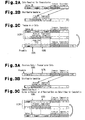
Fig. 2A is a diagram showing the data required for transmission in the tire pressure monitoring system ofFig. 1 ; -
Fig. 2B is a diagram showing the data used for computation during transmission in the tire pressure monitoring system ofFig. 1 ; -
Fig. 2C is a diagram showing computed data during transmission in the tire pressure monitoring system ofFig. 1 ; -
Fig. 3A is a diagram showing received data in the tire pressure monitoring system ofFig. 1 ; -
Fig. 3B is a diagram showing the data used for computation of the received data in the tire pressure monitoring system ofFig. 1 ; -
Fig. 3C is a diagram showing a computation result of the received data in the tire pressure monitoring system ofFig. 1 ; and -
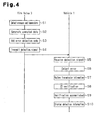
Fig. 4 is a sequence chart showing communication performed by the tire pressure monitoring system ofFig. 1 . - A tire pressure monitoring system (TPMS) for a vehicle according to one embodiment of the present invention will now be described with reference to
Figs. 1 to 4 . The tire pressure monitoring system monitors the tires of the vehicle to check for abnormalities in the air pressure and temperature by detecting the air pressure and temperature of the tires. - As shown in
Fig. 1 , avehicle 1 includes fourtires 2. Eachtire 2 includes atire valve 3, which serves as an air inlet. Thetire valve 3 detects the air pressure and temperature of thecorresponding tire 2 and transmits a wireless signal. Further, thetire valve 3 includes avalve control unit 31 that controls the operation of thetire valve 3. Thevalve control unit 31 is connected to aUHF transmission unit 32 that transmits a detection signal Stp, which includes the air pressure and temperature of thecorresponding tire 2, on a radio wave in an ultrahigh frequency (UHF) band. Thevalve control unit 31 includes amemory 31 a, which stores valve IDs. - The
tire valve 3 also includes apressure sensor 33, which detects the air pressure of thecorresponding tire 2, atemperature sensor 34, which detects the temperature of thecorresponding tire 2, and anacceleration sensor 35, which detects the acceleration applied to thecorresponding tire 2. Thesensors 33 to 35 provide detection signals to thevalve control unit 31. The detection signal Stp transmitted by theUHF transmission unit 32 includes the air pressure, temperature, and unique ID (valve ID) of thecorresponding tire 2. TheUHF transmission unit 32 of eachtire valve 3 transmits the detection signal Stp when thecorresponding acceleration sensor 35 detects acceleration. - A
controller 4, which controls the tire pressure monitoring system, is arranged on a vehicle body of thevehicle 1. Thecontroller 4 is connected to a receiver 5 (receiver unit) that receives the detection signal Stp on the UHF band radio wave transmitted from eachtire valve 3 and including the air pressure and temperature of thecorresponding tire 2. Thecontroller 4 is also connected to adisplay 6, which allows for a driver to visually check the air pressure and temperature of thetires 2. Thedisplay 6 is arranged in thevehicle 1 near the driver seat. - When the
receiver 5 receives a detection signal Stp, thereceiver 5 provides thecontroller 4 with received data that includes a valve ID and detection information. Thecontroller 4 includes anID verification unit 4d that verifies the valve ID. TheID verification unit 4d performs ID verification to determine whether or not the valve ID in the detection signal Stp conforms to a valve ID stored in amemory 4a. When the two IDs are in conformation, the ID verification unit recognizes the detection signal Stp as one from atire 2 registered to thevehicle 1. - The
controller 4 reads the air pressure and temperature of thetire 2 from the detection signal Stp and displays the air pressure and temperature of thetire 2 on thedisplay 6. When there is an abnormality in the air pressure or temperature of thetire 2, thecontroller 4 indicates such a situation on thedisplay 6 or issues a warning. Such operation is repetitively performed whenever thereceiver 5 receives a detection signal Stp from atire valve 3. - The tire pressure monitoring system of the present embodiment employs a communication method that increases the redundancy without increasing the data length. In the tire pressure monitoring system, the valve ID is a fixed data string, and the detection information including the air pressure and temperature is a variable data string. Thus, the valve ID is the same each time the detection signal Stp is received, and the detection information may differ each time the detection signal Stp is received. The valve ID corresponds to first data, which is a fixed data string, and the detection information corresponds to second data, which is a variable data string.
- The
valve control unit 31 of thetire valve 3 includes adata computer 31 b, which computes transmission data, and an errordetection code computer 31c, which computes an error detection code. Thedata computer 31 b generates exclusive disjunction data (hereinafter referred to as the computed data) by performing an exclusive disjunction logical operation using the valve ID and duplicated data of the detection information. Then, thedata computer 31 b generates transmission data that includes the computed data and the detection information. The errordetection code computer 31c computes an error detection code from the transmission data generated by thedata computer 31b. In the present embodiment, a cyclic redundancy check (CRC) code is used as the error detection code. The CRC code can be used to detect a change in part of the data that occurs during transmission. Thedata computer 31b duplicates the detection information in accordance with a predetermined rule to generate the duplicated data. The duplicated data corresponds to third data, which conforms to the detection information corresponding to the second data. - The
controller 4 of thevehicle 1 includes an error detection unit 4b, adata computer 4c, and theID verification unit 4d. The error detection unit 4b detects an error in the received data using the error detection code. Thedata computer 4c restores the original data from the received data. TheID verification unit 4d determines whether or not the restored valve ID conforms to a valve ID stored in thememory 4a. - The error detection unit 4b performs error detection by computing an error detection code from the payload of the received data and determining whether or not the computed error detection code conforms to the error detection code included in the received data. When the error detection unit 4b determines that the received data does not include an error, the
data computer 4c restores the valve ID by performing an exclusive disjunction logical operation again using the computed data, which was generated by performing the exclusive disjunction logical operation with the valve ID (first data) and the duplicated data (third data) of the detection information. The data used with the computed data for the exclusive disjunction logical operation is the data (second data) prior to the process performed in accordance with the predetermined rule. Thus, a process for returning the third data to the second data is performed to generate the original second data. Here, the third data is obtained by duplicating the second data in accordance with the predetermined rule. Thus, the third data can be directly used with the computed data in the exclusive disjunction logical operation. In this manner, thedata computer 4c restores the valve ID by performing the exclusive disjunction logical operation with the computed data and the duplicated data. When the restored valve ID conforms to a valve ID stored in thememory 4a, the valveID verification unit 4d determines that valve ID verification has been accomplished. - The communication method of the tire pressure monitoring system will now be described in detail with reference to
Figs. 2 and 3 . - Referring to
Fig. 2A , in eachvalve control unit 31, thedata computer 31b reads the valve ID from thememory 31a, acquires pressure information obtained by thepressure sensor 33 and temperature information obtained by thetemperature sensor 34, and generates data required for transmission. The data required for transmission includes the valve ID, the pressure information, and the temperature information. The valve ID is divided into three segments, namely, an X segment, a Y segment, and a Z segment. The X segment is arranged at the head of the valve ID and used with 0 in an exclusive disjunction logical operation. The Y segment is used with the pressure information in an exclusive disjunction logical operation. The Z segment is used with the temperature information in an exclusive disjunction logical operation. The pressure information and the temperature information correspond to detection information. - Referring to
Fig. 2B , to make the detection information redundant, thedata computer 31 b duplicates the pressure information and the temperature information to generate data A, which is used for a computation. In the data A, the pressure information and the temperature information are respectively arranged at locations corresponding to the Y segment and Z segment in the valve ID of the data required for transmission. The data A used for computation is a data string in which 0 is set for each bit in the location corresponding to the X segment of the valve ID, the pressure information is arranged at the location corresponding to the Y segment of the valve ID, and the temperature information is arranged at the location corresponding to the Z segment of the valve ID. - Referring to
Fig. 2C , thedata computer 31 b performs an exclusive disjunction (XOR) logical operation with the data required for transmission and the data A used for a computation to generate computed data, which serves as exclusive disjunction data. More specifically, thedata computer 31 b computes an exclusive disjunction value XORA of the Y segment of the valve ID and the pressure information. Thedata computer 31b also computes an exclusive disjunction value XORB of the Z segment of the valve ID and the temperature information. An exclusive disjunction logical operation that uses 0 does not change the X segment of the valve ID. The computed data includes the X segment of the valve ID, the exclusive disjunction value XORA, and the exclusive disjunction value XORB. The pressure information and the temperature information are added to the computed data to form the payload of the detection signal Stp. - The error
detection code computer 31c computes a CRC code, which serves as an error detection code, from the payload generated by thedata computer 31 b. Thevalve control unit 31 adds a preamble to the head of the payload and adds the CRC code to the end of the payload to generate transmission data. Then, thevalve control unit 31 transmits a detection signal Stp, which includes the transmission data, from theUHF transmission unit 32. - Referring to
Fig. 3A , thecontroller 4 of thevehicle 1 retrieves received data from the detection signal Stp, which is received by thereceiver 5. The received data should be identical to the transmission data as long as there are no bit errors. The error detection unit 4b first performs error detection with the CRC on the payload of the received data excluding the preamble to check for bit errors. - Referring to
Fig. 3B , thedata computer 4c retrieves the pressure information and the temperature information from the received data and generates data A, in which the pressure information and the temperature information are respectively arranged at locations corresponding to the Y segment and Z segment of the valve ID. Here, a process is performed to obtain the original data from the pressure information and temperature information retrieved from the received data. Then, the original data is used. In the present embodiment, the pressure information and the temperature information are duplicated in accordance with a predetermined rule. Thus, the pressure information and temperature information retrieved from the received data can be directly used to generate the data A. - Referring to
Fig. 3C , thedata computer 4c performs an exclusive disjunction (XOR) logical operation with the payload, excluding the preamble and the CRC code, and the data A used for computation to obtain a computation result. More specifically, thedata computer 4c performs an exclusive disjunction logical operation with the exclusive disjunction value XORA and the pressure information to restore the Y segment of the valve ID. Further, thedata computer 4c performs an exclusive disjunction logical operation with the exclusive disjunction value XORB and the temperature information to restore the Z segment of the valve ID. In this manner, thedata computer 4c obtains a computation result that includes the valve ID, the pressure information, and the temperature information. - The procedures for communication in the tire pressure monitoring system will now be described with reference to
Fig. 4 . In steps S1 to S10, thetire valve 3 transmits a detection signal Stp including detection information to thevehicle 1, and thevehicle 1 receives the detection signal Stp and displays the detection information. - As shown in
Fig. 4 , thetire valve 3 detects the pressure and temperature (step S1). More specifically, in thetire valve 3, when theacceleration sensor 35 detects acceleration, thepressure sensor 33 provides pressure information to thevalve control unit 31, and thetemperature sensor 34 provides temperature information to thevalve control unit 31. - When the pressure and temperature are detected, the
tire valve 3 generates computed data (step S2). More specifically, to obtain redundancy, thedata computer 31b duplicates the pressure information and the temperature information and generates computed data by performing an exclusive disjunction (XOR) logical operation with the valve ID and the data string including the duplicated pressure information and temperature information. Then, thedata computer 31 b generates a payload including the computed data, pressure information, and temperature information. - The
tire valve 3 adds an error detection code to the payload (step S3). More specifically, the errordetection code computer 31c computes a CRC code of an error detection code from the payload and adds the CRC code to the payload. Further, thevalve control unit 31 adds a preamble to the head of the payload to generate transmission data. - Then, the
tire valve 3 transmits the detection signal Stp (step S4). More specifically, thevalve control unit 31 transmits a detection signal Stp including the generated transmission data from theUHF transmission unit 32. - The
vehicle 1 receives the detection signal Stp from the tire valve 3 (step S5). More specifically, thecontroller 4 retrieves received data from the detection signal Stp, which is received by thereceiver 5. - The
vehicle 1 performs error detection on the received data (step S6). More specifically, the error detection unit 4b performs error detection with the CRC on the payload of the received data excluding the preamble to check for bit errors. When determining that there is no error, the error detection unit 4b continues computation with the received data. - The
vehicle 1 restores the transmission information from the received data (step S7). More specifically, thedata computer 4c retrieves the pressure information and the temperature information from the received data and generates the data A used for computation from the pressure information and the temperature information. Further, thedata computer 4c performs an exclusive disjunction logical operation with the exclusive disjunction value XORA and the pressure information and an exclusive disjunction logical operation with the exclusive disjunction XORB and the temperature information to restore the valve ID. In this manner, thedata computer 4c obtains a computation result including the valve ID, the pressure information, and the temperature information. - The
vehicle 1 performs ID verification with the restored valve ID (step S8). More specifically, theID verification unit 4d determines whether or not the restored valve ID conforms to a valve ID stored on thememory 4a. When ID verification is accomplished (step S9), thecontroller 4 recognizes that the detection signal Stp is from atire 2 registered to thevehicle 1. Thus, theID verification unit 4d determines that the received data does not include an error and employs the valve ID, the pressure information, and the temperature information. - When ID verification is accomplished, the
vehicle 1 displays the detection information on the display 6 (step S10). More specifically, thecontroller 4 displays the air pressure and temperature of thecorresponding tire 2 on thedisplay 6. When there is an abnormality in the air pressure or temperature of thetire 2, thecontroller 4 indicates such a situation on thedisplay 6 or issues a warning. - In the tire pressure monitoring system of the present embodiment, the detection information of the detection signal Stp transmitted from the
tire valve 3 to thevehicle 1 is made redundant without increasing the data length. More specifically, thetire valve 3 duplicates the detection information to obtain redundancy and performs an exclusive disjunction logical operation with the duplicated data and the valve ID to include the duplicated data in the valve ID. Thus, the tire pressure monitoring system of the present embodiment prevents the data length from being elongated by an amount corresponding to the duplicated data of the detection information. - Further, the
vehicle 1 performs an exclusive disjunction logical operation on the received data with the detection information and the exclusive disjunction value of the duplicated data and valve ID to restore the valve ID and check for errors in the detection information. Thus, the valve ID can be restored from the received data, which is redundant but not increased in length. At the same time, errors in the detection information can be detected. Thus, the integrity of the detection information can be increased without increasing the transmission data. - The tire pressure monitoring system of the above embodiment has the advantages described below.
- (1) The
valve control unit 31 performs an exclusive disjunction logical operation with the valve ID and the detection information, which is duplicated to make the detection information redundant, to generate exclusive disjunction data including the detection information duplicated on the data string of the valve ID. Thus, the payload of the transmission data has the same length as the data string including the valve ID and the detection information. In the prior art, the payload of the transmission data is formed by a data string including the valve ID and two pieces of the detection information. In the present embodiment, the duplicated redundant data increases redundancy while decreasing the length of the transmission data by an amount corresponding to one piece of the detection information. Thus, the integrity of the detection information can be increased without increasing the transmission data. - Further, the
controller 4 performs an exclusive disjunction logical operation with the received exclusive disjunction values XORA and XORB and the detection information to restore the valve ID. When the restored valve ID conforms to a stored valve ID, thecontroller 4 determines that the received error does not include an error and employs the received data of the received detection signal Stp. When a stored valve ID conforms to the valve ID obtained by eliminating the duplicated detection information included in the exclusive disjunction values XORA and XORB, this indicates that the received data does not include an error. In this manner, it can be determined that the received data does not include errors at the same time as when the valve ID is restored. - (2) The detection signal Stp includes a CRC code for error detection obtained from the data string of the exclusive disjunction values XORA and XORB and the detection information. Thus, error detection can be performed with the CRC before restoring the valve ID. When an error is detected, the valve ID will not be restored. This simplifies the receiving process. Further, when a data string including a bit error is received, the error detection code obtained from the received data may erroneously conform to the error detection code in the received data for one reason or another. Nevertheless, the duplicated detection information will not conform to the original detection information. Thus, an error can be detected.
- (3) In the system of the present embodiment, the data length is not increased. Thus, less power is consumed during transmission of the detection signal Stp. This reduces power consumption in the
tire valve 3 that is driven by a battery. - It should be apparent to those skilled in the art that the present invention may be embodied in many other specific forms without departing from the spirit or scope of the invention. Particularly, it should be understood that the present invention may be embodied in the following forms.
- In the above embodiment, the detection information may be set at any location in the data string of the valve ID when performing an exclusive disjunction logical operation with the valve ID and the detection information as long as the same location is used by the valve control unit of the tire valve and the controller of the vehicle.
- In the above embodiment, the pressure information and the temperature information are included as detection information in the detection signal Stp. However, there is no such limitation, and information for monitoring the tire pressure and issuing a warning may be included as detection information in the detection signal Stp. For example, the detection signal Stp may include status information indicating a sudden pressure decrease as the detection information. Further, the detection signal Stp may include only the pressure information as the detection information.
- In the above embodiment, the data A used for computation is generated with the same data length as the data required for transmission in which the valve ID and the detection information are continuous. However, the transmission data may be configured so that the exclusive disjunction data and detection information are continuous after exclusive disjunction logical operation of the valve ID and the duplicated detection information.
- In the above embodiment, the valve ID is used as the first data. However, an initial set value, which is fixed during normal use, may be employed as the first data. More specifically, the computed data may be generated through an exclusive disjunction logical operation performed with the initial setting value and the detection information. Further, the valve ID and the initial setting value may be used as the first data.
- In the above embodiment, the detection information, which serves as the second data, is duplicated, and the duplicated data, which corresponds to the second data, is used as the third data. However, a computation may be performed on the second data in accordance with a predetermined rule to obtain data, which is used as the third data. For example, data obtained by inverting every bit of the second data, data obtained by adding a given number to the second data, or data obtained by inverting only a lowermost rank bit of the second data may be used as the third data.
- In the above embodiment, the detection signal Stp may be encoded. For example, after adding the error detection code to the detection signal Stp (step S3), the detection signal Stp may be encoded, and the encoded detection signal Stp may be transmitted to the vehicle 1 (step S4). In this case, after the encoded detection signal Stp is received (step S5), the
vehicle 1 decodes the encoded detection signal Stp. - In the above embodiment, error detection is performed with a CRC. Instead, other error detections codes, such as a parity bit, may be used.
- In the above embodiment, the communication method according to the present invention is applied to the tire pressure monitoring system but may be applied to a communication system that transmits a wireless signal including information requiring redundancy.
- The present examples and embodiments are to be considered as illustrative and not restrictive.
- A communication method transmits a detection signal including a valve ID and detection information, receives the detection signal, performs error detection on the valve ID and detection information, and uses the valve ID and detection information when there is no error. The communication method generates (S2) third data corresponding to the detection information in accordance with a predetermined rule to increase redundancy of the detection information, generates (S2) computed data by performing an exclusive disjunction logic operation with the valve ID and third data, transmits (S4) the detection signal that includes the computed data and detection information, receives (S5) the detection signal, retrieves (S7) the third data corresponding to the detection information from the detection information, restores (S7) the valve ID by performing an exclusive disjunction logical operation with the computed data and the third data, and determines (S8) whether a restored valve ID conforms to a stored first data.
Claims (9)
- A communication method using first data, which is a fixed data string and stored in advance, and second data, which is a variable data string, the communication method characterized by:generating third data that corresponds to the second data in accordance with a predetermined rule to increase redundancy of the second data;generating exclusive disjunction data by performing an exclusive disjunction logic operation with the first data and the third data;transmitting a wireless signal including the exclusive disjunction data and the second data;receiving the wireless signal;retrieving the third data, which corresponds to the second data, from the second data in the received wireless signal;restoring the first data by performing an exclusive disjunction logical operation with the exclusive disjunction data in the received wireless signal and the third data; anddetermining whether or not the first data that is stored in advance conforms to the restored first data.
- The communication method according to claim 1, characterized by:after generating the exclusive disjunction data, computing an error detection code from a data string of the exclusive disjunction data and the second data,
wherein the transmitting a wireless signal includes transmitting the wireless signal including the exclusive disjunction data, the second data, and the error detection code, andthe method further includesdetecting an error in the received wireless signal using the error detection code included in the received wireless signal. - A communication system using first data, which is a fixed data string and stored in advance, and second data, which is a variable data string, the communication system characterized by:a transmitter that transmits a wireless signal; anda receiver that receives the wireless signal from the transmitter;
wherein the transmitter is configured to
generate third data that corresponds to the second data in accordance with a predetermined rule to increase redundancy of the second data,
generate exclusive disjunction data by performing an exclusive disjunction logic operation with the first data and the third data, and
transmit a wireless signal including the exclusive disjunction data and the second data; andthe receiver is configured to
receive the wireless signal,
retrieve the third data, which corresponds to the second data, from the second data in the received wireless signal,
restore the first data by performing an exclusive disjunction logical operation with the exclusive disjunction data in the received wireless signal and the third data, and
determine whether or not the first data that is stored in advance conforms to the restored first data. - The communication system according to claim 3, characterized in that:the transmitter is configured to
compute an error detection code from a data string of the exclusive disjunction data and the second data after generating the exclusive disjunction data, and
transmit the wireless signal including the exclusive disjunction data, the second data, and the error detection code; andthe receiver is configured to detect an error in the received wireless signal using the error detection code included in the received wireless signal. - A transmitter that performs communication using first data, which is a fixed data string, and second data, which is a variable data string, the transmitter characterized by:a control unit configured to generate third data that corresponds to the second data in accordance with a predetermined rule to increase redundancy of the second data, generate exclusive disjunction data by performing an exclusive disjunction logic operation with the first data and the third data, and generate a wireless signal including the exclusive disjunction data and the second data; anda transmitter connected to the control unit, wherein the transmitter transmits the wireless signal.
- The transmitter according to claim 5, characterized in that:the control unit is configured to compute an error detection code from a data string of the exclusive disjunction data and the second data after generating the exclusive disjunction data, andthe transmitter is configured to transmit the wireless signal including the exclusive disjunction data, the second data, and the error detection code.
- A receiver that performs communication using first data, which is a fixed data string and stored in advance, and second data, which is a variable data string, the receiver characterized by:a receiver unit that receives a wireless signal including the second data and exclusive disjunction data, which is generated by performing an exclusive disjunction logic operation with the first data and third data, wherein the third data corresponds to the second data and is generated in accordance with a predetermined rule to increase redundancy of the second data; anda controller connected to the receiver unit, wherein the controller is configured to retrieve the third data, which corresponds to the second data, from the second data in the received wireless signal, restore the first data by performing an exclusive disjunction logical operation with the exclusive disjunction data in the received wireless signal and the third data, and determine whether or not the first data that is stored in advance conforms to the restored first data.
- The receiver according to claim 7, characterized in that the controller is configured to detect an error in the received wireless signal using the error detection code included in the received wireless signal.
- A tire pressure monitoring system characterized by:the communication system according to claim 3 or 4, whereinthe transmitter is a tire valve,the receiver is arranged in a vehicle,the first data is a unique valve ID of the tire valve, andthe second data is detection information obtained by the tire valve.
Applications Claiming Priority (1)
| Application Number | Priority Date | Filing Date | Title |
|---|---|---|---|
| JP2011181530A JP2013046147A (en) | 2011-08-23 | 2011-08-23 | Communication method and communication system, transmission device and reception device, and tire air pressure monitoring system |
Publications (1)
| Publication Number | Publication Date |
|---|---|
| EP2562011A1 true EP2562011A1 (en) | 2013-02-27 |
Family
ID=46796323
Family Applications (1)
| Application Number | Title | Priority Date | Filing Date |
|---|---|---|---|
| EP12180973A Withdrawn EP2562011A1 (en) | 2011-08-23 | 2012-08-20 | Tire pressure monitoring redundant communication method and system |
Country Status (4)
| Country | Link |
|---|---|
| US (1) | US20130054084A1 (en) |
| EP (1) | EP2562011A1 (en) |
| JP (1) | JP2013046147A (en) |
| CN (1) | CN102957523A (en) |
Cited By (2)
| Publication number | Priority date | Publication date | Assignee | Title |
|---|---|---|---|---|
| US9459953B2 (en) | 2013-01-07 | 2016-10-04 | Qualcomm Incorporated | Additional error protection for wireless transmission |
| EP3480698A4 (en) * | 2016-06-28 | 2020-03-04 | Nippon Seiki Co., Ltd. | DISPLAY DEVICE FOR VEHICLE |
Families Citing this family (9)
| Publication number | Priority date | Publication date | Assignee | Title |
|---|---|---|---|---|
| JP6568824B2 (en) * | 2016-06-17 | 2019-08-28 | 太平洋工業株式会社 | Tire condition detection device |
| DE102016225481A1 (en) * | 2016-12-19 | 2018-06-21 | Continental Automotive Gmbh | Method for the radio optimization of a wheel monitoring in a vehicle, wheel monitoring system of a vehicle and electronic wheel unit and control device for such a wheel monitoring system |
| JP2018112901A (en) | 2017-01-11 | 2018-07-19 | 太平洋工業株式会社 | Transmitter, receiver, and transmission/reception system |
| KR102452704B1 (en) * | 2018-03-22 | 2022-10-11 | 현대자동차주식회사 | Apparatus and Method for connecting wireless sensor |
| WO2020070781A1 (en) * | 2018-10-01 | 2020-04-09 | 太平洋工業株式会社 | Tire state monitoring system, transmitter, and receiver |
| CN112319146B (en) * | 2020-10-16 | 2022-10-11 | 深圳市云伽智能技术有限公司 | Learning method, device, sensor, system and medium of tire pressure monitoring system |
| DE102021213076A1 (en) | 2021-11-22 | 2023-05-25 | Robert Bosch Gesellschaft mit beschränkter Haftung | Method for operating units of a communication network |
| EP4714686A1 (en) * | 2023-12-26 | 2026-03-25 | Pacific Industrial Co., Ltd. | Transmitter, receiver, transmitting and receiving system, and wheel position determination method |
| CN119610954A (en) * | 2024-11-29 | 2025-03-14 | 中国第一汽车股份有限公司 | Tire pressure monitoring method and device, electronic equipment and storage medium |
Citations (4)
| Publication number | Priority date | Publication date | Assignee | Title |
|---|---|---|---|---|
| JP2006306202A (en) | 2005-04-27 | 2006-11-09 | Hitachi Ltd | Tire pressure monitoring system, monitoring method, tire pressure measuring module and monitoring device |
| DE102005059009A1 (en) * | 2005-12-08 | 2007-06-14 | Daimlerchrysler Ag | Tire pressure monitor for use in vehicle, uses acknowledgement signal transferred between tire side controller and vehicle side controller to select code and associated transmission format stored in tire side controller |
| US20100316220A1 (en) * | 2009-06-10 | 2010-12-16 | Samsung Electronics Co., Ltd. | Radio frequency identification system and authentication method thereof |
| WO2011073928A2 (en) * | 2009-12-18 | 2011-06-23 | Eltek S.P.A. | Device for monitoring a vehicle wheel and corresponding communication method |
Family Cites Families (10)
| Publication number | Priority date | Publication date | Assignee | Title |
|---|---|---|---|---|
| US5231872A (en) * | 1991-02-21 | 1993-08-03 | Ttc/Truck Tech Corp. | Tire monitoring apparatus and method |
| US5862160A (en) * | 1996-12-31 | 1999-01-19 | Ericsson, Inc. | Secondary channel for communication networks |
| US6064695A (en) * | 1997-06-20 | 2000-05-16 | Itran Communications Ltd. | Spread spectrum communication system utilizing differential code shift keying |
| US7161476B2 (en) * | 2000-07-26 | 2007-01-09 | Bridgestone Firestone North American Tire, Llc | Electronic tire management system |
| US6915473B2 (en) * | 2001-05-14 | 2005-07-05 | Interdigital Technology Corporation | Method and system for implicit user equipment identification |
| JP2003046487A (en) * | 2001-08-02 | 2003-02-14 | Toshiba Corp | CONTROLLER AND INVERT DOUBLE TRANSMITTING DATA TRANSMISSION METHOD |
| US7099469B2 (en) * | 2001-10-17 | 2006-08-29 | Motorola, Inc. | Method of scrambling and descrambling data in a communication system |
| US7382239B2 (en) * | 2005-08-23 | 2008-06-03 | Gm Global Technology Operations, Inc. | System and method for improving received signal strength for an in-vehicle wireless communication system |
| JP3962073B2 (en) * | 2005-11-08 | 2007-08-22 | 横浜ゴム株式会社 | Vehicle monitoring system |
| US7924148B2 (en) * | 2007-02-23 | 2011-04-12 | Continental Automotive Systems Us, Inc | Robust radio frequency signals |
-
2011
- 2011-08-23 JP JP2011181530A patent/JP2013046147A/en active Pending
-
2012
- 2012-08-13 CN CN2012102964712A patent/CN102957523A/en active Pending
- 2012-08-14 US US13/585,067 patent/US20130054084A1/en not_active Abandoned
- 2012-08-20 EP EP12180973A patent/EP2562011A1/en not_active Withdrawn
Patent Citations (4)
| Publication number | Priority date | Publication date | Assignee | Title |
|---|---|---|---|---|
| JP2006306202A (en) | 2005-04-27 | 2006-11-09 | Hitachi Ltd | Tire pressure monitoring system, monitoring method, tire pressure measuring module and monitoring device |
| DE102005059009A1 (en) * | 2005-12-08 | 2007-06-14 | Daimlerchrysler Ag | Tire pressure monitor for use in vehicle, uses acknowledgement signal transferred between tire side controller and vehicle side controller to select code and associated transmission format stored in tire side controller |
| US20100316220A1 (en) * | 2009-06-10 | 2010-12-16 | Samsung Electronics Co., Ltd. | Radio frequency identification system and authentication method thereof |
| WO2011073928A2 (en) * | 2009-12-18 | 2011-06-23 | Eltek S.P.A. | Device for monitoring a vehicle wheel and corresponding communication method |
Cited By (2)
| Publication number | Priority date | Publication date | Assignee | Title |
|---|---|---|---|---|
| US9459953B2 (en) | 2013-01-07 | 2016-10-04 | Qualcomm Incorporated | Additional error protection for wireless transmission |
| EP3480698A4 (en) * | 2016-06-28 | 2020-03-04 | Nippon Seiki Co., Ltd. | DISPLAY DEVICE FOR VEHICLE |
Also Published As
| Publication number | Publication date |
|---|---|
| JP2013046147A (en) | 2013-03-04 |
| CN102957523A (en) | 2013-03-06 |
| US20130054084A1 (en) | 2013-02-28 |
Similar Documents
| Publication | Publication Date | Title |
|---|---|---|
| US20130054084A1 (en) | Tire pressure monitoring communication method and system | |
| US8730022B2 (en) | Tire pressure monitoring communication method and system | |
| JP5359233B2 (en) | Tire condition monitoring method and monitoring system | |
| CN103547464B (en) | Tire pneumatic pressure detector | |
| JP2001105812A (en) | Tire pressure monitoring device | |
| US7511608B2 (en) | Tire pressure monitoring system telegram with suppressed ID | |
| CN110312971B (en) | Correlation method between a diagnostic module and a measurement module fitted in the wheel of a motor vehicle | |
| JP7012092B2 (en) | Tire condition monitoring system, transmitter and receiver | |
| KR102190825B1 (en) | Transmitter, Receiver and Transceiver System | |
| TW530013B (en) | Method for learning codes of tire monitoring device | |
| JP2019043463A (en) | Tire type determination device | |
| EP4415983A1 (en) | Tire pressure monitoring in stationary vehicles | |
| JP5520843B2 (en) | Tire pressure monitoring system | |
| JP5459625B2 (en) | Tire information detection device | |
| JP2012224230A (en) | Tire position determination system | |
| JP2006007905A (en) | Vehicle tire condition detection device | |
| JP2012236527A (en) | Valve id registration system | |
| CN113195265B (en) | Transmitter and ID registration device | |
| EP3896914B1 (en) | Transmitter | |
| JP2014240223A (en) | Tire ID registration system | |
| Liu et al. | Technology of Data Fusion for Automobile Tire Pressure Monitoring System |
Legal Events
| Date | Code | Title | Description |
|---|---|---|---|
| PUAI | Public reference made under article 153(3) epc to a published international application that has entered the european phase |
Free format text: ORIGINAL CODE: 0009012 |
|
| AK | Designated contracting states |
Kind code of ref document: A1 Designated state(s): AL AT BE BG CH CY CZ DE DK EE ES FI FR GB GR HR HU IE IS IT LI LT LU LV MC MK MT NL NO PL PT RO RS SE SI SK SM TR |
|
| AX | Request for extension of the european patent |
Extension state: BA ME |
|
| 17P | Request for examination filed |
Effective date: 20130318 |
|
| STAA | Information on the status of an ep patent application or granted ep patent |
Free format text: STATUS: THE APPLICATION HAS BEEN WITHDRAWN |
|
| 18W | Application withdrawn |
Effective date: 20140603 |