EP2558930B1 - Platform independent presentation composition - Google Patents
Platform independent presentation composition Download PDFInfo
- Publication number
- EP2558930B1 EP2558930B1 EP11769274.9A EP11769274A EP2558930B1 EP 2558930 B1 EP2558930 B1 EP 2558930B1 EP 11769274 A EP11769274 A EP 11769274A EP 2558930 B1 EP2558930 B1 EP 2558930B1
- Authority
- EP
- European Patent Office
- Prior art keywords
- component
- data
- components
- container
- output
- Prior art date
- Legal status (The legal status is an assumption and is not a legal conclusion. Google has not performed a legal analysis and makes no representation as to the accuracy of the status listed.)
- Not-in-force
Links
Images








Classifications
-
- G—PHYSICS
- G06—COMPUTING OR CALCULATING; COUNTING
- G06F—ELECTRIC DIGITAL DATA PROCESSING
- G06F9/00—Arrangements for program control, e.g. control units
- G06F9/06—Arrangements for program control, e.g. control units using stored programs, i.e. using an internal store of processing equipment to receive or retain programs
-
- G—PHYSICS
- G06—COMPUTING OR CALCULATING; COUNTING
- G06F—ELECTRIC DIGITAL DATA PROCESSING
- G06F8/00—Arrangements for software engineering
- G06F8/30—Creation or generation of source code
- G06F8/38—Creation or generation of source code for implementing user interfaces
-
- G—PHYSICS
- G06—COMPUTING OR CALCULATING; COUNTING
- G06F—ELECTRIC DIGITAL DATA PROCESSING
- G06F9/00—Arrangements for program control, e.g. control units
- G06F9/06—Arrangements for program control, e.g. control units using stored programs, i.e. using an internal store of processing equipment to receive or retain programs
- G06F9/44—Arrangements for executing specific programs
- G06F9/448—Execution paradigms, e.g. implementations of programming paradigms
-
- G—PHYSICS
- G06—COMPUTING OR CALCULATING; COUNTING
- G06F—ELECTRIC DIGITAL DATA PROCESSING
- G06F8/00—Arrangements for software engineering
- G06F8/10—Requirements analysis; Specification techniques
-
- G—PHYSICS
- G06—COMPUTING OR CALCULATING; COUNTING
- G06Q—INFORMATION AND COMMUNICATION TECHNOLOGY [ICT] SPECIALLY ADAPTED FOR ADMINISTRATIVE, COMMERCIAL, FINANCIAL, MANAGERIAL OR SUPERVISORY PURPOSES; SYSTEMS OR METHODS SPECIALLY ADAPTED FOR ADMINISTRATIVE, COMMERCIAL, FINANCIAL, MANAGERIAL OR SUPERVISORY PURPOSES, NOT OTHERWISE PROVIDED FOR
- G06Q10/00—Administration; Management
- G06Q10/06—Resources, workflows, human or project management; Enterprise or organisation planning; Enterprise or organisation modelling
Definitions
- UX user experience
- UX composition systems such as HTML (hypertext markup language), XAML (extensible application markup language), and XSLT (extensible stylesheet language transformations) are designed such that the markup code be developed for a specific platform. If the developer wants the code to work on several platforms a custom logic is to be built in the code to handle the platform differences.
- existing UX composition systems require specific presentation be explicitly defined for every data interface element. The functionality that allows dynamic generation of UX elements based on underlying data structures the elements represent is limited to nonexistent, especially if the data structures are complex and/or inheritable.
- the mass market e.g., email
- the smaller communities of users e.g., the exchange administrator or the CRM (customer relationship management) service owner
- US 2007/130205 A1 discloses that metadata allows the developer to specify a set of events 215 for each control that are included on the user interface.
- the metadata allows the UI forms developer to specify the controls to be added to the UI; define custom events on these added controls (or add events to the existing controls); and define the event-handlers via code in a code-behind assembly for these new custom events (or modify existing custom-handlers by overriding the default behavior).
- An Object Model (OM) is exposed that allows the developer to read/modify properties of the controls on the form such that the event-handlers are defined in the code behind assembly.
- the name and location of the code-behind assembly is captured as part of the metadata.
- the rendering engine receives the metadata defining the UI through an interpreter and renders the UI form.
- US 2007/180432 A1 discloses systems and methods for customization of internet applications and their associated user interfaces in a browser based environment.
- the user interfaces are typically delivered to a user as a web page or part thereof.
- the customization applies to both static and functional aspects of user interface elements.
- the embodiment further includes a personalization system including a personalization engine and a user profile interface, the personalization interface configured to modify personalization data characterizing the interaction model such that the interaction model in more than one of the plurality of application user interfaces is modified, and a data repository including a data record for storing the personalization data, the data record being accessible using the metadata.
- Arron Ferguson "Creating a declarative XML UI language (Build a UI and the accompanying framework in the Java language)" Developer Works, 1 September 2009, discloses methods to create a declarative XML UI tag set with an accompanying Java framework that parses, validates, constructs, and finally binds the declared GUI components to business logic at runtime.
- the disclosed architecture includes a platform independent configuration-driven presentation composition engine.
- the composition engine allows dynamic generation of multiplatform user experience (UX) based on a data contract.
- UX multiplatform user experience
- the user can select the parts, interactions, and constraints between the interaction and parts, as well as the placement with respect to each other.
- the UX is dynamically composed from components that are targeted to particular data classes.
- platform dependent component implementations are automatically selected by the engine based on the execution platform of the composition host.
- the disclosed architecture allows a user to create or customize a UX without writing code by composing from multiple presentation widgets that can access many data sources that work on many platforms. Compositions are targeted to both a data class and presentation type and can be either predefined or generated.
- the disclosed architecture is a presentation composition engine.
- the composition engine is a generic composition framework which is exposed as a set of services that allows the user to "glue” together (compose) different components, and the composition (output composition of the engine) of the component(s). By composition, the user can select the parts, interactions, and constraints between the interaction and parts, as well as the placement of the parts with respect to each other.
- the engine is a presentation-neutral framework for both UI (user interface) and non-UI components.
- a component is the smallest reusable building block of UI declaration for the composition engine, and that is identifiable by name, and optionally, targeted to a data type.
- a component can be a base component (unit component) or a container component (composite component).
- Data context is an instance of target data for a component. In other words, the data context is a name/value pair set that represents data associated with a component. Data context entries support change notifications, and compositions can initiate changes and/or listen to the changes initiated by other compositions.
- the composition engine assembles components for a particular host as a user experience that is platform independent.
- the virtualization host is the execution environment of the composition for a particular platform (runtime).
- Compositions are targeted to both a data class and presentation type and can be either predefined or generated. While there can be multiple components composed, the component chain ends at the concrete base component (e.g., a TextBox control, database query component, etc.).
- the concrete base component e.g., a TextBox control, database query component, etc.
- the composition engine allows the dynamic generation of multiplatform UX (user experience) based on a data contract.
- the UX is dynamically composed from components that are targeted to a particular data classes.
- platform dependent component implementations are automatically selected by the engine based on the execution platform of the composition host.
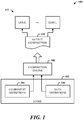
- FIG. 1 illustrates a visualization system 100 in accordance with the disclosed architecture.
- the system 100 includes a store 102 of store definitions that include component definitions 104 and data definitions 106 for components and data associated with a user experience.
- the component definitions 104 can include definitions for base component, container components, and compositions of base and container components. In this way, an existing composition of the components is readily available for dynamic selection and composition into the output component 110.
- a composition engine 108 that automatically and declaratively composes an instance of an output component 110 based on a store definition.
- the output component is specific to a user experience of a visualization host of different hosts 112.
- the output component 110 includes a base component, a container component, or a combination of base and container components.
- the output component 110 is composed based on a target data type of the user experience.
- the system 100 can further comprise a component registry via which a component is searched based on the target data type.
- the output component binds associated component properties to data context elements to link child components.
- the composition engine 108 includes global variables that enable data exchange between output components in unrelated data contexts.
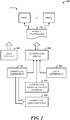
- FIG. 2 illustrates an alternative visualization system 200 in accordance with the disclosed architecture.
- the system 200 includes the entities of the system 100 of FIG. 1 , as well as data context 202, a personalization (private) override 204, and component implementation 206.
- the output component 110 can be composed based on the data context 202 rather than an existing component definition. That is, based on the data, a customized component can be created and output purely based on the context data 202 (instance of data in the target UX).
- the composition engine 108 employs the personalization override 204 that is composed with a selected component definition to override a global variable with a private variable.
- FIG. 3 illustrates an exemplary composition 300 composed by the composition engine.
- the composition 300 is described in terms of base components (e.g., a StackPanel base component 302) and a container component 304.
- the base component 302 includes two text box base components: a first text box base component showing text "ABC” and a second text box base component showing text "DEF”.
- the base component 302 also includes a button base component.
- the base component is a concrete implementation targeted to specific platforms, the leaf node of the composition process, and can be visual or non-visual. Following is an example of a base component definition (in terms of component type).
- the container component (also, composite component) is the container for the base components (also, unit components), does not have a custom implementation, and is platform independent. Following is an example of a composite component definition.
- the container component 304 combines the base components, as illustrated in the following code, where PropertyA is "ABC” and PropertyB is "DEF".
- Data Context is a key(string)-value(object) pair collection which supports property changed notification and error set notification.
- the component can bind its properties to data context elements to link child components together.
- FIG. 4 illustrates a parent component 400 that includes data context 402(as DataContext elements) and a visual base component 404 (e.g., StackPanel base component 302 of FIG. 3 ) of a composition system.
- the data context 402 includes three properties: PropertyA, PropertyB and PropertyC, with corresponding values "ABC", "DEF", and "XYZ”.
- the visual base component 404 includes bindings to PropertyA and PropertyB via corresponding 2-way databinds, while multiple data components 406 of a view model 408 are bound to PropertyB and PropertyC.
- the parent component 400 is composed that includes bindings of properties to child components (the text box base components) and bindings of the properties to the data components 406.
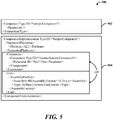
- FIG. 5 illustrates an component definition 500.
- the component definition 500 comprises two parts: a type declaration 502 and an implementation definition 504.
- Each component has a name, and optional target type attributes that can be used to look up a relevant component.
- An example type declaration (in component terms) is the following:
- a component can also include a Parameters subnode which defines the datashape (e.g., string) expected to be passed, as illustrated below (in component terms):
- FIG. 6 illustrates a component registry 600 for finding or selecting components.
- the registry 600 maintains a list of all defined components and component compositions.
- the base component e.g., StackPanel/Button/Edit of FIG. 3
- the base component can be looked up (searched) based on TypeId and TargetType (target data type).
- the output is then the base component that corresponds to the TargetType, or TypeId and TargetType.
- Global variables can be used to enable data exchange between compositions (base components and/or container components) in non-related data contexts.
- a global variable is declared:
- variable can be referenced in base component and container components using
- Any given component e.g., base, container
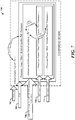
- FIG. 7 illustrates a declarative diagram 700 that represents the use of variables in the composition engine.
- a global variable "A” is declared.
- a parameter name "Blah” is passed to an component.
- a local copy of the global variable is created.
- local copies of the variable are used rather than the global variable.
- FIG. 8 illustrates a visualization method in accordance with the disclosed architecture.
- a request is received for a component to be employed in an execution environment.
- a component definition associated with the component is searched.
- one or more data definitions are selected for a found component definition.
- the one or more data definitions are automatically composed with the component definition to output the component in the execution environment at environment runtime.
- FIG. 9 illustrates further aspects of the method of FIG. 8 .
- the component definition is searched based on a data type of the requested component when the component definition is not found.
- a custom component is created based on absence of the component requested.
- a global variable is applied to the component to enable data exchange between unrelated data contexts.
- a global variable is overridden with a private variable to impose the private variable on child components of the component.
- a container component is created when the requested component is not found.
- the container component is loaded with base components associate data type properties.
- the container component is output as the component.
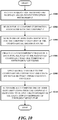
- FIG. 10 illustrates an alternative visualization method.
- a request for a component based is received on a component execution environment.
- a component definition associated with the component is searched.
- one or more data definitions for the component definition are selected if the component definition is found.
- a custom component is created based on a data type related to the requested component when the component definition is not found.
- a global variable is applied to the component or custom to enable data exchange between unrelated data contexts.
- the one or more data definitions are automatically composed with the component definition to output the component in the execution environment at environment runtime.
- FIG. 11 illustrates further aspects of the method of FIG. 10 .
- the global variable is overridden with a private variable to impose the private variable on child components of the component.
- a container component is created when the requested component is not found.
- the container component is loaded with base components associate data type properties.
- the container component is output as the component.
- data to be passed to the component is defined via a parameter node.
- a parent component is composed that includes bindings of properties to child components and bindings of the properties to data components.
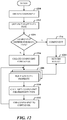
- FIG. 12 illustrates a method of obtaining components in the composition engine.
- a component is obtained (e.g., via a "get component” call).
- the target data type is obtained.
- a check is made to determine if a component exists for the target data type. If not, flow is to 1206 to create a component container.
- the component can have one or more associated data properties.
- property types are obtained for the component.
- a call "get component” is made for the property types.
- the component is added to the container Flow is back to 1208 to continue until completed. After all data properties and types have been applied to the container, flow is to 1214 to return the results.
- flow determines that a component exists for the target data type, flow is to 1216 to select the component, and then return the results, at 1214.
- FIG. 13 illustrates a more detailed method of obtaining components in the composition engine.
- function parameters such as target type and data type are received.
- a check is made for a component defined for the target type and name. If so, flow is to 1304 to verify the interface. Alternatively, if no component exists for the target type and names, flow is to 1306 such that for every property using the type system lookup, is a component defined for the data type. If yes, flow is to 1304 to verify the interface. Access to the type system 1308 is provided to make the check and verify the interface. Once the interface is verified, flow is to 1310 to check for the component type. If a unit component, flow is to 1312 to create an instance of the unit component for the correct platform and pass all declared parameters to the unit component.
- the loader can load an assembly for the UX composition system (e.g., XAML, MEF, etc).
- the component type is a composite component
- flow is to 1316 to walk the child nodes in a configuration (e.g., written in XML) setting the values on the components of the composition.
- This includes receiving parameter values from parameter node(s) 1318, parameters from component node(s) 1320, and a parameter set from child nodes, as provided from build data from parameters at 1322.
- the typeID is sent from the component node 1320 to build data 1322.
- the component referenced by the target as data and name, as the name for lookup, based on name and target information received from the component node 1320.
- One or more components can reside within a process and/or thread of execution, and a component can be localized on one computer and/or distributed between two or more computers.
- the word "exemplary” may be used herein to mean serving as an example, instance, or illustration. Any aspect or design described herein as "exemplary” is not necessarily to be construed as preferred or advantageous over other aspects or designs.
- FIG. 14 there is illustrated a block diagram of a computing system 1400 that executes composition in accordance with the disclosed architecture.
- FIG. 14 and the following description are intended to provide a brief, general description of the suitable computing system 1400 in which the various aspects can be implemented. While the description above is in the general context of computer-executable instructions that can run on one or more computers, those skilled in the art will recognize that a novel embodiment also can be implemented in combination with other program modules and/or as a combination of hardware and software.
- the computing system 1400 for implementing various aspects includes the computer 1402 having processing unit(s) 1404, a computer-readable storage such as a system memory 1406, and a system bus 1408.
- the processing unit(s) 1404 can be any of various commercially available processors such as single-processor, multi-processor, single-core units and multi-core units.
- processors such as single-processor, multi-processor, single-core units and multi-core units.
- those skilled in the art will appreciate that the novel methods can be practiced with other computer system configurations, including minicomputers, mainframe computers, as well as personal computers (e.g., desktop, laptop, etc.), hand-held computing devices, microprocessor-based or programmable consumer electronics, and the like, each of which can be operatively coupled to one or more associated devices.
- the system memory 1406 can include computer-readable storage (physical storage media) such as a volatile (VOL) memory 1410 (e.g., random access memory (RAM)) and non-volatile memory (NON-VOL) 1412 (e.g., ROM, EPROM, EEPROM, etc.).
- VOL volatile
- NON-VOL non-volatile memory
- a basic input/output system (BIOS) can be stored in the non-volatile memory 1412, and includes the basic routines that facilitate the communication of data and signals between components within the computer 1402, such as during startup.
- the volatile memory 1410 can also include a high-speed RAM such as static RAM for caching data.
- the system bus 1408 provides an interface for system components including, but not limited to, the system memory 1406 to the processing unit(s) 1404.
- the system bus 1408 can be any of several types of bus structure that can further interconnect to a memory bus (with or without a memory controller), and a peripheral bus (e.g., PCI, PCIe, AGP, LPC, etc.), using any of a variety of commercially available bus architectures.
- the computer 1402 further includes machine readable storage subsystem(s) 1414 and storage interface(s) 1416 for interfacing the storage subsystem(s) 1414 to the system bus 1408 and other desired computer components.
- the storage subsystem(s) 1414 (physical storage media) can include one or more of a hard disk drive (HDD), a magnetic floppy disk drive (FDD), and/or optical disk storage drive (e.g., a CD-ROM drive DVD drive), for example.
- the storage interface(s) 1416 can include interface technologies such as EIDE, ATA, SATA, and IEEE 1394, for example.
- One or more programs and data can be stored in the memory subsystem 1406, a machine readable and removable memory subsystem 1418 (e.g., flash drive form factor technology), and/or the storage subsystem(s) 1414 (e.g., optical, magnetic, solid state), including an operating system 1420, one or more application programs 1422, other program modules 1424, and program data 1426.
- a machine readable and removable memory subsystem 1418 e.g., flash drive form factor technology
- the storage subsystem(s) 1414 e.g., optical, magnetic, solid state
- an operating system 1420 e.g., one or more application programs 1422, other program modules 1424, and program data 1426.
- the one or more application programs 1422, other program modules 1424, and program data 1426 can include the entities and components of the system 100 of FIG. 1 , the entities and components of the system 200 of FIG. 2 , the composition 300 of FIG. 3 , the parent component 400 of FIG. 4 , the component definition 500 of FIG. 5 , the registry 600 of FIG. 6 , the diagram 700 of FIG. 7 , and the methods represented by the flowcharts of Figures 8-13 , for example.
- programs include routines, methods, data structures, other software components, etc., that perform particular tasks or implement particular abstract data types. All or portions of the operating system 1420, applications 1422, modules 1424, and/or data 1426 can also be cached in memory such as the volatile memory 1410, for example. It is to be appreciated that the disclosed architecture can be implemented with various commercially available operating systems or combinations of operating systems (e.g., as virtual machines).
- the storage subsystem(s) 1414 and memory subsystems (1406 and 1418) serve as computer readable media for volatile and non-volatile storage of data, data structures, computer-executable instructions, and so forth.
- Such instructions when executed by a computer or other machine, can cause the computer or other machine to perform one or more acts of a method.
- the instructions to perform the acts can be stored on one medium, or could be stored across multiple media, so that the instructions appear collectively on the one or more computer-readable storage media, regardless of whether all of the instructions are on the same media.
- Computer readable media can be any available media that can be accessed by the computer 1402 and includes volatile and non-volatile internal and/or external media that is removable or non-removable.
- the media accommodate the storage of data in any suitable digital format. It should be appreciated by those skilled in the art that other types of computer readable media can be employed such as zip drives, magnetic tape, flash memory cards, flash drives, cartridges, and the like, for storing computer executable instructions for performing the novel methods of the disclosed architecture.
- a user can interact with the computer 1402, programs, and data using external user input devices 1428 such as a keyboard and a mouse.
- Other external user input devices 1428 can include a microphone, an IR (infrared) remote control, a joystick, a game pad, camera recognition systems, a stylus pen, touch screen, gesture systems (e.g., eye movement, head movement, etc.), and/or the like.
- the user can interact with the computer 1402, programs, and data using onboard user input devices 1430 such a touchpad, microphone, keyboard, etc., where the computer 1402 is a portable computer, for example.
- I/O device interface(s) 1432 are connected to the processing unit(s) 1404 through input/output (I/O) device interface(s) 1432 via the system bus 1408, but can be connected by other interfaces such as a parallel port, IEEE 1394 serial port, a game port, a USB port, an IR interface, etc.
- the I/O device interface(s) 1432 also facilitate the use of output peripherals 1434 such as printers, audio devices, camera devices, and so on, such as a sound card and/or onboard audio processing capability.
- One or more graphics interface(s) 1436 (also commonly referred to as a graphics processing unit (GPU)) provide graphics and video signals between the computer 1402 and external display(s) 1438 (e.g., LCD, plasma) and/or onboard displays 1440 (e.g., for portable computer).
- graphics interface(s) 1436 can also be manufactured as part of the computer system board.
- the computer 1402 can operate in a networked environment (e.g., IP-based) using logical connections via a wired/wireless communications subsystem 1442 to one or more networks and/or other computers.
- the other computers can include workstations, servers, routers, personal computers, microprocessor-based entertainment appliances, peer devices or other common network nodes, and typically include many or all of the elements described relative to the computer 1402.
- the logical connections can include wired/wireless connectivity to a local area network (LAN), a wide area network (WAN), hotspot, and so on.
- LAN and WAN networking environments are commonplace in offices and companies and facilitate enterprise-wide computer networks, such as intranets, all of which may connect to a global communications network such as the Internet.
- the computer 1402 When used in a networking environment the computer 1402 connects to the network via a wired/wireless communication subsystem 1442 (e.g., a network interface adapter, onboard transceiver subsystem, etc.) to communicate with wired/wireless networks, wired/wireless printers, wired/wireless input devices 1444, and so on.
- the computer 1402 can include a modem or other means for establishing communications over the network.
- programs and data relative to the computer 1402 can be stored in the remote memory/storage device, as is associated with a distributed system. It will be appreciated that the network connections shown are exemplary and other means of establishing a communications link between the computers can be used.
- the computer 1402 is operable to communicate with wired/wireless devices or entities using the radio technologies such as the IEEE 802.xx family of standards, such as wireless devices operatively disposed in wireless communication (e.g., IEEE 802.11 over-the-air modulation techniques) with, for example, a printer, scanner, desktop and/or portable computer, personal digital assistant (PDA), communications satellite, any piece of equipment or location associated with a wirelessly detectable tag (e.g., a kiosk, news stand, restroom), and telephone.
- PDA personal digital assistant
- the communications can be a predefined structure as with a conventional network or simply an ad hoc communication between at least two devices.
- Wi-Fi networks use radio technologies called IEEE 802.11x (a, b, g, etc.) to provide secure, reliable, fast wireless connectivity.
- IEEE 802.11x a, b, g, etc.
- a Wi-Fi network can be used to connect computers to each other, to the Internet, and to wire networks (which use IEEE 802.3-related media and functions).
- program modules can be located in local and/or remote storage and/or memory system.
Landscapes
- Engineering & Computer Science (AREA)
- Software Systems (AREA)
- Theoretical Computer Science (AREA)
- General Engineering & Computer Science (AREA)
- Physics & Mathematics (AREA)
- General Physics & Mathematics (AREA)
- Human Computer Interaction (AREA)
- Stored Programmes (AREA)
Applications Claiming Priority (2)
| Application Number | Priority Date | Filing Date | Title |
|---|---|---|---|
| US12/760,565 US9513882B2 (en) | 2010-04-15 | 2010-04-15 | Platform independent presentation composition |
| PCT/US2011/030068 WO2011129989A2 (en) | 2010-04-15 | 2011-03-25 | Platform independent presentation composition |
Publications (3)
| Publication Number | Publication Date |
|---|---|
| EP2558930A2 EP2558930A2 (en) | 2013-02-20 |
| EP2558930A4 EP2558930A4 (en) | 2014-01-22 |
| EP2558930B1 true EP2558930B1 (en) | 2017-03-15 |
Family
ID=44789175
Family Applications (1)
| Application Number | Title | Priority Date | Filing Date |
|---|---|---|---|
| EP11769274.9A Not-in-force EP2558930B1 (en) | 2010-04-15 | 2011-03-25 | Platform independent presentation composition |
Country Status (8)
| Country | Link |
|---|---|
| US (1) | US9513882B2 (enExample) |
| EP (1) | EP2558930B1 (enExample) |
| JP (1) | JP5938031B2 (enExample) |
| KR (1) | KR101733833B1 (enExample) |
| AU (1) | AU2011241007B2 (enExample) |
| CA (1) | CA2802225A1 (enExample) |
| ES (1) | ES2626705T3 (enExample) |
| WO (1) | WO2011129989A2 (enExample) |
Families Citing this family (5)
| Publication number | Priority date | Publication date | Assignee | Title |
|---|---|---|---|---|
| WO2014158128A1 (en) * | 2013-03-25 | 2014-10-02 | Hewlett-Packard Development Company, L.P. | Extensible firmware abstraction |
| EP3234898B1 (en) * | 2014-12-19 | 2023-07-26 | Ent. Services Development Corporation LP | Model-driven architecture for user-centered design |
| US10783316B2 (en) | 2018-02-26 | 2020-09-22 | Servicenow, Inc. | Bundled scripts for web content delivery |
| US10824791B2 (en) | 2018-02-26 | 2020-11-03 | Servicenow, Inc. | System for building and modeling web pages |
| US11630644B2 (en) | 2021-05-27 | 2023-04-18 | Bank Of America Corporation | Service for configuring custom software |
Citations (2)
| Publication number | Priority date | Publication date | Assignee | Title |
|---|---|---|---|---|
| US20070130205A1 (en) * | 2005-12-05 | 2007-06-07 | Microsoft Corporation | Metadata driven user interface |
| US20070180432A1 (en) * | 2001-03-02 | 2007-08-02 | Peter Gassner | Customization of client-server interaction in an internet application |
Family Cites Families (43)
| Publication number | Priority date | Publication date | Assignee | Title |
|---|---|---|---|---|
| US6237004B1 (en) | 1998-02-24 | 2001-05-22 | International Business Machines Corporation | System and method for displaying data using graphical user interface control elements |
| US6476833B1 (en) * | 1999-03-30 | 2002-11-05 | Koninklijke Philips Electronics N.V. | Method and apparatus for controlling browser functionality in the context of an application |
| US7139999B2 (en) * | 1999-08-31 | 2006-11-21 | Accenture Llp | Development architecture framework |
| US20040034833A1 (en) * | 1999-11-12 | 2004-02-19 | Panagiotis Kougiouris | Dynamic interaction manager for markup language graphical user interface |
| US7174534B2 (en) * | 2001-01-22 | 2007-02-06 | Symbol Technologies, Inc. | Efficient system and method for running and analyzing multi-channel, multi-modal applications |
| US6912708B2 (en) | 2001-06-28 | 2005-06-28 | Sun Microsystems, Inc. | Method and apparatus to facilitate debugging a platform-independent virtual machine |
| US7392483B2 (en) * | 2001-09-28 | 2008-06-24 | Ntt Docomo, Inc, | Transformation of platform specific graphical user interface widgets migrated between heterogeneous device platforms |
| US7895522B2 (en) | 2001-09-28 | 2011-02-22 | Ntt Docomo, Inc. | Layout of platform specific graphical user interface widgets migrated between heterogeneous device platforms |
| US20080313282A1 (en) * | 2002-09-10 | 2008-12-18 | Warila Bruce W | User interface, operating system and architecture |
| US20050043982A1 (en) * | 2003-08-22 | 2005-02-24 | Nguyen Vinh Dinh | Contextual workflow modeling |
| US7526750B2 (en) * | 2003-10-15 | 2009-04-28 | Microsoft Corporation | Object-based systematic state space exploration of software |
| US20050114361A1 (en) * | 2003-11-26 | 2005-05-26 | Brent Roberts | Method and apparatus for integrating data repositories and frameworks |
| US7424485B2 (en) * | 2004-06-03 | 2008-09-09 | Microsoft Corporation | Method and apparatus for generating user interfaces based upon automation with full flexibility |
| US20060123345A1 (en) | 2004-12-06 | 2006-06-08 | International Business Machines Corporation | Platform-independent markup language-based gui format |
| US7509649B2 (en) * | 2005-03-03 | 2009-03-24 | Research In Motion Limited | System and method for conversion of generic services' applications into component based applications for devices |
| EP1872204A4 (en) * | 2005-04-18 | 2008-06-11 | Research In Motion Ltd | SYSTEM AND METHOD FOR FLEXIBLE VISUAL REPRESENTATION OF PRESENTATION COMPONENTS |
| US7793260B2 (en) * | 2005-04-25 | 2010-09-07 | Microsoft Corporation | System for defining and activating pluggable user interface components for a deployed application |
| US20070006065A1 (en) | 2005-07-01 | 2007-01-04 | Microsoft Corporation | Conditional event timing for interactive multimedia presentations |
| US8056092B2 (en) * | 2006-09-29 | 2011-11-08 | Clearspring Technologies, Inc. | Method and apparatus for widget-container hosting and generation |
| US8433729B2 (en) * | 2006-09-29 | 2013-04-30 | Sap Ag | Method and system for automatically generating a communication interface |
| US8490053B2 (en) * | 2006-10-23 | 2013-07-16 | Intuit Inc. | Software domain model that enables simultaneous independent development of software components |
| JP2008158989A (ja) * | 2006-12-26 | 2008-07-10 | Canon Inc | Gui生成装置及びgui生成方法 |
| US8843883B2 (en) * | 2007-01-03 | 2014-09-23 | International Business Machines Corporation | System and method for model-driven dashboard for business performance management |
| US20080168131A1 (en) * | 2007-01-08 | 2008-07-10 | Microsoft Corporation | Platform for defining single-page web signup facilities |
| US8732661B2 (en) * | 2007-02-01 | 2014-05-20 | Microsoft Corporation | User experience customization framework |
| US20080263509A1 (en) * | 2007-04-22 | 2008-10-23 | Sap Ag | Method and apparatus for application patterns and applications genearation |
| US7908560B2 (en) * | 2007-04-24 | 2011-03-15 | International Business Machines Corporation | Method and system for cross-screen component communication in dynamically created composite applications |
| US7987430B2 (en) * | 2007-05-22 | 2011-07-26 | International Business Machines Corporation | Apparatus, system, and method for customizing a graphical user interface |
| US8341595B2 (en) * | 2007-05-30 | 2012-12-25 | Roam Data Inc | System and method for developing rich internet applications for remote computing devices |
| US8640033B2 (en) * | 2007-06-29 | 2014-01-28 | Microsoft Corporation | Unified user experience using contextual information, data attributes and data models |
| JP2009020705A (ja) * | 2007-07-12 | 2009-01-29 | Hitachi Ltd | Guiアプリケーション開発支援装置及び開発支援方法 |
| US8473910B2 (en) * | 2007-08-09 | 2013-06-25 | Infonovus Technologies, Llc | Method and system for defining a software application as a complete and consistent specification in a software development process |
| CN101441561B (zh) * | 2007-11-23 | 2012-05-23 | 国际商业机器公司 | 基于上下文模型生成面向服务架构的策略的方法和装置 |
| US8458648B2 (en) * | 2007-12-10 | 2013-06-04 | International Business Machines Corporation | Graphical modelization of user interfaces for data intensive applications |
| US20090183185A1 (en) * | 2008-01-16 | 2009-07-16 | Microsoft Corporation | Declarative and Extensible Process Definition |
| US20110185342A1 (en) * | 2008-06-03 | 2011-07-28 | Whirlpool Corporation | Appliance development toolkit |
| US8516435B2 (en) * | 2008-06-19 | 2013-08-20 | International Business Machines Corporation | System and method for generating implementation artifacts for contextually-aware business applications |
| US20090327094A1 (en) | 2008-06-30 | 2009-12-31 | Microsoft Corporation | Platform independent ecosystem for creation, consumption and trade of user-generated digital content |
| US8884983B2 (en) | 2008-06-30 | 2014-11-11 | Microsoft Corporation | Time-synchronized graphics composition in a 2.5-dimensional user interface environment |
| US8209355B2 (en) * | 2008-07-28 | 2012-06-26 | Microsoft Corporation | Automatic user interface generation for entity interaction |
| US8645822B2 (en) | 2008-09-25 | 2014-02-04 | Microsoft Corporation | Multi-platform presentation system |
| US8869048B2 (en) * | 2010-09-14 | 2014-10-21 | Microsoft Corporation | Declarative and multi-mode wizard framework |
| US9372675B1 (en) * | 2014-01-22 | 2016-06-21 | Appian Corporation | Unified declarative model for user interfaces |
-
2010
- 2010-04-15 US US12/760,565 patent/US9513882B2/en active Active
-
2011
- 2011-03-25 EP EP11769274.9A patent/EP2558930B1/en not_active Not-in-force
- 2011-03-25 KR KR1020127026789A patent/KR101733833B1/ko not_active Expired - Fee Related
- 2011-03-25 ES ES11769274.9T patent/ES2626705T3/es active Active
- 2011-03-25 WO PCT/US2011/030068 patent/WO2011129989A2/en not_active Ceased
- 2011-03-25 AU AU2011241007A patent/AU2011241007B2/en not_active Ceased
- 2011-03-25 CA CA2802225A patent/CA2802225A1/en not_active Abandoned
- 2011-03-25 JP JP2013504916A patent/JP5938031B2/ja not_active Expired - Fee Related
Patent Citations (2)
| Publication number | Priority date | Publication date | Assignee | Title |
|---|---|---|---|---|
| US20070180432A1 (en) * | 2001-03-02 | 2007-08-02 | Peter Gassner | Customization of client-server interaction in an internet application |
| US20070130205A1 (en) * | 2005-12-05 | 2007-06-07 | Microsoft Corporation | Metadata driven user interface |
Non-Patent Citations (2)
| Title |
|---|
| ARRON FERGUSON: "Creating a declarative XML UI language Creating a declarative XML UI language (Build a UI and the accompanying framework in the Java language)", DEVELOPER WORKS, 1 September 2009 (2009-09-01), pages 1 - 23, XP055251899, Retrieved from the Internet <URL:http://www.ibm.com/developerworks/library/x-decxmlui/x-decxmlui-pdf.pdf> [retrieved on 20160219] * |
| GORDON ERLEBACHER ET AL: "Designing grid tag libraries and grid beans", 13 November 2006 (2006-11-13), pages 1 - 9, XP055251927, Retrieved from the Internet <URL:http://www.cogkit.org/GCE06/papers/CameraReady_130.pdf> [retrieved on 20160222] * |
Also Published As
| Publication number | Publication date |
|---|---|
| WO2011129989A2 (en) | 2011-10-20 |
| ES2626705T3 (es) | 2017-07-25 |
| WO2011129989A3 (en) | 2012-01-19 |
| US20110258596A1 (en) | 2011-10-20 |
| JP2013524381A (ja) | 2013-06-17 |
| EP2558930A4 (en) | 2014-01-22 |
| US9513882B2 (en) | 2016-12-06 |
| KR20130060175A (ko) | 2013-06-07 |
| KR101733833B1 (ko) | 2017-05-08 |
| CN102844737A (zh) | 2012-12-26 |
| EP2558930A2 (en) | 2013-02-20 |
| AU2011241007A1 (en) | 2012-09-27 |
| AU2011241007B2 (en) | 2014-08-28 |
| CA2802225A1 (en) | 2011-10-20 |
| JP5938031B2 (ja) | 2016-06-22 |
Similar Documents
| Publication | Publication Date | Title |
|---|---|---|
| CN102473095B (zh) | 用于开发以数据库为中心的企业业务应用的可配置、可扩展的gui的高效计算系统 | |
| KR102174766B1 (ko) | 기반 모델 생성, 맞춤화 및 모델 시각화를 위한 통합된 환경 | |
| US8250520B2 (en) | Implementing custom activities in a workflow | |
| US20100153149A1 (en) | Software for model-based configuration constraint generation | |
| US20100146478A1 (en) | Multi-layered storage and management of software components | |
| US9459859B2 (en) | Template derivation for configuration object management | |
| US8762936B2 (en) | Dynamic design-time extensions support in an integrated development environment | |
| CN101322096A (zh) | 元数据驱动的用户界面 | |
| US20120030612A1 (en) | Dynamic property attributes | |
| KR20120128661A (ko) | 위젯 프레임워크, 실시간 서비스 결합, 및 실시간 리소스 집계 | |
| WO2015042551A2 (en) | Method and system for selection of user interface rendering artifacts in enterprise web applications using a manifest mechanism | |
| JP2013518321A (ja) | パターンベースのユーザインターフェース | |
| US8201147B2 (en) | Generic XAD processing model | |
| JP2011519096A (ja) | データ処理環境における動的プロビジョニングのための方法および装置 | |
| AU2011241007B2 (en) | Platform independent presentation composition | |
| JP2016066355A (ja) | Webアプリケーション生成システム、Webアプリケーション生成システムの制御方法、Webアプリケーション生成システムのプログラム、Webアプリケーション生成装置、Webアプリケーション生成装置の制御方法、およびWebアプリケーション生成装置のプログラム | |
| Paz | Beginning ASP. NET MVC 4 | |
| WO2016183108A1 (en) | Source code customization framework | |
| WO2016176162A1 (en) | Extensibility bundles for a cloud and devices suite | |
| KR20180060360A (ko) | 클라우드 컴퓨팅 환경에서 제공되는 총무 관리 프로그램에서 사용자 정의에 따른 사용자 인터페이스 제공 방법 및 장치 | |
| CN102844737B (zh) | 独立于平台的呈现合成 | |
| CN106663004A (zh) | 订阅者定义的动态事件 | |
| Penberthy et al. | Additional Tools | |
| Akintoye | Laravel for API Development: Further Steps | |
| Szpuszta | Designing Smart Clients based on CAB and SCSF |
Legal Events
| Date | Code | Title | Description |
|---|---|---|---|
| PUAI | Public reference made under article 153(3) epc to a published international application that has entered the european phase |
Free format text: ORIGINAL CODE: 0009012 |
|
| 17P | Request for examination filed |
Effective date: 20121011 |
|
| AK | Designated contracting states |
Kind code of ref document: A2 Designated state(s): AL AT BE BG CH CY CZ DE DK EE ES FI FR GB GR HR HU IE IS IT LI LT LU LV MC MK MT NL NO PL PT RO RS SE SI SK SM TR |
|
| DAX | Request for extension of the european patent (deleted) | ||
| A4 | Supplementary search report drawn up and despatched |
Effective date: 20140107 |
|
| RIC1 | Information provided on ipc code assigned before grant |
Ipc: G06F 9/06 20060101AFI20131219BHEP Ipc: G06F 9/44 20060101ALI20131219BHEP |
|
| RAP1 | Party data changed (applicant data changed or rights of an application transferred) |
Owner name: MICROSOFT TECHNOLOGY LICENSING, LLC |
|
| 17Q | First examination report despatched |
Effective date: 20160304 |
|
| GRAP | Despatch of communication of intention to grant a patent |
Free format text: ORIGINAL CODE: EPIDOSNIGR1 |
|
| INTG | Intention to grant announced |
Effective date: 20161004 |
|
| GRAS | Grant fee paid |
Free format text: ORIGINAL CODE: EPIDOSNIGR3 |
|
| GRAA | (expected) grant |
Free format text: ORIGINAL CODE: 0009210 |
|
| AK | Designated contracting states |
Kind code of ref document: B1 Designated state(s): AL AT BE BG CH CY CZ DE DK EE ES FI FR GB GR HR HU IE IS IT LI LT LU LV MC MK MT NL NO PL PT RO RS SE SI SK SM TR |
|
| REG | Reference to a national code |
Ref country code: CH Ref legal event code: EP Ref country code: GB Ref legal event code: FG4D |
|
| REG | Reference to a national code |
Ref country code: FR Ref legal event code: PLFP Year of fee payment: 7 |
|
| REG | Reference to a national code |
Ref country code: IE Ref legal event code: FG4D |
|
| REG | Reference to a national code |
Ref country code: AT Ref legal event code: REF Ref document number: 876217 Country of ref document: AT Kind code of ref document: T Effective date: 20170415 |
|
| REG | Reference to a national code |
Ref country code: DE Ref legal event code: R096 Ref document number: 602011035992 Country of ref document: DE |
|
| REG | Reference to a national code |
Ref country code: NL Ref legal event code: FP |
|
| REG | Reference to a national code |
Ref country code: ES Ref legal event code: FG2A Ref document number: 2626705 Country of ref document: ES Kind code of ref document: T3 Effective date: 20170725 Ref country code: LT Ref legal event code: MG4D |
|
| PG25 | Lapsed in a contracting state [announced via postgrant information from national office to epo] |
Ref country code: NO Free format text: LAPSE BECAUSE OF FAILURE TO SUBMIT A TRANSLATION OF THE DESCRIPTION OR TO PAY THE FEE WITHIN THE PRESCRIBED TIME-LIMIT Effective date: 20170615 Ref country code: LT Free format text: LAPSE BECAUSE OF FAILURE TO SUBMIT A TRANSLATION OF THE DESCRIPTION OR TO PAY THE FEE WITHIN THE PRESCRIBED TIME-LIMIT Effective date: 20170315 Ref country code: GR Free format text: LAPSE BECAUSE OF FAILURE TO SUBMIT A TRANSLATION OF THE DESCRIPTION OR TO PAY THE FEE WITHIN THE PRESCRIBED TIME-LIMIT Effective date: 20170616 Ref country code: HR Free format text: LAPSE BECAUSE OF FAILURE TO SUBMIT A TRANSLATION OF THE DESCRIPTION OR TO PAY THE FEE WITHIN THE PRESCRIBED TIME-LIMIT Effective date: 20170315 Ref country code: FI Free format text: LAPSE BECAUSE OF FAILURE TO SUBMIT A TRANSLATION OF THE DESCRIPTION OR TO PAY THE FEE WITHIN THE PRESCRIBED TIME-LIMIT Effective date: 20170315 |
|
| REG | Reference to a national code |
Ref country code: AT Ref legal event code: MK05 Ref document number: 876217 Country of ref document: AT Kind code of ref document: T Effective date: 20170315 |
|
| PG25 | Lapsed in a contracting state [announced via postgrant information from national office to epo] |
Ref country code: RS Free format text: LAPSE BECAUSE OF FAILURE TO SUBMIT A TRANSLATION OF THE DESCRIPTION OR TO PAY THE FEE WITHIN THE PRESCRIBED TIME-LIMIT Effective date: 20170315 Ref country code: SE Free format text: LAPSE BECAUSE OF FAILURE TO SUBMIT A TRANSLATION OF THE DESCRIPTION OR TO PAY THE FEE WITHIN THE PRESCRIBED TIME-LIMIT Effective date: 20170315 Ref country code: BG Free format text: LAPSE BECAUSE OF FAILURE TO SUBMIT A TRANSLATION OF THE DESCRIPTION OR TO PAY THE FEE WITHIN THE PRESCRIBED TIME-LIMIT Effective date: 20170615 Ref country code: LV Free format text: LAPSE BECAUSE OF FAILURE TO SUBMIT A TRANSLATION OF THE DESCRIPTION OR TO PAY THE FEE WITHIN THE PRESCRIBED TIME-LIMIT Effective date: 20170315 |
|
| PG25 | Lapsed in a contracting state [announced via postgrant information from national office to epo] |
Ref country code: CZ Free format text: LAPSE BECAUSE OF FAILURE TO SUBMIT A TRANSLATION OF THE DESCRIPTION OR TO PAY THE FEE WITHIN THE PRESCRIBED TIME-LIMIT Effective date: 20170315 Ref country code: AT Free format text: LAPSE BECAUSE OF FAILURE TO SUBMIT A TRANSLATION OF THE DESCRIPTION OR TO PAY THE FEE WITHIN THE PRESCRIBED TIME-LIMIT Effective date: 20170315 Ref country code: EE Free format text: LAPSE BECAUSE OF FAILURE TO SUBMIT A TRANSLATION OF THE DESCRIPTION OR TO PAY THE FEE WITHIN THE PRESCRIBED TIME-LIMIT Effective date: 20170315 Ref country code: RO Free format text: LAPSE BECAUSE OF FAILURE TO SUBMIT A TRANSLATION OF THE DESCRIPTION OR TO PAY THE FEE WITHIN THE PRESCRIBED TIME-LIMIT Effective date: 20170315 Ref country code: SK Free format text: LAPSE BECAUSE OF FAILURE TO SUBMIT A TRANSLATION OF THE DESCRIPTION OR TO PAY THE FEE WITHIN THE PRESCRIBED TIME-LIMIT Effective date: 20170315 |
|
| REG | Reference to a national code |
Ref country code: CH Ref legal event code: PL |
|
| PG25 | Lapsed in a contracting state [announced via postgrant information from national office to epo] |
Ref country code: PL Free format text: LAPSE BECAUSE OF FAILURE TO SUBMIT A TRANSLATION OF THE DESCRIPTION OR TO PAY THE FEE WITHIN THE PRESCRIBED TIME-LIMIT Effective date: 20170315 Ref country code: IS Free format text: LAPSE BECAUSE OF FAILURE TO SUBMIT A TRANSLATION OF THE DESCRIPTION OR TO PAY THE FEE WITHIN THE PRESCRIBED TIME-LIMIT Effective date: 20170715 Ref country code: PT Free format text: LAPSE BECAUSE OF FAILURE TO SUBMIT A TRANSLATION OF THE DESCRIPTION OR TO PAY THE FEE WITHIN THE PRESCRIBED TIME-LIMIT Effective date: 20170717 Ref country code: SM Free format text: LAPSE BECAUSE OF FAILURE TO SUBMIT A TRANSLATION OF THE DESCRIPTION OR TO PAY THE FEE WITHIN THE PRESCRIBED TIME-LIMIT Effective date: 20170315 |
|
| REG | Reference to a national code |
Ref country code: DE Ref legal event code: R097 Ref document number: 602011035992 Country of ref document: DE |
|
| REG | Reference to a national code |
Ref country code: IE Ref legal event code: MM4A |
|
| PLBE | No opposition filed within time limit |
Free format text: ORIGINAL CODE: 0009261 |
|
| STAA | Information on the status of an ep patent application or granted ep patent |
Free format text: STATUS: NO OPPOSITION FILED WITHIN TIME LIMIT |
|
| PG25 | Lapsed in a contracting state [announced via postgrant information from national office to epo] |
Ref country code: DK Free format text: LAPSE BECAUSE OF FAILURE TO SUBMIT A TRANSLATION OF THE DESCRIPTION OR TO PAY THE FEE WITHIN THE PRESCRIBED TIME-LIMIT Effective date: 20170315 Ref country code: MC Free format text: LAPSE BECAUSE OF FAILURE TO SUBMIT A TRANSLATION OF THE DESCRIPTION OR TO PAY THE FEE WITHIN THE PRESCRIBED TIME-LIMIT Effective date: 20170315 Ref country code: LU Free format text: LAPSE BECAUSE OF NON-PAYMENT OF DUE FEES Effective date: 20170325 |
|
| 26N | No opposition filed |
Effective date: 20171218 |
|
| REG | Reference to a national code |
Ref country code: FR Ref legal event code: PLFP Year of fee payment: 8 |
|
| PG25 | Lapsed in a contracting state [announced via postgrant information from national office to epo] |
Ref country code: LI Free format text: LAPSE BECAUSE OF NON-PAYMENT OF DUE FEES Effective date: 20170331 Ref country code: CH Free format text: LAPSE BECAUSE OF NON-PAYMENT OF DUE FEES Effective date: 20170331 Ref country code: IE Free format text: LAPSE BECAUSE OF NON-PAYMENT OF DUE FEES Effective date: 20170325 Ref country code: SI Free format text: LAPSE BECAUSE OF FAILURE TO SUBMIT A TRANSLATION OF THE DESCRIPTION OR TO PAY THE FEE WITHIN THE PRESCRIBED TIME-LIMIT Effective date: 20170315 |
|
| REG | Reference to a national code |
Ref country code: BE Ref legal event code: MM Effective date: 20170331 |
|
| PG25 | Lapsed in a contracting state [announced via postgrant information from national office to epo] |
Ref country code: BE Free format text: LAPSE BECAUSE OF NON-PAYMENT OF DUE FEES Effective date: 20170331 |
|
| PG25 | Lapsed in a contracting state [announced via postgrant information from national office to epo] |
Ref country code: MT Free format text: LAPSE BECAUSE OF NON-PAYMENT OF DUE FEES Effective date: 20170325 |
|
| PG25 | Lapsed in a contracting state [announced via postgrant information from national office to epo] |
Ref country code: HU Free format text: LAPSE BECAUSE OF FAILURE TO SUBMIT A TRANSLATION OF THE DESCRIPTION OR TO PAY THE FEE WITHIN THE PRESCRIBED TIME-LIMIT; INVALID AB INITIO Effective date: 20110325 |
|
| PG25 | Lapsed in a contracting state [announced via postgrant information from national office to epo] |
Ref country code: CY Free format text: LAPSE BECAUSE OF NON-PAYMENT OF DUE FEES Effective date: 20170315 |
|
| PG25 | Lapsed in a contracting state [announced via postgrant information from national office to epo] |
Ref country code: MK Free format text: LAPSE BECAUSE OF FAILURE TO SUBMIT A TRANSLATION OF THE DESCRIPTION OR TO PAY THE FEE WITHIN THE PRESCRIBED TIME-LIMIT Effective date: 20170315 |
|
| PG25 | Lapsed in a contracting state [announced via postgrant information from national office to epo] |
Ref country code: TR Free format text: LAPSE BECAUSE OF FAILURE TO SUBMIT A TRANSLATION OF THE DESCRIPTION OR TO PAY THE FEE WITHIN THE PRESCRIBED TIME-LIMIT Effective date: 20170315 |
|
| PG25 | Lapsed in a contracting state [announced via postgrant information from national office to epo] |
Ref country code: AL Free format text: LAPSE BECAUSE OF FAILURE TO SUBMIT A TRANSLATION OF THE DESCRIPTION OR TO PAY THE FEE WITHIN THE PRESCRIBED TIME-LIMIT Effective date: 20170315 |
|
| P01 | Opt-out of the competence of the unified patent court (upc) registered |
Effective date: 20230505 |
|
| PGFP | Annual fee paid to national office [announced via postgrant information from national office to epo] |
Ref country code: NL Payment date: 20240220 Year of fee payment: 14 |
|
| PGFP | Annual fee paid to national office [announced via postgrant information from national office to epo] |
Ref country code: DE Payment date: 20240220 Year of fee payment: 14 Ref country code: GB Payment date: 20240220 Year of fee payment: 14 |
|
| PGFP | Annual fee paid to national office [announced via postgrant information from national office to epo] |
Ref country code: IT Payment date: 20240220 Year of fee payment: 14 Ref country code: FR Payment date: 20240221 Year of fee payment: 14 |
|
| PGFP | Annual fee paid to national office [announced via postgrant information from national office to epo] |
Ref country code: ES Payment date: 20240402 Year of fee payment: 14 |
|
| REG | Reference to a national code |
Ref country code: DE Ref legal event code: R119 Ref document number: 602011035992 Country of ref document: DE |
|
| REG | Reference to a national code |
Ref country code: NL Ref legal event code: MM Effective date: 20250401 |
|
| GBPC | Gb: european patent ceased through non-payment of renewal fee |
Effective date: 20250325 |
|
| PG25 | Lapsed in a contracting state [announced via postgrant information from national office to epo] |
Ref country code: NL Free format text: LAPSE BECAUSE OF NON-PAYMENT OF DUE FEES Effective date: 20250401 |
|
| PG25 | Lapsed in a contracting state [announced via postgrant information from national office to epo] |
Ref country code: DE Free format text: LAPSE BECAUSE OF NON-PAYMENT OF DUE FEES Effective date: 20251001 |
|
| PG25 | Lapsed in a contracting state [announced via postgrant information from national office to epo] |
Ref country code: GB Free format text: LAPSE BECAUSE OF NON-PAYMENT OF DUE FEES Effective date: 20250325 |
|
| PG25 | Lapsed in a contracting state [announced via postgrant information from national office to epo] |
Ref country code: IT Free format text: LAPSE BECAUSE OF NON-PAYMENT OF DUE FEES Effective date: 20250325 Ref country code: FR Free format text: LAPSE BECAUSE OF NON-PAYMENT OF DUE FEES Effective date: 20250331 |
|
| REG | Reference to a national code |
Ref country code: ES Ref legal event code: FD2A Effective date: 20260507 |
|
| PG25 | Lapsed in a contracting state [announced via postgrant information from national office to epo] |
Ref country code: ES Free format text: LAPSE BECAUSE OF NON-PAYMENT OF DUE FEES Effective date: 20250326 |