EP2557136A2 - Adhesive composition for a touch panel, adhesive film, and touch panel - Google Patents
Adhesive composition for a touch panel, adhesive film, and touch panel Download PDFInfo
- Publication number
- EP2557136A2 EP2557136A2 EP11766113A EP11766113A EP2557136A2 EP 2557136 A2 EP2557136 A2 EP 2557136A2 EP 11766113 A EP11766113 A EP 11766113A EP 11766113 A EP11766113 A EP 11766113A EP 2557136 A2 EP2557136 A2 EP 2557136A2
- Authority
- EP
- European Patent Office
- Prior art keywords
- adhesive
- film
- touch panel
- adhesive composition
- composition according
- Prior art date
- Legal status (The legal status is an assumption and is not a legal conclusion. Google has not performed a legal analysis and makes no representation as to the accuracy of the status listed.)
- Granted
Links
Images
Classifications
-
- C—CHEMISTRY; METALLURGY
- C09—DYES; PAINTS; POLISHES; NATURAL RESINS; ADHESIVES; COMPOSITIONS NOT OTHERWISE PROVIDED FOR; APPLICATIONS OF MATERIALS NOT OTHERWISE PROVIDED FOR
- C09J—ADHESIVES; NON-MECHANICAL ASPECTS OF ADHESIVE PROCESSES IN GENERAL; ADHESIVE PROCESSES NOT PROVIDED FOR ELSEWHERE; USE OF MATERIALS AS ADHESIVES
- C09J133/00—Adhesives based on homopolymers or copolymers of compounds having one or more unsaturated aliphatic radicals, each having only one carbon-to-carbon double bond, and at least one being terminated by only one carboxyl radical, or of salts, anhydrides, esters, amides, imides, or nitriles thereof; Adhesives based on derivatives of such polymers
- C09J133/04—Homopolymers or copolymers of esters
- C09J133/06—Homopolymers or copolymers of esters of esters containing only carbon, hydrogen and oxygen, the oxygen atom being present only as part of the carboxyl radical
- C09J133/08—Homopolymers or copolymers of acrylic acid esters
-
- C—CHEMISTRY; METALLURGY
- C09—DYES; PAINTS; POLISHES; NATURAL RESINS; ADHESIVES; COMPOSITIONS NOT OTHERWISE PROVIDED FOR; APPLICATIONS OF MATERIALS NOT OTHERWISE PROVIDED FOR
- C09J—ADHESIVES; NON-MECHANICAL ASPECTS OF ADHESIVE PROCESSES IN GENERAL; ADHESIVE PROCESSES NOT PROVIDED FOR ELSEWHERE; USE OF MATERIALS AS ADHESIVES
- C09J7/00—Adhesives in the form of films or foils
- C09J7/20—Adhesives in the form of films or foils characterised by their carriers
- C09J7/22—Plastics; Metallised plastics
-
- C—CHEMISTRY; METALLURGY
- C09—DYES; PAINTS; POLISHES; NATURAL RESINS; ADHESIVES; COMPOSITIONS NOT OTHERWISE PROVIDED FOR; APPLICATIONS OF MATERIALS NOT OTHERWISE PROVIDED FOR
- C09J—ADHESIVES; NON-MECHANICAL ASPECTS OF ADHESIVE PROCESSES IN GENERAL; ADHESIVE PROCESSES NOT PROVIDED FOR ELSEWHERE; USE OF MATERIALS AS ADHESIVES
- C09J7/00—Adhesives in the form of films or foils
- C09J7/30—Adhesives in the form of films or foils characterised by the adhesive composition
- C09J7/38—Pressure-sensitive adhesives [PSA]
-
- G—PHYSICS
- G06—COMPUTING OR CALCULATING; COUNTING
- G06F—ELECTRIC DIGITAL DATA PROCESSING
- G06F3/00—Input arrangements for transferring data to be processed into a form capable of being handled by the computer; Output arrangements for transferring data from processing unit to output unit, e.g. interface arrangements
- G06F3/01—Input arrangements or combined input and output arrangements for interaction between user and computer
- G06F3/03—Arrangements for converting the position or the displacement of a member into a coded form
- G06F3/041—Digitisers, e.g. for touch screens or touch pads, characterised by the transducing means
-
- C—CHEMISTRY; METALLURGY
- C09—DYES; PAINTS; POLISHES; NATURAL RESINS; ADHESIVES; COMPOSITIONS NOT OTHERWISE PROVIDED FOR; APPLICATIONS OF MATERIALS NOT OTHERWISE PROVIDED FOR
- C09J—ADHESIVES; NON-MECHANICAL ASPECTS OF ADHESIVE PROCESSES IN GENERAL; ADHESIVE PROCESSES NOT PROVIDED FOR ELSEWHERE; USE OF MATERIALS AS ADHESIVES
- C09J2203/00—Applications of adhesives in processes or use of adhesives in the form of films or foils
- C09J2203/318—Applications of adhesives in processes or use of adhesives in the form of films or foils for the production of liquid crystal displays
-
- C—CHEMISTRY; METALLURGY
- C09—DYES; PAINTS; POLISHES; NATURAL RESINS; ADHESIVES; COMPOSITIONS NOT OTHERWISE PROVIDED FOR; APPLICATIONS OF MATERIALS NOT OTHERWISE PROVIDED FOR
- C09J—ADHESIVES; NON-MECHANICAL ASPECTS OF ADHESIVE PROCESSES IN GENERAL; ADHESIVE PROCESSES NOT PROVIDED FOR ELSEWHERE; USE OF MATERIALS AS ADHESIVES
- C09J2301/00—Additional features of adhesives in the form of films or foils
- C09J2301/10—Additional features of adhesives in the form of films or foils characterized by the structural features of the adhesive tape or sheet
- C09J2301/12—Additional features of adhesives in the form of films or foils characterized by the structural features of the adhesive tape or sheet by the arrangement of layers
- C09J2301/124—Additional features of adhesives in the form of films or foils characterized by the structural features of the adhesive tape or sheet by the arrangement of layers the adhesive layer being present on both sides of the carrier, e.g. double-sided adhesive tape
-
- C—CHEMISTRY; METALLURGY
- C09—DYES; PAINTS; POLISHES; NATURAL RESINS; ADHESIVES; COMPOSITIONS NOT OTHERWISE PROVIDED FOR; APPLICATIONS OF MATERIALS NOT OTHERWISE PROVIDED FOR
- C09J—ADHESIVES; NON-MECHANICAL ASPECTS OF ADHESIVE PROCESSES IN GENERAL; ADHESIVE PROCESSES NOT PROVIDED FOR ELSEWHERE; USE OF MATERIALS AS ADHESIVES
- C09J2301/00—Additional features of adhesives in the form of films or foils
- C09J2301/30—Additional features of adhesives in the form of films or foils characterized by the chemical, physicochemical or physical properties of the adhesive or the carrier
- C09J2301/312—Additional features of adhesives in the form of films or foils characterized by the chemical, physicochemical or physical properties of the adhesive or the carrier parameters being the characterizing feature
-
- C—CHEMISTRY; METALLURGY
- C09—DYES; PAINTS; POLISHES; NATURAL RESINS; ADHESIVES; COMPOSITIONS NOT OTHERWISE PROVIDED FOR; APPLICATIONS OF MATERIALS NOT OTHERWISE PROVIDED FOR
- C09J—ADHESIVES; NON-MECHANICAL ASPECTS OF ADHESIVE PROCESSES IN GENERAL; ADHESIVE PROCESSES NOT PROVIDED FOR ELSEWHERE; USE OF MATERIALS AS ADHESIVES
- C09J2433/00—Presence of (meth)acrylic polymer
-
- C—CHEMISTRY; METALLURGY
- C09—DYES; PAINTS; POLISHES; NATURAL RESINS; ADHESIVES; COMPOSITIONS NOT OTHERWISE PROVIDED FOR; APPLICATIONS OF MATERIALS NOT OTHERWISE PROVIDED FOR
- C09J—ADHESIVES; NON-MECHANICAL ASPECTS OF ADHESIVE PROCESSES IN GENERAL; ADHESIVE PROCESSES NOT PROVIDED FOR ELSEWHERE; USE OF MATERIALS AS ADHESIVES
- C09J2467/00—Presence of polyester
- C09J2467/006—Presence of polyester in the substrate
-
- Y—GENERAL TAGGING OF NEW TECHNOLOGICAL DEVELOPMENTS; GENERAL TAGGING OF CROSS-SECTIONAL TECHNOLOGIES SPANNING OVER SEVERAL SECTIONS OF THE IPC; TECHNICAL SUBJECTS COVERED BY FORMER USPC CROSS-REFERENCE ART COLLECTIONS [XRACs] AND DIGESTS
- Y10—TECHNICAL SUBJECTS COVERED BY FORMER USPC
- Y10T—TECHNICAL SUBJECTS COVERED BY FORMER US CLASSIFICATION
- Y10T428/00—Stock material or miscellaneous articles
- Y10T428/14—Layer or component removable to expose adhesive
- Y10T428/1476—Release layer
-
- Y—GENERAL TAGGING OF NEW TECHNOLOGICAL DEVELOPMENTS; GENERAL TAGGING OF CROSS-SECTIONAL TECHNOLOGIES SPANNING OVER SEVERAL SECTIONS OF THE IPC; TECHNICAL SUBJECTS COVERED BY FORMER USPC CROSS-REFERENCE ART COLLECTIONS [XRACs] AND DIGESTS
- Y10—TECHNICAL SUBJECTS COVERED BY FORMER USPC
- Y10T—TECHNICAL SUBJECTS COVERED BY FORMER US CLASSIFICATION
- Y10T428/00—Stock material or miscellaneous articles
- Y10T428/26—Web or sheet containing structurally defined element or component, the element or component having a specified physical dimension
-
- Y—GENERAL TAGGING OF NEW TECHNOLOGICAL DEVELOPMENTS; GENERAL TAGGING OF CROSS-SECTIONAL TECHNOLOGIES SPANNING OVER SEVERAL SECTIONS OF THE IPC; TECHNICAL SUBJECTS COVERED BY FORMER USPC CROSS-REFERENCE ART COLLECTIONS [XRACs] AND DIGESTS
- Y10—TECHNICAL SUBJECTS COVERED BY FORMER USPC
- Y10T—TECHNICAL SUBJECTS COVERED BY FORMER US CLASSIFICATION
- Y10T428/00—Stock material or miscellaneous articles
- Y10T428/26—Web or sheet containing structurally defined element or component, the element or component having a specified physical dimension
- Y10T428/266—Web or sheet containing structurally defined element or component, the element or component having a specified physical dimension of base or substrate
-
- Y—GENERAL TAGGING OF NEW TECHNOLOGICAL DEVELOPMENTS; GENERAL TAGGING OF CROSS-SECTIONAL TECHNOLOGIES SPANNING OVER SEVERAL SECTIONS OF THE IPC; TECHNICAL SUBJECTS COVERED BY FORMER USPC CROSS-REFERENCE ART COLLECTIONS [XRACs] AND DIGESTS
- Y10—TECHNICAL SUBJECTS COVERED BY FORMER USPC
- Y10T—TECHNICAL SUBJECTS COVERED BY FORMER US CLASSIFICATION
- Y10T428/00—Stock material or miscellaneous articles
- Y10T428/28—Web or sheet containing structurally defined element or component and having an adhesive outermost layer
- Y10T428/2852—Adhesive compositions
- Y10T428/2878—Adhesive compositions including addition polymer from unsaturated monomer
- Y10T428/2891—Adhesive compositions including addition polymer from unsaturated monomer including addition polymer from alpha-beta unsaturated carboxylic acid [e.g., acrylic acid, methacrylic acid, etc.] Or derivative thereof
Definitions
- the present invention relates to an adhesive composition for a touch panel, an adhesive film, and a touch panel.
- PDAs personal digital assistants
- terminals for mobile communications and automotive navigation systems
- Such electronic devices are moving towards slimness, lightness, low-power consumption, high resolution, and high brightness.
- an electronic device having a touchscreen or a touch panel switch as an input unit include a transparent conductive plastic film to achieve weight reduction while preventing breakage.
- a polyethylene terephthalate (PET) base film having a conductive layer of indium tin oxide (ITO) stacked on one side thereof is stacked on a conductive glass, a reinforcing material or a decorative film via an adhesive layer.
- ITO indium tin oxide
- An adhesive layer for attaching a transparent conductive film in a touchscreen or touch panel needs to have various physical properties, such as surface leveling performance for relieving an uneven surface due to a decorative film, durability for suppressing generation of curls or bubbles when exposed to severe conditions, e.g., high temperature or high humidity, cuttability for preventing the adhesive from sticking out or from being squashed when cut, and excellent adhesion or wettability to various adherends. Further, since a touch panel or touchscreen is frequently touched by the body, such as the hand or the face, in use, the adhesives also need to have resistance to sebum produced in the body, i.e., chemical resistance.
- the present invention is directed to an adhesive composition for a touch panel, an adhesive film, and a touch panel.
- One aspect of the present invention provides an adhesive composition for a touch panel, which includes an acrylic resin and a polyfunctional crosslinking agent and satisfies the following Equations 1 and 2: X 1 ⁇ 55 X 2 ⁇ 20 kg / in 2 where X 1 represents a gel content of an adhesive that is a cured product of the adhesive composition, and X 2 represents high temperature shear strength of the adhesive measured as follows: with one side of the adhesive attached to an ITO surface of a PET film and the other side thereof attached to a stainless steel (SUS) surface, the adhesive is left at room temperature for 24 hours, followed by measurement of shear strength at a high temperature of 100°C and a crosshead speed of 5 mm/min.
- SUS stainless steel
- Another aspect of the present invention provides an adhesive film for a touch panel including a base film; and an adhesive layer formed on one or both sides of the base film and comprising a cured product of the adhesive composition according to the present invention.
- a further aspect of the present invention provides a touch panel including an upper conductive film having a conductive layer formed on one surface thereof; a lower conductive film having a conductive layer formed on one surface thereof to be separated from the conductive layer of the upper conductive film while facing each other; and an adhesive layer comprising a cured product of the adhesive composition according to the present invention and formed on each of edges of the upper and lower conductive films to bond the conductive films to each other.
- adhesives for a touch panel exhibit excellent chemical resistance, excellent durability under high-temperature or high-humidity conditions, and superior wettability and adhesion to various adherends.
- the adhesives according to the present invention may maintain excellent resistance of a conductive layer while effectively preventing corrosion of electrodes when applied to a touch panel.
- the present invention provides an adhesive composition for a touch panel, which includes an acrylic resin and a polyfunctional crosslinking agent and satisfies the following Equations 1 and 2: X 1 ⁇ 55 X 2 ⁇ 20 Kg / in 2 , where X 1 is a gel content of an adhesive that is a cured product of the adhesive composition, and X 2 is high temperature shear strength of the adhesive measured as follows: with one side of the adhesive attached to an ITO surface of a PET film and the other side thereof attached to a stainless steel (SUS) surface, the adhesive is left at room temperature for 24 hours, followed by measurement of shear strength at a high temperature of 100°C and a crosshead speed of 5 mm/min.
- SUS stainless steel
- the adhesive composition includes an acrylic resin and a polyfunctional crosslinking agent and has a gel content which satisfies Equation 1.
- the gel content may be measured as follows.
- an adhesive is prepared using the adhesive composition according to the present invention, and a predetermined mass (A) of the adhesive is taken. Then, the adhesive is deposited in ethyl acetate at room temperature for 48 hours, after which an insoluble fraction of the adhesive is collected. Then, the insoluble fraction is dried under appropriate conditions to remove ethyl acetate, followed by measuring the mass of the insoluble fraction (as dry mass (B)). The obtained masses are substituted into Equation 3, thereby calculating the gel content.
- the conditions for drying the insoluble fraction to measure the dry mass are not particularly limited so long as ethyl acetate contained in the insoluble fraction can be thoroughly removed.
- the adhesive produced from the adhesive composition according to the present invention has a gel content of 55% or less, preferably 50% or less, more preferably 45% or less, and still more preferably 30% or less. If the gel content of the adhesive is 55% or less, the adhesive can have excellent wettability or adhesion to a variety of adherends, maintain resistance of a conductive layer, and have superior chemical resistance, such as corrosion resistance and sebum resistance of an electrode layer, particularly when applied to a touch panel.
- the adhesive may have a gel content of 5% or more, preferably 10% or more.
- the adhesive composition satisfies Equation 2. That is, the adhesive according to the present invention has a high temperature shear strength value of 20 Kg/in 2 or more, preferably 25 Kg/in 2 , at 100°C.
- the high temperature shear strength may be measured as follows. First, an adhesive is prepared from the adhesive composition according to the present invention and cut into a 1 in x 1 in (width x length) piece, thus preparing a sample. One side of the sample is attached to an ITO surface of a PET film and the other side thereof is attached to an SUS surface, after which the sample is left at room temperature for 24 hours. Then, the high temperature shear strength of the sample is measured in a 100°C oven at a crosshead speed of 5 mm/min using a universal testing machine (UTM, Zwick). Specifically, the high temperature shear strength may be evaluated according to a process descried below in the following examples of the specification.
- the adhesive has a high temperature shear strength value of 20 Kg/in 2 or more, the adhesive can have excellent wettability or adhesion to a variety of adherends, maintain resistance of a conductive layer, and have superior chemical resistance, such as corrosion resistance and sebum resistance of an electrode layer, particularly when applied to a touch panel.
- an upper limit of the high temperature shear strength may be, without being particularly limited to, for example, 70 Kg/in 2 or lower, preferably 60 Kg/in 2 or lower, and more preferably 50 Kg/in 2 or lower.
- the acrylic resin has a weight average molecular weight of 1,000,000 or more, preferably 1,500,000. According to the present invention, the weight average molecular weight is obtained based on polystyrene conversion in GPC (Gel Permeation Chromatography). If the acrylic resin has a weight average molecular weight of 1,000,000 or more, the adhesive can have excellent durability under high-temperature or high-humidity conditions and does not contaminate an adherend in re-peeling.
- an upper limit of the weight average molecular weight of the acrylic resin may be, without being particularly limited to, 3,000,000 or lower, preferably 2,500,000 or lower in view of coatability.
- the acrylic resin has a glass transition temperature of -60°C or more, preferably -55°C or more. If the acrylic resin has a glass transition temperature of -60°C or more, the adhesive can have excellent physical properties overall including wettability and adhesion to various adherends.
- An upper limit of the glass transition temperature of the acrylic resin is, without being particularly limited to, for example, -10°C or lower, preferably -20°C or lower.
- the acrylic resin may be a polymer of a monomer mixture including a (meth)acrylic acid ester monomer and a crosslinking monomer.
- the kind of the (meth)acrylic acid ester monomer which may include, for example, alkyl (meth)acrylates.
- alkyl (meth)acrylates having a C1 to C14, preferably C1 to C8 alkyl group, are used.
- Examples of such monomers may include methyl (meth)acrylate, ethyl (meth)acrylate, n-propyl (meth)acrylate, isopropyl (meth)acrylate, n-butyl (meth)acrylate, t-butyl (meth)acrylate, sec-butyl (meth)acrylate, pentyl (meth)acrylate, 2-ethylhexyl (meth)acrylate, 2-ethylbutyl (meth)acrylate, n-octyl (meth)acrylate, isooctyl (meth)acrylate, isobornyl (meth)acrylate, and isononyl methacrylate, which may be used alone or as mixtures.
- the crosslinking monomer included in the monomer mixture is a monomer including both a copolymerizable functional compound (e.g., carbon-carbon double bond) and a crosslinking functional compound in the molecular structure, and may provide a polymer containing a crosslinking functional compound reacting with the polyfunctional crosslinking agent.
- a copolymerizable functional compound e.g., carbon-carbon double bond
- a crosslinking functional compound in the molecular structure may provide a polymer containing a crosslinking functional compound reacting with the polyfunctional crosslinking agent.
- the crosslinking monomer may include a hydroxyl group containing monomer, a carboxylic group containing monomer, and a nitrogen containing monomer, which may be used alone or as mixtures.
- the hydroxyl group containing monomer may include 2-hydroxyethyl (meth)acrylate, 2-hydroxypropyl (meth)acrylate, 4-hydroxybutyl (meth)acrylate, 6-hydroxyhexyl (meth)acrylate, 8-hydroxyoctyl (meth)acrylate, 2-hydroxyethylene glycol (meth)acrylate, or 2-hydroxypropylene glycol (meth)acrylate, without being limited thereto.
- Examples of the carboxylic group containing monomer may include acrylic acid, methacrylic acid, 2-(meth)acryloyloxy acetic acid, 3-(meth)acryloyloxy propyl acid, 4-(meth)acryloyloxy butyl acid, an acrylic acid dimer, itaconic acid, or maleic acid, without being limited thereto.
- Examples of the nitrogen containing monomer may include 2-isocyanatoethyl (meth)acrylate, 3-isocyanatopropyl (meth)acrylate, 4-isocyanatobutyl (meth)acrylate, (meth)acryl amide, N-vinylpyrrolidone, or N-vinylcaprolactam, without being limited thereto.
- the monomer mixture includes 80 to 99.9 parts by weight of the (meth)acrylic acid ester monomer and 0.1 to 20 parts by weight of the crosslinking monomer, preferably 90 to 99.9 parts by weight of the (meth)acrylic acid ester monomer and 0.1 to 20 parts by weight of the crosslinking monomer.
- the adhesive may have excellent reliability, treatment, durability, and re-peeling property and be effectively prevented from separating or peeling due to decrease in initial adhesive strength.
- the monomer mixture may further include a comonomer represented by Formula 1 in order to impart glass transition temperature adjustment performance and other functions: where R 1 to R 3 is each independently hydrogen or an alkyl group; and R 4 is a cyano group, an alkyl-substituted or unsubstituted phenyl group, an acetyloxy group, or COR 5 , wherein R 5 is an alkyl or alkoxyalkyl-substituted or unsubstituted amino or glycidyloxy group.
- R 1 to R 3 is each independently hydrogen or an alkyl group
- R 4 is a cyano group, an alkyl-substituted or unsubstituted phenyl group, an acetyloxy group, or COR 5 , wherein R 5 is an alkyl or alkoxyalkyl-substituted or unsubstituted amino or glycidyloxy group.
- alkyl or alkoxy is C1 to C8 alkyl or alkoxy, preferably methyl, ethyl, methoxy, ethoxy, propoxy, or butoxy.
- the monomer represented by Formula 1 may include, without being limited to, a nitrogen containing monomer, such as (meth)acrylonitrile, N-methyl (meth)acrylamide or N-butoxymethyl (meth)acrylamide; styrene monomers, such as styrene or methyl styrene; glycidyl (meth)acrylate; and carboxylic acid vinyl esters, such as vinyl acetate, which may be used alone or as mixtures.
- the comonomer When the comonomer is added to the monomer mixture, the comonomer may be present in an amount of 20 parts by weight or less based on the amount of the (meth)acrylic acid ester monomer or the crosslinking monomer. If the amount of comonomer is greater than 20 parts by weight, flexibility and/or peeling strength of the adhesive may deteriorate.
- a method of producing an acrylic resin by polymerizing the monomer mixture including the foregoing ingredients there is no particular restriction as to a method of producing an acrylic resin by polymerizing the monomer mixture including the foregoing ingredients.
- a general polymerization method such as solution polymerization, photo-polymerization, bulk polymerization, suspension polymerization, or emulsion polymerization, may be used.
- solution polymerization is preferably used to prepare the acrylic resin in view of transparency, water resistance, and cost, without being limited thereto.
- the adhesive composition according to the present invention includes the polyfunctional crosslinking agent, and cohesion or adhesion of the cured product may be adjusted based on the amount of the polyfunctional crosslinking agent.
- the polyfunctional crosslinking agent may include common crosslinking agents, such as isocyanate compounds, epoxy compounds, aziridine compounds, and chelating agents.
- Examples of the isocyanate compound may include at least one selected from the group consisting of tolylene diisocyanate, xylene diisocyanate, diphenylmethane diisocyanate, hexamethylene diisocyanate, isophorone diisocyanate, tetramethylxylene diisocyanate, naphthalene diisocyanate, and adducts of at least one of these isocyanate compounds and a polyol (e.g., trimethylolpropane).
- a polyol e.g., trimethylolpropane
- Examples of the epoxy compounds may include at least one selected from the group consisting of ethylene glycol diglycidyl ether, triglycidyl ether, trimethylolpropane triglycidyl ether, N,N,N',N'-tetraglycidyl ethylene diamine, and glycerin diglycidyl ether.
- Examples of the aziridine compounds may include at least one selected from the group consisting of N,N'-toluene-2,4-bis(1-aziridinecarboxamide), N,N'-diphenylmethane-4,4'-bis(1-aziridinecarboxamide), triethylenemelamine, bisisophthaloyl-1-(2-methylaziridine), and tri-1-aziridinylphosphine oxide.
- Examples of the metal chelate compounds may include compounds obtained by coordinating acetylacetone or ethyl acetoacetate with polyvalent metal, such as aluminum, iron, zinc, tin, titanium, antimony, magnesium, and/or vanadium, without being limited thereto.
- the polyfunctional crosslinking agent is present in an amount of 0.01 to 10 parts by weight, preferably 0.01 to 5 parts by weight, based on 100 parts by weight of the acrylic resin. If the amount of the crosslinking agent is less than 0.01 parts by weight, cohesion of the cured product can be deteriorate, causing bubbles under high-temperature conditions. If the amount of the crosslinking agent is greater than 10 parts by weight, the adhesive is excessively cured, causing decrease in adhesive strength and peeling strength. Thus, peeling or separation between layers can occur, thereby reducing durability.
- the adhesive composition according to the present invention may further include a silane coupling agent.
- the silane coupling agent enhances adhesion and adhesive stability of the cured product to an adherend, thus improving heat resistance and moisture resistance, and enhancing adhesive reliability when the cured product is left for a long time under high-temperature and/or high-humidity conditions.
- silane coupling agent may include ⁇ -glycidoxypropyltrimethoxysilane, ⁇ -glycidoxypropylmethyldiethoxysilane, ⁇ -glycidoxypropyltriethoxysilane, 3-mercaptopropyltrimethoxysilane, vinyltrimethoxysilane, vinyltriethoxysilane, ⁇ -methacryloxypropyltrimethoxysilane, ⁇ -methacryloxypropyltriethoxysilane, ⁇ -aminopropyltrimethoxysilane, ⁇ -aminopropyltriethoxysilane, 3-isocyanatopropyltriethoxysilane, and ⁇ -acetoacetatetripropyltrimethoxysilane, which may be used alone or as mixtures.
- the silane coupling agent may be present in an amount of 0.005 to 5 parts by weight based on 100 parts by weight of the acrylic resin. If the amount of the silane coupling agent is less than 0.005 parts by weight, tack increase can be insignificant. If the amount of the silane coupling agent is greater than 5 parts by weight, bubbles or peeling of the adhesive can occur, thereby deteriorating durability.
- the adhesive composition according to the present invention may further include a tackifier in order to adjust tack performance.
- tackifier may include, without being particularly limited to, for example, hydrocarbon resins or hydrogenated products thereof; rosins or hydrogenated products thereof; rosin esters or hydrogenated products thereof; terpene resins or hydrogenated products thereof; terpene phenolic resins or hydrogenated products thereof; and polymerized rosins or polymerized rosin esters, which may be used alone or as mixtures.
- the tackifier may be present in an amount of 1 to 100 parts by weight based on 100 parts by weight of the acrylic resin. If the amount of the tackifier is less than 1 part by weight, the tackifier does not work properly. If the amount of the tackifier is greater than 100 parts by weight, improvement in compatibility and/or cohesion becomes insignificant.
- the acrylic adhesive composition according to the present invention may further include at least one additive selected from the group consisting of epoxy resins, crosslinking agents, UV stabilizers, antioxidants, toning agents, reinforcing agents, fillers, antifoaming agents, surfactants, and plasticizers so long as the additives do not affect aspects of the present invention.
- at least one additive selected from the group consisting of epoxy resins, crosslinking agents, UV stabilizers, antioxidants, toning agents, reinforcing agents, fillers, antifoaming agents, surfactants, and plasticizers so long as the additives do not affect aspects of the present invention.
- Another aspect of the present invention provides an adhesive film for a touch panel, which includes a base film; and an adhesive layer formed on one or both sides of the base film and including a cured product of the adhesive composition according to the present invention.
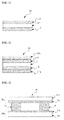
- Fig. 1 is a side-sectional view of an adhesive film 10 according to one embodiment of the present invention.
- the adhesive film 10 includes a base film 11; and adhesive layers 12 formed on both sides of the base film 11.
- the adhesive film shown in Fig. 1 is provided only as an illustrative example. That is, in the adhesive film according to this embodiment, an adhesive layer may be formed on only one side of the base film, or only a sheet of adhesive layer may be provided without a base film, as needed.
- the adhesive composition or a coating solution prepared using the same is applied to a proper substrate using a general instrument, e.g., a bar coater, and cured, thereby preparing an adhesive layer.
- a general instrument e.g., a bar coater
- Curing may be carried out after volatile components or reaction residues are completely removed from the adhesive composition or the coating solution so as not to cause formation of bubbles. Accordingly, a decrease in elastic modulus of the adhesive due to too low a crosslink density or molecular weight may be prevented. Further, it is possible to prevent formation of bubbles between adhesive layers, which can grow into scattering objects.
- curing may be carried out by properly heating the coating layer or aging the coating layer under predetermined conditions.
- the adhesive layers have a thickness of 20 to 150 ⁇ m, preferably 20 to 100 ⁇ m. Within this range, the adhesive film may be applied to a thin touch panel or touchscreen, and has excellent chemical resistance, adhesion, wettability, resistance maintenance, and corrosion resistance for electrodes.
- the base film there is no particular restriction as to the kind of the base film.
- any plastic film commonly used in the art may be used.
- examples of the base film include a PET film, a polytetrafluoroethylene film, a polyethylene film, a polypropylene film, a polybutene film, a polybutadiene film, a vinyl chloride copolymer film, a polyurethane film, an ethylene-vinyl acetate film, an ethylene-propylene copolymer film, an ethylene-ethyl acetate copolymer film, an ethylene-methyl acetate copolymer film, or a polyimide film.
- a PET film is used, without being limited thereto.
- the base film has a thickness of 5 to 50 ⁇ m, preferably 10 to 30 ⁇ m. Within this range, the adhesive film can not only be applied to a thin touch panel or touchscreen but have excellent chemical resistance, adhesion, wettability, resistance maintenance, and corrosion resistance for an electrode.
- the adhesive film of the present invention may further include a release film formed on the adhesive layers as necessary.
- Fig. 2 is a side-sectional view of an adhesive film 20 according to another embodiment of the present invention.
- the adhesive film 20 includes a base film 11; adhesive layers 12 formed on both sides of the base film 11; and release films 2 1 a, 21b formed on the adhesive layers 12.
- a release film there is no particular restriction as to the kind of the release film.
- one side of various plastic films, used for the base film undergoes proper release treatment, thereby preparing a release film.
- examples of a releasing agent used for release treatment may include alkyd, silicone, fluorine, unsaturated ester, polyolefin, or wax release agents.
- alkyd, silicone, and fluorine release agents may be used in terms of heat resistance, without being limited thereto.
- the release film may have any thickness, which may be adjusted properly depending on purposes.
- the release film has a thickness of 10 to 100 ⁇ m, preferably 30 to 90 ⁇ m, and more preferably 40 to 80 ⁇ m
- a further aspect of the present invention provides a touch panel, which includes an upper conductive film having a conductive layer formed on one surface thereof; a lower conductive film having a conductive layer formed on one surface thereof to be separated from the conductive layer of the upper conductive film while facing each other; and an adhesive layer formed on each of edges of the upper and lower conductive films to bond the films and including the cured product of the adhesive composition according to the present invention.
- the touch panel may have any structure so long as the adhesive composition according to the present invention is applied to the touch panel.
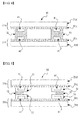
- Fig. 3 shows a touch panel according to one embodiment of the invention.
- a touch panel 30 includes two sheets of conductive films 31a, 31b, each of which has a conductive layer 31c and is stacked via an adhesive layer 12 such that surfaces having the conductive layers 31c face each other and are separated from each other.
- the adhesive layers 12 are attached to the conductive layers 31c on edges of the conductive films 31a, 31b.
- the conductive film may be a transparent plastic film having an ITO electrode layer on one surface thereof.
- the transparent plastic film may include PET films, polytetrafluoroethylene films, polyethylene films, polypropylene films, polybutene films, polybutadiene films, vinyl chloride copolymer films, polyurethane films, ethylene-vinyl acetate films, ethylene-propylene copolymer films, ethylene-ethyl acetate copolymer films, ethylene-methyl acetate copolymer films, or polyimide films.
- a PET film may be used, without being limited thereto.
- Fig. 4 shows a touch panel 40 according to another embodiment of the present invention.
- the touch panel 40 may further include electrode layers 41 formed on conductive layers 31c of conductive films 31a, 31b.
- the electrode layers 41 may be formed on edges of the conductive layers 31c of the conductive films 31a, 31b.
- Adhesive layers 12 may bond the conductive films 31a, 3b, sealing the electrode layers 41 therein.
- the electrode layers may be formed of silver (Ag) paste.
- Fig. 5 shows a touch panel according to a further embodiment of the present invention.
- electrode layers 41 are formed on conductive layers 31 c, show in Fig. 4 , and may be sealed by insulating layers 51.
- adhesive layers 12 are attached to the insulating layers 51 sealing the electrode layers 41, and thus two sheets of conductive films 31a, 31b are disposed to face each other.
- there is no particular restriction as to a material of the insulating layers and any material generally known in the art may be used.
- a monomer mixture including 65 parts by weight of ethylhexyl acrylate (EHA), 25 parts by weight of methyl acrylate (MA), and 10 parts by weight of hydroxybutyl acrylate (HBA) was put into a 1L reactor equipped with a reflux condenser for supply of nitrogen gas and for easy temperature adjustment, and ethyl acetate (EAc) as a solvent was added thereto. Then, after oxygen was purged from the reactor with nitrogen gas for 1 hour, the mixture was evenly stirred while maintaining temperature at 62°C, followed by addition of 0.03 parts by weight of azobisisobutyronitrile (AIBN) diluted with ethyl acetate to 50% as a reaction initiator. Subsequently, the mixture was reacted for about 8 hours, thereby preparing an acrylic resin (A) having a weight average molecular weight of 1,500,000 and a glass transition temperature of -30°C.
- EHA ethylhexyl acrylate
- Acrylic resins (B) and (C) were prepared in the same manner as in Preparative Example 1 except that the monomers were added according to compositions listed in Table 1. TABLE 1 Preparative Example 1 Preparative Example 2 Preparative Example 3 Acrylic resin (A) Acrylic resin (B) Acrylic resin (C) Monomer Composition (parts by weight) EHA 65 85 65 MA 25 5 25 AA 10 10 10 Mw (million) 1.5 2 0.7 Tg (°C) -30 -55 -30 EHA: Ethylhexyl acrylate MA: Methacrylate AA: Acrylic acid Mw: Molecular weight Tg: Glass transition temperature
- Adhesive films were prepared in the same manner as in Example 1 except that adhesive compositions were prepared according to compositions listed in Table 1. TABLE 2 Example Comparative Example 1 2 1 2 Acrylic resin Kind A B C C Content 100 100 100 100 Crosslinking agent 0.4 0.4 0.4 0.8 Silane coupling agent 0.2 0.2 0.2 0.2 Crosslinking agent: Bifunctional aziridine crosslinking agent Unit of amount: Parts by weight
- the adhesives prepared in the examples and the comparative examples were stored in a constant temperature and humidity room (23°C, 60 %RH) for about 7 days. Then, 0.3 g of each adhesive was put in 200-mesh stainless wire mesh, deposited in 100 mL of ethyl acetate, and stored in a dark room at room temperature for 48 hours. An insoluble fraction was separated and dried in an oven at 120°C for 4 hours, followed by measuring the dry mass thereof. Then, each measurement result was substituted into Equation 3 to calculate the gel content.
- Each of the adhesive films prepared in the examples and the comparative examples was cut into a 1 in x 1 in x 72 ⁇ m (width x length x thickness) piece. After removing the release film, one side of the adhesive film was attached to an ITO surface of a PET film and the other side thereof was attached to an SUS surface. Here, attaching the adhesive film was carried out by rolling a 5 kg roller back and forth five times according to ASTM D1002. Subsequently, the adhesive film was left at room temperature for 24 hours and then evaluated as to high temperature shear strength in a 100°C oven at a crosshead speed of 5 mm/min using a universal testing machine (UTM, Zwick).
- UPM universal testing machine
- each of the adhesive films prepared in the examples and the comparative examples was cut into a 4 cm x 10 cm (width x length) piece.
- a 3.4 cm x 9.4 cm (width x length) central portion was removed from the 4 cm x 10 cm adhesive film, thereby preparing the adhesive film having a 3 mm-thick edge.
- the adhesive film was placed between two sheets of conductive PET films 31a and 31b having ITO layers 31c respectively formed on one surfaces thereof, shown in Fig. 3 , thereby preparing a TSP.
- the adhesive films according to the examples of the present invention exhibited excellent chemical resistance, such as resistance to sebum.
- the adhesive films according to Comparative Examples 1 and 2 which have gel contents and/or high temperature shear strength values not in the range of the present invention, exhibited unsatisfactory chemical resistance.
Landscapes
- Engineering & Computer Science (AREA)
- Chemical & Material Sciences (AREA)
- Organic Chemistry (AREA)
- General Engineering & Computer Science (AREA)
- Theoretical Computer Science (AREA)
- Human Computer Interaction (AREA)
- Physics & Mathematics (AREA)
- General Physics & Mathematics (AREA)
- Adhesives Or Adhesive Processes (AREA)
- Adhesive Tapes (AREA)
Abstract
Description
- The present invention relates to an adhesive composition for a touch panel, an adhesive film, and a touch panel.
- Recently, the market for electronic devices, such as personal digital assistants (PDAs), terminals for mobile communications, and automotive navigation systems, has been growing. Such electronic devices are moving towards slimness, lightness, low-power consumption, high resolution, and high brightness.
- In particular, an electronic device having a touchscreen or a touch panel switch as an input unit include a transparent conductive plastic film to achieve weight reduction while preventing breakage. For example, a polyethylene terephthalate (PET) base film having a conductive layer of indium tin oxide (ITO) stacked on one side thereof is stacked on a conductive glass, a reinforcing material or a decorative film via an adhesive layer.
- An adhesive layer for attaching a transparent conductive film in a touchscreen or touch panel needs to have various physical properties, such as surface leveling performance for relieving an uneven surface due to a decorative film, durability for suppressing generation of curls or bubbles when exposed to severe conditions, e.g., high temperature or high humidity, cuttability for preventing the adhesive from sticking out or from being squashed when cut, and excellent adhesion or wettability to various adherends. Further, since a touch panel or touchscreen is frequently touched by the body, such as the hand or the face, in use, the adhesives also need to have resistance to sebum produced in the body, i.e., chemical resistance.
- The present invention is directed to an adhesive composition for a touch panel, an adhesive film, and a touch panel.
- One aspect of the present invention provides an adhesive composition for a touch panel, which includes an acrylic resin and a polyfunctional crosslinking agent and satisfies the following Equations 1 and 2:


where X1 represents a gel content of an adhesive that is a cured product of the adhesive composition, and X2 represents high temperature shear strength of the adhesive measured as follows: with one side of the adhesive attached to an ITO surface of a PET film and the other side thereof attached to a stainless steel (SUS) surface, the adhesive is left at room temperature for 24 hours, followed by measurement of shear strength at a high temperature of 100°C and a crosshead speed of 5 mm/min. - Another aspect of the present invention provides an adhesive film for a touch panel including a base film; and an adhesive layer formed on one or both sides of the base film and comprising a cured product of the adhesive composition according to the present invention.
- A further aspect of the present invention provides a touch panel including an upper conductive film having a conductive layer formed on one surface thereof; a lower conductive film having a conductive layer formed on one surface thereof to be separated from the conductive layer of the upper conductive film while facing each other; and an adhesive layer comprising a cured product of the adhesive composition according to the present invention and formed on each of edges of the upper and lower conductive films to bond the conductive films to each other.
- According to the present invention, adhesives for a touch panel exhibit excellent chemical resistance, excellent durability under high-temperature or high-humidity conditions, and superior wettability and adhesion to various adherends. In addition, the adhesives according to the present invention may maintain excellent resistance of a conductive layer while effectively preventing corrosion of electrodes when applied to a touch panel.
-
-
Fig. 1 is a side-sectional view of an adhesive film according to one embodiment of the present invention; -
Fig. 2 is a side-sectional view of an adhesive film according to another embodiment of the present invention; -
Fig. 3 is a view of a touch panel according to one embodiment of the present invention; -
Fig. 4 is a view of a touch panel according to another embodiment of the present invention; and -
Fig. 5 is a view of a touch panel according to a further embodiment of the present invention. - In one aspect, the present invention provides an adhesive composition for a touch panel, which includes an acrylic resin and a polyfunctional crosslinking agent and satisfies the following Equations 1 and 2:


where X1 is a gel content of an adhesive that is a cured product of the adhesive composition, and X2 is high temperature shear strength of the adhesive measured as follows: with one side of the adhesive attached to an ITO surface of a PET film and the other side thereof attached to a stainless steel (SUS) surface, the adhesive is left at room temperature for 24 hours, followed by measurement of shear strength at a high temperature of 100°C and a crosshead speed of 5 mm/min. - Next, the adhesive composition for a touch panel according to one embodiment of the present invention will be described in detail.
- The adhesive composition includes an acrylic resin and a polyfunctional crosslinking agent and has a gel content which satisfies Equation 1. In the present invention, the gel content (X1) may be calculated by Equation 3:

where A is the mass of the adhesive, and B is the dry mass of an insoluble fraction of the adhesive obtained by depositing the adhesive in ethyl acetate at room temperature for 48 hours, taking the insoluble fraction, and removing ethyl acetate from the insoluble fraction. - Specifically, the gel content may be measured as follows.
- First, an adhesive is prepared using the adhesive composition according to the present invention, and a predetermined mass (A) of the adhesive is taken. Then, the adhesive is deposited in ethyl acetate at room temperature for 48 hours, after which an insoluble fraction of the adhesive is collected. Then, the insoluble fraction is dried under appropriate conditions to remove ethyl acetate, followed by measuring the mass of the insoluble fraction (as dry mass (B)). The obtained masses are substituted into Equation 3, thereby calculating the gel content. The conditions for drying the insoluble fraction to measure the dry mass are not particularly limited so long as ethyl acetate contained in the insoluble fraction can be thoroughly removed.
- The adhesive produced from the adhesive composition according to the present invention has a gel content of 55% or less, preferably 50% or less, more preferably 45% or less, and still more preferably 30% or less. If the gel content of the adhesive is 55% or less, the adhesive can have excellent wettability or adhesion to a variety of adherends, maintain resistance of a conductive layer, and have superior chemical resistance, such as corrosion resistance and sebum resistance of an electrode layer, particularly when applied to a touch panel.
- Although a lower limit of the gel content is not particularly defined, the adhesive may have a gel content of 5% or more, preferably 10% or more.
- The adhesive composition satisfies Equation 2. That is, the adhesive according to the present invention has a high temperature shear strength value of 20 Kg/in2 or more, preferably 25 Kg/in2, at 100°C.
- In the present invention, there is no particular restriction as to a method of measuring the high temperature shear strength of the adhesive. For example, the high temperature shear strength may be measured as follows. First, an adhesive is prepared from the adhesive composition according to the present invention and cut into a 1 in x 1 in (width x length) piece, thus preparing a sample. One side of the sample is attached to an ITO surface of a PET film and the other side thereof is attached to an SUS surface, after which the sample is left at room temperature for 24 hours. Then, the high temperature shear strength of the sample is measured in a 100°C oven at a crosshead speed of 5 mm/min using a universal testing machine (UTM, Zwick). Specifically, the high temperature shear strength may be evaluated according to a process descried below in the following examples of the specification.
- If the adhesive has a high temperature shear strength value of 20 Kg/in2 or more, the adhesive can have excellent wettability or adhesion to a variety of adherends, maintain resistance of a conductive layer, and have superior chemical resistance, such as corrosion resistance and sebum resistance of an electrode layer, particularly when applied to a touch panel.
- According to the present invention, an upper limit of the high temperature shear strength may be, without being particularly limited to, for example, 70 Kg/in2 or lower, preferably 60 Kg/in2 or lower, and more preferably 50 Kg/in2 or lower.
- In some embodiments, the acrylic resin has a weight average molecular weight of 1,000,000 or more, preferably 1,500,000. According to the present invention, the weight average molecular weight is obtained based on polystyrene conversion in GPC (Gel Permeation Chromatography). If the acrylic resin has a weight average molecular weight of 1,000,000 or more, the adhesive can have excellent durability under high-temperature or high-humidity conditions and does not contaminate an adherend in re-peeling.
- In the present invention, an upper limit of the weight average molecular weight of the acrylic resin may be, without being particularly limited to, 3,000,000 or lower, preferably 2,500,000 or lower in view of coatability.
- Further, the acrylic resin has a glass transition temperature of -60°C or more, preferably -55°C or more. If the acrylic resin has a glass transition temperature of -60°C or more, the adhesive can have excellent physical properties overall including wettability and adhesion to various adherends.
- An upper limit of the glass transition temperature of the acrylic resin is, without being particularly limited to, for example, -10°C or lower, preferably -20°C or lower.
- There is no particular restriction as to the composition of the acrylic resin. For example, the acrylic resin may be a polymer of a monomer mixture including a (meth)acrylic acid ester monomer and a crosslinking monomer.
- In the present invention, there is no particular restriction as to the kind of the (meth)acrylic acid ester monomer, which may include, for example, alkyl (meth)acrylates. In this case, when too long an alkyl group is included in the monomer, cohesion of the cured product can decrease and the glass transition temperature or tack of the cured product cannot properly be adjusted. Thus, alkyl (meth)acrylates having a C1 to C14, preferably C1 to C8 alkyl group, are used. Examples of such monomers may include methyl (meth)acrylate, ethyl (meth)acrylate, n-propyl (meth)acrylate, isopropyl (meth)acrylate, n-butyl (meth)acrylate, t-butyl (meth)acrylate, sec-butyl (meth)acrylate, pentyl (meth)acrylate, 2-ethylhexyl (meth)acrylate, 2-ethylbutyl (meth)acrylate, n-octyl (meth)acrylate, isooctyl (meth)acrylate, isobornyl (meth)acrylate, and isononyl methacrylate, which may be used alone or as mixtures.
- In the present invention, the crosslinking monomer included in the monomer mixture is a monomer including both a copolymerizable functional compound (e.g., carbon-carbon double bond) and a crosslinking functional compound in the molecular structure, and may provide a polymer containing a crosslinking functional compound reacting with the polyfunctional crosslinking agent.
- Available examples of the crosslinking monomer may include a hydroxyl group containing monomer, a carboxylic group containing monomer, and a nitrogen containing monomer, which may be used alone or as mixtures. Examples of the hydroxyl group containing monomer may include 2-hydroxyethyl (meth)acrylate, 2-hydroxypropyl (meth)acrylate, 4-hydroxybutyl (meth)acrylate, 6-hydroxyhexyl (meth)acrylate, 8-hydroxyoctyl (meth)acrylate, 2-hydroxyethylene glycol (meth)acrylate, or 2-hydroxypropylene glycol (meth)acrylate, without being limited thereto. Examples of the carboxylic group containing monomer may include acrylic acid, methacrylic acid, 2-(meth)acryloyloxy acetic acid, 3-(meth)acryloyloxy propyl acid, 4-(meth)acryloyloxy butyl acid, an acrylic acid dimer, itaconic acid, or maleic acid, without being limited thereto. Examples of the nitrogen containing monomer may include 2-isocyanatoethyl (meth)acrylate, 3-isocyanatopropyl (meth)acrylate, 4-isocyanatobutyl (meth)acrylate, (meth)acryl amide, N-vinylpyrrolidone, or N-vinylcaprolactam, without being limited thereto.
- In the present invention, the monomer mixture includes 80 to 99.9 parts by weight of the (meth)acrylic acid ester monomer and 0.1 to 20 parts by weight of the crosslinking monomer, preferably 90 to 99.9 parts by weight of the (meth)acrylic acid ester monomer and 0.1 to 20 parts by weight of the crosslinking monomer. Within this range, the adhesive may have excellent reliability, treatment, durability, and re-peeling property and be effectively prevented from separating or peeling due to decrease in initial adhesive strength.
- Unless otherwise indicated in the specification, "parts by weight" denotes "ratio by weight."
- In the present invention, the monomer mixture may further include a comonomer represented by Formula 1 in order to impart glass transition temperature adjustment performance and other functions:

- In R1 to R5 in Formula 1, alkyl or alkoxy is C1 to C8 alkyl or alkoxy, preferably methyl, ethyl, methoxy, ethoxy, propoxy, or butoxy.
- Available examples of the monomer represented by Formula 1 may include, without being limited to, a nitrogen containing monomer, such as (meth)acrylonitrile, N-methyl (meth)acrylamide or N-butoxymethyl (meth)acrylamide; styrene monomers, such as styrene or methyl styrene; glycidyl (meth)acrylate; and carboxylic acid vinyl esters, such as vinyl acetate, which may be used alone or as mixtures. When the comonomer is added to the monomer mixture, the comonomer may be present in an amount of 20 parts by weight or less based on the amount of the (meth)acrylic acid ester monomer or the crosslinking monomer. If the amount of comonomer is greater than 20 parts by weight, flexibility and/or peeling strength of the adhesive may deteriorate.
- In the present invention, there is no particular restriction as to a method of producing an acrylic resin by polymerizing the monomer mixture including the foregoing ingredients. For example, a general polymerization method, such as solution polymerization, photo-polymerization, bulk polymerization, suspension polymerization, or emulsion polymerization, may be used. In the present invention, solution polymerization is preferably used to prepare the acrylic resin in view of transparency, water resistance, and cost, without being limited thereto.
- The adhesive composition according to the present invention includes the polyfunctional crosslinking agent, and cohesion or adhesion of the cured product may be adjusted based on the amount of the polyfunctional crosslinking agent.
- There is no particular restriction as to the kind of the polyfunctional crosslinking agent to be used in the present invention. For example, the polyfunctional crosslinking agent may include common crosslinking agents, such as isocyanate compounds, epoxy compounds, aziridine compounds, and chelating agents. Examples of the isocyanate compound may include at least one selected from the group consisting of tolylene diisocyanate, xylene diisocyanate, diphenylmethane diisocyanate, hexamethylene diisocyanate, isophorone diisocyanate, tetramethylxylene diisocyanate, naphthalene diisocyanate, and adducts of at least one of these isocyanate compounds and a polyol (e.g., trimethylolpropane). Examples of the epoxy compounds may include at least one selected from the group consisting of ethylene glycol diglycidyl ether, triglycidyl ether, trimethylolpropane triglycidyl ether, N,N,N',N'-tetraglycidyl ethylene diamine, and glycerin diglycidyl ether. Examples of the aziridine compounds may include at least one selected from the group consisting of N,N'-toluene-2,4-bis(1-aziridinecarboxamide), N,N'-diphenylmethane-4,4'-bis(1-aziridinecarboxamide), triethylenemelamine, bisisophthaloyl-1-(2-methylaziridine), and tri-1-aziridinylphosphine oxide. Examples of the metal chelate compounds may include compounds obtained by coordinating acetylacetone or ethyl acetoacetate with polyvalent metal, such as aluminum, iron, zinc, tin, titanium, antimony, magnesium, and/or vanadium, without being limited thereto.
- The polyfunctional crosslinking agent is present in an amount of 0.01 to 10 parts by weight, preferably 0.01 to 5 parts by weight, based on 100 parts by weight of the acrylic resin. If the amount of the crosslinking agent is less than 0.01 parts by weight, cohesion of the cured product can be deteriorate, causing bubbles under high-temperature conditions. If the amount of the crosslinking agent is greater than 10 parts by weight, the adhesive is excessively cured, causing decrease in adhesive strength and peeling strength. Thus, peeling or separation between layers can occur, thereby reducing durability.
- The adhesive composition according to the present invention may further include a silane coupling agent. The silane coupling agent enhances adhesion and adhesive stability of the cured product to an adherend, thus improving heat resistance and moisture resistance, and enhancing adhesive reliability when the cured product is left for a long time under high-temperature and/or high-humidity conditions.
- There is no particular restriction as to the kind of the silane coupling agent, and examples of the silane coupling agent may include γ-glycidoxypropyltrimethoxysilane, γ-glycidoxypropylmethyldiethoxysilane, γ-glycidoxypropyltriethoxysilane, 3-mercaptopropyltrimethoxysilane, vinyltrimethoxysilane, vinyltriethoxysilane, γ-methacryloxypropyltrimethoxysilane, γ-methacryloxypropyltriethoxysilane, γ-aminopropyltrimethoxysilane, γ-aminopropyltriethoxysilane, 3-isocyanatopropyltriethoxysilane, and γ-acetoacetatetripropyltrimethoxysilane, which may be used alone or as mixtures.
- The silane coupling agent may be present in an amount of 0.005 to 5 parts by weight based on 100 parts by weight of the acrylic resin. If the amount of the silane coupling agent is less than 0.005 parts by weight, tack increase can be insignificant. If the amount of the silane coupling agent is greater than 5 parts by weight, bubbles or peeling of the adhesive can occur, thereby deteriorating durability.
- The adhesive composition according to the present invention may further include a tackifier in order to adjust tack performance.
- Examples of the tackifier may include, without being particularly limited to, for example, hydrocarbon resins or hydrogenated products thereof; rosins or hydrogenated products thereof; rosin esters or hydrogenated products thereof; terpene resins or hydrogenated products thereof; terpene phenolic resins or hydrogenated products thereof; and polymerized rosins or polymerized rosin esters, which may be used alone or as mixtures.
- The tackifier may be present in an amount of 1 to 100 parts by weight based on 100 parts by weight of the acrylic resin. If the amount of the tackifier is less than 1 part by weight, the tackifier does not work properly. If the amount of the tackifier is greater than 100 parts by weight, improvement in compatibility and/or cohesion becomes insignificant.
- The acrylic adhesive composition according to the present invention may further include at least one additive selected from the group consisting of epoxy resins, crosslinking agents, UV stabilizers, antioxidants, toning agents, reinforcing agents, fillers, antifoaming agents, surfactants, and plasticizers so long as the additives do not affect aspects of the present invention.
- Another aspect of the present invention provides an adhesive film for a touch panel, which includes a base film; and an adhesive layer formed on one or both sides of the base film and including a cured product of the adhesive composition according to the present invention.
-
Fig. 1 is a side-sectional view of anadhesive film 10 according to one embodiment of the present invention. As shown inFig. 1 , theadhesive film 10 includes abase film 11; andadhesive layers 12 formed on both sides of thebase film 11. However, the adhesive film shown inFig. 1 is provided only as an illustrative example. That is, in the adhesive film according to this embodiment, an adhesive layer may be formed on only one side of the base film, or only a sheet of adhesive layer may be provided without a base film, as needed. - There is no particular restriction as to a method of manufacturing the adhesive layers by curing the adhesive composition. In some embodiments, the adhesive composition or a coating solution prepared using the same is applied to a proper substrate using a general instrument, e.g., a bar coater, and cured, thereby preparing an adhesive layer.
- Curing may be carried out after volatile components or reaction residues are completely removed from the adhesive composition or the coating solution so as not to cause formation of bubbles. Accordingly, a decrease in elastic modulus of the adhesive due to too low a crosslink density or molecular weight may be prevented. Further, it is possible to prevent formation of bubbles between adhesive layers, which can grow into scattering objects.
- There is no particular restriction as to a method of curing the adhesive composition or the coating solution. For example, curing may be carried out by properly heating the coating layer or aging the coating layer under predetermined conditions.
- In the adhesive film, the adhesive layers have a thickness of 20 to 150 µm, preferably 20 to 100 µm. Within this range, the adhesive film may be applied to a thin touch panel or touchscreen, and has excellent chemical resistance, adhesion, wettability, resistance maintenance, and corrosion resistance for electrodes.
- There is no particular restriction as to the kind of the base film. For example, any plastic film commonly used in the art may be used. In the present invention, examples of the base film include a PET film, a polytetrafluoroethylene film, a polyethylene film, a polypropylene film, a polybutene film, a polybutadiene film, a vinyl chloride copolymer film, a polyurethane film, an ethylene-vinyl acetate film, an ethylene-propylene copolymer film, an ethylene-ethyl acetate copolymer film, an ethylene-methyl acetate copolymer film, or a polyimide film. Preferably, a PET film is used, without being limited thereto.
- In the adhesive film, the base film has a thickness of 5 to 50 µm, preferably 10 to 30 µm. Within this range, the adhesive film can not only be applied to a thin touch panel or touchscreen but have excellent chemical resistance, adhesion, wettability, resistance maintenance, and corrosion resistance for an electrode.
- The adhesive film of the present invention may further include a release film formed on the adhesive layers as necessary.
-
Fig. 2 is a side-sectional view of anadhesive film 20 according to another embodiment of the present invention. As shown inFig. 2 , theadhesive film 20 includes abase film 11;adhesive layers 12 formed on both sides of thebase film 11; and release films 2 1 a, 21b formed on the adhesive layers 12. - There is no particular restriction as to the kind of the release film. In the present invention, for example, one side of various plastic films, used for the base film, undergoes proper release treatment, thereby preparing a release film. In this case, examples of a releasing agent used for release treatment may include alkyd, silicone, fluorine, unsaturated ester, polyolefin, or wax release agents. In particular, alkyd, silicone, and fluorine release agents may be used in terms of heat resistance, without being limited thereto.
- The release film may have any thickness, which may be adjusted properly depending on purposes. For example, the release film has a thickness of 10 to 100 µm, preferably 30 to 90 µm, and more preferably 40 to 80 µm
- A further aspect of the present invention provides a touch panel, which includes an upper conductive film having a conductive layer formed on one surface thereof; a lower conductive film having a conductive layer formed on one surface thereof to be separated from the conductive layer of the upper conductive film while facing each other; and an adhesive layer formed on each of edges of the upper and lower conductive films to bond the films and including the cured product of the adhesive composition according to the present invention.
- The touch panel may have any structure so long as the adhesive composition according to the present invention is applied to the touch panel.
-
Fig. 3 shows a touch panel according to one embodiment of the invention. - Referring to
Fig. 3 , atouch panel 30 includes two sheets ofconductive films conductive layer 31c and is stacked via anadhesive layer 12 such that surfaces having theconductive layers 31c face each other and are separated from each other. In this case, as shown inFig. 3 , theadhesive layers 12 are attached to theconductive layers 31c on edges of theconductive films - There is no particular restriction as to the kind of the conductive film, and any conductive film in the art may be used. For example, the conductive film may be a transparent plastic film having an ITO electrode layer on one surface thereof.
- Examples of the transparent plastic film may include PET films, polytetrafluoroethylene films, polyethylene films, polypropylene films, polybutene films, polybutadiene films, vinyl chloride copolymer films, polyurethane films, ethylene-vinyl acetate films, ethylene-propylene copolymer films, ethylene-ethyl acetate copolymer films, ethylene-methyl acetate copolymer films, or polyimide films. In particular, a PET film may be used, without being limited thereto.
-
Fig. 4 shows atouch panel 40 according to another embodiment of the present invention. As shown inFig. 4 , thetouch panel 40 may further include electrode layers 41 formed onconductive layers 31c ofconductive films Fig. 4 , the electrode layers 41 may be formed on edges of theconductive layers 31c of theconductive films conductive films 31a, 3b, sealing the electrode layers 41 therein. In this embodiment, there is no particular restriction as to a composition of the electrode layers. For example, the electrode layers may be formed of silver (Ag) paste. -
Fig. 5 shows a touch panel according to a further embodiment of the present invention. In thetouch panel 50 shown inFig. 5 , electrode layers 41 are formed onconductive layers 31 c, show inFig. 4 , and may be sealed by insulatinglayers 51. In this case,adhesive layers 12 are attached to the insulatinglayers 51 sealing the electrode layers 41, and thus two sheets ofconductive films - Next, the present invention will be explained in more detail with reference to examples and comparative examples. These examples are provided for illustrative purposes only and are not to be in any way construed as limiting the present invention.
- A monomer mixture including 65 parts by weight of ethylhexyl acrylate (EHA), 25 parts by weight of methyl acrylate (MA), and 10 parts by weight of hydroxybutyl acrylate (HBA) was put into a 1L reactor equipped with a reflux condenser for supply of nitrogen gas and for easy temperature adjustment, and ethyl acetate (EAc) as a solvent was added thereto. Then, after oxygen was purged from the reactor with nitrogen gas for 1 hour, the mixture was evenly stirred while maintaining temperature at 62°C, followed by addition of 0.03 parts by weight of azobisisobutyronitrile (AIBN) diluted with ethyl acetate to 50% as a reaction initiator. Subsequently, the mixture was reacted for about 8 hours, thereby preparing an acrylic resin (A) having a weight average molecular weight of 1,500,000 and a glass transition temperature of -30°C.
- Acrylic resins (B) and (C) were prepared in the same manner as in Preparative Example 1 except that the monomers were added according to compositions listed in Table 1.
TABLE 1 Preparative Example 1 Preparative Example 2 Preparative Example 3 Acrylic resin (A) Acrylic resin (B) Acrylic resin (C) Monomer Composition (parts by weight) EHA 65 85 65 MA 25 5 25 AA 10 10 10 Mw (million) 1.5 2 0.7 Tg (°C) -30 -55 -30 EHA: Ethylhexyl acrylate MA: Methacrylate AA: Acrylic acid Mw: Molecular weight Tg: Glass transition temperature - 100 parts by weight of the acrylic resin (A) prepared in Preparative Example 1, 0.4 parts by weight of a bifunctional aziridine crosslinking agent as a polyfunctional crosslinking agent, and 0.2 parts by weight of a silane coupling agent (KBM 403, Shin-Etsu Chemical) were mixed into an adhesive composition, which was then diluted with a solvent, thereby preparing a coating solution. The coating solution was applied to a release-treated PET film (thickness: 75 µm) to a thickness of about 30 µm after drying. The product was dried at about 100°C for about 5 minutes or longer and then aged under suitable conditions, thereby forming an adhesive layer having a thickness of 30 µm. The adhesive layers were formed on both sides of a PET film with a thickness of 12 µm by pressing, thereby producing an adhesive film.
- Adhesive films were prepared in the same manner as in Example 1 except that adhesive compositions were prepared according to compositions listed in Table 1.
TABLE 2 Example Comparative Example 1 2 1 2 Acrylic resin Kind A B C C Content 100 100 100 100 Crosslinking agent 0.4 0.4 0.4 0.8 Silane coupling agent 0.2 0.2 0.2 0.2 Crosslinking agent: Bifunctional aziridine crosslinking agent Unit of amount: Parts by weight - Physical properties of the adhesive films prepared in the examples and the comparative examples were evaluated as follows.
- The adhesives prepared in the examples and the comparative examples were stored in a constant temperature and humidity room (23°C, 60 %RH) for about 7 days. Then, 0.3 g of each adhesive was put in 200-mesh stainless wire mesh, deposited in 100 mL of ethyl acetate, and stored in a dark room at room temperature for 48 hours. An insoluble fraction was separated and dried in an oven at 120°C for 4 hours, followed by measuring the dry mass thereof. Then, each measurement result was substituted into Equation 3 to calculate the gel content.
- Each of the adhesive films prepared in the examples and the comparative examples was cut into a 1 in x 1 in x 72 µm (width x length x thickness) piece. After removing the release film, one side of the adhesive film was attached to an ITO surface of a PET film and the other side thereof was attached to an SUS surface. Here, attaching the adhesive film was carried out by rolling a 5 kg roller back and forth five times according to ASTM D1002. Subsequently, the adhesive film was left at room temperature for 24 hours and then evaluated as to high temperature shear strength in a 100°C oven at a crosshead speed of 5 mm/min using a universal testing machine (UTM, Zwick).
- Chemical resistance of the adhesives was evaluated using a Touch Screen Panel (TSP) shown in
Fig. 3 . In detail, each of the adhesive films prepared in the examples and the comparative examples was cut into a 4 cm x 10 cm (width x length) piece. A 3.4 cm x 9.4 cm (width x length) central portion was removed from the 4 cm x 10 cm adhesive film, thereby preparing the adhesive film having a 3 mm-thick edge. After removing the release film, the adhesive film was placed between two sheets ofconductive PET films ITO layers 31c respectively formed on one surfaces thereof, shown inFig. 3 , thereby preparing a TSP. Then, artificial sebum (ESTASAN 3580, Kosher) was applied to a lateral side of the TSP using a brush. The TSP was stored in a constant temperature and humidity room (60°C, 90 %RH) for 150 hours. After taking the TSP out of the room, a 50 kg weight was placed on the TSP for 12 hours, followed by evaluating narrowing of a gap between the upperITO PET film 31a and the lowerITO PET film 31b by observation. -
- O: No narrowing
- X: Narrowing observed
- As seen from Table 3, the adhesive films according to the examples of the present invention exhibited excellent chemical resistance, such as resistance to sebum. However, the adhesive films according to Comparative Examples 1 and 2, which have gel contents and/or high temperature shear strength values not in the range of the present invention, exhibited unsatisfactory chemical resistance.
| Example | Comparative Example | |||
| 1 | 2 | 1 | 2 | |
| Gel content (%) | 52 | 35 | 50 | 85 |
| High temperature shear strength (Kg/in2) | 28 | 25 | 18 | 25 |
| Chemical resistance (100°C) | O | O | X | X |
Claims (15)
- An adhesive composition for a touch panel comprising an acrylic resin and a polyfunctional crosslinking agent, and satisfying the following Equations 1 and 2:


where X1 represents a gel content of an adhesive, which is a cured product of the adhesive composition, and X2 represents high temperature shear strength of the adhesive measured as follows: with one side of the adhesive attached to an ITO surface of a PET film and the other side thereof attached to a stainless steel (SUS) surface, the adhesive is left at room temperature for 24 hours, followed by measurement of shear strength at a high temperature of 100°C and a crosshead speed of 5 mm/min. - The adhesive composition according to claim 1, wherein the acrylic resin has a weight average molecular weight of 1,000,000 or more.
- The adhesive composition according to claim 1, wherein the acrylic resin has a glass transition temperature of -60°C or more.
- The adhesive composition according to claim 1, wherein the acrylic resin comprises a polymer of a monomer mixture comprising a (meth)acrylic acid ester monomer and a crosslinking monomer.
- The adhesive composition according to claim 4, wherein the crosslinking monomer comprises a hydroxyl group containing monomer, a carboxylic group containing monomer, or a nitrogen containing monomer.
- The adhesive composition according to claim 1, wherein the polyfunctional crosslinking agent comprises at least one selected from the group consisting of isocyanate compounds, epoxy compounds, aziridine compounds, and metal chelate compounds.
- The adhesive composition according to claim 1, wherein the polyfunctional crosslinking agent is present in an amount of 0.01 to 10 parts by weight based on 100 parts by weight of the acrylic resin.
- An adhesive film for a touch panel comprising:a base film; andan adhesive layer formed on one or both sides of the base film and comprising a cured product of the adhesive composition according to any one of claims 1 to 7.
- The adhesive film according to claim 8, wherein the adhesive layer has a thickness of 20 to 150 µm
- The adhesive film according to claim 8, wherein the base film comprises a polyethylene terephthalate (PET) film.
- The adhesive film according to claim 8, wherein the base film has a thickness of 5 to 50 µm.
- The adhesive film according to claim 8, further comprising a release film formed on the adhesive layer.
- A touch panel comprising:an upper conductive film having a conductive layer formed on one surface thereof;a lower conductive film having a conductive layer formed on one surface thereof to be separated from the conductive layer of the upper conductive film while facing each other; andan adhesive layer comprising a cured product of the adhesive composition according to any one of claims 1 to 7, the adhesive layer being formed on each of edges of the upper and lower conductive films to bond the conductive films to each other.
- The touch panel according to claim 13, further comprising: electrode layers formed on edges of the upper and lower conductive films and being disposed inside the adhesive layer bonding the conductive films.
- The touch panel according to claim 13, further comprising: electrode layers formed on edges of the upper and lower conductive films, and insulating layers sealing the electrode layers, wherein the adhesive layers bonding the conductive films are attached to the respective insulating layers.
Applications Claiming Priority (2)
| Application Number | Priority Date | Filing Date | Title |
|---|---|---|---|
| KR1020100031102A KR101552741B1 (en) | 2010-04-05 | 2010-04-05 | Pressure-sensitive adhesive composition for touch panel, pressure-sensitive adhesive film and touch panel |
| PCT/KR2011/002355 WO2011126262A2 (en) | 2010-04-05 | 2011-04-05 | Adhesive composition for a touch panel, adhesive film, and touch panel |
Publications (3)
| Publication Number | Publication Date |
|---|---|
| EP2557136A2 true EP2557136A2 (en) | 2013-02-13 |
| EP2557136A4 EP2557136A4 (en) | 2013-10-16 |
| EP2557136B1 EP2557136B1 (en) | 2014-10-08 |
Family
ID=44763385
Family Applications (1)
| Application Number | Title | Priority Date | Filing Date |
|---|---|---|---|
| EP11766113.2A Active EP2557136B1 (en) | 2010-04-05 | 2011-04-05 | Adhesive composition for a touch panel, adhesive film, and touch panel |
Country Status (7)
| Country | Link |
|---|---|
| US (1) | US20130015909A1 (en) |
| EP (1) | EP2557136B1 (en) |
| JP (1) | JP5789293B2 (en) |
| KR (1) | KR101552741B1 (en) |
| CN (1) | CN102822301B (en) |
| TW (1) | TWI440679B (en) |
| WO (1) | WO2011126262A2 (en) |
Cited By (2)
| Publication number | Priority date | Publication date | Assignee | Title |
|---|---|---|---|---|
| EP2644674A4 (en) * | 2010-11-24 | 2014-04-02 | Lg Hausys Ltd | ADHESIVE COMPOSITION FOR TOUCH PANEL, ADHESIVE FILM AND TOUCH PANEL |
| TWI635308B (en) * | 2015-11-30 | 2018-09-11 | 南韓商三星Sdi股份有限公司 | Adhesive film for polarizing plate, adhesive composition for polarizing plate, polarizing plate and optical display |
Families Citing this family (29)
| Publication number | Priority date | Publication date | Assignee | Title |
|---|---|---|---|---|
| US9336428B2 (en) | 2009-10-30 | 2016-05-10 | Synaptics Incorporated | Integrated fingerprint sensor and display |
| JP6022884B2 (en) * | 2011-10-14 | 2016-11-09 | 日東電工株式会社 | Double-sided adhesive tape |
| TWI471794B (en) * | 2011-10-20 | 2015-02-01 | Wintek Corp | Touch panel |
| US9785299B2 (en) | 2012-01-03 | 2017-10-10 | Synaptics Incorporated | Structures and manufacturing methods for glass covered electronic devices |
| KR101774211B1 (en) * | 2012-01-18 | 2017-09-04 | 미쯔비시 케미컬 주식회사 | Transparent double-sided adhesive sheet for image display device and image display device using same |
| TWI621681B (en) * | 2012-05-21 | 2018-04-21 | Lg化學股份有限公司 | Optical member, pressure-sensitive adhesive composition, and liquid crystal display |
| WO2014073896A1 (en) * | 2012-11-08 | 2014-05-15 | (주)인터플렉스 | Touch panel comprising pad electrode having protective layer |
| TWI497363B (en) * | 2012-12-26 | 2015-08-21 | G Tech Optoelectronics Corp | Touch structure and electronic device using same |
| JP5739941B2 (en) * | 2013-03-01 | 2015-06-24 | 東芝テック株式会社 | Sales data processing apparatus, program, and receipt information processing method |
| KR102064277B1 (en) * | 2013-08-12 | 2020-01-13 | 동우 화인켐 주식회사 | Preparing method for flexible touch screen panel |
| KR101883120B1 (en) | 2014-06-06 | 2018-07-27 | 쓰리엠 이노베이티브 프로퍼티즈 컴파니 | Polyurethane laminating adhesive composition |
| KR101892324B1 (en) * | 2014-09-30 | 2018-08-28 | 주식회사 엘지화학 | Adhesive composition for touch panel and adhesive film |
| KR101888720B1 (en) | 2014-09-30 | 2018-08-16 | 주식회사 엘지화학 | Adhesive composition for touch panel, adhesive film and touch panel |
| CN105093382A (en) * | 2015-09-25 | 2015-11-25 | 深圳市华星光电技术有限公司 | Polarizer |
| JP6153635B1 (en) * | 2016-01-28 | 2017-06-28 | 日東電工株式会社 | Adhesive sheet |
| KR102122602B1 (en) * | 2016-04-01 | 2020-06-16 | 주식회사 엘지화학 | The adhesive composition and the adhesive film |
| KR102109909B1 (en) * | 2016-04-01 | 2020-05-13 | 주식회사 엘지화학 | The adhesive composition and the adhesive film |
| KR102131180B1 (en) * | 2016-04-01 | 2020-07-08 | 주식회사 엘지화학 | The adhesive composition and the adhesive film |
| KR102119901B1 (en) * | 2016-04-06 | 2020-06-05 | 주식회사 엘지화학 | Photocurable adhesive composition, method for the same and adhesive film |
| KR102119902B1 (en) * | 2016-04-06 | 2020-06-05 | 주식회사 엘지화학 | Adhesive composition, method of producing the same and adhesive |
| KR102117568B1 (en) | 2017-02-28 | 2020-06-01 | 동우 화인켐 주식회사 | Window substrate and image display apparatus including the same |
| KR20180099210A (en) | 2017-02-28 | 2018-09-05 | 동우 화인켐 주식회사 | Window film, window film laminate and image display device comprising the same |
| KR20190044426A (en) | 2017-10-20 | 2019-04-30 | 주식회사 엘지화학 | Adhesive composition and adhesive film comprising the cured product thereof |
| KR102245934B1 (en) * | 2017-12-11 | 2021-04-29 | 주식회사 엘지화학 | Adhesive composition for foldable display and foldable display thereof |
| CN111742024B (en) * | 2018-03-27 | 2022-12-23 | 综研化学株式会社 | Adhesive tape |
| KR102642969B1 (en) * | 2018-03-27 | 2024-03-04 | 에스케이온 주식회사 | Bettery cell and fabricating method of the same |
| CN121129274A (en) * | 2019-11-26 | 2025-12-16 | 南洋理工大学 | Biosensor devices, methods for forming their composite electrode materials, and methods for using them |
| JP7395709B2 (en) * | 2020-03-05 | 2023-12-11 | 株式会社寺岡製作所 | Adhesive tape |
| CN111600592B (en) * | 2020-05-15 | 2023-06-23 | 业成科技(成都)有限公司 | Capacitive touch key |
Family Cites Families (30)
| Publication number | Priority date | Publication date | Assignee | Title |
|---|---|---|---|---|
| US4510197A (en) * | 1983-04-01 | 1985-04-09 | The Kendall Company | Water vapor permeable pressure sensitive adhesives incorporating modified acrylate copolymers |
| AU638480B2 (en) * | 1989-08-14 | 1993-07-01 | Avery Dennison Corporation | Emulsion pressure-sensitive adhesive polymers exhibiting excellent room- and low-temperature performance |
| JP2998874B2 (en) * | 1992-12-10 | 2000-01-17 | 日本カーバイド工業株式会社 | Multi-layer adhesive structure |
| US5817426A (en) * | 1996-12-04 | 1998-10-06 | Avery Dennison Corporation | Acrylic pressure-sensitive adhesives for low-energy surfaces and corrugated board |
| JP2003049143A (en) * | 2001-05-31 | 2003-02-21 | Soken Chem & Eng Co Ltd | Adhesive for optical film and optical film using the adhesive |
| JP3880418B2 (en) * | 2002-02-21 | 2007-02-14 | 日東電工株式会社 | Method for sticking and fixing double-sided adhesive sheet and touch panel to display device |
| JP4753196B2 (en) * | 2002-08-29 | 2011-08-24 | 綜研化学株式会社 | Optical member pressure-sensitive adhesive composition and optical member-use pressure-sensitive adhesive sheet using the pressure-sensitive adhesive composition |
| JP4555921B2 (en) * | 2003-06-30 | 2010-10-06 | 綜研化学株式会社 | Acrylic-based blister-resistant adhesive resin composition, transfer-film-like adhesive using the same, blister-resistant adhesive sheet and uses thereof |
| JP4740551B2 (en) * | 2004-03-30 | 2011-08-03 | リンテック株式会社 | Adhesive composition for discotic liquid crystal layer and optical functional film with viewing angle expansion function |
| JP5299804B2 (en) * | 2004-08-03 | 2013-09-25 | 綜研化学株式会社 | Adhesive sheet for attaching metal |
| JP4521522B2 (en) * | 2004-11-08 | 2010-08-11 | 綜研化学株式会社 | Optical member and manufacturing method thereof |
| JP4800632B2 (en) * | 2005-02-03 | 2011-10-26 | 日東電工株式会社 | Optical member pressure-sensitive adhesive composition, optical member pressure-sensitive adhesive layer, optical member with pressure-sensitive adhesive, and image display device |
| KR100784995B1 (en) * | 2005-09-05 | 2007-12-11 | 주식회사 엘지화학 | Acrylic Pressure-Sensitive Adhesive Composition for the Polarizing Film |
| KR100830814B1 (en) * | 2005-10-14 | 2008-05-20 | 주식회사 엘지화학 | Acrylic pressure-sensitive adhesive composition |
| JP5008870B2 (en) * | 2006-01-12 | 2012-08-22 | 日東電工株式会社 | Adhesive composition and adhesive sheet containing the same |
| JP5219359B2 (en) * | 2006-02-21 | 2013-06-26 | 日東電工株式会社 | Reflective and / or light-blocking adhesive tape or sheet and liquid crystal display device |
| JP2007238853A (en) * | 2006-03-10 | 2007-09-20 | Toyo Ink Mfg Co Ltd | Adhesive composition and adhesive film using the adhesive composition |
| KR100990673B1 (en) | 2006-11-01 | 2010-10-29 | 주식회사 엘지화학 | Acrylic adhesive composition for polarizing plates containing a photoinitiator group |
| JP2008120864A (en) | 2006-11-09 | 2008-05-29 | Dainippon Ink & Chem Inc | Double-sided pressure-sensitive adhesive sheet, touch panel module and manufacturing method thereof |
| JP5443696B2 (en) * | 2007-03-23 | 2014-03-19 | 日東電工株式会社 | Adhesive composition, adhesive layer and method for producing the same, and optical member with adhesive |
| JP5787463B2 (en) * | 2007-08-24 | 2015-09-30 | 日東電工株式会社 | Double-sided adhesive sheet for fixing hard disk drive components and hard disk drive |
| EP2033998B1 (en) * | 2007-09-06 | 2010-11-10 | Nitto Denko Corporation | Pressure sensitive adhesive composition, product using the same, and display using the product |
| JP2009079074A (en) * | 2007-09-25 | 2009-04-16 | Sekisui Chem Co Ltd | Adhesive and surface protective adhesive sheet using the same |
| JP5428158B2 (en) * | 2007-12-27 | 2014-02-26 | Dic株式会社 | Double-sided adhesive tape |
| JP5591477B2 (en) * | 2008-03-13 | 2014-09-17 | 日東電工株式会社 | Optical member pressure-sensitive adhesive composition, optical member pressure-sensitive adhesive layer, pressure-sensitive adhesive optical member, transparent conductive laminate, touch panel, and image display device |
| JP4661889B2 (en) * | 2008-03-17 | 2011-03-30 | 住友ベークライト株式会社 | Die attach film with dicing sheet function and method for manufacturing semiconductor device using the same |
| JP2009280776A (en) * | 2008-04-25 | 2009-12-03 | Toyo Ink Mfg Co Ltd | Pressure-sensitive adhesive composition and pressure-sensitive adhesive film |
| JP2010037502A (en) * | 2008-08-08 | 2010-02-18 | Toyo Ink Mfg Co Ltd | Pressure-sensitive adhesive composition and pressure-sensitive adhesive film |
| JP5544822B2 (en) * | 2009-10-28 | 2014-07-09 | 東洋インキScホールディングス株式会社 | Pressure-sensitive adhesive, method for producing resin for pressure-sensitive adhesive, and pressure-sensitive adhesive film |
| JP5589463B2 (en) * | 2010-03-17 | 2014-09-17 | 東洋インキScホールディングス株式会社 | Silane compound, pressure-sensitive adhesive, method for producing resin composition for adhesive, and optical pressure-sensitive adhesive film |
-
2010
- 2010-04-05 KR KR1020100031102A patent/KR101552741B1/en active Active
-
2011
- 2011-04-05 US US13/634,430 patent/US20130015909A1/en not_active Abandoned
- 2011-04-05 EP EP11766113.2A patent/EP2557136B1/en active Active
- 2011-04-05 WO PCT/KR2011/002355 patent/WO2011126262A2/en not_active Ceased
- 2011-04-05 CN CN201180016446.8A patent/CN102822301B/en active Active
- 2011-04-05 JP JP2013502503A patent/JP5789293B2/en active Active
- 2011-04-06 TW TW100111904A patent/TWI440679B/en active
Cited By (3)
| Publication number | Priority date | Publication date | Assignee | Title |
|---|---|---|---|---|
| EP2644674A4 (en) * | 2010-11-24 | 2014-04-02 | Lg Hausys Ltd | ADHESIVE COMPOSITION FOR TOUCH PANEL, ADHESIVE FILM AND TOUCH PANEL |
| TWI635308B (en) * | 2015-11-30 | 2018-09-11 | 南韓商三星Sdi股份有限公司 | Adhesive film for polarizing plate, adhesive composition for polarizing plate, polarizing plate and optical display |
| US10197718B2 (en) | 2015-11-30 | 2019-02-05 | Samsung Sdi Co., Ltd. | Adhesive film for polarizing plate, adhesive composition for polarizing plate for the same, polarizing plate comprising the same and optical display comprising the same |
Also Published As
| Publication number | Publication date |
|---|---|
| CN102822301A (en) | 2012-12-12 |
| KR101552741B1 (en) | 2015-09-11 |
| JP2013523940A (en) | 2013-06-17 |
| CN102822301B (en) | 2015-09-30 |
| WO2011126262A3 (en) | 2012-03-15 |
| JP5789293B2 (en) | 2015-10-07 |
| WO2011126262A2 (en) | 2011-10-13 |
| US20130015909A1 (en) | 2013-01-17 |
| TW201134898A (en) | 2011-10-16 |
| EP2557136A4 (en) | 2013-10-16 |
| TWI440679B (en) | 2014-06-11 |
| KR20110111826A (en) | 2011-10-12 |
| EP2557136B1 (en) | 2014-10-08 |
Similar Documents
| Publication | Publication Date | Title |
|---|---|---|
| EP2557136B1 (en) | Adhesive composition for a touch panel, adhesive film, and touch panel | |
| EP2557135B1 (en) | Adhesive composition, adhesive sheet, and touch panel | |
| EP2557486B1 (en) | Adhesive film for a touch panel, and touch panel | |
| EP2548932B1 (en) | Touch panel | |
| CN103270127B (en) | For the contact adhesive composition of touch panel | |
| EP2644676B1 (en) | Adhesive composition for touch panel, adhesive film, and touch panel | |
| CN103814346B (en) | Touch panel | |
| EP2735943B1 (en) | Touch panel | |
| JP6064937B2 (en) | Adhesive composition, adhesive polarizing plate and liquid crystal display device | |
| EP2617790A2 (en) | Adhesive composition for touch panel | |
| JPH09302321A (en) | Acrylic adhesive composition | |
| KR20070043558A (en) | Pressure-sensitive adhesive composition | |
| KR20120038633A (en) | Adhesive composition, polarizing plate and liquid crystal display device comprising the same | |
| WO2022163166A1 (en) | Acrylic pressure-sensitive adhesive sheet, acrylic pressure-sensitive adhesive composition, pressure-sensitive adhesive film, and flexible device | |
| US20140349055A1 (en) | Adhesive composition, adhesive sheet, and touch panel | |
| US20140329083A1 (en) | Adhesive film for touch panel and touch panel | |
| KR101698246B1 (en) | Conductive laminate | |
| KR101554434B1 (en) | Conductive laminate | |
| KR20240127021A (en) | Organometallic compound, adhesive composition and adhesive sheet | |
| KR20160026147A (en) | Conductive laminate |
Legal Events
| Date | Code | Title | Description |
|---|---|---|---|
| PUAI | Public reference made under article 153(3) epc to a published international application that has entered the european phase |
Free format text: ORIGINAL CODE: 0009012 |
|
| 17P | Request for examination filed |
Effective date: 20121004 |
|
| AK | Designated contracting states |
Kind code of ref document: A2 Designated state(s): AL AT BE BG CH CY CZ DE DK EE ES FI FR GB GR HR HU IE IS IT LI LT LU LV MC MK MT NL NO PL PT RO RS SE SI SK SM TR |
|
| DAX | Request for extension of the european patent (deleted) | ||
| A4 | Supplementary search report drawn up and despatched |
Effective date: 20130918 |
|
| RIC1 | Information provided on ipc code assigned before grant |
Ipc: C09J 9/00 20060101ALI20130912BHEP Ipc: C09J 5/00 20060101ALI20130912BHEP Ipc: G06F 3/041 20060101ALI20130912BHEP Ipc: C09J 133/08 20060101AFI20130912BHEP |
|
| 17Q | First examination report despatched |
Effective date: 20131010 |
|
| GRAP | Despatch of communication of intention to grant a patent |
Free format text: ORIGINAL CODE: EPIDOSNIGR1 |
|
| INTG | Intention to grant announced |
Effective date: 20140416 |
|
| GRAS | Grant fee paid |
Free format text: ORIGINAL CODE: EPIDOSNIGR3 |
|
| GRAA | (expected) grant |
Free format text: ORIGINAL CODE: 0009210 |
|
| AK | Designated contracting states |
Kind code of ref document: B1 Designated state(s): AL AT BE BG CH CY CZ DE DK EE ES FI FR GB GR HR HU IE IS IT LI LT LU LV MC MK MT NL NO PL PT RO RS SE SI SK SM TR |
|
| REG | Reference to a national code |
Ref country code: GB Ref legal event code: FG4D |
|
| REG | Reference to a national code |
Ref country code: AT Ref legal event code: REF Ref document number: 690595 Country of ref document: AT Kind code of ref document: T Effective date: 20141015 Ref country code: CH Ref legal event code: EP |
|
| REG | Reference to a national code |
Ref country code: IE Ref legal event code: FG4D |
|
| REG | Reference to a national code |
Ref country code: DE Ref legal event code: R096 Ref document number: 602011010488 Country of ref document: DE Effective date: 20141120 |
|
| REG | Reference to a national code |
Ref country code: NL Ref legal event code: VDEP Effective date: 20141008 |
|
| REG | Reference to a national code |
Ref country code: AT Ref legal event code: MK05 Ref document number: 690595 Country of ref document: AT Kind code of ref document: T Effective date: 20141008 |
|
| REG | Reference to a national code |
Ref country code: FR Ref legal event code: PLFP Year of fee payment: 5 |
|
| REG | Reference to a national code |
Ref country code: LT Ref legal event code: MG4D |
|
| PG25 | Lapsed in a contracting state [announced via postgrant information from national office to epo] |
Ref country code: NL Free format text: LAPSE BECAUSE OF FAILURE TO SUBMIT A TRANSLATION OF THE DESCRIPTION OR TO PAY THE FEE WITHIN THE PRESCRIBED TIME-LIMIT Effective date: 20141008 |
|
| PG25 | Lapsed in a contracting state [announced via postgrant information from national office to epo] |
Ref country code: NO Free format text: LAPSE BECAUSE OF FAILURE TO SUBMIT A TRANSLATION OF THE DESCRIPTION OR TO PAY THE FEE WITHIN THE PRESCRIBED TIME-LIMIT Effective date: 20150108 Ref country code: ES Free format text: LAPSE BECAUSE OF FAILURE TO SUBMIT A TRANSLATION OF THE DESCRIPTION OR TO PAY THE FEE WITHIN THE PRESCRIBED TIME-LIMIT Effective date: 20141008 Ref country code: FI Free format text: LAPSE BECAUSE OF FAILURE TO SUBMIT A TRANSLATION OF THE DESCRIPTION OR TO PAY THE FEE WITHIN THE PRESCRIBED TIME-LIMIT Effective date: 20141008 Ref country code: LT Free format text: LAPSE BECAUSE OF FAILURE TO SUBMIT A TRANSLATION OF THE DESCRIPTION OR TO PAY THE FEE WITHIN THE PRESCRIBED TIME-LIMIT Effective date: 20141008 Ref country code: PT Free format text: LAPSE BECAUSE OF FAILURE TO SUBMIT A TRANSLATION OF THE DESCRIPTION OR TO PAY THE FEE WITHIN THE PRESCRIBED TIME-LIMIT Effective date: 20150209 Ref country code: IS Free format text: LAPSE BECAUSE OF FAILURE TO SUBMIT A TRANSLATION OF THE DESCRIPTION OR TO PAY THE FEE WITHIN THE PRESCRIBED TIME-LIMIT Effective date: 20150208 |
|
| PG25 | Lapsed in a contracting state [announced via postgrant information from national office to epo] |
Ref country code: AT Free format text: LAPSE BECAUSE OF FAILURE TO SUBMIT A TRANSLATION OF THE DESCRIPTION OR TO PAY THE FEE WITHIN THE PRESCRIBED TIME-LIMIT Effective date: 20141008 Ref country code: RS Free format text: LAPSE BECAUSE OF FAILURE TO SUBMIT A TRANSLATION OF THE DESCRIPTION OR TO PAY THE FEE WITHIN THE PRESCRIBED TIME-LIMIT Effective date: 20141008 Ref country code: SE Free format text: LAPSE BECAUSE OF FAILURE TO SUBMIT A TRANSLATION OF THE DESCRIPTION OR TO PAY THE FEE WITHIN THE PRESCRIBED TIME-LIMIT Effective date: 20141008 Ref country code: LV Free format text: LAPSE BECAUSE OF FAILURE TO SUBMIT A TRANSLATION OF THE DESCRIPTION OR TO PAY THE FEE WITHIN THE PRESCRIBED TIME-LIMIT Effective date: 20141008 Ref country code: HR Free format text: LAPSE BECAUSE OF FAILURE TO SUBMIT A TRANSLATION OF THE DESCRIPTION OR TO PAY THE FEE WITHIN THE PRESCRIBED TIME-LIMIT Effective date: 20141008 Ref country code: CY Free format text: LAPSE BECAUSE OF FAILURE TO SUBMIT A TRANSLATION OF THE DESCRIPTION OR TO PAY THE FEE WITHIN THE PRESCRIBED TIME-LIMIT Effective date: 20141008 Ref country code: PL Free format text: LAPSE BECAUSE OF FAILURE TO SUBMIT A TRANSLATION OF THE DESCRIPTION OR TO PAY THE FEE WITHIN THE PRESCRIBED TIME-LIMIT Effective date: 20141008 Ref country code: GR Free format text: LAPSE BECAUSE OF FAILURE TO SUBMIT A TRANSLATION OF THE DESCRIPTION OR TO PAY THE FEE WITHIN THE PRESCRIBED TIME-LIMIT Effective date: 20150109 |
|
| REG | Reference to a national code |
Ref country code: DE Ref legal event code: R097 Ref document number: 602011010488 Country of ref document: DE |
|
| PG25 | Lapsed in a contracting state [announced via postgrant information from national office to epo] |
Ref country code: EE Free format text: LAPSE BECAUSE OF FAILURE TO SUBMIT A TRANSLATION OF THE DESCRIPTION OR TO PAY THE FEE WITHIN THE PRESCRIBED TIME-LIMIT Effective date: 20141008 Ref country code: RO Free format text: LAPSE BECAUSE OF FAILURE TO SUBMIT A TRANSLATION OF THE DESCRIPTION OR TO PAY THE FEE WITHIN THE PRESCRIBED TIME-LIMIT Effective date: 20141008 Ref country code: DK Free format text: LAPSE BECAUSE OF FAILURE TO SUBMIT A TRANSLATION OF THE DESCRIPTION OR TO PAY THE FEE WITHIN THE PRESCRIBED TIME-LIMIT Effective date: 20141008 Ref country code: SK Free format text: LAPSE BECAUSE OF FAILURE TO SUBMIT A TRANSLATION OF THE DESCRIPTION OR TO PAY THE FEE WITHIN THE PRESCRIBED TIME-LIMIT Effective date: 20141008 Ref country code: CZ Free format text: LAPSE BECAUSE OF FAILURE TO SUBMIT A TRANSLATION OF THE DESCRIPTION OR TO PAY THE FEE WITHIN THE PRESCRIBED TIME-LIMIT Effective date: 20141008 |
|
| PLBE | No opposition filed within time limit |
Free format text: ORIGINAL CODE: 0009261 |
|
| STAA | Information on the status of an ep patent application or granted ep patent |
Free format text: STATUS: NO OPPOSITION FILED WITHIN TIME LIMIT |
|
| PG25 | Lapsed in a contracting state [announced via postgrant information from national office to epo] |
Ref country code: IT Free format text: LAPSE BECAUSE OF FAILURE TO SUBMIT A TRANSLATION OF THE DESCRIPTION OR TO PAY THE FEE WITHIN THE PRESCRIBED TIME-LIMIT Effective date: 20141008 |
|
| 26N | No opposition filed |
Effective date: 20150709 |
|
| PG25 | Lapsed in a contracting state [announced via postgrant information from national office to epo] |
Ref country code: MC Free format text: LAPSE BECAUSE OF FAILURE TO SUBMIT A TRANSLATION OF THE DESCRIPTION OR TO PAY THE FEE WITHIN THE PRESCRIBED TIME-LIMIT Effective date: 20141008 Ref country code: LU Free format text: LAPSE BECAUSE OF FAILURE TO SUBMIT A TRANSLATION OF THE DESCRIPTION OR TO PAY THE FEE WITHIN THE PRESCRIBED TIME-LIMIT Effective date: 20150405 |
|
| REG | Reference to a national code |
Ref country code: CH Ref legal event code: PL |
|
| REG | Reference to a national code |
Ref country code: IE Ref legal event code: MM4A |
|
| PG25 | Lapsed in a contracting state [announced via postgrant information from national office to epo] |
Ref country code: CH Free format text: LAPSE BECAUSE OF NON-PAYMENT OF DUE FEES Effective date: 20150430 Ref country code: LI Free format text: LAPSE BECAUSE OF NON-PAYMENT OF DUE FEES Effective date: 20150430 |
|
| PG25 | Lapsed in a contracting state [announced via postgrant information from national office to epo] |
Ref country code: SI Free format text: LAPSE BECAUSE OF FAILURE TO SUBMIT A TRANSLATION OF THE DESCRIPTION OR TO PAY THE FEE WITHIN THE PRESCRIBED TIME-LIMIT Effective date: 20141008 |
|
| REG | Reference to a national code |
Ref country code: FR Ref legal event code: PLFP Year of fee payment: 6 |
|
| PG25 | Lapsed in a contracting state [announced via postgrant information from national office to epo] |
Ref country code: IE Free format text: LAPSE BECAUSE OF NON-PAYMENT OF DUE FEES Effective date: 20150405 |
|
| PG25 | Lapsed in a contracting state [announced via postgrant information from national office to epo] |
Ref country code: MT Free format text: LAPSE BECAUSE OF FAILURE TO SUBMIT A TRANSLATION OF THE DESCRIPTION OR TO PAY THE FEE WITHIN THE PRESCRIBED TIME-LIMIT Effective date: 20141008 |
|
| REG | Reference to a national code |
Ref country code: DE Ref legal event code: R081 Ref document number: 602011010488 Country of ref document: DE Owner name: KOZA NOVEL MATERIALS KOREA CO., LTD., KR Free format text: FORMER OWNER: LG HAUSYS, LTD., SEOUL, KR Ref country code: DE Ref legal event code: R081 Ref document number: 602011010488 Country of ref document: DE Owner name: LG CHEM, LTD., KR Free format text: FORMER OWNER: LG HAUSYS, LTD., SEOUL, KR Ref country code: DE Ref legal event code: R082 Ref document number: 602011010488 Country of ref document: DE |
|
| REG | Reference to a national code |
Ref country code: GB Ref legal event code: 732E Free format text: REGISTERED BETWEEN 20170223 AND 20170303 |
|
| REG | Reference to a national code |
Ref country code: FR Ref legal event code: PLFP Year of fee payment: 7 |
|
| PG25 | Lapsed in a contracting state [announced via postgrant information from national office to epo] |
Ref country code: BG Free format text: LAPSE BECAUSE OF FAILURE TO SUBMIT A TRANSLATION OF THE DESCRIPTION OR TO PAY THE FEE WITHIN THE PRESCRIBED TIME-LIMIT Effective date: 20141008 Ref country code: HU Free format text: LAPSE BECAUSE OF FAILURE TO SUBMIT A TRANSLATION OF THE DESCRIPTION OR TO PAY THE FEE WITHIN THE PRESCRIBED TIME-LIMIT; INVALID AB INITIO Effective date: 20110405 Ref country code: SM Free format text: LAPSE BECAUSE OF FAILURE TO SUBMIT A TRANSLATION OF THE DESCRIPTION OR TO PAY THE FEE WITHIN THE PRESCRIBED TIME-LIMIT Effective date: 20141008 |
|
| PG25 | Lapsed in a contracting state [announced via postgrant information from national office to epo] |
Ref country code: TR Free format text: LAPSE BECAUSE OF FAILURE TO SUBMIT A TRANSLATION OF THE DESCRIPTION OR TO PAY THE FEE WITHIN THE PRESCRIBED TIME-LIMIT Effective date: 20141008 |
|
| REG | Reference to a national code |
Ref country code: FR Ref legal event code: TP Owner name: LG CHEM, LTD, KR Effective date: 20170728 |
|
| PG25 | Lapsed in a contracting state [announced via postgrant information from national office to epo] |
Ref country code: BE Free format text: LAPSE BECAUSE OF FAILURE TO SUBMIT A TRANSLATION OF THE DESCRIPTION OR TO PAY THE FEE WITHIN THE PRESCRIBED TIME-LIMIT Effective date: 20141008 |
|
| REG | Reference to a national code |
Ref country code: FR Ref legal event code: PLFP Year of fee payment: 8 |
|
| PG25 | Lapsed in a contracting state [announced via postgrant information from national office to epo] |
Ref country code: MK Free format text: LAPSE BECAUSE OF FAILURE TO SUBMIT A TRANSLATION OF THE DESCRIPTION OR TO PAY THE FEE WITHIN THE PRESCRIBED TIME-LIMIT Effective date: 20141008 |
|
| PG25 | Lapsed in a contracting state [announced via postgrant information from national office to epo] |
Ref country code: AL Free format text: LAPSE BECAUSE OF FAILURE TO SUBMIT A TRANSLATION OF THE DESCRIPTION OR TO PAY THE FEE WITHIN THE PRESCRIBED TIME-LIMIT Effective date: 20141008 |
|
| REG | Reference to a national code |
Ref country code: GB Ref legal event code: 732E Free format text: REGISTERED BETWEEN 20220120 AND 20220126 |
|
| REG | Reference to a national code |
Ref country code: DE Ref legal event code: R081 Ref document number: 602011010488 Country of ref document: DE Owner name: KOZA NOVEL MATERIALS KOREA CO., LTD., KR Free format text: FORMER OWNER: LG CHEM, LTD., SEOUL, KR |
|
| PGFP | Annual fee paid to national office [announced via postgrant information from national office to epo] |
Ref country code: GB Payment date: 20260324 Year of fee payment: 16 |
|
| PGFP | Annual fee paid to national office [announced via postgrant information from national office to epo] |
Ref country code: FR Payment date: 20260323 Year of fee payment: 16 |
|
| PGFP | Annual fee paid to national office [announced via postgrant information from national office to epo] |
Ref country code: DE Payment date: 20260324 Year of fee payment: 16 |