EP2554650A1 - Method of producing an alcoholic beverage having a fruity flavor - Google Patents
Method of producing an alcoholic beverage having a fruity flavor Download PDFInfo
- Publication number
- EP2554650A1 EP2554650A1 EP11176136A EP11176136A EP2554650A1 EP 2554650 A1 EP2554650 A1 EP 2554650A1 EP 11176136 A EP11176136 A EP 11176136A EP 11176136 A EP11176136 A EP 11176136A EP 2554650 A1 EP2554650 A1 EP 2554650A1
- Authority
- EP
- European Patent Office
- Prior art keywords
- alcoholic beverage
- producing
- hydrogen sulfide
- gas stream
- stream containing
- Prior art date
- Legal status (The legal status is an assumption and is not a legal conclusion. Google has not performed a legal analysis and makes no representation as to the accuracy of the status listed.)
- Withdrawn
Links
Images
Classifications
-
- C—CHEMISTRY; METALLURGY
- C12—BIOCHEMISTRY; BEER; SPIRITS; WINE; VINEGAR; MICROBIOLOGY; ENZYMOLOGY; MUTATION OR GENETIC ENGINEERING
- C12G—WINE; PREPARATION THEREOF; ALCOHOLIC BEVERAGES; PREPARATION OF ALCOHOLIC BEVERAGES NOT PROVIDED FOR IN SUBCLASSES C12C OR C12H
- C12G1/00—Preparation of wine or sparkling wine
- C12G1/02—Preparation of must from grapes; Must treatment and fermentation
- C12G1/04—Sulfiting the must; Desulfiting
-
- C—CHEMISTRY; METALLURGY
- C12—BIOCHEMISTRY; BEER; SPIRITS; WINE; VINEGAR; MICROBIOLOGY; ENZYMOLOGY; MUTATION OR GENETIC ENGINEERING
- C12G—WINE; PREPARATION THEREOF; ALCOHOLIC BEVERAGES; PREPARATION OF ALCOHOLIC BEVERAGES NOT PROVIDED FOR IN SUBCLASSES C12C OR C12H
- C12G1/00—Preparation of wine or sparkling wine
- C12G1/02—Preparation of must from grapes; Must treatment and fermentation
Definitions
- the present invention relates to a method of producing an alcoholic beverage having a fruity flavor and taste in nuance ranging from grapefruit to passion fruit.
- the alcoholic beverage is a Sauvignon Blanc wine, especially from New Zealand.
- the aroma of a product is often one of the most important factors in determining the quality and intrinsic value of the product. For example, small variations in the presence and concentration of volatile aroma compounds can have an effect on the quality of an alcoholic beverage.
- International application W02007/095682 A1 describes a method of modulating the aroma of a wine product including a non-volatile sulfur compound, the method including exposing the product to an isolated enzyme having a carbon sulfur lyase enzyme activity capable of converting the non-volatile sulfur compound to a volatile thiol compound, wherein the aroma of the product is modulated by conversion of the non-volatile sulfur compound to a volatile thiol compound.
- Canadian application CA 2,221,921 describes a method of producing an alcoholic aqueous beverage by conventional mashing of the malt, lautering, boiling, cooling, fermenting, and storage, characterized in hemp plants (flowers and/or flower parts and/or products produced thereof) which may be added at any point in time during boiling, fermenting or storage.
- the beverage of the invention has a fruity flavor and taste in nuances ranging from grapefruit to mango and passion fruit.
- the object of the present invention is a method of producing an alcoholic beverage having flavor and taste of passion fruit and grapefruit which comprises the following steps:
- the gas stream containing hydrogen sulfide is taken from an existing wine ferment producing hydrogen sulfide naturally.
- Hydrogen sulfide gas is a natural and minor by-product of yeast during wine fermentation.
- the inventors have found surprisingly, that thanks to the bubbling of a gas stream containing hydrogen sulfide, the volatile thiol content of 3MH and 3MHA in the finished wine has been increased, in some cases tripled in relation to the volatile thiol content of wine obtained by standard methods.
- the hydrogen sulfide reacts with thiol precursors which are present in the grape fruit and juice prior to the fermentation.
- the adducts obtained by this reaction are subsequently transformed into 3MH and 3MHA by yeast during the fermentation.
- the bubbling of hydrogen sulfide can be carried out into the grape juice and be continued during the fermentation
- the hydrogen sulfide content in the gas stream may be from 6 ppm to 13 ppm, preferably around 10ppm.
- a ferment giving off obvious hydrogen sulfide is chosen and the tank is sealed with an outlet pipe.
- the bubbling of the gas stream containing hydrogen sulfide is carried out with gas sintered spargers.
- the spargers are porous and produce fine bubbles which have a high ratio of surface area to volume.
- a pressure relief valve is required to ensure the tank is not over pressurized.
- the depth of the outlet of the gas supply through the sparger has to be determined by the head pressure of the liquid being less than the gas pressure otherwise no gas is expelled.
- the volume of gas and the flow rate are determined by the rate of fermentation and volume of the supplying ferment. Bubbling of the gas stream is dependent on the equipment in the winery.
- the alcoholic beverage is chosen in the group constituted by wines, the beers and spirits. Most preferably, the alcoholic beverage is a Sauvignon Blanc wine.
- the method of producing an alcoholic beverage according to the present invention provides a better control of the level of grapefruit and passion fruit aromas than other known methods of producing alcoholic beverages. It represents a very valuable tool for wine industry. Increasing and controlling 3MH and 3MHA content in Sauvignon Blanc wine is an important tool, which enables the more accurate creation of specific wine styles. The level of these aromas could be lifted if desired for a specific style, and the natural vintage to vintage variation reduced offering more consistent wines. This makes it easier for wineries to target different markets and hence increase their market share.
- the method of producing an alcoholic beverage according to the present invention harnesses the potential thiol precursors which although used for thiol production during wine fermentation are limited by the lack of hydrogen sulfide for this reaction.
- a further object of the present invention is an alcoholic beverage obtainable by the production method described above.
- Another object of the present invention is the use of a gas stream containing hydrogen sulfide to increase the level of volatile thiols in an alcoholic beverage.
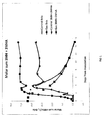
- Figure 1 is a graph showing the influence of the bubbling of hydrogen sulfide on the production of the thiols 3MH and 3MHA during the production of Sauvignon Blanc wine.
- the x-axis represents the days from the inoculation and the y-axis is the molar concentration sum of 3MH and 3MHA (nMol/L).
- control 3MH+3MHA represents the evolution of the concentration of 3MH and 3MHA in function of time from the inoculation, when the Sauvignon Blanc wine is produced in the absence of a bubbling of sulfide hydrogen.
- the curve entitled "Gas 3MH+3MHA” represents the evolution of the concentration of the thiols 3MH and 3MHA in function of the time from the inoculation, when the Sauvignon Blanc wine is subjected to a bubbling of sulfide hydrogen, i.e. according to the method of the present invention.
- the gas was taken from a large sparkling wine ferment that was fermenting fast and ran out of hydrogen sulfide.
- the gas supplemented ferment was over 100 000 L.
- Control Brix shows the progress of the fermentation, i.e. the fall of the sugar content , when the production of wine is carried out in the absence of a bubbling of hydrogen sulfide.
- the curve entitled "Gas Brix” shows the progress of the fermentation, i.e. the fall of the sugar content , when the production of wine is carried out in the presence of a bubbling of hydrogen sulfide, i.e. according to the method of the present invention.
- the graph shows that the level of thiols starts at zero. Indeed, there is a delay then thiols climb in the early phase of the ferment and in this case leveled off, with a small increase at the end.
- the gas containing hydrogen sulfide was turned off after 2 days into ferment, because the feed ferment stopped producing hydrogen sulfide.
Landscapes
- Chemical & Material Sciences (AREA)
- Organic Chemistry (AREA)
- Engineering & Computer Science (AREA)
- Health & Medical Sciences (AREA)
- Biochemistry (AREA)
- Bioinformatics & Cheminformatics (AREA)
- General Engineering & Computer Science (AREA)
- General Health & Medical Sciences (AREA)
- Genetics & Genomics (AREA)
- Life Sciences & Earth Sciences (AREA)
- Wood Science & Technology (AREA)
- Zoology (AREA)
- Alcoholic Beverages (AREA)
- Micro-Organisms Or Cultivation Processes Thereof (AREA)
Abstract
The invention concerns a method of producing an alcoholic beverage having flavor and taste of passion fruit and grapefruit which comprises the following steps :
a) providing a gas stream containing hydrogen sulfide,
b) bubbling the gas stream containing hydrogen sulfide into a grape juice prior to inoculation by yeast, and/or during ferment,
c) carrying out the fermentation,
d) obtaining an alcoholic beverage having an improved level of volatile thiols.
a) providing a gas stream containing hydrogen sulfide,
b) bubbling the gas stream containing hydrogen sulfide into a grape juice prior to inoculation by yeast, and/or during ferment,
c) carrying out the fermentation,
d) obtaining an alcoholic beverage having an improved level of volatile thiols.
The alcoholic beverage obtainable by the method can be chosen in the group constituted by wines, beers and spirits, preferably Sauvignon Blanc wine.
Description
- The present invention relates to a method of producing an alcoholic beverage having a fruity flavor and taste in nuance ranging from grapefruit to passion fruit. In particular, the alcoholic beverage is a Sauvignon Blanc wine, especially from New Zealand.
- The aroma of a product is often one of the most important factors in determining the quality and intrinsic value of the product. For example, small variations in the presence and concentration of volatile aroma compounds can have an effect on the quality of an alcoholic beverage.
- In the case of wine, some of the most potent aromas compounds are volatile thiols, in particular 4-mercapto-4-methylpentan-2-one (4MMP), 3-mercaptohexan-1-ol (3MH) and 3-mercaptohexyl acetate (3MHA). Volatile thiols are almost non-existent in grape juice and develop during fermentation.
- Given that small variations in the presence and concentration of volatile aroma compounds can have a significant effect on the quality of products such as wine, there exists a need for a method of producing alcoholic beverage having such aroma compounds. Thus, the regulation of the amount of thiols, and in particular 3MH and 3MHA, in wine allows for the development of new technologies permitting winemakers to more precisely alter the amounts of these distinctive flavours compounds in their product. Such a technology would, therefore, be of significant commercial value.
- There are well-known methods of producing alcoholic beverages having a fruity flavor and taste in nuance ranging from grapefruit to passion fruit.
- International application
W02007/095682 A1 describes a method of modulating the aroma of a wine product including a non-volatile sulfur compound, the method including exposing the product to an isolated enzyme having a carbon sulfur lyase enzyme activity capable of converting the non-volatile sulfur compound to a volatile thiol compound, wherein the aroma of the product is modulated by conversion of the non-volatile sulfur compound to a volatile thiol compound. - International application
W02009/11807 A1 - Canadian application
CA 2,221,921 describes a method of producing an alcoholic aqueous beverage by conventional mashing of the malt, lautering, boiling, cooling, fermenting, and storage, characterized in hemp plants (flowers and/or flower parts and/or products produced thereof) which may be added at any point in time during boiling, fermenting or storage. The beverage of the invention has a fruity flavor and taste in nuances ranging from grapefruit to mango and passion fruit. - It is an object of the present invention to provide a useful alternative for producing an alcoholic beverage having a fruity flavor, in particular grapefruit and passion fruit, which is easily carried out and which provides a better control of the level of the aromas in the obtained alcoholic beverage than other known methods of producing alcoholic beverages.
- The object of the present invention is a method of producing an alcoholic beverage having flavor and taste of passion fruit and grapefruit which comprises the following steps:
- a) providing a gas stream containing hydrogen sulfide,
- b) bubbling the gas stream containing hydrogen sulfide into a grape juice prior to inoculation by yeast, and/or during ferment,
- c) carrying out the fermentation,
- d) obtaining an alcoholic beverage having an improved level of volatile thiols.
- Preferably, the gas stream containing hydrogen sulfide is taken from an existing wine ferment producing hydrogen sulfide naturally. Hydrogen sulfide gas is a natural and minor by-product of yeast during wine fermentation.
- The inventors have found surprisingly, that thanks to the bubbling of a gas stream containing hydrogen sulfide, the volatile thiol content of 3MH and 3MHA in the finished wine has been increased, in some cases tripled in relation to the volatile thiol content of wine obtained by standard methods.
- Indeed, the hydrogen sulfide reacts with thiol precursors which are present in the grape fruit and juice prior to the fermentation. The adducts obtained by this reaction are subsequently transformed into 3MH and 3MHA by yeast during the fermentation.
- According to the method of producing an alcoholic beverage of the present invention, the bubbling of hydrogen sulfide can be carried out into the grape juice and be continued during the fermentation
- The hydrogen sulfide content in the gas stream may be from 6 ppm to 13 ppm, preferably around 10ppm.
- A ferment giving off obvious hydrogen sulfide is chosen and the tank is sealed with an outlet pipe.
- Advantageously, the bubbling of the gas stream containing hydrogen sulfide is carried out with gas sintered spargers. The spargers are porous and produce fine bubbles which have a high ratio of surface area to volume. A pressure relief valve is required to ensure the tank is not over pressurized.
- The depth of the outlet of the gas supply through the sparger has to be determined by the head pressure of the liquid being less than the gas pressure otherwise no gas is expelled.
- The volume of gas and the flow rate are determined by the rate of fermentation and volume of the supplying ferment. Bubbling of the gas stream is dependent on the equipment in the winery.
- The use of a sparger has the advantage that the bubbles are smaller.
- The alcoholic beverage is chosen in the group constituted by wines, the beers and spirits. Most preferably, the alcoholic beverage is a Sauvignon Blanc wine.
- Thanks to the bubbling of hydrogen sulfide which can be precisely controlled, the method of producing an alcoholic beverage according to the present invention provides a better control of the level of grapefruit and passion fruit aromas than other known methods of producing alcoholic beverages. It represents a very valuable tool for wine industry. Increasing and controlling 3MH and 3MHA content in Sauvignon Blanc wine is an important tool, which enables the more accurate creation of specific wine styles. The level of these aromas could be lifted if desired for a specific style, and the natural vintage to vintage variation reduced offering more consistent wines. This makes it easier for wineries to target different markets and hence increase their market share.
- Furthermore, the method of producing an alcoholic beverage according to the present invention harnesses the potential thiol precursors which although used for thiol production during wine fermentation are limited by the lack of hydrogen sulfide for this reaction.
- A further object of the present invention is an alcoholic beverage obtainable by the production method described above.
- Another object of the present invention is the use of a gas stream containing hydrogen sulfide to increase the level of volatile thiols in an alcoholic beverage.
-
Figure 1 is a graph showing the influence of the bubbling of hydrogen sulfide on the production of the thiols 3MH and 3MHA during the production of Sauvignon Blanc wine. - The x-axis represents the days from the inoculation and the y-axis is the molar concentration sum of 3MH and 3MHA (nMol/L).
- The curve entitled "control 3MH+3MHA" represents the evolution of the concentration of 3MH and 3MHA in function of time from the inoculation, when the Sauvignon Blanc wine is produced in the absence of a bubbling of sulfide hydrogen.
- The curve entitled "Gas 3MH+3MHA" represents the evolution of the concentration of the thiols 3MH and 3MHA in function of the time from the inoculation, when the Sauvignon Blanc wine is subjected to a bubbling of sulfide hydrogen, i.e. according to the method of the present invention. The gas was taken from a large sparkling wine ferment that was fermenting fast and ran out of hydrogen sulfide. The gas supplemented ferment was over 100 000 L.
- The curve entitled "Control Brix" shows the progress of the fermentation, i.e. the fall of the sugar content , when the production of wine is carried out in the absence of a bubbling of hydrogen sulfide.
- The curve entitled "Gas Brix" shows the progress of the fermentation, i.e. the fall of the sugar content , when the production of wine is carried out in the presence of a bubbling of hydrogen sulfide, i.e. according to the method of the present invention.
- The graph shows that the level of thiols starts at zero. Indeed, there is a delay then thiols climb in the early phase of the ferment and in this case leveled off, with a small increase at the end.
- In the experiment according to the invention, the gas containing hydrogen sulfide was turned off after 2 days into ferment, because the feed ferment stopped producing hydrogen sulfide.
- In view of the graph, it can be noticed that the production of thiols is higher when the production of wine is subjected to a bubbling of hydrogen sulfide, i.e.according to the present invention, than in the absence of a bubbling of hydrogen sulfide.
Claims (7)
- Method of producing an alcoholic beverage having flavor and taste of passion fruit and grapefruit which comprises the following steps :a) providing a gas stream containing hydrogen sulfide,b) bubbling the gas stream containing hydrogen sulfide into a grape juice prior to inoculation by yeast, and/or during ferment,c) carrying out the fermentation,d) obtaining an alcoholic beverage having an improved level of volatile thiols.
- Method of producing an alcoholic beverage according to claim 1, wherein the gas stream containing hydrogen sulfide is taken from an existing wine ferment producing hydrogen sulfide naturally.
- Method of producing an alcoholic beverage according to claim 1 or claim 2, wherein the bubbling of the gas stream containing hydrogen sulfide is carried out with gas sintered spargers.
- Method of producing an alcoholic beverage according to anyone of the preceding claims, wherein the alcoholic beverage is chosen in the group constituted by wines, beers and spirits.
- Method of producing an alcoholic beverage according to anyone of the preceding claims, wherein the alcoholic beverage is a Sauvignon Blanc wine.
- An alcoholic beverage obtainable by the method of producing according to anyone of the claims 1 to 5.
- Use of a gas stream containing hydrogen sulfide to increase the level of volatile thiols in an alcoholic beverage.
Priority Applications (13)
| Application Number | Priority Date | Filing Date | Title |
|---|---|---|---|
| EP11176136A EP2554650A1 (en) | 2011-08-01 | 2011-08-01 | Method of producing an alcoholic beverage having a fruity flavor |
| CN201280037505.4A CN103814121A (en) | 2011-08-01 | 2012-07-31 | Method of producing an alcoholic beverage having a fruity flavor |
| US14/236,411 US9758752B2 (en) | 2011-08-01 | 2012-07-31 | Method of producing an alcoholic beverage having a fruity flavor |
| NZ619818A NZ619818B2 (en) | 2011-08-01 | 2012-07-31 | Method of producing an alcoholic beverage having a fruity flavor |
| AU2012292135A AU2012292135B2 (en) | 2011-08-01 | 2012-07-31 | Method of producing an alcoholic beverage having a fruity flavor |
| ARP120102780A AR087391A1 (en) | 2011-08-01 | 2012-07-31 | METHOD FOR PRODUCING A FRUIT AROOH ALCOHOLIC DRINK |
| EP12740609.8A EP2739716B1 (en) | 2011-08-01 | 2012-07-31 | Method of producing an alcoholic beverage having a fruity flavor |
| ES12740609.8T ES2634711T3 (en) | 2011-08-01 | 2012-07-31 | Production procedure of an alcoholic beverage that has a fruity flavor |
| PT127406098T PT2739716T (en) | 2011-08-01 | 2012-07-31 | Method of producing an alcoholic beverage having a fruity flavor |
| UAA201401151A UA112445C2 (en) | 2011-08-01 | 2012-07-31 | METHOD OF OBTAINING AN ALCOHOLIC DRINK WITH FRUIT FRAGRANCE |
| PCT/EP2012/064919 WO2013017581A1 (en) | 2011-08-01 | 2012-07-31 | Method of producing an alcoholic beverage having a fruity flavor |
| CL2014000070A CL2014000070A1 (en) | 2011-08-01 | 2014-01-10 | Method for producing an alcoholic beverage by fermentation, aroma and flavor of passion fruit and grapefruit, which comprises providing a gas stream with hydrogen sulfide, bubbling said stream in grape juice before inoculation with yeast; alcoholic beverage; and use of a stream containing hydrogen sulfide. |
| ZA2014/00293A ZA201400293B (en) | 2011-08-01 | 2014-01-14 | Method of producing an alcoholic beverage having a fruity flavor |
Applications Claiming Priority (1)
| Application Number | Priority Date | Filing Date | Title |
|---|---|---|---|
| EP11176136A EP2554650A1 (en) | 2011-08-01 | 2011-08-01 | Method of producing an alcoholic beverage having a fruity flavor |
Publications (1)
| Publication Number | Publication Date |
|---|---|
| EP2554650A1 true EP2554650A1 (en) | 2013-02-06 |
Family
ID=46584044
Family Applications (2)
| Application Number | Title | Priority Date | Filing Date |
|---|---|---|---|
| EP11176136A Withdrawn EP2554650A1 (en) | 2011-08-01 | 2011-08-01 | Method of producing an alcoholic beverage having a fruity flavor |
| EP12740609.8A Not-in-force EP2739716B1 (en) | 2011-08-01 | 2012-07-31 | Method of producing an alcoholic beverage having a fruity flavor |
Family Applications After (1)
| Application Number | Title | Priority Date | Filing Date |
|---|---|---|---|
| EP12740609.8A Not-in-force EP2739716B1 (en) | 2011-08-01 | 2012-07-31 | Method of producing an alcoholic beverage having a fruity flavor |
Country Status (11)
| Country | Link |
|---|---|
| US (1) | US9758752B2 (en) |
| EP (2) | EP2554650A1 (en) |
| CN (1) | CN103814121A (en) |
| AR (1) | AR087391A1 (en) |
| AU (1) | AU2012292135B2 (en) |
| CL (1) | CL2014000070A1 (en) |
| ES (1) | ES2634711T3 (en) |
| PT (1) | PT2739716T (en) |
| UA (1) | UA112445C2 (en) |
| WO (1) | WO2013017581A1 (en) |
| ZA (1) | ZA201400293B (en) |
Cited By (2)
| Publication number | Priority date | Publication date | Assignee | Title |
|---|---|---|---|---|
| EP3269797A1 (en) | 2016-07-13 | 2018-01-17 | Stellenbosch University | Method of producing a fermented beverage |
| FR3056988A1 (en) * | 2016-10-03 | 2018-04-06 | Christophe Chevalier | PROCESS AND DEVICE FOR SULFITTING WINE |
Families Citing this family (2)
| Publication number | Priority date | Publication date | Assignee | Title |
|---|---|---|---|---|
| EP2986700B1 (en) | 2013-04-18 | 2019-04-03 | Aromaloc Inc. | Method for preserving the aroma of a fermentable beverage |
| US20210253985A1 (en) * | 2018-02-23 | 2021-08-19 | Ava Food Labs, Inc. | Moscato wine replicas produced from individual components |
Citations (3)
| Publication number | Priority date | Publication date | Assignee | Title |
|---|---|---|---|---|
| CA2221921A1 (en) | 1996-11-22 | 1998-05-22 | Steffan Wendt | Alcoholic aqueous beverage and a method for its production |
| WO2007095682A1 (en) | 2006-02-24 | 2007-08-30 | The Australian Wine Research Institute | Methods and micro-organisms for modulating the conversion of non-volatile sulfur compounds to volatile thiol compounds |
| WO2009011807A1 (en) | 2007-07-13 | 2009-01-22 | Michael Gregor Kaplan | Sender authentication for difficult to classify email |
Family Cites Families (4)
| Publication number | Priority date | Publication date | Assignee | Title |
|---|---|---|---|---|
| JPS6174565A (en) * | 1984-09-18 | 1986-04-16 | Asahi Breweries Ltd | Method for decreasing sulfurous acid in grape juice |
| CN101421389A (en) * | 2006-01-24 | 2009-04-29 | 麒麟控股株式会社 | Method for breeding high sulfurous acid-producing yeast and method for producing liquor using the yeast |
| NZ566518A (en) * | 2008-03-07 | 2011-05-27 | Matthew Robert Goddard | Yeast volatile thiol production in mixed ferments |
| CN101338263A (en) * | 2008-08-14 | 2009-01-07 | 泰山集团泰安市普瑞特机械制造有限公司 | Novel fermentation system for blending and fermenting by fermentation gas of dry red wine |
-
2011
- 2011-08-01 EP EP11176136A patent/EP2554650A1/en not_active Withdrawn
-
2012
- 2012-07-31 UA UAA201401151A patent/UA112445C2/en unknown
- 2012-07-31 PT PT127406098T patent/PT2739716T/en unknown
- 2012-07-31 AU AU2012292135A patent/AU2012292135B2/en not_active Ceased
- 2012-07-31 ES ES12740609.8T patent/ES2634711T3/en active Active
- 2012-07-31 US US14/236,411 patent/US9758752B2/en not_active Expired - Fee Related
- 2012-07-31 CN CN201280037505.4A patent/CN103814121A/en active Pending
- 2012-07-31 EP EP12740609.8A patent/EP2739716B1/en not_active Not-in-force
- 2012-07-31 WO PCT/EP2012/064919 patent/WO2013017581A1/en not_active Ceased
- 2012-07-31 AR ARP120102780A patent/AR087391A1/en not_active Application Discontinuation
-
2014
- 2014-01-10 CL CL2014000070A patent/CL2014000070A1/en unknown
- 2014-01-14 ZA ZA2014/00293A patent/ZA201400293B/en unknown
Patent Citations (3)
| Publication number | Priority date | Publication date | Assignee | Title |
|---|---|---|---|---|
| CA2221921A1 (en) | 1996-11-22 | 1998-05-22 | Steffan Wendt | Alcoholic aqueous beverage and a method for its production |
| WO2007095682A1 (en) | 2006-02-24 | 2007-08-30 | The Australian Wine Research Institute | Methods and micro-organisms for modulating the conversion of non-volatile sulfur compounds to volatile thiol compounds |
| WO2009011807A1 (en) | 2007-07-13 | 2009-01-22 | Michael Gregor Kaplan | Sender authentication for difficult to classify email |
Non-Patent Citations (4)
| Title |
|---|
| CORDENTE ANTONIO G ET AL: "Isolation of sulfite reductase variants of a commercial wine yeast with significantly reduced hydrogen sulfide production", FEMS YEAST RESEARCH, WILEY-BLACKWELL PUBLISHING LTD, GB, NL, vol. 9, no. 3, 1 May 2009 (2009-05-01), pages 446 - 459, XP002608189, ISSN: 1567-1356, [retrieved on 20090219], DOI: 10.1111/J.1567-1364.2009.00489.X * |
| HOWELL K S ET AL: "Variation in 4-mercapto-4-methyl-pentan-2-one release by Saccharomyces cerevisiae commercial wine strains", FEMS MICROBIOLOGY LETTERS, BLACKWELL PUBLISHING, AMSTERDAM, NL, vol. 240, no. 2, 15 November 2004 (2004-11-15), pages 125 - 129, XP004797114, ISSN: 0378-1097, DOI: 10.1016/J.FEMSLE.2004.09.022 * |
| SWIEGERS J H ET AL: "Modulation of volatile sulfur compounds by wine yeast", APPLIED MICROBIOLOGY AND BIOTECHNOLOGY, SPRINGER, BERLIN, DE, vol. 74, no. 5, 30 January 2007 (2007-01-30), pages 954 - 960, XP019489565, ISSN: 1432-0614, DOI: 10.1007/S00253-006-0828-1 * |
| TAKATOSHI TOMINAGA ET AL: "Stereoisomeric Distribution of 3-Mercaptohexan-1-ol and 3-Mercaptohexyl Acetate in Dry and Sweet White Wines Made from Vitis vinifera (Var. Sauvignon Blanc and Semillon)", JOURNAL OF AGRICULTURAL AND FOOD CHEMISTRY, vol. 54, no. 19, 1 September 2006 (2006-09-01), pages 7251 - 7255, XP055017484, ISSN: 0021-8561, DOI: 10.1021/jf061566v * |
Cited By (3)
| Publication number | Priority date | Publication date | Assignee | Title |
|---|---|---|---|---|
| EP3269797A1 (en) | 2016-07-13 | 2018-01-17 | Stellenbosch University | Method of producing a fermented beverage |
| US10233414B2 (en) | 2016-07-13 | 2019-03-19 | Stellenbosch University | Method of producing a fermented beverage |
| FR3056988A1 (en) * | 2016-10-03 | 2018-04-06 | Christophe Chevalier | PROCESS AND DEVICE FOR SULFITTING WINE |
Also Published As
| Publication number | Publication date |
|---|---|
| CN103814121A (en) | 2014-05-21 |
| AU2012292135A1 (en) | 2014-01-30 |
| US9758752B2 (en) | 2017-09-12 |
| ZA201400293B (en) | 2014-10-29 |
| UA112445C2 (en) | 2016-09-12 |
| AU2012292135B2 (en) | 2016-03-31 |
| EP2739716A1 (en) | 2014-06-11 |
| CL2014000070A1 (en) | 2014-07-11 |
| EP2739716B1 (en) | 2017-05-03 |
| US20140234481A1 (en) | 2014-08-21 |
| WO2013017581A1 (en) | 2013-02-07 |
| AR087391A1 (en) | 2014-03-19 |
| PT2739716T (en) | 2017-07-06 |
| NZ619818A (en) | 2015-09-25 |
| ES2634711T3 (en) | 2017-09-28 |
Similar Documents
| Publication | Publication Date | Title |
|---|---|---|
| Ugliano et al. | Effect of nitrogen supplementation and Saccharomyces species on hydrogen sulfide and other volatile sulfur compounds in Shiraz fermentation and wine | |
| AU2012366839B2 (en) | Low alcohol or alcohol free fermented malt based beverage and method for producing it | |
| US20200123480A1 (en) | Process of Imparting Hop Flavours to a Beverage, A Hop Flavoured Beverage Component Obtainable By Such Process and Use Thereof | |
| JP4762546B2 (en) | Method for producing fermented beverage | |
| EP2739716B1 (en) | Method of producing an alcoholic beverage having a fruity flavor | |
| Callejo et al. | Use of non-Saccharomyces yeasts in bottle fermentation of aged beers | |
| Sainz et al. | Use of non-conventional yeasts to increase total acidity in the Cava base wines | |
| CN118613572A (en) | Method for preparing non-alcoholic beer | |
| Coppola et al. | Effects of inoculation timing and mixed fermentation with Metschnikowia pulcherrima and Saccharomyces cerevisiae on the aroma and sensory properties of Falanghina wine | |
| Swiegers et al. | Novel yeast strains as tools for adjusting the flavor of fermented beverages to market specifications | |
| CN101601492A (en) | Method for producing fermented beverage using fermentation raw liquid having low maltotriose content | |
| EP3397743B1 (en) | Methodology for preparing ethanol-reduced fermented beverages | |
| JP6415850B2 (en) | Brewing yeast culture method and medium | |
| Yıldırım | Insights into the role of yeasts in alcoholic beverages | |
| NZ619818B2 (en) | Method of producing an alcoholic beverage having a fruity flavor | |
| EP1848792A1 (en) | Method of preparing a beverage | |
| JPH0678741A (en) | Production of wine | |
| BG112486A (en) | Method for natural carbonation of beverages | |
| JPWO2009020008A1 (en) | Yeast culture method | |
| OH | 11.4 Lactic acid production and pH control during fermentation | |
| CN118126788A (en) | Double-yeast mixed fermentation-based low-foaming mousse brewing process | |
| Cachon et al. | Immobilised cell technology in winery and fruit wine production | |
| WO2024184313A1 (en) | Fermented beverages | |
| SU1032014A1 (en) | Method for making brandy and calvados wine materials | |
| WO2007023969A3 (en) | O-acetylhomoserinesulfhydorelace gene and use thereof |
Legal Events
| Date | Code | Title | Description |
|---|---|---|---|
| PUAI | Public reference made under article 153(3) epc to a published international application that has entered the european phase |
Free format text: ORIGINAL CODE: 0009012 |
|
| AK | Designated contracting states |
Kind code of ref document: A1 Designated state(s): AL AT BE BG CH CY CZ DE DK EE ES FI FR GB GR HR HU IE IS IT LI LT LU LV MC MK MT NL NO PL PT RO RS SE SI SK SM TR |
|
| AX | Request for extension of the european patent |
Extension state: BA ME |
|
| STAA | Information on the status of an ep patent application or granted ep patent |
Free format text: STATUS: THE APPLICATION IS DEEMED TO BE WITHDRAWN |
|
| 18D | Application deemed to be withdrawn |
Effective date: 20130807 |