EP2552452B1 - EGFR-Inhibitor und antivirales Mittel zur gleichzeitigen, getrennten oder aufeinanderfolgenden Verwendung bei der Behandlung und/oder Vorbeugung und/oder Abschwächung von Krebs - Google Patents
EGFR-Inhibitor und antivirales Mittel zur gleichzeitigen, getrennten oder aufeinanderfolgenden Verwendung bei der Behandlung und/oder Vorbeugung und/oder Abschwächung von Krebs Download PDFInfo
- Publication number
- EP2552452B1 EP2552452B1 EP11709746.9A EP11709746A EP2552452B1 EP 2552452 B1 EP2552452 B1 EP 2552452B1 EP 11709746 A EP11709746 A EP 11709746A EP 2552452 B1 EP2552452 B1 EP 2552452B1
- Authority
- EP
- European Patent Office
- Prior art keywords
- combination
- cidofovir
- neoplasms
- cetuximab
- egfr
- Prior art date
- Legal status (The legal status is an assumption and is not a legal conclusion. Google has not performed a legal analysis and makes no representation as to the accuracy of the status listed.)
- Not-in-force
Links
- 239000003443 antiviral agent Substances 0.000 title claims description 115
- 229940121647 egfr inhibitor Drugs 0.000 title claims description 109
- 206010028980 Neoplasm Diseases 0.000 title claims description 100
- 238000011282 treatment Methods 0.000 title claims description 93
- 201000011510 cancer Diseases 0.000 title claims description 30
- 230000002265 prevention Effects 0.000 title claims description 24
- VWFCHDSQECPREK-LURJTMIESA-N Cidofovir Chemical group NC=1C=CN(C[C@@H](CO)OCP(O)(O)=O)C(=O)N=1 VWFCHDSQECPREK-LURJTMIESA-N 0.000 claims description 202
- 229960000724 cidofovir Drugs 0.000 claims description 156
- 229960005395 cetuximab Drugs 0.000 claims description 139
- AAKJLRGGTJKAMG-UHFFFAOYSA-N erlotinib Chemical compound C=12C=C(OCCOC)C(OCCOC)=CC2=NC=NC=1NC1=CC=CC(C#C)=C1 AAKJLRGGTJKAMG-UHFFFAOYSA-N 0.000 claims description 82
- 239000005551 L01XE03 - Erlotinib Substances 0.000 claims description 81
- ZJAOAACCNHFJAH-UHFFFAOYSA-N phosphonoformic acid Chemical compound OC(=O)P(O)(O)=O ZJAOAACCNHFJAH-UHFFFAOYSA-N 0.000 claims description 66
- 229960001433 erlotinib Drugs 0.000 claims description 64
- 241000700605 Viruses Species 0.000 claims description 45
- 229960005102 foscarnet Drugs 0.000 claims description 33
- 208000000102 Squamous Cell Carcinoma of Head and Neck Diseases 0.000 claims description 27
- 201000000459 head and neck squamous cell carcinoma Diseases 0.000 claims description 27
- 230000001394 metastastic effect Effects 0.000 claims description 25
- 206010061289 metastatic neoplasm Diseases 0.000 claims description 25
- 208000002154 non-small cell lung carcinoma Diseases 0.000 claims description 24
- 208000029729 tumor suppressor gene on chromosome 11 Diseases 0.000 claims description 24
- 150000003839 salts Chemical class 0.000 claims description 22
- 241001631646 Papillomaviridae Species 0.000 claims description 19
- 208000001333 Colorectal Neoplasms Diseases 0.000 claims description 14
- 238000011521 systemic chemotherapy Methods 0.000 claims description 14
- 230000003211 malignant effect Effects 0.000 claims description 11
- DQLATGHUWYMOKM-UHFFFAOYSA-L cisplatin Chemical compound N[Pt](N)(Cl)Cl DQLATGHUWYMOKM-UHFFFAOYSA-L 0.000 claims description 10
- 229960004316 cisplatin Drugs 0.000 claims description 10
- 230000000306 recurrent effect Effects 0.000 claims description 10
- 150000001875 compounds Chemical class 0.000 claims description 9
- 208000020816 lung neoplasm Diseases 0.000 claims description 9
- 208000007860 Anus Neoplasms Diseases 0.000 claims description 8
- 208000001894 Nasopharyngeal Neoplasms Diseases 0.000 claims description 6
- 208000002471 Penile Neoplasms Diseases 0.000 claims description 6
- 208000004354 Vulvar Neoplasms Diseases 0.000 claims description 6
- 208000037841 lung tumor Diseases 0.000 claims description 6
- 208000011252 penile benign neoplasm Diseases 0.000 claims description 6
- 208000024719 uterine cervix neoplasm Diseases 0.000 claims description 6
- 201000005102 vulva cancer Diseases 0.000 claims description 6
- 201000007271 pre-malignant neoplasm Diseases 0.000 claims description 3
- 102000052116 epidermal growth factor receptor activity proteins Human genes 0.000 claims 1
- 108700015053 epidermal growth factor receptor activity proteins Proteins 0.000 claims 1
- YOHYSYJDKVYCJI-UHFFFAOYSA-N n-[3-[[6-[3-(trifluoromethyl)anilino]pyrimidin-4-yl]amino]phenyl]cyclopropanecarboxamide Chemical compound FC(F)(F)C1=CC=CC(NC=2N=CN=C(NC=3C=C(NC(=O)C4CC4)C=CC=3)C=2)=C1 YOHYSYJDKVYCJI-UHFFFAOYSA-N 0.000 claims 1
- 210000004027 cell Anatomy 0.000 description 140
- 102000001301 EGF receptor Human genes 0.000 description 68
- 108060006698 EGF receptor Proteins 0.000 description 67
- 230000000694 effects Effects 0.000 description 49
- 230000009467 reduction Effects 0.000 description 39
- 210000005170 neoplastic cell Anatomy 0.000 description 36
- 230000004083 survival effect Effects 0.000 description 36
- DFHAXXVZCFXGOQ-UHFFFAOYSA-K trisodium phosphonoformate Chemical compound [Na+].[Na+].[Na+].[O-]C(=O)P([O-])([O-])=O DFHAXXVZCFXGOQ-UHFFFAOYSA-K 0.000 description 34
- 229940082789 erbitux Drugs 0.000 description 32
- 229960000848 foscarnet sodium Drugs 0.000 description 32
- 229940032699 vistide Drugs 0.000 description 32
- 239000003814 drug Substances 0.000 description 29
- 241000282414 Homo sapiens Species 0.000 description 28
- 230000002195 synergetic effect Effects 0.000 description 28
- 102220002645 rs104894309 Human genes 0.000 description 27
- 229940079593 drug Drugs 0.000 description 26
- MKUXAQIIEYXACX-UHFFFAOYSA-N aciclovir Chemical compound N1C(N)=NC(=O)C2=C1N(COCCO)C=N2 MKUXAQIIEYXACX-UHFFFAOYSA-N 0.000 description 23
- 238000002360 preparation method Methods 0.000 description 20
- 229960001972 panitumumab Drugs 0.000 description 18
- 229940120982 tarceva Drugs 0.000 description 17
- 208000035269 cancer or benign tumor Diseases 0.000 description 15
- XGALLCVXEZPNRQ-UHFFFAOYSA-N gefitinib Chemical compound C=12C=C(OCCCN3CCOCC3)C(OC)=CC2=NC=NC=1NC1=CC=C(F)C(Cl)=C1 XGALLCVXEZPNRQ-UHFFFAOYSA-N 0.000 description 15
- 238000012360 testing method Methods 0.000 description 15
- 241000124008 Mammalia Species 0.000 description 14
- 241001465754 Metazoa Species 0.000 description 14
- 230000000840 anti-viral effect Effects 0.000 description 14
- BASFCYQUMIYNBI-UHFFFAOYSA-N platinum Chemical compound [Pt] BASFCYQUMIYNBI-UHFFFAOYSA-N 0.000 description 13
- 108020004414 DNA Proteins 0.000 description 12
- 229940122558 EGFR antagonist Drugs 0.000 description 12
- 230000005764 inhibitory process Effects 0.000 description 12
- 208000019065 cervical carcinoma Diseases 0.000 description 11
- -1 nucleoside phosphonate analogues Chemical class 0.000 description 11
- 231100000419 toxicity Toxicity 0.000 description 11
- 230000001988 toxicity Effects 0.000 description 11
- 230000003612 virological effect Effects 0.000 description 11
- 241000699670 Mus sp. Species 0.000 description 10
- UCSJYZPVAKXKNQ-HZYVHMACSA-N streptomycin Chemical compound CN[C@H]1[C@H](O)[C@@H](O)[C@H](CO)O[C@H]1O[C@@H]1[C@](C=O)(O)[C@H](C)O[C@H]1O[C@@H]1[C@@H](NC(N)=N)[C@H](O)[C@@H](NC(N)=N)[C@H](O)[C@H]1O UCSJYZPVAKXKNQ-HZYVHMACSA-N 0.000 description 10
- 241000450599 DNA viruses Species 0.000 description 9
- 241000700586 Herpesviridae Species 0.000 description 9
- 241000701044 Human gammaherpesvirus 4 Species 0.000 description 9
- 239000005411 L01XE02 - Gefitinib Substances 0.000 description 9
- 229960002584 gefitinib Drugs 0.000 description 9
- 238000000034 method Methods 0.000 description 9
- 230000019491 signal transduction Effects 0.000 description 9
- 238000009097 single-agent therapy Methods 0.000 description 9
- 238000002560 therapeutic procedure Methods 0.000 description 9
- 230000004614 tumor growth Effects 0.000 description 9
- 208000030507 AIDS Diseases 0.000 description 8
- 206010067484 Adverse reaction Diseases 0.000 description 8
- 108091003079 Bovine Serum Albumin Proteins 0.000 description 8
- 125000002015 acyclic group Chemical group 0.000 description 8
- 230000006838 adverse reaction Effects 0.000 description 8
- XPPKVPWEQAFLFU-UHFFFAOYSA-N diphosphoric acid Chemical class OP(O)(=O)OP(O)(O)=O XPPKVPWEQAFLFU-UHFFFAOYSA-N 0.000 description 8
- 239000012894 fetal calf serum Substances 0.000 description 8
- 238000001727 in vivo Methods 0.000 description 8
- 230000003834 intracellular effect Effects 0.000 description 8
- 239000002609 medium Substances 0.000 description 8
- 150000007523 nucleic acids Chemical group 0.000 description 8
- 229940127073 nucleoside analogue Drugs 0.000 description 8
- 206010048843 Cytomegalovirus chorioretinitis Diseases 0.000 description 7
- 241000341655 Human papillomavirus type 16 Species 0.000 description 7
- 229940123237 Taxane Drugs 0.000 description 7
- 102000006747 Transforming Growth Factor alpha Human genes 0.000 description 7
- 101800004564 Transforming growth factor alpha Proteins 0.000 description 7
- 208000001763 cytomegalovirus retinitis Diseases 0.000 description 7
- 230000001419 dependent effect Effects 0.000 description 7
- 238000011161 development Methods 0.000 description 7
- 230000018109 developmental process Effects 0.000 description 7
- 238000000338 in vitro Methods 0.000 description 7
- 238000002347 injection Methods 0.000 description 7
- 239000007924 injection Substances 0.000 description 7
- UWKQSNNFCGGAFS-XIFFEERXSA-N irinotecan Chemical compound C1=C2C(CC)=C3CN(C(C4=C([C@@](C(=O)OC4)(O)CC)C=4)=O)C=4C3=NC2=CC=C1OC(=O)N(CC1)CCC1N1CCCCC1 UWKQSNNFCGGAFS-XIFFEERXSA-N 0.000 description 7
- 229960004768 irinotecan Drugs 0.000 description 7
- 229910052697 platinum Inorganic materials 0.000 description 7
- 230000002829 reductive effect Effects 0.000 description 7
- 210000004881 tumor cell Anatomy 0.000 description 7
- VBEQCZHXXJYVRD-GACYYNSASA-N uroanthelone Chemical compound C([C@@H](C(=O)N[C@H](C(=O)N[C@@H](CS)C(=O)N[C@@H](CC(N)=O)C(=O)N[C@@H](CS)C(=O)N[C@H](C(=O)N[C@@H]([C@@H](C)CC)C(=O)NCC(=O)N[C@@H](CC=1C=CC(O)=CC=1)C(=O)N[C@@H](CO)C(=O)NCC(=O)N[C@@H](CC(O)=O)C(=O)N[C@@H](CCCNC(N)=N)C(=O)N[C@@H](CS)C(=O)N[C@@H](CCC(N)=O)C(=O)N[C@@H]([C@@H](C)O)C(=O)N[C@@H](CCCNC(N)=N)C(=O)N[C@@H](CC(O)=O)C(=O)N[C@@H](CC(C)C)C(=O)N[C@@H](CCCNC(N)=N)C(=O)N[C@@H](CC=1C2=CC=CC=C2NC=1)C(=O)N[C@@H](CC=1C2=CC=CC=C2NC=1)C(=O)N[C@@H](CCC(O)=O)C(=O)N[C@@H](CC(C)C)C(=O)N[C@@H](CCCNC(N)=N)C(O)=O)C(C)C)[C@@H](C)O)NC(=O)[C@H](CO)NC(=O)[C@H](CC(O)=O)NC(=O)[C@H](CC(C)C)NC(=O)[C@H](CO)NC(=O)[C@H](CCC(O)=O)NC(=O)[C@@H](NC(=O)[C@H](CC=1NC=NC=1)NC(=O)[C@H](CCSC)NC(=O)[C@H](CS)NC(=O)[C@@H](NC(=O)CNC(=O)CNC(=O)[C@H](CC(N)=O)NC(=O)[C@H](CC(C)C)NC(=O)[C@H](CS)NC(=O)[C@H](CC=1C=CC(O)=CC=1)NC(=O)CNC(=O)[C@H](CC(O)=O)NC(=O)[C@H](CC=1C=CC(O)=CC=1)NC(=O)[C@H](CO)NC(=O)[C@H](CO)NC(=O)[C@H]1N(CCC1)C(=O)[C@H](CS)NC(=O)CNC(=O)[C@H]1N(CCC1)C(=O)[C@H](CC=1C=CC(O)=CC=1)NC(=O)[C@H](CO)NC(=O)[C@@H](N)CC(N)=O)C(C)C)[C@@H](C)CC)C1=CC=C(O)C=C1 VBEQCZHXXJYVRD-GACYYNSASA-N 0.000 description 7
- NMWKYTGJWUAZPZ-WWHBDHEGSA-N (4S)-4-[[(4R,7S,10S,16S,19S,25S,28S,31R)-31-[[(2S)-2-[[(1R,6R,9S,12S,18S,21S,24S,27S,30S,33S,36S,39S,42R,47R,53S,56S,59S,62S,65S,68S,71S,76S,79S,85S)-47-[[(2S)-2-[[(2S)-4-amino-2-[[(2S)-2-[[(2S)-2-[[(2S)-2-[[(2S)-2-[[(2S)-2-amino-3-methylbutanoyl]amino]-3-methylbutanoyl]amino]-3-hydroxypropanoyl]amino]-3-(1H-imidazol-4-yl)propanoyl]amino]-3-phenylpropanoyl]amino]-4-oxobutanoyl]amino]-3-carboxypropanoyl]amino]-18-(4-aminobutyl)-27,68-bis(3-amino-3-oxopropyl)-36,71,76-tribenzyl-39-(3-carbamimidamidopropyl)-24-(2-carboxyethyl)-21,56-bis(carboxymethyl)-65,85-bis[(1R)-1-hydroxyethyl]-59-(hydroxymethyl)-62,79-bis(1H-imidazol-4-ylmethyl)-9-methyl-33-(2-methylpropyl)-8,11,17,20,23,26,29,32,35,38,41,48,54,57,60,63,66,69,72,74,77,80,83,86-tetracosaoxo-30-propan-2-yl-3,4,44,45-tetrathia-7,10,16,19,22,25,28,31,34,37,40,49,55,58,61,64,67,70,73,75,78,81,84,87-tetracosazatetracyclo[40.31.14.012,16.049,53]heptaoctacontane-6-carbonyl]amino]-3-methylbutanoyl]amino]-7-(3-carbamimidamidopropyl)-25-(hydroxymethyl)-19-[(4-hydroxyphenyl)methyl]-28-(1H-imidazol-4-ylmethyl)-10-methyl-6,9,12,15,18,21,24,27,30-nonaoxo-16-propan-2-yl-1,2-dithia-5,8,11,14,17,20,23,26,29-nonazacyclodotriacontane-4-carbonyl]amino]-5-[[(2S)-1-[[(2S)-1-[[(2S)-3-carboxy-1-[[(2S)-1-[[(2S)-1-[[(1S)-1-carboxyethyl]amino]-4-methyl-1-oxopentan-2-yl]amino]-4-methyl-1-oxopentan-2-yl]amino]-1-oxopropan-2-yl]amino]-1-oxopropan-2-yl]amino]-3-(1H-imidazol-4-yl)-1-oxopropan-2-yl]amino]-5-oxopentanoic acid Chemical compound CC(C)C[C@H](NC(=O)[C@H](CC(C)C)NC(=O)[C@H](CC(O)=O)NC(=O)[C@H](C)NC(=O)[C@H](Cc1c[nH]cn1)NC(=O)[C@H](CCC(O)=O)NC(=O)[C@@H]1CSSC[C@H](NC(=O)[C@@H](NC(=O)[C@@H]2CSSC[C@@H]3NC(=O)[C@H](Cc4ccccc4)NC(=O)[C@H](CCC(N)=O)NC(=O)[C@@H](NC(=O)[C@H](Cc4c[nH]cn4)NC(=O)[C@H](CO)NC(=O)[C@H](CC(O)=O)NC(=O)[C@@H]4CCCN4C(=O)[C@H](CSSC[C@H](NC(=O)[C@@H](NC(=O)CNC(=O)[C@H](Cc4c[nH]cn4)NC(=O)[C@H](Cc4ccccc4)NC3=O)[C@@H](C)O)C(=O)N[C@@H](CCCNC(N)=N)C(=O)N[C@@H](Cc3ccccc3)C(=O)N[C@@H](CC(C)C)C(=O)N[C@@H](C(C)C)C(=O)N[C@@H](CCC(N)=O)C(=O)N[C@@H](CCC(O)=O)C(=O)N[C@@H](CC(O)=O)C(=O)N[C@@H](CCCCN)C(=O)N3CCC[C@H]3C(=O)N[C@@H](C)C(=O)N2)NC(=O)[C@H](CC(O)=O)NC(=O)[C@H](CC(N)=O)NC(=O)[C@H](Cc2ccccc2)NC(=O)[C@H](Cc2c[nH]cn2)NC(=O)[C@H](CO)NC(=O)[C@@H](NC(=O)[C@@H](N)C(C)C)C(C)C)[C@@H](C)O)C(C)C)C(=O)N[C@@H](Cc2c[nH]cn2)C(=O)N[C@@H](CO)C(=O)NCC(=O)N[C@@H](Cc2ccc(O)cc2)C(=O)N[C@@H](C(C)C)C(=O)NCC(=O)N[C@@H](C)C(=O)N[C@@H](CCCNC(N)=N)C(=O)N1)C(=O)N[C@@H](C)C(O)=O NMWKYTGJWUAZPZ-WWHBDHEGSA-N 0.000 description 6
- 206010009944 Colon cancer Diseases 0.000 description 6
- 102000009024 Epidermal Growth Factor Human genes 0.000 description 6
- 101800003838 Epidermal growth factor Proteins 0.000 description 6
- 208000029523 Interstitial Lung disease Diseases 0.000 description 6
- CVSVTCORWBXHQV-UHFFFAOYSA-N creatine Chemical compound NC(=[NH2+])N(C)CC([O-])=O CVSVTCORWBXHQV-UHFFFAOYSA-N 0.000 description 6
- 229940116977 epidermal growth factor Drugs 0.000 description 6
- 229940084651 iressa Drugs 0.000 description 6
- 239000003446 ligand Substances 0.000 description 6
- 239000000203 mixture Substances 0.000 description 6
- 231100000417 nephrotoxicity Toxicity 0.000 description 6
- 150000003057 platinum Chemical class 0.000 description 6
- 102000004169 proteins and genes Human genes 0.000 description 6
- 108090000623 proteins and genes Proteins 0.000 description 6
- 230000004044 response Effects 0.000 description 6
- DKPFODGZWDEEBT-QFIAKTPHSA-N taxane Chemical class C([C@]1(C)CCC[C@@H](C)[C@H]1C1)C[C@H]2[C@H](C)CC[C@@H]1C2(C)C DKPFODGZWDEEBT-QFIAKTPHSA-N 0.000 description 6
- 241000701022 Cytomegalovirus Species 0.000 description 5
- 241000282412 Homo Species 0.000 description 5
- 206010058467 Lung neoplasm malignant Diseases 0.000 description 5
- 229930012538 Paclitaxel Natural products 0.000 description 5
- 229930182555 Penicillin Natural products 0.000 description 5
- JGSARLDLIJGVTE-MBNYWOFBSA-N Penicillin G Chemical compound N([C@H]1[C@H]2SC([C@@H](N2C1=O)C(O)=O)(C)C)C(=O)CC1=CC=CC=C1 JGSARLDLIJGVTE-MBNYWOFBSA-N 0.000 description 5
- 208000001647 Renal Insufficiency Diseases 0.000 description 5
- 229960004150 aciclovir Drugs 0.000 description 5
- 230000004913 activation Effects 0.000 description 5
- 239000000654 additive Substances 0.000 description 5
- 230000000996 additive effect Effects 0.000 description 5
- 239000005557 antagonist Substances 0.000 description 5
- 230000000259 anti-tumor effect Effects 0.000 description 5
- 238000006243 chemical reaction Methods 0.000 description 5
- 239000003795 chemical substances by application Substances 0.000 description 5
- 229940044683 chemotherapy drug Drugs 0.000 description 5
- 201000010989 colorectal carcinoma Diseases 0.000 description 5
- ZDXPYRJPNDTMRX-UHFFFAOYSA-N glutamine Natural products OC(=O)C(N)CCC(N)=O ZDXPYRJPNDTMRX-UHFFFAOYSA-N 0.000 description 5
- 238000001802 infusion Methods 0.000 description 5
- 238000001990 intravenous administration Methods 0.000 description 5
- 201000006370 kidney failure Diseases 0.000 description 5
- 230000007246 mechanism Effects 0.000 description 5
- 108020004707 nucleic acids Proteins 0.000 description 5
- 102000039446 nucleic acids Human genes 0.000 description 5
- 229960001592 paclitaxel Drugs 0.000 description 5
- 229940049954 penicillin Drugs 0.000 description 5
- 229960005322 streptomycin Drugs 0.000 description 5
- 239000000126 substance Substances 0.000 description 5
- RCINICONZNJXQF-MZXODVADSA-N taxol Chemical compound O([C@@H]1[C@@]2(C[C@@H](C(C)=C(C2(C)C)[C@H](C([C@]2(C)[C@@H](O)C[C@H]3OC[C@]3([C@H]21)OC(C)=O)=O)OC(=O)C)OC(=O)[C@H](O)[C@@H](NC(=O)C=1C=CC=CC=1)C=1C=CC=CC=1)O)C(=O)C1=CC=CC=C1 RCINICONZNJXQF-MZXODVADSA-N 0.000 description 5
- 102000016928 DNA-directed DNA polymerase Human genes 0.000 description 4
- IAZDPXIOMUYVGZ-UHFFFAOYSA-N Dimethylsulphoxide Chemical compound CS(C)=O IAZDPXIOMUYVGZ-UHFFFAOYSA-N 0.000 description 4
- ZDZOTLJHXYCWBA-VCVYQWHSSA-N N-debenzoyl-N-(tert-butoxycarbonyl)-10-deacetyltaxol Chemical compound O([C@H]1[C@H]2[C@@](C([C@H](O)C3=C(C)[C@@H](OC(=O)[C@H](O)[C@@H](NC(=O)OC(C)(C)C)C=4C=CC=CC=4)C[C@]1(O)C3(C)C)=O)(C)[C@@H](O)C[C@H]1OC[C@]12OC(=O)C)C(=O)C1=CC=CC=C1 ZDZOTLJHXYCWBA-VCVYQWHSSA-N 0.000 description 4
- 206010061902 Pancreatic neoplasm Diseases 0.000 description 4
- 241000700584 Simplexvirus Species 0.000 description 4
- 206010040914 Skin reaction Diseases 0.000 description 4
- 230000002411 adverse Effects 0.000 description 4
- 230000000903 blocking effect Effects 0.000 description 4
- 238000002512 chemotherapy Methods 0.000 description 4
- OPTASPLRGRRNAP-UHFFFAOYSA-N cytosine Chemical compound NC=1C=CNC(=O)N=1 OPTASPLRGRRNAP-UHFFFAOYSA-N 0.000 description 4
- 229960003668 docetaxel Drugs 0.000 description 4
- 239000000890 drug combination Substances 0.000 description 4
- 230000006698 induction Effects 0.000 description 4
- 239000004615 ingredient Substances 0.000 description 4
- 239000003112 inhibitor Substances 0.000 description 4
- 230000002401 inhibitory effect Effects 0.000 description 4
- 230000026731 phosphorylation Effects 0.000 description 4
- 238000006366 phosphorylation reaction Methods 0.000 description 4
- 238000001959 radiotherapy Methods 0.000 description 4
- 230000035945 sensitivity Effects 0.000 description 4
- 231100000430 skin reaction Toxicity 0.000 description 4
- 230000035483 skin reaction Effects 0.000 description 4
- 230000009885 systemic effect Effects 0.000 description 4
- 206010012735 Diarrhoea Diseases 0.000 description 3
- 208000010201 Exanthema Diseases 0.000 description 3
- WSFSSNUMVMOOMR-UHFFFAOYSA-N Formaldehyde Chemical compound O=C WSFSSNUMVMOOMR-UHFFFAOYSA-N 0.000 description 3
- NYHBQMYGNKIUIF-UUOKFMHZSA-N Guanosine Chemical class C1=NC=2C(=O)NC(N)=NC=2N1[C@@H]1O[C@H](CO)[C@@H](O)[C@H]1O NYHBQMYGNKIUIF-UUOKFMHZSA-N 0.000 description 3
- OKKJLVBELUTLKV-UHFFFAOYSA-N Methanol Chemical compound OC OKKJLVBELUTLKV-UHFFFAOYSA-N 0.000 description 3
- 241000699666 Mus <mouse, genus> Species 0.000 description 3
- 102000004022 Protein-Tyrosine Kinases Human genes 0.000 description 3
- 108090000412 Protein-Tyrosine Kinases Proteins 0.000 description 3
- 108020005202 Viral DNA Proteins 0.000 description 3
- AYWLSIKEOSXJLA-UHFFFAOYSA-N [2-[(2-amino-6-oxo-3h-purin-9-yl)methoxy]ethoxy-hydroxyphosphoryl] phosphono hydrogen phosphate Chemical compound N1C(N)=NC(=O)C2=C1N(COCCOP(O)(=O)OP(O)(=O)OP(O)(O)=O)C=N2 AYWLSIKEOSXJLA-UHFFFAOYSA-N 0.000 description 3
- 239000000739 antihistaminic agent Substances 0.000 description 3
- 210000004369 blood Anatomy 0.000 description 3
- 239000008280 blood Substances 0.000 description 3
- 229960003624 creatine Drugs 0.000 description 3
- 239000006046 creatine Substances 0.000 description 3
- 230000003247 decreasing effect Effects 0.000 description 3
- 230000003111 delayed effect Effects 0.000 description 3
- 235000011180 diphosphates Nutrition 0.000 description 3
- 239000012636 effector Substances 0.000 description 3
- 201000005884 exanthem Diseases 0.000 description 3
- 238000002474 experimental method Methods 0.000 description 3
- 239000012634 fragment Substances 0.000 description 3
- 238000010348 incorporation Methods 0.000 description 3
- 238000010253 intravenous injection Methods 0.000 description 3
- 239000007788 liquid Substances 0.000 description 3
- 201000005202 lung cancer Diseases 0.000 description 3
- 239000000463 material Substances 0.000 description 3
- 239000002777 nucleoside Substances 0.000 description 3
- 238000007911 parenteral administration Methods 0.000 description 3
- 201000001474 proteinuria Diseases 0.000 description 3
- 206010037844 rash Diseases 0.000 description 3
- 238000011160 research Methods 0.000 description 3
- 239000007787 solid Substances 0.000 description 3
- 239000000243 solution Substances 0.000 description 3
- 230000001225 therapeutic effect Effects 0.000 description 3
- 241001529453 unidentified herpesvirus Species 0.000 description 3
- KUOAJOVOKFATQE-UHFFFAOYSA-N 2-[(2-amino-6-oxo-3h-purin-9-yl)methoxy]ethyl dihydrogen phosphate Chemical compound N1C(N)=NC(=O)C2=C1N(COCCOP(O)(O)=O)C=N2 KUOAJOVOKFATQE-UHFFFAOYSA-N 0.000 description 2
- 208000032170 Congenital Abnormalities Diseases 0.000 description 2
- 102000053602 DNA Human genes 0.000 description 2
- 108010014303 DNA-directed DNA polymerase Proteins 0.000 description 2
- 206010061818 Disease progression Diseases 0.000 description 2
- 239000006144 Dulbecco’s modified Eagle's medium Substances 0.000 description 2
- 102000004190 Enzymes Human genes 0.000 description 2
- 108090000790 Enzymes Proteins 0.000 description 2
- 206010019233 Headaches Diseases 0.000 description 2
- 208000029433 Herpesviridae infectious disease Diseases 0.000 description 2
- 101000851181 Homo sapiens Epidermal growth factor receptor Proteins 0.000 description 2
- 241000701085 Human alphaherpesvirus 3 Species 0.000 description 2
- 206010020751 Hypersensitivity Diseases 0.000 description 2
- 206010061598 Immunodeficiency Diseases 0.000 description 2
- 241001529936 Murinae Species 0.000 description 2
- 241000699660 Mus musculus Species 0.000 description 2
- 206010028813 Nausea Diseases 0.000 description 2
- 108700020796 Oncogene Proteins 0.000 description 2
- 108091000080 Phosphotransferase Proteins 0.000 description 2
- 239000012980 RPMI-1640 medium Substances 0.000 description 2
- 208000033475 Renal and urinary disease Diseases 0.000 description 2
- 206010040047 Sepsis Diseases 0.000 description 2
- GUGOEEXESWIERI-UHFFFAOYSA-N Terfenadine Chemical compound C1=CC(C(C)(C)C)=CC=C1C(O)CCCN1CCC(C(O)(C=2C=CC=CC=2)C=2C=CC=CC=2)CC1 GUGOEEXESWIERI-UHFFFAOYSA-N 0.000 description 2
- 206010047700 Vomiting Diseases 0.000 description 2
- 230000009471 action Effects 0.000 description 2
- 238000004458 analytical method Methods 0.000 description 2
- 208000003455 anaphylaxis Diseases 0.000 description 2
- 230000001387 anti-histamine Effects 0.000 description 2
- 239000002246 antineoplastic agent Substances 0.000 description 2
- 238000003556 assay Methods 0.000 description 2
- 230000008901 benefit Effects 0.000 description 2
- 150000001720 carbohydrates Chemical group 0.000 description 2
- 235000014633 carbohydrates Nutrition 0.000 description 2
- 238000004113 cell culture Methods 0.000 description 2
- 230000001413 cellular effect Effects 0.000 description 2
- 238000009104 chemotherapy regimen Methods 0.000 description 2
- 239000013078 crystal Substances 0.000 description 2
- 229940104302 cytosine Drugs 0.000 description 2
- ZZVUWRFHKOJYTH-UHFFFAOYSA-N diphenhydramine Chemical compound C=1C=CC=CC=1C(OCCN(C)C)C1=CC=CC=C1 ZZVUWRFHKOJYTH-UHFFFAOYSA-N 0.000 description 2
- 229960000520 diphenhydramine Drugs 0.000 description 2
- PCHPORCSPXIHLZ-UHFFFAOYSA-N diphenhydramine hydrochloride Chemical compound [Cl-].C=1C=CC=CC=1C(OCC[NH+](C)C)C1=CC=CC=C1 PCHPORCSPXIHLZ-UHFFFAOYSA-N 0.000 description 2
- 239000001177 diphosphate Substances 0.000 description 2
- XPPKVPWEQAFLFU-UHFFFAOYSA-J diphosphate(4-) Chemical compound [O-]P([O-])(=O)OP([O-])([O-])=O XPPKVPWEQAFLFU-UHFFFAOYSA-J 0.000 description 2
- 230000005750 disease progression Effects 0.000 description 2
- 230000003631 expected effect Effects 0.000 description 2
- 230000014509 gene expression Effects 0.000 description 2
- 239000001963 growth medium Substances 0.000 description 2
- 231100000869 headache Toxicity 0.000 description 2
- 230000036541 health Effects 0.000 description 2
- 230000006872 improvement Effects 0.000 description 2
- 229940102223 injectable solution Drugs 0.000 description 2
- 201000005296 lung carcinoma Diseases 0.000 description 2
- 150000004712 monophosphates Chemical group 0.000 description 2
- GHASVSINZRGABV-UHFFFAOYSA-N natural 5-fluorouracil derivative Natural products FC1=CNC(=O)NC1=O GHASVSINZRGABV-UHFFFAOYSA-N 0.000 description 2
- 230000008693 nausea Effects 0.000 description 2
- 150000003833 nucleoside derivatives Chemical class 0.000 description 2
- 238000011580 nude mouse model Methods 0.000 description 2
- 239000000825 pharmaceutical preparation Substances 0.000 description 2
- UEZVMMHDMIWARA-UHFFFAOYSA-M phosphonate Chemical group [O-]P(=O)=O UEZVMMHDMIWARA-UHFFFAOYSA-M 0.000 description 2
- 102000020233 phosphotransferase Human genes 0.000 description 2
- DBABZHXKTCFAPX-UHFFFAOYSA-N probenecid Chemical compound CCCN(CCC)S(=O)(=O)C1=CC=C(C(O)=O)C=C1 DBABZHXKTCFAPX-UHFFFAOYSA-N 0.000 description 2
- 230000035755 proliferation Effects 0.000 description 2
- 230000005855 radiation Effects 0.000 description 2
- 102000005962 receptors Human genes 0.000 description 2
- 108020003175 receptors Proteins 0.000 description 2
- DAEPDZWVDSPTHF-UHFFFAOYSA-M sodium pyruvate Chemical compound [Na+].CC(=O)C([O-])=O DAEPDZWVDSPTHF-UHFFFAOYSA-M 0.000 description 2
- 241000894007 species Species 0.000 description 2
- 239000011550 stock solution Substances 0.000 description 2
- 239000000829 suppository Substances 0.000 description 2
- 229940124597 therapeutic agent Drugs 0.000 description 2
- RWQNBRDOKXIBIV-UHFFFAOYSA-N thymine Chemical compound CC1=CNC(=O)NC1=O RWQNBRDOKXIBIV-UHFFFAOYSA-N 0.000 description 2
- 229940121358 tyrosine kinase inhibitor Drugs 0.000 description 2
- 239000005483 tyrosine kinase inhibitor Substances 0.000 description 2
- 150000004917 tyrosine kinase inhibitor derivatives Chemical class 0.000 description 2
- 241001430294 unidentified retrovirus Species 0.000 description 2
- 230000003827 upregulation Effects 0.000 description 2
- 210000002700 urine Anatomy 0.000 description 2
- 230000008673 vomiting Effects 0.000 description 2
- 230000004580 weight loss Effects 0.000 description 2
- TUWDPWSZHGLVHH-UHFFFAOYSA-N (4,6-dimethoxy-1,3,5-triazin-2-yl)-(methoxymethyl)cyanamide Chemical compound COCN(C#N)C1=NC(OC)=NC(OC)=N1 TUWDPWSZHGLVHH-UHFFFAOYSA-N 0.000 description 1
- HWIIAAVGRHKSOJ-UHFFFAOYSA-N 2-chloro-6,7-dimethoxyquinazolin-4-amine Chemical group ClC1=NC(N)=C2C=C(OC)C(OC)=CC2=N1 HWIIAAVGRHKSOJ-UHFFFAOYSA-N 0.000 description 1
- QCQCHGYLTSGIGX-GHXANHINSA-N 4-[[(3ar,5ar,5br,7ar,9s,11ar,11br,13as)-5a,5b,8,8,11a-pentamethyl-3a-[(5-methylpyridine-3-carbonyl)amino]-2-oxo-1-propan-2-yl-4,5,6,7,7a,9,10,11,11b,12,13,13a-dodecahydro-3h-cyclopenta[a]chrysen-9-yl]oxy]-2,2-dimethyl-4-oxobutanoic acid Chemical group N([C@@]12CC[C@@]3(C)[C@]4(C)CC[C@H]5C(C)(C)[C@@H](OC(=O)CC(C)(C)C(O)=O)CC[C@]5(C)[C@H]4CC[C@@H]3C1=C(C(C2)=O)C(C)C)C(=O)C1=CN=CC(C)=C1 QCQCHGYLTSGIGX-GHXANHINSA-N 0.000 description 1
- 208000009304 Acute Kidney Injury Diseases 0.000 description 1
- GFFGJBXGBJISGV-UHFFFAOYSA-N Adenine Chemical compound NC1=NC=NC2=C1N=CN2 GFFGJBXGBJISGV-UHFFFAOYSA-N 0.000 description 1
- 229930024421 Adenine Natural products 0.000 description 1
- 241000701242 Adenoviridae Species 0.000 description 1
- 241000175213 Alloherpesviridae Species 0.000 description 1
- 201000004384 Alopecia Diseases 0.000 description 1
- 241001206543 Ampullavirus Species 0.000 description 1
- 241001339993 Anelloviridae Species 0.000 description 1
- 101100067974 Arabidopsis thaliana POP2 gene Proteins 0.000 description 1
- 241000157873 Ascoviridae Species 0.000 description 1
- 241000977261 Asfarviridae Species 0.000 description 1
- 241000701412 Baculoviridae Species 0.000 description 1
- 208000037403 Blood and lymphatic system disease Diseases 0.000 description 1
- 208000014644 Brain disease Diseases 0.000 description 1
- 208000009079 Bronchial Spasm Diseases 0.000 description 1
- 208000014181 Bronchial disease Diseases 0.000 description 1
- 206010006482 Bronchospasm Diseases 0.000 description 1
- 206010007617 Cardio-respiratory arrest Diseases 0.000 description 1
- 241001137855 Caudovirales Species 0.000 description 1
- 241001533399 Circoviridae Species 0.000 description 1
- 206010052358 Colorectal cancer metastatic Diseases 0.000 description 1
- 241000701520 Corticoviridae Species 0.000 description 1
- MIKUYHXYGGJMLM-GIMIYPNGSA-N Crotonoside Natural products C1=NC2=C(N)NC(=O)N=C2N1[C@H]1O[C@@H](CO)[C@H](O)[C@@H]1O MIKUYHXYGGJMLM-GIMIYPNGSA-N 0.000 description 1
- 206010011831 Cytomegalovirus infection Diseases 0.000 description 1
- NYHBQMYGNKIUIF-UHFFFAOYSA-N D-guanosine Natural products C1=2NC(N)=NC(=O)C=2N=CN1C1OC(CO)C(O)C1O NYHBQMYGNKIUIF-UHFFFAOYSA-N 0.000 description 1
- 206010012432 Dermatitis acneiform Diseases 0.000 description 1
- 208000030453 Drug-Related Side Effects and Adverse reaction Diseases 0.000 description 1
- 206010013786 Dry skin Diseases 0.000 description 1
- 208000000059 Dyspnea Diseases 0.000 description 1
- 206010013975 Dyspnoeas Diseases 0.000 description 1
- 101150029707 ERBB2 gene Proteins 0.000 description 1
- 101150039808 Egfr gene Proteins 0.000 description 1
- 208000032274 Encephalopathy Diseases 0.000 description 1
- 206010015150 Erythema Diseases 0.000 description 1
- 108050007372 Fibroblast Growth Factor Proteins 0.000 description 1
- 102000018233 Fibroblast Growth Factor Human genes 0.000 description 1
- 102000003974 Fibroblast growth factor 2 Human genes 0.000 description 1
- 108090000379 Fibroblast growth factor 2 Proteins 0.000 description 1
- 241000701367 Fuselloviridae Species 0.000 description 1
- 229940126656 GS-4224 Drugs 0.000 description 1
- 208000018522 Gastrointestinal disease Diseases 0.000 description 1
- 241000702463 Geminiviridae Species 0.000 description 1
- 201000010915 Glioblastoma multiforme Diseases 0.000 description 1
- WQZGKKKJIJFFOK-GASJEMHNSA-N Glucose Natural products OC[C@H]1OC(O)[C@H](O)[C@@H](O)[C@@H]1O WQZGKKKJIJFFOK-GASJEMHNSA-N 0.000 description 1
- 206010018473 Glycosuria Diseases 0.000 description 1
- 241001664989 Guttaviridae Species 0.000 description 1
- 208000004547 Hallucinations Diseases 0.000 description 1
- 208000010496 Heart Arrest Diseases 0.000 description 1
- 208000010670 Hemic and Lymphatic disease Diseases 0.000 description 1
- 208000009889 Herpes Simplex Diseases 0.000 description 1
- 241000175212 Herpesvirales Species 0.000 description 1
- 101100118549 Homo sapiens EGFR gene Proteins 0.000 description 1
- 241000701806 Human papillomavirus Species 0.000 description 1
- 206010021027 Hypomagnesaemia Diseases 0.000 description 1
- 208000001953 Hypotension Diseases 0.000 description 1
- XQFRJNBWHJMXHO-RRKCRQDMSA-N IDUR Chemical compound C1[C@H](O)[C@@H](CO)O[C@H]1N1C(=O)NC(=O)C(I)=C1 XQFRJNBWHJMXHO-RRKCRQDMSA-N 0.000 description 1
- 102000008394 Immunoglobulin Fragments Human genes 0.000 description 1
- 108010021625 Immunoglobulin Fragments Proteins 0.000 description 1
- 206010022095 Injection Site reaction Diseases 0.000 description 1
- 241000702394 Inoviridae Species 0.000 description 1
- 241000701377 Iridoviridae Species 0.000 description 1
- 241000701365 Lipothrixviridae Species 0.000 description 1
- 102000002274 Matrix Metalloproteinases Human genes 0.000 description 1
- 108010000684 Matrix Metalloproteinases Proteins 0.000 description 1
- 208000029001 Mediastinal disease Diseases 0.000 description 1
- 241000702318 Microviridae Species 0.000 description 1
- 241000186187 Mimiviridae Species 0.000 description 1
- 241000701553 Myoviridae Species 0.000 description 1
- 241001336717 Nanoviridae Species 0.000 description 1
- 208000012902 Nervous system disease Diseases 0.000 description 1
- 241001484257 Nimaviridae Species 0.000 description 1
- 241000405453 Nudiviridae Species 0.000 description 1
- AGFRRGYVNWGNLX-UHFFFAOYSA-N O.O.O.O.O.O.[Na].[Na].[Na] Chemical compound O.O.O.O.O.O.[Na].[Na].[Na] AGFRRGYVNWGNLX-UHFFFAOYSA-N 0.000 description 1
- 229910019142 PO4 Inorganic materials 0.000 description 1
- 206010034016 Paronychia Diseases 0.000 description 1
- 241000029132 Paronychia Species 0.000 description 1
- 241000701945 Parvoviridae Species 0.000 description 1
- ABLZXFCXXLZCGV-UHFFFAOYSA-N Phosphorous acid Chemical group OP(O)=O ABLZXFCXXLZCGV-UHFFFAOYSA-N 0.000 description 1
- 241000701253 Phycodnaviridae Species 0.000 description 1
- 206010035226 Plasma cell myeloma Diseases 0.000 description 1
- 241000701369 Plasmaviridae Species 0.000 description 1
- 241000702072 Podoviridae Species 0.000 description 1
- 241001631648 Polyomaviridae Species 0.000 description 1
- 241000700625 Poxviridae Species 0.000 description 1
- 102000001253 Protein Kinase Human genes 0.000 description 1
- 208000003251 Pruritus Diseases 0.000 description 1
- 206010037211 Psychomotor hyperactivity Diseases 0.000 description 1
- 208000010378 Pulmonary Embolism Diseases 0.000 description 1
- 206010061924 Pulmonary toxicity Diseases 0.000 description 1
- 206010037660 Pyrexia Diseases 0.000 description 1
- 208000033626 Renal failure acute Diseases 0.000 description 1
- 206010062237 Renal impairment Diseases 0.000 description 1
- 206010038910 Retinitis Diseases 0.000 description 1
- 241000701794 Rhizidiovirus Species 0.000 description 1
- 241000040592 Rudiviridae Species 0.000 description 1
- 101100123851 Saccharomyces cerevisiae (strain ATCC 204508 / S288c) HER1 gene Proteins 0.000 description 1
- 241001053778 Salterprovirus Species 0.000 description 1
- 108020004682 Single-Stranded DNA Proteins 0.000 description 1
- 241000702202 Siphoviridae Species 0.000 description 1
- 208000019498 Skin and subcutaneous tissue disease Diseases 0.000 description 1
- 206010040844 Skin exfoliation Diseases 0.000 description 1
- 206010040849 Skin fissures Diseases 0.000 description 1
- 206010041067 Small cell lung cancer Diseases 0.000 description 1
- 241000128913 Sputnik virophage Species 0.000 description 1
- 241000701521 Tectiviridae Species 0.000 description 1
- 102000006601 Thymidine Kinase Human genes 0.000 description 1
- 108020004440 Thymidine kinase Proteins 0.000 description 1
- 208000006105 Uterine Cervical Neoplasms Diseases 0.000 description 1
- 206010046851 Uveitis Diseases 0.000 description 1
- 208000036142 Viral infection Diseases 0.000 description 1
- 206010000210 abortion Diseases 0.000 description 1
- 231100000176 abortion Toxicity 0.000 description 1
- 206010000269 abscess Diseases 0.000 description 1
- 239000004480 active ingredient Substances 0.000 description 1
- 201000011040 acute kidney failure Diseases 0.000 description 1
- 208000012998 acute renal failure Diseases 0.000 description 1
- 229960000643 adenine Drugs 0.000 description 1
- 108700010877 adenoviridae proteins Proteins 0.000 description 1
- 231100000360 alopecia Toxicity 0.000 description 1
- 230000003042 antagnostic effect Effects 0.000 description 1
- 230000003172 anti-dna Effects 0.000 description 1
- 230000000118 anti-neoplastic effect Effects 0.000 description 1
- 229940125715 antihistaminic agent Drugs 0.000 description 1
- 229940034982 antineoplastic agent Drugs 0.000 description 1
- 230000006907 apoptotic process Effects 0.000 description 1
- 239000007864 aqueous solution Substances 0.000 description 1
- 230000002238 attenuated effect Effects 0.000 description 1
- VSRXQHXAPYXROS-UHFFFAOYSA-N azanide;cyclobutane-1,1-dicarboxylic acid;platinum(2+) Chemical compound [NH2-].[NH2-].[Pt+2].OC(=O)C1(C(O)=O)CCC1 VSRXQHXAPYXROS-UHFFFAOYSA-N 0.000 description 1
- 229940088007 benadryl Drugs 0.000 description 1
- 230000009286 beneficial effect Effects 0.000 description 1
- 229960000397 bevacizumab Drugs 0.000 description 1
- 230000007698 birth defect Effects 0.000 description 1
- 230000037396 body weight Effects 0.000 description 1
- 244000144987 brood Species 0.000 description 1
- 229960004562 carboplatin Drugs 0.000 description 1
- 230000004663 cell proliferation Effects 0.000 description 1
- 230000003833 cell viability Effects 0.000 description 1
- 108091092356 cellular DNA Proteins 0.000 description 1
- 210000003679 cervix uteri Anatomy 0.000 description 1
- 230000008859 change Effects 0.000 description 1
- 238000009643 clonogenic assay Methods 0.000 description 1
- 231100000096 clonogenic assay Toxicity 0.000 description 1
- 230000003021 clonogenic effect Effects 0.000 description 1
- 230000005025 clonogenic survival Effects 0.000 description 1
- 208000029742 colonic neoplasm Diseases 0.000 description 1
- 230000000295 complement effect Effects 0.000 description 1
- GOHCTCOGYKAJLZ-UHFFFAOYSA-N ctep Chemical compound CC=1N(C=2C=CC(OC(F)(F)F)=CC=2)C(C)=NC=1C#CC1=CC=NC(Cl)=C1 GOHCTCOGYKAJLZ-UHFFFAOYSA-N 0.000 description 1
- 230000034994 death Effects 0.000 description 1
- 239000008367 deionised water Substances 0.000 description 1
- 230000003292 diminished effect Effects 0.000 description 1
- 208000002173 dizziness Diseases 0.000 description 1
- 239000003937 drug carrier Substances 0.000 description 1
- 230000037336 dry skin Effects 0.000 description 1
- 230000002900 effect on cell Effects 0.000 description 1
- 108010078438 epidermal growth inhibitors Proteins 0.000 description 1
- 231100000321 erythema Toxicity 0.000 description 1
- 238000011156 evaluation Methods 0.000 description 1
- 208000030533 eye disease Diseases 0.000 description 1
- 239000003885 eye ointment Substances 0.000 description 1
- 230000002349 favourable effect Effects 0.000 description 1
- 229940126864 fibroblast growth factor Drugs 0.000 description 1
- 238000009093 first-line therapy Methods 0.000 description 1
- 238000009472 formulation Methods 0.000 description 1
- SDUQYLNIPVEERB-QPPQHZFASA-N gemcitabine Chemical compound O=C1N=C(N)C=CN1[C@H]1C(F)(F)[C@H](O)[C@@H](CO)O1 SDUQYLNIPVEERB-QPPQHZFASA-N 0.000 description 1
- 229960005277 gemcitabine Drugs 0.000 description 1
- 208000005017 glioblastoma Diseases 0.000 description 1
- 239000008103 glucose Substances 0.000 description 1
- 239000003102 growth factor Substances 0.000 description 1
- UYTPUPDQBNUYGX-UHFFFAOYSA-N guanine Chemical class O=C1NC(N)=NC2=C1N=CN2 UYTPUPDQBNUYGX-UHFFFAOYSA-N 0.000 description 1
- 229940029575 guanosine Drugs 0.000 description 1
- XLYOFNOQVPJJNP-ZSJDYOACSA-N heavy water Substances [2H]O[2H] XLYOFNOQVPJJNP-ZSJDYOACSA-N 0.000 description 1
- 239000000833 heterodimer Substances 0.000 description 1
- 239000000710 homodimer Substances 0.000 description 1
- 102000045108 human EGFR Human genes 0.000 description 1
- 230000036543 hypotension Effects 0.000 description 1
- 238000000099 in vitro assay Methods 0.000 description 1
- 230000006882 induction of apoptosis Effects 0.000 description 1
- 208000015181 infectious disease Diseases 0.000 description 1
- 230000002458 infectious effect Effects 0.000 description 1
- 230000003993 interaction Effects 0.000 description 1
- 230000031146 intracellular signal transduction Effects 0.000 description 1
- 238000007918 intramuscular administration Methods 0.000 description 1
- 238000007912 intraperitoneal administration Methods 0.000 description 1
- 238000007913 intrathecal administration Methods 0.000 description 1
- 230000002601 intratumoral effect Effects 0.000 description 1
- 238000011835 investigation Methods 0.000 description 1
- 201000004614 iritis Diseases 0.000 description 1
- 230000002147 killing effect Effects 0.000 description 1
- 229940043355 kinase inhibitor Drugs 0.000 description 1
- RDOIQAHITMMDAJ-UHFFFAOYSA-N loperamide Chemical compound C=1C=CC=CC=1C(C=1C=CC=CC=1)(C(=O)N(C)C)CCN(CC1)CCC1(O)C1=CC=C(Cl)C=C1 RDOIQAHITMMDAJ-UHFFFAOYSA-N 0.000 description 1
- 229960001571 loperamide Drugs 0.000 description 1
- 210000004072 lung Anatomy 0.000 description 1
- 238000012423 maintenance Methods 0.000 description 1
- 238000009115 maintenance therapy Methods 0.000 description 1
- 238000011418 maintenance treatment Methods 0.000 description 1
- 208000015486 malignant pancreatic neoplasm Diseases 0.000 description 1
- 238000004519 manufacturing process Methods 0.000 description 1
- 230000001404 mediated effect Effects 0.000 description 1
- 201000000050 myeloid neoplasm Diseases 0.000 description 1
- 230000003589 nefrotoxic effect Effects 0.000 description 1
- 230000017095 negative regulation of cell growth Effects 0.000 description 1
- 231100000381 nephrotoxic Toxicity 0.000 description 1
- 208000004235 neutropenia Diseases 0.000 description 1
- 125000003729 nucleotide group Chemical group 0.000 description 1
- 238000011275 oncology therapy Methods 0.000 description 1
- 229940069265 ophthalmic ointment Drugs 0.000 description 1
- 231100000199 ototoxic Toxicity 0.000 description 1
- 230000002970 ototoxic effect Effects 0.000 description 1
- 230000002018 overexpression Effects 0.000 description 1
- 229960001756 oxaliplatin Drugs 0.000 description 1
- DWAFYCQODLXJNR-BNTLRKBRSA-L oxaliplatin Chemical compound O1C(=O)C(=O)O[Pt]11N[C@@H]2CCCC[C@H]2N1 DWAFYCQODLXJNR-BNTLRKBRSA-L 0.000 description 1
- 201000002528 pancreatic cancer Diseases 0.000 description 1
- 208000008443 pancreatic carcinoma Diseases 0.000 description 1
- 230000002085 persistent effect Effects 0.000 description 1
- 239000000546 pharmaceutical excipient Substances 0.000 description 1
- NBIIXXVUZAFLBC-UHFFFAOYSA-K phosphate Chemical compound [O-]P([O-])([O-])=O NBIIXXVUZAFLBC-UHFFFAOYSA-K 0.000 description 1
- 239000010452 phosphate Substances 0.000 description 1
- 239000003757 phosphotransferase inhibitor Substances 0.000 description 1
- 230000008884 pinocytosis Effects 0.000 description 1
- 230000036470 plasma concentration Effects 0.000 description 1
- 231100000374 pneumotoxicity Toxicity 0.000 description 1
- 230000003389 potentiating effect Effects 0.000 description 1
- 238000009101 premedication Methods 0.000 description 1
- 229960003081 probenecid Drugs 0.000 description 1
- 230000008569 process Effects 0.000 description 1
- 230000002250 progressing effect Effects 0.000 description 1
- 238000011321 prophylaxis Methods 0.000 description 1
- 125000002572 propoxy group Chemical group [*]OC([H])([H])C(C([H])([H])[H])([H])[H] 0.000 description 1
- 125000001436 propyl group Chemical group [H]C([*])([H])C([H])([H])C([H])([H])[H] 0.000 description 1
- 108060006633 protein kinase Proteins 0.000 description 1
- 230000007047 pulmonary toxicity Effects 0.000 description 1
- 150000003212 purines Chemical class 0.000 description 1
- 150000003230 pyrimidines Chemical class 0.000 description 1
- DRYRBWIFRVMRPV-UHFFFAOYSA-N quinazolin-4-amine Chemical group C1=CC=C2C(N)=NC=NC2=C1 DRYRBWIFRVMRPV-UHFFFAOYSA-N 0.000 description 1
- 208000006934 radiodermatitis Diseases 0.000 description 1
- 208000001307 recurrent respiratory papillomatosis Diseases 0.000 description 1
- 230000001105 regulatory effect Effects 0.000 description 1
- 230000010076 replication Effects 0.000 description 1
- 230000000241 respiratory effect Effects 0.000 description 1
- 230000029058 respiratory gaseous exchange Effects 0.000 description 1
- 239000003419 rna directed dna polymerase inhibitor Substances 0.000 description 1
- 102220004887 rs121913664 Human genes 0.000 description 1
- 238000000926 separation method Methods 0.000 description 1
- 208000026775 severe diarrhea Diseases 0.000 description 1
- 208000017520 skin disease Diseases 0.000 description 1
- 239000011734 sodium Substances 0.000 description 1
- 229940054269 sodium pyruvate Drugs 0.000 description 1
- 159000000000 sodium salts Chemical class 0.000 description 1
- 238000010186 staining Methods 0.000 description 1
- 210000002536 stromal cell Anatomy 0.000 description 1
- 239000000758 substrate Substances 0.000 description 1
- 230000001629 suppression Effects 0.000 description 1
- 238000009121 systemic therapy Methods 0.000 description 1
- 238000009095 third-line therapy Methods 0.000 description 1
- 229940113082 thymine Drugs 0.000 description 1
- 238000011200 topical administration Methods 0.000 description 1
- 229940100611 topical cream Drugs 0.000 description 1
- 231100000331 toxic Toxicity 0.000 description 1
- 230000002588 toxic effect Effects 0.000 description 1
- 230000007704 transition Effects 0.000 description 1
- 125000002264 triphosphate group Chemical group [H]OP(=O)(O[H])OP(=O)(O[H])OP(=O)(O[H])O* 0.000 description 1
- 230000005747 tumor angiogenesis Effects 0.000 description 1
- 230000005748 tumor development Effects 0.000 description 1
- 231100000402 unacceptable toxicity Toxicity 0.000 description 1
- 230000006711 vascular endothelial growth factor production Effects 0.000 description 1
- 230000007442 viral DNA synthesis Effects 0.000 description 1
- 230000009385 viral infection Effects 0.000 description 1
- 230000003442 weekly effect Effects 0.000 description 1
- 229960001515 yellow fever vaccine Drugs 0.000 description 1
Images



Classifications
-
- A—HUMAN NECESSITIES
- A61—MEDICAL OR VETERINARY SCIENCE; HYGIENE
- A61K—PREPARATIONS FOR MEDICAL, DENTAL OR TOILETRY PURPOSES
- A61K39/00—Medicinal preparations containing antigens or antibodies
- A61K39/395—Antibodies; Immunoglobulins; Immune serum, e.g. antilymphocytic serum
- A61K39/39533—Antibodies; Immunoglobulins; Immune serum, e.g. antilymphocytic serum against materials from animals
- A61K39/3955—Antibodies; Immunoglobulins; Immune serum, e.g. antilymphocytic serum against materials from animals against proteinaceous materials, e.g. enzymes, hormones, lymphokines
-
- A—HUMAN NECESSITIES
- A61—MEDICAL OR VETERINARY SCIENCE; HYGIENE
- A61K—PREPARATIONS FOR MEDICAL, DENTAL OR TOILETRY PURPOSES
- A61K31/00—Medicinal preparations containing organic active ingredients
- A61K31/33—Heterocyclic compounds
- A61K31/395—Heterocyclic compounds having nitrogen as a ring hetero atom, e.g. guanethidine or rifamycins
- A61K31/495—Heterocyclic compounds having nitrogen as a ring hetero atom, e.g. guanethidine or rifamycins having six-membered rings with two or more nitrogen atoms as the only ring heteroatoms, e.g. piperazine or tetrazines
- A61K31/505—Pyrimidines; Hydrogenated pyrimidines, e.g. trimethoprim
- A61K31/517—Pyrimidines; Hydrogenated pyrimidines, e.g. trimethoprim ortho- or peri-condensed with carbocyclic ring systems, e.g. quinazoline, perimidine
-
- A—HUMAN NECESSITIES
- A61—MEDICAL OR VETERINARY SCIENCE; HYGIENE
- A61K—PREPARATIONS FOR MEDICAL, DENTAL OR TOILETRY PURPOSES
- A61K31/00—Medicinal preparations containing organic active ingredients
- A61K31/33—Heterocyclic compounds
- A61K31/395—Heterocyclic compounds having nitrogen as a ring hetero atom, e.g. guanethidine or rifamycins
- A61K31/495—Heterocyclic compounds having nitrogen as a ring hetero atom, e.g. guanethidine or rifamycins having six-membered rings with two or more nitrogen atoms as the only ring heteroatoms, e.g. piperazine or tetrazines
- A61K31/505—Pyrimidines; Hydrogenated pyrimidines, e.g. trimethoprim
- A61K31/519—Pyrimidines; Hydrogenated pyrimidines, e.g. trimethoprim ortho- or peri-condensed with heterocyclic rings
- A61K31/52—Purines, e.g. adenine
- A61K31/522—Purines, e.g. adenine having oxo groups directly attached to the heterocyclic ring, e.g. hypoxanthine, guanine, acyclovir
-
- A—HUMAN NECESSITIES
- A61—MEDICAL OR VETERINARY SCIENCE; HYGIENE
- A61K—PREPARATIONS FOR MEDICAL, DENTAL OR TOILETRY PURPOSES
- A61K31/00—Medicinal preparations containing organic active ingredients
- A61K31/66—Phosphorus compounds
- A61K31/662—Phosphorus acids or esters thereof having P—C bonds, e.g. foscarnet, trichlorfon
-
- A—HUMAN NECESSITIES
- A61—MEDICAL OR VETERINARY SCIENCE; HYGIENE
- A61K—PREPARATIONS FOR MEDICAL, DENTAL OR TOILETRY PURPOSES
- A61K31/00—Medicinal preparations containing organic active ingredients
- A61K31/66—Phosphorus compounds
- A61K31/675—Phosphorus compounds having nitrogen as a ring hetero atom, e.g. pyridoxal phosphate
-
- A—HUMAN NECESSITIES
- A61—MEDICAL OR VETERINARY SCIENCE; HYGIENE
- A61K—PREPARATIONS FOR MEDICAL, DENTAL OR TOILETRY PURPOSES
- A61K39/00—Medicinal preparations containing antigens or antibodies
- A61K39/395—Antibodies; Immunoglobulins; Immune serum, e.g. antilymphocytic serum
- A61K39/39533—Antibodies; Immunoglobulins; Immune serum, e.g. antilymphocytic serum against materials from animals
- A61K39/39558—Antibodies; Immunoglobulins; Immune serum, e.g. antilymphocytic serum against materials from animals against tumor tissues, cells, antigens
-
- A—HUMAN NECESSITIES
- A61—MEDICAL OR VETERINARY SCIENCE; HYGIENE
- A61K—PREPARATIONS FOR MEDICAL, DENTAL OR TOILETRY PURPOSES
- A61K45/00—Medicinal preparations containing active ingredients not provided for in groups A61K31/00 - A61K41/00
- A61K45/06—Mixtures of active ingredients without chemical characterisation, e.g. antiphlogistics and cardiaca
-
- A—HUMAN NECESSITIES
- A61—MEDICAL OR VETERINARY SCIENCE; HYGIENE
- A61P—SPECIFIC THERAPEUTIC ACTIVITY OF CHEMICAL COMPOUNDS OR MEDICINAL PREPARATIONS
- A61P35/00—Antineoplastic agents
Definitions
- the application notably relates to EGFR inhibitor(s) and antiviral agent(s) for simultaneous, separate or sequential use in the treatment and/or prevention and/or palliation of neoplasm(s), more particularly of malignant or pre-malignant tumor(s), still more particularly of cancer(s), to a combined preparation comprising at least one EGFR inhibitor and at least one antiviral agent, as well as to the medical and biotechnological applications thereof, more particularly in the field of the treatment and/or prevention and/or palliation of neoplasm(s), more particularly of malignant or pre-malignant tumor(s), still more particularly of cancer(s).
- the epidermal growth factor receptor is one of the molecules, which have been identified to be important targets for cancer therapy. EGFR is notably expressed at high levels in a number of tumors, including Squamous Cell Carcinoma of the Head and Neck (SCCHN), cervix, anal and colorectal cancers, where it is associated with poor survival.
- SCCHN Squamous Cell Carcinoma of the Head and Neck
- cervix Squamous Cell Carcinoma of the Head and Neck
- anal and colorectal cancers where it is associated with poor survival.
- EGFR EGFR activation factor receptor 1
- EGFR intracellular signaling pathways, which are involved in cell proliferation, resistance to apoptosis, and tumor angiogenesis. Therefore, the signaling pathways, which are activated by EGFR, are considered to play a central role in the proliferation and immortalization of cancer cells.
- EGFR ligands which antagonize signal transduction by EGFR, such as monoclonal antibodies that target the extracellular domain of EGFR, or inhibitors of intracellular effector(s) of the EGFR signaling pathway, are currently commercially available.
- cetuximab (Erbitux®) competitively inhibits the binding of EGF and other ligands, such as transforming growth factor alpha (TGF-alpha), to EGFR, thereby antagonizing EGFR signal transduction.
- Cetuximab (Erbitux®) is indicated in the treatment of locally or regionally advanced SCCHN, recurrent or metastatic SCCHN and metastatic colorectal carcinomas.
- Erlotinib (Tarceva®), which is a tyrosine kinase inhibitor that inhibits the intracellular phosphorylation of tyrosine kinase associated with EGFR.
- Erlotinib (Tarceva®) is indicated in the treatment of locally advanced or metastatic non-small cell lung cancers (NSCLC) and in the treatment of locally advanced or metastatic pancreatic cancers.
- EGFR blockade Although they express high levels of EGFR, targeted cancer cells do however respond only poorly to. EGFR blockade. The majority of patients do not respond to EGFR inhibitors; and those patients, who are initially responsive, usually develop resistance to EGFR inhibitors This is for example the case with the monoclonal antibody cetuximab (Erbitux®), and with the tyrosine kinase inhibitor erlotinib (Tarceva®), whose respective indications are still limited to treatment in simultaneous or sequential combination with systemic therapy (systemic chemotherapy and/or radiation therapy) and/or to second-intention treatment. Analysis of the factors underlying non-response or resistance to EGFR blockade has revealed an unexpected complexity involving several mechanisms and diverse factors. The current view is that the implementation of several strategies would be required in order to improve efficacy of EGFR inhibitors.
- the application provides means, which remove or alleviate the resistance, and/or increase the sensitivity of neoplastic cells to EGFR inhibition.
- the means of the application notably comprise combining at least one EGFR inhibitor with at least one antiviral agent.
- the means of the application are more particularly adapted to virus-positive neoplasms, more particularly to HPV-positive neoplasms.
- EGFR inhibitors are currently used in combination with systemic chemotherapy (e.g., in combination with cisplatin or carboplatin) or with radiation therapy, or in monotherapy. (usually as a second-intent treatments).
- systemic chemotherapy e.g., in combination with cisplatin or carboplatin
- radiation therapy e.g., radiation therapy, or in monotherapy.
- monotherapy usually as a second-intent treatments.
- Vermorken et al. 2008 Cancer 112: 2710-2719
- cetuximab Erbitux®
- antiviral agents can be advantageously combined with radiation therapy. Please see e.g., WO 01/32215 Al ; Abdulkarim et al. 2002; Amine et al. 2006.
- WO 01/32215 Al notably discloses that an antiviral nucleoside phosphanate analogue, such as cidofovir (Vistide®), induces a marked increase in radiosensitivation in cancer cells, more particularly in virus-associated cancer cells, such as HPV-associated cancer cells.
- an antiviral nucleoside phosphanate analogue such as cidofovir (Vistide®)
- cidofovir Vistide®
- Abdulkarim et al. 2002 discloses that the increased radiosensitivity that is obtained when combining cidofovir with irradiation notably results from the fact that irradiation induces the up-regulation of HPV E6/E7 proteins, and that cidofovir prevents or inhibits this undesired E6/E7 up-regulation (please see e.g., paragraph bridging pages 2341-2342 and Figure 2 of Abdulkarim et al. 2002).
- Amine et al. 2006 that discloses the cidofovir-induced E6 inhibition is followed by an anti-VEGF effect on HPV18-positive cell lines.
- an antiviral agent potentiates the EGFR blockade induced by EGFR inhibitor, more particularly that an antiviral agent removes or alleviates the resistance, and/or increases the sensitivity of neoplastic cells to EGFR inhibition.
- the application notably relates to a combination or association of compounds (or of biologically active compounds, or of therapeutic agents), and to a combined preparation, preferably a combined pharmaceutical preparation.
- the combination, association or combined preparation of the application comprises at least one antiviral agent and at least one EGFR inhibitor for simultaneous, separate or sequential use or administration in a subject, more particularly in an animal (still more particularly a mammal, advantageously a human).
- the application also relates to the medical and biotechnological applications of said combination, association or combined preparation, more particularly in the field of neoplasm treatment and/or prevention and/or palliation.
- the combination, association, or combined preparation of the application shows a synergistic effect on neoplastic cells.
- the antiviral agent comprised in the combination, association or combined preparation of the application potentiates the EGF blockade induced by the EGFR inhibitor. More particularly, the antiviral agent removes or alleviates the resistance, and/or increases the sensitivity of neoplastic cells to EGFR inhibition.
- the combination, association or combined preparation of the application enables to achieve an unexpected decrease in the level of surviving neoplastic cells.
- the inventors demonstrate that the means of the application increase the response of neoplastic cells, more particularly of malignant or pre-malignant tumor cells, to EGFR inhibitor(s) in a synergistic manner. Said synergy has been observed for virus-positive neoplastic cells, more particularly for HPV-positive neoplastic cells, as well as for virus-negative, more particularly HPV-negative cells.
- the inventors have more particularly discovered that, when the means of the application are applied to HPV-positive neoplastic cells, said synergistic effect is observed at doses of antiviral agent, more particularly of antiviral agent and EGFR inhibitor, lower than expected, which is especially advantageous since the risk of adverse reactions that may be caused by each of the two drugs, more particularly by the antiviral agent (renal toxicity) then is very limited.
- antiviral nucleoside phosphonate analogues such as cidofovir (Vistide®)
- antiviral pyrophosphate analogues such as foscarnet (Foscarvir®).
- the means of the application or invention are more particularly indicated for those subjects, who are non-responsive, or have become resistant to, a systemic monotherapy by cisplatin, or for whom a systemic monotherapy by cisplatin is contraindicated.
- the means of the application or invention are more particularly indicated for the treatment and/or prevention and/or palliation of Squamous Cell Carcinoma of the Head and Neck (SCCHN), recurrent and/or metastatic SCCHN, cervix tumor(s), vulvar tumor(s), penile tumor(s), anal tumor(s), colorectal tumor(s), lung tumor(s), Non-Small Cell Lung Cancer (NSCLC), locally advanced or metastatic NSCLC; and nasopharyngeal tumor(s).
- SCCHN Squamous Cell Carcinoma of the Head and Neck
- cervix tumor(s) cervix tumor(s)
- vulvar tumor(s) penile tumor(s)
- anal tumor(s) colorectal tumor(s)
- lung tumor(s) Non-Small Cell Lung Cancer (NSCLC), locally advanced or metastatic NSCLC
- NSCLC Non-Small Cell Lung Cancer
- the invention relates more particularly to a combination of biologically active compounds comprising at least one antiviral agent and at least one EGFR inhibitor, for simultaneous, separate or sequential use in the treatment and/or prevention and/or palliation of malignant or pre-malignant neoplasms, wherein said at least one antiviral agent is cidofovir, foscarnet or a salt thereof, wherein said at least one EGFR inhibitor comprises cetuximab, erlotinib or a salt thereof, wherein said neoplasms are Squamous Cell Carcinoma of the Head and Neck (SCCHN), recurrent and/or metastatic SCCHN, cervix tumor(s), vulvar tumor(s), penile tumor(s), anal tumor(s), colorectal tumor(s), lung tumor(s), Non-Small Cell Lung Cancer (NSCLC), locally advanced or metastatic NSCLC, nasopharyngeal tumor(s), and wherein said neoplasms are:
- antiviral agents such as cidofovir (e.g., Vistide®) or foscarnet (e.g., Foscarvir®), potentiate the killing of neoplastic cells induced by EGFR inhibitors, such as cetuximab (e.g., Erbitux®) or erlotinib (e.g., Tarceva®), and that this potentiation is exerted in a synergistic manner.
- cidofovir e.g., Vistide®
- foscarnet e.g., Foscarvir®
- neoplastic cells induced by EGFR inhibitors such as cetuximab (e.g., Erbitux®) or erlotinib (e.g., Tarceva®)
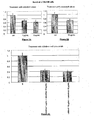
- the clonogenic survival of Human Papilloma Virus positive (HPV-positive) neoplastic cells after exposure to cidofovir alone at 1 ⁇ g/mL, cetuximab alone at 10 ⁇ g/mL or the half of both is about 100%, 100% and 50% on HeLa cells, respectively ( cf. Figure 1C ).
- the application or invention enables using doses of EGFR inhibitor(s), which are lower than expected (e.g., in view of the doses of EGFR inhibitor, which are currently used in the prior art EGFR inhibitor treatments).
- the inventors further demonstrate that, when the administration of the antiviral agent is associated with the administration of an EGFR inhibitor, the synergistic effect(s) exerted by the antiviral agent on HPV-positive neoplastic cells, occur at relatively low doses, i.e., at doses that are largely below the plasma levels achieved after administration of the dose of the antiviral agent that is currently approved for its antiviral applications.
- a synergistic effect is observed on HPV-positive neoplastic cells treated with an association of cidofovir at 1 ⁇ g/mL and of cetuximab at 10 ⁇ g/mL ( cf.
- the application or invention enables administering not only lower doses of EGFR inhibitor(s) than expected, but also lower doses of antiviral agent(s) than expected, which is especially advantageous, since many antiviral agents (such as cidofovir) are highly toxic, more particularly at the renal level.
- antiviral agents such as cidofovir
- HPV-negative neoplastic cells more particularly on virus-negative neoplastic cells
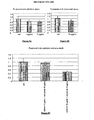
- said synergistic effect is also observed, but at higher doses of antiviral agent(s) and/or EGFR inhibitor(s) compared to HPV-positive neoplastic cells ( cf. Figures 3C and 4C ).
- the application or invention nonetheless still has the advantage of enabling the administration of lower doses of EGFR inhibitor(s) than expected.
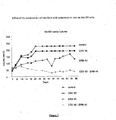
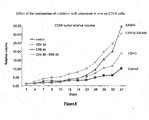
- the inventors further bring the demonstration that the effect(s) observed in vitro ( cf. example 1) are confirmed in vivo ( cf. examples 2 and 3).
- the application thus relates to the association, or the combination, of at least one antiviral agent (preferably at least one anti-HPV agent) and of at least one EGFR inhibitor for simultaneous, separate or sequential use in a medical treatment and/or prevention and/or palliation, and/or for simultaneous, separate or sequential administration to a subject in need thereof (more particularly to an animal in need thereof, still more particularly to a mammal in need thereof, advantageously to a human in need thereof).
- at least one antiviral agent preferably at least one anti-HPV agent
- at least one EGFR inhibitor for simultaneous, separate or sequential use in a medical treatment and/or prevention and/or palliation, and/or for simultaneous, separate or sequential administration to a subject in need thereof (more particularly to an animal in need thereof, still more particularly to a mammal in need thereof, advantageously to a human in need thereof).
- said use or administration is intended for the treatment and/or prevention and/or palliation of neoplasm(s), more particularly of virus-positive neoplasm(s) or virus-negative neoplasm(s), still more particularly of virus-positive neoplasm(s), advantageously of HPV-positive neoplasm(s)).
- the invention relates more particularly to a combination of biologically active compounds comprising at least one antiviral agent and at least one EGFR inhibitor, for simultaneous, separate or sequential use in the treatment and/or prevention and/or palliation of malignant or pre-malignant neoplasms, wherein said at least one antiviral agent is cidofovir, foscarnet or a salt thereof, wherein said at least one EGFR inhibitor comprises cetuximab, erlotinib or a salt thereof, wherein said neoplasms are Squamous Cell Carcinoma of the Head and Neck (SCCHN), recurrent and/or metastatic SCCHN, cervix tumor(s), vulvar tumor(s), penile tumor(s), anal tumor(s), colorectal tumor(s), lung tumor(s), Non-Small Cell. Lung Cancer (NSCLC), locally advanced or metastatic NSCLC, nasopharyngeal tumor(s), and wherein said neoplasms are
- Said at least one antiviral agent and said at least one EGFR inhibitor can be physically distinct, at least to a sufficient extent for each of the two products to be separately or sequentially administrable. They may for example be associated or aggregated together as distinct physical units contained in a kit-of-parts, collection or package.
- said at least one antiviral agent and said at least one EGFR inhibitor are intended for simultaneous use, they can either be physically distinct or be in intimate contact or association. In the latter case, they may for example be mixed together, and/or directly or indirectly complexed onto each other, and/or directly or indirectly linked to each other (e.g., by covalent linkage). Such a mixture, complex or linked product is herein encompassed by the application or invention.
- said at least one antiviral agent and said at least one EGFR inhibitor should be in a condition, where they can be administered to a subject so as to functionality cooperate and thereby exert the synergistic effect of the application or invention.
- a combined preparation of the application or invention includes preparations, where said at least one antiviral agent and said at least one EGFR inhibitor are physically sufficiently distinct for being separately or sequentially administrable.
- preparations where said at least one antiviral agent and said at least one EGFR inhibitor are physically sufficiently distinct for being separately or sequentially administrable.
- such a combined preparation can also be used for simultaneous administration.
- a combined preparation of the application or invention also includes preparations, where said at least one antiviral agent and said at least one EGFR inhibitor are in intimate contact or association with each other (e.g., compositions comprising said at least one antiviral agent and said at least one EGFR inhibitor in mixture), whereby only simultaneous administration can then be contemplated.
- a combination or combined preparation of the application or invention can optionally comprise one or more pharmaceutically acceptable carriers or excipients.
- a combination or combined preparation of the application can optionally comprise one or more active ingredients other than antiviral agents and EGFR inhibitors, e.g., one or more other anti-neoplastic products.
- neoplastic cell(s) is to be understood in accordance with its ordinary meaning in the field of tumor development.
- tumor cell(s) refers to any kind of tumor cells(s), i.e., benign, pre-malignant and malignant tumor cell(s). It refers more particularly to pre-malignant and malignant tumor cell(s), still more particularly to malignant cell(s). (i.e., cancer cell(s)).
- tumor(s) refers to benign, pre-malignant and malignant tumor(s), more particularly to pre-malignant and malignant tumor(s), still more particularly to malignant tumor(s) (i.e., cancer(s)).
- pre-malignant tumor(s) refers to refers to tumor(s) which, if left untreated, may lead to malignant tumor(s).
- Antiviral agent(s) isoviral agent(s):
- antiviral agent(s) is to be understood in accordance with its ordinary meaning in the field of the treatment and/or prevention and/or palliation of viral infection(s).
- antiviral agent(s) refers to a product, more particularly to a product comprising one or several active principle(s) selected from those compounds, molecules, complexes and compositions, which can be administered to animals, more particularly to mammals, still more particularly to humans, as a medication, and which exert an antiviral effect, i.e., which inhibit or block the development of at least one virus in said animals, mammals or humans.
- an antiviral agent inhibits or blocks the development of at least one virus in an animal, more particularly in a mammal, still more particularly in a human, in accordance with a risk/benefit ratio that is favorable to the health of said animal, mammal or human.
- preferred viruses are those which are associated, with, or which induce, a neoplasm in an animal, more particularly a mammal, still more particularly a human.
- said antiviral effect preferably is specific of a virus type, family, sub-family, genus or species.
- said antiviral effect is shown against DNA virus(es).
- said antiviral effect is shown against DNA virus(es), without substantially inhibiting or blocking the development of retroviruses.
- said anti-DNA virus effect is specifically shown against DNA virus(es).
- DNA viruses are viruses, which have DNA as its genetic material and replicate using a DNA-dependent DNA polymerase, and which belong, to either Group I (double-stranded DNA viruses) or Group II (single-stranded DNA viruses) of the Baltimore classification system for viruses.
- Illustrative DNA viruses in accordance with the application comprise Group I viruses, such as:
- DNA viruses in accordance with the application or invention comprise Group I viruses, more particularly viruses of the Herpesviridae family, such as EBV, and of the Papillomaviridae family, such as HPV, more particularly the so-called High Risk (HR) HPV, such as HPV16 and HPV18.
- DNA viruses in accordance with the application or invention comprise viruses of the Papillomaviridae family, advantageously HPV, more particularly the so-called High Risk (HR) HPV, such as HPV16, HPV18, HPV31 and HPV45, more particularly HPV16 and HPV18.
- said antiviral effect can be exerted e.g., by inhibiting or blocking the viral nucleic acid chain elongation (of the viral DNA chain in the case of DNA viruses), e.g., by inhibiting or blocking the incorporation of natural deoxynucleotide(s) into the growing viral nucleic acid chain.
- Such an inhibition or blockade can be exerted e.g.,:
- said antiviral agents comprise:
- Nucleic acid analogues notably comprise:
- said nucleic acid analogues comprise acyclic nucleoside phosphonate analogues (such as cidofovir, e.g., commercialized under Vistide®) and acyclic nucleoside analogues (such as acycloguanosine, e.g., commercialized under Aciclovir®), advantageously acyclic nucleoside phosphonate analogues (such as cidofovir), and salts thereof.
- acyclic nucleoside phosphonate analogues such as cidofovir, e.g., commercialized under Vistide®
- acyclic nucleoside analogues such as acycloguanosine, e.g., commercialized under Aciclovir®
- acyclic nucleoside phosphonate analogues such as cidofovir
- said pyrophosphate analogues comprise foscarnet (e.g., foscarnet sodium commercialized under Foscarvir®), and salts thereof.
- said antiviral agents -comprise acyclic nucleoside phosphonate analogues (more particularly cidofovir, such as the cidofovir form commercialized under Vistide®), acyclic nucleoside analogues (more particularly acycloguanosine, such as the acycloguanosine form commercialized under Aciclovir®), and pyrophosphate analogues (more particularly foscarnet, such as the foscarnet sodium form commercialized under Foscarvir®), and salts thereof.
- acyclic nucleoside phosphonate analogues more particularly cidofovir, such as the cidofovir form commercialized under Vistide®
- acyclic nucleoside analogues more particularly acycloguanosine, such as the acycloguanosine form commercialized under Aciclovir®
- pyrophosphate analogues more particularly foscarnet, such as the foscarnet sodium form commercialized under Fo
- said antiviral agents comprise acyclic nucleoside phosphonate analogues (more particularly cidofovir, such as the cidofovir form commercialized under Vistide®), and pyrophosphate analogues (more particularly foscarnet, such as the foscarnet sodium form commercialized under Foscarvir®); and salts thereof.
- acyclic nucleoside phosphonate analogues more particularly cidofovir, such as the cidofovir form commercialized under Vistide®
- pyrophosphate analogues more particularly foscarnet, such as the foscarnet sodium form commercialized under Foscarvir®
- said antiviral agent is active against DNA virus(es).
- said antiviral agent is a product, which has an antiviral effect against DNA virus(es), without having a substantial antiviral effect against retroviruses.
- said antiviral agent is not a reverse transcriptase inhibitor.
- said antiviral effect is specifically exerted against DNA virus(es).
- said DNA viruse(s) is(are) HPV and/or EBV, preferably HPV, more preferably HR HPV, such as HPV16 and/or HPV18 and/or HPV31 and/or HPV45, more particularly HPV16 and/or HPV18.
- Said antiviral agent advantageously is in a form administrable to an animal, more particularly to a mammal, advantageously to a human.
- the form in which said antiviral agent is administered to said animal, mammal or human can comprise the antiviral active principle(s), and/or a salt thereof (such as a sodium salt thereof).
- Said antiviral agent can be in any administration form, which is found suitable by the person of ordinary skill in the art.
- said antiviral agent can be in a form suitable for oral administration (such as a liquid or a solid), for sublingual administration, for inhalation, for insufflation, for injection ( e.g ., for intramuscular, intravenous, intraperitoneal, intraosseous administration), for rectal administration (e.g., as a suppository), for vaginal administration (e.g., as a suppository).
- oral administration such as a liquid or a solid
- sublingual administration for inhalation, for insufflation
- injection e.g ., for intramuscular, intravenous, intraperitoneal, intraosseous administration
- rectal administration e.g., as a suppository
- vaginal administration e.g., as a suppository
- said forms of administration comprise injection, more particularly intravenous injection.
- said at least one antiviral agent is cidofovir (or a salt thereof), which is an acyclic nucleoside phosphonate analogue.
- said at least one antiviral agent is acycloguanosine (or a salt thereof), which is an acyclic nucleoside analogue (i.e., an acyclic guanosine analogue).
- said at least one antiviral agent is foscarnet (or a salt thereof), which is a pyrophosphate analogue.
- said at least one antiviral agent is cidofovir (Vistide®), or acycloguanosine (Aciclovir®), or foscarnet (Foscarvir®), or a salt thereof, advantageously cidofovir (Vistide®) or foscarnet (Foscarvir®) or a salt thereof, more particularly cidofovir (Vistide®) or a salt thereof.
- Cidofovir e.g., Vistide®
- Cidofovir is 1-[(S)-3-hydroxy-2-(phophonomethoxy)propyl]cytosine dehydrate.(HPIvIPC), with the molecular formula of C 8 H 14 N 3 O 6 P • 2H 2 O and a MW of 315.22 (279.19 for anhydrous). It is an acyclic nucleoside phosphonate analogue.
- Cidofovir enters cells by fluid-phase endocytosis and is phosphorylated to cidofovir monophosphate and subsequently to cidofovir diphosphate, which is believed to be the active intracellular metabolite of cidofovir.
- Cidofovir is known to inhibit or suppress cytomegalovirus (CMV) replication by selective inhibition of viral DNA synthesis. Cidofovir is also known to be active in vitro against a variety of isolates of CMV and other herpesviruses such as Herpes Simplex Virus (HSV) type 1 or type 2 (HSV-1; HSV-2). Cidofovir diphosphate inhibits herpesvirus polymerases at concentrations that are 8- to 600-fold lower than those needed to inhibit human cellular DNA polymerases.
- CMV cytomegalovirus
- Cidofovir is currently commercialized under the trademark Vistide®, and has been clinically approved for the treatment of CMV retinitis in patients with acquired immunodeficiency syndrome (AIDS).
- Cidofovir is currently being investigated as a complementary intralesional therapy against recurrent respiratory papillomatosis caused by HPV. Please see e.g., Broekema and Dikkers 2008.
- cidofovir would be a potential antitumor agent due to its suppression of basic fibroblast growth factor (FGF2). Please see e.g., Liekens 2008.
- FGF2 basic fibroblast growth factor
- Vistide® is manufactured by Ben Venue Laboratories, Inc. (Bedford, OH 44146-0568; U.S.A.), and is manufactured for and distributed by Gilead Sciences, Inc. (Foster City, CA 94404; U.S.A.). Vistide® is supplied as an injectable solution containing 375mg of anhydrous cidofovir in 5mL aqueous solution at a concentration of 75 mg/mL (pH 7.4). Vistide® is covered by US patent 5,142,051 , the US child application(s) and patent(s) thereof, as well as by,the non-US counterpart patents and patent applications thereof.
- the approved dose of Vistide® is 5 mg/kg body weight (at first, induction dose of 5mg/kg once per week for two consecutive weeks; and then a maintenance dose of 5mg/kg once every two weeks).
- Vistide® exerts various toxicities.
- Adverse reactions that are commonly associated with the administration of Vistide® in the treatment of CMV retinitis in AIDS patients notably include blood and lymphatic system disorders, e.g., neutropenia; nervous system disorders, e.g., headache; eye disorders, e.g., ulceris, uveitis, hypotony of the eye; respiratory, thorasic and mediastinal disorders, e.g., dyspnea; gastrointestinal disorders, e.g., nausea, vomiting; skin and subcutaneous tissue disorders, e.g., alopecia, rash; renal and urinary disorders, e.g., increase in urine protein level (proteinuria), increase of blood creatine (creatinemia).
- blood and lymphatic system disorders e.g., neutropenia
- nervous system disorders e.g., headache
- eye disorders e.g., ulceris, uveitis, hypotony of the eye
- the CMV patient must be administered with probenecid (Benemide®) and must be intravenously hydrated before and after administration of Vistide® so as to limit Vistide® renal toxicity.
- probenecid Benemide®
- cidofovir is used for the treatment and/or prevention and/or palliation of neoplasms.
- the invention enables using lower doses than those currently approved for the treatment of CMV retinitis. It is believed that the doses of cidofovir needed to implement the invention are so low that most of the above-mentioned side effects, and at least the renal toxicity side effects, will be avoided.
- Acycloguanosine e.g.. Aciclovir®:
- Acycloguanosine is 2-amino-9-((2-hydroxyethoxy)methyl)-1H-purin-6(9H)-one with the molecular formula of C 8 H 11 N 5 O 3 and a MW of 225.21 g/mol. It is an acyclic nucleoside analogue (i. e., a guanosine analogue wherein the sugar ring has been replaced by an open-end carbohydrate structure).
- cycloguanosine When administered to an animal, more particularly to a mammal, still more particularly to a human, cycloguanosine is selectively converted into a monophosphate form (acycloguanosine monophosphate or acyclo-GMP) by viral thymidine kinase. Subsequently, the monophosphate form is further phosphorylated into the active triphosphate form, acycloguanosine triphosphate (acyclo-GTP), by cellular kinases.
- Acyclo-GTP is a very portent inhibitor of viral DNA polymerase; it has approximately 100 times greater affinity for viral than cellular polymerase. As a substrate, acyclo-GTP is incorporated into viral DNA, resulting in chain termination.
- Cycloguanosine is active against most species of the herpesvirus family, more particularly Herpes Simplex Virus type I (HSV-1), Herpes Simplex Virus type II (HSV-2), Varicella Zoster Virus (VZV), EBV, and, but to a lesser extent, CMV.
- HSV-1 Herpes Simplex Virus type I
- HSV-2 Herpes Simplex Virus type II
- VZV Varicella Zoster Virus
- EBV and, but to a lesser extent, CMV.
- Acycloguanosine is currently marketed under various trade names such Aciclovir® (Sanofi-Aventis).
- Acycloguanosine is commonly marketed as tablets: (200 mg, 400 mg, 800 mg and 1 gram), topical cream (5%), intravenous injection (25 mg/mL) and ophthalmic ointment (3%).
- the approved doses of acycloguanosine are of 200 mg to 800 mg 5 times daily for 5 to 10 days (adult doses).
- Common adverse drug reactions associated with systemic acycloguanosine therapy include: nausea, vomiting, diarrhea and/or headache. In high doses, hallucinations have been reported. Additional common adverse effects, when acycloguanosine is administered intraveneously, include encephalopathy, renal impairment and injection site reactions.
- acycloguanosine is used for the treatment and/or prevention and/or palliation of neoplasms.
- Preferred forms of acycloguanosine are those which are suitable for oral and/or intraveneous administration.
- the application enables using lower doses than those currently approved for the treatment of herpes virus infection. It is believed that the doses of Acycloguanosine needed to implement the application are so low that most of the above-mentioned side effects, and at least the renal toxicity side effects, will be avoided.
- Foscarnet e.g ., Foscarvir®
- Foscarnet is phosphonoformic acid. It is commercially available as a trisodium hexahydrate salt, e.g., under the trademark Foscarvir® (intravenous administration). Its chemical formula is Na 3 CO 5 P.6H 2 O and has a MW of 300.1. It is a pyrophosphate analogue.
- Foscarnet is indicated for induction and maintenance therapy of CMV retinitis in patients with AIDS. It is also indicated for the treatment of acycloguanosine-resistant mucocutaneous HSV infections in immunocompromised patients.
- Foscarnet is not recommended for treatment of CMV infections other than retinitis or for use in non-AIDS or non-immunocompromised patients.
- induction doses 180 mg/kg every 8 hours for 24 hours, followed by maintenance treatment with 60 to 90-120 mg/kg/day for 3 weeks are recommended.
- the main adverse effect of foscarnet is its renal toxicity.
- EGFR epidermal Growth Factor Receptor or ErbB-1 (HER1 in humans). It is a member of the ErbB family of receptors. Naturally-occuring EGFR is expressed on the cell surface and is activated by binding of specific ligands, including Epidermal Growth Factor (EGF) and Transforming Growth Factor ⁇ (TGF ⁇ ). Upon activation by its growth factor ligand(s), EGFR undergoes a transition from an inactive monomeric form to an active homodimer. EGFR may also pair with other member(s) of the ErbB receptor family, such as ErbB2/Her2/neu, to create an activated heterodimer, and/or form clusters of activated EGFR forms.
- EGF Epidermal Growth Factor
- TGF ⁇ Transforming Growth Factor ⁇
- EGFR may also pair with other member(s) of the ErbB receptor family, such as ErbB2/Her2/neu, to create an activated heterodimer, and/or form clusters of activated
- EGFR overexpression and/or overactivity have been associated with a number of cancers, including lung cancer, anal cancers and glioblastoma multiforme.
- EGFR as an oncogene has led to the development of anticancer therapeutics directed against EGFR, including gefitinib (e.g., Iressa®) and erlotinib (e.g ., Tarceva®) for lung cancer, and Cetuximab (e.g., Erbitux®) for colon cancer.
- gefitinib e.g., Iressa®
- erlotinib e.g ., Tarceva®
- Cetuximab e.g., Erbitux®
- an EGFR inhibitor is herein intended in accordance with its ordinary meaning in the field. More particularly, an EGFR inhibitor is herein intended as a product (e.g., a compound, a molecule, a complex, a composition), which inhibits signal transduction through EGFR.
- a product e.g., a compound, a molecule, a complex, a composition
- Illustrative EGFR inhibitors comprise EGFR antagonists, i.e., products that bind to EGFR on its intracellular domain and/or on its transmembranar domain and/or on its intracellular domain (e.g., on its kinase domain), such that signal transduction through EGFR is inhibited, preferably competitively inhibited.
- EGFR antagonists i.e., products that bind to EGFR on its intracellular domain and/or on its transmembranar domain and/or on its intracellular domain (e.g., on its kinase domain), such that signal transduction through EGFR is inhibited, preferably competitively inhibited.
- Such an antagonist may e.g., an antibody, a monoclonal antibody, an antibody fragment (such as a F(ab')2, Fab, Fv or CDR fragment), or a structure derivable from an antibody by re-engineering (such as a scFv, a Heavy Chain antibody -or HCAb-, a VHH or a humanized antibody).
- an antibody e.g., an antibody, a monoclonal antibody, an antibody fragment (such as a F(ab')2, Fab, Fv or CDR fragment), or a structure derivable from an antibody by re-engineering (such as a scFv, a Heavy Chain antibody -or HCAb-, a VHH or a humanized antibody).
- such an antagonist may e.g ., be a quinazoline compound.
- said EGFR antagonist is a ligand, which binds to the extracellular domain of EGFR and, which inhibits, preferably competitively inhibits, the binding of EGF and/or TGF-alpha, preferably of EGF and TGF-alpha, on EGFR.
- mAbs EGFR monoclonal antibodies
- anti-EGFR mAbs such as anti-EGFR mAbs that target EGFR extracellular domain, or fragments of such antibodies (such as the F(ab')2, Fab, Fv or CDR fragments thereof), or structures derivable from such antibodies by re-engineering (such as scFv, Heavy Chain antibodies, VHH and humanized antibodies).
- mAbs mAbs
- anti-EGFR mAbs that target EGFR extracellular domain
- fragments of such antibodies such
- said EGFR antagonist is a product, which binds to the intracellular domain of EGFR, more particularly to an EGFR kinase domain, still more particularly to an EGFR tyrosine kinase domain and, which inhibits, preferably competitively inhibits, the EGF-mediated activation of EGFR.
- the induction of this inhibition is a means to disrupt one or several of the pro-tumor processes which are regulated by the EGFR-signaling pathways in tumor cells and/or in stromal cells in the tumor microenvironment.
- Examples of such EGFR antagonists comprise erlotinib (Tarceva®) and gefitinib ( e.g ., Iressa®).
- illustrative EGFR inhibitors comprise antagonists of one or several EGFR downstream effectors), i.e ., products that bind to one or several EGFR downstream effector(s), such that signal transduction through EGFR is inhibited, preferably competitively inhibited.
- an EGFR inhibitor may comprise other structural units, such as units that improves its cell or molecular specificity, e.g., to more specifically target those cells that are tumor cells.
- said at least one EGFR inhibitor is cetuximab (Erbitux®), or panitumumab (Vectibix®), or erlotinib (Tarceva®), or gefitinib ( e.g ., Iressa®), or a salt thereof, advantageously cetuximab (Erbitux®) or erlotinib (Tarceva®), or a salt thereof, more particularly cetuximab (Erbitux®), or a salt thereof.
- Cetuximab (also sometimes referred to as C225) is a recombinant, human/mouse chimeric monoclonal antibody that binds specifically to the extracellular domain of the human EGFR. It is an EGFR antagonist composed of the Fv regions of a murine anti-EGFR antibody with human IgGl heavy and kappa light chain constant regions. Cetuximab is produced in mammalian (murine myeloma) cell culture. It has a MW of 152 kDa. It is described in US 6,217,866 B1 . (ATCC. 9763; ATCC 9764) and its non-US counter-part patent applications or patents.
- Cetuximab is commercialized under the trademark Erbitux®. It is manufactured by ImClone Systems Inc. (Branchburg, NJ 08876; U.S.A.) and distributed and marketed by Bristol-Myers Squibb Company (Princeton, NJ 08543; U.S.A.).
- Erbitux® is commercialized as an injectable liquid containing cetuximab particulates. Erbitux® is supplied at a concentration of 2 mg/mL single-use vials.
- Erbitux® is currently indicated in the treatment of Squamous Cell Carcinoma of the Head and Neck (SCCHN) and of colorectal carcinomas as follows:
- the recommended daily dose of Erbitux® is 400 mg/m 2 as the initial dose, and 250 mg/m 2 for the subsequent weekly doses.
- Cetuximab binds specifically to the EGFR both on normal and cancer cells, and competitively inhibits the binding of EGF and other ligands such as transforming growth factor-alpha.
- cetuximab The binding of cetuximab to the EGFR blocks phosphorylation and activation of receptor-associated kinases, resulting in inhibition of cell growth, induction of apoptosis and decreased matrix metalloproteinase and vascular endothelial growth factor production.
- SCCHN in combination with radiation or platinum-based therapy
- metastatic colorectal carcinoma in monotherapy or in combination with irinotecan-based therapy
- cetuximab is associated with various adverse reactions, including serious adverse reactions such as:
- Panitumumab is a recombinant, fully human IgG2 kappa monoclonal antibody that binds specifically to the human epidermal growth factor receptor (EGFR). It is commercialized under the trademark Vectibix®, and is manufactured by Amgen Inc. (U.S.A.). It is commercialized as an injectable solution for intravenous use.
- EGFR human epidermal growth factor receptor
- Vectibix® is indicated as a single agent for the treatment of EGFR-expressing, metastatic colorectal carcinoma with disease progression on or following fluoropyrimidine-, oxaliplatin-, and irinotecan-containing chemotherapy regimens.
- Vectibix® is covered by US patent 6,235,883 , the US child application(s) and patent(s) thereof, as well as by the non-US counterpart patents and patent applications thereof.
- Currently-available clinical data report severe dermatologic toxicity and infusion reactions. Dermatologic toxicities occurred in 89% of patients and were severe (NCI-CTC grade 3 and higher) in 12% of patients receiving Vectibix® monotherapy.
- Vectibix® Withhold or permanent discontinuation of Vectibix® is recommended for dermatologic toxicities that are grade 3 or higher or are considered intolerable.
- the clinical manifestations included, but were not limited to, dermatitis acneiform, pruritus, erythema, rash, skin exfoliation, paronychia, dry skin, and skin fissures.
- infectious complications including sepsis, septic death, and abscesses requiring incisions and drainage were reported.
- Severe infusion reactions included anaphylactic reactions, bronchospasm, and hypotension.
- Vectibix® is currently not indicated for use in combination with chemotherapy.
- the addition of Vectibix® to the combination of bevacizumab and chemotherapy resulted in decreased overall survival and increased incidence of NCI-CTC grade 3-5 (87% vs. 72%) adverse reactions.
- the incidence of NCI-CTC grade 3-4 diarrhea was 58%; in addition, grade 5 diarrhea occurred in 1 patient.
- Vectibix® therapy Permanent discontinuation of Vectibix® therapy is recommended for patients developing interstitial lung disease, pneumonitis, or lung infiltrates.
- Erlotinib is a quinazolinamine with the chemical name N-(3-ethynylphenyl)-6,7-bis(2-methoxyethoxy)-4-quinazolinamine. It is a kinase inhibitor indicated for the treatment of;
- Tarceva® It is commercialized under the trademark Tarceva® wherein it is contained in its hydrochloride salt form.
- Tarceva® is manufactured by Schwartz Pharma Manufacturing (Seymour, IN 47274; U.S.A.) for OSI Pharmaceuticals, Inc. (Melville, NY 11747; U.S.A.), and distributed by Genentech USA, Inc. (San Fransisco, CA 94080-4990; U.S.A.).
- Tarceva® is commercialized in tablets in three dosage strengths (25mg, 100mg or 150 mg erlotinib).
- the recommended daily dose of Tarceva® is 150 mg for said treatment of non-small cell lung cancers, and is 100 mg for said treatment of pancreatic cancers.
- Erlotinib inhibits the intracellular phosphorylation of tyrosine kinase associated with EGFR.
- erlotinib is associated with various adverse reactions, including serious adverse reactions such as severe diarrhea (unresponsive to loperamide), severe skin reactions, and serious Interstitial Lung Disease (ILD)-like events, including fatalities.
- serious adverse reactions such as severe diarrhea (unresponsive to loperamide), severe skin reactions, and serious Interstitial Lung Disease (ILD)-like events, including fatalities.
- ILD Interstitial Lung Disease
- Gefitinib e.g ., Iressa®
- Gefitinib is 4-Quinazolinamine, N-(3-chloro-4-fluorophenyl)-7-methoxy-6-[3-4-morpholin]propoxy]. Its chemical formula is C 22 H 24 ClFN 4 O 3 with a MW of 446.9.
- Iressa® It is commercialized under the trademark Iressa®, wherein it is contained at 250 mg per tablet.
- gefitinib inhibits the intracellular phosphorylation of tyrosine kinases associated with EGFR
- gefitinib could be useful as third line therapy (250 mg or 500 mg daily dose) in Non-Small Cell Lung Cancer (NSCLC) patients with disease progression on platinum and docetaxel therapies or who had had unacceptable toxicity on these agents.
- NSCLC Non-Small Cell Lung Cancer
- Gefitinib has a pulmonary toxicity and a renal toxicity.
- said at least one antiviral agent and said at least one EGFR inhibitor can e.g., be formulated in a form suitable for parenteral, transmucosal, enteral or topical administration, advantageously for parenteral or transmucosal administration.
- Said at least one antiviral agent and said at least one EGFR inhibitor may be formulated for different administration routes (for example, in a form suitable for parenteral administration for said at least one antiviral agent, and in a form suitable for transmucosal administration for said at least one EGFR inhibitor).
- they can be both formulated for the same administration route (for example, both in a form suitable for parenteral administration).
- a preferred parenteral administration is the intravenous or intrathecal administration.
- a combination or combined preparation of the application or invention is formulated in a form suitable for, or is intended for systemic or intratumoral administration.
- the determination of the dose regimen of said at least one antiviral agent and said at least one EGFR inhibitor is determined by the person of ordinary skill in the art so as to achieve the desired effect, notably a decrease in the survival of the neoplastic cells.
- the dose regimen is advantageously such that said at least one antiviral agent and said at least one EGFR inhibitor exert a synergistic effect, more particularly a synergistic decrease or inhibition of the survival of neoplastic cells.
- the dose amount of said at least one antiviral agent can be increased up to the point where said synergistic effect is observed and/or the frequency of administration of each dose of said at least one antiviral agent can be increased up to said synergistic point.
- the dose regimen more particularly the dose amount of said at least one antiviral agent and said at least one EGFR inhibitor is such that said at least one antiviral agent reveals or stimulates the EGFR inhibition induced by the EGFR inhibitor.
- the dose regimen more particularly the dose amount of said at least one antiviral agent and said at least one EGFR inhibitor is such that said at least one antiviral agent increases the sensitivity of the neoplastic cells to the EGFR inhibition induced by the EGFR inhibitor.
- Objective solid tumor response can be measured or monitored e.g., using the Response Evaluation Criteria in Solid Tumors (RECIST); cf. Therrasse et al. 2000, and Eisenhauer et al. 2009.
- RECIST Response Evaluation Criteria in Solid Tumors
- the dose regimen of said at least one antiviral agent and/or of said at least one EGFR inhibitor should also be adjusted so as to limit the induced toxicity to a level that is acceptable for the health of the subject(s).
- SAE Serious Adverse Event
- the administration of said at least one antiviral agent and/or of said at least one EGFR inhibitor should be discontinued or the dose of said at least one antiviral agent should be reduced as soon as grade 3 or 4 toxicity or any recurrent or persistent grade 2 toxicity is observed.
- Toxicity is herein meant as an adverse event as defined and as graded in accordance with the National Cancer Institute Common Terminology Criteria for Adverse Events (CTCAE), version 3.0, published 9 August 2006 (http://ctep.cancer.gov/reporting/ctc.html ).
- CCAE National Cancer Institute Common Terminology Criteria for Adverse Events
- the patient receives an antihistamine treatment as a prophylactic treatment before administration of an EGFR inhibitor such as the mAb cetuximab (Erbitux®), so as to at least limit anaphylactic reactions.
- an EGFR inhibitor such as the mAb cetuximab (Erbitux®)
- Appropriate antihistamine treatments notably comprise diphenhydramine (e.g ., Benadryl® or Dimedrol®), for example a 25-50 mg intravenous injection of diphenhydramine 30 min before each administration of an EGFR inhibitor such as the mAb cetuximab (Erbitux®).
- the particular dose amount to be administered is also dependent on the particular antiviral agent and the particular EGFR inhibitor being used, and of the particular condition and reactions of the subject(s) to be treated.
- the means of the application or invention enable to reveal or stimulate the EGFR inhibition induced by said at least one EGFR inhibitor. More particularly, they enable to overcome the resistance(s) to EGFR blockage that are frequently observed when an EGFR inhibitor (such as cetuximab, e.g., Erbitux®) is administered to the subject(s).
- an EGFR inhibitor such as cetuximab, e.g., Erbitux®
- said at least one EGFR inhibitor is administered in a dose amount that is lower than currently used in the prior art, more particularly lower than the currently approved dose for said EGFR inhibitor.
- a dose amount leading to a maximum plasmatic concentration e.g., one hour after administration of the dose
- a maximum plasmatic concentration e.g., one hour after administration of the dose
- said at least one EGFR inhibitor is erlotinib (e.g. , Tarceva®) or gefitinib (e.g ., Iressa®)
- a dose amount leading to a maximum plasmatic concentration e.g., one hour after administration of the dose
- a maximum plasmatic concentration e.g., one hour after administration of the dose
- the means of application or invention further enable to obtain a particularly unexpected effect when said neoplastic cells are virus-positive, more particularly HPV-positive: a much lower amount of antiviral agent than expected is required to obtain said synergistic effect.
- said at least one antiviral agent is administered at a dose leading to a maximum plasmatic concentration (e.g. , 1 hour after administration of the dose) of 10 ⁇ g/mL or less, for example of 1-10 ⁇ g/mL, advantageously of 5.5 ⁇ g/mL or less, for example of 1-5.5 ⁇ g/mL, more particularly of 5 ⁇ g/mL or less, for example of 1-5 ⁇ g/mL.
- a dose leading to a maximum plasmatic concentration e.g. , 1 hour after administration of the dose
- a maximum plasmatic concentration e.g. , 1 hour after administration of the dose
- a dose of less than 3 mg/kg, for example of 0.5-2.5 mg/kg is more particularly contemplated.
- said at least one antiviral agent is foscarnet (e.g ., Foscarvir®)
- a dose amount leading to a maximum plasmatic concentration e.g ., 1 hour after administration of the dose
- a maximum plasmatic concentration e.g ., 1 hour after administration of the dose
- said EGFR inhibitor preferably is or comprises cetuximab.
- said EGFR inhibitor preferably is or comprises erlotinib.
- each dose of said at least one antiviral agent and said at least one EGFR inhibitor is dependent on the particular antiviral agent and the particular EGFR inhibitor being used. It is also dependent of the subject(s) for which said dose regimen is intended.
- the sequence of administration of one product relative to the other product can be determined and adjusted depending on the particular condition and reactions of the subject(s) to be treated.
- said at least one EGFR inhibitor is administered at a higher frequency than the antiviral agent.
- said at least one EGFR inhibitor is administered once per week, and said at least one antiviral agent once every two weeks. This is more particularly the case when said at least one EGFR inhibitor is or comprises cetuximab and said at least one antiviral agent is or comprises cidofovir.
- An illustrative scheme of administration frequency which is particularly suitable for cidofovir as antiviral agent and cetuximab as EGFR inhibitor, is a cycle comprising a week "n" where only the EGFR inhibitor is administered and a week "n+1" where both the antiviral agent and the EGFR inhibitor are administered, for example as follows:
- the antiviral agent when said at least one antiviral agent (more particularly cidofovir) and said at least one EGFR inhibitor (more particularly cetuximab) are administered during the same week, more particularly on the same day, the antiviral agent is administered first, before said EGFR inhibitor is administered.
- neoplasms which are:
- the combination of the application or invention can be used in the treatment and/or prevention and/or palliation of neoplasms, which are virus-negative and not virus-associated.
- the combination of the application or invention is used in the treatment and/or prevention and/or palliation of neoplasms, which are virus-positive or virus-negative, more particularly Papillomaviridae-positive or Papillomaviridae-negative, still more particularly HPV-positive or HPV-negative, advantageously HPV-positive.
- the combination of the application or invention is used in the treatment and/or prevention and/or palliation of neoplasms, which are, and wherein the organism(s) carrying said neoplasms is(are), Papillomaviridae- negative and Herpesviridae-negative, more particularly virus-negative, e.g., for the past 2 months before said neoplasms receive the combination of the application or invention.
- the combination of the application or invention is used in the treatment and/or prevention and/or palliation of neoplasms, which are, and/or wherein the organism(s) carrying said neoplasms is(are), Papillomaviridae- positive and/or Herpesviridae- positive , more particularly:
- the combination of the application or invention is used in the treatment and/or prevention and/or palliation of neoplasms, which are Papillomaviridae- positive and/or Herpesviridae- positive, more particularly Papillomaviridae- positive.
- said Papillomaviridae virus(es) is(are) (at least or specifically) High Risk (HR) HPV, more particularly (at least or specifically) HPV16 and/or HPV18 and/or HPV31 and/or HPV45, still more particularly (at least or specifically) HPV16 and/or HPV18.
- HR High Risk
- said Herpesviridae virus is (at least or specifically) EBV.
- said neoplasms and the organism(s) carrying them can be EGFR-positive; or said neoplasms and/or the organism(s) carrying them can be EGFR-negative.
- said neoplasms and/or the organism(s) carrying them are EGFR-positive.
- Said neoplasms can be solid neoplasms or liquid neoplasms.
- said neoplasms are solid neoplasms.
- said neoplasms are or comprise Squamous Cell Carcinoma of the Head and Neck (SCCHN) including recurrent and/or metastatic SCCHN, cervix tumor(s), vulvar tumor(s), penile tumor(s), anal tumor(s), colorectal tumor(s), lung tumor(s), such as non-small cell lung cancer (NSCLC), more particularly locally advanced or metastatic NSCLC, and nasopharyngeal tumor(s).
- SCCHN Squamous Cell Carcinoma of the Head and Neck
- NSCLC non-small cell lung cancer
- NSCLC non-small cell lung cancer
- said neoplasms are any group of two specific neoplasms, more particularly any one single specific neoplasm, selected from this particular list of neoplasms, advantageously recurrent and/or metastatic. SCCHN, and/or locally advanced or metastatic NSCLC.
- neoplasms listed in said particular list or selected from said particular list can have any of the above-described features.
- said SCCHN, recurrent and/or metastatic SCCHN, cervix tumor(s), vulvar tumor(s), penile tumor(s), anal tumor(s), colorectal tumor(s), lung tumor(s), NSCLC, and locally advanced or metastatic N-SCLC are Papillomaviridae- positive, advantageously HPV-positive, optionally EGFR-positive, as above described.
- said nasopharyngeal tumor(s) are Herpesviridae- positive (advantageously EBV-positive), optionally EGFR-positive, as above described.
- said subjects are animals, still more particularly mammals, advantageously humans.
- said subjects are specific group(s) of subjects, more particularly of animals, still more particularly of mammals, advantageously of humans.
- said specific group is the group of those subjects, who are non-responsive, or have become resistant to:
- said administration of EGFR inhibitor is a monotherapy, or is a bi-therapy combined with the administration of a systemic chemotherapy.
- said EGFR inhibitor administration is a monotherapy.
- said systemic chemotherapy is a monotherapy, or is a bi-therapy combined with the administration of an EGFR inhibitor (e.g., an EGFR inhibitor as above-defined, more particularly cetuximab).
- said systemic chemotherapy is a monotherapy.
- said systemic chemotherapy comprises or is the administration of a taxane (or of a taxane-based or taxane-comprising chemotherapy drug), or the administration of a platinum derivative (or of chemotherapy drug based on, or comprising, a platinum derivative).
- a taxane advantageously is paclitaxel or docetaxel, more particularly paclitaxel.
- Said platinum derivative advantageously is cisplatin.
- said chemotherapy is the intravenous administration of 50 to 100 mg/m 2 of cisplatin in one single injection, once every four weeks for nine months.
- a subject is considered to be non-responsive or to have become resistant to said treatment(s), when he/she does not show a therapeutic improvement either in the course of said treatment(s) or in the month following the end of said treatment(s), more particularly in the course of said treatment(s).
- Said therapeutic improvement preferably is the inhibition of the proliferation of the neoplastic cells and/or the decrease in the survival of the neoplastic cells.
- said specific group is the group of those subjects, for whom a systemic chemotherapy is contraindicated.
- said specific group is the group of those subjects, for whom the administration of a taxane (or of a taxane-based or taxanecomprising chemotherapy drug), and/or the administration of a platinum derivative (or of chemotherapy drug based on, or comprising, a platinum derivative) is contraindicated.
- said specific group is the group of those subjects, for whom the administration of a platinum derivative (or of chemotherapy drug based on, or comprising, a platinum derivative) is contraindicated.
- Said taxane advantageously is paclitaxel or docetaxel, more particularly paclitaxel.
- Said platinum derivative advantageously is cisplatin.
- Said group of subjects, for whom a systemic chemotherapy is contraindicated more particularly comprises subjects:
- said specific group is the group formed by:
- the term “comprising”, which is synonymous with “including” or “containing”, is open-ended, and does not exclude additional, unrecited element(s), ingredient(s) or method step(s), whereas the term “consisting of” is a closed term, which excludes any additional element, step, or ingredient which is not explicitly recited.
- the term “essentially consisting of” is a partially open term, which does not exclude additional, unrecited element(s), step(s), or ingredient(s), as long as these additional element(s), step(s) or ingredient(s) do not materially affect the basic and novel properties of the means of the application.
- the cell lines are available from the American Type Culture Collection (ATCC):
- HeLa cells were grown in the GIBCO® Dulbecco's Modified Eagle Medium containing 0.11 g/L sodium pyruvate and 4.5 g/L glucose (GIBCO® DMEM available from Invitrogen under catalog reference number 31966021), which had been supplemented with 10% Fetal Calf Serum (FCS), 1% penicillin/streptomycin and 1% glutamine.
- FCS Fetal Calf Serum
- the HeLa cells contained 10-50 copies of integrated HPV18.
- Mel80 cells were grown in the GIBCO® McCoy's 5A medium (available from Invitrogen under catalog reference number 26600023), supplemented with 10% FCS, 1% penicillin/streptomycin and 1% glutamine.
- C33A cells were grown in the GIBCO® Modified Eagle Medium (GIBCO® MEM available from Invitrogen under catalog reference number 21090022), which had been supplemented with 10% FCS, 1% penicillin/streptomycin and 1% glutamine.
- GIBCO® MEM Modified Eagle Medium
- H460 cells were grown in the GIBCO® RPMI - 1640 (GIBCO® RPMI-1640 available from Invitrogen under catalog reference number), which had been supplemented with 10% FCS, 1% penicillin/streptomycin and 1% glutamine.
- FCS is available from Invitrogen under catalog reference number 10270088.
- GlBCO® penicillin/streptomycin is available from Invitrogen under catalog reference number 15140-122.
- Glutamine is available from Invitrogen under catalog reference number 25030024.
- the cell lines were grown in humid incubators at 37°C under 5%.CO 2 .
- Cetuximab (Erbitux®) is available from Merck Germany (solution at 5mg/mL).
- Erlotinib (Tarceva®) at 150 mg per tablet is available from Roche, which was dissolved in DiMethylSulfOxide (DMSO) to obtain a stock solution at 50 mM.
- DMSO DiMethylSulfOxide
- Cidofovir (Vistide®) is available from Pharmacia Upjohn (Guyancourt les Yvelines; France) as a 75 mg/mL solution. Vistide® had been diluted in de-ionized water to obtain a 1 mg/mL cidofovir stock solution.
- Foscarnet sodium (Foscarvir®) is available from AstraZeneca as a 6g/250mL solution.
- the change in the clonogenicity of the cell lines was determined on cultures in 6-well plates of 200 to 1,000 cells/well receiving one of the following treatments:
- the culture medium has not been replaced during the assay.
- Control without addition of antiviral agent (cidofovir, foscarnet sodium) and without addition of EGFR inhibitor (cetuximab, erlotinib).
- the cultures were stopped by fixing and staining with crystal violet (methanol 80%, formaldehyde 10%, crystal violet 1.25 g), when the clones reached 50 cells. The clones were then counted and related to the number of cells cultured to obtain the fraction of surviving cells.
- crystal violet methanol 80%, formaldehyde 10%, crystal violet 1.25 g
- the Bliss additivity model was used to classify the effect of the drug combination us synergistic, additive or antagonist.
- delta was calculated for increasing doses of drug A (e.g., cidofovir) combined with a constant dose of drug B (e.g., cetuximab).
- drug A e.g., cidofovir
- B e.g., cetuximab
- FIGS 1A, 1B and 1C illustrate the results obtained with HeLa cells.
- Cidofovir alone had an effect on HeLa cell clonogenicity when used at a concentration of at least 5 ⁇ g/mL.
- the antiviral agent was combined to the EGFR antagonist, there was a much greater reduction in HeLa cell clonogenicity, even at low doses of cidofovir.
- Cidofovir at 1 ⁇ g/mL with cetuximab at 10 ⁇ g/mL resulted in a reduction in HeLa cell clonogenicity of about 50% compared to the control ( cf. Figure 1C ).
- Cidofovir at a dose of 5 ⁇ g/mL with cetuximab at 10 ⁇ g/mL resulted in a reduction in HeLa cell clonogenicity of about 55% compared to the control, respectively ( cf. Figure 1C ).
- Cidofovir at a dose of 10 ⁇ g/mL with cetuximab at 10 ⁇ g/mL resulted in a reduction in HeLa cell clonogenicity of about 60% compared to the control ( cf . Figure 1C ).
- Clonogenicity tests were also carried out on another HPV-positive line, the Mel80 line.
- FIGS 2A, 2B and 2C illustrate the results obtained with Mel 80 cells.
- Cidofovir alone had an effect on Me180 cells when used at a concentration of at least 1 ⁇ g/mL. At the concentration of 1 ⁇ g/mL, Mel 80 cell survival reduced by about 30% ( cf.
- Cetuximab alone at 10 ⁇ g/mL resulted in a reduction in Me180 cell survival by about 30% compared to the control ( cf. Figure 2B ).
- the clonogenicity was reduced much more significantly, even at low doses of cidofovir.
- Cidofovir at a dose of 1 ⁇ g/mL with cetuximab at 10 ⁇ g/mL and cidofovir at a dose of 10 ⁇ g/mL with cetuximab at 10 ⁇ g/mL resulted in a reduction in cell survival of about 60% compared to the control ( cf. Figure 2C ).
- Figures 3A, 3B and 3C and Figures 4A, 4B and 4C illustrate the results obtained with the C33A cell line (human HPV-negative cervical carcinoma cells) and with the H480 cell line (human HPV-negative lung carcinoma cells), respectively.
- Cidofovir at the concentrations of 1 ⁇ g/mL and 5 ⁇ g/mL caused a slight reduction in C33A cell survival of about 20% compared to the control ( cf . Figure 3A ).
- Cetuximab at the concentration of 10 ⁇ g/mL also caused a slight reduction in C33A cell survival of about 15% compared to the control ( cf. Figure 3B ).
- Cidofovir at a dose of 10 ⁇ g/mL with cetuximab at 10 ⁇ g/mL resulted in a reduction in C33A cell survival of about 65% ( cf. Figure 3C ).
- Cidofovir alone and cetuximab alone had no significant effect on H480 cell survival ( cf. Figure 4A and B ).
- the combination had a synergistic effect for concentrations of 10 ⁇ g/mL of cetuximab with 1 or 5 ⁇ g/mL of cidofovir (synergy estimated to be 40% and 60%, respectively ( cf. Figure 5B ).
- the drugs had an additive effect for combinations containing 1 ⁇ g/mL of cidofovir ( cf. Figure 5C ).
- cetuximab was combined with 5 ⁇ g/mL of cidofovir, a synergistic trend was observed.
- this synergestic effect can be obtained at a low dose of antiviral agent (cidofovir), more particularly at low doses of antiviral agent (cidofovir) and of EGFR inhibitor (cetuximab); which advantageously enables to limit the risk of adverse side effects that the combined preparation may cause.
- Table 1 Synopsis of cell survival for HeLa cells, Me180 cells and C33A cells in the presence of cidofovir, or erlotinib, or a combination of the two drugs Decrease in living cells (%) cidofovir erlotinib cidofovir + erlotinib HeLa (HPV+) minus 15% minus 50% minus 80% at 5 ⁇ g/mL cidofovir at 0.1 ⁇ M/mL erlotinib at 5 ⁇ g/mL cidofovir + 0.1 ⁇ M/mL erlotinib Me180 (HPV+) minus 40% minus 80% minus 90% at 5 ⁇ g/mL cidofovir at 0.5 ⁇ M/mL erlotinib at 5 ⁇ g/mL cidofovir + 0.5 ⁇ M/mL erlotinib C33A (HPV-) minus 20% minus 10% minus 30% at 5 ⁇ g/mL cidofovir at
- Cidofovir alone at 5 ⁇ g/mL caused a reduction in the clonogenicity of 15% compared to the control.
- Erlotinib alone at 0.1 ⁇ M/mL caused a reduction in clonogenicity of 50% compared to the control.
- the combination of erlotinib with cidofovir caused, compared to the control, a reduction in clonogenicity of 80% even at low doses of cidofovir and erlotinib (5 ⁇ g/mL and 0.1 ⁇ M/mL, respectively).
- Cidofovir alone at 5 ⁇ g/mL caused a reduction in clonogenicity of 40% compared to the control.
- Erlotinib alone at 0.5 uM/mL caused a reduction in clonogenicity of 80% compared to the control.
- the combination of erlotinib with cidofovir caused, compared to the control, a reduction in clonogenicity of 90% at doses of cidofovir and erlotinib of 5 ⁇ g/mL and 0.5 ⁇ M/mL, respectively.
- Cidofovir alone at 5 ⁇ g/mL caused a reduction in clonogenicity of 20% compared to the control.
- Erlotinib alone at 0.1 ⁇ M/mL caused a reduction in clonogenicity of 10% compared to the control.
- the combination of cidofovir at 5 ⁇ g/ml and erlotinib at 0.1 ⁇ M/mL only caused a reduction in clonogenicity of 30%.
- Table 2 Synopsis of cell survival of HeLa cells, Me180 cells and C33A cells in the presence of foscarnet, or cetuximab, or a combination of the two drugs Decrease in living cells (%) Foscarnet cetuximab foscarnet + cetuximab HeLa minus 20% minus 20% minus 70% at 200 ⁇ M/mL foscarnet sodium at 50 ⁇ g/mL cetuximab at 200 ⁇ M/mL foscarnet sodium + 50 ⁇ g/mL cetuximab Me180 minus 35% minus 50% minus 70% at 200 ⁇ M/mL foscarnet sodium at 50 ⁇ g/mL cetuximab at 200 ⁇ M/mL Foscarnet sodium + 50 ⁇ g/mL cetuximab C33A minus 20% minus 30% minus 30% at 200 ⁇ M/mL foscarnet sodium at 50 ⁇ g/mL cetuximab at 200 ⁇ M/mL foscarnet sodium + 50 ⁇ g
- Foscarnet sodium alone at 200 ⁇ M/mL caused a reduction in the clonogenicity of 20% compared to the control.
- Cetuximab alone at 50 ⁇ g/mL caused a reduction in clonogenicity of 20% compared to the control.
- a combination of foscarnet with cetuximab caused, compared to the control, a reduction in clonogenicity of 70% at doses of foscarnet sodium and cetuximab of 200 ⁇ M/mL and 50 ⁇ g/mL, respectively.
- Foscarnet sodium alone at 200 ⁇ M/mL caused a reduction in clonogenicity of 35% compared to the control.
- Cetuximab alone at 50 ⁇ g/mL caused a reduction in clonogenicity of 50% compared to the control.
- a combination of foscarnet with cetuximab caused, compared to the control, a reduction in clonogenicity of 70% at doses of foscarnet sodium and cetuximab of 200 ⁇ M/mL and 50 ⁇ g/mL, respectively.
- Foscarnet sodium alone at 200 ⁇ M/mL caused a reduction in clonogenicity of 20% compared to the control.
- Cetuximab alone at 50 ⁇ g/mL caused a reduction in clonogenicity of 30% compared to the control.
- a combination of foscarnet sodium at 200 ⁇ M/mL and cetuximab at 50 ⁇ g/mL only caused a 30% reduction in clonogenicity.
- Table 3 synopsis of cell survival of HeLa cells, Me180 cells and C33A cells in the presence of erlotinib, or foscarnet, or a combination of the two drugs Decrease in living cells (%) Foscarnet erlotinib foscarnet + erlotinib HeLa minus 20% minus 50% minus 80% at 200 ⁇ M/mL foscarnet sodium at 0.1 ⁇ M/mL erlotinib at 200 ⁇ M/mL foscarnet sodium + erlotinib 0.1 ⁇ M/mL Me180 minus 35% minus 50% minus 80% at 200 ⁇ M/mL foscarnet sodium at 0.1 ⁇ M/mL erlotinib at 200 ⁇ M/mL foscarnet sodium + 0.1 ⁇ M/mL erlotinib C33A minus 20% minus 10% minus 20% at 200 ⁇ M/mL foscarnet sodium at 0.1 ⁇ M/mL erlotinib at 200
- Foscarnet sodium alone at 200 ⁇ g/mL caused a reduction in clonogenicity of 20% compared to the control.
- Erlotinib alone at 0.1 ⁇ M/mL caused a reduction in clonogenicity of 50% compared to the control.
- a combination of foscarnet with erlotinib caused, compared to the control, a reduction in clonogenicity of 80% at doses of foscarnet sodium and erlotinib of 200 ⁇ M/mL and 0.1 ⁇ M/mL, respectively.
- Foscarnet sodium alone at 200 ⁇ M/mL caused a reduction in clonogenicity of 35% compared to the control.
- Erlotinib alone at 0.1 ⁇ M/mL caused a reduction in clonogenicity of 50% compared to the control.
- a combination of foscarnet with erlotinib caused, compared to the control, a reduction in clonogenicity of 80% at doses of foscarnet sodium and erlotinib of 200 ⁇ M/mL and 0.1 ⁇ M/mL, respectively.
- Foscarnet sodium alone at 200 ⁇ M/mL caused a reduction in clonogenicity of 20% compared to the control.
- Erlotinib alone at 0.1 ⁇ M/mL caused a reduction in clonogenicity of 10% compared to the control.
- a combination of foscarnet sodium at 200 ⁇ M/mL and erlotinib at 0.1 ⁇ M/mL only caused a reduction in clonogenicity of 20%.
- the combination has also been tested on other lines: the Me180 (HPV-positive) cell line, the G33A (HPV-negative) and the H460 (HPV-negative) cell line.
- the action of the combination was smaller than with the HPV-positive cell lines and was obtained for higher doses.
- cidofovir with cetuximab display a synergistic action, which is especially apparent on HPV-positive cells, at least at the lowest doses of antiviral agent and/or EGFR antagonist.
- the Bliss model was used to reinforce this clonogenic observation. It should be noted that the Bliss method was selected over other methods employed to study a combination of two drugs (the Chou combination index or the isobologram method) as it allows a simple objectivisation of the supra-additive effect of a combination even when one of the treatments is not active alone.
- the cidofovir-cetuximab combination is synergistic for the HeLa (HPV-positive) line; it is partially synergistic and additive for the C33A line.
- mice Female nude mice came from a January brood (CERT 53940, le Geneset St Isle, France). 10- to 12-week old female nude mice were injected subcutaneously (into the flank) with 2 x 10 6 live HeLa cells suspended in 100 ⁇ L of culture medium without Fetal Calf Serum (FCS) to study tumor growth. As soon as the tumor reached 5 mm 2 , cidofovir was injected intra-peritoneally (100 mg/mouse) for five days (days 1, 2, 3, 4, 5) and cetuximab. (Erbitux®) was also injected intra-peritoneally (1 mg/mouse) for three days (days 1, 4, 7). Tumor volume and weight were monitored twice a week. The mice were sacrificed when the tumor reached ten times the initial volume.
- FCS Fetal Calf Serum
- mice injected with cidofovir in combination with cetuximab showed delayed tumor growth compared to the control group ( cf. Figure 6B ).
- the combination of an antiviral agent and of an EGFR inhibitor seems to have specific interaction mechanisms on neoplastic cells, more particularly on HPV-positive neoplastic cells.
Landscapes
- Health & Medical Sciences (AREA)
- Chemical & Material Sciences (AREA)
- Medicinal Chemistry (AREA)
- Life Sciences & Earth Sciences (AREA)
- Public Health (AREA)
- Veterinary Medicine (AREA)
- Pharmacology & Pharmacy (AREA)
- Animal Behavior & Ethology (AREA)
- General Health & Medical Sciences (AREA)
- Epidemiology (AREA)
- Engineering & Computer Science (AREA)
- Microbiology (AREA)
- Bioinformatics & Cheminformatics (AREA)
- Immunology (AREA)
- Mycology (AREA)
- Biomedical Technology (AREA)
- Oncology (AREA)
- Endocrinology (AREA)
- Organic Chemistry (AREA)
- Nuclear Medicine, Radiotherapy & Molecular Imaging (AREA)
- General Chemical & Material Sciences (AREA)
- Chemical Kinetics & Catalysis (AREA)
- Pharmaceuticals Containing Other Organic And Inorganic Compounds (AREA)
- Medicines That Contain Protein Lipid Enzymes And Other Medicines (AREA)
Claims (14)
- Kombination von biologisch aktiven Verbindungen, umfassend mindestens ein antivirales Mittel und mindestens einen EGFR-Inhibitor, zur gleichzeitigen, getrennten oder sequentiellen Verwendung in der Behandlung und/oder Prävention und/oder Linderung von malignen oder pre-malignen Neoplasmen, wobei das mindestens eine antivirale Mittel Cidofovir, Foscarnet oder ein Salz davon ist, wobei dieser mindestens eine EGFR-Inhibitor Cetuximab, Erlotinib oder ein Salz davon umfasst, wobei Neoplasmen Plattenepithelkarzinom vom Kopf und Nacken (Squamous Cell Carcinoma of the Head and Neck, SCCHN), wiederkehrende und/oder metastatische SCCHN, Gebärmutterhalstumor(e), Schamlippentumor(e), penisbezogene(r) Tumor(e), Analtumor(e), Kolorektaltumor(e), Lungentumor(e), nicht-kleinzelliges Lungenkarzinom (Non-Small Cell Lung Cancer, NSCLC), lokal fortgeschrittene oder metastatische NSCLC, Nasen-Rachentumor(e), sind, und wobei die Neoplasmen- Papillomaviridae-positiv und/oder EBV-positiv sind, oder- virus-negativ und nicht-virus-assoziiert sind.
- Kombination zur Verwendung nach Anspruch 1, wobei das mindestens eine antivirale Mittel am gleichen Tag wie, aber vor dem mindestens einen EGFR-Inhibitor verabreicht wird.
- Kombination zur Verwendung nach Anspruch 1 oder 2, wobei die Neoplasmen HPV-positiv sind, und wenn das mindestens eine antivirale Mittel Cidofovir umfasst, Cidofovir bei einer Dosis verabreicht wird, welche zu einer maximalen Plasmakonzentration von 1-5 µg/mL pro Verabreichung führt, und wenn das mindestens eine antivirale Mittel Foscarnet umfasst, Foscarnet in einer Dosis verabreicht wird, welche zu einer maximalen Plasmakonzentration von 50-800 nM pro Verabreichung führt.
- Kombination zur Verwendung nach einem beliebigen der Ansprüche 1-3, wobei die Neoplasmen HPV-positiv sind, und wenn der mindestens eine EGFR-Inhibitor Cetuximab umfasst, Cetuximab in einer Dosis verabreicht wird, welche zu einer maximalen Plasmakonzentration von 10-40 µg/mL pro Verabreichung führt, und wenn der mindestens eine EGFR-Inhibitor Erlotinib umfasst, Erlotinib in einer Dosis verabreicht wird, welche zu einer maximalen Plasmakonzentration von 0,1-2,5 nM pro Verabreichung führt.
- Kombination zur Verwendung nach einem beliebigen der Ansprüche 1-4, wobei die Neoplasmen- Papillomaviridae-positive und EBV-negative Neoplasmen, oder Papillomaviridae-positive und EBV-positive Neoplasmen; und/oder- Papillomaviridae-negative und EBV-positive Neoplasmen sind.
- Kombination zur Verwendung nach einem beliebigen der Ansprüche 1-5, wobei das Papillomaviridae-Virus HR HPV ist oder umfasst.
- Kombination zur Verwendung nach einem beliebigen der Ansprüche 1-6, wobei das Papillomaviridae-Virus HPV16 und/oder HPV 18 und/oder HPV31 und/oder HPV45 ist oder umfasst.
- Kombination zur Verwendung nach einem beliebigen der Ansprüche 1-7, wobei das Papillomaviridae-Virus HPV16 und/oder HPV18 ist oder umfasst.
- Kombination zur Verwendung nach einem beliebigen der Ansprüche 1-4, wobei die Neoplasmen virus-negativ sind und nicht virus-assoziiert sind.
- Kombination zur Verwendung nach einem beliebigen der Ansprüche 1-9, wobei die Neoplasmen EGFR-negative Neoplasmen sind.
- Kombination zur Verwendung nach einem beliebigen der Ansprüche 1-9, wobei die Neoplasmen EGFR-positive Neoplasmen sind.
- Kombination zur Verwendung nach einem beliebigen der Ansprüche 1-11, zur gleichzeitigen, getrennten oder sequentiellen Verwendung in der Behandlung und/oder Prävention und/oder Linderung von Neoplasmen in den Subjekten, die nicht ansprechen, oder resistent gegenüber der Verabreichung eines EGFR-Inhibitors und/oder gegenüber einer systemischen Chemotherapie durch Cisplatin geworden sind.
- Kombination zur Verwendung nach einem beliebigen der Ansprüche 1-11, zur gleichzeitigen, getrennten oder sequentiellen Verwendung in der Behandlung und/oder Prävention und/oder Linderung von Neoplasmen in den Subjekten, für welche die Verabreichung eines EGFR-Inhibitors und/oder einer systemischen Chemotherapie durch Cisplatin kontraindiziert ist (sind).
- Kombination zur Verwendung nach einem beliebigen der Ansprüche 1-13, welche für die sequentielle Verwendung ist.
Priority Applications (1)
| Application Number | Priority Date | Filing Date | Title |
|---|---|---|---|
| EP11709746.9A EP2552452B8 (de) | 2010-04-01 | 2011-03-24 | EGFR-Inhibitor und antivirales Mittel zur gleichzeitigen, getrennten oder aufeinanderfolgenden Verwendung bei der Behandlung und/oder Vorbeugung und/oder Abschwächung von Krebs |
Applications Claiming Priority (3)
| Application Number | Priority Date | Filing Date | Title |
|---|---|---|---|
| EP10290177A EP2371369A1 (de) | 2010-04-01 | 2010-04-01 | EGFR-Inhibitor und antivirales Mittel zur gleichzeitigen, getrennten oder aufeinanderfolgenden Verwendung bei der Behandlung und/oder Vorbeugung und/oder Abschwächung von Krebs |
| EP11709746.9A EP2552452B8 (de) | 2010-04-01 | 2011-03-24 | EGFR-Inhibitor und antivirales Mittel zur gleichzeitigen, getrennten oder aufeinanderfolgenden Verwendung bei der Behandlung und/oder Vorbeugung und/oder Abschwächung von Krebs |
| PCT/EP2011/054548 WO2011120870A1 (en) | 2010-04-01 | 2011-03-24 | Egfr inhibitor and antiviral agent for simultaneous, separate or sequential use in the treatment and/or prevention and/or palliation of cancer |
Publications (3)
| Publication Number | Publication Date |
|---|---|
| EP2552452A1 EP2552452A1 (de) | 2013-02-06 |
| EP2552452B1 true EP2552452B1 (de) | 2015-08-19 |
| EP2552452B8 EP2552452B8 (de) | 2016-01-13 |
Family
ID=42543049
Family Applications (2)
| Application Number | Title | Priority Date | Filing Date |
|---|---|---|---|
| EP10290177A Withdrawn EP2371369A1 (de) | 2010-04-01 | 2010-04-01 | EGFR-Inhibitor und antivirales Mittel zur gleichzeitigen, getrennten oder aufeinanderfolgenden Verwendung bei der Behandlung und/oder Vorbeugung und/oder Abschwächung von Krebs |
| EP11709746.9A Not-in-force EP2552452B8 (de) | 2010-04-01 | 2011-03-24 | EGFR-Inhibitor und antivirales Mittel zur gleichzeitigen, getrennten oder aufeinanderfolgenden Verwendung bei der Behandlung und/oder Vorbeugung und/oder Abschwächung von Krebs |
Family Applications Before (1)
| Application Number | Title | Priority Date | Filing Date |
|---|---|---|---|
| EP10290177A Withdrawn EP2371369A1 (de) | 2010-04-01 | 2010-04-01 | EGFR-Inhibitor und antivirales Mittel zur gleichzeitigen, getrennten oder aufeinanderfolgenden Verwendung bei der Behandlung und/oder Vorbeugung und/oder Abschwächung von Krebs |
Country Status (4)
| Country | Link |
|---|---|
| US (1) | US20130189248A1 (de) |
| EP (2) | EP2371369A1 (de) |
| CN (1) | CN102905709B (de) |
| WO (1) | WO2011120870A1 (de) |
Families Citing this family (3)
| Publication number | Priority date | Publication date | Assignee | Title |
|---|---|---|---|---|
| AU2012333100A1 (en) * | 2011-09-09 | 2014-03-20 | Amgen Inc. | Use of human papillomavirus status in establishing use of an agent that binds EGFr in the treatment of cancer |
| DE102012103717A1 (de) * | 2012-04-27 | 2013-11-14 | Westfälische Wilhelms-Universität Münster | Arzneimittel zur Behandlung von Tumorerkrankungen |
| CA2884704C (en) | 2012-09-07 | 2023-04-04 | Randolph J. Noelle | Vista modulators for diagnosis and treatment of cancer |
Family Cites Families (5)
| Publication number | Priority date | Publication date | Assignee | Title |
|---|---|---|---|---|
| CS264222B1 (en) | 1986-07-18 | 1989-06-13 | Holy Antonin | N-phosphonylmethoxyalkylderivatives of bases of pytimidine and purine and method of use them |
| AU4128089A (en) | 1988-09-15 | 1990-03-22 | Rorer International (Overseas) Inc. | Monoclonal antibodies specific to human epidermal growth factor receptor and therapeutic methods employing same |
| US6235883B1 (en) | 1997-05-05 | 2001-05-22 | Abgenix, Inc. | Human monoclonal antibodies to epidermal growth factor receptor |
| ES2251168T3 (es) | 1999-11-04 | 2006-04-16 | Institut Gustave Roussy | Agente antiviral en combinacion con radioterapia para el tratamiento del cancer. |
| WO2006047716A2 (en) * | 2004-10-26 | 2006-05-04 | Bioresponse Llc | Use of diindolylmethane-related indoles and growth factor receptor inhibitors for the treatment of human cytomegalovirus associated disease |
-
2010
- 2010-04-01 EP EP10290177A patent/EP2371369A1/de not_active Withdrawn
-
2011
- 2011-03-24 US US13/638,537 patent/US20130189248A1/en not_active Abandoned
- 2011-03-24 EP EP11709746.9A patent/EP2552452B8/de not_active Not-in-force
- 2011-03-24 WO PCT/EP2011/054548 patent/WO2011120870A1/en not_active Ceased
- 2011-03-24 CN CN201180017937.4A patent/CN102905709B/zh not_active Expired - Fee Related
Also Published As
| Publication number | Publication date |
|---|---|
| WO2011120870A1 (en) | 2011-10-06 |
| EP2371369A1 (de) | 2011-10-05 |
| US20130189248A1 (en) | 2013-07-25 |
| CN102905709A (zh) | 2013-01-30 |
| CN102905709B (zh) | 2015-05-27 |
| HK1181659A1 (zh) | 2013-11-15 |
| EP2552452B8 (de) | 2016-01-13 |
| EP2552452A1 (de) | 2013-02-06 |
Similar Documents
| Publication | Publication Date | Title |
|---|---|---|
| TWI780994B (zh) | 用於治療非小細胞肺癌之抗b7-h1及抗ctla-4抗體 | |
| ES2535404T5 (es) | Uso de anticuerpo anti-VEGF en combinación con quimioterapia para tratar cáncer de mama | |
| US20150231238A1 (en) | Overcoming resistance to erbb pathway inhibitors | |
| CN114727996A (zh) | 用于治疗白血病或骨髓增生异常综合征的与维奈托克、吉瑞替尼、米哚妥林或其他化合物组合的阿扎胞苷 | |
| CN113613674B (zh) | 治疗小细胞肺癌的联用药物组合物 | |
| MX2013013018A (es) | Metodo para el tratamiento oncologico combinado dirigido a egfr. | |
| AU2008210521A1 (en) | Combination therapy with angiogenesis inhibitors | |
| US20130267515A1 (en) | Combination comprising an atp analog and an adenosine receptor antagonist or a nucleobase/nucleoside analog for the treatment of cancer | |
| US20020193339A1 (en) | Antiviral agent for use in treatment of cancer | |
| US20160303232A1 (en) | Combination treatments with seribantumab | |
| CN114340679A (zh) | 用于治疗对pd-1/pd-l1信号传导抑制剂无应答的癌症的方法和药物 | |
| EP3463453A1 (de) | Kombination von pembrolizumab und abemaciclib zur behandlung von krebs | |
| CN118267469A (zh) | 治疗驱动基因阳性肺癌的联用药物组合物 | |
| US20220354961A1 (en) | Methods of treating her2-positive metastatic breast cancer | |
| KR20130143582A (ko) | Egfr 의존성 질환 또는 egfr 족 구성원을 표적으로 하는 작용제에 대한 내성을 획득한 질환의 치료에서의 2-카르복사미드 시클로아미노 우레아 유도체의 용도 | |
| EP2552452B1 (de) | EGFR-Inhibitor und antivirales Mittel zur gleichzeitigen, getrennten oder aufeinanderfolgenden Verwendung bei der Behandlung und/oder Vorbeugung und/oder Abschwächung von Krebs | |
| KR102681847B1 (ko) | 병합요법용 항암 약제학적 조성물 | |
| CN116437957A (zh) | 用于治疗肺癌的抗PD-L1抗体和c-Met激酶抑制剂的联用药物组合物 | |
| HK1181659B (en) | Egfr inhibitor and antiviral agent for simultaneous, separate or sequential use in the treatment and/or prevention and/or palliation of cancer | |
| JP2019516728A (ja) | 抗がん組合せ治療 | |
| CN112915202A (zh) | 喹啉衍生物与pd-1单抗的药物组合 | |
| EP4470562A1 (de) | Anti-pd-l1-antikörperhaltige pharmazeutische zusammensetzung in kombination mit anti-vegf-antikörpern und paclitaxel | |
| CN114470191A (zh) | 喹啉衍生物与pd-1单抗的药物组合 | |
| HK40063551A (en) | Method and medicament for treating cancer unresponsive to pd-1/pd-l1 signaling inhibitor | |
| KR20240134860A (ko) | 암 치료를 위한 병용 요법 |
Legal Events
| Date | Code | Title | Description |
|---|---|---|---|
| PUAI | Public reference made under article 153(3) epc to a published international application that has entered the european phase |
Free format text: ORIGINAL CODE: 0009012 |
|
| 17P | Request for examination filed |
Effective date: 20120917 |
|
| AK | Designated contracting states |
Kind code of ref document: A1 Designated state(s): AL AT BE BG CH CY CZ DE DK EE ES FI FR GB GR HR HU IE IS IT LI LT LU LV MC MK MT NL NO PL PT RO RS SE SI SK SM TR |
|
| RIN1 | Information on inventor provided before grant (corrected) |
Inventor name: BOURHIS, JEAN Inventor name: VOZENIN, MARIE CATHERINE Inventor name: DEUTSCH, ERIC |
|
| DAX | Request for extension of the european patent (deleted) | ||
| 17Q | First examination report despatched |
Effective date: 20131009 |
|
| REG | Reference to a national code |
Ref country code: HK Ref legal event code: DE Ref document number: 1181659 Country of ref document: HK |
|
| GRAP | Despatch of communication of intention to grant a patent |
Free format text: ORIGINAL CODE: EPIDOSNIGR1 |
|
| INTG | Intention to grant announced |
Effective date: 20141127 |
|
| INTG | Intention to grant announced |
Effective date: 20141201 |
|
| GRAP | Despatch of communication of intention to grant a patent |
Free format text: ORIGINAL CODE: EPIDOSNIGR1 |
|
| INTG | Intention to grant announced |
Effective date: 20150225 |
|
| GRAS | Grant fee paid |
Free format text: ORIGINAL CODE: EPIDOSNIGR3 |
|
| GRAA | (expected) grant |
Free format text: ORIGINAL CODE: 0009210 |
|
| AK | Designated contracting states |
Kind code of ref document: B1 Designated state(s): AL AT BE BG CH CY CZ DE DK EE ES FI FR GB GR HR HU IE IS IT LI LT LU LV MC MK MT NL NO PL PT RO RS SE SI SK SM TR |
|
| REG | Reference to a national code |
Ref country code: GB Ref legal event code: FG4D |
|
| REG | Reference to a national code |
Ref country code: CH Ref legal event code: EP |
|
| REG | Reference to a national code |
Ref country code: IE Ref legal event code: FG4D |
|
| REG | Reference to a national code |
Ref country code: AT Ref legal event code: REF Ref document number: 743300 Country of ref document: AT Kind code of ref document: T Effective date: 20150915 |
|
| REG | Reference to a national code |
Ref country code: DE Ref legal event code: R096 Ref document number: 602011018902 Country of ref document: DE |
|
| RAP2 | Party data changed (patent owner data changed or rights of a patent transferred) |
Owner name: UNIVERSITE PARIS-SUD 11 Owner name: INSTITUT GUSTAVE ROUSSY (IGR) |
|
| REG | Reference to a national code |
Ref country code: AT Ref legal event code: MK05 Ref document number: 743300 Country of ref document: AT Kind code of ref document: T Effective date: 20150819 |
|
| REG | Reference to a national code |
Ref country code: LT Ref legal event code: MG4D |
|
| REG | Reference to a national code |
Ref country code: NL Ref legal event code: MP Effective date: 20150819 |
|
| PG25 | Lapsed in a contracting state [announced via postgrant information from national office to epo] |
Ref country code: LV Free format text: LAPSE BECAUSE OF FAILURE TO SUBMIT A TRANSLATION OF THE DESCRIPTION OR TO PAY THE FEE WITHIN THE PRESCRIBED TIME-LIMIT Effective date: 20150819 Ref country code: FI Free format text: LAPSE BECAUSE OF FAILURE TO SUBMIT A TRANSLATION OF THE DESCRIPTION OR TO PAY THE FEE WITHIN THE PRESCRIBED TIME-LIMIT Effective date: 20150819 Ref country code: LT Free format text: LAPSE BECAUSE OF FAILURE TO SUBMIT A TRANSLATION OF THE DESCRIPTION OR TO PAY THE FEE WITHIN THE PRESCRIBED TIME-LIMIT Effective date: 20150819 Ref country code: NO Free format text: LAPSE BECAUSE OF FAILURE TO SUBMIT A TRANSLATION OF THE DESCRIPTION OR TO PAY THE FEE WITHIN THE PRESCRIBED TIME-LIMIT Effective date: 20151119 Ref country code: GR Free format text: LAPSE BECAUSE OF FAILURE TO SUBMIT A TRANSLATION OF THE DESCRIPTION OR TO PAY THE FEE WITHIN THE PRESCRIBED TIME-LIMIT Effective date: 20151120 |
|
| PG25 | Lapsed in a contracting state [announced via postgrant information from national office to epo] |
Ref country code: PT Free format text: LAPSE BECAUSE OF FAILURE TO SUBMIT A TRANSLATION OF THE DESCRIPTION OR TO PAY THE FEE WITHIN THE PRESCRIBED TIME-LIMIT Effective date: 20151221 Ref country code: PL Free format text: LAPSE BECAUSE OF FAILURE TO SUBMIT A TRANSLATION OF THE DESCRIPTION OR TO PAY THE FEE WITHIN THE PRESCRIBED TIME-LIMIT Effective date: 20150819 Ref country code: SE Free format text: LAPSE BECAUSE OF FAILURE TO SUBMIT A TRANSLATION OF THE DESCRIPTION OR TO PAY THE FEE WITHIN THE PRESCRIBED TIME-LIMIT Effective date: 20150819 Ref country code: RS Free format text: LAPSE BECAUSE OF FAILURE TO SUBMIT A TRANSLATION OF THE DESCRIPTION OR TO PAY THE FEE WITHIN THE PRESCRIBED TIME-LIMIT Effective date: 20150819 Ref country code: HR Free format text: LAPSE BECAUSE OF FAILURE TO SUBMIT A TRANSLATION OF THE DESCRIPTION OR TO PAY THE FEE WITHIN THE PRESCRIBED TIME-LIMIT Effective date: 20150819 Ref country code: ES Free format text: LAPSE BECAUSE OF FAILURE TO SUBMIT A TRANSLATION OF THE DESCRIPTION OR TO PAY THE FEE WITHIN THE PRESCRIBED TIME-LIMIT Effective date: 20150819 Ref country code: AT Free format text: LAPSE BECAUSE OF FAILURE TO SUBMIT A TRANSLATION OF THE DESCRIPTION OR TO PAY THE FEE WITHIN THE PRESCRIBED TIME-LIMIT Effective date: 20150819 Ref country code: IS Free format text: LAPSE BECAUSE OF FAILURE TO SUBMIT A TRANSLATION OF THE DESCRIPTION OR TO PAY THE FEE WITHIN THE PRESCRIBED TIME-LIMIT Effective date: 20151219 |
|
| PG25 | Lapsed in a contracting state [announced via postgrant information from national office to epo] |
Ref country code: NL Free format text: LAPSE BECAUSE OF FAILURE TO SUBMIT A TRANSLATION OF THE DESCRIPTION OR TO PAY THE FEE WITHIN THE PRESCRIBED TIME-LIMIT Effective date: 20150819 |
|
| REG | Reference to a national code |
Ref country code: FR Ref legal event code: PLFP Year of fee payment: 6 |
|
| PG25 | Lapsed in a contracting state [announced via postgrant information from national office to epo] |
Ref country code: DK Free format text: LAPSE BECAUSE OF FAILURE TO SUBMIT A TRANSLATION OF THE DESCRIPTION OR TO PAY THE FEE WITHIN THE PRESCRIBED TIME-LIMIT Effective date: 20150819 Ref country code: CZ Free format text: LAPSE BECAUSE OF FAILURE TO SUBMIT A TRANSLATION OF THE DESCRIPTION OR TO PAY THE FEE WITHIN THE PRESCRIBED TIME-LIMIT Effective date: 20150819 Ref country code: SK Free format text: LAPSE BECAUSE OF FAILURE TO SUBMIT A TRANSLATION OF THE DESCRIPTION OR TO PAY THE FEE WITHIN THE PRESCRIBED TIME-LIMIT Effective date: 20150819 Ref country code: IT Free format text: LAPSE BECAUSE OF FAILURE TO SUBMIT A TRANSLATION OF THE DESCRIPTION OR TO PAY THE FEE WITHIN THE PRESCRIBED TIME-LIMIT Effective date: 20150819 Ref country code: EE Free format text: LAPSE BECAUSE OF FAILURE TO SUBMIT A TRANSLATION OF THE DESCRIPTION OR TO PAY THE FEE WITHIN THE PRESCRIBED TIME-LIMIT Effective date: 20150819 |
|
| REG | Reference to a national code |
Ref country code: DE Ref legal event code: R097 Ref document number: 602011018902 Country of ref document: DE |
|
| PG25 | Lapsed in a contracting state [announced via postgrant information from national office to epo] |
Ref country code: RO Free format text: LAPSE BECAUSE OF FAILURE TO SUBMIT A TRANSLATION OF THE DESCRIPTION OR TO PAY THE FEE WITHIN THE PRESCRIBED TIME-LIMIT Effective date: 20150819 |
|
| PLBE | No opposition filed within time limit |
Free format text: ORIGINAL CODE: 0009261 |
|
| REG | Reference to a national code |
Ref country code: HK Ref legal event code: GR Ref document number: 1181659 Country of ref document: HK |
|
| STAA | Information on the status of an ep patent application or granted ep patent |
Free format text: STATUS: NO OPPOSITION FILED WITHIN TIME LIMIT |
|
| 26N | No opposition filed |
Effective date: 20160520 |
|
| PG25 | Lapsed in a contracting state [announced via postgrant information from national office to epo] |
Ref country code: SI Free format text: LAPSE BECAUSE OF FAILURE TO SUBMIT A TRANSLATION OF THE DESCRIPTION OR TO PAY THE FEE WITHIN THE PRESCRIBED TIME-LIMIT Effective date: 20150819 Ref country code: BE Free format text: LAPSE BECAUSE OF NON-PAYMENT OF DUE FEES Effective date: 20160331 |
|
| PG25 | Lapsed in a contracting state [announced via postgrant information from national office to epo] |
Ref country code: MC Free format text: LAPSE BECAUSE OF FAILURE TO SUBMIT A TRANSLATION OF THE DESCRIPTION OR TO PAY THE FEE WITHIN THE PRESCRIBED TIME-LIMIT Effective date: 20150819 Ref country code: LU Free format text: LAPSE BECAUSE OF FAILURE TO SUBMIT A TRANSLATION OF THE DESCRIPTION OR TO PAY THE FEE WITHIN THE PRESCRIBED TIME-LIMIT Effective date: 20160324 |
|
| REG | Reference to a national code |
Ref country code: CH Ref legal event code: PL |
|
| REG | Reference to a national code |
Ref country code: IE Ref legal event code: MM4A |
|
| PG25 | Lapsed in a contracting state [announced via postgrant information from national office to epo] |
Ref country code: BE Free format text: LAPSE BECAUSE OF FAILURE TO SUBMIT A TRANSLATION OF THE DESCRIPTION OR TO PAY THE FEE WITHIN THE PRESCRIBED TIME-LIMIT Effective date: 20150819 |
|
| PG25 | Lapsed in a contracting state [announced via postgrant information from national office to epo] |
Ref country code: CH Free format text: LAPSE BECAUSE OF NON-PAYMENT OF DUE FEES Effective date: 20160331 Ref country code: IE Free format text: LAPSE BECAUSE OF NON-PAYMENT OF DUE FEES Effective date: 20160324 Ref country code: LI Free format text: LAPSE BECAUSE OF NON-PAYMENT OF DUE FEES Effective date: 20160331 |
|
| REG | Reference to a national code |
Ref country code: FR Ref legal event code: PLFP Year of fee payment: 7 |
|
| PG25 | Lapsed in a contracting state [announced via postgrant information from national office to epo] |
Ref country code: MT Free format text: LAPSE BECAUSE OF FAILURE TO SUBMIT A TRANSLATION OF THE DESCRIPTION OR TO PAY THE FEE WITHIN THE PRESCRIBED TIME-LIMIT Effective date: 20150819 |
|
| REG | Reference to a national code |
Ref country code: FR Ref legal event code: PLFP Year of fee payment: 8 |
|
| PGFP | Annual fee paid to national office [announced via postgrant information from national office to epo] |
Ref country code: GB Payment date: 20180316 Year of fee payment: 8 Ref country code: DE Payment date: 20180309 Year of fee payment: 8 |
|
| PG25 | Lapsed in a contracting state [announced via postgrant information from national office to epo] |
Ref country code: CY Free format text: LAPSE BECAUSE OF FAILURE TO SUBMIT A TRANSLATION OF THE DESCRIPTION OR TO PAY THE FEE WITHIN THE PRESCRIBED TIME-LIMIT Effective date: 20150819 Ref country code: SM Free format text: LAPSE BECAUSE OF FAILURE TO SUBMIT A TRANSLATION OF THE DESCRIPTION OR TO PAY THE FEE WITHIN THE PRESCRIBED TIME-LIMIT Effective date: 20150819 Ref country code: HU Free format text: LAPSE BECAUSE OF FAILURE TO SUBMIT A TRANSLATION OF THE DESCRIPTION OR TO PAY THE FEE WITHIN THE PRESCRIBED TIME-LIMIT; INVALID AB INITIO Effective date: 20110324 |
|
| PGFP | Annual fee paid to national office [announced via postgrant information from national office to epo] |
Ref country code: FR Payment date: 20180329 Year of fee payment: 8 |
|
| PG25 | Lapsed in a contracting state [announced via postgrant information from national office to epo] |
Ref country code: TR Free format text: LAPSE BECAUSE OF FAILURE TO SUBMIT A TRANSLATION OF THE DESCRIPTION OR TO PAY THE FEE WITHIN THE PRESCRIBED TIME-LIMIT Effective date: 20150819 Ref country code: MT Free format text: LAPSE BECAUSE OF FAILURE TO SUBMIT A TRANSLATION OF THE DESCRIPTION OR TO PAY THE FEE WITHIN THE PRESCRIBED TIME-LIMIT Effective date: 20160331 Ref country code: MK Free format text: LAPSE BECAUSE OF FAILURE TO SUBMIT A TRANSLATION OF THE DESCRIPTION OR TO PAY THE FEE WITHIN THE PRESCRIBED TIME-LIMIT Effective date: 20150819 |
|
| PG25 | Lapsed in a contracting state [announced via postgrant information from national office to epo] |
Ref country code: BG Free format text: LAPSE BECAUSE OF FAILURE TO SUBMIT A TRANSLATION OF THE DESCRIPTION OR TO PAY THE FEE WITHIN THE PRESCRIBED TIME-LIMIT Effective date: 20150819 |
|
| PG25 | Lapsed in a contracting state [announced via postgrant information from national office to epo] |
Ref country code: AL Free format text: LAPSE BECAUSE OF FAILURE TO SUBMIT A TRANSLATION OF THE DESCRIPTION OR TO PAY THE FEE WITHIN THE PRESCRIBED TIME-LIMIT Effective date: 20150819 |
|
| REG | Reference to a national code |
Ref country code: DE Ref legal event code: R119 Ref document number: 602011018902 Country of ref document: DE |
|
| GBPC | Gb: european patent ceased through non-payment of renewal fee |
Effective date: 20190324 |
|
| PG25 | Lapsed in a contracting state [announced via postgrant information from national office to epo] |
Ref country code: GB Free format text: LAPSE BECAUSE OF NON-PAYMENT OF DUE FEES Effective date: 20190324 Ref country code: DE Free format text: LAPSE BECAUSE OF NON-PAYMENT OF DUE FEES Effective date: 20191001 |
|
| PG25 | Lapsed in a contracting state [announced via postgrant information from national office to epo] |
Ref country code: FR Free format text: LAPSE BECAUSE OF NON-PAYMENT OF DUE FEES Effective date: 20190331 |