EP2549795A1 - Verfahren zur Übertragung einer Kundensegmentinformation während der Herstellung / Modifikation eines Telekommunikationskontakts in Form einer Telekommunikationsverbindung oder einer Telekommunikationssession, Verfahren zur statischen und/oder dynamischen Optimierung der Funktechnik eines Mobilfunknetzes auf der Basis vorhandener Kundensegmentinformation im Zugangsnetz - Google Patents
Verfahren zur Übertragung einer Kundensegmentinformation während der Herstellung / Modifikation eines Telekommunikationskontakts in Form einer Telekommunikationsverbindung oder einer Telekommunikationssession, Verfahren zur statischen und/oder dynamischen Optimierung der Funktechnik eines Mobilfunknetzes auf der Basis vorhandener Kundensegmentinformation im Zugangsnetz Download PDFInfo
- Publication number
- EP2549795A1 EP2549795A1 EP12005253A EP12005253A EP2549795A1 EP 2549795 A1 EP2549795 A1 EP 2549795A1 EP 12005253 A EP12005253 A EP 12005253A EP 12005253 A EP12005253 A EP 12005253A EP 2549795 A1 EP2549795 A1 EP 2549795A1
- Authority
- EP
- European Patent Office
- Prior art keywords
- network
- telecommunication
- mobile telecommunications
- mobile
- subscriber
- Prior art date
- Legal status (The legal status is an assumption and is not a legal conclusion. Google has not performed a legal analysis and makes no representation as to the accuracy of the status listed.)
- Granted
Links
Images
Classifications
-
- H—ELECTRICITY
- H04—ELECTRIC COMMUNICATION TECHNIQUE
- H04W—WIRELESS COMMUNICATION NETWORKS
- H04W28/00—Network traffic management; Network resource management
- H04W28/16—Central resource management; Negotiation of resources or communication parameters, e.g. negotiating bandwidth or QoS [Quality of Service]
- H04W28/18—Negotiating wireless communication parameters
Definitions
- the invention relates to a method for producing a telecommunications contact in the form of a telecommunications connection or a telecommunications session between a mobile telecommunications network and a telecommunications terminal of a customer of the mobile telecommunications network
- the mobile telecommunications network comprises a core network of the mobile telecommunications network and an access network of the mobile telecommunications network wherein the core network has a central subscriber database used in the manufacture, operation and termination of the telecommunications contact, wherein a plurality of subscriber information elements stored in the subscriber database without customer segment reference is generally made available to the access network by the core network during the production of the telecommunications contact.
- the invention relates to a method for static and / or dynamic optimization of service coverage of a plurality of radio cells of a mobile telecommunications network
- the mobile telecommunications network comprises a core network of the mobile telecommunications network and an access network of the mobile telecommunications network
- the core network is a central subscriber database wherein, during the production of a telecommunications contact in the form of a telecommunication connection or a telecommunication session between the mobile telecommunication network and a telecommunication terminal of a customer of the mobile telecommunication network, generally several subscriber information elements stored in the subscriber database without customer segment reference from the core network to the access network Is made available
- the invention also relates to an access network of a mobile telecommunications network for the static and / or dynamic optimization of service coverage of a plurality of radio cells of the mobile telecommunications network, wherein the access network comprises a network unit, wherein the mobile telecommunications network is a core network of the mobile telecommunications network and the
- KPI Key Performance Indicators
- Typical attributes of the telecommunications terminal relate, for example, to its type and / or the operating system used, i. whether it's an iOS-based device (such as an iPhone or iPad) or a device running an Android OS.
- Typical attributes of the used mobile telecommunications network or the used subnet or the used domain of the mobile telecommunications network relate, for example, whether the GSM mobile network is used or whether the GPRS mobile network is used or whether the UMTS mobile network is used or Whether the LTE mobile network is being used, whether a CS (circuit switched) domain or a PS (packet switched) domain is being used.
- the information used for the purpose of quality of service management or customer satisfaction management is frequently related to the individual network components, in particular of the core network, of these mobile radio network domains, for example MSC (Mobile Switching Center) for the CS (circuit switched) Domain, GSN (GPRS (General Packet Radio Service) service node) for the PS (packet switched) domain or radio components (radio components) for both domains.
- MSC Mobile Switching Center
- GSN GPRS (General Packet Radio Service) service node) for the PS (packet switched) domain
- radio components radio components
- Typical attributes of the telecommunication service used include, for example, whether it is a CS (circuit switched service (voice service, SMS, CS based data service) or based on the PS (packet switched) based IP protocol (Internet Protocol) service ,
- a disadvantage of using the known method for monitoring mobile telecommunications networks, in particular with regard to a revenue-oriented service monitoring or quality of service monitoring is that in the access network of mobile telecommunications networks typically no information regarding the customer segment is present or no relevant counter or counter information available. Therefore, it is not possible to automatically monitor the quality of service of the access network with a special focus on the customer segment
- the invention is therefore based on the object of providing a method for producing a telecommunication contact or a method for static and / or dynamic optimization of the service coverage of a plurality of radio cells of a mobile telecommunication network, by means of which a quality of service monitoring of the access network with a special focus to the customer segment in a fast, less complex and cost-effective way.
- the mobile telecommunications network comprises a core network of the mobile telecommunications network and an access network of the mobile telecommunications network, the core network a central subscriber database, wherein during the production of a telecommunications contact in the form of a telecommunications connection or a telecommunications session between the mobile telecommunications network and a Wegmunikations ⁇ end réelle a customer of the mobile telecommunications network at least one stored in the subscriber database subscriber information element is provided by the core network access network available , wherein the subscriber information element is related to the customer of the mobile telecommunications network and at least one information ü About the customer segment includes, depending on the subscriber information element in the access network of the mobile telecommunications network, a counter information is stored and wherein the static and / or dynamic optimization of the service coverage of the plurality of radio cells depending on the counter information,
- the object is achieved by a method for producing a telecommunications contact in the form of a telecommunications connection or a telecommunications session between a mobile telecommunications network and a Wegmunikations ⁇ end réelle a customer of the mobile telecommunications network
- the mobile telecommunications network is a core network of the mobile telecommunications network and a Access network of the mobile telecommunications network
- the core network has a used in the manufacture, operation and termination of the telecommunications contact central subscriber database
- the subscriber information element is related to the customer of the mobile telecommunications network and at least includes information about the customer segment.
- information relating to the customer segment or information indicating the customer segment, the subscriber information element is in any case transmitted to the access network. This is done according to the invention normally during manufacture and / or during a modification of the telecommunications contact.
- the mobile telecommunication network has a service providing system (provisioning system), wherein the subscriber information element is transmitted from the service providing system to the subscriber database at a time prior to the production of the telecommunication contact.
- provisioning system provisioning system
- the subscriber information element can be made available to the mobile telecommunications network in a simple and efficient manner in a manner that ensures that the subscriber information element is available or known for all telecommunications terminals.
- counter information is stored as a function of the subscriber information element in the access network of the mobile telecommunications network.
- the subscriber information element with respect to a specific telecommunication terminal, which has generated or changed a counter information (for example, a counter has been increased or decreased by one counter unit), but by an evaluation of only the counter value or the counter information can not be traced Telecommunication terminal or which event related to a telecommunication terminal has caused the change or generation of the counter information.
- the subscriber information element is also preferred for the subscriber information element to be transmitted from the access network of the mobile telecommunications network to the telecommunications terminal.
- the subscriber database is a Home Location Register (HLR) and / or a Home Subscriber Server (HSS).
- HLR Home Location Register
- HSS Home Subscriber Server
- Another object of the present invention is an access network of a mobile telecommunications network for static and / or dynamic optimization of the service coverage of a plurality of radio cells of the mobile telecommunications network
- the access network comprises a network unit
- the mobile telecommunications network is a core network of the mobile telecommunications network and the access network comprises, wherein the core network has a central subscriber database, wherein the access network is provided such that during the production of a telecommunications contact in the form of a telecommunications connection or a telecommunications session between the mobile telecommunications network and a Wegmunikations ⁇ end réelle a customer of the mobile telecommunications network, at least a subscriber information element stored in the subscriber database is provided by the core network to the access network, the subscriber information element related to the customer of the mobile telecommunications network and at least one information about the customer segment, wherein in the access network of the mobile telecommunications network as a function of the subscriber information element, a counter information is stored and wherein
- the present invention also relates to a computer program with program code means, by means of which all steps of the method according to the invention can be carried out when the computer program is executed on a network unit of a mobile telecommunication network, a computer or a corresponding computing unit.
- the subject of the present invention is a computer program product with a computer-readable medium and a computer program stored on the computer-readable medium program code means which are suitable that all steps of the inventive method are feasible when the computer program on a network unit of a mobile telecommunications network, a computer or a corresponding arithmetic unit is executed.
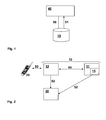
- FIG. 12 shows a schematic view of a service delivery system 40 and a subscriber database 15.
- FIG. 2 is a schematic representation of a mobile telecommunications network 10 with a telecommunications terminal 20 and the transmission of a subscriber information element 50 shown.
- the mobile telecommunication network 10 comprises a core network 11 and an access network 12.
- the telecommunications terminal 20 is connected by means of the access network 12 to the mobile telecommunications network 10 or has a contact (telecommunications contact) to the mobile telecommunications network 10.
- the telecommunications contact for example, as a telecommunications connection (connection-oriented) or as a telecommunications session (packet-oriented) or as a combination of a telecommunications contact and a telecommunications session be provided, for example, depending on which domain of the mobile telecommunications network, the telecommunication terminal is connected.
- a subscriber information element 50 is generated and present in the mobile telecommunications network 10, the subscriber information element 50 in any case for generating or updating indicators of the performance or quality of service of the mobile telecommunications network 10 with respect to a radio cell or a Plurality of radio cells is used.
- the subscriber information element 50 is present in any case in the access network 12.
- the subscriber information element 50 is designed, for example, as a "customer segment information element" (CSIE).
- the subscriber information element 50 is forwarded from a service provisioning system 40 (IT Provisioning System) to a subscriber database 15. On the part of the subscriber database 15, the reception of the subscriber information element 50 is confirmed by means of an acknowledgment message 51.
- a service provisioning system 40 IT Provisioning System
- the subscriber database 15 for example, a network element of the mobile telecommunications network 10 in question, which the functionality of an HLR (Home Location Register) or an HSS (Home Subscriber Server) or also a functionality of a combined HLR and HSS.
- the subscriber information element 50 is stored in the subscriber database 15 and represents an additional parameter of the subscriber (or the customer) operating the telecommunications terminal 20.
- the subscriber information element 50 is transmitted from the core network 11 or from the subscriber database 15 in any case to the access network 12. Possibly. the subscriber information element 50 can also be transmitted to the telecommunication terminal 20.
- Quality of service information 52 can be queried by the access network 12, the quality of service information 52 being differentiable with regard to the customer segment (i.e., using the information of the subscriber information elements of a plurality of telecommunications terminals in an observation area, for example a radio cell or also a plurality of radio cells).
- the quality of service information 52 can be obtained, in particular, by means of counter information, so that, on the one hand, and on the other hand quickly (i.e., without much time delay), quality of service indicators can be determined, which can be differentiated according to customer segment data.
- the quality-of-service information 52 which can be differentiated according to customer segments, is combined with conventionally collected quality of service data.
- the exact meaning or the recognized content or the encoding (encoding) of the subscriber information element 50 by the operator of the mobile telecommunications network 10 can be selected at least in part.
- the structure of the subscriber information element 50 depends, for example, on the number of segments defined by the network operator. For example, in a coding using 8 bits (i.e., 8 binary digits), there are at least theoretically 256 different distinguishable customer segments available.
- GSM Global System for Mobile communication
- UMTS Universe Mobile Telecommunication System
- LTE Long Term Evolution
- call-related i.e., related to CS (circuit switched) calls
- data-related i.e., PS-switched (packet switched)
- the subscriber information element 50 By using the subscriber information element 50 according to the invention, it is advantageously possible to optimize the capacity of the mobile telecommunications network 10 in such a way that the largest possible amount of data or the best possible quality of service or quality of service is realized in such radio cells, which have a high demand. In less strong (in particular high quality of service or data volume) in demand areas of the mobile telecommunications network 10, the network capacity can be reduced advantageously, so that, for example, a lower power consumption for the operation of the mobile telecommunications network 10 in these areas is feasible.
- the quality of service management unit 30 (service performance management entity) according to the invention is preferably able to provide in quasi-real-time information on the quality of service, which are differentiated according to the customer segment. For example, it is possible to change the indicator of the "HSDPA bearer setup success rate" (ie the success rate of the Telecommunications terminals within a considered area (such as a radio cell or multiple radio cells), using HSDPA (High Speed Daterate Packed Access) network access to determine and optimize depending on the customer segment.
- HSDPA High Speed Daterate Packed Access
- “quasi-real time” is understood as meaning a maximum time delay of about 20 minutes, preferably of a maximum of only 15 minutes, more preferably of a maximum of only 10 minutes, and very particularly preferably of a maximum of only 5 minutes.
Landscapes
- Engineering & Computer Science (AREA)
- Quality & Reliability (AREA)
- Computer Networks & Wireless Communication (AREA)
- Signal Processing (AREA)
- Mobile Radio Communication Systems (AREA)
Abstract
Description
- Die Erfindung betrifft ein Verfahren zur Herstellung eines Telekommunikationskontakts in Form einer Telekommunikationsverbindung oder einer Telekommunikationssession zwischen einem Mobilfunk-Telekommunikationsnetz und einem Telekommunikationsendgerät eines Kunden des Mobilfunk-Telekommunikationsnetzes, wobei das Mobilfunk-Telekommunikationsnetz ein Kernnetz des Mobilfunk-Telekommunikationsnetzes und ein Zugangsnetz des Mobilfunk-Telekommunikationsnetzes umfasst, wobei das Kernnetz eine bei der Herstellung, beim Betrieb und beim Beenden des Telekommunikationskontakts benutzte zentrale Teilnehmerdatenbank aufweist, wobei während der Herstellung des Telekommunikationskontakts in der Regel mehrere in der Teilnehmerdatenbank gespeicherte Teilnehmer-Informationselemente ohne Kundensegmentbezug vom Kernnetz dem Zugangsnetz zur Verfügung gestellt wird.
- Ferner betrifft die Erfindung ein Verfahren zur statischen und/oder dynamischen Optimierung der Dienstabdeckung einer Mehrzahl von Funkzellen eines Mobilfunk-Telekommunikationsnetzes, wobei das Mobilfunk-Telekommunikationsnetz ein Kernnetz des Mobilfunk-Telekommunikationsnetzes und ein Zugangsnetz des Mobilfunk-Telekommunikationsnetzes umfasst, wobei das Kernnetz eine zentrale Teilnehmerdatenbank aufweist, wobei während der Herstellung eines Telekommunikationskontakts in Form einer Telekommunikationsverbindung oder einer Telekommunikationssession zwischen dem Mobilfunk-Telekommunikationsnetz und einem Telekommunikations¬endgerät eines Kunden des Mobilfunk-Telekommunikationsnetzes, in der Regel mehrere in der Teilnehmerdatenbank gespeichertes Teilnehmer-Informationselemente ohne Kundensegmentbezug vom Kernnetz dem Zugangsnetz zur Verfügung gestellt wird Weiterhin betrifft die Erfindung auch ein Zugangsnetz eines Mobilfunk-Telekommunikationsnetzes zur statischen und/oder dynamischen Optimierung der Dienstabdeckung einer Mehrzahl von Funkzellen des Mobilfunk-Telekommunikationsnetzes, wobei das Zugangsnetz eine Netzeinheit aufweist, wobei das Mobilfunk-Telekommunikationsnetz ein Kernnetz des Mobilfunk-Telekommunikationsnetzes und das Zugangsnetz umfasst, wobei das Kernnetz eine zentrale Teilnehmerdatenbank aufweist, wobei das Zugangsnetz derart vorgesehen ist, dass während der Herstellung eines Telekommunikationskontakts in Form einer Telekommunikationsverbindung oder einer Telekommunikationssession zwischen dem Mobilfunk-Telekommunikationsnetz und einem Telekommunikations¬endgerät eines Kunden des Mobilfunk-Telekommunikationsnetzes, in der Regel mehrere in der Teilnehmerdatenbank gespeichertes Teilnehmer-Informationselemente ohne Kundensegmentbezug vom Kernnetz dem Zugangsnetz zur Verfügung gestellt wird.
- Es ist allgemein bekannt, die Funktion und den Betrieb von Mobilfunk-Telekommunikationsnetzen zu optimieren, beispielsweise mittels Werkzeugen wie Service Performance Management (Dienstgüte-Management) oder Customer Experience (Kundenzufriedenheits-Management) Management. Hierbei werden Messungen bzw. Messzähler bzw. Zählerinformationen des Zugangsnetzes und/oder des Kernnetzes des Mobilfunk-Telekommunikationsnetz dazu benutzt, Netzengpässe vorauszusehen und die Dienstqualität mittels definierter Leistungskennzahlen (bzw. sogenannter Key Performance Indicators, KPI) messen bzw. zu überwachen.
- Der Unterschied zwischen dem Dienstgüte-Management und dem Kundenzufriedenheits-Management besteht häufig darin, dass im Falle des Kundenzufriedenheitsmanagements eine Korrelation zwischen Attributen
- -- des Kunden (der ein Telekommunikationsendgerät in einem Mobilfunk-Telekommunikationsnetz betreibt und hierfür einen entsprechenden Vertrag, typischerweise einen im Vorhinein zu bezahlenden Vertrag (sogenannter prepaid-Vertrag) oder einen im Nachhinein zu bezahlenden Vertrag (sogenannter postpaid-Vertrag oder Laufzeitvertrag), mit dem Betreiber des Mobilfunk-Telekommunikationsnetzes hat),
- -- des Telekommunikationsendgeräts,
- -- des benutzten Mobilfunk-Telekommunikationsnetzes bzw. des benutzten Teilnetzes bzw. der benutzten Domäne des Mobilfunk-Telekommunikationsnetzes und
- -- des benutzten Telekommunikations-Dienstes hergestellt wird.
- Typische Attribute eines Kunden umfassen beispielsweise:
- -- ob es sich bei dem Kunden um einen Kunden mit einem prepaid-Vertrag oder einem postpaid-Vertrag handelt,
- -- für welchen Umsatz der Kunde in der Vergangenheit stand; hierbei können beispielsweise Eingruppierungen in sogenannte "gold-Kunden" (d.h. mit vergleichsweise hohem Umsatz), sogenannte "silber-Kunden" (d.h. mit im Vergleich zu den "gold-Kunden" geringerem Umsatz) und sogenannte "bronze-Kunden" (d.h. mit im Vergleich zu den "silber-Kunden" noch geringerem Umsatz),
- -- ob es sich bei dem Kunden um einen Geschäftskunden oder einen Privatkunden handelt.
- Typische Attribute des Telekommunikationsendgeräts beziehen sich beispielsweise auf dessen Typ und/oder das verwendete Betriebssystem, d.h. ob es sich um ein Gerät mit iOS-Betriebssystem handelt (wie beispielsweise ein iPhone oder iPad) oder ob es sich um ein Gerät mit einem Android-Betriebssystem handelt.
- Typische Attribute des benutzten Mobilfunk-Telekommunikationsnetzes bzw. des benutzten Teilnetzes bzw. der benutzten Domäne des Mobilfunk-Telekommunikationsnetzes beziehen sich beispielsweise darauf, ob das GSM-Mobilfunknetz verwendet wird oder ob das GPRS-Mobilfunknetz verwendet wird oder ob das UMTS-Mobilfunknetz verwendet wird oder ob das LTE-Mobilfunknetz verwendet wird, ob eine CS-Domäne (circuit switched) oder eine PS-Domäne (packet switched) verwendet wird. Die für die Zwecke des Dienstgüte-Managements bzw. des Kundenzufriedenheits-Managements herangezogenen Informationen sind dabei häufig auf die einzelnen Netzkomponenten, insbesondere des Kernnetzes, dieser Mobilfunknetz-Domänen bezogen, wie zum Beispiel MSC (Mobile Switching Center) für die CS (circuit switched) Domäne, GSN (GPRS (General Packet Radio Service) Service Node) für die PS (packet switched) Domäne bzw. Funkkomponenten (radio components) für beide Domänen.
- Typische Attribute des benutzten Telekommunikations-Dienstes umfassen beispielsweise, ob es sich um einen CS (circuit switched Dienst (Sprachdienst, SMS, CS basierten Datendienst) oder um einen auf dem PS (packet switched) basierten IP-Protokoll (Internet Protocol) aufsetzenden Dienst handelt.
- Nachteilig bei der Verwendung der bekannten Verfahren zur Überwachung von Mobilfunk-Telekommunikationsnetzen, insbesondere mit Blick auf eine umsatzorientierte Dienstüberwachung bzw. Dienstgüteüberwachung, ist, dass im Zugangsnetz von Mobilfunk-Telekommunikationsnetzen typischerweise keine Information bezüglich des Kundensegments vorhanden ist bzw. keine diesbezüglichen Zähler bzw. Zählerinformationen vorhanden sind. Daher ist es nicht möglich, dass automatisiert die Dienstqualität des Zugangsnetzes mit einem speziellen Fokus auf das Kundensegment überwacht wird
- Der Erfindung liegt daher die Aufgabe zugrunde, ein Verfahren zur Herstellung eines Telekommunikationskontakts bzw. ein Verfahren zur statischen und/oder dynamischen Optimierung der Dienstabdeckung einer Mehrzahl von Funkzellen eines Mobilfunk-Telekommunikationsnetzes zur Verfügung zu stellen, mittels dem eine Dienstgüteüberwachung des Zugangsnetzes mit einem speziellen Fokus auf das Kundensegment in schneller, wenig komplexer und kostengünstiger Weise möglich ist.
- Diese Aufgabe wird erfindungsgemäß gelöst durch ein Verfahren zur statischen und/oder dynamischen Optimierung der Dienstabdeckung einer Mehrzahl von Funkzellen eines Mobilfunk-Telekommunikationsnetzes, wobei das Mobilfunk-Telekommunikationsnetz ein Kernnetz des Mobilfunk-Telekommunikationsnetzes und ein Zugangsnetz des Mobilfunk-Telekommunikationsnetzes umfasst, wobei das Kernnetz eine zentrale Teilnehmerdatenbank aufweist, wobei während der Herstellung eines Telekommunikationskontakts in Form einer Telekommunikationsverbindung oder einer Telekommunikationssession zwischen dem Mobilfunk-Telekommunikationsnetz und einem Telekommunikations¬endgerät eines Kunden des Mobilfunk-Telekommunikationsnetzes wenigstens ein in der Teilnehmerdatenbank gespeichertes Teilnehmer-Informationselement vom Kernnetz dem Zugangsnetz zur Verfügung gestellt wird, wobei das Teilnehmer-Informationselement auf den Kunden des Mobilfunk-Telekommunikationsnetzes bezogen ist und wenigstens eine Information über das Kundensegment umfasst, wobei in Abhängigkeit des Teilnehmer-Informationselements im Zugangsnetz des Mobilfunk-Telekommunikationsnetzes eine Zählerinformation gespeichert wird und wobei die statische und/oder dynamische Optimierung der Dienstabdeckung der Mehrzahl von Funkzellen in Abhängigkeit der Zählerinformation erfolgt, wobei eine Konfiguration der Funkparameter der Mehrzahl von Funkzellen an die momentane Lastsituation angepasst wird.
- Ferner wird die Aufgabe erfindungsgemäß gelöst durch ein Verfahren zur Herstellung eines Telekommunikationskontakts in Form einer Telekommunikationsverbindung oder einer Telekommunikationssession zwischen einem Mobilfunk-Telekommunikationsnetz und einem Telekommunikations¬endgerät eines Kunden des Mobilfunk-Telekommunikationsnetzes, wobei das Mobilfunk-Telekommunikationsnetz ein Kernnetz des Mobilfunk-Telekommunikationsnetzes und ein Zugangsnetz des Mobilfunk-Telekommunikationsnetzes umfasst, wobei das Kernnetz eine bei der Herstellung, beim Betrieb und beim Beenden des Telekommunikationskontakts benutzte zentrale Teilnehmerdatenbank aufweist, wobei während der Herstellung des Telekommunikationskontakts wenigstens ein in der Teilnehmerdatenbank gespeichertes Teilnehmer-Informationselement vom Kernnetz dem Zugangsnetz zur Verfügung gestellt wird, wobei das Teilnehmer-Informationselement auf den Kunden des Mobilfunk-Telekommunikationsnetzes bezogen ist und wenigstens eine Information über das Kundensegment umfasst.
- Erfindungsgemäß ist es vorgesehen, dass eine auf das Kundensegment bezogene Information bzw. einen Hinweis auf das Kundensegment enthaltende Information, das Teilnehmer-Informationselement, jedenfalls zum Zugangsnetz hin übertragen wird. Dies wird erfindungsgemäß normalerweise während der Herstellung und/oder während einer Modifikation des Telekommunikationskontakts durchgeführt.
- Erfindungsgemäß ist es ferner bevorzugt vorgesehen, dass das Mobilfunk-Telekommunikationsnetz ein Dienstbereitstellungssystem (Provisionierungssystem) aufweist, wobei das Teilnehmer-Informationselement zeitlich vor der Herstellung des Teiekommunikationskontakts von dem Dienstbereitstellungssystem zur Teilnehmerdatenbank übertragen wird.
- Hierdurch kann in einfacher und effizienter Weise das Teilnehmer-Informationselement dem Mobilfunk-Telekommunikationsnetz in einer Weise zur Verfügung gestellt werden, dass sichergestellt ist, dass für alle Telekommunikationsendgeräte das Teilnehmer-Informationselement vorhanden bzw. bekannt ist.
- Besonders bevorzugt ist es gemäß der vorliegenden Erfindung ferner, dass in Abhängigkeit des Teilnehmer-Informationselements im Zugangsnetz des Mobilfunk-Telekommunikationsnetzes eine Zählerinformation gespeichert wird.
- Hierdurch ist es erfindungsgemäß in vorteilhafter Weise möglich, dass die Betriebs-Informationen bezüglich des Betriebs des Mobilfunk-Telekommunikationsnetzes in einer Funkzelle oder in einer Mehrzahl von Funkzellen in anonymisierter Form vorliegen, d.h. es ist zwar das Teilnehmer-Informationselement bezüglich eines spezifischen Telekommunikationsendgeräts, welches eine Zählerinformation generiert bzw. verändert hat (beispielsweise wurde ein Zähler um eine Zählereinheit erhöht oder erniedrigt), aber durch eine Auswertung lediglich des Zählerwertes bzw. der Zählerinformation kann nicht zurückverfolgt werden, welches Telekommunikationsendgerät bzw. welches Ereignis bezogen auf ein Telekommunikationsendgerät die Veränderung bzw. Generierung der Zählerinformation bewirkt hat.
- Erfindungsgemäß ist ferner auch bevorzugt, dass das Teilnehmer-Informationselement von dem Zugangsnetz des Mobilfunk-Telekommunikationsnetzes zum Telekommunikationsendgerät übertragen wird.
- Hierdurch ist es in vorteilhafter Weise realisierbar, dass einer abfragenden Instanz innerhalb des Mobilfunk-Telekommunikationsnetzes die Möglichkeit eingeräumt wird, in einfacher Weise auf weitere detaillierte Daten mit Blick auf die Optimierung des Betriebs des Mobilfunk-Telekommunikationsnetzes zuzugreifen.
- Ferner ist es erfindungsgemäß bevorzugt vorgesehen, dass die Teilnehmerdatenbank ein Home Location Register (HLR) und/oder ein Home Subscriber Server (HSS) ist.
- Hierdurch ist es einfach und kostengünstig möglich, an zentraler Stelle die erforderlichen Informationen zu den einzelnen Telekommunikationsendgeräten zu speichern.
- Erfindungsgemäß ist es weiterhin auch bevorzugt vorgesehen, dass das Teilnehmer-Informationselement eine Information oder eine Mehrzahl von Informationen der nachfolgenden Elemente aufweist:
- -- der Benutzertyp, der von einer entweder geschäftlichen oder aber privaten Benutzung des Mobilfunk-Telekommunikationsnetzes abhängt, (Geschäftskunde oder Privatkunde)
- -- den Typ der vereinbarten Dienstgütevereinbarung (service level agreement),
- -- der Tarif des Privatkundenbenutzers, der von einer vertraglichen Beziehung entweder mit Vorauszahlung (prepaid) oder mit Laufzeitvertrag (postpaid) abhängt und der verschiedene vertragsrelevante Kenngrößen für den monatlichen Umsatz beinhaltet
- -- eine Information, ob es sich um einen VIP-Benutzer handelt,
- -- eine Information, ob es sich um einen roaming-Benutzer mit hohem Umsatz handelt.
- Hierdurch ist es erfindungsgemäß in einfacher Weise möglich, dass eine Vielzahl von Parametern und Informationen einem Optimierungswerkzeug zur Verfügung gestellt wird.
- Ein weiterer Gegenstand der vorliegenden Erfindung ist ein Zugangsnetz eines Mobilfunk-Telekommunikationsnetzes zur statischen und/oder dynamischen Optimierung der Dienstabdeckung einer Mehrzahl von Funkzellen des Mobilfunk-Telekommunikationsnetzes, wobei das Zugangsnetz eine Netzeinheit aufweist, wobei das Mobilfunk-Telekommunikationsnetz ein Kernnetz des Mobilfunk-Telekommunikationsnetzes und das Zugangsnetz umfasst, wobei das Kernnetz eine zentrale Teilnehmerdatenbank aufweist, wobei das Zugangsnetz derart vorgesehen ist, dass während der Herstellung eines Telekommunikationskontakts in Form einer Telekommunikationsverbindung oder einer Telekommunikationssession zwischen dem Mobilfunk-Telekommunikationsnetz und einem Telekommunikations¬endgerät eines Kunden des Mobilfunk-Telekommunikationsnetzes, wenigstens ein in der Teilnehmerdatenbank gespeichertes Teilnehmer-Informationselement vom Kernnetz dem Zugangsnetz zur Verfügung gestellt wird, wobei das Teilnehmer-Informationselement auf den Kunden des Mobilfunk-Telekommunikationsnetzes bezogen ist und wenigstens eine Information über das Kundensegment umfasst, wobei im Zugangsnetz des Mobilfunk-Telekommunikationsnetzes in Abhängigkeit des Teilnehmer-Informationselements eine Zählerinformation gespeichert ist und wobei die statische und/oder dynamische Optimierung der Dienstabdeckung der Mehrzahl von Funkzellen in Abhängigkeit der Zählerinformation vorgesehen ist.
- Ferner bezieht sich die vorliegende Erfindung auch auf ein Computerprogramm mit Programmcodemitteln, mit deren Hilfe alle Schritte des erfindungsgemäßen Verfahrens durchführbar sind, wenn das Computerprogramm auf einer Netzeinheit eines Mobilfunk-Telekommunikationsnetzes, einem Computer oder einer entsprechenden Recheneinheit ausgeführt wird.
- Weiterhin ist Gegenstand der vorliegenden Erfindung ein Computerprogrammprodukt mit einem computerlesbaren Medium und einem auf dem computerlesbaren Medium gespeicherten Computerprogramm mit Programmcodemitteln, die dazu geeignet sind, dass alle Schritte des erfindungsgemäßen Verfahrens durchführbar sind, wenn das Computerprogramm auf einer Netzeinheit eines Mobilfunk-Telekommunikationsnetzes, einem Computer oder einer entsprechenden Recheneinheit ausgeführt wird.
- Weitere Einzelheiten, Merkmale und Vorteile der Erfindung ergeben sich aus den Zeichnungen, sowie aus der nachfolgenden Beschreibung von bevorzugten Ausführungsformen anhand der Zeichnungen. Die Zeichnungen illustrieren dabei lediglich beispielhafte Ausführungsformen der Erfindung, welche den wesentlichen Erfindungsgedanken nicht einschränken.
-
- Figur 1
- zeigt eine schematische Ansicht eines Dienstbereitstellungssystems und einer Teilnehmerdatenbank.
- Figur 2
- zeigt ein Mobilfunk-Telekommunikationsnetz mit einem Telekommunikationsendgerät sowie die Übertragung eines Teilnehmer-Informationselements.
- In den verschiedenen Figuren sind gleiche Teile stets mit den gleichen Bezugszeichen versehen und werden daher in der Regel auch jeweils nur einmal benannt bzw. erwähnt.
- In
Figur 1 ist eine schematische Ansicht eines Dienstbereitstellungssystems 40 und einer Teilnehmerdatenbank 15 dargestellt. - In
Figur 2 ist in schematischer Darstellung ein Mobilfunk-Telekommunikationsnetz 10 mit einem Telekommunikationsendgerät 20 sowie die Übertragung eines Teilnehmer-Informationselements 50 abgebildet. Das Mobilfunk-Telekommunikationsnetz 10 umfasst ein Kernnetz 11 (core network) und ein Zugangsnetz 12 (access network). Das Telekommunikationsendgerät 20 ist mittels des Zugangsnetzes 12 an das Mobilfunk-Telekommunikationsnetz 10 angebunden bzw. hat einen Kontakt (Telekommunikationskontakt) zum Mobilfunk-Telekommunikationsnetz 10. Der Telekommunikationskontakt kann erfindungsgemäß beispielsweise als eine Telekommunikationsverbindung (verbindungsorientiert) oder als eine Telekommunikationssession (paketorientiert) oder aber als eine Kombination einer Telekommunikationskontakt und einer Telekommunikationssession vorgesehen sein, beispielsweise abhängig davon, an welcher Domäne des Mobilfunk-Telekommunikationsnetzes das Telekommunikationsendgerät angebunden ist. - Erfindungsgemäß ist es vorgesehen, dass ein Teilnehmer-Informationselement 50 im Mobilfunk-Telekommunikationsnetz 10 erzeugt und vorhanden ist, wobei das Teilnehmer-Informationselement 50 jedenfalls zur Generierung bzw. Aktualisierung von Indikatoren der Leistung oder Dienstgüte des Mobilfunk-Telekommunikationsnetzes 10 bezogen auf eine Funkzelle oder eine Mehrzahl von Funkzellen benutzt wird. Hierzu ist es erfindungsgemäß vorgesehen, dass das Teilnehmer-Informationselement 50 jedenfalls im Zugangsnetz 12 vorhanden ist. Das Teilnehmer-Informationselement 50 ist beispielsweise als ein "customer segment information element" (CSIE) ausgebildet.
- Hierzu ist es erfindungsgemäß bevorzugt vorgesehen, dass - wie in
Figur 1 gezeigt - das Teilnehmer-Informationselement 50 von einem Dienstbereitstellungssystem 40 (IT Provisioning System) einer Teilnehmerdatenbank 15 zugeleitet wird. Seitens der Teilnehmerdatenbank 15 wird mittels einer Bestätigungsnachricht 51 der Empfang des Teilnehmer-Informationselements 50 bestätigt. Erfindungsgemäß kommt als Teilnehmerdatenbank 15 beispielsweise ein Netzelement des Mobilfunk-Telekommunikationsnetzes 10 in Frage, welches die Funktionalität eines HLR (Home Location Register) oder eines HSS (Home Subscriber Server) oder auch eine Funktionalität eines kombinierten HLR und HSS aufweist. Das Teilnehmer-Informationselement 50 wird in der Teilnehmerdatenbank 15 gespeichert und stellt einen zusätzlichen Parameter des Teilnehmers (bzw. des Kunden) dar, der das Telekommunikationsendgerät 20 betreibt. - Erfindungsgemäß ist es weiterhin vorgesehen, dass bei der Herstellung eines Telekommunikationskontakts zwischen dem Telekommunikationsendgerät 20 und dem Mobilfunk-Telekommunikationsnetz 10 das Teilnehmer-Informationselement 50 vom Kernnetz 11 bzw. von der Teilnehmerdatenbank 15 jedenfalls zum Zugangsnetz 12 übertragen wird. Ggf. kann das Teilnehmer-Informationselement 50 auch noch zum Telekommunikationsendgerät 20 übertragen werden.
- Hierdurch ist es erfindungsgemäß vorteilhaft möglich, dass mittels einer Dienstgüte-Management-Einheit 30 (Service Performance Management entity) Informationen bezüglich der Dienstgüte, d.h. Dienstgüteinformationen 52, vom Zugangsnetz 12 abgefragt werden können, wobei die Dienstgüteinformationen 52 mit Blick auf das Kundensegment (d.h. unter Benutzung der Informationen der Teilnehmer-Informationselemente einer Mehrzahl von Telekommunikationsendgeräten in einem Beobachtungsbereich, beispielsweise einer Funkzelle oder auch einer Mehrzahl von Funkzellen) differenzierbar sind. Die Dienstgüteinformationen 52 können insbesondere mittels Zählerinformationen gewonnen werden, so dass zum einen leicht und zum anderen schnell (d.h. ohne großen zeitlichen Verzug) Indikatoren zur Dienstgüte ermittelbar sind, die differenzierbar sind nach Kundensegmentdaten.
- Erfindungsgemäß ist es vorgesehen, dass die nach Kundensegmenten differenzierbaren Dienstgüteinformationen 52 kombiniert werden mit herkömmlicherweise erhobenen Daten zur Dienstgüte.
- Erfindungsgemäß ist es in vorteilhafter Weise vorgesehen, dass das Teilnehmer-Informationselement 50 eine Information oder eine Mehrzahl von Informationen der nachfolgenden Elemente aufweist:
- -- der Benutzertyp, der von einer entweder geschäftlichen oder aber privaten Benutzung des Mobilfunk-Telekommunikationsnetzes abhängt,
- -- den Typ der vereinbarten Dienstgütevereinbarung (service level agreement),
- -- das vereinbarte in einem Zeitintervall übertragbare oder übertragene Datenvolumen,
- -- der Typ des Privatkundenbenutzers, der von einer vertraglichen Beziehung entweder mit Vorauszahlung (prepaid) oder mit Laufzeitvertrag (postpaid) abhängt,
- -- eine Information, ob es sich um einen VIP-Benutzer handelt,
- -- eine Information, ob es sich um einen roaming-Benutzer mit hohem Umsatz handelt,
- -- eine Information, über die vereinbarte Dienstgüte (Quality of Service) des Benutzers.
- Hierdurch ist es erfindungsgemäß beispielsweise in vorteilhafter Weise möglich, dass statisch und/oder dynamisch eine Optimierung der Funkparameter des Mobilfunk-Telekommunikationsnetzes 10 vorgenommen wird, so dass die Konfiguration der Funkparameter in möglichst optimaler Weise an die momentane Lastsituation anpassbar ist. Hierbei kann die genaue Bedeutung bzw. der erkannte Inhalt bzw. die Kodierung (encoding) des Teilnehmer-Informationselements 50 seitens des Betreibers des Mobilfunk-Telekommunikationsnetzes 10 zumindest in Teilen gewählt werden. Die Struktur des Teilnehmer-Informationselements 50 hängt beispielsweise von der Anzahl der vom Netzbetreiber definierten Segmente ab. Beispielsweise stehen bei einer Kodierung unter Benutzung von 8 Bit (d.h. acht binäre Stellen) zumindest theoretisch 256 verschiedene unterscheidbare Kundensegmente zur Verfügung.
- Um die Verwendung von Roaming zu erleichtern, ist es sinnvoll die Kodierung zwischen verschiedenen Zugangstechnologien (wie GSM (Global System for Mobile communication), UMTS (Univesal Mobile Telecommunication System), LTE (Long Term Evolution)) und verschiedenen Telekommunikationsendgeräten zu vereinheitlichen.
- Erfindungsgemäß ist es weiterhin vorteilhaft möglich, dass anrufbezogene (d.h. bezogen auf CS (circuit switched) Anrufe) bzw. datenbezogene (d.h. bezogen auf PS (packet switched) Anrufe) Priorisierungsmechanismen in dynamischen Optimierungsalgorithmen verwendet werden.
- Durch die erfindungsgemäß Benutzung des Teilnehmer-Informationselements 50 ist es vorteilhaft möglich, die Kapazität des Mobilfunk-Telekommunikationsnetzes 10 in einer Art und Weise zu optimieren, dass eine möglichst große Datenmenge bzw. eine möglichst gute Dienstgüte bzw. Dienstqualität besonders in solchen Funkzellen realisiert wird, die eine hohe Nachfrage aufweisen. In weniger stark (bezüglich insbesondere hoher Dienstqualität bzw. Datenvolumen) nachgefragten Bereichen des Mobilfunk-Telekommunikationsnetzes 10 kann die Netzkapazität in vorteilhafter Weise reduziert werden, so dass beispielsweise ein geringerer Stromverbrauch für den Betrieb des Mobilfunk-Telekommunikationsnetzes 10 in diesen Bereichen realisierbar ist.
- Die Dienstgüte-Management-Einheit 30 (Service Performance Management entity) ist erfindungsgemäß bevorzugt in der Lage, in Quasi-Echtzeit Informationen zur Dienstgüte bereitzustellen, die nach dem Kundensegment differenziert sind. So ist es beispielsweise möglich, den Indikator der "HSDPA bearer setup success rate" (d.h. die Erfolgsrate der Telekommunikationsendgeräte innerhalb eines betrachteten Bereichs (etwa einer Funkzelle oder mehrerer Funkzellen), mittels HSDPA (High Speed Daterate Packt Access) Netzzugang zu erhalten) in Abhängigkeit des Kundensegments zu ermitteln und zu optimieren. Hierbei wird unter "Quasi-Echtzeit" ein maximaler zeitlicher Verzug von ca. 20 Minuten verstanden, bevorzugt von maximal lediglich 15 Minuten, besonders bevorzugt von maximal lediglich 10 Minuten und ganz besonders bevorzugt von maximal lediglich 5 Minuten.
Claims (10)
- Verfahren zur statischen und/oder dynamischen Optimierung der Dienstabdeckung einer Mehrzahl von Funkzellen eines Mobilfunk-Telekommunikationsnetzes (10), wobei das Mobilfunk-Telekommunikationsnetz (10) ein Kernnetz (11) des Mobilfunk-Telekommunikationsnetzes (10) und ein Zugangsnetz (12) des Mobilfunk-Telekommunikationsnetzes (10) umfasst,
wobei das Kernnetz (11) eine zentrale Teilnehmerdatenbank (15) aufweist,
wobei während der Herstellung eines Telekommunikationskontakts in Form einer Telekommunikationsverbindung oder einer Telekommunikationssession zwischen dem Mobilfunk-Telekommunikationsnetz (10) und einem Telekommunikations¬endgerät (20) eines Kunden des Mobilfunk-Telekommunikationsnetzes (10) wenigstens ein in der Teilnehmerdatenbank (15) gespeichertes Teilnehmer-Informationselement (50) vom Kernnetz (11) dem Zugangsnetz (12) zur Verfügung gestellt wird,
wobei das Teilnehmer-Informationselement (50) auf den Kunden des Mobilfunk-Telekommunikationsnetzes (10) bezogen ist und wenigstens eine Information über das Kundensegment umfasst, wobei in Abhängigkeit des Teilnehmer-Informationselements (50) im Zugangsnetz (12) des Mobilfunk-Telekommunikationsnetzes (10) eine Zählerinformation gespeichert wird und wobei die statische und/oder dynamische Optimierung der Dienstabdeckung der Mehrzahl von Funkzellen in Abhängigkeit der Zählerinformation erfolgt, wobei eine Konfiguration der Funkparameter der Mehrzahl von Funkzellen an die momentane Lastsituation angepasst wird. - Verfahren zur Herstellung eines Telekommunikationskontakts in Form einer Telekommunikationsverbindung oder einer Telekommunikationssession zwischen einem Mobilfunk-Telekommunikationsnetz (10) und einem Telekommunikationsendgerät (20) eines Kunden des Mobilfunk-Telekommunikationsnetzes (10),
wobei das Mobilfunk-Telekommunikationsnetz (10) ein Kernnetz (11) des Mobilfunk-Telekommunikationsnetzes (10) und ein Zugangsnetz (12) des Mobilfunk-Telekommunikationsnetzes (10) umfasst,
wobei das Kernnetz (11) eine bei der Herstellung, beim Betrieb und beim Beenden des Telekommunikationskontakts benutzte zentrale Teilnehmerdatenbank (15) aufweist,
wobei während der Herstellung des Telekommunikationskontakts wenigstens ein in der Teilnehmerdatenbank (15) gespeichertes Teilnehmer-Informationselement (50) vom Kernnetz (11) dem Zugangsnetz (12) zur Verfügung gestellt wird,
wobei das Teilnehmer-Informationselement (50) auf den Kunden des Mobilfunk-Telekommunikationsnetzes (10) bezogen ist und wenigstens eine Information über das Kundensegment umfasst. - Verfahren nach einem der vorhergehenden Ansprüche, dadurch gekennzeichnet, dass das Mobilfunk-Telekommunikationsnetz (10) ein Dienstbereitstellungssystem (40) aufweist, wobei das Teilnehmer-Informationselement (50) zeitlich vor der Herstellung des Telekommunikationskontakts von dem Dienstbereitstellungssystem (40) zur Teilnehmerdatenbank (15) übertragen wird.
- Verfahren nach einem der vorhergehenden Ansprüche, dadurch gekennzeichnet, dass in Abhängigkeit des Teilnehmer-Informationselements (50) im Zugangsnetz (12) des Mobilfunk-Telekommunikationsnetzes (10) eine Zählerinformation gespeichert wird.
- Verfahren nach einem der vorhergehenden Ansprüche, dadurch gekennzeichnet, dass das Teilnehmer-Informationselement (50) von dem Zugangsnetz (12) des Mobilfunk-Telekommunikationsnetzes (10) zum Telekommunikationsendgerät (20) übertragen wird.
- Verfahren nach einem der vorhergehenden Ansprüche, dadurch gekennzeichnet, dass die Teilnehmerdatenbank (15) ein Home Location Register (HLR) und/oder ein Home Subscriber Server (HSS) ist.
- Verfahren nach einem der vorhergehenden Ansprüche, dadurch gekennzeichnet, dass das Teilnehmer-Informationselement (50) eine Information oder eine Mehrzahl von Informationen der nachfolgenden Elemente aufweist:-- der Benutzertyp, der von einer entweder geschäftlichen oder aber privaten Benutzung des Mobilfunk-Telekommunikationsnetzes abhängt,-- den Typ der vereinbarten Dienstgütevereinbarung (service level agreement),-- das vereinbarte in einem Zeitintervall übertragbare oder übertragene Datenvolumen,-- der Typ des Privatkundenbenutzers, der von einer vertraglichen Beziehung entweder mit Vorauszahlung (prepaid) oder mit Laufzeitvertrag (postpaid) abhängt,-- eine Information, ob es sich um einen VIP-Benutzer handelt,-- eine Information, ob es sich um einen roaming-Benutzer mit hohem Umsatz handelt,-- eine Information, über die vereinbarte Dienstgüte (Quality of Service) des Benutzers.
- Zugangsnetz (12) eines Mobilfunk-Telekommunikationsnetzes (10) zur statischen und/oder dynamischen Optimierung der Dienstabdeckung einer Mehrzahl von Funkzellen des Mobilfunk-Telekommunikationsnetzes (10), wobei das Zugangsnetz (12) eine Netzeinheit aufweist, wobei das Mobilfunk-Telekommunikationsnetz (10) ein Kernnetz (11) des Mobilfunk-Telekommunikationsnetzes (10) und das Zugangsnetz (12) umfasst,
wobei das Kernnetz (11) eine zentrale Teilnehmerdatenbank (15) aufweist,
wobei das Zugangsnetz (12) derart vorgesehen ist, dass während der Herstellung eines Telekommunikationskontakts in Form einer Telekommunikationsverbindung oder einer Telekommunikationssession zwischen dem Mobilfunk-Telekommunikationsnetz (10) und einem Telekommunikations¬endgerät (20) eines Kunden des Mobilfunk-Telekommunikationsnetzes (10), wenigstens ein in der Teilnehmerdatenbank (15) gespeichertes Teilnehmer-Informationselement (50) vom Kernnetz (11) dem Zugangsnetz (12) zur Verfügung gestellt wird,
wobei das Teilnehmer-Informationselement (50) auf den Kunden des Mobilfunk-Telekommunikationsnetzes (10) bezogen ist und wenigstens eine Information über das Kundensegment umfasst, wobei im Zugangsnetz (12) des Mobilfunk-Telekommunikationsnetzes (10) in Abhängigkeit des Teilnehmer-Informationselements (50) eine Zählerinformation gespeichert ist und wobei die statische und/oder dynamische Optimierung der Dienstabdeckung der Mehrzahl von Funkzellen in Abhängigkeit der Zählerinformation vorgesehen ist. - Computerprogramm mit Programmcodemitteln, mit deren Hilfe alle Schritte eines Verfahrens nach einem der Ansprüche 1 bis 9 durchführbar sind, wenn das Computerprogramm auf einer Netzeinheit eines Mobilfunk-Telekommunikationsnetzes (10), einem Computer oder einer entsprechenden Recheneinheit ausgeführt wird.
- Computerprogrammprodukt mit einem computerlesbaren Medium und einem auf dem computerlesbaren Medium gespeicherten Computerprogramm mit Programmcodemitteln, die dazu geeignet sind, dass alle Schritte eines Verfahrens nach einem der Ansprüche 1 bis 9 durchführbar sind, wenn das Computerprogramm auf einer Netzeinheit eines Mobilfunk-Telekommunikationsnetzes (10), einem Computer oder einer entsprechenden Recheneinheit ausgeführt wird.
Priority Applications (1)
| Application Number | Priority Date | Filing Date | Title |
|---|---|---|---|
| PL12005253T PL2549795T3 (pl) | 2011-07-20 | 2012-07-17 | Sposób optymalizacji pokrycia usług komórek radiowych, sposób ustanawiania kontaktu telekomunikacyjnego i odpowiednia sieć dostępowa, program komputerowy i produkt programu komputerowego |
Applications Claiming Priority (1)
| Application Number | Priority Date | Filing Date | Title |
|---|---|---|---|
| DE102011107945A DE102011107945A1 (de) | 2011-07-20 | 2011-07-20 | Verfahren zur Übertragung einer Kundensegmentinformation während der Herstellung/Modifikation eines Telekommunikationskontakts in Form einer Telekommunikationsverbindung oder einer Telekommunikationssession, Verfahren zur statischen und/oder dynamischen Optimierung der Funktechnik eines Mobilfunknetzes auf der Basis vorhandener Kundensegmentinformation im Zugangsnetz |
Publications (2)
| Publication Number | Publication Date |
|---|---|
| EP2549795A1 true EP2549795A1 (de) | 2013-01-23 |
| EP2549795B1 EP2549795B1 (de) | 2015-07-08 |
Family
ID=46762794
Family Applications (1)
| Application Number | Title | Priority Date | Filing Date |
|---|---|---|---|
| EP12005253.5A Active EP2549795B1 (de) | 2011-07-20 | 2012-07-17 | Verfahren zur Optimierung der Dienstabdeckung von Funkzellen, Verfahren zur Herstellung eines Telekommunikationskontakts sowie entsprechendes Zugangsnetz, Computerprogramm und Computerprogrammprodukt. |
Country Status (5)
| Country | Link |
|---|---|
| EP (1) | EP2549795B1 (de) |
| DE (1) | DE102011107945A1 (de) |
| ES (1) | ES2546156T3 (de) |
| HU (1) | HUE027427T2 (de) |
| PL (1) | PL2549795T3 (de) |
Citations (2)
| Publication number | Priority date | Publication date | Assignee | Title |
|---|---|---|---|---|
| EP1519607A1 (de) * | 2003-09-23 | 2005-03-30 | Siemens Aktiengesellschaft | Verfahren und System zur Funkressourcenverwaltung in einem Mobilfunknetz |
| US20100124926A1 (en) * | 2007-01-11 | 2010-05-20 | T-Mobile International Ag | Method for considering the subscriber type in mobility and radio resource management decisions in a radio access network |
Family Cites Families (4)
| Publication number | Priority date | Publication date | Assignee | Title |
|---|---|---|---|---|
| DE602006011557D1 (de) * | 2005-11-07 | 2010-02-25 | Accenture Global Services Gmbh | Netzleistungsverwaltung |
| US10163114B2 (en) * | 2007-12-21 | 2018-12-25 | Telefonaktiebolaget Lm Ericsson (Publ) | Method and apparatus for providing differentiated service levels in a communication network |
| US8902821B2 (en) * | 2008-06-12 | 2014-12-02 | Motorola Mobility Llc | Method and system for intermediate node quality of service negotiations |
| GB2478126A (en) * | 2010-02-25 | 2011-08-31 | Vodafone Intellectual Property Licensing Ltd | Analysing missed call events based on called mobile terminal status |
-
2011
- 2011-07-20 DE DE102011107945A patent/DE102011107945A1/de not_active Withdrawn
-
2012
- 2012-07-17 EP EP12005253.5A patent/EP2549795B1/de active Active
- 2012-07-17 HU HUE12005253A patent/HUE027427T2/en unknown
- 2012-07-17 PL PL12005253T patent/PL2549795T3/pl unknown
- 2012-07-17 ES ES12005253.5T patent/ES2546156T3/es active Active
Patent Citations (2)
| Publication number | Priority date | Publication date | Assignee | Title |
|---|---|---|---|---|
| EP1519607A1 (de) * | 2003-09-23 | 2005-03-30 | Siemens Aktiengesellschaft | Verfahren und System zur Funkressourcenverwaltung in einem Mobilfunknetz |
| US20100124926A1 (en) * | 2007-01-11 | 2010-05-20 | T-Mobile International Ag | Method for considering the subscriber type in mobility and radio resource management decisions in a radio access network |
Also Published As
| Publication number | Publication date |
|---|---|
| PL2549795T3 (pl) | 2015-12-31 |
| DE102011107945A1 (de) | 2013-01-24 |
| HUE027427T2 (en) | 2016-10-28 |
| EP2549795B1 (de) | 2015-07-08 |
| ES2546156T3 (es) | 2015-09-21 |
Similar Documents
| Publication | Publication Date | Title |
|---|---|---|
| DE602005002159T2 (de) | Überwachen und Verwalten von umherstreifenden Benutzern | |
| DE602004011119T2 (de) | Verfahren zur bestimmung der leistungsfähigkeit von mobilfunkendgeräten in einem im betrieb befindlichen mobilfunknetz | |
| EP1320974B1 (de) | Digitales verzeichnis für sofortigen berichtendienst | |
| EP1320248B1 (de) | Verfahren zur ortsabhängigen Vergebührung mobiler Kommunikation | |
| EP1874071A1 (de) | Verfahren zum Bereitstellen von Daten über einen Pilotkanal eines Funk-Kommunikationssystems | |
| EP1557002B1 (de) | Verfahren und einrichtung zur auswahl eines netzzugangs zu einem oder mehreren datennetzen über ein telekommunikationsendgerät | |
| EP1503538B1 (de) | Verfahren zum Ermitteln eines Abrechnungstarifs für eine Datenübertragung | |
| EP1503539B1 (de) | Verfahren zum Ermitteln eines Abrechnungstarifs zum Abrechnen einer Datenübertragung | |
| EP1126660A1 (de) | Verfahren zur übermittlung einer Nachricht sowie Gateway | |
| EP2549795B1 (de) | Verfahren zur Optimierung der Dienstabdeckung von Funkzellen, Verfahren zur Herstellung eines Telekommunikationskontakts sowie entsprechendes Zugangsnetz, Computerprogramm und Computerprogrammprodukt. | |
| DE102005037874B4 (de) | Verfahren und Anordnung zur Kontrolle und Vergebührung von Peer to Peer-Diensten in einem IP-basierten Kommunikationsnetzwerk | |
| EP1170967A1 (de) | System und Verfahren zum Betrieb eines interaktiven Servers in einem zellularen Kommunikationsnetz | |
| EP2779744B1 (de) | Verfahren zur Veränderung der einem Telekommunikationsendgerät zugeordneten Dienstqualität und System, umfassend ein Telekommunikationsendgerät und ein Telekommunikationsnetz, zur Veränderung der dem Telekommunikationsendgerät zugeordneten Dienstqualität | |
| DE102011103010B4 (de) | Verfahren und Systems zur Onlinekostenabrechnung eines Teilnehmers, Programm und Computerprogrammprodukt | |
| DE102019001596B3 (de) | Überwachung einer Dienstgüte von Teilnehmeridentitätsmodulen | |
| EP1749368B1 (de) | Anordnung zum erstellen von dienstorientierten gebührendaten in einem kommunikationsnetz | |
| DE60037738T2 (de) | Gebührensammlung in einem telekommunikationssystem | |
| DE102005005712A1 (de) | Verfahren zur Anpassung einer Verbindung zwischen einem Diensteanbieter und einem Kommunikationsgerät und entsprechendes Kommunikationssystem | |
| EP1021055A2 (de) | Verfahren zur Erfassung von Kenndaten eines Mobilfunknetzes | |
| EP2237600B1 (de) | Begrenzung der datenübertragungsrate für eine datenverbindung in einem mobilfunksystem | |
| DE60131529T2 (de) | Bestimmung der Übertragungseffizienz | |
| EP2242031B1 (de) | Verfahren und Anordnung zur Nutzung bestimmter bei der Anmeldung eines mobilen Kommunikationsendgerätes bei einer Vermittlungsstelle erfaßter Informationen insbesondere zur Erstellung von Verkehrsprognosen | |
| DE102004058321A1 (de) | System und Verfahren zur Bewertung von Kandidatennetzen bezüglich eines Datendurchsatzes von Mobilkommunikationsgeräten | |
| DE102006054285B4 (de) | Verfahren und System zur Kapazitätssteuerung von gemeinsam Access-Points nutzenden Breitband-Internetzugängen | |
| EP1761020B1 (de) | Vergebührung von Kommunikationsverbindungen unter Vermeidung der Korrelation von Gebührendatensätzen von mehr als einem Netzelement |
Legal Events
| Date | Code | Title | Description |
|---|---|---|---|
| PUAI | Public reference made under article 153(3) epc to a published international application that has entered the european phase |
Free format text: ORIGINAL CODE: 0009012 |
|
| AK | Designated contracting states |
Kind code of ref document: A1 Designated state(s): AL AT BE BG CH CY CZ DE DK EE ES FI FR GB GR HR HU IE IS IT LI LT LU LV MC MK MT NL NO PL PT RO RS SE SI SK SM TR |
|
| AX | Request for extension of the european patent |
Extension state: BA ME |
|
| 17P | Request for examination filed |
Effective date: 20130723 |
|
| RBV | Designated contracting states (corrected) |
Designated state(s): AL AT BE BG CH CY CZ DE DK EE ES FI FR GB GR HR HU IE IS IT LI LT LU LV MC MK MT NL NO PL PT RO RS SE SI SK SM TR |
|
| 17Q | First examination report despatched |
Effective date: 20140806 |
|
| GRAP | Despatch of communication of intention to grant a patent |
Free format text: ORIGINAL CODE: EPIDOSNIGR1 |
|
| INTG | Intention to grant announced |
Effective date: 20150130 |
|
| GRAS | Grant fee paid |
Free format text: ORIGINAL CODE: EPIDOSNIGR3 |
|
| GRAA | (expected) grant |
Free format text: ORIGINAL CODE: 0009210 |
|
| AK | Designated contracting states |
Kind code of ref document: B1 Designated state(s): AL AT BE BG CH CY CZ DE DK EE ES FI FR GB GR HR HU IE IS IT LI LT LU LV MC MK MT NL NO PL PT RO RS SE SI SK SM TR |
|
| REG | Reference to a national code |
Ref country code: GB Ref legal event code: FG4D Free format text: NOT ENGLISH |
|
| REG | Reference to a national code |
Ref country code: AT Ref legal event code: REF Ref document number: 736204 Country of ref document: AT Kind code of ref document: T Effective date: 20150715 Ref country code: CH Ref legal event code: EP |
|
| REG | Reference to a national code |
Ref country code: IE Ref legal event code: FG4D Free format text: LANGUAGE OF EP DOCUMENT: GERMAN |
|
| REG | Reference to a national code |
Ref country code: DE Ref legal event code: R096 Ref document number: 502012003655 Country of ref document: DE |
|
| REG | Reference to a national code |
Ref country code: RO Ref legal event code: EPE |
|
| REG | Reference to a national code |
Ref country code: NL Ref legal event code: T3 |
|
| REG | Reference to a national code |
Ref country code: ES Ref legal event code: FG2A Ref document number: 2546156 Country of ref document: ES Kind code of ref document: T3 Effective date: 20150921 |
|
| REG | Reference to a national code |
Ref country code: CH Ref legal event code: NV Representative=s name: MICHELI AND CIE SA, CH |
|
| REG | Reference to a national code |
Ref country code: SK Ref legal event code: T3 Ref document number: E 19229 Country of ref document: SK |
|
| REG | Reference to a national code |
Ref country code: GR Ref legal event code: EP Ref document number: 20150401993 Country of ref document: GR Effective date: 20151022 |
|
| REG | Reference to a national code |
Ref country code: LT Ref legal event code: MG4D |
|
| REG | Reference to a national code |
Ref country code: PL Ref legal event code: T3 |
|
| PG25 | Lapsed in a contracting state [announced via postgrant information from national office to epo] |
Ref country code: LT Free format text: LAPSE BECAUSE OF FAILURE TO SUBMIT A TRANSLATION OF THE DESCRIPTION OR TO PAY THE FEE WITHIN THE PRESCRIBED TIME-LIMIT Effective date: 20150708 Ref country code: FI Free format text: LAPSE BECAUSE OF FAILURE TO SUBMIT A TRANSLATION OF THE DESCRIPTION OR TO PAY THE FEE WITHIN THE PRESCRIBED TIME-LIMIT Effective date: 20150708 Ref country code: NO Free format text: LAPSE BECAUSE OF FAILURE TO SUBMIT A TRANSLATION OF THE DESCRIPTION OR TO PAY THE FEE WITHIN THE PRESCRIBED TIME-LIMIT Effective date: 20151008 Ref country code: LV Free format text: LAPSE BECAUSE OF FAILURE TO SUBMIT A TRANSLATION OF THE DESCRIPTION OR TO PAY THE FEE WITHIN THE PRESCRIBED TIME-LIMIT Effective date: 20150708 |
|
| PG25 | Lapsed in a contracting state [announced via postgrant information from national office to epo] |
Ref country code: PT Free format text: LAPSE BECAUSE OF FAILURE TO SUBMIT A TRANSLATION OF THE DESCRIPTION OR TO PAY THE FEE WITHIN THE PRESCRIBED TIME-LIMIT Effective date: 20151109 Ref country code: RS Free format text: LAPSE BECAUSE OF FAILURE TO SUBMIT A TRANSLATION OF THE DESCRIPTION OR TO PAY THE FEE WITHIN THE PRESCRIBED TIME-LIMIT Effective date: 20150708 Ref country code: IS Free format text: LAPSE BECAUSE OF FAILURE TO SUBMIT A TRANSLATION OF THE DESCRIPTION OR TO PAY THE FEE WITHIN THE PRESCRIBED TIME-LIMIT Effective date: 20151108 Ref country code: SE Free format text: LAPSE BECAUSE OF FAILURE TO SUBMIT A TRANSLATION OF THE DESCRIPTION OR TO PAY THE FEE WITHIN THE PRESCRIBED TIME-LIMIT Effective date: 20150708 Ref country code: HR Free format text: LAPSE BECAUSE OF FAILURE TO SUBMIT A TRANSLATION OF THE DESCRIPTION OR TO PAY THE FEE WITHIN THE PRESCRIBED TIME-LIMIT Effective date: 20150708 |
|
| REG | Reference to a national code |
Ref country code: DE Ref legal event code: R097 Ref document number: 502012003655 Country of ref document: DE |
|
| REG | Reference to a national code |
Ref country code: IE Ref legal event code: MM4A |
|
| PG25 | Lapsed in a contracting state [announced via postgrant information from national office to epo] |
Ref country code: EE Free format text: LAPSE BECAUSE OF FAILURE TO SUBMIT A TRANSLATION OF THE DESCRIPTION OR TO PAY THE FEE WITHIN THE PRESCRIBED TIME-LIMIT Effective date: 20150708 Ref country code: MC Free format text: LAPSE BECAUSE OF FAILURE TO SUBMIT A TRANSLATION OF THE DESCRIPTION OR TO PAY THE FEE WITHIN THE PRESCRIBED TIME-LIMIT Effective date: 20150708 Ref country code: DK Free format text: LAPSE BECAUSE OF FAILURE TO SUBMIT A TRANSLATION OF THE DESCRIPTION OR TO PAY THE FEE WITHIN THE PRESCRIBED TIME-LIMIT Effective date: 20150708 |
|
| PLBE | No opposition filed within time limit |
Free format text: ORIGINAL CODE: 0009261 |
|
| STAA | Information on the status of an ep patent application or granted ep patent |
Free format text: STATUS: NO OPPOSITION FILED WITHIN TIME LIMIT |
|
| 26N | No opposition filed |
Effective date: 20160411 |
|
| REG | Reference to a national code |
Ref country code: FR Ref legal event code: PLFP Year of fee payment: 5 |
|
| PG25 | Lapsed in a contracting state [announced via postgrant information from national office to epo] |
Ref country code: IE Free format text: LAPSE BECAUSE OF NON-PAYMENT OF DUE FEES Effective date: 20150717 |
|
| PG25 | Lapsed in a contracting state [announced via postgrant information from national office to epo] |
Ref country code: SI Free format text: LAPSE BECAUSE OF FAILURE TO SUBMIT A TRANSLATION OF THE DESCRIPTION OR TO PAY THE FEE WITHIN THE PRESCRIBED TIME-LIMIT Effective date: 20150708 |
|
| REG | Reference to a national code |
Ref country code: HU Ref legal event code: AG4A Ref document number: E027427 Country of ref document: HU |
|
| PG25 | Lapsed in a contracting state [announced via postgrant information from national office to epo] |
Ref country code: MT Free format text: LAPSE BECAUSE OF FAILURE TO SUBMIT A TRANSLATION OF THE DESCRIPTION OR TO PAY THE FEE WITHIN THE PRESCRIBED TIME-LIMIT Effective date: 20150708 |
|
| PG25 | Lapsed in a contracting state [announced via postgrant information from national office to epo] |
Ref country code: SM Free format text: LAPSE BECAUSE OF FAILURE TO SUBMIT A TRANSLATION OF THE DESCRIPTION OR TO PAY THE FEE WITHIN THE PRESCRIBED TIME-LIMIT Effective date: 20150708 Ref country code: BG Free format text: LAPSE BECAUSE OF FAILURE TO SUBMIT A TRANSLATION OF THE DESCRIPTION OR TO PAY THE FEE WITHIN THE PRESCRIBED TIME-LIMIT Effective date: 20150708 |
|
| PG25 | Lapsed in a contracting state [announced via postgrant information from national office to epo] |
Ref country code: CY Free format text: LAPSE BECAUSE OF FAILURE TO SUBMIT A TRANSLATION OF THE DESCRIPTION OR TO PAY THE FEE WITHIN THE PRESCRIBED TIME-LIMIT Effective date: 20150708 |
|
| REG | Reference to a national code |
Ref country code: FR Ref legal event code: PLFP Year of fee payment: 6 |
|
| PG25 | Lapsed in a contracting state [announced via postgrant information from national office to epo] |
Ref country code: LU Free format text: LAPSE BECAUSE OF NON-PAYMENT OF DUE FEES Effective date: 20150717 |
|
| PG25 | Lapsed in a contracting state [announced via postgrant information from national office to epo] |
Ref country code: MK Free format text: LAPSE BECAUSE OF FAILURE TO SUBMIT A TRANSLATION OF THE DESCRIPTION OR TO PAY THE FEE WITHIN THE PRESCRIBED TIME-LIMIT Effective date: 20150708 |
|
| REG | Reference to a national code |
Ref country code: FR Ref legal event code: PLFP Year of fee payment: 7 |
|
| PG25 | Lapsed in a contracting state [announced via postgrant information from national office to epo] |
Ref country code: AL Free format text: LAPSE BECAUSE OF FAILURE TO SUBMIT A TRANSLATION OF THE DESCRIPTION OR TO PAY THE FEE WITHIN THE PRESCRIBED TIME-LIMIT Effective date: 20150708 |
|
| PGFP | Annual fee paid to national office [announced via postgrant information from national office to epo] |
Ref country code: SK Payment date: 20250620 Year of fee payment: 14 |
|
| PGFP | Annual fee paid to national office [announced via postgrant information from national office to epo] |
Ref country code: NL Payment date: 20250723 Year of fee payment: 14 |
|
| PGFP | Annual fee paid to national office [announced via postgrant information from national office to epo] |
Ref country code: HU Payment date: 20250711 Year of fee payment: 14 |
|
| PGFP | Annual fee paid to national office [announced via postgrant information from national office to epo] |
Ref country code: ES Payment date: 20250819 Year of fee payment: 14 |
|
| PGFP | Annual fee paid to national office [announced via postgrant information from national office to epo] |
Ref country code: DE Payment date: 20250722 Year of fee payment: 14 |
|
| PGFP | Annual fee paid to national office [announced via postgrant information from national office to epo] |
Ref country code: GR Payment date: 20250721 Year of fee payment: 14 |
|
| PGFP | Annual fee paid to national office [announced via postgrant information from national office to epo] |
Ref country code: TR Payment date: 20250711 Year of fee payment: 14 Ref country code: PL Payment date: 20250704 Year of fee payment: 14 Ref country code: IT Payment date: 20250731 Year of fee payment: 14 |
|
| PGFP | Annual fee paid to national office [announced via postgrant information from national office to epo] |
Ref country code: BE Payment date: 20250722 Year of fee payment: 14 Ref country code: GB Payment date: 20250724 Year of fee payment: 14 |
|
| PGFP | Annual fee paid to national office [announced via postgrant information from national office to epo] |
Ref country code: AT Payment date: 20250721 Year of fee payment: 14 Ref country code: FR Payment date: 20250723 Year of fee payment: 14 |
|
| PGFP | Annual fee paid to national office [announced via postgrant information from national office to epo] |
Ref country code: CH Payment date: 20250724 Year of fee payment: 14 |
|
| PGFP | Annual fee paid to national office [announced via postgrant information from national office to epo] |
Ref country code: CZ Payment date: 20250708 Year of fee payment: 14 |
|
| PGFP | Annual fee paid to national office [announced via postgrant information from national office to epo] |
Ref country code: RO Payment date: 20250710 Year of fee payment: 14 |