EP2546305A1 - Polyamide resin composition - Google Patents
Polyamide resin composition Download PDFInfo
- Publication number
- EP2546305A1 EP2546305A1 EP11753371A EP11753371A EP2546305A1 EP 2546305 A1 EP2546305 A1 EP 2546305A1 EP 11753371 A EP11753371 A EP 11753371A EP 11753371 A EP11753371 A EP 11753371A EP 2546305 A1 EP2546305 A1 EP 2546305A1
- Authority
- EP
- European Patent Office
- Prior art keywords
- weight
- component
- polyamide resin
- resin composition
- amount
- Prior art date
- Legal status (The legal status is an assumption and is not a legal conclusion. Google has not performed a legal analysis and makes no representation as to the accuracy of the status listed.)
- Granted
Links
Images

Classifications
-
- C—CHEMISTRY; METALLURGY
- C08—ORGANIC MACROMOLECULAR COMPOUNDS; THEIR PREPARATION OR CHEMICAL WORKING-UP; COMPOSITIONS BASED THEREON
- C08L—COMPOSITIONS OF MACROMOLECULAR COMPOUNDS
- C08L77/00—Compositions of polyamides obtained by reactions forming a carboxylic amide link in the main chain; Compositions of derivatives of such polymers
- C08L77/06—Polyamides derived from polyamines and polycarboxylic acids
-
- C—CHEMISTRY; METALLURGY
- C08—ORGANIC MACROMOLECULAR COMPOUNDS; THEIR PREPARATION OR CHEMICAL WORKING-UP; COMPOSITIONS BASED THEREON
- C08L—COMPOSITIONS OF MACROMOLECULAR COMPOUNDS
- C08L77/00—Compositions of polyamides obtained by reactions forming a carboxylic amide link in the main chain; Compositions of derivatives of such polymers
-
- C—CHEMISTRY; METALLURGY
- C08—ORGANIC MACROMOLECULAR COMPOUNDS; THEIR PREPARATION OR CHEMICAL WORKING-UP; COMPOSITIONS BASED THEREON
- C08L—COMPOSITIONS OF MACROMOLECULAR COMPOUNDS
- C08L77/00—Compositions of polyamides obtained by reactions forming a carboxylic amide link in the main chain; Compositions of derivatives of such polymers
- C08L77/02—Polyamides derived from omega-amino carboxylic acids or from lactams thereof
-
- C—CHEMISTRY; METALLURGY
- C08—ORGANIC MACROMOLECULAR COMPOUNDS; THEIR PREPARATION OR CHEMICAL WORKING-UP; COMPOSITIONS BASED THEREON
- C08K—Use of inorganic or non-macromolecular organic substances as compounding ingredients
- C08K3/00—Use of inorganic substances as compounding ingredients
- C08K3/40—Glass
-
- C—CHEMISTRY; METALLURGY
- C08—ORGANIC MACROMOLECULAR COMPOUNDS; THEIR PREPARATION OR CHEMICAL WORKING-UP; COMPOSITIONS BASED THEREON
- C08L—COMPOSITIONS OF MACROMOLECULAR COMPOUNDS
- C08L25/00—Compositions of, homopolymers or copolymers of compounds having one or more unsaturated aliphatic radicals, each having only one carbon-to-carbon double bond, and at least one being terminated by an aromatic carbocyclic ring; Compositions of derivatives of such polymers
- C08L25/02—Homopolymers or copolymers of hydrocarbons
- C08L25/04—Homopolymers or copolymers of styrene
- C08L25/06—Polystyrene
-
- C—CHEMISTRY; METALLURGY
- C08—ORGANIC MACROMOLECULAR COMPOUNDS; THEIR PREPARATION OR CHEMICAL WORKING-UP; COMPOSITIONS BASED THEREON
- C08L—COMPOSITIONS OF MACROMOLECULAR COMPOUNDS
- C08L71/00—Compositions of polyethers obtained by reactions forming an ether link in the main chain; Compositions of derivatives of such polymers
- C08L71/08—Polyethers derived from hydroxy compounds or from their metallic derivatives
- C08L71/10—Polyethers derived from hydroxy compounds or from their metallic derivatives from phenols
- C08L71/12—Polyphenylene oxides
Definitions
- the present invention has the following contents.
- Component A has a role of a base material of the polyamide resin composition in surely causing the composition to collectively have mechanical strength, such as strength, heat resistance, and moldability, and, also from the viewpoint of reducing the cost, specific examples of component A, e.g., homopolymers, such as polyamide 6, polyamide 11, polyamide 12, polyamide 66, polyamide 46, polyamide 610, polyamide 612, polyamide 912, polyamide 1010 and polyamide 1212, and copolymers, such as polyamide 6/66, polyamide 6/12 and polyamide 11/12, are preferably used.
- homopolymers such as polyamide 6, polyamide 11, polyamide 12, polyamide 66, polyamide 46, polyamide 610, polyamide 612, polyamide 912, polyamide 1010 and polyamide 1212
- copolymers such as polyamide 6/66, polyamide 6/12 and polyamide 11/12
- diethyl oxalate, di-n-(or i-)propyl oxalate, or di-n-(or i-, or t-)butyl oxalate which is in a liquid state at room temperature and is easily mixed with a diamine by kneading, is especially preferably used.
- poly(alkylstyrene) examples include poly(methylstyrene), poly(ethylstyrene), poly(isopropylstyrene), poly(tert-butylstyrene), poly(phenylstyrene), poly(vinylnaphthalene), and poly(vinylstyrene), and examples of poly(halogenated styrene) include poly(chlorostyrene), poly(bromostyrene), and poly(fluorostyrene). Examples of poly(halogenated alkylstyrene) include poly(chloromethylstyrene). Examples of poly(alkoxystyrene) include poly(methoxystyrene) and poly(ethoxystyrene).
- Component B2 causes component B1 to be stably dispersed in the polyamide resin composition to improve the strength of the interface between component B1 and the polyamide resin, making stable the mechanical properties and acid resistance of the polyamide resin composition.
- component B2 With respect to component B2, from the viewpoint of stabilizing the dispersibility of component B1 and the mechanical properties and acid resistance of the polyamide resin composition, maleic anhydride-modified polyphenylene ether and/or fumaric acid-modified polyphenylene ether is preferred, and fumaric acid-modified polyphenylene ether is more preferred.
- the total amount of components A, B1, B2, and C incorporated into the polyamide resin composition are, respectively, 40 to 95% by weight and 60 to 5% by weight, based on 100% by weight of the polyamide resin composition, and the amount of component A and the total amount of components B1 and B2 are, respectively, 50 to 100% by weight and 50 to 0% by weight, based on 100% by weight of the whole of the components A, B1, and B2.
- the amount of component (A) incorporated into the polyamide resin composition is 40 to 95% by weight, more preferably 55 to 90% by weight, further preferably 55 to 80% by weight, based on 100% by weight of the polyamide resin composition.
- component C contains component C1, and the total amount of components A, B1, and B2 or the amount of component A and the amount of component C1 are, respectively, 40 to 95% by weight and 60 to 5% by weight, based on 100% by weight of the polyamide resin composition, and the amount of component A and the total amount of components B1 and B2 are, respectively, 50 to 100% by weight and 50 to 0% by weight, based on 100% by weight of the whole of components A, B1, and B2.
- the amount of component C1 incorporated into the polyamide resin composition is 60 to 5% by weight, preferably 50 to 10% by weight, more preferably 45 to 10% by weight, further preferably 40 to 20% by weight, further preferably 35 to 25% by weight, based on 100% by weight of the polyamide resin composition, preferably based on 100% by weight of the whole of components A, B1, B2, and C or 100% by weight of the whole of components A and C.
- the polyamide resin composition of the first embodiment may contain or may not contain component B1 and component B2, and, from the viewpoint of achieving excellent acid resistance and the reduction of weight, the composition preferably contains component B1 and component B2, and, in such a case, the amount of component A and the total amount of components B1 and B2 are, respectively, 50 to 100% by weight and 50 to 0% by weight (excluding 0% by weight), based on 100% by weight of the whole of components A, B1, and B2; it is preferred that the amount of component A and the total amount of components Bland B2 are, respectively, 50 to 90% by weight and 50 to 10% by weight, based on 100% by weight of the whole of components A, B1, and B2; it is more preferred that the amount of component A and the total amount of components B1 and B2 are, respectively, 60 to 80% by weight and 40 to 20% by weight, based on 100% by weight of the whole of components A, B1, and B2; and it is further preferred that the amount of component A and the total amount of components B1 and B2 are, respectively,
- component A may contain or may not contain a polyoxamide resin, and, from the viewpoint of achieving excellent acid resistance and the reduction of weight, component A preferably contains a polyoxamide resin, and, in such a case, the amount of the polyoxamide resin incorporated into the polyamide resin composition is preferably 2 to 95% by weight, more preferably 3 to 90% by weight, further preferably 3 to 80% by weight, further preferably 3 to 75% by weight, based on 100% by weight of the polyamide resin composition.
- the polyoxamide resin is preferably present in an amount of 5 to 100% by weight, more preferably 30 to 100% by weight, further preferably 60 to 100% by weight, further preferably 100% by weight, based on 100% by weight of component A.
- the total amount of components A, B1, and B2 and the amount of component C are, respectively, 40 to 95% by weight and 60 to 5% by weight, based on 100% by weight of the whole of components A, B1, B2, and C; it is preferred that the total amount of components A, B1, and B2 and the amount of component C are, respectively, 55 to 90% by weight and 45 to 10% by weight, based on 100% by weight of the whole of components A, B1, B2, and C; it is more preferred that the total amount of components A, B1, and B2 and the amount of component C are, respectively, 55 to 80% by weight and 45 to 20% by weight, based on 100% by weight of the whole of components A, B1, B2, and C; it is further preferred that the total amount of components A, B1, and B2 and the amount of component C are, respectively, 60 to 80% by weight and 40 to 20% by weight, based on 100% by weight of the whole of components A, B1, B2, and C; and it is further preferred that the total amount of components A, B1, B2 and the amount
- thermoplastic resin e.g., an extruding machine, a blow molding machine, a compression molding machine, or an injection molding machine
- a molded article in various forms can be produced.
- polyoxamide resin polyamide 92
- component A1 polyoxamide resin
- component C1 glass fibers comprising glass 1 containing no boron oxide
- a test was performed under substantially the same conditions as in Example 5 except that the glass fibers (component C2) shown in Table 1 were used.
- Example 2 A test was performed under substantially the same conditions as in Example 1 except that the polyamide resin (component A2) and the glass fibers (component C3) shown in Table 1 were melt-kneaded using a twin-screw kneader TEX44HCT to prepare pellets of a desired polyamide resin composition.
Landscapes
- Chemical & Material Sciences (AREA)
- Health & Medical Sciences (AREA)
- Chemical Kinetics & Catalysis (AREA)
- Medicinal Chemistry (AREA)
- Polymers & Plastics (AREA)
- Organic Chemistry (AREA)
- Compositions Of Macromolecular Compounds (AREA)
- Exhaust-Gas Circulating Devices (AREA)
- Injection Moulding Of Plastics Or The Like (AREA)
Abstract
Description
- The present invention relates to a polyamide resin composition which is a thermoplastic resin composition having excellent acid resistance.
- Conventionally, in vehicles, such as automobiles, there may be employed an EGR (exhaust gas recirculation) system in which part of the exhaust gas from an engine mounted on an automobile is recirculated to an intake system and added to a mixed gas in the intake system to lower the combustion temperature of the mixed gas. The employment of this system can reduce the amount of NOx generated.
Further, the regulation of fuels and the prevention of environmental problems demand the reduction of the weight of materials for the above system, and, for meeting such demands, a polyamide resin composition is widely used as a substitute material for a metal (for example, patent document 1).
These materials are required to be further improved in acid resistance. - As a method for improving the acid resistance, patent document 2 proposes a polyamide resin composition comprising a soft fluororesin and a polyamide resin.
-
- Patent document 1: Japanese Patent Application prior-to-examination Publication (kohyo) No.
2007-530845 - Patent document 2: Japanese Unexamined Patent Publication No.
Hei 6-172603 - However, the polyamide resin composition disclosed in patent document 1 (for example, paragraph 0046) is not satisfactory from the viewpoint of the improvement of acid resistance, and the polyamide resin composition disclosed in patent document 2 has an effect such that the acid resistance is improved, but has problems to be solved about mechanical strength and rigidity when taking the use of the composition in automobile applications into consideration.
- An object of the present invention is to provide a polyamide resin composition which has excellent acid resistance and is lightweight and hence can be advantageously used in applications of a part for exhaust gas passing therethrough by EGR, such as an intake manifold, an EGR delivery pipe, or an EGR cooler part.
- The present invention has the following contents.
- (1) A polyamide resin composition comprising:
- a polyamide resin (component A),
- glass (component C), and
- optionally a styrene polymer (component B1) and a modified polyphenylene ether (component B2), the component B1 having a deflection temperature under load of 140 to 280°C
- the total amount of the components A, B1, and B2 and the amount of the component C being, respectively, 40 to 95% by weight and 60 to 5% by weight, based on 100% by weight of the polyamide resin composition,
- the amount of the component A and the total amount of the components B1 and B2 being, respectively, 50 to 100% by weight and 50 to 0% by weight, based on 100% by weight of the whole of the components A, B1, and B2,
- wherein when the component C contains glass containing no boron oxide (component C1), the amount of the component C1 is 60 to 5% by weight, based on 100% by weight of the polyamide resin composition,
- wherein when the component C does not contain the component C1, the component A is a polyoxamide resin, or the amount of the component A and the total amount of the components B1 and B2 are, respectively, 50 to 90% by weight and 50 to 10% by weight, based on 100% by weight of the whole of the components A, B1, and B2.
- (2) A molded article comprising the polyamide resin composition according to item (1) above, which is for use in a part for exhaust gas passing therethrough by an EGR system.
- (3) A part for exhaust gas passing therethrough by an EGR system, the part comprising the molded article according to item (2) above, which comprises the polyamide resin composition for use in a part for exhaust gas passing therethrough by an EGR system.
- (4) A method for producing a part for exhaust gas passing therethrough by an EGR system, the method comprising shaping the polyamide resin composition according to item (1) above.
- (5) A method for producing an automobile, comprising incorporating a part for exhaust gas passing therethrough by an EGR system, which is obtained by the method according to item (4) above.
- In the present invention, there can be provided a polyamide resin composition that is a thermoplastic resin which has excellent acid resistance and is lightweight and hence can be advantageously used in applications of a part for exhaust gas passing therethrough by EGR, such as an intake manifold, an EGR delivery pipe, or an EGR cooler part.
-
- [
Fig. 1] Fig. 1 shows an example in which the result of the evaluation of resistance to acids and corrosion in the Example is ○. - [
Fig. 2] Fig.2 shows an example in which the result of the evaluation of resistance to acids and corrosion in the Example is Δ. - [
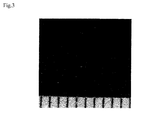
Fig. 3] Fig.3 shows an example in which the result of the evaluation of resistance to acids and corrosion in the Example is ×. - The polyamide resin composition of the present invention is a polyamide resin composition which comprises:
- a polyamide resin (component A),
- glass (component C), and
- optionally a styrene polymer (component B1) and a modified polyphenylene ether (component B2), the component B1 having a deflection temperature under load of 140 to 280°C
- the total amount of the components A, B1, and B2 and the amount of the component C being, respectively, 40 to 95% by weight and 60 to 5% by weight, based on 100% by weight of the polyamide resin composition,
- the amount of the component A and the total amount of the components B1 and B2 being, respectively, 50 to 100% by weight and 50 to 0% by weight, based on 100% by weight of the whole of the components A, B1, and B2,
- wherein when the component C contains glass containing no boron oxide (component C1), the amount of the component C1 is 60 to 5% by weight, based on 100% by weight of the polyamide resin composition,
- wherein when the component C does not contain the component C1, the component A is a polyoxamide resin, or the amount of the component A and the total amount of the components B1 and B2 are, respectively, 50 to 90% by weight and 50 to 10% by weight, based on 100% by weight of the whole of the components A, B1, and B2.
- The polyamide resin composition of the present invention (hereinafter, frequently referred to as "polyamide resin composition") includes:
- the first embodiment wherein the component C contains glass containing no boron oxide (component C1), and the amount of the component C1 is 60 to 5% by weight, based on 100% by weight of the polyamide resin composition,
- the second embodiment wherein the component C does not contain the component C1, and the component A is a polyoxamide resin, and
- the third embodiment wherein the component C does not contain the component C1, and the amount of the component A and the total amount of the components B1 and B2 are, respectively, 50 to 90% by weight and 50 to 10% by weight, based on 100% by weight of the whole of the components A, B1, and B2.
- From the viewpoint of achieving excellent acid resistance and the reduction of weight, the first embodiment and the second embodiment are more preferred, and the first embodiment is further preferred.
- With respect to component A in the present invention, there can be mentioned polyamide comprised of a condensation polymerization product of a diamine and a dicarboxylic acid (dibasic acid), a polyamide made from a lactam or an aminocarboxylic acid, or a polyamide comprised of a condensation polymerization product or a copolymer of two or more of them.
- Examples of diamines include aliphatic diamines, such as tetramethylenediamine, hexamethylenediamine, octamethylenediamine, nonamethylenediamine, undecamethylenediamine, and dodecamethylenediamine, and diamines having an aromatic cyclic structure, such as metaxylenediamine.
- Examples of dicarboxylic acids include aliphatic dicarboxylic acids, such as adipic acid, heptanedicarboxylic acid, octanedicarboxylic acid, nonanedicarboxylic acid, undecanedicarboxylic acid, and dodecanedicarboxylic acid, and dicarboxylic acids having an aromatic cyclic structure, such as terephthalic acid and isophthalic acid.
- The lactam is a lactam having 6 to 12 carbon atoms, and the aminocarboxylic acid is an aminocarboxylic acid having 6 to 12 carbon atoms. Examples include 6-aminocaproic acid, 7-aminoheptanoic acid, 11-aminoundecanoic acid, 12-aminododecanoic acid, α-pyrrolidone, ε-caprolactam, ω-laurolactam, and ε-enanthlactam.
- Component A has a role of a base material of the polyamide resin composition in surely causing the composition to collectively have mechanical strength, such as strength, heat resistance, and moldability, and, also from the viewpoint of reducing the cost, specific examples of component A, e.g., homopolymers, such as polyamide 6, polyamide 11, polyamide 12, polyamide 66, polyamide 46, polyamide 610, polyamide 612, polyamide 912, polyamide 1010 and polyamide 1212, and copolymers, such as polyamide 6/66, polyamide 6/12 and polyamide 11/12, are preferably used.
The above-mentioned names of specific examples of component A are based on JIS K6920-1: 2000 "Plastics-Polyamide (PA) molding and extrusion materials-Part 1 : Designation".
From the viewpoint of the viscosity and water absorption of the resultant composition, polyamide 11 and polyamide 12 are desired.
From the viewpoint of surely achieving stable mechanical strength, preferred are polyamide 6, polyamide 66, polyamide 6/66, polyamide 610, polyamide 612, polyamide 1212, polyamide 1010, polyamide 912, polyamide 46, polyamide 6/12, and polyamide 11/12, and from the viewpoint of achieving both the stable mechanical strength and the reduced cost, polyamide 6 and polyamide 66 are more preferred. - Further, from the viewpoint of achieving excellent acid resistance, component A is further preferably a polyoxamide resin made using oxalic acid as a dicarboxylic acid component.
As a source of oxalic acid for the polyoxamide resin, an oxalic acid diester is used, and, with respect to the oxalic acid diester, there is no particular limitation as long as it has a reactivity with an amino group, and examples include oxalic acid diesters of an aliphatic monohydric alcohol, such as dimethyl oxalate, diethyl oxalate, di-n-(or i-)propyl oxalate, and di-n-(or i-, or t-)butyl oxalate; oxalic acid diesters of an alicyclic alcohol, such as dicyclohexyl oxalate; and oxalic acid diesters of an aromatic alcohol, such as diphenyl oxalate. Of these, an oxalic acid diester capable of forming an alcohol which can be completely removed at the temperature of the subsequent melt polymerization or solid phase polymerization is preferably used. Examples of such oxalic acid diesters include dimethyl oxalate, diethyl oxalate, di-n-(or i-)propyl oxalate, and di-n-(or i-, or t-)butyl oxalate. Further, diethyl oxalate, di-n-(or i-)propyl oxalate, or di-n-(or i-, or t-)butyl oxalate, which is in a liquid state at room temperature and is easily mixed with a diamine by kneading, is especially preferably used. - As examples of diamines, which are a raw material for the polyoxamide resin as component A, there can be mentioned one member or mixtures of two or more arbitrary members selected from aliphatic diamines, such as ethylenediamine, propylenediamine, 1,4-butanediamine, 1,5-pentanediamine, 1,6-hexanediamine, 1,7-heptanediamine, 1,8-octanediamine, 1,9-nonanediamine, 1,10-decanediamine, 1,12-dodecanediamine, 2-methyl-1,5-pentanediamine, 3-methyl-1,5-pentanediamine, 2,2,4-trimethyl-1,6-hexanediamine, 2,4,4-trimethyl-1,6-hexanediamine, 2-methyl-1,8-octanediamine, and 5-methyl-1,9-nonanediamine, alicyclic diamines, such as cyclohexanediamine, methylcyclohexanediamine, and isophoronediamine, and aromatic diamines, such as p-phenylenediamine, m-phenylenediamine, xylenediamine, 4,4'-diaminodiphenylmethane, 4,4'-diaminodiphenyl sulfone, and 4,4'-diaminodiphenyl ether.
- In component A, in addition to the polyoxamide resin, a polyamide resin, such as an aromatic polyamide, an aliphatic polyamide, or an alicyclic polyamide, can be mixed into component A.
- (2) Component B1 (Styrene polymer)
With respect to the styrene polymer, from the viewpoint of achieving excellent acid resistance, the polyamide resin composition preferably comprises a styrene polymer having a deflection temperature under load of 140 to 280°C, preferably 150 to 280°C, more preferably 160 to 280°C, further preferably 170 to 280°C. - The styrene polymer means a polymer comprising structure units derived from a styrene monomer or a styrene based monomer having a substituted phenyl in which hydrogen in the phenyl group of styrene is further substituted.
- The deflection temperature under load is a yardstick for the heat resistance of the styrene polymer, and, when the styrene polymer is preferably a styrene polymer having a syndiotactic structure (hereinafter, frequently referred to as "SPS"), the styrene polymer can achieve a deflection temperature under load in the above-mentioned preferred range.
The deflection temperature under load is defined as a temperature, as measured in accordance with ASTM D-648, at which a test piece having a size of length: 5 inches × width: 1/2 inch × thickness: 1/2 inch is deflected by 0.25 mm when the temperature of the test piece is elevated from room temperature at a temperature elevation rate of 2°C/min under conditions such that the mold temperature is 150°C and the load is 0.46 MPa. - SPS is commercially available, for example, from Idemitsu Kosan Co., Ltd. in the trade name of "XAREC".
- In the styrene polymer having a syndiotactic structure, the term "syndiotactic structure" means a stereostructure of a syndiotactic structure, namely, a stereostructure in which side chains, such as a phenyl group and a substituted phenyl group, are positioned alternately in different directions with respect to the principal chain formed from a carbon-carbon bond, and the tacticity is preferably quantitatively determined by a nuclear magnetic resonance method using isotopic carbon (13C-NMR method).
The tacticity determined by a 13C-NMR method can be indicated by the ratio of a plurality of continuous units present in the polymer, for example, dyad for two units, triad for three units, or pentad for five units, and the term "styrene copolymer having a syndiotactic structure" used in the present invention means polystyrene, poly(alkylstyrene), poly(halogenated styrene), poly(halogenated alkylstyrene), poly(alkoxystyrene), or poly(vinyl benzoate), a hydrogenated polymer thereof, a mixture thereof, or a copolymer comprised mainly of them, each having syndiotacticity which is generally racemic dyad in an amount of 75% or more, preferably 85% or more, or racemic pentad in an amount of 30% or more, preferably 50% or more.
Examples of poly(alkylstyrene) include poly(methylstyrene), poly(ethylstyrene), poly(isopropylstyrene), poly(tert-butylstyrene), poly(phenylstyrene), poly(vinylnaphthalene), and poly(vinylstyrene), and examples of poly(halogenated styrene) include poly(chlorostyrene), poly(bromostyrene), and poly(fluorostyrene). Examples of poly(halogenated alkylstyrene) include poly(chloromethylstyrene).
Examples of poly(alkoxystyrene) include poly(methoxystyrene) and poly(ethoxystyrene). - More preferred examples of styrene polymers include polystyrene, poly(p-methylstyrene), poly(m-methylstyrene), poly(p-tert-butylstyrene), poly(p-chlorostyrene), poly(m-chlorostyrene), poly(p-fluorostyrene), hydrogenated polystyrene, and copolymers comprising structure units for these polymers.
The styrene polymers can be used individually or in combination of two or more of them. - With respect to the molecular weight of the styrene polymer, there is no particular limitation, and, from the viewpoint of obtaining a polyamide resin composition or a molded article thereof having thermal properties and mechanical properties in the preferred ranges, the weight average molecular weight of the styrene polymer is preferably 10,000 or more, more preferably 50,000 or more, and preferably 400,000 or less, more preferably 300,000 or less, further preferably 10,000 to 400,000, still further preferably 50,000 to 300,000. Further, the width of the molecular weight distribution of the styrene polymer is not limited, and various molecular weight distributions can be applied to the styrene polymer.
The weight average molecular weight was determined by gel permeation chromatography (GPC) using 1,2,4-trichlorobenzene as a solvent at 130°C. - The styrene polymer having a syndiotactic structure can be produced by, for example, polymerizing a styrene (based) monomer in an inert hydrocarbon solvent or without a solvent using as a catalyst a titanium compound and a condensation product of water and a trialkylaluminum (Japanese Unexamined Patent Publication No.
Sho 62-187708 Hei 1-46912 Hei 1-178505 - Component B2 causes component B1 to be stably dispersed in the polyamide resin composition to improve the strength of the interface between component B1 and the polyamide resin, making stable the mechanical properties and acid resistance of the polyamide resin composition.
- With respect to component B2, from the viewpoint of stabilizing the dispersibility of component B1 and the mechanical properties and acid resistance of the polyamide resin composition, maleic anhydride-modified polyphenylene ether and/or fumaric acid-modified polyphenylene ether is preferred, and fumaric acid-modified polyphenylene ether is more preferred.
- From the viewpoint of causing component B1 to be stably dispersed to improve the strength of the interface between component B1 and the polyamide resin, making stable the mechanical properties and acid resistance of the polyamide resin composition, the component B1/component B2 weight ratio (B1/B2) is preferably 5/95 to 90/10, more preferably 26/74 to 88/12, further preferably 76/24 to 85/15.
- The glass, which is component C used in the polyamide resin composition of the present invention (hereinafter, frequently referred to as "polyamide resin composition"), indicates aluminoborosilicate glass which is general glass {e.g., E-glass (generally called non-alkali glass)}, more preferably glass containing no boron oxide (component C1) as compared to E-glass from the viewpoint of achieving excellent acid resistance. The glass may be in the form of fibers, flakes, beads, or balloon, and, from the viewpoint of obtaining a strength and the like, glass fibers are especially preferred.
- The glass containing no boron oxide, which is component C1 used in the present invention, indicates glass containing no boron oxide, as compared to E-glass which is general glass. Component C1 may be in the form of fibers, flakes, beads, or balloon, and, from the viewpoint of obtaining a strength and the like, glass fibers are especially preferred.
- In the polyamide resin composition, a thermoplastic resin which is other than polyamide resin component A and which has a low water absorption and a chemical resistance may be added.
- As preferred examples, there can be mentioned at least one thermoplastic resin selected from a styrene resin, such as a polystyrene resin other than component B1 or an ABS resin, a polyphenylene phenylene ether resin other than component B2, a polyester resin, a polyphenylene sulfide resin, a polyphenylene oxide resin, a polycarbonate resin, a polylactic acid resin, a polyacetal resin, a polysulfone resin, a polyethylene tetrafluoride resin, a polyether imide resin, a polyamide-imide resin, a polyimide resin, a polyether sulfone resin, a polyether ketone resin, a polythioether ketone resin, a polyether ether ketone resin, a polyethylene resin, a polypropylene resin, a rubber polymer, and a polyalkylene oxide resin.
For improving the reactivity of the polyamide resin with a resin other than the polyamide resin, at least one resin other than the polyamide resin, which has a modified end group, is more preferably used. - Further, in the polyamide resin composition of the present invention, an additional component, for example, a function imparting agent, such as a plasticizer, a high-impact material, a heat-resistant material, a foaming agent, a weathering agent, a nucleating agent, a crystallization accelerator, a release agent, a lubricant, a fluidity-improving agent, an antistatic agent, a flame retardant, an auxiliary for flame retardant, a pigment, or a dye, can be incorporated in such an appropriate amount that the effects of the present invention are not sacrificed.
- With respect to the amounts of components A, B1, B2, and C incorporated into the polyamide resin composition, the total amount of components A, B1, and B2 and the amount of component C are, respectively, 40 to 95% by weight and 60 to 5% by weight, based on 100% by weight of the polyamide resin composition, and the amount of component A and the total amount of components B1 and B2 are, respectively, 50 to 100% by weight and 50 to 0% by weight, based on 100% by weight of the whole of the components A, B1, and B2.
- When the polyamide resin composition does not contain components B1 and B2, from the viewpoint of achieving excellent acid resistance and the reduction of weight, the amount of component (A) incorporated into the polyamide resin composition is 40 to 95% by weight, more preferably 55 to 90% by weight, further preferably 55 to 80% by weight, based on 100% by weight of the polyamide resin composition.
- From the viewpoint of achieving excellent acid resistance and the reduction of weight, the total amount of component A and the thermoplastic resin other than component A incorporated into the polyamide resin composition is preferably 40 to 95% by weight, more preferably 55 to 90% by weight, further preferably 55 to 80% by weight, based on 100% by weight of the polyamide resin composition.
- When the polyamide resin composition contains components B1 and B2, from the viewpoint of achieving excellent acid resistance and the reduction of weight, the amount of component A and the total amount of components B1 and B2 are, respectively, 50 to 100% by weight and 50 to 0% by weight (excluding 0% by weight), based on 100% by weight of components A, B1, and B2;
it is preferred that the amount of component A and the total amount of components B1 and B2 are, respectively, 50 to 90% by weight and 50 to 10% by weight, based on 100% by weight of the whole of components A, B1, and B2;
it is more preferred that the amount of component A and the total amount of components B1 and B2 are, respectively, 60 to 80% by weight and 40 to 20% by weight, based on the 100% by weight of the whole of components A, B1, and B2; and
it is further preferred that the amount of component A and the total amount of components B1 and B2 are, respectively, 65 to 75% by weight and 35 to 25% by weight, based on 100% by weight of the whole of components A, B1, and B2. - From the viewpoint of achieving excellent acid resistance, the reduction of weight, and excellent moldability, the amount of component C incorporated into the polyamide resin composition is 60 to 5% by weight, preferably 50 to 10% by weight, more preferably 45 to 10% by weight, further preferably 40 to 20% by weight, further preferably 35 to 25% by weight, based on 100% by weight of the polyamide resin composition.
- When component C contains component C1, from the viewpoint of achieving excellent acid resistance, the reduction of weight, and excellent moldability, the amount of component C1 incorporated into the polyamide resin composition is 60 to 5% by weight, preferably 50 to 10% by weight, more preferably 45 to 10% by weight, further preferably 40 to 20% by weight, further preferably 35 to 25% by weight, based on 100% by weight of the polyamide resin composition.
- From the viewpoint of achieving excellent acid resistance, component C1 is preferably present in an amount of 8.4 to 100% by weight, more preferably 16.7 to 100% by weight, further preferably 33.4 to 100% by weight, further preferably 41.7 to 100% by weight, further preferably 58.4 to 100% by weight, further preferably 66.7 to 100% by weight, further preferably 75.0 to 100% by weight, further preferably 84 to 100% by weight, further preferably 100% by weight, based on 100% by weight of component C.
- In the polyamide resin composition of the first embodiment, component C contains component C1, and the total amount of components A, B1, and B2 or the amount of component A and the amount of component C1 are, respectively, 40 to 95% by weight and 60 to 5% by weight, based on 100% by weight of the polyamide resin composition, and the amount of component A and the total amount of components B1 and B2 are, respectively, 50 to 100% by weight and 50 to 0% by weight, based on 100% by weight of the whole of components A, B1, and B2.
- In the more preferred first embodiment, the total amount of components A, B1, and B2 and the amount of component C1 are, respectively, 40 to 95% by weight and 60 to 5% by weight, based on 100% by weight of the whole of components A, B1, B2, and C1;
it is preferred that the total amount of components A, B1, and B2 and the amount of component C1 are, respectively, 55 to 90% by weight and 45 to 10% by weight, based on 100% by weight of the whole of components A, B1, B2, and C1;
it is more preferred that the total amount of components A, B1, and B2 and the amount of component C1 are, respectively, 55 to 80% by weight and 45 to 20% by weight, based on 100% by weight of the whole of components A, B1, B2, and C1;
it is further preferred that the total amount of components A, B1, and B2 and the amount of component C1 are, respectively, 60 to 80% by weight and 40 to 20% by weight, based on 100% by weight of the whole of components A, B1, B2, and C1; and
it is further preferred that the total amount of components A, B1, and B2 and the amount of component C1 are, respectively, 65 to 75% by weight and 35 to 25% by weight, based on 100% by weight of the whole of components A, B1, B2, and C1, or
the amount of component A and the amount of component C1 are, respectively, 40 to 95% by weight and 60 to 5% by weight, based on 100% by weight of the whole of components A and C;
it is preferred that the amount of component A and the amount of component C1 are, respectively, 55 to 90% by weight and 45 to 10% by weight, based on 100% by weight of the whole of components A and C;
it is more preferred that the amount of component A and the amount of component C1 are, respectively, 55 to 80% by weight and 45 to 20% by weight, based on 100% by weight of the whole of components A and C;
it is further preferred that the amount of component A and the amount of component C1 are, respectively, 60 to 80% by weight and 40 to 20% by weight, based on 100% by weight of the whole of components A and C; and
it is further preferred that the amount of component A and the amount of component C1 are, respectively, 65 to 75% by weight and 35 to 25% by weight, based on 100% by weight of the whole of components A and C. - In the first embodiment, from the viewpoint of achieving excellent acid resistance, the reduction of weight, and excellent moldability, the amount of component C1 incorporated into the polyamide resin composition is 60 to 5% by weight, preferably 50 to 10% by weight, more preferably 45 to 10% by weight, further preferably 40 to 20% by weight, further preferably 35 to 25% by weight, based on 100% by weight of the polyamide resin composition, preferably based on 100% by weight of the whole of components A, B1, B2, and C or 100% by weight of the whole of components A and C.
Further, from the viewpoint of achieving excellent acid resistance, component C1 is preferably present in an amount of 8.4 to 100% by weight, more preferably 16.7 to 100% by weight, further preferably 33.4 to 100% by weight, further preferably 41.7 to 100% by weight, further preferably 58.4 to 100% by weight, further preferably 66.7 to 100% by weight, further preferably 75.0 to 100% by weight, further preferably 84 to 100% by weight, further preferably 100% by weight, based on 100% by weight of component C. - The polyamide resin composition of the first embodiment may contain or may not contain component B1 and component B2, and, from the viewpoint of achieving excellent acid resistance and the reduction of weight, the composition preferably contains component B1 and component B2, and, in such a case, the amount of component A and the total amount of components B1 and B2 are, respectively, 50 to 100% by weight and 50 to 0% by weight (excluding 0% by weight), based on 100% by weight of the whole of components A, B1, and B2;
it is preferred that the amount of component A and the total amount of components Bland B2 are, respectively, 50 to 90% by weight and 50 to 10% by weight, based on 100% by weight of the whole of components A, B1, and B2;
it is more preferred that the amount of component A and the total amount of components B1 and B2 are, respectively, 60 to 80% by weight and 40 to 20% by weight, based on 100% by weight of the whole of components A, B1, and B2; and
it is further preferred that the amount of component A and the total amount of components B1 and B2 are, respectively, 65 to 75% by weight and 35 to 25% by weight, based on 100% by weight of the whole of components A, B1, and B2. - In the first embodiment, component A may contain or may not contain a polyoxamide resin, and, from the viewpoint of achieving excellent acid resistance and the reduction of weight, component A preferably contains a polyoxamide resin, and, in such a case, the amount of the polyoxamide resin incorporated into the polyamide resin composition is preferably 2 to 95% by weight, more preferably 3 to 90% by weight, further preferably 3 to 80% by weight, further preferably 3 to 75% by weight, based on 100% by weight of the polyamide resin composition.
The polyoxamide resin is preferably present in an amount of 5 to 100% by weight, more preferably 30 to 100% by weight, further preferably 60 to 100% by weight, further preferably 100% by weight, based on 100% by weight of component A. - In the polyamide resin composition of the second embodiment, component C does not contain component C1 and component A is a polyoxamide resin.
In the second embodiment, component A is a polyoxamide resin, and, from the viewpoint of achieving excellent acid resistance and the reduction of weight, the amount of the polyoxamide resin incorporated into the polyamide resin composition is preferably 40 to 95% by weight, more preferably 55 to 90% by weight, further preferably 55 to 80% by weight, based on 100% by weight of the polyamide resin composition. - In the more preferred second embodiment, it is preferred that the amount of the polyoxamide resin and the amount of component C are, respectively, 40 to 95% by weight and 60 to 5% by weight, based on 100% by weight of the whole of the polyoxamide resin and component C;
it is more preferred that the amount of the polyoxamide resin and the amount of component C are, respectively, 55 to 90% by weight and 45 to 10% by weight, based on 100% by weight of the whole of the polyoxamide resin and component C;
it is further preferred that the amount of the polyoxamide resin and the amount of component C are, respectively, 55 to 80% by weight and 45 to 20% by weight, based on 100% by weight of the whole of the polyoxamide resin and component C;
it is further preferred that the amount of the polyoxamide resin and the amount of component C are, respectively, 60 to 80% by weight and 40 to 20% by weight, based on 100% by weight of the whole of the polyoxamide resin and component C; and
it is further preferred that the amount of the polyoxamide resin and the amount of component C are, respectively, 65 to 75% by weight and 35 to 25% by weight, based on 100% by weight of the whole of the polyoxamide resin and component C. - In the second embodiment, the composition may contain or may not contain component B1 and component B2, and, from the viewpoint of achieving excellent acid resistance and the reduction of weight, the composition preferably contains component B1 and component B2, and, in such a case, the amount of component A and the total amount of components B1 and B2 are, respectively, 50 to 100% by weight and 50 to 0% by weight (excluding 0% by weight), based on 100% by weight of the whole of components A, B1, and B2;
it is preferred that the amount of component A and the total amount of components B1 and B2 are, respectively, 50 to 90% by weight and 50 to 10% by weight, based on 100% by weight of the whole of components A, B1, and B2;
it is more preferred that the amount of component A and the total amount of components B1 and B2 are, respectively, 60 to 80% by weight and 40 to 20% by weight, based on 100% by weight of the whole of components A, B1, and B2; and
it is further preferred that the amount of component A and the total amount of components B1 and B2 are, respectively, 65 to 75% by weight and 35 to 25% by weight, based on 100% by weight of the whole of components A, B1, and B2. - In the polyamide resin composition of the third embodiment, component C does not contain component C1, and the amount of component A and the total amount of components B1 and B2 are, respectively, 50 to 90% by weight and 50 to 10% by weight, based on 100% by weight of the whole of components A, B1, and B2.
- In the third embodiment, from the viewpoint of achieving excellent acid resistance and the reduction of weight, it is preferred that the amount of component A and the total amount of components B1 and B2 are, respectively, 60 to 80% by weight and 40 to 20% by weight, based on 100% by weight of the whole of components A, B1, and B2; and it is more preferred that the amount of component A and the total amount of components B1 and B2 are, respectively, 65 to 75% by weight and 35 to 25% by weight, based on 100% by weight of the whole of components A, B1, and B2.
- In the more preferred third embodiment, the total amount of components A, B1, and B2 and the amount of component C are, respectively, 40 to 95% by weight and 60 to 5% by weight, based on 100% by weight of the whole of components A, B1, B2, and C;
it is preferred that the total amount of components A, B1, and B2 and the amount of component C are, respectively, 55 to 90% by weight and 45 to 10% by weight, based on 100% by weight of the whole of components A, B1, B2, and C;
it is more preferred that the total amount of components A, B1, and B2 and the amount of component C are, respectively, 55 to 80% by weight and 45 to 20% by weight, based on 100% by weight of the whole of components A, B1, B2, and C;
it is further preferred that the total amount of components A, B1, and B2 and the amount of component C are, respectively, 60 to 80% by weight and 40 to 20% by weight, based on 100% by weight of the whole of components A, B1, B2, and C; and
it is further preferred that the total amount of components A, B1, and B2 and the amount of component C are, respectively, 65 to 75% by weight and 35 to 25% by weight, based on 100% by weight of the whole of components A, B1, B2, and C. - In the third embodiment, component A may contain or may not contain a polyoxamide resin, and, from the viewpoint of achieving excellent acid resistance and the reduction of weight, component A preferably contains a polyoxamide resin, and, in such a case, the amount of the polyoxamide resin incorporated into the polyamide resin composition is preferably 2 to 95% by weight, more preferably 3 to 90% by weight, further preferably 3 to 80% by weight, further preferably 3 to 75% by weight, based on 100% by weight of the polyamide resin composition.
The polyoxamide resin is preferably present in an amount of 5 to 100% by weight, more preferably 30 to 100% by weight, further preferably 60 to 100% by weight, further preferably 100% by weight, based on 100% by weight of component A. - Further, in the polyamide resin composition according to the first to third embodiments of the present invention, an additional component, for example, a function imparting agent, such as a plasticizer, a high-impact material, a heat-resistant material, a foaming agent, a weathering agent, a nucleating agent, a crystallization accelerator, a release agent, a lubricant, a fluidity-improving agent, an antistatic agent, a flame retardant, an auxiliary for flame retardant, a pigment, or a dye, can be incorporated in such an appropriate amount that the effects aimed at by the present invention are not sacrificed.
- With respect to the method for producing the polyamide resin composition of the present invention, for example, the following method can be used.
Component A or C, and, if necessary, a polyoxamide, B1 and B2 and/or C1 are melt-kneaded using a generally known melt-kneader, such as a single-screw or twin-screw extruder, a Banbury mixer, a kneader, or a mixing roll. For example, using a twin-screw extruder, there may be used any of a method in which all the raw materials are mixed together and then melt-kneaded, a method in which part of the raw materials are mixed together and then melt-kneaded, and the remaining raw materials are mixed into the resultant mixture and melt-kneaded together, and a method in which part of the raw materials are mixed together and then, the remaining raw materials are mixed using a side feeder into the mixture being melt-kneaded. - With respect to the method for producing a molded article from the polyamide resin composition of the present invention, using a molding machine generally used for thermoplastic resin, e.g., an extruding machine, a blow molding machine, a compression molding machine, or an injection molding machine, a molded article in various forms can be produced.
- The polyamide resin composition of the present invention is advantageously used in a part for exhaust gas passing therethrough by EGR (EGR part), which is required to have an acid resistance, such as an intake manifold, an EGR delivery pipe, an EGR pipe, an EGR valve, or an EGR cooler part. In applications of EGR parts, for example, parts for automobile are preferred, and, of these, preferred are EGR part applications, such as an intake manifold, an EGR delivery pipe, an EGR cooler part, an EGR pipe, and an EGR valve, and engine room parts including related peripheral parts, such as an air cleaner, a resonator, a fuel rail, a throttle body and valve, an air flow meter, a cylinder head cover, a vapor canister, a fuel strainer, a battery, and a terminal cover.
- These parts for exhaust gas passing therethrough by an EGR system can be obtained by a method for producing a part, which comprises shaping the polyamide resin composition of the present invention, and further an automobile comprising a part for exhaust gas passing therethrough by an EGR system can be produced by incorporating the obtained part for exhaust gas passing therethrough by an EGR system into, e.g., an engine room.
- Hereinbelow, the present invention will be described in more detail with reference to the following Examples and Comparative Examples, which should not be construed as limiting the scope of the present invention. Methods for measuring physical properties of the resins and molded articles used in the Examples and Comparative Examples are shown below.
- (1) Tensile strength and tensile strain at break: A test was conducted in accordance with ISO 527-1, 2 using a test specimen having a thickness of 4 mm at room temperature at a rate of pulling of 5 mm/min (an average of measurements for n = 5 was determined).
- (2) Modulus in tension: A test was conducted in accordance with ISO 527-1, 2 using a test specimen having a thickness of 4 mm at room temperature at a rate of pulling of 1 mm/min (an average of measurements for n = 5 was determined).
A tensile test was conducted in accordance with ISO 11403-3 at a rate of pulling of 1 mm/min. - (3) Charpy impact strength: An edgewise impact test was conducted in accordance with ISO 179-1 using an A-notched specimen having a thickness of 4 mm at room temperature (an average of measurements for n = 10 was determined).
- (4) Resistance to acids and corrosion: An ISO Type-C specimen described in ISO 294-2 was subjected to immersion treatment under the five conditions shown below, i.e., treatment condition-A, treatment condition-D, treatment condition-E, treatment condition-B, and treatment condition-C.
- Treatment condition-A: The specimen was immersed in a 0.1 N aqueous solution of sulfuric acid for 120 hours.
- Treatment condition-D: The specimen was immersed in a 0.1 N aqueous solution of sulfuric acid for 240 hours.
- Treatment condition-E: The specimen was immersed in a 0.5 N aqueous solution of sulfuric acid for 40 hours.
- Treatment condition-B: The specimen was immersed in a 0.5 N aqueous solution of sulfuric acid for 120 hours.
- Treatment condition-C: The specimen was immersed in a 0.5 N aqueous solution of sulfuric acid for 240 hours.
- ○: No change is found in the appearance of the specimen (the surface state of the ISO Type-C specimen has no change accompanied by whitening) (see, for example,
Fig. 1 ); - Δ: The surface of the specimen is slightly roughened (the surface gloss of the ISO Type-C specimen is slightly reduced, and a change accompanied by slight whitening is recognized in the appearance of the specimen) (see, for example,
Fig. 2 ); and - x: The surface of the specimen is roughened (the surface gloss of the ISO Type-C specimen is markedly reduced, and a marked change accompanied by collective whitening is recognized in the appearance of the specimen) (see, for example,
Fig. 3 ). -
- Component A: Polyamide resin
- Component A1: Polyamide 92 (product made on an experimental basis)
- Component A2: Polyamide 6 (UBE Nylon 1015B, manufactured by Ube Industries, Ltd.)
- Component A3: Polyamide 66 (UBE Nylon 2020B, manufactured by Ube Industries, Ltd.)
- Polyamide 92 is a polyoxamide resin and was produced by the following method.
Into an autoclave having an internal capacity of 150 liters and being equipped with an agitator, a thermometer, a torque meter, a pressure meter, a raw material inlet directly connected to a diaphragm pump, a nitrogen gas inlet, a pressure release port, a pressure controller, and a polymer withdrawal outlet was charged 28.40 kg (140.4 mol) of dibutyl oxalate, and the autoclave was purged with nitrogen gas, and then the temperature in the system was elevated under a pressure while stirring. After the temperature of dibutyl oxalate reached 100°C, a mixture of 18.89 kg (119.3 mol) of 1,9-nonanediamine and 3.34 kg (21.1 mol) of 2-methyl-1,8-octanediamine (wherein the 1,9-nonanediamine:2-methyl-1,8-octanediamine molar ratio was 85:15) was fed into the reactor by means of the diaphragm pump simultaneously with the temperature elevation.
Immediately after feeding the mixture, the internal pressure of the autoclave was increased to 0.35 MPa due to butanol formed by a condensation polymerization reaction, and the temperature of the condensation polymerization product was increased to about 170°C.
Then, the temperature was increased to 235°C over one hour, whereupon the internal pressure was adjusted to 0.5 MPa while withdrawing the formed butanol through the pressure release port.
Immediately after the temperature of the condensation polymerization product reached 235°C, butanol was withdrawn through the pressure release port so that the internal pressure became atmospheric pressure. After the internal pressure reached atmospheric pressure, the temperature elevation was started while flowing nitrogen gas through the autoclave, and the temperature of the condensation polymerization product was elevated to 260°C over about one hour to effect a reaction at 260°C for 4.5 hours.
Then, the stirring was stopped, and the system was under a pressure at 1 MPa using nitrogen and allowed to stand for about 10 minutes, and then the internal pressure was reduced to 0.5 MPa, and the resultant condensation polymerization product was withdrawn in the form of a string through the withdrawal outlet at the lower portion of the autoclave.
The polymerization product in a string form was immediately cooled with water, and the cooled resin in a string form was pelletized using a pelletizer.
The obtained polyamide was a white tough polymer and had a relative viscosity (ηr) of 3.20. -
- Component B1: Syndiotactic polystyrene resin (deflection temperature under load: 189°C; weight average molecular weight: 190,000; XAREC 130ZC, manufactured by Idemitsu Kosan Co., Ltd.; this resin is indicated by "SPS" in Table 1)
- Component B2: Modified polyphenylene ether resin (CX-1, manufactured by Idemitsu Kosan Co., Ltd.; this resin is indicated by "m-PPE" in Table 1)
-
- Component C: Glass fibers
- Component C1: Glass 1 containing no boron oxide (CS 983-10P 4MM 2406#GBB ADV, manufactured by Owens Coming Japan Ltd.)
- Component C1: Glass 2 containing no boron oxide (CSE3J-459, manufactured by Nitto Boseki Co., Ltd.)
- Component C2: E-glass (CS3J-454, manufactured by Nitto Boseki Co., Ltd.)
- Component C3: E-glass (ECS03T-289H, manufactured by Nippon Electric Glass Co., Ltd.)
- The polyamide resin (component A2) and the glass fibers comprising glass 1 containing no boron oxide (component C1) shown in Table 1 were melt-kneaded using a twin-screw kneader TEX44HCT to prepare pellets of a desired polyamide resin composition.
Then, the obtained pellets were subjected to injection molding under conditions such that the temperature of the molten resin was 290°C, the mold temperature was 80°C, the average injection speed in the mold was 250 mm/sec, and the pressure was maintained at 60 MPa × 20 sec to prepare specimens for the respective tests, and the measurement of various physical properties and the evaluation of resistance to acids and corrosion were performed with respect the prepared specimens. - A test was performed under substantially the same conditions as in Example 1 except that the polyamide resin (component A3) shown in Table 1 was used.
- A test was performed under substantially the same conditions as in Example 1 except that the glass fibers comprising glass 2 containing no boron oxide (component C1) shown in Table 1 were used.
- A test was performed under substantially the same conditions as in Example 3 except that the polyamide resin (component A3) shown in Table 1 was used.
- The polyoxamide resin (polyamide 92) (component A1) and the glass fibers comprising glass 1 containing no boron oxide (component C1) shown in Table 1 were melt-kneaded using a twin-screw kneader TEX44HCT to prepare pellets of a desired polyoxamide resin composition.
- Then, the obtained pellets were subjected to injection molding under conditions such that the temperature of the molten resin was 290°C, the mold temperature was 80°C, the average injection speed in the mold was 250 mm/sec, and the pressure was maintained at 60 MPa × 20 sec to prepare specimens for the respective tests, and the measurement of various physical properties and the evaluation of resistance to acids and corrosion were performed with respect the prepared specimens.
- The respective predetermined amounts of the polyamide resin (component A2), the syndiotactic polystyrene resin (component B1), the modified polyphenylene ether resin (component B2), and the glass fibers comprising glass 1 containing no boron oxide (component C1) shown in Table 1 were melt-kneaded using a twin-screw kneader TEX44HCT to prepare pellets of a desired polyamide resin composition.
Then, the obtained pellets were subjected to injection molding under conditions such that the temperature of the molten resin was 290°C, the mold temperature was 80°C, the average injection speed in the mold was 250 mm/sec, and the pressure was maintained at 60 MPa × 20 sec to prepare specimens for the respective tests, and the measurement of various physical properties and the evaluation of resistance to acids and corrosion were performed with respect the prepared specimens. - A test was performed under substantially the same conditions as in Example 6 except that the predetermined amount of the polyamide resin (component A3) shown in Table 1 was used.
- A test was performed under substantially the same conditions as in Example 5 except that the glass fibers (component C2) shown in Table 1 were used.
- A test was performed under substantially the same conditions as in Example 5 except that the glass fibers (component C3) shown in Table 1 were used.
- The respective predetermined amounts of the polyamide resin (component A2), the syndiotactic polystyrene resin (component B1), the modified polyphenylene ether resin (component B2), and the glass fibers (component C2) shown in Table 1 were melt-kneaded using a twin-screw kneader TEX44HCT to prepare pellets of a desired polyamide resin composition.
Then, the obtained pellets were subjected to injection molding under conditions such that the temperature of the molten resin was 290°C, the mold temperature was 80°C, the average injection speed in the mold was 250 mm/sec, and the pressure was maintained at 60 MPa × 20 sec to prepare specimens for the respective tests, and the measurement of various physical properties and the evaluation of resistance to acids and corrosion were performed with respect the prepared specimens. - A test was performed under substantially the same conditions as in Example 1 except that the polyamide resin (component A2) and the glass fibers (component C2) shown in Table 1 were melt-kneaded using a twin-screw kneader TEX44HCT to prepare pellets of a desired polyamide resin composition.
- A test was performed under substantially the same conditions as in Example 1 except that the polyamide resin (component A2) and the glass fibers (component C3) shown in Table 1 were melt-kneaded using a twin-screw kneader TEX44HCT to prepare pellets of a desired polyamide resin composition.
-


- As is apparent from Table 1, the polyamide resin composition of the present invention has excellent acid resistance while exhibiting excellent mechanical properties, and further is lightweight and, hence, can be advantageously used in applications of a part for exhaust gas passing therethrough by EGR, such as an intake manifold, an EGR delivery pipe, or an EGR cooler part.
The resistance to acids and corrosion was evaluated in accordance with the following criteria:
Claims (13)
- A polyamide resin composition comprising:a polyamide resin (component A),glass (component C), andoptionally a styrene polymer (component B1) and a modified polyphenylene ether (component B2), the component B1 having a deflection temperature under load of 140 to 280°C,the total amount of the components A, B1, and B2 and the amount of the component C being, respectively, 40 to 95% by weight and 60 to 5% by weight, based on 100% by weight of the polyamide resin composition,the amount of the component A and the total amount of the components B1 and B2 being, respectively, 50 to 100% by weight and 50 to 0% by weight, based on 100% by weight of the whole of the components A, B1, and B2 ,wherein when the component C contains glass containing no boron oxide (component C1), the amount of the component C1 is 60 to 5% by weight, based on 100% by weight of the polyamide resin composition, andwherein when the component C does not contain the component C1, the component A is a polyoxamide resin, or the amount of the component A and the total amount of the components B1 and B2 are, respectively, 50 to 90% by weight and 50 to 10% by weight, based on 100% by weight of the whole of the components A, B1, and B2.
- The polyamide resin composition according to claim 1, wherein the amount of the component B1 and the amount of the component B2 are, respectively, 5 to 90% by weight and 95 to 10% by weight, based on 100% by weight of the whole of the components B1 and B2.
- The polyamide resin composition according to claim 1 or 2, wherein the component A is at least one polyamide resin selected from the group consisting of polyamide 6, polyamide 66, and polyamide 92.
- The polyamide resin composition according to any one of claims 1 to 3, wherein the component A is a polyoxamide resin.
- The polyamide resin composition according to any one of claims 1 to 4, wherein the component C is the component C1.
- The polyamide resin composition according to any one of claims 1 to 5, wherein the component B1 is a styrene polymer having a syndiotactic structure.
- The polyamide resin composition according to any one of claims 1 to 6, which is for use in a part for exhaust gas passing therethrough by an EGR system.
- A molded article comprising the polyamide resin composition according to claim 7, which is for use in a part for exhaust gas passing therethrough by an EGR system.
- A part for exhaust gas passing therethrough by an EGR system, the part comprising the molded article according to claim 8, which comprises the polyamide resin composition for use in a part for exhaust gas passing therethrough by an EGR system.
- The part according to claim 9, which is for use in an automobile.
- The part according to claim 9 or 10, which is for use in an engine room.
- A method for producing a part for exhaust gas passing therethrough by an EGR system, the method comprising shaping the polyamide resin composition according to any one of claims 1 to 6.
- A method for producing an automobile, comprising incorporating a part for exhaust gas passing therethrough by an EGR system, which is obtained by the method according to claim 12.
Applications Claiming Priority (4)
| Application Number | Priority Date | Filing Date | Title |
|---|---|---|---|
| JP2010051180 | 2010-03-08 | ||
| JP2010051181 | 2010-03-08 | ||
| JP2010051182 | 2010-03-08 | ||
| PCT/JP2011/055409 WO2011111713A1 (en) | 2010-03-08 | 2011-03-08 | Polyamide resin composition |
Publications (3)
| Publication Number | Publication Date |
|---|---|
| EP2546305A1 true EP2546305A1 (en) | 2013-01-16 |
| EP2546305A4 EP2546305A4 (en) | 2015-12-02 |
| EP2546305B1 EP2546305B1 (en) | 2020-06-10 |
Family
ID=44563513
Family Applications (1)
| Application Number | Title | Priority Date | Filing Date |
|---|---|---|---|
| EP11753371.1A Active EP2546305B1 (en) | 2010-03-08 | 2011-03-08 | Polyamide resin composition |
Country Status (8)
| Country | Link |
|---|---|
| US (1) | US10533089B2 (en) |
| EP (1) | EP2546305B1 (en) |
| JP (2) | JP5892063B2 (en) |
| CN (1) | CN102858877B (en) |
| BR (1) | BR112012022065A2 (en) |
| MX (1) | MX365310B (en) |
| SG (2) | SG183961A1 (en) |
| WO (1) | WO2011111713A1 (en) |
Families Citing this family (7)
| Publication number | Priority date | Publication date | Assignee | Title |
|---|---|---|---|---|
| CN103172853B (en) * | 2011-12-20 | 2016-01-13 | 东丽纤维研究所(中国)有限公司 | A kind of aliphatic polyamide resin and application thereof |
| WO2013108344A1 (en) * | 2012-01-18 | 2013-07-25 | 宇部興産株式会社 | Resin composition, and composition containing polyamide resin and glass fibers |
| JP6216196B2 (en) * | 2013-09-18 | 2017-10-18 | 株式会社クラレ | Polyamide resin composition and molded body containing the polyamide resin composition |
| EP3235871B1 (en) | 2014-12-16 | 2020-12-09 | Kuraray Co., Ltd. | Polyamide resin composition and molded article thereof |
| US9995257B2 (en) | 2016-04-20 | 2018-06-12 | Mahle International Gmbh | Intake manifold with internal exhaust gas recirculation tube |
| EP3497393A4 (en) | 2016-08-08 | 2020-03-18 | Ticona LLC | THERMALLY CONDUCTIVE POLYMER COMPOSITION FOR HEAT DISSIPATOR |
| JP7655800B2 (en) * | 2021-06-29 | 2025-04-02 | 旭化成株式会社 | Resin composition and molded article |
Family Cites Families (38)
| Publication number | Priority date | Publication date | Assignee | Title |
|---|---|---|---|---|
| JPS62187708A (en) | 1985-11-11 | 1987-08-17 | Idemitsu Kosan Co Ltd | Production of styrene polymer |
| JPS6446912A (en) | 1987-08-17 | 1989-02-21 | Tdk Corp | Laminated chip capacitor |
| JP2597375B2 (en) | 1987-12-29 | 1997-04-02 | 出光興産株式会社 | Vinylcyclohexane-based polymer and method for producing the same |
| JPH0739539B2 (en) * | 1989-12-15 | 1995-05-01 | 宇部興産株式会社 | Polyamide resin composition for molding molten core and molded product thereof |
| US5703164A (en) * | 1990-09-12 | 1997-12-30 | Idemitsu Kosan Co., Ltd. | Styrene polymer composition |
| JPH04198226A (en) | 1990-11-26 | 1992-07-17 | Sekisui Chem Co Ltd | Corrosion-resistant reinforced resin pipe |
| US5554677A (en) | 1992-06-09 | 1996-09-10 | Sumitomo Chemical Company, Limited | Blow-molded article made from thermoplastic resin composition |
| JP3288093B2 (en) | 1992-12-10 | 2002-06-04 | 宇部興産株式会社 | Soft fluororesin composition |
| US5569629A (en) * | 1994-08-23 | 1996-10-29 | Unifrax Corporation | High temperature stable continuous filament glass ceramic fibers |
| JPH08294970A (en) | 1995-04-26 | 1996-11-12 | Mitsubishi Eng Plast Kk | Vibration welded hollow body molded product made of polyamide resin composition |
| JP2932974B2 (en) * | 1995-08-02 | 1999-08-09 | 東レ株式会社 | Resin composition |
| US5665137A (en) * | 1995-08-15 | 1997-09-09 | Owens-Corning Fiberglas Technology, Inc. | Method for controlling secondary foam during glass melting |
| JP3599472B2 (en) * | 1996-03-21 | 2004-12-08 | オリヱント化学工業株式会社 | Black polyamide resin composition |
| CA2301701A1 (en) * | 1997-09-12 | 1999-03-25 | John M. Warakomski | Toughened polymer blends |
| US6582819B2 (en) * | 1998-07-22 | 2003-06-24 | Borden Chemical, Inc. | Low density composite proppant, filtration media, gravel packing media, and sports field media, and methods for making and using same |
| JP2000161161A (en) | 1998-12-01 | 2000-06-13 | Mitsubishi Engineering Plastics Corp | Intake manifold |
| JP2001179831A (en) | 1999-10-14 | 2001-07-03 | Unitika Glass Fiber Co Ltd | Sheet-like molding material for forming the inner lining of pipeline |
| JP3642469B2 (en) | 1999-11-25 | 2005-04-27 | トヨタ自動車株式会社 | Resin intake manifold |
| JP2001254780A (en) * | 2000-03-10 | 2001-09-21 | Kurashiki Kako Co Ltd | Anti-vibration rubber structure and anti-vibration mount |
| DE10117715B4 (en) * | 2000-04-14 | 2008-09-25 | Asahi Kasei Kabushiki Kaisha | Glass fiber reinforced polyamide resin composition |
| US6715191B2 (en) * | 2001-06-28 | 2004-04-06 | Owens Corning Fiberglass Technology, Inc. | Co-texturization of glass fibers and thermoplastic fibers |
| US20040242737A1 (en) | 2003-04-14 | 2004-12-02 | Georgios Topulos | Polyamide composition for blow molded articles |
| US7360519B2 (en) | 2003-07-10 | 2008-04-22 | Dow Global Technologies, Inc. | Engine intake manifold assembly |
| US7550118B2 (en) * | 2004-04-14 | 2009-06-23 | 3M Innovative Properties Company | Multilayer mats for use in pollution control devices |
| US7592382B2 (en) * | 2004-11-22 | 2009-09-22 | Sabic Innovative Plastics Ip B.V. | Flame retardant poly(arylene ether)/polyamide compositions, methods, and articles |
| CN101155877B (en) | 2005-04-08 | 2011-03-23 | 三井化学株式会社 | Flame-retardant polyamide composition |
| GB0515088D0 (en) * | 2005-07-22 | 2005-08-31 | Imerys Minerals Ltd | Particulate glass compositions and methods of production |
| JP2007145699A (en) * | 2005-10-31 | 2007-06-14 | Nippon Sheet Glass Co Ltd | Scaly glass |
| US9187361B2 (en) * | 2005-11-04 | 2015-11-17 | Ocv Intellectual Capital, Llc | Method of manufacturing S-glass fibers in a direct melt operation and products formed there from |
| US7678295B2 (en) | 2006-10-13 | 2010-03-16 | Sabic Innovative Plastics Ip B.V. | Reinforced poly(arylene ether)/polyamide composition and article comprising the foregoing |
| JP2008133954A (en) * | 2006-10-30 | 2008-06-12 | Ntn Corp | Valve device-sliding member and sliding bearing using the same |
| JP5243006B2 (en) * | 2006-12-04 | 2013-07-24 | 三菱エンジニアリングプラスチックス株式会社 | Flame retardant polyamide resin composition and molded article |
| EP2096133A4 (en) * | 2006-12-11 | 2012-07-04 | Ube Industries | POLYAMIDE RESIN |
| US20080160286A1 (en) * | 2006-12-27 | 2008-07-03 | Jawed Asrar | Modified discontinuous glass fibers for use in the formation of thermoplastic fiber-reinforced composite articles |
| EP2055743B2 (en) * | 2007-10-30 | 2019-03-20 | Ems-Patent Ag | Moulding masses for manufacturing moulded parts in the drinking water sector |
| JP2009298870A (en) | 2008-06-10 | 2009-12-24 | Ube Ind Ltd | Internal component of automobile engine room |
| EP2287123A4 (en) | 2008-06-18 | 2012-01-04 | Nippon Sheet Glass Co Ltd | Scale-like glass and coated scale-like glass |
| JP5213059B2 (en) | 2008-07-18 | 2013-06-19 | 株式会社キャディック | Mold composition |
-
2011
- 2011-03-08 US US13/583,234 patent/US10533089B2/en active Active
- 2011-03-08 CN CN201180012855.0A patent/CN102858877B/en active Active
- 2011-03-08 EP EP11753371.1A patent/EP2546305B1/en active Active
- 2011-03-08 SG SG2012066460A patent/SG183961A1/en unknown
- 2011-03-08 MX MX2012010383A patent/MX365310B/en active IP Right Grant
- 2011-03-08 WO PCT/JP2011/055409 patent/WO2011111713A1/en not_active Ceased
- 2011-03-08 JP JP2012504481A patent/JP5892063B2/en active Active
- 2011-03-08 BR BR112012022065-9A patent/BR112012022065A2/en not_active Application Discontinuation
-
2016
- 2016-02-23 JP JP2016031803A patent/JP6274232B2/en active Active
- 2016-02-29 SG SG10201601778PA patent/SG10201601778PA/en unknown
Also Published As
| Publication number | Publication date |
|---|---|
| JPWO2011111713A1 (en) | 2013-06-27 |
| US20130072622A1 (en) | 2013-03-21 |
| JP2016117909A (en) | 2016-06-30 |
| JP6274232B2 (en) | 2018-02-07 |
| BR112012022065A2 (en) | 2021-03-23 |
| CN102858877B (en) | 2015-04-29 |
| WO2011111713A1 (en) | 2011-09-15 |
| JP5892063B2 (en) | 2016-03-23 |
| US10533089B2 (en) | 2020-01-14 |
| MX2012010383A (en) | 2012-10-10 |
| EP2546305B1 (en) | 2020-06-10 |
| SG183961A1 (en) | 2012-10-30 |
| SG10201601778PA (en) | 2017-09-28 |
| MX365310B (en) | 2019-05-29 |
| CN102858877A (en) | 2013-01-02 |
| EP2546305A4 (en) | 2015-12-02 |
Similar Documents
| Publication | Publication Date | Title |
|---|---|---|
| US10533089B2 (en) | Polyamide resin composition | |
| EP2570459B1 (en) | Polyamide resin composition | |
| KR102221899B1 (en) | Polyamide composition and molded article | |
| US8993677B2 (en) | Reactive polyamide resins and polyamide resin compositions | |
| JP7342439B2 (en) | Stretched films and multilayers | |
| KR20170081726A (en) | Stretched film, production method for stretched film, and polyamide resin composition | |
| CN102918083A (en) | Sulfonate-modified polyamide having improved barrier properties | |
| CN112210208A (en) | Polyamide resin composition and process for producing molded article | |
| JP6843698B2 (en) | Polyamide composition and molded product | |
| CN102292378A (en) | Plastic containers and conduits | |
| JP2012031403A (en) | Polyamide resin composition | |
| EP4324645A1 (en) | Hollow structure for fuel | |
| WO2023037937A1 (en) | Polyamide resin composition | |
| CN106062074B (en) | Molded article and method for producing same | |
| TW202039675A (en) | Resin composition, molded article, film, and manufacturing method of resin composition | |
| JP7683840B1 (en) | Polyamide resin, resin composition, molded body, method for producing polyamide resin, and method for producing molded body | |
| JP2023088383A (en) | Resin composition, film, multilayer film, packaging material, and method for producing film | |
| JPWO2009131232A1 (en) | Polyamide resin composition and polyamide film for food packaging | |
| JP2013095780A (en) | Polyamide resin composition for injection molding and injection-molded product obtained by injection-molding the same |
Legal Events
| Date | Code | Title | Description |
|---|---|---|---|
| PUAI | Public reference made under article 153(3) epc to a published international application that has entered the european phase |
Free format text: ORIGINAL CODE: 0009012 |
|
| 17P | Request for examination filed |
Effective date: 20120917 |
|
| AK | Designated contracting states |
Kind code of ref document: A1 Designated state(s): AL AT BE BG CH CY CZ DE DK EE ES FI FR GB GR HR HU IE IS IT LI LT LU LV MC MK MT NL NO PL PT RO RS SE SI SK SM TR |
|
| DAX | Request for extension of the european patent (deleted) | ||
| RIC1 | Information provided on ipc code assigned before grant |
Ipc: C08K 3/40 20060101ALI20150624BHEP Ipc: C08L 77/00 20060101AFI20150624BHEP |
|
| RA4 | Supplementary search report drawn up and despatched (corrected) |
Effective date: 20151104 |
|
| RIC1 | Information provided on ipc code assigned before grant |
Ipc: C08K 3/40 20060101ALI20151029BHEP Ipc: C08L 77/00 20060101AFI20151029BHEP |
|
| STAA | Information on the status of an ep patent application or granted ep patent |
Free format text: STATUS: EXAMINATION IS IN PROGRESS |
|
| 17Q | First examination report despatched |
Effective date: 20180312 |
|
| GRAP | Despatch of communication of intention to grant a patent |
Free format text: ORIGINAL CODE: EPIDOSNIGR1 |
|
| STAA | Information on the status of an ep patent application or granted ep patent |
Free format text: STATUS: GRANT OF PATENT IS INTENDED |
|
| INTG | Intention to grant announced |
Effective date: 20191021 |
|
| GRAJ | Information related to disapproval of communication of intention to grant by the applicant or resumption of examination proceedings by the epo deleted |
Free format text: ORIGINAL CODE: EPIDOSDIGR1 |
|
| STAA | Information on the status of an ep patent application or granted ep patent |
Free format text: STATUS: EXAMINATION IS IN PROGRESS |
|
| GRAP | Despatch of communication of intention to grant a patent |
Free format text: ORIGINAL CODE: EPIDOSNIGR1 |
|
| STAA | Information on the status of an ep patent application or granted ep patent |
Free format text: STATUS: GRANT OF PATENT IS INTENDED |
|
| INTC | Intention to grant announced (deleted) | ||
| INTG | Intention to grant announced |
Effective date: 20200212 |
|
| GRAS | Grant fee paid |
Free format text: ORIGINAL CODE: EPIDOSNIGR3 |
|
| GRAA | (expected) grant |
Free format text: ORIGINAL CODE: 0009210 |
|
| STAA | Information on the status of an ep patent application or granted ep patent |
Free format text: STATUS: THE PATENT HAS BEEN GRANTED |
|
| AK | Designated contracting states |
Kind code of ref document: B1 Designated state(s): AL AT BE BG CH CY CZ DE DK EE ES FI FR GB GR HR HU IE IS IT LI LT LU LV MC MK MT NL NO PL PT RO RS SE SI SK SM TR |
|
| REG | Reference to a national code |
Ref country code: GB Ref legal event code: FG4D |
|
| REG | Reference to a national code |
Ref country code: CH Ref legal event code: EP Ref country code: AT Ref legal event code: REF Ref document number: 1279167 Country of ref document: AT Kind code of ref document: T Effective date: 20200615 |
|
| REG | Reference to a national code |
Ref country code: DE Ref legal event code: R096 Ref document number: 602011067248 Country of ref document: DE |
|
| REG | Reference to a national code |
Ref country code: IE Ref legal event code: FG4D |
|
| REG | Reference to a national code |
Ref country code: LT Ref legal event code: MG4D |
|
| PG25 | Lapsed in a contracting state [announced via postgrant information from national office to epo] |
Ref country code: GR Free format text: LAPSE BECAUSE OF FAILURE TO SUBMIT A TRANSLATION OF THE DESCRIPTION OR TO PAY THE FEE WITHIN THE PRESCRIBED TIME-LIMIT Effective date: 20200911 Ref country code: FI Free format text: LAPSE BECAUSE OF FAILURE TO SUBMIT A TRANSLATION OF THE DESCRIPTION OR TO PAY THE FEE WITHIN THE PRESCRIBED TIME-LIMIT Effective date: 20200610 Ref country code: NO Free format text: LAPSE BECAUSE OF FAILURE TO SUBMIT A TRANSLATION OF THE DESCRIPTION OR TO PAY THE FEE WITHIN THE PRESCRIBED TIME-LIMIT Effective date: 20200910 Ref country code: LT Free format text: LAPSE BECAUSE OF FAILURE TO SUBMIT A TRANSLATION OF THE DESCRIPTION OR TO PAY THE FEE WITHIN THE PRESCRIBED TIME-LIMIT Effective date: 20200610 Ref country code: SE Free format text: LAPSE BECAUSE OF FAILURE TO SUBMIT A TRANSLATION OF THE DESCRIPTION OR TO PAY THE FEE WITHIN THE PRESCRIBED TIME-LIMIT Effective date: 20200610 |
|
| REG | Reference to a national code |
Ref country code: NL Ref legal event code: MP Effective date: 20200610 |
|
| PG25 | Lapsed in a contracting state [announced via postgrant information from national office to epo] |
Ref country code: HR Free format text: LAPSE BECAUSE OF FAILURE TO SUBMIT A TRANSLATION OF THE DESCRIPTION OR TO PAY THE FEE WITHIN THE PRESCRIBED TIME-LIMIT Effective date: 20200610 Ref country code: LV Free format text: LAPSE BECAUSE OF FAILURE TO SUBMIT A TRANSLATION OF THE DESCRIPTION OR TO PAY THE FEE WITHIN THE PRESCRIBED TIME-LIMIT Effective date: 20200610 Ref country code: RS Free format text: LAPSE BECAUSE OF FAILURE TO SUBMIT A TRANSLATION OF THE DESCRIPTION OR TO PAY THE FEE WITHIN THE PRESCRIBED TIME-LIMIT Effective date: 20200610 Ref country code: BG Free format text: LAPSE BECAUSE OF FAILURE TO SUBMIT A TRANSLATION OF THE DESCRIPTION OR TO PAY THE FEE WITHIN THE PRESCRIBED TIME-LIMIT Effective date: 20200910 |
|
| REG | Reference to a national code |
Ref country code: AT Ref legal event code: MK05 Ref document number: 1279167 Country of ref document: AT Kind code of ref document: T Effective date: 20200610 |
|
| PG25 | Lapsed in a contracting state [announced via postgrant information from national office to epo] |
Ref country code: AL Free format text: LAPSE BECAUSE OF FAILURE TO SUBMIT A TRANSLATION OF THE DESCRIPTION OR TO PAY THE FEE WITHIN THE PRESCRIBED TIME-LIMIT Effective date: 20200610 Ref country code: NL Free format text: LAPSE BECAUSE OF FAILURE TO SUBMIT A TRANSLATION OF THE DESCRIPTION OR TO PAY THE FEE WITHIN THE PRESCRIBED TIME-LIMIT Effective date: 20200610 |
|
| PG25 | Lapsed in a contracting state [announced via postgrant information from national office to epo] |
Ref country code: ES Free format text: LAPSE BECAUSE OF FAILURE TO SUBMIT A TRANSLATION OF THE DESCRIPTION OR TO PAY THE FEE WITHIN THE PRESCRIBED TIME-LIMIT Effective date: 20200610 Ref country code: PT Free format text: LAPSE BECAUSE OF FAILURE TO SUBMIT A TRANSLATION OF THE DESCRIPTION OR TO PAY THE FEE WITHIN THE PRESCRIBED TIME-LIMIT Effective date: 20201012 Ref country code: RO Free format text: LAPSE BECAUSE OF FAILURE TO SUBMIT A TRANSLATION OF THE DESCRIPTION OR TO PAY THE FEE WITHIN THE PRESCRIBED TIME-LIMIT Effective date: 20200610 Ref country code: CZ Free format text: LAPSE BECAUSE OF FAILURE TO SUBMIT A TRANSLATION OF THE DESCRIPTION OR TO PAY THE FEE WITHIN THE PRESCRIBED TIME-LIMIT Effective date: 20200610 Ref country code: AT Free format text: LAPSE BECAUSE OF FAILURE TO SUBMIT A TRANSLATION OF THE DESCRIPTION OR TO PAY THE FEE WITHIN THE PRESCRIBED TIME-LIMIT Effective date: 20200610 Ref country code: EE Free format text: LAPSE BECAUSE OF FAILURE TO SUBMIT A TRANSLATION OF THE DESCRIPTION OR TO PAY THE FEE WITHIN THE PRESCRIBED TIME-LIMIT Effective date: 20200610 Ref country code: SM Free format text: LAPSE BECAUSE OF FAILURE TO SUBMIT A TRANSLATION OF THE DESCRIPTION OR TO PAY THE FEE WITHIN THE PRESCRIBED TIME-LIMIT Effective date: 20200610 Ref country code: IT Free format text: LAPSE BECAUSE OF FAILURE TO SUBMIT A TRANSLATION OF THE DESCRIPTION OR TO PAY THE FEE WITHIN THE PRESCRIBED TIME-LIMIT Effective date: 20200610 |
|
| PG25 | Lapsed in a contracting state [announced via postgrant information from national office to epo] |
Ref country code: PL Free format text: LAPSE BECAUSE OF FAILURE TO SUBMIT A TRANSLATION OF THE DESCRIPTION OR TO PAY THE FEE WITHIN THE PRESCRIBED TIME-LIMIT Effective date: 20200610 Ref country code: SK Free format text: LAPSE BECAUSE OF FAILURE TO SUBMIT A TRANSLATION OF THE DESCRIPTION OR TO PAY THE FEE WITHIN THE PRESCRIBED TIME-LIMIT Effective date: 20200610 Ref country code: IS Free format text: LAPSE BECAUSE OF FAILURE TO SUBMIT A TRANSLATION OF THE DESCRIPTION OR TO PAY THE FEE WITHIN THE PRESCRIBED TIME-LIMIT Effective date: 20201010 |
|
| REG | Reference to a national code |
Ref country code: DE Ref legal event code: R097 Ref document number: 602011067248 Country of ref document: DE |
|
| PLBE | No opposition filed within time limit |
Free format text: ORIGINAL CODE: 0009261 |
|
| STAA | Information on the status of an ep patent application or granted ep patent |
Free format text: STATUS: NO OPPOSITION FILED WITHIN TIME LIMIT |
|
| PG25 | Lapsed in a contracting state [announced via postgrant information from national office to epo] |
Ref country code: DK Free format text: LAPSE BECAUSE OF FAILURE TO SUBMIT A TRANSLATION OF THE DESCRIPTION OR TO PAY THE FEE WITHIN THE PRESCRIBED TIME-LIMIT Effective date: 20200610 |
|
| 26N | No opposition filed |
Effective date: 20210311 |
|
| PG25 | Lapsed in a contracting state [announced via postgrant information from national office to epo] |
Ref country code: SI Free format text: LAPSE BECAUSE OF FAILURE TO SUBMIT A TRANSLATION OF THE DESCRIPTION OR TO PAY THE FEE WITHIN THE PRESCRIBED TIME-LIMIT Effective date: 20200610 |
|
| PG25 | Lapsed in a contracting state [announced via postgrant information from national office to epo] |
Ref country code: MC Free format text: LAPSE BECAUSE OF FAILURE TO SUBMIT A TRANSLATION OF THE DESCRIPTION OR TO PAY THE FEE WITHIN THE PRESCRIBED TIME-LIMIT Effective date: 20200610 |
|
| REG | Reference to a national code |
Ref country code: CH Ref legal event code: PL |
|
| GBPC | Gb: european patent ceased through non-payment of renewal fee |
Effective date: 20210308 |
|
| REG | Reference to a national code |
Ref country code: BE Ref legal event code: MM Effective date: 20210331 |
|
| PG25 | Lapsed in a contracting state [announced via postgrant information from national office to epo] |
Ref country code: IE Free format text: LAPSE BECAUSE OF NON-PAYMENT OF DUE FEES Effective date: 20210308 Ref country code: FR Free format text: LAPSE BECAUSE OF NON-PAYMENT OF DUE FEES Effective date: 20210331 Ref country code: GB Free format text: LAPSE BECAUSE OF NON-PAYMENT OF DUE FEES Effective date: 20210308 Ref country code: LU Free format text: LAPSE BECAUSE OF NON-PAYMENT OF DUE FEES Effective date: 20210308 Ref country code: LI Free format text: LAPSE BECAUSE OF NON-PAYMENT OF DUE FEES Effective date: 20210331 Ref country code: CH Free format text: LAPSE BECAUSE OF NON-PAYMENT OF DUE FEES Effective date: 20210331 |
|
| PG25 | Lapsed in a contracting state [announced via postgrant information from national office to epo] |
Ref country code: BE Free format text: LAPSE BECAUSE OF NON-PAYMENT OF DUE FEES Effective date: 20210331 |
|
| REG | Reference to a national code |
Ref country code: DE Ref legal event code: R081 Ref document number: 602011067248 Country of ref document: DE Owner name: UBE CORPORATION, UBE-SHI, JP Free format text: FORMER OWNER: UBE INDUSTRIES, LTD., UBE-SHI, YAMAGUCHI, JP |
|
| PG25 | Lapsed in a contracting state [announced via postgrant information from national office to epo] |
Ref country code: HU Free format text: LAPSE BECAUSE OF FAILURE TO SUBMIT A TRANSLATION OF THE DESCRIPTION OR TO PAY THE FEE WITHIN THE PRESCRIBED TIME-LIMIT; INVALID AB INITIO Effective date: 20110308 Ref country code: CY Free format text: LAPSE BECAUSE OF FAILURE TO SUBMIT A TRANSLATION OF THE DESCRIPTION OR TO PAY THE FEE WITHIN THE PRESCRIBED TIME-LIMIT Effective date: 20200610 |
|
| P01 | Opt-out of the competence of the unified patent court (upc) registered |
Effective date: 20230522 |
|
| PG25 | Lapsed in a contracting state [announced via postgrant information from national office to epo] |
Ref country code: MK Free format text: LAPSE BECAUSE OF FAILURE TO SUBMIT A TRANSLATION OF THE DESCRIPTION OR TO PAY THE FEE WITHIN THE PRESCRIBED TIME-LIMIT Effective date: 20200610 |
|
| PG25 | Lapsed in a contracting state [announced via postgrant information from national office to epo] |
Ref country code: TR Free format text: LAPSE BECAUSE OF FAILURE TO SUBMIT A TRANSLATION OF THE DESCRIPTION OR TO PAY THE FEE WITHIN THE PRESCRIBED TIME-LIMIT Effective date: 20200610 |
|
| PG25 | Lapsed in a contracting state [announced via postgrant information from national office to epo] |
Ref country code: MT Free format text: LAPSE BECAUSE OF FAILURE TO SUBMIT A TRANSLATION OF THE DESCRIPTION OR TO PAY THE FEE WITHIN THE PRESCRIBED TIME-LIMIT Effective date: 20200610 |
|
| PGFP | Annual fee paid to national office [announced via postgrant information from national office to epo] |
Ref country code: DE Payment date: 20260128 Year of fee payment: 16 |