EP2544343A2 - Cooling system and method for an electric machine - Google Patents
Cooling system and method for an electric machine Download PDFInfo
- Publication number
- EP2544343A2 EP2544343A2 EP12175389A EP12175389A EP2544343A2 EP 2544343 A2 EP2544343 A2 EP 2544343A2 EP 12175389 A EP12175389 A EP 12175389A EP 12175389 A EP12175389 A EP 12175389A EP 2544343 A2 EP2544343 A2 EP 2544343A2
- Authority
- EP
- European Patent Office
- Prior art keywords
- coolant
- electric machine
- housing
- end turns
- stator
- Prior art date
- Legal status (The legal status is an assumption and is not a legal conclusion. Google has not performed a legal analysis and makes no representation as to the accuracy of the status listed.)
- Withdrawn
Links
- 238000001816 cooling Methods 0.000 title claims description 19
- 238000000034 method Methods 0.000 title claims description 13
- 239000002826 coolant Substances 0.000 claims description 149
- 239000012811 non-conductive material Substances 0.000 claims description 14
- 238000010168 coupling process Methods 0.000 claims description 11
- 230000008878 coupling Effects 0.000 claims description 8
- 238000005859 coupling reaction Methods 0.000 claims description 8
- 239000012530 fluid Substances 0.000 description 6
- 239000004020 conductor Substances 0.000 description 4
- 239000000853 adhesive Substances 0.000 description 3
- 230000001070 adhesive effect Effects 0.000 description 3
- 238000004891 communication Methods 0.000 description 3
- 239000003921 oil Substances 0.000 description 3
- 238000013461 design Methods 0.000 description 2
- 238000012986 modification Methods 0.000 description 2
- 230000004048 modification Effects 0.000 description 2
- 230000002528 anti-freeze Effects 0.000 description 1
- -1 antifreeze Substances 0.000 description 1
- 230000005540 biological transmission Effects 0.000 description 1
- POIUWJQBRNEFGX-XAMSXPGMSA-N cathelicidin Chemical compound C([C@@H](C(=O)N[C@@H](CCCNC(N)=N)C(=O)N[C@@H](CCCCN)C(=O)N[C@@H](CO)C(=O)N[C@@H](CCCCN)C(=O)N[C@@H](CCC(O)=O)C(=O)N[C@@H](CCCCN)C(=O)N[C@@H]([C@@H](C)CC)C(=O)NCC(=O)N[C@@H](CCCCN)C(=O)N[C@@H](CCC(O)=O)C(=O)N[C@@H](CC=1C=CC=CC=1)C(=O)N[C@@H](CCCCN)C(=O)N[C@@H](CCCNC(N)=N)C(=O)N[C@@H]([C@@H](C)CC)C(=O)N[C@@H](C(C)C)C(=O)N[C@@H](CCC(N)=O)C(=O)N[C@@H](CCCNC(N)=N)C(=O)N[C@@H]([C@@H](C)CC)C(=O)N[C@@H](CCCCN)C(=O)N[C@@H](CC(O)=O)C(=O)N[C@@H](CC=1C=CC=CC=1)C(=O)N[C@@H](CC(C)C)C(=O)N[C@@H](CCCNC(N)=N)C(=O)N[C@@H](CC(N)=O)C(=O)N[C@@H](CC(C)C)C(=O)N[C@@H](C(C)C)C(=O)N1[C@@H](CCC1)C(=O)N[C@@H](CCCNC(N)=N)C(=O)N[C@@H]([C@@H](C)O)C(=O)N[C@@H](CCC(O)=O)C(=O)N[C@@H](CO)C(O)=O)NC(=O)[C@H](CC=1C=CC=CC=1)NC(=O)[C@H](CC(O)=O)NC(=O)CNC(=O)[C@H](CC(C)C)NC(=O)[C@@H](N)CC(C)C)C1=CC=CC=C1 POIUWJQBRNEFGX-XAMSXPGMSA-N 0.000 description 1
- 239000000919 ceramic Substances 0.000 description 1
- 238000010276 construction Methods 0.000 description 1
- 238000007796 conventional method Methods 0.000 description 1
- 239000011521 glass Substances 0.000 description 1
- 230000005484 gravity Effects 0.000 description 1
- 239000000463 material Substances 0.000 description 1
- 239000000203 mixture Substances 0.000 description 1
- 239000010705 motor oil Substances 0.000 description 1
- 238000000465 moulding Methods 0.000 description 1
- 229920000642 polymer Polymers 0.000 description 1
- 238000005507 spraying Methods 0.000 description 1
- 229910001220 stainless steel Inorganic materials 0.000 description 1
- 239000010935 stainless steel Substances 0.000 description 1
- 239000000126 substance Substances 0.000 description 1
Images





Classifications
-
- H—ELECTRICITY
- H02—GENERATION; CONVERSION OR DISTRIBUTION OF ELECTRIC POWER
- H02K—DYNAMO-ELECTRIC MACHINES
- H02K9/00—Arrangements for cooling or ventilating
- H02K9/19—Arrangements for cooling or ventilating for machines with closed casing and closed-circuit cooling using a liquid cooling medium, e.g. oil
-
- H—ELECTRICITY
- H02—GENERATION; CONVERSION OR DISTRIBUTION OF ELECTRIC POWER
- H02K—DYNAMO-ELECTRIC MACHINES
- H02K3/00—Details of windings
- H02K3/04—Windings characterised by the conductor shape, form or construction, e.g. with bar conductors
- H02K3/24—Windings characterised by the conductor shape, form or construction, e.g. with bar conductors with channels or ducts for cooling medium between the conductors
-
- H—ELECTRICITY
- H02—GENERATION; CONVERSION OR DISTRIBUTION OF ELECTRIC POWER
- H02K—DYNAMO-ELECTRIC MACHINES
- H02K5/00—Casings; Enclosures; Supports
- H02K5/04—Casings or enclosures characterised by the shape, form or construction thereof
- H02K5/20—Casings or enclosures characterised by the shape, form or construction thereof with channels or ducts for flow of cooling medium
- H02K5/203—Casings or enclosures characterised by the shape, form or construction thereof with channels or ducts for flow of cooling medium specially adapted for liquids, e.g. cooling jackets
-
- H—ELECTRICITY
- H02—GENERATION; CONVERSION OR DISTRIBUTION OF ELECTRIC POWER
- H02K—DYNAMO-ELECTRIC MACHINES
- H02K9/00—Arrangements for cooling or ventilating
- H02K9/22—Arrangements for cooling or ventilating by solid heat conducting material embedded in, or arranged in contact with, the stator or rotor, e.g. heat bridges
-
- B—PERFORMING OPERATIONS; TRANSPORTING
- B60—VEHICLES IN GENERAL
- B60K—ARRANGEMENT OR MOUNTING OF PROPULSION UNITS OR OF TRANSMISSIONS IN VEHICLES; ARRANGEMENT OR MOUNTING OF PLURAL DIVERSE PRIME-MOVERS IN VEHICLES; AUXILIARY DRIVES FOR VEHICLES; INSTRUMENTATION OR DASHBOARDS FOR VEHICLES; ARRANGEMENTS IN CONNECTION WITH COOLING, AIR INTAKE, GAS EXHAUST OR FUEL SUPPLY OF PROPULSION UNITS IN VEHICLES
- B60K1/00—Arrangement or mounting of electrical propulsion units
- B60K2001/003—Arrangement or mounting of electrical propulsion units with means for cooling the electrical propulsion units
- B60K2001/006—Arrangement or mounting of electrical propulsion units with means for cooling the electrical propulsion units the electric motors
-
- G—PHYSICS
- G09—EDUCATION; CRYPTOGRAPHY; DISPLAY; ADVERTISING; SEALS
- G09G—ARRANGEMENTS OR CIRCUITS FOR CONTROL OF INDICATING DEVICES USING STATIC MEANS TO PRESENT VARIABLE INFORMATION
- G09G2300/00—Aspects of the constitution of display devices
- G09G2300/08—Active matrix structure, i.e. with use of active elements, inclusive of non-linear two terminal elements, in the pixels together with light emitting or modulating elements
- G09G2300/0809—Several active elements per pixel in active matrix panels
- G09G2300/0819—Several active elements per pixel in active matrix panels used for counteracting undesired variations, e.g. feedback or autozeroing
-
- H—ELECTRICITY
- H02—GENERATION; CONVERSION OR DISTRIBUTION OF ELECTRIC POWER
- H02K—DYNAMO-ELECTRIC MACHINES
- H02K9/00—Arrangements for cooling or ventilating
- H02K9/19—Arrangements for cooling or ventilating for machines with closed casing and closed-circuit cooling using a liquid cooling medium, e.g. oil
- H02K9/193—Arrangements for cooling or ventilating for machines with closed casing and closed-circuit cooling using a liquid cooling medium, e.g. oil with provision for replenishing the cooling medium; with means for preventing leakage of the cooling medium
Definitions
- Conventional methods for cooling an electric machine include spraying or dispersing a coolant directly onto the electric machine.
- the coolant is often dispersed onto stator end turns near an upper portion of the electric machine.
- the coolant can cool the electric machine as it drips down the stator end turns and pools near a lower portion of the electric machine.
- the pooled coolant must be maintained at a specific level within the lower portion of the electric machine in order to help cool the stator end turns near the lower portion of the electric machine.
- Embodiments of the invention provide an electric machine module including an electric machine which can include a stator assembly.
- the stator assembly can include stator end turns.
- Some embodiments can provide a housing at least partially enclosing the electric machine and the housing can at least partially define a machine cavity.
- at least one baffle can be coupled to the housing at a region near the stator end turns, so that the at least one baffle surrounds a portion of a perimeter of the stator end turns.
- the at least one baffle may include being formed from a substantially non-conductive material.
- the substantially non-conductive material may include plastic.
- the housing may include coolant guides.
- the at least one baffle, the stator assembly, and the housing may substantially form at least one coolant channel.
- stator end turns comprise twist end stator end turns and weld end stator end turns; and the at least one baffle comprises two baffles, each of the two baffles include a horizontal subunit, and the horizontal subunits are adaptively configured to conform to the twist end stator end turns and the weld end stator end turns, respectively.
- the housing may include a coolant outlet.
- the housing may include a generally lower region, the at least one baffle b e i n g coupled to the housing substantially within the generally lower region.
- Some embodiments further comprise a coolant capable of being dispersed into the machine cavity, wherein at least a portion of the coolant flows generally downward toward the at least one baffle to at least partially aid in cooling the electric machine.
- Some embodiments further comprise a sump system, wherein a portion of the coolant flows toward the sump system.
- Some embodiments of the invention provide a method for cooling an electric machine including providing an electric machine which includes a stator assembly.
- the stator assembly can include stator end turns.
- Some embodiments can include providing a housing at least partially enclosing the electric machine.
- the housing can at least partially define a machine cavity and can include a generally lower region.
- baffles can be coupled to the housing substantially within the generally lower region near the stator end turns, so that the baffles surround a portion of a perimeter of the stator end turns and a coolant can be introduced into the machine cavity.
- Some embodiments provide a portion of the coolant can circulate through the machine cavity toward the generally lower region so that some of the portion of the coolant contacts the baffles to at least partially aid in cooling the electric machine.
- the baffles may include being formed from a substantially non-conductive material.
- the non-conductive material may comprise plastic.
- the method may further comprise providing at least one coolant outlet positioned substantially within the generally lower region.
- the method may further comprise draining at least some of the coolant that flows through the at least one coolant outlet.
- the method may further comprise providing a sump system fluidly connected to the at least one coolant outlet, wherein at least some of the coolant draining through the at least one coolant outlet flows into the sump system.
- Some embodiments of the invention provide an electric machine module including an electric machine which can include a stator assembly.
- the stator assembly can include stator end turns.
- Some embodiments can provide a housing at least partially enclosing the electric machine and the housing can include a generally lower region.
- Some embodiments can provide that baffles can be coupled to the housing substantially within the generally lower region near the stator end turns, and the baffles can include being formed from a substantially non-conductive material and can surround a portion of a perimeter of the stator end turns.
- the stator assembly may substantially circumscribe a rotor.
- stator end turns comprise twist end stator end turns and weld end stator end turns; wherein each of the baffles include a horizontal subunit; and wherein the horizontal subunits are adaptively configured to conform to the twist end stator end turns and the weld end stator end turns, respectively.
- the baffles, the stator assembly, and the housing substantially form coolant channels.
- FIG. 1 is a perspective view of an electric machine module according to one embodiment of the invention.
- FIG. 2 is a side view of the electric machine module of FIG. 1 .
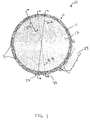
- FIG. 3 is a front view of the electric machine module of FIG. 1 .
- FIG. 4 is a perspective cross-sectional view of the electric machine module of FIG. 1 .
- FIG. 5 is a rear view of the perspective cross-sectional view of FIG. 4 .
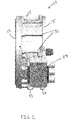
- FIG. 6 is a cross-sectional view of the electric machine module of FIG. 3 along line A-A.
- FIG. 7 is a cross-sectional view of the electric machine module of FIG. 3 along line B-B.
- FIG. 8 is a partial front cross-sectional view of an electric machine module according to another embodiment of the invention.
- FIG. 9 is a partial front cross-sectional view of the electric machine module of FIG. 3 along line C-C.
- FIG. 10 is a partial front cross-sectional view of the electric machine module of FIG. 6 .
- FIG. 11 is a partial front cross-sectional view of an electric machine module according to another embodiment of the invention.
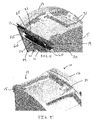
- FIG. 12 is a partial perspective view of a stator assembly and baffles of the electric machine module of FIG. 11 .
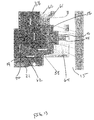
- FIG. 13 is a partial front cross-sectional view stator end turns and a baffle of the electric machine module of FIG. 11 .
- FIG. 14 is another partial front cross section view of stator end turns and a baffle of the electric machine module of FIG. 11 .
- FIG. 15A is a top view of a baffle of the electric machine module of FIG. 11 .
- FIG. 15B is a side view of the baffle of FIG. 15A .
- FIG. 15C is a front view of the baffle of FIG. 15A .
- FIG. 15D is a front cross-sectional view of the baffle of FIG. 15A .
- FIG. 16 is a perspective view of the electric machine module of FIG. 1 .
- FIG. 17 is a partial front cross-sectional view of the electric machine module of FIG. 7 .
- FIGS. 1-3 illustrate portions of an electric machine module 10 according to one embodiment of the invention.
- the electric machine module 10 can comprise a housing 12 and electric connections 29. Additionally, in some embodiments, the housing 12 can included ribbed structures 31, which can partially provide structural support for the housing 12.
- FIGS. 4-7 illustrate portions of the electric machine module 10 according to one embodiment of the invention.
- the housing 12 can comprise a substantially enclosed, substantially cylindrical canister 15 and a single end cap 17.
- An electric machine 20 can be housed within a machine cavity 22 at least partially defined by the canister 15 and the end cap 17.
- the housing 12 can substantially circumscribe, and a least partially enclose, the electric machine 20.
- the housing 12 can comprise a sleeve member 14, a first end cap 16, and a second end cap 18.
- the sleeve member 14 and the end caps 16, 18 or the end cap 17 and the canister 15 can be coupled via fasteners 11 or another suitable coupling manner, to enclose the electric machine 20 within the machine cavity 22.
- the electric machine 20 can include a rotor 24, a stator assembly 26 comprising a stator 28 and stator end turns 30, and bearings 32, and can be disposed about a main output shaft 34. As shown in FIGS. 4-8 , the stator assembly 26 can circumscribe the rotor 24. In some embodiments, the electric machine 20 can also include a rotor hub 36 or can have a "hub-less" design (not shown). Further, in some embodiments, the housing 12 can be divided into generally two regions: a generally upper region 48 and a generally lower region 50. The generally upper region 48 can include a region positioned substantially above the main output shaft 34 and the generally lower region 50 can include a region positioned substantially below the main output shaft 34.
- the housing 12 can include a coolant jacket 21.
- the coolant jacket 21 can substantially circumscribe or at least partially surround a portion of the stator assembly 26 and can contain a coolant such as oil, hydraulic fluid oil, antifreeze, motor oil, transmission oil, or a similar fluid.
- the coolant jacket 21 can be in fluid communication with a fluid source (not shown) containing the coolant.
- the coolant can be pressurized as it enters the coolant jacket 21 so that it can be circulated through the coolant jacket 21. Heat energy generated by the electric machine 20 can be transferred to the coolant as it is circulated through the coolant jacket 21, which can, in part, lead to electric machine 20 cooling.
- the coolant can be introduced into the coolant jacket 21 via a coolant inlet 27.
- the coolant inlet 27 can be positioned in the generally lower region 50 of the housing 12.
- the coolant jacket 21 can be formed within the sleeve member 14 or the canister 15 where a radially innermost wall 23 of the housing 12 (e.g., of the sleeve member 14 or the canister 15) can substantially separate the coolant jacket 21 from the machine cavity 22.
- the housing 12 can include an internal sleeve member 19.
- the coolant jacket 21 can be defined between the internal sleeve member 19 and the sleeve member 14 or the canister 15. More specifically, the internal sleeve member 19 can form the inner wall 23 substantially separating the coolant jacket 21 and the machine cavity 22.
- the internal sleeve member 19 can be a stainless steel ring into which the stator 28 can be installed or pressed.
- the stator end turns 30 can comprise twist end stator end turns 38 and weld end stator end turns 40.
- the twist end stator end turns 38 and the weld end stator end turns 40 can be positioned at substantially opposite axial ends of the stator assembly 26.
- the electric machine 20 can be, without limitation, an electric motor, such as a hybrid electric motor, an electric generator, or a vehicle alternator.
- the electric machine 20 can be a High Voltage Hairpin (HVH) electric motor for use in a hybrid vehicle.
- the electric machine 20 can be an interior permanent magnet (IPM) electric machine for use in a hybrid vehicle.
- HVH High Voltage Hairpin
- IPM interior permanent magnet
- Components of the electric machine 20 such as, but not limited to, the stator assembly 26 and the rotor 24 can generate heat during operation of the electric machine 20. These components can be cooled to enhance the performance of and increase the lifespan of the electric machine 20.
- one or more baffles 42 can be coupled to the housing 12.
- the baffles 42 can be coupled to the housing 12 using threaded fasteners 44, as shown in FIGS. 11 , 13 and 14 , or other fasteners, adhesives, or other suitable coupling methods.
- the baffles 42 can include one or more coupling structures 46. Any type of coupling apparatus can be inserted through the coupling structure 46 to couple the baffles 42 to the housing 12, as shown in FIGS. 15A-15D .
- the coupling structures can include the threaded fasteners 44, other fasteners, adhesives, or other suitable coupling methods.
- the baffles 42 can be substantially formed from a non-conductive material, or another suitable material which can be compatible with heat energy produced by the electric machine and substances introduced into the machine cavity 22, such as the coolant.
- the non-conductive material can comprise glass, ceramic, a polymer, such as plastic, another suitable non-conductive material, or combinations thereof.
- the baffles 42 can be comprised of multiple units or a substantially single unit.
- the baffles 42 can be comprised of a vertical subunit 56 and a horizontal subunit 58.
- the vertical subunit 56 can be oriented substantially perpendicular with a horizontal axis of the main output shaft 34 and the horizontal subunit 58 can be oriented substantially parallel to the horizontal axis of the main output shaft 34.
- the horizontal subunit 58 can extend axially inward toward the stator assembly 26, as shown in FIGS. 13 and 14 .
- the two subunits 56, 58 can be two different pieces coupled together using threaded fasteners, an adhesive, or another suitable manner.
- the two subunits 56, 58 can be fabricated (e.g., by a molding process or other suitable process) so that the two pieces are produced substantially as a single unit.
- the baffles 42 can comprise a generally curved, angled, or bent shape to substantially follow the shape of the generally circular-shaped stator assembly 26, as shown in FIGS. 15A-15D .
- the baffles 42 can comprise other shapes and configurations to meet manufacturer and user needs.
- the baffles 42 can be coupled to the housing 12 generally near the stator end turns 30. When coupled to the housing 12, the baffles 42 can surround a portion of a perimeter of the stator end turns 30. In some embodiments, the vertical subunits 56 of the baffles 42 can be coupled to one or both of the end caps 16, 18 (or the end cap 17 and the canister 15), or another suitable region of the housing 12. In some embodiments, the baffles 42 can be coupled to the housing 12 generally near the stator end turns 30 in can be positioned within the housing 12 in the generally upper region 48 and/or the generally lower region 50.
- the baffles 42 can be positioned substantially within the generally lower region 50, as shown in FIGS. 6-8 and 10-14 .
- the baffles 42 can be positioned so that at least a portion of the baffles 42 can be located near a bottom-most area of the stator assembly 26 and stator end turns 30 (i.e., the "6 o'clock" position).
- the baffles 42 can be positioned closer to the stator end turns 30 in comparison to baffles 42 formed from conductive materials because the non-conductive composition only minimally impacts the electrical dynamics of the electric machine 20, if at all.
- the horizontal subunits 58 can be adaptively configured to closely conform to the size, dimensions, and shape of the electric conductors of the stator end turns 30.
- the horizontal subunits 58 can be curved, angled, or bent to accommodate the electrical conductors of the twist end stator end turns 38.
- the horizontal subunits 58 can be substantially planar, flat, or straight to accommodate the weld end stator end turns 40.
- baffles 42 including generally planar horizontal subunits 58 can be positioned near to the twist end stator end turns 38, and baffles including the generally curved horizontal subunits 58 can be positioned near to the weld end stator end turns 40.
- the baffles 42 can include other configurations, shapes, and/or designs, for example, to achieve the manufacturer's and end user's desired outcomes.
- the coolant circulating through the coolant jacket 21 can be sprayed or dispersed into the machine cavity 22 from a plurality of coolant apertures 25 extending through at least one of the inner wall 23, as shown in FIG. 9 .
- the inner wall 23 can include about seven coolant apertures 25. In other embodiments, more or less than seven coolant apertures 25 can be included.
- the plurality of coolant apertures 25 can be in fluid communication with, at least, the machine cavity 22 and the coolant jacket 21.
- the plurality of coolant apertures 25 can be axially located along the housing 12 substantially adjacent to the stator end turns 30 (e.g., located near both axial ends of the housing 12).
- the coolant can be dispersed from the coolant jacket 21, through the plurality of coolant apertures 25, and at least partially onto or around the stator end turns 30.
- the dispersed coolant can receive heat energy from the stator end turns 30, which can result in at least partial cooling of the electric machine 20.
- the plurality of coolant apertures 25 can be circumferentially located around the generally upper region 48 of the housing 12. In other embodiments, the plurality of coolant apertures 25 can be circumferentially positioned entirely around a circumference of the housing 12.
- an additional volume of coolant can be expelled near the rotor hub 36 (not shown), for example, from a base of the rotor hub 36 or from the main output shaft 34.
- a portion of the coolant can flow through coolant inlet piping 33 so that some of the coolant can be expelled near the rotor hub 36.
- the coolant expelled from the rotor hub 36 can flow radially outward toward the housing 12 and the stator assembly 26 (e.g., because of centrifugal force). This additional volume of coolant can further aid in cooling the electric machine 20, including the stator assembly 26.
- gravity can aid in drawing at least a portion of the coolant in a generally downward direction.
- the coolant can aid in cooling the electric machine 20 by receiving and removing at least a portion of the heat energy produced by the electric machine 20.
- some of the coolant can flow down along the electric machine 20 and/or housing 12, which can lead to further cooling of the electric machine module 10.
- at least a portion of the coolant can flow across an outside diameter and/or an inside diameter of the stator end turns 30 to at least partially aid in cooling the electric machine 20.
- the housing 12 can include coolant guides 60.
- the coolant guides 60 can comprise generally raised ridges, ledges, troughs, shrouds, ribbed structures, and other similar features, which can axially and/or radially extend from the end caps 16, 18 and the sleeve member 14, the end cap 17 and the canister 15, or other suitable locations on or within the housing 12 into the machine cavity 22. As some of the coolant flows generally downward, the coolant can be guided or directed along an interior surface of the housing 12 by the coolant guides 60.
- the coolant guides 60 can be formed so that the coolant guides 60 are integral with elements of the housing 12. In other embodiments, the coolant guides 60 can coupled to the housing 12 using any of the previously mentioned coupling techniques.
- the housing 12 can include coolant guide drains 61.
- the coolant guide drains 61 can be positioned substantially near the baffles 42 so that at least a portion of the coolant being guided by the coolant guides 60 can be guided, directed, drained, or aimed toward the baffles 42.
- the coolant guide drains 61 can be located through the coolant guides 60 at intervals so that as the coolant flows along the coolant guides 60, the coolant can flow through the drains 61 to more quickly flow toward the generally lower region 50.
- the coolant guide drains 61 can comprise a generally tube-like configuration defined through a portion of the coolant guides 60, the end caps 16, 18 and the sleeve member 14, the end cap 17 and the canister 15, or another element of the housing 12 to aid in funneling the coolant toward the baffles 42, as shown in FIGS. 11 , 13 , 14 , and 17 .
- the coolant guide drains 61 can comprise other configurations and shapes, for example, as required by the manufacturer or end user.
- the baffles 42 which can be positioned within the generally lower region 50, as previously mentioned, can further enhance cooling of the electric machine 20.
- portions of the coolant can flow over the inner diameter of the stator end turns 30, can flow through the electric conductors of the stator end turns 30, can flow around the perimeter of the stator end turns 30, and can flow around the outside diameter of the stator end turns 30, as shown by the arrows in FIGS. 13 and 14 .
- some of the coolant can be concentrated around and/or near the stator end turns 30 which can provide enhanced cooling relative to conventional electric machine modules which do not include baffles, or do not include baffles in a generally lower region.
- the baffles 42 can include baffle outlets 70.
- the baffle outlets 70 can be at least partially comprised of a portion of the perimeter of the stator end turns 30 and the horizontal subunits 58. More specifically, the baffle outlets 70 can be positioned at a substantially axially inward-most area of the baffles 42 so that as the coolant flows downward, a portion of the coolant can pool near and around the baffle 42 and some of the coolant can flow through the baffle outlets 70.
- At least one coolant channel 62 can be included in the electric machine module 10, although more than one coolant channel 62 can be included.
- coolant channels 62 can be at least partially comprised of the baffles 42, the stator assembly 26, and portions of the housing 12, including but not limited to the inner wall 23, the end caps 16, 18 and the sleeve member 14, and/or the end cap 17 and the canister 15. More specifically, some of the coolant which can flow through the baffle outlets 70 can be guided through the coolant channels 62.
- At least a portion of the coolant reaching the baffles 42 and the stator end turns 30 can be guided through the baffle outlets 70 to the coolant channels 62 near and around the stator assembly 26, which can at least partially aid in cooling.
- a substantially constant flow of coolant can pass over and through the baffles 42 and the stator assembly 26, including the stator end turns 30 in the generally lower region 50 of the housing 12 and flow through the baffle outlets 70 to the coolant channels 62. This configuration can aid in reducing the presence of excess heat energy and can help improve cooling to the electric machine 20 components in the generally lower region 50.
- one or more coolant outlets 64 can be included in the electric machine module 10.
- the coolant outlets 64 can be apertures defined through portions of the housing 12, such as the end caps 16, 18 and the sleeve member 14, or the end cap 17 and the canister 15.
- the coolant outlets can be formed through portions of the generally lower region 50 of the housing 12 at substantially opposite axial ends of the housing 12, as shown in FIG. 17 .
- the coolant outlets 64 can serve as drains for coolant introduced into the electric machine module 10, and in some embodiments, can be located near or within a portion of the coolant channels 62. For example, at least some of the coolant flowing within the coolant channels 62 can be directed toward the coolant outlets 64, as shown in FIGS. 13 and 14 .
- the electric machine module 10 can include a sump system 68.
- the sump system 68 can include sump piping 71, a sump outlet 73, and a sump area (not shown).
- the sump piping 71 can be in fluid communication with the coolant outlets 64 so that a portion of the coolant flowing through the coolant outlets 64 can be dispersed through the sump piping 71 and the sump outlet 73 and into the sump area.
- the sump area can serve as a reservoir for coolant after it flows over the machine cavity 22.
- the sump area can be fluidly connected to a heat exchange element, such as a radiator or similar feature so that the coolant can be circulated to the heat exchange element where a portion of the heat energy carried by the coolant can be removed and the coolant can be re-circulated to the module 10.
- a heat exchange element such as a radiator or similar feature
- the module 10 an auxiliary inlet 75 and an auxiliary outlet 77.
- the auxiliary inlet 75 and the auxiliary outlet 77 can be used for applications where increased coolant flow into and out the module 10 could be desired by the manufacturer and/or end user.
- the inclusion of baffles 42 can eliminate or reduce the need for maintaining a coolant pool at the bottom of the housing 12 and can simplify the flow control of the coolant.
- the coolant pool can be an important feature because it can aid in the cooling of the stator assembly 26 and the stator end turns 30 (i.e., the pool can rise high enough so that the coolant can contact the stator end turns 30).
- the coolant pool also can cause difficulties in electric machine module operation, for example by causing flooding of an air gap 66 between the stator assembly 26 and the rotor 24, which can interrupt operation of the electric machine 20. As a result, it can be necessary to carefully regulate flow rates of coolant entering and exiting the module to avoid flooding the air gap 66.
- baffles 42 in some embodiments of the invention can eliminate the need for the coolant pool because at least some of the coolant is still exposed to some of the heat energy-producing portions of the electric machine 20, but in a more directed manner relative to the coolant pool because a portion of the coolant can be concentrated around the stator assembly 26. Also, coolant can be allowed to pass rapidly through the coolant channels 62 and can drain into the sump system 68, which can further negate the need for a coolant pool so that, in some embodiments, careful regulation of the flow rates can be unnecessary or minimally necessary.
Landscapes
- Engineering & Computer Science (AREA)
- Power Engineering (AREA)
- Motor Or Generator Cooling System (AREA)
- Motor Or Generator Frames (AREA)
Abstract
Description
- Conventional methods for cooling an electric machine include spraying or dispersing a coolant directly onto the electric machine. The coolant is often dispersed onto stator end turns near an upper portion of the electric machine. The coolant can cool the electric machine as it drips down the stator end turns and pools near a lower portion of the electric machine. The pooled coolant must be maintained at a specific level within the lower portion of the electric machine in order to help cool the stator end turns near the lower portion of the electric machine.
- Embodiments of the invention provide an electric machine module including an electric machine which can include a stator assembly. The stator assembly can include stator end turns. Some embodiments can provide a housing at least partially enclosing the electric machine and the housing can at least partially define a machine cavity. Further, at least one baffle can be coupled to the housing at a region near the stator end turns, so that the at least one baffle surrounds a portion of a perimeter of the stator end turns.
- The at least one baffle may include being formed from a substantially non-conductive material. The substantially non-conductive material may include plastic.
- The housing may include coolant guides.
- The at least one baffle, the stator assembly, and the housing may substantially form at least one coolant channel.
- In some embodiments the stator end turns comprise twist end stator end turns and weld end stator end turns; and
the at least one baffle comprises two baffles, each of the two baffles include a horizontal subunit, and the horizontal subunits are adaptively configured to conform to the twist end stator end turns and the weld end stator end turns, respectively. - The housing may include a coolant outlet.
- The housing may include a generally lower region, the at least one baffle b e i n g coupled to the housing substantially within the generally lower region.
- Some embodiments further comprise a coolant capable of being dispersed into the machine cavity, wherein at least a portion of the coolant flows generally downward toward the at least one baffle to at least partially aid in cooling the electric machine.
- Some embodiments further comprise a sump system, wherein a portion of the coolant flows toward the sump system.
- Some embodiments of the invention provide a method for cooling an electric machine including providing an electric machine which includes a stator assembly. The stator assembly can include stator end turns. Some embodiments can include providing a housing at least partially enclosing the electric machine. The housing can at least partially define a machine cavity and can include a generally lower region. In some embodiments, baffles can be coupled to the housing substantially within the generally lower region near the stator end turns, so that the baffles surround a portion of a perimeter of the stator end turns and a coolant can be introduced into the machine cavity. Some embodiments provide a portion of the coolant can circulate through the machine cavity toward the generally lower region so that some of the portion of the coolant contacts the baffles to at least partially aid in cooling the electric machine.
- The baffles may include being formed from a substantially non-conductive material. The non-conductive material may comprise plastic.
- The method may further comprise providing at least one coolant outlet positioned substantially within the generally lower region.
- The method may further comprise draining at least some of the coolant that flows through the at least one coolant outlet.
- The method may further comprise providing a sump system fluidly connected to the at least one coolant outlet, wherein at least some of the coolant draining through the at least one coolant outlet flows into the sump system.
- Some embodiments of the invention provide an electric machine module including an electric machine which can include a stator assembly. The stator assembly can include stator end turns. Some embodiments can provide a housing at least partially enclosing the electric machine and the housing can include a generally lower region. Some embodiments can provide that baffles can be coupled to the housing substantially within the generally lower region near the stator end turns, and the baffles can include being formed from a substantially non-conductive material and can surround a portion of a perimeter of the stator end turns.
- The stator assembly may substantially circumscribe a rotor.
- In some embodiments of the stator end turns comprise twist end stator end turns and weld end stator end turns;
wherein each of the baffles include a horizontal subunit; and
wherein the horizontal subunits are adaptively configured to conform to the twist end stator end turns and the weld end stator end turns, respectively. - In some embodiments the baffles, the stator assembly, and the housing substantially form coolant channels.
-
FIG. 1 is a perspective view of an electric machine module according to one embodiment of the invention. -
FIG. 2 is a side view of the electric machine module ofFIG. 1 . -
FIG. 3 is a front view of the electric machine module ofFIG. 1 . -
FIG. 4 is a perspective cross-sectional view of the electric machine module ofFIG. 1 . -
FIG. 5 is a rear view of the perspective cross-sectional view ofFIG. 4 . -
FIG. 6 is a cross-sectional view of the electric machine module ofFIG. 3 along line A-A. -
FIG. 7 is a cross-sectional view of the electric machine module ofFIG. 3 along line B-B. -
FIG. 8 is a partial front cross-sectional view of an electric machine module according to another embodiment of the invention. -
FIG. 9 is a partial front cross-sectional view of the electric machine module ofFIG. 3 along line C-C. -
FIG. 10 is a partial front cross-sectional view of the electric machine module ofFIG. 6 . -
FIG. 11 is a partial front cross-sectional view of an electric machine module according to another embodiment of the invention. -
FIG. 12 is a partial perspective view of a stator assembly and baffles of the electric machine module ofFIG. 11 . -
FIG. 13 is a partial front cross-sectional view stator end turns and a baffle of the electric machine module ofFIG. 11 . -
FIG. 14 is another partial front cross section view of stator end turns and a baffle of the electric machine module ofFIG. 11 . -
FIG. 15A is a top view of a baffle of the electric machine module ofFIG. 11 . -
FIG. 15B is a side view of the baffle ofFIG. 15A . -
FIG. 15C is a front view of the baffle ofFIG. 15A . -
FIG. 15D is a front cross-sectional view of the baffle ofFIG. 15A . -
FIG. 16 is a perspective view of the electric machine module ofFIG. 1 . -
FIG. 17 is a partial front cross-sectional view of the electric machine module ofFIG. 7 . - Before any embodiments of the invention are explained in detail, it is to be understood that the invention is not limited in its application to the details of construction and the arrangement of components set forth in the following description or illustrated in the following drawings. The invention is capable of other embodiments and of being practiced or of being carried out in various ways. Also, it is to be understood that the phraseology and terminology used herein is for the purpose of description and should not be regarded as limiting. The use of "including," "comprising," or "having" and variations thereof herein is meant to encompass the items listed thereafter and equivalents thereof as well as additional items. Unless specified or limited otherwise, the terms "mounted," "connected," "supported," and "coupled" and variations thereof are used broadly and encompass both direct and indirect mountings, connections, supports, and couplings. Further, "connected" and "coupled" are not restricted to physical or mechanical connections or couplings.
- The following discussion is presented to enable a person skilled in the art to make and use embodiments of the invention. Various modifications to the illustrated embodiments will be readily apparent to those skilled in the art, and the generic principles herein can be applied to other embodiments and applications without departing from embodiments of the invention. Thus, embodiments of the invention are not intended to be limited to embodiments shown, but are to be accorded the widest scope consistent with the principles and features disclosed herein. The following detailed description is to be read with reference to the figures, in which like elements in different figures have like reference numerals. The figures, which are not necessarily to scale, depict selected embodiments and are not intended to limit the scope of embodiments of the invention. Skilled artisans will recognize the examples provided herein have many useful alternatives and fall within the scope of embodiments of the invention.
-
FIGS. 1-3 illustrate portions of anelectric machine module 10 according to one embodiment of the invention. Theelectric machine module 10 can comprise ahousing 12 andelectric connections 29. Additionally, in some embodiments, thehousing 12 can includedribbed structures 31, which can partially provide structural support for thehousing 12. -
FIGS. 4-7 illustrate portions of theelectric machine module 10 according to one embodiment of the invention. Thehousing 12 can comprise a substantially enclosed, substantiallycylindrical canister 15 and asingle end cap 17. An electric machine 20 can be housed within amachine cavity 22 at least partially defined by thecanister 15 and theend cap 17. Thehousing 12 can substantially circumscribe, and a least partially enclose, the electric machine 20. In other embodiments, as shown inFIG. 8 , thehousing 12 can comprise asleeve member 14, afirst end cap 16, and a second end cap 18. For example, thesleeve member 14 and the end caps 16, 18 or theend cap 17 and thecanister 15 can be coupled via fasteners 11 or another suitable coupling manner, to enclose the electric machine 20 within themachine cavity 22. - The electric machine 20 can include a
rotor 24, astator assembly 26 comprising astator 28 and stator end turns 30, andbearings 32, and can be disposed about amain output shaft 34. As shown inFIGS. 4-8 , thestator assembly 26 can circumscribe therotor 24. In some embodiments, the electric machine 20 can also include arotor hub 36 or can have a "hub-less" design (not shown). Further, in some embodiments, thehousing 12 can be divided into generally two regions: a generallyupper region 48 and a generallylower region 50. The generallyupper region 48 can include a region positioned substantially above themain output shaft 34 and the generallylower region 50 can include a region positioned substantially below themain output shaft 34. - In some embodiments, as shown in
FIG. 6-10 , thehousing 12 can include acoolant jacket 21. Thecoolant jacket 21 can substantially circumscribe or at least partially surround a portion of thestator assembly 26 and can contain a coolant such as oil, hydraulic fluid oil, antifreeze, motor oil, transmission oil, or a similar fluid. Thecoolant jacket 21 can be in fluid communication with a fluid source (not shown) containing the coolant. The coolant can be pressurized as it enters thecoolant jacket 21 so that it can be circulated through thecoolant jacket 21. Heat energy generated by the electric machine 20 can be transferred to the coolant as it is circulated through thecoolant jacket 21, which can, in part, lead to electric machine 20 cooling. As shown inFIG. 6 , in some embodiments, the coolant can be introduced into thecoolant jacket 21 via acoolant inlet 27. In some embodiments, thecoolant inlet 27 can be positioned in the generallylower region 50 of thehousing 12. - In some embodiments, the
coolant jacket 21 can be formed within thesleeve member 14 or thecanister 15 where a radiallyinnermost wall 23 of the housing 12 (e.g., of thesleeve member 14 or the canister 15) can substantially separate thecoolant jacket 21 from themachine cavity 22. In some embodiments, as shown inFIGS. 6 and7 , thehousing 12 can include aninternal sleeve member 19. In such embodiments, thecoolant jacket 21 can be defined between theinternal sleeve member 19 and thesleeve member 14 or thecanister 15. More specifically, theinternal sleeve member 19 can form theinner wall 23 substantially separating thecoolant jacket 21 and themachine cavity 22. In some embodiments, for example, theinternal sleeve member 19 can be a stainless steel ring into which thestator 28 can be installed or pressed. - As shown in
FIGS. 6 and7 , in some embodiments, the stator end turns 30 can comprise twist end stator end turns 38 and weld end stator end turns 40. The twist end stator end turns 38 and the weld end stator end turns 40 can be positioned at substantially opposite axial ends of thestator assembly 26. - The electric machine 20 can be, without limitation, an electric motor, such as a hybrid electric motor, an electric generator, or a vehicle alternator. In one embodiment, the electric machine 20 can be a High Voltage Hairpin (HVH) electric motor for use in a hybrid vehicle. In yet another embodiment, the electric machine 20 can be an interior permanent magnet (IPM) electric machine for use in a hybrid vehicle.
- Components of the electric machine 20 such as, but not limited to, the
stator assembly 26 and therotor 24 can generate heat during operation of the electric machine 20. These components can be cooled to enhance the performance of and increase the lifespan of the electric machine 20. - As shown in
FIGS. 6-8 , in some embodiments, one ormore baffles 42 can be coupled to thehousing 12. In some embodiments, thebaffles 42 can be coupled to thehousing 12 using threadedfasteners 44, as shown inFIGS. 11 ,13 and14 , or other fasteners, adhesives, or other suitable coupling methods. In some embodiments, thebaffles 42 can include one ormore coupling structures 46. Any type of coupling apparatus can be inserted through thecoupling structure 46 to couple thebaffles 42 to thehousing 12, as shown inFIGS. 15A-15D . The coupling structures can include the threadedfasteners 44, other fasteners, adhesives, or other suitable coupling methods. Further, in some embodiments, thebaffles 42 can be substantially formed from a non-conductive material, or another suitable material which can be compatible with heat energy produced by the electric machine and substances introduced into themachine cavity 22, such as the coolant. In some embodiments, the non-conductive material can comprise glass, ceramic, a polymer, such as plastic, another suitable non-conductive material, or combinations thereof. - According to some embodiments of the invention, the
baffles 42 can be comprised of multiple units or a substantially single unit. For example, thebaffles 42 can be comprised of avertical subunit 56 and ahorizontal subunit 58. In some embodiments, thevertical subunit 56 can be oriented substantially perpendicular with a horizontal axis of themain output shaft 34 and thehorizontal subunit 58 can be oriented substantially parallel to the horizontal axis of themain output shaft 34. Also, thehorizontal subunit 58 can extend axially inward toward thestator assembly 26, as shown inFIGS. 13 and14 . Further, in some embodiments, the twosubunits subunits - Further, in some embodiments, the
baffles 42 can comprise a generally curved, angled, or bent shape to substantially follow the shape of the generally circular-shapedstator assembly 26, as shown inFIGS. 15A-15D . In other embodiments, thebaffles 42 can comprise other shapes and configurations to meet manufacturer and user needs. - Referring to
FIGS. 6-8 and10-14 , in some embodiments, thebaffles 42 can be coupled to thehousing 12 generally near the stator end turns 30. When coupled to thehousing 12, thebaffles 42 can surround a portion of a perimeter of the stator end turns 30. In some embodiments, thevertical subunits 56 of thebaffles 42 can be coupled to one or both of the end caps 16, 18 (or theend cap 17 and the canister 15), or another suitable region of thehousing 12. In some embodiments, thebaffles 42 can be coupled to thehousing 12 generally near the stator end turns 30 in can be positioned within thehousing 12 in the generallyupper region 48 and/or the generallylower region 50. For example, in one embodiment, thebaffles 42 can be positioned substantially within the generallylower region 50, as shown inFIGS. 6-8 and10-14 . In addition, thebaffles 42 can be positioned so that at least a portion of thebaffles 42 can be located near a bottom-most area of thestator assembly 26 and stator end turns 30 (i.e., the "6 o'clock" position). As a result of being formed from substantially non-conductive materials, thebaffles 42 can be positioned closer to the stator end turns 30 in comparison to baffles 42 formed from conductive materials because the non-conductive composition only minimally impacts the electrical dynamics of the electric machine 20, if at all. - As shown in
FIGS. 13 and14 , in some embodiments, thehorizontal subunits 58 can be adaptively configured to closely conform to the size, dimensions, and shape of the electric conductors of the stator end turns 30. For example, thehorizontal subunits 58 can be curved, angled, or bent to accommodate the electrical conductors of the twist end stator end turns 38. In another example, thehorizontal subunits 58 can be substantially planar, flat, or straight to accommodate the weld end stator end turns 40. In some embodiments, baffles 42 including generally planarhorizontal subunits 58 can be positioned near to the twist end stator end turns 38, and baffles including the generally curvedhorizontal subunits 58 can be positioned near to the weld end stator end turns 40. Additionally, thebaffles 42 can include other configurations, shapes, and/or designs, for example, to achieve the manufacturer's and end user's desired outcomes. - According to some embodiments of the invention, the coolant circulating through the
coolant jacket 21 can be sprayed or dispersed into themachine cavity 22 from a plurality ofcoolant apertures 25 extending through at least one of theinner wall 23, as shown inFIG. 9 . In some embodiments, theinner wall 23 can include about sevencoolant apertures 25. In other embodiments, more or less than sevencoolant apertures 25 can be included. The plurality ofcoolant apertures 25 can be in fluid communication with, at least, themachine cavity 22 and thecoolant jacket 21. In some embodiments, the plurality ofcoolant apertures 25 can be axially located along thehousing 12 substantially adjacent to the stator end turns 30 (e.g., located near both axial ends of the housing 12). As a result, the coolant can be dispersed from thecoolant jacket 21, through the plurality ofcoolant apertures 25, and at least partially onto or around the stator end turns 30. The dispersed coolant can receive heat energy from the stator end turns 30, which can result in at least partial cooling of the electric machine 20. In some embodiments, the plurality ofcoolant apertures 25 can be circumferentially located around the generallyupper region 48 of thehousing 12. In other embodiments, the plurality ofcoolant apertures 25 can be circumferentially positioned entirely around a circumference of thehousing 12. - In some embodiments, in addition to the plurality of
coolant apertures 25, an additional volume of coolant can be expelled near the rotor hub 36 (not shown), for example, from a base of therotor hub 36 or from themain output shaft 34. As shown inFIG. 6 , after passing through thecoolant inlet 27, in some embodiments, a portion of the coolant can flow through coolant inlet piping 33 so that some of the coolant can be expelled near therotor hub 36. The coolant expelled from therotor hub 36 can flow radially outward toward thehousing 12 and the stator assembly 26 (e.g., because of centrifugal force). This additional volume of coolant can further aid in cooling the electric machine 20, including thestator assembly 26. - In some embodiments, after the coolant is introduced into the
machine cavity 22, gravity can aid in drawing at least a portion of the coolant in a generally downward direction. As the coolant flows in the generally downward direction, it can aid in cooling the electric machine 20 by receiving and removing at least a portion of the heat energy produced by the electric machine 20. As the coolant flows generally downward, some of the coolant can flow down along the electric machine 20 and/orhousing 12, which can lead to further cooling of theelectric machine module 10. For example, in some embodiments, at least a portion of the coolant can flow across an outside diameter and/or an inside diameter of the stator end turns 30 to at least partially aid in cooling the electric machine 20. - In some embodiments, the
housing 12 can include coolant guides 60. In some embodiments, the coolant guides 60 can comprise generally raised ridges, ledges, troughs, shrouds, ribbed structures, and other similar features, which can axially and/or radially extend from the end caps 16, 18 and thesleeve member 14, theend cap 17 and thecanister 15, or other suitable locations on or within thehousing 12 into themachine cavity 22. As some of the coolant flows generally downward, the coolant can be guided or directed along an interior surface of thehousing 12 by the coolant guides 60. In some embodiments, the coolant guides 60 can be formed so that the coolant guides 60 are integral with elements of thehousing 12. In other embodiments, the coolant guides 60 can coupled to thehousing 12 using any of the previously mentioned coupling techniques. - Additionally, in some embodiments, the
housing 12 can include coolant guide drains 61. In some embodiments, the coolant guide drains 61 can be positioned substantially near thebaffles 42 so that at least a portion of the coolant being guided by the coolant guides 60 can be guided, directed, drained, or aimed toward thebaffles 42. In some embodiments, the coolant guide drains 61 can be located through the coolant guides 60 at intervals so that as the coolant flows along the coolant guides 60, the coolant can flow through thedrains 61 to more quickly flow toward the generallylower region 50. In some embodiments, the coolant guide drains 61 can comprise a generally tube-like configuration defined through a portion of the coolant guides 60, the end caps 16, 18 and thesleeve member 14, theend cap 17 and thecanister 15, or another element of thehousing 12 to aid in funneling the coolant toward thebaffles 42, as shown inFIGS. 11 ,13 ,14 , and17 . In other embodiments, the coolant guide drains 61 can comprise other configurations and shapes, for example, as required by the manufacturer or end user. - In some embodiments, the
baffles 42, which can be positioned within the generallylower region 50, as previously mentioned, can further enhance cooling of the electric machine 20. For example, in some embodiments, as the coolant flows generally downward, portions of the coolant can flow over the inner diameter of the stator end turns 30, can flow through the electric conductors of the stator end turns 30, can flow around the perimeter of the stator end turns 30, and can flow around the outside diameter of the stator end turns 30, as shown by the arrows inFIGS. 13 and14 . In some embodiments, due to of inclusion of thebaffles 42, some of the coolant can be concentrated around and/or near the stator end turns 30 which can provide enhanced cooling relative to conventional electric machine modules which do not include baffles, or do not include baffles in a generally lower region. - As shown in
FIGS. 13 and14 , in some embodiments, thebaffles 42 can include baffleoutlets 70. In some embodiments, thebaffle outlets 70 can be at least partially comprised of a portion of the perimeter of the stator end turns 30 and thehorizontal subunits 58. More specifically, thebaffle outlets 70 can be positioned at a substantially axially inward-most area of thebaffles 42 so that as the coolant flows downward, a portion of the coolant can pool near and around thebaffle 42 and some of the coolant can flow through thebaffle outlets 70. - As shown in
FIGS. 13 ,14 , and17 , in some embodiments, at least onecoolant channel 62 can be included in theelectric machine module 10, although more than onecoolant channel 62 can be included. In some embodiments,coolant channels 62 can be at least partially comprised of thebaffles 42, thestator assembly 26, and portions of thehousing 12, including but not limited to theinner wall 23, the end caps 16, 18 and thesleeve member 14, and/or theend cap 17 and thecanister 15. More specifically, some of the coolant which can flow through thebaffle outlets 70 can be guided through thecoolant channels 62. As a result, in some embodiments, at least a portion of the coolant reaching thebaffles 42 and the stator end turns 30 can be guided through thebaffle outlets 70 to thecoolant channels 62 near and around thestator assembly 26, which can at least partially aid in cooling. In some embodiments, a substantially constant flow of coolant can pass over and through thebaffles 42 and thestator assembly 26, including the stator end turns 30 in the generallylower region 50 of thehousing 12 and flow through thebaffle outlets 70 to thecoolant channels 62. This configuration can aid in reducing the presence of excess heat energy and can help improve cooling to the electric machine 20 components in the generallylower region 50. - Also, in some embodiments of the invention, one or
more coolant outlets 64 can be included in theelectric machine module 10. In some embodiments, thecoolant outlets 64 can be apertures defined through portions of thehousing 12, such as the end caps 16, 18 and thesleeve member 14, or theend cap 17 and thecanister 15. In some embodiments, the coolant outlets can be formed through portions of the generallylower region 50 of thehousing 12 at substantially opposite axial ends of thehousing 12, as shown inFIG. 17 . Thecoolant outlets 64 can serve as drains for coolant introduced into theelectric machine module 10, and in some embodiments, can be located near or within a portion of thecoolant channels 62. For example, at least some of the coolant flowing within thecoolant channels 62 can be directed toward thecoolant outlets 64, as shown inFIGS. 13 and14 . - Referring to
FIGS. 6 ,16 , and17 , in some embodiments, theelectric machine module 10 can include a sump system 68. In some embodiments, the sump system 68 can include sump piping 71, asump outlet 73, and a sump area (not shown). The sump piping 71 can be in fluid communication with thecoolant outlets 64 so that a portion of the coolant flowing through thecoolant outlets 64 can be dispersed through the sump piping 71 and thesump outlet 73 and into the sump area. In some embodiments, the sump area can serve as a reservoir for coolant after it flows over themachine cavity 22. In some embodiments, the sump area can be fluidly connected to a heat exchange element, such as a radiator or similar feature so that the coolant can be circulated to the heat exchange element where a portion of the heat energy carried by the coolant can be removed and the coolant can be re-circulated to themodule 10. - Also, as shown in
FIG. 16 , in some embodiments, themodule 10 anauxiliary inlet 75 and anauxiliary outlet 77. Theauxiliary inlet 75 and theauxiliary outlet 77 can be used for applications where increased coolant flow into and out themodule 10 could be desired by the manufacturer and/or end user. In some embodiments, when theauxiliary inlet 75 and theauxiliary outlet 77 are not generally required formodule operation 10, they can be substantially sealed withplugs 79. - Additionally, in some embodiments of the invention, the inclusion of
baffles 42 can eliminate or reduce the need for maintaining a coolant pool at the bottom of thehousing 12 and can simplify the flow control of the coolant. In some conventional electric machine modules, the coolant pool can be an important feature because it can aid in the cooling of thestator assembly 26 and the stator end turns 30 (i.e., the pool can rise high enough so that the coolant can contact the stator end turns 30). The coolant pool also can cause difficulties in electric machine module operation, for example by causing flooding of anair gap 66 between thestator assembly 26 and therotor 24, which can interrupt operation of the electric machine 20. As a result, it can be necessary to carefully regulate flow rates of coolant entering and exiting the module to avoid flooding theair gap 66. The inclusion of thebaffles 42 in some embodiments of the invention can eliminate the need for the coolant pool because at least some of the coolant is still exposed to some of the heat energy-producing portions of the electric machine 20, but in a more directed manner relative to the coolant pool because a portion of the coolant can be concentrated around thestator assembly 26. Also, coolant can be allowed to pass rapidly through thecoolant channels 62 and can drain into the sump system 68, which can further negate the need for a coolant pool so that, in some embodiments, careful regulation of the flow rates can be unnecessary or minimally necessary. - It will be appreciated by those skilled in the art that while the invention has been described above in connection with particular embodiments and examples, the invention is not necessarily so limited, and that numerous other embodiments, examples, uses, modifications and departures from the embodiments, examples and uses are intended to be encompassed by the claims attached hereto. The entire disclosure of each patent and publication cited herein is incorporated by reference, as if each such patent or publication were individually incorporated by reference herein. Various features and advantages of the invention are set forth in the following claims.
Claims (15)
- An electric machine module comprising:an electric machine including a stator assembly, the stator assembly including stator end turns;a housing at least partially enclosing the electric machine, the housing at least partially defining a machine cavity; andat least one baffle coupled to the housing at a region near the stator end turns so that the at least one baffle surrounds a portion of a perimeter of the stator end turns.
- The electric machine module of Claim 1, wherein the at least one baffle includes being formed from a substantially non-conductive material.
- The electric machine module of Claim 2, wherein the substantially non-conductive material includes plastic.
- The electric machine module of Claim 1 or 2, wherein the housing includes coolant guides.
- The electric machine module of any proceeding Claim, wherein the at least one baffle, the stator assembly, and the housing substantially form at least one coolant channel.
- The electric machine module of any preceding Claim, wherein the stator end turns comprise twist end stator end turns and weld end stator end turns; and
the at least one baffle comprises two baffles, each of the two baffles include a horizontal subunit, and the horizontal subunits are adaptively configured to conform to the twist end stator end turns and the weld end stator end turns, respectively. - The electric machine module of any preceding Claim, wherein the housing includes a coolant outlet.
- The electric machine module of any preceding Claim, wherein the housing includes a generally lower region, the at least one baffle coupled to the housing substantially within the generally lower region.
- The electric machine module of Claim 8, and further comprising a coolant capable of being dispersed into the machine cavity, wherein at least a portion of the coolant flows generally downward toward the at least one baffle to at least partially aid in cooling the electric machine; and
optionally further comprising a sump system, wherein a portion of the coolant flows toward the sump system. - A method for cooling an electric machine comprising:providing the electric machine including a stator assembly, the stator assembly including stator end turns;providing a housing at least partially enclosing the electric machine, the housing at least partially defining a machine cavity and including a generally lower region;coupling baffles to the generally lower region of the housing near the stator end turns so that the baffles surround a portion of a perimeter of the stator end turns;introducing a coolant into the machine cavity; andcirculating a portion of the coolant through the machine cavity, toward the generally lower region, so that some of the portion of the coolant contacts the baffles to at least partially aid in cooling the electric machine.
- The method of Claim 10, wherein the baffles include being formed from a substantially non-conductive material.
- The method of Claim 11, wherein the non-conductive material comprises plastic.
- The method of any one of Claims 10 to 12, and further comprising providing at least one coolant outlet positioned substantially within the generally lower region;
wherein optionally the method may further comprise draining at least some of the coolant that flows through the at least one coolant outlet.
wherein optionally the method may further comprise providing a sump system fluidly connected to the at least one coolant outlet, wherein at least some of the coolant draining through the at least one coolant outlet flows into the sump system. - An electric machine module comprising:an electric machine including a stator assembly, the stator assembly including stator end turns;a housing at least partially enclosing the electric machine, the housing including a generally lower region; andbaffles coupled to the generally lower region of the housing near the stator end turns so that the baffles surround a portion of a perimeter of the stator end turns, and the baffles include being formed from a substantially non-conductive material.
- The electric machine module of Claim 14, wherein the stator assembly substantially circumscribes a rotor; and/or
wherein the baffles, the stator assembly, and the housing substantially form coolant channels; and/or
wherein the stator end turns comprise twist end stator end turns and weld end stator end turns, wherein each of the baffles include a horizontal subunit, and wherein the horizontal subunits are adaptively configured to conform to the twist end stator end turns and the weld end stator end turns, respectively.
Applications Claiming Priority (1)
| Application Number | Priority Date | Filing Date | Title |
|---|---|---|---|
| US13/178,757 US9041260B2 (en) | 2011-07-08 | 2011-07-08 | Cooling system and method for an electronic machine |
Publications (2)
| Publication Number | Publication Date |
|---|---|
| EP2544343A2 true EP2544343A2 (en) | 2013-01-09 |
| EP2544343A3 EP2544343A3 (en) | 2014-07-09 |
Family
ID=46507900
Family Applications (1)
| Application Number | Title | Priority Date | Filing Date |
|---|---|---|---|
| EP12175389.1A Withdrawn EP2544343A3 (en) | 2011-07-08 | 2012-07-06 | Cooling system and method for an electric machine |
Country Status (5)
| Country | Link |
|---|---|
| US (1) | US9041260B2 (en) |
| EP (1) | EP2544343A3 (en) |
| JP (1) | JP2013021915A (en) |
| KR (1) | KR20130006335A (en) |
| CN (1) | CN102868255A (en) |
Cited By (1)
| Publication number | Priority date | Publication date | Assignee | Title |
|---|---|---|---|---|
| EP2969685B1 (en) * | 2013-03-14 | 2021-08-04 | Allison Transmission, Inc. | Stator sleeve with integrated cooling for hybrid/electric drive motor |
Families Citing this family (14)
| Publication number | Priority date | Publication date | Assignee | Title |
|---|---|---|---|---|
| US9041260B2 (en) * | 2011-07-08 | 2015-05-26 | Remy Technologies, Llc | Cooling system and method for an electronic machine |
| US10110092B2 (en) | 2015-06-01 | 2018-10-23 | HeliosAltas Corp. | Power generator assembly |
| US10516320B2 (en) * | 2016-05-09 | 2019-12-24 | Borgwarner Inc. | Cooling system for an electric motor |
| USD881365S1 (en) | 2018-02-28 | 2020-04-14 | S. C. Johnson & Son, Inc. | Dispenser |
| USD880670S1 (en) | 2018-02-28 | 2020-04-07 | S. C. Johnson & Son, Inc. | Overcap |
| USD872847S1 (en) | 2018-02-28 | 2020-01-14 | S. C. Johnson & Son, Inc. | Dispenser |
| USD872245S1 (en) | 2018-02-28 | 2020-01-07 | S. C. Johnson & Son, Inc. | Dispenser |
| USD852938S1 (en) | 2018-05-07 | 2019-07-02 | S. C. Johnson & Son, Inc. | Dispenser |
| USD853548S1 (en) | 2018-05-07 | 2019-07-09 | S. C. Johnson & Son, Inc. | Dispenser |
| DE102019103541A1 (en) * | 2018-07-06 | 2020-01-09 | Hanon Systems | Cooling module with axial fan for vehicles, especially for electric vehicles |
| JP7363147B2 (en) * | 2018-09-27 | 2023-10-18 | 株式会社デンソー | rotating electric machine |
| DE102019204815A1 (en) * | 2019-04-04 | 2020-10-08 | Zf Friedrichshafen Ag | Arrangement for liquid cooling of an electrical machine |
| DE102020107116A1 (en) * | 2020-03-16 | 2021-09-16 | Schaeffler Technologies AG & Co. KG | Combined oil cooling concept for an electric machine with a rotor-integrated clutch, electric machine, drive train and method for cooling an electric machine |
| US11770042B2 (en) * | 2021-01-06 | 2023-09-26 | Schaeffler Technologies AG & Co. KG | Baffle with integrated cooling for hybrid drive |
Family Cites Families (158)
| Publication number | Priority date | Publication date | Assignee | Title |
|---|---|---|---|---|
| US2080678A (en) | 1936-02-15 | 1937-05-18 | Byron Jackson Co | Motor construction |
| US2264616A (en) | 1938-09-21 | 1941-12-02 | John C Buckbee | Rotary compressor |
| SE318939B (en) | 1965-03-17 | 1969-12-22 | Asea Ab | |
| US3525001A (en) | 1968-09-23 | 1970-08-18 | Preco Inc | Liquid cooled electric motor |
| US3748507A (en) | 1971-12-02 | 1973-07-24 | Gen Electric | Variable speed drive having enhanced ventilation |
| US4038570A (en) | 1974-03-20 | 1977-07-26 | Durley Iii Benton A | Ultrasonic piezoelectric transducer drive circuit |
| JPS6036364U (en) | 1983-08-19 | 1985-03-13 | 矢野 善行 | car jack |
| JPS6416238A (en) * | 1987-07-09 | 1989-01-19 | Fanuc Ltd | Method of cooling motor |
| DE3941474A1 (en) | 1989-12-15 | 1991-06-20 | Bosch Gmbh Robert | LIQUID-COOLED ELECTRIC GENERATOR |
| US5081382A (en) | 1990-10-01 | 1992-01-14 | Sundstrand Corporation | Generator end turn cooling using oil flow control tubes |
| JPH05103445A (en) | 1991-10-05 | 1993-04-23 | Fanuc Ltd | Liquid-cooled motor and its jacket |
| US5372213A (en) * | 1991-10-24 | 1994-12-13 | Aisin Aw Co., Ltd. | Oil circulating system for electric vehicle |
| US5207121A (en) | 1992-02-13 | 1993-05-04 | General Motors Corporation | Gear case for locomotive drive system |
| JPH05292704A (en) | 1992-04-14 | 1993-11-05 | Toshiba Corp | Rotor abnormality monitoring device |
| US5180004A (en) | 1992-06-19 | 1993-01-19 | General Motors Corporation | Integral heater-evaporator core |
| JPH0636364U (en) | 1992-10-13 | 1994-05-13 | 神鋼電機株式会社 | Cooling mechanism for outer-rotor type high-speed rotating electric machine |
| JPH06311691A (en) | 1993-04-15 | 1994-11-04 | Meidensha Corp | Motor for electric car |
| JPH07264810A (en) | 1994-03-17 | 1995-10-13 | Okuma Mach Works Ltd | Liquid-cooled motor |
| US5519269A (en) | 1994-06-10 | 1996-05-21 | Westinghouse Electric Corp. | Electric induction motor and related method of cooling |
| JPH0819218A (en) | 1994-06-28 | 1996-01-19 | Honda Motor Co Ltd | Cooling structure of rotating electric machine |
| US5616973A (en) | 1994-06-29 | 1997-04-01 | Yeomans Chicago Corporation | Pump motor housing with improved cooling means |
| JPH0946973A (en) | 1995-07-28 | 1997-02-14 | Nikkiso Co Ltd | Motor rotor cooling structure |
| JP3502210B2 (en) | 1995-11-28 | 2004-03-02 | 株式会社日平トヤマ | Built-in motor |
| US6069424A (en) | 1996-05-02 | 2000-05-30 | Chrysler Corporation | Stator cooling |
| JP3443248B2 (en) | 1996-07-30 | 2003-09-02 | 株式会社荏原製作所 | Water-cooled canned motor |
| US6359232B1 (en) | 1996-12-19 | 2002-03-19 | General Electric Company | Electrical insulating material and stator bar formed therewith |
| US5859482A (en) | 1997-02-14 | 1999-01-12 | General Electric Company | Liquid cooled electric motor frame |
| JPH10234157A (en) | 1997-02-19 | 1998-09-02 | Toshiba Corp | motor |
| US6075304A (en) | 1997-04-30 | 2000-06-13 | Alon Co., Ltd | Stator with molded encasement for small motors and manufacturing process therefor |
| DE69830869T2 (en) | 1997-05-26 | 2006-05-24 | Denso Corp., Kariya | Alternator for motor vehicles |
| US5965965A (en) | 1997-05-26 | 1999-10-12 | Denso Corporation | Stator winding arrangement of alternator for vehicle |
| EP0881756B1 (en) | 1997-05-26 | 2001-08-01 | Denso Corporation | Alternator for vehicle |
| JP3407643B2 (en) | 1997-05-26 | 2003-05-19 | 株式会社デンソー | AC generator for vehicles |
| FR2765042B1 (en) | 1997-06-19 | 1999-09-10 | Valeo Equip Electr Moteur | ALTERNATOR WITH IMPROVED COOLING MEANS, IN PARTICULAR FOR A MOTOR VEHICLE |
| DE19739587B4 (en) | 1997-09-10 | 2006-05-11 | Pfeiffer Vacuum Gmbh | Temperature-monitoring arrangement |
| JP3769990B2 (en) | 1999-08-06 | 2006-04-26 | 株式会社デンソー | Conductor segment bonding type rotating electrical machine and method for manufacturing the same |
| US6181043B1 (en) | 1997-12-10 | 2001-01-30 | Denso Corporation | Alternator for vehicle |
| JP3307311B2 (en) | 1997-12-26 | 2002-07-24 | トヨタ自動車株式会社 | ELECTRIC MOTOR, POWER TRANSMISSION DEVICE, AND ITS MANUFACTURING METHOD |
| JP3209175B2 (en) | 1998-02-23 | 2001-09-17 | 日本電気株式会社 | Method for manufacturing thin film capacitor |
| US6095754A (en) | 1998-05-06 | 2000-08-01 | Applied Materials, Inc. | Turbo-Molecular pump with metal matrix composite rotor and stator |
| EP0961386B1 (en) | 1998-05-25 | 2003-01-02 | Denso Corporation | Stator of ac generator for vehicle |
| JP3899685B2 (en) | 1998-06-26 | 2007-03-28 | 株式会社デンソー | Stator for vehicle alternator and manufacturing method thereof |
| EP0961384B1 (en) | 1998-05-25 | 2005-02-09 | Denso Corporation | Stator of vehicle ac generator and method of manufacturing the same |
| DE69915406T2 (en) | 1998-05-25 | 2005-03-24 | Denso Corp., Kariya | Method for producing the stator of a motor vehicle alternating current generator |
| US6201321B1 (en) | 1998-06-05 | 2001-03-13 | Bayside Controls, Inc. | Apparatus and method for dissipating heat from a motor |
| JP3559891B2 (en) | 1998-06-22 | 2004-09-02 | 日産自動車株式会社 | Cooling structure of multilayer motor |
| US5937817A (en) | 1998-06-23 | 1999-08-17 | Harley-Davidson Motor Company | Dry sump oil cooling system |
| JP3275839B2 (en) | 1998-08-06 | 2002-04-22 | 株式会社デンソー | AC generator for vehicles |
| KR20000013908A (en) | 1998-08-14 | 2000-03-06 | 에릭 발리베 | Cooling system of alternating current generator for cars |
| JP3535025B2 (en) | 1998-11-09 | 2004-06-07 | 財団法人鉄道総合技術研究所 | Fully enclosed cooling rotary electric machine |
| JP2000152561A (en) | 1998-11-10 | 2000-05-30 | Toshiba Transport Eng Inc | Ventilation filter and ventilation cooling type rotary electric machine having ventilation filter |
| US6300693B1 (en) | 1999-03-05 | 2001-10-09 | Emerson Electric Co. | Electric motor cooling jacket assembly and method of manufacture |
| CZ20004385A3 (en) | 1999-03-25 | 2001-08-15 | General Electric Company | Electric motor having snap connection assembly method |
| US6313559B1 (en) | 1999-04-14 | 2001-11-06 | Denso Corporation | Stator arrangement of rotary electric machine |
| JP2000324757A (en) | 1999-05-07 | 2000-11-24 | Toshiba Corp | Outer rotor type motor |
| JP2000333409A (en) | 1999-05-21 | 2000-11-30 | Matsushita Electric Ind Co Ltd | Induction motor |
| JP3478182B2 (en) | 1999-07-12 | 2003-12-15 | 株式会社デンソー | Rotating electric machine and method of manufacturing the same |
| US6173758B1 (en) | 1999-08-02 | 2001-01-16 | General Motors Corporation | Pin fin heat sink and pin fin arrangement therein |
| DE69923799T2 (en) | 1999-09-03 | 2006-02-09 | Hitachi, Ltd. | DYNAMOELECTRIC MACHINE |
| US6509665B1 (en) | 1999-10-25 | 2003-01-21 | Matsushita Electric Industial Co., Ltd. | Motor having stator with insulator of high heat-conductivity |
| JP4450125B2 (en) | 1999-12-09 | 2010-04-14 | 株式会社デンソー | Rotating electric machine for vehicles |
| JP3656733B2 (en) | 2000-04-14 | 2005-06-08 | 株式会社デンソー | Stator for rotating electrical machine for vehicle and method for manufacturing the same |
| JP2001333559A (en) | 2000-05-19 | 2001-11-30 | Nissan Motor Co Ltd | Motor stator |
| US6404628B1 (en) | 2000-07-21 | 2002-06-11 | General Motors Corporation | Integrated power electronics cooling housing |
| JP3675322B2 (en) | 2000-09-18 | 2005-07-27 | 株式会社日立製作所 | Vehicle alternator |
| JP2002119019A (en) | 2000-10-11 | 2002-04-19 | Honda Motor Co Ltd | Motor cooling structure |
| JP3551148B2 (en) | 2000-11-30 | 2004-08-04 | 株式会社デンソー | AC generator for vehicles |
| US6617716B2 (en) * | 2000-12-14 | 2003-09-09 | Denso Corporation | Rotary electric machine having stator coolant passage means |
| US6579202B2 (en) * | 2000-12-18 | 2003-06-17 | General Motors Corporation | Lubrication and cooling system for power receiving and delivery units in an electro-mechanical vehicular transmission |
| JP4496651B2 (en) | 2001-01-19 | 2010-07-07 | 株式会社デンソー | Vehicle alternator |
| JP3752431B2 (en) * | 2001-02-28 | 2006-03-08 | 株式会社日立製作所 | Rotating electric machine and manufacturing method thereof |
| US6743135B2 (en) * | 2001-09-28 | 2004-06-01 | General Motors Corporation | Modularly-constructed vehicular transmissions |
| JP3738733B2 (en) | 2002-01-18 | 2006-01-25 | 株式会社デンソー | Stator for rotating electrical machine for vehicle and method for manufacturing the same |
| US20040036367A1 (en) | 2002-01-30 | 2004-02-26 | Darin Denton | Rotor cooling apparatus |
| JP3882637B2 (en) | 2002-02-22 | 2007-02-21 | 日産自動車株式会社 | Motor cooling device |
| DE10207486B4 (en) | 2002-02-22 | 2014-10-16 | Audi Ag | Drive system for a motor vehicle with an electric machine |
| AU2003211416A1 (en) | 2002-02-25 | 2003-09-09 | Futek Furnace Inc. | Device and method for heat treatment |
| JP3736754B2 (en) | 2002-03-01 | 2006-01-18 | 株式会社デンソー | Vehicle alternator stator |
| CN1258254C (en) | 2002-04-01 | 2006-05-31 | 日产自动车株式会社 | Stator cooling structure for multi-axis and multi-layer motors |
| JP4106951B2 (en) | 2002-04-03 | 2008-06-25 | トヨタ自動車株式会社 | Vehicle drive electric device |
| JP3967624B2 (en) | 2002-04-26 | 2007-08-29 | 株式会社日本自動車部品総合研究所 | Electric motor |
| US6727611B2 (en) | 2002-05-28 | 2004-04-27 | Emerson Electric Co. | Cooling jacket for electric machines |
| JP3775349B2 (en) * | 2002-06-03 | 2006-05-17 | 株式会社デンソー | Method of manufacturing stator winding of rotating electrical machine, winding structure, and method of manufacturing winding |
| US20050023909A1 (en) | 2002-06-13 | 2005-02-03 | Cromas Joseph Charles | Automotive generator |
| DE10227227A1 (en) | 2002-06-18 | 2004-01-22 | Siemens Ag | corona shielding |
| US20070149073A1 (en) | 2002-06-18 | 2007-06-28 | Siemens Aktiengesellschaft | Electric machine with a corona shield |
| JP2004048890A (en) | 2002-07-11 | 2004-02-12 | Denso Corp | Rotating electric machine |
| JP3685169B2 (en) | 2002-09-27 | 2005-08-17 | 株式会社日立製作所 | Rotating machine and manufacturing method thereof |
| JP2004215353A (en) | 2002-12-27 | 2004-07-29 | Toyota Motor Corp | Rotating electric machine |
| JP2004236376A (en) | 2003-01-28 | 2004-08-19 | Nissan Motor Co Ltd | Internal cooling motor |
| JP4185782B2 (en) | 2003-02-13 | 2008-11-26 | トヨタ自動車株式会社 | Vehicle drive device |
| JP4496710B2 (en) | 2003-03-27 | 2010-07-07 | 日産自動車株式会社 | Cooling structure of rotating electric machine |
| JP2004312845A (en) | 2003-04-04 | 2004-11-04 | Nissan Motor Co Ltd | Stator for motor |
| JP2004312886A (en) | 2003-04-08 | 2004-11-04 | Suzuki Motor Corp | Motor cooling structure |
| FR2855673A1 (en) | 2003-05-26 | 2004-12-03 | Valeo Equip Electr Moteur | ROTATING ELECTRIC MACHINE, SUCH AS AN ALTERNATOR OR STARTER, PARTICULARLY FOR A MOTOR VEHICLE |
| JP2005012989A (en) | 2003-05-28 | 2005-01-13 | Toyota Motor Corp | Stator cooling structure in rotating electrical machines |
| JP2004357472A (en) | 2003-05-30 | 2004-12-16 | Suzuki Motor Corp | Motor cooling structure |
| DE10335038A1 (en) | 2003-08-01 | 2005-03-10 | Siemens Ag | Electric machine with rotor cooling and cooling method |
| JP4187606B2 (en) | 2003-08-07 | 2008-11-26 | 川崎重工業株式会社 | Electric motor |
| JP4442207B2 (en) | 2003-12-05 | 2010-03-31 | 日産自動車株式会社 | Cooling structure of rotating electric machine |
| US7508100B2 (en) | 2004-03-22 | 2009-03-24 | General Motors Corporation | Electric motor/generator and method of cooling an electromechanical transmission |
| US7284313B2 (en) | 2004-03-22 | 2007-10-23 | General Motors Corporation | Method for assembling a hybrid electro-mechanical transmission |
| US7276006B2 (en) | 2004-03-22 | 2007-10-02 | General Motors Corporation | Transmission case for lube return and method |
| US7002267B2 (en) | 2004-03-22 | 2006-02-21 | General Motors Corporation | Method and apparatus for cooling a hybrid transmission electric motor |
| US7553438B2 (en) | 2004-06-15 | 2009-06-30 | Siemens Energy, Inc. | Compression of resin impregnated insulating tapes |
| US7592045B2 (en) | 2004-06-15 | 2009-09-22 | Siemens Energy, Inc. | Seeding of HTC fillers to form dendritic structures |
| US7339300B2 (en) | 2004-07-28 | 2008-03-04 | Gm Global Technology Operations, Inc. | Structural support member for stator retention and method of assembling an electromechanical transmission |
| US7239055B2 (en) | 2004-07-28 | 2007-07-03 | Gm Global Technology Operations, Inc. | Motor cooling system |
| US7402923B2 (en) | 2004-07-29 | 2008-07-22 | General Motors Corporation | Electrically variable transmission |
| JP2006060914A (en) | 2004-08-19 | 2006-03-02 | Mitsubishi Motors Corp | Motor cooling structure and manufacturing method thereof |
| WO2006028981A2 (en) | 2004-09-01 | 2006-03-16 | Remy International, Inc. | Electronic package for electrical machine |
| JP4586542B2 (en) * | 2005-01-17 | 2010-11-24 | トヨタ自動車株式会社 | Rotating electric machine |
| JP4686228B2 (en) | 2005-03-23 | 2011-05-25 | 株式会社東芝 | Fully enclosed fan motor |
| JP2006297541A (en) | 2005-04-20 | 2006-11-02 | Nsk Ltd | Rotary axis device for machine tools |
| DE102005027953A1 (en) | 2005-06-16 | 2006-12-28 | Siemens Ag | Permanent magnet excited electric machine with rotor cooling |
| DE102005034659B3 (en) | 2005-07-25 | 2007-04-12 | Lenze Drive Systems Gmbh | Holding device for a cup capacitor |
| KR100707487B1 (en) | 2005-08-29 | 2007-04-13 | 한국기계연구원 | Low noise oil supply |
| US7705503B2 (en) | 2005-09-07 | 2010-04-27 | Kabushiki Kaisha Toshiba | Rotating electrical machine |
| JP4815967B2 (en) | 2005-09-21 | 2011-11-16 | トヨタ自動車株式会社 | Permanent magnet rotating electric machine |
| US7307363B2 (en) * | 2005-09-22 | 2007-12-11 | Gm Global Technology Operations, Inc. | Stator cooling system for a hybrid transmission |
| TWI265666B (en) | 2005-12-02 | 2006-11-01 | Delta Electronics Inc | Stator structure and manufacturing method thereof |
| US20070145836A1 (en) | 2005-12-22 | 2007-06-28 | Emerson Electric Co. | Winding lead cooling for motor with heat-sensitive electronic components |
| US7538457B2 (en) | 2006-01-27 | 2009-05-26 | General Motors Corporation | Electric motor assemblies with coolant flow for concentrated windings |
| US7545060B2 (en) | 2006-03-14 | 2009-06-09 | Gm Global Technology Operations, Inc. | Method and apparatus for heat removal from electric motor winding end-turns |
| JP2007282341A (en) | 2006-04-04 | 2007-10-25 | Shimadzu Corp | Motor with cooling mechanism |
| US7615903B2 (en) | 2006-04-27 | 2009-11-10 | Gm Global Technology Operations, Inc. | Structural support member for electric motor/generator in electromechanical transmission |
| JP5162851B2 (en) | 2006-07-14 | 2013-03-13 | 富士通セミコンダクター株式会社 | Semiconductor device and manufacturing method thereof |
| US7615951B2 (en) | 2006-09-08 | 2009-11-10 | Gm Global Technology Operations, Inc. | Method and system for limiting the operating temperature of an electric motor |
| DE102006044963B3 (en) | 2006-09-22 | 2008-06-19 | Siemens Ag | Stator for an electric machine with liquid cooling |
| JP2008206213A (en) | 2007-02-16 | 2008-09-04 | Mitsubishi Motors Corp | Electric vehicle motor structure |
| JP4980747B2 (en) | 2007-02-28 | 2012-07-18 | トヨタ自動車株式会社 | Rotating electric machine |
| US7948126B2 (en) | 2007-03-16 | 2011-05-24 | Remy Technologies, L.L.C. | Liquid cooling system of an electric machine |
| CA2686229C (en) * | 2007-05-14 | 2015-07-07 | Sundyne Corporation | Electric machine with air cooling system |
| US7939975B2 (en) | 2007-10-26 | 2011-05-10 | E. I Du Pont De Nemours And Company | Over-mold stator assembly and process for preparation thereof |
| KR100969037B1 (en) * | 2007-11-09 | 2010-07-09 | 현대자동차주식회사 | Hybrid vehicle motor cooling apparatus and method |
| US7655868B2 (en) | 2008-01-08 | 2010-02-02 | General Electric Company | Stator bar components with high thermal conductivity |
| US7723874B2 (en) | 2008-02-15 | 2010-05-25 | Gm Global Technology Operations, Inc. | Cooling systems and methods for integration electric motor-inverters |
| JP2009247084A (en) | 2008-03-31 | 2009-10-22 | Hitachi Ltd | Rotary electric machine and vehicle |
| JP2009247085A (en) | 2008-03-31 | 2009-10-22 | Hitachi Ltd | Rotary electric machine |
| JP5009220B2 (en) | 2008-04-10 | 2012-08-22 | 株式会社ミツバ | Electric motor |
| JP2010028908A (en) | 2008-07-16 | 2010-02-04 | Toyota Motor Corp | Rotor of rotating electrical machine |
| JP5261052B2 (en) | 2008-07-17 | 2013-08-14 | トヨタ自動車株式会社 | Rotating electric machine and rotating electric machine cooling system |
| JP2010035265A (en) | 2008-07-25 | 2010-02-12 | Meidensha Corp | Temperature-measuring device for rotor of electric motor |
| JP5088577B2 (en) * | 2008-08-22 | 2012-12-05 | アイシン・エィ・ダブリュ株式会社 | Rotating electric machine |
| JP2010063253A (en) | 2008-09-03 | 2010-03-18 | Toyota Motor Corp | Rotor |
| US20100102649A1 (en) | 2008-10-24 | 2010-04-29 | Deere & Company | Hydroformed cooling channels in stator laminations |
| US8067865B2 (en) | 2008-10-28 | 2011-11-29 | Caterpillar Inc. | Electric motor/generator low hydraulic resistance cooling mechanism |
| US8049385B2 (en) | 2008-11-06 | 2011-11-01 | Nidec Motor Corporation | Liquid deflecting baffle for an electric motor |
| JP2010121701A (en) | 2008-11-19 | 2010-06-03 | Ntn Corp | In-wheel motor driving device |
| JP4919106B2 (en) | 2009-01-15 | 2012-04-18 | アイシン・エィ・ダブリュ株式会社 | Stator |
| JP5368866B2 (en) * | 2009-04-21 | 2013-12-18 | 株式会社日本自動車部品総合研究所 | Rotating electric machine |
| US8487575B2 (en) | 2009-08-31 | 2013-07-16 | GM Global Technology Operations LLC | Electric motor stator winding temperature estimation |
| US8169110B2 (en) * | 2009-10-09 | 2012-05-01 | GM Global Technology Operations LLC | Oil cooled motor/generator for an automotive powertrain |
| EP2320540A1 (en) | 2009-11-05 | 2011-05-11 | Siemens Aktiengesellschaft | Arrangement for cooling of an electrical machine |
| EP2320080A1 (en) | 2009-11-06 | 2011-05-11 | Siemens Aktiengesellschaft | Arrangement for cooling of an electrical generator |
| JP5498773B2 (en) * | 2009-12-24 | 2014-05-21 | 株式会社日本自動車部品総合研究所 | Rotating electric machine |
| US8269383B2 (en) * | 2010-06-08 | 2012-09-18 | Remy Technologies, Llc | Electric machine cooling system and method |
| US9041260B2 (en) * | 2011-07-08 | 2015-05-26 | Remy Technologies, Llc | Cooling system and method for an electronic machine |
-
2011
- 2011-07-08 US US13/178,757 patent/US9041260B2/en active Active
-
2012
- 2012-07-05 KR KR1020120073229A patent/KR20130006335A/en not_active Withdrawn
- 2012-07-06 EP EP12175389.1A patent/EP2544343A3/en not_active Withdrawn
- 2012-07-06 JP JP2012165201A patent/JP2013021915A/en active Pending
- 2012-07-09 CN CN2012102370184A patent/CN102868255A/en active Pending
Non-Patent Citations (1)
| Title |
|---|
| None |
Cited By (1)
| Publication number | Priority date | Publication date | Assignee | Title |
|---|---|---|---|---|
| EP2969685B1 (en) * | 2013-03-14 | 2021-08-04 | Allison Transmission, Inc. | Stator sleeve with integrated cooling for hybrid/electric drive motor |
Also Published As
| Publication number | Publication date |
|---|---|
| CN102868255A (en) | 2013-01-09 |
| US9041260B2 (en) | 2015-05-26 |
| EP2544343A3 (en) | 2014-07-09 |
| JP2013021915A (en) | 2013-01-31 |
| KR20130006335A (en) | 2013-01-16 |
| US20130009493A1 (en) | 2013-01-10 |
Similar Documents
| Publication | Publication Date | Title |
|---|---|---|
| US9041260B2 (en) | Cooling system and method for an electronic machine | |
| US8692425B2 (en) | Cooling combinations for electric machines | |
| US8269383B2 (en) | Electric machine cooling system and method | |
| US8519581B2 (en) | Electric machine cooling system and method | |
| US8803380B2 (en) | Electric machine module cooling system and method | |
| CN103155376B (en) | Coolant channel for motor stator | |
| US8546983B2 (en) | Split drain system and method for an electric machine module | |
| US8446056B2 (en) | Electric machine cooling system and method | |
| US9054565B2 (en) | Electric machine cooling system and method | |
| US8492952B2 (en) | Coolant channels for electric machine stator | |
| US9048710B2 (en) | Electric machine module cooling system and method | |
| EP3413441B1 (en) | Electric machine cooling system and method | |
| US20110273040A1 (en) | Electric Machine Cooling System and Method | |
| EP2605381A2 (en) | Electric machine module cooling system and method | |
| US10069375B2 (en) | Electric machine module cooling system and method | |
| US8513840B2 (en) | Electric machine cooling system and method | |
| US8648506B2 (en) | Rotor lamination cooling system and method | |
| EP2546960B1 (en) | Electric machine module cooling system and method | |
| US12362632B2 (en) | Electric machine assembly including housing assembly and fan positioned within housing assembly |
Legal Events
| Date | Code | Title | Description |
|---|---|---|---|
| PUAI | Public reference made under article 153(3) epc to a published international application that has entered the european phase |
Free format text: ORIGINAL CODE: 0009012 |
|
| AK | Designated contracting states |
Kind code of ref document: A2 Designated state(s): AL AT BE BG CH CY CZ DE DK EE ES FI FR GB GR HR HU IE IS IT LI LT LU LV MC MK MT NL NO PL PT RO RS SE SI SK SM TR |
|
| AX | Request for extension of the european patent |
Extension state: BA ME |
|
| PUAL | Search report despatched |
Free format text: ORIGINAL CODE: 0009013 |
|
| AK | Designated contracting states |
Kind code of ref document: A3 Designated state(s): AL AT BE BG CH CY CZ DE DK EE ES FI FR GB GR HR HU IE IS IT LI LT LU LV MC MK MT NL NO PL PT RO RS SE SI SK SM TR |
|
| AX | Request for extension of the european patent |
Extension state: BA ME |
|
| RIC1 | Information provided on ipc code assigned before grant |
Ipc: H02K 9/19 20060101AFI20140603BHEP |
|
| 17P | Request for examination filed |
Effective date: 20150109 |
|
| RBV | Designated contracting states (corrected) |
Designated state(s): AL AT BE BG CH CY CZ DE DK EE ES FI FR GB GR HR HU IE IS IT LI LT LU LV MC MK MT NL NO PL PT RO RS SE SI SK SM TR |
|
| 17Q | First examination report despatched |
Effective date: 20160714 |
|
| STAA | Information on the status of an ep patent application or granted ep patent |
Free format text: STATUS: THE APPLICATION IS DEEMED TO BE WITHDRAWN |
|
| 18D | Application deemed to be withdrawn |
Effective date: 20161125 |