EP2543518A2 - Fountain solution composition for lithographic printing - Google Patents
Fountain solution composition for lithographic printing Download PDFInfo
- Publication number
- EP2543518A2 EP2543518A2 EP12170974A EP12170974A EP2543518A2 EP 2543518 A2 EP2543518 A2 EP 2543518A2 EP 12170974 A EP12170974 A EP 12170974A EP 12170974 A EP12170974 A EP 12170974A EP 2543518 A2 EP2543518 A2 EP 2543518A2
- Authority
- EP
- European Patent Office
- Prior art keywords
- group
- fountain solution
- acid
- solution composition
- polymer
- Prior art date
- Legal status (The legal status is an assumption and is not a legal conclusion. Google has not performed a legal analysis and makes no representation as to the accuracy of the status listed.)
- Withdrawn
Links
- 238000007639 printing Methods 0.000 title claims abstract description 96
- 239000000203 mixture Substances 0.000 title claims abstract description 87
- 229920000642 polymer Polymers 0.000 claims abstract description 136
- 239000000758 substrate Substances 0.000 claims abstract description 42
- 230000000274 adsorptive effect Effects 0.000 claims abstract description 28
- 239000000178 monomer Substances 0.000 claims abstract description 7
- 230000000379 polymerizing effect Effects 0.000 claims abstract description 4
- 150000003839 salts Chemical class 0.000 claims description 42
- XLYOFNOQVPJJNP-UHFFFAOYSA-N water Substances O XLYOFNOQVPJJNP-UHFFFAOYSA-N 0.000 claims description 36
- 229920001577 copolymer Polymers 0.000 claims description 18
- 125000002887 hydroxy group Chemical group [H]O* 0.000 claims description 16
- 150000003573 thiols Chemical class 0.000 claims description 16
- 229920003169 water-soluble polymer Polymers 0.000 claims description 13
- ABLZXFCXXLZCGV-UHFFFAOYSA-N phosphonic acid group Chemical group P(O)(O)=O ABLZXFCXXLZCGV-UHFFFAOYSA-N 0.000 claims description 10
- 239000004372 Polyvinyl alcohol Substances 0.000 claims description 9
- 229920002451 polyvinyl alcohol Polymers 0.000 claims description 9
- 125000004185 ester group Chemical group 0.000 claims description 8
- 229920000233 poly(alkylene oxides) Polymers 0.000 claims description 8
- 125000003368 amide group Chemical group 0.000 claims description 6
- 125000000542 sulfonic acid group Chemical group 0.000 claims description 6
- 229920002472 Starch Polymers 0.000 claims description 5
- 125000002843 carboxylic acid group Chemical group 0.000 claims description 5
- 229920002521 macromolecule Polymers 0.000 claims description 5
- 239000008107 starch Substances 0.000 claims description 5
- 235000019698 starch Nutrition 0.000 claims description 5
- 244000215068 Acacia senegal Species 0.000 claims description 4
- 244000068988 Glycine max Species 0.000 claims description 4
- 235000010469 Glycine max Nutrition 0.000 claims description 4
- 229920000084 Gum arabic Polymers 0.000 claims description 4
- 239000004373 Pullulan Substances 0.000 claims description 4
- 229920001218 Pullulan Polymers 0.000 claims description 4
- 235000010489 acacia gum Nutrition 0.000 claims description 4
- 239000000205 acacia gum Substances 0.000 claims description 4
- 125000003277 amino group Chemical group 0.000 claims description 4
- 229920000036 polyvinylpyrrolidone Polymers 0.000 claims description 4
- 239000001267 polyvinylpyrrolidone Substances 0.000 claims description 4
- 235000013855 polyvinylpyrrolidone Nutrition 0.000 claims description 4
- 235000019423 pullulan Nutrition 0.000 claims description 4
- IIACRCGMVDHOTQ-UHFFFAOYSA-N sulfamic acid Chemical group NS(O)(=O)=O IIACRCGMVDHOTQ-UHFFFAOYSA-N 0.000 claims description 4
- 125000000565 sulfonamide group Chemical group 0.000 claims description 4
- 229920000881 Modified starch Polymers 0.000 claims description 3
- XTXRWKRVRITETP-UHFFFAOYSA-N Vinyl acetate Chemical compound CC(=O)OC=C XTXRWKRVRITETP-UHFFFAOYSA-N 0.000 claims description 3
- 229920002678 cellulose Polymers 0.000 claims description 3
- 239000001913 cellulose Substances 0.000 claims description 3
- XJRBAMWJDBPFIM-UHFFFAOYSA-N methyl vinyl ether Chemical compound COC=C XJRBAMWJDBPFIM-UHFFFAOYSA-N 0.000 claims description 3
- 230000004048 modification Effects 0.000 claims description 3
- 238000012986 modification Methods 0.000 claims description 3
- 235000019426 modified starch Nutrition 0.000 claims description 3
- 108010010803 Gelatin Proteins 0.000 claims description 2
- 229920002488 Hemicellulose Polymers 0.000 claims description 2
- 229920000159 gelatin Polymers 0.000 claims description 2
- 239000008273 gelatin Substances 0.000 claims description 2
- 235000019322 gelatine Nutrition 0.000 claims description 2
- 235000011852 gelatine desserts Nutrition 0.000 claims description 2
- 229920001282 polysaccharide Polymers 0.000 claims description 2
- 239000005017 polysaccharide Substances 0.000 claims description 2
- 150000004676 glycans Chemical class 0.000 claims 1
- KWIUHFFTVRNATP-UHFFFAOYSA-N glycine betaine Chemical group C[N+](C)(C)CC([O-])=O KWIUHFFTVRNATP-UHFFFAOYSA-N 0.000 claims 1
- 125000003396 thiol group Chemical class [H]S* 0.000 abstract description 26
- 230000000116 mitigating effect Effects 0.000 abstract description 4
- 239000000243 solution Substances 0.000 description 113
- 150000001875 compounds Chemical class 0.000 description 58
- -1 propylene glycol series compound Chemical class 0.000 description 58
- BPXVHIRIPLPOPT-UHFFFAOYSA-N 1,3,5-tris(2-hydroxyethyl)-1,3,5-triazinane-2,4,6-trione Chemical compound OCCN1C(=O)N(CCO)C(=O)N(CCO)C1=O BPXVHIRIPLPOPT-UHFFFAOYSA-N 0.000 description 41
- SHLSSLVZXJBVHE-UHFFFAOYSA-N 3-sulfanylpropan-1-ol Chemical compound OCCCS SHLSSLVZXJBVHE-UHFFFAOYSA-N 0.000 description 41
- 238000011282 treatment Methods 0.000 description 40
- ZAXCZCOUDLENMH-UHFFFAOYSA-N 3,3,3-tetramine Chemical compound NCCCNCCCNCCCN ZAXCZCOUDLENMH-UHFFFAOYSA-N 0.000 description 36
- 229910052782 aluminium Inorganic materials 0.000 description 33
- XAGFODPZIPBFFR-UHFFFAOYSA-N aluminium Chemical compound [Al] XAGFODPZIPBFFR-UHFFFAOYSA-N 0.000 description 23
- DNIAPMSPPWPWGF-UHFFFAOYSA-N Propylene glycol Chemical compound CC(O)CO DNIAPMSPPWPWGF-UHFFFAOYSA-N 0.000 description 21
- PEDCQBHIVMGVHV-UHFFFAOYSA-N Glycerine Chemical compound OCC(O)CO PEDCQBHIVMGVHV-UHFFFAOYSA-N 0.000 description 18
- KRKNYBCHXYNGOX-UHFFFAOYSA-N citric acid Chemical compound OC(=O)CC(O)(C(O)=O)CC(O)=O KRKNYBCHXYNGOX-UHFFFAOYSA-N 0.000 description 18
- 238000011156 evaluation Methods 0.000 description 18
- 125000000524 functional group Chemical group 0.000 description 18
- KFZMGEQAYNKOFK-UHFFFAOYSA-N Isopropanol Chemical compound CC(C)O KFZMGEQAYNKOFK-UHFFFAOYSA-N 0.000 description 16
- 239000007864 aqueous solution Substances 0.000 description 16
- 239000007788 liquid Substances 0.000 description 16
- LFQSCWFLJHTTHZ-UHFFFAOYSA-N Ethanol Chemical compound CCO LFQSCWFLJHTTHZ-UHFFFAOYSA-N 0.000 description 15
- 229920003171 Poly (ethylene oxide) Polymers 0.000 description 15
- 150000001732 carboxylic acid derivatives Chemical class 0.000 description 15
- 239000011248 coating agent Substances 0.000 description 15
- 238000000576 coating method Methods 0.000 description 15
- 239000000194 fatty acid Substances 0.000 description 15
- 238000005507 spraying Methods 0.000 description 15
- 235000014113 dietary fatty acids Nutrition 0.000 description 14
- 229930195729 fatty acid Natural products 0.000 description 14
- 125000004435 hydrogen atom Chemical group [H]* 0.000 description 14
- 239000010410 layer Substances 0.000 description 14
- LSHROXHEILXKHM-UHFFFAOYSA-N n'-[2-[2-[2-(2-aminoethylamino)ethylamino]ethylamino]ethyl]ethane-1,2-diamine Chemical compound NCCNCCNCCNCCNCCN LSHROXHEILXKHM-UHFFFAOYSA-N 0.000 description 14
- 125000000217 alkyl group Chemical group 0.000 description 13
- FAGUFWYHJQFNRV-UHFFFAOYSA-N tetraethylenepentamine Chemical compound NCCNCCNCCNCCN FAGUFWYHJQFNRV-UHFFFAOYSA-N 0.000 description 13
- 150000001412 amines Chemical class 0.000 description 12
- 230000000052 comparative effect Effects 0.000 description 12
- 238000007788 roughening Methods 0.000 description 12
- 239000004094 surface-active agent Substances 0.000 description 12
- 238000005406 washing Methods 0.000 description 11
- GOOHAUXETOMSMM-UHFFFAOYSA-N Propylene oxide Chemical compound CC1CO1 GOOHAUXETOMSMM-UHFFFAOYSA-N 0.000 description 10
- 239000002253 acid Substances 0.000 description 10
- 230000015572 biosynthetic process Effects 0.000 description 10
- 238000006482 condensation reaction Methods 0.000 description 10
- HEMHJVSKTPXQMS-UHFFFAOYSA-M Sodium hydroxide Chemical compound [OH-].[Na+] HEMHJVSKTPXQMS-UHFFFAOYSA-M 0.000 description 9
- HHKZCCWKTZRCCL-UHFFFAOYSA-N bis-tris propane Chemical compound OCC(CO)(CO)NCCCNC(CO)(CO)CO HHKZCCWKTZRCCL-UHFFFAOYSA-N 0.000 description 9
- 150000002148 esters Chemical class 0.000 description 9
- 150000004665 fatty acids Chemical class 0.000 description 9
- HEBKCHPVOIAQTA-UHFFFAOYSA-N meso ribitol Natural products OCC(O)C(O)C(O)CO HEBKCHPVOIAQTA-UHFFFAOYSA-N 0.000 description 9
- 238000000034 method Methods 0.000 description 9
- IAYPIBMASNFSPL-UHFFFAOYSA-N Ethylene oxide Chemical compound C1CO1 IAYPIBMASNFSPL-UHFFFAOYSA-N 0.000 description 8
- GRYLNZFGIOXLOG-UHFFFAOYSA-N Nitric acid Chemical compound O[N+]([O-])=O GRYLNZFGIOXLOG-UHFFFAOYSA-N 0.000 description 8
- QAOWNCQODCNURD-UHFFFAOYSA-N Sulfuric acid Chemical compound OS(O)(=O)=O QAOWNCQODCNURD-UHFFFAOYSA-N 0.000 description 8
- QMKYBPDZANOJGF-UHFFFAOYSA-N benzene-1,3,5-tricarboxylic acid Chemical compound OC(=O)C1=CC(C(O)=O)=CC(C(O)=O)=C1 QMKYBPDZANOJGF-UHFFFAOYSA-N 0.000 description 8
- 230000000694 effects Effects 0.000 description 8
- 229910017604 nitric acid Inorganic materials 0.000 description 8
- 230000036961 partial effect Effects 0.000 description 8
- 239000011241 protective layer Substances 0.000 description 8
- CYIDZMCFTVVTJO-UHFFFAOYSA-N pyromellitic acid Chemical compound OC(=O)C1=CC(C(O)=O)=C(C(O)=O)C=C1C(O)=O CYIDZMCFTVVTJO-UHFFFAOYSA-N 0.000 description 8
- 239000000126 substance Substances 0.000 description 8
- LSNNMFCWUKXFEE-UHFFFAOYSA-M Bisulfite Chemical compound OS([O-])=O LSNNMFCWUKXFEE-UHFFFAOYSA-M 0.000 description 7
- 229940126062 Compound A Drugs 0.000 description 7
- NLDMNSXOCDLTTB-UHFFFAOYSA-N Heterophylliin A Natural products O1C2COC(=O)C3=CC(O)=C(O)C(O)=C3C3=C(O)C(O)=C(O)C=C3C(=O)OC2C(OC(=O)C=2C=C(O)C(O)=C(O)C=2)C(O)C1OC(=O)C1=CC(O)=C(O)C(O)=C1 NLDMNSXOCDLTTB-UHFFFAOYSA-N 0.000 description 7
- 239000011230 binding agent Substances 0.000 description 7
- 230000008569 process Effects 0.000 description 7
- PMNLUUOXGOOLSP-UHFFFAOYSA-N 2-mercaptopropanoic acid Chemical compound CC(S)C(O)=O PMNLUUOXGOOLSP-UHFFFAOYSA-N 0.000 description 6
- LYCAIKOWRPUZTN-UHFFFAOYSA-N Ethylene glycol Chemical compound OCCO LYCAIKOWRPUZTN-UHFFFAOYSA-N 0.000 description 6
- DHMQDGOQFOQNFH-UHFFFAOYSA-N Glycine Chemical compound NCC(O)=O DHMQDGOQFOQNFH-UHFFFAOYSA-N 0.000 description 6
- OKKJLVBELUTLKV-UHFFFAOYSA-N Methanol Chemical compound OC OKKJLVBELUTLKV-UHFFFAOYSA-N 0.000 description 6
- KWIUHFFTVRNATP-UHFFFAOYSA-O N,N,N-trimethylglycinium Chemical group C[N+](C)(C)CC(O)=O KWIUHFFTVRNATP-UHFFFAOYSA-O 0.000 description 6
- MUBZPKHOEPUJKR-UHFFFAOYSA-N Oxalic acid Chemical compound OC(=O)C(O)=O MUBZPKHOEPUJKR-UHFFFAOYSA-N 0.000 description 6
- 239000004793 Polystyrene Substances 0.000 description 6
- ZJCCRDAZUWHFQH-UHFFFAOYSA-N Trimethylolpropane Chemical compound CCC(CO)(CO)CO ZJCCRDAZUWHFQH-UHFFFAOYSA-N 0.000 description 6
- 239000000654 additive Substances 0.000 description 6
- 230000000996 additive effect Effects 0.000 description 6
- 235000015165 citric acid Nutrition 0.000 description 6
- 238000005530 etching Methods 0.000 description 6
- RTZKZFJDLAIYFH-UHFFFAOYSA-N ether Substances CCOCC RTZKZFJDLAIYFH-UHFFFAOYSA-N 0.000 description 6
- 125000002496 methyl group Chemical group [H]C([H])([H])* 0.000 description 6
- WXZMFSXDPGVJKK-UHFFFAOYSA-N pentaerythritol Chemical compound OCC(CO)(CO)CO WXZMFSXDPGVJKK-UHFFFAOYSA-N 0.000 description 6
- 239000007787 solid Substances 0.000 description 6
- PFNFFQXMRSDOHW-UHFFFAOYSA-N spermine Chemical compound NCCCNCCCCNCCCN PFNFFQXMRSDOHW-UHFFFAOYSA-N 0.000 description 6
- 125000000446 sulfanediyl group Chemical group *S* 0.000 description 6
- VHOCUJPBKOZGJD-UHFFFAOYSA-N triacontanoic acid Chemical compound CCCCCCCCCCCCCCCCCCCCCCCCCCCCCC(O)=O VHOCUJPBKOZGJD-UHFFFAOYSA-N 0.000 description 6
- KQTIIICEAUMSDG-UHFFFAOYSA-N tricarballylic acid Chemical compound OC(=O)CC(C(O)=O)CC(O)=O KQTIIICEAUMSDG-UHFFFAOYSA-N 0.000 description 6
- DGVVWUTYPXICAM-UHFFFAOYSA-N β‐Mercaptoethanol Chemical compound OCCS DGVVWUTYPXICAM-UHFFFAOYSA-N 0.000 description 6
- PFTAWBLQPZVEMU-DZGCQCFKSA-N (+)-catechin Chemical compound C1([C@H]2OC3=CC(O)=CC(O)=C3C[C@@H]2O)=CC=C(O)C(O)=C1 PFTAWBLQPZVEMU-DZGCQCFKSA-N 0.000 description 5
- PFTAWBLQPZVEMU-ZFWWWQNUSA-N (+)-epicatechin Natural products C1([C@@H]2OC3=CC(O)=CC(O)=C3C[C@@H]2O)=CC=C(O)C(O)=C1 PFTAWBLQPZVEMU-ZFWWWQNUSA-N 0.000 description 5
- PFTAWBLQPZVEMU-UKRRQHHQSA-N (-)-epicatechin Chemical compound C1([C@H]2OC3=CC(O)=CC(O)=C3C[C@H]2O)=CC=C(O)C(O)=C1 PFTAWBLQPZVEMU-UKRRQHHQSA-N 0.000 description 5
- TXBCBTDQIULDIA-UHFFFAOYSA-N 2-[[3-hydroxy-2,2-bis(hydroxymethyl)propoxy]methyl]-2-(hydroxymethyl)propane-1,3-diol Chemical compound OCC(CO)(CO)COCC(CO)(CO)CO TXBCBTDQIULDIA-UHFFFAOYSA-N 0.000 description 5
- PTJWCLYPVFJWMP-UHFFFAOYSA-N 2-[[3-hydroxy-2-[[3-hydroxy-2,2-bis(hydroxymethyl)propoxy]methyl]-2-(hydroxymethyl)propoxy]methyl]-2-(hydroxymethyl)propane-1,3-diol Chemical compound OCC(CO)(CO)COCC(CO)(CO)COCC(CO)(CO)CO PTJWCLYPVFJWMP-UHFFFAOYSA-N 0.000 description 5
- 229920002134 Carboxymethyl cellulose Polymers 0.000 description 5
- SQUHHTBVTRBESD-UHFFFAOYSA-N Hexa-Ac-myo-Inositol Natural products CC(=O)OC1C(OC(C)=O)C(OC(C)=O)C(OC(C)=O)C(OC(C)=O)C1OC(C)=O SQUHHTBVTRBESD-UHFFFAOYSA-N 0.000 description 5
- 238000007743 anodising Methods 0.000 description 5
- ADRVNXBAWSRFAJ-UHFFFAOYSA-N catechin Natural products OC1Cc2cc(O)cc(O)c2OC1c3ccc(O)c(O)c3 ADRVNXBAWSRFAJ-UHFFFAOYSA-N 0.000 description 5
- 235000005487 catechin Nutrition 0.000 description 5
- 239000002738 chelating agent Substances 0.000 description 5
- 229950001002 cianidanol Drugs 0.000 description 5
- 230000018044 dehydration Effects 0.000 description 5
- 238000006297 dehydration reaction Methods 0.000 description 5
- 238000001035 drying Methods 0.000 description 5
- LPTRNLNOHUVQMS-UHFFFAOYSA-N epicatechin Natural products Cc1cc(O)cc2OC(C(O)Cc12)c1ccc(O)c(O)c1 LPTRNLNOHUVQMS-UHFFFAOYSA-N 0.000 description 5
- 235000012734 epicatechin Nutrition 0.000 description 5
- CDAISMWEOUEBRE-GPIVLXJGSA-N inositol Chemical compound O[C@H]1[C@H](O)[C@@H](O)[C@H](O)[C@H](O)[C@@H]1O CDAISMWEOUEBRE-GPIVLXJGSA-N 0.000 description 5
- 229960000367 inositol Drugs 0.000 description 5
- 229920005989 resin Polymers 0.000 description 5
- 239000011347 resin Substances 0.000 description 5
- CDAISMWEOUEBRE-UHFFFAOYSA-N scyllo-inosotol Natural products OC1C(O)C(O)C(O)C(O)C1O CDAISMWEOUEBRE-UHFFFAOYSA-N 0.000 description 5
- 229960002920 sorbitol Drugs 0.000 description 5
- 235000000346 sugar Nutrition 0.000 description 5
- NBOMNTLFRHMDEZ-UHFFFAOYSA-N thiosalicylic acid Chemical compound OC(=O)C1=CC=CC=C1S NBOMNTLFRHMDEZ-UHFFFAOYSA-N 0.000 description 5
- 229940103494 thiosalicylic acid Drugs 0.000 description 5
- SFLSHLFXELFNJZ-QMMMGPOBSA-N (-)-norepinephrine Chemical compound NC[C@H](O)C1=CC=C(O)C(O)=C1 SFLSHLFXELFNJZ-QMMMGPOBSA-N 0.000 description 4
- BJEPYKJPYRNKOW-REOHCLBHSA-N (S)-malic acid Chemical compound OC(=O)[C@@H](O)CC(O)=O BJEPYKJPYRNKOW-REOHCLBHSA-N 0.000 description 4
- ARXKVVRQIIOZGF-UHFFFAOYSA-N 1,2,4-butanetriol Chemical compound OCCC(O)CO ARXKVVRQIIOZGF-UHFFFAOYSA-N 0.000 description 4
- GFIWSSUBVYLTRF-UHFFFAOYSA-N 2-[2-(2-hydroxyethylamino)ethylamino]ethanol Chemical compound OCCNCCNCCO GFIWSSUBVYLTRF-UHFFFAOYSA-N 0.000 description 4
- RLHGFJMGWQXPBW-UHFFFAOYSA-N 2-hydroxy-3-(1h-imidazol-5-ylmethyl)benzamide Chemical compound NC(=O)C1=CC=CC(CC=2NC=NC=2)=C1O RLHGFJMGWQXPBW-UHFFFAOYSA-N 0.000 description 4
- MHRDCHHESNJQIS-UHFFFAOYSA-N 2-methyl-3-sulfanylpropanoic acid Chemical compound SCC(C)C(O)=O MHRDCHHESNJQIS-UHFFFAOYSA-N 0.000 description 4
- IYPYESRWCUEMDJ-UHFFFAOYSA-N 3-bromo-n-methylimidazo[1,2-a]pyrazin-8-amine Chemical compound CNC1=NC=CN2C(Br)=CN=C12 IYPYESRWCUEMDJ-UHFFFAOYSA-N 0.000 description 4
- DKIDEFUBRARXTE-UHFFFAOYSA-N 3-mercaptopropanoic acid Chemical compound OC(=O)CCS DKIDEFUBRARXTE-UHFFFAOYSA-N 0.000 description 4
- HMJBXEZHJUYJQY-UHFFFAOYSA-N 4-(aminomethyl)octane-1,8-diamine Chemical compound NCCCCC(CN)CCCN HMJBXEZHJUYJQY-UHFFFAOYSA-N 0.000 description 4
- HACQKMWYOKGLET-UHFFFAOYSA-N 4-amino-4-(3-hydroxypropyl)heptane-1,7-diol Chemical compound OCCCC(N)(CCCO)CCCO HACQKMWYOKGLET-UHFFFAOYSA-N 0.000 description 4
- LCAINUZZHIZKKS-UHFFFAOYSA-N 5-Hydroxydopamine Chemical compound NCCC1=CC(O)=C(O)C(O)=C1 LCAINUZZHIZKKS-UHFFFAOYSA-N 0.000 description 4
- STIRLFBTSNDDBZ-UHFFFAOYSA-N 6-bromo-n-ethylimidazo[1,2-a]pyrazin-8-amine Chemical compound CCNC1=NC(Br)=CN2C=CN=C12 STIRLFBTSNDDBZ-UHFFFAOYSA-N 0.000 description 4
- PPVWNYGAZJHXFQ-UHFFFAOYSA-N 6-bromoimidazo[1,2-a]pyrazin-8-amine Chemical compound NC1=NC(Br)=CN2C=CN=C12 PPVWNYGAZJHXFQ-UHFFFAOYSA-N 0.000 description 4
- NIXOWILDQLNWCW-UHFFFAOYSA-M Acrylate Chemical compound [O-]C(=O)C=C NIXOWILDQLNWCW-UHFFFAOYSA-M 0.000 description 4
- FBPFZTCFMRRESA-FSIIMWSLSA-N D-Glucitol Natural products OC[C@H](O)[C@H](O)[C@@H](O)[C@H](O)CO FBPFZTCFMRRESA-FSIIMWSLSA-N 0.000 description 4
- FBPFZTCFMRRESA-JGWLITMVSA-N D-glucitol Chemical compound OC[C@H](O)[C@@H](O)[C@H](O)[C@H](O)CO FBPFZTCFMRRESA-JGWLITMVSA-N 0.000 description 4
- RPNUMPOLZDHAAY-UHFFFAOYSA-N Diethylenetriamine Chemical compound NCCNCCN RPNUMPOLZDHAAY-UHFFFAOYSA-N 0.000 description 4
- UNXHWFMMPAWVPI-UHFFFAOYSA-N Erythritol Natural products OCC(O)C(O)CO UNXHWFMMPAWVPI-UHFFFAOYSA-N 0.000 description 4
- WSFSSNUMVMOOMR-UHFFFAOYSA-N Formaldehyde Chemical compound O=C WSFSSNUMVMOOMR-UHFFFAOYSA-N 0.000 description 4
- ZRALSGWEFCBTJO-UHFFFAOYSA-N Guanidine Chemical compound NC(N)=N ZRALSGWEFCBTJO-UHFFFAOYSA-N 0.000 description 4
- PWKSKIMOESPYIA-BYPYZUCNSA-N L-N-acetyl-Cysteine Chemical compound CC(=O)N[C@@H](CS)C(O)=O PWKSKIMOESPYIA-BYPYZUCNSA-N 0.000 description 4
- OFOBLEOULBTSOW-UHFFFAOYSA-N Malonic acid Chemical compound OC(=O)CC(O)=O OFOBLEOULBTSOW-UHFFFAOYSA-N 0.000 description 4
- YJLYANLCNIKXMG-UHFFFAOYSA-N N-Methyldioctylamine Chemical compound CCCCCCCCN(C)CCCCCCCC YJLYANLCNIKXMG-UHFFFAOYSA-N 0.000 description 4
- 239000004677 Nylon Substances 0.000 description 4
- JPYHHZQJCSQRJY-UHFFFAOYSA-N Phloroglucinol Natural products CCC=CCC=CCC=CCC=CCCCCC(=O)C1=C(O)C=C(O)C=C1O JPYHHZQJCSQRJY-UHFFFAOYSA-N 0.000 description 4
- KKEYFWRCBNTPAC-UHFFFAOYSA-N Terephthalic acid Chemical compound OC(=O)C1=CC=C(C(O)=O)C=C1 KKEYFWRCBNTPAC-UHFFFAOYSA-N 0.000 description 4
- YTGJWQPHMWSCST-UHFFFAOYSA-N Tiopronin Chemical compound CC(S)C(=O)NCC(O)=O YTGJWQPHMWSCST-UHFFFAOYSA-N 0.000 description 4
- RJDOZRNNYVAULJ-UHFFFAOYSA-L [O--].[O--].[O--].[O--].[O--].[O--].[O--].[O--].[O--].[O--].[F-].[F-].[Mg++].[Mg++].[Mg++].[Al+3].[Si+4].[Si+4].[Si+4].[K+] Chemical compound [O--].[O--].[O--].[O--].[O--].[O--].[O--].[O--].[O--].[O--].[F-].[F-].[Mg++].[Mg++].[Mg++].[Al+3].[Si+4].[Si+4].[Si+4].[K+] RJDOZRNNYVAULJ-UHFFFAOYSA-L 0.000 description 4
- 229960004308 acetylcysteine Drugs 0.000 description 4
- 239000003513 alkali Substances 0.000 description 4
- HSFWRNGVRCDJHI-UHFFFAOYSA-N alpha-acetylene Natural products C#C HSFWRNGVRCDJHI-UHFFFAOYSA-N 0.000 description 4
- BJEPYKJPYRNKOW-UHFFFAOYSA-N alpha-hydroxysuccinic acid Natural products OC(=O)C(O)CC(O)=O BJEPYKJPYRNKOW-UHFFFAOYSA-N 0.000 description 4
- 239000004599 antimicrobial Substances 0.000 description 4
- UJMDYLWCYJJYMO-UHFFFAOYSA-N benzene-1,2,3-tricarboxylic acid Chemical compound OC(=O)C1=CC=CC(C(O)=O)=C1C(O)=O UJMDYLWCYJJYMO-UHFFFAOYSA-N 0.000 description 4
- GGNQRNBDZQJCCN-UHFFFAOYSA-N benzene-1,2,4-triol Chemical compound OC1=CC=C(O)C(O)=C1 GGNQRNBDZQJCCN-UHFFFAOYSA-N 0.000 description 4
- QRUDEWIWKLJBPS-UHFFFAOYSA-N benzotriazole Chemical class C1=CC=C2N[N][N]C2=C1 QRUDEWIWKLJBPS-UHFFFAOYSA-N 0.000 description 4
- OTBHHUPVCYLGQO-UHFFFAOYSA-N bis(3-aminopropyl)amine Chemical compound NCCCNCCCN OTBHHUPVCYLGQO-UHFFFAOYSA-N 0.000 description 4
- XUPYJHCZDLZNFP-UHFFFAOYSA-N butyl butanoate Chemical compound CCCCOC(=O)CCC XUPYJHCZDLZNFP-UHFFFAOYSA-N 0.000 description 4
- 239000001768 carboxy methyl cellulose Substances 0.000 description 4
- 235000010948 carboxy methyl cellulose Nutrition 0.000 description 4
- 239000008112 carboxymethyl-cellulose Substances 0.000 description 4
- 238000004140 cleaning Methods 0.000 description 4
- JNGZXGGOCLZBFB-IVCQMTBJSA-N compound E Chemical compound N([C@@H](C)C(=O)N[C@@H]1C(N(C)C2=CC=CC=C2C(C=2C=CC=CC=2)=N1)=O)C(=O)CC1=CC(F)=CC(F)=C1 JNGZXGGOCLZBFB-IVCQMTBJSA-N 0.000 description 4
- CURBACXRQKTCKZ-UHFFFAOYSA-N cyclobutane-1,2,3,4-tetracarboxylic acid Chemical compound OC(=O)C1C(C(O)=O)C(C(O)=O)C1C(O)=O CURBACXRQKTCKZ-UHFFFAOYSA-N 0.000 description 4
- FNTHQRXVZDCWSP-UHFFFAOYSA-N cyclohexane-1,1,2-triol Chemical compound OC1CCCCC1(O)O FNTHQRXVZDCWSP-UHFFFAOYSA-N 0.000 description 4
- DTGRIEIJTWNZQF-UHFFFAOYSA-N cyclohexane-1,2,3,4,5,6-hexacarboxylic acid Chemical compound OC(=O)C1C(C(O)=O)C(C(O)=O)C(C(O)=O)C(C(O)=O)C1C(O)=O DTGRIEIJTWNZQF-UHFFFAOYSA-N 0.000 description 4
- WQABCVAJNWAXTE-UHFFFAOYSA-N dimercaprol Chemical compound OCC(S)CS WQABCVAJNWAXTE-UHFFFAOYSA-N 0.000 description 4
- VYFYYTLLBUKUHU-UHFFFAOYSA-N dopamine Chemical compound NCCC1=CC=C(O)C(O)=C1 VYFYYTLLBUKUHU-UHFFFAOYSA-N 0.000 description 4
- 230000005611 electricity Effects 0.000 description 4
- JVICFMRAVNKDOE-UHFFFAOYSA-M ethyl violet Chemical compound [Cl-].C1=CC(N(CC)CC)=CC=C1C(C=1C=CC(=CC=1)N(CC)CC)=C1C=CC(=[N+](CC)CC)C=C1 JVICFMRAVNKDOE-UHFFFAOYSA-M 0.000 description 4
- FBPFZTCFMRRESA-UHFFFAOYSA-N hexane-1,2,3,4,5,6-hexol Chemical compound OCC(O)C(O)C(O)C(O)CO FBPFZTCFMRRESA-UHFFFAOYSA-N 0.000 description 4
- PQLMXFQTAMDXIZ-UHFFFAOYSA-N isoamyl butyrate Chemical compound CCCC(=O)OCCC(C)C PQLMXFQTAMDXIZ-UHFFFAOYSA-N 0.000 description 4
- QQVIHTHCMHWDBS-UHFFFAOYSA-N isophthalic acid Chemical compound OC(=O)C1=CC=CC(C(O)=O)=C1 QQVIHTHCMHWDBS-UHFFFAOYSA-N 0.000 description 4
- 239000001630 malic acid Substances 0.000 description 4
- 235000011090 malic acid Nutrition 0.000 description 4
- 239000000463 material Substances 0.000 description 4
- 150000002762 monocarboxylic acid derivatives Chemical class 0.000 description 4
- OLAPPGSPBNVTRF-UHFFFAOYSA-N naphthalene-1,4,5,8-tetracarboxylic acid Chemical compound C1=CC(C(O)=O)=C2C(C(=O)O)=CC=C(C(O)=O)C2=C1C(O)=O OLAPPGSPBNVTRF-UHFFFAOYSA-N 0.000 description 4
- 229960002748 norepinephrine Drugs 0.000 description 4
- SFLSHLFXELFNJZ-UHFFFAOYSA-N norepinephrine Natural products NCC(O)C1=CC=C(O)C(O)=C1 SFLSHLFXELFNJZ-UHFFFAOYSA-N 0.000 description 4
- 229920001778 nylon Polymers 0.000 description 4
- DIVDFFZHCJEHGG-UHFFFAOYSA-N oxidopamine Chemical compound NCCC1=CC(O)=C(O)C=C1O DIVDFFZHCJEHGG-UHFFFAOYSA-N 0.000 description 4
- UFOIOXZLTXNHQH-UHFFFAOYSA-N oxolane-2,3,4,5-tetracarboxylic acid Chemical compound OC(=O)C1OC(C(O)=O)C(C(O)=O)C1C(O)=O UFOIOXZLTXNHQH-UHFFFAOYSA-N 0.000 description 4
- QCDYQQDYXPDABM-UHFFFAOYSA-N phloroglucinol Chemical compound OC1=CC(O)=CC(O)=C1 QCDYQQDYXPDABM-UHFFFAOYSA-N 0.000 description 4
- 229960001553 phloroglucinol Drugs 0.000 description 4
- XNGIFLGASWRNHJ-UHFFFAOYSA-N phthalic acid Chemical compound OC(=O)C1=CC=CC=C1C(O)=O XNGIFLGASWRNHJ-UHFFFAOYSA-N 0.000 description 4
- 239000003505 polymerization initiator Substances 0.000 description 4
- 238000006116 polymerization reaction Methods 0.000 description 4
- LVTJOONKWUXEFR-FZRMHRINSA-N protoneodioscin Natural products O(C[C@@H](CC[C@]1(O)[C@H](C)[C@@H]2[C@]3(C)[C@H]([C@H]4[C@@H]([C@]5(C)C(=CC4)C[C@@H](O[C@@H]4[C@H](O[C@H]6[C@@H](O)[C@@H](O)[C@@H](O)[C@H](C)O6)[C@@H](O)[C@H](O[C@H]6[C@@H](O)[C@@H](O)[C@@H](O)[C@H](C)O6)[C@H](CO)O4)CC5)CC3)C[C@@H]2O1)C)[C@H]1[C@H](O)[C@H](O)[C@H](O)[C@@H](CO)O1 LVTJOONKWUXEFR-FZRMHRINSA-N 0.000 description 4
- WQGWDDDVZFFDIG-UHFFFAOYSA-N pyrogallol Chemical compound OC1=CC=CC(O)=C1O WQGWDDDVZFFDIG-UHFFFAOYSA-N 0.000 description 4
- 239000002904 solvent Substances 0.000 description 4
- 235000010356 sorbitol Nutrition 0.000 description 4
- 239000000600 sorbitol Substances 0.000 description 4
- YRCWQPVGYLYSOX-UHFFFAOYSA-N synephrine Chemical compound CNCC(O)C1=CC=C(O)C=C1 YRCWQPVGYLYSOX-UHFFFAOYSA-N 0.000 description 4
- CWERGRDVMFNCDR-UHFFFAOYSA-N thioglycolic acid Chemical compound OC(=O)CS CWERGRDVMFNCDR-UHFFFAOYSA-N 0.000 description 4
- NJRXVEJTAYWCQJ-UHFFFAOYSA-N thiomalic acid Chemical compound OC(=O)CC(S)C(O)=O NJRXVEJTAYWCQJ-UHFFFAOYSA-N 0.000 description 4
- RRBYUSWBLVXTQN-UHFFFAOYSA-N tricyclene Chemical compound C12CC3CC2C1(C)C3(C)C RRBYUSWBLVXTQN-UHFFFAOYSA-N 0.000 description 4
- RRBYUSWBLVXTQN-VZCHMASFSA-N tricyclene Natural products C([C@@H]12)C3C[C@H]1C2(C)C3(C)C RRBYUSWBLVXTQN-VZCHMASFSA-N 0.000 description 4
- ARCGXLSVLAOJQL-UHFFFAOYSA-N trimellitic acid Chemical compound OC(=O)C1=CC=C(C(O)=O)C(C(O)=O)=C1 ARCGXLSVLAOJQL-UHFFFAOYSA-N 0.000 description 4
- QXJQHYBHAIHNGG-UHFFFAOYSA-N trimethylolethane Chemical compound OCC(C)(CO)CO QXJQHYBHAIHNGG-UHFFFAOYSA-N 0.000 description 4
- LENZDBCJOHFCAS-UHFFFAOYSA-N tris Chemical compound OCC(N)(CO)CO LENZDBCJOHFCAS-UHFFFAOYSA-N 0.000 description 4
- MBYLVOKEDDQJDY-UHFFFAOYSA-N tris(2-aminoethyl)amine Chemical compound NCCN(CCN)CCN MBYLVOKEDDQJDY-UHFFFAOYSA-N 0.000 description 4
- 239000002699 waste material Substances 0.000 description 4
- SDOFMBGMRVAJNF-SLPGGIOYSA-N (2r,3r,4r,5s)-6-aminohexane-1,2,3,4,5-pentol Chemical compound NC[C@H](O)[C@@H](O)[C@H](O)[C@H](O)CO SDOFMBGMRVAJNF-SLPGGIOYSA-N 0.000 description 3
- 125000004169 (C1-C6) alkyl group Chemical group 0.000 description 3
- 239000001124 (E)-prop-1-ene-1,2,3-tricarboxylic acid Substances 0.000 description 3
- UYBWIEGTWASWSR-UHFFFAOYSA-N 1,3-diaminopropan-2-ol Chemical compound NCC(O)CN UYBWIEGTWASWSR-UHFFFAOYSA-N 0.000 description 3
- ARXJGSRGQADJSQ-UHFFFAOYSA-N 1-methoxypropan-2-ol Chemical compound COCC(C)O ARXJGSRGQADJSQ-UHFFFAOYSA-N 0.000 description 3
- VILCJCGEZXAXTO-UHFFFAOYSA-N 2,2,2-tetramine Chemical compound NCCNCCNCCN VILCJCGEZXAXTO-UHFFFAOYSA-N 0.000 description 3
- UWMHHZFHBCYGCV-UHFFFAOYSA-N 2,3,2-tetramine Chemical compound NCCNCCCNCCN UWMHHZFHBCYGCV-UHFFFAOYSA-N 0.000 description 3
- LXOFYPKXCSULTL-UHFFFAOYSA-N 2,4,7,9-tetramethyldec-5-yne-4,7-diol Chemical compound CC(C)CC(C)(O)C#CC(C)(O)CC(C)C LXOFYPKXCSULTL-UHFFFAOYSA-N 0.000 description 3
- SFRDXVJWXWOTEW-UHFFFAOYSA-N 2-(hydroxymethyl)propane-1,3-diol Chemical compound OCC(CO)CO SFRDXVJWXWOTEW-UHFFFAOYSA-N 0.000 description 3
- ZWEHNKRNPOVVGH-UHFFFAOYSA-N 2-Butanone Chemical compound CCC(C)=O ZWEHNKRNPOVVGH-UHFFFAOYSA-N 0.000 description 3
- RWLALWYNXFYRGW-UHFFFAOYSA-N 2-Ethyl-1,3-hexanediol Chemical compound CCCC(O)C(CC)CO RWLALWYNXFYRGW-UHFFFAOYSA-N 0.000 description 3
- UXFQFBNBSPQBJW-UHFFFAOYSA-N 2-amino-2-methylpropane-1,3-diol Chemical compound OCC(N)(C)CO UXFQFBNBSPQBJW-UHFFFAOYSA-N 0.000 description 3
- KJJPLEZQSCZCKE-UHFFFAOYSA-N 2-aminopropane-1,3-diol Chemical compound OCC(N)CO KJJPLEZQSCZCKE-UHFFFAOYSA-N 0.000 description 3
- RXFCIXRFAJRBSG-UHFFFAOYSA-N 3,2,3-tetramine Chemical compound NCCCNCCNCCCN RXFCIXRFAJRBSG-UHFFFAOYSA-N 0.000 description 3
- BRPSWMCDEYMRPE-UHFFFAOYSA-N 4-[1,1-bis(4-hydroxyphenyl)ethyl]phenol Chemical compound C=1C=C(O)C=CC=1C(C=1C=CC(O)=CC=1)(C)C1=CC=C(O)C=C1 BRPSWMCDEYMRPE-UHFFFAOYSA-N 0.000 description 3
- DGYNAGYJCRNBFI-UHFFFAOYSA-N 6-bromo-n-methylimidazo[1,2-a]pyrazin-8-amine Chemical compound CNC1=NC(Br)=CN2C=CN=C12 DGYNAGYJCRNBFI-UHFFFAOYSA-N 0.000 description 3
- UEPKZTFWZFQXML-UHFFFAOYSA-N 7-methoxy-4-(2-methyl-6,7-dihydro-5H-cyclopenta[d]pyrimidin-4-yl)-1,3-dihydroquinoxalin-2-one Chemical compound COC1=CC=C2N(CC(NC2=C1)=O)C=1C2=C(N=C(N=1)C)CCC2 UEPKZTFWZFQXML-UHFFFAOYSA-N 0.000 description 3
- QTBSBXVTEAMEQO-UHFFFAOYSA-N Acetic acid Chemical compound CC(O)=O QTBSBXVTEAMEQO-UHFFFAOYSA-N 0.000 description 3
- 239000004375 Dextrin Substances 0.000 description 3
- 229920001353 Dextrin Polymers 0.000 description 3
- 239000004471 Glycine Substances 0.000 description 3
- MBBZMMPHUWSWHV-BDVNFPICSA-N N-methylglucamine Chemical compound CNC[C@H](O)[C@@H](O)[C@H](O)[C@H](O)CO MBBZMMPHUWSWHV-BDVNFPICSA-N 0.000 description 3
- TVXBFESIOXBWNM-UHFFFAOYSA-N Xylitol Natural products OCCC(O)C(O)C(O)CCO TVXBFESIOXBWNM-UHFFFAOYSA-N 0.000 description 3
- 229940091181 aconitic acid Drugs 0.000 description 3
- 229910052783 alkali metal Inorganic materials 0.000 description 3
- 229910052784 alkaline earth metal Inorganic materials 0.000 description 3
- 150000005215 alkyl ethers Chemical class 0.000 description 3
- QGZKDVFQNNGYKY-UHFFFAOYSA-O ammonium group Chemical group [NH4+] QGZKDVFQNNGYKY-UHFFFAOYSA-O 0.000 description 3
- 239000012964 benzotriazole Substances 0.000 description 3
- SRBFZHDQGSBBOR-UHFFFAOYSA-N beta-D-Pyranose-Lyxose Natural products OC1COC(O)C(O)C1O SRBFZHDQGSBBOR-UHFFFAOYSA-N 0.000 description 3
- 238000012662 bulk polymerization Methods 0.000 description 3
- 150000001735 carboxylic acids Chemical class 0.000 description 3
- 239000004359 castor oil Substances 0.000 description 3
- 235000019438 castor oil Nutrition 0.000 description 3
- GTZCVFVGUGFEME-IWQZZHSRSA-N cis-aconitic acid Chemical compound OC(=O)C\C(C(O)=O)=C\C(O)=O GTZCVFVGUGFEME-IWQZZHSRSA-N 0.000 description 3
- 235000019425 dextrin Nutrition 0.000 description 3
- MTHSVFCYNBDYFN-UHFFFAOYSA-N diethylene glycol Chemical compound OCCOCCO MTHSVFCYNBDYFN-UHFFFAOYSA-N 0.000 description 3
- 238000010790 dilution Methods 0.000 description 3
- 239000012895 dilution Substances 0.000 description 3
- 229920001971 elastomer Polymers 0.000 description 3
- 230000002349 favourable effect Effects 0.000 description 3
- FBPFZTCFMRRESA-GUCUJZIJSA-N galactitol Chemical compound OC[C@H](O)[C@@H](O)[C@@H](O)[C@H](O)CO FBPFZTCFMRRESA-GUCUJZIJSA-N 0.000 description 3
- ZEMPKEQAKRGZGQ-XOQCFJPHSA-N glycerol triricinoleate Natural products CCCCCC[C@@H](O)CC=CCCCCCCCC(=O)OC[C@@H](COC(=O)CCCCCCCC=CC[C@@H](O)CCCCCC)OC(=O)CCCCCCCC=CC[C@H](O)CCCCCC ZEMPKEQAKRGZGQ-XOQCFJPHSA-N 0.000 description 3
- 125000005843 halogen group Chemical group 0.000 description 3
- 238000001459 lithography Methods 0.000 description 3
- 229910052751 metal Inorganic materials 0.000 description 3
- 239000002184 metal Substances 0.000 description 3
- 150000007522 mineralic acids Chemical class 0.000 description 3
- UFLJAVBLQHSCDD-UHFFFAOYSA-N n'-[2-(2-aminoethylamino)ethyl]propane-1,3-diamine Chemical compound NCCCNCCNCCN UFLJAVBLQHSCDD-UHFFFAOYSA-N 0.000 description 3
- 125000004108 n-butyl group Chemical group [H]C([H])([H])C([H])([H])C([H])([H])C([H])([H])* 0.000 description 3
- 239000003921 oil Substances 0.000 description 3
- 150000007524 organic acids Chemical class 0.000 description 3
- 239000010893 paper waste Substances 0.000 description 3
- 238000002360 preparation method Methods 0.000 description 3
- HEBKCHPVOIAQTA-ZXFHETKHSA-N ribitol Chemical compound OC[C@H](O)[C@H](O)[C@H](O)CO HEBKCHPVOIAQTA-ZXFHETKHSA-N 0.000 description 3
- 235000011121 sodium hydroxide Nutrition 0.000 description 3
- 229940063675 spermine Drugs 0.000 description 3
- 150000003440 styrenes Chemical class 0.000 description 3
- KDYFGRWQOYBRFD-UHFFFAOYSA-N succinic acid Chemical compound OC(=O)CCC(O)=O KDYFGRWQOYBRFD-UHFFFAOYSA-N 0.000 description 3
- 238000004381 surface treatment Methods 0.000 description 3
- GTZCVFVGUGFEME-UHFFFAOYSA-N trans-aconitic acid Natural products OC(=O)CC(C(O)=O)=CC(O)=O GTZCVFVGUGFEME-UHFFFAOYSA-N 0.000 description 3
- 235000020681 well water Nutrition 0.000 description 3
- 239000002349 well water Substances 0.000 description 3
- 239000000811 xylitol Substances 0.000 description 3
- 235000010447 xylitol Nutrition 0.000 description 3
- HEBKCHPVOIAQTA-SCDXWVJYSA-N xylitol Chemical compound OC[C@H](O)[C@@H](O)[C@H](O)CO HEBKCHPVOIAQTA-SCDXWVJYSA-N 0.000 description 3
- 229960002675 xylitol Drugs 0.000 description 3
- WQZGKKKJIJFFOK-SVZMEOIVSA-N (+)-Galactose Chemical compound OC[C@H]1OC(O)[C@H](O)[C@@H](O)[C@H]1O WQZGKKKJIJFFOK-SVZMEOIVSA-N 0.000 description 2
- DSCFFEYYQKSRSV-FIZWYUIZSA-N (-)-Quebrachitol Chemical compound CO[C@H]1[C@H](O)[C@@H](O)[C@H](O)[C@H](O)[C@H]1O DSCFFEYYQKSRSV-FIZWYUIZSA-N 0.000 description 2
- QHGUCRYDKWKLMG-QMMMGPOBSA-N (R)-octopamine Chemical compound NC[C@H](O)C1=CC=C(O)C=C1 QHGUCRYDKWKLMG-QMMMGPOBSA-N 0.000 description 2
- ITWBWJFEJCHKSN-UHFFFAOYSA-N 1,4,7-triazonane Chemical compound C1CNCCNCCN1 ITWBWJFEJCHKSN-UHFFFAOYSA-N 0.000 description 2
- MDAXKAUIABOHTD-UHFFFAOYSA-N 1,4,8,11-tetraazacyclotetradecane Chemical compound C1CNCCNCCCNCCNC1 MDAXKAUIABOHTD-UHFFFAOYSA-N 0.000 description 2
- KUFDRRWNPNXBRF-UHFFFAOYSA-N 1,4,8,12-tetrazacyclopentadecane Chemical compound C1CNCCCNCCNCCCNC1 KUFDRRWNPNXBRF-UHFFFAOYSA-N 0.000 description 2
- VQFZKDXSJZVGDA-UHFFFAOYSA-N 1,5,9-triazacyclododecane Chemical compound C1CNCCCNCCCNC1 VQFZKDXSJZVGDA-UHFFFAOYSA-N 0.000 description 2
- DSCFFEYYQKSRSV-UHFFFAOYSA-N 1L-O1-methyl-muco-inositol Natural products COC1C(O)C(O)C(O)C(O)C1O DSCFFEYYQKSRSV-UHFFFAOYSA-N 0.000 description 2
- PCAXITAPTVOLGL-UHFFFAOYSA-N 2,3-diaminophenol Chemical compound NC1=CC=CC(O)=C1N PCAXITAPTVOLGL-UHFFFAOYSA-N 0.000 description 2
- PAWQVTBBRAZDMG-UHFFFAOYSA-N 2-(3-bromo-2-fluorophenyl)acetic acid Chemical compound OC(=O)CC1=CC=CC(Br)=C1F PAWQVTBBRAZDMG-UHFFFAOYSA-N 0.000 description 2
- LCZVSXRMYJUNFX-UHFFFAOYSA-N 2-[2-(2-hydroxypropoxy)propoxy]propan-1-ol Chemical compound CC(O)COC(C)COC(C)CO LCZVSXRMYJUNFX-UHFFFAOYSA-N 0.000 description 2
- MMEDJBFVJUFIDD-UHFFFAOYSA-N 2-[2-(carboxymethyl)phenyl]acetic acid Chemical compound OC(=O)CC1=CC=CC=C1CC(O)=O MMEDJBFVJUFIDD-UHFFFAOYSA-N 0.000 description 2
- GDYYIJNDPMFMTB-UHFFFAOYSA-N 2-[3-(carboxymethyl)phenyl]acetic acid Chemical compound OC(=O)CC1=CC=CC(CC(O)=O)=C1 GDYYIJNDPMFMTB-UHFFFAOYSA-N 0.000 description 2
- SLWIPPZWFZGHEU-UHFFFAOYSA-N 2-[4-(carboxymethyl)phenyl]acetic acid Chemical compound OC(=O)CC1=CC=C(CC(O)=O)C=C1 SLWIPPZWFZGHEU-UHFFFAOYSA-N 0.000 description 2
- IOAOAKDONABGPZ-UHFFFAOYSA-N 2-amino-2-ethylpropane-1,3-diol Chemical compound CCC(N)(CO)CO IOAOAKDONABGPZ-UHFFFAOYSA-N 0.000 description 2
- WXUAQHNMJWJLTG-UHFFFAOYSA-N 2-methylbutanedioic acid Chemical compound OC(=O)C(C)CC(O)=O WXUAQHNMJWJLTG-UHFFFAOYSA-N 0.000 description 2
- SVTBMSDMJJWYQN-UHFFFAOYSA-N 2-methylpentane-2,4-diol Chemical compound CC(O)CC(C)(C)O SVTBMSDMJJWYQN-UHFFFAOYSA-N 0.000 description 2
- YFMPSMITLLBENU-UHFFFAOYSA-N 3,4-dihydroxybenzylamine Chemical compound NCC1=CC=C(O)C(O)=C1 YFMPSMITLLBENU-UHFFFAOYSA-N 0.000 description 2
- NUYADIDKTLPDGG-UHFFFAOYSA-N 3,6-dimethyloct-4-yne-3,6-diol Chemical compound CCC(C)(O)C#CC(C)(O)CC NUYADIDKTLPDGG-UHFFFAOYSA-N 0.000 description 2
- DFOCUWFSRVQSNI-UHFFFAOYSA-N 3-[4-(2-carboxyethyl)phenyl]propanoic acid Chemical compound OC(=O)CCC1=CC=C(CCC(O)=O)C=C1 DFOCUWFSRVQSNI-UHFFFAOYSA-N 0.000 description 2
- NTKBNCABAMQDIG-UHFFFAOYSA-N 3-butoxypropan-1-ol Chemical compound CCCCOCCCO NTKBNCABAMQDIG-UHFFFAOYSA-N 0.000 description 2
- ROCVGJLXIARCAC-UHFFFAOYSA-N 4-aminobenzene-1,3-diol Chemical compound NC1=CC=C(O)C=C1O ROCVGJLXIARCAC-UHFFFAOYSA-N 0.000 description 2
- HVBSAKJJOYLTQU-UHFFFAOYSA-N 4-aminobenzenesulfonic acid Chemical compound NC1=CC=C(S(O)(=O)=O)C=C1 HVBSAKJJOYLTQU-UHFFFAOYSA-N 0.000 description 2
- WCDSVWRUXWCYFN-UHFFFAOYSA-N 4-aminobenzenethiol Chemical compound NC1=CC=C(S)C=C1 WCDSVWRUXWCYFN-UHFFFAOYSA-N 0.000 description 2
- JOOXCMJARBKPKM-UHFFFAOYSA-N 4-oxopentanoic acid Chemical compound CC(=O)CCC(O)=O JOOXCMJARBKPKM-UHFFFAOYSA-N 0.000 description 2
- CIWBSHSKHKDKBQ-JLAZNSOCSA-N Ascorbic acid Chemical compound OC[C@H](O)[C@H]1OC(=O)C(O)=C1O CIWBSHSKHKDKBQ-JLAZNSOCSA-N 0.000 description 2
- 241000894006 Bacteria Species 0.000 description 2
- OKTJSMMVPCPJKN-UHFFFAOYSA-N Carbon Chemical compound [C] OKTJSMMVPCPJKN-UHFFFAOYSA-N 0.000 description 2
- FBPFZTCFMRRESA-KVTDHHQDSA-N D-Mannitol Chemical compound OC[C@@H](O)[C@@H](O)[C@H](O)[C@H](O)CO FBPFZTCFMRRESA-KVTDHHQDSA-N 0.000 description 2
- HEBKCHPVOIAQTA-QWWZWVQMSA-N D-arabinitol Chemical compound OC[C@@H](O)C(O)[C@H](O)CO HEBKCHPVOIAQTA-QWWZWVQMSA-N 0.000 description 2
- RGHNJXZEOKUKBD-SQOUGZDYSA-N D-gluconic acid Chemical compound OC[C@@H](O)[C@@H](O)[C@H](O)[C@@H](O)C(O)=O RGHNJXZEOKUKBD-SQOUGZDYSA-N 0.000 description 2
- FBPFZTCFMRRESA-ZXXMMSQZSA-N D-iditol Chemical compound OC[C@@H](O)[C@H](O)[C@@H](O)[C@H](O)CO FBPFZTCFMRRESA-ZXXMMSQZSA-N 0.000 description 2
- ZAQJHHRNXZUBTE-NQXXGFSBSA-N D-ribulose Chemical compound OC[C@@H](O)[C@@H](O)C(=O)CO ZAQJHHRNXZUBTE-NQXXGFSBSA-N 0.000 description 2
- UNXHWFMMPAWVPI-QWWZWVQMSA-N D-threitol Chemical compound OC[C@@H](O)[C@H](O)CO UNXHWFMMPAWVPI-QWWZWVQMSA-N 0.000 description 2
- ZAQJHHRNXZUBTE-WUJLRWPWSA-N D-xylulose Chemical compound OC[C@@H](O)[C@H](O)C(=O)CO ZAQJHHRNXZUBTE-WUJLRWPWSA-N 0.000 description 2
- FEWJPZIEWOKRBE-JCYAYHJZSA-N Dextrotartaric acid Chemical compound OC(=O)[C@H](O)[C@@H](O)C(O)=O FEWJPZIEWOKRBE-JCYAYHJZSA-N 0.000 description 2
- 239000004386 Erythritol Substances 0.000 description 2
- PIICEJLVQHRZGT-UHFFFAOYSA-N Ethylenediamine Chemical compound NCCN PIICEJLVQHRZGT-UHFFFAOYSA-N 0.000 description 2
- RFSUNEUAIZKAJO-ARQDHWQXSA-N Fructose Chemical compound OC[C@H]1O[C@](O)(CO)[C@@H](O)[C@@H]1O RFSUNEUAIZKAJO-ARQDHWQXSA-N 0.000 description 2
- 241000233866 Fungi Species 0.000 description 2
- AEMRFAOFKBGASW-UHFFFAOYSA-N Glycolic acid Chemical compound OCC(O)=O AEMRFAOFKBGASW-UHFFFAOYSA-N 0.000 description 2
- VEXZGXHMUGYJMC-UHFFFAOYSA-N Hydrochloric acid Chemical compound Cl VEXZGXHMUGYJMC-UHFFFAOYSA-N 0.000 description 2
- 229920002153 Hydroxypropyl cellulose Polymers 0.000 description 2
- HEFNNWSXXWATRW-UHFFFAOYSA-N Ibuprofen Chemical compound CC(C)CC1=CC=C(C(C)C(O)=O)C=C1 HEFNNWSXXWATRW-UHFFFAOYSA-N 0.000 description 2
- 229930195725 Mannitol Natural products 0.000 description 2
- CERQOIWHTDAKMF-UHFFFAOYSA-N Methacrylic acid Chemical class CC(=C)C(O)=O CERQOIWHTDAKMF-UHFFFAOYSA-N 0.000 description 2
- NTIZESTWPVYFNL-UHFFFAOYSA-N Methyl isobutyl ketone Chemical compound CC(C)CC(C)=O NTIZESTWPVYFNL-UHFFFAOYSA-N 0.000 description 2
- UIHCLUNTQKBZGK-UHFFFAOYSA-N Methyl isobutyl ketone Natural products CCC(C)C(C)=O UIHCLUNTQKBZGK-UHFFFAOYSA-N 0.000 description 2
- CHJJGSNFBQVOTG-UHFFFAOYSA-N N-methyl-guanidine Natural products CNC(N)=N CHJJGSNFBQVOTG-UHFFFAOYSA-N 0.000 description 2
- UFWIBTONFRDIAS-UHFFFAOYSA-N Naphthalene Chemical compound C1=CC=CC2=CC=CC=C21 UFWIBTONFRDIAS-UHFFFAOYSA-N 0.000 description 2
- QHGUCRYDKWKLMG-MRVPVSSYSA-N Octopamine Natural products NC[C@@H](O)C1=CC=C(O)C=C1 QHGUCRYDKWKLMG-MRVPVSSYSA-N 0.000 description 2
- BPQQTUXANYXVAA-UHFFFAOYSA-N Orthosilicate Chemical compound [O-][Si]([O-])([O-])[O-] BPQQTUXANYXVAA-UHFFFAOYSA-N 0.000 description 2
- 229910019142 PO4 Inorganic materials 0.000 description 2
- ISWSIDIOOBJBQZ-UHFFFAOYSA-N Phenol Chemical compound OC1=CC=CC=C1 ISWSIDIOOBJBQZ-UHFFFAOYSA-N 0.000 description 2
- NBIIXXVUZAFLBC-UHFFFAOYSA-N Phosphoric acid Chemical compound OP(O)(O)=O NBIIXXVUZAFLBC-UHFFFAOYSA-N 0.000 description 2
- 239000002202 Polyethylene glycol Substances 0.000 description 2
- JUJWROOIHBZHMG-UHFFFAOYSA-N Pyridine Chemical compound C1=CC=NC=C1 JUJWROOIHBZHMG-UHFFFAOYSA-N 0.000 description 2
- 240000004808 Saccharomyces cerevisiae Species 0.000 description 2
- PPBRXRYQALVLMV-UHFFFAOYSA-N Styrene Chemical compound C=CC1=CC=CC=C1 PPBRXRYQALVLMV-UHFFFAOYSA-N 0.000 description 2
- 229930006000 Sucrose Natural products 0.000 description 2
- CZMRCDWAGMRECN-UGDNZRGBSA-N Sucrose Chemical compound O[C@H]1[C@H](O)[C@@H](CO)O[C@@]1(CO)O[C@@H]1[C@H](O)[C@@H](O)[C@H](O)[C@@H](CO)O1 CZMRCDWAGMRECN-UGDNZRGBSA-N 0.000 description 2
- FEWJPZIEWOKRBE-UHFFFAOYSA-N Tartaric acid Natural products [H+].[H+].[O-]C(=O)C(O)C(O)C([O-])=O FEWJPZIEWOKRBE-UHFFFAOYSA-N 0.000 description 2
- 239000001089 [(2R)-oxolan-2-yl]methanol Substances 0.000 description 2
- 239000006096 absorbing agent Substances 0.000 description 2
- WNLRTRBMVRJNCN-UHFFFAOYSA-N adipic acid Chemical compound OC(=O)CCCCC(O)=O WNLRTRBMVRJNCN-UHFFFAOYSA-N 0.000 description 2
- PYMYPHUHKUWMLA-LMVFSUKVSA-N aldehydo-D-ribose Chemical compound OC[C@@H](O)[C@@H](O)[C@@H](O)C=O PYMYPHUHKUWMLA-LMVFSUKVSA-N 0.000 description 2
- 229910052910 alkali metal silicate Inorganic materials 0.000 description 2
- 150000001340 alkali metals Chemical class 0.000 description 2
- 150000001342 alkaline earth metals Chemical class 0.000 description 2
- 125000003342 alkenyl group Chemical group 0.000 description 2
- 125000002947 alkylene group Chemical group 0.000 description 2
- 125000000304 alkynyl group Chemical group 0.000 description 2
- WNROFYMDJYEPJX-UHFFFAOYSA-K aluminium hydroxide Chemical compound [OH-].[OH-].[OH-].[Al+3] WNROFYMDJYEPJX-UHFFFAOYSA-K 0.000 description 2
- MWPLVEDNUUSJAV-UHFFFAOYSA-N anthracene Chemical compound C1=CC=CC2=CC3=CC=CC=C3C=C21 MWPLVEDNUUSJAV-UHFFFAOYSA-N 0.000 description 2
- 239000002518 antifoaming agent Substances 0.000 description 2
- PYMYPHUHKUWMLA-UHFFFAOYSA-N arabinose Natural products OCC(O)C(O)C(O)C=O PYMYPHUHKUWMLA-UHFFFAOYSA-N 0.000 description 2
- 125000003710 aryl alkyl group Chemical group 0.000 description 2
- 125000003118 aryl group Chemical group 0.000 description 2
- 125000004429 atom Chemical group 0.000 description 2
- MRNZSTMRDWRNNR-UHFFFAOYSA-N bis(hexamethylene)triamine Chemical compound NCCCCCCNCCCCCCN MRNZSTMRDWRNNR-UHFFFAOYSA-N 0.000 description 2
- 229910052799 carbon Inorganic materials 0.000 description 2
- DHNRXBZYEKSXIM-UHFFFAOYSA-N chloromethylisothiazolinone Chemical compound CN1SC(Cl)=CC1=O DHNRXBZYEKSXIM-UHFFFAOYSA-N 0.000 description 2
- 239000007859 condensation product Substances 0.000 description 2
- UFULAYFCSOUIOV-UHFFFAOYSA-N cysteamine Chemical compound NCCS UFULAYFCSOUIOV-UHFFFAOYSA-N 0.000 description 2
- 230000003247 decreasing effect Effects 0.000 description 2
- 230000008021 deposition Effects 0.000 description 2
- 125000000664 diazo group Chemical group [N-]=[N+]=[*] 0.000 description 2
- ZBCBWPMODOFKDW-UHFFFAOYSA-N diethanolamine Chemical compound OCCNCCO ZBCBWPMODOFKDW-UHFFFAOYSA-N 0.000 description 2
- LVTYICIALWPMFW-UHFFFAOYSA-N diisopropanolamine Chemical compound CC(O)CNCC(C)O LVTYICIALWPMFW-UHFFFAOYSA-N 0.000 description 2
- 229940043276 diisopropanolamine Drugs 0.000 description 2
- 238000007865 diluting Methods 0.000 description 2
- SWSQBOPZIKWTGO-UHFFFAOYSA-N dimethylaminoamidine Natural products CN(C)C(N)=N SWSQBOPZIKWTGO-UHFFFAOYSA-N 0.000 description 2
- SZXQTJUDPRGNJN-UHFFFAOYSA-N dipropylene glycol Chemical compound OCCCOCCCO SZXQTJUDPRGNJN-UHFFFAOYSA-N 0.000 description 2
- 239000006185 dispersion Substances 0.000 description 2
- 239000008151 electrolyte solution Substances 0.000 description 2
- 235000019414 erythritol Nutrition 0.000 description 2
- UNXHWFMMPAWVPI-ZXZARUISSA-N erythritol Chemical compound OC[C@H](O)[C@H](O)CO UNXHWFMMPAWVPI-ZXZARUISSA-N 0.000 description 2
- 229940009714 erythritol Drugs 0.000 description 2
- 239000012530 fluid Substances 0.000 description 2
- HXYCHJFUBNTKQR-UHFFFAOYSA-N heptane-1,2,3-triol Chemical compound CCCCC(O)C(O)CO HXYCHJFUBNTKQR-UHFFFAOYSA-N 0.000 description 2
- ZHQLTKAVLJKSKR-UHFFFAOYSA-N homophthalic acid Chemical compound OC(=O)CC1=CC=CC=C1C(O)=O ZHQLTKAVLJKSKR-UHFFFAOYSA-N 0.000 description 2
- 239000001863 hydroxypropyl cellulose Substances 0.000 description 2
- 235000010977 hydroxypropyl cellulose Nutrition 0.000 description 2
- 239000001866 hydroxypropyl methyl cellulose Substances 0.000 description 2
- 229920003088 hydroxypropyl methyl cellulose Polymers 0.000 description 2
- 235000010979 hydroxypropyl methyl cellulose Nutrition 0.000 description 2
- UFVKGYZPFZQRLF-UHFFFAOYSA-N hydroxypropyl methyl cellulose Chemical compound OC1C(O)C(OC)OC(CO)C1OC1C(O)C(O)C(OC2C(C(O)C(OC3C(C(O)C(O)C(CO)O3)O)C(CO)O2)O)C(CO)O1 UFVKGYZPFZQRLF-UHFFFAOYSA-N 0.000 description 2
- 239000003112 inhibitor Substances 0.000 description 2
- MLFHJEHSLIIPHL-UHFFFAOYSA-N isoamyl acetate Chemical compound CC(C)CCOC(C)=O MLFHJEHSLIIPHL-UHFFFAOYSA-N 0.000 description 2
- JVTAAEKCZFNVCJ-UHFFFAOYSA-N lactic acid Chemical compound CC(O)C(O)=O JVTAAEKCZFNVCJ-UHFFFAOYSA-N 0.000 description 2
- 125000005647 linker group Chemical group 0.000 description 2
- 239000000594 mannitol Substances 0.000 description 2
- 235000010355 mannitol Nutrition 0.000 description 2
- DTSDBGVDESRKKD-UHFFFAOYSA-N n'-(2-aminoethyl)propane-1,3-diamine Chemical compound NCCCNCCN DTSDBGVDESRKKD-UHFFFAOYSA-N 0.000 description 2
- BDJRBEYXGGNYIS-UHFFFAOYSA-N nonanedioic acid Chemical compound OC(=O)CCCCCCCC(O)=O BDJRBEYXGGNYIS-UHFFFAOYSA-N 0.000 description 2
- LRCXRAABFLIVAI-UHFFFAOYSA-N norfenefrine Chemical compound NCC(O)C1=CC=CC(O)=C1 LRCXRAABFLIVAI-UHFFFAOYSA-N 0.000 description 2
- 229960001856 norfenefrine Drugs 0.000 description 2
- 229960001576 octopamine Drugs 0.000 description 2
- 238000007645 offset printing Methods 0.000 description 2
- 125000000962 organic group Chemical group 0.000 description 2
- 235000006408 oxalic acid Nutrition 0.000 description 2
- 229960003684 oxedrine Drugs 0.000 description 2
- 239000002245 particle Substances 0.000 description 2
- PGMYKACGEOXYJE-UHFFFAOYSA-N pentyl acetate Chemical compound CCCCCOC(C)=O PGMYKACGEOXYJE-UHFFFAOYSA-N 0.000 description 2
- CFNJLPHOBMVMNS-UHFFFAOYSA-N pentyl butyrate Chemical compound CCCCCOC(=O)CCC CFNJLPHOBMVMNS-UHFFFAOYSA-N 0.000 description 2
- 239000010452 phosphate Substances 0.000 description 2
- NBIIXXVUZAFLBC-UHFFFAOYSA-K phosphate Chemical compound [O-]P([O-])([O-])=O NBIIXXVUZAFLBC-UHFFFAOYSA-K 0.000 description 2
- WLJVNTCWHIRURA-UHFFFAOYSA-N pimelic acid Chemical compound OC(=O)CCCCCC(O)=O WLJVNTCWHIRURA-UHFFFAOYSA-N 0.000 description 2
- 238000005498 polishing Methods 0.000 description 2
- 229920001223 polyethylene glycol Polymers 0.000 description 2
- 229920000223 polyglycerol Polymers 0.000 description 2
- 229920002503 polyoxyethylene-polyoxypropylene Polymers 0.000 description 2
- 229920001296 polysiloxane Polymers 0.000 description 2
- XAEFZNCEHLXOMS-UHFFFAOYSA-M potassium benzoate Chemical compound [K+].[O-]C(=O)C1=CC=CC=C1 XAEFZNCEHLXOMS-UHFFFAOYSA-M 0.000 description 2
- 230000002265 prevention Effects 0.000 description 2
- 239000000047 product Substances 0.000 description 2
- 229940079877 pyrogallol Drugs 0.000 description 2
- 150000004040 pyrrolidinones Chemical class 0.000 description 2
- 238000010526 radical polymerization reaction Methods 0.000 description 2
- 230000002441 reversible effect Effects 0.000 description 2
- 238000007127 saponification reaction Methods 0.000 description 2
- CXMXRPHRNRROMY-UHFFFAOYSA-N sebacic acid Chemical compound OC(=O)CCCCCCCCC(O)=O CXMXRPHRNRROMY-UHFFFAOYSA-N 0.000 description 2
- 239000004065 semiconductor Substances 0.000 description 2
- 238000000926 separation method Methods 0.000 description 2
- 159000000000 sodium salts Chemical class 0.000 description 2
- ATHGHQPFGPMSJY-UHFFFAOYSA-N spermidine Chemical compound NCCCCNCCCN ATHGHQPFGPMSJY-UHFFFAOYSA-N 0.000 description 2
- TYFQFVWCELRYAO-UHFFFAOYSA-N suberic acid Chemical compound OC(=O)CCCCCCC(O)=O TYFQFVWCELRYAO-UHFFFAOYSA-N 0.000 description 2
- 229960004793 sucrose Drugs 0.000 description 2
- 238000003786 synthesis reaction Methods 0.000 description 2
- 239000008399 tap water Substances 0.000 description 2
- 235000020679 tap water Nutrition 0.000 description 2
- 239000011975 tartaric acid Substances 0.000 description 2
- 235000002906 tartaric acid Nutrition 0.000 description 2
- 125000000999 tert-butyl group Chemical group [H]C([H])([H])C(*)(C([H])([H])[H])C([H])([H])[H] 0.000 description 2
- BSYVTEYKTMYBMK-UHFFFAOYSA-N tetrahydrofurfuryl alcohol Chemical compound OCC1CCCO1 BSYVTEYKTMYBMK-UHFFFAOYSA-N 0.000 description 2
- 239000002562 thickening agent Substances 0.000 description 2
- UMGDCJDMYOKAJW-UHFFFAOYSA-N thiourea Chemical compound NC(N)=S UMGDCJDMYOKAJW-UHFFFAOYSA-N 0.000 description 2
- JOXIMZWYDAKGHI-UHFFFAOYSA-N toluene-4-sulfonic acid Chemical compound CC1=CC=C(S(O)(=O)=O)C=C1 JOXIMZWYDAKGHI-UHFFFAOYSA-N 0.000 description 2
- 238000011144 upstream manufacturing Methods 0.000 description 2
- 229920002554 vinyl polymer Polymers 0.000 description 2
- 229910000859 α-Fe Inorganic materials 0.000 description 2
- PUPZLCDOIYMWBV-UHFFFAOYSA-N (+/-)-1,3-Butanediol Chemical compound CC(O)CCO PUPZLCDOIYMWBV-UHFFFAOYSA-N 0.000 description 1
- KIUKXJAPPMFGSW-DNGZLQJQSA-N (2S,3S,4S,5R,6R)-6-[(2S,3R,4R,5S,6R)-3-Acetamido-2-[(2S,3S,4R,5R,6R)-6-[(2R,3R,4R,5S,6R)-3-acetamido-2,5-dihydroxy-6-(hydroxymethyl)oxan-4-yl]oxy-2-carboxy-4,5-dihydroxyoxan-3-yl]oxy-5-hydroxy-6-(hydroxymethyl)oxan-4-yl]oxy-3,4,5-trihydroxyoxane-2-carboxylic acid Chemical compound CC(=O)N[C@H]1[C@H](O)O[C@H](CO)[C@@H](O)[C@@H]1O[C@H]1[C@H](O)[C@@H](O)[C@H](O[C@H]2[C@@H]([C@@H](O[C@H]3[C@@H]([C@@H](O)[C@H](O)[C@H](O3)C(O)=O)O)[C@H](O)[C@@H](CO)O2)NC(C)=O)[C@@H](C(O)=O)O1 KIUKXJAPPMFGSW-DNGZLQJQSA-N 0.000 description 1
- JNYAEWCLZODPBN-JGWLITMVSA-N (2r,3r,4s)-2-[(1r)-1,2-dihydroxyethyl]oxolane-3,4-diol Chemical compound OC[C@@H](O)[C@H]1OC[C@H](O)[C@H]1O JNYAEWCLZODPBN-JGWLITMVSA-N 0.000 description 1
- XYXCXCJKZRDVPU-NTSWFWBYSA-N (2r,3s)-hexane-1,2,3-triol Chemical compound CCC[C@H](O)[C@H](O)CO XYXCXCJKZRDVPU-NTSWFWBYSA-N 0.000 description 1
- ZWVMLYRJXORSEP-UHFFFAOYSA-N 1,2,6-Hexanetriol Chemical compound OCCCCC(O)CO ZWVMLYRJXORSEP-UHFFFAOYSA-N 0.000 description 1
- YPFDHNVEDLHUCE-UHFFFAOYSA-N 1,3-propanediol Substances OCCCO YPFDHNVEDLHUCE-UHFFFAOYSA-N 0.000 description 1
- 229940035437 1,3-propanediol Drugs 0.000 description 1
- RVJABZUDCPZPPM-UHFFFAOYSA-N 1,4,7,10,13,16-hexazacyclooctadecane Chemical compound C1CNCCNCCNCCNCCNCCN1 RVJABZUDCPZPPM-UHFFFAOYSA-N 0.000 description 1
- QBPPRVHXOZRESW-UHFFFAOYSA-N 1,4,7,10-tetraazacyclododecane Chemical compound C1CNCCNCCNCCN1 QBPPRVHXOZRESW-UHFFFAOYSA-N 0.000 description 1
- CUVLMZNMSPJDON-UHFFFAOYSA-N 1-(1-butoxypropan-2-yloxy)propan-2-ol Chemical compound CCCCOCC(C)OCC(C)O CUVLMZNMSPJDON-UHFFFAOYSA-N 0.000 description 1
- QWOZZTWBWQMEPD-UHFFFAOYSA-N 1-(2-ethoxypropoxy)propan-2-ol Chemical compound CCOC(C)COCC(C)O QWOZZTWBWQMEPD-UHFFFAOYSA-N 0.000 description 1
- MWGRRMQNSQNFID-UHFFFAOYSA-N 1-(2-methylpropoxy)propan-2-ol Chemical compound CC(C)COCC(C)O MWGRRMQNSQNFID-UHFFFAOYSA-N 0.000 description 1
- ZFPGARUNNKGOBB-UHFFFAOYSA-N 1-Ethyl-2-pyrrolidinone Chemical compound CCN1CCCC1=O ZFPGARUNNKGOBB-UHFFFAOYSA-N 0.000 description 1
- JKEHLQXXZMANPK-UHFFFAOYSA-N 1-[1-(1-propoxypropan-2-yloxy)propan-2-yloxy]propan-2-ol Chemical compound CCCOCC(C)OCC(C)OCC(C)O JKEHLQXXZMANPK-UHFFFAOYSA-N 0.000 description 1
- IGRHQNITNJZXKA-UHFFFAOYSA-N 1-bromo-1-nitropropan-1-ol Chemical compound CCC(O)(Br)[N+]([O-])=O IGRHQNITNJZXKA-UHFFFAOYSA-N 0.000 description 1
- RWNUSVWFHDHRCJ-UHFFFAOYSA-N 1-butoxypropan-2-ol Chemical compound CCCCOCC(C)O RWNUSVWFHDHRCJ-UHFFFAOYSA-N 0.000 description 1
- BNXZHVUCNYMNOS-UHFFFAOYSA-N 1-butylpyrrolidin-2-one Chemical compound CCCCN1CCCC1=O BNXZHVUCNYMNOS-UHFFFAOYSA-N 0.000 description 1
- NJPQAIBZIHNJDO-UHFFFAOYSA-N 1-dodecylpyrrolidin-2-one Chemical compound CCCCCCCCCCCCN1CCCC1=O NJPQAIBZIHNJDO-UHFFFAOYSA-N 0.000 description 1
- JOLQKTGDSGKSKJ-UHFFFAOYSA-N 1-ethoxypropan-2-ol Chemical compound CCOCC(C)O JOLQKTGDSGKSKJ-UHFFFAOYSA-N 0.000 description 1
- RTBFRGCFXZNCOE-UHFFFAOYSA-N 1-methylsulfonylpiperidin-4-one Chemical compound CS(=O)(=O)N1CCC(=O)CC1 RTBFRGCFXZNCOE-UHFFFAOYSA-N 0.000 description 1
- GQCZPFJGIXHZMB-UHFFFAOYSA-N 1-tert-Butoxy-2-propanol Chemical compound CC(O)COC(C)(C)C GQCZPFJGIXHZMB-UHFFFAOYSA-N 0.000 description 1
- QEDJMOONZLUIMC-UHFFFAOYSA-N 1-tert-butyl-4-ethenylbenzene Chemical compound CC(C)(C)C1=CC=C(C=C)C=C1 QEDJMOONZLUIMC-UHFFFAOYSA-N 0.000 description 1
- HYZJCKYKOHLVJF-UHFFFAOYSA-N 1H-benzimidazole Chemical compound C1=CC=C2NC=NC2=C1 HYZJCKYKOHLVJF-UHFFFAOYSA-N 0.000 description 1
- CCUWGJDGLACFQT-UHFFFAOYSA-N 2,2,3,3,4,4-hexafluoropentanedioic acid Chemical compound OC(=O)C(F)(F)C(F)(F)C(F)(F)C(O)=O CCUWGJDGLACFQT-UHFFFAOYSA-N 0.000 description 1
- FMNZAHDAULEOSO-UHFFFAOYSA-N 2,2-dibromo-2-nitroethanol Chemical compound OCC(Br)(Br)[N+]([O-])=O FMNZAHDAULEOSO-UHFFFAOYSA-N 0.000 description 1
- IHJUECRFYCQBMW-UHFFFAOYSA-N 2,5-dimethylhex-3-yne-2,5-diol Chemical compound CC(C)(O)C#CC(C)(C)O IHJUECRFYCQBMW-UHFFFAOYSA-N 0.000 description 1
- KFZMASHKIDYKFD-UHFFFAOYSA-N 2-(2-ethoxyethoxymethyl)propanedioic acid Chemical compound CCOCCOCC(C(O)=O)C(O)=O KFZMASHKIDYKFD-UHFFFAOYSA-N 0.000 description 1
- HUFRRBHGGJPNGG-UHFFFAOYSA-N 2-(2-propan-2-yloxypropoxy)propan-1-ol Chemical compound CC(C)OC(C)COC(C)CO HUFRRBHGGJPNGG-UHFFFAOYSA-N 0.000 description 1
- XYVAYAJYLWYJJN-UHFFFAOYSA-N 2-(2-propoxypropoxy)propan-1-ol Chemical compound CCCOC(C)COC(C)CO XYVAYAJYLWYJJN-UHFFFAOYSA-N 0.000 description 1
- BDLXTDLGTWNUFM-UHFFFAOYSA-N 2-[(2-methylpropan-2-yl)oxy]ethanol Chemical compound CC(C)(C)OCCO BDLXTDLGTWNUFM-UHFFFAOYSA-N 0.000 description 1
- JDSQBDGCMUXRBM-UHFFFAOYSA-N 2-[2-(2-butoxypropoxy)propoxy]propan-1-ol Chemical compound CCCCOC(C)COC(C)COC(C)CO JDSQBDGCMUXRBM-UHFFFAOYSA-N 0.000 description 1
- FMVOPJLFZGSYOS-UHFFFAOYSA-N 2-[2-(2-ethoxypropoxy)propoxy]propan-1-ol Chemical compound CCOC(C)COC(C)COC(C)CO FMVOPJLFZGSYOS-UHFFFAOYSA-N 0.000 description 1
- WAEVWDZKMBQDEJ-UHFFFAOYSA-N 2-[2-(2-methoxypropoxy)propoxy]propan-1-ol Chemical compound COC(C)COC(C)COC(C)CO WAEVWDZKMBQDEJ-UHFFFAOYSA-N 0.000 description 1
- LYJYPLBZBGLWJW-UHFFFAOYSA-N 2-[2-(2-methylpropoxy)propoxy]propan-1-ol Chemical compound CC(C)COC(C)COC(C)CO LYJYPLBZBGLWJW-UHFFFAOYSA-N 0.000 description 1
- JBDQVFGGGVTGDI-UHFFFAOYSA-N 2-[2-(2-propan-2-yloxypropoxy)propoxy]propan-1-ol Chemical compound CC(C)OC(C)COC(C)COC(C)CO JBDQVFGGGVTGDI-UHFFFAOYSA-N 0.000 description 1
- PPZYHOQWRAUWAY-UHFFFAOYSA-N 2-[2-(carboxymethoxy)phenoxy]acetic acid Chemical compound OC(=O)COC1=CC=CC=C1OCC(O)=O PPZYHOQWRAUWAY-UHFFFAOYSA-N 0.000 description 1
- LBFDHCAVTAWIQD-UHFFFAOYSA-N 2-[2-[2-(2-ethoxypropoxy)propoxy]propoxy]propan-1-ol Chemical compound CCOC(C)COC(C)COC(C)COC(C)CO LBFDHCAVTAWIQD-UHFFFAOYSA-N 0.000 description 1
- VAUZVHMWNUHESY-UHFFFAOYSA-N 2-[2-[2-(2-methylpropoxy)propoxy]propoxy]propan-1-ol Chemical compound CC(C)COC(C)COC(C)COC(C)CO VAUZVHMWNUHESY-UHFFFAOYSA-N 0.000 description 1
- XSVOLJGTUZXMGQ-UHFFFAOYSA-N 2-[2-[2-[(2-methylpropan-2-yl)oxy]propoxy]propoxy]propan-1-ol Chemical compound OCC(C)OCC(C)OCC(C)OC(C)(C)C XSVOLJGTUZXMGQ-UHFFFAOYSA-N 0.000 description 1
- AQRQHYITOOVBTO-UHFFFAOYSA-N 2-[2-[2-[2-(2-hydroxypropoxy)propoxy]propoxy]propoxy]propan-1-ol Chemical compound CC(O)COC(C)COC(C)COC(C)COC(C)CO AQRQHYITOOVBTO-UHFFFAOYSA-N 0.000 description 1
- URDCARMUOSMFFI-UHFFFAOYSA-N 2-[2-[bis(carboxymethyl)amino]ethyl-(2-hydroxyethyl)amino]acetic acid Chemical compound OCCN(CC(O)=O)CCN(CC(O)=O)CC(O)=O URDCARMUOSMFFI-UHFFFAOYSA-N 0.000 description 1
- UFULAYFCSOUIOV-XSCORUHJSA-N 2-aminoethanethiol Chemical group NCC[35SH] UFULAYFCSOUIOV-XSCORUHJSA-N 0.000 description 1
- VRVRGVPWCUEOGV-UHFFFAOYSA-N 2-aminothiophenol Chemical compound NC1=CC=CC=C1S VRVRGVPWCUEOGV-UHFFFAOYSA-N 0.000 description 1
- POAOYUHQDCAZBD-UHFFFAOYSA-N 2-butoxyethanol Chemical compound CCCCOCCO POAOYUHQDCAZBD-UHFFFAOYSA-N 0.000 description 1
- OMIGHNLMNHATMP-UHFFFAOYSA-N 2-hydroxyethyl prop-2-enoate Chemical group OCCOC(=O)C=C OMIGHNLMNHATMP-UHFFFAOYSA-N 0.000 description 1
- CEBKHWWANWSNTI-UHFFFAOYSA-N 2-methylbut-3-yn-2-ol Chemical compound CC(C)(O)C#C CEBKHWWANWSNTI-UHFFFAOYSA-N 0.000 description 1
- BCHZICNRHXRCHY-UHFFFAOYSA-N 2h-oxazine Chemical compound N1OC=CC=C1 BCHZICNRHXRCHY-UHFFFAOYSA-N 0.000 description 1
- HSTOKWSFWGCZMH-UHFFFAOYSA-N 3,3'-diaminobenzidine Chemical compound C1=C(N)C(N)=CC=C1C1=CC=C(N)C(N)=C1 HSTOKWSFWGCZMH-UHFFFAOYSA-N 0.000 description 1
- ZTWMBHJPUJJJME-UHFFFAOYSA-N 3,4-dimethylpyrrole-2,5-dione Chemical group CC1=C(C)C(=O)NC1=O ZTWMBHJPUJJJME-UHFFFAOYSA-N 0.000 description 1
- NECRQCBKTGZNMH-UHFFFAOYSA-N 3,5-dimethylhex-1-yn-3-ol Chemical compound CC(C)CC(C)(O)C#C NECRQCBKTGZNMH-UHFFFAOYSA-N 0.000 description 1
- PYSRRFNXTXNWCD-UHFFFAOYSA-N 3-(2-phenylethenyl)furan-2,5-dione Chemical compound O=C1OC(=O)C(C=CC=2C=CC=CC=2)=C1 PYSRRFNXTXNWCD-UHFFFAOYSA-N 0.000 description 1
- QCAHUFWKIQLBNB-UHFFFAOYSA-N 3-(3-methoxypropoxy)propan-1-ol Chemical compound COCCCOCCCO QCAHUFWKIQLBNB-UHFFFAOYSA-N 0.000 description 1
- MJQWABQELVFQJL-UHFFFAOYSA-N 3-Mercapto-2-butanol Chemical compound CC(O)C(C)S MJQWABQELVFQJL-UHFFFAOYSA-N 0.000 description 1
- AAISFOKTTIQKLN-UHFFFAOYSA-N 3-[3-[(2-methylpropan-2-yl)oxy]propoxy]propan-1-ol Chemical compound CC(C)(C)OCCCOCCCO AAISFOKTTIQKLN-UHFFFAOYSA-N 0.000 description 1
- KFFUEVDMVNIOHA-UHFFFAOYSA-N 3-aminobenzenethiol Chemical compound NC1=CC=CC(S)=C1 KFFUEVDMVNIOHA-UHFFFAOYSA-N 0.000 description 1
- XIAMXNMLRAUKOQ-UHFFFAOYSA-N 3-bromo-3-nitropentane-2,4-diol Chemical compound CC(O)C(Br)(C(C)O)[N+]([O-])=O XIAMXNMLRAUKOQ-UHFFFAOYSA-N 0.000 description 1
- JSGVZVOGOQILFM-UHFFFAOYSA-N 3-methoxy-1-butanol Chemical compound COC(C)CCO JSGVZVOGOQILFM-UHFFFAOYSA-N 0.000 description 1
- MFKRHJVUCZRDTF-UHFFFAOYSA-N 3-methoxy-3-methylbutan-1-ol Chemical compound COC(C)(C)CCO MFKRHJVUCZRDTF-UHFFFAOYSA-N 0.000 description 1
- GBSGXZBOFKJGMG-UHFFFAOYSA-N 3-propan-2-yloxypropan-1-ol Chemical compound CC(C)OCCCO GBSGXZBOFKJGMG-UHFFFAOYSA-N 0.000 description 1
- LDMRLRNXHLPZJN-UHFFFAOYSA-N 3-propoxypropan-1-ol Chemical compound CCCOCCCO LDMRLRNXHLPZJN-UHFFFAOYSA-N 0.000 description 1
- DBTMGCOVALSLOR-UHFFFAOYSA-N 32-alpha-galactosyl-3-alpha-galactosyl-galactose Natural products OC1C(O)C(O)C(CO)OC1OC1C(O)C(OC2C(C(CO)OC(O)C2O)O)OC(CO)C1O DBTMGCOVALSLOR-UHFFFAOYSA-N 0.000 description 1
- LABJFIBQJFPXHZ-UHFFFAOYSA-N 4-(carboxymethoxy)benzoic acid Chemical compound OC(=O)COC1=CC=C(C(O)=O)C=C1 LABJFIBQJFPXHZ-UHFFFAOYSA-N 0.000 description 1
- 125000004203 4-hydroxyphenyl group Chemical group [H]OC1=C([H])C([H])=C(*)C([H])=C1[H] 0.000 description 1
- GUOCOOQWZHQBJI-UHFFFAOYSA-N 4-oct-7-enoxy-4-oxobutanoic acid Chemical compound OC(=O)CCC(=O)OCCCCCCC=C GUOCOOQWZHQBJI-UHFFFAOYSA-N 0.000 description 1
- BXAVKNRWVKUTLY-UHFFFAOYSA-N 4-sulfanylphenol Chemical compound OC1=CC=C(S)C=C1 BXAVKNRWVKUTLY-UHFFFAOYSA-N 0.000 description 1
- LRUDIIUSNGCQKF-UHFFFAOYSA-N 5-methyl-1H-benzotriazole Chemical compound C1=C(C)C=CC2=NNN=C21 LRUDIIUSNGCQKF-UHFFFAOYSA-N 0.000 description 1
- 229910000838 Al alloy Inorganic materials 0.000 description 1
- FBPFZTCFMRRESA-FBXFSONDSA-N Allitol Chemical compound OC[C@H](O)[C@H](O)[C@H](O)[C@H](O)CO FBPFZTCFMRRESA-FBXFSONDSA-N 0.000 description 1
- GUBGYTABKSRVRQ-XLOQQCSPSA-N Alpha-Lactose Chemical compound O[C@@H]1[C@@H](O)[C@@H](O)[C@@H](CO)O[C@H]1O[C@@H]1[C@@H](CO)O[C@H](O)[C@H](O)[C@H]1O GUBGYTABKSRVRQ-XLOQQCSPSA-N 0.000 description 1
- BHPQYMZQTOCNFJ-UHFFFAOYSA-N Calcium cation Chemical compound [Ca+2] BHPQYMZQTOCNFJ-UHFFFAOYSA-N 0.000 description 1
- YTBSYETUWUMLBZ-UHFFFAOYSA-N D-Erythrose Natural products OCC(O)C(O)C=O YTBSYETUWUMLBZ-UHFFFAOYSA-N 0.000 description 1
- LKDRXBCSQODPBY-JDJSBBGDSA-N D-allulose Chemical compound OCC1(O)OC[C@@H](O)[C@@H](O)[C@H]1O LKDRXBCSQODPBY-JDJSBBGDSA-N 0.000 description 1
- YTBSYETUWUMLBZ-IUYQGCFVSA-N D-erythrose Chemical compound OC[C@@H](O)[C@@H](O)C=O YTBSYETUWUMLBZ-IUYQGCFVSA-N 0.000 description 1
- RGHNJXZEOKUKBD-UHFFFAOYSA-N D-gluconic acid Natural products OCC(O)C(O)C(O)C(O)C(O)=O RGHNJXZEOKUKBD-UHFFFAOYSA-N 0.000 description 1
- RXVWSYJTUUKTEA-UHFFFAOYSA-N D-maltotriose Natural products OC1C(O)C(OC(C(O)CO)C(O)C(O)C=O)OC(CO)C1OC1C(O)C(O)C(O)C(CO)O1 RXVWSYJTUUKTEA-UHFFFAOYSA-N 0.000 description 1
- SHZGCJCMOBCMKK-UHFFFAOYSA-N D-mannomethylose Natural products CC1OC(O)C(O)C(O)C1O SHZGCJCMOBCMKK-UHFFFAOYSA-N 0.000 description 1
- WQZGKKKJIJFFOK-QTVWNMPRSA-N D-mannopyranose Chemical compound OC[C@H]1OC(O)[C@@H](O)[C@@H](O)[C@@H]1O WQZGKKKJIJFFOK-QTVWNMPRSA-N 0.000 description 1
- PNNNRSAQSRJVSB-JGWLITMVSA-N D-quinovose Chemical compound C[C@@H](O)[C@@H](O)[C@H](O)[C@@H](O)C=O PNNNRSAQSRJVSB-JGWLITMVSA-N 0.000 description 1
- ZAQJHHRNXZUBTE-UHFFFAOYSA-N D-threo-2-Pentulose Natural products OCC(O)C(O)C(=O)CO ZAQJHHRNXZUBTE-UHFFFAOYSA-N 0.000 description 1
- YTBSYETUWUMLBZ-QWWZWVQMSA-N D-threose Chemical compound OC[C@@H](O)[C@H](O)C=O YTBSYETUWUMLBZ-QWWZWVQMSA-N 0.000 description 1
- SRBFZHDQGSBBOR-IOVATXLUSA-N D-xylopyranose Chemical compound O[C@@H]1COC(O)[C@H](O)[C@H]1O SRBFZHDQGSBBOR-IOVATXLUSA-N 0.000 description 1
- QEVGZEDELICMKH-UHFFFAOYSA-N Diglycolic acid Chemical compound OC(=O)COCC(O)=O QEVGZEDELICMKH-UHFFFAOYSA-N 0.000 description 1
- QXNVGIXVLWOKEQ-UHFFFAOYSA-N Disodium Chemical class [Na][Na] QXNVGIXVLWOKEQ-UHFFFAOYSA-N 0.000 description 1
- 101100117236 Drosophila melanogaster speck gene Proteins 0.000 description 1
- KCXVZYZYPLLWCC-UHFFFAOYSA-N EDTA Chemical compound OC(=O)CN(CC(O)=O)CCN(CC(O)=O)CC(O)=O KCXVZYZYPLLWCC-UHFFFAOYSA-N 0.000 description 1
- VGGSQFUCUMXWEO-UHFFFAOYSA-N Ethene Chemical compound C=C VGGSQFUCUMXWEO-UHFFFAOYSA-N 0.000 description 1
- 239000005977 Ethylene Substances 0.000 description 1
- DBVJJBKOTRCVKF-UHFFFAOYSA-N Etidronic acid Chemical compound OP(=O)(O)C(O)(C)P(O)(O)=O DBVJJBKOTRCVKF-UHFFFAOYSA-N 0.000 description 1
- WQZGKKKJIJFFOK-GASJEMHNSA-N Glucose Natural products OC[C@H]1OC(O)[C@H](O)[C@@H](O)[C@@H]1O WQZGKKKJIJFFOK-GASJEMHNSA-N 0.000 description 1
- 239000004354 Hydroxyethyl cellulose Substances 0.000 description 1
- 229920000663 Hydroxyethyl cellulose Polymers 0.000 description 1
- WOBHKFSMXKNTIM-UHFFFAOYSA-N Hydroxyethyl methacrylate Chemical group CC(=C)C(=O)OCCO WOBHKFSMXKNTIM-UHFFFAOYSA-N 0.000 description 1
- IMQLKJBTEOYOSI-GPIVLXJGSA-N Inositol-hexakisphosphate Chemical compound OP(O)(=O)O[C@H]1[C@H](OP(O)(O)=O)[C@@H](OP(O)(O)=O)[C@H](OP(O)(O)=O)[C@H](OP(O)(O)=O)[C@@H]1OP(O)(O)=O IMQLKJBTEOYOSI-GPIVLXJGSA-N 0.000 description 1
- AYRXSINWFIIFAE-SCLMCMATSA-N Isomaltose Natural products OC[C@H]1O[C@H](OC[C@@H](O)[C@@H](O)[C@H](O)[C@@H](O)C=O)[C@@H](O)[C@@H](O)[C@@H]1O AYRXSINWFIIFAE-SCLMCMATSA-N 0.000 description 1
- HEBKCHPVOIAQTA-IMJSIDKUSA-N L-arabinitol Chemical compound OC[C@H](O)C(O)[C@@H](O)CO HEBKCHPVOIAQTA-IMJSIDKUSA-N 0.000 description 1
- SRBFZHDQGSBBOR-OWMBCFKOSA-N L-ribopyranose Chemical compound O[C@H]1COC(O)[C@@H](O)[C@H]1O SRBFZHDQGSBBOR-OWMBCFKOSA-N 0.000 description 1
- GUBGYTABKSRVRQ-QKKXKWKRSA-N Lactose Natural products OC[C@H]1O[C@@H](O[C@H]2[C@H](O)[C@@H](O)C(O)O[C@@H]2CO)[C@H](O)[C@@H](O)[C@H]1O GUBGYTABKSRVRQ-QKKXKWKRSA-N 0.000 description 1
- GUBGYTABKSRVRQ-PICCSMPSSA-N Maltose Natural products O[C@@H]1[C@@H](O)[C@H](O)[C@@H](CO)O[C@@H]1O[C@@H]1[C@@H](CO)OC(O)[C@H](O)[C@H]1O GUBGYTABKSRVRQ-PICCSMPSSA-N 0.000 description 1
- QPCDCPDFJACHGM-UHFFFAOYSA-N N,N-bis{2-[bis(carboxymethyl)amino]ethyl}glycine Chemical compound OC(=O)CN(CC(O)=O)CCN(CC(=O)O)CCN(CC(O)=O)CC(O)=O QPCDCPDFJACHGM-UHFFFAOYSA-N 0.000 description 1
- 238000005481 NMR spectroscopy Methods 0.000 description 1
- DKXNBNKWCZZMJT-UHFFFAOYSA-N O4-alpha-D-Mannopyranosyl-D-mannose Natural products O=CC(O)C(O)C(C(O)CO)OC1OC(CO)C(O)C(O)C1O DKXNBNKWCZZMJT-UHFFFAOYSA-N 0.000 description 1
- QJKKDIJRAMMUOQ-NYMZXIIRSA-N OC[C@@H](O)[C@]1(O)[C@H](O)[C@H](O)[C@H](O)CO1 Chemical compound OC[C@@H](O)[C@]1(O)[C@H](O)[C@H](O)[C@H](O)CO1 QJKKDIJRAMMUOQ-NYMZXIIRSA-N 0.000 description 1
- QVHMSMOUDQXMRS-UHFFFAOYSA-N PPG n4 Chemical compound CC(O)COC(C)COC(C)COC(C)CO QVHMSMOUDQXMRS-UHFFFAOYSA-N 0.000 description 1
- 229930040373 Paraformaldehyde Natural products 0.000 description 1
- IMQLKJBTEOYOSI-UHFFFAOYSA-N Phytic acid Natural products OP(O)(=O)OC1C(OP(O)(O)=O)C(OP(O)(O)=O)C(OP(O)(O)=O)C(OP(O)(O)=O)C1OP(O)(O)=O IMQLKJBTEOYOSI-UHFFFAOYSA-N 0.000 description 1
- 229920002070 Pluronic® P 84 Polymers 0.000 description 1
- 229920001214 Polysorbate 60 Polymers 0.000 description 1
- JVWLUVNSQYXYBE-UHFFFAOYSA-N Ribitol Natural products OCC(C)C(O)C(O)CO JVWLUVNSQYXYBE-UHFFFAOYSA-N 0.000 description 1
- 229920001800 Shellac Polymers 0.000 description 1
- 239000004288 Sodium dehydroacetate Substances 0.000 description 1
- 229920002125 Sokalan® Polymers 0.000 description 1
- 229920000147 Styrene maleic anhydride Polymers 0.000 description 1
- 101500020766 Sus scrofa FS-303 Proteins 0.000 description 1
- 244000269722 Thea sinensis Species 0.000 description 1
- 239000007983 Tris buffer Substances 0.000 description 1
- XSQUKJJJFZCRTK-UHFFFAOYSA-N Urea Natural products NC(N)=O XSQUKJJJFZCRTK-UHFFFAOYSA-N 0.000 description 1
- PQSKOVBIFAUVRO-UHFFFAOYSA-N [Na+].[Na+].O[Si](O)(O)O.O[Si](O)(O)O.O[Si](O)([O-])[O-] Chemical compound [Na+].[Na+].O[Si](O)(O)O.O[Si](O)(O)O.O[Si](O)([O-])[O-] PQSKOVBIFAUVRO-UHFFFAOYSA-N 0.000 description 1
- YDONNITUKPKTIG-UHFFFAOYSA-N [Nitrilotris(methylene)]trisphosphonic acid Chemical compound OP(O)(=O)CN(CP(O)(O)=O)CP(O)(O)=O YDONNITUKPKTIG-UHFFFAOYSA-N 0.000 description 1
- RSWGJHLUYNHPMX-ONCXSQPRSA-N abietic acid Chemical compound C([C@@H]12)CC(C(C)C)=CC1=CC[C@@H]1[C@]2(C)CCC[C@@]1(C)C(O)=O RSWGJHLUYNHPMX-ONCXSQPRSA-N 0.000 description 1
- 235000011054 acetic acid Nutrition 0.000 description 1
- 230000002378 acidificating effect Effects 0.000 description 1
- 239000001361 adipic acid Substances 0.000 description 1
- 235000011037 adipic acid Nutrition 0.000 description 1
- 230000032683 aging Effects 0.000 description 1
- 150000001298 alcohols Chemical class 0.000 description 1
- GZCGUPFRVQAUEE-KAZBKCHUSA-N aldehydo-D-talose Chemical compound OC[C@@H](O)[C@H](O)[C@H](O)[C@H](O)C=O GZCGUPFRVQAUEE-KAZBKCHUSA-N 0.000 description 1
- 235000010443 alginic acid Nutrition 0.000 description 1
- 239000000783 alginic acid Substances 0.000 description 1
- 229920000615 alginic acid Polymers 0.000 description 1
- 229960001126 alginic acid Drugs 0.000 description 1
- 150000003973 alkyl amines Chemical class 0.000 description 1
- LKDRXBCSQODPBY-BGPJRJDNSA-N alpha-L-sorbopyranose Chemical compound OC[C@@]1(O)OC[C@H](O)[C@@H](O)[C@@H]1O LKDRXBCSQODPBY-BGPJRJDNSA-N 0.000 description 1
- 229910000147 aluminium phosphate Inorganic materials 0.000 description 1
- 150000001409 amidines Chemical class 0.000 description 1
- LHIJANUOQQMGNT-UHFFFAOYSA-N aminoethylethanolamine Chemical compound NCCNCCO LHIJANUOQQMGNT-UHFFFAOYSA-N 0.000 description 1
- 150000003863 ammonium salts Chemical class 0.000 description 1
- JFCQEDHGNNZCLN-UHFFFAOYSA-N anhydrous glutaric acid Natural products OC(=O)CCCC(O)=O JFCQEDHGNNZCLN-UHFFFAOYSA-N 0.000 description 1
- 239000003945 anionic surfactant Substances 0.000 description 1
- 150000001450 anions Chemical class 0.000 description 1
- 235000010323 ascorbic acid Nutrition 0.000 description 1
- 239000011668 ascorbic acid Substances 0.000 description 1
- 229960005070 ascorbic acid Drugs 0.000 description 1
- 150000001540 azides Chemical class 0.000 description 1
- ANUAIBBBDSEVKN-UHFFFAOYSA-N benzene-1,2,4,5-tetramine Chemical compound NC1=CC(N)=C(N)C=C1N ANUAIBBBDSEVKN-UHFFFAOYSA-N 0.000 description 1
- 125000001797 benzyl group Chemical group [H]C1=C([H])C([H])=C(C([H])=C1[H])C([H])([H])* 0.000 description 1
- WOHYVFWWTVNXTP-TWOHWVPZSA-N beta-D-fructofuranosyl-(2,1)-beta-D-fructofuranose Chemical compound O[C@H]1[C@H](O)[C@@H](CO)O[C@]1(O)CO[C@@]1(CO)[C@@H](O)[C@H](O)[C@@H](CO)O1 WOHYVFWWTVNXTP-TWOHWVPZSA-N 0.000 description 1
- WQZGKKKJIJFFOK-VFUOTHLCSA-N beta-D-glucose Chemical compound OC[C@H]1O[C@@H](O)[C@H](O)[C@@H](O)[C@@H]1O WQZGKKKJIJFFOK-VFUOTHLCSA-N 0.000 description 1
- GUBGYTABKSRVRQ-QUYVBRFLSA-N beta-maltose Chemical compound OC[C@H]1O[C@H](O[C@H]2[C@H](O)[C@@H](O)[C@H](O)O[C@@H]2CO)[C@H](O)[C@@H](O)[C@@H]1O GUBGYTABKSRVRQ-QUYVBRFLSA-N 0.000 description 1
- 229920001400 block copolymer Polymers 0.000 description 1
- 239000001045 blue dye Substances 0.000 description 1
- DLDJFQGPPSQZKI-UHFFFAOYSA-N but-2-yne-1,4-diol Chemical compound OCC#CCO DLDJFQGPPSQZKI-UHFFFAOYSA-N 0.000 description 1
- KDYFGRWQOYBRFD-NUQCWPJISA-N butanedioic acid Chemical compound O[14C](=O)CC[14C](O)=O KDYFGRWQOYBRFD-NUQCWPJISA-N 0.000 description 1
- 229910001424 calcium ion Inorganic materials 0.000 description 1
- DKVNPHBNOWQYFE-UHFFFAOYSA-N carbamodithioic acid Chemical group NC(S)=S DKVNPHBNOWQYFE-UHFFFAOYSA-N 0.000 description 1
- 125000004432 carbon atom Chemical group C* 0.000 description 1
- 229920003064 carboxyethyl cellulose Polymers 0.000 description 1
- 125000002057 carboxymethyl group Chemical group [H]OC(=O)C([H])([H])[*] 0.000 description 1
- 239000003518 caustics Substances 0.000 description 1
- 239000012986 chain transfer agent Substances 0.000 description 1
- 239000003153 chemical reaction reagent Substances 0.000 description 1
- 239000003795 chemical substances by application Substances 0.000 description 1
- 239000003086 colorant Substances 0.000 description 1
- 238000001816 cooling Methods 0.000 description 1
- 229910052802 copper Inorganic materials 0.000 description 1
- 238000010168 coupling process Methods 0.000 description 1
- 230000006866 deterioration Effects 0.000 description 1
- 238000011161 development Methods 0.000 description 1
- 230000018109 developmental process Effects 0.000 description 1
- AQEFLFZSWDEAIP-UHFFFAOYSA-N di-tert-butyl ether Chemical compound CC(C)(C)OC(C)(C)C AQEFLFZSWDEAIP-UHFFFAOYSA-N 0.000 description 1
- 150000004891 diazines Chemical class 0.000 description 1
- SOCTUWSJJQCPFX-UHFFFAOYSA-N dichromate(2-) Chemical compound [O-][Cr](=O)(=O)O[Cr]([O-])(=O)=O SOCTUWSJJQCPFX-UHFFFAOYSA-N 0.000 description 1
- 235000013681 dietary sucrose Nutrition 0.000 description 1
- GPLRAVKSCUXZTP-UHFFFAOYSA-N diglycerol Chemical compound OCC(O)COCC(O)CO GPLRAVKSCUXZTP-UHFFFAOYSA-N 0.000 description 1
- 150000002009 diols Chemical class 0.000 description 1
- USIUVYZYUHIAEV-UHFFFAOYSA-N diphenyl ether Chemical compound C=1C=CC=CC=1OC1=CC=CC=C1 USIUVYZYUHIAEV-UHFFFAOYSA-N 0.000 description 1
- 239000012039 electrophile Substances 0.000 description 1
- 238000004945 emulsification Methods 0.000 description 1
- 239000000839 emulsion Substances 0.000 description 1
- ZOOODBUHSVUZEM-UHFFFAOYSA-N ethoxymethanedithioic acid Chemical group CCOC(S)=S ZOOODBUHSVUZEM-UHFFFAOYSA-N 0.000 description 1
- 125000001495 ethyl group Chemical group [H]C([H])([H])C([H])([H])* 0.000 description 1
- 238000001704 evaporation Methods 0.000 description 1
- 230000008020 evaporation Effects 0.000 description 1
- 238000005187 foaming Methods 0.000 description 1
- 239000000989 food dye Substances 0.000 description 1
- 239000003205 fragrance Substances 0.000 description 1
- 239000000174 gluconic acid Substances 0.000 description 1
- 235000012208 gluconic acid Nutrition 0.000 description 1
- 229960004275 glycolic acid Drugs 0.000 description 1
- 230000005484 gravity Effects 0.000 description 1
- 239000001046 green dye Substances 0.000 description 1
- 229940051250 hexylene glycol Drugs 0.000 description 1
- 229920002674 hyaluronan Polymers 0.000 description 1
- 229960003160 hyaluronic acid Drugs 0.000 description 1
- 239000001257 hydrogen Substances 0.000 description 1
- 229910052739 hydrogen Inorganic materials 0.000 description 1
- 238000005984 hydrogenation reaction Methods 0.000 description 1
- 235000019447 hydroxyethyl cellulose Nutrition 0.000 description 1
- 150000002460 imidazoles Chemical class 0.000 description 1
- 230000006872 improvement Effects 0.000 description 1
- 239000012535 impurity Substances 0.000 description 1
- 239000003999 initiator Substances 0.000 description 1
- 230000003993 interaction Effects 0.000 description 1
- 229910052742 iron Inorganic materials 0.000 description 1
- 125000000959 isobutyl group Chemical group [H]C([H])([H])C([H])(C([H])([H])[H])C([H])([H])* 0.000 description 1
- DLRVVLDZNNYCBX-RTPHMHGBSA-N isomaltose Chemical compound O[C@@H]1[C@@H](O)[C@H](O)[C@@H](CO)O[C@@H]1OC[C@@H]1[C@@H](O)[C@H](O)[C@@H](O)C(O)O1 DLRVVLDZNNYCBX-RTPHMHGBSA-N 0.000 description 1
- 125000001449 isopropyl group Chemical group [H]C([H])([H])C([H])(*)C([H])([H])[H] 0.000 description 1
- MGIYRDNGCNKGJU-UHFFFAOYSA-N isothiazolinone Chemical class O=C1C=CSN1 MGIYRDNGCNKGJU-UHFFFAOYSA-N 0.000 description 1
- 239000004310 lactic acid Substances 0.000 description 1
- 235000014655 lactic acid Nutrition 0.000 description 1
- 239000008101 lactose Substances 0.000 description 1
- 229960001375 lactose Drugs 0.000 description 1
- 229940040102 levulinic acid Drugs 0.000 description 1
- 229910052749 magnesium Inorganic materials 0.000 description 1
- 239000000845 maltitol Substances 0.000 description 1
- 235000010449 maltitol Nutrition 0.000 description 1
- VQHSOMBJVWLPSR-WUJBLJFYSA-N maltitol Chemical compound OC[C@H](O)[C@@H](O)[C@@H]([C@H](O)CO)O[C@H]1O[C@H](CO)[C@@H](O)[C@H](O)[C@H]1O VQHSOMBJVWLPSR-WUJBLJFYSA-N 0.000 description 1
- 229940035436 maltitol Drugs 0.000 description 1
- 229960002160 maltose Drugs 0.000 description 1
- 229910052748 manganese Inorganic materials 0.000 description 1
- FYGDTMLNYKFZSV-UHFFFAOYSA-N mannotriose Natural products OC1C(O)C(O)C(CO)OC1OC1C(CO)OC(OC2C(OC(O)C(O)C2O)CO)C(O)C1O FYGDTMLNYKFZSV-UHFFFAOYSA-N 0.000 description 1
- 230000000873 masking effect Effects 0.000 description 1
- 238000005259 measurement Methods 0.000 description 1
- 229910044991 metal oxide Inorganic materials 0.000 description 1
- 229920003145 methacrylic acid copolymer Polymers 0.000 description 1
- 229940117841 methacrylic acid copolymer Drugs 0.000 description 1
- IWVKTOUOPHGZRX-UHFFFAOYSA-N methyl 2-methylprop-2-enoate;2-methylprop-2-enoic acid Chemical compound CC(=C)C(O)=O.COC(=O)C(C)=C IWVKTOUOPHGZRX-UHFFFAOYSA-N 0.000 description 1
- 229920000609 methyl cellulose Polymers 0.000 description 1
- 239000001923 methylcellulose Substances 0.000 description 1
- 235000010981 methylcellulose Nutrition 0.000 description 1
- ZIYVHBGGAOATLY-UHFFFAOYSA-N methylmalonic acid Chemical compound OC(=O)C(C)C(O)=O ZIYVHBGGAOATLY-UHFFFAOYSA-N 0.000 description 1
- 238000002156 mixing Methods 0.000 description 1
- AJDUTMFFZHIJEM-UHFFFAOYSA-N n-(9,10-dioxoanthracen-1-yl)-4-[4-[[4-[4-[(9,10-dioxoanthracen-1-yl)carbamoyl]phenyl]phenyl]diazenyl]phenyl]benzamide Chemical compound O=C1C2=CC=CC=C2C(=O)C2=C1C=CC=C2NC(=O)C(C=C1)=CC=C1C(C=C1)=CC=C1N=NC(C=C1)=CC=C1C(C=C1)=CC=C1C(=O)NC1=CC=CC2=C1C(=O)C1=CC=CC=C1C2=O AJDUTMFFZHIJEM-UHFFFAOYSA-N 0.000 description 1
- PSZYNBSKGUBXEH-UHFFFAOYSA-N naphthalene-1-sulfonic acid Chemical class C1=CC=C2C(S(=O)(=O)O)=CC=CC2=C1 PSZYNBSKGUBXEH-UHFFFAOYSA-N 0.000 description 1
- 229930014626 natural product Natural products 0.000 description 1
- MGFYIUFZLHCRTH-UHFFFAOYSA-N nitrilotriacetic acid Chemical compound OC(=O)CN(CC(O)=O)CC(O)=O MGFYIUFZLHCRTH-UHFFFAOYSA-N 0.000 description 1
- 229910052757 nitrogen Inorganic materials 0.000 description 1
- 125000004433 nitrogen atom Chemical group N* 0.000 description 1
- 239000002736 nonionic surfactant Substances 0.000 description 1
- 229920003986 novolac Polymers 0.000 description 1
- 239000010680 novolac-type phenolic resin Substances 0.000 description 1
- 239000012766 organic filler Substances 0.000 description 1
- 150000002916 oxazoles Chemical class 0.000 description 1
- 125000004430 oxygen atom Chemical group O* 0.000 description 1
- 229920002866 paraformaldehyde Polymers 0.000 description 1
- 229960003330 pentetic acid Drugs 0.000 description 1
- 239000003208 petroleum Substances 0.000 description 1
- 235000021317 phosphate Nutrition 0.000 description 1
- 125000002467 phosphate group Chemical group [H]OP(=O)(O[H])O[*] 0.000 description 1
- 229940068041 phytic acid Drugs 0.000 description 1
- 235000002949 phytic acid Nutrition 0.000 description 1
- 239000000467 phytic acid Substances 0.000 description 1
- 229920000172 poly(styrenesulfonic acid) Polymers 0.000 description 1
- 229920002401 polyacrylamide Polymers 0.000 description 1
- 239000004584 polyacrylic acid Substances 0.000 description 1
- 229920000137 polyphosphoric acid Polymers 0.000 description 1
- 150000004804 polysaccharides Chemical class 0.000 description 1
- 229940005642 polystyrene sulfonic acid Drugs 0.000 description 1
- 229920000166 polytrimethylene carbonate Polymers 0.000 description 1
- 229920005749 polyurethane resin Polymers 0.000 description 1
- ZNNZYHKDIALBAK-UHFFFAOYSA-M potassium thiocyanate Chemical compound [K+].[S-]C#N ZNNZYHKDIALBAK-UHFFFAOYSA-M 0.000 description 1
- 229940116357 potassium thiocyanate Drugs 0.000 description 1
- 238000003825 pressing Methods 0.000 description 1
- KCXFHTAICRTXLI-UHFFFAOYSA-N propane-1-sulfonic acid Chemical compound CCCS(O)(=O)=O KCXFHTAICRTXLI-UHFFFAOYSA-N 0.000 description 1
- 125000001436 propyl group Chemical group [H]C([*])([H])C([H])([H])C([H])([H])[H] 0.000 description 1
- QQONPFPTGQHPMA-UHFFFAOYSA-N propylene Natural products CC=C QQONPFPTGQHPMA-UHFFFAOYSA-N 0.000 description 1
- 125000004805 propylene group Chemical group [H]C([H])([H])C([H])([*:1])C([H])([H])[*:2] 0.000 description 1
- 239000008262 pumice Substances 0.000 description 1
- 239000001047 purple dye Substances 0.000 description 1
- KOUKXHPPRFNWPP-UHFFFAOYSA-N pyrazine-2,5-dicarboxylic acid;hydrate Chemical compound O.OC(=O)C1=CN=C(C(O)=O)C=N1 KOUKXHPPRFNWPP-UHFFFAOYSA-N 0.000 description 1
- UMJSCPRVCHMLSP-UHFFFAOYSA-N pyridine Natural products COC1=CC=CN=C1 UMJSCPRVCHMLSP-UHFFFAOYSA-N 0.000 description 1
- 150000003242 quaternary ammonium salts Chemical class 0.000 description 1
- 150000003248 quinolines Chemical class 0.000 description 1
- 239000001044 red dye Substances 0.000 description 1
- 239000004208 shellac Substances 0.000 description 1
- ZLGIYFNHBLSMPS-ATJNOEHPSA-N shellac Chemical compound OCCCCCC(O)C(O)CCCCCCCC(O)=O.C1C23[C@H](C(O)=O)CCC2[C@](C)(CO)[C@@H]1C(C(O)=O)=C[C@@H]3O ZLGIYFNHBLSMPS-ATJNOEHPSA-N 0.000 description 1
- 229940113147 shellac Drugs 0.000 description 1
- 235000013874 shellac Nutrition 0.000 description 1
- 239000002002 slurry Substances 0.000 description 1
- 229940079839 sodium dehydroacetate Drugs 0.000 description 1
- 235000019259 sodium dehydroacetate Nutrition 0.000 description 1
- DSOWAKKSGYUMTF-GZOLSCHFSA-M sodium;(1e)-1-(6-methyl-2,4-dioxopyran-3-ylidene)ethanolate Chemical compound [Na+].C\C([O-])=C1/C(=O)OC(C)=CC1=O DSOWAKKSGYUMTF-GZOLSCHFSA-M 0.000 description 1
- AUPJTDWZPFFCCP-GMFCBQQYSA-M sodium;2-[methyl-[(z)-octadec-9-enyl]amino]ethanesulfonate Chemical compound [Na+].CCCCCCCC\C=C/CCCCCCCCN(C)CCS([O-])(=O)=O AUPJTDWZPFFCCP-GMFCBQQYSA-M 0.000 description 1
- 238000005063 solubilization Methods 0.000 description 1
- 230000007928 solubilization Effects 0.000 description 1
- 229940063673 spermidine Drugs 0.000 description 1
- 239000010935 stainless steel Substances 0.000 description 1
- 229910001220 stainless steel Inorganic materials 0.000 description 1
- 125000001424 substituent group Chemical group 0.000 description 1
- 239000001384 succinic acid Substances 0.000 description 1
- 239000005720 sucrose Substances 0.000 description 1
- 150000005846 sugar alcohols Chemical class 0.000 description 1
- 150000008163 sugars Chemical class 0.000 description 1
- 229950000244 sulfanilic acid Drugs 0.000 description 1
- BDHFUVZGWQCTTF-UHFFFAOYSA-M sulfonate Chemical compound [O-]S(=O)=O BDHFUVZGWQCTTF-UHFFFAOYSA-M 0.000 description 1
- 150000003459 sulfonic acid esters Chemical class 0.000 description 1
- 125000004434 sulfur atom Chemical group 0.000 description 1
- 150000003467 sulfuric acid derivatives Chemical class 0.000 description 1
- 239000000725 suspension Substances 0.000 description 1
- 238000010189 synthetic method Methods 0.000 description 1
- 239000003760 tallow Substances 0.000 description 1
- UVZICZIVKIMRNE-UHFFFAOYSA-N thiodiacetic acid Chemical compound OC(=O)CSCC(O)=O UVZICZIVKIMRNE-UHFFFAOYSA-N 0.000 description 1
- 125000005270 trialkylamine group Chemical group 0.000 description 1
- 150000003852 triazoles Chemical class 0.000 description 1
- ZIBGPFATKBEMQZ-UHFFFAOYSA-N triethylene glycol Chemical compound OCCOCCOCCO ZIBGPFATKBEMQZ-UHFFFAOYSA-N 0.000 description 1
- 125000000391 vinyl group Chemical group [H]C([*])=C([H])[H] 0.000 description 1
- 238000009736 wetting Methods 0.000 description 1
- 239000001043 yellow dye Substances 0.000 description 1
- 229910052725 zinc Inorganic materials 0.000 description 1
- FYGDTMLNYKFZSV-BYLHFPJWSA-N β-1,4-galactotrioside Chemical compound O[C@@H]1[C@@H](O)[C@H](O)[C@@H](CO)O[C@H]1O[C@@H]1[C@H](CO)O[C@@H](O[C@@H]2[C@@H](O[C@@H](O)[C@H](O)[C@H]2O)CO)[C@H](O)[C@H]1O FYGDTMLNYKFZSV-BYLHFPJWSA-N 0.000 description 1
Classifications
-
- B—PERFORMING OPERATIONS; TRANSPORTING
- B41—PRINTING; LINING MACHINES; TYPEWRITERS; STAMPS
- B41N—PRINTING PLATES OR FOILS; MATERIALS FOR SURFACES USED IN PRINTING MACHINES FOR PRINTING, INKING, DAMPING, OR THE LIKE; PREPARING SUCH SURFACES FOR USE AND CONSERVING THEM
- B41N3/00—Preparing for use and conserving printing surfaces
- B41N3/08—Damping; Neutralising or similar differentiation treatments for lithographic printing formes; Gumming or finishing solutions, fountain solutions, correction or deletion fluids, or on-press development
Definitions
- the present invention relates to a fountain solution composition for lithographic printing, and more specifically to a fountain solution composition for lithographic printing to be used for an offset printing process.
- Lithography is a printing process utilizing the nature that water and oil do not mix each other inherently.
- the surface of a printing plate is composed of a non-image area, which receives water and repels oil based ink, and an image area, which repels water and receives oil based ink.
- a non-image area which receives water and repels oil based ink
- an image area which repels water and receives oil based ink.
- a lithographic press is usually based on an offset printing process, in which an ink and a fountain solution are supplied on to a plate, the ink attaches to an image area and the fountain solution attaches to a non-image area to form an image, and the image on the plate is transferred to a rubber blanket, and is further transferred from the rubber blanket to a paper to complete printing.
- aqueous solution containing a colloidal substance such as a bichromate, a phosphate, gum arabic, and carboxymethylcellulose (CMC).
- CMC carboxymethylcellulose
- the Dahlgren system in which an aqueous solution containing approx. 20 to 25% of isopropyl alcohol is used as a fountain solution, has been proposed.
- isopropyl alcohol is volatile, it requires special equipment to maintain constant its concentration in the fountain solution. Further, isopropyl alcohol has an unpleasant odor, and is not preferable from a standpoint of the work environment.
- Patent Literature 1 As a fountain solution without containing isopropyl alcohol have been proposed recently a fountain solution containing a specific propylene glycol series compound (see Patent Literature 1); a fountain solution containing an addition compound of ethylenediamine with ethylene oxide and propylene oxide (see Patent Literature 2 and 3); and a fountain solution containing an addition compound of diethylenetriamine with ethylene oxide and propylene oxide (see Patent Literature 4). Further, as printing chemicals to be used in a fountain solution, etc., in Patent Literature 5 are described printing chemicals containing a water soluble polymer having an adsorptive group, which can be adsorbed on the surface of a plate substrate for lithographic printing, and a sulfonic acid group.
- Patent Literature 6 proposes addition of a diol series compound to overcome a drawback of such (so-called) blanket piling that an ink component and a paper component build up gradually at a non-image area on a rubber blanket over long-time continuous printing. While, as a problem during a lithography printing process there is a pending problem that dirt appears on a non-image area, more specifically, when a printing press is stopped for a while for some reasons such as a tea break, at restart of printing a tiny speck may occasionally appear at a non-image area (hereinafter referred to as "dirt after a break").
- An object of the present invention is to provide a fountain solution composition for lithographic printing which is superior in preventing dirt at a non-image area of a lithographic plate.
- Another object of the present invention is to provide a fountain solution composition for lithographic printing, which can attain effectively high quality printing by mitigating dirt at a non-image area during the initial startup of printing, or dirt after a break, caused by dirt at a non-image area of a plate surface at a restart of printing after a stop of a printing press.
- An additional object of the present invention is to provide a fountain solution composition for lithographic printing, which can suppress decrease in the ink density at an image area attaining high quality printing, even when the component concentration of the fountain solution is increased.
- the present invention is a fountain solution composition for lithographic printing characterized by containing a star polymer having at least one hydrophilic group.
- a star polymer having at least one hydrophilic group.
- the star polymer one containing further at least one substrate adsorptive group is also preferable.
- a star polymer having 3 branches to 10 branches (both inclusive) can be favorably used.
- a specific structure of a star polymer it has 3 branches to 10 branches (both inclusive) of polymer chains branched from a skeleton through sulfide bonds, and more specifically it has 3 branches to 10 branches (both inclusive) of polymer chains branched from a skeleton through sulfide bonds, the polymer being obtained by polymerizing an ethylenic unsaturated monomer in the presence of a multifunctional thiol.
- Examples of at least one hydrophilic group in a star polymer of the present invention include at least one selected from the group consisting of a sulfonic acid group and a salt thereof, an amide group, a polyalkylene oxide group, a hydroxy group, a sulfuric monoester group and a salt thereof, a sulfonamide group, an amino group, a sulfuric acid-monoamide group and a salt thereof, and a betaine structure.
- Examples of a substrate adsorptive group of a star polymer include at least one selected from the group consisting of a phosphonic acid group and a salt thereof, a phosphoric ester group and a salt thereof, and a carboxylic acid group and a salt thereof.
- Examples of a preferable embodiment of the present invention include a fountain solution composition for lithographic printing containing a water soluble polymer not having a star structure.
- the water soluble polymer not having a star structure include at least one water soluble macromolecular compound selected from the group consisting of gum arabic, a cellulose derivative and a modification thereof, polyvinyl alcohol and a derivative thereof, polyvinylpyrrolidone, a vinyl methyl ether/maleic anhydride copolymer, a vinyl acetate/maleic anhydride copolymer, a styrene/maleic anhydride copolymer, a water soluble soybean polysaccharides, starch, a starch derivative, pullulan and a pullulan derivative, gelatin, and hemicellulose extracted from a soybean.
- the present invention is directed also to a fountain solution composition for lithographic printing as a concentrated fountain solution composition having the above described characteristics.
- a fountain solution composition for lithographic printing according to the present invention is superior in prevention of dirt at a non-image area of a lithographic plate.
- a fountain solution composition for lithographic printing according to the present invention a high quality print can be provided effectively by mitigating dirt after a break, which is caused by dirt at a non-image area at a restart of printing after a stop of a printing press.
- a printing operation can be conducted with limited number of waste of paper.
- the term "waste of paper” or “waste paper” means herein the number of paper sheets required from the start of printing until an ink disappears completely from a non-image area on a print out.
- a good print out can be provided with little paper waste at a restart of printing, after a printing press is stopped during a printing operation. Further, if the concentration of an additive, etc. in a fountain solution is increased in order to prevent dirt at a non-image area, decrease in the ink density at an image area can be prevented, and as the result a high quality print can be provided.
- a star polymer to be used according to the present invention is a kind of a branched macromolecule, namely a polymer having a structure, in which 3 or more linear macromolecules bond especially at a single point.
- Examples of the structure of a star polymer to be used according to the present invention are schematically shown with a skeleton A and polymer chains Pl as follows. Namely, it has a structure in which either of the terminals of a plurality of polymer chains Pl bond to the skeleton A, and an appropriate branch number is 3 to 10.
- Any star polymer may be used as a star polymer to be used according to the present invention, insofar as it has the structure depicted above.
- a star polymer include a star polymer prepared by a coupling process or a living anion process as described in " Shin Jikken-kagaku Kouza, Koubunshi Kagaku I", edited by The Chemical Society of Japan, p. 208 to 210 ; a star polymer prepared by a synthetic method conducting a polymerization reaction under photoirradiation using as an initiator a compound containing a dithiocarbamate group and/or a compound containing a xanthate group as described in Japanese Published Unexamined Application No. 10-279867 ; and a star polymer prepared by a usual radical polymerization using a multifunctional thiol as a chain transfer agent.
- a star polymer according to the present invention from viewpoints of the easiness in synthesis and the performance of an obtained polymer, a polymer prepared by polymerizing an ethylenic unsaturated monomer in the presence of a multifunctional thiol, constituted of polymer chains branched from a skeleton through sulfide bonds is preferable.
- a hub portion which is a 3 or more functional thiol residue as the skeleton, is preferable.
- a main chain of an addition polymer outshoots from each thio part in the hub. Consequently, 3 or more main chains outshoot from thio parts.
- a skeleton A preferably has a structure represented by the following general formula (1).
- a 1 is an n-valent organic group, and n is an integer of 3 or higher.
- Specific examples of A 1 include the following structures and an organic group constituted to n-valent by a combination of a plurality of the following structures.
- n is an integer of 3 to 10, more preferably an integer of 3 to 8, and especially preferably an integer of 4 to 8.
- any compound having a plurality of thiol groups per each molecule can be favorable used, a multifunctional thiol with 3 to 10 functional groups is preferable, a thiol with 3 to 8 functional groups is more preferable, and a thiol with 4 to 8 functional groups is especially preferable.
- Examples of such a multifunctional thiol include the following compound A to compound F.
- Compound A is a compound prepared by reacting an electrophile, such as a halogenide, and a sulfonic acid ester with an alcohol, with a sulfurizing agent, such as thiourea, potassium thiocyanate, and thioacetic acid, followed by various treatments.
- an electrophile such as a halogenide
- a sulfurizing agent such as thiourea, potassium thiocyanate, and thioacetic acid
- a compound B is a compound prepared by a dehydration condensation reaction between a multifunctional alcohol and a carboxylic acid having a thiol group, and among others a compound prepared by a condensation reaction between a multifunctional alcohol with 3 to 10 functional groups and a monocarboxylic acid with a single thiol group is preferable.
- a multifunctional alcohol examples include cyclohexanetriol (3), glycerol (3), 2-hydroxymethyl-1,3-propanediol (3), 1,1,1-tris(hydroxymethyl)ethane (3), 1,2,4-butanetriol (3), trimethylol propane (3), 1,2,3-trihydroxyhexane (3), 1,2,6-trihydroxyhexane (3), 1,2,3-heptanetriol (3), pyrogallol (3), 1,2,4-benzenetriol (3), phloroglucinol (3), 1,1,1-tris(4-hydroxyphenyl)ethane (3), 1,3,5-tris(2-hydroxyethyl)isocyanurate (3), pentaerythritol (4), threitol (4), erythritol (4), xylulose (4), ribulose (4), quebrachitol (5), adonitol (5), arabitol (5), xylitol (5)
- cyclohexanetriol, glycerol (3), 2-hydroxymethyl-1,3-propanediol (3), 1,1,1-tris(hydroxymethyl)ethane (3), trimethylol propane (3), phloroglucinol (3), 1,1,1-tris(4-hydroxyphenyl)ethane (3), 1,3,5-tris(2-hydroxyethyl)isocyanurate (3), pentaerythritol (4), catechin (5), epicatechin (5), inositol (6), dipentaerythritol (6), and tripentaerythritol (8) are preferable; cyclohexanetriol (3), 2-hydroxymethyl-1,3-propanediol (3), 1,1,1-tris(hydroxymethyl)ethane (3), trimethylol propane (3), phloroglucinol (3), 1,1,1-tris(4-hydroxyphenyl)ethane (3), 1,3,5-tris
- a monocarboxylic acid having a thiol group examples include mercaptoacetic acid, 3-mercaptopropionic acid, 2-mercaptopropionic acid, 3-mercapto isobutyric acid, N- acetylcysteine, N- (2-mercaptopropionyl)glycine, and thiosalicylic acid.
- a compound B Mercaptoacetic acid, 3-mercaptopropionic acid, 2-mercaptopropionic acid, 3-mercapto isobutyric acid, N- acetylcysteine, and N- (2-mercaptopropionyl)glycine are preferable; 3-mercaptopropionic acid, 2-mercaptopropionic acid, 3-mercapto isobutyric acid, N- acetylcysteine, and N- (2-mercaptopropionyl)glycine are more preferable; and 3-mercaptopropionic acid, 3-mercapto isobutyric acid, N -acetylcysteine, and N -(2-mercaptopropionyl)glycine are especially preferable.
- Specific examples of a compound B include the following compounds, provided that it is not limited thereto.
- SB-1 to SB-34 SB-36 to SB-48, SB-50 to SB-55, SB-57 to SB-62, SB-64 to SB-69, SB-71 to SB-76, SB-78 to SB-111, SB-113 to SB-118, SB-120 to SB-125, SB-127 to SB-132, SB-134 to SB-139, SB-141 to SB-146, SB-148 to SB-153, SB-155 to SB-181, SB-183 to SB-188, SB-190 to SB-195, SB-197 to SB-202, and SB-204 to SB-217; more preferable are SB-1 to SB-6, SB-9 to SB-13, SB-15 to SB-20, SB-22 to SB-27, SB-36 to SB-41, SB-78 to SB-83, SB-85 to SB-90, SB-92 to SB-97, SB-99 to SB-104, SB-155 to SB-160, SB-162 to SB-167, SB-169 to SB-174, SB-204 to SB-209, and
- a compound C is a compound prepared by a dehydration condensation reaction between a multifunctional amine and a carboxylic acid having a thiol group, and among others a compound prepared by a condensation reaction between a multifunctional amine with 3 to 10 functional groups and a monocarboxylic acid with a thiol group is preferable.
- a multifunctional amine examples include diethylenetriamine (3), N -(2-aminoethyl)-1,3-propanediamine (3), N -(3-aminopropyl)-1,3-propanediamine (3), spermidine (3), bis(hexamethylene)triamine (3), 4-(aminomethyl)-1,8-octanediamine (3), triethylenetetramine (4), 1,4,7,11-tetraazaundecane (4), N,N '-bis(3-aminopropyl)ethylenediamine (4), N,N '-bis(2-aminoethyl)-1,3-propanediamine (4), N,N '-bis(3-aminopropyl)-1,3-propanediamine (4), spermine (4), tris(2-aminoethyl)amine (3), tetraethylenepentamine (5), pentaethylenehexamine (6), 1,4,7-triazacyclononon
- carboxylic acid having a thiol group examples include the carboxylic acids described for the compound B.
- Specific examples of the compound include the following compounds, provided that the present invention is not limited thereto.
- a compound D is a compound prepared by a dehydration condensation reaction between a compound having alcohol and amine and a carboxylic acid having a thiol group, and a compound prepared by a condensation reaction between a multifunctional alcoholamine with 3 to 10 functional groups of alcohol and amine and a monocarboxylic acid with a thiol group is preferable.
- a multifunction alcoholamine examples include diethanolamine (3), serinol (3), diisopropanolamine (3), 2-amino-2-ethyl-1,3-propanediol (3), 2-amino-2-methyl-1,3-propanediol (3), tris(hydroxymethyl)aminomethane (4), bishomoTRIS (4), 1,3-diamino-2-hydroxypropane (3), 2-(2-aminoethylamino)ethanol (3), N,N' -bis(2-hydroxyethyl)ethylenediamine (4), 1,3-bis[tris(hydroxymethyl)methylamino]propane (8), 1-amino-1-deoxy-D-sorbitol (6), N -methyl-D-glucamine (6), 2,3-diaminophenol (3), 4-aminoresorcinol (3), norphenylephrine (3), octopamine (3), synephrine (3), 3,4-dihydroxybenzy
- a numeral in ( ) means a number of functional groups.
- Specific examples of the carboxylic acid having a thiol group include the carboxylic acids described for the compound B.
- Specific examples of the compound include the following compounds, provided that the present invention is not limited thereto.
- a compound E is a compound prepared by a dehydration condensation reaction between a multifunctional carboxylic acid and an alcohol having a thiol group, and among others a compound prepared by a condensation reaction between a multifunctional carboxylic acid with 2 to 10 functional groups and an alcohol with 1 or more thiol groups is preferable.
- a multifunctional carboxylic acid examples include oxalic acid (2), malonic acid (2), methylmalonic acid (2), succinic acid (2), methylsuccinic acid (2), glutaric acid (2), adipic acid (2), pimelic acid (2), suberic acid (2), azelaic acid (2), sebacic acid (2), tricarballylic acid (3), 1,2,3,4-butanetetracarboxylic acid (4), aconitic acid (3), hexafluoroglutaric acid (2), malic acid (2), tartaric acid (2), citric acid (3), diglycolic acid (2), 3,6-dioxaoctanedicarboxylic acid (2), tetrahydrofuran-2,3,4,5-tetracarboxylic acid (4), mercaptosuccinic acid (2), thiodiglycolic acid (2), 2,2',2",2'''-[1,2-ethanediylidenetetrakis(thio)]te
- an alcohol having a thiol group examples include 2-mercaptoethanol (1), 1-mereapto-2-propanol (1), 3-mercapto-1-propanol (1), 3-mercapto-2-butanol (1), 2,3-dimercapto-1-propanol (2), and 4-hydroxythiophenol (1); preferable are 2-mercaptoethanol (1), 3-mercapto-1-propanol (1), and 2,3-dimercapto-1-propanol (2); more preferable are 2-mercaptoethanol (1), and 3-mercapto-1-propanol (1); and especially preferable is 3-mercapto-1-propanol (1).
- a numeral in ( ) means a number of functional groups. Examples of the compound include the compounds listed in Table 4 and Table 5 below, provided that it is not limited thereto.
- a compound F is a compound prepared by a dehydration condensation reaction between a multifunctional carboxylic acid and an amine having a thiol group, and among others a compound prepared by a condensation reaction between a multifunctional carboxylic acid with 2 to 10 functional groups and an amine with 1 or more thiol groups is preferable.
- Specific examples of a multifunctional carboxylic acid include the above described multifunctional carboxylic acids.
- an amine with 1 or more thiol groups include 2-aminoethanethiol, 2-aminothiophenol, 3-aminothiophenol, and 4-aminothiophenol; preferable are 2-aminoethanethiol, and 4-aminothiophenol; and more preferable is 2-aminoethanethiol.
- Specific examples of the compound include the following compounds, provided that the present invention is not limited thereto.
- the compound A to the compound E are preferable, the compound A, the compound B, the compound C, and the compound E are more preferable, and the compound A, the compound B, and the compound C are especially preferable.
- Examples of a polymer chain in a star polymer to be used according to the present invention include a vinyl polymer, a (meth)acrylic acid series polymer, and a styrene series polymer, which have been heretofore known and can be produced by a radical polymerization; and a (meth)acrylic acid series polymer is especially preferable.
- a star polymer to be used according to the present invention has at least one hydrophilic group.
- a polymer chain of a star polymer to be used according to the present invention has at least one hydrophilic group in order to enhance the hydrophilicity of the surface of a substrate and improve the resistance to dirt. More preferably a star polymer having at least one hydrophilic group contains a recurring unit having at least one hydrophilic group as a copolymer component.
- a polymer chain of a star polymer to be used according to the present invention may have one, or two or more such hydrophilic groups.
- hydrophilic group examples include the following.
- M 1 represents a hydrogen atom, a metal atom belonging to an alkali metal or an alkaline earth metal, or an ammonium group.
- X + is a group expressed by -N + R 1 R 2 -, -S + R 1 -, -I + -, and -P + R 1 R 2 -.
- R 1 , R 2 independently represent a hydrogen atom, an alkyl group, an aryl group, an alkenyl group, and alkynyl group;
- R 3 represents an alkylene group;
- R 4 represents a hydrogen atom, an alkyl group, an aryl group, an alkenyl group, and an alkynyl group.
- the n represents an integer of 1 to 100.
- R 1 is preferably a hydrogen atom or a C1 to C3 alkyl group, and among others preferably a hydrogen atom or a methyl group.
- R 2 is preferably a hydrogen atom or a C1 to C3 alkyl group, and among others preferably a hydrogen atom or a methyl group.
- R 3 is preferably a C2 to C5 alkylene group, and among others preferably ethylene or propylene.
- R 4 is preferably a hydrogen atom or a C1 to C6 alkyl group, and the n is preferably an integer of 2 to 90.
- any functional group which can enhance the affinity with water, can be utilized favorably as a hydrophilic group; and a sulfonic acid (salt) group, an amide group, a polyalkylene oxide group, a hydroxy group, a sulfuric monoester (salt) group, a sulfonamide group, an amino group, a sulfuric monoamide (salt) group, and a betaine structure are preferable; a sulfonic acid (salt) group, an amide group, a polyalkylene oxide group, a hydroxy group, a sulfuric monoester (salt) group, a sulfonamide group, an amino group, a sulfuric monoamide (salt) group, and a betaine structure are more preferable, and a sulfonic acid (salt) group, an amide group, a polyalkylene oxide group, a hydroxy group and a betaine structure are especially preferable.
- R a to R c independently represent a hydrogen atom, a C1 to C6 alkyl group, or a halogen atom.
- L has the same meaning as described above.
- W represents a hydrophilic group and preferable embodiments are as described above.
- a recurring unit having a hydrophilic group in a polymer chain of a star polymer to be used according to the present invention include the following, provided that the present invention is not limited thereto.
- a star polymer to be used according to the present invention may contain a recurring unit having one kind of hydrophilic group or a recurring unit having 2 or more kinds of hydrophilic groups.
- the content of a recurring unit having a hydrophilic group in a polymer chain of a star polymer to be used according to the present invention is preferably 30 to 98 mol-% based of the total recurring units contained in a star polymer, more preferably 40 to 90 mol-%, and further preferably 50 to 90 mol-%.
- a polymer chain of a star polymer to be used according to the present invention contains at least one functional group, which can be adsorbed on the surface of a substrate by interacting with the surface of a substrate (herein referred to as a "substrate adsorptive group”), in order to enhance adherence to a substrate.
- a polymer chain of a star polymer to be used according to the present invention contains a recurring unit having at least one substrate adsorptive group as a copolymer component.
- a functional group, which can be adsorbed by interacting with the surface of a substrate include a group, which can interact with a metal, a metallic oxide, a hydroxy group, etc.
- the substrate adsorptive group examples include a phosphonic acid group or a salt thereof, a phosphoric ester group or a salt thereof, and a carboxylic acid group or a salt thereof.
- a polymer chain of a star polymer to be used according to the present invention may contain one kind, or two or more kinds of such substrate adsorptive groups. While, in a star polymer to be used according to the present invention, a hydrophilic group and a substrate adsorptive group are different group from each other. Therefore, if a star polymer has at least one hydrophilic group and at least one substrate adsorptive group, it has namely at least two kinds of functional groups. Specific examples of a substrate adsorptive group include the following.
- M 1 and M 2 independently represent a hydrogen atom, a metal atom belonging to an alkali metal or an alkaline earth metal, or an ammonium group.
- a substrate adsorptive group should be preferably selected from a phosphonic acid group or a salt thereof (structure 1), a phosphoric ester group or a salt thereof (structure 2), and a carboxylic acid group or a salt thereof; and among others a phosphoric ester group or a salt thereof, and a phosphonic acid group or a salt thereof are preferable.
- Specific examples of a recurring unit having at least one substrate adsorptive group in a polymer chain of a star polymer to be used according to the present invention are preferably represented by the following general formula (B1).
- R a to R c independently represent a hydrogen atom, a C1 to C6 alkyl group, or a halogen atom.
- Q represents a substrate adsorptive group, whose preferable embodiments are same as above.
- L is a single bond, or a divalent linking group.
- the divalent linking group is constituted of 1 to 60 carbon atoms, 0 to 10 nitrogen atoms, 0 to 50 oxygen atoms, 1 to 100 hydrogen atoms, and 0 to 20 sulfur atoms; and more specifically examples thereof include those constituted of a combination of the following structure units.
- R d and R e represent a hydrogen atom, a C1 to C20 alkyl group, a C6 to C20 aryl group, or a halogen atom.
- the n represents an integer of 1 to 4.
- a star polymer according to the present invention may contain one kind, or two or more kinds of substrate adsorptive groups in it.
- the content of a recurring unit having a substrate adsorptive group in a polymer chain of a star polymer usable according to the present invention is preferably 2 to 80 mol-% based on the total recurring units included in the star polymer, more preferably 2 to 70 mol-%, further preferably 5 to 50 mol-%, and especially preferably 10 to 40 mol-%.
- a polymer chain of a star polymer to be used according to the present invention may be a copolymer containing a recurring unit other than the above (hereinafter occasionally referred to simply as "(an)other recurring unit").
- another recurring unit include such recurring units as originated from a heretofore known variety of monomers.
- a polymer chain of a star polymer to be used according to the present invention may contain, in addition to the above described recurring unit having a hydrophilic group and recurring unit having a substrate adsorptive group, for example, a polymerized unit of an alkyl or aralkyl (meth)acrylate, or a polymerized unit of a styrene derivative.
- An alkyl group of an alkyl (meth)acrylate is preferably a C1 to C5 alkyl group, or an C2 to C 8 alkyl group having the aforedescribed substituent, and more preferably a methyl group.
- Examples of an aralkyl (meth)acrylate include benzyl (meth) acrylate.
- Examples of a styrene derivative include styrene, and 4- tert -butylstyrene.
- the content of another recurring unit in a polymer chain of a star polymer usable according to the present invention is preferably 40 mol-% or less based on the total recurring units included in the star polymer, more preferably 30 mol-% or less, and further preferably 20 mol-% or less.
- a substrate adsorptive group is a phosphonic acid group or a salt thereof, a phosphoric ester group or a salt thereof, or a carboxylic acid group or a salt thereof
- a hydrophilic group is a sulfonic acid group or a salt thereof, an amide group, a polyalkylene oxide group, a hydroxy group, or a betaine structure
- a substrate adsorptive group is a phosphonic acid group or a salt thereof, or a phosphoric ester group or a salt thereof
- a hydrophilic group is a sulfonic acid group or a salt thereof, a polyalkylene oxide group, a hydroxy group, or a betaine structure
- especially preferably a substrate adsorptive group is a phosphonic acid group or
- the mass average molar mass (Mw) of the star polymer is preferably 5,000 or higher, more preferably 10,000 or higher, but preferably 1,000,000 or lower, more preferably 500,000 or lower.
- the number average molar mass (Mn) of the star polymer is preferably 1,000 or higher, more preferably 2,000 or higher, but preferably 500,000 or lower, more preferably 300,000 or lower.
- the polydispersity (Mw/Mn) of the star polymer is preferably 1.1 to 10.
- Star polymers shown in Table 7 to 12 include polymers P A -1, 2 and so forth, whose polymer chain has a structure constituted of a recurring unit (A) having a hydrophilic group, as well as polymers P A B -1, 2 and so forth, whose polymer chain has a structure constituted of a recurring unit (A) having a hydrophilic group and a recurring unit (B) having a substrate adsorptive group.
- a fountain solution composition for lithographic printing according to the present invention may contain a single kind of star polymer or 2 or more kinds.
- the appropriate content of a star polymer in a fountain solution composition for lithographic printing according to the present invention is in general 0.005 to 10 mass-% with respect to a fountain solution before using, and within the range a dirt prevention effect on a non-image area and a mesh image area can be obtained sufficiently.
- the content is more preferably 0.01 to 5 mass-% and further preferably 0.1 to 3 mass-%.
- a fountain solution composition is preferably used by diluting appropriately a concentrated solution generally before using, and a dilution rate of approx. 10 to 200-fold is appropriate, and especially approx. 30 to 100 is preferable. If the concentration rate is too high, such troubles as deposition, or liquid separation in a concentrated solution are apt to happen.
- a fountain solution composition ready for use is called simply as a "fountain solution”.
- solubilizer in preparing a concentrated solution, compounds according to the following general formula (I) are used, by which the advantageous effects of the present invention can be synergistically enhanced.
- R 1 -O-(CH 2 CHR 2 O) m -H (I) wherein R 1 represents a C1 to C4 alkyl group or an OH group, R 2 represents a hydrogen atom or a methyl group, and m represents an integer of 1 to 5.
- R 1 in the formula represents an OH group or a C1 to C4 alkyl group with a straight chain or a branched chain; and specific examples thereof include an OH group, a methyl group, an ethyl group, a propyl group, an isopropyl group, an n -butyl group, an isobutyl group, and a t-butyl group; and among others an OH group, an n -butyl group and a t-butyl group are especially preferable.
- m represents an integer of 1 to 5, and an integer of 1 to 3 is preferable, and especially preferable 1.
- R 1 in the general formula (I) is an alkyl group
- R 1 in the general formula (I) is an alkyl group
- examples include ethylene glycol mono- t -butyl ether, ethylene glycol mono- n -butyl ether, propylene glycol monomethyl ether, dipropylene glycol monomethyl ether, tripropylene glycol monomethyl ether, propylene glycol monoethyl ether, dipropylene glycol monoethyl ether, tripropylene glycol monoethyl ether, tetrapropylene glycol monoethyl ether, propylene glycol monopropyl ether, dipropylene glycol monopropyl ether, tripropylene glycol monopropyl ether, propylene glycol monoisopropyl ether, dipropylene glycol monoisopropyl ether, tripropylene glycol monoisopropyl ether, propylene glycol monon-butyl ether,
- R 1 in the general formula (I) is an OH group
- R 1 in the general formula (I) examples include propylene glycol, dipropylene glycol, tripropylene glycol, tetrapropylene glycol and pentapropylene glycol.
- propylene glycol, dipropylene glycol, and tripropylene glycol are preferable, and propylene glycol is most preferable.
- a compound expressed by the general formula (I) are used preferably a plurality of compounds listed above in a combination, and especially if a compound whose R 1 is an alkyl group and a compound whose R 1 is an OH group are used in a combination, the activity for suppressing blanket piling can be high, and further roller stripping, etc. can be prevented.
- a fountain solution composition according to the present invention can use as a fountain solvent 3-methoxy-3-methylbutanol, 3-methoxybutanol, ethylene glycol, diethylene glycol, triethylene glycol, butylene glycol, hexylene glycol, glycerol, diglycerol, polyglycerol, trimethylol propane, etc.
- the solvent is used in a range of 0.1 to 3 mass-% with respect to the fountain solution, and preferably in a range of 0.3 to 2 mass-%.
- a fountain solution composition according to the present invention may contain also water soluble polymeric compounds used conventionally in a fountain solution composition in addition to a star polymer described above.
- a water soluble polymeric compound to be used in a fountain solution composition according to the present invention include a natural product and a modification thereof, such as gum arabic, a starch derivative (e.g., dextrin, enzyme-degraded dextrin, hydroxypropyl enzyme-degraded dextrin, carboxymethyl starch, starch phosphate , and octenyl succinate starch), an alginic acid salt, a cellulose derivative (e.g., carboxymethylcellulose, carboxyethyl cellulose, methylcellulose, hydroxypropyl cellulose, hydroxypropylmethyl cellulose, and hydroxyethyl cellulose); and a synthetic product, such as polyethylene glycol and a copolymer thereof, polyvinyl alcohol and a derivative thereof, polyvinylpyrrolidone, polyacrylamide
- water soluble polymeric compounds carboxymethyl cellulose, polyvinylpyrrolidone, hydroxypropyl cellulose, and hydroxypropylmethyl cellulose can be used especially favorably.
- the molecular weight of the water soluble polymeric compound is preferably 300 to 500,000, more preferably 300 to 100,000, and especially preferably 500 to 30,000.
- An appropriate content of a water soluble polymeric compound is 0.0001 to 0.1 mass-% with respect to the fountain solution, and more preferably 0.0005 to 0.05 mass-%.
- a fountain solution composition according to the present invention is preferably further adjusted to a favorable pH value with a pH adjustor. It is preferably used in an acidic range with a pH value of 3 to 7, but it can also be used in an alkali range of pH 7 to 11.
- a pH adjustor a water soluble organic or inorganic acid and a salt thereof can be used.
- Examples of a preferable organic acid include acetic acid, citric acid, oxalic acid, malic acid, tartaric acid, succinic acid, lactic acid, ascorbic acid, gluconic acid, hydroxyacetic acid, malonic acid, levulinic acid, sulfanilic acid, p-toluenesulfonic acid, phytic acid, and an organic phosphonic acid;
- examples of an inorganic acid include phosphoric acid, nitric acid, sulfuric acid, and polyphosphoric acid; and an alkali metal salt, an alkaline earth metal salt, an ammonium salt, and an organic amine salt thereof can be also favorably used. They may be used as a mixture of two or more.
- the content of such a pH adjustor in a fountain solution is generally in a range of 0.001 to 0.3 mass-%.
- a fountain solution composition according to the present invention contains preferably further as an aid for improving wettability a pyrrolidone derivative, acetylene glycols or acetylene alcohols.
- a pyrrolidone derivative include ethylpyrrolidone, butylpyrrolidone, pentapyrrolidone, hexapyrrolidone, octylpyrrolidone, and laurylpyrrolidone; and examples of acetylene glycols and acetylene alcohols include 3,5-dimethyl-1-hexyn-3-ol., 2,5-dimethyl-3-hexyne-2,5-diol, 2,4,7,9-tetramethyl-5-decyne-4,7-diol, 3,6-dimethyl-4-octyne-3,6-diol, 2-butyne-1,4-diol, and 3-methyl-l-butyn-3-
- a fountain solution composition according to the present invention contains preferably further 2-ethyl-1,3-hexanediol, an adduct of 2-ethyl-1,3-hexanediol with ethylene oxide and/or propylene oxide, an adduct of trimethylol propane with propylene oxide, an adduct of glycerol with propylene oxide, an adduct of sorbitol with propylene oxide, tetrahydrofurfuryl alcohol, etc.
- a compound listed above should be used at an appropriate content of 0.01 to 7 mass-% with respect to a fountain solution, and more preferably at 0.05 to 5 mass-%.
- a fountain solution composition according to the present invention may additionally contain, for example, a compound derived from ethylenediamine or diethylenetriamine by adding ethylene oxide and propylene oxide, and such a compound does not inflict damages to an image area, even if a residual aqueous drop is left standing on a plate and concentrated by water evaporation while a printing press is stopped.
- the addition mole number ratio of ethylene oxide to propylene oxide thereof is preferably in a range of 5/95 to 50/50, and more preferably in a range of 20/80 to 35/65.
- Each copolymer chain may have a block structure or a random structure.
- the weight-average molecular weight of the addition compound used according to the present invention is preferably 500 to 5000, more preferably 800 to 1500, and optimally the weight-average molecular weight is about 1000.
- the molecular weight and the ratio of ethylene oxide to propylene oxide can be determined by measurements of hydroxyl value and amine value, NMR analysis, etc.
- a fountain solution composition according to the present invention can use a surfactant as an aid for wettability improvement.
- a surfactant examples include a fatty acid salt, an abietate, a hydroxyalkanesulfonate, an alkanesulfonate, a dialkylsulfosuccinate, an alkylbenzenesulfonate, an alkylnaphthalenesulfonate, an alkylphenoxypolyoxyethylene propylsulfonate, a polyoxyethylene alkylsulfenyl ether salt, an N-methyl-N-oleyltaurine sodium salt, an N-alkylsulfosuccinate monoamide disodium salt, a petroleum sulfonate, sulfated castor oil, sulfated tallow, a sulfate salt of a fatty acid alkyl ester, an alkylsulfate salt, a polyoxy
- nonionic surfactant examples include a polyoxyethylene alkyl ether, a polyoxyethylene alkylphenyl ether, a polyoxyethylene polystyryl phenyl ether, a polyoxyethylene polyoxypropylene alkyl ether, a partial ester of glycerol and a fatty acid, a partial ester of sorbitan and a fatty acid, a partial ester of pentaerythritol and a fatty acid, a propylene glycol mono-fatty acid ester, a partial ester of sucrose and a fatty acid, a partial ester of polyoxyethylene sorbitan and a fatty acid, a partial ester of polyoxyethylene sorbitol and a fatty acid, a polyethylene glycol fatty acid ester, a partial ester of polyglycerol and a fatty acid, a polyoxyethylene castor oil, a partial ester of polyoxyethylene glycerol and a fatty acid
- a polyoxyethylene alkyl ether a polyoxyethylene alkylphenyl ether, a polyoxyethylene-polyoxypropylene block copolymer, and polyoxyethylene castor oil ether can be favorably used.
- a fluorinated surfactant and a silicone surfactant can be used. If a surfactant is used, considering foaming, the content of 1.0 mass-% or less, preferably 0.001 to 0.5 mass-%, with respect to a fountain solution is appropriate.
- a fountain solution composition according to the present invention may contain also a sugar.
- a sugar to be used includes a sugar alcohol produced by hydrogenation.
- Specific examples of a preferable sugar include D-erythrose, D-threose, D-arabinose, D-ribose, D-xylose, D-erythropentulose, D-allulose, D-galactose, D-glucose, D-mannose, D-talose, ⁇ -D-fructose, ⁇ -L-sorbose, 6-deoxy-D-glucose, D-glycero-D-galactose, ⁇ -D-allo-heptulose, ⁇ -D-altro-3-heptulose, saccharose, lactose, D-maltose, isomaltose, inulobiose, hyaluronic acid, maltotriose, D,L-arabitol, ribitol, x
- a calcium ion, etc. contained in tap water or well water for diluting a concentrated solution before using may affect printing negatively and make a print susceptible to dirt.
- a chelating agent can overcome the drawback.
- a preferable chelating agent include a potassium salt or a sodium salt of the acid listed below.
- the acid examples include an organic phosphonic acid, such as ethylenediaminetetraacetic acid, diethylenetriaminepentaacetic acid, triethylenetetraminehexaacetic acid, hydroxyethylethylenediaminetriacetic acid, nitrilotriacetic acid, 1-hydroxyethane-1,1-diphosphonic acid, and aminotri(methylenephosphonic acid), as well as a phosphonoalkanetricarboxylic acid.
- a salt of an organic amine can be also used effectually.
- a chelating agent which can be stably present in a fountain solution composition in use without disturbing printing, is selected among them.
- An appropriate content of a chelating compound in a fountain solution composition in use is 0.001 to 0.5 mass-% and preferably 0.002 to 0.25 mass-%.
- a fountain solution composition according to the present invention may contain as an odor masking reagent an ester, which has been heretofore known for use as a fragrance.
- an ester which has been heretofore known for use as a fragrance.
- Preferable examples thereof include n -pentyl acetate, isopentyl acetate, n -butyl butyrate, n -pentyl butyrate and isopentyl butyrate; and especially n -butyl butyrate, n -pentyl butyrate and isopentyl butyrate are favorable.
- a fountain solution composition according to the present invention may contain an antiseptic agent; and examples of an antiseptic agent include phenol or a derivative thereof, formalin, an imidazole derivative, sodium dehydroacetate, a 4-isothiazolin-3-one derivative, a benztriazole derivative, a derivative of amidine or guanidine, a quaternary ammonium salt, pyridine, a derivative of quinoline or guanidine, a derivative of diazine or triazole, a derivative of oxazole or oxazine, bromonitropropanol of a bromonitroalcohol, 2,2-dibromo-2-nitroethanol, and 3-bromo-3-nitropentane-2,4-diol.
- an antiseptic agent include phenol or a derivative thereof, formalin, an imidazole derivative, sodium dehydroacetate, a 4-isothiazolin-3-one derivative, a benztriazole derivative, a derivative
- a preferable addition amount is an amount, which can exert stably activity against bacteria, fungi, yeast, etc., and is preferably in a range of 0.001 to 1.0 mass-% with respect to a fountain solution.
- Antiseptic agents should preferably be used in a combination of 2 or more thereof, which have respectively activity against certain fungi, bacteria or yeast.
- a fountain solution composition according to the present invention can favorably use a food dye as a colorant, and examples thereof include, as a yellow dye, C.I. No. 19140, 15985; as a red dye, C.I. No. 16185, 45430, 16255, 45380, 45100; as a purple dye, C.I. No. 42640; as a blue dye, C.I. No. 42090, 73015; and as a green dye, C.I. No. 42095.
- an anti-corrosive agent usable according to the present invention include benzotriazole, 5-methylbenzotriazole, thiosalicylic acid, benzoimidazole, and a derivative thereof.
- a defoaming agent usable according to the present invention a silicone defoaming agent is preferable, for which both an emulsion type and a solution type can be used.
- the balance component of a fountain solution composition according to the present invention is water.
- a fountain solution composition for merchandizing a fountain solution composition is in general concentrated and packaged. Accordingly, the aforedescribed components are dissolved in water, preferably in desalted water, namely pure water, to an aqueous solution to prepare a concentrated solution. When such a concentrated solution is used, it is diluted generally before using by tap water, well water, etc. 10 to 200-fold, preferably approx. 30 to 100-fold, to a ready-for-use fountain solution composition.
- the present invention is also directed to a fountain solution composition for lithographic printing in a form of a concentrated solution.
- an appropriate concentration rate is selected so that deposition or liquid separation in a concentrated solution can be prevented, and that a ready-for-use fountain solution composition containing the components at proper concentrations can be prepared by dilution at a proper dilution rate.
- a concentrated fountain solution composition for lithographic printing according to the present invention there is a concentrated fountain solution containing the star polymer in a range of 0.5 to 10 mass-%.
- a further specific example include a formation containing the star polymer in a range of 0.5 to 10 mass-%, a compound according to the general formula (I) from 1 to 80 parts by mass with respect to 1 part by mass of the star polymer, a water soluble polymeric compound other than the star polymer from 0.5 to 10 parts by mass, at least one selected out of an organic acid, an inorganic acid, and a salt thereof from 0.5 to 10 parts by mass, an antiseptic agent from 0.1 to 2.0 parts by mass, optionally another component, and water as the balance.
- a formation containing the star polymer in a range of 0.5 to 10 mass-% a compound according to the general formula (I) from 1 to 80 parts by mass with respect to 1 part by mass of the star polymer, a water soluble polymeric compound other than the star polymer from 0.5 to 10 parts by mass, at least one selected out of an organic acid, an inorganic acid, and a salt thereof from 0.5 to 10 parts by mass, an antiseptic agent from 0.1 to 2.0 parts
- a fountain solution composition according to the present invention can be applied to various lithographic plates, it can be favorably applied especially to a lithographic plate prepared by exposing and developing an image on a photosensitive lithographic plate having a photosensitive layer on a substrate aluminum plate.
- a preferable PS plate include that with a photosensitive layer composed of a mixture of a diazo resin (a salt of a condensation product between p -diazodiphenylamine and paraformaldehyde) and shellac provided on an aluminum plate as described in GB Patent No.
- an alkali-soluble resin other than the alkali-soluble novolac resin can be added according to need.
- examples thereof include a styrene-acrylic acid copolymer, a methyl methacrylate-methacrylic acid copolymer, an alkali-soluble polyurethane resin, an alkali-soluble vinyl resin according to Japanese Published Examined Application 52-28401 , and an alkali-soluble polybutyral resin.
- a PS plate with a photosensitive layer composed of a mixture of an azide and a water-soluble polymer provided on an aluminum plate as described respectively in GB Patent No. 1,235,281 and GB Patent 1,495,861 are also preferable. Further, it is favorably applicable to a CTP plate, which is directly exposed by a visible or infrared laser.
- a photopolymer type digital plate e.g. LP-NX by Fujifilm Corporation
- a thermal positive type digital plate e.g. LH-PI by Fujifilm Corporation
- a type of plate, which is developed on a printing press by a fountain solution and an ink e.g. ET-S by Fujifilm Corporation
- a thermal negative-type digital plate e.g. LH-NI by Fujifilm Corporation
- the present invention will be described more specifically below by way of Examples and Comparative Examples, provided that the examples should not be considered to limit the scope of the invention in any way. While with respect to a macromolecular compound, unless otherwise specified, the molecular weight is in mass average molar mass (Mw), and the content of a recurring unit is in molar percentage.
- Mw mass average molar mass
- a 0.30 mm-thick aluminum plate (aluminum alloy containing Si: 0.09 mass-%, Fe: 0.30 mass-%, Cu: 0.013 mass-%, Mn: 0.001 mass-%, Mg: 0.001 mass-%, Zn: 0.001 mass-%, Ti: 0.027 mass-%, Al and incidental impurities: the balance) was subjected continuously to the following surface treatments (a) to (k) While a liquid was remove by nip rollers after respective treatments and water washing.
- a mechanical surface roughening treatment was carried out by a revolving roller-shaped nylon brush.
- the average particle size of the polishing material was 30 ⁇ m, and the maximum particle size was 100 ⁇ m.
- the material of the nylon brush was 6.10-nylon, the bristle length was 45 mm, and the bristle diameter was 0.3 mm.
- the nylon brush was constructed by boring holes in a 300 mm ⁇ -stainless steel cylinder and planting bristles dense thereto. Three revolving brushes were used.
- the brush roller was so pressed to an aluminum plate that the load of a driving motor for revolving the brush increased by 7 kW compared to the load before pressing.
- the rotational direction of the brush was identical with the travelling direction of an aluminum plate.
- the revolving rate of the brush was 200 rpm.
- the thus prepared aluminum plate was subjected to an etching treatment by spraying an aqueous solution of caustic soda at a concentration of 2.6 mass-%, and aluminum ion at a concentration of 6.5 mass-% at a temperature of 70°C to dissolve the aluminum plate by 10 g/m 2 . Thereafter it was washed by water spraying.
- a desmutting treatment was conducted by spraying an aqueous solution of 1 mass-% concentration nitric acid (containing 0.5 mass-% of aluminum ion) at a temperature of 30°C, followed by washing by water spraying.
- nitric acid used for the desmutting treatment was utilized a waste fluid from a process step, in which an electrochemical surface roughening treatment was carried out using alternating current in an aqueous solution of nitric acid.
- An electrochemical surface roughening treatment was conducted continuously using 60 Hz alternating voltage.
- the then electrolytic liquid was a 10.5 g/L nitric acid aqueous solution (containing 5 g/L of aluminum ion and 0.007 mass-% of ammonium ion) at the liquid temperature of 50°C.
- the electrochemical surface roughening treatment was conducted with a carbon electrode as a counter electrode using an alternating current power source giving trapezoidal (rectangular) alternating current with the TP of 0.8 msec (time from current zero to the peak current) and the duty ratio of 1/1.
- ferrite was used for an auxiliary anode.
- the current density at the current peak value was 30 A/dm 2
- the quantity of electricity as the total quantity of electricity when an aluminum plate was an anode was 220 C/dm 2 .
- To an auxiliary anode 5% of the current flown from the power source was shunted. Washing by water spraying was followed.
- An etching treatment was conducted on an aluminum plate at 32°C by spraying an aqueous solution of caustic soda at a concentration of 26 mass-%, and aluminum ion at a concentration of 6.5 mass-% to dissolve the aluminum plate by 0.50 g/m 2 , so that a smut component composed mainly of aluminum hydroxide formed during the upstream electrochemical surface roughening treatment using alternating current was removed, and the edges of formed pits were smoothed by dissolving the edges. Washing by water spraying was followed.
- a desmutting treatment was conducted at 30°C by spraying a 15 mass-% aqueous solution of nitric acid (containing 4.5 mass-% of aluminum ion), followed by washing by water spraying.
- nitric acid solution used for desmutting was utilized a waste fluid from a process step, in which an electrochemical surface roughening treatment was carried out using alternating current in an aqueous solution of nitric acid.
- An electrochemical surface roughening treatment was conducted continuously using 60 Hz alternating voltage.
- the then electrolytic liquid was a 5.0 g/L aqueous hydrochloric acid solution (containing 5 g/L of aluminum ion) at the temperature of 35°C.
- the electrochemical surface roughening treatment was conducted with a carbon electrode as a counter electrode using an alternating current power source giving trapezoidal (rectangular) alternating current with the TP of 0.8 msec (time from current zero to the peak current) and the duty ratio of 1/1.
- ferrite was used for an auxiliary anode.
- the current density at the current peak value was 25 A/dm 2
- the quantity of electricity as the total quantity of electricity when an aluminum plate was an anode was 50 C/dm 2 . Washing by water spraying was followed.
- An etching treatment was conducted on an aluminum plate at 32°C by spraying an aqueous solution of caustic soda at a concentration of 26 mass-%, and aluminum ion at a concentration of 6.5 mass-% to dissolve the aluminum plate by 0.10 g/m 2 , so that a smut component composed mainly of aluminum hydroxide formed during the upstream electrochemical surface roughening treatment using alternating current was removed, and the edges of formed pits were smoothed by dissolving the edges.
- a desmutting treatment was conducted at 60°C by spraying a 25 mass-% aqueous solution of sulfuric acid (containing 0.5 mass-% of aluminum ion), followed by washing by water spraying.
- An anodizing treatment was conducted using an anodizing apparatus (the 1st and the 2nd electrolytic part lengths 6 m respectively, the 1st and the 2nd power supply part lengths 3 m respectively, and the 1st and the 2nd power supply electrode part lengths 2.4 m respectively).
- anodizing apparatus As electrolytic solutions supplied to the 1 st and the 2nd electrolytic parts, sulfuric acid was used. For both the electrolytic solutions the concentration of sulfuric acid was 50 g/L (containing 0.5 mass-% of aluminum ion), and the temperature was 20°C. Washing by water spraying was followed.
- An alkali metal silicate treatment (silicate treatment) was conducted by immersing an aluminum substrate prepared by an anodizing treatment in a treatment bath wirh a 1 mass-% aqueous solution of disodium trisilicate at a temperature of 30°C for 10 sec. Thereafter washing was carried out by spraying well water to obtain a substrate with a surface hydrophilized by the silicate treatment.
- substrate S-1 An aluminum plate subjected to all the treatment steps of (a) to (k) was defined as substrate S-1, whose center line average roughness (arithmetic average roughness Ra according to JIS B0601) was measured using a needle with the diameter of 2 ⁇ m to find 0.50 ⁇ m for the substrate S-1.
- the following prime coat coating liquid (A) was applied on to the aluminum substrate S-1 subjected to the aforedescribed surface treatments, to a dry coating weight of 10 mg/m 2 , and followed by drying.
- polyvinylphosphonic acid (Mw 20000) 0.017 part by mass methanol 9.00 parts by mass water 1.00 part by mass
- the following coating liquid (A) for a photosensitive layer was prepared and coated by a wire bar coater on the prime coat prepared as above to form a photosensitive layer. Drying was carried out by a hot air dyer at 125°C for 34 sec. The coating weight after drying was 1.4 g/m 2 .
- infrared absorber IR-1) 0.038 part by mass polymerization initiator A (S-1) 0.061 part by mass polymerization initiator B (I-1) 0.094 part by mass mercapto compound (E-1) 0.015 part by mass ethylenic unsaturated compound (M-1) 0.425 part by mass (Trade name: A-BPE-4, by Shin-Nakamura Chemical Co., Ltd.) binder polymer A (B-1) (Mw: 110000) 0.311 part by mass binder polymer B (B-2) (Mw: 100000) 0.250 part by mass binder polymer C (B-3) (Mw: 120000) 0.062 part by mass additive (T-1) 0.079 part by mass polymerization inhibitor (Q-1) 0.0012 part by mass ethyl violet (EV-1) 0.021 part by mass fluorinated surfactant 0.0081 part by mass (Megafac F-780-F, by DIC; methyl isobutyl ketone (
- the structures of the infrared absorber (IR-1), the polymerization initiator A(S-1), the polymerization initiator B(I-1), the mercapto compound (E-1), the ethylenic unsaturated compound (M-1), the binder polymer A (B-1), the binder polymer B (B-2), the binder polymer C (B-3), the additive (T-1), the polymerization inhibitor (Q-1), and ethyl violet (EV-1) used for the coating liquid (A) for a photosensitive layer are shown below. While, in the following, Me represents a methyl group, and the ratios of respective monomer units of the binder polymers A to C shown below are in molar ratio.
- a mixed aqueous solution (a coating liquid for forming a lower protective layer) of synthetic mica (Somasif MEB-3L, 3.2 mass-% water dispersion, by Co-op Chemical Co., Ltd.), polyvinyl alcohol (Gohseran CKS-50, degree of saponification 99 mol-%, degree of polymerization 300, sulfonic acid modified polyvinyl alcohol, by The Nippon Synthetic Chemical Industry Co., Ltd.), a surfactant A (Emalex 710, by Nihon Emulsion Co., Ltd.), and a surfactant B (Adeka Pluronic P-84, by ADEKA Corporation) was coated by a wire bar coater and dried in a hot air dyer at 125°C for 30 sec.
- synthetic mica Somasif MEB-3L, 3.2 mass-% water dispersion, by Co-op Chemical Co., Ltd.
- polyvinyl alcohol Gohseran CKS-50, degree of saponification 99 mol-%, degree
- the content ratio of synthetic mica (solid portion)/polyvinyl alcohol/surfactant A/surfactant B was 7.5/89/2/1.5 (mass-%), and the coating amount (coating weight after drying) was 0.5 g/m 2 .
- an organic filler Article-Pearl J-7P, by Negami Chemical Industrial Co., Ltd.
- synthetic mica
- the content ratio of organic fille/synthetic mica (solid portion)/polyvinyl alcohol/thickening agent/surfactant was 3.2/2.0/80.5/11.5/2.8 (mass-%) and the coating amount (coating weight after drying) was 1.76 g/m 2 .
- the obtained lithographic original plate was treated following the sequence of the steps of exposure, developing treatment , and plate surface treatment.
- Image-wise exposure was carried out by a light source (setter) based on an infrared semiconductor laser (Trendsetter 3244VX: equipped with water-cooling 40 W infrared semiconductor laser, by Creo Inc. (Kodak)) under the conditions of the output power 9 W, the external drum rotation speed 210 rpm, and the resolution 2,400 dpi.
- As an exposed image an image with an array of reverse thin lines with the width of 5 to 100 ⁇ m (at intervals of 5 ⁇ m) was used as an image for a reverse thin line evaluation.
- For a plate life evaluation an image suitable for plate life evaluation of solid printing was used.
- a developing solution a 1/4 (by water) diluted solution of a developing solution HN-D (old trade name DH-N, by Fujifilm Corporation) was used.
- the pH of the developing solution was 12, and the temperature of a developing bath was 30°C.
- Printing was conducted by a printing press Lithron 26 (by Komori Corporation) using an ink Super Reoeco SOY Black L (by Toyo Ink Co., Ltd.), a lightweight coated paper OK Top Coat+ (by Oji Paper Co., Ltd.) and fountain solution composition.
- the used fountain solution composition is described below.
- propylene glycol mono- n -butyl ether 0.5 part by mass propylene glycol 0.5 part by mass any of star polymers in Table 7, or B-1 comparative polymer 0.02 part by mass carboxymethylcellulose 0.01 part by mass ammonium nitrate 0.05 part by mass citric acid 0.01 part by mass malic acid 0.01 part by mass 2,2-dibromo-2-nitroethano 0.001 part by mass benzotriazole 0.002 part by mass 2-methyl-5-chloro-4-isothiazolin-3-one 0.002 part by mass water add to 100 parts by mass
- Comparative polymer B-1 MW 100,000
- Evaluation-1 ⁇ Evaluation of ink removal at initial start of printing>
- Evaluation-2 ⁇ Evaluation of resistance to dirt at non-image area (Evaluation of resistance to dirt after break)>
- a lithographic plate original plate was subjected to forced aging at 60°C for 4 days, and then exposed and developed according to the above plate making process to obtain a lithographic plate.
- the plate was mounted on a printing press (2N-600, by Tohama Seiki Co.) and printing was conducted using a groundwood paper, an ink Soibi Red (by Inctec Inc.) and the fountain solution composition.
- the printing press was temporarily stopped and left standing for 5 hours, and then printing was restarted to print another 200 sheets.
- the sheet number until the ink disappeared completely from a non-image area was inspected (Table II). The smaller number means that the number of waste paper from the printing restart is fewer and therefore it is advantageous.
- Evaluation-3 ⁇ Evaluation of decrease in print density by increase in total component concentration of fountain solution>
- the evaluation item was evaluated by determining density decrease on a print when the total component concentration of a fountain solution composition was increased 2-, 3- and 4-fold, wherein the water scale of a printing press was changed to determine the minimum supply quantity of a fountain solution required for preventing dirt at a no-image area on a print.
- the water scale was firstly determined and then the solid image on the 500th print sheet was measured by a Macbeth densitometer (by Gretag Macbeth) With respect to the density of a solid printed part for the 1-fold case as 100, relative densities at a solid printed part for the 2-, 3-, and 4-fold cases are shown (Table III).
- Table II Evaluation of resistance to dirt at non-image area (Evaluation of resistance to dirt after break Example Various polymer Paper consumed for cleaning Example 1 P A -1 65 2 P A -2 55 3 P A -3 50 4 P A -4 55 5 P A -5 50 6 P A -6 60 Comparative example 1 B-1 90 2 none 130
- Table III Evaluation of decrease in print density by increase in total component concentration of fountain solution
- Example 1 P A -1 100 100 95 95 2 P A -2 100 100 100 95 3 P A -3 100 100 95 95 4 P A -4 100 100 95 90 5 P A -5 100 95 90 90 6 P A -6 100 95 95 95 Comparative example 1 B-1 100 85 75 75 2 none 100 100 95 90
- a thermal negative-type digital plate was prepared identically with Example 1 and plate making was carried out.
- Printing was carried out by a printing press Lithron 26 (by Komori Corporation) using an ink Super Reoeco SOY Black L (by Toyo Ink Co., Ltd.), a lightweight coated paper OK Top Coat+ (by Oji Paper Co., Ltd.), and a fountain solution composition.
- the used fountain solution composition is described below.
- Evaluation-1 to Evaluation-3 were conducted with respect to each fountain solution identically with Example 1. The results are shown in Tables IV to VI.
- the consumed sheet number at the initial start of printing as well as at a restart of printing after a stop for a certain period can be less than a half, namely very few. It is obvious that by a fountain solution composition using a star polymer according to the invention, the dirt resistance of a non-image area at the initial start of printing as well as at a restart of printing can be improved. Further, as obvious from Table VI, even if the component concentration of a fountain solution is increased up to about 4-fold, the density of a print is substantially not decreased to demonstrate an advantageous effect.
Landscapes
- Printing Plates And Materials Therefor (AREA)
Abstract
Description
- The present invention relates to a fountain solution composition for lithographic printing, and more specifically to a fountain solution composition for lithographic printing to be used for an offset printing process.
- Lithography is a printing process utilizing the nature that water and oil do not mix each other inherently. The surface of a printing plate is composed of a non-image area, which receives water and repels oil based ink, and an image area, which repels water and receives oil based ink. By wetting a non-image area with a fountain solution, the surface chemical difference with an image area is enlarged, and the ink repellency of a non-image area and the ink receptivity of an image area are intensified.
A lithographic press is usually based on an offset printing process, in which an ink and a fountain solution are supplied on to a plate, the ink attaches to an image area and the fountain solution attaches to a non-image area to form an image, and the image on the plate is transferred to a rubber blanket, and is further transferred from the rubber blanket to a paper to complete printing. - Conventionally, as a fountain solution, an aqueous solution containing a colloidal substance, such as a bichromate, a phosphate, gum arabic, and carboxymethylcellulose (CMC), has been known. There have been drawbacks in it, however, that a non-image area of a plate cannot be dampened uniformly by containing only such a compound which may give a smudged print out, and the control of the supply quantity of the fountain solution requires considerable skills.
To mitigate such drawbacks, the Dahlgren system, in which an aqueous solution containing approx. 20 to 25% of isopropyl alcohol is used as a fountain solution, has been proposed. However, since isopropyl alcohol is volatile, it requires special equipment to maintain constant its concentration in the fountain solution. Further, isopropyl alcohol has an unpleasant odor, and is not preferable from a standpoint of the work environment. - As a fountain solution without containing isopropyl alcohol have been proposed recently a fountain solution containing a specific propylene glycol series compound (see Patent Literature 1); a fountain solution containing an addition compound of ethylenediamine with ethylene oxide and propylene oxide (see Patent Literature 2 and 3); and a fountain solution containing an addition compound of diethylenetriamine with ethylene oxide and propylene oxide (see Patent Literature 4). Further, as printing chemicals to be used in a fountain solution, etc., in Patent Literature 5 are described printing chemicals containing a water soluble polymer having an adsorptive group, which can be adsorbed on the surface of a plate substrate for lithographic printing, and a sulfonic acid group. Patent Literature 6 proposes addition of a diol series compound to overcome a drawback of such (so-called) blanket piling that an ink component and a paper component build up gradually at a non-image area on a rubber blanket over long-time continuous printing.
While, as a problem during a lithography printing process there is a pending problem that dirt appears on a non-image area, more specifically, when a printing press is stopped for a while for some reasons such as a tea break, at restart of printing a tiny speck may occasionally appear at a non-image area (hereinafter referred to as "dirt after a break"). Consequently, it is desirous to prevent dirt at a non-image area and minimize the paper consumed for cleaning in starting printing by lithography (at the initial start of printing) or at a restart.
For preventing dirt at a non-image area it is conceivable to increase the additive concentration of a fountain solution, but if the fountain solution concentration is increased, the water quantity to an image area increase to lower the ink density leading to deterioration of the print quality as the result. -
- [Patent Literature 1] Japanese Published Unexamined Application No.
2001-138655 - [Patent Literature 2] Japanese Published Unexamined Application No.
2007-50665 - [Patent Literature 3] Japanese Published Unexamined Application No.
2007-168124 - [Patent Literature 4] Japanese Published Unexamined Application No.
2007-55182 - [Patent Literature 5] Japanese Published Unexamined Application No.
2007-38483 - [Patent Literature 6] Japanese Published Unexamined Application No.
2009-234247 - A means for preventing as much as possible appearance of dirt on a plate surface at a non-image area, which has heretofore constituted drawbacks, and a means for providing efficiently a high quality print by mitigating inconveniences to be caused by such dirt on a plate surface at a non-image area, have been asked for. It is conceivable to devise such means from a viewpoint of a fountain solution composition.
An object of the present invention is to provide a fountain solution composition for lithographic printing which is superior in preventing dirt at a non-image area of a lithographic plate. Another object of the present invention is to provide a fountain solution composition for lithographic printing, which can attain effectively high quality printing by mitigating dirt at a non-image area during the initial startup of printing, or dirt after a break, caused by dirt at a non-image area of a plate surface at a restart of printing after a stop of a printing press.
An additional object of the present invention is to provide a fountain solution composition for lithographic printing, which can suppress decrease in the ink density at an image area attaining high quality printing, even when the component concentration of the fountain solution is increased. - The present inventors studied intensively to discover that by adding a specific polymer into a fountain solution composition for lithographic printing the objects can be accomplished thereby completing the present invention.
Consequently, the present invention is a fountain solution composition for lithographic printing characterized by containing a star polymer having at least one hydrophilic group.
As the star polymer one containing further at least one substrate adsorptive group is also preferable. - As the star polymer, a star polymer having 3 branches to 10 branches (both inclusive) can be favorably used.
As for a specific structure of a star polymer, it has 3 branches to 10 branches (both inclusive) of polymer chains branched from a skeleton through sulfide bonds, and more specifically it has 3 branches to 10 branches (both inclusive) of polymer chains branched from a skeleton through sulfide bonds, the polymer being obtained by polymerizing an ethylenic unsaturated monomer in the presence of a multifunctional thiol. - Examples of at least one hydrophilic group in a star polymer of the present invention include at least one selected from the group consisting of a sulfonic acid group and a salt thereof, an amide group, a polyalkylene oxide group, a hydroxy group, a sulfuric monoester group and a salt thereof, a sulfonamide group, an amino group, a sulfuric acid-monoamide group and a salt thereof, and a betaine structure.
Examples of a substrate adsorptive group of a star polymer include at least one selected from the group consisting of a phosphonic acid group and a salt thereof, a phosphoric ester group and a salt thereof, and a carboxylic acid group and a salt thereof. - Examples of a preferable embodiment of the present invention include a fountain solution composition for lithographic printing containing a water soluble polymer not having a star structure.
Examples of the water soluble polymer not having a star structure include at least one water soluble macromolecular compound selected from the group consisting of gum arabic, a cellulose derivative and a modification thereof, polyvinyl alcohol and a derivative thereof, polyvinylpyrrolidone, a vinyl methyl ether/maleic anhydride copolymer, a vinyl acetate/maleic anhydride copolymer, a styrene/maleic anhydride copolymer, a water soluble soybean polysaccharides, starch, a starch derivative, pullulan and a pullulan derivative, gelatin, and hemicellulose extracted from a soybean.
The present invention is directed also to a fountain solution composition for lithographic printing as a concentrated fountain solution composition having the above described characteristics. - A fountain solution composition for lithographic printing according to the present invention is superior in prevention of dirt at a non-image area of a lithographic plate.
With a fountain solution composition for lithographic printing according to the present invention a high quality print can be provided effectively by mitigating dirt after a break, which is caused by dirt at a non-image area at a restart of printing after a stop of a printing press. More particularly, with a fountain solution composition for lithographic printing according to the present invention a printing operation can be conducted with limited number of waste of paper. The term "waste of paper" or "waste paper" means herein the number of paper sheets required from the start of printing until an ink disappears completely from a non-image area on a print out. With a fountain solution composition for lithographic printing according to the present invention a good print out can be provided with little paper waste at a restart of printing, after a printing press is stopped during a printing operation.
Further, if the concentration of an additive, etc. in a fountain solution is increased in order to prevent dirt at a non-image area, decrease in the ink density at an image area can be prevented, and as the result a high quality print can be provided. - The components of a fountain solution composition for lithographic printing according to the present invention will be described below.
- A star polymer to be used according to the present invention is a kind of a branched macromolecule, namely a polymer having a structure, in which 3 or more linear macromolecules bond especially at a single point.
- Examples of the structure of a star polymer to be used according to the present invention are schematically shown with a skeleton A and polymer chains Pl as follows. Namely, it has a structure in which either of the terminals of a plurality of polymer chains Pl bond to the skeleton A, and an appropriate branch number is 3 to 10.
-
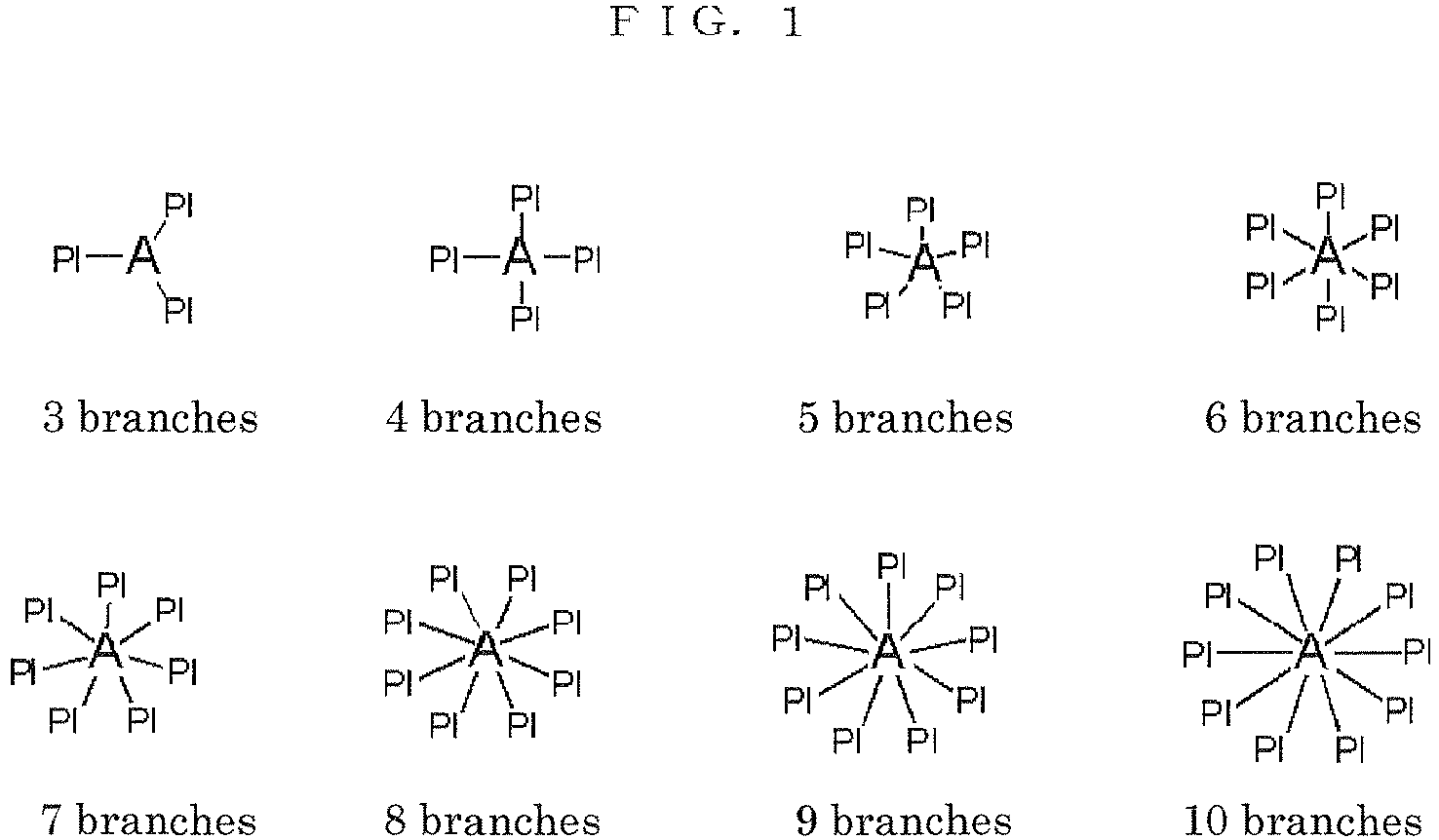
- Any star polymer may be used as a star polymer to be used according to the present invention, insofar as it has the structure depicted above.
Examples of such a star polymer include a star polymer prepared by a coupling process or a living anion process as described in "Shin Jikken-kagaku Kouza, Koubunshi Kagaku I", edited by The Chemical Society of Japan, p. 208 to 210; a star polymer prepared by a synthetic method conducting a polymerization reaction under photoirradiation using as an initiator a compound containing a dithiocarbamate group and/or a compound containing a xanthate group as described in Japanese Published Unexamined Application No.10-279867 - As a star polymer according to the present invention, from viewpoints of the easiness in synthesis and the performance of an obtained polymer, a polymer prepared by polymerizing an ethylenic unsaturated monomer in the presence of a multifunctional thiol, constituted of polymer chains branched from a skeleton through sulfide bonds is preferable. Namely, one having a hub portion, which is a 3 or more functional thiol residue as the skeleton, is preferable. In an idealized structure, a main chain of an addition polymer outshoots from each thio part in the hub. Consequently, 3 or more main chains outshoot from thio parts. Namely, a skeleton A preferably has a structure represented by the following general formula (1).
-

-


- Although as a multifunctional thiol to be used in a synthesis of a star polymer according to the present invention, any compound having a plurality of thiol groups per each molecule can be favorable used, a multifunctional thiol with 3 to 10 functional groups is preferable, a thiol with 3 to 8 functional groups is more preferable, and a thiol with 4 to 8 functional groups is especially preferable.
- Examples of such a multifunctional thiol include the following compound A to compound F.
- Compound A is a compound prepared by reacting an electrophile, such as a halogenide, and a sulfonic acid ester with an alcohol, with a sulfurizing agent, such as thiourea, potassium thiocyanate, and thioacetic acid, followed by various treatments. Specific examples of the compound A include the following compounds, but the present invention is not limited thereto.


- A compound B is a compound prepared by a dehydration condensation reaction between a multifunctional alcohol and a carboxylic acid having a thiol group, and among others a compound prepared by a condensation reaction between a multifunctional alcohol with 3 to 10 functional groups and a monocarboxylic acid with a single thiol group is preferable.
- Specific examples of a multifunctional alcohol include cyclohexanetriol (3), glycerol (3), 2-hydroxymethyl-1,3-propanediol (3), 1,1,1-tris(hydroxymethyl)ethane (3), 1,2,4-butanetriol (3), trimethylol propane (3), 1,2,3-trihydroxyhexane (3), 1,2,6-trihydroxyhexane (3), 1,2,3-heptanetriol (3), pyrogallol (3), 1,2,4-benzenetriol (3), phloroglucinol (3), 1,1,1-tris(4-hydroxyphenyl)ethane (3), 1,3,5-tris(2-hydroxyethyl)isocyanurate (3), pentaerythritol (4), threitol (4), erythritol (4), xylulose (4), ribulose (4), quebrachitol (5), adonitol (5), arabitol (5), xylitol (5), catechin (5), epicatechin (5), inositol (6), sorbitol (6), mannitol (6), iditol (6), dulcitol (6), dipentaerythritol (6), and tripentaerythritol (8). While, a numeral in ( ) means a number of functional groups.
- Among the multifunctional alcohols, cyclohexanetriol, glycerol (3), 2-hydroxymethyl-1,3-propanediol (3), 1,1,1-tris(hydroxymethyl)ethane (3), trimethylol propane (3), phloroglucinol (3), 1,1,1-tris(4-hydroxyphenyl)ethane (3), 1,3,5-tris(2-hydroxyethyl)isocyanurate (3), pentaerythritol (4), catechin (5), epicatechin (5), inositol (6), dipentaerythritol (6), and tripentaerythritol (8) are preferable; cyclohexanetriol (3), 2-hydroxymethyl-1,3-propanediol (3), 1,1,1-tris(hydroxymethyl)ethane (3), trimethylol propane (3), phloroglucinol (3), 1,1,1-tris(4-hydroxyphenyl)ethane (3), 1,3,5-tris(2-hydroxyethyl)isocyanurate (3), pentaerythritol (4), catechin (5), epicatechin (5), inositol (6), dipentaerythritol (6), and tripentaerythritol (8) are more preferable; and 1,3,5-tris(2-hydroxyethyl)isocyanurate (3), pentaerythritol (4), catechin (5), epicatechin (5), inositol (6), dipentaerythritol (6), and tripentaerythritol (8) are especially preferable. While, a numeral in ( ) means a number of functional groups.
- Specific examples of a monocarboxylic acid having a thiol group include mercaptoacetic acid, 3-mercaptopropionic acid, 2-mercaptopropionic acid, 3-mercapto isobutyric acid, N-acetylcysteine, N-(2-mercaptopropionyl)glycine, and thiosalicylic acid.
Mercaptoacetic acid, 3-mercaptopropionic acid, 2-mercaptopropionic acid, 3-mercapto isobutyric acid, N-acetylcysteine, and N-(2-mercaptopropionyl)glycine are preferable; 3-mercaptopropionic acid, 2-mercaptopropionic acid, 3-mercapto isobutyric acid, N-acetylcysteine, and N-(2-mercaptopropionyl)glycine are more preferable; and 3-mercaptopropionic acid, 3-mercapto isobutyric acid, N-acetylcysteine, and N-(2-mercaptopropionyl)glycine are especially preferable.
Specific examples of a compound B include the following compounds, provided that it is not limited thereto. -
[Table 1] Multifunctional alcohol Carboxylic acid having thiol group mercapto-acetic acid 3-mercapto-propionic acid 2-mercapto-propionic acid 3-mercapto-isobutyric acid N-acetyl-cysteine N-(2-merca ptopropiony 1)glycine thiosalicylic acid cyclohexanetriol (3) SB-1 SB-2 SB-3 SB-4 SB-5 SB-6 SB-7 glycerol (3) SB-8 SB-9 SB-10 SB-11 SB-12 SS-13 SB-14 2-hydroxymethy-1, 3-propanediol(3) SB-15 SB-16 SB-17 SB-18 SB-19 SB-20 SB-21 1,1,1-tris (hydroxymethyl)ethane (3) SB-22 SB-23 SB-24 SB-25 SB-26 SB-27 SB-28 1,2,4-butanetriol (3) SB-29 SB-30 SB-31 SB-32 SB-33 SB-34 SB-35 trimethylolpropane (3) SB-36 SB-37 SB-38 SB-39 SB-40 SB-41 SB-42 1,2,3-trihydroxyex ane (3) SB-43 SB-44 SB-45 SB-46 SB-47 SB-48 SB-49 1,2,6-trihydroxyex ane (3) SB-50 SB-51 SB-52 SB-53 SB-54 SB-55 SB-56 1,2,3-heptanetriol (3) SB-57 SB-58 SB-59 SB-60 SB-61 SB-62 SB-63 pyrogallol (3) SB-64 SB-65 SB-66 SB-67 SB-68 SB-69 SB-70 1,2,4-benzenetriol (3) SB-71 SB-72 SB-73 SB-74 SB-75 SB-76 SB-77 phloroglucinol (3) SB-78 SB-79 SB-80 SB-81 SB-82 SB-83 SB-84 1,1,1-tris (4-hydroxyphenyl)e thane (3) SB-85 SB-86 SB-87 SB-88 SB-89 SB-90 SB-91 1,3,5-tris (2-hydroxyethyl)iso cyanurate (3) SB-92 SB-93 SB-94 SB-95 SB-96 SB-97 SB-98 pentaerythritol (4) SB-99 SB-100 SB-101 SB-102 SB-103 SB-104 SB-105 threitol(4) SB-106 SB-107 SB-108 SB-109 SB-110 SB-111 SB-112 erythritol (4) SB-113 SB-114 SB-115 SB-116 SB-117 SB-118 SB-119 xylulose (4) SB-120 SB-121 SB-122 SB-123 SB-124 SB-125 SB-126 quebrachitol (5) SB-127 SB-128 SB-129 SB-130 SB-131 SB-132 SB-133 adonitol (5) SB-134 SB-135 SB-136 SB-137 SB-138 SB-139 SB-140 arabitol (5) SB-141 SB-142 SB-143 SB-144 SB-145 SB-146 SB-147 xylitol (5) SB-148 SB-149 SB-150 SB-151 SB-152 SB-153 SB-154 catechin (5) SB-155 SB-156 SB-157 SB-158 SB-159 SB-160 SB-161 epicatechin (5) SB-162 SB-163 SB-164 SB-165 SB-166 SB-167 SB-168 inositol (6) SB-169 SB-170 SB-171 SB-172 SS-173 SB-174 SB-175 sorbitol (6) SB-176 SB-177 SB-178 SB-179 SB-180 SB-181 SB-182 mannitol (6) SB-183 SB-184 SB-185 SB-186 SB-187 SB-188 SB-189 iditol (6) SB-190 SB-191 SB-192 SB-193 SB-194 SB-195 SB-196 dulcitol (6) SB-197 SB-198 SB-199 SB-200 SB-201 SB-202 SB-203 dipentaerythritol (6) SB-204 SB-205 SB-206 SB-207 SB-208 SB-209 SB-210 tripentaerythritol (8) SB-211 SB-212 SB-213 SB-214 SB-215 SB-216 SB-217 - Among the specific examples in Table 1 are preferable SB-1 to SB-34, SB-36 to SB-48, SB-50 to SB-55, SB-57 to SB-62, SB-64 to SB-69, SB-71 to SB-76, SB-78 to SB-111, SB-113 to SB-118, SB-120 to SB-125, SB-127 to SB-132, SB-134 to SB-139, SB-141 to SB-146, SB-148 to SB-153, SB-155 to SB-181, SB-183 to SB-188, SB-190 to SB-195, SB-197 to SB-202, and SB-204 to SB-217; more preferable are SB-1 to SB-6, SB-9 to SB-13, SB-15 to SB-20, SB-22 to SB-27, SB-36 to SB-41, SB-78 to SB-83, SB-85 to SB-90, SB-92 to SB-97, SB-99 to SB-104, SB-155 to SB-160, SB-162 to SB-167, SB-169 to SB-174, SB-204 to SB-209, and SB-211 to SB-216; especially preferable are SB-2 to SB-6, SB-16 to SB-20, SB-23 to SB-27, SB-37 to SB-41, SB-79 to SB-83, SB-86 to SB-90, SB-93 to SB-97, SB-100 to SB-104, SB-156 to SB-160, SB-163 to SB-167, SB-170 to SB-174, SB-205 to SB-209, and SB-212 to SB-216.
Since the distances among the thiol groups in the above multifunctional thiol are long, the steric hindrance is limited allowing building a desired star structure. - A compound C is a compound prepared by a dehydration condensation reaction between a multifunctional amine and a carboxylic acid having a thiol group, and among others a compound prepared by a condensation reaction between a multifunctional amine with 3 to 10 functional groups and a monocarboxylic acid with a thiol group is preferable.
- Specific examples of a multifunctional amine include diethylenetriamine (3), N-(2-aminoethyl)-1,3-propanediamine (3), N-(3-aminopropyl)-1,3-propanediamine (3), spermidine (3), bis(hexamethylene)triamine (3), 4-(aminomethyl)-1,8-octanediamine (3), triethylenetetramine (4), 1,4,7,11-tetraazaundecane (4), N,N'-bis(3-aminopropyl)ethylenediamine (4), N,N'-bis(2-aminoethyl)-1,3-propanediamine (4), N,N'-bis(3-aminopropyl)-1,3-propanediamine (4), spermine (4), tris(2-aminoethyl)amine (3), tetraethylenepentamine (5), pentaethylenehexamine (6), 1,4,7-triazacyclononane (3), 1,5,9-triazacyclododecane (3), cyclene (4), 1,4,8,11-tetraazacyclotetradecane (4), 1,4,8,12-tetraazacyclopentadecane (4), hexacyclene (6), 3,3'-diaminobenzidine (4), and 1,2,4,5-benzenetetramine (4). While, a numeral in ( ) means a number of functional groups.
- Among the multifunctional amines are preferable 4-(aminomethyl)-1,8-octanediamine (3), triethylenetetramine (4), 1,4,7,11-tetraazaundecane (4), N,N'-bis(3-aminopropyl)ethylenediamine (4), N,N'-bis(2-aminoethyl)-1,3-propanediamine (4), N,N'-bis(3-aminopropyl)-1,3-propanediamine (4), spermine (4), tris(2-aminoethyl)amine (3), tetraethylenepentamine (5), pentaethylenehexamine (6), cyclene (4), and hexacyclene (6); more preferable are 4-(aminomethyl)-1,8-octanediamine (3), tris(2-aminoethyl)amine (3), tetraethylenepentamine (5), pentaethylenehexamine (6), cyclene (4), and hexacyclene (6); and especially preferable are tetraethylenepentamine (5), pentaethylenehexamine (6), cyclene (4), and hexacyclene (6).
- Specific examples of the carboxylic acid having a thiol group include the carboxylic acids described for the compound B. Specific examples of the compound include the following compounds, provided that the present invention is not limited thereto.
-
[Table 2] Multifunctional alcohol Carboxylic acid having thiol group mercapto-acetic acid 3-mercapto-propionic acid 2-mercapto-propionic acid 3-mercapto-isobutyric acid N-acetyl-cysteine N-(2-merca ptopropiony 1)glycine thiosalicylic acid diethylenetriamine (3) SC-1 SC-2 SC-3 SC-4 SC-5 SC-6 SC-7 N-(2-aminoethyl)-1, 3-propanediamine (3) SC-8 SC-9 SC-10 SC-11 SC-12 SC-13 SC-14 N-(3-aminopropyl)-1,3-propaned_iamine (3) SC-15 SC-16 SC-17 SC-18 SC-19 SC-20 SC-21 spennidine (3) SC-22 SC-23 SC-24 SC-25 SC-26 SC-27 SC-28 bis(hexamethylene) triamine (3) SC-29 SC-30 SC-31 SC-32 SC-33 SC-34 SC-35 4-(aminomethyl)-1, 8-octanediamine (3) SC-36 SC-37 SC-38 SC-39 SC-40 SC-41 SC-42 triethylenetetramine (4) SC-43 SC-44 SC-45 SC-46 SC-47 SC-48 SC-49 1,4,7,11-tetraazaund ecane (4) SC-50 SC-51 SC-52 SC-53 SC-54 SC-55 SC-56 N,N'-bis(3-aminopropyl)ethylenediamine (4) SC-57 SC-58 SC-59 SC-60 SC-61 SC-62 SC-63 N,N'-bis(2-aminoethyl)-1,3-propanediamine (4) SC-64 SC-65 SC-66 SC-67 SC-68 SC-69 SC-70 N,N'-bis(3-aminopropyl)-1,3-propanediamine (4) SC-71 SC-72 SC-73 SC-74 SC-75 SC-76 SC-77 spermine (4) SC-78 SC-79 SC-80 SC-81 SC-82 SC-83 SC-84 tris(2-aminoethyl)amine (3) SC-85 SC-86 SC-87 SC-88 SC-89 SC-90 SC-91 tetraethylenepentamine (5) SC-92 SC-93 SC-94 SC-95 SC-96 SC-97 SC-98 pentaethylenehexamine (6) SC-99 SC-100 SC-101 SC-102 SC-103 SC-104 SC-105 1,4,7-triazacyclononane (3) SC-106 SC-107 SC-108 SC-109 SC-110 SC-111 SC-112 1,5,9-triazacyclododecane (3) SC-113 SC-114 SC-115 SC-116 SC-117 SC-118 SC-119 cyclen (4) SC-120 SC-121 SC-122 SC-123 SC-124 SC-125 SC-126 1,4,8,11-tetraazacyclotetradecane (4) SC-127 SC-128 SC-129 SC-130 SC-131 SC-132 SC-133 1,4,8,12-tetraazacyclopentadecane (4) SC-134 SC-135 SC-136 SC-137 SC-138 SC-139 SC-140 hexacyclen (6) SC-141 SC-142 SC-143 SC-144 SC-145 SC-146 SC-147 - Among the specific examples in Table 2 are preferable SC-1 to SC-6, SC-8 to SC-13, SC-15 to SC-20, SC-22 to SC-27, SC-29 to SC-34, SC-36 to SC-111, SC-113 to SC-118, SC-120 to SC-132, SC-134 to SC-139, and SC-141 to SC-147; more preferable are SC-37 to SC-41, SC-44 to SC-48, SC-51 to SC-55, SC-58 to SC-62, SC-65 to SC-69, SC-72 to SC-76, SC-79 to SC-83, SC-86 to SC-90, SC-93 to SC-97, SC-100 to SC-104, SC-121 to SC-125, and SC-142 to SC-146; and especially preferable are SC-37 to SC-41, SC-86 to SC-90, SC-93 to SC-97, SC-100 to SC-104, SC-121 to SC-125, and SC-142 to SC-146.
Since the distances among the thiol groups in the above multifunctional thiol are long, the steric hindrance is limited allowing building a desired star structure. - A compound D is a compound prepared by a dehydration condensation reaction between a compound having alcohol and amine and a carboxylic acid having a thiol group, and a compound prepared by a condensation reaction between a multifunctional alcoholamine with 3 to 10 functional groups of alcohol and amine and a monocarboxylic acid with a thiol group is preferable.
- Specific examples of a multifunction alcoholamine include diethanolamine (3), serinol (3), diisopropanolamine (3), 2-amino-2-ethyl-1,3-propanediol (3), 2-amino-2-methyl-1,3-propanediol (3), tris(hydroxymethyl)aminomethane (4), bishomoTRIS (4), 1,3-diamino-2-hydroxypropane (3), 2-(2-aminoethylamino)ethanol (3), N,N'-bis(2-hydroxyethyl)ethylenediamine (4), 1,3-bis[tris(hydroxymethyl)methylamino]propane (8), 1-amino-1-deoxy-D-sorbitol (6), N-methyl-D-glucamine (6), 2,3-diaminophenol (3), 4-aminoresorcinol (3), norphenylephrine (3), octopamine (3), synephrine (3), 3,4-dihydroxybenzylamine (3), 3-hydroxytyramine (3), norepinephrine (4), 5-hydroxydopamine (4), and 6-hydroxydopamine (4); serinol (3), 2-amino-2-methyl-1,3-propanediol (3), tris(hydroxymethyl)aminomethane (4), bishomoTRIS (4), 1,3-diamino-2-hydroxypropane (3), N,N'-bis(2-hydroxyethyl)ethylenediamine (4), 1,3-bis[tris(hydroxymethyl)methylamino]propane (8), 1-amino-1-deoxy-D-sorbitol (6), N-methyl-D-glucamine (6), norepinephrine (4), 5-hydroxydopamine (4), and 6-hydroxydopamine (4) are preferable; and tris(hydroxymethyl)aminomethane (4), bishomotris (4), N,N'-bis(2-hydroxyethyl)ethylenediamine (4), 1,3-bis[tris(hydroxymethyl)methylamino]propane (8), 1-amino-1-deoxy-D-sorbitol (6), N-methyl-D-glucamine (6), norepinephrine (4), 5-hydroxydopamine (4), and 6-hydroxydopamine (4) are especially preferable. While, a numeral in ( ) means a number of functional groups.
Specific examples of the carboxylic acid having a thiol group include the carboxylic acids described for the compound B. Specific examples of the compound include the following compounds, provided that the present invention is not limited thereto. -
[Table 3] Multifunctional alcohol Carboxylic acid having thiol group mercapto-acetic acid 3-mercapto-propionic acid 2-mercapto-propionic acid 3-mercapto-isobutyric acid N-acetyl-cysteine N-(2-merca ptopropiony 1)glycine thiosalicylic acid diethanolamine (3) SD-1 SD-2 SD-3 SD-4 SD-5 SD-6 SD-7 serinol (3) SD-8 SD-9 SD-10 SD-11 SD-12 SD-13 SD-14 diisopropanolamine (3) SD-15 SD-16 SD-17 SD-18 SD-19 SD-20 SD-21 2-amino-2-ethyl-1,3 -propanediol (3) SD-22 SD-23 SD-24 SD-25 SD-26 SD-27 SD-28 2-amino-2-methyl-1 ,3-propanediol (3) SD-29 SD-30 SD-31 SD-32 SD-33 SD-34 SD-35 tris(hydroxymethyl) aminomethane (4) SD-36 SD-37 SD-38 SD-39 SD-40 SD-41 SD-42 bis-homotris (4) SD-43 SD-44 SD-45 SD-46 SD-47 SD-48 SD-49 1,3-diamino-2-hydroxypropane (3) SD-50 SD-51 SD-52 SD-53 SD-54 SD-55 SD-56 2-(2-aminoethylami no)ethanol (3) SD-57 SD-58 SD-59 SD-60 SD-61 SD-62 SD-63 N,N'-bis(2-hydroxy ethyl)ethylenediamine (4) SD-64 SD-65 SD-66 SD-67 SD-68 SD-69 SD-70 1,3-bis[tris(hydroxy methyl)methylamino]propane (8) SD-71 SD-72 SD-73 SD-74 SD-75 SD-76 SD-77 1-aminol-1-deoxy-D-sorbitol (6) SD-78 SD-79 SD-80 SD-81 SD-82 SD-83 SD-84 N-methylD-glucamine (6) SD-85 SD-86 SD-87 SD-88 SD-89 SD-90 SD-91 2,3-diaminophenol (3) SD-92 SD-93 SD-94 SD-95 SD-96 SD-97 SD-98 4-aminoresorcinol (3) SD-99 SD-100 SD-101 SD-102 SD-103 SD-104 SD-105 norphenylephrine (3) SD-106 SD-107 SD-108 SD-109 SD-110 SD-111 SD-112 octopamine (3) SD-113 SD-114 SD-115 SD-116 SD-117 SD-118 SD-119 synephrine (3) SD-120 SD-121 SD-122 SD-123 SD-124 SD-125 SD-126 3,4-dihydroxybenzylamine (3) SD-127 SD-128 SD-129 SD-130 SD-131 SD-132 SD-133 3-hydroxytyramine (3) SD-134 SD-135 SD-136 SD-137 SD-138 SD-139 SD-140 norepinephrine(4) SD-141 SD-142 SD-143 SD-144 SD-145 SD-146 SD-147 5-hydroxydopamine (4) SD-148 SD-149 SD-150 SD-151 SD-152 SD-153 SD-154 6-hydroxydopamine (4) SD-155 SD-156 SD-157 SD-158 SD-159 SD-160 SD-161 - Among the specific examples in Table 3 are preferable SD-1 to SD-6, SD-8 to SD-20, SD-22 to SD-27, SD-29 to SD-62, SD-64 to SD-97, SD-99 to SD-104, SD-106 to SD-111, SD-113 to SD-118, SD-120 to SD-125, SD-127 to SD-132, SD-134 to SD-139, and SD-141 to SD-161; more preferable are SD-9 to SD-13, SD-30 to SD-34, SD-37 to SD-41, SD-44 to SD-48, SD-51 to SD-55, SD-65 to SD-69, SD-72 to SD-76, SD-79 to SD-83, SD-86 to SD-90, SD-142 to SD-146, SD-149 to SD-153, and SD-156 to SD-160; and especially preferable are SD-37 to SD-41, SD-44 to SD-48, SD-65 to SD-69, SD-72 to SD-76, SD-79 to SD-83, SD-86 to SD-90, SD-142 to SD-146, SD-149 to SD-153, and SD-156 to SD-160.
Since the distances among the thiol groups in the above multifunctional thiol are long, the steric hindrance is limited allowing building a desired star structure. - A compound E is a compound prepared by a dehydration condensation reaction between a multifunctional carboxylic acid and an alcohol having a thiol group, and among others a compound prepared by a condensation reaction between a multifunctional carboxylic acid with 2 to 10 functional groups and an alcohol with 1 or more thiol groups is preferable.
- Specific examples of a multifunctional carboxylic acid include oxalic acid (2), malonic acid (2), methylmalonic acid (2), succinic acid (2), methylsuccinic acid (2), glutaric acid (2), adipic acid (2), pimelic acid (2), suberic acid (2), azelaic acid (2), sebacic acid (2), tricarballylic acid (3), 1,2,3,4-butanetetracarboxylic acid (4), aconitic acid (3), hexafluoroglutaric acid (2), malic acid (2), tartaric acid (2), citric acid (3), diglycolic acid (2), 3,6-dioxaoctanedicarboxylic acid (2), tetrahydrofuran-2,3,4,5-tetracarboxylic acid (4), mercaptosuccinic acid (2), thiodiglycolic acid (2), 2,2',2",2'''-[1,2-ethanediylidenetetrakis(thio)]tetrakisacetic acid (4), 1,3,5-cyclohexanetricarboxylic acid (3), 1,2,3,4-cyclobutanetetracarboxylic acid (4), 1,2,3,4,5,6-cyclohexanehexacarboxylic acid (6), 1,2-phenylenediacetic acid (2), 1,2-phenylenedioxydiacetic acide (2), homophthalic acid (2), 1,3-phenylenediacetic acid (2), 4-carboxyphenoxyacetic acid (2), 1,4-phenylenediacetic acid (2), 1,4-phenylenedipropionic acid e (2), phthalic acid (2), isophthalic acid (2), terephthalic acid (2), 1,2,3-benzenetricarboxylic acid (3), 1,2,4-benzenetricarboxylic acid (3), 1,3,5-benzenetricarboxylic acid (3), 1,2,4,5-benzenetetracarboxylic acid (4), melissic acid (6), and 1,4,5,8-naphthalenetetracarboxylic acid (4); preferable are tricarballylic acid (3), 1,2,3,4-butanetetracarboxylic acid (4), aconitic acid (3), citric acid (3), tetrahydrofuran-2,3,4,5-tetracarboxylic acid (4), mercaptosuccinic acid (2), 2,2',2",2'"-[1,2-ethanediylidenetetrakis(thio)]tetrakisacetic acid (4), 1,3,5-cyclohexanetricarboxylic acid (3), 1,2,3,4-cyclobutanetetracarboxylic acid (4), 1,2,3,4,5,6-cyclohexanehexacarboxylic acid (6), 1,2-phenylenediacetic acid (2), 1,2-phenylenedioxydiacetic acid (2), 1,3-phenylenediacetic acid (2), 1,4-phenylenediacetic acid (2), 1,4-phenylenedipropionic acid (2), phthalic acid (2), isophthalic acid (2), terephthalic acid (2), 1,3,5-benzenetricarboxylic acid (3), 1,2,4,5-benzenetetracarboxylic acid (4), melissic acid (6), and 1,4,5,8-naphthalenetetracarboxylic acid (4); and especially preferable are tricarballylic (3), 1,2,3,4-butanetetracarboxylic acid (4), tetrahydrofuran-2,3,4,5-tetracarboxylic acid (4), mercaptosuccinic acid (2), 2,2',2",2'"-[1,2-ethanediylidenetetrakis(thio)]tetrakisacetic acid (4), 1,3,5-cyclohexanetricarboxylic acid (3), 1,2,3,4-cyclobutanetetracarboxylic acid (4), 1,2,3,4,5,6-cyclohexanehexacarboxylic acid (6), 1,3,5-benzenetricarboxylic acid (3), 1,2,4,5-benzenetetracarboxylic acid (4), melissic acid (6), and 1,4,5,8-naphthalenetetracarboxylic acid (4). While, a numeral in ( ) means a number of functional groups.
- Specific examples of an alcohol having a thiol group include 2-mercaptoethanol (1), 1-mereapto-2-propanol (1), 3-mercapto-1-propanol (1), 3-mercapto-2-butanol (1), 2,3-dimercapto-1-propanol (2), and 4-hydroxythiophenol (1); preferable are 2-mercaptoethanol (1), 3-mercapto-1-propanol (1), and 2,3-dimercapto-1-propanol (2); more preferable are 2-mercaptoethanol (1), and 3-mercapto-1-propanol (1); and especially preferable is 3-mercapto-1-propanol (1). A numeral in ( ) means a number of functional groups.
Examples of the compound include the compounds listed in Table 4 and Table 5 below, provided that it is not limited thereto. -


- [Table 5]


- Among those listed in Tables 4 and 5 are preferable SE-12, SE-14, SE-16, SE-18, SE-20, SE-22, SE-24, SE-26, SE-33, SE-35, SE-41, SE-43, SE-45, SE-119, SE-121, SE-47, SE-49, SE-51, SE-53, SE-55, SE-57, SE-59, SE-61, SE-63, SE-65, SE-67, SE-69, SE-71, SE-83, SE-85, SE-89, SE-91, SE-95, SE-97, SE-99, SE-101, SE-103, SE-105, SE-107, SE-109, SE-111, SE-113, SE-115, and SE-117; and more preferable are SE-12, SE-14, SE-18, SE-20, SE-41, SE-43, SE-119, SE-121, SE-49, SE-51, SE-55, SE-57, SE-61, SE-63, SE-67, SE-69, SE-95, SE-97, SE-101, SE-103, SE-107, SE-109, SE-113, and SE-115.
Since the distances among the thiol groups in the above multifunctional thiol are long, the steric hindrance is limited allowing building a desired star structure. - A compound F is a compound prepared by a dehydration condensation reaction between a multifunctional carboxylic acid and an amine having a thiol group, and among others a compound prepared by a condensation reaction between a multifunctional carboxylic acid with 2 to 10 functional groups and an amine with 1 or more thiol groups is preferable.
Specific examples of a multifunctional carboxylic acid include the above described multifunctional carboxylic acids. Specific examples of an amine with 1 or more thiol groups include 2-aminoethanethiol, 2-aminothiophenol, 3-aminothiophenol, and 4-aminothiophenol; preferable are 2-aminoethanethiol, and 4-aminothiophenol; and more preferable is 2-aminoethanethiol.
Specific examples of the compound include the following compounds, provided that the present invention is not limited thereto. -
[Table 6] Multifunctional carboxylic acid Amine having thiol group 2-amino-ethanethiol 2-amino-thiophenol 3-amino-thiophenol 4-amino-thiophenol tricarballylic acid(3) SF-1 SF-2 SF-3 SF-4 1,2,3,4-butanetetracarboxylic acid(4) SF-5 SF-6 SF-7 SF-8 aconitic acid(3) SF-9 SF-10 SF-11 SF-12 citric acid(3) SF-13 SF-14 SF-15 SF-16 tetrahydrofuran-2,3,4,5-tetracarboxylic acid(4) SF-17 SF-18 SF-19 SF-20 mercaptosuccinic acid(2) SF-21 SF-22 SF-23 SF-24 2,2',2",2'"-[1,2-ethanediylid enetetrakis(thio)]tetrakisace tic acid(4) SF-25 SF-26 SF-27 SF-28 1,3,5-cyclohexanetricarboxylic acid(3) SF-29 SF-30 SF-31 SF-32 1,2,3,4-cyclobutanetetracarboxylic acid(4) SF-33 SF-34 SF-35 SF-36 1,2,3,4,5,6-cyclohexanehexacarboxylic acid(6) SF-37 SF-38 SF-39 SF-40 1,2,3-benzenetricarboxylic acid(3) SF-41 SF-42 SF-43 SF-44 1,2,4-benzenetricarboxylic acid(3) SF-45 SF-46 SF-47 SF-48 1,3,5-benzenetricarboxylic acid(3) SF-49 SF-50 SF-51 SF-52 1,2,4,5-benzenetetracarboxylic acid(4) SF-53 SF-54 SF-55 SF-56 mellitilic acid(6) SF-57 SF-58 SF-59 SF-60 1,4,5,8-naphthalenetetracarboxylic acid(4) SF-61 SF-62 SF-63 SF-64 - Among those listed in Tables 6 are preferable SF-1, SF-4, SF-5, SF-8, SF-9, SF-13, SF-17, SF-20, SF-21, SF-24, SF-25, SF-28, SF-29, SF-32, SF-33, SF-36, SF-37, SF-40, SF-41, SF-45, SF-49, SF-52, SF-53, SF-56, SF-57, SF-60, SF-61, and SF-64; and more preferable are SF-1, SF-5, SF-17, SF-21, SF-25, SF-29, SF-33, SF-37, SF-49, SF-53, SF-57, and SF-61.
Since the distances among the thiol groups in the above multifunctional thiol are long, the steric hindrance is limited allowing building a desired star structure. - Among the multifunctional thiols, from viewpoints of plate life and development property, the compound A to the compound E are preferable, the compound A, the compound B, the compound C, and the compound E are more preferable, and the compound A, the compound B, and the compound C are especially preferable.
- Examples of a polymer chain in a star polymer to be used according to the present invention include a vinyl polymer, a (meth)acrylic acid series polymer, and a styrene series polymer, which have been heretofore known and can be produced by a radical polymerization; and a (meth)acrylic acid series polymer is especially preferable.
- A star polymer to be used according to the present invention has at least one hydrophilic group. A polymer chain of a star polymer to be used according to the present invention has at least one hydrophilic group in order to enhance the hydrophilicity of the surface of a substrate and improve the resistance to dirt. More preferably a star polymer having at least one hydrophilic group contains a recurring unit having at least one hydrophilic group as a copolymer component. A polymer chain of a star polymer to be used according to the present invention may have one, or two or more such hydrophilic groups.
- Specific examples of the hydrophilic group include the following.


- In the formulas, M1 represents a hydrogen atom, a metal atom belonging to an alkali metal or an alkaline earth metal, or an ammonium group. X+ is a group expressed by -N+R1 R2 -, -S+R1 -, -I+ -, and -P+R1 R2 -. R1 , R2 independently represent a hydrogen atom, an alkyl group, an aryl group, an alkenyl group, and alkynyl group; R3 represents an alkylene group; and R4 represents a hydrogen atom, an alkyl group, an aryl group, an alkenyl group, and an alkynyl group. The n represents an integer of 1 to 100. L has the same meaning as defined for the formula (B1) described below.
More specifically, R1 is preferably a hydrogen atom or a C1 to C3 alkyl group, and among others preferably a hydrogen atom or a methyl group. R2 is preferably a hydrogen atom or a C1 to C3 alkyl group, and among others preferably a hydrogen atom or a methyl group. R3 is preferably a C2 to C5 alkylene group, and among others preferably ethylene or propylene. R4 is preferably a hydrogen atom or a C1 to C6 alkyl group, and the n is preferably an integer of 2 to 90. - Although any functional group, which can enhance the affinity with water, can be utilized favorably as a hydrophilic group; and a sulfonic acid (salt) group, an amide group, a polyalkylene oxide group, a hydroxy group, a sulfuric monoester (salt) group, a sulfonamide group, an amino group, a sulfuric monoamide (salt) group, and a betaine structure are preferable; a sulfonic acid (salt) group, an amide group, a polyalkylene oxide group, a hydroxy group, a sulfuric monoester (salt) group, a sulfonamide group, an amino group, a sulfuric monoamide (salt) group, and a betaine structure are more preferable, and a sulfonic acid (salt) group, an amide group, a polyalkylene oxide group, a hydroxy group and a betaine structure are especially preferable.
- Specific examples of a recurring unit having a hydrophilic group according to the present invention are preferably expressed by the following general formula (B2).
-

- In the formula, Ra to Rc independently represent a hydrogen atom, a C1 to C6 alkyl group, or a halogen atom. L has the same meaning as described above. W represents a hydrophilic group and preferable embodiments are as described above.
- Specific examples of a recurring unit having a hydrophilic group in a polymer chain of a star polymer to be used according to the present invention include the following, provided that the present invention is not limited thereto.
-





- A star polymer to be used according to the present invention may contain a recurring unit having one kind of hydrophilic group or a recurring unit having 2 or more kinds of hydrophilic groups.
The content of a recurring unit having a hydrophilic group in a polymer chain of a star polymer to be used according to the present invention is preferably 30 to 98 mol-% based of the total recurring units contained in a star polymer, more preferably 40 to 90 mol-%, and further preferably 50 to 90 mol-%. - Preferably, a polymer chain of a star polymer to be used according to the present invention contains at least one functional group, which can be adsorbed on the surface of a substrate by interacting with the surface of a substrate (herein referred to as a "substrate adsorptive group"), in order to enhance adherence to a substrate. More preferably, a polymer chain of a star polymer to be used according to the present invention contains a recurring unit having at least one substrate adsorptive group as a copolymer component. Examples of a functional group, which can be adsorbed by interacting with the surface of a substrate, include a group, which can interact with a metal, a metallic oxide, a hydroxy group, etc. existing on a substrate subjected to an anodizing treatment or a hydrophilizing treatment, through an ionic bond, a hydrogen bond, a polar interaction, etc. Examples of the substrate adsorptive group include a phosphonic acid group or a salt thereof, a phosphoric ester group or a salt thereof, and a carboxylic acid group or a salt thereof. A polymer chain of a star polymer to be used according to the present invention may contain one kind, or two or more kinds of such substrate adsorptive groups.
While, in a star polymer to be used according to the present invention, a hydrophilic group and a substrate adsorptive group are different group from each other. Therefore, if a star polymer has at least one hydrophilic group and at least one substrate adsorptive group, it has namely at least two kinds of functional groups.
Specific examples of a substrate adsorptive group include the following. -

- In the formula, M1 and M2 independently represent a hydrogen atom, a metal atom belonging to an alkali metal or an alkaline earth metal, or an ammonium group. From a viewpoint of resistance to dirt, at least one of a substrate adsorptive group should be preferably selected from a phosphonic acid group or a salt thereof (structure 1), a phosphoric ester group or a salt thereof (structure 2), and a carboxylic acid group or a salt thereof; and among others a phosphoric ester group or a salt thereof, and a phosphonic acid group or a salt thereof are preferable. Specific examples of a recurring unit having at least one substrate adsorptive group in a polymer chain of a star polymer to be used according to the present invention are preferably represented by the following general formula (B1).
-

L is a single bond, or a divalent linking group. The divalent linking group is constituted of 1 to 60 carbon atoms, 0 to 10 nitrogen atoms, 0 to 50 oxygen atoms, 1 to 100 hydrogen atoms, and 0 to 20 sulfur atoms; and more specifically examples thereof include those constituted of a combination of the following structure units. -


- Specific examples of a recurring unit having at least one substrate adsorptive group to be used according to the present invention are shown below, provided that the present invention is not limited thereto.
-



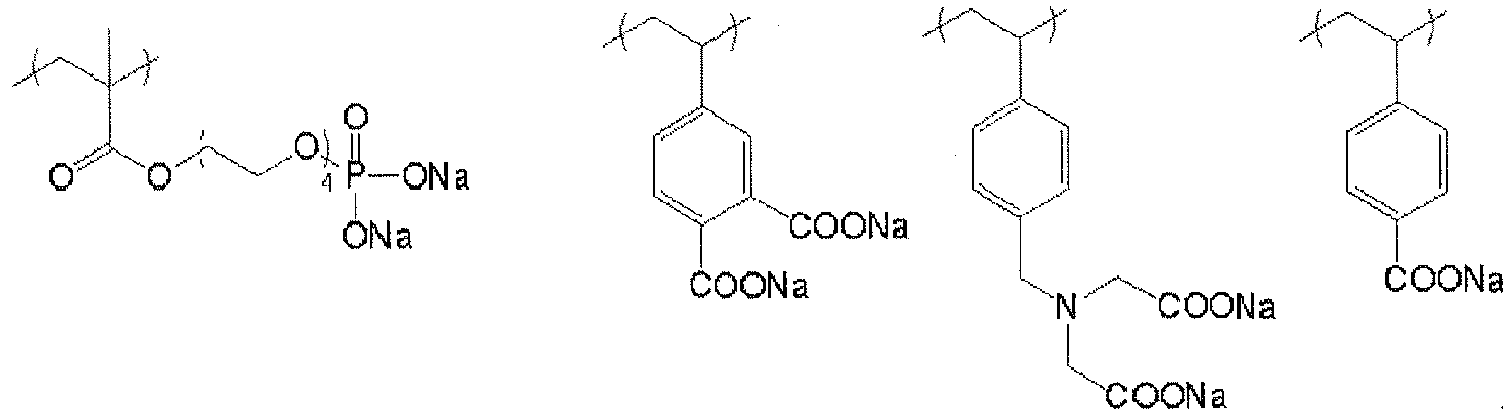
- A star polymer according to the present invention may contain one kind, or two or more kinds of substrate adsorptive groups in it.
The content of a recurring unit having a substrate adsorptive group in a polymer chain of a star polymer usable according to the present invention is preferably 2 to 80 mol-% based on the total recurring units included in the star polymer, more preferably 2 to 70 mol-%, further preferably 5 to 50 mol-%, and especially preferably 10 to 40 mol-%. - A polymer chain of a star polymer to be used according to the present invention may be a copolymer containing a recurring unit other than the above (hereinafter occasionally referred to simply as "(an)other recurring unit"). Examples of another recurring unit include such recurring units as originated from a heretofore known variety of monomers.
- A polymer chain of a star polymer to be used according to the present invention may contain, in addition to the above described recurring unit having a hydrophilic group and recurring unit having a substrate adsorptive group, for example, a polymerized unit of an alkyl or aralkyl (meth)acrylate, or a polymerized unit of a styrene derivative.
An alkyl group of an alkyl (meth)acrylate is preferably a C1 to C5 alkyl group, or an C2 to C 8 alkyl group having the aforedescribed substituent, and more preferably a methyl group. Examples of an aralkyl (meth)acrylate include benzyl (meth) acrylate.
Examples of a styrene derivative include styrene, and 4-tert-butylstyrene. - The content of another recurring unit in a polymer chain of a star polymer usable according to the present invention is preferably 40 mol-% or less based on the total recurring units included in the star polymer, more preferably 30 mol-% or less, and further preferably 20 mol-% or less.
- For a combination of a recurring unit having a substrate adsorptive group and a recurring unit having a hydrophilic group in a star polymer to be used according to the present invention, preferably a substrate adsorptive group is a phosphonic acid group or a salt thereof, a phosphoric ester group or a salt thereof, or a carboxylic acid group or a salt thereof, and a hydrophilic group is a sulfonic acid group or a salt thereof, an amide group, a polyalkylene oxide group, a hydroxy group, or a betaine structure; more preferably a substrate adsorptive group is a phosphonic acid group or a salt thereof, or a phosphoric ester group or a salt thereof, and a hydrophilic group is a sulfonic acid group or a salt thereof, a polyalkylene oxide group, a hydroxy group, or a betaine structure; and especially preferably a substrate adsorptive group is a phosphonic acid group or a salt thereof, or a phosphoric ester group or a salt thereof, and a hydrophilic group is a sulfonic acid group or a salt thereof, a polyalkylene oxide group, or a hydroxy group.
- The mass average molar mass (Mw) of the star polymer is preferably 5,000 or higher, more preferably 10,000 or higher, but preferably 1,000,000 or lower, more preferably 500,000 or lower.
The number average molar mass (Mn) of the star polymer is preferably 1,000 or higher, more preferably 2,000 or higher, but preferably 500,000 or lower, more preferably 300,000 or lower.
The polydispersity (Mw/Mn) of the star polymer is preferably 1.1 to 10. - Specific examples of a star polymer to be used according to the present invention are listed in Tables 7 to 12, provided that the present invention is not limited thereto.
Star polymers shown in Table 7 to 12 include polymers PA -1, 2 and so forth, whose polymer chain has a structure constituted of a recurring unit (A) having a hydrophilic group, as well as polymers PA B -1, 2 and so forth, whose polymer chain has a structure constituted of a recurring unit (A) having a hydrophilic group and a recurring unit (B) having a substrate adsorptive group. -
[Table 7] Polymer number Skeleton Hydrophilic group Mw Number Molar ratio PA-1 SA-8 1 
41,000 PA-2 SA-8 1 
45,000 PA-3 SA-8 1 
49,000 PA-4 SA-8 1 
42,000 PA-5 SA-8 1 
40,000 PA-6 SA-8 1 
40,000 -
[Table 8] Polymer number Skeleton Polymer chain Number mol-%*1 Hydrophilic group recurring unit (A) Substrate adsorptive group recurring unit (B) (A)/(B) molar ratio Mw PAB-1 SA-8 1 

80/20 41,000 PAB-2 SA-8 1 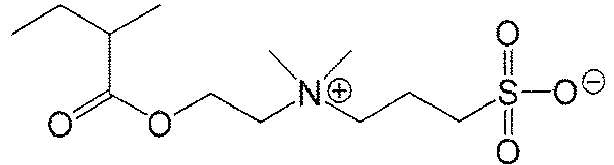

80/20 42,000 PAY-3 SA-8 1 
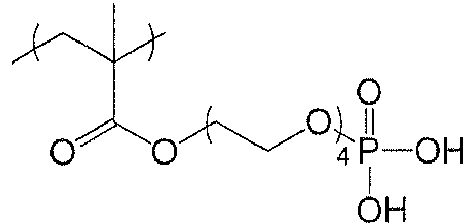
80/20 48,000 PAB-4 SA-8 1 

80/20 4,000 PAB-5 SA-8 1 

80/20 38,000 *1 : equivalent of SH taking monomer as 100 -
[Table 9] PAB-6 SA-8 1 

80/20 39,000 PAB-7 SA-8 1 

80/20 42,000 PAB-8 SA-8 1 

80/20 46,000 PAB-9 SA-8 1 

80/20 39,000 PAB-10 SA-8 1 

80/20 37,000 -
[Table 10] PAB-11 SA-8 1 
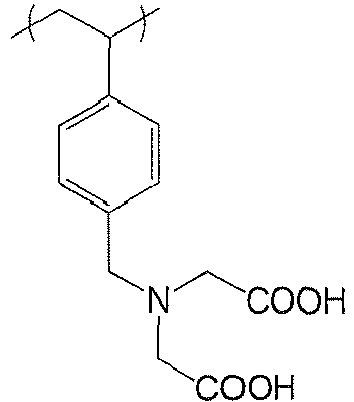
80/20 41,000 PAB-12 SA-8 1 
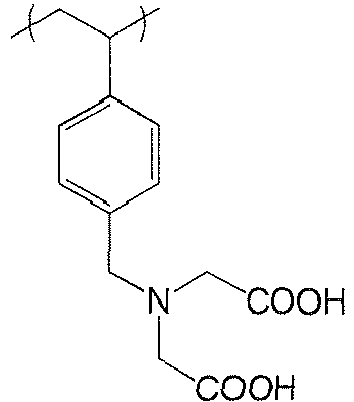
80/20 43,000 PAB-13 SA-8 1 

80/20 50,000 PAB-14 SA-8 1 

80/20 41,000 PAB-15 SA-8 1 

80/20 40,000 -
[Table 11] PAB-16 SA-8 1 

80/20 39,000 PAB-17 SA-8 1 

80/20 41,000 PAB-18 SA-8 1 

80/20 44,000 PAB-19 SA-8 1 

80/20 39,000 PAB-20 SA-8 1 

80/20 36,000 -
[Table 12] PAB-21 SA-1 1 

80/20 105,000 PAB-22 SA-6 1 
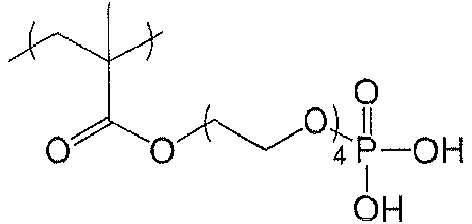
80/20 56,000 PAB-23 SB-205 1 

80/20 58,000 PAB-24 SC-100 1 

80/20 55,000 PAB-25 SE-107 1 

80/20 52,000 PAB-26 SE-109 1 

80/20 54,000 PAB-27 SF-58 1 

80/20 50,000 - A fountain solution composition for lithographic printing according to the present invention may contain a single kind of star polymer or 2 or more kinds.
The appropriate content of a star polymer in a fountain solution composition for lithographic printing according to the present invention is in general 0.005 to 10 mass-% with respect to a fountain solution before using, and within the range a dirt prevention effect on a non-image area and a mesh image area can be obtained sufficiently. The content is more preferably 0.01 to 5 mass-% and further preferably 0.1 to 3 mass-%.
A fountain solution composition is preferably used by diluting appropriately a concentrated solution generally before using, and a dilution rate of approx. 10 to 200-fold is appropriate, and especially approx. 30 to 100 is preferable. If the concentration rate is too high, such troubles as deposition, or liquid separation in a concentrated solution are apt to happen. Hereinafter a fountain solution composition ready for use is called simply as a "fountain solution". - Preferably as a solubilizer in preparing a concentrated solution, compounds according to the following general formula (I) are used, by which the advantageous effects of the present invention can be synergistically enhanced.
- Compounds according to the formula (I):
R1 -O-(CH2 CHR2 O)m -H (I)
wherein R1 represents a C1 to C4 alkyl group or an OH group, R2 represents a hydrogen atom or a methyl group, and m represents an integer of 1 to 5.
Specifically, in a compound according to the formula (I), R1 in the formula represents an OH group or a C1 to C4 alkyl group with a straight chain or a branched chain; and specific examples thereof include an OH group, a methyl group, an ethyl group, a propyl group, an isopropyl group, an n-butyl group, an isobutyl group, and a t-butyl group; and among others an OH group, an n-butyl group and a t-butyl group are especially preferable. Further, m represents an integer of 1 to 5, and an integer of 1 to 3 is preferable, and especially preferable 1. - Specific examples, when R1 in the general formula (I) is an alkyl group, include ethylene glycol mono-t-butyl ether, ethylene glycol mono-n-butyl ether, propylene glycol monomethyl ether, dipropylene glycol monomethyl ether, tripropylene glycol monomethyl ether, propylene glycol monoethyl ether, dipropylene glycol monoethyl ether, tripropylene glycol monoethyl ether, tetrapropylene glycol monoethyl ether, propylene glycol monopropyl ether, dipropylene glycol monopropyl ether, tripropylene glycol monopropyl ether, propylene glycol monoisopropyl ether, dipropylene glycol monoisopropyl ether, tripropylene glycol monoisopropyl ether, propylene glycol monon-butyl ether, dipropylene glycol monobutyl ether, tripropylene glycol monobutyl ether, propylene glycol monoisobutyl ether, dipropylene glycol monoisobutyl ether, tripropylene glycol monoisobutyl ether, propylene glycol mono-tert-butyl ether, dipropylene glycol mono-tert-butyl ether and tripropylene glycol mono-tert-butyl ether. Among others, n-butyl or t-butyl ether of propylene glycol or ethylene glycol can be used favorably.
- Specific examples, when R1 in the general formula (I) is an OH group, include propylene glycol, dipropylene glycol, tripropylene glycol, tetrapropylene glycol and pentapropylene glycol. Among others, in order to improve solubility of a diol compound, propylene glycol, dipropylene glycol, and tripropylene glycol are preferable, and propylene glycol is most preferable.
- As a compound expressed by the general formula (I) are used preferably a plurality of compounds listed above in a combination, and especially if a compound whose R1 is an alkyl group and a compound whose R1 is an OH group are used in a combination, the activity for suppressing blanket piling can be high, and further roller stripping, etc. can be prevented.
- A fountain solution composition according to the present invention can use as a fountain solvent 3-methoxy-3-methylbutanol, 3-methoxybutanol, ethylene glycol, diethylene glycol, triethylene glycol, butylene glycol, hexylene glycol, glycerol, diglycerol, polyglycerol, trimethylol propane, etc.
The solvent is used in a range of 0.1 to 3 mass-% with respect to the fountain solution, and preferably in a range of 0.3 to 2 mass-%. - A fountain solution composition according to the present invention may contain also water soluble polymeric compounds used conventionally in a fountain solution composition in addition to a star polymer described above.
Examples of a water soluble polymeric compound to be used in a fountain solution composition according to the present invention include a natural product and a modification thereof, such as gum arabic, a starch derivative (e.g., dextrin, enzyme-degraded dextrin, hydroxypropyl enzyme-degraded dextrin, carboxymethyl starch, starch phosphate , and octenyl succinate starch), an alginic acid salt, a cellulose derivative (e.g., carboxymethylcellulose, carboxyethyl cellulose, methylcellulose, hydroxypropyl cellulose, hydroxypropylmethyl cellulose, and hydroxyethyl cellulose); and a synthetic product, such as polyethylene glycol and a copolymer thereof, polyvinyl alcohol and a derivative thereof, polyvinylpyrrolidone, polyacrylamide and a copolymer thereof, polyacrylic acid and a copolymer thereof, a vinyl methyl ether/maleic anhydride copolymer, a vinyl acetate/ maleic anhydride copolymer, and polystyrene sulfonic acid and a copolymer thereof. Among the water soluble polymeric compounds carboxymethyl cellulose, polyvinylpyrrolidone, hydroxypropyl cellulose, and hydroxypropylmethyl cellulose can be used especially favorably.
The molecular weight of the water soluble polymeric compound is preferably 300 to 500,000, more preferably 300 to 100,000, and especially preferably 500 to 30,000.
An appropriate content of a water soluble polymeric compound is 0.0001 to 0.1 mass-% with respect to the fountain solution, and more preferably 0.0005 to 0.05 mass-%. - A fountain solution composition according to the present invention is preferably further adjusted to a favorable pH value with a pH adjustor. It is preferably used in an acidic range with a pH value of 3 to 7, but it can also be used in an alkali range of pH 7 to 11. As the pH adjustor a water soluble organic or inorganic acid and a salt thereof can be used.
Examples of a preferable organic acid include acetic acid, citric acid, oxalic acid, malic acid, tartaric acid, succinic acid, lactic acid, ascorbic acid, gluconic acid, hydroxyacetic acid, malonic acid, levulinic acid, sulfanilic acid, p-toluenesulfonic acid, phytic acid, and an organic phosphonic acid; examples of an inorganic acid include phosphoric acid, nitric acid, sulfuric acid, and polyphosphoric acid; and an alkali metal salt, an alkaline earth metal salt, an ammonium salt, and an organic amine salt thereof can be also favorably used. They may be used as a mixture of two or more. The content of such a pH adjustor in a fountain solution is generally in a range of 0.001 to 0.3 mass-%. - A fountain solution composition according to the present invention contains preferably further as an aid for improving wettability a pyrrolidone derivative, acetylene glycols or acetylene alcohols. Examples of a pyrrolidone derivative include ethylpyrrolidone, butylpyrrolidone, pentapyrrolidone, hexapyrrolidone, octylpyrrolidone, and laurylpyrrolidone; and examples of acetylene glycols and acetylene alcohols include 3,5-dimethyl-1-hexyn-3-ol., 2,5-dimethyl-3-hexyne-2,5-diol, 2,4,7,9-tetramethyl-5-decyne-4,7-diol, 3,6-dimethyl-4-octyne-3,6-diol, 2-butyne-1,4-diol, and 3-methyl-l-butyn-3-ol, as well as an addition product of the same with ethylene oxide and/or propylene oxide. Among the above compounds, especially compounds of octylpyrrolidone, 3,6-dimethyl-4-octyne-3,6-diol, 2,4,7,9-tetramethyl-5-decyne-4,7-diol, and 2,4,7,9-tetramethyl-5-decyne-4,7-diol, to which 4 to 10 ethylene oxide units are added, are preferable. They should be preferably used in an amount of 0.0001 to 1.0 mass-% with respect to a fountain solution, and more preferably 0.001 to 0.1 mass-%.
- A fountain solution composition according to the present invention contains preferably further 2-ethyl-1,3-hexanediol, an adduct of 2-ethyl-1,3-hexanediol with ethylene oxide and/or propylene oxide, an adduct of trimethylol propane with propylene oxide, an adduct of glycerol with propylene oxide, an adduct of sorbitol with propylene oxide, tetrahydrofurfuryl alcohol, etc. for adjustment of dynamic surface tension, solubilization, control of mixing rate of ink (emulsification rate) in a proper range, etc.; and especially preferably contains 2-ethyl-1,3-hexanediol, as well as tetrahydrofurfuryl alcohol as a solubilizer. A compound listed above should be used at an appropriate content of 0.01 to 7 mass-% with respect to a fountain solution, and more preferably at 0.05 to 5 mass-%.
- As another component, a fountain solution composition according to the present invention may additionally contain, for example, a compound derived from ethylenediamine or diethylenetriamine by adding ethylene oxide and propylene oxide, and such a compound does not inflict damages to an image area, even if a residual aqueous drop is left standing on a plate and concentrated by water evaporation while a printing press is stopped. The addition mole number ratio of ethylene oxide to propylene oxide thereof is preferably in a range of 5/95 to 50/50, and more preferably in a range of 20/80 to 35/65. Each copolymer chain may have a block structure or a random structure. The weight-average molecular weight of the addition compound used according to the present invention is preferably 500 to 5000, more preferably 800 to 1500, and optimally the weight-average molecular weight is about 1000. The molecular weight and the ratio of ethylene oxide to propylene oxide can be determined by measurements of hydroxyl value and amine value, NMR analysis, etc.
By containing the compound at 0.01 to 1 mass-%, preferably 0.05 to 0.5 mass-%, in a fountain solution composition in use, good printing quality can be attained, even if isopropyl alcohol is replaced. - A fountain solution composition according to the present invention can use a surfactant as an aid for wettability improvement. With respect to a surfactant, examples of an anionic surfactant include a fatty acid salt, an abietate, a hydroxyalkanesulfonate, an alkanesulfonate, a dialkylsulfosuccinate, an alkylbenzenesulfonate, an alkylnaphthalenesulfonate, an alkylphenoxypolyoxyethylene propylsulfonate, a polyoxyethylene alkylsulfenyl ether salt, an N-methyl-N-oleyltaurine sodium salt, an N-alkylsulfosuccinate monoamide disodium salt, a petroleum sulfonate, sulfated castor oil, sulfated tallow, a sulfate salt of a fatty acid alkyl ester, an alkylsulfate salt, a polyoxyethylene alkyl ether sulfate salt, a fatty acid monoglyceride sulfate salt, a polyoxyethylene alkylphenyl ether sulfate salt, a polyoxyethylene styryl phenyl ether sulfate salt, an alkylphosphate salt, a polyoxyethylene alkyl ether phosphate salt, a polyoxyethylene alkylphenyl ether phosphate salt, a partially saponified styrene-maleic anhydride copolymer, a partially saponified olefin-maleic anhydride copolymer, and a condensation product between naphthalenesulfonic acid salt and formalin. Among them, a dialkylsulfosuccinate, an alkylsulfate salt, and an alkylnaphthalenesulfonate are especially preferable.
- Examples of a nonionic surfactant include a polyoxyethylene alkyl ether, a polyoxyethylene alkylphenyl ether, a polyoxyethylene polystyryl phenyl ether, a polyoxyethylene polyoxypropylene alkyl ether, a partial ester of glycerol and a fatty acid, a partial ester of sorbitan and a fatty acid, a partial ester of pentaerythritol and a fatty acid, a propylene glycol mono-fatty acid ester, a partial ester of sucrose and a fatty acid, a partial ester of polyoxyethylene sorbitan and a fatty acid, a partial ester of polyoxyethylene sorbitol and a fatty acid, a polyethylene glycol fatty acid ester, a partial ester of polyglycerol and a fatty acid, a polyoxyethylene castor oil, a partial ester of polyoxyethylene glycerol and a fatty acid, a fatty acid diethanolamide, an N,N bis-2-hydroxyalkylamine, a polyoxyethylene alkylamine, a triethanolamine fatty acid ester, and a trialkylamine oxide.
Among them, a polyoxyethylene alkyl ether, a polyoxyethylene alkylphenyl ether, a polyoxyethylene-polyoxypropylene block copolymer, and polyoxyethylene castor oil ether can be favorably used.
Further, a fluorinated surfactant, and a silicone surfactant can be used.
If a surfactant is used, considering foaming, the content of 1.0 mass-% or less, preferably 0.001 to 0.5 mass-%, with respect to a fountain solution is appropriate. - A fountain solution composition according to the present invention may contain also a sugar. A sugar to be used includes a sugar alcohol produced by hydrogenation.
Specific examples of a preferable sugar include D-erythrose, D-threose, D-arabinose, D-ribose, D-xylose, D-erythropentulose, D-allulose, D-galactose, D-glucose, D-mannose, D-talose, β-D-fructose, α-L-sorbose, 6-deoxy-D-glucose, D-glycero-D-galactose, α-D-allo-heptulose, β-D-altro-3-heptulose, saccharose, lactose, D-maltose, isomaltose, inulobiose, hyaluronic acid, maltotriose, D,L-arabitol, ribitol, xylitol, D,L-sorbitol, D,L-mannitol, D,L-iditol, D,L-talitol, dulcitol, allodulcitol, and maltitol. The sugars may be used singly or in a combination of 2 or more.
An appropriate content of a sugar with respect to a fountain solution is 0.01 to 1 mass-%, and preferably 0.1 to 0.8 mass-%. - With respect to a fountain solution composition according to the present invention, a calcium ion, etc. contained in tap water or well water for diluting a concentrated solution before using may affect printing negatively and make a print susceptible to dirt. In such a case, addition of a chelating agent can overcome the drawback. Examples of a preferable chelating agent include a potassium salt or a sodium salt of the acid listed below. Examples of the acid include an organic phosphonic acid, such as ethylenediaminetetraacetic acid, diethylenetriaminepentaacetic acid, triethylenetetraminehexaacetic acid, hydroxyethylethylenediaminetriacetic acid, nitrilotriacetic acid, 1-hydroxyethane-1,1-diphosphonic acid, and aminotri(methylenephosphonic acid), as well as a phosphonoalkanetricarboxylic acid. In place of a sodium salt or a potassium salt of the chelating agent, a salt of an organic amine can be also used effectually.
A chelating agent, which can be stably present in a fountain solution composition in use without disturbing printing, is selected among them. An appropriate content of a chelating compound in a fountain solution composition in use is 0.001 to 0.5 mass-% and preferably 0.002 to 0.25 mass-%. - A fountain solution composition according to the present invention may contain as an odor masking reagent an ester, which has been heretofore known for use as a fragrance. Preferable examples thereof include n-pentyl acetate, isopentyl acetate, n-butyl butyrate, n-pentyl butyrate and isopentyl butyrate; and especially n-butyl butyrate, n-pentyl butyrate and isopentyl butyrate are favorable.
- A fountain solution composition according to the present invention may contain an antiseptic agent; and examples of an antiseptic agent include phenol or a derivative thereof, formalin, an imidazole derivative, sodium dehydroacetate, a 4-isothiazolin-3-one derivative, a benztriazole derivative, a derivative of amidine or guanidine, a quaternary ammonium salt, pyridine, a derivative of quinoline or guanidine, a derivative of diazine or triazole, a derivative of oxazole or oxazine, bromonitropropanol of a bromonitroalcohol, 2,2-dibromo-2-nitroethanol, and 3-bromo-3-nitropentane-2,4-diol. A preferable addition amount is an amount, which can exert stably activity against bacteria, fungi, yeast, etc., and is preferably in a range of 0.001 to 1.0 mass-% with respect to a fountain solution. Antiseptic agents should preferably be used in a combination of 2 or more thereof, which have respectively activity against certain fungi, bacteria or yeast.
- A fountain solution composition according to the present invention can favorably use a food dye as a colorant, and examples thereof include, as a yellow dye, C.I. No. 19140, 15985; as a red dye, C.I. No. 16185, 45430, 16255, 45380, 45100; as a purple dye, C.I. No. 42640; as a blue dye, C.I. No. 42090, 73015; and as a green dye, C.I. No. 42095.
Examples of an anti-corrosive agent usable according to the present invention include benzotriazole, 5-methylbenzotriazole, thiosalicylic acid, benzoimidazole, and a derivative thereof.
As a defoaming agent usable according to the present invention, a silicone defoaming agent is preferable, for which both an emulsion type and a solution type can be used. - The balance component of a fountain solution composition according to the present invention is water. For merchandizing a fountain solution composition is in general concentrated and packaged. Accordingly, the aforedescribed components are dissolved in water, preferably in desalted water, namely pure water, to an aqueous solution to prepare a concentrated solution. When such a concentrated solution is used, it is diluted generally before using by tap water, well water, etc. 10 to 200-fold, preferably approx. 30 to 100-fold, to a ready-for-use fountain solution composition.
The present invention is also directed to a fountain solution composition for lithographic printing in a form of a concentrated solution. For preparation of a concentrated solution, an appropriate concentration rate is selected so that deposition or liquid separation in a concentrated solution can be prevented, and that a ready-for-use fountain solution composition containing the components at proper concentrations can be prepared by dilution at a proper dilution rate.
As an exemplar formation of a concentrated fountain solution composition for lithographic printing according to the present invention, there is a concentrated fountain solution containing the star polymer in a range of 0.5 to 10 mass-%. A further specific example include a formation containing the star polymer in a range of 0.5 to 10 mass-%, a compound according to the general formula (I) from 1 to 80 parts by mass with respect to 1 part by mass of the star polymer, a water soluble polymeric compound other than the star polymer from 0.5 to 10 parts by mass, at least one selected out of an organic acid, an inorganic acid, and a salt thereof from 0.5 to 10 parts by mass, an antiseptic agent from 0.1 to 2.0 parts by mass, optionally another component, and water as the balance. - Although a fountain solution composition according to the present invention can be applied to various lithographic plates, it can be favorably applied especially to a lithographic plate prepared by exposing and developing an image on a photosensitive lithographic plate having a photosensitive layer on a substrate aluminum plate.
Examples of a preferable PS plate include that with a photosensitive layer composed of a mixture of a diazo resin (a salt of a condensation product between p-diazodiphenylamine and paraformaldehyde) and shellac provided on an aluminum plate as described inGB Patent No. 1,350,521 GB Patent No. 1,460,978 GB Patent No. 1,505,739 2-236552 4-274429 50-125806
Further, it can be applied also to a positive PS plate subjected to a burning treatment. - To the composition forming a photosensitive layer, an alkali-soluble resin other than the alkali-soluble novolac resin can be added according to need.
Examples thereof include a styrene-acrylic acid copolymer, a methyl methacrylate-methacrylic acid copolymer, an alkali-soluble polyurethane resin, an alkali-soluble vinyl resin according to Japanese Published Examined Application52-28401
Further, a PS plate with a photosensitive layer of a light-polymerizing photopolymer composition provided on an aluminum plate as described respectively inUS Patent No. 4,072,528 andUS Patent No. 4,072,527 , and a PS plate with a photosensitive layer composed of a mixture of an azide and a water-soluble polymer provided on an aluminum plate as described respectively inGB Patent No. 1,235,281 GB Patent 1,495,861
Further, it is favorably applicable to a CTP plate, which is directly exposed by a visible or infrared laser. Specific examples thereof include a photopolymer type digital plate (e.g. LP-NX by Fujifilm Corporation), a thermal positive type digital plate (e.g. LH-PI by Fujifilm Corporation), a type of plate, which is developed on a printing press by a fountain solution and an ink (e.g. ET-S by Fujifilm Corporation), and a thermal negative-type digital plate (e.g. LH-NI by Fujifilm Corporation). - The present invention will be described more specifically below by way of Examples and Comparative Examples, provided that the examples should not be considered to limit the scope of the invention in any way. While with respect to a macromolecular compound, unless otherwise specified, the molecular weight is in mass average molar mass (Mw), and the content of a recurring unit is in molar percentage.
- A 0.30 mm-thick aluminum plate (aluminum alloy containing Si: 0.09 mass-%, Fe: 0.30 mass-%, Cu: 0.013 mass-%, Mn: 0.001 mass-%, Mg: 0.001 mass-%, Zn: 0.001 mass-%, Ti: 0.027 mass-%, Al and incidental impurities: the balance) was subjected continuously to the following surface treatments (a) to (k)
While a liquid was remove by nip rollers after respective treatments and water washing. - While supplying a suspension liquid of a polishing material (pumice) with the specific gravity 1.12 in water as an abrasive slurry to a surface of an aluminum plate, a mechanical surface roughening treatment was carried out by a revolving roller-shaped nylon brush.
The average particle size of the polishing material was 30 µm, and the maximum particle size was 100 µm.
The material of the nylon brush was 6.10-nylon, the bristle length was 45 mm, and the bristle diameter was 0.3 mm. The nylon brush was constructed by boring holes in a 300 mmΦ-stainless steel cylinder and planting bristles dense thereto.
Three revolving brushes were used. The brush roller was so pressed to an aluminum plate that the load of a driving motor for revolving the brush increased by 7 kW compared to the load before pressing. The rotational direction of the brush was identical with the travelling direction of an aluminum plate. The revolving rate of the brush was 200 rpm. - The thus prepared aluminum plate was subjected to an etching treatment by spraying an aqueous solution of caustic soda at a concentration of 2.6 mass-%, and aluminum ion at a concentration of 6.5 mass-% at a temperature of 70°C to dissolve the aluminum plate by 10 g/m2 . Thereafter it was washed by water spraying.
- A desmutting treatment was conducted by spraying an aqueous solution of 1 mass-% concentration nitric acid (containing 0.5 mass-% of aluminum ion) at a temperature of 30°C, followed by washing by water spraying. As the aqueous solution of nitric acid used for the desmutting treatment was utilized a waste fluid from a process step, in which an electrochemical surface roughening treatment was carried out using alternating current in an aqueous solution of nitric acid.
- An electrochemical surface roughening treatment was conducted continuously using 60 Hz alternating voltage. The then electrolytic liquid was a 10.5 g/L nitric acid aqueous solution (containing 5 g/L of aluminum ion and 0.007 mass-% of ammonium ion) at the liquid temperature of 50°C. The electrochemical surface roughening treatment was conducted with a carbon electrode as a counter electrode using an alternating current power source giving trapezoidal (rectangular) alternating current with the TP of 0.8 msec (time from current zero to the peak current) and the duty ratio of 1/1. For an auxiliary anode, ferrite was used.
The current density at the current peak value was 30 A/dm2 , and the quantity of electricity as the total quantity of electricity when an aluminum plate was an anode was 220 C/dm2. To an auxiliary anode 5% of the current flown from the power source was shunted. Washing by water spraying was followed. - An etching treatment was conducted on an aluminum plate at 32°C by spraying an aqueous solution of caustic soda at a concentration of 26 mass-%, and aluminum ion at a concentration of 6.5 mass-% to dissolve the aluminum plate by 0.50 g/m2 , so that a smut component composed mainly of aluminum hydroxide formed during the upstream electrochemical surface roughening treatment using alternating current was removed, and the edges of formed pits were smoothed by dissolving the edges. Washing by water spraying was followed.
- A desmutting treatment was conducted at 30°C by spraying a 15 mass-% aqueous solution of nitric acid (containing 4.5 mass-% of aluminum ion), followed by washing by water spraying. As the nitric acid solution used for desmutting was utilized a waste fluid from a process step, in which an electrochemical surface roughening treatment was carried out using alternating current in an aqueous solution of nitric acid.
- An electrochemical surface roughening treatment was conducted continuously using 60 Hz alternating voltage. The then electrolytic liquid was a 5.0 g/L aqueous hydrochloric acid solution (containing 5 g/L of aluminum ion) at the temperature of 35°C. The electrochemical surface roughening treatment was conducted with a carbon electrode as a counter electrode using an alternating current power source giving trapezoidal (rectangular) alternating current with the TP of 0.8 msec (time from current zero to the peak current) and the duty ratio of 1/1. For an auxiliary anode, ferrite was used. The current density at the current peak value was 25 A/dm2, and the quantity of electricity as the total quantity of electricity when an aluminum plate was an anode was 50 C/dm2. Washing by water spraying was followed.
- An etching treatment was conducted on an aluminum plate at 32°C by spraying an aqueous solution of caustic soda at a concentration of 26 mass-%, and aluminum ion at a concentration of 6.5 mass-% to dissolve the aluminum plate by 0.10 g/m2 , so that a smut component composed mainly of aluminum hydroxide formed during the upstream electrochemical surface roughening treatment using alternating current was removed, and the edges of formed pits were smoothed by dissolving the edges.
- A desmutting treatment was conducted at 60°C by spraying a 25 mass-% aqueous solution of sulfuric acid (containing 0.5 mass-% of aluminum ion), followed by washing by water spraying.
- An anodizing treatment was conducted using an anodizing apparatus (the 1st and the 2nd electrolytic part lengths 6 m respectively, the 1st and the 2nd power supply part lengths 3 m respectively, and the 1st and the 2nd power supply electrode part lengths 2.4 m respectively). As electrolytic solutions supplied to the 1 st and the 2nd electrolytic parts, sulfuric acid was used. For both the electrolytic solutions the concentration of sulfuric acid was 50 g/L (containing 0.5 mass-% of aluminum ion), and the temperature was 20°C. Washing by water spraying was followed.
- An alkali metal silicate treatment (silicate treatment) was conducted by immersing an aluminum substrate prepared by an anodizing treatment in a treatment bath wirh a 1 mass-% aqueous solution of disodium trisilicate at a temperature of 30°C for 10 sec. Thereafter washing was carried out by spraying well water to obtain a substrate with a surface hydrophilized by the silicate treatment.
- An aluminum plate subjected to all the treatment steps of (a) to (k) was defined as substrate S-1, whose center line average roughness (arithmetic average roughness Ra according to JIS B0601) was measured using a needle with the diameter of 2 µm to find 0.50 µm for the substrate S-1.
Next the following prime coat coating liquid (A) was applied on to the aluminum substrate S-1 subjected to the aforedescribed surface treatments, to a dry coating weight of 10 mg/m2, and followed by drying. -
polyvinylphosphonic acid (Mw 20000) 0.017 part by mass methanol 9.00 parts by mass water 1.00 part by mass - The following coating liquid (A) for a photosensitive layer was prepared and coated by a wire bar coater on the prime coat prepared as above to form a photosensitive layer. Drying was carried out by a hot air dyer at 125°C for 34 sec. The coating weight after drying was 1.4 g/m2.
-
infrared absorber (IR-1) 0.038 part by mass polymerization initiator A (S-1) 0.061 part by mass polymerization initiator B (I-1) 0.094 part by mass mercapto compound (E-1) 0.015 part by mass ethylenic unsaturated compound (M-1) 0.425 part by mass (Trade name: A-BPE-4, by Shin-Nakamura Chemical Co., Ltd.) binder polymer A (B-1) (Mw: 110000) 0.311 part by mass binder polymer B (B-2) (Mw: 100000) 0.250 part by mass binder polymer C (B-3) (Mw: 120000) 0.062 part by mass additive (T-1) 0.079 part by mass polymerization inhibitor (Q-1) 0.0012 part by mass ethyl violet (EV-1) 0.021 part by mass fluorinated surfactant 0.0081 part by mass (Megafac F-780-F, by DIC; methyl isobutyl ketone (MIBK) 30 mass-% solution) methyl ethyl ketone 5.886 parts by mass methanol 2.733 parts by mass 1-methoxy-2-propanol 5.886 parts by mass - The structures of the infrared absorber (IR-1), the polymerization initiator A(S-1), the polymerization initiator B(I-1), the mercapto compound (E-1), the ethylenic unsaturated compound (M-1), the binder polymer A (B-1), the binder polymer B (B-2), the binder polymer C (B-3), the additive (T-1), the polymerization inhibitor (Q-1), and ethyl violet (EV-1) used for the coating liquid (A) for a photosensitive layer are shown below.
While, in the following, Me represents a methyl group, and the ratios of respective monomer units of the binder polymers A to C shown below are in molar ratio. -


-


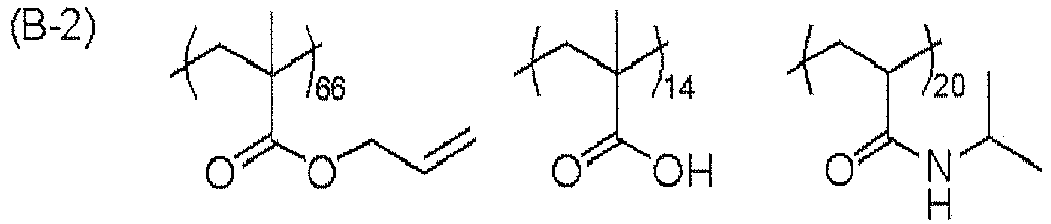

-


- On to a formed photosensitive layer a mixed aqueous solution (a coating liquid for forming a lower protective layer) of synthetic mica (Somasif MEB-3L, 3.2 mass-% water dispersion, by Co-op Chemical Co., Ltd.), polyvinyl alcohol (Gohseran CKS-50, degree of saponification 99 mol-%, degree of polymerization 300, sulfonic acid modified polyvinyl alcohol, by The Nippon Synthetic Chemical Industry Co., Ltd.), a surfactant A (Emalex 710, by Nihon Emulsion Co., Ltd.), and a surfactant B (Adeka Pluronic P-84, by ADEKA Corporation) was coated by a wire bar coater and dried in a hot air dyer at 125°C for 30 sec.
In the coating liquid for a lower protective layer the content ratio of synthetic mica (solid portion)/polyvinyl alcohol/surfactant A/surfactant B was 7.5/89/2/1.5 (mass-%), and the coating amount (coating weight after drying) was 0.5 g/m2 . - On to the lower protective layer a mixed aqueous solution (a coating liquid for forming a upper protective layer) of an organic filler (Art-Pearl J-7P, by Negami Chemical Industrial Co., Ltd.), synthetic mica (Somasif MEB-3L, 3.2 mass-% water dispersion, by Co-op Chemical Co., Ltd.), polyvinyl alcohol (L-3266, degree of saponification 87 mol-%, degree of polymerization 300, sulfonic acid modified polyvinyl alcohol, by The Nippon Synthetic Chemical Industry Co., Ltd.), a thickening agent (Cellogen FS-B, by Dai-Ichi Kogyo Seiyaku Co., Ltd.), and a surfactant (Emalex 710, by Nihon Emulsion Co., Ltd.) was coated by a wire bar coater and dried in a hot air dyer at 125°C for 30 sec.
In the coating liquid for a upper protective layer the content ratio of organic fille/synthetic mica (solid portion)/polyvinyl alcohol/thickening agent/surfactant was 3.2/2.0/80.5/11.5/2.8 (mass-%) and the coating amount (coating weight after drying) was 1.76 g/m2. - On to the surface of the aluminum substrate S-1 opposite to the side, on which a photosensitive layer and protective layers were provided, a back coat similar to example 1 of Japanese Published Unexamined Application No.
6-35174 - The obtained lithographic original plate was treated following the sequence of the steps of exposure, developing treatment , and plate surface treatment.
Image-wise exposure was carried out by a light source (setter) based on an infrared semiconductor laser (Trendsetter 3244VX: equipped with water-cooling 40 W infrared semiconductor laser, by Creo Inc. (Kodak)) under the conditions of the output power 9 W, the external drum rotation speed 210 rpm, and the resolution 2,400 dpi. As an exposed image an image with an array of reverse thin lines with the width of 5 to 100 µm (at intervals of 5 µm) was used as an image for a reverse thin line evaluation. For a plate life evaluation, an image suitable for plate life evaluation of solid printing was used.
After exposure in order to remove an overcoat, pre-washing with water, developing, washing with water, and plate surface treating were carried out by an automatic developing machine LP1310News (by Fujifilm Corporation). As a developing solution, a 1/4 (by water) diluted solution of a developing solution HN-D (old trade name DH-N, by Fujifilm Corporation) was used. The pH of the developing solution was 12, and the temperature of a developing bath was 30°C. - Printing was conducted by a printing press Lithron 26 (by Komori Corporation) using an ink Super Reoeco SOY Black L (by Toyo Ink Co., Ltd.), a lightweight coated paper OK Top Coat+ (by Oji Paper Co., Ltd.) and fountain solution composition. The used fountain solution composition is described below.
-
propylene glycol mono-n-butyl ether 0.5 part by mass propylene glycol 0.5 part by mass any of star polymers in Table 7, or B-1 comparative polymer 0.02 part by mass carboxymethylcellulose 0.01 part by mass ammonium nitrate 0.05 part by mass citric acid 0.01 part by mass malic acid 0.01 part by mass 2,2-dibromo-2-nitroethano 0.001 part by mass benzotriazole 0.002 part by mass 2-methyl-5-chloro-4-isothiazolin-3-one 0.002 part by mass water add to 100 parts by mass -

- With respect to each prepared fountain solution composition printing was carried out by a printing press Lithron 26 (by Komori Corporation) with an ink Super Reoeco SOY Black L (by Toyo Ink Co., Ltd.) and a lightweight coated paper OK Top Coat+ (by Oji Paper Co., Ltd.) and the consumed sheet number for removing ink at a non-image area at the initial start of printing was recorded (Table I). The smaller number of the consumed sheet number means better.
- A lithographic plate original plate was subjected to forced aging at 60°C for 4 days, and then exposed and developed according to the above plate making process to obtain a lithographic plate.
The plate was mounted on a printing press (2N-600, by Tohama Seiki Co.) and printing was conducted using a groundwood paper, an ink Soibi Red (by Inctec Inc.) and the fountain solution composition.
When the number of the printed sheets of paper used for printing reached 50, 000, the printing press was temporarily stopped and left standing for 5 hours, and then printing was restarted to print another 200 sheets. The sheet number until the ink disappeared completely from a non-image area was inspected (Table II). The smaller number means that the number of waste paper from the printing restart is fewer and therefore it is advantageous. - The evaluation item was evaluated by determining density decrease on a print when the total component concentration of a fountain solution composition was increased 2-, 3- and 4-fold, wherein the water scale of a printing press was changed to determine the minimum supply quantity of a fountain solution required for preventing dirt at a no-image area on a print. When the total component concentration was increased 2-, 3- and 4-fold based on the aforedescribed component concentration of a fountain solution composition, the water scale was firstly determined and then the solid image on the 500th print sheet was measured by a Macbeth densitometer (by Gretag Macbeth)
With respect to the density of a solid printed part for the 1-fold case as 100, relative densities at a solid printed part for the 2-, 3-, and 4-fold cases are shown (Table III).
Evaluation was conducted by a printing press Lithron 26 (by Komori Corporation) with an ink Super Reoeco SOY Black L (by Toyo Ink Co., Ltd.) and a lightweight coated paper OK Top Coat+ (by Oji Paper Co., Ltd.) - [Table I]
Table I: Evaluation of ink removal at initial start of printing Example Various polymer Paper consumed for cleaning Example 1 PA-1 20 2 PA-2 15 3 PA-3 20 4 PA-4 15 5 PA-5 20 6 PA-6 25 Comparative example 1 B-1 65 2 none 80 - [Table II]
Table II: Evaluation of resistance to dirt at non-image area (Evaluation of resistance to dirt after break Example Various polymer Paper consumed for cleaning Example 1 PA-1 65 2 PA-2 55 3 PA-3 50 4 PA-4 55 5 PA-5 50 6 PA-6 60 Comparative example 1 B-1 90 2 none 130 - [Table III]
Table III: Evaluation of decrease in print density by increase in total component concentration of fountain solution Example Various polymer ×1 ×2 ×3 ×4 Example 1 PA-1 100 100 95 95 2 PA-2 100 100 100 95 3 PA-3 100 100 95 95 4 PA-4 100 100 95 90 5 PA-5 100 95 90 90 6 PA-6 100 95 95 95 Comparative example 1 B-1 100 85 75 75 2 none 100 100 95 90 - As obvious from Tables I and II, when a star polymer having a hydrophilic group according to the present invention is used, compared to a case without the additive or a case in which a heretofore known water soluble polymer having sulfonic acid in a side chain, the consumed sheet number at the initial start of printing as well as at a restart of printing after a stop for a certain period can be less than a half, namely very few. It is obvious that by a fountain solution composition using a star polymer according to the invention, the dirt resistance of a non-image area at the initial start of printing as well as at a restart of printing can be improved.
Further, as obvious from Table III, even if the component concentration of a fountain solution is increased up to about 4-fold, the density of a print is substantially not decreased to demonstrate an advantageous effect. - A thermal negative-type digital plate was prepared identically with Example 1 and plate making was carried out.
Printing was carried out by a printing press Lithron 26 (by Komori Corporation) using an ink Super Reoeco SOY Black L (by Toyo Ink Co., Ltd.), a lightweight coated paper OK Top Coat+ (by Oji Paper Co., Ltd.), and a fountain solution composition. The used fountain solution composition is described below. -
Formation of fountain solution composition before using (solution actually used) propylene glycol mono-n-butyl ether 0.5 part by mass propylene glycol 0.5 part by mass any of star polymers in Tables 8 to 12, or PN-1 comparative polymer shown below 0.2 part by mass carboxymethylcellulose 0.01 part by mass ammonium nitrate 0.05 part by mass citric acid 0.01 part by mass malic acid 0.01 part by mass 2,2-dibromo-2-nitroethano 0.001 part by mass benzotriazole 0.002 part by mass 2-methyl-5-chloro-4-isothiazolin-3-one 0.002 part by mass water add to 100 parts by mass -

- Evaluation-1 to Evaluation-3 were conducted with respect to each fountain solution identically with Example 1. The results are shown in Tables IV to VI.
- [Table IV]
Table IV: Evaluation of ink removal at initial start of printing Example Various polymer Paper consumed for cleaning Example 7 PAB-1 15 8 PAB-2 10 9 PAB-3 25 10 PAB-4 20 11 PAB-5 15 12 PAB-6 20 13 PAB-7 15 14 PAB-8 20 15 PAB-9 25 16 PAB-10 35 17 PAB-11 25 18 PAB-12 15 19 PAS-13 20 20 PAB-14 25 21 PAB-15 25 22 PAB-16 20 23 PAB-17 25 24 PAB-18 20 25 PAB-19 25 26 PAB-20 35 27 PAB-21 20 28 PAB-22 15 29 PAB-23 15 30 PAB-24 20 31 PAB-25 15 32 PAB-26 15 33 PAB-27 20 Comparative example 3 PN-1 60 4 none 80 - [Table V]
Table V: Evaluation of resistance to dirt at non-image area (Evaluation of resistance to dirt after break Example star polymer dirt (number) Example 7 PAB-1 25 8 PAB-2 30 9 PAB-3 25 10 PAB-4 30 11 PAB-5 35 12 PAB-6 30 13 PAB-7 35 14 PAB-8 30 15 PAB-9 35 16 PAB-10 45 17 PAB-11 35 18 PAB-12 35 19 PAB-13 40 20 PAB-14 45 21 PAB-15 45 22 PAB-16 40 23 PAB-17 45 24 PAB-18 40 25 PAB-19 45 26 PAB-20 50 27 PAB-21 30 28 PAB-22 25 29 PAB-23 25 30 PAB-24 30 31 PAB-25 25 32 PAB-26 25 33 PAB-27 30 Comparative example 3 PN-1 70 4 none 130 - [Table VI]
Table VI: Evaluation of decrease in print density by increase in total component concentration of fountain solution Example Various polymer ×1 ×2 ×3 ×4 Example 1 PAB-1 100 95 95 90 2 PAB-2 100 100 95 95 3 PAB-3 100 100 95 95 4 PAB-4 100 90 90 85 5 PAB-5 100 95 95 95 6 PAB-6 100 95 95 90 7 PAB-7 100 100 95 90 8 PAB-8 100 95 95 90 9 PAB-9 100 90 85 85 10 PAB-10 100 90 90 90 11 PAB-11 100 95 95 90 12 PAB-12 100 95 95 95 13 PAB-13 100 95 90 85 14 PAB-14 100 100 95 95 15 PAB-15 100 95 90 90 16 PAB-16 100 90 90 85 17 PAB-17 100 90 90 90 18 PAB-18 100 95 90 85 19 PAB-19 100 95 95 90 20 PAB-20 100 100 100 95 21 PAB-21 100 90 90 85 22 PAB-22 100 95 90 85 23 PAB-23 100 100 95 95 24 PAB-24 100 100 100 95 25 PAB-25 100 100 100 100 26 PAB-26 100 95 90 85 27 PAB-27 100 95 95 90 Comparative example 1 PN-1 100 85 75 70 2 none 100 100 95 90 - As obvious from Tables IV and V, when a star polymer having a hydrophilic group and a substrate adsorptive group according to the present invention is used, compared to a case without the additive or a case in which a conventional polymer having a phosphate group and sulfonic acid in a side chain, the consumed sheet number at the initial start of printing as well as at a restart of printing after a stop for a certain period can be less than a half, namely very few. It is obvious that by a fountain solution composition using a star polymer according to the invention, the dirt resistance of a non-image area at the initial start of printing as well as at a restart of printing can be improved.
Further, as obvious from Table VI, even if the component concentration of a fountain solution is increased up to about 4-fold, the density of a print is substantially not decreased to demonstrate an advantageous effect.
Claims (10)
- A fountain solution composition for lithographic printing characterized by comprising a star polymer having at least one hydrophilic group.
- The fountain solution composition for lithographic printing according to claim 1, wherein the star polymer is a star polymer having 3 branches to 10 branches (both inclusive).
- The fountain solution composition for lithographic printing according to claim 1 or 2, wherein the star polymer has 3 branches to 10 branches (both inclusive) of polymer chains branched from a skeleton through sulfide bonds.
- The fountain solution composition for lithographic printing according to claim 3, wherein the star polymer has 3 branches to 10 branches (both inclusive) of polymer chains branched from a skeleton through sulfide bonds, the polymer being obtained by polymerizing an ethylenic unsaturated monomer in the presence of a multifunctional thiol.
- The fountain solution composition for lithographic printing according to any one of claims 1 to 4, characterized in that the star polymer further comprises at least one substrate adsorptive group.
- The fountain solution composition for lithographic printing according to claim 5, wherein the substrate adsorptive group of the star polymer is at least one selected from the group consisting of a phosphonic acid group and a salt thereof, a phosphoric ester group and a salt thereof, and a carboxylic acid group and a salt thereof.
- The fountain solution composition for lithographic printing according to any one of claims 1 to 6, wherein the hydrophilic group of the star polymer is at least one selected from the group consisting of a sulfonic acid group and a salt thereof, an amide group, a polyalkylene oxide group, a hydroxy group, a sulfuric monoester group and a salt thereof, a sulfonamide group, an amino group, a sulfuric acid-monoamide group and a salt thereof, and a betaine structure.
- The fountain solution composition for lithographic printing according to any one of claims 1 to 7 comprising a water soluble polymer not having a star structure.
- The fountain solution composition for lithographic printing according to claim 8, wherein the water soluble polymer not having a star structure is at least one water soluble macromolecular compound selected from the group consisting of gum arabic, a cellulose derivative and a modification thereof, polyvinyl alcohol and a derivative thereof, polyvinylpyrrolidone, a vinyl methyl ether/maleic anhydride copolymer, a vinyl acetate/maleic anhydride copolymer, a styrene/maleic anhydride copolymer, a water soluble soybean polysaccharides, starch, a starch derivative, pullulan and a pullulan derivative, gelatin, and hemicellulose extracted from a soybean.
- The fountain solution composition for lithographic printing according to any one of claims 1 to 9 which is a concentrated fountain solution composition.
Applications Claiming Priority (2)
| Application Number | Priority Date | Filing Date | Title |
|---|---|---|---|
| JP2011148891 | 2011-07-05 | ||
| JP2011187660A JP5281130B2 (en) | 2011-07-05 | 2011-08-30 | Dampening solution composition for lithographic printing |
Publications (2)
| Publication Number | Publication Date |
|---|---|
| EP2543518A2 true EP2543518A2 (en) | 2013-01-09 |
| EP2543518A3 EP2543518A3 (en) | 2013-09-11 |
Family
ID=46207896
Family Applications (1)
| Application Number | Title | Priority Date | Filing Date |
|---|---|---|---|
| EP12170974.5A Withdrawn EP2543518A3 (en) | 2011-07-05 | 2012-06-06 | Fountain solution composition for lithographic printing |
Country Status (2)
| Country | Link |
|---|---|
| EP (1) | EP2543518A3 (en) |
| JP (1) | JP5281130B2 (en) |
Cited By (4)
| Publication number | Priority date | Publication date | Assignee | Title |
|---|---|---|---|---|
| CN104371411A (en) * | 2014-11-21 | 2015-02-25 | 广东高璐美数码科技有限公司 | Water-based color ink-jet printing medium and production method thereof |
| CN108394199A (en) * | 2018-05-07 | 2018-08-14 | 安徽索亚装饰材料有限公司 | A kind of preparation method of the without phosphorus fountain solution of surface-active |
| CN110476960A (en) * | 2019-09-19 | 2019-11-22 | 河北省农林科学院植物保护研究所 | Clothianidin film slow-release seed treatment suspending agent and the preparation method and application thereof |
| WO2025010393A3 (en) * | 2023-07-05 | 2025-05-22 | Solenis Technologies Cayman, L.P. | Miktoarm star polymer as cement fluid additives |
Citations (19)
| Publication number | Priority date | Publication date | Assignee | Title |
|---|---|---|---|---|
| GB1235281A (en) | 1967-02-18 | 1971-06-09 | Howson Algraphy Ltd | Improvements in or relating to lithographic printing plates |
| GB1350521A (en) | 1971-03-11 | 1974-04-18 | Fuji Photo Film Co Ltd | Light-sensitive compositions for presensitized printing plates |
| JPS50125806A (en) | 1974-03-25 | 1975-10-03 | ||
| GB1460978A (en) | 1973-07-23 | 1977-01-06 | Fuji Photo Film Co Ltd | Photosensitive composition |
| JPS5228401B2 (en) | 1973-09-21 | 1977-07-26 | ||
| GB1495861A (en) | 1974-02-22 | 1977-12-21 | Fuji Photo Film Co Ltd | Light-sensitive printing plates |
| US4072527A (en) | 1972-09-27 | 1978-02-07 | E. I. Du Pont De Nemours And Company | Oxygen barrier layers for photopolymerizable elements |
| US4072528A (en) | 1972-09-27 | 1978-02-07 | E. I. Du Pont De Nemours And Company | Oxygen barrier layers for photopolymerizable elements |
| GB1505739A (en) | 1974-02-28 | 1978-03-30 | Fuji Photo Film Co Ltd | Photosensitive composition |
| JPH02236552A (en) | 1988-11-14 | 1990-09-19 | Fuji Photo Film Co Ltd | Photosensitive composition |
| JPH04274429A (en) | 1991-03-01 | 1992-09-30 | Fuji Photo Film Co Ltd | Photosensitive planographic printing plate |
| JPH0635174A (en) | 1992-07-16 | 1994-02-10 | Fuji Photo Film Co Ltd | Photosensitive planographic printing plate and processing method for the same |
| JPH10279867A (en) | 1997-03-31 | 1998-10-20 | Fuji Photo Film Co Ltd | Oil-base ink for ink jet plate printing plate |
| JP2001138655A (en) | 1999-11-10 | 2001-05-22 | Fuji Photo Film Co Ltd | Dampening water composition for lithographic printing plate |
| JP2007038483A (en) | 2005-08-02 | 2007-02-15 | Fujifilm Corp | Planographic printing method and planographic printing plate precursor |
| JP2007050665A (en) | 2005-08-19 | 2007-03-01 | Fujifilm Corp | Dampening solution composition for lithographic printing |
| JP2007055182A (en) | 2005-08-26 | 2007-03-08 | Fujifilm Corp | Dampening solution composition for lithographic printing |
| JP2007168124A (en) | 2005-12-19 | 2007-07-05 | Fujifilm Corp | Dampening solution composition for lithographic printing |
| JP2009234247A (en) | 2008-03-07 | 2009-10-15 | Fujifilm Corp | Dampening water composition for lithographic printing and heat-set rotary offset printing process |
Family Cites Families (5)
| Publication number | Priority date | Publication date | Assignee | Title |
|---|---|---|---|---|
| US6854391B2 (en) * | 2002-06-10 | 2005-02-15 | Flint Ink Corporation | Lithographic printing method and materials |
| JP2006130905A (en) * | 2004-10-08 | 2006-05-25 | Fuji Photo Film Co Ltd | Lithographic printing method |
| DE102004057294A1 (en) * | 2004-11-26 | 2006-06-01 | Basf Drucksysteme Gmbh | Use of polymers which have amino groups modified with acid groups for the production of dampening solutions or fountain solution concentrates and in fountain solution circulations for offset printing |
| JP4489621B2 (en) * | 2005-03-22 | 2010-06-23 | 富士フイルム株式会社 | Dampening solution composition for lithographic printing |
| JP5453023B2 (en) * | 2009-09-01 | 2014-03-26 | 富士フイルム株式会社 | Printing fountain solution and planographic printing plate printing method |
-
2011
- 2011-08-30 JP JP2011187660A patent/JP5281130B2/en not_active Expired - Fee Related
-
2012
- 2012-06-06 EP EP12170974.5A patent/EP2543518A3/en not_active Withdrawn
Patent Citations (19)
| Publication number | Priority date | Publication date | Assignee | Title |
|---|---|---|---|---|
| GB1235281A (en) | 1967-02-18 | 1971-06-09 | Howson Algraphy Ltd | Improvements in or relating to lithographic printing plates |
| GB1350521A (en) | 1971-03-11 | 1974-04-18 | Fuji Photo Film Co Ltd | Light-sensitive compositions for presensitized printing plates |
| US4072528A (en) | 1972-09-27 | 1978-02-07 | E. I. Du Pont De Nemours And Company | Oxygen barrier layers for photopolymerizable elements |
| US4072527A (en) | 1972-09-27 | 1978-02-07 | E. I. Du Pont De Nemours And Company | Oxygen barrier layers for photopolymerizable elements |
| GB1460978A (en) | 1973-07-23 | 1977-01-06 | Fuji Photo Film Co Ltd | Photosensitive composition |
| JPS5228401B2 (en) | 1973-09-21 | 1977-07-26 | ||
| GB1495861A (en) | 1974-02-22 | 1977-12-21 | Fuji Photo Film Co Ltd | Light-sensitive printing plates |
| GB1505739A (en) | 1974-02-28 | 1978-03-30 | Fuji Photo Film Co Ltd | Photosensitive composition |
| JPS50125806A (en) | 1974-03-25 | 1975-10-03 | ||
| JPH02236552A (en) | 1988-11-14 | 1990-09-19 | Fuji Photo Film Co Ltd | Photosensitive composition |
| JPH04274429A (en) | 1991-03-01 | 1992-09-30 | Fuji Photo Film Co Ltd | Photosensitive planographic printing plate |
| JPH0635174A (en) | 1992-07-16 | 1994-02-10 | Fuji Photo Film Co Ltd | Photosensitive planographic printing plate and processing method for the same |
| JPH10279867A (en) | 1997-03-31 | 1998-10-20 | Fuji Photo Film Co Ltd | Oil-base ink for ink jet plate printing plate |
| JP2001138655A (en) | 1999-11-10 | 2001-05-22 | Fuji Photo Film Co Ltd | Dampening water composition for lithographic printing plate |
| JP2007038483A (en) | 2005-08-02 | 2007-02-15 | Fujifilm Corp | Planographic printing method and planographic printing plate precursor |
| JP2007050665A (en) | 2005-08-19 | 2007-03-01 | Fujifilm Corp | Dampening solution composition for lithographic printing |
| JP2007055182A (en) | 2005-08-26 | 2007-03-08 | Fujifilm Corp | Dampening solution composition for lithographic printing |
| JP2007168124A (en) | 2005-12-19 | 2007-07-05 | Fujifilm Corp | Dampening solution composition for lithographic printing |
| JP2009234247A (en) | 2008-03-07 | 2009-10-15 | Fujifilm Corp | Dampening water composition for lithographic printing and heat-set rotary offset printing process |
Non-Patent Citations (1)
| Title |
|---|
| "Shin Jikken-kagaku Kouza, Koubunshi Kagaku I", pages: 208 - 210 |
Cited By (5)
| Publication number | Priority date | Publication date | Assignee | Title |
|---|---|---|---|---|
| CN104371411A (en) * | 2014-11-21 | 2015-02-25 | 广东高璐美数码科技有限公司 | Water-based color ink-jet printing medium and production method thereof |
| CN108394199A (en) * | 2018-05-07 | 2018-08-14 | 安徽索亚装饰材料有限公司 | A kind of preparation method of the without phosphorus fountain solution of surface-active |
| CN110476960A (en) * | 2019-09-19 | 2019-11-22 | 河北省农林科学院植物保护研究所 | Clothianidin film slow-release seed treatment suspending agent and the preparation method and application thereof |
| CN110476960B (en) * | 2019-09-19 | 2021-06-15 | 河北省农林科学院植物保护研究所 | Clothianidin film slow-release seed treatment suspension and its preparation method and application |
| WO2025010393A3 (en) * | 2023-07-05 | 2025-05-22 | Solenis Technologies Cayman, L.P. | Miktoarm star polymer as cement fluid additives |
Also Published As
| Publication number | Publication date |
|---|---|
| EP2543518A3 (en) | 2013-09-11 |
| JP5281130B2 (en) | 2013-09-04 |
| JP2013031986A (en) | 2013-02-14 |
Similar Documents
| Publication | Publication Date | Title |
|---|---|---|
| EP0874282B1 (en) | Negative working image recording material | |
| CN101517493B (en) | Method for developing and sealing lithographic printing plates | |
| FI68130C (en) | I LJUS HAERDBAR BLANDNING OCH ETT DAERAV FRAMSTAELLT LJUSKAENSLIGT KOPIERINGSMATERIAL | |
| JP5696155B2 (en) | Gallotannin compounds for coating compositions for lithographic printing plates | |
| JPH0347198B2 (en) | ||
| JP2010537238A (en) | Treatment of lithographic printing plate with developer containing hydrophilic polymer | |
| EP2543518A2 (en) | Fountain solution composition for lithographic printing | |
| JP2004361911A (en) | Photosensitive composition, photosensitive lithographic printing plate and image forming method therefor | |
| US4475460A (en) | Process for desensitizing lithographic printing plates | |
| CN101868358A (en) | Treatment of lithographic printing plates with hydrophilic polymers in finishing solutions | |
| JP2003260881A (en) | Method for manufacturing original plate for lithographic printing plate | |
| JP4092840B2 (en) | Image forming material | |
| JP4758219B2 (en) | Dampening solution composition for lithographic printing | |
| US20140221591A1 (en) | Copolymers for near-infrared radiation-sensitive coating compositions for positive-working thermal lithographic printing plates | |
| US20190094694A1 (en) | Positive type photosensitive resin composition, positive type planographic printing plate precursor, and method of preparing planographic printing plate | |
| CN101784962B (en) | A method for developing a printing plate precursor | |
| CN101790458A (en) | Method for making a lithographic printing plate | |
| EP2284005A1 (en) | Lithographic printing plate precursors with beta-hydroxy alkylamide crosslinkers | |
| JP2005221716A (en) | Photosensitive composition, photosensitive lithographic printing plate and recording method for lithographic printing plate | |
| EP2757416B1 (en) | Process for producing lithographic printing plate and lithographic printing plate | |
| JP4684825B2 (en) | Dampening solution composition for lithographic printing | |
| JP4266866B2 (en) | Dampening solution composition for lithographic printing | |
| JP2004117565A (en) | Correcting agent for lithographic printing plate | |
| JP2004237612A (en) | Plate surface protecting agent for planographic printing plate | |
| JP4090802B2 (en) | Correction agent for lithographic printing plates |
Legal Events
| Date | Code | Title | Description |
|---|---|---|---|
| PUAI | Public reference made under article 153(3) epc to a published international application that has entered the european phase |
Free format text: ORIGINAL CODE: 0009012 |
|
| 17P | Request for examination filed |
Effective date: 20120606 |
|
| AK | Designated contracting states |
Kind code of ref document: A2 Designated state(s): AL AT BE BG CH CY CZ DE DK EE ES FI FR GB GR HR HU IE IS IT LI LT LU LV MC MK MT NL NO PL PT RO RS SE SI SK SM TR |
|
| AX | Request for extension of the european patent |
Extension state: BA ME |
|
| PUAL | Search report despatched |
Free format text: ORIGINAL CODE: 0009013 |
|
| AK | Designated contracting states |
Kind code of ref document: A3 Designated state(s): AL AT BE BG CH CY CZ DE DK EE ES FI FR GB GR HR HU IE IS IT LI LT LU LV MC MK MT NL NO PL PT RO RS SE SI SK SM TR |
|
| AX | Request for extension of the european patent |
Extension state: BA ME |
|
| RIC1 | Information provided on ipc code assigned before grant |
Ipc: B41N 3/08 20060101AFI20130805BHEP |
|
| STAA | Information on the status of an ep patent application or granted ep patent |
Free format text: STATUS: THE APPLICATION IS DEEMED TO BE WITHDRAWN |
|
| 18D | Application deemed to be withdrawn |
Effective date: 20140312 |