EP2542235B1 - Utilisation du riluzole pour traiter ou prévenir les effets indésirables d'agents anti-cancéreux - Google Patents
Utilisation du riluzole pour traiter ou prévenir les effets indésirables d'agents anti-cancéreux Download PDFInfo
- Publication number
- EP2542235B1 EP2542235B1 EP11712951.0A EP11712951A EP2542235B1 EP 2542235 B1 EP2542235 B1 EP 2542235B1 EP 11712951 A EP11712951 A EP 11712951A EP 2542235 B1 EP2542235 B1 EP 2542235B1
- Authority
- EP
- European Patent Office
- Prior art keywords
- riluzole
- compound
- cancer
- oxaliplatin
- anticancer agent
- Prior art date
- Legal status (The legal status is an assumption and is not a legal conclusion. Google has not performed a legal analysis and makes no representation as to the accuracy of the status listed.)
- Active
Links
- 0 *c1nc2ccccc2[s]1 Chemical compound *c1nc2ccccc2[s]1 0.000 description 1
- UAEPNZWRGJTJPN-UHFFFAOYSA-N CC1CCCCC1 Chemical compound CC1CCCCC1 UAEPNZWRGJTJPN-UHFFFAOYSA-N 0.000 description 1
Images
Classifications
-
- A—HUMAN NECESSITIES
- A61—MEDICAL OR VETERINARY SCIENCE; HYGIENE
- A61K—PREPARATIONS FOR MEDICAL, DENTAL OR TOILETRY PURPOSES
- A61K31/00—Medicinal preparations containing organic active ingredients
- A61K31/28—Compounds containing heavy metals
- A61K31/282—Platinum compounds
-
- A—HUMAN NECESSITIES
- A61—MEDICAL OR VETERINARY SCIENCE; HYGIENE
- A61K—PREPARATIONS FOR MEDICAL, DENTAL OR TOILETRY PURPOSES
- A61K31/00—Medicinal preparations containing organic active ingredients
- A61K31/33—Heterocyclic compounds
- A61K31/395—Heterocyclic compounds having nitrogen as a ring hetero atom, e.g. guanethidine or rifamycins
- A61K31/41—Heterocyclic compounds having nitrogen as a ring hetero atom, e.g. guanethidine or rifamycins having five-membered rings with two or more ring hetero atoms, at least one of which being nitrogen, e.g. tetrazole
- A61K31/425—Thiazoles
- A61K31/428—Thiazoles condensed with carbocyclic rings
-
- A—HUMAN NECESSITIES
- A61—MEDICAL OR VETERINARY SCIENCE; HYGIENE
- A61K—PREPARATIONS FOR MEDICAL, DENTAL OR TOILETRY PURPOSES
- A61K45/00—Medicinal preparations containing active ingredients not provided for in groups A61K31/00 - A61K41/00
- A61K45/06—Mixtures of active ingredients without chemical characterisation, e.g. antiphlogistics and cardiaca
-
- A—HUMAN NECESSITIES
- A61—MEDICAL OR VETERINARY SCIENCE; HYGIENE
- A61K—PREPARATIONS FOR MEDICAL, DENTAL OR TOILETRY PURPOSES
- A61K49/00—Preparations for testing in vivo
- A61K49/0004—Screening or testing of compounds for diagnosis of disorders, assessment of conditions, e.g. renal clearance, gastric emptying, testing for diabetes, allergy, rheuma, pancreas functions
- A61K49/0008—Screening agents using (non-human) animal models or transgenic animal models or chimeric hosts, e.g. Alzheimer disease animal model, transgenic model for heart failure
-
- A—HUMAN NECESSITIES
- A61—MEDICAL OR VETERINARY SCIENCE; HYGIENE
- A61P—SPECIFIC THERAPEUTIC ACTIVITY OF CHEMICAL COMPOUNDS OR MEDICINAL PREPARATIONS
- A61P21/00—Drugs for disorders of the muscular or neuromuscular system
-
- A—HUMAN NECESSITIES
- A61—MEDICAL OR VETERINARY SCIENCE; HYGIENE
- A61P—SPECIFIC THERAPEUTIC ACTIVITY OF CHEMICAL COMPOUNDS OR MEDICINAL PREPARATIONS
- A61P25/00—Drugs for disorders of the nervous system
-
- A—HUMAN NECESSITIES
- A61—MEDICAL OR VETERINARY SCIENCE; HYGIENE
- A61P—SPECIFIC THERAPEUTIC ACTIVITY OF CHEMICAL COMPOUNDS OR MEDICINAL PREPARATIONS
- A61P35/00—Antineoplastic agents
-
- A—HUMAN NECESSITIES
- A01—AGRICULTURE; FORESTRY; ANIMAL HUSBANDRY; HUNTING; TRAPPING; FISHING
- A01K—ANIMAL HUSBANDRY; AVICULTURE; APICULTURE; PISCICULTURE; FISHING; REARING OR BREEDING ANIMALS, NOT OTHERWISE PROVIDED FOR; NEW BREEDS OF ANIMALS
- A01K2227/00—Animals characterised by species
- A01K2227/10—Mammal
- A01K2227/105—Murine
-
- A—HUMAN NECESSITIES
- A01—AGRICULTURE; FORESTRY; ANIMAL HUSBANDRY; HUNTING; TRAPPING; FISHING
- A01K—ANIMAL HUSBANDRY; AVICULTURE; APICULTURE; PISCICULTURE; FISHING; REARING OR BREEDING ANIMALS, NOT OTHERWISE PROVIDED FOR; NEW BREEDS OF ANIMALS
- A01K2267/00—Animals characterised by purpose
- A01K2267/03—Animal model, e.g. for test or diseases
- A01K2267/0331—Animal model for proliferative diseases
Definitions
- the present invention relates to riluzole for use in treating or preventing adverse effects related to the administration of anti-cancer agents having neurotoxic effects, such as, for example, platinum salts, taxanes and periwinkle alkaloids.
- Riluzole which is marketed by Aventis under the brand name Rilutek®, is nowadays indicated for prolonging the life span or delaying the use of mechanical assisted ventilation in patients with amyotrophic lateral sclerosis ( Miller et al. Neurology 2009 73: 1218-26 ).
- Oxaliplatin is a cytotoxic anti-neoplastic agent composed of a platinum atom complexed with 1,2-diaminohexane (DACH) and an oxalate group. It is used, among others, during the treatment of colorectal cancers. It has recently been used in the treatment of advanced metastatic colorectal cancer ( Baker, Rev Gastroenterol Disord. 2003 3: 31-8 ; Screnci et al., Br J Cancer 2000 82: 966-72 ) and has also shown activity in other cancers: ovary, breast, lung ( Muggia, Semin Oncol. 2004 31: 17-24 ; Petit et al., Anticancer Drugs. 2006 17: 337-43 ). Neurotoxicity is a common side effect of this molecule and it often occurs in two forms: acute and chronic.
- DACH 1,2-diaminohexane
- Acute neurotoxicity is characterized by the rapid onset of distal dysaesthesia induced by cold with or without paresthesia ( Gamelin et al., Semin Oncol. 2002 29: 21-33 ; Lehky et al., Muscle Nerve. 2004 29: 387-92 ), and muscle disorders: myotonia, cramps, prolonged muscle fasciculations affecting the legs, hands and jaws and impeding movement ( Grolleau et al., J. Neurophysiol. 2001 85: 2293-7 ). About 85% to 95% of treated patients develop these symptoms that begin during the infusion and persist for the first 24 to 48 hours.
- the intensity of this acute neurotoxicity depends on the plasma concentrations of oxaliplatin, and concentration peaks should be avoided ( Grothey, Clin Colorectal Cancer. 2005 5: S38-S46 ). The resolution of symptoms is done in about a week, but they reappear during the next infusion. Compared to other platinum-derived agents, the neurotoxic profile of oxaliplatin is unique because of this acute neurotoxicity. In patients with such acute symptoms, studies showed little or no axonal degeneration, suggesting a specific effect of oxaliplatin on sensory neurons and motor neurons. The intensity of the disorders observed and particularly of the hypersensitivity to cold, after the first cures, is a marker of neurotoxicity.
- Neurotoxicity is considered to be the dose-limiting adverse effect of oxaliplatin and may result in discontinuation of treatment.
- Neurotoxicity is manifested as symptoms that may include peripheral sensory neuropathy, sensory involvement, sensory ataxia, and / or sensory motor deficiency.
- Neuropathy develops progressively in approximately 10 to 15% of patients after a cumulative dose of 780 to 850 mg / m2, corresponding to approximately six cycles at a dose of 85 mg / m2 ( Gamelin et al., Semin Oncol. 2002 29: 21-33 ).
- Peripheral sensory neuropathy appears as paresthesia and distal dysesthesia (hand, foot, toe) with loss of sensation.
- Sensory neuropathy, sensory ataxia, and / or sensory-motor deficits of fine coordination result in difficulties in writing, holding objects, etc.
- the development of sensory neuropathy is correlated with the cumulative dose of oxaliplatin ( Wilson et al., J Clin Oncol. 2002 20: 1767-74 ).
- neurotoxicity is an undesirable effect common to many anticancer agents.
- taxanes and vincristine induce neuropathy in humans ( Quastoff and Hartung, J Neurol. 2002 249: 9-17 ; Stillman and Cata, Curr Pain Headache Rep. 2006 18: 321-324 ; Park et al., Curr Med Chem. 2008 15: 3081-3094 ).
- US-2008/124333 discloses the combination of riluzole and an anticancer agent, for example carboplatin or paclitaxel.
- WO-2006/099739 discloses the use of ADNF polypeptides for the treatment of neurotoxicity, including thermal hyperalgesia, induced by anti-cancer agents.
- WO-2009/028605 discloses a screening method for identifying compounds capable of alleviating peripheral nervous disorders following cancer therapy.
- Lefebvre et al. disclose in Soc. Neurosc., 26 (1-2), 2000, 1216 that pretreatment with riluzole, lamotrigine or gabapentin reduces hypersensitivity to cold and mechanical hypersensitivity and the development of neuropathic pain following neuronal injury in a CCI (chronic constriction injury) model.
- CCI chronic constriction injury
- riluzole has evaluated the potential of riluzole to reduce cold hypersensitivity phenomena.
- riluzole is able to correct cold hypersensitivity induced by oxaliplatin. This important effect suggests that riluzole has a beneficial effect on all sensory symptoms, particularly neurotoxicity, observed with oxaliplatin in humans.
- the present disclosure also discloses the use of such a compound of formula (I) for the manufacture of a medicament for the treatment or prevention of an adverse effect, particularly neurotoxicity induced by an anticancer agent.
- R1 may for example be a haloalkyl group, preferably perhaloalkyl .
- R 1 is a perfluoroalkyl group, such as trifluoromethyl.
- R2 and / or R3 may for example represent a hydrogen atom.
- the compound of formula (I) is characterized in that it is the compound of formula (II): or a pharmaceutically acceptable salt of this compound of formula (II).
- the radicals Alkyl represent saturated hydrocarbon radicals, in straight or branched chain, of 1 to 6 carbon atoms, preferably of 1 to 4 carbon atoms.
- the radicals Alkyl When they are linear, mention may be made especially of the methyl, ethyl, propyl, butyl, pentyl and hexyl radicals.
- the radicals Alkyl When they are branched or substituted by one or more alkyl radicals, mention may be made especially of the isopropyl, tert-butyl, 2-methylbutyl, 2-methylpentyl and 1-methylpentyl radicals.
- haloalkyl radicals denote alkyl radicals as defined above in which one or more hydrogen atoms are substituted by a halogen atom (fluorine, chlorine, bromine, iodine), in particular by a chlorine atom. or fluorine.
- Haloalkyl radicals can be radicals per haloalkyl, ie haloalkyl radicals wherein all hydrogen atoms are substituted by a halogen atom, including radicals per -fluoroalkyles of formula C n F 2n + 1 wherein n represents an an integer between 1 and 6.
- per- fluoroalkyl group there may be mentioned trifluoromethyl.
- Adverse effects can be treated at any stage.
- treatment is meant curative treatment (aimed at relieving, curbing or stopping side effects).
- Prevention means prophylactic treatment (aimed at reducing the risk of occurrence of side effects).
- pharmaceutically acceptable salt refers to the relatively non-toxic, inorganic and organic acid addition salts of the compounds of the present invention. These salts can be prepared in situ during the final isolation and purification of the compounds.
- the acid addition salts can be prepared by separately reacting the purified compound in its purified form with an organic or inorganic acid and isolating the salt thus formed.
- the acid addition salts are the hydrobromide, hydrochloride, sulfate, bisulfate, phosphate, nitrate, acetate, oxalate, valerate, oleate, palmitate, stearate, laurate, borate, benzoate, lactate, phosphate, tosylate and citrate salts.
- said compound of formula (I) is riluzole (which is represented by formula (II) above).
- riluzole is meant 2-amino-6-trifluoromethoxy-benzothiazole, as well as its pharmaceutically acceptable salts.
- Riluzole may for example be prepared according to the process described in the patent EP 0 050 551 .
- the use of riluzole for the treatment of neurodegenerative pathologies is for example described in the patent US 6,872,739 and the patent application EP 0 558 861 .
- the anticancer agent is a platinum salt.
- Platinum salts are commonly used in the treatment of cancers. However, platinum salts induce many adverse effects, including neurotoxicity, myelosuppression, nephrotoxicity, ototoxicity, nausea and vomiting.
- the adverse effect corresponds to neurotoxicity, which manifests itself in particular by hypersensitivity to cold and / or muscle disorders.
- side effects such as myelosuppression, nephrotoxicity, ototoxicity, nausea or vomiting.
- the skilled person can refer to S. Wolf et al., European Journal of Cancer 2008, 44: 1507-1515 .
- the adverse effect is hypersensitivity to cold.
- the platinum salts used in the treatment of cancers include oxaliplatin (marketed under the name Eloxatin ⁇ ), cisplatin (CDDP, marketed under the name Cisplatyl®) and carboplatin (CDCP, marketed under the name of ⁇ paraplatin).
- Oxaliplatin, cisplatin and carboplatin are therefore preferred platinum salts according to the invention.
- the platinum salt is oxaliplatin.
- Oxaliplatin is used in the treatment of colon cancer, colorectal cancer, ovarian cancer and stomach cancer. Its association with 5-fluorouracil and folinic acid is called the FOLFOX protocol. Compared with other platinum salts, this drug has low haematotoxicity and no renal toxicity. On the other hand, it presents a strong neurotoxicity. It is responsible for particular sensory neuropathies, exaggerated by the cold, and whose severity increases with the cumulative dose.
- Cisplatin is the basis of many chemotherapy protocols, and is particularly used for the treatment of testicular cancer, prostate cancer, cervical cancer, ovarian cancer, cancer of the endometrium, lung cancers, bladder cancers, aerodigestive tract cancers, sarcomas and neuroblastomas. Its main toxicities are renal (tubular nephrotoxicity) and neurological (neurotoxicity).
- carboplatin has two carboxylate groups in place of the two chlorine atoms for cisplatin. It is used for the treatment of testicular cancers, ovarian cancers, aerodigestive tract cancers and lung cancers. Compared to cisplatin, it has a less renal and neurological toxicity. On the other hand, there is a higher risk of bleeding.
- the invention also relates to a compound of formula (I), in particular riluzole, for use in the treatment or prevention of an adverse effect, the adverse effect being neurotoxicity induced by an anticancer agent other than platinum salt.
- a compound of formula (I) is suitable for the treatment and / or prevention of oxaliplatin-induced neurotoxicity, it can be deduced that the compound of formula (I) is also suitable for treating and / or the prevention of neurotoxicity induced by other anticancer agents.
- the adverse effect is hypersensitivity to cold.
- anti-cancer agent is meant here any active ingredient used for the treatment of cancer.
- Anticancer agents include, but are not limited to, alkylating agents, antimetabolites, intercalating agents, mitotic spindle poisons, antitumor antibiotics, and tertiary structure modifiers of DNA such as topoisomerase inhibitors.
- the anticancer agent according to the invention is an anticancer agent which induces neurotoxicity as an undesirable effect. This is particularly the case of mitotic spindle poisons, such as vinca alkaloids and taxanes.
- vinca-alkaloid or " periwinkle alkaloid” is meant herein an alkaloid extractable from periwinkle ( Vinca rosea and Catharanthus roseus, for example) or an alkaloid derived therefrom.
- Vinca alkaloids include vincristine, vinblastine, vindesine and vinorelbine.
- taxane is meant here a terpene that can be extracted from an yew ( Taxus ) or a terpene derived therefrom. Taxanes include paclitaxel (marketed as Taxol ⁇ ) and docetaxel (marketed as Taxotere ⁇ ).
- the compound of formula (I), more particularly riluzole is preferably used in combination with the anti-cancer agent, the adverse effects of which it prevents.
- the administration of the compound of formula (I) and the anticancer agent may be simultaneous or sequential.
- the anticancer agent may be present in the same pharmaceutical composition as the compound of formula (I).
- the invention therefore relates to a pharmaceutical composition containing a pharmaceutically acceptable vehicle and, as active ingredients, a compound of formula (I), more particularly riluzole, and an anticancer agent, more particularly a platinum salt.
- the pharmaceutical composition comprises riluzole and a platinum salt.
- the pharmaceutical composition comprises riluzole and oxaliplatin.
- the anticancer agent may be present in a pharmaceutical composition separate from that containing the compound of formula (I).
- a combination containing (i) a first pharmaceutical composition containing a pharmaceutically acceptable carrier and a compound of formula (I); and (ii) a second pharmaceutical composition containing a pharmaceutically acceptable carrier and an anticancer agent.
- a kit according to the disclosure may optionally include instructions regarding the mode of administration of the first and second pharmaceutical compositions for the treatment and prevention of cancer.
- the use (administration) of the first and the second pharmaceutical composition of such a combination (kit) may be simultaneous or sequential.
- the first pharmaceutical composition comprises riluzole and the second pharmaceutical composition comprises a platinum salt.
- the first pharmaceutical composition comprises riluzole and the second pharmaceutical composition comprises oxaliplatin.
- pharmaceutically acceptable carrier any solvent, dispersion medium, retarding agent, etc., which does not produce a side reaction, for example allergic, in humans or animals.
- the pharmaceutically acceptable carriers are well known to those skilled in the art, and include those described in “Remington's Pharmaceutical Sciences” (Mack Publishing Company, Easton, USA, 1985 ).
- the pharmaceutically acceptable vehicle is in particular chosen according to the route of administration, which may for example be oral, sub-lingual, nasal, oral, rectal, parenteral (ie intravenous, subcutaneous, intradermal or intramuscular).
- the route of administration is preferably oral or parenteral.
- the dose depends on factors such as the active principle considered, the mode of administration, the therapeutic indication, the age, the weight and the state of the patient.
- the pharmaceutical compositions according to the disclosure and the combinations (kits) according to the disclosure are used for the treatment or prevention of cancer.
- the cancer may be selected from testicular cancer, thyroid cancer, ovarian cancer, cervical and / or endometrial cancer, breast cancer, cancer of the esophagus, bladder cancer, otolaryngology (ENT) cancer, lung cancer, stomach cancer, prostate cancer, lung cancer, sarcoma, neuroblastoma , colorectal cancer, rectal cancer and colon cancer.
- the pharmaceutical compositions according to the disclosure and the combinations (kits) according to the disclosure contain oxaliplatin as the platinum salt, riluzole as a compound of formula (I), and are used for the treatment or prevention of colorectal cancer.
- riluzole can treat or prevent adverse effects, particularly the neurotoxicity induced by the anti-neoplastic agent oxaliplatin.
- One aspect of the disclosure also relates to a method of treating or preventing an adverse effect induced by an anti-cancer agent, comprising administering a therapeutically effective amount of a compound of formula (I), more particularly riluzole, to an individual.
- This individual can be an individual who has been treated with the anticancer agent, who is being treated with the anticancer agent or who will be treated with the anticancer agent.
- the anticancer agent may be a platinum salt, especially oxaliplatin.
- the undesirable effect may be neurotoxicity, for example hypersensitivity to cold.
- the individual is preferably a mammal, more particularly a human.
- the effective therapeutic dose can easily be determined by those skilled in the art.
- One aspect of the disclosure also relates to a method of treating or preventing cancer, comprising administering a therapeutically effective amount of a compound of formula (I), more particularly riluzole, in combination with an anti-cancer agent , more particularly a platinum salt, especially oxaliplatin, to an individual in need thereof.
- the method is a method of treating or preventing cancer, combined with a method of treating or preventing an adverse effect related to the anticancer agent used.
- an anti-cancer agent it is to be understood that the individual may be an individual who has been treated with the anti-cancer agent, who is being treated with the anti-cancer agent or who will be treated with the anticancer agent.
- the individual is preferably a mammal, more particularly a human.
- the effective therapeutic dose can easily be determined by those skilled in the art.
- the different characteristics developed above apply to this method.
- the anticancer agent may be a platinum salt, especially oxaliplatin.
- the undesirable effect may be neurotoxicity, for example hypersensitivity to cold.
- synthetic analog of riluzole is meant a chemical compound derived from riluzole.
- derivative of riluzole is meant in particular a compound comprising the benzothiazole skeleton more or less substituted.
- Such analogs include but are not limited to compounds of formula (I).
- the undesirable effect measured in the context of the screening method according to one aspect of the disclosure may, for example, correspond to neurotoxicity, myelosuppression, nephrotoxicity, ototoxicity, nausea or vomiting induced by a platinum salt.
- the adverse effect is neurotoxicity.
- the adverse effect is hypersensitivity to cold.
- the neurotoxicity induced by a platinum salt can for example be measured as described in Example 2, by measuring the effect of the compound of formula (I) on platinum salt-induced cold hypersensitivity in a rat as an animal. model.
- Model animals for measuring taxane- or vincristine-induced neurotoxicity are known in the art, and may also be used ( Authier et al., Brain Res. 2000 291: 73-76 ; Authier et al., Neurotherapeutics. 2009 6: 620-629 ; Authier et al., Neurotoxicology. 2003 24: 797-805 ).
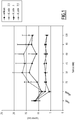
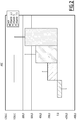
- the figures 1 and 2 show that riluzole is able to correct cold hypersensitivity induced by injection of oxaliplatin.
- mice Male Sprague-Dawley rats (Charles River Lab, France), weighing 175 to 200 grams, were placed in cages with food and water ad libitum, in a thermo-regulated environment at 22 ° C with a 12 hour day / night cycle. / 12h. The experiments were carried out blind in a quiet room by the same experimenter taking care to comply with the regulatory requirements on animal testing.
- riluzole Sigma Chemical Co., St. Louis, MO
- oxaliplatin Debiopharm, Lausanne, Switzerland
- Riluzole was prepared in NaCl (0.9%).
- Oxaliplatin was diluted in glucose solution (5%).
- Each rat receives intraperitoneally (IP) either a dose of oxaliplatin or a glucose control injection of 5%.
- IP intraperitoneally
- the behavioral test the immersion of the rat's tail in water at 10 ° C, is performed before and 72 hours after the injection of oxaliplatin or vehicle.
- the riluzole at the doses of 2.5, 5 or 7.5 mg / kg, or its vehicle, is administered subcutaneously and the animals are again tested according to the following kinetics: at 15, 30, 45, 60, 90, and 120 minutes after the injection of riluzole or vehicle.
- This low temperature immersion test measures the hypersensitivity to cold in animals.
- the tail of the rats is immersed in a third in a water bath thermostatically controlled at 10 ° C until removal thereof or until "cut-off" set at 30 seconds ( Necker and Hellon. 1978 Bread. 4: 231-242 ).
- the experimental data was analyzed using Sigma STAT software, version 3.0 for Windows (STAT32 Software Inc., San Diego, CA).
- the kinetics of reaction time to thermal stimulation was analyzed using a two-way analysis of variance followed by a multiple comparison test to study the evolution over time.
- the scores of the riluzole treated batches and control batches were compared by a student t-test.
- the threshold of significance is P ⁇ 0.05.
- the Figure 1 clearly shows that the reaction times of the oxaliplatin-treated rat are considerably increased after injection of riluzole at a dose of 5 mg / kg.
- the oxaliplatin animals treated with riluzole even have a higher cold reaction time (less sensitivity) than that observed before oxaliplatin injection.
- Statistical analysis of the data revealed significant differences at doses of 5 mg / kg (p ⁇ 0.05) and 7.5 mg / kg (p ⁇ 0.001) ( Fig. 1 , Fig. 2 )
- riluzole to reduce hypersensitivity to cold has been evaluated.
- the rat, riluzole corrected cold hypersensitivity induced by oxaliplatin. This important effect suggests that riluzole may have a beneficial effect on all the sensory symptoms observed during the neurotoxicity associated with the treatment of human pathologies by oxaliplatin.
Landscapes
- Health & Medical Sciences (AREA)
- Life Sciences & Earth Sciences (AREA)
- Veterinary Medicine (AREA)
- Animal Behavior & Ethology (AREA)
- Public Health (AREA)
- General Health & Medical Sciences (AREA)
- Medicinal Chemistry (AREA)
- Chemical & Material Sciences (AREA)
- Pharmacology & Pharmacy (AREA)
- Epidemiology (AREA)
- Engineering & Computer Science (AREA)
- Biomedical Technology (AREA)
- Chemical Kinetics & Catalysis (AREA)
- Organic Chemistry (AREA)
- General Chemical & Material Sciences (AREA)
- Nuclear Medicine, Radiotherapy & Molecular Imaging (AREA)
- Endocrinology (AREA)
- Pathology (AREA)
- Urology & Nephrology (AREA)
- Zoology (AREA)
- Diabetes (AREA)
- Toxicology (AREA)
- Gastroenterology & Hepatology (AREA)
- Rheumatology (AREA)
- Bioinformatics & Cheminformatics (AREA)
- Neurology (AREA)
- Neurosurgery (AREA)
- Orthopedic Medicine & Surgery (AREA)
- Physical Education & Sports Medicine (AREA)
- Pharmaceuticals Containing Other Organic And Inorganic Compounds (AREA)
Description
- La présente invention concerne le riluzole pour une utilisation pour traiter ou prévenir les effets indésirables liés à l'administration d'agents anticancéreux présentant des effets neurotoxiques, tels que par exemple les sels de platine, les taxanes et les alcaloïdes de la pervenche.
- Le riluzole, qui est commercialisé par Aventis sous la dénomination commerciale de Rilutek®, est aujourd'hui indiqué pour prolonger la durée de vie ou retarder le recours à la ventilation mécanique assistée chez les patients atteints de sclérose latérale amyotrophique (Miller et al. Neurology 2009 73:1218-26).
- L'oxaliplatine est un agent anti-néoplasique, cytotoxique, composé d'un atome de platine complexé avec un 1,2-diaminohexane (DACH) et un groupe oxalate. Il est utilisé, entre autres, lors du traitement de cancers colorectaux. Il a récemment été employé dans le traitement du cancer colorectal en stade métastasique avancé (Baker, Rev Gastroenterol Disord. 2003 3:31-8 ; Screnci et al., Br J Cancer 2000 82:966-72) et a également montré une activité dans d'autres cancers : ovaire, sein, poumon (Muggia, Semin Oncol. 2004 31:17-24; Petit et al., Anticancer Drugs. 2006 17:337-43). La neurotoxicité est un effet indésirable fréquent de cette molécule et elle se présente souvent sous deux formes : aiguë et chronique.
- La neurotoxicité aiguë est caractérisée par la survenue rapide d'une dysesthésie distale induite par le froid avec ou non paresthésies (Gamelin et al., Semin Oncol. 2002 29:21-33 ; Lehky et al., Muscle Nerve. 2004 29:387-92), et de troubles musculaires : myotonie, crampes, fasciculations musculaires prolongées affectant les jambes, les mains et les mâchoires et gênant le mouvement (Grolleau et al., J Neurophysiol. 2001 85:2293-7). Environ 85% à 95% des patients traités développent ces symptômes qui commencent pendant la perfusion et persistent pendant les 24 à 48 premières heures.
- L'intensité de cette neurotoxicité aiguë dépend des concentrations plasmatiques d'oxaliplatine, et il convient donc éviter les pics de concentration (Grothey, Clin Colorectal Cancer. 2005 5:S38-S46). La résolution des symptômes se fait en environ une semaine, mais ils réapparaissent lors de la perfusion suivante. Comparé aux autres agents dérivés du platine, le profil neurotoxique de l'oxaliplatine est particulier en raison de cette neurotoxicité aiguë. Chez des patients présentant de tels symptômes aigus, les études ont montré peu ou pas de dégénérescence axonale, suggérant un effet spécifique de l'oxaliplatine sur les neurones sensitifs et les neurones moteurs. L'intensité des troubles observés et particulièrement de l'hypersensibilité au froid, après les premières cures, est un marqueur de neurotoxicité.
- La neurotoxicité périphérique chronique et cumulative est considérée comme l'effet indésirable dose-limitant de l'oxaliplatine et peut avoir comme conséquence l'interruption du traitement. La neurotoxicité se manifeste par des symptômes pouvant inclure une neuropathie sensorielle périphérique, une atteinte sensitive, une ataxie sensorielle, et/ou un déficit de coordination fine sensori-motrice. La neuropathie se développe progressivement chez approximativement 10 à 15% des patients après une dose cumulée de 780 à 850 mg/m2, correspondant à approximativement six cycles à la dose de 85 mg/m2 (Gamelin et al., Semin Oncol. 2002 29:21-33). La neuropathie sensorielle périphérique apparaît sous forme de paresthésies et de dysesthésies distales (main, pied, orteil), avec perte de sensation. La neuropathie sensitive, l'ataxie sensorielle, et/ou le déficit de coordination fine sensori-motrice se traduit par des difficultés pour écrire, tenir des objets, etc. Le développement de la neuropathie sensitive est corrélé avec la dose cumulée d'oxaliplatine (Wilson et al., J Clin Oncol. 2002 20:1767-74).
- Des travaux sur l'animal ont abouti à la mise au point d'un modèle de neurotoxicité induite par infusion unique d'oxaliplatine avec les principaux symptômes rencontrés chez l'homme, en particulier l'hypersensibilité au froid (Ling et al., Toxicology. 2007 234:176-84; Ling et al., Pain. 2007 128:225-34).
- Plus généralement, la neurotoxicité est un effet indésirable commun à de nombreux agents anticancéreux. Ainsi, les taxanes et la vincristine induisent une neuropathie chez l'homme (Quastoff and Hartung, J Neurol. 2002 249:9-17; Stillman and Cata, Curr Pain Headache Rep. 2006 18:321-324; Park et al., Curr Med Chem. 2008 15 :3081-3094).
US-A-2008/124333 divulgue la combinaison du riluzole et d'un agent anticancéreux, par exemple le carboplatine ou le paclitaxel.WO-A-2006/099739 divulgue l'utilisation de polypeptides ADNF pour le traitement de la neurotoxicité, y compris l'hyperalgésie thermique, induite par des agents anticancéreux.WO-A-2009/028605 divulgue une méthode de criblage pour identifier des composés capables d'atténuer les troubles nerveux périphériques suite à une thérapie anticancéreuse. Lefebvre et al. divulguent dans Soc. Neurosc., 26 (1-2), 2000, 1216, que le prétraitement avec le riluzole, la lamotrigine ou la gabapentine réduit l'hypersensitbilité au froid ainsi que l'hypersensibilité mécanique et le développement de douleurs neuropathiques suite aux lésions neuronales dans un modèle CCI (chronic constriction injury). Il existe donc un besoin en composés capables de traiter ou de prévenir les effets indésirables induits par des agents anticancéreux, en particulier des agents anticancéreux présentant une neurotoxicité. - Il a été trouvé que le riluzole permet de prévenir l'apparition d'effets indésirables liés à l'administration de l'oxaliplatine.
- Plus particulièrement, les inventeurs ont évalué le potentiel du riluzole à réduire les phénomènes d'hypersensibilité au froid. Dans un modèle animal, il a été trouvé que le riluzole est capable de corriger l'hypersensibilité au froid induite par l'oxaliplatine. Cet effet important laisse attendre une action bénéfique du riluzole sur tous les symptômes sensoriels, en particulier de la neurotoxicité, observés lors de l'administration d'oxaliplatine chez l'homme.
- De ce fait, un premier aspect de l'invention concerne un composé de formule (I) :

- R1 est choisi parmi un atome d'hydrogène, un groupe alkyle en C1-C6 et un groupe halogénoalkyle en C1-C6 ;
- R2, R3, identiques ou différents, sont choisis parmi un atome d'hydrogène, un groupe alkyle en C1-C6,
- La présente description divulgue aussi l'utilisation d'un tel composé de formule (I), pour la fabrication d'un médicament pour le traitement ou la prévention d'un effet indésirable, en particulier de la neurotoxicité, induit par un agent anticancéreux.
- R1 peut par exemple être un groupe halogénoalkyle, de préférence per-halogénoalkyle. Préférentiellement, R1 est un groupe perfluoroalkyle, tel que le trifluorométhyle.
- R2 et/ou R3 peuvent par exemple représenter un atome d'hydrogène.
- Dans un mode de réalisation particulier, le composé de formule (I) est caractérisé en ce qu'il s'agit du composé de formule (II):

- Selon la présente invention, les radicaux Alkyle représentent des radicaux hydrocarbonés saturés, en chaîne droite ou ramifiée, de 1 à 6 atomes de carbone, de préférence de 1 à 4 atomes de carbone. On peut notamment citer, lorsqu'ils sont linéaires, les radicaux méthyle, éthyle, propyle, butyle, pentyle, et hexyle. On peut notamment citer, lorsqu'ils sont ramifiés ou substitués par un ou plusieurs radicaux alkyle, les radicaux isopropyle, tert-butyl, 2-méthylbutyle, 2-méthylpentyle, et 1-méthylpentyle.
- Les radicaux halogénoalkyles selon la présente invention désignent des radicaux alkyles tels que définis ci-dessus dans lesquels un ou plusieurs atomes d'hydrogène sont substitués par un atome d'halogène (fluor, chlore, brome, iode), notamment par un atome de chlore ou de fluor. Les radicaux halogénoalkyles peuvent être des radicaux per-halogénoalkyle, i.e. des radicaux halogénoalkyles dans lesquels tous les atomes d'hydrogène sont substitués par un atome d'halogène, notamment des radicaux per-fluoroalkyles de formule CnF2n+1 où n représente un nombre entier compris entre 1 et 6. Comme exemple de groupe per-fluoroalkyle, on peut citer notamment le trifluorométhyle.
- Les effets indésirables, en particulier la neurotoxicité, peuvent être traitée à tout stade. Par « traitement », on entend traitement à titre curatif (visant à soulager, freiner ou stopper les effets indésirables). Par « prévention », on entend traitement à titre prophylactique (visant à réduire le risque d'apparition des effets indésirables).
- L'expression « sel pharmaceutiquement acceptable » fait référence aux sels d'addition acide relativement non toxiques, inorganiques et organiques, des composés de la présente invention. Ces sels peuvent être préparés in situ pendant l'isolement final et la purification des composés. En particulier, les sels d'addition acide peuvent être préparés en faisant réagir séparément le composé purifié sous sa forme épurée avec un acide organique ou inorganique et en isolant le sel ainsi formé. Parmi les exemples de sels d'addition acide on trouve les sels bromhydrate, chlorhydrate, sulfate, bisulfate, phosphate, nitrate, acétate, oxalate, valerate, oléate, palmitate, stéarate, laurate, borate, benzoate, lactate, phosphate, tosylate, citrate, maléate, fumarate, succinate, tartrate, naphthylate, mésylate, glucoheptanate, lactobionate, sulfamates, malonates, salicylates, propionates, méthylènebis-b-hydroxynaphtoates, acide gentisique, iséthionates, di-p-toluoyltartrates, méthanesulfonates, éthanesulfonates, benzènesulfonates, p-toluènesulfonates, cyclohexyl sulfamates et quinateslaurylsulfonate, et analogues. (Voir par exemple S.M. Berge et al. « Pharmaceutical Salts » J. Pharm. Sci, 66 :p.1-19 (1977)). Dans un mode de réalisation préféré, ledit composé de formule (I) est le riluzole (lequel est représenté par la formule (II) ci-dessus). Par « riluzole », on entend le 2-amino-6-trifluoro-méthoxy-benzothiazole, ainsi que ses sels pharmaceutiquement acceptables. Le riluzole peut par exemple être préparé selon le procédé décrit dans le brevet
EP 0 050 551 . L'utilisation du riluzole pour le traitement de pathologies neurodégénératives est par exemple décrit dans le brevetUS 6,872,739 et la demande de brevetEP 0 558 861 . - Dans un mode de réalisation préféré de l'invention, l'agent anticancéreux est un sel de platine. Les sels de platine sont couramment utilisés lors du traitement de cancers. Cependant, les sels de platine induisent de nombreux effets indésirables, incluant la neurotoxicité, la myélosuppression, la néphrotoxicité, l'ototoxicité, des nausées et des vomissements.
- Dans le cadre de la présente invention, l'effet indésirable correspond à la neurotoxicité, laquelle se manifeste notamment par une hypersensibilité au froid et/ou des troubles musculaires. Toutefois, il existe d'autres effets indésirables, tels que la myélosuppression, la néphrotoxicité, l'ototoxicité, des nausées ou des vomissements. L'homme du métier pourra se reporter à S. Wolf et al., European Journal of Cancer 2008, 44 : 1507-1515.
- Dans un mode de réalisation, l'effet indésirable est l'hypersensibilité au froid.
- Les sels de platine utilisés lors de traitement de cancers incluent notamment l'oxaliplatine (commercialisé sous le nom d'Eloxatine©), le cisplatine (CDDP, commercialisé sous le nom de Cisplatyl©) et le carboplatine (CDCP, commercialisé sous le nom de Paraplatine©). L'oxaliplatine, le cisplatine et le carboplatine sont donc des sels de platine préférés selon l'invention. De manière particulièrement préférée, le sel de platine est l'oxaliplatine.
- L'oxaliplatine est notamment utilisé lors du traitement de cancers du colon, de cancers colorectaux, de cancers de l'ovaire et de cancers de l'estomac. Son association avec le 5-fluoro-uracile et l'acide folinique s'appelle le protocole FOLFOX. Par rapport aux autres sels de platine, ce médicament est peu hématotoxique et n'a pas de toxicité rénale. En revanche, il présente une forte neurotoxicité. Il est responsable de neuropathies sensitives particulières, exagérées par le froid, et dont la sévérité augmente avec la dose cumulée.
- Le cisplatine est la base de nombreux protocoles de chimiothérapie, et est notamment utilisé pour le traitement des cancers du testicule, de cancers de la prostate, de cancers du col de l'utérus, de cancers de l'ovaire, de cancers de l'endomètre, de cancers du poumon, de cancers de la vessie, de cancers des voies aérodigestives, de sarcomes et de neuroblastomes. Ses toxicités principales sont rénales (néphrotoxicité tubulaire) et neurologiques (neurotoxicité).
- Découvert en 1975, le carboplatine possède deux groupes carboxylates à la place des deux atomes de chlore pour le cisplatine. Il est utilisé pour le traitement de cancers du testicule, de cancers de l'ovaire, de cancers des voies aérodigestives et de cancers du poumon. Par rapport au cisplatine, il a une moindre toxicité rénale et neurologique. En revanche, il existe un risque plus marqué de saignements.
- L'invention porte également sur un composé de formule (I), en particulier le riluzole, pour une utilisation dans le traitement ou la prévention d'un effet indésirable, cet effet indésirable étant la neurotoxicité, induit par un agent anticancéreux autre qu'un sel de platine. En effet, la plupart des agents anticancéreux présentent des effets indésirables, et notamment une neurotoxicité. Les inventeurs ayant démontrés qu'un composé de formule (I) convient au traitement et/ou à la prévention de la neurotoxicité induite par l'oxaliplatine, il est possible d'en déduire que le composé de formule (I) convient également au traitement et/ou à la prévention de la neurotoxicité induite par d'autres agents anticancéreux.
- Dans un mode de réalisation, l'effet indésirable est l'hypersensibilité au froid.
- Par « agent anticancéreux », on entend ici tout principe actif utilisé pour le traitement du cancer. Les agents anticancéreux incluent notamment les agents alkylants, les antimétabolites, les agents intercalants, les poisons du fuseau mitotique, les antibiotiques antitumoraux et les modificateurs de la structure tertiaire de l'ADN tel que les inhibiteurs de topoisomérases. L'agent anticancéreux selon l'invention est un agent anticancéreux qui induit une neurotoxicité en tant qu'effet indésirable. C'est notamment le cas des poisons du fuseau mitotique, comme les vinca-alcaloïdes et les taxanes.
- Par « vinca-alcaloïde » ou « alcaloïde de la pervenche », on entend ici un alcaloïde pouvant être extrait de la pervenche (Vinca rosea et Catharanthus roseus, par exemple) ou un alcaloïde dérivé de celui-ci. Les vinca-alcaloïdes incluent la vincristine, la vinblastine, la vindésine et la vinorelbine.
- Par « taxane », on entend ici un terpène pouvant être extrait d'un if (Taxus) ou un terpène dérivé de celui-ci. Les taxanes incluent le paclitaxel (commercialisé sous le nom de Taxol©) et le docétaxel (commercialisé sous le nom de Taxotère©).
- C'est aussi le cas des sels de platine, comme mentionné supra.
- Dans le cadre de la présente invention, le composé de formule (I), plus particulièrement le riluzole, est préférentiellement utilisé en combinaison avec l'agent-anticancéreux dont il prévient les effets indésirables. L'administration du composé de formule (I) et de l'agent anticancéreux peut être simultanée ou séquentielle.
- L'agent anticancéreux peut être présent au sein de la même composition pharmaceutique que le composé de formule (I). L'invention concerne donc une composition pharmaceutique contenant un véhicule pharmaceutiquement acceptable et, en tant que principes actifs, un composé de formule (I), plus particulièrement le riluzole, ainsi qu'un agent anticancéreux, plus particulièrement un sel de platine. Suivant un mode de réalisation, la composition pharmaceutique comprend le riluzole et un sel de platine. Suivant un autre mode de réalisation, la composition pharmaceutique comprend le riluzole et l'oxaliplatine.
- Alternativement, l'agent anticancéreux peut être présent dans une composition pharmaceutique séparée de celle contenant le composé de formule (I). Un aspect de la divulgation concerne donc une combinaison (kit) contenant (i) une première composition pharmaceutique contenant un véhicule pharmaceutiquement acceptable et un composé de formule (I) ; et (ii) une seconde composition pharmaceutique contenant un véhicule pharmaceutiquement acceptable et un agent anticancéreux. Un kit selon la divulgation peut éventuellement comprendre des instructions concernant le mode d'administration de la première et de la seconde composition pharmaceutique pour le traitement et la prévention d'un cancer. L'utilisation (administration) de la première et de la seconde composition pharmaceutique d'une telle combinaison (kit) peut être simultanée ou séquentielle. Suivant un mode de réalisation, la première composition pharmaceutique comprend le riluzole et la deuxième composition pharmaceutique comprend un sel de platine. Suivant un autre mode de réalisation, la première composition pharmaceutique comprend le riluzole et la deuxième composition pharmaceutique comprend l'oxaliplatine.
- Par « véhicule pharmaceutiquement acceptable », on entend tout solvant, milieu de dispersion, agent retardant l'absorption, etc., qui ne produit pas de réaction secondaire, par exemple allergique, chez l'humain ou l'animal. Les véhicules pharmaceutiquement acceptables sont bien connus de l'homme de l'art, et incluent ceux décrits dans « Remington's Pharmaceutical Sciences » (Mack Publishing Company, Easton, USA, 1985). Le véhicule pharmaceutiquement acceptable est notamment choisi en fonction de la voie d'administration, qui peut par exemple être orale, sous-linguale, nasale, buccale, rectale, parentérale (i.e. intraveineuse, sous-cutanée, intradermique ou intramusculaire). La voie d'administration est de préférence orale ou parentérale. La dose dépend de facteurs tels que le principe actif considéré, le mode d'administration, l'indication thérapeutique, l'âge, le poids et l'état du patient.
- De manière avantageuse, les compositions pharmaceutiques selon la divulgation et les combinaisons (kits) selon la divulgation sont utilisés pour le traitement ou la prévention d'un cancer. Le cancer peut être choisi parmi un cancer du testicule, un cancer de la thyroïde, un cancer de l'ovaire, un cancer du col de l'utérus et/ou de l'endomètre, un cancer du sein, un cancer de l'oesophage, un cancer de la vessie, un cancer de la sphère oto-rhino-laryngologée (ORL), un cancer du poumon, un cancer de l'estomac, un cancer de la prostate, un cancer du poumon, un sarcome, un neuroblastome, un cancer colorectal, un cancer rectal et un cancer du colon.
- Dans un mode de réalisation particulièrement préféré, les compositions pharmaceutiques selon la divulgation et les combinaisons (kits) selon la divulgation contiennent de l'oxaliplatine en tant que sel de platine, du riluzole en tant que composé de formule (I), et sont utilisés pour le traitement ou la prévention d'un cancer colorectal. Dans de telles compositions pharmaceutiques et combinaisons (kits) selon la divulgation, le riluzole permet de traiter ou de prévenir les effets indésirables, en particulier la neurotoxicité induite par l'agent anti-néoplasique qu'est l'oxaliplatine. Un aspect de la divulgation concerne également une méthode de traitement ou de prévention d'un effet indésirable induit par un agent anticancéreux, comprenant l'administration d'une quantité thérapeutiquement efficace d'un composé de formule (I), plus particulièrement du riluzole, à un individu. Cet individu peut être un individu qui a été traité par l'agent anticancéreux, qui est en cours de traitement par l'agent anticancéreux ou qui va être traité par l'agent anticancéreux. Les différentes caractéristiques développées ci-dessus s'appliquent à cette méthode. Ainsi, l'agent anticancéreux peut être un sel de platine, notamment l'oxaliplatine. Ainsi également, l'effet indésirable peut être la neurotoxicité, par exemple l'hypersensibilité au froid. L'individu est de préférence un mammifère, plus particulièrement un humain. La dose thérapeutique efficace peut facilement être déterminée par l'homme du métier. Un aspect de la divulgation concerne également une méthode de traitement ou de prévention d'un cancer, comprenant l'administration d'une quantité thérapeutiquement efficace d'un composé de formule (I), plus particulièrement du riluzole, en combinaison avec un agent anticancéreux, plus particulièrement un sel de platine, notamment l'oxaliplatine, à un individu en ayant besoin. Suivant une caractéristique de cet aspect la méthode est une méthode de traitement ou de prévention d'un cancer, combinée à une méthode de traitement ou de prévention d'un effet indésirable lié à l'agent anticancéreux utilisé. Par combinaison avec un agent anticancéreux, il faut comprendre que l'individu peut être un individu qui a été traité par l'agent anticancéreux, qui est en cours de traitement par l'agent anticancéreux ou qui va être traité par l'agent anticancéreux. L'individu est de préférence un mammifère, plus particulièrement un humain. La dose thérapeutique efficace peut facilement être déterminée par l'homme du métier. Les différentes caractéristiques développées ci-dessus s'appliquent à cette méthode. Ainsi, l'agent anticancéreux peut être un sel de platine, notamment l'oxaliplatine. Ainsi également, l'effet indésirable peut être la neurotoxicité, par exemple l'hypersensibilité au froid.
- Enfin, un autre aspect de la divulgation concerne une méthode de criblage pour l'identification d'un composé convenant au traitement ou à la prévention d'un effet indésirable induit par un agent anticancéreux, ladite méthode comprenant les étapes suivantes :
- a) administrer un agent anticancéreux à un animal modèle non humain ;
- b) administrer un agent anticancéreux et un analogue de synthèse du riluzole à un animal modèle non humain;
- c) mesurer un effet indésirable induit par le sel de platine à l'étape (a) et (b) ;
- d) comparer l'effet indésirable mesuré en présence et en l'absence dudit analogue de synthèse du riluzole; et, optionnellement,
- e) sacrifier les animaux ayant été utilisés lors des étapes (a) et (b)
- Par « analogue de synthèse du riluzole », on entend un composé chimique dérivé du riluzole. Par dérivé du riluzole, on entend notamment un composé comprenant le squelette benzothiazolique plus ou moins substitué. De tels analogues incluent mais ne sont pas limités aux composés de formule (I).
- Ainsi, les composés définis dans
EP 0 282 971 sont considérés ici comme des analogues de synthèse, de sorte que l'analogue de synthèse est un composé qui répond à la formule (III) suivante :
- R1 et R2, qui peuvent être identiques ou différents l'un de l'autre, représentent un atome d'hydrogène, un radical alkyle linéaire ou ramifié comportant de 1 à 6 atomes de carbone, un radical C1-C6-alkyl-C6-C10-aryle, un radical C1-C6-alkényle, phényle, un groupe CF3, hydroxy, un radical C1-C6-alkoxy, C1-C6-alkylthio, C1-C6-alkylsulfonyle, CF3O en position 6, un atome d'halogène, un groupe nitro, carboxy, un radical C1-C6-alkoxy-carbonyle, un groupe NR5R6CO, NR5R6, R5CONR5, CN, CR5R6SO2 ;
- R5 et R6, qui peuvent être identiques ou différents l'un de l'autre, représentent un atome d'hydrogène, un radical C1-C6-alkyle, ou un radical C6-C10-aryle ,
- R1 et R2 peuvent former ensemble un cycle carbocyclique ou méthylènedioxy ; R3 représente un atome d'hydrogène ;
- R4 représente un atome d'hydrogène, un radical C1-C6-alkyle, un radical C1-C6-alkyle substitué par un groupe hétérocyclique ou un groupe hétérocyclique substitué, un groupe méthylcycloalkyle dont la partie cycloalkyle contient jusqu'à 6 atomes de carbone ; un groupe benzyle, phénétyle, phényle, phényle substitué, un radical C1-C6-alkyle, propargyle ;
- à condition que R1, R2 et R3 doivent représenter des atomes d'hydrogène lorsque R4 n'est pas un atome d'hydrogène.
- Le composé III est un dérivé sélectionné dans le groupe consistant en :
- 2-amino-6-méthylbenzothiazole,
- 2-amino-6-trifluorométhoxybenzothiazole,
- 2-amino-6-trifluorométhylbenzothiazole,
- 2-aminobenzothiazole,
- 2-amino-4-méthylbenzothiazole,
- 2-am ino-6-éthoxybenzoth iazole,
- 2-amino-6-nitrobenzothiazole,
- 2-amino-5-méthoxybenzothiazole,
- 2-amino-6-méthylsulfonylbenzothiazole,
- 2-amino-4,6-diméthylbenzothiazole,
- éthylaminobenzothiazole,
- 2-benzylaminobenzothiazole.
- 2-amino-4-trifluorométhylbenzothiazole,
- 2-amino-5-trifluorométhylbenzothiazole,
- 2-amino-6-bromobenzothiazole,
- 2-am ino-6-chlorobenzoth iazole,
- 2-am ino-4-chlorobenzoth iazole,
- 2-amino-6-fluorobenzothiazole,
- 2-amino-5-méthoxybenzothiazole,
- 2-amino-4,6-difluorobenzothiazole,
- 2-amino-6-méthylthiobenzothiazole,
- 2-amino-naphto[1,2-d]thiazole, et
- 2-[[2-(1-méthyl-2-pyrrolidinyl)éthyl]amino]-benzothiazole.
- L'effet indésirable mesuré dans la cadre de la méthode de criblage selon un aspect de la divulgation peut par exemple correspondre à la neurotoxicité, la myélosuppression, la néphrotoxicité, l'ototoxicité, la nausée ou les vomissements induits par un sel de platine. Dans un mode de réalisation préféré de la divulgation l'effet indésirable est la neurotoxicité. Dans un mode de réalisation préféré de la divulgation l'effet indésirable est l'hypersensibilité au froid.
- La neurotoxicité induite par un sel de platine peut par exemple être mesurée comme décrit dans l'exemple 2, en mesurant l'effet du composé de formule (I) sur l'hypersensibilité au froid induite par un sel de platine chez un rat comme animal modèle. Des animaux modèles permettant de mesurer la neurotoxicité induite par un taxane ou par la vincristine sont connus dans l'art, et peuvent également être utilisés (Authier et al., Brain Res. 2000 291 :73-76 ; Authier et al., Neurotherapeutics. 2009 6 :620-629 ; Authier et al., Neurotoxicology. 2003 24:797-805).
- Les exemples et figures suivants illustrent l'invention.
- Les
figures 1 et2 montrent que le riluzole est capable de corriger l'hypersensibilité au froid induite par injection d'oxaliplatine. - Des rats mâles Sprague-Dawley (Charles River Lab, France), pesant de 175 à 200 grammes, ont été placés en cage avec nourriture et eau ad libitum, en environnement thermo régulé à 22°C avec un cycle jo ur/nuit de 12h/12h. Les expérimentations ont été réalisées en aveugle dans une pièce calme par le même expérimentateur en prenant soin de respecter les exigences réglementaires sur l'expérimentation animale.
- Les molécules suivantes ont été utilisées : riluzole (Sigma Chemical Co., St Louis, MO) et oxaliplatine (Debiopharm, Lausanne, Suisse). Le riluzole a été préparé dans du NaCl (0.9%). L'oxaliplatine a été dilué dans une solution de glucose (5%).
- Chaque rat reçoit par voie intra péritonéale (IP) soit une dose d'oxaliplatine, soit une injection contrôle de glucose 5%. Le test comportemental, l'immersion de la queue du rat dans l'eau à 10°C, est réalisé avant et 72 heures après l'injection de l'oxaliplatine ou du véhicule. Puis le riluzole, aux doses de 2.5, 5 ou 7.5 mg/kg, ou son véhicule, est administré en sous-cutané et les animaux sont à nouveaux testés selon la cinétique suivante : à 15, 30, 45, 60, 90, et 120 minutes après l'injection de riluzole ou de véhicule.
- Ce test d'immersion à basse température permet de mesurer l'hypersensibilité au froid chez les animaux. La queue des rats est immergée au tiers dans un bain marie thermostaté à 10°C jusqu'au retrait de celle-ci ou jusqu'au « cut-off » fixé à 30 secondes (Necker and Hellon. 1978 Pain. 4:231-242).
- Les données expérimentales ont été analysées en utilisant le logiciel Sigma STAT, version 3.0 pour Windows (STAT32 Software Inc., San Diego, CA). La cinétique des délais de réaction à la stimulation thermique a été analysée à l'aide d'une analyse de variance à deux facteurs suivie d'un test de multiple comparaison pour étudier l'évolution dans le temps. Les scores des lots traités au riluzole et des lots témoins ont été comparés par un test t de student. Le seuil de significativité est P<0 ,05.
- Les effets de trois doses de riluzole (2.5, 5 et 7.5 mg/kg) injecté par voie intra péritonéale ont été testés à l'aide du test thermique d'immersion de la queue dans l'eau à 10°C, avant et 72 heures après injection de l'oxaliplatine. L'oxaliplatine diminue le seuil de sensibilité au froid (10°C) (
Figure 1 ). Le rat non traité enlève sa queue au bout de 12 secondes environ, alors que le rat traité par l'oxaliplatine l'enlève au bout de 7 secondes et cet effet persiste pendant tout le temps de l'expérience. - La
Figure 1 montre clairement que les délais de réaction du rat traité à l'oxaliplatine sont considérablement augmentés après injection de riluzole dès la dose de 5 mg/kg. Les animaux oxaliplatine traités par le riluzole ont même un délai de réaction au froid supérieur (moins de sensibilité) à celui observé avant injection d'oxaliplatine. L'analyse statistique des données a fait apparaître des différences significatives aux doses de 5 mg/kg (p < 0.05) et 7.5mg/kg (p < 0.001) (Fig. 1 ,Fig. 2 ) - Le potentiel du riluzole à réduire les phénomènes d'hypersensibilité au froid a été évalué. Dans un modèle animal, le rat, le riluzole a corrigé l'hypersensibilité au froid induite par l'oxaliplatine. Cet effet important suggère que le riluzole pourrait avoir une action bénéfique sur tous les symptômes sensoriels observés lors de la neurotoxicité associée au traitement de pathologies humaines par l'oxaliplatine.
Claims (8)
- Composé de formule (I) :
 - R1 est choisi parmi un atome d'hydrogène, un groupe alkyle en C1-C6, et un halogénoalkyle en C1-C6 ;- R2, R3, identiques ou différents, sont choisis parmi un atome d'hydrogène et un groupe alkyle en C1-C6 ;ainsi que les sels pharmaceutiquement acceptables de ce composé, pour une utilisation dans le traitement ou la prévention d'un effet indésirable induit par un agent anticancéreux, ledit effet indésirable étant la neurotoxicité.
 - Composé pour utilisation selon la revendication 1, où l'effet indésirable induit par l'agent anticancéreux est l'hypersensibilité au froid.
- Composé pour utilisation selon la revendication 1 ou 2, où ledit agent anticancéreux est un sel de platine, un taxane ou un vinca-alcaloïde.
- Composé pour utilisation selon la revendication 3, où ledit agent anticancéreux est l'oxaliplatine, le cisplatine ou le carboplatine.
- Composé pour utilisation selon la revendication 4, où ledit agent anticancéreux est l'oxaliplatine.
- Composé pour utilisation selon la revendication 3, où ledit agent anticancéreux est la vincristine, la vindésine ou la vinorelbine.
- Composé pour utilisation selon la revendication 3, où ledit agent anticancéreux est le paclitaxel ou le docétaxel.
- Composté pour utilisation selon l'une quelconque des revendications 1 à 7, où ledit composé de formule (I) est le riluzole.
Applications Claiming Priority (2)
| Application Number | Priority Date | Filing Date | Title |
|---|---|---|---|
| FR1051491A FR2957077B1 (fr) | 2010-03-02 | 2010-03-02 | Utilisation du riluzole pour traiter ou prevenir les effets indesirables d'agents anti-cancereux |
| PCT/FR2011/050432 WO2011107710A1 (fr) | 2010-03-02 | 2011-03-02 | Utilisation du riluzole pour traiter ou prévenir les effets indésirables d'agents anti-cancéreux |
Publications (2)
| Publication Number | Publication Date |
|---|---|
| EP2542235A1 EP2542235A1 (fr) | 2013-01-09 |
| EP2542235B1 true EP2542235B1 (fr) | 2017-11-22 |
Family
ID=42635118
Family Applications (1)
| Application Number | Title | Priority Date | Filing Date |
|---|---|---|---|
| EP11712951.0A Active EP2542235B1 (fr) | 2010-03-02 | 2011-03-02 | Utilisation du riluzole pour traiter ou prévenir les effets indésirables d'agents anti-cancéreux |
Country Status (7)
| Country | Link |
|---|---|
| US (1) | US9511045B2 (fr) |
| EP (1) | EP2542235B1 (fr) |
| CN (1) | CN102917701B (fr) |
| CA (1) | CA2791009C (fr) |
| ES (1) | ES2660236T3 (fr) |
| FR (1) | FR2957077B1 (fr) |
| WO (1) | WO2011107710A1 (fr) |
Families Citing this family (7)
| Publication number | Priority date | Publication date | Assignee | Title |
|---|---|---|---|---|
| FR3018689B1 (fr) * | 2014-03-20 | 2017-04-28 | Centre Hospitalier Univ De Clermont Ferrand | Inhibiteurs de l'acetylcholinesterase d'action centrale pour la prevention et/ou le traitement des neuropathies chimio-induites et leurs symptomes, compositions, utilisations, methodes et trousse correspondantes. |
| IL292302B2 (en) * | 2016-05-20 | 2023-10-01 | Biohaven Pharm Holding Co Ltd | Use of glutamate modulating factors in cancer immunotherapy |
| US12201618B2 (en) | 2017-01-18 | 2025-01-21 | Biohaven Therapeutics Ltd. | Use of riluzole prodrugs to treat Alzheimer's disease |
| US12364687B2 (en) * | 2018-05-27 | 2025-07-22 | Biohaven Therapeutics Ltd. | Use of riluzole oral disintegrating tablets for treating diseases |
| US12161633B2 (en) * | 2018-07-22 | 2024-12-10 | Biohaven Therapeutics Ltd. | Use of riluzole prodrugs to treat alzheimer's disease |
| CN109596818B (zh) * | 2018-12-13 | 2024-03-19 | 丁蓉 | 一种基于电生理学分析当归四逆汤预防奥沙利铂神经毒性机制的研究方法 |
| FR3103106B1 (fr) * | 2019-11-19 | 2022-05-27 | Algosource | Extrait liquide aqueux de Spiruline pour la prévention et/ou le traitement des neuropathies périphériques chimio-induites et leurs symptômes, composition et utilisation correspondantes. |
Family Cites Families (12)
| Publication number | Priority date | Publication date | Assignee | Title |
|---|---|---|---|---|
| US4536386B1 (en) * | 1981-01-26 | 1995-03-07 | Robins Co Inc A H | Method of controlling emesis caused by cisplatin in cancer chemotherapy |
| FR2702148B1 (fr) * | 1993-03-05 | 1995-04-07 | Rhone Poulenc Rorer Sa | Application d'anticonvulsivants dans le traitement du neuro-sida. |
| US6376467B1 (en) * | 1998-10-09 | 2002-04-23 | The Regents Of The University Of California | Use of inhibitors of protein kinase C epsilon to treat pain |
| US7772220B2 (en) * | 2004-10-15 | 2010-08-10 | Seo Hong Yoo | Methods and compositions for reducing toxicity of a pharmaceutical compound |
| FR2785808B1 (fr) * | 1998-11-13 | 2002-12-06 | Aventis Laboratoire | Association riluzole et alpha-tocopherol |
| EP1173175A1 (fr) * | 1999-04-29 | 2002-01-23 | Centre National De La Recherche Scientifique (Cnrs) | Methode pour empecher les lesions de la moelle epiniere causees par le clampage total de l'aorte |
| US7691377B2 (en) * | 2004-04-16 | 2010-04-06 | Rutgers, The State University Of New Jersey | Methods and compositions for treating melanoma |
| US8835473B2 (en) * | 2004-04-16 | 2014-09-16 | Rutgers, The State University Of New Jersey | Methods and compositions for treating cancer |
| US20060188445A1 (en) * | 2005-02-22 | 2006-08-24 | Fred Hutchinson Cancer Research Center | Assay for compounds that protect against sensory hair cell death and compounds identified by same |
| AU2006227528B2 (en) * | 2005-03-23 | 2011-05-26 | Allon Therapeutics, Inc. | Use of ADNF polypeptides for treating peripheral neurotoxicity |
| CA2661448A1 (fr) * | 2005-08-25 | 2007-03-01 | Steven Michael Weiss | Reduction d'un dommage myocardique et de l'incidence d'une arythmie survenant a la suite d'une perte, d'une reduction ou d'une interruption de la circulation coronarienne |
| WO2009028605A1 (fr) | 2007-08-31 | 2009-03-05 | Kyushu University, National University Corporation | Agent destiné à la prophylaxie ou au soulagement d'un trouble nerveux périphérique induit par un agent anti-cancéreux |
-
2010
- 2010-03-02 FR FR1051491A patent/FR2957077B1/fr active Active
-
2011
- 2011-03-02 CA CA2791009A patent/CA2791009C/fr active Active
- 2011-03-02 CN CN201180012116.1A patent/CN102917701B/zh not_active Expired - Fee Related
- 2011-03-02 ES ES11712951.0T patent/ES2660236T3/es active Active
- 2011-03-02 EP EP11712951.0A patent/EP2542235B1/fr active Active
- 2011-03-02 WO PCT/FR2011/050432 patent/WO2011107710A1/fr not_active Ceased
- 2011-03-02 US US13/582,178 patent/US9511045B2/en active Active
Also Published As
| Publication number | Publication date |
|---|---|
| EP2542235A1 (fr) | 2013-01-09 |
| CA2791009C (fr) | 2018-10-23 |
| CN102917701A (zh) | 2013-02-06 |
| US9511045B2 (en) | 2016-12-06 |
| CN102917701B (zh) | 2015-07-01 |
| FR2957077A1 (fr) | 2011-09-09 |
| CA2791009A1 (fr) | 2011-09-09 |
| ES2660236T3 (es) | 2018-03-21 |
| FR2957077B1 (fr) | 2012-04-13 |
| US20130064775A1 (en) | 2013-03-14 |
| WO2011107710A1 (fr) | 2011-09-09 |
Similar Documents
| Publication | Publication Date | Title |
|---|---|---|
| CA2791009C (fr) | Utilisation du riluzole pour traiter ou prevenir les effets indesirables d'agents anti-cancereux | |
| CA2716757C (fr) | Kit, composition, produit ou medicament pour le traitement de troubles cognitifs | |
| JPH10510809A (ja) | 神経保護剤としてのプラミペキソールの使用 | |
| OA12554A (en) | Use of GABA a inverse agonists in combination withnicotine receptor partial agonists, estrogen, sel ective estrogen modulators, or bitamin E for the treatment of cognitive disorders. | |
| US20020016334A1 (en) | Pharmaceutical composition for the treatment of attention deficit hyperactivity disorder (ADHD) | |
| AU2021273154A1 (en) | Combination treatment of liver disorders | |
| US20100222376A1 (en) | Chelerythrine, analogs thereof and their use in the treatment of bipolar disorder and other cognitive disorders | |
| WO2018050814A1 (fr) | Esters des derivés 3-polyaminés des acides biliaires pour le traitement des infections | |
| EP2335699B1 (fr) | Combinaison synergique de composés analgésiques | |
| JPWO2009069828A1 (ja) | パーキンソン病の運動合併症または精神症状を改善する薬剤 | |
| EP2412705A1 (fr) | Nouvel agent thérapeutique pour le déficit cognitif | |
| JP3598116B2 (ja) | 遅発性ジスキネジアの治療用医薬組成物とその利用 | |
| EP2181709B1 (fr) | Combinaison synergique de composés analgésiques | |
| WO2009092892A2 (fr) | Nouvelle composition pour traiter les effets secondaires des traitements anticancereux | |
| EP3648768B1 (fr) | Iméglimine pour la prévention et/ou le traitement du carcinome hépatocellulaire | |
| WO2016142508A1 (fr) | Composition pour le traitement des tumeurs neuroendocrines pancréatiques | |
| EP1925304A1 (fr) | Pyrrolo[1,2-a]imidazoledione pour traitement d'une neuropathie périphérique induite par une chimiothérapie | |
| CA2453445C (fr) | Derives de pyridin-2-yl-methylamine pour le traitement de la dependance aux opioides | |
| WO2023170107A1 (fr) | Inhibiteur de pi3k/akt/mtor pour améliorer l'absorption cellulaire d'un produit radiopharmaceutique | |
| CN1620312A (zh) | 慢性肾脏疾病治疗药物 | |
| FR3063643A1 (fr) | Prevention des risques associes a un allongement de l'intervalle qt d'origine medicamenteuse a l'aide d'un inhibiteur specifique de la production de ros d'origine mitochondriale | |
| JP2009514921A (ja) | 糖尿病性神経障害を処置するためのジアリールウレア | |
| CA2501967A1 (fr) | Association entre un compose heterocyclique favorisant les metabolismes glucidiques et lipidiques et un agent antioxydant dans le traitement de l'obesite |
Legal Events
| Date | Code | Title | Description |
|---|---|---|---|
| PUAI | Public reference made under article 153(3) epc to a published international application that has entered the european phase |
Free format text: ORIGINAL CODE: 0009012 |
|
| 17P | Request for examination filed |
Effective date: 20120824 |
|
| AK | Designated contracting states |
Kind code of ref document: A1 Designated state(s): AL AT BE BG CH CY CZ DE DK EE ES FI FR GB GR HR HU IE IS IT LI LT LU LV MC MK MT NL NO PL PT RO RS SE SI SK SM TR |
|
| DAX | Request for extension of the european patent (deleted) | ||
| 17Q | First examination report despatched |
Effective date: 20130705 |
|
| GRAP | Despatch of communication of intention to grant a patent |
Free format text: ORIGINAL CODE: EPIDOSNIGR1 |
|
| RIC1 | Information provided on ipc code assigned before grant |
Ipc: A61K 31/428 20060101ALI20170516BHEP Ipc: A61K 31/282 20060101AFI20170516BHEP Ipc: A61P 25/00 20060101ALI20170516BHEP Ipc: A61P 35/00 20060101ALI20170516BHEP Ipc: A61K 49/00 20060101ALI20170516BHEP Ipc: A61K 45/06 20060101ALI20170516BHEP |
|
| INTG | Intention to grant announced |
Effective date: 20170620 |
|
| RIN1 | Information on inventor provided before grant (corrected) |
Inventor name: BUSSEROLLES, JEROME Inventor name: LAZDUNSKI, MICHEL Inventor name: ALLOUI, ABDELKRIM Inventor name: ESCHALIER, ALAIN |
|
| GRAS | Grant fee paid |
Free format text: ORIGINAL CODE: EPIDOSNIGR3 |
|
| GRAA | (expected) grant |
Free format text: ORIGINAL CODE: 0009210 |
|
| AK | Designated contracting states |
Kind code of ref document: B1 Designated state(s): AL AT BE BG CH CY CZ DE DK EE ES FI FR GB GR HR HU IE IS IT LI LT LU LV MC MK MT NL NO PL PT RO RS SE SI SK SM TR |
|
| REG | Reference to a national code |
Ref country code: GB Ref legal event code: FG4D Free format text: NOT ENGLISH |
|
| REG | Reference to a national code |
Ref country code: CH Ref legal event code: EP |
|
| REG | Reference to a national code |
Ref country code: IE Ref legal event code: FG4D Free format text: LANGUAGE OF EP DOCUMENT: FRENCH |
|
| REG | Reference to a national code |
Ref country code: AT Ref legal event code: REF Ref document number: 947753 Country of ref document: AT Kind code of ref document: T Effective date: 20171215 |
|
| REG | Reference to a national code |
Ref country code: DE Ref legal event code: R096 Ref document number: 602011043546 Country of ref document: DE |
|
| REG | Reference to a national code |
Ref country code: FR Ref legal event code: PLFP Year of fee payment: 8 |
|
| RAP2 | Party data changed (patent owner data changed or rights of a patent transferred) |
Owner name: UNIVERSITE CLERMONT AUVERGNE |
|
| REG | Reference to a national code |
Ref country code: ES Ref legal event code: FG2A Ref document number: 2660236 Country of ref document: ES Kind code of ref document: T3 Effective date: 20180321 |
|
| REG | Reference to a national code |
Ref country code: NL Ref legal event code: MP Effective date: 20171122 |
|
| REG | Reference to a national code |
Ref country code: LT Ref legal event code: MG4D |
|
| REG | Reference to a national code |
Ref country code: AT Ref legal event code: MK05 Ref document number: 947753 Country of ref document: AT Kind code of ref document: T Effective date: 20171122 |
|
| PG25 | Lapsed in a contracting state [announced via postgrant information from national office to epo] |
Ref country code: SE Free format text: LAPSE BECAUSE OF FAILURE TO SUBMIT A TRANSLATION OF THE DESCRIPTION OR TO PAY THE FEE WITHIN THE PRESCRIBED TIME-LIMIT Effective date: 20171122 Ref country code: FI Free format text: LAPSE BECAUSE OF FAILURE TO SUBMIT A TRANSLATION OF THE DESCRIPTION OR TO PAY THE FEE WITHIN THE PRESCRIBED TIME-LIMIT Effective date: 20171122 Ref country code: LT Free format text: LAPSE BECAUSE OF FAILURE TO SUBMIT A TRANSLATION OF THE DESCRIPTION OR TO PAY THE FEE WITHIN THE PRESCRIBED TIME-LIMIT Effective date: 20171122 Ref country code: NL Free format text: LAPSE BECAUSE OF FAILURE TO SUBMIT A TRANSLATION OF THE DESCRIPTION OR TO PAY THE FEE WITHIN THE PRESCRIBED TIME-LIMIT Effective date: 20171122 Ref country code: NO Free format text: LAPSE BECAUSE OF FAILURE TO SUBMIT A TRANSLATION OF THE DESCRIPTION OR TO PAY THE FEE WITHIN THE PRESCRIBED TIME-LIMIT Effective date: 20180222 |
|
| PG25 | Lapsed in a contracting state [announced via postgrant information from national office to epo] |
Ref country code: HR Free format text: LAPSE BECAUSE OF FAILURE TO SUBMIT A TRANSLATION OF THE DESCRIPTION OR TO PAY THE FEE WITHIN THE PRESCRIBED TIME-LIMIT Effective date: 20171122 Ref country code: LV Free format text: LAPSE BECAUSE OF FAILURE TO SUBMIT A TRANSLATION OF THE DESCRIPTION OR TO PAY THE FEE WITHIN THE PRESCRIBED TIME-LIMIT Effective date: 20171122 Ref country code: BG Free format text: LAPSE BECAUSE OF FAILURE TO SUBMIT A TRANSLATION OF THE DESCRIPTION OR TO PAY THE FEE WITHIN THE PRESCRIBED TIME-LIMIT Effective date: 20180222 Ref country code: RS Free format text: LAPSE BECAUSE OF FAILURE TO SUBMIT A TRANSLATION OF THE DESCRIPTION OR TO PAY THE FEE WITHIN THE PRESCRIBED TIME-LIMIT Effective date: 20171122 Ref country code: GR Free format text: LAPSE BECAUSE OF FAILURE TO SUBMIT A TRANSLATION OF THE DESCRIPTION OR TO PAY THE FEE WITHIN THE PRESCRIBED TIME-LIMIT Effective date: 20180223 Ref country code: AT Free format text: LAPSE BECAUSE OF FAILURE TO SUBMIT A TRANSLATION OF THE DESCRIPTION OR TO PAY THE FEE WITHIN THE PRESCRIBED TIME-LIMIT Effective date: 20171122 |
|
| PG25 | Lapsed in a contracting state [announced via postgrant information from national office to epo] |
Ref country code: CZ Free format text: LAPSE BECAUSE OF FAILURE TO SUBMIT A TRANSLATION OF THE DESCRIPTION OR TO PAY THE FEE WITHIN THE PRESCRIBED TIME-LIMIT Effective date: 20171122 Ref country code: SK Free format text: LAPSE BECAUSE OF FAILURE TO SUBMIT A TRANSLATION OF THE DESCRIPTION OR TO PAY THE FEE WITHIN THE PRESCRIBED TIME-LIMIT Effective date: 20171122 Ref country code: EE Free format text: LAPSE BECAUSE OF FAILURE TO SUBMIT A TRANSLATION OF THE DESCRIPTION OR TO PAY THE FEE WITHIN THE PRESCRIBED TIME-LIMIT Effective date: 20171122 Ref country code: DK Free format text: LAPSE BECAUSE OF FAILURE TO SUBMIT A TRANSLATION OF THE DESCRIPTION OR TO PAY THE FEE WITHIN THE PRESCRIBED TIME-LIMIT Effective date: 20171122 Ref country code: CY Free format text: LAPSE BECAUSE OF FAILURE TO SUBMIT A TRANSLATION OF THE DESCRIPTION OR TO PAY THE FEE WITHIN THE PRESCRIBED TIME-LIMIT Effective date: 20171122 |
|
| REG | Reference to a national code |
Ref country code: DE Ref legal event code: R097 Ref document number: 602011043546 Country of ref document: DE |
|
| PG25 | Lapsed in a contracting state [announced via postgrant information from national office to epo] |
Ref country code: PL Free format text: LAPSE BECAUSE OF FAILURE TO SUBMIT A TRANSLATION OF THE DESCRIPTION OR TO PAY THE FEE WITHIN THE PRESCRIBED TIME-LIMIT Effective date: 20171122 Ref country code: SM Free format text: LAPSE BECAUSE OF FAILURE TO SUBMIT A TRANSLATION OF THE DESCRIPTION OR TO PAY THE FEE WITHIN THE PRESCRIBED TIME-LIMIT Effective date: 20171122 Ref country code: RO Free format text: LAPSE BECAUSE OF FAILURE TO SUBMIT A TRANSLATION OF THE DESCRIPTION OR TO PAY THE FEE WITHIN THE PRESCRIBED TIME-LIMIT Effective date: 20171122 |
|
| PG25 | Lapsed in a contracting state [announced via postgrant information from national office to epo] |
Ref country code: MT Free format text: LAPSE BECAUSE OF FAILURE TO SUBMIT A TRANSLATION OF THE DESCRIPTION OR TO PAY THE FEE WITHIN THE PRESCRIBED TIME-LIMIT Effective date: 20171122 |
|
| PLBE | No opposition filed within time limit |
Free format text: ORIGINAL CODE: 0009261 |
|
| STAA | Information on the status of an ep patent application or granted ep patent |
Free format text: STATUS: NO OPPOSITION FILED WITHIN TIME LIMIT |
|
| 26N | No opposition filed |
Effective date: 20180823 |
|
| REG | Reference to a national code |
Ref country code: CH Ref legal event code: PL |
|
| PG25 | Lapsed in a contracting state [announced via postgrant information from national office to epo] |
Ref country code: MC Free format text: LAPSE BECAUSE OF FAILURE TO SUBMIT A TRANSLATION OF THE DESCRIPTION OR TO PAY THE FEE WITHIN THE PRESCRIBED TIME-LIMIT Effective date: 20171122 Ref country code: SI Free format text: LAPSE BECAUSE OF FAILURE TO SUBMIT A TRANSLATION OF THE DESCRIPTION OR TO PAY THE FEE WITHIN THE PRESCRIBED TIME-LIMIT Effective date: 20171122 |
|
| REG | Reference to a national code |
Ref country code: BE Ref legal event code: MM Effective date: 20180331 |
|
| REG | Reference to a national code |
Ref country code: IE Ref legal event code: MM4A |
|
| PG25 | Lapsed in a contracting state [announced via postgrant information from national office to epo] |
Ref country code: LU Free format text: LAPSE BECAUSE OF NON-PAYMENT OF DUE FEES Effective date: 20180302 |
|
| PG25 | Lapsed in a contracting state [announced via postgrant information from national office to epo] |
Ref country code: IE Free format text: LAPSE BECAUSE OF NON-PAYMENT OF DUE FEES Effective date: 20180302 |
|
| PG25 | Lapsed in a contracting state [announced via postgrant information from national office to epo] |
Ref country code: CH Free format text: LAPSE BECAUSE OF NON-PAYMENT OF DUE FEES Effective date: 20180331 Ref country code: LI Free format text: LAPSE BECAUSE OF NON-PAYMENT OF DUE FEES Effective date: 20180331 Ref country code: BE Free format text: LAPSE BECAUSE OF NON-PAYMENT OF DUE FEES Effective date: 20180331 |
|
| PG25 | Lapsed in a contracting state [announced via postgrant information from national office to epo] |
Ref country code: TR Free format text: LAPSE BECAUSE OF FAILURE TO SUBMIT A TRANSLATION OF THE DESCRIPTION OR TO PAY THE FEE WITHIN THE PRESCRIBED TIME-LIMIT Effective date: 20171122 |
|
| PG25 | Lapsed in a contracting state [announced via postgrant information from national office to epo] |
Ref country code: PT Free format text: LAPSE BECAUSE OF FAILURE TO SUBMIT A TRANSLATION OF THE DESCRIPTION OR TO PAY THE FEE WITHIN THE PRESCRIBED TIME-LIMIT Effective date: 20171122 Ref country code: HU Free format text: LAPSE BECAUSE OF FAILURE TO SUBMIT A TRANSLATION OF THE DESCRIPTION OR TO PAY THE FEE WITHIN THE PRESCRIBED TIME-LIMIT; INVALID AB INITIO Effective date: 20110302 |
|
| PG25 | Lapsed in a contracting state [announced via postgrant information from national office to epo] |
Ref country code: MK Free format text: LAPSE BECAUSE OF NON-PAYMENT OF DUE FEES Effective date: 20171122 |
|
| PG25 | Lapsed in a contracting state [announced via postgrant information from national office to epo] |
Ref country code: AL Free format text: LAPSE BECAUSE OF FAILURE TO SUBMIT A TRANSLATION OF THE DESCRIPTION OR TO PAY THE FEE WITHIN THE PRESCRIBED TIME-LIMIT Effective date: 20171122 Ref country code: IS Free format text: LAPSE BECAUSE OF FAILURE TO SUBMIT A TRANSLATION OF THE DESCRIPTION OR TO PAY THE FEE WITHIN THE PRESCRIBED TIME-LIMIT Effective date: 20180322 |
|
| PGFP | Annual fee paid to national office [announced via postgrant information from national office to epo] |
Ref country code: ES Payment date: 20250416 Year of fee payment: 15 |
|
| PGFP | Annual fee paid to national office [announced via postgrant information from national office to epo] |
Ref country code: IT Payment date: 20250331 Year of fee payment: 15 |
|
| PGFP | Annual fee paid to national office [announced via postgrant information from national office to epo] |
Ref country code: GB Payment date: 20260324 Year of fee payment: 16 |
|
| PGFP | Annual fee paid to national office [announced via postgrant information from national office to epo] |
Ref country code: DE Payment date: 20260320 Year of fee payment: 16 |
|
| PGFP | Annual fee paid to national office [announced via postgrant information from national office to epo] |
Ref country code: FR Payment date: 20260324 Year of fee payment: 16 |