EP2534959A1 - Wholegrain cereal and liver disorders - Google Patents
Wholegrain cereal and liver disorders Download PDFInfo
- Publication number
- EP2534959A1 EP2534959A1 EP11169834A EP11169834A EP2534959A1 EP 2534959 A1 EP2534959 A1 EP 2534959A1 EP 11169834 A EP11169834 A EP 11169834A EP 11169834 A EP11169834 A EP 11169834A EP 2534959 A1 EP2534959 A1 EP 2534959A1
- Authority
- EP
- European Patent Office
- Prior art keywords
- composition
- accordance
- wholegrain
- liver
- administered
- Prior art date
- Legal status (The legal status is an assumption and is not a legal conclusion. Google has not performed a legal analysis and makes no representation as to the accuracy of the status listed.)
- Withdrawn
Links
- 235000020985 whole grains Nutrition 0.000 title claims abstract description 64
- 235000013339 cereals Nutrition 0.000 title claims abstract description 63
- 208000019423 liver disease Diseases 0.000 title claims abstract description 23
- 239000000203 mixture Substances 0.000 claims abstract description 77
- 238000011282 treatment Methods 0.000 claims abstract description 11
- 230000002265 prevention Effects 0.000 claims abstract description 6
- KWIUHFFTVRNATP-UHFFFAOYSA-N glycine betaine Chemical compound C[N+](C)(C)CC([O-])=O KWIUHFFTVRNATP-UHFFFAOYSA-N 0.000 claims description 40
- 208000010706 fatty liver disease Diseases 0.000 claims description 33
- 229960003237 betaine Drugs 0.000 claims description 20
- 235000013305 food Nutrition 0.000 claims description 14
- 231100000240 steatosis hepatitis Toxicity 0.000 claims description 13
- LFQSCWFLJHTTHZ-UHFFFAOYSA-N Ethanol Chemical compound CCO LFQSCWFLJHTTHZ-UHFFFAOYSA-N 0.000 claims description 9
- 241001465754 Metazoa Species 0.000 claims description 9
- 230000001476 alcoholic effect Effects 0.000 claims description 9
- 108090000623 proteins and genes Proteins 0.000 claims description 8
- 235000021307 Triticum Nutrition 0.000 claims description 7
- 235000021152 breakfast Nutrition 0.000 claims description 7
- 235000002017 Zea mays subsp mays Nutrition 0.000 claims description 6
- 235000014633 carbohydrates Nutrition 0.000 claims description 6
- 208000019425 cirrhosis of liver Diseases 0.000 claims description 6
- 239000000835 fiber Substances 0.000 claims description 6
- 102000004169 proteins and genes Human genes 0.000 claims description 6
- 235000007319 Avena orientalis Nutrition 0.000 claims description 5
- 244000075850 Avena orientalis Species 0.000 claims description 5
- 240000007594 Oryza sativa Species 0.000 claims description 5
- 235000007164 Oryza sativa Nutrition 0.000 claims description 5
- 240000008042 Zea mays Species 0.000 claims description 5
- 150000001720 carbohydrates Chemical class 0.000 claims description 5
- 235000009566 rice Nutrition 0.000 claims description 5
- 208000007848 Alcoholism Diseases 0.000 claims description 4
- 240000005979 Hordeum vulgare Species 0.000 claims description 4
- 235000007340 Hordeum vulgare Nutrition 0.000 claims description 4
- 235000016383 Zea mays subsp huehuetenangensis Nutrition 0.000 claims description 4
- 235000013373 food additive Nutrition 0.000 claims description 4
- 239000002778 food additive Substances 0.000 claims description 4
- 235000009973 maize Nutrition 0.000 claims description 4
- 235000016709 nutrition Nutrition 0.000 claims description 4
- 108090000790 Enzymes Proteins 0.000 claims description 3
- 102000004190 Enzymes Human genes 0.000 claims description 3
- 241000209056 Secale Species 0.000 claims description 3
- 235000007238 Secale cereale Nutrition 0.000 claims description 3
- 240000006394 Sorghum bicolor Species 0.000 claims description 3
- 235000011684 Sorghum saccharatum Nutrition 0.000 claims description 3
- 244000062793 Sorghum vulgare Species 0.000 claims description 3
- 235000019714 Triticale Nutrition 0.000 claims description 3
- -1 drinks Substances 0.000 claims description 3
- 238000000034 method Methods 0.000 claims description 3
- 235000019713 millet Nutrition 0.000 claims description 3
- 239000002417 nutraceutical Substances 0.000 claims description 3
- 235000021436 nutraceutical agent Nutrition 0.000 claims description 3
- 239000008194 pharmaceutical composition Substances 0.000 claims description 3
- 241000228158 x Triticosecale Species 0.000 claims description 3
- 206010008635 Cholestasis Diseases 0.000 claims description 2
- 201000007930 alcohol dependence Diseases 0.000 claims description 2
- 231100000359 cholestasis Toxicity 0.000 claims description 2
- 230000007870 cholestasis Effects 0.000 claims description 2
- 238000010411 cooking Methods 0.000 claims description 2
- 238000001125 extrusion Methods 0.000 claims description 2
- 238000010438 heat treatment Methods 0.000 claims description 2
- 238000004890 malting Methods 0.000 claims description 2
- 244000098338 Triticum aestivum Species 0.000 claims 1
- 230000007407 health benefit Effects 0.000 abstract description 2
- 235000005911 diet Nutrition 0.000 description 24
- 230000037213 diet Effects 0.000 description 24
- 210000004185 liver Anatomy 0.000 description 14
- 235000019197 fats Nutrition 0.000 description 11
- 241000700159 Rattus Species 0.000 description 9
- 208000037265 diseases, disorders, signs and symptoms Diseases 0.000 description 9
- 208000035475 disorder Diseases 0.000 description 9
- 208000004930 Fatty Liver Diseases 0.000 description 7
- 206010019708 Hepatic steatosis Diseases 0.000 description 7
- 230000000694 effects Effects 0.000 description 7
- CZMRCDWAGMRECN-UHFFFAOYSA-N 2-{[3,4-dihydroxy-2,5-bis(hydroxymethyl)oxolan-2-yl]oxy}-6-(hydroxymethyl)oxane-3,4,5-triol Chemical compound OCC1OC(CO)(OC2OC(CO)C(O)C(O)C2O)C(O)C1O CZMRCDWAGMRECN-UHFFFAOYSA-N 0.000 description 6
- 241000209140 Triticum Species 0.000 description 6
- 235000018102 proteins Nutrition 0.000 description 5
- 241000282412 Homo Species 0.000 description 4
- 238000009825 accumulation Methods 0.000 description 4
- 230000009286 beneficial effect Effects 0.000 description 4
- 230000008901 benefit Effects 0.000 description 4
- 230000036541 health Effects 0.000 description 4
- 229930003231 vitamin Natural products 0.000 description 4
- 239000011782 vitamin Substances 0.000 description 4
- 229940088594 vitamin Drugs 0.000 description 4
- 206010016654 Fibrosis Diseases 0.000 description 3
- 206010022489 Insulin Resistance Diseases 0.000 description 3
- 208000008589 Obesity Diseases 0.000 description 3
- 210000004027 cell Anatomy 0.000 description 3
- 239000004464 cereal grain Substances 0.000 description 3
- 230000007882 cirrhosis Effects 0.000 description 3
- 229940079593 drug Drugs 0.000 description 3
- 239000003814 drug Substances 0.000 description 3
- 230000006870 function Effects 0.000 description 3
- 230000006872 improvement Effects 0.000 description 3
- 230000002503 metabolic effect Effects 0.000 description 3
- 235000020824 obesity Nutrition 0.000 description 3
- 239000000047 product Substances 0.000 description 3
- 230000002441 reversible effect Effects 0.000 description 3
- 230000009469 supplementation Effects 0.000 description 3
- 235000013343 vitamin Nutrition 0.000 description 3
- YBJHBAHKTGYVGT-ZKWXMUAHSA-N (+)-Biotin Chemical compound N1C(=O)N[C@@H]2[C@H](CCCCC(=O)O)SC[C@@H]21 YBJHBAHKTGYVGT-ZKWXMUAHSA-N 0.000 description 2
- GVJHHUAWPYXKBD-UHFFFAOYSA-N (±)-α-Tocopherol Chemical compound OC1=C(C)C(C)=C2OC(CCCC(C)CCCC(C)CCCC(C)C)(C)CCC2=C1C GVJHHUAWPYXKBD-UHFFFAOYSA-N 0.000 description 2
- CIWBSHSKHKDKBQ-JLAZNSOCSA-N Ascorbic acid Chemical compound OC[C@H](O)[C@H]1OC(=O)C(O)=C1O CIWBSHSKHKDKBQ-JLAZNSOCSA-N 0.000 description 2
- BPYKTIZUTYGOLE-IFADSCNNSA-N Bilirubin Chemical compound N1C(=O)C(C)=C(C=C)\C1=C\C1=C(C)C(CCC(O)=O)=C(CC2=C(C(C)=C(\C=C/3C(=C(C=C)C(=O)N\3)C)N2)CCC(O)=O)N1 BPYKTIZUTYGOLE-IFADSCNNSA-N 0.000 description 2
- 240000006162 Chenopodium quinoa Species 0.000 description 2
- 240000008620 Fagopyrum esculentum Species 0.000 description 2
- 235000009419 Fagopyrum esculentum Nutrition 0.000 description 2
- XEEYBQQBJWHFJM-UHFFFAOYSA-N Iron Chemical compound [Fe] XEEYBQQBJWHFJM-UHFFFAOYSA-N 0.000 description 2
- 208000002720 Malnutrition Diseases 0.000 description 2
- 208000001145 Metabolic Syndrome Diseases 0.000 description 2
- 206010033307 Overweight Diseases 0.000 description 2
- 201000000690 abdominal obesity-metabolic syndrome Diseases 0.000 description 2
- 230000002159 abnormal effect Effects 0.000 description 2
- 206010001584 alcohol abuse Diseases 0.000 description 2
- 208000025746 alcohol use disease Diseases 0.000 description 2
- 239000003963 antioxidant agent Substances 0.000 description 2
- 235000006708 antioxidants Nutrition 0.000 description 2
- 235000015496 breakfast cereal Nutrition 0.000 description 2
- HVYWMOMLDIMFJA-DPAQBDIFSA-N cholesterol Chemical compound C1C=C2C[C@@H](O)CC[C@]2(C)[C@@H]2[C@@H]1[C@@H]1CC[C@H]([C@H](C)CCCC(C)C)[C@@]1(C)CC2 HVYWMOMLDIMFJA-DPAQBDIFSA-N 0.000 description 2
- 150000001875 compounds Chemical class 0.000 description 2
- 230000007547 defect Effects 0.000 description 2
- 235000014113 dietary fatty acids Nutrition 0.000 description 2
- 229930195729 fatty acid Natural products 0.000 description 2
- 239000000194 fatty acid Substances 0.000 description 2
- 150000004665 fatty acids Chemical class 0.000 description 2
- OVBPIULPVIDEAO-LBPRGKRZSA-N folic acid Chemical compound C=1N=C2NC(N)=NC(=O)C2=NC=1CNC1=CC=C(C(=O)N[C@@H](CCC(O)=O)C(O)=O)C=C1 OVBPIULPVIDEAO-LBPRGKRZSA-N 0.000 description 2
- 239000004615 ingredient Substances 0.000 description 2
- 229910052500 inorganic mineral Inorganic materials 0.000 description 2
- NOESYZHRGYRDHS-UHFFFAOYSA-N insulin Chemical compound N1C(=O)C(NC(=O)C(CCC(N)=O)NC(=O)C(CCC(O)=O)NC(=O)C(C(C)C)NC(=O)C(NC(=O)CN)C(C)CC)CSSCC(C(NC(CO)C(=O)NC(CC(C)C)C(=O)NC(CC=2C=CC(O)=CC=2)C(=O)NC(CCC(N)=O)C(=O)NC(CC(C)C)C(=O)NC(CCC(O)=O)C(=O)NC(CC(N)=O)C(=O)NC(CC=2C=CC(O)=CC=2)C(=O)NC(CSSCC(NC(=O)C(C(C)C)NC(=O)C(CC(C)C)NC(=O)C(CC=2C=CC(O)=CC=2)NC(=O)C(CC(C)C)NC(=O)C(C)NC(=O)C(CCC(O)=O)NC(=O)C(C(C)C)NC(=O)C(CC(C)C)NC(=O)C(CC=2NC=NC=2)NC(=O)C(CO)NC(=O)CNC2=O)C(=O)NCC(=O)NC(CCC(O)=O)C(=O)NC(CCCNC(N)=N)C(=O)NCC(=O)NC(CC=3C=CC=CC=3)C(=O)NC(CC=3C=CC=CC=3)C(=O)NC(CC=3C=CC(O)=CC=3)C(=O)NC(C(C)O)C(=O)N3C(CCC3)C(=O)NC(CCCCN)C(=O)NC(C)C(O)=O)C(=O)NC(CC(N)=O)C(O)=O)=O)NC(=O)C(C(C)CC)NC(=O)C(CO)NC(=O)C(C(C)O)NC(=O)C1CSSCC2NC(=O)C(CC(C)C)NC(=O)C(NC(=O)C(CCC(N)=O)NC(=O)C(CC(N)=O)NC(=O)C(NC(=O)C(N)CC=1C=CC=CC=1)C(C)C)CC1=CN=CN1 NOESYZHRGYRDHS-UHFFFAOYSA-N 0.000 description 2
- 210000005229 liver cell Anatomy 0.000 description 2
- 230000003050 macronutrient Effects 0.000 description 2
- 235000021073 macronutrients Nutrition 0.000 description 2
- 230000001071 malnutrition Effects 0.000 description 2
- 235000000824 malnutrition Nutrition 0.000 description 2
- 235000012054 meals Nutrition 0.000 description 2
- 230000004060 metabolic process Effects 0.000 description 2
- 239000011785 micronutrient Substances 0.000 description 2
- 235000013369 micronutrients Nutrition 0.000 description 2
- 239000011707 mineral Substances 0.000 description 2
- 235000010755 mineral Nutrition 0.000 description 2
- 235000015097 nutrients Nutrition 0.000 description 2
- 208000015380 nutritional deficiency disease Diseases 0.000 description 2
- 230000008092 positive effect Effects 0.000 description 2
- LXNHXLLTXMVWPM-UHFFFAOYSA-N pyridoxine Chemical compound CC1=NC=C(CO)C(CO)=C1O LXNHXLLTXMVWPM-UHFFFAOYSA-N 0.000 description 2
- 230000007863 steatosis Effects 0.000 description 2
- 150000003722 vitamin derivatives Chemical class 0.000 description 2
- 230000004580 weight loss Effects 0.000 description 2
- 235000011875 whole grain product Nutrition 0.000 description 2
- FUFLCEKSBBHCMO-UHFFFAOYSA-N 11-dehydrocorticosterone Natural products O=C1CCC2(C)C3C(=O)CC(C)(C(CC4)C(=O)CO)C4C3CCC2=C1 FUFLCEKSBBHCMO-UHFFFAOYSA-N 0.000 description 1
- 102100036475 Alanine aminotransferase 1 Human genes 0.000 description 1
- 108010082126 Alanine transaminase Proteins 0.000 description 1
- 102000007698 Alcohol dehydrogenase Human genes 0.000 description 1
- 108010021809 Alcohol dehydrogenase Proteins 0.000 description 1
- 240000001592 Amaranthus caudatus Species 0.000 description 1
- 235000009328 Amaranthus caudatus Nutrition 0.000 description 1
- 108010003415 Aspartate Aminotransferases Proteins 0.000 description 1
- 102000004625 Aspartate Aminotransferases Human genes 0.000 description 1
- OYPRJOBELJOOCE-UHFFFAOYSA-N Calcium Chemical compound [Ca] OYPRJOBELJOOCE-UHFFFAOYSA-N 0.000 description 1
- RYGMFSIKBFXOCR-UHFFFAOYSA-N Copper Chemical compound [Cu] RYGMFSIKBFXOCR-UHFFFAOYSA-N 0.000 description 1
- MFYSYFVPBJMHGN-ZPOLXVRWSA-N Cortisone Chemical compound O=C1CC[C@]2(C)[C@H]3C(=O)C[C@](C)([C@@](CC4)(O)C(=O)CO)[C@@H]4[C@@H]3CCC2=C1 MFYSYFVPBJMHGN-ZPOLXVRWSA-N 0.000 description 1
- MFYSYFVPBJMHGN-UHFFFAOYSA-N Cortisone Natural products O=C1CCC2(C)C3C(=O)CC(C)(C(CC4)(O)C(=O)CO)C4C3CCC2=C1 MFYSYFVPBJMHGN-UHFFFAOYSA-N 0.000 description 1
- AUNGANRZJHBGPY-UHFFFAOYSA-N D-Lyxoflavin Natural products OCC(O)C(O)C(O)CN1C=2C=C(C)C(C)=CC=2N=C2C1=NC(=O)NC2=O AUNGANRZJHBGPY-UHFFFAOYSA-N 0.000 description 1
- ZZZCUOFIHGPKAK-UHFFFAOYSA-N D-erythro-ascorbic acid Natural products OCC1OC(=O)C(O)=C1O ZZZCUOFIHGPKAK-UHFFFAOYSA-N 0.000 description 1
- 241000196324 Embryophyta Species 0.000 description 1
- 244000140063 Eragrostis abyssinica Species 0.000 description 1
- 235000014966 Eragrostis abyssinica Nutrition 0.000 description 1
- 101710107035 Gamma-glutamyltranspeptidase Proteins 0.000 description 1
- 101710173228 Glutathione hydrolase proenzyme Proteins 0.000 description 1
- 206010061218 Inflammation Diseases 0.000 description 1
- 102000004877 Insulin Human genes 0.000 description 1
- 108090001061 Insulin Proteins 0.000 description 1
- 208000031773 Insulin resistance syndrome Diseases 0.000 description 1
- 206010022998 Irritability Diseases 0.000 description 1
- 206010067125 Liver injury Diseases 0.000 description 1
- FYYHWMGAXLPEAU-UHFFFAOYSA-N Magnesium Chemical compound [Mg] FYYHWMGAXLPEAU-UHFFFAOYSA-N 0.000 description 1
- 241000124008 Mammalia Species 0.000 description 1
- OVBPIULPVIDEAO-UHFFFAOYSA-N N-Pteroyl-L-glutaminsaeure Natural products C=1N=C2NC(N)=NC(=O)C2=NC=1CNC1=CC=C(C(=O)NC(CCC(O)=O)C(O)=O)C=C1 OVBPIULPVIDEAO-UHFFFAOYSA-N 0.000 description 1
- PVNIIMVLHYAWGP-UHFFFAOYSA-N Niacin Chemical compound OC(=O)C1=CC=CN=C1 PVNIIMVLHYAWGP-UHFFFAOYSA-N 0.000 description 1
- OAICVXFJPJFONN-UHFFFAOYSA-N Phosphorus Chemical compound [P] OAICVXFJPJFONN-UHFFFAOYSA-N 0.000 description 1
- AUNGANRZJHBGPY-SCRDCRAPSA-N Riboflavin Chemical compound OC[C@@H](O)[C@@H](O)[C@@H](O)CN1C=2C=C(C)C(C)=CC=2N=C2C1=NC(=O)NC2=O AUNGANRZJHBGPY-SCRDCRAPSA-N 0.000 description 1
- BUGBHKTXTAQXES-UHFFFAOYSA-N Selenium Chemical compound [Se] BUGBHKTXTAQXES-UHFFFAOYSA-N 0.000 description 1
- 229940123464 Thiazolidinedione Drugs 0.000 description 1
- 229930003451 Vitamin B1 Natural products 0.000 description 1
- 229930003779 Vitamin B12 Natural products 0.000 description 1
- 229930003471 Vitamin B2 Natural products 0.000 description 1
- 229930003268 Vitamin C Natural products 0.000 description 1
- 229930003316 Vitamin D Natural products 0.000 description 1
- QYSXJUFSXHHAJI-XFEUOLMDSA-N Vitamin D3 Natural products C1(/[C@@H]2CC[C@@H]([C@]2(CCC1)C)[C@H](C)CCCC(C)C)=C/C=C1\C[C@@H](O)CCC1=C QYSXJUFSXHHAJI-XFEUOLMDSA-N 0.000 description 1
- 229930003427 Vitamin E Natural products 0.000 description 1
- 235000005824 Zea mays ssp. parviglumis Nutrition 0.000 description 1
- 241000482268 Zea mays subsp. mays Species 0.000 description 1
- HCHKCACWOHOZIP-UHFFFAOYSA-N Zinc Chemical compound [Zn] HCHKCACWOHOZIP-UHFFFAOYSA-N 0.000 description 1
- 241000746966 Zizania Species 0.000 description 1
- 235000002636 Zizania aquatica Nutrition 0.000 description 1
- 210000000577 adipose tissue Anatomy 0.000 description 1
- OENHQHLEOONYIE-UKMVMLAPSA-N all-trans beta-carotene Natural products CC=1CCCC(C)(C)C=1/C=C/C(/C)=C/C=C/C(/C)=C/C=C/C=C(C)C=CC=C(C)C=CC1=C(C)CCCC1(C)C OENHQHLEOONYIE-UKMVMLAPSA-N 0.000 description 1
- 235000012735 amaranth Nutrition 0.000 description 1
- 239000004178 amaranth Substances 0.000 description 1
- 238000000540 analysis of variance Methods 0.000 description 1
- 230000036528 appetite Effects 0.000 description 1
- 235000019789 appetite Nutrition 0.000 description 1
- 235000013734 beta-carotene Nutrition 0.000 description 1
- 239000011648 beta-carotene Substances 0.000 description 1
- TUPZEYHYWIEDIH-WAIFQNFQSA-N beta-carotene Natural products CC(=C/C=C/C=C(C)/C=C/C=C(C)/C=C/C1=C(C)CCCC1(C)C)C=CC=C(/C)C=CC2=CCCCC2(C)C TUPZEYHYWIEDIH-WAIFQNFQSA-N 0.000 description 1
- 229960002747 betacarotene Drugs 0.000 description 1
- 230000004071 biological effect Effects 0.000 description 1
- 229960002685 biotin Drugs 0.000 description 1
- 235000020958 biotin Nutrition 0.000 description 1
- 239000011616 biotin Substances 0.000 description 1
- 239000008280 blood Substances 0.000 description 1
- 210000004369 blood Anatomy 0.000 description 1
- 239000011575 calcium Substances 0.000 description 1
- 229910052791 calcium Inorganic materials 0.000 description 1
- 229910052799 carbon Inorganic materials 0.000 description 1
- 230000015556 catabolic process Effects 0.000 description 1
- 210000003855 cell nucleus Anatomy 0.000 description 1
- 230000005754 cellular signaling Effects 0.000 description 1
- 235000012000 cholesterol Nutrition 0.000 description 1
- 230000001684 chronic effect Effects 0.000 description 1
- FDJOLVPMNUYSCM-WZHZPDAFSA-L cobalt(3+);[(2r,3s,4r,5s)-5-(5,6-dimethylbenzimidazol-1-yl)-4-hydroxy-2-(hydroxymethyl)oxolan-3-yl] [(2r)-1-[3-[(1r,2r,3r,4z,7s,9z,12s,13s,14z,17s,18s,19r)-2,13,18-tris(2-amino-2-oxoethyl)-7,12,17-tris(3-amino-3-oxopropyl)-3,5,8,8,13,15,18,19-octamethyl-2 Chemical compound [Co+3].N#[C-].N([C@@H]([C@]1(C)[N-]\C([C@H]([C@@]1(CC(N)=O)C)CCC(N)=O)=C(\C)/C1=N/C([C@H]([C@@]1(CC(N)=O)C)CCC(N)=O)=C\C1=N\C([C@H](C1(C)C)CCC(N)=O)=C/1C)[C@@H]2CC(N)=O)=C\1[C@]2(C)CCC(=O)NC[C@@H](C)OP([O-])(=O)O[C@H]1[C@@H](O)[C@@H](N2C3=CC(C)=C(C)C=C3N=C2)O[C@@H]1CO FDJOLVPMNUYSCM-WZHZPDAFSA-L 0.000 description 1
- 239000012141 concentrate Substances 0.000 description 1
- 229910052802 copper Inorganic materials 0.000 description 1
- 239000010949 copper Substances 0.000 description 1
- 235000005822 corn Nutrition 0.000 description 1
- 239000003246 corticosteroid Substances 0.000 description 1
- 229960001334 corticosteroids Drugs 0.000 description 1
- 229960004544 cortisone Drugs 0.000 description 1
- 235000011894 couscous Nutrition 0.000 description 1
- 230000003247 decreasing effect Effects 0.000 description 1
- 230000007812 deficiency Effects 0.000 description 1
- 238000003745 diagnosis Methods 0.000 description 1
- 235000001916 dieting Nutrition 0.000 description 1
- 230000037228 dieting effect Effects 0.000 description 1
- 230000029087 digestion Effects 0.000 description 1
- 208000010643 digestive system disease Diseases 0.000 description 1
- 238000009826 distribution Methods 0.000 description 1
- 239000002552 dosage form Substances 0.000 description 1
- 231100000673 dose–response relationship Toxicity 0.000 description 1
- 230000004136 fatty acid synthesis Effects 0.000 description 1
- 239000012467 final product Substances 0.000 description 1
- 235000013312 flour Nutrition 0.000 description 1
- 229960000304 folic acid Drugs 0.000 description 1
- 235000019152 folic acid Nutrition 0.000 description 1
- 239000011724 folic acid Substances 0.000 description 1
- 238000009472 formulation Methods 0.000 description 1
- 102000006640 gamma-Glutamyltransferase Human genes 0.000 description 1
- WIGCFUFOHFEKBI-UHFFFAOYSA-N gamma-tocopherol Natural products CC(C)CCCC(C)CCCC(C)CCCC1CCC2C(C)C(O)C(C)C(C)C2O1 WIGCFUFOHFEKBI-UHFFFAOYSA-N 0.000 description 1
- 235000011868 grain product Nutrition 0.000 description 1
- 231100000234 hepatic damage Toxicity 0.000 description 1
- 230000002440 hepatic effect Effects 0.000 description 1
- 238000010562 histological examination Methods 0.000 description 1
- 230000001771 impaired effect Effects 0.000 description 1
- 210000004969 inflammatory cell Anatomy 0.000 description 1
- 230000004054 inflammatory process Effects 0.000 description 1
- 229940125396 insulin Drugs 0.000 description 1
- 238000001990 intravenous administration Methods 0.000 description 1
- PNDPGZBMCMUPRI-UHFFFAOYSA-N iodine Chemical compound II PNDPGZBMCMUPRI-UHFFFAOYSA-N 0.000 description 1
- 229910052742 iron Inorganic materials 0.000 description 1
- 230000003859 lipid peroxidation Effects 0.000 description 1
- 150000002632 lipids Chemical class 0.000 description 1
- 238000012317 liver biopsy Methods 0.000 description 1
- 230000008818 liver damage Effects 0.000 description 1
- 230000003908 liver function Effects 0.000 description 1
- 238000007449 liver function test Methods 0.000 description 1
- 238000011866 long-term treatment Methods 0.000 description 1
- 239000011777 magnesium Substances 0.000 description 1
- 229910052749 magnesium Inorganic materials 0.000 description 1
- 239000000463 material Substances 0.000 description 1
- XZWYZXLIPXDOLR-UHFFFAOYSA-N metformin Chemical compound CN(C)C(=N)NC(N)=N XZWYZXLIPXDOLR-UHFFFAOYSA-N 0.000 description 1
- 229960003105 metformin Drugs 0.000 description 1
- 235000016237 mineral rich food Nutrition 0.000 description 1
- 229960003512 nicotinic acid Drugs 0.000 description 1
- 235000001968 nicotinic acid Nutrition 0.000 description 1
- 239000011664 nicotinic acid Substances 0.000 description 1
- 230000036542 oxidative stress Effects 0.000 description 1
- 238000007427 paired t-test Methods 0.000 description 1
- 235000015927 pasta Nutrition 0.000 description 1
- 230000037361 pathway Effects 0.000 description 1
- 229910052698 phosphorus Inorganic materials 0.000 description 1
- 239000011574 phosphorus Substances 0.000 description 1
- 235000017807 phytochemicals Nutrition 0.000 description 1
- 229930000223 plant secondary metabolite Natural products 0.000 description 1
- 235000021395 porridge Nutrition 0.000 description 1
- 230000000291 postprandial effect Effects 0.000 description 1
- 229960004618 prednisone Drugs 0.000 description 1
- XOFYZVNMUHMLCC-ZPOLXVRWSA-N prednisone Chemical compound O=C1C=C[C@]2(C)[C@H]3C(=O)C[C@](C)([C@@](CC4)(O)C(=O)CO)[C@@H]4[C@@H]3CCC2=C1 XOFYZVNMUHMLCC-ZPOLXVRWSA-N 0.000 description 1
- 238000002360 preparation method Methods 0.000 description 1
- 230000003449 preventive effect Effects 0.000 description 1
- 230000002035 prolonged effect Effects 0.000 description 1
- RADKZDMFGJYCBB-UHFFFAOYSA-N pyridoxal hydrochloride Natural products CC1=NC=C(CO)C(C=O)=C1O RADKZDMFGJYCBB-UHFFFAOYSA-N 0.000 description 1
- 230000009467 reduction Effects 0.000 description 1
- 229960002477 riboflavin Drugs 0.000 description 1
- 235000013578 rice krispies Nutrition 0.000 description 1
- 235000012780 rye bread Nutrition 0.000 description 1
- 229910052711 selenium Inorganic materials 0.000 description 1
- 239000011669 selenium Substances 0.000 description 1
- 235000011888 snacks Nutrition 0.000 description 1
- 238000003860 storage Methods 0.000 description 1
- 208000024891 symptom Diseases 0.000 description 1
- 229960003495 thiamine Drugs 0.000 description 1
- DPJRMOMPQZCRJU-UHFFFAOYSA-M thiamine hydrochloride Chemical compound Cl.[Cl-].CC1=C(CCO)SC=[N+]1CC1=CN=C(C)N=C1N DPJRMOMPQZCRJU-UHFFFAOYSA-M 0.000 description 1
- 150000001467 thiazolidinediones Chemical class 0.000 description 1
- 239000011573 trace mineral Substances 0.000 description 1
- 235000013619 trace mineral Nutrition 0.000 description 1
- 150000003626 triacylglycerols Chemical class 0.000 description 1
- 208000001072 type 2 diabetes mellitus Diseases 0.000 description 1
- 238000002604 ultrasonography Methods 0.000 description 1
- 235000010374 vitamin B1 Nutrition 0.000 description 1
- 239000011691 vitamin B1 Substances 0.000 description 1
- 235000019163 vitamin B12 Nutrition 0.000 description 1
- 239000011715 vitamin B12 Substances 0.000 description 1
- 235000019164 vitamin B2 Nutrition 0.000 description 1
- 239000011716 vitamin B2 Substances 0.000 description 1
- 235000019158 vitamin B6 Nutrition 0.000 description 1
- 239000011726 vitamin B6 Substances 0.000 description 1
- 235000019154 vitamin C Nutrition 0.000 description 1
- 239000011718 vitamin C Substances 0.000 description 1
- 235000019166 vitamin D Nutrition 0.000 description 1
- 239000011710 vitamin D Substances 0.000 description 1
- 150000003710 vitamin D derivatives Chemical class 0.000 description 1
- 235000019165 vitamin E Nutrition 0.000 description 1
- 239000011709 vitamin E Substances 0.000 description 1
- 229940046009 vitamin E Drugs 0.000 description 1
- 229940011671 vitamin b6 Drugs 0.000 description 1
- 229940046008 vitamin d Drugs 0.000 description 1
- 235000016344 vitamin rich food Nutrition 0.000 description 1
- 238000004260 weight control Methods 0.000 description 1
- 239000011701 zinc Substances 0.000 description 1
- 229910052725 zinc Inorganic materials 0.000 description 1
- 238000011680 zucker rat Methods 0.000 description 1
- OENHQHLEOONYIE-JLTXGRSLSA-N β-Carotene Chemical compound CC=1CCCC(C)(C)C=1\C=C\C(\C)=C\C=C\C(\C)=C\C=C\C=C(/C)\C=C\C=C(/C)\C=C\C1=C(C)CCCC1(C)C OENHQHLEOONYIE-JLTXGRSLSA-N 0.000 description 1
Images
Classifications
-
- A—HUMAN NECESSITIES
- A61—MEDICAL OR VETERINARY SCIENCE; HYGIENE
- A61K—PREPARATIONS FOR MEDICAL, DENTAL OR TOILETRY PURPOSES
- A61K36/00—Medicinal preparations of undetermined constitution containing material from algae, lichens, fungi or plants, or derivatives thereof, e.g. traditional herbal medicines
- A61K36/18—Magnoliophyta (angiosperms)
- A61K36/88—Liliopsida (monocotyledons)
- A61K36/899—Poaceae or Gramineae (Grass family), e.g. bamboo, corn or sugar cane
- A61K36/8998—Hordeum (barley)
-
- A—HUMAN NECESSITIES
- A23—FOODS OR FOODSTUFFS; TREATMENT THEREOF, NOT COVERED BY OTHER CLASSES
- A23K—FODDER
- A23K10/00—Animal feeding-stuffs
- A23K10/30—Animal feeding-stuffs from material of plant origin, e.g. roots, seeds or hay; from material of fungal origin, e.g. mushrooms
-
- A—HUMAN NECESSITIES
- A23—FOODS OR FOODSTUFFS; TREATMENT THEREOF, NOT COVERED BY OTHER CLASSES
- A23K—FODDER
- A23K50/00—Feeding-stuffs specially adapted for particular animals
- A23K50/40—Feeding-stuffs specially adapted for particular animals for carnivorous animals, e.g. cats or dogs
-
- A—HUMAN NECESSITIES
- A23—FOODS OR FOODSTUFFS; TREATMENT THEREOF, NOT COVERED BY OTHER CLASSES
- A23L—FOODS, FOODSTUFFS OR NON-ALCOHOLIC BEVERAGES, NOT OTHERWISE PROVIDED FOR; PREPARATION OR TREATMENT THEREOF
- A23L33/00—Modifying nutritive qualities of foods; Dietetic products; Preparation or treatment thereof
- A23L33/10—Modifying nutritive qualities of foods; Dietetic products; Preparation or treatment thereof using additives
- A23L33/105—Plant extracts, their artificial duplicates or their derivatives
-
- A—HUMAN NECESSITIES
- A23—FOODS OR FOODSTUFFS; TREATMENT THEREOF, NOT COVERED BY OTHER CLASSES
- A23L—FOODS, FOODSTUFFS OR NON-ALCOHOLIC BEVERAGES, NOT OTHERWISE PROVIDED FOR; PREPARATION OR TREATMENT THEREOF
- A23L7/00—Cereal-derived products; Malt products; Preparation or treatment thereof
- A23L7/10—Cereal-derived products
- A23L7/117—Flakes or other shapes of ready-to-eat type; Semi-finished or partly-finished products therefor
- A23L7/135—Individual or non-extruded flakes, granules or shapes having similar size, e.g. breakfast cereals
- A23L7/139—Individual or non-extruded flakes, granules or shapes having similar size, e.g. breakfast cereals made from wholegrain or grain pieces without preparation of meal or dough
-
- A—HUMAN NECESSITIES
- A23—FOODS OR FOODSTUFFS; TREATMENT THEREOF, NOT COVERED BY OTHER CLASSES
- A23L—FOODS, FOODSTUFFS OR NON-ALCOHOLIC BEVERAGES, NOT OTHERWISE PROVIDED FOR; PREPARATION OR TREATMENT THEREOF
- A23L7/00—Cereal-derived products; Malt products; Preparation or treatment thereof
- A23L7/10—Cereal-derived products
- A23L7/143—Cereal granules or flakes to be cooked and eaten hot, e.g. oatmeal; Reformed rice products
- A23L7/148—Cereal granules or flakes to be cooked and eaten hot, e.g. oatmeal; Reformed rice products made from wholegrain or grain pieces without preparation of meal or dough
-
- A—HUMAN NECESSITIES
- A23—FOODS OR FOODSTUFFS; TREATMENT THEREOF, NOT COVERED BY OTHER CLASSES
- A23L—FOODS, FOODSTUFFS OR NON-ALCOHOLIC BEVERAGES, NOT OTHERWISE PROVIDED FOR; PREPARATION OR TREATMENT THEREOF
- A23L7/00—Cereal-derived products; Malt products; Preparation or treatment thereof
- A23L7/10—Cereal-derived products
- A23L7/197—Treatment of whole grains not provided for in groups A23L7/117 - A23L7/196
-
- A—HUMAN NECESSITIES
- A61—MEDICAL OR VETERINARY SCIENCE; HYGIENE
- A61K—PREPARATIONS FOR MEDICAL, DENTAL OR TOILETRY PURPOSES
- A61K36/00—Medicinal preparations of undetermined constitution containing material from algae, lichens, fungi or plants, or derivatives thereof, e.g. traditional herbal medicines
- A61K36/18—Magnoliophyta (angiosperms)
- A61K36/88—Liliopsida (monocotyledons)
- A61K36/899—Poaceae or Gramineae (Grass family), e.g. bamboo, corn or sugar cane
Definitions
- the present invention relates generally to the field of compositions containing wholegrain cereals.
- the present invention relates to health benefits of wholegrain cereals.
- One embodiment of the present invention concerns a composition comprising wholegrain cereals for use in the treatment or prevention of liver disorders.
- liver disorders occur widely in the population and are a risk factor for early mortality and more serious liver diseases.
- fatty liver disease exists in approximately 10-24 % of the population, depending on the country, and may have a prevalence of about 75 % among obese people.
- FLD fatty liver disease
- FLD Fatty liver disease
- cirrhosis where the liver ceases to function properly.
- fatty liver cells When seen under a microscope slide, fatty liver cells have large apparently empty spaces, which are fat deposits. This fat accumulation ultimately pushes the cell nucleus to the edge of the cell, and the cell ceases to function normally.
- the reasons for the increase in fat accumulation are widely debated, but are suggested to involve a decrease in function of some cell signalling pathways, general insulin resistance, and/or a lack of the methyl-donor betaine.
- One of the possible causes of FLD is a metabolic disequilibrium around the one-carbon metabolic cycle.
- other metabolic factors may play a roll in the accumulation of lipids (e.g. loss of insulin sensitivity). While a better diet and exercise are the main recommended treatments, there are no specific food recommendations.
- NASH non-alcoholic steatohepatisis
- NAFLD is often associated with impaired insulin metabolism, obesity and metabolic syndrome. It is also caused by protein malnutrition (rapid weight loss may exacerbate the condition in obese people), and treatment with corticosteroids (e.g. cortisone and prednisone).
- Alcoholic-FLD is generally associated with chronic alcohol abuse, and in this case the metabolism of alcohol by the enzyme alcohol dehydrogenase also sends a signal for an increase in fatty acid synthesis and a decrease in fatty acid breakdown.
- FLD is usually diagnosed using liver function tests. Alcohol consumption over 20 g/d is considered to be the threshold for considering alcohol abuse to be the cause of the FLD condition.
- Abnormal liver enzyme values e.g. alanine transaminase; aspartate transaminase, bilirubin and ⁇ -glutamyl transpeptidase
- ultrasound observation of steatosis are minimally invasive markers of FLD, but definitive diagnosis can only be made with a liver biopsy and histological examination.
- Current treatments of FLD usually involve weight loss, and may include the administration of metformin and thiazolidinediones. Improvements of diet and exercise habits appear to be the most effective long-term treatments.
- US2002/0119181A1 discloses nutritional compositions made from conventional foods mixed on-site in a blender for treating patients with hepatic disorders. Thereby, a nutritionally complete, calorically dense mixture comprising a range of vitamin and mineral rich foods is achieved.
- the purpose of the invention is to address and correct the malnutrition as common in many hepatic diseased patients.
- the document fails to specifically provide a treatment or prevention of the hepatic disorder itself.
- US7,078,064B2 relates to compositions comprising antioxidants useful for reducing oxidative stress and lipid peroxidation and thereby treating a.o. chronic liver diseases.
- the document relates to compositions supplemented with antioxidants, including certain vitamins prepared from plant materials or produced by synthetic chemistry.
- the main route for this formulation is via parental administration, i.e. intra-venous supply of nutrients when the oral route is not possible.
- the document fails to provide a natural and simple oral food product solution for the treatment or prevention of liver disorders.
- the inventors were able to provide a composition that can be used, e.g., as food product and would consequently be available to everybody and that can be used to treat or prevent liver disorders.
- the inventors were surprised to see the administration of a wholegrain diet for 7 days results in a continuously increased plasma betaine concentration. It was also shown that the plasma betaine concentration acutely increases after a breakfast wholegrain cereal challenge.
- Example 2 further substantiates the beneficial effect of wholegrain cereal in an animal study.
- compositions of the present invention improve liver stores of betaine, which will help prevent the development and progression of liver diseases.
- one embodiment of the present invention is a composition comprising wholegrain cereal for use in the treatment or prevention of liver disorders.
- the present invention also related to the use of wholegrain cereal for the preparation of a composition to treat or prevent liver disorders.
- the composition comprises at least about 0.3 g wholegrain cereal/g dry weight.
- Wholegrain cereal is to be understood for the purposes of the present invention as cereal grains that contain bran and germ as well as the endosperm.
- Refined cereal contains essentially only the endosperm.
- wholegrain cereal is an ingredient which is generally well accepted and liked by consumers. It is a natural ingredient that can be incorporated into a large variety of products, and consequently, will be available to everyone in sufficient quantities.
- composition of the present invention does not require the addition of purified chemical compounds, which may require a careful dosing, and which may have undesirable side effects.
- composition of the present invention may be administered in an amount that corresponds to a consumption of at least about 30g wholegrain cereal per day.
- amount to be administered corresponds to a consumption of at least about 100g wholegrain cereal per day.
- any amount of wholegrain cereal will have a positive effect on liver health following a dose response curve, good effects are seen if at least 30g wholegrain cereal are consumed per day, and even better effects are achieved by administering at least about 100g wholegrain cereal per day.
- the preferred embodiment is an administration of a composition that corresponds to a daily consumption of wholegrain cereal of about 160g.
- Such amounts of wholegrain cereal consumption can be feasibly achieved when for example a part or most of the dietary carbohydrates are based on wholegrain cereals. Excessive consumption of wholegrain cereal on the other hand is likely not to produce further increasing positive effects on liver health, but rather a saturation effect must be expected.
- the composition is to be administered in an amount corresponding to a consumption of between about 30-200g wholegrain cereal per day.
- the wholegrain cereal may be formulated in any kind of composition.
- such wholegrain compositions are generally perceived as pleasant to consume if they contain fibre, carbohydrates, fat and protein in a specific ratio.
- the composition of the present invention may contain about 3-20 weight-% fibre, about 60-85 weight-% carbohydrates, about 0.5-10 weight-% fat and about 5-15 weight-% protein.
- composition of the present invention may also contain vitamins, minerals, trace elements and other micronutrients, e.g., in accordance with the recommendations of Government bodies such as the USRDA.
- the composition may contain per daily dose one or more of the following micronutrients in the ranges given: 300 to 500 mg calcium, 50 to 100 mg magnesium, 150 to 250 mg phosphorus, 5 to 20 mg iron, 1 to 7 mg zinc, 0.1 to 0.3 mg copper, 50 to 200 ⁇ g iodine, 5 to 15 ⁇ g selenium, 1000 to 3000 ⁇ g beta carotene, 10 to 80 mg Vitamin C, 1 to 2 mg Vitamin B1, 0.5 to 1.5 mg Vitamin B6, 0.5 to 2 mg Vitamin B2, 5 to 18 mg niacin, 0.5 to 2.0 ⁇ g Vitamin B12, 100 to 800 ⁇ g folic acid, 30 to 70 ⁇ g biotin, 1 to 5 ⁇ g Vitamin D, 3 to 10 ⁇ g Vitamin E.
- micronutrients in the ranges given: 300 to 500 mg calcium, 50 to 100 mg magnesium, 150 to 250 mg phosphorus, 5 to 20 mg iron, 1 to 7 mg zinc, 0.1 to 0.3 mg copper, 50 to 200 ⁇ g iodine, 5 to
- composition may also contain further compounds that are known to have a beneficial effect for the liver.
- the composition may further comprise added betaine (N,N,N-trimethylglycine).
- Betaine may be added as purified betaine or as a composition with a high betaine concentration. This will have the advantage that the added betaine will enforce an immediate beneficial effect for the liver while the wholegrain cereal will ensure that the betaine effect will last for prolonged time periods.
- the cereal may be selected from the group consisting of wheat, rye, triticale, oats, barley, rice, maize, sorghum, millet, quinoa, buckwheat or combinations thereof.
- the wholegrain cereals may be processed, e.g., to improve storage times, the pleasure of consumption, and/or to way wholegrain can be incorporated into a final product.
- the wholegrain cereals may at least in part processed.
- wholegrain cereals may be processed by a method selected from the group consisting of enzyme treatments, malting, heating, extrusion, baking, cooking or combinations thereof.
- composition of the present invention may be any kind of consumable product.
- the composition may be selected from the group consisting of food products, an animal food products, pharmaceutical compositions, nutritional compositions, nutraceuticals, drinks, or food additives.
- compositions have the advantage that they are generally administered under the supervision of medical personnel, which allows the determination of exact dosage forms for the subject to be treated.
- Food products animal food products, nutritional compositions, nutraceuticals, drinks, and food additives have the advantage that they are freely available to everyone and can consequently particularly well be used as preventive measure.
- composition of the present invention can be consumed at any time.
- the composition is in particular pleasant to consume during or as breakfast.
- composition of the present invention may be consumed during or as lunch or breakfast.
- composition of the invention can also be administered at least twice during the day, whereby one administration may include for example breakfast.
- the composition is administered once in the morning, e.g. during or as breakfast, and once in the after-noon, for example during or as part of the lunch meal.
- This dieting regimen may particularly be applicable, where consumption of wholegrain cereal of 100g or more per day is envisaged.
- the daily consumption can be split into individual servings during the day, which allows to spread the up-take of e.g. carbohydrates and diverse beneficial phytochemicals present in the wholegrain cereal more evenly during the entire day and not to concentrate such consumption to one single meal.
- the up-take and bioavailability of the effective nutrients from the whole grain will be more evenly spread during the day and hence have a much better and sustainable biological effect to the body of a consumer.
- the liver disorder may be selected from the group consisting of fatty liver disease, non-alcoholic steatosis hepatitis, alcoholic steatosis hepatitis, liver cirrhosis, cholestasis or combinations thereof.
- composition of the present invention may be intended for humans or animals.
- the disorder to be treated or prevented may be fatty liver disease, non-alcoholic steatosis and/or liver cirrhosis and the composition may be formulated as a pet food composition.
- composition may also be formulated as a pet food snack or as a pet food additive.
- composition of the present invention is particular intended for people at risk of developing a liver disorder, people suffering from liver disorders, and/or people recovering from liver disorders.
- composition of the present invention may be to be administered to overweight or obese people.
- Olesity is a condition in which the natural energy reserve, stored in the fatty tissue of animals, in particular humans and other mammals, is increased to a point where it is associated with certain health conditions or increased mortality. "Obese” is defined for an adult human as having a BMI greater than 30.
- Body mass index or “BMI” means the ratio of weight in kg divided by the height in metres, squared.
- composition of the present invention may be to be administered to people with a BMI of above at least 25.
- composition of the present invention may also be to be administered to people with an above average alcohol consumption.
- composition may be to be administered to subjects which consume on average at least about 20 g alcohol per day.
- composition of the present invention may also be to be administered to people suffering from alcoholism.
- the composition may also be to be administered to people above the age of 40.
- the disorder to be treated or prevented is FLD
- the wholegrain cereal is oats
- the composition is intended for people above the age of 50.
- the disorder to be treated or prevented is FLD
- the wholegrain cereal is maize
- the composition is intended for people above the age of 40.
- the disorder to be treated or prevented is FLD
- the wholegrain cereal is rice
- the composition is intended for people above the age of 40.
- the disorder to be treated or prevented is FLD
- the wholegrain cereal is wheat
- the composition is intended for people with a BMI of above at least 25.
- the disorder to be treated or prevented is FLD
- the wholegrain cereal is oats
- the composition is intended for people with a BMI of above at least 25.
- the disorder to be treated or prevented is FLD
- the wholegrain cereal is maize
- the composition is intended for people with a BMI of above at least 25.
- the disorder to be treated or prevented is FLD
- the wholegrain cereal is rice
- the composition is intended for people with a BMI of above at least 25.
- subjects had one of two different energy matched diets: one based on wholegrain cereals, containing Nestlé wholegrain products (e.g. Buitoni pasta and crackers, Lean Cuisine, DON couscous, Shreddies, Shredded Wheat, Uncle Toby's muesli, porridge, barley risotto, rye bread), and the other containing refined grain cereal products (e.g. Cornflakes, Rice Krispies, Nestlé equivalent non-wholegrain cereals).
- Nestlé wholegrain products e.g. Buitoni pasta and crackers, Lean Cuisine, DON couscous, Shreddies, Shredded Wheat, Uncle Toby's muesli, porridge, barley risotto, rye bread
- refined grain cereal products e.g. Cornflakes, Rice Krispies, Nestlé equivalent non-wholegrain cereals.
- composition of the wholegrain cereal foods falls within the following macronutrient specification: 100-400 kcal/100 g; 4-15 g protein/100 g; 0.2-30 g fat/100 g and 2-25 g fibre/100 g.
- the average total daily intake of wholegrains on the wholegrain diet was 150 g/d (dry weight basis). With the exception of fibre, diets were matched for total energy and macronutrient content.
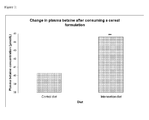
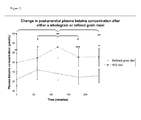
- Plasma betaine concentrations increased after 7 days on the wholegrain diet ( Figure 1 ), and increased acutely after the breakfast cereal challenge ( Figure 2 ).
- compositions of the present invention improve liver stores of betaine, which will help prevent the development and progression of liver diseases.
- Other factors in wholegrain cereals may also help to improve insulin sensitivity, which could also help prevent and treat the development of, e.g., FLD.
- the effect of wholegrain cereal on the reduction of symptoms of fatty liver can be tested in an animal study using for example Zucker rats.
- Zucker (fa/fa) rats have a defect for the gene that regulates appetite, so spontaneously develop fatty liver because they overeat.
- One of the main risk factors for fatty liver in humans is obesity brought about by overconsumption of food.
- Zucker (fa/+) rats are genetically similar (littermates), but are heterozygous for this gene defect, and thus serve as normal weight controls.
- the study is conducted with four groups, with each group of 10 animals aged 8 weeks at the start of the study and fed with a different diet as follows:
- Diets are based on the AIN-93G diet and matched for total energy, total fibre and percentage of energy coming from fat, carbohydrate and protein. 50 % of the diets by weight come from wheat flour (either refined or wholegrain). This corresponds to a total wholegrain cereal consumption of about 100g to 160g per day for an average sized adult person. All diets are supplemented with standard vitamin and mineral mixes, so that deficiencies of these should not be responsible for any differences observed.
- the rats are fed ad libitum, with paired feeding after two weeks if intake between groups is different. In total rats can be fed the different diets for 8 weeks. After 8 weeks, the rats are sacrificed and liver samples taken to assess the development of fatty liver, based on liver histopathology (size of fat deposits and abundance of inflammatory cells), total liver fat content, as well as triglycerides, fatty acids and cholesterol.
Landscapes
- Health & Medical Sciences (AREA)
- Life Sciences & Earth Sciences (AREA)
- Chemical & Material Sciences (AREA)
- Engineering & Computer Science (AREA)
- Polymers & Plastics (AREA)
- Food Science & Technology (AREA)
- Natural Medicines & Medicinal Plants (AREA)
- Nutrition Science (AREA)
- Mycology (AREA)
- Botany (AREA)
- Biotechnology (AREA)
- General Health & Medical Sciences (AREA)
- Veterinary Medicine (AREA)
- Zoology (AREA)
- Public Health (AREA)
- Animal Husbandry (AREA)
- Alternative & Traditional Medicine (AREA)
- Medical Informatics (AREA)
- Medicinal Chemistry (AREA)
- Microbiology (AREA)
- Pharmacology & Pharmacy (AREA)
- Epidemiology (AREA)
- Animal Behavior & Ethology (AREA)
- Physiology (AREA)
- Birds (AREA)
- Molecular Biology (AREA)
- Medicines Containing Plant Substances (AREA)
- Coloring Foods And Improving Nutritive Qualities (AREA)
Abstract
The present invention relates generally to the field of compositions containing wholegrain cereals. In particular, the present invention relates to health benefits of wholegrain cereal. One embodiment of the present invention concerns a composition comprising wholegrain cereal for use in the treatment or prevention of liver disorders.
Description
- The present invention relates generally to the field of compositions containing wholegrain cereals. In particular, the present invention relates to health benefits of wholegrain cereals. One embodiment of the present invention concerns a composition comprising wholegrain cereals for use in the treatment or prevention of liver disorders.
- Liver disorders occur widely in the population and are a risk factor for early mortality and more serious liver diseases.
- For example, fatty liver disease (FLD) exists in approximately 10-24 % of the population, depending on the country, and may have a prevalence of about 75 % among obese people. One German study estimated that having fatty liver disease increased a patients health costs for the Government by 26 % over a 5 year period (Baumeister SE, et al. (2008) Gastroenterology 134: 85-94).
- Fatty liver disease (FLD) is an inflammation of the liver, caused by the build up of fat in the liver cells which can over time lead to decreased liver function and if untreated, cirrhosis (where the liver ceases to function properly). When seen under a microscope slide, fatty liver cells have large apparently empty spaces, which are fat deposits. This fat accumulation ultimately pushes the cell nucleus to the edge of the cell, and the cell ceases to function normally. The reasons for the increase in fat accumulation are widely debated, but are suggested to involve a decrease in function of some cell signalling pathways, general insulin resistance, and/or a lack of the methyl-donor betaine. One of the possible causes of FLD is a metabolic disequilibrium around the one-carbon metabolic cycle. In addition, other metabolic factors may play a roll in the accumulation of lipids (e.g. loss of insulin sensitivity). While a better diet and exercise are the main recommended treatments, there are no specific food recommendations.
- There are two main types of FLD-alcoholic FLD, where subjects regularly consume >20 g/d alcohol, and alcohol is considered to be the main cause of the fat build up; and non-alcoholic FLD (NAFLD), which is not caused by alcohol, and often related to insulin resistance and metabolic syndrome. The extreme form of NAFLD is known as non-alcoholic steatohepatisis (NASH). NASH is considered to be one of the main causes of otherwise undefined cirrhosis of the liver (over time, around 20 % of people with NASH will go on to develop cirrhosis of the liver). If treated early enough, the condition is reversible.
- NAFLD is often associated with impaired insulin metabolism, obesity and metabolic syndrome. It is also caused by protein malnutrition (rapid weight loss may exacerbate the condition in obese people), and treatment with corticosteroids (e.g. cortisone and prednisone). Alcoholic-FLD is generally associated with chronic alcohol abuse, and in this case the metabolism of alcohol by the enzyme alcohol dehydrogenase also sends a signal for an increase in fatty acid synthesis and a decrease in fatty acid breakdown.
- FLD is usually diagnosed using liver function tests. Alcohol consumption over 20 g/d is considered to be the threshold for considering alcohol abuse to be the cause of the FLD condition.Abnormal liver enzyme values (e.g. alanine transaminase; aspartate transaminase, bilirubin and γ-glutamyl transpeptidase), and ultrasound observation of steatosis (abnormal accumulation of fat within cells) are minimally invasive markers of FLD, but definitive diagnosis can only be made with a liver biopsy and histological examination. Current treatments of FLD usually involve weight loss, and may include the administration of metformin and thiazolidinediones. Improvements of diet and exercise habits appear to be the most effective long-term treatments. Some experimental evidence also suggests that supplementation with glycine betaine (betaine) can reverse the progression of both alcoholic and non-alcoholic FLD (Miglio F, et al. (2000) Arzneim. Forsch./Drug Research 50: 722-727; Samara K, et al. (2006) Digestive Diseases and Sciences 51: 1226-1229).
-
US2002/0119181A1 discloses nutritional compositions made from conventional foods mixed on-site in a blender for treating patients with hepatic disorders. Thereby, a nutritionally complete, calorically dense mixture comprising a range of vitamin and mineral rich foods is achieved. The purpose of the invention is to address and correct the malnutrition as common in many hepatic diseased patients. However, the document fails to specifically provide a treatment or prevention of the hepatic disorder itself. -
US7,078,064B2 relates to compositions comprising antioxidants useful for reducing oxidative stress and lipid peroxidation and thereby treating a.o. chronic liver diseases. In particular, the document relates to compositions supplemented with antioxidants, including certain vitamins prepared from plant materials or produced by synthetic chemistry. The main route for this formulation is via parental administration, i.e. intra-venous supply of nutrients when the oral route is not possible. The document fails to provide a natural and simple oral food product solution for the treatment or prevention of liver disorders. - In view of the broad distribution of liver disorders in today's population and substantial healthcare costs it would be desirable to have available a natural composition that would be cheap and available to everyone and could be used to prevent and/or treat liver disorders and/or reverse existing liver damage.
- The present inventors have addressed this need and have found that the subject matter of the independent claim achieves the object described above.
- The thereon dependant claims further develop the idea of the present invention.
- In particular, the inventors were able to provide a composition that can be used, e.g., as food product and would consequently be available to everybody and that can be used to treat or prevent liver disorders.
- The inventors were surprised to see the administration of a wholegrain diet for 7 days results in a continuously increased plasma betaine concentration. It was also shown that the plasma betaine concentration acutely increases after a breakfast wholegrain cereal challenge.
- Example 2 further substantiates the beneficial effect of wholegrain cereal in an animal study.
- As supplementation with betaine has been linked to improvement in fatty liver, the results show that the compositions of the present invention improve liver stores of betaine, which will help prevent the development and progression of liver diseases.
- Consequently, one embodiment of the present invention is a composition comprising wholegrain cereal for use in the treatment or prevention of liver disorders.
- The present invention also related to the use of wholegrain cereal for the preparation of a composition to treat or prevent liver disorders.
- For example, the composition comprises at least about 0.3 g wholegrain cereal/g dry weight.
- Wholegrain cereal is to be understood for the purposes of the present invention as cereal grains that contain bran and germ as well as the endosperm.
- Refined cereal contains essentially only the endosperm.
- For the purposes of the present invention wholegrain shall be understood as proposed by the guidelines of the United States Food and Drug Administration follows:
- "Cereal grains that consist of the intact, ground, cracked or flaked caryopsis, whose principal anatomical components - the starchy endosperm, germ and bran - are present in the same relative proportions as they exist in the intact caryopsis - should be considered a wholegrain...
- Cereal grains may include amaranth, barley, buckwheat, bulgur, corn (including popcorn), millet, quinoa, rice, rye, oats, sorghum, teff, triticale, wheat, and wild rice (Guidelines of the United States Food and Drug Administration).
- Advantageously, wholegrain cereal is an ingredient which is generally well accepted and liked by consumers. It is a natural ingredient that can be incorporated into a large variety of products, and consequently, will be available to everyone in sufficient quantities.
- Moreover, the composition of the present invention does not require the addition of purified chemical compounds, which may require a careful dosing, and which may have undesirable side effects.
- Advantageously, the composition of the present invention may be administered in an amount that corresponds to a consumption of at least about 30g wholegrain cereal per day. Preferably, the amount to be administered corresponds to a consumption of at least about 100g wholegrain cereal per day.
- While in principle any amount of wholegrain cereal will have a positive effect on liver health following a dose response curve, good effects are seen if at least 30g wholegrain cereal are consumed per day, and even better effects are achieved by administering at least about 100g wholegrain cereal per day. The preferred embodiment is an administration of a composition that corresponds to a daily consumption of wholegrain cereal of about 160g. Such amounts of wholegrain cereal consumption can be feasibly achieved when for example a part or most of the dietary carbohydrates are based on wholegrain cereals. Excessive consumption of wholegrain cereal on the other hand is likely not to produce further increasing positive effects on liver health, but rather a saturation effect must be expected. Hence, in one embodiment the composition is to be administered in an amount corresponding to a consumption of between about 30-200g wholegrain cereal per day.
- The wholegrain cereal may be formulated in any kind of composition. However, such wholegrain compositions are generally perceived as pleasant to consume if they contain fibre, carbohydrates, fat and protein in a specific ratio. For example, the composition of the present invention may contain about 3-20 weight-% fibre, about 60-85 weight-% carbohydrates, about 0.5-10 weight-% fat and about 5-15 weight-% protein.
- Optionally, the composition of the present invention may also contain vitamins, minerals, trace elements and other micronutrients, e.g., in accordance with the recommendations of Government bodies such as the USRDA.
- For example, the composition may contain per daily dose one or more of the following micronutrients in the ranges given: 300 to 500 mg calcium, 50 to 100 mg magnesium, 150 to 250 mg phosphorus, 5 to 20 mg iron, 1 to 7 mg zinc, 0.1 to 0.3 mg copper, 50 to 200 µg iodine, 5 to 15 µg selenium, 1000 to 3000 µg beta carotene, 10 to 80 mg Vitamin C, 1 to 2 mg Vitamin B1, 0.5 to 1.5 mg Vitamin B6, 0.5 to 2 mg Vitamin B2, 5 to 18 mg niacin, 0.5 to 2.0 µg Vitamin B12, 100 to 800 µg folic acid, 30 to 70 µg biotin, 1 to 5 µg Vitamin D, 3 to 10 µg Vitamin E.
- The composition may also contain further compounds that are known to have a beneficial effect for the liver.
- For example, for the provision of an immediate effect the composition may further comprise added betaine (N,N,N-trimethylglycine). Betaine may be added as purified betaine or as a composition with a high betaine concentration. This will have the advantage that the added betaine will enforce an immediate beneficial effect for the liver while the wholegrain cereal will ensure that the betaine effect will last for prolonged time periods.
- As wholegrain cereal any kind of cereal or pseudocereal may be used. For example, the cereal may be selected from the group consisting of wheat, rye, triticale, oats, barley, rice, maize, sorghum, millet, quinoa, buckwheat or combinations thereof.
- The wholegrain cereals may be processed, e.g., to improve storage times, the pleasure of consumption, and/or to way wholegrain can be incorporated into a final product.
- Hence, the wholegrain cereals may at least in part processed.
- Typically, wholegrain cereals may be processed by a method selected from the group consisting of enzyme treatments, malting, heating, extrusion, baking, cooking or combinations thereof.
- The composition of the present invention may be any kind of consumable product. For example, the composition may be selected from the group consisting of food products, an animal food products, pharmaceutical compositions, nutritional compositions, nutraceuticals, drinks, or food additives.
- Pharmaceutical compositions have the advantage that they are generally administered under the supervision of medical personnel, which allows the determination of exact dosage forms for the subject to be treated.
- Food products, animal food products, nutritional compositions, nutraceuticals, drinks, and food additives have the advantage that they are freely available to everyone and can consequently particularly well be used as preventive measure.
- Generally, the composition of the present invention can be consumed at any time.
- However, it was found that the composition is in particular pleasant to consume during or as breakfast.
- Alternatively, the composition of the present invention may be consumed during or as lunch or breakfast.
- Without wishing to be bound by theory the inventors believe that this preference is due to the fact that it usually takes longer to digest wholegrain products than products from refined cereals. If this digestion procedure is ongoing through the night, this might be considered problematic for people that have trouble sleeping.
- The composition of the invention can also be administered at least twice during the day, whereby one administration may include for example breakfast. Preferably, the composition is administered once in the morning, e.g. during or as breakfast, and once in the after-noon, for example during or as part of the lunch meal. This dieting regimen may particularly be applicable, where consumption of wholegrain cereal of 100g or more per day is envisaged. In this way, the daily consumption can be split into individual servings during the day, which allows to spread the up-take of e.g. carbohydrates and diverse beneficial phytochemicals present in the wholegrain cereal more evenly during the entire day and not to concentrate such consumption to one single meal. Further, the up-take and bioavailability of the effective nutrients from the whole grain will be more evenly spread during the day and hence have a much better and sustainable biological effect to the body of a consumer.
- The liver disorder may be selected from the group consisting of fatty liver disease, non-alcoholic steatosis hepatitis, alcoholic steatosis hepatitis, liver cirrhosis, cholestasis or combinations thereof.
- The composition of the present invention may be intended for humans or animals.
- For animals the disorder to be treated or prevented may be fatty liver disease, non-alcoholic steatosis and/or liver cirrhosis and the composition may be formulated as a pet food composition.
- Alternatively, the composition may also be formulated as a pet food snack or as a pet food additive.
- If intended for humans, the composition of the present invention is particular intended for people at risk of developing a liver disorder, people suffering from liver disorders, and/or people recovering from liver disorders.
- For example, the composition of the present invention may be to be administered to overweight or obese people.
- "Overweight" is defined for an adult human as having a BMI between 25 and 30.
- "Obesity" is a condition in which the natural energy reserve, stored in the fatty tissue of animals, in particular humans and other mammals, is increased to a point where it is associated with certain health conditions or increased mortality. "Obese" is defined for an adult human as having a BMI greater than 30.
- "Body mass index" or "BMI" means the ratio of weight in kg divided by the height in metres, squared.
- Consequently, the composition of the present invention may be to be administered to people with a BMI of above at least 25.
- Since FLD is often caused by increased alcohol consumption, the composition of the present invention may also be to be administered to people with an above average alcohol consumption.
- For example, the composition may be to be administered to subjects which consume on average at least about 20 g alcohol per day.
- Of course, the composition of the present invention may also be to be administered to people suffering from alcoholism.
- Since the risk of developing liver disorders increases with age, the composition may also be to be administered to people above the age of 40.
- Some exemplary embodiments of the present invention are listed below:
- In one embodiment the disorder to be treated or prevented is FLD, the wholegrain cereal is wheat and the composition is intended for people above the age of 40.
- In a further embodiment the disorder to be treated or prevented is FLD, the wholegrain cereal is oats and the composition is intended for people above the age of 50.
- In a further embodiment the disorder to be treated or prevented is FLD, the wholegrain cereal is maize and the composition is intended for people above the age of 40.
- In a further embodiment the disorder to be treated or prevented is FLD, the wholegrain cereal is rice and the composition is intended for people above the age of 40.
- In a further embodiment the disorder to be treated or prevented is FLD, the wholegrain cereal is wheat and the composition is intended for people with a BMI of above at least 25.
- In a further embodiment the disorder to be treated or prevented is FLD, the wholegrain cereal is oats and the composition is intended for people with a BMI of above at least 25.
- In a further embodiment the disorder to be treated or prevented is FLD, the wholegrain cereal is maize and the composition is intended for people with a BMI of above at least 25.
- In a further embodiment the disorder to be treated or prevented is FLD, the wholegrain cereal is rice and the composition is intended for people with a BMI of above at least 25.
- It is clear to those of skill in the art that they can freely combine all features of the present invention disclosed herein without departing from the scope of the invention as disclosed.
- Further advantages and features of the present invention are apparent from the following example and drawing.
-
Figure 1 shows that plasma betaine is increased after one week on a wholegrain cereal diet. -
Figure 2 shows that plasma betaine is increased after a wholegrain breakfast cereal. All points are different from the refined grain diet, and the maximum of 120 minutes is different from all other timepoints measured. - In a randomised cross-over trial, subjects had one of two different energy matched diets: one based on wholegrain cereals, containing Nestlé wholegrain products (e.g. Buitoni pasta and crackers, Lean Cuisine, DON couscous, Shreddies, Shredded Wheat, Uncle Toby's muesli, porridge, barley risotto, rye bread), and the other containing refined grain cereal products (e.g. Cornflakes, Rice Krispies, Nestlé equivalent non-wholegrain cereals). The composition of the wholegrain cereal foods falls within the following macronutrient specification: 100-400 kcal/100 g; 4-15 g protein/100 g; 0.2-30 g fat/100 g and 2-25 g fibre/100 g. The average total daily intake of wholegrains on the wholegrain diet was 150 g/d (dry weight basis). With the exception of fibre, diets were matched for total energy and macronutrient content.
- Eleven female and 6 male healthy subjects aged between 20 and 50 took part in the trial. Subjects followed one of the diets for two weeks, and then followed the other after at least 8 weeks of washout (normal and non-wholegrain diet). On day 8 of each controlled diet period, the subjects undertook a post-prandial challenge, where they consumed a breakfast appropriate for the diet, and then gave blood samples over the next 4 hours.
- Differences between subjects were measured using a repeated measures ANOVA and a paired t-test, and were significant at the P<0.05 level. Plasma betaine concentrations increased after 7 days on the wholegrain diet (
Figure 1 ), and increased acutely after the breakfast cereal challenge (Figure 2 ). - As supplementation with betaine has been linked to improvement in fatty liver, the results show that the compositions of the present invention improve liver stores of betaine, which will help prevent the development and progression of liver diseases. Other factors in wholegrain cereals may also help to improve insulin sensitivity, which could also help prevent and treat the development of, e.g., FLD.
- The effect of wholegrain cereal on the reduction of symptoms of fatty liver can be tested in an animal study using for example Zucker rats. Zucker (fa/fa) rats have a defect for the gene that regulates appetite, so spontaneously develop fatty liver because they overeat. One of the main risk factors for fatty liver in humans is obesity brought about by overconsumption of food. Zucker (fa/+) rats are genetically similar (littermates), but are heterozygous for this gene defect, and thus serve as normal weight controls.
- The study is conducted with four groups, with each group of 10 animals aged 8 weeks at the start of the study and fed with a different diet as follows:
- 1) Zucker (fa/fa) rats fed a refined grain-based diet
- 2) Zucker (fa/fa) rats fed a wholegrain-based diet
- 3) Zucker (fa/fa) rats fed a refined grain-based diet, with added glycine betaine to match the diet of Group 2
- 4) Zucker (fa/-) rats fed a refined grain-based diet ('healthy control group')
- Diets are based on the AIN-93G diet and matched for total energy, total fibre and percentage of energy coming from fat, carbohydrate and protein. 50 % of the diets by weight come from wheat flour (either refined or wholegrain). This corresponds to a total wholegrain cereal consumption of about 100g to 160g per day for an average sized adult person. All diets are supplemented with standard vitamin and mineral mixes, so that deficiencies of these should not be responsible for any differences observed.
- The rats are fed ad libitum, with paired feeding after two weeks if intake between groups is different. In total rats can be fed the different diets for 8 weeks. After 8 weeks, the rats are sacrificed and liver samples taken to assess the development of fatty liver, based on liver histopathology (size of fat deposits and abundance of inflammatory cells), total liver fat content, as well as triglycerides, fatty acids and cholesterol.
Claims (14)
- Composition comprising at least about 0.3 g wholegrain cereal/g dry weight for use in the treatment or prevention of liver disorders.
- Composition in accordance with claim 1, wherein the composition is to be administered in an amount that corresponds to a consumption of at least about 30g wholegrain cereal per day.
- Composition in accordance with one of the preceding claims, wherein the composition is to be administered in an amount that corresponds to a consumption of at least about 100g, preferably of about 160g wholegrain cereal per day.
- Composition in accordance with one of the preceding claims, wherein the composition is to be administered in an amount corresponding to a consumption of not more than about 200g wholegrain cereal per day.
- Composition in accordance with one of the preceding claims comprising about 3-20 weight-% fibre, about 60-85 weight-% carbohydrates, about 0.5-10 weight-% fat and about 5-15 weight-% protein.
- Composition in accordance with one of the preceding claims, wherein the composition further comprises added betaine (N,N,N-trimethylglycine).
- Composition in accordance with one of the preceding claims, wherein the cereal is selected from the group consisting of wheat, rye, triticale, oats, barley, rice, maize, sorghum, millet, or combinations thereof.
- Composition in accordance with one of the preceding claims, wherein the cereals are at least in part processed.
- Composition in accordance with claim 6, wherein the cereals are processed by a method selected from the group consisting of enzyme treatments, malting, heating, extrusion, baking, cooking or combinations thereof.
- Composition in accordance with one of the preceding claims, wherein the liver disorder is selected from the group consisting of fatty liver disease, non-alcoholic steatosis hepatitis, alcoholic steatosis hepatitis, liver cirrhosis, cholestasis or combinations thereof.
- Composition in accordance with one of the preceding claims, wherein the composition is selected from the group consisting of food products, an animal food products, pharmaceutical compositions, nutritional compositions, nutraceuticals, drinks, or food additives.
- Composition in accordance with one of the preceding claims to be administered during or as breakfast.
- Composition in accordance with one of the preceding claims to be administered at least twice a day, preferably at least once in the morning and once during lunch or in the after-noon.
- Composition in accordance with one of the preceding claims to be administered to people with a BMI of above at least 25, to people with an above average alcohol consumption , to people suffering from alcoholism, and/or to people above the age of 40.
Priority Applications (2)
| Application Number | Priority Date | Filing Date | Title |
|---|---|---|---|
| EP11169834A EP2534959A1 (en) | 2011-06-14 | 2011-06-14 | Wholegrain cereal and liver disorders |
| PCT/EP2012/061068 WO2012171893A1 (en) | 2011-06-14 | 2012-06-12 | Whole grain cereal and liver disorders |
Applications Claiming Priority (1)
| Application Number | Priority Date | Filing Date | Title |
|---|---|---|---|
| EP11169834A EP2534959A1 (en) | 2011-06-14 | 2011-06-14 | Wholegrain cereal and liver disorders |
Publications (1)
| Publication Number | Publication Date |
|---|---|
| EP2534959A1 true EP2534959A1 (en) | 2012-12-19 |
Family
ID=44675013
Family Applications (1)
| Application Number | Title | Priority Date | Filing Date |
|---|---|---|---|
| EP11169834A Withdrawn EP2534959A1 (en) | 2011-06-14 | 2011-06-14 | Wholegrain cereal and liver disorders |
Country Status (2)
| Country | Link |
|---|---|
| EP (1) | EP2534959A1 (en) |
| WO (1) | WO2012171893A1 (en) |
Families Citing this family (1)
| Publication number | Priority date | Publication date | Assignee | Title |
|---|---|---|---|---|
| MX382895B (en) | 2015-06-11 | 2025-03-13 | Soc Des Produits Nestle S A Star | DIETARY SUPPLEMENT. |
Citations (6)
| Publication number | Priority date | Publication date | Assignee | Title |
|---|---|---|---|---|
| US20020119181A1 (en) | 2001-02-26 | 2002-08-29 | Julia Muszynska | Nutritional composition made from conventional foods for mixing onsite in a blender and treating patients with hepatic disorders |
| US20050123628A1 (en) * | 2003-12-03 | 2005-06-09 | George Zabrecky | Compositions and methods useful for treating and preventing chronic liver disease, chronic HCV infection and non-alcoholic steatohepatitis |
| KR20080067085A (en) * | 2007-01-15 | 2008-07-18 | 민경찬 | Customized Healthy Mixed Grains |
| US20100189875A1 (en) * | 2009-01-29 | 2010-07-29 | Brunob Ii B.V. | Use of whole grain materials with high resistant starch for satiety, reduction of food intake and weight management |
| KR20100095949A (en) * | 2009-02-23 | 2010-09-01 | 삼호농업협동조합 | Puffed cereal with a fig and method for producing thereof |
| JP2011062164A (en) * | 2009-09-18 | 2011-03-31 | Yumie Osada | Zinc-containing pasta |
-
2011
- 2011-06-14 EP EP11169834A patent/EP2534959A1/en not_active Withdrawn
-
2012
- 2012-06-12 WO PCT/EP2012/061068 patent/WO2012171893A1/en not_active Ceased
Patent Citations (7)
| Publication number | Priority date | Publication date | Assignee | Title |
|---|---|---|---|---|
| US20020119181A1 (en) | 2001-02-26 | 2002-08-29 | Julia Muszynska | Nutritional composition made from conventional foods for mixing onsite in a blender and treating patients with hepatic disorders |
| US20050123628A1 (en) * | 2003-12-03 | 2005-06-09 | George Zabrecky | Compositions and methods useful for treating and preventing chronic liver disease, chronic HCV infection and non-alcoholic steatohepatitis |
| US7078064B2 (en) | 2003-12-03 | 2006-07-18 | George Zabrecky | Compositions and methods useful for treating and preventing chronic liver disease, chronic HCV infection and non-alcoholic steatohepatitis |
| KR20080067085A (en) * | 2007-01-15 | 2008-07-18 | 민경찬 | Customized Healthy Mixed Grains |
| US20100189875A1 (en) * | 2009-01-29 | 2010-07-29 | Brunob Ii B.V. | Use of whole grain materials with high resistant starch for satiety, reduction of food intake and weight management |
| KR20100095949A (en) * | 2009-02-23 | 2010-09-01 | 삼호농업협동조합 | Puffed cereal with a fig and method for producing thereof |
| JP2011062164A (en) * | 2009-09-18 | 2011-03-31 | Yumie Osada | Zinc-containing pasta |
Non-Patent Citations (11)
| Title |
|---|
| AZADBAKHT ET AL.: "The dietary approaches to stop hypertension eating plan effects C-reactive protein, coagulation abnormalities, and hepatic function tests among type-2 diabetic patients", THE JOURNAL OF NUTRITION, vol. 141, 27 April 2011 (2011-04-27), pages 1083 - 1088, XP002660434 * |
| BAUMEISTER SE ET AL., GASTROENTEROLOGY, vol. 134, 2008, pages 85 - 94 |
| DATABASE CAPLUS [online] CHEMICAL ABSTRACTS SERVICE, COLUMBUS, OHIO, US; 31 March 2011 (2011-03-31), XP002660436, Database accession no. 2011:396190 * |
| DATABASE WPI Week 200903, Derwent World Patents Index; AN 2009-A67402, XP002660437 * |
| DATABASE WPI Week 201102, Derwent World Patents Index; AN 2010-L57693, XP002660433 * |
| HALLMANS, GÖRAN ET AL: "Tissue concentrations of zinc and iron in rats fed whole grains wheat bread or endosperm wheat bread supplemented with iron", TRACE ELEMENT - ANALYTICAL CHEMISTRY IN MEDECINE AND BIOLOGY, vol. 2, 1983, pages 61 - 74, XP002660472 * |
| KIM ET AL.: "Saengshik, a formulated health food, prevents liver damage in CCl4-induced mice and increases antioxidant activity in elderly women", JOURNAL OF MEDICINAL FOOD, vol. 11, no. 2, 2008, pages 323 - 330, XP002660431 * |
| KIM ET AL.: "Superfine Saengshik improves liver protection effect compared with fine Saengshik in an animal model", JOURNAL OF FOOD SCIENCE, vol. 74, no. 2, 2009, pages H59 - H69, XP002660432 * |
| MIGLIO F ET AL., ARZNEIM. FORSCH./DRUG RESEARCH, vol. 50, 2000, pages 722 - 727 |
| SAMARA K ET AL., DIGESTIVE DISEASES AND SCIENCES, vol. 51, 2006, pages 1226 - 1229 |
| TANG ET AL.: "Oats supplementation prevents alcohol-induced gut leakiness in rats by preventing alcohol-induced oxidative tissue damage", THE JOURNAL OF PHARMACOLOGY AND EXPERIMENTAL THERAPEUTICS, vol. 329, no. 3, 2009, pages 952 - 958, XP002660435 * |
Also Published As
| Publication number | Publication date |
|---|---|
| WO2012171893A1 (en) | 2012-12-20 |
Similar Documents
| Publication | Publication Date | Title |
|---|---|---|
| RU2380983C2 (en) | Food product for diabetics | |
| Hurrell et al. | Iron bioavailability and dietary reference values | |
| JP2013010762A (en) | Starch subtype and lipid metabolism | |
| EP3484311B1 (en) | Compositions for use in methods for managing digestive disorders | |
| US20020150649A1 (en) | Nutritional supplement for pediatric obesity | |
| KR20060132667A (en) | Nutritional composition for improving skin condition and preventing skin disease | |
| WO2012097061A1 (en) | Nutritional compositions and methods for improving skeletal muscle protein metabolism | |
| JP2021503878A (en) | Compositions and Methods Using Oleuropein or Curcumin for Muscle Quality and / or Muscle Mass | |
| Świercz et al. | Does a gluten-free diet result in nutritional deficiencies?–a review of literature | |
| CN104411319A (en) | Hawthorn and phytosterols and their effect on metabolic disorders | |
| PT2001310E (en) | Supplement mixture for dietetic food destined for celiacs | |
| KR20220097317A (en) | Composition for reducing body fat | |
| WO2012171893A1 (en) | Whole grain cereal and liver disorders | |
| MX2013011144A (en) | TRMP5 INHIBITORS THAT HELP THE REDUCTION OF BODY WEIGHT WITHOUT REDUCING FOOD INGESTION. | |
| Ronoh et al. | Rat bioassay for evaluation of protein nutritional quality of wheat and wheat-sorghum biscuits fortified with longhorn grasshopper (Ruspolia differens) powder | |
| TWI593359B (en) | Nutritional compensation for western-type diet | |
| Reynolds et al. | Special circumstances: trophic feeds, necrotizing enterocolitis and bronchopulmonary dysplasia | |
| CN110139563A (en) | Vegetable lipid is promoted to excrete the external composition comprising psicose | |
| CN101631557A (en) | Ameliorating or prophylactic agent for metabolic syndrome, and beverage, food and feed each comprising the same | |
| US10285967B2 (en) | Monoacylglycerols for use in conjunction with a lipase inhibitor and/or diets low in fat and/or calories | |
| Kaur et al. | Can thyalakoids replace bariatric surgery for long term maintenance of weight loss in obesity giving a more physiological approach | |
| Ijarotimi et al. | Production, Chemical, Antioxidant and Nutritional Properties of Potential Functional Foods from Yellow-Maize-Based Enriched with Animal Proteins for Rehabilitation of Malnourished Children | |
| Joseph et al. | ENHANCING THE NUTRIENT BIOAVAILABILITY OF FOOD AID PRODUCTS A Report from the Food Aid Quality Review | |
| JP2004121255A (en) | Processed food product of low energy, obtained by combinedly using only food products and using no dietary supplement food product for all nutrient, and method for producing the food | |
| Fardet | Potential health benefits of oat grain and oat-based products |
Legal Events
| Date | Code | Title | Description |
|---|---|---|---|
| PUAI | Public reference made under article 153(3) epc to a published international application that has entered the european phase |
Free format text: ORIGINAL CODE: 0009012 |
|
| AK | Designated contracting states |
Kind code of ref document: A1 Designated state(s): AL AT BE BG CH CY CZ DE DK EE ES FI FR GB GR HR HU IE IS IT LI LT LU LV MC MK MT NL NO PL PT RO RS SE SI SK SM TR |
|
| AX | Request for extension of the european patent |
Extension state: BA ME |
|
| STAA | Information on the status of an ep patent application or granted ep patent |
Free format text: STATUS: THE APPLICATION HAS BEEN WITHDRAWN |
|
| 18W | Application withdrawn |
Effective date: 20130619 |