EP2532749A1 - DNA aptamer specifically binding to pLDH (Plasmodium Lactacte Dehydrogenase) - Google Patents
DNA aptamer specifically binding to pLDH (Plasmodium Lactacte Dehydrogenase) Download PDFInfo
- Publication number
- EP2532749A1 EP2532749A1 EP12151425A EP12151425A EP2532749A1 EP 2532749 A1 EP2532749 A1 EP 2532749A1 EP 12151425 A EP12151425 A EP 12151425A EP 12151425 A EP12151425 A EP 12151425A EP 2532749 A1 EP2532749 A1 EP 2532749A1
- Authority
- EP
- European Patent Office
- Prior art keywords
- plasmodium
- pvldh
- lactate dehydrogenase
- aptamer
- pldh
- Prior art date
- Legal status (The legal status is an assumption and is not a legal conclusion. Google has not performed a legal analysis and makes no representation as to the accuracy of the status listed.)
- Granted
Links
Images


Classifications
-
- G—PHYSICS
- G01—MEASURING; TESTING
- G01N—INVESTIGATING OR ANALYSING MATERIALS BY DETERMINING THEIR CHEMICAL OR PHYSICAL PROPERTIES
- G01N33/00—Investigating or analysing materials by specific methods not covered by groups G01N1/00 - G01N31/00
- G01N33/48—Biological material, e.g. blood, urine; Haemocytometers
- G01N33/50—Chemical analysis of biological material, e.g. blood, urine; Testing involving biospecific ligand binding methods; Immunological testing
- G01N33/53—Immunoassay; Biospecific binding assay; Materials therefor
- G01N33/569—Immunoassay; Biospecific binding assay; Materials therefor for microorganisms, e.g. protozoa, bacteria, viruses
- G01N33/56905—Protozoa
-
- A—HUMAN NECESSITIES
- A61—MEDICAL OR VETERINARY SCIENCE; HYGIENE
- A61K—PREPARATIONS FOR MEDICAL, DENTAL OR TOILETRY PURPOSES
- A61K31/00—Medicinal preparations containing organic active ingredients
- A61K31/70—Carbohydrates; Sugars; Derivatives thereof
- A61K31/7088—Compounds having three or more nucleosides or nucleotides
- A61K31/711—Natural deoxyribonucleic acids, i.e. containing only 2'-deoxyriboses attached to adenine, guanine, cytosine or thymine and having 3'-5' phosphodiester links
-
- C—CHEMISTRY; METALLURGY
- C12—BIOCHEMISTRY; BEER; SPIRITS; WINE; VINEGAR; MICROBIOLOGY; ENZYMOLOGY; MUTATION OR GENETIC ENGINEERING
- C12N—MICROORGANISMS OR ENZYMES; COMPOSITIONS THEREOF; PROPAGATING, PRESERVING, OR MAINTAINING MICROORGANISMS; MUTATION OR GENETIC ENGINEERING; CULTURE MEDIA
- C12N15/00—Mutation or genetic engineering; DNA or RNA concerning genetic engineering, vectors, e.g. plasmids, or their isolation, preparation or purification; Use of hosts therefor
- C12N15/09—Recombinant DNA-technology
- C12N15/11—DNA or RNA fragments; Modified forms thereof; Non-coding nucleic acids having a biological activity
- C12N15/115—Aptamers, i.e. nucleic acids binding a target molecule specifically and with high affinity without hybridising therewith ; Nucleic acids binding to non-nucleic acids, e.g. aptamers
-
- C—CHEMISTRY; METALLURGY
- C12—BIOCHEMISTRY; BEER; SPIRITS; WINE; VINEGAR; MICROBIOLOGY; ENZYMOLOGY; MUTATION OR GENETIC ENGINEERING
- C12N—MICROORGANISMS OR ENZYMES; COMPOSITIONS THEREOF; PROPAGATING, PRESERVING, OR MAINTAINING MICROORGANISMS; MUTATION OR GENETIC ENGINEERING; CULTURE MEDIA
- C12N9/00—Enzymes; Proenzymes; Compositions thereof; Processes for preparing, activating, inhibiting, separating or purifying enzymes
- C12N9/0004—Oxidoreductases (1.)
-
- C—CHEMISTRY; METALLURGY
- C12—BIOCHEMISTRY; BEER; SPIRITS; WINE; VINEGAR; MICROBIOLOGY; ENZYMOLOGY; MUTATION OR GENETIC ENGINEERING
- C12Y—ENZYMES
- C12Y101/00—Oxidoreductases acting on the CH-OH group of donors (1.1)
- C12Y101/01—Oxidoreductases acting on the CH-OH group of donors (1.1) with NAD+ or NADP+ as acceptor (1.1.1)
- C12Y101/01027—L-Lactate dehydrogenase (1.1.1.27)
-
- C—CHEMISTRY; METALLURGY
- C12—BIOCHEMISTRY; BEER; SPIRITS; WINE; VINEGAR; MICROBIOLOGY; ENZYMOLOGY; MUTATION OR GENETIC ENGINEERING
- C12N—MICROORGANISMS OR ENZYMES; COMPOSITIONS THEREOF; PROPAGATING, PRESERVING, OR MAINTAINING MICROORGANISMS; MUTATION OR GENETIC ENGINEERING; CULTURE MEDIA
- C12N2310/00—Structure or type of the nucleic acid
- C12N2310/10—Type of nucleic acid
- C12N2310/16—Aptamers
-
- G—PHYSICS
- G01—MEASURING; TESTING
- G01N—INVESTIGATING OR ANALYSING MATERIALS BY DETERMINING THEIR CHEMICAL OR PHYSICAL PROPERTIES
- G01N2333/00—Assays involving biological materials from specific organisms or of a specific nature
- G01N2333/435—Assays involving biological materials from specific organisms or of a specific nature from animals; from humans
- G01N2333/44—Assays involving biological materials from specific organisms or of a specific nature from animals; from humans from protozoa
-
- G—PHYSICS
- G01—MEASURING; TESTING
- G01N—INVESTIGATING OR ANALYSING MATERIALS BY DETERMINING THEIR CHEMICAL OR PHYSICAL PROPERTIES
- G01N2333/00—Assays involving biological materials from specific organisms or of a specific nature
- G01N2333/90—Enzymes; Proenzymes
- G01N2333/902—Oxidoreductases (1.)
- G01N2333/904—Oxidoreductases (1.) acting on CHOH groups as donors, e.g. glucose oxidase, lactate dehydrogenase (1.1)
-
- Y—GENERAL TAGGING OF NEW TECHNOLOGICAL DEVELOPMENTS; GENERAL TAGGING OF CROSS-SECTIONAL TECHNOLOGIES SPANNING OVER SEVERAL SECTIONS OF THE IPC; TECHNICAL SUBJECTS COVERED BY FORMER USPC CROSS-REFERENCE ART COLLECTIONS [XRACs] AND DIGESTS
- Y02—TECHNOLOGIES OR APPLICATIONS FOR MITIGATION OR ADAPTATION AGAINST CLIMATE CHANGE
- Y02A—TECHNOLOGIES FOR ADAPTATION TO CLIMATE CHANGE
- Y02A50/00—TECHNOLOGIES FOR ADAPTATION TO CLIMATE CHANGE in human health protection, e.g. against extreme weather
- Y02A50/30—Against vector-borne diseases, e.g. mosquito-borne, fly-borne, tick-borne or waterborne diseases whose impact is exacerbated by climate change
Definitions
- the present invention relates to a DNA aptamer specifically binding to pLDH (Plasmodium Lactate Dehydrogenase) and a composition for the diagnosis of malaria.
- pLDH Parabismodium Lactate Dehydrogenase
- Symptoms of malaria include headache, myalgia, fever, vomiting, and the like. However, malaria cannot be diagnosed on the basis of these symptoms because they are not unique to malaria. Typically, malaria is confirmed by microscopic examination, which is, however, unsuitable for use in initial diagnosis in malaria prevalent regions because the method requires expensive instruments and skilled operators.
- An immunochromatographic diagnosis assay provides a potential alternative. Based on antigen-antibody reactions, typical immunochromatographic portable diagnosis kits, however, may vary in diagnostical accuracy depending on the storage environment thereof. An initial countermeasure in response to an initial diagnosis performed in the scene of outbreak of malaria has a great influence on the subsequent treatment of malaria, so that portable diagnosis kits must have high performance.
- pLDH is an essential enzyme, detectable in malarial parasites over their entire life, and one that is involved in the metabolism of malarial parasites. All four kinds of malarial parasites have the enzyme in a highly conserved amino acid sequences. Most of the currently available portable malaria diagnostic kits are based on antibodies to pLDH and can be used to diagnose all four types of malaria.
- An aptamer is a single strand DNA (ssDNA) or RNA (ssRNA) that binds to a specific target. Thanks to their high affinity and stability to a specific target, they have recently been extensively developed and actively applied to the therapy and sensors for diagnosis of diseases.
- the synthesis of aptamers can be relatively simply, and cells, proteins and even small organic substance can be utilized as their targets, which allows for the development of new detection methods.
- aptamers find a wide range of applications in various fields, including the development of therapeutics, drug delivery systems, biosensors for diagnosis, etc. because they are superior in specificity and stability to the antibodies that were developed previously.
- Antibodies developed for diagnostic use are prepared using the immune system and thus suffer from the disadvantage of their preparation consuming comparatively a lot of time and expense. Further, they are proteins that have poor stability, compared to aptamers, DNA or RNA, which may act as an obstruction to the development of highly sensible sensors. In light of the fact that most malaria-prevalent regions are hot and moist, diagnostic systems based on antibodies show low accuracy.
- the present invention is to provide a DNA aptamer specifically binding to pLDH (Plasmodium Lactate Dehydrogenase), a composition for the diagnosis of malaria, comprising the same, and a diagnosis kit of malaria using the same.
- pLDH Parabismodium Lactate Dehydrogenase
- the present invention provides an aptamer that specifically binds to pLDH (plasmodium lactate dehydrogenase) which has the base sequence of SEQ ID NO: 1 or 2.
- pLDH plasma lactate dehydrogenase
- the present invention provides a composition for the diagnosis of malaria, comprising a DNA aptamer specifically binding to pLDH (Plasmodium Lactate Dehydrogenase).
- the present invention provides a diagnostic kit for malaria that uses a DNA aptamer that specifically binds to pLDH (Plasmodium Lactate Dehydrogenase).
- the DNA aptamer of the present invention share a sequence homology of 70% or higher with the base sequence of SEQ ID NO: 1 or 2.
- the DNA aptamers specifically binding to pLDH in accordance with the present invention can be developed into biosensors which determine pLDH levels with high sensitivity and accuracy, greatly contributing to the diagnostic accuracy of malaria.
- pLDH was expressed in a bacterial expression system, purified, and utilized to select DNA aptamers with the SELEX (Systematic Evolution of Ligands by EXponential enrichment) technique, which were then analyzed for sequence and structure, culminating in the present invention.
- SELEX Systematic Evolution of Ligands by EXponential enrichment
- the present invention provides a DNA aptamer having the base sequence of SEQ ID NO: 1 or 2 that specifically binds to pLDH (plasmodium lactate dehydrogenase).
- pLDH plasma lactate dehydrogenase
- the present invention provides a composition for the diagnosis of malaria, comprising a DNA aptamer specifically binding to pLDH (Plasmodium Lactate Dehydrogenase).
- composition of the present invention may comprise pharmaceutically or physiologically acceptable vehicles, excipients or diluents.
- the vehicles, excipients and diluents include lactose, dextrose, sucrose, sorbitol, mannitol, xylitol, erythritol, maltitol, starch, acacia gum, alginate, gelatin, calcium phosphate, calcium silicate, cellulose, methyl cellulose, amorphous cellulose, polyvinylpyrrolidone, water, methyl hydroxybenzoate, propylhydroxybenzoate, talc, magnesium stearate, and mineral oil.
- the composition may further comprise typical filters, thickeners, binders, disintegrants, surfactants, anticoagulants, lubricants, wetting agents, fragrant, emulsifiers, and/or preservatives.
- the present invention provides a diagnostic kit for malaria, using a DNA aptamer specifically binding to pLDH (Plasmodium Lactate Dehydrogenase).
- the DNA aptamer of the present invention has the base sequence of SEQ ID NO: 1 or 2, but is not limited thereto. If it shares a 70% or greater homology with the base sequence of SEQ ID NO: 1 or 2, a DNA aptamer falls within the scope of the present invention.
- the DNA aptamer according to the present invention has three essential regions: (i) loop 1 (5'-TTCCNTNGN-3'), (ii) G-C rich stem and (iii) loop 2 (5'-AGT-3'). When it has the three regions, any DNA aptamer may be used in the present invention even if the other region thereof may be different from the corresponding region of the base sequence of SEQ ID NO: 1 or 2.
- pLDH examples include pvLDH (plasmodium vivax lactate dehydrogenase), pfLDH (plasmodium falciparum lactate dehydrogenase), pmLDH (plasmodium malariae lactate dehydrogenase), and poLDH (plasmodium ovale lactate dehydrogenase), but are not limited thereto.
- a 5' primer with a BamH1 restriction site (CCCGGATCCATGACGCCGAAAATTGT) and a 3' primer with a Xhol restriction site (CCCCTCGAGTTAAATGAGCGCCTTCATCCTTTTAGTCT) were synthesized.
- amplification was conducted on the genomic DNA of Plasmodium vivax in the presence of i-pfu polymerase. PCR was performed with 35 cycles of 1) denaturing the double strand of the template at 94°C for 30 sec, 2) annealing the template with the primers at 56°C for 30 sec, and 3) extending new strands at 72°C for 1 min.
- the amplified pvLDH gene was digested with the restriction enzymes, ligated to a pET28a vector containing (His)6-tag and transformed into BL21(DE3) E. coli.
- the BL21(DE3) cells transformed with the pvLDH gene were grown at 37°C in an LB (Luria Bertani) medium to an OD 600 (optical density) of 0.6. Subsequently, the expression of the protein was induced by incubating the cells at 18°C for 16 hours in the presence of 0.2 mM IPTG (isopropyl-thio- ⁇ -D-galactopyranoside). The expression of the protein was confirmed by SDS-PAGE (sodium dodecyl sulfate polyacrylamide gel electrophoresis). After being harvested by centrifugation, the cells were washed once with PBS (10 mM sodium phosphate, 150 mM NaCl, pH 7.4). The SDS-PAGE results are shown in FIG. 1 .
- the cells were lysed in a lysis buffer (20 mM Tris, 500 mM NaCl, 0.5 mM ⁇ -mercaptoethanol, 5% glycerol, 10 mM imidazole, pH 8.0) and ruptured by sonication for 15 min. Centrifugation at 12,000 rpm for 40 min separated proteins in a supernatant from the cell debris.
- a lysis buffer (20 mM Tris, 500 mM NaCl, 0.5 mM ⁇ -mercaptoethanol, 5% glycerol, 10 mM imidazole, pH 8.0
- Ni-NTA The affinity of Ni-NTA for the (His)6-tag amino acid residues was used to isolate the protein to a high purity.
- FPLC Fast protein liquid chromatography
- the target protein bound to the column was eluted with elution buffer (20 mM Tris, 500 mM NaCl, 0.5 mM ⁇ - mercaptoethanol, 5% glycerol, 400 mM imidazole, pH 8.0) because the (His) 6-tag of the protein competes with imidazole.
- the fraction containing pvLDH was allowed to flow through the ion exchange column MonoQ coupled with FPLC to separate proteins according to pI. Because pvLDH is not bound to the column, the non-binding fraction was subjected to size exclusion chromatography by gel filtration using a Superdex200 column. The results are shown in FIG. 2 .
- a library of 90 sequences each having primer sequences for PCR amplification and cloning at opposite ends with a random DNA sequence of 40 bases between the primer sequences, was constructed (5'-CACCTAATACGACTCACTATAGCGGATCCGA-N40-CTGGCTCGAACAAGCTTGC-3').
- a 5' primer (5'- CACCTAATACGACTCACTATAGCGGA-3'), a 3' primer (5'-GCAAGCTTGTTCGAGCCAG-3') and a biotin-conjugated 3' primer (5'-Biotin-GCAAGCTTGTTCGAGCCAG-3') were used for PCR amplification and ssDNA production. All the oligonucleotides used in the present invention were synthesized and subjected to PAGE purification by Bionics (Korea).
- the purified pvLDH was immobilized to the magnetic bead Dynabead (Invitrogen, Norway), which can allows His-tag to bind to its cobalt-coated surface.
- the protein was fixed to the beads by washing 20 ⁇ L of the beads with a binding buffer (20 mM Tris, 50 mM NaCl, 5 mM KCl, 5 mM MgCl 2 , pH8.0) by means of an external magnet and incubating the beads with 100 ⁇ L of a binding buffer containing 500 pmol of the protein.
- a binding buffer (20 mM Tris, 50 mM NaCl, 5 mM KCl, 5 mM MgCl 2 , pH8.0
- a library of the ssDNAs (1 nmol) was dissolved in 100 ⁇ L of a binding buffer and was incubated at 90°C for 3 min and then at 4°C for one hour to allow the ssDNA to form the most stable conformation. Subsequently, this library was reacted for one hour with the pvLDH protein immobilized to the magnetic bead, with gentle agitation. Then, the beads were washed twice with the binding buffer to remove the ssDNA which remained unbound to the pvLDH immobilized to the beads.
- the ssDNA was separated from the proteins bound thereto.
- the ssDNA and the proteins bound thereto were eluted with elution buffer (20 mM Tris, 50 mM NaCl, 5 mM KCl, 5 mM MgCl2, 0.01% tween20, 300 mM imidazole, pH 8.0).
- the ssDNA eluate was precipitated in ethanol, dissolved in 60 ⁇ L of distilled water, and used as a template for PCR amplification using the 5' primer and the biotin-conjugated 3' primer in the presence of i-pfu polymerase (Intron Biotechnology, Korea).
- the biotin-conjugated PCR product was incubated for one hour with streptavidin-coated magnetic beads in a coupling buffer (5 mM Tris-HCl, 0.5 mM EDTA, 1 M NaCl, 0.005% Tween 20, pH 7.5), followed by incubation with 100 ⁇ L of 100 mM NaOH for 5 min to separate only ssDNA.
- the ssDNA was obtained using an external magnet.
- the first selected ssDNA was used in subsequent repetitive selection.
- the amount of ssDNA and the concentration of pvLDH were gradually decreased in subsequent repetitions.
- the binding of ssDNA to pvLDH was monitored by measuring the concentration of the ssDNA eluted in repeated selection with a UV spectrometer (Biochrom Libra S22 spectrometer). The results are shown in FIG. 3 .
- the ssDNA selected in the 10 th round was amplified by PCR using the unmodified 5' and 3'primers and cloned to pENTR/TOPO (TOPO TA Cloning kit, Invitrogen, USA) which was then transformed into E.coli TOP10 (Invitrogen, USA).
- the clones harboring the ssDNA were purified using a miniprep kit (GeneAll, Korea) and subjected to base sequencing (COSMO Genetech, Korea).
- the ssDNA sequences were identified as SEQ ID NOS: 1 and 2 and are listed in Table 1, below.
- EXAMPLE 5 Electrophoretic Mobility Shift Assay (EMSA) of the Aptamers for Ability to Bind to LDH of Other Species than Plasmodium vivax
- EMSA Electrophoretic mobility shift assay
- a mixture of 16 ⁇ g of pvLDH and 10 ⁇ L of magnetic beads was incubated for one hour in 100 ⁇ L of binding buffer (20 mM Tris, 50 mM NaCl, 5 mM KCl, 5 mM MgCl2, pH8.0), followed by washing twice with the binding buffer to remove unbound pvLDH. Then, the beads were incubated for one hour with various concentrations of FAM-labeled aptamers. The aptamers which were not reacted with pvLDH were removed by washing.
- the aptamers excavated in Example 4 have the base sequences of SEQ ID NOS: 1 and 2, respectively, showing secondary structures of FIG. 4 .
- the secondary structures of aptamers of SEQ ID NOS: 1 and 2 may be divided into three regions.
- FIG. 7 shows the secondary structures of the aptamer of SEQ ID NO: 1.
- Loop 1 red
- G-C rich stem blue
- Loop 2 green
- EMSA Electrophoretic mobility shift assay
- the mutants of the aptamer of SEQ ID NO: 1 have the sequences of SEQ ID NOS: 3 to 5, respectively and are given in FIG. 8 .
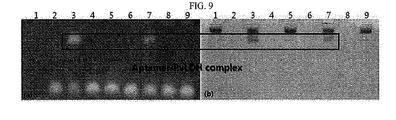
- EXSA results are shown in FIG. 9 and specifications for each lane in FIG. 9 are summarized in Table 4, below. TABLE 4 1 PvLDH 2,3 aptamer aptamer+PVLDH 4,5 loop 1, loop 1+PvLDH 6,7 stem, stern+PvLDH 8,9 loop 2, loop 2 + PvLDH
- the sequences modified at Loop 1 and Loop 2 did not bind to pvLDH protein at all, indicating that Loop 1 and Loop 2 are directly responsible for the binding of the protein to the aptamers.
- the G-C rich stem was partially modified because the significant modification thereof may destroy the secondary structure.
- the binding strength was greatly reduced.
- the G-C rich stem was observed to be involved in the binding of the protein to the DNA aptamer in addition to contributing to the stable secondary structure of the DNA aptamer.
- the three regions are essential for the binding of the DNA aptamer, which means that even if sequences other than the three essential regions may be randomly mutated, the binding specificity is not altered.
Landscapes
- Health & Medical Sciences (AREA)
- Life Sciences & Earth Sciences (AREA)
- Engineering & Computer Science (AREA)
- Chemical & Material Sciences (AREA)
- Genetics & Genomics (AREA)
- Biomedical Technology (AREA)
- Molecular Biology (AREA)
- Organic Chemistry (AREA)
- Zoology (AREA)
- Wood Science & Technology (AREA)
- Bioinformatics & Cheminformatics (AREA)
- Biochemistry (AREA)
- General Health & Medical Sciences (AREA)
- Biotechnology (AREA)
- General Engineering & Computer Science (AREA)
- Microbiology (AREA)
- Immunology (AREA)
- Physics & Mathematics (AREA)
- Hematology (AREA)
- Urology & Nephrology (AREA)
- Medicinal Chemistry (AREA)
- Biophysics (AREA)
- Plant Pathology (AREA)
- Food Science & Technology (AREA)
- Analytical Chemistry (AREA)
- Cell Biology (AREA)
- Pathology (AREA)
- General Physics & Mathematics (AREA)
- Virology (AREA)
- Tropical Medicine & Parasitology (AREA)
- Pharmacology & Pharmacy (AREA)
- Epidemiology (AREA)
- Animal Behavior & Ethology (AREA)
- Public Health (AREA)
- Veterinary Medicine (AREA)
- Measuring Or Testing Involving Enzymes Or Micro-Organisms (AREA)
Abstract
Description
- The present invention relates to a DNA aptamer specifically binding to pLDH (Plasmodium Lactate Dehydrogenase) and a composition for the diagnosis of malaria.
- Symptoms of malaria include headache, myalgia, fever, vomiting, and the like. However, malaria cannot be diagnosed on the basis of these symptoms because they are not unique to malaria. Typically, malaria is confirmed by microscopic examination, which is, however, unsuitable for use in initial diagnosis in malaria prevalent regions because the method requires expensive instruments and skilled operators. An immunochromatographic diagnosis assay provides a potential alternative. Based on antigen-antibody reactions, typical immunochromatographic portable diagnosis kits, however, may vary in diagnostical accuracy depending on the storage environment thereof. An initial countermeasure in response to an initial diagnosis performed in the scene of outbreak of malaria has a great influence on the subsequent treatment of malaria, so that portable diagnosis kits must have high performance.
- pLDH is an essential enzyme, detectable in malarial parasites over their entire life, and one that is involved in the metabolism of malarial parasites. All four kinds of malarial parasites have the enzyme in a highly conserved amino acid sequences. Most of the currently available portable malaria diagnostic kits are based on antibodies to pLDH and can be used to diagnose all four types of malaria.
- An aptamer is a single strand DNA (ssDNA) or RNA (ssRNA) that binds to a specific target. Thanks to their high affinity and stability to a specific target, they have recently been extensively developed and actively applied to the therapy and sensors for diagnosis of diseases. The synthesis of aptamers can be relatively simply, and cells, proteins and even small organic substance can be utilized as their targets, which allows for the development of new detection methods. In addition, aptamers find a wide range of applications in various fields, including the development of therapeutics, drug delivery systems, biosensors for diagnosis, etc. because they are superior in specificity and stability to the antibodies that were developed previously.
- Antibodies developed for diagnostic use are prepared using the immune system and thus suffer from the disadvantage of their preparation consuming comparatively a lot of time and expense. Further, they are proteins that have poor stability, compared to aptamers, DNA or RNA, which may act as an obstruction to the development of highly sensible sensors. In light of the fact that most malaria-prevalent regions are hot and moist, diagnostic systems based on antibodies show low accuracy.
- There is therefore a need for a diagnosis system of malaria that can overcome problems encountered in the prior art.
- The present invention is to provide a DNA aptamer specifically binding to pLDH (Plasmodium Lactate Dehydrogenase), a composition for the diagnosis of malaria, comprising the same, and a diagnosis kit of malaria using the same.
- However, the technical objects to be achieved by the present invention are not limited to those mentioned above and other objects may be clearly understood by those skilled in the art from the description given below.
- In accordance with an aspect thereof, the present invention provides an aptamer that specifically binds to pLDH (plasmodium lactate dehydrogenase) which has the base sequence of SEQ ID NO: 1 or 2.
- In accordance with another aspect thereof, the present invention provides a composition for the diagnosis of malaria, comprising a DNA aptamer specifically binding to pLDH (Plasmodium Lactate Dehydrogenase).
- In accordance with a further aspect thereof, the present invention provides a diagnostic kit for malaria that uses a DNA aptamer that specifically binds to pLDH (Plasmodium Lactate Dehydrogenase).
- In an embodiment of the present invention, the DNA aptamer of the present invention share a sequence homology of 70% or higher with the base sequence of SEQ ID NO: 1 or 2.
- Superior in specificity and stability to antibodies which are conventionally used to diagnose malaria, the DNA aptamers specifically binding to pLDH (Plasmodium Lactate Dehydrogenase) in accordance with the present invention can be developed into biosensors which determine pLDH levels with high sensitivity and accuracy, greatly contributing to the diagnostic accuracy of malaria.
- The above and other objects, features and other advantages of the present invention will be more clearly understood from the following detailed description taken in conjunction with the accompanying drawings, in which:
-
FIG. 1 shows the expression of pvLDH protein as measured by SDS PAGE; -
FIG. 2 shows the isolation of pvLDH protein as purified by gel filtration (Superdex200 column); -
FIG. 3 is a graph showing the binding strength of ssDNA aptamers to pvLDH as measured by a UV spectrometer according to selection of aptamer specific for pvLDH; -
FIG. 4 shows the secondary structures of selected ssDNAs of SEQ ID NOS 1 (a) and 2 (b) as expected by the Mfold program; -
FIG. 5 shows the ability of aptamers of SEQ ID NOS: 1 and 2 to bind to pvLDH (plasmodium vivax lactate dehydrogenase) and pfLDH (plasmodium falciparum lactate dehydrogenase) as measured by EMSA (Electrophoretic mobility shift assay) (stained with SYBR® green, lane 1: PvLDH, lane 2:Aptamer # 2, lane 3:Aptamer # 2 + PvLDH, lane 4: Aptamer #1, lane 5: Aptamer #1 + PvLDH, lane 6: PfLDH, lane 7: Aptamer #2, lane 8: Aptamer #2 + PFLDH, lane 9: Aptamer #1, and lane 10: Aptamer #1 + PfLDH); -
FIG. 6 shows the ability of aptamers of SEQ ID NOS: 1 and 2 to bind to pvLDH (plasmodium vivax lactate dehydrogenase) and pfLDH (plasmodium falciparum lactate dehydrogenase) as measured by EMSA (Electrophoretic mobility shift assay) (stained with coomassie blue, lane 1: PvLDH, lane 2:Aptamer # 2, lane 3:Aptamer # 2 + PvLDH, lane 4: Aptamer #1, lane 5: Aptamer #1 + PvLDH, lane 6: PfLDH, lane 7: Aptamer #2, lane 8: Aptamer #2 + PfLDH, lane 9: Aptamer #1, lane 10: Aptamer #1 + PfLDH) ; -
FIG. 7 shows an expected secondary structure of the aptamer of SEQ ID NO: 1; -
FIG. 8 shows base sequences of the aptamer mutants, used in the mutation assay of the Example, wherein mutation bases are marked; and -
FIG. 9 show the ability of the aptamer mutants as measured by EMSA (Electrophoretic mobility shift assay) (lane 1: pvLDH, lane 2:aptamer# 1, lane 3:aptamer# 1+pvLDH, lane 4:loop 1 mutant, lane 5:loop 1 mutant + pvLDH, lane 6: stem mutant, lane 7: stem mutant +pvrLDH, lane 8:loop 2 mutant, lane 9:loop 2 mutant + pvLDH) . - To develop an aptamer as a substitute for an antibody to pLDH, pLDH was expressed in a bacterial expression system, purified, and utilized to select DNA aptamers with the SELEX (Systematic Evolution of Ligands by EXponential enrichment) technique, which were then analyzed for sequence and structure, culminating in the present invention.
- In greater detail, the present invention provides a DNA aptamer having the base sequence of SEQ ID NO: 1 or 2 that specifically binds to pLDH (plasmodium lactate dehydrogenase).
- Also, the present invention provides a composition for the diagnosis of malaria, comprising a DNA aptamer specifically binding to pLDH (Plasmodium Lactate Dehydrogenase).
- In addition to the DNA aptamer, the composition of the present invention may comprise pharmaceutically or physiologically acceptable vehicles, excipients or diluents.
- Examples of the vehicles, excipients and diluents include lactose, dextrose, sucrose, sorbitol, mannitol, xylitol, erythritol, maltitol, starch, acacia gum, alginate, gelatin, calcium phosphate, calcium silicate, cellulose, methyl cellulose, amorphous cellulose, polyvinylpyrrolidone, water, methyl hydroxybenzoate, propylhydroxybenzoate, talc, magnesium stearate, and mineral oil. When formulated into dosage forms, the composition may further comprise typical filters, thickeners, binders, disintegrants, surfactants, anticoagulants, lubricants, wetting agents, fragrant, emulsifiers, and/or preservatives.
- Also, the present invention provides a diagnostic kit for malaria, using a DNA aptamer specifically binding to pLDH (Plasmodium Lactate Dehydrogenase).
- Preferably, the DNA aptamer of the present invention has the base sequence of SEQ ID NO: 1 or 2, but is not limited thereto. If it shares a 70% or greater homology with the base sequence of SEQ ID NO: 1 or 2, a DNA aptamer falls within the scope of the present invention. The DNA aptamer according to the present invention has three essential regions: (i) loop 1 (5'-TTCCNTNGN-3'), (ii) G-C rich stem and (iii) loop 2 (5'-AGT-3'). When it has the three regions, any DNA aptamer may be used in the present invention even if the other region thereof may be different from the corresponding region of the base sequence of SEQ ID NO: 1 or 2.
- Examples of the pLDH include pvLDH (plasmodium vivax lactate dehydrogenase), pfLDH (plasmodium falciparum lactate dehydrogenase), pmLDH (plasmodium malariae lactate dehydrogenase), and poLDH (plasmodium ovale lactate dehydrogenase), but are not limited thereto.
- A better understanding of the present invention may be obtained through the following examples which are set forth to illustrate, but are not to be construed as limiting the present invention.
- For use in the amplification of a pvLDH gene, a 5' primer with a BamH1 restriction site (CCCGGATCCATGACGCCGAAAATTGT) and a 3' primer with a Xhol restriction site (CCCCTCGAGTTAAATGAGCGCCTTCATCCTTTTAGTCT) were synthesized. Using these primers, amplification was conducted on the genomic DNA of Plasmodium vivax in the presence of i-pfu polymerase. PCR was performed with 35 cycles of 1) denaturing the double strand of the template at 94°C for 30 sec, 2) annealing the template with the primers at 56°C for 30 sec, and 3) extending new strands at 72°C for 1 min.
- The amplified pvLDH gene was digested with the restriction enzymes, ligated to a pET28a vector containing (His)6-tag and transformed into BL21(DE3) E. coli.
- The BL21(DE3) cells transformed with the pvLDH gene were grown at 37°C in an LB (Luria Bertani) medium to an OD600 (optical density) of 0.6. Subsequently, the expression of the protein was induced by incubating the cells at 18°C for 16 hours in the presence of 0.2 mM IPTG (isopropyl-thio-β-D-galactopyranoside). The expression of the protein was confirmed by SDS-PAGE (sodium dodecyl sulfate polyacrylamide gel electrophoresis). After being harvested by centrifugation, the cells were washed once with PBS (10 mM sodium phosphate, 150 mM NaCl, pH 7.4). The SDS-PAGE results are shown in
FIG. 1 . - To isolate the pvLDH protein expressed in the bacterial cell BL21 (DE3) to a high purity, the cells were lysed in a lysis buffer (20 mM Tris, 500 mM NaCl, 0.5 mM β-mercaptoethanol, 5% glycerol, 10 mM imidazole, pH 8.0) and ruptured by sonication for 15 min. Centrifugation at 12,000 rpm for 40 min separated proteins in a supernatant from the cell debris.
- The affinity of Ni-NTA for the (His)6-tag amino acid residues was used to isolate the protein to a high purity. In this regard, FPLC (Fast protein liquid chromatography) was coupled with an Ni-NTA column to which the supernatant containing pvLDH was then loaded. The target protein bound to the column was eluted with elution buffer (20 mM Tris, 500 mM NaCl, 0.5 mM β- mercaptoethanol, 5% glycerol, 400 mM imidazole, pH 8.0) because the (His) 6-tag of the protein competes with imidazole.
- To obtain more pure protein, the fraction containing pvLDH was allowed to flow through the ion exchange column MonoQ coupled with FPLC to separate proteins according to pI. Because pvLDH is not bound to the column, the non-binding fraction was subjected to size exclusion chromatography by gel filtration using a Superdex200 column. The results are shown in
FIG. 2 . - A library of 90 sequences, each having primer sequences for PCR amplification and cloning at opposite ends with a random DNA sequence of 40 bases between the primer sequences, was constructed (5'-CACCTAATACGACTCACTATAGCGGATCCGA-N40-CTGGCTCGAACAAGCTTGC-3').
- In addition, a 5' primer (5'- CACCTAATACGACTCACTATAGCGGA-3'), a 3' primer (5'-GCAAGCTTGTTCGAGCCAG-3') and a biotin-conjugated 3' primer (5'-Biotin-GCAAGCTTGTTCGAGCCAG-3') were used for PCR amplification and ssDNA production. All the oligonucleotides used in the present invention were synthesized and subjected to PAGE purification by Bionics (Korea).
- The purified pvLDH was immobilized to the magnetic bead Dynabead (Invitrogen, Norway), which can allows His-tag to bind to its cobalt-coated surface.
- In this regard, the protein was fixed to the beads by washing 20 µL of the beads with a binding buffer (20 mM Tris, 50 mM NaCl, 5 mM KCl, 5 mM MgCl2, pH8.0) by means of an external magnet and incubating the beads with 100 µL of a binding buffer containing 500 pmol of the protein.
- To select aptamers specific for pvLDH, a specific separation method using a magnet was conducted.
- First, a library of the ssDNAs (1 nmol) was dissolved in 100 µL of a binding buffer and was incubated at 90°C for 3 min and then at 4°C for one hour to allow the ssDNA to form the most stable conformation. Subsequently, this library was reacted for one hour with the pvLDH protein immobilized to the magnetic bead, with gentle agitation. Then, the beads were washed twice with the binding buffer to remove the ssDNA which remained unbound to the pvLDH immobilized to the beads.
- Afterwards, the ssDNA was separated from the proteins bound thereto. In this context, the ssDNA and the proteins bound thereto were eluted with elution buffer (20 mM Tris, 50 mM NaCl, 5 mM KCl, 5 mM MgCl2, 0.01% tween20, 300 mM imidazole, pH 8.0). The ssDNA eluate was precipitated in ethanol, dissolved in 60 µL of distilled water, and used as a template for PCR amplification using the 5' primer and the biotin-conjugated 3' primer in the presence of i-pfu polymerase (Intron Biotechnology, Korea). To isolate ssDNA for selection, the biotin-conjugated PCR product was incubated for one hour with streptavidin-coated magnetic beads in a coupling buffer (5 mM Tris-HCl, 0.5 mM EDTA, 1 M NaCl, 0.005
% Tween 20, pH 7.5), followed by incubation with 100 µL of 100 mM NaOH for 5 min to separate only ssDNA. The ssDNA was obtained using an external magnet. - The first selected ssDNA was used in subsequent repetitive selection. For stringent selection, the amount of ssDNA and the concentration of pvLDH were gradually decreased in subsequent repetitions. During the selection process, the binding of ssDNA to pvLDH was monitored by measuring the concentration of the ssDNA eluted in repeated selection with a UV spectrometer (Biochrom Libra S22 spectrometer). The results are shown in
FIG. 3 . - The ssDNA selected in the 10th round was amplified by PCR using the unmodified 5' and 3'primers and cloned to pENTR/TOPO (TOPO TA Cloning kit, Invitrogen, USA) which was then transformed into E.coli TOP10 (Invitrogen, USA). The clones harboring the ssDNA were purified using a miniprep kit (GeneAll, Korea) and subjected to base sequencing (COSMO Genetech, Korea). As a result, the ssDNA sequences were identified as SEQ ID NOS: 1 and 2 and are listed in Table 1, below.
- To analyze the structural similarity of the selected ssDNA, the secondary structures of the selected ssDNA sequences were analyzed using the Mfold program (http://mfold.bioinfo.rpi.edu/cgi-bin/dna-forml.cgi). As shown in
FIGS. 4 and5 , they were found to have a common sequence and structure.TABLE 1 SEQ ID NO: Base Sequence 1 GTTCGATTGGATTGTGCCGGAAGTGCTGGCTCGAAC 2 GAACTCATTGGCTGGAGGCGGCAGTACCGCTTGAGTTC - EMSA (Electrophoretic mobility shift assay) was conducted to examine whether the aptamers of SEQ ID NOS: 1 and 2 can bind to LDH from other malarial parasite species than pvLDH.
- In 20 µL of binding buffer, 0.5 µM of each of the aptamers of SEQ ID NOS: 1 and 2 was incubated at room temperature for one hour with 0 µM or 2.5 µM of pvLDH (plasmodium vivax lactate dehydrogenase) or pfLDH (plasmodium falciparum lactate dehydrogenase), followed by running on 6% acrylamide gel in an electric field of 120 volts for 40 min at a temperature as low as 0°C so as to prevent the heat-induce denaturation of the protein-aptamer complex. The gel was stained with SYBR® green and coomassie blue and the staining results are shown in
FIGS. 5 and6 . - The specification run in each lane of
FIGS. 5 and6 is summarized in Table 2, below. As shown inFIGS. 5 amd 6, the aptamers of SEQ ID NOS: 1 and 2, although excavated through pvLDH, were found to bind to pfLDH as well as pvLDH, which was, in our opinion, attributed to the fact that pvLDH and pfLDH are very similar in function and structure due to a conservation rate of 90% or higher of the amino acid sequences therebetween.TABLE 2 1 PvLDH 2 Aptamer # 23 Aptamer # 2 +pvLDH 4 Aptamer # 15 Aptamer # 1 +PvLDH 6 PfLDH 7 Aptamer # 28 Aptamer # 2 +PfLDH 9 Aptamer # 110 Aptamer # 1 + PfLPH - A mixture of 16 µg of pvLDH and 10 µL of magnetic beads was incubated for one hour in 100 µL of binding buffer (20 mM Tris, 50 mM NaCl, 5 mM KCl, 5 mM MgCl2, pH8.0), followed by washing twice with the binding buffer to remove unbound pvLDH. Then, the beads were incubated for one hour with various concentrations of FAM-labeled aptamers. The aptamers which were not reacted with pvLDH were removed by washing.
- Only the FAM-labeled ssDNA aptamer which was bound to pvLDH immobilized to the magnetic beads was separated using a magnet and quantitatively analyzed by fluorescence assay (1420 Victor multilabel counter, PerkinElmer, USA). As a result, Kd values of the DNA aptamers of SEQ ID NOS: 1 and 2 were measured. Kd values were also determined for pfLDH in the same manner. The results are given in Table 3, below.
TABLE 3 Aptamer Kd for pvLDH Kd for pfLDH SEQ ID NO: 1 16.8 nM 38.7 nM SEQ ID NO: 2 31.7 nM 49.6 nM - The aptamers excavated in Example 4 have the base sequences of SEQ ID NOS: 1 and 2, respectively, showing secondary structures of
FIG. 4 . The secondary structures of aptamers of SEQ ID NOS: 1 and 2 may be divided into three regions.FIG. 7 shows the secondary structures of the aptamer of SEQ ID NO: 1. - As shown in
FIG. 7 , the three regions (i) Loop 1 (red), (ii) G-C rich stem (blue), and (iii) Loop 2 (green) are common to all the base sequences of the DNA aptamers specifically binding to pLDH. Each sequence is essential to binding to proteins. - EMSA (Electrophoretic mobility shift assay) was also performed to examine whether mutants derived from the aptamer of SEQ ID NO: 1 can bind to pvLDH.
- The mutants of the aptamer of SEQ ID NO: 1 have the sequences of SEQ ID NOS: 3 to 5, respectively and are given in
FIG. 8 . EXSA results are shown inFIG. 9 and specifications for each lane inFIG. 9 are summarized in Table 4, below.TABLE 4 1 PvLDH 2,3 aptamer aptamer+ PVLDH 4,5 loop 1,loop 1+PvLDH 6,7 stem, stern+ PvLDH 8,9 loop 2,loop 2 + PvLDH - As can be shown in
FIGS. 8 and9 , the sequences modified atLoop 1 andLoop 2 did not bind to pvLDH protein at all, indicating thatLoop 1 andLoop 2 are directly responsible for the binding of the protein to the aptamers. The G-C rich stem was partially modified because the significant modification thereof may destroy the secondary structure. As shown inFIG. 9 , the binding strength was greatly reduced. Thus, the G-C rich stem was observed to be involved in the binding of the protein to the DNA aptamer in addition to contributing to the stable secondary structure of the DNA aptamer. - Therefore, the three regions are essential for the binding of the DNA aptamer, which means that even if sequences other than the three essential regions may be randomly mutated, the binding specificity is not altered.
- It is understood to a person skilled in the art that the above description of the present invention is susceptible to various modifications, changes and adaptations, and the same are intended to be comprehended within the meaning and range of equivalents of the appended claims. Therefore, the embodiments and attached drawings disclosed in the present invention are not intended to limit the technical spirit of the present invention, but are intended to describe the invention. The technical spirit of the present invention is not limited to such embodiments and drawings.


Claims (9)
- A DNA aptamer specifically binding to pLDH (plasmodium lactate dehydrogenase), wherein the DNA aptamer has a base sequence of SEQ ID NO: 1 or 2.
- The DNA aptamer of claim 1, wherein the DNA aptamer has a homology of 70 % or higher with the base sequence of SEQ ID NO: 1 or 2.
- The DNA aptamer of claim 1, wherein the pLDH is selected from the group consisting of pvLDH (plasmodium vivax lactate dehydrogenase), pfLDH (plasmodium falciparum lactate dehydrogenase), pmLDH (plasmodium malariae lactate dehydrogenase), poLDH (plasmodium ovale lactate dehydrogenase) and a combination thereof.
- A composition for diagnosis of malaria, comprising the DNA aptamer of claim 1.
- The composition of claim 4, wherein the DNA aptamer has a homology of 70% or higher with a base sequence of SEQ ID NO: 1 or 2.
- The composition of claim 4, wherein the pLDH is selected from the group consisting of pvLDH (plasmodium vivax lactate dehydrogenase), pfLDH (plasmodium falciparum lactate dehydrogenase), pmLDH (plasmodium malariae lactate dehydrogenase), poLDH (plasmodium ovale lactate dehydrogenase) and a combination thereof.
- A diagnostic kit of malaria, using the DNA aptamer of claim 1.
- The diagnostic kit of claim 7, wherein the DNA aptamer has a homology of 70% or higher with a base sequence of SEQ ID NO: 1 or 2.
- The diagnostic kit of claim 7, wherein the pLDH is selected from the group consisting of pvLDH (plasmodium vivax lactate dehydrogenase), pfLDH (plasmodium falciparum lactate dehydrogenase), pmLDH (plasmodium malariae lactate dehydrogenase), poLDH (plasmodium ovale lactate dehydrogenase) and a combination thereof.
Applications Claiming Priority (1)
| Application Number | Priority Date | Filing Date | Title |
|---|---|---|---|
| KR1020110054796A KR101319202B1 (en) | 2011-06-07 | 2011-06-07 | DNA aptamer specifically binding to pLDH(plasmodium lactate dehydrogenase) |
Publications (2)
| Publication Number | Publication Date |
|---|---|
| EP2532749A1 true EP2532749A1 (en) | 2012-12-12 |
| EP2532749B1 EP2532749B1 (en) | 2015-06-24 |
Family
ID=45464463
Family Applications (1)
| Application Number | Title | Priority Date | Filing Date |
|---|---|---|---|
| EP12151425.1A Not-in-force EP2532749B1 (en) | 2011-06-07 | 2012-01-17 | DNA aptamer specifically binding to pLDH (Plasmodium Lactacte Dehydrogenase) |
Country Status (5)
| Country | Link |
|---|---|
| US (1) | US8541561B2 (en) |
| EP (1) | EP2532749B1 (en) |
| JP (1) | JP5524990B2 (en) |
| KR (1) | KR101319202B1 (en) |
| CN (1) | CN102816763B (en) |
Cited By (6)
| Publication number | Priority date | Publication date | Assignee | Title |
|---|---|---|---|---|
| EP2812453A4 (en) * | 2012-02-09 | 2015-12-16 | Univ Hong Kong | NUCLEIC ACID APTAMERS AGAINST PLASMODIUM LACTICODESHYDROGENASE AND PROTEIN II HISTIDINE-RICH, AND USES THEREOF FOR THE DIAGNOSIS OF MALARIA |
| CN108004246A (en) * | 2017-12-25 | 2018-05-08 | 中国人民解放军第四军医大学 | The method that liquid phase target SELEX screenings are quickly carried out using the affine method of metal |
| CN109280651A (en) * | 2018-09-13 | 2019-01-29 | 四川自豪时代药业有限公司 | A kind of lactate dehydrogenase mutant gene LbLDH1 and its high-efficiency expression in Escherichia coli fermentation method |
| US12048558B2 (en) | 2018-10-02 | 2024-07-30 | WearOptimo Pty Ltd | System for determining fluid level in a biological subject |
| US12484814B2 (en) | 2018-10-02 | 2025-12-02 | WearOptimo Pty Ltd | Actuator system |
| US12569679B2 (en) | 2018-10-02 | 2026-03-10 | WearOptimo Pty Ltd | Treatment delivery system |
Families Citing this family (12)
| Publication number | Priority date | Publication date | Assignee | Title |
|---|---|---|---|---|
| TWI482857B (en) | 2013-10-21 | 2015-05-01 | Nat Univ Tsing Hua | Suitable body for glycosylated hemoglobin and heme and its application |
| TWI480374B (en) | 2013-10-23 | 2015-04-11 | Nat Univ Tsing Hua | Influenza a h1n1 subtype-specific aptamer and applications thereof |
| KR101698654B1 (en) | 2014-12-24 | 2017-01-20 | 포항공과대학교 산학협력단 | DNA aptamer specifically binding to EN2 (Engrailed-2) and use thereof |
| KR101875135B1 (en) * | 2016-07-04 | 2018-07-06 | 부산대학교 산학협력단 | Selecting method of aptamer using AC potential modulated microfluidic channel |
| CN106324252B (en) * | 2016-08-09 | 2018-02-06 | 广东合鑫生物科技有限公司 | Application of the non-antibody binding proteins in malaria detection reagent is prepared |
| WO2019113827A1 (en) * | 2017-12-13 | 2019-06-20 | Versitech Limited | Sandwich and species-specific nucleic acid aptamers against plasmodium lactate dehydrogenase for malaria diagnosis |
| KR102016668B1 (en) * | 2018-12-19 | 2019-08-30 | 주식회사 엠디헬스케어 | DNA aptamer binding specifically to chikungunya virus envelope protein 2(CHIKV E2) and uses thereof |
| CN111363044B (en) * | 2018-12-25 | 2021-10-12 | 东莞市朋志生物科技有限公司 | Antibody for resisting generic specific plasmodium lactate dehydrogenase |
| CN110951703B (en) * | 2019-12-23 | 2023-04-07 | 杭州贤至生物科技有限公司 | Plasmodium vivax lactate dehydrogenase recombinant protein and preparation of monoclonal antibody thereof |
| WO2021180906A1 (en) | 2020-03-13 | 2021-09-16 | Fundació Institut De Bioenginyeria De Catalunya | Aptamers for detecting plasmodium-infected red blood cells |
| JP7583401B2 (en) | 2020-04-13 | 2024-11-14 | 国立大学法人大阪大学 | Hematology Analyzer |
| DE102021100290A1 (en) | 2021-01-11 | 2022-07-14 | Forschungszentrum Jülich GmbH | Biosensor for electrochemical detection of malaria biomarkers |
Citations (2)
| Publication number | Priority date | Publication date | Assignee | Title |
|---|---|---|---|---|
| WO2009075404A1 (en) * | 2007-12-13 | 2009-06-18 | Bioland Ltd. | The kit for diagnosing mixed malaria infection of plasmodium vivax and plasmodium falciparum comprising specific antibodies against lactate dehydrogenase of plasmodium vivax and plasmodium falciparum |
| WO2009099378A1 (en) * | 2008-02-05 | 2009-08-13 | Forskarpatent I Syd Ab | Selection of rna-aptamers as anti-malaria agents |
Family Cites Families (4)
| Publication number | Priority date | Publication date | Assignee | Title |
|---|---|---|---|---|
| KR20040000235A (en) | 2002-06-24 | 2004-01-03 | 삼성전자주식회사 | Image signal receiving apparatus easy to change of video mode |
| KR20040023526A (en) * | 2002-09-10 | 2004-03-18 | 주식회사 벤다이아 테크 | Diagnostic Kit for Malaria |
| KR100982064B1 (en) * | 2006-03-28 | 2010-09-13 | 원광대학교산학협력단 | Monoclonal Antibodies against Malaria Protozoa and Diagnostic Methods of Malaria Using the Same |
| CN101806799A (en) * | 2009-06-09 | 2010-08-18 | 北京金沃夫生物工程科技有限公司 | Reagent kit for fast detecting and identifying ignant malaria and tertian malaria and preparation method thereof |
-
2011
- 2011-06-07 KR KR1020110054796A patent/KR101319202B1/en not_active Expired - Fee Related
-
2012
- 2012-01-17 CN CN201210015104.0A patent/CN102816763B/en not_active Expired - Fee Related
- 2012-01-17 EP EP12151425.1A patent/EP2532749B1/en not_active Not-in-force
- 2012-01-20 JP JP2012009760A patent/JP5524990B2/en not_active Expired - Fee Related
- 2012-01-20 US US13/355,159 patent/US8541561B2/en not_active Expired - Fee Related
Patent Citations (2)
| Publication number | Priority date | Publication date | Assignee | Title |
|---|---|---|---|---|
| WO2009075404A1 (en) * | 2007-12-13 | 2009-06-18 | Bioland Ltd. | The kit for diagnosing mixed malaria infection of plasmodium vivax and plasmodium falciparum comprising specific antibodies against lactate dehydrogenase of plasmodium vivax and plasmodium falciparum |
| WO2009099378A1 (en) * | 2008-02-05 | 2009-08-13 | Forskarpatent I Syd Ab | Selection of rna-aptamers as anti-malaria agents |
Non-Patent Citations (7)
| Title |
|---|
| ANDERS BARFOD ET AL: "In vitro selection of RNA aptamers against a conserved region of the Plasmodium falciparum erythrocyte membrane protein 1", PARASITOLOGY RESEARCH ; FOUNDED AS ZEITSCHRIFT FÜR PARASITENKUNDE, SPRINGER, BERLIN, DE, vol. 105, no. 6, 20 August 2009 (2009-08-20), pages 1557 - 1566, XP019760646, ISSN: 1432-1955, DOI: 10.1007/S00436-009-1583-X * |
| CHEUNG Y W ET AL: "E2-22: New avenues to malaria diagnosis - nucleic acid aptamers against P-falciparum histidine rich protein 2 and lactate dehydrogenase", FEBS JOURNAL; 35TH CONGRESS OF THE FEDERATION-OF-EUROPEAN-BIOCHEMICAL-SOCIETIES, BLACKWELL PUBLISHING, LONDON, GB; GOTHENBURG, SWEDEN, vol. 277, no. Suppl. 1, 1 June 2010 (2010-06-01), pages 244 - 245, XP008153614, ISSN: 1742-464X, [retrieved on 20100608], DOI: 10.1111/J.1742-4658.2010.07680.X * |
| GÖRINGER H ULRICH ET AL: "In vitro selection of high-affinity nucleic acid ligands to parasite target molecules", INTERNATIONAL JOURNAL OF PARASITOLOGY, PERGAMON PRESS, GB, vol. 33, no. 12, 1 January 2003 (2003-01-01), pages 1309 - 1317, XP003025175, ISSN: 0020-7519, DOI: 10.1016/S0020-7519(03)00197-8 * |
| JACQUIN C. NILES ET AL: "Inhibiting Plasmodium falciparum growth and heme detoxification pathway using heme-binding DNA aptamers", PROC NATL ACAD SCI U S A., vol. 106, no. 32, 11 August 2009 (2009-08-11), pages 13266 - 13271, XP055035557 * |
| MOODY A: "Rapid diagnostic tests for malaria parasites", CLINICAL MICROBIOLOGY REVIEWS, WASHINGTON, DC, US, vol. 15, no. 1, 1 January 2002 (2002-01-01), pages 66 - 78, XP003007430, ISSN: 0893-8512, DOI: 10.1128/CMR.15.1.66-78.2002 * |
| SEONGHWAN LEE ET AL: "A highly sensitive aptasensor towards Plasmodium lactate dehydrogenase for the diagnosis of malaria", BIOSENSORS AND BIOELECTRONICS, vol. 35, no. 1, 1 May 2012 (2012-05-01), pages 291 - 296, XP055032995, ISSN: 0956-5663, DOI: 10.1016/j.bios.2012.03.003 * |
| ULRICH HENNING ET AL: "In vitro Selection of RNA Aptamers That Bind to Cell Adhesion Receptors of Trypanosoma cruzi and Inhibit Cell Invasion", JOURNAL OF BIOLOGICAL CHEMISTRY, THE AMERICAN SOCIETY OF BIOLOGICAL CHEMISTS, INC, US, vol. 277, no. 23, 7 June 2002 (2002-06-07), pages 20756 - 20762, XP003025173, ISSN: 0021-9258, DOI: 10.1074/JBC.M111859200 * |
Cited By (6)
| Publication number | Priority date | Publication date | Assignee | Title |
|---|---|---|---|---|
| EP2812453A4 (en) * | 2012-02-09 | 2015-12-16 | Univ Hong Kong | NUCLEIC ACID APTAMERS AGAINST PLASMODIUM LACTICODESHYDROGENASE AND PROTEIN II HISTIDINE-RICH, AND USES THEREOF FOR THE DIAGNOSIS OF MALARIA |
| CN108004246A (en) * | 2017-12-25 | 2018-05-08 | 中国人民解放军第四军医大学 | The method that liquid phase target SELEX screenings are quickly carried out using the affine method of metal |
| CN109280651A (en) * | 2018-09-13 | 2019-01-29 | 四川自豪时代药业有限公司 | A kind of lactate dehydrogenase mutant gene LbLDH1 and its high-efficiency expression in Escherichia coli fermentation method |
| US12048558B2 (en) | 2018-10-02 | 2024-07-30 | WearOptimo Pty Ltd | System for determining fluid level in a biological subject |
| US12484814B2 (en) | 2018-10-02 | 2025-12-02 | WearOptimo Pty Ltd | Actuator system |
| US12569679B2 (en) | 2018-10-02 | 2026-03-10 | WearOptimo Pty Ltd | Treatment delivery system |
Also Published As
| Publication number | Publication date |
|---|---|
| US8541561B2 (en) | 2013-09-24 |
| KR20120135842A (en) | 2012-12-17 |
| JP2012254074A (en) | 2012-12-27 |
| JP5524990B2 (en) | 2014-06-18 |
| CN102816763B (en) | 2014-07-16 |
| CN102816763A (en) | 2012-12-12 |
| EP2532749B1 (en) | 2015-06-24 |
| US20120316325A1 (en) | 2012-12-13 |
| KR101319202B1 (en) | 2013-10-23 |
Similar Documents
| Publication | Publication Date | Title |
|---|---|---|
| EP2532749B1 (en) | DNA aptamer specifically binding to pLDH (Plasmodium Lactacte Dehydrogenase) | |
| EP2532748B1 (en) | DNA aptamer specifically binding to human cardiac troponin I | |
| Newman et al. | Crystal structure of the Bloom's syndrome helicase indicates a role for the HRDC domain in conformational changes | |
| WO2010131748A1 (en) | Aptamer that recognizes peptide | |
| CN104245957A (en) | Nucleic acid aptamer against malaria lactate dehydrogenase and histidine-rich protein II and its use in malaria diagnosis | |
| EP3898955B1 (en) | Dna aptamers specific of adenovirus types | |
| Mehra et al. | Expression and characterization of human malaria parasite Plasmodium falciparum origin recognition complex subunit 1 | |
| Khelifa et al. | PP1 phosphatase controls both daughter cell formation and amylopectin levels in Toxoplasma gondii | |
| CN111212911B (en) | DNA aptamer that specifically binds to TB7.7 and its use | |
| CN105039346A (en) | Aptamer specifically bound with melamine and application | |
| KR101351647B1 (en) | DNA aptamer specifically binding to human cardiac troponin Ⅰ | |
| US7749366B2 (en) | Isolation and cloning of DNA from uncultivated organisms | |
| Zhang et al. | Apical localization of RNA polymerases modulates transcription dynamics and supercoiling domains revealed by cryo-ET | |
| Mu et al. | Sensitive and specific neutrophil gelatinase-associated lipocalin detection by solid-phase proximity ligation assay | |
| JPWO2000009684A1 (en) | Nucleic acid capable of specifically binding to Ras target protein | |
| Guillebault et al. | Role of nuclear WW domains and proline-rich proteins in dinoflagellate transcription | |
| CN111212910B (en) | DNA aptamer that specifically binds to CFP10 and its use | |
| JP6045025B2 (en) | Antimicrobial screening method | |
| Benelli et al. | In vitro studies of archaeal translational initiation | |
| CN105177011A (en) | Nucleic acid aptamer specifically combined with clenbuterol and application of nucleic acid aptamer | |
| Song et al. | In vitro expression, purification and inhibitor screening of Myosin I from Botrytis cinerea. | |
| CN105039347A (en) | Aptamer specifically bound with glyphosate and application | |
| Pinthong et al. | Molecular characterization of Plasmodium falciparum DNA-3-methyladenine glycosylase | |
| JP2009247301A (en) | Double-stranded rna-binding protein and concentration-purification method for double-stranded rna using the same | |
| WO2002090548A1 (en) | Method of purifying chromosomal dna replication initiating protein dnaa of pathogenic bacterium using affinity of dnaa protein for atp, method of evaluating antibacterial activity and method of screening compound having antibacterial activity using affinity of dnaa protein for atp |
Legal Events
| Date | Code | Title | Description |
|---|---|---|---|
| PUAI | Public reference made under article 153(3) epc to a published international application that has entered the european phase |
Free format text: ORIGINAL CODE: 0009012 |
|
| 17P | Request for examination filed |
Effective date: 20120117 |
|
| AK | Designated contracting states |
Kind code of ref document: A1 Designated state(s): AL AT BE BG CH CY CZ DE DK EE ES FI FR GB GR HR HU IE IS IT LI LT LU LV MC MK MT NL NO PL PT RO RS SE SI SK SM TR |
|
| AX | Request for extension of the european patent |
Extension state: BA ME |
|
| 17Q | First examination report despatched |
Effective date: 20130830 |
|
| GRAP | Despatch of communication of intention to grant a patent |
Free format text: ORIGINAL CODE: EPIDOSNIGR1 |
|
| INTG | Intention to grant announced |
Effective date: 20150212 |
|
| GRAS | Grant fee paid |
Free format text: ORIGINAL CODE: EPIDOSNIGR3 |
|
| GRAA | (expected) grant |
Free format text: ORIGINAL CODE: 0009210 |
|
| AK | Designated contracting states |
Kind code of ref document: B1 Designated state(s): AL AT BE BG CH CY CZ DE DK EE ES FI FR GB GR HR HU IE IS IT LI LT LU LV MC MK MT NL NO PL PT RO RS SE SI SK SM TR |
|
| REG | Reference to a national code |
Ref country code: GB Ref legal event code: FG4D |
|
| REG | Reference to a national code |
Ref country code: CH Ref legal event code: EP |
|
| REG | Reference to a national code |
Ref country code: AT Ref legal event code: REF Ref document number: 732903 Country of ref document: AT Kind code of ref document: T Effective date: 20150715 |
|
| REG | Reference to a national code |
Ref country code: IE Ref legal event code: FG4D |
|
| REG | Reference to a national code |
Ref country code: DE Ref legal event code: R096 Ref document number: 602012008154 Country of ref document: DE |
|
| PG25 | Lapsed in a contracting state [announced via postgrant information from national office to epo] |
Ref country code: HR Free format text: LAPSE BECAUSE OF FAILURE TO SUBMIT A TRANSLATION OF THE DESCRIPTION OR TO PAY THE FEE WITHIN THE PRESCRIBED TIME-LIMIT Effective date: 20150624 Ref country code: FI Free format text: LAPSE BECAUSE OF FAILURE TO SUBMIT A TRANSLATION OF THE DESCRIPTION OR TO PAY THE FEE WITHIN THE PRESCRIBED TIME-LIMIT Effective date: 20150624 Ref country code: NO Free format text: LAPSE BECAUSE OF FAILURE TO SUBMIT A TRANSLATION OF THE DESCRIPTION OR TO PAY THE FEE WITHIN THE PRESCRIBED TIME-LIMIT Effective date: 20150924 Ref country code: LT Free format text: LAPSE BECAUSE OF FAILURE TO SUBMIT A TRANSLATION OF THE DESCRIPTION OR TO PAY THE FEE WITHIN THE PRESCRIBED TIME-LIMIT Effective date: 20150624 |
|
| REG | Reference to a national code |
Ref country code: AT Ref legal event code: MK05 Ref document number: 732903 Country of ref document: AT Kind code of ref document: T Effective date: 20150624 |
|
| REG | Reference to a national code |
Ref country code: LT Ref legal event code: MG4D |
|
| PG25 | Lapsed in a contracting state [announced via postgrant information from national office to epo] |
Ref country code: GR Free format text: LAPSE BECAUSE OF FAILURE TO SUBMIT A TRANSLATION OF THE DESCRIPTION OR TO PAY THE FEE WITHIN THE PRESCRIBED TIME-LIMIT Effective date: 20150925 Ref country code: BG Free format text: LAPSE BECAUSE OF FAILURE TO SUBMIT A TRANSLATION OF THE DESCRIPTION OR TO PAY THE FEE WITHIN THE PRESCRIBED TIME-LIMIT Effective date: 20150924 Ref country code: LV Free format text: LAPSE BECAUSE OF FAILURE TO SUBMIT A TRANSLATION OF THE DESCRIPTION OR TO PAY THE FEE WITHIN THE PRESCRIBED TIME-LIMIT Effective date: 20150624 Ref country code: RS Free format text: LAPSE BECAUSE OF FAILURE TO SUBMIT A TRANSLATION OF THE DESCRIPTION OR TO PAY THE FEE WITHIN THE PRESCRIBED TIME-LIMIT Effective date: 20150624 |
|
| REG | Reference to a national code |
Ref country code: NL Ref legal event code: MP Effective date: 20150624 |
|
| PG25 | Lapsed in a contracting state [announced via postgrant information from national office to epo] |
Ref country code: EE Free format text: LAPSE BECAUSE OF FAILURE TO SUBMIT A TRANSLATION OF THE DESCRIPTION OR TO PAY THE FEE WITHIN THE PRESCRIBED TIME-LIMIT Effective date: 20150624 |
|
| PG25 | Lapsed in a contracting state [announced via postgrant information from national office to epo] |
Ref country code: RO Free format text: LAPSE BECAUSE OF NON-PAYMENT OF DUE FEES Effective date: 20150624 Ref country code: PL Free format text: LAPSE BECAUSE OF FAILURE TO SUBMIT A TRANSLATION OF THE DESCRIPTION OR TO PAY THE FEE WITHIN THE PRESCRIBED TIME-LIMIT Effective date: 20150624 Ref country code: PT Free format text: LAPSE BECAUSE OF FAILURE TO SUBMIT A TRANSLATION OF THE DESCRIPTION OR TO PAY THE FEE WITHIN THE PRESCRIBED TIME-LIMIT Effective date: 20151026 Ref country code: SK Free format text: LAPSE BECAUSE OF FAILURE TO SUBMIT A TRANSLATION OF THE DESCRIPTION OR TO PAY THE FEE WITHIN THE PRESCRIBED TIME-LIMIT Effective date: 20150624 Ref country code: AT Free format text: LAPSE BECAUSE OF FAILURE TO SUBMIT A TRANSLATION OF THE DESCRIPTION OR TO PAY THE FEE WITHIN THE PRESCRIBED TIME-LIMIT Effective date: 20150624 Ref country code: IS Free format text: LAPSE BECAUSE OF FAILURE TO SUBMIT A TRANSLATION OF THE DESCRIPTION OR TO PAY THE FEE WITHIN THE PRESCRIBED TIME-LIMIT Effective date: 20151024 Ref country code: CZ Free format text: LAPSE BECAUSE OF FAILURE TO SUBMIT A TRANSLATION OF THE DESCRIPTION OR TO PAY THE FEE WITHIN THE PRESCRIBED TIME-LIMIT Effective date: 20150624 Ref country code: ES Free format text: LAPSE BECAUSE OF FAILURE TO SUBMIT A TRANSLATION OF THE DESCRIPTION OR TO PAY THE FEE WITHIN THE PRESCRIBED TIME-LIMIT Effective date: 20150624 |
|
| REG | Reference to a national code |
Ref country code: DE Ref legal event code: R097 Ref document number: 602012008154 Country of ref document: DE |
|
| PG25 | Lapsed in a contracting state [announced via postgrant information from national office to epo] |
Ref country code: DK Free format text: LAPSE BECAUSE OF FAILURE TO SUBMIT A TRANSLATION OF THE DESCRIPTION OR TO PAY THE FEE WITHIN THE PRESCRIBED TIME-LIMIT Effective date: 20150624 Ref country code: IT Free format text: LAPSE BECAUSE OF FAILURE TO SUBMIT A TRANSLATION OF THE DESCRIPTION OR TO PAY THE FEE WITHIN THE PRESCRIBED TIME-LIMIT Effective date: 20150624 |
|
| PLBE | No opposition filed within time limit |
Free format text: ORIGINAL CODE: 0009261 |
|
| STAA | Information on the status of an ep patent application or granted ep patent |
Free format text: STATUS: NO OPPOSITION FILED WITHIN TIME LIMIT |
|
| PG25 | Lapsed in a contracting state [announced via postgrant information from national office to epo] |
Ref country code: BE Free format text: LAPSE BECAUSE OF NON-PAYMENT OF DUE FEES Effective date: 20160131 |
|
| 26N | No opposition filed |
Effective date: 20160329 |
|
| PG25 | Lapsed in a contracting state [announced via postgrant information from national office to epo] |
Ref country code: LU Free format text: LAPSE BECAUSE OF FAILURE TO SUBMIT A TRANSLATION OF THE DESCRIPTION OR TO PAY THE FEE WITHIN THE PRESCRIBED TIME-LIMIT Effective date: 20160117 Ref country code: SI Free format text: LAPSE BECAUSE OF FAILURE TO SUBMIT A TRANSLATION OF THE DESCRIPTION OR TO PAY THE FEE WITHIN THE PRESCRIBED TIME-LIMIT Effective date: 20150624 |
|
| REG | Reference to a national code |
Ref country code: CH Ref legal event code: PL |
|
| GBPC | Gb: european patent ceased through non-payment of renewal fee |
Effective date: 20160117 |
|
| PG25 | Lapsed in a contracting state [announced via postgrant information from national office to epo] |
Ref country code: MC Free format text: LAPSE BECAUSE OF FAILURE TO SUBMIT A TRANSLATION OF THE DESCRIPTION OR TO PAY THE FEE WITHIN THE PRESCRIBED TIME-LIMIT Effective date: 20150624 |
|
| REG | Reference to a national code |
Ref country code: FR Ref legal event code: ST Effective date: 20160930 |
|
| PG25 | Lapsed in a contracting state [announced via postgrant information from national office to epo] |
Ref country code: CH Free format text: LAPSE BECAUSE OF NON-PAYMENT OF DUE FEES Effective date: 20160131 Ref country code: GB Free format text: LAPSE BECAUSE OF NON-PAYMENT OF DUE FEES Effective date: 20160117 Ref country code: LI Free format text: LAPSE BECAUSE OF NON-PAYMENT OF DUE FEES Effective date: 20160131 |
|
| REG | Reference to a national code |
Ref country code: IE Ref legal event code: MM4A |
|
| PG25 | Lapsed in a contracting state [announced via postgrant information from national office to epo] |
Ref country code: FR Free format text: LAPSE BECAUSE OF NON-PAYMENT OF DUE FEES Effective date: 20160201 |
|
| PG25 | Lapsed in a contracting state [announced via postgrant information from national office to epo] |
Ref country code: BE Free format text: LAPSE BECAUSE OF FAILURE TO SUBMIT A TRANSLATION OF THE DESCRIPTION OR TO PAY THE FEE WITHIN THE PRESCRIBED TIME-LIMIT Effective date: 20150624 |
|
| PG25 | Lapsed in a contracting state [announced via postgrant information from national office to epo] |
Ref country code: IE Free format text: LAPSE BECAUSE OF NON-PAYMENT OF DUE FEES Effective date: 20160117 |
|
| PG25 | Lapsed in a contracting state [announced via postgrant information from national office to epo] |
Ref country code: NL Free format text: LAPSE BECAUSE OF FAILURE TO SUBMIT A TRANSLATION OF THE DESCRIPTION OR TO PAY THE FEE WITHIN THE PRESCRIBED TIME-LIMIT Effective date: 20150624 Ref country code: SE Free format text: LAPSE BECAUSE OF FAILURE TO SUBMIT A TRANSLATION OF THE DESCRIPTION OR TO PAY THE FEE WITHIN THE PRESCRIBED TIME-LIMIT Effective date: 20150624 |
|
| PG25 | Lapsed in a contracting state [announced via postgrant information from national office to epo] |
Ref country code: MT Free format text: LAPSE BECAUSE OF FAILURE TO SUBMIT A TRANSLATION OF THE DESCRIPTION OR TO PAY THE FEE WITHIN THE PRESCRIBED TIME-LIMIT Effective date: 20150624 |
|
| PG25 | Lapsed in a contracting state [announced via postgrant information from national office to epo] |
Ref country code: SM Free format text: LAPSE BECAUSE OF FAILURE TO SUBMIT A TRANSLATION OF THE DESCRIPTION OR TO PAY THE FEE WITHIN THE PRESCRIBED TIME-LIMIT Effective date: 20150624 Ref country code: HU Free format text: LAPSE BECAUSE OF FAILURE TO SUBMIT A TRANSLATION OF THE DESCRIPTION OR TO PAY THE FEE WITHIN THE PRESCRIBED TIME-LIMIT; INVALID AB INITIO Effective date: 20120117 Ref country code: CY Free format text: LAPSE BECAUSE OF FAILURE TO SUBMIT A TRANSLATION OF THE DESCRIPTION OR TO PAY THE FEE WITHIN THE PRESCRIBED TIME-LIMIT Effective date: 20150624 |
|
| PG25 | Lapsed in a contracting state [announced via postgrant information from national office to epo] |
Ref country code: MT Free format text: LAPSE BECAUSE OF FAILURE TO SUBMIT A TRANSLATION OF THE DESCRIPTION OR TO PAY THE FEE WITHIN THE PRESCRIBED TIME-LIMIT Effective date: 20160131 Ref country code: TR Free format text: LAPSE BECAUSE OF FAILURE TO SUBMIT A TRANSLATION OF THE DESCRIPTION OR TO PAY THE FEE WITHIN THE PRESCRIBED TIME-LIMIT Effective date: 20150624 Ref country code: MK Free format text: LAPSE BECAUSE OF FAILURE TO SUBMIT A TRANSLATION OF THE DESCRIPTION OR TO PAY THE FEE WITHIN THE PRESCRIBED TIME-LIMIT Effective date: 20150624 |
|
| PG25 | Lapsed in a contracting state [announced via postgrant information from national office to epo] |
Ref country code: AL Free format text: LAPSE BECAUSE OF FAILURE TO SUBMIT A TRANSLATION OF THE DESCRIPTION OR TO PAY THE FEE WITHIN THE PRESCRIBED TIME-LIMIT Effective date: 20150624 |
|
| PGFP | Annual fee paid to national office [announced via postgrant information from national office to epo] |
Ref country code: DE Payment date: 20191220 Year of fee payment: 9 |
|
| REG | Reference to a national code |
Ref country code: DE Ref legal event code: R119 Ref document number: 602012008154 Country of ref document: DE |
|
| PG25 | Lapsed in a contracting state [announced via postgrant information from national office to epo] |
Ref country code: DE Free format text: LAPSE BECAUSE OF NON-PAYMENT OF DUE FEES Effective date: 20210803 |