EP2532676A1 - Protease-regulated antibody - Google Patents
Protease-regulated antibody Download PDFInfo
- Publication number
- EP2532676A1 EP2532676A1 EP12172879A EP12172879A EP2532676A1 EP 2532676 A1 EP2532676 A1 EP 2532676A1 EP 12172879 A EP12172879 A EP 12172879A EP 12172879 A EP12172879 A EP 12172879A EP 2532676 A1 EP2532676 A1 EP 2532676A1
- Authority
- EP
- European Patent Office
- Prior art keywords
- antibody
- protease
- antibodies
- regulated
- linker
- Prior art date
- Legal status (The legal status is an assumption and is not a legal conclusion. Google has not performed a legal analysis and makes no representation as to the accuracy of the status listed.)
- Granted
Links
Images


Classifications
-
- C—CHEMISTRY; METALLURGY
- C07—ORGANIC CHEMISTRY
- C07K—PEPTIDES
- C07K16/00—Immunoglobulins [IG], e.g. monoclonal or polyclonal antibodies
- C07K16/46—Hybrid immunoglobulins
- C07K16/468—Immunoglobulins having two or more different antigen binding sites, e.g. multifunctional antibodies
-
- A—HUMAN NECESSITIES
- A61—MEDICAL OR VETERINARY SCIENCE; HYGIENE
- A61K—PREPARATIONS FOR MEDICAL, DENTAL OR TOILETRY PURPOSES
- A61K39/00—Medicinal preparations containing antigens or antibodies
- A61K39/395—Antibodies; Immunoglobulins; Immune serum, e.g. antilymphocytic serum
- A61K39/39533—Antibodies; Immunoglobulins; Immune serum, e.g. antilymphocytic serum against materials from animals
- A61K39/3955—Antibodies; Immunoglobulins; Immune serum, e.g. antilymphocytic serum against materials from animals against proteinaceous materials, e.g. enzymes, hormones, lymphokines
-
- A—HUMAN NECESSITIES
- A61—MEDICAL OR VETERINARY SCIENCE; HYGIENE
- A61K—PREPARATIONS FOR MEDICAL, DENTAL OR TOILETRY PURPOSES
- A61K39/00—Medicinal preparations containing antigens or antibodies
- A61K39/395—Antibodies; Immunoglobulins; Immune serum, e.g. antilymphocytic serum
- A61K39/39533—Antibodies; Immunoglobulins; Immune serum, e.g. antilymphocytic serum against materials from animals
- A61K39/39558—Antibodies; Immunoglobulins; Immune serum, e.g. antilymphocytic serum against materials from animals against tumor tissues, cells, antigens
-
- A—HUMAN NECESSITIES
- A61—MEDICAL OR VETERINARY SCIENCE; HYGIENE
- A61K—PREPARATIONS FOR MEDICAL, DENTAL OR TOILETRY PURPOSES
- A61K45/00—Medicinal preparations containing active ingredients not provided for in groups A61K31/00 - A61K41/00
- A61K45/06—Mixtures of active ingredients without chemical characterisation, e.g. antiphlogistics and cardiaca
-
- A—HUMAN NECESSITIES
- A61—MEDICAL OR VETERINARY SCIENCE; HYGIENE
- A61K—PREPARATIONS FOR MEDICAL, DENTAL OR TOILETRY PURPOSES
- A61K47/00—Medicinal preparations characterised by the non-active ingredients used, e.g. carriers or inert additives; Targeting or modifying agents chemically bound to the active ingredient
- A61K47/50—Medicinal preparations characterised by the non-active ingredients used, e.g. carriers or inert additives; Targeting or modifying agents chemically bound to the active ingredient the non-active ingredient being chemically bound to the active ingredient, e.g. polymer-drug conjugates
- A61K47/51—Medicinal preparations characterised by the non-active ingredients used, e.g. carriers or inert additives; Targeting or modifying agents chemically bound to the active ingredient the non-active ingredient being chemically bound to the active ingredient, e.g. polymer-drug conjugates the non-active ingredient being a modifying agent
- A61K47/68—Medicinal preparations characterised by the non-active ingredients used, e.g. carriers or inert additives; Targeting or modifying agents chemically bound to the active ingredient the non-active ingredient being chemically bound to the active ingredient, e.g. polymer-drug conjugates the non-active ingredient being a modifying agent the modifying agent being an antibody, an immunoglobulin or a fragment thereof, e.g. an Fc-fragment
- A61K47/6801—Drug-antibody or immunoglobulin conjugates defined by the pharmacologically or therapeutically active agent
- A61K47/6803—Drugs conjugated to an antibody or immunoglobulin, e.g. cisplatin-antibody conjugates
- A61K47/6807—Drugs conjugated to an antibody or immunoglobulin, e.g. cisplatin-antibody conjugates the drug or compound being a sugar, nucleoside, nucleotide, nucleic acid, e.g. RNA antisense
-
- A—HUMAN NECESSITIES
- A61—MEDICAL OR VETERINARY SCIENCE; HYGIENE
- A61K—PREPARATIONS FOR MEDICAL, DENTAL OR TOILETRY PURPOSES
- A61K47/00—Medicinal preparations characterised by the non-active ingredients used, e.g. carriers or inert additives; Targeting or modifying agents chemically bound to the active ingredient
- A61K47/50—Medicinal preparations characterised by the non-active ingredients used, e.g. carriers or inert additives; Targeting or modifying agents chemically bound to the active ingredient the non-active ingredient being chemically bound to the active ingredient, e.g. polymer-drug conjugates
- A61K47/51—Medicinal preparations characterised by the non-active ingredients used, e.g. carriers or inert additives; Targeting or modifying agents chemically bound to the active ingredient the non-active ingredient being chemically bound to the active ingredient, e.g. polymer-drug conjugates the non-active ingredient being a modifying agent
- A61K47/68—Medicinal preparations characterised by the non-active ingredients used, e.g. carriers or inert additives; Targeting or modifying agents chemically bound to the active ingredient the non-active ingredient being chemically bound to the active ingredient, e.g. polymer-drug conjugates the non-active ingredient being a modifying agent the modifying agent being an antibody, an immunoglobulin or a fragment thereof, e.g. an Fc-fragment
- A61K47/6801—Drug-antibody or immunoglobulin conjugates defined by the pharmacologically or therapeutically active agent
- A61K47/6803—Drugs conjugated to an antibody or immunoglobulin, e.g. cisplatin-antibody conjugates
- A61K47/6807—Drugs conjugated to an antibody or immunoglobulin, e.g. cisplatin-antibody conjugates the drug or compound being a sugar, nucleoside, nucleotide, nucleic acid, e.g. RNA antisense
- A61K47/6809—Antibiotics, e.g. antitumor antibiotics anthracyclins, adriamycin, doxorubicin or daunomycin
-
- A—HUMAN NECESSITIES
- A61—MEDICAL OR VETERINARY SCIENCE; HYGIENE
- A61K—PREPARATIONS FOR MEDICAL, DENTAL OR TOILETRY PURPOSES
- A61K47/00—Medicinal preparations characterised by the non-active ingredients used, e.g. carriers or inert additives; Targeting or modifying agents chemically bound to the active ingredient
- A61K47/50—Medicinal preparations characterised by the non-active ingredients used, e.g. carriers or inert additives; Targeting or modifying agents chemically bound to the active ingredient the non-active ingredient being chemically bound to the active ingredient, e.g. polymer-drug conjugates
- A61K47/51—Medicinal preparations characterised by the non-active ingredients used, e.g. carriers or inert additives; Targeting or modifying agents chemically bound to the active ingredient the non-active ingredient being chemically bound to the active ingredient, e.g. polymer-drug conjugates the non-active ingredient being a modifying agent
- A61K47/68—Medicinal preparations characterised by the non-active ingredients used, e.g. carriers or inert additives; Targeting or modifying agents chemically bound to the active ingredient the non-active ingredient being chemically bound to the active ingredient, e.g. polymer-drug conjugates the non-active ingredient being a modifying agent the modifying agent being an antibody, an immunoglobulin or a fragment thereof, e.g. an Fc-fragment
- A61K47/6801—Drug-antibody or immunoglobulin conjugates defined by the pharmacologically or therapeutically active agent
- A61K47/6803—Drugs conjugated to an antibody or immunoglobulin, e.g. cisplatin-antibody conjugates
- A61K47/6811—Drugs conjugated to an antibody or immunoglobulin, e.g. cisplatin-antibody conjugates the drug being a protein or peptide, e.g. transferrin or bleomycin
- A61K47/6817—Toxins
- A61K47/6819—Plant toxins
- A61K47/6821—Plant heterodimeric toxins, e.g. abrin or modeccin
-
- A—HUMAN NECESSITIES
- A61—MEDICAL OR VETERINARY SCIENCE; HYGIENE
- A61K—PREPARATIONS FOR MEDICAL, DENTAL OR TOILETRY PURPOSES
- A61K47/00—Medicinal preparations characterised by the non-active ingredients used, e.g. carriers or inert additives; Targeting or modifying agents chemically bound to the active ingredient
- A61K47/50—Medicinal preparations characterised by the non-active ingredients used, e.g. carriers or inert additives; Targeting or modifying agents chemically bound to the active ingredient the non-active ingredient being chemically bound to the active ingredient, e.g. polymer-drug conjugates
- A61K47/51—Medicinal preparations characterised by the non-active ingredients used, e.g. carriers or inert additives; Targeting or modifying agents chemically bound to the active ingredient the non-active ingredient being chemically bound to the active ingredient, e.g. polymer-drug conjugates the non-active ingredient being a modifying agent
- A61K47/68—Medicinal preparations characterised by the non-active ingredients used, e.g. carriers or inert additives; Targeting or modifying agents chemically bound to the active ingredient the non-active ingredient being chemically bound to the active ingredient, e.g. polymer-drug conjugates the non-active ingredient being a modifying agent the modifying agent being an antibody, an immunoglobulin or a fragment thereof, e.g. an Fc-fragment
- A61K47/6801—Drug-antibody or immunoglobulin conjugates defined by the pharmacologically or therapeutically active agent
- A61K47/6803—Drugs conjugated to an antibody or immunoglobulin, e.g. cisplatin-antibody conjugates
- A61K47/6811—Drugs conjugated to an antibody or immunoglobulin, e.g. cisplatin-antibody conjugates the drug being a protein or peptide, e.g. transferrin or bleomycin
- A61K47/6817—Toxins
- A61K47/6819—Plant toxins
- A61K47/6825—Ribosomal inhibitory proteins, i.e. RIP-I or RIP-II, e.g. Pap, gelonin or dianthin
- A61K47/6827—Ricin A
-
- A—HUMAN NECESSITIES
- A61—MEDICAL OR VETERINARY SCIENCE; HYGIENE
- A61K—PREPARATIONS FOR MEDICAL, DENTAL OR TOILETRY PURPOSES
- A61K47/00—Medicinal preparations characterised by the non-active ingredients used, e.g. carriers or inert additives; Targeting or modifying agents chemically bound to the active ingredient
- A61K47/50—Medicinal preparations characterised by the non-active ingredients used, e.g. carriers or inert additives; Targeting or modifying agents chemically bound to the active ingredient the non-active ingredient being chemically bound to the active ingredient, e.g. polymer-drug conjugates
- A61K47/51—Medicinal preparations characterised by the non-active ingredients used, e.g. carriers or inert additives; Targeting or modifying agents chemically bound to the active ingredient the non-active ingredient being chemically bound to the active ingredient, e.g. polymer-drug conjugates the non-active ingredient being a modifying agent
- A61K47/68—Medicinal preparations characterised by the non-active ingredients used, e.g. carriers or inert additives; Targeting or modifying agents chemically bound to the active ingredient the non-active ingredient being chemically bound to the active ingredient, e.g. polymer-drug conjugates the non-active ingredient being a modifying agent the modifying agent being an antibody, an immunoglobulin or a fragment thereof, e.g. an Fc-fragment
- A61K47/6801—Drug-antibody or immunoglobulin conjugates defined by the pharmacologically or therapeutically active agent
- A61K47/6803—Drugs conjugated to an antibody or immunoglobulin, e.g. cisplatin-antibody conjugates
- A61K47/6811—Drugs conjugated to an antibody or immunoglobulin, e.g. cisplatin-antibody conjugates the drug being a protein or peptide, e.g. transferrin or bleomycin
- A61K47/6817—Toxins
- A61K47/6829—Bacterial toxins, e.g. diphteria toxins or Pseudomonas exotoxin A
-
- A—HUMAN NECESSITIES
- A61—MEDICAL OR VETERINARY SCIENCE; HYGIENE
- A61K—PREPARATIONS FOR MEDICAL, DENTAL OR TOILETRY PURPOSES
- A61K47/00—Medicinal preparations characterised by the non-active ingredients used, e.g. carriers or inert additives; Targeting or modifying agents chemically bound to the active ingredient
- A61K47/50—Medicinal preparations characterised by the non-active ingredients used, e.g. carriers or inert additives; Targeting or modifying agents chemically bound to the active ingredient the non-active ingredient being chemically bound to the active ingredient, e.g. polymer-drug conjugates
- A61K47/51—Medicinal preparations characterised by the non-active ingredients used, e.g. carriers or inert additives; Targeting or modifying agents chemically bound to the active ingredient the non-active ingredient being chemically bound to the active ingredient, e.g. polymer-drug conjugates the non-active ingredient being a modifying agent
- A61K47/68—Medicinal preparations characterised by the non-active ingredients used, e.g. carriers or inert additives; Targeting or modifying agents chemically bound to the active ingredient the non-active ingredient being chemically bound to the active ingredient, e.g. polymer-drug conjugates the non-active ingredient being a modifying agent the modifying agent being an antibody, an immunoglobulin or a fragment thereof, e.g. an Fc-fragment
- A61K47/6835—Medicinal preparations characterised by the non-active ingredients used, e.g. carriers or inert additives; Targeting or modifying agents chemically bound to the active ingredient the non-active ingredient being chemically bound to the active ingredient, e.g. polymer-drug conjugates the non-active ingredient being a modifying agent the modifying agent being an antibody, an immunoglobulin or a fragment thereof, e.g. an Fc-fragment the modifying agent being an antibody or an immunoglobulin bearing at least one antigen-binding site
- A61K47/6851—Medicinal preparations characterised by the non-active ingredients used, e.g. carriers or inert additives; Targeting or modifying agents chemically bound to the active ingredient the non-active ingredient being chemically bound to the active ingredient, e.g. polymer-drug conjugates the non-active ingredient being a modifying agent the modifying agent being an antibody, an immunoglobulin or a fragment thereof, e.g. an Fc-fragment the modifying agent being an antibody or an immunoglobulin bearing at least one antigen-binding site the antibody targeting a determinant of a tumour cell
-
- A—HUMAN NECESSITIES
- A61—MEDICAL OR VETERINARY SCIENCE; HYGIENE
- A61K—PREPARATIONS FOR MEDICAL, DENTAL OR TOILETRY PURPOSES
- A61K47/00—Medicinal preparations characterised by the non-active ingredients used, e.g. carriers or inert additives; Targeting or modifying agents chemically bound to the active ingredient
- A61K47/50—Medicinal preparations characterised by the non-active ingredients used, e.g. carriers or inert additives; Targeting or modifying agents chemically bound to the active ingredient the non-active ingredient being chemically bound to the active ingredient, e.g. polymer-drug conjugates
- A61K47/51—Medicinal preparations characterised by the non-active ingredients used, e.g. carriers or inert additives; Targeting or modifying agents chemically bound to the active ingredient the non-active ingredient being chemically bound to the active ingredient, e.g. polymer-drug conjugates the non-active ingredient being a modifying agent
- A61K47/68—Medicinal preparations characterised by the non-active ingredients used, e.g. carriers or inert additives; Targeting or modifying agents chemically bound to the active ingredient the non-active ingredient being chemically bound to the active ingredient, e.g. polymer-drug conjugates the non-active ingredient being a modifying agent the modifying agent being an antibody, an immunoglobulin or a fragment thereof, e.g. an Fc-fragment
- A61K47/6835—Medicinal preparations characterised by the non-active ingredients used, e.g. carriers or inert additives; Targeting or modifying agents chemically bound to the active ingredient the non-active ingredient being chemically bound to the active ingredient, e.g. polymer-drug conjugates the non-active ingredient being a modifying agent the modifying agent being an antibody, an immunoglobulin or a fragment thereof, e.g. an Fc-fragment the modifying agent being an antibody or an immunoglobulin bearing at least one antigen-binding site
- A61K47/6851—Medicinal preparations characterised by the non-active ingredients used, e.g. carriers or inert additives; Targeting or modifying agents chemically bound to the active ingredient the non-active ingredient being chemically bound to the active ingredient, e.g. polymer-drug conjugates the non-active ingredient being a modifying agent the modifying agent being an antibody, an immunoglobulin or a fragment thereof, e.g. an Fc-fragment the modifying agent being an antibody or an immunoglobulin bearing at least one antigen-binding site the antibody targeting a determinant of a tumour cell
- A61K47/6869—Medicinal preparations characterised by the non-active ingredients used, e.g. carriers or inert additives; Targeting or modifying agents chemically bound to the active ingredient the non-active ingredient being chemically bound to the active ingredient, e.g. polymer-drug conjugates the non-active ingredient being a modifying agent the modifying agent being an antibody, an immunoglobulin or a fragment thereof, e.g. an Fc-fragment the modifying agent being an antibody or an immunoglobulin bearing at least one antigen-binding site the antibody targeting a determinant of a tumour cell the tumour determinant being from a cell of the reproductive system: ovaria, uterus, testes, prostate
-
- A—HUMAN NECESSITIES
- A61—MEDICAL OR VETERINARY SCIENCE; HYGIENE
- A61P—SPECIFIC THERAPEUTIC ACTIVITY OF CHEMICAL COMPOUNDS OR MEDICINAL PREPARATIONS
- A61P1/00—Drugs for disorders of the alimentary tract or the digestive system
- A61P1/04—Drugs for disorders of the alimentary tract or the digestive system for ulcers, gastritis or reflux esophagitis, e.g. antacids, inhibitors of acid secretion, mucosal protectants
-
- A—HUMAN NECESSITIES
- A61—MEDICAL OR VETERINARY SCIENCE; HYGIENE
- A61P—SPECIFIC THERAPEUTIC ACTIVITY OF CHEMICAL COMPOUNDS OR MEDICINAL PREPARATIONS
- A61P1/00—Drugs for disorders of the alimentary tract or the digestive system
- A61P1/12—Antidiarrhoeals
-
- A—HUMAN NECESSITIES
- A61—MEDICAL OR VETERINARY SCIENCE; HYGIENE
- A61P—SPECIFIC THERAPEUTIC ACTIVITY OF CHEMICAL COMPOUNDS OR MEDICINAL PREPARATIONS
- A61P1/00—Drugs for disorders of the alimentary tract or the digestive system
- A61P1/16—Drugs for disorders of the alimentary tract or the digestive system for liver or gallbladder disorders, e.g. hepatoprotective agents, cholagogues, litholytics
-
- A—HUMAN NECESSITIES
- A61—MEDICAL OR VETERINARY SCIENCE; HYGIENE
- A61P—SPECIFIC THERAPEUTIC ACTIVITY OF CHEMICAL COMPOUNDS OR MEDICINAL PREPARATIONS
- A61P11/00—Drugs for disorders of the respiratory system
-
- A—HUMAN NECESSITIES
- A61—MEDICAL OR VETERINARY SCIENCE; HYGIENE
- A61P—SPECIFIC THERAPEUTIC ACTIVITY OF CHEMICAL COMPOUNDS OR MEDICINAL PREPARATIONS
- A61P13/00—Drugs for disorders of the urinary system
- A61P13/12—Drugs for disorders of the urinary system of the kidneys
-
- A—HUMAN NECESSITIES
- A61—MEDICAL OR VETERINARY SCIENCE; HYGIENE
- A61P—SPECIFIC THERAPEUTIC ACTIVITY OF CHEMICAL COMPOUNDS OR MEDICINAL PREPARATIONS
- A61P17/00—Drugs for dermatological disorders
-
- A—HUMAN NECESSITIES
- A61—MEDICAL OR VETERINARY SCIENCE; HYGIENE
- A61P—SPECIFIC THERAPEUTIC ACTIVITY OF CHEMICAL COMPOUNDS OR MEDICINAL PREPARATIONS
- A61P17/00—Drugs for dermatological disorders
- A61P17/06—Antipsoriatics
-
- A—HUMAN NECESSITIES
- A61—MEDICAL OR VETERINARY SCIENCE; HYGIENE
- A61P—SPECIFIC THERAPEUTIC ACTIVITY OF CHEMICAL COMPOUNDS OR MEDICINAL PREPARATIONS
- A61P19/00—Drugs for skeletal disorders
- A61P19/02—Drugs for skeletal disorders for joint disorders, e.g. arthritis, arthrosis
-
- A—HUMAN NECESSITIES
- A61—MEDICAL OR VETERINARY SCIENCE; HYGIENE
- A61P—SPECIFIC THERAPEUTIC ACTIVITY OF CHEMICAL COMPOUNDS OR MEDICINAL PREPARATIONS
- A61P25/00—Drugs for disorders of the nervous system
-
- A—HUMAN NECESSITIES
- A61—MEDICAL OR VETERINARY SCIENCE; HYGIENE
- A61P—SPECIFIC THERAPEUTIC ACTIVITY OF CHEMICAL COMPOUNDS OR MEDICINAL PREPARATIONS
- A61P29/00—Non-central analgesic, antipyretic or antiinflammatory agents, e.g. antirheumatic agents; Non-steroidal antiinflammatory drugs [NSAID]
-
- A—HUMAN NECESSITIES
- A61—MEDICAL OR VETERINARY SCIENCE; HYGIENE
- A61P—SPECIFIC THERAPEUTIC ACTIVITY OF CHEMICAL COMPOUNDS OR MEDICINAL PREPARATIONS
- A61P3/00—Drugs for disorders of the metabolism
- A61P3/08—Drugs for disorders of the metabolism for glucose homeostasis
- A61P3/10—Drugs for disorders of the metabolism for glucose homeostasis for hyperglycaemia, e.g. antidiabetics
-
- A—HUMAN NECESSITIES
- A61—MEDICAL OR VETERINARY SCIENCE; HYGIENE
- A61P—SPECIFIC THERAPEUTIC ACTIVITY OF CHEMICAL COMPOUNDS OR MEDICINAL PREPARATIONS
- A61P31/00—Antiinfectives, i.e. antibiotics, antiseptics, chemotherapeutics
-
- A—HUMAN NECESSITIES
- A61—MEDICAL OR VETERINARY SCIENCE; HYGIENE
- A61P—SPECIFIC THERAPEUTIC ACTIVITY OF CHEMICAL COMPOUNDS OR MEDICINAL PREPARATIONS
- A61P31/00—Antiinfectives, i.e. antibiotics, antiseptics, chemotherapeutics
- A61P31/04—Antibacterial agents
-
- A—HUMAN NECESSITIES
- A61—MEDICAL OR VETERINARY SCIENCE; HYGIENE
- A61P—SPECIFIC THERAPEUTIC ACTIVITY OF CHEMICAL COMPOUNDS OR MEDICINAL PREPARATIONS
- A61P31/00—Antiinfectives, i.e. antibiotics, antiseptics, chemotherapeutics
- A61P31/04—Antibacterial agents
- A61P31/06—Antibacterial agents for tuberculosis
-
- A—HUMAN NECESSITIES
- A61—MEDICAL OR VETERINARY SCIENCE; HYGIENE
- A61P—SPECIFIC THERAPEUTIC ACTIVITY OF CHEMICAL COMPOUNDS OR MEDICINAL PREPARATIONS
- A61P31/00—Antiinfectives, i.e. antibiotics, antiseptics, chemotherapeutics
- A61P31/12—Antivirals
- A61P31/14—Antivirals for RNA viruses
-
- A—HUMAN NECESSITIES
- A61—MEDICAL OR VETERINARY SCIENCE; HYGIENE
- A61P—SPECIFIC THERAPEUTIC ACTIVITY OF CHEMICAL COMPOUNDS OR MEDICINAL PREPARATIONS
- A61P31/00—Antiinfectives, i.e. antibiotics, antiseptics, chemotherapeutics
- A61P31/12—Antivirals
- A61P31/14—Antivirals for RNA viruses
- A61P31/18—Antivirals for RNA viruses for HIV
-
- A—HUMAN NECESSITIES
- A61—MEDICAL OR VETERINARY SCIENCE; HYGIENE
- A61P—SPECIFIC THERAPEUTIC ACTIVITY OF CHEMICAL COMPOUNDS OR MEDICINAL PREPARATIONS
- A61P31/00—Antiinfectives, i.e. antibiotics, antiseptics, chemotherapeutics
- A61P31/12—Antivirals
- A61P31/20—Antivirals for DNA viruses
-
- A—HUMAN NECESSITIES
- A61—MEDICAL OR VETERINARY SCIENCE; HYGIENE
- A61P—SPECIFIC THERAPEUTIC ACTIVITY OF CHEMICAL COMPOUNDS OR MEDICINAL PREPARATIONS
- A61P33/00—Antiparasitic agents
- A61P33/02—Antiprotozoals, e.g. for leishmaniasis, trichomoniasis, toxoplasmosis
- A61P33/06—Antimalarials
-
- A—HUMAN NECESSITIES
- A61—MEDICAL OR VETERINARY SCIENCE; HYGIENE
- A61P—SPECIFIC THERAPEUTIC ACTIVITY OF CHEMICAL COMPOUNDS OR MEDICINAL PREPARATIONS
- A61P35/00—Antineoplastic agents
-
- A—HUMAN NECESSITIES
- A61—MEDICAL OR VETERINARY SCIENCE; HYGIENE
- A61P—SPECIFIC THERAPEUTIC ACTIVITY OF CHEMICAL COMPOUNDS OR MEDICINAL PREPARATIONS
- A61P35/00—Antineoplastic agents
- A61P35/02—Antineoplastic agents specific for leukemia
-
- A—HUMAN NECESSITIES
- A61—MEDICAL OR VETERINARY SCIENCE; HYGIENE
- A61P—SPECIFIC THERAPEUTIC ACTIVITY OF CHEMICAL COMPOUNDS OR MEDICINAL PREPARATIONS
- A61P37/00—Drugs for immunological or allergic disorders
- A61P37/02—Immunomodulators
-
- A—HUMAN NECESSITIES
- A61—MEDICAL OR VETERINARY SCIENCE; HYGIENE
- A61P—SPECIFIC THERAPEUTIC ACTIVITY OF CHEMICAL COMPOUNDS OR MEDICINAL PREPARATIONS
- A61P5/00—Drugs for disorders of the endocrine system
- A61P5/14—Drugs for disorders of the endocrine system of the thyroid hormones, e.g. T3, T4
-
- A—HUMAN NECESSITIES
- A61—MEDICAL OR VETERINARY SCIENCE; HYGIENE
- A61P—SPECIFIC THERAPEUTIC ACTIVITY OF CHEMICAL COMPOUNDS OR MEDICINAL PREPARATIONS
- A61P7/00—Drugs for disorders of the blood or the extracellular fluid
- A61P7/06—Antianaemics
-
- A—HUMAN NECESSITIES
- A61—MEDICAL OR VETERINARY SCIENCE; HYGIENE
- A61P—SPECIFIC THERAPEUTIC ACTIVITY OF CHEMICAL COMPOUNDS OR MEDICINAL PREPARATIONS
- A61P9/00—Drugs for disorders of the cardiovascular system
-
- C—CHEMISTRY; METALLURGY
- C07—ORGANIC CHEMISTRY
- C07K—PEPTIDES
- C07K16/00—Immunoglobulins [IG], e.g. monoclonal or polyclonal antibodies
- C07K16/18—Immunoglobulins [IG], e.g. monoclonal or polyclonal antibodies against material from animals or humans
- C07K16/28—Immunoglobulins [IG], e.g. monoclonal or polyclonal antibodies against material from animals or humans against receptors, cell surface antigens or cell surface determinants
- C07K16/30—Immunoglobulins [IG], e.g. monoclonal or polyclonal antibodies against material from animals or humans against receptors, cell surface antigens or cell surface determinants from tumour cells
- C07K16/3069—Reproductive system, e.g. ovaria, uterus, testes, prostate
-
- C—CHEMISTRY; METALLURGY
- C07—ORGANIC CHEMISTRY
- C07K—PEPTIDES
- C07K16/00—Immunoglobulins [IG], e.g. monoclonal or polyclonal antibodies
- C07K16/18—Immunoglobulins [IG], e.g. monoclonal or polyclonal antibodies against material from animals or humans
- C07K16/28—Immunoglobulins [IG], e.g. monoclonal or polyclonal antibodies against material from animals or humans against receptors, cell surface antigens or cell surface determinants
- C07K16/30—Immunoglobulins [IG], e.g. monoclonal or polyclonal antibodies against material from animals or humans against receptors, cell surface antigens or cell surface determinants from tumour cells
- C07K16/3076—Immunoglobulins [IG], e.g. monoclonal or polyclonal antibodies against material from animals or humans against receptors, cell surface antigens or cell surface determinants from tumour cells against structure-related tumour-associated moieties
-
- C—CHEMISTRY; METALLURGY
- C07—ORGANIC CHEMISTRY
- C07K—PEPTIDES
- C07K16/00—Immunoglobulins [IG], e.g. monoclonal or polyclonal antibodies
- C07K16/18—Immunoglobulins [IG], e.g. monoclonal or polyclonal antibodies against material from animals or humans
- C07K16/36—Immunoglobulins [IG], e.g. monoclonal or polyclonal antibodies against material from animals or humans against blood coagulation factors
-
- A—HUMAN NECESSITIES
- A61—MEDICAL OR VETERINARY SCIENCE; HYGIENE
- A61K—PREPARATIONS FOR MEDICAL, DENTAL OR TOILETRY PURPOSES
- A61K39/00—Medicinal preparations containing antigens or antibodies
- A61K2039/505—Medicinal preparations containing antigens or antibodies comprising antibodies
-
- C—CHEMISTRY; METALLURGY
- C07—ORGANIC CHEMISTRY
- C07K—PEPTIDES
- C07K2317/00—Immunoglobulins specific features
- C07K2317/30—Immunoglobulins specific features characterized by aspects of specificity or valency
- C07K2317/31—Immunoglobulins specific features characterized by aspects of specificity or valency multispecific
-
- C—CHEMISTRY; METALLURGY
- C07—ORGANIC CHEMISTRY
- C07K—PEPTIDES
- C07K2317/00—Immunoglobulins specific features
- C07K2317/50—Immunoglobulins specific features characterized by immunoglobulin fragments
- C07K2317/56—Immunoglobulins specific features characterized by immunoglobulin fragments variable (Fv) region, i.e. VH and/or VL
-
- C—CHEMISTRY; METALLURGY
- C07—ORGANIC CHEMISTRY
- C07K—PEPTIDES
- C07K2317/00—Immunoglobulins specific features
- C07K2317/60—Immunoglobulins specific features characterized by non-natural combinations of immunoglobulin fragments
- C07K2317/64—Immunoglobulins specific features characterized by non-natural combinations of immunoglobulin fragments comprising a combination of variable region and constant region components
-
- Y—GENERAL TAGGING OF NEW TECHNOLOGICAL DEVELOPMENTS; GENERAL TAGGING OF CROSS-SECTIONAL TECHNOLOGIES SPANNING OVER SEVERAL SECTIONS OF THE IPC; TECHNICAL SUBJECTS COVERED BY FORMER USPC CROSS-REFERENCE ART COLLECTIONS [XRACs] AND DIGESTS
- Y02—TECHNOLOGIES OR APPLICATIONS FOR MITIGATION OR ADAPTATION AGAINST CLIMATE CHANGE
- Y02A—TECHNOLOGIES FOR ADAPTATION TO CLIMATE CHANGE
- Y02A50/00—TECHNOLOGIES FOR ADAPTATION TO CLIMATE CHANGE in human health protection, e.g. against extreme weather
- Y02A50/30—Against vector-borne diseases, e.g. mosquito-borne, fly-borne, tick-borne or waterborne diseases whose impact is exacerbated by climate change
Definitions
- This invention relates to monospecific and multispecific antibodies that may be utilized for the diagnosis and treatment of various diseases.
- these antibodies may be modified by protease cleavage.
- Protease control or regulation may be provided by a protease site located in, for example, a linker.
- protease-regulated antibodies may also be utilized for the diagnosis and treatment of various diseases.
- An antibody may be directed against one or more different antigens or one or more different epitopes on the same antigen.
- a bispecific antibody is directed against two different antigens or two different epitopes on the same antigen.
- these antibodies have great potential for antibody-based diagnosis and for the treatment of various diseases and disorders such as cancer, infectious diseases, autoimmune diseases, and blood diseases.
- bispecific antibodies can selectively stimulate and expand T lymphocytes ( Wong, et al., J. Immunol. 139:1369-1374, 1987 ; Wong, et al., Clin. Immunol. Immunopathol.
- Bispecific antibodies targeting tumor-associated antigens and toxic agents may be used in cancer therapy.
- one arm of the bispecific antibody may be directed to a tumor-associated antigen such as Her2, EGF receptor, CD20, CD22, CD30, CD33, CD52, and CA-125, and the other arm of the bispecific antibody may target a toxin, drug, or cytokine. That is, bispecific antibodies may selectively direct toxic agents to tumor cells enhancing the efficacy of therapeutic antibodies and decreasing systemic toxicity.
- toxin/drug examples include calicheamicin, doxorubicin, epirubicin, methotrexate, ricin A, saporin, gelonin, and vinca alkaloids, and cytokine examples include tumor necrosis factor alpha (TNF-alpha) and IL-2.
- TNF-alpha tumor necrosis factor alpha
- protease activation and inhibition of the coagulation cascade Butenas, et al., Biochemistry 67:3-12, 2002 ; Esmon, Chest, 124:26S-32S, 2003 ), protease activation of protease-activatable receptors ( Coughlin, Arterioscler. Thromb. Vasc. Biol. 18:514-518, 1998 ), protease release of membrane associated cytokines ( Amour, et al., FEBS Lett.
- protease processing of prohormones in secretory vesicles Moore, et al., Arch. Physiol. Biochem. 110:16-25, 2002
- protease processing of proproteins during secretion Scamuffa, et al., FASEB J. 20:1954-1963, 2006 ).
- Proteases are often expressed or located in a tissue-specific or tumor-specific manner and examples include the membrane serine protease corin in heart tissue ( Yan, et al., Proc. Natl. Acad. Sci.
- Protease cleavage is widely used in in vitro studies to specifically remove protein or peptide tags from recombinant proteins or to process hybrid recombinant proteins.
- human rhinovirus 3C protease, thrombin, or factor Xa have been used to remove glutathione S-transferase (GST) tags (Dian, et al., Life Sciences News - Amersham Biosciences 10:1-5, 2002) and factor Xa has been use to process hybrid proteins (Nagai, et al., 1987).
- GST glutathione S-transferase
- Proteases are often targets for drugs as a means to regulate biological processes; and examples include factor Xa ( Phillips, et al., J. Med. Chem.
- proteins developed as biological drugs may be modified to prevent cleavage by proteases and to improve their stability in vitro or in vivo ( Light, et al., Eur. J. Biochem. 262:522-533, 1999 ; Saenko, et al., Haemophilia 12:42-51, 2006 ).
- targeting antibodies have been created in many formats. For example, bispecific antibodies have been developed to allow binding to two different antigens or two different epitopes of an antigen by a single antibody molecule ( Segal, et al., Curr. Opin. Immunol. 11:558-562, 1999 ; Tomlinson, et al., Methods Enzymol.
- the present invention relates to a novel antibody format, for example, monospecifc and multispecific antibodies.
- the antibodies of the present invention may be constructed by tandem linking of two different heavy chain (H) variable region domains (V H ) and two different light chain (L) variable region domains (V L ).
- the heavy chain and light chain may form a Fab-like or IgG-like molecule through the disulfide bond between constant (C) regions.
- Multispecific antibodies may be generated by linking more than two antibody variable domains.
- the antibodies of the present invention may be modified by protease cleavage.
- protease-regulated antibodies may be, for example, monospecific antibodies, bispecific antibodies, or antibodies with sequential binding-activity upon protease digestion in either, for example, Fab-like or IgG-like format.
- Protease control or regulation may be provided by a protease site located in, for example, a linker.
- protease-regulated antibodies may be utilized for the diagnosis and treatment of various diseases, and provide an additional level of control for biological drugs for therapeutic or diagnostic applications.
- Figure 1 Schematic drawing of a monospecific protease-regulated antibody with a linker which contains a protease site between variable domain and Fc domain ("Type 1 ").
- Figure 2 Schematic drawing of a bispecific protease-regulated antibody with a linker which contains a protease cleavage sequence that allows removal of one antigen-binding site ("Type 2").
- FIG 3 Schematic drawing of another bispecific protease-regulated antibody with a linker which contains a protease cleavage sequence that allows removal of one antigen-binding site ("Type 2").
- FIG. 4 Schematic drawing of the application of a bispecific protease-regulated antibody that simultaneously binds two different antigens.
- Figure 5 Schematic drawing of a protease-regulated antibody that cannot bind to two different antigens simultaneously ("Type 3").
- Figure 6 Schematic drawing of the application of a protease-regulated antibody that cannot bind to two different antigens simultaneously.
- Figure 7 Schematic drawing of a monospecific protease-regulated antibody 'prodrug' that can only bind antigen following protease activation to remove inactive blocking antibody domains ("Type 4").
- Figure 8 Map of an expression vector for an IgG-like bispecific antibody.
- SignalP signal peptide
- VLam3E10 variable region of 3E10 lambda chain
- Vk19G9 variable region of 19G9 kappa chain
- C kappa constant region of kappa chain
- DHFR dihydrofolate reductase
- V H variable region of heavy chain
- Neo neomycin resistant gene
- 3E10VH variable region of 3E10 heavy chain
- 19G9VH variable region of 19G9 heavy chain
- CH constant region of heavy chain
- Amp ampicillin resistant gene.
- Figure 9 Map of expression vector of Fab-like bispecific antibody. LacZ, lac Z promoter; ompA and pho A, signal peptide; VL-link1-VK, variable region of light chain of bispecific antibody against tissue factor and RG1; CL-kappa, constant region of kappa chain; VHs with linker, variable region of heavy chain of bispecific antibody against tissue factor and RG1; CH1, the first constant region of IgG heavy chain; cat, chloramphenicol resistant gene.
- FIG. 10 TF-binding ELISA.
- Four bispecific antibodies and parental antibodies were analyzed for binding to TF.
- Antibodies were detected with HRP-conjugated anti-human IgG was used for detection.
- Curve fitting of the data was performed using a 4-parameter equation with the Solver function in Microsoft Excel.
- FIG 11 RG1-binding ELISA.
- a bispecific antibody containing Linker 1, anti-RG1 antibody 19G9, and polyclonal nonimmune control human IgG kappa were analyzed for binding to RG-1. Curve fitting of the data was performed using a 4-parameter equation with the Solver function in Microsoft Excel.
- Positive control anti-RG1 IgG 19G9: IC 50 1.4 nM (filled diamond, solid line);
- Linker 1 (SEQ ID NO: 1) IgG-like bispecific antibody: IC 50 1.1 nM (filled triangle, large dashed line); and negative control nonimmune polyclonal human IgG kappa: no binding (open triangle, small dashed line).
- Figure 12 Measurement of the antigen-binding activity of a bispecific protease-regulated antibody using a sandwich antigen-binding ELISA.
- the linker of this antibody contained cleavage sites for enterokinase.
- Figure 13 Measurement of the antigen-binding activity of protease-regulated antibodies 3E10-Typel-Fab and 19G9-Type1-Fab The controls are designated 3E10-Reg-Fab, 19G9-Reg-Fab, and HuFab.
- Figure 14 Measurement of the antigen-binding activity of Fab-like protease-regulated antibodies H1L1, H1L4, H1L7, H4L7, and H5L5 (Type 2) in the absence and presence of enterokinase.
- Parental antibodies 3E10 and 19G9, and polyclonal human Fab were used as control.
- Figure 15 Measurement of the antigen-binding activity of Fab-like protease-regulated antibodies H2L1, H2L2, and H2L8 (Type 3) and H3L1, H3L4, and H5L4 (Type 4) in the absence and presence of enterokinase.
- Parental antibodies 3E10 and 19G9, and polyclonal human Fab were used as control.
- FIG 16 Western blots of protease-regulated antibody 3E10-Type1-Fab detected with anti-Myc antibody (A) or anti-kappa chain antibody (B). Lane 1 and 2: 3E10-Type1-Fab without or with enterokinase digestion, respectively. Lane 3 and 4: 3E10-Reg-Fab without or with enterokinase digestion, respectively.
- FIG 17 Western blots of Fab-like protease-regulated antibodies H1L1, H1L7, and H5L5 (Type 2) in the absence and presence of enterokinase. Antibodies were detected with anti-IgG(H+L) antibody. Lane 1 and 2: H1L1 without or with enterokinase digestion, respectively. Lane 3 and 4: H1L7 without or with enterokinase digestion, respectively. Lane 5 and 6: H5L5 without or with enterokinase digestion, respectively. Lane 7: 3E10-Reg-Fab.
- FIG. 18 Western blots of Fab-like protease-regulated antibodies H2L2 and H2L8 (Type 3) and H3L4 (Type 4) in the absence and presence of enterokinase. Antibodies were detected with anti-Myc antibody. Lane 1 and 2: H2L2 without or with enterokinase digestion, respectively. Lane 3 and 4: H2L8 without or with enterokinase digestion, respectively. Lane 5 and 6: H3L4 without or with enterokinase digestion, respectively.
- Antibody as used herein includes intact immunoglobulin molecules (e.g., IgG1, IgG2a, IgG2b, IgG3, IgM, IgD, IgE, IgA), as well as fragments thereof, such as Fab, F(ab') 2 , scFv, Fv, and diabody which are capable of specific binding to an epitope of a protein.
- the term antibody also extends to other protein scaffolds that are able to orient antibody complementarity-determining region (CDR) inserts into the same active binding conformation as that found in natural antibodies such that the binding to the target antigen observed with these chimeric proteins is maintained relative to the binding activity of the natural antibody from which the CDRs were derived.
- CDR complementarity-determining region
- Antibody fragments comprise a portion of a full length antibody, generally the antigen binding or variable domain thereof.
- Examples of antibody fragments include Fab, Fab', F(ab') 2 , and Fv fragments; diabodies; linear antibodies; single-chain antibody molecules; monospecific antibodies; bispecific antibodies; and multispecific antibodies formed from antibody fragments.
- autoimmune diseases includes, but is not limited to, multiple sclerosis, rheumatoid arthritis, lupus, type I diabetes mellitus, Crohn's disease, autoimmune hemolytic anemia, autoimmune hepatitis, glomerulonephritis, inflammatory bowel disease, myocarditis, psoriasis, thyroiditis, ulcerative colitis, and Graves'disease.
- biological sample or "patient sample” as used herein, refers to a sample obtained from an organism or from components (e.g., cells) of an organism.
- the sample may be of any biological tissue or fluid.
- the sample may be a "clinical sample” which is a sample derived from a patient.
- Such samples include, but are not limited to, sputum, blood, serum, plasma, blood cells (e.g., white cells), tissue samples, biopsy samples, urine, peritoneal fluid, and pleural fluid, saliva, semen, breast exudate, cerebrospinal fluid, tears, mucous, lymph, cytosols, ascites, amniotic fluid, bladder washes, and bronchioalveolar lavages or cells therefrom, among other body fluid samples.
- the patient samples may be fresh or frozen, and may be treated with heparin, citrate, or EDTA.
- Biological samples may also include sections of tissues such as frozen sections taken for histological purposes.
- cancer includes, but is not limited to, solid tumors, such as cancers of the breast, respiratory tract, brain, reproductive organs, digestive tract, urinary tract, eye, liver, skin, head and neck, thyroid, parathyroid, and their distant metastases.
- solid tumors such as cancers of the breast, respiratory tract, brain, reproductive organs, digestive tract, urinary tract, eye, liver, skin, head and neck, thyroid, parathyroid, and their distant metastases.
- lymphomas sarcomas, and leukemias.
- conjugate refers to an antibody chemically linked to a chemical moiety, such as a therapeutic or cytotoxic agent.
- infectious diseases includes, but is not limited to, HIV/AIDS, lower respiratory infections, diarrheal diseases, tuberculosis, malaria, measles, pertussis, tetanus, meningitis, syphilis, hepatitis B and tropical diseases.
- linker refers to a peptide (or polypeptide) comprising two or more amino acid residues joined by peptide bonds and used to link one or more antibody domains.
- the linker may contain one or more protease cleavage sites.
- proteases refers to any enzyme, including the endopeptidases and exopeptidases, which catalyze the hydrolytic breakdown of proteins into peptides or amino acids.
- the present invention is directed to the design and production of monospecific, bispecific antibodies, and multispecific antibodies.
- the bispecific antibodies and multispecific antibodies may comprise tandem linked V H a-V H b-V H c...C H in one polypeptide and V L a-V L b-V L c...C L in another polypeptide.
- the V H and V L domains may be exchanged from one polypeptide to another to create polypeptides such as V H a-V L b-V H c...C H and V L a-V H b-V L c...C L .
- the two polypeptides may form ⁇ immers in the Fab format or the half IgG-like format, or two of each polypeptide may form a four polypeptide-containing homodimer of the IgG-like format.
- These bispecific or multispecific antibodies or antibody fragments thereof may simultaneously bind different antigens or different epitopes of the same antigen.
- a recombinant IgG-like bispecific antibody may be constructed by the tandem linking of two different V H domains of a heavy chain and two different V L domains of a light chain.
- the construct is exemplified as follows:
- Another bispecific antibody may comprise the following:
- the present invention also relates to protease-regulated antibodies.
- Protease-regulated antibodies may be, for example, monospecific antibodies, bispecific antibodies, multispecific antibodies, or antibodies with sequential binding-activity upon protease digestion in either, for example, Fab-like or IgG-like format.
- Protease control or regulation may be provided by a selective protease site located in, for example, a linker.
- These protease-regulated antibodies may be utilized for the diagnosis and treatment of various diseases including but not limited to cancer, infectious disease, and autoimmune diseases, and provide an additional level of control for biological drugs for therapeutic or diagnostic applications.
- Protease-regulated antibodies may comprise a heavy chain (H) variable domain (V H )-linker-heavy chain constant domain (CH) in one polypeptide and a light chain (L) variable domain (V L )-linker-light chain constant domain (CL) in another polypeptide.
- Bispecific protease-regulated antibodies may comprise, for example, V H1 -linker-V H2 -CH in one polypeptide and V L1 -linker-V L2 -CL in another polypeptide, both regulated by proteolytic cleavage of the linker.
- V H and V L domains in the bispecific protease-regulated antibodies may be exchanged from one polypeptide to another polypeptide to create polypeptides such as, for example, V H1 -linker-V L2 -CH and V L1 -linker-V H2 -CL.
- the two polypeptides may form ⁇ immers, for example, in a Fab-like format, a half-IgG-like format, or an IgG-like format (e.g., two of each polypeptide forming a four polypeptide-containing homodimer).
- the bispecific and sequential protease-regulated antibodies or antibody fragments may (1) simultaneously bind two different antigens or different epitopes of the same antigen, (2) sequentially bind two different antigens or different epitopes on the same antigen in a manner that may be dependent on the length, adjacent sequence, and design of the linker, or (3) a monospecific protease-activated binder which is in latent or prodrug form prior to protease digestion and which is switched on by protease cleavage.
- protease-regulated antibodies are described herein whereby antibody formats are designed with selectivity due to specific protease-dependent binding or protease-specific functionality.
- these protease-regulated antibodies may be described by deletions and/or additions of antibody framework, location of the linker, and its properties including length and solvent accessibility.
- the linker may contain a cleavage site specific for a protease found in a target cell or tissue.
- a protease-regulated antibody may contain a protease site in a linker located between the variable domain and the constant region domain and this antibody may bind only one antigen as illustrated in Figure 1 ("Type 1 ").
- protease-regulated antibody may simultaneously bind two different antigens or two different epitopes as shown in Figures 2 and 3 ("Type 2") in the absence of a protease.
- the first V H /V L domains of this antibody bind to an antigen without blocking the second V H /V L domains from binding to a second antigen.
- This antibody can bind to antigens without steric blocking of the CDR regions of the second variable domains.
- the simultaneous binding of this protease-regulated antibody to both antigens is prevented by proteolytic cleavage. That is, when the linker is cleaved by a protease, the antibody can only bind to the second antigen or separately bind two antigens. Simultaneous antigen binding is important for antibody function, for example, in cross-linking receptors, which may be prevented by proteolytic cleavage. Thus, an additional degree of specificity is added by including a protease site in the linker.
- This bispecific protease-regulated antibody is more selective than a monospecific antibody because this antibody will specifically target cells or tissues expressing both antigens.
- the additional degree of specificity is provided by the specific protease site in the linker.
- Cell A and Cell B express both Antigen 1 and Antigen 2, however only Cell B expresses the selective protease.
- the bispecific protease-regulated antibody with the uncleavable linker i.e., this linker does not contain the protease cleavage site
- the bispecific protease-regulated antibody will bind to Cell B with lower avidity because the Antigen 1 binding domain is removed by proteolytic cleavage of the linker by the selective protease expressed by Cell B (alternately, the selective protease may be expressed by adjacent cells localized in the same tissue as Cell B).
- Figure 5 illustrates a protease-regulated antibody that may sequentially bind to each antigen in a protease-dependent manner. That is, prior to protease cleavage of the linker, the protease-regulated antibody binds to a first antigen and following protease cleavage, the antibody binds to a second antigen ("Type 3").
- the V H /V L domains of the N-terminal antibody bind to an antigen, but block the CDR regions of the downstream V H /V L domains from binding to a second antigen.
- Protease cleavage of the linker allows removal of the N-terminal antibody, and removing the N-terminal antibody domains then permits binding to a second antigen. This allows for greater cell and/or tissue selectivity by requiring sequential binding.
- Cell A and Cell B express both Antigen 1 and Antigen 2, but only Cell B expresses the selective protease.
- Antigen 2 is a cell surface receptor that internalizes into the cell and allows internalization of antibodies that bind to it.
- the protease-regulated antibody will bind to Antigen 1 expressed by Cell A and Cell B. However, only Cell B expresses the selective protease (or possibly cells adjacent to Cell B in the same tissue).
- the protease-regulated antibody will be activated by proteolytic cleavage and internalized via Antigen 2 expressed on Cell B. Thus, this protease-regulated antibody will be specifically internalized by cells expressing Antigen 1, Antigen 2, and the selective protease.
- a protease-regulated antibody may not bind to an antigen before protease digestion, but may bind to antigen following protease digestion ("Type 4").
- An example of this antibody is illustrated in Figure 7 .
- This monospecific protease-regulated antibody also contains a protease cleavage linker that allows removal of the N-terminal non-functional antibody which then leads to binding to an antigen by the functional antibody domains that are thus exposed.
- Type 4 protease-regulated antibodies may be created by three approaches. In the first approach the protease cleavable linker sequence is modified so that it prevents the N-terminal V H and V L domains of a Type III antibody (V H 1 and V L 1) from binding to the first antigen.
- linkers utilized in Type III antibodies shown in Tables 6 and 7 are now combined with heterodimeric N-terminal V H and V L domains that have been mutated to destroy their antigen binding function. Examples of this approach are shown in the sequences in Table 9 in which the CDR3 of V H 1 and CDR3 of V L 1 are replaced by a poly-alanine sequence of a similar length as the respective CDR.
- the linkers utilized in Type III antibodies shown in Tables 6 and 7 are combined with homodimeric N-terminal domains derived from the constant regions of antibodies.
- the complete V H 1 and V L 1 domains of a Type III antibody are both replaced by the same constant domain that is capable of heterodimerization, for example, the CH3 domain of IgG or the CH4 domain of IgE.
- protease-regulated antibodies may be modified by protease cleavage of the linker as described below.
- the protease-regulated antibody illustrated in Figure 1 (Type 1) contains a protease site in the linker between the antigen binding domains and the Fc domain. This antibody will specifically target cells or tissues that present the antigen. When the linker is cleaved by the protease, the resultant protease-regulated antibody releases the functional Fc portion. In tissues where the protease is present, this antibody will release the Fc portion which is essential to antigen crosslinking, and induce an immune response such as antibody-dependent cellular cytotoxicity (ADCC) and complement-dependent cytotoxicity (CDC).
- ADCC antibody-dependent cellular cytotoxicity
- CDC complement-dependent cytotoxicity
- hepsin a serine protease
- the antibody In a cancer patient treated with a protease-regulated antibody against hepsin, the antibody would attack the tumor cells via the Fc portion-induced ADCC and CDC. However, in the liver, the protease-regulated antibody would initially bind to hepsin, but the Fc portion would be cleaved by a liver-specific protease prior to initiation of ADCC or CDC preventing liver toxicity.
- the peptide (or polypeptide) linker of the protease-regulated antibody may comprise two or more amino acid residues and may contain one or more protease cleavage sites.
- the linkers may alter antibody conformation, stability, and antigen-binding activities.
- the length of linkers may range, for example, from 0 to about 100 amino acid residues. The following are examples of linkers:
- Table 1 illustrates the excision site of several proteases.
- TABLE 1 Excision site ⁇ Cleavage Enzyme / Self-Cleavage Asp-Asp-Asp-Asp-Lys ⁇ (DDDDK) (SEQ ID NO: 26) Enterokinase Ile-Glu/Asp-Gly-Arg ⁇ (IE/DGR) (SEQ ID NO: 27) Factor Xa protease Leu-Val-Pro-Arg ⁇ Gly-Ser (LVPR
- the protease-regulated antibodies of the present invention may bind one or more antigens.
- antigens may be selected from the group consisting of cytokines, cell surface receptors, enzymes, and receptors. These antigens include, but are not limited to, CD3, CD4, CD8, CD20, CD25, CD28, CD33, CD52, IL-2, IL-7, IL-8, TNF-alpha, TGF-beta INF-beta, INF-gamma, GMCSF, GCSF, VEGF, C5, EpCAM, EGF receptor, CD2 receptor, IL 2 receptor, IgE receptor, intergrin, and MHC class II.
- the antibodies of the present invention may be utilized for the diagnosis and therapy of various diseases. For example, antibodies directed against human immunological cells and tumor-associated antigen may be used for cancer therapy. These antibodies may also be directed against tumor-associated antigen and toxic agents or enzymes for use as a cancer therapeutic.
- the antibodies of the present invention may also be utilized for the treatment of hemophilia and thrombosis as well as stem cell transplantation. These antibodies may be used for the selective stimulation and expansion of lymphocyte subset. In addition, these antibodies may used for the detection of disease-related antigens.
- bispecific antibodies may be used to recruit the immune system to attach tumor cells.
- Targets on immunological cells include, but are not limited to, CD3, CD8, and Fc receptor.
- Tumor-associated antigens include, but are not limited to, Her2, EGF receptor, CD20, CA-125, and carcinoembryonic antigen (CEA).
- CEA carcinoembryonic antigen
- a bispecific antibody against CD8 and Her2 can direct CD8-expressing cytotoxic lymphocytes to attack Her2 expressing breast cancer cells.
- the antibodies or antibody fragments of the invention, or compositions including the antibodies or fragments can include a cytoxic agent that is conjugated to the antibody or fragment.
- the cytotoxic agent is monomethylauristatin-E (MMAE), however, other cytoxic agents are also provided, which can include, for example, functional analogs of MMAE (e.g.
- cytotoxic agents e.g., aplidin, azaribine, anastrozole, azacytidine, bleomycin, bortezomib, bryostatin-1, busulfan, calicheamycin, camptothecin, 10-hydroxycamptothecin, carmustine, celebrex, chlorambucil, cisplatin, irinotecan (CPT-I 1), SN-38, carboplatin, cladribine, cyclophosphamide, cytarabine, dacarbazine, docetaxel, dactinomycin, daunomycin glucuronide, daunorubicin, dexamethasone, diethylstilbestrol, doxorubicin, doxorubicin glucuronide, epirubicin glucuronide, ethinyl estradiol, estramustine, etoposide,
- phage-antibody technology may be used to generate antibodies ( Knappik, et al., J. Mol. Biol. 296:57-86, 2000 ).
- Another approach for obtaining antibodies is to screen a DNA library from B cells as described by Dower, et al., (WO 91/17271 ) and McCafferty, et al., (WO 92/01047 ).
- libraries of phage are produced in which members display different antibodies on their outer surfaces.
- Antibodies are usually displayed as Fv or Fab fragments. Phage displaying antibodies are selected by affinity enrichment for binding to a selected protein.
- Antibodies may also be produced using trioma methodology ( Oestberg, et al., Hybridoma 2:361-367, 1983 ; U.S. Patent No. 4,634,664 ; U.S. Patent No. 4,634,666 ).
- Antibodies may also be purified from any cell that expresses the antibodies, including host cells that have been transfected with antibody-encoding expression constructs.
- the host cells may be cultured under conditions whereby the antibodies are expressed.
- Purified antibody may be separated from other cellular components that may associate with the antibody in the cell, such as certain proteins, carbohydrates, or lipids using methods well known in the art. Such methods include, but are not limited to, size exclusion chromatography, ammonium sulfate fractionation, ion exchange chromatography, affinity chromatography, and preparative gel electrophoresis. Purity of the preparations may be assessed by any means known in the art, such as SDS-polyacrylamide gel electrophoresis.
- a preparation of purified antibodies may contain more than one type of antibody.
- antibodies may be produced using chemical methods to synthesize its amino acid sequence, such as by direct peptide synthesis using solid-phase techniques (see, e.g., Merrifield, J. Am. Chem. Soc. 85:2149-2154, 1963 ; Roberge, et al., Science 269:202-204, 1995 ). Protein synthesis may be performed using manual techniques or by automation. Automated synthesis may be achieved, for example, using Applied Biosystems 431 A Peptide Synthesizer (Perkin Elmer).
- fragments of antibodies may be separately synthesized and combined using chemical methods to produce a full-length molecule.
- the antibodies of the present invention may be generated from parental antibodies.
- Parent antibodies may be selected from various antibodies capable of binding specific targets and well known in the art, such as, but not limited to, but are not limited to anti-TNF antibody, anti-IL-12 antibody; anti-IL-18 antibody, anti-C5, anti-CD147, anti-gp120, anti-CD11a, anti-CD18, anti-VEGF, anti-CD40L, anti-ICAM-1, anti-CD2, anti-EGFR, anti-TGF-beta 2, anti-E-selectin, anti-Her2/neu, anti-CD 14, anti-ICAM-3, anti-CD80, anti-CD4, anti-CD3, anti-CD23, anti-beta2-integrin, , anti-CD52, , anti-CD22, anti-CD20, anti-CD25, anti-CD33, anti-HLA, anti-IL-lalpha, anti-IL-1, anti-IL-1 receptor, anti-IL-2 receptor, anti-IL-4, anti-IL4 receptor, anti-IL5, anti
- Parent antibodies may also be selected from various therapeutic antibodies including, but are not limited to, rituximab, trastuzumab, pertuzumab, cetuximab, alemtuzumab, muromonab, ibritumomab, gemtuzumab ozogamicin, alefacept, abciximab, basiliximab, palivizumab, infliximab, adalimumab, etanercept, natalizumab, bevacizumab, omalizumab, efalizumab, clenoliximab, labetuzumab, epratuzumab, and visilizumab.
- trastuzumab pertuzumab
- cetuximab cetuximab
- alemtuzumab muromonab
- ibritumomab gemtuzumab ozogamicin
- the newly synthesized molecules may be substantially purified by preparative high performance liquid chromatography (see, e.g., Creighton, Proteins: Structures and Molecular Principles. WH Freeman and Co., New York, N.Y., 1983 ).
- the composition of a synthetic polypeptide may be confirmed by amino acid analysis or sequencing (e.g., using Edman degradation).
- the present invention also relates to bispecific or bifunctional antibodies that have one binding site that specifically binds to a first antigen and a second binding site that specifically binds to a second antigen. This results in multi-functional valency, that is, an ability to bind at least two different epitopes simultaneously.
- the present invention also relates to polynucleotides encoding antibodies. These polynucleotides may be used, for example, to produce quantities of the antibodies for therapeutic or diagnostic use.
- Polynucleotides of the present invention may also be isolated from host cells, free of other cellular components such as membrane components, proteins, and lipids.
- Polynucleotides may be isolated using standard nucleic acid purification techniques, or synthesized using an amplification technique such as the polymerase chain reaction (PCR), or by using an automatic synthesizer. Methods for isolating polynucleotides are routine and are known in the art. Any such technique for obtaining a polynucleotide may be used to obtain isolated polynucleotides encoding antibodies of the invention. For example, restriction enzymes and probes may be used to isolate polynucleotides which encode antibodies.
- Antibody-encoding cDNA molecules may be made with standard molecular biology techniques, using mRNA as a template. Thereafter, cDNA molecules may be replicated using molecular biology techniques known in the art and disclosed in manuals such as Sambrook, et al., (Molecular Cloning: A Laboratory Manual, (Second Edition, Cold Spring Harbor Laboratory Press; Cold Spring Harbor, N.Y.; 1989) Vol. 1-3 ). An amplification technique, such as PCR, may be used to obtain additional copies of the polynucleotides. Alternatively, synthetic chemistry techniques may be used to synthesize polynucleotides encoding antibodies of the invention.
- the polynucleotide may be inserted into an expression vector that contains the necessary elements for the transcription and translation of the inserted coding sequence.
- Methods that are well known to those skilled in the art may be used to construct expression vectors containing sequences encoding antibodies and appropriate transcriptional and translational control elements. These methods include in vitro recombinant DNA techniques, synthetic techniques, and in vivo genetic recombination. Such techniques are described, for example, in Sambrook, et al. (1989) and in Ausubel, et al., (Current Protocols in Molecular Biology, John Wiley & Sons, New York, N.Y., 1995 ).
- a variety of expression vector/host systems may be utilized to contain and express sequences encoding antibodies. These include, but are not limited to, microorganisms, such as bacteria transformed with recombinant bacteriophage, plasmid, or cosmid DNA expression vectors; yeast transformed with yeast expression vectors; insect cell systems infected with virus expression vectors (e.g., baculovirus); plant cell systems transformed with virus expression vectors (e.g., cauliflower mosaic virus, CaMV; tobacco mosaic virus, TMV); or bacterial expression vectors (e.g., Ti or pBR322 plasmids), or animal cell systems.
- microorganisms such as bacteria transformed with recombinant bacteriophage, plasmid, or cosmid DNA expression vectors
- yeast transformed with yeast expression vectors insect cell systems infected with virus expression vectors (e.g., baculovirus)
- plant cell systems transformed with virus expression vectors e.g., cauliflower mosaic virus, CaMV; tobacco mosaic virus, T
- control elements or regulatory sequences are those non-translated regions of the vector -- enhancers, promoters, 5' and 3' untranslated regions -- which interact with host cellular proteins to carry out transcription and translation. Such elements may vary in strength and specificity. Depending on the vector system and host utilized, any number of suitable transcription and translation elements, including constitutive and inducible promoters, may be used. For example, when cloning in bacterial systems, inducible promoters can be used. The baculovirus polyhedrin promoter may be used in insect cells.
- Promoters or enhancers derived from the genomes of plant cells may be cloned into the vector.
- plant viruses e.g., viral promoters or leader sequences
- promoters from mammalian genes or from mammalian viruses may be used. If it is necessary to generate a cell line that contains multiple copies of a nucleotide sequence encoding an antibody, vectors based on SV40 or EBV may be used with an appropriate selectable marker.
- Harlow et al. (Monoclonal Antibodies: A Laboratory Manual, Cold Spring Harbor Laboratory Press (1988), Paul [Ed .]); Fundamental Immunology, (Lippincott Williams & Wilkins (1998 )); and Harlow, et al., (Using Antibodies: A Laboratory Manual, Cold Spring Harbor Laboratory Press (1998 )).
- the affinity (K d ) of antibody binding to an antigen may be assayed using any method known in the art including, for example, immunoassays such as enzyme-linked immunospecific assay (ELISA), Bimolecular Interaction Analysis (BIA) (see, e.g., Sjolander and Urbaniczky, Anal. Chem. 63:2338-2345, 1991 ; Szabo, et al., Curr. Opin. Struct. Biol. 5:699-705, 1995 ), and fluorescence-activated cell sorting (FACS) for quantification of antibody binding to cells that express an antigen.
- immunoassays such as enzyme-linked immunospecific assay (ELISA), Bimolecular Interaction Analysis (BIA) (see, e.g., Sjolander and Urbaniczky, Anal. Chem. 63:2338-2345, 1991 ; Szabo, et al., Curr. Opin. Struct. Biol. 5:699-7
- BIA is a technology for analyzing biospecific interactions in real time, without labeling any of the interactants (e.g., BIAcoreTM). Changes in the optical phenomenon surface plasmon resonance (SPR) may be used as an indication of real-time reactions between biological molecules.
- SPR surface plasmon resonance
- the present invention also relates to the use of quantitative immunoassays to measure levels of proteins in patient samples.
- Many formats may be adapted for use with the methods of the present invention.
- the detection and quantitation of a protein in patient samples may be performed, by enzyme-linked immunosorbent assays, radioimmunoassays, dual antibody sandwich assays, agglutination assays, fluorescent immunoassays, immunoelectron and scanning microscopy, among other assays commonly known in the art.
- the quantitation of a protein in such assays may be adapted by conventional methods known in the art.
- Serial changes in circulating a protein levels may be detected and quantified by a sandwich assay in which the capture antibody has been immobilized using conventional techniques on the surface of the support.
- Suitable supports include, for example, synthetic polymer supports, such as polypropylene, polystyrene, substituted polystyrene, polyacrylamides (such as polyamides and polyvinylchloride), glass beads, agarose, and nitrocellulose.
- synthetic polymer supports such as polypropylene, polystyrene, substituted polystyrene, polyacrylamides (such as polyamides and polyvinylchloride), glass beads, agarose, and nitrocellulose.
- the antibodies useful to identify proteins may be labeled in any conventional manner.
- An example of a label is horseradish peroxidase, and an example of a method of labeling antibodies is by using biotin-strepavidin complexes.
- antibodies used in the immunoassays of this invention that are used as tracers may be labeled in any manner, directly or indirectly, that results in a signal that is visible or can be rendered visible.
- Detectable marker substances include radionuclides, such as 3 H, 125 I, and 131 I; fluorescers, such as, fluorescein isothiocyanate and other fluorochromes, phycobiliproteins, phycoerythin, rare earth chelates, Texas red, dansyl and rhodamine; colorimetric reagents (chromogens); electron-opaque materials, such as colloidal gold; bioluminescers; chemiluminescers; dyes; enzymes, such as, horseradish peroxidase, alkaline phosphatases, glucose oxidase, glucose-6-phosphate dehydrogenase, acetylcholinesterase, alpha -, beta-galactosidase, among others; coenzymes
- Another detection and quantitation systems produce luminescent signals, bioluminescent (BL) or chemiluminescent (CL).
- chemiluminescent (CL) or bioluminescent (BL) assays the intensity or the total light emission is measured and related to the concentration of the unknown analyte.
- Light can be measured quantitatively using a luminometer (photomultiplier tube as the detector) or charge-coupled device, or qualitatively by means of photographic or X-ray film.
- the main advantages of using such assays is their simplicity and analytical sensitivity, enabling the detection and/or quantitation of very small amounts of analyte.
- luminescent labels are acridinium esters, acridinium sulfonyl carboxamides, luminol, umbelliferone, isoluminol derivatives, photoproteins, such as aequorin, and luciferases from fireflies, marine bacteria, Vargulla and Renilla.
- Luminol can be used optionally with an enhancer molecule such as 4-iodophenol or 4-hydroxy-cinnamic acid.
- a CL signal is generated by treatment with an oxidant under basic conditions.
- Additional luminescent detection systems are those wherein the signal (detectable marker) is produced by an enzymatic reaction upon a substrate.
- CL and BL detection schemes have been developed for assaying alkaline phosphatases (AP), glucose oxidase, glucose 6-phosphate dehydrogenase, horseradish peroxidase (HRP), and xanthine-oxidase labels, among others.
- AP and HRP are two enzyme labels which can be quantitated by a range of CL and BL reactions.
- AP can be used with a substrate, such as an adamantyl 1,2-dioxetane aryl phosphate substrate (e.g.
- AMPPD or CSPD Kricka, L.J., "Chemiluminescence and Bioluminescence, Analysis by,” Molecular Biology and Biotechnology: A Comprehensive Desk Reference (ed. R.A. Meyers) (VCH Publishers; N.Y., N.Y.; 1995 )); for example, a disodium salt of 4-methoxy-4-(3-phosphatephenyl) spiro [1,2-dioxetane-3,2'-adamantane], with or without an enhancer molecule such as 1-(trioctylphosphonium methyl)-4- (tributylphosphonium methyl) benzene diochloride.
- HRP is may be used with substrates, such as, 2',3',6'-trifluorophenyl-methoxy-10-methylacridan-9-carboxylate.
- CL and BL reactions may be adapted for analysis not only of enzymes, but also of other substrates, cofactors, inhibitors, metal ions, and the like.
- luminol, firefly luciferase, and marine bacterial luciferase reactions are indicator reactions for the production or consumption of peroxide, ATP, and NADPH, respectively. They may be coupled to other reactions involving oxidases, kinases, and dehydrogenases, and may be used to measure any component of the coupled reaction (enzyme, substrate, cofactor).
- the detectable marker may be directly or indirectly linked to an antibody used in an assay of this invention.
- exemplary of an indirect linkage of the detectable label is the use of a binding pair between an antibody and a marker or the use of a signal amplification system.
- binding pairs that may be used to link antibodies to detectable markers are biotin/avidin, streptavidin, or anti-biotin; avidin/anti-avidin; thyroxine/thyroxine-binding globulin; antigen/antibody; antibody/ anti-antibody; carbohydrate/lectins; hapten/anti-hapten antibody; dyes and hydrophobic molecules/hydrophobic protein binding sites; enzyme inhibitor, coenzyme or cofactor/enzyme; polynucleic acid/homologous polynucleic acid sequence; fluorescein/anti-fluorescein; dinitrophenol/anti-dinitrophenol; vitamin B 12/intrinsic factor; cortisone, cortisol/cortisol binding protein; and ligands for specific receptor protein/membrane associated specific receptor proteins.
- labels may be bound either covalently or non-covalently.
- Exemplary antibody conjugation methods are described in Avarmeas, et al., Scan. J. Immunol. 8(Suppl. 7): 7, 1978 ); Bayer, et al., Meth. Enzymol. 62:308, 1979 ; Chandler, et al., J. Immunol. Meth. 53:187, 1982 ; Ekeke and Abuknesha, J. Steroid Biochem. 11:1579,1979 ; Engvall and Perlmann, J. Immunol. 109:129, 1972 ; Geoghegan, et al., Immunol. Comm. 7:1, 1978 ; and Wilson and Nakane, Immunofluorescence and Related Techniques, Elsevier/North Holland Biomedical Press; Amsterdam (1978 ).
- a fluorescent, chemiluminescent, or colored product may be determined or measured fluorometrically, luminometrically, spectrophotometrically, or visually.
- chemiluminescent compounds having an acridinium, benzacridiniurn, or acridan type of heterocyclic ring systems are other examples of labels.
- acridinium esters include those compounds having heterocyclic rings or ring systems that contain the heteroatom in a positive oxidation state including such ring systems as acridinium, benz[a]acridinium, benz[b]acridierium, benz[c]acridinium, a benzimidazole cation, quinolinium, isoquinolinium, quinolizinium, a cyclic substituted quinolinium, phenanthridinium, and quinoxalinium.
- the tracer may be prepared by attaching to the selected antibody either directly or indirectly a reactive functional group present on the acridinium or benzacridinium ester, as is well known to those skilled in the art (see, e.g., Weeks, et al., Clin. Chem. 29(8):1474-1479, 1983 ).
- Examples of compounds are acridinium and benzacridinium esters with an aryl ring leaving group and the reactive functional group present in either the para or the meta position of the aryl ring. (see, e.g., U.S. Patent No. 4,745,181 and WO 94/21823 ).
- treatment includes any process, action, application, therapy, or the like, wherein a subject (or patient), including a human being, is provided medical aid with the object of improving the subject's condition, directly or indirectly, or slowing the progression of a condition or disorder in the subject.
- combination therapy means the administration of two or more therapeutic agents to treat a disease, condition, and/or disorder.
- administration encompasses co-administration of two or more therapeutic agents in a substantially simultaneous manner, such as in a single capsule having a fixed ratio of active ingredients or in multiple, separate capsules for each inhibitor agent.
- administration encompasses use of each type of therapeutic agent in a sequential manner.
- the antibodies of the inventin may be administered in combination with the following agents: cytotoxic agent, angiogenesis inhibitors, antirheumatic agent, muscle relaxant, narcotic, non-steroid anti-inflammatory drug, analgesic, anesthetic, sedative, local anesthetic, neuromuscular blocker, antimicrobial agent, immunoglobulins, antidepressant, asthma medication, cytokine, and cytokine antagonist.
- agents cytotoxic agent, angiogenesis inhibitors, antirheumatic agent, muscle relaxant, narcotic, non-steroid anti-inflammatory drug, analgesic, anesthetic, sedative, local anesthetic, neuromuscular blocker, antimicrobial agent, immunoglobulins, antidepressant, asthma medication, cytokine, and cytokine antagonist.
- the antibodies of the inventin may be administered in combination with various anti-cancer agents including, but not limited to, bleomycin, docetaxel, doxorubicin, edatrexate, erlotinib, etoposide, finasteride, flutamide, gemcitabine, genitinib, goserelin acetate, granisetron, imatinib, irinotecan, ondansetron, paclitaxel, pegaspargase, pilocarpine hydrochloride, porfimer sodium, interleukin-2, rituximab, topotecan, trastuzumab, triapine, vincristine, and vinorelbine tartrate, or therapeutic antibodies or fragments thereof, or anti-angiogenic agent, such as, for example, angiostatin, bevacizumab, sorafenib, baculostatin, canstatin, maspin, anti-VEGF
- terapéuticaally effective means the amount of each agent administered that will achieve the goal of improvement in a disease, condition, and/or disorder severity, while avoiding or minimizing adverse side effects associated with the given therapeutic treatment.
- pharmaceutically acceptable means that the subject item is appropriate for use in a pharmaceutical product.
- an embodiment of this invention includes a method of treating the various conditions in a patient (including mammals) which comprises administering to said patient a composition containing an amount of an antibody of the invention that is effective in treating the target condition.
- the antibodies of the present invention may be used in the treatment or prevention of various diseases including, but not limited to, cancer, infectious disease, and autoimmune diseases.
- the antibodies of the present invention or compositions including the antibodies may include a cytotoxic agent (e.g., monomethylauristatin-E) that is conjugated to the antibody.
- a cytotoxic agent e.g., monomethylauristatin-E
- Antibodies of the present invention may be administered alone or in combination with one or more additional therapeutic agents.
- Combination therapy includes administration of a single pharmaceutical dosage formulation which contains an antibody of the present invention and one or more additional therapeutic agents, as well as administration of the antibody of the present invention and each additional therapeutic agents in its own separate pharmaceutical dosage formulation.
- an antibody of the present invention and a therapeutic agent may be administered to the patient together in a single oral dosage composition or each agent may be administered in separate oral dosage formulations.
- the antibody of the present invention and one or more additional therapeutic agents may be administered at essentially the same time (e.g., concurrently) or at separately staggered times (e.g., sequentially).
- the antibody may be tested in vivo in a mouse xenograft tumor model.
- An example of a therapeutic model is detailed in Example 8.
- the antibodies described herein may be provided in a pharmaceutical composition
- a pharmaceutically acceptable carrier may be non-pyrogenic.
- the compositions may be administered alone or in combination with at least one other agent, such as stabilizing compound, which may be administered in any sterile, biocompatible pharmaceutical carrier including, but not limited to, saline, buffered saline, dextrose, and water.
- aqueous carriers may be employed including, but not limited to saline, glycine, or the like. These solutions are sterile and generally free of particulate matter. These solutions may be sterilized by conventional, well known sterilization techniques (e.g., filtration).
- compositions may contain pharmaceutically acceptable auxiliary substances as required to approximate physiological conditions such as pH adjusting and buffering agents, and the like.
- concentration of the antibody of the invention in such pharmaceutical formulation may vary widely, and may be selected primarily based on fluid volumes, viscosities, etc., according to the particular mode of administration selected. If desired, more than one type of antibody may be included in a pharmaceutical composition.
- compositions may be administered to a patient alone, or in combination with other agents, drugs or hormones.
- these pharmaceutical compositions may contain suitable pharmaceutically acceptable carriers comprising excipients and auxiliaries that facilitate processing of the active compounds into preparations which may be used pharmaceutically.
- Pharmaceutical compositions of the invention may be administered by any number of routes including, but not limited to, oral, intravenous, intramuscular, intra-arterial, intramedullary, intrathecal, intraventricular, transdermal, subcutaneous, intraperitoneal, intranasal, parenteral, topical, sublingual, or rectal means.
- Formulations suitable for subcutaneous, intravenous, intramuscular, and the like; suitable pharmaceutical carriers; and techniques for formulation and administration may be prepared by any of the methods well known in the art (see, e.g., Remington's Pharmaceutical Sciences, Mack Publishing Co., Easton, Pa., 20th edition, 2000 ).
- the present invention also provides diagnostic methods with which a particular antigen may be detected in a patient sample or biological sample.
- diagnostic methods may be used, for example, to diagnose disorders in which a particular antigen is elevated or reduced.
- disorders include, but are not limited to, cancer, infectious disease, and autoimmune diseases.
- detection of an amount of the antibody-antigen complex in a sample from a patient which is greater than an amount of the complex in a normal sample identifies the patient as likely to have the disorder
- the patient sample may be contacted with an antibody of the invention, and the patient sample may then be assayed for the presence of an antibody-antigen complex.
- the antibody may comprise a detectable label, such as a fluorescent, radioisotopic, chemiluminescent, or enzymatic label, such as horseradish peroxidase, alkaline phosphatase, or luciferase.
- the antibody may be bound to a solid support, which may accommodate automation of the assay.
- Suitable solid supports include, but are not limited to, glass or plastic slides, tissue culture plates, microtiter wells, tubes, silicon chips, or particles such as beads (including, but not limited to, latex, polystyrene, or glass beads). Any method known in the art may be used to attach the antibody to the solid support, including use of covalent and non-covalent linkages, passive absorption, or pairs of binding moieties attached to the antibody and the solid support. Binding of antigen and the antibody may be accomplished in any vessel suitable for containing the reactants. Examples of such vessels include microtiter plates, test tubes, and microcentrifuge tubes.
- a therapeutically effective dose refers to the amount of an antibody that may be used to effectively treat a disease (e.g., cancer) compared with the efficacy that is evident in the absence of the therapeutically effective dose.
- the therapeutically effective dose may be estimated initially in animal models (e.g., rats, mice, rabbits, dogs, or pigs).
- the animal model may also be used to determine the appropriate concentration range and route of administration. Such information may then be used to determine useful doses and routes for administration in humans.
- Therapeutic efficacy and toxicity (e.g., ED 50 - the dose therapeutically effective in 50% of the population and LD 50 - the dose lethal to 50% of the population) of an antibody may be determined by standard pharmaceutical procedures in cell cultures or experimental animals.
- the dose ratio of toxic to therapeutic effects is the therapeutic index, and it may be expressed as the ratio, LD 50 /ED 50 .
- the data obtained from animal studies may used in formulating a range of dosage for human use.
- the dosage contained in such compositions may be within a range of circulating concentrations that include the ED 50 with little or no toxicity. The dosage varies within this range depending upon the dosage form employed, sensitivity of the patient, and the route of administration.
- the exact dosage may be determined by the practitioner, in light of factors related to the patient who requires treatment. Dosage and administration may be adjusted to provide sufficient levels of the antibody or to maintain the desired effect. Factors that may be taken into account include the severity of the disease state, general health of the subject, age, weight, and gender of the subject, diet, time and frequency of administration, drug combination(s), reaction sensitivities, and tolerance/response to therapy. Effective in vivo dosages of an antibody are in the range of about 5 ⁇ g to about 500 ⁇ g/kg of patient body weight.
- the mode of administration of antibody-containing pharmaceutical compositions of the present invention may be any suitable route which delivers the antibody to the host.
- pharmaceutical compositions of the invention may be useful for parenteral administration (e.g., subcutaneous, intramuscular, intravenous, or intranasal administration).
- Example 1 Construction, expression, and purifcation of Fab-like antibody
- Antibodies 3E10 and 19G9 recognize tissue factor (TF) and tumor-associated antigen RG1, respectively. These two antibodies were used to construct protease-regulated antibodies containing the protease site DDDDK (SEQ ID NO: 26) linker located between the antigen binding domains and constant region domain. Specifically, these antibodies contained V L -DDDDK-CL on the light chain and V H -DDDDK-CH1-Myc-His6 on the heavy chain, where the linker is cleavable by enterokinase, and Myc and His6 are tags for detection and purification. The DNA sequences for the two antibodies were cloned into bacterial expression vectors using standard molecular biology technologies, and the constructs were confirmed by DNA sequencing.
- plasmid examples include Figures 8 and 9 .
- the plasmid containing either 3E10 or 19G9 was expressed and purified from bacterial strain TG1. Briefly, a single colony of bacteria strain TG1 containing the antibody expression plasmid was selected and grown overnight in 8 ml of 2xYT medium in the presence of 34 ⁇ g/ml chloramphenicol and 1% glucose. A volume of culture (7 ml) was transferred to 250 ml fresh 2xYT medium containing 34 ⁇ g/ml chloramphenicol and 0.1 % glucose. After 3 hours of incubation, 0.5 mM IPTG was added to induce Fab expression. The culture was incubated overnight at 25°C.
- the culture was centrifuged to pellet the bacterial cells, and the pellet was resuspended in a Bug Buster® lysis buffer (Novagen, Madison, WI). After centrifugation, the bacterial lysis supernatant was filtered, and the Fab fragments were affinity-purified through a Ni-NTA column (Qiagen, Valencia, CA) according to the manufacturer's instruction.
- protease-regulated antibodies were also constructed using tandem linked variable regions from 3E10 and 19G9. These antibodies contained, for example, V L 3E10-DDDDK-V L 19G9-CL on the light chain and V H 3E10-DDDDK-V H 19G9-CH1-Myc-His6 on the heavy chain, where the linker is cleavable by enterokinase, and Myc and His6 are tags for detection and purification.
- An antibody library was also constructed using the framework regions (FR), for example, FR4 of 3E10 and FR1 of 19G9 either intact or truncated.
- FR4 of 3E10 and FR1 of 19G9 either intact or truncated.
- the expression vector pIE_SRgamma_fa contains cDNAs encoding the constant regions of human IgG1 (fa haplotype) and kappa chains, respectively. An overlap PCR was performed to link the variable regions of anti-TF antibody 3E10 and anti-RG1 antibody 19G9. The native signal peptide of 19G9 was used for secretion of the protease-regulated antibodies.
- Linker 1 SDDDDK (SEQ ID NO: 2)
- Linker 2 GGGGSDDDDK (SEQ ID NO: 3)
- Linker 3 GGGGSDDDDKGGGGS (SEQ ID NO: 4)
- Linker 4 GGGGSGGGGSGGGGS (SEQ ID NO: 5).
- the primers for amplification of the variable region of the light chain introduced Hind III and Bsiw I sites into the 5' and 3' ends of PCR fragment, respectively.
- V L genes were cloned into the HindIII/Bsiw site of pIE_SRgamma1_fa to create pIE-3E10V L -linker-19G9V L .
- the same strategy was used to clone in frame V H fusions of 3E10 and 19G9 (including linkers 1-4) into pIE-3E10V L -linker-19G9V L .
- the primer pairs of the variable regions of 3E10 and 19G9 contained NotI/ApaI sites.
- PCR products were digested with NotI/ApaI and inserted upstream of the CH region of pIE-3E10V H -linker-19G9V H ensuring that the V H regions were in frame with the CH region in the respective pIE derivatives.
- the final constructs were verified by DNA sequencing analysis.
- Transfection and transient expression of the protease-regulated antibodies were conducted using mammalian cells. Approximately 4 x 10 8 CHO-S cells supplemented with CHO-SF medium were prepared for transfection. Transfection was carried out using LipofectamineTM 2000 (Invitrogen, Carlsbad, CA) and 1 mg plasmid DNA following the manufacturer's instruction. The cells were grown for three days after transfection, and the culture media was harvested and filtered for antibody isolation and purification.
- protease-regulated antibodies are described in Tables 3-9 TABLE 3: PROTEASE-REGULATED ANTIBODIES (Type 1) Fab-like protease-regulated antibodies against TF (3E10) Light chain Heavy chain Fab-like protease-regulated antibodies against RG1 (19G9) Light chain Heavy chain IgG-like protease-regulated antibodies against TF (3E10) Light chain Heavy chain IgG-like protease-regulated antibodies against RG1 (19G9) Light chain Heavy chain TABLE 4: PROTEASE-REGULATED ANTIBODIES (Type 2) Fab-like protease-regulated antibodies against TF and RG1 H1L1 Light chain Heavy chain H1L4 Light chain Heavy chain H1L7 Light chain Heavy chain H4L2 Light chain Heavy chain H4L5 Light chain Heavy chain H4L7 Light chain Heavy chain H5L5 Light chain Heavy chain TABLE 5: PROTEASE-REGULATED ANTIBODIES (Type 2) IgG-like protease-regulated antibodies against TF
- Biotinylated TF (1 ⁇ g/ml) was added to streptavidin pre-coated 96-well plates (Pierce Chemical, Rockford, IL) and incubated for 1 hr. The plates were then washed (5x) with PBS containing 0.5% Tween-20. Samples and controls (serially diluted) were added to the wells and incubated for 1 hr, followed by washes (5x) with PBS containing 0.5% Tween-20. Horseradish peroxidase (HRP)-conjugated anti-human IgG or HRP-conjugated anti-human Fab were diluted in PBS (1:5000) and added to each well.
- HRP horseradish peroxidase
- the antigen binding activity of a bispecific protease-regulated antibody (illustrated in Figure 2 ) was measured using a sandwich antigen-binding ELISA.
- This antibody binds two antigens, RG-1 and TF, and the linker contains cleavage sites for enterokinase ("EK").
- HRP horseradish peroxidase
- streptavidin 1:10000 diluted
- Amplex Red 10 ⁇ g/ml
- Parental antibodies 3E10, 19G9, and polyclonal human Fab were used as controls.
- the results are the average of duplicate wells ( Figure 12 ).
- the untreated bispecific protease-regulated antibody simultaneously binds to both TF and RG-1 ("Link1" and "Link2,” respectively). However, following enterokinase treatment, the binding to both antigens is greatly reduced (“Link1/EK” and “Link2/EK,” respectively).
- protease-regulated antibodies The antigen binding activity of several examples of protease-regulated antibodies was also measured using this assay.
- the antigen binding activity of protease-regulated antibodies 3E10-Type1-Fab and 19G9-Type1-Fab is shown in Figure 13 .
- the controls are designated 3E10-Reg-Fab, 19G9-Reg-Fab, and HuFab.
- FIG 14 The antigen binding activity of Fab-like protease-regulated antibodies is demonstrated in Figure 14 .
- Parental antibodies 3E10, 19G9, and polyclonal human Fab were used as controls.
- Figure 15 shows the antigen binding activity of Fab-like protease-regulated antibodies H2L1, H2L2, and H2L8 (Type 3) and H3L1, H3L4, and H5L4 (Type 4).
- Protease-regulated antibodies were digested with EnterokinaseMaxTM, the catalytic subunit of enterokinase (Invitrogen, Carlsbad, CA). The concentration of antibodies was adjusted to 1-5 ⁇ g/ml. A volume of antibody (100 ⁇ l) was mixed with 20 ⁇ l 10x EnterokinaseMaxTM buffer and 75 ⁇ l sterile water in a tube. EnterokinaseMaxTM (5 ⁇ l) was added to each sample and the samples were incubated at 37°C for 16 hr. For the control group, a volume of water (5 ⁇ l) was used.
- HRP horseradish peroxidase
- Example 8 Subcutaneous xenograft cancer model
- MaTu cells are maintained as adherent cultures in RPMI supplemented with 10% FBS.
- Ncr nude mice (8-12 weeks of age) are inoculated subcutaneously in the right flank with 5 x 10 6 cells in 0.1 mL of 80% matrigel/20% HBSS. When tumors reach an average size of ⁇ 180 mg (6 days), treatment is initiated.
- Antibodies are administered i.v. once every four days (Q4Dx3) at a dose of 10 mg/kg.
- Control mice are treated with PBS or an unconjugated monoclonal antibody. Daily examinations into the health status of each animal are conducted. Each experimental group consists of 10 mice and the dosing volume was 0.1 mL/10 g body weight.
- TGI Tumor growth inhibition
Landscapes
- Health & Medical Sciences (AREA)
- Life Sciences & Earth Sciences (AREA)
- Chemical & Material Sciences (AREA)
- Engineering & Computer Science (AREA)
- Bioinformatics & Cheminformatics (AREA)
- Medicinal Chemistry (AREA)
- General Health & Medical Sciences (AREA)
- Veterinary Medicine (AREA)
- Animal Behavior & Ethology (AREA)
- Pharmacology & Pharmacy (AREA)
- Public Health (AREA)
- Organic Chemistry (AREA)
- Immunology (AREA)
- Nuclear Medicine, Radiotherapy & Molecular Imaging (AREA)
- General Chemical & Material Sciences (AREA)
- Chemical Kinetics & Catalysis (AREA)
- Molecular Biology (AREA)
- Epidemiology (AREA)
- Toxicology (AREA)
- Biochemistry (AREA)
- Cell Biology (AREA)
- Proteomics, Peptides & Aminoacids (AREA)
- Genetics & Genomics (AREA)
- Biophysics (AREA)
- Oncology (AREA)
- Virology (AREA)
- Communicable Diseases (AREA)
- Botany (AREA)
- Hematology (AREA)
- Diabetes (AREA)
- Reproductive Health (AREA)
- Endocrinology (AREA)
- Tropical Medicine & Parasitology (AREA)
- Microbiology (AREA)
- Mycology (AREA)
- Biomedical Technology (AREA)
- Gynecology & Obstetrics (AREA)
- Pregnancy & Childbirth (AREA)
- Dermatology (AREA)
- Rheumatology (AREA)
Abstract
Description
- This application claims benefit to
U.S. Provisional Application Serial No. 60/955,912, filed August 15, 2007 U.S. Provisional Application Serial No. 60/955,913, filed August 15, 2007 - This invention relates to monospecific and multispecific antibodies that may be utilized for the diagnosis and treatment of various diseases. In addition, these antibodies may be modified by protease cleavage. Protease control or regulation may be provided by a protease site located in, for example, a linker. These protease-regulated antibodies may also be utilized for the diagnosis and treatment of various diseases.
- An antibody may be directed against one or more different antigens or one or more different epitopes on the same antigen. For example, a bispecific antibody is directed against two different antigens or two different epitopes on the same antigen. As bispecific antibodies can simultaneously bind to two distinct targets, these antibodies have great potential for antibody-based diagnosis and for the treatment of various diseases and disorders such as cancer, infectious diseases, autoimmune diseases, and blood diseases. For example, bispecific antibodies can selectively stimulate and expand T lymphocytes (Wong, et al., J. Immunol. 139:1369-1374, 1987; Wong, et al., Clin. Immunol. Immunopathol. 58:236-250, 1991), direct immune cells or toxic agents to kill tumor cells (Lum, et al., Exp. Hematol. 34:1-6,2006; Wolf, et al., Drug Discov. Today 10:1237-1244, 2005; Cao, et al., Adv. Drug Deliv. Rev. 55:171-197, 2003; Talac, et al., J. Biol. Regul. Homeost. Agents 14:175-181, 2000), and simultaneously block two receptors (Lu, et al., J. Biol. Chem. 279:2856-2565, 2004). In addition, a bispecific antibody may be used as a substitute for Factor VIII to enhance enzymatic reaction (
US Patent Application No. 2007/0041978 ) or to direct stem cells to the site of injury in patients with myocardial infarction (Lum, et al., Blood Cells Mol. Dis. 32:82-87, 2004). - Bispecific antibodies targeting tumor-associated antigens and toxic agents may be used in cancer therapy. For example, using this technology, one arm of the bispecific antibody may be directed to a tumor-associated antigen such as Her2, EGF receptor, CD20, CD22, CD30, CD33, CD52, and CA-125, and the other arm of the bispecific antibody may target a toxin, drug, or cytokine. That is, bispecific antibodies may selectively direct toxic agents to tumor cells enhancing the efficacy of therapeutic antibodies and decreasing systemic toxicity. Examples of toxin/drug include calicheamicin, doxorubicin, epirubicin, methotrexate, ricin A, saporin, gelonin, and vinca alkaloids, and cytokine examples include tumor necrosis factor alpha (TNF-alpha) and IL-2.
- Specific cleavage by proteases of defined sites in biologically important effector proteins is a well known method for the natural control of cellular and extracellular physiological processes. Examples include protease activation and inhibition of the coagulation cascade (Butenas, et al., Biochemistry 67:3-12, 2002; Esmon, Chest, 124:26S-32S, 2003), protease activation of protease-activatable receptors (Coughlin, Arterioscler. Thromb. Vasc. Biol. 18:514-518, 1998), protease release of membrane associated cytokines (Amour, et al., FEBS Lett. 435:39-44, 1998), protease processing of prohormones in secretory vesicles (Moore, et al., Arch. Physiol. Biochem. 110:16-25, 2002), and protease processing of proproteins during secretion (Scamuffa, et al., FASEB J. 20:1954-1963, 2006). Proteases are often expressed or located in a tissue-specific or tumor-specific manner and examples include the membrane serine protease corin in heart tissue (Yan, et al., Proc. Natl. Acad. Sci. USA 97:8525-8529, 2000), the kallikrein serine protease prostate-specific antigen (PSA) in prostate tissue, prostate cancer, and seminal fluid (Veveris-Lowe, et al., Semin. Thromb. Hemost. 33:87-99, 2007), the membrane serine protease hepsin in liver tissue and tumors (Xuan, et al., Cancer Res. 66:3611-3619, 2006), coagulation protease factor X expressed in the liver and secreted into blood (Miao, et al., J. Biol. Chem. 267:7395-7401, 1992), and digestive proteases expressed in the pancreas and released to the duodenum (Belorgey, et al., Biochem. J. 313:555-560, 1996). Specific cleavage of amino acid sequences by human proteases include thrombin (Chang, Eur. J. Biochem. 151:217-224,1985), factor Xa (Nagai, et al., Methods Enzymol. 153:461-481, 1987), furin (Brennan, et al., FEBS Lett. 347:80-84, 1994), subtilisin-like prohormone convertases (Lipkind, et al., J. Biol. Chem. 270:13277-13284, 1995), and the matrix metalloproteinases (Minod, et al., J. Biol. Chem. 281:38302-38313, 2006). Genes encoding specific proteases may be up-regulated in tumor tissue and Table 2 indicates proteases that are associated with cancer tissue.
- Protease cleavage is widely used in in vitro studies to specifically remove protein or peptide tags from recombinant proteins or to process hybrid recombinant proteins. For example, human rhinovirus 3C protease, thrombin, or factor Xa have been used to remove glutathione S-transferase (GST) tags (Dian, et al., Life Sciences News - Amersham Biosciences 10:1-5, 2002) and factor Xa has been use to process hybrid proteins (Nagai, et al., 1987). Proteases are often targets for drugs as a means to regulate biological processes; and examples include factor Xa (Phillips, et al., J. Med. Chem. 41:3557-3562,1998), thrombin (Riester, et al., Proc. Natl. Acad. Sci. USA 102:8597-8602, 2005), urokinase (Killeen, et al., Br. J. Cancer 96:262-268, 2007), and factor VIIa (Kohrt, et al., Bioorg. Med. Chem. Lett. 15:4752-4756, 2005). Finally, proteins developed as biological drugs may be modified to prevent cleavage by proteases and to improve their stability in vitro or in vivo (Light, et al., Eur. J. Biochem. 262:522-533, 1999; Saenko, et al., Haemophilia 12:42-51, 2006).
- Specific protease cleavage sites have been incorporated into linkers that link a toxin molecule to a targeting antibody in order to allow protease specific release of the toxin by intracellular proteases (Trail, et al., Cancer Immunol. Immunother. 52:328-337, 2003). Furthermore, targeting antibodies have been created in many formats. For example, bispecific antibodies have been developed to allow binding to two different antigens or two different epitopes of an antigen by a single antibody molecule (Segal, et al., Curr. Opin. Immunol. 11:558-562, 1999; Tomlinson, et al., Methods Enzymol. 326:461-479, 2000; Wu, et al., Nat Biotechnol. 25:1290-1297, 2007). Other bispecific molecules have been generated with the ability to block two receptors (Lu, et al., J. Biol. Chem. 279:2856-2865, 2004) and to recruit immune cells to attack cancer cells and tumor tissue (Loffler, et al., Leukemia 17:900-909, 2003; Lum, et al., Exp. Hematol. 34:1-6, 2006).
- The present invention relates to a novel antibody format, for example, monospecifc and multispecific antibodies. The antibodies of the present invention may be constructed by tandem linking of two different heavy chain (H) variable region domains (VH) and two different light chain (L) variable region domains (VL). The heavy chain and light chain may form a Fab-like or IgG-like molecule through the disulfide bond between constant (C) regions. Multispecific antibodies may be generated by linking more than two antibody variable domains.
- The antibodies of the present invention may be modified by protease cleavage. These protease-regulated antibodies may be, for example, monospecific antibodies, bispecific antibodies, or antibodies with sequential binding-activity upon protease digestion in either, for example, Fab-like or IgG-like format. Protease control or regulation may be provided by a protease site located in, for example, a linker. These protease-regulated antibodies may be utilized for the diagnosis and treatment of various diseases, and provide an additional level of control for biological drugs for therapeutic or diagnostic applications.
-
Figure 1 . Schematic drawing of a monospecific protease-regulated antibody with a linker which contains a protease site between variable domain and Fc domain ("Type 1 "). -
Figure 2 . Schematic drawing of a bispecific protease-regulated antibody with a linker which contains a protease cleavage sequence that allows removal of one antigen-binding site ("Type 2"). -
Figure 3 . Schematic drawing of another bispecific protease-regulated antibody with a linker which contains a protease cleavage sequence that allows removal of one antigen-binding site ("Type 2"). -
Figure 4 . Schematic drawing of the application of a bispecific protease-regulated antibody that simultaneously binds two different antigens. -
Figure 5 . Schematic drawing of a protease-regulated antibody that cannot bind to two different antigens simultaneously ("Type 3"). -
Figure 6 . Schematic drawing of the application of a protease-regulated antibody that cannot bind to two different antigens simultaneously. -
Figure 7 . Schematic drawing of a monospecific protease-regulated antibody 'prodrug' that can only bind antigen following protease activation to remove inactive blocking antibody domains ("Type 4"). -
Figure 8 . Map of an expression vector for an IgG-like bispecific antibody. SignalP: signal peptide; VLam3E10: variable region of 3E10 lambda chain; Vk19G9: variable region of 19G9 kappa chain; C kappa: constant region of kappa chain; DHFR: dihydrofolate reductase; VH: variable region of heavy chain; Neo: neomycin resistant gene; 3E10VH: variable region of 3E10 heavy chain; 19G9VH: variable region of 19G9 heavy chain; CH: constant region of heavy chain; Amp: ampicillin resistant gene. -
Figure 9 . Map of expression vector of Fab-like bispecific antibody. LacZ, lac Z promoter; ompA and pho A, signal peptide; VL-link1-VK, variable region of light chain of bispecific antibody against tissue factor and RG1; CL-kappa, constant region of kappa chain; VHs with linker, variable region of heavy chain of bispecific antibody against tissue factor and RG1; CH1, the first constant region of IgG heavy chain; cat, chloramphenicol resistant gene. -
Figure 10 . TF-binding ELISA. Four bispecific antibodies and parental antibodies were analyzed for binding to TF. Antibodies were detected with HRP-conjugated anti-human IgG was used for detection. Curve fitting of the data was performed using a 4-parameter equation with the Solver function in Microsoft Excel. Positive control anti-TF IgG 3E10x: IC50 = 2.0 nM (filled diamond, solid line); Linker 1 (SEQ ID NO: 1) IgG-like bispecific antibody: IC50 = 0.78 nM (filled triangle, large dashed line); Linker 2 (SEQ ID NO: 2) IgG-like bispecific antibody: IC50 = 0.93 nM (open triangle, small dashed line); Linker 3 (SEQ ID NO: 3) IgG-like bispecific antibody: IC50 = 1.06 nM (filled square, alternating small and large dashed line); Linker 4 (SEQ ID NO: 4) IgG-like bispecific antibody: IC50 = 1.01 nM (open square, two large and one small dashed line); and negative control anti-RG1 IgG 19G9: no binding (open diamond, solid line). -
Figure 11 . RG1-binding ELISA. A bispecificantibody containing Linker 1, anti-RG1 antibody 19G9, and polyclonal nonimmune control human IgG kappa were analyzed for binding to RG-1. Curve fitting of the data was performed using a 4-parameter equation with the Solver function in Microsoft Excel. Positive control anti-RG1 IgG 19G9: IC50 = 1.4 nM (filled diamond, solid line); Linker 1 (SEQ ID NO: 1) IgG-like bispecific antibody: IC50 = 1.1 nM (filled triangle, large dashed line); and negative control nonimmune polyclonal human IgG kappa: no binding (open triangle, small dashed line). -
Figure 12 . Measurement of the antigen-binding activity of a bispecific protease-regulated antibody using a sandwich antigen-binding ELISA. The linker of this antibody contained cleavage sites for enterokinase. -
Figure 13 . Measurement of the antigen-binding activity of protease-regulated antibodies 3E10-Typel-Fab and 19G9-Type1-Fab The controls are designated 3E10-Reg-Fab, 19G9-Reg-Fab, and HuFab. -
Figure 14 . Measurement of the antigen-binding activity of Fab-like protease-regulated antibodies H1L1, H1L4, H1L7, H4L7, and H5L5 (Type 2) in the absence and presence of enterokinase. Parental antibodies 3E10 and 19G9, and polyclonal human Fab were used as control. -
Figure 15 . Measurement of the antigen-binding activity of Fab-like protease-regulated antibodies H2L1, H2L2, and H2L8 (Type 3) and H3L1, H3L4, and H5L4 (Type 4) in the absence and presence of enterokinase. Parental antibodies 3E10 and 19G9, and polyclonal human Fab were used as control. -
Figure 16 . Western blots of protease-regulated antibody 3E10-Type1-Fab detected with anti-Myc antibody (A) or anti-kappa chain antibody (B).Lane 1 and 2: 3E10-Type1-Fab without or with enterokinase digestion, respectively.Lane 3 and 4: 3E10-Reg-Fab without or with enterokinase digestion, respectively. -
Figure 17 . Western blots of Fab-like protease-regulated antibodies H1L1, H1L7, and H5L5 (Type 2) in the absence and presence of enterokinase. Antibodies were detected with anti-IgG(H+L) antibody.Lane 1 and 2: H1L1 without or with enterokinase digestion, respectively.Lane 3 and 4: H1L7 without or with enterokinase digestion, respectively.Lane 5 and 6: H5L5 without or with enterokinase digestion, respectively. Lane 7: 3E10-Reg-Fab. -
Figure 18 . Western blots of Fab-like protease-regulated antibodies H2L2 and H2L8 (Type 3) and H3L4 (Type 4) in the absence and presence of enterokinase. Antibodies were detected with anti-Myc antibody.Lane 1 and 2: H2L2 without or with enterokinase digestion, respectively.Lane 3 and 4: H2L8 without or with enterokinase digestion, respectively.Lane 5 and 6: H3L4 without or with enterokinase digestion, respectively. - It is to be understood that this invention is not limited to the particular methodology, protocols, cell lines, animal species or genera, constructs, and reagents described and as such may vary. It is also to be understood that the terminology used herein is for the purpose of describing particular embodiments only, and is not intended to limit the scope of the present invention which will be limited only by the appended claims.
- It must be noted that as used herein and in the appended claims, the singular forms "a," "and," and "the" include plural reference unless the context clearly dictates otherwise. Thus, for example, reference to "an antibody" is a reference to one or more antibodies and includes equivalents thereof known to those skilled in the art, and so forth.
- Unless defined otherwise, all technical and scientific terms used herein have the same meaning as commonly understood to one of ordinary skill in the art to which this invention belongs. Although any methods, devices, and materials similar or equivalent to those described herein can be used in the practice or testing of the invention, the preferred methods, devices and materials are now described.
- All publications and patents mentioned herein are hereby incorporated herein by reference for the purpose of describing and disclosing, for example, the constructs and methodologies that are described in the publications which might be used in connection with the presently described invention. The publications discussed above and throughout the text are provided solely for their disclosure prior to the filing date of the present application. Nothing herein is to be construed as an admission that the inventors are not entitled to antedate such disclosure by virtue of prior invention.
- For convenience, the meaning of certain terms and phrases employed in the specification, examples, and appended claims are provided below.
- "Antibody" as used herein includes intact immunoglobulin molecules (e.g., IgG1, IgG2a, IgG2b, IgG3, IgM, IgD, IgE, IgA), as well as fragments thereof, such as Fab, F(ab')2, scFv, Fv, and diabody which are capable of specific binding to an epitope of a protein. The term antibody also extends to other protein scaffolds that are able to orient antibody complementarity-determining region (CDR) inserts into the same active binding conformation as that found in natural antibodies such that the binding to the target antigen observed with these chimeric proteins is maintained relative to the binding activity of the natural antibody from which the CDRs were derived.
- "Antibody fragments" comprise a portion of a full length antibody, generally the antigen binding or variable domain thereof. Examples of antibody fragments include Fab, Fab', F(ab')2, and Fv fragments; diabodies; linear antibodies; single-chain antibody molecules; monospecific antibodies; bispecific antibodies; and multispecific antibodies formed from antibody fragments.
- The term "autoimmune diseases" includes, but is not limited to, multiple sclerosis, rheumatoid arthritis, lupus, type I diabetes mellitus, Crohn's disease, autoimmune hemolytic anemia, autoimmune hepatitis, glomerulonephritis, inflammatory bowel disease, myocarditis, psoriasis, thyroiditis, ulcerative colitis, and Graves'disease.
- The terms "biological sample" or "patient sample" as used herein, refers to a sample obtained from an organism or from components (e.g., cells) of an organism. The sample may be of any biological tissue or fluid. The sample may be a "clinical sample" which is a sample derived from a patient. Such samples include, but are not limited to, sputum, blood, serum, plasma, blood cells (e.g., white cells), tissue samples, biopsy samples, urine, peritoneal fluid, and pleural fluid, saliva, semen, breast exudate, cerebrospinal fluid, tears, mucous, lymph, cytosols, ascites, amniotic fluid, bladder washes, and bronchioalveolar lavages or cells therefrom, among other body fluid samples. The patient samples may be fresh or frozen, and may be treated with heparin, citrate, or EDTA. Biological samples may also include sections of tissues such as frozen sections taken for histological purposes.
- The term "cancer" includes, but is not limited to, solid tumors, such as cancers of the breast, respiratory tract, brain, reproductive organs, digestive tract, urinary tract, eye, liver, skin, head and neck, thyroid, parathyroid, and their distant metastases. The term also includes lymphomas, sarcomas, and leukemias.
- The term " conjugate" refers to an antibody chemically linked to a chemical moiety, such as a therapeutic or cytotoxic agent.
- The term "infectious diseases" includes, but is not limited to, HIV/AIDS, lower respiratory infections, diarrheal diseases, tuberculosis, malaria, measles, pertussis, tetanus, meningitis, syphilis, hepatitis B and tropical diseases.
- The term "linker" refers to a peptide (or polypeptide) comprising two or more amino acid residues joined by peptide bonds and used to link one or more antibody domains. The linker may contain one or more protease cleavage sites.
- The term "protease" refers to any enzyme, including the endopeptidases and exopeptidases, which catalyze the hydrolytic breakdown of proteins into peptides or amino acids.
- The present invention is directed to the design and production of monospecific, bispecific antibodies, and multispecific antibodies. For example, the bispecific antibodies and multispecific antibodies may comprise tandem linked VHa-VHb-VHc...CH in one polypeptide and VLa-VLb-VLc...CL in another polypeptide. Alternately, the VH and VL domains may be exchanged from one polypeptide to another to create polypeptides such as VHa-VLb-VHc...CH and VLa-VHb-VLc...CL. The two polypeptides may form □immers in the Fab format or the half IgG-like format, or two of each polypeptide may form a four polypeptide-containing homodimer of the IgG-like format. These bispecific or multispecific antibodies or antibody fragments thereof may simultaneously bind different antigens or different epitopes of the same antigen.
- As an example, a recombinant IgG-like bispecific antibody may be constructed by the tandem linking of two different VH domains of a heavy chain and two different VL domains of a light chain. The construct is exemplified as follows:
- heavy chain = NH2-VH1-VH2-CH1-CH2-CH3-COOH
- light chain = NH2-VL1-VL2-CL.
- Another bispecific antibody may comprise the following:
- heavy chain = NH2-VL1-VH2-CH1-CH2-CH3-COOH
- light chain = NH2-VH1-VL2-CL-COOH.
- The present invention also relates to protease-regulated antibodies. Protease-regulated antibodies may be, for example, monospecific antibodies, bispecific antibodies, multispecific antibodies, or antibodies with sequential binding-activity upon protease digestion in either, for example, Fab-like or IgG-like format. Protease control or regulation may be provided by a selective protease site located in, for example, a linker. These protease-regulated antibodies may be utilized for the diagnosis and treatment of various diseases including but not limited to cancer, infectious disease, and autoimmune diseases, and provide an additional level of control for biological drugs for therapeutic or diagnostic applications.
- Protease-regulated antibodies may comprise a heavy chain (H) variable domain (VH)-linker-heavy chain constant domain (CH) in one polypeptide and a light chain (L) variable domain (VL)-linker-light chain constant domain (CL) in another polypeptide. Bispecific protease-regulated antibodies may comprise, for example, VH1-linker-VH2-CH in one polypeptide and VL1-linker-VL2-CL in another polypeptide, both regulated by proteolytic cleavage of the linker. Alternately, the VH and VL domains in the bispecific protease-regulated antibodies may be exchanged from one polypeptide to another polypeptide to create polypeptides such as, for example, VH1-linker-VL2-CH and VL1-linker-VH2-CL. The two polypeptides may form □immers, for example, in a Fab-like format, a half-IgG-like format, or an IgG-like format (e.g., two of each polypeptide forming a four polypeptide-containing homodimer). The bispecific and sequential protease-regulated antibodies or antibody fragments may (1) simultaneously bind two different antigens or different epitopes of the same antigen, (2) sequentially bind two different antigens or different epitopes on the same antigen in a manner that may be dependent on the length, adjacent sequence, and design of the linker, or (3) a monospecific protease-activated binder which is in latent or prodrug form prior to protease digestion and which is switched on by protease cleavage. Libraries of bispecific protease-regulated antibodies in the Fab-like format can be readily created, expressed in bacteria, and screened for specific functionalities, including susceptibility of the linker to cleavage by a specific protease and optimization of this cleavage step.
- Several types of protease-regulated antibodies are described herein whereby antibody formats are designed with selectivity due to specific protease-dependent binding or protease-specific functionality. In particular, these protease-regulated antibodies may be described by deletions and/or additions of antibody framework, location of the linker, and its properties including length and solvent accessibility. Furthermore, the linker may contain a cleavage site specific for a protease found in a target cell or tissue. One example of a protease-regulated antibody may contain a protease site in a linker located between the variable domain and the constant region domain and this antibody may bind only one antigen as illustrated in
Figure 1 ("Type 1 "). - Another example of a protease-regulated antibody may simultaneously bind two different antigens or two different epitopes as shown in
Figures 2 and3 ("Type 2") in the absence of a protease. The first VH/VL domains of this antibody bind to an antigen without blocking the second VH/VL domains from binding to a second antigen. This antibody can bind to antigens without steric blocking of the CDR regions of the second variable domains. The simultaneous binding of this protease-regulated antibody to both antigens is prevented by proteolytic cleavage. That is, when the linker is cleaved by a protease, the antibody can only bind to the second antigen or separately bind two antigens. Simultaneous antigen binding is important for antibody function, for example, in cross-linking receptors, which may be prevented by proteolytic cleavage. Thus, an additional degree of specificity is added by including a protease site in the linker. - This bispecific protease-regulated antibody is more selective than a monospecific antibody because this antibody will specifically target cells or tissues expressing both antigens. The additional degree of specificity is provided by the specific protease site in the linker. In
Figure 4 , Cell A and Cell B express bothAntigen 1 andAntigen 2, however only Cell B expresses the selective protease. The bispecific protease-regulated antibody with the uncleavable linker (i.e., this linker does not contain the protease cleavage site) will bind to Cell A with greater avidity because the bispecific antibody is able to bind to both antigens. In contrast, the bispecific protease-regulated antibody will bind to Cell B with lower avidity because theAntigen 1 binding domain is removed by proteolytic cleavage of the linker by the selective protease expressed by Cell B (alternately, the selective protease may be expressed by adjacent cells localized in the same tissue as Cell B). - In contrast,
Figure 5 illustrates a protease-regulated antibody that may sequentially bind to each antigen in a protease-dependent manner. That is, prior to protease cleavage of the linker, the protease-regulated antibody binds to a first antigen and following protease cleavage, the antibody binds to a second antigen ("Type 3"). The VH/VL domains of the N-terminal antibody bind to an antigen, but block the CDR regions of the downstream VH/VL domains from binding to a second antigen. Protease cleavage of the linker allows removal of the N-terminal antibody, and removing the N-terminal antibody domains then permits binding to a second antigen. This allows for greater cell and/or tissue selectivity by requiring sequential binding. - In
Figure 6 , Cell A and Cell B express bothAntigen 1 andAntigen 2, but only Cell B expresses the selective protease. In addition,Antigen 2 is a cell surface receptor that internalizes into the cell and allows internalization of antibodies that bind to it. The protease-regulated antibody will bind toAntigen 1 expressed by Cell A and Cell B. However, only Cell B expresses the selective protease (or possibly cells adjacent to Cell B in the same tissue). The protease-regulated antibody will be activated by proteolytic cleavage and internalized viaAntigen 2 expressed on Cell B. Thus, this protease-regulated antibody will be specifically internalized bycells expressing Antigen 1,Antigen 2, and the selective protease. - In an additional example, a protease-regulated antibody may not bind to an antigen before protease digestion, but may bind to antigen following protease digestion ("
Type 4"). An example of this antibody is illustrated inFigure 7 . This monospecific protease-regulated antibody also contains a protease cleavage linker that allows removal of the N-terminal non-functional antibody which then leads to binding to an antigen by the functional antibody domains that are thus exposed.Type 4 protease-regulated antibodies may be created by three approaches. In the first approach the protease cleavable linker sequence is modified so that it prevents the N-terminal VH and VL domains of a Type III antibody (V H1 and VL1) from binding to the first antigen. Examples of these linkers are shown in the sequences in Table 8. In the second approach, the linkers utilized in Type III antibodies shown in Tables 6 and 7 are now combined with heterodimeric N-terminal VH and VL domains that have been mutated to destroy their antigen binding function. Examples of this approach are shown in the sequences in Table 9 in which the CDR3 ofV H1 and CDR3 ofV L1 are replaced by a poly-alanine sequence of a similar length as the respective CDR. In the third approach, the linkers utilized in Type III antibodies shown in Tables 6 and 7 are combined with homodimeric N-terminal domains derived from the constant regions of antibodies. For example, thecomplete V H1 andV L1 domains of a Type III antibody are both replaced by the same constant domain that is capable of heterodimerization, for example, the CH3 domain of IgG or the CH4 domain of IgE. - These protease-regulated antibodies may be modified by protease cleavage of the linker as described below. For example, the protease-regulated antibody illustrated in
Figure 1 (Type 1) contains a protease site in the linker between the antigen binding domains and the Fc domain. This antibody will specifically target cells or tissues that present the antigen. When the linker is cleaved by the protease, the resultant protease-regulated antibody releases the functional Fc portion. In tissues where the protease is present, this antibody will release the Fc portion which is essential to antigen crosslinking, and induce an immune response such as antibody-dependent cellular cytotoxicity (ADCC) and complement-dependent cytotoxicity (CDC). To illustrate, hepsin, a serine protease, is expressed in both tumor tissue and normal liver tissue. In a cancer patient treated with a protease-regulated antibody against hepsin, the antibody would attack the tumor cells via the Fc portion-induced ADCC and CDC. However, in the liver, the protease-regulated antibody would initially bind to hepsin, but the Fc portion would be cleaved by a liver-specific protease prior to initiation of ADCC or CDC preventing liver toxicity. - The peptide (or polypeptide) linker of the protease-regulated antibody may comprise two or more amino acid residues and may contain one or more protease cleavage sites. The linkers may alter antibody conformation, stability, and antigen-binding activities. The length of linkers may range, for example, from 0 to about 100 amino acid residues. The following are examples of linkers:
- Linker 1: SDDDDK (SEQ ID NO: 1)
- Linker 2: GGGGSDDDDK (SEQ ID NO: 2)
- Linker 3: GGGGSDDDDKGGGGS (SEQ ID NO: 3)
- Linker 4: GGGGSGGGGSGGGGS (SEQ ID NO: 4)
- Linker 5: IHPVLSGLSRIVNGEDAVPG (SEQ ID NO: 5)
- Linker 6: VAAPFDDDDKIVGGYICEEN (SEQ ID NO: 6)
- Linker 7: ELLESYIDGRIVEGSDAEIG (SEQ ID NO: 7)
- Linker 8: STQSFNDFTRVVGGEDAKPG (SEQ ID NO: 8)
- Linker 9: PERGDNNLTRIVGGQECKDG (SEQ ID NO: 9)
- Linker 10: EDQEDQVDPRLIDGKMTRRG (SEQ ID NO: 10)
- Linker 11: KRNASKPQGRIVGGKVCPKG (SEQ ID NO: 11)
- Linker 12: SVCTTKTSTRIVGGTNSSWG (SEQ ID NO: 12)
- Linker 13: SRIVG (SEQ ID NO: 13)
- Linker 14: GSLVSGSCSQIINGEDCSPH (SEQ ID NO: 14)
- Linker 15: SRIIN (SEQ ID NO: 15)
- Linker 16: NKLVH (SEQ ID NO: 16)
- Linker 17: DKIID (SEQ ID NO: 17)
- Linker 18: FNVLG (SEQ ID NO: 18)
- Linker 19: TRAIG (SEQ ID NO: 19)
- Linker 20: TRLDP (SEQ ID NO: 20)
- Linker 21: TRIIK (SEQ ID NO: 21)
- Linker 22: SGSNQ (SEQ ID NO: 22)
- Linker 23: SKVLN (SEQ ID NO: 23)
- Linker 24: NKIIG (SEQ ID NO: 24)
- Linker 25: DKLLE (SEQ ID NO: 25)
- Table 1 illustrates the excision site of several proteases.
TABLE 1 Excision site ↓ Cleavage Enzyme / Self-Cleavage Asp-Asp-Asp-Asp-Lys↓ (DDDDK) (SEQ ID NO: 26) Enterokinase Ile-Glu/Asp-Gly-Arg↓ (IE/DGR) (SEQ ID NO: 27) Factor Xa protease Leu-Val-Pro-Arg↓Gly-Ser (LVPR | GS) (SEQ ID NO: 28) Thrombin Glu-Asn-Leu-Tyr-Phe-Gln↓Gly (ENLYFQ | G) (SEQ ID NO: 29) TEV protease Leu-Glu-Val-Leu-Phe-Gln↓Gly-Pro (LEVLFQ | GP) (SEQ ID NO: 30) Human rhinovirus 3C protease Ser-Ser-Val-Phe-Ala-Gln↓Ser-Ile-Pro (SSVFAQ | SIP) (SEQ ID NO: 31) PCSK9 (NARC-1) Lys-Gln-Leu-Arg↓Val-Val-Asn-Gly (KQLR | VVNG) (SEQ ID NO: 32) Hepsin Specific intein-encoded sequences Intein 1 & intein 2Signal sequences Signal peptidases - The cleavage sites of additional proteases that may be incorporated in a linker are described in Table 2.
TABLE 2 TUMOR ASSOCIATED PROTEASES (Extracellular Or Intracellular) ADAM metallopeptidase domain 9 (meltrin gamma) ADAM metallopeptidase domain 10 ADAM metallopeptidase domain 17 (TNFalpha, converting enzyme) ADAM metallopeptidase domain 28 ADAM-like, decysin 1 ADAM metallopeptidase, thrombospondin type 1 motif 1 ADAM metallopeptidase, thrombospondin type 1 motif 5, aggrecanase-2 ADAMTS-like 3 ADAMTS-like 4 I Beta-site APP-cleaving enzyme 1 Bleomvcin hydrolase Bone morphogenetic protein 1 Complement component 1, r subcomponent Complement component 1, s subcomponent Calpain 2, (m/II) large subunit Caspase 1, apoptosis-related cysteine peptidase (IL-1β convertase) Caspase 2, apoptosis-related cysteine peptidase Caspase 3, apoptosis-related cysteine peptidase Caspase 4, apoptosis-related cysteine peptidase Caspase 6, apoptosis-related cysteine peptidase Caspase 7, apoptosis-related cysteine peptidase Caspase 9, apoptosis-related cysteine peptidase Complement factor D (adipsin) CASP8 and FADD-like apoptosis regulator Cathepsin B Cathepsin F Cathepsin H Cathepsin K Cathepsin L Cathepsin L2 Cathepsin O Cathepsin S Cylindromatosis (turban tumor syndrome) Extra spindle pole bodies homolog 1 (S. Cerevisiae) Granzvme A (granzyme 1, CTL-associated serine esterase 3) Histocompatibility (minor) 13 Hepsin (transmembrane protease, serine 1) HtrA serine peptidase 1 Kallikrein-related peptidase 11 Legumain I Lon peptidase 1, mitochondrial Mucosa associated lymphoid tissue lymphoma translocation gene 1 Membrane-bound transcription factor peptidase, site 1 Matrix metallopeptidase 1 (interstitial collagenase) Matrix metallopeptidase 12 (macrophage elastase) Matrix metallopeptidase 14 (membrane-inserted) Matrix metallopeptidase 9 (gelatinase B, 92kDa type IV collagenase) N-acetylated alpha-linked acidic dipeptidase-like 1 Napkin A aspartic peptidase Pregnancy-associated plasma protein A, pappalysin 1 Proprotein convertase subtilisin/kexin type 5 Plasminogen activator, tissue Plasminogen activator, urokinase Peptidase (mitochondrial processing) beta I Protease, serine, 3 (mesotrypsin) I Protease, serine, 8 (prostasin) Proteasome (prosome, macropain) subunit, alpha type, 1 Proteasome (prosome, macropain) subunit, alpha type, 6 Proteasome (prosome, macropain) subunit, beta type, 4 Proteasome (prosome, macropain) subunit, beta type, 9 Proteasome (prosome, macropain) subunit, beta type, 10 SUMO1/sentrin specific peptidase 1 Suppression of tumorigenicity 14 (colon carcinoma) Tubulointerstitial nephritis antigen Torsion family 1, member A (torsin A) Tripeptidyl peptidase I Tripeptidyl peptidase II Tryptase alpha/beta 1 Tryptase alpha/beta 1 Ubiquitin specific peptidase 4 (proto-oncogene) Ubiquitin specific peptidase 10 I Ubiquitin specific peptidase 11 Ubiquitin specific peptidase 14 (tRNA-guanine transglycosylase) Ubiquitin specific peptidase 15 Ubiquitin specific peptidase 16 Ubiquitin specific peptidase 18 Ubiquitin specific peptidase 25 YME1-like I (S. cerevisiae) Zinc metallopeptidase (STE24 homolog, yeast) - The protease-regulated antibodies of the present invention may bind one or more antigens. These antigens may be selected from the group consisting of cytokines, cell surface receptors, enzymes, and receptors. These antigens include, but are not limited to, CD3, CD4, CD8, CD20, CD25, CD28, CD33, CD52, IL-2, IL-7, IL-8, TNF-alpha, TGF-beta INF-beta, INF-gamma, GMCSF, GCSF, VEGF, C5, EpCAM, EGF receptor, CD2 receptor,
IL 2 receptor, IgE receptor, intergrin, and MHC class II. - The antibodies of the present invention may be utilized for the diagnosis and therapy of various diseases. For example, antibodies directed against human immunological cells and tumor-associated antigen may be used for cancer therapy. These antibodies may also be directed against tumor-associated antigen and toxic agents or enzymes for use as a cancer therapeutic. The antibodies of the present invention may also be utilized for the treatment of hemophilia and thrombosis as well as stem cell transplantation. These antibodies may be used for the selective stimulation and expansion of lymphocyte subset. In addition, these antibodies may used for the detection of disease-related antigens.
- For cancer immunotherapy, bispecific antibodies may be used to recruit the immune system to attach tumor cells. Targets on immunological cells include, but are not limited to, CD3, CD8, and Fc receptor. Tumor-associated antigens include, but are not limited to, Her2, EGF receptor, CD20, CA-125, and carcinoembryonic antigen (CEA). For example, a bispecific antibody against CD8 and Her2 can direct CD8-expressing cytotoxic lymphocytes to attack Her2 expressing breast cancer cells.
- The antibodies or antibody fragments of the invention, or compositions including the antibodies or fragments, can include a cytoxic agent that is conjugated to the antibody or fragment. In one aspect, the cytotoxic agent is monomethylauristatin-E (MMAE), however, other cytoxic agents are also provided, which can include, for example, functional analogs of MMAE (e.g. monomethylauristatin-F), and other cytotoxic agents, e.g., aplidin, azaribine, anastrozole, azacytidine, bleomycin, bortezomib, bryostatin-1, busulfan, calicheamycin, camptothecin, 10-hydroxycamptothecin, carmustine, celebrex, chlorambucil, cisplatin, irinotecan (CPT-I 1), SN-38, carboplatin, cladribine, cyclophosphamide, cytarabine, dacarbazine, docetaxel, dactinomycin, daunomycin glucuronide, daunorubicin, dexamethasone, diethylstilbestrol, doxorubicin, doxorubicin glucuronide, epirubicin glucuronide, ethinyl estradiol, estramustine, etoposide, etoposide glucuronide, etoposide phosphate, floxuridine (FUdR), 3',5'-O-dioleoyl-FudR (FUdR-dO), fludarabine, flutamide, fluorouracil, fluoxymesterone, gemcitabine, hydroxyprogesterone caproate, hydroxyurea, idarubicin, ifosfamide, L-asparaginase, leucovorin, lomustine, mechlorethamine, medroprogesterone acetate, megestrol acetate, melphalan, mercaptopurine, 6-mercaptopurine, methotrexate, mitoxantrone, mithramycin, mitomycin, mitotane, phenyl butyrate, prednisone, procarbazine, paclitaxel, pentostatin, PSI-341, semustine streptozocin, tamoxifen, taxanes, taxol, testosterone propionate, thalidomide, thioguanine, thiotepa, teniposide, topotecan, uracil mustard, velcade, vinblastine, vinorelbine, vincristine, ricin, abrin, ribomiclease, onconase, rapLRl, DNase I, Staphylococcal enterotoxin-A, pokeweed antiviral protein, gelonin, diphtheria toxin, Pseudomonas exotoxin, and Pseudomonas endotoxin, or combinations thereof. Any of the cytoxic agents can also include functional analogs thereof.
- A number of technologies are available to produce antibodies. For example, phage-antibody technology may be used to generate antibodies (Knappik, et al., J. Mol. Biol. 296:57-86, 2000). Another approach for obtaining antibodies is to screen a DNA library from B cells as described by
Dower, et al., (WO 91/17271 McCafferty, et al., (WO 92/01047 U.S. Patent No. 4,634,664 ;U.S. Patent No. 4,634,666 ). - Antibodies may also be purified from any cell that expresses the antibodies, including host cells that have been transfected with antibody-encoding expression constructs. The host cells may be cultured under conditions whereby the antibodies are expressed. Purified antibody may be separated from other cellular components that may associate with the antibody in the cell, such as certain proteins, carbohydrates, or lipids using methods well known in the art. Such methods include, but are not limited to, size exclusion chromatography, ammonium sulfate fractionation, ion exchange chromatography, affinity chromatography, and preparative gel electrophoresis. Purity of the preparations may be assessed by any means known in the art, such as SDS-polyacrylamide gel electrophoresis. A preparation of purified antibodies may contain more than one type of antibody.
- Alternatively, antibodies may be produced using chemical methods to synthesize its amino acid sequence, such as by direct peptide synthesis using solid-phase techniques (see, e.g., Merrifield, J. Am. Chem. Soc. 85:2149-2154, 1963; Roberge, et al., Science 269:202-204, 1995). Protein synthesis may be performed using manual techniques or by automation. Automated synthesis may be achieved, for example, using Applied Biosystems 431 A Peptide Synthesizer (Perkin Elmer). Optionally, fragments of antibodies may be separately synthesized and combined using chemical methods to produce a full-length molecule.
- The antibodies of the present invention may be generated from parental antibodies. Parent antibodies may be selected from various antibodies capable of binding specific targets and well known in the art, such as, but not limited to, but are not limited to anti-TNF antibody, anti-IL-12 antibody; anti-IL-18 antibody, anti-C5, anti-CD147, anti-gp120, anti-CD11a, anti-CD18, anti-VEGF, anti-CD40L, anti-ICAM-1, anti-CD2, anti-EGFR, anti-TGF-
beta 2, anti-E-selectin, anti-Her2/neu, anti-CD 14, anti-ICAM-3, anti-CD80, anti-CD4, anti-CD3, anti-CD23, anti-beta2-integrin, , anti-CD52, , anti-CD22, anti-CD20, anti-CD25, anti-CD33, anti-HLA, anti-IL-lalpha, anti-IL-1, anti-IL-1 receptor, anti-IL-2 receptor, anti-IL-4, anti-IL4 receptor, anti-IL5, anti-IL-5 receptor, anti-IL-6, anti-IL-8, anti-IL-9, anti-IL-13, anti-IL-13 receptor, anti-IL-17, and anti-IL-23. Parent antibodies may also be selected from various therapeutic antibodies including, but are not limited to, rituximab, trastuzumab, pertuzumab, cetuximab, alemtuzumab, muromonab, ibritumomab, gemtuzumab ozogamicin, alefacept, abciximab, basiliximab, palivizumab, infliximab, adalimumab, etanercept, natalizumab, bevacizumab, omalizumab, efalizumab, clenoliximab, labetuzumab, epratuzumab, and visilizumab. - The newly synthesized molecules may be substantially purified by preparative high performance liquid chromatography (see, e.g., Creighton, Proteins: Structures and Molecular Principles. WH Freeman and Co., New York, N.Y., 1983). The composition of a synthetic polypeptide may be confirmed by amino acid analysis or sequencing (e.g., using Edman degradation).
- The present invention also relates to bispecific or bifunctional antibodies that have one binding site that specifically binds to a first antigen and a second binding site that specifically binds to a second antigen. This results in multi-functional valency, that is, an ability to bind at least two different epitopes simultaneously.
- The present invention also relates to polynucleotides encoding antibodies. These polynucleotides may be used, for example, to produce quantities of the antibodies for therapeutic or diagnostic use.
- Polynucleotides of the present invention may also be isolated from host cells, free of other cellular components such as membrane components, proteins, and lipids. Polynucleotides may be isolated using standard nucleic acid purification techniques, or synthesized using an amplification technique such as the polymerase chain reaction (PCR), or by using an automatic synthesizer. Methods for isolating polynucleotides are routine and are known in the art. Any such technique for obtaining a polynucleotide may be used to obtain isolated polynucleotides encoding antibodies of the invention. For example, restriction enzymes and probes may be used to isolate polynucleotides which encode antibodies.
- Antibody-encoding cDNA molecules may be made with standard molecular biology techniques, using mRNA as a template. Thereafter, cDNA molecules may be replicated using molecular biology techniques known in the art and disclosed in manuals such as Sambrook, et al., (Molecular Cloning: A Laboratory Manual, (Second Edition, Cold Spring Harbor Laboratory Press; Cold Spring Harbor, N.Y.; 1989) Vol. 1-3). An amplification technique, such as PCR, may be used to obtain additional copies of the polynucleotides. Alternatively, synthetic chemistry techniques may be used to synthesize polynucleotides encoding antibodies of the invention.
- To express a polynucleotide encoding an antibody, the polynucleotide may be inserted into an expression vector that contains the necessary elements for the transcription and translation of the inserted coding sequence. Methods that are well known to those skilled in the art may be used to construct expression vectors containing sequences encoding antibodies and appropriate transcriptional and translational control elements. These methods include in vitro recombinant DNA techniques, synthetic techniques, and in vivo genetic recombination. Such techniques are described, for example, in Sambrook, et al. (1989) and in Ausubel, et al., (Current Protocols in Molecular Biology, John Wiley & Sons, New York, N.Y., 1995).
- A variety of expression vector/host systems may be utilized to contain and express sequences encoding antibodies. These include, but are not limited to, microorganisms, such as bacteria transformed with recombinant bacteriophage, plasmid, or cosmid DNA expression vectors; yeast transformed with yeast expression vectors; insect cell systems infected with virus expression vectors (e.g., baculovirus); plant cell systems transformed with virus expression vectors (e.g., cauliflower mosaic virus, CaMV; tobacco mosaic virus, TMV); or bacterial expression vectors (e.g., Ti or pBR322 plasmids), or animal cell systems.
- The control elements or regulatory sequences are those non-translated regions of the vector -- enhancers, promoters, 5' and 3' untranslated regions -- which interact with host cellular proteins to carry out transcription and translation. Such elements may vary in strength and specificity. Depending on the vector system and host utilized, any number of suitable transcription and translation elements, including constitutive and inducible promoters, may be used. For example, when cloning in bacterial systems, inducible promoters can be used. The baculovirus polyhedrin promoter may be used in insect cells. Promoters or enhancers derived from the genomes of plant cells (e.g., heat shock, RUBISCO, and storage protein genes) or from plant viruses (e.g., viral promoters or leader sequences) may be cloned into the vector. In mammalian cell systems, promoters from mammalian genes or from mammalian viruses may be used. If it is necessary to generate a cell line that contains multiple copies of a nucleotide sequence encoding an antibody, vectors based on SV40 or EBV may be used with an appropriate selectable marker.
- General texts describing additional molecular biological techniques useful herein, including the preparation of antibodies include Berger and Kimmel (Guide to Molecular Cloning Techniques, Methods in Enzymology, Vol. 152, Academic Press, Inc.); Sambrook, et al., (Molecular Cloning: A Laboratory Manual, (Second Edition, Cold Spring Harbor Laboratory Press; Cold Spring Harbor, N.Y.; 1989) Vol. 1-3); Current Protocols in Molecular Biology, (F. M. Ausabel et al. [Eds.], Current Protocols, a joint venture between Green Publishing Associates, Inc. and John Wiley & Sons, Inc. (supplemented through 2000)); Harlow et al., (Monoclonal Antibodies: A Laboratory Manual, Cold Spring Harbor Laboratory Press (1988), Paul [Ed.]); Fundamental Immunology, (Lippincott Williams & Wilkins (1998)); and Harlow, et al., (Using Antibodies: A Laboratory Manual, Cold Spring Harbor Laboratory Press (1998)).
- The affinity (Kd) of antibody binding to an antigen may be assayed using any method known in the art including, for example, immunoassays such as enzyme-linked immunospecific assay (ELISA), Bimolecular Interaction Analysis (BIA) (see, e.g., Sjolander and Urbaniczky, Anal. Chem. 63:2338-2345, 1991; Szabo, et al., Curr. Opin. Struct. Biol. 5:699-705, 1995), and fluorescence-activated cell sorting (FACS) for quantification of antibody binding to cells that express an antigen. BIA is a technology for analyzing biospecific interactions in real time, without labeling any of the interactants (e.g., BIAcore™). Changes in the optical phenomenon surface plasmon resonance (SPR) may be used as an indication of real-time reactions between biological molecules.
- The present invention also relates to the use of quantitative immunoassays to measure levels of proteins in patient samples. Many formats may be adapted for use with the methods of the present invention. For example, the detection and quantitation of a protein in patient samples may be performed, by enzyme-linked immunosorbent assays, radioimmunoassays, dual antibody sandwich assays, agglutination assays, fluorescent immunoassays, immunoelectron and scanning microscopy, among other assays commonly known in the art. The quantitation of a protein in such assays may be adapted by conventional methods known in the art. Serial changes in circulating a protein levels may be detected and quantified by a sandwich assay in which the capture antibody has been immobilized using conventional techniques on the surface of the support.
- Suitable supports include, for example, synthetic polymer supports, such as polypropylene, polystyrene, substituted polystyrene, polyacrylamides (such as polyamides and polyvinylchloride), glass beads, agarose, and nitrocellulose.
- The antibodies useful to identify proteins may be labeled in any conventional manner. An example of a label is horseradish peroxidase, and an example of a method of labeling antibodies is by using biotin-strepavidin complexes.
- As appropriate, antibodies used in the immunoassays of this invention that are used as tracers may be labeled in any manner, directly or indirectly, that results in a signal that is visible or can be rendered visible. Detectable marker substances include radionuclides, such as 3H, 125I, and 131I; fluorescers, such as, fluorescein isothiocyanate and other fluorochromes, phycobiliproteins, phycoerythin, rare earth chelates, Texas red, dansyl and rhodamine; colorimetric reagents (chromogens); electron-opaque materials, such as colloidal gold; bioluminescers; chemiluminescers; dyes; enzymes, such as, horseradish peroxidase, alkaline phosphatases, glucose oxidase, glucose-6-phosphate dehydrogenase, acetylcholinesterase, alpha -, beta-galactosidase, among others; coenzymes; enzyme substrates; enzyme cofactors; enzyme inhibitors; enzyme subunits; metal ions; free radicals; or any other immunologically active or inert substance which provides a means of detecting or measuring the presence or amount of immunocomplex formed. Exemplary of enzyme substrate combinations are horseradish peroxidase and tetramethyl benzidine (TMB), and alkaline phosphatases and paranitrophenyl phosphate (pNPP).
- Another detection and quantitation systems according to this invention produce luminescent signals, bioluminescent (BL) or chemiluminescent (CL). In chemiluminescent (CL) or bioluminescent (BL) assays, the intensity or the total light emission is measured and related to the concentration of the unknown analyte. Light can be measured quantitatively using a luminometer (photomultiplier tube as the detector) or charge-coupled device, or qualitatively by means of photographic or X-ray film. The main advantages of using such assays is their simplicity and analytical sensitivity, enabling the detection and/or quantitation of very small amounts of analyte.
- Exemplary luminescent labels are acridinium esters, acridinium sulfonyl carboxamides, luminol, umbelliferone, isoluminol derivatives, photoproteins, such as aequorin, and luciferases from fireflies, marine bacteria, Vargulla and Renilla. Luminol can be used optionally with an enhancer molecule such as 4-iodophenol or 4-hydroxy-cinnamic acid. Typically, a CL signal is generated by treatment with an oxidant under basic conditions.
- Additional luminescent detection systems are those wherein the signal (detectable marker) is produced by an enzymatic reaction upon a substrate. CL and BL detection schemes have been developed for assaying alkaline phosphatases (AP), glucose oxidase, glucose 6-phosphate dehydrogenase, horseradish peroxidase (HRP), and xanthine-oxidase labels, among others. AP and HRP are two enzyme labels which can be quantitated by a range of CL and BL reactions. For example, AP can be used with a substrate, such as an
adamantyl 1,2-dioxetane aryl phosphate substrate (e.g. AMPPD or CSPD; Kricka, L.J., "Chemiluminescence and Bioluminescence, Analysis by," Molecular Biology and Biotechnology: A Comprehensive Desk Reference (ed. R.A. Meyers) (VCH Publishers; N.Y., N.Y.; 1995)); for example, a disodium salt of 4-methoxy-4-(3-phosphatephenyl) spiro [1,2-dioxetane-3,2'-adamantane], with or without an enhancer molecule such as 1-(trioctylphosphonium methyl)-4- (tributylphosphonium methyl) benzene diochloride. HRP is may be used with substrates, such as, 2',3',6'-trifluorophenyl-methoxy-10-methylacridan-9-carboxylate. - CL and BL reactions may be adapted for analysis not only of enzymes, but also of other substrates, cofactors, inhibitors, metal ions, and the like. For example, luminol, firefly luciferase, and marine bacterial luciferase reactions are indicator reactions for the production or consumption of peroxide, ATP, and NADPH, respectively. They may be coupled to other reactions involving oxidases, kinases, and dehydrogenases, and may be used to measure any component of the coupled reaction (enzyme, substrate, cofactor).
- The detectable marker may be directly or indirectly linked to an antibody used in an assay of this invention. Exemplary of an indirect linkage of the detectable label is the use of a binding pair between an antibody and a marker or the use of a signal amplification system.
- Examples of binding pairs that may be used to link antibodies to detectable markers are biotin/avidin, streptavidin, or anti-biotin; avidin/anti-avidin; thyroxine/thyroxine-binding globulin; antigen/antibody; antibody/ anti-antibody; carbohydrate/lectins; hapten/anti-hapten antibody; dyes and hydrophobic molecules/hydrophobic protein binding sites; enzyme inhibitor, coenzyme or cofactor/enzyme; polynucleic acid/homologous polynucleic acid sequence; fluorescein/anti-fluorescein; dinitrophenol/anti-dinitrophenol; vitamin B 12/intrinsic factor; cortisone, cortisol/cortisol binding protein; and ligands for specific receptor protein/membrane associated specific receptor proteins.
- Various means for linking labels directly or indirectly to antibodies are known in the art. For example, labels may be bound either covalently or non-covalently. Exemplary antibody conjugation methods are described in Avarmeas, et al., Scan. J. Immunol. 8(Suppl. 7): 7, 1978); Bayer, et al., Meth. Enzymol. 62:308, 1979; Chandler, et al., J. Immunol. Meth. 53:187, 1982; Ekeke and Abuknesha, J. Steroid Biochem. 11:1579,1979; Engvall and Perlmann, J. Immunol. 109:129, 1972; Geoghegan, et al., Immunol. Comm. 7:1, 1978; and Wilson and Nakane, Immunofluorescence and Related Techniques, Elsevier/North Holland Biomedical Press; Amsterdam (1978).
- Depending upon the nature of the label, various techniques may be employed for detecting and quantitating the label. For fluorescers, a large number of fluorometers are available. For chemiluminescers, luminometers or films are available. With enzymes, a fluorescent, chemiluminescent, or colored product may be determined or measured fluorometrically, luminometrically, spectrophotometrically, or visually.
- Various types of chemiluminescent compounds having an acridinium, benzacridiniurn, or acridan type of heterocyclic ring systems are other examples of labels. Examples of acridinium esters include those compounds having heterocyclic rings or ring systems that contain the heteroatom in a positive oxidation state including such ring systems as acridinium, benz[a]acridinium, benz[b]acridiriium, benz[c]acridinium, a benzimidazole cation, quinolinium, isoquinolinium, quinolizinium, a cyclic substituted quinolinium, phenanthridinium, and quinoxalinium.
- The tracer may be prepared by attaching to the selected antibody either directly or indirectly a reactive functional group present on the acridinium or benzacridinium ester, as is well known to those skilled in the art (see, e.g., Weeks, et al., Clin. Chem. 29(8):1474-1479, 1983). Examples of compounds are acridinium and benzacridinium esters with an aryl ring leaving group and the reactive functional group present in either the para or the meta position of the aryl ring. (see, e.g.,
U.S. Patent No. 4,745,181 andWO 94/21823 - As used herein, various terms are defined below.
- The term "treatment" includes any process, action, application, therapy, or the like, wherein a subject (or patient), including a human being, is provided medical aid with the object of improving the subject's condition, directly or indirectly, or slowing the progression of a condition or disorder in the subject.
- The term "combination therapy" or "co-therapy" means the administration of two or more therapeutic agents to treat a disease, condition, and/or disorder. Such administration encompasses co-administration of two or more therapeutic agents in a substantially simultaneous manner, such as in a single capsule having a fixed ratio of active ingredients or in multiple, separate capsules for each inhibitor agent. In addition, such administration encompasses use of each type of therapeutic agent in a sequential manner.
- The antibodies of the inventin may be administered in combination with the following agents: cytotoxic agent, angiogenesis inhibitors, antirheumatic agent, muscle relaxant, narcotic, non-steroid anti-inflammatory drug, analgesic, anesthetic, sedative, local anesthetic, neuromuscular blocker, antimicrobial agent, immunoglobulins, antidepressant, asthma medication, cytokine, and cytokine antagonist.
- For example, the antibodies of the inventin may be administered in combination with various anti-cancer agents including, but not limited to, bleomycin, docetaxel, doxorubicin, edatrexate, erlotinib, etoposide, finasteride, flutamide, gemcitabine, genitinib, goserelin acetate, granisetron, imatinib, irinotecan, ondansetron, paclitaxel, pegaspargase, pilocarpine hydrochloride, porfimer sodium, interleukin-2, rituximab, topotecan, trastuzumab, triapine, vincristine, and vinorelbine tartrate, or therapeutic antibodies or fragments thereof, or anti-angiogenic agent, such as, for example, angiostatin, bevacizumab, sorafenib, baculostatin, canstatin, maspin, anti-VEGF antibodies or peptides, anti-placental growth factor antibodies or peptides, anti-Flk-1 antibodies, anti-Fit- 1 antibodies or peptides, laminin peptides, fibronectin peptides, plasminogen activator inhibitors, tissue metalloproteinase inhibitors, interferons, interleukin 12, IP-IO, Gro-β, thrombospondin, 2- methoxyoestradiol, proliferin-related protein, carboxiamidotriazole, CM1O1, Marimastat, pentosan polysulphate,
angiopoietin 2, interferon-alpha, herhimycin A, PNU145156E, 16K prolactin fragment, Linomide, thalidomide, pentoxifylline, genistein, TNP-470, endostatin, paclitaxel, accutin, cidofovir, vincristine, bleomycin, AGM- 1470,platelet factor 4 or minocycline. - The phrase "therapeutically effective" means the amount of each agent administered that will achieve the goal of improvement in a disease, condition, and/or disorder severity, while avoiding or minimizing adverse side effects associated with the given therapeutic treatment.
- The term "pharmaceutically acceptable" means that the subject item is appropriate for use in a pharmaceutical product.
- The antibodies of this invention are expected to be valuable as therapeutic agents. Accordingly, an embodiment of this invention includes a method of treating the various conditions in a patient (including mammals) which comprises administering to said patient a composition containing an amount of an antibody of the invention that is effective in treating the target condition.
- The antibodies of the present invention may be used in the treatment or prevention of various diseases including, but not limited to, cancer, infectious disease, and autoimmune diseases.
- The antibodies of the present invention or compositions including the antibodies may include a cytotoxic agent (e.g., monomethylauristatin-E) that is conjugated to the antibody.
- Antibodies of the present invention may be administered alone or in combination with one or more additional therapeutic agents. Combination therapy includes administration of a single pharmaceutical dosage formulation which contains an antibody of the present invention and one or more additional therapeutic agents, as well as administration of the antibody of the present invention and each additional therapeutic agents in its own separate pharmaceutical dosage formulation. For example, an antibody of the present invention and a therapeutic agent may be administered to the patient together in a single oral dosage composition or each agent may be administered in separate oral dosage formulations.
- Where separate dosage formulations are used, the antibody of the present invention and one or more additional therapeutic agents may be administered at essentially the same time (e.g., concurrently) or at separately staggered times (e.g., sequentially).
- To assess the ability of a particular antibody to be therapeutically useful to treat cancer, as an example, the antibody may be tested in vivo in a mouse xenograft tumor model. An example of a therapeutic model is detailed in Example 8.
- The antibodies described herein may be provided in a pharmaceutical composition comprising a pharmaceutically acceptable carrier. The pharmaceutically acceptable carrier may be non-pyrogenic. The compositions may be administered alone or in combination with at least one other agent, such as stabilizing compound, which may be administered in any sterile, biocompatible pharmaceutical carrier including, but not limited to, saline, buffered saline, dextrose, and water. A variety of aqueous carriers may be employed including, but not limited to saline, glycine, or the like. These solutions are sterile and generally free of particulate matter. These solutions may be sterilized by conventional, well known sterilization techniques (e.g., filtration). The compositions may contain pharmaceutically acceptable auxiliary substances as required to approximate physiological conditions such as pH adjusting and buffering agents, and the like. The concentration of the antibody of the invention in such pharmaceutical formulation may vary widely, and may be selected primarily based on fluid volumes, viscosities, etc., according to the particular mode of administration selected. If desired, more than one type of antibody may be included in a pharmaceutical composition.
- The compositions may be administered to a patient alone, or in combination with other agents, drugs or hormones. In addition to the active ingredients, these pharmaceutical compositions may contain suitable pharmaceutically acceptable carriers comprising excipients and auxiliaries that facilitate processing of the active compounds into preparations which may be used pharmaceutically. Pharmaceutical compositions of the invention may be administered by any number of routes including, but not limited to, oral, intravenous, intramuscular, intra-arterial, intramedullary, intrathecal, intraventricular, transdermal, subcutaneous, intraperitoneal, intranasal, parenteral, topical, sublingual, or rectal means.
- Formulations suitable for subcutaneous, intravenous, intramuscular, and the like; suitable pharmaceutical carriers; and techniques for formulation and administration may be prepared by any of the methods well known in the art (see, e.g., Remington's Pharmaceutical Sciences, Mack Publishing Co., Easton, Pa., 20th edition, 2000).
- The present invention also provides diagnostic methods with which a particular antigen may be detected in a patient sample or biological sample. Such diagnostic methods may be used, for example, to diagnose disorders in which a particular antigen is elevated or reduced. Such disorders include, but are not limited to, cancer, infectious disease, and autoimmune diseases. As an example, when used for diagnosis, detection of an amount of the antibody-antigen complex in a sample from a patient which is greater than an amount of the complex in a normal sample identifies the patient as likely to have the disorder
- The patient sample may be contacted with an antibody of the invention, and the patient sample may then be assayed for the presence of an antibody-antigen complex. As described above, the antibody may comprise a detectable label, such as a fluorescent, radioisotopic, chemiluminescent, or enzymatic label, such as horseradish peroxidase, alkaline phosphatase, or luciferase.
- Optionally, the antibody may be bound to a solid support, which may accommodate automation of the assay. Suitable solid supports include, but are not limited to, glass or plastic slides, tissue culture plates, microtiter wells, tubes, silicon chips, or particles such as beads (including, but not limited to, latex, polystyrene, or glass beads). Any method known in the art may be used to attach the antibody to the solid support, including use of covalent and non-covalent linkages, passive absorption, or pairs of binding moieties attached to the antibody and the solid support. Binding of antigen and the antibody may be accomplished in any vessel suitable for containing the reactants. Examples of such vessels include microtiter plates, test tubes, and microcentrifuge tubes.
- The determination of a therapeutically effective dose is well within the capability of those skilled in the art. A therapeutically effective dose refers to the amount of an antibody that may be used to effectively treat a disease (e.g., cancer) compared with the efficacy that is evident in the absence of the therapeutically effective dose.
- The therapeutically effective dose may be estimated initially in animal models (e.g., rats, mice, rabbits, dogs, or pigs). The animal model may also be used to determine the appropriate concentration range and route of administration. Such information may then be used to determine useful doses and routes for administration in humans.
- Therapeutic efficacy and toxicity (e.g., ED50 - the dose therapeutically effective in 50% of the population and LD50 - the dose lethal to 50% of the population) of an antibody may be determined by standard pharmaceutical procedures in cell cultures or experimental animals. The dose ratio of toxic to therapeutic effects is the therapeutic index, and it may be expressed as the ratio, LD50/ED50. The data obtained from animal studies may used in formulating a range of dosage for human use. The dosage contained in such compositions may be within a range of circulating concentrations that include the ED50 with little or no toxicity. The dosage varies within this range depending upon the dosage form employed, sensitivity of the patient, and the route of administration.
- The exact dosage may be determined by the practitioner, in light of factors related to the patient who requires treatment. Dosage and administration may be adjusted to provide sufficient levels of the antibody or to maintain the desired effect. Factors that may be taken into account include the severity of the disease state, general health of the subject, age, weight, and gender of the subject, diet, time and frequency of administration, drug combination(s), reaction sensitivities, and tolerance/response to therapy. Effective in vivo dosages of an antibody are in the range of about 5 µg to about 500 µg/kg of patient body weight.
- The mode of administration of antibody-containing pharmaceutical compositions of the present invention may be any suitable route which delivers the antibody to the host. As an example, pharmaceutical compositions of the invention may be useful for parenteral administration (e.g., subcutaneous, intramuscular, intravenous, or intranasal administration).
- All patents and patent applications cited in this disclosure are expressly incorporated herein by reference. The above disclosure generally describes the present invention. A more complete understanding can be obtained by reference to the following specific examples, which are provided for purposes of illustration only and are not intended to limit the scope of the invention.
- In order that this invention may be better understood, the following examples are set forth. These examples are for the purpose of illustration only, and are not to be construed as limiting the scope of the invention in any manner. All publications mentioned herein are incorporated by reference in their entirety.
- Antibodies 3E10 and 19G9 recognize tissue factor (TF) and tumor-associated antigen RG1, respectively. These two antibodies were used to construct protease-regulated antibodies containing the protease site DDDDK (SEQ ID NO: 26) linker located between the antigen binding domains and constant region domain. Specifically, these antibodies contained VL-DDDDK-CL on the light chain and VH-DDDDK-CH1-Myc-His6 on the heavy chain, where the linker is cleavable by enterokinase, and Myc and His6 are tags for detection and purification. The DNA sequences for the two antibodies were cloned into bacterial expression vectors using standard molecular biology technologies, and the constructs were confirmed by DNA sequencing. Examples of plasmid are shown in
Figures 8 and9 . The plasmid containing either 3E10 or 19G9 was expressed and purified from bacterial strain TG1. Briefly, a single colony of bacteria strain TG1 containing the antibody expression plasmid was selected and grown overnight in 8 ml of 2xYT medium in the presence of 34 µg/ml chloramphenicol and 1% glucose. A volume of culture (7 ml) was transferred to 250 ml fresh 2xYT medium containing 34 µg/ml chloramphenicol and 0.1 % glucose. After 3 hours of incubation, 0.5 mM IPTG was added to induce Fab expression. The culture was incubated overnight at 25°C. Following incubation, the culture was centrifuged to pellet the bacterial cells, and the pellet was resuspended in a Bug Buster® lysis buffer (Novagen, Madison, WI). After centrifugation, the bacterial lysis supernatant was filtered, and the Fab fragments were affinity-purified through a Ni-NTA column (Qiagen, Valencia, CA) according to the manufacturer's instruction. - Other examples of protease-regulated antibodies were also constructed using tandem linked variable regions from 3E10 and 19G9. These antibodies contained, for example, VL3E10-DDDDK-VL19G9-CL on the light chain and VH3E10-DDDDK-VH19G9-CH1-Myc-His6 on the heavy chain, where the linker is cleavable by enterokinase, and Myc and His6 are tags for detection and purification. An antibody library was also constructed using the framework regions (FR), for example, FR4 of 3E10 and FR1 of 19G9 either intact or truncated. Several types of protease-regulated antibodies were screened from this library. The cloning, expression, and purification were performed as described above.
- The expression vector pIE_SRgamma_fa contains cDNAs encoding the constant regions of human IgG1 (fa haplotype) and kappa chains, respectively. An overlap PCR was performed to link the variable regions of anti-TF antibody 3E10 and anti-RG1 antibody 19G9. The native signal peptide of 19G9 was used for secretion of the protease-regulated antibodies. Four examples of peptide linkers located between the variable regions of 3E10 and 19G9 are Linker 1: SDDDDK (SEQ ID NO: 2), Linker 2: GGGGSDDDDK (SEQ ID NO: 3), Linker 3: GGGGSDDDDKGGGGS (SEQ ID NO: 4), and Linker 4: GGGGSGGGGSGGGGS (SEQ ID NO: 5). The primers for amplification of the variable region of the light chain introduced Hind III and Bsiw I sites into the 5' and 3' ends of PCR fragment, respectively. The resulting PCR-amplified VL genes were cloned into the HindIII/Bsiw site of pIE_SRgamma1_fa to create pIE-3E10VL-linker-19G9VL. The same strategy was used to clone in frame VH fusions of 3E10 and 19G9 (including linkers 1-4) into pIE-3E10VL-linker-19G9VL. Briefly, the primer pairs of the variable regions of 3E10 and 19G9 contained NotI/ApaI sites. The PCR products were digested with NotI/ApaI and inserted upstream of the CH region of pIE-3E10VH-linker-19G9VH ensuring that the VH regions were in frame with the CH region in the respective pIE derivatives. The final constructs were verified by DNA sequencing analysis.
- Transfection and transient expression of the protease-regulated antibodies were conducted using mammalian cells. Approximately 4 x 10⁸ CHO-S cells supplemented with CHO-SF medium were prepared for transfection. Transfection was carried out using Lipofectamine™ 2000 (Invitrogen, Carlsbad, CA) and 1 mg plasmid DNA following the manufacturer's instruction. The cells were grown for three days after transfection, and the culture media was harvested and filtered for antibody isolation and purification.
- Examples of the protease-regulated antibodies are described in Tables 3-9
TABLE 3: PROTEASE-REGULATED ANTIBODIES (Type 1) Fab-like protease-regulated antibodies against TF (3E10) Light chain Heavy chain 

Fab-like protease-regulated antibodies against RG1 (19G9) Light chain Heavy chain 

IgG-like protease-regulated antibodies against TF (3E10) Light chain Heavy chain 
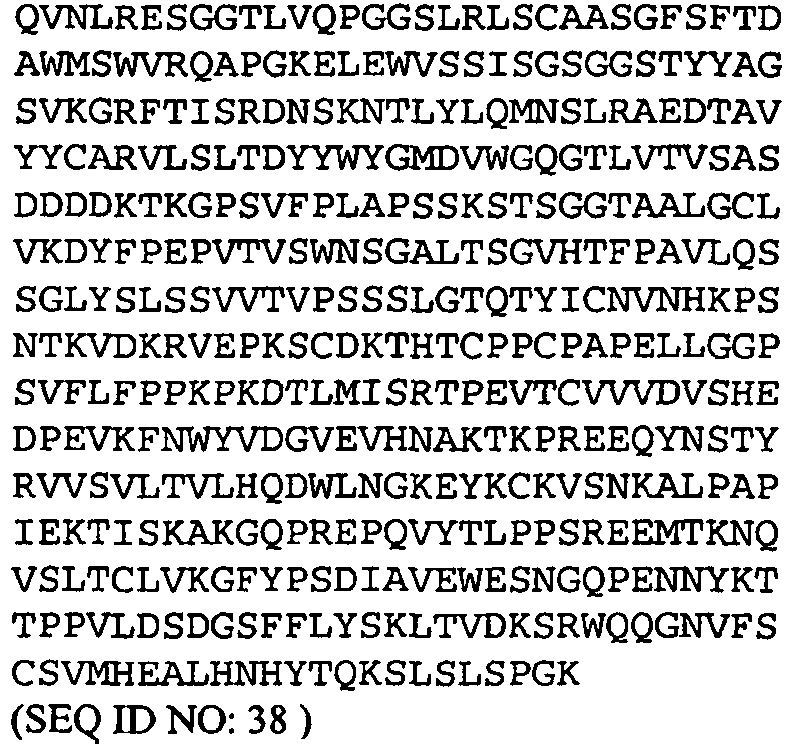
IgG-like protease-regulated antibodies against RG1 (19G9) Light chain Heavy chain 

TABLE 4: PROTEASE-REGULATED ANTIBODIES (Type 2) Fab-like protease-regulated antibodies against TF and RG1 H1L1 Light chain Heavy chain 

H1L4 Light chain Heavy chain 

H1L7 Light chain Heavy chain 

H4L2 Light chain Heavy chain 

H4L5 Light chain Heavy chain 

H4L7 Light chain Heavy chain 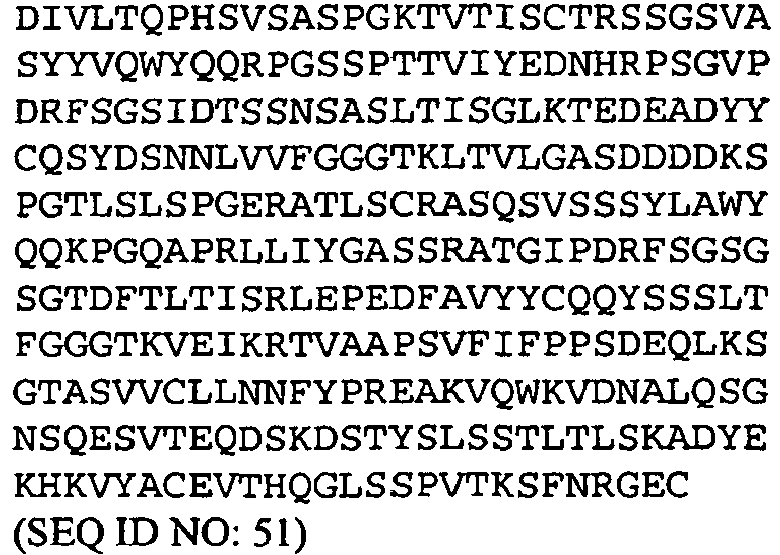

H5L5 Light chain Heavy chain 

TABLE 5: PROTEASE-REGULATED ANTIBODIES (Type 2) IgG-like protease-regulated antibodies against TF and RG1 3E10-Linker1-19G9 Light chain Heavy chain 

3E10-Linker2-19G9 Light chain Heavy chain 

3E10-Linker3-19G9 Light chain Heavy chain 

3E10-Linker4-19G9 Light chain Heavy chain 

3E10-Link1-19G9 Fab Light chain Heavy chain 

TABLE 6: PROTEASE-REGULATED ANTIBODIES (Type 3) Fab-like protease-regulated antibodies H1L5 Light chain Heavy chain 

H2L1 Light chain Heavy chain 

H2L2 Light chain Heavy chain 

H2L4 Light chain Heavy chain 

H2L5 Light chain Heavy chain 

H2L7 Light chain Heavy chain 

H2L8 Light chain Heavy chain 

TABLE 7: PROTEASE-REGULATED ANTIBODIES (Type 3) IgG-like protease-regulated antibodies 3E10-Linker1a-19G9 Light chain Heavy chain 

3E10-Linker1b-19G9 Light chain Heavy chain 

3E10-Linker1c-19G9 Light chain Heavy chain 

TABLE 8: PROTEASE-REGULATED ANTIBODIES (Type 4) H3L1 Light chain Heavy chain 

H3L2 Light chain Heavy chain 

H3L4 Light chain Heavy chain 

H3L5 Light chain Heavy chain 

H3L7 Light chain Heavy chain 

H1L2 Light chain Heavy chain 

H5L1 Light chain Heavy chain 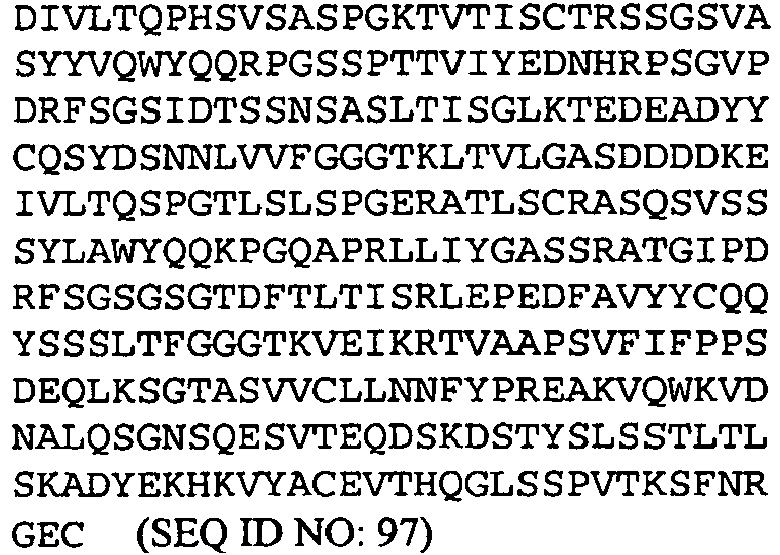

H5L4 Light chain Heavy chain 

H5L7 Light chain Heavy chain 

H5L8 Light chain Heavy chain 

H6L1 Light chain Heavy chain 

TABLE 9: PROTEASE-REGULATED ANTIBODIES (Type 4) H1L5a Heavy chain Heavy chain 

H2L1a Heavy chain Heavy chain 

H2L2a Heavy chain Heavy chain 

H2L4a Heavy chain Heavy chain 

H2L5a Heavy chain Heavy chain 

H2L7a Heavy chain Heavy chain 

H2L8a Heavy chain Heavy chain 

- Biotinylated TF (1 µg/ml) was added to streptavidin pre-coated 96-well plates (Pierce Chemical, Rockford, IL) and incubated for 1 hr. The plates were then washed (5x) with PBS containing 0.5% Tween-20. Samples and controls (serially diluted) were added to the wells and incubated for 1 hr, followed by washes (5x) with PBS containing 0.5% Tween-20. Horseradish peroxidase (HRP)-conjugated anti-human IgG or HRP-conjugated anti-human Fab were diluted in PBS (1:5000) and added to each well. Following a 1 hr incubation, the plates were washed again. Amplex Red (10 µg/ml) was added to each well, and the signal was read using a plate reader. The data was analyzed using Softmax (Molecular Devices, Sunnyvale, CA). Results are shown in
Figure 10 . - Ninety-six well plates were coated with RG1 (1 µg/ml) by overnight incubation, and the plates were then washed (5x) with PBS containing 0.5% Tween-20. Samples and controls (serially diluted) were added to the wells and incubated for 1 hr, followed by washes (5x) with PBS containing 0.5% Tween-20. Horserandish peroxidase (HRP)-conjugated anti-human IgG or HRP-conjugated anti-human Fab were diluted in PBS (1:5000) and added to each well. Following a 1 hr incubation, the plates were washed again. Amplex Red (10 µg/ml) was added to each well, and the signal was read using a plate reader. The data was analyzed using Softmax (Molecular Devices, Sunnyvale, CA). Results are shown in
Figure 11 . - The antigen binding activity of a bispecific protease-regulated antibody (illustrated in
Figure 2 ) was measured using a sandwich antigen-binding ELISA. This antibody binds two antigens, RG-1 and TF, and the linker contains cleavage sites for enterokinase ("EK"). - Ninety-six well plates were coated with RG1 (1 µ/ml) by overnight incubation. The plates were then washed five times with PBS containing 0.5% Tween-20. Antibody samples and controls were digested with 30 units of enterokinase for 16 hr at 37°C (see Example 4). The antibody samples, with or without enterokinase digestion, were serially diluted and added to the wells of the ELISA plates. The samples were incubated for one hour, followed by washes (5x) with PBS containing 0.5% Tween-20. Biotinylated TF (0.1 µg/ml) was added to each well and incubated for one hour. Horseradish peroxidase (HRP)-conjugated streptavidin (1:10000 diluted) was then added to each well. Following a one-hour incubation, the plates were washed again. Amplex Red (10 µg/ml) was added to each well, and the signal was read using a plate reader. The data was analyzed using Softmax® (Molecular Devices, Sunnyvale, CA). Parental antibodies 3E10, 19G9, and polyclonal human Fab were used as controls. The results are the average of duplicate wells (
Figure 12 ). The untreated bispecific protease-regulated antibody simultaneously binds to both TF and RG-1 ("Link1" and "Link2," respectively). However, following enterokinase treatment, the binding to both antigens is greatly reduced ("Link1/EK" and "Link2/EK," respectively). - The antigen binding activity of several examples of protease-regulated antibodies was also measured using this assay. For example, the antigen binding activity of protease-regulated antibodies 3E10-Type1-Fab and 19G9-Type1-Fab is shown in
Figure 13 . The controls are designated 3E10-Reg-Fab, 19G9-Reg-Fab, and HuFab. - The antigen binding activity of Fab-like protease-regulated antibodies is demonstrated in
Figure 14 . The activity of antibodies H1L1, H1L4, H1L7, H4L7, and H5L5 (Type 2) was measured in the absence and presence of enterokinase. Parental antibodies 3E10, 19G9, and polyclonal human Fab were used as controls. Similarly,Figure 15 shows the antigen binding activity of Fab-like protease-regulated antibodies H2L1, H2L2, and H2L8 (Type 3) and H3L1, H3L4, and H5L4 (Type 4). - Protease-regulated antibodies were digested with EnterokinaseMax™, the catalytic subunit of enterokinase (Invitrogen, Carlsbad, CA). The concentration of antibodies was adjusted to 1-5 µg/ml. A volume of antibody (100 µl) was mixed with 20 µl 10x EnterokinaseMax™ buffer and 75 µl sterile water in a tube. EnterokinaseMax™ (5 µl) was added to each sample and the samples were incubated at 37°C for 16 hr. For the control group, a volume of water (5 µl) was used.
- Three detection antibodies were used to probe protease-regulated antibodies: anti-human kappa antibody, anti-human IgG(H+L), and anti-Myc tag antibodies. These detection antibodies were conjugated with horseradish peroxidase (HRP). Approximately 50 ng of antibody samples were mixed with loading buffer containing DTT (Invitrogen, Carlsbad, CA) and boiled for 5 min. The samples were then loaded onto a 12% Bis-Tris NuPAGE® gel (Invitrogen, Carlsbad, CA), separated, and transferred to nitrocellulose membranes. After blocking with 5% dry milk for 2 hr, the nitrocellulose membrane was incubated with a detection antibody for 1.5 hr. The membrane was then washed in PBS containing 0.5% Tween-20, and incubated with SuperSignal West Femto (Pierce Chemical, Rockford, IL), and expose to X-ray film for development. Results are shown in
Figures 16-18 . - Human mammary xenograft, MaTu cells are maintained as adherent cultures in RPMI supplemented with 10% FBS. Ncr nude mice (8-12 weeks of age) are inoculated subcutaneously in the right flank with 5 x 10⁶ cells in 0.1 mL of 80% matrigel/20% HBSS. When tumors reach an average size of ∼180 mg (6 days), treatment is initiated. Antibodies are administered i.v. once every four days (Q4Dx3) at a dose of 10 mg/kg. Control mice are treated with PBS or an unconjugated monoclonal antibody. Daily examinations into the health status of each animal are conducted. Each experimental group consists of 10 mice and the dosing volume was 0.1 mL/10 g body weight. The length and width of each tumor is measured by using an electronic caliper 2-3 times per week and tumor weights (mg) are calculated based on the formula of [length (mm) x width (mm)2]/2. All data, including daily observations, obtained throughout the course of the study are documented. Tumor growth inhibition (TGI) is calculated as 1-T/Cx100, where T = final tumor weights from a treated group, and C = final tumor weights from the control group. The data demonstrates the therapeutic utility of antibodies for the treatment of tumors.
- Other embodiments of the invention will be apparent to the skilled in the art from a consideration of this specification or practice of the invention disclosed herein. It is intended that the specification and examples be considered as exemplary only, with the true scope and spirit of the invention being indicated by the following claims.


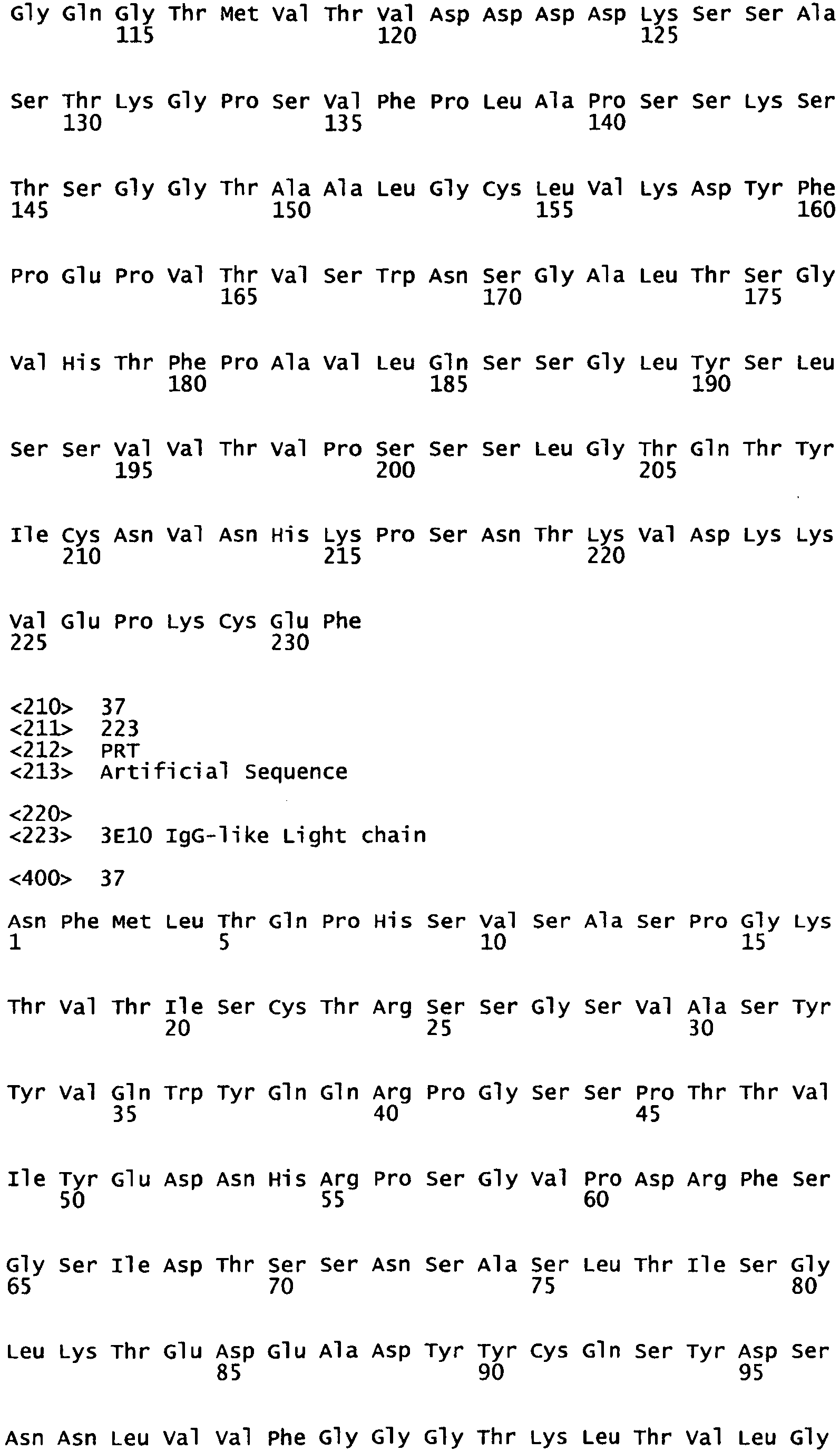


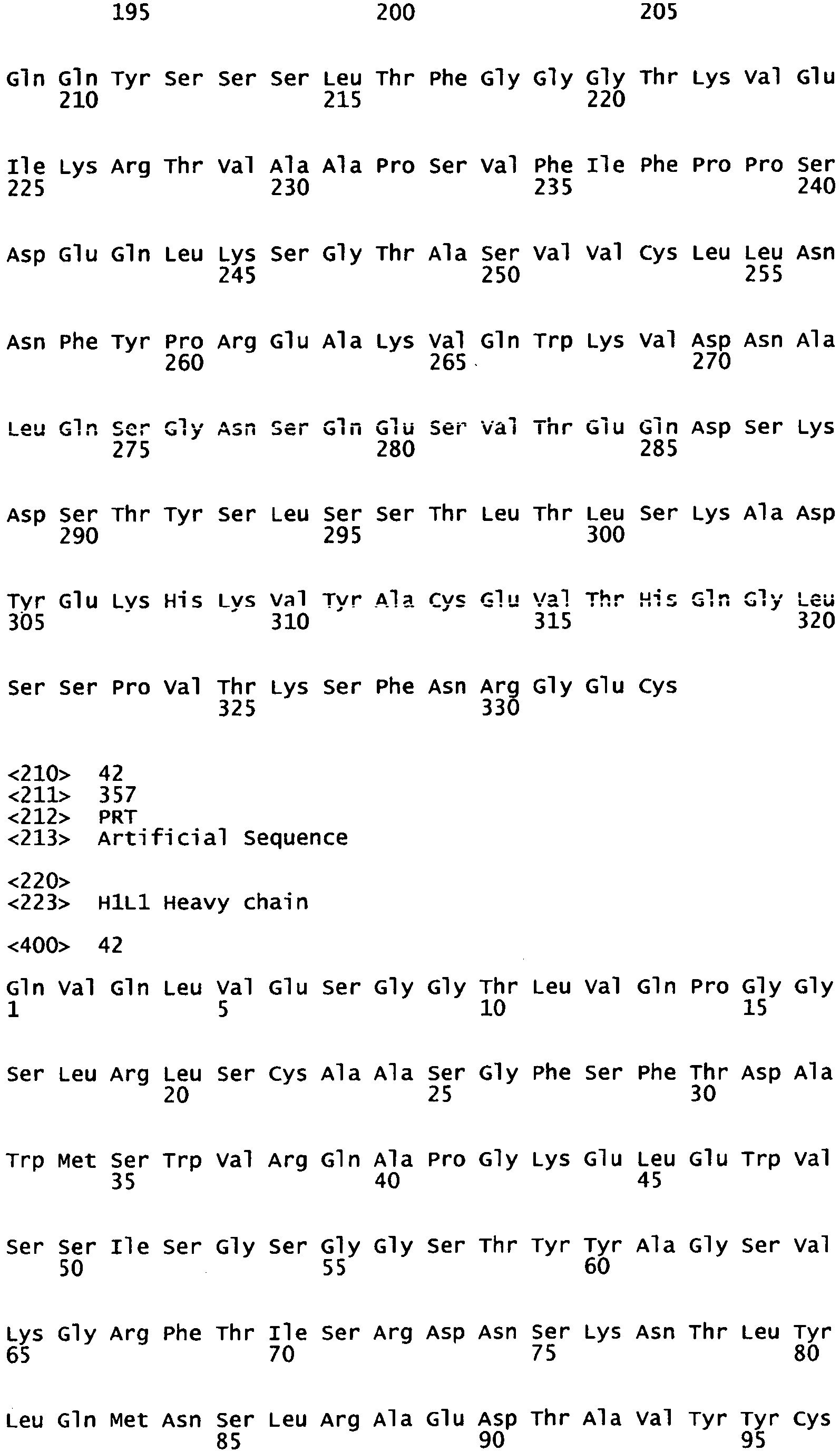


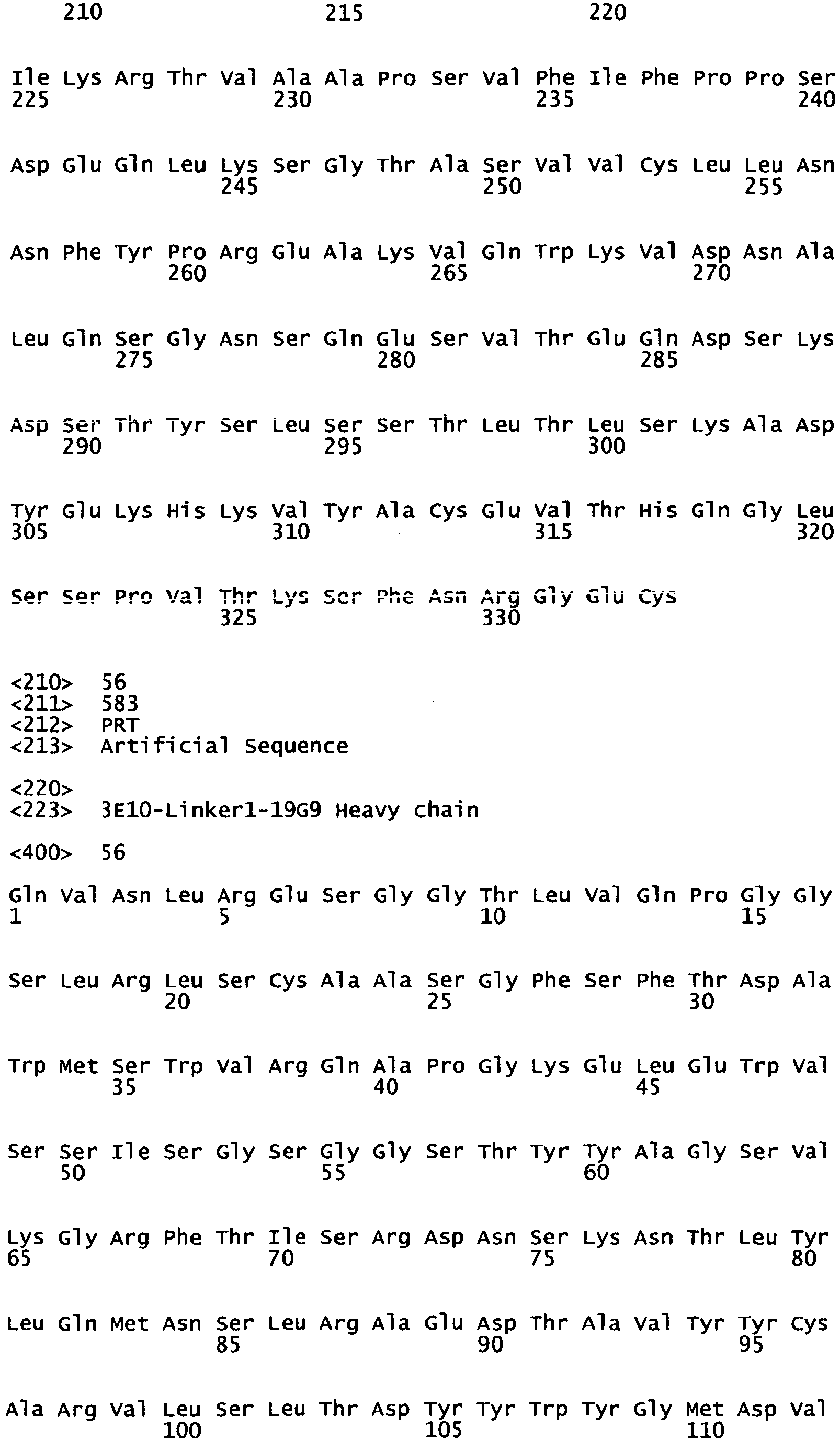
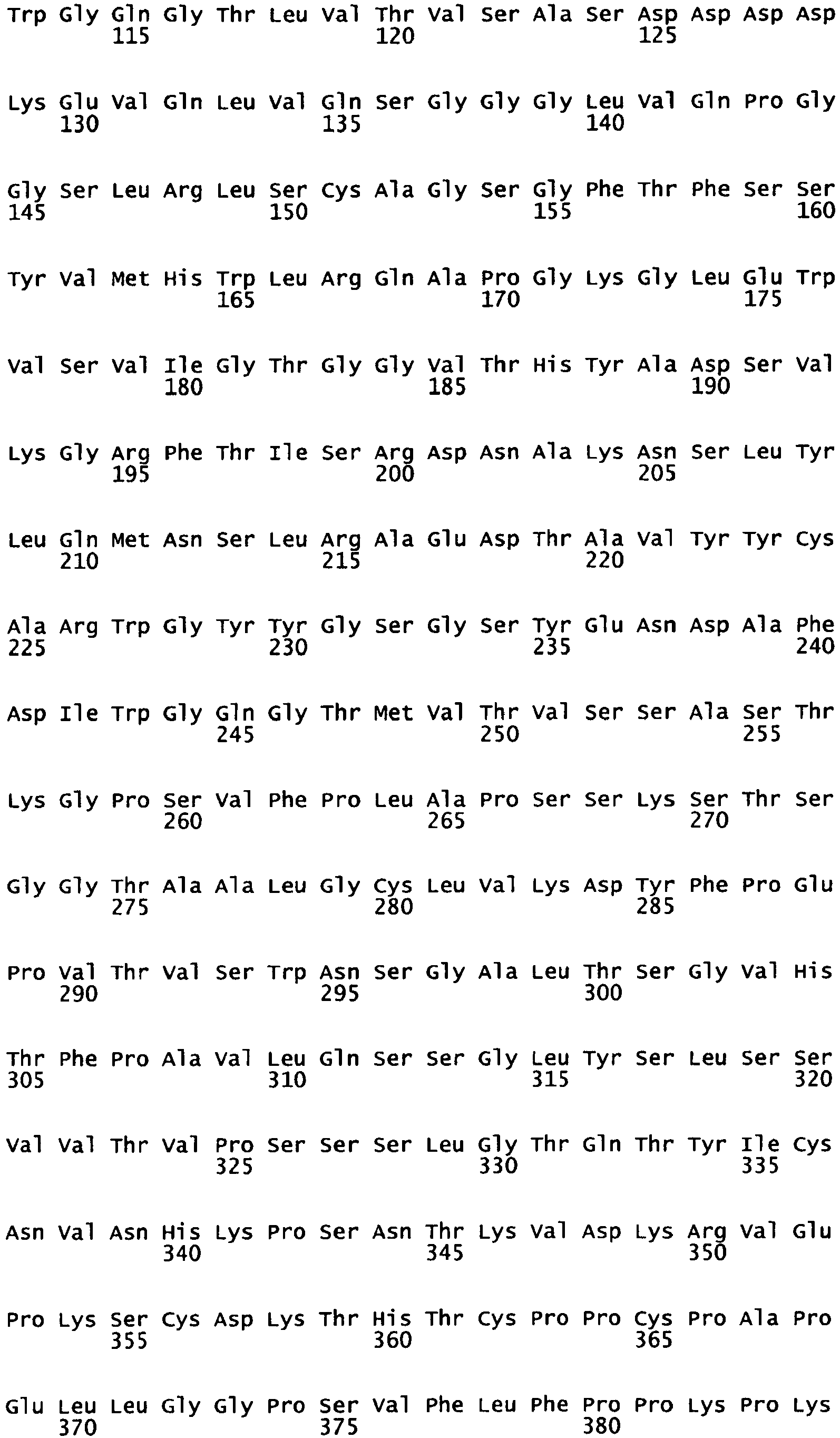

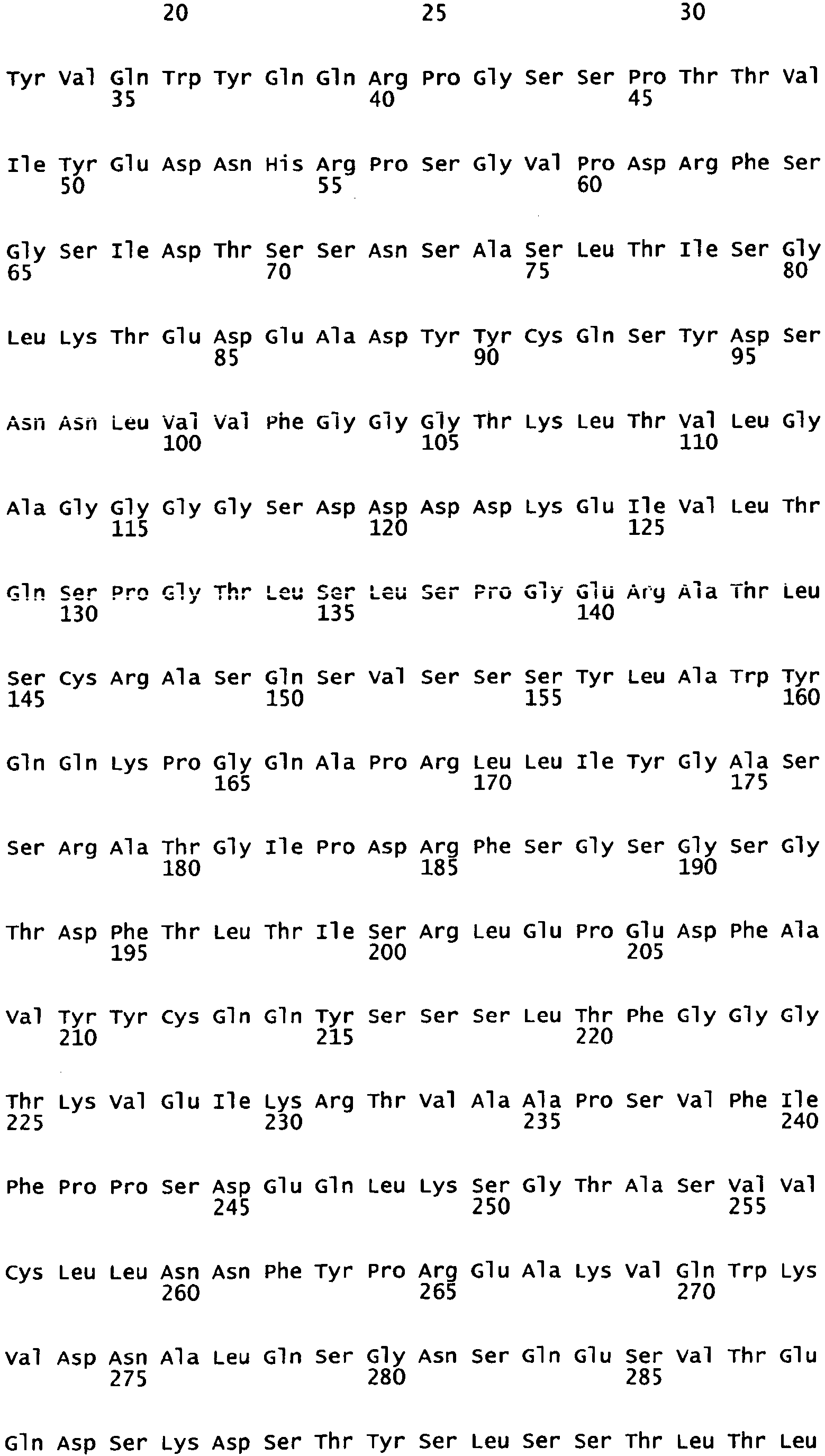


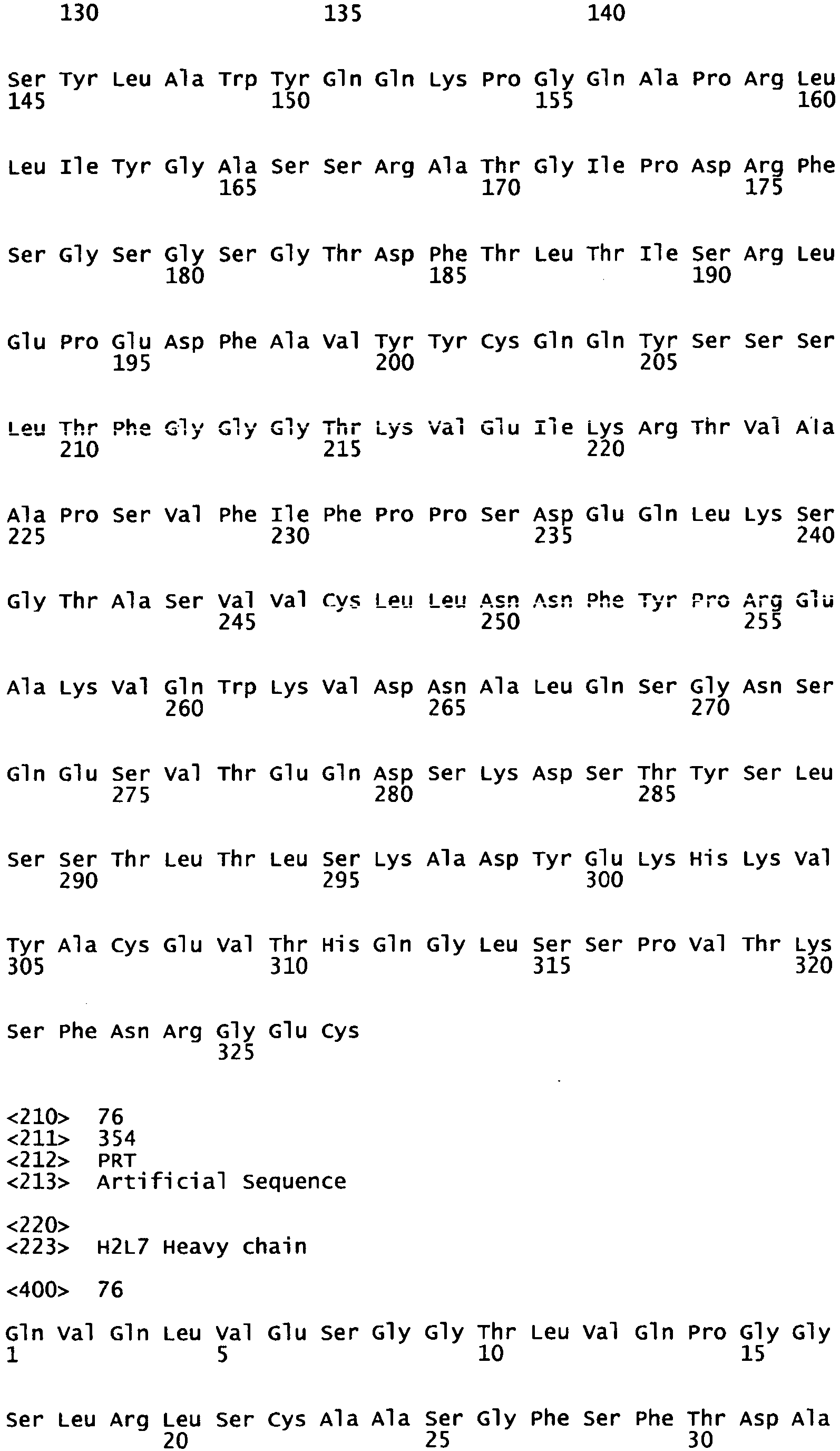


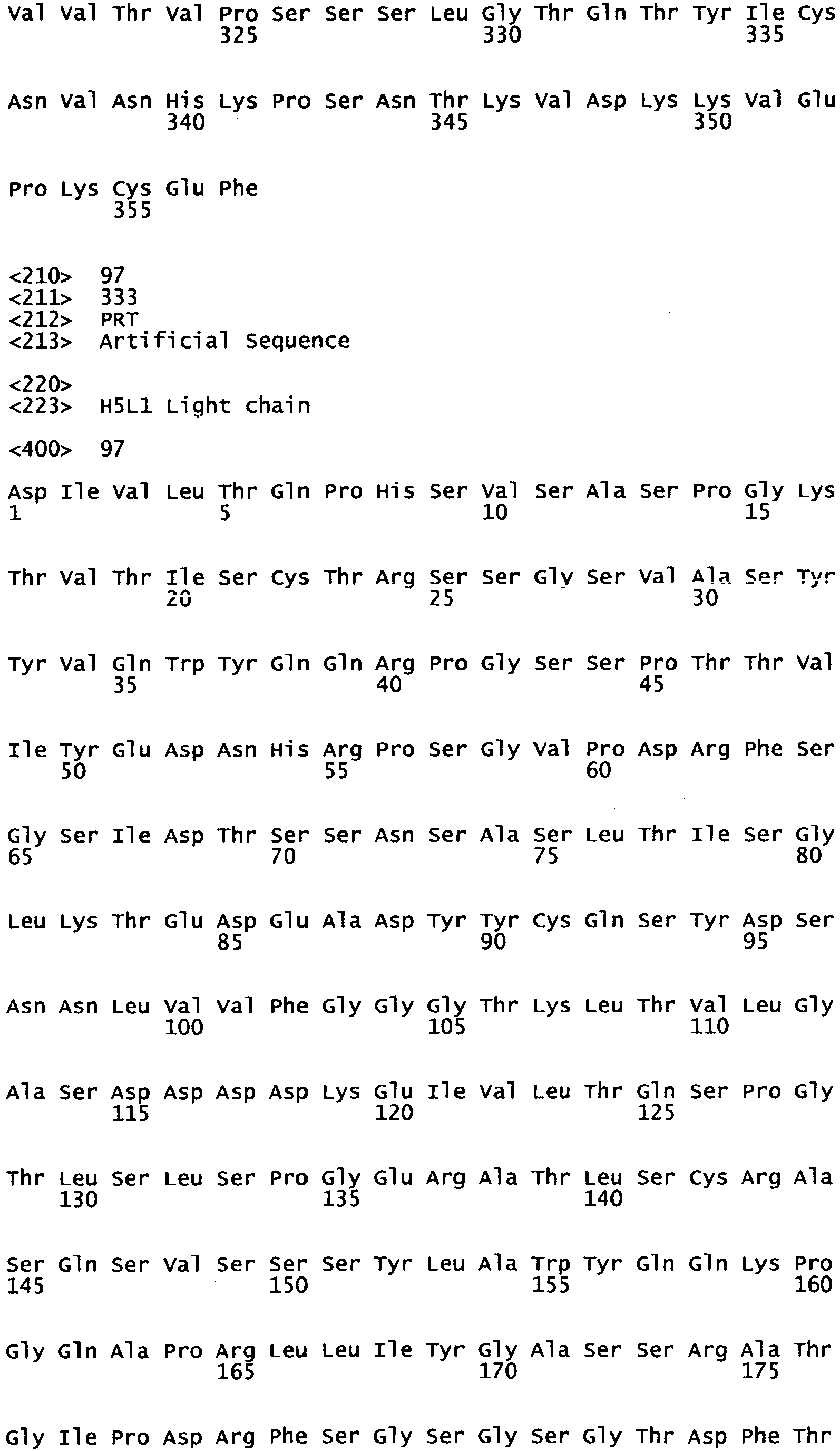

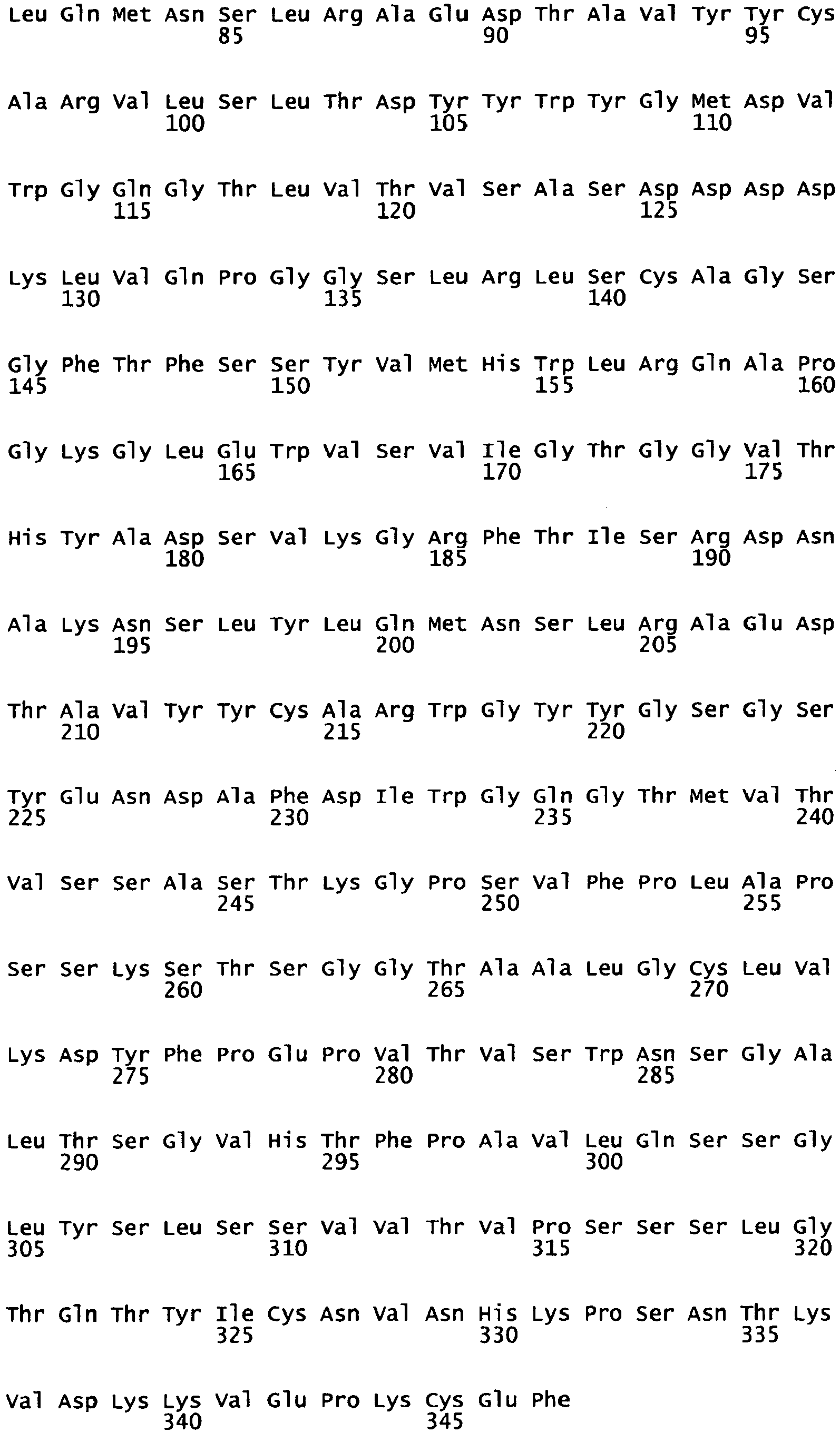


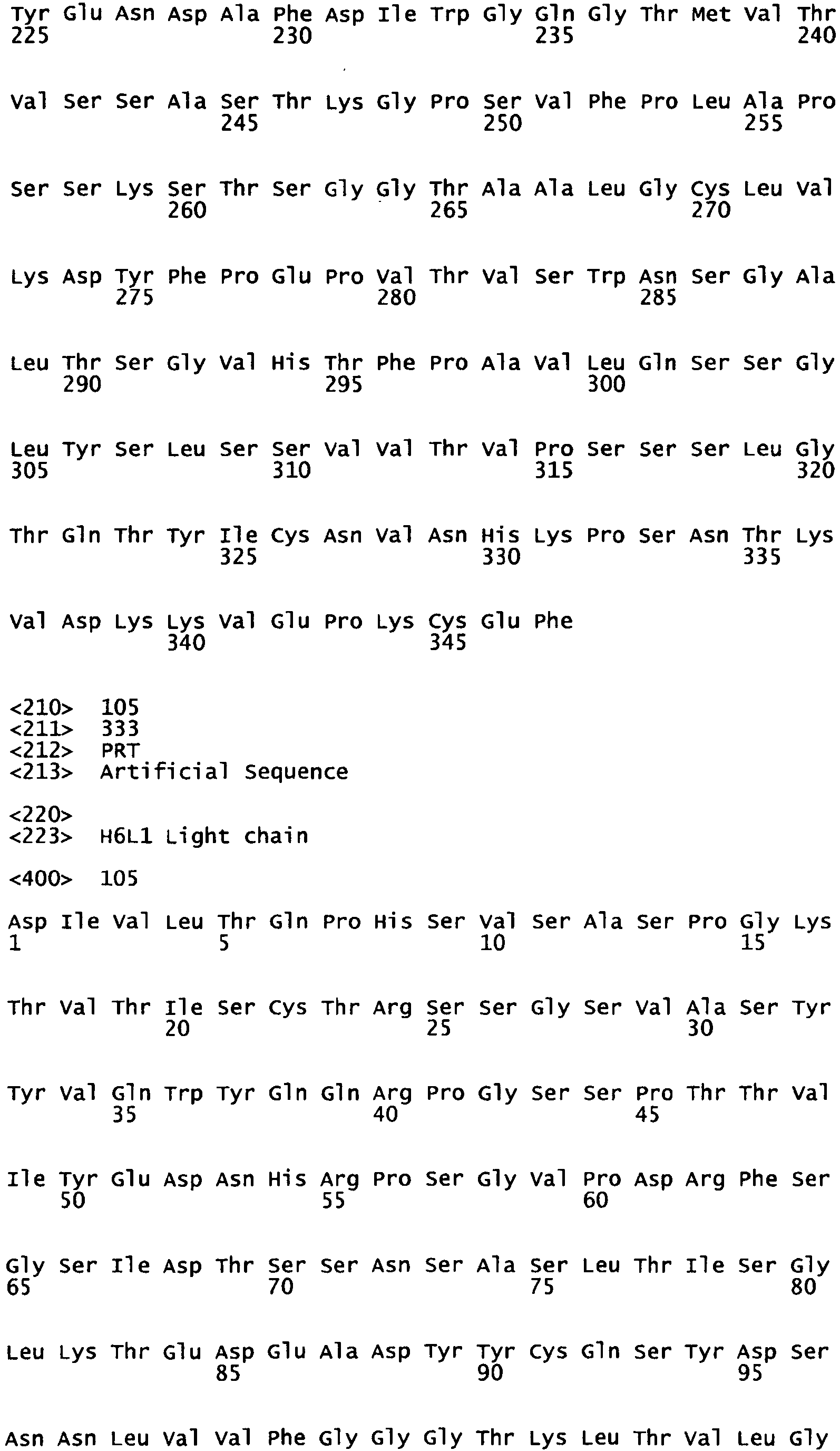


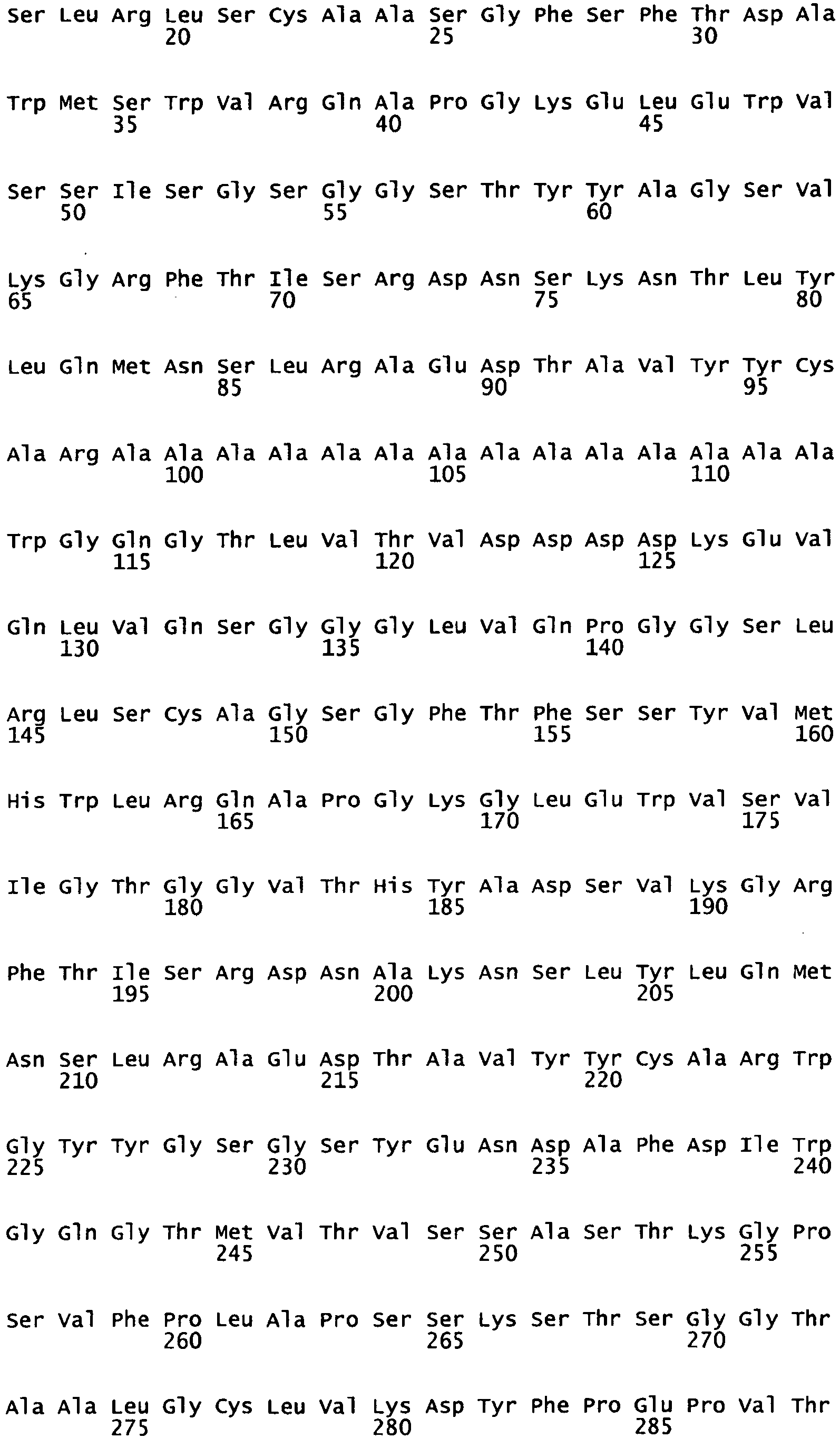

Claims (13)
- A protease regulated antibody comprising a protease cleavage site in a linker located between a variable domain and an N-terminal non-functional antibody domain, wherein the protease regulated antibody can only bind an antigen following protease activation that allows removal of the N-terminal non-functional antibody domain.
- The antibody of claim 1, wherein the antibody is of the Fab-like or IgG-like type.
- The antibody of claim 1 or 2, wherein the protease cleavage sites are selected from the group consisting of SEQ ID NO: 1-32.
- The antibody of claims 1 to 3, wherein the antibody is selected from the group consisting of SEQ ID NO: 107-120.
- The antibody of claims 1 to 4, wherein said antibody is conjugated to a therapeutic or cytotoxic agent.
- The antibody of claim 5, wherein said antibody is conjugated to an agent selected from the group consisting of monornethylauristatin-E (MMAE), apiidin, azaribine, anastrozole, azacytidine, bleomycin, bortezomib, bryostatin-1, busulfan, calicheamycin, amptothecin, 10-hydroxycamptsthecin, carmustine, celebrex, chiorambucil, cisplatin, irinotecan (CPT-Il), SN-38, carboplatin, ciadribine, cyclophosphamide, cytarabine, dacarbazine, docetaxel, dactinomycin, daunomycin glucuronide, daunorubicin, dexamethasone, diethylstilbestrol, doxorubicin, doxorubicin glucuronide, epirubicin glucuronide, ethinyl estradiol, estramustine, etoposide, etoposide glucuronide, etoposide phosphate, floκuκidine (FUdR), 3',5'-O-dioleoyl-FudR (FUdR-d0), fludarabine, flutamxde, fluorouracil, fluoxymesterone, gemcitabine, hydroxyprogesterone caproate, hydroxyurea, idaru.bicin, ifosfamide, L- asparaginase, leucovorin,lomustine, mechlorethamine, medroprogesterone acetate, megestrol acetate, melphalan, mercaptopurine, 6-mercaptopurine, methotrexate, mitoxantrone, mithramycin, mitomycin, mitotane, phenyl butyrate, prednisone, procarbazine, paclitaxel, pentostatin, PSI-341, semustine streptozocin, tamoxifen, taxanes, taxol, testosterone propionate, thalidomide, thioguanine, thiotepa, teniposide, topotecan, uxacil mustard, velcade, vinblastine, vinorelbine, vincristine, ricin, abrin, ribomiclease, onconase, rapLR1, DNase I, Staphylococcal enterotoxin-A, pokeweed antiviral protein, gelonin, diphtheria toxin, Pseudomonas exotoxin, and Pseudomonas endotoxin, and functional analogs thereof.
- A pharmaceutical composition comprising a therapeutically effective amount of an antibody of any of claims 1 to 6, in combination with a pharmaceutically acceptable carrier.
- A pharmaceutical composition according to claim 7 in combination with one or more pharmaceutical agents.
- Use of an antibody according to claims 1 to 6 in the manufacture of a medicament for the treatment of a disease selected from the group of diseases consisting of cancer, infectious diseases, and autoimmune diseases.
- An antibody of claims 1 to 6 as a medicament.
- An antibody of claims 1 to 6 as a medicament for the treatment of cancer, infectious diseases, and autoimmune diseases.
- A kit comprising an antibody of any one of claims 1 to 6.
- The kit of claim 12, further comprising solutions for suspending or fixing the cells, detectable labels, solutions for rendering a polypeptide susceptible to the binding of an antibody, solutions for lysing cells, and/or solutions for the purification of polypeptides.
Applications Claiming Priority (2)
| Application Number | Priority Date | Filing Date | Title |
|---|---|---|---|
| US95591307P | 2007-08-15 | 2007-08-15 | |
| EP08785592A EP2178914A2 (en) | 2007-08-15 | 2008-08-16 | Monospecific and multispecific antibodies and method of use |
Related Parent Applications (4)
| Application Number | Title | Priority Date | Filing Date |
|---|---|---|---|
| PCT/EP2008/006750 Previously-Filed-Application WO2009021754A2 (en) | 2007-08-15 | 2008-08-16 | Monospecific and multispecific antibodies and method of use |
| EP08785592.0 Division | 2008-08-16 | ||
| EP08785592A Division EP2178914A2 (en) | 2007-08-15 | 2008-08-16 | Monospecific and multispecific antibodies and method of use |
| WOPCT/EP2008/006750 Previously-Filed-Application | 2008-08-16 |
Publications (2)
| Publication Number | Publication Date |
|---|---|
| EP2532676A1 true EP2532676A1 (en) | 2012-12-12 |
| EP2532676B1 EP2532676B1 (en) | 2017-03-22 |
Family
ID=40110987
Family Applications (2)
| Application Number | Title | Priority Date | Filing Date |
|---|---|---|---|
| EP12172879.4A Not-in-force EP2532676B1 (en) | 2007-08-15 | 2008-08-16 | Protease-regulated antibody |
| EP08785592A Withdrawn EP2178914A2 (en) | 2007-08-15 | 2008-08-16 | Monospecific and multispecific antibodies and method of use |
Family Applications After (1)
| Application Number | Title | Priority Date | Filing Date |
|---|---|---|---|
| EP08785592A Withdrawn EP2178914A2 (en) | 2007-08-15 | 2008-08-16 | Monospecific and multispecific antibodies and method of use |
Country Status (6)
| Country | Link |
|---|---|
| US (2) | US9624309B2 (en) |
| EP (2) | EP2532676B1 (en) |
| JP (2) | JP5485152B2 (en) |
| CA (1) | CA2696263C (en) |
| ES (1) | ES2628395T3 (en) |
| WO (1) | WO2009021754A2 (en) |
Families Citing this family (181)
| Publication number | Priority date | Publication date | Assignee | Title |
|---|---|---|---|---|
| PL2573114T3 (en) | 2005-08-10 | 2016-10-31 | Identification and engineering of antibodies with variant Fc regions and methods of using same | |
| CN101679974B (en) | 2007-03-27 | 2015-09-30 | 航道生物技术有限责任公司 | Comprise construct and the library of antibody surrogate light chain sequences |
| CA2696263C (en) | 2007-08-15 | 2017-06-13 | Bing Liu | Monospecific and multispecific antibodies and method of use |
| EP2535349A1 (en) | 2007-09-26 | 2012-12-19 | UCB Pharma S.A. | Dual specificity antibody fusions |
| US20090162359A1 (en) | 2007-12-21 | 2009-06-25 | Christian Klein | Bivalent, bispecific antibodies |
| US9266967B2 (en) | 2007-12-21 | 2016-02-23 | Hoffmann-La Roche, Inc. | Bivalent, bispecific antibodies |
| ES2589912T3 (en) | 2008-04-02 | 2016-11-17 | Macrogenics, Inc. | Specific antibodies for the BCR complex and procedures for their use |
| SG190572A1 (en) * | 2008-04-29 | 2013-06-28 | Abbott Lab | Dual variable domain immunoglobulins and uses thereof |
| US20110124965A1 (en) * | 2008-05-08 | 2011-05-26 | Park Jason Y | Chemiluminescence enhanced detection |
| TW201006485A (en) | 2008-06-03 | 2010-02-16 | Abbott Lab | Dual variable domain immunoglobulins and uses thereof |
| CA2726087A1 (en) | 2008-06-03 | 2009-12-10 | Tariq Ghayur | Dual variable domain immunoglobulins and uses thereof |
| CN102149825B (en) | 2008-07-08 | 2015-07-22 | Abbvie公司 | Prostaglandin E2 dual variable domain immunoglobulins and uses thereof |
| CA2737241C (en) | 2008-09-26 | 2017-08-29 | Ucb Pharma S.A. | Multivalent antibody fusion proteins |
| RU2011127198A (en) * | 2008-12-04 | 2013-01-10 | Эбботт Лэборетриз | IMMUNOGLOBULINS WITH DOUBLE VARIABLE DOMAINS AND THEIR APPLICATION |
| CA2756244A1 (en) | 2009-04-02 | 2010-10-07 | Roche Glycart Ag | Multispecific antibodies comprising full length antibodies and single chain fab fragments |
| SG175077A1 (en) | 2009-04-07 | 2011-11-28 | Roche Glycart Ag | Trivalent, bispecific antibodies |
| US20110008766A1 (en) * | 2009-05-01 | 2011-01-13 | Abbott Laboratories | Dual Variable Domain Immunoglobulins and Uses Thereof |
| CA2761681A1 (en) | 2009-05-13 | 2010-11-18 | Sea Lane Biotechnologies, Llc | Neutralizing molecules to influenza viruses |
| US9676845B2 (en) | 2009-06-16 | 2017-06-13 | Hoffmann-La Roche, Inc. | Bispecific antigen binding proteins |
| WO2011030107A1 (en) * | 2009-09-10 | 2011-03-17 | Ucb Pharma S.A. | Multivalent antibodies |
| EP2478013B1 (en) | 2009-09-16 | 2018-10-24 | F.Hoffmann-La Roche Ag | Coiled coil and/or tether containing protein complexes and uses thereof |
| JP5898082B2 (en) | 2009-10-07 | 2016-04-06 | マクロジェニクス,インコーポレーテッド | Fc region-containing polypeptide exhibiting improved effector function by changing the degree of fucosylation and use thereof |
| BR112012008833A2 (en) * | 2009-10-15 | 2015-09-08 | Abbott Lab | double variable domain immunoglobulins and uses thereof |
| UY32979A (en) | 2009-10-28 | 2011-02-28 | Abbott Lab | IMMUNOGLOBULINS WITH DUAL VARIABLE DOMAIN AND USES OF THE SAME |
| GB201000467D0 (en) * | 2010-01-12 | 2010-02-24 | Ucb Pharma Sa | Antibodies |
| PH12012501751A1 (en) | 2010-03-04 | 2012-11-12 | Macrogenics Inc | Antibodies reactive with b7-h3, immunologically active fragments thereof and uses thereof |
| EP2542256B1 (en) | 2010-03-04 | 2019-05-22 | MacroGenics, Inc. | Antibodies reactive with b7-h3, immunologically active fragments thereof and uses thereof |
| TW201138821A (en) | 2010-03-26 | 2011-11-16 | Roche Glycart Ag | Bispecific antibodies |
| EP3252072A3 (en) | 2010-08-03 | 2018-03-14 | AbbVie Inc. | Dual variable domain immunoglobulins and uses thereof |
| CN103068846B9 (en) | 2010-08-24 | 2016-09-28 | 弗·哈夫曼-拉罗切有限公司 | Bispecific antibodies comprising disulfide-stabilized Fv fragments |
| CN103068847B (en) * | 2010-08-24 | 2019-05-07 | 罗切格利卡特公司 | Activatable Bispecific Antibodies |
| JP2013539364A (en) | 2010-08-26 | 2013-10-24 | アッヴィ・インコーポレイテッド | Dual variable domain immunoglobulins and uses thereof |
| SG191153A1 (en) | 2010-12-23 | 2013-07-31 | Hoffmann La Roche | Polypeptide-polynucleotide-complex and its use in targeted effector moiety delivery |
| MX342034B (en) | 2011-02-28 | 2016-09-12 | Hoffmann La Roche | Monovalent antigen binding proteins. |
| AR085404A1 (en) | 2011-02-28 | 2013-09-25 | Hoffmann La Roche | PROTEINS OF UNION TO ANTIGEN |
| TWI743461B (en) * | 2011-03-28 | 2021-10-21 | 法商賽諾菲公司 | Dual variable region antibody-like binding proteins having cross-over binding region orientation |
| WO2013003647A2 (en) * | 2011-06-28 | 2013-01-03 | Sea Lane Biotechnologies, Llc | Multispecific stacked variable domain binding proteins |
| EP2736928B1 (en) | 2011-07-28 | 2019-01-09 | i2 Pharmaceuticals, Inc. | Sur-binding proteins against erbb3 |
| US9975956B2 (en) | 2011-12-22 | 2018-05-22 | I2 Pharmaceuticals, Inc. | Surrogate binding proteins which bind DR4 and/or DR5 |
| TW201333035A (en) | 2011-12-30 | 2013-08-16 | Abbvie Inc | Dual specific binding proteins directed against IL-13 and/or IL-17 |
| CA2861124A1 (en) | 2012-02-10 | 2013-08-15 | Genentech, Inc. | Single-chain antibodies and other heteromultimers |
| GB201203442D0 (en) | 2012-02-28 | 2012-04-11 | Univ Birmingham | Immunotherapeutic molecules and uses |
| US9975962B2 (en) * | 2012-03-30 | 2018-05-22 | Bayer Healthcare Llc | Thrombin/plasmin-regulated antibodies that bind TFPI |
| RU2639287C2 (en) | 2012-06-27 | 2017-12-20 | Ф. Хоффманн-Ля Рош Аг | Method for selection and obtaining of highly selective and multispecific targeting groups with specified properties, including at least two different binding groups, and their applications |
| KR20150030744A (en) | 2012-06-27 | 2015-03-20 | 에프. 호프만-라 로슈 아게 | Method for making antibody fc-region conjugates comprising at least one binding entity that specifically binds to a target and uses thereof |
| KR101963231B1 (en) | 2012-09-11 | 2019-03-28 | 삼성전자주식회사 | Protein complex for preparing bispecific antibodies and method using thereof |
| TW202037609A (en) | 2012-11-01 | 2020-10-16 | 美商艾伯維有限公司 | Anti-vegf/dll4 dual variable domain immunoglobulins and uses thereof |
| GB201223276D0 (en) | 2012-12-21 | 2013-02-06 | Ucb Pharma Sa | Antibodies and methods of producing same |
| US9487587B2 (en) | 2013-03-05 | 2016-11-08 | Macrogenics, Inc. | Bispecific molecules that are immunoreactive with immune effector cells of a companion animal that express an activating receptor and cells that express B7-H3 and uses thereof |
| SG11201506886TA (en) | 2013-03-14 | 2015-09-29 | Bayer Healthcare Llc | Monoclonal antibodies against antithrombin beta complexed with heparin |
| US20160009817A1 (en) * | 2013-03-15 | 2016-01-14 | Bayer Healthcare Llc | Pro-drug antibodies against tissue factor pathway inhibitor |
| WO2014144280A2 (en) | 2013-03-15 | 2014-09-18 | Abbvie Inc. | DUAL SPECIFIC BINDING PROTEINS DIRECTED AGAINST IL-1β AND / OR IL-17 |
| WO2014193973A2 (en) * | 2013-05-28 | 2014-12-04 | Dcb-Usa Llc | Antibody locker for the inactivation of protein drug |
| BR112016006929A2 (en) | 2013-10-11 | 2017-09-19 | Hoffmann La Roche | ANTIBODY, NUCLEIC ACID, EXPRESSION VECTOR, HOST CELL, METHODS OF PREPARING ANTIBODY, TREATMENT OF PATIENTS AND GENERATION OF AN ANTIBODY, PHARMACEUTICAL COMPOSITION AND USE OF THE ANTIBODY |
| GB2519786A (en) * | 2013-10-30 | 2015-05-06 | Sergej Michailovic Kiprijanov | Multivalent antigen-binding protein molecules |
| PE20170255A1 (en) | 2014-01-24 | 2017-03-22 | Dana Farber Cancer Inst Inc | ANTIBODY MOLECULES BINDING AND USES OF PD-1 |
| HUE045065T2 (en) | 2014-01-31 | 2019-12-30 | Novartis Ag | TIM-3 antibody molecules and their uses |
| KR102442436B1 (en) | 2014-03-14 | 2022-09-15 | 노파르티스 아게 | Antibody molecules to lag-3 and uses thereof |
| US20170335281A1 (en) | 2014-03-15 | 2017-11-23 | Novartis Ag | Treatment of cancer using chimeric antigen receptor |
| PL3137595T3 (en) | 2014-04-29 | 2019-09-30 | Novartis Ag | Novel vertebrate cells and methods for recombinantly expressing a polypeptide of interest |
| GB201411320D0 (en) | 2014-06-25 | 2014-08-06 | Ucb Biopharma Sprl | Antibody construct |
| WO2016001810A1 (en) | 2014-07-01 | 2016-01-07 | Pfizer Inc. | Bispecific heterodimeric diabodies and uses thereof |
| TWI719942B (en) | 2014-07-21 | 2021-03-01 | 瑞士商諾華公司 | Treatment of cancer using a cd33 chimeric antigen receptor |
| US11542488B2 (en) | 2014-07-21 | 2023-01-03 | Novartis Ag | Sortase synthesized chimeric antigen receptors |
| BR112017001183A2 (en) | 2014-07-21 | 2017-11-28 | Novartis Ag | cancer treatment using humanized anti-bcma chimeric antigen receptor |
| JP2017528433A (en) | 2014-07-21 | 2017-09-28 | ノバルティス アーゲー | Low immunoenhancing dose of mTOR inhibitor and CAR combination |
| EP4205749A1 (en) | 2014-07-31 | 2023-07-05 | Novartis AG | Subset-optimized chimeric antigen receptor-containing cells |
| AU2015301460B2 (en) | 2014-08-14 | 2021-04-08 | Novartis Ag | Treatment of cancer using GFR alpha-4 chimeric antigen receptor |
| MX2017002205A (en) | 2014-08-19 | 2017-08-21 | Novartis Ag | ANTI-CD123 CHEMERICAL ANTIGEN RECEIVER (CAR) FOR USE IN CANCER TREATMENT. |
| JP6839074B2 (en) | 2014-09-17 | 2021-03-03 | ノバルティス アーゲー | Targeting cytotoxic cells at chimeric receptors for adoptive immunotherapy |
| EP4245376A3 (en) | 2014-10-14 | 2023-12-13 | Novartis AG | Antibody molecules to pd-l1 and uses thereof |
| US20180334490A1 (en) | 2014-12-03 | 2018-11-22 | Qilong H. Wu | Methods for b cell preconditioning in car therapy |
| EP3227332B1 (en) | 2014-12-03 | 2019-11-06 | F.Hoffmann-La Roche Ag | Multispecific antibodies |
| US10093733B2 (en) | 2014-12-11 | 2018-10-09 | Abbvie Inc. | LRP-8 binding dual variable domain immunoglobulin proteins |
| WO2016156468A1 (en) | 2015-03-31 | 2016-10-06 | Vhsquared Limited | Polypeptides |
| CA3255406A1 (en) | 2015-03-31 | 2025-07-03 | Sorriso Pharmaceuticals, Inc. | Tnf-alpha binding polypeptides |
| SG11201706840WA (en) * | 2015-03-31 | 2017-09-28 | Vhsquared Ltd | Peptide construct having a protease-cleavable linker |
| JP6961490B2 (en) | 2015-04-08 | 2021-11-05 | ノバルティス アーゲー | CD20 therapy, CD22 therapy, and combination therapy with CD19 chimeric antigen receptor (CAR) expressing cells |
| EP3286211A1 (en) | 2015-04-23 | 2018-02-28 | Novartis AG | Treatment of cancer using chimeric antigen receptor and protein kinase a blocker |
| TW201710286A (en) | 2015-06-15 | 2017-03-16 | 艾伯維有限公司 | Binding proteins against VEGF, PDGF, and/or their receptors |
| HRP20211058T8 (en) | 2015-07-29 | 2021-11-26 | Novartis Ag | Combination therapies comprising antibody molecules to lag-3 |
| EP3328418A1 (en) | 2015-07-29 | 2018-06-06 | Novartis AG | Combination therapies comprising antibody molecules to pd-1 |
| EP3878465A1 (en) | 2015-07-29 | 2021-09-15 | Novartis AG | Combination therapies comprising antibody molecules to tim-3 |
| WO2017025698A1 (en) * | 2015-08-11 | 2017-02-16 | Queen Mary University Of London | Bispecific, cleavable antibodies |
| FI3377103T4 (en) | 2015-11-19 | 2025-04-16 | Revitope Limited | Functional antibody fragment complementation for a two-components system for redirected killing of unwanted cells |
| US20200261573A1 (en) | 2015-12-17 | 2020-08-20 | Novartis Ag | Combination of c-met inhibitor with antibody molecule to pd-1 and uses thereof |
| ES2986067T3 (en) | 2015-12-17 | 2024-11-08 | Novartis Ag | Antibody molecules against PD-1 and their uses |
| EP4643874A3 (en) | 2015-12-22 | 2026-02-11 | Novartis AG | Mesothelin chimeric antigen receptor (car) and antibody against pd-l1 inhibitor for combined use in anticancer therapy |
| MA55746A (en) | 2016-01-21 | 2022-03-02 | Novartis Ag | MULTISPECIFIC MOLECULES TARGETING CLL-1 |
| KR20180118175A (en) | 2016-03-04 | 2018-10-30 | 노파르티스 아게 | Cells expressing multiple chimeric antigen receptor (CAR) molecules and their uses |
| US12128102B2 (en) | 2016-03-08 | 2024-10-29 | Takeda Pharmaceutical Company Limited | Constrained conditionally activated binding proteins |
| EP3432924A1 (en) | 2016-03-23 | 2019-01-30 | Novartis AG | Cell secreted minibodies and uses thereof |
| GEP20227398B (en) | 2016-04-15 | 2022-07-25 | Macrogenics Inc | Novel b7-h3 binding molecules, antibody drug conjugates thereof and usage thereof |
| CN109715808A (en) | 2016-04-15 | 2019-05-03 | 诺华股份有限公司 | Compositions and methods for selective protein expression |
| WO2017210617A2 (en) | 2016-06-02 | 2017-12-07 | Porter, David, L. | Therapeutic regimens for chimeric antigen receptor (car)- expressing cells |
| SG11201900344YA (en) | 2016-07-15 | 2019-02-27 | Novartis Ag | Treatment and prevention of cytokine release syndrome using a chimeric antigen receptor in combination with a kinase inhibitor |
| AU2017302668B9 (en) | 2016-07-28 | 2023-06-22 | Novartis Ag | Combination therapies of chimeric antigen receptors and PD-1 inhibitors |
| BR112019002035A2 (en) | 2016-08-01 | 2019-05-14 | Novartis Ag | cancer treatment using a chimeric antigen receptor in combination with an inhibitor of a m2 pro-macrophage molecule |
| EP3519438A1 (en) | 2016-09-30 | 2019-08-07 | VHsquared Limited | Compositions |
| BR112019006781A2 (en) | 2016-10-07 | 2019-07-30 | Novartis Ag | chimeric antigen receptors for cancer treatment |
| JP7626577B2 (en) | 2016-11-28 | 2025-02-07 | 中外製薬株式会社 | Ligand-binding molecules with tunable ligand-binding activity |
| BR112019008727A2 (en) | 2016-11-28 | 2019-07-16 | Chugai Seiyaku Kabushiki Kaisha | antigen binding domain, and polypeptide including transport section |
| BR112019011564A2 (en) | 2016-12-09 | 2019-10-22 | Seattle Genetics Inc | bivalent antibodies masked by supercoiled helices |
| ES2912408T3 (en) | 2017-01-26 | 2022-05-25 | Novartis Ag | CD28 compositions and methods for therapy with chimeric receptors for antigens |
| WO2018160731A1 (en) | 2017-02-28 | 2018-09-07 | Novartis Ag | Shp inhibitor compositions and uses for chimeric antigen receptor therapy |
| US20200179511A1 (en) | 2017-04-28 | 2020-06-11 | Novartis Ag | Bcma-targeting agent, and combination therapy with a gamma secretase inhibitor |
| EP3615055A1 (en) | 2017-04-28 | 2020-03-04 | Novartis AG | Cells expressing a bcma-targeting chimeric antigen receptor, and combination therapy with a gamma secretase inhibitor |
| MY204117A (en) | 2017-06-22 | 2024-08-08 | Novartis Ag | Antibody molecules to cd73 and uses thereof |
| CA3066747A1 (en) | 2017-06-27 | 2019-01-03 | Novartis Ag | Dosage regimens for anti-tim-3 antibodies and uses thereof |
| AU2018301393B2 (en) | 2017-07-11 | 2025-02-27 | Compass Therapeutics Llc | Agonist antibodies that bind human CD137 and uses thereof |
| CN110637395B (en) * | 2017-07-18 | 2021-11-02 | 阿维科斯公司 | Board-to-Board Contact Bridge System |
| JP2020527572A (en) | 2017-07-20 | 2020-09-10 | ノバルティス アーゲー | Anti-LAG-3 antibody dosage regimen and its use |
| MY202018A (en) | 2017-07-31 | 2024-03-29 | Trishula Therapeutics Inc | Anti-cd39 antibodies, compositions comprising anti-cd39 antibodies and methods of using anti-cd39 antibodies |
| CN111356700A (en) | 2017-09-08 | 2020-06-30 | 马弗里克治疗公司 | Constrained conditionally activated binding proteins |
| WO2019089753A2 (en) | 2017-10-31 | 2019-05-09 | Compass Therapeutics Llc | Cd137 antibodies and pd-1 antagonists and uses thereof |
| US20210179709A1 (en) | 2017-10-31 | 2021-06-17 | Novartis Ag | Anti-car compositions and methods |
| CN111655288A (en) | 2017-11-16 | 2020-09-11 | 诺华股份有限公司 | combination therapy |
| EP3713961A2 (en) | 2017-11-20 | 2020-09-30 | Compass Therapeutics LLC | Cd137 antibodies and tumor antigen-targeting antibodies and uses thereof |
| JP7482630B2 (en) | 2017-11-28 | 2024-05-14 | 中外製薬株式会社 | Polypeptides Comprising an Antigen Binding Domain and a Transport Moiety |
| TWI880235B (en) | 2017-11-28 | 2025-04-11 | 日商中外製藥股份有限公司 | Ligand-binding molecules capable of regulating ligand binding activity |
| CN109957026A (en) * | 2017-12-22 | 2019-07-02 | 成都恩沐生物科技有限公司 | Covalent Multispecific Antibody |
| US12247060B2 (en) | 2018-01-09 | 2025-03-11 | Marengo Therapeutics, Inc. | Calreticulin binding constructs and engineered T cells for the treatment of diseases |
| AU2019215031C1 (en) | 2018-01-31 | 2026-02-26 | Novartis Ag | Combination therapy using a chimeric antigen receptor |
| EP3765517A1 (en) | 2018-03-14 | 2021-01-20 | Elstar Therapeutics, Inc. | Multifunctional molecules that bind to calreticulin and uses thereof |
| US20210147547A1 (en) | 2018-04-13 | 2021-05-20 | Novartis Ag | Dosage Regimens For Anti-Pd-L1 Antibodies And Uses Thereof |
| WO2019210153A1 (en) | 2018-04-27 | 2019-10-31 | Novartis Ag | Car t cell therapies with enhanced efficacy |
| WO2019222282A1 (en) * | 2018-05-14 | 2019-11-21 | Harpoon Therapeutics, Inc. | Conditionally activated binding protein comprising a sterically occluded target binding domain |
| WO2019226658A1 (en) | 2018-05-21 | 2019-11-28 | Compass Therapeutics Llc | Multispecific antigen-binding compositions and methods of use |
| CA3099308A1 (en) | 2018-05-21 | 2019-11-28 | Compass Therapeutics Llc | Compositions and methods for enhancing the killing of target cells by nk cells |
| EP3801769A1 (en) | 2018-05-25 | 2021-04-14 | Novartis AG | Combination therapy with chimeric antigen receptor (car) therapies |
| JP7428661B2 (en) * | 2018-05-30 | 2024-02-06 | 中外製薬株式会社 | Polypeptides comprising an IL-1R1 binding domain and a transport moiety |
| JP7414736B2 (en) | 2018-05-30 | 2024-01-16 | 中外製薬株式会社 | Polypeptide containing an aggrecan-binding domain and a transport moiety |
| WO2019232244A2 (en) | 2018-05-31 | 2019-12-05 | Novartis Ag | Antibody molecules to cd73 and uses thereof |
| TWI890660B (en) | 2018-06-13 | 2025-07-21 | 瑞士商諾華公司 | Bcma chimeric antigen receptors and uses thereof |
| CN112654394B (en) | 2018-06-19 | 2025-07-11 | 阿塔盖有限责任公司 | Antibody molecules against complement component 5 and uses thereof |
| CA3105448A1 (en) | 2018-07-03 | 2020-01-09 | Elstar Therapeutics, Inc. | Anti-tcr antibody molecules and uses thereof |
| AR116109A1 (en) | 2018-07-10 | 2021-03-31 | Novartis Ag | DERIVATIVES OF 3- (5-AMINO-1-OXOISOINDOLIN-2-IL) PIPERIDINE-2,6-DIONA AND USES OF THE SAME |
| JP2021531306A (en) | 2018-07-25 | 2021-11-18 | アドバンスド アクセラレーター アプリケーションズ エスエー | How to treat neuroendocrine tumors |
| US12195544B2 (en) | 2018-09-21 | 2025-01-14 | Harpoon Therapeutics, Inc. | EGFR binding proteins and methods of use |
| US11046769B2 (en) | 2018-11-13 | 2021-06-29 | Compass Therapeutics Llc | Multispecific binding constructs against checkpoint molecules and uses thereof |
| EP3897648B1 (en) | 2018-12-20 | 2023-08-23 | Novartis AG | Extended low dose regimens for mdm2 inhibitors |
| KR20210106437A (en) | 2018-12-20 | 2021-08-30 | 노파르티스 아게 | Dosage regimens and pharmaceutical combinations comprising 3-(1-oxoisoindolin-2-yl)piperidine-2,6-dione derivatives |
| CN113490528B (en) | 2019-02-15 | 2024-12-03 | 诺华股份有限公司 | 3-(1-oxo-5-(piperidin-4-yl)isoindolin-2-yl)piperidine-2,6-dione derivatives and uses thereof |
| CA3123519A1 (en) | 2019-02-15 | 2020-08-20 | Novartis Ag | Substituted 3-(1-oxoisoindolin-2-yl)piperidine-2,6-dione derivatives and uses thereof |
| US10871640B2 (en) | 2019-02-15 | 2020-12-22 | Perkinelmer Cellular Technologies Germany Gmbh | Methods and systems for automated imaging of three-dimensional objects |
| GB2599228B (en) | 2019-02-21 | 2024-02-07 | Marengo Therapeutics Inc | Multifunctional molecules that bind to T cell related cancer cells and uses thereof |
| CN119039441A (en) | 2019-02-21 | 2024-11-29 | 马伦戈治疗公司 | Antibody molecules that bind to NKP30 and uses thereof |
| WO2020172553A1 (en) | 2019-02-22 | 2020-08-27 | Novartis Ag | Combination therapies of egfrviii chimeric antigen receptors and pd-1 inhibitors |
| EP4592313A3 (en) | 2019-03-05 | 2025-11-19 | Takeda Pharmaceutical Company Limited | Constrained conditionally activated binding proteins |
| BR112021019337A2 (en) | 2019-03-29 | 2021-12-07 | Atarga Llc | Anti-fgf23 antibody |
| CA3144567A1 (en) | 2019-06-21 | 2020-12-24 | Scott Crowe | Polypeptides |
| KR20220063148A (en) | 2019-06-21 | 2022-05-17 | 소리소 파마슈티컬스 인크. | composition |
| US12559552B2 (en) | 2019-06-21 | 2026-02-24 | Sorriso Pharmaceuticals, Inc. | IL-23 and TNF-alpha binding bi-specific heavy chain polypeptides |
| BR112022007179A2 (en) | 2019-10-21 | 2022-08-23 | Novartis Ag | TIM-3 INHIBITORS AND USES THEREOF |
| CN114786679A (en) | 2019-10-21 | 2022-07-22 | 诺华股份有限公司 | Combination therapy with Vernetork and TIM-3 inhibitors |
| IL293215A (en) | 2019-11-26 | 2022-07-01 | Novartis Ag | Chimeric antigen receptors binding bcma and cd19 and uses thereof |
| BR112022011902A2 (en) | 2019-12-20 | 2022-09-06 | Novartis Ag | COMBINATION THERAPIES |
| AU2020416273A1 (en) | 2020-01-03 | 2022-07-28 | Marengo Therapeutics, Inc. | Anti-TCR antibody molecules and uses thereof |
| WO2021146636A1 (en) | 2020-01-17 | 2021-07-22 | Becton, Dickinson And Company | Methods and compositions for single cell secretomics |
| BR112022012310A2 (en) | 2020-01-17 | 2022-09-06 | Novartis Ag | A COMBINATION COMPRISING A TIM-3 INHIBITOR AND A HYPOMETYLING AGENT FOR USE IN THE TREATMENT OF MYELODYSPLASTIC SYNDROME OR CHRONIC MYELOMONOCYTIC LEUKEMIA |
| CN115397460A (en) | 2020-02-27 | 2022-11-25 | 诺华股份有限公司 | Method for producing cells expressing chimeric antigen receptors |
| KR20230027056A (en) | 2020-06-23 | 2023-02-27 | 노파르티스 아게 | Dosage regimen comprising 3-(1-oxoisoindolin-2-yl)piperidine-2,6-dione derivatives |
| TW202216761A (en) | 2020-07-16 | 2022-05-01 | 瑞士商諾華公司 | Anti-betacellulin antibodies, fragments thereof, and multi-specific binding molecules |
| WO2022026592A2 (en) | 2020-07-28 | 2022-02-03 | Celltas Bio, Inc. | Antibody molecules to coronavirus and uses thereof |
| JP7819176B2 (en) | 2020-08-03 | 2026-02-24 | ノバルティス アーゲー | Heteroaryl-substituted 3-(1-oxoisoindolin-2-yl)piperidine-2,6-dione derivatives and uses thereof |
| EP4204020A1 (en) | 2020-08-31 | 2023-07-05 | Advanced Accelerator Applications International S.A. | Method of treating psma-expressing cancers |
| EP4204021A1 (en) | 2020-08-31 | 2023-07-05 | Advanced Accelerator Applications International S.A. | Method of treating psma-expressing cancers |
| US20240002509A1 (en) | 2020-11-06 | 2024-01-04 | Novartis Ag | ANTIBODY Fc VARIANTS |
| CA3198447A1 (en) | 2020-11-13 | 2022-05-19 | Novartis Ag | Combination therapies with chimeric antigen receptor (car)-expressing cells |
| US20240141060A1 (en) | 2021-01-29 | 2024-05-02 | Novartis Ag | Dosage regimes for anti-cd73 and anti-entpd2 antibodies and uses thereof |
| TW202304979A (en) | 2021-04-07 | 2023-02-01 | 瑞士商諾華公司 | USES OF ANTI-TGFβ ANTIBODIES AND OTHER THERAPEUTIC AGENTS FOR THE TREATMENT OF PROLIFERATIVE DISEASES |
| AR125874A1 (en) | 2021-05-18 | 2023-08-23 | Novartis Ag | COMBINATION THERAPIES |
| WO2023044483A2 (en) | 2021-09-20 | 2023-03-23 | Voyager Therapeutics, Inc. | Compositions and methods for the treatment of her2 positive cancer |
| US20250034559A1 (en) | 2021-11-17 | 2025-01-30 | Voyager Therapeutics, Inc. | Compositions and methods for the treatment of tau-related disorders |
| TW202342548A (en) | 2022-02-07 | 2023-11-01 | 美商威特拉公司 | Anti-idiotype antibody molecules and uses thereof |
| WO2023220695A2 (en) | 2022-05-13 | 2023-11-16 | Voyager Therapeutics, Inc. | Compositions and methods for the treatment of her2 positive cancer |
| JP2025528068A (en) | 2022-08-03 | 2025-08-26 | ボイジャー セラピューティクス インコーポレイテッド | Compositions and methods for crossing the blood-brain barrier |
| WO2024168061A2 (en) | 2023-02-07 | 2024-08-15 | Ayan Therapeutics Inc. | Antibody molecules binding to sars-cov-2 |
| WO2025122634A1 (en) | 2023-12-05 | 2025-06-12 | Voyager Therapeutics, Inc. | Compositions and methods for the treatment of tau-related disorders |
| WO2026036047A1 (en) | 2024-08-08 | 2026-02-12 | Altus Enterprises, Inc. | Antibody molecules to fixa and fx and uses thereof |
| WO2026058155A1 (en) | 2024-09-11 | 2026-03-19 | Novartis Ag | Antibodies targeting il-31 |
Citations (9)
| Publication number | Priority date | Publication date | Assignee | Title |
|---|---|---|---|---|
| US4634666A (en) | 1984-01-06 | 1987-01-06 | The Board Of Trustees Of The Leland Stanford Junior University | Human-murine hybridoma fusion partner |
| US4634664A (en) | 1982-01-22 | 1987-01-06 | Sandoz Ltd. | Process for the production of human mono-clonal antibodies |
| US4745181A (en) | 1986-10-06 | 1988-05-17 | Ciba Corning Diagnostics Corp. | Polysubstituted aryl acridinium esters |
| WO1991017271A1 (en) | 1990-05-01 | 1991-11-14 | Affymax Technologies N.V. | Recombinant library screening methods |
| WO1992001047A1 (en) | 1990-07-10 | 1992-01-23 | Cambridge Antibody Technology Limited | Methods for producing members of specific binding pairs |
| WO1994021823A1 (en) | 1993-03-19 | 1994-09-29 | Ciba Corning Diagnostics Corp. | Long emission wavelength chemiluminescent compounds and their use in test assays |
| WO2001095942A2 (en) * | 2000-06-09 | 2001-12-20 | The Government Of The United States Of America, As Represented By The Secretary Of The Department Of Health And Human Services | Pegylation of linkers improves antitumor activity and reduces toxicity of immunoconjugates |
| US20070041978A1 (en) | 2003-10-10 | 2007-02-22 | Kunihiro Hattori | Bispecific antibody substituting for functional proteins |
| WO2007024715A2 (en) * | 2005-08-19 | 2007-03-01 | Abbott Laboratories | Dual variable domain immunoglobin and uses thereof |
Family Cites Families (11)
| Publication number | Priority date | Publication date | Assignee | Title |
|---|---|---|---|---|
| ATE243754T1 (en) * | 1987-05-21 | 2003-07-15 | Micromet Ag | MULTIFUNCTIONAL PROTEINS WITH PREDEFINED TARGET |
| WO1991018057A1 (en) | 1990-05-17 | 1991-11-28 | Mitsubishi Kasei Corporation | Metal chelate compound and optical recording medium prepared therefrom |
| WO2000068689A1 (en) * | 1999-05-10 | 2000-11-16 | Prolinx Inc. | Cell separation device and methods for use |
| EP1286700A2 (en) | 2000-06-01 | 2003-03-05 | Universite Catholique De Louvain | Tumor activated prodrug compounds |
| AUPR729801A0 (en) * | 2001-08-27 | 2001-09-20 | Nucleics Pty Ltd | A method of sequestering and/or purifying a polypeptide |
| AU2003210060B2 (en) | 2002-03-22 | 2010-02-25 | Aprogen, Inc. | Humanized antibody and process for preparing same |
| US20040109855A1 (en) | 2002-07-23 | 2004-06-10 | Herman Waldmann | Therapeutic antibodies with reduced side effect |
| GB0230203D0 (en) * | 2002-12-27 | 2003-02-05 | Domantis Ltd | Fc fusion |
| US20060252096A1 (en) * | 2005-04-26 | 2006-11-09 | Glycofi, Inc. | Single chain antibody with cleavable linker |
| CA2696263C (en) | 2007-08-15 | 2017-06-13 | Bing Liu | Monospecific and multispecific antibodies and method of use |
| US20090304719A1 (en) | 2007-08-22 | 2009-12-10 | Patrick Daugherty | Activatable binding polypeptides and methods of identification and use thereof |
-
2008
- 2008-08-16 CA CA2696263A patent/CA2696263C/en active Active
- 2008-08-16 EP EP12172879.4A patent/EP2532676B1/en not_active Not-in-force
- 2008-08-16 EP EP08785592A patent/EP2178914A2/en not_active Withdrawn
- 2008-08-16 US US12/671,942 patent/US9624309B2/en not_active Expired - Fee Related
- 2008-08-16 JP JP2010520502A patent/JP5485152B2/en not_active Expired - Fee Related
- 2008-08-16 WO PCT/EP2008/006750 patent/WO2009021754A2/en not_active Ceased
- 2008-08-16 ES ES12172879.4T patent/ES2628395T3/en active Active
-
2014
- 2014-02-19 JP JP2014029811A patent/JP5863201B2/en not_active Expired - Fee Related
-
2017
- 2017-03-22 US US15/466,587 patent/US20170210825A1/en not_active Abandoned
Patent Citations (9)
| Publication number | Priority date | Publication date | Assignee | Title |
|---|---|---|---|---|
| US4634664A (en) | 1982-01-22 | 1987-01-06 | Sandoz Ltd. | Process for the production of human mono-clonal antibodies |
| US4634666A (en) | 1984-01-06 | 1987-01-06 | The Board Of Trustees Of The Leland Stanford Junior University | Human-murine hybridoma fusion partner |
| US4745181A (en) | 1986-10-06 | 1988-05-17 | Ciba Corning Diagnostics Corp. | Polysubstituted aryl acridinium esters |
| WO1991017271A1 (en) | 1990-05-01 | 1991-11-14 | Affymax Technologies N.V. | Recombinant library screening methods |
| WO1992001047A1 (en) | 1990-07-10 | 1992-01-23 | Cambridge Antibody Technology Limited | Methods for producing members of specific binding pairs |
| WO1994021823A1 (en) | 1993-03-19 | 1994-09-29 | Ciba Corning Diagnostics Corp. | Long emission wavelength chemiluminescent compounds and their use in test assays |
| WO2001095942A2 (en) * | 2000-06-09 | 2001-12-20 | The Government Of The United States Of America, As Represented By The Secretary Of The Department Of Health And Human Services | Pegylation of linkers improves antitumor activity and reduces toxicity of immunoconjugates |
| US20070041978A1 (en) | 2003-10-10 | 2007-02-22 | Kunihiro Hattori | Bispecific antibody substituting for functional proteins |
| WO2007024715A2 (en) * | 2005-08-19 | 2007-03-01 | Abbott Laboratories | Dual variable domain immunoglobin and uses thereof |
Non-Patent Citations (66)
| Title |
|---|
| "Remington's Pharmaceutical Sciences., 20th edition,", 2000, MACK PUBLISHING CO. |
| AMOUR ET AL., FEBS LETT., vol. 435, 1998, pages 39 - 44 |
| AUSUBEL ET AL.: "Current Protocols in Molecular Biology", 1995, JOHN WILEY & SONS |
| AVARMEAS ET AL., SCAN. J. IMMUNOL., vol. 8, no. 7, 1978, pages 7 |
| BAYER ET AL., METH. ENZYMOL., vol. 62, 1979, pages 308 |
| BELORGEY ET AL., BIOCHEM. J., vol. 313, 1996, pages 555 - 560 |
| BERGER; KIMMEL: "Guide to Molecular Cloning Techniques. Methods in Enzymology", vol. 152, ACADEMIC PRESS, INC. |
| BRENNAN ET AL., FEBS LETT., vol. 347, 1994, pages 80 - 84 |
| BUTENAS ET AL., BIOCHEMISTRY, vol. 67, 2002, pages 3 - 12 |
| CAO ET AL., ADV. DRUG DELIV. REV., vol. 55, 2003, pages 171 - 197 |
| CHANDLER ET AL., J. IMMUNOL. METH., vol. 53, 1982, pages 187 |
| CHANG, EUR. J. BIOCHEM., vol. 151, 1985, pages 217 - 224 |
| COUGHLIN, ARTERIOSCLER. THROMB. VASC. BIOL., vol. 18, 1998, pages 514 - 518 |
| CREIGHTON: "Proteins: Structures and Molecular Principles", 1983, WH FREEMAN AND CO. |
| DENNY ET AL: "Prodrug strategies in cancer therapy", EUROPEAN JOURNAL OF MEDICINAL CHEMISTRY, EDITIONS SCIENTIFIQUE ELSEVIER, PARIS, FR, vol. 36, no. 7-8, 1 August 2001 (2001-08-01), pages 577 - 595, XP027556826, ISSN: 0223-5234, [retrieved on 20010801] * |
| DIAN ET AL., LIFE SCIENCES NEWS - AMERSHAM BIOSCIENCES, vol. 10, 2002, pages 1 - 5 |
| DONALDSON JOSHUA M ET AL: "Design and development of masked therapeutic antibodies to limit off-target effects: application to anti-EGFR antibodies", CANCER BIOLOGY AND THERAPY, LANDES BIOSCIENCE, US, vol. 8, no. 22, 1 November 2009 (2009-11-01), pages 2147 - 2152, XP009135774, ISSN: 1538-4047 * |
| EKEKE; ABUKNESHA, J. STEROID BIOCHEM., vol. 11, 1979, pages 1579 |
| ENGVALL; PERLMANN, J. IMMUNOL., vol. 109, 1972, pages 129 |
| ESMON, CHEST, vol. 124, 2003, pages 26S - 32S |
| F. M. AUSABEL ET AL.: "Current Protocols in Molecular Biology", 2000, CURRENT PROTOCOLS |
| GEOGHEGAN ET AL., IMMUNOL. COMM., vol. 7, 1978, pages 1 |
| HARLOW ET AL.: "Antibodies: A Laboratory Manual", 1998, COLD SPRING HARBOR LABORATORY PRESS |
| HARLOW ET AL.: "Monoclonal Antibodies: A Laboratory Manual", 1988, COLD SPRING HARBOR LABORATORY PRESS |
| KILLEEN ET AL., BR. J. CANCER, vol. 96, 2007, pages 262 - 268 |
| KNAPPIK ET AL., J. MOL. BIOL., vol. 296, 2000, pages 57 - 86 |
| KOHRT ET AL., BIOORG. MED. CHEM. LETT., vol. 15, 2005, pages 4752 - 4756 |
| KRICKA, L.J.: "Molecular Biology and Biotechnology: A Comprehensive Desk Reference", 1995, VCH PUBLISHERS, article "Chemiluminescence and Bioluminescence, Analysis by" |
| LIGHT ET AL., EUR. J. BIOCHEM., vol. 262, 1999, pages 522 - 533 |
| LIPKIND ET AL., J. BIOL. CHEM., vol. 270, 1995, pages 13277 - 13284 |
| LITTLE M ET AL: "Of mice and men: hybridoma and recombinant antibodies", IMMUNOLOGY TODAY, ELSEVIER PUBLICATIONS, CAMBRIDGE, GB, vol. 21, no. 8, 1 August 2000 (2000-08-01), pages 364 - 370, XP004215163, ISSN: 0167-5699 * |
| LOFFLER ET AL., LEUKEMIA, vol. 17, 2003, pages 900 - 909 |
| LU ET AL., J. BIOL. CHEM., vol. 279, 2004, pages 2856 - 2565 |
| LU ET AL., J. BIOL. CHEM., vol. 279, 2004, pages 2856 - 2865 |
| LUM ET AL., BLOOD CELLS MOL. DIS., vol. 32, 2004, pages 82 - 87 |
| LUM ET AL., EXP. HEMATOL., vol. 34, 2006, pages 1 - 6 |
| MERRIFIELD, J. AM. CHEM. SOC., vol. 85, 1963, pages 2149 - 2154 |
| MIAO ET AL., J. BIOL. CHEM., vol. 267, 1992, pages 7395 - 7401 |
| MINOD ET AL., J. BIOL. CHEM., vol. 281, 2006, pages 38302 - 38313 |
| MOORE ET AL., ARCH. PHYSIOL. BIOCHEM., vol. 110, 2002, pages 16 - 25 |
| NAGAI ET AL., METHODS ENZYMOL., vol. 153, 1987, pages 461 - 481 |
| OESTBERG ET AL., HYBRIDOMA, vol. 2, 1983, pages 361 - 367 |
| ORAN ERSTER ET AL: "Site-specific targeting of antibody activitymediated by disease-associated proteases", JOURNAL OF CONTROLLED RELEASE, ELSEVIER, AMSTERDAM, NL, vol. 161, no. 3, 17 May 2012 (2012-05-17), pages 804 - 812, XP028409044, ISSN: 0168-3659, [retrieved on 20120523], DOI: 10.1016/J.JCONREL.2012.05.035 * |
| PAUL: "Fundamental Immunology", 1998, LIPPINCOTT WILLIAMS & WILKINS |
| PHILLIPS ET AL., J. MED. CHEM., vol. 41, 1998, pages 3557 - 3562 |
| RIESTER ET AL., PROC. NATL. ACAD. SCI. USA, vol. 102, 2005, pages 8597 - 8602 |
| ROBERGE ET AL., SCIENCE, vol. 269, 1995, pages 202 - 204 |
| SAENKO ET AL., HAEMOPHILIA, vol. 12, 2006, pages 42 - 51 |
| SAMBROOK ET AL.: "Molecular Cloning: A Laboratory Manual(Second Edition,", vol. 1-3, 1989, COLD SPRING HARBOR LABORATORY PRESS |
| SCAMUFFA ET AL., FASEB J., vol. 20, 2006, pages 1954 - 1963 |
| SEGAL ET AL., CURR. OPIN. IMMUNOL., vol. 11, 1999, pages 558 - 562 |
| SJOLANDER; URBANICZKY, ANAL. CHEM., vol. 63, 1991, pages 2338 - 2345 |
| SZABO ET AL., CURR. OPIN. STRUCT. BIOL., vol. 5, 1995, pages 699 - 705 |
| TALAC ET AL., J. BIOL. REGUL. HOMEOST. AGENTS, vol. 14, 2000, pages 175 - 181 |
| TOMLINSON ET AL., METHODS ENZYMOL., vol. 326, 2000, pages 461 - 479 |
| TRAIL ET AL., CANCER IMMUNOL. IMMUNOTHER., vol. 52, 2003, pages 328 - 337 |
| VEVERIS-LOWE ET AL., SEMIN. THROMB. HEMOST., vol. 33, 2007, pages 87 - 99 |
| WEEKS ET AL., CLIN. CHEM., vol. 29, no. 8, 1983, pages 1474 - 1479 |
| WILSON; NAKANE: "Immunofluorescence and Related Techniques", 1978, ELSEVIER/NORTH HOLLAND BIOMEDICAL PRESS |
| WOLF ET AL., DRUG DISCOV. TODAY, vol. 10, 2005, pages 1237 - 1244 |
| WONG ET AL., CLIN. IMMUNOL. IMMUNOPATHOL., vol. 58, 1991, pages 236 - 250 |
| WONG ET AL., J. IMMUNOL., vol. 139, 1987, pages 1369 - 1374 |
| WU ET AL., NAT BIOTECHNOL., vol. 25, 2007, pages 1290 - 1297 |
| WÜEST THOMAS ET AL: "TNF-Selectokine: a novel prodrug generated for tumor targeting and site-specific activation of tumor necrosis factor", ONCOGENE, NATURE PUBLISHING GROUP, GB, vol. 21, no. 27, 20 June 2002 (2002-06-20), pages 4257 - 4265, XP002461744, ISSN: 0950-9232, DOI: 10.1038/SJ.ONC.1205193 * |
| XUAN ET AL., CANCER RES., vol. 66, 2006, pages 3611 - 3619 |
| YAN ET AL., PROC. NATL. ACAD. SCI. USA, vol. 97, 2000, pages 8525 - 8529 |
Also Published As
| Publication number | Publication date |
|---|---|
| JP2014129374A (en) | 2014-07-10 |
| WO2009021754A2 (en) | 2009-02-19 |
| JP5863201B2 (en) | 2016-02-16 |
| ES2628395T3 (en) | 2017-08-02 |
| WO2009021754A3 (en) | 2009-06-18 |
| CA2696263A1 (en) | 2009-02-19 |
| JP5485152B2 (en) | 2014-05-07 |
| US20110229476A1 (en) | 2011-09-22 |
| CA2696263C (en) | 2017-06-13 |
| US9624309B2 (en) | 2017-04-18 |
| JP2010535832A (en) | 2010-11-25 |
| EP2532676B1 (en) | 2017-03-22 |
| US20170210825A1 (en) | 2017-07-27 |
| EP2178914A2 (en) | 2010-04-28 |
Similar Documents
| Publication | Publication Date | Title |
|---|---|---|
| US9624309B2 (en) | Monospecific and multispecific antibodies and method of use | |
| US8168758B2 (en) | Anti-MN antibodies and methods of using same | |
| JP2021087429A (en) | Anti-cd3 antibodies, activatable anti-cd3 antibodies, multispecific anti-cd3 antibodies, multispecific activatable anti-cd3 antibodies, and methods of using the same | |
| EP1394253A1 (en) | Anti-human ovarian cancer -anti-cd3 bispecific antibody | |
| CN105813654A (en) | TEM8 antibody and its use | |
| WO2017023780A1 (en) | Antibody-drug conjugates for targeting cd56-positive tumors | |
| WO2016022939A1 (en) | Human monoclonal antibodies specific for 5t4 and methods of their use | |
| WO2017214182A1 (en) | Fully human antibody targeting pdi for cancer immunotherapy | |
| CN114641503A (en) | anti-CD 371 antibodies and uses thereof | |
| CN102802667B (en) | For the method treating immune disorder | |
| AU2021387127A1 (en) | Her2 targeting agent | |
| US20250215110A1 (en) | Activatable multispecific molecules and methods of use thereof | |
| CN113825773A (en) | Polypeptide composition for tumor immunotherapy and preparation method thereof | |
| AU2016200917A1 (en) | Anti-MN antibodies and methods of using same | |
| CA3253998A1 (en) | Antibodies against lypd3 | |
| KR20250155032A (en) | CEACAM5-dependent 4-1BB-agonistic bispecific antibody | |
| KR20250069943A (en) | Antibody that binds to CD228 | |
| AU2012251927A1 (en) | Anti-MN antibodies and methods of using same | |
| WO2021141996A1 (en) | Single- and multi-chain polypeptides that bind specifically to cd3 epsilon | |
| HK1173734B (en) | Anti-mn antibodies and methods of using same | |
| HK1133441B (en) | Anti-mn antibodies and methods of using same |
Legal Events
| Date | Code | Title | Description |
|---|---|---|---|
| PUAI | Public reference made under article 153(3) epc to a published international application that has entered the european phase |
Free format text: ORIGINAL CODE: 0009012 |
|
| AC | Divisional application: reference to earlier application |
Ref document number: 2178914 Country of ref document: EP Kind code of ref document: P |
|
| AK | Designated contracting states |
Kind code of ref document: A1 Designated state(s): AT BE BG CH CY CZ DE DK EE ES FI FR GB GR HR HU IE IS IT LI LT LU LV MC MT NL NO PL PT RO SE SI SK TR |
|
| 17P | Request for examination filed |
Effective date: 20130612 |
|
| RBV | Designated contracting states (corrected) |
Designated state(s): AT BE BG CH CY CZ DE DK EE ES FI FR GB GR HR HU IE IS IT LI LT LU LV MC MT NL NO PL PT RO SE SI SK TR |
|
| 17Q | First examination report despatched |
Effective date: 20151109 |
|
| GRAP | Despatch of communication of intention to grant a patent |
Free format text: ORIGINAL CODE: EPIDOSNIGR1 |
|
| INTG | Intention to grant announced |
Effective date: 20161018 |
|
| STAA | Information on the status of an ep patent application or granted ep patent |
Free format text: STATUS: GRANT OF PATENT IS INTENDED |
|
| GRAS | Grant fee paid |
Free format text: ORIGINAL CODE: EPIDOSNIGR3 |
|
| GRAA | (expected) grant |
Free format text: ORIGINAL CODE: 0009210 |
|
| STAA | Information on the status of an ep patent application or granted ep patent |
Free format text: STATUS: THE PATENT HAS BEEN GRANTED |
|
| AC | Divisional application: reference to earlier application |
Ref document number: 2178914 Country of ref document: EP Kind code of ref document: P |
|
| AK | Designated contracting states |
Kind code of ref document: B1 Designated state(s): AT BE BG CH CY CZ DE DK EE ES FI FR GB GR HR HU IE IS IT LI LT LU LV MC MT NL NO PL PT RO SE SI SK TR |
|
| REG | Reference to a national code |
Ref country code: GB Ref legal event code: FG4D |
|
| RIC1 | Information provided on ipc code assigned before grant |
Ipc: C07K 16/36 20060101ALI20170215BHEP Ipc: A61K 47/50 20170101ALI20170215BHEP Ipc: C07K 16/00 20060101AFI20170215BHEP Ipc: C07K 16/46 20060101ALI20170215BHEP Ipc: C07K 16/30 20060101ALI20170215BHEP |
|
| REG | Reference to a national code |
Ref country code: CH Ref legal event code: EP |
|
| REG | Reference to a national code |
Ref country code: AT Ref legal event code: REF Ref document number: 877655 Country of ref document: AT Kind code of ref document: T Effective date: 20170415 |
|
| REG | Reference to a national code |
Ref country code: IE Ref legal event code: FG4D |
|
| REG | Reference to a national code |
Ref country code: DE Ref legal event code: R096 Ref document number: 602008049416 Country of ref document: DE |
|
| REG | Reference to a national code |
Ref country code: NL Ref legal event code: MP Effective date: 20170322 |
|
| REG | Reference to a national code |
Ref country code: FR Ref legal event code: PLFP Year of fee payment: 10 |
|
| PG25 | Lapsed in a contracting state [announced via postgrant information from national office to epo] |
Ref country code: FI Free format text: LAPSE BECAUSE OF FAILURE TO SUBMIT A TRANSLATION OF THE DESCRIPTION OR TO PAY THE FEE WITHIN THE PRESCRIBED TIME-LIMIT Effective date: 20170322 Ref country code: GR Free format text: LAPSE BECAUSE OF FAILURE TO SUBMIT A TRANSLATION OF THE DESCRIPTION OR TO PAY THE FEE WITHIN THE PRESCRIBED TIME-LIMIT Effective date: 20170623 Ref country code: HR Free format text: LAPSE BECAUSE OF FAILURE TO SUBMIT A TRANSLATION OF THE DESCRIPTION OR TO PAY THE FEE WITHIN THE PRESCRIBED TIME-LIMIT Effective date: 20170322 Ref country code: LT Free format text: LAPSE BECAUSE OF FAILURE TO SUBMIT A TRANSLATION OF THE DESCRIPTION OR TO PAY THE FEE WITHIN THE PRESCRIBED TIME-LIMIT Effective date: 20170322 Ref country code: NO Free format text: LAPSE BECAUSE OF FAILURE TO SUBMIT A TRANSLATION OF THE DESCRIPTION OR TO PAY THE FEE WITHIN THE PRESCRIBED TIME-LIMIT Effective date: 20170622 |
|
| REG | Reference to a national code |
Ref country code: ES Ref legal event code: FG2A Ref document number: 2628395 Country of ref document: ES Kind code of ref document: T3 Effective date: 20170802 |
|
| REG | Reference to a national code |
Ref country code: LT Ref legal event code: MG4D |
|
| REG | Reference to a national code |
Ref country code: AT Ref legal event code: MK05 Ref document number: 877655 Country of ref document: AT Kind code of ref document: T Effective date: 20170322 |
|
| PG25 | Lapsed in a contracting state [announced via postgrant information from national office to epo] |
Ref country code: LV Free format text: LAPSE BECAUSE OF FAILURE TO SUBMIT A TRANSLATION OF THE DESCRIPTION OR TO PAY THE FEE WITHIN THE PRESCRIBED TIME-LIMIT Effective date: 20170322 Ref country code: BG Free format text: LAPSE BECAUSE OF FAILURE TO SUBMIT A TRANSLATION OF THE DESCRIPTION OR TO PAY THE FEE WITHIN THE PRESCRIBED TIME-LIMIT Effective date: 20170622 Ref country code: SE Free format text: LAPSE BECAUSE OF FAILURE TO SUBMIT A TRANSLATION OF THE DESCRIPTION OR TO PAY THE FEE WITHIN THE PRESCRIBED TIME-LIMIT Effective date: 20170322 |
|
| PG25 | Lapsed in a contracting state [announced via postgrant information from national office to epo] |
Ref country code: NL Free format text: LAPSE BECAUSE OF FAILURE TO SUBMIT A TRANSLATION OF THE DESCRIPTION OR TO PAY THE FEE WITHIN THE PRESCRIBED TIME-LIMIT Effective date: 20170322 |
|
| PG25 | Lapsed in a contracting state [announced via postgrant information from national office to epo] |
Ref country code: CZ Free format text: LAPSE BECAUSE OF FAILURE TO SUBMIT A TRANSLATION OF THE DESCRIPTION OR TO PAY THE FEE WITHIN THE PRESCRIBED TIME-LIMIT Effective date: 20170322 Ref country code: AT Free format text: LAPSE BECAUSE OF FAILURE TO SUBMIT A TRANSLATION OF THE DESCRIPTION OR TO PAY THE FEE WITHIN THE PRESCRIBED TIME-LIMIT Effective date: 20170322 Ref country code: RO Free format text: LAPSE BECAUSE OF FAILURE TO SUBMIT A TRANSLATION OF THE DESCRIPTION OR TO PAY THE FEE WITHIN THE PRESCRIBED TIME-LIMIT Effective date: 20170322 Ref country code: SK Free format text: LAPSE BECAUSE OF FAILURE TO SUBMIT A TRANSLATION OF THE DESCRIPTION OR TO PAY THE FEE WITHIN THE PRESCRIBED TIME-LIMIT Effective date: 20170322 Ref country code: EE Free format text: LAPSE BECAUSE OF FAILURE TO SUBMIT A TRANSLATION OF THE DESCRIPTION OR TO PAY THE FEE WITHIN THE PRESCRIBED TIME-LIMIT Effective date: 20170322 |
|
| PGFP | Annual fee paid to national office [announced via postgrant information from national office to epo] |
Ref country code: DE Payment date: 20170808 Year of fee payment: 10 Ref country code: IT Payment date: 20170929 Year of fee payment: 10 Ref country code: FR Payment date: 20170728 Year of fee payment: 10 Ref country code: ES Payment date: 20170901 Year of fee payment: 10 Ref country code: GB Payment date: 20170816 Year of fee payment: 10 |
|
| PG25 | Lapsed in a contracting state [announced via postgrant information from national office to epo] |
Ref country code: PL Free format text: LAPSE BECAUSE OF FAILURE TO SUBMIT A TRANSLATION OF THE DESCRIPTION OR TO PAY THE FEE WITHIN THE PRESCRIBED TIME-LIMIT Effective date: 20170322 Ref country code: IS Free format text: LAPSE BECAUSE OF FAILURE TO SUBMIT A TRANSLATION OF THE DESCRIPTION OR TO PAY THE FEE WITHIN THE PRESCRIBED TIME-LIMIT Effective date: 20170722 Ref country code: PT Free format text: LAPSE BECAUSE OF FAILURE TO SUBMIT A TRANSLATION OF THE DESCRIPTION OR TO PAY THE FEE WITHIN THE PRESCRIBED TIME-LIMIT Effective date: 20170724 |
|
| REG | Reference to a national code |
Ref country code: DE Ref legal event code: R026 Ref document number: 602008049416 Country of ref document: DE |
|
| PLBI | Opposition filed |
Free format text: ORIGINAL CODE: 0009260 |
|
| PLAX | Notice of opposition and request to file observation + time limit sent |
Free format text: ORIGINAL CODE: EPIDOSNOBS2 |
|
| 26 | Opposition filed |
Opponent name: WHITE, NINA LOUISE Effective date: 20171221 |
|
| PG25 | Lapsed in a contracting state [announced via postgrant information from national office to epo] |
Ref country code: DK Free format text: LAPSE BECAUSE OF FAILURE TO SUBMIT A TRANSLATION OF THE DESCRIPTION OR TO PAY THE FEE WITHIN THE PRESCRIBED TIME-LIMIT Effective date: 20170322 |
|
| PG25 | Lapsed in a contracting state [announced via postgrant information from national office to epo] |
Ref country code: SI Free format text: LAPSE BECAUSE OF FAILURE TO SUBMIT A TRANSLATION OF THE DESCRIPTION OR TO PAY THE FEE WITHIN THE PRESCRIBED TIME-LIMIT Effective date: 20170322 |
|
| REG | Reference to a national code |
Ref country code: CH Ref legal event code: PL |
|
| PG25 | Lapsed in a contracting state [announced via postgrant information from national office to epo] |
Ref country code: MC Free format text: LAPSE BECAUSE OF FAILURE TO SUBMIT A TRANSLATION OF THE DESCRIPTION OR TO PAY THE FEE WITHIN THE PRESCRIBED TIME-LIMIT Effective date: 20170322 |
|
| PG25 | Lapsed in a contracting state [announced via postgrant information from national office to epo] |
Ref country code: CH Free format text: LAPSE BECAUSE OF NON-PAYMENT OF DUE FEES Effective date: 20170831 Ref country code: LI Free format text: LAPSE BECAUSE OF NON-PAYMENT OF DUE FEES Effective date: 20170831 |
|
| REG | Reference to a national code |
Ref country code: IE Ref legal event code: MM4A |
|
| REG | Reference to a national code |
Ref country code: BE Ref legal event code: MM Effective date: 20170831 |
|
| PG25 | Lapsed in a contracting state [announced via postgrant information from national office to epo] |
Ref country code: LU Free format text: LAPSE BECAUSE OF NON-PAYMENT OF DUE FEES Effective date: 20170816 |
|
| PG25 | Lapsed in a contracting state [announced via postgrant information from national office to epo] |
Ref country code: IE Free format text: LAPSE BECAUSE OF NON-PAYMENT OF DUE FEES Effective date: 20170816 |
|
| PG25 | Lapsed in a contracting state [announced via postgrant information from national office to epo] |
Ref country code: BE Free format text: LAPSE BECAUSE OF NON-PAYMENT OF DUE FEES Effective date: 20170831 |
|
| PG25 | Lapsed in a contracting state [announced via postgrant information from national office to epo] |
Ref country code: MT Free format text: LAPSE BECAUSE OF NON-PAYMENT OF DUE FEES Effective date: 20170816 |
|
| REG | Reference to a national code |
Ref country code: DE Ref legal event code: R119 Ref document number: 602008049416 Country of ref document: DE |
|
| GBPC | Gb: european patent ceased through non-payment of renewal fee |
Effective date: 20180816 |
|
| PG25 | Lapsed in a contracting state [announced via postgrant information from national office to epo] |
Ref country code: HU Free format text: LAPSE BECAUSE OF FAILURE TO SUBMIT A TRANSLATION OF THE DESCRIPTION OR TO PAY THE FEE WITHIN THE PRESCRIBED TIME-LIMIT; INVALID AB INITIO Effective date: 20080816 |
|
| PG25 | Lapsed in a contracting state [announced via postgrant information from national office to epo] |
Ref country code: DE Free format text: LAPSE BECAUSE OF NON-PAYMENT OF DUE FEES Effective date: 20190301 Ref country code: IT Free format text: LAPSE BECAUSE OF NON-PAYMENT OF DUE FEES Effective date: 20180816 |
|
| PLCK | Communication despatched that opposition was rejected |
Free format text: ORIGINAL CODE: EPIDOSNREJ1 |
|
| REG | Reference to a national code |
Ref country code: DE Ref legal event code: R100 Ref document number: 602008049416 Country of ref document: DE |
|
| PG25 | Lapsed in a contracting state [announced via postgrant information from national office to epo] |
Ref country code: FR Free format text: LAPSE BECAUSE OF NON-PAYMENT OF DUE FEES Effective date: 20180831 |
|
| REG | Reference to a national code |
Ref country code: ES Ref legal event code: FD2A Effective date: 20190918 |
|
| PG25 | Lapsed in a contracting state [announced via postgrant information from national office to epo] |
Ref country code: CY Free format text: LAPSE BECAUSE OF NON-PAYMENT OF DUE FEES Effective date: 20170322 Ref country code: GB Free format text: LAPSE BECAUSE OF NON-PAYMENT OF DUE FEES Effective date: 20180816 Ref country code: ES Free format text: LAPSE BECAUSE OF NON-PAYMENT OF DUE FEES Effective date: 20180817 |
|
| PLBN | Opposition rejected |
Free format text: ORIGINAL CODE: 0009273 |
|
| STAA | Information on the status of an ep patent application or granted ep patent |
Free format text: STATUS: OPPOSITION REJECTED |
|
| 27O | Opposition rejected |
Effective date: 20190819 |
|
| PG25 | Lapsed in a contracting state [announced via postgrant information from national office to epo] |
Ref country code: TR Free format text: LAPSE BECAUSE OF FAILURE TO SUBMIT A TRANSLATION OF THE DESCRIPTION OR TO PAY THE FEE WITHIN THE PRESCRIBED TIME-LIMIT Effective date: 20170322 |