EP2531032B1 - Materials and method for inhibiting replication protein a and uses thereof - Google Patents
Materials and method for inhibiting replication protein a and uses thereof Download PDFInfo
- Publication number
- EP2531032B1 EP2531032B1 EP11740474.9A EP11740474A EP2531032B1 EP 2531032 B1 EP2531032 B1 EP 2531032B1 EP 11740474 A EP11740474 A EP 11740474A EP 2531032 B1 EP2531032 B1 EP 2531032B1
- Authority
- EP
- European Patent Office
- Prior art keywords
- compound
- rpa
- cancer
- cells
- dna
- Prior art date
- Legal status (The legal status is an assumption and is not a legal conclusion. Google has not performed a legal analysis and makes no representation as to the accuracy of the status listed.)
- Active
Links
- 0 CCC*CCN*(C)* Chemical compound CCC*CCN*(C)* 0.000 description 2
- KPFALMORZZPMAW-UHFFFAOYSA-N CC(CCC(NC)=O)=O Chemical compound CC(CCC(NC)=O)=O KPFALMORZZPMAW-UHFFFAOYSA-N 0.000 description 1
- AIQZELREQLVFIF-UHFFFAOYSA-N Cc(cc1)ccc1-c(c(C(C1)N(C(CCC(O)[O]=C)=[U])NC1C(C=C1)=CCC1OC)c1)n[n]1-c1ccccc1 Chemical compound Cc(cc1)ccc1-c(c(C(C1)N(C(CCC(O)[O]=C)=[U])NC1C(C=C1)=CCC1OC)c1)n[n]1-c1ccccc1 AIQZELREQLVFIF-UHFFFAOYSA-N 0.000 description 1
Images







Classifications
-
- A—HUMAN NECESSITIES
- A61—MEDICAL OR VETERINARY SCIENCE; HYGIENE
- A61K—PREPARATIONS FOR MEDICAL, DENTAL OR TOILETRY PURPOSES
- A61K31/00—Medicinal preparations containing organic active ingredients
- A61K31/33—Heterocyclic compounds
- A61K31/395—Heterocyclic compounds having nitrogen as a ring hetero atom, e.g. guanethidine or rifamycins
- A61K31/535—Heterocyclic compounds having nitrogen as a ring hetero atom, e.g. guanethidine or rifamycins having six-membered rings with at least one nitrogen and one oxygen as the ring hetero atoms, e.g. 1,2-oxazines
- A61K31/5375—1,4-Oxazines, e.g. morpholine
- A61K31/5377—1,4-Oxazines, e.g. morpholine not condensed and containing further heterocyclic rings, e.g. timolol
-
- A—HUMAN NECESSITIES
- A61—MEDICAL OR VETERINARY SCIENCE; HYGIENE
- A61K—PREPARATIONS FOR MEDICAL, DENTAL OR TOILETRY PURPOSES
- A61K31/00—Medicinal preparations containing organic active ingredients
- A61K31/33—Heterocyclic compounds
- A61K31/395—Heterocyclic compounds having nitrogen as a ring hetero atom, e.g. guanethidine or rifamycins
- A61K31/41—Heterocyclic compounds having nitrogen as a ring hetero atom, e.g. guanethidine or rifamycins having five-membered rings with two or more ring hetero atoms, at least one of which being nitrogen, e.g. tetrazole
- A61K31/415—1,2-Diazoles
-
- A—HUMAN NECESSITIES
- A61—MEDICAL OR VETERINARY SCIENCE; HYGIENE
- A61K—PREPARATIONS FOR MEDICAL, DENTAL OR TOILETRY PURPOSES
- A61K31/00—Medicinal preparations containing organic active ingredients
- A61K31/33—Heterocyclic compounds
- A61K31/395—Heterocyclic compounds having nitrogen as a ring hetero atom, e.g. guanethidine or rifamycins
- A61K31/435—Heterocyclic compounds having nitrogen as a ring hetero atom, e.g. guanethidine or rifamycins having six-membered rings with one nitrogen as the only ring hetero atom
- A61K31/47—Quinolines; Isoquinolines
- A61K31/4709—Non-condensed quinolines and containing further heterocyclic rings
-
- A—HUMAN NECESSITIES
- A61—MEDICAL OR VETERINARY SCIENCE; HYGIENE
- A61K—PREPARATIONS FOR MEDICAL, DENTAL OR TOILETRY PURPOSES
- A61K33/00—Medicinal preparations containing inorganic active ingredients
- A61K33/24—Heavy metals; Compounds thereof
- A61K33/243—Platinum; Compounds thereof
-
- A—HUMAN NECESSITIES
- A61—MEDICAL OR VETERINARY SCIENCE; HYGIENE
- A61K—PREPARATIONS FOR MEDICAL, DENTAL OR TOILETRY PURPOSES
- A61K45/00—Medicinal preparations containing active ingredients not provided for in groups A61K31/00 - A61K41/00
- A61K45/06—Mixtures of active ingredients without chemical characterisation, e.g. antiphlogistics and cardiaca
-
- A—HUMAN NECESSITIES
- A61—MEDICAL OR VETERINARY SCIENCE; HYGIENE
- A61K—PREPARATIONS FOR MEDICAL, DENTAL OR TOILETRY PURPOSES
- A61K47/00—Medicinal preparations characterised by the non-active ingredients used, e.g. carriers or inert additives; Targeting or modifying agents chemically bound to the active ingredient
- A61K47/06—Organic compounds, e.g. natural or synthetic hydrocarbons, polyolefins, mineral oil, petrolatum or ozokerite
- A61K47/26—Carbohydrates, e.g. sugar alcohols, amino sugars, nucleic acids, mono-, di- or oligo-saccharides; Derivatives thereof, e.g. polysorbates, sorbitan fatty acid esters or glycyrrhizin
-
- A—HUMAN NECESSITIES
- A61—MEDICAL OR VETERINARY SCIENCE; HYGIENE
- A61K—PREPARATIONS FOR MEDICAL, DENTAL OR TOILETRY PURPOSES
- A61K47/00—Medicinal preparations characterised by the non-active ingredients used, e.g. carriers or inert additives; Targeting or modifying agents chemically bound to the active ingredient
- A61K47/30—Macromolecular organic or inorganic compounds, e.g. inorganic polyphosphates
- A61K47/36—Polysaccharides; Derivatives thereof, e.g. gums, starch, alginate, dextrin, hyaluronic acid, chitosan, inulin, agar or pectin
- A61K47/38—Cellulose; Derivatives thereof
-
- A—HUMAN NECESSITIES
- A61—MEDICAL OR VETERINARY SCIENCE; HYGIENE
- A61K—PREPARATIONS FOR MEDICAL, DENTAL OR TOILETRY PURPOSES
- A61K9/00—Medicinal preparations characterised by special physical form
- A61K9/0012—Galenical forms characterised by the site of application
- A61K9/0053—Mouth and digestive tract, i.e. intraoral and peroral administration
-
- A—HUMAN NECESSITIES
- A61—MEDICAL OR VETERINARY SCIENCE; HYGIENE
- A61P—SPECIFIC THERAPEUTIC ACTIVITY OF CHEMICAL COMPOUNDS OR MEDICINAL PREPARATIONS
- A61P31/00—Antiinfectives, i.e. antibiotics, antiseptics, chemotherapeutics
-
- A—HUMAN NECESSITIES
- A61—MEDICAL OR VETERINARY SCIENCE; HYGIENE
- A61P—SPECIFIC THERAPEUTIC ACTIVITY OF CHEMICAL COMPOUNDS OR MEDICINAL PREPARATIONS
- A61P35/00—Antineoplastic agents
-
- A—HUMAN NECESSITIES
- A61—MEDICAL OR VETERINARY SCIENCE; HYGIENE
- A61P—SPECIFIC THERAPEUTIC ACTIVITY OF CHEMICAL COMPOUNDS OR MEDICINAL PREPARATIONS
- A61P43/00—Drugs for specific purposes, not provided for in groups A61P1/00-A61P41/00
-
- C—CHEMISTRY; METALLURGY
- C07—ORGANIC CHEMISTRY
- C07D—HETEROCYCLIC COMPOUNDS
- C07D401/00—Heterocyclic compounds containing two or more hetero rings, having nitrogen atoms as the only ring hetero atoms, at least one ring being a six-membered ring with only one nitrogen atom
- C07D401/02—Heterocyclic compounds containing two or more hetero rings, having nitrogen atoms as the only ring hetero atoms, at least one ring being a six-membered ring with only one nitrogen atom containing two hetero rings
- C07D401/04—Heterocyclic compounds containing two or more hetero rings, having nitrogen atoms as the only ring hetero atoms, at least one ring being a six-membered ring with only one nitrogen atom containing two hetero rings directly linked by a ring-member-to-ring-member bond
-
- Y—GENERAL TAGGING OF NEW TECHNOLOGICAL DEVELOPMENTS; GENERAL TAGGING OF CROSS-SECTIONAL TECHNOLOGIES SPANNING OVER SEVERAL SECTIONS OF THE IPC; TECHNICAL SUBJECTS COVERED BY FORMER USPC CROSS-REFERENCE ART COLLECTIONS [XRACs] AND DIGESTS
- Y02—TECHNOLOGIES OR APPLICATIONS FOR MITIGATION OR ADAPTATION AGAINST CLIMATE CHANGE
- Y02A—TECHNOLOGIES FOR ADAPTATION TO CLIMATE CHANGE
- Y02A50/00—TECHNOLOGIES FOR ADAPTATION TO CLIMATE CHANGE in human health protection, e.g. against extreme weather
- Y02A50/30—Against vector-borne diseases, e.g. mosquito-borne, fly-borne, tick-borne or waterborne diseases whose impact is exacerbated by climate change
Definitions
- Some aspects of the invention relate to identifying molecules that at least partially inhibit the activity of the Replication Protein A and these molecules can be used to treat hyperproliferative diseases, including cancer.
- Replication protein A is a heterotrimeric single-stranded DNA (ssDNA) binding protein made up of 70, 34, and 14 kDa subunits (1).
- the ssDNA binding activity of RPA is required for several DNA metabolic pathways including DNA replication, recombination and repair.
- High affinity interactions with DNA are sustained by the numerous oligosaccharide/ oligonucleotide binding (OB)-folds present on each of the three subunits (2;3).
- OB oligosaccharide/ oligonucleotide binding
- the DNA binding pocket of a single OB-fold accommodates 3-4 bases of ssDNA (4;5).
- the main OB-folds, DNA binding domains A and B are present in the central region of the p70 subunit and contribute most of the binding energy for RPA-ssDNA interactions (2).
- Individual OB-folds are compact modular domains populated with hydrophobic and basic amino acids.
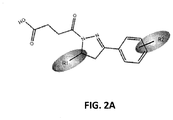
- Compounds of the invention may be variously used for: reducing the activity of Replication Protein A; effecting eukaryotic cell proliferation and/or the cell cycle of eukaryotic cells; and/or treating cancer by contacting Replication Protein A with a compound such as compound A that includes the following core structure:
- Eukaryotic cells contacted with a compound of the invention may be further contacted with at least one compound that damage DNA directly or inhibits topoisomerase II.
- Such compounds include, but are not limited to, Cisplatin, Etoposide, Busulfan, Bendamustine, Carboplatin, Carmustine, Chlorambucil, Cisplatin, Cyclophosphamide, dacarbazine, Daunorubicin, Decitabine, Doxorubicin, Epirubicin, Etoposide, Idarubicin, Ifosfamide, Irinotecan, Lomustine, Mechlorethamine, Melphalan, Mitomycin C, Mitoxantrone, Oxaliplatin, Temozolomide, Topotecan and the like.
- Compounds of the invention may be used in methods of reducing the activity of a Replication Protein A, comprising the steps of: providing a compound A, wherein the compound A binds to Replication Protein A or is metabolized into a chemical that binds to Replication Protein A, compound have the following formula:
- R 1 is selected from the group consisting of: substituted quinolins, thiophenes and phenyls; including 5-(7-chloro-2,3-dihydro-[1,4]dioxino[2,3-g]quinolin-8-yl);5-(quinoxalin-6-yl); and 6-chloro-[1,3]dioxolo[4,5-g]quinolin-7-yl
- R 2 is selected from the group consisting of: hydrogen, halogens, methyl groups, nitro groups; wherein compound A or a metabolite of compound A binds to Replication Protein A; and
- the quinolin or the phenyl in compound A is substituted with at least one moiety selected from the group consisting of: halogens, methyl groups, ethyl groups, amino groups and pyrazole.
- R 1 in compound A is selected from the group consisting of: 2-chloro-7-ethoxyquinolin, 5(quinoxalin-6-yl), 2-chloro-6,7-dimethoxyquinolin, 2-chloro-6-ethoxyquinolin, 4-Bromophenyl, 4-fluorophenyl, 4-chlorophenyl, 2-chlorophenyl, 2-methoxyphenyl, 4-ethylphenyl, 4-Diethylaminophenyl, 4-dimethylaminophenyl, Thiophene, 4-methoxyphenyl, p-tolyl, 2,5-dimethoxyphenyl, 3,4-dimethoxyphenyl, 4-ethylphenyl; and 1-pheny
- the molecule that binds to Replication Protein A may be a derivative of compound A or a metabolite thereof.
- the molecule that binds to Replication Protein A may be the compound TDLR-505, the compound TDLR-506, or a metabolite thereof.
- Contacting compound A and the at least one isoform of Replication Protein A may occur in vivo. Contacting compound A and the at least one isoform of Replication Protein A may occur in vitro.
- Compounds of the invention may be used in methods of inhibiting cell proliferation via altering the eukaryotic cell cycle-progression, comprising the steps of: providing a compound A that interferes with eukaryotic cell cycle-progression or that is metabolized into a chemical that interferes with eukaryotic cell cycle-progression, wherein compound A has the following formula: wherein, R 1 is selected from the group consisting of: substituted quinolins, thiophenes and phenyls; including 5-(7-chloro-2,3-dihydro-[1,4]dioxino[2,3-g]quinolin-8-yl);5-(quinoxalin-6-yl); and 6-chloro-[1,3]dioxolo[4,5-g]quinolin-7-yl; R 2 is selected from the group consisting of: hydrogen, halogens, methyl groups, nitro groups; wherein compound A or a metabolite of compound A binds to Replication Protein A
- the quinolin or the phenyl in compound A is substituted with at least one moiety selected from the group consisting of: halogens, methyl groups, ethyl groups, amino groups and pyrazole.
- R 1 in compound A is selected from the group consisting of: 2-chloro-7-ethoxyquinolin, 5(quinoxalin-6-yl), 2-chloro-6,7-dimethoxyquinolin, 2-chloro-6-ethoxyquinolin, 4-Bromophenyl, 4-fluorophenyl, 4-chlorophenyl, 2-chlorophenyl, 2-methoxyphenyl, 4-ethylphenyl, 4-Diethylaminophenyl, 4-dimethylaminophenyl, Thiophene, 4-methoxyphenyl, p-tolyl, 2,5-dimethoxyphenyl, 3,4-dimethoxyphenyl, 4-ethylphenyl; and 1-pheny
- the compound that at least partially interferes with the eukaryotic cell cycle-progression may be compound A or a metabolite thereof.
- the compound that interferes with eukaryotic cell cycle-progression may be the compound TDLR-505, TDLR-506, or metabolite thereof.
- the contacting step between compound A and the Replication Protein A may occur in vivo.
- Compounds of the invention may be used in methods for treating human or animal patients comprising the step of supplying or providing at least one therapeutically active amount of at least one compound that inhibits the activity of RPA or a pharmaceutically acceptable salt thereof. Such methods may include the step of administering a dose of the compound to a patient wherein the dose is about 50 mg of said compound per kg -1 of the patient's body weight or about 100 mg of said compound per kg -1 of the patient's body weight or about 200 mg of said compound per kg -1 of the patient's body weight.
- the contacting step between said compound A and the Replication Protein A may occur in vitro.
- Compounds of the invention may be used in a method treating cancer, comprising the steps of: providing a compound wherein the compound interferes with the cell cycle of a cancer cell or is metabolized into a chemical that interferes with the cell cycle of a cancer cell, and the compound has the following formula: in which R 1 is selected from the group consisting of: substituted quinolins, thiophenes and phenyls, and R 2 in compound A is selected from the group consisting of: halogens, methyl groups, nitro groups; wherein compound A binds to Replication Protein A; and contacting said compound A with at least one cancer cell.
- the quinolin or the phenyl in compound A is substituted with at least one moiety selected from the group consisting of: halogens, methyl groups, ethyl groups, amino groups and pyrazole.
- R 1 in compound A is selected from the group consisting of: 2-chloro-7-ethoxyquinolin, 5(quinoxalin-6-yl), 2-chloro-6,7-dimethoxyquinolin, 2-chloro-6-ethoxyquinolin, 4-Bromophenyl, 4-fluorophenyl, 4-chlorophenyl, 2-chlorophenyl, 2-methoxyphenyl, 4-ethylphenyl, 4-Diethylaminophenyl, 4-dimethylaminophenyl, Thiophene, 4-methoxyphenyl, p-tolyl, 2,5-dimethoxyphenyl, 3,4-dimethoxyphenyl, 4-ethylphenyl; and 1-phenyl
- the compound that is contacted with the cancer cell may be compound A.
- the compound that is contacted with the cancer cell may be the compound TDLR-505, TDLR-506.
- the contacting step between said compound and cancer cell may occur in vivo.
- the contacting step between said compound A and the cancer cell may occur in vitro.
- the cancer cell may be found in a solid tumor selected from the group consisting of: lung cancer, non-small cell, small cell, epithelial ovarian cancer, cervical cancer, colon cancer and breast cancer.
- Such methods may further include the step of contacting the cancer cell with at least one chemotherapeutic reagent that binds to or damages DNA directly or reduces the activity of topoisomerase II.
- the chemotherapeutic reagent may be selected from the group consisting of but not limited to: cisplatin and etoposide.
- cisplatin and etoposide include, but are not limited to, Busulfan, Bendamustine, Carboplatin, Carmustine, Chlorambucil, Cisplatin, Cyclophosphamide, dacarbazine, Daunorubicin, Decitabine, Doxorubicin, Epirubicin, Etoposide, Idarubicin, Ifosfamide, Irinotecan, Lomustine, Mechlorethamine, Melphalan, Mitomycin C, Mitoxantrone, Oxaliplatin, Temozolomide, Topotecan and the like.
- 'about' as used herein means plus or minus 10 percent.
- 'about 1.0' encompasses the range of 0.9 to 1.1.
- a therapeutically effective amount is an amount of a biologically active compound that has a single or cumulative beneficial effect on the health or well being of a patient.
- RPA inhibition has the potential to impact numerous differentially regulated pathways in cancer cells.
- RPA inhibition can be used to exploit the highly proliferative nature of cancer cells which is characterized by a large population of cells in S-phase.
- RPA is also essential for several DNA repair pathways in the cell including nucleotide excision repair (NER).
- NER nucleotide excision repair
- Cisplatin a common chemotherapeutic used in the treatment of various cancers, induces its cytotoxic effect by forming intrastrand covalent DNA adducts that are repaired primarily by the NER pathway (6).
- targeting RPA has the potential not only for single agent activity but also to sensitize cancer cells to therapies that induce DNA damage and genetic instability, such as cisplatin, etoposide and ionizing radiation (IR).
- Busulfan Bendamustine, Carboplatin, Carmustine, Chlorambucil, Cisplatin, Cyclophosphamide, dacarbazine, Daunorubicin, Decitabine, Doxorubicin, Epirubicin, Etoposide, Idarubicin, Ifosfamide, Irinotecan, Lomustine, Mechlorethamine, Melphalan, Mitomycin C, Mitoxantrone, Oxaliplatin, Temozolomide, Topotecan and the like.
- small molecules that inhibit the ssDNA binding activity of RPA have been identified.
- Cellular RPA inhibition results in the inability to enter S phase, induction of cell death and synergistic activity with the chemotherapeutic reagents cisplatin and etoposide.
- These small molecules which are able to inhibit the ssDNA binding activity of RPA are active both as single agents and in conjunction with commonly used chemotherapeutics for killing cancer cells.
- the compounds can be safely administered up to 200 mg/mg in mice IP and via oral gavage with not signs of overt toxicity and possess anticancer activity versus human non-small cell lung cancer in mouse xenograft model.
- ketones such as 1 and aldehydes such as 2 are subjected to a Claisen-Schmidt condensation to create en-ones such as 3 that can be cyclized using reagents such as hydrazine to the generate H1 pyrazoles such as 4.
- Amide bond chemistry is used with various acids such as 5 in order to modify the N1 position of the pyrazole to form compounds such as the exemplary compound TDRL-505 6.
- TDRL-506 was prepared from TDRL-505 and 3-morpholinopropan-1-amine (2) via EDC coupling.
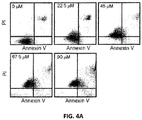
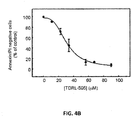
- H460 cells were analyzed for apoptosis using an Annexin V-FITC/Propidium iodide (PI) Vybrant Apoptosis Assay Kit (Invitrogen), according to manufacturer's instructions. Cells were plated at a density of 1 x 10 4 cells per cm 2 and allowed to adhere for 24 hours and then treated with compound TDLR-505 for 48 hours. Following plating and treatment of H460 cells as described above, adherent and non-adherent cells were collected, processed, and analyzed on a BD FACScan flow cytometer. Data was analyzed using WinMDI software (http://facs.scripps.edu/software.html). Cell cycle analysis was performed by PI staining.
- PI Annexin V-FITC/Propidium iodide
- cells were plated and treated with compound collected and then washed twice with PBS-EDTA supplemented with 1% BSA. Cells were fixed in 70% EtOH at -20 °C while vortexing followed by incubation on ice for 30 minutes. Cells were then collected and stained with PI solution (10 ⁇ g/mL PI and 25 ⁇ g/mL RNaseA in PBS-EDTA supplemented with 1% BSA). Cells were analyzed on a Becton Dickinson FACScan flow cytometer. Cells were gated and analyzed on a histogram with events plotted against the FL2-A parameter. Cell cycle distribution was analyzed using ModFit software.
- G2 arrest was induced by treatment with 0.8 ⁇ g/mL nocodazole for 12 hours (10). Cells were then washed with PBS and treated with either vehicle or compound TDLR-505 (100 ⁇ M). Cells were harvested and analyzed for cell cycle distribution as described above.
- H460 cells were plated on chamber slides (LabTek) as described above. Cells were then treated for 3 hours with either 50 ⁇ M of compound TDLR-505 or vehicle as indicated and following treatment, cells were fixed in 4% paraformaldehyde at 25 °C for 3 minutes followed by washing in 0.2% Triton X-100 for 2 minutes at 4 °C. The slides were then blocked in 15% FBS in PBS for 1 hour at 25 °C and then incubated with anti-RPA 34 primary antibody (Neomarkers) at a dilution of 1:500 in 15% FBS for 1 hour.
- anti-RPA 34 primary antibody Neomarkers
- Slides were then washed 3 x 10 minutes with 15% FBS and then incubated with Alexa Fluor-594 goat-anti-mouse secondary antibody (Invitrogen) at a dilution of 1:300 for 1 hour. Slides were again washed and stained with 300 nM DAPI diluted in PBS-EDTA for five minutes. Slides were then mounted and images captured using a Zeiss fluorescent microscope and images were captured using filters for Texas Red to visualize RPA staining and DAPI for visualizing DNA. Slides were visualized and images analyzed and quantified using ImageJ software.
- Alexa Fluor-594 goat-anti-mouse secondary antibody Invitrogen
- H460 cells were plated and treated with either vehicle or 100 ⁇ M compound TDLR-505 in the presence or absence of 25 ⁇ M etoposide for 6 hours and then processed for western blot analysis using a RIPA lysis and extraction procedure.
- RPA was detected with an anti-RPA p34 antibody (Neomarkers) and goat anti-mouse-HRP secondary (Santa Cruz). Bands were visualized using chemiluminescence detection.
- TDRL-505 was administered to mice at 200 mg/kg either ip or po and blood drawn at 1, 2, 4, 8, 24 and 48 hours post treatment. Serum concentration of TDRL-505 was measured using a HPLC MS/MS protocol and PK parameters analysis using on-compartmental analysis.
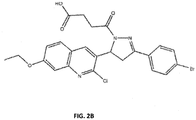
- FIG. 2A and B In view of the high level of in vitro inhibition of RPA observed using compounds in the core structure of compound A, the core structure was substituted with dihydropyrazole with a 4-oxo-butanoic acid at the N1 position and a phenyl substituent at the C3 to initiate analysis of structure activity relationships (SAR) and search for other compounds with cellular activity. Eighty-one analogs were identified and obtained from the ChemDiv library with differing substitutions off the phenyl ring (R 2 ) and varying substituents at position C5 on the dihydropyrazole ring (R 1 ) (data not shown). Among the compounds analyzed, compound TDRL-505 ( FIG.
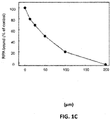
- each compound in Table 1 was titrated against RPA in vivo or in cell, in vitro to determine its IC 50 values. As illustrated in Table 1, these compounds showed varying capacities for inhibiting RPA-ssDNA interactions ( TABLE 1 ).
- the in vitro IC 50 was determined by EMSA analysis as described in FIG. 1A .
- the cellular IC 50 value was determined by treating H460 cells with the indicated compounds and analyzing annexinV/PI staining as described in Methods.
- the in vitro and cellular data was analyzed using standard 4 parameter logistic-curve.
- the IC 50 values and standard error of the fit were determined from this analysis.
- Table 2 The compounds in table 2 are commercially available and have also been demonstrated to inhibit RPA-DNA binding activity in vitro. Briefly, "m' has oxo-pentanoic acid modification and a dioxinol substitution off the quinoline; “n” has oxo-pentanoic acid modification and and quinoxalin-yl- replacing the quinoline;”r” has a butanoic acid and a dioxolo substitution off the quinoline.
- Derivatives of compounds m and n which include a butyric acid and the morpholino derivatives are made.
- the p-methyl is replaced with a p-bromo on the phenyl ring.
- Derivatives of 'r" with the Br-phenyl group and the morpholino group are also made.
- the SAR data described herein shows that making the butyric longer (e.g., pentanoic) appears to be somewhat detrimental to activity, but removal of the entire sidechain results in a substantial loss of RPA inhibitory activity. Accordingly, shorter derivatives of the morpholino with fewer carbons spacers are desirable.
- FIG. 2D quantification of the gel presented in FIG. 2C .
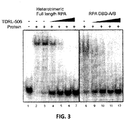
- TDRL-506 was synthesized and purified and assessed for in vitro RPA inhibitory activity.
- TDRL-506 was assessed for RPA inhibitory activity against both full length RPA heterotrimer Lanes 1-7 and the DBD-A/B construct (lanes 8-12). The concentrations used were 25, 50, 75 and 100 ⁇ M TDRL-506. The data demonstrate that the TDRL-506 compound containing the morpholino modification retains full RPA inhibitory activity.
- TDRL-505 is capable of inducing cell death in NSCLC cells.
- a crystal violet staining assay was used and gave an IC 50 value of 64 ⁇ M (data not shown).
- a similar result was also observed in treatment of the A549 NSCLC cell line with compound TDLR-505 while analysis using freshly isolated peripheral blood mononuclear cells (PBMCs) revealed minimal cytotoxic activity (data not shown).
- PBMCs peripheral blood mononuclear cells
- compound TDLR-505 shows significant cytotoxic effects in NSCLC cell lines and only modest activity in non-cancerous cells, indicating that there is a therapeutic treatment window for these molecules.
- FIG. 4C Quantification of the intensity of staining revealed that of cells treated with vehicle, 23% showed intensity >70% of the maximum, while cells treated with compound showed only 15% above that value.
- FIG. 4D H460 cells were treated with vehicle or 100 ⁇ M compound TDLR-505 without or with etoposide (25 ⁇ M) as indicated in the figure. RPA expression was assessed via western blot analysis probing for the p34 subunit.
- Lane 1 is a positive control with RPA purified from an E. coli expression system.
- the position of un-phosphorylated RPA p34 and hyper-phosphorylated RPA p34 are indicated by the arrows.
- Compound TDLR-505 induces a G1 arrest in H460 cell lines.
- the compound TDLR-505 was tested to assess its affect on cell cycle progression. Knockdown of RPA by siRNA has been demonstrated to induce a G1 cell cycle arrest consistent with the essential role of RPA in the initiation of S-phase DNA replication (19). In order to determine if this is the same mechanism of action displayed by compound TDLR-505, its affect on H460 cell cycle progression was measured. As illustrated by the data presented in FIG. 5 , synchronized H460 cells show an inability to re-enter S-phase when treated with TDRL-505.
- H460 NSCLC cells were treated with 0 and 75 ⁇ M of compound TDLR-505 for 48 hours and then analyzed for cell cycle distribution using flow cytometry.
- FIG. 5B H460 cells were treated with 0.8 ⁇ g/mL nocodazole for 12 hours, washed then treated with either vehicle or 100 ⁇ M TDLR-505 for 4, 8 and 12 hours. Cells were then harvested and analyzed for cell cycle distribution using flow cytometry.
- RPA is required for the repair of bulky DNA adducts as well as DNA breaks induced by various types of exogenous and endogenous agents.
- the association of RPA with ssDNA is a critical feature of all of these pathways, indicating that inhibition of this activity would increase the cytotoxic effects induced by DNA damage.
- the combination index (CI) (20) was measured. Referring now to FIG. 6 . As illustrated in this experiment, compound TDLR-505 acts synergistically with both cisplatin and etoposide in H460 cells.
- RPA p34 has been shown to be hyperphosphorylated in response to etoposide treatment in a variety of cellular systems (21;22). Interestingly, analysis of RPA p34 hyperphosphorylation by western blot analysis was not altered by concurrent treatment with TDLR-505 and no dramatic change in overall RPA expression was evident ( FIG. 4D ). This data demonstrate that treatment with TDLR-505 does not dramatically impact etoposide dependent DNA damage signaling response and that synergy is observed in the presence of RPA hyperphosphorylation.
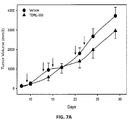
- TDRL-505 demonstrating reasonable IC 50 values against NSCLC prompted the assessment in vivo of the effect of RPA inhibition on lung cancer tumor growth.
- the safety of administration of TDRL-505 in naive mice was determined Additional data demonstrated that IP administration of compound TDLR-505 in a formulation of 25% DMSO in 0.75% Tween 80 to NOD/SCID mice is well tolerated up to 400 mg/kg. Oral dosing in 0.1% Tween 80/methylcellulose was also well tolerated up to 800 mg/kg.
- mice that had been implanted with a human NSCLC tumor cells were subjected to a regime of oral dosing.
- the tumors were allowed to grow to 100 mm3 after which treatment with TDRL-505 or vehicle was commenced.
- the results presented in ( FIG. 7 ) demonstrate a reduction in tumor growth in mice treated with TDRL-505 compared to the vehicle control.
- FIG. 7B analysis of individual mice reveal significant reduction in tumor growth compared to vehicle treated controls.
- RPA DNA repair protein
- the role of RPA in DNA repair also allows for inhibition of its activity to increase the efficacy of current chemotherapeutics that induce DNA damage in the context of combination therapy.
- the inhibition of DNA repair is anticipated to result in persistent DNA damage which would increase cytotoxicity.
- the indispensable role of RPA in the recognition and verification steps of NER is well characterized and, in addition, RPA participates in the re-synthesis step following excision of the damaged oligonucleotide (25).
- Previous studies have shown that cells with decreased levels of NER proteins demonstrate increased sensitivity to cisplatin treatment (26). Consistent with this, our data reveal a synergistic interaction between compound TDLR-505 and cisplatin at high fractions of cells affected.
Landscapes
- Health & Medical Sciences (AREA)
- Chemical & Material Sciences (AREA)
- Life Sciences & Earth Sciences (AREA)
- Medicinal Chemistry (AREA)
- Veterinary Medicine (AREA)
- Pharmacology & Pharmacy (AREA)
- Animal Behavior & Ethology (AREA)
- General Health & Medical Sciences (AREA)
- Public Health (AREA)
- Epidemiology (AREA)
- Organic Chemistry (AREA)
- Chemical Kinetics & Catalysis (AREA)
- General Chemical & Material Sciences (AREA)
- Inorganic Chemistry (AREA)
- Nuclear Medicine, Radiotherapy & Molecular Imaging (AREA)
- Engineering & Computer Science (AREA)
- Oil, Petroleum & Natural Gas (AREA)
- Physiology (AREA)
- Nutrition Science (AREA)
- Biochemistry (AREA)
- Molecular Biology (AREA)
- Bioinformatics & Cheminformatics (AREA)
- Communicable Diseases (AREA)
- Oncology (AREA)
- Pharmaceuticals Containing Other Organic And Inorganic Compounds (AREA)
- Medicines That Contain Protein Lipid Enzymes And Other Medicines (AREA)
- Medicinal Preparation (AREA)
- Acyclic And Carbocyclic Compounds In Medicinal Compositions (AREA)
Applications Claiming Priority (2)
| Application Number | Priority Date | Filing Date | Title |
|---|---|---|---|
| US30177810P | 2010-02-05 | 2010-02-05 | |
| PCT/US2011/023838 WO2011097545A1 (en) | 2010-02-05 | 2011-02-05 | Materials and method for inhibiting replication protein a and uses thereof |
Publications (3)
| Publication Number | Publication Date |
|---|---|
| EP2531032A1 EP2531032A1 (en) | 2012-12-12 |
| EP2531032A4 EP2531032A4 (en) | 2013-09-04 |
| EP2531032B1 true EP2531032B1 (en) | 2019-04-10 |
Family
ID=44355820
Family Applications (1)
| Application Number | Title | Priority Date | Filing Date |
|---|---|---|---|
| EP11740474.9A Active EP2531032B1 (en) | 2010-02-05 | 2011-02-05 | Materials and method for inhibiting replication protein a and uses thereof |
Country Status (6)
| Country | Link |
|---|---|
| US (3) | US8859532B2 (enExample) |
| EP (1) | EP2531032B1 (enExample) |
| JP (2) | JP5957385B2 (enExample) |
| BR (1) | BR112012019691B1 (enExample) |
| CA (1) | CA2825680C (enExample) |
| WO (1) | WO2011097545A1 (enExample) |
Families Citing this family (7)
| Publication number | Priority date | Publication date | Assignee | Title |
|---|---|---|---|---|
| WO2016077752A2 (en) * | 2014-11-13 | 2016-05-19 | Indiana University Research And Technology Corporation | Materials and method for inhibiting replication protein a and uses thereof |
| US9897378B2 (en) | 2015-10-08 | 2018-02-20 | Nyc Designed Inspirations Llc | Cosmetic makeup sponge/blender container |
| JP6485407B2 (ja) * | 2016-06-01 | 2019-03-20 | 横河電機株式会社 | 電磁流量計および誤配線検出方法 |
| US11981652B2 (en) | 2018-03-28 | 2024-05-14 | Emory University | GluN2C/D subunit selective antagonists of the N-methyl-D-aspartate receptor |
| US11999720B2 (en) | 2018-09-19 | 2024-06-04 | The Trustees Of Indiana University | Pyrazolylacylpyrazoline compounds and method for treating pain |
| CN112759614B (zh) * | 2019-11-05 | 2023-03-28 | 天津医科大学 | 基于组蛋白去乙酰化酶和复制蛋白a联合靶向的铂类化合物及其制备方法和应用 |
| JP7677646B2 (ja) * | 2019-12-10 | 2025-05-15 | ザ・トラスティーズ・オブ・インディアナ・ユニバーシティー | 複製タンパク質a(rpa)-dna相互作用阻害剤 |
Family Cites Families (3)
| Publication number | Priority date | Publication date | Assignee | Title |
|---|---|---|---|---|
| US20100055116A1 (en) * | 2006-04-13 | 2010-03-04 | Liou Hsiou-Chi | Methods and Compositions for Targeting c-Rel |
| WO2008045663A2 (en) * | 2006-10-06 | 2008-04-17 | Kalypsys, Inc. | Aryl-substituted heterocyclic pde4 inhibitors as antiinflammatory agents |
| US8716283B2 (en) * | 2007-11-07 | 2014-05-06 | University Of Massachusetts | Type III secretion inhibitors, analogs and uses thereof |
-
2011
- 2011-02-05 CA CA2825680A patent/CA2825680C/en active Active
- 2011-02-05 EP EP11740474.9A patent/EP2531032B1/en active Active
- 2011-02-05 JP JP2012552130A patent/JP5957385B2/ja active Active
- 2011-02-05 BR BR112012019691-0A patent/BR112012019691B1/pt active IP Right Grant
- 2011-02-05 WO PCT/US2011/023838 patent/WO2011097545A1/en not_active Ceased
- 2011-02-05 US US13/576,023 patent/US8859532B2/en active Active
-
2014
- 2014-08-27 US US14/470,585 patent/US9533969B2/en active Active
-
2016
- 2016-03-15 JP JP2016051186A patent/JP6316859B2/ja active Active
-
2017
- 2017-01-03 US US15/396,978 patent/US9730942B2/en active Active
Non-Patent Citations (1)
| Title |
|---|
| None * |
Also Published As
| Publication number | Publication date |
|---|---|
| JP2013518906A (ja) | 2013-05-23 |
| EP2531032A4 (en) | 2013-09-04 |
| BR112012019691B1 (pt) | 2021-09-28 |
| US20140370121A1 (en) | 2014-12-18 |
| JP6316859B2 (ja) | 2018-04-25 |
| US9730942B2 (en) | 2017-08-15 |
| CA2825680C (en) | 2019-12-03 |
| US8859532B2 (en) | 2014-10-14 |
| US20170182055A1 (en) | 2017-06-29 |
| BR112012019691A2 (pt) | 2016-08-09 |
| US20130028989A1 (en) | 2013-01-31 |
| WO2011097545A1 (en) | 2011-08-11 |
| JP5957385B2 (ja) | 2016-07-27 |
| JP2016164166A (ja) | 2016-09-08 |
| US9533969B2 (en) | 2017-01-03 |
| EP2531032A1 (en) | 2012-12-12 |
| WO2011097545A9 (en) | 2011-11-17 |
| CA2825680A1 (en) | 2011-08-11 |
Similar Documents
| Publication | Publication Date | Title |
|---|---|---|
| US9730942B2 (en) | Materials and method for inhibiting replication protein A and uses thereof | |
| US20240082218A1 (en) | Pharmaceutical combinations comprising a kras g12c inhibitor and uses of a kras g12c inhibitor for the treatment of cancers | |
| Huang et al. | Novel hybrid molecule overcomes the limited response of solid tumours to HDAC inhibitors via suppressing JAK1-STAT3-BCL2 signalling | |
| EP2609082B1 (de) | Imidazo[4,5-c]chinoline als dna-pk-inhibitoren | |
| JP2021516231A (ja) | Wee1キナーゼ阻害物質およびそれを使用してがんを処置する方法 | |
| CN106715436A (zh) | 用于癌症治疗的小分子抑制剂 | |
| US11548894B2 (en) | Benzamide or benzamine compounds useful as anticancer agents for the treatment of human cancers | |
| Li et al. | Discovery, synthesis, and evaluation of novel dual inhibitors of a vascular endothelial growth factor receptor and poly (Adp-ribose) polymerase for brca wild-type breast cancer therapy | |
| TW201815418A (zh) | 使用dna破壞劑及dna-pk抑制劑之組合治療癌症的方法 | |
| Kim et al. | Brain distributional kinetics of a novel MDM2 inhibitor SAR405838: implications for use in brain tumor therapy | |
| US20190000850A1 (en) | Combination cancer therapy | |
| US20230158034A1 (en) | Co-treatment with cdk4/6 and cdk2 inhibitors to suppress tumor adaptation to cdk2 inhibitors | |
| US20190365745A1 (en) | Use of chronic treatment with atr inhibitors to sensitize cancer cells to parp inhibitors | |
| TW202535405A (zh) | 用於藉由增強數類已核准藥物的作用以治療癌症之alc1抑制劑 | |
| US9216177B2 (en) | Small molecular inhibitors of RAD51 recombinase and methods thereof | |
| US8293764B2 (en) | Compositions and methods for disruption of BRCA2-Rad51 interaction | |
| CN116761602A (zh) | Y盒结合蛋白质1抑制剂 | |
| Zhang et al. | Identification of Bisindolylmaleimide IX as a potential agent to treat drug-resistant BCR-ABL positive leukemia | |
| US20250320203A1 (en) | 4-(3h-pyrazolo[4,3-f]quinolin-7-yl)-n-(2-(dimethylamino)ethyl)benzamide- or hydroxamic acid compounds, compositions, and methods of use | |
| US20240342168A1 (en) | Small molecule inhibitors for anti-cancer combination therapy | |
| Jacob | Elucidating the Molecular Mechanisms Exploited by Glioblastoma to Evade the Tumor Suppressive Functions of Protein Phosphatase 2A | |
| US20250345317A1 (en) | New pharmaceutical compounds, methods and uses thereof | |
| WO2022271676A1 (en) | Indole-substituted quinolines and their combination with plk1 inhibitors for the treatment of cancer | |
| WO2024249959A1 (en) | Compositions reducing the expression or activity of c1 galt1 for treating ewing sarcoma |
Legal Events
| Date | Code | Title | Description |
|---|---|---|---|
| PUAI | Public reference made under article 153(3) epc to a published international application that has entered the european phase |
Free format text: ORIGINAL CODE: 0009012 |
|
| 17P | Request for examination filed |
Effective date: 20120823 |
|
| AK | Designated contracting states |
Kind code of ref document: A1 Designated state(s): AL AT BE BG CH CY CZ DE DK EE ES FI FR GB GR HR HU IE IS IT LI LT LU LV MC MK MT NL NO PL PT RO RS SE SI SK SM TR |
|
| DAX | Request for extension of the european patent (deleted) | ||
| RIC1 | Information provided on ipc code assigned before grant |
Ipc: A61K 31/5377 20060101ALI20130716BHEP Ipc: A61K 31/415 20060101AFI20130716BHEP Ipc: A61K 31/4709 20060101ALI20130716BHEP Ipc: A61P 35/00 20060101ALI20130716BHEP |
|
| A4 | Supplementary search report drawn up and despatched |
Effective date: 20130805 |
|
| RIC1 | Information provided on ipc code assigned before grant |
Ipc: A61K 31/5377 20060101ALI20130729BHEP Ipc: A61K 31/4709 20060101ALI20130729BHEP Ipc: A61K 31/415 20060101AFI20130729BHEP Ipc: A61P 35/00 20060101ALI20130729BHEP |
|
| 17Q | First examination report despatched |
Effective date: 20140502 |
|
| STAA | Information on the status of an ep patent application or granted ep patent |
Free format text: STATUS: EXAMINATION IS IN PROGRESS |
|
| RAP1 | Party data changed (applicant data changed or rights of an application transferred) |
Owner name: INDIANA UNIVERSITY RESEARCH AND TECHNOLOGY CORPORA |
|
| REG | Reference to a national code |
Ref country code: DE Ref legal event code: R079 Ref document number: 602011057956 Country of ref document: DE Free format text: PREVIOUS MAIN CLASS: A01N0043560000 Ipc: A61K0031415000 |
|
| GRAP | Despatch of communication of intention to grant a patent |
Free format text: ORIGINAL CODE: EPIDOSNIGR1 |
|
| STAA | Information on the status of an ep patent application or granted ep patent |
Free format text: STATUS: GRANT OF PATENT IS INTENDED |
|
| RIC1 | Information provided on ipc code assigned before grant |
Ipc: A61K 31/4709 20060101ALI20180917BHEP Ipc: A61K 33/24 20060101ALI20180917BHEP Ipc: A61K 31/415 20060101AFI20180917BHEP Ipc: A61K 31/5377 20060101ALI20180917BHEP Ipc: A61P 35/00 20060101ALI20180917BHEP Ipc: C07D 401/04 20060101ALI20180917BHEP |
|
| INTG | Intention to grant announced |
Effective date: 20181002 |
|
| GRAJ | Information related to disapproval of communication of intention to grant by the applicant or resumption of examination proceedings by the epo deleted |
Free format text: ORIGINAL CODE: EPIDOSDIGR1 |
|
| STAA | Information on the status of an ep patent application or granted ep patent |
Free format text: STATUS: EXAMINATION IS IN PROGRESS |
|
| GRAR | Information related to intention to grant a patent recorded |
Free format text: ORIGINAL CODE: EPIDOSNIGR71 |
|
| GRAS | Grant fee paid |
Free format text: ORIGINAL CODE: EPIDOSNIGR3 |
|
| STAA | Information on the status of an ep patent application or granted ep patent |
Free format text: STATUS: GRANT OF PATENT IS INTENDED |
|
| INTC | Intention to grant announced (deleted) | ||
| RIN1 | Information on inventor provided before grant (corrected) |
Inventor name: TURCHI, JOHN, J. Inventor name: SHUCK, SARAH |
|
| INTG | Intention to grant announced |
Effective date: 20190109 |
|
| GRAA | (expected) grant |
Free format text: ORIGINAL CODE: 0009210 |
|
| STAA | Information on the status of an ep patent application or granted ep patent |
Free format text: STATUS: THE PATENT HAS BEEN GRANTED |
|
| AK | Designated contracting states |
Kind code of ref document: B1 Designated state(s): AL AT BE BG CH CY CZ DE DK EE ES FI FR GB GR HR HU IE IS IT LI LT LU LV MC MK MT NL NO PL PT RO RS SE SI SK SM TR |
|
| REG | Reference to a national code |
Ref country code: GB Ref legal event code: FG4D |
|
| REG | Reference to a national code |
Ref country code: CH Ref legal event code: EP Ref country code: AT Ref legal event code: REF Ref document number: 1117750 Country of ref document: AT Kind code of ref document: T Effective date: 20190415 |
|
| REG | Reference to a national code |
Ref country code: DE Ref legal event code: R096 Ref document number: 602011057956 Country of ref document: DE |
|
| REG | Reference to a national code |
Ref country code: IE Ref legal event code: FG4D |
|
| REG | Reference to a national code |
Ref country code: NL Ref legal event code: MP Effective date: 20190410 |
|
| REG | Reference to a national code |
Ref country code: LT Ref legal event code: MG4D |
|
| REG | Reference to a national code |
Ref country code: AT Ref legal event code: MK05 Ref document number: 1117750 Country of ref document: AT Kind code of ref document: T Effective date: 20190410 |
|
| PG25 | Lapsed in a contracting state [announced via postgrant information from national office to epo] |
Ref country code: NL Free format text: LAPSE BECAUSE OF FAILURE TO SUBMIT A TRANSLATION OF THE DESCRIPTION OR TO PAY THE FEE WITHIN THE PRESCRIBED TIME-LIMIT Effective date: 20190410 |
|
| PG25 | Lapsed in a contracting state [announced via postgrant information from national office to epo] |
Ref country code: HR Free format text: LAPSE BECAUSE OF FAILURE TO SUBMIT A TRANSLATION OF THE DESCRIPTION OR TO PAY THE FEE WITHIN THE PRESCRIBED TIME-LIMIT Effective date: 20190410 Ref country code: SE Free format text: LAPSE BECAUSE OF FAILURE TO SUBMIT A TRANSLATION OF THE DESCRIPTION OR TO PAY THE FEE WITHIN THE PRESCRIBED TIME-LIMIT Effective date: 20190410 Ref country code: PT Free format text: LAPSE BECAUSE OF FAILURE TO SUBMIT A TRANSLATION OF THE DESCRIPTION OR TO PAY THE FEE WITHIN THE PRESCRIBED TIME-LIMIT Effective date: 20190910 Ref country code: FI Free format text: LAPSE BECAUSE OF FAILURE TO SUBMIT A TRANSLATION OF THE DESCRIPTION OR TO PAY THE FEE WITHIN THE PRESCRIBED TIME-LIMIT Effective date: 20190410 Ref country code: NO Free format text: LAPSE BECAUSE OF FAILURE TO SUBMIT A TRANSLATION OF THE DESCRIPTION OR TO PAY THE FEE WITHIN THE PRESCRIBED TIME-LIMIT Effective date: 20190710 Ref country code: AL Free format text: LAPSE BECAUSE OF FAILURE TO SUBMIT A TRANSLATION OF THE DESCRIPTION OR TO PAY THE FEE WITHIN THE PRESCRIBED TIME-LIMIT Effective date: 20190410 Ref country code: ES Free format text: LAPSE BECAUSE OF FAILURE TO SUBMIT A TRANSLATION OF THE DESCRIPTION OR TO PAY THE FEE WITHIN THE PRESCRIBED TIME-LIMIT Effective date: 20190410 Ref country code: LT Free format text: LAPSE BECAUSE OF FAILURE TO SUBMIT A TRANSLATION OF THE DESCRIPTION OR TO PAY THE FEE WITHIN THE PRESCRIBED TIME-LIMIT Effective date: 20190410 |
|
| PG25 | Lapsed in a contracting state [announced via postgrant information from national office to epo] |
Ref country code: BG Free format text: LAPSE BECAUSE OF FAILURE TO SUBMIT A TRANSLATION OF THE DESCRIPTION OR TO PAY THE FEE WITHIN THE PRESCRIBED TIME-LIMIT Effective date: 20190710 Ref country code: RS Free format text: LAPSE BECAUSE OF FAILURE TO SUBMIT A TRANSLATION OF THE DESCRIPTION OR TO PAY THE FEE WITHIN THE PRESCRIBED TIME-LIMIT Effective date: 20190410 Ref country code: PL Free format text: LAPSE BECAUSE OF FAILURE TO SUBMIT A TRANSLATION OF THE DESCRIPTION OR TO PAY THE FEE WITHIN THE PRESCRIBED TIME-LIMIT Effective date: 20190410 Ref country code: LV Free format text: LAPSE BECAUSE OF FAILURE TO SUBMIT A TRANSLATION OF THE DESCRIPTION OR TO PAY THE FEE WITHIN THE PRESCRIBED TIME-LIMIT Effective date: 20190410 Ref country code: GR Free format text: LAPSE BECAUSE OF FAILURE TO SUBMIT A TRANSLATION OF THE DESCRIPTION OR TO PAY THE FEE WITHIN THE PRESCRIBED TIME-LIMIT Effective date: 20190711 |
|
| PG25 | Lapsed in a contracting state [announced via postgrant information from national office to epo] |
Ref country code: AT Free format text: LAPSE BECAUSE OF FAILURE TO SUBMIT A TRANSLATION OF THE DESCRIPTION OR TO PAY THE FEE WITHIN THE PRESCRIBED TIME-LIMIT Effective date: 20190410 Ref country code: IS Free format text: LAPSE BECAUSE OF FAILURE TO SUBMIT A TRANSLATION OF THE DESCRIPTION OR TO PAY THE FEE WITHIN THE PRESCRIBED TIME-LIMIT Effective date: 20190810 |
|
| REG | Reference to a national code |
Ref country code: DE Ref legal event code: R097 Ref document number: 602011057956 Country of ref document: DE |
|
| PG25 | Lapsed in a contracting state [announced via postgrant information from national office to epo] |
Ref country code: EE Free format text: LAPSE BECAUSE OF FAILURE TO SUBMIT A TRANSLATION OF THE DESCRIPTION OR TO PAY THE FEE WITHIN THE PRESCRIBED TIME-LIMIT Effective date: 20190410 Ref country code: RO Free format text: LAPSE BECAUSE OF FAILURE TO SUBMIT A TRANSLATION OF THE DESCRIPTION OR TO PAY THE FEE WITHIN THE PRESCRIBED TIME-LIMIT Effective date: 20190410 Ref country code: DK Free format text: LAPSE BECAUSE OF FAILURE TO SUBMIT A TRANSLATION OF THE DESCRIPTION OR TO PAY THE FEE WITHIN THE PRESCRIBED TIME-LIMIT Effective date: 20190410 Ref country code: CZ Free format text: LAPSE BECAUSE OF FAILURE TO SUBMIT A TRANSLATION OF THE DESCRIPTION OR TO PAY THE FEE WITHIN THE PRESCRIBED TIME-LIMIT Effective date: 20190410 Ref country code: SK Free format text: LAPSE BECAUSE OF FAILURE TO SUBMIT A TRANSLATION OF THE DESCRIPTION OR TO PAY THE FEE WITHIN THE PRESCRIBED TIME-LIMIT Effective date: 20190410 |
|
| PLBE | No opposition filed within time limit |
Free format text: ORIGINAL CODE: 0009261 |
|
| STAA | Information on the status of an ep patent application or granted ep patent |
Free format text: STATUS: NO OPPOSITION FILED WITHIN TIME LIMIT |
|
| PG25 | Lapsed in a contracting state [announced via postgrant information from national office to epo] |
Ref country code: SM Free format text: LAPSE BECAUSE OF FAILURE TO SUBMIT A TRANSLATION OF THE DESCRIPTION OR TO PAY THE FEE WITHIN THE PRESCRIBED TIME-LIMIT Effective date: 20190410 Ref country code: IT Free format text: LAPSE BECAUSE OF FAILURE TO SUBMIT A TRANSLATION OF THE DESCRIPTION OR TO PAY THE FEE WITHIN THE PRESCRIBED TIME-LIMIT Effective date: 20190410 |
|
| 26N | No opposition filed |
Effective date: 20200113 |
|
| PG25 | Lapsed in a contracting state [announced via postgrant information from national office to epo] |
Ref country code: TR Free format text: LAPSE BECAUSE OF FAILURE TO SUBMIT A TRANSLATION OF THE DESCRIPTION OR TO PAY THE FEE WITHIN THE PRESCRIBED TIME-LIMIT Effective date: 20190410 |
|
| PG25 | Lapsed in a contracting state [announced via postgrant information from national office to epo] |
Ref country code: SI Free format text: LAPSE BECAUSE OF FAILURE TO SUBMIT A TRANSLATION OF THE DESCRIPTION OR TO PAY THE FEE WITHIN THE PRESCRIBED TIME-LIMIT Effective date: 20190410 |
|
| REG | Reference to a national code |
Ref country code: CH Ref legal event code: PL |
|
| REG | Reference to a national code |
Ref country code: BE Ref legal event code: MM Effective date: 20200229 |
|
| PG25 | Lapsed in a contracting state [announced via postgrant information from national office to epo] |
Ref country code: MC Free format text: LAPSE BECAUSE OF FAILURE TO SUBMIT A TRANSLATION OF THE DESCRIPTION OR TO PAY THE FEE WITHIN THE PRESCRIBED TIME-LIMIT Effective date: 20190410 Ref country code: LU Free format text: LAPSE BECAUSE OF NON-PAYMENT OF DUE FEES Effective date: 20200205 |
|
| PG25 | Lapsed in a contracting state [announced via postgrant information from national office to epo] |
Ref country code: CH Free format text: LAPSE BECAUSE OF NON-PAYMENT OF DUE FEES Effective date: 20200229 Ref country code: LI Free format text: LAPSE BECAUSE OF NON-PAYMENT OF DUE FEES Effective date: 20200229 |
|
| PG25 | Lapsed in a contracting state [announced via postgrant information from national office to epo] |
Ref country code: IE Free format text: LAPSE BECAUSE OF NON-PAYMENT OF DUE FEES Effective date: 20200205 |
|
| PG25 | Lapsed in a contracting state [announced via postgrant information from national office to epo] |
Ref country code: BE Free format text: LAPSE BECAUSE OF NON-PAYMENT OF DUE FEES Effective date: 20200229 |
|
| PG25 | Lapsed in a contracting state [announced via postgrant information from national office to epo] |
Ref country code: MT Free format text: LAPSE BECAUSE OF FAILURE TO SUBMIT A TRANSLATION OF THE DESCRIPTION OR TO PAY THE FEE WITHIN THE PRESCRIBED TIME-LIMIT Effective date: 20190410 Ref country code: CY Free format text: LAPSE BECAUSE OF FAILURE TO SUBMIT A TRANSLATION OF THE DESCRIPTION OR TO PAY THE FEE WITHIN THE PRESCRIBED TIME-LIMIT Effective date: 20190410 |
|
| PG25 | Lapsed in a contracting state [announced via postgrant information from national office to epo] |
Ref country code: MK Free format text: LAPSE BECAUSE OF FAILURE TO SUBMIT A TRANSLATION OF THE DESCRIPTION OR TO PAY THE FEE WITHIN THE PRESCRIBED TIME-LIMIT Effective date: 20190410 |
|
| P01 | Opt-out of the competence of the unified patent court (upc) registered |
Effective date: 20230526 |
|
| PGFP | Annual fee paid to national office [announced via postgrant information from national office to epo] |
Ref country code: DE Payment date: 20250227 Year of fee payment: 15 |
|
| PGFP | Annual fee paid to national office [announced via postgrant information from national office to epo] |
Ref country code: FR Payment date: 20250225 Year of fee payment: 15 |
|
| PGFP | Annual fee paid to national office [announced via postgrant information from national office to epo] |
Ref country code: GB Payment date: 20250227 Year of fee payment: 15 |