EP2528992B2 - Luminescent ceramic converter and method of making same - Google Patents
Luminescent ceramic converter and method of making same Download PDFInfo
- Publication number
- EP2528992B2 EP2528992B2 EP11703967.7A EP11703967A EP2528992B2 EP 2528992 B2 EP2528992 B2 EP 2528992B2 EP 11703967 A EP11703967 A EP 11703967A EP 2528992 B2 EP2528992 B2 EP 2528992B2
- Authority
- EP
- European Patent Office
- Prior art keywords
- green state
- ceramic
- pore
- temperature
- converter
- Prior art date
- Legal status (The legal status is an assumption and is not a legal conclusion. Google has not performed a legal analysis and makes no representation as to the accuracy of the status listed.)
- Not-in-force
Links
Images
Classifications
-
- C—CHEMISTRY; METALLURGY
- C09—DYES; PAINTS; POLISHES; NATURAL RESINS; ADHESIVES; COMPOSITIONS NOT OTHERWISE PROVIDED FOR; APPLICATIONS OF MATERIALS NOT OTHERWISE PROVIDED FOR
- C09K—MATERIALS FOR MISCELLANEOUS APPLICATIONS, NOT PROVIDED FOR ELSEWHERE
- C09K11/00—Luminescent materials, e.g. electroluminescent or chemiluminescent
- C09K11/08—Luminescent materials, e.g. electroluminescent or chemiluminescent containing inorganic luminescent materials
- C09K11/77—Luminescent materials, e.g. electroluminescent or chemiluminescent containing inorganic luminescent materials containing rare earth metals
- C09K11/7766—Luminescent materials, e.g. electroluminescent or chemiluminescent containing inorganic luminescent materials containing rare earth metals containing two or more rare earth metals
- C09K11/7774—Aluminates
-
- H—ELECTRICITY
- H10—SEMICONDUCTOR DEVICES; ELECTRIC SOLID-STATE DEVICES NOT OTHERWISE PROVIDED FOR
- H10H—INORGANIC LIGHT-EMITTING SEMICONDUCTOR DEVICES HAVING POTENTIAL BARRIERS
- H10H20/00—Individual inorganic light-emitting semiconductor devices having potential barriers, e.g. light-emitting diodes [LED]
- H10H20/80—Constructional details
- H10H20/85—Packages
- H10H20/851—Wavelength conversion means
- H10H20/8511—Wavelength conversion means characterised by their material, e.g. binder
- H10H20/8512—Wavelength conversion materials
-
- C—CHEMISTRY; METALLURGY
- C04—CEMENTS; CONCRETE; ARTIFICIAL STONE; CERAMICS; REFRACTORIES
- C04B—LIME, MAGNESIA; SLAG; CEMENTS; COMPOSITIONS THEREOF, e.g. MORTARS, CONCRETE OR LIKE BUILDING MATERIALS; ARTIFICIAL STONE; CERAMICS; REFRACTORIES; TREATMENT OF NATURAL STONE
- C04B35/00—Shaped ceramic products characterised by their composition; Ceramics compositions; Processing powders of inorganic compounds preparatory to the manufacturing of ceramic products
- C04B35/01—Shaped ceramic products characterised by their composition; Ceramics compositions; Processing powders of inorganic compounds preparatory to the manufacturing of ceramic products based on oxide ceramics
- C04B35/44—Shaped ceramic products characterised by their composition; Ceramics compositions; Processing powders of inorganic compounds preparatory to the manufacturing of ceramic products based on oxide ceramics based on aluminates
-
- C—CHEMISTRY; METALLURGY
- C04—CEMENTS; CONCRETE; ARTIFICIAL STONE; CERAMICS; REFRACTORIES
- C04B—LIME, MAGNESIA; SLAG; CEMENTS; COMPOSITIONS THEREOF, e.g. MORTARS, CONCRETE OR LIKE BUILDING MATERIALS; ARTIFICIAL STONE; CERAMICS; REFRACTORIES; TREATMENT OF NATURAL STONE
- C04B35/00—Shaped ceramic products characterised by their composition; Ceramics compositions; Processing powders of inorganic compounds preparatory to the manufacturing of ceramic products
- C04B35/622—Forming processes; Processing powders of inorganic compounds preparatory to the manufacturing of ceramic products
- C04B35/626—Preparing or treating the powders individually or as batches ; preparing or treating macroscopic reinforcing agents for ceramic products, e.g. fibres; mechanical aspects section B
- C04B35/62605—Treating the starting powders individually or as mixtures
- C04B35/62625—Wet mixtures
- C04B35/6263—Wet mixtures characterised by their solids loadings, i.e. the percentage of solids
-
- C—CHEMISTRY; METALLURGY
- C04—CEMENTS; CONCRETE; ARTIFICIAL STONE; CERAMICS; REFRACTORIES
- C04B—LIME, MAGNESIA; SLAG; CEMENTS; COMPOSITIONS THEREOF, e.g. MORTARS, CONCRETE OR LIKE BUILDING MATERIALS; ARTIFICIAL STONE; CERAMICS; REFRACTORIES; TREATMENT OF NATURAL STONE
- C04B35/00—Shaped ceramic products characterised by their composition; Ceramics compositions; Processing powders of inorganic compounds preparatory to the manufacturing of ceramic products
- C04B35/622—Forming processes; Processing powders of inorganic compounds preparatory to the manufacturing of ceramic products
- C04B35/626—Preparing or treating the powders individually or as batches ; preparing or treating macroscopic reinforcing agents for ceramic products, e.g. fibres; mechanical aspects section B
- C04B35/63—Preparing or treating the powders individually or as batches ; preparing or treating macroscopic reinforcing agents for ceramic products, e.g. fibres; mechanical aspects section B using additives specially adapted for forming the products, e.g.. binder binders
- C04B35/638—Removal thereof
-
- C—CHEMISTRY; METALLURGY
- C04—CEMENTS; CONCRETE; ARTIFICIAL STONE; CERAMICS; REFRACTORIES
- C04B—LIME, MAGNESIA; SLAG; CEMENTS; COMPOSITIONS THEREOF, e.g. MORTARS, CONCRETE OR LIKE BUILDING MATERIALS; ARTIFICIAL STONE; CERAMICS; REFRACTORIES; TREATMENT OF NATURAL STONE
- C04B38/00—Porous mortars, concrete, artificial stone or ceramic ware; Preparation thereof
-
- H—ELECTRICITY
- H10—SEMICONDUCTOR DEVICES; ELECTRIC SOLID-STATE DEVICES NOT OTHERWISE PROVIDED FOR
- H10H—INORGANIC LIGHT-EMITTING SEMICONDUCTOR DEVICES HAVING POTENTIAL BARRIERS
- H10H20/00—Individual inorganic light-emitting semiconductor devices having potential barriers, e.g. light-emitting diodes [LED]
- H10H20/01—Manufacture or treatment
- H10H20/036—Manufacture or treatment of packages
- H10H20/0361—Manufacture or treatment of packages of wavelength conversion means
-
- C—CHEMISTRY; METALLURGY
- C04—CEMENTS; CONCRETE; ARTIFICIAL STONE; CERAMICS; REFRACTORIES
- C04B—LIME, MAGNESIA; SLAG; CEMENTS; COMPOSITIONS THEREOF, e.g. MORTARS, CONCRETE OR LIKE BUILDING MATERIALS; ARTIFICIAL STONE; CERAMICS; REFRACTORIES; TREATMENT OF NATURAL STONE
- C04B2111/00—Mortars, concrete or artificial stone or mixtures to prepare them, characterised by specific function, property or use
- C04B2111/80—Optical properties, e.g. transparency or reflexibility
- C04B2111/807—Luminescent or fluorescent materials
-
- C—CHEMISTRY; METALLURGY
- C04—CEMENTS; CONCRETE; ARTIFICIAL STONE; CERAMICS; REFRACTORIES
- C04B—LIME, MAGNESIA; SLAG; CEMENTS; COMPOSITIONS THEREOF, e.g. MORTARS, CONCRETE OR LIKE BUILDING MATERIALS; ARTIFICIAL STONE; CERAMICS; REFRACTORIES; TREATMENT OF NATURAL STONE
- C04B2235/00—Aspects relating to ceramic starting mixtures or sintered ceramic products
- C04B2235/02—Composition of constituents of the starting material or of secondary phases of the final product
- C04B2235/30—Constituents and secondary phases not being of a fibrous nature
- C04B2235/32—Metal oxides, mixed metal oxides, or oxide-forming salts thereof, e.g. carbonates, nitrates, (oxy)hydroxides, chlorides
- C04B2235/3224—Rare earth oxide or oxide forming salts thereof, e.g. scandium oxide
-
- C—CHEMISTRY; METALLURGY
- C04—CEMENTS; CONCRETE; ARTIFICIAL STONE; CERAMICS; REFRACTORIES
- C04B—LIME, MAGNESIA; SLAG; CEMENTS; COMPOSITIONS THEREOF, e.g. MORTARS, CONCRETE OR LIKE BUILDING MATERIALS; ARTIFICIAL STONE; CERAMICS; REFRACTORIES; TREATMENT OF NATURAL STONE
- C04B2235/00—Aspects relating to ceramic starting mixtures or sintered ceramic products
- C04B2235/02—Composition of constituents of the starting material or of secondary phases of the final product
- C04B2235/30—Constituents and secondary phases not being of a fibrous nature
- C04B2235/32—Metal oxides, mixed metal oxides, or oxide-forming salts thereof, e.g. carbonates, nitrates, (oxy)hydroxides, chlorides
- C04B2235/3224—Rare earth oxide or oxide forming salts thereof, e.g. scandium oxide
- C04B2235/3225—Yttrium oxide or oxide-forming salts thereof
-
- C—CHEMISTRY; METALLURGY
- C04—CEMENTS; CONCRETE; ARTIFICIAL STONE; CERAMICS; REFRACTORIES
- C04B—LIME, MAGNESIA; SLAG; CEMENTS; COMPOSITIONS THEREOF, e.g. MORTARS, CONCRETE OR LIKE BUILDING MATERIALS; ARTIFICIAL STONE; CERAMICS; REFRACTORIES; TREATMENT OF NATURAL STONE
- C04B2235/00—Aspects relating to ceramic starting mixtures or sintered ceramic products
- C04B2235/02—Composition of constituents of the starting material or of secondary phases of the final product
- C04B2235/30—Constituents and secondary phases not being of a fibrous nature
- C04B2235/32—Metal oxides, mixed metal oxides, or oxide-forming salts thereof, e.g. carbonates, nitrates, (oxy)hydroxides, chlorides
- C04B2235/3224—Rare earth oxide or oxide forming salts thereof, e.g. scandium oxide
- C04B2235/3229—Cerium oxides or oxide-forming salts thereof
-
- C—CHEMISTRY; METALLURGY
- C04—CEMENTS; CONCRETE; ARTIFICIAL STONE; CERAMICS; REFRACTORIES
- C04B—LIME, MAGNESIA; SLAG; CEMENTS; COMPOSITIONS THEREOF, e.g. MORTARS, CONCRETE OR LIKE BUILDING MATERIALS; ARTIFICIAL STONE; CERAMICS; REFRACTORIES; TREATMENT OF NATURAL STONE
- C04B2235/00—Aspects relating to ceramic starting mixtures or sintered ceramic products
- C04B2235/60—Aspects relating to the preparation, properties or mechanical treatment of green bodies or pre-forms
- C04B2235/602—Making the green bodies or pre-forms by moulding
- C04B2235/6025—Tape casting, e.g. with a doctor blade
-
- C—CHEMISTRY; METALLURGY
- C04—CEMENTS; CONCRETE; ARTIFICIAL STONE; CERAMICS; REFRACTORIES
- C04B—LIME, MAGNESIA; SLAG; CEMENTS; COMPOSITIONS THEREOF, e.g. MORTARS, CONCRETE OR LIKE BUILDING MATERIALS; ARTIFICIAL STONE; CERAMICS; REFRACTORIES; TREATMENT OF NATURAL STONE
- C04B2235/00—Aspects relating to ceramic starting mixtures or sintered ceramic products
- C04B2235/65—Aspects relating to heat treatments of ceramic bodies such as green ceramics or pre-sintered ceramics, e.g. burning, sintering or melting processes
- C04B2235/656—Aspects relating to heat treatments of ceramic bodies such as green ceramics or pre-sintered ceramics, e.g. burning, sintering or melting processes characterised by specific heating conditions during heat treatment
-
- C—CHEMISTRY; METALLURGY
- C04—CEMENTS; CONCRETE; ARTIFICIAL STONE; CERAMICS; REFRACTORIES
- C04B—LIME, MAGNESIA; SLAG; CEMENTS; COMPOSITIONS THEREOF, e.g. MORTARS, CONCRETE OR LIKE BUILDING MATERIALS; ARTIFICIAL STONE; CERAMICS; REFRACTORIES; TREATMENT OF NATURAL STONE
- C04B2235/00—Aspects relating to ceramic starting mixtures or sintered ceramic products
- C04B2235/65—Aspects relating to heat treatments of ceramic bodies such as green ceramics or pre-sintered ceramics, e.g. burning, sintering or melting processes
- C04B2235/656—Aspects relating to heat treatments of ceramic bodies such as green ceramics or pre-sintered ceramics, e.g. burning, sintering or melting processes characterised by specific heating conditions during heat treatment
- C04B2235/6562—Heating rate
-
- C—CHEMISTRY; METALLURGY
- C04—CEMENTS; CONCRETE; ARTIFICIAL STONE; CERAMICS; REFRACTORIES
- C04B—LIME, MAGNESIA; SLAG; CEMENTS; COMPOSITIONS THEREOF, e.g. MORTARS, CONCRETE OR LIKE BUILDING MATERIALS; ARTIFICIAL STONE; CERAMICS; REFRACTORIES; TREATMENT OF NATURAL STONE
- C04B2235/00—Aspects relating to ceramic starting mixtures or sintered ceramic products
- C04B2235/65—Aspects relating to heat treatments of ceramic bodies such as green ceramics or pre-sintered ceramics, e.g. burning, sintering or melting processes
- C04B2235/656—Aspects relating to heat treatments of ceramic bodies such as green ceramics or pre-sintered ceramics, e.g. burning, sintering or melting processes characterised by specific heating conditions during heat treatment
- C04B2235/6565—Cooling rate
-
- C—CHEMISTRY; METALLURGY
- C04—CEMENTS; CONCRETE; ARTIFICIAL STONE; CERAMICS; REFRACTORIES
- C04B—LIME, MAGNESIA; SLAG; CEMENTS; COMPOSITIONS THEREOF, e.g. MORTARS, CONCRETE OR LIKE BUILDING MATERIALS; ARTIFICIAL STONE; CERAMICS; REFRACTORIES; TREATMENT OF NATURAL STONE
- C04B2235/00—Aspects relating to ceramic starting mixtures or sintered ceramic products
- C04B2235/65—Aspects relating to heat treatments of ceramic bodies such as green ceramics or pre-sintered ceramics, e.g. burning, sintering or melting processes
- C04B2235/656—Aspects relating to heat treatments of ceramic bodies such as green ceramics or pre-sintered ceramics, e.g. burning, sintering or melting processes characterised by specific heating conditions during heat treatment
- C04B2235/6567—Treatment time
-
- C—CHEMISTRY; METALLURGY
- C04—CEMENTS; CONCRETE; ARTIFICIAL STONE; CERAMICS; REFRACTORIES
- C04B—LIME, MAGNESIA; SLAG; CEMENTS; COMPOSITIONS THEREOF, e.g. MORTARS, CONCRETE OR LIKE BUILDING MATERIALS; ARTIFICIAL STONE; CERAMICS; REFRACTORIES; TREATMENT OF NATURAL STONE
- C04B2235/00—Aspects relating to ceramic starting mixtures or sintered ceramic products
- C04B2235/65—Aspects relating to heat treatments of ceramic bodies such as green ceramics or pre-sintered ceramics, e.g. burning, sintering or melting processes
- C04B2235/658—Atmosphere during thermal treatment
- C04B2235/6582—Hydrogen containing atmosphere
-
- C—CHEMISTRY; METALLURGY
- C04—CEMENTS; CONCRETE; ARTIFICIAL STONE; CERAMICS; REFRACTORIES
- C04B—LIME, MAGNESIA; SLAG; CEMENTS; COMPOSITIONS THEREOF, e.g. MORTARS, CONCRETE OR LIKE BUILDING MATERIALS; ARTIFICIAL STONE; CERAMICS; REFRACTORIES; TREATMENT OF NATURAL STONE
- C04B2235/00—Aspects relating to ceramic starting mixtures or sintered ceramic products
- C04B2235/65—Aspects relating to heat treatments of ceramic bodies such as green ceramics or pre-sintered ceramics, e.g. burning, sintering or melting processes
- C04B2235/658—Atmosphere during thermal treatment
- C04B2235/6588—Water vapor containing atmospheres
-
- C—CHEMISTRY; METALLURGY
- C04—CEMENTS; CONCRETE; ARTIFICIAL STONE; CERAMICS; REFRACTORIES
- C04B—LIME, MAGNESIA; SLAG; CEMENTS; COMPOSITIONS THEREOF, e.g. MORTARS, CONCRETE OR LIKE BUILDING MATERIALS; ARTIFICIAL STONE; CERAMICS; REFRACTORIES; TREATMENT OF NATURAL STONE
- C04B2235/00—Aspects relating to ceramic starting mixtures or sintered ceramic products
- C04B2235/70—Aspects relating to sintered or melt-casted ceramic products
- C04B2235/74—Physical characteristics
- C04B2235/76—Crystal structural characteristics, e.g. symmetry
- C04B2235/762—Cubic symmetry, e.g. beta-SiC
- C04B2235/764—Garnet structure A3B2(CO4)3
Definitions
- This invention relates to ceramic converters for converting the light emitted from a light source into a light of a different wavelength.
- this invention relates phosphor-conversion light emitting diodes (pc-LEDs) and associated luminescent ceramic converters.
- Luminescent ceramic converters typically are used in white-light-emitting pc-LEDs to convert a portion of the blue light emitted from an InGaN LED semiconductor die (or chip) into a yellow light. The remaining unconverted blue light that passes through the converter and the yellow light emitted by the converter combine to generate an overall white light emission from the pc-LED.
- the luminescent ceramic converter in a pc-LED device is typically a thin, flat plate of a dense, luminescent ceramic that is affixed to the surface of the LED chip so that the plate is in close proximity to the light emitting surface.
- the material of the converter is usually based on cerium-activated yttrium aluminum garnet (Y 3 Al 5 O 12 ), also referred to as YAG:Ce.
- Gadolinium may also be incorporated into the YAG structure to slightly shift the color of the emitted light (Gd-YAG:Ce).
- the addition of a cerium activator to the ceramic provides the means for light conversion.
- the cerium partially absorbs the blue light (wavelength of about 420-490nm) emitted by the LED and re-emits yellow light with a broad peak around 570nm. The mixture of the blue and yellow light renders the desired white light.
- Color uniformity is an important aspect for the white light output by a pc-LED.
- the color uniformity of the beam projected on the road is important so that the headlamp is in compliance with SAE and ECE requirements.
- One key factor in projecting a beam of uniform color is that the LED package outputs light that shows minimal shift in color as the viewing angle varies around the LED. This however is not a trivial problem that is easily overcome.
- the color of the light emitted by the pc-LED depends on the ratio of the amounts of unabsorbed blue light and converted yellow light which is affected by the path length the light travels within the converter.
- the light rays traveling normal to the chip surface have a shorter path to the light emitting surface of the converter than the light rays travelling through the ceramic converter at angles farther from normal.
- I / I o 10 ⁇ ⁇ c t
- I o and I are the intensities of the incident and transmitted light
- ⁇ is the molar absorptivity of the absorber
- c is the concentration of the absorber
- t optical path length through the material.
- One solution to reduce the difference in angular color shift is to create a longer optical path for all light rays within the converter by introducing scattering sites in the form of pores in the ceramic material.
- Most ceramics are made by sintering a formed compaction of powders which contain a certain amount and size distribution of void space, referred to as "pores," between the powder particles. These pores formed by the inter-particle spacing in the ceramic body are commonly referred to as matrix pores.
- the sintering process essentially brings the centers of the powder particles closer together, removes the porosity to some extent, and grows the grain size of the crystals in the ceramic material. Rather than trying to eliminate the porosity, the sintering temperature or sintering time may lowered so that the matrix pores are not all eliminated during the densification of the ceramic.
- One drawback of using pore scattering in reducing the angular color shift is the reduction in efficacy associated with the excessive scattering by the pores.
- the effectiveness of the scattering will be determined by both the concentration and size of the pores in the ceramic. If the concentration of the pores is too high, the light will be substantially absorbed by the internal scattering and the overall LED output will be reduced.
- WO 2008/056292 A1 an arrangement for emitting mixed light using a light-converting element is described.
- the document WO 2007/107917 A2 describes an electroluminescent device wherein a ceramic conversion element is used for converting radiation.
- a luminescence conversion body is disclosed in US 2004/0145308 A1 .
- WO 2006/097876 A1 a luminescent ceramic matrix composite structure is disclosed.
- the object is achieved by means of a method of forming a luminescent ceramic converter in accordance with the independent claim 1.
- a luminescent ceramic converter that comprises a sintered, monolithic ceramic material that converts light of a first wavelength to light of a second wavelength and has substantially spherically shaped pores for scattering light.
- the pores may have an average pore size of 0.5 to 10 ⁇ m and more preferably an average pore size of 0.5 to 2 ⁇ m.
- the light of the first wavelength is preferably a blue light emitted by a light emitting diode and the ceramic material is preferably comprised of cerium-activated yttrium aluminum garnet. More preferably, the ceramic material may further contain gadolinium.
- a method of forming a luminescent ceramic converter comprising the steps of: (a) combining a precursor material with a pore-forming additive to form a green state mixture, the pore-forming additive comprising substantially spherical particles of a carbonaceous material, which comprises glassy spherical carbon powder; (b) shaping the green state mixture to form a green state shape of the ceramic converter; (c) heating the green state shape to remove the pore-forming additive and form a pre-fired ceramic material having substantially spherical pores; and (d) sintering the pre-fired ceramic material to form the luminescent ceramic converters.
- the precursor material may comprise cerium-activated yttrium aluminum garnet.
- the green state mixture may further contain an organic binder to aid in the formation of the green state shape.
- Methods for forming the green state shape include injection molding, tape casting, dry pressing, slip casting, or extrusion.
- the carbonaceous material comprises glassy spherical carbon powders.
- the green state mixture may contain more than one precursor material and heating of the green state shape causes the precursor materials to react to form the luminescent ceramic converter.
- the heating in step (c) may be performed at a temperature up to 1150°C.
- the heating in step (c) may be performed at a time-temperature cycle of: increasing temperature from 25°C to 400°C in 4 hours, increasing temperature from 400°C to 1150°C in 4 hours, holding the temperature at 1150°C for a time period ranging from 0.5 to 2 hours, and decreasing the temperature to 25°C in 3 hours.
- the pre-fired ceramic material is sintered at 1700°C-1825°C and more preferably the pre-fired ceramic material is sintered in a wet hydrogen atmosphere at 1700°C-1825°C for a time period ranging from 1 minute to 2 hours.
- pore-forming additives permits a controlled amount and size distribution of pores that depends on the choice of the pore-forming additive. If carbonaceous particles of a controlled size and shape are added to the green precursor ceramic material as a pore-forming additive, they are subsequently removed or burned out during a heating process, leaving behind void spaces similar in size and shape to the starting additive. These voids then form pores of controlled sizes that are typically larger than sizes of the matrix pores. Unlike the matrix pores, the pores created by removing the additives are thermodynamically stable during high temperature treatment. For example, it is known that a pore size to grain size ratio controls the behavior of the pore removal during sintering.
- the pore size is larger than 1.47 times the grain size, the pores are thermodynamically stable during sintering. Also, by using the additives, there is a higher degree of porosity control during the manufacture of the ceramic converter. This provides a way to control the pores in the ceramic converter which aids in reducing the angular color shift for ceramic converters on blue-light-emitting LEDs.
- the particles of the pore forming additive are substantially spherical, and have an average particle size of about 0.5 ⁇ m to about 10 ⁇ m, and more preferably 0.5 to 2 ⁇ m.
- the particle size measurements can be made with typical particle sizing techniques such as analysis of scanning electron micrographs, sedimentation with optical or X-ray scattering, or laser diffraction techniques.
- Particle size generally refers to the equivalent spherical diameter which neglects the morphological differences between particles.
- a substantially spherical shape is preferred for the pore-forming additive particles. Additive particles of other shapes, for example plate-like, tend to be aligned during casting and result in aligned pores with no advantage in controlling angular color shift.
- the particles are comprised of a carbonaceous material that is substantially removed from the ceramic converter by thermal processing.
- a carbonaceous material that is substantially removed from the ceramic converter by thermal processing.
- clean-burning carbonaceous particles glassy spherical carbon powders (Sigma-Aldrich) are used.
- a pore-forming additive made of poly(methacrylate)-co-ethylene glycol dimethacrylate (PMMA) is added during the green state.
- the terms "green state” and “green” mean that the ceramic material, ceramic part, ceramic microstructure or the shape of the ceramic converter has not yet been treated by any high temperature treatment.
- the PMMA additive contains well-formed substantially spherical particles with a mean size distribution of 8 ⁇ m. The additive is removed by treating the green ceramic material at a high temperature up to 1150°C to form pores in the ceramic material. The pre-fired ceramic is then sintered at a temperature above 1700°C.
- the pores formed by the inter-particle spacing i.e. matrix pores
- the pores formed by removing the pore-forming additive show little reduction when the sintering temperature is increased from 1700°C to 1775°C.
- Fig. 1 The effects of the pore-forming additive level are studied by comparing the ceramic samples with no pore-forming additive and 9, 16 and 23 volume % (sintered volume) of added PMMA pore-forming additives.
- the color of the light shifts toward the yellow region (upright corner of the chromaticity diagram) due to increased light scattering from pores which increases the optical path length causing more blue absorption and yellow emission.
- ⁇ C x is the difference between the chromaticity coordinate C x measured at a angle of incidence of 60 degree and the chromaticity coordinate C x measured at at a angle of incidence of 0 degree.
- ⁇ C x is the difference between the chromaticity coordinate C x measured at a angle of incidence of 60 degree and the chromaticity coordinate C x measured at at a angle of incidence of 0 degree.
- a typical tape casting batch formula for YAG-based sintered ceramic converter plates as shown in Table 1 is used. Significant variations in the levels of cerium and gadolinium can be utilized to make a variety of colors and amount of conversion with a given ceramic converter thickness.
- the YAG converter plates can be made from a mixture of the individual oxides or by batching prereacted Gd-YAG:Ce powders. Table 1.
- DF002 is a non-silicone de-foamer.
- DS001 is a polymeric dispersant.
- PL005 is a high pH plasticizer. These organic chemicals are specifically formulated for aqueous ceramic tape casting by Polymer Innovations, Inc, of Vista, California.
- the desired shape for a sintered ceramic converter plate is typically about 1 mm x 1 mm square with a thickness of 70 to 150 microns. One corner of the plate is typically cut out to provide room for a wire bond to the top surface of the LED chip. The size could be as small as 0.5 mm square for smaller LED chips.
- the green parts are placed on an alumina setter plate which is then placed in an air atmosphere furnace and heated using a typical time-temperature cycle of:
- This thermal process removes all of the organic and carbonaceous species including the organic binders used to hold the powders together as well as the pore-forming additive materials.
- the hold temperature at 1150°C is also high enough to allow the powder particles to neck together giving the parts sufficient strength to be handled.
- the pore-forming additives are burnt out leaving voids that replicate their sizes and shapes.
- the pre-fired ceramic plates are transferred onto molybdenum plates and are sintered in a wet hydrogen atmosphere at 1700-1825°C for a period of from 1 minute to 2 hours at peak temperature. During the hydrogen sintering, the plates shrink as the ceramic powders sinter and the matrix porosity is removed. If the initial powder particle sizes and mixing/milling conditions are performed properly and no pore-forming additives are added to the batch, the matrix porosity will be reduced at elevated sintering temperatures to a level that the part exhibits a high degree of transparency or translucency.
- the invention may be extended to other luminescent ceramic materials and ceramic forming techniques such as injection molding, slip casting, die pressing, etc.
- the addition of pore-forming additives can be employed in all various ceramic forming techniques.
Landscapes
- Chemical & Material Sciences (AREA)
- Engineering & Computer Science (AREA)
- Ceramic Engineering (AREA)
- Materials Engineering (AREA)
- Organic Chemistry (AREA)
- Manufacturing & Machinery (AREA)
- Structural Engineering (AREA)
- Inorganic Chemistry (AREA)
- Luminescent Compositions (AREA)
- Led Device Packages (AREA)
Description
- This invention relates to ceramic converters for converting the light emitted from a light source into a light of a different wavelength. In particular, this invention relates phosphor-conversion light emitting diodes (pc-LEDs) and associated luminescent ceramic converters.
- Luminescent ceramic converters typically are used in white-light-emitting pc-LEDs to convert a portion of the blue light emitted from an InGaN LED semiconductor die (or chip) into a yellow light. The remaining unconverted blue light that passes through the converter and the yellow light emitted by the converter combine to generate an overall white light emission from the pc-LED. The luminescent ceramic converter in a pc-LED device is typically a thin, flat plate of a dense, luminescent ceramic that is affixed to the surface of the LED chip so that the plate is in close proximity to the light emitting surface. For white light generation, the material of the converter is usually based on cerium-activated yttrium aluminum garnet (Y3Al5O12), also referred to as YAG:Ce. Gadolinium may also be incorporated into the YAG structure to slightly shift the color of the emitted light (Gd-YAG:Ce). The addition of a cerium activator to the ceramic provides the means for light conversion. The cerium partially absorbs the blue light (wavelength of about 420-490nm) emitted by the LED and re-emits yellow light with a broad peak around 570nm. The mixture of the blue and yellow light renders the desired white light.
- Color uniformity is an important aspect for the white light output by a pc-LED. For example, in automotive headlamp applications, the color uniformity of the beam projected on the road is important so that the headlamp is in compliance with SAE and ECE requirements. One key factor in projecting a beam of uniform color is that the LED package outputs light that shows minimal shift in color as the viewing angle varies around the LED. This however is not a trivial problem that is easily overcome.
- The color of the light emitted by the pc-LED depends on the ratio of the amounts of unabsorbed blue light and converted yellow light which is affected by the path length the light travels within the converter. In particular, when the light emitted from the underlying blue LED travels through the ceramic converter, the light rays traveling normal to the chip surface have a shorter path to the light emitting surface of the converter than the light rays travelling through the ceramic converter at angles farther from normal. The amount of absorption (and subsequent re-emission at longer wavelength) follows the Beer-Lambert Law which shows an exponential dependence on both concentration and thickness:

- Consequently, blue light travelling through the ceramic converter at angles farther from normal will be absorbed more strongly because of the longer optical path length in the material. This results is less blue light and more yellow light exiting the converter at larger angles thereby producing an overall emission that has a greater proportion of yellow light than the light emitted normal to the surface of the converter.
- One solution to reduce the difference in angular color shift is to create a longer optical path for all light rays within the converter by introducing scattering sites in the form of pores in the ceramic material. Most ceramics are made by sintering a formed compaction of powders which contain a certain amount and size distribution of void space, referred to as "pores," between the powder particles. These pores formed by the inter-particle spacing in the ceramic body are commonly referred to as matrix pores. The sintering process essentially brings the centers of the powder particles closer together, removes the porosity to some extent, and grows the grain size of the crystals in the ceramic material. Rather than trying to eliminate the porosity, the sintering temperature or sintering time may lowered so that the matrix pores are not all eliminated during the densification of the ceramic.
- One drawback of using pore scattering in reducing the angular color shift is the reduction in efficacy associated with the excessive scattering by the pores. The effectiveness of the scattering will be determined by both the concentration and size of the pores in the ceramic. If the concentration of the pores is too high, the light will be substantially absorbed by the internal scattering and the overall LED output will be reduced.
- The effect of pore size on the efficacy is reported as optimal with pores of diameter of about 800nm in International Patent Application No.
WO 2007/107917 . The efficacy drops off rapidly with pore sizes below 500nm and steadily for pore sizes above 1000nm. However, it is difficult to control the size or the size distribution of the porosity through manipulation of the sintering cycle since too many factors, e.g., grain size, particle packing, grain growth, and sintering temperature, all influence the final pore population in the sintered ceramic converter. Thus, due to the thermodynamic and kinetic aspects of the ceramic processing, it is difficult to deliver a ceramic with the desired pore size and distribution. - In
WO 2008/056292 A1 an arrangement for emitting mixed light using a light-converting element is described. The documentWO 2007/107917 A2 describes an electroluminescent device wherein a ceramic conversion element is used for converting radiation. A luminescence conversion body is disclosed inUS 2004/0145308 A1 . InWO 2006/097876 A1 a luminescent ceramic matrix composite structure is disclosed. - It is an object of the invention to obviate the disadvantages of the prior art.
- It is a further object of the invention to provide a reliable means of, controlling and achieving the desired distribution and size of the pores in a luminescent ceramic converter.
- The object is achieved by means of a method of forming a luminescent ceramic converter in accordance with the independent claim 1.
- There is provided a luminescent ceramic converter that comprises a sintered, monolithic ceramic material that converts light of a first wavelength to light of a second wavelength and has substantially spherically shaped pores for scattering light. Preferably, the pores may have an average pore size of 0.5 to 10µm and more preferably an average pore size of 0.5 to 2µm. The light of the first wavelength is preferably a blue light emitted by a light emitting diode and the ceramic material is preferably comprised of cerium-activated yttrium aluminum garnet. More preferably, the ceramic material may further contain gadolinium.
- There is also provided a method of forming a luminescent ceramic converter comprising the steps of: (a) combining a precursor material with a pore-forming additive to form a green state mixture, the pore-forming additive comprising substantially spherical particles of a carbonaceous material, which comprises glassy spherical carbon powder; (b) shaping the green state mixture to form a green state shape of the ceramic converter; (c) heating the green state shape to remove the pore-forming additive and form a pre-fired ceramic material having substantially spherical pores; and (d) sintering the pre-fired ceramic material to form the luminescent ceramic converters. Preferably, the precursor material may comprise cerium-activated yttrium aluminum garnet. The green state mixture may further contain an organic binder to aid in the formation of the green state shape. Methods for forming the green state shape include injection molding, tape casting, dry pressing, slip casting, or extrusion. The carbonaceous material comprises glassy spherical carbon powders.
- The green state mixture may contain more than one precursor material and heating of the green state shape causes the precursor materials to react to form the luminescent ceramic converter. In a further aspect, the heating in step (c) may be performed at a temperature up to 1150°C. In yet another aspect, the heating in step (c) may be performed at a time-temperature cycle of: increasing temperature from 25°C to 400°C in 4 hours, increasing temperature from 400°C to 1150°C in 4 hours, holding the temperature at 1150°C for a time period ranging from 0.5 to 2 hours, and decreasing the temperature to 25°C in 3 hours.
- Preferably, the pre-fired ceramic material is sintered at 1700°C-1825°C and more preferably the pre-fired ceramic material is sintered in a wet hydrogen atmosphere at 1700°C-1825°C for a time period ranging from 1 minute to 2 hours.
-
-
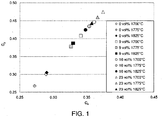
FIG. 1 is a plot of the Cx and Cy chromaticity coordinates of the light emitted by Gd-YAG:Ce ceramic converters prepared with different percentages of PMMA powder and sintered under different sintering temperatures. -
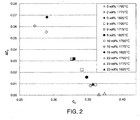
FIG. 2 is a plot of the angular color shifts of Gd-YAG:Ce ceramic converters prepared with different percentages of PMMA powder and sintered under different sintering temperatures, wherein ΔCx is the difference between the chromaticity coordinate Cx measured at a angle of viewing of 60 degrees from normal and the chromaticity coordinate Cx measured at a angle of viewing of 0 degrees from normal. - For a better understanding of the present invention, together with other and further objects, advantages and capabilities thereof, reference is made to the following disclosure and appended claims taken in conjunction with the above-described drawings.
- The use of pore-forming additives permits a controlled amount and size distribution of pores that depends on the choice of the pore-forming additive. If carbonaceous particles of a controlled size and shape are added to the green precursor ceramic material as a pore-forming additive, they are subsequently removed or burned out during a heating process, leaving behind void spaces similar in size and shape to the starting additive. These voids then form pores of controlled sizes that are typically larger than sizes of the matrix pores. Unlike the matrix pores, the pores created by removing the additives are thermodynamically stable during high temperature treatment. For example, it is known that a pore size to grain size ratio controls the behavior of the pore removal during sintering. If the pore size is larger than 1.47 times the grain size, the pores are thermodynamically stable during sintering. Also, by using the additives, there is a higher degree of porosity control during the manufacture of the ceramic converter. This provides a way to control the pores in the ceramic converter which aids in reducing the angular color shift for ceramic converters on blue-light-emitting LEDs.
- Preferably, the particles of the pore forming additive are substantially spherical, and have an average particle size of about 0.5µm to about 10 µm, and more preferably 0.5 to 2 µm. The particle size measurements can be made with typical particle sizing techniques such as analysis of scanning electron micrographs, sedimentation with optical or X-ray scattering, or laser diffraction techniques. Particle size generally refers to the equivalent spherical diameter which neglects the morphological differences between particles. A substantially spherical shape is preferred for the pore-forming additive particles. Additive particles of other shapes, for example plate-like, tend to be aligned during casting and result in aligned pores with no advantage in controlling angular color shift.
- The particles are comprised of a carbonaceous material that is substantially removed from the ceramic converter by thermal processing. As clean-burning carbonaceous particles glassy spherical carbon powders (Sigma-Aldrich) are used.
- In a comparative embodiment, which with respect to the material used for the pore-forming additive, is not subject to the invention, a pore-forming additive made of poly(methacrylate)-co-ethylene glycol dimethacrylate (PMMA) is added during the green state. The terms "green state" and "green" mean that the ceramic material, ceramic part, ceramic microstructure or the shape of the ceramic converter has not yet been treated by any high temperature treatment. The PMMA additive contains well-formed substantially spherical particles with a mean size distribution of 8µm. The additive is removed by treating the green ceramic material at a high temperature up to 1150°C to form pores in the ceramic material. The pre-fired ceramic is then sintered at a temperature above 1700°C. During the sintering, the pores formed by the inter-particle spacing, i.e. matrix pores, are substantially reduced. In contrast, the pores formed by removing the pore-forming additive show little reduction when the sintering temperature is increased from 1700°C to 1775°C.
- The effects of the pore-forming additive level are studied by comparing the ceramic samples with no pore-forming additive and 9, 16 and 23 volume % (sintered volume) of added PMMA pore-forming additives. The resulting color of the light converted by the Gd-YAG:Ce ceramic converter prepared with different percentages of PMMA powder and under different sintering temperatures are shown in
Fig. 1 . As the amount of pore-forming additive increases and as the sintering temperature decreases, the color of the light shifts toward the yellow region (upright corner of the chromaticity diagram) due to increased light scattering from pores which increases the optical path length causing more blue absorption and yellow emission.Fig. 2 shows how the pore-forming additive reduces- the angular color shift, as quantified by ΔCx which is the difference between the chromaticity coordinate Cx measured at a angle of incidence of 60 degree and the chromaticity coordinate Cx measured at at a angle of incidence of 0 degree. As the amount of pore-forming additive increases from 0% to 23%, the angular color shift is significantly reduced as shown inFig. 2 . - In a preferred method, a typical tape casting batch formula for YAG-based sintered ceramic converter plates as shown in Table 1 is used. Significant variations in the levels of cerium and gadolinium can be utilized to make a variety of colors and amount of conversion with a given ceramic converter thickness. The YAG converter plates can be made from a mixture of the individual oxides or by batching prereacted Gd-YAG:Ce powders.
Table 1. Aqueous tape casting batch** for (Y0.796 Gd0.2 Ce0.004)3Al5O12 Component Weight % Solids Density Volume Percent Volume (cm) Weight Percent Weight (g) Water 0% 1.00 66.68% 48.61 40.90% 48.49 WB4101 35% 1.03 12.84% 9.36 8.13% 9.64 DF002 100% 1.20 0.31% 0.23 0.23% 0.27 DS001 100% 1.03 1.84% 1.34 1.16% 1.38 PL005 100% 1.03 0.92% 0.67 0.58% 0.69 NH40H 100% 1.00 0.95% 0.69 0.58% 0.69 Y2O3 100% 5.01 6.67% 4.86 20.54% 24.35 Al2O3 100% 3.97 7.95% 5.80 19.42% 23.02 Gd2O3 100% 7.41 1.82% 1.33 8.29% 9.82 CeO2 100% 7.65 0.0334% 0.02 0.16% 0.1865 **WB4101 is an acrylic binder with additives solution. DF002 is a non-silicone de-foamer. DS001 is a polymeric dispersant. PL005 is a high pH plasticizer. These organic chemicals are specifically formulated for aqueous ceramic tape casting by Polymer Innovations, Inc, of Vista, California. - A batch containing only YAG:Ce powder or a mixture of yttria, alumina, and ceria, either with or without Gd, is processed into ceramic plates. After milling, for a length of time long enough to promote a good green microstructure (well-mixed, well-packed small powder particles with a fine and narrow distribution of void sizes between the particles), the pore-forming additives are added to the batch which is further mixed for a period only long enough to distribute the additive. At that point, the batch is then cast, dried, and cut or punched into the desired part size and shape. The desired shape for a sintered ceramic converter plate is typically about 1 mm x 1 mm square with a thickness of 70 to 150 microns. One corner of the plate is typically cut out to provide room for a wire bond to the top surface of the LED chip. The size could be as small as 0.5 mm square for smaller LED chips.
- The green parts are placed on an alumina setter plate which is then placed in an air atmosphere furnace and heated using a typical time-temperature cycle of:
- 25°C to 400°C in 4 hours
- 400°C to 1150°C in 4 hours
- Hold at 1150°C for a period of from 0.5 to 2 hours
- Cool to 25°C in 3 hours
- This thermal process removes all of the organic and carbonaceous species including the organic binders used to hold the powders together as well as the pore-forming additive materials. The hold temperature at 1150°C is also high enough to allow the powder particles to neck together giving the parts sufficient strength to be handled. The pore-forming additives are burnt out leaving voids that replicate their sizes and shapes.
- The pre-fired ceramic plates are transferred onto molybdenum plates and are sintered in a wet hydrogen atmosphere at 1700-1825°C for a period of from 1 minute to 2 hours at peak temperature. During the hydrogen sintering, the plates shrink as the ceramic powders sinter and the matrix porosity is removed. If the initial powder particle sizes and mixing/milling conditions are performed properly and no pore-forming additives are added to the batch, the matrix porosity will be reduced at elevated sintering temperatures to a level that the part exhibits a high degree of transparency or translucency.
- In particular, while a preferred embodiment described herein is for tape cast ceramics made with Ce in the YAG host, the invention may be extended to other luminescent ceramic materials and ceramic forming techniques such as injection molding, slip casting, die pressing, etc. The addition of pore-forming additives can be employed in all various ceramic forming techniques.
Claims (9)
- A method of forming a luminescent ceramic converter comprising the steps of:(a) combining a precursor material with a pore-forming additive to form a green state mixture, the pore-forming additive comprising substantially spherical particles of a carbonaceous material; wherein the carbonaceous material comprises glassy spherical carbon powder;(b) shaping the green state mixture to form a green state shape of the ceramic converter;(c) heating the green state shape to remove the pore-forming additive and form a pre-fired ceramic material having substantially spherically shaped pores; and(d) sintering the pre-fired ceramic material to form the luminescent ceramic converter.
- The method of claim 1 wherein the precursor material comprises cerium-activated yttrium aluminum garnet.
- The method of claim 1 wherein the green state mixture further contains an organic binder.
- The method of claim 1 wherein the green state shape is formed by injection molding, tape casting, dry pressing, slip casting, or extrusion.
- The method of claim 1 wherein the green state mixture contains more than one precursor material and heating of the green state shape causes the precursor materials to react to form the luminescent ceramic converter.
- The method of claim 1 wherein the heating in step (c) is performed at a temperature up to 1150°C.
- The method of claim 6 wherein the heating in step (c) is performed at a time-temperature cycle of: increasing temperature from 25°C to 400°C in 4 hours, increasing temperature from 400°C to 1 150°C in 4 hours, holding the temperature at 1 150°C for a time period ranging from 0.5 to 2 hours, and decreasing the temperature to 25°C in 3 hours.
- The method of claim 1 wherein the sintering is performed at a temperature in a range of 1700°C-1825°C.
- The method of claim 1 wherein the pre-fired ceramic material is sintered in a wet hydrogen atmosphere at 1700°C-1825°C for a time period ranges from 1 minute to 2 hour, after step(c).
Applications Claiming Priority (2)
| Application Number | Priority Date | Filing Date | Title |
|---|---|---|---|
| US29894010P | 2010-01-28 | 2010-01-28 | |
| PCT/US2011/022715 WO2011094404A1 (en) | 2010-01-28 | 2011-01-27 | Luminescent ceramic converter and method of making same |
Publications (3)
| Publication Number | Publication Date |
|---|---|
| EP2528992A1 EP2528992A1 (en) | 2012-12-05 |
| EP2528992B1 EP2528992B1 (en) | 2014-01-15 |
| EP2528992B2 true EP2528992B2 (en) | 2017-05-24 |
Family
ID=43919911
Family Applications (1)
| Application Number | Title | Priority Date | Filing Date |
|---|---|---|---|
| EP11703967.7A Not-in-force EP2528992B2 (en) | 2010-01-28 | 2011-01-27 | Luminescent ceramic converter and method of making same |
Country Status (8)
| Country | Link |
|---|---|
| US (1) | US8883055B2 (en) |
| EP (1) | EP2528992B2 (en) |
| JP (1) | JP2013518172A (en) |
| KR (1) | KR20120123114A (en) |
| CN (1) | CN102782088B (en) |
| CA (1) | CA2787389C (en) |
| RU (1) | RU2510946C1 (en) |
| WO (1) | WO2011094404A1 (en) |
Families Citing this family (22)
| Publication number | Priority date | Publication date | Assignee | Title |
|---|---|---|---|---|
| TW201345869A (en) * | 2012-04-18 | 2013-11-16 | Nitto Denko Corp | Method and apparatus for sintering flat ceramics |
| US9205571B2 (en) * | 2012-04-18 | 2015-12-08 | Nitto Denko Corporation | Method and apparatus for sintering flat ceramics |
| US9284485B2 (en) | 2012-11-07 | 2016-03-15 | Rolex Sa | Persistent phosphorescent composite material |
| DE102013100821B4 (en) * | 2013-01-28 | 2017-05-04 | Schott Ag | Polycrystalline ceramics, their preparation and uses |
| DE102013100832A1 (en) | 2013-01-28 | 2014-07-31 | Schott Ag | Highly scattering ceramic converter and a method for its production |
| DE102013218451A1 (en) | 2013-09-14 | 2015-03-19 | Fraunhofer-Gesellschaft zur Förderung der angewandten Forschung e.V. | Conversion element for an optical or optoelectronic component and method for its production |
| US10591137B2 (en) | 2013-09-26 | 2020-03-17 | Osram Sylvania Inc. | Wavelength converter and light-emitting device having same |
| DE102014105470A1 (en) | 2014-04-16 | 2015-10-22 | Schott Ag | Layer composite, process for its preparation, and its uses |
| JP5989268B2 (en) * | 2015-02-18 | 2016-09-07 | 日東電工株式会社 | Phosphor ceramics, sealed optical semiconductor element, circuit board, optical semiconductor device, and light emitting device |
| CN106393671A (en) * | 2015-07-28 | 2017-02-15 | 优克材料科技股份有限公司 | Photocuring material and three-dimensional printing method |
| CN108026446B (en) * | 2015-09-29 | 2019-05-07 | 飞利浦照明控股有限公司 | Lighting apparatus with ceramic garnet |
| CN106896632A (en) | 2015-12-03 | 2017-06-27 | 精工爱普生株式会社 | Fluorophor, Wavelength changing element, light supply apparatus and projecting apparatus |
| CN107474839A (en) * | 2016-06-07 | 2017-12-15 | 深圳市光峰光电技术有限公司 | A kind of luminescent ceramic |
| CN107797312B (en) * | 2016-09-07 | 2024-04-16 | 深圳光峰科技股份有限公司 | Ceramic composite material, preparation method thereof and wavelength converter |
| CN109424860B (en) * | 2017-08-31 | 2023-05-02 | 日亚化学工业株式会社 | Fluorescent member, optical component, and light-emitting device |
| CN109467453B (en) * | 2017-09-07 | 2021-12-07 | 中国科学院上海硅酸盐研究所 | Fluorescent ceramic with characteristic microstructure and preparation method and application thereof |
| EP3505503B1 (en) * | 2017-12-27 | 2020-04-08 | Schott Ag | Optical converter |
| US12509630B2 (en) * | 2018-11-21 | 2025-12-30 | Osram Opto Semiconductors Gmbh | Method for producing a ceramic converter element, ceramic converter element, and optoelectronic component |
| JP7157898B2 (en) * | 2019-08-09 | 2022-10-21 | 株式会社タムラ製作所 | Wavelength conversion member |
| CN113024252A (en) * | 2019-12-09 | 2021-06-25 | 上海航空电器有限公司 | Hierarchical pore structure ceramic phosphor for white light laser illumination and preparation method thereof |
| CN117185832A (en) * | 2022-06-01 | 2023-12-08 | 深圳市绎立锐光科技开发有限公司 | Complex-phase fluorescent ceramic, preparation method of complex-phase fluorescent ceramic and light-emitting device |
| CN116239381B (en) * | 2023-03-16 | 2024-04-12 | 海南钇坤智能科技有限公司 | Laser ceramic material capable of enhancing ion transformation inhibition capability and preparation method thereof |
Citations (4)
| Publication number | Priority date | Publication date | Assignee | Title |
|---|---|---|---|---|
| JPH02283663A (en) † | 1989-04-25 | 1990-11-21 | Natl Inst For Res In Inorg Mater | Transparent polycrystalline yttrium aluminum garnet and its manufacturing method |
| JPH03218963A (en) † | 1989-11-11 | 1991-09-26 | Kurosaki Refract Co Ltd | Production of transparent yttrium-aluminumgarvent-ceramics |
| WO2008056292A1 (en) † | 2006-11-07 | 2008-05-15 | Philips Intellectual Property & Standards Gmbh | Arrangement for emitting mixed light |
| WO2009090580A1 (en) † | 2008-01-15 | 2009-07-23 | Koninklijke Philips Electronics N.V. | Light scattering by controlled porosity in optical ceramics for leds |
Family Cites Families (11)
| Publication number | Priority date | Publication date | Assignee | Title |
|---|---|---|---|---|
| JPS62176970A (en) * | 1985-06-27 | 1987-08-03 | トヨタ自動車株式会社 | Sintered ceramic thrust washer for mechanical seal |
| JPH07291759A (en) | 1994-04-27 | 1995-11-07 | Ngk Spark Plug Co Ltd | Method for manufacturing porous ceramics |
| JP2003131001A (en) | 2001-05-25 | 2003-05-08 | Shipley Co Llc | Porous optical material |
| US7554258B2 (en) | 2002-10-22 | 2009-06-30 | Osram Opto Semiconductors Gmbh | Light source having an LED and a luminescence conversion body and method for producing the luminescence conversion body |
| JP4967111B2 (en) | 2003-03-20 | 2012-07-04 | 独立行政法人産業技術総合研究所 | Alumina-based porous ceramics and method for producing the same |
| US7732349B2 (en) * | 2004-11-30 | 2010-06-08 | Semiconductor Energy Laboratory Co., Ltd. | Manufacturing method of insulating film and semiconductor device |
| US7879258B2 (en) | 2005-03-14 | 2011-02-01 | Koninklijke Philips Electronics N.V. | Phosphor in polycrystalline ceramic structure and a light-emitting element comprising same |
| JP2007217254A (en) | 2006-02-20 | 2007-08-30 | Hiroshima Industrial Promotion Organization | Porous calcium phosphate ceramics and method for producing the same |
| DE102006008879A1 (en) * | 2006-02-27 | 2007-08-30 | Merck Patent Gmbh | Preparing photonic material with regularly arranged cavities, used to prepare luminant material, comprises arranging opal template spheres, filling the space of spheres with wall material precursor and contacting colorant into cavities |
| RU2436829C2 (en) | 2006-03-21 | 2011-12-20 | Конинклейке Филипс Электроникс Н.В. | Electroluminescent device |
| US20090035664A1 (en) | 2007-05-25 | 2009-02-05 | Massachusetts Institute Of Technology | Batteries and electrodes for use thereof |
-
2011
- 2011-01-27 WO PCT/US2011/022715 patent/WO2011094404A1/en not_active Ceased
- 2011-01-27 CA CA2787389A patent/CA2787389C/en not_active Expired - Fee Related
- 2011-01-27 US US13/522,049 patent/US8883055B2/en not_active Expired - Fee Related
- 2011-01-27 KR KR1020127022555A patent/KR20120123114A/en not_active Ceased
- 2011-01-27 JP JP2012551284A patent/JP2013518172A/en active Pending
- 2011-01-27 EP EP11703967.7A patent/EP2528992B2/en not_active Not-in-force
- 2011-01-27 RU RU2012136618/04A patent/RU2510946C1/en active
- 2011-01-27 CN CN201180007665.XA patent/CN102782088B/en not_active Expired - Fee Related
Patent Citations (4)
| Publication number | Priority date | Publication date | Assignee | Title |
|---|---|---|---|---|
| JPH02283663A (en) † | 1989-04-25 | 1990-11-21 | Natl Inst For Res In Inorg Mater | Transparent polycrystalline yttrium aluminum garnet and its manufacturing method |
| JPH03218963A (en) † | 1989-11-11 | 1991-09-26 | Kurosaki Refract Co Ltd | Production of transparent yttrium-aluminumgarvent-ceramics |
| WO2008056292A1 (en) † | 2006-11-07 | 2008-05-15 | Philips Intellectual Property & Standards Gmbh | Arrangement for emitting mixed light |
| WO2009090580A1 (en) † | 2008-01-15 | 2009-07-23 | Koninklijke Philips Electronics N.V. | Light scattering by controlled porosity in optical ceramics for leds |
Non-Patent Citations (9)
| Title |
|---|
| DE WITH, G.: "Preparation, microstructure and properties of Y3 AL5 O12 Ceramics)", PHILIPS JOURNAL OF RESEARCH, vol. 42, no. 1, 1987, pages 119 - 130 † |
| IKESUE A. ET AL: "Synthesis and performance of advanced ceramics lasers", JOURNAL OF AMERICAN CERAMICS SOCIETY, vol. 89, no. 6, June 2006 (2006-06-01), pages 1936 - 1944 † |
| Ji YA-M: Fabrication and Developments of Transparent Ceramics, English translation, Shanghai 200050 † |
| JP 02283663 A (published on 21.11.1990) (Patent Abstract of Japan, japanese language document) † |
| KOLLENBERG, W.: "Technische Keramik", 30 April 2004, VULKAN-VERLAG, ESSEN, pages: 356 - 401 † |
| LOMBARDI M. ET AL: "Gelcasting of dense and porous ceramics by using a natural gelatine", JOURNAL OF POROUS MATERIAL, vol. 16, no. 4, August 2009 (2009-08-01) † |
| SINGER, I.: "Werkstoffwissenschaften und Fertigungstechnik", vol. 5.AUFL., 2010, SPRINGER-VERLAG, pages: 368 - 369 † |
| TELLE, R.: "Salmang Scholze", vol. 7. AUFL., 2007, SPRINGER-VERLAG † |
| YAGI H. ET AL: "The physical properties of composite YAG veramics", LASER PHYSICS, vol. 15, no. 9, 2005, pages 1338 - 1344 † |
Also Published As
| Publication number | Publication date |
|---|---|
| JP2013518172A (en) | 2013-05-20 |
| EP2528992A1 (en) | 2012-12-05 |
| WO2011094404A1 (en) | 2011-08-04 |
| US20120326344A1 (en) | 2012-12-27 |
| RU2510946C1 (en) | 2014-04-10 |
| CA2787389A1 (en) | 2011-08-04 |
| US8883055B2 (en) | 2014-11-11 |
| CN102782088A (en) | 2012-11-14 |
| RU2012136618A (en) | 2014-03-10 |
| KR20120123114A (en) | 2012-11-07 |
| CN102782088B (en) | 2015-08-26 |
| EP2528992B1 (en) | 2014-01-15 |
| CA2787389C (en) | 2018-06-26 |
Similar Documents
| Publication | Publication Date | Title |
|---|---|---|
| EP2528992B2 (en) | Luminescent ceramic converter and method of making same | |
| EP2245111B1 (en) | Light scattering by controlled porosity in optical ceramics for leds | |
| CN101605866B (en) | Lighting systems incorporating composite monolithic ceramic luminescence converters | |
| KR102059425B1 (en) | Oxide Ceramic Fluorescent Material Having Rare Earth Diffused Therein | |
| EP2383324A1 (en) | -sialon phosphor, method for producing same, and light-emitting device | |
| CN101032035A (en) | Light emitting device with improved conversion layer | |
| JP6642557B2 (en) | Manufacturing method of wavelength conversion member | |
| TW200840404A (en) | Illumination system comprising monolithic ceramic luminescence converter | |
| TWI624529B (en) | Ceramic composite material for light conversion, method for producing the same, and light-emitting device therewith | |
| US10591137B2 (en) | Wavelength converter and light-emitting device having same | |
| JP6927509B2 (en) | Fluorescent member and its manufacturing method, and light emitting device | |
| CN114695626B (en) | Phosphor Plate | |
| JP7688872B2 (en) | Fluorescent member, its manufacturing method, and light-emitting device | |
| CN120192158A (en) | Fluorescent ceramic, preparation method thereof and light-emitting device |
Legal Events
| Date | Code | Title | Description |
|---|---|---|---|
| PUAI | Public reference made under article 153(3) epc to a published international application that has entered the european phase |
Free format text: ORIGINAL CODE: 0009012 |
|
| 17P | Request for examination filed |
Effective date: 20120802 |
|
| AK | Designated contracting states |
Kind code of ref document: A1 Designated state(s): AL AT BE BG CH CY CZ DE DK EE ES FI FR GB GR HR HU IE IS IT LI LT LU LV MC MK MT NL NO PL PT RO RS SE SI SK SM TR |
|
| DAX | Request for extension of the european patent (deleted) | ||
| GRAP | Despatch of communication of intention to grant a patent |
Free format text: ORIGINAL CODE: EPIDOSNIGR1 |
|
| INTG | Intention to grant announced |
Effective date: 20130816 |
|
| GRAS | Grant fee paid |
Free format text: ORIGINAL CODE: EPIDOSNIGR3 |
|
| GRAA | (expected) grant |
Free format text: ORIGINAL CODE: 0009210 |
|
| AK | Designated contracting states |
Kind code of ref document: B1 Designated state(s): AL AT BE BG CH CY CZ DE DK EE ES FI FR GB GR HR HU IE IS IT LI LT LU LV MC MK MT NL NO PL PT RO RS SE SI SK SM TR |
|
| REG | Reference to a national code |
Ref country code: CH Ref legal event code: EP Ref country code: GB Ref legal event code: FG4D |
|
| REG | Reference to a national code |
Ref country code: AT Ref legal event code: REF Ref document number: 649858 Country of ref document: AT Kind code of ref document: T Effective date: 20140215 |
|
| REG | Reference to a national code |
Ref country code: IE Ref legal event code: FG4D |
|
| REG | Reference to a national code |
Ref country code: DE Ref legal event code: R096 Ref document number: 602011004712 Country of ref document: DE Effective date: 20140227 |
|
| REG | Reference to a national code |
Ref country code: NL Ref legal event code: VDEP Effective date: 20140115 |
|
| REG | Reference to a national code |
Ref country code: AT Ref legal event code: MK05 Ref document number: 649858 Country of ref document: AT Kind code of ref document: T Effective date: 20140115 |
|
| REG | Reference to a national code |
Ref country code: LT Ref legal event code: MG4D |
|
| PG25 | Lapsed in a contracting state [announced via postgrant information from national office to epo] |
Ref country code: NO Free format text: LAPSE BECAUSE OF FAILURE TO SUBMIT A TRANSLATION OF THE DESCRIPTION OR TO PAY THE FEE WITHIN THE PRESCRIBED TIME-LIMIT Effective date: 20140415 Ref country code: LT Free format text: LAPSE BECAUSE OF FAILURE TO SUBMIT A TRANSLATION OF THE DESCRIPTION OR TO PAY THE FEE WITHIN THE PRESCRIBED TIME-LIMIT Effective date: 20140115 Ref country code: IS Free format text: LAPSE BECAUSE OF FAILURE TO SUBMIT A TRANSLATION OF THE DESCRIPTION OR TO PAY THE FEE WITHIN THE PRESCRIBED TIME-LIMIT Effective date: 20140515 |
|
| PG25 | Lapsed in a contracting state [announced via postgrant information from national office to epo] |
Ref country code: FI Free format text: LAPSE BECAUSE OF FAILURE TO SUBMIT A TRANSLATION OF THE DESCRIPTION OR TO PAY THE FEE WITHIN THE PRESCRIBED TIME-LIMIT Effective date: 20140115 Ref country code: SE Free format text: LAPSE BECAUSE OF FAILURE TO SUBMIT A TRANSLATION OF THE DESCRIPTION OR TO PAY THE FEE WITHIN THE PRESCRIBED TIME-LIMIT Effective date: 20140115 Ref country code: AT Free format text: LAPSE BECAUSE OF FAILURE TO SUBMIT A TRANSLATION OF THE DESCRIPTION OR TO PAY THE FEE WITHIN THE PRESCRIBED TIME-LIMIT Effective date: 20140115 Ref country code: CY Free format text: LAPSE BECAUSE OF FAILURE TO SUBMIT A TRANSLATION OF THE DESCRIPTION OR TO PAY THE FEE WITHIN THE PRESCRIBED TIME-LIMIT Effective date: 20140115 Ref country code: NL Free format text: LAPSE BECAUSE OF FAILURE TO SUBMIT A TRANSLATION OF THE DESCRIPTION OR TO PAY THE FEE WITHIN THE PRESCRIBED TIME-LIMIT Effective date: 20140115 Ref country code: PT Free format text: LAPSE BECAUSE OF FAILURE TO SUBMIT A TRANSLATION OF THE DESCRIPTION OR TO PAY THE FEE WITHIN THE PRESCRIBED TIME-LIMIT Effective date: 20140515 Ref country code: ES Free format text: LAPSE BECAUSE OF FAILURE TO SUBMIT A TRANSLATION OF THE DESCRIPTION OR TO PAY THE FEE WITHIN THE PRESCRIBED TIME-LIMIT Effective date: 20140115 |
|
| REG | Reference to a national code |
Ref country code: CH Ref legal event code: PL |
|
| PG25 | Lapsed in a contracting state [announced via postgrant information from national office to epo] |
Ref country code: RS Free format text: LAPSE BECAUSE OF FAILURE TO SUBMIT A TRANSLATION OF THE DESCRIPTION OR TO PAY THE FEE WITHIN THE PRESCRIBED TIME-LIMIT Effective date: 20140115 Ref country code: LV Free format text: LAPSE BECAUSE OF FAILURE TO SUBMIT A TRANSLATION OF THE DESCRIPTION OR TO PAY THE FEE WITHIN THE PRESCRIBED TIME-LIMIT Effective date: 20140115 Ref country code: BE Free format text: LAPSE BECAUSE OF FAILURE TO SUBMIT A TRANSLATION OF THE DESCRIPTION OR TO PAY THE FEE WITHIN THE PRESCRIBED TIME-LIMIT Effective date: 20140115 Ref country code: HR Free format text: LAPSE BECAUSE OF FAILURE TO SUBMIT A TRANSLATION OF THE DESCRIPTION OR TO PAY THE FEE WITHIN THE PRESCRIBED TIME-LIMIT Effective date: 20140115 |
|
| REG | Reference to a national code |
Ref country code: DE Ref legal event code: R026 Ref document number: 602011004712 Country of ref document: DE |
|
| PLBI | Opposition filed |
Free format text: ORIGINAL CODE: 0009260 |
|
| PG25 | Lapsed in a contracting state [announced via postgrant information from national office to epo] |
Ref country code: MC Free format text: LAPSE BECAUSE OF FAILURE TO SUBMIT A TRANSLATION OF THE DESCRIPTION OR TO PAY THE FEE WITHIN THE PRESCRIBED TIME-LIMIT Effective date: 20140115 Ref country code: LI Free format text: LAPSE BECAUSE OF NON-PAYMENT OF DUE FEES Effective date: 20140131 Ref country code: CH Free format text: LAPSE BECAUSE OF NON-PAYMENT OF DUE FEES Effective date: 20140131 Ref country code: CZ Free format text: LAPSE BECAUSE OF FAILURE TO SUBMIT A TRANSLATION OF THE DESCRIPTION OR TO PAY THE FEE WITHIN THE PRESCRIBED TIME-LIMIT Effective date: 20140115 Ref country code: RO Free format text: LAPSE BECAUSE OF FAILURE TO SUBMIT A TRANSLATION OF THE DESCRIPTION OR TO PAY THE FEE WITHIN THE PRESCRIBED TIME-LIMIT Effective date: 20140115 Ref country code: EE Free format text: LAPSE BECAUSE OF FAILURE TO SUBMIT A TRANSLATION OF THE DESCRIPTION OR TO PAY THE FEE WITHIN THE PRESCRIBED TIME-LIMIT Effective date: 20140115 Ref country code: DK Free format text: LAPSE BECAUSE OF FAILURE TO SUBMIT A TRANSLATION OF THE DESCRIPTION OR TO PAY THE FEE WITHIN THE PRESCRIBED TIME-LIMIT Effective date: 20140115 |
|
| REG | Reference to a national code |
Ref country code: IE Ref legal event code: MM4A |
|
| PLAX | Notice of opposition and request to file observation + time limit sent |
Free format text: ORIGINAL CODE: EPIDOSNOBS2 |
|
| 26 | Opposition filed |
Opponent name: SCHOTT GLAS Effective date: 20141015 |
|
| PG25 | Lapsed in a contracting state [announced via postgrant information from national office to epo] |
Ref country code: PL Free format text: LAPSE BECAUSE OF FAILURE TO SUBMIT A TRANSLATION OF THE DESCRIPTION OR TO PAY THE FEE WITHIN THE PRESCRIBED TIME-LIMIT Effective date: 20140115 Ref country code: SK Free format text: LAPSE BECAUSE OF FAILURE TO SUBMIT A TRANSLATION OF THE DESCRIPTION OR TO PAY THE FEE WITHIN THE PRESCRIBED TIME-LIMIT Effective date: 20140115 |
|
| REG | Reference to a national code |
Ref country code: FR Ref legal event code: ST Effective date: 20141124 |
|
| REG | Reference to a national code |
Ref country code: DE Ref legal event code: R026 Ref document number: 602011004712 Country of ref document: DE Effective date: 20141015 |
|
| PG25 | Lapsed in a contracting state [announced via postgrant information from national office to epo] |
Ref country code: IE Free format text: LAPSE BECAUSE OF NON-PAYMENT OF DUE FEES Effective date: 20140127 Ref country code: FR Free format text: LAPSE BECAUSE OF NON-PAYMENT OF DUE FEES Effective date: 20140317 |
|
| PLBB | Reply of patent proprietor to notice(s) of opposition received |
Free format text: ORIGINAL CODE: EPIDOSNOBS3 |
|
| PG25 | Lapsed in a contracting state [announced via postgrant information from national office to epo] |
Ref country code: SI Free format text: LAPSE BECAUSE OF FAILURE TO SUBMIT A TRANSLATION OF THE DESCRIPTION OR TO PAY THE FEE WITHIN THE PRESCRIBED TIME-LIMIT Effective date: 20140115 |
|
| GBPC | Gb: european patent ceased through non-payment of renewal fee |
Effective date: 20150127 |
|
| PG25 | Lapsed in a contracting state [announced via postgrant information from national office to epo] |
Ref country code: GB Free format text: LAPSE BECAUSE OF NON-PAYMENT OF DUE FEES Effective date: 20150127 |
|
| PG25 | Lapsed in a contracting state [announced via postgrant information from national office to epo] |
Ref country code: MT Free format text: LAPSE BECAUSE OF FAILURE TO SUBMIT A TRANSLATION OF THE DESCRIPTION OR TO PAY THE FEE WITHIN THE PRESCRIBED TIME-LIMIT Effective date: 20140115 |
|
| PG25 | Lapsed in a contracting state [announced via postgrant information from national office to epo] |
Ref country code: SM Free format text: LAPSE BECAUSE OF FAILURE TO SUBMIT A TRANSLATION OF THE DESCRIPTION OR TO PAY THE FEE WITHIN THE PRESCRIBED TIME-LIMIT Effective date: 20140115 |
|
| PG25 | Lapsed in a contracting state [announced via postgrant information from national office to epo] |
Ref country code: IT Free format text: LAPSE BECAUSE OF FAILURE TO SUBMIT A TRANSLATION OF THE DESCRIPTION OR TO PAY THE FEE WITHIN THE PRESCRIBED TIME-LIMIT Effective date: 20140115 Ref country code: GR Free format text: LAPSE BECAUSE OF FAILURE TO SUBMIT A TRANSLATION OF THE DESCRIPTION OR TO PAY THE FEE WITHIN THE PRESCRIBED TIME-LIMIT Effective date: 20140416 Ref country code: BG Free format text: LAPSE BECAUSE OF FAILURE TO SUBMIT A TRANSLATION OF THE DESCRIPTION OR TO PAY THE FEE WITHIN THE PRESCRIBED TIME-LIMIT Effective date: 20140115 |
|
| PG25 | Lapsed in a contracting state [announced via postgrant information from national office to epo] |
Ref country code: LU Free format text: LAPSE BECAUSE OF NON-PAYMENT OF DUE FEES Effective date: 20140127 Ref country code: HU Free format text: LAPSE BECAUSE OF FAILURE TO SUBMIT A TRANSLATION OF THE DESCRIPTION OR TO PAY THE FEE WITHIN THE PRESCRIBED TIME-LIMIT; INVALID AB INITIO Effective date: 20110127 Ref country code: TR Free format text: LAPSE BECAUSE OF FAILURE TO SUBMIT A TRANSLATION OF THE DESCRIPTION OR TO PAY THE FEE WITHIN THE PRESCRIBED TIME-LIMIT Effective date: 20140115 |
|
| PUAH | Patent maintained in amended form |
Free format text: ORIGINAL CODE: 0009272 |
|
| STAA | Information on the status of an ep patent application or granted ep patent |
Free format text: STATUS: PATENT MAINTAINED AS AMENDED |
|
| 27A | Patent maintained in amended form |
Effective date: 20170524 |
|
| AK | Designated contracting states |
Kind code of ref document: B2 Designated state(s): AL AT BE BG CH CY CZ DE DK EE ES FI FR GB GR HR HU IE IS IT LI LT LU LV MC MK MT NL NO PL PT RO RS SE SI SK SM TR |
|
| REG | Reference to a national code |
Ref country code: DE Ref legal event code: R102 Ref document number: 602011004712 Country of ref document: DE |
|
| PG25 | Lapsed in a contracting state [announced via postgrant information from national office to epo] |
Ref country code: MK Free format text: LAPSE BECAUSE OF FAILURE TO SUBMIT A TRANSLATION OF THE DESCRIPTION OR TO PAY THE FEE WITHIN THE PRESCRIBED TIME-LIMIT Effective date: 20140115 |
|
| PG25 | Lapsed in a contracting state [announced via postgrant information from national office to epo] |
Ref country code: AL Free format text: LAPSE BECAUSE OF FAILURE TO SUBMIT A TRANSLATION OF THE DESCRIPTION OR TO PAY THE FEE WITHIN THE PRESCRIBED TIME-LIMIT Effective date: 20140115 |
|
| PGFP | Annual fee paid to national office [announced via postgrant information from national office to epo] |
Ref country code: DE Payment date: 20210120 Year of fee payment: 11 |
|
| REG | Reference to a national code |
Ref country code: DE Ref legal event code: R119 Ref document number: 602011004712 Country of ref document: DE |
|
| PG25 | Lapsed in a contracting state [announced via postgrant information from national office to epo] |
Ref country code: DE Free format text: LAPSE BECAUSE OF NON-PAYMENT OF DUE FEES Effective date: 20220802 |
|
| P01 | Opt-out of the competence of the unified patent court (upc) registered |
Effective date: 20230821 |