EP2528057B1 - Verfahren für hierarchische frequenzverschlüsselung und -entschlüsselung von übergangssignalen und system - Google Patents
Verfahren für hierarchische frequenzverschlüsselung und -entschlüsselung von übergangssignalen und system Download PDFInfo
- Publication number
- EP2528057B1 EP2528057B1 EP11768369.8A EP11768369A EP2528057B1 EP 2528057 B1 EP2528057 B1 EP 2528057B1 EP 11768369 A EP11768369 A EP 11768369A EP 2528057 B1 EP2528057 B1 EP 2528057B1
- Authority
- EP
- European Patent Office
- Prior art keywords
- bands
- coding
- frequency
- core layer
- sub
- Prior art date
- Legal status (The legal status is an assumption and is not a legal conclusion. Google has not performed a legal analysis and makes no representation as to the accuracy of the status listed.)
- Active
Links
Images




Classifications
-
- G—PHYSICS
- G10—MUSICAL INSTRUMENTS; ACOUSTICS
- G10L—SPEECH ANALYSIS TECHNIQUES OR SPEECH SYNTHESIS; SPEECH RECOGNITION; SPEECH OR VOICE PROCESSING TECHNIQUES; SPEECH OR AUDIO CODING OR DECODING
- G10L19/00—Speech or audio signals analysis-synthesis techniques for redundancy reduction, e.g. in vocoders; Coding or decoding of speech or audio signals, using source filter models or psychoacoustic analysis
- G10L19/04—Speech or audio signals analysis-synthesis techniques for redundancy reduction, e.g. in vocoders; Coding or decoding of speech or audio signals, using source filter models or psychoacoustic analysis using predictive techniques
- G10L19/16—Vocoder architecture
- G10L19/18—Vocoders using multiple modes
- G10L19/24—Variable rate codecs, e.g. for generating different qualities using a scalable representation such as hierarchical encoding or layered encoding
-
- G—PHYSICS
- G10—MUSICAL INSTRUMENTS; ACOUSTICS
- G10L—SPEECH ANALYSIS TECHNIQUES OR SPEECH SYNTHESIS; SPEECH RECOGNITION; SPEECH OR VOICE PROCESSING TECHNIQUES; SPEECH OR AUDIO CODING OR DECODING
- G10L19/00—Speech or audio signals analysis-synthesis techniques for redundancy reduction, e.g. in vocoders; Coding or decoding of speech or audio signals, using source filter models or psychoacoustic analysis
- G10L19/02—Speech or audio signals analysis-synthesis techniques for redundancy reduction, e.g. in vocoders; Coding or decoding of speech or audio signals, using source filter models or psychoacoustic analysis using spectral analysis, e.g. transform vocoders or subband vocoders
- G10L19/022—Blocking, i.e. grouping of samples in time; Choice of analysis windows; Overlap factoring
- G10L19/025—Detection of transients or attacks for time/frequency resolution switching
Definitions
- the present invention relates to an audio coding and decoding technology, and in particular, a hierarchical audio coding and decoding method for transient signals.
- Hierarchical audio coding is dedicated to organizing bit streams resulting from audio coding in a hierarchical way, which are generally divided into one core layer and several extended layers.
- a decoder is able to implement to only decode the coded bit stream of a low layer (such as the core layer) in a situation of no coded bit stream of a high layer (such as a extended layer) available, and the more layers are decoded, the more the audio quality is improved.
- the hierarchical coding technology has a very important practical value for a communication network.
- data transfer can be completed by the cooperation of different channels, and packet loss rate of each channel may be different; and at this point, it often requires to perform a hierarchical process on the data, put important parts of the data into steady channels with relatively low packet loss rates for transmission, and put secondary parts of the data into non-steady channels with relatively high packet loss rates for transmission, so as to ensure that only a relative reduction of the audio quality occurs when the packet loss occurs in the non-steady channels, without a condition that one frame of data cannot be decoded completely.
- the bandwidth of some communications networks (such as Internet) is very unstable, and the bandwidths of different user terminals are various. It is impossible to use one fixed bit rate to meet the requirements from the users with different bandwidths, while the use of hierarchal coding scheme enables different users to obtain the respective optimum enjoyment regarding tone quality under their own bandwidth conditions.
- CN10120686A discloses a hierarchical coding and decoding proposal which adopts the steps as following, after an input signal is converted into MLT (Modulated Lapped Transform) coefficients, according to an auditory perception model, the input signal is divided into a core layer signal and an enhancement layer signal, and then overlapped and packed coded data are obtained; during decoding, according to the auditory perception model, after the weighted calculation is performed on the importance of each sub-band in the enhancement layer, an inverse MLT is performed on the obtained MLT coefficients of the kernel layer and the enhancement layer, outputting the decoded signal.
- MLT Modulated Lapped Transform
- the technical problem to be solved by the present invention is to provide an efficient hierarchical audio coding and decoding method for transient signals, so as to improve the quality of the hierarchical audio coding and decoding.
- a segmented time-frequency transform is performed on the transient signal frames, and then the frequency-domain coefficients obtained by transformation are rearranged respectively within the core layer and within the extended layer, so as to perform the same subsequent coding processes, such as bit allocation, frequency-domain coefficient coding, etc., as those on the steady-state signal frames, thus enhancing the coding efficiency of the transient signal frames and improving the quality of the hierarchical audio coding and decoding.
- the primary idea of the hierarchical audio coding and decoding method and system according to the present invention is to, by introducing a processing method for transient signal frames in the hierarchical audio coding and decoding methods, perform segmented time-frequency transform on the transient signal frames, and then rearrange frequency-domain coefficients obtained by transformation within the core layer and within the extended layer respectively, so as to perform the same subsequent coding processes, such as bit allocation, frequency-domain coefficient coding, etc., as those on the steady-state signal frames, thereby enhancing coding efficiency of the transient signal frames and improving the quality of the hierarchical audio coding and decoding.
- the hierarchical audio coding method according to the present invention comprises the following steps.
- step 10 a transient detection is performed on an audio signal of a current frame.
- step 20 the audio signal is processed according to a transient detection result, to obtain frequency-domain coefficients of a core layer and an extended layer.
- the transient detection is to be a steady-state signal
- time-frequency transform is directly performed on a windowed audio signal to obtain total frequency-domain coefficients
- the audio signal is divided into M sub-frames, the time-frequency transform is performed on each sub-frame, and the M groups of frequency-domain coefficients obtained by transformation constitute the total frequency-domain coefficients of the current frame; and the total frequency-domain coefficients are rearranged in an order of coding sub-bands from low frequencies to high frequencies; wherein, the total frequency-domain coefficients comprise core layer frequency-domain coefficients and extended layer frequency-domain coefficients, the coding sub-bands comprise core layer coding sub-bands and extended layer coding sub-bands, the core layer frequency-domain coefficients constitute several core layer coding sub-bands, and the extended layer frequency-domain coefficients constitute several extended layer coding sub-bands.
- the method for obtaining the total frequency-domain coefficients of the current frame comprises: combining an N -point time-domain-sampled signal x(n) of the current frame and an N -point time-domain-sampled signal x old ( n ) of the last frame into a 2N -point time-domain-sampled signal x ( n ), and then performing windowing and time-domain anti-aliasing processing on x ( n ) to obtain an N -point time-domain-sampled signal x ⁇ ( n ) ; and performing a reversing processing on the time-domain signal x ⁇ ( n ), subsequently, adding a sequence of zeros at both ends of the signal respectively, dividing the lengthened signal into M sub-frames which are overlapped with each other, and then performing the windowing, the time-domain anti-aliasing processing and the time-frequency transform on the time-domain signal of each sub-frame to obtain M groups of frequency-domain
- the frequency-domain coefficients are rearranged in the order of the coding sub-bands from the low frequencies to the high frequencies within the core layer and within the extended layer respectively.
- step 30 amplitude envelope values of the core layer coding sub-bands and the extended layer coding sub-bands are quantized and coded, to obtain amplitude envelope quantization indexes and coded bits of the core layer coding sub-bands and the extended layer coding sub-bands.
- the amplitude envelope values of the core layer coding sub-bands and the extended layer coding sub-bands are quantized and coded, to obtain the amplitude envelope quantization indexes and coded bits of the core layer coding sub-bands and the extended layer coding sub-bands; wherein, if it is the steady-state signal, the amplitude envelope values of the core layer coding sub-bands and the extended layer coding sub-bands are quantized jointly; and if it is the transient signal, the amplitude envelope values of the core layer coding sub-bands and the extended layer coding sub-bands are performed individual quantization separately, and the amplitude envelope quantization indexes of the core layer coding sub-bands and the amplitude envelope quantization indexes of the extended layer coding sub-bands are rearranged respectively.
- Rearranging the amplitude envelope quantization indexes specifically comprises:
- Huffman coding is performed on the amplitude envelope quantization indexes of the core layer coding sub-bands obtained by the quantization, and if the total number of bits consumed after the Huffman coding is performed on the amplitude envelope quantization indexes of all the core layer coding sub-bands is less than the total number of bits consumed after natural coding is performed on the amplitude envelope quantization indexes of all the core layer coding sub-bands, the Huffman coding is used, otherwise, the natural coding is used and the Huffman coding flag of the amplitude envelope of the core layer coding sub-bands is set; and the Huffman coding is performed on the amplitude envelope quantization indexes of the extended layer coding sub-bands obtained by the quantization, and if the total number of bits consumed after the Huffman coding is performed on the amplitude envelope quantization indexes of all the extended layer coding sub-bands is less than the total number of bits
- step 40 the bit allocation is performed on the core layer coding sub-bands according to the amplitude envelope quantization indexes of the core layer coding sub-bands, and then the core layer frequency-domain coefficients are quantized and coded to obtain coded bits of the core layer frequency-domain coefficients.
- the method for obtaining the coded bits of the core layer frequency-domain coefficients comprises:
- step 50 the above-described frequency-domain coefficients on which the vector quantization is performed in the core layer are inversely quantized, and a difference calculation is performed between the inversely quantized frequency-domain coefficients and the original frequency-domain coefficients obtained after being performed the time-frequency transform, to obtain core layer residual signals.
- amplitude envelope quantization indexes of the core layer residual signals are calculated according to the amplitude envelope quantization indexes of the core layer coding sub-bands and the bit allocation numbers of the core layer coding sub-bands.
- the amplitude envelope quantization indexes of the coding sub-bands of the core layer residual signals are calculated by using the following method:
- the correction value of the amplitude envelope quantization index of the core layer residual signal of each coding sub-bands are larger than or equal to 0 and does not decrease when the bit allocation number of the corresponding core layer coding sub-band increases;
- step 70 the bit allocation is performed on the coding sub-bands of the extended layer coding signals according to the amplitude envelope quantization indexes of the core layer residual signals and the amplitude envelope quantization indexes of the extended layer coding sub-bands, and then the extended layer coding signals are quantized and coded to obtain the coded bits of the extended layer coding signals, wherein, the extended layer coding signals are comprised of the core layer residual signals and the extended layer frequency-domain coefficients.
- the method for obtaining the coded bits of the extended layer coding signals comprises:
- a vector to be quantized of the coding sub-band of which the bit allocation number is less than a classification threshold is quantized and coded by using the pyramid lattice vector quantization method, and a vector to be quantized of the coding sub-band of which the bit allocation number is larger than a classification threshold is quantized and coded by using the spherical lattice vector quantization method;
- the bit allocation number is the number of bits which is allocated to a single coefficient in one coding sub-band.
- the coding signals are comprised of the core layer residual signals and the extended layer frequency-domain coefficients; and in a sense, the core layer residual signals are also comprised of coefficients.
- the Huffman coding is performed on all the quantization indexes of the extended layer which are obtained by using the pyramid lattice vector quantization; if the total number of bits consumed after the Huffman coding is performed on all the quantization indexes obtained by using the pyramid lattice vector quantization is less than the total number of bits consumed after the natural coding is performed on all the quantization indexes obtained by using the pyramid lattice vector quantization, the Huffman coding is used, a correction is performed on the bit allocation numbers of the coding sub-bands of the extended layer coding signals by using the bits saved by the Huffman coding, the number of bits remained after the first bit allocation, and the total number of bits saved by coding all the coding sub-bands in which the number of bits allocated to a single frequency-domain coefficient is 1 or 2, and the vector quantization and Huffman coding are performed again on the coding sub-bands of the extended layer coding signals for which the bit allocation numbers are corrected; otherwise, the natural coding is used, the correction
- the bit allocation with variable step length is performed on the various coding sub-bands according to the amplitude envelope quantization indexes of the coding sub-bands.
- the step length is 1 bit of allocating a bit to an coding sub-band of which the bit allocation number is 0, and the step length of which the importance is reduced after the bit allocation is 1;
- the step length for the bit allocation is 0.5 bit when a bit is additionally allocated to an coding sub-band of which a bit allocation number is larger than 0 and less than the classification threshold, and the step length of which the importance is reduced after the bit allocation is 0.5;
- the step length for the bit allocation is 1 when a bit is additionally allocated to an coding sub-band of which a bit allocation number is larger than or equal to the classification threshold, and the step length of which the importance is reduced after the bit allocation is 1.
- 1 bit is allocated to an coding sub-band in which a bit allocation number is 0, and the importance after the bit allocation is reduced by 1;
- 0.5 bit is allocated to an coding sub-band in which a bit allocation number is larger than 0 and is less than 5, and the importance after the bit allocation is reduced by 0.5;
- 1 bit is allocated to an coding sub-band with a bit allocation number is larger than 5, and the importance after the bit allocation is reduced by 1.
- bit allocation correction when the bit allocation number is corrected once every time, iterative times count of the bit allocation correction is added by 1, and when the iterative times count of the bit allocation correction reaches a preset upper limit value or when the remaining bit number available for the correction is less than the bit number required by the bit allocation correction, the process of the bit allocation correction ends.
- step 80 the amplitude envelope coded bits of the coding sub-bands of the core layer and the extended layer, the coded bits of the core layer frequency-domain coefficients and the coded bits of the extended layer coding signals are multiplexed and packeted, and then are transmitted to a decoding end.
- the multiplexing and packeting are performed in accordance with the following bit stream format:
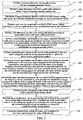
- FIG. 2 is a flow chart of a hierarchical audio coding method according to a first embodiment of the present invention.
- the hierarchical audio coding method according to the present invention is illustrated specifically by taking an audio stream with a frame length of 20 ms and a sampling rate of 32 kHz for example. Under conditions of other frame lengths and sampling rates, the method of the present invention is also applicable. As shown in FIG. 2 , the method comprises the following steps.
- the transient detection technology used by the present invention can be a simple threshold detection method, or can be some more complex technologies, including but not limited to a perceptual entropy method, a multi-detection method, and so on.
- a time-frequency transform is performed on the audio stream with the frame length of 20 ms and the sampling rate of 32 kHz, to obtain N frequency-domain coefficients at frequency-domain sampled points.
- a specific implementation mode of the present step can be as follows.
- the transient detection flag bit Flag_transient is 1, it is indicated that the current frame is a transient signal, and it is needed to firstly perform a reversing processing on the time-domain anti-aliasing signal x ⁇ ( n ) to decrease parasitic time-domain and frequency-domain responses. Subsequently, a sequence of zeros with a length of N /8 is added at both ends of the signal respectively, the lengthened signal is divided into 4 sub-frames which are overlapped with each other and have the same length. The length of each sub-frame is N /2 and the sub-frames are overlapped with each other with a proportion of 50%.
- N 640 (the corresponding N can also be calculated regarding to another frame length and another sampling rate).
- the N -point frequency-domain coefficients are divided into several coding sub-bands, and frequency-domain amplitude envelopes (amplitude envelope for short) of all coding sub-bands are calculated.
- the dividing of the frequency-domain coefficients into coding sub-bands can be even or uneven; and in the present embodiment, it is uneven.
- the present step can be implemented by using the following sub-steps.
- the frequency-domain coefficients in the frequency range needed to be coded are divided into L sub-bands (which can be referred to as the coding sub-bands).
- the frequency range needed to be coded is 0 ⁇ 13.6 kHz, and the sub-bands can be obtained by uneven dividing according to the characteristic of human ear perception.
- Table 1 and Table 2 respectively give one specific dividing mode when the transient detection flag bit Flag_transient is 0 and 1.
- the frequency range of the core layer is further obtained by dividing.
- the transient detection flag bit Flag_transient is 0 and 1
- the frequency range of the core layer is 0 ⁇ 7 kHz
- the transient detection flag bit Flag_transient When the transient detection flag bit Flag_transient is 1, 4 groups of frequency-domain coefficients in the frequency range needed to be coded are divided into sub-bands, and then the frequency-domain coefficients in the frequency range of the core layer and the frequency range of the extended layer are rearranged in the order of the coding sub-bands from the low frequencies to the high frequencies.
- the remaining frequency-domain coefficients in a group is not enough to constitute one sub-band (such as in Table 2, less than 16)
- the frequency-domain coefficients with the same or similar frequencies in the next group of frequency-domain coefficients are used for supplement, such as sub-bands 16 and 17 of the core layer in Table 2.
- the coding sub-bands in Table 2 are one specific result of completed rearrangement.
- the frequency-domain coefficients constituting the core layer coding sub-bands are referred to as core layer frequency-domain coefficients, and the frequency-domain coefficients constituting extended layer coding sub-bands are referred to as extended layer frequency-domain coefficients; or it can also be described as that the frequency-domain coefficients are divided into core layer frequency-domain coefficients and extended layer frequency-domain coefficients, the core layer frequency-domain coefficients are divided into several core layer coding sub-bands, and the extended layer frequency-domain coefficients are divided into several extended layer coding sub-bands. It can be understood that an order of dividing of the frequency-domain coefficient layer (referred to as the core layer and the extended layer) and dividing of the coding sub-bands does not influence the implementation of the present invention.
- Table 1 Example of dividing sub-bands when the transient detection flag bit Flag_transient is 0 Sub-band serial number Index of starting frequency-domain coefficient ( Llndex ) Index of ending frequency-domain coefficient ( HIndex ) Sub-band width ( BandWidth ) 0 0 15 16 1 16 31 16 2 32 47 16 3 48 63 16 4 64 79 16 5 80 95 16 6 96 111 16 7 112 127 16 8 128 143 16 9 144 159 16 10 160 175 16 11 176 191 16 12 192 207 16 13 208 223 16 14 224 239 16 15 240 255 16 16 256 271 16 17 272 287 16 18 288 303 16 19 304 319 16 20 320 335 16 21 336 351 16 22 352 367 16 23 368 383 16 24 384 399 16 25 400 415 16 26 416 447 32 27 448 479 32 28 480 511 32 29 512 543 32 Table 2 Example of dividing sub-bands when the transient detection flag
- LIndex ( j ) and HIndex ( j ) represents the index of an starting frequency-domain coefficient and the index of an ending frequency-domain coefficient of the j th coding sub-band respectively, and specific values thereof are shown in Table 1 (when the transient detection flag bit Flag_transient is 0) and Table 2 (when the transient detection flag bit Flag_transient is 1).
- the amplitude envelope values of the core layer coding sub-bands and the extended layer coding sub-bands are quantized and coded, to obtain amplitude envelope quantization indexes of the core layer coding sub-bands and the extended layer coding sub-bands and amplitude envelope coded bits of the core layer coding sub-bands and the extended layer coding sub-bands, wherein, the amplitude envelope coded bits of the core layer coding sub-bands and the amplitude envelope coded bits of the extended layer coding sub-bands are needed to be transmitted into a bit stream multiplexer (MUX)
- MUX bit stream multiplexer
- the amplitude envelope values of the core layer coding sub-bands and the extended layer coding sub-bands are jointly quantized; and when the transient detection flag bit Flag_transient is 1, the amplitude envelope values of the core layer coding sub-bands and the extended layer coding sub-bands are separately quantized respectively, and the amplitude envelope quantization indexes of the core layer coding sub-bands and the amplitude envelope quantization indexes of the extended layer coding sub-bands are rearranged respectively.
- the amplitude envelope quantization indexes of the core layer coding sub-bands are rearranged, so that the following differential coding of amplitude envelope quantization indexes of the core layer coding sub-bands has a higher efficiency.
- Table 3 Example of rearranging the amplitude envelopes of the core layer Sub-band serial number Corresponding serial number after rearranging 0 0 1 8 2 9 3 17 4 1 5 7 6 10 7 16 8 2 9 6 10 11 11 15 12 3 13 5 14 12 15 14 16 4 17 13
- the amplitude envelope quantization index Th q (0) of the first coding sub-band is coded by using 6 bits, i.e., consuming 6 bits.
- the amplitude envelope can be corrected as follows, to ensure that the range of the ⁇ Th q ( j ) is within [-15, 16]:
- the coded bits of the amplitude envelope quantization indexes of the core layer coding sub-bands i.e., coded bits of amplitude envelope differential values and an amplitude envelope of the first sub-band
- the Huffman coding flag bit are needed to be transmitted into the MUX
- the amplitude envelope quantization indexes of the extended layer coding sub-bands are rearranged, so that the following differential coding of amplitude envelope quantization indexes of the coding sub-bands of the extended layer has a higher efficiency.
- Table 4 Example of rearranging the amplitude envelopes of the extended layer coding sub-bands Sub-band serial number Corresponding serial number after rearranging 18 18 19 23 20 24 21 29 22 19 23 22 24 25 25 28 26 20 27 21 28 26 29 27
- the amplitude envelope quantization index Thq ( L_core ) of the first coding sub-band comprised by extended layer frequency-domain coefficients is coded by using 6 bits, i.e., consuming 6 bits.
- the amplitude envelope can be corrected as follows, to ensure that the range of ⁇ Th q ( j ) is within [-15, 16]:
- the coded bits of the amplitude envelope quantization indexes and the Huffman coding flag bit of the extended layer are needed to be transmitted into the MUX.
- initial values of importance of the core layer coding sub-bands are calculated according to the rate distortion theory and amplitude envelope information of the core layer coding sub-bands, and then the bit allocation of the core layer is performed according to the importance of the core layer coding sub-bands.
- the present step can be implemented by the following sub-steps.
- an average value of bit consumption of a single frequency-domain coefficient of the core layer is calculated.
- the side information comprises bits of Huffman coding flags Flag_huff_rms_core, Flag _ huff _ PLVQ _ core and the iterative times coutit_core.
- Flag _ huff _ rms _ core is used to identify whether the Huffman coding is used for the amplitude envelope quantization indexes of the core layer coding sub-bands;
- Flag_ huff_PLVQ_core is used to identify whether the Huffman coding is used when the vector coding is performed on the core layer frequency-domain coefficients, and the iterative times coum_core is used to identify the iterative times when the bit allocation of the core layer is corrected (see the description in the subsequent steps in detail).
- R _ core bits_left_core HIndex L_core ⁇ 1 + 1 wherein, L_core is the number of the core layer coding sub-bands.
- the initial value of the importance, when the bit allocation is performed for the core layer coding sub-bands, is calculated.
- ⁇ is a proportion factor, which is related to the coded bit rate, and can be obtained by statistical analysis, normally, 0 ⁇ ⁇ ⁇ 1, and in the present embodiment, the value of ⁇ is 0.7; and rk ( j ) represents the importance of the j th coding sub-band when performing the bit allocation.
- bit allocation of the core layer is performed according to the importance of the core layer coding sub-bands.
- the specific description is as follows.
- bit allocation method in the present step can be represented by the following pseudo-codes:
- the remaining bits which is less than 16 are allocated to the core layer coding sub-bands which meet the requirements in accordance with the following principle: 0.5 bit is allocated to each frequency-domain coefficient in the core layer coding sub-bands in which the bit allocation is 1, and meanwhile the importance of the core layer coding sub-bands is reduced by 0.5 until bit_left_core - bit_used_all ⁇ 8, and the bit allocation ends. At the time, the finally remaining bits are recorded as remaining bits remain_bits_core initially allocated by the core layer.
- the value range of the above classification threshold is larger than or equal to 2 and less than or equal to 8, and the value can be 5 in the present embodiment.
- region_bit ( j ) is the number of bits allocated to a single frequency-domain coefficient in the j th core layer coding sub-band, i.e., is the bit allocation number of the single frequency-domain coefficient in that sub-band.
- the coding sub-bands described in the following steps 106-107 are core layer coding sub-bands.
- the normalization calculation is performed on the frequency-domain coefficients in the core layer coding sub-bands by using the quantized amplitude envelope values reconstructed according to the amplitude envelope quantization indexes of the core layer coding sub-bands, and then the normalized frequency-domain coefficients are grouped, to constitute several vectors.
- the normalization process is performed on all frequency-domain coefficients X j in the coding sub-band by using the quantized amplitude envelope 2 Th q ( j )/2 of the coding sub-band j :
- X j normalized X j 2 Th q j / 2 ;
- Continuous 8 coefficients in the coding sub-band are grouped to constitute one 8-dimensional vector.
- the coefficients in the coding sub-band j can just be grouped to constitute Lattice_D8 ( j ) 8-dimensional vectors.
- the various normalized grouped 8-dimensional vectors to be quantized can be represented as Y j m , wherein, m represents a position where that 8-dimensional vector is located in the coding sub-band, and the range thereof is between 0 and Lattice_D8 ( j )-1.
- the size of the number of bits region_bit ( j ) allocated to the coding sub-band j is judged, and if the allocated number of bits region_bit ( j ) is less than the classification threshold, the coding sub-band is referred to as the low-bit coding sub-band, and the vectors to be quantized in the low-bit coding sub-band are quantized and coded by using the pyramid lattice vector quantization method; and if the allocated number of bits region_bit ( j ) is larger than or equal to the threshold, the coding sub-band is referred to as the high-bit coding sub-band, and the vectors to be quantized in the high-bit coding sub-band are quantized and coded by using the spherical lattice vector quantization method; and the threshold of the present embodiment uses 5 bits.
- the pyramid lattice vector quantization and coding method will be illustrated hereinafter.
- the basic method for mapping (quantizing) the 8-dimensional vectors to the D 8 grid points is described as follows:
- f (x) represents rounding quantization for taking an integer which is nearer to x in both integers adjacent to x
- w ( x ) represents rounding quantization for taking an integer which is farther to x in both integers adjacent to x .
- the specific steps of the method of quantizing the vectors to be quantized to the D 8 grid points and solving the indexes of the D 8 grid points are as follows. a, the energy of the vectors to be quantized is regularized. The energy of the vectors to be quantized needs to be regularized before the quantization.
- the energy of Y ⁇ j , scale m is cut off according to the pyramid surface energy of the D 8 grid point Y ⁇ j m .
- the energy of the D 8 grid point Y ⁇ j m is calculated and is compared with a maximum pyramid surface energy radius LargeK ( index ) in the coding codebook.
- the index of the grid point in the codebook is calculated; otherwise, the energy of the regularized vector Y ⁇ j , scale m to be quantized of the coding sub-band is cut off, until the energy of the quantized grid point of the vector to be quantized of which the energy has been cut off is not larger than the maximum pyramid surface energy radius; at the time, a small energy of its own is persistently increased to the vector to be quantized of which the energy has been cut off, until its energy which is quantized to the D 8 grid point exceeds the maximum pyramid surface energy radius; and a last D 8 grid point of which the energy does not exceed the maximum pyramid surface energy radius is selected as a quantization value of the vector to be quantized.
- the pyramid surface energy of Y ⁇ j m is calculated, i.e., a sum of absoluteions of various components of m th vector in the coding sub-band j is obtained,
- Y ⁇ j m is the last D 8 grid point of which the energy does not exceed the maximum pyramid surface energy radius
- temp_K is the energy of that grid point.
- quantization indexes of the D 8 grid points Y ⁇ j m in the codebook are generated.
- the indexes of the D 8 grid points Y ⁇ j m in the codebook are obtained by calculation.
- the specific steps are as follows.
- step one the grid points on various pyramid surfaces are labeled respectively according to the size of the pyramid surface energy.
- For the integer grid point Y ( y 1 ,y 2 ,..., y L ) ⁇ Z L on the pyramid surface with a energy radius of
- n is within the range of [0, region_bit ( j ) ⁇ 8/4 - 1], is increased by the step length of 1, and the following cycle is performed: wherein, plvq_codebook ( j,k ) and plvq_count ( j,k ) are the codeword and the number of consumed bits in the Huffman coding codebook of k th 8-dimensional vector of j sub-band respectively; and plvq_bit_count and plvq_code are searched according to tale 6.
- the total number of the consumed bits after using the Huffman coding is updated:
- n is within the range of [0, region_bit ( j ) ⁇ 8/4 - 2], is increased by the step length of 1, and the following cycle is performed: wherein, plvq_count ( j,k ) and plvq_codebook ( j,k ) are the number of Huffman bit consumption and the codeword of k th 8-dimensional vector of j sub-band respectively; and plvq_bit_count and plvq_code are searched according to tale 6.
- the total number of the consumed bits after using the Huffman coding is updated:
- plvq_count ( j,k ) and plvq_codebook ( j,k ) are the number of Huffman bit consumption and the codeword of k th 8-dimensional vector of j sub-band respectively; and plvq_bit_count_r2_3 and plvq_code_r2_3 are searched according to tale 7.
- plvq_count ( j,k ) and plvq_codebook ( j,k ) are the number of the Huffman bit consumption and the codeword of k th 8-dimensional vector of j sub-band respectively; and plvq_bit_count_r1_4 and plvq_code_r1_4 are searched according to tale 8.
- plvq_count ( j,k ) and plvq _ codebook ( j , k ) are the Huffman bit consumption and the codeword of k th 8-dimensional vector of j sub-band respectively; and codebooks plvq_bit_count_r1_3 and plvq_code_r1_3 are searched according to tale 9.
- the total number of the consumed bits after using the Huffman coding is updated: the Huffman code tables of Table 9 and Table 8 are searched respectively for the former three “1" and the later four "1", the calculation method is the same as that in the previous condition of index_b(j,k) ⁇ 127.
- the total number of the consumed bit after using the Huffman coding is updated: a total of 8 bits are needed.
- the Huffman code tables of Table 7 and Table 6 are searched respectively for the former three "1" and the later four "1", and the calculation method is the same as that in the previous condition of index b(j,k) ⁇ 127.
- the total number of the consumed bit after using the Huffman coding is updated: a total of 8 bits are needed.
- a set of all the low-bit coding sub-bands is recorded as C, and the bits saved by all the coding sub-bands, in which the number of bits allocated to the single frequency-domain coefficient is 1 or 2 as described in 2) and 3) in the above step f, are calculated, and are recorded as the number of absolutely saved bits bit_saved_r1_r2_all_core, and the total number of bits bit _used _huff _all consumed after the Huffman coding is performed on the quantized vector indexes of the 8-dimensional vectors belonging to all the coding sub-bands in C are calculated; bit _used _huff _all is compared with the total number bit used_nohuff_all of the bits consumbed by the natural coding, and if bit_used_huff_all ⁇ bit _ used _ nohuff _ all , the quantized vector indexes after the Huffman coding are transmitted, and meanwhile, the Huffman coding flag Flag_huff_PLVQ_
- bit_used_nohuff_all is equal to a difference by the total number sum ( bit_band_used ( j ) , j ⁇ C ) of the number of bits allocated to all the coding sub-bands in C minus bit_saved_r1_r2_all.
- the bit allocation of the coding sub-bands is corrected by using the number of initial allocation remaining bits remain_bits_core and the number of absolutely saved bits bit_saved_r1_r2_all_core. If the Huffman coding flag Flag_huff_PLVQ_core is 1, the bit allocation of the coding sub-bands is corrected by using the number of initial allocation remaining bits remain_bits_core, the number of absolutely saved bits bit_saved_r1_r2_all_core and the bits saved by the Huffman coding.
- 8-dimensional grid vector quantization based on D 8 grid is also used.
- the process of the bit allocation correction specifically comprises the following steps.
- step 304 it is judged whether diff_bit_count_core is larger than or equal to the bits required to be consumed by correcting the bit allocation number of the coding sub-band j k (if Flag_huff_PLVQ_core is 0, it is calculated according to the natural coding; and if Flag_huff _ PLVQ _ core is 1, it is calculated according to the Huffman coding), and if yes, step 305 is performed, the bit allocation number regioo_bit ( j k ) of the coding sub-band j k is corrected, the value of the importance rk ( j k ) of the sub-band is reduced, the vector quantization and the natural coding or Huffman coding is performed again on the coding sub-band j k , and finally the value of diff_bit_count_core is updated; otherwise, the process of the bit allocation correction ends.
- 1 bit is allocated to the coding sub-band of which the bit allocation number is 0, and the importance is reduced by 1 after the bit allocation
- 0.5 bit is allocated to the coding sub-band of which the bit allocation number is larger than 0 and less than 5, and the importance is reduced by 0.5 after the bit allocation
- 1 bit is allocated to the coding sub-band of which the bit allocation number is larger than 5, and the importance is reduced by 1 after the bit allocation.
- the inverse quantization is performed on the above-described frequency-domain coefficients in the core layer which are performed with the vector quantization, and a difference calculation is performed between the inversely quantized frequency-domain coefficients and the original frequency-domain coefficients obtained after being performed with the time-frequency transform, to obtain core layer residual signals, and extended layer coding signals are constituted by using the core layer residual signals and the extended layer frequency-domain coefficients.
- step 108 can also be performed after the bit allocations of the extended layer coding signals (step 110) are complete.
- the present step can be implemented by the following sub-steps.
- a statistic can be performed on the amplitude envelope quantization indexes of the sub-bands which are calculated under various bit allocation numbers region_bit ( j )) and the amplitude envelope quantization indexes of the sub-bands which are calculated from the residual signals directly, to obtain the correction value statistical table of the amplitude envelope quantization indexes with the highest probability, as shown in Table 11:
- Table 11 Correction value statistical table of amplitude envelope quantization indexes region_bit diff 1 1 1.5 2 2 3 2.5 4 3 5 3.5 5 4 6 4.5 7 5 7 6 9 7 10 8 12
- the bit allocation number of a certain coding sub-band in the core layer is 0, there is no need to correct the amplitude envelope of the coding sub-band of the core layer residual signal, and at the time, the amplitude envelope value of the sub-band of the core layer residual signal is the same as the amplitude envelope value of the core layer coding sub-band.
- the quantized amplitude envelope value of the j th coding sub-band of the core layer residual signal is set as zero.
- bit allocation is performed on the coding sub-bands of the extended layer coding signals in the extended layer.
- the sub-band dividing of the extended layer is determined by Table 1 or Table 2.
- the coding signals in the sub-bands 0,..., L_core -1 are the core layer residual signals, and the coding signals in L_core ,..., L -1 are the frequency-domain coefficients in the extended layer coding sub-bands.
- the sub-bands 0 to L -1 are also referred to as the coding sub-bands of the extended layer coding signals.
- initial values of importance of the coding sub-bands of the extended layer coding signals are calculated within the whole frequency range of the extended layer by using the bit allocation solution which is the same as that of the core layer, and the bit allocation is performed on the coding sub-bands of the extended layer coding signals.
- the frequency range of the extended layer is 0 ⁇ 13.6 kHz.
- the total bit rate of the audio stream is 64 kbps
- the bit rate of the core layer is 32 kbps
- the maximum bit rate of the extended layer is 64 kbps.
- the total available number of bits in the extended layer is calculated according to the bit rate of the core layer and the maximum bit rate of the extended layer, and then the bit allocation is performed, until the bits are completely consumed.
- the normalization, vector quantization and coding are performed on the extended layer coding signals according to the amplitude envelope quantization indexes of the coding sub-bands of the extended layer coding signals and the corresponding bit allocation numbers, to obtain coded bits of the coding signals.
- the vector constitution, the vector quantization method and the coding method of the coding signals in the extended layer are the same as those of the frequency-domain coefficients in the core layer respectively.
- bit rate layers are constituted according to the value of the bit rate.
- the hierarchical coded bit stream is constituted by using the following mode: firstly, writing the side information of the core layer into the bit stream multiplexer MUX according to the following order: Flag_transient, Flag_huff_rms_core, Flag_huff_PLVQ_core and count_core , and then writing the amplitude envelope coded bits of the core layer coding sub-bands into the MUX, and then writing the coded bits of the core layer frequency-domain coefficients into the MUX; then writing the side information of the extended layer into the MUX according to the following order: Huffman coding flag bit Flag_huff_rms_ext of the amplitude envelopes of the extended layer coding sub-bands, Huffman coding flag bit Flag_huff_PLVQ_ext of the frequency-domain coefficients, and the number of times of iteration count_ext of the bit allocation correction, then writing the amplitude envelope coded bits of the extended layer coding sub-bands ( L_cur
- the coded bits of the coding sub-bands of the extended layer coding signals with a large initial value of the importance are preferentially written into the bit stream, and for the coding sub-bands with the same importance, the low-frequency coding sub-band is preferential.
- the amplitude envelopes of the residual signals in the extended layer are calculated according to the amplitude envelopes of the core layer coding sub-bands and the bit allocation numbers, therefore there is no need to transmit to the decoding end.
- the coding accuracy of the core layer bandwidth can be increased, but also there is no need to add bits to transmit the amplitude envelope values of the residual signals.
- the number of bits meeting the requirement on the bit rate is transmitted to the decoding end. That is, the unnecessary bits are rounded in an order of the importance of the coding sub-bands from small to large.
- the coding frequency range is 0 ⁇ 13.6 kHz
- the maximum bit rate is 64kpbs
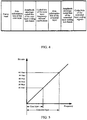
- the hierarchical method according to the bit rate is as follows:
- FIG. 5 illustrates a relationship between a hierarchy according to a frequency range and a hierarchy according to a bit rate.
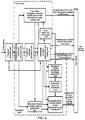
- FIG. 6 is a structural diagram of a hierarchical audio coding system according to the present invention.
- the system comprises: a transient detection unit, a frequency-domain coefficient generation unit, an amplitude envelope calculation unit, an amplitude envelope quantization and coding unit, a core layer bit allocation unit, a core layer frequency-domain coefficient vector quantization and coding unit, an extended layer coding signal generation unit, a residual signal amplitude envelope generation unit, an extended layer bit allocation unit, an extended layer coding signal vector quantization and coding unit, and a bit stream multiplexer;
- the transient detection unit is configured to perform a transient detection on an audio signal of a current frame
- the frequency-domain coefficient generation unit is connected with the transient detection unit, and is configured to: when the transient detection is to be a steady-state signal, directly perform a time-frequency transform on a windowed audio signal to obtain total frequency-domain coefficients; when the transient detection is to be a transient signal, divide the audio signal into M sub
- the freqnecy domain coefficient generation unit is configured to: when obtaining the total frequnecy domain coefficents of the current frame, compose a 2N -point time-domain-sampled signal x ( n ) by a N -point time-domain-sampled signal x(n) of the current frame and a N -point time-domain-sampled signal x old ( n ) of the last frame, and then perform windowing and time-domain anti-aliasing processing on x(n) to obtain a N -point time-domain-sampled signal x ⁇ ( n ); and perform a reversing processing on the time-domain signal x ⁇ ( n ), subsequently add a sequence of zeros at both ends of the signal respectively, divide the lengthened signal into M sub-frames which are overlapped with each other, and then perform the windowing, the time-domain anti-aliasing processing and the time-frequency transform on the time-domain signal of each sub-frame, to obtain M
- the freqnecy domain coefficient generation unit is further configured to: when rearranging the frequency-domain coefficients, rearrange the frequency-domain coefficients respectively in an order of the coding sub-bands from the low frequencies to the high frequencies within the core layer and within the extended layer.
- the amplitude envelope quantization and coding unit rearranging the amplitude envelope quantization indexes is specifically to: rearrange the amplitude envelope quantization indexes of the coding sub-bands within the same sub-frame together in accordance with an ascending or descending order of frequencies, and connect them by using two coding sub-bands which represent peer-to-peer frequencies and belong to two sub-frames respectively at a sub-frame boundaries.
- bit stream multiplexer multiplexes and packets in accordance with the following bit stream format:
- the side information of the core layer comprises a transient detection flag bit, a Huffman coding flag bit of the amplitude envelopes of the core layer coding sub-bands, a Huffman coding flag bit of the core layer frequency-domain coefficients and a bit of the number of times of iteration of the bit allocation correction of the core layer.
- the side information of the extended layer comprises a Huffman coding flag bit of an amplitude envelopes of extended layer coding sub-bands, a Huffman coding flag bit of the extended layer coding signals and a bit of the number of times of iteration of the bit allocation correction of the extended layer.
- the extended layer coding signal generation unit further comprises a residual signal generation module and an extended layer coding signal combination module; the residual signal generation module is configured to inversely quantize the quantization values of the core layer frequency-domain coefficients, and perform a difference calculation with the core layer frequency-domain coefficients, to obtain core layer residual signals; and the extended layer coding signal combination module is configured to combine the core layer residual signals and the extended layer frequency-domain coefficients in an order of frequency bands, to obtain the extended layer coding signals.
- the residual signal amplitude envelope generation unit further comprises a quantization index correction value acquiring module and a residual signal amplitude envelope quantization index calculation module;
- the quantization index correction value acquiring module is configured to search for a correction value statistical table of the amplitude envelope quantization indexes of the core layer residual signals according to the bit allocation numbers of the core layer coding sub-bands, to obtain correction values of the quantization indexes of the coding sub-bands of the residual signals, wherein, the correction value of the quantization index of each coding sub-band is larger than or equal to 0, and does not decrease when the bit allocation number of the corresponding core layer coding sub-band increases, and if the bit allocation number of the core layer coding sub-band is 0, the correction value of the quantization index of the core layer residual signal at that coding sub-band is 0, and if the bit allocation number of the sub-band is a defined maximum bit allocation number, the amplitude envelope value of the residual signal at the sub-band is 0; and the residual signal amplitude envelope quantization
- the bit stream multiplexer is further configured to write the coded bits of the extended layer coding signals into a bit stream in an order of initial values of importance of the coding sub-bands of the extended layer coding signals from large to small, and preferably write the coded bits of low frequency coding sub-bands into the bit stream for the coding sub-bands with the same importance.
- FIG. 7 a hierarchical audio decoding method according to the present invention is shown in FIG. 7 , and the decoding method comprises the following steps.
- step 701 a bit stream transmitted by a coding end is demultiplexed, amplitude envelope coded bits of core layer coding sub-bands and extended layer coding sub-bands are decoded, to obtain amplitude envelope quantization indexes of the core layer coding sub-bands and the extended layer coding sub-bands; if transient detection information indicates a transient signal, the amplitude envelope quantization indexes of the core layer coding sub-bands and the extended layer coding sub-bands are further rearranged respectively in an order of frequencies from small to large.
- step 702 a bit allocation is performed on the core layer coding sub-bands according to the amplitude envelope quantization indexes of the core layer coding sub-bands, thus amplitude envelope quantization indexes of core layer residual signals are calculated, and the bit allocation is performed on the coding sub-bands of the extended layer coding signals according to the amplitude envelope quantization indexes of the core layer residual signals and the amplitude envelope quantization indexes of the extended layer coding sub-bands.
- the method of calculating the amplitude envelope quantization indexes of the residual signal comprises: searching a correction value statistical table of the amplitude envelope quantization indexes of the core layer residual signals according to the bit allocation numbers of the core layer, to obtain corresction values of the amplitude envelope quantizaion indexes of the core layer residual signals; and performing a difference calculation between the amplitude envelope quantization indexes of the core layer coding sub-bands and the correction values of the amplitude envelope quantization indexes of the core layer residual signals of the corresponding coding sub-bands, to obtain the amplitude envelope quantization indexes of the core layer residual signals; wherein, the correction value of the amplitude envelope quantization index of the core layer residual signal of each coding sub-band is larger than or equal to 0, and does not decrease when the bit allocation number of the corresponding core layer coding sub-band increases; and when the bit allocation number of a certain core layer coding sub-band is 0, the correction value of the amplitude envelope quantization index of the core layer residual
- step 703 coded bits of core layer frequency-domain coefficients and coded bits of the extended layer coding signals are decoded respectively according to the bit allocation numbers of the core layer and the extended layer, to obtain the core layer frequency-domain coefficients and the extended layer coding signals, and the extended layer coding signals are rearranged in an order of sub-bands and then added with the core layer frequency-domain coefficients, to obtain frequency-domain coefficients of total bandwidth.
- step 704 if the transient detection information indicates a steady-state signal, an inverse time-frequency transform is directly performed on the frequency-domain coefficients of the total bandwidth, to obtain an audio signal for output; and if the transient detection information indicates a transient signal, the frequency-domain coefficients of the total bandwidth are rearranged, then divided into M groups of frequency-domain coefficients, the inverse time-frequency transform is performed on each group of frequency-domain coefficients, and a final audio signal is calculated to obtain according to M groups of time-domain signals obtained by transformation.
- the coded bits of the extended layer coding signals are decoded by the following order.
- the order of decoding of the coded bits of the extended layer coding signals is determined according to initial values of the importance of the coding sub-bands of the corresponding extended layer coding signals; that is, the coding sub-bands of the extended layer coding signals with large importance are decoded preferentially, and if there are two coding sub-bands of the extended layer coding signals with the same importance, then the low-frequency coding sub-band is decoded preferentially, and the number of the decoded bits is calculated in the process of the decoding, and when the number of the decoded bits meets the requirement on the total number of bits, the decoding is stopped.
- FIG. 8 is a flow chart of an embodiment of a hierarchical audio decoding method according to the present invention. As shown in FIG. 8 , the method comprises the following steps.
- coded bits of one frame are extracted from the hierarchical bit stream transmitted by a coding end (i.e., from a bit stream demultiplexer DeMUX).
- initial values of importance of the core layer coding sub-bands are calculated according to the amplitude envelope quantization indexes of the core layer coding sub-bands, and a bit allocation is performed on the core layer coding sub-bands by using the importance of the sub-bands, to obtain the bit allocation number of the core layer; the bit allocation method of the decoding end is the same as the bit allocation method of the coding end completely.
- the step length of the bit allocation and the step length of the importance reduction of the coding sub-bands after the bit allocation are variable.
- bit allocation is performed again on the core layer coding sub-bands for count_core times according to a value of the number of times count_core of the bit allocation correction of the core layer at the coding end and the importance of the core layer coding sub-bands, and then the whole process of the bit allocation ends.
- the step length for allocating the bit to the coding sub-band of which the bit allocation number is 0 is 1 bit, and the step length of the importance reduction after the bit allocation is 1;
- the step length of the bit allocation is 0.5 bit when the bit is additionally allocated to the coding sub-band of which the bit allocation number is larger than 0 and less than a certain threshold, and the step length of the importance reduction after the bit allocation is also 0.5;
- the step length of the bit allocation is 1 bit when the bit is additionally allocated to the coding sub-band of which the bit allocation number is larger than or equal to that threshold, and the step length of the importance reduction after the bit allocation is also 1.
- decoding, inverse quantization and inverse normalization processes are performed on the coded bits of the core layer frequency-domain coefficients by using the bit allocation numbers of the core layer coding sub-bands and the quantized amplitude envelope values of the core layer coding sub-bands and according to Flag_huff_PLVQ_core , to obtain the core layer frequency-domain coefficients.
- the core layer coding sub-bands are divided into low-bit coding sub-bands and high-bit coding sub-bands according to the bit allocation numbers of the core layer coding sub-bands, and the inverse quantization is performed on the low-bit coding sub-bands and the high-bit coding sub-bands by using a pyramid lattice vector quantization/inverse quantization method and a spherical lattice vector quantization/inverse quantization method respectively.
- the Huffman decoding is performed on the low-bit coding sub-bands or the natural decoding is performed directly on the low-bit coding sub-bands according to the side information of the core layer to obtain the pyramid lattice vector quantization indexes of the low-bit coding sub-bands, and inverse quantization and inverse normalization are performed on all the pyramid lattice vector quantization indexes, to obtain the frequency-domain coefficients of the coding sub-bands.
- the process of the pyramid lattice vector quantization/inverse quantization will be described hereinafter:
- the natural decoding is directly performed on the coded bits of the high-bit coding sub-bands to obtain the m th index vector k of the high-bit coding sub-band j , and performing the inverse quantization process of the spherical lattice vector quantization on that index vector is actually an inverse process of the quantization process, and the specific steps are as follows:
- the amplitude envelope quantization indexes of the sub-bands of the core layer residual signals are calculated by using the amplitude envelope quantization indexes of the core layer coding sub-bands and the bit allocation numbers of the core layer coding sub-bands; and the calculation method of the decoding end is totally the same as that of the coding end.
- the extended layer coding signals is comprised of the core layer residual signals and the extended layer frequency-domain coefficients
- the initial values of the importance of the coding sub-bands of the extended layer coding signals are calculated according to the amplitude envelope quantization indexes of the coding sub-bands of the extended layer coding signals
- the bit allocation is performed on the coding sub-bands of the extended layer coding signals by using the initial values of the importance of the coding sub-bands of the extended layer coding signals, to obtain the bit allocation number of the coding sub-bands of the extended layer coding signals.
- the method of calculating the initial values of the importance of the coding sub-bands of the decoding end and the bit allocation method are the same as those of the coding end.
- the extended layer coding signals are calculated.
- Decoding and inverse quantization are performed on the coded bits of the coding signals by using the bit allocation numbers of the extended layer coding signals, and the inverse normalization is performed on the inversely quantized data by using the quantized amplitude envelope values of the coding sub-bands of the extended layer coding signals, to obtain the extended layer coding signals.
- the decoding and inverse quantization methods of the extended layer are the same as those of the core layer.
- the order of decoding of the coding sub-bands of the extended layer coding signals is determined according to the initial values of the importance of the coding sub-bands of the extended layer coding signals. If there are two coding sub-bands of the extended layer coding signals with the same importance, the low-frequency coding sub-band is perferably decoded, and meanwhile the number of the decoded bits is calculated, and when the number of the decoded bits meets the requirement on the total number of bits, the decoding is stopped.
- the bit rate of transmission from the coding end to the decoding end is 64kbps; however, due to the network reasons, the decoding end can only obtain information of 48kbps at the front of the bit stream, or the decoding end only supports the decoding of 48kbps, and therefore, the decoding is stopped when the decoding end decodes to 48kbps.
- the coding signals obtained by decoding in the extended layer are rearranged in an order of the sizes of the frequencies, and the core layer frequency-domain coefficients with the same frequencies are added with the extended layer coding signals to obtain output values of the frequency-domain coefficients.
- noise filling is performed on the sub-bands to which the coded bits are not allocated in the process of coding or on the sub-bands which are lost in the process of transmission.
- the frequency-domain coefficients are rearranged, that is, all the frequency-domain coefficients corresponding to L sub-bands in Table 2 are rearranged in an order of the locations corresponding to the index serial numbers of the original frequency-domain coefficients, and the frequency-domain coefficients corresponding to the frequency-domain coefficient indexes which are not referred to in the Table 2 are set as 0.
- the inverse time-frequency transform is performed on the frequency-domain coefficients, to obtain the final audio output signal.
- the specific steps are as follows.
- FIG. 9 is a structural diagram of a hierarchical audio decoding system according to the present invention.
- the system comprises: a bit stream demultiplexer (DeMUX), an amplitude envelope decoding unit of core layer coding sub-bands, a core layer bit allocation unit, and a core layer decoding and inverse quantization unit, a residual signal amplitude envelope generation unit, an extended layer bit allocation unit, an extended layer coding signal decoding and inverse quantization unit, an total bandwidth frequency-domain coefficient recovery unit, a noise filling unit and an audio signal recovery unit;
- the amplitude envelope decoding unit is connected with the bit stream demultiplexer, and is configured to: decode amplitude envelope coded bits of core layer coding sub-bands and extended layer coding sub-bands which are output by the bit stream demultiplexer, to obtain amplitude envelope quantization indexes of the core layer coding sub-bands and the extended layer coding sub-bands; and if transient detection information indicates a transient
- the residual signal amplitude envelope generation unit further comprises a quantization index correction value acquiring module and a residual signal amplitude envelope quantization index calculation module;
- the quantization index correction value acquiring module is configured to search for a correction value statistical table of the amplitude envelope quantization indexes of the core layer residual signals according to the bit allocation numbers of the core layer coding sub-bands to obtain correction values of the quantization indexes of the coding sub-bands of the residual signals, wherein, the correction value of the quantization index of each coding sub-band is larger than or equal to 0, and does not decrease when the bit allocation number of the corresponding core layer coding sub-band increases, and if the bit allocation number of a certain core layer coding sub-band is 0, the correction value of the quantization index of the core layer residual signal at that coding sub-band is 0, and if the bit allocation number of a certain core layer coding sub-band is a defined maximum bit allocation number, the amplitude envelope value of the residual signal at that coding sub-band is 0; and
- the extended layer coding signal decoding and inverse quantization unit is further configured to: determine the order of decoding the coding sub-bands of the extended layer coding signals according to initial values of importance of the coding sub-bands of the extended layer coding signals, preferentially decode the coding sub-bands of the extended layer coding signals with the large importance; and if there are two coding sub-bands of the extended layer coding signals with the same importance, preferentially decode the coding sub-bands with a low frequency, and calculate the number of the decoded bits in the process of decoding; and when the number of the decoded bits meets the requirement on the total number of bits, stop decoding.
- the order of decoding of the coding sub-bands of the extended layer coding signals by the extended layer coding signal decoding and inverse quantization unit is determined according to initial values of importance of the coding sub-bands of the extended layer coding signals, preferentially decode the coding sub-bands of the extended layer coding signals with the large importance; and if there are two coding sub-bands of the extended layer coding signals with the same importance, preferentially decode the coding sub-bands with a low frequency, and calculate the number of the decoded bits in the process of decoding; and when the number of the decoded bits meets the requirement on the total number of bits, stop decoding rearranging the frequency-domain coefficients of the total bandwidth by the audio signal recovery unit specifically is: arranging the frequency-domain coefficients belonging to the same sub-frame in an order of coding sub-bands from low frequencies to high frequencies, to obtain M groups of frequency-domain coefficients, and then arranging the M groups of frequency-domain coefficients in an order of sub-frames.
- the process of calculating to obtain the final audio signal by the audio signal recovery unit according to M groups of time-domain signals obtained by transformation specifically comprises: performing an inverse time-domain anti-aliasing processing on each group of time-domain signals, then performing a windowing process on the M groups of obtained signals, and then overlapping and adding the M groups of windowed signals, to obtain a N -point time-domain-sampled signal x ⁇ q ( n ) ; and performing the inverse time-domain anti-aliasing processing and the windowing process on the time-domain signal x ⁇ q ( n ), and overlapping and adding two adjacent frames, to obtain the final audio output signal.
- the present invention further provides hierarchical audio coding and decoding methods for transient signals as follows.
- the hierarchical audio coding method for the transient signals according to the present invention comprises:
- step A1 the method of obtaining the total frequency-domain coefficients of the current frame comprises:
- step A1 when rearranging the frequency-domain coefficients, the frequency-domain coefficients are rearranged in the order of the coding sub-bands from the low frequencies to the high frequencies within the core layer and within the extended layer.
- step B1 rearranging the amplitde envelope quantization indexes specifically comprises:
- step F1 the multiplexing and packeting are performed in accordance with the following bit stream format:
- the side information of the core layer comprises a transient detection flag bit, a Huffman coding flag bit of the amplitude envelopes of the core layer coding sub-bands, a Huffman coding flag bit of the core layer frequency-domain coefficients and a bit of the number of times of iteration of the bit allocation correction of the core layer.
- the side information of the extended layer comprises a Huffman coding flag bit of an amplitude envelopes of extended layer coding sub-bands, a Huffman coding flag bit of the extended layer coding signals and a bit of the number of times of iteration of the bit allocation correction of the extended layer.
- the hierarchical audio decoding method for transient signals according to the present invention comprises:
- rearranging the frequency-domain coefficients of the total bandwidth specifically comprises arranging the frequency-domain coefficients belonging to the same sub-frame in an order of coding sub-bands from low frequencies to high frequencies, to obtain M groups of frequency-domain coefficients, and then arranging the M groups of frequency-domain coefficients in an order of sub-frames.
- step E2 the process of calculating to obtain the final audio signal according to M groups of time-domain signals obtained by transformation comprises: performing an inverse time-domain anti-aliasing processing on each group, then performing a windowing process on the M groups of obtained signals, and then overlapping and adding the M groups of windowed signals, to obtain a N -point time-domain-sampled signal x ⁇ q ( n ); and performing the inverse time-domain anti-aliasing processing and the windowing process on the time-domain signal x ⁇ q ( n ), and overlapping and adding two adjacent frames, to obtain the final audio output signal.
- a segmented time-frequency transform is performed on the transient signal frames, and then the frequency-domain coefficients obtained by transformation are rearranged respectively within the core layer and within the extended layer, so as to perform the same subsequent coding processes, such as bit allocation, frequency-domain coefficient coding, etc., as those on the steady-state signal frames, thus enhancing the coding efficiency of the transient signal frames and improving the quality of the hierarchical audio coding and decoding.
Landscapes
- Engineering & Computer Science (AREA)
- Physics & Mathematics (AREA)
- Computational Linguistics (AREA)
- Signal Processing (AREA)
- Health & Medical Sciences (AREA)
- Audiology, Speech & Language Pathology (AREA)
- Human Computer Interaction (AREA)
- Acoustics & Sound (AREA)
- Multimedia (AREA)
- Quality & Reliability (AREA)
- Spectroscopy & Molecular Physics (AREA)
- Compression, Expansion, Code Conversion, And Decoders (AREA)
Claims (10)
- Ein hierarchisches Audiocodierungsverfahren für transiente Signale, beinhaltend:Aufteilen eines Audiosignals in M Teilrahmen, Durchführen einer Zeit-Frequenz-Transformation für jeden Teilrahmen, wobei die M Gruppen von mittels Transformation erhaltenen Frequenzbereichskoeffizienten die Gesamtfrequenzbereichskoeffizienten eines aktuellen Rahmens bilden, Neuanordnen derGesamtfrequenzbereichskoeffizienten, so dass ihre entsprechenden Codierungsteilbänder von Niederfrequenzen nach Hochfrequenzen geordnet sind, wobei die Gesamtfrequenzbereichskoeffizienten Frequenzbereichskoeffizienten der Kernschicht und Frequenzbereichskoeffizienten der erweiterten Schicht beinhalten, wobei die Codierungsteilbänder Codierungsteilbänder der Kernschicht und Codierungsteilbänder der erweiterten Schicht beinhalten, wobei die Frequenzbereichskoeffizienten der Kernschicht mehrere Codierungsteilbänder der Kernschicht bilden und die Frequenzbereichskoeffizienten der erweiterten Schicht mehrere Codierungsteilbänder der erweiterten Schicht bilden;Quantisieren und Codieren von Amplitudenhüllkurvenwerten der Codierungsteilbänder der Kernschicht und der Codierungsteilbänder der erweiterten Schicht, um Amplitudenhüllkurvenquantisierungsindexe und codierte Bits der Codierungsteilbänder der Kernschicht und der Codierungsteilbänder der erweiterten Schicht zu erhalten;wobei die Amplitudenhüllkurvenwerte der Codierungsteilbänder der Kernschicht bzw. der Codierungsteilbänder der erweiterten Schicht separat quantisiert werden, und wobei die Amplitudenhüllkurvenquantisierungsindexe der Codierungsteilbänder der Kernschicht bzw. die Amplitudenhüllkurvenquantisierungsindexe der Codierungsteilbänder der erweiterten Schicht neu angeordnet werden;Durchführen einer Bitzuweisung für die Codierungsteilbänder der Kernschicht gemäß den Amplitudenhüllkurvenquantisierungsindexen der Codierungsteilbänder der Kernschicht und dann Quantisieren und Codieren der Frequenzbereichskoeffizienten der Kernschicht, um codierte Bits der Frequenzbereichskoeffizienten der Kernschicht zu erhalten;inverses Quantisieren der oben beschriebenen Frequenzbereichskoeffizienten in der Kernschicht, mit denen eine Vektorquantisierung durchgeführt wird, und Durchführen einer Differenzberechnung mit ursprünglichen Frequenzbereichskoeffizienten, die nach dem Durchführen der Zeit-Frequenz-Transformation erhalten werden, um Kernschichtrestsignale zu erhalten;Berechnen von Amplitudenhüllkurvenquantisierungsindexen von Codierungsteilbändern der Kernschichtrestsignale gemäß den Amplitudenhüllkurvenquantisierungsindexen der Codierungsteilbänder der Kernschicht und Bitzuweisungszahlen der Codierungsteilbänder der Kernschicht;Durchführen einer Bitzuweisung für Codierungsteilbänder von Codierungssignalen der erweiterten Schicht gemäß den Amplitudenhüllkurvenquantisierungsindexen der Kernschichtrestsignale und den Amplitudenhüllkurvenquantisierungsindexen der Codierungsteilbänder der erweiterten Schicht und dann Quantisieren und Codieren der Codierungssignale der erweiterten Schicht, um codierte Bits der Codierungssignale der erweiterten Schicht zu erhalten, wobei die Codierungssignale der erweiterten Schicht aus den Kernschichtrestsignalen und den Frequenzbereichskoeffizienten der erweiterten Schicht bestehen; undMultiplexen und Paketieren der codierten Bits der Amplitudenhüllkurve der Codierungsteilbänder der Kernschicht und der Codierungsteilbänder der erweiterten Schicht, der codierten Bits der Frequenzbereichskoeffizienten der Kernschicht und der codierten Bits der Codierungssignale der erweiterten Schicht und dann Übertragen an ein Decodierungsende.
- Verfahren gemäß Anspruch 1, wobei die Frequenzbereichskoeffizienten neu angeordnet werden, so dass ihre entsprechenden Codierungsteilbänder innerhalb der Kernschicht bzw. innerhalb der erweiterten Schicht von Niederfrequenzen nach Hochfrequenzen geordnet sind.
- Verfahren gemäß Anspruch 2, wobei, wenn beim Neuanordnen innerhalb der Kernschicht bzw. innerhalb der erweiterten Schicht die in einer Gruppe verbliebenen Frequenzbereichskoeffizienten nicht ausreichen, um ein Teilband zu bilden, dann eine Ergänzung durchgeführt wird, indem Frequenzbereichskoeffizienten mit denselben oder ähnlichen Frequenzen in der nächsten Gruppe der Frequenzbereichskoeffizienten verwendet werden.
- Verfahren gemäß Anspruch 1 oder 2, wobei die Indexe der Frequenzbereichskoeffizienten in den Codierungsteilbändern nach dem Neuanordnen wie folgt sind:
Teilband-Ordnungsnummer Index des Anfangsfrequenzbereichskoeffizienten (LIndex) Index des Endfrequenzbereichskoeffizienten (HIndex) 0 0 15 1 160 175 2 320 335 3 480 495 4 16 31 5 176 191 6 336 351 7 496 511 8 32 47 9 192 207 10 352 367 11 512 527 12 48 63 13 208 223 14 368 383 15 528 543 16 64, 65, 66, 67, 68, 69, 70, 71, 224, 225, 226, 227, 228, 229, 230, 231 17 384, 385, 386, 387, 388, 389, 390, 391, 544, 545, 546, 547, 548, 549, 550, 551 18 72 87 19 232 247 20 392 407 21 552 567 22 88 103 23 248 263 24 408 423 25 568 583 26 104 135 27 264 295 28 424 455 29 584 615 - Ein hierarchisches Audiodecodierungsverfahren für transiente Signale, beinhaltend:Demultiplexen eines von einem Codierungsende übertragenen Bitstroms, Decodieren von codierten Bits der Amplitudenhüllkurve von Codierungsteilbändern der Kernschicht und Codierungsteilbändern der erweiterten Schicht, um Amplitudenhüllkurvenquantisierungsindexe der Codierungsteilbänder der Kernschicht und der Codierungsteilbänder der erweiterten Schicht zu erhalten, Neuanordnen der Amplitudenhüllkurvenquantisierungsindexe der Codierungsteilbänder der Kernschicht bzw. der Codierungsteilbänder der erweiterten Schicht, so dass innerhalb der jeweiligen Schichten ihre entsprechenden Frequenzen von niedrig nach hoch geordnet sind;Durchführen einer Bitzuweisung für die Codierungsteilbänder der Kernschicht gemäß den neu angeordneten Amplitudenhüllkurvenquantisierungsindexen der Codierungsteilbänder der Kernschicht und dann Berechnen von Amplitudenhüllkurvenquantisierungsindexen von Kernschichtrestsignalen;Durchführen der Bitzuweisung für die Codierungsteilbänder der erweiterten Schicht gemäß den Amplitudenhüllkurvenquantisierungsindexen der Kernschichtrestsignale und den neu angeordneten Amplitudenhüllkurvenquantisierungsindexen der Codierungsteilbänder der erweiterten Schicht;Decodieren codierter Bits von Frequenzbereichskoeffizienten der Kernschicht bzw. codierter Bits von Codierungssignalen der erweiterten Schicht gemäß Bitzuweisungszahlen der Codierungsteilbänder der Kernschicht und Codierungsteilbänder der Codierungssignale der erweiterten Schicht, um die Frequenzbereichskoeffizienten der Kernschicht und die Codierungssignale der erweiterten Schicht zu erhalten, und Neuanordnen der Codierungssignale der erweiterten Schicht in einer Reihenfolge der Teilbänder und Hinzufügen dieser zu den Frequenzbereichskoeffizienten der Kernschicht, um Frequenzbereichskoeffizienten der Gesamtbandbreite zu erhalten; undNeuanordnen der Frequenzbereichskoeffizienten der Gesamtbandbreite und dann Aufteilen in M Gruppen, Durchführen einer inversen Zeit-Frequenz-Transformation für jede Gruppe von Frequenzbereichskoeffizienten und Berechnen zum Erhalten eines finalen Audiosignals gemäß M Gruppen von Zeitbereichssignalen, erhalten mittels Transformation.
- Verfahren gemäß Anspruch 5, wobei der Schritt des Neuanordnens der Frequenzbereichskoeffizienten der Gesamtbandbreite Folgendes beinhaltet: Anordnen der Frequenzbereichskoeffizienten, so dass ihre entsprechenden Codierungsteilbänder innerhalb jeweiliger Teilrahmen von Niederfrequenzen nach Hochfrequenzen geordnet sind, um M Gruppen von Frequenzbereichskoeffizienten zu erhalten, und dann Anordnen der M Gruppen von Frequenzbereichskoeffizienten in einer Reihenfolge von Teilrahmen.
- Ein hierarchisches Audiocodierungssystem, beinhaltend:eine Frequenzbereichskoeffizientenerzeugungseinheit, eine Amplitudenhüllkurvenberechnungseinheit, eine Amplitudenhüllkurvenquantisierungs- und -codierungseinheit, eine Kernschichtbitzuweisungseinheit, eine Kernschichtfrequenzbereichskoeffizientenvektorquantisierungs- und -codierungseinheit und einen Bitstrommultiplexer; und ferner beinhaltend: eine Transientendetektionseinheit, eine Codierungssignalerzeugungseinheit der erweiterten Schicht, eine Restsignalamplitudenhüllkurvenerzeugungseinheit, eine Bitzuweisungseinheit der erweiterten Schicht und eineCodierungssignalvektorquantisierungs- und -codierungseinheit der erweiterten Schicht;wobeidie Transientendetektionseinheit zum Durchführen einer Transientendetektion für ein Audiosignal eines aktuellen Rahmens konfiguriert ist;die Frequenzbereichskoeffizientenerzeugungseinheit mit der Transientendetektionseinheit verbunden ist und für Folgendes konfiguriert ist: wenn die Transientendetektion ein stationäres Signal ist, Durchführen einer Zeit-Frequenz-Transformation für ein Audiosignal, um Gesamtfrequenzbereichskoeffizienten zu erhalten; wenn die Transientendetektion ein transientes Signal ist, Aufteilen des Audiosignals in M Teilrahmen, Durchführen der Zeit-Frequenz-Transformation für jeden Teilrahmen, Bilden von Gesamtfrequenzbereichskoeffizienten des aktuellen Rahmens durch die M Gruppen von mittels Transformation erhaltenen Frequenzbereichskoeffizienten, Neuanordnen der Gesamtfrequenzbereichskoeffizienten, so dass ihre entsprechenden Codierungsteilbänder von Niederfrequenzen nach Hochfrequenzen geordnet sind, wobei die Gesamtfrequenzbereichskoeffizienten Frequenzbereichskoeffizienten der Kernschicht und Frequenzbereichskoeffizienten der erweiterten Schicht beinhalten, wobei die Codierungsteilbänder Codierungsteilbänder der Kernschicht und Codierungsteilbänder der erweiterten Schicht beinhalten, wobei die Frequenzbereichskoeffizienten der Kernschicht mehrere Codierungsteilbänder der Kernschicht bilden und die Frequenzbereichskoeffizienten der erweiterten Schicht mehrere Codierungsteilbänder der erweiterten Schicht bilden;die Amplitudenhüllkurvenberechnungseinheit mit der Frequenzbereichskoeffizientenerzeugungseinheit verbunden ist und zum Berechnen von Amplitudenhüllkurvenwerten der Codierungsteilbänder der Kernschicht und der Codierungsteilbänder der erweiterten Schicht konfiguriert ist;die Amplitudenhüllkurvenquantisierungs- und -codierungseinheit mit der Amplitudenhüllkurvenberechnungseinheit und der Transientendetektionseinheit verbunden ist und zum Quantisieren und Codieren der Amplitudenhüllkurvenwerte der Codierungsteilbänder der Kernschicht und der Codierungsteilbänder der erweiterten Schicht konfiguriert ist, um Amplitudenhüllkurvenquantisierungsindexe und codierte Bits der Amplitudenhüllkurve der Codierungsteilbänder der Kernschicht und der Codierungsteilbänder der erweiterten Schicht zu erhalten; wobei, wenn das Signal das stationäre Signal ist, die Amplitudenhüllkurvenwerte der Codierungsteilbänder der Kernschicht und der Codierungsteilbänder der erweiterten Schicht zusammen quantisiert werden, und, wenn das Signal das transiente Signal ist, die Amplitudenhüllkurvenwerte der Codierungsteilbänder der Kernschicht bzw. der Codierungsteilbänder der erweiterten Schicht separat quantisiert werden und die Amplitudenhüllkurvenquantisierungsindexe der Codierungsteilbänder der Kernschicht bzw. die Amplitudenhüllkurvenquantisierungsindexe der Codierungsteilbänder der erweiterten Schicht neu angeordnet werden;die Kernschichtbitzuweisungseinheit mit der Amplitudenhüllkurvenquantisierungs- und -codierungseinheit verbunden ist und zum Durchführen einer Bitzuweisung für die Codierungsteilbänder der Kernschicht gemäß den Amplitudenhüllkurvenquantisierungsindexen der Codierungsteilbänder der Kernschicht konfiguriert ist, um Bitzuweisungszahlen der Codierungsteilbänder der Kernschicht zu erhalten;die Kernschichtfrequenzbereichskoeffizientenvektorquantisierungs- und -codierungseinheit mit der Frequenzbereichskoeffizientenerzeugungseinheit, der Amplitudenhüllkurvenquantisierungs- und -codierungseinheit und der Kernschichtbitzuweisungseinheit verbunden ist und für Folgendes konfiguriert ist:Durchführen von Normalisierung, Vektorquantisierung und -codierung für die Frequenzbereichskoeffizienten der Codierungsteilbänder der Kernschicht unter Verwendung der Bitzuweisungszahlen der Codierungsteilbänder der Kernschicht und quantisierten Amplitudenhüllkurvenwerte der Codierungsteilbänder der Kernschicht, wiederhergestellt gemäß den Amplitudenhüllkurvenquantisierungsindexen der Codierungsteilbänder der Kernschicht, um codierte Bits der Frequenzbereichskoeffizienten der Kernschicht zu erhalten;die Codierungssignalerzeugungseinheit der erweiterten Schicht mit der Frequenzbereichskoeffizientenerzeugungseinheit und der Kernschichtfrequenzbereichskoeffizientenvektorquantisierungs- und -codierungseinheit verbunden ist und zum Erzeugen von Kernschichtrestsignalen konfiguriert ist, um Codierungssignale der erweiterten Schicht zu erhalten, bestehend aus den Kernschichtrestsignalen und den Frequenzbereichskoeffizienten der erweiterten Schicht;die Restsignalamplitudenhüllkurvenerzeugungseinheit mit der Amplitudenhüllkurvenquantisierungs- und -codierungseinheit und der Kernschichtbitzuweisungseinheit verbunden ist und zum Erhalten von Amplitudenhüllkurvenquantisierungsindexen der Kernschichtrestsignale gemäß den Amplitudenhüllkurvenquantisierungsindexen der Codierungsteilbänder der Kernschicht und den Bitzuweisungszahlen der entsprechenden Codierungsteilbänder der Kernschicht konfiguriert ist;die Bitzuweisungseinheit der erweiterten Schicht mit der Restsignalamplitudenhüllkurvenerzeugungseinheit und der Amplitudenhüllkurvenquantisierungs- und -codierungseinheit verbunden ist und zum Durchführen der Bitzuweisung für die Codierungsteilbänder der Codierungssignale der erweiterten Schicht gemäß den Amplitudenhüllkurvenquantisierungsindexen der Kernschichtrestsignale und den Amplitudenhüllkurvenquantisierungsindexen der Codierungsteilbänder der erweiterten Schicht konfiguriert ist, um die Bitzuweisungszahlen der Codierungsteilbänder der Codierungssignale der erweiterten Schicht zu erhalten;die Codierungssignalvektorquantisierungs- und -codierungseinheit der erweiterten Schicht mit der Amplitudenhüllkurvenquantisierungs- und -codierungseinheit, der Bitzuweisungseinheit der erweiterten Schicht, der Restsignalamplitudenhüllkurvenerzeugungseinheit und der Codierungssignalerzeugungseinheit der erweiterten Schicht verbunden ist und für Folgendes konfiguriert ist: Durchführen von Normalisierung, Vektorquantisierung und -codierung für die Codierungssignale der erweiterten Schicht unter Verwendung der Bitzuweisungszahlen der Codierungsteilbänder der Codierungssignale der erweiterten Schicht und der quantisierten Amplitudenhüllkurvenwerte der Codierungsteilbänder der Codierungssignale der erweiterten Schicht, wiederhergestellt gemäß den Amplitudenhüllkurvenquantisierungsindexen der Codierungsteilbänder der Codierungssignale der erweiterten Schicht, um codierte Bits der Codierungssignale der erweiterten Schicht zu erhalten;der Bitstrommultiplexer mit der Amplitudenhüllkurvenquantisierungs- und -codierungseinheit, der Kernschichtfrequenzbereichskoeffizientenvektorquantisierungs- und -codierungseinheit, der Codierungssignalvektorquantisierungs- und -codierungseinheit der erweiterten Schicht verbunden ist und zum Paketieren von Nebeninformationsbits der Kernschicht, der codierten Bits der Amplitudenhüllkurve der Codierungsteilbänder der Kernschicht, der codierten Bits der Frequenzbereichskoeffizienten der Kernschicht, Nebeninformationsbits der erweiterten Schicht, der codierten Bits der Amplitudenhüllkurve der Codierungsteilbänder der erweiterten Schicht und der codierten Bits der Codierungssignale der erweiterten Schicht konfiguriert ist.
- System gemäß Anspruch 7, wobei die Frequenzbereichskoeffizientenerzeugungseinheit ferner für Folgendes konfiguriert ist: beim Neuanordnen der Frequenzbereichskoeffizienten, Neuanordnen der Frequenzbereichskoeffizienten, so dass ihre entsprechenden Codierungsteilbänder innerhalb der Kernschicht bzw. innerhalb der erweiterten Schicht von Niederfrequenzen nach Hochfrequenzen geordnet sind.
- System gemäß Anspruch 8, wobei, wenn beim Neuanordnen innerhalb der Kernschicht bzw. innerhalb der erweiterten Schicht die in einer Gruppe verbliebenen Frequenzbereichskoeffizienten nicht ausreichen, um ein Teilband zu bilden, dann eine Ergänzung durchgeführt wird, indem Frequenzbereichskoeffizienten mit denselben oder ähnlichen Frequenzen in der nächsten Gruppe der Frequenzbereichskoeffizienten verwendet werden.
- System gemäß Anspruch 7 oder 8, wobei die Indexe der Frequenzbereichskoeffizienten in den Codierungsteilbändern nach dem Neuanordnen wie folgt sind:
Teilband-Ordnungsnummer Index des Anfangsfrequenzbereichskoeffizienten (LIndex) Index des Endfrequenzbereichskoeffizienten (HIndex) 0 0 15 1 160 175 2 320 335 3 480 495 4 16 31 5 176 191 6 336 351 7 496 511 8 32 47 9 192 207 10 352 367 11 512 527 12 48 63 13 208 223 14 368 383 15 528 543 16 64, 65, 66, 67, 68, 69, 70, 71, 224, 225, 226, 227, 228, 229, 230, 231 17 384, 385, 386, 387, 388, 389, 390, 391, 544, 545, 546, 547, 548, 549, 550, 551 18 72 87 19 232 247 20 392 407 21 552 567 22 88 103 23 248 263 24 408 423 25 568 583 26 104 135 27 264 295 28 424 455 29 584 615
Applications Claiming Priority (2)
| Application Number | Priority Date | Filing Date | Title |
|---|---|---|---|
| CN2010101455311A CN102222505B (zh) | 2010-04-13 | 2010-04-13 | 可分层音频编解码方法系统及瞬态信号可分层编解码方法 |
| PCT/CN2011/070206 WO2011127757A1 (zh) | 2010-04-13 | 2011-01-12 | 可分层音频编解码方法和系统及瞬态信号可分层编解码方法 |
Publications (3)
| Publication Number | Publication Date |
|---|---|
| EP2528057A1 EP2528057A1 (de) | 2012-11-28 |
| EP2528057A4 EP2528057A4 (de) | 2014-08-06 |
| EP2528057B1 true EP2528057B1 (de) | 2016-04-06 |
Family
ID=44779039
Family Applications (1)
| Application Number | Title | Priority Date | Filing Date |
|---|---|---|---|
| EP11768369.8A Active EP2528057B1 (de) | 2010-04-13 | 2011-01-12 | Verfahren für hierarchische frequenzverschlüsselung und -entschlüsselung von übergangssignalen und system |
Country Status (6)
| Country | Link |
|---|---|
| US (1) | US8874450B2 (de) |
| EP (1) | EP2528057B1 (de) |
| CN (1) | CN102222505B (de) |
| BR (1) | BR112012021359B1 (de) |
| RU (1) | RU2522020C1 (de) |
| WO (1) | WO2011127757A1 (de) |
Families Citing this family (33)
| Publication number | Priority date | Publication date | Assignee | Title |
|---|---|---|---|---|
| BR112013026850B1 (pt) * | 2011-04-20 | 2021-02-23 | Panasonic Intellectual Property Corporation Of America | Aparelhos de codificação e decodificação de áudio/fala e métodos decodificação e decodificação de áudio/fala |
| CN105825858B (zh) * | 2011-05-13 | 2020-02-14 | 三星电子株式会社 | 比特分配、音频编码和解码 |
| JP5807453B2 (ja) * | 2011-08-30 | 2015-11-10 | 富士通株式会社 | 符号化方法、符号化装置および符号化プログラム |
| EP2717265A1 (de) * | 2012-10-05 | 2014-04-09 | Fraunhofer-Gesellschaft zur Förderung der angewandten Forschung e.V. | Codierer, Decodierer und Verfahren zur rückwärtskompatiblen dynamischen Anpassung von Zeit-/Frequenz-Auflösung bei Spatial-Audio-Object-Coding |
| CN105976824B (zh) | 2012-12-06 | 2021-06-08 | 华为技术有限公司 | 信号解码的方法和设备 |
| PT3125239T (pt) | 2013-02-05 | 2019-09-12 | Ericsson Telefon Ab L M | Método e aparelho para controlo de ocultação de perda de trama de áudio |
| CN105074819B (zh) * | 2013-02-20 | 2019-06-04 | 弗劳恩霍夫应用研究促进协会 | 使用多重叠部分来生成经编码的信号或对经编码的音频信号进行解码的设备及方法 |
| US9560386B2 (en) * | 2013-02-21 | 2017-01-31 | Mozilla Corporation | Pyramid vector quantization for video coding |
| US9665541B2 (en) | 2013-04-25 | 2017-05-30 | Mozilla Corporation | Encoding video data using reversible integer approximations of orthonormal transforms |
| KR101803410B1 (ko) | 2013-12-02 | 2017-12-28 | 후아웨이 테크놀러지 컴퍼니 리미티드 | 인코딩 방법 및 장치 |
| EP3113181B1 (de) | 2014-02-28 | 2024-01-03 | Fraunhofer-Gesellschaft zur Förderung der angewandten Forschung e.V. | Decodierungsvorrichtung und decodierungsverfahren |
| EP3115991A4 (de) | 2014-03-03 | 2017-08-02 | Samsung Electronics Co., Ltd. | Verfahren und vorrichtung für hochfrequenz-codierung/decodierung zur bandbreitenerweiterung |
| CN106463133B (zh) | 2014-03-24 | 2020-03-24 | 三星电子株式会社 | 高频带编码方法和装置,以及高频带解码方法和装置 |
| KR101777994B1 (ko) * | 2014-07-28 | 2017-09-13 | 텔레폰악티에볼라겟엘엠에릭슨(펍) | 피라미드 벡터 양자화기의 형상 검색 |
| FR3024581A1 (fr) * | 2014-07-29 | 2016-02-05 | Orange | Determination d'un budget de codage d'une trame de transition lpd/fd |
| EP2988300A1 (de) | 2014-08-18 | 2016-02-24 | Fraunhofer-Gesellschaft zur Förderung der angewandten Forschung e.V. | Schalten von Abtastraten bei Audioverarbeitungsvorrichtungen |
| EP2993665A1 (de) * | 2014-09-02 | 2016-03-09 | Thomson Licensing | Verfahren und Vorrichtung zur Codierung oder Decodierung von Teilbandkonfigurationsdaten für Teilbandgruppen |
| JP6724782B2 (ja) * | 2014-09-04 | 2020-07-15 | ソニー株式会社 | 送信装置、送信方法、受信装置および受信方法 |
| CN113921019B (zh) * | 2014-09-30 | 2025-11-07 | 索尼公司 | 发送装置、发送方法、接收装置和接收方法 |
| WO2016111567A1 (ko) | 2015-01-08 | 2016-07-14 | 한국전자통신연구원 | 레이어드 디비전 멀티플렉싱을 이용한 방송 신호 프레임 생성 장치 및 방송 신호 프레임 생성 방법 |
| KR102362788B1 (ko) | 2015-01-08 | 2022-02-15 | 한국전자통신연구원 | 레이어드 디비전 멀티플렉싱을 이용한 방송 신호 프레임 생성 장치 및 방송 신호 프레임 생성 방법 |
| EP3182411A1 (de) | 2015-12-14 | 2017-06-21 | Fraunhofer-Gesellschaft zur Förderung der angewandten Forschung e.V. | Vorrichtung und verfahren zur verarbeitung eines codierten audiosignals |
| US10210871B2 (en) * | 2016-03-18 | 2019-02-19 | Qualcomm Incorporated | Audio processing for temporally mismatched signals |
| PT3555885T (pt) | 2016-12-16 | 2020-07-20 | Ericsson Telefon Ab L M | Métodos, codificador e descodificador para processar coeficientes de representação de envelope |
| US10586546B2 (en) | 2018-04-26 | 2020-03-10 | Qualcomm Incorporated | Inversely enumerated pyramid vector quantizers for efficient rate adaptation in audio coding |
| US10573331B2 (en) * | 2018-05-01 | 2020-02-25 | Qualcomm Incorporated | Cooperative pyramid vector quantizers for scalable audio coding |
| US10734006B2 (en) | 2018-06-01 | 2020-08-04 | Qualcomm Incorporated | Audio coding based on audio pattern recognition |
| CN109036457B (zh) * | 2018-09-10 | 2021-10-08 | 广州酷狗计算机科技有限公司 | 恢复音频信号的方法和装置 |
| WO2020253941A1 (en) | 2019-06-17 | 2020-12-24 | Fraunhofer-Gesellschaft zur Förderung der angewandten Forschung e.V. | Audio encoder with a signal-dependent number and precision control, audio decoder, and related methods and computer programs |
| CN113129910B (zh) | 2019-12-31 | 2024-07-30 | 华为技术有限公司 | 音频信号的编解码方法和编解码装置 |
| WO2021258350A1 (zh) * | 2020-06-24 | 2021-12-30 | 华为技术有限公司 | 一种音频信号处理方法和装置 |
| CN115691521B (zh) * | 2021-07-29 | 2026-03-13 | 华为技术有限公司 | 一种音频信号的编解码方法和装置 |
| CN119274562A (zh) * | 2022-06-15 | 2025-01-07 | 腾讯科技(深圳)有限公司 | 音频编码及解码方法、装置、设备、介质及程序产品 |
Family Cites Families (26)
| Publication number | Priority date | Publication date | Assignee | Title |
|---|---|---|---|---|
| US5502789A (en) * | 1990-03-07 | 1996-03-26 | Sony Corporation | Apparatus for encoding digital data with reduction of perceptible noise |
| CN1062963C (zh) * | 1990-04-12 | 2001-03-07 | 多尔拜实验特许公司 | 用于产生高质量声音信号的解码器和编码器 |
| US5388181A (en) * | 1990-05-29 | 1995-02-07 | Anderson; David J. | Digital audio compression system |
| US5956674A (en) * | 1995-12-01 | 1999-09-21 | Digital Theater Systems, Inc. | Multi-channel predictive subband audio coder using psychoacoustic adaptive bit allocation in frequency, time and over the multiple channels |
| US5886276A (en) * | 1997-01-16 | 1999-03-23 | The Board Of Trustees Of The Leland Stanford Junior University | System and method for multiresolution scalable audio signal encoding |
| KR100335609B1 (ko) * | 1997-11-20 | 2002-10-04 | 삼성전자 주식회사 | 비트율조절이가능한오디오부호화/복호화방법및장치 |
| EP1047047B1 (de) * | 1999-03-23 | 2005-02-02 | Nippon Telegraph and Telephone Corporation | Verfahren und Vorrichtung zur Kodierung und Dekodierung von Audiosignalen und Aufzeichnungsträger mit Programmen dafür |
| WO2000060576A1 (en) * | 1999-04-05 | 2000-10-12 | Hughes Electronics Corporation | Spectral phase modeling of the prototype waveform components for a frequency domain interpolative speech codec system |
| US6260017B1 (en) * | 1999-05-07 | 2001-07-10 | Qualcomm Inc. | Multipulse interpolative coding of transition speech frames |
| US6931373B1 (en) * | 2001-02-13 | 2005-08-16 | Hughes Electronics Corporation | Prototype waveform phase modeling for a frequency domain interpolative speech codec system |
| WO2002093560A1 (en) * | 2001-05-10 | 2002-11-21 | Dolby Laboratories Licensing Corporation | Improving transient performance of low bit rate audio coding systems by reducing pre-noise |
| US7003454B2 (en) * | 2001-05-16 | 2006-02-21 | Nokia Corporation | Method and system for line spectral frequency vector quantization in speech codec |
| US7328150B2 (en) * | 2002-09-04 | 2008-02-05 | Microsoft Corporation | Innovations in pure lossless audio compression |
| US20070033014A1 (en) * | 2003-09-09 | 2007-02-08 | Koninklijke Philips Electronics N.V. | Encoding of transient audio signal components |
| FI119533B (fi) * | 2004-04-15 | 2008-12-15 | Nokia Corp | Audiosignaalien koodaus |
| US7895034B2 (en) * | 2004-09-17 | 2011-02-22 | Digital Rise Technology Co., Ltd. | Audio encoding system |
| US7386445B2 (en) * | 2005-01-18 | 2008-06-10 | Nokia Corporation | Compensation of transient effects in transform coding |
| US7961890B2 (en) * | 2005-04-15 | 2011-06-14 | Fraunhofer-Gesellschaft Zur Foerderung Der Angewandten Forschung, E.V. | Multi-channel hierarchical audio coding with compact side information |
| JP5030789B2 (ja) * | 2005-11-30 | 2012-09-19 | パナソニック株式会社 | サブバンド符号化装置およびサブバンド符号化方法 |
| US8417532B2 (en) * | 2006-10-18 | 2013-04-09 | Fraunhofer-Gesellschaft Zur Foerderung Der Angewandten Forschung E.V. | Encoding an information signal |
| CN101206860A (zh) * | 2006-12-20 | 2008-06-25 | 华为技术有限公司 | 一种可分层音频编解码方法及装置 |
| EP2132732B1 (de) * | 2007-03-02 | 2012-03-07 | Telefonaktiebolaget LM Ericsson (publ) | Nachfilter für geschichtete codecs |
| PT3550564T (pt) * | 2007-08-27 | 2020-08-18 | Ericsson Telefon Ab L M | Análise/síntese espectral de baixa complexidade utilizando resolução temporal selecionável |
| TWI346465B (en) * | 2007-09-04 | 2011-08-01 | Univ Nat Central | Configurable common filterbank processor applicable for various audio video standards and processing method thereof |
| US8290782B2 (en) * | 2008-07-24 | 2012-10-16 | Dts, Inc. | Compression of audio scale-factors by two-dimensional transformation |
| CN101414864B (zh) * | 2008-12-08 | 2013-01-30 | 华为技术有限公司 | 多天线分层预编码的方法及装置 |
-
2010
- 2010-04-13 CN CN2010101455311A patent/CN102222505B/zh active Active
-
2011
- 2011-01-12 EP EP11768369.8A patent/EP2528057B1/de active Active
- 2011-01-12 RU RU2012136397/08A patent/RU2522020C1/ru active
- 2011-01-12 BR BR112012021359-8A patent/BR112012021359B1/pt active IP Right Grant
- 2011-01-12 US US13/580,855 patent/US8874450B2/en active Active
- 2011-01-12 WO PCT/CN2011/070206 patent/WO2011127757A1/zh not_active Ceased
Non-Patent Citations (1)
| Title |
|---|
| None * |
Also Published As
| Publication number | Publication date |
|---|---|
| BR112012021359B1 (pt) | 2020-12-15 |
| CN102222505A (zh) | 2011-10-19 |
| EP2528057A4 (de) | 2014-08-06 |
| WO2011127757A1 (zh) | 2011-10-20 |
| CN102222505B (zh) | 2012-12-19 |
| US8874450B2 (en) | 2014-10-28 |
| BR112012021359A2 (pt) | 2017-08-15 |
| US20120323582A1 (en) | 2012-12-20 |
| RU2012136397A (ru) | 2014-05-20 |
| EP2528057A1 (de) | 2012-11-28 |
| RU2522020C1 (ru) | 2014-07-10 |
| HK1179402A1 (en) | 2013-09-27 |
Similar Documents
| Publication | Publication Date | Title |
|---|---|---|
| EP2528057A1 (de) | Verfahren und system für hierarchische audiofrequenzverschlüsselung und -entschlüsselung sowie verfahren für hierarchische frequenzverschlüsselung und -entschlüsselung von übergangssignalen | |
| CN102081927B (zh) | 一种可分层音频编码、解码方法及系统 | |
| CN102081926B (zh) | 格型矢量量化音频编解码方法和系统 | |
| KR102248253B1 (ko) | 에너지 무손실 부호화방법 및 장치, 오디오 부호화방법 및 장치, 에너지 무손실 복호화방법 및 장치, 및 오디오 복호화방법 및 장치 | |
| KR102599743B1 (ko) | 양자화 및 엔트로피 코딩을 이용한 방향성 오디오 코딩 파라미터들을 인코딩 또는 디코딩하기 위한 장치 및 방법 | |
| CN101165778B (zh) | 音频信号的双变换编码方法和装置 | |
| CN104681028B (zh) | 一种编码方法及装置 | |
| KR20100095585A (ko) | 신호 처리 방법 및 장치 | |
| CN101572087B (zh) | 嵌入式语音或音频信号编解码方法和装置 | |
| CN101165777A (zh) | 快速点阵向量量化 | |
| JP2018205766A (ja) | 方法、符号化器、復号化器、及び移動体機器 | |
| EP3685376B1 (de) | Verfahren und vorrichtung zur zuweisung eines bit-budgets zwischen subframes bei einem celp-codec | |
| CN116312575A (zh) | 声音或声场的压缩hoa表示的解码方法和装置 | |
| CN107610710A (zh) | 一种面向多音频对象的音频编码及解码方法 | |
| CN110660401A (zh) | 一种基于高低频域分辨率切换的音频对象编解码方法 | |
| CN113096672B (zh) | 一种应用于低码率下的多音频对象编解码方法 | |
| CN102158692B (zh) | 编码方法、解码方法、编码器和解码器 | |
| HK1179402B (en) | Hierarchical frequency encoding and decoding method for transient signal and system | |
| CN101308657B (zh) | 一种基于先进音频编码器的码流合成方法 | |
| CN108417219A (zh) | 一种适应于流媒体的音频对象编解码方法 | |
| CN101572586A (zh) | 编解码方法、装置及系统 | |
| KR100327476B1 (ko) | 분할선스펙트럼쌍의벡터양자화방법 |
Legal Events
| Date | Code | Title | Description |
|---|---|---|---|
| PUAI | Public reference made under article 153(3) epc to a published international application that has entered the european phase |
Free format text: ORIGINAL CODE: 0009012 |
|
| 17P | Request for examination filed |
Effective date: 20120823 |
|
| AK | Designated contracting states |
Kind code of ref document: A1 Designated state(s): AL AT BE BG CH CY CZ DE DK EE ES FI FR GB GR HR HU IE IS IT LI LT LU LV MC MK MT NL NO PL PT RO RS SE SI SK SM TR |
|
| DAX | Request for extension of the european patent (deleted) | ||
| REG | Reference to a national code |
Ref country code: HK Ref legal event code: DE Ref document number: 1179402 Country of ref document: HK |
|
| A4 | Supplementary search report drawn up and despatched |
Effective date: 20140703 |
|
| RIC1 | Information provided on ipc code assigned before grant |
Ipc: G10L 19/24 20130101ALI20140629BHEP Ipc: G10L 19/02 20130101ALI20140629BHEP Ipc: G10L 19/00 20130101AFI20140629BHEP |
|
| REG | Reference to a national code |
Ref country code: DE Ref legal event code: R079 Ref document number: 602011024987 Country of ref document: DE Free format text: PREVIOUS MAIN CLASS: G10L0019000000 Ipc: G10L0019025000 |
|
| GRAP | Despatch of communication of intention to grant a patent |
Free format text: ORIGINAL CODE: EPIDOSNIGR1 |
|
| RIC1 | Information provided on ipc code assigned before grant |
Ipc: G10L 19/24 20130101ALI20150731BHEP Ipc: G10L 19/025 20130101AFI20150731BHEP |
|
| INTG | Intention to grant announced |
Effective date: 20150828 |
|
| GRAS | Grant fee paid |
Free format text: ORIGINAL CODE: EPIDOSNIGR3 |
|
| GRAA | (expected) grant |
Free format text: ORIGINAL CODE: 0009210 |
|
| INTG | Intention to grant announced |
Effective date: 20160205 |
|
| RAP1 | Party data changed (applicant data changed or rights of an application transferred) |
Owner name: ZTE CORPORATION |
|
| RIN1 | Information on inventor provided before grant (corrected) |
Inventor name: JIANG, DONGPING Inventor name: PENG, KE Inventor name: YUAN, HAO Inventor name: CHEN, GUOMING Inventor name: LI, JIALI |
|
| AK | Designated contracting states |
Kind code of ref document: B1 Designated state(s): AL AT BE BG CH CY CZ DE DK EE ES FI FR GB GR HR HU IE IS IT LI LT LU LV MC MK MT NL NO PL PT RO RS SE SI SK SM TR |
|
| REG | Reference to a national code |
Ref country code: GB Ref legal event code: FG4D |
|
| REG | Reference to a national code |
Ref country code: AT Ref legal event code: REF Ref document number: 788546 Country of ref document: AT Kind code of ref document: T Effective date: 20160415 Ref country code: CH Ref legal event code: EP |
|
| REG | Reference to a national code |
Ref country code: IE Ref legal event code: FG4D |
|
| REG | Reference to a national code |
Ref country code: DE Ref legal event code: R096 Ref document number: 602011024987 Country of ref document: DE |
|
| REG | Reference to a national code |
Ref country code: SE Ref legal event code: TRGR |
|
| REG | Reference to a national code |
Ref country code: LT Ref legal event code: MG4D Ref country code: NL Ref legal event code: MP Effective date: 20160406 |
|
| REG | Reference to a national code |
Ref country code: AT Ref legal event code: MK05 Ref document number: 788546 Country of ref document: AT Kind code of ref document: T Effective date: 20160406 |
|
| PG25 | Lapsed in a contracting state [announced via postgrant information from national office to epo] |
Ref country code: NL Free format text: LAPSE BECAUSE OF FAILURE TO SUBMIT A TRANSLATION OF THE DESCRIPTION OR TO PAY THE FEE WITHIN THE PRESCRIBED TIME-LIMIT Effective date: 20160406 |
|
| PG25 | Lapsed in a contracting state [announced via postgrant information from national office to epo] |
Ref country code: IS Free format text: LAPSE BECAUSE OF FAILURE TO SUBMIT A TRANSLATION OF THE DESCRIPTION OR TO PAY THE FEE WITHIN THE PRESCRIBED TIME-LIMIT Effective date: 20160806 Ref country code: NO Free format text: LAPSE BECAUSE OF FAILURE TO SUBMIT A TRANSLATION OF THE DESCRIPTION OR TO PAY THE FEE WITHIN THE PRESCRIBED TIME-LIMIT Effective date: 20160706 Ref country code: PL Free format text: LAPSE BECAUSE OF FAILURE TO SUBMIT A TRANSLATION OF THE DESCRIPTION OR TO PAY THE FEE WITHIN THE PRESCRIBED TIME-LIMIT Effective date: 20160406 Ref country code: LT Free format text: LAPSE BECAUSE OF FAILURE TO SUBMIT A TRANSLATION OF THE DESCRIPTION OR TO PAY THE FEE WITHIN THE PRESCRIBED TIME-LIMIT Effective date: 20160406 |
|
| PG25 | Lapsed in a contracting state [announced via postgrant information from national office to epo] |
Ref country code: GR Free format text: LAPSE BECAUSE OF FAILURE TO SUBMIT A TRANSLATION OF THE DESCRIPTION OR TO PAY THE FEE WITHIN THE PRESCRIBED TIME-LIMIT Effective date: 20160707 Ref country code: PT Free format text: LAPSE BECAUSE OF FAILURE TO SUBMIT A TRANSLATION OF THE DESCRIPTION OR TO PAY THE FEE WITHIN THE PRESCRIBED TIME-LIMIT Effective date: 20160808 Ref country code: LV Free format text: LAPSE BECAUSE OF FAILURE TO SUBMIT A TRANSLATION OF THE DESCRIPTION OR TO PAY THE FEE WITHIN THE PRESCRIBED TIME-LIMIT Effective date: 20160406 Ref country code: RS Free format text: LAPSE BECAUSE OF FAILURE TO SUBMIT A TRANSLATION OF THE DESCRIPTION OR TO PAY THE FEE WITHIN THE PRESCRIBED TIME-LIMIT Effective date: 20160406 Ref country code: ES Free format text: LAPSE BECAUSE OF FAILURE TO SUBMIT A TRANSLATION OF THE DESCRIPTION OR TO PAY THE FEE WITHIN THE PRESCRIBED TIME-LIMIT Effective date: 20160406 Ref country code: AT Free format text: LAPSE BECAUSE OF FAILURE TO SUBMIT A TRANSLATION OF THE DESCRIPTION OR TO PAY THE FEE WITHIN THE PRESCRIBED TIME-LIMIT Effective date: 20160406 Ref country code: HR Free format text: LAPSE BECAUSE OF FAILURE TO SUBMIT A TRANSLATION OF THE DESCRIPTION OR TO PAY THE FEE WITHIN THE PRESCRIBED TIME-LIMIT Effective date: 20160406 |
|
| PG25 | Lapsed in a contracting state [announced via postgrant information from national office to epo] |
Ref country code: IT Free format text: LAPSE BECAUSE OF FAILURE TO SUBMIT A TRANSLATION OF THE DESCRIPTION OR TO PAY THE FEE WITHIN THE PRESCRIBED TIME-LIMIT Effective date: 20160406 Ref country code: BE Free format text: LAPSE BECAUSE OF FAILURE TO SUBMIT A TRANSLATION OF THE DESCRIPTION OR TO PAY THE FEE WITHIN THE PRESCRIBED TIME-LIMIT Effective date: 20160406 |
|
| REG | Reference to a national code |
Ref country code: DE Ref legal event code: R097 Ref document number: 602011024987 Country of ref document: DE |
|
| REG | Reference to a national code |
Ref country code: FR Ref legal event code: PLFP Year of fee payment: 7 |
|
| PG25 | Lapsed in a contracting state [announced via postgrant information from national office to epo] |
Ref country code: CZ Free format text: LAPSE BECAUSE OF FAILURE TO SUBMIT A TRANSLATION OF THE DESCRIPTION OR TO PAY THE FEE WITHIN THE PRESCRIBED TIME-LIMIT Effective date: 20160406 Ref country code: SK Free format text: LAPSE BECAUSE OF FAILURE TO SUBMIT A TRANSLATION OF THE DESCRIPTION OR TO PAY THE FEE WITHIN THE PRESCRIBED TIME-LIMIT Effective date: 20160406 Ref country code: RO Free format text: LAPSE BECAUSE OF FAILURE TO SUBMIT A TRANSLATION OF THE DESCRIPTION OR TO PAY THE FEE WITHIN THE PRESCRIBED TIME-LIMIT Effective date: 20160406 Ref country code: EE Free format text: LAPSE BECAUSE OF FAILURE TO SUBMIT A TRANSLATION OF THE DESCRIPTION OR TO PAY THE FEE WITHIN THE PRESCRIBED TIME-LIMIT Effective date: 20160406 Ref country code: DK Free format text: LAPSE BECAUSE OF FAILURE TO SUBMIT A TRANSLATION OF THE DESCRIPTION OR TO PAY THE FEE WITHIN THE PRESCRIBED TIME-LIMIT Effective date: 20160406 |
|
| PLBE | No opposition filed within time limit |
Free format text: ORIGINAL CODE: 0009261 |
|
| STAA | Information on the status of an ep patent application or granted ep patent |
Free format text: STATUS: NO OPPOSITION FILED WITHIN TIME LIMIT |
|
| PG25 | Lapsed in a contracting state [announced via postgrant information from national office to epo] |
Ref country code: SM Free format text: LAPSE BECAUSE OF FAILURE TO SUBMIT A TRANSLATION OF THE DESCRIPTION OR TO PAY THE FEE WITHIN THE PRESCRIBED TIME-LIMIT Effective date: 20160406 |
|
| 26N | No opposition filed |
Effective date: 20170110 |
|
| PG25 | Lapsed in a contracting state [announced via postgrant information from national office to epo] |
Ref country code: SI Free format text: LAPSE BECAUSE OF FAILURE TO SUBMIT A TRANSLATION OF THE DESCRIPTION OR TO PAY THE FEE WITHIN THE PRESCRIBED TIME-LIMIT Effective date: 20160406 |
|
| REG | Reference to a national code |
Ref country code: HK Ref legal event code: GR Ref document number: 1179402 Country of ref document: HK |
|
| REG | Reference to a national code |
Ref country code: CH Ref legal event code: PL |
|
| PG25 | Lapsed in a contracting state [announced via postgrant information from national office to epo] |
Ref country code: MC Free format text: LAPSE BECAUSE OF FAILURE TO SUBMIT A TRANSLATION OF THE DESCRIPTION OR TO PAY THE FEE WITHIN THE PRESCRIBED TIME-LIMIT Effective date: 20160406 |
|
| PG25 | Lapsed in a contracting state [announced via postgrant information from national office to epo] |
Ref country code: CH Free format text: LAPSE BECAUSE OF NON-PAYMENT OF DUE FEES Effective date: 20170131 Ref country code: LI Free format text: LAPSE BECAUSE OF NON-PAYMENT OF DUE FEES Effective date: 20170131 |
|
| REG | Reference to a national code |
Ref country code: IE Ref legal event code: MM4A |
|
| PG25 | Lapsed in a contracting state [announced via postgrant information from national office to epo] |
Ref country code: LU Free format text: LAPSE BECAUSE OF NON-PAYMENT OF DUE FEES Effective date: 20170112 |
|
| REG | Reference to a national code |
Ref country code: FR Ref legal event code: PLFP Year of fee payment: 8 |
|
| PG25 | Lapsed in a contracting state [announced via postgrant information from national office to epo] |
Ref country code: IE Free format text: LAPSE BECAUSE OF NON-PAYMENT OF DUE FEES Effective date: 20170112 |
|
| PG25 | Lapsed in a contracting state [announced via postgrant information from national office to epo] |
Ref country code: MT Free format text: LAPSE BECAUSE OF NON-PAYMENT OF DUE FEES Effective date: 20170112 |
|
| PG25 | Lapsed in a contracting state [announced via postgrant information from national office to epo] |
Ref country code: AL Free format text: LAPSE BECAUSE OF FAILURE TO SUBMIT A TRANSLATION OF THE DESCRIPTION OR TO PAY THE FEE WITHIN THE PRESCRIBED TIME-LIMIT Effective date: 20160406 |
|
| PG25 | Lapsed in a contracting state [announced via postgrant information from national office to epo] |
Ref country code: HU Free format text: LAPSE BECAUSE OF FAILURE TO SUBMIT A TRANSLATION OF THE DESCRIPTION OR TO PAY THE FEE WITHIN THE PRESCRIBED TIME-LIMIT; INVALID AB INITIO Effective date: 20110112 |
|
| PG25 | Lapsed in a contracting state [announced via postgrant information from national office to epo] |
Ref country code: BG Free format text: LAPSE BECAUSE OF FAILURE TO SUBMIT A TRANSLATION OF THE DESCRIPTION OR TO PAY THE FEE WITHIN THE PRESCRIBED TIME-LIMIT Effective date: 20160406 |
|
| PG25 | Lapsed in a contracting state [announced via postgrant information from national office to epo] |
Ref country code: CY Free format text: LAPSE BECAUSE OF NON-PAYMENT OF DUE FEES Effective date: 20160406 |
|
| PG25 | Lapsed in a contracting state [announced via postgrant information from national office to epo] |
Ref country code: MK Free format text: LAPSE BECAUSE OF FAILURE TO SUBMIT A TRANSLATION OF THE DESCRIPTION OR TO PAY THE FEE WITHIN THE PRESCRIBED TIME-LIMIT Effective date: 20160406 |
|
| PG25 | Lapsed in a contracting state [announced via postgrant information from national office to epo] |
Ref country code: TR Free format text: LAPSE BECAUSE OF FAILURE TO SUBMIT A TRANSLATION OF THE DESCRIPTION OR TO PAY THE FEE WITHIN THE PRESCRIBED TIME-LIMIT Effective date: 20160406 |
|
| P01 | Opt-out of the competence of the unified patent court (upc) registered |
Effective date: 20230530 |
|
| PGFP | Annual fee paid to national office [announced via postgrant information from national office to epo] |
Ref country code: GB Payment date: 20251204 Year of fee payment: 16 |
|
| PGFP | Annual fee paid to national office [announced via postgrant information from national office to epo] |
Ref country code: FI Payment date: 20251230 Year of fee payment: 16 |
|
| PGFP | Annual fee paid to national office [announced via postgrant information from national office to epo] |
Ref country code: FR Payment date: 20251208 Year of fee payment: 16 |
|
| PGFP | Annual fee paid to national office [announced via postgrant information from national office to epo] |
Ref country code: SE Payment date: 20251210 Year of fee payment: 16 |
|
| PGFP | Annual fee paid to national office [announced via postgrant information from national office to epo] |
Ref country code: DE Payment date: 20251203 Year of fee payment: 16 |