EP2524485B1 - User equipment and method for executing a service - Google Patents
User equipment and method for executing a service Download PDFInfo
- Publication number
- EP2524485B1 EP2524485B1 EP10701648.7A EP10701648A EP2524485B1 EP 2524485 B1 EP2524485 B1 EP 2524485B1 EP 10701648 A EP10701648 A EP 10701648A EP 2524485 B1 EP2524485 B1 EP 2524485B1
- Authority
- EP
- European Patent Office
- Prior art keywords
- user equipment
- user
- network
- application server
- application
- Prior art date
- Legal status (The legal status is an assumption and is not a legal conclusion. Google has not performed a legal analysis and makes no representation as to the accuracy of the status listed.)
- Active
Links
Images

Classifications
-
- H—ELECTRICITY
- H04—ELECTRIC COMMUNICATION TECHNIQUE
- H04L—TRANSMISSION OF DIGITAL INFORMATION, e.g. TELEGRAPHIC COMMUNICATION
- H04L65/00—Network arrangements, protocols or services for supporting real-time applications in data packet communication
- H04L65/10—Architectures or entities
- H04L65/1063—Application servers providing network services
-
- H—ELECTRICITY
- H04—ELECTRIC COMMUNICATION TECHNIQUE
- H04L—TRANSMISSION OF DIGITAL INFORMATION, e.g. TELEGRAPHIC COMMUNICATION
- H04L65/00—Network arrangements, protocols or services for supporting real-time applications in data packet communication
- H04L65/1066—Session management
- H04L65/1101—Session protocols
- H04L65/1104—Session initiation protocol [SIP]
Definitions
- the invention relates to user equipment for use in a Voice over Internet Protocol (VoIP) based telecommunications network and a method for executing a service on an Application Server (AS) making use of an IP based communications protocol by using such user equipment.
- the method also relates to a network node for deploying an IP application in such user equipment. More in general, the invention relates to executing a service in a Voice over Internet Protocol (VoIP) telecommunications network, such as an Internet Protocol multimedia Subsystem (IMS) network.
- VoIP Voice over Internet Protocol
- IMS Internet Protocol multimedia Subsystem
- VoIP Voice over Internet Protocol
- IMS Internet Protocol Multimedia Subsystem
- U User Agent
- PC Personal Computer
- IMS Internet Protocol Multimedia Subsystem
- P-CSCF Proxy Call Session Control Function
- I-CSCF Interrogating Call Session Control Function
- S-CSCF Serving Call Session Control Function
- AS Application Server
- SIP-AS Session Initiation Protocol Application Server
- ISC Internet Protocol Multimedia Service Control
- Document WO2009/083618 discloses a user equipment for use in a Voice over Internet Protocol based telecommunications network, having associated therewith a User Agent arranged for using an Internet Protocol based communications protocol.
- VoIP Voice over Internet Protocol
- IP Internet Protocol
- IP-AS Internet Protocol based Application Server
- VoIP-AS Session Initiation Protocol Application Server
- the operator of the SIP-AS e.g. the IMS-provider or the 3 rd party controlling and managing the application logic in the SIP-AS, has complete visibility of application data that is used for an IMS-subscriber that is using the service.
- an object of the invention is to provide a means or method to have an IP-service, implemented in an IP based Application Server (IP-AS), executed wherein at least some application data is not exposed to the IP-AS operator. More in general an object of the invention is to improve data security in an IP-service in a VoIP network.
- IP-AS IP based Application Server
- a user equipment for use in a VoIP based telecommunications network, the user equipment comprising a database storing application data, and an IP-AS using the IP based communications protocol for executing an application.
- the user equipment may further comprise a data transfer unit arranged for transferring application data from the database to the IP-AS, wherein the application data remains within the user equipment.
- the user equipment may further have associated therewith a User Agent (UA) arranged for using an IP based communications protocol.
- UA User Agent
- the user equipment may further comprise a first communications unit arranged for communication between the UA and the telecommunications network.
- the user equipment may further comprise a second communications unit arranged for communication between the IP-AS and the telecommunications network.
- Such user equipment may be used according to the following method for executing an application, which uses application data, and which IP based application is executed in the IP-AS in a VoIP based telecommunications network.
- the method comprising the following steps:
- the User Agent may be included within the user equipment. It is also possible that the User Agent is included in a further user equipment. In the latter case the user equipment may for instance be designed as a modem i.a. including the IP-AS and the further user equipment may be a personal computer (PC) including the user agent. It will be appreciated that the first communications unit included in the modem may handle communication between the user agent in the PC and the network.
- the user equipment may for instance be designed as a modem i.a. including the IP-AS and the further user equipment may be a personal computer (PC) including the user agent.
- PC personal computer
- the second communications unit is arranged for providing secure communication with the network, e.g. via a secure tunnel.
- operator of the IP-AS is able to communicate with the user equipment based IP-AS in a secure manner, allowing the operator to handle the user equipment based IP-AS in a similar manner as a network based IP-AS.
- the second communications unit is arranged for receiving from a network node an application and for deploying that application in the IP-AS.
- the operator of the user equipment based IP-AS may deploy an application in the user equipment based IP-AS.
- the user equipment comprises a data management unit arranged for managing the application data included in the database, e.g. via a user interface of the user equipment.
- the user may manage the application data himself.
- the user equipment comprises an access control unit arranged for determining which portion of the application data included in the database may be accessed by the user equipment based IP-AS.
- the user may set which application data may be used by an application. It is possible that multiple applications reside in the user equipment based IP-AS. It is possible that the user sets different application data as available to different applications.
- the user equipment based IP-AS resides in an operator space of the user equipment, wherein the user equipment is arranged such that the user cannot alter software components contained in the operator space. Hence, the operator of the IP-AS can trust the IP-AS.
- the IP-AS is arranged to be able to be trusted by the user too. It is for instance possible that a source code of the application deployed in the user equipment based IP-AS is available for inspection by the user.
- the database resides in a user space of the user equipment, wherein the user equipment is arranged such that application data included in the user space cannot be viewed by a network node.
- the user can trust the secrecy and/or privacy of the application data.
- software running in the user space may be able to be trusted by the operator of the IP-AS, e.g. by being available for inspection by the operator.
- the user equipment is arranged for use in a SIP based telecommunications network.
- the user agent is a Session Initiation Protocol User Agent (SIP-UA).
- the IP-AS may then be a Session Initiation Protocol Application Server (SIP-AS) for executing a SIP application.
- SIP-UA Session Initiation Protocol User Agent
- SIP-AS Session Initiation Protocol Application Server
- the user equipment is arranged for use in an IMS telecommunications network.
- the invention also relates to a network node for use in a IP-based telecommunications network, arranged for deploying an application in a user equipment according to the invention. More in particular, the invention also relates to a network node for use in a SIP-based telecommunications network, arranged for deploying an SIP application in a user equipment according to the invention.
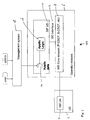
- Fig. 1 shows an example of a prior art system 101.
- a user equipment, UE, 2 is associated with a subscriber (not shown).
- the Session Initiation Protocol User Agent, SIP-UA, 4 resides in the user equipment, UE.
- the SIP-UA 4 allows for communication with the Operator network 6.
- the operator network comprises the Internet Protocol Multimedia Subsystem, IMS, core network 8.
- the IMS core network comprises network nodes performing the functions of Proxy Call Session Control function, P-CSCF, Serving Call Session Control Function, S-CSCF, Interrogating Call Session Control Function, I-CSCF, etc. as is known in the art.
- the operator network 6 further comprises a Session Initiation Protocol Application Server, SIP-AS 10, which is in communication with the IMS core network 6 via an Internet Protocol Multimedia Service Control (ISC) interface 12.
- ISC Internet Protocol Multimedia Service Control
- the SIP-AS 10 is deployed in a network node inside the secure environment of the IMS-provider.
- the IMS core network operator is also the SIP-AS operator. It will be appreciated that it is also possible that the SIP-AS 10 belongs to a 3rd party, i.e. another operator than the IMS core network operator.
- Fig. 1 shows that the SIP-AS 10 comprises a repository 14 including a database including application data. Further, the SIP-AS comprises an application logic unit 16 for executing the service using the application data.
- the service is also referred to as application, such as SIP application.
- the application data in the SIP-AS repository 14 may be obtained from a management system 18.
- the subscriber may manage, e.g. add, delete or modify, the application data contained within the management system.
- an administrative body of the management system operator may manage the application data.
- the prior art system 101 described may for example execute the following service:
- the service (1) must obtain the location data of the subscriber, e.g. with the best possible accuracy and (2) must know the rules on what information (e.g. location and/or accuracy) to present to whom.
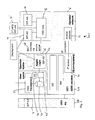
- Fig. 2 shows an example of a system 201 according to the invention.
- a user equipment, UE, 2 is associated with a subscriber (not shown).
- the user equipment includes a first communications unit 20 for communicating with a Voice over Internet Protocol, VoIP, network, in this example an IMS network.
- the first communication unit 20 may be arranged to set up Internet Protocol, IP, access to an Access Network, AN, 22 of the operator network 6.
- a User agent here a Session Initiation Protocol User Agent, SIP-UA 4, resides in the user equipment, e.g. in a SIP-UA unit.
- the operator network 6 comprises an IMS core network 8.
- the operator network 6 may further comprise one or more Application servers, such as SIP-AS's 10.
- the operator network may also be communicatively connected to a 3 rd party SIP-AS 10'.
- the hardware, HW, of the user equipment is trusted by the subscriber, for instance by means of being manufactured by a reputable manufacturer.
- the middleware, or operating system, OS of the user equipment is trusted by the subscriber, e.g. by means of being from a reputable manufacturer or verifiable nature.
- the network operator similarly can trust the HW and OS of the user equipment.
- the OS and the HW define an OS environment of the user equipment 4.
- the OS environment in this example is trusted by both the subscriber and the network operator. It will be appreciated that in this example the SIP-UA 4 resides in the OS environment.
- the user equipment 2 contains an application server, here a SIP-AS 24, that is trusted both by operator and subscriber.
- the SIP-AS 24 is located in an operator space of the user equipment, which operator space is controlled by the operator.
- the operator space of the user equipment is closed for access by the subscriber. That is, the user equipment 2 may be arranged such that a subscriber cannot add, delete or modify any data and/or software included in the operator space. For instance, the user equipment 2 may be arranged such that a user interface of the user equipment does not provide access to the operator space. It will be appreciated that it may be possible that the user equipment 2 is arranged such that the subscriber can view software, such as the SIP-application, included in the operator space.
- the user equipment 2 in Fig. 2 comprises a second communications unit 26 for communicating with the operator network 6.
- the user equipment based SIP-AS 24 is connected via this second communications unit 26 to the operator network, e.g. via an Internet Protocol Multimedia Service Control (ISC) interface 28.
- ISC Internet Protocol Multimedia Service Control
- the operator may deploy software onto the SIP-AS 24, e.g. when the subscriber acquires a new service or the current service is updated.
- the SIP-AS 24 is connected to the operator network 6 via a secure tunnel.
- this part of the user equipment can be considered as part of the operator network.
- the connection between the user equipment based SIP-AS 24 and the operator network 6 is such that, as seen from the operator network, this SIP-AS 24 is part of his intranet.
- the SIP-UA 4 may run in user space or in operator space.
- the user equipment 2 contains a user equipment based repository 30 including a database.
- the database includes application data.
- the database is deployed in a user space of the user equipment, which user space is controlled by the subscriber.
- the user space of the user equipment is closed for access by the operator. That is, the user equipment 2 may be arranged such that an operator cannot add, delete or modify any data and/or software included in the operator space.
- the user equipment is arranged such that the operator cannot view any data included in the operator space. It will be appreciated that it may be possible that the user equipment is arranged such that the operator can view software included in the user space.
- the database is maintained and controlled by the subscriber.
- the subscriber has control over the application data.
- the subscriber can manage the data in the database via a data management unit 32.
- the data management unit can e.g. be operated by the subscriber via a user interface, such as a graphical user interface (GUI), of the user equipment.
- GUI graphical user interface
- the subscriber can control access to the database via an Access Control (AC) unit 34.
- This AC unit 34 can determine which applications (both from operator space and from user space) can access the database.
- the AC unit 34 can also determine which data included in the database may be accessed by the user equipment based SIP-AS 24 and which data may not be accessed by the user equipment based SIP-AS.
- the AC unit 34 may control a data transfer unit 36 which is arranged for transferring application data from the database to the SIP-AS 24. It will be appreciated that it is not necessary that the data transfer unit 36 is controlled by the AC unit 34, since the application data transferred to the SIP-AS 24 does not leave the user equipment 2 if the application does not permit so.
- a trusted SIP-application may be deployed that from the network (operator) point of view, the can be seen as a network-based application, because it is installed and/or maintained by the operator, and/or because it is running in a part of the user equipment 2 that acts as a network-node with respect to the network.
- the user equipment based SIP-AS 24 provides the advantage that the SIP-application uses application data, while the application data remains within the confines of the user equipment.
- One aspect of the invention relies on software, such as the OS of the user equipment, the SIP-AS 24, and/or the application, being trusted by both operator and subscriber.
- software such as the OS of the user equipment, the SIP-AS 24, and/or the application
- the source code of the SIP-application is be available and can be inspected by the subscriber or a third party which is trusted by the subscriber, e.g. an open-source community.
- the subscriber can be assured that the SIP-application only uses the application data from the user equipment based database for internal use within the confines of the user equipment, and does not expose the application data to any entity outside the user equipment.
- the deployed executable of the SIP-application can be related to the trusted, e.g. inspected, source code of the SIP-application, e.g. by check of a checksum of the executable as is known in the art, both by the subscriber and the operator.
- the operator can trust that the SIP-AS 24 and the SIP application, which are part of his network, behave as agreed.
- the operator knows which logic is executed by the SIP-application, but has no access to the application data on which this logic is acting. Only the result of the execution, i.e. the answer from the SIP-AS 24 to the S-CSCF, is known to the operator.
- the subscriber can have a networked-based SIP-application which uses user equipment based application data that is not exposed to the IMS-provider.
- the system according to the invention may for example execute the following service:
- the location data remains within the user equipment when being evaluated by the service. Hence, the operator of the service has no access to the location data.
- the IMS core network 6, e.g. the S-CSCF invokes the user equipment based SIP-AS 24.
- the S-CSCF may invoke the user equipment based SIP-AS 24 in response to receiving an SIP message, such as a SIP Invite request message.
- the Application Logic in the user equipment based SIP-AS 24 (trusted by both operator and subscriber) executes and reads (when needed) application data from the database.
- the Access Control function may determine which application data may or may not be read by the user equipment based SIP-AS 24.
- the result of the execution of the Application Logic is returned to the S-CSCF.
- a network-based service in a VoIP based network e.g. a SIP based telecommunications network, such as an IMS network
- the operator of the service can combine that service with other network-based services into a package.
- the services may e.g. be executed by different SIP-AS's.
- the network e.g. the S-CSCF in the IMS core network, may decide in which order to invoke the SIP-AS's associated with the services. Thereto, the S-CSCF may use Initial Filter Criteria (IFC).
- IFC Initial Filter Criteria
- the package of services can have additional value compared to the separate services.
- the user equipment based SIP-AS which e.g.
- the S-CSCF is not obliged to first invoke the service provided by the user equipment based SIP-AS before invoking other services.
- the S-CSF may also first invoke a network based SIP-AS and then invoke the user equipment based SIP-AS. It will be appreciated that services that are based in the SIP-UA are to be executed prior to sending the SIP Invite request message to the network, i.e. prior to invoking services in network based SIP-AS's.
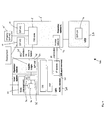
- Fig. 3 shows a second example of a system 301 according to the invention.
- a first user equipment, UE1, 2A is associated with a subscriber (not shown) and a second user equipment, UE2, 2B is associated with the subscriber.
- the first user equipment UE1 2A is designed as an Asymmetrical Digital Subscriber Line (ADSL) modem.
- the second user equipment UE2 2B is designed as a personal computer PC that is communicatively connected to the ADSL modem 2A.
- ADSL Asymmetrical Digital Subscriber Line
- a SIP-UA 4 resides in the second user equipment UE2 2B.
- This SIP-UA 4 may e.g. be a SIP client.
- the first user equipment UE1 2A includes a first communications unit 20 for communicating with the operator network 6.
- the first communication unit 20 may be arranged to set up IP access to an Access Network, AN, 22 of the operator network.
- the first communications unit 20 may provide a communications connection between the SIP-UA 4 and the operator network 6. It will be appreciated that after logging in the SIP-UA 4 is associated with the subscriber.
- the operator network 6 comprises an IMS core network 8.
- the operator network 6 may further comprise one or more SIP-AS's 10.
- the operator network may also be communicatively connected to a 3 rd party SIP-AS 10'.
- the first user equipment UE1 2A contains a SIP-AS 24 that is trusted both by operator and subscriber.
- the SIP-AS 24 is located in an operator space of the user equipment 2A, which operator space is controlled by the operator.
- the operator space of the first user equipment 2A is closed for access by the subscriber.
- the first user equipment 2A in Fig. 3 comprises a second communications unit 26 for communicating with the operator network 6.
- the first user equipment based SIP-AS 24 is connected via this second communications unit 26 to the operator network 6. It will be appreciated that the operator may deploy software onto the SIP-AS 24.
- the SIP-AS 24 is connected to the operator network via a secure tunnel.
- the first user equipment 2A contains a user equipment based repository 30 including a database.
- the database includes application data.
- the database is deployed in a user space of the user equipment 2A, which user space is controlled by the subscriber.
- the user space of the user equipment 2A is closed for access by the operator.
- the database is maintained and controlled by the subscriber.
- the subscriber can manage the data in the database via a data management unit.
- the data management unit can e.g. be operated by the subscriber via a user interface, such as a graphical user interface (GUI), which in this example may be provided by the second user equipment 2B.
- GUI graphical user interface
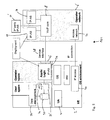
- Fig. 4 shows a third example of a system 401 according to the invention.
- a first user equipment, UE1, 2A is associated with a subscriber (not shown) and a second user equipment, UE2, 2B is associated with the subscriber.
- the second user equipment UE2 2B is designed as a personal computer PC.
- the second user equipment may be stationed at a location remote from the first user equipment, although this is not necessary.
- the second user equipment UE2 2B may be a PC stationed in an internet café and the first user equipment UE1 2A may be an ADSL modem within the home of the subscriber.
- the first user equipment may also be other equipment, such as for instance a mobile communications device of the subscriber.
- the first user equipment VE1 2A contains a SIP-AS 24 that is trusted both by operator and subscriber.
- the SIP-AS 24 is located in an operator space of the user equipment 2A, which operator space is controlled by the operator.
- the operator space of the first user equipment 2A is closed for access by the subscriber.
- the first user equipment 2A contains a user equipment based repository 30 including a database.
- the database includes application data.
- the database is deployed in a user space of the user equipment 2A, which user space is controlled by the subscriber.
- a SIP-UA 4 resides in the second user equipment UE2 2B.
- This SIP-UA 4 may e.g. be a SIP client executed on the PC in the internet café.
- the second user equipment UE2 2B may communicate with the operator network 6. If, during such communication the user equipment based SIP-AS 24 needs to be accessed by the network 6, the network 6 may access the SIP-AS 24 within the first user equipment UE1 2A.
- the user equipment may be e.g. an Asymmetric Digital Subscriber Line (ADSL) modem, mobile phone, computer based IMS-client, etc..
- ADSL Asymmetric Digital Subscriber Line
- VoIP Voice over Internet Protocol
- Fig. 5 shows an example of a system 501 according to the invention.
- a user equipment, UE, 2 is associated with a subscriber (not shown).
- the user equipment 2 includes a first communications unit 20 for communicating with the VoIP network 6.
- the first communication unit 20 may be arranged to set up IP access to an Access Network, AN, 22 of the operator network 6.
- a User Agent, UA, 4 arranged for using an IP based communications protocol resides in the user equipment 2, e.g. in a UA unit. It will be appreciated that the User Agent 4 may also reside in a further user equipment e.g. as demonstrated in Fig. 3 and Fig. 4 .
- the operator network 6 comprises a VoIP core network 8.
- the operator network may further comprise one or more Internet Protocol based Application Servers (IP-AS's) 10.
- IP-AS's Internet Protocol based Application Servers
- the operator network may also be communicatively connected to a 3 rd party IP-AS 10'.
- the user equipment 2 contains an IP-AS 24, that is trusted both by operator and subscriber.
- the IP-AS 24 is located in an operator space of the user equipment, which operator space is controlled by the operator.
- the operator space of the user equipment 2 is closed for access by the subscriber.
- the user equipment 2 in Fig. 5 comprises a second communications unit 26 for communicating with the operator network 6.
- the user equipment based IP-AS 24 is connected via this second communications unit 26 to the operator network 6, e.g. via a service interface 28. It will be appreciated that the operator may deploy software onto the IP-AS 24.
- the user equipment 2 contains a user equipment based repository 30 including a database.
- the database includes application data.
- the database is deployed in a user space of the user equipment, which user space is controlled by the subscriber.
- the user space of the user equipment is closed for access by the operator.
- the database is maintained and controlled by the subscriber. Thus, the subscriber has control over the application data.
- the user equipment for use in a Voice over Internet Protocol based telecommunications network comprises a database storing data, an Application Server using the Internet Protocol based communications protocol for executing an application, a data transfer unit arranged for transferring data from the database to the Application Server, wherein the data remains within the user equipment, and a communications unit arranged for communication between the Application Server and the telecommunications network.
- such user equipment has associated therewith a User Agent arranged for using an Internet Protocol based communications protocol, and the user equipment may comprise a further communications unit arranged for communication between the User Agent and the telecommunications network.
- Fig. 5 may be operated in a manner similar to the system described with respect to Fig. 2 , albeit in any VoIP network.
- any reference signs placed between parentheses shall not be construed as limiting the claim.
- the word 'comprising' does not exclude the presence of other features or steps than those listed in a claim.
- the words 'a' and 'an' shall not be construed as limited to 'only one', but instead are used to mean 'at least one', and do not exclude a plurality.
- the mere fact that certain measures are recited in mutually different claims does not indicate that a combination of these measures cannot be used to advantage.
Landscapes
- Engineering & Computer Science (AREA)
- Multimedia (AREA)
- Computer Networks & Wireless Communication (AREA)
- Signal Processing (AREA)
- Business, Economics & Management (AREA)
- General Business, Economics & Management (AREA)
- Telephonic Communication Services (AREA)
Applications Claiming Priority (1)
| Application Number | Priority Date | Filing Date | Title |
|---|---|---|---|
| PCT/EP2010/050421 WO2011085816A1 (en) | 2010-01-14 | 2010-01-14 | User equipment and method for executing a service |
Publications (2)
| Publication Number | Publication Date |
|---|---|
| EP2524485A1 EP2524485A1 (en) | 2012-11-21 |
| EP2524485B1 true EP2524485B1 (en) | 2014-11-19 |
Family
ID=41668506
Family Applications (1)
| Application Number | Title | Priority Date | Filing Date |
|---|---|---|---|
| EP10701648.7A Active EP2524485B1 (en) | 2010-01-14 | 2010-01-14 | User equipment and method for executing a service |
Country Status (4)
| Country | Link |
|---|---|
| US (1) | US9432413B2 (enExample) |
| EP (1) | EP2524485B1 (enExample) |
| IN (1) | IN2012DN05194A (enExample) |
| WO (1) | WO2011085816A1 (enExample) |
Families Citing this family (1)
| Publication number | Priority date | Publication date | Assignee | Title |
|---|---|---|---|---|
| US10735512B2 (en) * | 2015-02-23 | 2020-08-04 | MyGnar, Inc. | Managing data |
Family Cites Families (12)
| Publication number | Priority date | Publication date | Assignee | Title |
|---|---|---|---|---|
| US20010036176A1 (en) * | 2000-02-28 | 2001-11-01 | Girard Gregory D. | Apparatus and method for telephony service interface to software switch controller |
| GB0312489D0 (en) * | 2003-05-30 | 2003-07-09 | Nokia Corp | Terminal setting change notification |
| US7881287B2 (en) * | 2004-07-30 | 2011-02-01 | Telefonaktiebolaget Lm Ericsson (Publ) | Method and device for session control in hybrid telecommunications network |
| EP1708423A1 (en) * | 2005-03-29 | 2006-10-04 | Matsushita Electric Industrial Co., Ltd. | Inter-domain context transfer using context tranfer managers |
| US7881288B2 (en) * | 2006-02-01 | 2011-02-01 | Telefonaktiebolaget Lm Ericsson (Publ) | Routing media streams from packet switched network to circuit switched network |
| JP4624274B2 (ja) * | 2006-02-08 | 2011-02-02 | Kddi株式会社 | 通信中継装置、無線端末及びコンピュータプログラム |
| EP2163070B1 (en) * | 2007-06-29 | 2012-08-29 | Research In Motion Limited | Method and system for enforcing proxy use within an enterprise communications system |
| WO2009036184A2 (en) * | 2007-09-11 | 2009-03-19 | Research In Motion Limited | System and method for sharing a sip communication service identifier |
| US7948921B1 (en) * | 2007-09-20 | 2011-05-24 | Silver Peak Systems, Inc. | Automatic network optimization |
| US8676260B2 (en) | 2007-12-28 | 2014-03-18 | Microelectronica Espanola S.A.U. | Method of managing information by a large capacity UICC |
| WO2009129266A2 (en) * | 2008-04-14 | 2009-10-22 | Worldrelay, Inc | Numeric based addressing for enhanced telephony and multimedia services |
| US8935529B2 (en) * | 2009-11-30 | 2015-01-13 | Telefonaktiebolaget L M Ericsson (Publ) | Methods and systems for end-to-end secure SIP payloads |
-
2010
- 2010-01-14 EP EP10701648.7A patent/EP2524485B1/en active Active
- 2010-01-14 WO PCT/EP2010/050421 patent/WO2011085816A1/en not_active Ceased
- 2010-01-14 US US13/520,909 patent/US9432413B2/en active Active
-
2012
- 2012-06-12 IN IN5194DEN2012 patent/IN2012DN05194A/en unknown
Also Published As
| Publication number | Publication date |
|---|---|
| EP2524485A1 (en) | 2012-11-21 |
| US20130039361A1 (en) | 2013-02-14 |
| IN2012DN05194A (enExample) | 2015-10-23 |
| US9432413B2 (en) | 2016-08-30 |
| WO2011085816A1 (en) | 2011-07-21 |
Similar Documents
| Publication | Publication Date | Title |
|---|---|---|
| US10819757B2 (en) | System and method for real-time communication by using a client application communication protocol | |
| US9571529B2 (en) | Browser-based communications enhanced with enterprise communication features | |
| US9648052B2 (en) | Real-time communications gateway | |
| US9648006B2 (en) | System and method for communicating with a client application | |
| US10476915B2 (en) | Real-time communication signaling gateway | |
| US20160112466A1 (en) | Distributed connectivity policy enforcement with ice | |
| KR101210774B1 (ko) | 디바이스 및 서버 능력을 전달하는 방법 | |
| US20160234383A1 (en) | Calling an Unready Terminal | |
| KR102041172B1 (ko) | 세션 개시 방법 및 기기 | |
| EP2824891A1 (en) | Distributed programmable connection method to establish peer-to-peer multimedia interactions | |
| RU2665303C2 (ru) | Мультимедийная подсистема на базе протокола интернета (ims), а также способ и устройство для конфигурирования услуги в ims | |
| US8249077B2 (en) | Methods and apparatus for enhancing the scalability of IMS in VoIP service deployment | |
| CN104396213B (zh) | 用于处理消息的方法和实体 | |
| US9917772B2 (en) | Diameter message mirroring and spoofing | |
| US9432413B2 (en) | User equipment and method for executing a service | |
| US10277421B2 (en) | Route lookup resolution | |
| JP5940990B2 (ja) | Apl−scm−feおよびアプリケーション連携方法 | |
| CN107864147A (zh) | 基于物联网通信中间件的高速公路紧急电话互联互通系统 | |
| JP5384445B2 (ja) | セッション処理システム、sip処理装置、ポリシ管理装置、セッション処理方法、及びプログラム | |
| Fajandar | Implementing an Authorization model in a SIP User Agent to secure SIP sessions | |
| CN120238526A (zh) | 终端通信方法、装置、系统、计算机设备和可读存储介质 | |
| SWAMY | Analysis and Testing Of Voip-Subsystems of IpBrick | |
| Barnes et al. | Technical Considerations for Next-Generation 911 | |
| Sun et al. | Case Study 3—Mobile VoIP Applications and IMS | |
| Avgeropoulos | Service Policy Management for User-Centric Services in Heterogeneous Mobile Networks |
Legal Events
| Date | Code | Title | Description |
|---|---|---|---|
| PUAI | Public reference made under article 153(3) epc to a published international application that has entered the european phase |
Free format text: ORIGINAL CODE: 0009012 |
|
| 17P | Request for examination filed |
Effective date: 20120613 |
|
| AK | Designated contracting states |
Kind code of ref document: A1 Designated state(s): AT BE BG CH CY CZ DE DK EE ES FI FR GB GR HR HU IE IS IT LI LT LU LV MC MK MT NL NO PL PT RO SE SI SK SM TR |
|
| DAX | Request for extension of the european patent (deleted) | ||
| GRAP | Despatch of communication of intention to grant a patent |
Free format text: ORIGINAL CODE: EPIDOSNIGR1 |
|
| INTG | Intention to grant announced |
Effective date: 20140718 |
|
| GRAS | Grant fee paid |
Free format text: ORIGINAL CODE: EPIDOSNIGR3 |
|
| GRAA | (expected) grant |
Free format text: ORIGINAL CODE: 0009210 |
|
| AK | Designated contracting states |
Kind code of ref document: B1 Designated state(s): AT BE BG CH CY CZ DE DK EE ES FI FR GB GR HR HU IE IS IT LI LT LU LV MC MK MT NL NO PL PT RO SE SI SK SM TR |
|
| REG | Reference to a national code |
Ref country code: GB Ref legal event code: FG4D |
|
| REG | Reference to a national code |
Ref country code: CH Ref legal event code: EP |
|
| REG | Reference to a national code |
Ref country code: AT Ref legal event code: REF Ref document number: 697582 Country of ref document: AT Kind code of ref document: T Effective date: 20141215 |
|
| REG | Reference to a national code |
Ref country code: IE Ref legal event code: FG4D |
|
| REG | Reference to a national code |
Ref country code: DE Ref legal event code: R096 Ref document number: 602010020339 Country of ref document: DE Effective date: 20141224 |
|
| REG | Reference to a national code |
Ref country code: NL Ref legal event code: VDEP Effective date: 20141119 |
|
| REG | Reference to a national code |
Ref country code: AT Ref legal event code: MK05 Ref document number: 697582 Country of ref document: AT Kind code of ref document: T Effective date: 20141119 |
|
| REG | Reference to a national code |
Ref country code: LT Ref legal event code: MG4D |
|
| PG25 | Lapsed in a contracting state [announced via postgrant information from national office to epo] |
Ref country code: ES Free format text: LAPSE BECAUSE OF FAILURE TO SUBMIT A TRANSLATION OF THE DESCRIPTION OR TO PAY THE FEE WITHIN THE PRESCRIBED TIME-LIMIT Effective date: 20141119 Ref country code: LT Free format text: LAPSE BECAUSE OF FAILURE TO SUBMIT A TRANSLATION OF THE DESCRIPTION OR TO PAY THE FEE WITHIN THE PRESCRIBED TIME-LIMIT Effective date: 20141119 Ref country code: FI Free format text: LAPSE BECAUSE OF FAILURE TO SUBMIT A TRANSLATION OF THE DESCRIPTION OR TO PAY THE FEE WITHIN THE PRESCRIBED TIME-LIMIT Effective date: 20141119 Ref country code: NO Free format text: LAPSE BECAUSE OF FAILURE TO SUBMIT A TRANSLATION OF THE DESCRIPTION OR TO PAY THE FEE WITHIN THE PRESCRIBED TIME-LIMIT Effective date: 20150219 Ref country code: IS Free format text: LAPSE BECAUSE OF FAILURE TO SUBMIT A TRANSLATION OF THE DESCRIPTION OR TO PAY THE FEE WITHIN THE PRESCRIBED TIME-LIMIT Effective date: 20150319 Ref country code: NL Free format text: LAPSE BECAUSE OF FAILURE TO SUBMIT A TRANSLATION OF THE DESCRIPTION OR TO PAY THE FEE WITHIN THE PRESCRIBED TIME-LIMIT Effective date: 20141119 Ref country code: PT Free format text: LAPSE BECAUSE OF FAILURE TO SUBMIT A TRANSLATION OF THE DESCRIPTION OR TO PAY THE FEE WITHIN THE PRESCRIBED TIME-LIMIT Effective date: 20150319 |
|
| PG25 | Lapsed in a contracting state [announced via postgrant information from national office to epo] |
Ref country code: CY Free format text: LAPSE BECAUSE OF FAILURE TO SUBMIT A TRANSLATION OF THE DESCRIPTION OR TO PAY THE FEE WITHIN THE PRESCRIBED TIME-LIMIT Effective date: 20141119 Ref country code: SE Free format text: LAPSE BECAUSE OF FAILURE TO SUBMIT A TRANSLATION OF THE DESCRIPTION OR TO PAY THE FEE WITHIN THE PRESCRIBED TIME-LIMIT Effective date: 20141119 Ref country code: AT Free format text: LAPSE BECAUSE OF FAILURE TO SUBMIT A TRANSLATION OF THE DESCRIPTION OR TO PAY THE FEE WITHIN THE PRESCRIBED TIME-LIMIT Effective date: 20141119 Ref country code: LV Free format text: LAPSE BECAUSE OF FAILURE TO SUBMIT A TRANSLATION OF THE DESCRIPTION OR TO PAY THE FEE WITHIN THE PRESCRIBED TIME-LIMIT Effective date: 20141119 Ref country code: HR Free format text: LAPSE BECAUSE OF FAILURE TO SUBMIT A TRANSLATION OF THE DESCRIPTION OR TO PAY THE FEE WITHIN THE PRESCRIBED TIME-LIMIT Effective date: 20141119 Ref country code: GR Free format text: LAPSE BECAUSE OF FAILURE TO SUBMIT A TRANSLATION OF THE DESCRIPTION OR TO PAY THE FEE WITHIN THE PRESCRIBED TIME-LIMIT Effective date: 20150220 Ref country code: PL Free format text: LAPSE BECAUSE OF FAILURE TO SUBMIT A TRANSLATION OF THE DESCRIPTION OR TO PAY THE FEE WITHIN THE PRESCRIBED TIME-LIMIT Effective date: 20141119 |
|
| PG25 | Lapsed in a contracting state [announced via postgrant information from national office to epo] |
Ref country code: CZ Free format text: LAPSE BECAUSE OF FAILURE TO SUBMIT A TRANSLATION OF THE DESCRIPTION OR TO PAY THE FEE WITHIN THE PRESCRIBED TIME-LIMIT Effective date: 20141119 Ref country code: DK Free format text: LAPSE BECAUSE OF FAILURE TO SUBMIT A TRANSLATION OF THE DESCRIPTION OR TO PAY THE FEE WITHIN THE PRESCRIBED TIME-LIMIT Effective date: 20141119 Ref country code: SK Free format text: LAPSE BECAUSE OF FAILURE TO SUBMIT A TRANSLATION OF THE DESCRIPTION OR TO PAY THE FEE WITHIN THE PRESCRIBED TIME-LIMIT Effective date: 20141119 Ref country code: EE Free format text: LAPSE BECAUSE OF FAILURE TO SUBMIT A TRANSLATION OF THE DESCRIPTION OR TO PAY THE FEE WITHIN THE PRESCRIBED TIME-LIMIT Effective date: 20141119 Ref country code: RO Free format text: LAPSE BECAUSE OF FAILURE TO SUBMIT A TRANSLATION OF THE DESCRIPTION OR TO PAY THE FEE WITHIN THE PRESCRIBED TIME-LIMIT Effective date: 20141119 |
|
| REG | Reference to a national code |
Ref country code: DE Ref legal event code: R097 Ref document number: 602010020339 Country of ref document: DE |
|
| REG | Reference to a national code |
Ref country code: CH Ref legal event code: PL |
|
| PG25 | Lapsed in a contracting state [announced via postgrant information from national office to epo] |
Ref country code: LU Free format text: LAPSE BECAUSE OF FAILURE TO SUBMIT A TRANSLATION OF THE DESCRIPTION OR TO PAY THE FEE WITHIN THE PRESCRIBED TIME-LIMIT Effective date: 20150114 |
|
| PLBE | No opposition filed within time limit |
Free format text: ORIGINAL CODE: 0009261 |
|
| STAA | Information on the status of an ep patent application or granted ep patent |
Free format text: STATUS: NO OPPOSITION FILED WITHIN TIME LIMIT |
|
| PG25 | Lapsed in a contracting state [announced via postgrant information from national office to epo] |
Ref country code: MC Free format text: LAPSE BECAUSE OF FAILURE TO SUBMIT A TRANSLATION OF THE DESCRIPTION OR TO PAY THE FEE WITHIN THE PRESCRIBED TIME-LIMIT Effective date: 20141119 |
|
| 26N | No opposition filed |
Effective date: 20150820 |
|
| PG25 | Lapsed in a contracting state [announced via postgrant information from national office to epo] |
Ref country code: LI Free format text: LAPSE BECAUSE OF NON-PAYMENT OF DUE FEES Effective date: 20150131 Ref country code: CH Free format text: LAPSE BECAUSE OF NON-PAYMENT OF DUE FEES Effective date: 20150131 |
|
| REG | Reference to a national code |
Ref country code: IE Ref legal event code: MM4A |
|
| PG25 | Lapsed in a contracting state [announced via postgrant information from national office to epo] |
Ref country code: IT Free format text: LAPSE BECAUSE OF FAILURE TO SUBMIT A TRANSLATION OF THE DESCRIPTION OR TO PAY THE FEE WITHIN THE PRESCRIBED TIME-LIMIT Effective date: 20141119 |
|
| REG | Reference to a national code |
Ref country code: FR Ref legal event code: PLFP Year of fee payment: 7 |
|
| PG25 | Lapsed in a contracting state [announced via postgrant information from national office to epo] |
Ref country code: IE Free format text: LAPSE BECAUSE OF NON-PAYMENT OF DUE FEES Effective date: 20150114 |
|
| PG25 | Lapsed in a contracting state [announced via postgrant information from national office to epo] |
Ref country code: SI Free format text: LAPSE BECAUSE OF FAILURE TO SUBMIT A TRANSLATION OF THE DESCRIPTION OR TO PAY THE FEE WITHIN THE PRESCRIBED TIME-LIMIT Effective date: 20141119 |
|
| PG25 | Lapsed in a contracting state [announced via postgrant information from national office to epo] |
Ref country code: MT Free format text: LAPSE BECAUSE OF FAILURE TO SUBMIT A TRANSLATION OF THE DESCRIPTION OR TO PAY THE FEE WITHIN THE PRESCRIBED TIME-LIMIT Effective date: 20141119 |
|
| REG | Reference to a national code |
Ref country code: FR Ref legal event code: PLFP Year of fee payment: 8 |
|
| PG25 | Lapsed in a contracting state [announced via postgrant information from national office to epo] |
Ref country code: HU Free format text: LAPSE BECAUSE OF FAILURE TO SUBMIT A TRANSLATION OF THE DESCRIPTION OR TO PAY THE FEE WITHIN THE PRESCRIBED TIME-LIMIT; INVALID AB INITIO Effective date: 20100114 Ref country code: SM Free format text: LAPSE BECAUSE OF FAILURE TO SUBMIT A TRANSLATION OF THE DESCRIPTION OR TO PAY THE FEE WITHIN THE PRESCRIBED TIME-LIMIT Effective date: 20141119 Ref country code: BG Free format text: LAPSE BECAUSE OF FAILURE TO SUBMIT A TRANSLATION OF THE DESCRIPTION OR TO PAY THE FEE WITHIN THE PRESCRIBED TIME-LIMIT Effective date: 20141119 |
|
| PG25 | Lapsed in a contracting state [announced via postgrant information from national office to epo] |
Ref country code: BE Free format text: LAPSE BECAUSE OF NON-PAYMENT OF DUE FEES Effective date: 20150131 |
|
| PG25 | Lapsed in a contracting state [announced via postgrant information from national office to epo] |
Ref country code: TR Free format text: LAPSE BECAUSE OF FAILURE TO SUBMIT A TRANSLATION OF THE DESCRIPTION OR TO PAY THE FEE WITHIN THE PRESCRIBED TIME-LIMIT Effective date: 20141119 |
|
| REG | Reference to a national code |
Ref country code: FR Ref legal event code: PLFP Year of fee payment: 9 |
|
| PG25 | Lapsed in a contracting state [announced via postgrant information from national office to epo] |
Ref country code: MK Free format text: LAPSE BECAUSE OF FAILURE TO SUBMIT A TRANSLATION OF THE DESCRIPTION OR TO PAY THE FEE WITHIN THE PRESCRIBED TIME-LIMIT Effective date: 20141119 |
|
| REG | Reference to a national code |
Ref country code: DE Ref legal event code: R079 Ref document number: 602010020339 Country of ref document: DE Free format text: PREVIOUS MAIN CLASS: H04L0029060000 Ipc: H04L0065000000 |
|
| P01 | Opt-out of the competence of the unified patent court (upc) registered |
Effective date: 20230517 |
|
| PGFP | Annual fee paid to national office [announced via postgrant information from national office to epo] |
Ref country code: GB Payment date: 20260127 Year of fee payment: 17 |
|
| PGFP | Annual fee paid to national office [announced via postgrant information from national office to epo] |
Ref country code: DE Payment date: 20260128 Year of fee payment: 17 |
|
| PGFP | Annual fee paid to national office [announced via postgrant information from national office to epo] |
Ref country code: FR Payment date: 20260126 Year of fee payment: 17 |