EP2522548A2 - Vehicle front lighting assembly and system having a variable tint electrowetting element - Google Patents
Vehicle front lighting assembly and system having a variable tint electrowetting element Download PDFInfo
- Publication number
- EP2522548A2 EP2522548A2 EP12166341A EP12166341A EP2522548A2 EP 2522548 A2 EP2522548 A2 EP 2522548A2 EP 12166341 A EP12166341 A EP 12166341A EP 12166341 A EP12166341 A EP 12166341A EP 2522548 A2 EP2522548 A2 EP 2522548A2
- Authority
- EP
- European Patent Office
- Prior art keywords
- light
- assembly
- electrowetting element
- variable tint
- electrowetting
- Prior art date
- Legal status (The legal status is an assumption and is not a legal conclusion. Google has not performed a legal analysis and makes no representation as to the accuracy of the status listed.)
- Pending
Links
- 239000000463 material Substances 0.000 description 15
- XLYOFNOQVPJJNP-UHFFFAOYSA-N water Substances O XLYOFNOQVPJJNP-UHFFFAOYSA-N 0.000 description 11
- 239000012530 fluid Substances 0.000 description 4
- 238000005286 illumination Methods 0.000 description 4
- 230000000712 assembly Effects 0.000 description 2
- 238000000429 assembly Methods 0.000 description 2
- 239000003086 colorant Substances 0.000 description 2
- 238000010586 diagram Methods 0.000 description 2
- 239000013589 supplement Substances 0.000 description 2
- 230000005540 biological transmission Effects 0.000 description 1
- 230000008030 elimination Effects 0.000 description 1
- 238000003379 elimination reaction Methods 0.000 description 1
- 238000005516 engineering process Methods 0.000 description 1
- 229910052736 halogen Inorganic materials 0.000 description 1
- 150000002367 halogens Chemical class 0.000 description 1
- 230000002209 hydrophobic effect Effects 0.000 description 1
- 239000002699 waste material Substances 0.000 description 1
Images


Classifications
-
- B—PERFORMING OPERATIONS; TRANSPORTING
- B60—VEHICLES IN GENERAL
- B60Q—ARRANGEMENT OF SIGNALLING OR LIGHTING DEVICES, THE MOUNTING OR SUPPORTING THEREOF OR CIRCUITS THEREFOR, FOR VEHICLES IN GENERAL
- B60Q1/00—Arrangement of optical signalling or lighting devices, the mounting or supporting thereof or circuits therefor
- B60Q1/26—Arrangement of optical signalling or lighting devices, the mounting or supporting thereof or circuits therefor the devices being primarily intended to indicate the vehicle, or parts thereof, or to give signals, to other traffic
- B60Q1/34—Arrangement of optical signalling or lighting devices, the mounting or supporting thereof or circuits therefor the devices being primarily intended to indicate the vehicle, or parts thereof, or to give signals, to other traffic for indicating change of drive direction
- B60Q1/38—Arrangement of optical signalling or lighting devices, the mounting or supporting thereof or circuits therefor the devices being primarily intended to indicate the vehicle, or parts thereof, or to give signals, to other traffic for indicating change of drive direction using immovably-mounted light sources, e.g. fixed flashing lamps
-
- B—PERFORMING OPERATIONS; TRANSPORTING
- B60—VEHICLES IN GENERAL
- B60Q—ARRANGEMENT OF SIGNALLING OR LIGHTING DEVICES, THE MOUNTING OR SUPPORTING THEREOF OR CIRCUITS THEREFOR, FOR VEHICLES IN GENERAL
- B60Q1/00—Arrangement of optical signalling or lighting devices, the mounting or supporting thereof or circuits therefor
- B60Q1/0029—Spatial arrangement
- B60Q1/0041—Spatial arrangement of several lamps in relation to each other
- B60Q1/0047—Signalling unit mounted on a headlamp unit
-
- B—PERFORMING OPERATIONS; TRANSPORTING
- B60—VEHICLES IN GENERAL
- B60Q—ARRANGEMENT OF SIGNALLING OR LIGHTING DEVICES, THE MOUNTING OR SUPPORTING THEREOF OR CIRCUITS THEREFOR, FOR VEHICLES IN GENERAL
- B60Q1/00—Arrangement of optical signalling or lighting devices, the mounting or supporting thereof or circuits therefor
- B60Q1/26—Arrangement of optical signalling or lighting devices, the mounting or supporting thereof or circuits therefor the devices being primarily intended to indicate the vehicle, or parts thereof, or to give signals, to other traffic
- B60Q1/34—Arrangement of optical signalling or lighting devices, the mounting or supporting thereof or circuits therefor the devices being primarily intended to indicate the vehicle, or parts thereof, or to give signals, to other traffic for indicating change of drive direction
-
- F—MECHANICAL ENGINEERING; LIGHTING; HEATING; WEAPONS; BLASTING
- F21—LIGHTING
- F21S—NON-PORTABLE LIGHTING DEVICES; SYSTEMS THEREOF; VEHICLE LIGHTING DEVICES SPECIALLY ADAPTED FOR VEHICLE EXTERIORS
- F21S43/00—Signalling devices specially adapted for vehicle exteriors, e.g. brake lamps, direction indicator lights or reversing lights
- F21S43/20—Signalling devices specially adapted for vehicle exteriors, e.g. brake lamps, direction indicator lights or reversing lights characterised by refractors, transparent cover plates, light guides or filters
- F21S43/255—Filters
-
- G—PHYSICS
- G02—OPTICS
- G02B—OPTICAL ELEMENTS, SYSTEMS OR APPARATUS
- G02B26/00—Optical devices or arrangements for the control of light using movable or deformable optical elements
- G02B26/004—Optical devices or arrangements for the control of light using movable or deformable optical elements based on a displacement or a deformation of a fluid
- G02B26/005—Optical devices or arrangements for the control of light using movable or deformable optical elements based on a displacement or a deformation of a fluid based on electrowetting
-
- B—PERFORMING OPERATIONS; TRANSPORTING
- B60—VEHICLES IN GENERAL
- B60Q—ARRANGEMENT OF SIGNALLING OR LIGHTING DEVICES, THE MOUNTING OR SUPPORTING THEREOF OR CIRCUITS THEREFOR, FOR VEHICLES IN GENERAL
- B60Q2400/00—Special features or arrangements of exterior signal lamps for vehicles
- B60Q2400/20—Multi-color single source or LED matrix, e.g. yellow blinker and red brake lamp generated by single lamp
Definitions
- the invention generally relates to vehicle front lighting assemblies, and more particularly relates to a vehicle front lighting assembly that includes a variable tint electrowetting element.
- Vehicle lighting assemblies installed on the front end of vehicles generally have distinct bulbs for the headlight and the turn indicator.
- Light for the turn indicator has a yellow or amber hue so that it can be distinguished from the headlight.
- a vehicle front lighting assembly defines a lens surface.
- the assembly includes a light source and a variable tint electrowetting element.
- the light source is configured to project light toward the lens surface.
- the variable tint electrowetting element overlays a portion of the lens surface.
- the variable tint electrowetting element is operable to a transparent state whereby the hue of light passing therethrough is not substantially changed, and a tinted state where the hue of light passing therethrough is changed.
- variable tint electrowetting element is operable to provide a turn indicator for a vehicle.
- a vehicle front lighting system in another embodiment, includes a light source and a variable tint electrowetting element.
- the light source is configured to project light toward a lens surface.
- the variable tint electrowetting element overlays a portion of the lens surface.
- the variable tint electrowetting element is operable to a transparent state whereby the hue of light passing therethrough is not substantially changed, and a tinted state where the hue of light passing therethrough is changed; and a controller configured to determine the state of the variable tint electrowetting element based on a light control signal.
- a vehicle front lighting assembly in yet another embodiment, includes a light source configured to project light toward the lens surface.
- the assembly also includes a variable tint electrowetting element overlying a portion of the lens surface.
- the variable tint electrowetting element is operable to an opaque state whereby light is prevented from passing therethrough, and a tinted state where the hue of light passing therethrough is changed.
- Fig. 1 is a perspective view of a vehicle equipped with a vehicle front lighting assembly in accordance with one embodiment
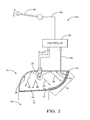
- Fig. 2 is block diagram of a vehicle front lighting system including a top cut-away view of a vehicle front lighting assembly in accordance with one embodiment
- Fig. 3 is block diagram of a vehicle front lighting system including a top cut-away view of a vehicle front lighting assembly in accordance with one embodiment.
- Fig. 1 illustrates a non-limiting example of a vehicle 10 equipped with a front lighting assembly 12.
- the front lighting assembly 12 is configured to provide both the forward illumination of a roadway 14 traveled by the vehicle 10 in a manner typically associated with a headlight or headlamp, and varying/tinted illumination typically associated with a turn indicator or turn signal.
- the front lighting assembly 12 has two sections, a headlight portion 16 that generally provides forward illumination of the roadway 14, and a turn indicator portion 18 that in this non-limiting example projects amber or yellow light forward and sideways from the vehicle 10 so a person operating an on-coming or side-approaching vehicle are provided an indication of the intentions of the operator (not shown) of the vehicle 10.
- an advantage of the front lighting assembly 12 described herein is that light projected from the turn indicator portion 18 may be used to supplement light from the headlight portion 16 for roadway illumination when a turn is not being indicated. Otherwise, light projected from the turn indicator portion 18 may be variably tinted in a manner that others will readily recognize as an indication that the vehicle 10 may execute a turn.
- Fig. 2 illustrates a top cut-away view of a non-limiting example of the front lighting assembly 12, corresponding to the drivers-side front lighting assembly shown in Fig. 1 .
- the front lighting assembly 12 may be equipped with a light source 20 illustrated here as a single light bulb, for example a halogen light bulb.
- a single light bulb can provide light for both forward roadway 14 lighting and turn indication.
- the light source 20 may be a light emitting diode, or an array of light emitting diodes.
- the light source 20 may be configured to project light toward a lens surface 22 of a lens 24 of the vehicle front lighting assembly 12.
- the light may travel directly from the light source 20 to the lens surface 22, or may be reflected by a reflective surface portion 28 of the vehicle front lighting assembly 12. While the lens 24 is not illustrated as having any particular light refracting features, such as an arrangement of a plurality of refractive lens elements forming the lens 24 which is known in the art, this is only for the purpose of simplifying the illustration, and not a limitation.
- the light source 20 may be connected to a controller 30 by, for example, wires 32.
- the combination of the controller 30 and the vehicle front lighting assembly 12 may form a vehicle front lighting system 34.
- the vehicle front lighting assembly 12 may include a variable tint electrowetting element 34 overlying a portion of the lens surface 22.
- the variable tint electrowetting element 34 is, in general, operable to a transparent state or clear state where the hue or color of light from the light source 20 that passes through the variable tint electrowetting element 34 is not changed substantially.
- the variable tint electrowetting element 34 may also be operable to a tinted state where the hue of light passing through the variable tint electrowetting element 34 is changed, i.e. tinted or colored.
- variable tint electrowetting element 34 includes two fluids: an aqueous fluid, commonly referred to as the water layer; and a hydrophobic dielectric fluid, commonly referred to as the oil layer.
- the distribution of the oil layer can be manipulated by applying a voltage to electrodes arranged about the variable tint electrowetting element 34. If the oil layer material is selected such that light passing through the oil layer is tinted, and the water layer is relatively transparent, then the variable tint electrowetting element 34 will be operable to variably tint light from the light source 20.
- WO 2011/017446 entitled COLORED CONDUCTIVE FLUIDS FOR ELECTROWETTING AND ELECTROFLUIDIC TECHNOLOGIES, published February 10, 2011 by Clapp et al. provides a description of variable tint electrowetting elements.
- the water layer material may be selected to tint light passing through the variable tint electrowetting element 34
- the oil layer material may be an opaque material so as to block light from passing through the variable tint electrowetting element 34 when the electrical bias is such that the oil layer spreads over the variable tint electrowetting element 34.
- the turn indicator portion 18 will appear either dark, i.e. not illuminated by the light source 20 because the light is blocked, or will appear to be illuminated with a tinted or colored light, and so when varied will appear similar to when a turn signal light is alternatingly turned on and off.
- the opaque material used for the oil layer may also be reflective and so reflect light from the light source 20 back towards the light source where it may be again reflected to pass through the headlight portion 16 of the lens 24 and so further illuminate the roadway 14.
- the variable tint electrowetting element 34 may be coupled to the controller 30 via a connection 36 formed of, for example, multiple wires. Control signals communicated by the connection 36 may be voltages to directly control the variable tint electrowetting element 34, or may be digitally encoded by the controller 30 for transmission to the variable tint electrowetting element 34 that may include another processor (not shown) configured to decode the signal and control the variable tint electrowetting element 34 accordingly.
- the controller 30 may include a processor (not shown) such as a microprocessor or other control circuitry as should be evident to those in the art.
- the controller 30 may include memory, including non-volatile memory, such as electrically erasable programmable read-only memory (EEPROM) for storing one or more routines, thresholds and captured data.
- EEPROM electrically erasable programmable read-only memory
- the one or more routines may be executed by the processor to perform steps for determining control signals output by the controller 30 for operating the variable tint electrowetting element 34 as described herein.
- the controller 30 may be configured to receive a light control signal 38 from, for example, a turn signal selector 40, and determine the control signal output onto the connection 36 in order to control the state of the variable tint electrowetting element 34 based on a light control signal 38.
- Fig. 3 illustrates a non-limiting example of a vehicle front lighting assembly 312. Similar to Fig. 1 , a lens surface 322 is segregated into a headlight portion 316 and a turn signal portion 318.
- a light source 320 is illustrated as being formed of an array of light emitting diodes.
- a variable tint electrowetting element 334 overlies a portion of the lens surface 322.
- the variable tint electrowetting element 334 is illustrated here as having several variable tint electrowetting cells 334A, 334B, 334C, and 334D. Each of the cells generally includes material forming an oil layer 350 and a water layer 352 as described above.
- cells 334A and 334B suggest that those cells are activated, that is, the oil layer 350 is spread across the cell, and so the material forming the oil layer is interacting with light from nearby LEDs.
- the illustration of cells 334C and 334D suggest that those cells are deactivated, that is the oil layer 350 is crowded into a corner of cell, and so the oil layer 350 is generally not interacting with light from the nearby LED's S
- the oil layer 350 may comprise a tinting material that colors or tints light passing through oil layer 350
- the water layer 352 may comprise a material that is substantially clear or transparent, and so does not substantially color or tint light passing through the water layer 352.
- light passing through cells 334A and 334B would be tinted, and light passing through cells 334C and 334D would not be tinted.
- the oil layer 350 may comprise an opaque material that prevents light from passing through oil layer 350
- the water layer 352 may comprise a material that is tinted and so colors or tints light passing through the water layer 352.
- the variable tint electrowetting element 334 is operable to provide a turn indicator for a vehicle 10. It will be recognized that each of the cells may be independently operated by the controller 330.
- Fig. 3 also illustrates a non-limiting example of several electrowetting prisms 354 overlying the headlight portion 316 of the lens surface 322. It will be recognized that the arrangement may include more than four electrowetting prisms, that the prisms 354 may also overlay all or part of the variable tint electrowetting element 334, and that the prisms may be arranged in a two-dimensional array. Alternatively the vehicle front lighting system 312 may have electrowetting prisms overlying all or some of the variable tint electrowetting element 334 in the turn signal portion 318, with or without electrowetting prism overlaying all or part of the headlight portion 316.
- Electrowetting prisms use a water layer material that has a different index of refraction than the oil layer material, and alter the angle of the water/oil interface to vary a refraction angle as suggested in Fig. 3 .
- the electrowetting prism may be used to variably direct light passing through the variable tint electrowetting element 334.
- variable tint electrowetting element 334 when variable tint electrowetting element 334 is in a transparent state, light may be directed to illuminate the roadway 14 and so supplement light from the headlight portion 316. Then, when the variable tint electrowetting element 334 is operated to a tinted state, then light may be directed sideways to provide a brighter turn indication to others not located in front of the vehicle 10.
- a front lighting assembly 12 a front lighting system 312, and a controller 30 for a front lighting system 312 is provided.
- the front light assembly 12 provides both forward lighting and turn indication lighting with a single bulb, and so allows for the elimination of a separate turn-signal bulb.
- Differing materials for the oil layer 350 and water layer 352 may be selected to provide a turn indication that, for example, changes from white light to amber light, or changes from no light to amber light, to provide a turn indication.
- the oil layer 350 may be a reflective material so that light blocked by the variable tint electrowetting element 34, 334 may be reflected and redirected out of the headlight portion 316, and so not waste light energy.
Landscapes
- Engineering & Computer Science (AREA)
- Mechanical Engineering (AREA)
- Physics & Mathematics (AREA)
- General Physics & Mathematics (AREA)
- Optics & Photonics (AREA)
- General Engineering & Computer Science (AREA)
- Lighting Device Outwards From Vehicle And Optical Signal (AREA)
- Non-Portable Lighting Devices Or Systems Thereof (AREA)
Abstract
Description
- The invention generally relates to vehicle front lighting assemblies, and more particularly relates to a vehicle front lighting assembly that includes a variable tint electrowetting element.
- Vehicle lighting assemblies installed on the front end of vehicles generally have distinct bulbs for the headlight and the turn indicator. Light for the turn indicator has a yellow or amber hue so that it can be distinguished from the headlight.
- In accordance with one embodiment of this invention, a vehicle front lighting assembly is provided. The assembly defines a lens surface. The assembly includes a light source and a variable tint electrowetting element. The light source is configured to project light toward the lens surface. The variable tint electrowetting element overlays a portion of the lens surface. The variable tint electrowetting element is operable to a transparent state whereby the hue of light passing therethrough is not substantially changed, and a tinted state where the hue of light passing therethrough is changed.
- In accordance with one embodiment of this invention, the variable tint electrowetting element is operable to provide a turn indicator for a vehicle.
- In another embodiment of the present invention, a vehicle front lighting system is provided. The system includes a light source and a variable tint electrowetting element. The light source is configured to project light toward a lens surface. The variable tint electrowetting element overlays a portion of the lens surface. The variable tint electrowetting element is operable to a transparent state whereby the hue of light passing therethrough is not substantially changed, and a tinted state where the hue of light passing therethrough is changed; and a controller configured to determine the state of the variable tint electrowetting element based on a light control signal.
- In yet another embodiment of the present invention, a vehicle front lighting assembly is provided. The assembly includes a light source configured to project light toward the lens surface. The assembly also includes a variable tint electrowetting element overlying a portion of the lens surface. In this embodiment the variable tint electrowetting element is operable to an opaque state whereby light is prevented from passing therethrough, and a tinted state where the hue of light passing therethrough is changed.
- Further features and advantages of the invention will appear more clearly on a reading of the following detailed description of the preferred embodiment of the invention, which is given by way of non-limiting example only and with reference to the accompanying drawings.
- The present invention will now be described, by way of example with reference to the accompanying drawings, in which:
-
Fig. 1 is a perspective view of a vehicle equipped with a vehicle front lighting assembly in accordance with one embodiment; -
Fig. 2 is block diagram of a vehicle front lighting system including a top cut-away view of a vehicle front lighting assembly in accordance with one embodiment; and -
Fig. 3 is block diagram of a vehicle front lighting system including a top cut-away view of a vehicle front lighting assembly in accordance with one embodiment. -
Fig. 1 illustrates a non-limiting example of avehicle 10 equipped with afront lighting assembly 12. As used herein, thefront lighting assembly 12 is configured to provide both the forward illumination of aroadway 14 traveled by thevehicle 10 in a manner typically associated with a headlight or headlamp, and varying/tinted illumination typically associated with a turn indicator or turn signal. In general, thefront lighting assembly 12 has two sections, aheadlight portion 16 that generally provides forward illumination of theroadway 14, and aturn indicator portion 18 that in this non-limiting example projects amber or yellow light forward and sideways from thevehicle 10 so a person operating an on-coming or side-approaching vehicle are provided an indication of the intentions of the operator (not shown) of thevehicle 10. As will be described in more detail below, an advantage of thefront lighting assembly 12 described herein is that light projected from theturn indicator portion 18 may be used to supplement light from theheadlight portion 16 for roadway illumination when a turn is not being indicated. Otherwise, light projected from theturn indicator portion 18 may be variably tinted in a manner that others will readily recognize as an indication that thevehicle 10 may execute a turn. -
Fig. 2 illustrates a top cut-away view of a non-limiting example of thefront lighting assembly 12, corresponding to the drivers-side front lighting assembly shown inFig. 1 . Thefront lighting assembly 12 may be equipped with alight source 20 illustrated here as a single light bulb, for example a halogen light bulb. An advantage of this configuration is that a single light bulb can provide light for bothforward roadway 14 lighting and turn indication. In another embodiment, thelight source 20 may be a light emitting diode, or an array of light emitting diodes. Thelight source 20 may be configured to project light toward alens surface 22 of alens 24 of the vehiclefront lighting assembly 12. The light, indicated byarrows 26, may travel directly from thelight source 20 to thelens surface 22, or may be reflected by areflective surface portion 28 of the vehiclefront lighting assembly 12. While thelens 24 is not illustrated as having any particular light refracting features, such as an arrangement of a plurality of refractive lens elements forming thelens 24 which is known in the art, this is only for the purpose of simplifying the illustration, and not a limitation. Thelight source 20 may be connected to acontroller 30 by, for example,wires 32. The combination of thecontroller 30 and the vehiclefront lighting assembly 12 may form a vehiclefront lighting system 34. - The vehicle
front lighting assembly 12 may include a variabletint electrowetting element 34 overlying a portion of thelens surface 22. The variabletint electrowetting element 34 is, in general, operable to a transparent state or clear state where the hue or color of light from thelight source 20 that passes through the variabletint electrowetting element 34 is not changed substantially. The variabletint electrowetting element 34 may also be operable to a tinted state where the hue of light passing through the variabletint electrowetting element 34 is changed, i.e. tinted or colored. - In general, the variable
tint electrowetting element 34, includes two fluids: an aqueous fluid, commonly referred to as the water layer; and a hydrophobic dielectric fluid, commonly referred to as the oil layer. In general, the distribution of the oil layer can be manipulated by applying a voltage to electrodes arranged about the variabletint electrowetting element 34. If the oil layer material is selected such that light passing through the oil layer is tinted, and the water layer is relatively transparent, then the variabletint electrowetting element 34 will be operable to variably tint light from thelight source 20.WO 2011/017446 , entitled COLORED CONDUCTIVE FLUIDS FOR ELECTROWETTING AND ELECTROFLUIDIC TECHNOLOGIES, published February 10, 2011 by Clapp et al. provides a description of variable tint electrowetting elements. - In another embodiment, the water layer material may be selected to tint light passing through the variable
tint electrowetting element 34, and the oil layer material may be an opaque material so as to block light from passing through the variabletint electrowetting element 34 when the electrical bias is such that the oil layer spreads over the variabletint electrowetting element 34. With this configuration, theturn indicator portion 18 will appear either dark, i.e. not illuminated by thelight source 20 because the light is blocked, or will appear to be illuminated with a tinted or colored light, and so when varied will appear similar to when a turn signal light is alternatingly turned on and off. In another embodiment the opaque material used for the oil layer may also be reflective and so reflect light from thelight source 20 back towards the light source where it may be again reflected to pass through theheadlight portion 16 of thelens 24 and so further illuminate theroadway 14. - The variable
tint electrowetting element 34 may be coupled to thecontroller 30 via aconnection 36 formed of, for example, multiple wires. Control signals communicated by theconnection 36 may be voltages to directly control the variabletint electrowetting element 34, or may be digitally encoded by thecontroller 30 for transmission to the variabletint electrowetting element 34 that may include another processor (not shown) configured to decode the signal and control the variabletint electrowetting element 34 accordingly. Thecontroller 30 may include a processor (not shown) such as a microprocessor or other control circuitry as should be evident to those in the art. Thecontroller 30 may include memory, including non-volatile memory, such as electrically erasable programmable read-only memory (EEPROM) for storing one or more routines, thresholds and captured data. The one or more routines may be executed by the processor to perform steps for determining control signals output by thecontroller 30 for operating the variabletint electrowetting element 34 as described herein. Thecontroller 30 may be configured to receive alight control signal 38 from, for example, aturn signal selector 40, and determine the control signal output onto theconnection 36 in order to control the state of the variabletint electrowetting element 34 based on alight control signal 38. -
Fig. 3 illustrates a non-limiting example of a vehiclefront lighting assembly 312. Similar toFig. 1 , alens surface 322 is segregated into aheadlight portion 316 and aturn signal portion 318. In this non-limiting example, alight source 320 is illustrated as being formed of an array of light emitting diodes. A variabletint electrowetting element 334 overlies a portion of thelens surface 322. The variabletint electrowetting element 334 is illustrated here as having several variable tint electrowetting cells 334A, 334B, 334C, and 334D. Each of the cells generally includes material forming anoil layer 350 and awater layer 352 as described above. The illustrations of cells 334A and 334B suggest that those cells are activated, that is, theoil layer 350 is spread across the cell, and so the material forming the oil layer is interacting with light from nearby LEDs. In contrast, the illustration of cells 334C and 334D suggest that those cells are deactivated, that is theoil layer 350 is crowded into a corner of cell, and so theoil layer 350 is generally not interacting with light from the nearby LED's S - In one embodiment, the
oil layer 350 may comprise a tinting material that colors or tints light passing throughoil layer 350, and thewater layer 352 may comprise a material that is substantially clear or transparent, and so does not substantially color or tint light passing through thewater layer 352. For this configuration, light passing through cells 334A and 334B would be tinted, and light passing through cells 334C and 334D would not be tinted. - In another embodiment, the
oil layer 350 may comprise an opaque material that prevents light from passing throughoil layer 350, and thewater layer 352 may comprise a material that is tinted and so colors or tints light passing through thewater layer 352. For this configuration, light would be blocked from passing through cells 334A and 334B and so that area of the turn signal portion may appear dark, and light passing through cells 334C and 334D would be tinted. For either configuration, the variabletint electrowetting element 334 is operable to provide a turn indicator for avehicle 10. It will be recognized that each of the cells may be independently operated by thecontroller 330. -
Fig. 3 also illustrates a non-limiting example ofseveral electrowetting prisms 354 overlying theheadlight portion 316 of thelens surface 322. It will be recognized that the arrangement may include more than four electrowetting prisms, that theprisms 354 may also overlay all or part of the variabletint electrowetting element 334, and that the prisms may be arranged in a two-dimensional array. Alternatively the vehiclefront lighting system 312 may have electrowetting prisms overlying all or some of the variabletint electrowetting element 334 in theturn signal portion 318, with or without electrowetting prism overlaying all or part of theheadlight portion 316. Electrowetting prisms use a water layer material that has a different index of refraction than the oil layer material, and alter the angle of the water/oil interface to vary a refraction angle as suggested inFig. 3 . For the case where one or more electrowetting prisms overlay all or part of theturn signal portion 318, the electrowetting prism may be used to variably direct light passing through the variabletint electrowetting element 334. For example, when variabletint electrowetting element 334 is in a transparent state, light may be directed to illuminate theroadway 14 and so supplement light from theheadlight portion 316. Then, when the variabletint electrowetting element 334 is operated to a tinted state, then light may be directed sideways to provide a brighter turn indication to others not located in front of thevehicle 10. - Accordingly, a
front lighting assembly 12, afront lighting system 312, and acontroller 30 for afront lighting system 312 is provided. The frontlight assembly 12 provides both forward lighting and turn indication lighting with a single bulb, and so allows for the elimination of a separate turn-signal bulb. Differing materials for theoil layer 350 andwater layer 352 may be selected to provide a turn indication that, for example, changes from white light to amber light, or changes from no light to amber light, to provide a turn indication. Also, in some configurations, theoil layer 350 may be a reflective material so that light blocked by the variabletint electrowetting element headlight portion 316, and so not waste light energy.
Claims (9)
- A vehicle front lighting assembly (12) comprising:a light source (20) configured to project light toward a lens surface (22);
anda variable tint electrowetting element (34, 334) overlying a portion of the lens surface (22), wherein the variable tint electrowetting element (34, 334) is operable to a transparent state where the hue of light passing therethrough is not substantially changed, and operable to a tinted state where the hue of light passing therethrough is changed. - The assembly (12) in accordance with claim 1, wherein the light source (20) comprises a light emitting diode.
- The assembly (12) in accordance with claim 1, wherein the light source (20) comprises an array of light emitting diodes.
- The assembly (12) in accordance with claim 1, wherein the variable tint electrowetting element (34, 334) provides a turn indicator for a vehicle (10).
- The assembly (12) in accordance with claim 1, wherein the assembly further comprises an electrowetting prism (354) overlying a portion of the lens surface (22), said prism (354) configured to variably direct light passing therethrough.
- The assembly (12) in accordance with claim 1, wherein the assembly further comprises an electrowetting prism (354) overlying the variable tint electrowetting element (34, 334), said prism (354) configured to variably direct light passing therethrough.
- The assembly (12) in accordance with claim 1, wherein the assembly further comprises a controller (30) configured to determine the state of the variable tint electrowetting element (34, 334) based on a light control signal (38).
- The assembly (12) in accordance with claim 1:wherein the variable tint electrowetting element (34, 334) is operable to an opaque state whereby light is prevented from passing therethrough, and a tinted state where the hue of light passing therethrough is changed.
- The assembly (12) in accordance with claim 8, wherein the variable tint electrowetting element (34, 334) reflects light when operated to the opaque state.
Applications Claiming Priority (1)
| Application Number | Priority Date | Filing Date | Title |
|---|---|---|---|
| US13/106,433 US8398282B2 (en) | 2011-05-12 | 2011-05-12 | Vehicle front lighting assembly and systems having a variable tint electrowetting element |
Publications (2)
| Publication Number | Publication Date |
|---|---|
| EP2522548A2 true EP2522548A2 (en) | 2012-11-14 |
| EP2522548A3 EP2522548A3 (en) | 2013-09-11 |
Family
ID=46044512
Family Applications (1)
| Application Number | Title | Priority Date | Filing Date |
|---|---|---|---|
| EP12166341.3A Pending EP2522548A3 (en) | 2011-05-12 | 2012-05-02 | Vehicle front lighting assembly and system having a variable tint electrowetting element |
Country Status (2)
| Country | Link |
|---|---|
| US (1) | US8398282B2 (en) |
| EP (1) | EP2522548A3 (en) |
Families Citing this family (193)
| Publication number | Priority date | Publication date | Assignee | Title |
|---|---|---|---|---|
| TWI751102B (en) | 2014-08-28 | 2022-01-01 | 美商奇諾治療有限公司 | Antibodies and chimeric antigen receptors specific for cd19 |
| MX392487B (en) | 2014-10-20 | 2025-03-21 | Juno Therapeutics Inc | METHODS AND COMPOSITIONS FOR DOSING IN ADOPTIVE CELLULAR THERAPY. |
| ES2987570T3 (en) | 2014-11-05 | 2024-11-15 | Juno Therapeutics Inc | Methods for cell transduction and processing |
| ES2819553T3 (en) | 2014-12-03 | 2021-04-16 | Juno Therapeutics Inc | Methods and compositions for adoptive cell therapy |
| MA41346A (en) | 2015-01-12 | 2017-11-21 | Juno Therapeutics Inc | POST-TRANSCRIPTIONAL REGULATORY ELEMENTS OF MODIFIED HEPATITIS |
| ES2818103T3 (en) | 2015-01-16 | 2021-04-09 | Juno Therapeutics Inc | ROR1-specific chimeric antigen receptors and antibodies |
| WO2016166568A1 (en) | 2015-04-16 | 2016-10-20 | Juno Therapeutics Gmbh | Methods, kits and apparatus for expanding a population of cells |
| WO2016196388A1 (en) | 2015-05-29 | 2016-12-08 | Juno Therapeutics, Inc. | Composition and methods for regulating inhibitory interactions in genetically engineered cells |
| JP6955487B2 (en) | 2015-09-24 | 2021-10-27 | アブビトロ, エルエルシー | HIV antibody composition and usage |
| MX2018003534A (en) | 2015-09-25 | 2019-04-25 | Abvitro Llc | High throughput process for t cell receptor target identification of natively-paired t cell receptor sequences. |
| AU2016341529B2 (en) | 2015-10-22 | 2023-03-30 | Juno Therapeutics Gmbh | Methods for culturing cells and kits and apparatus for same |
| EP3365453A2 (en) | 2015-10-22 | 2018-08-29 | Juno Therapeutics GmbH | Methods, kits, agents and apparatuses for transduction |
| MX2018004875A (en) | 2015-10-22 | 2018-08-01 | Juno Therapeutics Gmbh | Methods for culturing cells and kits and apparatus for same. |
| US11020429B2 (en) | 2015-11-05 | 2021-06-01 | Juno Therapeutics, Inc. | Vectors and genetically engineered immune cells expressing metabolic pathway modulators and uses in adoptive cell therapy |
| BR112018008442A2 (en) | 2015-11-05 | 2018-11-06 | Juno Therapeutics Inc | chimeric receptors containing traf inducer domains and related compositions and methods |
| EP4212547A1 (en) | 2015-12-03 | 2023-07-19 | Juno Therapeutics, Inc. | Modified chimeric receptors and related compositions and methods |
| EP4212166A1 (en) | 2015-12-03 | 2023-07-19 | Juno Therapeutics, Inc. | Compositions and methods for reducing immune responses against cell therapies |
| US11815514B2 (en) | 2015-12-04 | 2023-11-14 | Juno Therapeutics, Inc. | Methods and compositions related to toxicity associated with cell therapy |
| EP3430548A1 (en) | 2016-03-16 | 2019-01-23 | Juno Therapeutics, Inc. | Methods for determining dosing of a therapeutic agent and related treatments |
| WO2017161212A1 (en) | 2016-03-16 | 2017-09-21 | Juno Therapeutics, Inc. | Methods for adaptive design of a treatment regimen and related treatments |
| MX2018011480A (en) | 2016-03-22 | 2019-03-28 | Seattle Children´S Hospital Dba Seattle Children´S Res Institute | Early intervention methods to prevent or ameliorate toxicity. |
| US20190136230A1 (en) | 2016-05-06 | 2019-05-09 | Juno Therapeutics, Inc. | Genetically engineered cells and methods of making the same |
| CA3025523A1 (en) | 2016-05-27 | 2017-11-30 | Aadigen, Llc | Peptides and nanoparticles for intracellular delivery of genome-editing molecules |
| EP4011381A1 (en) | 2016-06-03 | 2022-06-15 | Memorial Sloan-Kettering Cancer Center | Adoptive cell therapies as early treatment options |
| CA3024725A1 (en) | 2016-06-06 | 2017-12-14 | Juno Therapeutics, Inc. | Methods for the treatment of b cell malignancies using adoptive cell therapy |
| EP3475706B1 (en) | 2016-06-27 | 2021-08-11 | Juno Therapeutics, Inc. | Mhc-e restricted epitopes, binding molecules and related methods and uses |
| US20200182884A1 (en) | 2016-06-27 | 2020-06-11 | Juno Therapeutics, Inc. | Method of identifying peptide epitopes, molecules that bind such epitopes and related uses |
| MA45783A (en) | 2016-07-29 | 2019-06-05 | Juno Therapeutics Inc | PROCESSES FOR ASSESSING THE PRESENCE OR ABSENCE OF A VIRUS COMPETENT FOR REPLICATION |
| US12304935B2 (en) | 2016-07-29 | 2025-05-20 | Juno Therapeutics, Inc. | Immunomodulatory polypeptides and related compositions and methods |
| JP7062640B2 (en) | 2016-07-29 | 2022-05-06 | ジュノー セラピューティクス インコーポレイテッド | Anti-idiotype antibody against anti-CD19 antibody |
| BR112019004662A2 (en) | 2016-09-12 | 2019-05-28 | Juno Therapeutics Inc | infusion bioreactor bag sets |
| US10627069B2 (en) * | 2016-09-13 | 2020-04-21 | Valeo North America, Inc. | Lighting device and method for generating an improved matrix beam uniformity |
| MX2019003768A (en) | 2016-10-03 | 2019-06-24 | Juno Therapeutics Inc | HPV SPECIFIC BINDING MOLECULES. |
| JP7623784B2 (en) | 2016-10-13 | 2025-01-29 | ジュノー セラピューティクス インコーポレイテッド | Immunotherapeutic methods and compositions involving tryptophan metabolic pathway modulators - Patents.com |
| WO2018093591A1 (en) | 2016-11-03 | 2018-05-24 | Juno Therapeutics, Inc. | Combination therapy of a cell based therapy and a microglia inhibitor |
| JP2019532997A (en) | 2016-11-03 | 2019-11-14 | ジュノー セラピューティクス インコーポレイテッド | Combination therapy with T cell therapy and BTK inhibitor |
| CN110248678A (en) | 2016-12-03 | 2019-09-17 | 朱诺治疗学股份有限公司 | The method for adjusting CAR-T cell |
| CA3045339A1 (en) | 2016-12-03 | 2018-06-07 | Juno Therapeutics, Inc. | Methods and compositions for use of therapeutic t cells in combination with kinase inhibitors |
| BR112019011065A2 (en) | 2016-12-03 | 2019-10-01 | Juno Therapeutics Inc | methods for determining car cell dosage |
| KR20190098747A (en) | 2016-12-05 | 2019-08-22 | 주노 쎄러퓨티크스 인코퍼레이티드 | Method of manufacturing engineered cells for adoptive cell therapy |
| MX2019008227A (en) | 2017-01-10 | 2020-08-17 | Juno Therapeutics Inc | EPIGENETIC ANALYSIS OF CELL THERAPY AND RELATED METHODS. |
| CA3050085A1 (en) | 2017-01-20 | 2018-07-26 | Juno Therapeutics Gmbh | Cell surface conjugates and related cell compositions and methods |
| BR112019017767A2 (en) | 2017-02-27 | 2020-04-07 | Juno Therapeutics Inc | compositions, articles of manufacture and methods related to dosing in cell therapy |
| MX2019010906A (en) | 2017-03-14 | 2020-02-12 | Juno Therapeutics Inc | METHODS FOR CRYOGENIC STORAGE. |
| MX2019012017A (en) | 2017-04-07 | 2020-02-12 | Juno Therapeutics Inc | Engineered cells expressing prostate-specific membrane antigen (psma) or a modified form thereof and related methods. |
| CA3059584A1 (en) | 2017-04-14 | 2018-10-18 | Juno Therapeutics, Inc. | Methods for assessing cell surface glycosylation |
| SG11201909331UA (en) | 2017-04-18 | 2019-11-28 | Fujifilm Cellular Dynamics Inc | Antigen-specific immune effector cells |
| JP7339160B2 (en) | 2017-04-27 | 2023-09-05 | ジュノ セラピューティクス ゲーエムベーハー | Oligomeric particle reagents and methods of use thereof |
| CN118948892A (en) | 2017-05-01 | 2024-11-15 | 朱诺治疗学股份有限公司 | Combination of cell therapy with immunomodulatory compounds |
| MA48781A (en) | 2017-06-02 | 2020-04-08 | Juno Therapeutics Inc | ARTICLES OF MANUFACTURING AND PROCESSES RELATED TO TOXICITY ASSOCIATED WITH CELL THERAPY |
| AU2018275894B2 (en) | 2017-06-02 | 2025-04-24 | Juno Therapeutics, Inc. | Articles of manufacture and methods for treatment using adoptive cell therapy |
| BR112019027133B8 (en) | 2017-06-20 | 2022-08-09 | Inst Curie | USE OF A DEFICIENT MODIFIED IMMUNE CELL FOR SUV39H1 |
| CA3068286A1 (en) | 2017-06-22 | 2018-12-27 | Board Of Regents, The University Of Texas System | Methods for producing regulatory immune cells and uses thereof |
| JP2020526194A (en) | 2017-06-29 | 2020-08-31 | ジュノー セラピューティクス インコーポレイテッド | Mouse model for assessing toxicity associated with immunotherapeutic agents |
| SG11202000606TA (en) | 2017-07-29 | 2020-02-27 | Juno Therapeutics Inc | Reagents for expanding cells expressing recombinant receptors |
| WO2019028207A1 (en) | 2017-08-02 | 2019-02-07 | Corning Incorporated | Flexible subtrate and circuit for liquid lens system |
| EP3664835B1 (en) | 2017-08-09 | 2024-10-23 | Juno Therapeutics, Inc. | Methods and compositions for preparing genetically engineered cells |
| KR20250016455A (en) | 2017-08-09 | 2025-02-03 | 주노 쎄러퓨티크스 인코퍼레이티드 | Methods for producing genetically engineered cell compositions and related compositions |
| WO2019046832A1 (en) | 2017-09-01 | 2019-03-07 | Juno Therapeutics, Inc. | Gene expression and assessment of risk of developing toxicity following cell therapy |
| MA50079A (en) | 2017-09-07 | 2020-07-15 | Juno Therapeutics Inc | METHODS FOR IDENTIFYING CELLULAR CHARACTERISTICS RELATING TO RESPONSES ASSOCIATED WITH CELL THERAPY |
| CN109517820B (en) | 2017-09-20 | 2021-09-24 | 北京宇繁生物科技有限公司 | A gRNA targeting HPK1 and an HPK1 gene editing method |
| JP2020537515A (en) | 2017-10-03 | 2020-12-24 | ジュノー セラピューティクス インコーポレイテッド | HPV-specific binding molecule |
| JP2021500878A (en) | 2017-10-12 | 2021-01-14 | ボード・オブ・リージエンツ,ザ・ユニバーシテイ・オブ・テキサス・システム | T cell receptor for immunotherapy |
| US12258580B2 (en) | 2017-11-01 | 2025-03-25 | Juno Therapeutics, Inc. | Process for generating therapeutic compositions of engineered cells |
| PT3703750T (en) | 2017-11-01 | 2025-01-17 | Memorial Sloan Kettering Cancer Center | Chimeric antigen receptors specific for b-cell maturation antigen and encoding polynucleotides |
| US11851679B2 (en) | 2017-11-01 | 2023-12-26 | Juno Therapeutics, Inc. | Method of assessing activity of recombinant antigen receptors |
| EP3704229B1 (en) | 2017-11-01 | 2023-12-20 | Juno Therapeutics, Inc. | Process for producing a t cell composition |
| WO2019089858A2 (en) | 2017-11-01 | 2019-05-09 | Juno Therapeutics, Inc. | Methods of assessing or monitoring a response to a cell therapy |
| SG11202003501XA (en) | 2017-11-01 | 2020-05-28 | Juno Therapeutics Inc | Antibodies and chimeric antigen receptors specific for b-cell maturation antigen |
| US11564946B2 (en) | 2017-11-01 | 2023-01-31 | Juno Therapeutics, Inc. | Methods associated with tumor burden for assessing response to a cell therapy |
| WO2019089884A2 (en) | 2017-11-01 | 2019-05-09 | Editas Medicine, Inc. | Methods, compositions and components for crispr-cas9 editing of tgfbr2 in t cells for immunotherapy |
| MX2020004568A (en) | 2017-11-06 | 2020-10-05 | Juno Therapeutics Inc | COMBINATION OF A CELL THERAPY AND A GAMMA SECRETase INHIBITOR. |
| EP3707258A1 (en) | 2017-11-06 | 2020-09-16 | Editas Medicine, Inc. | Methods, compositions and components for crispr-cas9 editing of cblb in t cells for immunotherapy |
| JP2021502094A (en) | 2017-11-10 | 2021-01-28 | ジュノー セラピューティクス インコーポレイテッド | Closed cryogenic container |
| MA51210A (en) | 2017-12-01 | 2020-10-07 | Juno Therapeutics Inc | METHODS FOR DOSING AND MODULATING GENETICALLY MODIFIED CELLS |
| CN119193493A (en) | 2017-12-08 | 2024-12-27 | 朱诺治疗学股份有限公司 | Process for producing engineered T cell compositions |
| MX2020005907A (en) | 2017-12-08 | 2020-10-19 | Juno Therapeutics Inc | Serum-free media formulation for culturing cells and methods of use thereof. |
| US12161670B2 (en) | 2017-12-08 | 2024-12-10 | Juno Therapeutics, Inc. | Phenotypic markers for cell therapy and related methods |
| MA51184A (en) | 2017-12-15 | 2020-10-21 | Juno Therapeutics Inc | ANTI-CCT5 BINDING MOLECULES AND RELATED METHODS OF USE |
| WO2019139972A1 (en) | 2018-01-09 | 2019-07-18 | Board Of Regents, The University Of Texas System | T cell receptors for immunotherapy |
| JP2021511802A (en) | 2018-01-31 | 2021-05-13 | ジュノー セラピューティクス インコーポレイテッド | Methods and Reagents for Assessing the Presence or Absence of Replicate Virus |
| JP7383620B2 (en) | 2018-01-31 | 2023-11-20 | セルジーン コーポレイション | Combination therapy using adoptive cell therapy and checkpoint inhibitors |
| EP3762012A1 (en) | 2018-03-09 | 2021-01-13 | Ospedale San Raffaele S.r.l. | Il-1 antagonist and toxicity induced by cell therapy |
| CA3094468A1 (en) | 2018-04-05 | 2019-10-10 | Juno Therapeutics, Inc. | Methods of producing cells expressing a recombinant receptor and related compositions |
| EP3773908A1 (en) | 2018-04-05 | 2021-02-17 | Juno Therapeutics, Inc. | T cell receptors and engineered cells expressing same |
| KR20210044736A (en) | 2018-05-03 | 2021-04-23 | 주노 쎄러퓨티크스 인코퍼레이티드 | Combination therapy of chimeric antigen receptor (CAR) T cell therapy and kinase inhibitor |
| US12516099B2 (en) | 2018-08-09 | 2026-01-06 | Juno Therapeutics, Inc. | Processes for generating engineered cells and compositions thereof |
| CN112805378A (en) | 2018-08-09 | 2021-05-14 | 朱诺治疗学股份有限公司 | Methods for assessing integrated nucleic acids |
| SG11202102108QA (en) | 2018-09-11 | 2021-04-29 | Juno Therapeutics Inc | Methods for mass spectrometry analysis of engineered cell compositions |
| SG11202104355SA (en) | 2018-10-31 | 2021-05-28 | Juno Therapeutics Gmbh | Methods for selection and stimulation of cells and apparatus for same |
| MA54078A (en) | 2018-11-01 | 2021-09-15 | Juno Therapeutics Inc | METHODS FOR THE TREATMENT WITH CHEMERA ANTIGEN RECEPTORS SPECIFIC FOR B LYMPHOCYTE MATURATION ANTIGEN |
| ES2968737T3 (en) | 2018-11-06 | 2024-05-13 | Juno Therapeutics Inc | Process to produce genetically engineered T cells |
| CA3117978A1 (en) | 2018-11-08 | 2020-05-14 | Juno Therapeutics, Inc. | Methods and combinations for treatment and t cell modulation |
| IL283218B2 (en) | 2018-11-16 | 2025-11-01 | Juno Therapeutics Inc | Methods of dosing engineered t cells for the treatment of b cell malignancies |
| EP3883955A1 (en) | 2018-11-19 | 2021-09-29 | Board of Regents, The University of Texas System | A modular, polycistronic vector for car and tcr transduction |
| MX2021006208A (en) | 2018-11-28 | 2021-10-01 | Univ Texas | EDITION BY MULTIPLEXATION OF THE GENOME OF IMMUNE CELLS TO IMPROVE THE FUNCTIONALITY AND RESISTANCE TO THE SUPPRESSIVE ENVIRONMENT. |
| MX2021006393A (en) | 2018-11-29 | 2021-10-13 | Univ Texas | METHODS FOR EX VIVO EXPANSION OF NATURAL KILLER CELLS AND THEIR USE. |
| PT3886875T (en) | 2018-11-30 | 2024-06-27 | Juno Therapeutics Inc | METHODS FOR TREATMENT USING ADOPTIVE CELL THERAPY |
| CN113692285A (en) | 2018-11-30 | 2021-11-23 | 朱诺治疗学股份有限公司 | Methods of administering and treating B cell malignancies in adoptive cell therapy |
| MX2021008739A (en) | 2019-01-24 | 2021-10-13 | Valorisation Hsj Lp | Cell-specific transcriptional regulatory sequences and uses thereof. |
| SG11202107976SA (en) | 2019-01-29 | 2021-08-30 | Juno Therapeutics Inc | Antibodies and chimeric antigen receptors specific for receptor tyrosine kinase like orphan receptor 1 (ror1) |
| WO2020223535A1 (en) | 2019-05-01 | 2020-11-05 | Juno Therapeutics, Inc. | Cells expressing a recombinant receptor from a modified tgfbr2 locus, related polynucleotides and methods |
| CA3136742A1 (en) | 2019-05-01 | 2020-11-05 | Juno Therapeutics, Inc. | Cells expressing a chimeric receptor from a modified cd247 locus, related polynucleotides and methods |
| CN114207136A (en) | 2019-06-07 | 2022-03-18 | 朱诺治疗学股份有限公司 | Automated T cell culture |
| KR20220034782A (en) | 2019-06-12 | 2022-03-18 | 주노 쎄러퓨티크스 인코퍼레이티드 | Combination therapy of cell-mediated cytotoxicity therapy and pro-survival BLC2 family protein inhibitors |
| BR112022001148A2 (en) | 2019-07-23 | 2022-03-15 | Inst Nat Sante Rech Med | Modified immune cells, pharmaceutical composition, kit, use of a modified immune cell and product invention |
| CN114555112A (en) | 2019-08-22 | 2022-05-27 | 朱诺治疗学股份有限公司 | Combination therapy of T cell therapy and ZESTE enhancer homolog 2(EZH2) inhibitors and related methods |
| KR20220073738A (en) | 2019-08-30 | 2022-06-03 | 주노 쎄러퓨티크스 인코퍼레이티드 | Machine Learning Methods for Cell Classification |
| JP7711045B2 (en) | 2019-09-02 | 2025-07-22 | アンスティテュ・クリー | Immunotherapy targeting tumor neoantigen peptides |
| WO2021050601A1 (en) | 2019-09-09 | 2021-03-18 | Scribe Therapeutics Inc. | Compositions and methods for use in immunotherapy |
| WO2021078910A1 (en) | 2019-10-22 | 2021-04-29 | Institut Curie | Immunotherapy targeting tumor neoantigenic peptides |
| KR20220101641A (en) | 2019-10-30 | 2022-07-19 | 주노 테라퓨틱스 게엠베하 | Cell selection and/or stimulation devices and methods of use |
| IL292667B1 (en) | 2019-11-07 | 2026-02-01 | Juno Therapeutics Inc | Combination of a t cell therapy and (s)-3-[4-(4-morpholin-4 ylmethyl-benzyloxy)-l-oxo-l,3-dihydro-isoindol-2-yl]- piperidine-2,6-dione |
| CN115916817A (en) | 2019-12-06 | 2023-04-04 | 朱诺治疗学股份有限公司 | Anti-idiotypic antibodies directed against BCMA targeting binding domains and related compositions and methods |
| MX2022006715A (en) | 2019-12-06 | 2022-09-23 | Juno Therapeutics Inc | Methods related to toxicity and response associated with cell therapy for treating b cell malignancies. |
| EP4069742A1 (en) | 2019-12-06 | 2022-10-12 | Juno Therapeutics, Inc. | Anti-idiotypic antibodies to gprc5d-targeted binding domains and related compositions and methods |
| EP4093433A1 (en) | 2020-01-24 | 2022-11-30 | Juno Therapeutics, Inc. | Methods for dosing and treatment of follicular lymphoma and marginal zone lymphoma in adoptive cell therapy |
| JP2023512209A (en) | 2020-01-28 | 2023-03-24 | ジュノー セラピューティクス インコーポレイテッド | Methods for T cell transduction |
| IL295384B1 (en) | 2020-02-12 | 2026-04-01 | Juno Therapeutics Inc | Cd19-directed chimeric antigen receptor t cell compositions and methods and uses thereof |
| IL295381B1 (en) | 2020-02-12 | 2026-04-01 | Juno Therapeutics Inc | Bcma-directed chimeric antigen receptor t cell compositions and methods and uses thereof |
| CA3168337A1 (en) | 2020-02-17 | 2021-08-26 | Marie-Andree Forget | Methods for expansion of tumor infiltrating lymphocytes and use thereof |
| JP2023522857A (en) | 2020-04-10 | 2023-06-01 | ジュノー セラピューティクス インコーポレイテッド | Methods and Uses for Chimeric Antigen Receptor Engineered Cell Therapy Targeting B Cell Maturation Antigens |
| US20230212243A1 (en) | 2020-05-12 | 2023-07-06 | Institut Curie | Neoantigenic Epitopes Associated with SF3B1 Mutations |
| KR20230024283A (en) | 2020-05-13 | 2023-02-20 | 주노 쎄러퓨티크스 인코퍼레이티드 | Methods for identifying features associated with clinical response and uses thereof |
| CN115835873A (en) | 2020-05-13 | 2023-03-21 | 朱诺治疗学股份有限公司 | Method for producing donor batch cells expressing recombinant receptors |
| AU2021275239A1 (en) | 2020-05-21 | 2022-12-15 | Board Of Regents, The University Of Texas System | T cell receptors with VGLL1 specificity and uses thereof |
| JP2023531531A (en) | 2020-06-26 | 2023-07-24 | ジュノ セラピューティクス ゲーエムベーハー | Engineered T Cells Conditionally Expressing Recombinant Receptors, Related Polynucleotides, and Methods |
| EP4188395A1 (en) | 2020-07-30 | 2023-06-07 | Institut Curie | Immune cells defective for socs1 |
| EP4192868A1 (en) | 2020-08-05 | 2023-06-14 | Juno Therapeutics, Inc. | Anti-idiotypic antibodies to ror1-targeted binding domains and related compositions and methods |
| WO2022036458A1 (en) | 2020-08-21 | 2022-02-24 | 12343096 Canada Inc. | Modular assembly receptors and uses thereof |
| KR20230112632A (en) | 2020-10-23 | 2023-07-27 | 애셔 바이오테라퓨틱스, 인크. | Fusion with CD8 antigen binding molecules to modulate immune cell function |
| EP4243839A1 (en) | 2020-11-13 | 2023-09-20 | Catamaran Bio, Inc. | Genetically modified natural killer cells and methods of use thereof |
| WO2022133030A1 (en) | 2020-12-16 | 2022-06-23 | Juno Therapeutics, Inc. | Combination therapy of a cell therapy and a bcl2 inhibitor |
| MX2023008081A (en) | 2021-01-11 | 2023-09-12 | Sana Biotechnology Inc | Use of cd8-targeted viral vectors. |
| CN117693508A (en) | 2021-03-03 | 2024-03-12 | 朱诺治疗学股份有限公司 | Combination of T cell therapy and DGK inhibitors |
| KR20240006721A (en) | 2021-03-11 | 2024-01-15 | 엥스띠뛰 퀴리 | Membrane-transforming neoantigen peptide |
| AU2022233019A1 (en) | 2021-03-11 | 2023-09-28 | INSERM (Institut National de la Santé et de la Recherche Médicale) | Tumor neoantigenic peptides |
| US20250352577A1 (en) | 2021-03-11 | 2025-11-20 | Mnemo Therapeutics | Tumor neoantigenic peptides and uses thereof |
| CN117321200A (en) | 2021-03-22 | 2023-12-29 | 朱诺治疗学股份有限公司 | Methods to assess viral vector particle potency |
| AU2022241654A1 (en) | 2021-03-22 | 2023-09-28 | Juno Therapeutics, Inc. | Methods of determining potency of a therapeutic cell composition |
| CN117858719A (en) | 2021-03-29 | 2024-04-09 | 朱诺治疗学股份有限公司 | Methods of administering and treating with a combination of checkpoint inhibitor therapy and CAR T cell therapy |
| MX2023011370A (en) | 2021-03-29 | 2023-11-24 | Juno Therapeutics Inc | COMBINATION OF A THERAPY WITH T CELLS WITH CHIMERIC ANTIGEN RECEPTORS (CAR) AND AN IMMUNOMODULATOR COMPOUND FOR THE TREATMENT OF LYMPHOMA. |
| CA3217028A1 (en) | 2021-04-22 | 2022-10-27 | Baylor College Of Medicine | Methods of engineering immune cells having reduced fratricidal activity |
| JP2024517863A (en) | 2021-05-06 | 2024-04-23 | ジュノ・セラピューティクス・ゲゼルシャフト・ミット・ベシュレンクテル・ハフツング | Methods for stimulating and transducing cells |
| US11635612B2 (en) | 2021-07-07 | 2023-04-25 | Honeywell International Inc. | Light control system with cube-shaped, two-dimensional tunable prisms |
| IL310550A (en) | 2021-08-04 | 2024-03-01 | Univ Colorado Regents | Lat activating chimeric antigen receptor t cells and methods of use thereof |
| EP4381081A1 (en) | 2021-08-04 | 2024-06-12 | Sana Biotechnology, Inc. | Use of cd4-targeted viral vectors |
| EP4444874A1 (en) | 2021-12-09 | 2024-10-16 | Zygosity Limited | Vector |
| US20250059239A1 (en) | 2021-12-17 | 2025-02-20 | Sana Biotechnology, Inc. | Modified paramyxoviridae fusion glycoproteins |
| WO2023115041A1 (en) | 2021-12-17 | 2023-06-22 | Sana Biotechnology, Inc. | Modified paramyxoviridae attachment glycoproteins |
| JP2025501272A (en) | 2021-12-28 | 2025-01-17 | ムネモ・セラピューティクス | Immune cells with inactivated SUV39H1 and modified TCR |
| WO2023139269A1 (en) | 2022-01-21 | 2023-07-27 | Mnemo Therapeutics | Modulation of suv39h1 expression by rnas |
| KR20240137075A (en) | 2022-01-28 | 2024-09-19 | 주노 쎄러퓨티크스 인코퍼레이티드 | Method for preparing a cell composition |
| EP4472646A1 (en) | 2022-02-01 | 2024-12-11 | Sana Biotechnology, Inc. | Cd3-targeted lentiviral vectors and uses thereof |
| US20250195573A1 (en) | 2022-03-18 | 2025-06-19 | The Regents Of The University Of Colorado, A Body Corporate | Genetically engineered t-cell co-receptors and methods of use thereof |
| US20250302930A1 (en) | 2022-03-24 | 2025-10-02 | Institut Curie | Immunotherapy targeting tumor transposable element derived neoantigenic peptides in glioblastoma |
| WO2023193015A1 (en) | 2022-04-01 | 2023-10-05 | Sana Biotechnology, Inc. | Cytokine receptor agonist and viral vector combination therapies |
| WO2023196921A1 (en) | 2022-04-06 | 2023-10-12 | The Regents Of The University Of Colorado, A Body Corporate | Granzyme expressing t cells and methods of use |
| US20250304913A1 (en) | 2022-04-06 | 2025-10-02 | The Regents Of The University Of Colorado, A Body Corporate | Chimeric antigen receptor t cells and methods of use thereof |
| EP4514382A1 (en) | 2022-04-28 | 2025-03-05 | Musc Foundation for Research Development | Chimeric antigen receptor modified regulatory t cells for treating cancer |
| US20250297282A1 (en) | 2022-05-05 | 2025-09-25 | Juno Therapeutics Gmbh | Viral-binding protein and related reagents, articles, and methods of use |
| WO2023220655A1 (en) | 2022-05-11 | 2023-11-16 | Celgene Corporation | Methods to overcome drug resistance by re-sensitizing cancer cells to treatment with a prior therapy via treatment with a t cell therapy |
| EP4279085A1 (en) | 2022-05-20 | 2023-11-22 | Mnemo Therapeutics | Compositions and methods for treating a refractory or relapsed cancer or a chronic infectious disease |
| EP4532695A1 (en) | 2022-05-25 | 2025-04-09 | Celgene Corporation | Methods of manufacturing t cell therapies |
| EP4543923A1 (en) | 2022-06-22 | 2025-04-30 | Juno Therapeutics, Inc. | Treatment methods for second line therapy of cd19-targeted car t cells |
| EP4547230A1 (en) | 2022-06-29 | 2025-05-07 | Juno Therapeutics, Inc. | Lipid nanoparticles for delivery of nucleic acids |
| WO2024044779A2 (en) | 2022-08-26 | 2024-02-29 | Juno Therapeutics, Inc. | Antibodies and chimeric antigen receptors specific for delta-like ligand 3 (dll3) |
| EP4583876A1 (en) | 2022-09-08 | 2025-07-16 | Juno Therapeutics, Inc. | Combination of a t cell therapy and continuous or intermittent dgk inhibitor dosing |
| WO2024062138A1 (en) | 2022-09-23 | 2024-03-28 | Mnemo Therapeutics | Immune cells comprising a modified suv39h1 gene |
| WO2024081820A1 (en) | 2022-10-13 | 2024-04-18 | Sana Biotechnology, Inc. | Viral particles targeting hematopoietic stem cells |
| WO2024100604A1 (en) | 2022-11-09 | 2024-05-16 | Juno Therapeutics Gmbh | Methods for manufacturing engineered immune cells |
| WO2024124132A1 (en) | 2022-12-09 | 2024-06-13 | Juno Therapeutics, Inc. | Machine learning methods for predicting cell phenotype using holographic imaging |
| JP2026504491A (en) | 2023-02-03 | 2026-02-05 | ツェー3エス2 ゲーエムベーハー | Methods for non-viral production of engineered immune cells |
| CN121127253A (en) | 2023-02-28 | 2025-12-12 | 朱诺治疗学股份有限公司 | Cell therapy for treating systemic autoimmune diseases |
| EP4698666A1 (en) | 2023-04-18 | 2026-02-25 | Sana Biotechnology, Inc. | Universal protein g fusogens and adapter systems thereof and related lipid particles and uses |
| WO2024220560A1 (en) | 2023-04-18 | 2024-10-24 | Sana Biotechnology, Inc. | Engineered protein g fusogens and related lipid particles and methods thereof |
| WO2024220598A2 (en) | 2023-04-18 | 2024-10-24 | Sana Biotechnology, Inc. | Lentiviral vectors with two or more genomes |
| WO2024220588A1 (en) | 2023-04-18 | 2024-10-24 | Juno Therapeutics, Inc. | Cytotoxicity assay for assessing potency of therapeutic cell compositions |
| WO2024226858A1 (en) | 2023-04-26 | 2024-10-31 | Juno Therapeutics, Inc. | Methods for viral vector manufacturing |
| KR20260026101A (en) | 2023-05-23 | 2026-02-25 | 주노 쎄러퓨티크스 인코퍼레이티드 | T cell activation markers and methods for assessing T cell activation |
| WO2025054202A1 (en) | 2023-09-05 | 2025-03-13 | Sana Biotechnology, Inc. | Method of screening a sample comprising a transgene with a unique barcode |
| EP4520334A1 (en) | 2023-09-07 | 2025-03-12 | Mnemo Therapeutics | Methods and compositions for improving immune response |
| WO2025052001A1 (en) | 2023-09-07 | 2025-03-13 | Mnemo Therapeutics | Methods and compositions for improving immune response |
| WO2025082603A1 (en) | 2023-10-18 | 2025-04-24 | Institut Curie | Engineered immune cells overexpressing cd74 molecule |
| WO2025096975A1 (en) | 2023-11-02 | 2025-05-08 | The Regents Of The University Of Colorado, A Body Corporate | Compositions and methods of enhancing immune cell therapies by runx2 modulation |
| WO2025147545A1 (en) | 2024-01-03 | 2025-07-10 | Juno Therapeutics, Inc. | Lipid nanoparticles for delivery of nucleic acids and related methods and uses |
| WO2025151838A1 (en) | 2024-01-12 | 2025-07-17 | Sana Biotechnology, Inc. | Safety switches to control in vitro and in vivo proliferation of cell therapy products |
| WO2025163107A1 (en) | 2024-02-01 | 2025-08-07 | Institut Gustave Roussy | Immune cells defective for znf217 and uses thereof |
| WO2025184421A1 (en) | 2024-02-28 | 2025-09-04 | Juno Therapeutics, Inc. | Chimeric antigen receptors and antibodies specific for delta-like ligand 3 (dll3) and related methods |
| US20250345431A1 (en) | 2024-05-10 | 2025-11-13 | Juno Therapeutics, Inc. | Genetically engineered t cells expressing a cd19 chimeric antigen receptor (car) and uses thereof for allogeneic cell therapy |
| WO2026020055A2 (en) | 2024-07-18 | 2026-01-22 | Juno Therapeutics, Inc. | Methods for assessing exosomes in a cell composition and related uses |
| WO2026025092A1 (en) | 2024-07-26 | 2026-01-29 | Juno Therapeutics, Inc. | Synthetic promoters for t cell expression |
| WO2026062222A1 (en) | 2024-09-20 | 2026-03-26 | Institut Curie | Novel protein isoforms and uses |
Citations (1)
| Publication number | Priority date | Publication date | Assignee | Title |
|---|---|---|---|---|
| WO2011017446A1 (en) | 2009-08-04 | 2011-02-10 | Sun Chemical Corporation | Colored conductive fluids for electrowetting and electrofluidic technologies |
Family Cites Families (15)
| Publication number | Priority date | Publication date | Assignee | Title |
|---|---|---|---|---|
| US6902307B2 (en) * | 2001-05-25 | 2005-06-07 | Illume, L.L.C. | Taillight apparatus and method of making |
| AU2003201481A1 (en) * | 2002-02-14 | 2003-09-04 | Koninklijke Philips Electronics N.V. | Variable focus lens |
| JP4378242B2 (en) * | 2003-09-25 | 2009-12-02 | 株式会社小糸製作所 | Vehicle lighting |
| EP1851579A2 (en) * | 2004-12-21 | 2007-11-07 | Koninklijke Philips Electronics N.V. | Light distribution |
| US7518714B2 (en) * | 2005-04-07 | 2009-04-14 | Hunter Engineering Company | Vehicle service system with variable-lens imaging sensors |
| JP5422385B2 (en) * | 2006-09-21 | 2014-02-19 | コーニンクレッカ フィリップス エヌ ヴェ | Vehicle lamp, method for adjusting vehicle lamp, and vehicle with vehicle lamp |
| JP4858195B2 (en) * | 2007-01-31 | 2012-01-18 | ソニー株式会社 | Light source device |
| DE102007007466A1 (en) * | 2007-02-15 | 2008-08-21 | GM Global Technology Operations, Inc., Detroit | Headlamp assembly, method for operating a headlamp assembly and motor vehicle |
| WO2008111055A1 (en) | 2007-03-12 | 2008-09-18 | In-Dot Ltd. | Color sensing for a reader device and the like |
| DE102007018985A1 (en) * | 2007-04-21 | 2008-10-23 | Hella Kgaa Hueck & Co. | Vehicle light has organic light-emitting diodes mounted on area of transparent lamp cover outside that which covers light bulbs |
| CN101435915A (en) * | 2007-11-13 | 2009-05-20 | 建兴电子科技股份有限公司 | Variable appearance prism |
| EP2075630A1 (en) * | 2007-12-28 | 2009-07-01 | Varioptic | Adaptative illumination device |
| US8559095B2 (en) * | 2008-11-06 | 2013-10-15 | Blackbrite Aps | Radiation emitting element and a method of providing it |
| TW201102734A (en) * | 2009-07-07 | 2011-01-16 | Ind Tech Res Inst | Smart display devices |
| JP2011054373A (en) * | 2009-09-01 | 2011-03-17 | Sony Corp | Variable illumination apparatus |
-
2011
- 2011-05-12 US US13/106,433 patent/US8398282B2/en active Active
-
2012
- 2012-05-02 EP EP12166341.3A patent/EP2522548A3/en active Pending
Patent Citations (1)
| Publication number | Priority date | Publication date | Assignee | Title |
|---|---|---|---|---|
| WO2011017446A1 (en) | 2009-08-04 | 2011-02-10 | Sun Chemical Corporation | Colored conductive fluids for electrowetting and electrofluidic technologies |
Also Published As
| Publication number | Publication date |
|---|---|
| US20120287657A1 (en) | 2012-11-15 |
| EP2522548A3 (en) | 2013-09-11 |
| US8398282B2 (en) | 2013-03-19 |
Similar Documents
| Publication | Publication Date | Title |
|---|---|---|
| US8398282B2 (en) | Vehicle front lighting assembly and systems having a variable tint electrowetting element | |
| EP2784375B1 (en) | Vehicular headlamp | |
| US9366412B2 (en) | Color light guide applying lamp for vehicle | |
| US9791123B2 (en) | Vehicle signal lamp | |
| EP2703218A2 (en) | Head lamp for vehicle and method of controlling the same | |
| CN105972534A (en) | Light-emitting device with optical waveguides | |
| JP2013258146A (en) | Light module | |
| KR101979570B1 (en) | Lamp for vehicle | |
| KR20180076708A (en) | Lamp for vehicle | |
| KR102585750B1 (en) | Lighting apparatus for vehicle | |
| EP3102874A1 (en) | Light assembly with light guide | |
| CN104470756A (en) | Multifunctional vehicle optical unit having controllable light sources and brightness | |
| EP1963736B1 (en) | Led collimator element for a vehicle headlight with a low-beam function | |
| CN117628430A (en) | Multi-light source lighting module and its automotive lamps | |
| US10876702B2 (en) | Dual light sources having similar solor temperatures and different spectral characteristics | |
| CN109668108A (en) | Form the lighting module for being divided into the light pattern of clear upper part and fuzzy lower part | |
| CN109724046A (en) | Vehicle lamps | |
| CN105276482B (en) | Lighting device and automobile with same | |
| US8690403B2 (en) | Multifunction taillight | |
| EP2951492A1 (en) | Lighting device for a light guiding assembly | |
| JP5880951B2 (en) | Vehicle headlamp | |
| EP4488150A1 (en) | Bicycle lighting device | |
| CN108443820B (en) | Lighting module and lighting device for vehicle with welcome function | |
| KR20210124788A (en) | Lamp for vehicle | |
| KR102680428B1 (en) | Automotive lighting devices |
Legal Events
| Date | Code | Title | Description |
|---|---|---|---|
| PUAI | Public reference made under article 153(3) epc to a published international application that has entered the european phase |
Free format text: ORIGINAL CODE: 0009012 |
|
| STAA | Information on the status of an ep patent application or granted ep patent |
Free format text: STATUS: THE APPLICATION HAS BEEN PUBLISHED |
|
| AK | Designated contracting states |
Kind code of ref document: A2 Designated state(s): AL AT BE BG CH CY CZ DE DK EE ES FI FR GB GR HR HU IE IS IT LI LT LU LV MC MK MT NL NO PL PT RO RS SE SI SK SM TR |
|
| AX | Request for extension of the european patent |
Extension state: BA ME |
|
| PUAL | Search report despatched |
Free format text: ORIGINAL CODE: 0009013 |
|
| AK | Designated contracting states |
Kind code of ref document: A3 Designated state(s): AL AT BE BG CH CY CZ DE DK EE ES FI FR GB GR HR HU IE IS IT LI LT LU LV MC MK MT NL NO PL PT RO RS SE SI SK SM TR |
|
| AX | Request for extension of the european patent |
Extension state: BA ME |
|
| RIC1 | Information provided on ipc code assigned before grant |
Ipc: B60Q 1/38 20060101AFI20130802BHEP Ipc: G02F 1/25 20060101ALI20130802BHEP Ipc: F21S 8/10 20060101ALI20130802BHEP Ipc: G02B 26/00 20060101ALI20130802BHEP |