EP2521994B1 - Authentifizierung von transaktionen in einem netzwerk - Google Patents
Authentifizierung von transaktionen in einem netzwerk Download PDFInfo
- Publication number
- EP2521994B1 EP2521994B1 EP10842743.6A EP10842743A EP2521994B1 EP 2521994 B1 EP2521994 B1 EP 2521994B1 EP 10842743 A EP10842743 A EP 10842743A EP 2521994 B1 EP2521994 B1 EP 2521994B1
- Authority
- EP
- European Patent Office
- Prior art keywords
- network
- transaction
- computer
- user
- browser
- Prior art date
- Legal status (The legal status is an assumption and is not a legal conclusion. Google has not performed a legal analysis and makes no representation as to the accuracy of the status listed.)
- Active
Links
Images



Classifications
-
- G—PHYSICS
- G06—COMPUTING OR CALCULATING; COUNTING
- G06Q—INFORMATION AND COMMUNICATION TECHNOLOGY [ICT] SPECIALLY ADAPTED FOR ADMINISTRATIVE, COMMERCIAL, FINANCIAL, MANAGERIAL OR SUPERVISORY PURPOSES; SYSTEMS OR METHODS SPECIALLY ADAPTED FOR ADMINISTRATIVE, COMMERCIAL, FINANCIAL, MANAGERIAL OR SUPERVISORY PURPOSES, NOT OTHERWISE PROVIDED FOR
- G06Q20/00—Payment architectures, schemes or protocols
- G06Q20/08—Payment architectures
- G06Q20/10—Payment architectures specially adapted for electronic funds transfer [EFT] systems; specially adapted for home banking systems
-
- G—PHYSICS
- G06—COMPUTING OR CALCULATING; COUNTING
- G06Q—INFORMATION AND COMMUNICATION TECHNOLOGY [ICT] SPECIALLY ADAPTED FOR ADMINISTRATIVE, COMMERCIAL, FINANCIAL, MANAGERIAL OR SUPERVISORY PURPOSES; SYSTEMS OR METHODS SPECIALLY ADAPTED FOR ADMINISTRATIVE, COMMERCIAL, FINANCIAL, MANAGERIAL OR SUPERVISORY PURPOSES, NOT OTHERWISE PROVIDED FOR
- G06Q20/00—Payment architectures, schemes or protocols
- G06Q20/08—Payment architectures
- G06Q20/12—Payment architectures specially adapted for electronic shopping systems
-
- G—PHYSICS
- G06—COMPUTING OR CALCULATING; COUNTING
- G06Q—INFORMATION AND COMMUNICATION TECHNOLOGY [ICT] SPECIALLY ADAPTED FOR ADMINISTRATIVE, COMMERCIAL, FINANCIAL, MANAGERIAL OR SUPERVISORY PURPOSES; SYSTEMS OR METHODS SPECIALLY ADAPTED FOR ADMINISTRATIVE, COMMERCIAL, FINANCIAL, MANAGERIAL OR SUPERVISORY PURPOSES, NOT OTHERWISE PROVIDED FOR
- G06Q20/00—Payment architectures, schemes or protocols
- G06Q20/38—Payment protocols; Details thereof
- G06Q20/382—Payment protocols; Details thereof insuring higher security of transaction
-
- G—PHYSICS
- G06—COMPUTING OR CALCULATING; COUNTING
- G06Q—INFORMATION AND COMMUNICATION TECHNOLOGY [ICT] SPECIALLY ADAPTED FOR ADMINISTRATIVE, COMMERCIAL, FINANCIAL, MANAGERIAL OR SUPERVISORY PURPOSES; SYSTEMS OR METHODS SPECIALLY ADAPTED FOR ADMINISTRATIVE, COMMERCIAL, FINANCIAL, MANAGERIAL OR SUPERVISORY PURPOSES, NOT OTHERWISE PROVIDED FOR
- G06Q20/00—Payment architectures, schemes or protocols
- G06Q20/38—Payment protocols; Details thereof
- G06Q20/382—Payment protocols; Details thereof insuring higher security of transaction
- G06Q20/3829—Payment protocols; Details thereof insuring higher security of transaction involving key management
-
- G—PHYSICS
- G06—COMPUTING OR CALCULATING; COUNTING
- G06Q—INFORMATION AND COMMUNICATION TECHNOLOGY [ICT] SPECIALLY ADAPTED FOR ADMINISTRATIVE, COMMERCIAL, FINANCIAL, MANAGERIAL OR SUPERVISORY PURPOSES; SYSTEMS OR METHODS SPECIALLY ADAPTED FOR ADMINISTRATIVE, COMMERCIAL, FINANCIAL, MANAGERIAL OR SUPERVISORY PURPOSES, NOT OTHERWISE PROVIDED FOR
- G06Q20/00—Payment architectures, schemes or protocols
- G06Q20/38—Payment protocols; Details thereof
- G06Q20/386—Payment protocols; Details thereof using messaging services or messaging apps
-
- G—PHYSICS
- G06—COMPUTING OR CALCULATING; COUNTING
- G06Q—INFORMATION AND COMMUNICATION TECHNOLOGY [ICT] SPECIALLY ADAPTED FOR ADMINISTRATIVE, COMMERCIAL, FINANCIAL, MANAGERIAL OR SUPERVISORY PURPOSES; SYSTEMS OR METHODS SPECIALLY ADAPTED FOR ADMINISTRATIVE, COMMERCIAL, FINANCIAL, MANAGERIAL OR SUPERVISORY PURPOSES, NOT OTHERWISE PROVIDED FOR
- G06Q20/00—Payment architectures, schemes or protocols
- G06Q20/38—Payment protocols; Details thereof
- G06Q20/40—Authorisation, e.g. identification of payer or payee, verification of customer or shop credentials; Review and approval of payers, e.g. check credit lines or negative lists
- G06Q20/401—Transaction verification
-
- H—ELECTRICITY
- H04—ELECTRIC COMMUNICATION TECHNIQUE
- H04L—TRANSMISSION OF DIGITAL INFORMATION, e.g. TELEGRAPHIC COMMUNICATION
- H04L63/00—Network architectures or network communication protocols for network security
- H04L63/04—Network architectures or network communication protocols for network security for providing a confidential data exchange among entities communicating through data packet networks
- H04L63/0428—Network architectures or network communication protocols for network security for providing a confidential data exchange among entities communicating through data packet networks wherein the data content is protected, e.g. by encrypting or encapsulating the payload
-
- H—ELECTRICITY
- H04—ELECTRIC COMMUNICATION TECHNIQUE
- H04L—TRANSMISSION OF DIGITAL INFORMATION, e.g. TELEGRAPHIC COMMUNICATION
- H04L63/00—Network architectures or network communication protocols for network security
- H04L63/08—Network architectures or network communication protocols for network security for authentication of entities
-
- H—ELECTRICITY
- H04—ELECTRIC COMMUNICATION TECHNIQUE
- H04L—TRANSMISSION OF DIGITAL INFORMATION, e.g. TELEGRAPHIC COMMUNICATION
- H04L63/00—Network architectures or network communication protocols for network security
- H04L63/14—Network architectures or network communication protocols for network security for detecting or protecting against malicious traffic
- H04L63/1441—Countermeasures against malicious traffic
- H04L63/145—Countermeasures against malicious traffic the attack involving the propagation of malware through the network, e.g. viruses, trojans or worms
-
- H—ELECTRICITY
- H04—ELECTRIC COMMUNICATION TECHNIQUE
- H04L—TRANSMISSION OF DIGITAL INFORMATION, e.g. TELEGRAPHIC COMMUNICATION
- H04L9/00—Cryptographic mechanisms or cryptographic arrangements for secret or secure communications; Network security protocols
- H04L9/32—Cryptographic mechanisms or cryptographic arrangements for secret or secure communications; Network security protocols including means for verifying the identity or authority of a user of the system or for message authentication, e.g. authorization, entity authentication, data integrity or data verification, non-repudiation, key authentication or verification of credentials
-
- G—PHYSICS
- G06—COMPUTING OR CALCULATING; COUNTING
- G06F—ELECTRIC DIGITAL DATA PROCESSING
- G06F2221/00—Indexing scheme relating to security arrangements for protecting computers, components thereof, programs or data against unauthorised activity
- G06F2221/03—Indexing scheme relating to G06F21/50, monitoring users, programs or devices to maintain the integrity of platforms
- G06F2221/032—Protect output to user by software means
-
- H—ELECTRICITY
- H04—ELECTRIC COMMUNICATION TECHNIQUE
- H04L—TRANSMISSION OF DIGITAL INFORMATION, e.g. TELEGRAPHIC COMMUNICATION
- H04L2209/00—Additional information or applications relating to cryptographic mechanisms or cryptographic arrangements for secret or secure communication H04L9/00
- H04L2209/56—Financial cryptography, e.g. electronic payment or e-cash
Definitions
- the present invention relates to techniques for authenticating transactions in a network, such as the Internet.
- Online financial transactions are increasingly popular. For example, consumers and businesses are benefiting from the convenience associated with services such as Internet banking and e-commerce.
- a user interacts with a web page, which is provided by a server that is associated with a business, via a web browser that executes in the user's computer.
- the user provides information associated with the financial transaction in fields in the web page using a user-interface device, such as a keyboard.
- information associated with the financial transaction may be pre-populated in the fields by the server based on previous financial transactions between the business and the user.
- the information is usually presented to the user in the web page for the user's review and approval.
- the financial transaction may be conducted using a cryptographic protocol, such as Secure Sockets Layer ( SSL ), which validates the identity of the web page and creates a secure encrypted connection or channel for communicating financial information (such as credit-card information).
- SSL Secure Sockets Layer
- the ZeuS Trojan change data entered by the user prior to the secure channel between the server and the user's computer.
- the ZeuS Trojan is a browser-helper-object virus that disassociates the bits corresponding to the information associated with the financial transaction from the pixels displayed by the web browser by manipulating the document object model ( DOM ) in the web browser.
- the information that the user sees presented in the web page is different from the information that is sent to the server.
- viruses such as the ZeuS Trojan to modify the information so that, for example, a wire transfer is routed to a different bank account (as a consequence, viruses, such as the ZcuS Trojan, arc sometimes referred to as "crimeware').
- US 2005/0071282 A1 describes a system and method for effecting secure transactions over a computer network in a manner designed to foil identity theft perpetrated from an untrusted computer.
- a connection from a client computer to the network wherein the client computer provides a user interface for a user, a connection from a server computer to the network, and a connection from a portable secure computing device to the network provides for secure transmission of private confidential user information from the user to a server.
- the private information is transmitted directly from the secure computing device to the server over the secure connection without possibility of capture on the computer with which the user is interacting.
- the disclosed embodiments relate to a computer system that facilitates conducting a transaction via a network.
- the computer system receives transaction information associated with the transaction via the network from a network browser in a computer.
- the computer system provides an encrypted version of the received transaction information via the network to an application that executes in the computer, which facilitates comparing the received transaction information with original transaction information provided by a user to the computer.
- the communication with the application via the network is independent of the network browser, and the application is separate from the network browser. If the received transaction information matches the original transaction information, the computer system receives approval for the transaction from the computer via the network.
- the network includes the Internet or an intranet.
- the transaction may include a financial transaction, such as: clearing of a negotiable instrument by a clearing house, a wire transfer, and/or a credit-card transaction.
- the transaction may include a non-financial transaction, such as changing contact information of the user.
- the approval for the transaction may be received from the user using the network browser.
- the received approval for the transaction may include an approval code that is provided by the application to the user, or that is provided to the user via: a text message, a voice message and/or an email.
- the user provides the approval code to the computer system, for example, using the network browser.
- the received approval for the transaction may be provided by the application in response to the user activating an icon displayed by the application.
- the encrypted version of the received transaction information may be encrypted using an encryption key that is included in an applet that is associated with the transaction.
- a name of the applet and a position of the encryption key in the applet are modified when the user performs one or more transactions using the network browser. These modifications of the name and the position may be random or pseudorandom.
- information corresponding to an encryption key for the encrypted version of the received transaction information may be provided to the user using a separate communication channel from the network.
- Another embodiment provides a method that includes at least some of the operations performed by the computer system.
- Another embodiment provides a computer-program product for use with the computer system.
- This computer-program product includes instructions for at least some of the operations performed by the computer system.
- Embodiments of a computer system, a technique for conducting a transaction via a network, and a computer-program product (e.g ., software) for use with the computer system are described.
- the computer system in response to receiving transaction information associated with the transaction via the network from a network browser in a computer, the computer system provides an encrypted version of the received transaction information via the network to an application that executes in the computer, which facilitates a comparison of the received transaction information with original transaction information provided by a user to the computer.
- this application is separate from the network browser, and the communication with the application via the network is independent of the network browser.
- the computer system receives approval for the transaction from the computer via the network.
- This transaction technique may solve the problem of browser-helper-object viruses, such as the Zeus Trojan.
- this transaction technique may make it more difficult for browser-helper-object viruses to perpetrate fraud by modifying the original transaction information provided by the user, thereby improving network security, and customer and provider confidence in the reliability and trustworthiness of the transactions conducted via the network. Consequently, the transaction technique may facilitate commerce, such as e-commerce and electronic banking.
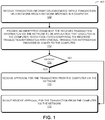
- FIG. 1 presents a flow chart illustrating a method 100 for conducting a transaction via a network, which may be performed by a computer system (such as server 212 in FIG. 2 and/or computer system 400 in FIG. 4 ).
- the computer system receives transaction information associated with the transaction via the network from a network browser (such as a web browser) in a computer (operation 110).
- the computer system provides an encrypted version of the received transaction information via the network to an application that executes in the computer (operation 112), which facilitates comparing the received transaction information with original transaction information provided by a user to the computer.
- the communication with the application via the network is independent of the network browser, and the application is separate from the network browser.
- method 100 may authenticate the transaction independently from the network browser, thereby improving security in the face of threats such as browser-helper-object viruses.
- the network includes the Internet or an intranet.
- the transaction may include a financial transaction, such as: clearing of a negotiable instrument (such as a check) by a clearing house, a wire transfer, and/or a credit-card transaction.
- a financial transaction such as: clearing of a negotiable instrument (such as a check) by a clearing house, a wire transfer, and/or a credit-card transaction.
- the transaction may include a non-financial transaction, such as changing contact information of the user (for example, a phone number, an email address and/or a mailing address).
- the approval for the transaction may be received from the user using the network browser.
- the application may provide an approval code to the user if the user indicates that the received transaction information matches the original transaction information, such as by activating an 'ok' icon that is displayed by the application.
- the approval code is provided to the user via another communication channel, such as via a voice message or a phone call; an email; and/or a text message or, more generally, via a Short Message System communication technique.
- the user may provide the approval code to the computer system, for example, by entering it into a web page displayed by the network browser using a user-interface device, such as a keyboard.
- the received approval for the transaction may be provided by the application to the computer system in response to the user activating an icon (such as the 'ok' icon) display by the application.
- the encrypted version of the received transaction information may be encrypted using an encryption key that is included in an applet that is associated with the transaction.
- an applet that is associated with the transaction.
- the computer system may provide the applet to the user's computer.
- This applet may be a JavaTM-language applet (a trademark of Sun Microsystems, Inc.), i.e., a Java class or program that is downloaded by the network browser in response to HyperText Markup Language ( HTML ) in the web page.
- JavaTM-language applet a trademark of Sun Microsystems, Inc.
- HTML HyperText Markup Language
- the applet may be launched and executed in a Java-runtime environment by a Java virtual machine in conjunction with or separately from the application (which may be a Java application) that was previously installed on and that executes on the computer. Consequently, the application and/or the applet are sometimes referred to as a 'Java Client for Authentication of Transactions' ( JCAT ).
- the applet may be modified intermittently, periodically, or each time a transaction is initiated.
- the name of the applet and the position(s) of the encryption key in the applet may be modified when the user performs one or more transactions using the network browser.
- These modifications of the name and the position(s) may be random or pseudorandom.
- the modifications may include 'newspapering' and/or another technique for obfuscating the location(s) of the encryption key within the applet.
- the encryption key may be included in a contiguous region in the applet.
- information corresponding to the encryption key for the encrypted version of the received transaction information may be provided to the user using a separate communication channel from the network.
- the encryption key and/or the position of the encryption key in a current version of the applet may be provided to the user via: a voice message or a phone call; an email; and/or a text message (or, more generally, via a Short Message System communication technique).
- the intent of the random or pseudorandom modifications is to make it more difficult for a browser-helper-object virus to defeat the transaction authentication in real time, i.e., while the transaction is being performed.
- method 100 there may be additional or fewer operations. Moreover, the order of the operations may be changed and/or two or more operations may be combined into a single operation.
- FIG. 2 presents a block diagram illustrating a computer system 200 that performs method 100 ( FIG.1 ).
- This computer system may provide an alternative communication channel (i.e., an out-of-browser communication channel) to the user for transaction authentication.
- an alternative communication channel i.e., an out-of-browser communication channel
- a wire transfer is used as an illustrative example of the transaction.
- the user of computer 210 may initiate the wire transfer by accessing a uniform resource locator (URL ) associated with a financial institution using a web browser 216 that is resident on and that executes on computer 210.
- a uniform resource locator URL
- the user may access a server 212 (which is associated with the financial institution) via network 214.
- a wire-transfer module 230 in this server may provide a web page (or instructions associated with it) to computer 210 via network 214 for display by web browser 216.
- This web page may be communicated with a Secure Sockets Layer ( SSL ) connection, and may include a Java applet (such as a Java class or program) that includes an embedded encryption key that is generated or selected by applet generator 218.
- SSL Secure Sockets Layer
- Java applet such as a Java class or program
- web browser 216 may execute in combination with one or more browser-helper objects ( BHOs ) 220.
- BHOs browser-helper objects
- the user may request a wire-entry form by activating a 'wire-transfer icon' that is displayed in the web page.
- the web page displayed by web browser 216 may be modified to display the wire-entry form.
- the user may provide data associated with the wire transfer (such as an account 224, the financial institution and a wire-transfer amount 226) to computer 210 using a user-interface device, such as a keyboard. This entered data may be displayed in one or more fields in the wire-entry form in the web page.
- browser-helper-object virus 222 may modify the document object model (DOM ), and thus the POST data, to fraudulent values 228 (which may specify a different account, financial institution and/or wire-transfer amount).
- browser-helper-object virus 222 may modify the values displayed by web browser 216 so that they match the entered data (as opposed to fraudulent values 228). Therefore, in the absence of JCAT, the user may not be able to determine that the data sent to server 212 is fraudulent.
- Wire-transfer module 230 in server 212 may receive the fraudulent values via network 214, and may store them in a data structure 232.
- This data structure may also store the encryption key that was embedded in the applet by applet generator 218.
- the response HTML may include an OBJECT tag for the applet.
- the URL may not reference an extant, static Java ARchive ( JAR ) file with Java classes and associated metadata. Instead, it may reference applet generator 218.
- the applet which may be executed in a Java-runtime environment by a Java virtual machine in conjunction with or separately from Java application 234 that was previously installed (or downloaded) and is resident on computer 210, may request a copy of the data received by server 212.
- application 234 may not be related to web browser 216. Thus, it can be a stand-alone application.
- This data may be provided to the applet by authentication module 236 via network 214, and may be encrypted using the encryption key that was included in the applet.
- server 212 maintains a persistent connection with one or more applications (such as application 234) on user computers (such as computer 210).
- the applet may decrypt the data using the encryption key in the applet. To do so, in some embodiments the applet may first assemble the encryption key in the applet using information provided by server 212. For example, if the encryption key is embedded at a random or pseudorandom position(s) in the applet, the applet may assemble the encryption key using information that is provided by server 212 to the user via an optional device 238 (such as a cellular telephone). In some embodiments, the encryption key may be embedded in the applet using a 'newspapering' technique in which the encryption key is hidden at one or more positions within the applet code, and the user may be provided with information corresponding to these positions (such as a block of text and a list of integers) via optional device 238.
- encryption of the data received by server 212 may use a symmetric encryption key, such as: the triple data encryption standard (3 DES ), the advanced encryption standard ( AES ), the international data encryption algorithm ( IDEA ), etc.
- a symmetric encryption key such as: the triple data encryption standard (3 DES ), the advanced encryption standard ( AES ), the international data encryption algorithm ( IDEA ), etc.
- 3 DES triple data encryption standard
- AES advanced encryption standard
- IDEA international data encryption algorithm
- the applet may display the decrypted data in application 234 (which in this case is fraudulent values 228).
- the user may be requested to confirm that the displayed wire-transfer data in application 234 matches the values displayed in web browser 216. If the user indicates that this is the case (for example, by activating an 'ok' icon), an approval code (for example, a pass code that can be used once) may be displayed by application 234. The user may enter this approval into web browser 216 to authenticate the wire transfer. Then, if the approval code received from web browser 216 by server 212 via network 214 is correct, authentication module 236 may allow the wire transfer to be performed. Alternatively, when the user activates the 'ok' icon, application 234 may provide the approval code to server 212 via network 214.
- JCAT can provide transaction authentication even when computer 210 is infected with browser-helper-object virus 222 using an out-of-browser communication channel to the user. Moreover, in some embodiments this out-of-browser communication channel may not involve additional devices, such as optional device 238. This additional security and convenience may offer increased sales and/or additional revenue for a provider of JCAT (such as the financial institution), as well as reduced costs and/or financial liability.
- the authentication technique may still be affected by other types of viruses, such as a so-called 'root-kit virus' (in the boot sector of a hard-disk drive) that has root-privileges in the operating system on computer 210, it is much harder to develop viruses that affect the operating system (as opposed to web browser 216).
- operating-system viruses tend to be more specific to particular environments (i.e., hardware and software configurations), as opposed to browser viruses (which are more universal). Nonetheless, to address such problems, the preceding authentication technique may be used in conjunction with other security techniques, such as a web-browser firewall.
- further protection may be offered by: storing the applet and/or the entered data on computer 210 (for example, in a cache) for a few transactions in order to improve performance by reducing server 212 overhead; randomly or pseudorandomly changing the font and/or placement of information in a window associated with application 234; randomly or pseudorandomly changing the location of the window on a display in computer 210; and/or only providing a portion of the encryption key explicitly to the user ( e.g., there may be a public portion of the encryption key and a private portion).
- prior to performing the wire transfer application 234 may establish an SSL connection with server 212, and may receive an association code.
- the user can enter this association code into web browser 216.
- This association code may be maintained in the session data, and therefore may be used to associate application 234 with a web-browser session.
- the web page used to conduct the wire transfer may be associated with a financial-software application. At least a portion of this financial-software application may be a stand-alone application that is resident on and which executes on computer 210. In some embodiments, at least a portion of the financial-software application may be a software application tool (such as a financial-software application tool) that is embedded in the web page (and which executes in a virtual environment of web browser 216).
- a software application tool such as a financial-software application tool
- the software-application tool is a software package written in: JavaScriptTM (a trademark of Sun Microsystems, Inc.), e.g., the software-application tool includes programs or procedures containing JavaScript instructions, ECMAScript (the specification for which is published by the European Computer Manufacturers Association International), VBScriptTM (a trademark of Microsoft, Inc.) or any other client-side scripting language.
- the embedded software-application tool may include programs or procedures containing: JavaScript, ECMAScript instructions, VBScript instructions, or instructions in another programming language suitable for rendering by web browser 216 or another client application (such as on computer 210).
- the financial-software application may be provided to the user via a client-server architecture.
- data structure 232 is illustrated in server 212, in other embodiments the information in data structure 232 may be stored at one or more locations in computer system 200 (i.e., locally or remotely).
- FIG. 3 presents a block diagram illustrating a user interface 300 associated with application 234 ( FIG. 2 ).
- This user interface may include a communicator-like window 310.
- Authentication module 236 may provide content (such as data associated with a wire transfer that was received by server 212 in FIG. 2 ) to window 310 without any explicit user action.
- account 312, financial institution ( FI ) 314 and wire-transfer amount 316 associated with the wire transfer may be displayed in window 310. If the user indicates that this information matches the original information provided by the user to web browser 216 ( FIG. 2 ), for example, by activating 'ok' icon 318, an optional approval code 320 may be displayed in window 310.
- the user may enter this optional approval code into web browser 216 ( FIG. 2 ), thereby authenticating the wire transfer.
- the user may activate a 'fraud' icon 322 to report to server 212 ( FIG. 2 ) that account 312, financial institution 314 and/or wire-transfer amount 316 do not match the original information provided by the user to web browser 216 ( FIG. 2 ).
- the wire transfer may be cancelled, and the user may be prompted to call the financial institution.
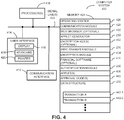
- FIG. 4 presents a block diagram illustrating a computer system 400 that performs method 100 ( FIG.1 ), such as server 212 ( FIG. 2 ).
- Computer system 400 includes one or more processors 410, a communication interface 412, a user interface 414, and one or more signal lines 422 coupling these components together.
- the one or more processing units 410 may support parallel processing and/or multi-threaded operation
- the communication interface 412 may have a persistent communication connection
- the one or more signal lines 422 may constitute a communication bus.
- the user interface 414 may include: a display 416, a keyboard 418, and/or a pointer 420, such as a mouse.
- Memory 424 in the computer system 400 may include volatile memory and/or non-volatile memory. More specifically, memory 424 may include: ROM, RAM, EPROM, EEPROM, flash memory, one or more smart cards, one or more magnetic disc storage devices, and/or one or more optical storage devices. Memory 424 may store an operating system 426 that includes procedures (or a set of instructions) for handling various basic system services for performing hardware-dependent tasks. Memory 424 may also store procedures (or a set of instructions) in a communication module 428. These communication procedures may be used for communicating with one or more computers and/or servers, including computers and/or servers that are remotely located with respect to the computer system 400. In addition, memory 424 may include an optional web browser 430, which can be downloaded by the user.
- Memory 424 may also include multiple program modules (or sets of instructions), including: applet generator 218 (or a set of instructions), wire-transfer module 230 (or a set of instructions), encryption module 434 (or a set of instructions), optional financial software 436 (or a set of instructions) and/or authentication module 236 (or a set of instructions). Note that one or more of these program modules (or sets of instructions) may constitute a computer-program mechanism.
- wire-transfer module 230 may provide the web page that includes the wire-transfer form.
- This web page may also include one of applets 438 that is generated by applet generator 218.
- the applet may include an encryption key that is dynamically generated by encryption module 434 or that is selected by applet generator 218 from optional predetermined encryption keys 432.
- wire-transfer module 230 may receive data or information associated with the wire transfer from the user via communication module 428. This information may be stored in data structure 232, such as information for transaction A 442-1 or information for transaction B 442-2. As noted previously, data structure 232 may also store the encryption key that was included or embedded in the applet.
- authentication module 236 may receive a request from the applet executing in the Java-runtime environment by the Java virtual machine in conjunction with or separately from the Java application on the user's computer for an encrypted copy of the received information. This information may be encrypted using the encryption key by encryption module 434, and provided to the user's computer by authentication module 236 using communication module 428.
- the user may compare the received information with the original information provided by the user when the user filled in the wire-transfer form in the web page. If the received information matches the original information, the user may activate an 'ok' icon that is displayed by the application.
- encryption module 434 may encrypt one of approval codes 440 and provide it to the application via communication module 428. (Alternatively, one of approval codes 440 may be included in the applet when it is first provided to the user's computer.) Then, the user may provide this approval code to authentication module 236 by entering it into the web page, or the application executing on the user's computer may provide the approval code to authentication module 236 using communication module 428, either of which may authenticate the wire transfer. In response, authentication module 236 may allow the wire transfer to be performed by wire-transfer module 230.
- Instructions in the various modules in the memory 424 may be implemented in: a high-level procedural language, an object-oriented programming language, and/or in an assembly or machine language. Note that the programming language may be compiled or interpreted, e.g., configurable or configured, to be executed by the one or more processing units 410.
- FIG. 4 is intended to be a functional description of the various features that may be present in the computer system 400 rather than a structural schematic of the embodiments described herein.
- the functions of the computer system 400 may be distributed over a large number of servers or computers, with various groups of the servers or computers performing particular subsets of the functions.
- some or all of the functionality of the computer system 400 may be implemented in one or more application-specific integrated circuits ( ASICs ) and/or one or more digital signal processors ( DSPs ) .
- ASICs application-specific integrated circuits
- DSPs digital signal processors
- Computers and servers in computer systems 200 ( FIG. 2 ) and/or 400 may include one of a variety of devices capable of manipulating computer-readable data or communicating such data between two or more computing systems over a network, including: a personal computer, a laptop computer, a mainframe computer, a portable electronic device (such as a cellular phone or PDA ), a server and/or a client computer (in a client-server architecture).
- network 214 FIG. 2
- the web page is associated with a financial-software application (i.e., optional financial software 436).
- This financial-software application may include: QuickenTM and/or TurboTaxTM (from Intuit, Inc., of Mountain View, California), Microsoft MoneyTM (from Microsoft Corporation, of Redmond, Washington), SplashMoneyTM (from SplashData, Inc., of Los Gatos, CA), MvelopesTM (from In2M, Inc., of Draper, Utah), and/or open-source applications such as GnucashTM, PLCashTM, BudgetTM (from Snowmint Creative Solutions, LLC, of St. Paul, Minnesota), and/or other planning software capable of processing financial information.
- QuickenTM and/or TurboTaxTM from Intuit, Inc., of Mountain View, California
- Microsoft MoneyTM from Microsoft Corporation, of Redmond, Washington
- SplashMoneyTM from SplashData, Inc., of Los Gatos, CA
- MvelopesTM from In2M, Inc., of Draper
- the financial-software application may include software such as: QuickBooksTM (from Intuit, Inc., of Mountain View, California), PeachtreeTM (from The Sage Group PLC, of Newcastle Upon Tyne, the United Kingdom), Peachtree CompleteTM (from The Sage Group PLC, of Newcastle Upon Tyne, the United Kingdom), MYOB Business EssentialsTM (from MYOB US, Inc., of Rockaway, New Jersey), NetSuite Small Business AccountingTM (from NetSuite, Inc., of San Mateo, California), Cougar MountainTM (from Cougar Mountain Software, of Boise, Idaho), Microsoft Office AccountingTM (from Microsoft Corporation, of Redmond, Washington), Simply AccountingTM (from The Sage Group PLC, of Newcastle Upon Tyne, the United Kingdom), CYMA IV AccountingTM (from CYMA Systems, Inc., of Tempe, Arizona), DacEasyTM (from Sage Software SB, Inc., of Lawrenceville, Georgia), Microsoft MoneyTM (from Microsoft Corporation, of Redmond, Washington), Tally.ERP (from Tally Solutions, Ltd
- Computer systems 200 ( FIG. 2 ) and/or 400 may include fewer components or additional components.
- transaction authentication in computer system 200 ( FIG. 2 ) may involve: an applet by itself (which is executed by a Java Virtual Machine), application 234 ( FIG. 2 ) by itself, or the applet in conjunction with application 234 ( FIG. 2 ).
- two or more components may be combined into a single component, and/or a position of one or more components may be changed.
- the functionality of the computer systems 200 ( FIG. 2 ) and/or 400 may be implemented more in hardware and less in software, or less in hardware and more in software, as is known in the art.
- FIG. 5 presents a block diagram illustrating a data structure 500 for use in computer system 400 ( FIG. 4 ).
- This data structure may include information for financial transactions 510.
- information for financial transaction 510-1 may include: user 512-1, encryption key 514-1, approval code 516-1, one or more accounts 518-1, one or more amounts 520-1 and/or one or more associated financial institutions 522-1.
- data structure 500 there may be fewer or additional components. Moreover, two or more components may be combined into a single component and/or a position of one or more components may be changed.
Landscapes
- Engineering & Computer Science (AREA)
- Business, Economics & Management (AREA)
- Accounting & Taxation (AREA)
- Computer Security & Cryptography (AREA)
- Finance (AREA)
- Theoretical Computer Science (AREA)
- General Business, Economics & Management (AREA)
- General Physics & Mathematics (AREA)
- Strategic Management (AREA)
- Physics & Mathematics (AREA)
- Signal Processing (AREA)
- Computer Networks & Wireless Communication (AREA)
- Computer Hardware Design (AREA)
- General Engineering & Computer Science (AREA)
- Computing Systems (AREA)
- Economics (AREA)
- Development Economics (AREA)
- Virology (AREA)
- General Health & Medical Sciences (AREA)
- Health & Medical Sciences (AREA)
- Information Transfer Between Computers (AREA)
- Financial Or Insurance-Related Operations Such As Payment And Settlement (AREA)
Claims (14)
- Computerimplementiertes Verfahren zum Durchführen einer Transaktion über ein Netzwerk (214), umfassend einen Client-Computer undeinen Server (212), der Transaktionsinformationen, die mit der Transaktion assoziiert sind, über das Netzwerk von einem Netzwerkbrowser (216) in einem Client-Computer (210) empfängt, wobei der Browser zusammen mit einem oder mehreren Browserhilfsobjekten (220) ausgeführt wird;wobei der Server in Reaktion auf den Empfang der Transaktionsinformationen eine verschlüsselte Version der empfangenen Transaktionsinformationen über das Netzwerk für eine Anwendung (234) bereitstellt, die im Client-Computer ausgeführt wird, was ein Vergleichen der empfangenen Transaktionsinformationen am Client-Computer nach Entschlüsselung aus der verschlüsselten Version mit ursprünglichen Transaktionsinformationen ermöglicht, die von einem Benutzer für den Computer bereitgestellt werden, wobei Kommunikation mit der Anwendung über das Netzwerk vom Netzwerkbrowser unabhängig ist, und wobei die Anwendung vom Netzwerkbrowser getrennt ist;der Server, wenn die empfangenen Transaktionsinformationen mit den ursprünglichen Transaktionsinformationen übereinstimmen, einen Genehmigungscode für die Transaktion vom Netzwerkbrowser im Client-Computer über das Netzwerk empfängt; undder Server in Reaktion auf den Empfang des Genehmigungscodes die Transaktion durchführt.
- Verfahren nach Anspruch 1, wobei das Netzwerk das Internet oder ein Intranet umfasst.
- Verfahren gemäß Anspruch 1, wobei die Transaktion eine nicht finanzielle Transaktion umfasst.
- Verfahren nach Anspruch 3, wobei die nicht finanzielle Transaktion ein Ändern von Kontaktinformationen des Benutzers umfasst.
- Verfahren gemäß Anspruch 4, wobei der Genehmigungscode durch die Anwendung für den Benutzer bereitgestellt wird.
- Verfahren gemäß Anspruch 4, wobei der Genehmigungscode über eine Textnachricht, eine Sprachnachricht oder eine E-Mail für den Benutzer bereitgestellt wird.
- Verfahren nach Anspruch 1, wobei die verschlüsselte Version der empfangenen Transaktionsinformationen unter Verwendung eines Verschlüsselungsschlüssels verschlüsselt ist, der in einem Applet umfasst ist, das mit der Transaktion assoziiert ist.
- Verfahren nach Anspruch 7, wobei ein Name des Applets und eine Position des Verschlüsselungsschlüssels im Applet modifiziert werden, wenn der Benutzer eine oder mehrere Transaktionen unter Verwendung des Netzwerkbrowsers durchführt.
- Verfahren nach Anspruch 8, wobei das Modifizieren zufällig oder pseudozufällig ist.
- Verfahren nach Anspruch 1, wobei Informationen, die einem Verschlüsselungsschlüssel für die verschlüsselte Version der empfangenen Transaktionsinformationen entsprechen, unter Verwendung eines separaten Kommunikationskanals vom Netzwerk für den Benutzer bereitgestellt werden.
- Verfahren nach Anspruch 1, wobei Kommunikationen zwischen dem Server und dem Client-Computer unter Verwendung eines sicheren Kommunikationskanals durchgeführt werden.
- Computerprogramm zur Verwendung in Verbindung mit einem Computersystem zum Durchführen einer Transaktion über ein Netzwerk, wobei das Computerprogramm Anweisungen zum Durchführen des Verfahrens nach einem der vorhergehenden Ansprüche umfasst.
- Computerprogrammprodukt, umfassend ein computerlesbares Speichermedium, welches das Computerprogramm nach Anspruch 12 speichert.
- Computersystem, umfassend einen Server (212), wobei der Server aufweist:einen Prozessor;Speicher; undein Programmmodul, wobei das Programmmodul im Speicher gespeichert ist und konfiguriert werden kann, um vom Prozessor ausgeführt zu werden, wobei das Programmmodul umfasst:Anweisungen zum Empfangen von Transaktionsinformationen, die mit der Transaktion assoziiert sind, über das Netzwerk von einem Netzwerkbrowser (216) in einem Client-Computer (210), wobei der Browser zusammen mit einem oder mehreren Browserhilfsobjekten (220) ausgeführt wird;Anweisungen zum Bereitstellen in Reaktion auf den Empfang der Transaktionsinformationen einer verschlüsselten Version der empfangenen Transaktionsinformationen über das Netzwerk für eine Anwendung (234), die im Computer ausgeführt wird, was ein Vergleichen der empfangenen Transaktionsinformationen am Client-Computer nach Entschlüsselung der verschlüsselten Version mit ursprünglichen Transaktionsinformationen ermöglicht, die von einem Benutzer für den Computer bereitgestellt werden, wobei Kommunikation mit der Anwendung über das Netzwerk vom Netzwerkbrowser unabhängig ist, und wobei die Anwendung vom Netzwerkbrowser getrennt ist;Anweisungen zum Empfangen eines Genehmigungscode für die Transaktion vom Netzwerkbrowser im Client-Computer über das Netzwerk, wenn die empfangenen Transaktionsinformationen mit den ursprünglichen Transaktionsinformationen übereinstimmen; undAnweisungen zum Durchführen der Transaktion in Reaktion auf den Empfang des Genehmigungscodes.
Applications Claiming Priority (2)
| Application Number | Priority Date | Filing Date | Title |
|---|---|---|---|
| US12/684,634 US10535044B2 (en) | 2010-01-08 | 2010-01-08 | Authentication of transactions in a network |
| PCT/US2010/061829 WO2011084832A2 (en) | 2010-01-08 | 2010-12-22 | Authentication of transactions in a network |
Publications (3)
| Publication Number | Publication Date |
|---|---|
| EP2521994A2 EP2521994A2 (de) | 2012-11-14 |
| EP2521994A4 EP2521994A4 (de) | 2014-06-18 |
| EP2521994B1 true EP2521994B1 (de) | 2021-09-01 |
Family
ID=44259277
Family Applications (1)
| Application Number | Title | Priority Date | Filing Date |
|---|---|---|---|
| EP10842743.6A Active EP2521994B1 (de) | 2010-01-08 | 2010-12-22 | Authentifizierung von transaktionen in einem netzwerk |
Country Status (5)
| Country | Link |
|---|---|
| US (1) | US10535044B2 (de) |
| EP (1) | EP2521994B1 (de) |
| CN (1) | CN102763129A (de) |
| BR (1) | BR112012019058A2 (de) |
| WO (1) | WO2011084832A2 (de) |
Families Citing this family (4)
| Publication number | Priority date | Publication date | Assignee | Title |
|---|---|---|---|---|
| GB2513494B (en) * | 2012-08-23 | 2015-07-29 | Vzinternet Ltd | Data verification |
| CN104765999B (zh) * | 2014-01-07 | 2020-06-30 | 腾讯科技(深圳)有限公司 | 一种对用户资源信息进行处理的方法、终端及服务器 |
| EP3259876B1 (de) * | 2015-02-17 | 2020-08-12 | Visa International Service Association | Token und kryptogramm mit verwendung von transaktionsspezifischen informationen |
| US10861019B2 (en) * | 2016-03-18 | 2020-12-08 | Visa International Service Association | Location verification during dynamic data transactions |
Family Cites Families (20)
| Publication number | Priority date | Publication date | Assignee | Title |
|---|---|---|---|---|
| US6098053A (en) * | 1998-01-28 | 2000-08-01 | Citibank, N.A. | System and method for performing an electronic financial transaction |
| US7039809B1 (en) * | 1998-11-12 | 2006-05-02 | Mastercard International Incorporated | Asymmetric encrypted pin |
| KR100933387B1 (ko) * | 2000-04-24 | 2009-12-22 | 비자 인터내셔날 써비스 어쏘시에이션 | 온라인 지불인 인증 서비스 |
| WO2002007110A2 (en) * | 2000-07-17 | 2002-01-24 | Connell Richard O | System and methods of validating an authorized user of a payment card and authorization of a payment card transaction |
| JP2002082910A (ja) | 2000-09-08 | 2002-03-22 | Pioneer Electronic Corp | ユーザ認証システム及びユーザ認証方法 |
| US8521643B2 (en) * | 2000-10-13 | 2013-08-27 | William H. Wisecarver, III | System and method for on-line payment transactions |
| US6931382B2 (en) * | 2001-01-24 | 2005-08-16 | Cdck Corporation | Payment instrument authorization technique |
| US7451917B2 (en) * | 2002-01-11 | 2008-11-18 | Hand Held Products, Inc. | Transaction terminal comprising imaging module |
| US7890393B2 (en) * | 2002-02-07 | 2011-02-15 | Ebay, Inc. | Method and system for completing a transaction between a customer and a merchant |
| US7818657B1 (en) * | 2002-04-01 | 2010-10-19 | Fannie Mae | Electronic document for mortgage transactions |
| US7392534B2 (en) * | 2003-09-29 | 2008-06-24 | Gemalto, Inc | System and method for preventing identity theft using a secure computing device |
| KR100930457B1 (ko) | 2004-08-25 | 2009-12-08 | 에스케이 텔레콤주식회사 | 이동통신단말을 이용한 인증 및 결제 시스템과 방법 |
| US7331518B2 (en) * | 2006-04-04 | 2008-02-19 | Factortrust, Inc. | Transaction processing systems and methods |
| US9324076B2 (en) * | 2006-06-02 | 2016-04-26 | First Data Corporation | PIN creation system and method |
| US20080027874A1 (en) * | 2006-07-26 | 2008-01-31 | Monseignat Bernard De | System and method for facilitating secure transactions over communication networks |
| US9177314B2 (en) * | 2006-08-14 | 2015-11-03 | Chijioke Chukwuemeka UZO | Method of making secure electronic payments using communications devices and biometric data |
| US9123042B2 (en) * | 2006-10-17 | 2015-09-01 | Verifone, Inc. | Pin block replacement |
| US7841523B2 (en) * | 2007-05-17 | 2010-11-30 | Shift4 Corporation | Secure payment card transactions |
| US20090106138A1 (en) * | 2007-10-22 | 2009-04-23 | Smith Steven E | Transaction authentication over independent network |
| US8799666B2 (en) * | 2009-10-06 | 2014-08-05 | Synaptics Incorporated | Secure user authentication using biometric information |
-
2010
- 2010-01-08 US US12/684,634 patent/US10535044B2/en active Active
- 2010-12-22 WO PCT/US2010/061829 patent/WO2011084832A2/en not_active Ceased
- 2010-12-22 EP EP10842743.6A patent/EP2521994B1/de active Active
- 2010-12-22 CN CN2010800640012A patent/CN102763129A/zh active Pending
- 2010-12-22 BR BR112012019058A patent/BR112012019058A2/pt not_active IP Right Cessation
Also Published As
| Publication number | Publication date |
|---|---|
| EP2521994A2 (de) | 2012-11-14 |
| WO2011084832A3 (en) | 2011-09-22 |
| US20110173124A1 (en) | 2011-07-14 |
| WO2011084832A2 (en) | 2011-07-14 |
| US10535044B2 (en) | 2020-01-14 |
| BR112012019058A2 (pt) | 2018-03-27 |
| EP2521994A4 (de) | 2014-06-18 |
| CN102763129A (zh) | 2012-10-31 |
Similar Documents
| Publication | Publication Date | Title |
|---|---|---|
| US12106300B2 (en) | Secure in-line payments | |
| US8312520B2 (en) | Methods and systems to detect attacks on internet transactions | |
| US9426134B2 (en) | Method and systems for the authentication of a user | |
| US20090006232A1 (en) | Secure computer and internet transaction software and hardware and uses thereof | |
| US20160248737A1 (en) | Methods and systems for filtering encrypted traffic | |
| US8577811B2 (en) | In-band transaction verification | |
| US20080184358A1 (en) | Ensuring trusted transactions with compromised customer machines | |
| JP2020522806A (ja) | セキュアなインラインフレームを使用したオンライン支払い処理のシステムおよび方法 | |
| Tygar et al. | WWW electronic commerce and Java Trojan horses | |
| US20070061734A1 (en) | Method for establishing trust online | |
| US20140172721A1 (en) | Method for Securing a Transaction | |
| US20090220075A1 (en) | Multifactor authentication system and methodology | |
| US9208489B2 (en) | System for secure web-prompt processing on point sale devices | |
| US10535044B2 (en) | Authentication of transactions in a network | |
| WO2010031142A1 (en) | Method and system for user authentication | |
| CN103065085A (zh) | 用于实现安全usb应用设备的系统和方法 | |
| AU2015231830A1 (en) | Persistent bookmarklet authorization | |
| KR101006720B1 (ko) | 웹 페이지에서의 비밀번호 보안방법 및 이를 실행하기 위한프로그램을 기록한 컴퓨터로 읽을 수 있는 기록매체 | |
| Peng et al. | Secure online banking on untrusted computers | |
| Nentwich et al. | Practical security aspects of digital signature systems | |
| Li et al. | A secure user interface for web applications running under an untrusted operating system | |
| AU2013100799A4 (en) | Secure in-line payments for rich internet applications | |
| Mohatar et al. | New directions in online fraud | |
| Voice | Online authentication: matching security levels to the risk | |
| Minnaar | The growing use of malware, malvertising and ransomware by cybercriminals |
Legal Events
| Date | Code | Title | Description |
|---|---|---|---|
| PUAI | Public reference made under article 153(3) epc to a published international application that has entered the european phase |
Free format text: ORIGINAL CODE: 0009012 |
|
| 17P | Request for examination filed |
Effective date: 20120706 |
|
| AK | Designated contracting states |
Kind code of ref document: A2 Designated state(s): AL AT BE BG CH CY CZ DE DK EE ES FI FR GB GR HR HU IE IS IT LI LT LU LV MC MK MT NL NO PL PT RO RS SE SI SK SM TR |
|
| DAX | Request for extension of the european patent (deleted) | ||
| A4 | Supplementary search report drawn up and despatched |
Effective date: 20140521 |
|
| RIC1 | Information provided on ipc code assigned before grant |
Ipc: G06Q 20/00 20120101AFI20140515BHEP Ipc: G06F 21/60 20130101ALI20140515BHEP |
|
| STAA | Information on the status of an ep patent application or granted ep patent |
Free format text: STATUS: EXAMINATION IS IN PROGRESS |
|
| 17Q | First examination report despatched |
Effective date: 20170711 |
|
| REG | Reference to a national code |
Ref country code: DE Ref legal event code: R079 Ref document number: 602010067530 Country of ref document: DE Free format text: PREVIOUS MAIN CLASS: G06Q0020000000 Ipc: G06F0021600000 |
|
| RIC1 | Information provided on ipc code assigned before grant |
Ipc: G06F 21/60 20130101AFI20190731BHEP Ipc: G06Q 20/38 20120101ALI20190731BHEP Ipc: H04L 29/06 20060101ALI20190731BHEP Ipc: H04L 29/08 20060101ALI20190731BHEP Ipc: G06Q 20/40 20120101ALI20190731BHEP |
|
| GRAP | Despatch of communication of intention to grant a patent |
Free format text: ORIGINAL CODE: EPIDOSNIGR1 |
|
| STAA | Information on the status of an ep patent application or granted ep patent |
Free format text: STATUS: GRANT OF PATENT IS INTENDED |
|
| INTG | Intention to grant announced |
Effective date: 20190906 |
|
| RIN1 | Information on inventor provided before grant (corrected) |
Inventor name: FELDMAN, MARC |
|
| GRAS | Grant fee paid |
Free format text: ORIGINAL CODE: EPIDOSNIGR3 |
|
| GRAJ | Information related to disapproval of communication of intention to grant by the applicant or resumption of examination proceedings by the epo deleted |
Free format text: ORIGINAL CODE: EPIDOSDIGR1 |
|
| GRAL | Information related to payment of fee for publishing/printing deleted |
Free format text: ORIGINAL CODE: EPIDOSDIGR3 |
|
| STAA | Information on the status of an ep patent application or granted ep patent |
Free format text: STATUS: EXAMINATION IS IN PROGRESS |
|
| INTC | Intention to grant announced (deleted) | ||
| GRAP | Despatch of communication of intention to grant a patent |
Free format text: ORIGINAL CODE: EPIDOSNIGR1 |
|
| STAA | Information on the status of an ep patent application or granted ep patent |
Free format text: STATUS: GRANT OF PATENT IS INTENDED |
|
| INTG | Intention to grant announced |
Effective date: 20210325 |
|
| GRAS | Grant fee paid |
Free format text: ORIGINAL CODE: EPIDOSNIGR3 |
|
| GRAA | (expected) grant |
Free format text: ORIGINAL CODE: 0009210 |
|
| STAA | Information on the status of an ep patent application or granted ep patent |
Free format text: STATUS: THE PATENT HAS BEEN GRANTED |
|
| AK | Designated contracting states |
Kind code of ref document: B1 Designated state(s): AL AT BE BG CH CY CZ DE DK EE ES FI FR GB GR HR HU IE IS IT LI LT LU LV MC MK MT NL NO PL PT RO RS SE SI SK SM TR |
|
| REG | Reference to a national code |
Ref country code: GB Ref legal event code: FG4D |
|
| REG | Reference to a national code |
Ref country code: CH Ref legal event code: EP Ref country code: AT Ref legal event code: REF Ref document number: 1426977 Country of ref document: AT Kind code of ref document: T Effective date: 20210915 |
|
| REG | Reference to a national code |
Ref country code: DE Ref legal event code: R096 Ref document number: 602010067530 Country of ref document: DE |
|
| REG | Reference to a national code |
Ref country code: IE Ref legal event code: FG4D |
|
| REG | Reference to a national code |
Ref country code: LT Ref legal event code: MG9D |
|
| REG | Reference to a national code |
Ref country code: NL Ref legal event code: MP Effective date: 20210901 |
|
| PG25 | Lapsed in a contracting state [announced via postgrant information from national office to epo] |
Ref country code: HR Free format text: LAPSE BECAUSE OF FAILURE TO SUBMIT A TRANSLATION OF THE DESCRIPTION OR TO PAY THE FEE WITHIN THE PRESCRIBED TIME-LIMIT Effective date: 20210901 Ref country code: SE Free format text: LAPSE BECAUSE OF FAILURE TO SUBMIT A TRANSLATION OF THE DESCRIPTION OR TO PAY THE FEE WITHIN THE PRESCRIBED TIME-LIMIT Effective date: 20210901 Ref country code: BG Free format text: LAPSE BECAUSE OF FAILURE TO SUBMIT A TRANSLATION OF THE DESCRIPTION OR TO PAY THE FEE WITHIN THE PRESCRIBED TIME-LIMIT Effective date: 20211201 Ref country code: LT Free format text: LAPSE BECAUSE OF FAILURE TO SUBMIT A TRANSLATION OF THE DESCRIPTION OR TO PAY THE FEE WITHIN THE PRESCRIBED TIME-LIMIT Effective date: 20210901 Ref country code: RS Free format text: LAPSE BECAUSE OF FAILURE TO SUBMIT A TRANSLATION OF THE DESCRIPTION OR TO PAY THE FEE WITHIN THE PRESCRIBED TIME-LIMIT Effective date: 20210901 Ref country code: NO Free format text: LAPSE BECAUSE OF FAILURE TO SUBMIT A TRANSLATION OF THE DESCRIPTION OR TO PAY THE FEE WITHIN THE PRESCRIBED TIME-LIMIT Effective date: 20211201 Ref country code: ES Free format text: LAPSE BECAUSE OF FAILURE TO SUBMIT A TRANSLATION OF THE DESCRIPTION OR TO PAY THE FEE WITHIN THE PRESCRIBED TIME-LIMIT Effective date: 20210901 Ref country code: FI Free format text: LAPSE BECAUSE OF FAILURE TO SUBMIT A TRANSLATION OF THE DESCRIPTION OR TO PAY THE FEE WITHIN THE PRESCRIBED TIME-LIMIT Effective date: 20210901 |
|
| REG | Reference to a national code |
Ref country code: AT Ref legal event code: MK05 Ref document number: 1426977 Country of ref document: AT Kind code of ref document: T Effective date: 20210901 |
|
| PG25 | Lapsed in a contracting state [announced via postgrant information from national office to epo] |
Ref country code: PL Free format text: LAPSE BECAUSE OF FAILURE TO SUBMIT A TRANSLATION OF THE DESCRIPTION OR TO PAY THE FEE WITHIN THE PRESCRIBED TIME-LIMIT Effective date: 20210901 Ref country code: LV Free format text: LAPSE BECAUSE OF FAILURE TO SUBMIT A TRANSLATION OF THE DESCRIPTION OR TO PAY THE FEE WITHIN THE PRESCRIBED TIME-LIMIT Effective date: 20210901 Ref country code: GR Free format text: LAPSE BECAUSE OF FAILURE TO SUBMIT A TRANSLATION OF THE DESCRIPTION OR TO PAY THE FEE WITHIN THE PRESCRIBED TIME-LIMIT Effective date: 20211202 |
|
| PG25 | Lapsed in a contracting state [announced via postgrant information from national office to epo] |
Ref country code: AT Free format text: LAPSE BECAUSE OF FAILURE TO SUBMIT A TRANSLATION OF THE DESCRIPTION OR TO PAY THE FEE WITHIN THE PRESCRIBED TIME-LIMIT Effective date: 20210901 |
|
| PG25 | Lapsed in a contracting state [announced via postgrant information from national office to epo] |
Ref country code: IS Free format text: LAPSE BECAUSE OF FAILURE TO SUBMIT A TRANSLATION OF THE DESCRIPTION OR TO PAY THE FEE WITHIN THE PRESCRIBED TIME-LIMIT Effective date: 20220101 Ref country code: SM Free format text: LAPSE BECAUSE OF FAILURE TO SUBMIT A TRANSLATION OF THE DESCRIPTION OR TO PAY THE FEE WITHIN THE PRESCRIBED TIME-LIMIT Effective date: 20210901 Ref country code: SK Free format text: LAPSE BECAUSE OF FAILURE TO SUBMIT A TRANSLATION OF THE DESCRIPTION OR TO PAY THE FEE WITHIN THE PRESCRIBED TIME-LIMIT Effective date: 20210901 Ref country code: RO Free format text: LAPSE BECAUSE OF FAILURE TO SUBMIT A TRANSLATION OF THE DESCRIPTION OR TO PAY THE FEE WITHIN THE PRESCRIBED TIME-LIMIT Effective date: 20210901 Ref country code: PT Free format text: LAPSE BECAUSE OF FAILURE TO SUBMIT A TRANSLATION OF THE DESCRIPTION OR TO PAY THE FEE WITHIN THE PRESCRIBED TIME-LIMIT Effective date: 20220103 Ref country code: NL Free format text: LAPSE BECAUSE OF FAILURE TO SUBMIT A TRANSLATION OF THE DESCRIPTION OR TO PAY THE FEE WITHIN THE PRESCRIBED TIME-LIMIT Effective date: 20210901 Ref country code: EE Free format text: LAPSE BECAUSE OF FAILURE TO SUBMIT A TRANSLATION OF THE DESCRIPTION OR TO PAY THE FEE WITHIN THE PRESCRIBED TIME-LIMIT Effective date: 20210901 Ref country code: CZ Free format text: LAPSE BECAUSE OF FAILURE TO SUBMIT A TRANSLATION OF THE DESCRIPTION OR TO PAY THE FEE WITHIN THE PRESCRIBED TIME-LIMIT Effective date: 20210901 Ref country code: AL Free format text: LAPSE BECAUSE OF FAILURE TO SUBMIT A TRANSLATION OF THE DESCRIPTION OR TO PAY THE FEE WITHIN THE PRESCRIBED TIME-LIMIT Effective date: 20210901 |
|
| REG | Reference to a national code |
Ref country code: DE Ref legal event code: R097 Ref document number: 602010067530 Country of ref document: DE |
|
| PLBE | No opposition filed within time limit |
Free format text: ORIGINAL CODE: 0009261 |
|
| STAA | Information on the status of an ep patent application or granted ep patent |
Free format text: STATUS: NO OPPOSITION FILED WITHIN TIME LIMIT |
|
| PG25 | Lapsed in a contracting state [announced via postgrant information from national office to epo] |
Ref country code: MC Free format text: LAPSE BECAUSE OF FAILURE TO SUBMIT A TRANSLATION OF THE DESCRIPTION OR TO PAY THE FEE WITHIN THE PRESCRIBED TIME-LIMIT Effective date: 20210901 Ref country code: IT Free format text: LAPSE BECAUSE OF FAILURE TO SUBMIT A TRANSLATION OF THE DESCRIPTION OR TO PAY THE FEE WITHIN THE PRESCRIBED TIME-LIMIT Effective date: 20210901 Ref country code: DK Free format text: LAPSE BECAUSE OF FAILURE TO SUBMIT A TRANSLATION OF THE DESCRIPTION OR TO PAY THE FEE WITHIN THE PRESCRIBED TIME-LIMIT Effective date: 20210901 |
|
| REG | Reference to a national code |
Ref country code: CH Ref legal event code: PL |
|
| 26N | No opposition filed |
Effective date: 20220602 |
|
| PG25 | Lapsed in a contracting state [announced via postgrant information from national office to epo] |
Ref country code: SI Free format text: LAPSE BECAUSE OF FAILURE TO SUBMIT A TRANSLATION OF THE DESCRIPTION OR TO PAY THE FEE WITHIN THE PRESCRIBED TIME-LIMIT Effective date: 20210901 |
|
| REG | Reference to a national code |
Ref country code: BE Ref legal event code: MM Effective date: 20211231 |
|
| PG25 | Lapsed in a contracting state [announced via postgrant information from national office to epo] |
Ref country code: LU Free format text: LAPSE BECAUSE OF NON-PAYMENT OF DUE FEES Effective date: 20211222 Ref country code: IE Free format text: LAPSE BECAUSE OF NON-PAYMENT OF DUE FEES Effective date: 20211222 |
|
| PG25 | Lapsed in a contracting state [announced via postgrant information from national office to epo] |
Ref country code: BE Free format text: LAPSE BECAUSE OF NON-PAYMENT OF DUE FEES Effective date: 20211231 |
|
| PG25 | Lapsed in a contracting state [announced via postgrant information from national office to epo] |
Ref country code: LI Free format text: LAPSE BECAUSE OF NON-PAYMENT OF DUE FEES Effective date: 20211231 Ref country code: CH Free format text: LAPSE BECAUSE OF NON-PAYMENT OF DUE FEES Effective date: 20211231 |
|
| PG25 | Lapsed in a contracting state [announced via postgrant information from national office to epo] |
Ref country code: HU Free format text: LAPSE BECAUSE OF FAILURE TO SUBMIT A TRANSLATION OF THE DESCRIPTION OR TO PAY THE FEE WITHIN THE PRESCRIBED TIME-LIMIT; INVALID AB INITIO Effective date: 20101222 Ref country code: CY Free format text: LAPSE BECAUSE OF FAILURE TO SUBMIT A TRANSLATION OF THE DESCRIPTION OR TO PAY THE FEE WITHIN THE PRESCRIBED TIME-LIMIT Effective date: 20210901 |
|
| P01 | Opt-out of the competence of the unified patent court (upc) registered |
Effective date: 20230522 |
|
| PG25 | Lapsed in a contracting state [announced via postgrant information from national office to epo] |
Ref country code: MK Free format text: LAPSE BECAUSE OF FAILURE TO SUBMIT A TRANSLATION OF THE DESCRIPTION OR TO PAY THE FEE WITHIN THE PRESCRIBED TIME-LIMIT Effective date: 20210901 |
|
| PG25 | Lapsed in a contracting state [announced via postgrant information from national office to epo] |
Ref country code: TR Free format text: LAPSE BECAUSE OF FAILURE TO SUBMIT A TRANSLATION OF THE DESCRIPTION OR TO PAY THE FEE WITHIN THE PRESCRIBED TIME-LIMIT Effective date: 20210901 |
|
| PG25 | Lapsed in a contracting state [announced via postgrant information from national office to epo] |
Ref country code: MT Free format text: LAPSE BECAUSE OF FAILURE TO SUBMIT A TRANSLATION OF THE DESCRIPTION OR TO PAY THE FEE WITHIN THE PRESCRIBED TIME-LIMIT Effective date: 20210901 |
|
| PGFP | Annual fee paid to national office [announced via postgrant information from national office to epo] |
Ref country code: GB Payment date: 20251229 Year of fee payment: 16 |
|
| PGFP | Annual fee paid to national office [announced via postgrant information from national office to epo] |
Ref country code: FR Payment date: 20251226 Year of fee payment: 16 |
|
| PGFP | Annual fee paid to national office [announced via postgrant information from national office to epo] |
Ref country code: DE Payment date: 20251229 Year of fee payment: 16 |