EP2520291A1 - Therapeutic agent for inflammatory bowel disease containing as active ingredient 2-amino-1,3-propanediol derivative, or method for treating inflammatory bowel disease - Google Patents
Therapeutic agent for inflammatory bowel disease containing as active ingredient 2-amino-1,3-propanediol derivative, or method for treating inflammatory bowel disease Download PDFInfo
- Publication number
- EP2520291A1 EP2520291A1 EP12167430A EP12167430A EP2520291A1 EP 2520291 A1 EP2520291 A1 EP 2520291A1 EP 12167430 A EP12167430 A EP 12167430A EP 12167430 A EP12167430 A EP 12167430A EP 2520291 A1 EP2520291 A1 EP 2520291A1
- Authority
- EP
- European Patent Office
- Prior art keywords
- group
- carbon atoms
- inflammatory bowel
- bowel disease
- disease
- Prior art date
- Legal status (The legal status is an assumption and is not a legal conclusion. Google has not performed a legal analysis and makes no representation as to the accuracy of the status listed.)
- Withdrawn
Links
Classifications
-
- A—HUMAN NECESSITIES
- A61—MEDICAL OR VETERINARY SCIENCE; HYGIENE
- A61K—PREPARATIONS FOR MEDICAL, DENTAL OR TOILETRY PURPOSES
- A61K31/00—Medicinal preparations containing organic active ingredients
- A61K31/13—Amines
- A61K31/135—Amines having aromatic rings, e.g. ketamine, nortriptyline
- A61K31/137—Arylalkylamines, e.g. amphetamine, epinephrine, salbutamol, ephedrine or methadone
-
- A—HUMAN NECESSITIES
- A61—MEDICAL OR VETERINARY SCIENCE; HYGIENE
- A61K—PREPARATIONS FOR MEDICAL, DENTAL OR TOILETRY PURPOSES
- A61K45/00—Medicinal preparations containing active ingredients not provided for in groups A61K31/00 - A61K41/00
-
- A—HUMAN NECESSITIES
- A61—MEDICAL OR VETERINARY SCIENCE; HYGIENE
- A61K—PREPARATIONS FOR MEDICAL, DENTAL OR TOILETRY PURPOSES
- A61K45/00—Medicinal preparations containing active ingredients not provided for in groups A61K31/00 - A61K41/00
- A61K45/06—Mixtures of active ingredients without chemical characterisation, e.g. antiphlogistics and cardiaca
-
- A—HUMAN NECESSITIES
- A61—MEDICAL OR VETERINARY SCIENCE; HYGIENE
- A61P—SPECIFIC THERAPEUTIC ACTIVITY OF CHEMICAL COMPOUNDS OR MEDICINAL PREPARATIONS
- A61P1/00—Drugs for disorders of the alimentary tract or the digestive system
-
- A—HUMAN NECESSITIES
- A61—MEDICAL OR VETERINARY SCIENCE; HYGIENE
- A61P—SPECIFIC THERAPEUTIC ACTIVITY OF CHEMICAL COMPOUNDS OR MEDICINAL PREPARATIONS
- A61P1/00—Drugs for disorders of the alimentary tract or the digestive system
- A61P1/04—Drugs for disorders of the alimentary tract or the digestive system for ulcers, gastritis or reflux esophagitis, e.g. antacids, inhibitors of acid secretion, mucosal protectants
-
- A—HUMAN NECESSITIES
- A61—MEDICAL OR VETERINARY SCIENCE; HYGIENE
- A61P—SPECIFIC THERAPEUTIC ACTIVITY OF CHEMICAL COMPOUNDS OR MEDICINAL PREPARATIONS
- A61P43/00—Drugs for specific purposes, not provided for in groups A61P1/00-A61P41/00
Definitions
- the present invention relates to a therapeutic agent for inflammatory bowel diseases that contains, as an active ingredient, 2-amino-1,3-propanedial derivative, a sphingosine-1-phosphate receptor agonist, or a pharmaceutically acceptable salt or hydrate thereof.
- the present invention also relates to a method for treating inflammatory bowel diseases.
- Inflammatory bowel diseases represented by Crohn's disease and ulcerative colitis, are intractable diseases that often develop at relatively young ages and cause abdominal pain, fever, diarrhea, hematochezia and other symptoms.
- Crohn's disease is a granulomatous inflammatory disease of unknown cause that affects any part of the gastrointestinal tract from mouth to anus in a discontinuous manner. The disease progresses from ulcer to fibrosis and stricture, involving all layers of the bowel wall from mucosa to serosa. It is associated with systemic symptoms such as abdominal pain, chronic diarrhea, fever and malnutrition.
- ulcerative colitis is characterized by diffuse nonspecific inflammation of the large intestine of unknown cause.
- Non-Patent Documents 1 and 2 The disease primarily affects mucosa and often forms erosions and ulcers. It is also associated with various systemic symptoms including bloody diarrhea. Inflammatory bowl disease also refers to other inflammatory disorders in small and large intestines, including intestinal Behcet's disease, ulcerative colitis, bleeding rectal ulcer and pouchitis. Although it is believed that the etiology of inflammatory bowel diseases involves abnormal immune function, the exact cause of the diseases still remains unknown (Non-Patent Documents 1 and 2).
- Medications for Inflammatory bowel diseases include immunosuppressors, steroids, salazosulfapyridine and mesalazine. While immunosuppressors, in particular antimetabolites such as azathiopurine and 6-mercaptopurine, are considered effective against Crohn's disease, the drugs exhibit low efficacy at an early stage of administration and often cause allergies, pancreatitis, leukopenia and other side effects. High doses of cyclosporine are effective against inflammatory and fistulous diseases, but the drug cannot be used for a prolonged period due to its toxicity.
- Infliximab a monoclonal antibody that inhibits a tumor necrosis factor, is administered by intravenous infusion to treat moderate or serious Crohn's disease (especially those accompanied by fistula) resistant to other treatments.
- Crohn's disease especially those accompanied by fistula
- Other potential immunosuppressors include interleukin-1 blockers, anti-interleukin-12 antibodies, anti-CD4 antibodies, adhesive molecule inhibitors, and monoclonal antibodies against down-regulatory cytokines and tumor necrosis factors.
- Each of the current therapeutic approaches for the treatment of inflammatory bowel diseases has its own disadvantages. Thus, there is a need for more effective and safe medications (Non-Patent Documents 3, 4 and 5).
- 2-Amino-1,3-propanediol derivatives described in the present application are known as effective immunosuppressors used to prevent rejection in organ transplantation (Patent Literatures No.1 and 2). While 2-amino-1,3-propanediol derivatives have been known to act as sphingosine-1-phosphate receptor agonists, their usefulness in the treatment of Inflammatory bowel diseases has never been described.
- the present inventors discovered that a 2-amino-1,3-propanediol derivative, a sphingosine-1-phosphate receptor agonist, or a pharmaceutically acceptable salt or hydrate thereof is useful in the treatment or prevention of inflammatory bowel diseases (Crohn's disease, Crohn's disease in large intestine, intestinal Behcet's disease, ulcerative colitis, bleeding rectal ulcer and pouchitis) and thus devised the present invention.
- inflammatory bowel diseases Crohn's disease, Crohn's disease in large intestine, intestinal Behcet's disease, ulcerative colitis, bleeding rectal ulcer and pouchitis
- the present invention concerns the following:
- R 1 is a halogen atom, a trihalomethyl group, a hydroxy group, a lower alkyl group having 1 to 7 carbon atoms, a substituted or unsubstituted phenyl group, an aralkyl group, a lower alkoxy group having 1 to 4 carbon atoms, a trifluoromethyloxy group, a phenoxy group, a cyclohexylmethyloxy group, a substituted or unsubstituted aralkyloxy group, a pyridylmethyloxy group, a cinnamyloxy group, a naphthylmethyloxy group, a phenoxymethyl group, a hydroxymethyl group, a hydroxyethyl group, a lower alkylthio group having 1 to 4 carbon atoms, a lower alkylsulfinyl group having 1 to 4 carbon atoms, a lower alkylsulfonyl group having 1 to 4 carbon atoms,
- R 1 is a halogen atom, a trihalomethyl group, a hydroxy group, a lower alkyl group having 1 to 7 carbon atoms, a substituted or unsubstituted phenyl group, an aralkyl group, a lower alkoxy group having 1 to 4 carbon atoms, a trifluoromethyloxy group, a phenoxy group, a cyclohexylmethyloxy group, a substituted or unsubstituted aralkyloxy group, a pyridylmethyloxy group, a cinnamyloxy group, a naphthylmethyloxy group, a phenoxymethyl group, a hydroxymethyl group, a hydroxyethyl group, a lower alkylthio group having 1 to 4 carbon atoms, a lower alkylsulfinyl group having 1 to 4 carbon atoms, a lower alkylsulfonyl group having 1 to 4 carbon atoms,
- R 1 is a halogen atom, a trihalomethyl group, a hydroxy group, a lower alkyl group having 1 to 7 carbon atoms, a substituted or unsubstituted phenyl group, an aralkyl group, a lower alkoxy group having 1 to 4 carbon atoms, a trifluoromethyloxy group, a phenoxy group, a cyclohexylmethyloxy group, a substituted or unsubstituted aralkyloxy group, a pyridylmethyloxy group, a cinnamyloxy group, a naphthylmethyloxy group, a phenoxymethyl group, a hydroxymethyl group, a hydroxyethyl group, a lower alkylthio group having 1 to 4 carbon atoms, a lower alkylsulfinyl group having 1 to 4 carbon atoms, a lower alkylsulfonyl group having 1 to 4 carbon atoms,
- a therapeutic or prophylactic agent for inflammatory bowel diseases that contains, as an active ingredient, a diarylsulfide or diarylether derivative having a 2-amino-1, 3-propanediol structure, or a pharmaceutically acceptable salt or hydrate thereof.
- the diarylsulfide or diarylether derivative acts as a sphingosine-1-phosphate receptor agonist.
- a method for treating or preventing inflammatory bowel diseases including Crohn's disease, Crohn's disease in large intestine, intestinal Behcet's disease, ulcerative colitis, bleeding rectal ulcer, or pouchitis.
- the 2-amino-1,3-propanediol derivatives of the present invention are sphingosine-1-phosphate receptor agonists and comprise a group of compounds represented by the chemical formula (1) and pharmaceutically acceptable salts and hydrates thereof:
- R 1 is a halogen atom, a trihalomethyl group, a hydroxy group, a lower alkyl group having 1 to 7 carbon atoms, a substituted or unsubstituted phenyl group, an aralkyl group, a lower alkoxy group having 1 to 4 carbon atoms, a trifluoromethyloxy group, a phenoxy group, a cyclohexylmethyloxy group, a substituted or unsubstituted aralkyloxy group, a pyridylmethyloxy group, a cinnamyloxy group, a naphthylmethyloxy group, a phenoxymethyl group, a hydroxymethyl group, a hydroxyethyl group, a lower alkylthio group having 1 to 4 carbon atoms, a lower alkylsulfinyl group having 1 to 4 carbon atoms, a lower alkylsulfonyl group having 1 to 4 carbon atoms,
- halogen atom in the chemical formula (1) of the present invention includes a fluorine atom, a chlorine atom, a bromine atom and an iodine atom.
- trihalomethyl group includes a trifluoromethyl group and a trichloromethyl group.
- lower alkyl group having 1 to 7 carbon atoms includes straight-chained or branched hydrocarbons having 1 to 7 carbon atoms, such as methyl, ethyl, propyl, isopropyl, butyl, t-butyl, pentyl, hexyl and heptyl.
- substituted or unsubstituted phenoxy group includes those in which the benzene ring has at any position a halogen atom, such as a fluorine atom, a chlorine atom, a bromine atom and an iodine atom, a trifluoromethyl group, a lower alkyl group having 1 to 4 carbon atoms or a lower alkoxy group having 1 to 4 carbon atoms.
- aralkyl group as in “aralkyl group” and “aralkyloxy group” includes a benzyl group, a diphenylmethyl group, a phenethyl group and phenylpropyl group.
- lower alkyl group in “lower alkoxy group having 1 to 4 carbon atoms,” “lower alkylthio group having 1 to 4 carbon atoms,” “lower alkylsufinyl group having 1 to 4 carbon atoms,” and “lower alkylsulfonyl group having 1 to 4 carbon atoms” includes straight-chained or branched hydrocarbons having 1 to 4 carbon atoms, such as methyl, ethyl, propyl, isopropyl and butyl.
- substituted or unsubstituted aralkyl group includes those in which the benzene ring has at any position a halogen atom, such as a fluorine atom, a chlorine atom, a bromine atom and an iodine atom, a trifluoromethyl group, a lower alkyl group having 1 to 4 carbon atoms or a lower alkoxy group having 1 to 4 carbon atoms.
- a halogen atom such as a fluorine atom, a chlorine atom, a bromine atom and an iodine atom, a trifluoromethyl group, a lower alkyl group having 1 to 4 carbon atoms or a lower alkoxy group having 1 to 4 carbon atoms.
- Examples of pharmaceutically acceptable salts of the compound of the chemical formula (1) of the present invention include acid-addition salts such as hydrochlorides, hydrobromides, acetates, trifluoroacetates, methanesulfonates, citrates and tartrates.
- More specific examples of the compound of the general formula (1) are 2-amino-2-[4-(3-benzyloxyphenylthio)-2-chlorophenyl]ethyl-1,3-propanediol and hydrochlorides thereof.
- the thus-obtained compounds of the present invention or pharmaceutically acceptable salts and hydrates thereof are useful in the treatment of inflammatory bowel diseases.
- the therapeutic agents of the present invention are administered systemically or topically and orally or parenterally.
- the compounds may be formulated as oral or parenteral preparations depending on their properties.
- the active ingredients may be mixed with pharmaceutically acceptable carriers, excipients, binders, diluents or other auxiliary agents and formulated as granules, powders, tablets, capsules, syrups, suppositories, suspensions, solutions and other dosage forms.
- the compounds may be administered in different doses depending on their use, the weight, age and conditions of the patients, they are typically administered in a single dose of 0.01 to 100mg/patient, preferably at a single dose of 0.1 to 5mg/patient, once to three times a day.
- These preparations may be used in combination with at least one drug used to treat inflammatory bowel diseases.
- drugs include sulfasalazines, steroids and immunosuppressors.
- sulfasalazines include mesalazine, olsalazine, sulfasalazine and balsalazide.
- steroids include hydrocortisone, methylprednisolone, budesonide and betamethasone phosphate.
- immunosuppressors include azathioprine, 6-mercaptopurine, cyclosporine, tacrolimus, anti-TNF- ⁇ antibody and anti- ⁇ 4 integrin antibody.
- DSS dextran sodium sulfate
- KRP-203 dissolved in distilled water was orally administered once a day for 8 days, starting the day before the administration of DSS solution.
- One group was administered distilled water as a placebo.
- mice 8 days after the start of the DSS period, mice were anesthetized with diethyl ether and sacrificed by cervical dislocation.
- the large intestine (the segment from colon to anus) was removed from each animal. Because it is known that the ingestion of DSS solution causes colitis in mice that causes a decrease in the length of large intestine [ Okayasu, I. et. al., Gastroenterology, Vol.98: 694-702 (1990 )], the length of the large intestine from the colon to anus was measured with a caliper. The large intestine was then cut open longitudinally to expose the lumen and the content was washed off with physiological saline.
- the specimens were assayed and compared for the activity of myeloperoxidase, a marker of inflammation in colitis [ Grisham, MB. et. al., Methods Enzymol, Vol.186: 729-742 (1990 )].
- Table 1 Reduction of the decrease in the length of large intestine by KRP-203 Groups tested Number of Samples Length of large intestine, Placebo group 8 64.7 ⁇ 1.7## 0.01 mg/kg KRP-203 group 10 67.4 ⁇ 1.4 0,03mg/kg KRP-203 group 10 72.7 ⁇ 1.5 ⁇ 0.1.mg/kg KRP-203 group 9 71.4 ⁇ 1.4 ⁇ Normal group 4 84.7 ⁇ 2.2 Data are given in average ⁇ standard error. ## : p ⁇ 0. 01. (Student's t-test on normal group) ⁇ : p ⁇ 0. 05 (Dunnett's test on placebo group) ⁇ : p ⁇ 0. 01 (Dunnett's test on placebo group)
- Table 2 Suppression of the increase in myeloperoxidase activity in large intestine by KRP-203 Groups tested Number of Samples myeloperoxidase activity Placebo group 8 108.2 ⁇ 20.7## 0.01mg/kg KRP-203 group 10 55.8 8 ⁇ 16.2 ⁇ 0.03mg/kg KRP-203 group 10 36. 8 ⁇ 5.9 ⁇ 0.1 mg/kg KRP-203 group 9 44.4 ⁇ 6.4 ⁇ Normal group 4 5.8 ⁇ 0.1 Data are given in average ⁇ standard error. ## : P ⁇ 0.01 (Aspin-Welch's t-test On normal group) ⁇ : p ⁇ 0. 05 (Dunnett's test on placebo group) ⁇ : p ⁇ 0. 01 (Dunnett's test on placebo group)
- Immunosuppressors drugs used to prevent rejection in organ transplantation, are one such option.
- KRP-203 two representative immunosuppressors cyclosporine and tacrolimus were examined for their effects.
- Cyclosporine was dissolved in soybean oil (at 10 and 30 mg/kg) and was orally administered once a day for 8 days, starting the day before the start of the DSS period.
- One group was administered soybean oil as a placebo.
- the increase in the myeloeroxidase activity in large intestine was suppressed by 54% in the 10mg/kg group and by 73% in the 30mg/kg group as compared to the placebo group.
- Tacrolimus was suspended in a 0.5% aqueous solution of carboxymethylcellulose sodium (CMC-Na) (at 3 mg/kg) and was administered once a day for 8 days, starting the day before the start of the DSS period.
- CMC-Na carboxymethylcellulose sodium
- One group was administered 0.5% aqueous CMC-Na solution as a placebo.
- the increase in the myeloperoxidase activity in large intestine was suppressed by 37% in the 3mg/kg group as compared to the placebo group.
- B6.129P2-IL10 ⁇ tmlCgn> /J mice male, 5-6 week old mice were obtained for the test.
- KRP-203 dissolved in distilled water was orally administered at a dose of 0.1mg/kg once a day for 4 weeks, starting 8 weeks after the animals were obtained.
- One group was administered distilled water alone as a placebo.
- the animals were dissected to remove large intestine, which was then fixed in formalin. Subsequently, tissue slices were prepared from the formalin-fixed large intestine and were stained with hematoxylin and eosin.
- proximal, middle, and distal segments of the large intestine were then histologically scored according to the standard procedure ( BergDJ, et al., Gastroenterology, 123: 1527-1542 (2002 )). The scores for the three segments were added together to determine the histological scores for individual animals. The results are given in average ⁇ standard error.
- Table 3 HistologicalScore Groups tested Number of Samples Histological Score Placebo group 8 4. 1 ⁇ 1. 3 KRP-203 group 8 0.3 ⁇ 0.2 ⁇ ⁇ : p ⁇ (0.05 vs placebo group (Mann-Whitney's test)
- Preparation Example Capsule preparation (in one capsule) Composition Compound (KRP-203) 0.1 mg D-mannitol 247.5 mg Magnesium stearate 2.5 mg Specifically, the compound of the present invention was mixed with D-mannitol. Magnesium stearate was then blended in the mixture to forme powdery mixture. This mixture was packaged in a capsule to make a capsule preparation.
- the compound of the present invention proved highly effective in a disease model of inflammatory bowel diseases in humans and caused a significant reduction in the tissue lesion in knockout mice.
- the 2-amino-1,3-propanediol derivative of the present invention and pharmaceutically acceptable salts and hydrates thereof are useful in the treatment or prevention of inflammatory bowel diseases.
- the present invention provides a therapeutic and prophylactic agent for inflammatory bowel diseases including Crohn's disease, Crohn's disease in large intestine, intestinal Behcet's disease, ulcerative colitis, bleeding rectal ulcer and pouchitis, as well as a method for treating or preventing these diseases.
Landscapes
- Health & Medical Sciences (AREA)
- Life Sciences & Earth Sciences (AREA)
- Chemical & Material Sciences (AREA)
- Veterinary Medicine (AREA)
- Public Health (AREA)
- Medicinal Chemistry (AREA)
- General Health & Medical Sciences (AREA)
- Animal Behavior & Ethology (AREA)
- Pharmacology & Pharmacy (AREA)
- Epidemiology (AREA)
- Chemical Kinetics & Catalysis (AREA)
- Organic Chemistry (AREA)
- Nuclear Medicine, Radiotherapy & Molecular Imaging (AREA)
- General Chemical & Material Sciences (AREA)
- Engineering & Computer Science (AREA)
- Emergency Medicine (AREA)
- Bioinformatics & Cheminformatics (AREA)
- Acyclic And Carbocyclic Compounds In Medicinal Compositions (AREA)
- Pharmaceuticals Containing Other Organic And Inorganic Compounds (AREA)
Abstract
Description
- The present invention relates to a therapeutic agent for inflammatory bowel diseases that contains, as an active ingredient, 2-amino-1,3-propanedial derivative, a sphingosine-1-phosphate receptor agonist, or a pharmaceutically acceptable salt or hydrate thereof. The present invention also relates to a method for treating inflammatory bowel diseases.
- Inflammatory bowel diseases, represented by Crohn's disease and ulcerative colitis, are intractable diseases that often develop at relatively young ages and cause abdominal pain, fever, diarrhea, hematochezia and other symptoms. Crohn's disease is a granulomatous inflammatory disease of unknown cause that affects any part of the gastrointestinal tract from mouth to anus in a discontinuous manner. The disease progresses from ulcer to fibrosis and stricture, involving all layers of the bowel wall from mucosa to serosa. It is associated with systemic symptoms such as abdominal pain, chronic diarrhea, fever and malnutrition. On the other hand, ulcerative colitis is characterized by diffuse nonspecific inflammation of the large intestine of unknown cause. The disease primarily affects mucosa and often forms erosions and ulcers. It is also associated with various systemic symptoms including bloody diarrhea. Inflammatory bowl disease also refers to other inflammatory disorders in small and large intestines, including intestinal Behcet's disease, ulcerative colitis, bleeding rectal ulcer and pouchitis. Although it is believed that the etiology of inflammatory bowel diseases involves abnormal immune function, the exact cause of the diseases still remains unknown (Non-Patent Documents 1 and 2).
- Medications for Inflammatory bowel diseases include immunosuppressors, steroids, salazosulfapyridine and mesalazine. While immunosuppressors, in particular antimetabolites such as azathiopurine and 6-mercaptopurine, are considered effective against Crohn's disease, the drugs exhibit low efficacy at an early stage of administration and often cause allergies, pancreatitis, leukopenia and other side effects. High doses of cyclosporine are effective against inflammatory and fistulous diseases, but the drug cannot be used for a prolonged period due to its toxicity. Infliximab, a monoclonal antibody that inhibits a tumor necrosis factor, is administered by intravenous infusion to treat moderate or serious Crohn's disease (especially those accompanied by fistula) resistant to other treatments. However, long-term effects and side effects of the treatment are unknown. Other potential immunosuppressors include interleukin-1 blockers, anti-interleukin-12 antibodies, anti-CD4 antibodies, adhesive molecule inhibitors, and monoclonal antibodies against down-regulatory cytokines and tumor necrosis factors. Each of the current therapeutic approaches for the treatment of inflammatory bowel diseases has its own disadvantages. Thus, there is a need for more effective and safe medications (Non-Patent Documents 3, 4 and 5).
- 2-Amino-1,3-propanediol derivatives described in the present application are known as effective immunosuppressors used to prevent rejection in organ transplantation (Patent Literatures No.1 and 2). While 2-amino-1,3-propanediol derivatives have been known to act as sphingosine-1-phosphate receptor agonists, their usefulness in the treatment of Inflammatory bowel diseases has never been described.
- [Non-Patent Document 1] 1997 Annual Report by the Research Committee of Intractable Inflammatory Bowel Disorders: The Ministry of Health and Welfare of Japan.
- [Non-Patent Document 2] New Engl J Med, 2002, 347: 417-429
- [Non-Patent Document 3] Am J Gastroenterol, 2001, 96: 1977-1997
- [Non-Patent Document 4] Nucl Med Commun, 2005, 26:649-655
- [Non-Patent Document 5] Saishin Igaku 2004.59:1070-1075
- [Patent Document 1]
WO2003/029184 Pamphlet - [Patent Document 2]
WO2003/029205 Pamphlet - It is an objective of the present invention to provide a therapeutic agent for the treatment of inflammatory bowel diseases that contains, as an active ingredient, a 2-amino-1,3-propanediol derivative, or a pharmaceutically acceptable salt or hydrate thereof. It is another objective to provide a method for treating inflammatory bowel diseases.
- The present inventors discovered that a 2-amino-1,3-propanediol derivative, a sphingosine-1-phosphate receptor agonist, or a pharmaceutically acceptable salt or hydrate thereof is useful in the treatment or prevention of inflammatory bowel diseases (Crohn's disease, Crohn's disease in large intestine, intestinal Behcet's disease, ulcerative colitis, bleeding rectal ulcer and pouchitis) and thus devised the present invention.
- Specifically, the present invention concerns the following:
- 1) A therapeutic or prophylactic agent for an inflammatory bowel disease containing, as an active ingredient, a 2-amino-1,3-propanediol derivative represented by the chemical formula (1):
-


- [wherein R1 is a halogen atom, a trihalomethyl group, a hydroxy group, a lower alkyl group having 1 to 7 carbon atoms, a substituted or unsubstituted phenyl group, an aralkyl group, a lower alkoxy group having 1 to 4 carbon atoms, a trifluoromethyloxy group, a phenoxy group, a cyclohexylmethyloxy group, a substituted or unsubstituted aralkyloxy group, a pyridylmethyloxy group, a cinnamyloxy group, a naphthylmethyloxy group, a phenoxymethyl group, a hydroxymethyl group, a hydroxyethyl group, a lower alkylthio group having 1 to 4 carbon atoms, a lower alkylsulfinyl group having 1 to 4 carbon atoms, a lower alkylsulfonyl group having 1 to 4 carbon atoms, a benzylthio group, an acetyl group, a nitro group or a cyano group; R2 is a hydrogen atom, a halogen atom, a trihalomethyl group, a lower alkoxy group having 1 to 4 carbon atoms, a lower alkyl group having 1 to 7 carbon atoms, a phenethyl group or a benzyloxy group; R3 is a hydrogen atom, a halogen atom, a trifluoromethyl group, a lower alkoxy group having 1 to 4 carbon atoms, a hydroxy group, a benzyloxy group, a lower alkyl group having 1 to 7 carbon atoms, a phenyl group, a lower alkoxymethyl group having 1 to 4 carbon atoms or a lower alkylthio group having 1 to 4 carbon atoms; X is O, S, SO or SO2; and n is an integer from 1 to 4], or a pharmaceutically acceptable salt or hydrate thereof.
-
- 2) The therapeutic or prophylactic agent for an inflammatory bowel disease according to 1), wherein the compound represented by the chemical formula (1) is 2-amino-2-[4-(3-benzyloxyphenylthio)-2-chlorophenyl]ethyl-1,3-propanediol.
-
- 3) The therapeutic or prophylactic agent for an inflammatory bowel disease according to 1), wherein the compound represented by the chemical formula (1) is a hydrochloride of 2-amino-2-[4-(3-benzyloxyphenylthio)-2-chlorophenyl]ethyl-1,3-propanediol.
- 4) The therapeutic or prophylactic agent for an inflammatory bowel disease according to 1) to 3), wherein the inflammatory bowel disease is Crohn's disease, Crohn's disease in large intestine, intestinal Behcet's disease, ulcerative colitis, bleeding rectal ulcer, or pouchitis.
-
- 5) A method for treating an inflammatory bowel disease, using as an active ingredient a 2-amino-1,3-propanediol derivative represented by the chemical formula (1):
-

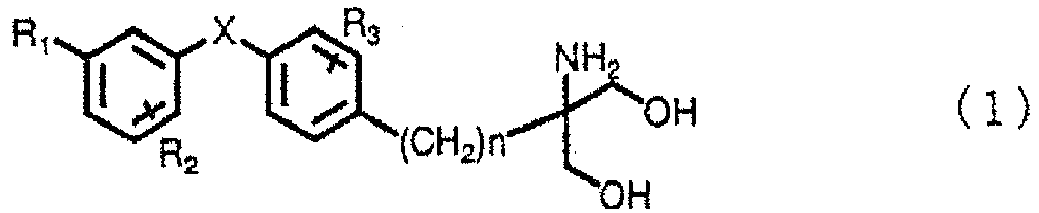
- [wherein R1 is a halogen atom, a trihalomethyl group, a hydroxy group, a lower alkyl group having 1 to 7 carbon atoms, a substituted or unsubstituted phenyl group, an aralkyl group, a lower alkoxy group having 1 to 4 carbon atoms, a trifluoromethyloxy group, a phenoxy group, a cyclohexylmethyloxy group, a substituted or unsubstituted aralkyloxy group, a pyridylmethyloxy group, a cinnamyloxy group, a naphthylmethyloxy group, a phenoxymethyl group, a hydroxymethyl group, a hydroxyethyl group, a lower alkylthio group having 1 to 4 carbon atoms, a lower alkylsulfinyl group having 1 to 4 carbon atoms, a lower alkylsulfonyl group having 1 to 4 carbon atoms, a benzylthio group, an acetyl group, a nitro group or a cyano group; R2 is a hydrogen atom, a halogen atom, a trihalomethyl group, a lower alkoxy group having 1 to 4 carbon atoms, a lower alkyl group having 1 to 7 carbon atoms, a phenethyl group or a benzyloxy group; R3 is a hydrogen atom, a halogen atom, a trifluoromethyl group, a lower alkoxy group having 1 to 4 carbon atoms, a hydroxy group, a benzyloxy group, a lower alkyl group having 1 to 7 carbon atoms, a phenyl group, a lower alkoxymethyl group having 1 to 4 carbon atoms or a lower alkylthio group having 1 to 4 carbon atoms; X is O, S, SO or SO2; and n is an integer from 1 to 4], or a pharmaceutically acceptable salt or hydrate thereof.
-
- 6) The method for treating an inflammatory bowel disease according to 5), wherein the inflammatory bowel disease is Crohn's disease, Crohn's disease in large intestine, intestinal Behcet's disease, ulcerative colitis, bleeding rectal ulcer, or pouchitis.
-
- 7) A therapeutic or prophylactic agent for an inflammatory bowel disease, comprising a 2-amino-1,3-propanediol derivative represented by the general formula (1):
-

- [wherein R1 is a halogen atom, a trihalomethyl group, a hydroxy group, a lower alkyl group having 1 to 7 carbon atoms, a substituted or unsubstituted phenyl group, an aralkyl group, a lower alkoxy group having 1 to 4 carbon atoms, a trifluoromethyloxy group, a phenoxy group, a cyclohexylmethyloxy group, a substituted or unsubstituted aralkyloxy group, a pyridylmethyloxy group, a cinnamyloxy group, a naphthylmethyloxy group, a phenoxymethyl group, a hydroxymethyl group, a hydroxyethyl group, a lower alkylthio group having 1 to 4 carbon atoms, a lower alkylsulfinyl group having 1 to 4 carbon atoms, a lower alkylsulfonyl group having 1 to 4 carbon atoms, a benzylthio group, an acetyl group, a nitro group or a cyano group; R2 is a hydrogen atom, a halogen atom, a trihalomethyl group, a lower alkoxy group having 1 to 4 carbon atoms, a lower alkyl group having 1 to 7 carbon atoms, a phenethyl group or a benzyloxy group; R3 is a hydrogen atom, a halogen atom, a trifluoromethyl group, a lower alkoxy group having 1 to 4 carbon atoms, a hydroxy group, a benzyloxy group, a lower alkyl group having 1 to 7 carbon atoms, a phenyl group, a lower alkoxymethyl group having 1 to 4 carbon atoms or a lower alkylthio group having 1 to 4 carbon atoms; X is O, S, SO or SO2; and n is an integer from 1 to 4] or a pharmaceutically acceptable salt or hydrate thereof, in combination of at least one therapeutic agent for an inflammatory bowel disease.
-
- 8) The therapeutic or prophylactic agent for an inflammatory bowel disease according to 7), wherein the at least one therapeutic agent for an inflammatory bowel disease comprises a sulfasalazine, a steroid, or an immunosuppressor.
- According to the present invention, there is provided a therapeutic or prophylactic agent for inflammatory bowel diseases that contains, as an active ingredient, a diarylsulfide or diarylether derivative having a 2-amino-1, 3-propanediol structure, or a pharmaceutically acceptable salt or hydrate thereof. The diarylsulfide or diarylether derivative acts as a sphingosine-1-phosphate receptor agonist. There is also provided a method for treating or preventing inflammatory bowel diseases, including Crohn's disease, Crohn's disease in large intestine, intestinal Behcet's disease, ulcerative colitis, bleeding rectal ulcer, or pouchitis.
- The 2-amino-1,3-propanediol derivatives of the present invention are sphingosine-1-phosphate receptor agonists and comprise a group of compounds represented by the chemical formula (1) and pharmaceutically acceptable salts and hydrates thereof:
-

- [wherein R1 is a halogen atom, a trihalomethyl group, a hydroxy group, a lower alkyl group having 1 to 7 carbon atoms, a substituted or unsubstituted phenyl group, an aralkyl group, a lower alkoxy group having 1 to 4 carbon atoms, a trifluoromethyloxy group, a phenoxy group, a cyclohexylmethyloxy group, a substituted or unsubstituted aralkyloxy group, a pyridylmethyloxy group, a cinnamyloxy group, a naphthylmethyloxy group, a phenoxymethyl group, a hydroxymethyl group, a hydroxyethyl group, a lower alkylthio group having 1 to 4 carbon atoms, a lower alkylsulfinyl group having 1 to 4 carbon atoms, a lower alkylsulfonyl group having 1 to 4 carbon atoms, a benzylthio group, an acetyl group, a nitro group or a cyano group; R2 is a hydrogen atom, a halogen atom, a trihalomethyl group, a lower alkoxy group having 1 to 4 carbon atoms, a lower alkyl group having 1 to 7 carbon atoms, a phenethyl group or a benzyloxy group; R3 is a hydrogen atom, a halogen atom, a trifluoromethyl group, a lower alkoxy group having 1 to 4 carbon atoms, a hydroxy group, a benzyloxy group, a lower alkyl group having 1 to 7 carbon atoms, a phenyl group, a lower alkoxymethyl group having 1 to 4 carbon atoms or a lower alkylthio group having 1 to 4 carbon atoms; X is O, S, SO or SO2; and n is an integer from 1 to 4].
- The term "halogen atom" in the chemical formula (1) of the present invention includes a fluorine atom, a chlorine atom, a bromine atom and an iodine atom. The term "trihalomethyl group" includes a trifluoromethyl group and a trichloromethyl group. The term "lower alkyl group having 1 to 7 carbon atoms" includes straight-chained or branched hydrocarbons having 1 to 7 carbon atoms, such as methyl, ethyl, propyl, isopropyl, butyl, t-butyl, pentyl, hexyl and heptyl.
- The term "substituted or unsubstituted phenoxy group" includes those in which the benzene ring has at any position a halogen atom, such as a fluorine atom, a chlorine atom, a bromine atom and an iodine atom, a trifluoromethyl group, a lower alkyl group having 1 to 4 carbon atoms or a lower alkoxy group having 1 to 4 carbon atoms. The term "aralkyl group" as in "aralkyl group" and "aralkyloxy group" includes a benzyl group, a diphenylmethyl group, a phenethyl group and phenylpropyl group. The term "lower alkyl group" in "lower alkoxy group having 1 to 4 carbon atoms," "lower alkylthio group having 1 to 4 carbon atoms," "lower alkylsufinyl group having 1 to 4 carbon atoms," and "lower alkylsulfonyl group having 1 to 4 carbon atoms" includes straight-chained or branched hydrocarbons having 1 to 4 carbon atoms, such as methyl, ethyl, propyl, isopropyl and butyl. The term "substituted or unsubstituted aralkyl group" includes those in which the benzene ring has at any position a halogen atom, such as a fluorine atom, a chlorine atom, a bromine atom and an iodine atom, a trifluoromethyl group, a lower alkyl group having 1 to 4 carbon atoms or a lower alkoxy group having 1 to 4 carbon atoms.
- Examples of pharmaceutically acceptable salts of the compound of the chemical formula (1) of the present invention include acid-addition salts such as hydrochlorides, hydrobromides, acetates, trifluoroacetates, methanesulfonates, citrates and tartrates.
- More specific examples of the compound of the general formula (1) are 2-amino-2-[4-(3-benzyloxyphenylthio)-2-chlorophenyl]ethyl-1,3-propanediol and hydrochlorides thereof.
- The compounds of the general formula (1) of the present invention are described in, for example,
WO03/029184 WO03/029205 - The thus-obtained compounds of the present invention or pharmaceutically acceptable salts and hydrates thereof are useful in the treatment of inflammatory bowel diseases. The therapeutic agents of the present invention are administered systemically or topically and orally or parenterally. The compounds may be formulated as oral or parenteral preparations depending on their properties. Specifically, the active ingredients may be mixed with pharmaceutically acceptable carriers, excipients, binders, diluents or other auxiliary agents and formulated as granules, powders, tablets, capsules, syrups, suppositories, suspensions, solutions and other dosage forms. While the compounds may be administered in different doses depending on their use, the weight, age and conditions of the patients, they are typically administered in a single dose of 0.01 to 100mg/patient, preferably at a single dose of 0.1 to 5mg/patient, once to three times a day.
- These preparations may be used in combination with at least one drug used to treat inflammatory bowel diseases. Examples of such drugs include sulfasalazines, steroids and immunosuppressors. Examples of sulfasalazines include mesalazine, olsalazine, sulfasalazine and balsalazide. Examples of steroids include hydrocortisone, methylprednisolone, budesonide and betamethasone phosphate. Examples of immunosuppressors include azathioprine, 6-mercaptopurine, cyclosporine, tacrolimus, anti-TNF-α antibody and anti-α4 integrin antibody.
- The present invention will now be described with reference to examples. While these examples primarily concern 2-amino-2-[4-(3-benzyloxyphenylthio)-2-chlorophenyl]ethyl-1,3-propanediol hydrochloride (which may be referred to as "KRP-203," hereinafter), one of the compounds represented by the chemical formula (1), other compounds are also encompassed by the present invention and the scope of the invention is by no means limited by these examples.
- Colitis was induced in BALB/C male mice by allowing animals to drink a 5% aqueous solution of dextran sodium sulfate (DSS) (average molecular weight = 5000) for 7 days [Kitajima, S. et. al., Exp Anim, Vol.49, No.1: 9-15 (2000)]. KRP-203 dissolved in distilled water (at 0.01, 0.03 and 0.1 mg/kg) was orally administered once a day for 8 days, starting the day before the administration of DSS solution. One group was administered distilled water as a placebo.
- 8 days after the start of the DSS period, mice were anesthetized with diethyl ether and sacrificed by cervical dislocation. The large intestine (the segment from colon to anus) was removed from each animal. Because it is known that the ingestion of DSS solution causes colitis in mice that causes a decrease in the length of large intestine [Okayasu, I. et. al., Gastroenterology, Vol.98: 694-702 (1990)], the length of the large intestine from the colon to anus was measured with a caliper. The large intestine was then cut open longitudinally to expose the lumen and the content was washed off with physiological saline. The specimens were assayed and compared for the activity of myeloperoxidase, a marker of inflammation in colitis [Grisham, MB. et. al., Methods Enzymol, Vol.186: 729-742 (1990)].
- The comparison of the length of large intestine is shown in Table 1. The results indicate that KRP-203 significantly reduced the colitis-induced decrease in the length of large intestine.
-
Table 1: Reduction of the decrease in the length of large intestine by KRP-203 Groups tested Number of Samples Length of large intestine, Placebo group 8 64.7 ± 1.7## 0.01 mg/kg KRP-203 group 10 67.4 ± 1.4 0,03mg/kg KRP-203 group 10 72.7 ± 1.5‡‡ 0.1.mg/kg KRP-203 group 9 71.4 ± 1.4‡ Normal group 4 84.7 ± 2.2 Data are given in average ± standard error.
## : p<0. 01. (Student's t-test on normal group)
‡ : p<0. 05 (Dunnett's test on placebo group)
‡‡ : p<0. 01 (Dunnett's test on placebo group) - The results of the assay for myeloperoxidase activity in large intestine are shown in Table 2. The results indicate that KRP-203 significantly reduced the colitis-induced increase in the myeloperoxidase activity in large intestine.
-
Table 2: Suppression of the increase in myeloperoxidase activity in large intestine by KRP-203 Groups tested Number of Samples myeloperoxidase activity Placebo group 8 108.2 ± 20.7## 0.01mg/kg KRP-203 group 10 55.8 8 ± 16.2‡ 0.03mg/kg KRP-203 group 10 36. 8 ± 5.9‡‡ 0.1 mg/kg KRP-203 group 9 44.4 ± 6.4‡‡ Normal group 4 5.8 ± 0.1 Data are given in average ± standard error.
## : P<0.01 (Aspin-Welch's t-test On normal group)
‡ : p<0. 05 (Dunnett's test on placebo group)
‡‡ : p<0. 01 (Dunnett's test on placebo group) - DDS-induced colitis in mice is frequently used as a disease model of inflammatory bowel diseases in humans [Elson, CO. et. al., Gastroenterology, Vol.109: 1344-1367 (1995); Hibi, T. et. al., J Gastroenterol, Vol.37: 409-417 (2002)]. Thus, these results demonstrate the usefulness of KRP-203 in the treatment of Inflammatory bowel diseases.
- Several drugs are used in the treatment of inflammatory bowel diseases. Immunosuppressors, drugs used to prevent rejection in organ transplantation, are one such option. As with KRP-203, two representative immunosuppressors cyclosporine and tacrolimus were examined for their effects.
- Cyclosporine was dissolved in soybean oil (at 10 and 30 mg/kg) and was orally administered once a day for 8 days, starting the day before the start of the DSS period. One group was administered soybean oil as a placebo. The increase in the myeloeroxidase activity in large intestine was suppressed by 54% in the 10mg/kg group and by 73% in the 30mg/kg group as compared to the placebo group.
- Tacrolimus was suspended in a 0.5% aqueous solution of carboxymethylcellulose sodium (CMC-Na) (at 3 mg/kg) and was administered once a day for 8 days, starting the day before the start of the DSS period. One group was administered 0.5% aqueous CMC-Na solution as a placebo. The increase in the myeloperoxidase activity in large intestine was suppressed by 37% in the 3mg/kg group as compared to the placebo group.
- The effect on DDS-induced colitis in mice was then compared between cyclosporine and tacrolimus, two representative immunosuppressors, and KRP-203: The increase in the myeloperoxidase activity in large intestine was suppressed by administration of KRP-203 by 51% in the 0.01mg/kg group, by 69% in the 0.03mg/kg group, and by 62% in the 0.1mg/kg group as compared to the placebo group (Table 2). These results suggest that lesser doses of KRP-203 have a comparable or greater therapeutic effect on inflammatory bowel diseases than cyclosporine and tacrolimus.
- B6.129P2-IL10<tmlCgn>/J (IL-10 knockout) mice (male, 5-6 week old) were obtained for the test. KRP-203 dissolved in distilled water was orally administered at a dose of 0.1mg/kg once a day for 4 weeks, starting 8 weeks after the animals were obtained. One group was administered distilled water alone as a placebo. Following the administration period, the animals were dissected to remove large intestine, which was then fixed in formalin. Subsequently, tissue slices were prepared from the formalin-fixed large intestine and were stained with hematoxylin and eosin. The proximal, middle, and distal segments of the large intestine were then histologically scored according to the standard procedure (BergDJ, et al., Gastroenterology, 123: 1527-1542 (2002)). The scores for the three segments were added together to determine the histological scores for individual animals. The results are given in average ± standard error.
- As shown in Table 3, the histological score was significantly lower in the group administered KRP-203 than in the placebo group, a demonstration that KRP-203 reduces colitis in IL-10 knockout mice. These results suggest that the test compound KRP-203 is effective in the treatment of inflammatory bowel diseases.
-
Table 3:HistologicalScore Groups tested Number of Samples Histological Score Placebo group 8 4. 1 ± 1. 3 KRP-203 group 8 0.3 ± 0.2‡ ‡: p<(0.05 vs placebo group (Mann-Whitney's test) -
Preparation Example : Capsule preparation (in one capsule) Composition Compound (KRP-203) 0.1 mg D-mannitol 247.5 mg Magnesium stearate 2.5 mg - As set forth, the compound of the present invention proved highly effective in a disease model of inflammatory bowel diseases in humans and caused a significant reduction in the tissue lesion in knockout mice. Thus, the 2-amino-1,3-propanediol derivative of the present invention and pharmaceutically acceptable salts and hydrates thereof are useful in the treatment or prevention of inflammatory bowel diseases. Accordingly, the present invention provides a therapeutic and prophylactic agent for inflammatory bowel diseases including Crohn's disease, Crohn's disease in large intestine, intestinal Behcet's disease, ulcerative colitis, bleeding rectal ulcer and pouchitis, as well as a method for treating or preventing these diseases.
Claims (8)
- A therapeutic or prophylactic agent for an inflammatory bowel disease containing, as an active ingredient, a 2-amino-1,3-propanediol derivative represented by the chemical formula (1):

- The therapeutic or prophylactic agent for an inflammatory bowel disease according to claim 1, wherein the compound represented by the chemical formula (1) is 2-amino-2-[4-(3-benzyloxyphenylthio)-2-chlorophenyl]ethyl-1,3-propanediol.
- The therapeutic or prophylactic agent for an inflammatory bowel disease according to claim 1, wherein the compound represented by the chemical formula (1) is a hydrochloride of 2-amino-2-[4-(3-benzyloxyphenylthio)-2-chlorophenyl]ethyl-1,3-propanediol.
- The therapeutic orprophylactic agent for an inflammatory bowel disease according to anyone of claims 1 to 3, wherein the inflammatory bowel disease is Crohn' s disease, Crohn' s disease in large intestine, intestinal Behcet's disease, ulcerative colitis, bleeding rectal ulcer, or pouchitis.
- A method for treating an inflammatory bowel disease, using, as an active ingredient, a 2-amino-1,3-propanediol derivative represented by the chemical formula (1):


- The method for treating an inflammatory bowel disease according to claim 5, wherein the inflammatory bowel disease is Crohn's disease, Crohn's disease in large intestine, intestinal Behcet's disease, ulcerative colitis, bleeding rectal ulcer, or pouchitis.
- A therapeutic or prophylactic agent for an inflammatory bowel disease, comprising a 2-amino-1,3-propanediol derivative represented by the general formula (1):

- The therapeutic or prophylactic agent for an inflammatory bowel disease according to claim 7, wherein the at least one therapeutic agent for an inflammatory bowel disease comprises a sulfasalazine, a steroid, or an immunosuppressor.
Applications Claiming Priority (2)
| Application Number | Priority Date | Filing Date | Title |
|---|---|---|---|
| JP2006027883 | 2006-02-06 | ||
| EP07713815.4A EP1982708B1 (en) | 2006-02-06 | 2007-02-05 | Therapeutic agent for inflammatory bowel disease comprising 2-amino-1,3-propanaediol derivative as active ingredient, and method for treatment of inflammatory bowel disease |
Related Parent Applications (2)
| Application Number | Title | Priority Date | Filing Date |
|---|---|---|---|
| EP07713815.4 Division | 2007-02-05 | ||
| EP07713815.4A Division-Into EP1982708B1 (en) | 2006-02-06 | 2007-02-05 | Therapeutic agent for inflammatory bowel disease comprising 2-amino-1,3-propanaediol derivative as active ingredient, and method for treatment of inflammatory bowel disease |
Publications (1)
| Publication Number | Publication Date |
|---|---|
| EP2520291A1 true EP2520291A1 (en) | 2012-11-07 |
Family
ID=38345101
Family Applications (2)
| Application Number | Title | Priority Date | Filing Date |
|---|---|---|---|
| EP12167430A Withdrawn EP2520291A1 (en) | 2006-02-06 | 2007-02-05 | Therapeutic agent for inflammatory bowel disease containing as active ingredient 2-amino-1,3-propanediol derivative, or method for treating inflammatory bowel disease |
| EP07713815.4A Active EP1982708B1 (en) | 2006-02-06 | 2007-02-05 | Therapeutic agent for inflammatory bowel disease comprising 2-amino-1,3-propanaediol derivative as active ingredient, and method for treatment of inflammatory bowel disease |
Family Applications After (1)
| Application Number | Title | Priority Date | Filing Date |
|---|---|---|---|
| EP07713815.4A Active EP1982708B1 (en) | 2006-02-06 | 2007-02-05 | Therapeutic agent for inflammatory bowel disease comprising 2-amino-1,3-propanaediol derivative as active ingredient, and method for treatment of inflammatory bowel disease |
Country Status (29)
| Country | Link |
|---|---|
| US (1) | US8318811B2 (en) |
| EP (2) | EP2520291A1 (en) |
| JP (1) | JP5042042B2 (en) |
| KR (1) | KR101334153B1 (en) |
| CN (1) | CN101378743B (en) |
| AU (1) | AU2007213194B9 (en) |
| BR (1) | BRPI0706971A2 (en) |
| CA (1) | CA2641546C (en) |
| CY (1) | CY1116112T1 (en) |
| DK (1) | DK1982708T3 (en) |
| EC (1) | ECSP088662A (en) |
| ES (1) | ES2524056T3 (en) |
| GT (1) | GT200800148A (en) |
| HR (1) | HRP20080421B1 (en) |
| IL (1) | IL192150A (en) |
| MA (1) | MA31338B1 (en) |
| MX (1) | MX2008008872A (en) |
| MY (1) | MY151193A (en) |
| NO (1) | NO20082708L (en) |
| NZ (1) | NZ568907A (en) |
| PL (1) | PL1982708T3 (en) |
| PT (1) | PT1982708E (en) |
| RU (1) | RU2428976C2 (en) |
| SG (1) | SG169370A1 (en) |
| SI (1) | SI1982708T1 (en) |
| TN (1) | TNSN08246A1 (en) |
| TW (1) | TWI389683B (en) |
| WO (1) | WO2007091501A1 (en) |
| ZA (1) | ZA200806199B (en) |
Families Citing this family (30)
| Publication number | Priority date | Publication date | Assignee | Title |
|---|---|---|---|---|
| ATE502630T1 (en) | 2004-07-16 | 2011-04-15 | Kyorin Seiyaku Kk | METHOD FOR EFFECTIVE USE OF A MEDICATION AND METHOD FOR PREVENTING SIDE EFFECTS |
| AU2005292984B2 (en) | 2004-10-12 | 2011-01-20 | Kyorin Pharmaceutical Co., Ltd. | Process for producing 2-amino-2-[2-[4-(3-benzyloxyphenylthio)-2-chlorophenyl]ethyl]-1,3-propanediol hydrochloride or hydrate thereof and intermediate for the same |
| RU2421214C2 (en) | 2005-10-07 | 2011-06-20 | Киорин Фармасьютикал Ко., Лтд. | Therapeutic agent for treating hepatitis, and method of treating hepatitis |
| TWI389683B (en) | 2006-02-06 | 2013-03-21 | Kyorin Seiyaku Kk | A therapeutic agent for an inflammatory bowel disease or an inflammatory bowel disease treatment using a 2-amino-1,3-propanediol derivative as an active ingredient |
| JP5140593B2 (en) | 2006-08-08 | 2013-02-06 | 杏林製薬株式会社 | Amino alcohol derivatives and immunosuppressants containing them as active ingredients |
| US8232319B2 (en) | 2006-08-08 | 2012-07-31 | Kyorin Pharmaceutical Co., Ltd. | Amino phosphate derivative and S1P receptor modulator having same as an active ingredient |
| TW200946105A (en) | 2008-02-07 | 2009-11-16 | Kyorin Seiyaku Kk | Therapeutic agent or preventive agent for inflammatory bowel disease containing amino alcohol derivative as active ingredient |
| EP2305305A4 (en) * | 2008-05-20 | 2013-02-13 | Kyorin Seiyaku Kk | INDUCTION / MAINTENANCE TRANSMITTER |
| HRP20161133T1 (en) | 2008-07-23 | 2016-12-02 | Arena Pharmaceuticals, Inc. | DERIVATIVES OF SUBSTITUTED 1,2,3,4-TETRAHYDROCYCLOPENT [b] INDOL-3-IL-ACETIC ACIDS USED IN THE TREATMENT OF AUTOIMMUNE AND INFLAMMATORY DISORDERS |
| CN105816453B (en) | 2008-08-27 | 2021-03-05 | 艾尼纳制药公司 | Substituted tricyclic acid derivatives as S1P1 receptor agonists for the treatment of autoimmune and inflammatory disorders |
| EP2177521A1 (en) | 2008-10-14 | 2010-04-21 | Almirall, S.A. | New 2-Amidothiadiazole Derivatives |
| EP2364088B1 (en) * | 2008-10-30 | 2014-04-16 | Biogen Idec MA Inc. | Bicyclic aryl sphingosine 1-phosphate analogs |
| EP2202232A1 (en) | 2008-12-26 | 2010-06-30 | Laboratorios Almirall, S.A. | 1,2,4-oxadiazole derivatives and their therapeutic use |
| EP2210890A1 (en) | 2009-01-19 | 2010-07-28 | Almirall, S.A. | Oxadiazole derivatives as S1P1 receptor agonists |
| EP2305660A1 (en) | 2009-09-25 | 2011-04-06 | Almirall, S.A. | New thiadiazole derivatives |
| EP2343287A1 (en) | 2009-12-10 | 2011-07-13 | Almirall, S.A. | New 2-aminothiadiazole derivatives |
| CA2786994C (en) | 2010-01-27 | 2018-01-16 | Arena Pharmaceuticals, Inc. | Processes for the preparation of (r)-2-(7-(4-cyclopentyl-3-(trifluoromethyl)benzyloxy)-1,2,3,4-tetrahydrocyclopenta[b]indol-3-yl)acetic acid and salts thereof |
| CN105503882B (en) | 2010-03-03 | 2019-07-05 | 艾尼纳制药公司 | The method for preparing S1P1 receptor modulators and its crystal form |
| EP2366702A1 (en) | 2010-03-18 | 2011-09-21 | Almirall, S.A. | New oxadiazole derivatives |
| EP2390252A1 (en) | 2010-05-19 | 2011-11-30 | Almirall, S.A. | New pyrazole derivatives |
| EP2455081A1 (en) * | 2010-11-23 | 2012-05-23 | Almirall, S.A. | S1P1 receptor agonists for use in the treatment of crohn's disease |
| JO3177B1 (en) | 2011-04-01 | 2018-03-08 | Novartis Ag | Formulations comprising 2-amino-2-[2-(4-octylphenyl)ethyl]propane-1,3-diol |
| KR101787543B1 (en) | 2014-08-22 | 2017-10-19 | 샘표식품 주식회사 | Anti-inflammatory composition comprising fermented wild ginseng |
| AU2016205361C1 (en) | 2015-01-06 | 2021-04-08 | Arena Pharmaceuticals, Inc. | Methods of treating conditions related to the S1P1 receptor |
| PL3310760T3 (en) | 2015-06-22 | 2023-03-06 | Arena Pharmaceuticals, Inc. | Crystalline l-arginine salt of (r)-2-(7-(4-cyclopentyl-3-(trifluoromethyl)benzyloxy)-1,2,3,4-tetrahydrocyclo-penta[b]indol-3-yl)acetic acid for use in s1p1 receptor-associated disorders |
| JP2020507610A (en) | 2017-02-16 | 2020-03-12 | アリーナ ファーマシューティカルズ, インコーポレイテッド | Compounds and methods for the treatment of inflammatory bowel disease with parenteral symptoms |
| KR20190116416A (en) | 2017-02-16 | 2019-10-14 | 아레나 파마슈티칼스, 인크. | Compounds and Methods for Treating Primary Bile Cholangitis |
| AU2019280822A1 (en) | 2018-06-06 | 2021-01-07 | Arena Pharmaceuticals, Inc. | Methods of treating conditions related to the S1P1 receptor |
| CN112512516A (en) | 2018-07-27 | 2021-03-16 | 普瑞奥治疗有限公司 | Active agent for inhibiting recurrence of hematologic malignancy in patient who has undergone hematopoietic stem cell transplantation |
| EP3847158A1 (en) | 2018-09-06 | 2021-07-14 | Arena Pharmaceuticals, Inc. | Compounds useful in the treatment of autoimmune and inflammatory disorders |
Citations (5)
| Publication number | Priority date | Publication date | Assignee | Title |
|---|---|---|---|---|
| WO2003029184A1 (en) | 2001-09-27 | 2003-04-10 | Kyorin Pharmaceutical Co., Ltd. | Diaryl ether derivative, addition salt thereof, and immunosuppressant |
| WO2003029205A1 (en) | 2001-09-27 | 2003-04-10 | Kyorin Pharmaceutical Co., Ltd. | Diaryl sulfide derivative, addition salt thereof, and immunosuppressant |
| GB2400318A (en) * | 2003-04-08 | 2004-10-13 | Novartis Ag | Pharmaceutical composition comprising an S1P receptor agonist |
| WO2005105146A1 (en) * | 2004-05-03 | 2005-11-10 | Novartis Ag | Combinations comprising a s1p receptor agonist and a jak3 kinase inhibitor |
| WO2006009092A1 (en) * | 2004-07-16 | 2006-01-26 | Kyorin Pharmaceutical Co., Ltd. | Method of effectively using medicine and method concerning prevention of side effect |
Family Cites Families (81)
| Publication number | Priority date | Publication date | Assignee | Title |
|---|---|---|---|---|
| EP0627406B1 (en) * | 1992-10-21 | 1998-10-28 | Yoshitomi Pharmaceutical Industries, Ltd. | 2-amino-1,3-propanediol compound and immunosuppressant |
| US5948820A (en) * | 1994-08-22 | 1999-09-07 | Yoshitomi Pharmaceutical Industries, Ltd. | Benzene compound and pharmaceutical use thereof |
| US5447922A (en) * | 1994-08-24 | 1995-09-05 | Bristol-Myers Squibb Company | α-phosphonosulfinic squalene synthetase inhibitors |
| MY118354A (en) * | 1995-05-01 | 2004-10-30 | Scarista Ltd | 1,3-propane diol derivatives as bioactive compounds |
| CA2286315C (en) * | 1997-04-04 | 2007-03-06 | Yoshitomi Pharmaceutical Industries Ltd. | 2-aminopropane-1,3-diol compound, pharmaceutical use thereof and synthetic intermediates therefor |
| JPH1180026A (en) * | 1997-09-02 | 1999-03-23 | Yoshitomi Pharmaceut Ind Ltd | Novel immunosuppressants, methods of use and methods of identification thereof |
| WO2000001388A1 (en) * | 1998-07-02 | 2000-01-13 | Kyowa Hakko Kogyo Co., Ltd. | Remedies for diabetes |
| AU767241B2 (en) * | 1998-09-14 | 2003-11-06 | Qiang Xu | Immunosuppressive agents |
| US20020143034A1 (en) * | 1998-12-30 | 2002-10-03 | Fujisawa Pharmaceutical Co. Ltd. | Aminoalcohol derivatives and their use as beta 3 adrenergic agonists |
| AU2001264313A1 (en) | 2000-06-20 | 2002-01-02 | Japan Tobacco Inc. | Pyrazolopyridine compounds and use thereof as drugs |
| NZ533997A (en) * | 2000-07-13 | 2005-11-25 | Sankyo Co | Amino alcohol derivatives |
| JP2002053575A (en) | 2000-08-09 | 2002-02-19 | Sankyo Co Ltd | Aminoalcohols |
| AU8533101A (en) * | 2000-08-31 | 2002-03-13 | Merck & Co Inc | Phosphate derivatives as immunoregulatory agents |
| EP1383778B1 (en) * | 2001-01-30 | 2009-10-21 | University Of Virginia Patent Foundation | Agonists and antagonists of sphingosine-1-phosphate receptors |
| EP1364659B1 (en) * | 2001-02-08 | 2009-11-11 | Ono Pharmaceutical Co., Ltd. | Remedies for urinary diseases comprising lpa receptor controlling agents |
| CA2435739A1 (en) * | 2001-02-22 | 2002-09-06 | Novartis Ag | Use of accelerated lymphocyte homing agents for the manufacture of a medicament for the treatment of delayed graft function |
| US7326801B2 (en) * | 2001-03-26 | 2008-02-05 | Novartis Ag | 2-amino-propanol derivatives |
| JP2002316985A (en) | 2001-04-20 | 2002-10-31 | Sankyo Co Ltd | Benzothiophene derivative |
| US7179817B2 (en) * | 2001-05-10 | 2007-02-20 | Ono Pharmaceutical Co., Ltd. | Carboxylic acid derivatives and drugs containing the same as the active ingredient |
| US20040138462A1 (en) * | 2001-05-24 | 2004-07-15 | Minoru Sakurai | Aminoalcohol derivatives |
| US20040235794A1 (en) * | 2001-09-04 | 2004-11-25 | Shinji Nakade | Remedies for respiratory diseases comprising sphingosine-1-phosphate receptor controller |
| JP4035759B2 (en) | 2001-11-06 | 2008-01-23 | 独立行政法人産業技術総合研究所 | Aminoalcohol phosphate compound, production method, and method of use thereof |
| RU2330839C2 (en) * | 2002-01-11 | 2008-08-10 | Санкио Компани, Лимитед | Amino alcohol derivatives or phosphoric acid derivatives and pharmaceutical compositions containing specified derivatives |
| JP2003267936A (en) | 2002-01-11 | 2003-09-25 | Sankyo Co Ltd | Benzene ring compound |
| US20040058894A1 (en) * | 2002-01-18 | 2004-03-25 | Doherty George A. | Selective S1P1/Edg1 receptor agonists |
| AU2003202994B2 (en) * | 2002-01-18 | 2007-11-22 | Merck Sharp & Dohme Corp. | N-(benzyl)aminoalkylcarboxylates, phosphinates, phosphonates and tetrazoles as Edg receptor agonists |
| ATE441654T1 (en) * | 2002-01-18 | 2009-09-15 | Merck & Co Inc | EDG RECEPTOR AGONISTS |
| EP1482896A4 (en) * | 2002-03-01 | 2005-11-23 | Merck & Co Inc | AMINOALKYLPHOSPHONATES AND ASSOCIATED COMPOUNDS AS EDG RECEPTOR AGONISTS |
| JP2005531506A (en) * | 2002-03-01 | 2005-10-20 | メルク エンド カムパニー インコーポレーテッド | Aminoalkylphosphonates and related compounds as agonists of EDG receptors |
| JP2005533058A (en) * | 2002-06-17 | 2005-11-04 | メルク エンド カムパニー インコーポレーテッド | 1-((5-Aryl-1,2,4-oxadiazol-3-yl) benzyl) azetidine-3-carboxylate and 1-((5-aryl-1,2,4) as EDG receptor agonists -Oxadiazol-3-yl) benzyl) pyrrolidine-3-carboxylate |
| WO2004002531A1 (en) * | 2002-06-26 | 2004-01-08 | Ono Pharmaceutical Co., Ltd. | Remedies for diseases caused by vascular contraction or dilation |
| US7241790B2 (en) * | 2002-07-30 | 2007-07-10 | University Of Virginia Patent Foundation | Compounds active in spinigosine 1-phosphate signaling |
| AU2003273865A1 (en) * | 2002-09-13 | 2004-04-30 | Novartis Ag | Amino-propanol derivatives |
| AU2003264430B2 (en) * | 2002-09-19 | 2009-03-19 | Kyorin Pharmaceutical Co., Ltd. | Amino alcohol derivative, addition salt thereof, and immunosuppressant |
| MXPA05003254A (en) * | 2002-09-24 | 2005-06-08 | Novartis Ag | Sphingosine-1-phosphate receptor agonists in the treatment of demyelinating disorders. |
| TW200408393A (en) * | 2002-10-03 | 2004-06-01 | Ono Pharmaceutical Co | Antagonist of lysophosphatidine acid receptor |
| JP4140698B2 (en) | 2002-10-18 | 2008-08-27 | 第一三共株式会社 | Phosphoric acid or phosphonic acid derivatives |
| JP4516430B2 (en) * | 2002-12-20 | 2010-08-04 | メルク・シャープ・エンド・ドーム・コーポレイション | 1- (Amino) indane and (1,2-dihydro-3-amino) -benzofuran, benzothiophene and indole |
| JP4505449B2 (en) * | 2003-02-11 | 2010-07-21 | アイアールエム・リミテッド・ライアビリティ・カンパニー | Novel bicyclic compounds and compositions |
| DK1602660T3 (en) * | 2003-02-18 | 2011-05-23 | Kyorin Seiyaku Kk | Aminophosphonic acid derivatives, addition salts thereof, and S1P receptor modulators |
| JP2004307439A (en) | 2003-04-10 | 2004-11-04 | Kyorin Pharmaceut Co Ltd | Aminodiol derivative, its addition salt and immunosuppressant |
| JP2004307442A (en) | 2003-04-10 | 2004-11-04 | Kyorin Pharmaceut Co Ltd | Heterocyclic derivatives, their addition salts and immunosuppressants |
| JP2004307441A (en) | 2003-04-10 | 2004-11-04 | Kyorin Pharmaceut Co Ltd | Benzene derivative, its addition salt and immunosuppressant |
| JP2004307440A (en) | 2003-04-10 | 2004-11-04 | Kyorin Pharmaceut Co Ltd | 2-amino-1,3-propanediol derivatives and their addition salts |
| ES2392167T3 (en) * | 2003-04-30 | 2012-12-05 | Novartis Ag | Aminopropanol derivatives as sphingosine-1-phosphate receptor modulators |
| ATE547395T1 (en) * | 2003-04-30 | 2012-03-15 | Novartis Pharma Gmbh | AMINOPROPANOL DERIVATIVES AS MODULATORS OF THE SPHINGOSINE-1 PHOSPHATE RECEPTOR |
| CA2524867A1 (en) * | 2003-05-15 | 2004-12-02 | Merck & Co., Inc. | 3-(2-amino-1-azacyclyl)-5-aryl-1,2,4-oxadiazoles as s1p receptor agonists |
| CN1787817B (en) * | 2003-05-19 | 2011-09-07 | Irm责任有限公司 | Immunosuppressant compounds and compositions |
| GB0313612D0 (en) * | 2003-06-12 | 2003-07-16 | Novartis Ag | Organic compounds |
| JP2005047899A (en) | 2003-07-11 | 2005-02-24 | Sankyo Co Ltd | Amino alcohol compound |
| WO2005014603A1 (en) | 2003-08-12 | 2005-02-17 | Mitsubishi Pharma Corporation | Phosphinane compounds with immunomodulating activity |
| WO2005014525A2 (en) | 2003-08-12 | 2005-02-17 | Mitsubishi Pharma Corporation | Bi-aryl compound having immunosuppressive activity |
| MXPA06002349A (en) * | 2003-08-28 | 2006-05-22 | Novartis Ag | Aminopropanol derivatives. |
| US7825109B2 (en) * | 2003-08-29 | 2010-11-02 | Ono Pharmaceutical Co., Ltd. | Compound capable of binding S1P receptor and pharmaceutical use thereof |
| CN1859908A (en) * | 2003-10-01 | 2006-11-08 | 默克公司 | 3,5-aryl, heteroaryl or cycloalkyl substituted-1,2,4-oxadiazoles as S1P receptor agonists |
| GB0324210D0 (en) * | 2003-10-15 | 2003-11-19 | Novartis Ag | Organic compounds |
| WO2005041899A2 (en) * | 2003-11-03 | 2005-05-12 | University Of Virginia Patent Foundation | Orally available sphingosine 1-phosphate receptor agonists and antagonists |
| AU2004299456B2 (en) * | 2003-12-17 | 2010-10-07 | Merck Sharp & Dohme Corp. | (3,4-disubstituted)propanoic carboxylates as S1P (Edg) receptor agonists |
| TW200526548A (en) | 2003-12-25 | 2005-08-16 | Sankyo Co | Ether derivatives |
| GB0401332D0 (en) * | 2004-01-21 | 2004-02-25 | Novartis Ag | Organic compounds |
| TWI355934B (en) * | 2004-02-24 | 2012-01-11 | Sankyo Co | Pharmaceutical composition for treatment or prophy |
| US7718704B2 (en) * | 2004-02-24 | 2010-05-18 | Irm Llc | Immunosuppressant compounds and compositions |
| TW200538433A (en) * | 2004-02-24 | 2005-12-01 | Irm Llc | Immunosuppressant compounds and compositiions |
| JP2005247691A (en) | 2004-03-01 | 2005-09-15 | Toa Eiyo Ltd | S1P3 receptor antagonist |
| GB0405289D0 (en) * | 2004-03-09 | 2004-04-21 | Novartis Ag | Organic compounds |
| US9402915B2 (en) * | 2004-04-30 | 2016-08-02 | Glaxosmithkline Biologicals Sa | Integration of meningococcal conjugate vaccination |
| GB0411929D0 (en) * | 2004-05-27 | 2004-06-30 | Novartis Ag | Organic compounds |
| JP5315611B2 (en) * | 2004-06-23 | 2013-10-16 | 小野薬品工業株式会社 | Compound having S1P receptor binding ability and use thereof |
| TW200611687A (en) * | 2004-07-29 | 2006-04-16 | Sankyo Co | Pharmaceutical compositions used for immunosuppressant |
| AU2005272619A1 (en) * | 2004-08-13 | 2006-02-23 | Praecis Pharmaceuticals, Inc. | Methods and compositions for modulating sphingosine-1-phosphate (SIP) receptor activity |
| WO2006041015A1 (en) | 2004-10-12 | 2006-04-20 | Kyorin Pharmaceutical Co., Ltd. | Amino alcohol derivative, addition salt thereof and immunosuppressive agent |
| AU2005292984B2 (en) * | 2004-10-12 | 2011-01-20 | Kyorin Pharmaceutical Co., Ltd. | Process for producing 2-amino-2-[2-[4-(3-benzyloxyphenylthio)-2-chlorophenyl]ethyl]-1,3-propanediol hydrochloride or hydrate thereof and intermediate for the same |
| JP2008522977A (en) | 2004-12-06 | 2008-07-03 | ユニバーシティ オブ バージニア パテント ファンデーション | Sphingosine = 1-phosphate arylamide analog |
| TW200702326A (en) | 2005-05-31 | 2007-01-16 | Mitsubishi Pharma Corp | 2-aminobutanol compound and its pharmaceutical use |
| TWI418350B (en) * | 2005-06-24 | 2013-12-11 | Sankyo Co | Use of pharmaceutical compositions comprising ppar modulator |
| NZ588372A (en) * | 2005-09-09 | 2012-03-30 | Novartis Ag | Diphenyl ether or thioether derivatives for treatment of autoimmune diseases |
| RU2421214C2 (en) | 2005-10-07 | 2011-06-20 | Киорин Фармасьютикал Ко., Лтд. | Therapeutic agent for treating hepatitis, and method of treating hepatitis |
| JP5140854B2 (en) | 2005-10-12 | 2013-02-13 | トーアエイヨー株式会社 | S1P3 receptor antagonist |
| TWI389683B (en) | 2006-02-06 | 2013-03-21 | Kyorin Seiyaku Kk | A therapeutic agent for an inflammatory bowel disease or an inflammatory bowel disease treatment using a 2-amino-1,3-propanediol derivative as an active ingredient |
| BRPI0714593A2 (en) * | 2006-07-25 | 2013-05-07 | Alcon Res Ltd | endothelial differentiation gene subfamily 3 receptor antagonists (edg-3, s1p3) for the prevention and treatment of eye diseases, compositions comprising said antagonists, and uses thereof |
| US7877152B2 (en) * | 2006-07-31 | 2011-01-25 | JusJas LLC | Bipolar stimulation/recording device with widely spaced electrodes |
-
2007
- 2007-01-25 TW TW096102882A patent/TWI389683B/en not_active IP Right Cessation
- 2007-02-05 AU AU2007213194A patent/AU2007213194B9/en not_active Ceased
- 2007-02-05 SI SI200731574T patent/SI1982708T1/en unknown
- 2007-02-05 DK DK07713815.4T patent/DK1982708T3/en active
- 2007-02-05 CN CN200780004468.6A patent/CN101378743B/en not_active Expired - Fee Related
- 2007-02-05 EP EP12167430A patent/EP2520291A1/en not_active Withdrawn
- 2007-02-05 SG SG201100761-4A patent/SG169370A1/en unknown
- 2007-02-05 NZ NZ568907A patent/NZ568907A/en not_active IP Right Cessation
- 2007-02-05 RU RU2008135264/15A patent/RU2428976C2/en not_active IP Right Cessation
- 2007-02-05 PT PT77138154T patent/PT1982708E/en unknown
- 2007-02-05 MY MYPI20082159 patent/MY151193A/en unknown
- 2007-02-05 BR BRPI0706971-5A patent/BRPI0706971A2/en not_active IP Right Cessation
- 2007-02-05 KR KR1020087017968A patent/KR101334153B1/en not_active Expired - Fee Related
- 2007-02-05 CA CA2641546A patent/CA2641546C/en not_active Expired - Fee Related
- 2007-02-05 US US12/223,584 patent/US8318811B2/en active Active
- 2007-02-05 ES ES07713815.4T patent/ES2524056T3/en active Active
- 2007-02-05 EP EP07713815.4A patent/EP1982708B1/en active Active
- 2007-02-05 PL PL07713815T patent/PL1982708T3/en unknown
- 2007-02-05 MX MX2008008872A patent/MX2008008872A/en active IP Right Grant
- 2007-02-05 HR HRP20080421AA patent/HRP20080421B1/en not_active IP Right Cessation
- 2007-02-05 WO PCT/JP2007/051887 patent/WO2007091501A1/en not_active Ceased
- 2007-02-05 JP JP2007557819A patent/JP5042042B2/en not_active Expired - Fee Related
-
2008
- 2008-06-06 TN TNP2008000246A patent/TNSN08246A1/en unknown
- 2008-06-12 NO NO20082708A patent/NO20082708L/en not_active Application Discontinuation
- 2008-06-12 IL IL192150A patent/IL192150A/en not_active IP Right Cessation
- 2008-07-16 ZA ZA200806199A patent/ZA200806199B/en unknown
- 2008-07-25 GT GT200800148A patent/GT200800148A/en unknown
- 2008-08-05 EC EC2008008662A patent/ECSP088662A/en unknown
- 2008-08-26 MA MA31196A patent/MA31338B1/en unknown
-
2015
- 2015-01-26 CY CY20151100081T patent/CY1116112T1/en unknown
Patent Citations (7)
| Publication number | Priority date | Publication date | Assignee | Title |
|---|---|---|---|---|
| WO2003029184A1 (en) | 2001-09-27 | 2003-04-10 | Kyorin Pharmaceutical Co., Ltd. | Diaryl ether derivative, addition salt thereof, and immunosuppressant |
| WO2003029205A1 (en) | 2001-09-27 | 2003-04-10 | Kyorin Pharmaceutical Co., Ltd. | Diaryl sulfide derivative, addition salt thereof, and immunosuppressant |
| EP1431275A1 (en) * | 2001-09-27 | 2004-06-23 | Kyorin Pharmaceutical Co., Ltd. | Diaryl ether derivative, addition salt thereof, and immunosuppressant |
| EP1431284A1 (en) * | 2001-09-27 | 2004-06-23 | Kyorin Pharmaceutical Co., Ltd. | Diaryl sulfide derivative, addition salt thereof, and immunosuppressant |
| GB2400318A (en) * | 2003-04-08 | 2004-10-13 | Novartis Ag | Pharmaceutical composition comprising an S1P receptor agonist |
| WO2005105146A1 (en) * | 2004-05-03 | 2005-11-10 | Novartis Ag | Combinations comprising a s1p receptor agonist and a jak3 kinase inhibitor |
| WO2006009092A1 (en) * | 2004-07-16 | 2006-01-26 | Kyorin Pharmaceutical Co., Ltd. | Method of effectively using medicine and method concerning prevention of side effect |
Non-Patent Citations (15)
| Title |
|---|
| AM J GASTROENTEROL, vol. 96, 2001, pages 1977 - 1997 |
| BERGDJ ET AL., GASTROENTEROLOGY, vol. 123, 2002, pages 1527 - 1542 |
| DANIEL CAROLIN ET AL: "Therapeutic effects of the new lymphocyte homing reagent FTY720 in TNBS-colitis", GASTROENTEROLOGY, vol. 128, no. 4, Suppl. 2, April 2005 (2005-04-01), & ANNUAL MEETING OF THE AMERICAN-GASTROENTEROLOGICAL-ASSOCIATION/DIGEST IVE-DISEASE-WEEK; CHICAGO, IL, USA; MAY 14 -19, 2005, pages A199, XP009128860, ISSN: 0016-5085 * |
| ELSON, CO., GASTROENTEROLOGY, vol. 109, 1995, pages 1344 - 1367 |
| GRISHAM, MB., METHODS ENZYMOL, vol. 186, 1990, pages 729 - 742 |
| HIBI, T., J GASTROENTEROL, vol. 37, 2002, pages 409 - 417 |
| KITAJIMA, S., EXP ANIM, vol. 49, no. 1, 2000, pages 9 - 15 |
| KOHNO YASUSHI ET AL: "DISCOVERY OF KRP-203, A POTENT AND ORALLY ACTIVE NEW TYPE OF IMMUNOSUPPRESSANT, SPHINGOSINE-1-PHOSPHATE RECEPTOR AGONIST", AMERICAN CHEMICAL SOCIETY. ABSTRACTS OF PAPER. AT THE NATIONAL MEETING, AMERICAN CHEMICAL SOCIETY, WASHINGTON, DC, US, vol. 229, no. PART 2, 1 March 2005 (2005-03-01), pages U150, XP008071718, ISSN: 0065-7727 * |
| KOJIMA RYOTARO ET AL: "Oxazolone-induced colitis in BALB/C mice: a new method to evaluate the efficacy of therapeutic agents for ulcerative colitis", JOURNAL OF PHARMACOLOGICAL SCIENCES, vol. 96, no. 3, November 2004 (2004-11-01), pages 307 - 313, XP002566502, ISSN: 1347-8613 * |
| NEW ENGL J MED, vol. 347, 2002, pages 417 - 429 |
| NUCL MED COMMUN, vol. 26, 2005, pages 649 - 655 |
| OKAYASU, I., GASTROENTEROLOGY, vol. 98, 1990, pages 694 - 702 |
| SAISHIN IGAKU, vol. 59, 2004, pages 1070 - 1075 |
| SHIMIZU HISASHI ET AL: "KRP-203, a Novel Synthetic Immunosuppressant, Prolongs Graft Survival and Attenuates Chronic Rejection in Rat Skin and Heart Allografts", CIRCULATION, LIPPINCOTT WILLIAMS & WILKINS, US, vol. 111, no. 2, 18 January 2005 (2005-01-18), pages 222 - 229, XP002408357, ISSN: 0009-7322 * |
| SONG JINGHAI ET AL: "A novel sphingosine 1-phosphate receptor agonist, 2-amino-2-propanediol hydrochloride (KRP-203), regulates chronic colitis in interleukin-10 gene-deficient mice", JOURNAL OF PHARMACOLOGY AND EXPERIMENTAL THERAPEUTICS, vol. 324, no. 1, January 2008 (2008-01-01), pages 276 - 283 URL, XP002566504, ISSN: 0022-3565 * |
Also Published As
Similar Documents
| Publication | Publication Date | Title |
|---|---|---|
| US8318811B2 (en) | Method for treating an inflammatory bowel disease using 2-amino-2-[4-(3-benzyloxyphenylthio)-2-chlorophenyl]ethyl-1,3-propanediol or a salt thereof | |
| JP5536016B2 (en) | Method for effective use of medicine and method for prevention of side effect | |
| US11046641B2 (en) | Methods of treating fibrosis | |
| KR20230024277A (en) | Combination treatment of liver failure | |
| CN118453559A (en) | Preventive or therapeutic agent for inflammatory disease or bone disease and pharmaceutical composition | |
| CN106999462A (en) | Include selective S1P1The pharmaceutical composition of receptor stimulating agent | |
| JP6980008B2 (en) | Pharmaceutical Compositions and Methods for the Treatment of Non-alcoholic Fatty Liver Disease | |
| CN111386113A (en) | Pharmaceutical combination comprising LSZ102 and abacteriol | |
| CA3183414A1 (en) | Combination treatment of liver disorders | |
| TW201313229A (en) | Methods for improving autoimmune diseases such as chronic rheumatism | |
| AU2013200740A1 (en) | Therapeutic agent for inflammatory bowel disease comprising 2-amino-1,3-propanaediol derivative as active ingredient, and method for treatment of inflammatory bowel disease | |
| CZ292670B6 (en) | Therapeutic formulation exhibiting anti-asthmatic activity | |
| HK1126119B (en) | Therapeutic agent for inflammatory bowel disease comprising 2-amino-1,3-propanaediol derivative as active ingredient, and its use in manufacture of medicines for preventing or treating inflammatory bowel disease | |
| JP2000080030A (en) | Agent for preventing and treating granuloma |
Legal Events
| Date | Code | Title | Description |
|---|---|---|---|
| PUAI | Public reference made under article 153(3) epc to a published international application that has entered the european phase |
Free format text: ORIGINAL CODE: 0009012 |
|
| AC | Divisional application: reference to earlier application |
Ref document number: 1982708 Country of ref document: EP Kind code of ref document: P |
|
| AK | Designated contracting states |
Kind code of ref document: A1 Designated state(s): AT BE BG CH CY CZ DE DK EE ES FI FR GB GR HU IE IS IT LI LT LU LV MC NL PL PT RO SE SI SK TR |
|
| AX | Request for extension of the european patent |
Extension state: AL BA HR MK RS |
|
| RIN1 | Information on inventor provided before grant (corrected) |
Inventor name: NAKAMURA, KOICHI Inventor name: YASUE, TOKUTAROU Inventor name: KOJIMA, RYOTARO |
|
| RIN1 | Information on inventor provided before grant (corrected) |
Inventor name: NAKAMARU, KOICHI Inventor name: KOJIMA, RYOTARO Inventor name: YASUE, TOKUTAROU |
|
| 17P | Request for examination filed |
Effective date: 20130507 |
|
| 17Q | First examination report despatched |
Effective date: 20131009 |
|
| STAA | Information on the status of an ep patent application or granted ep patent |
Free format text: STATUS: THE APPLICATION IS DEEMED TO BE WITHDRAWN |
|
| 18D | Application deemed to be withdrawn |
Effective date: 20150228 |