EP2518699A1 - Method for bank note distribution of financial self-service equipment - Google Patents
Method for bank note distribution of financial self-service equipment Download PDFInfo
- Publication number
- EP2518699A1 EP2518699A1 EP10838612A EP10838612A EP2518699A1 EP 2518699 A1 EP2518699 A1 EP 2518699A1 EP 10838612 A EP10838612 A EP 10838612A EP 10838612 A EP10838612 A EP 10838612A EP 2518699 A1 EP2518699 A1 EP 2518699A1
- Authority
- EP
- European Patent Office
- Prior art keywords
- banknotes
- banknote
- mix
- boxes
- amount
- Prior art date
- Legal status (The legal status is an assumption and is not a legal conclusion. Google has not performed a legal analysis and makes no representation as to the accuracy of the status listed.)
- Ceased
Links
Images





Classifications
-
- G—PHYSICS
- G07—CHECKING-DEVICES
- G07D—HANDLING OF COINS OR VALUABLE PAPERS, e.g. TESTING, SORTING BY DENOMINATIONS, COUNTING, DISPENSING, CHANGING OR DEPOSITING
- G07D11/00—Devices accepting coins; Devices accepting, dispensing, sorting or counting valuable papers
- G07D11/0087—Banknote changing devices
-
- G—PHYSICS
- G07—CHECKING-DEVICES
- G07D—HANDLING OF COINS OR VALUABLE PAPERS, e.g. TESTING, SORTING BY DENOMINATIONS, COUNTING, DISPENSING, CHANGING OR DEPOSITING
- G07D11/00—Devices accepting coins; Devices accepting, dispensing, sorting or counting valuable papers
- G07D11/20—Controlling or monitoring the operation of devices; Data handling
- G07D11/24—Managing the inventory of valuable papers
Definitions
- the present invention relates to the field of finances and in particular to a method for banknote mix of a financial self-service device.
- Banknote mix of a financial self-service device refers to overall management on the numbers of banknotes in respective banknote boxes of an Automatic Teller Machine (ATM).
- ATM Automatic Teller Machine
- a financial self-service device i.e., an Automatic Teller Machine (ATM)
- ATM Automatic Teller Machine
- N N ⁇ 1 banknote boxes in each of which there are separately stored banknotes with a specific denomination, and the respective banknote boxes can store therein banknotes with the same sum or different sums of denominations.
- a banknote mix system of a financial self-service device manages banknote mix of the financial self-service device dependent upon an amount of banknotes entered by the user and a condition of banknotes stored in banknote boxes.
- banknotes are dispensed preferentially from the banknote box with larger denomination banknotes to minimize the total number of dispensed banknotes.
- banknotes are dispensed preferentially from the banknote box with smaller denomination banknotes to maximize the total number of dispensed banknotes.
- banknote mix on the foregoing principles, however, an amount of banknotes entered by a user is indeterminate, so a condition of banknotes stored in banknote boxes is also indeterminate.
- an exhaustive search has to be performed in view of the number of banknote boxes and the numbers of banknotes therein to determine respectively whether banknotes can be mixed successfully in respective combinations of the banknote boxes, and banknotes can be dispensed only upon determining successful banknote mix.
- the problem of time-consuming and inefficient banknote mix may arise when the existing method for banknote mix of a financial self-service device performs the banknote mix for a number of banknote boxes with various denominations.
- the invention provides a method for banknote mix of a financial self-service device to perform rapid and efficient banknote mix.
- the method for banknote mix of a financial self-service device includes:
- the method further comprises: calculating the numbers of banknotes reserved in the banknote boxes with the respective denomination banknotes based on the denominations of the banknote in the respective banknote boxes of the financial self-service device and the least common multiple thereof.
- the numbers of banknotes reserved in the banknote boxes with the respective denominations are equal to the value by subtracting 1 from the respective denominations of the banknote boxes divided by the least common multiple.
- the method further comprises: calculating largest common divisor of the denominations of banknotes in the financial self-service device, determining whether the amount of banknotes to be mixed is dividable exactly by the largest common divisor, and if so, then going on the banknote mix process; otherwise, failing banknote mix.
- the banknote mix principle is equal-emptying principle, averaging principle, maximum denomination principle or minimum denomination principle.
- the step of mixing banknotes for the base of the amount of banknotes to be mix on the banknote mix principle includes:
- the step of mixing the base of the amount of banknotes to be mixed on the banknote mix principle includes:
- the step of mixing banknotes for the base of the amount of banknotes to be mixed on the banknote mix principle includes:
- the step of mixing banknotes for the base of the amount of banknotes to be mixed on the banknote mix principle includes:
- the step of performing the second banknote mix for the residual on exhaustion method comprises:
- the base and the mantissa of the amount of banknotes to be mixed are calculated so that firstly the banknote mix is performed for the base of the amount of banknotes to be mixed on the banknote mix principle, and then the sum of the amount of remaining banknotes of the base after the banknote mix and the mantissa of the amount of banknotes to be mixed is took as a residual on exhaustion method, a second banknote mix is performed for the residual, and if there exists a combination in compliance with the residual, then banknote mix succeeds; otherwise, banknote mix fails.
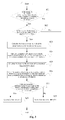
- Fig.1 illustrates a flow chart of a method for banknote mix of a financial self-service device according to an embodiment of the invention
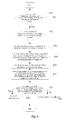
- Fig.2 illustrates a flow chart of banknote mix on the equal-emptying principle according to an embodiment of the invention
- Fig.3 illustrates a flow chart of banknote mix on the averaging principle according to an embodiment of the invention
- Fig.4 illustrates a flow chart of banknote mix on the maximum denomination principle according to an embodiment of the invention
- Fig.5 illustrates a flow chart of banknote mix on the minimum denomination principle according to an embodiment of the invention
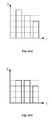
- Fig.6(a) illustrates a schematic diagram of mixing and dispensing banknotes on the equal-emptying principle according to an embodiment of the invention
- Fig.6(b) illustrates a schematic diagram of mixing and dispensing banknotes on the equal-emptying principle according to an embodiment of the invention
- Fig.6(c) illustrates a schematic diagram of mixing and dispensing banknotes on the equal-emptying principle according to an embodiment of the invention
- Fig. 6(d) illustrates a schematic diagram of mixing and dispensing banknotes on the equal-emptying principle according to an embodiment of the invention
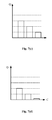
- Fig.7(a) illustrates a schematic diagram of mixing and dispensing banknotes on the averaging principle according to an embodiment of the invention
- Fig.7(b) illustrates a schematic diagram of mixing and dispensing banknotes on the averaging principle according to an embodiment of the invention
- Fig.7(c) illustrates a schematic diagram of mixing and dispensing banknotes on the averaging principle according to an embodiment of the invention.
- Fig.7(d) illustrates a schematic diagram of mixing and dispensing banknotes on the averaging principle according to an embodiment of the invention.
- An embodiment of the invention discloses a method for banknote mix of a financial self-service device to perform rapid and efficient banknote mix.
- the method for banknote mix of a financial self-service device includes:
- the step S2 of calculating the least common multiple of denominations of banknotes in the financial self-service device is a step S2 of calculating the least common multiple of denominations of banknotes in the financial self-service device.
- the banknote mix principle is any one of equal-emptying principle, averaging principle, maximum denomination principle and minimum denomination principle, and of course, banknotes can be mixed for the base of the amount of banknotes to be mixed alternatively on any other banknote mix principle.
- the method can further calculating the numbers of banknotes reserved in the respective banknote boxes of the financial self-service device corresponding to the least common multiple of the denominations of banknotes after the step S2 is performed.
- the numbers of reserved banknotes are calculated by subtracting 1 from the denominations of the respective banknote boxes of the financial self-service device divided by the least common multiple of the denominations of banknotes. Thus, remaining banknotes can be ensured in the respective banknote boxes of the financial self-service device for subsequent calculation of the residual.
- the method for banknote mix of a financial self-service device can further include calculating the greatest common divisor of the denominations of banknotes in the financial self-service device, determining whether the amount of banknotes to be mixed is divisible exactly by the greatest common divisor, and if so, then going on the banknote mix process; otherwise, failing banknote mix.
- banknote mix method based on four respective banknote mix principles will be detailed below in four embodiments.
- a financial self-service device is equipped with N ( N ⁇ 1) banknote boxes;
- the equal-emptying principle is adopted in a first embodiment.
- the method includes:
- E X - W
- the step S15 includes:
- step S 16 includes:
- step S17 of calculating the residual performing a second banknote mix for the residual on exhaustion method, and if there exists a combination in compliance with the residual, then going to the step S18 indicating successful banknote mix; otherwise, going to the step S 19 indicating failing banknote mix.
- each of rectangles represents one of the denominations
- the height of the rectangle represents the number of banknotes with that denomination.
- the flow of dispensing banknotes on the equal-emptying principle is performed sequentially as in Fig. 6(a) to Fig.6(d) by shortening firstly the higher rectangles and then the shorter rectangles until the respective rectangles are equal in height where the number of banknotes in the respective banknotes is substantially equal.
- the averaging principle is adopted in a second embodiment, which includes:
- E X - W
- step S26 includes:
- step S27 of calculating the residual performing a second banknote mix for the residual on exhaustion method, and if there exists a combination in compliance with the residual, then going to the step S28 indicating successful banknote mix; otherwise, going to the step S29 indicating failing banknote mix.
- each of rectangles represents one of the denominations, and the height of the rectangle represents the number of banknotes with that denomination.
- the flow of dispensing banknotes on the averaging principle is performed sequentially as in Fig.7(a) to Fig.7(d) by excluding blocks with equal heights (i.e., equal numbers of bank notes) from the respective rectangles from top to bottom.
- the maximum denomination principle is adopted in a third embodiment, which includes:
- E X - W
- the step S36 includes:
- step S37 of calculating the residual performing a second banknote mix for the residual on the exhaustion method, and if there exists a combination in compliance with the residual, then going to the step S38 indicating successful banknote mix; otherwise, going to the step S39 indicating failing banknote mix.
- a fourth embodiment which includes:
- E X - W
- the step S46 includes:
- step S47 of calculating the residual performing a second banknote mix for the residual on exhaustion method, and if there exists a combination in compliance with the residual, then going to the step S48 indicating successful banknote mix; otherwise, going to the step S49 indicating failing banknote mix.
Landscapes
- Physics & Mathematics (AREA)
- General Physics & Mathematics (AREA)
- Financial Or Insurance-Related Operations Such As Payment And Settlement (AREA)
Abstract
Description
- This application claims priority to Chinese Patent Application no.
200910214023.1 - The present invention relates to the field of finances and in particular to a method for banknote mix of a financial self-service device.
- Banknote mix of a financial self-service device refers to overall management on the numbers of banknotes in respective banknote boxes of an Automatic Teller Machine (ATM). Typically, a financial self-service device, i.e., an Automatic Teller Machine (ATM), is equipped with N (N≥1) banknote boxes in each of which there are separately stored banknotes with a specific denomination, and the respective banknote boxes can store therein banknotes with the same sum or different sums of denominations.
- In view of both satisfying the demand of a user and facilitating maintenance of supplementing banknotes while dispensing banknotes, a banknote mix system of a financial self-service device manages banknote mix of the financial self-service device dependent upon an amount of banknotes entered by the user and a condition of banknotes stored in banknote boxes.
- Typically, four banknote mix principles exist with practical application demands:
- (1) Uniformly emptying principle: respective banknote boxes are emptied with substantially equal probabilities.
- (2) Averaging principle: the numbers of banknotes dispensed from respective banknote boxes in a specific combination are substantially equal.
- (3) Maximum denomination principle: banknotes are dispensed preferentially from the banknote box with larger denomination banknotes to minimize the total number of dispensed banknotes.
- (4) Minimum denomination principle: banknotes are dispensed preferentially from the banknote box with smaller denomination banknotes to maximize the total number of dispensed banknotes.
- During banknote mix on the foregoing principles, however, an amount of banknotes entered by a user is indeterminate, so a condition of banknotes stored in banknote boxes is also indeterminate. In an existing method for banknote mix of a financial self-service device, an exhaustive search has to be performed in view of the number of banknote boxes and the numbers of banknotes therein to determine respectively whether banknotes can be mixed successfully in respective combinations of the banknote boxes, and banknotes can be dispensed only upon determining successful banknote mix. The problem of time-consuming and inefficient banknote mix may arise when the existing method for banknote mix of a financial self-service device performs the banknote mix for a number of banknote boxes with various denominations.
- In view of this, the invention provides a method for banknote mix of a financial self-service device to perform rapid and efficient banknote mix.
- The method for banknote mix of a financial self-service device includes:
- determining whether an amount of banknotes to be mixed is not larger than amounts of banknotes remaining in banknote boxes of the financial self-service device, and if not, then calculating least common multiple of denominations of banknotes in the financial self-service device; otherwise, failing banknote mix;
- dividing the amount of banknotes to be mixed by the least common multiple, taking the quotient and the remainder respectively, forming a base and a mantissa;
- mixing banknotes for the base of the amount of banknotes to be mixed on a banknote mix principle; and
- taking the sum of the amount of remaining banknotes of the base after the banknote mix and the mantissa of the amount of banknotes to be mixed as a residual, and performing a second banknote mix for the residual on exhaustion method, and if there exists a solution in compliance with the residual, then succeeding in banknote mix; otherwise, failing banknote mix.
- Preferably, before the step of forming the base and the mantissa of the amount of banknotes to be mixed, the method further comprises: calculating the numbers of banknotes reserved in the banknote boxes with the respective denomination banknotes based on the denominations of the banknote in the respective banknote boxes of the financial self-service device and the least common multiple thereof.
- Preferably, the numbers of banknotes reserved in the banknote boxes with the respective denominations are equal to the value by subtracting 1 from the respective denominations of the banknote boxes divided by the least common multiple.
- Preferably, before the step of calculating the least common multiple of the denominations of banknotes in the financial self-service device, the method further comprises: calculating largest common divisor of the denominations of banknotes in the financial self-service device, determining whether the amount of banknotes to be mixed is dividable exactly by the largest common divisor, and if so, then going on the banknote mix process; otherwise, failing banknote mix.
- Preferably, the banknote mix principle is equal-emptying principle, averaging principle, maximum denomination principle or minimum denomination principle.
- Preferably, if the banknote mix principle is equal-emptying principle, the step of mixing banknotes for the base of the amount of banknotes to be mix on the banknote mix principle includes:
- counting the numbers of banknotes in the respective banknote boxes and determining one of the banknote boxes with the largest number of banknotes; and
- calculating the number of banknotes dispensed from the banknote box with the largest number of banknotes and dispensing the corresponding numbers of banknotes from the respective banknote boxes.
- Preferably, if the banknote mix principle is averaging principle, the step of mixing the base of the amount of banknotes to be mixed on the banknote mix principle includes:
- counting the numbers of banknotes in the respective banknote boxes; and
- calculating the numbers of banknotes dispensed from the respective banknote boxes in a mode of dispensing equal numbers of banknotes from the respective banknote boxes and dispensing the corresponding numbers of banknotes from the respective banknote boxes.
- Preferably, if the banknote mix principle is maximum denomination principle, the step of mixing banknotes for the base of the amount of banknotes to be mixed on the banknote mix principle includes:
- counting the numbers of banknotes in the respective banknote boxes; and
- calculating the numbers of banknotes dispensed from the respective banknote boxes in a mode of dispensing banknotes preferentially from one of the banknote boxes with the largest denomination of banknotes and dispensing the corresponding numbers of banknotes from the respective banknote boxes.
- Preferably, if the banknote mix principle is minimum denomination principle, the step of mixing banknotes for the base of the amount of banknotes to be mixed on the banknote mix principle includes:
- counting the numbers of banknotes in the respective banknote boxes; and
- calculating the numbers of banknotes dispensed from the respective banknote boxes in a mode of dispensing banknotes preferentially from one of the banknote boxes with the smallest denomination of banknotes and dispensing the corresponding numbers of banknotes from the respective banknote boxes.
- Preferably, the step of performing the second banknote mix for the residual on exhaustion method comprises:
- determining a conditional multivariate equation from the residual, the respective denominations of banknotes and the corresponding remaining amounts of banknotes of the respective denominations in the financial self-service device; and
- solving the constrained multivariate equation as combinations of the numbers of banknotes dispensed from the respective banknotes by exhaustion method and finishing banknote mix if any of the combinations is successful.
- As can be apparent from the foregoing solutions, in the method for banknote mix of a financial self-service device according to the invention, firstly it is determined prior to banknote mix whether the amounts of banknotes remaining in the financial self-service device is sufficient for banknote mix, and if not so, then banknote mix fails; otherwise, the base and the mantissa of the amount of banknotes to be mixed are calculated so that firstly the banknote mix is performed for the base of the amount of banknotes to be mixed on the banknote mix principle, and then the sum of the amount of remaining banknotes of the base after the banknote mix and the mantissa of the amount of banknotes to be mixed is took as a residual on exhaustion method, a second banknote mix is performed for the residual, and if there exists a combination in compliance with the residual, then banknote mix succeeds; otherwise, banknote mix fails. Since the base of the amount of banknotes to be mixed are mixed firstly and then the residual is mixed on exhaustion method, it is not necessary to determine respectively whether banknotes can be mixed successfully in each of combinations of the respective banknote boxes; and since the residual is a small magnitude relative to the amount of banknotes to be mixed, a just a short period of time will be spent even for performing banknote mix by exhaustion method, thereby achieving rapid and efficient banknote mix.
- In order to make the solutions according to the embodiments of the invention or in the prior art more apparent, the drawings used to describe the embodiments or the prior art will be introduced briefly. Apparently, the drawings described below merely illustrate some of the embodiments of the invention, and those ordinarily skilled in the art can derive from these drawings other drawings without any inventive effort. In the drawings:
-
Fig.1 illustrates a flow chart of a method for banknote mix of a financial self-service device according to an embodiment of the invention; -
Fig.2 illustrates a flow chart of banknote mix on the equal-emptying principle according to an embodiment of the invention; -
Fig.3 illustrates a flow chart of banknote mix on the averaging principle according to an embodiment of the invention; -
Fig.4 illustrates a flow chart of banknote mix on the maximum denomination principle according to an embodiment of the invention; -
Fig.5 illustrates a flow chart of banknote mix on the minimum denomination principle according to an embodiment of the invention; -
Fig.6(a) illustrates a schematic diagram of mixing and dispensing banknotes on the equal-emptying principle according to an embodiment of the invention; -
Fig.6(b) illustrates a schematic diagram of mixing and dispensing banknotes on the equal-emptying principle according to an embodiment of the invention; -
Fig.6(c) illustrates a schematic diagram of mixing and dispensing banknotes on the equal-emptying principle according to an embodiment of the invention; -
Fig. 6(d) illustrates a schematic diagram of mixing and dispensing banknotes on the equal-emptying principle according to an embodiment of the invention; -
Fig.7(a) illustrates a schematic diagram of mixing and dispensing banknotes on the averaging principle according to an embodiment of the invention; -
Fig.7(b) illustrates a schematic diagram of mixing and dispensing banknotes on the averaging principle according to an embodiment of the invention; -
Fig.7(c) illustrates a schematic diagram of mixing and dispensing banknotes on the averaging principle according to an embodiment of the invention; and -
Fig.7(d) illustrates a schematic diagram of mixing and dispensing banknotes on the averaging principle according to an embodiment of the invention. - The solutions according to the embodiments of the invention will be clearly and fully described below with reference to the drawings in the embodiments of the invention. Apparently, the embodiments described below are merely some but not all of embodiments of the invention. Any other embodiments that will occur to those ordinarily skilled in the art in light of the embodiments of the invention here shall come into the scope of the invention.
- An embodiment of the invention discloses a method for banknote mix of a financial self-service device to perform rapid and efficient banknote mix.
- Particularly as illustrated in
Fig.1 , the method for banknote mix of a financial self-service device includes: - The step S1 of determining whether an amount of banknotes to be mixed is not larger than an amount of banknotes remaining in banknote boxes of the financial self-service device, and if not, then going to the step S2; otherwise, going to the step S7.
- The step S2 of calculating the least common multiple of denominations of banknotes in the financial self-service device.
- The step S3 of dividing the amount of banknotes to be mixed by the least common multiple and taking the quotient and the remainder respectively, forming a base and a mantissa.
- The step S4 of mixing banknotes for the base of the amount of banknotes to be mixed on a banknote mix principle.
- Specifically, the banknote mix principle is any one of equal-emptying principle, averaging principle, maximum denomination principle and minimum denomination principle, and of course, banknotes can be mixed for the base of the amount of banknotes to be mixed alternatively on any other banknote mix principle.
- The step S5 of taking the sum of the amount of remaining banknotes of the base after the banknote mix and the mantissa of the amount of banknotes to be mixed as a residual, and performing a second banknote mix for the residual on exhaustion method, and if there exists a combination in compliance with the residual, then going to the step S6 indicating successful banknote mix; otherwise, going to the step S7 indicating failing banknote mix.
- In the method for banknote mix according to the foregoing embodiment, two results of successful banknote mix and failing banknote mix can be displayed on an interface or indicated with different rings as in the prior art.
- Specifically, in order to improve a successful probability of the method for banknote mix of a financial self-service device, the method can further calculating the numbers of banknotes reserved in the respective banknote boxes of the financial self-service device corresponding to the least common multiple of the denominations of banknotes after the step S2 is performed.
- The numbers of reserved banknotes are calculated by subtracting 1 from the denominations of the respective banknote boxes of the financial self-service device divided by the least common multiple of the denominations of banknotes. Thus, remaining banknotes can be ensured in the respective banknote boxes of the financial self-service device for subsequent calculation of the residual.
- Furthermore, before the step of calculating the least common multiple of the denominations of banknotes in the financial self-service device, the method for banknote mix of a financial self-service device can further include calculating the greatest common divisor of the denominations of banknotes in the financial self-service device, determining whether the amount of banknotes to be mixed is divisible exactly by the greatest common divisor, and if so, then going on the banknote mix process; otherwise, failing banknote mix.
- A banknote mix method based on four respective banknote mix principles will be detailed below in four embodiments.
- Assumed:
- (1) A financial self-service device is equipped with N (N≥1) banknote boxes;
- (2) Denominations of the banknotes in the respective banknote boxes are indicated by Ci (i=1, 2, ..., N), where the denominations of the banknotes in the respective banknote boxes may or may not be equal;
- (3) The number of banknotes in the respective banknote boxes are indicated by Qi (i=1, 2, ... , N); and
- (4) An amount of banknotes to be mixed is X, where the amount of banknotes to be mixed is divided into two parts: X = W + E, wherein W denotes a base and E denotes a mantissa.
- The equal-emptying principle is adopted in a first embodiment.
- As illustrated in
Fig.2 , the method includes: - The step S 10 of calculating amounts of banknotes remaining in the respective banknote boxes of the financial self-service devices, comparing the amount of banknotes to be mixed with the amounts of banknotes remaining in the respective banknote boxes, and if the amount of banknotes to be mixed is not larger than the sum of the amounts of banknotes remaining in the respective banknote boxes, then going to the step S11; otherwise, going to the
step S 19. - Specifically, the sum of the amounts of banknotes remaining in the respective banknote boxes is calculated as

- The step S11 of calculating the largest common divisor of the denominations of banknotes, determining whether the amount of banknotes to be mixed is an integer multiple of the largest common divisor of the denominations of the banknotes in the respective banknote boxes, and if so, then going to the step S12; otherwise, going to the step S19.
- Specifically, it is assumed that the largest common divisor is P and it is determined whether X/P is an integer.
- The step S12 of calculating the least common multiple of the denominations of banknotes in the financial self-service device as Z.
- The step S13 of calculating the numbers of banknotes reserved in the respective banknote boxes of the financial self-service device corresponding to the least common multiple of the denominations of banknotes.
- Specifically, the numbers of banknotes reserved in the respective banknote boxes are calculated as:

- The step S14 of dividing the amount of banknotes to be mixed by the least common multiple and taking the quotient and the remainder respectively, wherein the quotient is the base of the amount of banknotes to be mixed and the remainder is the mantissa of the amount of banknotes to be mixed.
- Specifically, the base of the amount of banknotes to be mixed is calculated as

- The step S15 of counting the numbers of banknotes in the respective banknote boxes and determining one of the banknote boxes with the largest number of banknotes.
- Specifically, the step S15 includes:
- (1) Calculating the maximum and the minimum of Qi (i=1, 2, ..., N), generally Qj = max{Qi} and Qn = min {Qi}.
- (2) Calculating the difference between Qi and QN : Vi = Qi - QN , (i=1,2,●●●,N)
- (3) The following two scenarios exist:
- If

- If

- (4) Calculating the number of dispensed banknotes with the denomination Cj corresponding to Qj as

- (5) If Vj ≥ mj , then going to (6); otherwise, going to (7);
- (6) Recording the real number of dispensed banknotes with the denomination Cj as Mj = Mj + mj ;
- (7) Calculating Wj MjCj , W = W - Wj and Qj = Qj - Mj, and going back to (1) of the step S15.
- The step S16 of calculating the number of banknotes dispensed from the banknote box with the largest number of banknotes and dispensing the corresponding numbers of banknotes from the respective banknote boxes.
- Specifically, the
step S 16 includes: - (1) Let k = 1, i = 1 and

- (2) Calculating


- (3) If
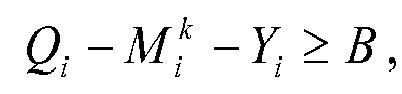
- (4) Recording the number of dispensed banknotes with the denomination Ci as

- (5) i = i + 1, and if i < N , then jumping to (3) ; otherwise, jumping to (6);
- (6) Calculating

- a) If W > Wk , then k = k + 1 and jumping to (2);
- b) If W < Wk , then

- c) If W = Wk , then

- The step S17 of calculating the residual, performing a second banknote mix for the residual on exhaustion method, and if there exists a combination in compliance with the residual, then going to the step S18 indicating successful banknote mix; otherwise, going to the step S 19 indicating failing banknote mix.
- Specifically, the second banknote mix for the residual is calculated by solving the constrained multivariate equation


- As illustrated in
Fig. 6(a) to Fig.6(d) , each of rectangles represents one of the denominations, and the height of the rectangle represents the number of banknotes with that denomination. The flow of dispensing banknotes on the equal-emptying principle is performed sequentially as inFig. 6(a) to Fig.6(d) by shortening firstly the higher rectangles and then the shorter rectangles until the respective rectangles are equal in height where the number of banknotes in the respective banknotes is substantially equal. - The averaging principle is adopted in a second embodiment, which includes:
- The step S21 of calculating amounts of banknotes remaining in the respective banknote boxes of the financial self-service devices, comparing the amount of banknotes to be mixed with the amounts of banknotes remaining in the respective banknote boxes, and if the amount of banknotes to be mixed is not larger than the amounts of banknotes remaining in the respective banknote boxes, then going to the step S22; otherwise, going to the step S29.
- Specifically, the sum of the amounts of banknotes remaining in the respective banknote boxes, are calculated as

- The step S22 of calculating the largest common divisor of the denominations of banknotes, determining whether the amount of banknotes to be mixed is an integer multiple of the largest common divisor of the denominations of banknotes, and if so, then going to the step S23; otherwise, going to the step S29.
- Specifically, it is assumed that the largest common divisor is P, it is determined whether X/P is an integer.
- The step S23 of calculating the least common multiple of the denominations of banknotes in the financial self-service device as Z.
- The step S24 of calculating the numbers of banknotes reserved in the respective banknote boxes of the financial self-service device corresponding to the least common multiple of the denominations of banknotes.
- Specifically, the numbers of banknotes reserved in the respective banknote boxes are calculated as:

- The step S25 of dividing the amount of banknotes to be mixed by the least common multiple and taking the quotient and the remainder respectively, wherein the value of multiplying the quotient by the least common multiple is the base of the amount of banknotes to be mixed and the remainder is the mantissa of the amount of banknotes to be mixed.
- Specifically, the base of the amount of banknotes to be mixed is calculated as

- The step S26 of counting the numbers of banknotes in the respective banknote boxes and calculating the numbers of banknotes dispensed from the respective banknote boxes in a mode of equal numbers of banknotes dispensed from the respective banknote.
- Specifically, the step S26 includes:
- (1) Let k = 1, i = 1 and

- (2) Calculating


- (3) If

- (4) Recording the number of dispensed banknotes with the denomination Ci as

- (5) i = i + 1, and if i < N , then jumping to (3) ; otherwise, jumping to (6);
- (6) Calculating

- a) If W > Wk , then k = k + 1 and jumping to (2);
- b) If W < Wk, then

- c) If W = Wk , then

- The step S27 of calculating the residual, performing a second banknote mix for the residual on exhaustion method, and if there exists a combination in compliance with the residual, then going to the step S28 indicating successful banknote mix; otherwise, going to the step S29 indicating failing banknote mix.
- Specifically, the second banknote mix for the residual is calculated by solving the constrained multivariate equation
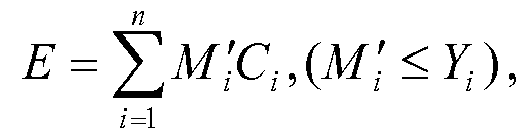
- As illustrated in
Fig.7(a) to Fig.7(d) , also each of rectangles represents one of the denominations, and the height of the rectangle represents the number of banknotes with that denomination. The flow of dispensing banknotes on the averaging principle is performed sequentially as inFig.7(a) to Fig.7(d) by excluding blocks with equal heights (i.e., equal numbers of bank notes) from the respective rectangles from top to bottom. - The maximum denomination principle is adopted in a third embodiment, which includes:
- The step S31 of calculating amounts of banknotes remaining in the respective banknote boxes of the financial self-service devices, comparing the amount of banknotes to be mixed with the amounts of banknotes remaining in the respective banknote boxes, and if the amount of banknotes to be mixed is not larger than the sum of the amounts of banknotes remaining in the respective banknote boxes, then going to the step S32; otherwise, going to the step S38.
- Specifically, the sum of the amounts of banknotes remaining in the respective banknote boxes is calculated as

- The step S32 of calculating the largest common divisor of the denominations of banknotes, determining whether the amount of banknotes to be mixed is an integer multiple of the largest common divisor of the denominations of banknotes, and if so, then going to the step S33; otherwise, going to the step S39.
- Specifically, it is assumed that the largest common divisor is P and it is determined whether X/P is an integer.
- The step S33 of calculating the least common multiple of the denominations of banknotes in the financial self-service device as Z.
- The step S34 of calculating the numbers of banknotes reserved in the respective banknote boxes of the financial self-service device corresponding to the least common multiple of the denominations of banknotes.
- Specifically, the numbers of banknotes reserved in the respective banknote boxes are calculated as:

- The step S35 of dividing the amount of banknotes to be mixed by the least common multiple and taking the quotient and the remainder respectively, wherein the value of multiplying the quotient by the least common multiple is the base of the amount of banknotes to be mixed and the remainder is the mantissa of the amount of banknotes to be mixed.
- Specifically, the base of the amount of banknotes to be mixed is calculated as

- The step S36 of counting the numbers of banknotes in the respective banknote boxes, calculating the number of banknotes dispensed from the banknote boxes with the largest denomination of banknotes and dispensing the corresponding numbers of banknotes from the respective banknote boxes.
- Specifically, the step S36 includes:
- (1) k = 0 ;
- (2) Calculating
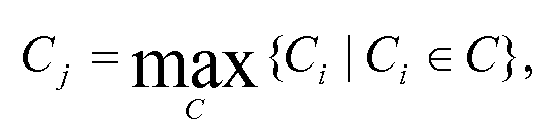

- (3) If Qj - Yj ≥ B , then going to (4); otherwise, going to (5);
- (4) Calculating the number of dispensed banknotes with the denomination Cj as Mj = B, and going to the step S36.
- (5) Calculating the number of dispensed banknotes with the denomination Cj as Mj = Qj - Yj , and calculating Wj = Mj × Cj and W = W - Wj.
- (6) Excluding Cj from the queue C, i.e., C = {Ci |i ≠ j,i = 1,2,●●●, N}
- (7) k = k + 1. If k < N , then performing (2) again; otherwise, E = E + W and going to the step S36.
- The step S37 of calculating the residual, performing a second banknote mix for the residual on the exhaustion method, and if there exists a combination in compliance with the residual, then going to the step S38 indicating successful banknote mix; otherwise, going to the step S39 indicating failing banknote mix.
- Specifically, the second banknote mix for the residual is calculated by solving the constrained multivariate equation

- The minimum-par-value principle is adopted in a fourth embodiment, which includes:
- The step S41 of calculating amounts of banknotes remaining in the respective banknote boxes of the financial self-service devices, comparing the amount of banknotes to be mixed with the amounts of banknotes remaining in the respective banknote boxes, and if the amount of banknotes to be mixed is smaller than the amounts of banknotes remaining in the respective banknote boxes, then going to the step S42; otherwise, going to the step S48.
- Specifically, the sum of the amounts of banknotes remaining in the respective banknote boxes, are calculated

- The step S42 of calculating the largest common divisor of the denominations of banknotes, determining whether the amount of banknotes to be mixed is an integer multiple of the largest common divisor of the denominations of banknotes, and if so, then going to the step S43; otherwise, going to the step S49.
- Specifically, it is assumed that the largest common divisor is P, it is determined whether X/P is an integer.
- The step S43 of calculating the least common multiple of the denominations of banknotes in the financial self-service device as Z.
- The step S44 of calculating the numbers of banknotes reserved in the respective banknote boxes of the financial self-service device corresponding to the least common multiple of the denominations of banknotes.
- Specifically, the numbers of banknotes reserved in the respective banknote boxes are calculated as:

- The step S45 of dividing the amount of banknotes to be mixed by the least common multiple and taking the quotient and the remainder respectively, wherein the value of multiplying the quotient by the least common multiple is the base of the amount of banknotes to be mixed and the remainder is the mantissa of the amount of banknotes to be mixed.
- Specifically, the base of the amount of banknotes to be mixed is calculated as

- The step S46 of counting the numbers of banknotes in the respective banknote boxes, calculating the number of banknotes dispensed from the banknote boxes with the smallest denomination of banknotes and dispensing the corresponding numbers of banknotes from the respective banknote boxes.
- Specifically, the step S46 includes:
- (1) k = 0 ;
- (2) Calculating


- (3) If Qj - Yj ≥ B , then going to (4); otherwise, going to (5);
- (4) Calculating the number of dispensed banknotes with the denomination Cj as Mj = B, and going to the step S46.
- (5) Calculating the number of dispensed banknotes with the denomination Cj as Mj = Qj - Yj , calculating Wj = Mj × Cj . and W = W - Wj .
- (6) Excluding Cj from the queue C, i.e., C = {Ci |i ≠ j,i = 1,2.,●●●, N}.
- (7) k = k + 1. If k < N , then performing (2) again; otherwise, E = E + W and going to the step S46.
- The step S47 of calculating the residual, performing a second banknote mix for the residual on exhaustion method, and if there exists a combination in compliance with the residual, then going to the step S48 indicating successful banknote mix; otherwise, going to the step S49 indicating failing banknote mix.
- Specifically, the second banknote mix for the residual is calculated by solving the constrained multivariate equation

- The foregoing description of the disclosed embodiments enables those skilled in the art to practice or use the invention. Various modifications to these embodiments will become apparent to those skilled in the art, and the general principle defined in the invention can be practiced in other embodiments without departing from the spirit or scope of the invention. Accordingly, the invention will not be limited to these embodiments ad indicated here but shall be accorded with the broadest scope in consistency with the principle and novel features disclosed here.
Claims (10)
- A method for banknote mix of a financial self-service device, comprising:determining whether an amount of banknotes to be mixed is not larger than amounts of banknotes remaining in banknote boxes of the financial self-service device, and if not, then calculating least common multiple of denominations of banknotes in the financial self-service device; otherwise, failing banknote mix;dividing the amount of banknotes to be mixed by the least common multiple, taking the quotient and the remainder respectively, and forming a base and mantissa of the amount of banknotes to be mixed;mixing banknotes for the base of the amount of banknotes to be mixed on a banknote mix principle; andtaking the sum of the amount of remaining banknotes of the base after the banknote mix and the mantissa of the amount of banknotes to be mixed as a residual and performing a second banknote mix for the residual on exhaustion method, and if there exists a solution in compliance with the residual, then succeeding in banknote mix; otherwise, failing banknote mix.
- The method for banknote mix according to claim 1, further comprising: before the step of forming the base and the mantissa of the amount of banknotes to be mixed, calculating the numbers of banknotes reserved in the banknote boxes with the respective denominations, based on the denominations of the banknote in the respective banknote boxes of the financial self-service device and the least common multiple.
- The method for banknote mix according to claim 2, wherein the numbers of banknotes reserved in the banknote boxes with the respective denominations are equal to the value by subtracting 1 from the respective denominations of the banknote boxes divided by the least common multiple.
- The method for banknote mix according to claim 1 or 2, further comprising: before the step of calculating the least common multiple of the denominations of banknotes in the financial self-service device, calculating largest common divisor of the denominations of banknotes in the financial self-service device, determining whether the amount of banknotes to be mixed is dividable exactly by the largest common divisor, and if so, then going on the banknote mix process; otherwise, failing banknote mix.
- The method for banknote mix according to claim 1, wherein the banknote mix principle is equal-emptying principle, averaging principle, maximum denomination principle or minimum denomination principle.
- The method for banknote mix according to claim 5, wherein if the banknote mix principle is the equal-emptying principle, the step of mixing banknotes for the base of the amount of banknotes to be mixed on the banknote mix principle comprises:counting the numbers of banknotes in the respective banknote boxes and determining one of the banknote boxes with the largest number of banknotes; andcalculating the number of banknotes dispensed from the banknote box with the largest number of banknotes and dispensing the corresponding numbers of banknotes from the respective banknote boxes.
- The method for banknote mix according to claim 5, wherein if the banknote mix principle is the averaging principle, the step of mixing banknotes for the base of the amount of banknotes to be mixed on the banknote mix principle comprises:counting the numbers of banknotes in the respective banknote boxes; andcalculating the numbers of banknotes dispensed from the respective banknote boxes in a mode of dispensing equal numbers of banknotes from the respective banknote boxes and dispensing the corresponding numbers of banknotes from the respective banknote boxes.
- The method for banknote mix according to claim 5, wherein if the banknote mix principle is the maximum denomination principle, the step of mixing banknotes for the base of the amount of banknotes to be mixed on the banknote mix principle comprises:counting the numbers of banknotes in the respective banknote boxes; andcalculating the numbers of banknotes dispensed from the respective banknote boxes in a mode of dispensing banknotes preferentially from one of the banknote boxes with the largest denomination of banknotes and dispensing the corresponding numbers of banknotes from the respective banknote boxes.
- The method for banknote mix according to claim 5, wherein if the banknote mix principle is the minimum denomination principle, the step of mixing banknotes for the base of the amount of banknotes to be mixed on the banknote mix principle comprises:counting the numbers of banknotes in the respective banknote boxes; andcalculating the numbers of banknotes dispensed from the respective banknote boxes in a mode of dispensing banknotes preferentially from one of the banknote boxes with the smallest denomination of banknotes and dispensing the corresponding numbers of banknotes from the respective banknote boxes.
- The method for banknote mix according to claim 1, wherein the step of performing the second banknote mix for the residual on exhaustion method comprises:determining a conditional multivariate equation from the residual, the respective denominations of banknotes and the corresponding remaining amounts of banknotes of the respective denominations in the financial self-service device; andsolving the constrained multivariate equation as combinations of the numbers of banknotes dispensed from the respective banknotes by exhaustion method and finishing banknote mix if any of the combinations is successful.
Applications Claiming Priority (2)
| Application Number | Priority Date | Filing Date | Title |
|---|---|---|---|
| CN2009102140231A CN101763684B (en) | 2009-12-22 | 2009-12-22 | Banknote matching method for financial self-service equipment |
| PCT/CN2010/079173 WO2011076049A1 (en) | 2009-12-22 | 2010-11-26 | Method for bank note distribution of financial self-service equipment |
Publications (2)
| Publication Number | Publication Date |
|---|---|
| EP2518699A1 true EP2518699A1 (en) | 2012-10-31 |
| EP2518699A4 EP2518699A4 (en) | 2013-07-03 |
Family
ID=42494834
Family Applications (1)
| Application Number | Title | Priority Date | Filing Date |
|---|---|---|---|
| EP10838612.9A Ceased EP2518699A4 (en) | 2009-12-22 | 2010-11-26 | Method for bank note distribution of financial self-service equipment |
Country Status (5)
| Country | Link |
|---|---|
| US (1) | US20120265337A1 (en) |
| EP (1) | EP2518699A4 (en) |
| CN (1) | CN101763684B (en) |
| AU (1) | AU2010335833B2 (en) |
| WO (1) | WO2011076049A1 (en) |
Cited By (2)
| Publication number | Priority date | Publication date | Assignee | Title |
|---|---|---|---|---|
| CN103544769A (en) * | 2013-09-25 | 2014-01-29 | 东方通信股份有限公司 | Side-rotation card jamming self-handling device and card jamming and popup handling method thereof |
| EP3176762A4 (en) * | 2014-07-31 | 2017-11-01 | GRG Banking Equipment Co., Ltd. | Banknote distribution method, banknote distribution device and financial self-service equipment |
Families Citing this family (19)
| Publication number | Priority date | Publication date | Assignee | Title |
|---|---|---|---|---|
| CN101763684B (en) * | 2009-12-22 | 2012-08-08 | 广州广电运通金融电子股份有限公司 | Banknote matching method for financial self-service equipment |
| CN102096965B (en) * | 2011-01-28 | 2012-08-08 | 迈普通信技术股份有限公司 | Automatic teller machine (ATM) management system and automatic currency delivery method |
| CN102800159B (en) * | 2011-05-26 | 2015-03-04 | 日立(中国)研究开发有限公司 | Automatic transaction device and method for predicating cash demanded quantity |
| CN102903177B (en) * | 2012-10-09 | 2014-12-31 | 广州广电运通金融电子股份有限公司 | Cash dispensing method of financial self-service equipment |
| CN102903176B (en) * | 2012-10-09 | 2014-10-22 | 广州广电运通金融电子股份有限公司 | Cash dispensing method of financial self-service equipment |
| CN104504803B (en) * | 2015-01-05 | 2017-04-26 | 广州广电运通金融电子股份有限公司 | Cash distribution method and device and financial self-service device |
| CN104504804B (en) * | 2015-01-07 | 2017-05-24 | 广州广电运通信息科技有限公司 | Cash distribution method and device and financial self-service device |
| CN107346582B (en) * | 2016-05-06 | 2019-09-27 | 广州御银科技股份有限公司 | A kind of equilibrium note output algorithm |
| CN107346581A (en) * | 2016-05-06 | 2017-11-14 | 广州御银科技股份有限公司 | A kind of more denomination note output algorithms |
| CN106384458A (en) * | 2016-09-21 | 2017-02-08 | 深圳怡化电脑股份有限公司 | Cash recycling system (CRS) and cash replenishing control method |
| WO2018119631A1 (en) * | 2016-12-27 | 2018-07-05 | 深圳怡化电脑股份有限公司 | Banknote allocation method and system for banknote dispensing of self-service terminal |
| CN107484429B (en) * | 2017-04-18 | 2020-04-07 | 深圳怡化电脑股份有限公司 | Cash-out control method and system of financial terminal and financial terminal |
| WO2018209649A1 (en) * | 2017-05-18 | 2018-11-22 | 深圳怡化电脑股份有限公司 | Banking self-service apparatus, and method of balance verification, and restocking and redistributing banknotes |
| CN109377636A (en) * | 2018-08-28 | 2019-02-22 | 苏州浪潮智能软件有限公司 | A kind of bank note distribution method for realizing minimum note output number based on wholesale circulator |
| CN110634227B (en) * | 2019-09-04 | 2021-11-09 | 浪潮金融信息技术有限公司 | Banknote distribution method for realizing balanced banknote output based on large-amount circulator |
| CN113611053B (en) * | 2021-07-09 | 2023-01-31 | 浪潮金融信息技术有限公司 | Method, system and medium for small-denomination limited money distribution of self-service equipment |
| CN113593140B (en) * | 2021-07-09 | 2022-08-05 | 浪潮金融信息技术有限公司 | Bank note distribution method, system and medium for financial self-service equipment |
| CN113870495B (en) * | 2021-10-14 | 2023-03-28 | 长城信息股份有限公司 | Equal-piece banknote distribution method for multiple banknote boxes storing banknotes of different denominations in withdrawal device |
| CN114170743B (en) * | 2021-12-21 | 2023-03-21 | 中国工商银行股份有限公司 | Banknote distribution method, device and storage medium |
Family Cites Families (10)
| Publication number | Priority date | Publication date | Assignee | Title |
|---|---|---|---|---|
| GB1351937A (en) * | 1970-06-04 | 1974-05-15 | De La Rue Instr | Cash dispensing apparatus |
| US4185646A (en) * | 1977-08-15 | 1980-01-29 | Trw Inc. | Control circuit for multi-denomination cash dispenser |
| JPS5862786A (en) * | 1981-10-09 | 1983-04-14 | シャープ株式会社 | Teller system |
| JPS5930185A (en) * | 1982-08-06 | 1984-02-17 | インタ−ナショナル ビジネス マシ−ンズ コ−ポレ−ション | Paper money dump control system |
| US6715670B1 (en) * | 2000-04-19 | 2004-04-06 | International Business Machines Corporation | Interactive dispense denomination adjustment |
| JP3999476B2 (en) * | 2001-06-21 | 2007-10-31 | 日立オムロンターミナルソリューションズ株式会社 | Banknote handling equipment |
| CA2500881A1 (en) * | 2005-03-14 | 2006-09-14 | Cashcode Company Inc. | Method and apparatus for optimizing a currency validator/dispenser |
| ITMI20060407A1 (en) * | 2006-03-07 | 2007-09-08 | Razzaboni Cima Spa | DEVICE AND METHOD FOR STORAGE AND DISTRIBUTION OF BANKNOTES |
| DE102009006810A1 (en) * | 2009-01-30 | 2010-08-05 | Wincor Nixdorf International Gmbh | Apparatus and method for depositing and / or disbursing at least banknotes of a first denomination and banknotes of a second denomination |
| CN101763684B (en) * | 2009-12-22 | 2012-08-08 | 广州广电运通金融电子股份有限公司 | Banknote matching method for financial self-service equipment |
-
2009
- 2009-12-22 CN CN2009102140231A patent/CN101763684B/en active Active
-
2010
- 2010-11-26 US US13/512,566 patent/US20120265337A1/en not_active Abandoned
- 2010-11-26 WO PCT/CN2010/079173 patent/WO2011076049A1/en not_active Ceased
- 2010-11-26 EP EP10838612.9A patent/EP2518699A4/en not_active Ceased
- 2010-11-26 AU AU2010335833A patent/AU2010335833B2/en not_active Ceased
Cited By (3)
| Publication number | Priority date | Publication date | Assignee | Title |
|---|---|---|---|---|
| CN103544769A (en) * | 2013-09-25 | 2014-01-29 | 东方通信股份有限公司 | Side-rotation card jamming self-handling device and card jamming and popup handling method thereof |
| CN103544769B (en) * | 2013-09-25 | 2015-11-04 | 东方通信股份有限公司 | Side is rotary gulps down the self-service treating apparatus of card and card throughput disposal route |
| EP3176762A4 (en) * | 2014-07-31 | 2017-11-01 | GRG Banking Equipment Co., Ltd. | Banknote distribution method, banknote distribution device and financial self-service equipment |
Also Published As
| Publication number | Publication date |
|---|---|
| CN101763684B (en) | 2012-08-08 |
| WO2011076049A1 (en) | 2011-06-30 |
| US20120265337A1 (en) | 2012-10-18 |
| AU2010335833A1 (en) | 2012-07-05 |
| CN101763684A (en) | 2010-06-30 |
| AU2010335833B2 (en) | 2014-04-17 |
| EP2518699A4 (en) | 2013-07-03 |
Similar Documents
| Publication | Publication Date | Title |
|---|---|---|
| US20120265337A1 (en) | Method for bank note distribution of financial self-service equipment | |
| US10762738B2 (en) | Cash management system, cashier device, and cash management method | |
| US20150206370A1 (en) | Cash replenishment method for financial self-service equipment | |
| EP2908295B1 (en) | Cash replenishment method for financial self-service equipment | |
| US8695777B2 (en) | Device for handling banknotes with optimized mixed storage | |
| CN104504804B (en) | Cash distribution method and device and financial self-service device | |
| TW201118809A (en) | Cash replenishment plan support system and cash replenishment plan support method | |
| CN103123730A (en) | Paper sheet processing device and paper sheet processing method | |
| US20060219516A1 (en) | Method and apparatus for optimizing a currency validator/dispenser | |
| CN107358759B (en) | Clearing method and system of financial self-service equipment, terminal equipment and storage medium | |
| JP5012199B2 (en) | Cash processing equipment | |
| JP5866834B2 (en) | Cash processing equipment | |
| AU2006225039B2 (en) | Method and apparatus for optimizing a currency validator/dispenser | |
| JP2008176395A (en) | Automatic payment machine | |
| CN113870495B (en) | Equal-piece banknote distribution method for multiple banknote boxes storing banknotes of different denominations in withdrawal device | |
| CN104809646A (en) | Financial self-service business handling method and system | |
| CN107484429B (en) | Cash-out control method and system of financial terminal and financial terminal | |
| US20250131398A1 (en) | Money processing system and money processing method | |
| CN114170743A (en) | Banknote distribution method, device and storage medium | |
| CN106952422B (en) | Method and device for controlling bank self-service terminal to discharge bank notes | |
| JP2010079694A (en) | Automatic transaction apparatus, automatic transaction system, information management server and automatic transaction method | |
| JP2007272507A (en) | Cash processor | |
| JP5245207B2 (en) | Deposit / withdrawal processing equipment | |
| KR20060033981A (en) | Method and apparatus of coin release in money exchanger | |
| JPH07325975A (en) | Change dispenser |
Legal Events
| Date | Code | Title | Description |
|---|---|---|---|
| PUAI | Public reference made under article 153(3) epc to a published international application that has entered the european phase |
Free format text: ORIGINAL CODE: 0009012 |
|
| 17P | Request for examination filed |
Effective date: 20120613 |
|
| AK | Designated contracting states |
Kind code of ref document: A1 Designated state(s): AL AT BE BG CH CY CZ DE DK EE ES FI FR GB GR HR HU IE IS IT LI LT LU LV MC MK MT NL NO PL PT RO RS SE SI SK SM TR |
|
| DAX | Request for extension of the european patent (deleted) | ||
| A4 | Supplementary search report drawn up and despatched |
Effective date: 20130531 |
|
| RIC1 | Information provided on ipc code assigned before grant |
Ipc: G07D 11/00 20060101AFI20130524BHEP Ipc: G07F 19/00 20060101ALI20130524BHEP |
|
| 17Q | First examination report despatched |
Effective date: 20150807 |
|
| REG | Reference to a national code |
Ref country code: DE Ref legal event code: R003 |
|
| STAA | Information on the status of an ep patent application or granted ep patent |
Free format text: STATUS: THE APPLICATION HAS BEEN REFUSED |
|
| 18R | Application refused |
Effective date: 20180705 |