EP2518176A2 - Martensite stainless steel for an injection-moulding mould having improved corrosion resistance - Google Patents
Martensite stainless steel for an injection-moulding mould having improved corrosion resistance Download PDFInfo
- Publication number
- EP2518176A2 EP2518176A2 EP10839728A EP10839728A EP2518176A2 EP 2518176 A2 EP2518176 A2 EP 2518176A2 EP 10839728 A EP10839728 A EP 10839728A EP 10839728 A EP10839728 A EP 10839728A EP 2518176 A2 EP2518176 A2 EP 2518176A2
- Authority
- EP
- European Patent Office
- Prior art keywords
- stainless steel
- steel
- corrosion resistance
- added
- elongation
- Prior art date
- Legal status (The legal status is an assumption and is not a legal conclusion. Google has not performed a legal analysis and makes no representation as to the accuracy of the status listed.)
- Granted
Links
- 238000005260 corrosion Methods 0.000 title claims abstract description 34
- 230000007797 corrosion Effects 0.000 title claims abstract description 34
- 238000001746 injection moulding Methods 0.000 title claims abstract description 15
- 229910001220 stainless steel Inorganic materials 0.000 title claims description 20
- 239000010935 stainless steel Substances 0.000 title claims description 20
- 229910000734 martensite Inorganic materials 0.000 title description 8
- 239000011575 calcium Substances 0.000 claims abstract description 25
- PXHVJJICTQNCMI-UHFFFAOYSA-N Nickel Chemical compound [Ni] PXHVJJICTQNCMI-UHFFFAOYSA-N 0.000 claims abstract description 23
- 229910001105 martensitic stainless steel Inorganic materials 0.000 claims abstract description 21
- OYPRJOBELJOOCE-UHFFFAOYSA-N Calcium Chemical compound [Ca] OYPRJOBELJOOCE-UHFFFAOYSA-N 0.000 claims abstract description 19
- 229910052791 calcium Inorganic materials 0.000 claims abstract description 19
- IJGRMHOSHXDMSA-UHFFFAOYSA-N Atomic nitrogen Chemical compound N#N IJGRMHOSHXDMSA-UHFFFAOYSA-N 0.000 claims abstract description 18
- OKTJSMMVPCPJKN-UHFFFAOYSA-N Carbon Chemical compound [C] OKTJSMMVPCPJKN-UHFFFAOYSA-N 0.000 claims abstract description 12
- RYGMFSIKBFXOCR-UHFFFAOYSA-N Copper Chemical compound [Cu] RYGMFSIKBFXOCR-UHFFFAOYSA-N 0.000 claims abstract description 12
- NINIDFKCEFEMDL-UHFFFAOYSA-N Sulfur Chemical compound [S] NINIDFKCEFEMDL-UHFFFAOYSA-N 0.000 claims abstract description 12
- 229910052799 carbon Inorganic materials 0.000 claims abstract description 12
- 239000011651 chromium Substances 0.000 claims abstract description 12
- VYZAMTAEIAYCRO-UHFFFAOYSA-N Chromium Chemical compound [Cr] VYZAMTAEIAYCRO-UHFFFAOYSA-N 0.000 claims abstract description 11
- 229910052804 chromium Inorganic materials 0.000 claims abstract description 11
- 239000010949 copper Substances 0.000 claims abstract description 11
- 229910052802 copper Inorganic materials 0.000 claims abstract description 11
- 229910052717 sulfur Inorganic materials 0.000 claims abstract description 11
- 239000011593 sulfur Substances 0.000 claims abstract description 11
- 229910052759 nickel Inorganic materials 0.000 claims abstract description 10
- 229910052757 nitrogen Inorganic materials 0.000 claims abstract description 9
- XEEYBQQBJWHFJM-UHFFFAOYSA-N Iron Chemical compound [Fe] XEEYBQQBJWHFJM-UHFFFAOYSA-N 0.000 claims abstract description 8
- OAICVXFJPJFONN-UHFFFAOYSA-N Phosphorus Chemical compound [P] OAICVXFJPJFONN-UHFFFAOYSA-N 0.000 claims abstract description 8
- 229910052698 phosphorus Inorganic materials 0.000 claims abstract description 8
- 239000011574 phosphorus Substances 0.000 claims abstract description 8
- 229910052710 silicon Inorganic materials 0.000 claims abstract description 8
- 239000010703 silicon Substances 0.000 claims abstract description 8
- 239000012535 impurity Substances 0.000 claims abstract description 4
- 229910052742 iron Inorganic materials 0.000 claims abstract description 4
- WPBNNNQJVZRUHP-UHFFFAOYSA-L manganese(2+);methyl n-[[2-(methoxycarbonylcarbamothioylamino)phenyl]carbamothioyl]carbamate;n-[2-(sulfidocarbothioylamino)ethyl]carbamodithioate Chemical compound [Mn+2].[S-]C(=S)NCCNC([S-])=S.COC(=O)NC(=S)NC1=CC=CC=C1NC(=S)NC(=O)OC WPBNNNQJVZRUHP-UHFFFAOYSA-L 0.000 claims abstract description 4
- 238000005096 rolling process Methods 0.000 claims description 15
- 229910000859 α-Fe Inorganic materials 0.000 claims description 11
- 229910000831 Steel Inorganic materials 0.000 description 50
- 239000010959 steel Substances 0.000 description 50
- CADICXFYUNYKGD-UHFFFAOYSA-N sulfanylidenemanganese Chemical compound [Mn]=S CADICXFYUNYKGD-UHFFFAOYSA-N 0.000 description 24
- 239000000463 material Substances 0.000 description 14
- 230000000052 comparative effect Effects 0.000 description 11
- 239000011572 manganese Substances 0.000 description 7
- 238000009826 distribution Methods 0.000 description 6
- 238000003754 machining Methods 0.000 description 6
- PWHULOQIROXLJO-UHFFFAOYSA-N Manganese Chemical compound [Mn] PWHULOQIROXLJO-UHFFFAOYSA-N 0.000 description 5
- 229910052748 manganese Inorganic materials 0.000 description 5
- 239000000203 mixture Substances 0.000 description 5
- 238000005266 casting Methods 0.000 description 4
- 230000000694 effects Effects 0.000 description 4
- 238000002474 experimental method Methods 0.000 description 4
- 238000000034 method Methods 0.000 description 4
- 230000003247 decreasing effect Effects 0.000 description 3
- JEIPFZHSYJVQDO-UHFFFAOYSA-N iron(III) oxide Inorganic materials O=[Fe]O[Fe]=O JEIPFZHSYJVQDO-UHFFFAOYSA-N 0.000 description 3
- 238000004519 manufacturing process Methods 0.000 description 3
- 230000015572 biosynthetic process Effects 0.000 description 2
- 238000009749 continuous casting Methods 0.000 description 2
- 238000005520 cutting process Methods 0.000 description 2
- 238000012545 processing Methods 0.000 description 2
- 150000003839 salts Chemical class 0.000 description 2
- 238000012360 testing method Methods 0.000 description 2
- 229910000975 Carbon steel Inorganic materials 0.000 description 1
- 238000005299 abrasion Methods 0.000 description 1
- 229910045601 alloy Inorganic materials 0.000 description 1
- 239000000956 alloy Substances 0.000 description 1
- BRPQOXSCLDDYGP-UHFFFAOYSA-N calcium oxide Chemical compound [O-2].[Ca+2] BRPQOXSCLDDYGP-UHFFFAOYSA-N 0.000 description 1
- ODINCKMPIJJUCX-UHFFFAOYSA-N calcium oxide Inorganic materials [Ca]=O ODINCKMPIJJUCX-UHFFFAOYSA-N 0.000 description 1
- 239000000292 calcium oxide Substances 0.000 description 1
- 239000010962 carbon steel Substances 0.000 description 1
- GVEHJMMRQRRJPM-UHFFFAOYSA-N chromium(2+);methanidylidynechromium Chemical compound [Cr+2].[Cr]#[C-].[Cr]#[C-] GVEHJMMRQRRJPM-UHFFFAOYSA-N 0.000 description 1
- 230000007423 decrease Effects 0.000 description 1
- 238000013461 design Methods 0.000 description 1
- 238000005242 forging Methods 0.000 description 1
- 238000010438 heat treatment Methods 0.000 description 1
- 238000012423 maintenance Methods 0.000 description 1
- 238000000691 measurement method Methods 0.000 description 1
- 238000002844 melting Methods 0.000 description 1
- 230000008018 melting Effects 0.000 description 1
- 239000003595 mist Substances 0.000 description 1
- 238000012986 modification Methods 0.000 description 1
- 230000004048 modification Effects 0.000 description 1
- 238000000465 moulding Methods 0.000 description 1
- 239000011148 porous material Substances 0.000 description 1
- 229920006395 saturated elastomer Polymers 0.000 description 1
- 239000007787 solid Substances 0.000 description 1
- 239000000243 solution Substances 0.000 description 1
- 239000007921 spray Substances 0.000 description 1
- 239000000126 substance Substances 0.000 description 1
- 229910003470 tongbaite Inorganic materials 0.000 description 1
- XLYOFNOQVPJJNP-UHFFFAOYSA-N water Substances O XLYOFNOQVPJJNP-UHFFFAOYSA-N 0.000 description 1
Images
Classifications
-
- C—CHEMISTRY; METALLURGY
- C22—METALLURGY; FERROUS OR NON-FERROUS ALLOYS; TREATMENT OF ALLOYS OR NON-FERROUS METALS
- C22C—ALLOYS
- C22C38/00—Ferrous alloys, e.g. steel alloys
- C22C38/18—Ferrous alloys, e.g. steel alloys containing chromium
-
- C—CHEMISTRY; METALLURGY
- C22—METALLURGY; FERROUS OR NON-FERROUS ALLOYS; TREATMENT OF ALLOYS OR NON-FERROUS METALS
- C22C—ALLOYS
- C22C38/00—Ferrous alloys, e.g. steel alloys
- C22C38/001—Ferrous alloys, e.g. steel alloys containing N
-
- C—CHEMISTRY; METALLURGY
- C22—METALLURGY; FERROUS OR NON-FERROUS ALLOYS; TREATMENT OF ALLOYS OR NON-FERROUS METALS
- C22C—ALLOYS
- C22C38/00—Ferrous alloys, e.g. steel alloys
- C22C38/002—Ferrous alloys, e.g. steel alloys containing In, Mg, or other elements not provided for in one single group C22C38/001 - C22C38/60
-
- C—CHEMISTRY; METALLURGY
- C22—METALLURGY; FERROUS OR NON-FERROUS ALLOYS; TREATMENT OF ALLOYS OR NON-FERROUS METALS
- C22C—ALLOYS
- C22C38/00—Ferrous alloys, e.g. steel alloys
- C22C38/02—Ferrous alloys, e.g. steel alloys containing silicon
-
- C—CHEMISTRY; METALLURGY
- C22—METALLURGY; FERROUS OR NON-FERROUS ALLOYS; TREATMENT OF ALLOYS OR NON-FERROUS METALS
- C22C—ALLOYS
- C22C38/00—Ferrous alloys, e.g. steel alloys
- C22C38/04—Ferrous alloys, e.g. steel alloys containing manganese
-
- C—CHEMISTRY; METALLURGY
- C22—METALLURGY; FERROUS OR NON-FERROUS ALLOYS; TREATMENT OF ALLOYS OR NON-FERROUS METALS
- C22C—ALLOYS
- C22C38/00—Ferrous alloys, e.g. steel alloys
- C22C38/18—Ferrous alloys, e.g. steel alloys containing chromium
- C22C38/40—Ferrous alloys, e.g. steel alloys containing chromium with nickel
- C22C38/42—Ferrous alloys, e.g. steel alloys containing chromium with nickel with copper
-
- C—CHEMISTRY; METALLURGY
- C22—METALLURGY; FERROUS OR NON-FERROUS ALLOYS; TREATMENT OF ALLOYS OR NON-FERROUS METALS
- C22C—ALLOYS
- C22C38/00—Ferrous alloys, e.g. steel alloys
- C22C38/18—Ferrous alloys, e.g. steel alloys containing chromium
- C22C38/40—Ferrous alloys, e.g. steel alloys containing chromium with nickel
- C22C38/58—Ferrous alloys, e.g. steel alloys containing chromium with nickel with more than 1.5% by weight of manganese
-
- C—CHEMISTRY; METALLURGY
- C22—METALLURGY; FERROUS OR NON-FERROUS ALLOYS; TREATMENT OF ALLOYS OR NON-FERROUS METALS
- C22C—ALLOYS
- C22C38/00—Ferrous alloys, e.g. steel alloys
- C22C38/60—Ferrous alloys, e.g. steel alloys containing lead, selenium, tellurium, or antimony, or more than 0.04% by weight of sulfur
-
- C—CHEMISTRY; METALLURGY
- C21—METALLURGY OF IRON
- C21D—MODIFYING THE PHYSICAL STRUCTURE OF FERROUS METALS; GENERAL DEVICES FOR HEAT TREATMENT OF FERROUS OR NON-FERROUS METALS OR ALLOYS; MAKING METAL MALLEABLE, e.g. BY DECARBURISATION OR TEMPERING
- C21D2211/00—Microstructure comprising significant phases
- C21D2211/008—Martensite
Definitions
- An aspect of the present invention relates to a martensitic stainless steel for injection-molding mold having improved corrosion resistance, and more particularly, to a martensitic stainless steel used to produce an injection-molding mode or mode base.
- plastic injection-molding machines In general, as the amount of plastic used is increased, demands on plastic injection-molding machines have been rapidly increased. As the range and shape of plastic used is diversified, the kind of plastic injection-molding machine is diversified so as to satisfy such requirements. Accordingly, the kind and material of steel used 7in the plastic injection-molding machine is also developed to be suitable for its usage.
- ASTM420 series stainless steel has been used as the stainless steel for producing components of the plastic injection-molding machine.
- the hardness of the ASTM420 series stainless steel is high, it is not easy to perform mechanical processing. Since chromium carbide is formed through a reaction between chromium and carbon of a base material, the corrosion resistance is lowered, and the weldability is not satisfactory. For this reason, the use of the ASTM420 series stainless steel is gradually decreased.
- US Patent No. 6045633 has disclosed a stainless steel having improved corrosion resistance by limiting the content of carbon to 0.03 to 0.06% and adding 0.5 to 1.3% copper.
- the hot workability of the stainless steel is lowered, and therefore, surface cracks are caused.
- an object of the present invention is to provide an alloy design for improving the corrosion resistance and machinability of a martensitic stainless steel used as a material of a plastic injection-molding machine.
- a martensitic stainless steel for an injection-molding mold having improved corrosion resistance, which contains, as percentages by weight, 0.03 to 0.12% carbon, 0.02 to 0.08% nitrogen, 0.3 to 0.7% silicon, 0.6 to 2% manganese, 0.001 to 0.03% phosphorus, 0.1 to 0.3% sulfur, 11.5 to 15% chromium, 0.05 to 1% copper, 0.6 to 3% nickel and 0.0005 to 0.003% calcium, and iron and other unavoidable impurities as remnants.
- the ratio of elongation to anisotropy of the stainless steel may be 0.5 or less, which is defined by the following formula,
- Ratio of elongation to anisotropy (rolling direction elongation - width direction elongation)/(rolling direction elongation).
- the stainless steel may have a ferrite fraction of less than 15%.
- the hardness of the stainless steel may have a range of 25 to 40HRC.
- a martensitic stainless steel according to the present invention contains, as percentages by weight, 0.03 to 0.12% carbon, 0.02 to 0.08% nitrogen, 0.3 to 0.7% silicon, 0.6 to 2% manganese, 0.001 to 0.03% phosphorus, 0.1 to 0.3% sulfur, 11.5 to 15% chromium, 0.05 to 1% copper, 0.6 to 3% nickel and 0.0005 to 0.003% calcium, and iron and other unavoidable impurities as remnants.
- the present inventor has found that in the production of a steel used for a plastic injection-molding mold, the structure of manganese sulfide (MnS) existing in a martensitic cutting steel is improved by adding calcium (Ca), and the corrosion resistance of a base material is improved by adding nickel (Ni), so that the martensitic cutting steel has outstanding corrosion resistance.
- MoS manganese sulfide
- the nitrogen contributes to the strength and corrosion resistance of the martensitic stainless steel, more than 0.02% nitrogen is added. However, if the nitrogen is excessively added, pores may be generated by the nitrogen in molding. Therefore, the maximum content of the nitrogen is limited to 0.08%.
- the silicon is an element essentially added for the purpose of its deoxidation, more than 0.3% silicon is added. However, the silicon is excessively added, the machinability and thermal conductivity of the martensitic stainless steel are lowered. Therefore, the maximum content of the silicon is limited to 0.7%.
- the manganese is an element added together with the sulfur so as to improve cuttability.
- the added sulfur forms CrS or FeS, and hence has bad influence on workability. Therefore, more than 0.6% manganese is added.
- the content of the manganese is 2% or more, its valid effect is lost. Therefore, the maximum content of the manganese is limited to 2%.
- the phosphorus is an element unavoidably added in the production of stainless steel, more than 0.001% phosphorus is added. If the phosphorus is excessively added, the machinability of the martensitic stainless steel is lowered. Therefore, the maximum content of the phosphorus is limited to 0.03%.
- the sulfur is a representative element added to improve the cuttability of stainless steel, more than 0.1% sulfur is added to secure the cuttability of the martensitic stainless steel.
- the content of the sulfur exceeds 0.3%, the effect of the added sulfur is saturated, and the excessive addition of the sulfur lowers the workability of the martensitic stainless steel. Therefore, the maximum content of the sulfur is limited to 0.3%.
- the chromium is a basic element for securing corrosion resistance, more than 11.5% chromium is added. However, when the chromium is excessively added, the chromium promotes the formation of ferrite. Therefore, the maximum content of the chromium is limited to 15%.
- the copper functions to improve corrosion resistance and thermal conductivity, more than 0.05% copper is added. When the copper is excessively added, the copper causes the lowering of hot workability. Therefore, the maximum content of the copper is limited to 1%.
- the nickel is an element that increases the corrosion resistance of stainless steel. Since the nickel functions to improve tension, more than 0.6% nickel is added. Therefore, the maximum content of the nickel is limited to 3% so as to prevent an excessive increase in production cost.
- the calcium acts as a nuclear generation site of MnS in ingot casting or continuous casting, the MnS is easily formed, and more than 0.0005% calcium is added to obtain an effect for suppressing the tension of Mn.
- the calcium is excessively added, the calcium lowers corrosion resistance. Therefore, the maximum content of the calcium is limited to 0.003%.
- a desired structure of the martensitic stainless steel is produced by making a casting slab through continuous casting or ingot casting and performing a rolling and forging process of the casting slab. Then, a heat treatment process using a unique method is performed to obtain an appropriate property of the steel suitable for its usage.
- the ratio of elongation to anisotropy is preferably controlled to 0.5 or less.
- the ratio of elongation to anisotropy may be obtained by (rolling direction elongation - width direction elongation)/(rolling direction elongation).
- An ordinary steel for plastic injection-molding machine is not used by being machined to have a specific direction such as a rolling direction or width direction but used by being machined to have various directions. In this case, as the difference in mechanical property between directions increases, the deformation of the steel due to stress caused in the machining of the steel increases, and the difference in durability with respect to a high pressure applied in injection molding increases.
- the mechanical anisotropy (rolling direction experimental value - width direction experimental value)/(rolling direction experimental value)] is most obviously shown in the elongation among the several experimental values. Therefore, in steel having compositions of the inventive steel, the elongation anisotropy is preferably controlled to 50% or less.
- the inventive steel has the ideal structure of ferrite and martensite.
- the difference in hardness between the structures of the ferrite and the martensite is great.
- the structure of the martensite has a solid and strong property, and the structure of the ferrite has a soft and tough property.
- the ferrite functions to provide toughness.
- the maximum content of the ferrite is preferably limited to 15% or less.
- the hardness of the inventive steel has a range of 25 to 40HRC.
- the hardness of an ordinary material has influence on machining quality and machinability (machining speed or tool lifetime) at the same time. If the hardness of the material increases, the resistance against machinability increases, and therefore, the machining speed decreases. Further, the abrasion of the tool increases, and therefore, the machinability is deteriorated. However, the quality of a machined surface is increased. On the other hand, if the hardness of the material is low, the machining speed and tool lifetime are increased, but the quality of the machined surface is lowered. Therefore, the hardness of the material is preferably 25HRC or more so as to secure the machining quality. The maximum hardness of the material is preferably less than 40HRC so as to secure the machinability in consideration of productivity.
- inventive steels and two comparative steels are produced by means of chemical formulae of Table 1. All samples are produced as ingots of 50Kg using a vacuum melting device and then rolled to a thickness of 25mm.
- Comparative steel 1 is compared with the inventive steel in the state in which nickel and copper are not added to Comparative steel 1.
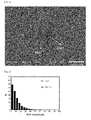
- FIG. 1 is a scanning electron microscope (SEM) photograph showing a structure of MnS in an ingot sample having calcium added thereto. As can be seen in FIG. 1 , calcium oxide is placed at a central portion of the MnS. In this case, the distribution of the MnS is detailed, and the elongation of the MnS is suppressed in a rolling process.
- SEM scanning electron microscope
- FIG. 2 is a graph showing a length distribution of MnS in Comparative steel 1 having no Ca added thereto.
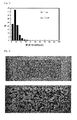
- FIG. 3 shows a length distribution of MnS in Embodiment 7 of the inventive steel.
- the number of coarse MnS is decreased by 20 or more as compared with the steel having no calcium added thereto. It can be seen that the average length and maximum length of the MnS are different from each other.
- the calcium is added, the elongation of the MnS is limited to a certain degree in a rolling process.
- the portion at which the MnS is added to the steel acts as a port weak to corrosion in a real use environment.
- the corrosion resistance will increase.
- each of the samples was machined in the shape of a sheet of 150mm*70mm*1mm, and an experiment was performed in a complex corrosion environment of salt water spray, dry and humidity.
- the detailed experimental conditions are shown in Table 2.
- Table 3 shows a result obtained by performing experiments of corrosion resistance. After the experiments of corrosion resistance, the samples were estimated by dividing the corrosion grade into 1 to 10 according to a degree of formation of rust on the surface of the sample. '1' means that corrosion is formed in 50% of the area of the sample, and '10' means that rust is not formed at all.
- FIG. 4 illustrates samples of an embodiment used in the corrosion experiment and a comparative example having rust formed on the surface thereof.
- the corrosion grade of the inventive steel having the compositions of the present invention is high.
- Table 3 it can be seen that the corrosion resistance of steel having a similar content of chromium having the most influence on the corrosion resistance of stainless steel is improved through the compositions of the present invention.
- the addition of calcium has effective influence on the anisotropy of a mechanical property.
- the difference in mechanical property between the elongation direction of the MnS and the non-elongation direction of the MnS is great. This is because the MnS acts as a portion weak to an external force in the material. As the structure of the MnS for each direction is equalized, the anisotropy is decreased.
- Table 4 shows a result obtained by measuring a mechanical property for each direction. It can be seen that the mechanical strength of stainless steel is increased by adding calcium. Particularly, the mechanical strength and elongation in the width direction are remarkably increased.
- Table 4 Kind of Steel Direction TS (Mpa) E1 (%) Inventive Steel 7 Rolling Direction 1020 14 Width Direction 1010 11 Comparative Steel 1 Rolling Direction 1000 14.5 Width Direction 940 6
Landscapes
- Chemical & Material Sciences (AREA)
- Engineering & Computer Science (AREA)
- Materials Engineering (AREA)
- Mechanical Engineering (AREA)
- Metallurgy (AREA)
- Organic Chemistry (AREA)
- Heat Treatment Of Steel (AREA)
- Moulds For Moulding Plastics Or The Like (AREA)
- Injection Moulding Of Plastics Or The Like (AREA)
- Heat Treatment Of Sheet Steel (AREA)
Abstract
Description
- An aspect of the present invention relates to a martensitic stainless steel for injection-molding mold having improved corrosion resistance, and more particularly, to a martensitic stainless steel used to produce an injection-molding mode or mode base.
- In general, as the amount of plastic used is increased, demands on plastic injection-molding machines have been rapidly increased. As the range and shape of plastic used is diversified, the kind of plastic injection-molding machine is diversified so as to satisfy such requirements. Accordingly, the kind and material of steel used 7in the plastic injection-molding machine is also developed to be suitable for its usage.
- Conventionally, a high-hardness carbon steel containing high carbon was frequently used as a material for plastic injection-molding machines. However, since a stainless steel has high corrosion resistance, high durability according to its use for a long period of time and low thermal expansion coefficient under a high-temperature atmosphere, the use of the stainless steel has been gradually increased in recent years.
- ASTM420 series stainless steel has been used as the stainless steel for producing components of the plastic injection-molding machine. However, since the hardness of the ASTM420 series stainless steel is high, it is not easy to perform mechanical processing. Since chromium carbide is formed through a reaction between chromium and carbon of a base material, the corrosion resistance is lowered, and the weldability is not satisfactory. For this reason, the use of the ASTM420 series stainless steel is gradually decreased.
- In order to solve such problems,
US Patent No. 6045633 has disclosed a stainless steel having improved corrosion resistance by limiting the content of carbon to 0.03 to 0.06% and adding 0.5 to 1.3% copper. However, it is difficult to secure sufficient corrosion resistance using such a method. In case where more than 1% copper is excessively added, the hot workability of the stainless steel is lowered, and therefore, surface cracks are caused. - Accordingly, an object of the present invention is to provide an alloy design for improving the corrosion resistance and machinability of a martensitic stainless steel used as a material of a plastic injection-molding machine.
- According to an aspect of the present invention, there is provided a martensitic stainless steel for an injection-molding mold having improved corrosion resistance, which contains, as percentages by weight, 0.03 to 0.12% carbon, 0.02 to 0.08% nitrogen, 0.3 to 0.7% silicon, 0.6 to 2% manganese, 0.001 to 0.03% phosphorus, 0.1 to 0.3% sulfur, 11.5 to 15% chromium, 0.05 to 1% copper, 0.6 to 3% nickel and 0.0005 to 0.003% calcium, and iron and other unavoidable impurities as remnants.
- The ratio of elongation to anisotropy of the stainless steel may be 0.5 or less, which is defined by the following formula,
- Ratio of elongation to anisotropy = (rolling direction elongation - width direction elongation)/(rolling direction elongation).
- The stainless steel may have a ferrite fraction of less than 15%. The hardness of the stainless steel may have a range of 25 to 40HRC.
- As described above, according to the present invention, it is possible to produce a martensitic stainless steel having outstanding corrosion resistance and improved anisotropy of machinability by increasing the content of nickel (Ni) while improving the distribution and structure of manganese sulfide (MnS) by adding calcium (Ca).
-
-
FIG. 1 is a scanning electron microscope (SEM) photograph showing a structure of manganese sulfide (MnS) in a martensitic stainless steel having calcium (Ca) added thereto according to the present invention. -
FIG. 2 is a graph showing a length distribution of MnS in a steel having no Ca added thereto as compared with the present invention. -
FIG. 3 is a graph showing a length distribution of MnS in the martensitic stainless steel having Ca added thereto according to the present invention. -
FIG. 4 is an SEM photograph showing a structure of a sample used in a corrosion test and a measurement method of a corrosion area. - Hereinafter, preferred embodiments of the present invention will be described in detail with reference to the accompanying drawings. However, the present invention is not limited to the embodiments but may be implemented into different forms. These embodiments are provided only for illustrative purposes and for full understanding of the scope of the present invention by those skilled in the art. Throughout the drawings, like elements are designated by like reference numerals.
- First, a martensitic stainless steel according to the present invention contains, as percentages by weight, 0.03 to 0.12% carbon, 0.02 to 0.08% nitrogen, 0.3 to 0.7% silicon, 0.6 to 2% manganese, 0.001 to 0.03% phosphorus, 0.1 to 0.3% sulfur, 11.5 to 15% chromium, 0.05 to 1% copper, 0.6 to 3% nickel and 0.0005 to 0.003% calcium, and iron and other unavoidable impurities as remnants.
- Particularly, the present inventor has found that in the production of a steel used for a plastic injection-molding mold, the structure of manganese sulfide (MnS) existing in a martensitic cutting steel is improved by adding calcium (Ca), and the corrosion resistance of a base material is improved by adding nickel (Ni), so that the martensitic cutting steel has outstanding corrosion resistance.
- Hereinafter, the function of the content of each composition and the reason for limiting its additional range will be described. In addition, percentages (%) described hereinbelow are all percentages by weight (wt%).
- When the content of the carbon is low, the hardness of martensite is lowered, and hence the processing quality of the martensitic stainless steel is deteriorated. Therefore, more than 0.03% carbon is added. However, if the content of the carbon is excessive, the hardness of the martensite increases, and hence the productivity of the martensitic stainless steel is lowered. Since the excessive addition of the carbon lowers corrosion resistance, the maximum content of the carbon is limited to 0.12%.
- Since the nitrogen contributes to the strength and corrosion resistance of the martensitic stainless steel, more than 0.02% nitrogen is added. However, if the nitrogen is excessively added, pores may be generated by the nitrogen in molding. Therefore, the maximum content of the nitrogen is limited to 0.08%.
- Since the silicon is an element essentially added for the purpose of its deoxidation, more than 0.3% silicon is added. However, the silicon is excessively added, the machinability and thermal conductivity of the martensitic stainless steel are lowered. Therefore, the maximum content of the silicon is limited to 0.7%.
- The manganese is an element added together with the sulfur so as to improve cuttability. When the content of the manganese is low, the added sulfur forms CrS or FeS, and hence has bad influence on workability. Therefore, more than 0.6% manganese is added. When the content of the manganese is 2% or more, its valid effect is lost. Therefore, the maximum content of the manganese is limited to 2%.
- Since the phosphorus is an element unavoidably added in the production of stainless steel, more than 0.001% phosphorus is added. If the phosphorus is excessively added, the machinability of the martensitic stainless steel is lowered. Therefore, the maximum content of the phosphorus is limited to 0.03%.
- Since the sulfur is a representative element added to improve the cuttability of stainless steel, more than 0.1% sulfur is added to secure the cuttability of the martensitic stainless steel. However, when the content of the sulfur exceeds 0.3%, the effect of the added sulfur is saturated, and the excessive addition of the sulfur lowers the workability of the martensitic stainless steel. Therefore, the maximum content of the sulfur is limited to 0.3%.
- Since the chromium is a basic element for securing corrosion resistance, more than 11.5% chromium is added. However, when the chromium is excessively added, the chromium promotes the formation of ferrite. Therefore, the maximum content of the chromium is limited to 15%.
- Since the copper functions to improve corrosion resistance and thermal conductivity, more than 0.05% copper is added. When the copper is excessively added, the copper causes the lowering of hot workability. Therefore, the maximum content of the copper is limited to 1%.
- The nickel is an element that increases the corrosion resistance of stainless steel. Since the nickel functions to improve tension, more than 0.6% nickel is added. Therefore, the maximum content of the nickel is limited to 3% so as to prevent an excessive increase in production cost.
- Since the calcium acts as a nuclear generation site of MnS in ingot casting or continuous casting, the MnS is easily formed, and more than 0.0005% calcium is added to obtain an effect for suppressing the tension of Mn. When the calcium is excessively added, the calcium lowers corrosion resistance. Therefore, the maximum content of the calcium is limited to 0.003%.
- Generally, a desired structure of the martensitic stainless steel is produced by making a casting slab through continuous casting or ingot casting and performing a rolling and forging process of the casting slab. Then, a heat treatment process using a unique method is performed to obtain an appropriate property of the steel suitable for its usage.
- In the present invention, the ratio of elongation to anisotropy is preferably controlled to 0.5 or less. The ratio of elongation to anisotropy may be obtained by (rolling direction elongation - width direction elongation)/(rolling direction elongation). An ordinary steel for plastic injection-molding machine is not used by being machined to have a specific direction such as a rolling direction or width direction but used by being machined to have various directions. In this case, as the difference in mechanical property between directions increases, the deformation of the steel due to stress caused in the machining of the steel increases, and the difference in durability with respect to a high pressure applied in injection molding increases. The mechanical anisotropy [anisotropy ratio = (rolling direction experimental value - width direction experimental value)/(rolling direction experimental value)] is most obviously shown in the elongation among the several experimental values. Therefore, in steel having compositions of the inventive steel, the elongation anisotropy is preferably controlled to 50% or less.
- Meanwhile, the inventive steel has the ideal structure of ferrite and martensite. The difference in hardness between the structures of the ferrite and the martensite is great. While the structure of the martensite has a solid and strong property, and the structure of the ferrite has a soft and tough property. When a small amount of ferrite exists in a material due to such a property, the ferrite functions to provide toughness. When an excessive of ferrite exists in the material, the ferrite functions to deteriorate workable quality. Therefore, in the material having compositions of the inventive steel, the maximum content of the ferrite is preferably limited to 15% or less.
- The hardness of the inventive steel has a range of 25 to 40HRC. The hardness of an ordinary material has influence on machining quality and machinability (machining speed or tool lifetime) at the same time. If the hardness of the material increases, the resistance against machinability increases, and therefore, the machining speed decreases. Further, the abrasion of the tool increases, and therefore, the machinability is deteriorated. However, the quality of a machined surface is increased. On the other hand, if the hardness of the material is low, the machining speed and tool lifetime are increased, but the quality of the machined surface is lowered. Therefore, the hardness of the material is preferably 25HRC or more so as to secure the machining quality. The maximum hardness of the material is preferably less than 40HRC so as to secure the machinability in consideration of productivity.
- For better understanding of the present invention, the present invention will be described through the following embodiments. In these embodiments, seven inventive steels and two comparative steels are produced by means of chemical formulae of Table 1. All samples are produced as ingots of 50Kg using a vacuum melting device and then rolled to a thickness of 25mm.
Table 1 Kind of Steel C Si Mn P S Cr Ni Cu N Ca Inventive Steel 1 0.046 0.484 1.25 0.005 0.162 12.5 0.638 0.397 0.042 0.0008 Inventive Steel 2 0.101 0.492 1.03 0.006 0.135 16.08 2.72 1.00 0.069 0.0012 Inventive Steel 3 0.035 0.285 1.82 0.011 0.205 11.92 0.958 0.52 0.047 0.0021 Inventive Steel 4 0.046 0.477 1.21 0.007 0.076 13.00 1.58 0.2 0.026 0.0016 Inventive Steel 50.081 0.669 1.55 0.01 0.18 14.36 1.98 0.705 0.048 0.0011 Inventive Steel 6 0.053 0.411 1.25 0.006 0.155 12.22 1.31 0.331 0.513 0.0026 Inventive Steel 7 0.045 0.324 1.18 0.005 0.166 13.45 0.87 0.26 0.561 0.0017 Comparative Steel 1 0.05 0.321 1.27 0.02 0.151 12 - - 0.052 - Comparative Steel 2 0.087 0.221 1.5 0.003 0.11 12.1 0.03 0.434 0.044 - - In Table 1, calcium is not added to Comparative steels 1 and 2. Particularly, Comparative steel 1 is compared with the inventive steel in the state in which nickel and copper are not added to Comparative steel 1.
-
FIG. 1 is a scanning electron microscope (SEM) photograph showing a structure of MnS in an ingot sample having calcium added thereto. As can be seen inFIG. 1 , calcium oxide is placed at a central portion of the MnS. In this case, the distribution of the MnS is detailed, and the elongation of the MnS is suppressed in a rolling process. -
FIG. 2 is a graph showing a length distribution of MnS in Comparative steel 1 having no Ca added thereto.FIG. 3 shows a length distribution of MnS in Embodiment 7 of the inventive steel. As can be seen inFIGS. 2 and3 , in the steel having calcium added thereto, the number of coarse MnS is decreased by 20 or more as compared with the steel having no calcium added thereto. It can be seen that the average length and maximum length of the MnS are different from each other. Through the experimental result, it can be seen that when the calcium is added, the elongation of the MnS is limited to a certain degree in a rolling process. In case of the steel having MnS added thereto, the portion at which the MnS is added to the steel acts as a port weak to corrosion in a real use environment. When the elongation of the MnS is suppressed, it can be expected that the corrosion resistance will increase. - Meanwhile, in order to compare corrosions of samples, each of the samples was machined in the shape of a sheet of 150mm*70mm*1mm, and an experiment was performed in a complex corrosion environment of salt water spray, dry and humidity. The detailed experimental conditions are shown in Table 2. Table 3 shows a result obtained by performing experiments of corrosion resistance. After the experiments of corrosion resistance, the samples were estimated by dividing the corrosion grade into 1 to 10 according to a degree of formation of rust on the surface of the sample. '1' means that corrosion is formed in 50% of the area of the sample, and '10' means that rust is not formed at all.
Table 2 Test Name Maintenance Time Acidified Salt Mist Condition 2Hr Dry Condition 4Hr Wet Condition 2Hr Table 3 Kind of Steel Corrosion Grade Inventive Steel 1 7 Inventive Steel 2 9 Inventive Steel 3 7 Inventive Steel 4 8 Inventive Steel 58 Inventive Steel 6 8 Inventive Steel 7 7 Comparative Steel 1 5 Comparative Steel 2 6 -
FIG. 4 illustrates samples of an embodiment used in the corrosion experiment and a comparative example having rust formed on the surface thereof. As can be seen inFIG. 4 , the corrosion grade of the inventive steel having the compositions of the present invention is high. As shown in Table 3, it can be seen that the corrosion resistance of steel having a similar content of chromium having the most influence on the corrosion resistance of stainless steel is improved through the compositions of the present invention. - In the present invention, it can be seen that the addition of calcium has effective influence on the anisotropy of a mechanical property. When the MnS is elongated during a rolling process, the difference in mechanical property between the elongation direction of the MnS and the non-elongation direction of the MnS is great. This is because the MnS acts as a portion weak to an external force in the material. As the structure of the MnS for each direction is equalized, the anisotropy is decreased.
- Table 4 shows a result obtained by measuring a mechanical property for each direction. It can be seen that the mechanical strength of stainless steel is increased by adding calcium. Particularly, the mechanical strength and elongation in the width direction are remarkably increased.
Table 4 Kind of Steel Direction TS (Mpa) E1 (%) Inventive Steel 7 Rolling Direction 1020 14 Width Direction 1010 11 Comparative Steel 1 Rolling Direction 1000 14.5 Width Direction 940 6 - While the present invention has been described in connection with certain exemplary embodiments, it is to be understood that the invention is not limited to the disclosed embodiments, but, on the contrary, is intended to cover various modifications and equivalent arrangements included within the spirit and scope of the appended claims, and equivalents thereof.
Claims (4)
- A martensitic stainless steel for an injection-molding mold having improved corrosion resistance, which contains, as percentages by weight, 0.03 to 0.12% carbon, 0.02 to 0.08% nitrogen, 0.3 to 0.7% silicon, 0.6 to 2% manganese, 0.001 to 0.03% phosphorus, 0.1 to 0.3% sulfur, 11.5 to 15% chromium, 0.05 to 1% copper, 0.6 to 3% nickel and 0.0005 to 0.003% calcium, and iron and other unavoidable impurities as remnants.
- The martensitic stainless steel of claim 1, wherein the ratio of elongation to anisotropy of the stainless steel is 0.5 or less, which is defined by the following formula,
Ratio of elongation to anisotropy = (rolling direction elongation - width direction elongation)/(rolling direction elongation). - The martensitic stainless steel of claim 1, wherein the stainless steel has a ferrite fraction of less than 15%.
- The martensitic stainless steel of claim 1, wherein the hardness of the stainless steel has a range of 25 to 40HRC.
Applications Claiming Priority (2)
| Application Number | Priority Date | Filing Date | Title |
|---|---|---|---|
| KR1020090128883A KR101268764B1 (en) | 2009-12-22 | 2009-12-22 | High Corrosion Resistance Martensite Stainless Steel for mold |
| PCT/KR2010/009107 WO2011078531A2 (en) | 2009-12-22 | 2010-12-20 | Martensite stainless steel for an injection-moulding mould having improved corrosion resistance |
Publications (3)
| Publication Number | Publication Date |
|---|---|
| EP2518176A2 true EP2518176A2 (en) | 2012-10-31 |
| EP2518176A4 EP2518176A4 (en) | 2016-11-23 |
| EP2518176B1 EP2518176B1 (en) | 2018-05-16 |
Family
ID=44196275
Family Applications (1)
| Application Number | Title | Priority Date | Filing Date |
|---|---|---|---|
| EP10839728.2A Not-in-force EP2518176B1 (en) | 2009-12-22 | 2010-12-20 | Martensite stainless steel for an injection-moulding mould having improved corrosion resistance |
Country Status (4)
| Country | Link |
|---|---|
| EP (1) | EP2518176B1 (en) |
| KR (1) | KR101268764B1 (en) |
| CN (2) | CN102686761A (en) |
| WO (1) | WO2011078531A2 (en) |
Cited By (1)
| Publication number | Priority date | Publication date | Assignee | Title |
|---|---|---|---|---|
| CN105562691A (en) * | 2015-12-23 | 2016-05-11 | 华中科技大学 | 3D printing preparation method for injection mold |
Families Citing this family (6)
| Publication number | Priority date | Publication date | Assignee | Title |
|---|---|---|---|---|
| KR20160082630A (en) | 2014-12-26 | 2016-07-08 | 주식회사 포스코 | Martensite stainless steel for mold with excellent durability and manufacturing method thereof |
| CN107747063B (en) * | 2017-11-29 | 2019-08-23 | 郑州永通特钢有限公司 | A high strength and toughness martensitic stainless steel |
| KR102237412B1 (en) | 2019-05-03 | 2021-04-07 | 유근광 | Internet of thing smart emergency bell device |
| KR102283434B1 (en) | 2019-12-02 | 2021-07-29 | (주)에이엘씨 | System for Operating SOS Emergency Bell with IP Camera |
| KR102283440B1 (en) | 2019-12-02 | 2021-07-29 | (주)에이엘씨 | System for Operating SOS Emergency Bell by using Duplexing Wireless Network |
| KR102358188B1 (en) | 2020-01-06 | 2022-02-07 | (주)에이엘씨 | System for Operating Smart Street Light with Safety based on Location |
Family Cites Families (5)
| Publication number | Priority date | Publication date | Assignee | Title |
|---|---|---|---|---|
| US6045633A (en) * | 1997-05-16 | 2000-04-04 | Edro Engineering, Inc. | Steel holder block for plastic molding |
| SE516622C2 (en) * | 2000-06-15 | 2002-02-05 | Uddeholm Tooling Ab | Steel alloy, plastic forming tool and toughened plastic forming tool |
| US8808472B2 (en) * | 2000-12-11 | 2014-08-19 | Uddeholms Ab | Steel alloy, holders and holder details for plastic moulding tools, and tough hardened blanks for holders and holder details |
| AT409636B9 (en) * | 2001-02-14 | 2002-12-27 | Boehler Edelstahl Gmbh & Co Kg | STEEL FOR PLASTIC MOLDS AND METHOD FOR HEAT TREATING THE SAME |
| FR2872825B1 (en) * | 2004-07-12 | 2007-04-27 | Industeel Creusot | MARTENSITIC STAINLESS STEEL FOR MOLDS AND CARCASES OF INJECTION MOLDS |
-
2009
- 2009-12-22 KR KR1020090128883A patent/KR101268764B1/en active Active
-
2010
- 2010-12-20 WO PCT/KR2010/009107 patent/WO2011078531A2/en not_active Ceased
- 2010-12-20 CN CN2010800592517A patent/CN102686761A/en active Pending
- 2010-12-20 EP EP10839728.2A patent/EP2518176B1/en not_active Not-in-force
- 2010-12-20 CN CN201410697669.0A patent/CN104561833A/en active Pending
Non-Patent Citations (1)
| Title |
|---|
| See references of WO2011078531A2 * |
Cited By (1)
| Publication number | Priority date | Publication date | Assignee | Title |
|---|---|---|---|---|
| CN105562691A (en) * | 2015-12-23 | 2016-05-11 | 华中科技大学 | 3D printing preparation method for injection mold |
Also Published As
| Publication number | Publication date |
|---|---|
| WO2011078531A2 (en) | 2011-06-30 |
| WO2011078531A3 (en) | 2011-11-17 |
| KR101268764B1 (en) | 2013-05-29 |
| EP2518176A4 (en) | 2016-11-23 |
| CN102686761A (en) | 2012-09-19 |
| CN104561833A (en) | 2015-04-29 |
| EP2518176B1 (en) | 2018-05-16 |
| KR20110072089A (en) | 2011-06-29 |
Similar Documents
| Publication | Publication Date | Title |
|---|---|---|
| EP2518176B1 (en) | Martensite stainless steel for an injection-moulding mould having improved corrosion resistance | |
| KR101528084B1 (en) | High strength hot rolled steel sheet having excellent blanking workability and method for manufacturing the same | |
| JP5327106B2 (en) | Press member and manufacturing method thereof | |
| US11572598B2 (en) | Martensite-based stainless steel component and method for manufacturing the same | |
| KR101656980B1 (en) | Stainless steel brake disc and method for manufacturing same | |
| EP3135777B1 (en) | Steel for mold and mold | |
| JP4295314B2 (en) | Steel for high-speed cold work, method for producing the same, and method for producing high-speed cold-worked parts | |
| EP2003220A1 (en) | Steel plate having excellent fine blanking processability and method for manufacture thereof | |
| KR101390612B1 (en) | Method for producing hot-rolled high carbon steel sheet | |
| KR20140064929A (en) | Steel wire for bolt, bolt, and manufacturing processes therefor | |
| KR20160140897A (en) | Austenitic stainless-steel sheet for gasket, and gasket | |
| KR101545417B1 (en) | Die steel having superior rusting resistance and thermal conductivity, and method for producing same | |
| EP3287536A1 (en) | Martensitic stainless steel | |
| CN116240463A (en) | A wear-resistant and corrosion-resistant pearlitic steel rail and its preparation method | |
| JP2007009321A (en) | Steel for plastic molds | |
| KR101735220B1 (en) | Steel sheet for soft-nitriding and method for manufacturing the same | |
| KR101701652B1 (en) | Steel sheet for soft-nitriding and method for manufacturing the same | |
| JP7333729B2 (en) | Ferritic stainless steel bars, automotive fuel system parts and automotive fuel system parts | |
| EP3981890A1 (en) | Steel for hot stamp die, hot stamp die and manufacturing method thereof | |
| JP4462264B2 (en) | Manufacturing method of cold rolled steel sheet for nitriding treatment | |
| JP4576976B2 (en) | Steel for high strength bolts | |
| KR20170106413A (en) | Aging hardening steel for cold forging | |
| KR20200047426A (en) | Ultra-low temperature austenitic high manganese steel having excellent scale peeling property and manufacturing method for the same | |
| KR100928783B1 (en) | Wire rod for high strength tire cord with excellent freshness | |
| JP3750835B2 (en) | High hardness corrosion resistant powder die steel excellent in mirror finish and method for producing the same |
Legal Events
| Date | Code | Title | Description |
|---|---|---|---|
| PUAI | Public reference made under article 153(3) epc to a published international application that has entered the european phase |
Free format text: ORIGINAL CODE: 0009012 |
|
| 17P | Request for examination filed |
Effective date: 20120622 |
|
| AK | Designated contracting states |
Kind code of ref document: A2 Designated state(s): AL AT BE BG CH CY CZ DE DK EE ES FI FR GB GR HR HU IE IS IT LI LT LU LV MC MK MT NL NO PL PT RO RS SE SI SK SM TR |
|
| DAX | Request for extension of the european patent (deleted) | ||
| A4 | Supplementary search report drawn up and despatched |
Effective date: 20161020 |
|
| RIC1 | Information provided on ipc code assigned before grant |
Ipc: C22C 38/04 20060101ALI20161014BHEP Ipc: C22C 38/02 20060101ALI20161014BHEP Ipc: C22C 38/42 20060101ALI20161014BHEP Ipc: C22C 38/00 20060101ALI20161014BHEP Ipc: C22C 38/18 20060101AFI20161014BHEP Ipc: C22C 38/20 20060101ALI20161014BHEP |
|
| GRAP | Despatch of communication of intention to grant a patent |
Free format text: ORIGINAL CODE: EPIDOSNIGR1 |
|
| INTG | Intention to grant announced |
Effective date: 20171201 |
|
| GRAS | Grant fee paid |
Free format text: ORIGINAL CODE: EPIDOSNIGR3 |
|
| GRAA | (expected) grant |
Free format text: ORIGINAL CODE: 0009210 |
|
| AK | Designated contracting states |
Kind code of ref document: B1 Designated state(s): AL AT BE BG CH CY CZ DE DK EE ES FI FR GB GR HR HU IE IS IT LI LT LU LV MC MK MT NL NO PL PT RO RS SE SI SK SM TR |
|
| REG | Reference to a national code |
Ref country code: GB Ref legal event code: FG4D |
|
| REG | Reference to a national code |
Ref country code: CH Ref legal event code: EP |
|
| REG | Reference to a national code |
Ref country code: IE Ref legal event code: FG4D |
|
| REG | Reference to a national code |
Ref country code: DE Ref legal event code: R096 Ref document number: 602010050704 Country of ref document: DE |
|
| REG | Reference to a national code |
Ref country code: AT Ref legal event code: REF Ref document number: 999632 Country of ref document: AT Kind code of ref document: T Effective date: 20180615 |
|
| REG | Reference to a national code |
Ref country code: SE Ref legal event code: TRGR |
|
| REG | Reference to a national code |
Ref country code: NL Ref legal event code: MP Effective date: 20180516 |
|
| REG | Reference to a national code |
Ref country code: LT Ref legal event code: MG4D |
|
| PG25 | Lapsed in a contracting state [announced via postgrant information from national office to epo] |
Ref country code: ES Free format text: LAPSE BECAUSE OF FAILURE TO SUBMIT A TRANSLATION OF THE DESCRIPTION OR TO PAY THE FEE WITHIN THE PRESCRIBED TIME-LIMIT Effective date: 20180516 Ref country code: FI Free format text: LAPSE BECAUSE OF FAILURE TO SUBMIT A TRANSLATION OF THE DESCRIPTION OR TO PAY THE FEE WITHIN THE PRESCRIBED TIME-LIMIT Effective date: 20180516 Ref country code: BG Free format text: LAPSE BECAUSE OF FAILURE TO SUBMIT A TRANSLATION OF THE DESCRIPTION OR TO PAY THE FEE WITHIN THE PRESCRIBED TIME-LIMIT Effective date: 20180816 Ref country code: NO Free format text: LAPSE BECAUSE OF FAILURE TO SUBMIT A TRANSLATION OF THE DESCRIPTION OR TO PAY THE FEE WITHIN THE PRESCRIBED TIME-LIMIT Effective date: 20180816 Ref country code: LT Free format text: LAPSE BECAUSE OF FAILURE TO SUBMIT A TRANSLATION OF THE DESCRIPTION OR TO PAY THE FEE WITHIN THE PRESCRIBED TIME-LIMIT Effective date: 20180516 |
|
| PG25 | Lapsed in a contracting state [announced via postgrant information from national office to epo] |
Ref country code: GR Free format text: LAPSE BECAUSE OF FAILURE TO SUBMIT A TRANSLATION OF THE DESCRIPTION OR TO PAY THE FEE WITHIN THE PRESCRIBED TIME-LIMIT Effective date: 20180817 Ref country code: HR Free format text: LAPSE BECAUSE OF FAILURE TO SUBMIT A TRANSLATION OF THE DESCRIPTION OR TO PAY THE FEE WITHIN THE PRESCRIBED TIME-LIMIT Effective date: 20180516 Ref country code: LV Free format text: LAPSE BECAUSE OF FAILURE TO SUBMIT A TRANSLATION OF THE DESCRIPTION OR TO PAY THE FEE WITHIN THE PRESCRIBED TIME-LIMIT Effective date: 20180516 Ref country code: RS Free format text: LAPSE BECAUSE OF FAILURE TO SUBMIT A TRANSLATION OF THE DESCRIPTION OR TO PAY THE FEE WITHIN THE PRESCRIBED TIME-LIMIT Effective date: 20180516 Ref country code: NL Free format text: LAPSE BECAUSE OF FAILURE TO SUBMIT A TRANSLATION OF THE DESCRIPTION OR TO PAY THE FEE WITHIN THE PRESCRIBED TIME-LIMIT Effective date: 20180516 |
|
| REG | Reference to a national code |
Ref country code: AT Ref legal event code: MK05 Ref document number: 999632 Country of ref document: AT Kind code of ref document: T Effective date: 20180516 |
|
| PG25 | Lapsed in a contracting state [announced via postgrant information from national office to epo] |
Ref country code: RO Free format text: LAPSE BECAUSE OF FAILURE TO SUBMIT A TRANSLATION OF THE DESCRIPTION OR TO PAY THE FEE WITHIN THE PRESCRIBED TIME-LIMIT Effective date: 20180516 Ref country code: CZ Free format text: LAPSE BECAUSE OF FAILURE TO SUBMIT A TRANSLATION OF THE DESCRIPTION OR TO PAY THE FEE WITHIN THE PRESCRIBED TIME-LIMIT Effective date: 20180516 Ref country code: EE Free format text: LAPSE BECAUSE OF FAILURE TO SUBMIT A TRANSLATION OF THE DESCRIPTION OR TO PAY THE FEE WITHIN THE PRESCRIBED TIME-LIMIT Effective date: 20180516 Ref country code: PL Free format text: LAPSE BECAUSE OF FAILURE TO SUBMIT A TRANSLATION OF THE DESCRIPTION OR TO PAY THE FEE WITHIN THE PRESCRIBED TIME-LIMIT Effective date: 20180516 Ref country code: AT Free format text: LAPSE BECAUSE OF FAILURE TO SUBMIT A TRANSLATION OF THE DESCRIPTION OR TO PAY THE FEE WITHIN THE PRESCRIBED TIME-LIMIT Effective date: 20180516 Ref country code: SK Free format text: LAPSE BECAUSE OF FAILURE TO SUBMIT A TRANSLATION OF THE DESCRIPTION OR TO PAY THE FEE WITHIN THE PRESCRIBED TIME-LIMIT Effective date: 20180516 Ref country code: DK Free format text: LAPSE BECAUSE OF FAILURE TO SUBMIT A TRANSLATION OF THE DESCRIPTION OR TO PAY THE FEE WITHIN THE PRESCRIBED TIME-LIMIT Effective date: 20180516 |
|
| REG | Reference to a national code |
Ref country code: DE Ref legal event code: R097 Ref document number: 602010050704 Country of ref document: DE |
|
| PG25 | Lapsed in a contracting state [announced via postgrant information from national office to epo] |
Ref country code: IT Free format text: LAPSE BECAUSE OF FAILURE TO SUBMIT A TRANSLATION OF THE DESCRIPTION OR TO PAY THE FEE WITHIN THE PRESCRIBED TIME-LIMIT Effective date: 20180516 Ref country code: SM Free format text: LAPSE BECAUSE OF FAILURE TO SUBMIT A TRANSLATION OF THE DESCRIPTION OR TO PAY THE FEE WITHIN THE PRESCRIBED TIME-LIMIT Effective date: 20180516 |
|
| PLBE | No opposition filed within time limit |
Free format text: ORIGINAL CODE: 0009261 |
|
| STAA | Information on the status of an ep patent application or granted ep patent |
Free format text: STATUS: NO OPPOSITION FILED WITHIN TIME LIMIT |
|
| 26N | No opposition filed |
Effective date: 20190219 |
|
| PG25 | Lapsed in a contracting state [announced via postgrant information from national office to epo] |
Ref country code: SI Free format text: LAPSE BECAUSE OF FAILURE TO SUBMIT A TRANSLATION OF THE DESCRIPTION OR TO PAY THE FEE WITHIN THE PRESCRIBED TIME-LIMIT Effective date: 20180516 |
|
| REG | Reference to a national code |
Ref country code: CH Ref legal event code: PL |
|
| GBPC | Gb: european patent ceased through non-payment of renewal fee |
Effective date: 20181220 |
|
| PG25 | Lapsed in a contracting state [announced via postgrant information from national office to epo] |
Ref country code: MC Free format text: LAPSE BECAUSE OF FAILURE TO SUBMIT A TRANSLATION OF THE DESCRIPTION OR TO PAY THE FEE WITHIN THE PRESCRIBED TIME-LIMIT Effective date: 20180516 Ref country code: LU Free format text: LAPSE BECAUSE OF NON-PAYMENT OF DUE FEES Effective date: 20181220 |
|
| REG | Reference to a national code |
Ref country code: IE Ref legal event code: MM4A |
|
| REG | Reference to a national code |
Ref country code: BE Ref legal event code: MM Effective date: 20181231 |
|
| PG25 | Lapsed in a contracting state [announced via postgrant information from national office to epo] |
Ref country code: FR Free format text: LAPSE BECAUSE OF NON-PAYMENT OF DUE FEES Effective date: 20181231 Ref country code: IE Free format text: LAPSE BECAUSE OF NON-PAYMENT OF DUE FEES Effective date: 20181220 |
|
| PGFP | Annual fee paid to national office [announced via postgrant information from national office to epo] |
Ref country code: SE Payment date: 20190923 Year of fee payment: 10 |
|
| PG25 | Lapsed in a contracting state [announced via postgrant information from national office to epo] |
Ref country code: AL Free format text: LAPSE BECAUSE OF FAILURE TO SUBMIT A TRANSLATION OF THE DESCRIPTION OR TO PAY THE FEE WITHIN THE PRESCRIBED TIME-LIMIT Effective date: 20180516 Ref country code: BE Free format text: LAPSE BECAUSE OF NON-PAYMENT OF DUE FEES Effective date: 20181231 |
|
| PG25 | Lapsed in a contracting state [announced via postgrant information from national office to epo] |
Ref country code: GB Free format text: LAPSE BECAUSE OF NON-PAYMENT OF DUE FEES Effective date: 20181220 Ref country code: LI Free format text: LAPSE BECAUSE OF NON-PAYMENT OF DUE FEES Effective date: 20181231 Ref country code: CH Free format text: LAPSE BECAUSE OF NON-PAYMENT OF DUE FEES Effective date: 20181231 |
|
| PG25 | Lapsed in a contracting state [announced via postgrant information from national office to epo] |
Ref country code: MT Free format text: LAPSE BECAUSE OF NON-PAYMENT OF DUE FEES Effective date: 20181220 |
|
| PGFP | Annual fee paid to national office [announced via postgrant information from national office to epo] |
Ref country code: DE Payment date: 20190920 Year of fee payment: 10 |
|
| PG25 | Lapsed in a contracting state [announced via postgrant information from national office to epo] |
Ref country code: TR Free format text: LAPSE BECAUSE OF FAILURE TO SUBMIT A TRANSLATION OF THE DESCRIPTION OR TO PAY THE FEE WITHIN THE PRESCRIBED TIME-LIMIT Effective date: 20180516 |
|
| PG25 | Lapsed in a contracting state [announced via postgrant information from national office to epo] |
Ref country code: PT Free format text: LAPSE BECAUSE OF FAILURE TO SUBMIT A TRANSLATION OF THE DESCRIPTION OR TO PAY THE FEE WITHIN THE PRESCRIBED TIME-LIMIT Effective date: 20180516 |
|
| PG25 | Lapsed in a contracting state [announced via postgrant information from national office to epo] |
Ref country code: CY Free format text: LAPSE BECAUSE OF FAILURE TO SUBMIT A TRANSLATION OF THE DESCRIPTION OR TO PAY THE FEE WITHIN THE PRESCRIBED TIME-LIMIT Effective date: 20180516 Ref country code: MK Free format text: LAPSE BECAUSE OF NON-PAYMENT OF DUE FEES Effective date: 20180516 Ref country code: HU Free format text: LAPSE BECAUSE OF FAILURE TO SUBMIT A TRANSLATION OF THE DESCRIPTION OR TO PAY THE FEE WITHIN THE PRESCRIBED TIME-LIMIT; INVALID AB INITIO Effective date: 20101220 |
|
| PG25 | Lapsed in a contracting state [announced via postgrant information from national office to epo] |
Ref country code: IS Free format text: LAPSE BECAUSE OF FAILURE TO SUBMIT A TRANSLATION OF THE DESCRIPTION OR TO PAY THE FEE WITHIN THE PRESCRIBED TIME-LIMIT Effective date: 20180916 |
|
| REG | Reference to a national code |
Ref country code: DE Ref legal event code: R119 Ref document number: 602010050704 Country of ref document: DE |
|
| REG | Reference to a national code |
Ref country code: SE Ref legal event code: EUG |
|
| PG25 | Lapsed in a contracting state [announced via postgrant information from national office to epo] |
Ref country code: SE Free format text: LAPSE BECAUSE OF NON-PAYMENT OF DUE FEES Effective date: 20201221 Ref country code: DE Free format text: LAPSE BECAUSE OF NON-PAYMENT OF DUE FEES Effective date: 20210701 |