EP2506158A1 - Cross-region access method for embedded file system - Google Patents
Cross-region access method for embedded file system Download PDFInfo
- Publication number
- EP2506158A1 EP2506158A1 EP10832627A EP10832627A EP2506158A1 EP 2506158 A1 EP2506158 A1 EP 2506158A1 EP 10832627 A EP10832627 A EP 10832627A EP 10832627 A EP10832627 A EP 10832627A EP 2506158 A1 EP2506158 A1 EP 2506158A1
- Authority
- EP
- European Patent Office
- Prior art keywords
- efs
- operation instruction
- instruction
- region
- critical resource
- Prior art date
- Legal status (The legal status is an assumption and is not a legal conclusion. Google has not performed a legal analysis and makes no representation as to the accuracy of the status listed.)
- Ceased
Links
Images



Classifications
-
- G—PHYSICS
- G06—COMPUTING OR CALCULATING; COUNTING
- G06F—ELECTRIC DIGITAL DATA PROCESSING
- G06F12/00—Accessing, addressing or allocating within memory systems or architectures
- G06F12/02—Addressing or allocation; Relocation
- G06F12/0223—User address space allocation, e.g. contiguous or non contiguous base addressing
- G06F12/023—Free address space management
- G06F12/0238—Memory management in non-volatile memory, e.g. resistive RAM or ferroelectric memory
- G06F12/0246—Memory management in non-volatile memory, e.g. resistive RAM or ferroelectric memory in block erasable memory, e.g. flash memory
-
- G—PHYSICS
- G06—COMPUTING OR CALCULATING; COUNTING
- G06F—ELECTRIC DIGITAL DATA PROCESSING
- G06F16/00—Information retrieval; Database structures therefor; File system structures therefor
- G06F16/10—File systems; File servers
- G06F16/18—File system types
- G06F16/1847—File system types specifically adapted to static storage, e.g. adapted to flash memory or SSD
-
- G—PHYSICS
- G06—COMPUTING OR CALCULATING; COUNTING
- G06F—ELECTRIC DIGITAL DATA PROCESSING
- G06F2212/00—Indexing scheme relating to accessing, addressing or allocation within memory systems or architectures
- G06F2212/72—Details relating to flash memory management
- G06F2212/7205—Cleaning, compaction, garbage collection, erase control
-
- G—PHYSICS
- G06—COMPUTING OR CALCULATING; COUNTING
- G06F—ELECTRIC DIGITAL DATA PROCESSING
- G06F2212/00—Indexing scheme relating to accessing, addressing or allocation within memory systems or architectures
- G06F2212/72—Details relating to flash memory management
- G06F2212/7208—Multiple device management, e.g. distributing data over multiple flash devices
Definitions
- the present invention involves an embedded file system, more particularly, to a cross-region access method for an embedded file system.
- an embedded file system being widely used in mobile devices, mainly consists of three portions: Super Block, Page Table, and Data Storage Region, amongst, the Super Block stores a page table activation message, the Page Table stores a mapping message for a page table to a physical address or a mapping message for a physical address to a page boundary, and the Data Storage Region is used to store a user data message.
- Blocks of the Data Storage Region e.g. a FLASH memory
- FIG. 1 Blocks of the Data Storage Region
- An objective of the present invention is to provide a cross-region access method for an embedded file system (EFS), which is conducted to solve the technical drawbacks that the EFS distribution mechanism existing in prior art results a waste of a data memory space.
- EFS embedded file system
- the cross-region access method for the embedded file system comprises the following steps:
- Step a defining a critical resource region in a BANK, which is shared by program codes and the EFS for the program codes and the EFS to be stored therein;
- Step b determining a type of an operation instruction, if it is a reading or writing operation instruction, then performing a time-division asynchronous operation on a FLASH by using the critical resource region, and if it is a data erase operation instruction, then putting the data erasing operation instruction into a real-time operation system to manage while in a condition which does not affect normal executions of other application programs.
- Step b comprises the following steps specifically:
- the critical resource region is occupied if the operation instruction is a data read operation instruction or a data writing operation instruction, if occupied, then suspending a current operation, utilizing a polling mechanism to determine again after delaying a period of protection time until the critical resource region is no longer occupied, and then executing the corresponding data reading or data writing operation instruction.
- Step b putting the data erasing operation instruction to the real-time operation system to manage in Step b comprises the following steps specifically:
- the operation instruction is a data erasing operation instruction, then putting the current operation into a system Task managing queue so that, entering into a wait-for-execution state; after execution or time slices for other Tasks with higher priorities are finished, the operation system entering it into a ready-for-execution state; if a CPU resource is in idle, then determining whether there is any other operation occupying the FLASH critical resource; if not, then fetching the instruction to execute an erasing operation to the FLASH; if so, abandoning this operation and transferring a task control right to the operation system, the operation system changing a current operation state to the wait-for-execution state, and repeating the above processes after the operation resource is obtained again.
- the cross-region access method for the embedded file system introduces a new EFS space distribution mechanism for performing the time-division asynchronous operations by defining the critical resource protection region and a task machine.
- the restriction of a BANK boundary of the memory to the EFS space division is not required to be considered.
- the idle space of the memory can be sufficiently utilized, and the utilization efficiency of the FLASH space is increased as well the cost is reduced.
- FIG. 1 is a schematic diagram of an EFS page table of a currently existing data storage region
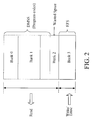
- FIG. 2 is a schematic diagram showing a currently existing distribution of EFS storage regions
- FIG. 3 is a schematic diagram showing a distribution of EFS storage regions in accordance with the present invention.
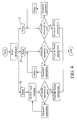
- FIG. 4 is a flow chart of a cross-region access method for an embedded file system in accordance with present invention.
- FIG. 5 is a schematic diagram showing managing a data erasing operation in accordance with the present invention.
- a cross-region access method for an embedded file system (EFS) of a preferred embodiment in accordance with the present invention utilizes an NSRW (non-synchronous read and write) technology to expand distribution to an EFS space in a FLASH data storage region (e.g. an NOR FLASH).
- NSRW non-synchronous read and write
- a critical resource region 30, which is near the Bank3 i.e.
- an EFS storage region is defined in the Bank2 which is described in the prior art, that is, the critical resource region is defined in the BANK which is shared by the program codes and the EFS for the program codes and EFS to be stored therein, so that the storage region for EFS is extended into the Bank2, thereby an idle space of the FLASH is sufficiently utilized and a cross-Banks access of EFS is realized.
- the critical resource region 30 is defined in the BANK which is shared by the program codes and the EFS for the program codes and the EFS to be stored therein, and the critical resource region operates in a manner of time-division asynchronization, the operation flow is as follows:
- a type of a FLASH operation instruction is determined. If it is a data reading operation instruction in step 42 or a data writing operation instruction in step 43, then it is determined whether a critical resource in the critical resource region 30 is occupied. If it is occupied, a current operation is suspended, a polling mechanism is utilized and a determination is made again after a period of protection time ⁇ until the critical resource region is no longer occupied, then a corresponding data reading or data writing instruction is executed. If the type of the FLASH operation instruction is a data erasing operation instruction in step 41, the data erasing operation instruction is put in an RTOS (real-time operation system) to execute Task management to avoid affecting normal operations of other application programs.
- RTOS real-time operation system
- the operation instruction is the data erasing operation instruction
- the current operation is put in a system Task management queue
- the current operation is entered a wait-for-execution state.
- the operation system enters the current operation into a ready-for-execution state. If a CPU resource is in idle, it is determined whether there is any other operation occupying the critical resource of the FLASH. If not, the instruction is fetched to execute an erasing operation to the FLASH. If so, this operation is abandoned, and a task control right is transferred to the operation system.
- the operation system changes the current operation state to the wait-for-execution state. After operation resources (CPU, internal storage and Task control right) are obtained again, the Task management process described above is repeatedly executed.
- the critical resource region 30 adjacent to a boundary of the EFS can be sufficiently utilized, and therefore the cross-region access for the EFS is realized.
Landscapes
- Engineering & Computer Science (AREA)
- Theoretical Computer Science (AREA)
- Physics & Mathematics (AREA)
- General Engineering & Computer Science (AREA)
- General Physics & Mathematics (AREA)
- Data Mining & Analysis (AREA)
- Databases & Information Systems (AREA)
- Information Retrieval, Db Structures And Fs Structures Therefor (AREA)
Abstract
Description
- The present invention involves an embedded file system, more particularly, to a cross-region access method for an embedded file system.
- As shown in
FIG. 1 , an embedded file system (EFS) being widely used in mobile devices, mainly consists of three portions: Super Block, Page Table, and Data Storage Region, amongst, the Super Block stores a page table activation message, the Page Table stores a mapping message for a page table to a physical address or a mapping message for a physical address to a page boundary, and the Data Storage Region is used to store a user data message. Blocks of the Data Storage Region (e.g. a FLASH memory) are divided as an EFS page table structure shown inFIG. 1 . - As shown in
FIG. 2 , an assumption that the FLASH has 4 BANKs, according to an EFS technology protocol, space allocation cannot fall in a boundary of the Banks, therefore, it is only possible to allocate a whole space of Bank3 to an EFS (only for executing data writing and data erasing operations), a program code (DMSS, distributed mass storage system) space occupies Bank0,Bank 1, and a first half of Bank 2 (only for executing a data reading operation), however, the space of a latter half ofBank 2 will be wasted. On condition that the capacity of the FLASH is constant, some greater applications cannot be loaded to the mobile device to operate due to the limitation of the EFS space not being expandable. This may even lead to the mobile device failing to start up. As can be seen, a size distribution mechanism of an EFS in such manner can cause a portion of the FLASH space to idle and be wasted. - An objective of the present invention is to provide a cross-region access method for an embedded file system (EFS), which is conducted to solve the technical drawbacks that the EFS distribution mechanism existing in prior art results a waste of a data memory space.
- In order to achieve the above objective, the cross-region access method for the embedded file system comprises the following steps:
- Step a, defining a critical resource region in a BANK, which is shared by program codes and the EFS for the program codes and the EFS to be stored therein;
- Step b, determining a type of an operation instruction, if it is a reading or writing operation instruction, then performing a time-division asynchronous operation on a FLASH by using the critical resource region, and if it is a data erase operation instruction, then putting the data erasing operation instruction into a real-time operation system to manage while in a condition which does not affect normal executions of other application programs.
- More particularly, the time-division asynchronous operation of Step b comprises the following steps specifically:
- determining whether the critical resource region is occupied if the operation instruction is a data read operation instruction or a data writing operation instruction, if occupied, then suspending a current operation, utilizing a polling mechanism to determine again after delaying a period of protection time until the critical resource region is no longer occupied, and then executing the corresponding data reading or data writing operation instruction.
- More particularly, putting the data erasing operation instruction to the real-time operation system to manage in Step b comprises the following steps specifically:
- if the operation instruction is a data erasing operation instruction, then putting the current operation into a system Task managing queue so that, entering into a wait-for-execution state; after execution or time slices for other Tasks with higher priorities are finished, the operation system entering it into a ready-for-execution state; if a CPU resource is in idle, then determining whether there is any other operation occupying the FLASH critical resource; if not, then fetching the instruction to execute an erasing operation to the FLASH; if so, abandoning this operation and transferring a task control right to the operation system, the operation system changing a current operation state to the wait-for-execution state, and repeating the above processes after the operation resource is obtained again.
- The cross-region access method for the embedded file system provided by the present invention introduces a new EFS space distribution mechanism for performing the time-division asynchronous operations by defining the critical resource protection region and a task machine. The restriction of a BANK boundary of the memory to the EFS space division is not required to be considered. The idle space of the memory can be sufficiently utilized, and the utilization efficiency of the FLASH space is increased as well the cost is reduced.
-
FIG. 1 is a schematic diagram of an EFS page table of a currently existing data storage region; -
FIG. 2 is a schematic diagram showing a currently existing distribution of EFS storage regions; -
FIG. 3 is a schematic diagram showing a distribution of EFS storage regions in accordance with the present invention; -
FIG. 4 is a flow chart of a cross-region access method for an embedded file system in accordance with present invention; -
FIG. 5 is a schematic diagram showing managing a data erasing operation in accordance with the present invention. - For a better understanding of the aforementioned content of the present invention, embodiments are illustrated in accordance with the attached figures for further explanation. The embodiments are described for explaining rather than limiting the present invention.
- With reference to
FIG. 3 , a cross-region access method for an embedded file system (EFS) of a preferred embodiment in accordance with the present invention utilizes an NSRW (non-synchronous read and write) technology to expand distribution to an EFS space in a FLASH data storage region (e.g. an NOR FLASH). Acritical resource region 30, which is near the Bank3 (i.e. an EFS storage region), is defined in the Bank2 which is described in the prior art, that is, the critical resource region is defined in the BANK which is shared by the program codes and the EFS for the program codes and EFS to be stored therein, so that the storage region for EFS is extended into the Bank2, thereby an idle space of the FLASH is sufficiently utilized and a cross-Banks access of EFS is realized. - In conjunction with reference to
FIG. 4 , due to physical characteristics of the FLASH, reading and writing operations to the FLASH cannot be executed simultaneously in the same Bank. For permitting the program codes and the EFS to share the same Bank (i.e. Bank2 in the drawing) without influencing the operation of the FLASH, thecritical resource region 30 is defined in the BANK which is shared by the program codes and the EFS for the program codes and the EFS to be stored therein, and the critical resource region operates in a manner of time-division asynchronization, the operation flow is as follows: - A type of a FLASH operation instruction is determined. If it is a data reading operation instruction in
step 42 or a data writing operation instruction instep 43, then it is determined whether a critical resource in thecritical resource region 30 is occupied. If it is occupied, a current operation is suspended, a polling mechanism is utilized and a determination is made again after a period of protection time τ until the critical resource region is no longer occupied, then a corresponding data reading or data writing instruction is executed. If the type of the FLASH operation instruction is a data erasing operation instruction instep 41, the data erasing operation instruction is put in an RTOS (real-time operation system) to execute Task management to avoid affecting normal operations of other application programs. The management scheme is particularly illustrated inFIG. 5 : if the operation instruction is the data erasing operation instruction, then the current operation is put in a system Task management queue, the current operation is entered a wait-for-execution state. After execution or time slices for other Tasks with higher priorities are finished, the operation system enters the current operation into a ready-for-execution state. If a CPU resource is in idle, it is determined whether there is any other operation occupying the critical resource of the FLASH. If not, the instruction is fetched to execute an erasing operation to the FLASH. If so, this operation is abandoned, and a task control right is transferred to the operation system. The operation system changes the current operation state to the wait-for-execution state. After operation resources (CPU, internal storage and Task control right) are obtained again, the Task management process described above is repeatedly executed. - By means of the time-division asynchronous operation process described above, the
critical resource region 30 adjacent to a boundary of the EFS can be sufficiently utilized, and therefore the cross-region access for the EFS is realized. - The above are only preferred embodiments of the present invention, which are not described for limiting the present invention, it is noted that various modifications, alterations and improvements made by persons skilled in this art within the spirits and principles of the present invention should also be deemed to be embraced in the protection scope of claims of the present invention.
Claims (3)
- A cross-region access method for an embedded file system (EFS), characterized in that the method comprises steps of:step a, defining a critical resource region in a BANK, which is shared by program codes and the EFS for the program codes and the EFS to be stored therein;step b, determining a type of an operation instruction, if it is a reading or writing operation instruction, then executing a time-division asynchronous operation to a FLASH by using the critical resource region, and if it is a data erasing instruction, putting the data erasing operation instruction into a real-time operation system to manage while in a condition unaffecting normal operations of other application programs.
- The cross-region access method for the embedded file system (EFS) as claimed in claim 1, characterized in that the time-division asynchronous operation in step b particularly comprises steps of:if the operation instruction is a data read operation instruction or a data write operation instruction, then determining whether the critical resource region is occupied, if occupied, then suspending a current operation, utilizing a polling mechanism to determine again after a delay of a period of protection time until the critical resource region is no longer occupied, and then executing the corresponding data reading or data writing instruction.
- The cross-region access method for the embedded file system (EFS) as claimed in claim l, characterized in that putting the data erasing operation instruction into the real-time operation system in step b particularly comprises steps of:if the operation instruction is the data erasing operation instruction, then putting a current operation into a system Task management queue, entering into a wait-for-execution state, after execution or time slices for other Tasks with higher priorities are finished, the operation system entering it into a ready-for-execution state, if a CPU resource is in idle, then determining whether a critical resource of the FLASH is occupied by another operation, if not, fetching the instruction to execute an erasing operation to the FLASH, if so, abandoning this operation and transferring a task control right to the operation system, the operation system changing a current operation state to the wait-for-execution state, and repeating the above process after the operation resource is obtained again.
Applications Claiming Priority (2)
| Application Number | Priority Date | Filing Date | Title |
|---|---|---|---|
| CN2009101098716A CN101706788B (en) | 2009-11-25 | 2009-11-25 | Cross-area access method for embedded file system |
| PCT/CN2010/078606 WO2011063720A1 (en) | 2009-11-25 | 2010-11-10 | Cross-region access method for embedded file system |
Publications (2)
| Publication Number | Publication Date |
|---|---|
| EP2506158A1 true EP2506158A1 (en) | 2012-10-03 |
| EP2506158A4 EP2506158A4 (en) | 2014-01-01 |
Family
ID=42377014
Family Applications (1)
| Application Number | Title | Priority Date | Filing Date |
|---|---|---|---|
| EP10832627.3A Ceased EP2506158A4 (en) | 2009-11-25 | 2010-11-10 | Cross-region access method for embedded file system |
Country Status (4)
| Country | Link |
|---|---|
| US (1) | US20120102012A1 (en) |
| EP (1) | EP2506158A4 (en) |
| CN (1) | CN101706788B (en) |
| WO (1) | WO2011063720A1 (en) |
Families Citing this family (11)
| Publication number | Priority date | Publication date | Assignee | Title |
|---|---|---|---|---|
| CN101706788B (en) * | 2009-11-25 | 2012-11-14 | 惠州Tcl移动通信有限公司 | Cross-area access method for embedded file system |
| US8982617B1 (en) | 2013-11-14 | 2015-03-17 | Sandisk Technologies Inc. | Block closure techniques for a data storage device |
| US9165670B2 (en) | 2013-11-14 | 2015-10-20 | Sandisk Technologies Inc. | Data retention detection techniques for a data storage device |
| US9229806B2 (en) | 2013-11-14 | 2016-01-05 | Sandisk Technologies Inc. | Block closure techniques for a data storage device |
| US9472270B2 (en) | 2014-10-24 | 2016-10-18 | Sandisk Technologies Llc | Nonvolatile storage reflow detection |
| CN112231707A (en) * | 2020-10-14 | 2021-01-15 | 王志平 | A processor memory management method for process isolation |
| CN112231246A (en) * | 2020-10-31 | 2021-01-15 | 王志平 | Method for realizing processor cache structure |
| CN113032125B (en) * | 2021-04-02 | 2024-08-16 | 京东科技控股股份有限公司 | Job scheduling method, job scheduling device, computer system and computer readable storage medium |
| CN114675792B (en) * | 2022-05-30 | 2022-09-13 | 苏州云途半导体有限公司 | FLASH software control asynchronous time-sharing erasing method |
| CN119493780B (en) * | 2023-08-16 | 2025-10-31 | 深圳金奇辉电气有限公司 | Text log management method, device, equipment and medium based on embedded system |
| CN119602758A (en) * | 2025-02-13 | 2025-03-11 | 中茵微电子(南京)有限公司 | A low-latency cross-asynchronous method and circuit based on chiplet interconnection direction |
Family Cites Families (37)
| Publication number | Priority date | Publication date | Assignee | Title |
|---|---|---|---|---|
| IT1254937B (en) * | 1991-05-06 | 1995-10-11 | DYNAMIC UPDATE OF NON-VOLATILE MEMORY IN A COMPUTER SYSTEM | |
| US5696917A (en) * | 1994-06-03 | 1997-12-09 | Intel Corporation | Method and apparatus for performing burst read operations in an asynchronous nonvolatile memory |
| US5978808A (en) * | 1995-12-27 | 1999-11-02 | Intel Corporation | Virtual small block file manager for flash memory array |
| US6052756A (en) * | 1998-01-23 | 2000-04-18 | Oki Electric Industry Co., Ltd. | Memory page management |
| JP2003123488A (en) * | 2001-10-11 | 2003-04-25 | Toshiba Corp | Semiconductor storage device |
| JP3967121B2 (en) * | 2001-12-11 | 2007-08-29 | 株式会社ルネサステクノロジ | File system, file system control method, and program for controlling file system |
| US20060059319A1 (en) | 2002-04-04 | 2006-03-16 | Rudi Frenzel | Architecture with shared memory |
| JP3938343B2 (en) * | 2002-08-09 | 2007-06-27 | インターナショナル・ビジネス・マシーンズ・コーポレーション | Task management system, program, and control method |
| CN1503127A (en) * | 2002-11-20 | 2004-06-09 | 刘丁阳 | Program coding method for extending program storage space and dynamic upgrading program |
| US7155562B2 (en) * | 2003-05-08 | 2006-12-26 | Micron Technology, Inc. | Method for reading while writing to a single partition flash memory |
| KR100652506B1 (en) * | 2004-09-24 | 2006-12-06 | 삼성전자주식회사 | System operation data self recovery device and method |
| JP2006099650A (en) | 2004-09-30 | 2006-04-13 | Fuji Electric Fa Components & Systems Co Ltd | Network system, its node |
| US7695602B2 (en) * | 2004-11-12 | 2010-04-13 | Xerox Corporation | Systems and methods for transporting particles |
| KR100698655B1 (en) | 2005-01-04 | 2007-03-23 | 주식회사 팬택앤큐리텔 | The file update system of the mobile communication terminal, the boot management system of the mobile communication terminal to prevent fatal errors due to the loss of the EFS area header, the mobile communication terminal to prevent the fatal error due to the file update method and the loss of the EFS area header. How to boot the terminal |
| US7437517B2 (en) * | 2005-01-11 | 2008-10-14 | International Business Machines Corporation | Methods and arrangements to manage on-chip memory to reduce memory latency |
| JP5130646B2 (en) * | 2005-06-06 | 2013-01-30 | ソニー株式会社 | Storage device |
| KR100660874B1 (en) | 2005-07-25 | 2006-12-26 | 삼성전자주식회사 | Refresh control method in DRAM with dual port |
| DE602005019069D1 (en) * | 2005-11-18 | 2010-03-11 | St Microelectronics Srl | Access method for reading, writing and deleting a nonvolatile NAND memory |
| CN100365574C (en) * | 2006-01-19 | 2008-01-30 | 北京中星微电子有限公司 | Embedded chip and its program space extension method |
| KR100678023B1 (en) * | 2006-02-15 | 2007-02-02 | 삼성전자주식회사 | How to reduce booting time of mobile communication terminal |
| KR100827662B1 (en) * | 2006-11-03 | 2008-05-07 | 삼성전자주식회사 | Semiconductor memory device and data error detection and correction method |
| US8161353B2 (en) * | 2007-12-06 | 2012-04-17 | Fusion-Io, Inc. | Apparatus, system, and method for validating that a correct data segment is read from a data storage device |
| JP4991320B2 (en) * | 2007-01-12 | 2012-08-01 | 株式会社東芝 | Host device and memory system |
| JP2008181614A (en) * | 2007-01-25 | 2008-08-07 | Toshiba Corp | Semiconductor memory device |
| KR100823171B1 (en) * | 2007-02-01 | 2008-04-18 | 삼성전자주식회사 | Computer system with partitioned flash translation layer and partitioning method of flash translation layer |
| US20080276050A1 (en) * | 2007-05-02 | 2008-11-06 | Yu-Cheng Hsieh | Erase handling method for non-volatile memory and electronic apparatus thereof |
| WO2009097681A1 (en) * | 2008-02-04 | 2009-08-13 | Mosaid Technologies Incorporated | Flexible memory operations in nand flash devices |
| JP2009271848A (en) * | 2008-05-09 | 2009-11-19 | Fujitsu Microelectronics Ltd | File system and data management method |
| US7882388B2 (en) * | 2008-08-21 | 2011-02-01 | Sierra Wireless America, Inc. | Dual independent non volatile memory systems |
| US8169825B1 (en) * | 2008-09-02 | 2012-05-01 | Anobit Technologies Ltd. | Reliable data storage in analog memory cells subjected to long retention periods |
| JP5270268B2 (en) * | 2008-09-05 | 2013-08-21 | インターナショナル・ビジネス・マシーンズ・コーポレーション | Computer system for allowing exclusive access to shared data, method and computer-readable recording medium |
| US8700840B2 (en) * | 2009-01-05 | 2014-04-15 | SanDisk Technologies, Inc. | Nonvolatile memory with write cache having flush/eviction methods |
| US8307258B2 (en) * | 2009-05-18 | 2012-11-06 | Fusion-10, Inc | Apparatus, system, and method for reconfiguring an array to operate with less storage elements |
| US8176360B2 (en) * | 2009-08-11 | 2012-05-08 | Texas Memory Systems, Inc. | Method and apparatus for addressing actual or predicted failures in a FLASH-based storage system |
| US8209694B2 (en) * | 2009-10-13 | 2012-06-26 | Turck Holding Gmbh | Single-stack real-time operating system for embedded systems |
| CN101706788B (en) * | 2009-11-25 | 2012-11-14 | 惠州Tcl移动通信有限公司 | Cross-area access method for embedded file system |
| US9135192B2 (en) * | 2012-03-30 | 2015-09-15 | Sandisk Technologies Inc. | Memory system with command queue reordering |
-
2009
- 2009-11-25 CN CN2009101098716A patent/CN101706788B/en active Active
-
2010
- 2010-11-10 WO PCT/CN2010/078606 patent/WO2011063720A1/en not_active Ceased
- 2010-11-10 US US13/379,313 patent/US20120102012A1/en not_active Abandoned
- 2010-11-10 EP EP10832627.3A patent/EP2506158A4/en not_active Ceased
Also Published As
| Publication number | Publication date |
|---|---|
| US20120102012A1 (en) | 2012-04-26 |
| WO2011063720A1 (en) | 2011-06-03 |
| CN101706788B (en) | 2012-11-14 |
| EP2506158A4 (en) | 2014-01-01 |
| CN101706788A (en) | 2010-05-12 |
Similar Documents
| Publication | Publication Date | Title |
|---|---|---|
| US20120102012A1 (en) | Cross-region access method for embedded file system | |
| CN111324427B (en) | Task scheduling method and device based on DSP | |
| US10133598B2 (en) | Systems and methods of using a hypervisor to assign virtual processor priority based on task priority and to schedule virtual processors for guest operating systems | |
| EP3121731A1 (en) | Memory management method and device | |
| KR101812727B1 (en) | Systems and methods of executing multiple hypervisors | |
| WO2024119764A1 (en) | Task scheduling method and apparatus, electronic device, and storage medium | |
| CN105117285B (en) | A non-volatile memory scheduling optimization method based on mobile virtualization system | |
| KR20130069727A (en) | System and method to allocate portions of a shared stack | |
| JP2012033001A (en) | Information processing apparatus and information processing method | |
| WO2025066629A1 (en) | Task scheduling | |
| EP3252595A1 (en) | Method and device for running process | |
| US20220413919A1 (en) | User interface based page migration for performance enhancement | |
| CN116400982B (en) | Method and apparatus for configuring relay register module, computing device and readable medium | |
| KR20220073841A (en) | Quality of Service for Memory Devices Using Weighted Memory Access Behavior Types | |
| Lim et al. | SWAM: Revisiting swap and OOMK for improving application responsiveness on mobile devices | |
| JP2023502509A (en) | Reduced page migration between different types of memory | |
| KR20220073840A (en) | Quality of Service for Multiple Functions in Memory Devices | |
| US20100299672A1 (en) | Memory management device, computer system, and memory management method | |
| CN105612505B (en) | Method and device for CPU scheduling | |
| CN105224258B (en) | The multiplexing method and system of a kind of data buffer zone | |
| WO2022237419A1 (en) | Task execution method and apparatus, and storage medium | |
| CN116414725A (en) | Partition namespaces for computing device main memory | |
| CN108958903B (en) | Embedded multi-core central processor task scheduling method and device | |
| US7603673B2 (en) | Method and system for reducing context switch times | |
| KR102076248B1 (en) | Selective Delay Garbage Collection Method And Memory System Using The Same |
Legal Events
| Date | Code | Title | Description |
|---|---|---|---|
| PUAI | Public reference made under article 153(3) epc to a published international application that has entered the european phase |
Free format text: ORIGINAL CODE: 0009012 |
|
| 17P | Request for examination filed |
Effective date: 20120618 |
|
| AK | Designated contracting states |
Kind code of ref document: A1 Designated state(s): AL AT BE BG CH CY CZ DE DK EE ES FI FR GB GR HR HU IE IS IT LI LT LU LV MC MK MT NL NO PL PT RO RS SE SI SK SM TR |
|
| DAX | Request for extension of the european patent (deleted) | ||
| A4 | Supplementary search report drawn up and despatched |
Effective date: 20131202 |
|
| RIC1 | Information provided on ipc code assigned before grant |
Ipc: G06F 12/02 20060101ALI20131126BHEP Ipc: G06F 17/30 20060101AFI20131126BHEP |
|
| 17Q | First examination report despatched |
Effective date: 20180301 |
|
| REG | Reference to a national code |
Ref country code: DE Ref legal event code: R003 |
|
| STAA | Information on the status of an ep patent application or granted ep patent |
Free format text: STATUS: THE APPLICATION HAS BEEN REFUSED |
|
| 18R | Application refused |
Effective date: 20190610 |