EP2505582A1 - M-carbazolylphenyl compound - Google Patents
M-carbazolylphenyl compound Download PDFInfo
- Publication number
- EP2505582A1 EP2505582A1 EP12173552A EP12173552A EP2505582A1 EP 2505582 A1 EP2505582 A1 EP 2505582A1 EP 12173552 A EP12173552 A EP 12173552A EP 12173552 A EP12173552 A EP 12173552A EP 2505582 A1 EP2505582 A1 EP 2505582A1
- Authority
- EP
- European Patent Office
- Prior art keywords
- group
- compound
- phosphorescence
- emission layer
- organic electroluminescence
- Prior art date
- Legal status (The legal status is an assumption and is not a legal conclusion. Google has not performed a legal analysis and makes no representation as to the accuracy of the status listed.)
- Withdrawn
Links
Images



Classifications
-
- C—CHEMISTRY; METALLURGY
- C07—ORGANIC CHEMISTRY
- C07D—HETEROCYCLIC COMPOUNDS
- C07D209/00—Heterocyclic compounds containing five-membered rings, condensed with other rings, with one nitrogen atom as the only ring hetero atom
- C07D209/56—Ring systems containing three or more rings
- C07D209/80—[b, c]- or [b, d]-condensed
- C07D209/82—Carbazoles; Hydrogenated carbazoles
- C07D209/86—Carbazoles; Hydrogenated carbazoles with only hydrogen atoms, hydrocarbon or substituted hydrocarbon radicals, directly attached to carbon atoms of the ring system
-
- C—CHEMISTRY; METALLURGY
- C09—DYES; PAINTS; POLISHES; NATURAL RESINS; ADHESIVES; COMPOSITIONS NOT OTHERWISE PROVIDED FOR; APPLICATIONS OF MATERIALS NOT OTHERWISE PROVIDED FOR
- C09K—MATERIALS FOR MISCELLANEOUS APPLICATIONS, NOT PROVIDED FOR ELSEWHERE
- C09K11/00—Luminescent materials, e.g. electroluminescent or chemiluminescent
- C09K11/06—Luminescent materials, e.g. electroluminescent or chemiluminescent containing organic luminescent materials
-
- H—ELECTRICITY
- H05—ELECTRIC TECHNIQUES NOT OTHERWISE PROVIDED FOR
- H05B—ELECTRIC HEATING; ELECTRIC LIGHT SOURCES NOT OTHERWISE PROVIDED FOR; CIRCUIT ARRANGEMENTS FOR ELECTRIC LIGHT SOURCES, IN GENERAL
- H05B33/00—Electroluminescent light sources
- H05B33/12—Light sources with substantially two-dimensional [2D] radiating surfaces
- H05B33/14—Light sources with substantially two-dimensional [2D] radiating surfaces characterised by the chemical or physical composition or the arrangement of the electroluminescent material, or by the simultaneous addition of the electroluminescent material in or onto the light source
-
- H—ELECTRICITY
- H10—SEMICONDUCTOR DEVICES; ELECTRIC SOLID-STATE DEVICES NOT OTHERWISE PROVIDED FOR
- H10K—ORGANIC ELECTRIC SOLID-STATE DEVICES
- H10K50/00—Organic light-emitting devices
- H10K50/10—OLEDs or polymer light-emitting diodes [PLED]
- H10K50/11—OLEDs or polymer light-emitting diodes [PLED] characterised by the electroluminescent [EL] layers
-
- H—ELECTRICITY
- H10—SEMICONDUCTOR DEVICES; ELECTRIC SOLID-STATE DEVICES NOT OTHERWISE PROVIDED FOR
- H10K—ORGANIC ELECTRIC SOLID-STATE DEVICES
- H10K50/00—Organic light-emitting devices
- H10K50/10—OLEDs or polymer light-emitting diodes [PLED]
- H10K50/11—OLEDs or polymer light-emitting diodes [PLED] characterised by the electroluminescent [EL] layers
- H10K50/12—OLEDs or polymer light-emitting diodes [PLED] characterised by the electroluminescent [EL] layers comprising dopants
-
- H—ELECTRICITY
- H10—SEMICONDUCTOR DEVICES; ELECTRIC SOLID-STATE DEVICES NOT OTHERWISE PROVIDED FOR
- H10K—ORGANIC ELECTRIC SOLID-STATE DEVICES
- H10K50/00—Organic light-emitting devices
- H10K50/10—OLEDs or polymer light-emitting diodes [PLED]
- H10K50/14—Carrier transporting layers
-
- H—ELECTRICITY
- H10—SEMICONDUCTOR DEVICES; ELECTRIC SOLID-STATE DEVICES NOT OTHERWISE PROVIDED FOR
- H10K—ORGANIC ELECTRIC SOLID-STATE DEVICES
- H10K85/00—Organic materials used in the body or electrodes of devices covered by this subclass
- H10K85/30—Coordination compounds
- H10K85/341—Transition metal complexes, e.g. Ru(II)polypyridine complexes
- H10K85/342—Transition metal complexes, e.g. Ru(II)polypyridine complexes comprising iridium
-
- H—ELECTRICITY
- H10—SEMICONDUCTOR DEVICES; ELECTRIC SOLID-STATE DEVICES NOT OTHERWISE PROVIDED FOR
- H10K—ORGANIC ELECTRIC SOLID-STATE DEVICES
- H10K85/00—Organic materials used in the body or electrodes of devices covered by this subclass
- H10K85/60—Organic compounds having low molecular weight
- H10K85/631—Amine compounds having at least two aryl rest on at least one amine-nitrogen atom, e.g. triphenylamine
- H10K85/636—Amine compounds having at least two aryl rest on at least one amine-nitrogen atom, e.g. triphenylamine comprising heteroaromatic hydrocarbons as substituents on the nitrogen atom
-
- H—ELECTRICITY
- H10—SEMICONDUCTOR DEVICES; ELECTRIC SOLID-STATE DEVICES NOT OTHERWISE PROVIDED FOR
- H10K—ORGANIC ELECTRIC SOLID-STATE DEVICES
- H10K85/00—Organic materials used in the body or electrodes of devices covered by this subclass
- H10K85/60—Organic compounds having low molecular weight
- H10K85/649—Aromatic compounds comprising a hetero atom
- H10K85/657—Polycyclic condensed heteroaromatic hydrocarbons
-
- H—ELECTRICITY
- H10—SEMICONDUCTOR DEVICES; ELECTRIC SOLID-STATE DEVICES NOT OTHERWISE PROVIDED FOR
- H10K—ORGANIC ELECTRIC SOLID-STATE DEVICES
- H10K85/00—Organic materials used in the body or electrodes of devices covered by this subclass
- H10K85/60—Organic compounds having low molecular weight
- H10K85/649—Aromatic compounds comprising a hetero atom
- H10K85/657—Polycyclic condensed heteroaromatic hydrocarbons
- H10K85/6572—Polycyclic condensed heteroaromatic hydrocarbons comprising only nitrogen in the heteroaromatic polycondensed ring system, e.g. phenanthroline or carbazole
-
- C—CHEMISTRY; METALLURGY
- C09—DYES; PAINTS; POLISHES; NATURAL RESINS; ADHESIVES; COMPOSITIONS NOT OTHERWISE PROVIDED FOR; APPLICATIONS OF MATERIALS NOT OTHERWISE PROVIDED FOR
- C09K—MATERIALS FOR MISCELLANEOUS APPLICATIONS, NOT PROVIDED FOR ELSEWHERE
- C09K2211/00—Chemical nature of organic luminescent or tenebrescent compounds
- C09K2211/10—Non-macromolecular compounds
- C09K2211/1003—Carbocyclic compounds
- C09K2211/1007—Non-condensed systems
-
- C—CHEMISTRY; METALLURGY
- C09—DYES; PAINTS; POLISHES; NATURAL RESINS; ADHESIVES; COMPOSITIONS NOT OTHERWISE PROVIDED FOR; APPLICATIONS OF MATERIALS NOT OTHERWISE PROVIDED FOR
- C09K—MATERIALS FOR MISCELLANEOUS APPLICATIONS, NOT PROVIDED FOR ELSEWHERE
- C09K2211/00—Chemical nature of organic luminescent or tenebrescent compounds
- C09K2211/10—Non-macromolecular compounds
- C09K2211/1003—Carbocyclic compounds
- C09K2211/1014—Carbocyclic compounds bridged by heteroatoms, e.g. N, P, Si or B
-
- C—CHEMISTRY; METALLURGY
- C09—DYES; PAINTS; POLISHES; NATURAL RESINS; ADHESIVES; COMPOSITIONS NOT OTHERWISE PROVIDED FOR; APPLICATIONS OF MATERIALS NOT OTHERWISE PROVIDED FOR
- C09K—MATERIALS FOR MISCELLANEOUS APPLICATIONS, NOT PROVIDED FOR ELSEWHERE
- C09K2211/00—Chemical nature of organic luminescent or tenebrescent compounds
- C09K2211/10—Non-macromolecular compounds
- C09K2211/1018—Heterocyclic compounds
- C09K2211/1025—Heterocyclic compounds characterised by ligands
- C09K2211/1029—Heterocyclic compounds characterised by ligands containing one nitrogen atom as the heteroatom
-
- H—ELECTRICITY
- H10—SEMICONDUCTOR DEVICES; ELECTRIC SOLID-STATE DEVICES NOT OTHERWISE PROVIDED FOR
- H10K—ORGANIC ELECTRIC SOLID-STATE DEVICES
- H10K2101/00—Properties of the organic materials covered by group H10K85/00
- H10K2101/10—Triplet emission
-
- Y—GENERAL TAGGING OF NEW TECHNOLOGICAL DEVELOPMENTS; GENERAL TAGGING OF CROSS-SECTIONAL TECHNOLOGIES SPANNING OVER SEVERAL SECTIONS OF THE IPC; TECHNICAL SUBJECTS COVERED BY FORMER USPC CROSS-REFERENCE ART COLLECTIONS [XRACs] AND DIGESTS
- Y10—TECHNICAL SUBJECTS COVERED BY FORMER USPC
- Y10S—TECHNICAL SUBJECTS COVERED BY FORMER USPC CROSS-REFERENCE ART COLLECTIONS [XRACs] AND DIGESTS
- Y10S428/00—Stock material or miscellaneous articles
- Y10S428/917—Electroluminescent
Definitions
- the present invention relates to a compound containing an m-carbazolylphenyl group, suitable for an organic electroluminescence device which is a self-luminescent device suitable for various display devices. More specifically, it relates to a compound suitable for phosphorescence-emitting devices.
- an organic electroluminescence device is a self-luminescent device, it is luminous, excellent in visibility, and capable of giving clear display, as compared with a liquid crystal device, so that active investigations have been made.
- a device that generates phosphorescence using a phosphorescence-emitting substance, that is, utilizes luminescence from a triplet-excited state has been developed. According to the theory of an excited state, in the case of using phosphorescence emission, there is expected remarkable increase in luminous efficiency such that the luminous efficiency of about 4 times the conventional fluorescence emission becomes possible.
- CBP 4,4'-di(N-carbazolyl)biphenyl
- Non-Patent Document 1 has been used (see Non-Patent Document 1).
- Non-Patent Document 1 Appl. Phys. Let., 75. 4 (1999 )
- TCTA 4,4',4"-tri(N-carbazolyl)triphenylamine
- Non-Patent Document 2 was proposed as a novel host compound and was confirmed to have luminous efficiency almost equal to that of CBP (see Non-Patent Document 2).
- Non-Patent Document 2 Japan Society of Applied Physics, Organic Molecule Bioelectronics Section, Ninth Workshop, 17 (2001 )
- the excited triplet level of CBP is as low as 2.56 eV as compared with the excited triplet level of Firpic of 2.62 eV, so that it is considered that confinement of the excited triplet excitons of Firpic is insufficient.
- Non-Patent Document 3 Japan Society of Applied Physics, Journal of Organic Molecule Bioelectronics Section, 14(1), 23 (2003 )
- the host compound in the emission layer is CBP
- the confinement of the excited triplet excitons of Firpic is insufficient, so that non-radiating transition of the temperature dependency occurs and photoluminescence intensity decreases at room temperature.
- An object of the present invention is to provide a host compound in an emission layer, which has a high excited triplet level and completely confines triplet excitons of a phosphorescence-emitting substance.
- a compound suitable for the invention there can be mentioned that (1) the excited triplet level is high, (2) intensity of photoluminescence of a film doped with a phosphorescence-emitting substance does not show temperature dependency, and (3) quantum efficiency of photoluminescence of a film doped with a phosphorescence-emitting substance is close to 100%.
- the present inventors have designed and chemically synthesized novel carbazole derivatives and explored the most suitable compound by investigating photoluminescence using the compounds and a phosphorescence-emitting substance to find out a novel compound having characteristics suitable for a phosphorescence-emitting device.
- the present invention has been completed.
- the invention provides a compound for an organic electroluminescence device containing an m-carbazolylphenyl group, represented by the general formula (1):
- A represents a nitrogen atom, an amino group to which a substituted or unsubstituted aromatic hydrocarbon group is bonded, a substituted or unsubstituted aromatic hydrocarbon group, a substituted or unsubstituted aromatic heterocyclic group, or a substituted or unsubstituted condensed polycyclic aromatic group;
- n represents an integer of 2 to 4;
- R 1 and R 2 may be the same or different and represent each an arbitrary substituent; and
- m and o each represent an integer of 0 to 4.
- the arbitrary substituents represented by R 1 and R 2 in the general formula (1) specifically include the following examples: a fluorine atom, a chlorine atom, a cyano group, a hydroxyl group, a nitro group, an alkyl group, an alkoxy group, a substituted or unsubstituted amino group, a trifluoromethyl group, a phenyl group, a biphenylyl group, a terphenylyl group, a tetrakisphenyl group, a styryl group, a naphthyl group, an anthryl group, an acenaphthenyl group, a fluorenyl group, a phenanthryl group, an indenyl group, a pyrenyl group, a pyridyl group, a pyrimidyl group, a phenanthrolyl group, a furanyl group, a pyronyl group, a thi
- the invention is also characterized in that the compound containing an m-carbazolylphenyl group represented by the general formula (1) is a constitutional material in an emission layer or a hole transporting material, of an organic electroluminescence device.
- the compound in the case of using the compound as a host material for a phosphorescence-emitting substance of a phosphorescence-emitting device, it provides an effect of improving luminous efficiency of the device.
- the compound containing an m-carbazolylphenyl group of the invention has a high excited triplet level and completely confines triplet excitons of an phosphorescence-emitting substance, so that the compound is excellent as a host compound in an emission layer. Moreover, it is useful as a host compound in an emission layer or a hole transporting material, of an organic electroluminescence device, and thus a highly efficient and highly luminous organic electroluminescence device can be obtained by preparing an organic electroluminescence device using the compound.
- the compound containing an m-carbazolylphenyl group of the invention can be synthesized by condensing an arylamine and an aryl halide through Heck amination process, Ullmann reaction, or the like.
- Purification of the compound of the invention can be conducted by purification through column chromatography, adsorption purification with various adsorbents, recrystallization with a solvent, or crystallization sublimation purification, and the like.
- Identification of the compound of the invention can be conducted by NMR analysis and LC/MS analysis.
- the excited triplet level of the compound of the invention was measured by the method described in Non-Patent Document 4 (see Non-Patent Document 4).
- Non-Patent Document 4 Chem. Mat., 16, 1285 (2004 )
- Non-Patent Document 5 Appl. Phys. Lett., 86(7), 1104 (2005 )
- Non-Patent Document 6 Jpn. J. Appl. Phys., 43, 7729 (2004 )
- the compound of the invention is suitably used as a host compound in an emission layer or as a hole transporting material, of an organic electroluminescence device.
- the device structure suitable for the organic electroluminescence device of the invention includes a structure comprising, successively on a substrate, an anode, a hole injecting layer, a hole transporting layer, an electron blocking layer, an emission layer, a hole blocking layer, an electron transporting layer, an electron injecting layer, and a cathode, or a structure comprising, successively on a substrate, an anode, a hole transporting layer, an emission layer, a layer serving as both hole blocking layer and electron transporting layer, an electron injecting layer, and a cathode.
- several organic layers can be used in combination or can be omitted.
- each layer may have a structure wherein two or more layers are laminated.
- a hole injecting/transporting layer may be a P-doped hole injecting/transporting layer such as a polymeric material of N,N'-diphenyl-N,N'-di(m-tolyl)benzidine (hereinafter referred to as TPD) to which tristribromophenylamine hexachloroantimony is doped.
- TPD N,N'-diphenyl-N,N'-di(m-tolyl)benzidine
- an electron injecting/transporting layer may be an N-doped electron injecting/transporting layer such as bathocuproin (hereinafter referred to as BCP) to which cesium is doped.
- BCP bathocuproin
- an electrode material having large work function such as ITO or gold
- hole injecting layer as well as copper phthalocyanine, materials such as naphthalene diamine derivatives and starburst type triphenyl amine derivatives or coating type materials can be used.
- TPD N,N'-diphenyl-N,N'-di( ⁇ -naphthyl)benzidine
- TPAC bis[N,N-di(p-tolyl)-4-aminophenyl]cyclohexane
- mCP m-bis(N-carbazolyl)benzene
- the emission layer of the organic electroluminescence device of the invention is prepared by doping a hole injecting/transporting host material with a light-emitting substance called a guest material.
- a hole injecting/transporting host material with a light-emitting substance called a guest material.
- the compound containing an m-carbazolylphenyl group represented by the general formula (I) of the invention can be used as a host material in the emission layer.
- the guest material in the emission layer of the organic electroluminescence device of the invention may be a fluorescence-emitting substance or a phosphorescence-emitting substance.
- fluorescence-emitting substance fluorescence-emitting substances such as rubrene derivatives, anthracene derivatives, and coumarin derivatives can be used.
- phosphorescence-emitting substance green phosphorescence-emitting substances such as iridium complex of phenyl pyridine (Ir(Ppy)3), blue phosphorescence-emitting substances such as Firpic and Fir6, red phosphorescence-emitting substances such as Btp2Ir(acac), and the like can be used.
- the guest material that is a phosphorescence-emitting substance induces concentration quenching, it is preferred to dope it by co-deposition in the range of 1 to 30% by weight relative to the whole emission layer.
- Non-Patent Document 7 it is possible to prepare a device having a structure wherein a second emission layer prepared using a compound different in work function as a host material is neighbored (see Non-Patent Document 7).
- Non-Patent Document 7 Preprint of Organic EL Symposium First Regular Meeting, 19 (2005 )
- the hole blocking layer of the organic electroluminescence device of the invention compounds having hole blocking action, such as phenanthroline derivatives including BCP and the like, aluminum (III) bis(2-methyl-8-quinolinate)-4-phenyl phenolate (hereinafter referred to as BAlq), oxadiazole derivatives, and triazole derivatives, are used.
- phenanthroline derivatives including BCP and the like
- BAlq aluminum (III) bis(2-methyl-8-quinolinate)-4-phenyl phenolate
- oxadiazole derivatives oxadiazole derivatives
- triazole derivatives triazole derivatives
- the electron transporting layer oxadiazole derivatives, triazole derivatives, tris(8-hydroxyquinoline)aluminum which is an aluminum complex of quinoline (hereinafter referred to as Alq), and BAlq are used.
- Alq aluminum complex of quinoline
- BAlq aluminum complex of quinoline
- the electron injecting layer of the invention there is, for example, lithium fluoride. However, in the preferred selection of the electron transporting layer and the cathode, this can be omitted.
- an electrode material having low work function such as aluminum and an alloy of magnesium and silver, are used.
- mTCTA Compound 2
- Compound 4 Phosphorescence peak wavelength: 462.0 nm
- the above peak wavelengths were converted to light energy to determine excited triplet levels.
- the excited triplet level is higher than 2.56 eV of CBP and, in order to confine triplet excitons of Firpic having an excited triplet level of 2.62 eV, it was revealed that the compounds of the invention having a high excited triplet level were suitable.
- mTCTA Compound 2
- Firpic was co-deposited in an amount of 6% by weight to prepare a thin film of 100 nm.
- temperature dependency of phosphorescence intensity at the time when laser irradiation was applied to a thin film of 100 nm in the range of 5K to 300K was observed (see FIG. 9 ). Since no temperature dependency was observed on the phosphorescence intensity, it was confirmed that the compound of the invention completely confined the triplet excitons of Firpic.
- Firpic was co-deposited in an amount of 6% by weight to prepare a thin film of 100 nm.
- phosphorescence quantum efficiency of Firpic was measured. The phosphorescence quantum efficiency was 100% (error 5%).
- the compound of the invention preferably transmitted irradiation energy to the phosphorescence-emitting substance Firpic and completely confined triplet excitons of the phosphorescence-emitting substance, as a host compound in an emission layer, to exhibit the highest luminous efficiency.
- the compounds of the invention have a high excited triplet level, preferably transmit irradiation energy to the phosphorescence-emitting substance, and completely confine triplet excitons of the phosphorescence-emitting substance, so that the compounds are excellent as a host compound in an emission layer.
- the compound containing an m-carbazolylphenyl group of the present invention has a high excited triplet level and completely confines triplet excitons of the phosphorescence-emitting substance, so that the compound is excellent as a host compound in an emission layer. Moreover, by preparing an organic electroluminescence device using the compound, luminance and luminous efficiency of conventional organic electroluminescence devices can be remarkably improved and therefore performance of mobile electronic products can be improved.
Landscapes
- Chemical & Material Sciences (AREA)
- Organic Chemistry (AREA)
- Engineering & Computer Science (AREA)
- Materials Engineering (AREA)
- Physics & Mathematics (AREA)
- Spectroscopy & Molecular Physics (AREA)
- Optics & Photonics (AREA)
- Crystallography & Structural Chemistry (AREA)
- Inorganic Chemistry (AREA)
- Electroluminescent Light Sources (AREA)
- Indole Compounds (AREA)
Abstract
An object of the present invention is to provide a host compound in an emission layer, which has a high excited triplet level and completely confines triplet excitons of an phosphorescence-emitting substance. The invention relates to a compound containing an m-carbazolylphenyl group, which is represented by the following general formula (1):
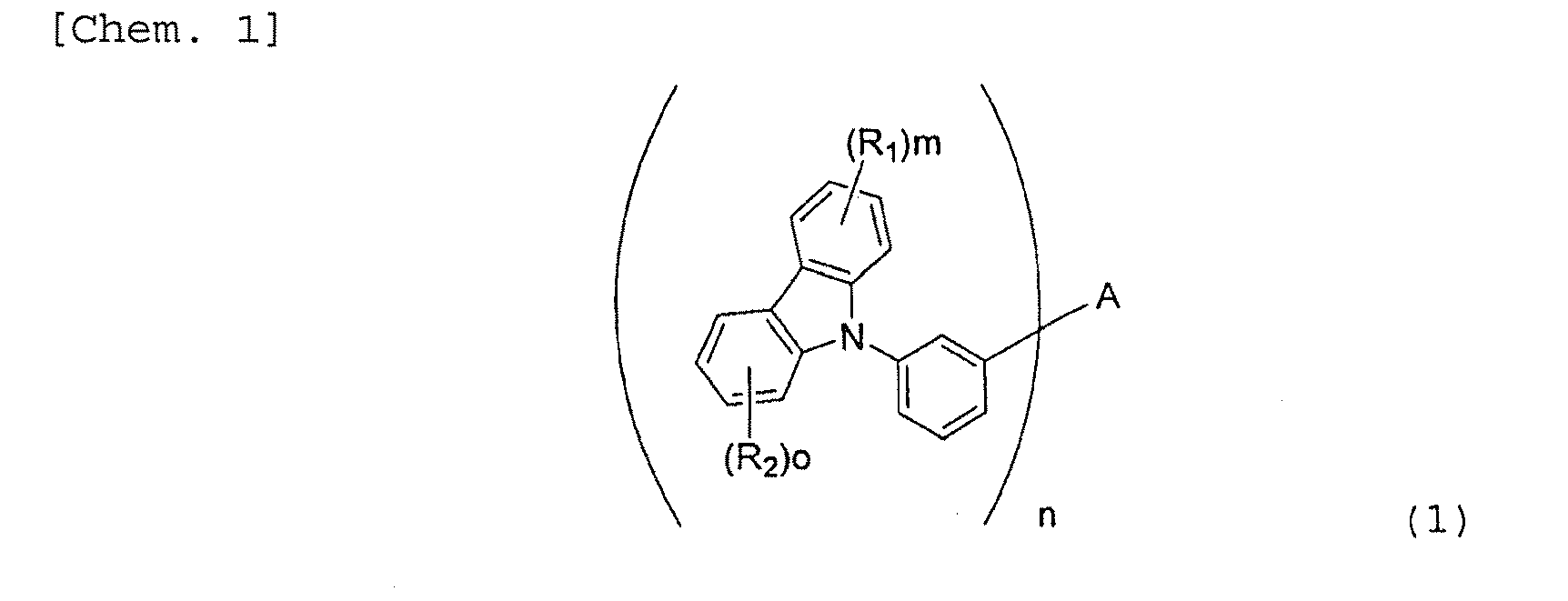
wherein A represents a substituted or unsubstituted bephenylene group; n represents an integer of 2 to 4; R1 and R2 may be the same or different and represent each an arbitrary substituent; and m and o represent each an integer of 0 to 4.
Description
- The present invention relates to a compound containing an m-carbazolylphenyl group, suitable for an organic electroluminescence device which is a self-luminescent device suitable for various display devices. More specifically, it relates to a compound suitable for phosphorescence-emitting devices.
- Since an organic electroluminescence device is a self-luminescent device, it is luminous, excellent in visibility, and capable of giving clear display, as compared with a liquid crystal device, so that active investigations have been made. Recently, as an approach to increase luminous efficiency of a device, a device that generates phosphorescence using a phosphorescence-emitting substance, that is, utilizes luminescence from a triplet-excited state, has been developed. According to the theory of an excited state, in the case of using phosphorescence emission, there is expected remarkable increase in luminous efficiency such that the luminous efficiency of about 4 times the conventional fluorescence emission becomes possible.
- In 1993, M. A. Baldo et al. in Princeton University realized an external quantum efficiency of 8% by the use of a phosphorescence-emitting device using an iridium complex.
- Since a phosphorescence-emitting substance induces concentration quenching, the substance is supported by doping a charge-transporting compound generally called a host compound therewith. The emitting substance to be supported is called a guest compound. As the host compound, 4,4'-di(N-carbazolyl)biphenyl (hereinafter referred to as CBP):
-

- has been used (see Non-Patent Document 1).
- Non-Patent Document 1: Appl. Phys. Let., 75. 4 (1999)
- However, since CBP has high crystallinity, it was pointed out to be poor in stability in a thin film state. For this reason, satisfactory device characteristics were not obtained in the case where heat resistance is required, for example, in the case of high luminance emission.
- Therefore, 4,4',4"-tri(N-carbazolyl)triphenylamine (hereinafter referred to as TCTA):
-

- was proposed as a novel host compound and was confirmed to have luminous efficiency almost equal to that of CBP (see Non-Patent Document 2).
- Non-Patent Document 2: Japan Society of Applied Physics, Organic Molecule Bioelectronics Section, Ninth Workshop, 17 (2001)
- As the progress of the study on phosphorescence-emitting devices, elucidation of an energy transfer process between a phosphorescence-emitting device and a host compound was advanced and it was revealed that an excited triplet level of the host compounds should be higher than that of the phosphorescence-emitting device, so that there has been required a host material having an excited triplet level higher than that of CBP.
- An external quantum efficiency of the phosphorescence-emitting device using, as a host compound in an emission layer, CBP doped with a blue phosphorescence-emitting substance Firpic:
-


- is still 6%. As a reason therefor, the excited triplet level of CBP is as low as 2.56 eV as compared with the excited triplet level of Firpic of 2.62 eV, so that it is considered that confinement of the excited triplet excitons of Firpic is insufficient.
- This is evidenced by the fact that photoluminescence intensity of a CBP film doped with Firpic shows temperature dependency (see Non-Patent Document 3).
- Non-Patent Document 3: Japan Society of Applied Physics, Journal of Organic Molecule Bioelectronics Section, 14(1), 23 (2003)
- When the host compound in the emission layer is CBP, the confinement of the excited triplet excitons of Firpic is insufficient, so that non-radiating transition of the temperature dependency occurs and photoluminescence intensity decreases at room temperature.
- Thus, in order to enhance luminous efficiency of a phosphorescence-emitting device, there has been required a host compound for the emission layer, which completely confines the triplet excitons of the phosphorescence-emitting device.
- An object of the present invention is to provide a host compound in an emission layer, which has a high excited triplet level and completely confines triplet excitons of a phosphorescence-emitting substance. As physical characteristics of a compound suitable for the invention, there can be mentioned that (1) the excited triplet level is high, (2) intensity of photoluminescence of a film doped with a phosphorescence-emitting substance does not show temperature dependency, and (3) quantum efficiency of photoluminescence of a film doped with a phosphorescence-emitting substance is close to 100%.
- To achieve the above object, the present inventors have designed and chemically synthesized novel carbazole derivatives and explored the most suitable compound by investigating photoluminescence using the compounds and a phosphorescence-emitting substance to find out a novel compound having characteristics suitable for a phosphorescence-emitting device. Thus, the present invention has been completed.
- Namely, the invention provides a compound for an organic electroluminescence device containing an m-carbazolylphenyl group, represented by the general formula (1):
-

- wherein A represents a nitrogen atom, an amino group to which a substituted or unsubstituted aromatic hydrocarbon group is bonded, a substituted or unsubstituted aromatic hydrocarbon group, a substituted or unsubstituted aromatic heterocyclic group, or a substituted or unsubstituted condensed polycyclic aromatic group; n represents an integer of 2 to 4; R1 and R2 may be the same or different and represent each an arbitrary substituent; and m and o each represent an integer of 0 to 4.
- The substituted or unsubstituted aromatic hydrocarbon group in the amino group to which a substituted or unsubstituted aromatic hydrocarbon group is attached, the substituted or unsubstituted aromatic hydrocarbon group, the substituted or unsubstituted aromatic heterocyclic group, and the substituted or unsubstituted condensed polycyclic aromatic group, represented by Ar in the general formula (I), specifically include the following examples: a phenyl group, a biphenylyl group, a terphenylyl group, a tetrakisphenyl group, a styryl group, a naphthyl group, an anthryl group, an acenaphthenyl group, a fluorenyl group, a phenanthryl group, an indenyl group, a pyrenyl group, a pyridyl group, a pyrimidyl group, a phenanthrolyl group, a furanyl group, a pyronyl group, a thiophenyl group, a quinolyl group, a benzofuranyl group, a benzothiophenyl group, an indolyl group, a carbazolyl group, a benzoxazolyl group, a quinoxalinyl group, a benzimidazolyl group, a pyrazolyl group, a dibenzofuranyl group, and a dibenzothiophenyl group.
- A substituent in the substituted aromatic hydrocarbon group of the amino group to which a substituted aromatic hydrocarbon group is attached, the substituted aromatic hydrocarbon group, the substituted aromatic heterocyclic group, and the substituted condensed polycyclic aromatic group, represented by Ar in the general formula (I), specifically includes the following examples: a fluorine atom, a chlorine atom, a cyano group, a hydroxyl group, a nitro group, an alkyl group, an alkoxy group, a substituted or unsubstituted amino group, a trifluoromethyl group, a phenyl group, a biphenylyl group, a terphenylyl group, a tetrakisphenyl group, a styryl group, a naphthyl group, an anthryl group, an acenaphthenyl group, a fluorenyl group, a phenanthryl group, an indenyl group, a pyrenyl group, a pyridyl group, a pyrimidyl group, a phenanthrolyl group, a furanyl group, a pyronyl group, a thiophenyl group, a quinolyl group, a benzofuranyl group, a benzothiophenyl group, an indolyl group, a carbazolyl group, a benzoxazolyl group, a quinoxalyl group, a benzimidazolyl group, a pyrazolyl group, a dibenzofuranyl group, and a dibenzothiophenyl group.
- The arbitrary substituents represented by R1 and R2 in the general formula (1) specifically include the following examples: a fluorine atom, a chlorine atom, a cyano group, a hydroxyl group, a nitro group, an alkyl group, an alkoxy group, a substituted or unsubstituted amino group, a trifluoromethyl group, a phenyl group, a biphenylyl group, a terphenylyl group, a tetrakisphenyl group, a styryl group, a naphthyl group, an anthryl group, an acenaphthenyl group, a fluorenyl group, a phenanthryl group, an indenyl group, a pyrenyl group, a pyridyl group, a pyrimidyl group, a phenanthrolyl group, a furanyl group, a pyronyl group, a thiophenyl group, a quinolyl group, a benzofuranyl group, a benzothiophenyl group, an indolyl group, a carbazolyl group, a benzoxazolyl group, a quinoxalyl group, a benzimidazolyl group, a pyrazolyl group, a dibenzofuranyl group, and a dibenzothiophenyl group.
- Moreover, the invention is also characterized in that the compound containing an m-carbazolylphenyl group represented by the general formula (1) is a constitutional material in an emission layer or a hole transporting material, of an organic electroluminescence device. In the case of using the compound as a host material for a phosphorescence-emitting substance of a phosphorescence-emitting device, it provides an effect of improving luminous efficiency of the device.
- The compound containing an m-carbazolylphenyl group of the invention has a high excited triplet level and completely confines triplet excitons of an phosphorescence-emitting substance, so that the compound is excellent as a host compound in an emission layer. Moreover, it is useful as a host compound in an emission layer or a hole transporting material, of an organic electroluminescence device, and thus a highly efficient and highly luminous organic electroluminescence device can be obtained by preparing an organic electroluminescence device using the compound.
-
-
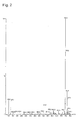
FIG. 1 is a chart of 1H-NMR of mTCTA (Compound 2). -
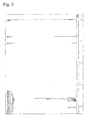
FIG. 2 is a chart of LC/MS of mTCTA (Compound 2). -
FIG. 3 is a chart of 1H-NMR ofCompound 3. -
FIG. 4 is a chart of 1H-NMR of Compound 4. -
FIG. 5 is a chart of LC/MS of Compound 4. -
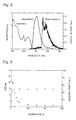
FIG. 6 is a chart of absorption, fluorescence, and phosphorescence spectra of mTCTA (Compound 2). -
FIG. 7 is a chart of absorption, fluorescence, and phosphorescence spectra of Compound 4. -
FIG. 8 is a chart of absorption, fluorescence, and phosphorescence spectra of mTCTA (Comparison). -
FIG. 9 is a graph showing temperature dependency of phosphorescence intensity (■) and phosphorescence life (•) of Firpic. - The compound containing an m-carbazolylphenyl group of the invention can be synthesized by condensing an arylamine and an aryl halide through Heck amination process, Ullmann reaction, or the like.
- Of the compounds containing an m-carbazolylphenyl group represented by the general formula (1), specific examples of preferred compounds are shown below, but the invention is not limited to the compounds.
-


-

-

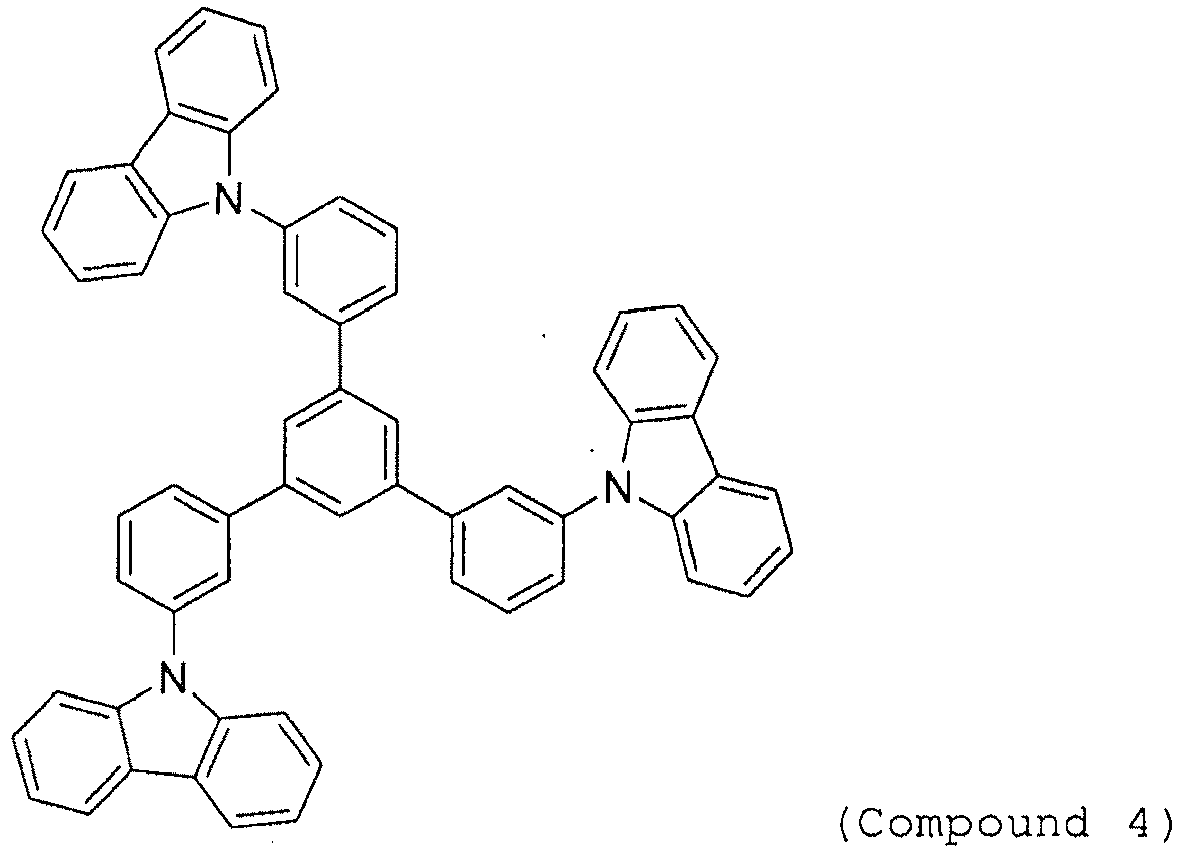
-

- Purification of the compound of the invention can be conducted by purification through column chromatography, adsorption purification with various adsorbents, recrystallization with a solvent, or crystallization sublimation purification, and the like.
- Identification of the compound of the invention can be conducted by NMR analysis and LC/MS analysis.
- The excited triplet level of the compound of the invention was measured by the method described in Non-Patent Document 4 (see Non-Patent Document 4).
- Non-Patent Document 4: Chem. Mat., 16, 1285 (2004)
- Moreover, the temperature dependency of photoluminescence intensity of the compound of the invention was measured by the method described in Non-Patent Document 5 (see Non-Patent Document 5).
- Non-Patent Document 5: Appl. Phys. Lett., 86(7), 1104 (2005)
- The quantum efficiency of photoluminescence of the film wherein the compound of the invention is doped with a phosphorescence-emitting substance was measured by the method described in Non-Patent Document 6 (see Non-Patent Document 6).
- Non-Patent Document 6: Jpn. J. Appl. Phys., 43, 7729 (2004)
- The compound of the invention is suitably used as a host compound in an emission layer or as a hole transporting material, of an organic electroluminescence device. The device structure suitable for the organic electroluminescence device of the invention includes a structure comprising, successively on a substrate, an anode, a hole injecting layer, a hole transporting layer, an electron blocking layer, an emission layer, a hole blocking layer, an electron transporting layer, an electron injecting layer, and a cathode, or a structure comprising, successively on a substrate, an anode, a hole transporting layer, an emission layer, a layer serving as both hole blocking layer and electron transporting layer, an electron injecting layer, and a cathode. Furthermore, in these multilayered structures, several organic layers can be used in combination or can be omitted.
- Concerning the emission layer, hole transporting layer, and electron transporting layer, each layer may have a structure wherein two or more layers are laminated.
- Moreover, a hole injecting/transporting layer may be a P-doped hole injecting/transporting layer such as a polymeric material of N,N'-diphenyl-N,N'-di(m-tolyl)benzidine (hereinafter referred to as TPD) to which tristribromophenylamine hexachloroantimony is doped.
- Furthermore, an electron injecting/transporting layer may be an N-doped electron injecting/transporting layer such as bathocuproin (hereinafter referred to as BCP) to which cesium is doped.
- As the anode of the organic electroluminescence device of the invention, an electrode material having large work function, such as ITO or gold, is used. As the hole injecting layer, as well as copper phthalocyanine, materials such as naphthalene diamine derivatives and starburst type triphenyl amine derivatives or coating type materials can be used. As the hole transporting layer of the invention, as well as the compounds containing an m-carbazolyl group, TPD, N,N'-diphenyl-N,N'-di(α-naphthyl)benzidine (referred to as NPD), bis[N,N-di(p-tolyl)-4-aminophenyl]cyclohexane (referred to as TPAC), or the like can be used.
- As the electron blocking layer of the organic electroluminescence device of the invention, compounds having electron blocking action, such as m-bis(N-carbazolyl)benzene (referred to as mCP), can be used.
- The emission layer of the organic electroluminescence device of the invention is prepared by doping a hole injecting/transporting host material with a light-emitting substance called a guest material. The compound containing an m-carbazolylphenyl group represented by the general formula (I) of the invention can be used as a host material in the emission layer.
- The guest material in the emission layer of the organic electroluminescence device of the invention may be a fluorescence-emitting substance or a phosphorescence-emitting substance. As the fluorescence-emitting substance, fluorescence-emitting substances such as rubrene derivatives, anthracene derivatives, and coumarin derivatives can be used. As the phosphorescence-emitting substance, green phosphorescence-emitting substances such as iridium complex of phenyl pyridine (Ir(Ppy)3), blue phosphorescence-emitting substances such as Firpic and Fir6, red phosphorescence-emitting substances such as Btp2Ir(acac), and the like can be used.
- Since the guest material that is a phosphorescence-emitting substance induces concentration quenching, it is preferred to dope it by co-deposition in the range of 1 to 30% by weight relative to the whole emission layer.
- Moreover, as described in Non-Patent Document 7, it is possible to prepare a device having a structure wherein a second emission layer prepared using a compound different in work function as a host material is neighbored (see Non-Patent Document 7).
- Non-Patent Document 7: Preprint of Organic EL Symposium First Regular Meeting, 19 (2005)
- As the hole blocking layer of the organic electroluminescence device of the invention, compounds having hole blocking action, such as phenanthroline derivatives including BCP and the like, aluminum (III) bis(2-methyl-8-quinolinate)-4-phenyl phenolate (hereinafter referred to as BAlq), oxadiazole derivatives, and triazole derivatives, are used.
- As the electron transporting layer, oxadiazole derivatives, triazole derivatives, tris(8-hydroxyquinoline)aluminum which is an aluminum complex of quinoline (hereinafter referred to as Alq), and BAlq are used. As the electron injecting layer of the invention, there is, for example, lithium fluoride. However, in the preferred selection of the electron transporting layer and the cathode, this can be omitted. As the cathode, an electrode material having low work function, such as aluminum and an alloy of magnesium and silver, are used.
- The embodiments of the invention will be illustrated in greater detail below with reference to Examples, but the invention is not limited to the following Examples so long as not exceeding its gist.
- 5.5 g of bis[3-(carbazol-9-yl)phenyl]amine, 4.9 g of 9-(3-iodophenyl)carbazole, 2.1 g of sodium tert-butoxide, 0.1 g of palladium acetate, and 50 ml of anhydrous toluene were added in a flask under a nitrogen atmosphere. At an inner temperature of 71°C, 0.4 g of tert-butylphosphine was added by using a syringe. After 10 hours of reaction at 100°C, 300 ml of toluene was added to extract the objective substance, followed by filtration. The filtrate was concentrated to dryness to obtain a crude product. The dried crude product was purified by column chromatography to obtain 5.3 g (yield 56%) of mTCTA (Compound 2). The product was identified by 1H-NMR analysis (see
FIG. 1 ). The following 36 hydrogen atoms were detected upon 1H-NMR (CDCl3) analysis. δ (ppm): 8.083-8.130 ppm (6H), 7.468-7.565 ppm (6H), 7.128-7.390 ppm (24H). - Furthermore, molecular weight of the product was analyzed on LC/MS (2695 alliance/quatromicro API, the same shall apply hereinafter). The analytical values under proton addition conditions were 741.3 and 742.3, which were coincident with main molecular weights 740.3 and 741.3 of mTCTA (Compound 2) (see
FIG. 2 ). - 1.50 g of bis[3-(carbazol-9-yl)phenyl]amine, 374 mg of 4,4'-dibromobiphenyl, 370 mg of sodium tert-butoxide, 12 mg of palladium acetate[II], and 10 ml of anhydrous toluene were added in a flask under a nitrogen atmosphere. At an inner temperature of 80°C, 42 mg of tert-butylphosphine was added by using a syringe. After 6 hours of reaction at 80°C, 50 ml of toluene was added to extract the objective substance, followed by filtration. The filtrate was concentrated to dryness to obtain a crude product. The dried crude product was purified by column chromatography to obtain 880 mg (yield 61%) of
Compound 3 as a white solid. The product was identified by 1H-NMR analysis (seeFIG. 3 ). The following 56 hydrogen atoms were detected upon 1H-NMR (CDCl3) analysis. δ (ppm): 8.096-8.122 ppm (8H), 7.501-7.643 ppm (8H), 7.274-7.472 ppm (40H).
Further, the glass transition temperature, which is a measure of stability in an amorphous state, was 151.3°C. - 1.00 g of 1,3,5-(3-bromophenyl)benzene, 1.00 g of carbazole, 38 mg of copper powder, and 1.10 g of potassium carbonate were added in a flask under a nitrogen atmosphere. After the whole was heated to an inner temperature of 170°C and reacted for 20 hours, 50 ml of purified water was added thereto. After 1 hour of stirring at 90°C, insoluble matter was collected by suction filtration. After the insoluble matter was dissolved in tetrahydrofuran, copper powder was removed by suction filtration. The filtrate was concentrated to dryness to obtain a crude product. The dried crude product was purified by column chromatography to obtain 240 mg (yield 16.7%) of Compound 4 as a white solid. The product was identified by 1H-NMR analysis (see
FIG. 4 ). The following 39 hydrogen atoms were detected upon 1H-NMR (CDCl3) analysis. δ (ppm): 8.124-8.153 ppm (6H), 7.887 ppm (6H), 7.568-7.798 ppm (9H), 7.155-74590 ppm (18H). Further, the glass transition temperature, which is a measure of stability of an amorphous state, was 124.8°C. - Furthermore, molecular weight of the product was analyzed on LC/MS. The analytical values under proton addition conditions were 802.2 and 803.2, which were coincident with main molecular weights 801.3 and 802.3 of Compound 4 (see
FIG. 5 ). - Using a streak camera (manufactured by Kyushu University, the same shall apply hereinafter), phosphorescence spectra at the time when laser irradiation at 325 nm was applied to a thin film of 100 nm at 5K were observed for mTCTA (Compound 2), Compound 4, and TCTA as a reference (see
FIGs. 6 to 8 ). Short-wave peaks of the phosphorescence spectra were as follows and thus it was confirmed that the compound of the invention was shifted to a short-wave side.
mTCTA (Compound 2)
Phosphorescence peak wavelength: 429.7 nm (FIG. 6 )
Compound 4
Phosphorescence peak wavelength: 462.0 nm (FIG. 7 ) TCTA
Phosphorescence peak wavelength: 460.7 nm (FIG. 8 ) - The above peak wavelengths were converted to light energy to determine excited triplet levels.
mTCTA (Compound 2) triplet level: 2.89 eV Compound 4 triplet level: 2.69 eV TCTA triplet level: 2.69 eV - In order to investigate suitability of mTCTA (Compound 2) as a host compound in an emission layer, Firpic was co-deposited in an amount of 6% by weight to prepare a thin film of 100 nm. Using the streak camera, temperature dependency of phosphorescence intensity at the time when laser irradiation was applied to a thin film of 100 nm in the range of 5K to 300K was observed (see
FIG. 9 ). Since no temperature dependency was observed on the phosphorescence intensity, it was confirmed that the compound of the invention completely confined the triplet excitons of Firpic. - In order to investigate suitability of mTCTA (Compound 2) as a host compound in an emission layer, Firpic was co-deposited in an amount of 6% by weight to prepare a thin film of 100 nm. Using an integrating sphere (manufactured by Kyushu University), phosphorescence quantum efficiency of Firpic at the time when laser irradiation at 325 nm was applied was measured. The phosphorescence quantum efficiency was 100% (
error 5%). Since the phosphorescence quantum efficiency of Firpic is coincident with a theoretical value thereof, it was confirmed that the compound of the invention preferably transmitted irradiation energy to the phosphorescence-emitting substance Firpic and completely confined triplet excitons of the phosphorescence-emitting substance, as a host compound in an emission layer, to exhibit the highest luminous efficiency. - From the above results, the compounds of the invention have a high excited triplet level, preferably transmit irradiation energy to the phosphorescence-emitting substance, and completely confine triplet excitons of the phosphorescence-emitting substance, so that the compounds are excellent as a host compound in an emission layer.
- While the invention has been described in detail and with reference to specific embodiments thereof, it will be apparent to one skilled in the art that various changes and modifications can be made therein without departing from the spirit and scope thereof.
The present application is based on Japanese Patent Application No.2005-357634 filed on December 12, 2005 - The compound containing an m-carbazolylphenyl group of the present invention has a high excited triplet level and completely confines triplet excitons of the phosphorescence-emitting substance, so that the compound is excellent as a host compound in an emission layer. Moreover, by preparing an organic electroluminescence device using the compound, luminance and luminous efficiency of conventional organic electroluminescence devices can be remarkably improved and therefore performance of mobile electronic products can be improved.
Claims (8)
- A compound containing an m-carbazolylphenyl group, which is represented by the general formula (1) :

- The compound according to claim 1 for an organic electroluminescence device.
- The compound according to claim 1, which is used as a host compound in an emission layer or a hole transporting material, of an organic electroluminescence device.
- The compound according to claim 1, which is used as a host material for a phosphorescence-emitting substance of a phosphorescence-emitting device.
- An organic electroluminescence device comprising at least a hole transporting layer and an emission layer, wherein the hole transporting layer or the emission layer contains the compound according to claim 1.
- The organic electroluminescence device according to claim 5, wherein the compound is contained as a host material in the emission layer.
- The organic electroluminescence device according to claim 6, wherein the guest material in the emission layer is a fluorescence-emitting substance or a phosphorescence-emitting substance.
- The organic electroluminescence device according to claim 7, wherein the guest material is a phosphorescence-emitting substance.
Applications Claiming Priority (2)
| Application Number | Priority Date | Filing Date | Title |
|---|---|---|---|
| JP2005357634 | 2005-12-12 | ||
| EP06834521.4A EP1961741B1 (en) | 2005-12-12 | 2006-12-12 | m-CARBAZOLYLPHENYL COMPOUNDS |
Related Parent Applications (1)
| Application Number | Title | Priority Date | Filing Date |
|---|---|---|---|
| EP06834521.4A Division EP1961741B1 (en) | 2005-12-12 | 2006-12-12 | m-CARBAZOLYLPHENYL COMPOUNDS |
Publications (1)
| Publication Number | Publication Date |
|---|---|
| EP2505582A1 true EP2505582A1 (en) | 2012-10-03 |
Family
ID=38162915
Family Applications (2)
| Application Number | Title | Priority Date | Filing Date |
|---|---|---|---|
| EP06834521.4A Not-in-force EP1961741B1 (en) | 2005-12-12 | 2006-12-12 | m-CARBAZOLYLPHENYL COMPOUNDS |
| EP12173552A Withdrawn EP2505582A1 (en) | 2005-12-12 | 2006-12-12 | M-carbazolylphenyl compound |
Family Applications Before (1)
| Application Number | Title | Priority Date | Filing Date |
|---|---|---|---|
| EP06834521.4A Not-in-force EP1961741B1 (en) | 2005-12-12 | 2006-12-12 | m-CARBAZOLYLPHENYL COMPOUNDS |
Country Status (7)
| Country | Link |
|---|---|
| US (1) | US8053092B2 (en) |
| EP (2) | EP1961741B1 (en) |
| JP (1) | JP5243801B2 (en) |
| KR (1) | KR101511788B1 (en) |
| CN (1) | CN101326165B (en) |
| TW (1) | TWI393705B (en) |
| WO (1) | WO2007069607A1 (en) |
Cited By (2)
| Publication number | Priority date | Publication date | Assignee | Title |
|---|---|---|---|---|
| US10556864B2 (en) | 2007-12-03 | 2020-02-11 | Semiconductor Energy Laboratory Co., Ltd. | Carbazole derivative, and light-emitting element, light-emitting device, and electronic device using the carbazole derivative |
| US11038135B2 (en) | 2011-02-16 | 2021-06-15 | Semiconductor Energy Laboratory Co., Ltd. | Light-emitting element |
Families Citing this family (17)
| Publication number | Priority date | Publication date | Assignee | Title |
|---|---|---|---|---|
| US8945722B2 (en) | 2006-10-27 | 2015-02-03 | The University Of Southern California | Materials and architectures for efficient harvesting of singlet and triplet excitons for white light emitting OLEDs |
| JP5325402B2 (en) * | 2007-08-03 | 2013-10-23 | ケミプロ化成株式会社 | Novel bicarbazole derivative, host material and organic electroluminescence device using the same |
| TWI464167B (en) * | 2008-01-31 | 2014-12-11 | Hodogaya Chemical Co Ltd | A substituted pyridyl group and a pyridoindole ring structure, and an organic electroluminescent element |
| WO2009102016A1 (en) * | 2008-02-14 | 2009-08-20 | Hodogaya Chemical Co., Ltd. | Compound having pyridoindole ring structure bonded with substituted pyridyl group, and organic electroluminescent device |
| JP5481057B2 (en) * | 2008-11-19 | 2014-04-23 | 株式会社東芝 | Organic electroluminescence device |
| JP5268840B2 (en) * | 2009-09-10 | 2013-08-21 | 株式会社東芝 | Organic electroluminescence device |
| TWI480279B (en) | 2010-08-16 | 2015-04-11 | Novel carbazole derivatives and organic light emitting diode devices for their applications | |
| EP2617712A4 (en) * | 2010-08-31 | 2014-02-19 | Idemitsu Kosan Co | AROMATIC HETEROCYCLIC DERIVATIVE CONTAINING NITROGEN AND ORGANIC ELECTROLUMINESCENCE DEVICE USING THE SAME |
| DE102011123066B3 (en) | 2010-10-28 | 2023-04-06 | Lg Display Co., Ltd. | Phosphorescent compound and organic electroluminescent device using the same |
| KR101400388B1 (en) * | 2010-10-29 | 2014-05-27 | 엘지디스플레이 주식회사 | Phosphorescent material for Organic electroluminescent device |
| KR101400386B1 (en) * | 2010-10-29 | 2014-05-27 | 엘지디스플레이 주식회사 | Phosphorescent material for Organic electroluminescent device |
| TW201238959A (en) * | 2011-02-25 | 2012-10-01 | Hodogaya Chemical Co Ltd | Compounds having bipyridyl group and carbazole ring, and organic electroluminescent element |
| WO2012132809A1 (en) * | 2011-03-30 | 2012-10-04 | Semiconductor Energy Laboratory Co., Ltd. | Light-emitting element |
| KR20130009619A (en) * | 2011-07-06 | 2013-01-23 | 가부시키가이샤 한도오따이 에네루기 켄큐쇼 | Light-emitting element, light-emitting device, display device, lighting device, and electronic device |
| TWI425077B (en) | 2011-11-17 | 2014-02-01 | Au Optronics Corp | Organic luminescent material and organic electroluminescent apparatus |
| WO2014021572A1 (en) * | 2012-07-31 | 2014-02-06 | Sk Chemicals Co., Ltd. | Compound for organic electroluminescent device and organic electroluminescent device including the same |
| KR20140018789A (en) * | 2012-07-31 | 2014-02-13 | 에스케이케미칼주식회사 | Compound for organic electroluminescent device and organic electroluminescent device including the same |
Citations (3)
| Publication number | Priority date | Publication date | Assignee | Title |
|---|---|---|---|---|
| WO2005051046A1 (en) * | 2003-11-21 | 2005-06-02 | Canon Kabushiki Kaisha | Light-emitting device, organic compound and display |
| US20050175858A1 (en) * | 2003-10-29 | 2005-08-11 | Dong-Hyun Jung | Carbazole containing compound and organic electroluminescent display device using the same |
| JP2005320277A (en) * | 2004-05-07 | 2005-11-17 | Chemiprokasei Kaisha Ltd | Novel quarter phenylene derivative, host material comprising the same, hole transport material, and organic EL device using the same |
Family Cites Families (9)
| Publication number | Priority date | Publication date | Assignee | Title |
|---|---|---|---|---|
| JP4048521B2 (en) * | 2000-05-02 | 2008-02-20 | 富士フイルム株式会社 | Light emitting element |
| JP4770033B2 (en) * | 2001-02-13 | 2011-09-07 | コニカミノルタホールディングス株式会社 | Organic electroluminescence device |
| AU2003214421A1 (en) * | 2002-03-18 | 2003-09-29 | Isis Innovation Limited | Phosphorescent dendrimers for use in light-emitting devices |
| JP4254211B2 (en) | 2002-11-26 | 2009-04-15 | コニカミノルタホールディングス株式会社 | Organic electroluminescence element and display device |
| CN1895004A (en) * | 2003-12-15 | 2007-01-10 | 出光兴产株式会社 | Material for organic electroluminescence element and organic electroluminescence element using same |
| US20060088728A1 (en) * | 2004-10-22 | 2006-04-27 | Raymond Kwong | Arylcarbazoles as hosts in PHOLEDs |
| JP5082230B2 (en) * | 2004-12-10 | 2012-11-28 | パイオニア株式会社 | Organic compounds, charge transport materials, and organic electroluminescent devices |
| KR101388472B1 (en) * | 2004-12-10 | 2014-04-23 | 미쓰비시 가가꾸 가부시키가이샤 | Organic compound, charge-transporting material, and organic electroluminescent element |
| US7923128B2 (en) * | 2005-06-07 | 2011-04-12 | Fujifilm Corporation | Organic electroluminescent device |
-
2006
- 2006-12-12 EP EP06834521.4A patent/EP1961741B1/en not_active Not-in-force
- 2006-12-12 WO PCT/JP2006/324766 patent/WO2007069607A1/en not_active Ceased
- 2006-12-12 TW TW095146403A patent/TWI393705B/en not_active IP Right Cessation
- 2006-12-12 EP EP12173552A patent/EP2505582A1/en not_active Withdrawn
- 2006-12-12 CN CN2006800467116A patent/CN101326165B/en not_active Expired - Fee Related
- 2006-12-12 KR KR1020087014136A patent/KR101511788B1/en not_active Expired - Fee Related
- 2006-12-12 JP JP2007550179A patent/JP5243801B2/en active Active
- 2006-12-12 US US12/097,159 patent/US8053092B2/en not_active Expired - Fee Related
Patent Citations (3)
| Publication number | Priority date | Publication date | Assignee | Title |
|---|---|---|---|---|
| US20050175858A1 (en) * | 2003-10-29 | 2005-08-11 | Dong-Hyun Jung | Carbazole containing compound and organic electroluminescent display device using the same |
| WO2005051046A1 (en) * | 2003-11-21 | 2005-06-02 | Canon Kabushiki Kaisha | Light-emitting device, organic compound and display |
| JP2005320277A (en) * | 2004-05-07 | 2005-11-17 | Chemiprokasei Kaisha Ltd | Novel quarter phenylene derivative, host material comprising the same, hole transport material, and organic EL device using the same |
Non-Patent Citations (8)
| Title |
|---|
| APPL. PHYS. LET., vol. 75, 1999, pages 4 |
| APPL. PHYS. LETT., vol. 86, no. 7, 2005, pages 1104 |
| CHEM. MAT., vol. 16, 2004, pages 1285 |
| JAPAN SOCIETY OF APPLIED PHYSICS, JOURNAL OF ORGANIC MOLECULE BIOELECTRONICS SECTION, vol. 14, no. 1, 2003, pages 23 |
| JAPAN SOCIETY OF APPLIED PHYSICS, ORGANIC MOLECULE BIOELECTRONICS SECTION, NINTH WORKSHOP, vol. 17, 2001 |
| JPN. J. APPL. PHYS., vol. 43, 2004, pages 7729 |
| M. A. BALDO ET AL., PRINCETON UNIVERSITY REALIZED AN EXTERNAL QUANTUM EFFICIENCY OF 8% BY THE USE OF A PHOSPHORESCENCE-EMITTING DEVICE USING AN IRIDIUM COMPLEX, 1993 |
| PREPRINT OF ORGANIC EL SYMPOSIUM FIRST REGULAR MEETING, vol. 19, 2005 |
Cited By (5)
| Publication number | Priority date | Publication date | Assignee | Title |
|---|---|---|---|---|
| US10556864B2 (en) | 2007-12-03 | 2020-02-11 | Semiconductor Energy Laboratory Co., Ltd. | Carbazole derivative, and light-emitting element, light-emitting device, and electronic device using the carbazole derivative |
| US12110274B2 (en) | 2007-12-03 | 2024-10-08 | Semiconductor Energy Laboratory Co., Ltd. | Carbazole derivative, and light-emitting element, light-emitting device, and electronic device using carbazole derivative |
| US11038135B2 (en) | 2011-02-16 | 2021-06-15 | Semiconductor Energy Laboratory Co., Ltd. | Light-emitting element |
| US11812626B2 (en) | 2011-02-16 | 2023-11-07 | Semiconductor Energy Laboratory Co., Ltd. | Light-emitting element |
| US12150325B2 (en) | 2011-02-16 | 2024-11-19 | Semiconductor Energy Laboratory Co., Ltd. | Light-emitting element |
Also Published As
| Publication number | Publication date |
|---|---|
| TW200728278A (en) | 2007-08-01 |
| KR20080083276A (en) | 2008-09-17 |
| US8053092B2 (en) | 2011-11-08 |
| EP1961741A1 (en) | 2008-08-27 |
| US20090045726A1 (en) | 2009-02-19 |
| CN101326165B (en) | 2013-08-07 |
| CN101326165A (en) | 2008-12-17 |
| EP1961741A4 (en) | 2009-11-25 |
| WO2007069607A1 (en) | 2007-06-21 |
| TWI393705B (en) | 2013-04-21 |
| JP5243801B2 (en) | 2013-07-24 |
| EP1961741B1 (en) | 2013-10-16 |
| JPWO2007069607A1 (en) | 2009-05-21 |
| KR101511788B1 (en) | 2015-04-13 |
Similar Documents
| Publication | Publication Date | Title |
|---|---|---|
| US10059725B2 (en) | Compound having triphenylsilyl group and triarylamine structure, and organic electroluminescent device | |
| TWI468494B (en) | Organic electroluminescent elements | |
| KR101544237B1 (en) | Organic electroluminescent device | |
| KR101758865B1 (en) | Organic electroluminescent element | |
| EP1961741B1 (en) | m-CARBAZOLYLPHENYL COMPOUNDS | |
| KR101487567B1 (en) | Compound wherein substituted bipyridyl group is connected with pyridoindole ring structure through phenylene group, and organic electroluminescent device | |
| EP2380888A1 (en) | Compound having triazole ring structure with pyridyl group attached thereto, and organic electroluminescent element | |
| EP2236506A1 (en) | Compound having triazine ring structure substituted with group and organic electroluminescent device | |
| EP3266781A1 (en) | Compound having a substituted anthracene ring structure and pyridoindole ring structure, and organic electroluminescent device | |
| KR20200026207A (en) | Light emitting elements, displays, lighting devices and sensors comprising them | |
| US20080036365A1 (en) | Carbazole Derivative Containing Fluorene Group and Organic Electroluminescent Element | |
| EP3770158A1 (en) | Compound including benzimidazole ring structure and organic electroluminescent element | |
| KR102015146B1 (en) | Compounds having bipyridyl group and carbazole ring, and organic electroluminescent element | |
| EP3269789B1 (en) | Light emitting material and organic electroluminescent element | |
| JP5870346B2 (en) | COMPOUND HAVING SUBSTITUTED ORTOTERPHENY STRUCTURE AND ORGANIC ELECTROLUMINESCENT DEVICE | |
| KR102931947B1 (en) | Compounds having a benzotriazole ring structure and organic electroluminescent devices | |
| JP2020113557A (en) | Compound having azacarbazole structure and organic electroluminescent device | |
| JP6716138B2 (en) | Terpyridine derivative, light emitting material comprising the same, and organic EL device using the same | |
| JP2024027099A (en) | Compounds with two pyridoindole rings and organic electroluminescent devices |
Legal Events
| Date | Code | Title | Description |
|---|---|---|---|
| PUAI | Public reference made under article 153(3) epc to a published international application that has entered the european phase |
Free format text: ORIGINAL CODE: 0009012 |
|
| AC | Divisional application: reference to earlier application |
Ref document number: 1961741 Country of ref document: EP Kind code of ref document: P |
|
| AK | Designated contracting states |
Kind code of ref document: A1 Designated state(s): DE FR GB |
|
| 17P | Request for examination filed |
Effective date: 20130129 |
|
| 17Q | First examination report despatched |
Effective date: 20130326 |
|
| STAA | Information on the status of an ep patent application or granted ep patent |
Free format text: STATUS: THE APPLICATION IS DEEMED TO BE WITHDRAWN |
|
| 18D | Application deemed to be withdrawn |
Effective date: 20130806 |