EP2505198A1 - Compounds for use as therapeutic agents affecting p53 expression and/or activity - Google Patents
Compounds for use as therapeutic agents affecting p53 expression and/or activity Download PDFInfo
- Publication number
- EP2505198A1 EP2505198A1 EP11305385A EP11305385A EP2505198A1 EP 2505198 A1 EP2505198 A1 EP 2505198A1 EP 11305385 A EP11305385 A EP 11305385A EP 11305385 A EP11305385 A EP 11305385A EP 2505198 A1 EP2505198 A1 EP 2505198A1
- Authority
- EP
- European Patent Office
- Prior art keywords
- group
- alkyl group
- hydrogen atom
- disease
- compound
- Prior art date
- Legal status (The legal status is an assumption and is not a legal conclusion. Google has not performed a legal analysis and makes no representation as to the accuracy of the status listed.)
- Withdrawn
Links
- 150000001875 compounds Chemical class 0.000 title claims abstract description 153
- 102100025064 Cellular tumor antigen p53 Human genes 0.000 title description 190
- 101000721661 Homo sapiens Cellular tumor antigen p53 Proteins 0.000 title description 190
- 230000014509 gene expression Effects 0.000 title description 74
- 230000000694 effects Effects 0.000 title description 43
- 239000003814 drug Substances 0.000 title description 12
- 229940124597 therapeutic agent Drugs 0.000 title description 2
- 208000037265 diseases, disorders, signs and symptoms Diseases 0.000 claims abstract description 105
- 201000010099 disease Diseases 0.000 claims abstract description 95
- 125000004435 hydrogen atom Chemical group [H]* 0.000 claims abstract description 64
- 125000004178 (C1-C4) alkyl group Chemical group 0.000 claims abstract description 61
- 230000002074 deregulated effect Effects 0.000 claims abstract description 53
- 230000002401 inhibitory effect Effects 0.000 claims abstract description 39
- 239000003795 chemical substances by application Substances 0.000 claims abstract description 35
- 150000003839 salts Chemical class 0.000 claims abstract description 35
- 125000002887 hydroxy group Chemical group [H]O* 0.000 claims abstract description 24
- -1 pyrimidinyl-vinyl group Chemical group 0.000 claims abstract description 24
- 125000000229 (C1-C4)alkoxy group Chemical group 0.000 claims abstract description 18
- 125000004169 (C1-C6) alkyl group Chemical group 0.000 claims abstract description 13
- 125000001153 fluoro group Chemical group F* 0.000 claims abstract description 12
- 125000001072 heteroaryl group Chemical group 0.000 claims abstract description 10
- 125000000051 benzyloxy group Chemical group [H]C1=C([H])C([H])=C(C([H])=C1[H])C([H])([H])O* 0.000 claims abstract description 6
- 125000005843 halogen group Chemical group 0.000 claims abstract description 6
- 101100439665 Arabidopsis thaliana SWI2 gene Proteins 0.000 claims abstract description 5
- 125000005504 styryl group Chemical group 0.000 claims abstract description 4
- 125000003282 alkyl amino group Chemical group 0.000 claims abstract description 3
- LFQSCWFLJHTTHZ-UHFFFAOYSA-N Ethanol Chemical compound CCO LFQSCWFLJHTTHZ-UHFFFAOYSA-N 0.000 claims description 46
- 206010028980 Neoplasm Diseases 0.000 claims description 35
- 201000001320 Atherosclerosis Diseases 0.000 claims description 29
- 229910052757 nitrogen Inorganic materials 0.000 claims description 27
- 201000011510 cancer Diseases 0.000 claims description 26
- IJGRMHOSHXDMSA-UHFFFAOYSA-N Atomic nitrogen Chemical compound N#N IJGRMHOSHXDMSA-UHFFFAOYSA-N 0.000 claims description 24
- 230000004770 neurodegeneration Effects 0.000 claims description 18
- 125000002883 imidazolyl group Chemical group 0.000 claims description 16
- 208000028867 ischemia Diseases 0.000 claims description 16
- 208000015122 neurodegenerative disease Diseases 0.000 claims description 16
- 206010008635 Cholestasis Diseases 0.000 claims description 15
- 206010016654 Fibrosis Diseases 0.000 claims description 15
- 230000007870 cholestasis Effects 0.000 claims description 15
- 231100000359 cholestasis Toxicity 0.000 claims description 15
- 230000004761 fibrosis Effects 0.000 claims description 15
- 230000006378 damage Effects 0.000 claims description 14
- 208000010125 myocardial infarction Diseases 0.000 claims description 14
- 229920006395 saturated elastomer Polymers 0.000 claims description 14
- 208000023275 Autoimmune disease Diseases 0.000 claims description 13
- 206010012289 Dementia Diseases 0.000 claims description 13
- 206010061218 Inflammation Diseases 0.000 claims description 13
- 230000004054 inflammatory process Effects 0.000 claims description 13
- 208000019423 liver disease Diseases 0.000 claims description 13
- 125000004433 nitrogen atom Chemical group N* 0.000 claims description 13
- 229910052760 oxygen Inorganic materials 0.000 claims description 13
- 230000007170 pathology Effects 0.000 claims description 13
- QVGXLLKOCUKJST-UHFFFAOYSA-N atomic oxygen Chemical compound [O] QVGXLLKOCUKJST-UHFFFAOYSA-N 0.000 claims description 12
- 125000005842 heteroatom Chemical group 0.000 claims description 12
- 239000001301 oxygen Substances 0.000 claims description 12
- 125000002757 morpholinyl group Chemical group 0.000 claims description 11
- 125000003386 piperidinyl group Chemical group 0.000 claims description 11
- 125000000719 pyrrolidinyl group Chemical group 0.000 claims description 11
- 208000035475 disorder Diseases 0.000 claims description 10
- 206010012601 diabetes mellitus Diseases 0.000 claims description 9
- 230000028706 ribosome biogenesis Effects 0.000 claims description 9
- 239000008194 pharmaceutical composition Substances 0.000 claims description 5
- 125000006526 (C1-C2) alkyl group Chemical group 0.000 claims description 4
- CIWBSHSKHKDKBQ-JLAZNSOCSA-N Ascorbic acid Chemical compound OC[C@H](O)[C@H]1OC(=O)C(O)=C1O CIWBSHSKHKDKBQ-JLAZNSOCSA-N 0.000 claims description 4
- 125000001997 phenyl group Chemical group [H]C1=C([H])C([H])=C(*)C([H])=C1[H] 0.000 claims description 4
- 229940095064 tartrate Drugs 0.000 claims description 4
- VZCYOOQTPOCHFL-UHFFFAOYSA-N trans-butenedioic acid Natural products OC(=O)C=CC(O)=O VZCYOOQTPOCHFL-UHFFFAOYSA-N 0.000 claims description 4
- 229920002554 vinyl polymer Polymers 0.000 claims description 3
- QTBSBXVTEAMEQO-UHFFFAOYSA-M Acetate Chemical compound CC([O-])=O QTBSBXVTEAMEQO-UHFFFAOYSA-M 0.000 claims description 2
- KRKNYBCHXYNGOX-UHFFFAOYSA-K Citrate Chemical compound [O-]C(=O)CC(O)(CC([O-])=O)C([O-])=O KRKNYBCHXYNGOX-UHFFFAOYSA-K 0.000 claims description 2
- BDAGIHXWWSANSR-UHFFFAOYSA-M Formate Chemical compound [O-]C=O BDAGIHXWWSANSR-UHFFFAOYSA-M 0.000 claims description 2
- VEXZGXHMUGYJMC-UHFFFAOYSA-N Hydrochloric acid Chemical compound Cl VEXZGXHMUGYJMC-UHFFFAOYSA-N 0.000 claims description 2
- CPELXLSAUQHCOX-UHFFFAOYSA-N Hydrogen bromide Chemical compound Br CPELXLSAUQHCOX-UHFFFAOYSA-N 0.000 claims description 2
- AFVFQIVMOAPDHO-UHFFFAOYSA-N Methanesulfonic acid Chemical compound CS(O)(=O)=O AFVFQIVMOAPDHO-UHFFFAOYSA-N 0.000 claims description 2
- DTQVDTLACAAQTR-UHFFFAOYSA-M Trifluoroacetate Chemical compound [O-]C(=O)C(F)(F)F DTQVDTLACAAQTR-UHFFFAOYSA-M 0.000 claims description 2
- 229940072107 ascorbate Drugs 0.000 claims description 2
- 235000010323 ascorbic acid Nutrition 0.000 claims description 2
- 239000011668 ascorbic acid Substances 0.000 claims description 2
- 229910052799 carbon Inorganic materials 0.000 claims description 2
- VZCYOOQTPOCHFL-UPHRSURJSA-N maleic acid Chemical compound OC(=O)\C=C/C(O)=O VZCYOOQTPOCHFL-UPHRSURJSA-N 0.000 claims description 2
- ITMCEJHCFYSIIV-UHFFFAOYSA-M triflate Chemical compound [O-]S(=O)(=O)C(F)(F)F ITMCEJHCFYSIIV-UHFFFAOYSA-M 0.000 claims description 2
- FEWJPZIEWOKRBE-JCYAYHJZSA-N Dextrotartaric acid Chemical compound OC(=O)[C@H](O)[C@@H](O)C(O)=O FEWJPZIEWOKRBE-JCYAYHJZSA-N 0.000 claims 2
- VZCYOOQTPOCHFL-OWOJBTEDSA-N Fumaric acid Chemical compound OC(=O)\C=C\C(O)=O VZCYOOQTPOCHFL-OWOJBTEDSA-N 0.000 claims 1
- HEDRZPFGACZZDS-MICDWDOJSA-N Trichloro(2H)methane Chemical compound [2H]C(Cl)(Cl)Cl HEDRZPFGACZZDS-MICDWDOJSA-N 0.000 description 239
- 238000005160 1H NMR spectroscopy Methods 0.000 description 102
- XEKOWRVHYACXOJ-UHFFFAOYSA-N Ethyl acetate Chemical compound CCOC(C)=O XEKOWRVHYACXOJ-UHFFFAOYSA-N 0.000 description 96
- 239000011541 reaction mixture Substances 0.000 description 86
- XKRFYHLGVUSROY-UHFFFAOYSA-N Argon Chemical compound [Ar] XKRFYHLGVUSROY-UHFFFAOYSA-N 0.000 description 82
- CSNNHWWHGAXBCP-UHFFFAOYSA-L Magnesium sulfate Chemical compound [Mg+2].[O-][S+2]([O-])([O-])[O-] CSNNHWWHGAXBCP-UHFFFAOYSA-L 0.000 description 74
- 230000002829 reductive effect Effects 0.000 description 66
- YMWUJEATGCHHMB-UHFFFAOYSA-N Dichloromethane Chemical compound ClCCl YMWUJEATGCHHMB-UHFFFAOYSA-N 0.000 description 59
- 108010029485 Protein Isoforms Proteins 0.000 description 41
- 102000001708 Protein Isoforms Human genes 0.000 description 41
- 229910052786 argon Inorganic materials 0.000 description 41
- HEMHJVSKTPXQMS-UHFFFAOYSA-M Sodium hydroxide Chemical compound [OH-].[Na+] HEMHJVSKTPXQMS-UHFFFAOYSA-M 0.000 description 39
- 229910052943 magnesium sulfate Inorganic materials 0.000 description 37
- 239000012074 organic phase Substances 0.000 description 37
- XLYOFNOQVPJJNP-UHFFFAOYSA-N water Substances O XLYOFNOQVPJJNP-UHFFFAOYSA-N 0.000 description 37
- 108090000623 proteins and genes Proteins 0.000 description 33
- 238000001644 13C nuclear magnetic resonance spectroscopy Methods 0.000 description 30
- ZMXDDKWLCZADIW-UHFFFAOYSA-N N,N-Dimethylformamide Chemical compound CN(C)C=O ZMXDDKWLCZADIW-UHFFFAOYSA-N 0.000 description 24
- 210000004027 cell Anatomy 0.000 description 24
- BWHMMNNQKKPAPP-UHFFFAOYSA-L potassium carbonate Chemical compound [K+].[K+].[O-]C([O-])=O BWHMMNNQKKPAPP-UHFFFAOYSA-L 0.000 description 24
- DKGAVHZHDRPRBM-UHFFFAOYSA-N Tert-Butanol Chemical compound CC(C)(C)O DKGAVHZHDRPRBM-UHFFFAOYSA-N 0.000 description 18
- 239000007864 aqueous solution Substances 0.000 description 18
- 125000002496 methyl group Chemical group [H]C([H])([H])* 0.000 description 18
- VYPSYNLAJGMNEJ-UHFFFAOYSA-N Silicium dioxide Chemical compound O=[Si]=O VYPSYNLAJGMNEJ-UHFFFAOYSA-N 0.000 description 17
- 238000004440 column chromatography Methods 0.000 description 17
- 108020004999 messenger RNA Proteins 0.000 description 17
- 239000000243 solution Substances 0.000 description 17
- IAZDPXIOMUYVGZ-UHFFFAOYSA-N Dimethylsulphoxide Chemical compound CS(C)=O IAZDPXIOMUYVGZ-UHFFFAOYSA-N 0.000 description 16
- 238000010908 decantation Methods 0.000 description 16
- 239000000741 silica gel Substances 0.000 description 16
- 229910002027 silica gel Inorganic materials 0.000 description 16
- 230000037361 pathway Effects 0.000 description 15
- IAZDPXIOMUYVGZ-WFGJKAKNSA-N Dimethyl sulfoxide Chemical compound [2H]C([2H])([2H])S(=O)C([2H])([2H])[2H] IAZDPXIOMUYVGZ-WFGJKAKNSA-N 0.000 description 14
- 238000004458 analytical method Methods 0.000 description 14
- 239000002609 medium Substances 0.000 description 14
- RIOQSEWOXXDEQQ-UHFFFAOYSA-N triphenylphosphine Chemical compound C1=CC=CC=C1P(C=1C=CC=CC=1)C1=CC=CC=C1 RIOQSEWOXXDEQQ-UHFFFAOYSA-N 0.000 description 14
- 208000027418 Wounds and injury Diseases 0.000 description 13
- 208000014674 injury Diseases 0.000 description 13
- 238000001262 western blot Methods 0.000 description 13
- YXFVVABEGXRONW-UHFFFAOYSA-N Toluene Chemical compound CC1=CC=CC=C1 YXFVVABEGXRONW-UHFFFAOYSA-N 0.000 description 12
- 230000004640 cellular pathway Effects 0.000 description 12
- 238000001816 cooling Methods 0.000 description 12
- 229910000027 potassium carbonate Inorganic materials 0.000 description 12
- UGOMMVLRQDMAQQ-UHFFFAOYSA-N xphos Chemical compound CC(C)C1=CC(C(C)C)=CC(C(C)C)=C1C1=CC=CC=C1P(C1CCCCC1)C1CCCCC1 UGOMMVLRQDMAQQ-UHFFFAOYSA-N 0.000 description 12
- YQCSORIIPSUFJA-MDZDMXLPSA-N n-(3-methylbutyl)-3-[3-[(e)-2-pyridin-4-ylethenyl]anilino]benzamide Chemical compound CC(C)CCNC(=O)C1=CC=CC(NC=2C=C(\C=C\C=3C=CN=CC=3)C=CC=2)=C1 YQCSORIIPSUFJA-MDZDMXLPSA-N 0.000 description 11
- 102000004169 proteins and genes Human genes 0.000 description 11
- KDLHZDBZIXYQEI-UHFFFAOYSA-N Palladium on carbon Substances [Pd] KDLHZDBZIXYQEI-UHFFFAOYSA-N 0.000 description 10
- 229940079593 drug Drugs 0.000 description 10
- YJVFFLUZDVXJQI-UHFFFAOYSA-L palladium(ii) acetate Chemical compound [Pd+2].CC([O-])=O.CC([O-])=O YJVFFLUZDVXJQI-UHFFFAOYSA-L 0.000 description 10
- CXNIUSPIQKWYAI-UHFFFAOYSA-N xantphos Chemical compound C=12OC3=C(P(C=4C=CC=CC=4)C=4C=CC=CC=4)C=CC=C3C(C)(C)C2=CC=CC=1P(C=1C=CC=CC=1)C1=CC=CC=C1 CXNIUSPIQKWYAI-UHFFFAOYSA-N 0.000 description 10
- 238000011529 RT qPCR Methods 0.000 description 9
- 230000001747 exhibiting effect Effects 0.000 description 9
- 238000000034 method Methods 0.000 description 9
- 238000003762 quantitative reverse transcription PCR Methods 0.000 description 9
- ORPVVAKYSXQCJI-UHFFFAOYSA-N 1-bromo-2-nitrobenzene Chemical compound [O-][N+](=O)C1=CC=CC=C1Br ORPVVAKYSXQCJI-UHFFFAOYSA-N 0.000 description 8
- 239000008346 aqueous phase Substances 0.000 description 8
- FJDQFPXHSGXQBY-UHFFFAOYSA-L caesium carbonate Chemical compound [Cs+].[Cs+].[O-]C([O-])=O FJDQFPXHSGXQBY-UHFFFAOYSA-L 0.000 description 8
- 125000000956 methoxy group Chemical group [H]C([H])([H])O* 0.000 description 8
- 125000001425 triazolyl group Chemical group 0.000 description 8
- 108091032973 (ribonucleotides)n+m Proteins 0.000 description 7
- VMHLLURERBWHNL-UHFFFAOYSA-M Sodium acetate Chemical compound [Na+].CC([O-])=O VMHLLURERBWHNL-UHFFFAOYSA-M 0.000 description 7
- 102100040250 Transcription elongation factor A protein-like 1 Human genes 0.000 description 7
- 239000002299 complementary DNA Substances 0.000 description 7
- QOWOCAIBBUSUOK-UHFFFAOYSA-N n-[2-(diethylamino)ethyl]-2-[4-(trifluoromethoxy)anilino]benzamide Chemical compound CCN(CC)CCNC(=O)C1=CC=CC=C1NC1=CC=C(OC(F)(F)F)C=C1 QOWOCAIBBUSUOK-UHFFFAOYSA-N 0.000 description 7
- 239000000047 product Substances 0.000 description 7
- 239000007787 solid Substances 0.000 description 7
- GZNAASVAJNXPPW-UHFFFAOYSA-M tin(4+) chloride dihydrate Chemical compound O.O.[Cl-].[Sn+4] GZNAASVAJNXPPW-UHFFFAOYSA-M 0.000 description 7
- FWPIDFUJEMBDLS-UHFFFAOYSA-L tin(II) chloride dihydrate Substances O.O.Cl[Sn]Cl FWPIDFUJEMBDLS-UHFFFAOYSA-L 0.000 description 7
- 125000000876 trifluoromethoxy group Chemical group FC(F)(F)O* 0.000 description 7
- PUIXZBUXAZDNAP-SNAWJCMRSA-N 3-[(e)-2-pyridin-4-ylethenyl]aniline Chemical compound NC1=CC=CC(\C=C\C=2C=CN=CC=2)=C1 PUIXZBUXAZDNAP-SNAWJCMRSA-N 0.000 description 6
- NGMZCGIDCNUHRJ-SNAWJCMRSA-N 4-[(e)-2-(3-nitrophenyl)ethenyl]pyridine Chemical compound [O-][N+](=O)C1=CC=CC(\C=C\C=2C=CN=CC=2)=C1 NGMZCGIDCNUHRJ-SNAWJCMRSA-N 0.000 description 6
- 102100021569 Apoptosis regulator Bcl-2 Human genes 0.000 description 6
- FAPWRFPIFSIZLT-UHFFFAOYSA-M Sodium chloride Chemical compound [Na+].[Cl-] FAPWRFPIFSIZLT-UHFFFAOYSA-M 0.000 description 6
- 230000008859 change Effects 0.000 description 6
- 229910052801 chlorine Inorganic materials 0.000 description 6
- 230000003247 decreasing effect Effects 0.000 description 6
- 238000000326 densiometry Methods 0.000 description 6
- 235000019341 magnesium sulphate Nutrition 0.000 description 6
- 230000035772 mutation Effects 0.000 description 6
- 239000003960 organic solvent Substances 0.000 description 6
- 108700025694 p53 Genes Proteins 0.000 description 6
- 238000011002 quantification Methods 0.000 description 6
- 238000003757 reverse transcription PCR Methods 0.000 description 6
- FWIROFMBWVMWLB-UHFFFAOYSA-N 1-bromo-3-nitrobenzene Chemical compound [O-][N+](=O)C1=CC=CC(Br)=C1 FWIROFMBWVMWLB-UHFFFAOYSA-N 0.000 description 5
- 102100032257 E3 ubiquitin-protein ligase Mdm2 Human genes 0.000 description 5
- 101000971171 Homo sapiens Apoptosis regulator Bcl-2 Proteins 0.000 description 5
- 230000008506 pathogenesis Effects 0.000 description 5
- OBPZPHRRJLJBAU-UHFFFAOYSA-N 3-bromo-n-[3-(diethylamino)propyl]benzamide Chemical compound CCN(CC)CCCNC(=O)C1=CC=CC(Br)=C1 OBPZPHRRJLJBAU-UHFFFAOYSA-N 0.000 description 4
- PBOOZQFGWNZNQE-UHFFFAOYSA-N 3-bromobenzoyl chloride Chemical compound ClC(=O)C1=CC=CC(Br)=C1 PBOOZQFGWNZNQE-UHFFFAOYSA-N 0.000 description 4
- 102000007469 Actins Human genes 0.000 description 4
- 108010085238 Actins Proteins 0.000 description 4
- KXDAEFPNCMNJSK-UHFFFAOYSA-N Benzamide Chemical compound NC(=O)C1=CC=CC=C1 KXDAEFPNCMNJSK-UHFFFAOYSA-N 0.000 description 4
- 206010006187 Breast cancer Diseases 0.000 description 4
- ONIBWKKTOPOVIA-BYPYZUCNSA-N L-Proline Chemical compound OC(=O)[C@@H]1CCCN1 ONIBWKKTOPOVIA-BYPYZUCNSA-N 0.000 description 4
- 229930182821 L-proline Natural products 0.000 description 4
- CDBYLPFSWZWCQE-UHFFFAOYSA-L Sodium Carbonate Chemical compound [Na+].[Na+].[O-]C([O-])=O CDBYLPFSWZWCQE-UHFFFAOYSA-L 0.000 description 4
- PXIPVTKHYLBLMZ-UHFFFAOYSA-N Sodium azide Chemical compound [Na+].[N-]=[N+]=[N-] PXIPVTKHYLBLMZ-UHFFFAOYSA-N 0.000 description 4
- 229910000024 caesium carbonate Inorganic materials 0.000 description 4
- 239000003054 catalyst Substances 0.000 description 4
- 125000001309 chloro group Chemical group Cl* 0.000 description 4
- VURFVHCLMJOLKN-UHFFFAOYSA-N diphosphane Chemical compound PP VURFVHCLMJOLKN-UHFFFAOYSA-N 0.000 description 4
- 239000001257 hydrogen Substances 0.000 description 4
- 229910052739 hydrogen Inorganic materials 0.000 description 4
- 239000011261 inert gas Substances 0.000 description 4
- 150000007529 inorganic bases Chemical class 0.000 description 4
- 239000012528 membrane Substances 0.000 description 4
- 239000000203 mixture Substances 0.000 description 4
- YIZJTUSBTZHCIV-OUKQBFOZSA-N n-[3-(diethylamino)propyl]-3-[3-[(e)-2-pyridin-4-ylethenyl]anilino]benzamide Chemical compound CCN(CC)CCCNC(=O)C1=CC=CC(NC=2C=C(\C=C\C=3C=CN=CC=3)C=CC=2)=C1 YIZJTUSBTZHCIV-OUKQBFOZSA-N 0.000 description 4
- 230000002265 prevention Effects 0.000 description 4
- 229960002429 proline Drugs 0.000 description 4
- 239000003586 protic polar solvent Substances 0.000 description 4
- 238000010839 reverse transcription Methods 0.000 description 4
- 239000012453 solvate Substances 0.000 description 4
- FYSNRJHAOHDILO-UHFFFAOYSA-N thionyl chloride Chemical compound ClS(Cl)=O FYSNRJHAOHDILO-UHFFFAOYSA-N 0.000 description 4
- CYPYTURSJDMMMP-WVCUSYJESA-N (1e,4e)-1,5-diphenylpenta-1,4-dien-3-one;palladium Chemical compound [Pd].[Pd].C=1C=CC=CC=1\C=C\C(=O)\C=C\C1=CC=CC=C1.C=1C=CC=CC=1\C=C\C(=O)\C=C\C1=CC=CC=C1.C=1C=CC=CC=1\C=C\C(=O)\C=C\C1=CC=CC=C1 CYPYTURSJDMMMP-WVCUSYJESA-N 0.000 description 3
- OQTPCVHPYCNENY-AATRIKPKSA-N 1-[(e)-2-(4-methoxyphenyl)ethenyl]-3-nitrobenzene Chemical compound C1=CC(OC)=CC=C1\C=C\C1=CC=CC([N+]([O-])=O)=C1 OQTPCVHPYCNENY-AATRIKPKSA-N 0.000 description 3
- CMWKITSNTDAEDT-UHFFFAOYSA-N 2-nitrobenzaldehyde Chemical compound [O-][N+](=O)C1=CC=CC=C1C=O CMWKITSNTDAEDT-UHFFFAOYSA-N 0.000 description 3
- VBLMPQGMBBHWOO-UHFFFAOYSA-N 3-[1-[4-[3-(2-pyridin-2-ylethenyl)anilino]phenyl]triazol-4-yl]propan-1-ol Chemical compound N1=NC(CCCO)=CN1C(C=C1)=CC=C1NC1=CC=CC(C=CC=2N=CC=CC=2)=C1 VBLMPQGMBBHWOO-UHFFFAOYSA-N 0.000 description 3
- WDKHNFWZQCZFNF-UHFFFAOYSA-N 4-(3-methoxyanilino)-3-methyl-n-(3-methylbutyl)benzamide Chemical compound COC1=CC=CC(NC=2C(=CC(=CC=2)C(=O)NCCC(C)C)C)=C1 WDKHNFWZQCZFNF-UHFFFAOYSA-N 0.000 description 3
- KFDVPJUYSDEJTH-UHFFFAOYSA-N 4-ethenylpyridine Chemical compound C=CC1=CC=NC=C1 KFDVPJUYSDEJTH-UHFFFAOYSA-N 0.000 description 3
- 208000026310 Breast neoplasm Diseases 0.000 description 3
- WKBOTKDWSSQWDR-UHFFFAOYSA-N Bromine atom Chemical compound [Br] WKBOTKDWSSQWDR-UHFFFAOYSA-N 0.000 description 3
- 101150041968 CDC13 gene Proteins 0.000 description 3
- 230000004913 activation Effects 0.000 description 3
- 230000001419 dependent effect Effects 0.000 description 3
- 239000000706 filtrate Substances 0.000 description 3
- 229910052731 fluorine Inorganic materials 0.000 description 3
- 230000005764 inhibitory process Effects 0.000 description 3
- QOHMWDJIBGVPIF-UHFFFAOYSA-N n',n'-diethylpropane-1,3-diamine Chemical compound CCN(CC)CCCN QOHMWDJIBGVPIF-UHFFFAOYSA-N 0.000 description 3
- KMKCHEYKNIVDBL-UHFFFAOYSA-N n-[3-(diethylamino)propyl]-3-[3-(2-pyridin-4-ylethenyl)anilino]benzenesulfonamide Chemical compound CCN(CC)CCCNS(=O)(=O)C1=CC=CC(NC=2C=C(C=CC=3C=CN=CC=3)C=CC=2)=C1 KMKCHEYKNIVDBL-UHFFFAOYSA-N 0.000 description 3
- WJTLCFSCWUTLNY-FOCLMDBBSA-N n-[3-(diethylamino)propyl]-3-[3-[(e)-2-[3-(trifluoromethoxy)phenyl]ethenyl]anilino]benzamide Chemical compound CCN(CC)CCCNC(=O)C1=CC=CC(NC=2C=C(\C=C\C=3C=C(OC(F)(F)F)C=CC=3)C=CC=2)=C1 WJTLCFSCWUTLNY-FOCLMDBBSA-N 0.000 description 3
- 230000002018 overexpression Effects 0.000 description 3
- 239000000546 pharmaceutical excipient Substances 0.000 description 3
- 239000000523 sample Substances 0.000 description 3
- 238000012163 sequencing technique Methods 0.000 description 3
- 239000011780 sodium chloride Substances 0.000 description 3
- 230000001225 therapeutic effect Effects 0.000 description 3
- SYZVQXIUVGKCBJ-UHFFFAOYSA-N 1-ethenyl-3-nitrobenzene Chemical compound [O-][N+](=O)C1=CC=CC(C=C)=C1 SYZVQXIUVGKCBJ-UHFFFAOYSA-N 0.000 description 2
- NFTQPJVUAHNPTC-BQYQJAHWSA-N 2-[(e)-2-(3-nitrophenyl)ethenyl]pyridine Chemical compound [O-][N+](=O)C1=CC=CC(\C=C\C=2N=CC=CC=2)=C1 NFTQPJVUAHNPTC-BQYQJAHWSA-N 0.000 description 2
- KGIGUEBEKRSTEW-UHFFFAOYSA-N 2-vinylpyridine Chemical compound C=CC1=CC=CC=N1 KGIGUEBEKRSTEW-UHFFFAOYSA-N 0.000 description 2
- PYJTWPWEYQOGQM-BQYQJAHWSA-N 3-[(e)-2-[3-(trifluoromethoxy)phenyl]ethenyl]aniline Chemical compound NC1=CC=CC(\C=C\C=2C=C(OC(F)(F)F)C=CC=2)=C1 PYJTWPWEYQOGQM-BQYQJAHWSA-N 0.000 description 2
- WVPUKLNVCMBNMD-BQYQJAHWSA-N 3-[(e)-2-pyridin-2-ylethenyl]aniline Chemical compound NC1=CC=CC(\C=C\C=2N=CC=CC=2)=C1 WVPUKLNVCMBNMD-BQYQJAHWSA-N 0.000 description 2
- KONMCLWCDLDWFU-UHFFFAOYSA-N 3-[1-(4-bromophenyl)triazol-4-yl]propan-1-ol Chemical compound N1=NC(CCCO)=CN1C1=CC=C(Br)C=C1 KONMCLWCDLDWFU-UHFFFAOYSA-N 0.000 description 2
- IKJZQBZKPJUEJA-UHFFFAOYSA-N 3-bromo-n-(3-methylbutyl)benzamide Chemical compound CC(C)CCNC(=O)C1=CC=CC(Br)=C1 IKJZQBZKPJUEJA-UHFFFAOYSA-N 0.000 description 2
- PODCOWGLXBWDIA-UHFFFAOYSA-N 3-bromo-n-[3-(4-methylpiperazin-1-yl)propyl]benzamide Chemical compound C1CN(C)CCN1CCCNC(=O)C1=CC=CC(Br)=C1 PODCOWGLXBWDIA-UHFFFAOYSA-N 0.000 description 2
- ZNBFBWWJCDAFOD-UHFFFAOYSA-N 3-bromo-n-[3-(diethylamino)propyl]benzenesulfonamide Chemical compound CCN(CC)CCCNS(=O)(=O)C1=CC=CC(Br)=C1 ZNBFBWWJCDAFOD-UHFFFAOYSA-N 0.000 description 2
- CWLJWIOJJQHPAN-UHFFFAOYSA-N 4-bromo-3-methyl-n-(3-methylbutyl)benzamide Chemical compound CC(C)CCNC(=O)C1=CC=C(Br)C(C)=C1 CWLJWIOJJQHPAN-UHFFFAOYSA-N 0.000 description 2
- ILPFMFNLPIBAJF-UHFFFAOYSA-N 4-methoxy-n-(4-nitrophenyl)benzamide Chemical compound C1=CC(OC)=CC=C1C(=O)NC1=CC=C([N+]([O-])=O)C=C1 ILPFMFNLPIBAJF-UHFFFAOYSA-N 0.000 description 2
- DTNJHTMYKUHARS-SNAWJCMRSA-N 5-[(e)-2-(4-methoxyphenyl)ethenyl]-1-nitrocyclohexa-2,4-dien-1-amine Chemical compound C1=CC(OC)=CC=C1\C=C\C1=CC=CC(N)([N+]([O-])=O)C1 DTNJHTMYKUHARS-SNAWJCMRSA-N 0.000 description 2
- HBAQYPYDRFILMT-UHFFFAOYSA-N 8-[3-(1-cyclopropylpyrazol-4-yl)-1H-pyrazolo[4,3-d]pyrimidin-5-yl]-3-methyl-3,8-diazabicyclo[3.2.1]octan-2-one Chemical class C1(CC1)N1N=CC(=C1)C1=NNC2=C1N=C(N=C2)N1C2C(N(CC1CC2)C)=O HBAQYPYDRFILMT-UHFFFAOYSA-N 0.000 description 2
- 208000030507 AIDS Diseases 0.000 description 2
- CSCPPACGZOOCGX-UHFFFAOYSA-N Acetone Chemical compound CC(C)=O CSCPPACGZOOCGX-UHFFFAOYSA-N 0.000 description 2
- 208000024827 Alzheimer disease Diseases 0.000 description 2
- VHUUQVKOLVNVRT-UHFFFAOYSA-N Ammonium hydroxide Chemical compound [NH4+].[OH-] VHUUQVKOLVNVRT-UHFFFAOYSA-N 0.000 description 2
- ZAMOUSCENKQFHK-UHFFFAOYSA-N Chlorine atom Chemical compound [Cl] ZAMOUSCENKQFHK-UHFFFAOYSA-N 0.000 description 2
- 206010009944 Colon cancer Diseases 0.000 description 2
- 239000006144 Dulbecco’s modified Eagle's medium Substances 0.000 description 2
- PXGOKWXKJXAPGV-UHFFFAOYSA-N Fluorine Chemical compound FF PXGOKWXKJXAPGV-UHFFFAOYSA-N 0.000 description 2
- 208000023105 Huntington disease Diseases 0.000 description 2
- FEWJPZIEWOKRBE-JCYAYHJZSA-L L-tartrate(2-) Chemical compound [O-]C(=O)[C@H](O)[C@@H](O)C([O-])=O FEWJPZIEWOKRBE-JCYAYHJZSA-L 0.000 description 2
- 241000124008 Mammalia Species 0.000 description 2
- JGFZNNIVVJXRND-UHFFFAOYSA-N N,N-Diisopropylethylamine (DIPEA) Chemical compound CCN(C(C)C)C(C)C JGFZNNIVVJXRND-UHFFFAOYSA-N 0.000 description 2
- 208000018737 Parkinson disease Diseases 0.000 description 2
- XYFCBTPGUUZFHI-UHFFFAOYSA-N Phosphine Chemical compound P XYFCBTPGUUZFHI-UHFFFAOYSA-N 0.000 description 2
- 229920001213 Polysorbate 20 Polymers 0.000 description 2
- PPBRXRYQALVLMV-UHFFFAOYSA-N Styrene Chemical compound C=CC1=CC=CC=C1 PPBRXRYQALVLMV-UHFFFAOYSA-N 0.000 description 2
- 239000002253 acid Substances 0.000 description 2
- 230000003213 activating effect Effects 0.000 description 2
- 125000000217 alkyl group Chemical group 0.000 description 2
- 230000004075 alteration Effects 0.000 description 2
- 230000003321 amplification Effects 0.000 description 2
- GDTBXPJZTBHREO-UHFFFAOYSA-N bromine Substances BrBr GDTBXPJZTBHREO-UHFFFAOYSA-N 0.000 description 2
- 229910052794 bromium Inorganic materials 0.000 description 2
- 210000004899 c-terminal region Anatomy 0.000 description 2
- 125000004432 carbon atom Chemical group C* 0.000 description 2
- 239000000460 chlorine Substances 0.000 description 2
- JZCCFEFSEZPSOG-UHFFFAOYSA-L copper(II) sulfate pentahydrate Chemical compound O.O.O.O.O.[Cu+2].[O-]S([O-])(=O)=O JZCCFEFSEZPSOG-UHFFFAOYSA-L 0.000 description 2
- 230000003831 deregulation Effects 0.000 description 2
- 125000002147 dimethylamino group Chemical group [H]C([H])([H])N(*)C([H])([H])[H] 0.000 description 2
- 239000011737 fluorine Substances 0.000 description 2
- 239000012634 fragment Substances 0.000 description 2
- 150000004677 hydrates Chemical class 0.000 description 2
- BMFVGAAISNGQNM-UHFFFAOYSA-N isopentylamine Chemical compound CC(C)CCN BMFVGAAISNGQNM-UHFFFAOYSA-N 0.000 description 2
- LSEFCHWGJNHZNT-UHFFFAOYSA-M methyl(triphenyl)phosphanium;bromide Chemical compound [Br-].C=1C=CC=CC=1[P+](C=1C=CC=CC=1)(C)C1=CC=CC=C1 LSEFCHWGJNHZNT-UHFFFAOYSA-M 0.000 description 2
- 239000008267 milk Substances 0.000 description 2
- 210000004080 milk Anatomy 0.000 description 2
- 235000013336 milk Nutrition 0.000 description 2
- JFQKGZMJASBPNU-UHFFFAOYSA-N n-(4-aminophenyl)-4-methoxybenzamide Chemical compound C1=CC(OC)=CC=C1C(=O)NC1=CC=C(N)C=C1 JFQKGZMJASBPNU-UHFFFAOYSA-N 0.000 description 2
- WNSWOZIBBVUJBI-UHFFFAOYSA-N n-[2-(diethylamino)ethyl]-2-iodobenzamide Chemical compound CCN(CC)CCNC(=O)C1=CC=CC=C1I WNSWOZIBBVUJBI-UHFFFAOYSA-N 0.000 description 2
- PXSJSOSMJCLQLT-UHFFFAOYSA-N n-[[1-(3-bromophenyl)triazol-4-yl]methyl]-n-ethylethanamine Chemical compound N1=NC(CN(CC)CC)=CN1C1=CC=CC(Br)=C1 PXSJSOSMJCLQLT-UHFFFAOYSA-N 0.000 description 2
- 238000007857 nested PCR Methods 0.000 description 2
- 238000003199 nucleic acid amplification method Methods 0.000 description 2
- 230000000144 pharmacologic effect Effects 0.000 description 2
- 239000002798 polar solvent Substances 0.000 description 2
- 239000000256 polyoxyethylene sorbitan monolaurate Substances 0.000 description 2
- 235000010486 polyoxyethylene sorbitan monolaurate Nutrition 0.000 description 2
- SCVFZCLFOSHCOH-UHFFFAOYSA-M potassium acetate Chemical compound [K+].CC([O-])=O SCVFZCLFOSHCOH-UHFFFAOYSA-M 0.000 description 2
- LPNYRYFBWFDTMA-UHFFFAOYSA-N potassium tert-butoxide Chemical compound [K+].CC(C)(C)[O-] LPNYRYFBWFDTMA-UHFFFAOYSA-N 0.000 description 2
- JUJWROOIHBZHMG-RALIUCGRSA-N pyridine-d5 Chemical compound [2H]C1=NC([2H])=C([2H])C([2H])=C1[2H] JUJWROOIHBZHMG-RALIUCGRSA-N 0.000 description 2
- 230000009467 reduction Effects 0.000 description 2
- 235000010378 sodium ascorbate Nutrition 0.000 description 2
- PPASLZSBLFJQEF-RKJRWTFHSA-M sodium ascorbate Substances [Na+].OC[C@@H](O)[C@H]1OC(=O)C(O)=C1[O-] PPASLZSBLFJQEF-RKJRWTFHSA-M 0.000 description 2
- 229960005055 sodium ascorbate Drugs 0.000 description 2
- 229910000029 sodium carbonate Inorganic materials 0.000 description 2
- PPASLZSBLFJQEF-RXSVEWSESA-M sodium-L-ascorbate Chemical compound [Na+].OC[C@H](O)[C@H]1OC(=O)C(O)=C1[O-] PPASLZSBLFJQEF-RXSVEWSESA-M 0.000 description 2
- 208000023516 stroke disease Diseases 0.000 description 2
- 239000000126 substance Substances 0.000 description 2
- 239000000725 suspension Substances 0.000 description 2
- 238000003786 synthesis reaction Methods 0.000 description 2
- 230000002103 transcriptional effect Effects 0.000 description 2
- 125000002023 trifluoromethyl group Chemical group FC(F)(F)* 0.000 description 2
- 102000040650 (ribonucleotides)n+m Human genes 0.000 description 1
- RYHBNJHYFVUHQT-UHFFFAOYSA-N 1,4-Dioxane Chemical compound C1COCCO1 RYHBNJHYFVUHQT-UHFFFAOYSA-N 0.000 description 1
- WVUDHWBCPSXAFN-UHFFFAOYSA-N 1-bromo-3-(trifluoromethoxy)benzene Chemical compound FC(F)(F)OC1=CC=CC(Br)=C1 WVUDHWBCPSXAFN-UHFFFAOYSA-N 0.000 description 1
- CTPUUDQIXKUAMO-UHFFFAOYSA-N 1-bromo-3-iodobenzene Chemical compound BrC1=CC=CC(I)=C1 CTPUUDQIXKUAMO-UHFFFAOYSA-N 0.000 description 1
- UCCUXODGPMAHRL-UHFFFAOYSA-N 1-bromo-4-iodobenzene Chemical compound BrC1=CC=C(I)C=C1 UCCUXODGPMAHRL-UHFFFAOYSA-N 0.000 description 1
- ZDFBKZUDCQQKAC-UHFFFAOYSA-N 1-bromo-4-nitrobenzene Chemical compound [O-][N+](=O)C1=CC=C(Br)C=C1 ZDFBKZUDCQQKAC-UHFFFAOYSA-N 0.000 description 1
- UAJRSHJHFRVGMG-UHFFFAOYSA-N 1-ethenyl-4-methoxybenzene Chemical compound COC1=CC=C(C=C)C=C1 UAJRSHJHFRVGMG-UHFFFAOYSA-N 0.000 description 1
- IXEJEOLZBPOSBS-BQYQJAHWSA-N 1-nitro-3-[(e)-2-[3-(trifluoromethoxy)phenyl]ethenyl]benzene Chemical compound [O-][N+](=O)C1=CC=CC(\C=C\C=2C=C(OC(F)(F)F)C=CC=2)=C1 IXEJEOLZBPOSBS-BQYQJAHWSA-N 0.000 description 1
- CJNZAXGUTKBIHP-UHFFFAOYSA-N 2-iodobenzoic acid Chemical compound OC(=O)C1=CC=CC=C1I CJNZAXGUTKBIHP-UHFFFAOYSA-N 0.000 description 1
- MVIVDSWUOGNODP-UHFFFAOYSA-N 2-iodobenzoyl chloride Chemical group ClC(=O)C1=CC=CC=C1I MVIVDSWUOGNODP-UHFFFAOYSA-N 0.000 description 1
- RGUABPVONIGVAT-UHFFFAOYSA-N 3-(4-methylpiperazin-1-yl)propan-1-amine Chemical compound CN1CCN(CCCN)CC1 RGUABPVONIGVAT-UHFFFAOYSA-N 0.000 description 1
- PJGOLCXVWIYXRQ-UHFFFAOYSA-N 3-bromobenzenesulfonyl chloride Chemical compound ClS(=O)(=O)C1=CC=CC(Br)=C1 PJGOLCXVWIYXRQ-UHFFFAOYSA-N 0.000 description 1
- ZETIVVHRRQLWFW-UHFFFAOYSA-N 3-nitrobenzaldehyde Chemical compound [O-][N+](=O)C1=CC=CC(C=O)=C1 ZETIVVHRRQLWFW-UHFFFAOYSA-N 0.000 description 1
- XUJFOSLZQITUOI-UHFFFAOYSA-N 4-(trifluoromethoxy)aniline Chemical compound NC1=CC=C(OC(F)(F)F)C=C1 XUJFOSLZQITUOI-UHFFFAOYSA-N 0.000 description 1
- KWVXDZLVCISXIB-UHFFFAOYSA-N 4-bromo-3-methylbenzoic acid Chemical compound CC1=CC(C(O)=O)=CC=C1Br KWVXDZLVCISXIB-UHFFFAOYSA-N 0.000 description 1
- PVXGJCNXMPLCJU-UHFFFAOYSA-N 4-bromo-3-methylbenzoyl chloride Chemical group CC1=CC(C(Cl)=O)=CC=C1Br PVXGJCNXMPLCJU-UHFFFAOYSA-N 0.000 description 1
- GUCPYIYFQVTFSI-UHFFFAOYSA-N 4-methoxybenzamide Chemical compound COC1=CC=C(C(N)=O)C=C1 GUCPYIYFQVTFSI-UHFFFAOYSA-N 0.000 description 1
- ZCYVEMRRCGMTRW-UHFFFAOYSA-N 7553-56-2 Chemical group [I] ZCYVEMRRCGMTRW-UHFFFAOYSA-N 0.000 description 1
- NLXLAEXVIDQMFP-UHFFFAOYSA-N Ammonia chloride Chemical compound [NH4+].[Cl-] NLXLAEXVIDQMFP-UHFFFAOYSA-N 0.000 description 1
- 235000011330 Armoracia rusticana Nutrition 0.000 description 1
- 240000003291 Armoracia rusticana Species 0.000 description 1
- 101150017888 Bcl2 gene Proteins 0.000 description 1
- 206010005003 Bladder cancer Diseases 0.000 description 1
- QSOCODZVGPDGDA-UHFFFAOYSA-N CC(C)CCNC Chemical compound CC(C)CCNC QSOCODZVGPDGDA-UHFFFAOYSA-N 0.000 description 1
- GNUORQMIRLQXIJ-BQYQJAHWSA-N CC(C)CCNC(c(cc1)cc(C)c1Nc1cc(/C=C/c2ccncc2)ccc1)=O Chemical compound CC(C)CCNC(c(cc1)cc(C)c1Nc1cc(/C=C/c2ccncc2)ccc1)=O GNUORQMIRLQXIJ-BQYQJAHWSA-N 0.000 description 1
- ARKWELBWICHKGK-UHFFFAOYSA-N CC(C)CCNC(c(cc1)ccc1Nc(cc1)ccc1OC)=O Chemical compound CC(C)CCNC(c(cc1)ccc1Nc(cc1)ccc1OC)=O ARKWELBWICHKGK-UHFFFAOYSA-N 0.000 description 1
- QWURWCIUZSDOHI-BQYQJAHWSA-N CC(C)CCNC(c(cc1)ccc1Nc1cc(/C=C/c(cc2)ccc2OC)ccc1)=O Chemical compound CC(C)CCNC(c(cc1)ccc1Nc1cc(/C=C/c(cc2)ccc2OC)ccc1)=O QWURWCIUZSDOHI-BQYQJAHWSA-N 0.000 description 1
- JEFSGXDPIHRGAV-UHFFFAOYSA-N CC(C=C1)=CCC1OC Chemical compound CC(C=C1)=CCC1OC JEFSGXDPIHRGAV-UHFFFAOYSA-N 0.000 description 1
- BTGDLHKJUAOWAB-NXEZZACHSA-N CCCN[C@@H](CC1)C=C[C@@]1(C)N Chemical compound CCCN[C@@H](CC1)C=C[C@@]1(C)N BTGDLHKJUAOWAB-NXEZZACHSA-N 0.000 description 1
- NEHAWPULKZRPDY-UHFFFAOYSA-N CCN(CC)CCCNC(c(cc1)ccc1Nc(cc1)ccc1OC)=O Chemical compound CCN(CC)CCCNC(c(cc1)ccc1Nc(cc1)ccc1OC)=O NEHAWPULKZRPDY-UHFFFAOYSA-N 0.000 description 1
- BQFHBXFWSZEKJI-UHFFFAOYSA-N CCN(CC)CCCNC(c(cc1C)ccc1Nc(cc1)ccc1OC)=O Chemical compound CCN(CC)CCCNC(c(cc1C)ccc1Nc(cc1)ccc1OC)=O BQFHBXFWSZEKJI-UHFFFAOYSA-N 0.000 description 1
- YKCAKAQOHFHVJX-UHFFFAOYSA-N CCN(CC)CCCNC(c(cccc1)c1Nc(cc1)ccc1OC(F)(F)F)=O Chemical compound CCN(CC)CCCNC(c(cccc1)c1Nc(cc1)ccc1OC(F)(F)F)=O YKCAKAQOHFHVJX-UHFFFAOYSA-N 0.000 description 1
- AGSPXMOLLXDUDL-UHFFFAOYSA-N CCN(CC)CCCNC(c1cccc(Nc(cc2)ccc2NC(c(cc2)ccc2OC)=O)c1)=O Chemical compound CCN(CC)CCCNC(c1cccc(Nc(cc2)ccc2NC(c(cc2)ccc2OC)=O)c1)=O AGSPXMOLLXDUDL-UHFFFAOYSA-N 0.000 description 1
- NOCSCLVSJBOTTB-UHFFFAOYSA-N CCN(CC)CCCNC(c1cccc(Nc2cc(NC(c3cccc(OC)c3)=O)ccc2)c1)=O Chemical compound CCN(CC)CCCNC(c1cccc(Nc2cc(NC(c3cccc(OC)c3)=O)ccc2)c1)=O NOCSCLVSJBOTTB-UHFFFAOYSA-N 0.000 description 1
- SXJORZHIZIQAED-UHFFFAOYSA-N CCN(CC)CCCNC(c1ccccc1Nc(cc1)ccc1OC)=O Chemical compound CCN(CC)CCCNC(c1ccccc1Nc(cc1)ccc1OC)=O SXJORZHIZIQAED-UHFFFAOYSA-N 0.000 description 1
- KMKCHEYKNIVDBL-OUKQBFOZSA-N CCN(CC)CCCNS(c1cc(Nc2cc(/C=C/c3ccncc3)ccc2)ccc1)(=O)=O Chemical compound CCN(CC)CCCNS(c1cc(Nc2cc(/C=C/c3ccncc3)ccc2)ccc1)(=O)=O KMKCHEYKNIVDBL-OUKQBFOZSA-N 0.000 description 1
- JQXORTWJQPVKFC-TZSPGHAGSA-N CCN(CC)CCCN[C@@H](C1=CCCC[C@@H]1N/C(/C)=C/CC[C@H](C)OC(F)(F)F)O Chemical compound CCN(CC)CCCN[C@@H](C1=CCCC[C@@H]1N/C(/C)=C/CC[C@H](C)OC(F)(F)F)O JQXORTWJQPVKFC-TZSPGHAGSA-N 0.000 description 1
- PTKYZEPYEYWXST-UHFFFAOYSA-N CCN(CC)CCNC(c(cc1)ccc1Nc(cc1)ccc1OC)=O Chemical compound CCN(CC)CCNC(c(cc1)ccc1Nc(cc1)ccc1OC)=O PTKYZEPYEYWXST-UHFFFAOYSA-N 0.000 description 1
- GOLCMHPJMFMNRU-UHFFFAOYSA-N CCN(CC)Cc1c[n](-c2cccc(Nc(cc3)ccc3NC(c3ccccc3)=O)c2)nn1 Chemical compound CCN(CC)Cc1c[n](-c2cccc(Nc(cc3)ccc3NC(c3ccccc3)=O)c2)nn1 GOLCMHPJMFMNRU-UHFFFAOYSA-N 0.000 description 1
- FARHIFIXEBMFLL-UHFFFAOYSA-N CN(C)CCNC(c(cc1)ccc1Nc(cc1)ccc1OC(F)(F)F)=O Chemical compound CN(C)CCNC(c(cc1)ccc1Nc(cc1)ccc1OC(F)(F)F)=O FARHIFIXEBMFLL-UHFFFAOYSA-N 0.000 description 1
- CWQBXMIEWVXIKQ-UHFFFAOYSA-N CN(C)CCNC(c(cc1)ccc1Nc1cccc(OC)c1)=O Chemical compound CN(C)CCNC(c(cc1)ccc1Nc1cccc(OC)c1)=O CWQBXMIEWVXIKQ-UHFFFAOYSA-N 0.000 description 1
- MGMSHYDUZPBXPD-LURJTMIESA-N COC(C1=C)=C[IH]C[C@@H]1N Chemical compound COC(C1=C)=C[IH]C[C@@H]1N MGMSHYDUZPBXPD-LURJTMIESA-N 0.000 description 1
- 241000282472 Canis lupus familiaris Species 0.000 description 1
- QUEACOJWZZCAIP-UHFFFAOYSA-N Cc(cc(cc1)-c([nH]2)ncc2Cl)c1Nc(cc1)ccc1OC Chemical compound Cc(cc(cc1)-c([nH]2)ncc2Cl)c1Nc(cc1)ccc1OC QUEACOJWZZCAIP-UHFFFAOYSA-N 0.000 description 1
- 206010008342 Cervix carcinoma Diseases 0.000 description 1
- 208000001333 Colorectal Neoplasms Diseases 0.000 description 1
- 230000005778 DNA damage Effects 0.000 description 1
- 231100000277 DNA damage Toxicity 0.000 description 1
- 241000282326 Felis catus Species 0.000 description 1
- 208000022072 Gallbladder Neoplasms Diseases 0.000 description 1
- 239000001828 Gelatine Substances 0.000 description 1
- 206010064571 Gene mutation Diseases 0.000 description 1
- 241000282412 Homo Species 0.000 description 1
- 101001012157 Homo sapiens Receptor tyrosine-protein kinase erbB-2 Proteins 0.000 description 1
- 208000008839 Kidney Neoplasms Diseases 0.000 description 1
- 206010058467 Lung neoplasm malignant Diseases 0.000 description 1
- 206010027476 Metastases Diseases 0.000 description 1
- 239000000020 Nitrocellulose Substances 0.000 description 1
- NLNIABZQDKVDNC-UHFFFAOYSA-N O=C(c(cc1)ccc1Nc(cc1)ccc1OC(F)(F)F)NCCC[n]1cncc1 Chemical compound O=C(c(cc1)ccc1Nc(cc1)ccc1OC(F)(F)F)NCCC[n]1cncc1 NLNIABZQDKVDNC-UHFFFAOYSA-N 0.000 description 1
- CVHOQUBXWIVGHZ-CMDGGOBGSA-N O=S(c1cccc(Nc2cc(/C=C/c3ccncc3)ccc2)c1)(NCCCN1CCOCC1)=O Chemical compound O=S(c1cccc(Nc2cc(/C=C/c3ccncc3)ccc2)c1)(NCCCN1CCOCC1)=O CVHOQUBXWIVGHZ-CMDGGOBGSA-N 0.000 description 1
- 206010030155 Oesophageal carcinoma Diseases 0.000 description 1
- 241000283973 Oryctolagus cuniculus Species 0.000 description 1
- 206010033128 Ovarian cancer Diseases 0.000 description 1
- 206010061535 Ovarian neoplasm Diseases 0.000 description 1
- 206010061902 Pancreatic neoplasm Diseases 0.000 description 1
- 229920001774 Perfluoroether Chemical group 0.000 description 1
- 206010060862 Prostate cancer Diseases 0.000 description 1
- 208000000236 Prostatic Neoplasms Diseases 0.000 description 1
- 238000011530 RNeasy Mini Kit Methods 0.000 description 1
- 102100030086 Receptor tyrosine-protein kinase erbB-2 Human genes 0.000 description 1
- 206010038389 Renal cancer Diseases 0.000 description 1
- 208000005718 Stomach Neoplasms Diseases 0.000 description 1
- 208000024770 Thyroid neoplasm Diseases 0.000 description 1
- 208000007097 Urinary Bladder Neoplasms Diseases 0.000 description 1
- 208000006105 Uterine Cervical Neoplasms Diseases 0.000 description 1
- 208000002495 Uterine Neoplasms Diseases 0.000 description 1
- 150000007513 acids Chemical class 0.000 description 1
- 230000009471 action Effects 0.000 description 1
- 239000013543 active substance Substances 0.000 description 1
- 125000003545 alkoxy group Chemical group 0.000 description 1
- PNEYBMLMFCGWSK-UHFFFAOYSA-N aluminium oxide Inorganic materials [O-2].[O-2].[O-2].[Al+3].[Al+3] PNEYBMLMFCGWSK-UHFFFAOYSA-N 0.000 description 1
- 125000002490 anilino group Chemical group [H]N(*)C1=C([H])C([H])=C([H])C([H])=C1[H] 0.000 description 1
- 230000001028 anti-proliverative effect Effects 0.000 description 1
- 230000001640 apoptogenic effect Effects 0.000 description 1
- 230000006907 apoptotic process Effects 0.000 description 1
- 239000000010 aprotic solvent Substances 0.000 description 1
- 125000003118 aryl group Chemical group 0.000 description 1
- 102000055102 bcl-2-Associated X Human genes 0.000 description 1
- 230000009286 beneficial effect Effects 0.000 description 1
- 230000008901 benefit Effects 0.000 description 1
- 239000003833 bile salt Substances 0.000 description 1
- 229940093761 bile salts Drugs 0.000 description 1
- 230000015572 biosynthetic process Effects 0.000 description 1
- 244000309466 calf Species 0.000 description 1
- 239000002775 capsule Substances 0.000 description 1
- 230000025084 cell cycle arrest Effects 0.000 description 1
- 230000010001 cellular homeostasis Effects 0.000 description 1
- 230000004637 cellular stress Effects 0.000 description 1
- 201000010881 cervical cancer Diseases 0.000 description 1
- 238000012512 characterization method Methods 0.000 description 1
- 238000006243 chemical reaction Methods 0.000 description 1
- 239000003153 chemical reaction reagent Substances 0.000 description 1
- 208000029742 colonic neoplasm Diseases 0.000 description 1
- 238000007796 conventional method Methods 0.000 description 1
- 238000005859 coupling reaction Methods 0.000 description 1
- IOJUPLGTWVMSFF-UHFFFAOYSA-N cyclobenzothiazole Natural products C1=CC=C2SC=NC2=C1 IOJUPLGTWVMSFF-UHFFFAOYSA-N 0.000 description 1
- 230000007547 defect Effects 0.000 description 1
- 238000001514 detection method Methods 0.000 description 1
- 239000002552 dosage form Substances 0.000 description 1
- 125000001495 ethyl group Chemical group [H]C([H])([H])C([H])([H])* 0.000 description 1
- 125000004428 fluoroalkoxy group Chemical group 0.000 description 1
- 125000003709 fluoroalkyl group Chemical group 0.000 description 1
- VZCYOOQTPOCHFL-OWOJBTEDSA-L fumarate(2-) Chemical compound [O-]C(=O)\C=C\C([O-])=O VZCYOOQTPOCHFL-OWOJBTEDSA-L 0.000 description 1
- 125000002541 furyl group Chemical group 0.000 description 1
- 201000010175 gallbladder cancer Diseases 0.000 description 1
- 206010017758 gastric cancer Diseases 0.000 description 1
- 239000000499 gel Substances 0.000 description 1
- 229920000159 gelatin Polymers 0.000 description 1
- 235000019322 gelatine Nutrition 0.000 description 1
- 238000007429 general method Methods 0.000 description 1
- 229910052736 halogen Inorganic materials 0.000 description 1
- 150000002367 halogens Chemical class 0.000 description 1
- 201000010536 head and neck cancer Diseases 0.000 description 1
- 208000014829 head and neck neoplasm Diseases 0.000 description 1
- 108091008147 housekeeping proteins Proteins 0.000 description 1
- 230000001939 inductive effect Effects 0.000 description 1
- PNDPGZBMCMUPRI-UHFFFAOYSA-N iodine Chemical compound II PNDPGZBMCMUPRI-UHFFFAOYSA-N 0.000 description 1
- 229910052740 iodine Inorganic materials 0.000 description 1
- 125000001449 isopropyl group Chemical group [H]C([H])([H])C([H])(*)C([H])([H])[H] 0.000 description 1
- 201000010982 kidney cancer Diseases 0.000 description 1
- 230000000670 limiting effect Effects 0.000 description 1
- 201000007270 liver cancer Diseases 0.000 description 1
- 208000014018 liver neoplasm Diseases 0.000 description 1
- 201000005202 lung cancer Diseases 0.000 description 1
- 208000020816 lung neoplasm Diseases 0.000 description 1
- NCBZRJODKRCREW-UHFFFAOYSA-N m-anisidine Chemical compound COC1=CC=CC(N)=C1 NCBZRJODKRCREW-UHFFFAOYSA-N 0.000 description 1
- 208000015486 malignant pancreatic neoplasm Diseases 0.000 description 1
- 238000004519 manufacturing process Methods 0.000 description 1
- 201000001441 melanoma Diseases 0.000 description 1
- 230000009401 metastasis Effects 0.000 description 1
- OKKJLVBELUTLKV-VMNATFBRSA-N methanol-d1 Chemical compound [2H]OC OKKJLVBELUTLKV-VMNATFBRSA-N 0.000 description 1
- 230000004048 modification Effects 0.000 description 1
- 238000012986 modification Methods 0.000 description 1
- UDGSVBYJWHOHNN-UHFFFAOYSA-N n',n'-diethylethane-1,2-diamine Chemical compound CCN(CC)CCN UDGSVBYJWHOHNN-UHFFFAOYSA-N 0.000 description 1
- JZJXKEWVUBVOEH-UHFFFAOYSA-N n,n-diethylprop-2-yn-1-amine Chemical compound CCN(CC)CC#C JZJXKEWVUBVOEH-UHFFFAOYSA-N 0.000 description 1
- 125000004123 n-propyl group Chemical group [H]C([H])([H])C([H])([H])C([H])([H])* 0.000 description 1
- 230000000626 neurodegenerative effect Effects 0.000 description 1
- 229920001220 nitrocellulos Polymers 0.000 description 1
- 208000002154 non-small cell lung carcinoma Diseases 0.000 description 1
- 210000000056 organ Anatomy 0.000 description 1
- 150000002894 organic compounds Chemical class 0.000 description 1
- 102000041788 p53 family Human genes 0.000 description 1
- 108091075611 p53 family Proteins 0.000 description 1
- 201000002528 pancreatic cancer Diseases 0.000 description 1
- 208000008443 pancreatic carcinoma Diseases 0.000 description 1
- 238000007911 parenteral administration Methods 0.000 description 1
- 230000001575 pathological effect Effects 0.000 description 1
- CRWVOXFUXPYTRK-UHFFFAOYSA-N pent-4-yn-1-ol Chemical compound OCCCC#C CRWVOXFUXPYTRK-UHFFFAOYSA-N 0.000 description 1
- 125000005010 perfluoroalkyl group Chemical group 0.000 description 1
- 125000005009 perfluoropropyl group Chemical group FC(C(C(F)(F)F)(F)F)(F)* 0.000 description 1
- 229940124531 pharmaceutical excipient Drugs 0.000 description 1
- 229910000073 phosphorus hydride Inorganic materials 0.000 description 1
- 229920000136 polysorbate Polymers 0.000 description 1
- 238000010837 poor prognosis Methods 0.000 description 1
- 239000013641 positive control Substances 0.000 description 1
- 230000004481 post-translational protein modification Effects 0.000 description 1
- 235000011056 potassium acetate Nutrition 0.000 description 1
- 238000002360 preparation method Methods 0.000 description 1
- 230000008569 process Effects 0.000 description 1
- 230000035755 proliferation Effects 0.000 description 1
- 230000001737 promoting effect Effects 0.000 description 1
- 230000001681 protective effect Effects 0.000 description 1
- 125000003373 pyrazinyl group Chemical group 0.000 description 1
- 125000003226 pyrazolyl group Chemical group 0.000 description 1
- 125000002098 pyridazinyl group Chemical group 0.000 description 1
- 125000004076 pyridyl group Chemical group 0.000 description 1
- 125000000714 pyrimidinyl group Chemical group 0.000 description 1
- 125000000168 pyrrolyl group Chemical group 0.000 description 1
- 230000000754 repressing effect Effects 0.000 description 1
- 230000004044 response Effects 0.000 description 1
- 229930195734 saturated hydrocarbon Natural products 0.000 description 1
- 230000009758 senescence Effects 0.000 description 1
- 210000002966 serum Anatomy 0.000 description 1
- 239000001632 sodium acetate Substances 0.000 description 1
- 235000017281 sodium acetate Nutrition 0.000 description 1
- 238000002415 sodium dodecyl sulfate polyacrylamide gel electrophoresis Methods 0.000 description 1
- 239000007886 soft shell capsule Substances 0.000 description 1
- 239000002904 solvent Substances 0.000 description 1
- 238000004611 spectroscopical analysis Methods 0.000 description 1
- 239000007858 starting material Substances 0.000 description 1
- 201000011549 stomach cancer Diseases 0.000 description 1
- 125000001424 substituent group Chemical group 0.000 description 1
- 229910052717 sulfur Inorganic materials 0.000 description 1
- 239000000829 suppository Substances 0.000 description 1
- 235000020357 syrup Nutrition 0.000 description 1
- 239000006188 syrup Substances 0.000 description 1
- 238000012360 testing method Methods 0.000 description 1
- 125000001544 thienyl group Chemical group 0.000 description 1
- 201000002510 thyroid cancer Diseases 0.000 description 1
- 231100000331 toxic Toxicity 0.000 description 1
- 230000002588 toxic effect Effects 0.000 description 1
- 208000029729 tumor suppressor gene on chromosome 11 Diseases 0.000 description 1
- 201000005112 urinary bladder cancer Diseases 0.000 description 1
- 206010046766 uterine cancer Diseases 0.000 description 1
Images
Classifications
-
- C—CHEMISTRY; METALLURGY
- C07—ORGANIC CHEMISTRY
- C07C—ACYCLIC OR CARBOCYCLIC COMPOUNDS
- C07C237/00—Carboxylic acid amides, the carbon skeleton of the acid part being further substituted by amino groups
- C07C237/28—Carboxylic acid amides, the carbon skeleton of the acid part being further substituted by amino groups having the carbon atom of at least one of the carboxamide groups bound to a carbon atom of a non-condensed six-membered aromatic ring of the carbon skeleton
- C07C237/30—Carboxylic acid amides, the carbon skeleton of the acid part being further substituted by amino groups having the carbon atom of at least one of the carboxamide groups bound to a carbon atom of a non-condensed six-membered aromatic ring of the carbon skeleton having the nitrogen atom of the carboxamide group bound to hydrogen atoms or to acyclic carbon atoms
-
- A—HUMAN NECESSITIES
- A61—MEDICAL OR VETERINARY SCIENCE; HYGIENE
- A61K—PREPARATIONS FOR MEDICAL, DENTAL OR TOILETRY PURPOSES
- A61K31/00—Medicinal preparations containing organic active ingredients
- A61K31/16—Amides, e.g. hydroxamic acids
- A61K31/165—Amides, e.g. hydroxamic acids having aromatic rings, e.g. colchicine, atenolol, progabide
- A61K31/166—Amides, e.g. hydroxamic acids having aromatic rings, e.g. colchicine, atenolol, progabide having the carbon of a carboxamide group directly attached to the aromatic ring, e.g. procainamide, procarbazine, metoclopramide, labetalol
-
- A—HUMAN NECESSITIES
- A61—MEDICAL OR VETERINARY SCIENCE; HYGIENE
- A61K—PREPARATIONS FOR MEDICAL, DENTAL OR TOILETRY PURPOSES
- A61K31/00—Medicinal preparations containing organic active ingredients
- A61K31/16—Amides, e.g. hydroxamic acids
- A61K31/165—Amides, e.g. hydroxamic acids having aromatic rings, e.g. colchicine, atenolol, progabide
- A61K31/167—Amides, e.g. hydroxamic acids having aromatic rings, e.g. colchicine, atenolol, progabide having the nitrogen of a carboxamide group directly attached to the aromatic ring, e.g. lidocaine, paracetamol
-
- A—HUMAN NECESSITIES
- A61—MEDICAL OR VETERINARY SCIENCE; HYGIENE
- A61K—PREPARATIONS FOR MEDICAL, DENTAL OR TOILETRY PURPOSES
- A61K31/00—Medicinal preparations containing organic active ingredients
- A61K31/33—Heterocyclic compounds
- A61K31/395—Heterocyclic compounds having nitrogen as a ring hetero atom, e.g. guanethidine or rifamycins
- A61K31/41—Heterocyclic compounds having nitrogen as a ring hetero atom, e.g. guanethidine or rifamycins having five-membered rings with two or more ring hetero atoms, at least one of which being nitrogen, e.g. tetrazole
- A61K31/4164—1,3-Diazoles
-
- A—HUMAN NECESSITIES
- A61—MEDICAL OR VETERINARY SCIENCE; HYGIENE
- A61K—PREPARATIONS FOR MEDICAL, DENTAL OR TOILETRY PURPOSES
- A61K31/00—Medicinal preparations containing organic active ingredients
- A61K31/33—Heterocyclic compounds
- A61K31/395—Heterocyclic compounds having nitrogen as a ring hetero atom, e.g. guanethidine or rifamycins
- A61K31/41—Heterocyclic compounds having nitrogen as a ring hetero atom, e.g. guanethidine or rifamycins having five-membered rings with two or more ring hetero atoms, at least one of which being nitrogen, e.g. tetrazole
- A61K31/4164—1,3-Diazoles
- A61K31/417—Imidazole-alkylamines, e.g. histamine, phentolamine
-
- A—HUMAN NECESSITIES
- A61—MEDICAL OR VETERINARY SCIENCE; HYGIENE
- A61K—PREPARATIONS FOR MEDICAL, DENTAL OR TOILETRY PURPOSES
- A61K31/00—Medicinal preparations containing organic active ingredients
- A61K31/33—Heterocyclic compounds
- A61K31/395—Heterocyclic compounds having nitrogen as a ring hetero atom, e.g. guanethidine or rifamycins
- A61K31/41—Heterocyclic compounds having nitrogen as a ring hetero atom, e.g. guanethidine or rifamycins having five-membered rings with two or more ring hetero atoms, at least one of which being nitrogen, e.g. tetrazole
- A61K31/4192—1,2,3-Triazoles
-
- A—HUMAN NECESSITIES
- A61—MEDICAL OR VETERINARY SCIENCE; HYGIENE
- A61K—PREPARATIONS FOR MEDICAL, DENTAL OR TOILETRY PURPOSES
- A61K31/00—Medicinal preparations containing organic active ingredients
- A61K31/33—Heterocyclic compounds
- A61K31/395—Heterocyclic compounds having nitrogen as a ring hetero atom, e.g. guanethidine or rifamycins
- A61K31/435—Heterocyclic compounds having nitrogen as a ring hetero atom, e.g. guanethidine or rifamycins having six-membered rings with one nitrogen as the only ring hetero atom
- A61K31/44—Non condensed pyridines; Hydrogenated derivatives thereof
- A61K31/4409—Non condensed pyridines; Hydrogenated derivatives thereof only substituted in position 4, e.g. isoniazid, iproniazid
-
- A—HUMAN NECESSITIES
- A61—MEDICAL OR VETERINARY SCIENCE; HYGIENE
- A61K—PREPARATIONS FOR MEDICAL, DENTAL OR TOILETRY PURPOSES
- A61K31/00—Medicinal preparations containing organic active ingredients
- A61K31/33—Heterocyclic compounds
- A61K31/395—Heterocyclic compounds having nitrogen as a ring hetero atom, e.g. guanethidine or rifamycins
- A61K31/435—Heterocyclic compounds having nitrogen as a ring hetero atom, e.g. guanethidine or rifamycins having six-membered rings with one nitrogen as the only ring hetero atom
- A61K31/44—Non condensed pyridines; Hydrogenated derivatives thereof
- A61K31/4427—Non condensed pyridines; Hydrogenated derivatives thereof containing further heterocyclic ring systems
- A61K31/4439—Non condensed pyridines; Hydrogenated derivatives thereof containing further heterocyclic ring systems containing a five-membered ring with nitrogen as a ring hetero atom, e.g. omeprazole
-
- A—HUMAN NECESSITIES
- A61—MEDICAL OR VETERINARY SCIENCE; HYGIENE
- A61K—PREPARATIONS FOR MEDICAL, DENTAL OR TOILETRY PURPOSES
- A61K31/00—Medicinal preparations containing organic active ingredients
- A61K31/33—Heterocyclic compounds
- A61K31/395—Heterocyclic compounds having nitrogen as a ring hetero atom, e.g. guanethidine or rifamycins
- A61K31/435—Heterocyclic compounds having nitrogen as a ring hetero atom, e.g. guanethidine or rifamycins having six-membered rings with one nitrogen as the only ring hetero atom
- A61K31/44—Non condensed pyridines; Hydrogenated derivatives thereof
- A61K31/445—Non condensed piperidines, e.g. piperocaine
- A61K31/4523—Non condensed piperidines, e.g. piperocaine containing further heterocyclic ring systems
- A61K31/4545—Non condensed piperidines, e.g. piperocaine containing further heterocyclic ring systems containing a six-membered ring with nitrogen as a ring hetero atom, e.g. pipamperone, anabasine
-
- A—HUMAN NECESSITIES
- A61—MEDICAL OR VETERINARY SCIENCE; HYGIENE
- A61K—PREPARATIONS FOR MEDICAL, DENTAL OR TOILETRY PURPOSES
- A61K31/00—Medicinal preparations containing organic active ingredients
- A61K31/33—Heterocyclic compounds
- A61K31/395—Heterocyclic compounds having nitrogen as a ring hetero atom, e.g. guanethidine or rifamycins
- A61K31/495—Heterocyclic compounds having nitrogen as a ring hetero atom, e.g. guanethidine or rifamycins having six-membered rings with two or more nitrogen atoms as the only ring heteroatoms, e.g. piperazine or tetrazines
-
- A—HUMAN NECESSITIES
- A61—MEDICAL OR VETERINARY SCIENCE; HYGIENE
- A61K—PREPARATIONS FOR MEDICAL, DENTAL OR TOILETRY PURPOSES
- A61K31/00—Medicinal preparations containing organic active ingredients
- A61K31/33—Heterocyclic compounds
- A61K31/395—Heterocyclic compounds having nitrogen as a ring hetero atom, e.g. guanethidine or rifamycins
- A61K31/495—Heterocyclic compounds having nitrogen as a ring hetero atom, e.g. guanethidine or rifamycins having six-membered rings with two or more nitrogen atoms as the only ring heteroatoms, e.g. piperazine or tetrazines
- A61K31/496—Non-condensed piperazines containing further heterocyclic rings, e.g. rifampin, thiothixene or sparfloxacin
-
- A—HUMAN NECESSITIES
- A61—MEDICAL OR VETERINARY SCIENCE; HYGIENE
- A61K—PREPARATIONS FOR MEDICAL, DENTAL OR TOILETRY PURPOSES
- A61K31/00—Medicinal preparations containing organic active ingredients
- A61K31/33—Heterocyclic compounds
- A61K31/395—Heterocyclic compounds having nitrogen as a ring hetero atom, e.g. guanethidine or rifamycins
- A61K31/535—Heterocyclic compounds having nitrogen as a ring hetero atom, e.g. guanethidine or rifamycins having six-membered rings with at least one nitrogen and one oxygen as the ring hetero atoms, e.g. 1,2-oxazines
- A61K31/5375—1,4-Oxazines, e.g. morpholine
- A61K31/5377—1,4-Oxazines, e.g. morpholine not condensed and containing further heterocyclic rings, e.g. timolol
-
- A—HUMAN NECESSITIES
- A61—MEDICAL OR VETERINARY SCIENCE; HYGIENE
- A61P—SPECIFIC THERAPEUTIC ACTIVITY OF CHEMICAL COMPOUNDS OR MEDICINAL PREPARATIONS
- A61P1/00—Drugs for disorders of the alimentary tract or the digestive system
- A61P1/16—Drugs for disorders of the alimentary tract or the digestive system for liver or gallbladder disorders, e.g. hepatoprotective agents, cholagogues, litholytics
-
- A—HUMAN NECESSITIES
- A61—MEDICAL OR VETERINARY SCIENCE; HYGIENE
- A61P—SPECIFIC THERAPEUTIC ACTIVITY OF CHEMICAL COMPOUNDS OR MEDICINAL PREPARATIONS
- A61P21/00—Drugs for disorders of the muscular or neuromuscular system
-
- A—HUMAN NECESSITIES
- A61—MEDICAL OR VETERINARY SCIENCE; HYGIENE
- A61P—SPECIFIC THERAPEUTIC ACTIVITY OF CHEMICAL COMPOUNDS OR MEDICINAL PREPARATIONS
- A61P25/00—Drugs for disorders of the nervous system
-
- A—HUMAN NECESSITIES
- A61—MEDICAL OR VETERINARY SCIENCE; HYGIENE
- A61P—SPECIFIC THERAPEUTIC ACTIVITY OF CHEMICAL COMPOUNDS OR MEDICINAL PREPARATIONS
- A61P29/00—Non-central analgesic, antipyretic or antiinflammatory agents, e.g. antirheumatic agents; Non-steroidal antiinflammatory drugs [NSAID]
-
- A—HUMAN NECESSITIES
- A61—MEDICAL OR VETERINARY SCIENCE; HYGIENE
- A61P—SPECIFIC THERAPEUTIC ACTIVITY OF CHEMICAL COMPOUNDS OR MEDICINAL PREPARATIONS
- A61P35/00—Antineoplastic agents
-
- A—HUMAN NECESSITIES
- A61—MEDICAL OR VETERINARY SCIENCE; HYGIENE
- A61P—SPECIFIC THERAPEUTIC ACTIVITY OF CHEMICAL COMPOUNDS OR MEDICINAL PREPARATIONS
- A61P9/00—Drugs for disorders of the cardiovascular system
-
- C—CHEMISTRY; METALLURGY
- C07—ORGANIC CHEMISTRY
- C07D—HETEROCYCLIC COMPOUNDS
- C07D213/00—Heterocyclic compounds containing six-membered rings, not condensed with other rings, with one nitrogen atom as the only ring hetero atom and three or more double bonds between ring members or between ring members and non-ring members
- C07D213/02—Heterocyclic compounds containing six-membered rings, not condensed with other rings, with one nitrogen atom as the only ring hetero atom and three or more double bonds between ring members or between ring members and non-ring members having three double bonds between ring members or between ring members and non-ring members
- C07D213/04—Heterocyclic compounds containing six-membered rings, not condensed with other rings, with one nitrogen atom as the only ring hetero atom and three or more double bonds between ring members or between ring members and non-ring members having three double bonds between ring members or between ring members and non-ring members having no bond between the ring nitrogen atom and a non-ring member or having only hydrogen or carbon atoms directly attached to the ring nitrogen atom
- C07D213/24—Heterocyclic compounds containing six-membered rings, not condensed with other rings, with one nitrogen atom as the only ring hetero atom and three or more double bonds between ring members or between ring members and non-ring members having three double bonds between ring members or between ring members and non-ring members having no bond between the ring nitrogen atom and a non-ring member or having only hydrogen or carbon atoms directly attached to the ring nitrogen atom with substituted hydrocarbon radicals attached to ring carbon atoms
- C07D213/36—Radicals substituted by singly-bound nitrogen atoms
-
- C—CHEMISTRY; METALLURGY
- C07—ORGANIC CHEMISTRY
- C07D—HETEROCYCLIC COMPOUNDS
- C07D213/00—Heterocyclic compounds containing six-membered rings, not condensed with other rings, with one nitrogen atom as the only ring hetero atom and three or more double bonds between ring members or between ring members and non-ring members
- C07D213/02—Heterocyclic compounds containing six-membered rings, not condensed with other rings, with one nitrogen atom as the only ring hetero atom and three or more double bonds between ring members or between ring members and non-ring members having three double bonds between ring members or between ring members and non-ring members
- C07D213/04—Heterocyclic compounds containing six-membered rings, not condensed with other rings, with one nitrogen atom as the only ring hetero atom and three or more double bonds between ring members or between ring members and non-ring members having three double bonds between ring members or between ring members and non-ring members having no bond between the ring nitrogen atom and a non-ring member or having only hydrogen or carbon atoms directly attached to the ring nitrogen atom
- C07D213/24—Heterocyclic compounds containing six-membered rings, not condensed with other rings, with one nitrogen atom as the only ring hetero atom and three or more double bonds between ring members or between ring members and non-ring members having three double bonds between ring members or between ring members and non-ring members having no bond between the ring nitrogen atom and a non-ring member or having only hydrogen or carbon atoms directly attached to the ring nitrogen atom with substituted hydrocarbon radicals attached to ring carbon atoms
- C07D213/36—Radicals substituted by singly-bound nitrogen atoms
- C07D213/38—Radicals substituted by singly-bound nitrogen atoms having only hydrogen or hydrocarbon radicals attached to the substituent nitrogen atom
-
- C—CHEMISTRY; METALLURGY
- C07—ORGANIC CHEMISTRY
- C07D—HETEROCYCLIC COMPOUNDS
- C07D233/00—Heterocyclic compounds containing 1,3-diazole or hydrogenated 1,3-diazole rings, not condensed with other rings
- C07D233/54—Heterocyclic compounds containing 1,3-diazole or hydrogenated 1,3-diazole rings, not condensed with other rings having two double bonds between ring members or between ring members and non-ring members
- C07D233/56—Heterocyclic compounds containing 1,3-diazole or hydrogenated 1,3-diazole rings, not condensed with other rings having two double bonds between ring members or between ring members and non-ring members with only hydrogen atoms or radicals containing only hydrogen and carbon atoms, attached to ring carbon atoms
- C07D233/61—Heterocyclic compounds containing 1,3-diazole or hydrogenated 1,3-diazole rings, not condensed with other rings having two double bonds between ring members or between ring members and non-ring members with only hydrogen atoms or radicals containing only hydrogen and carbon atoms, attached to ring carbon atoms with hydrocarbon radicals, substituted by nitrogen atoms not forming part of a nitro radical, attached to ring nitrogen atoms
-
- C—CHEMISTRY; METALLURGY
- C07—ORGANIC CHEMISTRY
- C07D—HETEROCYCLIC COMPOUNDS
- C07D233/00—Heterocyclic compounds containing 1,3-diazole or hydrogenated 1,3-diazole rings, not condensed with other rings
- C07D233/54—Heterocyclic compounds containing 1,3-diazole or hydrogenated 1,3-diazole rings, not condensed with other rings having two double bonds between ring members or between ring members and non-ring members
- C07D233/64—Heterocyclic compounds containing 1,3-diazole or hydrogenated 1,3-diazole rings, not condensed with other rings having two double bonds between ring members or between ring members and non-ring members with substituted hydrocarbon radicals attached to ring carbon atoms, e.g. histidine
-
- C—CHEMISTRY; METALLURGY
- C07—ORGANIC CHEMISTRY
- C07D—HETEROCYCLIC COMPOUNDS
- C07D249/00—Heterocyclic compounds containing five-membered rings having three nitrogen atoms as the only ring hetero atoms
- C07D249/02—Heterocyclic compounds containing five-membered rings having three nitrogen atoms as the only ring hetero atoms not condensed with other rings
- C07D249/04—1,2,3-Triazoles; Hydrogenated 1,2,3-triazoles
- C07D249/06—1,2,3-Triazoles; Hydrogenated 1,2,3-triazoles with aryl radicals directly attached to ring atoms
-
- C—CHEMISTRY; METALLURGY
- C07—ORGANIC CHEMISTRY
- C07D—HETEROCYCLIC COMPOUNDS
- C07D401/00—Heterocyclic compounds containing two or more hetero rings, having nitrogen atoms as the only ring hetero atoms, at least one ring being a six-membered ring with only one nitrogen atom
- C07D401/02—Heterocyclic compounds containing two or more hetero rings, having nitrogen atoms as the only ring hetero atoms, at least one ring being a six-membered ring with only one nitrogen atom containing two hetero rings
- C07D401/12—Heterocyclic compounds containing two or more hetero rings, having nitrogen atoms as the only ring hetero atoms, at least one ring being a six-membered ring with only one nitrogen atom containing two hetero rings linked by a chain containing hetero atoms as chain links
Definitions
- the present invention is generally dedicated to compounds for use as therapeutic agents affecting p53 expression and/or activity.
- p53 is a house-keeping protein, the activity and expression of which, as well as its cellular pathway, are critically implied in the maintaining of cell homeostasis, and the occurrence of numerous diseases. Indeed, numerous diseases may result from a deregulation of p53, either in its expression, or in its activity or cellular pathway, including its activating factors or its target genes.
- the p53 gene is the most frequently mutated gene in cancers. Its tumour suppressor activity relies on its ability to control proliferation by inducing apoptosis, cell cycle arrest and senescence in response to cellular stresses, such as DNA damages. Almost all human cancer exhibit defects in p53 activation either by p53 gene mutation which occurs in around 50% of human cancers, or by the failure (shortcoming) of the pathways promoting its activation.
- the p53 pathway is also implicated in other diseases such as inflammation, fibrosis, neurodegenerative diseases, ischemia, atherosclerosis, pathogenesis of a number of hepatic disorders, such as cholestasis, autoimmune diseases, ethanol-induced injuries, ribosome biogenesis disorders, HIV-associated pathologies, such as dementia, diabetes, or myocardial infarction.
- diseases such as inflammation, fibrosis, neurodegenerative diseases, ischemia, atherosclerosis, pathogenesis of a number of hepatic disorders, such as cholestasis, autoimmune diseases, ethanol-induced injuries, ribosome biogenesis disorders, HIV-associated pathologies, such as dementia, diabetes, or myocardial infarction.
- the inhibition of wild-type p53 may represent a new therapeutic strategy.
- inhibition of p53 activity or cellular pathway might be highly beneficial in the prevention of injury to diverse organs ( Georgiev et al., Curr Pharm Des, 2006 12:2911 ), or in treatment of myocardial infarction (Matsusaka et al., 2006).
- ischemia, or diseases associated with neurodegenerative pathological conditions including AIDS-associated neurodegeneration, stroke, Parkinson's, Alzheimer's, and Huntington's diseases ( Vousden & Lane, 2007, Nat Rev Mol Cell Biol.
- a disease in a patient suffering thereof said disease involving a deregulated wild-type p53, such as a disease chosen from inflammation, fibrosis, neurodegenerative diseases, ischemia, atherosclerosis, hepatic disorders, such as cholestasis, autoimmune diseases, and ethanol-induced injuries, ribosome biogenesis disorders, HIV-associated pathologies, such as dementia, diabetes, or myocardial infarction.
- a deregulated wild-type p53 such as a disease chosen from inflammation, fibrosis, neurodegenerative diseases, ischemia, atherosclerosis, hepatic disorders, such as cholestasis, autoimmune diseases, and ethanol-induced injuries, ribosome biogenesis disorders, HIV-associated pathologies, such as dementia, diabetes, or myocardial infarction.
- said derivatives are able to inhibit the expression of mutated p53 and/or to modulate the expression of wild-type p53.
- the compounds of the invention are also advantageously able to modulate the activity or cellular pathway of those proteins, and in particular to affect the p53-dependent expression of target genes, such as Bcl2, Hdm2 or p21. Accordingly, the derivatives of the invention are able to curb a deregulated p53 expression, activity or cellular pathway.
- Said compounds can selectively act on tumours involving a mutated p53.
- said compounds are particularly useful for treating patients affected by cancer and/or atherosclerosis involving a mutated p53, and more particularly expression of a mutated p53.
- the compounds of the invention are able to curb the expression, activity or cellular pathway of wild-type p53, more particularly in cells where wild-type p53 is over-expressed.
- the compounds are useful in the prevention, inhibiting and/or treatment of a disease involving a deregulated p53, such as a mutated p53 or a deregulated wild-type p53's pathway.
- the compounds of the invention are useful for preventing and/or treating cancer and/or atherosclerosis involving a mutated p53, and/or a deregulated wild-type p53, as well as for preventing, inhibiting and/or treating diseases involving a deregulated wild-type p53, such as inflammation, fibrosis, neurodegenerative diseases, ischemia, atherosclerosis, pathogenesis of a number of hepatic disorders, such as cholestasis, autoimmune diseases, and ethanol-induced injury, ribosome biogenesis disorders, HIV-associated pathologies such as dementia, diabetes or myocardial infarction.
- the compounds of the invention may be useful in the prevention and/or treatment of cancer involving a mutated p53.
- the compounds are useful in the prevention and treatment of primary breast cancer, axillary node metastasis, HER2 positive and ER negative cancers with poor prognosis, and diseases involving a mutated p53, and in particular involving ⁇ 133p53 ⁇ isoform, and more particularly breast cancer and colon cancer.
- the present invention therefore relates to compounds of formula (I) as defined below for use as agents for preventing, inhibiting or treating cancer and/or atherosclerosis in patients expressing a mutated p53, or inflammation, fibrosis, neurodegenerative diseases, ischemia, atherosclerosis, pathogenesis of a number of hepatic disorders such as cholestasis, autoimmune diseases and ethanol-induced injuries, ribosome biogenesis disorders, HIV associated pathologies such as dementia, diabetes, or myocardial infarction in patients in which wild-type of p53 is deregulated.
- a mutated p53 or inflammation, fibrosis, neurodegenerative diseases, ischemia, atherosclerosis, pathogenesis of a number of hepatic disorders such as cholestasis, autoimmune diseases and ethanol-induced injuries, ribosome biogenesis disorders, HIV associated pathologies such as dementia, diabetes, or myocardial infarction in patients in which wild-type of p53 is deregulated.
- the neurodegenerative diseases more particularly considered may be chosen from AIDS-associated neurodegeneration, stroke, Parkinson's, Alzheimer's, and Huntington's diseases.
- the present invention moreover relates to a method of preventing, inhibiting or treating diseases involving a deregulated p53, in particular a mutated p53 or a deregulated wild-type p53.
- the invention relates to a method for preventing, inhibiting or treating a cancer in patients said cancer involving a mutated p53, or a disease chosen from fibrosis, neurodegenerative diseases, ischemia, cholestasis or atherosclerosis in patients, said disease involving deregulation of expression, activity or pathway of wild-type p53, which comprises at least one step consisting in administering to a patient suffering thereof an effective amount of a compound as defined in formula (I) below or one of its pharmaceutically acceptable salts.
- the present invention further relates to some particular derivatives as such, as defined below.
- the present invention also provides pharmaceutical compositions comprising at least one of said particular compounds.
- a subject-matter of the present invention relates to a compound of formula (I) wherein:
- a disease involving a deregulated p53 intends to encompass diseases where at least one isoform of p53, ⁇ , ⁇ or ⁇ , full-length or truncated (short), has its expression, activity or cellular pathway altered, namely suppressed, reduced or increased.
- the expression of p53 may be altered at a gene, mRNA and/or protein level.
- the expression and/or activity and/or cellular pathway of p53 may be altered by a presence of a mutation in p53 or by an alteration of its activating factors.
- the activity or the cellular pathway of p53 may be assessed by determination of the expression level of downstream target genes, such as Hdm-2, p21, Bcl-2 or Bax.
- a disease involving a deregulated p53 may be chosen from a disease involving a mutated p53 or a disease involving a deregulated wild-type p53.
- mutated p53 intends to encompass mutation in the p53 gene resulting either in a decrease or absence of p53 protein expression, or in an increase of p53 protein expression, or in expression of a mutated p53 protein exhibiting reduced, suppressed or increased wild-type activity.
- the alteration of expression and/or activity of mutated p53 may affect the whole family of p53, or only one isoform, or at least one isoform.
- a mutated p53 relates to at least one mutated isoform of p53, such as an isoform chosen from ⁇ , ⁇ or ⁇ , truncated or full-length.
- the invention relates to diseases involving mutated p53.
- diseases involving mutated p53 exhibit reduced or suppressed activity and/or expression of the mutated p53. More particularly such diseases may be chosen from cancer and/or atherosclerosis.
- the invention relates more particularly to a cancer involving at least one mutated isoform of p53, preferably ⁇ 133p53, and in particular a ⁇ and/or ⁇ isoform(s).
- the invention relates to diseases involving a deregulated wild-type p53.
- a "deregulated wild-type p53” encompasses suppressed, reduced or increased expression of wild-type p53, or suppressed, reduced or increased activity or cellular pathway of wild-type p53.
- Wild-type p53 intends to relate to at least one isoform of p53, such as chosen from ⁇ , ⁇ or ⁇ , truncated or full-length.
- diseases involving a deregulated wild-type p53 may be chosen from inflammation, fibrosis, neurodegenerative diseases, ischemia, atherosclerosis, hepatic disorders, such as cholestasis, autoimmune diseases, ethanol-induced injuries, ribosome biogenesis disorders, HIV-associated pathologies, such as dementia, diabetes, or myocardial infarction.
- the instant invention relates to a compound of formula (I) for use as an agent for preventing, inhibiting or treating cancer, inflammation, fibrosis, neurodegenerative diseases, ischemia, atherosclerosis, hepatic disorders, cholestasis, atherosclerosis, autoimmune diseases, ethanol-induced injuries, ribosome biogenesis disorders, HIV-associated pathologies, such as dementia, diabetes, or myocardial infarction.
- the invention relates to a compound of formula (I) as above-defined as an agent for preventing, inhibiting or treating a cancer in a patient exhibiting a mutated p53, or fibrosis, neurodegenerative diseases, ischemia, cholestasis or atherosclerosis in a patient exhibiting a deregulated wild-type p53.
- preventing means reducing the risk of onset or slowing the occurrence of a given phenomenom, namely in the present invention, a disease involving a deregulated p53 such as cancer, inflammation, fibrosis, neurodegenerative diseases, ischemia, atherosclerosis, hepatic disorders, cholestasis, atherosclerosis, autoimmune diseases, ethanol-induced injuries, ribosome biogenesis disorders, HIV-associated pathologies, such as dementia, diabetes, or myocardial infarction.
- a disease involving a deregulated p53 such as cancer, inflammation, fibrosis, neurodegenerative diseases, ischemia, atherosclerosis, hepatic disorders, cholestasis, atherosclerosis, autoimmune diseases, ethanol-induced injuries, ribosome biogenesis disorders, HIV-associated pathologies, such as dementia, diabetes, or myocardial infarction.
- the pyridyl-vinyl group can be a 4-pyridyl-vinyl group, a 3-pyridyl-vinyl group or a 2-pyridyl-vinyl group and preferably a 4-pyridyl-vinyl group or a 2-pyridyl-vinyl.
- said ring may preferably be a imidazolyl, a morpholinyl, a piperidinyl, a pyrrolidinyl or 4-methylpiperazinyl group.
- the present invention relates to a compound of formula (I) as defined above, wherein one of R1 and R2 is a hydrogen atom and the other is different from a hydrogen atom, for use as an agent for preventing, inhibiting or treating a disease in a patient suffering thereof, said disease involving deregulated p53.
- the present invention relates to a compound of formula (I) as defined above, wherein R3 represents a hydrogen atom and one of R4 and R5 is a -CONHR6 group or a heteroaryl group optionally substituted by a -(CH 2 ) n NR7R8 group or a hydroxy(C 1 -C 4 )alkyl group, wherein R6, R7, R8, R9 and n are as defined above, for use as an agent for preventing, inhibiting or treating disease in a patient suffering thereof, said disease involving deregulated p53.
- the present invention relates to a compound of formula (I) wherein:
- the compound of formula (I) in any embodiment as described above is more particularly useful as an agent for preventing, inhibiting or treating a disease in a patient, wherein the disease involves mutated p53 or altered wild-type p53 expression, activity or pathway.
- the term "patients suffering from diseases involving a mutated p53 gene or an altered wild-type p53 expression, activity or pathway” means a specific group of patients for which it has been detected by known methods, for example sequencing or immunodetection of mutated or wild-type p53 isoform(s) or methods aiming at assessing the expression, activity or pathway of p53, such as the assessment of p53 targets (Bcl-2, Hdm-2 or p21...), that p53 mutation(s) exists or a mutated p53 is expressed or that the expression, activity or cellular pathway of wild-type p53 is altered.
- the compound of formula (I) in any embodiment as described above is more particularly useful as an agent for preventing, inhibiting or treating a disease in a patient wherein the disease involves an altered expression of wild-type p53, such as a low- or an over-expression, and in particular an over-expression.
- the compounds of the invention may exist in the form of free bases or of addition salts with pharmaceutically acceptable acids.
- Suitable physiologically acceptable acid addition salts of compounds of formula (I) include hydrobromide, tartrate, citrate, trifluoroacetate, ascorbate, hydrochloride, tartrate, triflate, maleate, mesylate, formate, acetate and fumarate.
- the compounds of formula (I) and or salts thereof may form solvates (e.g. hydrates) and the invention includes all such solvates.
- hydrates and “solvates” simply mean that the compounds (I) according to the invention can be in the form of a hydrate or a solvate, i.e. combined or associated with one or more water or solvent molecules. This is only a chemical characteristic of such compounds, which can be applied for all organic compounds of this type.
- an additional subject-matter of the present invention is a compound of formula (Iab) wherein:
- an additional subject-matter of the present invention is a compound of formula (Iab) wherein:
- an additional subject-matter of the present invention is a compound of formula (Ia) wherein:
- an additional subject-matter of the present invention is a compound of formula (Ia) wherein:
- an additional subject-matter of the present invention is a compound of formula (Ib) wherein:
- an additional subject-matter of the present invention is a compound of formula (Ib) wherein:
- an additional subject-matter of the present invention is a compound of formula (Ic) wherein:
- an additional subject-matter of the present invention is a compound of formula (Ic) wherein:
- an additional subject-matter of the present invention is a compound of formula (Id) wherein:
- an additional subject-matter of the present invention is a compound of formula (Id) wherein:
- an additional subject-matter of the present invention is a compound of formula (Ie) wherein:
- an additional subject-matter of the present invention is a compound of formula (Ie) wherein:
- an additional subject-matter of the present invention is a compound of formula (If) wherein:
- an additional subject-matter of the present invention is a compound of formula (If) wherein:
- the compound for use as an agent for preventing, inhibiting or treating diseases involved with p53 expression is chosen from one of the compounds as listed in table I below.
- the present invention therefore extends to compounds (1), (2), (3), (4), (8), (26), (40), (45), (46) and (61) or one of its pharmaceutically acceptable salts for use as an agent for preventing, inhibiting or treating a disease in a patient exhibiting a deregulated p53.
- the compounds of formulae (I), (Iab), (Ia), (Ib), (Ic), (Id), (Ie) and (If) can comprise one or more asymmetric carbon atoms. They can thus exist in the form of enantiomers or of diastereoisomers. These enantiomers, diastereoisomers and their mixtures, including the racemic mixtures, are encompassed within the scope of the present invention.
- the compounds of the present invention can be prepared by conventional methods of organic synthesis practiced by those skilled in the art.
- the general reaction sequences outlined below represent a general method useful for preparing the compounds of the present invention and are not meant to be limiting in scope or utility.
- the synthesis is based on a coupling reaction starting from a halogeno aromatic compound of formula (III), wherein R 3 , R 4 , R 5 are as defined above and X is a chlorine atom, an iodine atom or a bromine atom.
- the compound of formula (III) is placed in a protic solvent such as tert-butanol.
- the compound of formula (II) is then added in a molar ratio ranging from 1 to 1.5 with respect to the compound of formula (III) in presence of an inorganic base, such as Cs 2 CO 3 or K 2 CO 3 in a molar ratio ranging from 1 to 2, in the presence of a diphosphine, such as Xantphos (4,5-Bis(diphenylphosphino)-9,9-dimethylxanthene) or X-Phos (2-Dicyclohexylphosphino-2',4',6'-triisopropylbiphenyl) in an amount ranging from 2mol% to 10mol% relative to the total amount of compound of formula (III), and in the presence of a catalyst, such as Pd(OAc) 2 or Pd 2 dba 3 in an amount ranging from 2mol% and 10mol% relative to the
- the reaction mixture can then be heated at a temperature ranging from 80 to 120°C, for example at 90°C and stirred for a time ranging from 15 to 25 hours, for example during 20 hours, under inert gas and for example argon.
- the reaction mixture can be concentrated under reduced pressure and the residue can be diluted with an organic solvent such as ethyl acetate.
- the organic phase can be washed with water, decanted and dried over magnesium sulphate. Finally, solid can be dried under vacuum overnight to give product (I).
- the compound of formula (III) is placed in a polar solvent such as dimethylformamide.
- the compound of formula (II) is then added in a molar ratio ranging from 1 to 1.5 with respect to the compound of formula (III) in presence of an inorganic base, such as Cs 2 CO 3 or K 2 CO 3 in a molar ratio ranging from 1 to 2, in the presence of a L-proline in an amount ranging from 10 mol% to 20 mol% relative to the total amount of compound of formula (III), and in the presence of a catalyst, such as CuI in an amount ranging from 2mol% and 10mol% relative to the total amount of compound of formula (III).
- an inorganic base such as Cs 2 CO 3 or K 2 CO 3
- a L-proline in an amount ranging from 10 mol% to 20 mol% relative to the total amount of compound of formula (III
- a catalyst such as CuI in an amount ranging from 2mol% and 10mol% relative to the total amount of compound of formula (III).
- the reaction mixture can then be heated at a temperature ranging from 60 to 120°C, for example at 80°C and stirred for a time ranging from 24 to 72 hours, for example during 48 hours, under inert gas and for example argon.
- the reaction mixture can be concentrated under reduced pressure and the residue can be diluted with an organic solvent such as ethyl acetate.
- the organic phase can be washed with water, decanted and dried over magnesium sulphate. Finally, solid can be dried under vacuum overnight to give product (I).
- compounds of formula (II) when used to prepare compounds of formulae (Ia), (Ib) and (Ic) can be prepared according to scheme 2 below.
- bromonitrobenzene is placed in a polar solvent such as dimethylformamide.
- Vinylpyridine or styrene is then added in a molar ratio ranging from 1 to 1.5 with respect to the bromonitrobenzene in presence of an inorganic base such as sodium acetate or potassium acetate in a molar ratio ranging from 1 to 3, in the presence of a phosphine such as triphenylphosphine in an amount ranging from 5% to 15mol% relative to the amount of bromonitrobenzene, and in the presence of a catalyst such as Pd(OAc) 2 or Pd 2 dba 3 in an amount ranging from 2% to 10% relative to the amount of bromonitrobenzene.
- a polar solvent such as dimethylformamide.
- the reaction mixture can then be heated at a temperature ranging from 80 to 140°C, for example at 135°C, and stirred for a time ranging from 15 to 30 hours for example 24 hours under inert gas for example argon.
- the reaction mixture can be concentrated under reduced pressure.
- the reaction mixture can be concentrated under reduced pressure and the residue can be diluted with an organic solvent such as ethyl acetate.
- the organic phase can be washed with water, decanted and dried over magnesium sulphate. Finally, solid can be dried under vacuum overnight to give product (IVa-c).
- the compound of formula (IVa-c) and tin (II) chloride dihydrate in a ratio ranging from 3 to 8 equivalents are placed in a protic solvent such as ethanol.
- the reaction mixture can then be heated at a temperature ranging from 40 to 80°C, for example at 60°C and stirred for a time ranging from 15 to 25 hours, for example during 20 hours.
- the mixture can be poured into 1N NaOH aqueous solution and extracted with an organic solvent such as ethyl acetate.
- the organic phase can be decanted and dried over magnesium sulphate. Finally, solid can be dried under vacuum overnight to give product (IIa-c).
- methyl-triphenylphosphonium bromide in a ratio ranging from 1.5 to 3 equivalents with respect to the nitrobenzaldehyde and potassium tert-butoxide in a ratio ranging from 1.5 to 3 equivalents with respect to the nitrobenzaldehyde are placed in an aprotic solvent such as toluene.
- the reaction mixture can then be heated at a temperature ranging from 50 to 110°C, for example at 70°C and stirred for a time ranging from 15 to 50 minutes for example 30 minutes under an inert atmosphere of argon. Nitrobenzaldehyde is then added.
- the reaction mixture can then be heated at a temperature ranging from 70 to 110°C, for example at 110°C and for a time ranging from 1 to 4 hours for example 2 hours under an inert atmosphere of argon.
- the reaction mixture can be diluted with water and the resulting solution can be extracted with an organic solvent such as ethyl acetate.
- the organic phase can be decanted and dried over magnesium sulphate. Finally, solid can be dried under vacuum overnight to give product (Vc).
- bromonitrobenzene is placed in a protic solvent such as test- butanol.
- Benzamide is then added in a molar ratio ranging from 1 to 1.5 with respect to bromonitrobenzene in presence of an inorganic base, such as Cs 2 CO 3 or K 2 CO 3 in a molar ratio ranging from 1 to 2, in the presence of a diphosphine, such as Xantphos (4,5-Bis(diphenylphosphino)-9,9-dimethylxanthene) or X-Phos (2-Dicyclohexylphosphino-2',4',6'-triisopropylbiphenyl) in an amount ranging from 2 mol% to 10 mol% relative to the total amount of bromonitrobenzene, and in the presence of a catalyst, such as Pd(OAc) 2 or Pd 2 dba 3 in an amount ranging from 2 mol% and 10 mol% relative to the total amount
- the reaction mixture can then be heated at a temperature ranging from 80 to 120°C, for example at 90°C and stirred for a time ranging from 15 to 25 hours, for example during 20 hours, under inert gas and for example argon.
- the reaction mixture can be concentrated under reduced pressure and the residue can be diluted with an organic solvent such as ethyl acetate.
- the organic phase can be washed with water, decanted and dried over magnesium sulphate. Finally, solid can be dried under vacuum overnight to give product (IVf).
- the compound of formula (IVf) and 10% Pd/C in a ratio ranging from 2% to 10% relative to the amount of benzamide are placed in a protic solvent such as ethanol.
- the reaction mixture can then be stirred for a time ranging from 2 to 18 hours for example 6 hours under an atmosphere of H 2 .
- the reaction mixture can then be filtered and the filtrate can be concentrated under reduced pressure to give product (IIf).
- N,N-diethylpropylenediamine (7 mL, 44 mmoles, 1.1 eq.) was placed in a 3N NaOH aqueous solution (56 mL) and dichloromethane (24 mL) was added to the solution.
- the reaction mixture was cooled down to 0°C with an ice bath and a solution of 3-bromobenzoyl chloride (5.3 mL, 40 mmoles, 1 eq.) in dichloromethane (40 mL) was added dropwise.
- the reaction mixture was then stirred at room temperature for 18 hours under an inert atmosphere of argon.
- 3-methyl-1-butanamine (2.5 mL, 22 mmoles, 1.1 eq.) was placed in a 3N NaOH aqueous solution (15 mL) and dichloromethane (5 mL) was added to the solution.
- the reaction mixture was cooled down to 0°C with an ice bath and a solution of 3-bromobenzoyl chloride (2.6 mL, 20 mmoles, 1 eq.) in dichloromethane (5 mL) was added dropwise.
- the reaction mixture was then stirred at room temperature for 18 hours under an inert atmosphere of argon.
- Pent-4-yn-1-ol (5 g, 59 mmoles, 1.0 eq.) was placed in a dimethylsulfoxide (65 mL) and water (5 mL) solution, together with 1-bromo-4-iodobenzene (16.81 g, 59 mmoles, 1 eq.), NaN 3 (4.64 g, 71.3 mmoles, 1.2 eq.), L-Proline (1.53 g, 11.8 mmoles, 0.2 eq.), Na 2 CO 3 (1.26 g, 11.8 mmoles, 0.2 eq.), sodium ascorbate (3.57 g, 23.7 mmoles, 0.4 eq.).
- N,N-diethylpropylenediamine (7 mL, 44 mmoles, 1.1 eq.) was placed in a 3N NaOH aqueous solution (56 mL) and dichloromethane (24 mL) was added to the solution.
- the reaction mixture was cooled down to 0°C with an ice bath and a solution of 3-bromobenzoyl chloride (5.3 mL, 40 mmoles, 1 eq.) in dichloromethane (40 mL) was added dropwise.
- the reaction mixture was then stirred at room temperature for 18 hours under an inert atmosphere of argon.
- methyl-triphenylphosphonium bromide (3.6 g, 10 mmoles, 2 eq.) was placed in dry toluene (17 mL) with potassium tert-butoxide (1.1 g, 10 mmoles, 2 eq.).
- the reaction mixture was heated at 70°C and stirred for 30 minutes under an inert atmosphere of argon.
- 3-Nitrobenzaldehyde (756 mg, 5 mmoles, 1 eq.) was then added.
- the reaction mixture was heated at 110°C and stirred for 2 hours under an inert atmosphere of argon. Upon cooling to room temperature, the reaction mixture was diluted with water and the resulting solution was extracted with ethyl acetate.
- 3-(4-methylpiperazin-1-yl)propan-1-amine (1.9 mL, 11 mmoles, 1.1 eq.) was placed in a 3N NaOH aqueous solution (14 mL) and dichloromethane (6 mL) was added to the solution.
- the reaction mixture was cooled down to 0°C with an ice bath and a solution of 3-bromobenzoyl chloride (1.3 mL, 10 mmoles, 1 eq.) in dichloromethane (10 mL) was added dropwise.
- the reaction mixture was then stirred at room temperature for 10 hours under an inert atmosphere of argon.
- 2-iodobenzoic acid (9.92 g, 40 mmoles, 1 eq.) was placed in toluene (40 mL) under an inert atmosphere of argon.
- Thionyl chloride (6 mL, 80 mmoles, 2 eq.) was slowly added.
- the reaction mixture was heated at 80°C and stirred for 4 hours. Upon cooling to room temperature, the reaction mixture was concentrated under reduced pressure.
- N,N-Diethylethylenediamine (3.12 mL, 22 mmoles, 1.1 eq.) was placed in a 3N NaOH aqueous solution (15 mL) and dichloromethane (10.7 mL) was added to the solution.
- reaction mixture was then partitioned between ethyl acetate and water. Upon decantation, the aqueous phase was further extracted with dichloromethane. The organic phases were gathered, dried over MgSO 4 , filtered and concentrated under reduced pressure. The resulting residue was purified by column chromatography on silica gel to give N-(2-diethylamino-ethyl)-2-(4-trifluoromethoxy-phenylamino)-benzamide (45) (1.4 g, 37%).
- N,N-diethyl-N-(2-propynyl)amine (5 g, 45 mmoles, 1.0 eq.) was placed in a dimethylsulfoxide (40.5 mL) and water (4.5 mL) solution, together with 1-bromo-3-iodobenzene (12.73 g, 45 mmoles, 1 eq.), NaN 3 (3.51 g, 54 mmoles, 1.2 eq.), L-Proline (1.16 g, 9 mmoles, 0.2 eq.), Na 2 CO 3 (0.95 g, 9 mmoles, 0.2 eq.), sodium ascorbate (3.57 g, 18 mmoles, 0.4 eq.).
- MDA-MB-231-Luc-D3H2N provided by Caliper Life Science (parental Line source: American Type Culture collection).
- the MDA-MB-231-Luc-D3H2N cells were maintained in two different media during treatment: a DMEM supplemented with 10% foetal calf serum (FCS) and a FCS-free medium for 24 hours followed by 24 hours in a complete medium.
- FCS foetal calf serum
- FCS-free medium for 24 hours followed by 24 hours in a complete medium.
- the MC7 cells were maintained in a DMEM/FCS 10% medium.
- RNAs RNeasy Mini-Kit, Qiagen
- proteins NuPage LDS 1x, Invitrogen
- p53 isoform cDNA being too long to be specifically quantified by RT-qPCR, a semi-quantitative RT-PCR method was therefore used, requiring high quality total RNA 28S/18S ratio (> 1.5).
- actin cDNA was amplified by PCR to confirm reverse-transcription efficiency.
- 0.5 ⁇ g of total RNA from each tumour sample was reverse-transcribed (AMV RT, 45C, random primer) and cDNA quality confirmed by amplification of actin by PCR in 30 cycles.
- p53 isoform cDNA was amplified by 2 nested PCR of 30 cycles using primers specific of each isoforms as described in Bourdon et al. (Genes Dev., 2005, 19: 2122 ). Tumours were considered to express each p53 isoform after sequencing of the corresponding PCR fragment.
- p53 protein expression was determined using a panel of 4 different antibodies, namely DO1, SAPLI, CMI and DO12 as described in Bourdon et al. (Genes Dev., 2005, 19: 2122 ), to avoid problem of detection due to post-translational modification.
- the rabbit anti-p53 antibodies were diluted at 1/1000, and revealed with HorseRadish Peroxydase (HRP)-conjugated anti-IgG antibodies purchased from GE-Healthcare and diluted at 1/5000 (Ref: NA9340).
- HR HorseRadish Peroxydase
- ECL Western Lightning Chemiluminescence
- Hdm2 is known to bind p53 and to negatively regulate p53 activity and stability.
- p21 is known to mediate p53 dependent cycle arrest.
- Bc1 2 is known to have an anti-proliferative effect and an apoptotic protective effect, while Bax is known to have a pro-apoptic effect. Bax was not detected in both MCF7 and MDA-MB-231-Luc-D3H2N cells, while p21 was not detected in MDA-MB-231-Luc-D3H2N cells maintained in FCS-free medium.
- the Western-blot was performed as above described using the antibodies described in Bourdon et al., Genes Dev., 2005, 19: 2122 .
- Compounds (40) and (45) decreased the expression of both p53 protein (full-length) and its target gene in wild-type p53 MCF7 cells.
- Compounds (1) and (45) decreased the p53 mRNA level (total isoforms) in mutant p53 MDA-MB-231-Luc-D3H2N cells maintained in normal medium and in FCS-free medium.
- p53 isoforms produced by alternative splicing ( ⁇ , ⁇ and ⁇ ) was analysed at mRNA levels by RT-qPCR using primers/probe specific of each C-terminal variants.
- the ⁇ -forms are the most abundant forms. In the low abundant forms, ⁇ -forms are more expressed than ⁇ -forms.
- a semi-quantitative RT-PCR method requiring high quality total RNA 28S/18S ratio (> 1.5).
- actin cDNA was amplified by PCR to confirm reverse-transcription efficiency.
- 0.5 ⁇ g of total RNA from each tumour sample was reverse-transcribed (AMV RT, 45C, random primer) and cDNA quality confirmed by amplification of actin by PCR in 30 cycles.
- p53 isoform cDNA was amplified by 2 nested PCR of 30 cycles using primers specific of each isoforms as described by Bourdon et al. (Genes Dev., 2005, 19: 2122 ). Tumours were considered to express each p53 isoform after sequencing of the corresponding PCR fragment.
- the tested compounds affect p53 splicing independently of p53 mutation status (i.e. increase expression of ⁇ - and ⁇ - forms).
- the three tested compounds have different effect on p53 isoforms expression and activity. They increase the expression of p53 ⁇ / ⁇ -forms at mRNA levels. A decrease in p53 protein and its target gene was observed for the compound (45) (independently of p53 mutation status), for compound (40) (in wild-type p53 cells) and for compound (1) (in mutant p53 cells).
- the tested compounds affect p53 family isoforms expression and activity, and consequently the p53 pathway.
- drugs (40), (1) and (45) is a reduction of p53 expression and its pathway, while, to the knowledge of the inventors, all existing drugs activate p53 pathway.
- no drug, which can repress p53 expression has been described.
- cancer may include inflammation, fibrosis, neurodegenerative diseases, ischemia, atherosclerosis, hepatic disorders, such as cholestasis, autoimmune diseases, and ethanol-induced injuries, ribosome biogenesis disorders, HIV associated pathologies such as dementia, diabetes, or myocardial infarction.
- the result of the tests carried out on the compounds disclosed in the present invention show that said compounds may be useful to inhibit, prevent and/or treat cancer and/or atherosclerosis for patients exhibiting mutated p53, inflammation, fibrosis, neurodegenerative diseases, ischemia, atherosclerosis, pathogenesis of a number of hepatic disorders, such as cholestasis, autoimmune diseases, and ethanol-induced injuries, and HIV associated pathologies, such as dementia, or myocardial infarction.
- the following type of cancer may more particularly be treated by the compounds according to the present invention: namely colorectal cancer, pancreatic cancer, lung cancer including non-small cell lung cancer, breast cancer, bladder cancer, gall bladder cancer, thyroid cancer, melanoma, liver cancer, uterine/cervical cancer, oesophageal cancer, kidney cancer, ovarian cancer, prostate cancer, head and neck cancer, or stomach cancer, etc.
- an effective amount of a said compound may be administered to a patient suffering from cancer and/or atherosclerosis for patients exhibiting mutated p53, inflammation, fibrosis, neurodegenerative diseases, ischemia, atherosclerosis, hepatic disorders, such as cholestasis, autoimmune diseases, ethanol-induced injuries, and HIV associated pathologies, such as dementia, or myocardial infarction.
- the present invention is also related to the use of at least a compound chosen among a compound of anyone of formula (I), (Iab), (Ia), (Ib), (Ic), (Id), (Ie), (If) as defined above, and compounds (1) to (126) as defined above, or one of its pharmaceutically acceptable salts according to the present invention for the manufacture of a pharmaceutical composition intended for the treatment of cancer and/or atherosclerosis for patients exhibiting mutated p53, inflammation, fibrosis, neurodegenerative diseases, ischemia, atherosclerosis, hepatic disorders, such as cholestasis, autoimmune diseases, ethanol-induced injuries, HIV associated pathologies such as dementia, or myocardial infarction.
- the present invention also encompasses pharmaceutical compositions comprising at least a compound chosen among new compounds (9), (16), (17), (18), (19), (20), (21), (22), (23), (24), (25), (37), (38), (39), (48), (49), (50), (52), (83), (84), (85), (86), (87), (88), (89), (90), (91), (92), (123), (124), (125) and (126) as defined above or any pharmaceutically acceptable salt thereof.
- compositions contain an effective amount of said compound, and one or more pharmaceutical excipients.
- excipients are selected according to the dosage form and the desired mode of administration.
- any pharmaceutical form which is suitable for enteral or parenteral administration, in association with appropriate excipients, for example in the form of plain or coated tablets, hard gelatine, soft shell capsules and other capsules, suppositories, or drinkable, such as suspensions, syrups, or injectable solutions or suspensions, in doses which enable the daily administration of from 0.1 to 1000 mg of active substance.
- the present invention further relates to a method of treatment of patients suffering from cancer and/or atherosclerosis said patients exhibiting mutated p53, inflammation, fibrosis, neurodegenerative diseases, ischemia, atherosclerosis, pathogenesis disorders such as cholestasis, autoimmune diseases and ethanol-induced injury, HIV associated pathologies, such as dementia, or myocardial infarction for patients exhibiting a deregulated p53, which comprises at least a step of administration to a patient suffering thereof of an effective amount of a compound of anyone of formula (I), (Iab), (Ia), (Ib), (Ic), (Id), (Ie) or (If) as defined above and (1) to (126) or one of its pharmaceutically acceptable salts.
Landscapes
- Health & Medical Sciences (AREA)
- Chemical & Material Sciences (AREA)
- Organic Chemistry (AREA)
- Veterinary Medicine (AREA)
- Medicinal Chemistry (AREA)
- Pharmacology & Pharmacy (AREA)
- Life Sciences & Earth Sciences (AREA)
- Animal Behavior & Ethology (AREA)
- General Health & Medical Sciences (AREA)
- Public Health (AREA)
- Epidemiology (AREA)
- Nuclear Medicine, Radiotherapy & Molecular Imaging (AREA)
- General Chemical & Material Sciences (AREA)
- Chemical Kinetics & Catalysis (AREA)
- Bioinformatics & Cheminformatics (AREA)
- Engineering & Computer Science (AREA)
- Pain & Pain Management (AREA)
- Neurology (AREA)
- Cardiology (AREA)
- Heart & Thoracic Surgery (AREA)
- Rheumatology (AREA)
- Biomedical Technology (AREA)
- Neurosurgery (AREA)
- Orthopedic Medicine & Surgery (AREA)
- Physical Education & Sports Medicine (AREA)
- Gastroenterology & Hepatology (AREA)
- Pharmaceuticals Containing Other Organic And Inorganic Compounds (AREA)
Abstract
The present invention relates to compound (I)

wherein R1 and R2 independently represent a hydrogen atom, a (C1-C4)alkoxy group, a fluoro(C1-C4)alkoxy group, a hydroxyl group, a benzyloxy group, a di(C1-C4)alkylamino group, a pyridyl-vinyl group, a pyrimidinyl-vinyl group, a styryl group, or a -NHCOphenyl group;
R3, R4 and R5 independently represent a hydrogen atom, a (C1-C4)alkyl group, a CONHR6 group, a -CONR7R8 group, a -SO2NHR6 group, or a heteroaryl group optionally substituted by a halogen atom, a -(CH2)nNR7R8 group or a hydroxy(C1-C4)alkyl group; R6 represents a hydrogen atom, a -(CHR9)m(CH2)nNR7R8 group or a (C1-C6)alkyl group optionally substituted by a hydroxyl group; or anyone of its pharmaceutically acceptable salt, for use as an agent for preventing, inhibiting or treating a disease in a patient suffering thereof, said disease involving a deregulated p53.
R3, R4 and R5 independently represent a hydrogen atom, a (C1-C4)alkyl group, a CONHR6 group, a -CONR7R8 group, a -SO2NHR6 group, or a heteroaryl group optionally substituted by a halogen atom, a -(CH2)nNR7R8 group or a hydroxy(C1-C4)alkyl group; R6 represents a hydrogen atom, a -(CHR9)m(CH2)nNR7R8 group or a (C1-C6)alkyl group optionally substituted by a hydroxyl group; or anyone of its pharmaceutically acceptable salt, for use as an agent for preventing, inhibiting or treating a disease in a patient suffering thereof, said disease involving a deregulated p53.
Some of said compounds are new and also form part of the invention.
Description
- The present invention is generally dedicated to compounds for use as therapeutic agents affecting p53 expression and/or activity.
- p53 is a house-keeping protein, the activity and expression of which, as well as its cellular pathway, are critically implied in the maintaining of cell homeostasis, and the occurrence of numerous diseases. Indeed, numerous diseases may result from a deregulation of p53, either in its expression, or in its activity or cellular pathway, including its activating factors or its target genes.
- The p53 gene is the most frequently mutated gene in cancers. Its tumour suppressor activity relies on its ability to control proliferation by inducing apoptosis, cell cycle arrest and senescence in response to cellular stresses, such as DNA damages. Almost all human cancer exhibit defects in p53 activation either by p53 gene mutation which occurs in around 50% of human cancers, or by the failure (shortcoming) of the pathways promoting its activation.
- The p53 pathway is also implicated in other diseases such as inflammation, fibrosis, neurodegenerative diseases, ischemia, atherosclerosis, pathogenesis of a number of hepatic disorders, such as cholestasis, autoimmune diseases, ethanol-induced injuries, ribosome biogenesis disorders, HIV-associated pathologies, such as dementia, diabetes, or myocardial infarction.
- Indeed, in diseases other than cancer, the inhibition of wild-type p53 may represent a new therapeutic strategy. Thus, inhibition of p53 activity or cellular pathway might be highly beneficial in the prevention of injury to diverse organs (Georgiev et al., Curr Pharm Des, 2006 12:2911), or in treatment of myocardial infarction (Matsusaka et al., 2006). Also, ischemia, or diseases associated with neurodegenerative pathological conditions, including AIDS-associated neurodegeneration, stroke, Parkinson's, Alzheimer's, and Huntington's diseases (Vousden & Lane, 2007, Nat Rev Mol Cell Biol. 2007 Apr;8(4):275-83 ), clinical management of hepatic disease induced by toxic bile salts (Oh et al., 2002 Toxicol Appl Pharmacol. 2002 Jul 1;182(1):27-33), or atherosclerosis in which wild-type p53 is over-expressed (Iacopetta et al., Int J Oncol, 1995, 7, 399-402), may benefit from compounds able to curb deregulated p53.
- Document
WO2009/087238 discloses compounds effective in treating diseases related to the splicing process. - Up to now, to the knowledge of the inventors, no drug repressing mutated p53 expression has been described. Indeed activation of p53 pathway is generally obtained but no reduction of p53 pathway.
- Therefore, there is an existing need to find out compounds able to compensate deregulated p53 expression, activity, or cellular pathway.
- More particularly, there is a need to identify new compounds able to inhibit or reduce the expression of mutated p53 isoforms, preferably without affecting the expression of wild-type p53 isoforms.
- There is a need to have compounds able to favour the expression of non-mutated p53 isoforms over mutated p53 isoforms.
- There is also a need to have compounds able to modulate the p53 gene expression, and in particular able to specifically modulate the splicing of p53 isoforms.
- There is also a need to have compounds able to prevent or reduce over expression of wild-type isoform(s) of p53.
- There is also a need to have compounds able to prevent or increase low-expression of wild-type isoform(s) of p53.
- More precisely, there is a need to find out compounds able to prevent, inhibit and/or treat a disease in a patient suffering thereof, said disease involving deregulated p53.
- More particularly, there is a need to have compounds able to prevent, inhibit and/or treat a disease in a patient suffering thereof, said disease involving mutated p53, and/or deregulated wild-type p53.
- More particularly, there is a need to have compounds able to prevent, inhibit and/or treat a cancer in a patient suffering thereof, said cancer involving a mutated p53 or deregulated wild-type p53, such as a low-expression of wild-type p53.
- There is a need to have compounds able to prevent, inhibit and/or treat atherosclerosis in a patient suffering thereof, said atherosclerosis involving a mutated p53, or a deregulated wild-type isoform of p53, such as a low-expression of wild-type p53.
- There is also a need to have compounds able to prevent, inhibit and/or treat a disease in a patient suffering thereof, said disease involving a deregulated wild-type p53, such as a disease chosen from inflammation, fibrosis, neurodegenerative diseases, ischemia, atherosclerosis, hepatic disorders, such as cholestasis, autoimmune diseases, and ethanol-induced injuries, ribosome biogenesis disorders, HIV-associated pathologies, such as dementia, diabetes, or myocardial infarction.
- It has now been found that derivatives of formula (I) as defined hereinafter, which are partially described in document
WO 2009/087238 , are able to modulate the p53 expression and/or activity with a discriminating effect over wild-type and mutated p53, as well as at isoforms level, as illustrated in the experimental data hereinafter. - More particularly, said derivatives are able to inhibit the expression of mutated p53 and/or to modulate the expression of wild-type p53. Through their ability to modulate the expression of mutated p53 and possibly wild-type p53, specifically at an isoform level, i.e. short or long, the compounds of the invention are also advantageously able to modulate the activity or cellular pathway of those proteins, and in particular to affect the p53-dependent expression of target genes, such as Bcl2, Hdm2 or p21. Accordingly, the derivatives of the invention are able to curb a deregulated p53 expression, activity or cellular pathway.
- The derivatives of formula (I) as described hereinafter are moreover able to exert a specific action on the short (truncated) or long isoform of p53.
- Said compounds can selectively act on tumours involving a mutated p53. In other words, said compounds are particularly useful for treating patients affected by cancer and/or atherosclerosis involving a mutated p53, and more particularly expression of a mutated p53.
- Also, the compounds of the invention are able to curb the expression, activity or cellular pathway of wild-type p53, more particularly in cells where wild-type p53 is over-expressed.
- On the basis of such activity, the compounds are useful in the prevention, inhibiting and/or treatment of a disease involving a deregulated p53, such as a mutated p53 or a deregulated wild-type p53's pathway. In particular, the compounds of the invention are useful for preventing and/or treating cancer and/or atherosclerosis involving a mutated p53, and/or a deregulated wild-type p53, as well as for preventing, inhibiting and/or treating diseases involving a deregulated wild-type p53, such as inflammation, fibrosis, neurodegenerative diseases, ischemia, atherosclerosis, pathogenesis of a number of hepatic disorders, such as cholestasis, autoimmune diseases, and ethanol-induced injury, ribosome biogenesis disorders, HIV-associated pathologies such as dementia, diabetes or myocardial infarction.
- The compounds of the invention may be useful in the prevention and/or treatment of cancer involving a mutated p53.
- More particularly the compounds are useful in the prevention and treatment of primary breast cancer, axillary node metastasis, HER2 positive and ER negative cancers with poor prognosis, and diseases involving a mutated p53, and in particular involving Δ133p53β isoform, and more particularly breast cancer and colon cancer.
- The present invention therefore relates to compounds of formula (I) as defined below for use as agents for preventing, inhibiting or treating cancer and/or atherosclerosis in patients expressing a mutated p53, or inflammation, fibrosis, neurodegenerative diseases, ischemia, atherosclerosis, pathogenesis of a number of hepatic disorders such as cholestasis, autoimmune diseases and ethanol-induced injuries, ribosome biogenesis disorders, HIV associated pathologies such as dementia, diabetes, or myocardial infarction in patients in which wild-type of p53 is deregulated.
- The neurodegenerative diseases more particularly considered may be chosen from AIDS-associated neurodegeneration, stroke, Parkinson's, Alzheimer's, and Huntington's diseases.
- The present invention moreover relates to a method of preventing, inhibiting or treating diseases involving a deregulated p53, in particular a mutated p53 or a deregulated wild-type p53.
- More particularly, the invention relates to a method for preventing, inhibiting or treating a cancer in patients said cancer involving a mutated p53, or a disease chosen from fibrosis, neurodegenerative diseases, ischemia, cholestasis or atherosclerosis in patients, said disease involving deregulation of expression, activity or pathway of wild-type p53, which comprises at least one step consisting in administering to a patient suffering thereof an effective amount of a compound as defined in formula (I) below or one of its pharmaceutically acceptable salts.
- The present invention further relates to some particular derivatives as such, as defined below.
- The present invention also provides pharmaceutical compositions comprising at least one of said particular compounds.
- According to a first aspect, a subject-matter of the present invention relates to a compound of formula (I)

- R1 and R2 independently represent
- a hydrogen atom, a (C1-C4)alkoxy group, a fluoro(C1-C4)alkoxy group, a hydroxyl group, a benzyloxy group, a di(C1-C4)alkylamino group,
- a pyridyl-vinyl or pyrimidinyl-vinyl group, said two groups being optionally substituted by a halogen atom, a (C1-C4)alkyl group or a fluoro(C1-C4)alkyl group,
- a styryl group optionally substituted by a (C1-C4)alkoxy group or a fluoro(C1-C4)alkoxy group,
- a -NHCOphenyl group, the phenyl group being optionally substituted by a (C1-C4)alkoxy group or a fluoro(C1-C4)alkoxy group,
- R3, R4 and R5 independently represent
- a hydrogen atom, a (C1-C4)alkyl group,
- a -CONHR6 group,
- a -CONR7R8 group,
- a -SO2NHR6 group,
- a heteroaryl group optionally substituted by a halogen atom, a -(CH2)nNR7R8 group or a hydroxy(C1-C4)alkyl group,
- R6 represents a hydrogen atom, a -(CHR9)m(CH2)nNR7R8 group or a (C1-C6)alkyl group optionally substituted by a hydroxyl group,
- R7 and R8 independently represent a (C1-C4)alkyl group or form together with the nitrogen atom to which they are attached a saturated or insaturated 5- or 6- membered ring optionally containing a further heteroatom chosen among nitrogen and oxygen, said ring being optionally substituted by a (C1-C4)alkyl group,
- R9 represents a (C1-C2)alkyl group,
- m is 0 or 1,
- n is 1, 2, 3, 4 or 5,
provided that two of R3, R4 and R5 are a hydrogen atom or a (C1-C4)alkyl group and the last is different from a hydrogen atom or a (C1-C4)alkyl group, and
or anyone of its pharmaceutically acceptable salt,
for use as an agent for preventing, inhibiting or treating a disease in a patient suffering thereof, said disease involving a deregulated p53. - Within the invention, "a disease involving a deregulated p53" intends to encompass diseases where at least one isoform of p53, α, β or γ, full-length or truncated (short), has its expression, activity or cellular pathway altered, namely suppressed, reduced or increased.
- The expression of p53 may be altered at a gene, mRNA and/or protein level.
- The expression and/or activity and/or cellular pathway of p53 may be altered by a presence of a mutation in p53 or by an alteration of its activating factors.
- The activity or the cellular pathway of p53 may be assessed by determination of the expression level of downstream target genes, such as Hdm-2, p21, Bcl-2 or Bax.
- In one embodiment, a disease involving a deregulated p53 may be chosen from a disease involving a mutated p53 or a disease involving a deregulated wild-type p53.
- Within the invention, "mutated p53" intends to encompass mutation in the p53 gene resulting either in a decrease or absence of p53 protein expression, or in an increase of p53 protein expression, or in expression of a mutated p53 protein exhibiting reduced, suppressed or increased wild-type activity. The alteration of expression and/or activity of mutated p53 may affect the whole family of p53, or only one isoform, or at least one isoform. Preferably, a mutated p53 relates to at least one mutated isoform of p53, such as an isoform chosen from α, β or γ, truncated or full-length.
- Preferably, the invention relates to diseases involving mutated p53. In particular, diseases involving mutated p53 exhibit reduced or suppressed activity and/or expression of the mutated p53. More particularly such diseases may be chosen from cancer and/or atherosclerosis. In one embodiment, the invention relates more particularly to a cancer involving at least one mutated isoform of p53, preferably Δ133p53, and in particular a β and/or γ isoform(s).
- According to another embodiment, the invention relates to diseases involving a deregulated wild-type p53. A "deregulated wild-type p53" encompasses suppressed, reduced or increased expression of wild-type p53, or suppressed, reduced or increased activity or cellular pathway of wild-type p53. "Wild-type p53" intends to relate to at least one isoform of p53, such as chosen from α, β or γ, truncated or full-length.
- Preferably, diseases involving a deregulated wild-type p53 may be chosen from inflammation, fibrosis, neurodegenerative diseases, ischemia, atherosclerosis, hepatic disorders, such as cholestasis, autoimmune diseases, ethanol-induced injuries, ribosome biogenesis disorders, HIV-associated pathologies, such as dementia, diabetes, or myocardial infarction.
- In one embodiment, the instant invention relates to a compound of formula (I) for use as an agent for preventing, inhibiting or treating cancer, inflammation, fibrosis, neurodegenerative diseases, ischemia, atherosclerosis, hepatic disorders, cholestasis, atherosclerosis, autoimmune diseases, ethanol-induced injuries, ribosome biogenesis disorders, HIV-associated pathologies, such as dementia, diabetes, or myocardial infarction.
- In a preferred embodiment, the invention relates to a compound of formula (I) as above-defined as an agent for preventing, inhibiting or treating a cancer in a patient exhibiting a mutated p53, or fibrosis, neurodegenerative diseases, ischemia, cholestasis or atherosclerosis in a patient exhibiting a deregulated wild-type p53.
- The term "preventing", as used herein, means reducing the risk of onset or slowing the occurrence of a given phenomenom, namely in the present invention, a disease involving a deregulated p53 such as cancer, inflammation, fibrosis, neurodegenerative diseases, ischemia, atherosclerosis, hepatic disorders, cholestasis, atherosclerosis, autoimmune diseases, ethanol-induced injuries, ribosome biogenesis disorders, HIV-associated pathologies, such as dementia, diabetes, or myocardial infarction.
- The pyridyl-vinyl group can be a 4-pyridyl-vinyl group, a 3-pyridyl-vinyl group or a 2-pyridyl-vinyl group and preferably a 4-pyridyl-vinyl group or a 2-pyridyl-vinyl.
- When R7 and R8 form together with the nitrogen atom to which they are attached a saturated or insaturated 5- or 6-membered ring, said ring may preferably be a imidazolyl, a morpholinyl, a piperidinyl, a pyrrolidinyl or 4-methylpiperazinyl group.
- According to one embodiment, the present invention relates to a compound of formula (I) as defined above, wherein one of R1 and R2 is a hydrogen atom and the other is different from a hydrogen atom, for use as an agent for preventing, inhibiting or treating a disease in a patient suffering thereof, said disease involving deregulated p53.
- According to another embodiment, the present invention relates to a compound of formula (I) as defined above, wherein R3 represents a hydrogen atom and one of R4 and R5 is a -CONHR6 group or a heteroaryl group optionally substituted by a -(CH2)nNR7R8 group or a hydroxy(C1-C4)alkyl group, wherein R6, R7, R8, R9 and n are as defined above, for use as an agent for preventing, inhibiting or treating disease in a patient suffering thereof, said disease involving deregulated p53.
- According to another embodiment, the present invention relates to a compound of formula (I) wherein:
- R1 and R2 independently represent
- a hydrogen atom, a methoxy group, a trifluoromethoxy group, a hydroxyl group, a benzyloxy group, a dimethylamino group,
- a pyridyl-vinyl or pyrimidinyl-vinyl group, said two groups being optionally substituted by a halogen atom, a methoxy group or a trifluoromethyl group,
- a styryl group optionally substituted by a methoxy group or a trifluoromethoxy group,
- a -NHCOphenyl group, the phenyl group being optionally substituted by a methoxy group or a trifluoromethoxy group,
- R3, R4 and R5 independently represent
- a hydrogen atom, a methyl group,
- a -CONHR6 group, or
- a triazolyl or imidazolyl group, said group being optionally substituted by a chlorine atom, a -(CH2)nNR7R8 group or a hydroxy(C1-C4)alkyl group,
- R6 represents a hydrogen atom, a -(CHR9)m(CH2)nNR7R8 group or a (C1-C6)alkyl group optionally substituted by a hydroxyl group,
- R7 and R8 independently represent a (C1-C4)alkyl group or form together with the nitrogen atom to which they are attached a saturated or insaturated 5- or 6- membered ring optionally containing a further heteroatom chosen among nitrogen and oxygen, said ring being optionally substituted by a methyl group, and said ring being chosen among a imidazolyl, a morpholinyl, a piperidinyl, a pyrrolidinyl or 4-methylpiperazinyl group,
- R9 represents a (C1-C2)alkyl group,
- m is 0 or 1,
- n is 1, 2 or 3,
provided that two of R3, R4 and R5 are a hydrogen atom or a methyl group and the last is different from a hydrogen atom or a methyl group and that one of R1 and R2 is a hydrogen atom and the other is different from a hydrogen atom, and
or anyone of its pharmaceutically acceptable salt,
for use as an agent for preventing, inhibiting or treating a disease in a patient suffering thereof, said disease involving deregulated p53. - The compound of formula (I) in any embodiment as described above is more particularly useful as an agent for preventing, inhibiting or treating a disease in a patient, wherein the disease involves mutated p53 or altered wild-type p53 expression, activity or pathway.
- In the context of the present invention, the term "patients suffering from diseases involving a mutated p53 gene or an altered wild-type p53 expression, activity or pathway" means a specific group of patients for which it has been detected by known methods, for example sequencing or immunodetection of mutated or wild-type p53 isoform(s) or methods aiming at assessing the expression, activity or pathway of p53, such as the assessment of p53 targets (Bcl-2, Hdm-2 or p21...), that p53 mutation(s) exists or a mutated p53 is expressed or that the expression, activity or cellular pathway of wild-type p53 is altered.
- The compound of formula (I) in any embodiment as described above is more particularly useful as an agent for preventing, inhibiting or treating a disease in a patient wherein the disease involves an altered expression of wild-type p53, such as a low- or an over-expression, and in particular an over-expression.
- The compounds of the invention may exist in the form of free bases or of addition salts with pharmaceutically acceptable acids.
- Suitable physiologically acceptable acid addition salts of compounds of formula (I) include hydrobromide, tartrate, citrate, trifluoroacetate, ascorbate, hydrochloride, tartrate, triflate, maleate, mesylate, formate, acetate and fumarate.
- The compounds of formula (I) and or salts thereof may form solvates (e.g. hydrates) and the invention includes all such solvates.
- The terms "hydrates" and "solvates" simply mean that the compounds (I) according to the invention can be in the form of a hydrate or a solvate, i.e. combined or associated with one or more water or solvent molecules. This is only a chemical characteristic of such compounds, which can be applied for all organic compounds of this type.
- In the context of the present invention, the term:
- "halogen" is understood to mean chlorine, fluorine, bromine, or iodine, and in particular denotes chlorine, fluorine or bromine,
- "(C1-C4)alkyl" as used herein respectively refers to C1-C4 normal, secondary or tertiary saturated hydrocarbon. Examples are, but are not limited to, methyl, ethyl, 1-propyl, 2-propyl,
- "(C1-C4)alkoxy" as used herein respectively refers to -O-(C1-C4)alkyl moiety, wherein alkyl is as defined above. Examples are, but are not limited to, methoxy, ethoxy, 1-propoxy, 2-propoxy,
- "fluoroalkyl group" and "fluoroalkoxy group" refers respectively to alkyl group and alkoxy group as above-defined, said groups being substituted by at least one fluorine atom. Examples are perfluoroalkyl groups, such as trifluoromethyl, or perfluoropropyl or perfluoroalkoxy groups, such as trifluoromethoxy,
- "heteroaryl" group refers to an aromatic ring, where the ring structure is formed by 3 to 5 carbon atoms and by one to three hetereoatoms chosen among N, O or S. When the heteroaryl group is substituted, said heteroaryl group further bears one or more substituents. The following heteroaryl may be cited: thienyl, furyl, pyrrolyl, imidazolyl, pyrazolyl, pyridyl, pyrazinyl, pyrimidinyl, pyridazinyl, triazolyl, and preferably triazolyl and imidazolyl, and
- "patient" may extend to humans or domestic mammals or mammals of any economic value, such as cats or dogs.
- According to a particular embodiment, an additional subject-matter of the present invention is a compound of formula (Iab)

- X, Y and Z are independently C or N,
- R3, R4 and R5 are as defined above in anyone of the embodiments of formula (I),
- provided that the lateral group

provided that at most two of X, Y and Z are N, and that when Y is N, X and Z are C, and
provided that two of R3, R4 and R5 are a hydrogen atom or a (C1-C4)alkyl group and the last is different from a hydrogen atom or a (C1-C4)alkyl group,
or one of its pharmaceutically acceptable salt,
for use as an agent for preventing, inhibiting or treating a disease in a patient suffering thereof, said disease involving deregulated p53. - According to a more particular aspect of said embodiment, an additional subject-matter of the present invention is a compound of formula (Iab)
wherein: - R3 is hydrogen or a methyl group,
one of R4 and R5 represents- a -CONHR6 group, or
- a triazolyl group being optionally substituted by a -(CH2)nNR7R8 group or a hydroxy(C1-C4)alkyl group,
- R6 represents a (C1-C6)alkyl group or a -(CH2)nNR7R8 group,
- R7 and R8 independently represent a (C1-C4)alkyl group or form together with the nitrogen atom to which they are attached a saturated or insaturated 5- or 6- membered ring optionally containing a further heteroatom chosen among nitrogen and oxygen, said ring being optionally substituted by a methyl group, and said ring being chosen among a imidazolyl, a morpholinyl, a piperidinyl, a pyrrolidinyl or 4-methylpiperazinyl group,
- n is 1, 2 or 3,
and the other of R4 and R5 is a hydrogen atom,
or one of its pharmaceutically acceptable salt,
for use as an agent for preventing, inhibiting or treating a disease in a patient suffering thereof said disease involving deregulated p53. - According to another particular embodiment, an additional subject-matter of the present invention is a compound of formula (Ia)

- R3, R4 and R5 are as defined above in anyone of the embodiments of formula (I),
provided that the lateral group
provided that two of R3, R4 and R5 are a hydrogen atom or a (C1-C4)alkyl group and the last is different from a hydrogen atom or a (C1-C4)alkyl group,
or one of its pharmaceutically acceptable salt,
for use as an agent for preventing, inhibiting or treating a disease in a patient suffering thereof, said disease involving deregulated p53. - According to a more particular aspect of said embodiment, an additional subject-matter of the present invention is a compound of formula (Ia)
wherein: - R3 is hydrogen or a methyl group,
one of R4 and R5 represents- a -CONHR6 group
- a SO2NHR6 group,
- a CONR7R8 group, or
- a triazolyl group being optionally substituted by a -(CH2)nNR7R8 group or a hydroxy(C1-C4)alkyl group,
- R6 represents a hydrogen atom, a (C1-C6)alkyl group or a -(CH2)nNR7R8 group,
- R7 and R8 independently represent a (C1-C4)alkyl group or form together with the nitrogen atom to which they are attached a saturated or insaturated 5- or 6- membered ring optionally containing a further heteroatom chosen among nitrogen and oxygen, said ring being optionally substituted by a methyl group, and said ring being chosen among a imidazolyl, a morpholinyl, a piperidinyl, a pyrrolidinyl or 4-methylpiperazinyl group,
- n is 1, 2 or 3,
and the other of R4 and R5 is a hydrogen atom,
or one of its pharmaceutically acceptable salt,
for use as an agent for preventing, inhibiting or treating a disease in a patient suffering thereof, said disease involving a deregulated p53. - According to another particular embodiment, an additional subject-matter of the present invention is a compound of formula (Ib)

- R3, R4 and R5 are as defined above in anyone of the embodiments of formula (I),
provided that the lateral group
provided that two of R3, R4 and R5 are a hydrogen atom or a (C1-C4)alkyl group and the last is different from a hydrogen atom or a (C1-C4)alkyl group,
or one of its pharmaceutically acceptable salt,
for use as an agent for preventing, inhibiting or treating a disease in a patient suffering thereof, said disease involving a deregulated p53. - According to a more particular aspect of said embodiment, an additional subject-matter of the present invention is a compound of formula (Ib)
wherein: - R3 is hydrogen or a methyl group,
one of R4 and R5 represents- a -CONHR6 group, or
- a triazolyl group being optionally substituted by a -(CH2)nNR7R8 group or a hydroxy(C1-C4)alkyl group,
- R6 represents a (C1-C6)alkyl group or a -(CH2)nNR7R8 group,
- R7 and R8 independently represent a (C1-C4)alkyl group or form together with the nitrogen atom to which they are attached a saturated or insaturated 5- or 6- membered ring optionally containing a further heteroatom chosen among nitrogen and oxygen, said ring being optionally substituted by a methyl group, and said ring being chosen among a imidazolyl, a morpholinyl, a piperidinyl, a pyrrolidinyl or 4-methylpiperazinyl group,
- n is 1, 2 or 3,
and the other of R4 and R5 is a hydrogen atom,
or one of its pharmaceutically acceptable salt,
for use as an agent for preventing, inhibiting or treating a disease in a patient suffering thereof, said disease involving a deregulated p53. - According to another particular embodiment, an additional subject-matter of the present invention is a compound of formula (Ic)

- R10 is a (C1-C4)alkoxy group or a fluoro(C1-C4)alkoxy group, R3, R4 and R5 are as defined above in anyone of the embodiments of formula (I),
- provided that two of R3, R4 and R5 are a hydrogen atom or a (C1-C4)alkyl group and the last is different from a hydrogen atom or a (C1-C4)alkyl group,
or one of its pharmaceutically acceptable salt,
for use as an agent for preventing, inhibiting or treating a disease in a patient suffering thereof, said disease involving a deregulated p53. - According to a more particular aspect of said embodiment, an additional subject-matter of the present invention is a compound of formula (Ic)
wherein: - R10 is a methoxy group or a trifluoromethoxy group,
- R3 is hydrogen or a methyl group,
one of R4 and R5 represents a -CONHR6 group, - R6 represents a (C1-C6)alkyl group or a -(CH2)nNR7R8 group,
- R7 and R8 independently represent a (C1-C4)alkyl group or form together with the nitrogen atom to which they are attached a saturated or insaturated 5- or 6- membered ring optionally containing a further heteroatom chosen among nitrogen and oxygen, said ring being optionally substituted by a methyl group, and said ring being chosen among a imidazolyl, a morpholinyl, a piperidinyl, a pyrrolidinyl or 4-methylpiperazinyl group,
- n is 1, 2 or 3,
- According to another particular embodiment, an additional subject-matter of the present invention is a compound of formula (Id)
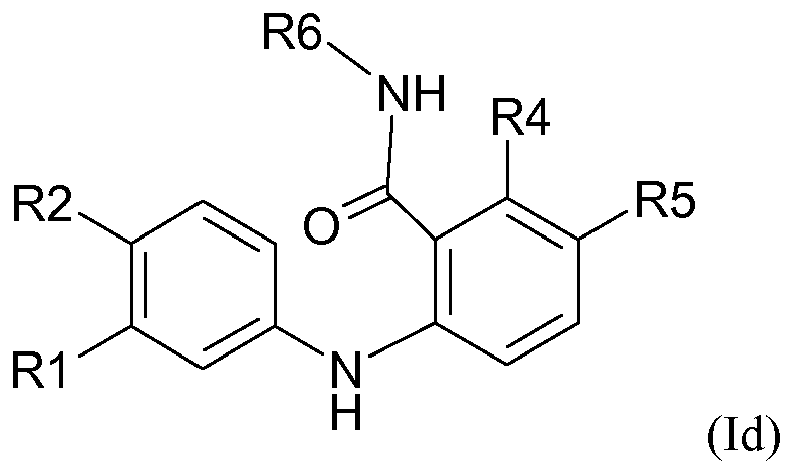
- R1, R2 and R6 are as defined above in anyone of the embodiments of formula (I),
- R4 and R5 are independently a hydrogen atom or a (C1-C4)alkyl group,
or one of its pharmaceutically acceptable salt,
for use as an agent for preventing, inhibiting or treating a disease in a patient suffering thereof, said disease involving a deregulated p53. - According to a more particular aspect of said embodiment, an additional subject-matter of the present invention is a compound of formula (Id)
wherein: - R1 and R2 independently represent a hydrogen atom, a methoxy group, a trifluromethoxy group, a hydroxyl group, a benzyloxy group or a dimethylamino group,
- R6 represents a (C1-C6)alkyl group or a -(CHR9)m(CH2)nNR7R8 group,
- R7 and R8 independently represent a (C1-C4)alkyl group or form together with the nitrogen atom to which they are attached a saturated or insaturated 5- or 6- membered ring optionally containing a further heteroatom chosen among nitrogen and oxygen, said ring being optionally substituted by a methyl group, and said ring being chosen among a imidazolyl, a morpholinyl, a piperidinyl, a pyrrolidinyl or 4-methylpiperazinyl group,
- R9 represents a (C1-C2)alkyl group,
- m is 0 or 1,
- n is 1, 2 or 3,
- provided that one of R1 and R2 is a hydrogen atom and the other is different from a hydrogen atom,
or anyone of its pharmaceutically acceptable salt,
for use as an agent for preventing, inhibiting or treating a disease in a patient suffering thereof, said disease involving a deregulated p53. - According to another particular embodiment, an additional subject-matter of the present invention is a compound of formula (Ie)

- R3 is a hydrogen atom or a (C1-C4)alkyl group,
- R5 is as defined above in anyone of the embodiments of formula (I), and
- R12 is a hydrogen atom, a (C1-C4)alkoxy group or a trifluoro(C1-C4)alkoxy group,
or one of its pharmaceutically acceptable salt,
for use as an agent for preventing, inhibiting or treating a disease in a patient suffering thereof, said disease involving a deregulated p53. - According to a more particular aspect of said embodiment, an additional subject-matter of the present invention is a compound of formula (Ie)
wherein: - R3 is a hydrogen atom or a methyl group,
- R5 represents
- a -CONHR6 group, or
- a triazolyl or imidazolyl group, said groups being optionally substituted by a chlorine atom, a -(CH2)nNR7R8 group or a hydroxy(C1-C4)alkyl group,
- R6 represents a (C1-C6)alkyl group or a - (CH2)nNR7R8 group,
- R7 and R8 independently represent a (C1-C4)alkyl group or form together with the nitrogen atom to which they are attached a saturated or insaturated 5- or 6- membered ring optionally containing a further heteroatom chosen among nitrogen and oxygen, said ring being optionally substituted by a methyl group, and said ring being chosen among a imidazolyl, a morpholinyl, a piperidinyl, a pyrrolidinyl or 4-methylpiperazinyl group,
- n is 1, 2 or 3,
- R12 is a hydrogen atom, a methoxy group, a trifluoromethoxy group or a benzyloxy group,
or one of its pharmaceutically acceptable salt,
for use as an agent for preventing, inhibiting or treating a disease in a patient suffering thereof, said disease involving a deregulated p53. - According to another particular embodiment, an additional subject-matter of the present invention is a compound of formula (If)

- R3 is a hydrogen atom or a (C1-C4)alkyl group,
- R13 is a hydrogen atom, a (C1-C4)alkoxy group or a trifluoro(C1-C4)alkoxy group and can be in ortho, meta or para position,
- R14, which can be in meta or para position, represents
- a -CONHR6 group,
- a heteroaryl group optionally substituted by a -(CH2)nNR7R8 group or a hydroxy(C1-C4)alkyl group,
- R6 represents a (C1-C6)alkyl group optionally substituted by a hydroxyl group, or a -(CH2)nNR7R8 group,
- R7 and R8 independently represent a (C1-C4)alkyl group or form together with the nitrogen atom to which they are attached a saturated or insaturated 5- or 6- membered ring optionally containing a further heteroatom chosen among nitrogen and oxygen and optionally substituted by a (C1-C4)alkyl group, and said ring being chosen among a imidazolyl, a morpholinyl, a piperidinyl, a pyrrolidinyl or 4-methylpiperazinyl group,
or one of its pharmaceutically acceptable salt,
for use as an agent for preventing, inhibiting or treating a disease in a patient suffering thereof, said disease involving a deregulated p53. - According to a more particular aspect of said embodiment, an additional subject-matter of the present invention is a compound of formula (If)
wherein: - R3 is a hydrogen atom or a methyl group,
- R13 is a methoxy group and can be in meta or para position, R14, which can be in meta or para position, represents
- a -CONHR6 group,
- a triazolyl or imidazolyl group, said groups being optionally substituted by a chlorine atom, a -(CH2)nNR7R8 group or a hydroxy(C1-C4)alkyl group,
- R6 represents a (C1-C6)alkyl group optionally substituted by a hydroxyl group, or a --(CH2)nNR7R8 group,
- R7 and R8 independently represent a (C1-C4)alkyl group or form together with the nitrogen atom to which they are attached a saturated or insaturated 5- or 6- membered ring optionally containing a further heteroatom chosen among nitrogen and oxygen and optionally substituted by a methyl group, and said ring being chosen among a imidazolyl, a morpholinyl, a piperidinyl, a pyrrolidinyl or 4-methylpiperazinyl group,
or one of its pharmaceutically acceptable salt,
for use as an agent for preventing, inhibiting or treating a disease in a patient suffering thereof, said disease involving a deregulated p53. - According to a preferred embodiment of the present invention, the compound for use as an agent for preventing, inhibiting or treating diseases involved with p53 expression, is chosen from one of the compounds as listed in table I below.
- The chemical structures and spectroscopic data of some compounds of formula (I) of the invention are illustrated respectively in the following Table I and Table II.
Table I 
Compound numbers Formulae (Ia) 1 
2 
3 
4 
5 
6 
7 
8 
9 
10 
11 
12 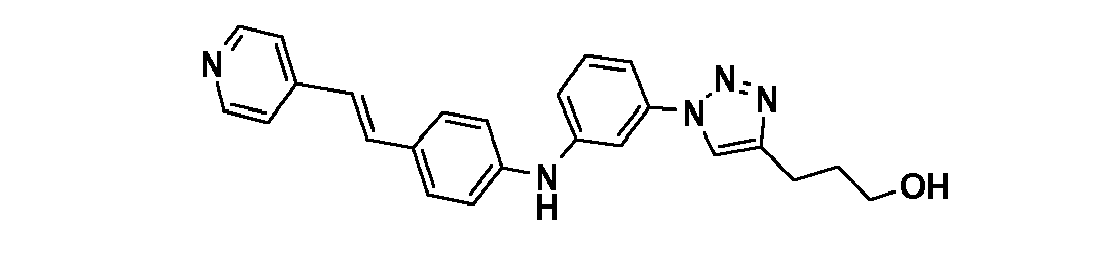
13 
14 
15 
16 
17 
18 
19 
20 
21 
22 
23 
24 
25 
(Ib) 26 
27 
28 
29 
30 
31 
32 
33 
34 
35 
36 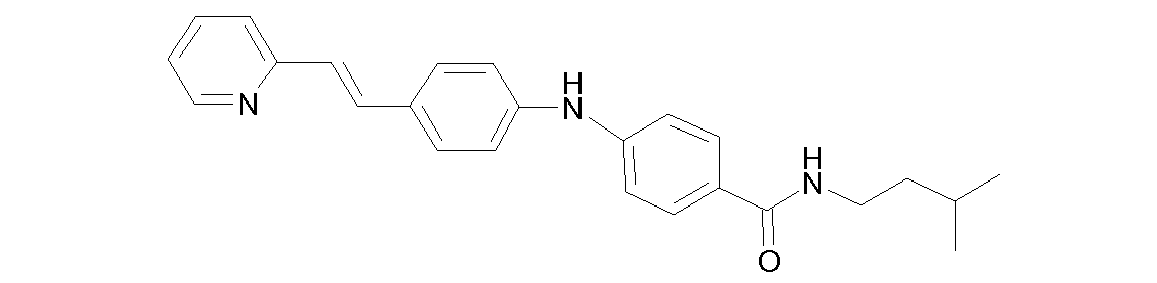
(Ic) 37 
38 
39 
40 
41 
42 
43 
44 
(Id) 45 
46 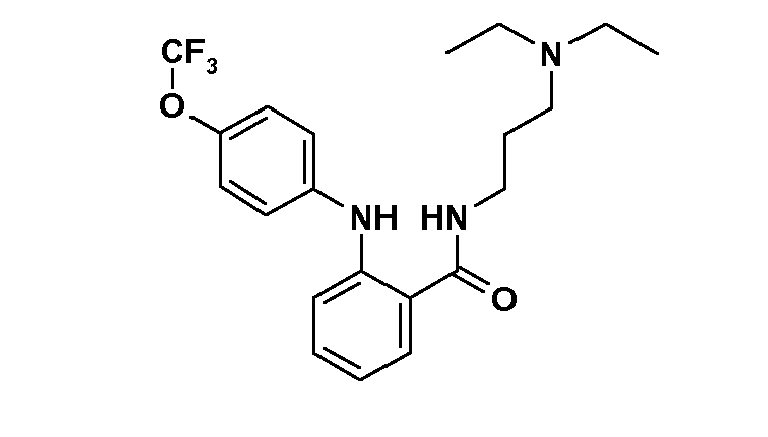
47 
48 
49 
50 
51 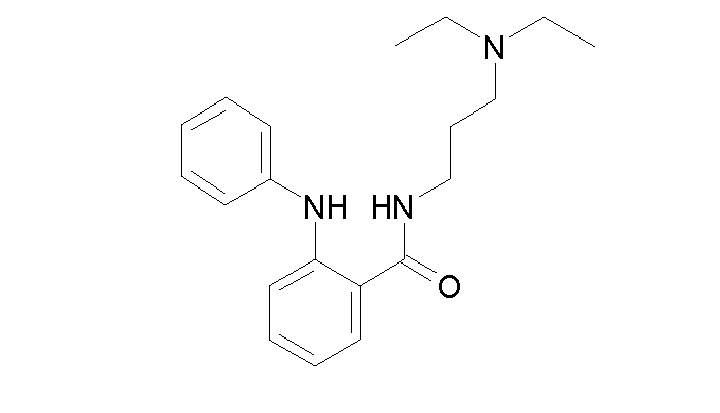
52 
53 
54 
55 
56 
57 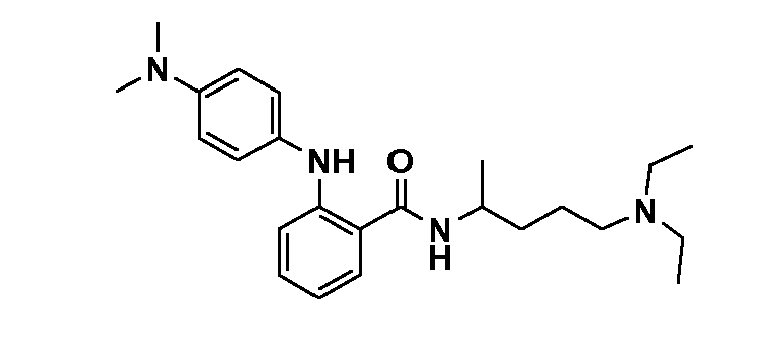
58 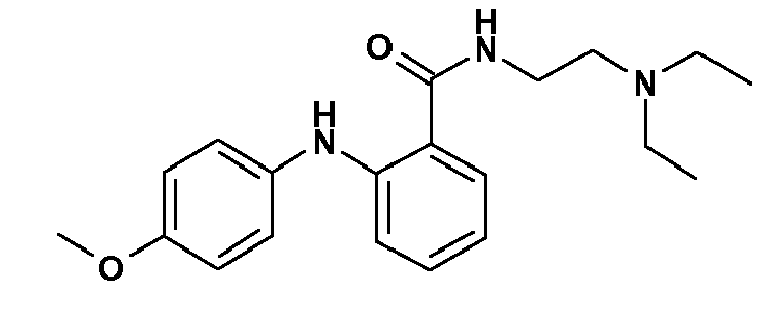
59 
60 
(Ie) 61 
62 
63 
64 
65 
66 
67 
68 
69 
70 
71 
72 
73 
74 
75 
76 
77 
78 
79 
80 
81 
82 
83 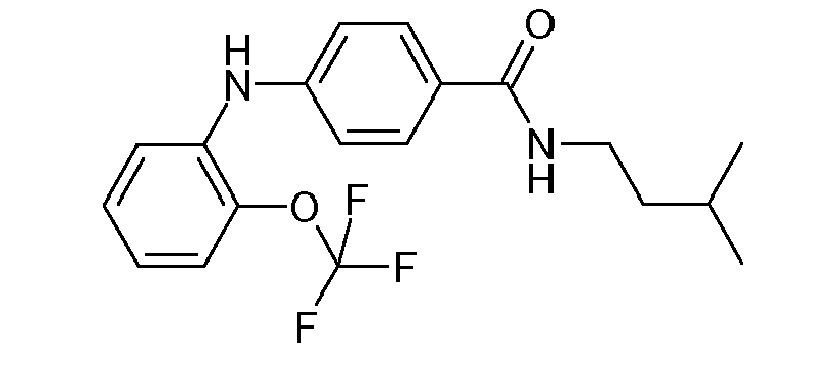
84 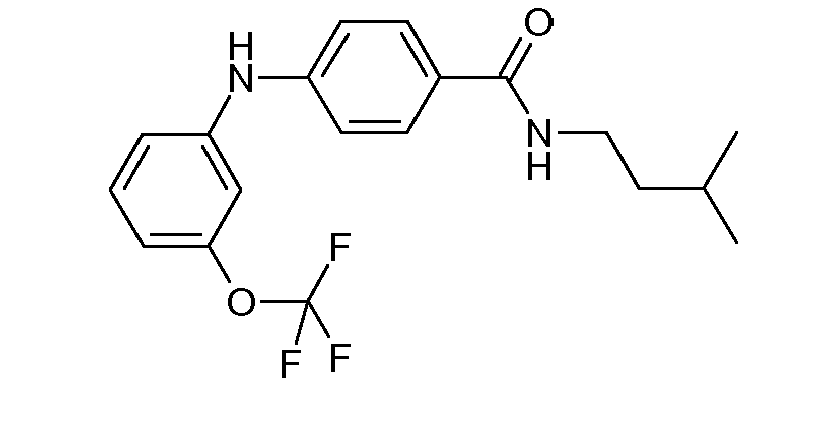
85 
86 
87 
88 
89 
90 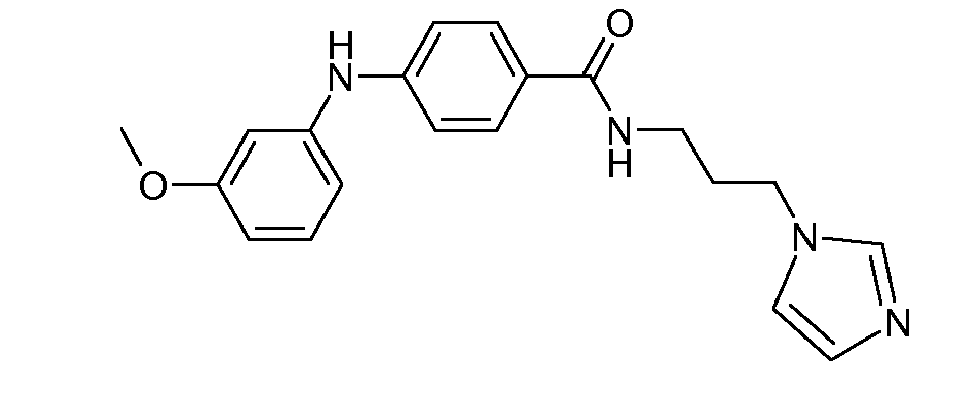
91 
92 
(If) 93 
94 
95 
96 
97 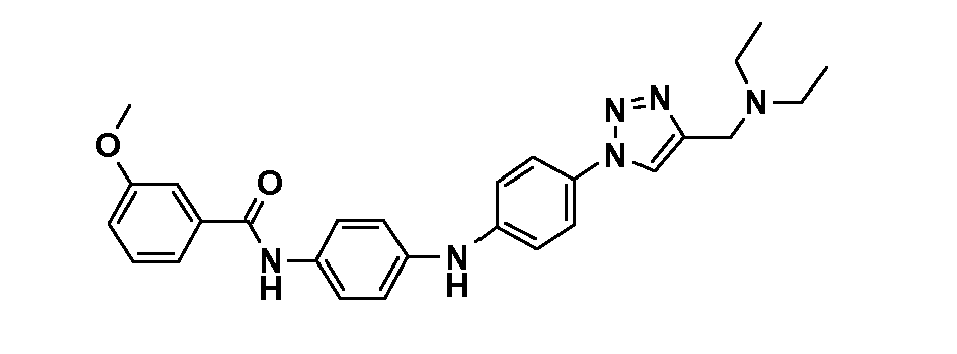
98 
99 
100 
101 
102 
103 
104 
105 
106 
107 
108 
109 
110 
111 
112 
113 
114 
115 
116 
117 
118 
119 
120 
121 
122 
123 
124 
125 
126 
Table II Ex Characterizations 1 1H NMR (300 MHz, DMSO-d6) δ 8.52 (d, J = 5.7 Hz, 2H), 8.39 (s, 1H), 8.35 - 8.30 (m, 1H), 7.55 (d, J = 6.0 Hz, 2H), 7.50 (d, J = 16.7 Hz, 1H), 7.32 - 7.27 (m, 5H), 7.20 (d, J = 7.6 Hz, 2H), 7.15 (d, J = 11.4 Hz, 1H), 7.05 (d, J = 8.2 Hz, 1H), 3.22 (q, J = 6.9 Hz, 2H), 1.58 (heptuplet, J = 6.6 Hz, 1H), 1.37 (q, J = 6.9 Hz, 2H), 0.87 (d, J = 6.6 Hz, 6H). 13C NMR (75 MHz, DMSO-d6) δ 166.3, 150.0, 143.6, 143.4, 137.2, 136.1, 133.3, 129.7, 129.1, 125.8, 120.9, 119.0, 118.8, 118.2, 117.5, 115.8, 115.6, 38.1, 37.4, 25.3, 22.5. [M+H]+= 386.2 2 1H NMR (300 MHz, CDCl3) δ 8.70 (s, 1H), 8.51 (d, J = 4.9 Hz, 2H), 7.61 (s, 1H), 7.30 - 7.14 (m, 8H), 7.08 - 7.00 (m, 2H), 6.89 (d, J = 16.4 Hz, 1H), 6.58 (s, 1H), 3.52 - 3.48 (m, 2H), 2.59 - 2.40 (m, 6H), 1.69 -1.65 (m, 2H), 0.95 (t, J = 7.1 Hz, 6H). 13C NMR (75 MHz, CDCl3) δ 167.1, 150.3, 144.7, 143.6, 143.5, 137.6, 136.5, 133.3, 130.0, 129.4, 126.3, 121.1, 120.3, 120.2, 119.1, 118.8, 117.1, 116.9, 53.4, 46.9, 41.4, 25.0, 11.6. [M+H]+ = 429.2 3 1H NMR (300 MHz, CDCl3) δ 8.55 (bs, 2H), 7.96 (s, 1H), 7.55 (s, 1H), 7.42 - 7.03 (m, 10H), 6.96 (d, J = 16.2 Hz, 1H), 6.53 (s, 1H), 3.87 (s, 2H), 2.62 (q, J = 7.0 Hz, 4H), 1.10 (t, J = 7.1 Hz, 6H). [M+H]+=425.2 4 1H NMR (300 MHz, CDCl3) δ 8.52 (bs, 2H), 7.73 (s, 1H), 7.50 (s, 1H), 7.38 - 7.05 (m, 9H), 6.95 (d, J = 16.2 Hz, 1H), 6.55 (s, 1H), 2.89 (t, J = 7.4 Hz, 2H), 2.52 (s, 1H), 1.98 (t, J = 6.9 Hz, 2H), 1.23 (t, J = 7.0 Hz, 2H). [M+H]+=398 5 [M+H]+=386 6 [M+H]+=443 7 1H NMR (300 MHz, CDCl3) δ 8.47 (d, J = 4.9 Hz, 2H), 7.58 (s, 1H), 7.46 (dd, J = 8.4, 2.0 Hz, 1H), 7.36 - 7.31 (m, 1H), 7.27 (d, J = 5.2 Hz, 2H), 7.25 - 7.03 (m, 5H), 7.00 - 6.78 (m, 1H), 6.11 (s, 1H), 5.71 (s, 1H), 3.38 (q, J = 6.5 Hz, 2H), 2.22 (s, 3H), 1.62 (heptuplet, J = 6.7 Hz, 1H), 1.43 (q, J = 6.1 Hz, 2H), 0.83 (d, J = 6.6Hz, 6H) [M+H]+=400 8 1H NMR (300 MHz, DMSO) δ 8.60 (s, 1H), 8.50-8.45 (m, 2H), 8.15 (t, J=6.0 Hz, 1H), 7.75 (d, J= 8.7 Hz, 2H), 7.56 (d, J= 4.3 Hz, 2H), 7.50 - 7.14 (m, 6H), 7.08 (d,J= 8.5 Hz, 2H), 3.26 (q,J= 6.4 Hz, 2H), 1.60 (heptuplet, J = 6.6 Hz, 1H), 1.40 (d, J = 7.0 Hz, 2H), 0.90 (d, J = 6.6 Hz, 6H). 9 1H NMR (300 MHz, C5D5N) δ 8.43 (s, 1H), 8.23 (d, J = 5.8, 2H), 7.89 (s, 1H), 7.48 (d, J = 7.3, 1H), 7.10-6.75 (m, 11H), 6.68 (d,J = 16.4, 1H). 13C NMR (75 MHz, C5D5N) δ 170.4, 151.2, 145.4, 145.3, 138.6, 137.6, 134.3, 130.8, 130.3, 127.0, 121.8, 121.0, 120.4, 120.2, 119.0, 117.9, 117.4. [M+H]+= 316 10 [M+H]+=398 11 [M+H]+=425 12 [M+H]+=398 13 1H NMR (300 MHz, CDCl3) δ 8.71 (s, 1H), 8.50 (s, 2H), 7.39 (d, J = 7.7 Hz, 2H), 7.35 - 7.13 (m, 7H), 7.06 (d, J = 8.1 Hz, 2H), 6.81 (d, J= 16.6 Hz, 1H), 6.68 (s, 1H), 3.52 (s, 2H), 2.54 (m, 6H), 1.71 (s, 2H), 0.97 (t, J = 6.8 Hz, 6H). [M+H]+=429.2 14 1H NMR (300 MHz, CDCl3) δ 8.47 (d, J = 5.0 Hz, 2H), 7.67 - 7.45 (m, 4H), 7.42 - 7.06 (m, 4H), 7.06 - 6.94 (m, 3H), 6.88 (d, J = 17.4 Hz, 1H), 5.72 (s, 1H), 3.55-3.45 (m, 2H), 2.36 - 2.26 (m, 2H), 2.22 (s, 3H), 1.69 (m, 6H), 1.20 (t, 6H). [M+H]+=443 15 1H NMR (300 MHz, CDCl3) δ 8.48 (d, J = 5.8 Hz, 2H), 7.66 - 7.31 (m, 6H), 7.30 - 7.15 (m, 3H), 7.06 - 6.79 (m, 2H), 5.98 (s, 1H), 5.70 (s, 1H), 3.40 (q, J = 6.6 Hz, 2H), 2.23 (s, 3H), 1.62 (quint, J = 6.5 Hz, 2H), 1.44 (q, J = 7.1 Hz, 2H), 0.89 (d, J = 6.5 Hz, 6H). [M+H]+=400 16 1H NMR (300 MHz, CDCl3) δ 8.50 (s, 2H), 7.52 (s, 1H), 7.38 - 7.18 (m, 7H), 7.18 - 7.00 (m, 3H), 6.93 (d, J = 16.2 Hz, 1H), 6.66 (s, 1H), 3.76 - 3.40 (m, 4H), 3.15 - 2.91 (m, 2H), 2.46 - 2.12 (m, 2H + 4H), 1.69 -1.45 (m, 2H). [M+H]+ = 479.2 17 1H NMR (300 MHz, CDCl3) δ 8.59 (s, 2H), 7.57 (s, 1H), 7.38 (s, 4H), 7.30 (d, J = 5.5 Hz, 4H), 7.15 (dd, J = 27.1, 6.6 Hz, 2H), 7.01 (d, J = 16.9 Hz, 1H), 6.29 (s, 1H), 3.17 - 3.00 (m, 2H), 2.59 - 2.20 (m, 6H), 1.74 -1.52 (m, 6H), 1.52 - 1.35 (m, 2H). [M+H]+ = 477.2 18 1H NMR (300 MHz, CDCl3) δ 8.55 (d, J = 5.8 Hz, 2H), 7.58 (s, 1H), 7.39 - 7.32 (m, 4H), 7.31-7.24 (m, 3H), 7.21 (s, 1H), 7.15 (d, J = 7.7 Hz, 1H), 7.10 (d, J= 7.9 Hz, 1H), 6.98 (d, J = 16.3 Hz, 1H), 6.64 (d, J = 8.4 Hz, 1H), 3.15 - 3.00 (m, 2H), 2.52 - 2.35 (m, 2H + 4H), 1.68 - 1.53 (m, 2H), 0.96 (t, J = 7.1 Hz, 6H). [M+H]+ = 465.2 19 1H NMR (300 MHz, CDCl3) δ 8.54 (d,J= 4.4 Hz, 2H), 7.61 (s, 1H), 7.38 - 7.16 (m, 7H), 7.10 (d, J = 7.8 Hz, 2H), 7.05 (d, J= 7.8 Hz, 2H), 6.93 (d, J= 16.3 Hz, 1H), 6.30 (s, 1H), 3.53 (q, J= 5.0 Hz, 2H), 2.55 - 2.50-2.46 (m, 2H), 2.45-2.40 (m, 4H), 1.78-1.72 (s, 2H), 1.55-1.50 (s, 4H), 1.48 - 1.35 (m, 2H). 13CNMR (75 MHz, CDC13) δ 167.45, 150.34, 144.72, 143.56, 137.58, 136.62, 133.29, 130.03, 129.37, 126.34, 121.07, 120.26, 119.38, 118.61, 117.36, 116.65, 59.28, 54.91, 41.23, 26.04, 24.45, 24.26. [M+H]+=441.1 20 1H NMR (300 MHz, CDCl3) δ 8.50 (d, J = 4.2 Hz, 2H), 8.01 (s, 1H), 7.58 (s, 1H), 7.32 - 7.13 (m, 8H), 7.07 (d, J = 7.9 Hz, 1H), 7.03 (d, J = 7.9 Hz, 1H), 6.90 (d, J = 16.3 Hz, 1H), 6.54 (s, 1H), 3.70-3.55 (m, 4H), 3.51 (q, J = 4.8 Hz, 2H), 2.50-2.40 (m, 6H), 1.84 -1.54 (m, 2H). 13CNMR (75 MHz, CDC13) δ 167.56, 150.30, 144.69, 143.82, 143.29, 137.59, 136.47, 133.23, 130.04, 129.54, 126.38, 121.07, 120.37, 120.13, 118.82, 116.90, 66.97, 58.68, 53.93, 40.63, 24.36. [M+H]+=443.2 21 1H NMR (300 MHz, CDCl3) δ 8.49 (d, J = 3.6 Hz, 2H), 8.23 (s, 1H), 7.56 (s, 1H), 7.39 - 7.11 (m, 7H), 7.14 - 6.98 (m, 3H), 6.90 (d, J = 15.8 Hz, 1H), 6.53 (s, 1H), 3.49 (s, 2H), 3.23 (s, 2H), 2.2.5-2.30 (m, 8H), 2.20 (s, 3H), 1.75-1.70 (m, 2H). 13CNMR (75 MHz, CDC13) δ 167.47, 150.25, 144.65, 143.65, 143.38, 137.49, 136.43, 133.24, 129.95, 129.35, 126.26, 121.02, 120.13, 119.99, 119.17, 118.56, 117.07, 116.68, 58.36, 55.12, 53.37, 46.13, 40.93, 24.40. [M+H]+= 456.2 22 1H NMR (300 MHz, CDCl3) δ 8.69 (s, 1H), 8.52 (bs, 2H), 7.59 (s, 1H), 7.39 - 7.15 (m, 8H), 7.09 (d, 8.2 Hz, 1H), 7.06 (d, 8.2 Hz, 1H), 6.93 (d, J= 15.5 Hz, 1H), 6.38 (s, 1H), 3.54 (s, 2H), 2.70-2.60 (m, 2H), 2.55-2.50 (m, 4H), 1.80-1.70 (m, 6H). [M+H]+= 427.2 23 1H NMR (300 MHz, CDCl3) δ 8.54 (s, 2H), 7.36 - 7.30 (d,J= 4.0 Hz, 2H), 7.29 - 7.16 (m, 4H), 7.11 (d, J = 8.8 Hz, 3H), 7.03 (d, J = 7.5 Hz, 2H), 6.98 - 6.86 (m, 2H), 6.59 (s, 1H), 3.90 - 3.70 (m, 2H), 3.58 - 3.31 (m, 2H), 2.50 - 2.21 (m, 4H + 3H). [M+H]+ = 399.2 24 1H NMR (300 MHz, CDCl3) δ 8.55 (s, 2H), 7.58 (s, 1H), 7.43 - 7.23 (m, 7H), 7.23 - 7.04 (m, 3H), 6.97 (d, J = 16.3 Hz, 1H), 6.67 (s, 1H), 4.51 (br s, 1H), 3.07 - 2.91 (m, 2H), 2.43 - 2.28 (m, 2H), 2.26 - 2.03 (m, 4H), 1.53 -1.40 (m, 4H), 1.40 - 1.31 (m, 2H). [M+H]+ = 463.2 25 1H NMR (300 MHz, CDCl3) δ 8.57 (s, 2H), 7.58 (s, 1H), 7.43 - 7.23 (m, 7H), 7.23 - 7.05 (m, 3H), 6.98 (d, J = 15.6 Hz, 1H), 6.55 (s, 1H), 4.67 (br s, 1H), 3.13 - 2.93 (m, 2H), 2.61- 2.44 (m, 2H), 2.43 - 2.17 (m, 4H), 1.78 -1.51 (m, 4H). [M+H]+ = 449.2 26 1H NMR (300 MHz, CDCl3) δ 8.51 (d, J = 4.5, 1H), 7.61 (s, 1H), 7.56 (d, J = 7.6, 1H), 7.48 (d, J = 16.1, 1H), 7.41 (d, J = 8.7, 2H), 7.30 (d, J = 7.8, 1H), 7.21 (s, 1H), 7.17 (d, J = 7.7, 1H), 7.12 - 7.01 (m, 5H), 6.97 (d, J = 7.8, 1H), 6.87 (s, 1H), 4.19 (s, 1H), 3.70 (t, J = 6.2, 2H), 2.84 (t, J = 7.4, 2H), 2.00 (quint, J = 6.7, 2H). 13C NMR (75 MHz, CDCl3) δ 155.6, 149.8, 148.2, 144.0, 142.7, 138.1, 136.9, 132.7, 130.3, 130.0, 128.4, 122.4, 122.1, 121.0, 119.5, 118.9, 117.7, 117.3, 61.9, 32.2, 22.3. [M+H]+=398 27 1H NMR (300 MHz, MeOD) δ 8.49 (s, 1H), 7.81 (m, 1H), 7.65-7.45 (m, 4H), 7.35-7.05 (m, 9H), 3.45 (m, 2H), 3.31 (m, 4H), 2.06 (m, 2H), 1.28 (m, 6H), 0.89 (m, 2H). [M+H]+=429 28 1H NMR (300 MHz, CDCl3) δ 8.59 (d, J = 3.9 Hz, 1H), 7.64 (m, 1H), 7.55 (d, J = 16.1 Hz, 1H), 7.48 (s, 1H), 7.44 - 7.32 (m, 2H), 7.31 - 6.94 (m, 8H), 6.24 (s, 1H), 6.12 (s, 1H), 3.44 (q, J= 6.1 Hz, 2H), 1.66 (heptuplet, J= 6.6 Hz, 1H), 1.48 (q, J = 7.0 Hz, 2H), 0.93 (d, J= 6.6 Hz, 6H). [M+H]+=3 86 29 [M+H]+=398 30 [M+H]+=429 31 1H NMR (300 MHz, CDCl3) δ 8.58 (d, J = 3.0 Hz, 1H), 7.85 - 6.73 (m, 12H), 6.25 (t, J = 5.3 Hz, 1H), 5.75 (s, 1H), 3.46 (q, J = 6.7 Hz, 2H), 2.27 (s, 3H), 1.68 (heptuplet, J = 6.7 Hz, 1H), 1.50 (q, J = 7.1 Hz, 2H), 0.94 (q, J = 6.6 Hz, 6H). [M+H]+=400 32 1H NMR (300 MHz, CDCl3) δ 8.59 (d, J = 5.5 Hz, 1H), 7.81- 7.48 (m, 6H), 7.47 - 7.32 (m, 3H), 7.19 (d, J = 8.8 Hz, 2H), 7.16 - 7.02 (m, 2H), 6.98 (s, 1H), 6.09 (s, 1H), 3.77 (t, J = 6.1 Hz, 2H), 2.92 (t, J = 7.3 Hz, 2H), 2.04 -1.98 (m, 2H). [M+H]+=398 33 [M+H]+=429 34 1H NMR (300 MHz, CDCl3) δ 8.59 (d, J= 4.2 Hz, 1H), 7.70 - 7.46 (m, 5H), 7.45 - 7.19 (m, 5H), 7.16 - 6.99 (m, 3H), 6.01 (s, 1H), 5.93 (s, 1H), 3.47 (q, J= 5.9 Hz, 2H), 1.68 (heptuplet, J= 6.6 Hz, 1H), 1.51 (q, J= 7.6 Hz, 2H), 0.96 (d, J= 6.6 Hz, 6H). [M+H]+=386 35 [M+H]+=429 36 [M+H]+=386 37 1H NMR (300 MHz, CDCl3) δ 8.62 (s, 1H), 7.59 (s, 1H), 7.49 (d, J = 7.3 Hz, 2H), 7.24 (m, Hz, 6H), 7.06 (m, 5H), 6.10 (s, 1H), 3.55 (q, 2H), 2.74 - 2.40 (m, 6H), 1.75 (m, 2H), 1.01 (t, 6H). [M+H]+= 512 38 [M+H]+= 539 39 1H NMR (300 MHz, CDCl3) δ 8.22 (s, 1H), 7.58 (s, 1H), 7.44 - 7.17 (m, 9H), 7.11 (d, J = 7.3 Hz, 2H), 7.03 (d, J= 2.6 Hz, 2H), 6.16 (s, 1H), 3.55 (q, J= 5.0 Hz, 3H), 2.60-2.40 (m, 10H), 2.25 (s, 3H), 1.88 -1.55 (m, 2H). [M+H]+= 539 40 1H NMR (300 MHz, CDCl3) δ 8.59 (s, 1H), 7.52 (s, 1H), 7.43 (d, J = 8.7 Hz, 2H), 7.27 (d, J = 7.0 Hz, 2H), 7.23 (d, J = 7.3 Hz, 2H), 7.18 (s, 1H), 7.13 - 6.92 (m, 4H), 6.89 (d, J = 8.7 Hz, 2H), 3.82 (s, 3H), 3.59 - 3.47 (m, 2H), 2.62 - 2.46 (m, 6H), 1.72 (quint, J = 5.7 Hz, 2H), 0.99 (t, J = 7.2 Hz, 6H). 13C NMR (75 MHz, CDCl3) δ 167.2, 159.5, 144.0, 143.2, 139.1, 136.4, 130.2, 129.8, 129.4, 128.6, 127.9, 119.8, 118.9, 117.6, 116.6, 114.3, 55.5, 53.3, 46.9, 41.3, 25.1, 11.6. [M+H]+ = 458.3 41 1H NMR (300 MHz, CDCl3) δ 7.45 - 7.31 (m, 4H), 7.25 - 7.20 (m, 1H), 7.19 (s, 1H), 7.17-7.10 (m, 3H), 7.09 - 6.98 (m, 1H), 6.96 - 6.75 (m, 4H), 3.75 (s, 3H), 1.59 (heptuplet, J= 13.3, 6.6 Hz, 1H), 1.42 (q, J= 8.7, 7.1 Hz, 2H), 0.87 (d, J= 6.6 Hz, 6H) 13C NMR (75 MHz, CDCl3) δ 167.6, 159.5, 144.0, 142.8, 139.2, 136.4, 130.1, 129.8, 129.6, 129.1, 128.7, 128.5, 127.9, 126.5, 120.0, 119.8, 118.6, 117.7, 116.5, 116.3, 114.3, 55.4, 38.6, 38.5, 26.1, 22.6 [M+H]+=415 42 [M+H]+=415 43 [M+H]+=429 44 1H NMR (300 MHz, CDCl3) δ 10.77 (s, 1H), 8.15 (s, 1H), 7.75 (s, 1H), 7.66 (d, J= 9.0 Hz, 1H), 7.39 (d, J= 8.3 Hz, 2H), 7.30-7.05 (m, 3H), 7.0-6.90 (m, 3H), 6.86 (s, 1H), 6.84 (d, J= 8.5 Hz, 2H), 3.77 (s, 3H), 3.55 - 3.49 (m, 2H), 2.95-2.80 (m, 6H), 2.26 (s, 3H), 2.15-2.05 (m, 2H), 1.30 (t, J= 7.2 Hz, 6H). [M+H]+=472 45 1H NMR (300 MHz, CDCl3) δ 9.55 (s, 1H), 7.48 (d, J= 7.7 Hz, 1H), 7.30-7.21 (m, 3H), 7.15 (d, J= 9.1 Hz, 2H), 7.10 (d, J = 9.1 Hz, 2H), 6.78 (t, J = 7.3 Hz, 1H), 3.44 (t, J = 5.9 Hz, 2H), 2.62 (t, J = 5.9 Hz, 2H), 2.54 (q, J = 7.1 Hz, 4H), 1.02 (t, J = 7.1 Hz, 6H). 13C NMR (75 MHz, CDCl3) δ 169.5, 145.2, 143.9, 140.8, 132.2, 127.8, 122.3, 121.4, 119.1, 118.7, 115.6, 51.3, 46.9, 37.2, 12.1. [M+H]+=396 46 1H NMR (300 MHz, CDCl3) δ 9.83 (s, 1H), 8.84 (s, 1H), 7.42 (d, J= 7.3 Hz, 1H), 7.28 (t, J= 7.1 Hz, 2H), 7.20 - 7.07 (m, 5H), 6.75 (t, J= 6.7 Hz, 1H), 3.52 (q, J= 5.2 Hz, 2H), 2.82 - 2.40 (m, 6H), 1.80-1.70 (m, 2H), 1.03 (t, J= 7.1 Hz, 6H) 13C NMR (75 MHz, CDCl3) δ 169.4, 145.3, 143.7, 140.9, 132.0, 127.9, 122.2, 121.3, 119.0, 118.7, 118.2, 115.4, 53.6, 46.9, 41.2, 24.8, 11.5 [M+H]+=410 47 1H NMR (300 MHz, CDCl3) δ 9.50 (s, 1H), 7.47 (d, J= 7.4 Hz, 1H), 7.35 - 7.23 (m, 2H), 7.18 (d, J = 9.0 Hz, 2H), 7.14 (d, J= 9.0 Hz, 2H), 6.94 (bs, 1H), 6.80 (t, J= 6.3 Hz, 1H), 3.48 (bs, 2H), 2.54 (bs, 2H), 2.28 (s, 6H). [M+H]+=368 48 1H NMR (300 MHz, CDCl3) δ 8.31 (d,J= 8.9, 1H), 7.95 (d, J= 2.8, 1H), 7.61 (t, J= 9.1, 2H), 6.97 (d, J= 8.9, 1H), 6.84 (d, J= 8.8, 1H), 6.59 (d,J= 8.5, 1H), 4.25 (t, J= 5.4, 2H), 3.92 (s, 3H), 3.79 -3.72 (m, 1H), 2.92 (t, J= 5.5, 2H), 2.68 - 2.60 (m, 5H) [M+H]+ = 367.2 49 1H NMR (300 MHz, CDCl3) δ 9.90 (s, 1H), 8.74 (s, 1H), 7.58 (d, J= 6.4 Hz, 1H), 7.45 - 7.21 (m, 3H), 7.09 (d, J= 11.1 Hz, 2H), 6.83 (dd, J= 16.4, 7.7 Hz, 2H), 3.76 - 3.40 (m, 2H), 3.13 - 2.41 (m, 2H + 4H), 2.10 -1.69 (m, 2H), 1.15 (t, J = 7.2 Hz, 6H). [M+H]+ = 410.2 50 1H NMR (300 MHz, CDCl3) δ 9.64 (s, 1H), 8.74 (s, 1H), 7.49 - 7.30 (m, 6H), 7.23 - 7.08 (m, 4H), 6.95 (d, J = 8.9 Hz, 2H), 6.66 (t, J = 7.4 Hz, 1H), 5.06 (s, 2H), 3.61 - 3.45 (m, 2H), 2.73 - 2.47 (m, 2H + 4H), 1.84 -1.71 (m, 2H), 1.07 (t, J= 7.1 Hz, 6H). 13C NMR (75 MHz, CDCl3) δ 169.7, 155.1, 147.6, 137.3, 135.0, 132.0, 128.7, 128.1, 127.8, 127.7, 124.4, 116.7, 116.5, 115.7, 114.3, 70.5, 53.5, 46.8, 41.0, 24.8, 11.5. [M+H]+ = 432.2 51 1H NMR (300 MHz, CDCl3) δ 9.77 (s, 1H), 8.77 (s, 1H), 7.43 (d, J= 7.8 Hz, 1H), 7.35 (t, J= 8.7 Hz, 1H), 7.30 - 7.14 (m, 5H), 6.99 (t, J = 7.1 Hz, 1H), 6.73 (t, J= 7.4 Hz, 1H), 3.60 - 3.46 (m, 2H), 2.68 - 2.50 (m, 2H + 4H), 1.84 -1.69 (m, 2H), 1.05 (t, J = 7.1 Hz, 6H). 13C NMR (75 MHz, CDCl3) δ 169.5, 145.7, 141.9, 131.9, 129.3, 127.8, 122.2, 120.8, 118.3, 117.6, 115.3, 53.5, 46.8, 41.0, 24.8, 11.4. [M+H]+ = 326.3 52 1HNMR (300 MHz, CDCl3) δ 9.50 (s, 1H), 8.75 (s, 1H), 7.41 (d, J= 7.8 Hz, 1H), 7.25 - 7.14 (m, 1H), 7.06 (d, J= 8.3 Hz, 2H), 7.00 - 6.89 (m, 1H), 6.80 (d, J= 8.2 Hz, 2H), 6.66 (t, J= 7.4 Hz, 1H), 3.69 - 3.42 (m, 2H), 2.71 - 2.52 (m, 2H + 4H), 1.89 -1.72 (m, 2H), 1.07 (t, J= 7.1 Hz, 6H). [M+H]+ = 342.3 53 [M+H]+=414 54 [M+H]+=351 55 [M+H]+=405 56 [M+H]+=364 57 [M+H]+=397 58 [M+H]+=342 59 [M+H]+=356 60 1H NMR (300 MHz, CDCl3) δ 9.23 (s, 1H), 7.40 (s, 1H), 7.31 (d, J= 8.3 Hz, 1H), 7.20-7.00 (m, 3H), 6.97 (t, J= 8.1 Hz, 1H), 6.76 - 6.61 (m, 3H), 6.47 (d, J= 7.5 Hz, 1H), 6.22 (t, J= 8.7 Hz, 1H), 6.16 (s, 1H), 4.01 (m, 2H), 3.70 (s, 3H), 3.32 (m, 2H), 2.08 (m, 2H). [M+H]+=351 61 [M+H]+=405 62 [M+H]+=314 63 [M+H]+=368 64 [M+H]+=328 65 1H NMR (300 MHz, CDCl3) δ 7.62 (s, 1H), 7.50 (dd, J= 1.9, 8.5 Hz, 1H), 7.23 - 7.14 (m, 2H), 6.69 - 6.59 (m, 2H), 6.54 (dd, J = 2.2, 8.1 Hz, 1H), 6.30 (d, J = 5.4 Hz, 1H), 5.73 (s, 1H), 3.75 (s, 3H), 3.40 (q, J= 7.0 Hz, 2H), 2.23 (s, 3H), 1.69 (heptuplet, J= 6.6 Hz, 1H), 1.50 (q, J= 7.0 Hz, 2H), 0.93 (d, J = 6.6 Hz, 6H). 13C NMR (75 MHz, CDCl3) 167.4, 160.9, 144.7, 143.6, 130.4, 130.1, 126.7, 125.8, 125.7, 115.5, 112.2, 107.7, 105.4, 55.4, 38.8, 38.5, 26.2, 22.7, 18.0. [M+H]+=327 66 1H NMR (300 MHz, CDCl3) δ 7.57 (d, J= 1.5 Hz, 1H), 7.52 - 7.32 (m, 2H), 7.07 (d, J= 8.9 Hz, 2H), 6.87 (d, J= 8.9 Hz, 2H), 5.96 (s, 1H), 5.46 (s, 1H), 3.79 (s, 3H), 3.42 (q, J= 7.4Hz, 2H), 2.25 (s, 3H), 1.65 (quint, J= 7.4 Hz, 1H), 1.46 (q, J= 7.4 Hz, 2H), 0.92 (d, J= 6.6 Hz, 6H). [M+H]+=327 67 1H NMR (300 MHz, CDCl3) δ 7.65 (s, 1H), 7.51 (d, J= 8.4 Hz, 1H), 7.16 (d, J= 8.6 Hz, 3H), 7.07 (d, J= 8.9 Hz, 2H), 6.02 (s, 1H), 5.65 (s, 1H), 3.47 (q, J= 7.0 Hz, 2H), 2.29 (s, 3H), 1.75 - 1.64 (m, 1H), 1.51 (q, J= 7.0 Hz, 2H), 0.96 (d, J= 6.6 Hz, 6H). [M+H]+=381 68 [M+H]+=356 69 1H NMR (300 MHz, CDCl3) δ 8.48 (s, 1H), 7.68 (s, 1H), 7.56 (d, J= 8.4 Hz, 1H), 7.26 - 7.17 (m, 2H), 6.74 - 6.60 (m, 2H), 6.57 (d, J= 8.4 Hz, 1H), 5.59 (s, 1H), 3.79 (s, 3H), 3.56 (q, J= 5.3 Hz, 2H), 2.71 - 2.51 (m, 2H + 4H), 2.29 (s, 3H), 1.78 (quint, J= 5.9 Hz, 2H), 1.07 (t, J= 7.1 Hz, 6H). 13C NMR (75 MHz, CDCl3) δ 167.0, 160.8, 144.4, 143.7, 130.3, 130.1, 126.8, 125.9, 125.6, 115.4, 112.1, 107.6, 105.3, 58.6, 55.4, 46.9, 27.0, 18.6, 18.0, 11.5. [M+H]+=370 70 1H NMR (300 MHz, CDCl3) δ 8.34 (s, 1H), 7.62 (s, 1H), 7.47 (d, J= 8.8 Hz, 1H), 7.08 (d, J= 8.8 Hz, 2H), 6.88 (d, J= 8.7 Hz, 3H), 5.44 (s, 1H), 3.80 (s, 3H), 3.52 (q, J= 5.3 Hz, 2H), 2.61 (t, J= 5.1 Hz, 2H), 2.57 (q, J= 7.1 Hz, 4H), 2.26 (s, 3H), 1.73 (quint, J= 5.7 Hz, 2H), 1.04 (t, J= 7.1 Hz, 6H). [M+H]+=370 71 1H NMR (300 MHz, CDCl3) δ 8.55 (s, 1H), 7.68 (s, 1H), 7.56 (d, J= 8.5 Hz, 1H), 7.18-7.12 (m, 3H), 7.06 (d, J= 9.0 Hz, 2H), 5.81 (s, 1H), 3.54 (qd, J= 5.5 Hz, 2H), 2,70-2.60 (m, 2H), 2.62 (q, J = 7.1 Hz, 4H), 2.27 (s, 3H), 1.77 (heptuplet, J= 5.6 Hz, 2H), 1.07 (t, J= 7.1 Hz, 6H). [M+H]+=424 72 [M+H]+=382 73 [M+H]+=325 74 [M+H]+=325 75 1H NMR (300 MHz, CDCl3) δ 8.05 (s, 1H), 7.61 (d, J= 8.6 Hz, 2H), 7.10 (d, J= 8.8 Hz, 2H), 6.85 (dd,J= 12.4, 8.8 Hz, 4H), 6.08 (s, 1H), 3.79 (s, 3H), 3.49 (dd,J= 11.4, 5.7 Hz, 3H), 2.43 (t,J= 6.2 Hz, 3H), 2.24 (s, 6H), 1.73 (dd, J= 12.1, 6.0 Hz, 3H), 1.25 (s, 6H). 76 1H NMR (300 MHz, CDCl3) δ 10.20 (s, 1H), 9.91 (s, 1H), 7.60 (s, 1H), 7.40 (d, J = 8.4 Hz, 1H), 7.03 (d, J= 8.4 Hz, 2H), 6.95 - 6.80 (m, 3H), 5.34 (s, 1H), 3.80 (s, 3H), 2.17 (s, 3H) 77 1H NMR (300 MHz, CDCl3) δ 7.59 (d, J= 8.7 Hz, 2H), 7.06 (d, J= 8.9 Hz, 1H), 6.84 (d, J= 8.9 Hz, 2H), 6.79 (d, J = 8.7 Hz, 2H), 3.41 (q, J= 5.3 Hz, 2H), 2.58 (t,J= 7.1 Hz" 2H), 2.51 (q,J= 7.1 Hz, 4H), 0.98 (t, J= 7.1 Hz, 6H). [M+H]+=342 78 [M+H]+=352 79 [M+H]+=352 80 1H NMR (300 MHz, CDCl3) δ 7.84 (s, 1H), 7.53 (d, J= 8.7 Hz, 2H), 7.09 (d, J= 8.0 Hz, 2H), 7.06 (d, J= 8.0 Hz, 2H), 7.03 (d, J= 8.0 Hz, 2H), 5.96 (s, 1H), 3.82 (s, 2H), 2.57 (q, J= 7.1 Hz, 4H), 1.06 (t, J= 7.1 Hz, 6H). [M+H]+=406 81 M+H]+=313 82 1H NMR (300 MHz, CDCl3) δ 7.59 (d, J = 8.7 Hz, 2H), 7.09 (d, J = 8.9 Hz, 2H), 6.86 (d, J = 8.9 Hz, 2H), 6.81 (d, J= 8.7 Hz, 2H), 5.80 (s, 1H), 3.79 (s, 3H), 3.42 (q, J= 7.1 Hz, 2H), 1.65 (quint, J = 6.6 Hz, 1H), 1.47 (q, 7.1 Hz, 1H), 0.92 (d, J= 6.6 Hz, 6H). [M+H]+=313 83 1H NMR (300 MHz, CDCl3) δ 7.72 (d, J= 8.6 Hz, 2H), 7.40 (d, J= 7.8 Hz, 1H), 7.27 (d, J= 7.8 Hz, 1H), 7.20 (t, J= 7.8 Hz, 1H), 7.08 (d, J= 8.6 Hz, 2H), 6.96 (t, J= 7.8 Hz, 1H), 6.24 (s, 1H), 6.13 (s, 1H), 3.52 - 3.39 (q, J= 6.6 Hz, 2H), 1.67 (hept, J= 6.6 Hz, 1H), 1.50 (q, J= 6.6 Hz, 2H), 0.94 (d, J = 6.6 Hz, 6H). [M+H]+ = 367.1 84 1H NMR (300 MHz, CDCl3) δ 7.69 (d, J= 8.7 Hz, 1H), 7.27 (d, J= 7.5 Hz, 1H), 7.06 (d, J= 8.7 Hz, 1H), 7.04 - 6.94 (m, 2H), 6.82 (d, J= 7.5 Hz, 1H), 6.27 (s, 1H), 6.07 (s, 1H), 3.46 (q, J= 6.6 Hz, 2H), 1.68 (hept, J = 6.6 Hz, 1H), 1.50 (q, J = 6.6 Hz, 2H), 0.95 (d, J = 6.6 Hz, 1H). 13C NMR (75 MHz, CDCl3) δ 167.1, 150.3, 145.4, 143.5, 130.6, 128.7, 127.3, 116.8, 116.6, 114.0, 111.0,38.7,38.5,26.1,22.6. [M+H]+ = 367.1 85 1H NMR (300 MHz, CDCl3) δ 7.69 (d, J= 8.6 Hz, 2H), 7.21- 7.07 (m, 2H), 7.02 (d, J= 8.6 Hz, 2H), 6.08 - 5.90 (m, 2H), 3.48 (q, J= 6.6 Hz, 2H), 1.70 (hept, J= 6.6 Hz, 1H), 1.51 (q, J= 6.6 Hz, 2H), 0.96 (d, J = 6.6 Hz, 6H). [M+H]+ = 367.1 86 1H NMR (300 MHz, CDCl3) δ 7.66 (s, 1H), 7.54 (d, J= 8.3 Hz, 1H), 7.45 - 7.37 (m, 1H), 7.31-7.16 (m, 4H), 6.97 - 6.89 (m, 1H), 6.08 (s, 1H), 3.47 (q, J= 6.6 Hz, 2H), 2.29 (s, 3H), 1.68 (hept, J = 6.6 Hz, 1H), 1.51 (q, J = 6.6 Hz, 2H), 0.96 (d, J = 6.6 Hz, 6H). 13C NMR (75 MHz, CDCl3) δ 167.2, 143.5, 143.1, 135.8, 130.1, 129.1, 128.5, 128.4, 128.1, 127.6, 125.8, 122.1, 121.3, 118.4, 117.5, 38.8, 38.5, 26.1, 22.6, 17.8. [M+H]+ = 381.1 87 1H NMR (300 MHz, CDCl3) δ 7.66 (s, 1H), 7.52 (d, J= 8.4 Hz, 1H), 7.47 - 7.38 (m, 1H), 7.30 (d, J = 8.4 Hz, 1H), 7.24 (d, J= 8.4 Hz, 1H), 6.95 (d, J= 8.0 Hz, 1H), 6.89 (s, 1H), 6.82 (d, J= 8.0 Hz, 1H), 6.07 (s, 1H), 5.75 (s, 1H), 3.47 (q, J= 6.6 Hz, 2H), 2.29 (s, 3H), 1.69 (hept, J= 6.6 Hz, 1H), 1.51 (q, J = 6.6 Hz, 2H), 0.96 (d, J= 6.6 Hz, 6H). 13C NMR (75 MHz, CDCl3) δ 167.2, 150.3, 144.3, 143.6, 130.6, 130.3, 129.1, 128.5, 128.0, 127.1, 125.7, 116.7, 116.6, 113.6, 110.9, 38.8, 38.5, 26.1, 22.6, 18.0. [M+H]+ = 381.1 88 1H NMR (300 MHz, CDCl3) δ 8.21 (s, 1H), 7.89 (s, 1H), 7.80 (d, J= 8.3 Hz, 1H), 7.37 - 7.20 (m, 2H), 6.98 (d, J= 8.1 Hz, 1H), 6.90 (s, 1H), 6.80 (d, J= 8.0 Hz, 1H), 5.90 (s, 1H), 3.70 - 3.52 (m, 2H), 3.34 - 3.00 (m, 2H + 4H), 2.29 (s, 3H), 2.25 - 2.08 (m, 2H), 1.36 (t, J= 7.2 Hz, 6H). 13C NMR (75 MHz, CDCl3) δ 167.9, 150.3, 144.2, 143.9, 130.7, 130.5, 126.9, 126.5, 116.8, 116.4, 113.5, 111.0,49.5,46.2,41.1,36.6,23.9, 18.0, 8.4. [M+H]+ = 424.1 89 1H NMR (300 MHz, CDCl3) δ 8.50 (s, 1H), 7.68 (s, 1H), 7.54 (d, J= 8.4 Hz, 1H), 7.32 (t, J= 7.1 Hz, 2H), 7.20 (d, J= 8.5 Hz, 1H), 7.11 (d, J= 7.5 Hz, 2H), 7.02 (t, J= 7.1 Hz, 1H), 5.61 (s, 1H), 3.70 - 3.40 (m, 2H), 2.76 - 2.46 (m, 2H + 4H), 2.29 (s, 3H), 1.85 -1.66 (m, 2H), 1.06 (t, J= 6.8 Hz, 6H). 13C NMR (75 MHz, CDCl3) δ 167.0, 144.7, 142.2, 130.1, 129.6, 126.5, 125.9, 125.1, 122.3, 119.9, 114.5, 53.3 (CH2), 46.9 (CH2 Et), 25.1 (CH2), 18.0, 11.5. [M+H]+ = 339.9 90 1H NMR (300 MHz, CDCl3) δ 7.65 (d, J= 8.4 Hz, 2H), 7.60 (d, J= 6.2 Hz, 1H), 7.22 (d, J= 8.1 Hz, 1H), 7.04 (d, J= 8.3 Hz, 2H), 6.82 - 6.67 (m, 2H), 6.60 (d, J= 8.1 Hz, 1H), 6.18 (s, 1H), 6.03 (s, 1H), 4.07 (t, J= 6.7 Hz, 2H), 3.80 (s, 3H), 3.53 - 3.43 (m, 2H), 2.29 - 2.03 (m, 2H). [M+H]+ = 351.1 91 1H NMR (300 MHz, CDCl3) δ 7.63 (s, 1H), 7.49 (d, J= 8.5 Hz, 1H), 7.26 (d, J= 7.8 Hz, 1H), 7.21 (d, J= 7.8 Hz, 1H), 7.09 (s, 1H), 7.01 (s, 1H), 6.75 - 6.64 (m, 2H), 6.59 (d, J= 8.2 Hz, 1H), 6.39 (s, 1H), 5.66 (s, 1H), 4.06 (t, J= 6.8 Hz, 2H), 3.79 (s, 3H), 3.47 (q, J= 6.4 Hz, 2H), 2.29 (s, 3H), 2.18 - 2.05 (quint, J = 6.6 Hz, 2H). 13C NMR (75 MHz, CDCl3) δ 160.8, 145.1, 143.2, 130.4, 130.1, 125.9, 125.4, 115.0, 112.4, 107.9, 105.8, 55.4, 45.0, 37.3, 31.5, 17.9. [M+H]+ = 365.1 92 1H NMR (300 MHz, CDCl3) δ 7.69 (s, 1H), 7.56 (d, J= 8.4 Hz, 1H), 7.26 (d, J= 7.8 Hz, 1H), 7.21 (d, J = 7.8 Hz, 1H), 6.81 (br s, 1H), 6.73 - 6.63 (m, 2H), 6.58 (d, J = 8.2 Hz, 1H), 5.60 (s, 1H), 3.80 (s, 3H), 3.55 (q, J= 5.7 Hz, 2H), 2.58 (t, J= 5.7 Hz, 2H), 2.33 (s, 6H), 2.31 (s, 3H). [M+H]+ = 328.3 93 [M+H]+=475 94 [M+H]+=489 95 [M+H]+=444 96 [M+H]+=471 97 [M+H]+=471 98 [M+H]+=444 99 1H NMR (300 MHz, CDCl3) δ 8.05-7.95 (m, 2H), 7.86 - 7.65 (m, 2H), 7.70 - 7.54 (m, 2H), 7.48 - 7.30 (m, 5H), 7.15 - 6.95 (m, 3H), 6.87 (d, J= 8.4 Hz, 1H), 3.85 (s, 3H), 3.72 (t, J= 6.5 Hz, 2H), 2.90 (t, J = 6.5 Hz, 2H), 1.97 (quint, J = 6.5 Hz, 2H). [M+H]+=444 100 [M+H]+=432 101 1H NMR (300 MHz, CDCl3) δ 8.41 (s, 1H), 7.88 (s, 1H), 7.76 (d, J= 8.7 Hz, 2H), 7.56 (d, J= 14.7 Hz, 2H), 7.36 - 7.29 (m, 1H), 7.25 - 6.93 (m, 5H), 6.87 (d, J= 8.8 Hz, 2H), 6.71 (d, J= 8.2 Hz, 1H), 5.88 (s, 1H), 3.77 (s, 3H), 3.43 (q, J = 6.0 Hz, 2H), 2.55-2.45 (m, 6H), 0.91 (t, J = 7.1 Hz, 6H) [M+H]+=475 102 [M+H]+=446 103 [M+H]+=471 104 [M+H]+=444 105 [M+H]+=475 106 [M+H]+=489 107 [M+H]+=446 108 [M+H]+=475 109 [M+H]+=432 110 [M+H]+=432 111 [M+H]+=471 112 [M+H]+=444 113 [M+H]+=432 114 [M+H]+=475 115 1H NMR (300 MHz, CDCl3) δ 7.85 (d, J= 8.8 Hz, 2H), 7.53 (d, J= 8.7 Hz, 2H), 7.44 - 7.36 (m, 2H), 7.30 - 7.11 (m, 2H), 7.08 (d, J = 8.8 Hz, 2H), 6.96 (d, J= 8.9 Hz, 2H), 6.09 (s, 1H), 5.83 (s, 1H), 3.87 (s, 3H), 3.45 (q, J= 7.1 Hz, 2H), 1.80 -1.63 (m, 1H), 1.49 (q, J= 7.1 Hz, 2H), 0.94 (d, J = 6.6 Hz, 6H). [M+H]+=432 116 1H NMR (300 MHz, CDCl3) δ 7.98 (s, 1H), 7.96 (s, 1H), 7.86 (d, J= 8.8 Hz, 2H), 7.57 (d, J= 8.7 Hz, 2H), 7.39 (s, 1H), 7.30 (t,J= 8.0 Hz, 1H), 7.13 (d, J= 8.7 Hz, 3H), 7.01 (d, J= 8.0 Hz, 1H), 6.95 (d, J= 8.8 Hz, 2H), 6.13 (s, 1H). 3.91 (s, 2H), 3.86 (s, 3H), 2.66 (q, J= 7.1 Hz, 2H), 1.14 (t, J = 7.2 Hz, 6H). [M+H]+=471 117 [M+H]+=475 118 [M+H]+=489 119 [M+H]+=432 120 [M+H]+=462 121 [M+H]+=433 122 [M+H]+=462 123 1H NMR (300 MHz, CDCl3) δ 8.62 (s, 1H), 7.94 (d, J= 9.0 Hz, 3H), 7.54 (d, J= 8.6 Hz, 2H), 7.40 (s, 1H), 7.23 (d, J= 8.2 Hz, 2H), 7.11 - 6.95 (m, 4H), 6.43 (s, 1H), 3.83 (s, 2H), 2.59 (q, J= 7.1 Hz, 4H), 1.09 (t, J= 7.1 Hz, 6H). [M+H]+ = 525.1 124 1H NMR (300 MHz, CDCl3) δ 9.74 (s, 1H), 8.23 (d, J= 7.8 Hz, 1H), 7.90 (s, 1H), 7.55 (d, J= 8.7 Hz, 2H), 7.47 - 7.36 (m, 2H), 7.24 (t, J= 8.0 Hz, 1H), 7.10 (d, J= 8.8 Hz, 2H), 7.09 - 6.94 (m, 4H), 6.63 (s, 1H), 3.99 (s, 3H), 3.82 (s, 2H), 2.56 (q, J= 7.1 Hz, 4H), 1.07 (t, J= 7.1 Hz, 6H). 13C NMR (75 MHz, CDCl3) δ 163.3, 157.4, 145.9, 145.6, 138.3, 138.1, 133.5, 133.4, 132.6, 130.6, 122.2, 121.8, 121.1, 121.0, 116.0, 111.7, 111.4, 107.9, 56.4, 47.8, 46.9, 11.9. [M+H]+= 471.1 125 1H NMR (300 MHz, CDCl3) δ 8.27 (s, 1H), 8.01 (s, 1H), 7.91 (d, J= 7.2 Hz, 2H), 7.61 (d, J= 8.4 Hz, 2H), 7.57 - 7.45 (m, 3H), 7.39 (s, 1H), 7.34 (t, J= 8.2 Hz, 1H), 7.17 (d, J= 8.4 Hz, 3H), 7.05 (d, J= 8.4 Hz, 1H), 6.14 (s, 1H), 4.08 (s, 2H), 2.85 (q, J= 7.0 Hz, 4H), 1.25 (t, J= 7.0 Hz, 6H). [M+H]+ = 441.1 126 1H NMR (300 MHz, CDCl3) δ 8.34 (s, 1H), 7.93 (s, 1H), 7.86 (d, J= 8.9 Hz, 2H), 7.69 (d, J= 8.0 Hz, 1H), 7.61 (d,J= 8.1 Hz, 1H), 7.45 (d,J= 8.5 Hz, 4H), 7.39 (s, 1H), 7.21 (s, 1H), 7.00 (d,J= 8.7 Hz, 3H), 6.93 (d, J= 8.8 Hz, 3H), 6.13 (br s, 1H), 4.06 -3.94 (m, 2H), 3.85 (s, 3H), 3.47 - 3.34 (m, 2H), 2.14 - 2.01 (m, 2H). [M+H]+ = 470.2 - Among said compounds, compounds (1), (2), (3), (4), (8), (26), (40), (45), (46) and (61) are of particular interest.
- The present invention therefore extends to compounds (1), (2), (3), (4), (8), (26), (40), (45), (46) and (61) or one of its pharmaceutically acceptable salts for use as an agent for preventing, inhibiting or treating a disease in a patient exhibiting a deregulated p53.
- Some of the disclosed compounds are new and form part of the present invention: (9), (16), (17), (18), (19), (20), (21), (22), (23), (24), (25), (37), (38), (39), (48), (49), (50), (52), (83), (84), (85), (86), (87), (88), (89), (90), (91), (92), (123), (124), (125) and (126).
- The compounds of formulae (I), (Iab), (Ia), (Ib), (Ic), (Id), (Ie) and (If) can comprise one or more asymmetric carbon atoms. They can thus exist in the form of enantiomers or of diastereoisomers. These enantiomers, diastereoisomers and their mixtures, including the racemic mixtures, are encompassed within the scope of the present invention.
- The compounds of the present invention can be prepared by conventional methods of organic synthesis practiced by those skilled in the art. The general reaction sequences outlined below represent a general method useful for preparing the compounds of the present invention and are not meant to be limiting in scope or utility.
- The compounds of general formula (I) can be prepared according to
scheme 1 below.
- The synthesis is based on a coupling reaction starting from a halogeno aromatic compound of formula (III), wherein R3, R4, R5 are as defined above and X is a chlorine atom, an iodine atom or a bromine atom.
- According to route (A1), the compound of formula (III) is placed in a protic solvent such as tert-butanol. The compound of formula (II) is then added in a molar ratio ranging from 1 to 1.5 with respect to the compound of formula (III) in presence of an inorganic base, such as Cs2CO3 or K2CO3 in a molar ratio ranging from 1 to 2, in the presence of a diphosphine, such as Xantphos (4,5-Bis(diphenylphosphino)-9,9-dimethylxanthene) or X-Phos (2-Dicyclohexylphosphino-2',4',6'-triisopropylbiphenyl) in an amount ranging from 2mol% to 10mol% relative to the total amount of compound of formula (III), and in the presence of a catalyst, such as Pd(OAc)2 or Pd2dba3 in an amount ranging from 2mol% and 10mol% relative to the total amount of compound of formula (III). The reaction mixture can then be heated at a temperature ranging from 80 to 120°C, for example at 90°C and stirred for a time ranging from 15 to 25 hours, for example during 20 hours, under inert gas and for example argon. The reaction mixture can be concentrated under reduced pressure and the residue can be diluted with an organic solvent such as ethyl acetate. The organic phase can be washed with water, decanted and dried over magnesium sulphate. Finally, solid can be dried under vacuum overnight to give product (I).
- According to route (A2), the compound of formula (III) is placed in a polar solvent such as dimethylformamide. The compound of formula (II) is then added in a molar ratio ranging from 1 to 1.5 with respect to the compound of formula (III) in presence of an inorganic base, such as Cs2CO3 or K2CO3 in a molar ratio ranging from 1 to 2, in the presence of a L-proline in an amount ranging from 10 mol% to 20 mol% relative to the total amount of compound of formula (III), and in the presence of a catalyst, such as CuI in an amount ranging from 2mol% and 10mol% relative to the total amount of compound of formula (III). The reaction mixture can then be heated at a temperature ranging from 60 to 120°C, for example at 80°C and stirred for a time ranging from 24 to 72 hours, for example during 48 hours, under inert gas and for example argon. The reaction mixture can be concentrated under reduced pressure and the residue can be diluted with an organic solvent such as ethyl acetate. The organic phase can be washed with water, decanted and dried over magnesium sulphate. Finally, solid can be dried under vacuum overnight to give product (I).
- The starting compounds of formula (II), (III) are available or can be prepared according to methods known to the person skilled in the art.
- More particularly, compounds of formula (II) (i.e. respectively (IIa), (IIb) and (IIc)) when used to prepare compounds of formulae (Ia), (Ib) and (Ic) can be prepared according to scheme 2 below.

- According to route (B), bromonitrobenzene is placed in a polar solvent such as dimethylformamide. Vinylpyridine or styrene is then added in a molar ratio ranging from 1 to 1.5 with respect to the bromonitrobenzene in presence of an inorganic base such as sodium acetate or potassium acetate in a molar ratio ranging from 1 to 3, in the presence of a phosphine such as triphenylphosphine in an amount ranging from 5% to 15mol% relative to the amount of bromonitrobenzene, and in the presence of a catalyst such as Pd(OAc)2 or Pd2dba3 in an amount ranging from 2% to 10% relative to the amount of bromonitrobenzene. The reaction mixture can then be heated at a temperature ranging from 80 to 140°C, for example at 135°C, and stirred for a time ranging from 15 to 30 hours for example 24 hours under inert gas for example argon. The reaction mixture can be concentrated under reduced pressure. The reaction mixture can be concentrated under reduced pressure and the residue can be diluted with an organic solvent such as ethyl acetate. The organic phase can be washed with water, decanted and dried over magnesium sulphate. Finally, solid can be dried under vacuum overnight to give product (IVa-c).
- According to route (C), the compound of formula (IVa-c) and tin (II) chloride dihydrate in a ratio ranging from 3 to 8 equivalents are placed in a protic solvent such as ethanol. The reaction mixture can then be heated at a temperature ranging from 40 to 80°C, for example at 60°C and stirred for a time ranging from 15 to 25 hours, for example during 20 hours. The mixture can be poured into 1N NaOH aqueous solution and extracted with an organic solvent such as ethyl acetate. The organic phase can be decanted and dried over magnesium sulphate. Finally, solid can be dried under vacuum overnight to give product (IIa-c).
- More particularly, compounds of formula (II) (i.e. (IIc) when R10 is trifluoromethoxy) when used to prepare compounds of formula (Ic) can be prepared according to scheme 3 below.

- According to route (D), methyl-triphenylphosphonium bromide in a ratio ranging from 1.5 to 3 equivalents with respect to the nitrobenzaldehyde and potassium tert-butoxide in a ratio ranging from 1.5 to 3 equivalents with respect to the nitrobenzaldehyde are placed in an aprotic solvent such as toluene. The reaction mixture can then be heated at a temperature ranging from 50 to 110°C, for example at 70°C and stirred for a time ranging from 15 to 50 minutes for example 30 minutes under an inert atmosphere of argon. Nitrobenzaldehyde is then added. The reaction mixture can then be heated at a temperature ranging from 70 to 110°C, for example at 110°C and for a time ranging from 1 to 4 hours for example 2 hours under an inert atmosphere of argon. Upon cooling to room temperature, the reaction mixture can be diluted with water and the resulting solution can be extracted with an organic solvent such as ethyl acetate. The organic phase can be decanted and dried over magnesium sulphate. Finally, solid can be dried under vacuum overnight to give product (Vc).
- The compounds of formula (II) (i.e. (IIf)), when used to prepare compounds of formula (If) can be prepared according to
scheme 4 below.
- According to route (E), bromonitrobenzene is placed in a protic solvent such as test-butanol. Benzamide is then added in a molar ratio ranging from 1 to 1.5 with respect to bromonitrobenzene in presence of an inorganic base, such as Cs2CO3 or K2CO3 in a molar ratio ranging from 1 to 2, in the presence of a diphosphine, such as Xantphos (4,5-Bis(diphenylphosphino)-9,9-dimethylxanthene) or X-Phos (2-Dicyclohexylphosphino-2',4',6'-triisopropylbiphenyl) in an amount ranging from 2 mol% to 10 mol% relative to the total amount of bromonitrobenzene, and in the presence of a catalyst, such as Pd(OAc)2 or Pd2dba3 in an amount ranging from 2 mol% and 10 mol% relative to the total amount of bromonitrobenzene. The reaction mixture can then be heated at a temperature ranging from 80 to 120°C, for example at 90°C and stirred for a time ranging from 15 to 25 hours, for example during 20 hours, under inert gas and for example argon. The reaction mixture can be concentrated under reduced pressure and the residue can be diluted with an organic solvent such as ethyl acetate. The organic phase can be washed with water, decanted and dried over magnesium sulphate. Finally, solid can be dried under vacuum overnight to give product (IVf).
- According to route (F), the compound of formula (IVf) and 10% Pd/C in a ratio ranging from 2% to 10% relative to the amount of benzamide are placed in a protic solvent such as ethanol. The reaction mixture can then be stirred for a time ranging from 2 to 18 hours for example 6 hours under an atmosphere of H2. The reaction mixture can then be filtered and the filtrate can be concentrated under reduced pressure to give product (IIf).
-
-
Figure 1 . Effect of drugs (40), (1) and (45) on p53 pathway in MCF7 cell lines. (A) Analysis of p53 (total iso forms, blue panel) and its target gene, Δ133p53 (Δ133 forms, purple panel), at mRNA level by RT-qPCR (B) Analysis of p53 expression at protein level using 4 different antibodies. (C) Quantification of western blot (B) by densitometry using ImageJ software. (D) Analysis of p53-target genes expression by western blot. (E) Quantification of western blot (D) by densitometry using ImageJ software. -
Figure 2 . Effect of drugs (40), (1) and (45) on p53 pathway in MDA-MB-231-Luc-D3H2N cell lines maintained in normal medium. (A) Analysis of p53 (TA forms, blue panel) and its target gene, Δ133p53 (Δ133 forms, purple panel), at mRNA level by RT-qPCR (B) Analysis of p53 expression at protein level using 4 different antibodies. (C) Quantification of western blot (B) by densitometry using ImageJ software. (D) Analysis of p53-target genes expression by western blot. (E) Quantification of western blot (D) by densitometry using ImageJ software. -
Figure 3 . Effect of drugs (40), (1) and (45) on p53 pathway in MDA-MB-231-Luc-D3H2N cell lines maintained in FCS-free medium. (A) Analysis of p53 (TA forms, blue panel) and its target gene, Δ133p53 (Δ133 forms, purple panel), at mRNA level by RT-qPCR (B) Analysis of p53 expression at protein level using 4 different antibodies. (C) Quantification of western blot (B) by densitometry using ImageJ software. (D) Analysis of p53-target genes expression by western blot. (E) Quantification of western blot (D) by densitometry using ImageJ software. -
Figure 4 . Effect of drugs (40), (1) and (45) on p53 isoforms expression in MCF7 (A), MDA-MB-231-Luc-D3H2N cell lines maintained in normal medium (B) or in FCS-free medium (D). Analysis of C-terminal p53 isofroms produced by alternative splicing (a, b and g forms) at mRNA level by RT-qPCR (left panel). An example of restoration of p53g-forms expression is shown by nested RT-PCR (right panel). - The following example illustrates in detail the preparation of compounds (2), (1), (18), (26), (40), (39), (45), (48), (49), (50), (52), (65) and (116) according to the invention and the pharmacological data.
- According to route (B), 4-vinylpyridine (5.9 mL, 55 mmoles, 1.1 eq.) was placed in dimethylformamide (50 mL) with 1-bromo-3-nitrobenzene (10.1 g, 50 mmoles, 1 eq.), NaOAc (8.2 g, 100 mmoles, 2 eq.), Pd(OAc)2 (561 mg, 2.5 mmoles, 5 mol%), PPh3 (1.5 g, 6.0 mmoles, 12 mol%). The reaction mixture was heated at 135°C and stirred for 24 hours under an inert atmosphere of argon. Upon cooling to room temperature, the reaction mixture was concentrated under reduced pressure and the resulting residue was partitioned between ethyl acetate and water. Upon decantation, the aqueous phase was further extracted with dichloromethane. The organic phases were gathered, dried over MgSO4, filtered and concentrated under reduced pressure. The resulting residue was purified by column chromatography on silica gel to give (E)-4-[2-(3-nitrophenyl)vinyl]pyridine (6.0 g, 53%).
1H NMR (300 MHz, CDCl3) δ 8.63 (d, J= 6.1 Hz, 2H), 8.41 (s, 1H), 8.17 (dd, J= 8.2, 2.1 Hz, 1H), 7.84 (d, J = 7.8 Hz, 1H), 7.57 (t, J = 8.0 Hz, 1H), 7.40 (d, J = 6.1 Hz, 2H), 7.34 (d, J= 16.4 Hz, 1H), 7.16 (d, J= 16.4 Hz, 1H). - According to route (C), (E)-4-[2-(3-nitrophenyl)vinyl]pyridine (3.0 g, 13.3 mmoles, 1 eq.) and tin (II) chloride dihydrate (15.0 g, 66.5 mmoles, 5 eq.) were placed in EtOH (130 mL). The reaction mixture was heated at 60 °C and stirred for 16 hours under an inert atmosphere of argon. The reaction mixture was then concentrated under reduced pressure and the resulting residue was diluted with ethyl acetate. The organic phase was washed with a 1N NaOH aqueous solution then with water, dried over MgSO4, filtered and concentrated under reduced pressure to afford (E)-3-(2-pyridin-4-ylvinyl)phenylamine (1.9 g, 73%).
1H NMR (300 MHz, CDCl3) δ 8.57 (d, J = 6.3 Hz, 2H), 7.35 (d, J = 6.3 Hz, 2H), 7.26 - 7.15 (m, 2H), 7.01 - 6.93 (m, 2H), 6.87 (s, 1H), 6.67 (dd, J = 7.9, 2.3 Hz, 1H), 3.74 (br s, 2H). - N,N-diethylpropylenediamine (7 mL, 44 mmoles, 1.1 eq.) was placed in a 3N NaOH aqueous solution (56 mL) and dichloromethane (24 mL) was added to the solution. The reaction mixture was cooled down to 0°C with an ice bath and a solution of 3-bromobenzoyl chloride (5.3 mL, 40 mmoles, 1 eq.) in dichloromethane (40 mL) was added dropwise. The reaction mixture was then stirred at room temperature for 18 hours under an inert atmosphere of argon. Upon decantation, the organic phase was washed with water, dried over MgSO4, filtered and concentrated under reduced pressure to afford 3-bromo-N-(3-diethylamino-propyl)benzamide (12.5 g, 99%).
1H NMR (300 MHz, CDCl3) δ 9.11 (br s, 1H), 7.90 (t, J = 1.9 Hz, 1H), 7.72 (dt, J = 7.9, 1.2 Hz, 1H), 7.56 (ddd, J = 7.9, 1.9, 1.0 Hz, 1H), 7.26 (t, J = 7.9 Hz, 1H), 3.53 (dt, J = 5.7, 4.6 Hz, 2H), 2.64 - 2.51 (m, 6H), 1.73 (quint, J= 5.7 Hz, 2H), 1.02 (t, J= 7.2 Hz, 6H). - According to route (A1), a reaction mixture of 3-bromo-N-(3-diethylaminopropyl)benzamide (1.4 g, 4.6 mmoles, 1 eq.), (E)-3-(2-pyridin-4-ylvinyl)phenylamine (1 g, 5.1 mmoles, 1.1 eq.), Pd2(dba)3 (211 mg, 0.23 mmole, 5 mol%), XPhos (219 mg, 0.46 mmole, 10 mol%) and K2CO3 (2.6 g, 18.4 mmoles, 4 eq.) in t-BuOH (6.3 mL) was heated at 80°C and stirred for 20 hours under an inert atmosphere of argon. The reaction mixture was then concentrated under reduced pressure and the resulting residue was diluted with ethyl acetate. The organic phase was washed with water, dried over MgSO4, filtered and concentrated under reduced pressure. The resulting residue was purified by column chromatography on alumina to give (E)-N-(3-diethylamino-propyl)-3-[3-(2-pyridin-4-ylvinyl)phenylamino]benzamide (2) (1.15 g, 58%).
1H NMR (300 MHz, CDCl3) δ 8.70 (s, 1H), 8.51 (d, J= 4.9 Hz, 2H), 7.61 (s, 1H), 7.30 - 7.14 (m, 8H), 7.08 - 7.00 (m, 2H), 6.89 (d, J= 16.4 Hz, 1H), 6.58 (s, 1H), 3.52 - 3.48 (m, 2H), 2.59 - 2.40 (m, 6H), 1.69 - 1.65 (m, 2H), 0.95 (t, J= 7.1 Hz, 6H).
13C NMR (75 MHz, CDCl3) δ 167.1, 150.3, 144.7, 143.6, 143.5, 137.6, 136.5, 133.3, 130.0, 129.4, 126.3, 121.1, 120.3, 120.2, 119.1, 118.8, 117.1, 116.9, 53.4, 46.9, 41.4, 25.0, 11.6.
[M+H]+ = 429.2 - According to route (B), 4-vinylpyridine (2.35 mL, 22 mmoles, 1.1 eq.) was placed in dimethylformamide (20 mL) with 1-bromo-3-nitrobenzene (4 g, 20 mmoles, 1 eq.), NaOAc (3.3 g, 40 mmoles, 2 eq.), Pd(OAc)2 (225 mg, 1 mmole, 5 mol%), PPh3 (629 mg, 2.4 mmoles, 12 mol%). The reaction mixture was heated at 135°C and stirred for 24 hours under an inert atmosphere of argon. Upon cooling to room temperature, the reaction mixture was concentrated under reduced pressure and the resulting residue was partitioned between ethyl acetate and water. Upon decantation, the organic phase was further washed with water, dried over MgSO4, filtered and concentrated under reduced pressure to give (E)-4-[2-(3-nitrophenyl)vinyl]pyridine (2.9 g, 65%).
1H NMR (300 MHz, CDCl3) δ 8.64 (d, J = 4.8 Hz, 2H), 8.41 (s, 1H), 8.17 (dd, J = 8.2, 1.1 Hz, 1H), 7.84 (d, J = 7.8 Hz, 1H), 7.58 (t, J = 8.0 Hz, 1H), 7.40 (d, J = 5.7 Hz, 2H), 7.34 (d, J = 16.4 Hz, 1H), 7.16 (d, J = 16.4 Hz, 1H). - According to route (C), (E)-4-[2-(3-nitrophenyl)vinyl]pyridine (910 mg, 4 mmoles, 1 eq.) and tin (II) chloride dihydrate (4.5 g, 20 mmoles, 5 eq.) were placed in EtOH (40 mL). The reaction mixture was heated at 60 °C and stirred for 16 hours under an inert atmosphere of argon. The reaction mixture was then concentrated under reduced pressure and the resulting residue was diluted with ethyl acetate. The organic phase was washed with a 1N NaOH aqueous solution then with water, dried over MgSO4, filtered and concentrated under reduced pressure to afford (E)-3-(2-pyridin-4-ylvinyl)phenylamine (763 mg, 97%).
1H NMR (300 MHz, CDCl3) δ 8.57 (d, J = 5.9 Hz, 2H), 7.35 (d, J = 5.9 Hz, 2H), 7.26 - 7.14 (m, 2H), 7.01 - 6.92 (m, 2H), 6.87 (s, 1H), 6.67 (dd, J = 7.9, 1.4 Hz, 1H), 3.74 (br s, 2H). - 3-methyl-1-butanamine (2.5 mL, 22 mmoles, 1.1 eq.) was placed in a 3N NaOH aqueous solution (15 mL) and dichloromethane (5 mL) was added to the solution. The reaction mixture was cooled down to 0°C with an ice bath and a solution of 3-bromobenzoyl chloride (2.6 mL, 20 mmoles, 1 eq.) in dichloromethane (5 mL) was added dropwise. The reaction mixture was then stirred at room temperature for 18 hours under an inert atmosphere of argon. Upon decantation, the organic phase was washed with water, dried over MgSO4, filtered and concentrated under reduced pressure to afford 3-bromo-N-(3-methylbutyl)benzamide (5.4 g, 100%).
1H NMR (300 MHz, CDCl3) δ 7.89 (s, 1H), 7.67 (d, J = 7.9 Hz, 1H), 7.60 (d, J = 7.9 Hz, 1H), 7.29 (d, J = 7.9 Hz, 1H), 6.24 (br s, 1H), 3.45 (q, J = 7.0 Hz, 2H), 1.66 (heptuplet, J = 6.6 Hz, 1H), 1.50 (q, J = 7.0 Hz, 2H), 0.94 (d, J = 6.6 Hz, 6H). - According to route (A1), a reaction mixture of 3-bromo-N-(3-methylbutyl)benzamide (373 mg, 1.38 mmole, 1 eq.), (E)-3-(2-pyridin-4-ylvinyl)phenylamine (300 mg, 1.53 mmole, 1.1 eq.), Pd2(dba)3 (63 mg, 69 µmoles, 5 mol%), XPhos (66 mg, 138 µmoles, 10 mol%) and K2CO3 (763 mg, 5.52 mmoles, 4 eq.) in t-BuOH (1.7 mL) was heated at 90°C and stirred for 20 hours under an inert atmosphere of argon. The reaction mixture was then concentrated under reduced pressure and the resulting residue was diluted with ethyl acetate. The organic phase was washed with water, dried over MgSO4, filtered and concentrated under reduced pressure. The resulting residue was purified by column chromatography on silica gel to give (E)-N-(3-methylbutyl)-3-[3-(2-pyridin-4-ylvinyl)phenylamino]benzamide (1) (333 mg, 63%).
1H NMR (300 MHz, DMSO-d6) δ 8.52 (d, J = 5.7 Hz, 2H), 8.39 (s, 1H), 8.35 - 8.30 (m, 1H), 7.55 (d, J = 6.0 Hz, 2H), 7.50 (d, J = 16.7 Hz, 1H), 7.32 - 7.27 (m, 5H), 7.20 (d, J = 7.6 Hz, 2H), 7.15 (d, J = 11.4 Hz, 1H), 7.05 (d, J = 8.2 Hz, 1H), 3.22 (q, J = 6.9 Hz, 2H), 1.58 (heptuplet, J = 6.6 Hz, 1H), 1.37 (q, J = 6.9 Hz, 2H), 0.87 (d, J = 6.6 Hz, 6H).
13C NMR (75 MHz, DMSO-d6) δ 166.3, 150.0, 143.6, 143.4, 137.2, 136.1, 133.3, 129.7, 129.1, 125.8, 120.9, 119.0, 118.8, 118.2, 117.5, 115.8, 115.6, 38.1, 37.4, 25.3, 22.5.
[M+H]+ = 386.2 - According to route (B), 4-vinylpyridine (6.4 mL, 59.9 mmoles, 1.1 eq.) was placed in dimethylformamide (55 mL) with 1-bromo-3-nitrobenzene (11 g, 54.4 mmoles, 1 eq.), NaOAc (9 g, 108.8 mmoles, 2 eq.), Pd(OAc)2 (610 mg, 2.7 mmoles, 5 mol%), PPh3 (1.4 g, 5.4 mmoles, 10 mol%). The reaction mixture was heated at 135°C and stirred for 24 hours under an inert atmosphere of argon. Upon cooling to room temperature, the reaction mixture was concentrated under reduced pressure and the resulting residue was partitioned between ethyl acetate and water. Upon decantation, the organic phase was further washed with water, dried over MgSO4, filtered and concentrated under reduced pressure. The resulting residue was purified by column chromatography on silica gel to give (E)-4-[2-(3-nitrophenyl)vinyl]pyridine (7.9 g, 64%).
1H NMR (300 MHz, CDCl3) δ 8.61 (d, J = 5.0 Hz, 2H), 8.38 (s, 1H), 8.15 (d, J = 8.1 Hz, 1H), 7.82 (d, J = 7.6 Hz, 1H), 7.56 (t, J = 7.9 Hz, 1H), 7.38 (d, J = 5.0 Hz, 2H), 7.32 (d, J = 16.4 Hz, 1H), 7.14 (d, J = 16.4 Hz, 1H). - According to route (C), (E)-4-[2-(3-nitrophenyl)vinyl]pyridine (7.9 g, 35 mmoles, 1 eq.) and tin (II) chloride dihydrate (39 g, 175 mmoles, 5 eq.) were placed in EtOH (350 mL). The reaction mixture was heated at 60 °C and stirred for 48 hours under an inert atmosphere of argon. The reaction mixture was then concentrated under reduced pressure and the resulting residue was diluted with ethyl acetate. The organic phase was washed with a 1N NaOH aqueous solution then with water, dried over MgSO4, filtered and concentrated under reduced pressure to afford (E)-3-(2-pyridin-4-ylvinyl)phenylamine (5.2 g, 76%).
1H NMR (300 MHz, CDCl3) δ 8.57 (d, J = 6.3 Hz, 2H), 7.35 (d, J = 6.3 Hz, 2H), 7.30 - 7.16 (m, 2H), 7.03 - 6.91 (m, 2H), 6.86 (s, 1H), 6.72 - 6.60 (m, 1H), 3.74 (br s, 2H). - 3-bromobenzenesulfonyl chloride (0.56 mL, 3.9 mmoles, 1 eq.) and N,N-diisopropylethylamine (1.02 mL, 5.9 mmoles, 1.5 eq.) were placed in anhydrous dichloromethane (20 mL). The reaction mixture was cooled down to 0°C with an ice bath and N,N-diethylpropylenediamine (1.23 mL, 7.8 mmoles, 2 eq.) was added dropwise. The reaction mixture was then stirred at 0°C for 2 hours under an inert atmosphere of argon. The mixture was washed with saturated aqueous solutions of NH4Cl and then NaCl. The aqueous phases were extracted with dichloromethane. The organic phases were gathered, dried over MgSO4, filtered and concentrated under reduced pressure to afford 3-bromo-N-(3-diethylaminopropyl)benzenesulfonamide (524 mg, 38%).
1H NMR (300 MHz, CDCl3) δ 7.98 (s, 1H), 7.78 (d, J = 7.9 Hz, 1H), 7.66 (d, J = 7.9 Hz, 1H), 7.37 (t, J = 7.9 Hz, 1H), 3.12 - 2.96 (m, 2H), 2.67 - 2.43 (m, 6H), 1.77 - 1.58 (m, 2H), 1.06 (t, J = 7.1 Hz, 6H). - According to route (A1), a reaction mixture of 3-bromo-N-(3-diethylaminopropyl)benzenesulfonamide (175 mg, 0.50 mmole, 1 eq.), (E)-3-(2-pyridin-4-ylvinyl)phenylamine (108 mg, 0.55 mmole, 1.1 eq.), Pd2(dba)3 (23 mg, 0.025 mmole, 5 mol%), XPhos (24 mg, 0.05 mmole, 10 mol%) and K2CO3 (276 mg, 2 mmoles, 4 eq.) in t-BuOH (2 mL) was heated at 90°C and stirred for 20 hours under an inert atmosphere of argon. The reaction mixture was then concentrated under reduced pressure and the resulting residue was diluted with ethyl acetate. The organic phase was washed with water, dried over MgSO4, filtered and concentrated under reduced pressure. The resulting residue was purified by column chromatography on silica gel to give N-(3-diethylaminopropyl)-3-[3-(2-pyridin-4-ylvinyl)phenylamino]benzenesulfonamide (18) (100 mg, 43%).
1H NMR (300 MHz, CDCl3) δ 8.55 (d, J = 5.8 Hz, 2H), 7.58 (s, 1H), 7.39 - 7.32 (m, 4H), 7.31 - 7.19 (m, 4H), 7.15 (d, J = 7.7 Hz, 1H), 7.10 (d, J = 7.9 Hz, 1H), 6.98 (d, J = 16.3 Hz, 1H), 6.64 (d, J = 8.4 Hz, 1H), 3.15 - 3.00 (m, 2H), 2.52 - 2.35 (m, 6H), 1.68 - 1.53 (m, 2H), 0.96 (t, J = 7.1 Hz, 6H).
[M+H]+ = 465.2 - According to route (B), 2-vinylpyridine (1.18 mL, 11 mmoles, 1.1 eq.) was placed in dimethylformamide (10 mL) with 1-bromo-3-nitrobenzene (2.02 g, 10 mmoles, 1 eq.), NaOAc (1.64 g, 20 mmoles, 2 eq.), Pd(OAc)2 (112 mg, 0.5 mmole, 5 mol%), PPh3 (315 mg, 1.2 mmole, 12 mol%). The reaction mixture was heated at 135°C and stirred for 24 hours under an inert atmosphere of argon. Upon cooling to room temperature, the reaction mixture was concentrated under reduced pressure and the resulting residue was partitioned between ethyl acetate and water. Upon decantation, the organic phase was further washed with water, dried over MgSO4, filtered and concentrated under reduced pressure. The resulting residue was purified by column chromatography on silica gel to give (E)-2-[2-(3-nitrophenyl)vinyl]pyridine (1.0 g, 44%).
1H NMR (300 MHz, CDCl3) δ 8.64 (d, J = 4.6 Hz, 1H), 8.44 (s, 1H), 8.14 (ddd, J = 8.2, 2.1, 0.9 Hz, 1H), 7.86 (d, J = 7.7 Hz, 1H), 7.77 - 7.65 (m, 2H), 7.55 (t, J = 8.0 Hz, 1H), 7.41 (d, J = 7.9 Hz, 1H), 7.28 (d, J = 16.0 Hz, 1H), 7.22 (ddd, J = 7.5, 4.8, 1.0 Hz, 1H). - According to route (C), (E)-2-[2-(3-nitrophenyl)vinyl]pyridine (1.0 g, 4.4 mmoles, 1 eq.) and tin (II) chloride dihydrate (5.0 g, 22.1 mmoles, 5 eq.) were placed in EtOH (44 mL). The reaction mixture was heated at 60 °C and stirred for 16 hours under an inert atmosphere of argon. The reaction mixture was then concentrated under reduced pressure and the resulting residue was diluted with ethyl acetate. The organic phase was washed with a 1N NaOH aqueous solution then with water, dried over MgSO4, filtered and concentrated under reduced pressure to afford (E)-3-(2-pyridin-2-ylvinyl)phenylamine (816 mg, 94%).
1H NMR (300 MHz, CDCl3) δ 8.58 (dd, J = 4.8, 0.7 Hz, 1H), 7.60 (td, J = 7.7, 1.8 Hz, 1H), 7.53 (d, J = 16.1 Hz, 1H), 7.33 (d, J = 7.9 Hz, 1H), 7.18 - 7.05 (m, 3H), 6.97 (d, J = 7.7 Hz, 1H), 6.86 (s, 1H), 6.61 (dd, J = 7.9, 1.4 Hz, 1H), 3.76 (br s, 1H). - Pent-4-yn-1-ol (5 g, 59 mmoles, 1.0 eq.) was placed in a dimethylsulfoxide (65 mL) and water (5 mL) solution, together with 1-bromo-4-iodobenzene (16.81 g, 59 mmoles, 1 eq.), NaN3 (4.64 g, 71.3 mmoles, 1.2 eq.), L-Proline (1.53 g, 11.8 mmoles, 0.2 eq.), Na2CO3 (1.26 g, 11.8 mmoles, 0.2 eq.), sodium ascorbate (3.57 g, 23.7 mmoles, 0.4 eq.). CuSO4.5H2O (4.7 g, 11.8 mmoles, 0.2 eq.) was added and the reaction mixture was heated at 65°C and stirred for 16 hours under an inert atmosphere of argon. Upon cooling to room temperature, the reaction mixture was further stirred for 24 hours and then partitioned between a NH4OH aqueous solution and ethyl acetate. Upon decantation, the aqueous phase was further extracted with ethyl acetate. The organic phases were gathered, washed with a NaCl aqueous solution, dried over MgSO4, filtered and concentrated under reduced pressure to afford 3-[1-(4-bromophenyl)-1H-[1,2,3]triazol-4-yl]propan-1-ol (10.36 g, 53%).
1H NMR (300 MHz, DMSO-d6) δ 8.61 (s, 1H), 7.86 (d, J = 8.9 Hz, 1H), 7.79 (d, J = 8.9 Hz, 1H), 4.52 (t, J = 5.2 Hz, 1H), 3.48 (q, J = 5.2 Hz, 2H), 2.73 (t, J = 7.5 Hz, 2H), 1.88 - 1.74 (quint, J = 7.5 Hz, 2H). - According to route (A1), a reaction mixture of 3-[1-(4-bromophenyl)-1H-[1,2,3]triazol-4-yl]propan-1-ol (846 mg, 3.0 mmoles, 1 eq.), (E)-3-(2-pyridin-2-ylvinyl)phenylamine (816 mg, 4.2 mmoles, 1.4 eq.), Pd2(dba)3 (137 mg, 0.15 mmole, 5 mol%), XPhos (143 mg, 0.30 mmole, 10 mol%) and K2CO3 (1.66 g, 12.0 mmoles, 4 eq.) in t-BuOH (3.7 mL) was heated at 90°C and stirred for 20 hours under an inert atmosphere of argon. The reaction mixture was then concentrated under reduced pressure and the resulting residue was partitioned between ethyl acetate and water. Upon decantation, the aqueous phase was further extracted with dichloromethane. The organic phases were gathered, dried over MgSO4, filtered and concentrated under reduced pressure. The resulting residue was purified by column chromatography on silica gel to give 3-(1-{4-[3-(2-pyridin-2-ylvinyl)phenylamino]phenyl}-1H-[1,2,3]triazol-4-yl)propan-1-ol (26) (836 mg, 70%).
1H NMR (300 MHz, CDCl3) δ 8.51 (d, J = 4.5, 1H), 7.61 (s, 1H), 7.56 (d, J = 7.6, 1H), 7.48 (d, J = 16.1, 1H), 7.41 (d, J = 8.7, 2H), 7.30 (d, J = 7.8, 1H), 7.21 (s, 1H), 7.17 (d, J = 7.7, 1H), 7.12 - 7.01 (m, 5H), 6.97 (d, J = 7.8, 1H), 6.87 (s, 1H), 4.19 (s, 1H), 3.70 (t, J = 6.2, 2H), 2.84 (t, J = 7.4, 2H), 2.00 (quint, J = 6.7, 2H).
13C NMR (75 MHz, CDCl3) δ 155.6, 149.8, 148.2, 144.0, 142.7, 138.1, 136.9, 132.7, 130.3, 130.0, 128.4, 122.4, 122.1, 121.0, 119.5, 118.9, 117.7, 117.3, 61.9, 32.2, 22.3.
[M+H]+ = 398 - According to route (B), 1-methoxy-4-vinylbenzene (2.9 mL, 22 mmoles, 1.1 eq.) was placed in dimethylformamide (20 mL) with 1-bromo-3-nitrobenzene (4 g, 20 mmoles, 1 eq.), NaOAc (3.3 g, 40 mmoles, 2 eq.), Pd(OAc)2 (225 mg, 1 mmole, 5 mol%), PPh3 (629 mg, 2.4 mmoles, 12 mol%). The reaction mixture was heated at 135°C and stirred for 24 hours under an inert atmosphere of argon. Upon cooling to room temperature, the reaction mixture was concentrated under reduced pressure and the resulting residue was partitioned between ethyl acetate and water. Upon decantation, the aqueous phase was further extracted with dichloromethane. The organic phases were gathered, dried over MgSO4, filtered and concentrated under reduced pressure. The resulting residue was purified by column chromatography on silica gel to afford (E)-1-nitro-3-(4-(methoxy)styryl)benzene (2.3 g, 45%).
1H NMR (300 MHz, CDCl3) δ 8.35 (s, 1H), 8.07 (d, J = 8.8 Hz, 1H), 7.77 (d, J = 7.7 Hz, 1H), 7.56 - 7.43 (m, 3H), 7.20 (d, J = 16.4 Hz, 1H), 7.01 (d, J = 16.4 Hz, 1H), 6.94 (d, J = 7.9 Hz, 2H), 3.86 (s, 3H). - According to route (C), (E)-1-nitro-3-(4-(methoxy)styryl)benzene (1.5 g, 5.8 mmoles, 1 eq.) and tin (II) chloride dihydrate (6.6 g, 29.4 mmoles, 5 eq.) were placed in EtOH (58 mL). The reaction mixture was heated at 60 °C and stirred for 48 hours under an inert atmosphere of argon. The reaction mixture was then concentrated under reduced pressure and the resulting residue was diluted with ethyl acetate. The organic phase was washed with a 1N NaOH aqueous solution, dried over MgSO4, filtered and concentrated under reduced pressure to afford (E)-1-nitro-3-(4-(methoxy)styryl)aniline (1.3 g, 99%).
1H NMR (300 MHz, CDCl3) δ 7.46 (d, J = 8.7 Hz, 2H), 7.17 (t, J = 7.8 Hz, 1H), 7.05 (d, J = 16.3 Hz, 1H), 6.97 - 6.88 (m, 4H), 6.84 (s, 1H), 6.60 (dd, J = 7.9, 2.1 Hz, 1H), 3.84 (s, 3H), 3.68 (br s, 2H). - N,N-diethylpropylenediamine (7 mL, 44 mmoles, 1.1 eq.) was placed in a 3N NaOH aqueous solution (56 mL) and dichloromethane (24 mL) was added to the solution. The reaction mixture was cooled down to 0°C with an ice bath and a solution of 3-bromobenzoyl chloride (5.3 mL, 40 mmoles, 1 eq.) in dichloromethane (40 mL) was added dropwise. The reaction mixture was then stirred at room temperature for 18 hours under an inert atmosphere of argon. Upon decantation, the organic phase was washed with water, dried over MgSO4, filtered and concentrated under reduced pressure to afford 3-bromo-N-(3-diethylamino-propyl)benzamide (12.5 g, 99%).
1H NMR (300 MHz, CDCl3) δ 9.11 (br s, 1H), 7.90 (t, J = 1.9 Hz, 1H), 7.72 (dt, J = 7.9, 1.2 Hz, 1H), 7.56 (ddd, J = 7.9, 1.9, 1.0 Hz, 1H), 7.26 (t, J = 7.9 Hz, 1H), 3.53 (dt, J = 5.7, 4.6 Hz, 2H), 2.64 - 2.51 (m, 6H), 1.73 (quint, J = 5.7 Hz, 2H), 1.02 (t, J = 7.2 Hz, 6H). - According to route (A1), a reaction mixture of 3-bromo-N-(3-diethylaminopropyl)benzamide (1.2 g, 4 mmoles, 1 eq.), (E)-1-nitro-3-(4-(methoxy)styryl)aniline (1 g, 4.4 mmoles, 1.1 eq.), Pd2(dba)3 (183 mg, 0.2 mmole, 5 mol%), XPhos (190 mg, 0.4 mmole, 10 mol%) and K2CO3 (2.2 g, 16 mmoles, 4 eq.) in t-BuOH (5 mL) was heated at 90°C and stirred for 20 hours under an inert atmosphere of argon. The reaction mixture was then concentrated under reduced pressure and the resulting residue was diluted with ethyl acetate. The organic phase was washed with water, dried over MgSO4, filtered and concentrated under reduced pressure. The resulting residue was purified by column chromatography on silica gel to give (E)-N-(3-diethylamino-propyl)-3-((3-(4-(methoxy)styryl)phenylamino)benzamide (40) (1 g, 55%).
1H NMR (300 MHz, CDCl3) δ 8.59 (s, 1H), 7.52 (s, 1H), 7.43 (d, J = 8.7 Hz, 2H), 7.27 (d, J = 7.0 Hz, 2H), 7.23 (d, J = 7.3 Hz, 2H), 7.18 (s, 1H), 7.13 - 6.92 (m, 4H), 6.89 (d, J = 8.7 Hz, 2H), 3.82 (s, 3H), 3.59 - 3.47 (m, 2H), 2.62 - 2.46 (m, 6H), 1.72 (quint, J = 5.7 Hz, 2H), 0.99 (t, J = 7.2 Hz, 6H).
13C NMR (75 MHz, CDCl3) δ 167.2, 159.5, 144.0, 143.2, 139.1, 136.4, 130.2, 129.8, 129.4, 128.6, 127.9, 119.8, 118.9, 117.6, 116.6, 114.3, 55.5, 53.3, 46.9, 41.3, 25.1, 11.6.
[M+H]+ = 458.3 - According to route (D), methyl-triphenylphosphonium bromide (3.6 g, 10 mmoles, 2 eq.) was placed in dry toluene (17 mL) with potassium tert-butoxide (1.1 g, 10 mmoles, 2 eq.). The reaction mixture was heated at 70°C and stirred for 30 minutes under an inert atmosphere of argon. 3-Nitrobenzaldehyde (756 mg, 5 mmoles, 1 eq.) was then added. The reaction mixture was heated at 110°C and stirred for 2 hours under an inert atmosphere of argon. Upon cooling to room temperature, the reaction mixture was diluted with water and the resulting solution was extracted with ethyl acetate. The organic phase was dried over MgSO4, filtered and concentrated under reduced pressure. The resulting residue was purified by column chromatography on silica gel to afford 1-nitro-3-vinylbenzene (661 mg, 88%).
1H NMR (300 MHz, CDCl3) δ 8.20 (s, 1H), 8.06 (s, 1H), 7.68 (s, 1H), 7.46 (s, 1H), 6.83 - 6.66 (m, 1H), 5.87 (d, J = 17.5 Hz, 1H), 5.41 (d, J = 10.7 Hz, 1H). - According to route (B), 1-nitro-3-vinylbenzene (661 mg, 4.4 mmoles, 1.1 eq.) was placed in dimethylformamide (4 mL) with 1-bromo-3 (trifluoromethoxy)benzene (600 µL, 4 mmoles, 1 eq.), NaOAc (661 mg, 8 mmoles, 2 eq.), Pd(OAc)2 (45 mg, 0.2 mmole, 5 mol%), PPh3 (105 mg, 0.4 mmole, 10 mol%). The reaction mixture was heated at 135°C and stirred for 10 hours under an inert atmosphere of argon. Upon cooling to room temperature, the reaction mixture was concentrated under reduced pressure and the resulting residue was partitioned between ethyl acetate and water. Upon decantation, the aqueous phase was further extracted with dichloromethane. The organic phases were gathered, dried over MgSO4, filtered and concentrated under reduced pressure. The resulting residue was purified by column chromatography on silica gel to afford (E)-1-nitro-3-(4-(methoxy)styryl)benzene (355 mg, 28%).
1H NMR (300 MHz, CDCl3) δ 8.37 (s, 1H), 8.13 (d, J = 8.4 Hz, 1H), 7.81 (d, J = 7.7 Hz, 1H), 7.54 (t, J = 7.9 Hz, 1H), 7.49 - 7.34 (m, 3H), 7.20 - 7.00 (m, 3H). - According to route (C), (E)-1-nitro-3-(3-(trifluoromethoxy)styryl)benzene (355 mg, 1.15 mmole, 1 eq.) and tin (II) chloride dihydrate (1.3 g, 5.75 mmoles, 5 eq.) were placed in EtOH (11.5 mL). The reaction mixture was heated at 60 °C and stirred for 10 hours under an inert atmosphere of argon. The reaction mixture was then concentrated under reduced pressure and the resulting residue was diluted with ethyl acetate. The organic phase was washed with a 1N NaOH aqueous solution, dried over MgSO4, filtered and concentrated under reduced pressure to afford (E)-3-(3-(trifluoromethoxy)styryl)aniline (304 mg, 95%).
1H NMR (300 MHz, CDCl3) δ 7.45 - 7.34 (m, 3H), 7.20 (t, J = 7.8 Hz, 1H), 7.13 (d, J = 8.5 Hz, 1H), 7.05 (s, 2H), 6.96 (d, J = 7.6 Hz, 1H), 6.85 (s, 1H), 6.65 (d, J = 7.5 Hz, 1H), 3.71 (br s, 2H). - 3-(4-methylpiperazin-1-yl)propan-1-amine (1.9 mL, 11 mmoles, 1.1 eq.) was placed in a 3N NaOH aqueous solution (14 mL) and dichloromethane (6 mL) was added to the solution. The reaction mixture was cooled down to 0°C with an ice bath and a solution of 3-bromobenzoyl chloride (1.3 mL, 10 mmoles, 1 eq.) in dichloromethane (10 mL) was added dropwise. The reaction mixture was then stirred at room temperature for 10 hours under an inert atmosphere of argon. Upon decantation, the organic phase was washed with water, dried over MgSO4, filtered and concentrated under reduced pressure to afford 3-bromo-N-(3-(4-methylpiperazin-1-yl)propyl)benzamide (2.8 g, 85%).
1H NMR (300 MHz, CDCl3) δ 8.59 (s, 1H), 7.90 (s, 1H), 7.79 (d, J = 7.7 Hz, 1H), 7.59 (d, J = 7.9 Hz, 1H), 7.34 - 7.24 (m, 1H), 3.60 - 3.45 (m, 2H), 2.60 - 2.63 (m, 8H), 2.30 (s, 3H), 1.80 - 1.65 (m, 2H). - According to route (A1), a reaction mixture of 3-bromo-N-(3-(4-methylpiperazin-1-yl)propyl)benzamide (169 mg, 0.50 mmoles, 1 eq.), (E)-3-(3-(trifluoromethoxy)styryl)aniline (153 mg, 0.55 mmoles, 1.1 eq.), Pd2(dba)3 (23 mg, 0.025 mmole, 5 mol%), XPhos (24 mg, 0.05 mmole, 10 mol%) and K2CO3 (276 mg, 2 mmoles, 4 eq.) in t-BuOH (2 mL) was heated at 90°C and stirred for 10 hours under an inert atmosphere of argon. The reaction mixture was then concentrated under reduced pressure and the resulting residue was diluted with ethyl acetate. The organic phase was washed with water, dried over MgSO4, filtered and concentrated under reduced pressure. The resulting residue was purified by column chromatography on silica gel to give (E)-N-(3-(diethylamino)propyl)-3-((3-(3-(trifluoromethoxy)styryl)phenyl)amino)benzamide (39) (160 mg, 59%).
1H NMR (300 MHz, CDCl3) δ 8.19 (s, 1H), 7.57 (s, 1H), 7.42 - 7.36 (m, 2H), 7.33 - 7.21 (m, 5H), 7.16 - 7.08 (m, 3H), 7.05 - 7.01 (m, 3H), 5.89 (s, 1H), 3.57 (t, J = 5.5 Hz, 2H), 2.66 - 2.35 (m,10H), 2.27 (s, 3H), 1.80 (t, J = 5.5 Hz, 2H).
13C NMR (75 MHz, CDCl3) δ 167.5, 149.9, 143.7, 143.2, 139.6, 138.2, 136.5, 130.4, 130.2, 130.0, 129.5, 127.6, 125.1, 120.1, 119.3, 118.9, 118.2, 117.1, 116.6, 58.4, 55.1, 53.4, 46.1, 41.0, 24.4.
[M+H]+ = 539 - 2-iodobenzoic acid (9.92 g, 40 mmoles, 1 eq.) was placed in toluene (40 mL) under an inert atmosphere of argon. Thionyl chloride (6 mL, 80 mmoles, 2 eq.) was slowly added. The reaction mixture was heated at 80°C and stirred for 4 hours. Upon cooling to room temperature, the reaction mixture was concentrated under reduced pressure. N,N-Diethylethylenediamine (3.12 mL, 22 mmoles, 1.1 eq.) was placed in a 3N NaOH aqueous solution (15 mL) and dichloromethane (10.7 mL) was added to the solution. The reaction mixture was cooled down to 0°C with an ice bath and a solution of the 2-iodobenzoyl chloride residue (20 mmoles, 4 eq.) in dichloromethane (21.4 mL) was added dropwise. The reaction mixture was then stirred at room temperature for 18 hours under an inert atmosphere of argon. Upon decantation, the organic phase was washed with water, dried over MgSO4, filtered and concentrated under reduced pressure. The resulting residue was purified by column chromatography on silica gel to afford 2-iodo-N-(2-diethylaminoethyl)benzamide (3.73 g, 51%).
1H NMR (300 MHz, CDCl3) δ 7.87 (d, J = 7.9 Hz, 1H), 7.42 - 7.34 (m, 2H), 7.13 - 7.06 (m, 1H), 6.48 (s, 1H), 3.51 (q, J = 5.7 Hz, 2H), 2.67 (t, J = 5.7 Hz, 2H), 2.57 (q, J = 7.2 Hz, 4H), 1.02 (t, J = 7.2 Hz, 6H). - According to route (A2), a reaction mixture of 2-iodo-N-(2-diethylaminoethyl)benzamide (3.3 g, 9.6 mmoles, 1 eq.), 4-(trifluoromethoxy)aniline (1.9 mL, 14.5 mmoles, 1.5 eq.), CuI (183 mg, 0.96 mmol, 10 mol%), L-Proline (221 mg, 1.92 mmol, 20 mol%) and K2CO3 (2.6 g, 19.2 mmoles, 2.0 eq.) in DMSO (10 mL) was heated at 80°C and stirred for 48 hours under an inert atmosphere of argon. The reaction mixture was then partitioned between ethyl acetate and water. Upon decantation, the aqueous phase was further extracted with dichloromethane. The organic phases were gathered, dried over MgSO4, filtered and concentrated under reduced pressure. The resulting residue was purified by column chromatography on silica gel to give N-(2-diethylamino-ethyl)-2-(4-trifluoromethoxy-phenylamino)-benzamide (45) (1.4 g, 37%).
1H NMR (300 MHz, CDCl3) δ 9.55 (s, 1H), 7.48 (d, J = 7.7 Hz, 1H), 7.30-7.21 (m, 3H), 7.15 (d, J = 9.1 Hz, 2H), 7.10 (d, J = 9.1 Hz, 2H), 6.78 (t, J = 7.3 Hz, 1H), 3.44 (t, J = 5.9 Hz, 2H), 2.62 (t, J = 5.9 Hz, 2H), 2.54 (q, J = 7.1 Hz, 4H), 1.02 (t, J = 7.1 Hz, 6H).
13C NMR (75 MHz, CDCl3) δ 169.5, 145.2, 143.9, 140.8, 132.2, 127.8, 122.3, 121.4, 119.1, 118.7, 115.6, 51.3, 46.9, 37.2, 12.1.
[M+H]+ = 396 - In a similar manner, compounds (48), (49), (50) and (52) can be prepared.
- 4-bromo-3-methylbenzoic acid (9.92 g, 40 mmoles, 1 eq.) was placed in toluene (40 mL) under an inert atmosphere of argon. Thionyl chloride (6 mL, 80 mmoles, 2 eq.) was slowly added. The reaction mixture was heated at 80°C and stirred for 4 hours. Upon cooling to room temperature, the reaction mixture was concentrated under reduced pressure. 3-Methyl-1-butanamine (1.393 mL, 12 mmoles, 2 eq.) was placed in a 3N NaOH aqueous solution (8 mL) and dichloromethane (4 mL) was added to the solution. The reaction mixture was cooled down to 0°C with an ice bath and a solution of the 4-bromo-3-methyl benzoyl chloride residue (6 mmoles, 1 eq.) in dichloromethane (26 mL) was added dropwise. The reaction mixture was then stirred at room temperature for 18 hours under an inert atmosphere of argon. Upon decantation, the organic phase was washed with water, dried over MgSO4, filtered and concentrated under reduced pressure to afford 4-bromo-3-methyl-N-(3-methylbutyl)benzamide (1.44 g, 84%).
1H NMR (300 MHz, CDCl3) δ 7.64 (s, 1H), 7.58 (d, J = 8.2 Hz, 1H), 7.40 (d, J = 8.2 Hz, 1H), 6.02 (s, 1H), 3.47 (q, J = 7.0 Hz, 2H), 2.45 (s, 3H), 1.69 (heptuplet, J = 6.6 Hz, 1H), 1.51 (q, J = 7.0 Hz, 2H), 0.96 (d, J = 6.6 Hz, 6H). - According to route (A1), a reaction mixture of 4-bromo-3-methyl-N-(3-methylbutyl)benzamide (284 mg, 1 mmole, 1 eq.), 3-methoxyaniline (185 mg, 1.5 mmole, 1.5 eq.), Pd2(dba)3 (46 mg, 0.05 mmole, 5 mol%), XPhos (48 mg, 0.10 mmole, 10 mol%) and K2CO3 (276 mg, 2 mmoles, 2 eq.) in t-BuOH (1 mL) was heated at 100°C and stirred for 22 hours under an inert atmosphere of argon. The reaction mixture was then concentrated under reduced pressure and the resulting residue was diluted with ethyl acetate. The organic phase was washed with water, dried over MgSO4, filtered and concentrated under reduced pressure. The resulting residue was purified by column chromatography on silica gel to give 4-(3-methoxyphenylamino)-3-methyl-N-(3-methylbutyl)benzamide (65) (259 mg, 79%).
1H NMR (300 MHz, CDCl3) δ 7.62 (s, 1H), 7.50 (dd, J = 1.9, 8.5 Hz, 1H), 7.23 - 7.14 (m, 2H), 6.69 - 6.59 (m, 2H), 6.54 (dd, J = 2.2, 8.1 Hz, 1H), 6.30 (d, J = 5.4 Hz, 1H), 5.73 (s, 1H), 3.75 (s, 3H), 3.40 (q, J = 7.0 Hz, 2H), 2.23 (s, 3H), 1.69 (heptuplet, J = 6.6 Hz, 1H), 1.50 (q, J = 7.0 Hz, 2H), 0.93 (d, J = 6.6 Hz, 6H).
13C NMR (75 MHz, CDCl3) 167.4, 160.9, 144.7, 143.6, 130.4, 130.1, 126.7, 125.8, 125.7, 115.5, 112.2, 107.7, 105.4, 55.4, 38.8, 38.5, 26.2, 22.7, 18.0.
[M+H]+ = 327 - N,N-diethyl-N-(2-propynyl)amine (5 g, 45 mmoles, 1.0 eq.) was placed in a dimethylsulfoxide (40.5 mL) and water (4.5 mL) solution, together with 1-bromo-3-iodobenzene (12.73 g, 45 mmoles, 1 eq.), NaN3 (3.51 g, 54 mmoles, 1.2 eq.), L-Proline (1.16 g, 9 mmoles, 0.2 eq.), Na2CO3 (0.95 g, 9 mmoles, 0.2 eq.), sodium ascorbate (3.57 g, 18 mmoles, 0.4 eq.). CuSO4.5H2O (2.25 g, 9 mmoles, 0.2 eq.) was added and the reaction mixture was heated at 65°C and stirred for 16 hours under an inert atmosphere of argon. Upon cooling to room temperature, the reaction mixture was further stirred for 24 hours and then partitioned between a NH4OH aqueous solution and ethyl acetate. Upon decantation, the aqueous phase was further extracted with ethyl acetate. The organic phases were gathered, washed with a NaCl aqueous solution, dried over MgSO4, filtered and concentrated under reduced pressure. The resulting residue was purified by column chromatography on silica gel to afford [1-(3-bromophenyl)-1H-[1,2,3]triazol-4-ylmethyl]diethylamine (9.79 g, 70%).
1H NMR (300 MHz, CDCl3) δ 7.99 - 7.90 (m, 1H), 7.71 (d, J = 8.1 Hz, 1H), 7.56 (d, J = 8.1 Hz, 1H), 7.39 (t, J = 8.1 Hz, 1H), 3.88(s, 1H), 2.62 (q, J = 7.1 Hz, 1H), 1.13 (t, J = 7.1 Hz, 1H). - According to route (E), 4-methoxybenzamide (4.53 g, 30 mmoles, 1 eq.), 1-bromo-4-nitrobenzene (6.67 g, 33 mmoles, 1.1 eq.), Pd(OAc)2 (67.3 mg, 0.3 mmoles, 1 mol%), XantPhos (260.4 mg, 0.45 mmoles, 1.5 mol%) and Cs2CO3 (15.9 g, 45 mmoles, 1.5 eq.) were placed in dioxane (30 mL). The reaction mixture was heated at 90 °C and stirred for 18 hours under an inert atmosphere of argon. The reaction mixture was then filtered on Celite, washed with CH2Cl2 and acetone and the filtrate was concentrated under reduced pressure. The resulting solid was recristallized from ethanol and filtered to afford 4-methoxy-N-(4-nitrophenyl)benzamide (4.82 g, 60%).
1H NMR (300 MHz, CDCl3) δ 8.27 (d, J = 9.3 Hz, 2H), 8.01 (s, 1H), 7.85 (t, J = 9.3 Hz, 4H), 7.02 (d, J = 9.3 Hz, 2H), 3.90 (s, 3H). - According to route (F), 4-methoxy-N-(4-nitrophenyl)benzamide (4.08 g, 15 mmoles, 1 eq.) and 10% Pd/C (750 mg) were placed in EtOH (75 mL). The reaction mixture was stirred for 6 hours under an atmosphere of H2. The reaction mixture was then filtered and the filtrate was concentrated under reduced pressure to afford N-(4-aminophenyl)-4-methoxybenzamide (2.99 g, 82%).
1H NMR (300 MHz, CDCl3) δ 7.87 (d, J = 7.9 Hz, 1H), 7.42 - 7.34 (m, 2H), 7.13 - 7.06 (m, 1H), 6.48 (s, 1H), 3.51 (q, J = 5.7 Hz, 2H), 2.67 (t, J = 5.7 Hz, 2H), 2.57 (q, J = 7.2 Hz, 4H), 1.02 (t, J = 7.2 Hz, 6H). - According to route (A1), a reaction mixture of [1-(3-bromophenyl)-1H-[1,2,3]triazol-4-ylmethyl]diethylamine (247 mg, 0.8 mmole, 1 eq.), N-(4-aminophenyl)-4-methoxybenzamide (213 mg, 0.88 mmole, 1.1 eq.), Pd2(dba)3 (37 mg, 0.04 mmole, 5 mol%), XPhos (38 mg, 0.08 mmole, 10 mol%) and K2CO3 (442 mg, 3.2 mmoles, 4 eq.) in t-BuOH (1 mL) was heated at 100°C and stirred for 22 hours under an inert atmosphere of argon. The reaction mixture was then concentrated under reduced pressure and the resulting residue was diluted with ethyl acetate. The organic phase was washed with water, dried over MgSO4, filtered and concentrated under reduced pressure. The resulting residue was purified by column chromatography on silica gel to give N-{4-[3-(4-diethylaminomethyl)-[1,2,3]triazol-1-yl)phenylamino]phenyl}-4-methoxybenzamide (116) (196mg,52%).
1H NMR (300 MHz, DMSO-d6) δ 10.03 (s, 1H), 8.60 (s, 1H), 8.45 (s, 1H), 7.96 (d, J = 8.8 Hz, 2H), 7.70 (d, J = 8.8 Hz, 2H), 7.52 (s, 1H), 7.38 (t, J = 7.9 Hz, 1H), 7.22 (d, J = 7.9 Hz, 1H), 7.16 (d, J = 8.8 Hz, 2H), 7.06 (d, J = 8.8 Hz, 3H), 3.84 (s, 3H), 3.76 (s, 2H), 2.50 - 2.41 (m, 4H), 1.03 (t, J = 7.1 Hz, 6H).
13C NMR (75 MHz, DMSO-d6) δ 164.5, 161.8, 145.8, 137.8, 137.7, 133.3, 130.5, 129.5, 127.1, 121.7, 119.1, 114.9, 113.6, 109.8, 106.0, 99.5, 55.4, 46.5, 46.1, 11.9.
[M+H]+= 471 - Three compounds have been tested: (40), (1) and (45), all diluted in DMSO. Their effects were thus compared to cells treated with DMSO. A positive control was used, TG003, a benzothiazole compound known to alter splicing through the inhibition of Clk/Sty family activity (Sigma, ref: T5575).
- Two breast cancer cell lines have been treated with 5µM of drugs for 48 hours: wild-type p53 MCF7 cells and mutant p53 (R280K) MDA-MB-231-Luc-D3H2N provided by Caliper Life Science (parental Line source: American Type Culture collection).The MDA-MB-231-Luc-D3H2N cells were maintained in two different media during treatment: a DMEM supplemented with 10% foetal calf serum (FCS) and a FCS-free medium for 24 hours followed by 24 hours in a complete medium. The MC7 cells were maintained in a DMEM/
FCS 10% medium. - Cells were harvested after 48 hours of treatment. Total RNAs (RNeasy Mini-Kit, Qiagen) and proteins (NuPage LDS 1x, Invitrogen) were extracted to analyse mRNA expression by nested RT-PCR or RT-qPCR and protein expression by Western Blot.
- Analysis of p53 expression was assessed both at mRNA (full-length and truncated, Δ133p53 isoforms) and protein (full-length) levels by RT-qPCR and Western Blot, respectively.
- The p53 isoform cDNA being too long to be specifically quantified by RT-qPCR, a semi-quantitative RT-PCR method was therefore used, requiring high quality total RNA 28S/18S ratio (> 1.5). After reverse-transcription of 500 ng of total RNA using random primers, actin cDNA was amplified by PCR to confirm reverse-transcription efficiency. 0.5µg of total RNA from each tumour sample was reverse-transcribed (AMV RT, 45C, random primer) and cDNA quality confirmed by amplification of actin by PCR in 30 cycles. p53 isoform cDNA was amplified by 2 nested PCR of 30 cycles using primers specific of each isoforms as described in Bourdon et al. (Genes Dev., 2005, 19: 2122). Tumours were considered to express each p53 isoform after sequencing of the corresponding PCR fragment.
- p53 protein expression was determined using a panel of 4 different antibodies, namely DO1, SAPLI, CMI and DO12 as described in Bourdon et al. (Genes Dev., 2005, 19: 2122), to avoid problem of detection due to post-translational modification.
- The rabbit anti-p53 antibodies were diluted at 1/1000, and revealed with HorseRadish Peroxydase (HRP)-conjugated anti-IgG antibodies purchased from GE-Healthcare and diluted at 1/5000 (Ref: NA9340).
- The Western Lightning Chemiluminescence (ECL) reagents were purchased from PerkinElmer (Ref: NEL103C001EA).
- The amount of total proteins in each extract was quantified using BCA kit (promega). 8% SDS-PAGE gels were used. Equal amount (30µg) of proteins was loaded on each lane. Proteins were then transfered electrophoretically on nitrocellulose membrane. Membranes were blocked in TBS/0,1% Tween 20 containing 3% milk for one hour and then incubated overnight with the primary antibobies diluted in TBS/0,1% Tween 20 containing 3% milk. After several washes in TBS/Tween, membranes were incubated with anti-rabbit Ig antibodies linked to HRP. Membranes were developped with ECL according to the manufacturer's instructions.
- Scanned autoradiographs were quantified using AIDA/2D densitometry software.
- Analysis of p53 transcriptional activity was assessed through analysis of p53-target gene expression by Western-blot. Four p53-target genes were studied: Hdm2, Bcl-2, p21 and Bax. Hdm2 is known to bind p53 and to negatively regulate p53 activity and stability. p21 is known to mediate p53 dependent cycle arrest. Bc1 2 is known to have an anti-proliferative effect and an apoptotic protective effect, while Bax is known to have a pro-apoptic effect. Bax was not detected in both MCF7 and MDA-MB-231-Luc-D3H2N cells, while p21 was not detected in MDA-MB-231-Luc-D3H2N cells maintained in FCS-free medium. The Western-blot was performed as above described using the antibodies described in Bourdon et al., Genes Dev., 2005, 19: 2122.
- In the wild-type p53 MCF7 cells, the three compounds (40), (1) and (45) did not change total p53 expression (total isoforms, TA) at mRNA levels (
Figure 1A ), while compounds (40) and (45) decreased p53 protein levels (full-length) (Figure 1B, C ). This decrease was associated with a decreased expression of Bcl-2 and Hdm2 but not of p21 (Figure 1D, E ). The same pattern of p53-target gene expression was observed with compound (1). Compounds (40) and (1) increased Δ133p53 mRNA level (Figure 1A ). - In mutant p53 MDA-MB-231-Luc-D3H2N cells maintained in normal medium, the three compounds (40), (1) and (45) decreased p53 expression at mRNA levels (total isoforms, TA) (significant decrease for drug (1), p-value < 0.01) (
Figure 2A ), while compounds did not change p53 protein levels (full-length) (Figure 2B, C ). Compounds (40) and (1) did not affect p53-target genes expression, while a slight decrease of p53-target gene expression was observed with compound (45) (Figure 2D, E ). - In the mutant p53 MDA-MB-231-Luc-D3H2N cells maintained in FCS-free medium, compounds (1) and (45), but not compound (40), decreased p53 expression at mRNA levels (total isoforms, TA) (
Figure 3A , blue panel), while compounds did not change p53 protein levels (full-length) (Figure 3B, C ). Compound (40) did not affect p53-target genes expression, while a slight decrease of Hdm2 and of Bcl-2 was observed with compound (1) and (45), respectively (Figure 3D, E ). - Compounds (40) and (45) decreased the expression of both p53 protein (full-length) and its target gene in wild-type p53 MCF7 cells.
- Compounds (1) and (45) decreased the p53 mRNA level (total isoforms) in mutant p53 MDA-MB-231-Luc-D3H2N cells maintained in normal medium and in FCS-free medium.
- These compounds affect expression of both p53 and its target genes, in a p53 mutation dependent manner.
- Expression of p53 isoforms produced by alternative splicing (α, β and γ) was analysed at mRNA levels by RT-qPCR using primers/probe specific of each C-terminal variants. The α-forms are the most abundant forms. In the low abundant forms, β-forms are more expressed than γ-forms.
- A semi-quantitative RT-PCR method requiring high quality total RNA 28S/18S ratio (> 1.5). After reverse-transcription of 500 ng of total RNA using random primers, actin cDNA was amplified by PCR to confirm reverse-transcription efficiency. 0.5µg of total RNA from each tumour sample was reverse-transcribed (AMV RT, 45C, random primer) and cDNA quality confirmed by amplification of actin by PCR in 30 cycles. p53 isoform cDNA was amplified by 2 nested PCR of 30 cycles using primers specific of each isoforms as described by Bourdon et al. (Genes Dev., 2005, 19: 2122). Tumours were considered to express each p53 isoform after sequencing of the corresponding PCR fragment.
- In the wild-type p53 MCF7 cells, the three compounds (40), (1) and (45) did not change α-form expression at mRNA levels (
Figure 4A ), while they tend to increase the expression of β- and γ-forms (Figure 4A ). - In the mutant p53 MDA-MB-231-Luc-D3H2N cells maintained in normal medium, the three compouds (40), (1) and (45) did not change α-form expression at mRNA levels (
Figure 4B ), while they tend to increase the expression of β- and γ-forms (Figure 4B ). Significant increased of β-forms (by 3-fold) and of γ- forms (by 2-fold) was observed for compound (45). The restoration of γ-forms by compound (1) was confirmed by nested RT-PCR (Figure 4B , right panel). - In the mutant p53 MDA-MB-231-Luc-D3H2N cells maintained in FCS-free medium, the three compounds (40), (1) and (45) did not change α-form expression at mRNA levels (
Figure 4C ), while compound (45) tend to increase the expression of β- and γ-forms (Figure 4C ). While no significant increase of γ-forms was observed by RT-qPCR, restoration of γ-forms by compound (1) was shown by nested RT-PCR (Figure 4C , right panel). - The tested compounds affect p53 splicing independently of p53 mutation status (i.e. increase expression of β- and γ- forms).
- The three tested compounds have different effect on p53 isoforms expression and activity. They increase the expression of p53β/γ-forms at mRNA levels. A decrease in p53 protein and its target gene was observed for the compound (45) (independently of p53 mutation status), for compound (40) (in wild-type p53 cells) and for compound (1) (in mutant p53 cells).
- The tested compounds affect p53 family isoforms expression and activity, and consequently the p53 pathway. Surprisingly, the main effect of drugs (40), (1) and (45) is a reduction of p53 expression and its pathway, while, to the knowledge of the inventors, all existing drugs activate p53 pathway. Up to now, to the knowledge of the inventors no drug, which can repress p53 expression, has been described.
- It follows that the compounds according to the present invention demonstrate an effect over the p53 gene isoforms family expression and activity.
- The table below summarizes the effect of the compounds of the invention on p53 and the therapeutic indications for which they may be proposed.
Effects p53 status (40) (1) (45) Therapeutic indication Decrease of p53 protein and target genes Wild-type p53 X X cancer Mutant p53 X X Others than cancer Modification of p53 isoforms ratio Wild-type p53 X X X cancer Mutant p53 X X X Others than cancer - Others indications than cancer may include inflammation, fibrosis, neurodegenerative diseases, ischemia, atherosclerosis, hepatic disorders, such as cholestasis, autoimmune diseases, and ethanol-induced injuries, ribosome biogenesis disorders, HIV associated pathologies such as dementia, diabetes, or myocardial infarction.
- Therefore, the result of the tests carried out on the compounds disclosed in the present invention show that said compounds may be useful to inhibit, prevent and/or treat cancer and/or atherosclerosis for patients exhibiting mutated p53, inflammation, fibrosis, neurodegenerative diseases, ischemia, atherosclerosis, pathogenesis of a number of hepatic disorders, such as cholestasis, autoimmune diseases, and ethanol-induced injuries, and HIV associated pathologies, such as dementia, or myocardial infarction. The following type of cancer may more particularly be treated by the compounds according to the present invention: namely colorectal cancer, pancreatic cancer, lung cancer including non-small cell lung cancer, breast cancer, bladder cancer, gall bladder cancer, thyroid cancer, melanoma, liver cancer, uterine/cervical cancer, oesophageal cancer, kidney cancer, ovarian cancer, prostate cancer, head and neck cancer, or stomach cancer, etc.
- For this purpose an effective amount of a said compound may be administered to a patient suffering from cancer and/or atherosclerosis for patients exhibiting mutated p53, inflammation, fibrosis, neurodegenerative diseases, ischemia, atherosclerosis, hepatic disorders, such as cholestasis, autoimmune diseases, ethanol-induced injuries, and HIV associated pathologies, such as dementia, or myocardial infarction.
- The present invention is also related to the use of at least a compound chosen among a compound of anyone of formula (I), (Iab), (Ia), (Ib), (Ic), (Id), (Ie), (If) as defined above, and compounds (1) to (126) as defined above, or one of its pharmaceutically acceptable salts according to the present invention for the manufacture of a pharmaceutical composition intended for the treatment of cancer and/or atherosclerosis for patients exhibiting mutated p53, inflammation, fibrosis, neurodegenerative diseases, ischemia, atherosclerosis, hepatic disorders, such as cholestasis, autoimmune diseases, ethanol-induced injuries, HIV associated pathologies such as dementia, or myocardial infarction.
- The present invention also encompasses pharmaceutical compositions comprising at least a compound chosen among new compounds (9), (16), (17), (18), (19), (20), (21), (22), (23), (24), (25), (37), (38), (39), (48), (49), (50), (52), (83), (84), (85), (86), (87), (88), (89), (90), (91), (92), (123), (124), (125) and (126) as defined above or any pharmaceutically acceptable salt thereof.
- Thus, these pharmaceutical compositions contain an effective amount of said compound, and one or more pharmaceutical excipients.
- The aforementioned excipients are selected according to the dosage form and the desired mode of administration.
- In this context they can be present in any pharmaceutical form which is suitable for enteral or parenteral administration, in association with appropriate excipients, for example in the form of plain or coated tablets, hard gelatine, soft shell capsules and other capsules, suppositories, or drinkable, such as suspensions, syrups, or injectable solutions or suspensions, in doses which enable the daily administration of from 0.1 to 1000 mg of active substance.
- The present invention further relates to a method of treatment of patients suffering from cancer and/or atherosclerosis said patients exhibiting mutated p53, inflammation, fibrosis, neurodegenerative diseases, ischemia, atherosclerosis, pathogenesis disorders such as cholestasis, autoimmune diseases and ethanol-induced injury, HIV associated pathologies, such as dementia, or myocardial infarction for patients exhibiting a deregulated p53, which comprises at least a step of administration to a patient suffering thereof of an effective amount of a compound of anyone of formula (I), (Iab), (Ia), (Ib), (Ic), (Id), (Ie) or (If) as defined above and (1) to (126) or one of its pharmaceutically acceptable salts.
or one of its pharmaceutically acceptable salt,
for use as an agent for preventing, inhibiting or treating diseases a disease in a patient suffering thereof, said disease involving a deregulated p53.
Claims (12)
1. A compound of formula (I): 
wherein:
R1 and R2 independently represent
- a hydrogen atom, a (C1-C4)alkoxy group, a fluoro(C1-C4)alkoxy group, a hydroxyl group, a benzyloxy group, a di(C1-C4)alkylamino group,
- a pyridyl-vinyl or pyrimidinyl-vinyl group, said two groups being optionally substituted by a halogen atom, a (C1-C4)alkyl group or a fluoro(C1-C4)alkyl group,
- a styryl group optionally substituted by a (C1-C4)alkoxy group or a fluoro(C1-C4)alkoxy group,
- a -NHCOphenyl group, the phenyl group being optionally substituted by a (C1-C4)alkoxy group or a fluoro(C1-C4)alkoxy group,
R3, R4 and R5 independently represent
- a hydrogen atom, a (C1-C4)alkyl group,
- a -CONHR6 group,
- a -CONR7R8 group,
- a -SO2NHR6 group,
- a heteroaryl group optionally substituted by a halogen atom, a -(CH2)nNR7R8 group or a hydroxy(C1-C4)alkyl group,
R6 represents a hydrogen atom, a -(CHR9)m(CH2)nNR7R8 group or a (C1-C6)alkyl group optionally substituted by a hydroxyl group,
R7 and R8 independently represent a (C1-C4)alkyl group or form together with the nitrogen atom to which they are attached a saturated or insaturated 5- or 6- membered ring optionally containing a further heteroatom chosen among nitrogen and oxygen, said ring being optionally substituted by a (C1-C4)alkyl group,
R9 represents a (C1-C2)alkyl group,
m is 0 or 1,
n is 1, 2, 3, 4 or 5,
provided that two of R3, R4 and R5 are a hydrogen atom or a (C1-C4)alkyl group and the last is different from a hydrogen atom or a (C1-C4)alkyl group, and
or anyone of its pharmaceutically acceptable salt,
for use as an agent for preventing, inhibiting or treating a disease in a patient suffering thereof, said disease involving a deregulated p53.
provided that two of R3, R4 and R5 are a hydrogen atom or a (C1-C4)alkyl group and the last is different from a hydrogen atom or a (C1-C4)alkyl group, and
or anyone of its pharmaceutically acceptable salt,
for use as an agent for preventing, inhibiting or treating a disease in a patient suffering thereof, said disease involving a deregulated p53.
2. A compound of formula (Iab) according to claim 1
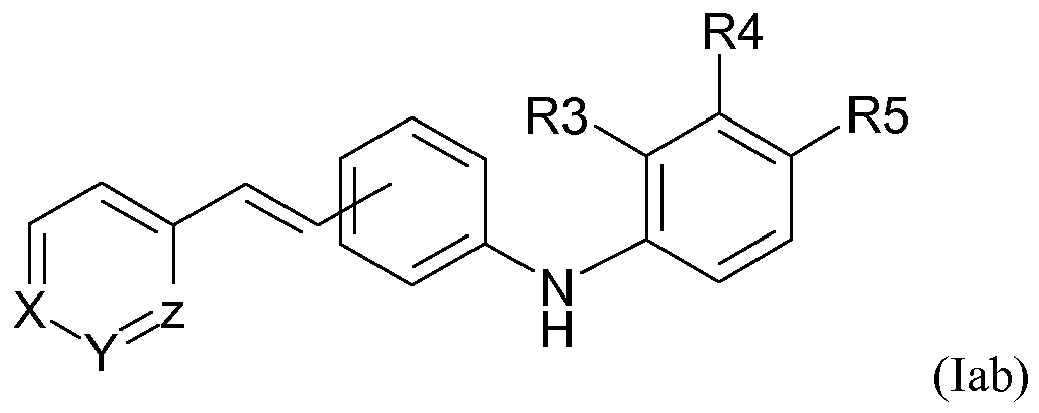
wherein:
X, Y and Z are independently C or N,
R3, R4 and R5 are as defined in claim 1,
provided that the lateral group 
is in the meta or para position with respect to the -NH- group, and preferably in the meta position,
provided that at most two of X, Y and Z are N, and that when Y is N, X and Z are C, and
provided that two of R3, R4 and R5 are a hydrogen atom or a (C1-C4)alkyl group and the last is different from a hydrogen atom or a (C1-C4)alkyl group,
or one of its pharmaceutically acceptable salt,
for use as an agent for preventing, inhibiting or treating a disease in a patient suffering thereof, said disease involving deregulated p53.
provided that the lateral group
provided that at most two of X, Y and Z are N, and that when Y is N, X and Z are C, and
provided that two of R3, R4 and R5 are a hydrogen atom or a (C1-C4)alkyl group and the last is different from a hydrogen atom or a (C1-C4)alkyl group,
or one of its pharmaceutically acceptable salt,
for use as an agent for preventing, inhibiting or treating a disease in a patient suffering thereof, said disease involving deregulated p53.
3. A compound of formula (Ia) according to claims 1 or 2

wherein:
R3, R4 and R5 are as defined in claim 1,
provided that the lateral group 
is in the meta or para position with respect to the -NH- group, and preferably in the meta position, and
provided that two of R3, R4 and R5 are a hydrogen atom or a (C1-C4)alkyl group and the last is different from a hydrogen atom or a (C1-C4)alkyl group,
or one of its pharmaceutically acceptable salt,
for use as an agent for preventing, inhibiting or treating a disease in a patient suffering thereof, said disease involving deregulated p53.
provided that the lateral group
provided that two of R3, R4 and R5 are a hydrogen atom or a (C1-C4)alkyl group and the last is different from a hydrogen atom or a (C1-C4)alkyl group,
or one of its pharmaceutically acceptable salt,
for use as an agent for preventing, inhibiting or treating a disease in a patient suffering thereof, said disease involving deregulated p53.
4. A compound of formula (Ib) according to claims 1 or 2

wherein:
R3, R4 and R5 are as defined in claim 1,
provided that the lateral group 
is in the meta or para position with respect to the -NH- group, and preferably in the meta position, and
provided that two of R3, R4 and R5 are a hydrogen atom or a (C1-C4)alkyl group and the last is different from a hydrogen atom or a (C1-C4)alkyl group,
or one of its pharmaceutically acceptable salt,
for use as an agent for preventing, inhibiting or treating a disease in a patient suffering thereof, said disease involving a deregulated p53.
provided that the lateral group
provided that two of R3, R4 and R5 are a hydrogen atom or a (C1-C4)alkyl group and the last is different from a hydrogen atom or a (C1-C4)alkyl group,
or one of its pharmaceutically acceptable salt,
for use as an agent for preventing, inhibiting or treating a disease in a patient suffering thereof, said disease involving a deregulated p53.
5. A compound of formula (Ic) according to claims 1 or 2

wherein:
R10 is a (C1-C4)alkoxy group or a fluoro(C1-C4)alkoxy group, R3, R4 and R5 are as defined in claim 1,
provided that two of R3, R4 and R5 are a hydrogen atom or a (C1-C4)alkyl group and the last is different from a hydrogen atom or a (C1-C4)alkyl group,
or one of its pharmaceutically acceptable salt,
for use as an agent for preventing, inhibiting or treating a disease in a patient suffering thereof, said disease involving a deregulated p53.
provided that two of R3, R4 and R5 are a hydrogen atom or a (C1-C4)alkyl group and the last is different from a hydrogen atom or a (C1-C4)alkyl group,
or one of its pharmaceutically acceptable salt,
for use as an agent for preventing, inhibiting or treating a disease in a patient suffering thereof, said disease involving a deregulated p53.
6. A compound of formula (Id) according to claim 1

wherein:
R1, R2 and R6 are as defined in claim 1,
R4 and R5 are independently a hydrogen atom or a (C1-C4)alkyl group,
or one of its pharmaceutically acceptable salt,
for use as an agent for preventing, inhibiting or treating a disease in a patient suffering thereof, said disease involving a deregulated p53.
or one of its pharmaceutically acceptable salt,
for use as an agent for preventing, inhibiting or treating a disease in a patient suffering thereof, said disease involving a deregulated p53.
7. A compound of formula (Ie) according to claim 1

wherein:
R3 is a hydrogen atom or a (C1-C4)alkyl group,
R5 is as defined in claim 1, and
R12 is a hydrogen atom, a (C1-C4)alkoxy group or a trifluoro(C1-C4)alkoxy group,
or one of its pharmaceutically acceptable salt,
for use as an agent for preventing, inhibiting or treating a disease in a patient suffering thereof, said disease involving a deregulated p53.
or one of its pharmaceutically acceptable salt,
for use as an agent for preventing, inhibiting or treating a disease in a patient suffering thereof, said disease involving a deregulated p53.
8. A compound of formula (If) according to claim 1

wherein:
for use as an agent for preventing, inhibiting or treating a disease in a patient suffering thereof, said disease involving a deregulated p53.
R3 is a hydrogen atom or a (C1-C4)alkyl group,
R13 is a hydrogen atom, a (C1-C4)alkoxy group or a trifluoro(C1-C4)alkoxy group and can be in ortho, meta or para position,
R14, which can be in meta or para position, represents
- a -CONHR6 group,
- a heteroaryl group optionally substituted by a -(CH2)nNR7R8 group or a hydroxy(C1-C4)alkyl group,
R6 represents a (C1-C6)alkyl group optionally substituted by a hydroxyl group, or a -(CH2)nNR7R8 group,
R7 and R8 independently represent a (C1-C4)alkyl group or form together with the nitrogen atom to which they are attached a saturated or insaturated 5- or 6- membered ring optionally containing a further heteroatom chosen among nitrogen and oxygen and optionally substituted by a (C1-C4)alkyl group, and said ring being chosen among a imidazolyl, a morpholinyl, a piperidinyl, a pyrrolidinyl or 4-methylpiperazinyl group,
or one of its pharmaceutically acceptable salt,for use as an agent for preventing, inhibiting or treating a disease in a patient suffering thereof, said disease involving a deregulated p53.
9. A compound of formula (I) according to claim 1 chosen among:
1 
2 
3 
4 
5 
6 
7 
8 
9 
10 
11 
12 
13 
14 
15 
16 
17 
18 
19 
20 
21 
22 
23 
24 
25 
26 
27 
28 
29 
30 
31 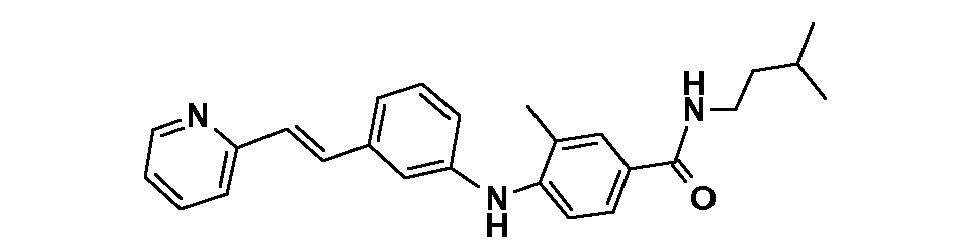
32 
33 
34 
35 
36 
37 
38 
39 
40 
41 
42 
43 
44 
45 
46 
47 
48 
49 
50 
51 
52 
53 
54 
55 
56 
57 
58 
59 
60 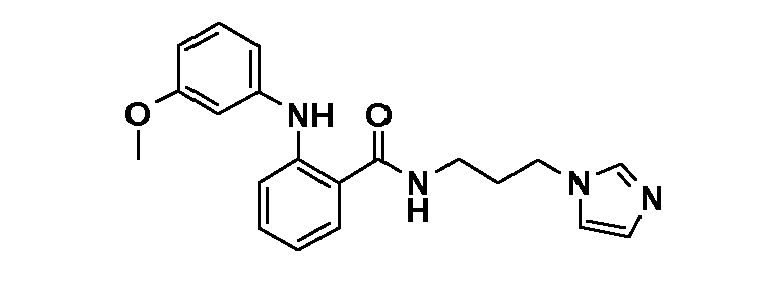
61 
62 
63 
64 
65 
66 
67 
68 
69 
70 
71 
72 
73 
74 
75 
76 
77 
78 
79 
80 
81 
82 
83 
84 
85 
86 
87 
88 
89 
90 
91 
92 
93 
94 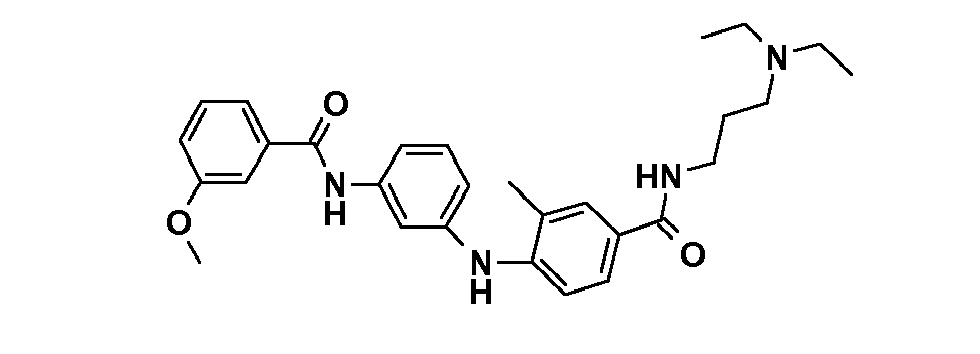
95 
96 
97 
98 
99 
100 
101 
102 
103 
104 
105 
106 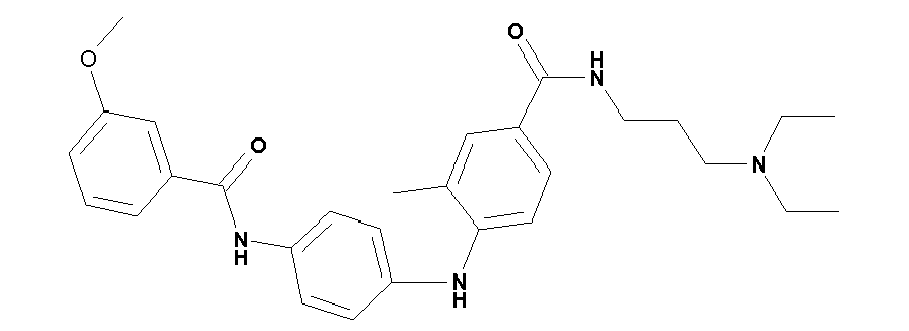
107 
108 
109 
110 
111 
112 
113 
114 
115 
116 
117 
118 
119 
120 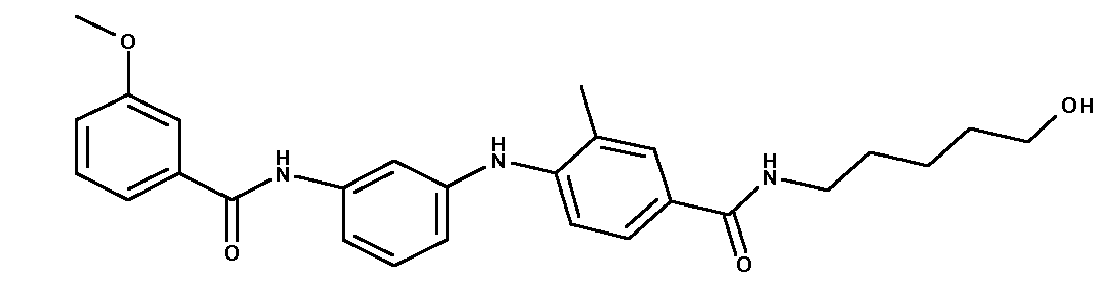
121 
122 
123 
124 
125 
126 
and their pharmaceutically acceptable salts,
for use as an agent for preventing, inhibiting or treating a disease in a patient suffering thereof, said disease involving deregulated p53.
for use as an agent for preventing, inhibiting or treating a disease in a patient suffering thereof, said disease involving deregulated p53.
9. A compound of formula (I) according to claims 1 to 8 wherein said disease is chosen among cancer, inflammation, fibrosis, neurodegenerative diseases, ischemia, atherosclerosis, hepatic disorders, cholestasis, atherosclerosis, autoimmune diseases, ethanol-induced injuries, ribosome biogenesis disorders, HIV-associated pathologies, such as dementia, diabetes, or myocardial infarction.
10. A compound of formula (I) according to claim 1 chosen among the compounds (9), (16), (17), (18), (19), (20), (21), (22), (23), (24), (25), (37), (38), (39), (48), (49), (50), (52), (83), (84), (85), (86), (87), (88), (89), (90), (91), (92), (123), (124), (125) and (126) as defined in the preceding claim as well as their pharmaceutically acceptable salts, such as hydrobromide, tartrate, citrate, trifluoroacetate, ascorbate, hydrochloride, tartrate, triflate, maleate, mesylate, formate, acetate and fumarate.
11. A pharmaceutical composition comprising at least one compound as defined in the preceding claim.
Priority Applications (5)
| Application Number | Priority Date | Filing Date | Title |
|---|---|---|---|
| EP11305385A EP2505198A1 (en) | 2011-04-01 | 2011-04-01 | Compounds for use as therapeutic agents affecting p53 expression and/or activity |
| PCT/IB2012/051603 WO2012131656A2 (en) | 2011-04-01 | 2012-04-02 | Compounds for use as therapeutic agents affecting p53 expression and/or activity |
| EP12715206.4A EP2694061A2 (en) | 2011-04-01 | 2012-04-02 | Compounds for use as therapeutic agents affecting p53 expression and/or activity |
| US14/009,283 US9890112B2 (en) | 2011-04-01 | 2012-04-02 | Compounds for use as therapeutic agents affecting p53 expression and/or activity |
| US15/840,847 US10538485B2 (en) | 2011-04-01 | 2017-12-13 | Compounds for use as therapeutic agents affecting P53 expression and/or activity |
Applications Claiming Priority (1)
| Application Number | Priority Date | Filing Date | Title |
|---|---|---|---|
| EP11305385A EP2505198A1 (en) | 2011-04-01 | 2011-04-01 | Compounds for use as therapeutic agents affecting p53 expression and/or activity |
Publications (1)
| Publication Number | Publication Date |
|---|---|
| EP2505198A1 true EP2505198A1 (en) | 2012-10-03 |
Family
ID=44281037
Family Applications (2)
| Application Number | Title | Priority Date | Filing Date |
|---|---|---|---|
| EP11305385A Withdrawn EP2505198A1 (en) | 2011-04-01 | 2011-04-01 | Compounds for use as therapeutic agents affecting p53 expression and/or activity |
| EP12715206.4A Withdrawn EP2694061A2 (en) | 2011-04-01 | 2012-04-02 | Compounds for use as therapeutic agents affecting p53 expression and/or activity |
Family Applications After (1)
| Application Number | Title | Priority Date | Filing Date |
|---|---|---|---|
| EP12715206.4A Withdrawn EP2694061A2 (en) | 2011-04-01 | 2012-04-02 | Compounds for use as therapeutic agents affecting p53 expression and/or activity |
Country Status (3)
| Country | Link |
|---|---|
| US (2) | US9890112B2 (en) |
| EP (2) | EP2505198A1 (en) |
| WO (1) | WO2012131656A2 (en) |
Cited By (2)
| Publication number | Priority date | Publication date | Assignee | Title |
|---|---|---|---|---|
| WO2017008056A1 (en) * | 2015-07-09 | 2017-01-12 | The United States Of America As Represented By The Secretary Of The Department Of Health And Human Services | Enhancing astrocyte neuroprotective functions using p53 isoforms |
| KR20210040030A (en) * | 2018-07-09 | 2021-04-12 | 아비박스 | Aryl-N-aryl derivatives for treating RNA viral infections |
Families Citing this family (6)
| Publication number | Priority date | Publication date | Assignee | Title |
|---|---|---|---|---|
| EP3594206A1 (en) | 2018-07-09 | 2020-01-15 | Abivax | Phenyl-n-quinoline derivatives for treating a rna virus infection |
| CN110172037A (en) * | 2019-07-01 | 2019-08-27 | 华北理工大学 | A kind of pyridine structure contained styrylpyridinium compound, preparation method and its application for preparing anti-tumor drug |
| EP3848356A1 (en) * | 2020-01-07 | 2021-07-14 | Abivax | Aryl-n-aryl derivatives for treating a rna virus infection |
| PL3999493T3 (en) * | 2019-07-19 | 2024-04-22 | Abivax | Aryl-N-aryl derivatives for the treatment of RNA virus infection |
| CN111004215B (en) * | 2019-12-22 | 2022-08-09 | 华北理工大学 | 2, 4-substituted pyrimidine derivatives, preparation method thereof and application thereof in preparing antitumor drugs |
| EP4085054B1 (en) * | 2020-01-02 | 2025-02-19 | Helmholtz-Zentrum für Infektionsforschung GmbH | New pqsr inverse agonists |
Citations (1)
| Publication number | Priority date | Publication date | Assignee | Title |
|---|---|---|---|---|
| WO2009087238A2 (en) | 2008-01-10 | 2009-07-16 | Centre National De La Recherche Scientifique (Cnrs) | Chemical molecules that inhibit the slicing mechanism for treating diseases resulting from splicing anomalies |
Family Cites Families (37)
| Publication number | Priority date | Publication date | Assignee | Title |
|---|---|---|---|---|
| DE374291C (en) | 1914-03-24 | 1923-04-21 | Alexei Ewgenjewitsch Tschitsch | Process for the preparation of amino substitution products of the pyridine and quinoline series |
| US2274620A (en) | 1940-01-02 | 1942-02-24 | S M A Corp | Substituted aryl amides of pyridine carboxylic acid |
| US2671805A (en) * | 1952-07-02 | 1954-03-09 | Searle & Co | Basically substituted o-arylamino-benzamides |
| DE1168435B (en) | 1961-12-09 | 1964-04-23 | Kali Chemie Ag | Process for the preparation of 4-oxo-3, 4-dihydroquinazolines |
| NL132603C (en) | 1964-08-29 | |||
| US3409668A (en) * | 1964-11-07 | 1968-11-05 | Palazzo Giuseppe | Substituted anthranilamides and process for the preparation thereof |
| GB1318291A (en) | 1970-04-15 | 1973-05-23 | Shell Int Research | Carboxamide derivatives and fungicidal compositions containing them |
| JPS5095285A (en) * | 1973-12-26 | 1975-07-29 | ||
| DE2417216A1 (en) | 1974-04-09 | 1975-11-06 | Basf Ag | FUNGICIDES |
| JPS52133939A (en) | 1976-04-30 | 1977-11-09 | Ihara Chem Ind Co Ltd | Preparation of 2-substituted benzanilides |
| FR2436786A1 (en) | 1978-09-21 | 1980-04-18 | Anvar | NOVEL PYRIDO (4,3-B) CARBAZOLES (ELLIPTICINS) DERIVATIVES, SUBSTITUTED IN POSITION 1 BY A POLYAMINE CHAIN, THEIR OBTAINMENT AND THEIR APPLICATION AS MEDICAMENTS |
| JPS62158252A (en) | 1985-12-28 | 1987-07-14 | Kirin Brewery Co Ltd | 4-aminopyridinebenzamide derivative |
| DE3819025A1 (en) | 1987-09-01 | 1989-05-24 | Fuji Photo Film Co Ltd | Process for the preparation of alkoxybenzene compounds |
| US4855308A (en) | 1987-12-04 | 1989-08-08 | Warner-Lambert Company | Method of treating senile cognitive decline with N'-substituted aminopyridine adrenergic agents |
| FR2627493B1 (en) | 1988-02-23 | 1991-10-31 | Sanofi Sa | PROCESS FOR THE PREPARATION OF ISOQUINOLEIN DERIVATIVES |
| US5579033A (en) | 1992-05-20 | 1996-11-26 | International Business Machines Corporation | Pointing device for retrofitting onto the keyboard of an existing computer system |
| GB9715584D0 (en) | 1997-07-23 | 1997-10-01 | Eisai Co Ltd | Compounds |
| US6268387B1 (en) | 1997-12-23 | 2001-07-31 | Warner-Lambert Company | Thiourea and benzamide compounds, compositions and methods of treating or preventing inflammatory diseases and atherosclerosis |
| US7223879B2 (en) | 1998-07-10 | 2007-05-29 | Massachusetts Institute Of Technology | Ligands for metals and improved metal-catalyzed processes based thereon |
| FR2787444B1 (en) | 1998-12-22 | 2001-02-09 | Rhodia Chimie Sa | COMPOSITION AND METHOD FOR INHIBITING RADICAL POLYMERIZATION OF ETHYLENICALLY UNSATURATED ALIPHATIC MONOMERS |
| CA2358091A1 (en) | 1998-12-23 | 2000-07-06 | Eli Lilly And Company | Antithrombotic amides |
| FR2789576B1 (en) | 1999-02-16 | 2002-04-26 | Oreal | KERATINIC FIBER OXIDATION DYE COMPOSITION AND DYEING METHOD USING THE SAME |
| US6878714B2 (en) | 2001-01-12 | 2005-04-12 | Amgen Inc. | Substituted alkylamine derivatives and methods of use |
| US7101948B2 (en) | 2001-12-21 | 2006-09-05 | Air Products And Chemicals, Inc. | Stabilizers to inhibit the polymerization of substituted cyclotetrasiloxane |
| FR2836917B1 (en) | 2002-03-11 | 2006-02-24 | Lipha | NITROSO DIPHENYLAMINE DERIVATIVES, PHARMACEUTICAL COMPOSITIONS CONTAINING SAME AS MEDICAMENTS FOR THE TREATMENT OF DISEASES CHARACTERIZED BY OXIDATIVE STRESS SITUATION |
| US7125997B2 (en) * | 2002-12-20 | 2006-10-24 | Irm Llc | Differential tumor cytotoxicity compounds and compositions |
| FR2859474B1 (en) | 2003-09-04 | 2006-01-13 | Centre Nat Rech Scient | USE OF INDOLE-DERIVED COMPOUNDS FOR THE PREPARATION OF A MEDICAMENT USEFUL IN THE TREATMENT OF GENETIC DISEASES RESULTING FROM THE ALTERATION OF SPLICE PROCESSES |
| FR2859475A1 (en) | 2003-09-04 | 2005-03-11 | Centre Nat Rech Scient | Use of ellipticin, or its aza-derivatives, in treatment of genetic disorders caused by alteration of RNA splicing, e.g. parkinsonism, neuropathy and cancers |
| WO2005025498A2 (en) | 2003-09-08 | 2005-03-24 | Corus Pharma | Substituted acetanilides and benzamides for the treatment of asthma and pulmonary inflammation |
| FR2862964B1 (en) * | 2003-11-27 | 2006-12-29 | Merck Sante Sas | DERIVATIVES OF DIPHENYLAMINE. |
| FR2862965B1 (en) | 2003-11-27 | 2007-09-07 | Merck Sante Sas | NOVEL PHENOXYACETAMIDE DERIVATIVES AND THEIR USE FOR THE PREPARATION OF DIPHENYLAMIDES. |
| TWI380975B (en) | 2004-03-25 | 2013-01-01 | Otsuka Pharma Co Ltd | Method for producing aminophenol compounds |
| EP1845985A4 (en) | 2005-02-02 | 2011-10-12 | Nexuspharma Inc | COMPOSITIONS CONTAINING AMINE DERIVATIVES AND METHODS FOR TREATING VIRAL INFECTIONS ASSOCIATED WITH CANCER ETIOLOGY |
| WO2006133848A1 (en) | 2005-06-13 | 2006-12-21 | Dsm Ip Assets. B.V. | Additive composition comprising an amidized or imidized polymer |
| WO2007096647A2 (en) | 2006-02-27 | 2007-08-30 | Sterix Limited | Diaryl compounds as non-steroidal inhibitors of 17-beta hydroxysteroid dehydrogenase and/or steroid sulphatase for the treatment of oestrogen-related diseases such as hormone dependent breast cancer |
| US20090118135A1 (en) * | 2007-06-08 | 2009-05-07 | The Burnham Institute | Methods and compounds for regulating apoptosis |
| EP2712862A1 (en) * | 2012-09-28 | 2014-04-02 | Splicos | New anti-invasive compounds |
-
2011
- 2011-04-01 EP EP11305385A patent/EP2505198A1/en not_active Withdrawn
-
2012
- 2012-04-02 EP EP12715206.4A patent/EP2694061A2/en not_active Withdrawn
- 2012-04-02 US US14/009,283 patent/US9890112B2/en not_active Expired - Fee Related
- 2012-04-02 WO PCT/IB2012/051603 patent/WO2012131656A2/en not_active Ceased
-
2017
- 2017-12-13 US US15/840,847 patent/US10538485B2/en active Active
Patent Citations (2)
| Publication number | Priority date | Publication date | Assignee | Title |
|---|---|---|---|---|
| WO2009087238A2 (en) | 2008-01-10 | 2009-07-16 | Centre National De La Recherche Scientifique (Cnrs) | Chemical molecules that inhibit the slicing mechanism for treating diseases resulting from splicing anomalies |
| US20110053975A1 (en) * | 2008-01-10 | 2011-03-03 | Centre National De La Recherche Scientifique (Cnrs | Chemical molecules that inhibit the slicing mechanism for treating diseases resulting from splicing anomalies |
Non-Patent Citations (7)
| Title |
|---|
| BOURDON ET AL., GENES DEV., vol. 19, 2005, pages 2122 |
| GEORGIEV ET AL., CURR PHARM DES, vol. 12, 2006, pages 2911 |
| HARDCASTLE IAN R: "Inhibitors of the MDM2-p53 interaction as anticancer drugs", DRUGS OF THE FUTURE, vol. 32, no. 10, October 2007 (2007-10-01), pages 883 - 896, XP007919174, ISSN: 0377-8282 * |
| IACOPETTA ET AL., INT J ONCOL, vol. 7, 1995, pages 399 - 402 |
| NAYAK S K ET AL: "p53-Induced apoptosis and inhibitors of p53", CURRENT MEDICINAL CHEMISTRY 2009 BENTHAM SCIENCE PUBLISHERS B.V. NLD LNKD- DOI:10.2174/092986709788681976, vol. 16, no. 21, 2009, pages 2627 - 2640, XP007919173, ISSN: 0929-8673 * |
| OH ET AL., TOXICOL APPL PHARMACOL., vol. 182, no. 1, 1 July 2002 (2002-07-01), pages 27 - 33 |
| VOUSDEN, LANE, NAT REV MOL CELL BIOL., vol. 8, no. 4, April 2007 (2007-04-01), pages 275 - 83 |
Cited By (2)
| Publication number | Priority date | Publication date | Assignee | Title |
|---|---|---|---|---|
| WO2017008056A1 (en) * | 2015-07-09 | 2017-01-12 | The United States Of America As Represented By The Secretary Of The Department Of Health And Human Services | Enhancing astrocyte neuroprotective functions using p53 isoforms |
| KR20210040030A (en) * | 2018-07-09 | 2021-04-12 | 아비박스 | Aryl-N-aryl derivatives for treating RNA viral infections |
Also Published As
| Publication number | Publication date |
|---|---|
| US20140206690A1 (en) | 2014-07-24 |
| EP2694061A2 (en) | 2014-02-12 |
| US20180127353A1 (en) | 2018-05-10 |
| WO2012131656A2 (en) | 2012-10-04 |
| US10538485B2 (en) | 2020-01-21 |
| US9890112B2 (en) | 2018-02-13 |
| WO2012131656A3 (en) | 2012-11-22 |
Similar Documents
| Publication | Publication Date | Title |
|---|---|---|
| US10538485B2 (en) | Compounds for use as therapeutic agents affecting P53 expression and/or activity | |
| RU2695227C9 (en) | 1,3,4-oxadiazole sulphamide derivatives as histone deacetylase 6 inhibitor and pharmaceutical composition containing them | |
| US9447058B2 (en) | Substituted 1,3-thiazoles as heat shock transcription factor 1 activators | |
| KR102928845B1 (en) | Fluorine-containing compounds and their anticancer medical uses | |
| US9856216B2 (en) | Compounds as TNIK, IKKε and TBK1 inhibitors and pharmaceutical composition comprising same | |
| EP1448539A1 (en) | Hiv protease inhibitors, compositions containing the same, their pharmaceutical uses and materials for their synthesis | |
| AU2002345644A1 (en) | HV protease inhibitors, compositions containing the same, their pharmaceutical uses and materials for their synthesis | |
| AU2016356884A1 (en) | Novel compounds as inhibitors of dna methyltransferases | |
| WO2008087514A2 (en) | Hdac inhibitors | |
| US11311523B2 (en) | Pyridinone compound and use thereof | |
| CN105924362A (en) | Aromatic cyclopropyl amine compound, pharmaceutically acceptable salts thereof, and preparation method and application thereof | |
| JPWO2004069243A1 (en) | Breast cancer resistance protein (BCRP) inhibitor | |
| WO2020257733A1 (en) | Histone demethylase inhibitors for treating cancers | |
| JP5249484B2 (en) | Pharmaceutical composition | |
| EP1940815B1 (en) | Salts of modulators of ppar and methods of treating metabolic disorders | |
| KR102114389B1 (en) | Novel sodium channel inhibitor compound, preparation method thereof, and pharmaceutical composition for prevention or treatment of sodium channel related diseases containing the same as an active ingredient | |
| KR100632800B1 (en) | Novel hydroxyamide derivatives having histone deacetylase inhibitory activity and preparation method thereof | |
| CN103796994A (en) | Piperazine derivatives and their preparation methods and their application in the treatment of insulin resistance | |
| KR20250064991A (en) | Oxime ester derivatives of dioxo-benzo[b]thiophene skeleton or pharmaceutically acceptable salts and uses thereof | |
| EA052668B1 (en) | Dual LSD1/HDAC inhibitors | |
| JP6644067B2 (en) | Benzyl hydroxide derivatives, their preparation and therapeutic use | |
| KR20170053951A (en) | 4-substituted-2-(5-substituted-1H-indol-2-yl)phenol derivatives, method for preparing the same and pharmaceutical composition for inhibiting cell proliferation and migration comprising the same | |
| KR20010097480A (en) | CDK inhibitors having a new structure |
Legal Events
| Date | Code | Title | Description |
|---|---|---|---|
| PUAI | Public reference made under article 153(3) epc to a published international application that has entered the european phase |
Free format text: ORIGINAL CODE: 0009012 |
|
| AK | Designated contracting states |
Kind code of ref document: A1 Designated state(s): AL AT BE BG CH CY CZ DE DK EE ES FI FR GB GR HR HU IE IS IT LI LT LU LV MC MK MT NL NO PL PT RO RS SE SI SK SM TR |
|
| AX | Request for extension of the european patent |
Extension state: BA ME |
|
| STAA | Information on the status of an ep patent application or granted ep patent |
Free format text: STATUS: THE APPLICATION IS DEEMED TO BE WITHDRAWN |
|
| 18D | Application deemed to be withdrawn |
Effective date: 20130404 |