EP2503528A1 - Wireless temperature measuring system - Google Patents
Wireless temperature measuring system Download PDFInfo
- Publication number
- EP2503528A1 EP2503528A1 EP10829481A EP10829481A EP2503528A1 EP 2503528 A1 EP2503528 A1 EP 2503528A1 EP 10829481 A EP10829481 A EP 10829481A EP 10829481 A EP10829481 A EP 10829481A EP 2503528 A1 EP2503528 A1 EP 2503528A1
- Authority
- EP
- European Patent Office
- Prior art keywords
- module
- temperature signal
- coded
- temperature
- alarm
- Prior art date
- Legal status (The legal status is an assumption and is not a legal conclusion. Google has not performed a legal analysis and makes no representation as to the accuracy of the status listed.)
- Withdrawn
Links
- 238000012937 correction Methods 0.000 claims abstract description 25
- 238000001514 detection method Methods 0.000 claims abstract description 21
- 230000006854 communication Effects 0.000 claims description 88
- 238000004891 communication Methods 0.000 claims description 88
- 238000006243 chemical reaction Methods 0.000 claims description 24
- 230000001351 cycling effect Effects 0.000 abstract 1
- 238000012544 monitoring process Methods 0.000 description 12
- 238000000034 method Methods 0.000 description 9
- 230000005540 biological transmission Effects 0.000 description 7
- 238000009434 installation Methods 0.000 description 6
- 230000002159 abnormal effect Effects 0.000 description 3
- 230000008901 benefit Effects 0.000 description 3
- 238000005286 illumination Methods 0.000 description 3
- 238000011065 in-situ storage Methods 0.000 description 3
- 230000008859 change Effects 0.000 description 2
- 238000007796 conventional method Methods 0.000 description 2
- 239000000835 fiber Substances 0.000 description 2
- 238000012986 modification Methods 0.000 description 2
- 230000004048 modification Effects 0.000 description 2
- 230000001131 transforming effect Effects 0.000 description 2
- 230000007175 bidirectional communication Effects 0.000 description 1
- 230000000903 blocking effect Effects 0.000 description 1
- 230000009172 bursting Effects 0.000 description 1
- 238000013461 design Methods 0.000 description 1
- 238000002474 experimental method Methods 0.000 description 1
- 230000006872 improvement Effects 0.000 description 1
- 239000004973 liquid crystal related substance Substances 0.000 description 1
- 230000008569 process Effects 0.000 description 1
- 230000009467 reduction Effects 0.000 description 1
- 238000011160 research Methods 0.000 description 1
- 239000000523 sample Substances 0.000 description 1
- 238000005070 sampling Methods 0.000 description 1
- 230000035945 sensitivity Effects 0.000 description 1
- 238000003860 storage Methods 0.000 description 1
- 230000000007 visual effect Effects 0.000 description 1
Images



Classifications
-
- H—ELECTRICITY
- H04—ELECTRIC COMMUNICATION TECHNIQUE
- H04Q—SELECTING
- H04Q9/00—Arrangements in telecontrol or telemetry systems for selectively calling a substation from a main station, in which substation desired apparatus is selected for applying a control signal thereto or for obtaining measured values therefrom
-
- G—PHYSICS
- G01—MEASURING; TESTING
- G01K—MEASURING TEMPERATURE; MEASURING QUANTITY OF HEAT; THERMALLY-SENSITIVE ELEMENTS NOT OTHERWISE PROVIDED FOR
- G01K1/00—Details of thermometers not specially adapted for particular types of thermometer
- G01K1/02—Means for indicating or recording specially adapted for thermometers
- G01K1/024—Means for indicating or recording specially adapted for thermometers for remote indication
-
- H—ELECTRICITY
- H04—ELECTRIC COMMUNICATION TECHNIQUE
- H04Q—SELECTING
- H04Q2209/00—Arrangements in telecontrol or telemetry systems
- H04Q2209/40—Arrangements in telecontrol or telemetry systems using a wireless architecture
-
- H—ELECTRICITY
- H04—ELECTRIC COMMUNICATION TECHNIQUE
- H04Q—SELECTING
- H04Q2209/00—Arrangements in telecontrol or telemetry systems
- H04Q2209/80—Arrangements in the sub-station, i.e. sensing device
- H04Q2209/82—Arrangements in the sub-station, i.e. sensing device where the sensing device takes the initiative of sending data
- H04Q2209/823—Arrangements in the sub-station, i.e. sensing device where the sensing device takes the initiative of sending data where the data is sent when the measured values exceed a threshold, e.g. sending an alarm
Definitions
- the invention relates to automation technical field, and more particularly, to a wireless temperature measuring system.
- Temperature is an important measuring parameter in many fields such as industry, military, electric power and so on. So the research emphasis is how to obtain temperatures of temperature temperature detection points real-timely and accurately.
- Conventional methods for measuring temperature include: 1) a field bus measuring method: multiple temperature probes are disposed at each temperature detection point, a field bus is connected to a programmable logic controller (PLC) whereby reading temperature at each temperature detection point; 2) an infrared measuring method: users hold an infrared detector to detect temperature of each temperature detection point.
- PLC programmable logic controller
- the field bus measuring method requires in-situ cable laying, which features complex installation and inconvenient extension, and remote monitoring cannot be facilitated;
- the infrared measuring method is easily affected by sunshine or other illuminations and requires field debugging, and remote monitoring cannot be facilitated.
- a wireless temperature measuring system comprising multiple wireless temperature sensors, and multiple communication terminals.
- Each of the communication terminal communicates with the wireless temperature sensors via RF.
- the wireless temperature sensor operates to obtain temperature signals from a temperature detection point, to perform cyclic-interleave and error-correction coding on the temperature signals whereby obtaining coded temperature signals, and to transmit the coded temperature signals to the communication terminals via RF.
- the communication terminal operates to receive and decode the coded temperature signals from the wireless temperature sensor, and to obtain and to display decoded temperature signals.
- the wireless temperature sensor comprises a temperature collection module, an analog/digital (A/D) conversion module, a first micro-controller unit (MCU) module, and a first RF module.
- the temperature collection module operates to collect temperature of the temperature detection point whereby obtaining an analog temperature signal, to transmit the analog temperature signal to the A/D conversion module, and to transmit an ID number of the temperature collection module to the first MCU module.
- the A/D conversion module operates to receives the analog temperature signal from the temperature collection module, to perform A/D conversion on the analog temperature signal whereby obtaining a digital temperature signal, and to transmit the digital temperature signal to the first MCU module.
- the first MCU module operates to receive the digital temperature signal from the A/D conversion module, and the ID number of the temperature collection module from the temperature collection module, to pack the digital temperature signal and the ID number of the temperature collection module with data frames whereby obtaining a temperature signal data packet, to perform cyclic-interleave and error-correction coding on the temperature signal data packet whereby obtaining a coded temperature signal, and to transmit the coded temperature signal to the first RF module.
- the first RF module operates to receive the coded temperature signal from the first MCU module, and to transmit the coded temperature signal to the communication terminal.
- the communication terminal comprises a second RF module, a second MCU module, and a display module.
- the second RF module operates to receive the coded temperature signal from the first RF module, and to transmit the coded temperature signal to the second MCU module
- the second MCU module operates to receive the coded temperature signal from the second RF module, to decode the coded temperature signal whereby obtaining a decoded temperature signal, and to transmit the decoded temperature signal to the display module.
- the display module operates to receive and to display the decoded temperature signal from the second MCU module.
- the first MCU module further operate to detect whether a RF signal exists at a main frequency point of the first RF module after receiving the coded temperature signal, to transmit the coded temperature signal to the first RF module and to inform the first RF module to transmit the coded temperature signal via the main frequency point if no RF signal exists at a main frequency point of the first RF module, or to transmit the coded temperature signal to the first RF module and to inform the first RF module to transmit the coded temperature signal via an auxiliary frequency point if the RF signal exists at a main frequency point of the first RF module.
- the first RF module further operates to transmit the coded temperature signal to the communication terminal via the main frequency point after receiving said coded temperature signal and a notice of transmitting the coded temperature signal via said main frequency point from the first RF module, or to transmit the coded temperature signal to the communication terminal via the auxiliary frequency point after receiving the coded temperature signal and a notice of transmitting the coded temperature signal via the auxiliary frequency point from the first MCU module.
- the second MCU module further operates to set values of the main frequency point and the auxiliary frequency point, to pack the values of the main frequency point and the auxiliary frequency point with data frames whereby obtaining a frequency point packet, to perform cyclic-interleave and error-correction coding on the frequency point packet whereby obtaining a coded frequency point, and to transmit the coded frequency point to the second RF module.
- the second RF module further operates to receive the coded frequency point from the second MCU module, and to transmit the coded frequency point to the first RF module via RF.
- the first RF module further operates to receive the coded frequency point from the second RF module, and to transmit the coded frequency point to the first MCU module.
- the first MCU module further operates to receive the coded frequency point from the first RF module, to decode the coded frequency point whereby obtaining values of the main frequency point and the auxiliary frequency point, and to set the main frequency point and the auxiliary frequency point of the first RF module according to said values of said main frequency point and said auxiliary frequency point.
- the first MCU module further operates to detect whether the digital temperature signal matches a preset alarm temperature signal condition after receiving the digital temperature signal from said A/D conversion module, to pack the digital temperature signal and the ID number of the temperature collection module with data frames whereby obtaining a normal temperature signal packet, to perform cyclic-interleave and error-correction coding on the normal temperature signal packet whereby obtaining a coded normal temperature signal, and to transmit the coded normal temperature signal to the first RF module according to a preset reporting period of the temperature signal if the digital temperature signal does not meet an alarm temperature signal condition, or to pack the digital temperature signal, the ID number of the temperature collection module, and a temperature alarm ID with data frames directly whereby obtaining an alarm temperature signal packet, to perform cyclic-interleave and error-correction coding on the alarm temperature signal packet whereby obtaining a coded alarm temperature signal, and to transmit the coded alarm temperature signal to the first RF module if the digital temperature signal matches an alarm temperature signal condition.And the
- the communication terminal further comprises an alarm module.
- the second RF module further operates to receive the coded normal temperature signal or said coded alarm temperature signal from the first RF module, and to transmit the coded normal temperature signal or said coded alarm temperature signal to the second MCU module .
- the second MCU module further operates to receive the coded normal temperature signal from the second RF module, to decode the normal temperature signal whereby obtaining a decoded normal temperature signal, and to transmit the decoded normal temperature signal to the display module, or to receive the coded alarm temperature signal from the second RF module, to decode the alarm temperature signal whereby obtaining a decoded alarm temperature signal, to transmit the decoded alarm temperature signal to the display module, and to inform the alarm module to send an alarm.
- the display module further operates to receive and to display the decoded normal temperature signal from the second MCU module, or to receive and to display the decoded alarm temperature signal from the second MCU module.
- the second MCU module further operates to set the alarm temperature signal condition and said reporting period of said temperature signal, to pack the alarm temperature signal condition and the reporting period of said temperature signal with data frames respectively whereby obtaining an alarm temperature signal condition packet, and a reporting period packet, to perform cyclic-interleave and error-correction coding on the alarm temperature signal condition packet and the reporting period packet respectively whereby obtaining a coded alarm temperature signal condition and a coded reporting period, and to transmit the coded alarm temperature signal condition and the coded reporting period to the second RF module.
- the second RF module further operates to receive the coded alarm temperature signal condition and the coded reporting period from the second MCU module, and to transmit the coded alarm temperature signal condition and the coded reporting period to the first RF module via RF.
- the first RF module further operates to receive the coded alarm temperature signal condition and the coded reporting period from the second RF module, and to transmit the coded alarm temperature signal condition and the coded reporting period to the first MCU module.
- the first MCU module further operates to receive the coded alarm temperature signal condition and the coded reporting period from the first RF module, and to decode the coded alarm temperature signal condition and the coded reporting period whereby obtaining the alarm temperature signal condition and the reporting periodof said temperature signal.
- the wireless temperature sensor further comprises a power supply module, and a power management module.
- the power supply module operates to supply power to modules of the wireless temperature sensor under a control of said power management module.
- the power management module operates to control the power supply module to supply or to stop supplying power to modules of the wireless temperature sensor.
- the first MCU module further operates to detect states of the modules of the wireless temperature sensor respectively, to inform the power management module to control the power supply module to supply power to modules in an operating state, and to inform the power management module to control the power supply module to stop supplying power to modules in an idle state.
- the wireless temperature sensor further comprises a power sensing module.
- the power sensing module operates to detect electric quantity of the power supply module, and to transmit a warning signal indicating low power to the first MCU module as electric quantity of the power supply module is less than a preset threshold value.
- the first MCU module further operates to receive the warning signal from the power sensing module, and to transmit the warning signal to the communication terminal via the first RF module.
- the wireless temperature sensor further comprises a reset circuit operating to provide a reset signal to the first MCU module once power is on.
- the communication terminal further comprises an input module operating to provide a man machine interface.
- the communication terminal further comprises a parallel switching module operating to dynamically switch between parallel circuits output from the communication terminal.
- the communication terminal further comprises an interface module operating to provide a communication interface.
- the wireless temperature measuring system further comprises a computer group.
- the computer group comprises a server and multiple computers operating to remotely monitor temperature.
- the server is connected to the communication terminal via the communication interface provided by the interface module, and the server is connected to the computer via a wide area network (WAN) or a local area network (LAN).
- WAN wide area network
- LAN local area network
- Advantages of the invention include: by collecting temperature at the temperature detection point by the wireless temperature sensor, and transmitting the temperature signal after performing cyclic-interleave and error-correction coding on the temperature signal, transmission distance of the RF module is increased such that one communication terminal is capable of managing up to hundreds of wireless temperature sensors and, in turn, centralized remote monitoring can be facilitated, no in-situ cable laying is required, installation is simple, extension is convenient, and the invention is not affected by sunshine or other illuminations.
- a wireless temperature measuring system comprises multiple wireless temperature sensors 10, and multiple communication terminals 20.
- each of the communication terminal 20 communicates with multiple wireless temperature sensors 10 via radio frequency (RF) simultaneously.
- RF radio frequency
- the wireless temperature sensor 10 operates to obtain temperature signals from a temperature detection point, to perform cyclic-interleave and error-correction coding on the temperature signals whereby obtaining coded temperature signals, and to transmit the coded temperature signals to the communication terminal 20 via RF.
- the communication terminal 20 operates to receive and decode the coded temperature signals from the wireless temperature sensor 10, and to obtain and display decoded temperature signals.
- the wireless temperature sensor 10 comprises a temperature collection module 101, an analog/digital (A/D) conversion module 102, a first microcontroller unit (MCU) module 103, and a first RF module 104.
- A/D analog/digital
- MCU microcontroller unit
- the temperature collection module 101 operates to collect temperature of the temperature detection point whereby obtaining an analog temperature signal, to transmit the analog temperature signal to the A/D conversion module 102, and to transmit an ID number of the temperature collection module 101 to the first MCU module 103.
- Each of the temperature collection modules 101 has a unique ID number.
- an installation position of a temperature detection point corresponding to a wireless temperature sensor 10 is recorded and saved in the communication terminal 20 along with the ID number of the temperature collection module 101, so that upon receiving the temperature signal from the wireless temperature sensor 10, the communication terminal 20 can inquiry the installation position of the temperature detection point according to the ID number of the temperature collection module 101.
- the A/D conversion module 102 operates to receives the analog temperature signal from the temperature collection module 101, to perform A/D conversion on the analog temperature signal whereby obtaining a digital temperature signal, and to transmit the digital temperature signal to the first MCU module 103.
- the first MCU module 103 operates to receive the digital temperature signal from the A/D conversion module 102, and the ID number of the temperature collection module 101 from the temperature collection module 101, to pack the digital temperature signal and the ID number of the temperature collection module 101 with data frames whereby obtaining a temperature signal data packet, to perform cyclic-interleave and error-correction coding on the temperature signal data packet whereby obtaining a coded temperature signal, and to transmit the coded temperature signal to the first RF module 104.
- the cyclic-interleave and error-correction code is capable of correcting a continuous and bursting error of 24 bits, and a coding gain thereof is up to 3 dBm. And its error correction capability and coding efficiency achieves a leading position in the field, which is far higher than normal forward error correction. And the anti-interference capacity and sensitivity thereof also have a great improvement. Meanwhile, the cyclic-interleave and error-correction code has a performance of error detection so as to filter erroneous and false information, and thus greatly improving stability during data communication, and increasing transmission distance of the coded temperature signals upon transmitting via the first RF module 104.
- the communication terminal 20 is capable of receiving the temperature signal from the first RF module 104, which makes it possible to manage hundreds of wirelss temperature sensors 10 via one communication terminal 20. In this manner, only one communication terminal 20 is required in an application of electric power system to measure temperature and to receive the temperature signal from multiple wireless temperature sensors 10, and no wiring is needed.
- the first RF module 104 operates to receive the coded temperature signal from the first RF module 104, and to transmit the coded temperature signal to the communication terminal 20 via RF.
- the communication terminal 20 comprises a second RF module 201, a second MCU module 202, and a display module 203.
- the second RF module 201 operates to receive the coded temperature signal from the first RF module 104, and to transmit the coded temperature signal to the second MCU module 202.
- the second MCU module 202 operates to receive the coded temperature signal from the second RF module 201, to decode the coded temperature signal whereby obtaining a decoded temperature signal, and to transmit the decoded temperature signal to the display module 203.
- the display module 203 operates to receive and to display the decoded temperature signal from the second MCU module 202.
- the display module 203 may be a light emitting diode (LED) display, a liquid crystal display (LCD), and so on.
- LED light emitting diode
- LCD liquid crystal display
- the first MCU module 103 further operate to detect whether a RF signal exists at a main frequency point of the first RF module 104 after receiving the coded temperature signal, to transmit the coded temperature signal to the first RF module 104 and to inform the first RF module 104 to transmit the coded temperature signal via the main frequency point if no RF signal exists at the main frequency point of the first RF module 104, or to transmit the coded temperature signal to the first RF module 104 and to inform the first RF module 104 to transmit the coded temperature signal via an auxiliary frequency point if the RF signal exists at the main frequency point of the first RF module 104.
- the main frequency point is a default frequency point for transmitting the coded temperature signal.
- the main frequency point is 433 MHz.
- the auxiliary frequency point is used for transmission.
- auxiliary frequency points are used during application. As a RF signal exists at the main frequency point, the auxiliary frequency points are sequentially detected, and those with no RF signal thereat are used for transmitting the coded temperature signal. If RF signals exist at all the auxiliary frequency points, detection is performed from the main frequency point until a frequency point with no RF signal thereat is found. For example, three auxiliary points 433.1 MHz, 433.2 MHz, and 433.3 MHz are used.
- the first RF module 104 further operates to transmit the coded temperature signal to the communication terminal 20 via the main frequency point after receiving the coded temperature signal and a notice of transmitting the coded temperature signal via the main frequency point from the first MCU module 103, or to transmit the coded temperature signal to the communication terminal 20 via the auxiliary frequency point after receiving the coded temperature signal and a notice of transmitting the coded temperature signal via the auxiliary frequency point from the first MCU module 103.
- the second MCU module 202 further operates to set values of the main frequency point and the auxiliary frequency point, to pack the values of the main frequency point and the auxiliary frequency point with data frames whereby obtaining a frequency point packet, to perform cyclic-interleave and error-correction coding on the frequency point packet whereby obtaining a coded frequency point, and to transmit the coded frequency point to the second RF module 201.
- the second RF module 201 further operates to receive the coded frequency point from the second MCU module 202, and to transmit the coded frequency point to the first RF module 104 via RF.
- the first RF module 104 further operates to receive the coded frequency point from the second RF module 201, and to transmit the coded frequency point to the first MCU module 103.
- the first MCU module 103 further operates to receive the coded frequency point from the first RF module 104, to decode the coded frequency point whereby obtaining values of the main frequency point and the auxiliary frequency point, and to set the main frequency point and the auxiliary frequency point of the first RF module 104 according to the values of the main frequency point and the auxiliary frequency point.
- a main frequency point and multiple auxiliary frequency points can also be set, like the first RF module 104, and the method is the same as above and will not be described hereinafter.
- the first MCU module 103 further operates to detect whether the digital temperature signal matches a preset alarm temperature signal condition after receiving the digital temperature signal from the A/D conversion module, to pack the digital temperature signal and the ID number of the temperature collection module with data frames whereby obtaining a normal temperature signal packet, to perform cyclic-interleave and error-correction coding on the normal temperature signal packet whereby obtaining a coded normal temperature signal, and to transmit the coded normal temperature signal to the first RF module 104 according to a preset reporting period of the temperature signal if the digital temperature signal does not meet an alarm temperature signal condition, or to pack the digital temperature signal, the ID number of the temperature collection module, and a temperature alarm ID with data frames whereby obtaining an alarm temperature signal packet, to perform cyclic-interleave and error-correction coding on the alarm temperature signal packet whereby obtaining a coded alarm temperature signal, and to transmit the coded alarm temperature signal to the first RF module 104 if the digital temperature signal matches an alarm temperature signal condition.
- multiple temperature alarm modes such as high temperature alarm, low temperature alarm, temperature rise alarm, temperature reduction alarm, and so on, can be set.
- the preset alarm temperature signal condition can be set as: sending alarm as the digital temperature signal is higher or lower than a threshold value, or an increment or decrement reaches a threshold value.
- a reporting period of the temperature signal can be flexibly set according to an actual condition, such as 10 minutes, 1 hour and so on. That is, the wireless temperature sensors 10 do not need to transmit all of the collected temperature signals to the communication terminal.
- the wireless temperature sensor 10 reports temperature at the temperature detection point at the reporting period, such as every 10 minutes.
- the wireless temperature sensor 10 transmits the temperature signal to the communication terminal 20 in real-time.
- the first RF module 104 further operates to receive the coded normal temperature signal from the first MCU module 103, and to transmit the coded normal temperature signal to the communication terminal 20 via RF, or to receive the coded alarm temperature signal from the first MCU module 103, and to transmit the coded alarm temperature signal to the communication terminal 20 via RF.
- the communication terminal 20 further comprises an alarm module 204.
- the second RF module 201 further operates to receive the coded normal or alarm temperature signal from the first RF module 104, and to transmit the coded normal or alarm temperature signal to the second MCU module 202.
- the second MCU module 202 further operates to receive the coded normal temperature signal from the second RF module 201, to decode the normal temperature signal whereby obtaining a decoded normal temperature signal, and to transmit the decoded normal temperature signal to the display module 203, or to receive the coded alarm temperature signal from the second RF module 201, to decode the alarm temperature signal whereby obtaining a decoded alarm temperature signal, to transmit the decoded alarm temperature signal to the display module 203, and to inform the alarm module 204 to send an alarm.
- the alarm module 204 can use audible and visual alarm, and buzz alarm and so on.
- the display module 203 further operates to receive and to display the decoded normal temperature signal from the second MCU module 202, or to receive and to display the decoded alarm temperature signal from the second MCU module 202.
- the second MCU module 202 further operates to set the alarm temperature signal condition and the reporting period of the temperature signal, to pack the alarm temperature signal condition and the reporting period of the temperature signal with data frames respectively whereby obtaining an alarm temperature signal condition packet, and a reporting period packet, to perform cyclic-interleave and error-correction coding on the alarm temperature signal condition packet and the reporting period packet respectively whereby obtaining a coded alarm temperature signal condition and a coded reporting period, and to transmit the coded alarm temperature signal condition and the coded reporting period to the second RF module 201.
- the second RF module 201 further operates to receive the coded alarm temperature signal condition and the coded reporting period from the second MCU module 202, and to transmit the coded alarm temperature signal condition and the coded reporting period to the first RF module 104 via RF.
- the first RF module 104 further operates to receive the coded alarm temperature signal condition and the coded reporting period from the second RF module 201, and to transmit the coded alarm temperature signal condition and the coded reporting period to the first MCU module 103.
- the first MCU module 103 further operates to receive the coded alarm temperature signal condition and the coded reporting period from the first RF module 104, and to decode the coded alarm temperature signal condition and the coded reporting period whereby obtaining the alarm temperature signal condition and the reporting period of the temperature signal.
- a main frequency point and multiple auxiliary frequency points can also be set, like the first RF module 104, and the method is the same as above and will not be described hereinafter.
- the wireless temperature sensor 10 further comprises a power supply module 105, and a power management module 106.
- the power supply module 105 operates to supply power to modules of the wireless temperature sensor 10 under a control of the power management module 106.
- the power supply module 105 is a battery module, and any type of batteries can be used.
- the power management module 106 operates to control the power supply module 105 to supply or to stop supplying power to modules of the wireless temperature sensor 10.
- the first MCU module 103 further operates to detect states of the modules of the wireless temperature sensor 10 respectively, to inform the power management module 106 to control the power supply module 105 to supply power to modules in an operating state, and to inform the power management module 106 to control the power supply module 105 to stop supplying power to modules in an idle state.
- the first MCU module 103 detects states of itself, the temperature collection module 101, the A/D conversion module 102, and the first RF module 104.
- the first MCU module 103 informs the power management module 106 to control the power supply module 105 to supply power to the temperature collection module 101, the A/D conversion module 102, the first MCU module 103, or the first RF module 104.
- the first MCU module 103 informs the power management module 106 to control the power supply module 105 to stop supplying power to the temperature collection module 101, the A/D conversion module 102, the first MCU module 103, or the first RF module 104.
- the wireless temperature sensor 10 using the above-mentioned low power loss method can greatly increase work life of the power supply module 105.
- the reporting period of the temperature signal is 30 minutes, a work life of a 1800 mAh battery can be used for 8 to 10 years (3 years with a prior method).
- the wireless temperature sensor 10 further comprises a power sensing module 107.
- the power sensing module 107 operates to detect electric quantity of the power supply module 105, and to transmit a warning signal indicating low power to the first MCU module 103 as electric quantity of the power supply module 105 is less than a preset threshold.
- the first MCU module 103 further operates to receive the warning signal from the power sensing module 107, and to transmit the warning signal to the communication terminal 20 via the first RF module 104.
- the alarm module 204 sends an alarm or the display module 203 display the warning signal whereby informing a user to change a battery.
- the wireless temperature sensor 10 further comprises a reset circuit 108.
- the reset circuit 108 operates to provide a reset signal to the first MCU module 103 once power is on whereby ensuring reliable operation thereof.
- the communication terminal 20 further comprises an input module 205.
- the input module 205 operates to provide a man machine interface.
- the input module 205 may be a keyboard, a touch screen and so on.
- remote control of the wireless temperature sensor 10 is facilitated.
- the communication terminal 20 further comprises a parallel switching module 206.
- the parallel switching module 206 operates to dynamically switch between parallel circuits output from the communication terminal 20.
- the parallel switching module 206 is capable of switching from a parallel circuit to a RS-232 communication interface or a RS-485 communication interface.
- the RS-232 communication interface provides a program updating interface
- the RS-485 communication interface provides a communication interface.
- the communication terminal 20 further comprises a protection circuit 207, and a power transforming module 208.
- the protection circuit 207 operates to switch off a power supply as power supplied to the second MCU module 202 is higher than a preset threshold power value.
- the power transforming module 208 operates to transform power supplied to the second MCU module 202 by the protection circuit 207 into power that the second MCU module 202 needs.
- the operation that switch off a power supply as power supplied to the second MCU module 202 is higher than a preset threshold power value can protect the communication terminal 20, which makes the invention applicable to severe industrial environment, and effectively protects the invention against thunder and light, over-voltage, over-current, and so on.
- the communication terminal 20 further comprises a voltage-monitoring module 209.
- the voltage-monitoring module 209 operates to monitor power voltage of the second MCU module 202, and to provide a reset signal to the second MCU module 202 as the power voltage drops.
- the communication terminal 20 further comprises a back-light adjustment module 210.
- the back-light adjustment module 210 operates to adjust back light of the display module 203.
- the communication terminal 20 further comprises an interface module 211.
- the interface module 211 operates to provide a communication interface.
- the communication interface may be a general packet radio service (GPRS) interface, a code division multiple access (CDMA) interface, a RS-485 bus, an Ethernet interface, a fiber interface, and so on.
- GPRS general packet radio service
- CDMA code division multiple access
- RS-485 RS-485 bus
- Ethernet Ethernet interface
- fiber interface a fiber interface
- the wireless temperature measuring system further comprises a computer group 30.
- the computer group 30 comprises a server 301 and multiple computers 302 which operate to remotely monitor temperature.
- the server 301 is connected to the communication terminal 20 via the communication interface provided by the interface module 211, and to the computer 302 via a wide area network (WAN) or a local area network (LAN).
- WAN wide area network
- LAN local area network
- the server 301 obtains temperature data at all temperature detection points from the communication terminal 20, saves the temperature data in database for a long time, displays a temperature variation curve of the temperature detection point in real-time, and can access a web for web publishing.
- the computer 302 can visit the server 301 via the Internet Explorer.
- the communication terminal 20 can be an economical receiver, an intelligent receiver or other equivalent devices.
- the server 301 is capable of displaying real-time temperature data and highest temperature data, inquiring history data in a certain time period, drawing curves, and graphically indicating variation of state variables.
- the server 301 can adjust temperature alarm threshold value and measuring time of the wireless temperature sensor 10, and provide a wireless WEB-based temperature inquiry system during WEB publishing. Temperature data are published on the server 301. All computers in the computer group 30 can enter the inquiry system with allocated authority and passwords whereby implementing data inquiry, analysis of a temperature trend curve, real-time monitoring of electric maps, device management, staff authority management, and so on.
- the server 301 also can be used to set functional parameters of the wireless temperature sensor 10, such as values of the main frequency point and the auxiliary frequency point, the alarm temperature signal condition, the reporting period of the temperature signal, and so on, and to transmit them to the wireless temperature sensor 10 via the communication terminal 20.
- the wireless temperature measuring system of the invention can be applied to industry, military, electric power and so on.
- the temperature detection point is disposed at a joint of cables that easily get hot, or at surface of transformers and switches.
- the communication terminal 20 is disposed in a central control room for receiving temperature data from the wireless temperature sensor 10, or connected to the server 301 of the computer group 30 via buses whereby uploading temperature data thereto and responding to various commands therefrom.
- Multiple computers 302 can log on the server 301 to obtain temperature information, and set control commands according different authority.
- the wireless temperature sensor 10 is randomly disposed in a user's home. As the wireless temperature sensor 10 collects temperature data, data are transmitted via RF. Every wireless temperature sensor 10 has a unique ID number, and all the wireless temperature sensors 10 transmit data in a manner of automatic routing and relay.
- the communication terminal 20 or the computer group 30 adjusts transmission time and period of the temperature signal and alarm temperature threshold thereof of the wireless temperature sensor 10, whereby implementing bi-directional communication.
- the wireless temperature sensor 10 employs low power consumption design, power is supplied thereto via batteries, and work life of the batteries is 8 to 10 years.
- the wireless temperature sensor 10 automatically transmits temperature data in a certain time interval, and sends alarm as temperature is abnormal without limitation of transmission time.
- the communication terminal 20 receives the temperature data from wireless temperature sensor 10 via RF and the display module (such as LED) displays the temperature data.
- the display module such as LED
- a user is capable of setting parameters of the wireless temperature sensor 10 via the input module 205.
- the communication interface of the communication terminal 20 communicates with the server 301 via a RS-485 bus, a GPRS interface, an Ethernet interface, a fiber interface, and so on.
- Background software of the wireless temperature measuring system is installed on the server 301, whereby implementing monitoring of real-time temperature, highest temperature, lowest temperature, average temperature and so on, intelligently analyzing the temperature data according to preset time interval or inquiry condition in a manner of a bar chart or a trend curve, and setting a sampling interval and various alarm threshold values (comprising increment or decrement of temperature, absolute temperature, and so on).
- Software of the invention publishes database on the server 301 via WEB publishing, so that authorized computers in the LAN can browse the temperature data and relevant graphs, and remotely change various parameters.
- the wireless temperature measuring system collects temperature at the temperature detection point by the wireless temperature sensor, and transmits the temperature signal after performing cyclic-interleave and error-correction coding on the temperature signal, which makes the transmission distance is increased when the coded temperature signal is transmitted via the RF module such that one communication terminal is capable of managing up to hundreds of wireless temperature sensors and, in turn, centralized remote monitoring can be facilitated, no in-situ cable laying is required, installation is simple, extension is convenient, and the invention is not affected by sunshine or other illuminations.
- the auxiliary frequency point can be used for transmission such that same frequency interference is avoided.
- a temperature signal can be transmitted to the communication terminal according to a preset reporting period of the temperature signal, which can save the signal transmition between the wireless temperature sensor and the communication terminal. If the digital temperature signal matches an alarm temperature signal condition (the temperature is abnormal), an alarm is sent immediately without limitation of transmition period.
- the power is supplied to the modules in operating state of the wireless temperature sensor, which can save the power of the power supply module and increase work life of the power supply module.
- All or part of the content of the invention can be facilitated by software programming, and relevant software programs are saved in readable storage mediums, such as hard disks, CDs, or floppy disks.
Landscapes
- Engineering & Computer Science (AREA)
- Computer Networks & Wireless Communication (AREA)
- Physics & Mathematics (AREA)
- General Physics & Mathematics (AREA)
- Arrangements For Transmission Of Measured Signals (AREA)
Abstract
Description
- This application claims priority benefits to Chinese Patent Application No.
200920229807.7 filed on Nov. 16, 2009 - The invention relates to automation technical field, and more particularly, to a wireless temperature measuring system.
- Temperature is an important measuring parameter in many fields such as industry, military, electric power and so on. So the research emphasis is how to obtain temperatures of temperature temperature detection points real-timely and accurately.
- Conventional methods for measuring temperature include: 1) a field bus measuring method: multiple temperature probes are disposed at each temperature detection point, a field bus is connected to a programmable logic controller (PLC) whereby reading temperature at each temperature detection point; 2) an infrared measuring method: users hold an infrared detector to detect temperature of each temperature detection point.
- However, there are several problems with the conventional methods: firstly, the field bus measuring method requires in-situ cable laying, which features complex installation and inconvenient extension, and remote monitoring cannot be facilitated; secondly, the infrared measuring method is easily affected by sunshine or other illuminations and requires field debugging, and remote monitoring cannot be facilitated.
- In order to facilitate remote monitoring and simplify an installation of the temperature measuring system during the temperature measuring process, it is one objective of the invention to provide a wireless temperature measuring system.
- To achieve the above objectives, in accordance with one embodiment of the invention, there is provided a wireless temperature measuring system comprising multiple wireless temperature sensors, and multiple communication terminals. Each of the communication terminal communicates with the wireless temperature sensors via RF. The wireless temperature sensor operates to obtain temperature signals from a temperature detection point, to perform cyclic-interleave and error-correction coding on the temperature signals whereby obtaining coded temperature signals, and to transmit the coded temperature signals to the communication terminals via RF. The communication terminal operates to receive and decode the coded temperature signals from the wireless temperature sensor, and to obtain and to display decoded temperature signals.
- In a class of this embodiment, the wireless temperature sensor comprises a temperature collection module, an analog/digital (A/D) conversion module, a first micro-controller unit (MCU) module, and a first RF module.The temperature collection module operates to collect temperature of the temperature detection point whereby obtaining an analog temperature signal, to transmit the analog temperature signal to the A/D conversion module, and to transmit an ID number of the temperature collection module to the first MCU module. The A/D conversion module operates to receives the analog temperature signal from the temperature collection module, to perform A/D conversion on the analog temperature signal whereby obtaining a digital temperature signal, and to transmit the digital temperature signal to the first MCU module.The first MCU module operates to receive the digital temperature signal from the A/D conversion module, and the ID number of the temperature collection module from the temperature collection module, to pack the digital temperature signal and the ID number of the temperature collection module with data frames whereby obtaining a temperature signal data packet, to perform cyclic-interleave and error-correction coding on the temperature signal data packet whereby obtaining a coded temperature signal, and to transmit the coded temperature signal to the first RF module. And the first RF module operates to receive the coded temperature signal from the first MCU module, and to transmit the coded temperature signal to the communication terminal. The communication terminal comprises a second RF module, a second MCU module, and a display module.The second RF module operates to receive the coded temperature signal from the first RF module, and to transmit the coded temperature signal to the second MCU moduleThe second MCU module operates to receive the coded temperature signal from the second RF module, to decode the coded temperature signal whereby obtaining a decoded temperature signal, and to transmit the decoded temperature signal to the display module. And the display module operates to receive and to display the decoded temperature signal from the second MCU module.
- In a class of this embodiment, the first MCU module further operate to detect whether a RF signal exists at a main frequency point of the first RF module after receiving the coded temperature signal, to transmit the coded temperature signal to the first RF module and to inform the first RF module to transmit the coded temperature signal via the main frequency point if no RF signal exists at a main frequency point of the first RF module, or to transmit the coded temperature signal to the first RF module and to inform the first RF module to transmit the coded temperature signal via an auxiliary frequency point if the RF signal exists at a main frequency point of the first RF module.
- In a class of this embodiment, the first RF module further operates to transmit the coded temperature signal to the communication terminal via the main frequency point after receiving said coded temperature signal and a notice of transmitting the coded temperature signal via said main frequency point from the first RF module, or to transmit the coded temperature signal to the communication terminal via the auxiliary frequency point after receiving the coded temperature signal and a notice of transmitting the coded temperature signal via the auxiliary frequency point from the first MCU module.
- In a class of this embodiment, the second MCU module further operates to set values of the main frequency point and the auxiliary frequency point, to pack the values of the main frequency point and the auxiliary frequency point with data frames whereby obtaining a frequency point packet, to perform cyclic-interleave and error-correction coding on the frequency point packet whereby obtaining a coded frequency point, and to transmit the coded frequency point to the second RF module.The second RF module further operates to receive the coded frequency point from the second MCU module, and to transmit the coded frequency point to the first RF module via RF. The first RF module further operates to receive the coded frequency point from the second RF module, and to transmit the coded frequency point to the first MCU module. And the first MCU module further operates to receive the coded frequency point from the first RF module, to decode the coded frequency point whereby obtaining values of the main frequency point and the auxiliary frequency point, and to set the main frequency point and the auxiliary frequency point of the first RF module according to said values of said main frequency point and said auxiliary frequency point.
- In a class of this embodiment, the first MCU module further operates to detect whether the digital temperature signal matches a preset alarm temperature signal condition after receiving the digital temperature signal from said A/D conversion module, to pack the digital temperature signal and the ID number of the temperature collection module with data frames whereby obtaining a normal temperature signal packet, to perform cyclic-interleave and error-correction coding on the normal temperature signal packet whereby obtaining a coded normal temperature signal, and to transmit the coded normal temperature signal to the first RF module according to a preset reporting period of the temperature signal if the digital temperature signal does not meet an alarm temperature signal condition, or to pack the digital temperature signal, the ID number of the temperature collection module, and a temperature alarm ID with data frames directly whereby obtaining an alarm temperature signal packet, to perform cyclic-interleave and error-correction coding on the alarm temperature signal packet whereby obtaining a coded alarm temperature signal, and to transmit the coded alarm temperature signal to the first RF module if the digital temperature signal matches an alarm temperature signal condition.And the first RF module further operates to receive the coded normal temperature signal from the MCU module, and to transmit the coded normal temperature signal to the communication terminal via RF, or to receive the coded alarm temperature signal from the first MCU module, and to transmit the coded alarm temperature signal to the communication terminal via RF.
- In a class of this embodiment, the communication terminal further comprises an alarm module. The second RF module further operates to receive the coded normal temperature signal or said coded alarm temperature signal from the first RF module, and to transmit the coded normal temperature signal or said coded alarm temperature signal to the second MCU module .The second MCU module further operates to receive the coded normal temperature signal from the second RF module, to decode the normal temperature signal whereby obtaining a decoded normal temperature signal, and to transmit the decoded normal temperature signal to the display module, or to receive the coded alarm temperature signal from the second RF module, to decode the alarm temperature signal whereby obtaining a decoded alarm temperature signal, to transmit the decoded alarm temperature signal to the display module, and to inform the alarm module to send an alarm. And the display module further operates to receive and to display the decoded normal temperature signal from the second MCU module, or to receive and to display the decoded alarm temperature signal from the second MCU module.
- In a class of this embodiment, the second MCU module further operates to set the alarm temperature signal condition and said reporting period of said temperature signal, to pack the alarm temperature signal condition and the reporting period of said temperature signal with data frames respectively whereby obtaining an alarm temperature signal condition packet, and a reporting period packet, to perform cyclic-interleave and error-correction coding on the alarm temperature signal condition packet and the reporting period packet respectively whereby obtaining a coded alarm temperature signal condition and a coded reporting period, and to transmit the coded alarm temperature signal condition and the coded reporting period to the second RF module. The second RF module further operates to receive the coded alarm temperature signal condition and the coded reporting period from the second MCU module, and to transmit the coded alarm temperature signal condition and the coded reporting period to the first RF module via RF. The first RF module further operates to receive the coded alarm temperature signal condition and the coded reporting period from the second RF module, and to transmit the coded alarm temperature signal condition and the coded reporting period to the first MCU module. And the first MCU module further operates to receive the coded alarm temperature signal condition and the coded reporting period from the first RF module, and to decode the coded alarm temperature signal condition and the coded reporting period whereby obtaining the alarm temperature signal condition and the reporting periodof said temperature signal.
- In a class of this embodiment, the wireless temperature sensor further comprises a power supply module, and a power management module. The power supply module operates to supply power to modules of the wireless temperature sensor under a control of said power management module. The power management module operates to control the power supply module to supply or to stop supplying power to modules of the wireless temperature sensor. And the first MCU module further operates to detect states of the modules of the wireless temperature sensor respectively, to inform the power management module to control the power supply module to supply power to modules in an operating state, and to inform the power management module to control the power supply module to stop supplying power to modules in an idle state.
- In a class of this embodiment, the wireless temperature sensor further comprises a power sensing module. The power sensing module operates to detect electric quantity of the power supply module, and to transmit a warning signal indicating low power to the first MCU module as electric quantity of the power supply module is less than a preset threshold value. And the first MCU module further operates to receive the warning signal from the power sensing module, and to transmit the warning signal to the communication terminal via the first RF module.
- In a class of this embodiment, the wireless temperature sensor further comprises a reset circuit operating to provide a reset signal to the first MCU module once power is on.
- In a class of this embodiment, the communication terminal further comprises an input module operating to provide a man machine interface.
- In a class of this embodiment, the communication terminal further comprises a parallel switching module
operating to dynamically switch between parallel circuits output from the communication terminal. - In a class of this embodiment, the communication terminal further comprises an interface module operating to provide a communication interface.
- In a class of this embodiment, the wireless temperature measuring system further comprises a computer group. The computer group comprises a server and multiple computers operating to remotely monitor temperature.The server is connected to the communication terminal via the communication interface provided by the interface module, and the server is connected to the computer via a wide area network (WAN) or a local area network (LAN).
- Advantages of the invention include: by collecting temperature at the temperature detection point by the wireless temperature sensor, and transmitting the temperature signal after performing cyclic-interleave and error-correction coding on the temperature signal, transmission distance of the RF module is increased such that one communication terminal is capable of managing up to hundreds of wireless temperature sensors and, in turn, centralized remote monitoring can be facilitated, no in-situ cable laying is required, installation is simple, extension is convenient, and the invention is not affected by sunshine or other illuminations.
-
-
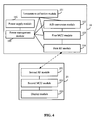
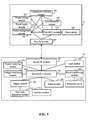
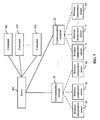
FIG 1 is a schematic view of a wireless temperature measuring system of a first embodiment of the invention; -
FIG 2 is a schematic view of a wireless temperature measuring system of a second embodiment of the invention; -
FIG. 3 is a schematic view of a wireless temperature measuring system of a third embodiment of the invention; -
FIG. 4 is a schematic view of a wireless temperature measuring system of a fourth embodiment of the invention; -
FIG 5 is a schematic view of a wireless temperature measuring system of a fifth embodiment of the invention; -
FIG 6 is a schematic view of a wireless temperature measuring system of a sixth embodiment of the invention; and -
FIG 7 illustrates application of a wireless temperature measuring system in remote and real-time monitoring in room temperature. - To clarify objectives, solutions and advantages of the invention, further description will be given below in conjunction with accompanying drawings and specific embodiments.
- As shown in
FIG 1 , a wireless temperature measuring system comprises multiplewireless temperature sensors 10, andmultiple communication terminals 20. each of thecommunication terminal 20 communicates with multiplewireless temperature sensors 10 via radio frequency (RF) simultaneously. - The
wireless temperature sensor 10 operates to obtain temperature signals from a temperature detection point, to perform cyclic-interleave and error-correction coding on the temperature signals whereby obtaining coded temperature signals, and to transmit the coded temperature signals to thecommunication terminal 20 via RF. - The
communication terminal 20 operates to receive and decode the coded temperature signals from thewireless temperature sensor 10, and to obtain and display decoded temperature signals. - As shown in
FIG 2 , thewireless temperature sensor 10 comprises atemperature collection module 101, an analog/digital (A/D)conversion module 102, a first microcontroller unit (MCU)module 103, and afirst RF module 104. - The
temperature collection module 101 operates to collect temperature of the temperature detection point whereby obtaining an analog temperature signal, to transmit the analog temperature signal to the A/D conversion module 102, and to transmit an ID number of thetemperature collection module 101 to thefirst MCU module 103. - Each of the
temperature collection modules 101 has a unique ID number. In an actual application, an installation position of a temperature detection point corresponding to awireless temperature sensor 10 is recorded and saved in thecommunication terminal 20 along with the ID number of thetemperature collection module 101, so that upon receiving the temperature signal from thewireless temperature sensor 10, thecommunication terminal 20 can inquiry the installation position of the temperature detection point according to the ID number of thetemperature collection module 101. - The A/
D conversion module 102 operates to receives the analog temperature signal from thetemperature collection module 101, to perform A/D conversion on the analog temperature signal whereby obtaining a digital temperature signal, and to transmit the digital temperature signal to thefirst MCU module 103. - The
first MCU module 103 operates to receive the digital temperature signal from the A/D conversion module 102, and the ID number of thetemperature collection module 101 from thetemperature collection module 101, to pack the digital temperature signal and the ID number of thetemperature collection module 101 with data frames whereby obtaining a temperature signal data packet, to perform cyclic-interleave and error-correction coding on the temperature signal data packet whereby obtaining a coded temperature signal, and to transmit the coded temperature signal to thefirst RF module 104. - The cyclic-interleave and error-correction code is capable of correcting a continuous and bursting error of 24 bits, and a coding gain thereof is up to 3 dBm. And its error correction capability and coding efficiency achieves a leading position in the field, which is far higher than normal forward error correction. And the anti-interference capacity and sensitivity thereof also have a great improvement. Meanwhile, the cyclic-interleave and error-correction code has a performance of error detection so as to filter erroneous and false information, and thus greatly improving stability during data communication, and increasing transmission distance of the coded temperature signals upon transmitting via the
first RF module 104. In areas with middle or small distance shielding, or severe blocking, no routing is required, and thecommunication terminal 20 is capable of receiving the temperature signal from thefirst RF module 104, which makes it possible to manage hundreds ofwirelss temperature sensors 10 via onecommunication terminal 20. In this manner, only onecommunication terminal 20 is required in an application of electric power system to measure temperature and to receive the temperature signal from multiplewireless temperature sensors 10, and no wiring is needed. - The
first RF module 104 operates to receive the coded temperature signal from thefirst RF module 104, and to transmit the coded temperature signal to thecommunication terminal 20 via RF. - As shown in
FIG 2 , thecommunication terminal 20 comprises asecond RF module 201, asecond MCU module 202, and adisplay module 203. - The
second RF module 201 operates to receive the coded temperature signal from thefirst RF module 104, and to transmit the coded temperature signal to thesecond MCU module 202. - The
second MCU module 202 operates to receive the coded temperature signal from thesecond RF module 201, to decode the coded temperature signal whereby obtaining a decoded temperature signal, and to transmit the decoded temperature signal to thedisplay module 203. - The
display module 203 operates to receive and to display the decoded temperature signal from thesecond MCU module 202. - In this embodiment, the
display module 203 may be a light emitting diode (LED) display, a liquid crystal display (LCD), and so on. - The
first MCU module 103 further operate to detect whether a RF signal exists at a main frequency point of thefirst RF module 104 after receiving the coded temperature signal, to transmit the coded temperature signal to thefirst RF module 104 and to inform thefirst RF module 104 to transmit the coded temperature signal via the main frequency point if no RF signal exists at the main frequency point of thefirst RF module 104, or to transmit the coded temperature signal to thefirst RF module 104 and to inform thefirst RF module 104 to transmit the coded temperature signal via an auxiliary frequency point if the RF signal exists at the main frequency point of thefirst RF module 104. - The main frequency point is a default frequency point for transmitting the coded temperature signal. In this embodiment, the main frequency point is 433 MHz.
- As a RF signal exists at the main frequency point, it indicates that other devices transmit signals via the main frequency point. At this time, to prevent same frequency interference, the auxiliary frequency point is used for transmission.
- It should be noted that multiple auxiliary frequency points are used during application. As a RF signal exists at the main frequency point, the auxiliary frequency points are sequentially detected, and those with no RF signal thereat are used for transmitting the coded temperature signal. If RF signals exist at all the auxiliary frequency points, detection is performed from the main frequency point until a frequency point with no RF signal thereat is found. For example, three auxiliary points 433.1 MHz, 433.2 MHz, and 433.3 MHz are used.
- Accordingly, the
first RF module 104 further operates to transmit the coded temperature signal to thecommunication terminal 20 via the main frequency point after receiving the coded temperature signal and a notice of transmitting the coded temperature signal via the main frequency point from thefirst MCU module 103, or to transmit the coded temperature signal to thecommunication terminal 20 via the auxiliary frequency point after receiving the coded temperature signal and a notice of transmitting the coded temperature signal via the auxiliary frequency point from thefirst MCU module 103. - The
second MCU module 202 further operates to set values of the main frequency point and the auxiliary frequency point, to pack the values of the main frequency point and the auxiliary frequency point with data frames whereby obtaining a frequency point packet, to perform cyclic-interleave and error-correction coding on the frequency point packet whereby obtaining a coded frequency point, and to transmit the coded frequency point to thesecond RF module 201. Accordingly, thesecond RF module 201 further operates to receive the coded frequency point from thesecond MCU module 202, and to transmit the coded frequency point to thefirst RF module 104 via RF. Thefirst RF module 104 further operates to receive the coded frequency point from thesecond RF module 201, and to transmit the coded frequency point to thefirst MCU module 103. - The
first MCU module 103 further operates to receive the coded frequency point from thefirst RF module 104, to decode the coded frequency point whereby obtaining values of the main frequency point and the auxiliary frequency point, and to set the main frequency point and the auxiliary frequency point of thefirst RF module 104 according to the values of the main frequency point and the auxiliary frequency point. - It should be noted that as the
second RF module 201 transmits the coded wireless frequency point, a main frequency point and multiple auxiliary frequency points can also be set, like thefirst RF module 104, and the method is the same as above and will not be described hereinafter. - The
first MCU module 103 further operates to detect whether the digital temperature signal matches a preset alarm temperature signal condition after receiving the digital temperature signal from the A/D conversion module, to pack the digital temperature signal and the ID number of the temperature collection module with data frames whereby obtaining a normal temperature signal packet, to perform cyclic-interleave and error-correction coding on the normal temperature signal packet whereby obtaining a coded normal temperature signal, and to transmit the coded normal temperature signal to thefirst RF module 104 according to a preset reporting period of the temperature signal if the digital temperature signal does not meet an alarm temperature signal condition, or to pack the digital temperature signal, the ID number of the temperature collection module, and a temperature alarm ID with data frames whereby obtaining an alarm temperature signal packet, to perform cyclic-interleave and error-correction coding on the alarm temperature signal packet whereby obtaining a coded alarm temperature signal, and to transmit the coded alarm temperature signal to thefirst RF module 104 if the digital temperature signal matches an alarm temperature signal condition. - In this embodiment, multiple temperature alarm modes, such as high temperature alarm, low temperature alarm, temperature rise alarm, temperature reduction alarm, and so on, can be set.
- Correspondingly, the preset alarm temperature signal condition can be set as: sending alarm as the digital temperature signal is higher or lower than a threshold value, or an increment or decrement reaches a threshold value. A reporting period of the temperature signal can be flexibly set according to an actual condition, such as 10 minutes, 1 hour and so on. That is, the
wireless temperature sensors 10 do not need to transmit all of the collected temperature signals to the communication terminal. As the temperature signal is normal, thewireless temperature sensor 10 reports temperature at the temperature detection point at the reporting period, such as every 10 minutes. As the temperature signal is abnormal, thewireless temperature sensor 10 transmits the temperature signal to thecommunication terminal 20 in real-time. - Accordingly, the
first RF module 104 further operates to receive the coded normal temperature signal from thefirst MCU module 103, and to transmit the coded normal temperature signal to thecommunication terminal 20 via RF, or to receive the coded alarm temperature signal from thefirst MCU module 103, and to transmit the coded alarm temperature signal to thecommunication terminal 20 via RF. - As shown in
FIG 3 , thecommunication terminal 20 further comprises analarm module 204. - The
second RF module 201 further operates to receive the coded normal or alarm temperature signal from thefirst RF module 104, and to transmit the coded normal or alarm temperature signal to thesecond MCU module 202. - The
second MCU module 202 further operates to receive the coded normal temperature signal from thesecond RF module 201, to decode the normal temperature signal whereby obtaining a decoded normal temperature signal, and to transmit the decoded normal temperature signal to thedisplay module 203, or to receive the coded alarm temperature signal from thesecond RF module 201, to decode the alarm temperature signal whereby obtaining a decoded alarm temperature signal, to transmit the decoded alarm temperature signal to thedisplay module 203, and to inform thealarm module 204 to send an alarm. - In this embodiment, the
alarm module 204 can use audible and visual alarm, and buzz alarm and so on. - The
display module 203 further operates to receive and to display the decoded normal temperature signal from thesecond MCU module 202, or to receive and to display the decoded alarm temperature signal from thesecond MCU module 202. - The
second MCU module 202 further operates to set the alarm temperature signal condition and the reporting period of the temperature signal, to pack the alarm temperature signal condition and the reporting period of the temperature signal with data frames respectively whereby obtaining an alarm temperature signal condition packet, and a reporting period packet, to perform cyclic-interleave and error-correction coding on the alarm temperature signal condition packet and the reporting period packet respectively whereby obtaining a coded alarm temperature signal condition and a coded reporting period, and to transmit the coded alarm temperature signal condition and the coded reporting period to thesecond RF module 201. - Accordingly, the
second RF module 201 further operates to receive the coded alarm temperature signal condition and the coded reporting period from thesecond MCU module 202, and to transmit the coded alarm temperature signal condition and the coded reporting period to thefirst RF module 104 via RF. - Accordingly, the
first RF module 104 further operates to receive the coded alarm temperature signal condition and the coded reporting period from thesecond RF module 201, and to transmit the coded alarm temperature signal condition and the coded reporting period to thefirst MCU module 103. - The
first MCU module 103 further operates to receive the coded alarm temperature signal condition and the coded reporting period from thefirst RF module 104, and to decode the coded alarm temperature signal condition and the coded reporting period whereby obtaining the alarm temperature signal condition and the reporting period of the temperature signal. - It should be noted that as the
second RF module 201 transmits the coded alarm temperature signal condition and the coded reporting period, a main frequency point and multiple auxiliary frequency points can also be set, like thefirst RF module 104, and the method is the same as above and will not be described hereinafter. - As shown in
FIG 4 , thewireless temperature sensor 10 further comprises apower supply module 105, and apower management module 106. - The
power supply module 105 operates to supply power to modules of thewireless temperature sensor 10 under a control of thepower management module 106. In this embodiment, thepower supply module 105 is a battery module, and any type of batteries can be used. - The
power management module 106 operates to control thepower supply module 105 to supply or to stop supplying power to modules of thewireless temperature sensor 10. - Accordingly, the
first MCU module 103 further operates to detect states of the modules of thewireless temperature sensor 10 respectively, to inform thepower management module 106 to control thepower supply module 105 to supply power to modules in an operating state, and to inform thepower management module 106 to control thepower supply module 105 to stop supplying power to modules in an idle state. - For example, as the
wireless temperature sensor 10 comprises thetemperature collection module 101, the A/D conversion module 102, thefirst MCU module 103, and thefirst RF module 104, thefirst MCU module 103 detects states of itself, thetemperature collection module 101, the A/D conversion module 102, and thefirst RF module 104. As thetemperature collection module 101, the A/D conversion module 102, thefirst MCU module 103, or thefirst RF module 104 is in an operating state, thefirst MCU module 103 informs thepower management module 106 to control thepower supply module 105 to supply power to thetemperature collection module 101, the A/D conversion module 102, thefirst MCU module 103, or thefirst RF module 104. Astemperature collection module 101, the A/D conversion module 102, thefirst MCU module 103, or thefirst RF module 104 is in an idle state, thefirst MCU module 103 informs thepower management module 106 to control thepower supply module 105 to stop supplying power to thetemperature collection module 101, the A/D conversion module 102, thefirst MCU module 103, or thefirst RF module 104. - It should be noted that the
wireless temperature sensor 10 using the above-mentioned low power loss method can greatly increase work life of thepower supply module 105. Experiments indicate that as the reporting period of the temperature signal is 30 minutes, a work life of a 1800 mAh battery can be used for 8 to 10 years (3 years with a prior method). - As shown in
FIG 5 , thewireless temperature sensor 10 further comprises apower sensing module 107. Thepower sensing module 107 operates to detect electric quantity of thepower supply module 105, and to transmit a warning signal indicating low power to thefirst MCU module 103 as electric quantity of thepower supply module 105 is less than a preset threshold. - Accordingly, the
first MCU module 103 further operates to receive the warning signal from thepower sensing module 107, and to transmit the warning signal to thecommunication terminal 20 via thefirst RF module 104. - As the
communication terminal 20 receives the warning signal, thealarm module 204 sends an alarm or thedisplay module 203 display the warning signal whereby informing a user to change a battery. - As shown in
FIG 5 , thewireless temperature sensor 10 further comprises areset circuit 108. Thereset circuit 108 operates to provide a reset signal to thefirst MCU module 103 once power is on whereby ensuring reliable operation thereof. - As shown in
FIG 5 , thecommunication terminal 20 further comprises aninput module 205. - The
input module 205 operates to provide a man machine interface. In this embodiment, theinput module 205 may be a keyboard, a touch screen and so on. As a user inputs control information via theinput module 205, remote control of thewireless temperature sensor 10 is facilitated. - As shown in
FIG 5 , thecommunication terminal 20 further comprises aparallel switching module 206. Theparallel switching module 206 operates to dynamically switch between parallel circuits output from thecommunication terminal 20. For example, theparallel switching module 206 is capable of switching from a parallel circuit to a RS-232 communication interface or a RS-485 communication interface. The RS-232 communication interface provides a program updating interface, and the RS-485 communication interface provides a communication interface. - As shown in
FIG 5 , thecommunication terminal 20 further comprises aprotection circuit 207, and apower transforming module 208. Theprotection circuit 207 operates to switch off a power supply as power supplied to thesecond MCU module 202 is higher than a preset threshold power value. Thepower transforming module 208 operates to transform power supplied to thesecond MCU module 202 by theprotection circuit 207 into power that thesecond MCU module 202 needs. - The operation that switch off a power supply as power supplied to the
second MCU module 202 is higher than a preset threshold power value can protect thecommunication terminal 20, which makes the invention applicable to severe industrial environment, and effectively protects the invention against thunder and light, over-voltage, over-current, and so on. - As shown in
FIG 5 , thecommunication terminal 20 further comprises a voltage-monitoring module 209. The voltage-monitoring module 209 operates to monitor power voltage of thesecond MCU module 202, and to provide a reset signal to thesecond MCU module 202 as the power voltage drops. - As shown in
FIG 5 , thecommunication terminal 20 further comprises a back-light adjustment module 210. The back-light adjustment module 210 operates to adjust back light of thedisplay module 203. - As shown in
FIG 5 , thecommunication terminal 20 further comprises aninterface module 211. Theinterface module 211 operates to provide a communication interface. In this embodiment, the communication interface may be a general packet radio service (GPRS) interface, a code division multiple access (CDMA) interface, a RS-485 bus, an Ethernet interface, a fiber interface, and so on. - As shown in
FIG 6 , the wireless temperature measuring system further comprises acomputer group 30. - The
computer group 30 comprises aserver 301 andmultiple computers 302 which operate to remotely monitor temperature. - The
server 301 is connected to thecommunication terminal 20 via the communication interface provided by theinterface module 211, and to thecomputer 302 via a wide area network (WAN) or a local area network (LAN). - In details, the
server 301 obtains temperature data at all temperature detection points from thecommunication terminal 20, saves the temperature data in database for a long time, displays a temperature variation curve of the temperature detection point in real-time, and can access a web for web publishing. Thecomputer 302 can visit theserver 301 via the Internet Explorer. Thecommunication terminal 20 can be an economical receiver, an intelligent receiver or other equivalent devices. - The
server 301 is capable of displaying real-time temperature data and highest temperature data, inquiring history data in a certain time period, drawing curves, and graphically indicating variation of state variables. Theserver 301 can adjust temperature alarm threshold value and measuring time of thewireless temperature sensor 10, and provide a wireless WEB-based temperature inquiry system during WEB publishing. Temperature data are published on theserver 301. All computers in thecomputer group 30 can enter the inquiry system with allocated authority and passwords whereby implementing data inquiry, analysis of a temperature trend curve, real-time monitoring of electric maps, device management, staff authority management, and so on. - The
server 301 also can be used to set functional parameters of thewireless temperature sensor 10, such as values of the main frequency point and the auxiliary frequency point, the alarm temperature signal condition, the reporting period of the temperature signal, and so on, and to transmit them to thewireless temperature sensor 10 via thecommunication terminal 20. - The wireless temperature measuring system of the invention can be applied to industry, military, electric power and so on. As the invention is applied to a power system, the temperature detection point is disposed at a joint of cables that easily get hot, or at surface of transformers and switches. The
communication terminal 20 is disposed in a central control room for receiving temperature data from thewireless temperature sensor 10, or connected to theserver 301 of thecomputer group 30 via buses whereby uploading temperature data thereto and responding to various commands therefrom.Multiple computers 302 can log on theserver 301 to obtain temperature information, and set control commands according different authority. - As shown in
FIG 7 , as the invention is applied to remote and real-time monitoring in room temperature, thewireless temperature sensor 10 is randomly disposed in a user's home. As thewireless temperature sensor 10 collects temperature data, data are transmitted via RF. Everywireless temperature sensor 10 has a unique ID number, and all thewireless temperature sensors 10 transmit data in a manner of automatic routing and relay. Thecommunication terminal 20 or thecomputer group 30 adjusts transmission time and period of the temperature signal and alarm temperature threshold thereof of thewireless temperature sensor 10, whereby implementing bi-directional communication. Thewireless temperature sensor 10 employs low power consumption design, power is supplied thereto via batteries, and work life of the batteries is 8 to 10 years. Thewireless temperature sensor 10 automatically transmits temperature data in a certain time interval, and sends alarm as temperature is abnormal without limitation of transmission time. Then thecommunication terminal 20 receives the temperature data fromwireless temperature sensor 10 via RF and the display module (such as LED) displays the temperature data. A user is capable of setting parameters of thewireless temperature sensor 10 via theinput module 205. The communication interface of thecommunication terminal 20 communicates with theserver 301 via a RS-485 bus, a GPRS interface, an Ethernet interface, a fiber interface, and so on. Background software of the wireless temperature measuring system is installed on theserver 301, whereby implementing monitoring of real-time temperature, highest temperature, lowest temperature, average temperature and so on, intelligently analyzing the temperature data according to preset time interval or inquiry condition in a manner of a bar chart or a trend curve, and setting a sampling interval and various alarm threshold values (comprising increment or decrement of temperature, absolute temperature, and so on). Software of the invention publishes database on theserver 301 via WEB publishing, so that authorized computers in the LAN can browse the temperature data and relevant graphs, and remotely change various parameters. - The wireless temperature measuring system collects temperature at the temperature detection point by the wireless temperature sensor, and transmits the temperature signal after performing cyclic-interleave and error-correction coding on the temperature signal, which makes the transmission distance is increased when the coded temperature signal is transmitted via the RF module such that one communication terminal is capable of managing up to hundreds of wireless temperature sensors and, in turn, centralized remote monitoring can be facilitated, no in-situ cable laying is required, installation is simple, extension is convenient, and the invention is not affected by sunshine or other illuminations. As a RF signal exists at the main frequency point, the auxiliary frequency point can be used for transmission such that same frequency interference is avoided.
- Moreover, if the digital temperature signal does not meet an alarm temperature signal condition, a temperature signal can be transmitted to the communication terminal according to a preset reporting period of the temperature signal, which can save the signal transmition between the wireless temperature sensor and the communication terminal. If the digital temperature signal matches an alarm temperature signal condition (the temperature is abnormal), an alarm is sent immediately without limitation of transmition period. In addition, the power is supplied to the modules in operating state of the wireless temperature sensor, which can save the power of the power supply module and increase work life of the power supply module.
- All or part of the content of the invention can be facilitated by software programming, and relevant software programs are saved in readable storage mediums, such as hard disks, CDs, or floppy disks.
- While particular embodiments of the invention have been shown and described, it will be obvious to those skilled in the art that changes and modifications may be made without departing from the invention in its broader aspects, and therefore, the aim in the appended claims is to cover all such changes and modifications as fall within the true spirit and scope of the invention.
Claims (13)
- A wireless temperature measuring system, comprisingmultiple wireless temperature sensors; andmultiple communication terminals;whereineach of said communication terminals communicates with said wireless temperature sensors via RF;said wireless temperature sensor operates to obtain temperature signals from a temperature detection point, to perform cyclic-interleave and error-correction coding on said temperature signals whereby obtaining coded temperature signals, and to transmit said coded temperature signals to said communication terminals via RF; andsaid communication terminal operates to receive and decode said coded temperature signals from said wireless temperature sensor, and to obtain and to display decoded temperature signals.
- The wireless temperature measuring system of claim 1, wherein said wireless temperature sensor comprises a temperature collection module, an analog/digital (A/D) conversion module, a first micro-controller unit (MCU) module, and a first RF module;
said temperature collection module operates to collect temperature of said temperature detection point whereby obtaining an analog temperature signal, to transmit said analog temperature signal to said A/D conversion module, and to transmit an ID number of said temperature collection module to said first MCU module;
said A/D conversion module operates to receives said analog temperature signal from said temperature collection module, to perform A/D conversion on said analog temperature signal whereby obtaining a digital temperature signal, and to transmit said digital temperature signal to said first MCU module;
said first MCU module operates to receive said digital temperature signal from said A/D conversion module, and said ID number of said temperature collection module from said temperature collection module, to pack said digital temperature signal and said ID number of said temperature collection module with data frames whereby obtaining a temperature signal data packet, to perform cyclic-interleave and error-correction coding on said temperature signal data packet whereby obtaining a coded temperature signal, and to transmit said coded temperature signal to said first RF module; and
said first RF module operates to receive said coded temperature signal from said first MCU module, and to transmit said coded temperature signal to said communication terminal;
wherein said communication terminal comprises a second RF module, a second MCU module, and a display module;
said second RF module operates to receive said coded temperature signal from said first RF module, and to transmit said coded temperature signal to said second MCU module;
said second MCU module operates to receive said coded temperature signal from said second RF module, to decode said coded temperature signal whereby obtaining a decoded temperature signal, and to transmit said decoded temperature signal to said display module; and
said display module operates to receive and to display said decoded temperature signal from said second MCU module. - The wireless temperature measuring system of claim 2, wherein said first MCU module further operate to detect whether a RF signal exists at a main frequency point of said first RF module after receiving said coded temperature signal, to transmit said coded temperature signal to said first RF module and to inform said first RF module to transmit said coded temperature signal via said main frequency point if no RF signal exists at a main frequency point of said first RF module, or to transmit said coded temperature signal to said first RF module and to inform said first RF module to transmit said coded temperature signal via an auxiliary frequency point if said RF signal exists at a main frequency point of said first RF module;
wherein said first RF module further operates to transmit said coded temperature signal to said communication terminal via said main frequency point after receiving said coded temperature signal and a notice of transmitting the coded temperature signal via said main frequency point from said first RF module, or to transmit said coded temperature signal to said communication terminal via said auxiliary frequency point after receiving the coded temperature signal and a notice of transmitting the coded temperature signal via the auxiliary frequency point from the first MCU module. - The wireless temperature measuring system of claim 3, wherein
said second MCU module further operates to set values of said main frequency point and said auxiliary frequency point, to pack said values of said main frequency point and said auxiliary frequency point with data frames whereby obtaining a frequency point packet, to perform cyclic-interleave and error-correction coding on said frequency point packet whereby obtaining a coded frequency point, and to transmit said coded frequency point to said second RF module;
said second RF module further operates to receive said coded frequency point from said second MCU module, and to transmit said coded frequency point to said first RF module via RF;
said first RF module further operates to receive said coded frequency point from said second RF module, and to transmit said coded frequency point to said first MCU module; and
said first MCU module further operates to receive said coded frequency point from said first RF module, to decode said coded frequency point whereby obtaining values of said main frequency point and said auxiliary frequency point, and to set said main frequency point and said auxiliary frequency point of said first RF module according to said values of said main frequency point and said auxiliary frequency point. - The wireless temperature measuring system of claim 2, wherein
said first MCU module further operates to detect whether said digital temperature signal matches a preset alarm temperature signal condition after receiving said digital temperature signal from said A/D conversion module, to pack said digital temperature signal and said ID number of said temperature collection module with data frames whereby obtaining a normal temperature signal packet, to perform cyclic-interleave and error-correction coding on said normal temperature signal packet whereby obtaining a coded normal temperature signal, and to transmit said coded normal temperature signal to said first RF module according to a preset reporting period of the temperature signal if said digital temperature signal does not meet an alarm temperature signal condition, or to pack said digital temperature signal, said ID number of said temperature collection module, and a temperature alarm ID with data frames directly whereby obtaining an alarm temperature signal packet, to perform cyclic-interleave and error-correction coding on said alarm temperature signal packet whereby obtaining a coded alarm temperature signal, and to transmit said coded alarm temperature signal to said first RF module if said digital temperature signal matches an alarm temperature signal condition; and
said first RF module further operates to receive said coded normal temperature signal from said first MCU module, and to transmit said coded normal temperature signal to said communication terminal via RF, or to receive said coded alarm temperature signal from said first MCU module, and to transmit said coded alarm temperature signal to said communication terminal via RF;
wherein
said communication terminal further comprises an alarm module;
said second RF module further operates to receive said coded normal temperature signal or said coded alarm temperature signal from said first RF module, and to transmit said coded normal temperature signal or said coded alarm temperature signal to said second MCU module;
said second MCU module further operates to receive said coded normal temperature signal from said second RF module, to decode said normal temperature signal whereby obtaining a decoded normal temperature signal, and to transmit said decoded normal temperature signal to said display module, or to receive said coded alarm temperature signal from said second RF module, to decode said alarm temperature signal whereby obtaining a decoded alarm temperature signal, to transmit said decoded alarm temperature signal to said display module, and to inform said alarm module to send an alarm; and
said display module further operates to receive and to display said decoded normal temperature signal from said second MCU module, or to receive and to display said decoded alarm temperature signal from said second MCU module. - The wireless temperature measuring system of claim 5, wherein
said second MCU module further operates to set said alarm temperature signal condition and said reporting periodof said temperature signal , to pack said alarm temperature signal condition and said reporting period of said temperature signal with data frames respectively whereby obtaining an alarm temperature signal condition packet, and a reporting period packet, to perform cyclic-interleave and error-correction coding on said alarm temperature signal condition packet and said reporting period packet respectively whereby obtaining a coded alarm temperature signal condition and a coded reporting period, and to transmit said coded alarm temperature signal condition and said coded reporting period to said second RF module;
said second RF module further operates to receive said coded alarm temperature signal condition and said coded reporting period from said second MCU module, and to transmit said coded alarm temperature signal condition and said coded reporting period to said first RF module via RF;
said first RF module further operates to receive said coded alarm temperature signal condition and said coded reporting period from said second RF module, and to transmit said coded alarm temperature signal condition and said coded reporting period to said first MCU module; and
said first MCU module further operates to receive said coded alarm temperature signal condition and said coded reporting period from said first RF module, and to decode said coded alarm temperature signal condition and said coded reporting period whereby obtaining said alarm temperature signal condition and said reporting period of said temperature signal. - The wireless temperature measuring system of one of claims 2-6, wherein
said wireless temperature sensor further comprises a power supply module, and a power management module;
said power supply module operates to supply power to modules of said wireless temperature sensor under a control of said power management module;
said power management module operates to control said power supply module to supply or to stop supplying power to modules of said wireless temperature sensor; and
said first MCU module further operates to detect states of said modules of said wireless temperature sensor respectively, to inform said power management module to control said power supply module to supply power to modules in an operating state, and to inform said power management module to control said power supply module to stop supplying power to modules in an idle state. - The wireless temperature measuring system of claim 7, wherein
said wireless temperature sensor further comprises a power sensing module;
said power sensing module operates to detect electric quantity of said power supply module, and to transmit a warning signal indicating low power to said first MCU module as electric quantity of said power supply module is less than a preset threshold; and
said first MCU module further operates to receive said warning signal from said power sensing module, and to transmit said warning signal to said communication terminal via the first RF module. - The wireless temperature measuring system of claim 7, wherein said wireless temperature sensor further comprises a reset circuit operating to provide a reset signal to said first MCU module once power is on.
- The wireless temperature measuring system of one of claims 2-6, wherein said communication terminal further comprises an input module operating to provide a man machine interface.
- The wireless temperature measuring system of one of claims 2-6, wherein
said communication terminal further comprises a parallel switching module
operating to dynamically switch between parallel circuits output from said communication terminal. - The wireless temperature measuring system of one of claims 2-6, wherein
said communication terminal further comprises an interface module operating to provide a communication interface. - The wireless temperature measuring system of claim 12, further comprising a computer group compriseing a server and multiple computersoperating to remotely monitor temperature;
said server is connected to said communication terminal via said communication interface provided by said interface module; and
said server is connected to said computer via a wide area network (WAN) or a local area network (LAN).
Applications Claiming Priority (2)
| Application Number | Priority Date | Filing Date | Title |
|---|---|---|---|
| CN2009202298077U CN201936433U (en) | 2009-11-16 | 2009-11-16 | Remote room temperature real-time monitoring device |
| PCT/CN2010/076666 WO2011057517A1 (en) | 2009-11-16 | 2010-09-07 | Wireless temperature measuring system |
Publications (2)
| Publication Number | Publication Date |
|---|---|
| EP2503528A1 true EP2503528A1 (en) | 2012-09-26 |
| EP2503528A4 EP2503528A4 (en) | 2017-09-20 |
Family
ID=43991194
Family Applications (1)
| Application Number | Title | Priority Date | Filing Date |
|---|---|---|---|
| EP10829481.0A Withdrawn EP2503528A4 (en) | 2009-11-16 | 2010-09-07 | Wireless temperature measuring system |
Country Status (4)
| Country | Link |
|---|---|
| US (1) | US8981943B2 (en) |
| EP (1) | EP2503528A4 (en) |
| CN (1) | CN201936433U (en) |
| WO (1) | WO2011057517A1 (en) |
Cited By (2)
| Publication number | Priority date | Publication date | Assignee | Title |
|---|---|---|---|---|
| CN105302049A (en) * | 2015-12-03 | 2016-02-03 | 广州供电局有限公司 | Transformer station environment monitoring device |
| CN107246926A (en) * | 2017-07-04 | 2017-10-13 | 安徽鹰峰电子科技有限公司 | A kind of rapid multi-channel temperature sensor coded system and method |
Families Citing this family (34)
| Publication number | Priority date | Publication date | Assignee | Title |
|---|---|---|---|---|
| GB201102628D0 (en) | 2011-02-15 | 2011-03-30 | Nordic Semiconductor Asa | Programmable radio |
| CN102279063B (en) * | 2011-06-17 | 2013-01-09 | 明高五金制品(深圳)有限公司 | Device and system for monitoring barbecue temperature |
| CN102313316B (en) * | 2011-09-06 | 2013-08-07 | 北京同方瑞博数字技术有限公司 | Central-heating automatic monitoring, supervising and controlling system for indoor temperature |
| CN102519614B (en) * | 2011-12-09 | 2014-03-12 | 北京百纳威尔科技有限公司 | Temperature measurement apparatus, method and system |
| CN102589722A (en) * | 2012-02-23 | 2012-07-18 | 天津工业大学 | Temperature detection system |
| ES2711077T3 (en) | 2012-04-12 | 2019-04-30 | Progress Rail Services Corp | Detection and signaling method of a hot box condition |
| EP2650190A1 (en) * | 2012-04-12 | 2013-10-16 | Progress Rail Services Corporation | Device for detecting a hot box or hot wheel condition |
| US9970822B2 (en) | 2012-04-27 | 2018-05-15 | Par Technology Corporation | Temperature monitoring device for workflow monitoring system |
| US8931952B2 (en) * | 2012-04-27 | 2015-01-13 | Par Technology Corporation | Temperature monitoring device for workflow monitoring system |
| CN102945250B (en) * | 2012-10-11 | 2016-09-28 | 广西电网公司电力科学研究院 | A kind of online infrared data processing method |
| CN103196487A (en) * | 2013-03-06 | 2013-07-10 | 乐清市供电局 | Device and method of temperature and humidity monitoring |
| ES2537887B1 (en) * | 2013-12-13 | 2016-04-12 | Luis Miguel MOLINA ALARCÓN | Remote measurement system for one or more analog thermal sensors |
| CN103750826A (en) * | 2013-12-25 | 2014-04-30 | 杨松 | Wireless passive temperature measurement method, system and device for forming system |
| CN104330701B (en) * | 2014-11-06 | 2017-05-24 | 扬州森源电气有限公司 | Single-phase fault monitoring wireless system for community and monitoring method thereof |
| CN104792020A (en) * | 2014-11-10 | 2015-07-22 | 广东万和新电气股份有限公司 | Intelligent control device of fuel gas heating stove |
| CN106153204A (en) * | 2015-04-26 | 2016-11-23 | 於晓明 | There is temperature measuring equipment and the method for wireless communication function |
| US10451489B2 (en) * | 2015-07-10 | 2019-10-22 | The Charles Stark Draper Laboratory, Inc. | Thermal event sensor |
| CN106506576B (en) * | 2015-09-08 | 2019-12-17 | 姜殿威 | monitoring system and monitoring method for superconducting magnetic resonance peripheral equipment |
| CN105547520A (en) * | 2015-12-15 | 2016-05-04 | 杭州万联网络科技有限公司 | Wireless temperature monitoring system and monitoring point laying selection method |
| CN105403319A (en) * | 2015-12-24 | 2016-03-16 | 安徽中电兴发与鑫龙科技股份有限公司 | Intelligent temperature inspecting device |
| KR20180114088A (en) * | 2016-02-08 | 2018-10-17 | 와틀로 일렉트릭 매뉴팩츄어링 컴파니 | Temperature measurement system for rotatable wafer support assembly |
| CN105872276A (en) * | 2016-03-23 | 2016-08-17 | 哈尔滨工程大学 | Device and method for quick query of temperature based on making call |
| CN105719465A (en) * | 2016-04-25 | 2016-06-29 | 深圳市华茂欧特科技有限公司 | Remote data monitoring system based on hybrid wireless network |
| CN106768407A (en) * | 2016-11-28 | 2017-05-31 | 广西大学 | A kind of dry reactor radio device for on-line monitoring temperature |
| CN106768479A (en) * | 2016-11-29 | 2017-05-31 | 国网辽宁省电力有限公司沈阳供电公司 | Refletcion high-energy electron diffraction spectrum realizes the on-line measurement detection means to cable temperature rise |
| CN107861597A (en) * | 2017-11-30 | 2018-03-30 | 无锡中微爱芯电子有限公司 | A kind of Anti-interference Design method being applied in MCU reset systems |
| CN108593131A (en) * | 2018-05-10 | 2018-09-28 | 东莞市诺丽电子科技有限公司 | A kind of shaft temperature sensor circuit |
| CN109668637A (en) * | 2018-06-29 | 2019-04-23 | 浙江巨感物联网科技有限公司 | A kind of Wireless Networking type Electric Wires & Cables temperature hidden danger early warning system and method |
| CN111491268B (en) * | 2020-03-09 | 2022-10-04 | 江苏经贸职业技术学院 | Sensing mode and device for logistics management |
| CN112665729A (en) * | 2020-12-24 | 2021-04-16 | 杭州凯达电力建设有限公司 | Long-distance power transmission line online temperature measurement system based on LoRa communication |
| CN113053059A (en) * | 2021-03-17 | 2021-06-29 | 北京融安特智能科技股份有限公司 | Information display method and device, computing equipment and storage medium |
| WO2023042495A1 (en) * | 2021-09-14 | 2023-03-23 | パナソニックIpマネジメント株式会社 | Refrigeration material examination device and examination system |
| CN114979825A (en) * | 2022-05-16 | 2022-08-30 | 盐城师范学院 | Data acquisition system based on wireless communication |
| JPWO2024150296A1 (en) * | 2023-01-11 | 2024-07-18 |
Family Cites Families (19)
| Publication number | Priority date | Publication date | Assignee | Title |
|---|---|---|---|---|
| US4278841A (en) * | 1979-10-22 | 1981-07-14 | Jack Regennitter | Multiple station temperature monitor system |
| FR2688914B1 (en) * | 1992-02-06 | 1994-09-23 | Michel Leprieur | WIRELESS TEMPERATURE OR HYGROMETRY MEASUREMENT METHOD AND TRANSFER. |
| FR2712405B1 (en) * | 1993-11-09 | 1999-06-18 | Cedom Sa | Device for measuring and regulating the environment with radio transmission. |
| US6300871B1 (en) * | 1997-11-12 | 2001-10-09 | Headwaters Research & Development, Inc. | Multi-station RF thermometer and alarm system |
| EP1119837B1 (en) * | 1998-10-06 | 2004-02-11 | Interlogix, Inc. | Wireless home fire and security alarm system |
| CN2366839Y (en) * | 1999-02-04 | 2000-03-01 | 浙江大学工业自动化工程研究中心 | Device for automatically and continuously measuring temp. in rotary spherical digester |
| CA2314573C (en) * | 2000-01-13 | 2009-09-29 | Z.I. Probes, Inc. | System for acquiring data from a facility and method |
| US7034711B2 (en) * | 2001-08-07 | 2006-04-25 | Nsk Ltd. | Wireless sensor, rolling bearing with sensor, management apparatus and monitoring system |
| CN1552281A (en) * | 2003-06-04 | 2004-12-08 | 娜 朱 | Method and system for wireless centralized monitoring population temperature |
| US7766826B2 (en) * | 2003-11-26 | 2010-08-03 | Medtronic, Inc. | Multi-level averaging scheme for acquiring hemodynamic data |
| US7091854B1 (en) * | 2004-04-09 | 2006-08-15 | Miao George J | Multiple-input multiple-output wireless sensor networks communications |
| US7142107B2 (en) * | 2004-05-27 | 2006-11-28 | Lawrence Kates | Wireless sensor unit |
| WO2006101490A1 (en) * | 2005-03-18 | 2006-09-28 | Lawrence Richman | Human guard enhancing multiple site security system |
| JP4537248B2 (en) * | 2005-04-06 | 2010-09-01 | 富士通株式会社 | Carrier sense method and transmitting / receiving apparatus |
| US7982603B2 (en) * | 2006-03-28 | 2011-07-19 | Hitachi, Ltd. | Sensor net system, sensor net system data managing method, and sensor net system data managing program |
| CN201015058Y (en) * | 2007-01-08 | 2008-01-30 | 山西恒发电子有限公司 | High-voltage line contact temperature wireless monitoring system |
| JP2009033622A (en) * | 2007-07-30 | 2009-02-12 | Kyocera Corp | OFDM transmitter, OFDM receiver, and interleaving method |
| FI20085423A0 (en) * | 2008-05-08 | 2008-05-08 | Nokia Siemens Networks Oy | Synchronization in a mobile communication system |
| CN101319938B (en) * | 2008-07-08 | 2010-04-07 | 周骁威 | On-line temperature measurement method and device for cable joint of high-voltage plant |
-
2009
- 2009-11-16 CN CN2009202298077U patent/CN201936433U/en not_active Expired - Fee Related
-
2010
- 2010-09-07 WO PCT/CN2010/076666 patent/WO2011057517A1/en not_active Ceased
- 2010-09-07 EP EP10829481.0A patent/EP2503528A4/en not_active Withdrawn
- 2010-11-23 US US12/953,428 patent/US8981943B2/en not_active Expired - Fee Related
Non-Patent Citations (1)
| Title |
|---|
| See references of WO2011057517A1 * |
Cited By (3)
| Publication number | Priority date | Publication date | Assignee | Title |
|---|---|---|---|---|
| CN105302049A (en) * | 2015-12-03 | 2016-02-03 | 广州供电局有限公司 | Transformer station environment monitoring device |
| CN107246926A (en) * | 2017-07-04 | 2017-10-13 | 安徽鹰峰电子科技有限公司 | A kind of rapid multi-channel temperature sensor coded system and method |
| CN107246926B (en) * | 2017-07-04 | 2023-08-29 | 安徽鹰峰电子科技有限公司 | Quick multichannel temperature sensor coding system and method |
Also Published As
| Publication number | Publication date |
|---|---|
| US8981943B2 (en) | 2015-03-17 |
| WO2011057517A1 (en) | 2011-05-19 |
| CN201936433U (en) | 2011-08-17 |
| EP2503528A4 (en) | 2017-09-20 |
| US20110115636A1 (en) | 2011-05-19 |
Similar Documents
| Publication | Publication Date | Title |
|---|---|---|
| US8981943B2 (en) | Wireless temperature measuring system | |
| JP5791596B2 (en) | Power monitoring system | |
| AU2012100135A4 (en) | Power sensor | |
| AU2012100197A4 (en) | Power sensor | |
| CN102023253A (en) | Lightning-proof monitoring warning system | |
| AU2011101402A4 (en) | Power monitoring system with remote sensing and alerting | |
| EP1946279A2 (en) | Automatic detection of unusual consumption by a utility meter | |
| CN209745428U (en) | Cable on-line monitoring device | |
| CN113093048B (en) | Intelligent monitoring system for operation and maintenance status of railway tunnel emergency lighting and evacuation indication devices | |
| CN212229020U (en) | Three-phase safety electric meter | |
| CN114839911A (en) | Visual monitoring system and management method based on electric quantity acquisition data | |
| CN113763692A (en) | Remote controller with battery power prompt function | |
| AU2011101409B4 (en) | Power monitoring system with remote sensing and alerting | |
| AU2011101388A4 (en) | Power monitoring system with remote sensing | |
| KR100602011B1 (en) | Intelligent Electronic Wattmeter Network System | |
| AU2011101408A4 (en) | Power monitoring system with remote sensing and alerting | |
| AU2011100848A4 (en) | Power monitoring system | |
| CN121475353A (en) | A valve-controlled water meter and valve control method | |
| TW201511602A (en) | Mobile station electric power utilization abnormality detection method |
Legal Events
| Date | Code | Title | Description |
|---|---|---|---|
| PUAI | Public reference made under article 153(3) epc to a published international application that has entered the european phase |
Free format text: ORIGINAL CODE: 0009012 |
|
| 17P | Request for examination filed |
Effective date: 20120618 |
|
| AK | Designated contracting states |
Kind code of ref document: A1 Designated state(s): AL AT BE BG CH CY CZ DE DK EE ES FI FR GB GR HR HU IE IS IT LI LT LU LV MC MK MT NL NO PL PT RO SE SI SK SM TR |
|
| DAX | Request for extension of the european patent (deleted) | ||
| RA4 | Supplementary search report drawn up and despatched (corrected) |
Effective date: 20170818 |
|
| RIC1 | Information provided on ipc code assigned before grant |
Ipc: G01K 1/02 20060101AFI20170811BHEP Ipc: H04Q 9/00 20060101ALI20170811BHEP |
|
| STAA | Information on the status of an ep patent application or granted ep patent |
Free format text: STATUS: THE APPLICATION IS DEEMED TO BE WITHDRAWN |
|
| 18D | Application deemed to be withdrawn |
Effective date: 20180316 |